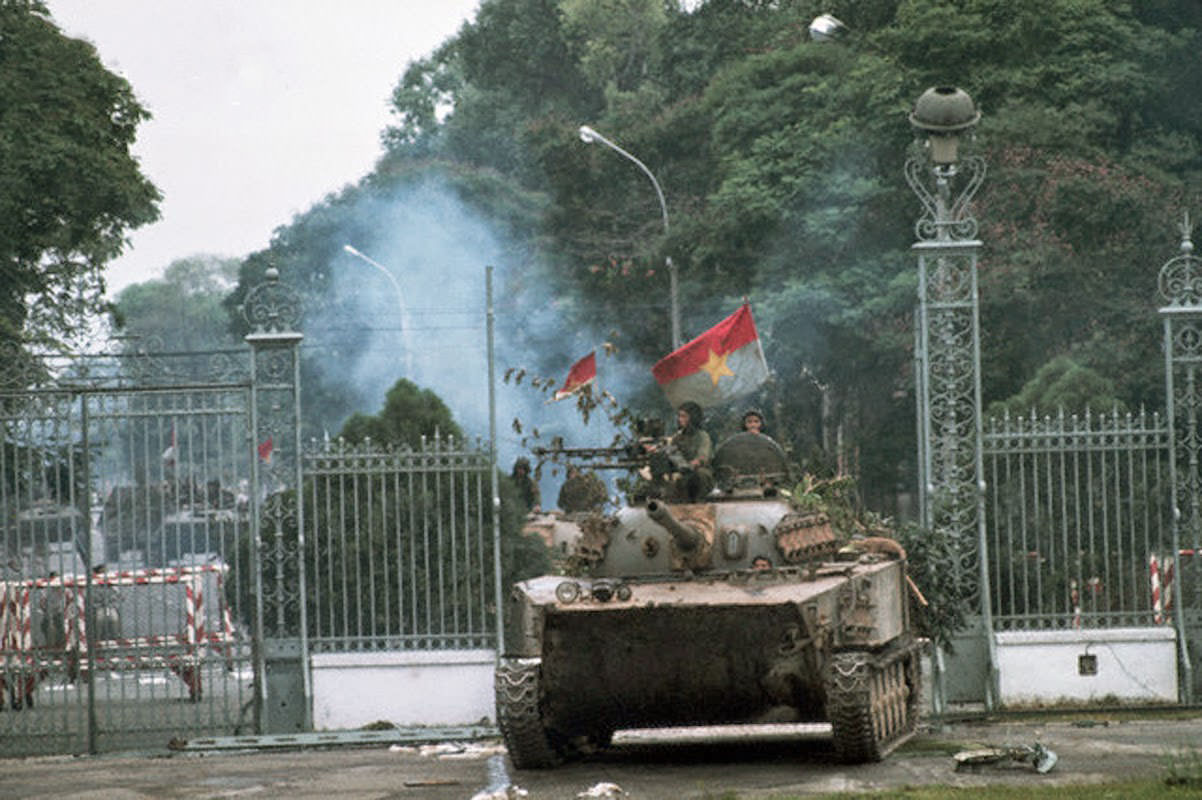
On April 30, 1975, tanks from the People’s Army of Vietnam rolled into Saigon, the capital of South Vietnam. The city fell within hours. The Vietnam War was over, and with it, the existence of South Vietnam as an independent nation. What followed was a frantic, often deadly scramble — soldiers abandoning their posts, civilians flooding the streets, and thousands fighting for a place on the last helicopters out.
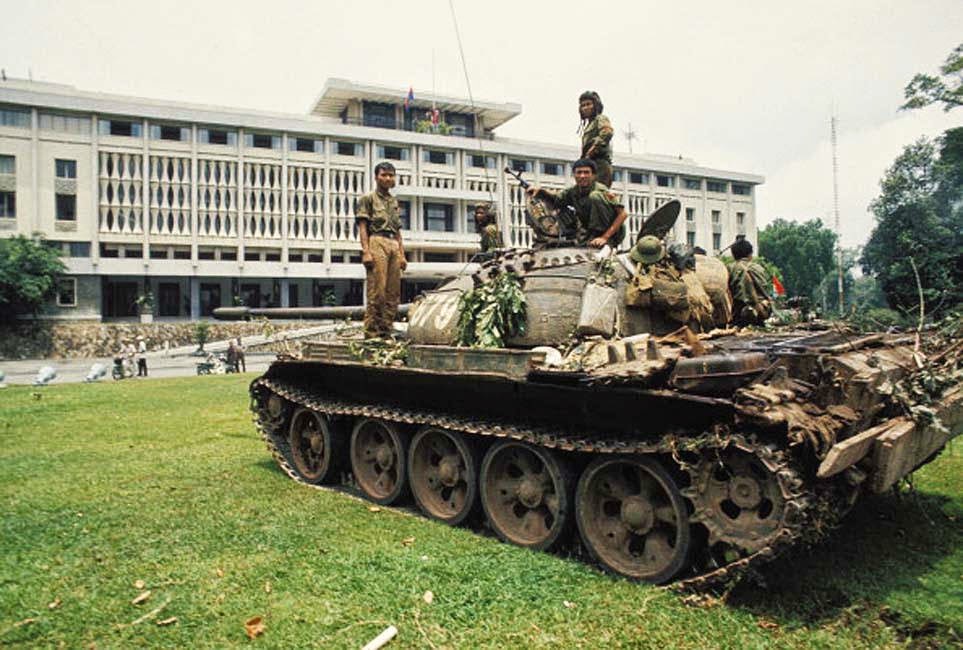
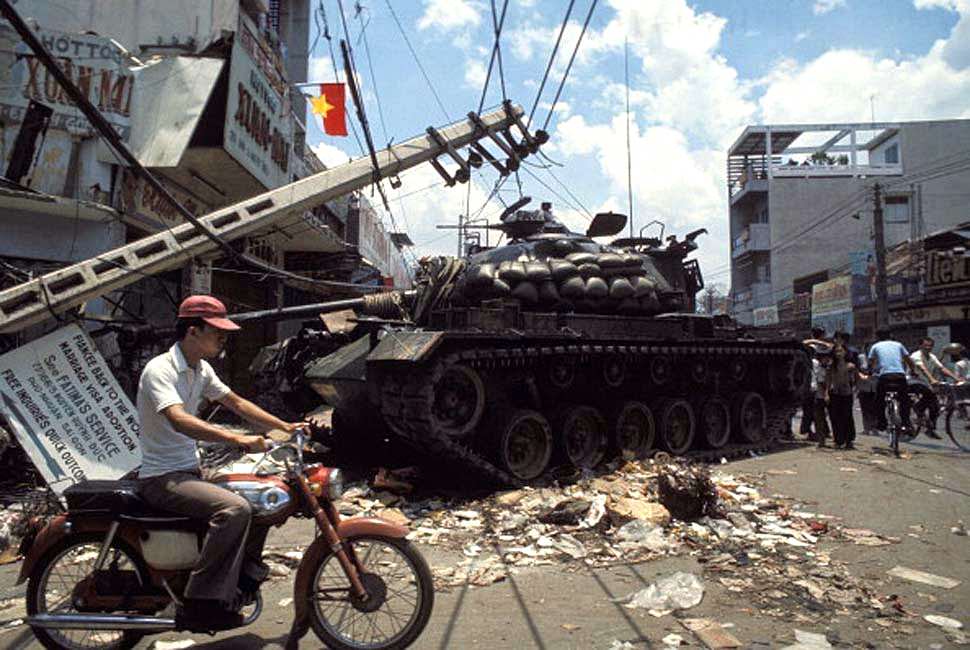
A North Vietnamese tank rolls into a compound during the fall of Saigon, 1975.
The collapse did not happen overnight. In December 1974, North Vietnamese forces launched a major assault on Phuoc Long province, a lightly defended area along the Cambodian border. The provincial capital at Phuoc Binh fell in January 1975. The United States, bound by President Nixon’s secret promise to intervene with full force if North Vietnam violated the 1973 Paris Peace Accords, did nothing. Nixon had resigned over the Watergate scandal in August 1974. His successor, Gerald Ford, faced a Congress unwilling to honor that commitment, and South Vietnam was left without the military backing it had been counting on.
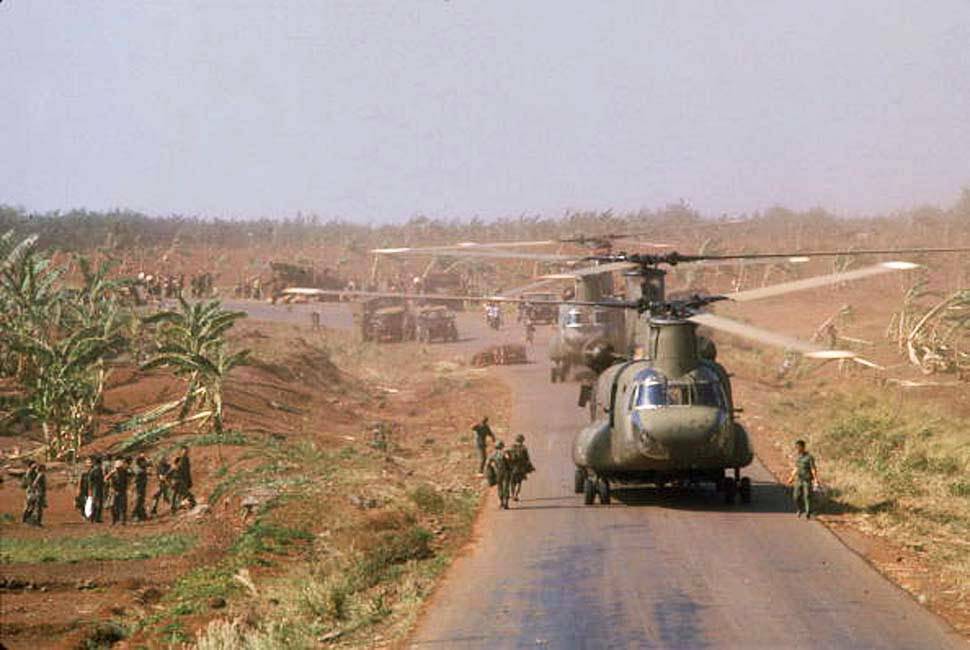
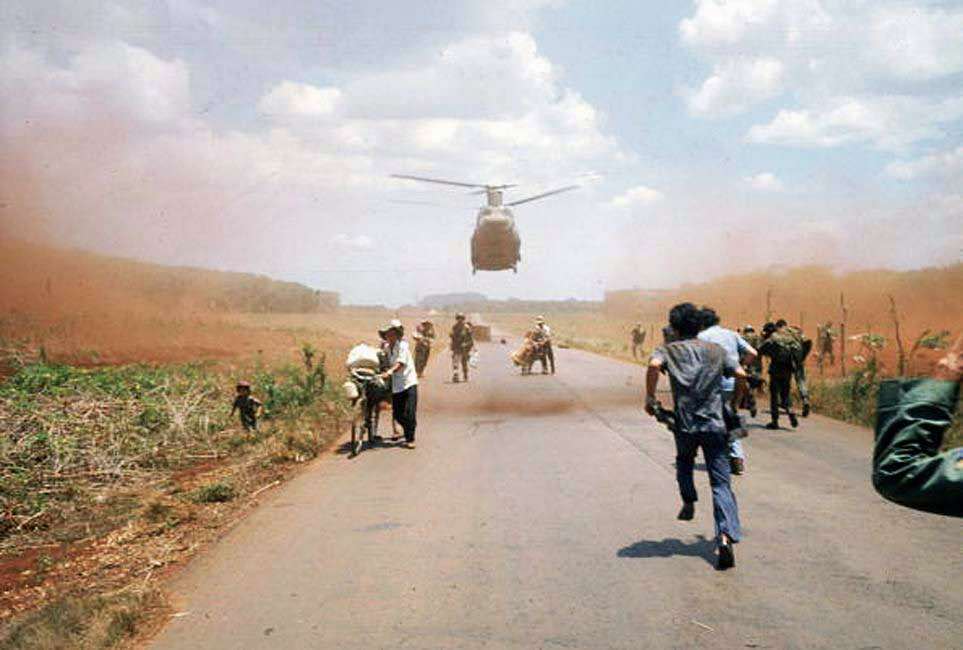
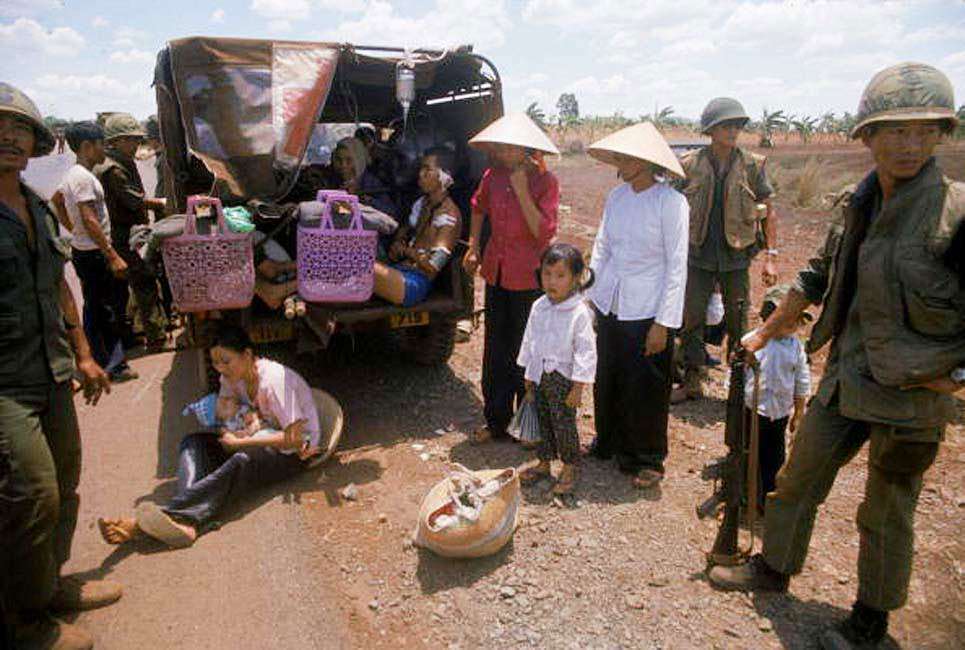
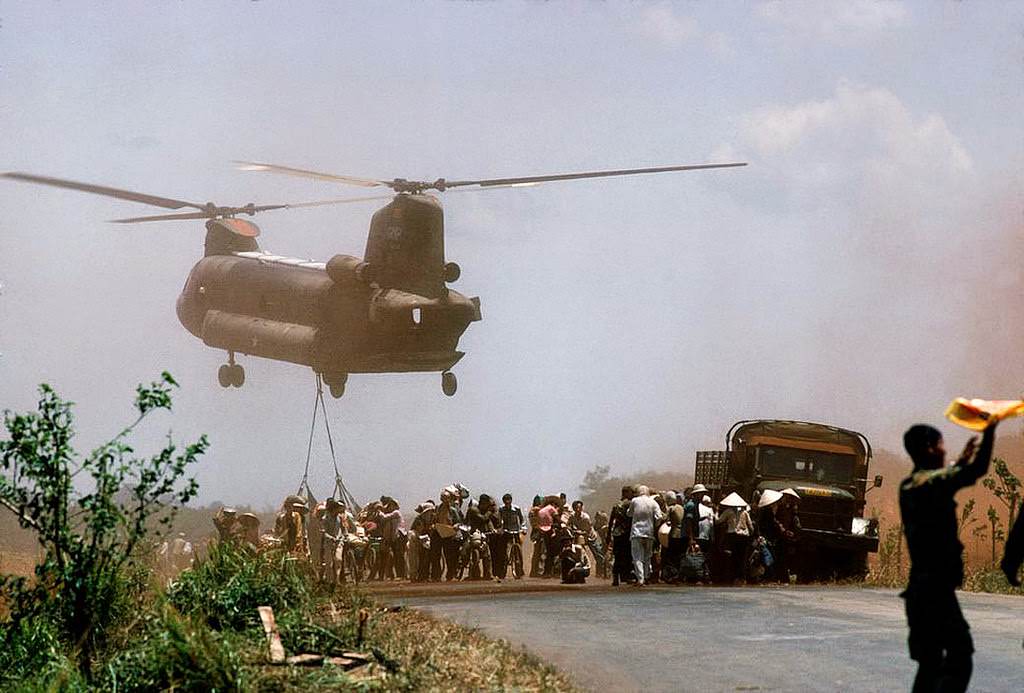
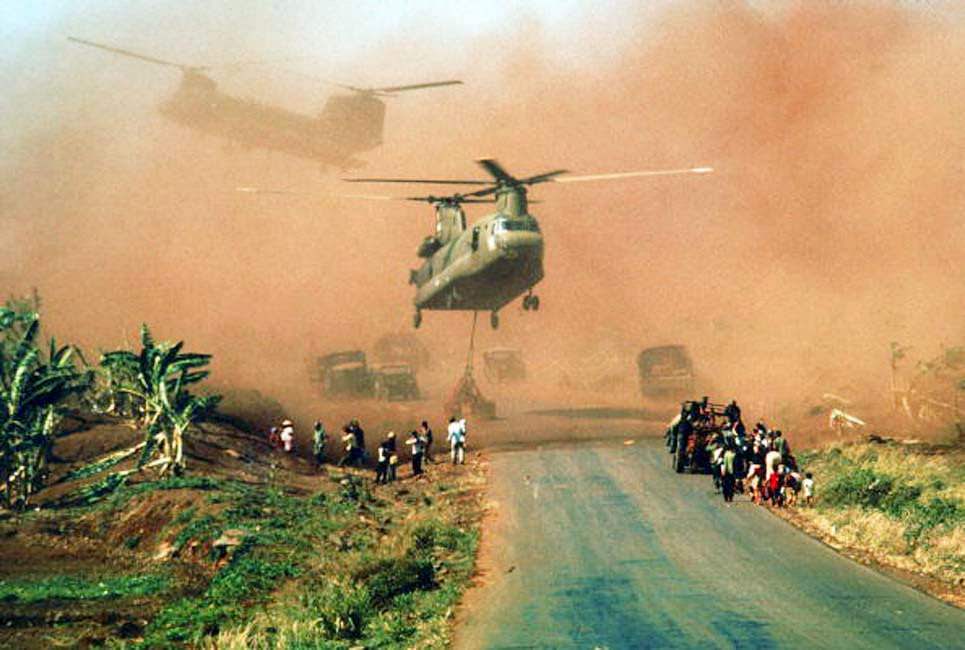
Two Chinook helicopters hover above a road as they assist in evacuating supplies and soldiers of the South Vietnamese (ARVN) 18th Division and their families from Xuan Loc, Vietnam, mid April, 1975.
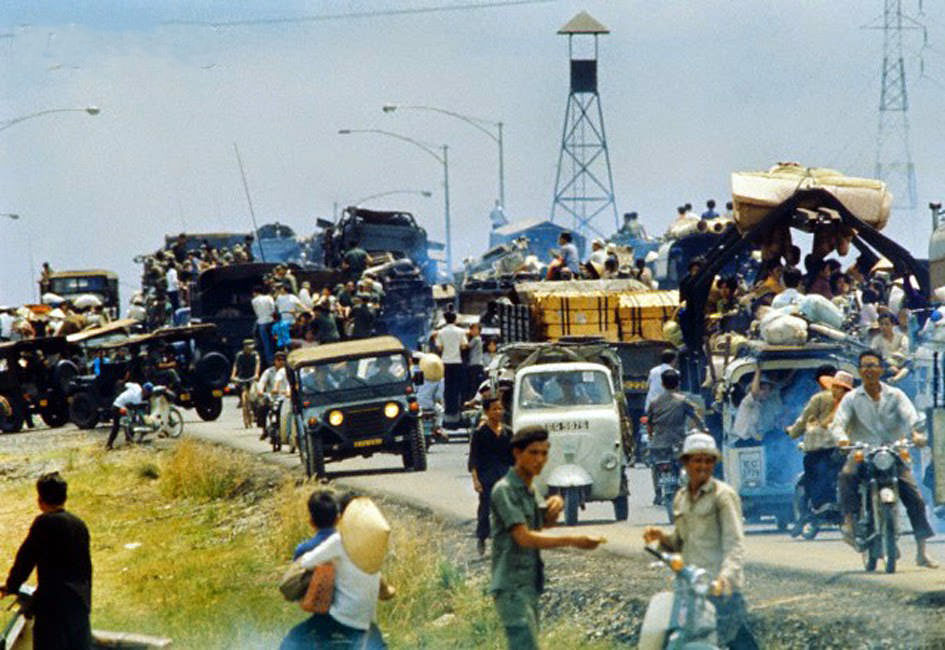
By March 1975, the North Vietnamese Army was moving fast. Sensing that no American response was coming, its commanders pushed south with little resistance. The decisive Battle of Ban Me Thuot broke open South Vietnam’s central highlands. Quang Tri and Hue fell in quick succession. Then on March 29, Da Nang — the country’s second-largest city — was overrun. The scenes at Da Nang were desperate and deadly. Civilians clung to the rear staircases and landing gear of a departing World Airways plane, some falling to their deaths. When Ford received word of the incident, he told an aide plainly: “It’s time to pull the plug. Vietnam is gone.”
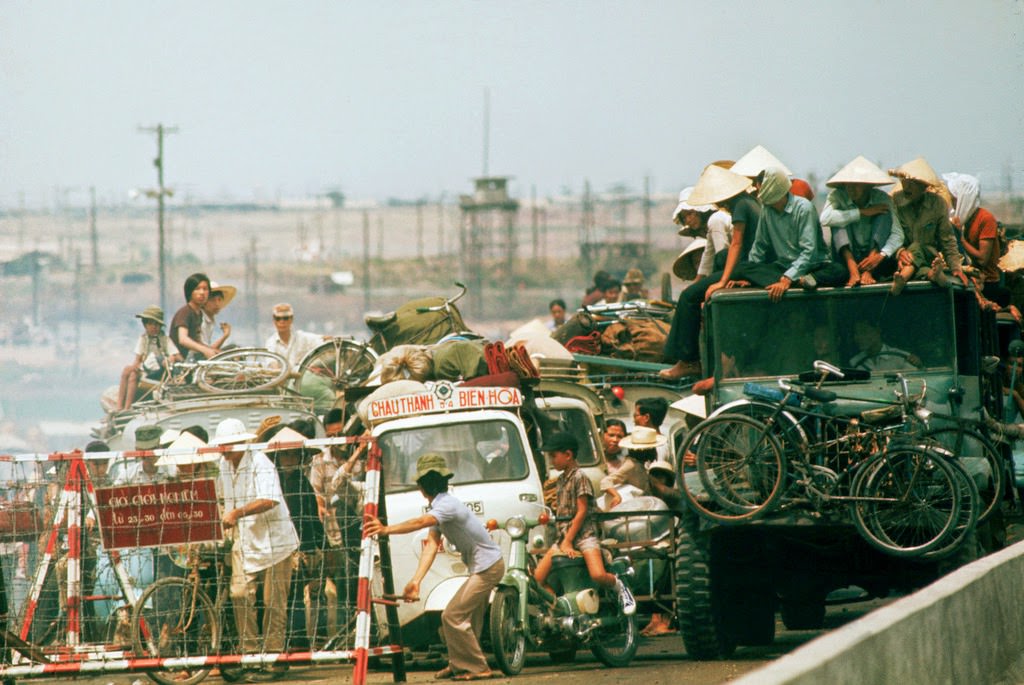
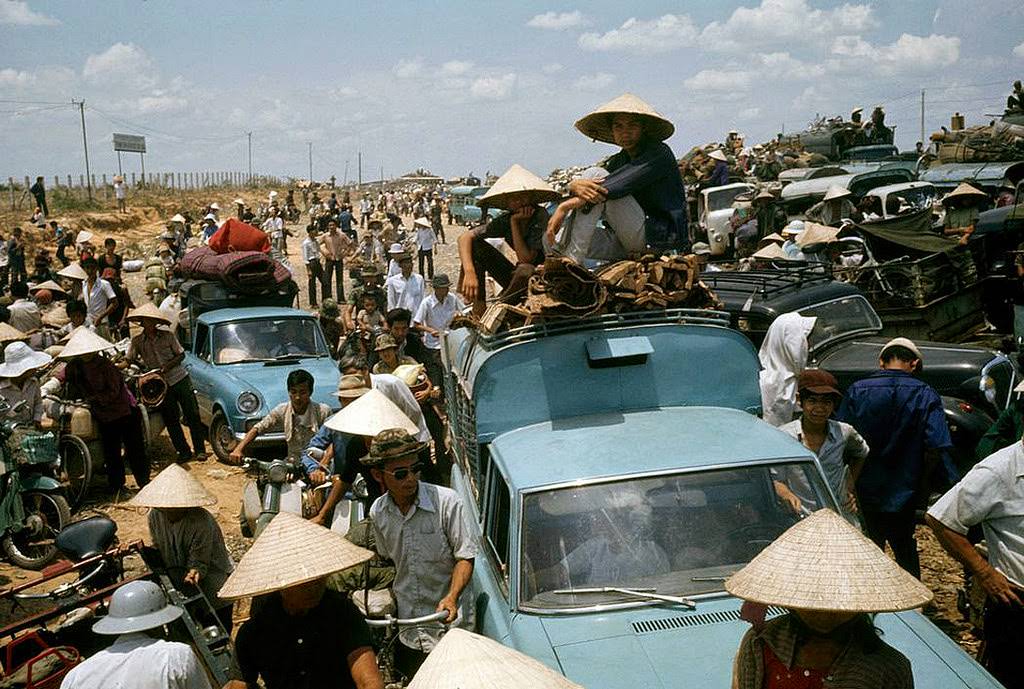
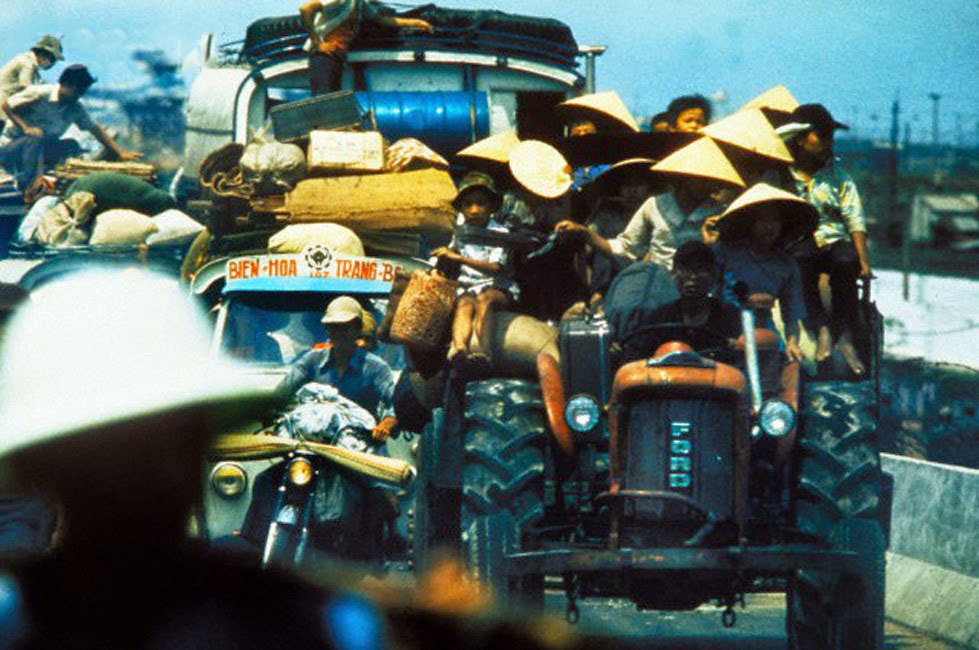
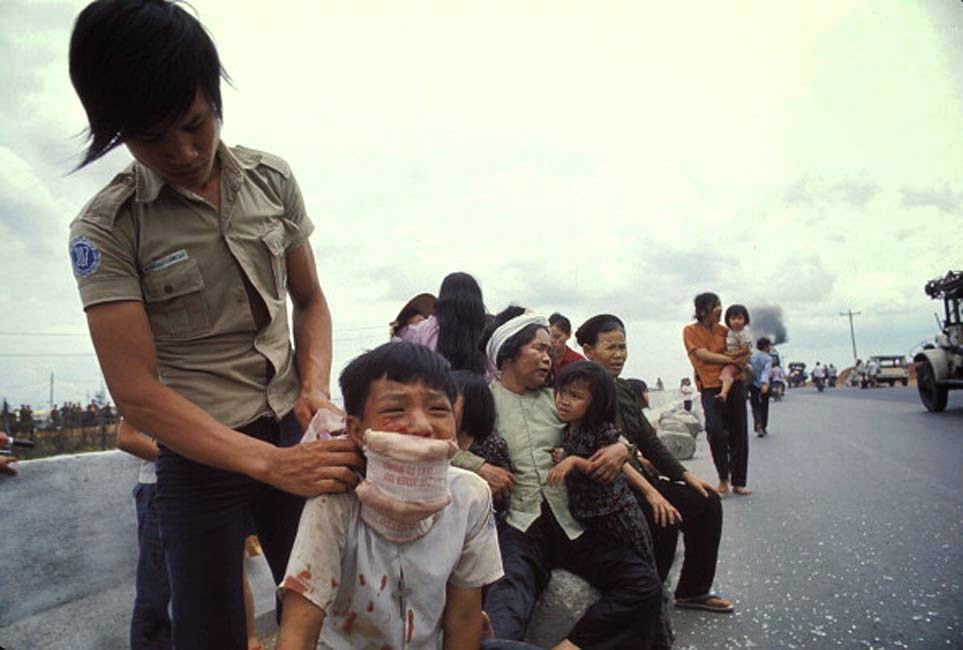
Desperate South Vietnamese refugees cling to vehicles along Highway 1.South Vietnamese refugees cling to vehicles along Highway 1.
The North Vietnamese advance reached Xuan Loc by April 21. When that city fell, South Vietnamese President Nguyen Van Thieu resigned and fled the country, leaving behind a government in freefall and 150,000 enemy troops positioned on the outskirts of Saigon. Ford had requested $722 million in emergency aid for South Vietnam from Congress. Congress rejected it.
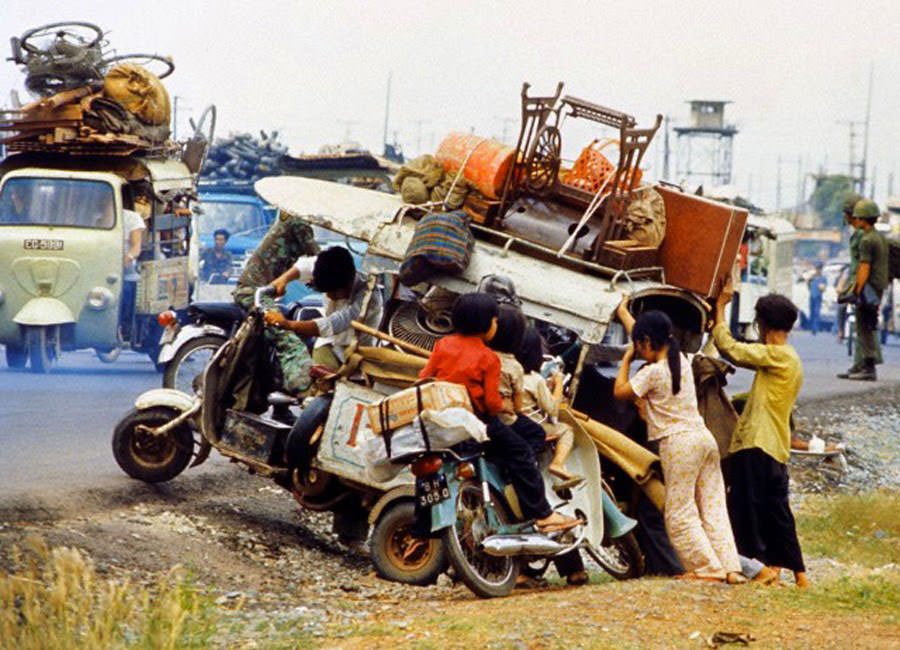
The Fall of Saigon, Vietnam in April, 1975 – President Thieu.Vietnamese refugee family fleeing advancing North Vietnamese Communists try to push their laden scooter back onto Highway 1 outside Saigon
Inside Saigon, U.S. Ambassador Graham Martin had been resisting calls to organize an evacuation for weeks. Martin had been ill and remained convinced that a visible evacuation would trigger panic throughout the city. He also felt bound by Nixon’s original mandate to preserve South Vietnam’s existence. That stance began to crumble on the morning of April 29, when two U.S. Marines guarding the Defense Attaché’s Office compound were killed by North Vietnamese artillery fire — the last American combat deaths of the Vietnam War. After surveying the damage at Tan Son Nhut airbase, Martin finally accepted that there was no other option. Sea lanes were blocked. Commercial and military aircraft could not land. The only way out was by helicopter.
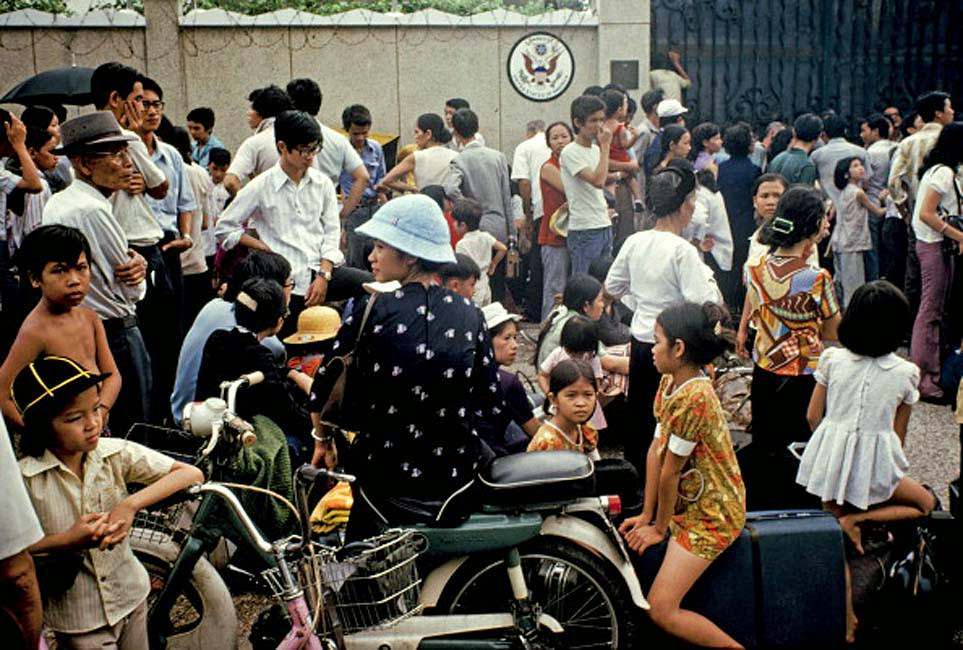
Marines guard the evacuation of civilians at Tan Son Nhut airbase in Vietnam while under Viet Cong fire, during the fall of Saigon, on April 15, 1975The area surrounding the American Embassy just before the fall of the city in late April 1975.
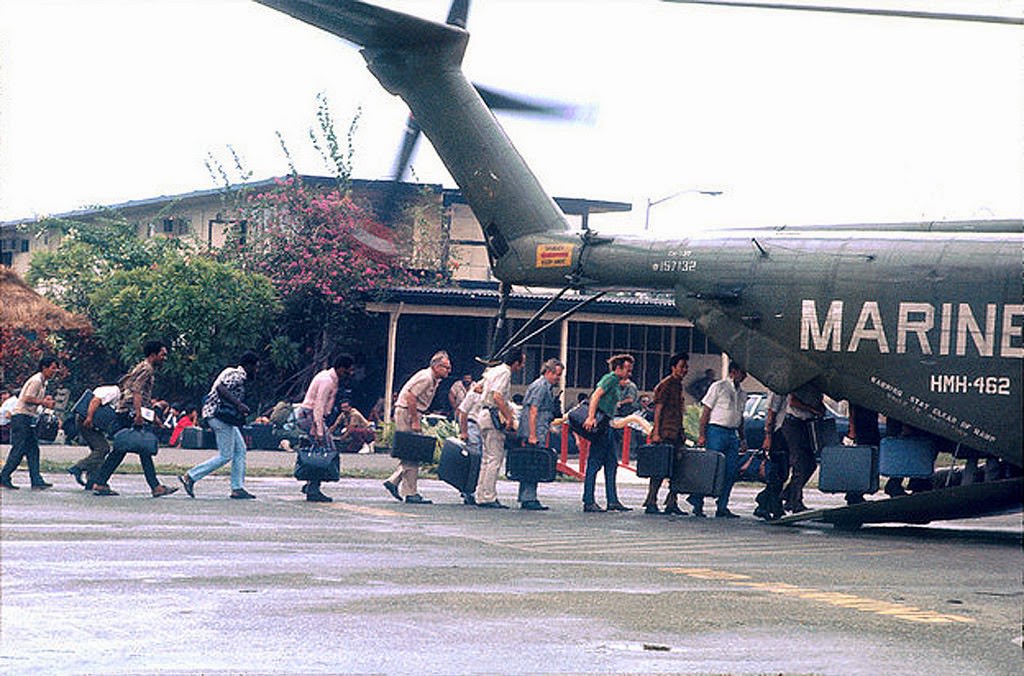
The signal to begin Operation Frequent Wind was a radio broadcast of Bing Crosby’s “White Christmas.” Americans and their Vietnamese allies who heard it made their way to pre-arranged pickup points. Buses and smaller helicopters moved them to the Defense Attaché’s Office compound, where larger aircraft ferried them to U.S. Navy ships waiting 40 miles offshore in the South China Sea. Around 5,000 people were evacuated from the compound before enemy fire made that location untenable. From that point on, the American Embassy became the last remaining exit.
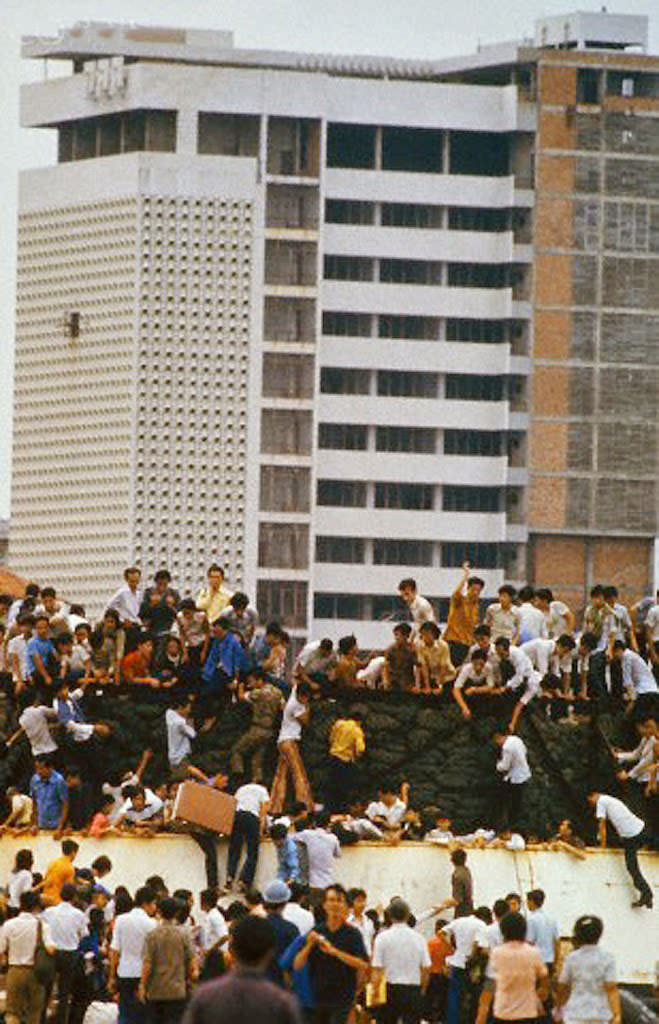
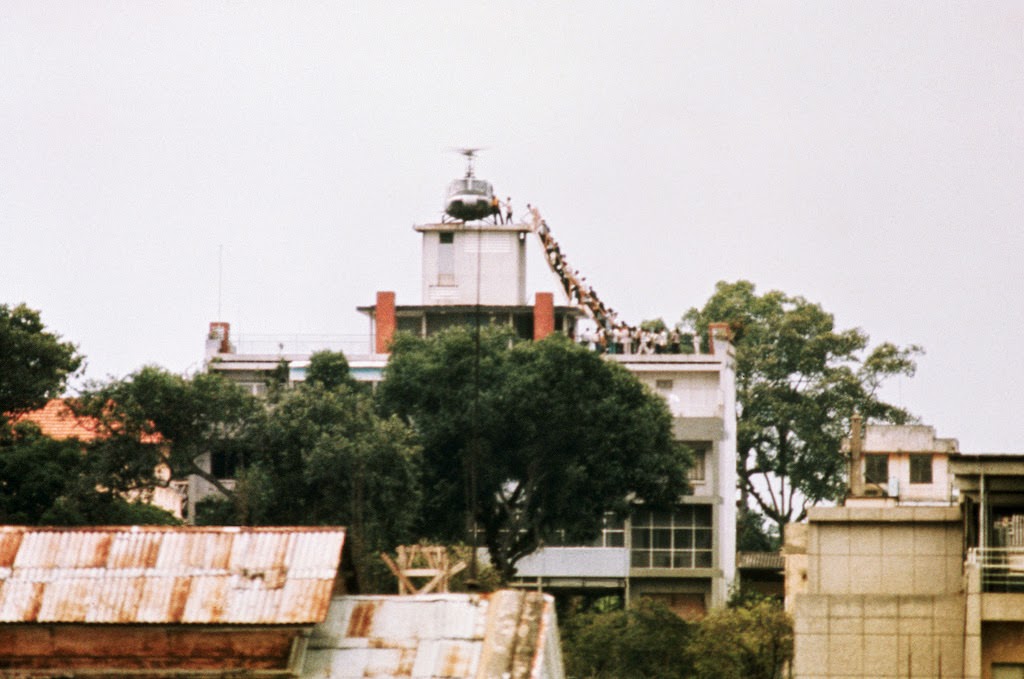
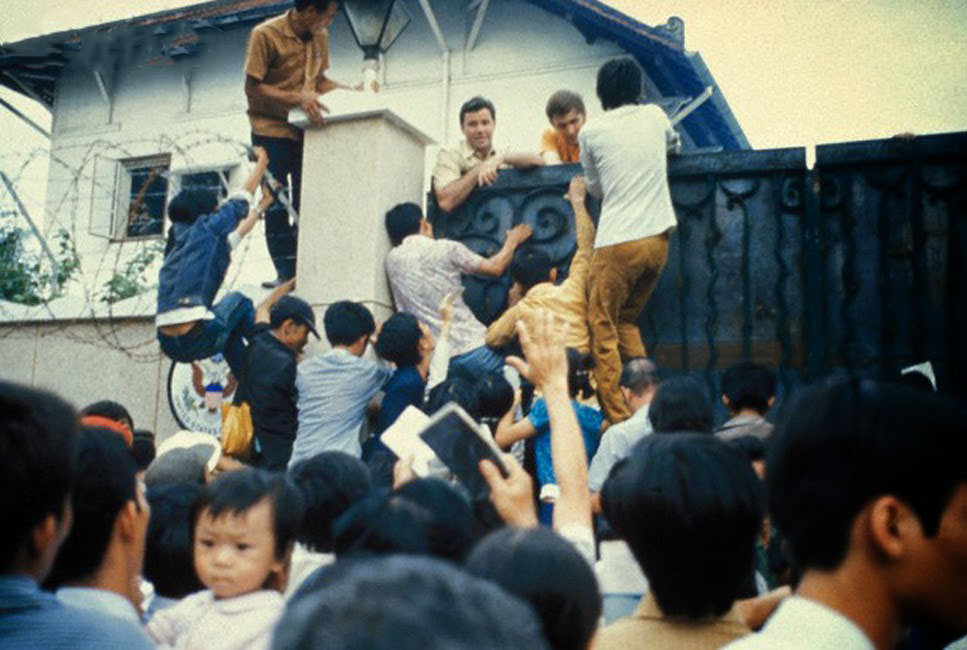
A CIA employee (probably O.B. Harnage) helps Vietnamese evacuees onto an Air America helicopter from the top of 22 Gia Long Street, a half mile from the U.S. Embassy, 29 Apr 1975, Saigon, South Vietnam.Desperate South Vietnamese citizens try to scale the walls of the American Embassy in a vain attempt to flee Saigon and avancing North Vietnamese troops .
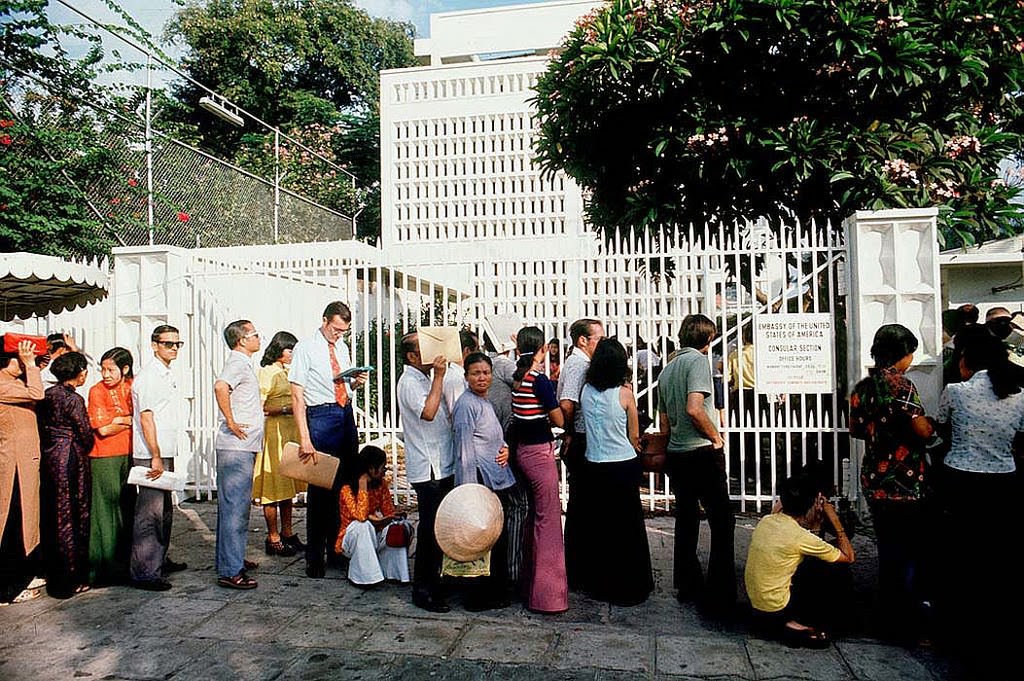
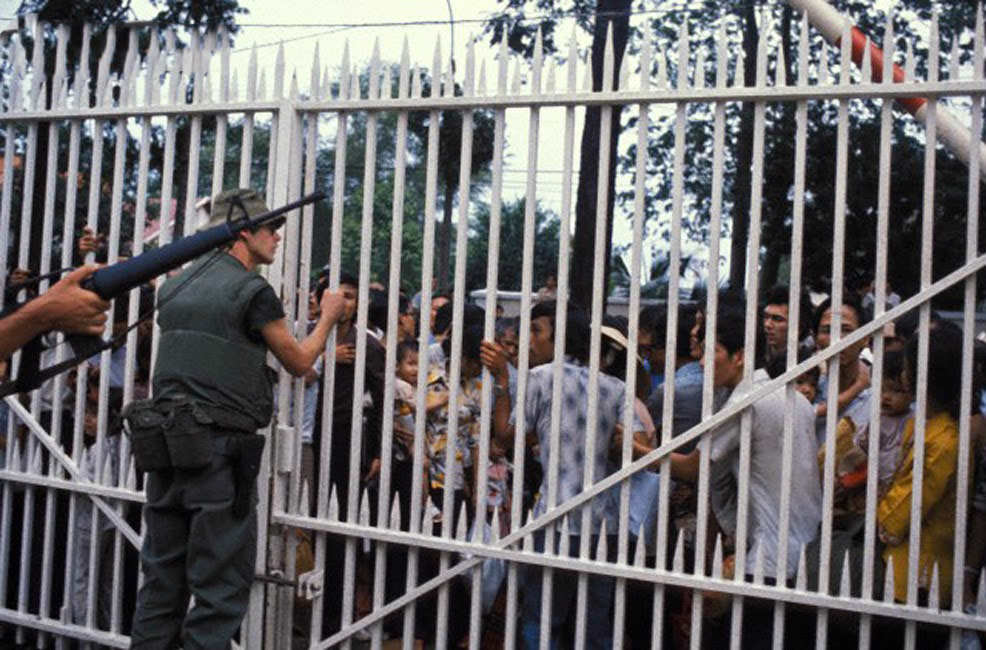
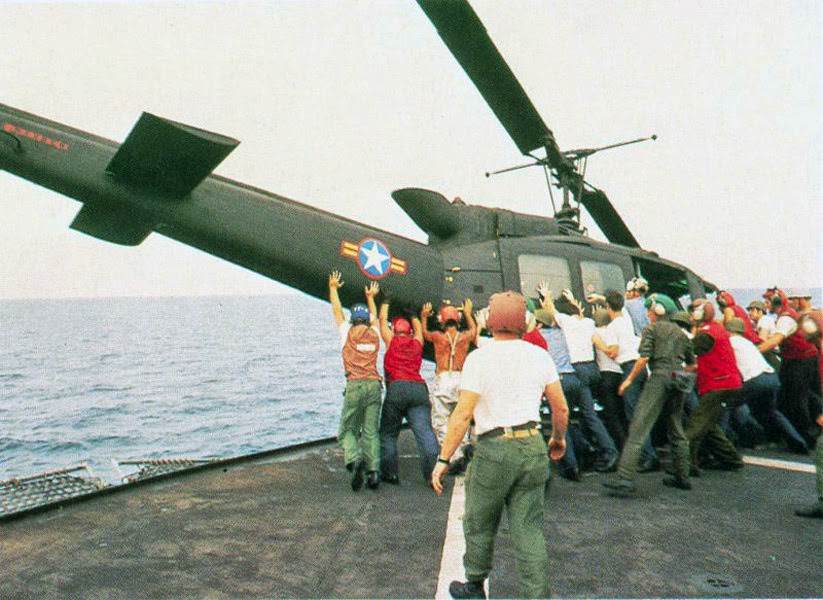
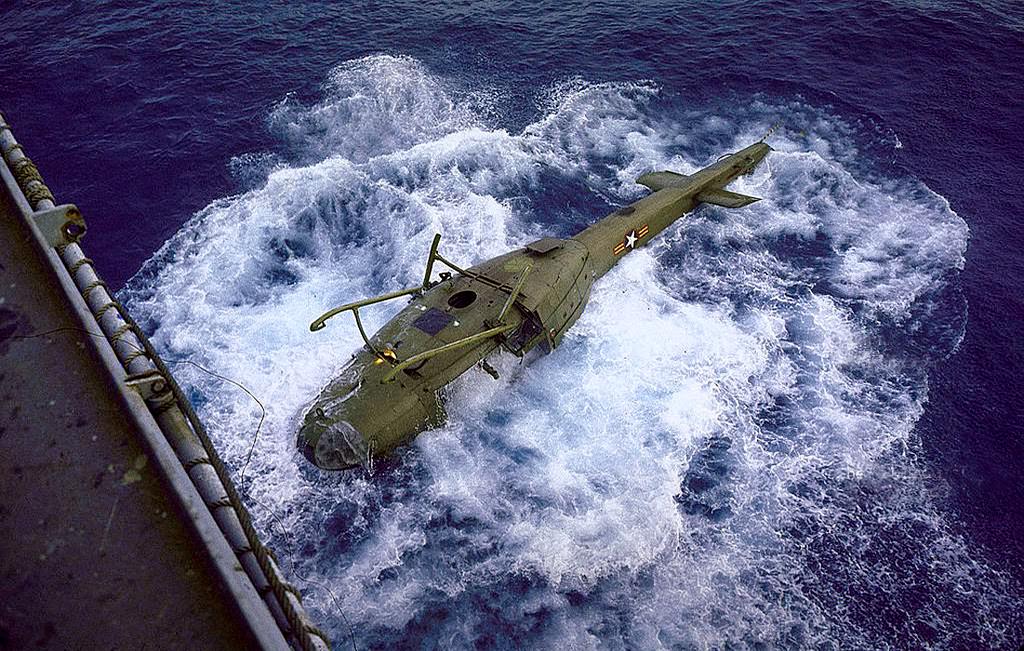
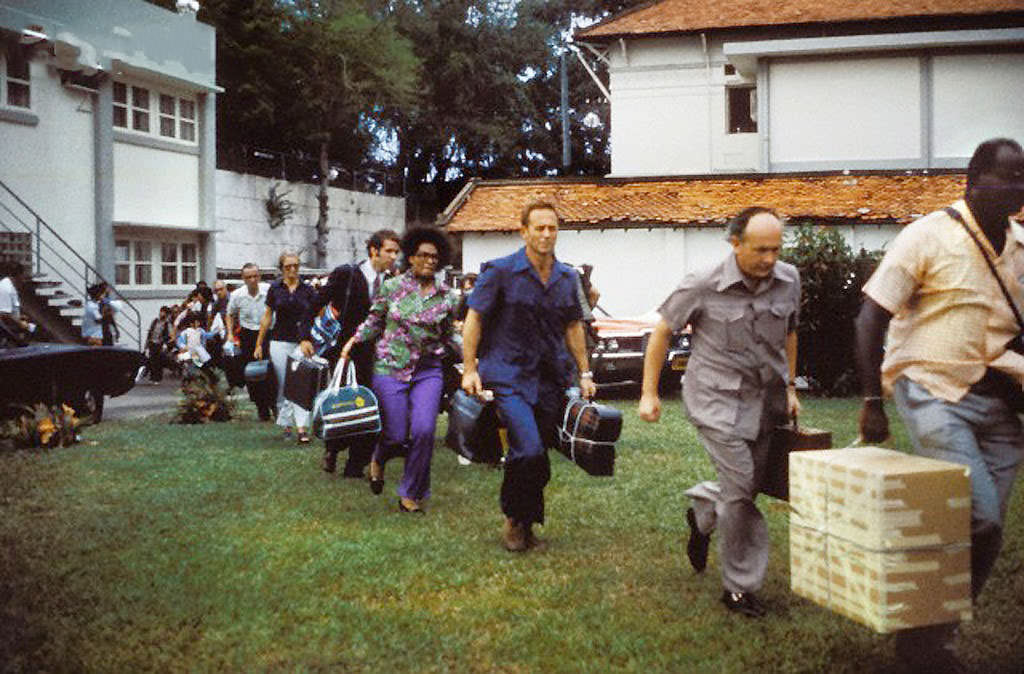
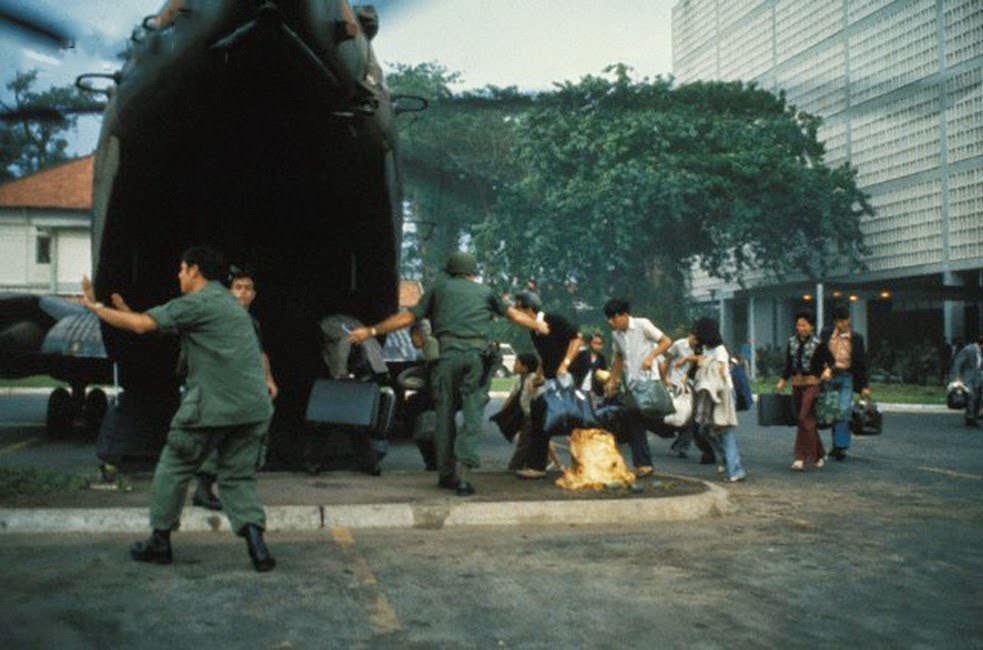
Outside the embassy gates, approximately 10,000 people gathered, desperate to get inside. Marine guards had to make the impossible choice of who to let through and who to turn away. The original evacuation plan had been limited to Americans only, but Ambassador Martin pushed to include South Vietnamese government officials, military officers, and support workers. Helicopters landed on the embassy roof and in an adjacent parking lot every ten minutes, throughout the day and deep into the night. Meanwhile, South Vietnamese Air Force pilots were making their own escapes. They hijacked helicopters, loaded their families aboard, and landed on the decks of American ships offshore. So many aircraft arrived that U.S. Navy crews were forced to push helicopters overboard into the sea just to clear space for the next ones to land.
Japan ESouth Vietnamese UH-1H being pushed overboard to make room for a Cessna O-1 landing.Vietnamese helicopter sinking after being dumped overboard from aircraft carrier to make more room for the evacuation of American personnel from Vietnam during the fall of Saigon.
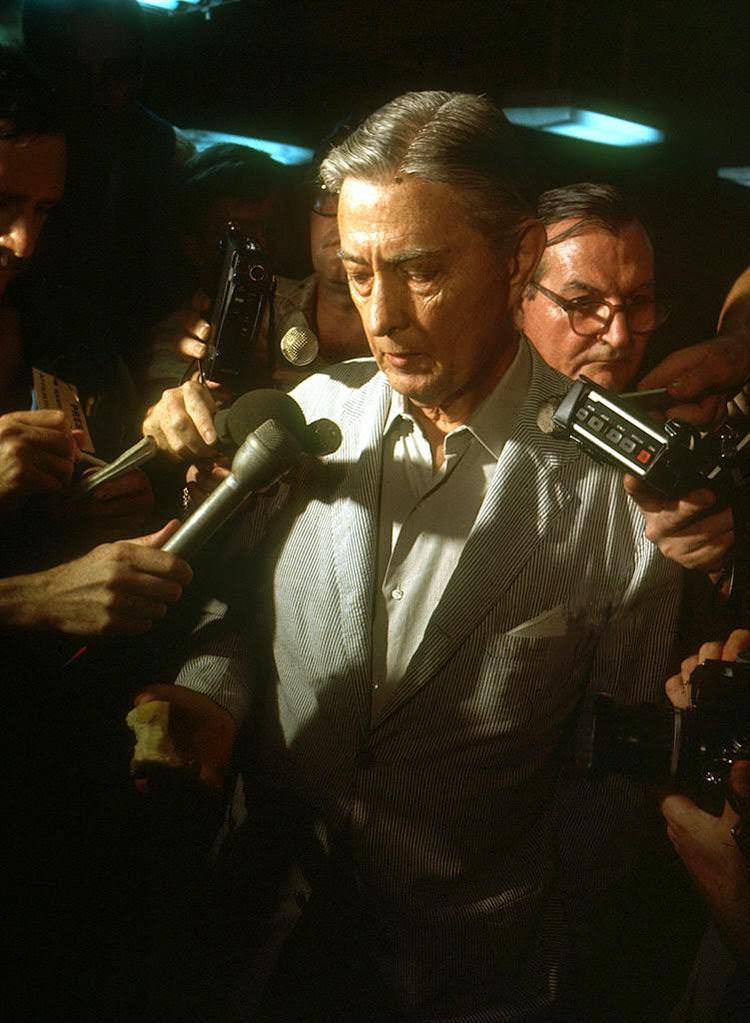
Ambassador Martin refused to leave his post. He stayed inside the embassy, coordinating the lift and pressing to get as many people out as possible. At 3:30 a.m. on April 30, President Ford issued a direct order: Martin was to leave the embassy immediately, and from that point forward, only Americans would be evacuated. Martin complied 90 minutes later, stepping into a helicopter while clutching the folded American flag. He left behind hundreds of Vietnamese who had gathered inside the compound, still waiting.
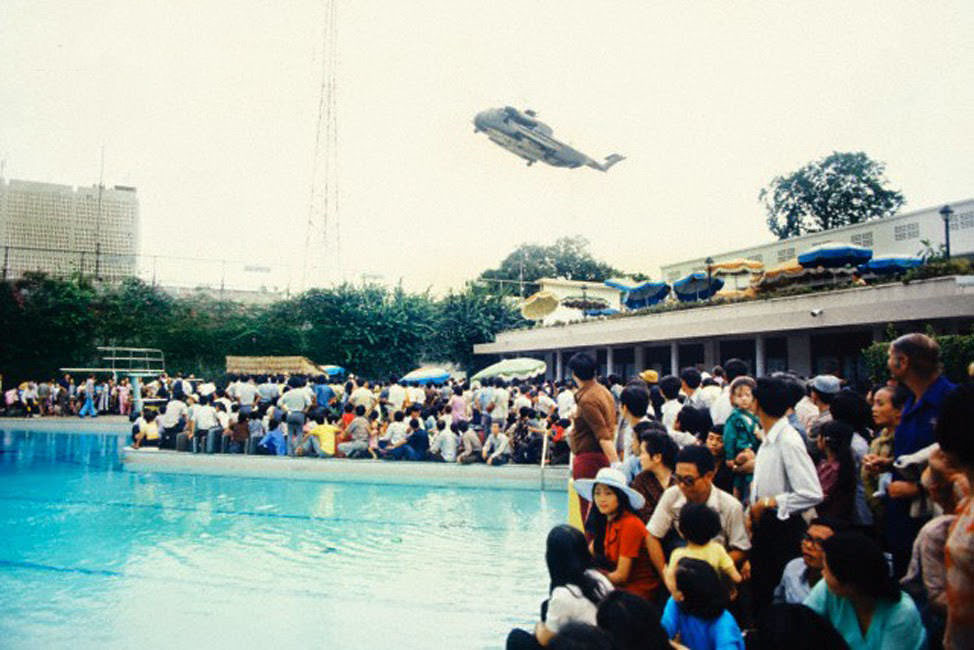
As Saigon falls to the communist rule of North Vietnamese, US Ambassador to Vietnam, Graham Martin, speaks to the press April 29, 1975 after an evacuation from South Vietnam.Crowds of Vietnamese and Western evacuees wait around the swimming pool inside the American Embassy compound in Saigon hoping to escape Vietnam via helicopter before the arrival of North Vietnamese troops.
Just after dawn on April 30, the last Marine guards boarded a helicopter from the embassy roof. Their departure ended the United States’ physical presence in Vietnam. In fewer than 24 hours of continuous operations, some pilots flew for 19 straight hours. The total number evacuated reached approximately 7,000 people, including around 5,500 Vietnamese. The iconic photograph that many people associate with the final evacuation — showing Vietnamese evacuees climbing a narrow wooden staircase to a helicopter on a rooftop — was not taken at the American Embassy. It was taken at 22 Gia Long Street, half a mile away, the day before the embassy evacuation ended.
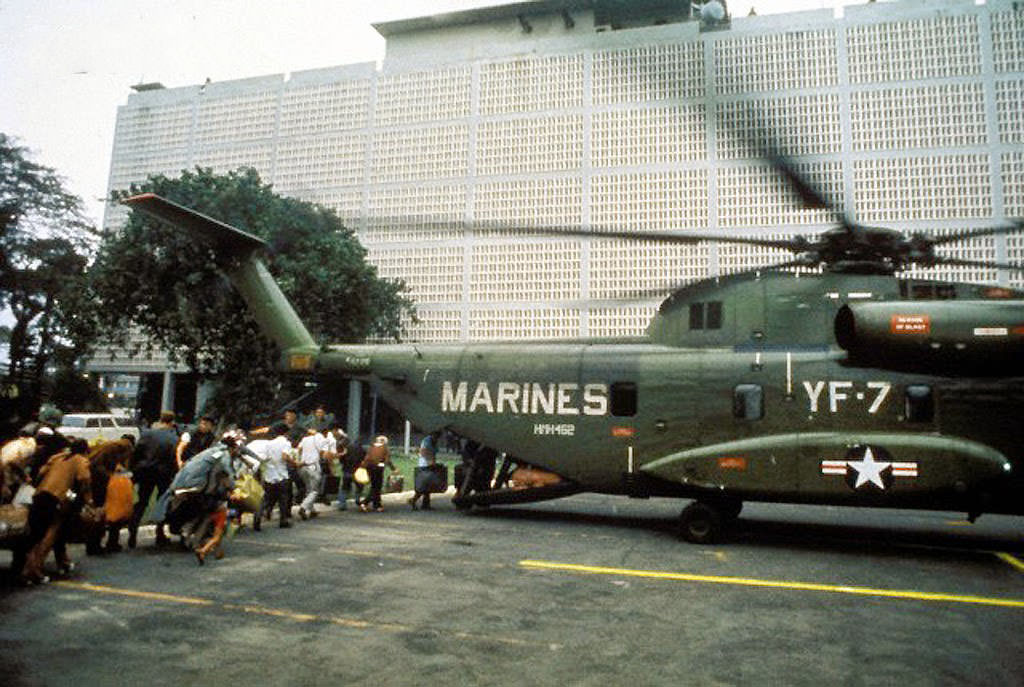
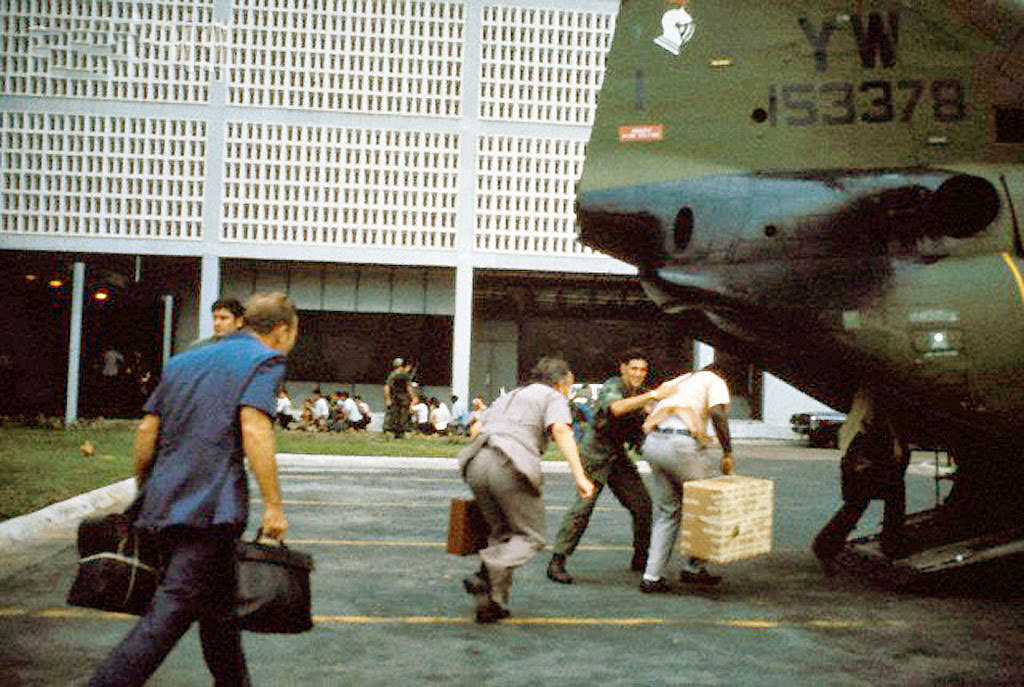
Civilian evacuees board US Marine helicopter inside US Embassy compound to be helilifted to the US Seventh Fleet ahead of Communist troops about to enter Saigon on the last day of the Vietnam War, April 30th 1975US civilians board helicopter inside the American Embassy compound in Saigon to escape advancing North Vietnamese about to capture Saigon.
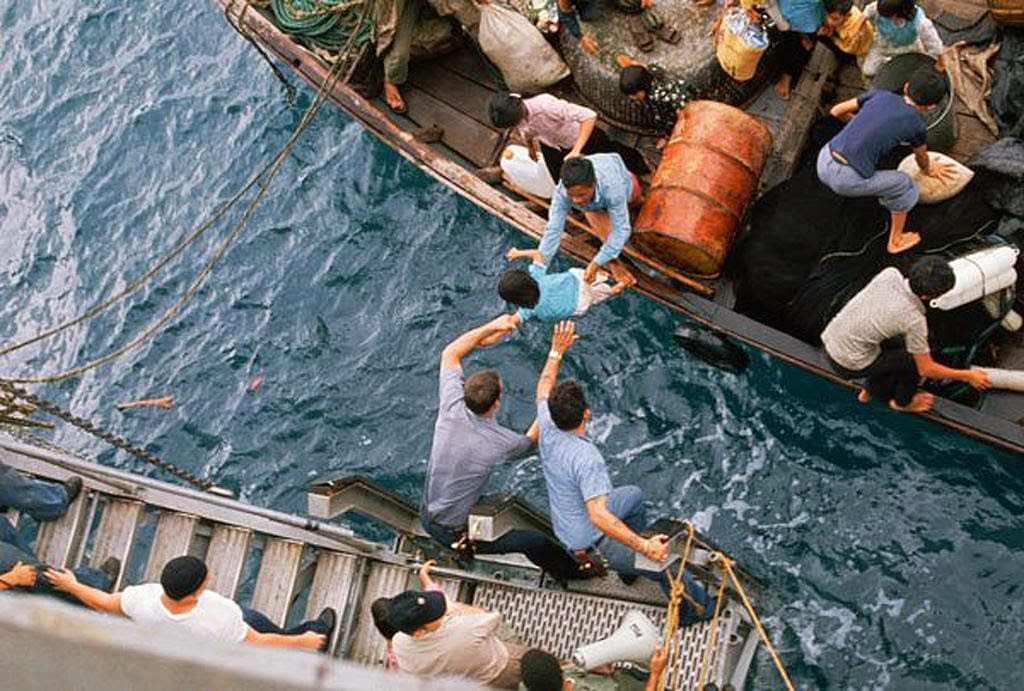
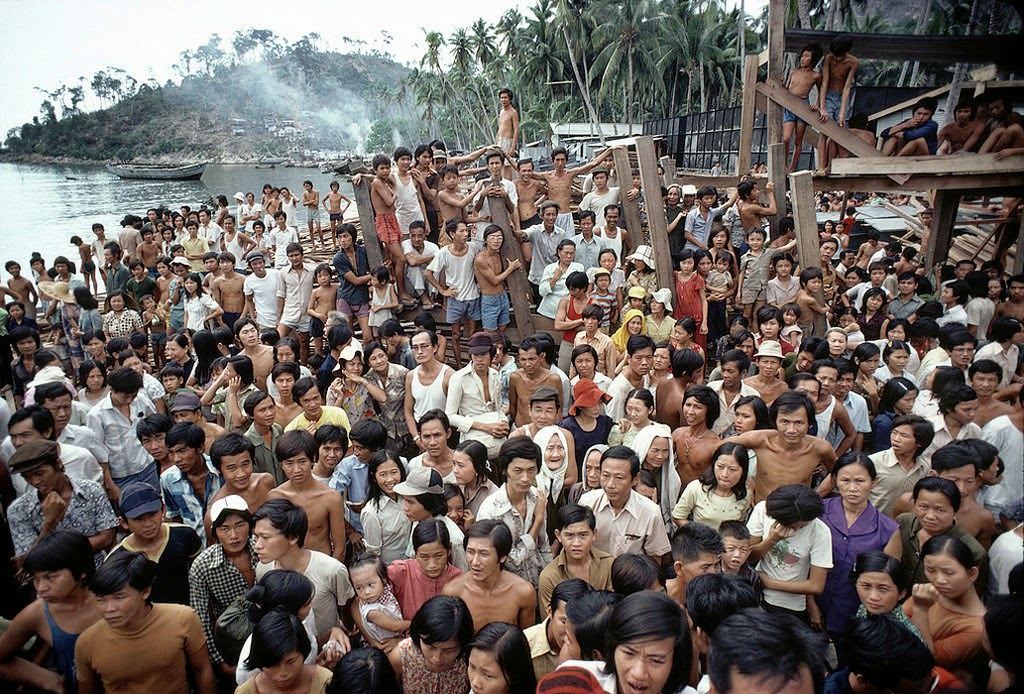
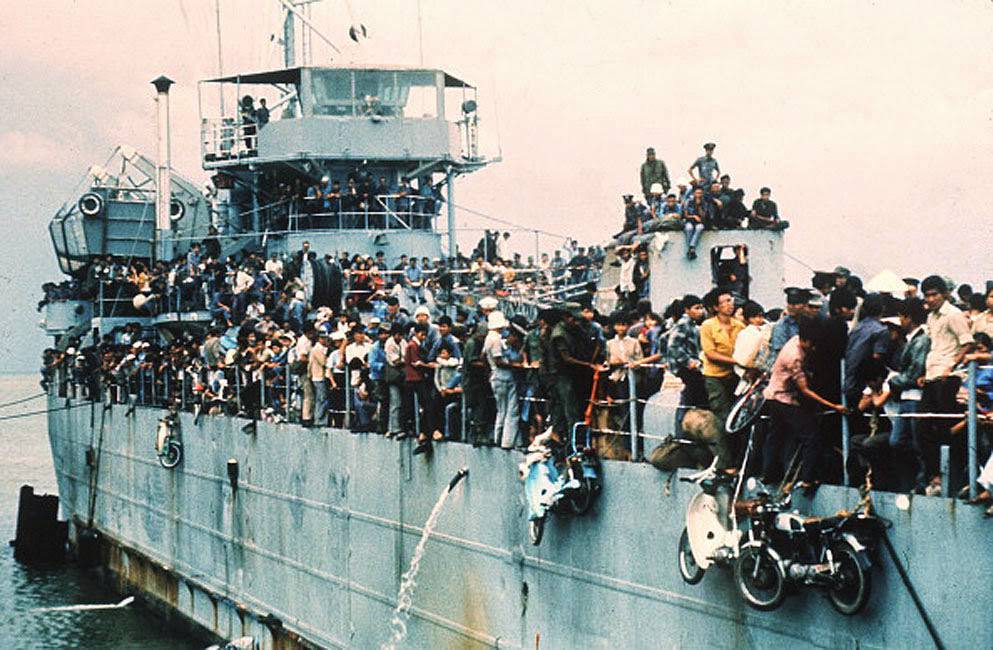
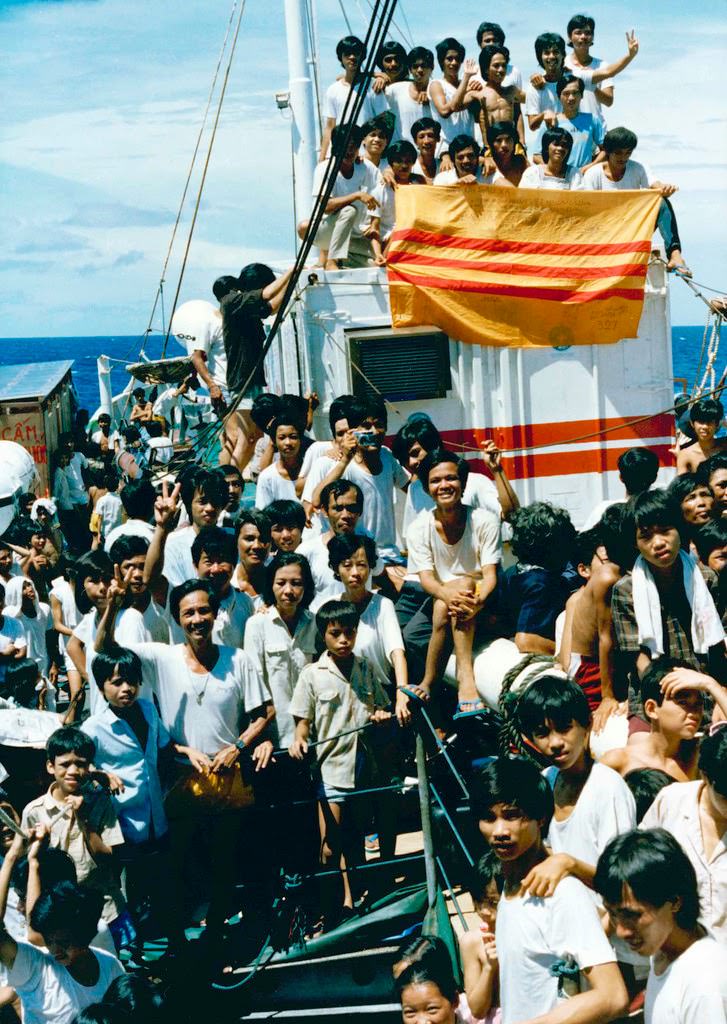
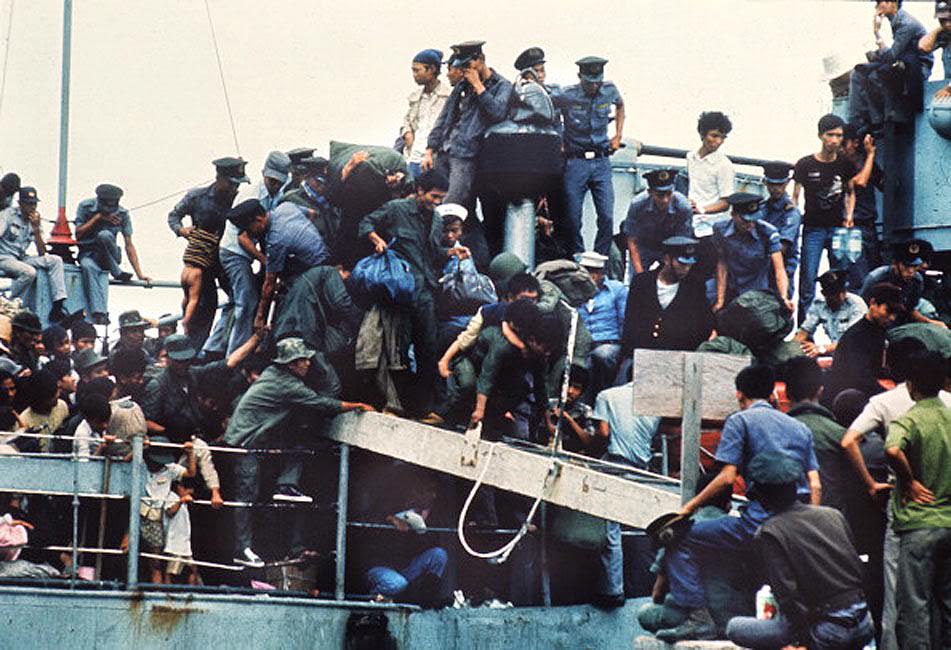
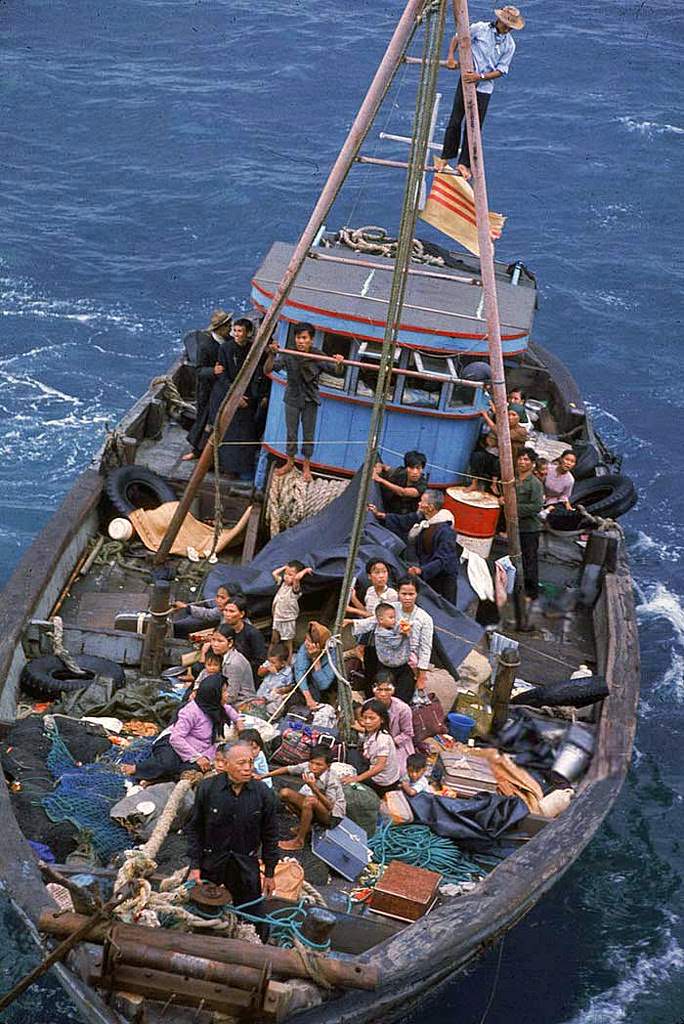
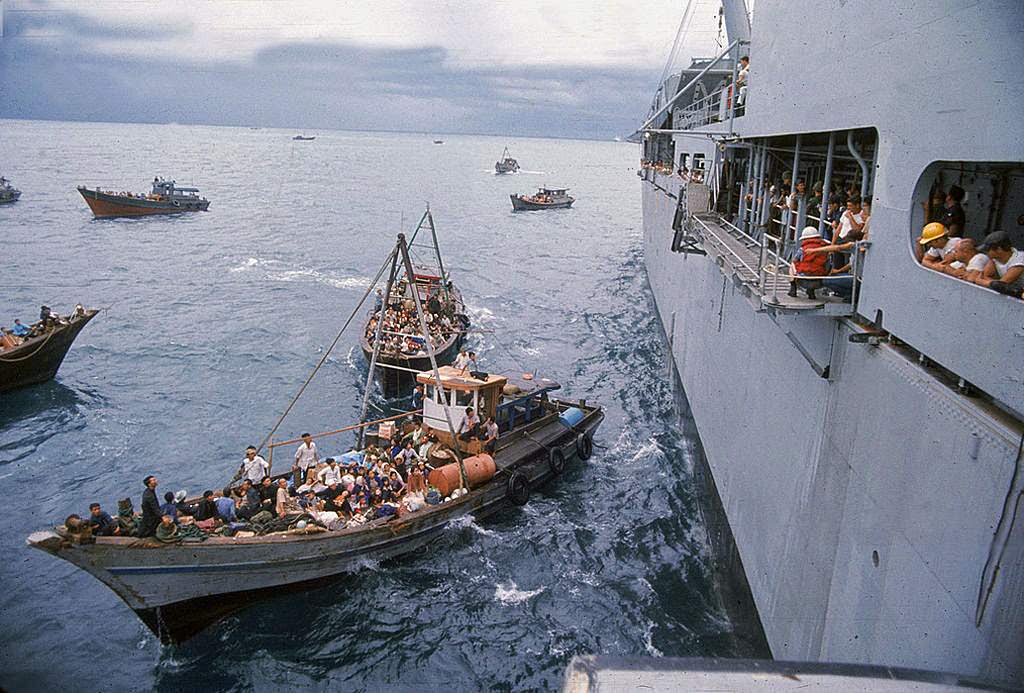
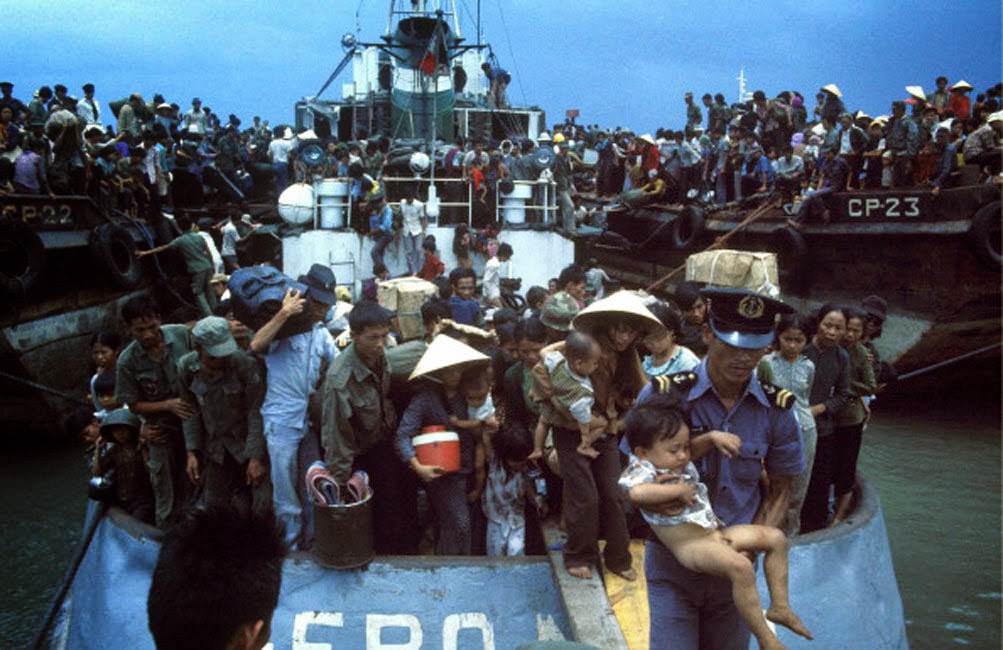
Not everyone escaped by air. Tens of thousands of South Vietnamese fled by sea, cramming onto navy vessels, barges, and small boats. The South Vietnamese Navy ship HQ-504 arrived at Vung Tau port packed with more than 7,000 refugees. Thousands more had already flooded the port from Cam Ranh Bay and other coastal points, having fled cities like Hue and Da Nang weeks earlier. Offshore, U.S. Navy ships pulled refugees from small craft in the South China Sea.
Jam-packed with more than 7,000 refugees, the South Vietnamese Navy ship HQ-504 arrives at Vung Tau port, the South Vietnam’ s most popular sea resort, and now the only port city in the Government hands.South Vietnamese refugees approach a U.S. war ship to seek refuge from the invading force from the North April 1975 in the South China Sea near Saigon.South Vietnamese refugees in boats approach a U.S. war ship to seek refuge from the invading force from the North April 1975 in the South China Sea near Saigon.
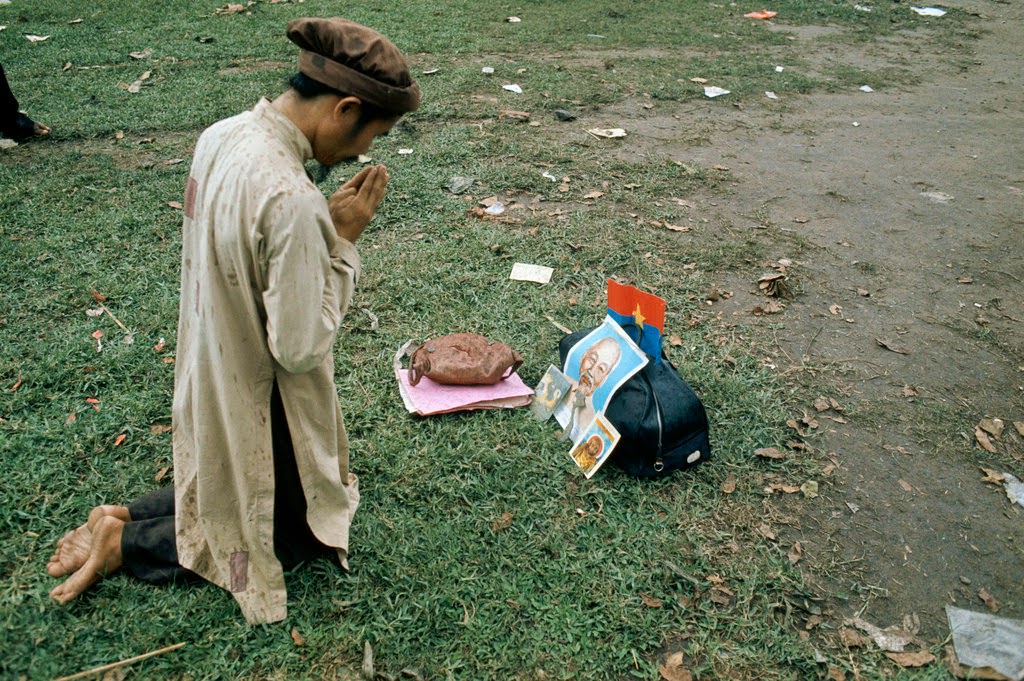
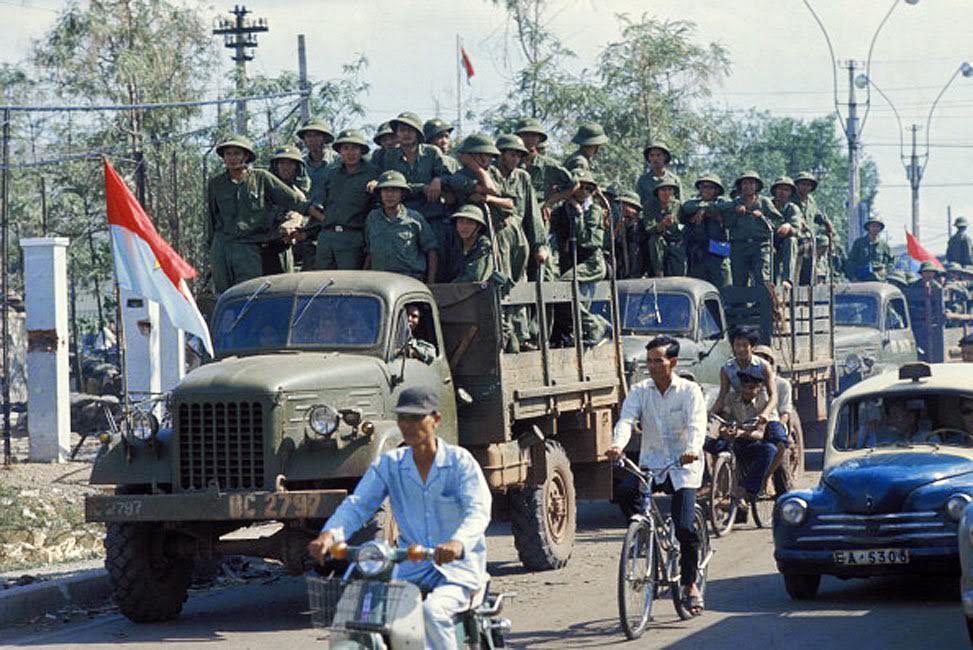
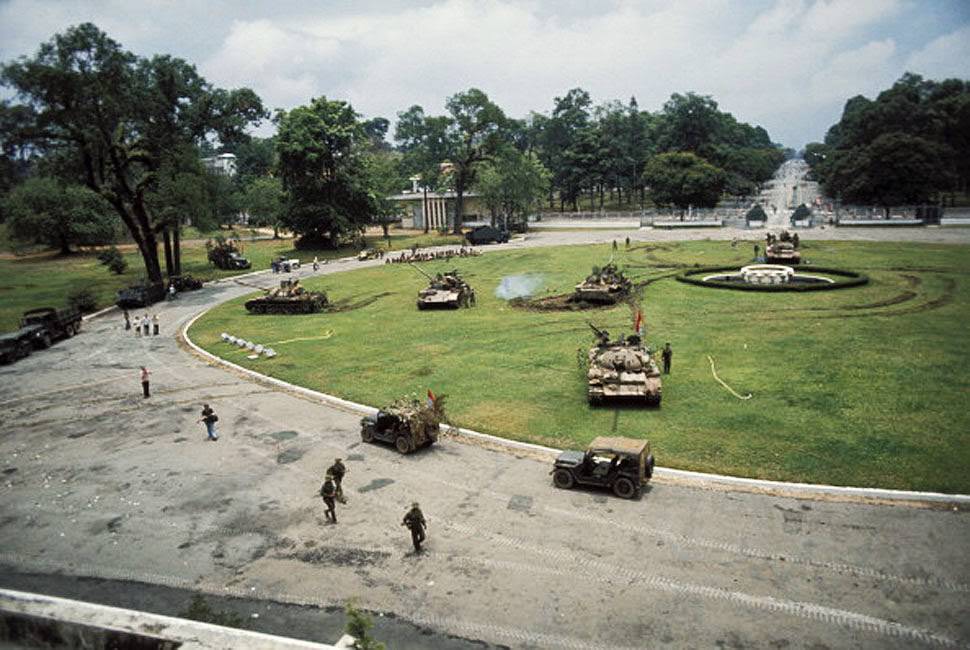
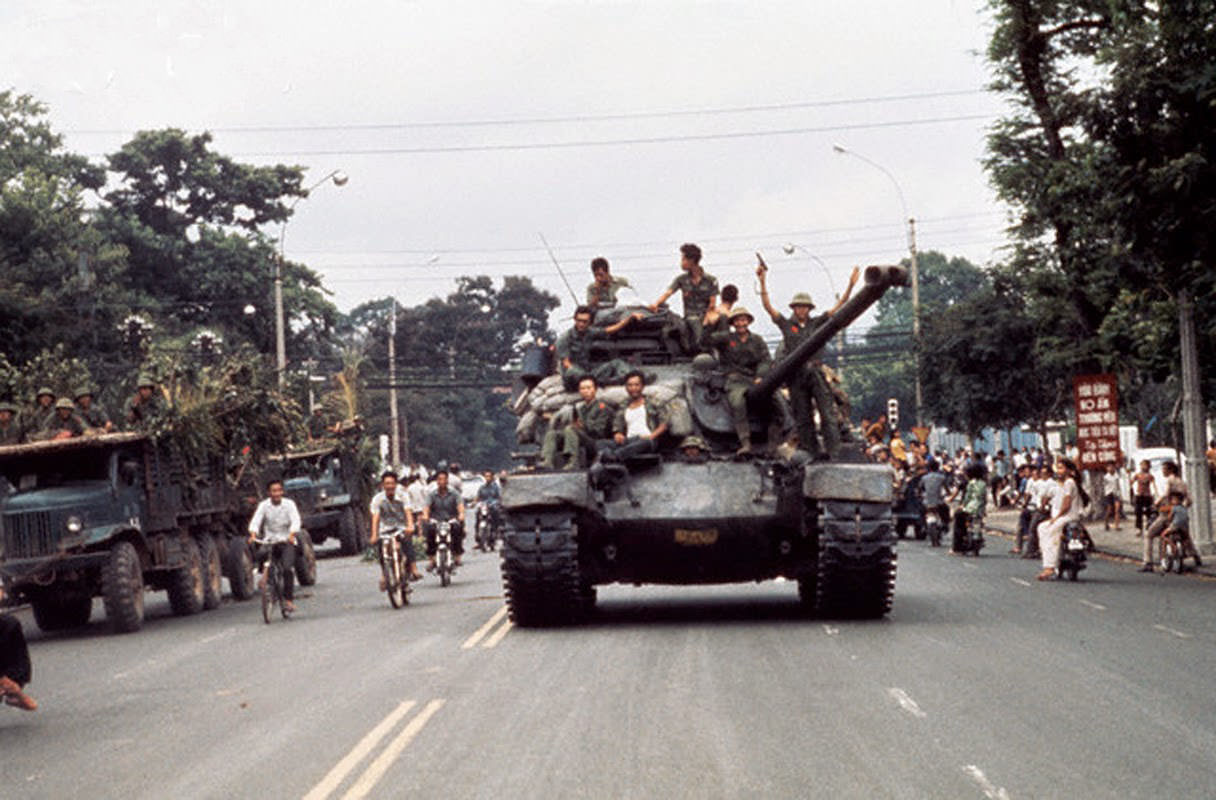
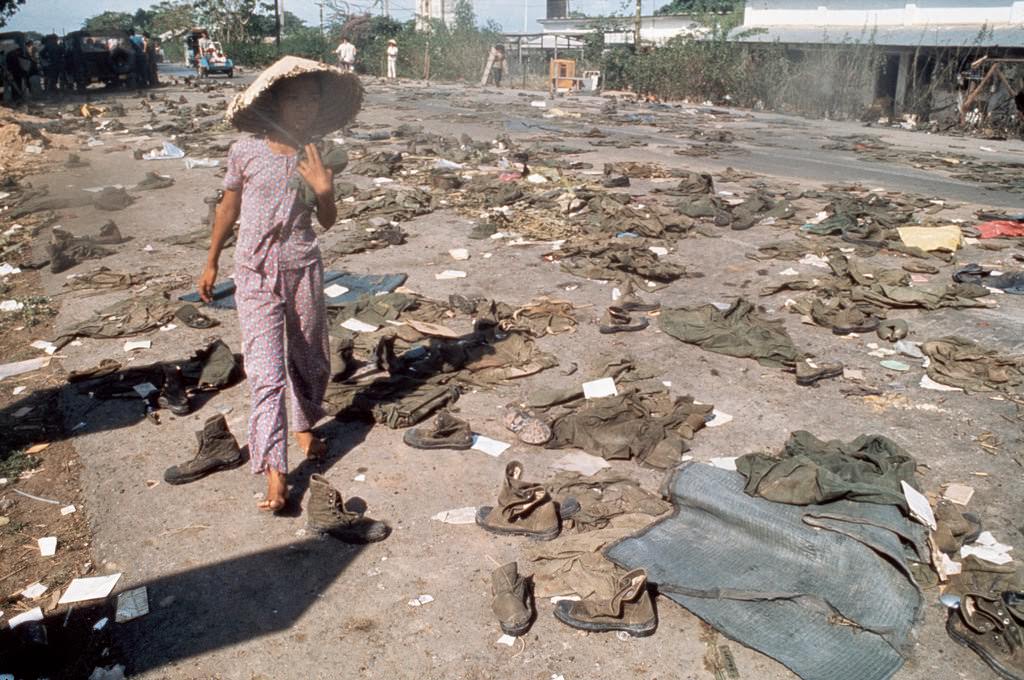
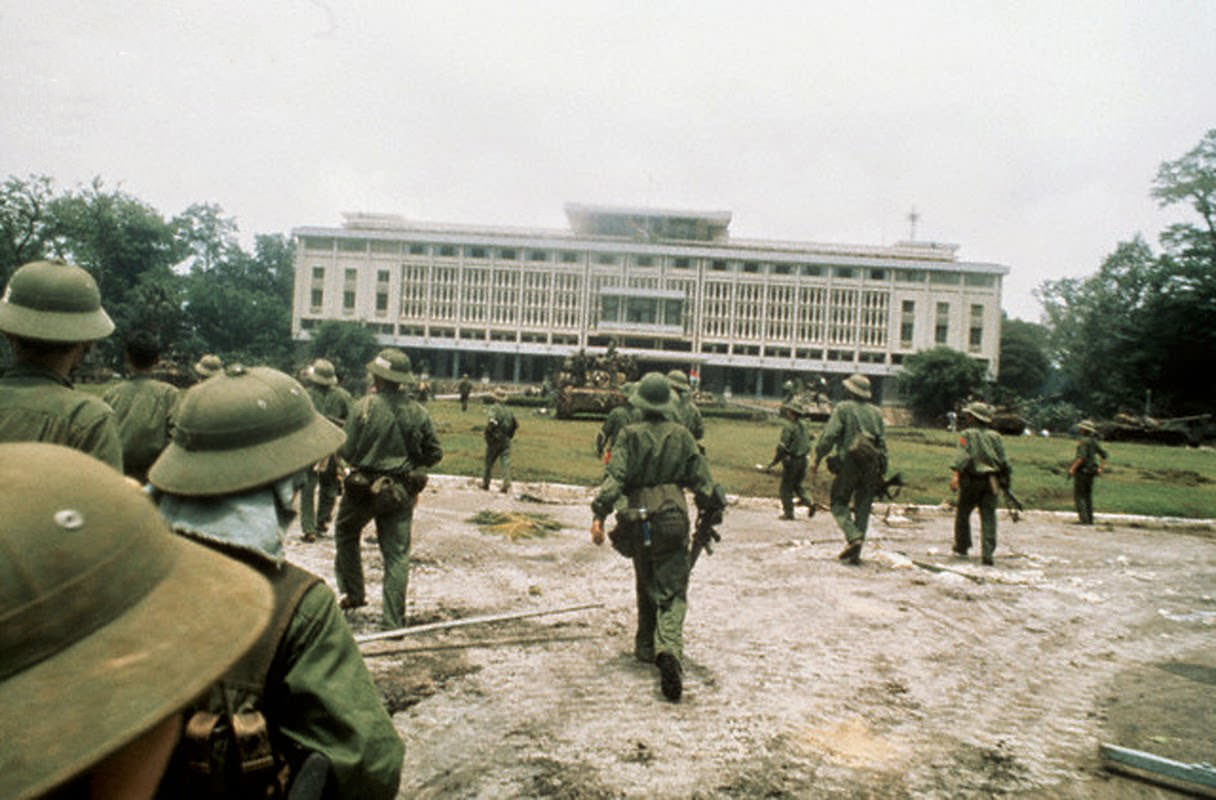
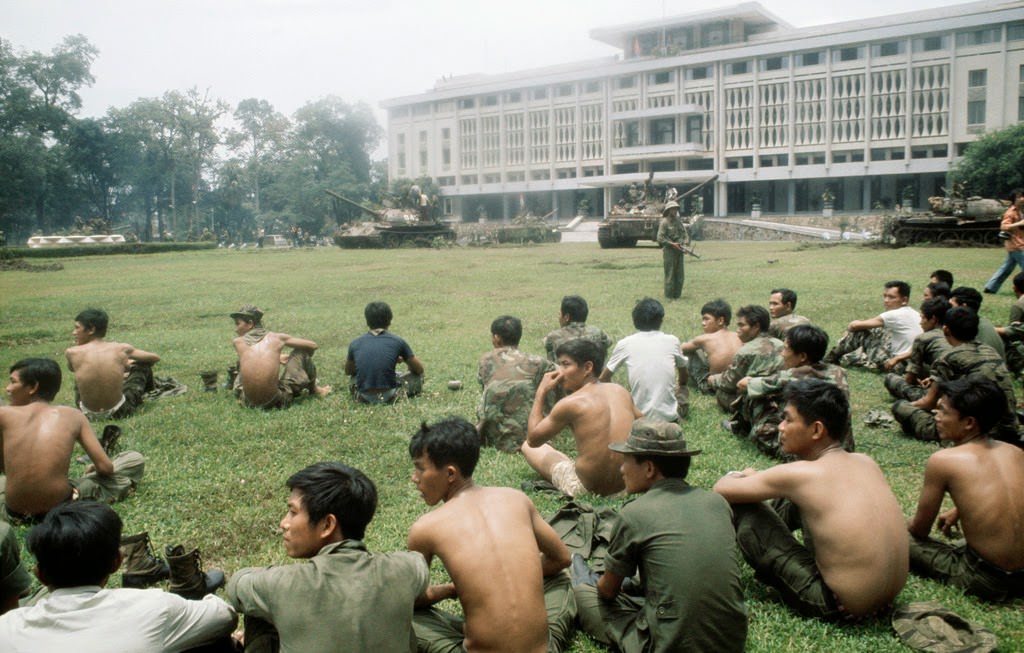
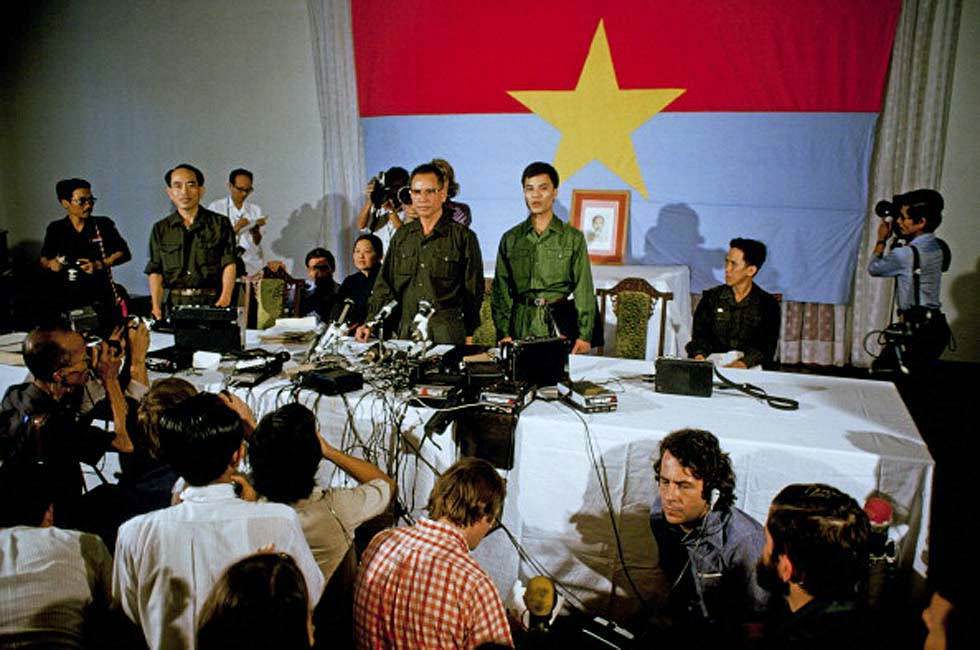
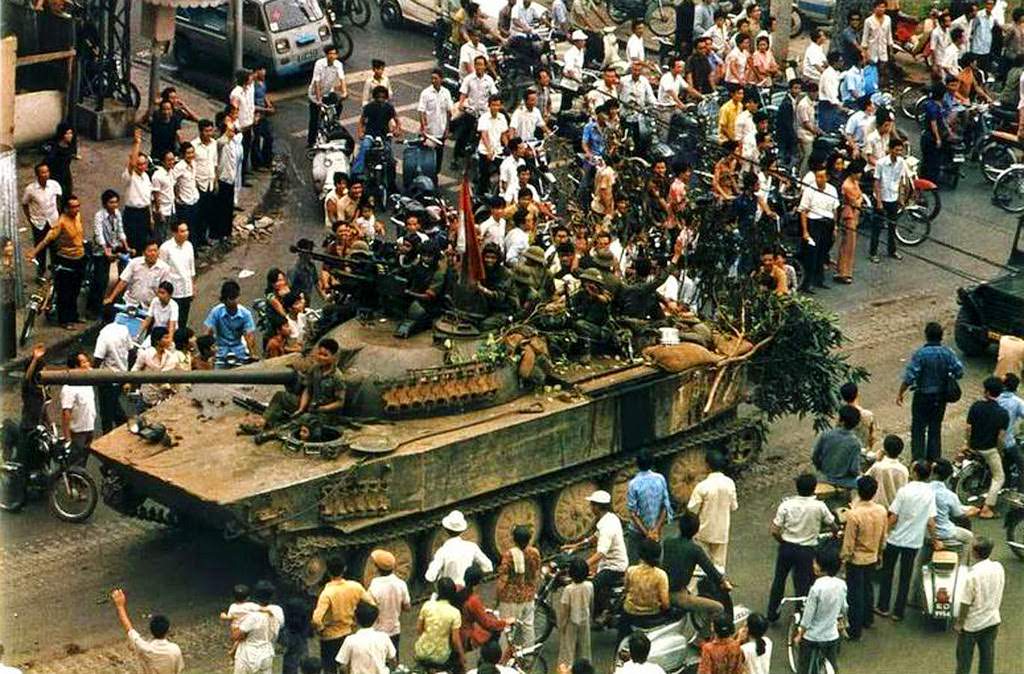
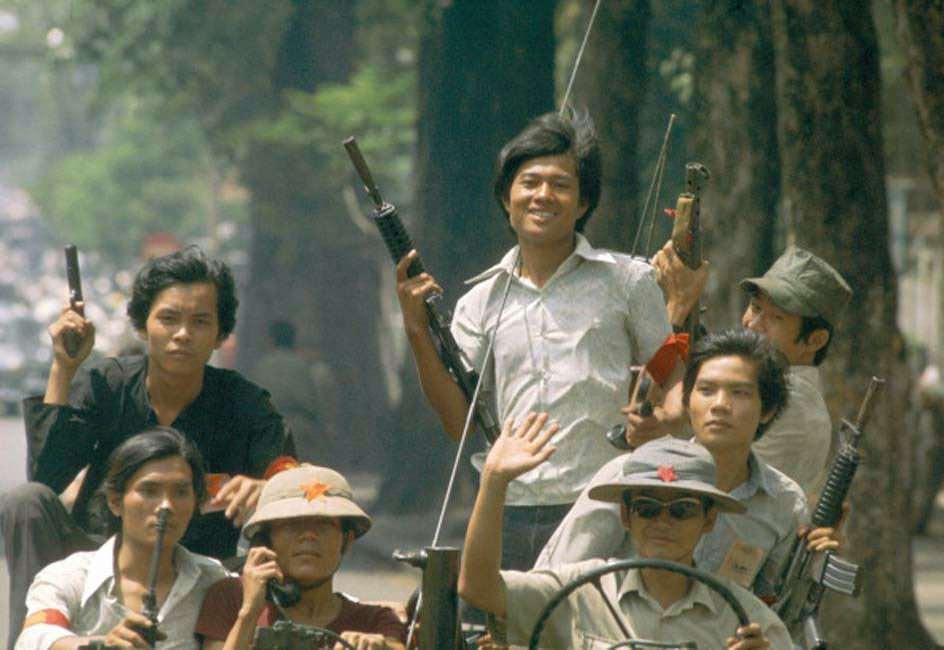
On the ground inside Saigon, the transformation was immediate. North Vietnamese tanks and trucks moved through the city streets as soldiers took control of key locations, including the presidential palace. South Vietnamese soldiers stripped off their uniforms and left them in piles on the roadsides. Some civilians cheered the arriving troops. Others knelt in prayer. General Tran Van Tra held a press conference to mark the North’s victory. The Socialist Republic of Vietnam would formally replace both North and South Vietnam the following year, completing the reunification that the war had been fought over for two decades.
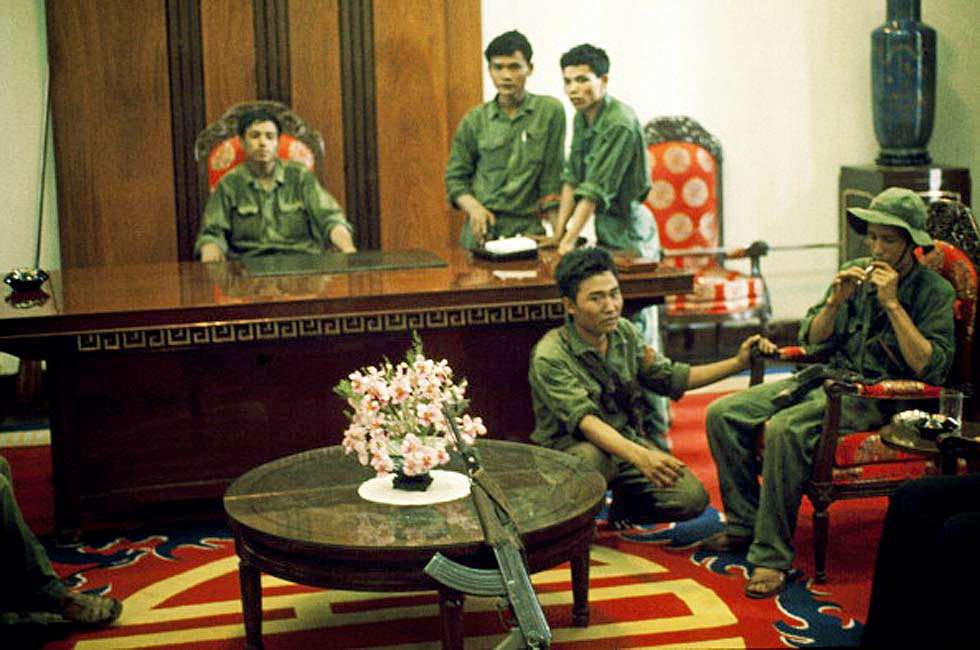
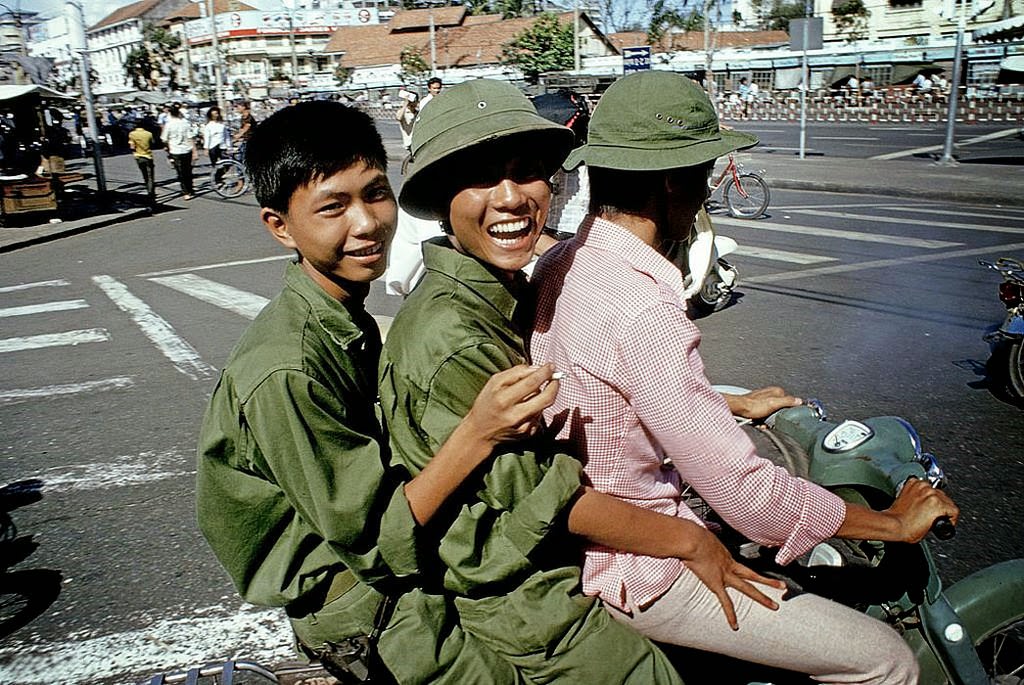
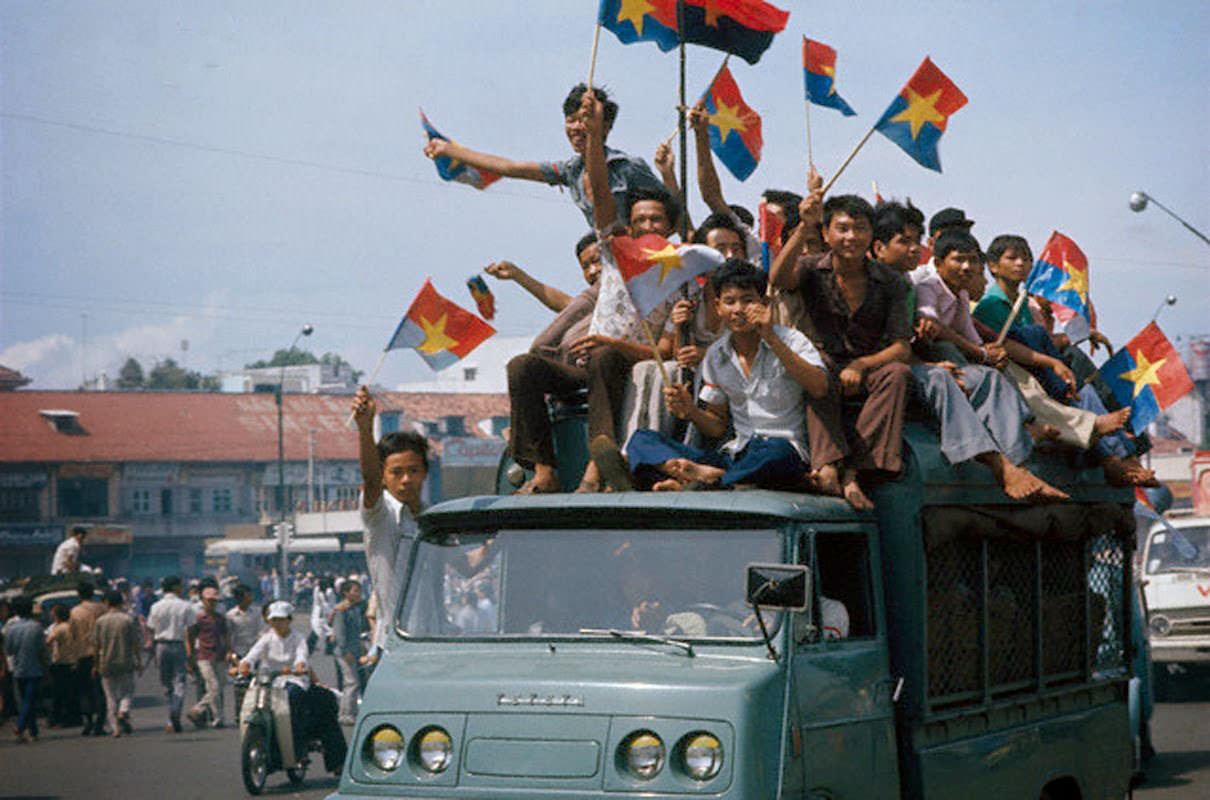
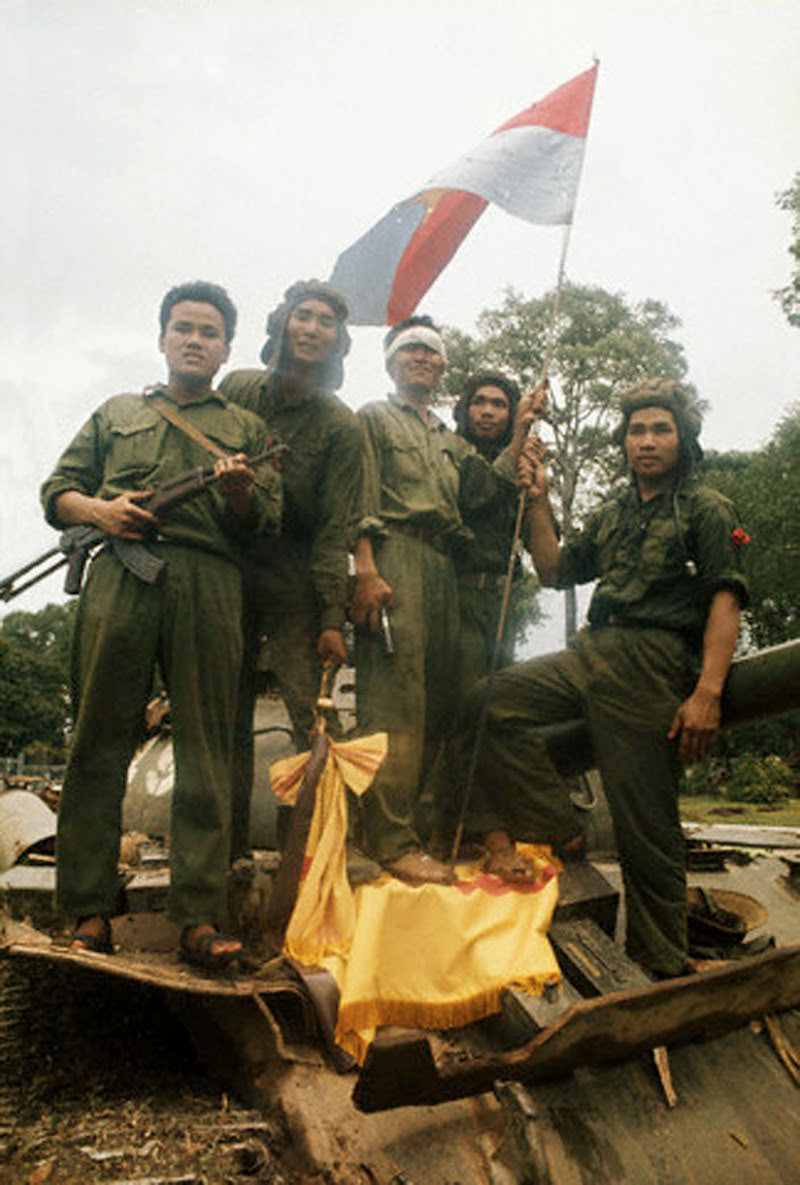
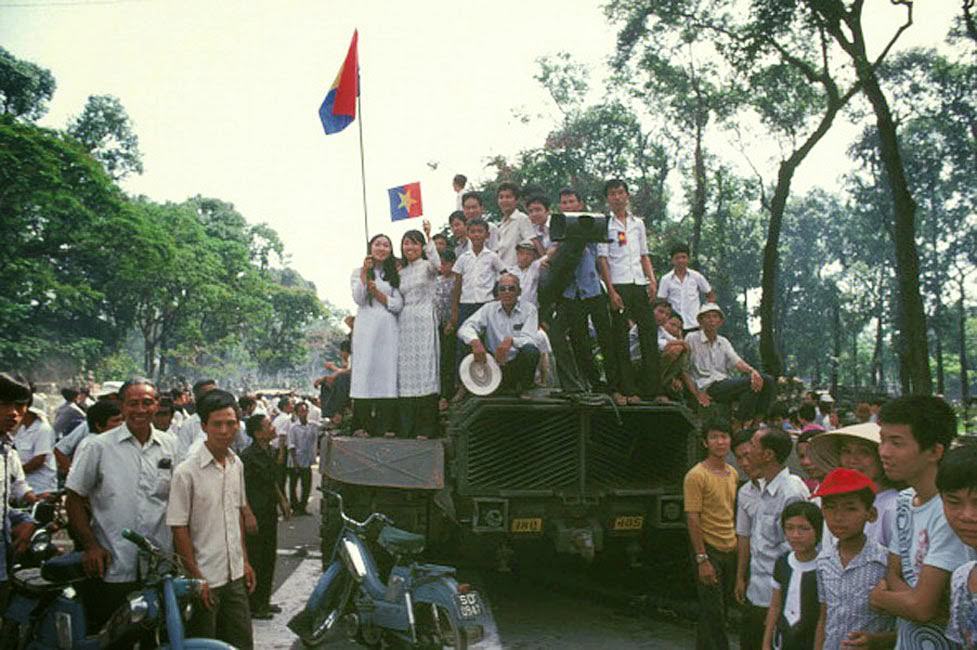
North Vietnamese troops enter Saigon on tanks and trucks, ending the Vietnam War.Abandoned uniforms of South Vietnamese soldiers lie on the road after the invasion of North Communist troops which led to the Fall of Saigon.North Vietnamese troops seize the presidential palace in Saigon.Captured South Vietnamese soldiers sit on a broad lawn after North Vietnamese troops seize the presidential palace in Saigon.Press conference of General Tran Van Tra after the fall of Saigon April 30, 1975.Vietnamese celebrate after the fall of Saigon, 30 Apr 1975.
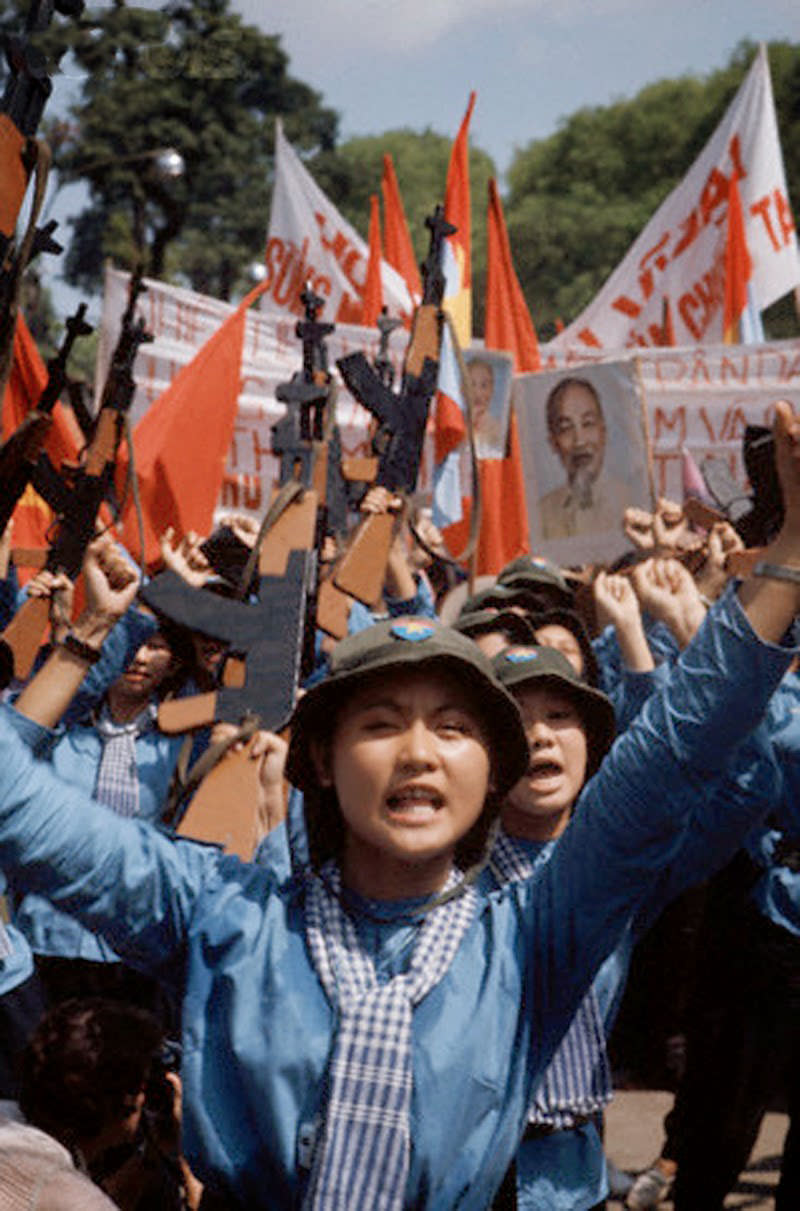
Female North Vietnamese troops enter Saigon carrying wooden rifles, red flags, and portrait of Ho Chi Minh. 30 Apr 1975, Saigon, South Vietnam
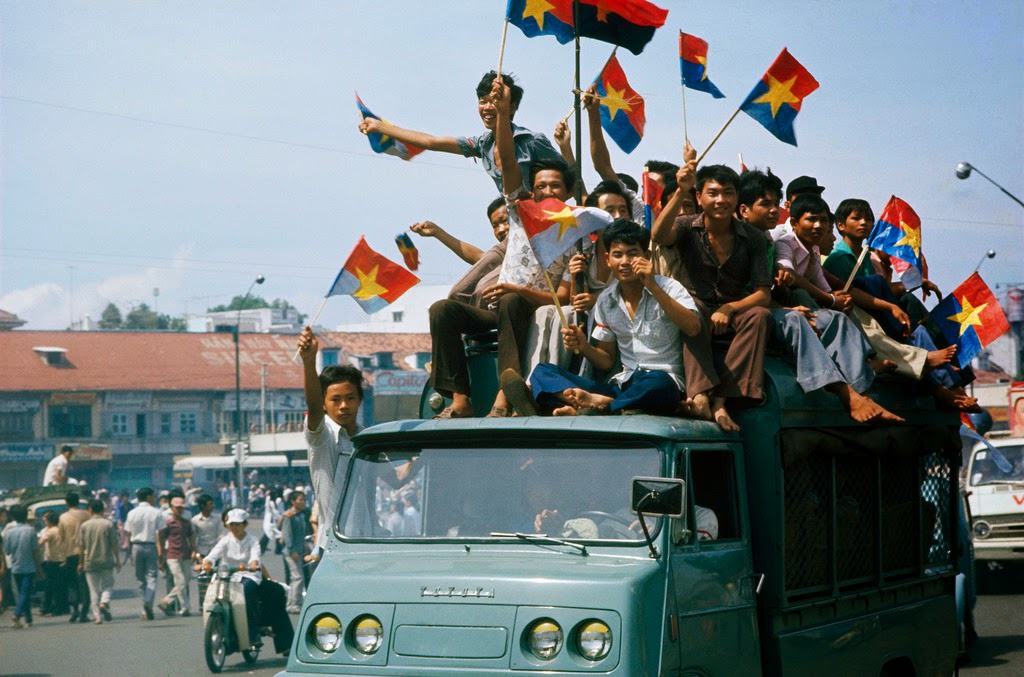
Popular jubilation as North Vietnamese troops enter Saigon, 30 Apr 1975, Saigon, South Vietnam.
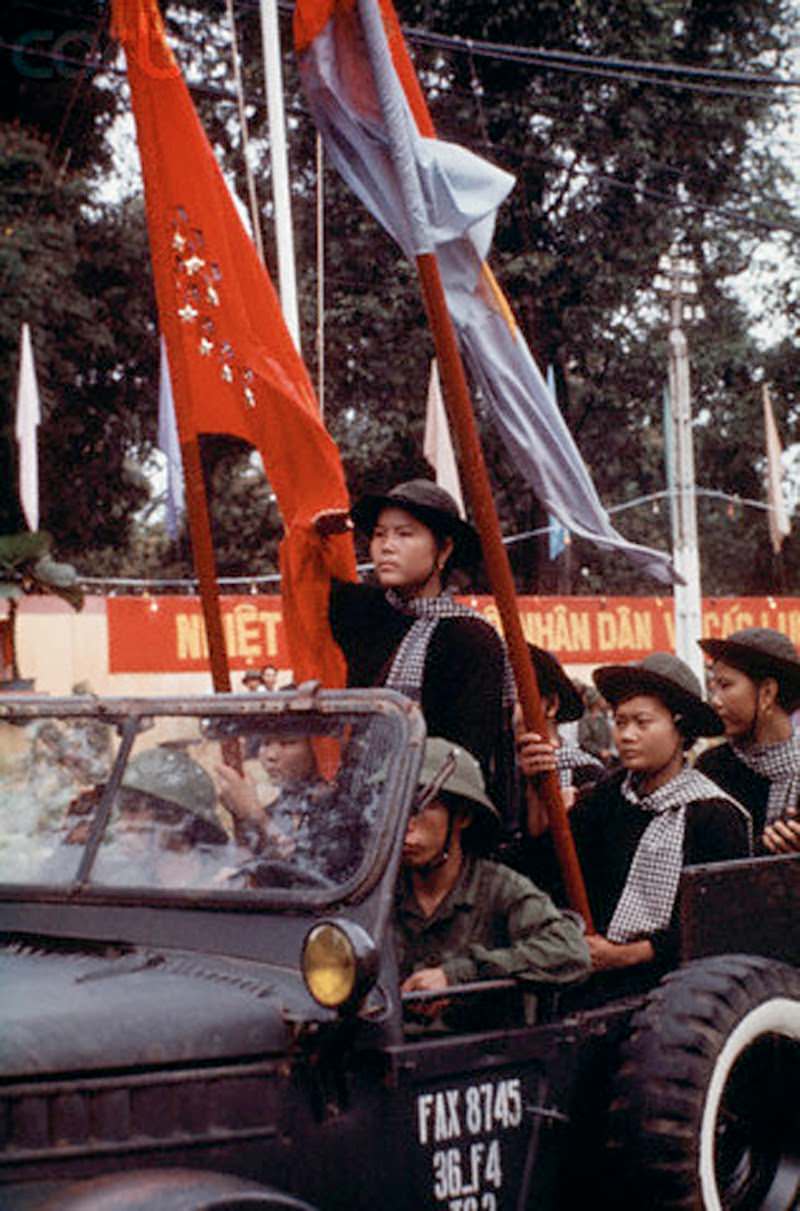
Female North Vietnamese troops enter Saigon in a jeep.
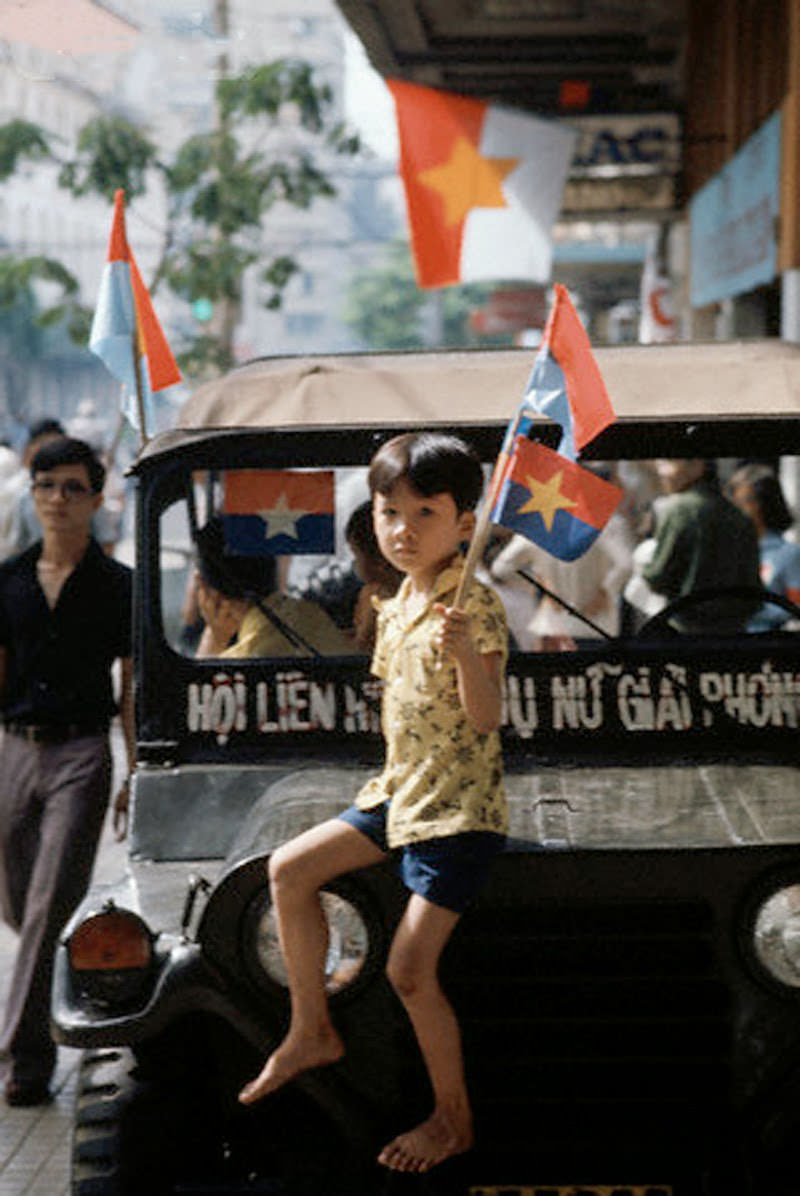
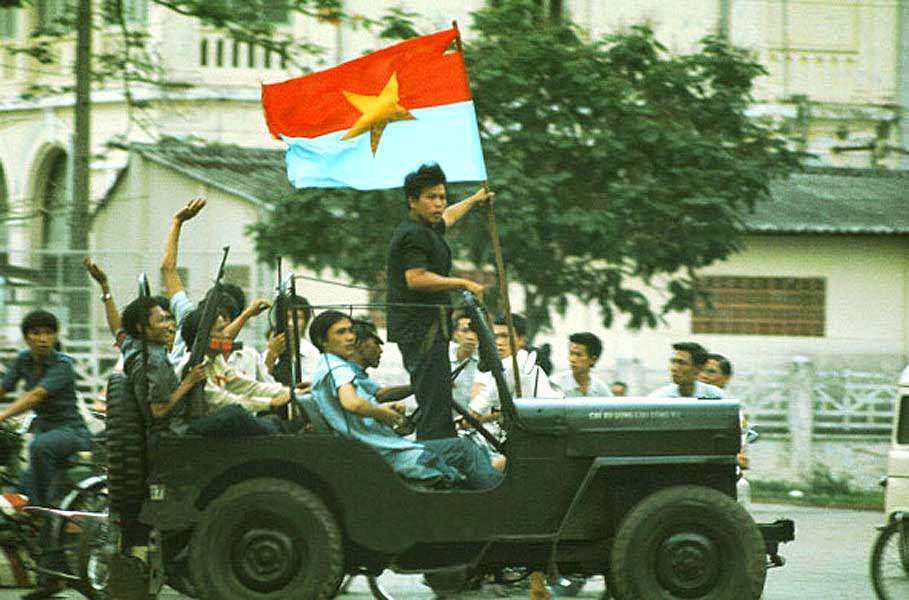
During the Fall of Saigon, a boy on a jeep waves a transitional flag (used for 4 months in the middle of 1975) for South Vietnam, soon to reunite with the North.
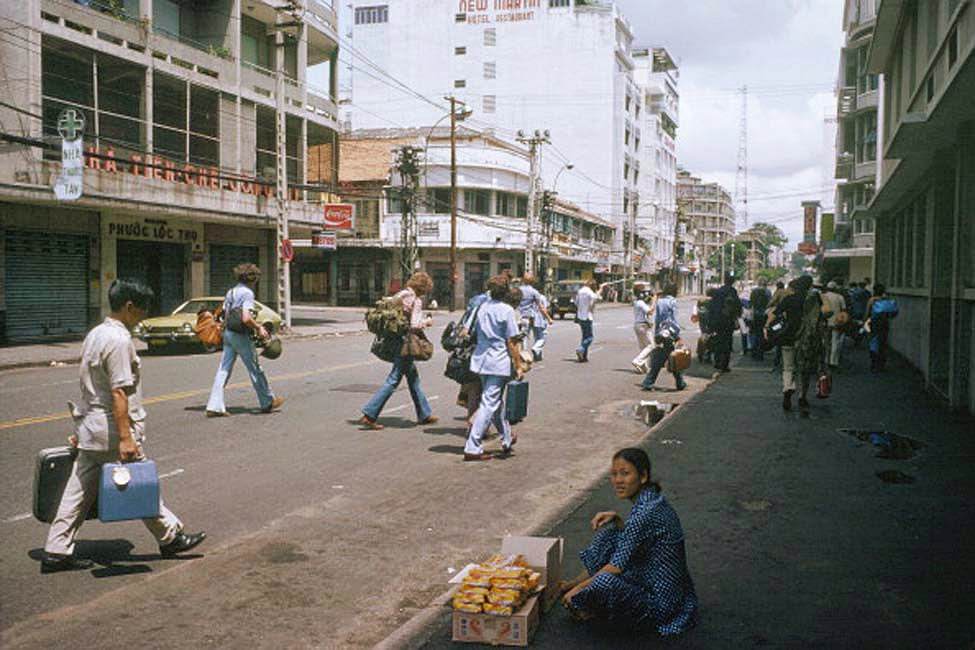
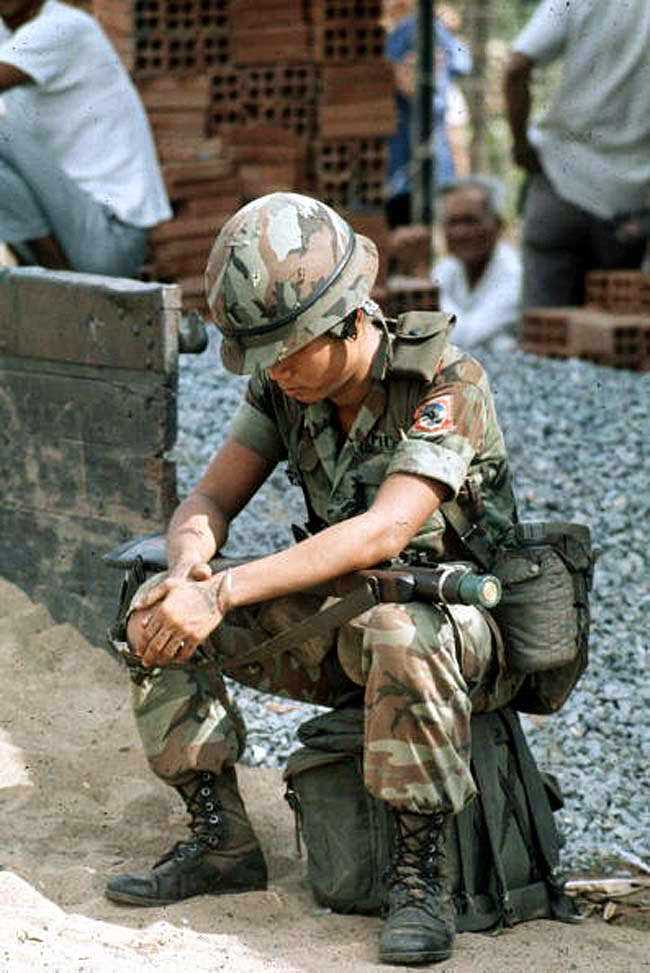
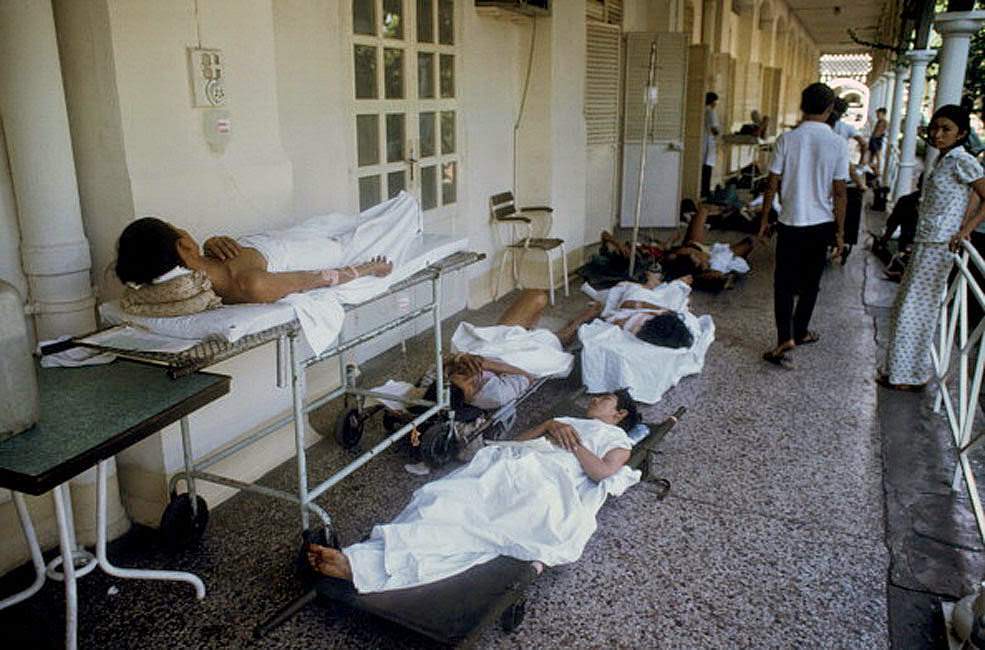
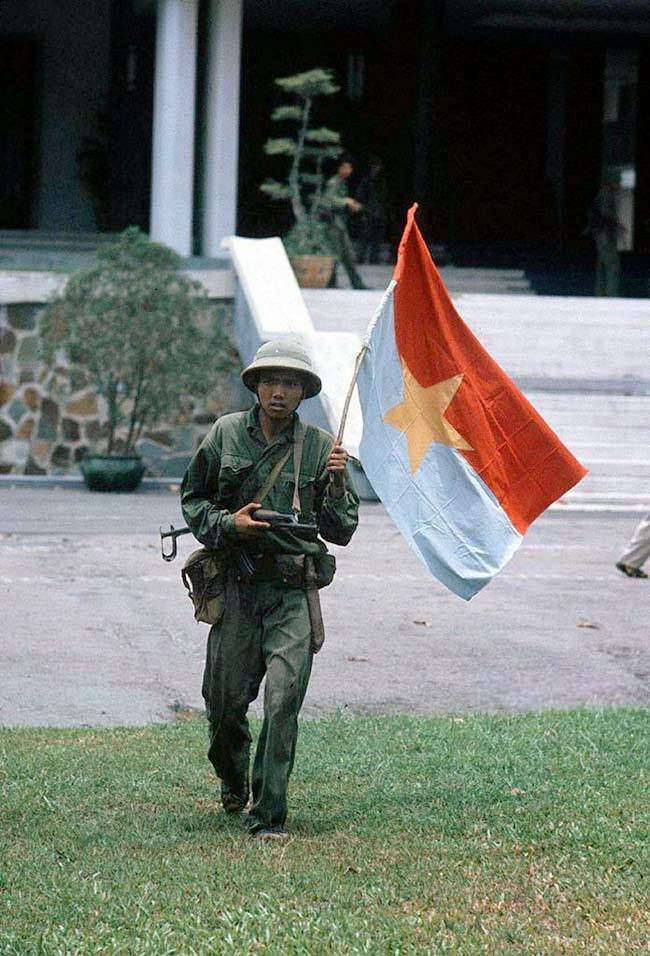
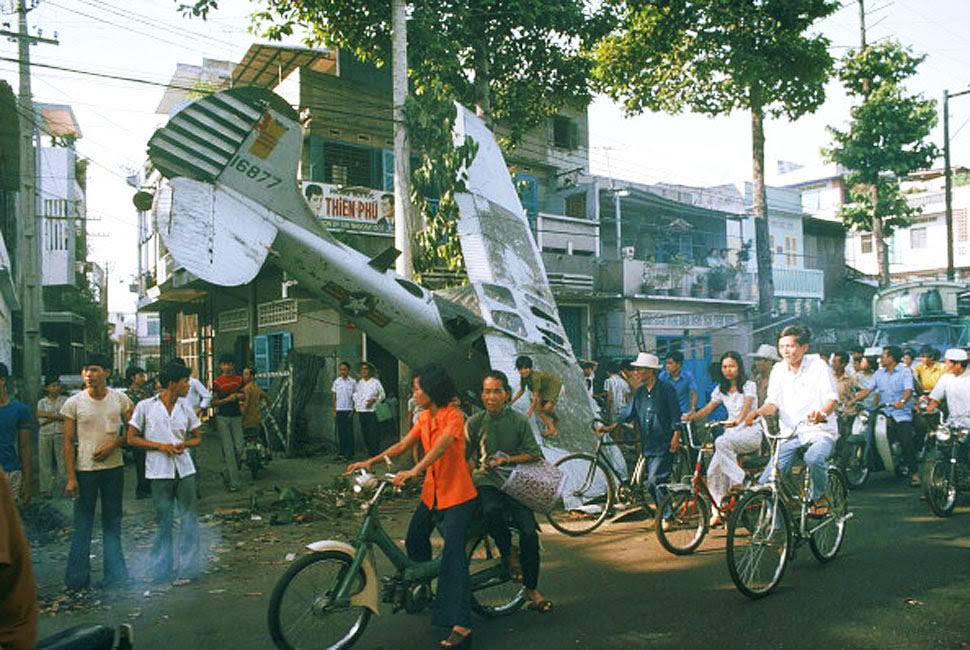
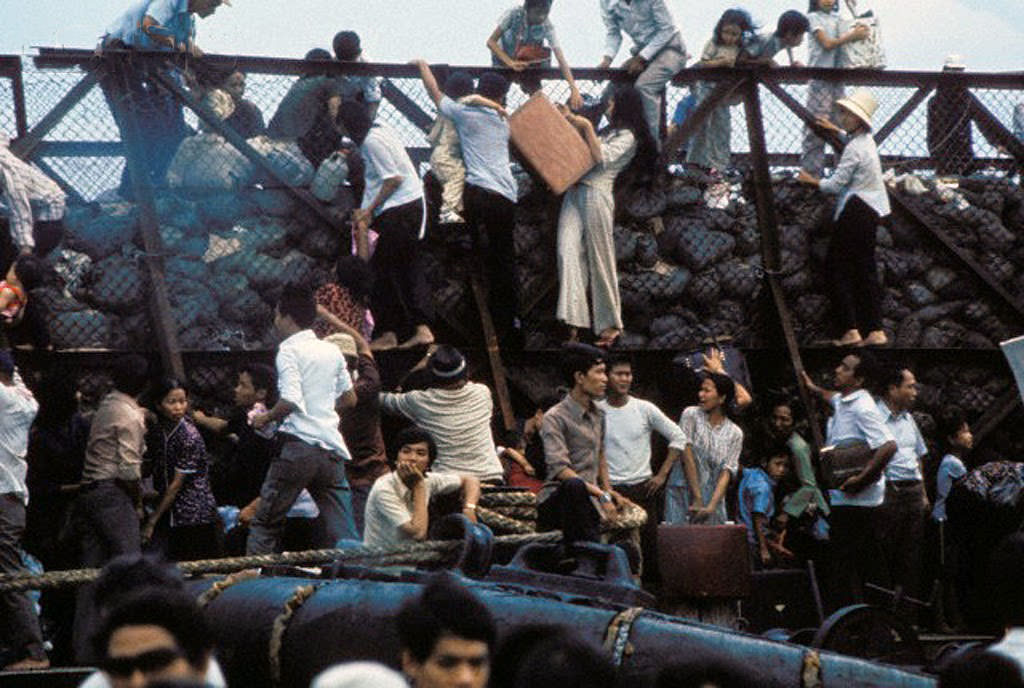
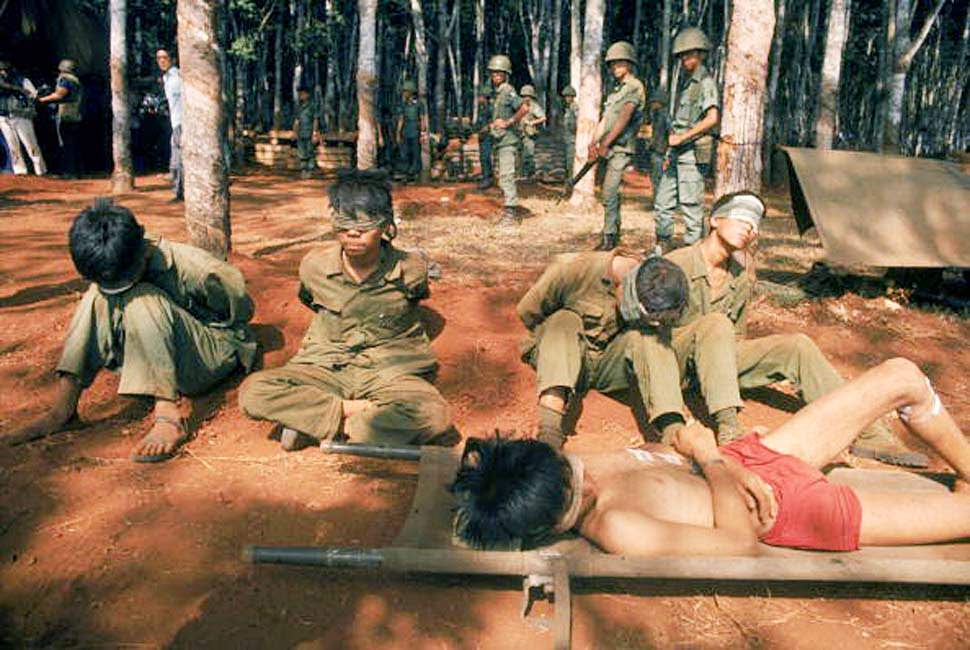
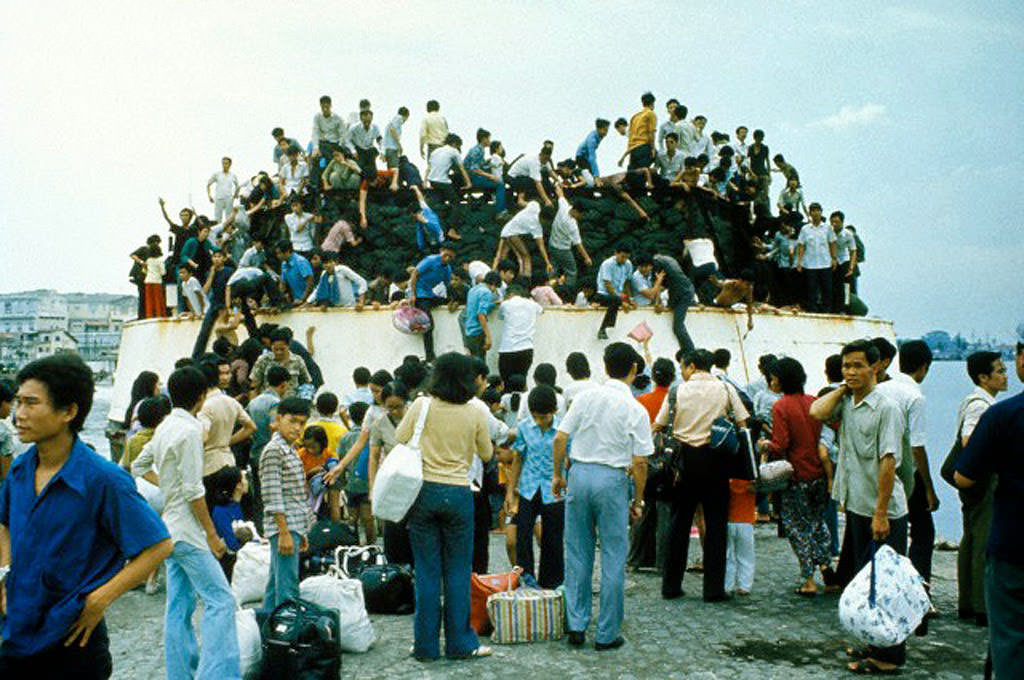
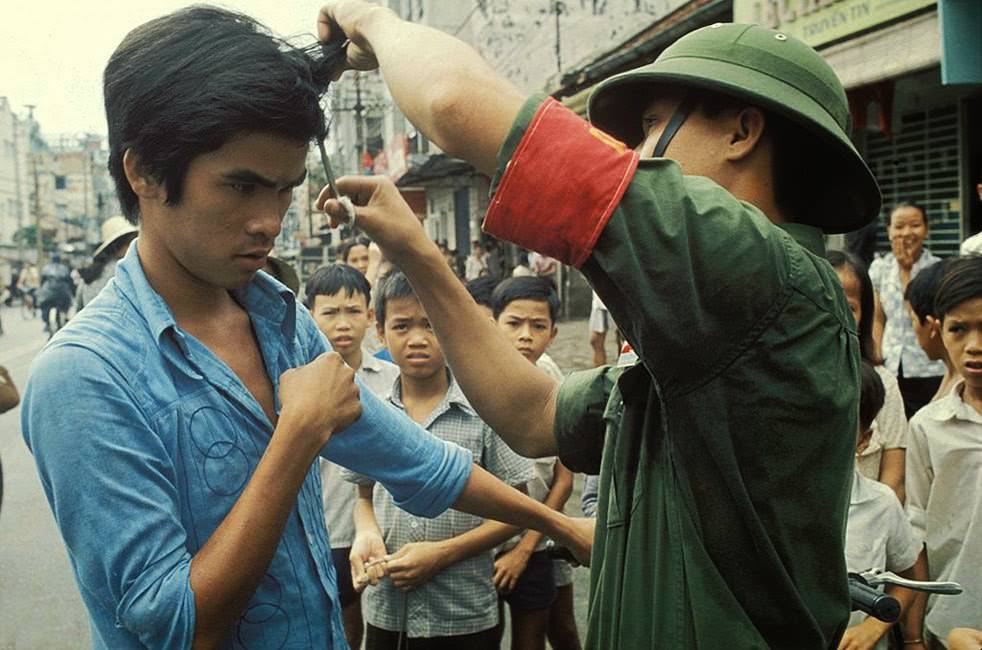
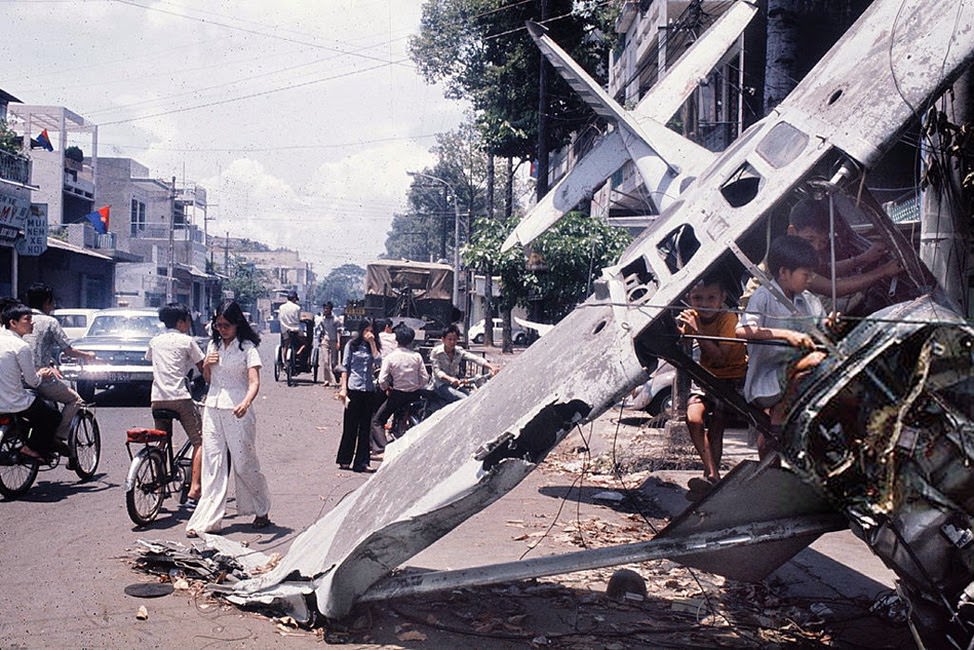
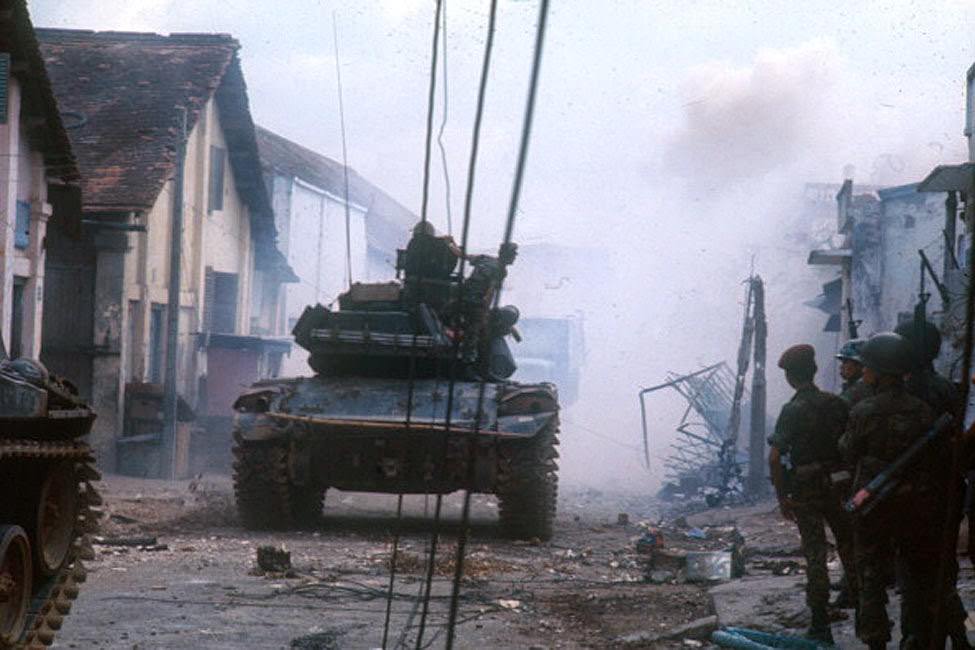
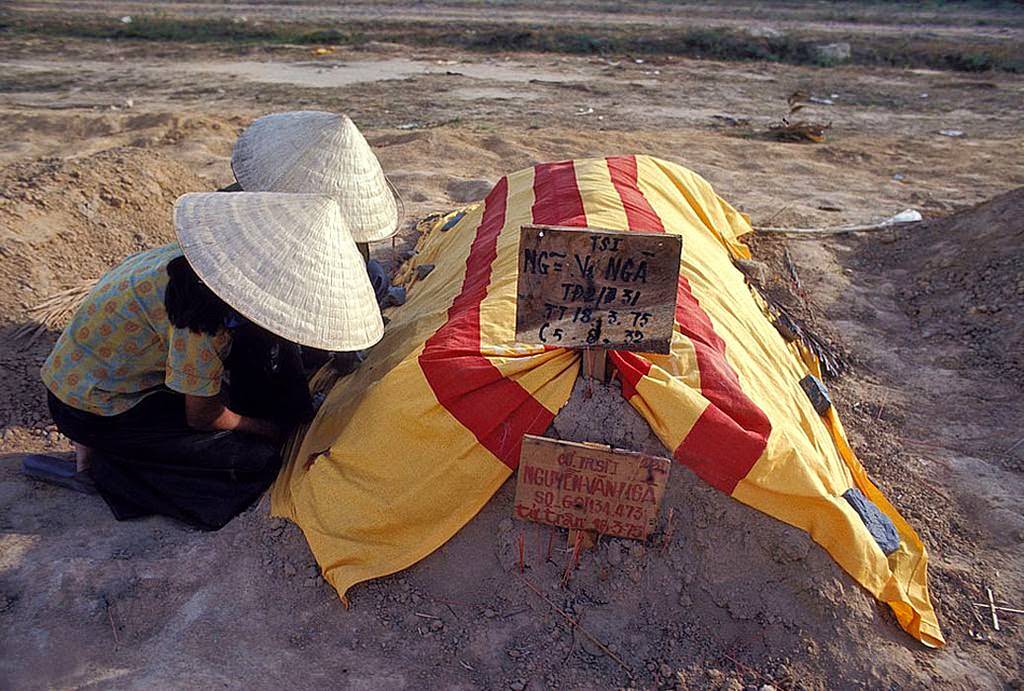
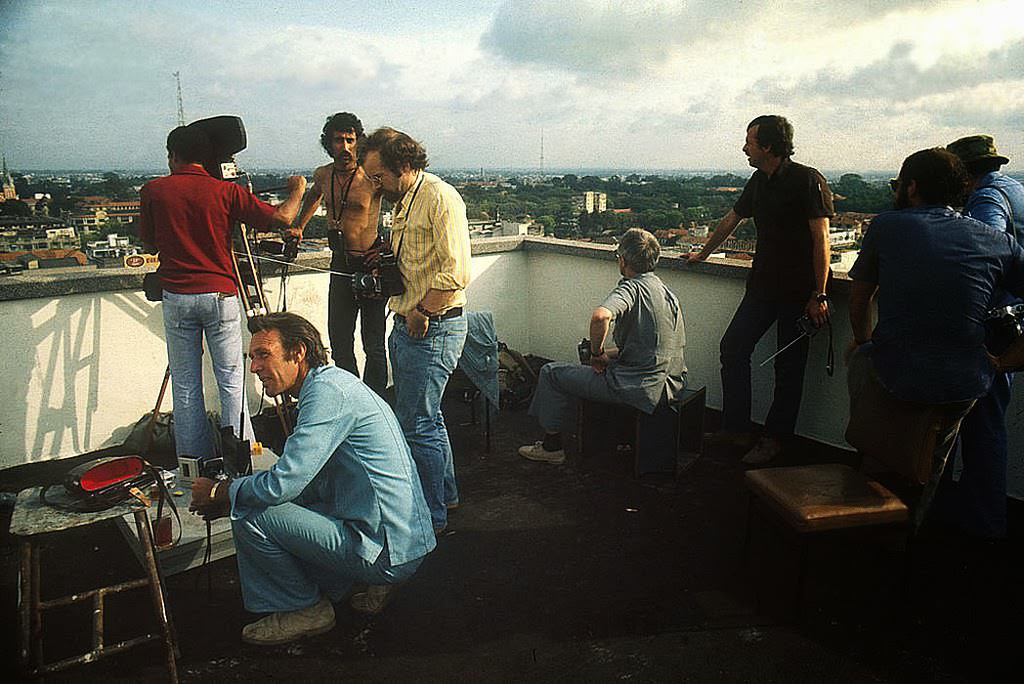
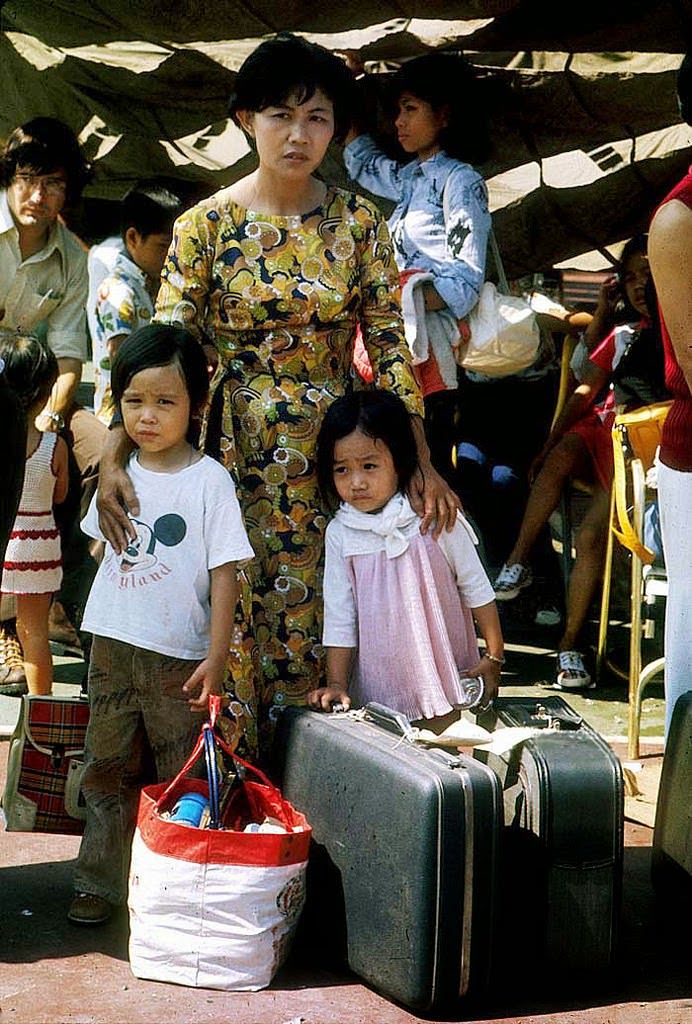
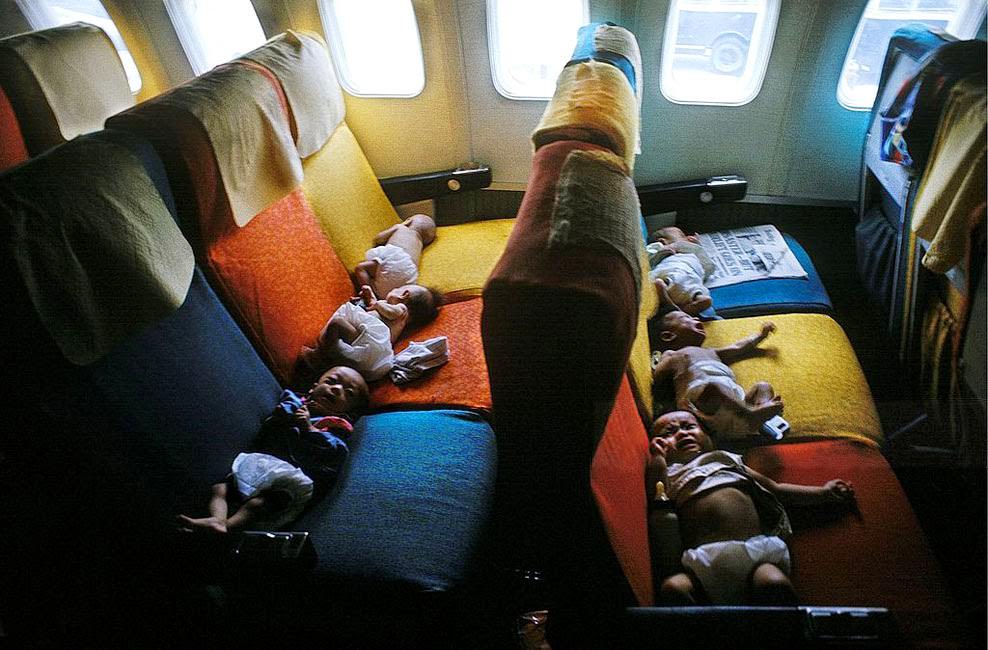
The Fall of Saigon, Vietnam in April, 1975 Spontaneous cheers at the communists’s arrival.The Vietnam war in April, 1975.The Fall of Saigon, Vietnam in April, 1975-Population fleeing on route.Civilian evacuees board US Marine helicopter inside US Embassy compound to be helilifted to the US Seventh Fleet ahead of Communist troops about to enter Saigon.Civilian evacuees board US Marine helicopter inside US Embassy compound to be helilifted to the US Seventh Fleet ahead of Communist troops about to enter Saigon.The Fall of Saigon in Vietnam on April 30, 1975.A jeep willis with on board elements of the GRP (Provisional Revolutionary Government) South Vietnamese traverses Saigon announcing the arrival of the north-Vietnamese tanks.The vehicles occupied by soldiers and the resistants go through the town celebrating the victory.South Vietnamese [sic] tank in flames as North Vietnamese forces enter Saigon.Saigon in Vietnam on April 30, 1975 – G.P.R soldiers and North Vietnamese soldiers in Doc Lap palace after the fall of Saigon on April 30,1975The Fall of Saigon in Vietnam on April 29, 1975 – The last American journalists leave Saigon.American military Chinook helicopters April 1975 help in the evacuation of Saigon.South Vietnamese flee Saigon April 1975 with the help of the U.S. military.South Vietnamese soldier. April 30, 1975.The wounded civilians at the hospital Grall.Taken of the presidential palace. North – Vietnamese officer holding a flag of the G.R.P. April 30, 1975.A small South Vietnamese plane deliaison was probably crushed with fuel course in a suburb of Saigon at the time of an attempt in escape.South Vietnamese clamber aboard barges in the port of Saigon in an attempt to escape from advancing North Vietnamese troops on the day of the Fall of Saigon that ended the Vietnam WarNorth Vietnamese troops are blindfolded and held under guard April 1975 in Saigon.A Vietnamese man prays in front of a portrait of Ho Chi Minh after the Fall of Saigon.South Vietnamese clamber aboard barges in the port of Saigon in an attempt to escape from advancing North Vietnamese troops on the day of the Fall of Saigon that ended the Vietnam WarThe Vietcong cutting hair and “western” clothes.Vietcongs arriving in Saigon.Vietnamese celebrate after the fall of Saigon.South Vietnamese citizens seeking to flee the country April 1975 are assisted by South Vietnamese troops.The Fall Of Saigon In Vietnam On April 30, 1975Saigon ( Vietnam’s ) fall. Wreck of an airplane in a street. April 30, 1975.South Vietnamese clamber aboard barges in the port of Saigon in an attempt to escape from advancing North Vietnamese troops on the day of the Fall of Saigon.A tank through the streets of the city destroyed, during the Tet offensive, the Vietnamese new year night.Attacking the presidential palace.Cemetery of Saigon, last South Vietnamese deads.As Saigon falls to the communist rule of North Vietnamese, reporters cover the story April, 1975 from a roof top.Assault on Presidential Palace.As Saigon falls to the communist rule of North Vietnamese, a Vietamese family await evacuation April, 1975 in Saigon, Vietnam.Crewmen of the amphibious cargo ship U.S.S. Durham (LKA-114) take Vietnamese refugees aboard from a small craft.The fall of Saigon to Communist North Vietnam April 30thMany try to flee by ground, air and sea with the help of American Soldiers, South Vietnam, April, 1975.Jam-packed with more than 7,000 refugees, the South Vietnamese Navy ship HQ-504 arrives at Vung Tau port, the South Vietnam’ s most popular sea resort, and now the only port city in the Government hands.The Fall of Saigon, Vietnam in April, 1975-Tank in Saigon.The Fall of SAIGON – Escape from VietnamSouth Vietnamese babies on a flight from Saigon to the USA (probably San Francisco) during Operation Babylift.Desperate and frightened South Vietnamese try to convince US Marines guarding the American Embassy to let them into the compound hoping that they will be evacuated by helicopter.A street congested with traffic as refugees flee in automobiles to Saigon near the end of the Vietnam War.Refugees during the last days of the Vietnam War.Refugees during the last days of the Vietnam War.

![South Vietnamese [sic] tank in flames as North Vietnamese forces enter Saigon.](https://www.bygonely.com/wp-content/uploads/2021/07/The_fall_of_Saigon_28.jpg)