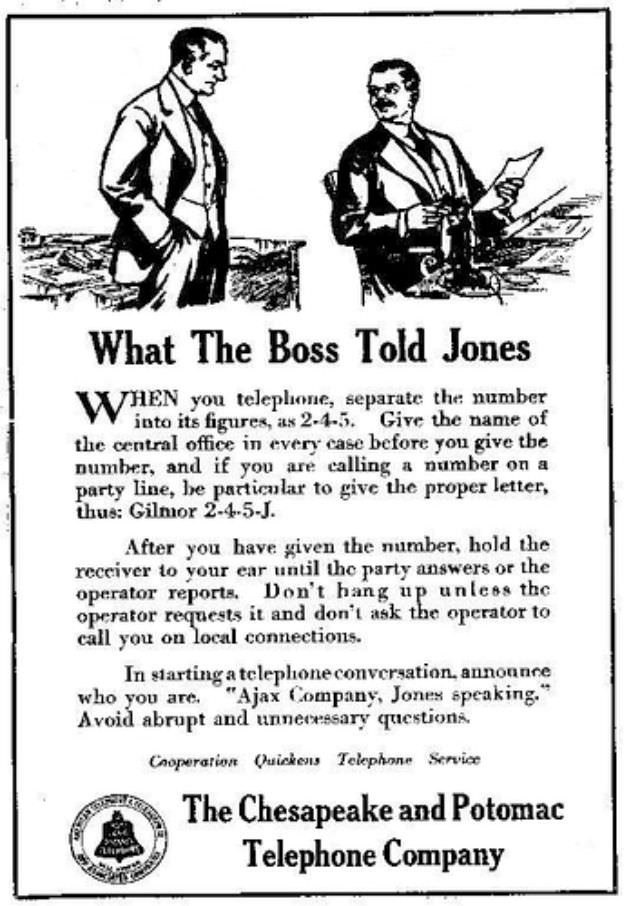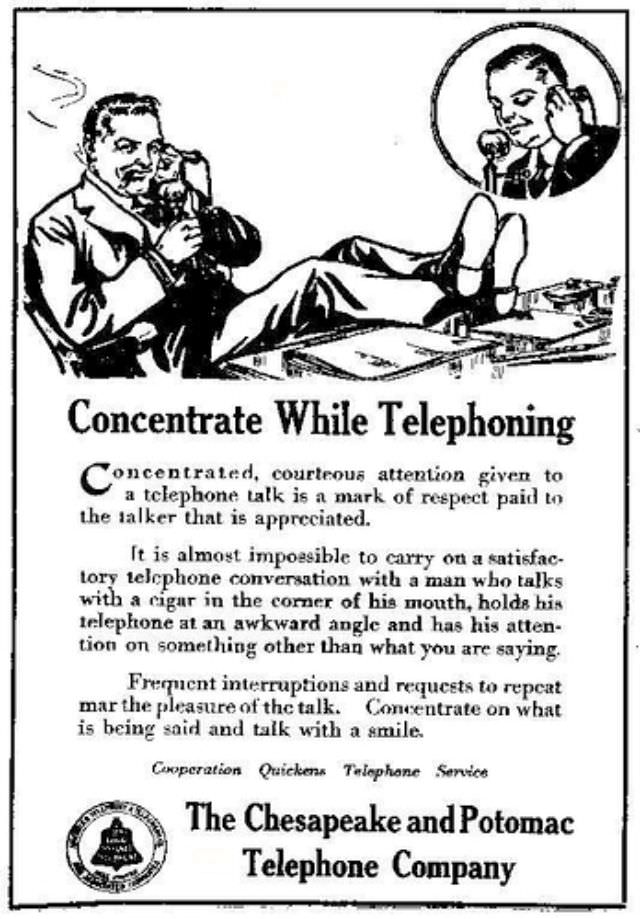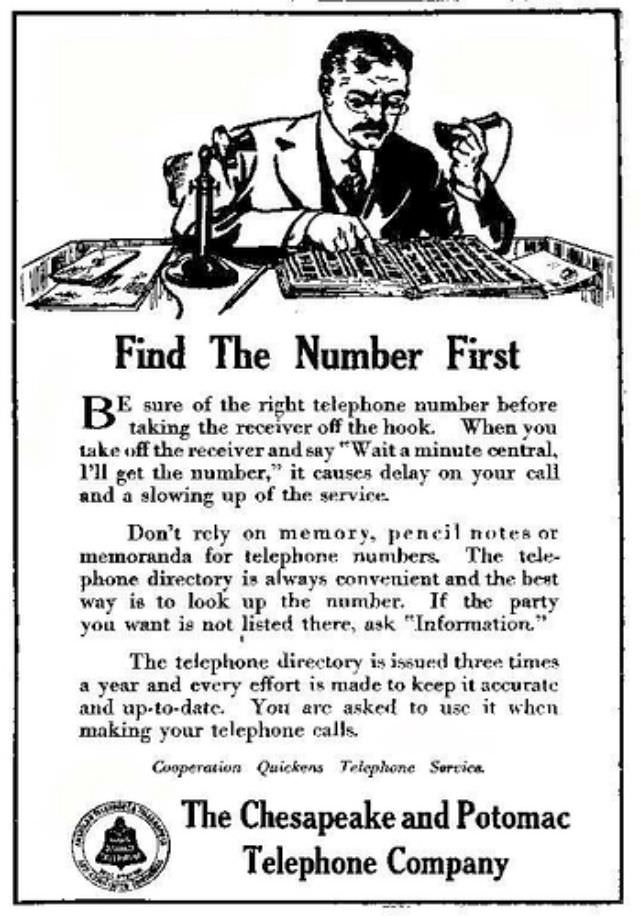
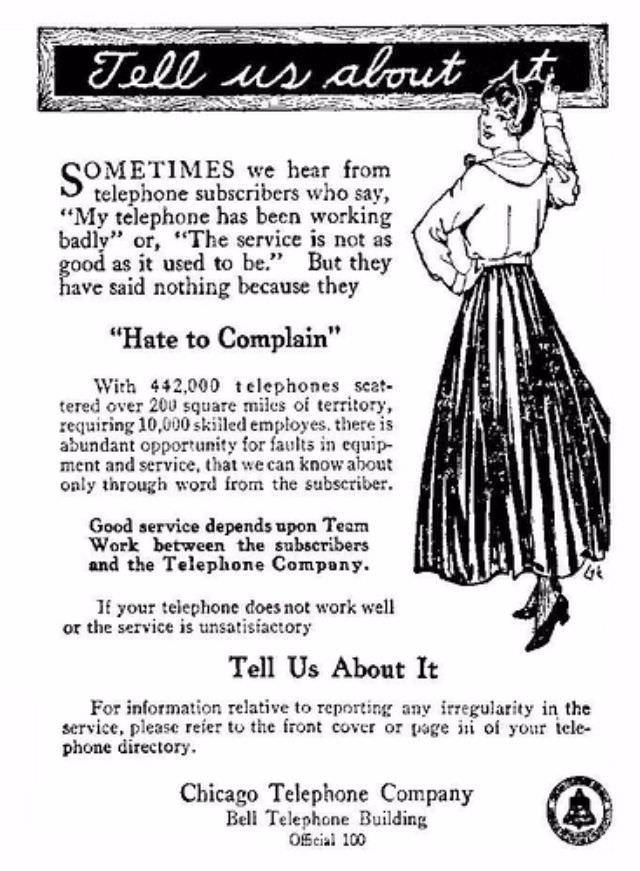
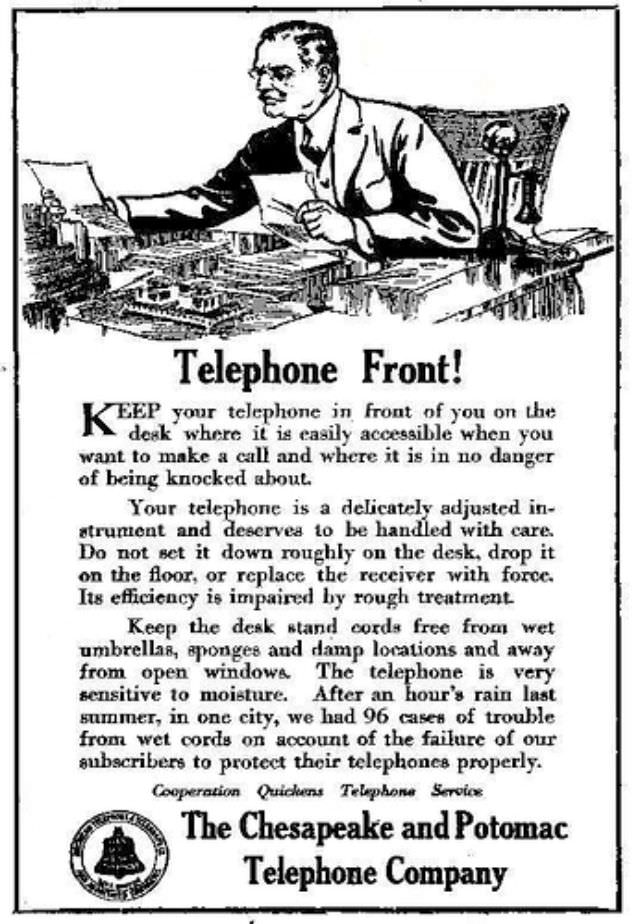
In 1917, the telephone was still a novelty for most Americans. The Chesapeake and Potomac Telephone Company published a guide called “How to Use the Telephone” to walk new users through what many found to be an intimidating device. The booklet described the phone as a “delicately adjusted instrument” and set out to calm the nerves of first-time callers.
Making a call started with picking up the receiver, which connected the user to the telephone network. Next came listening for a steady hum — the dial tone — which confirmed the line was active and ready.
From there, users turned to the rotary dial. Each number required inserting a finger into the correct hole and rotating the dial clockwise to a stop — one digit at a time. It was a slow, deliberate process that demanded patience.
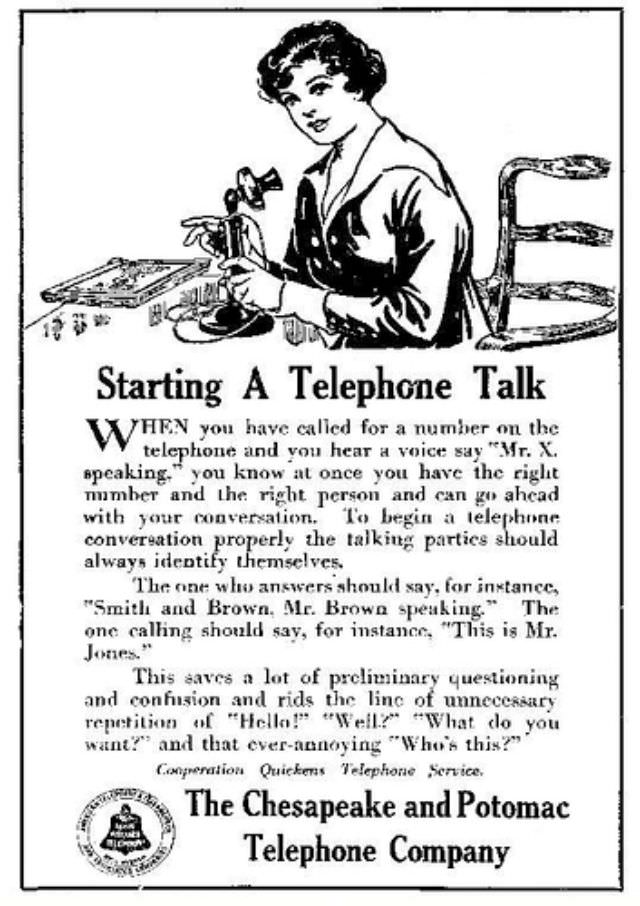
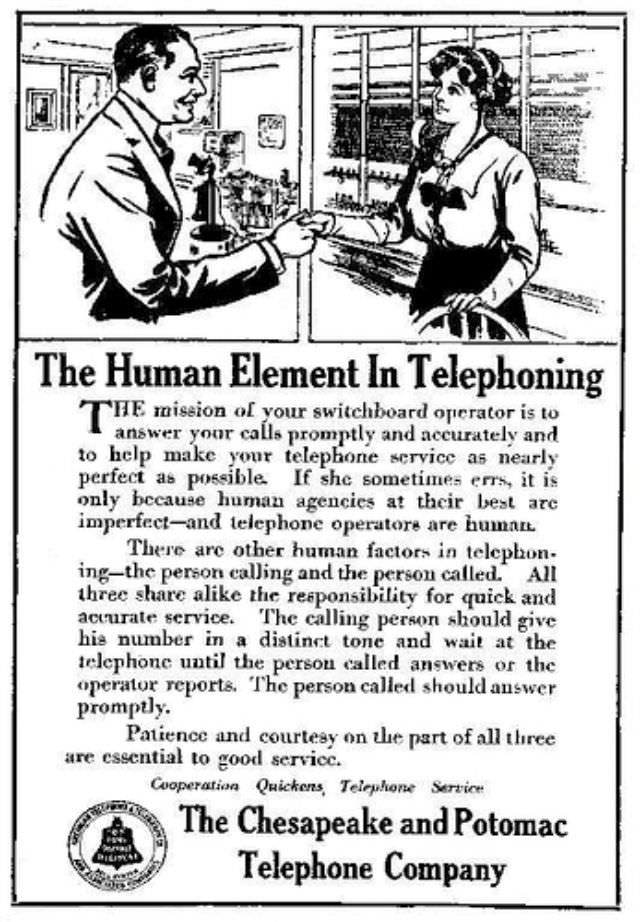
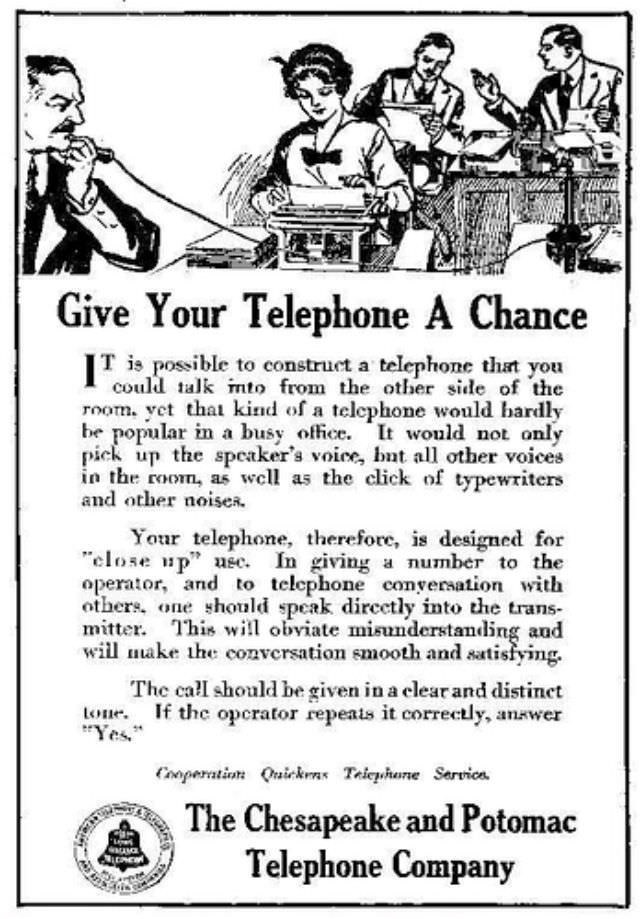
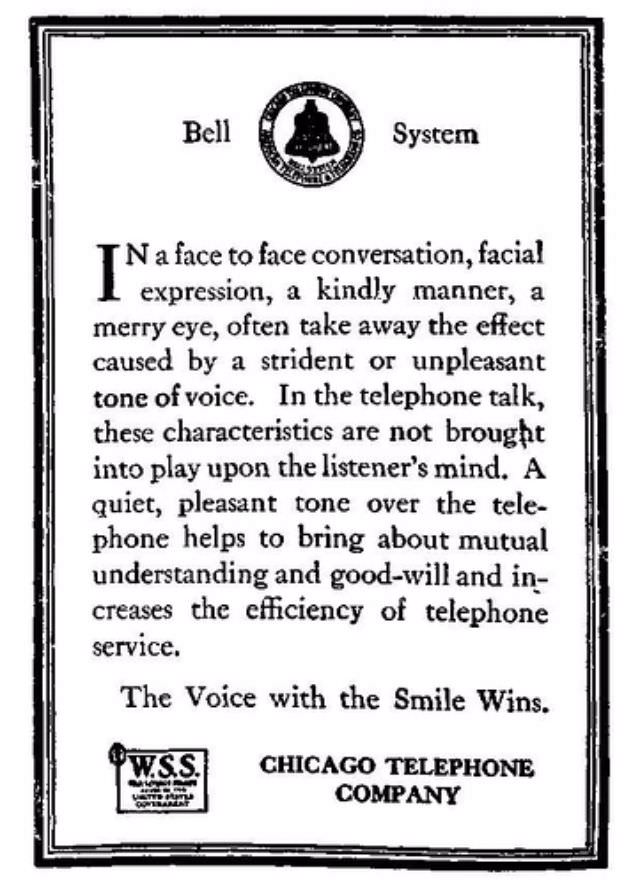
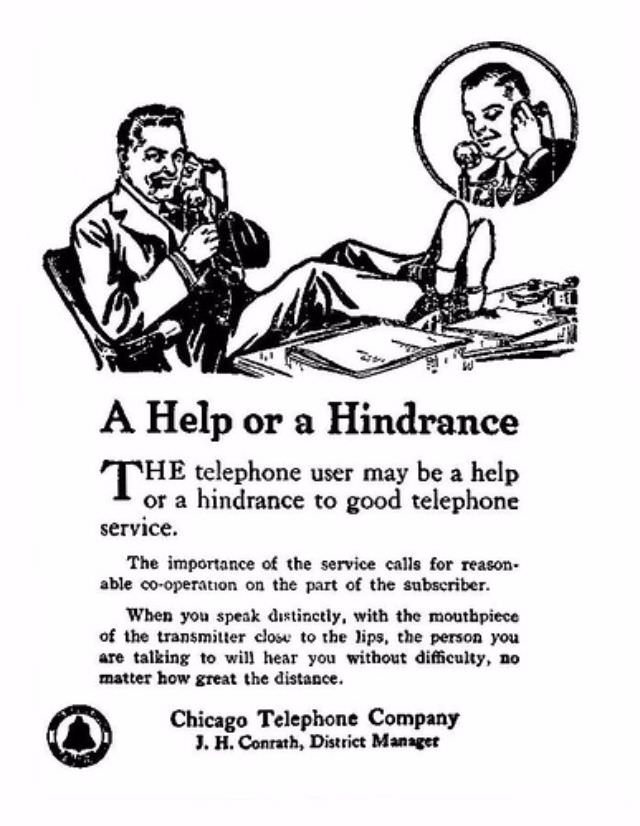
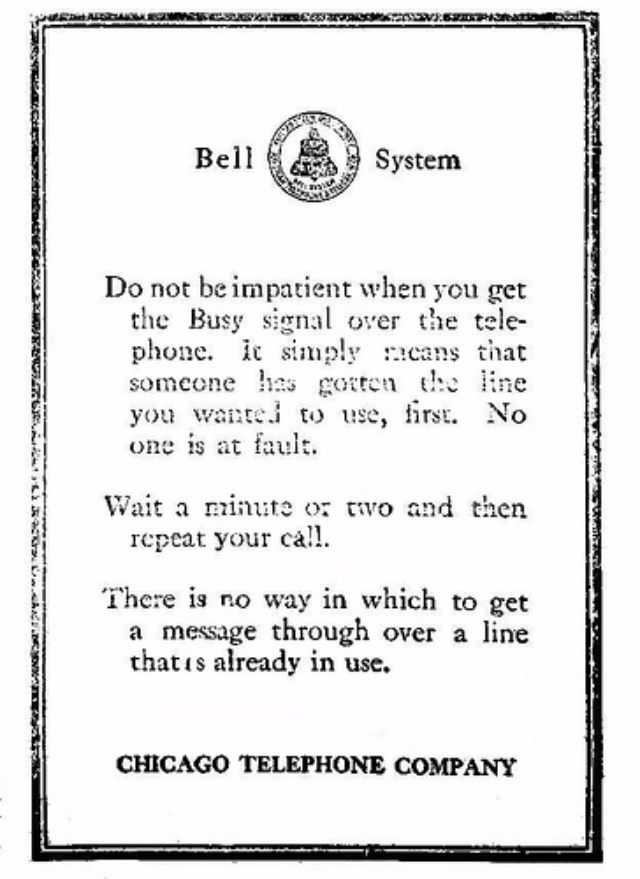
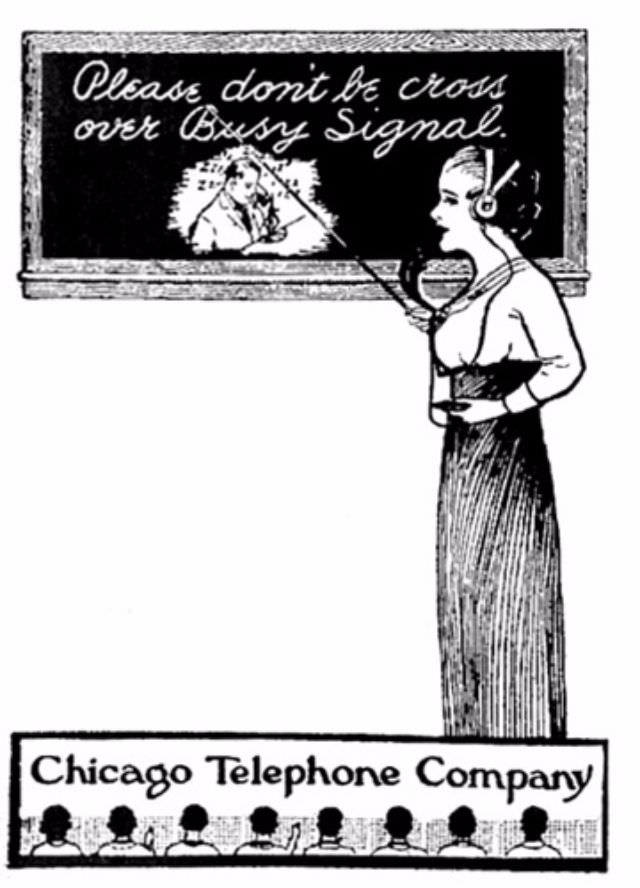
After dialing, the caller waited. A busy signal — short, repeating beeps — meant the line was taken. If the line was free, the phone on the other end would ring. Sound quality in 1917 was far from perfect, so the guide stressed speaking clearly and distinctly to avoid misunderstandings.
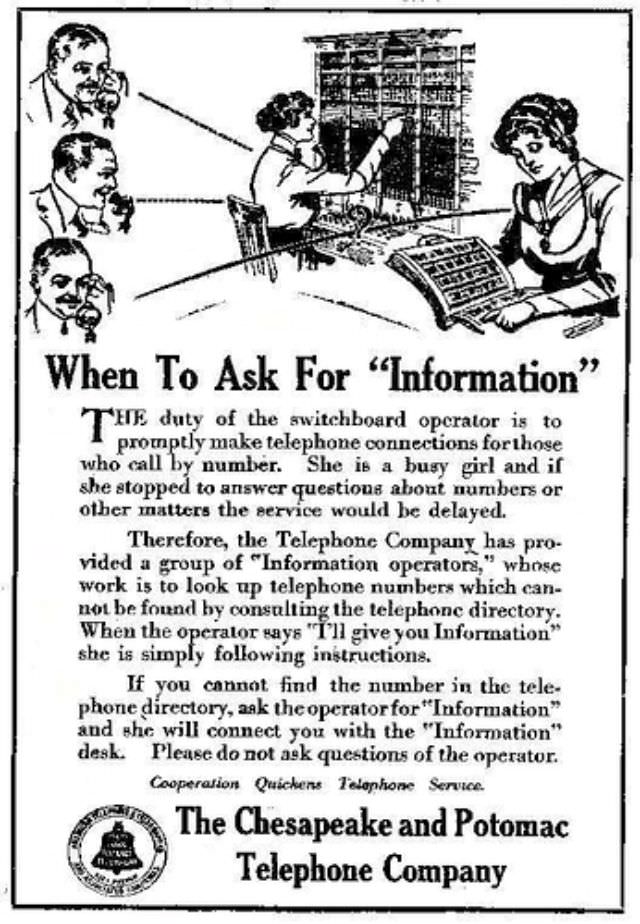
Answering a call came with its own rules. The guide recommended picking up promptly and identifying oneself right away. This set a professional tone and left no confusion about who was on the line.