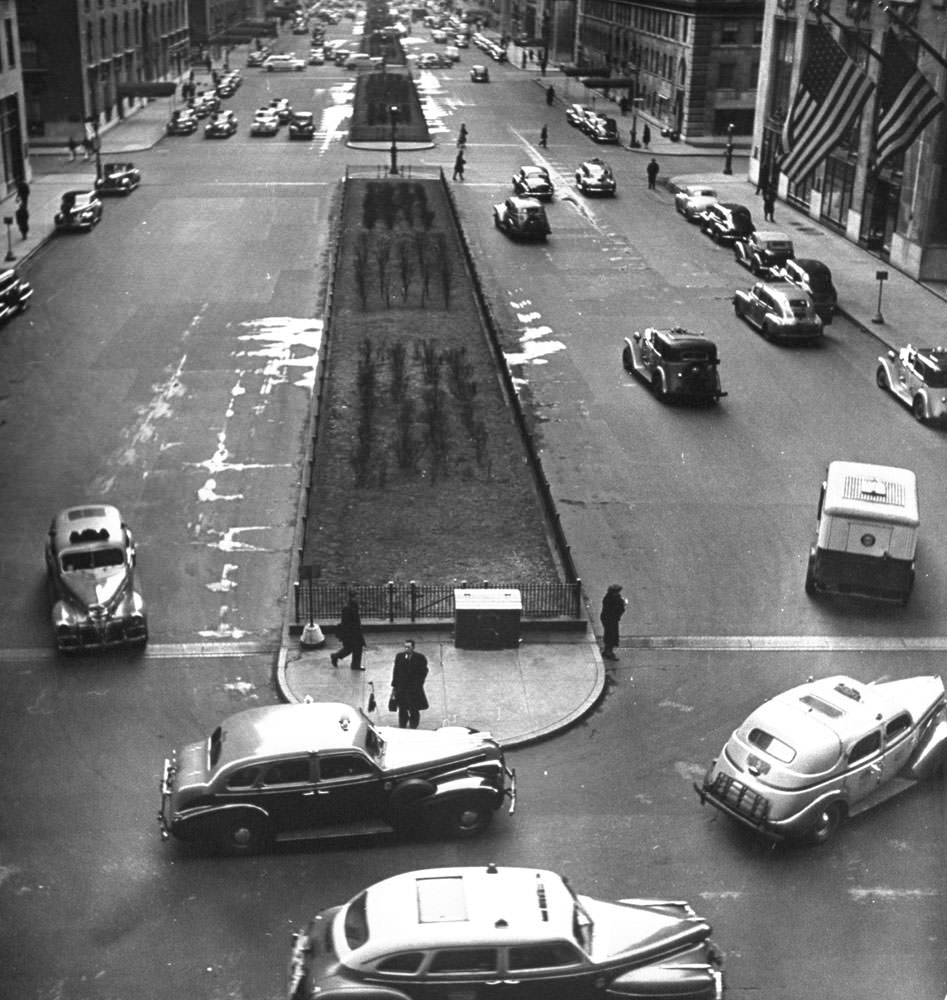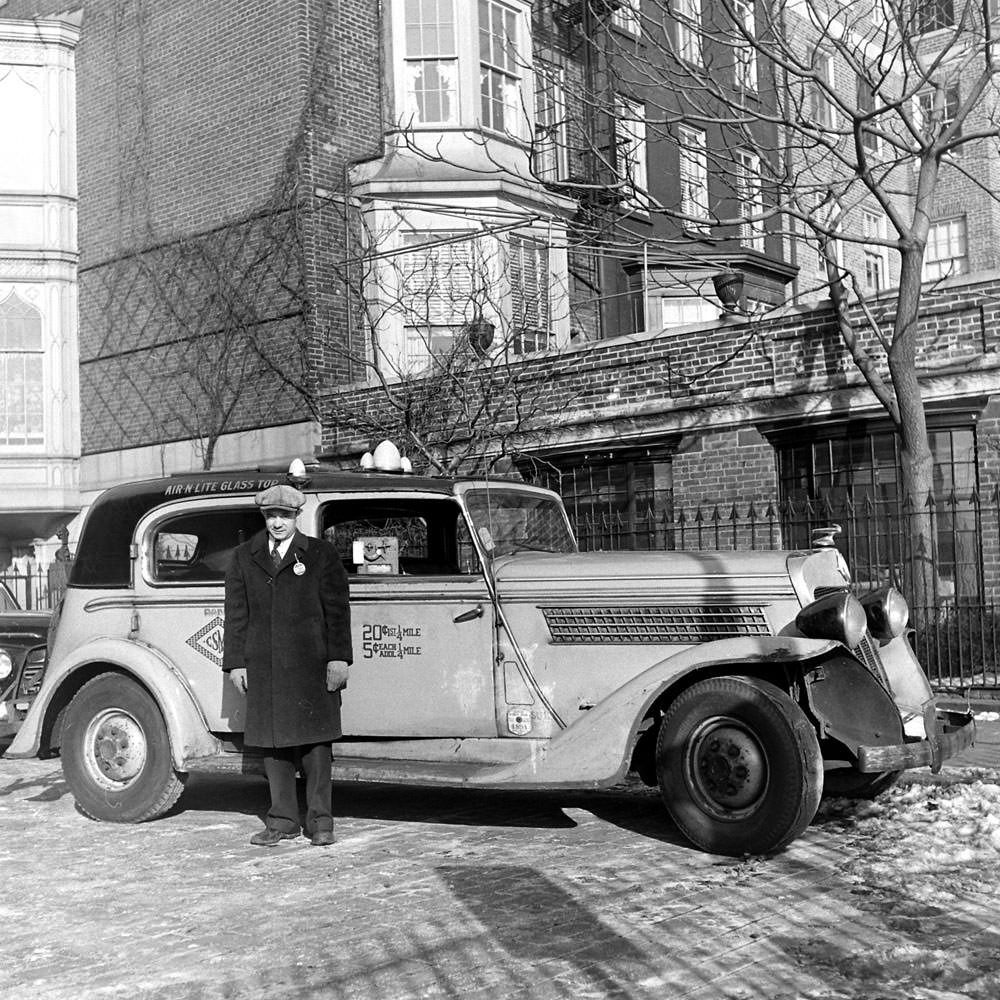
New York City in 1944 ran at a relentless pace. World War II touched nearly every corner of daily life, and the streets reflected it — crowded sidewalks, military uniforms mixed into the foot traffic, and taxi cabs weaving through it all. LIFE photographer William C. Shrout captured this world in sharp detail, documenting the cabs, the drivers, and the city they served.
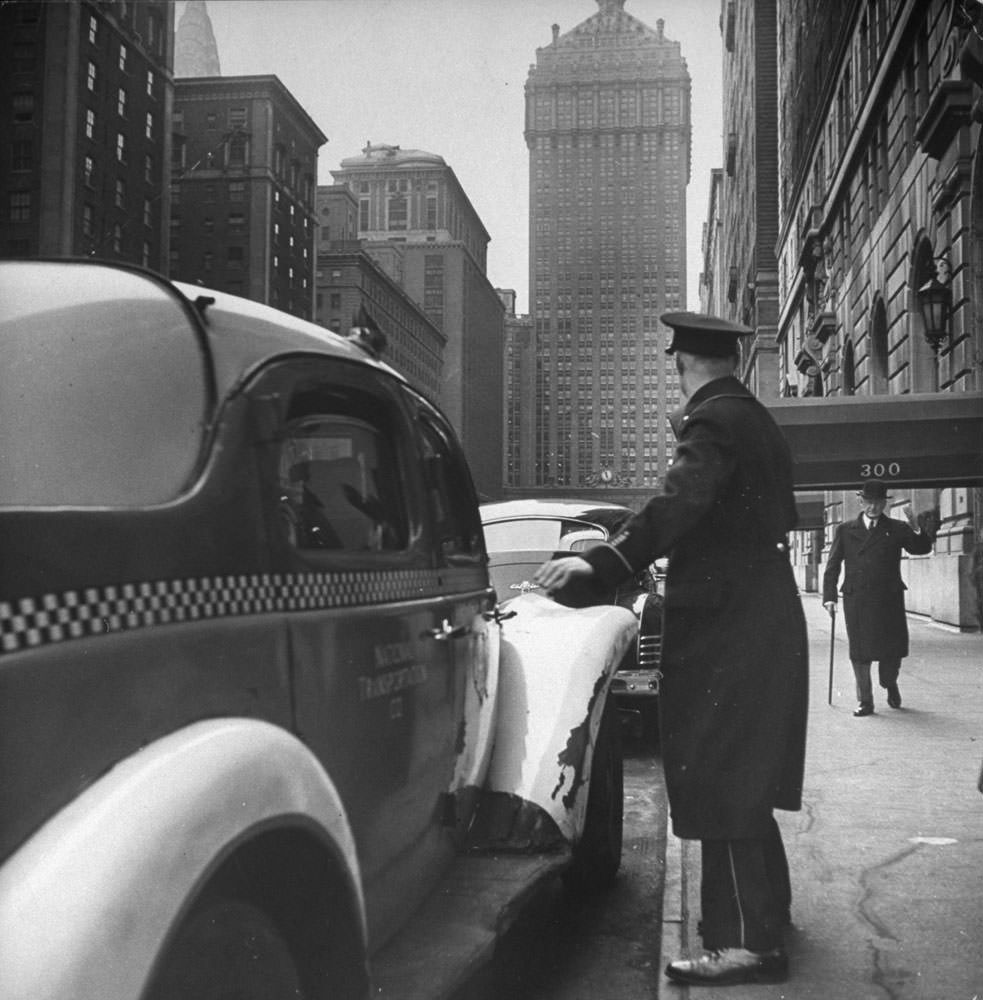
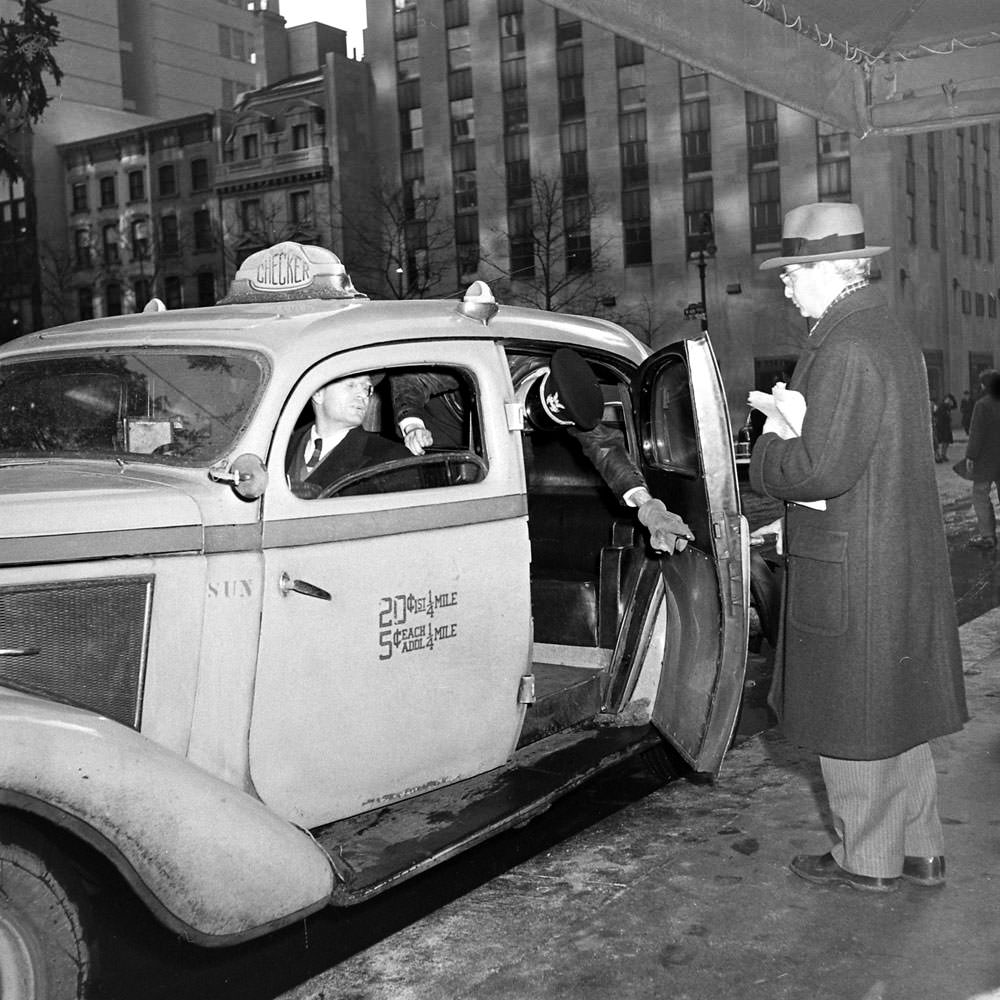
The cabs on the road in 1944 were almost entirely pre-war models. Civilian car manufacturing had stopped as factories shifted to war production, so most taxis were late-1930s or early-1940s Checkers, DeSotos, and Plymouths. These were large, heavy vehicles kept running through constant maintenance. While yellow was becoming the standard color for NYC cabs, other colors were still common on the streets.
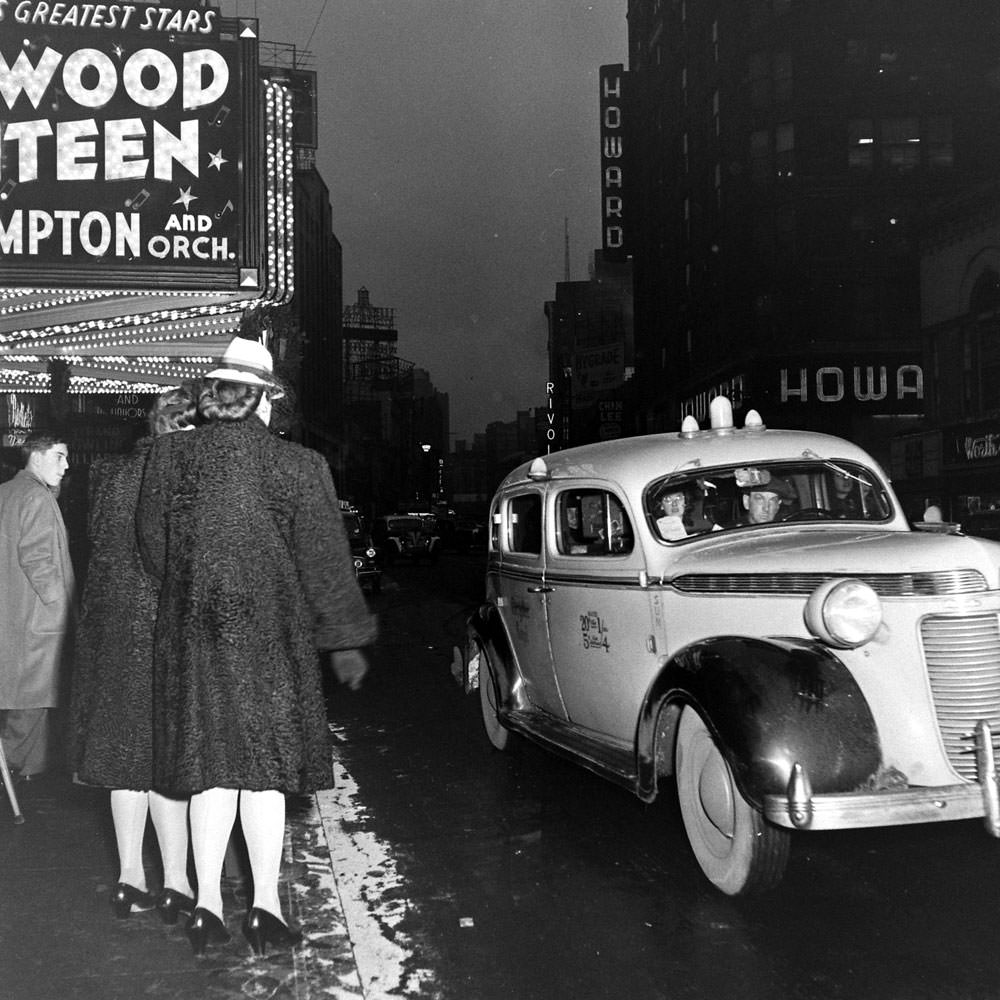
Operating a taxi during wartime meant dealing with serious shortages. Gasoline rationing capped how much fuel a driver could buy each week. Tires were scarce because rubber was prioritized for the military. Cab companies had to stretch every resource to keep their fleets moving. Some drivers also faced blackout restrictions during nighttime hours, especially in the earlier war years.
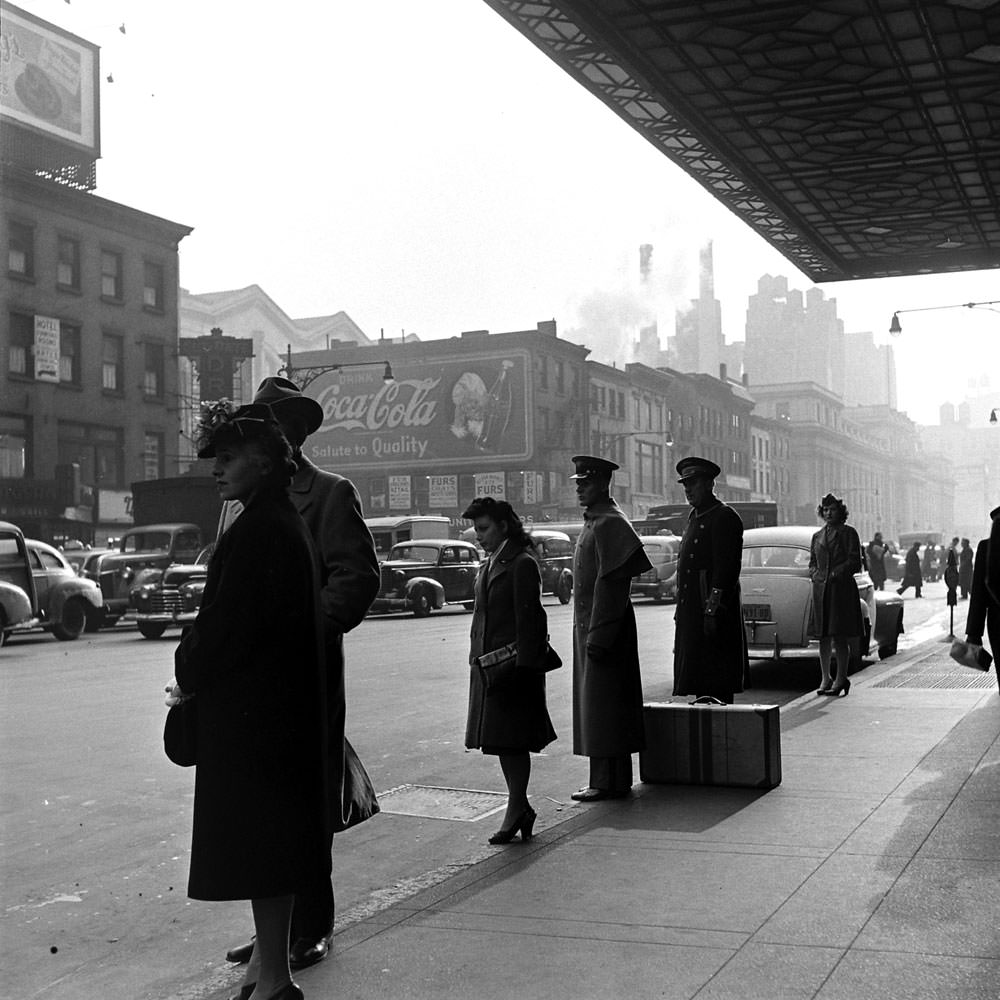
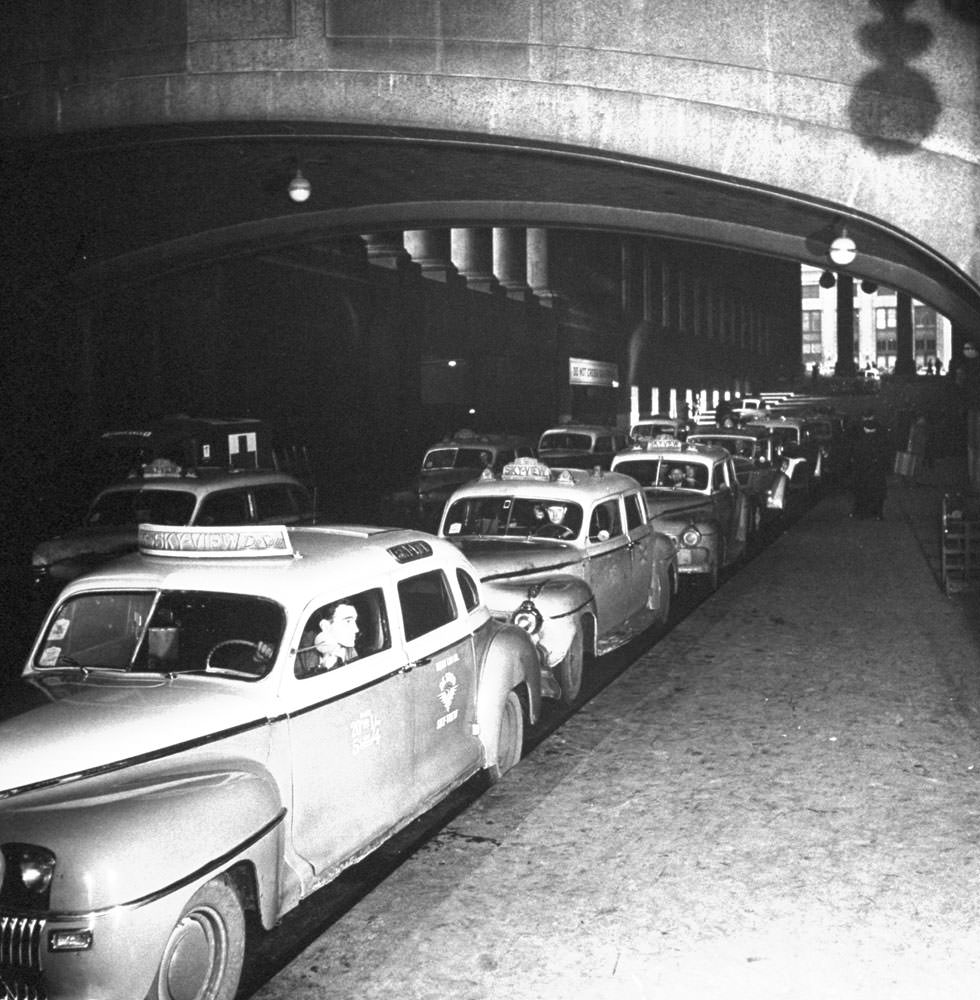
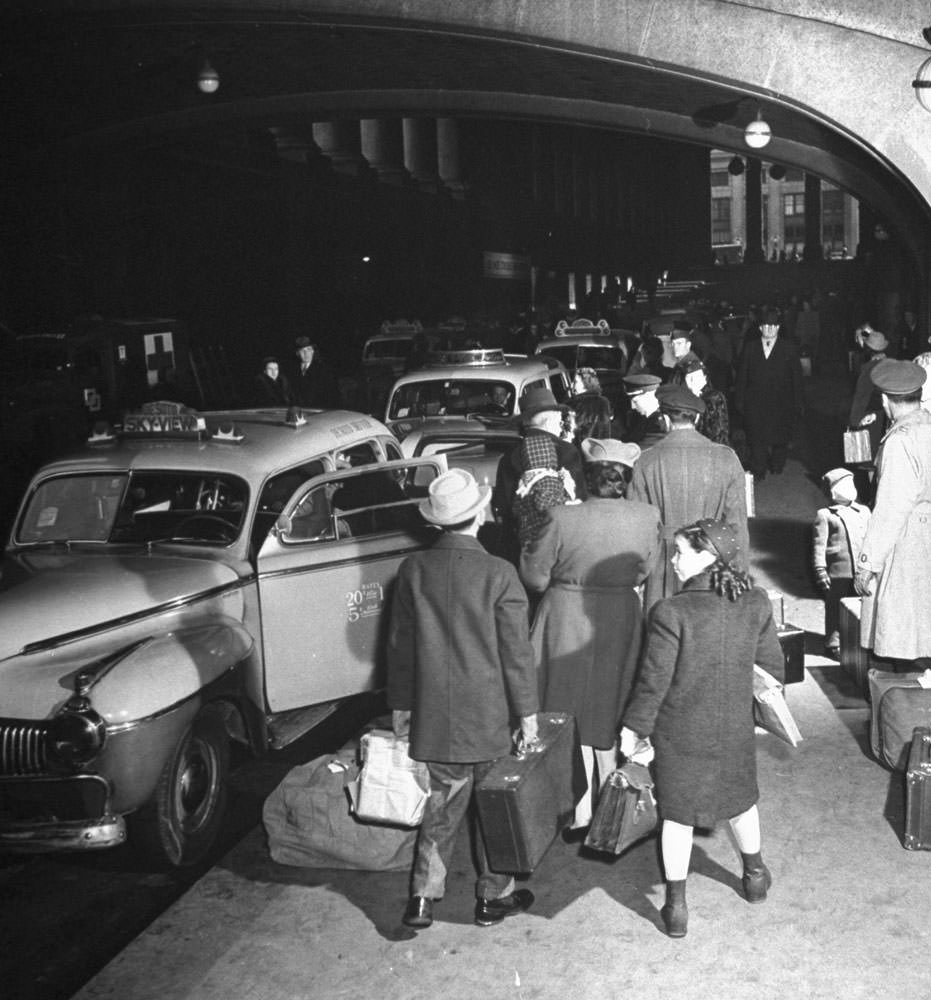
Penn Station was one of the busiest points in the city, with military personnel and travelers constantly flowing in and out. Taxi cabs lined up outside to meet every arriving train, ready to carry passengers deeper into the five boroughs.
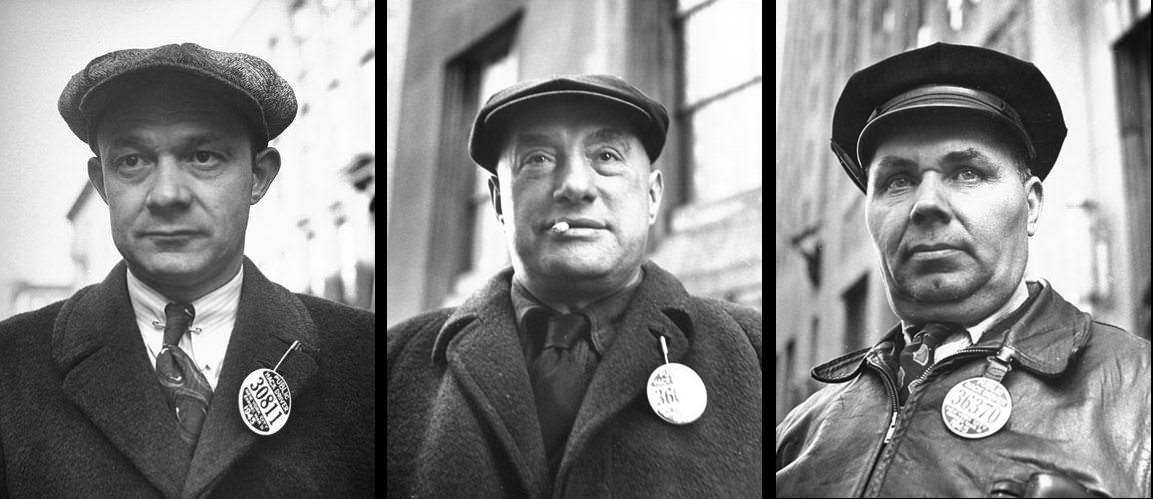
The drivers themselves were a distinct breed. Seasoned and street-smart, they knew every avenue and shortcut in the city’s grid. Each licensed driver was required to wear a numbered Public Hack Driver badge — an official marker of their trade that identified them to any passenger who climbed in.
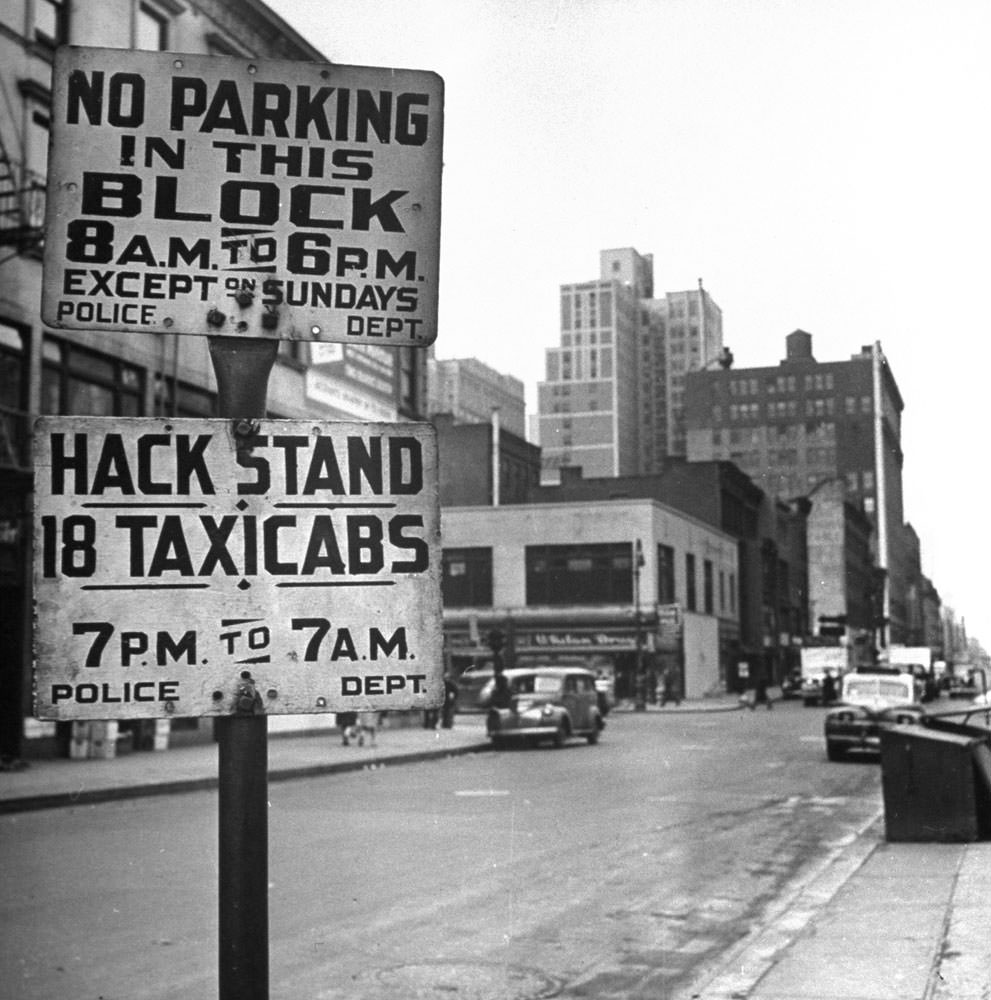
Hack stands — designated taxi waiting areas — were scattered across the city, giving cabs an organized place to queue between fares. They were a familiar fixture near hotels, theaters, and transit hubs.
Penn Station served as a hub not just for arrivals but for departures too. Passengers hauling luggage spilled onto the curb, waiting their turn for a cab that would take them to apartments, offices, or docks where ships were loading for the Atlantic.
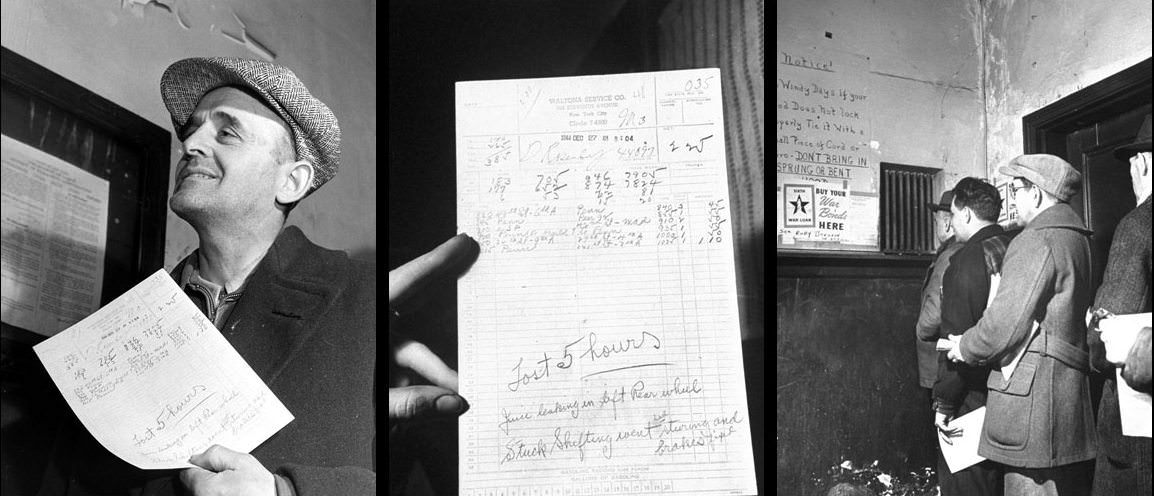
At the end of each shift, drivers returned to their company garages to turn in their fares. Each man carried a handwritten report logging every pickup location and fare collected throughout the day — a paper record of the city’s movement, one ride at a time.
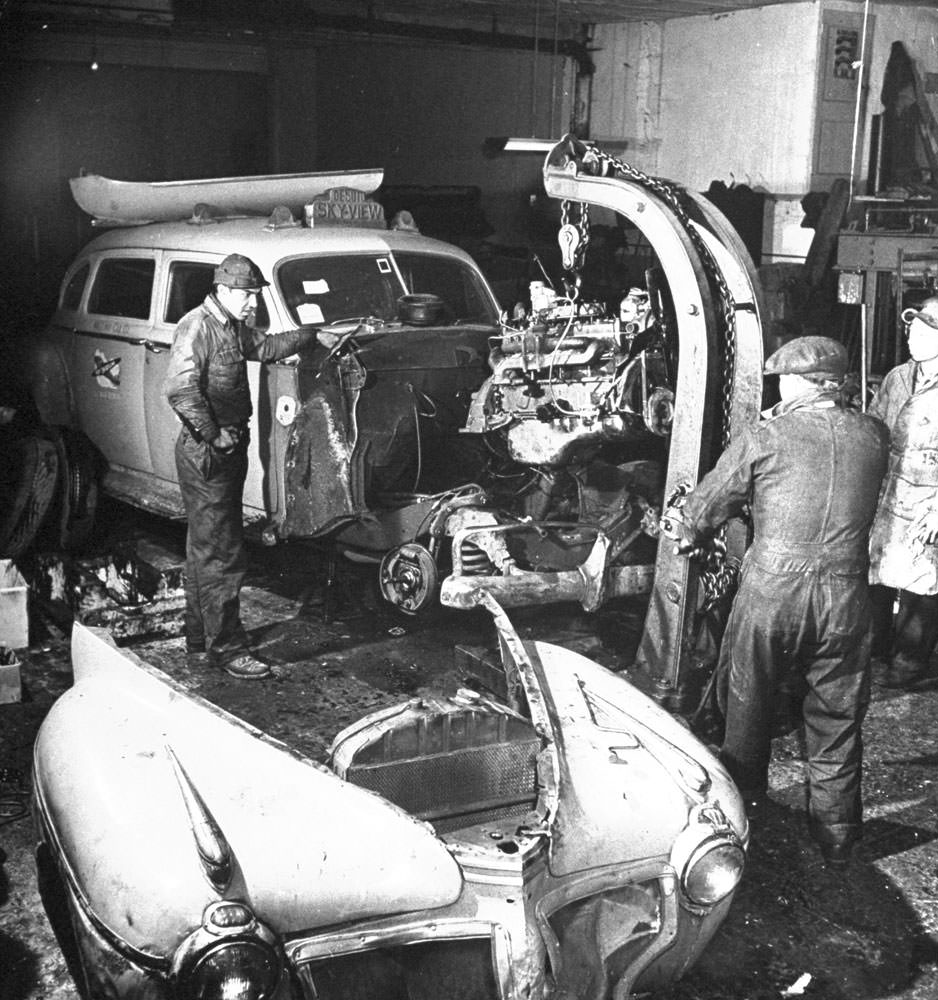
Keeping aging vehicles on the road required serious mechanical effort. Garage crews performed engine swaps and major repairs regularly, using hoists to pull and reinstall motors. With no new cars coming off civilian assembly lines, fixing what they had was the only option.
On Park Avenue and across the city, taxis moved in a steady stream. They carried factory workers, off-duty soldiers, office clerks, and shoppers — anyone who needed to get somewhere in a city that never slowed down, even in the middle of a world war.