By the time the 1960s arrived, Sydney was already moving fast. The post-war building boom had given the city a new skeleton — fresh office towers, apartment blocks, and infrastructure projects were reshaping neighbourhoods that had barely changed since the early 20th century. The population was growing quickly, fed in part by waves of immigrants arriving from Europe and beyond. Sydney was no longer a quiet colonial port city. It was becoming something bigger, louder, and harder to ignore.
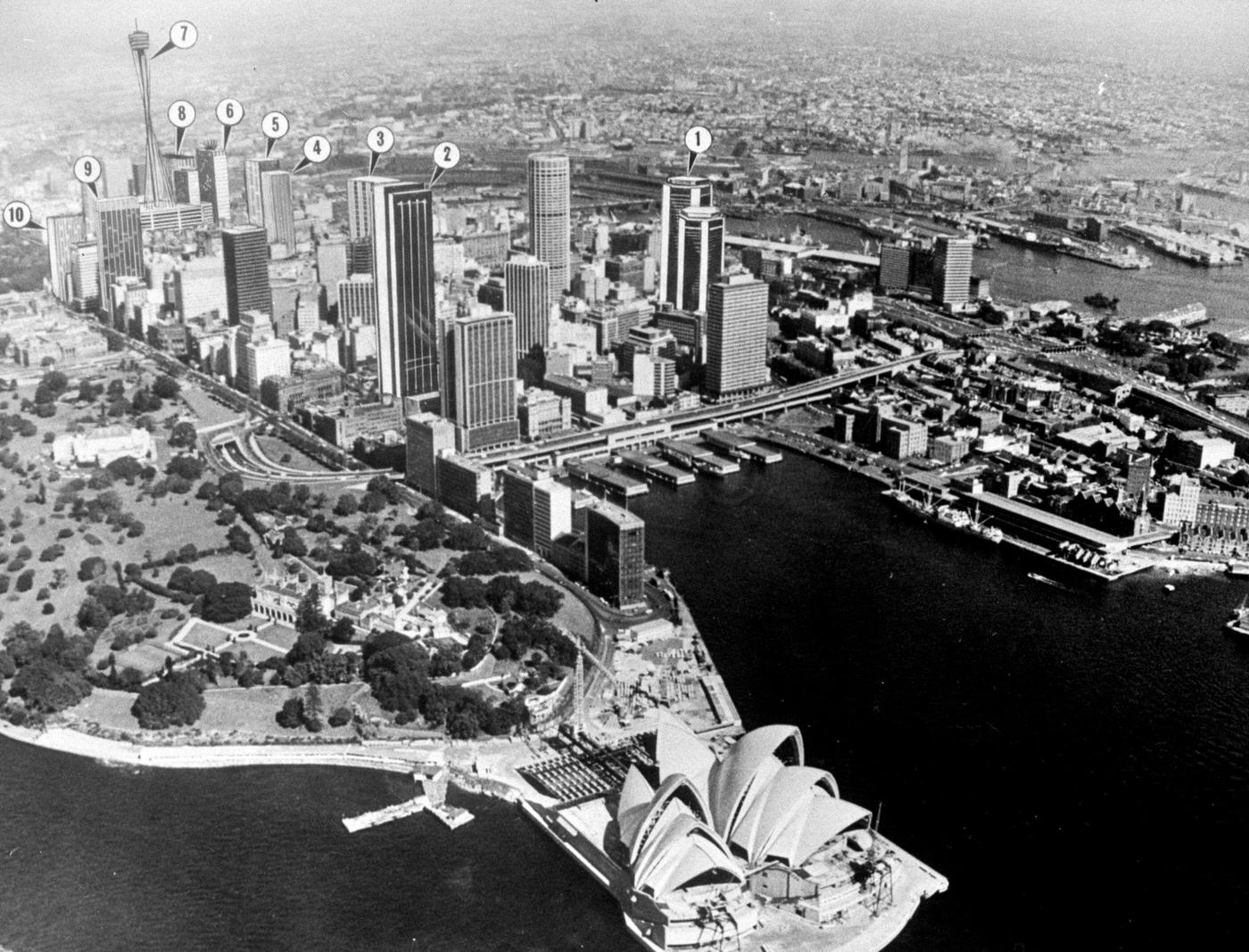
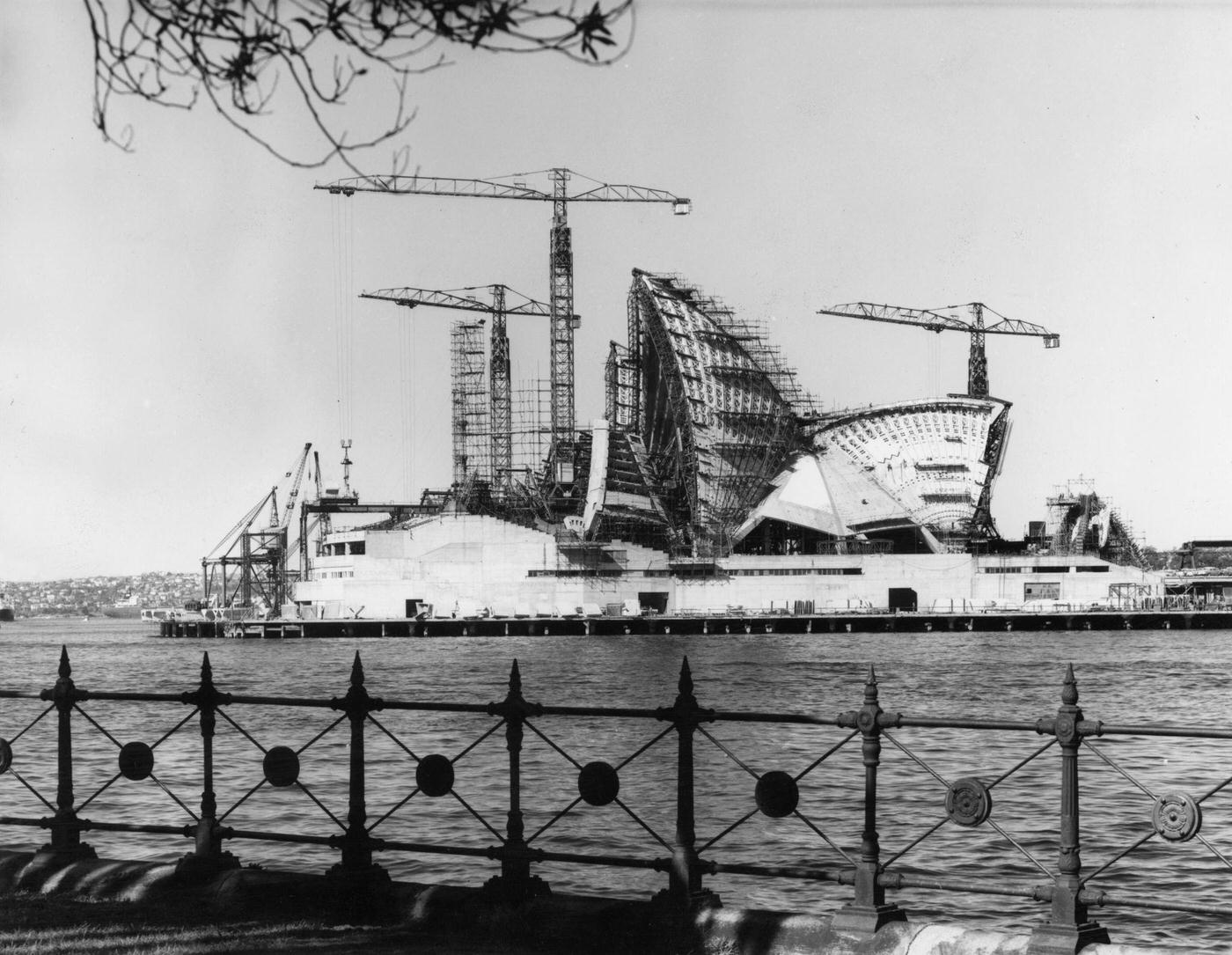
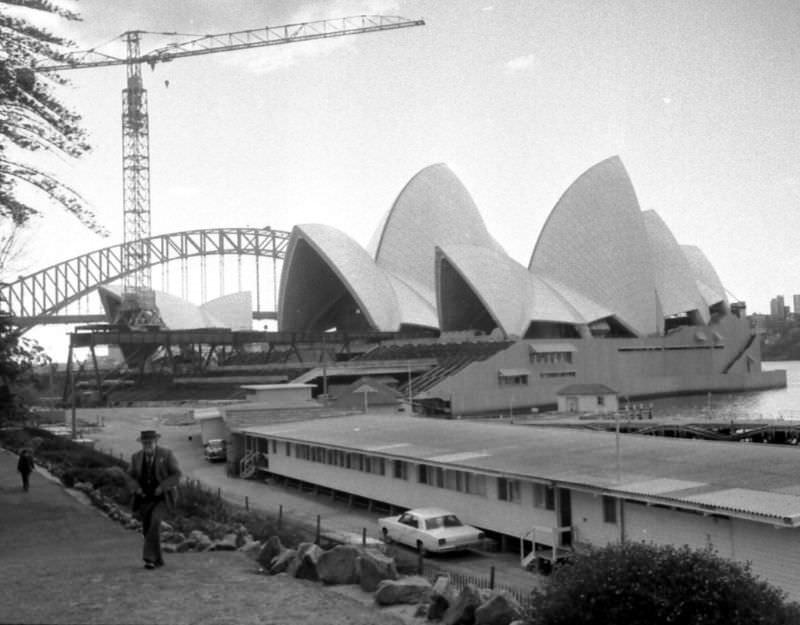
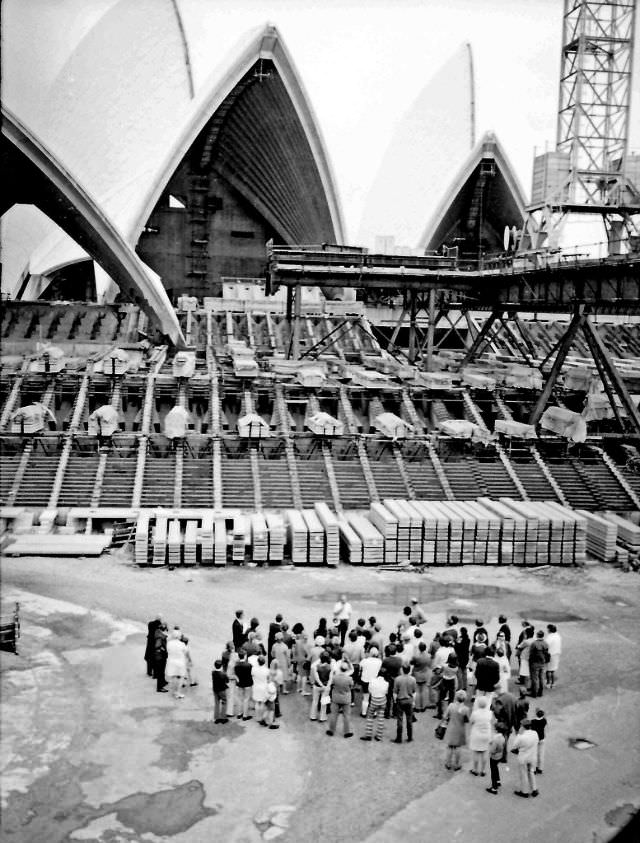
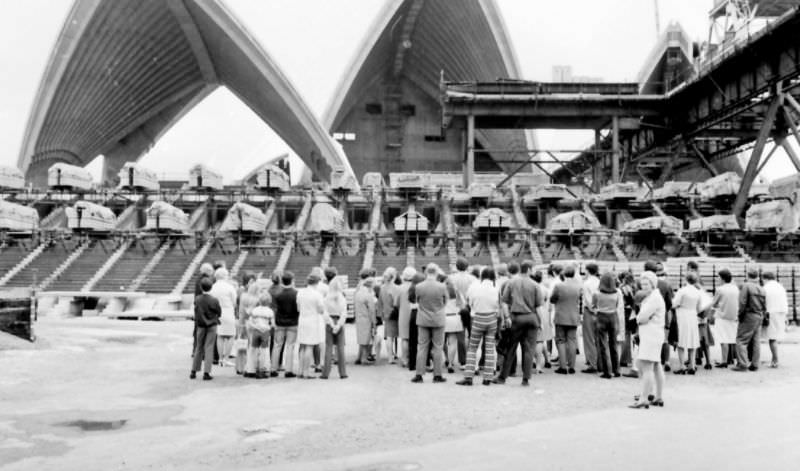
The skyline told the story clearly. New towers punched up above the older sandstone buildings, and cranes were a permanent fixture on the horizon. One of the decade’s most talked-about construction sites sat right on Sydney Harbour — the Opera House. Work on Jørn Utzon’s shell-roofed design had begun in 1959, and through the 1960s, Sydneysiders watched the structure slowly take shape from the shore, from ferries, and from vantage points across the city.
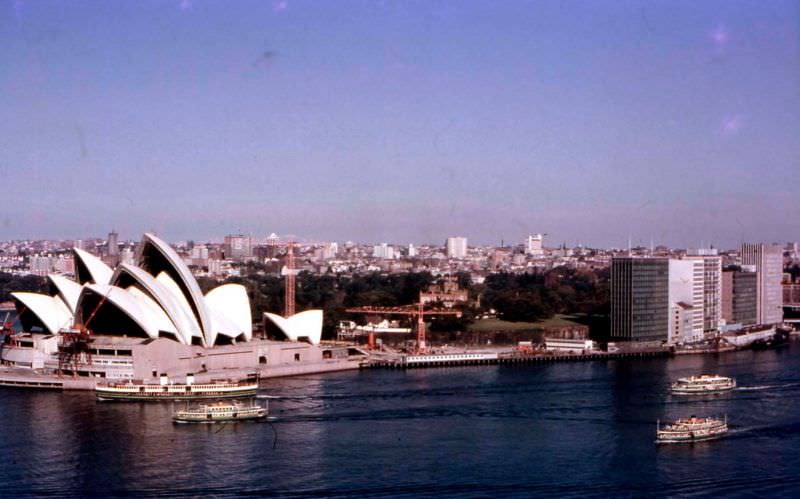
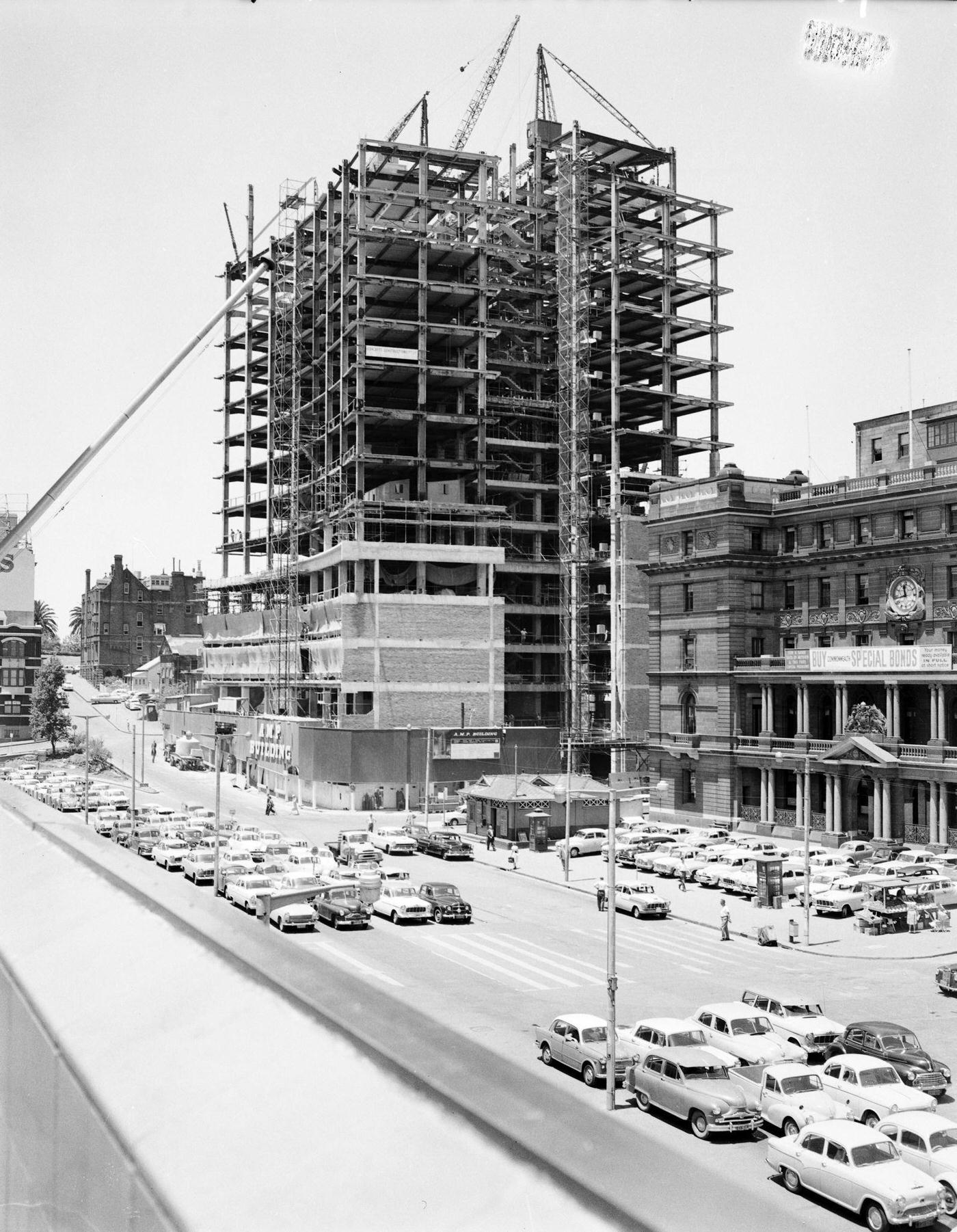
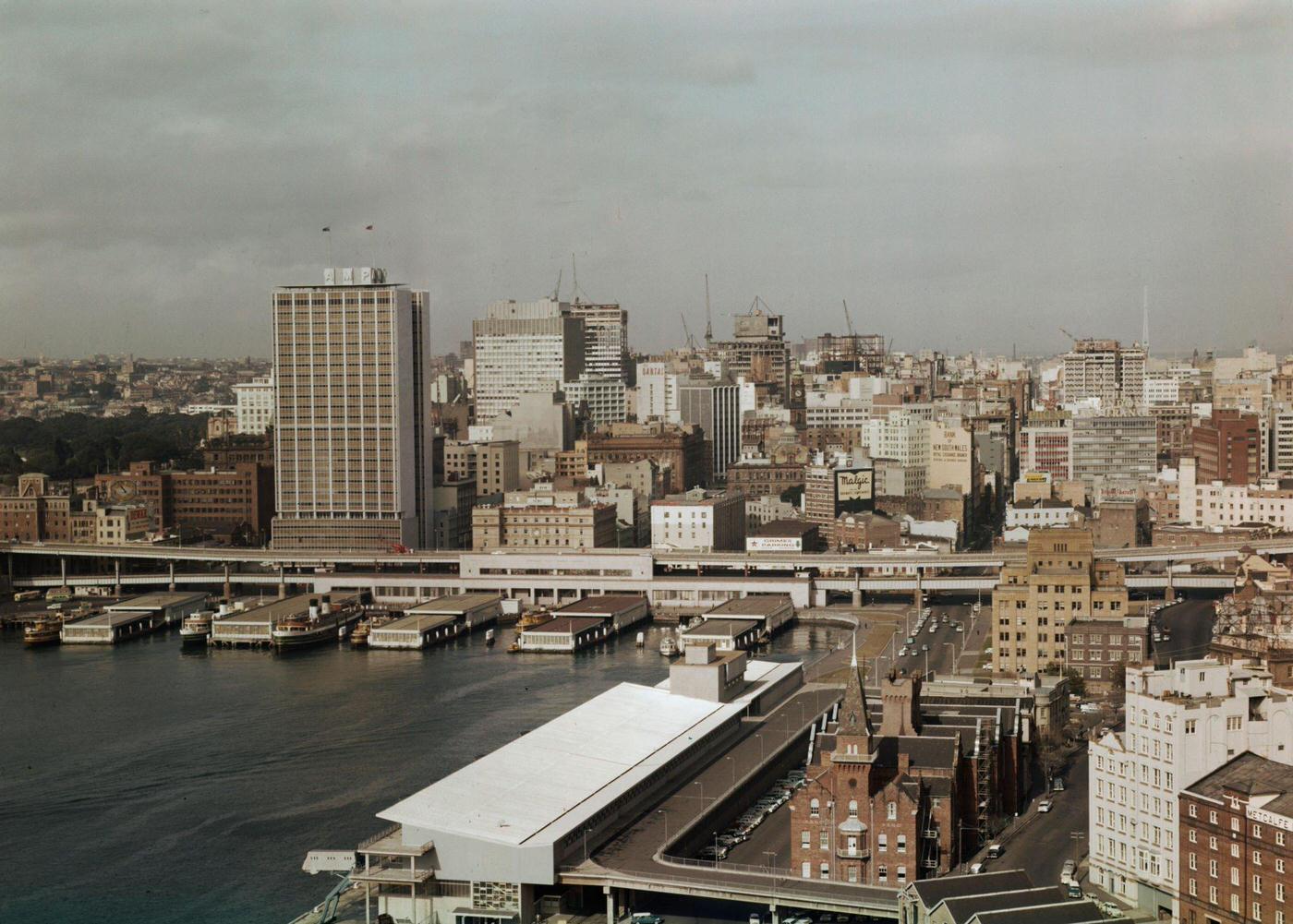
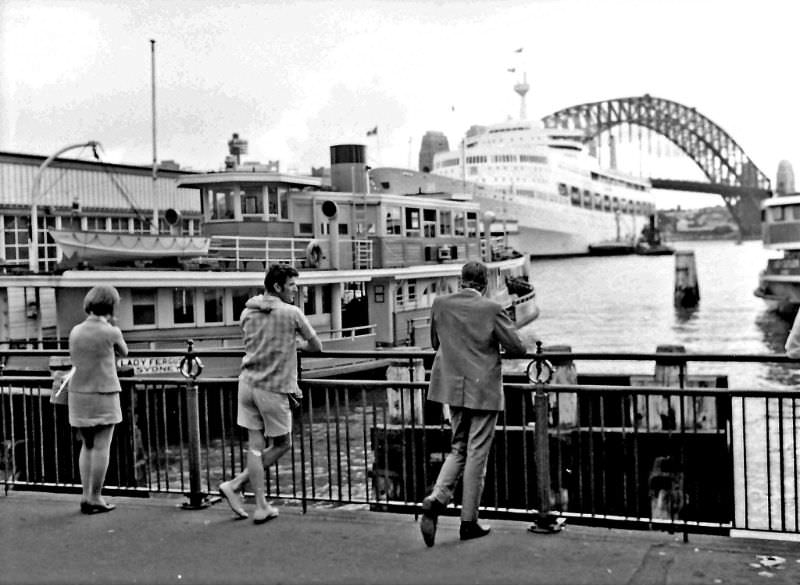
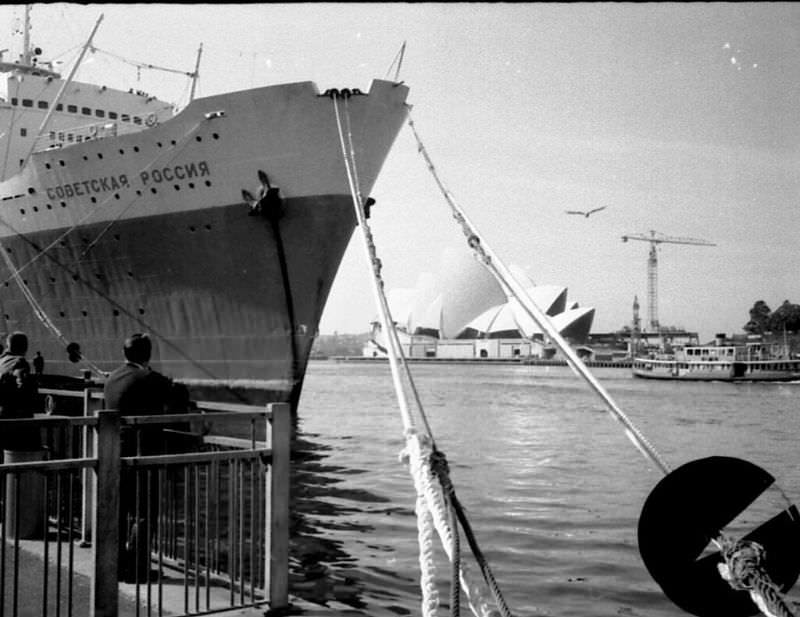
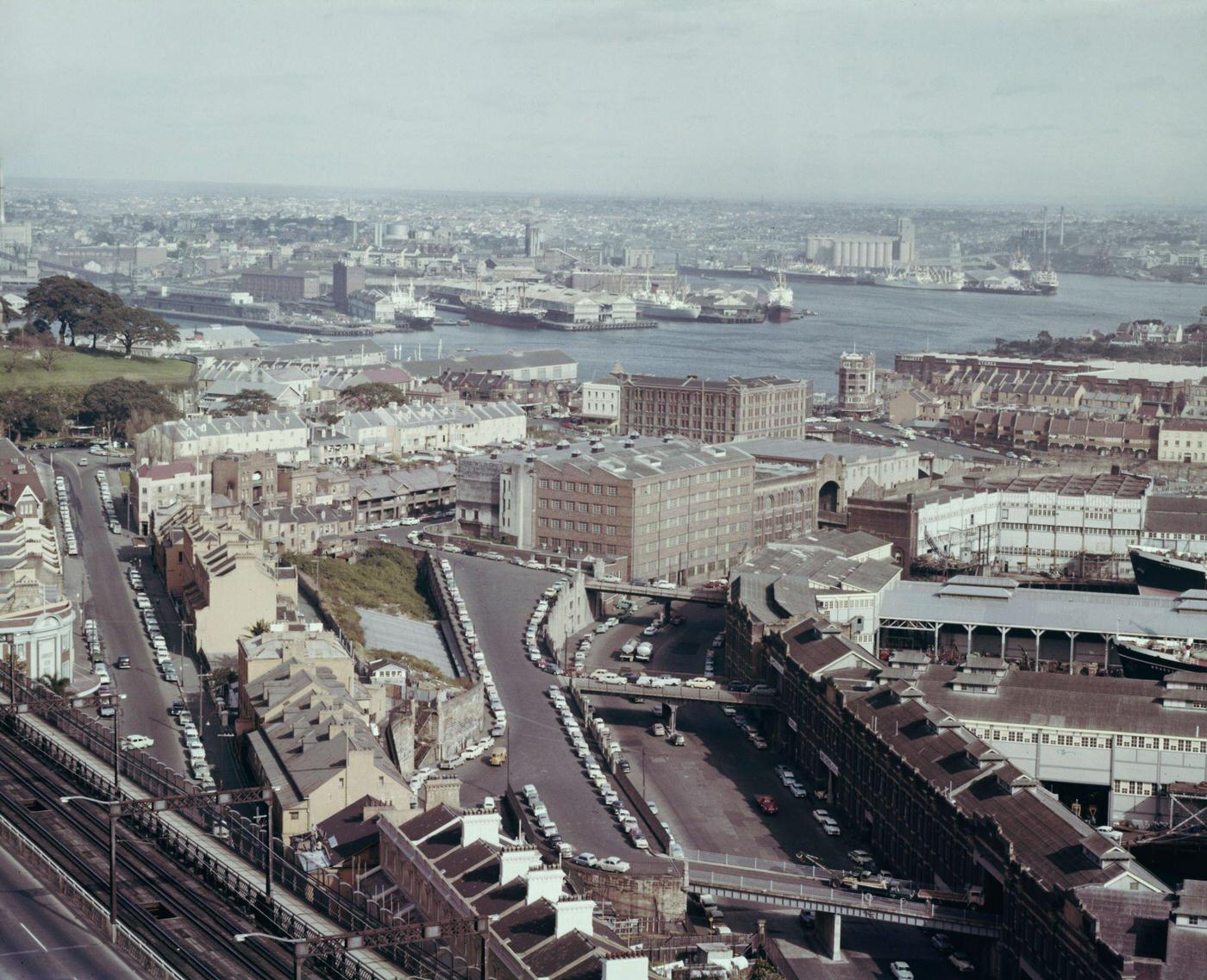
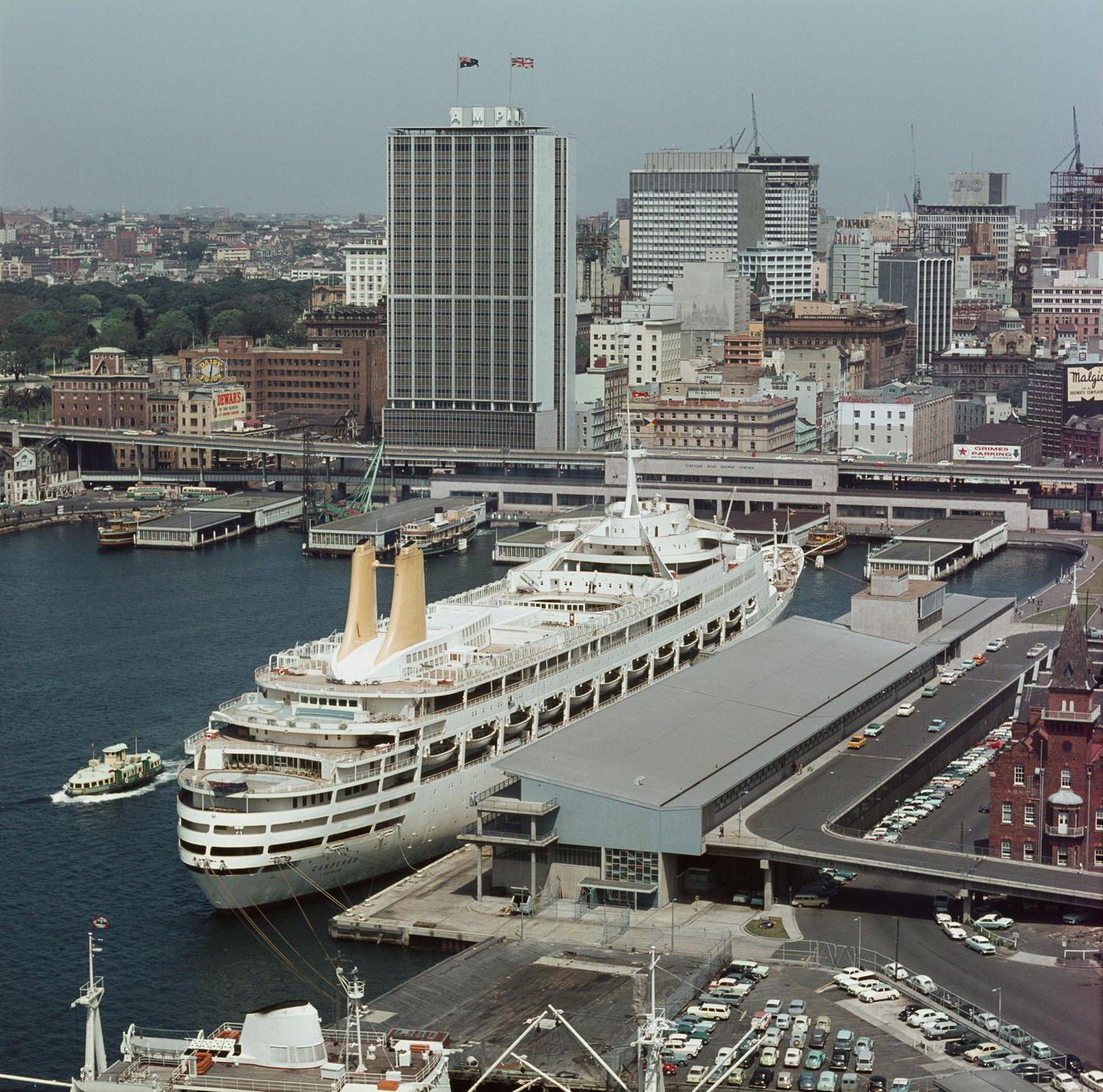
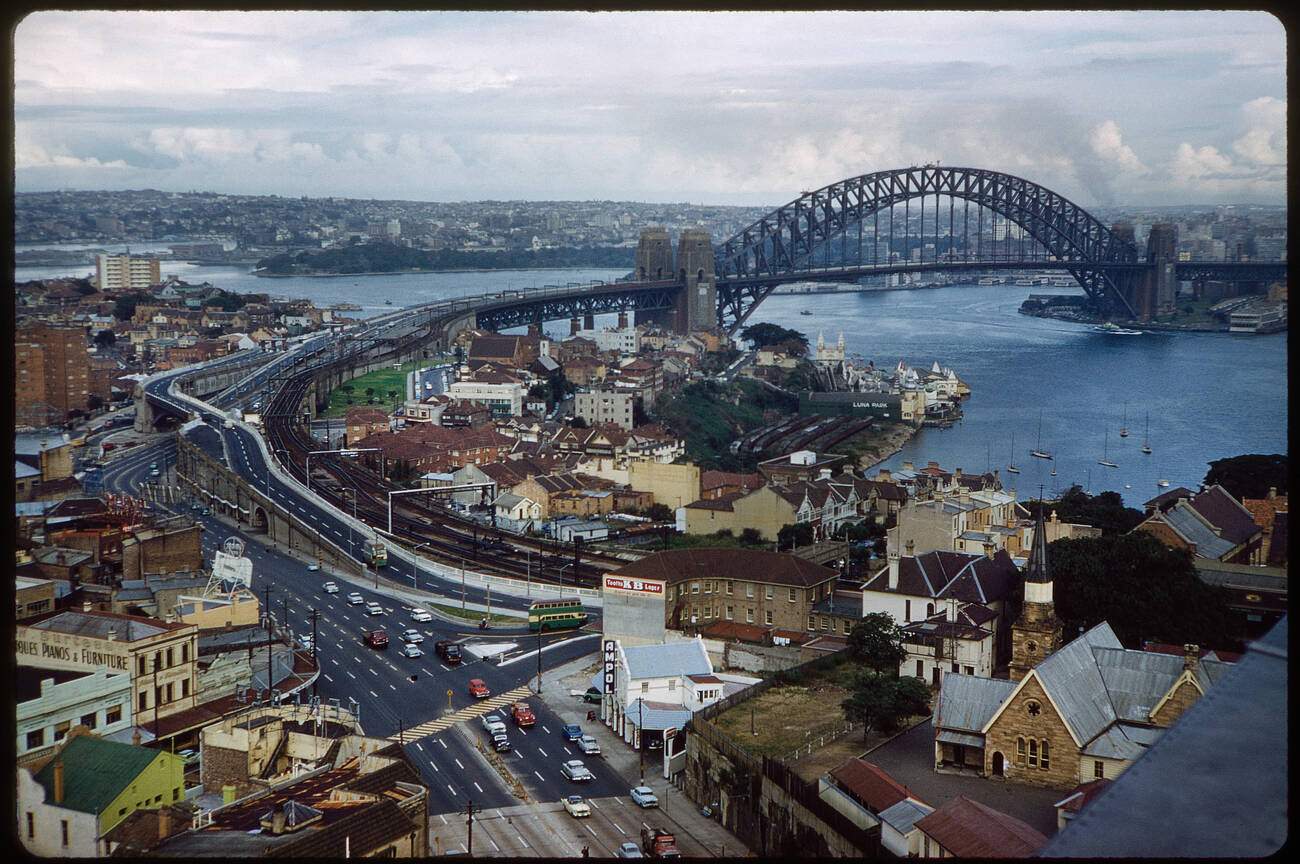
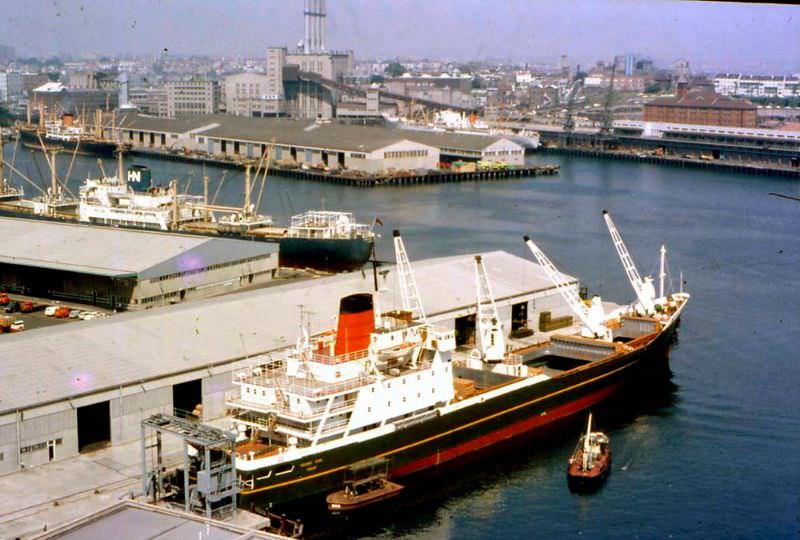
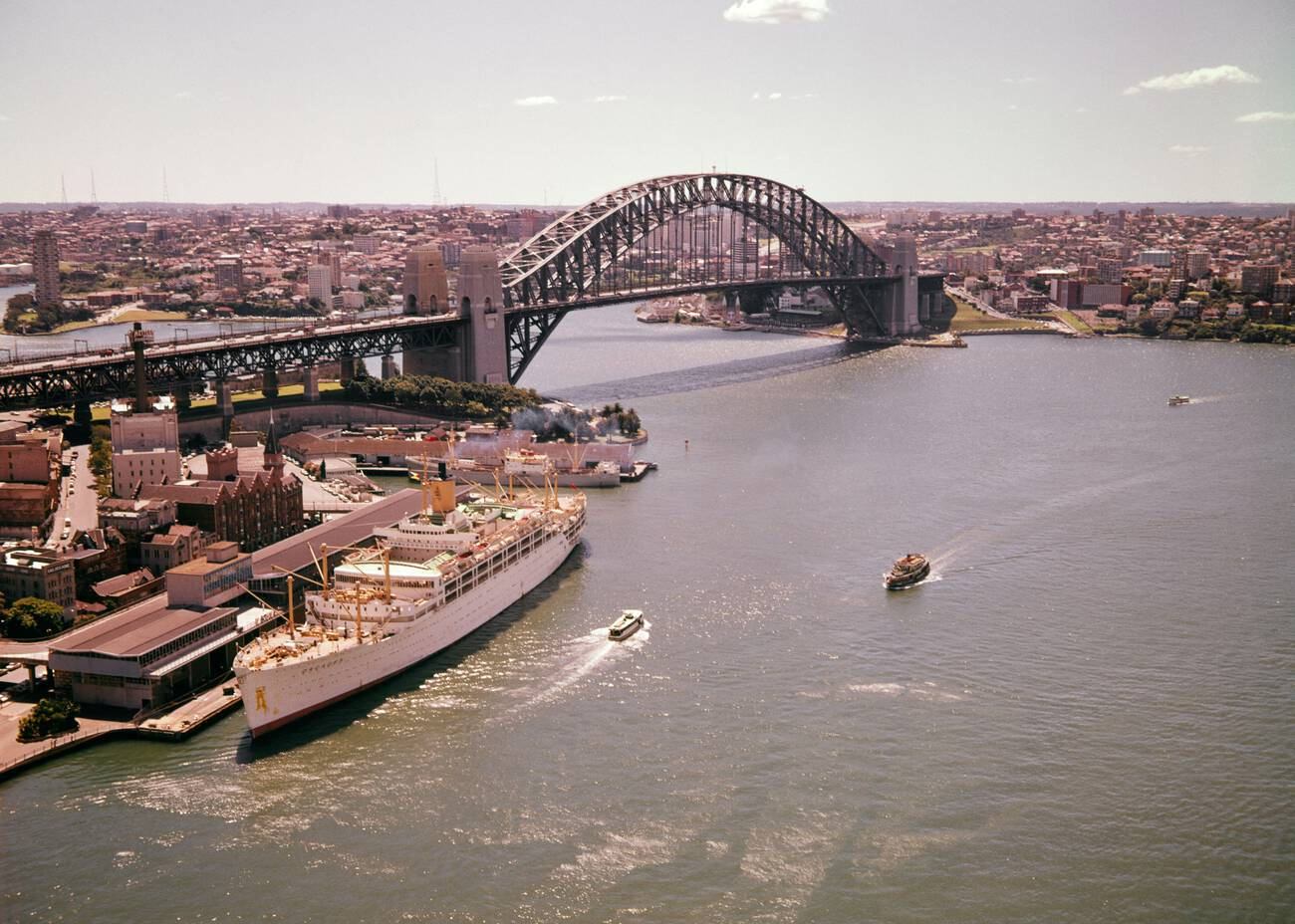
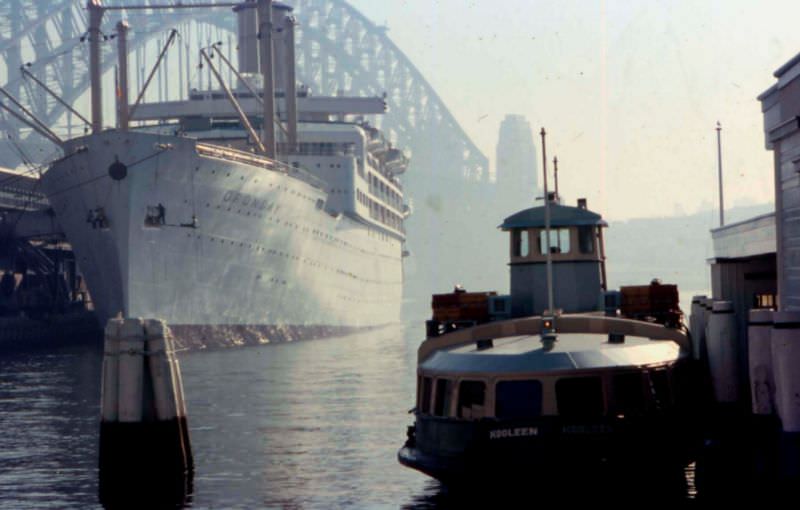
Circular Quay remained the beating heart of the city. Ferries, ocean liners, and working vessels packed the wharves daily. Ships from Britain, the Soviet Union, and P&O’s passenger fleet all passed through. The AMP Building, completed in the early 1960s, loomed over the quay and became one of the city’s first true modern skyscrapers. From the top of the Harbour Bridge, the view of the terminal and the city beyond it showed just how much ground Sydney had covered in a short time.
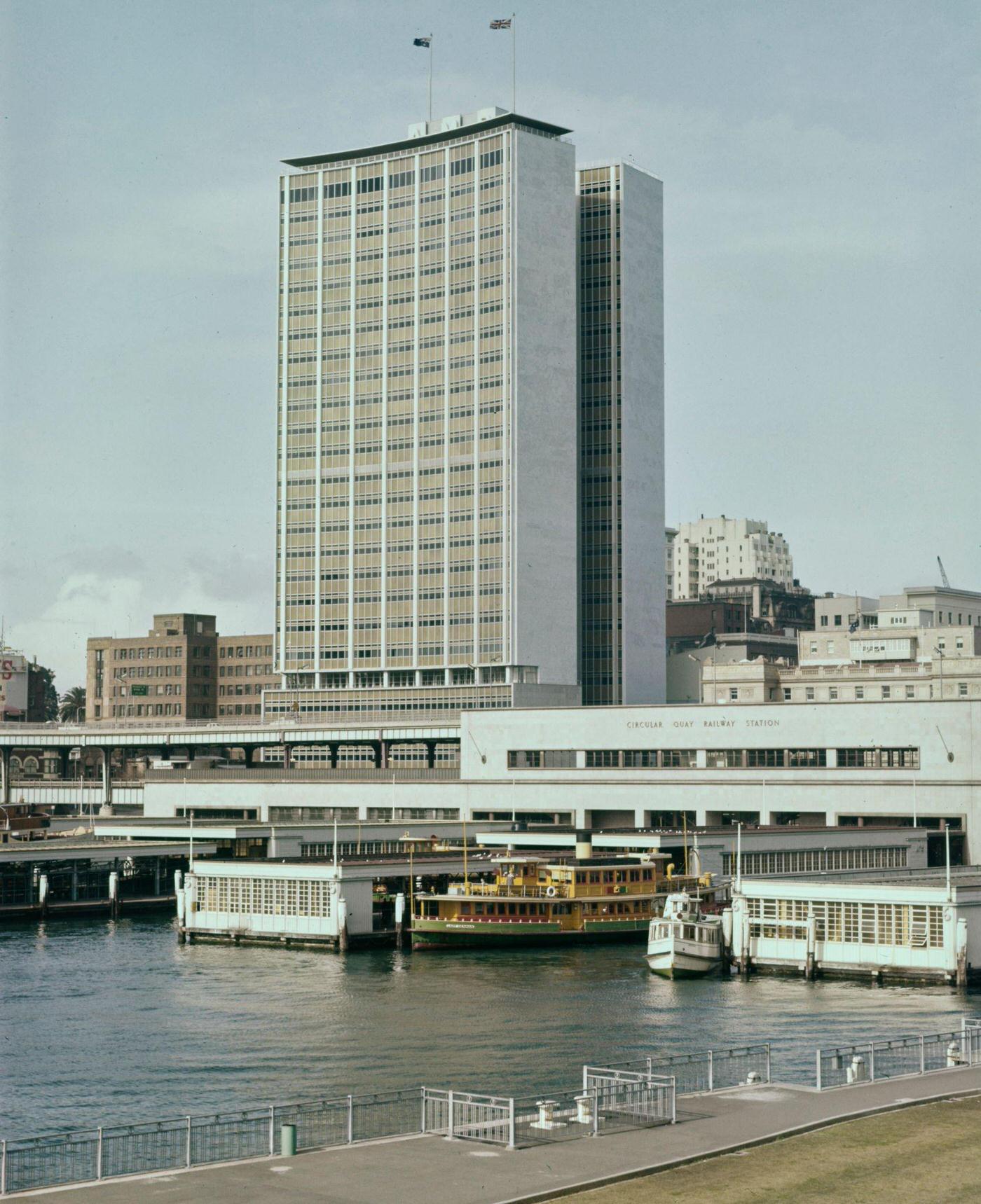
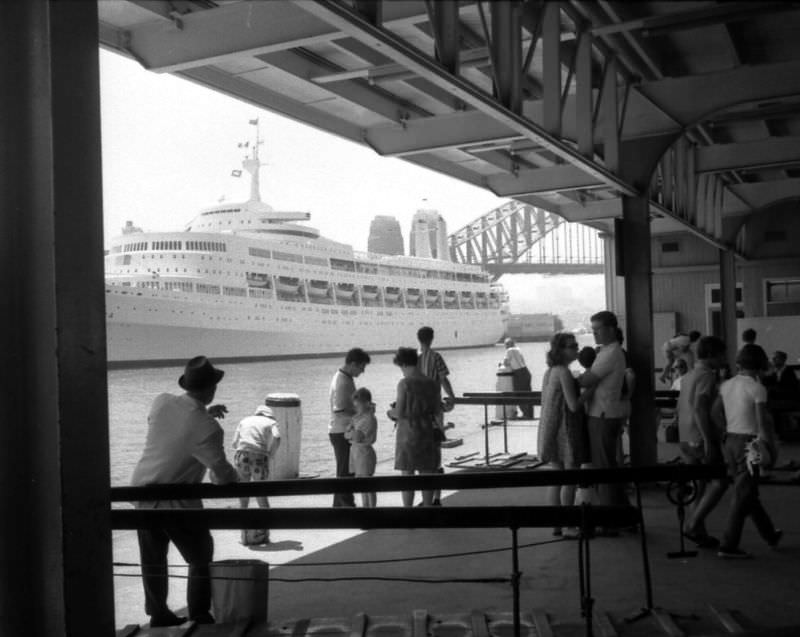
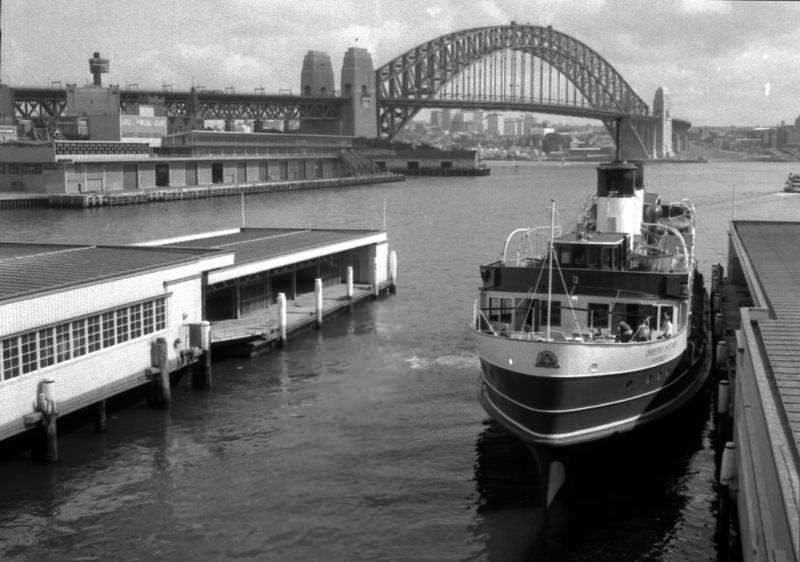
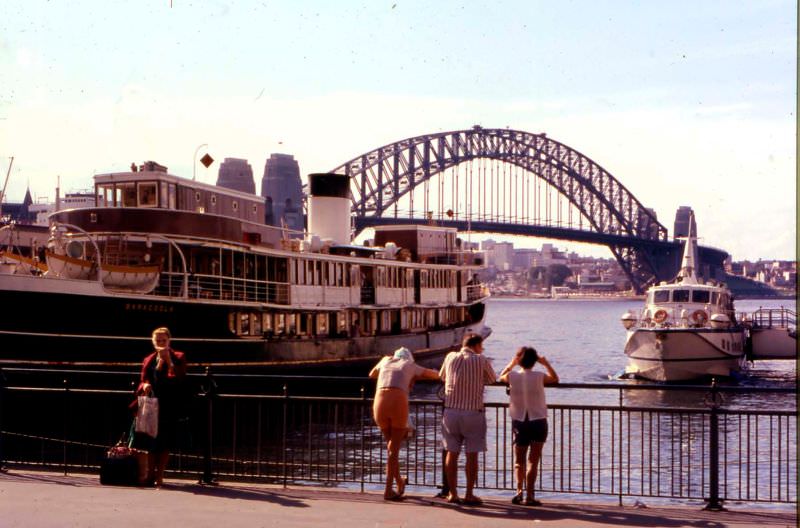
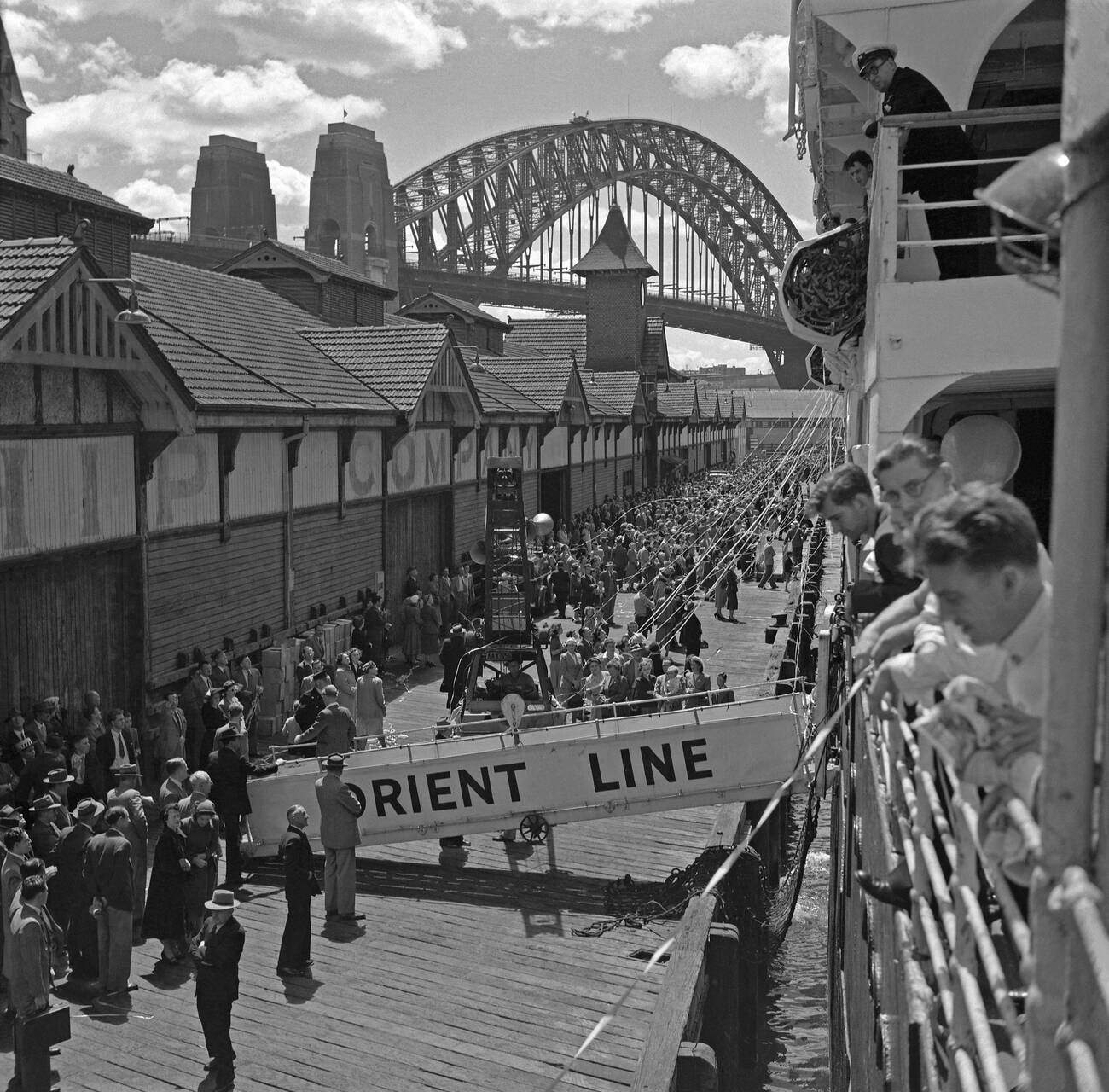
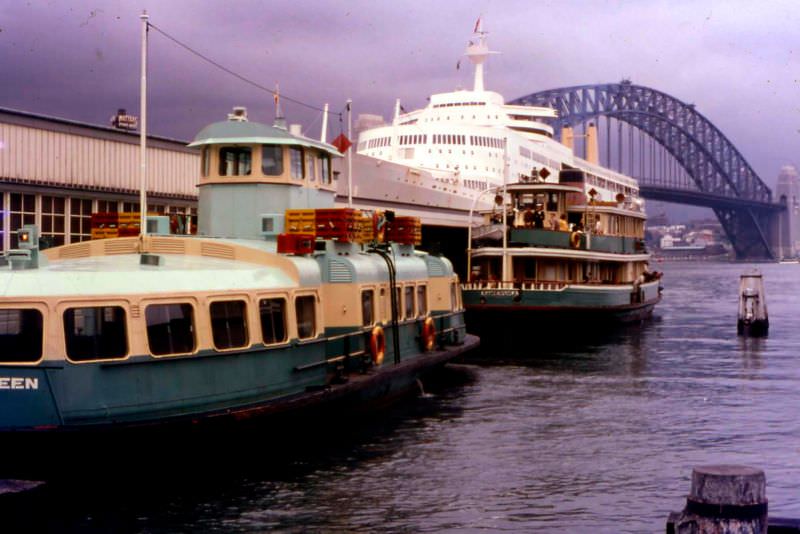
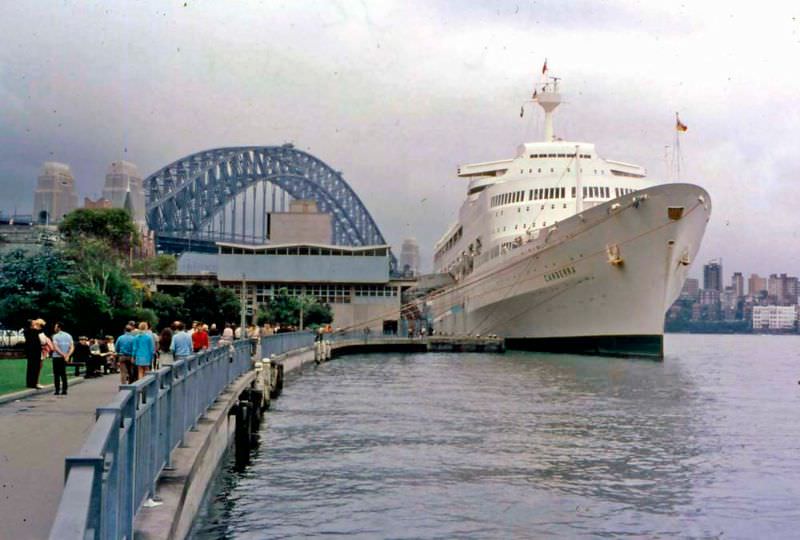
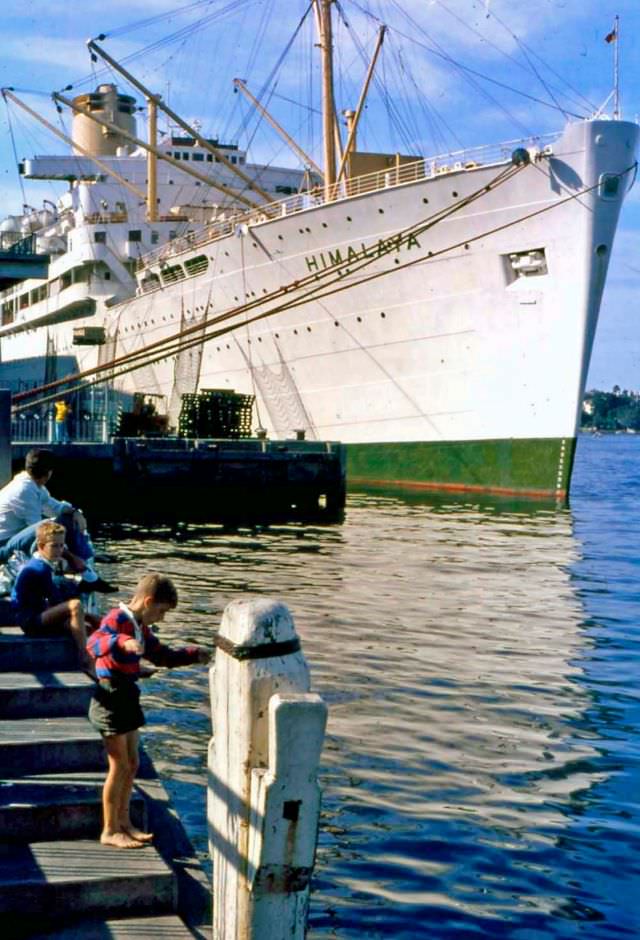
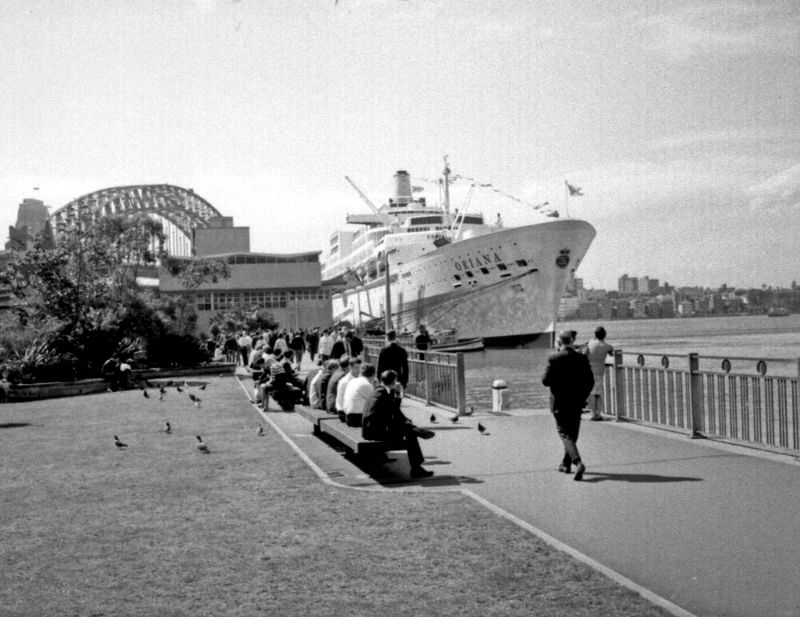
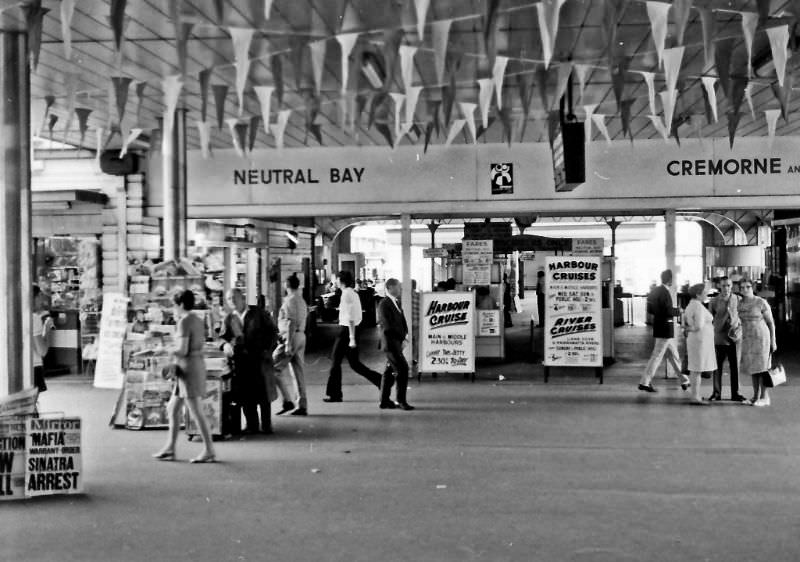
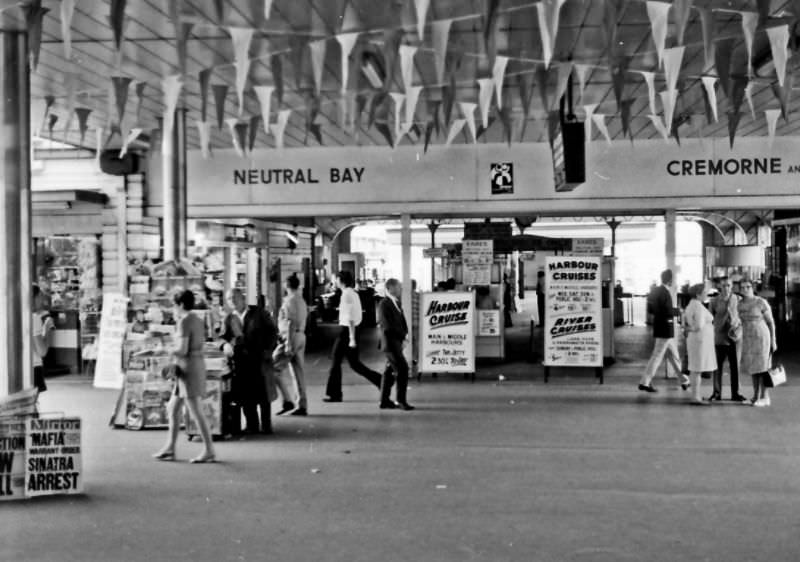
The harbour was always busy. Ferries like the Baragoola and the hydrofoil Fairlight shuttled commuters and day-trippers across the water, while ocean liners from the Orient Line and P&O brought migrants and tourists into the city. The wharves at Walsh Bay and Dawes Point handled cargo and commercial shipping. The Harbour Bridge, completed in 1932, remained the city’s most recognisable landmark and still carried the bulk of the city’s north-south traffic.
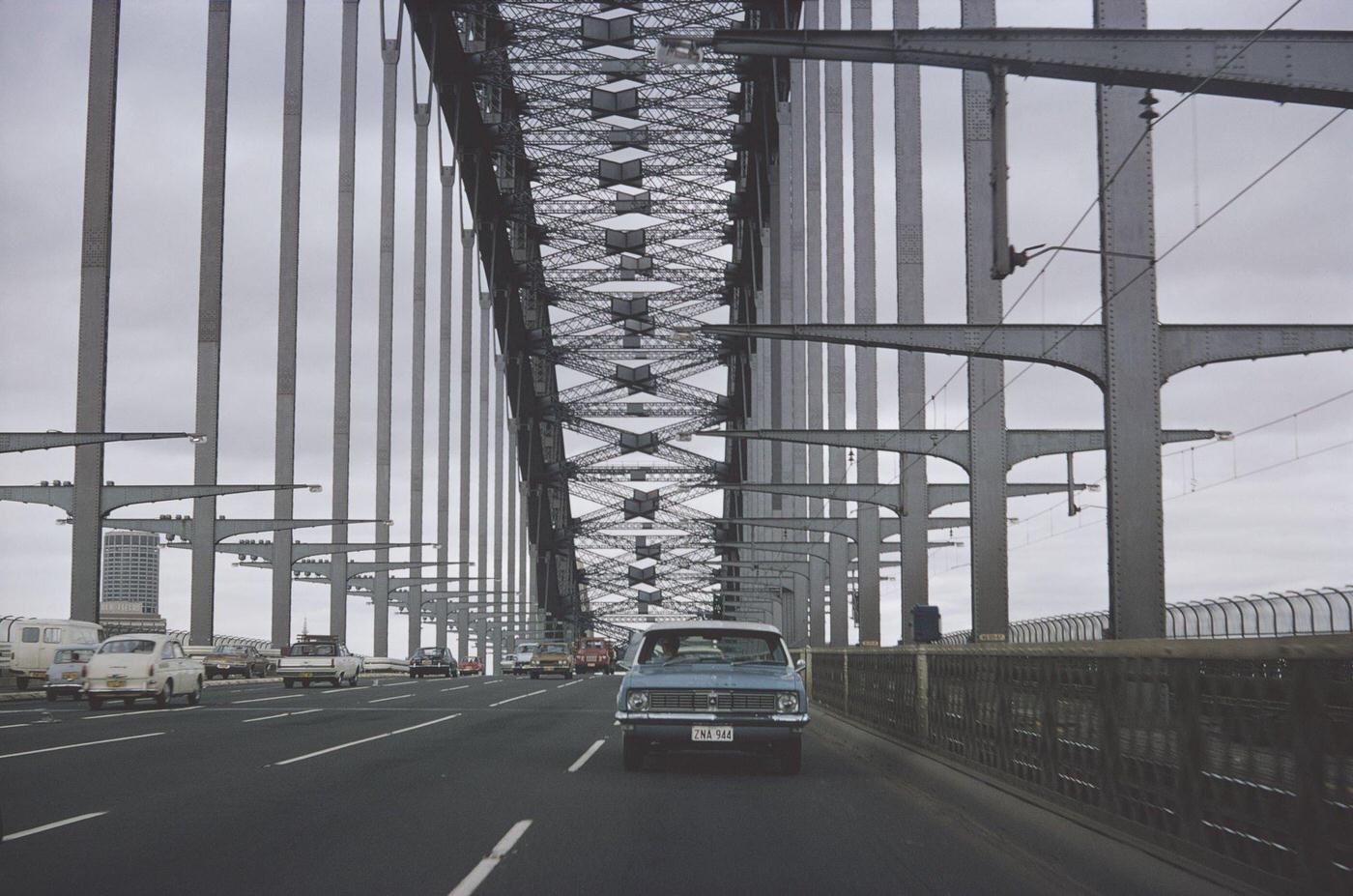

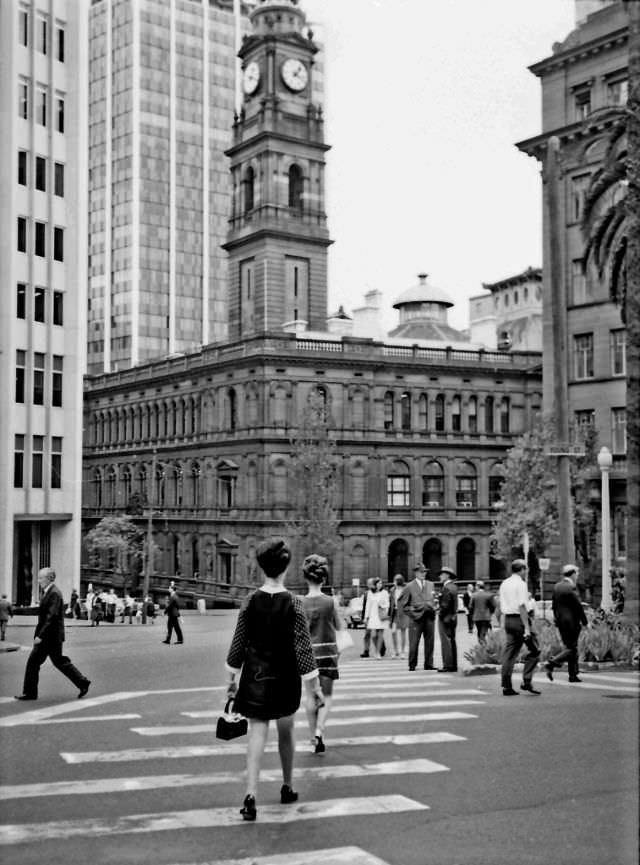
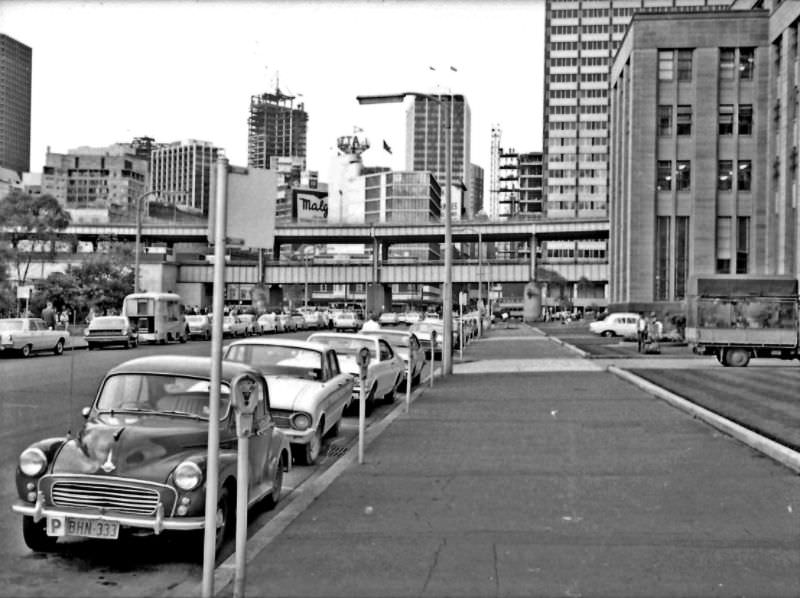
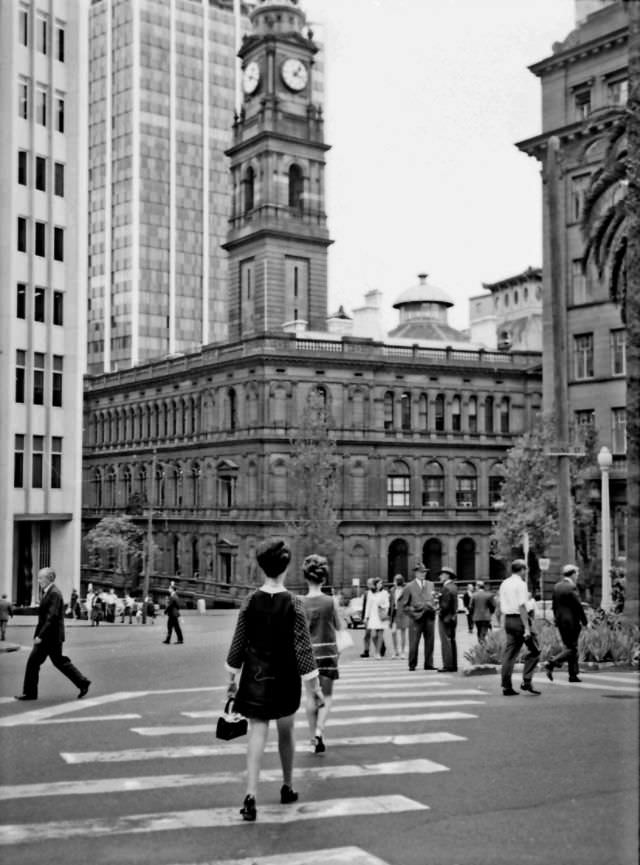
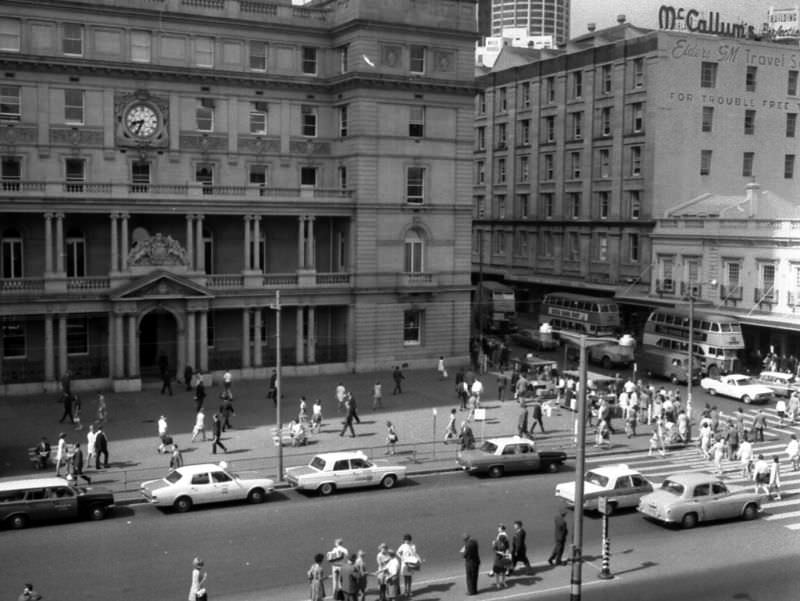
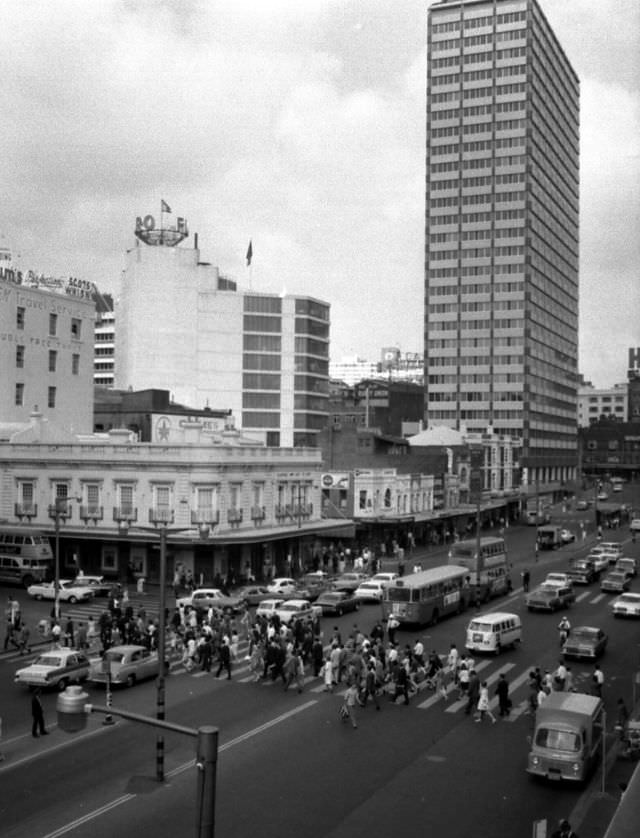
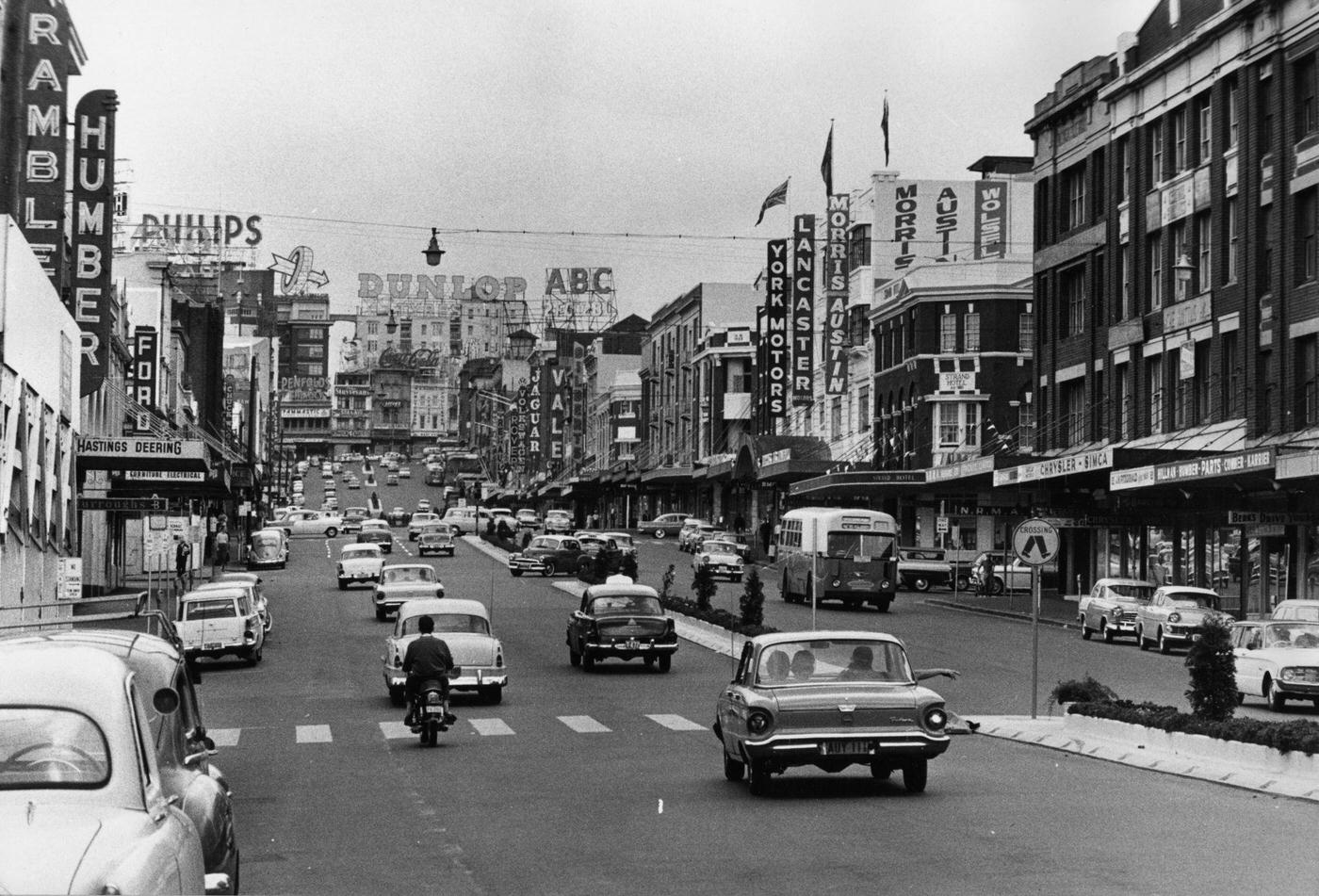
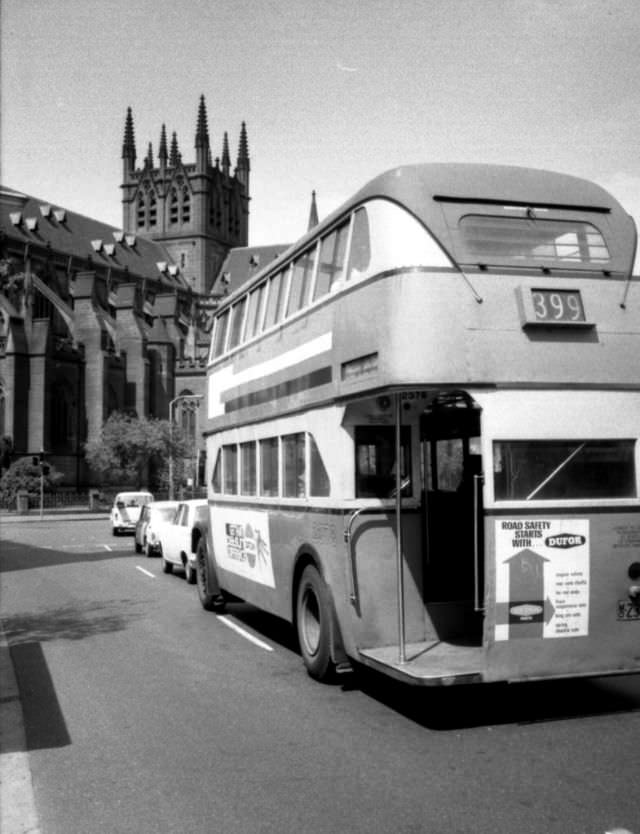
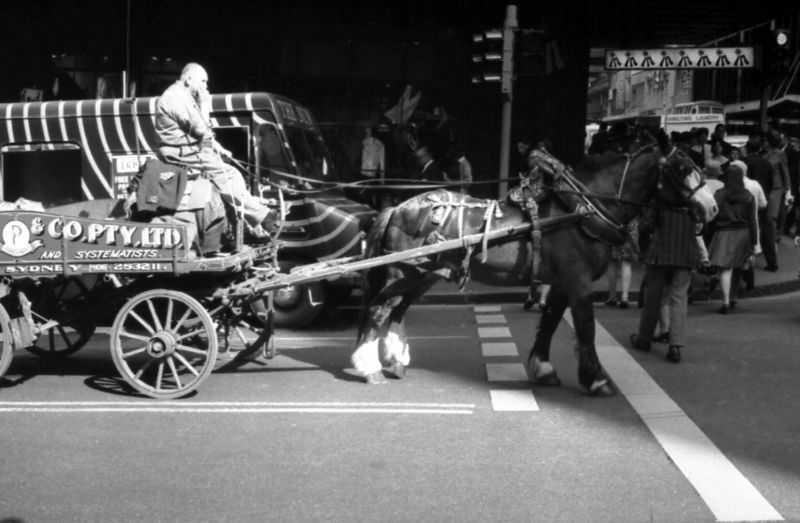
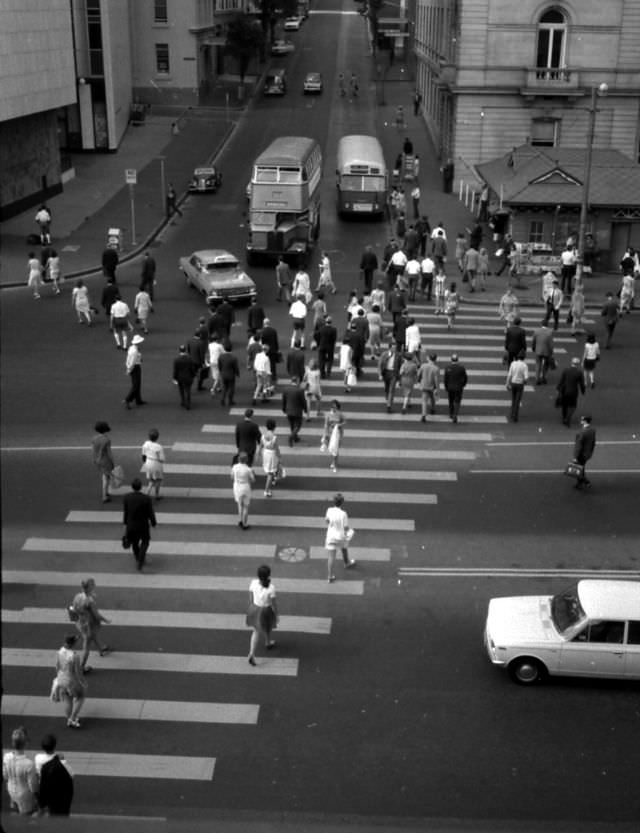
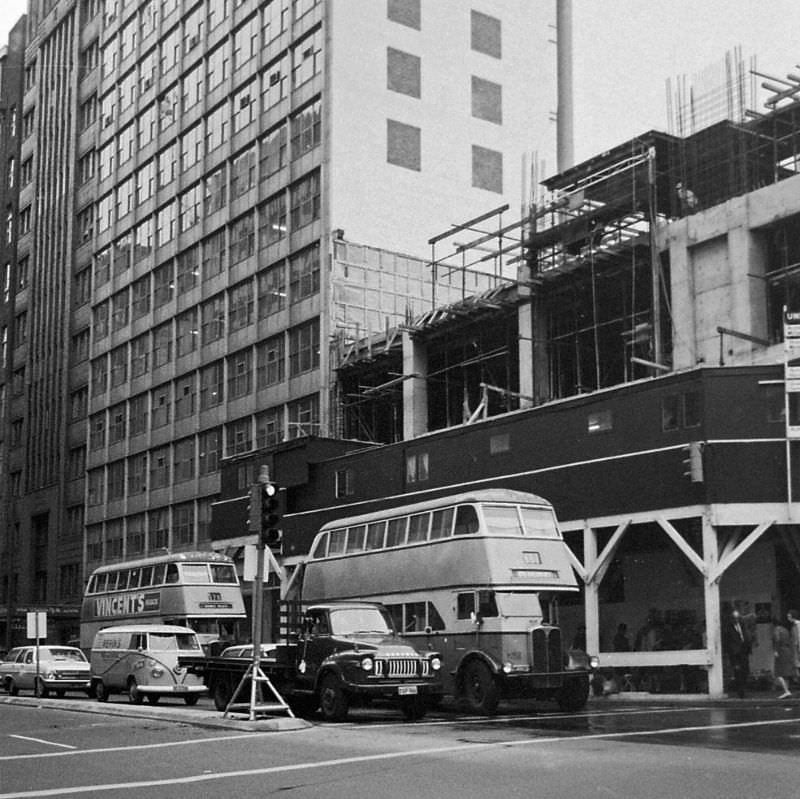
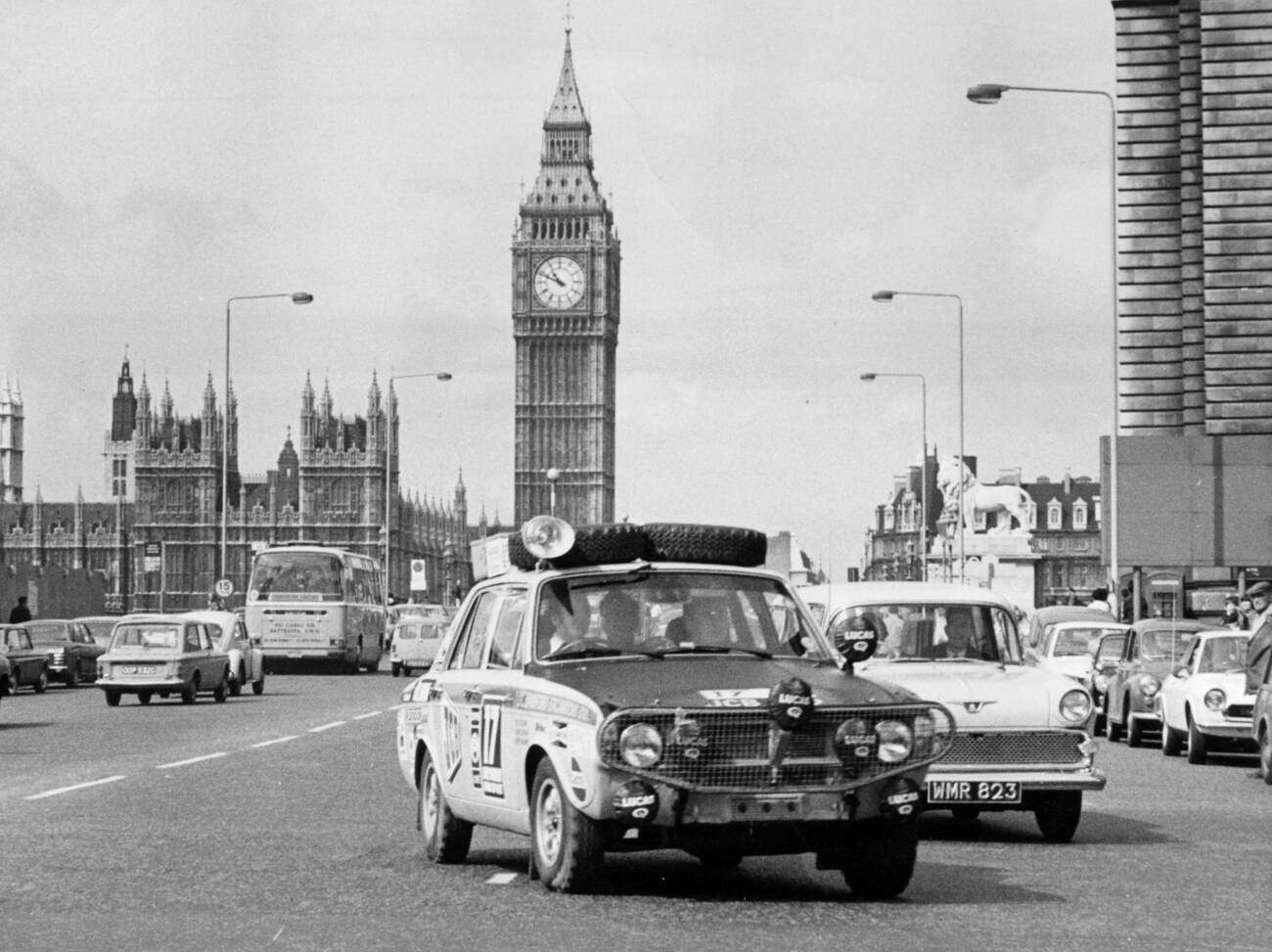
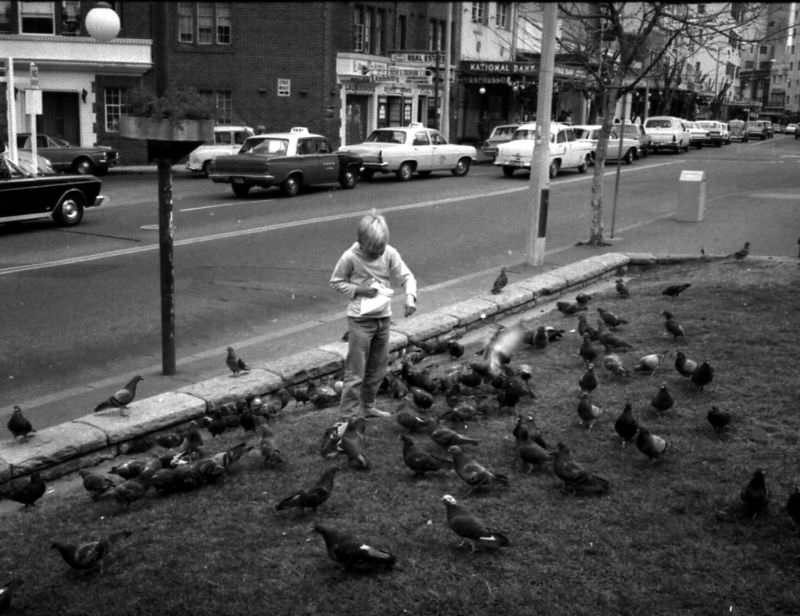
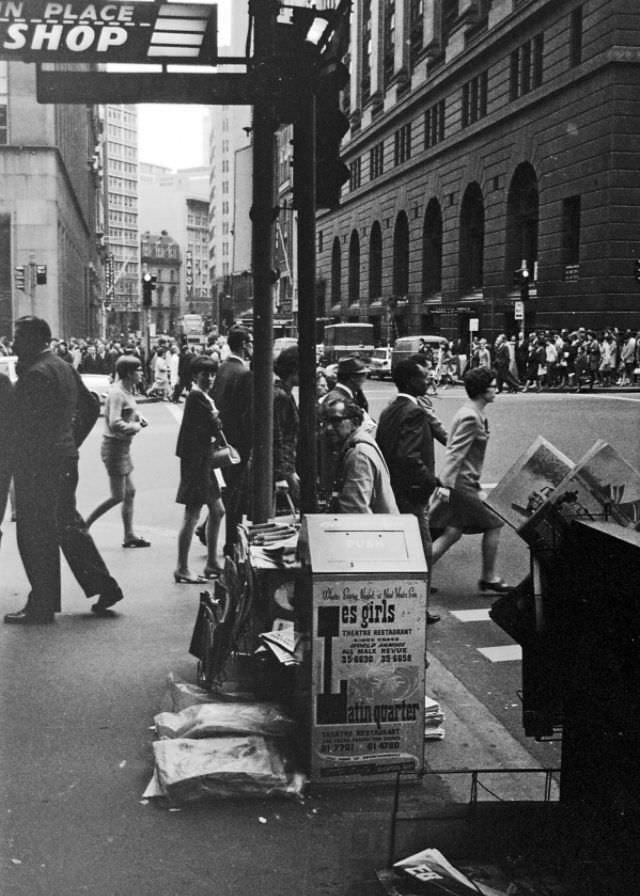
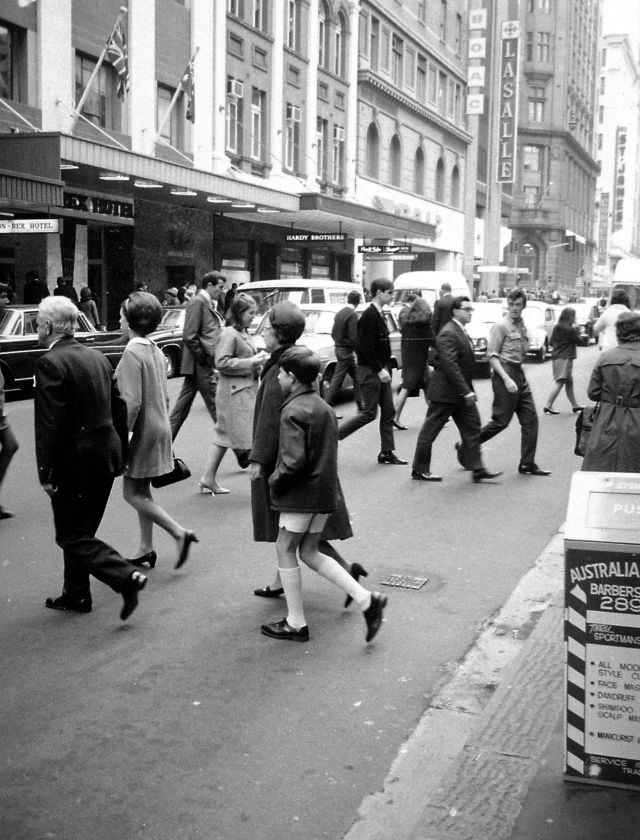
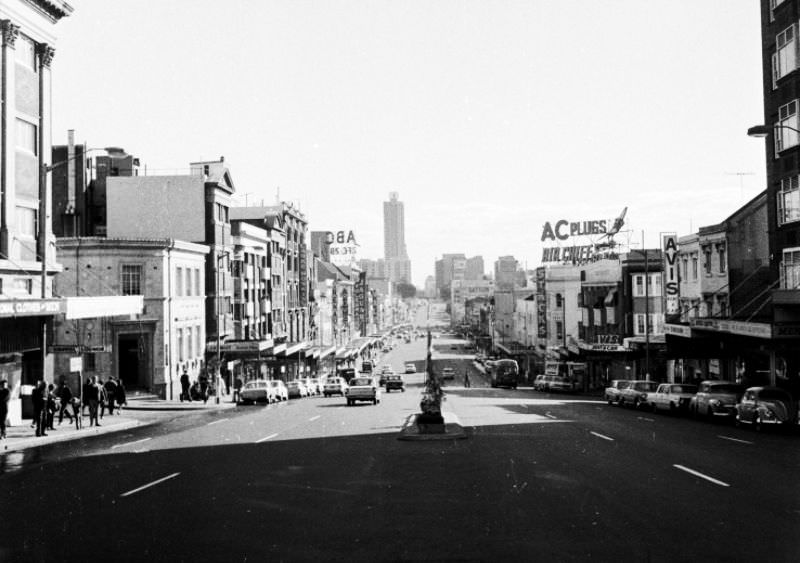
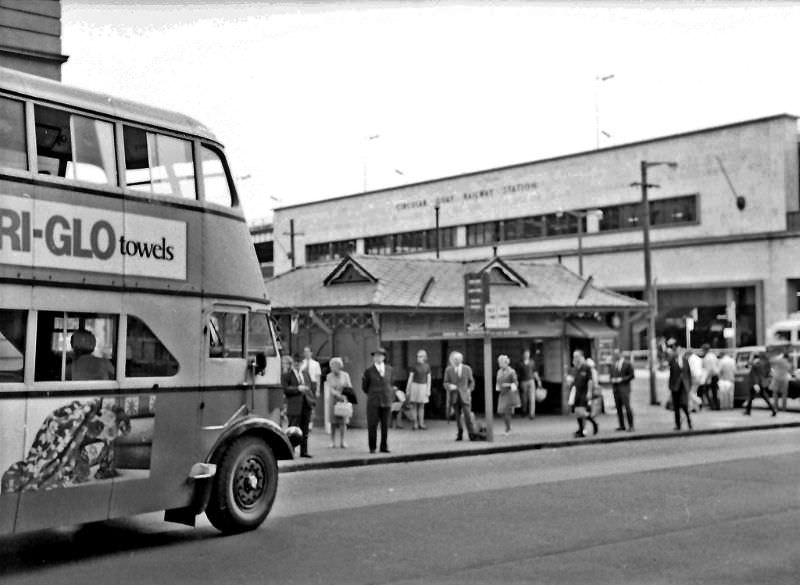
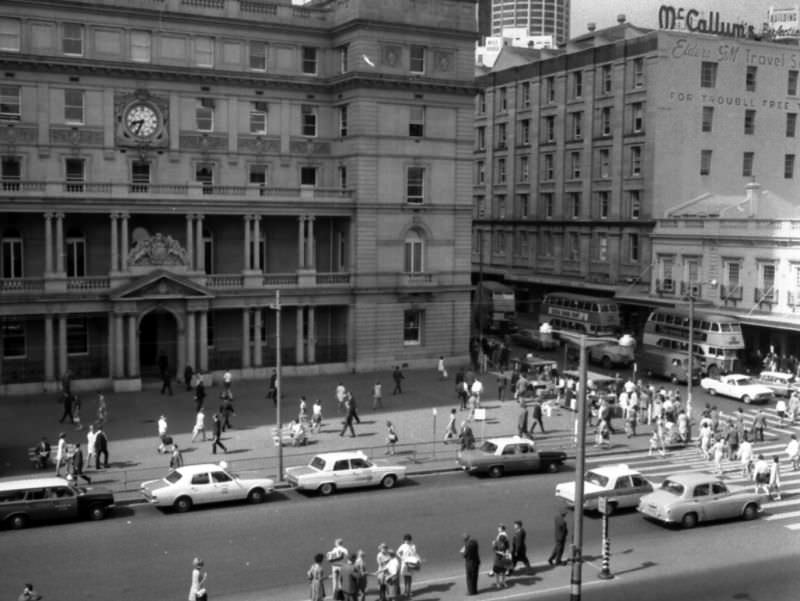
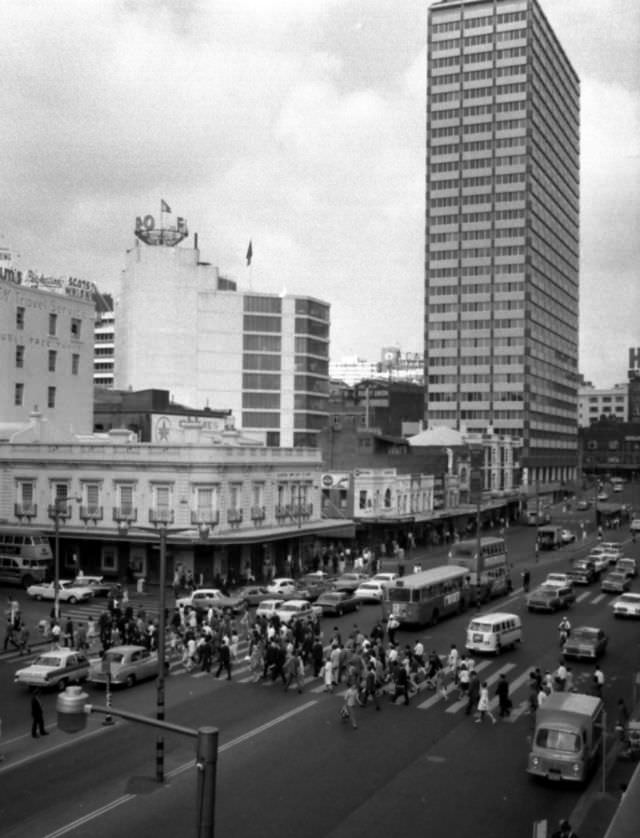
Street-level Sydney was just as active. George Street, Elizabeth Street, and William Street carried a constant flow of buses, cars, and pedestrians. The city’s tram network had been decommissioned in the late 1950s, and by the 1960s, buses had taken over. The streets were wider and faster, but also noisier and more congested. Delivery vehicles, double-decker buses, and the occasional rally car made the inner city feel alive in a very mechanical way.
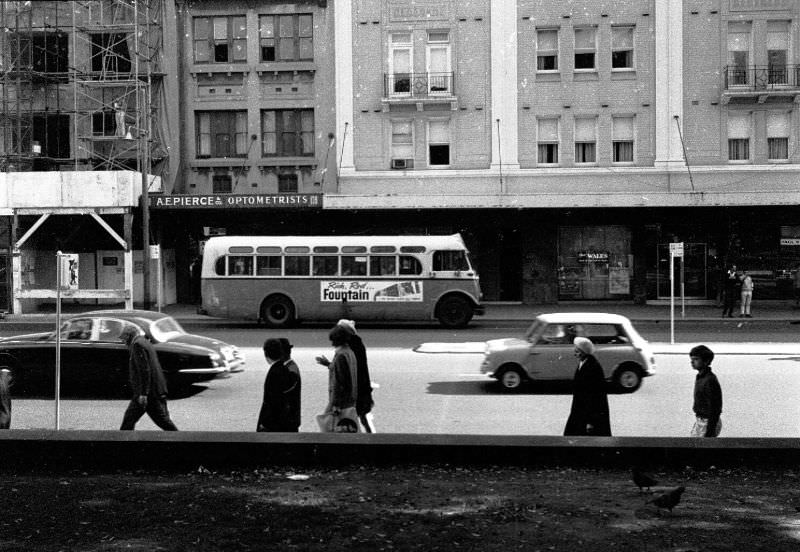
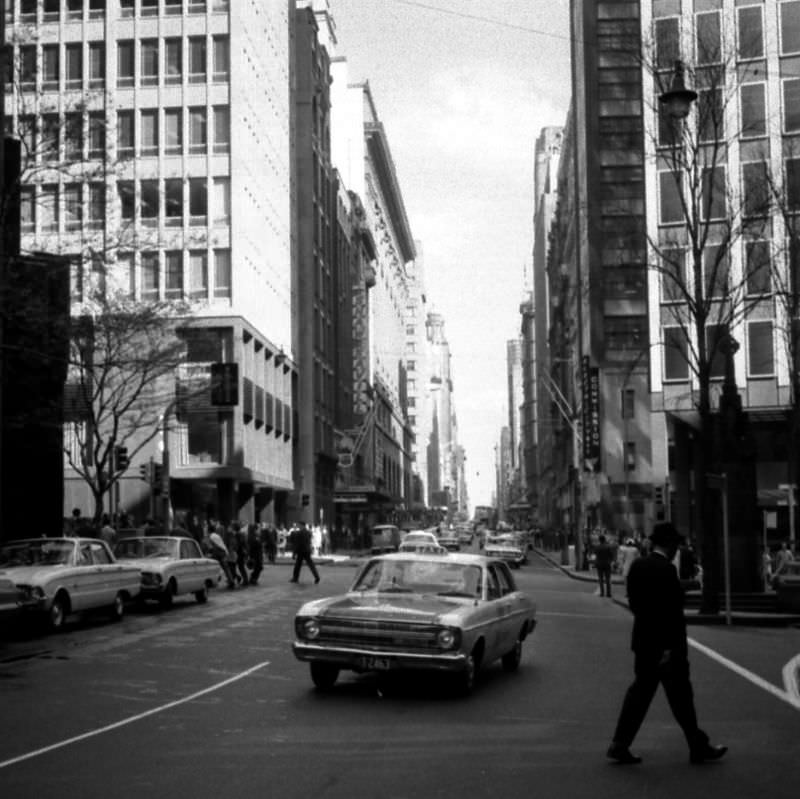
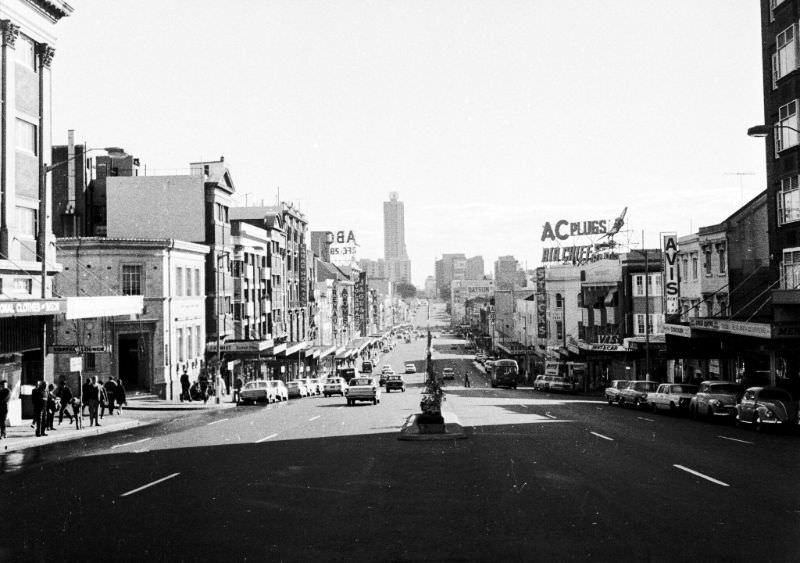
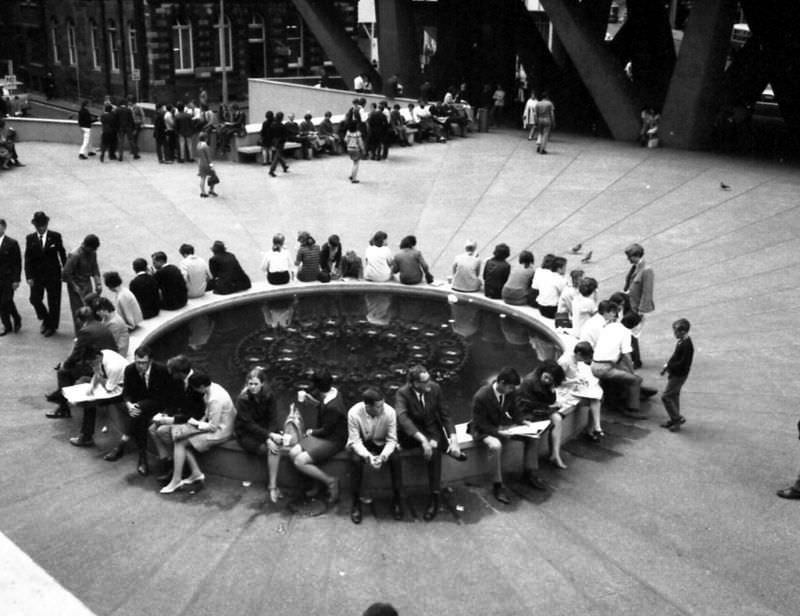
Australia Square, completed in 1967, was one of the decade’s most ambitious developments. The circular tower designed by Harry Seidler was one of the tallest buildings in the Southern Hemisphere at the time. The open plaza around it became a popular gathering spot, especially at lunchtime when office workers from nearby buildings filled the sandwich bars and outdoor seating areas. It was a new kind of city space — designed not just for work, but for people to actually spend time in.
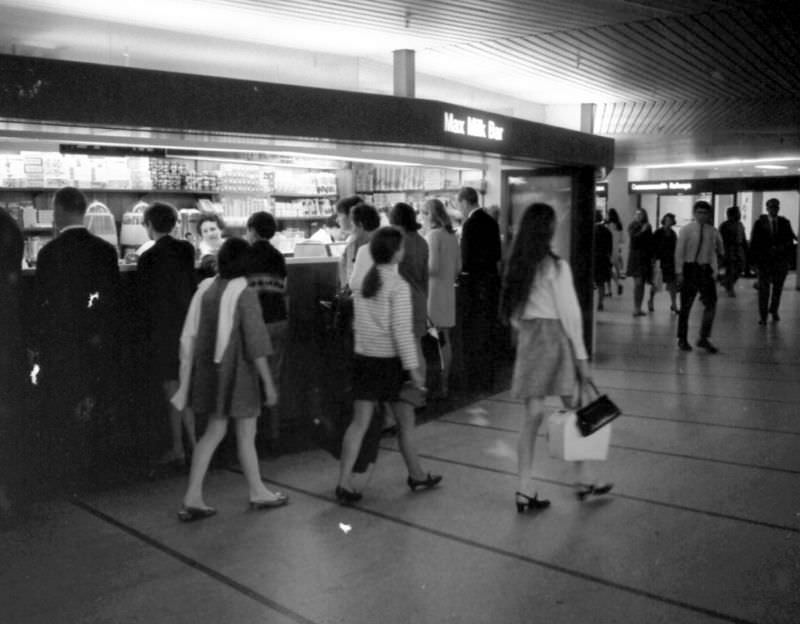
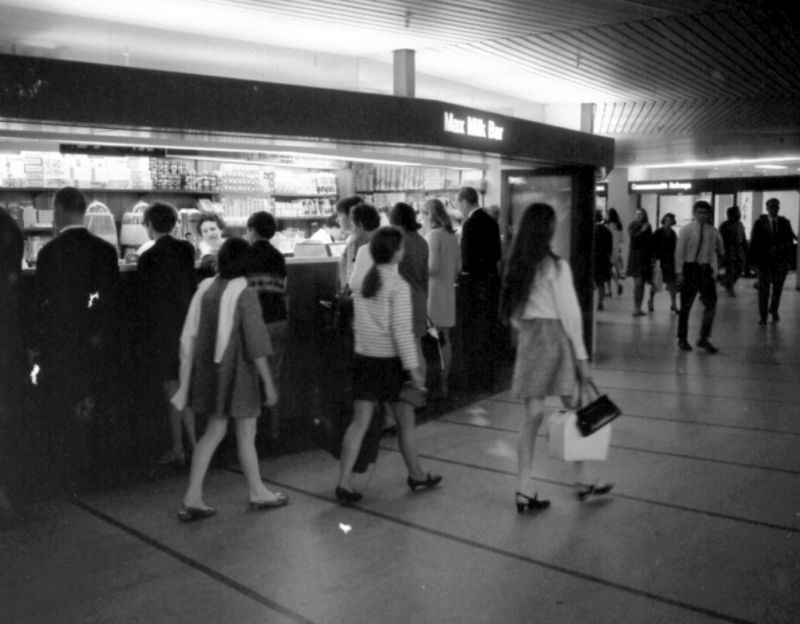
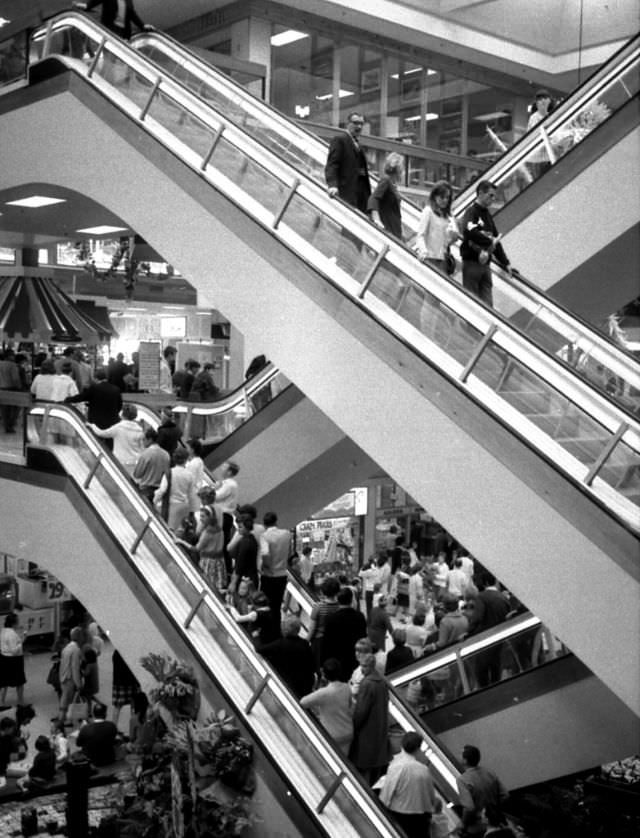
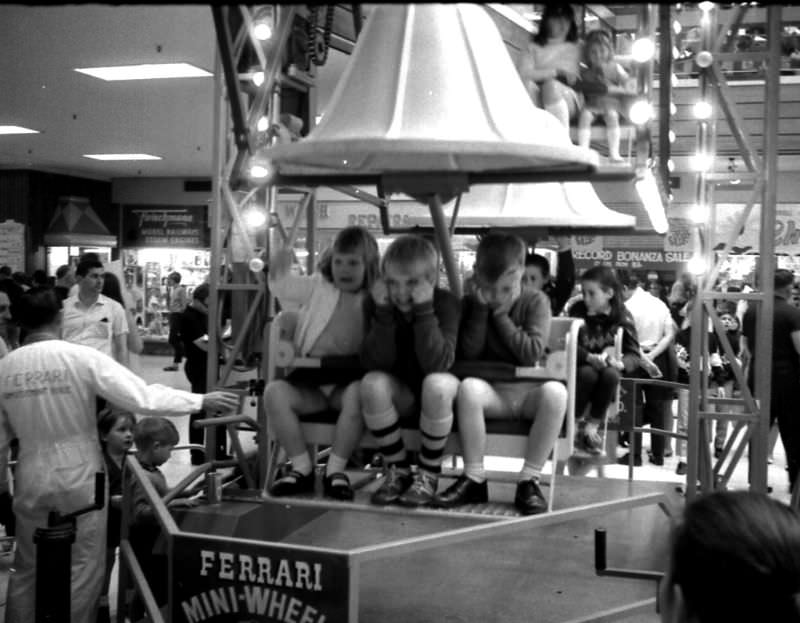
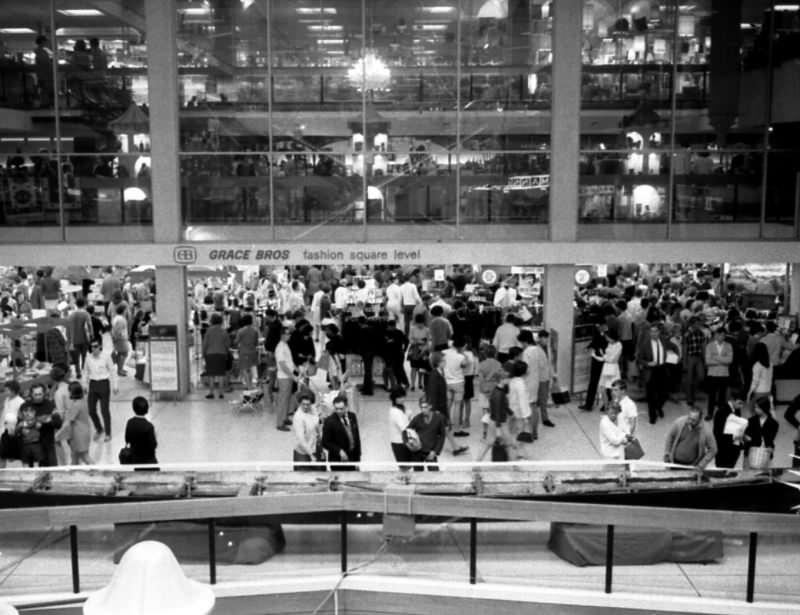
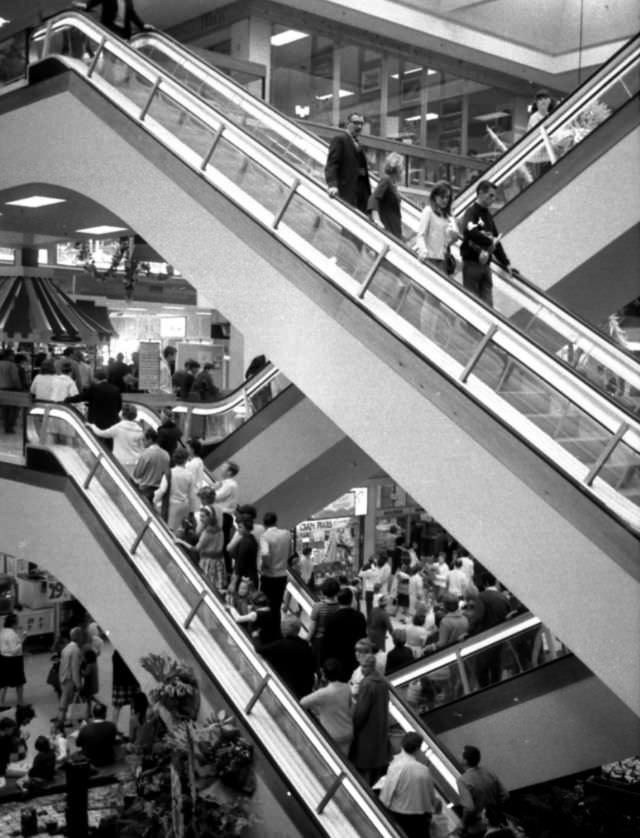
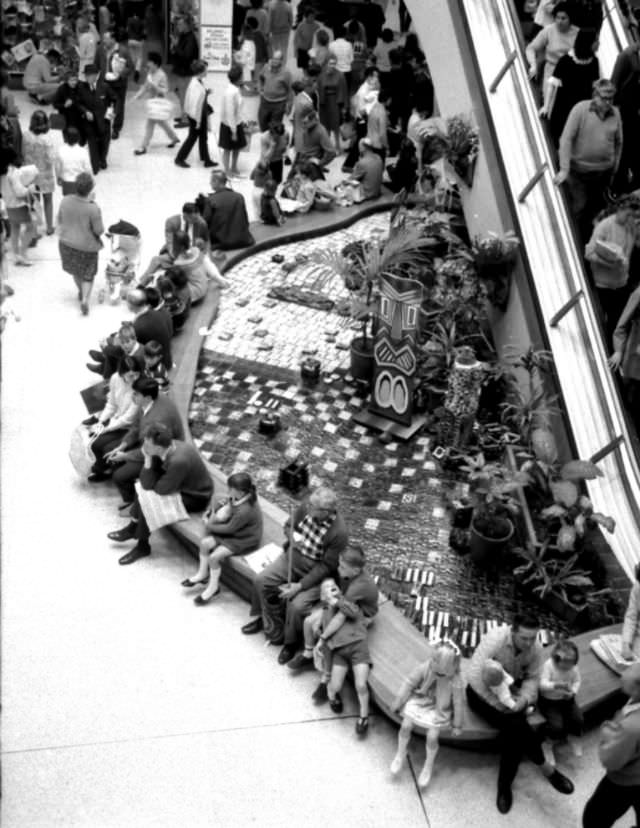
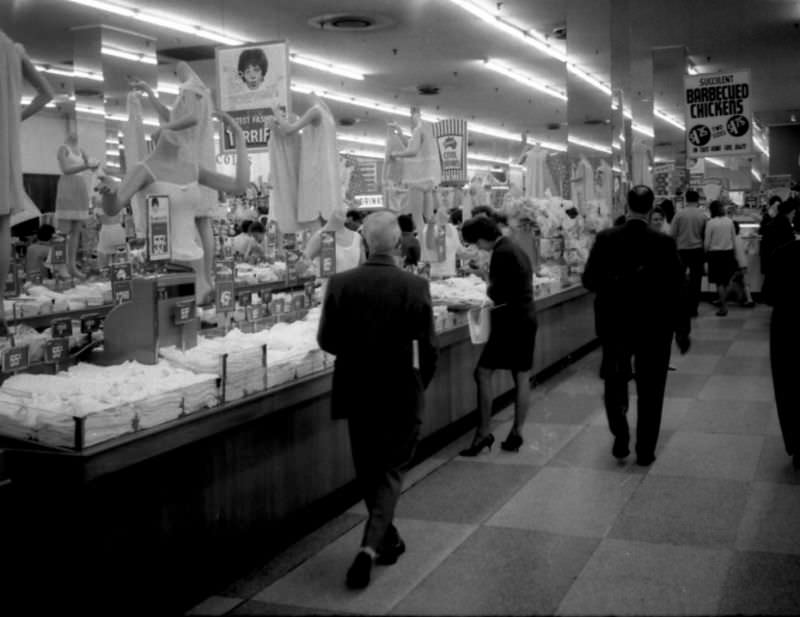
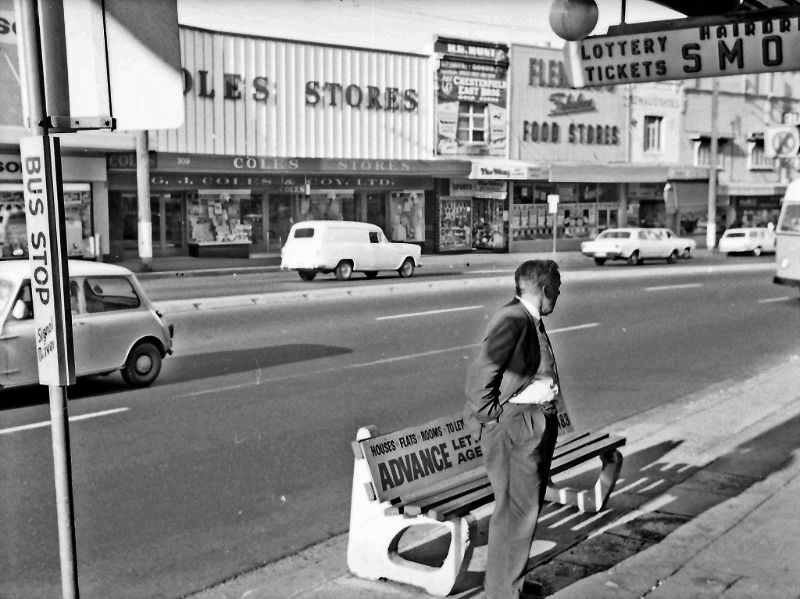
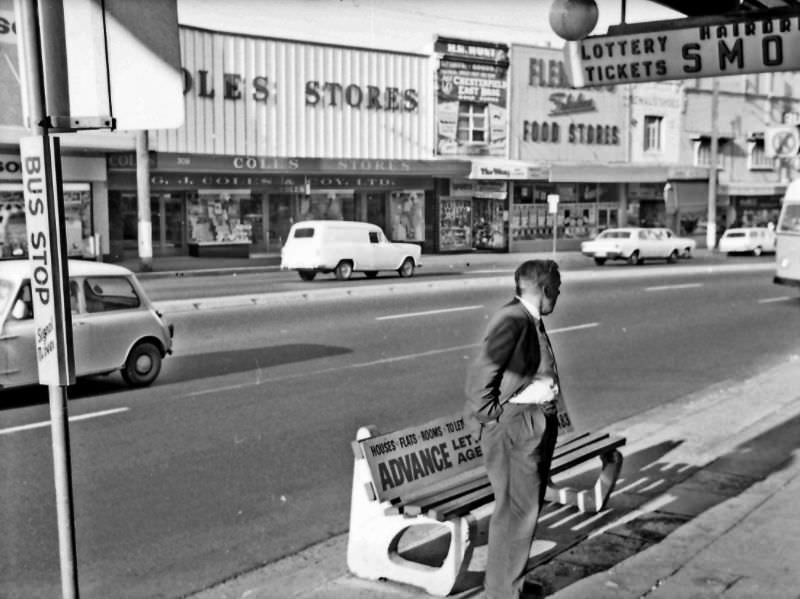
Consumer culture was expanding rapidly. Roselands Shopping Centre, which opened in 1965 in Canterbury, was Sydney’s first American-style shopping mall. It had an enclosed layout, air conditioning, and a range of retail stores under one roof — a concept that was still novel in Australia at the time. Shoppers came from across the city to experience it. Department stores like Coles on Pitt Street also drew large crowds, stocked with the new goods flooding into the country as living standards rose.
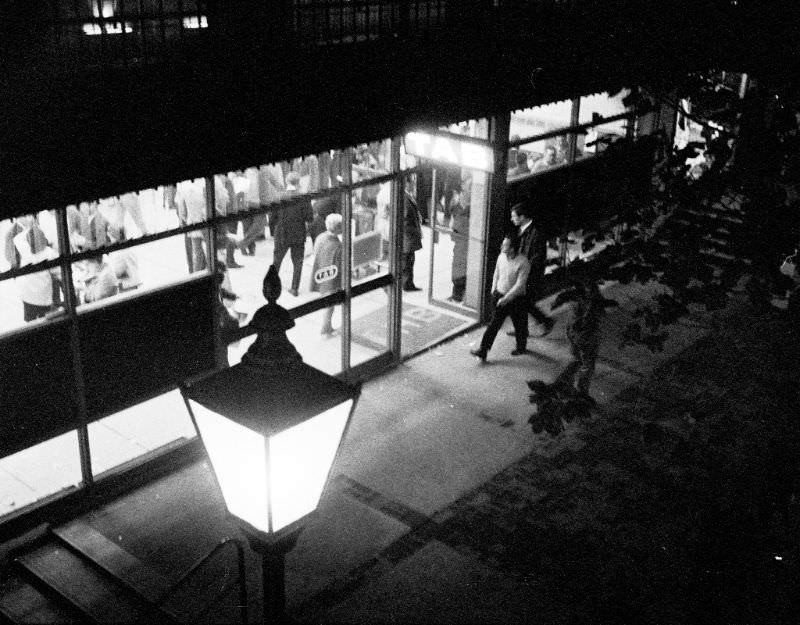
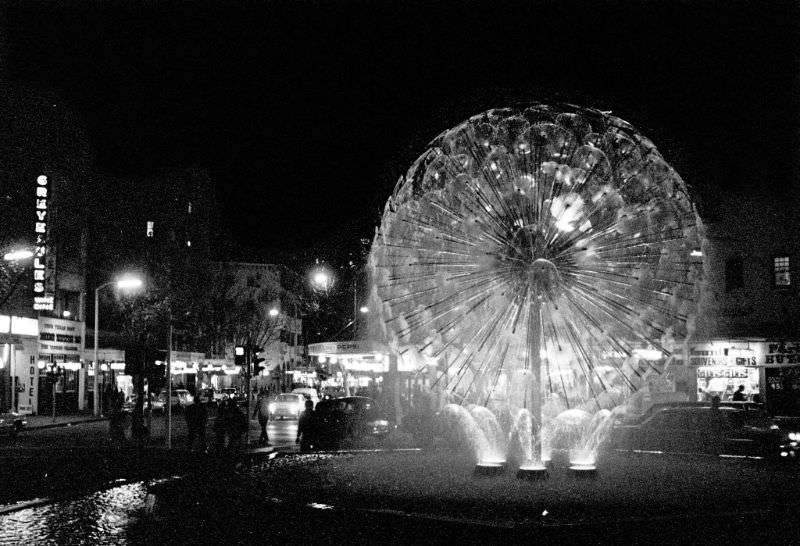
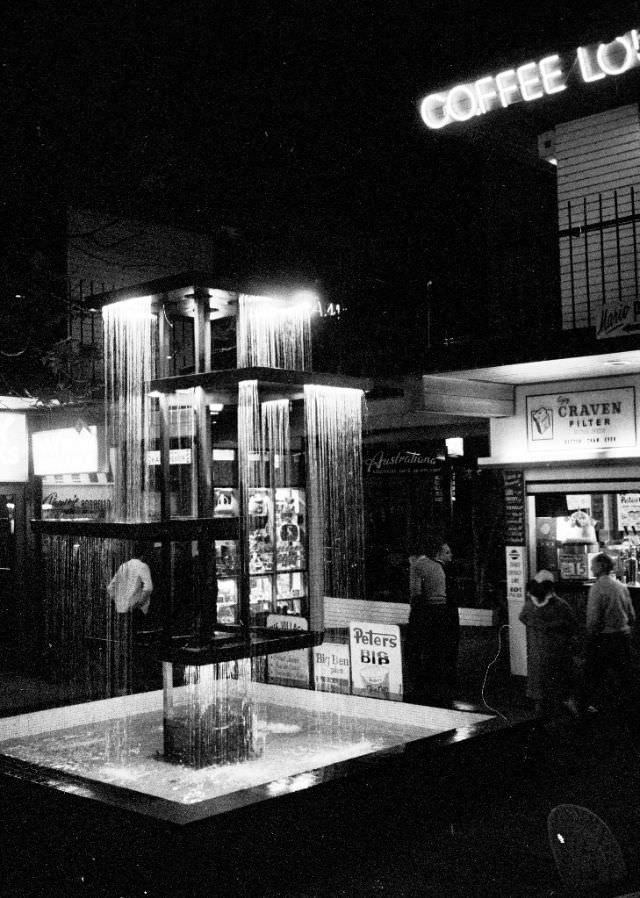
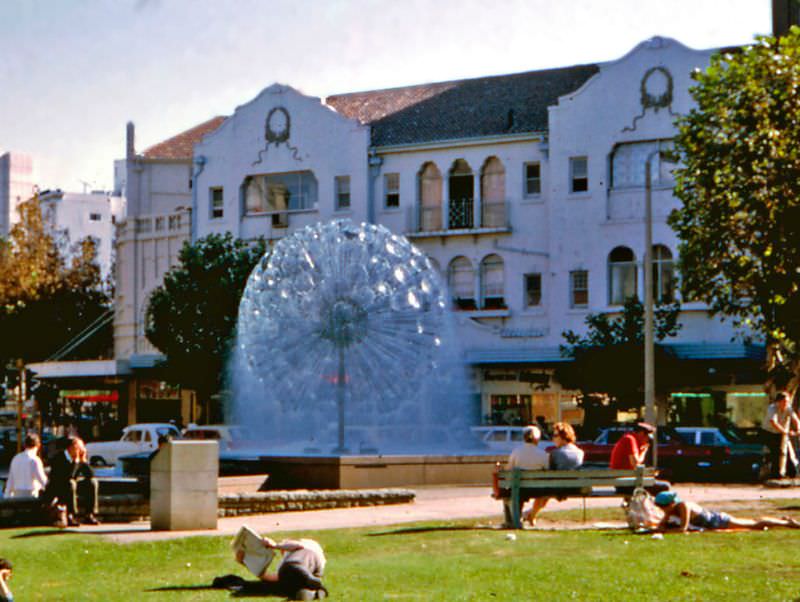
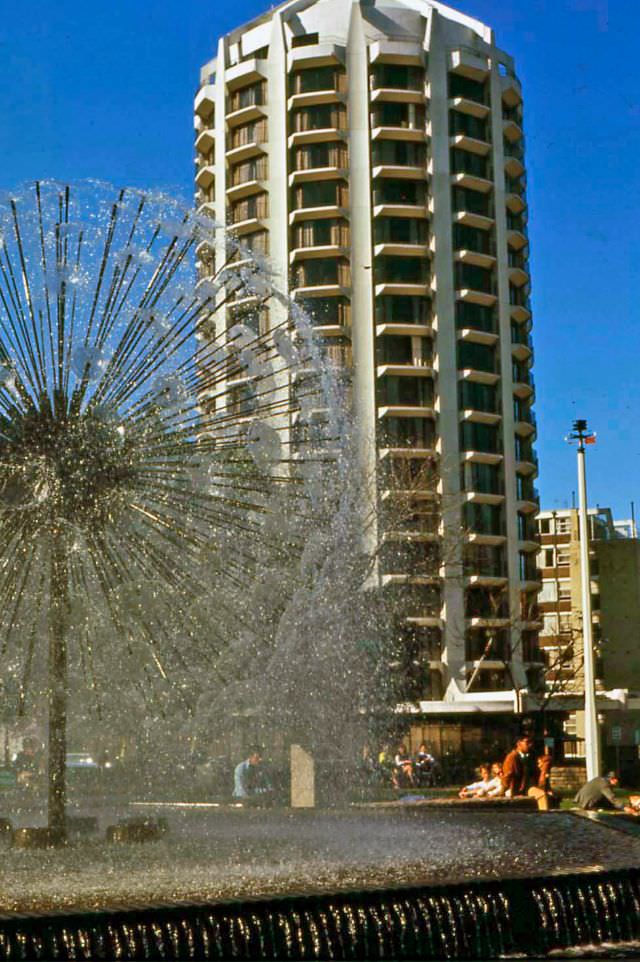
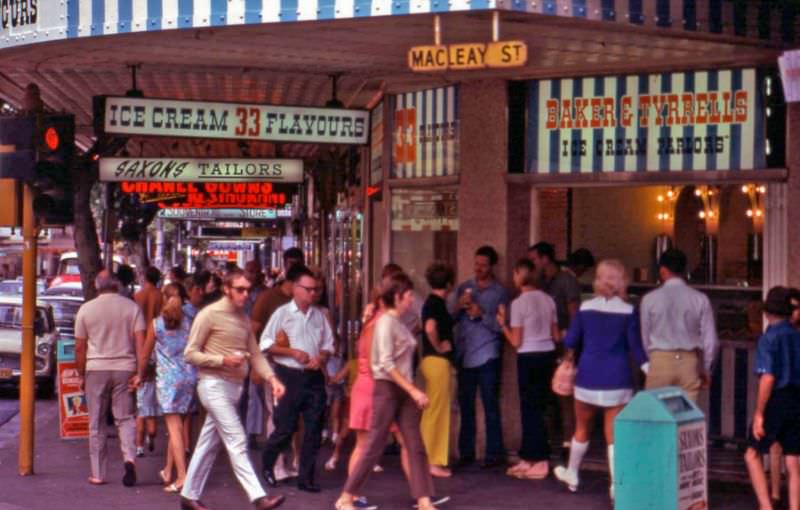
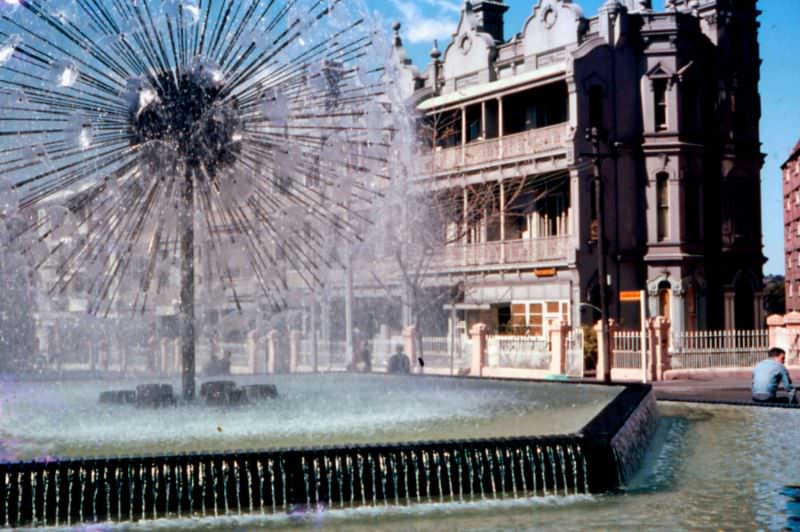
Kings Cross was the centre of Sydney’s nightlife and counterculture. The suburb had always had an edge to it, but through the 1960s, it became the city’s most colourful neighbourhood. Neon signs lit up the streets after dark, hotels and clubs stayed open late, and the mix of locals, artists, sailors, and tourists gave it an energy unlike anywhere else in the city. The Alamein Fountain, installed in 1961 as a memorial to the soldiers who fought at El Alamein in World War II, became one of the Cross’s most recognisable landmarks.
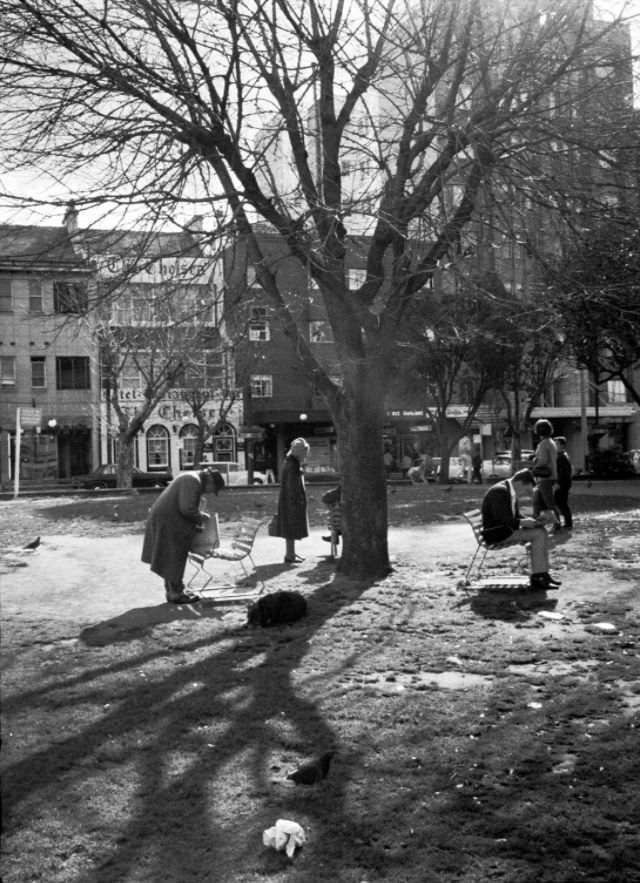
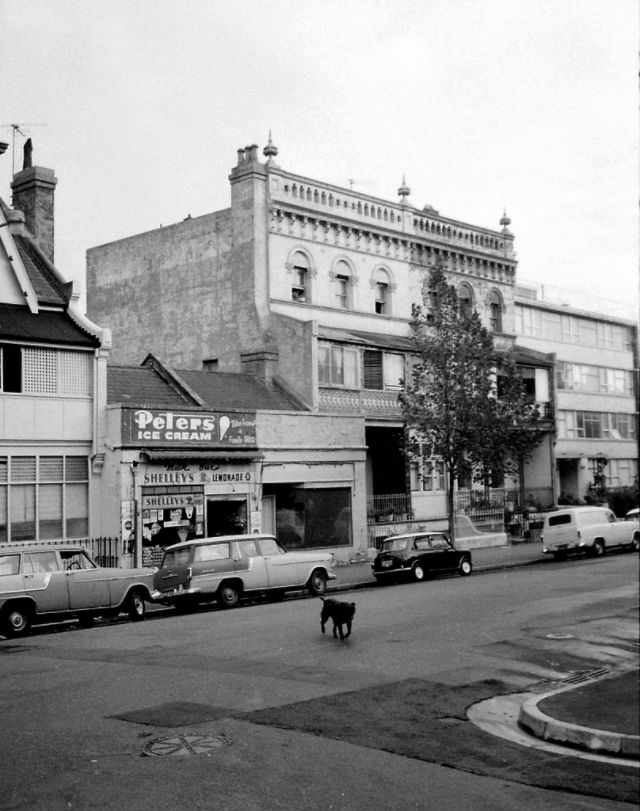
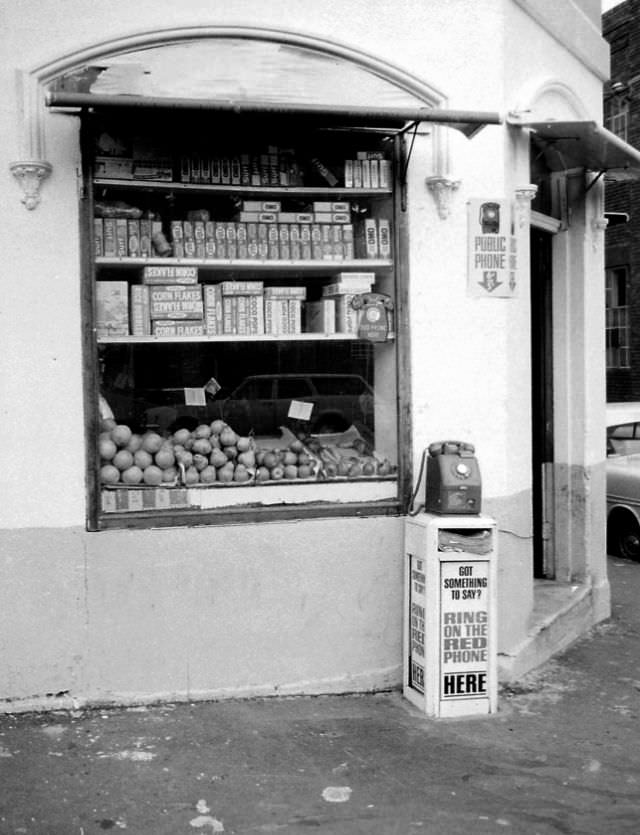
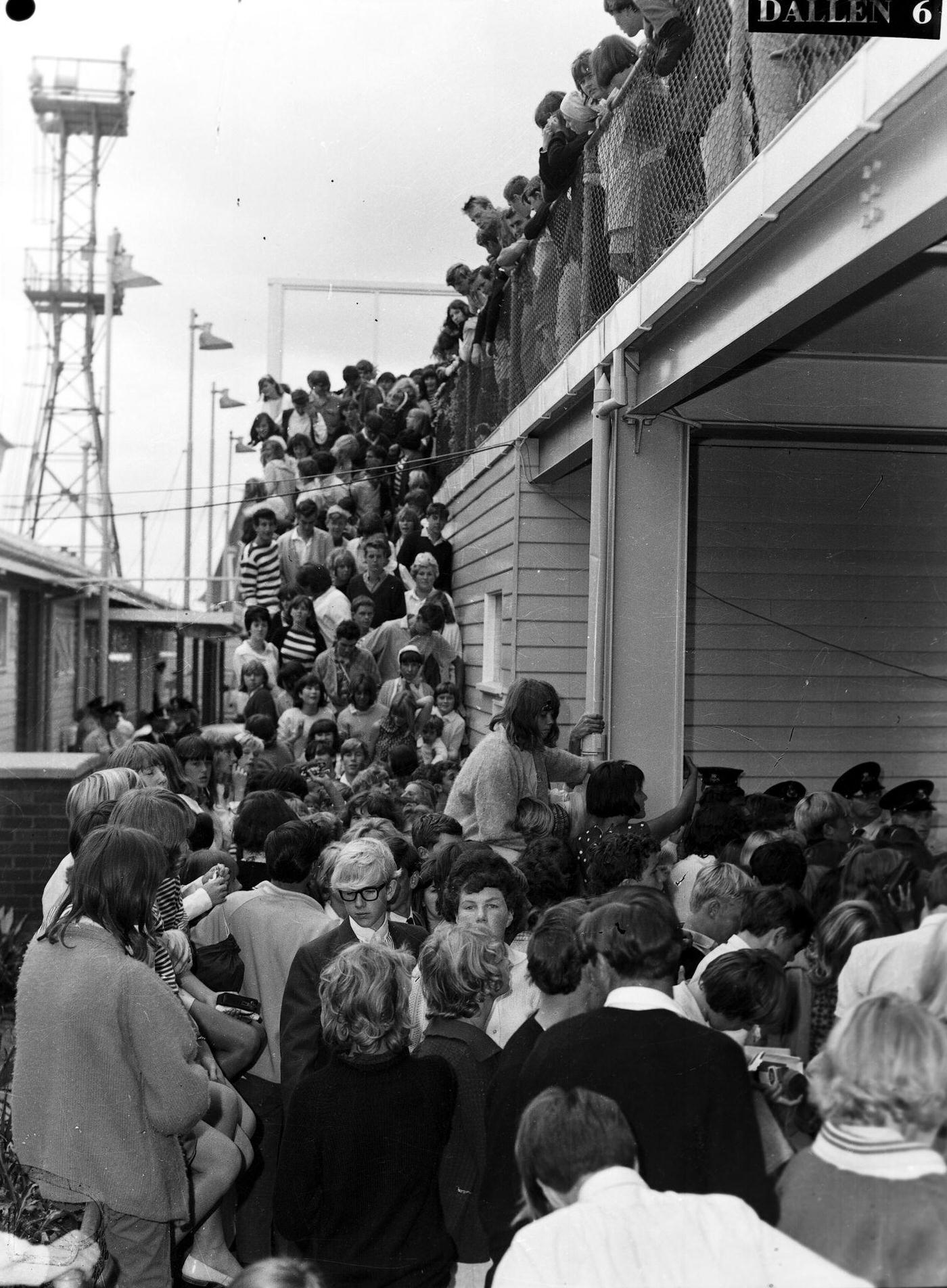
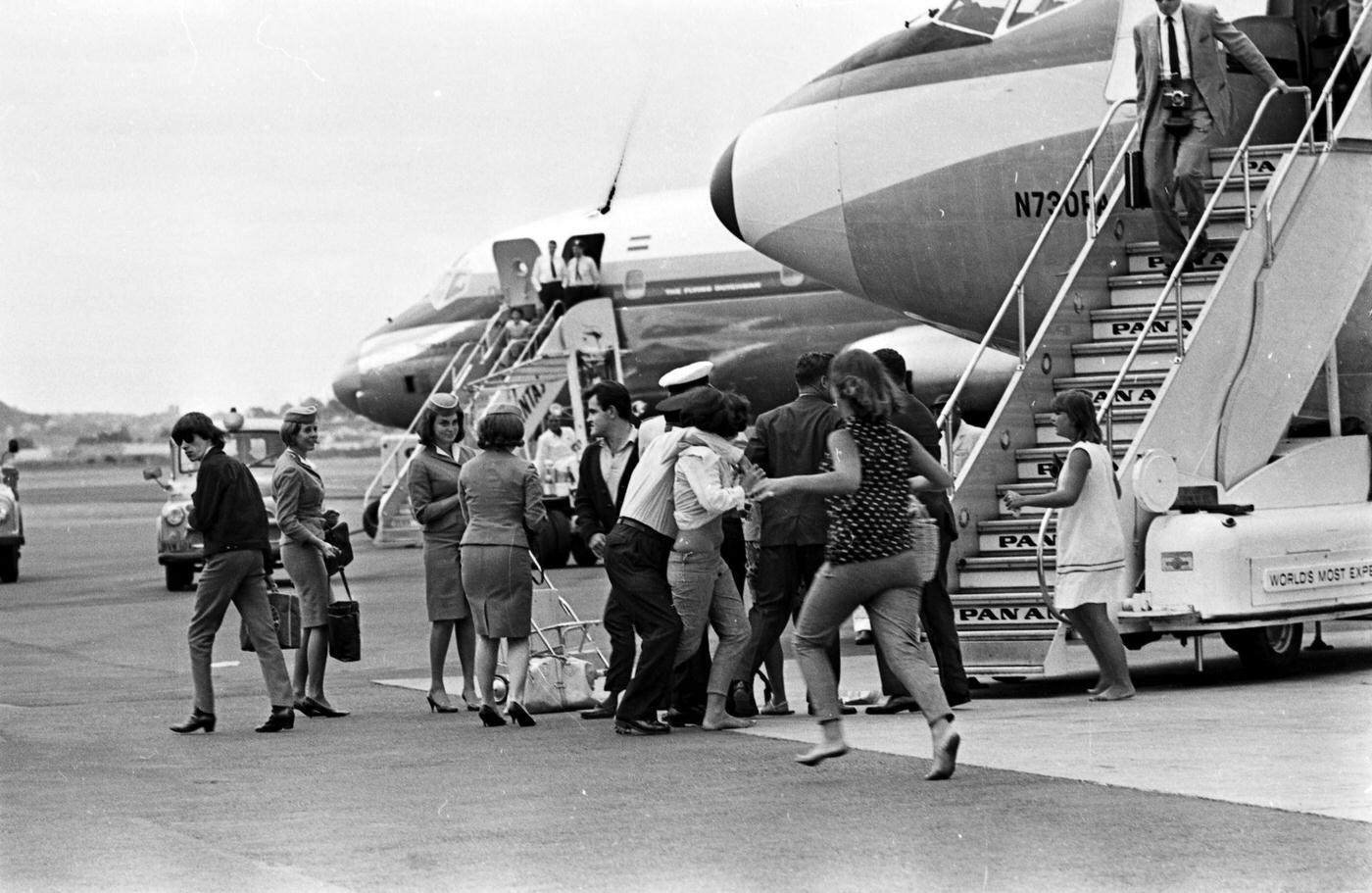
Music was a big part of the decade’s identity. When the Rolling Stones landed at Mascot Airport in January 1965, hundreds of fans turned up to greet them. The band’s Australian tour was a major event, and Sydney was one of their key stops. Local venues were also thriving — clubs in the inner city hosted rock and roll, rhythm and blues, and jazz acts that drew young crowds away from the mainstream entertainment of their parents’ generation.
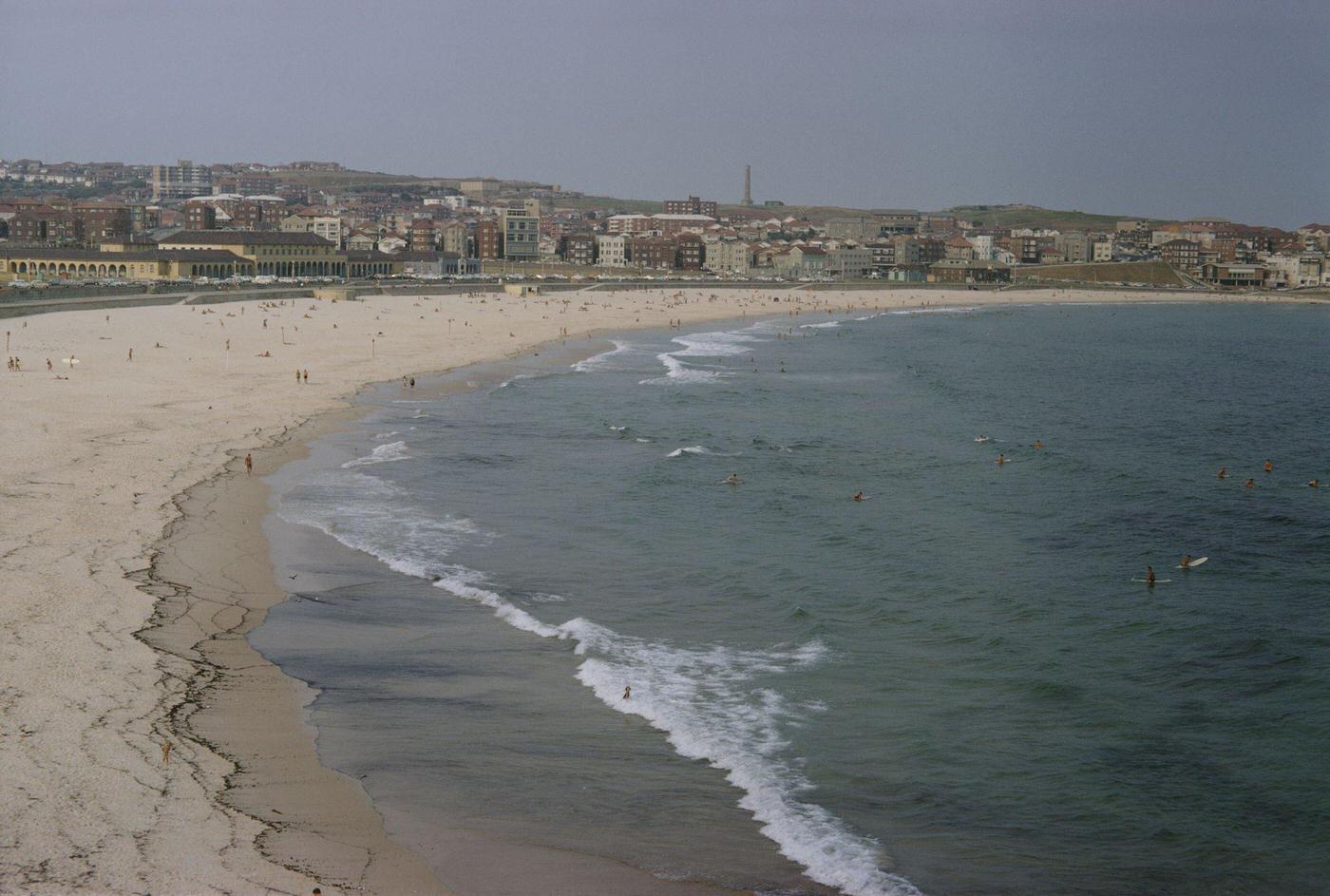
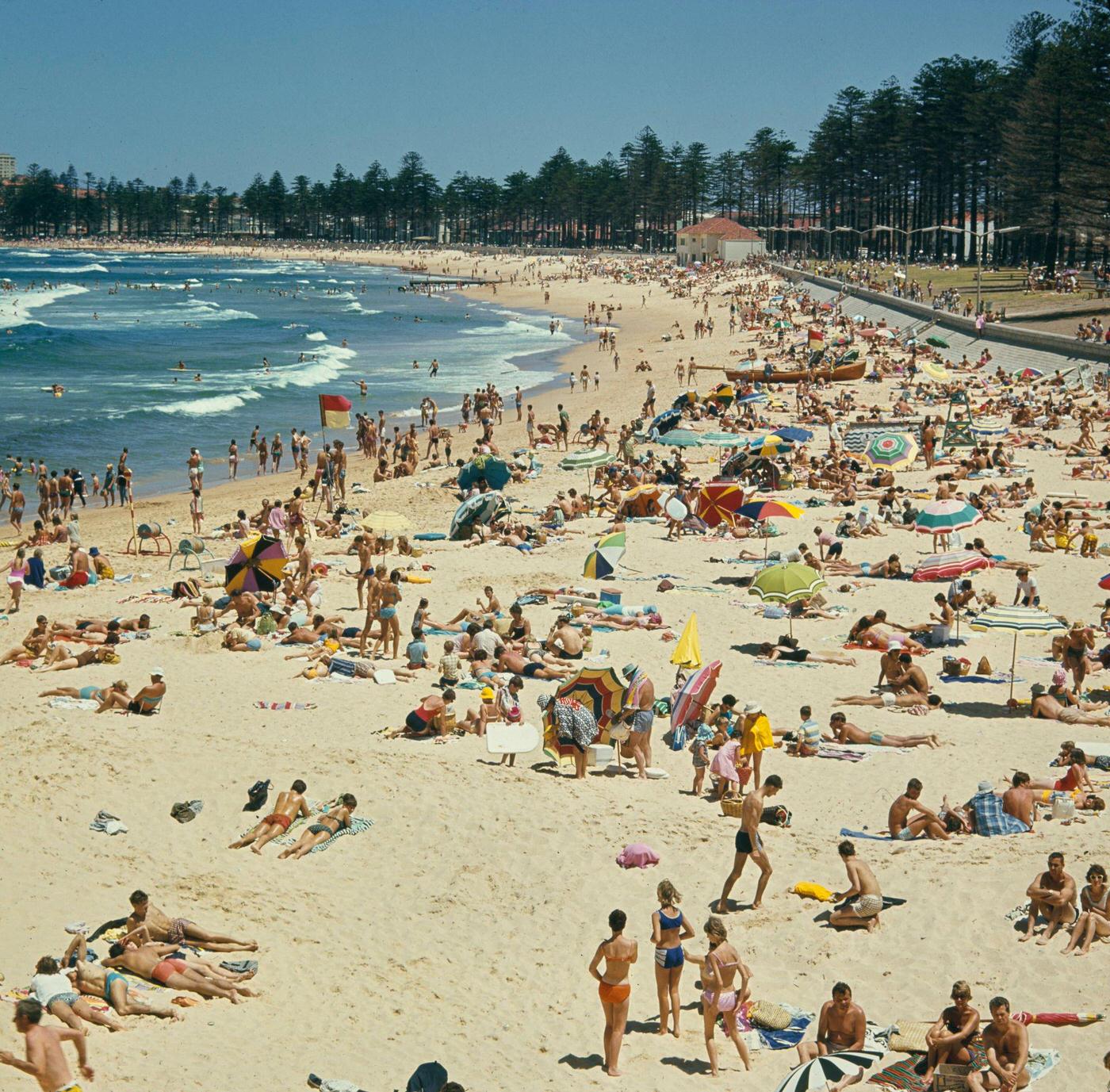
Sydney’s beaches were just as central to the decade’s character. Bondi and Manly attracted surfers and sunbathers in growing numbers. Surfing was shifting from a niche pastime to a mainstream sport, and the beaches reflected that shift — surf shops, boards stacked along fences, and a culture built around the ocean. Manly in particular became a destination in itself, accessible by ferry from Circular Quay and packed with visitors on weekends and through summer.
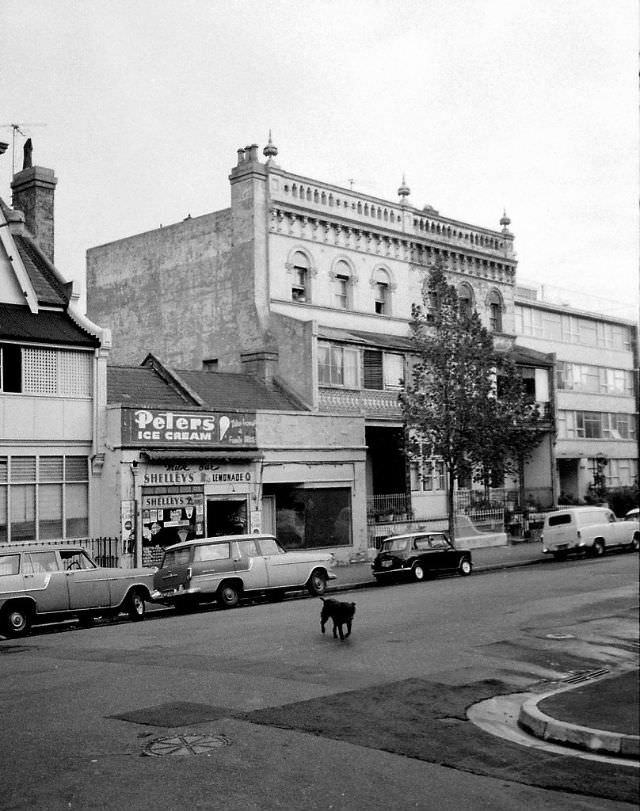
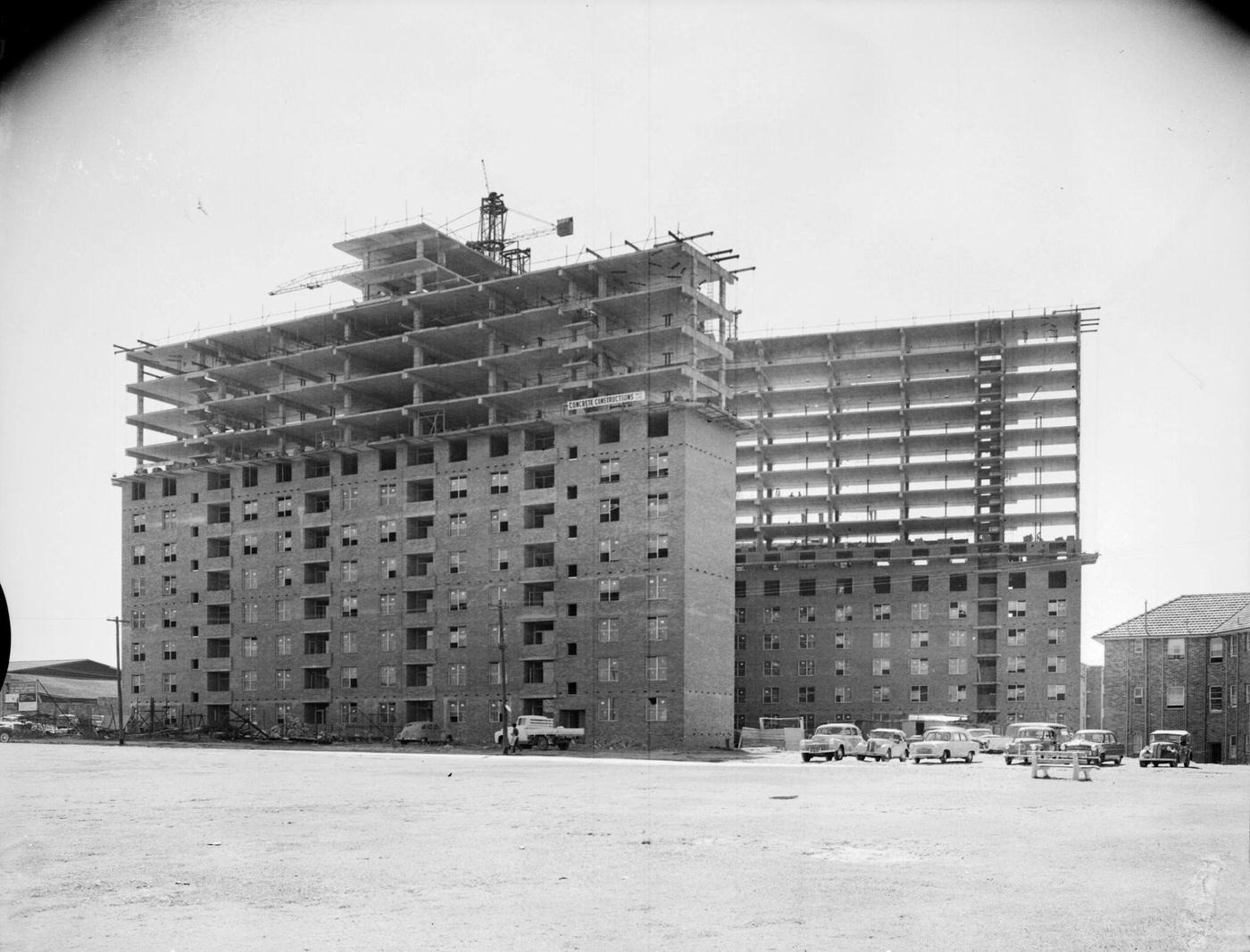
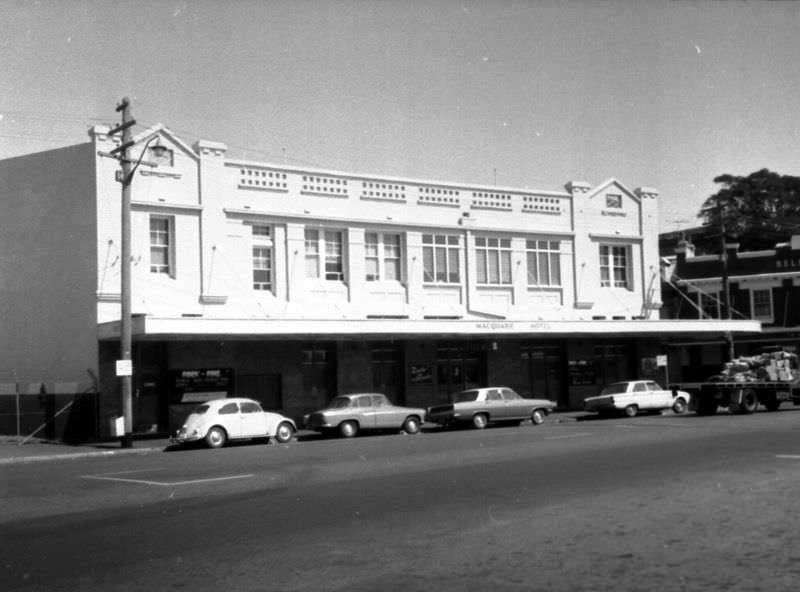
Woolloomooloo and the inner suburbs had a rougher texture. The Macquarie Hotel stood on a corner near the waterfront, and the streets around it were a mix of workers’ terraces, warehouses, and the kind of working-class life that the city’s newer glass towers were quickly pushing aside. Housing commission flats were going up in Surry Hills and other inner suburbs to manage the growing population, and the old street patterns of these areas were beginning to change. Not everything being built was flashy or celebrated — much of it was functional, fast, and designed for volume.
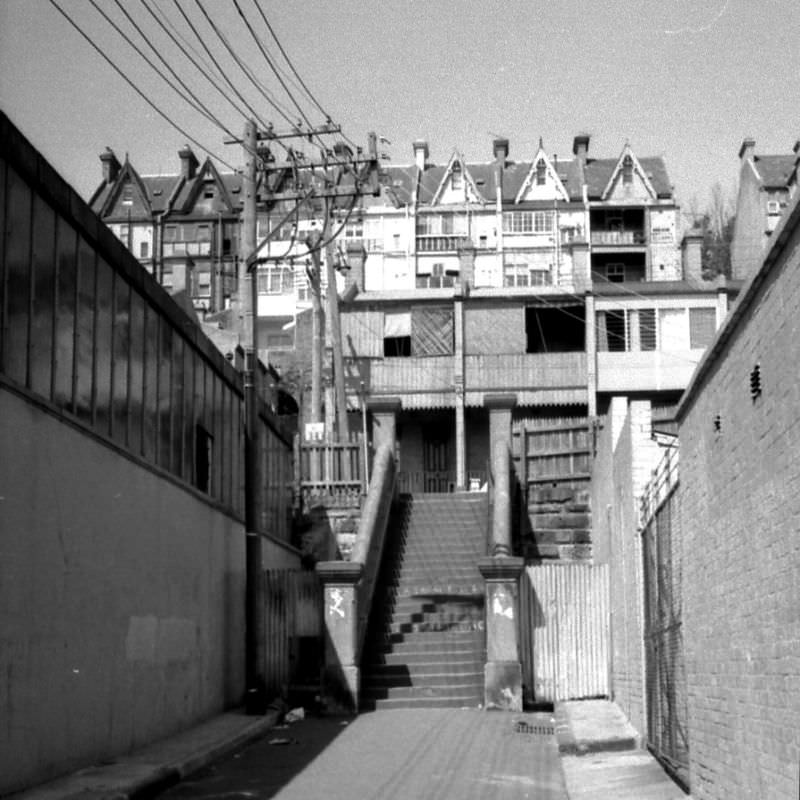
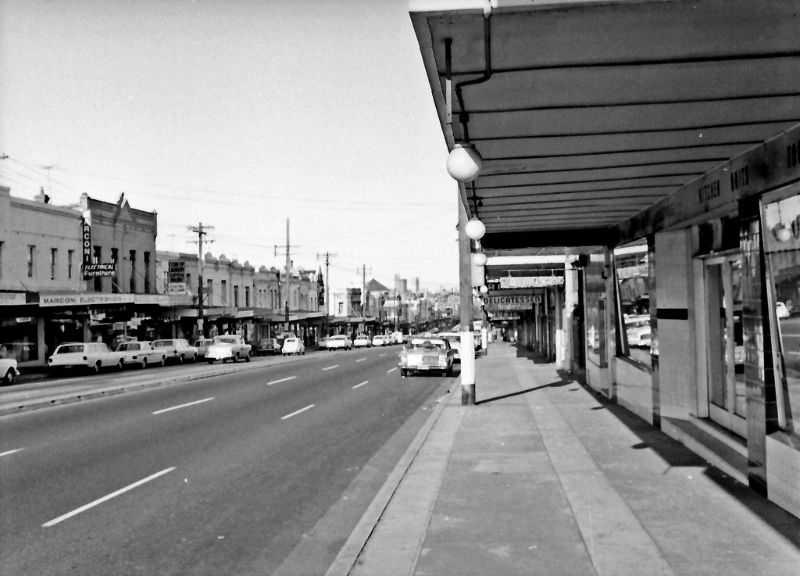
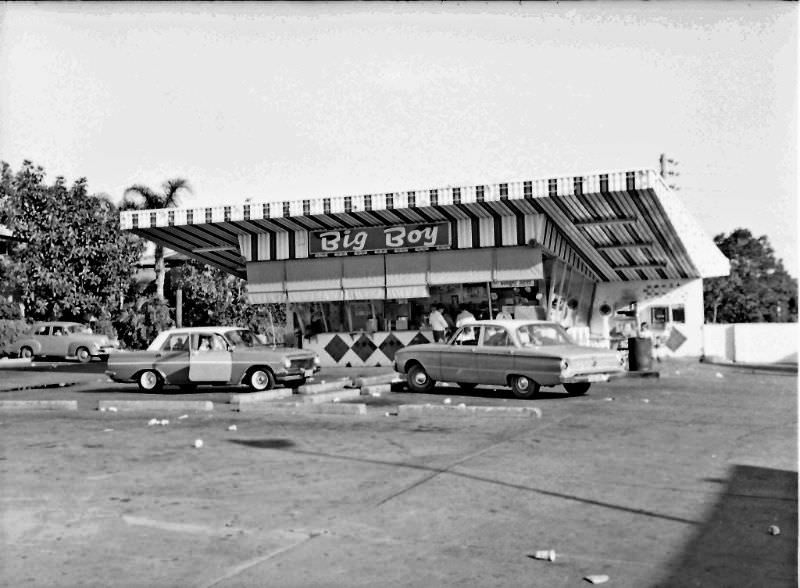
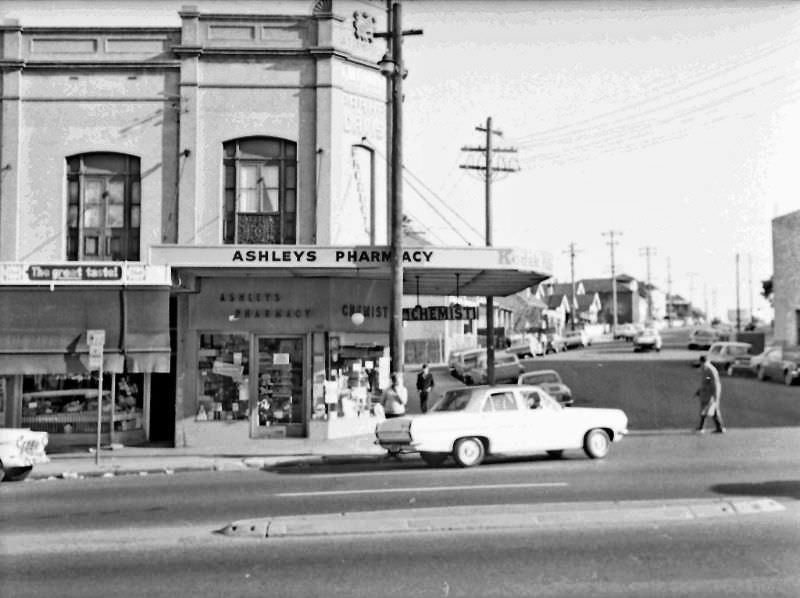
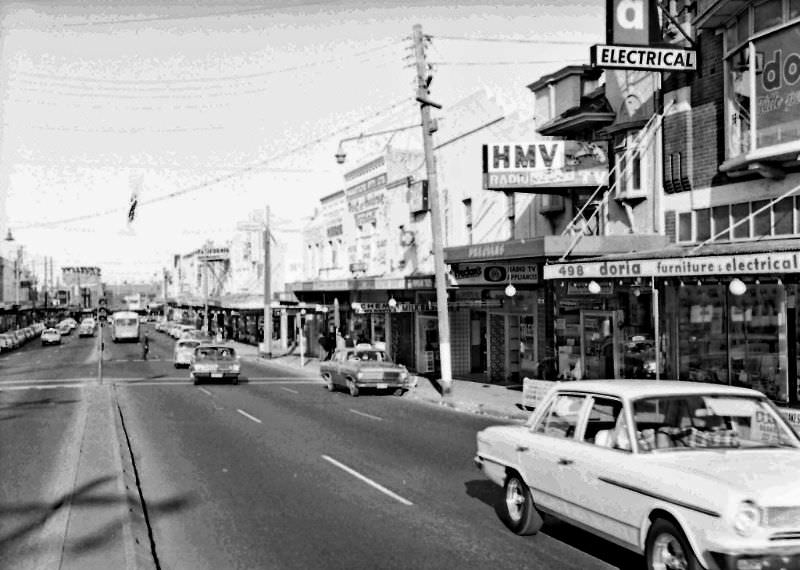
Petersham and the inner west had their own rhythms. Parramatta Road cut through the suburb as one of the main arteries connecting the city to the west, lined with car yards, service stations, and small businesses. By 1969, a drive-through had appeared along the strip — another American import making its way into Sydney life. The suburb itself was dense and lived-in, its streets full of the brick terraces and corner shops that had defined working Sydney for decades.
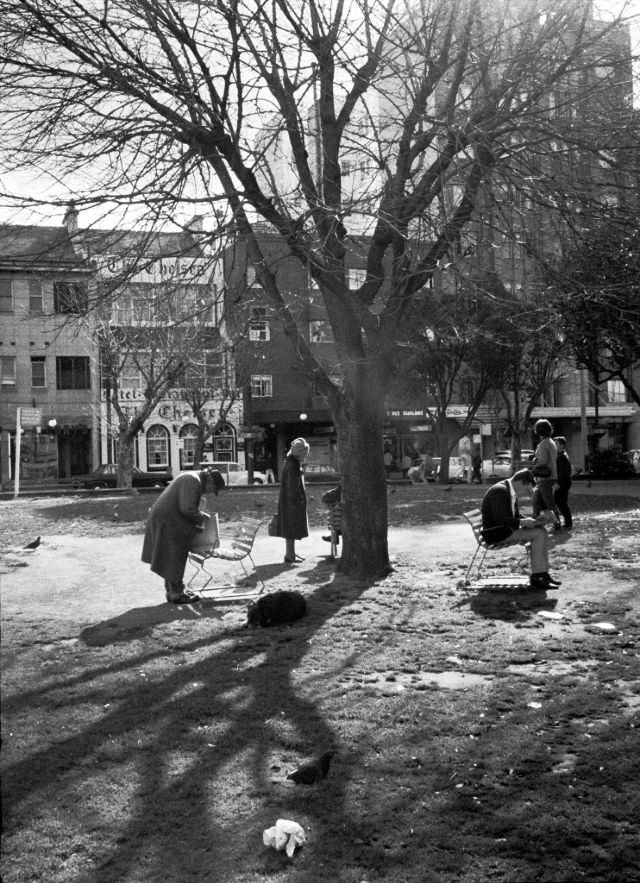
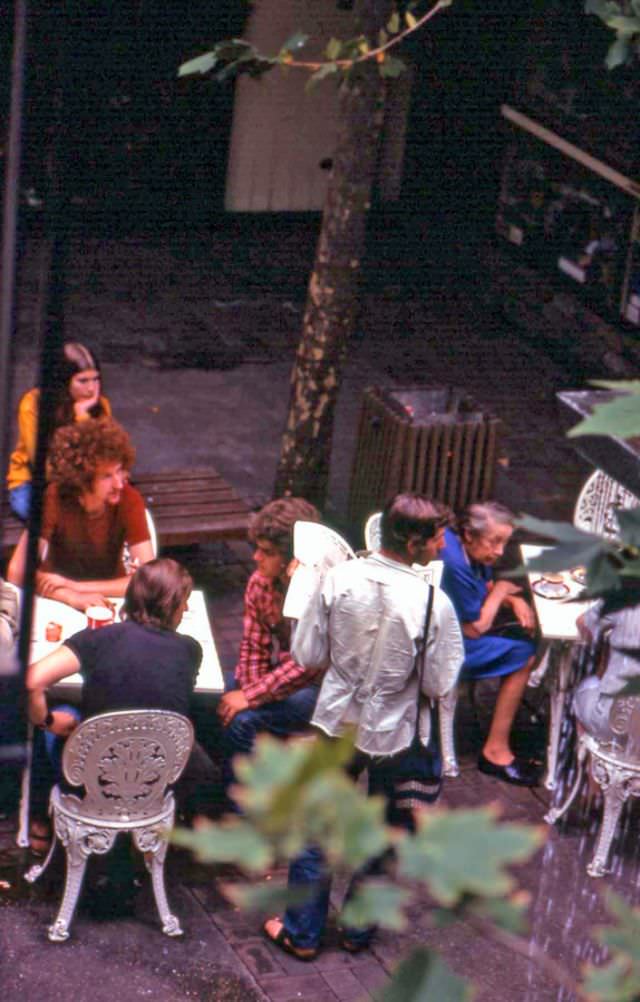
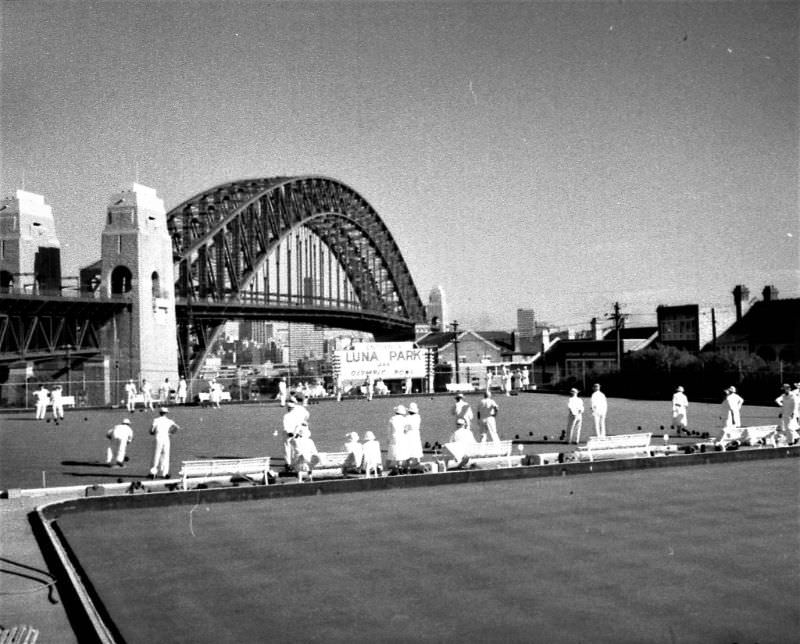
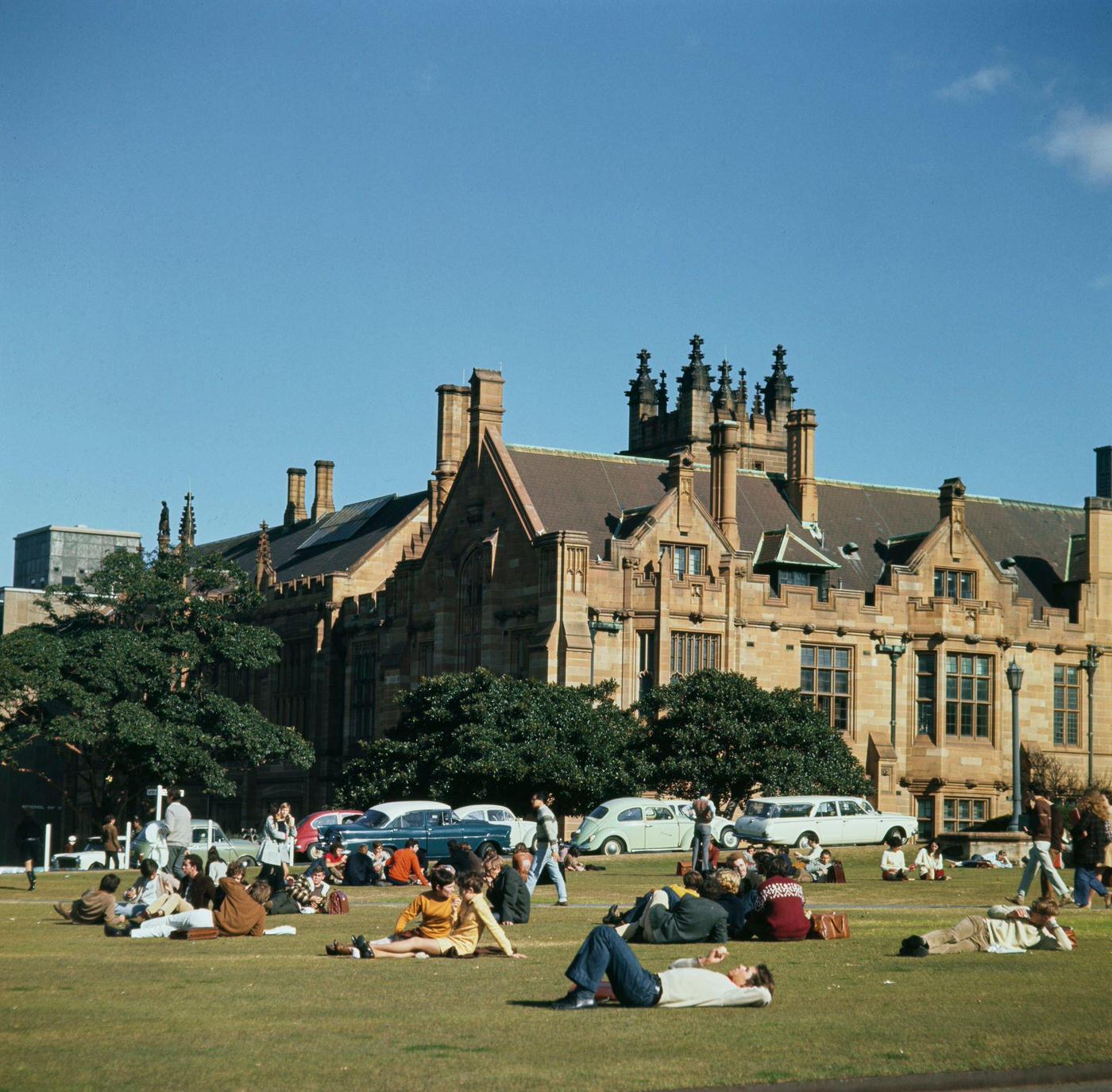
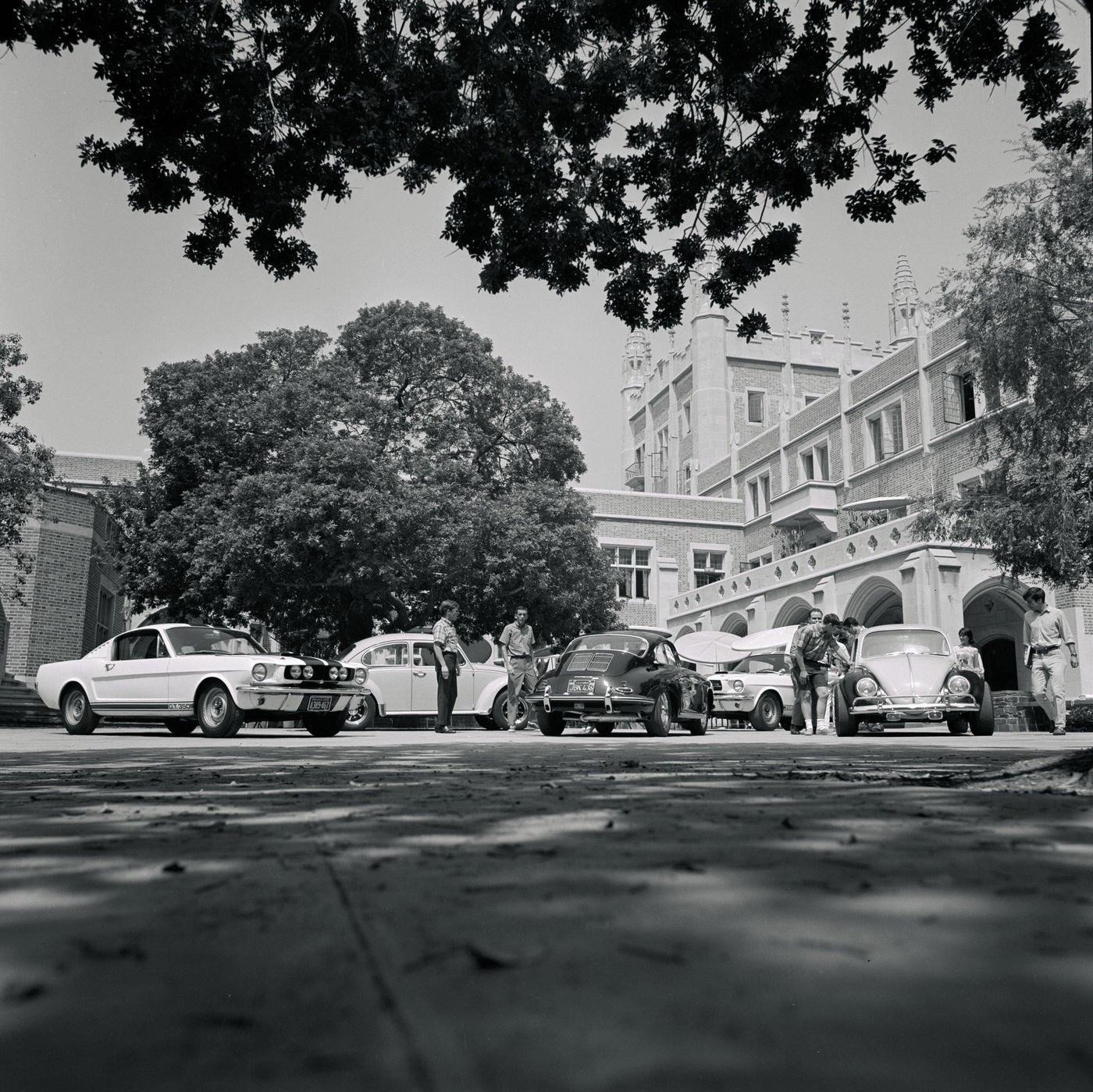
Luna Park, the amusement park on the north shore near Milsons Point, was a fixture of Sydney leisure life. Its enormous grinning face entrance had welcomed visitors since 1935, and in the 1960s it was still drawing families and young people from across the city. The park sat right at the foot of the Harbour Bridge, giving it one of the most dramatic backdrops of any amusement park in the world. Students from the University of Sydney, just a few kilometres from the city centre in Camperdown, found their own spaces for recreation — the lawns in front of the Main Campus Building were a regular spot to sit, talk, and relax between classes.
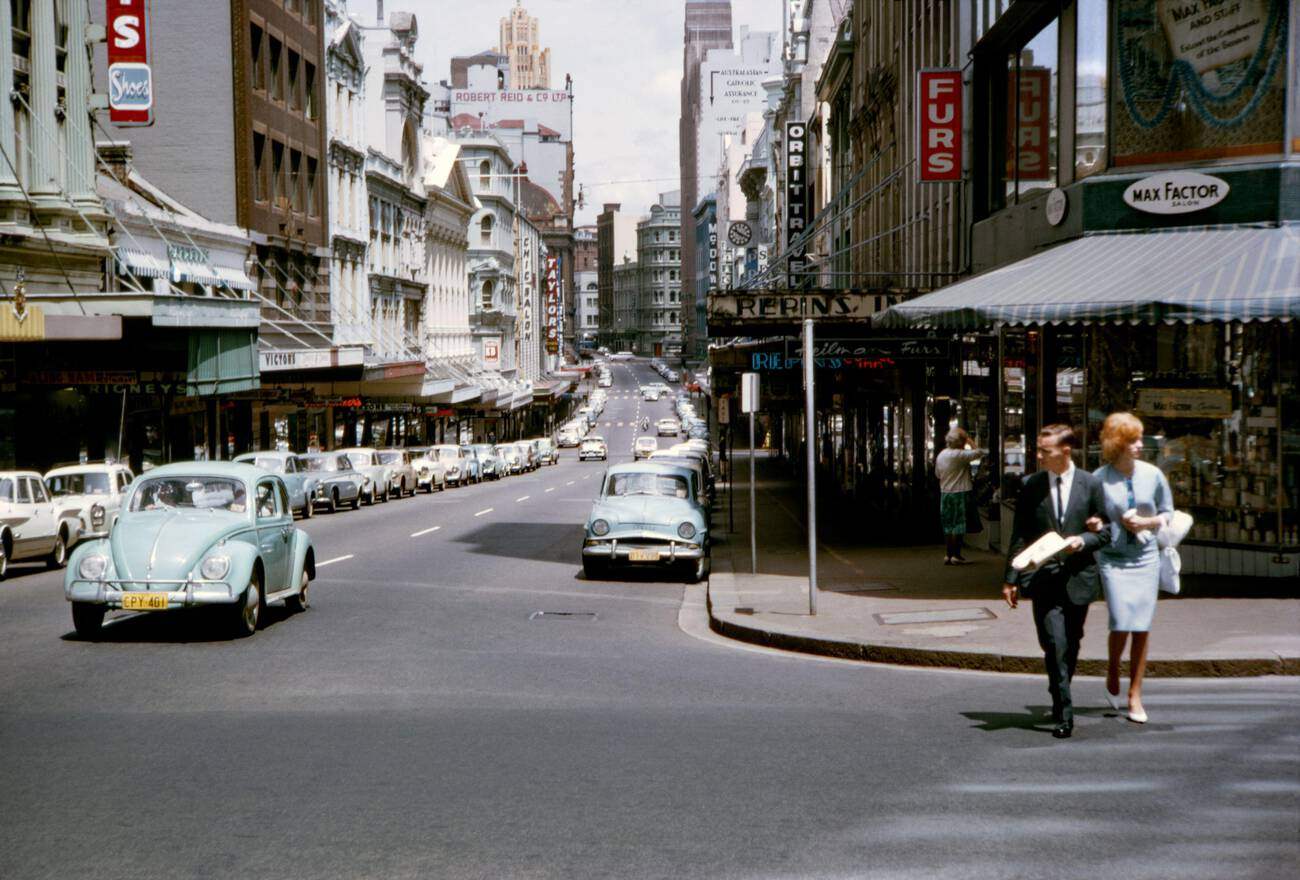
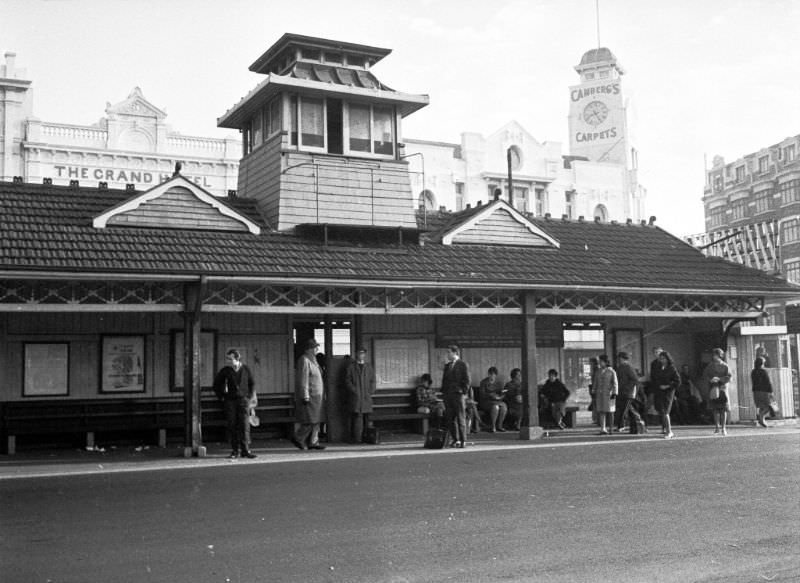
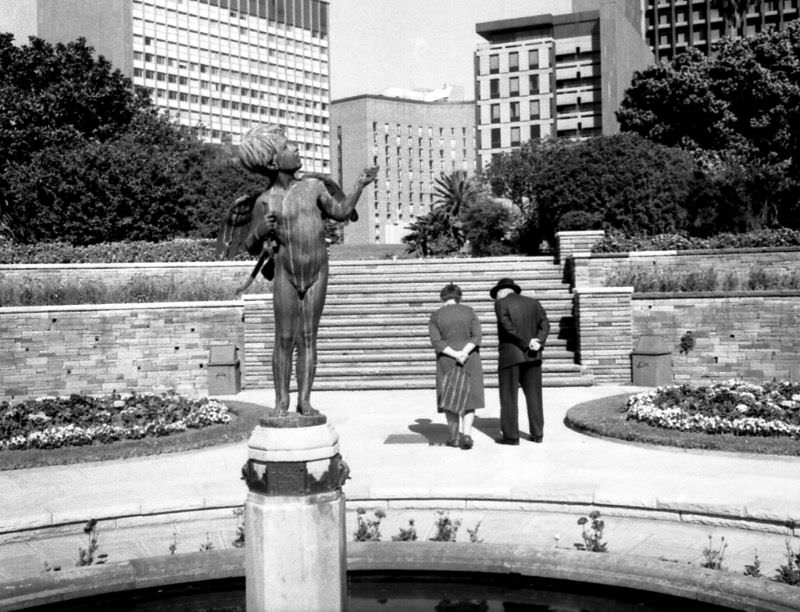
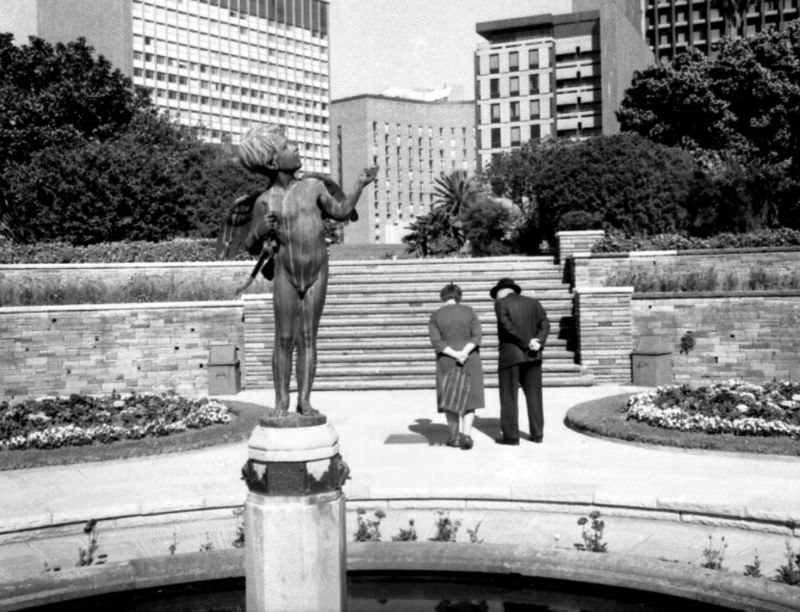
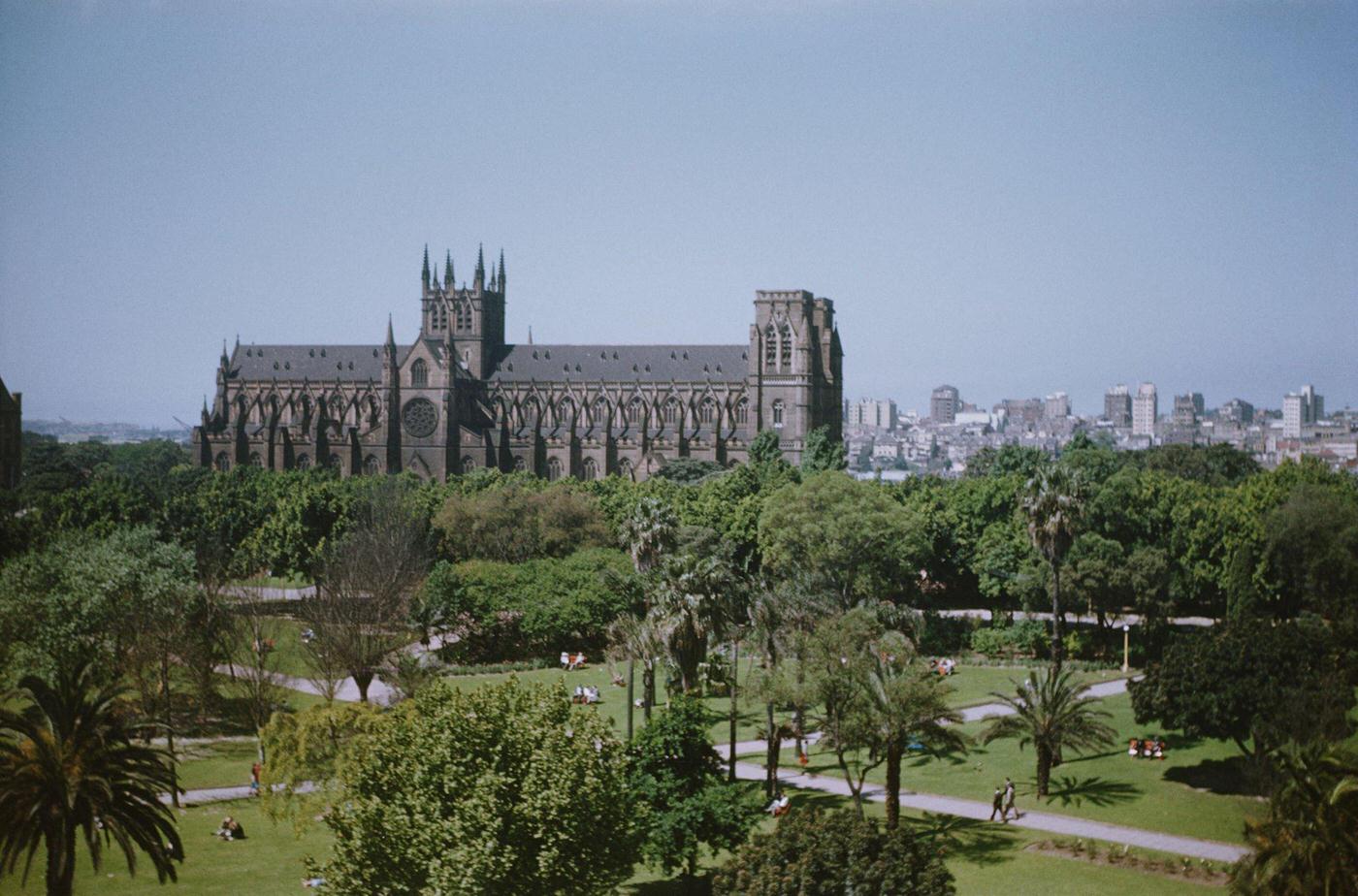
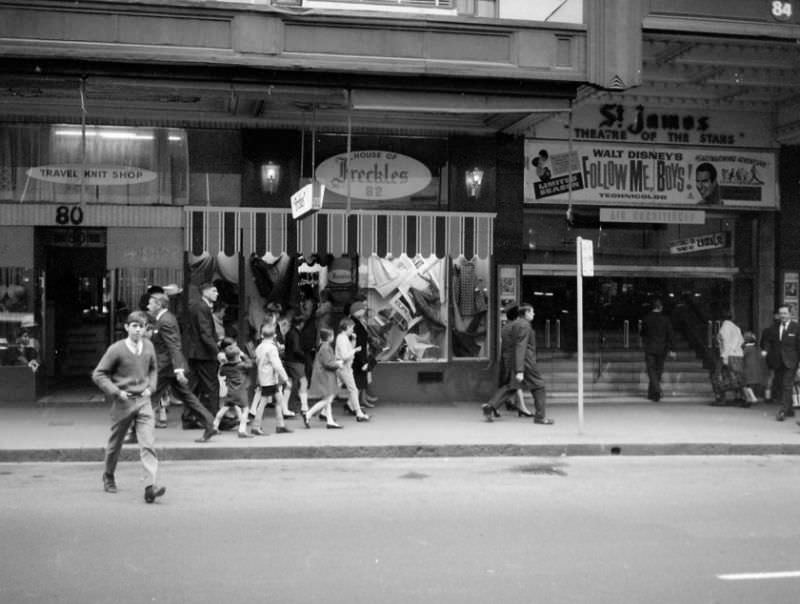
The Botanical Gardens offered a calmer side of the city. Statues stood among the trees, and the gardens remained one of the few public green spaces in the inner city where people could escape the noise. St Mary’s Cathedral, overlooking Hyde Park, stood as one of Sydney’s most enduring architectural landmarks — its gothic stone towers a sharp contrast to the glass and steel going up a few blocks away. Castlereagh Street and other CBD thoroughfares showed a city in transition, where Victorian-era facades sat beside modern shopfronts and new commercial buildings.
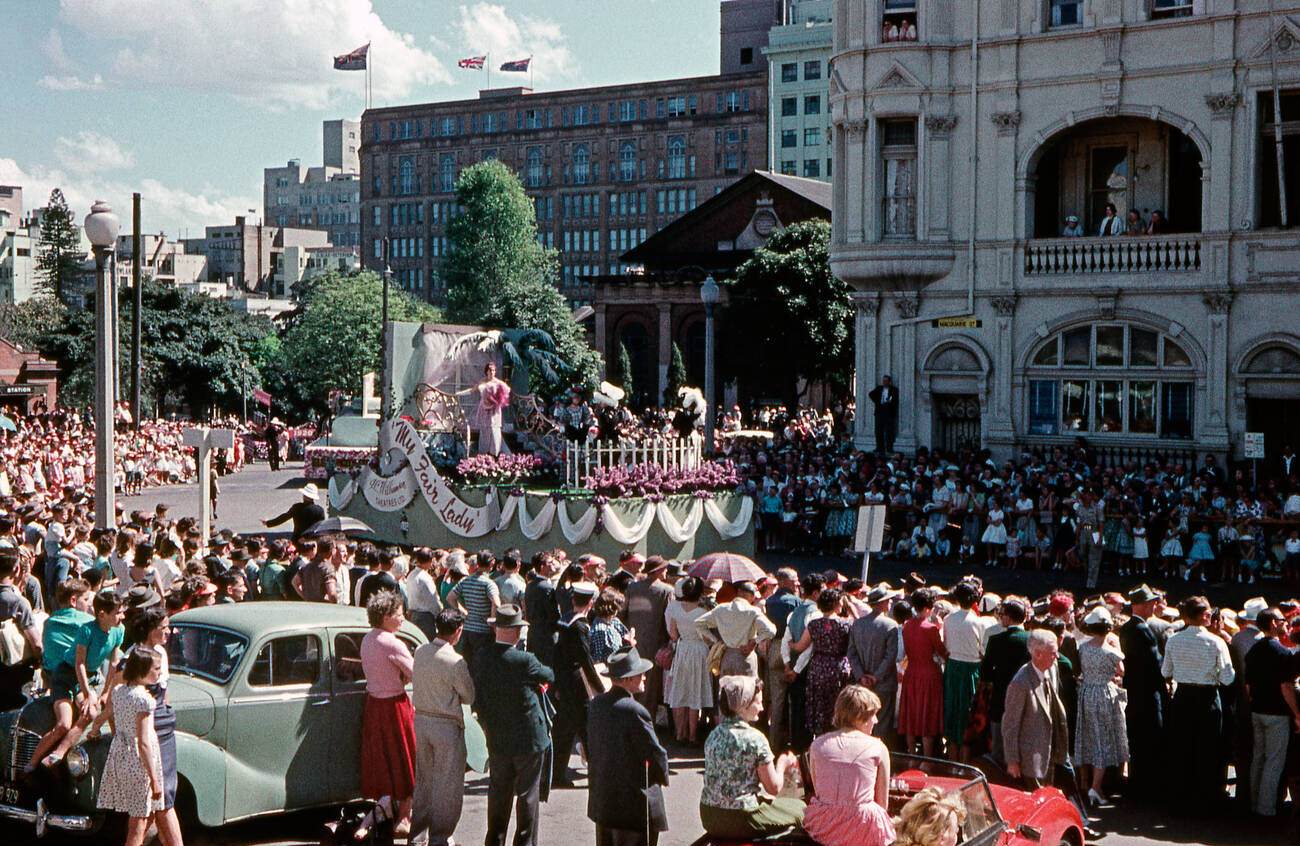
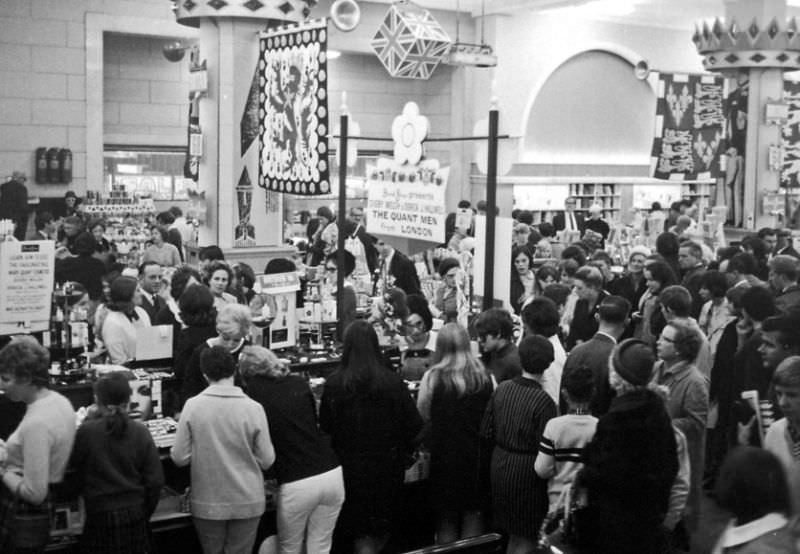
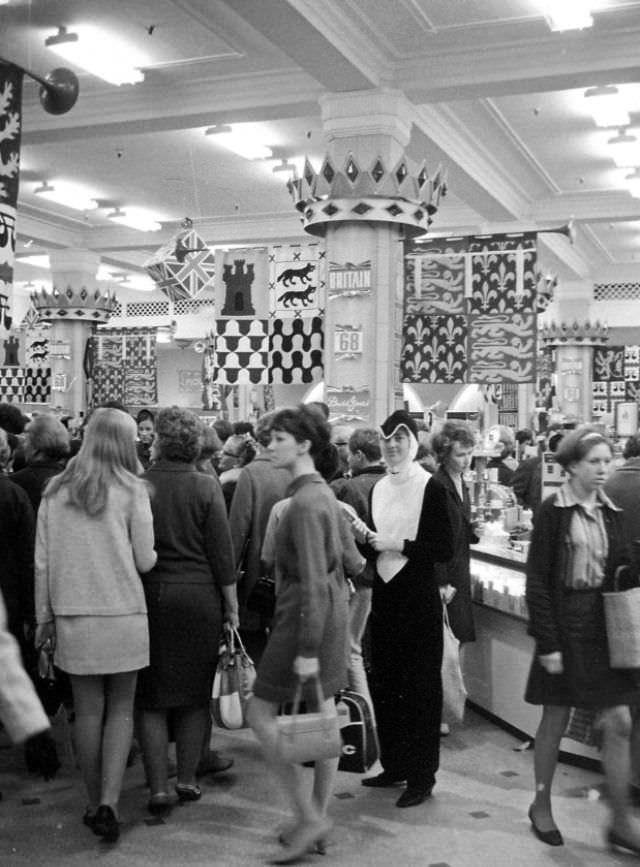
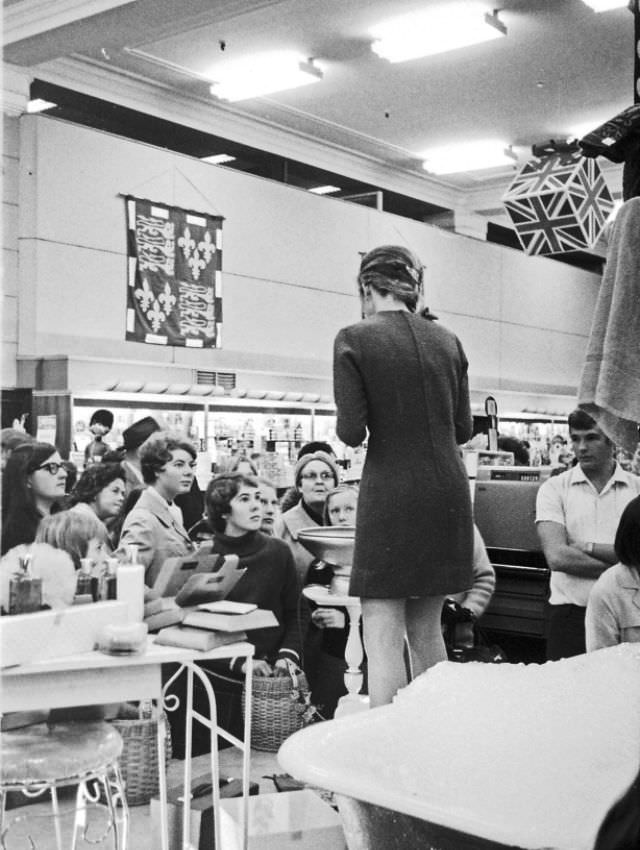
Public events and festivals were also part of the city’s calendar. The Waratah Festival, an annual spring celebration, brought floats and parades to Macquarie Street. The English Fair drew crowds looking for novelty goods and entertainment. These events reflected a city that, even as it modernised rapidly, still relied on shared public gatherings to mark the seasons and bring people together.
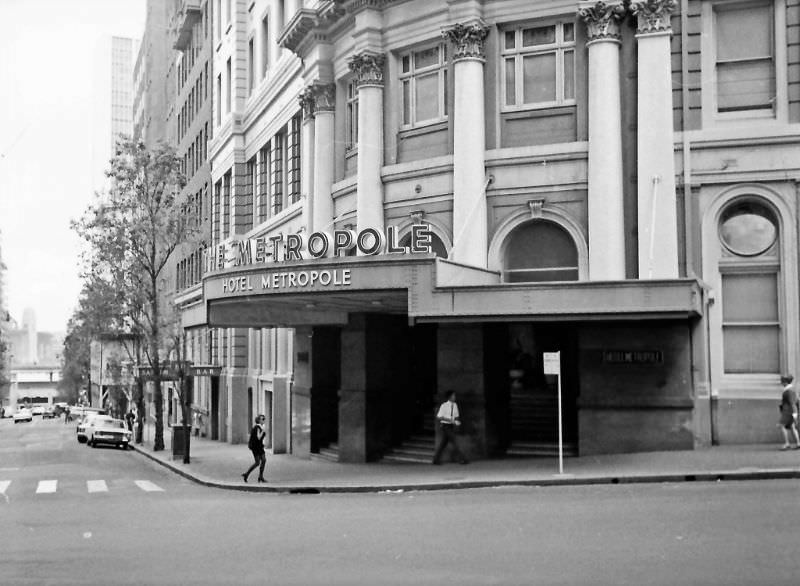
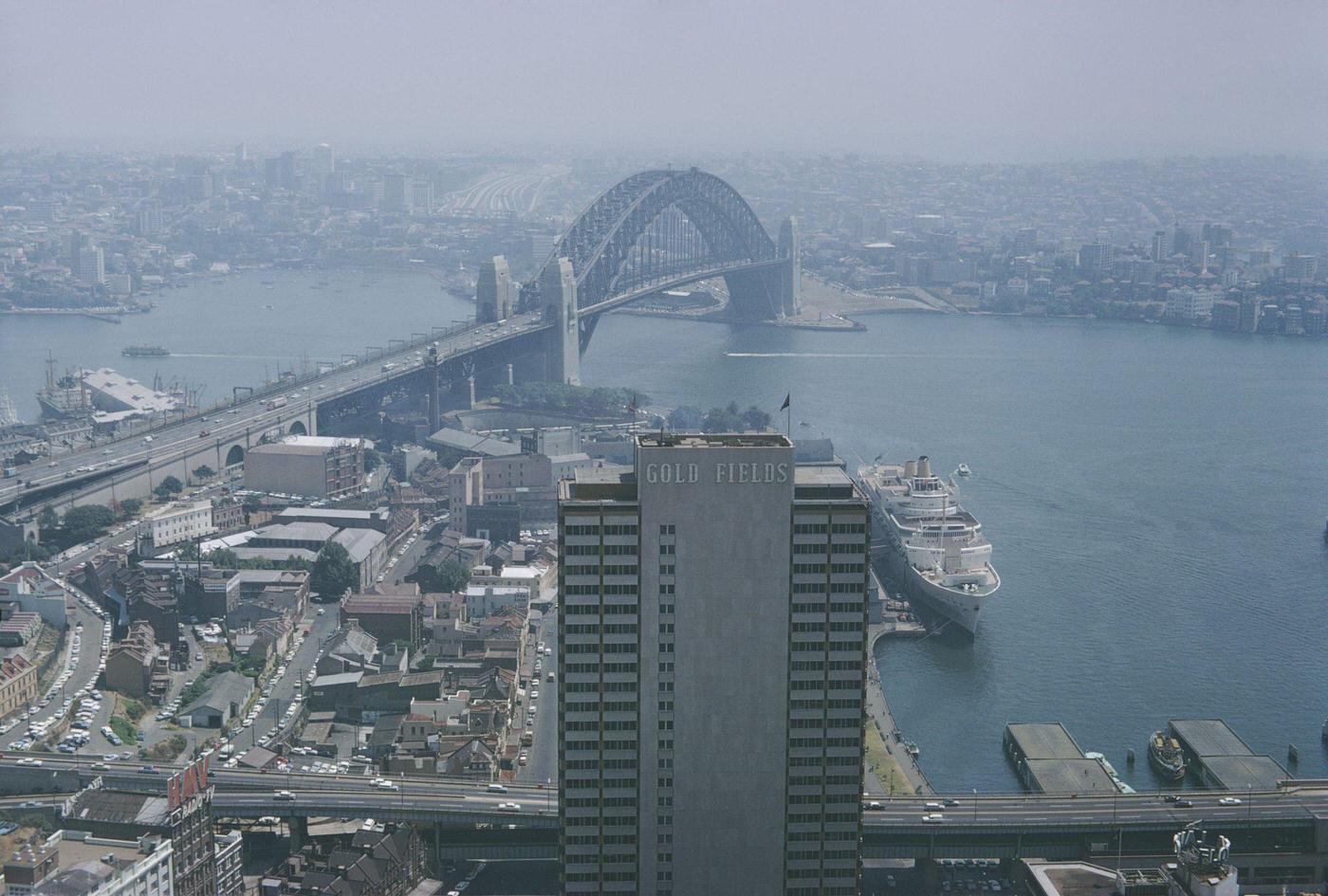
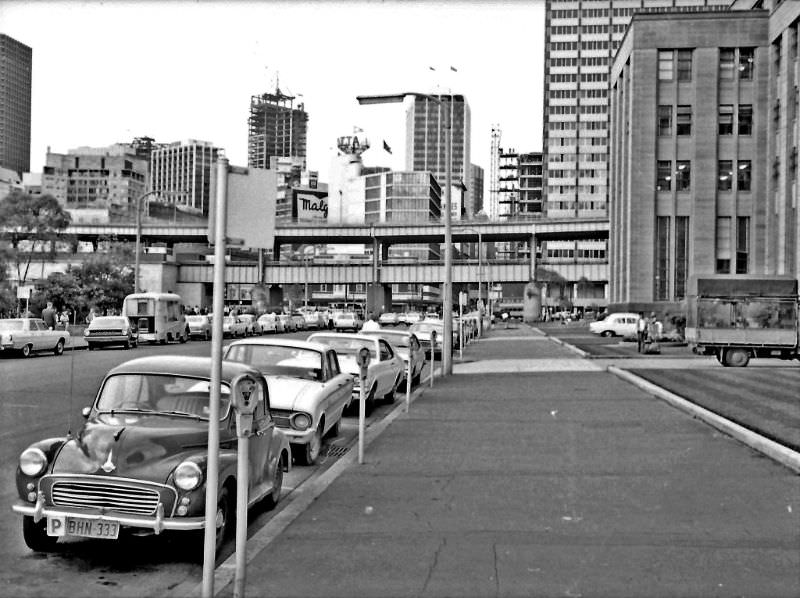
Hotels like the Metropole on Young, Philip and Bent Streets — later demolished — were part of a layer of the city that was disappearing. As new commercial developments pushed into the CBD, older buildings came down with little fanfare. The Gold Fields House near the Harbour Bridge was one of the newer additions to the waterfront skyline, its sleek profile replacing the more modest structures that had stood before it. George Street, looking south from near what is now the Museum of Contemporary Art, showed a street still full of mid-century commercial character before later rounds of development altered it further.
Ocean liners continued to arrive throughout the decade, carrying migrants and travellers from Europe and beyond. The ships — some of them enormous — docked at the Overseas Passenger Terminal and disgorged thousands of new arrivals who would go on to reshape the city’s culture, food, and character. The Circular Quay area remained the point where Sydney met the rest of the world, as it had for over a century.
Cars were becoming central to the city’s identity too. The 1960s brought new models, new roads, and a culture increasingly built around driving. Parramatta Road was emblematic of this shift — a long commercial strip where the car was the assumed mode of transport for everything from grocery shopping to eating out. The decade saw Sydney lay more groundwork for the car-dependent urban sprawl that would define its outer suburbs in the years ahead.
By the end of the decade, the city’s eastern suburbs, the harbour foreshores, and the inner west all carried clear signs of how much Sydney had changed in just ten years. Streets that had been quiet in the early 1950s were now busy commercial strips. Neighbourhoods that had once housed dockworkers and factory labourers were being eyed for redevelopment. The 1960s did not finish the transformation — they accelerated it.