

St. Louis in the 1940s was a city in motion. The decade brought war, work, sport, and street life together in ways that defined the city for a generation. From the banks of the Mississippi to the drill grounds of Jefferson Barracks, every corner of St. Louis carried the weight and energy of the era. These photographs capture that world in striking detail.
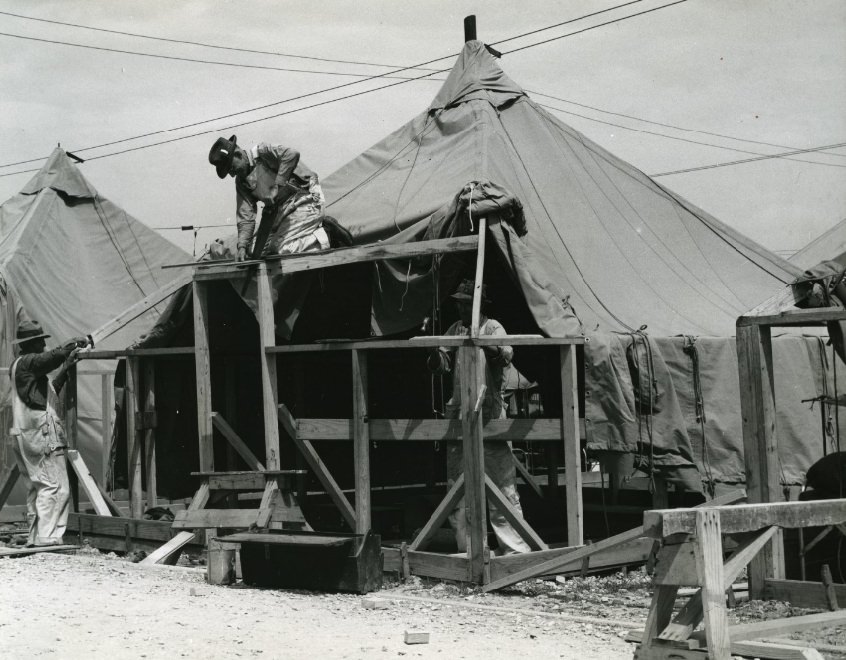
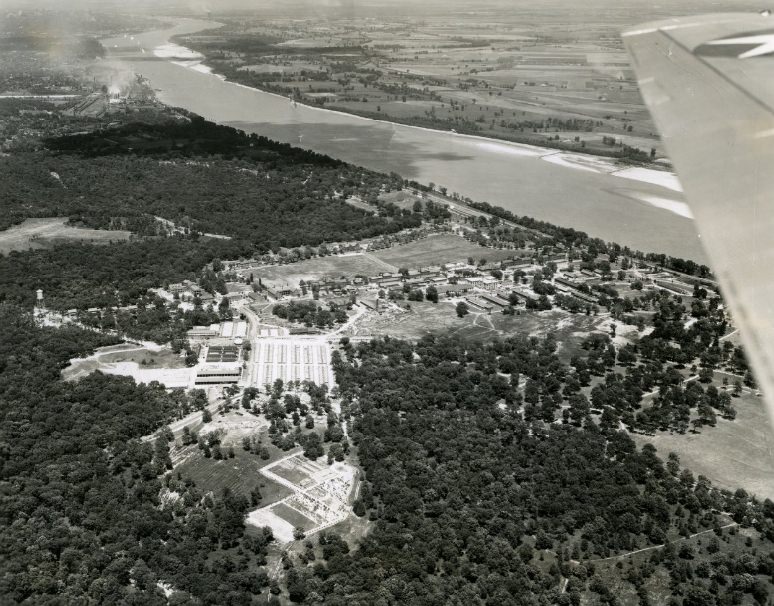
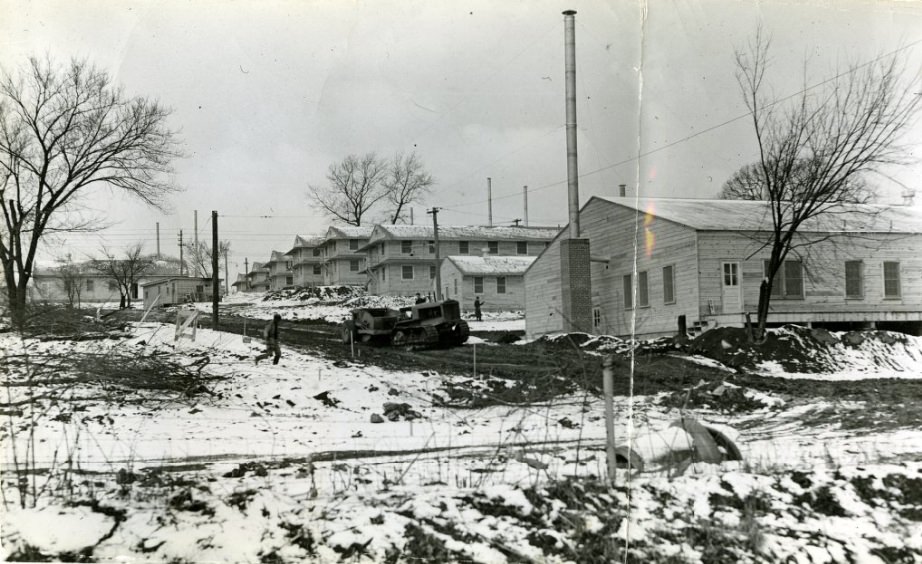
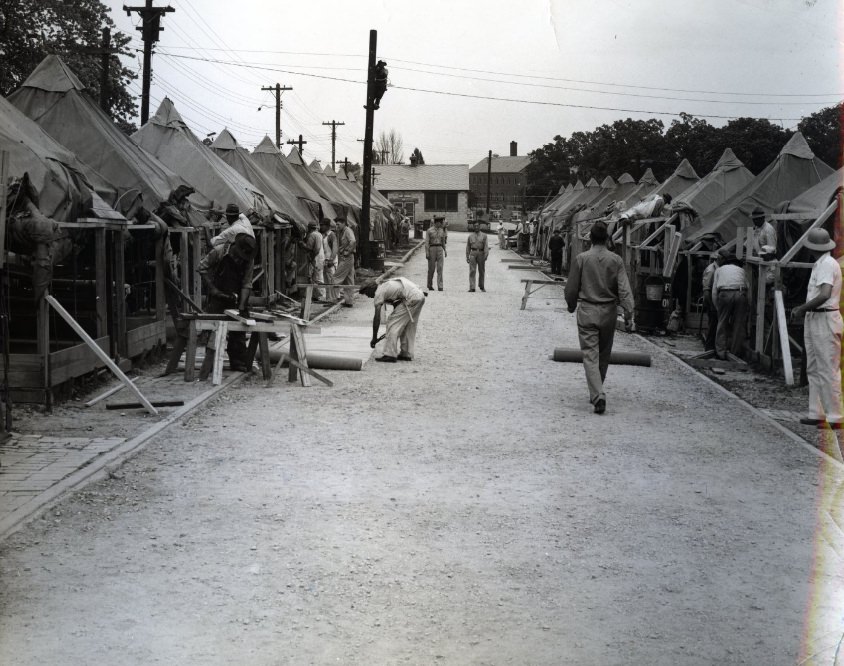
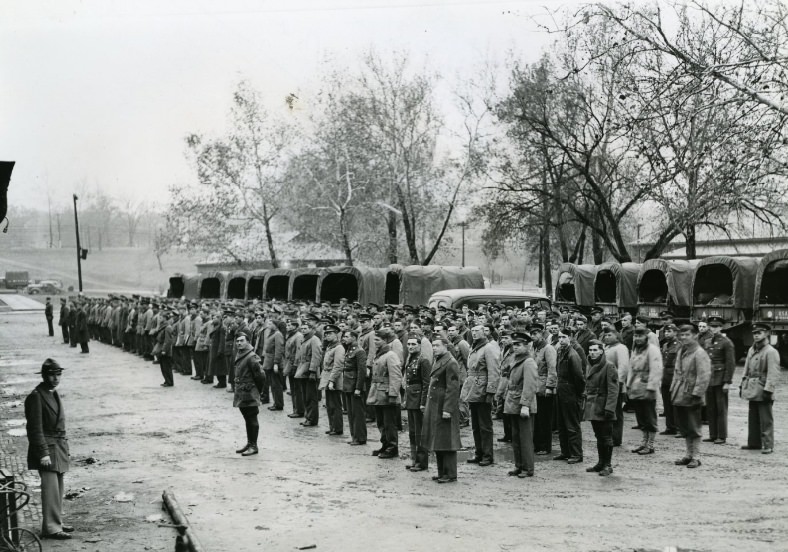
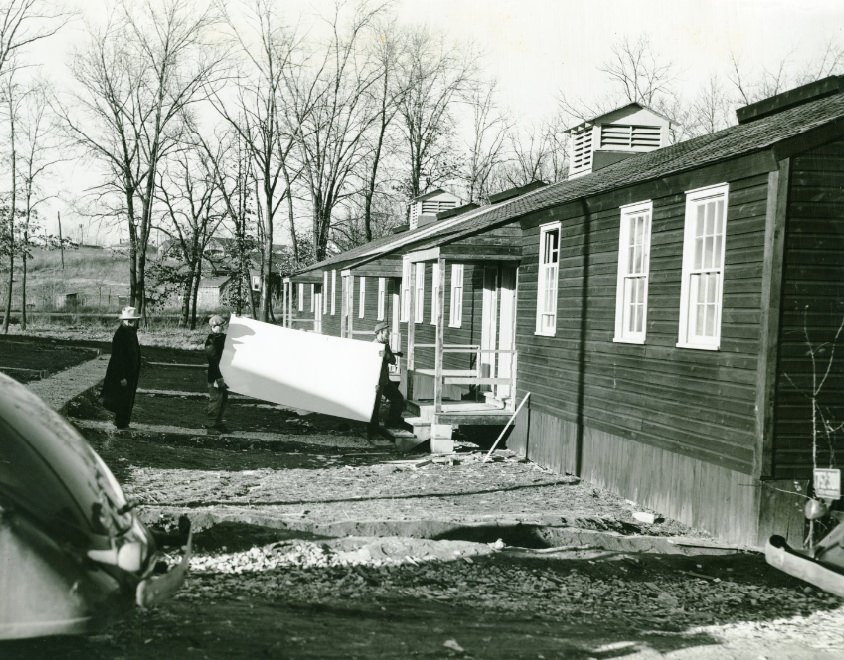
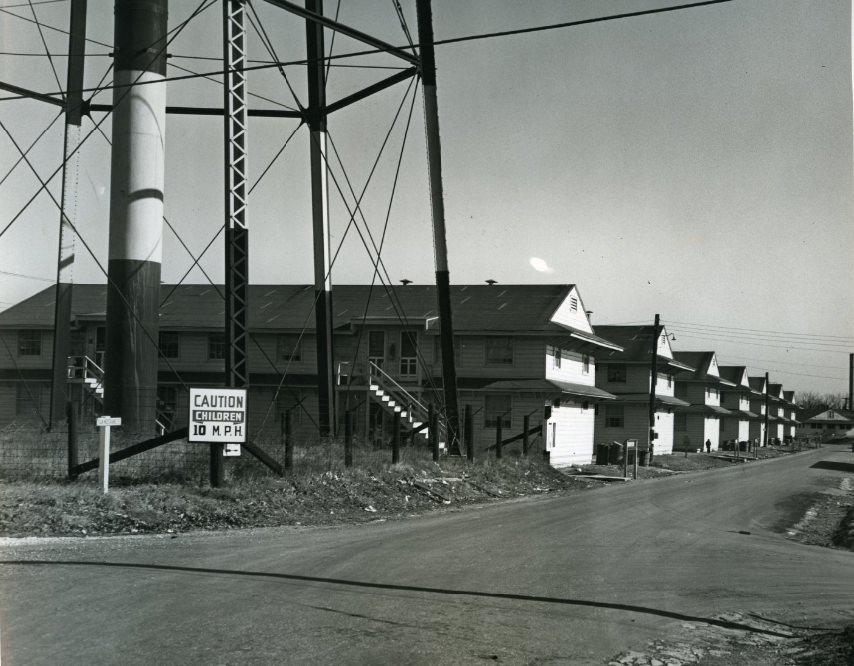
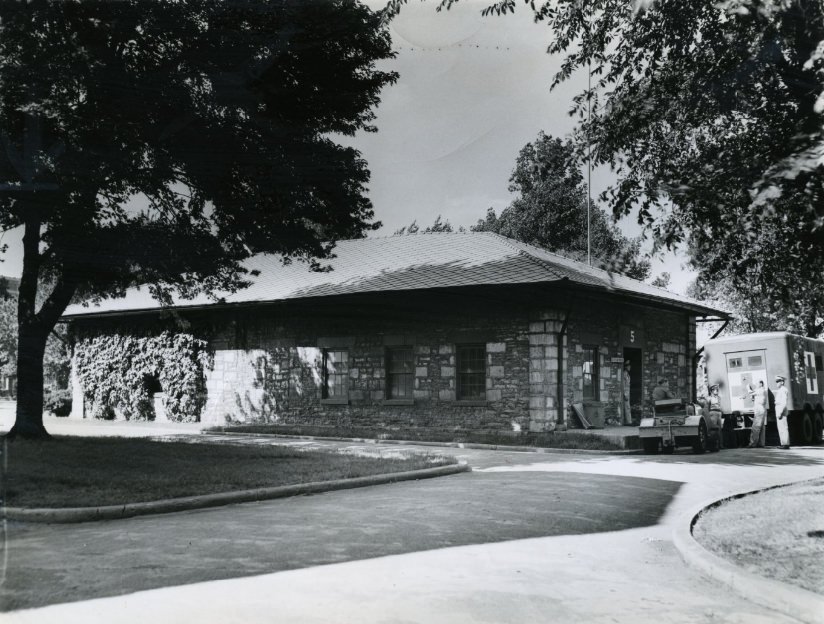
When the United States entered World War II after the attack on Pearl Harbor in December 1941, St. Louis shifted quickly. Jefferson Barracks, the historic military post on the city’s south side, became one of the most active installations in the region. Officers’ quarters went up fast, tent frames were built by WPA workers and regular workmen alike, and new recruits arrived by the trainload.
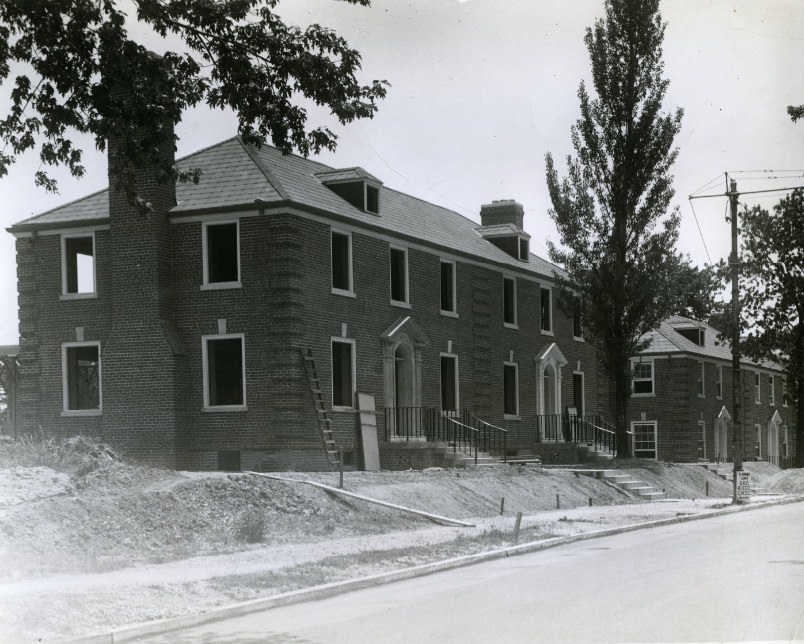
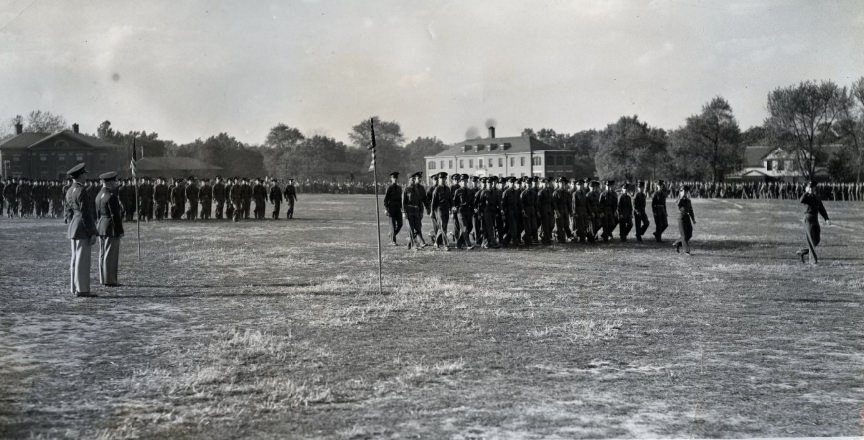
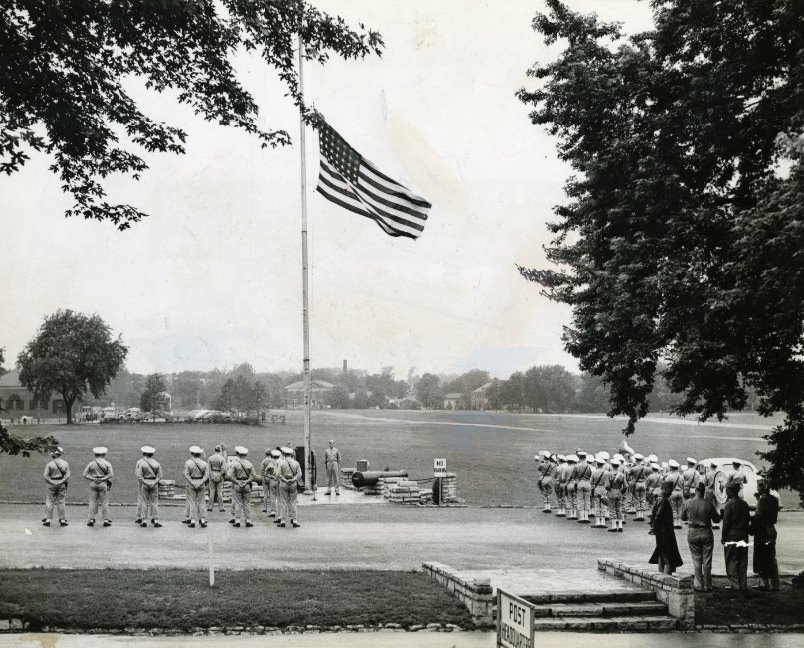
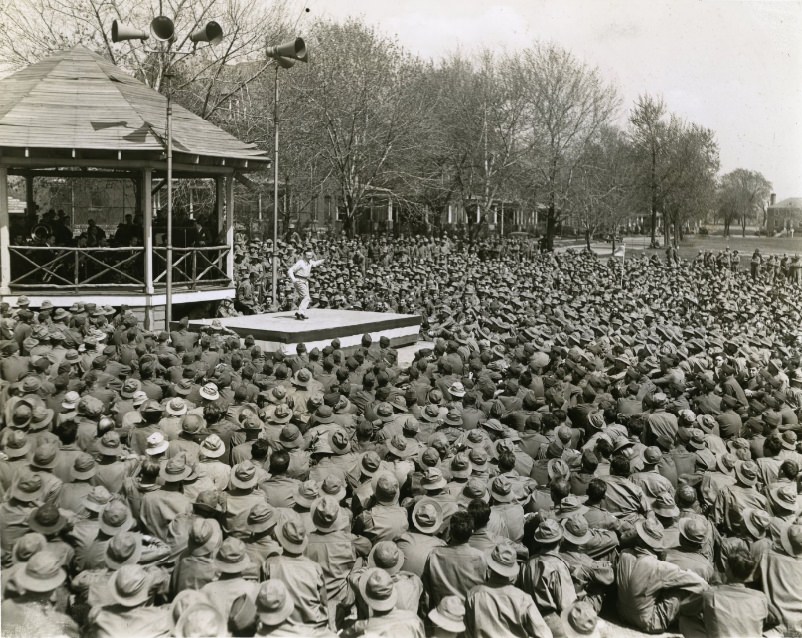
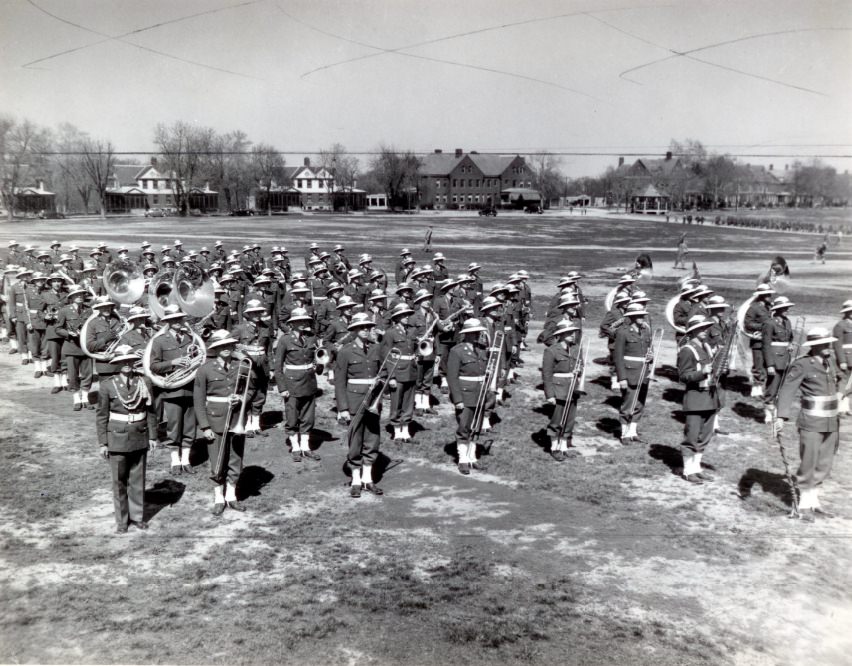
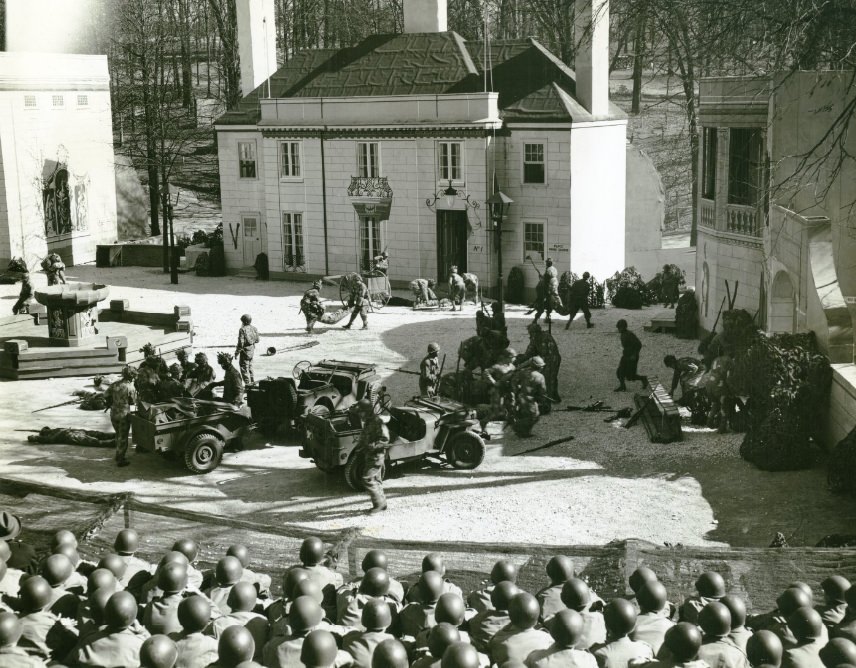
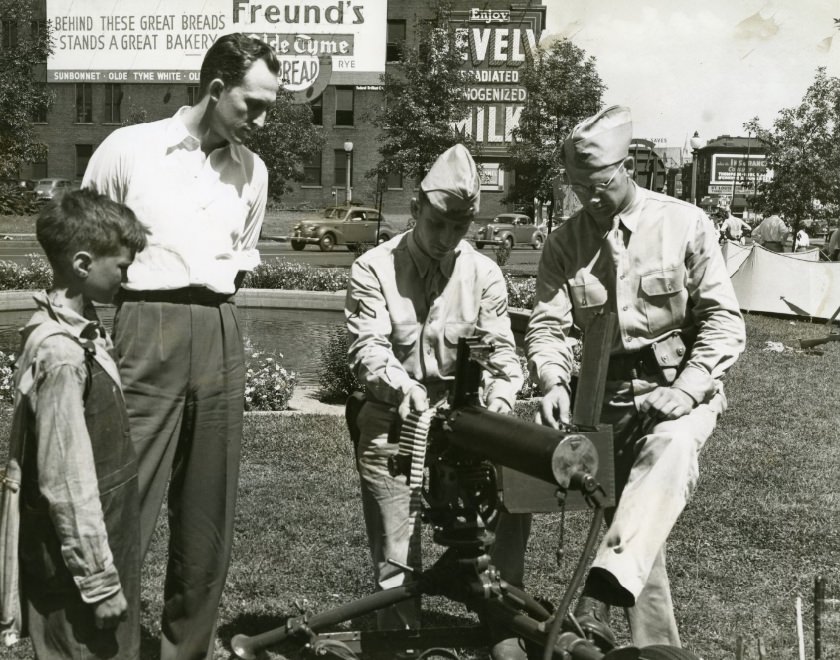
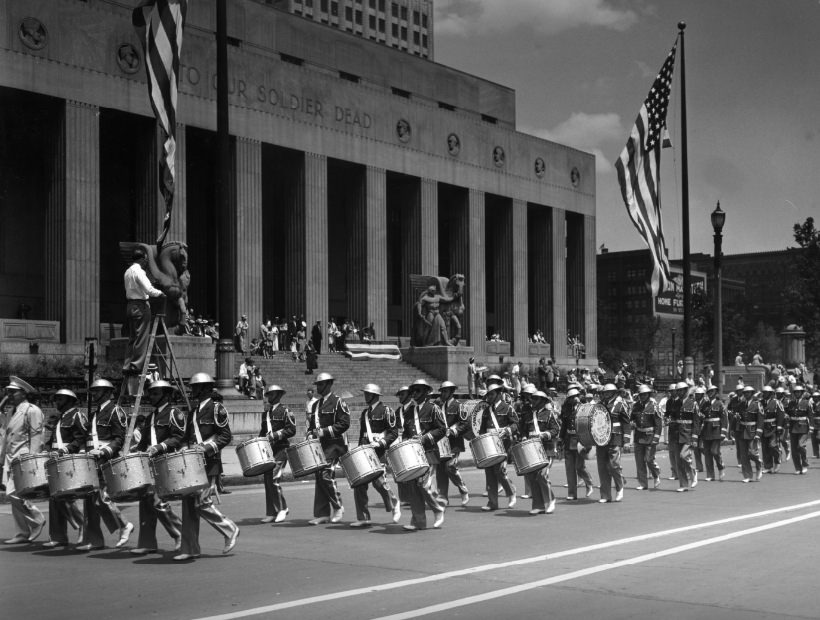
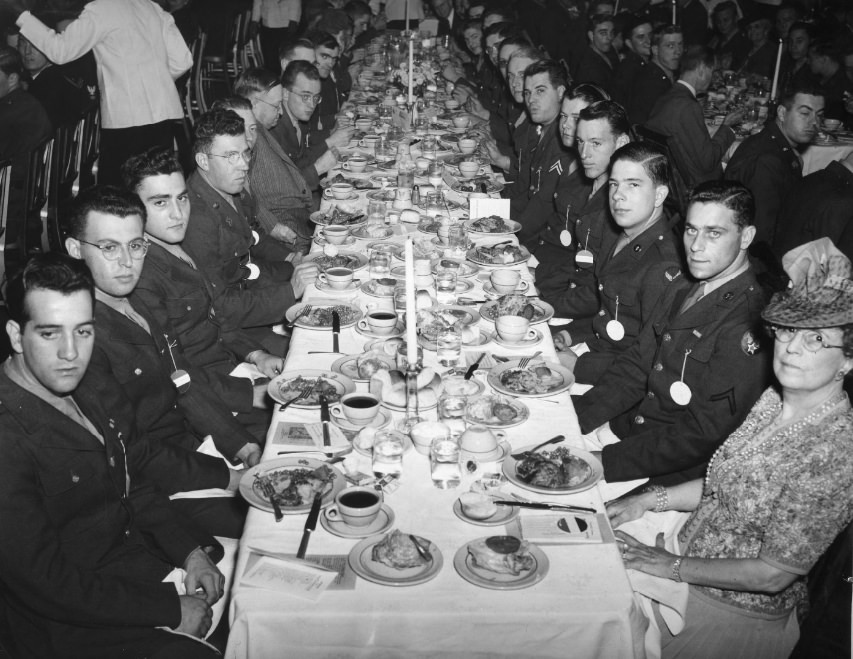
Construction at Jefferson Barracks didn’t stop at housing. Dance floors were built to give soldiers a place to unwind during open houses. Civilians came out to watch demonstrations of modern warfare. The base held memorial services, hosted marching bands, and became a hub where military life and civilian curiosity met face to face.
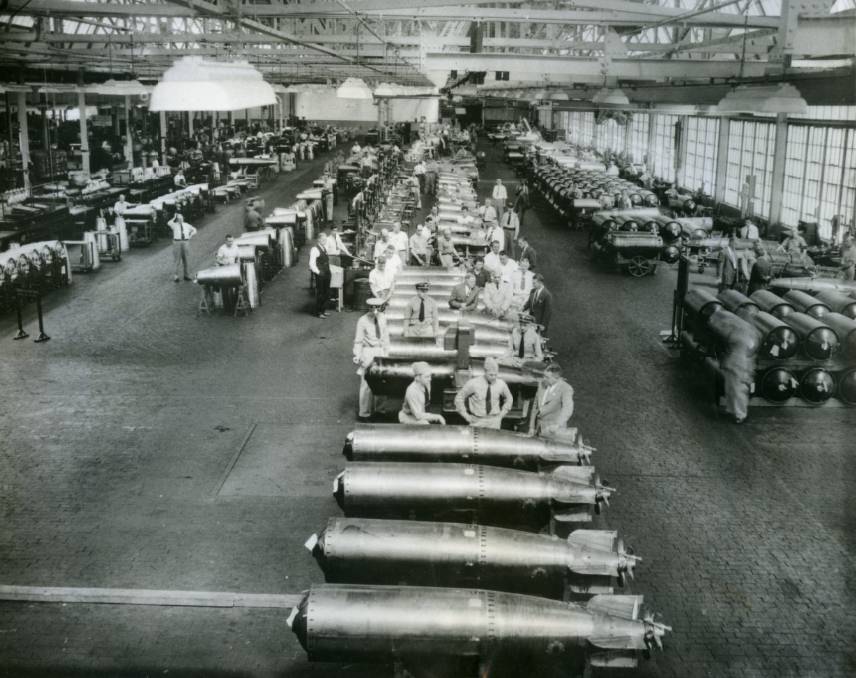
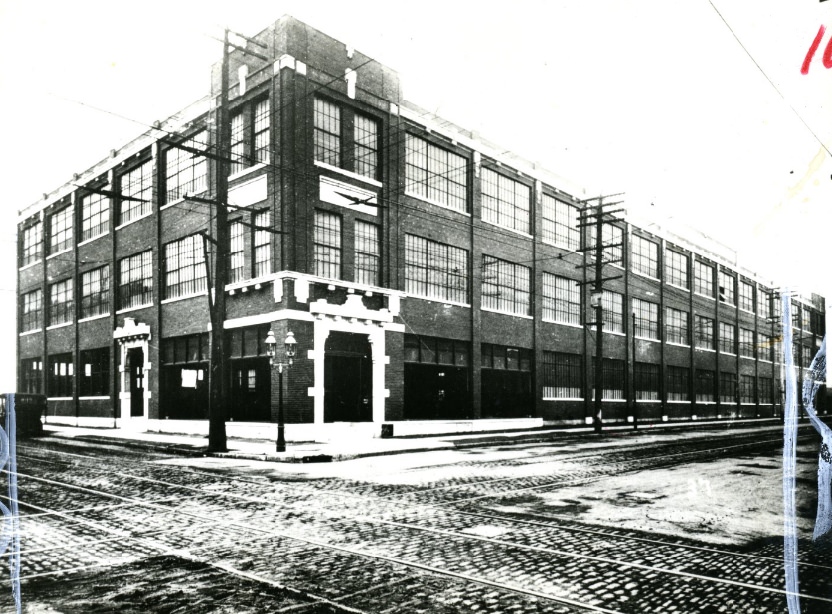
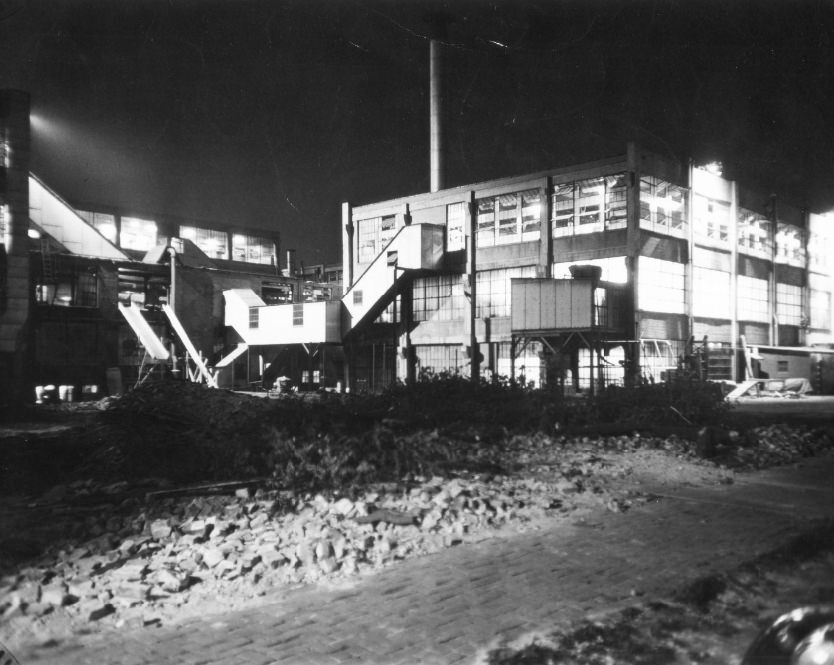
The war effort extended well beyond the barracks. Factories across St. Louis retooled for military production. The American Can Company ran airborne torpedo assembly lines. The Carter Carburetor Plant kept its lights on through the night. Plants like Fulton Iron Works and Curtis-Wright Corporation put thousands of St. Louis workers on the front lines of manufacturing. The city’s economy ran on war production, and the factories rarely stopped.
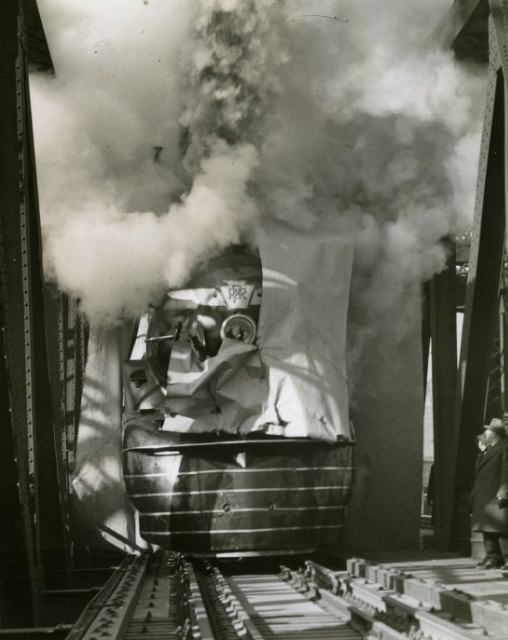
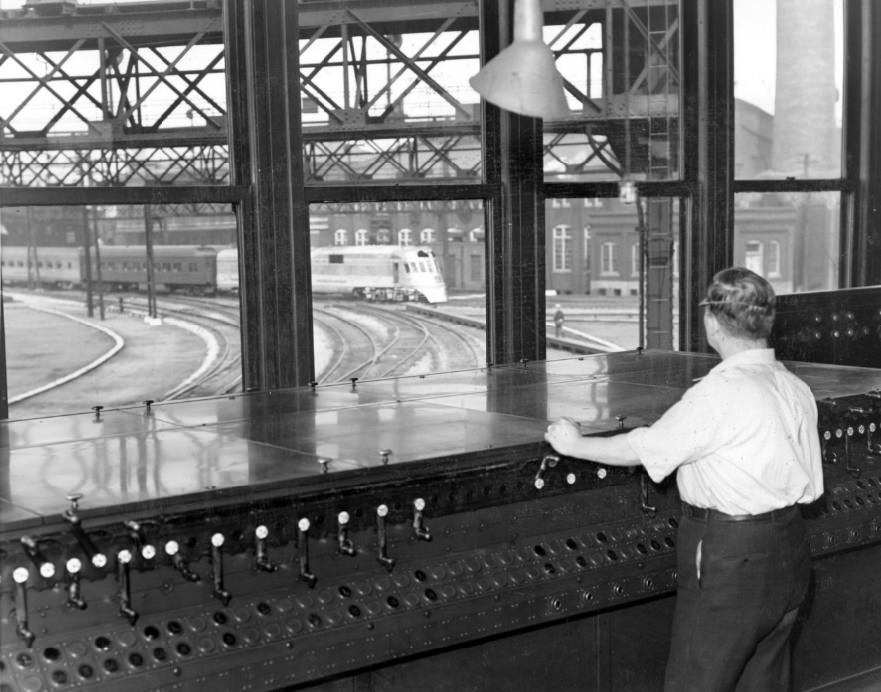
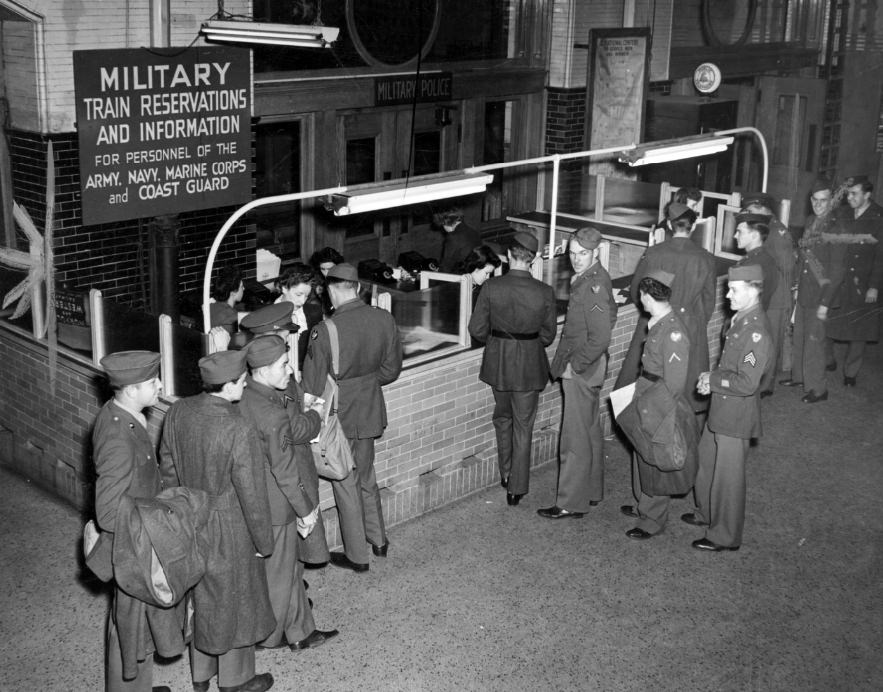
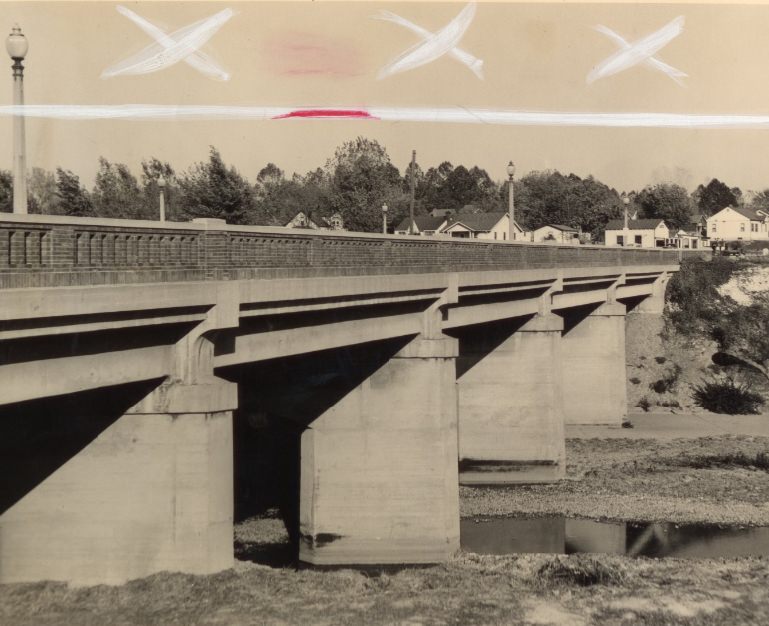
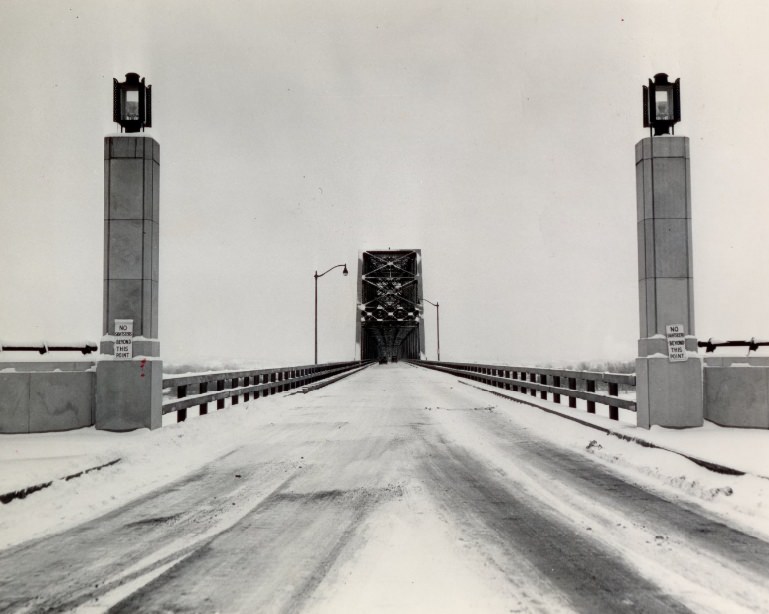
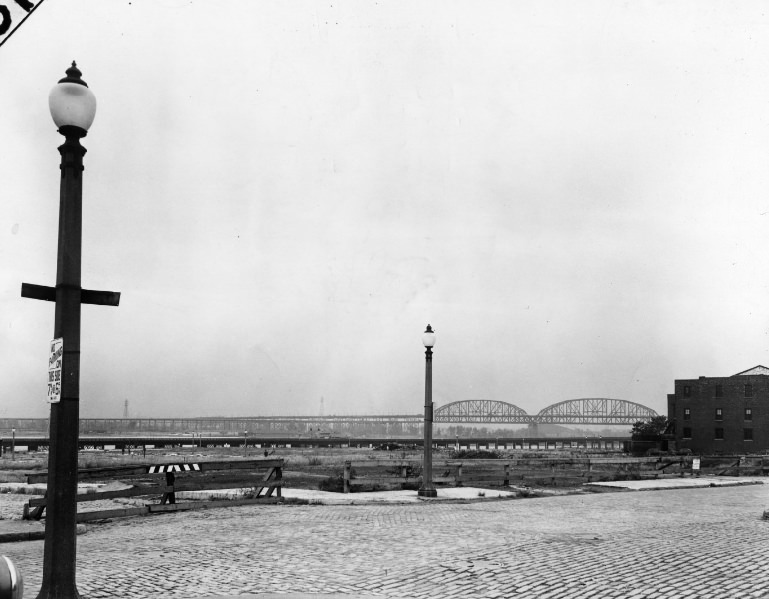
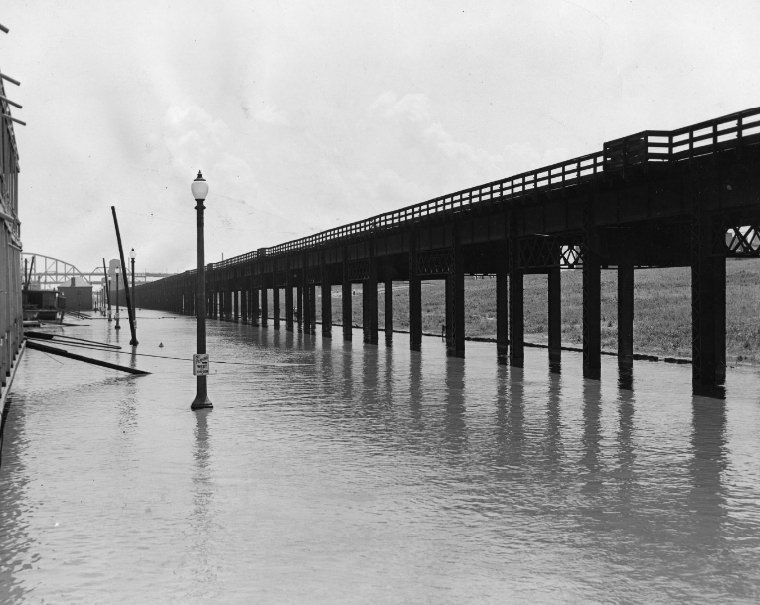
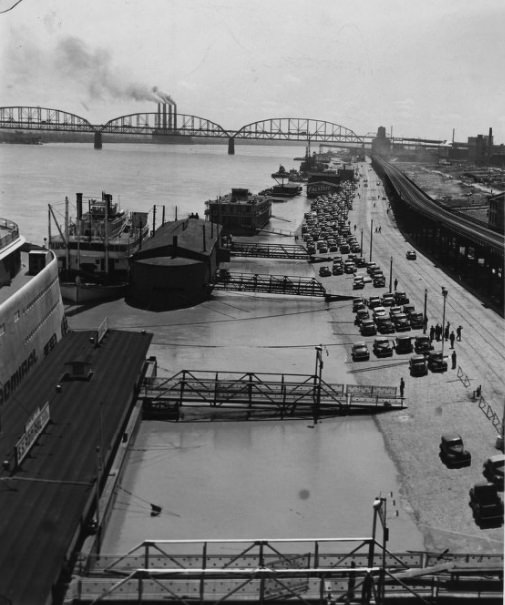
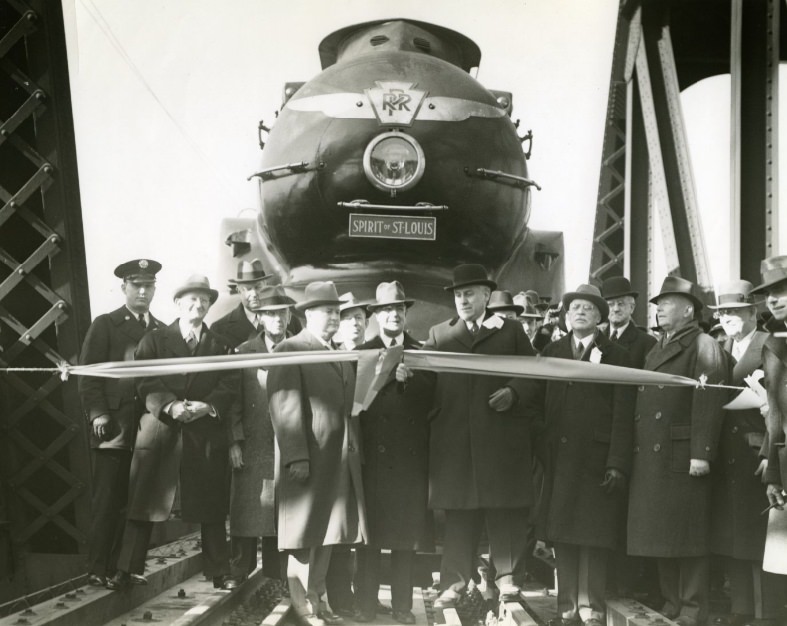
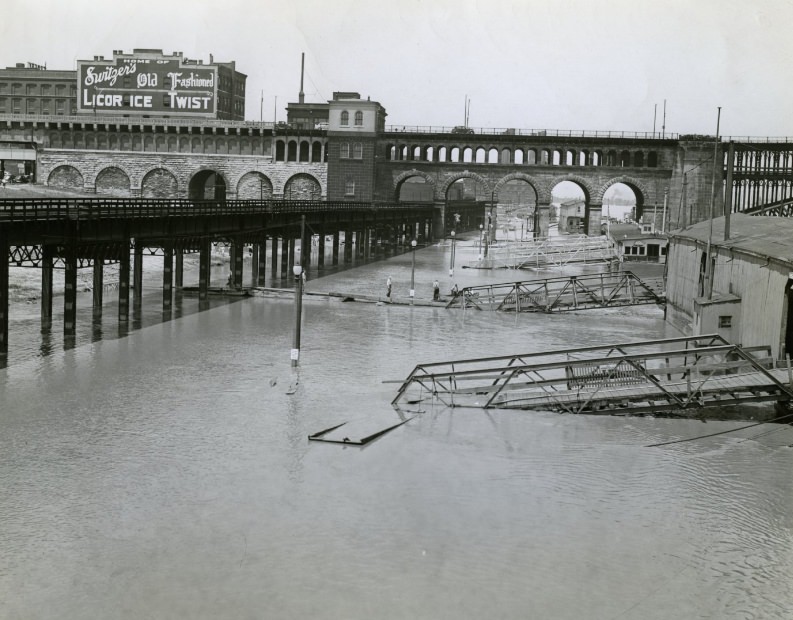
Transportation was central to the city’s daily life. The MacArthur Bridge carried its first passenger train in 1940, connecting St. Louis to the Illinois side of the Mississippi. Union Station served as a critical hub for soldiers moving on official business, with the Military Reservation Bureau maintaining a booth specifically to handle ticketing for servicemen. When floods rose, the terminal levee tracks along the riverfront went under several feet of water and trains rerouted over the elevated tracks.
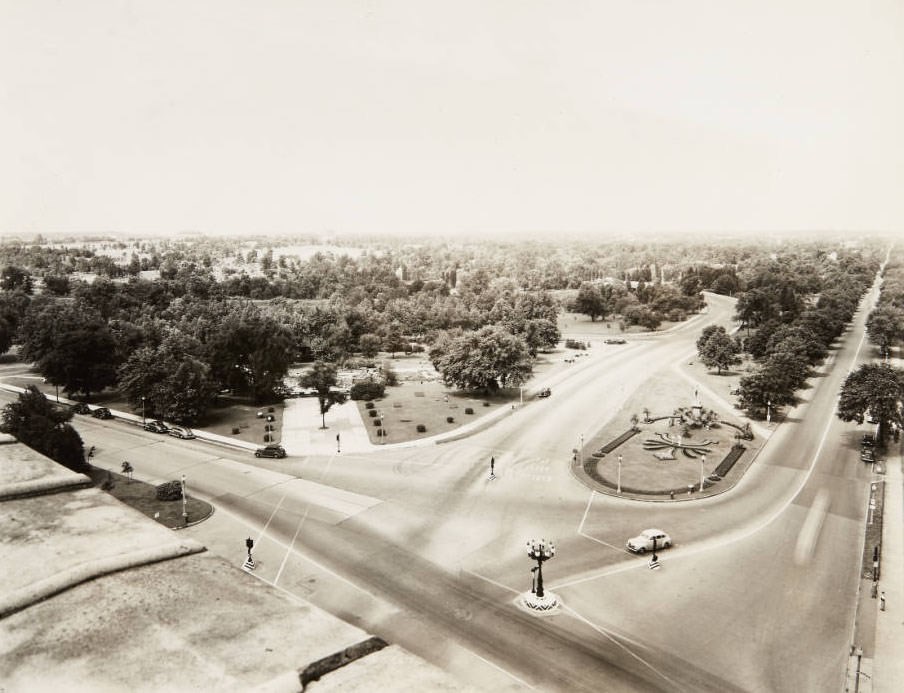
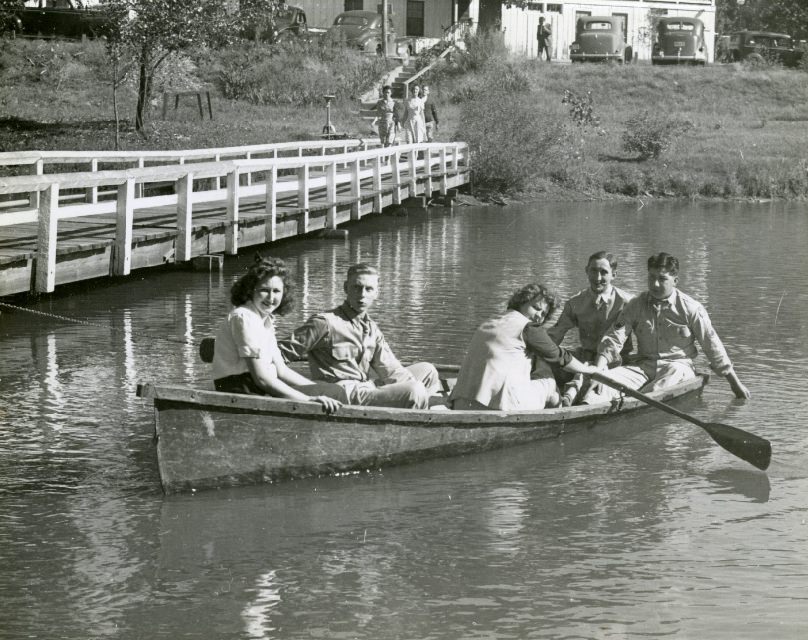
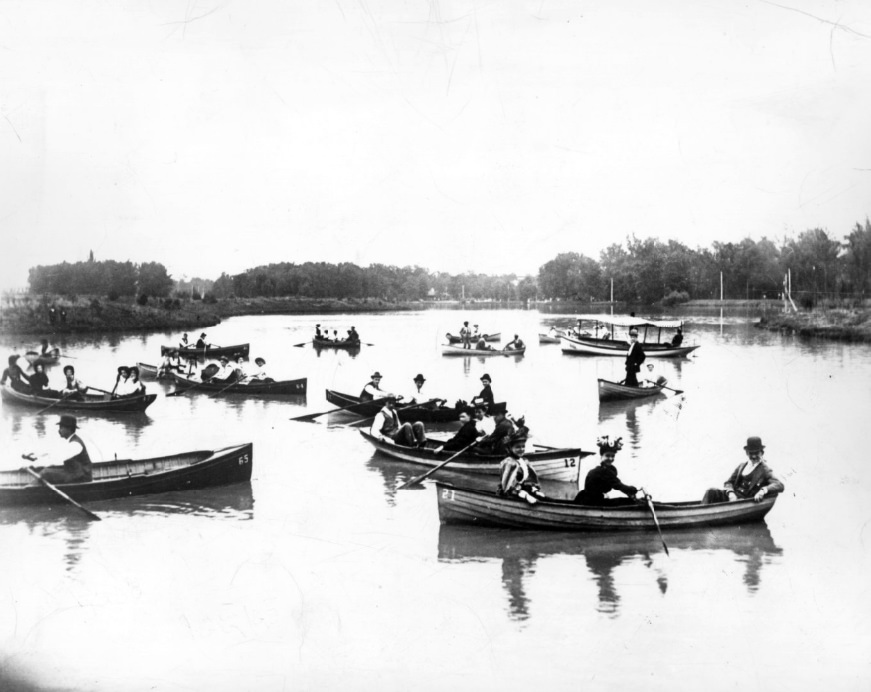
Forest Park remained a gathering place for St. Louis residents throughout the decade. The park’s entrance at Lindell and Kingshighway welcomed families and visitors year after year. The Muny, the outdoor theater inside the park, continued staging Broadway shows under the open sky even during the war years. Boating on the park’s lagoons was a popular weekend activity, and the Saint Louis Art Museum inside the park stayed open to the public.
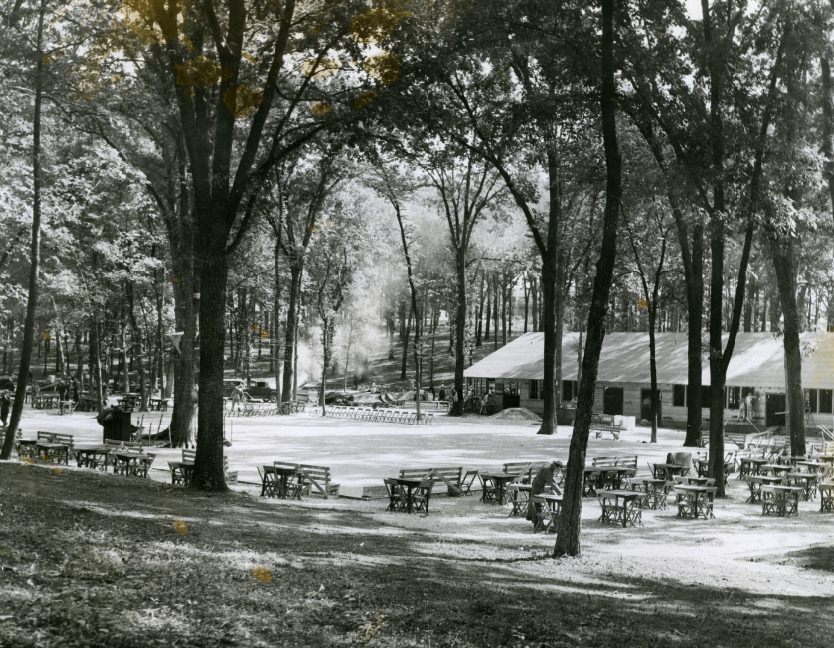
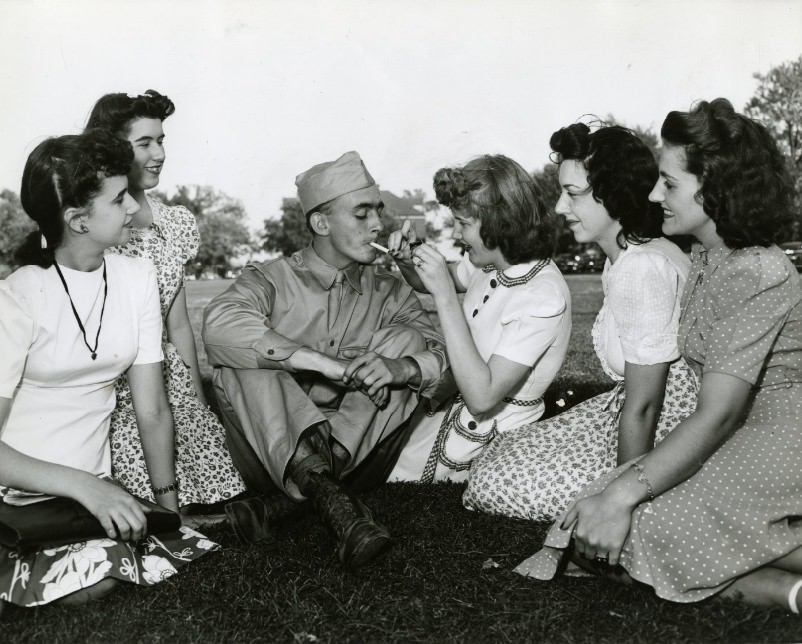
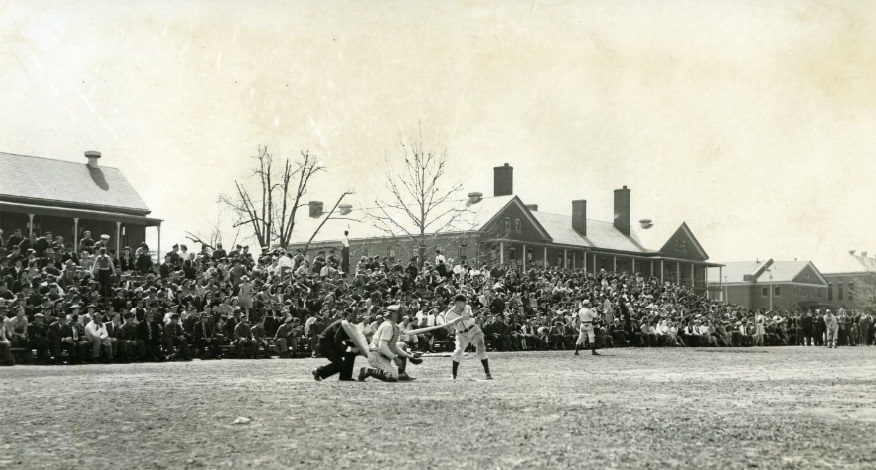
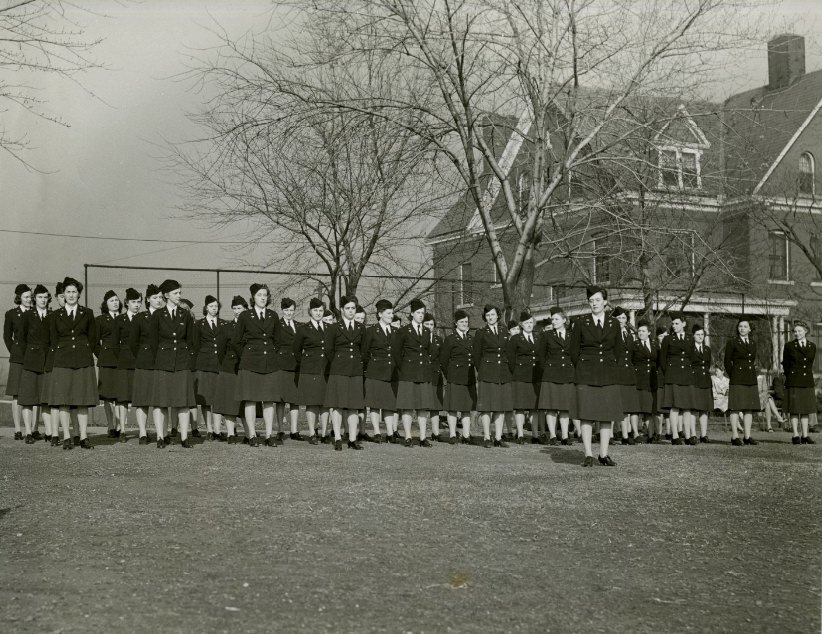
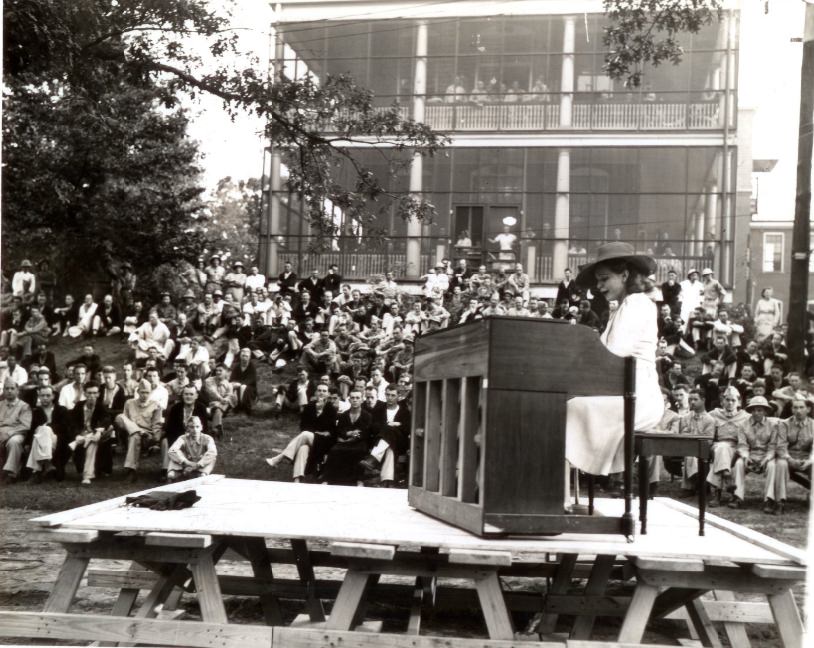
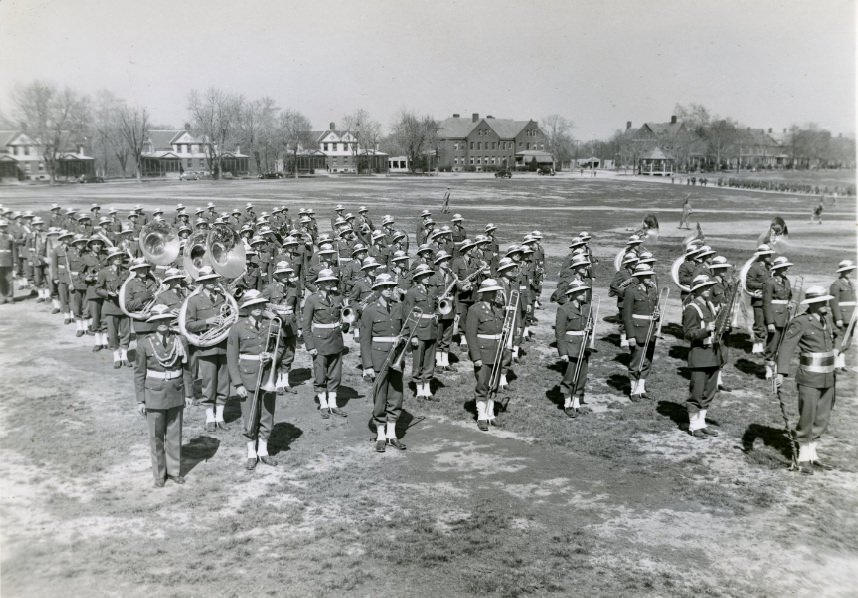
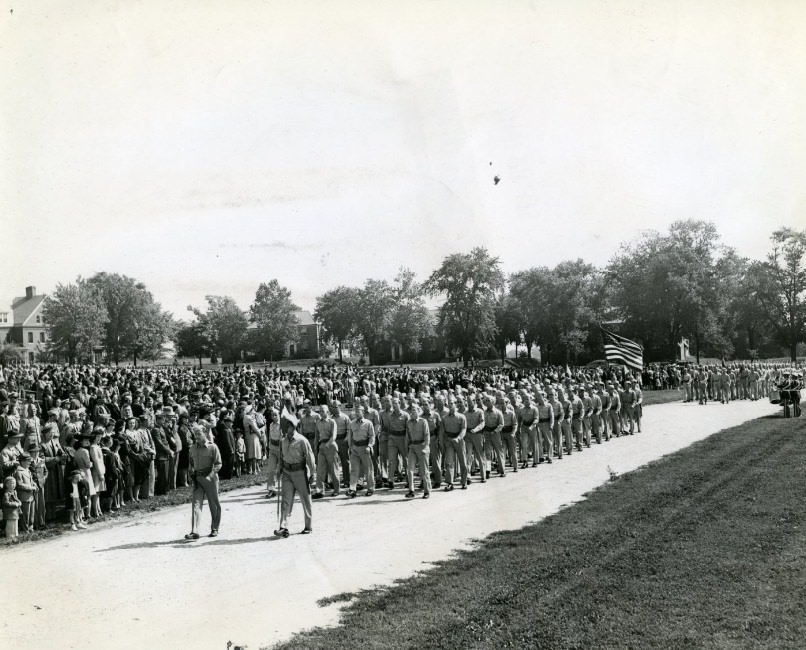
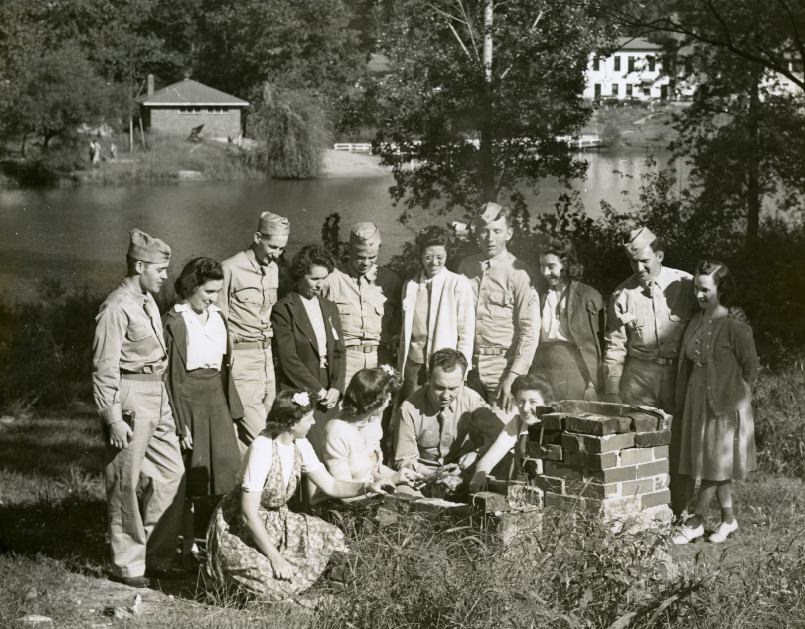
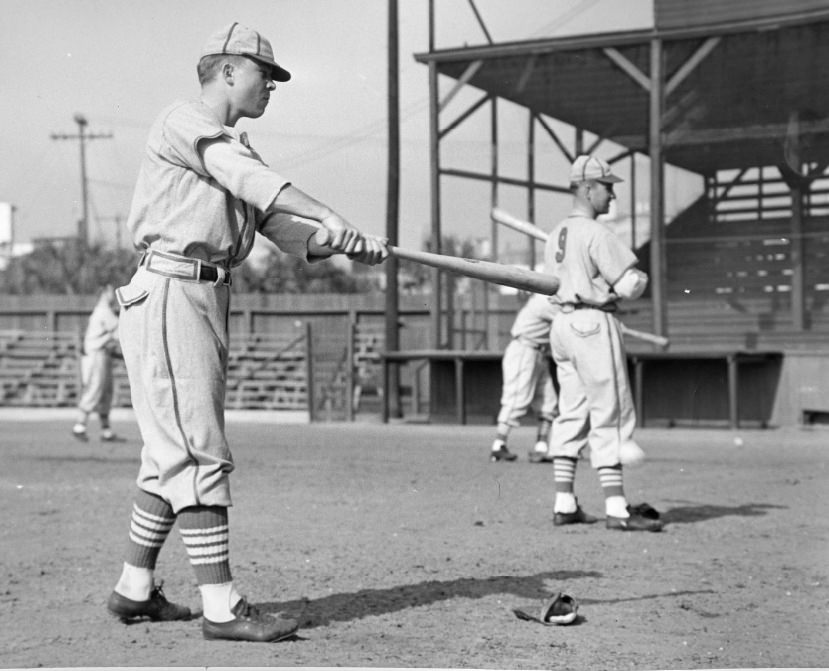
Life at Jefferson Barracks mixed discipline with community. Open houses drew young women and civilians to the post, where new recruits drilled in formation and the base band performed for crowds. Miss Pickens sang to soldiers in front of the Station Hospital. A baseball game was played on the grounds on April 2nd, 1942, just months after the country went to war. Entertainment was seen as essential to morale, and the base delivered it regularly.
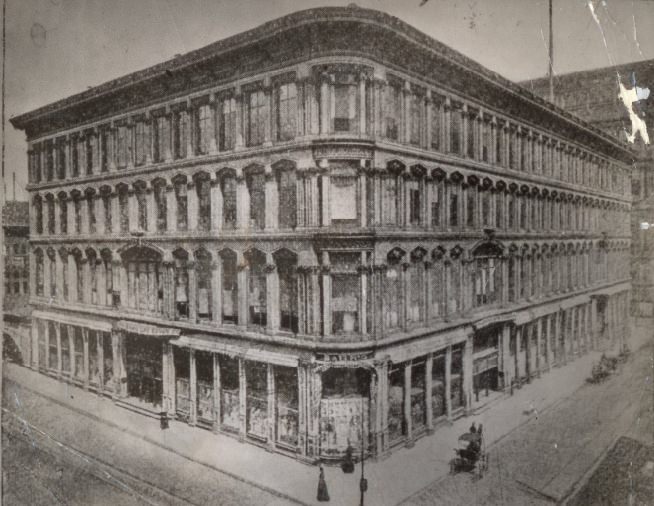
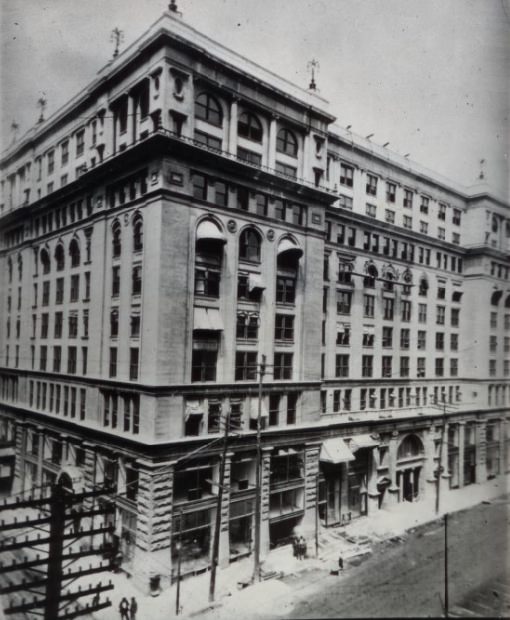
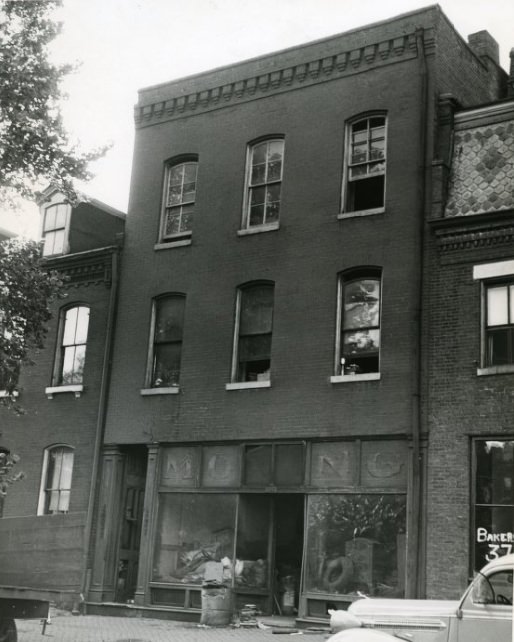
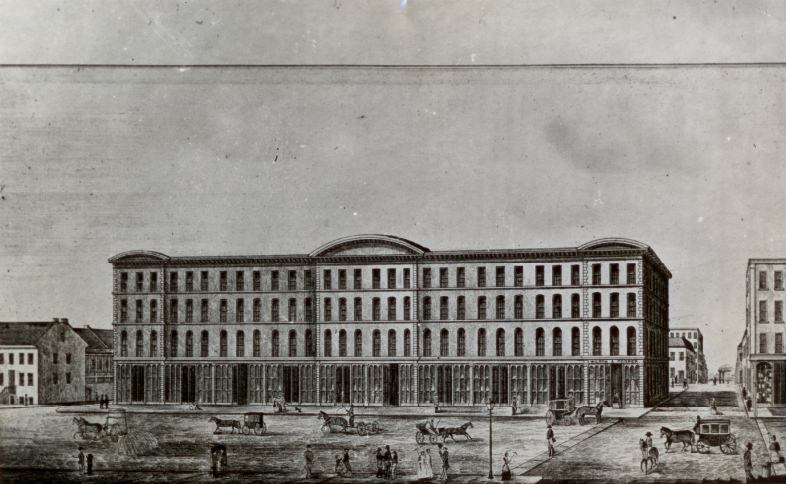
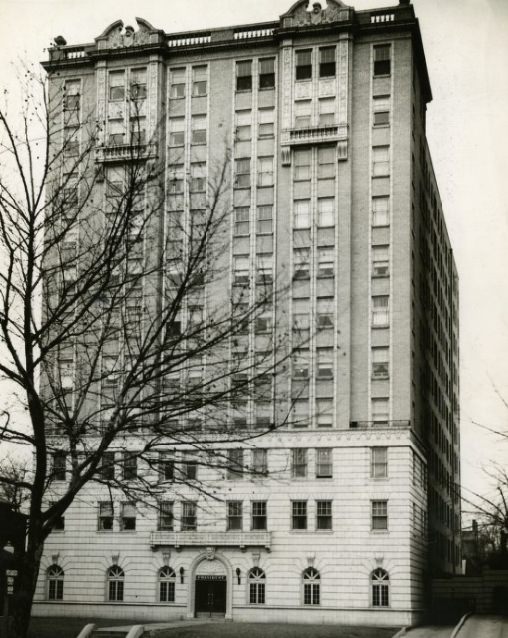
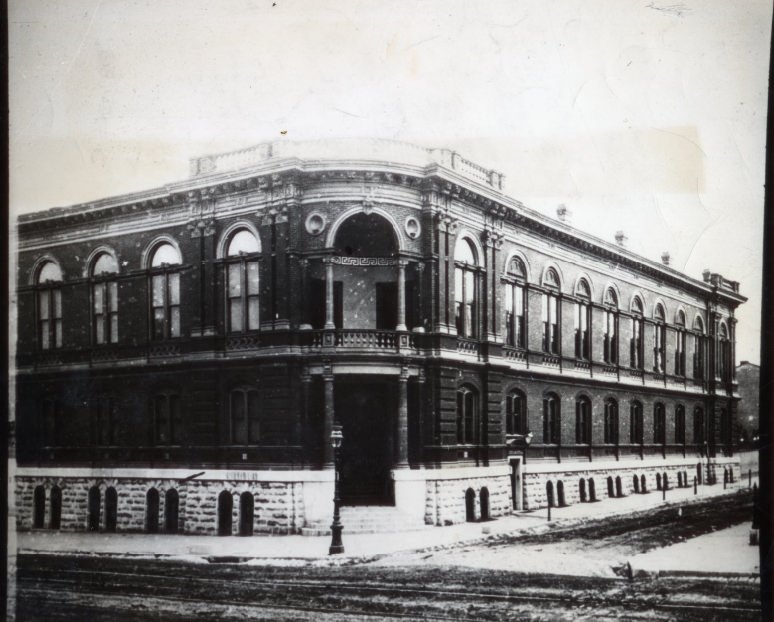
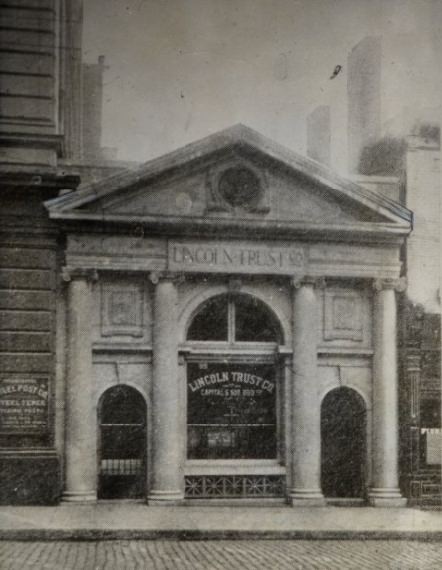
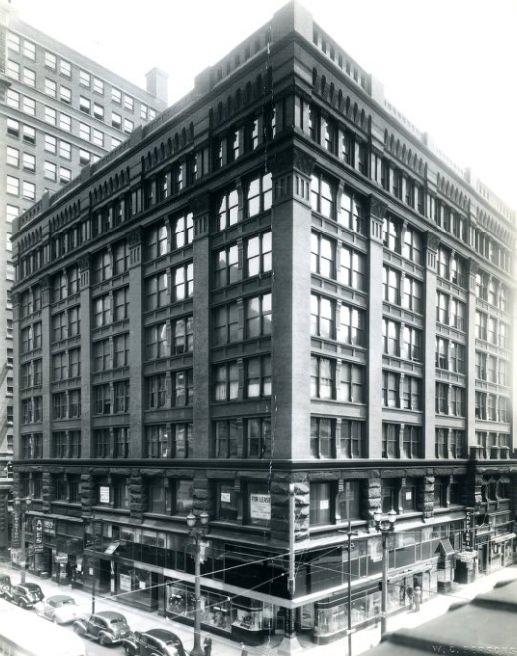
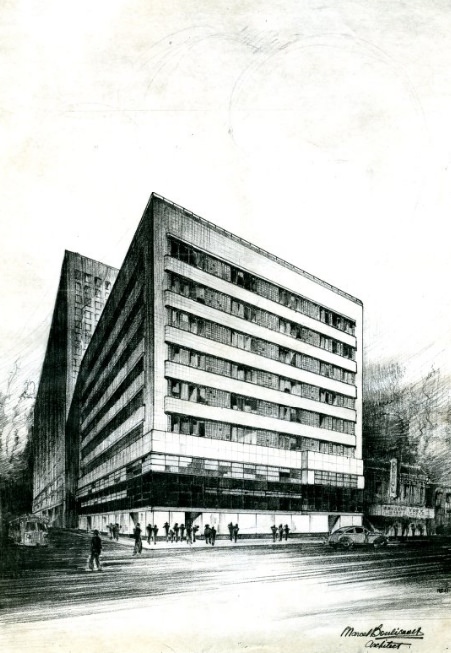
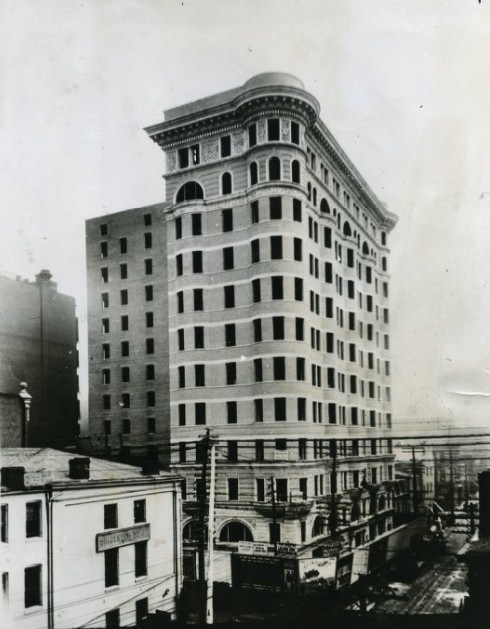
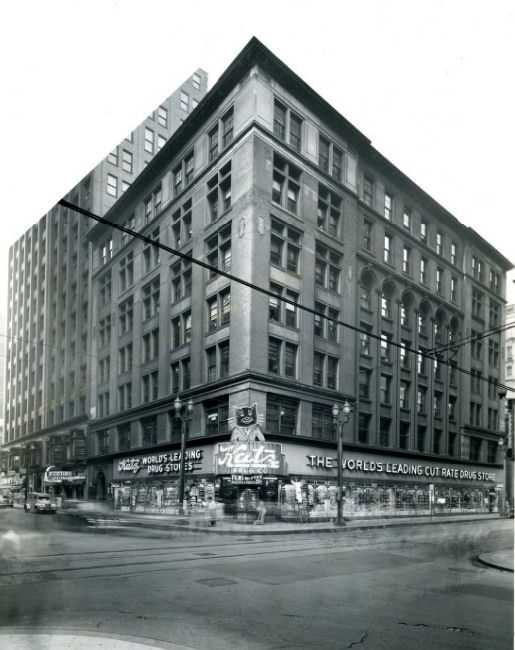
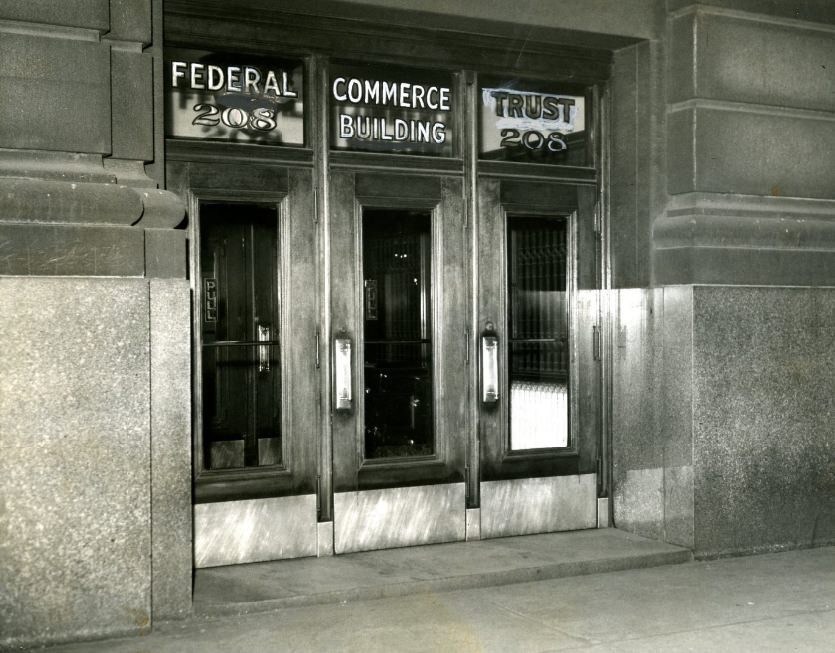
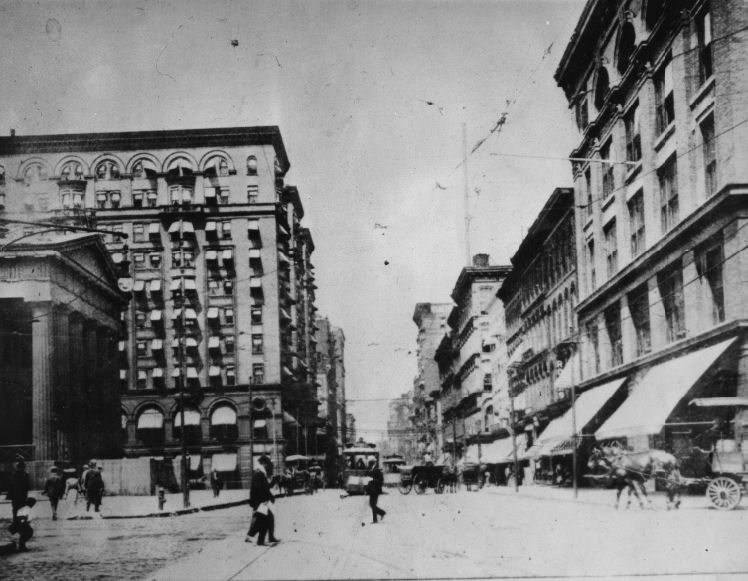
Downtown St. Louis held a mix of old and new in the 1940s. Historic buildings stood alongside remodeling projects worth hundreds of thousands of dollars. The Lincoln Trust Company building at 712 Chestnut Street was remodeled in 1949 to match the adjacent Title Guaranty Building. The Franklin-American Trust Building at Seventh and Locust sold for $1,150,000. The 16-story Federal Commerce Trust Building at 208 North Broadway was taken over by the federal government in 1946 and converted into a regional office for veterans’ services.
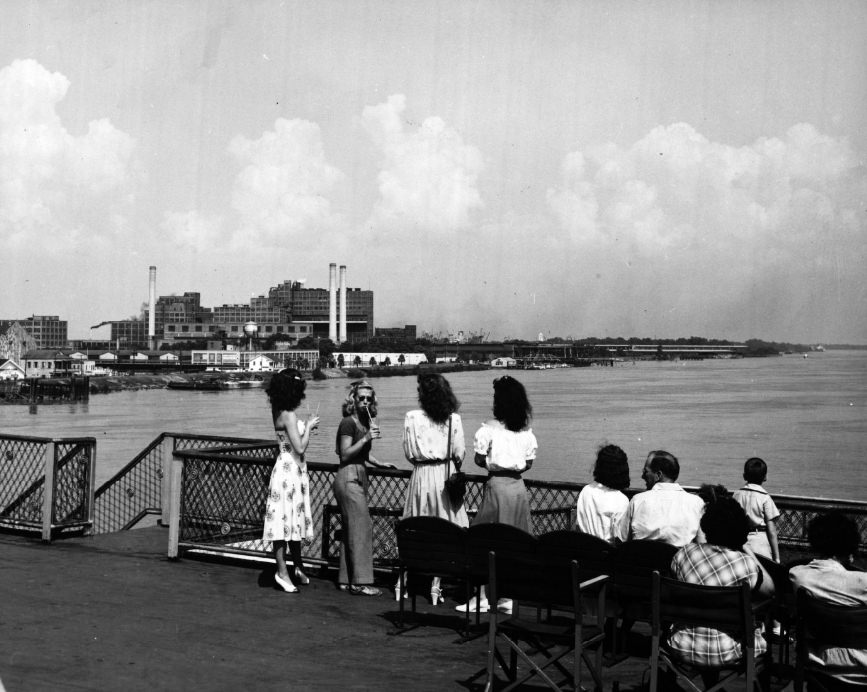
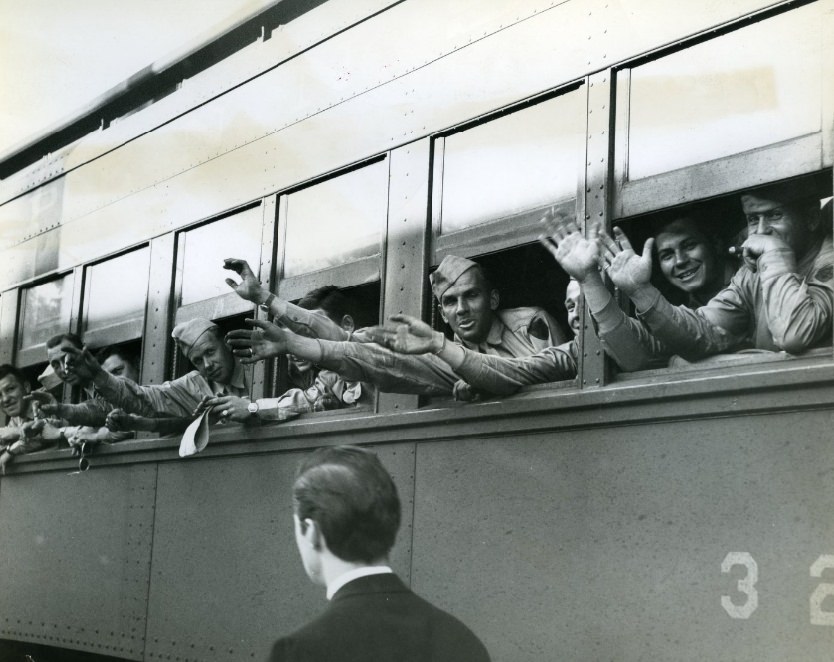
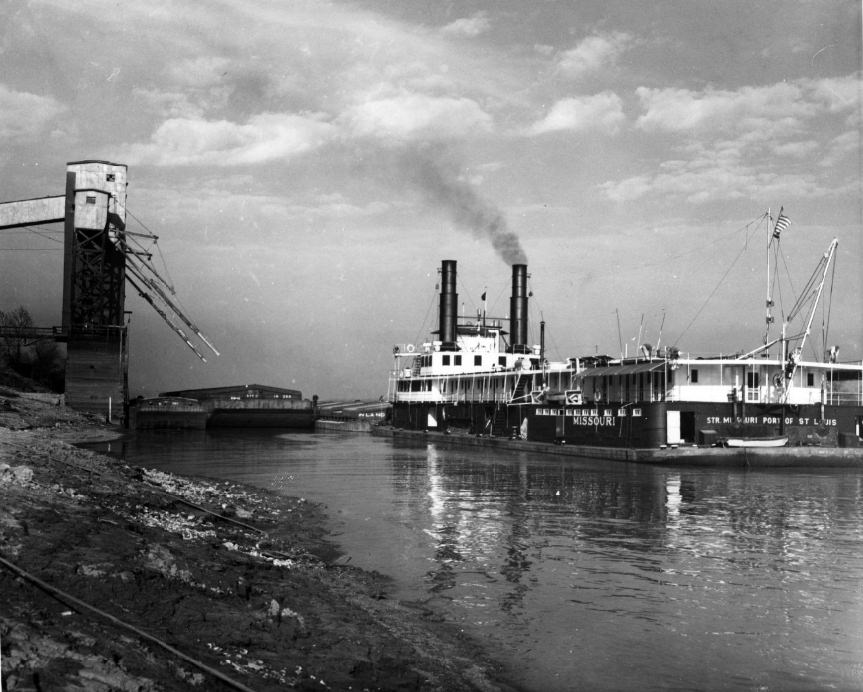
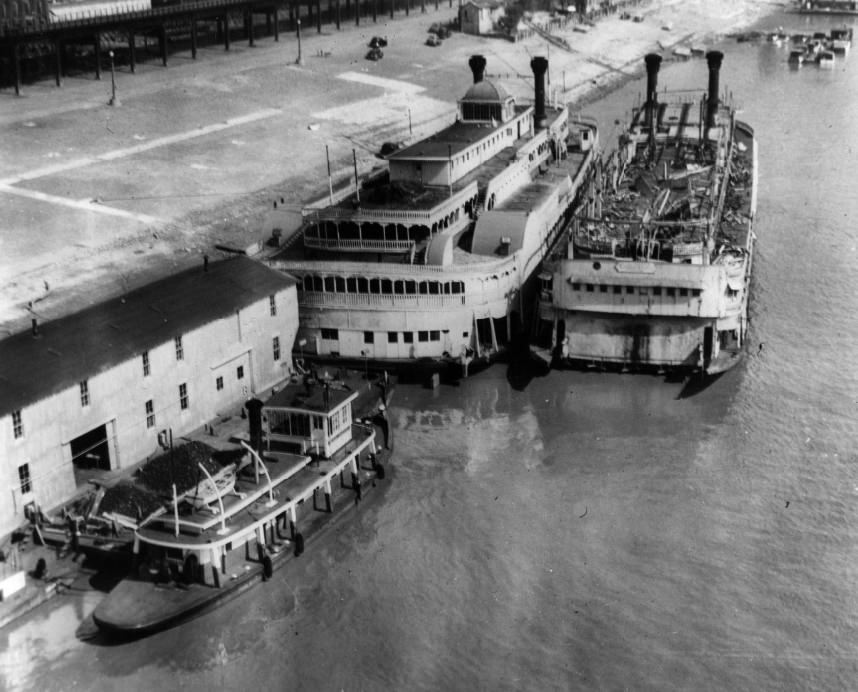
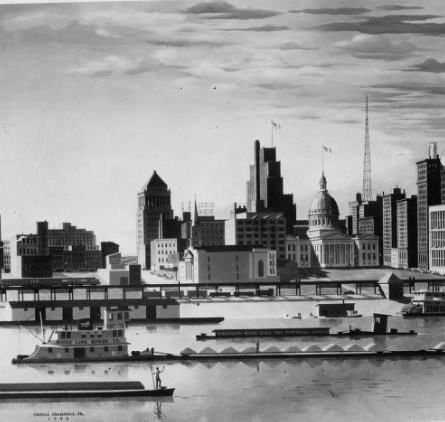
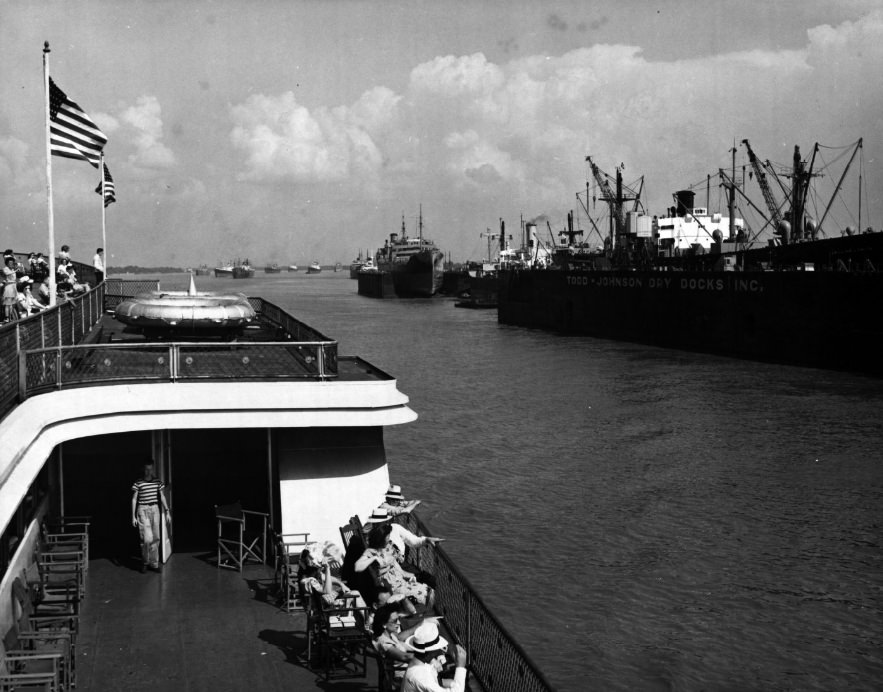
The Mississippi River defined St. Louis in the 1940s as it always had. Steamboats like the Golden Eagle and the Steamer Missouri still worked the river. Passengers stood on the top deck of the President steamboat and looked out over the water. When families gathered on the levee in 1942 to send off soldiers departing for World War II, the river formed the backdrop to one of the decade’s most emotional scenes.
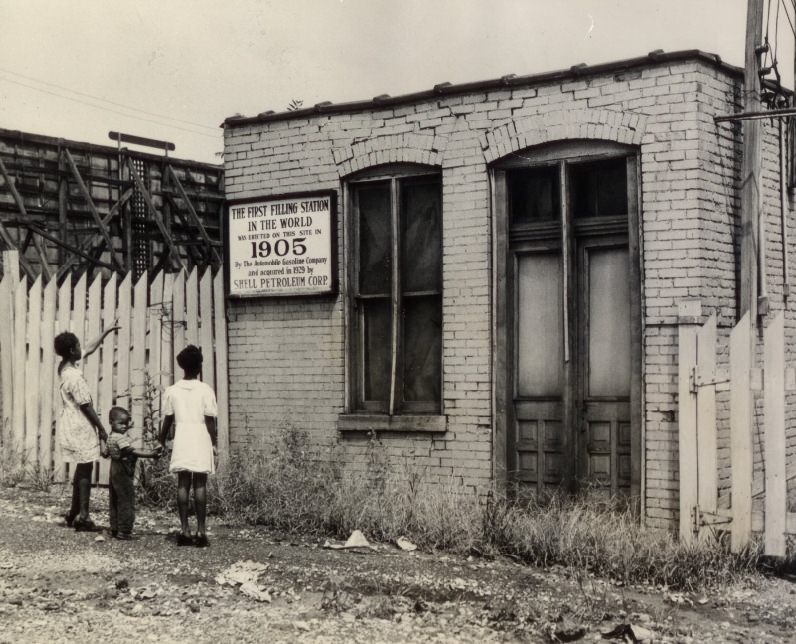
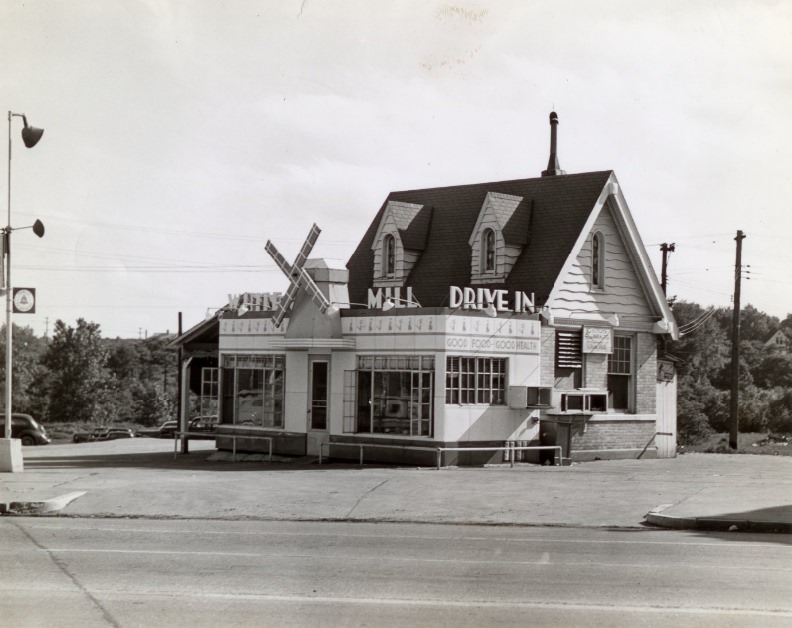
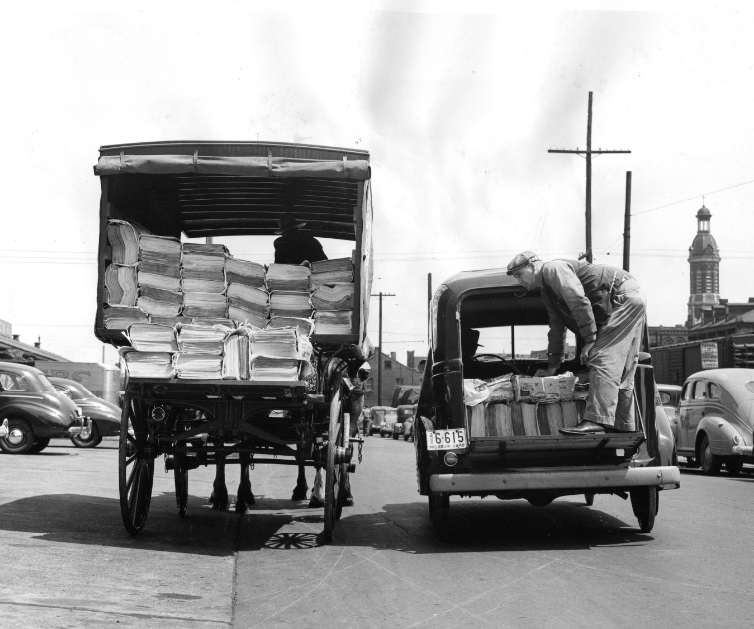
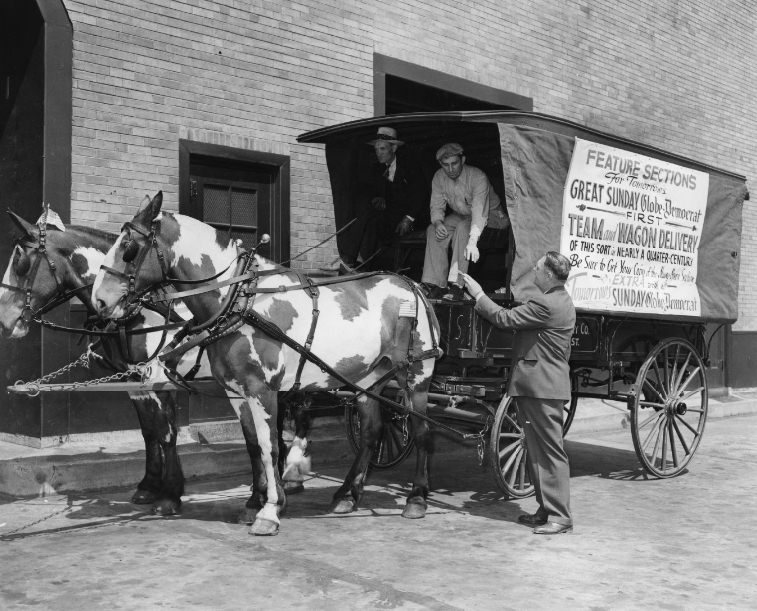
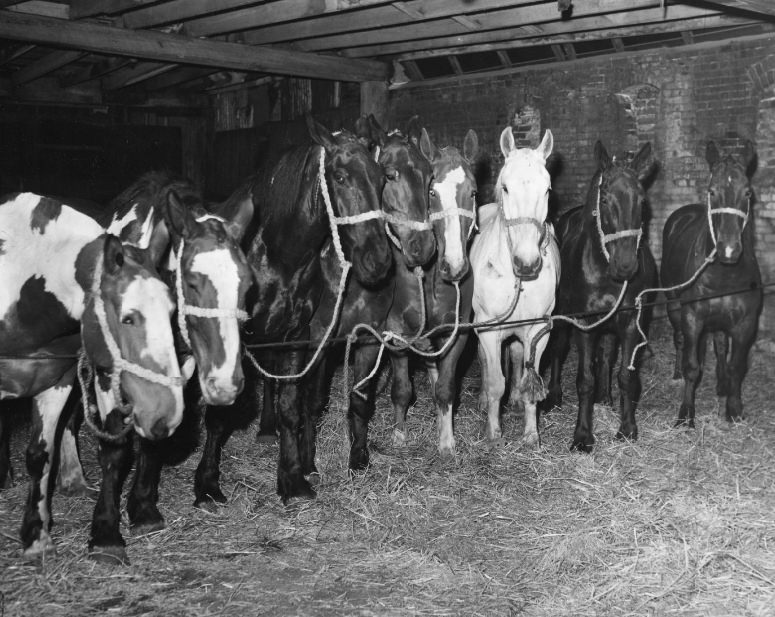
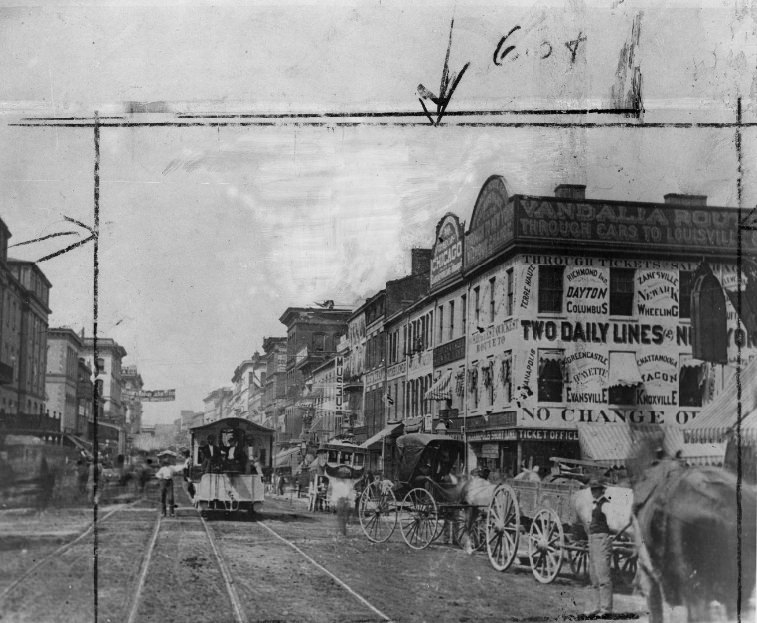
The city’s streets showed how quickly things changed. The world’s first filling station had already been converted into a warehouse by 1943. In its place, drive-ins like the White Mill Drive-In — itself a former filling station — were serving food. Horse-drawn wagons still made deliveries for the Globe-Democrat newspaper in 1940 and 1942, a throwback to an earlier era sitting alongside automobiles on the same streets.
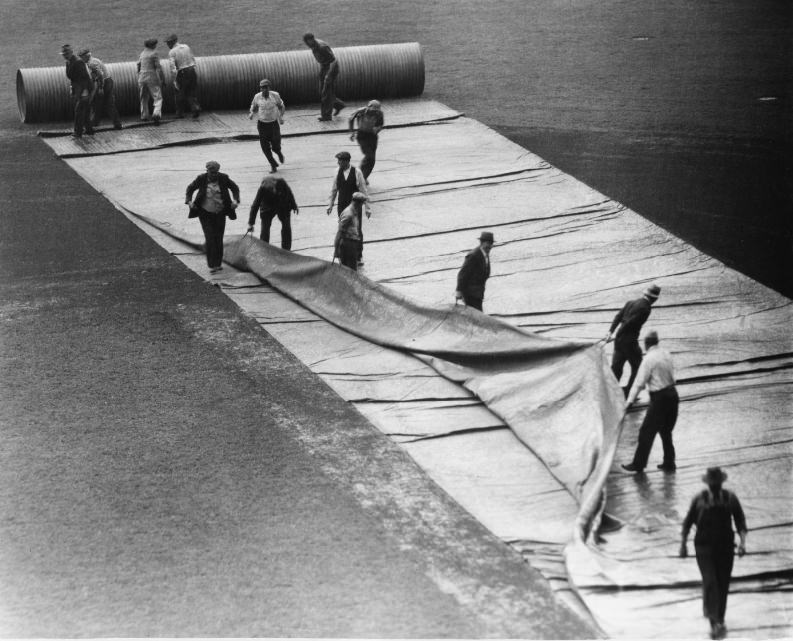
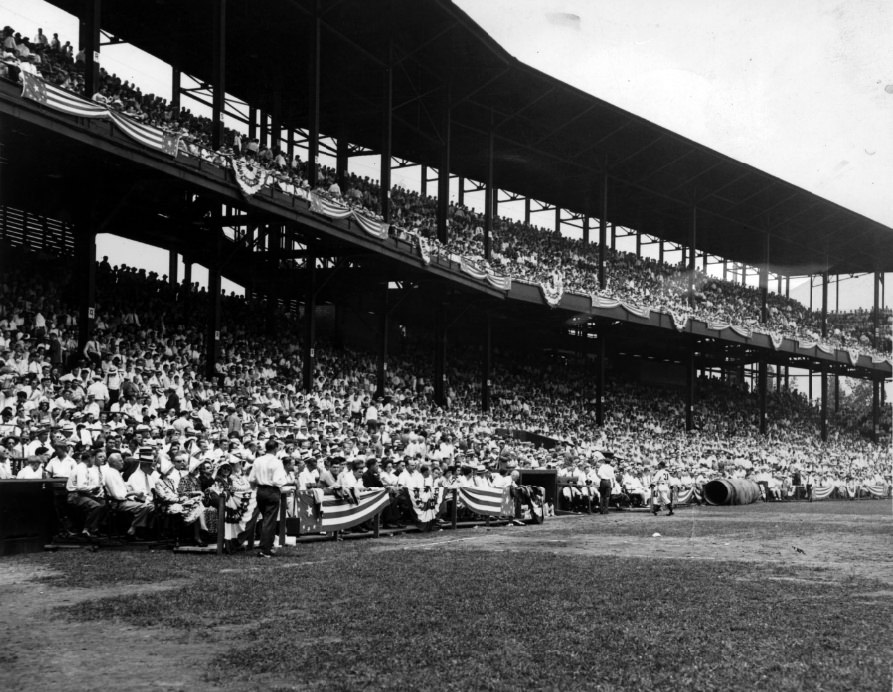
Baseball was a constant source of pride for St. Louis in the 1940s. The Cardinals were a dominant force in the National League, and players like Stan Musial, Enos Slaughter, and Marty Marion became household names. Sportsman’s Park drew massive crowds — an overflow crowd of 34,009 packed the stadium for the American League All-Star game in 1940. Fans who couldn’t get tickets gathered around radios or huddled in bars to follow every pitch.
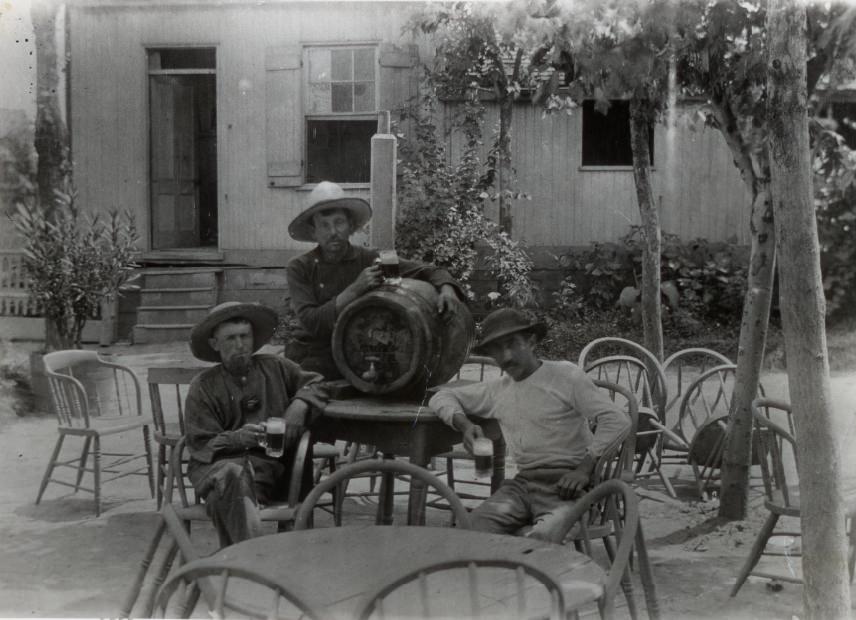
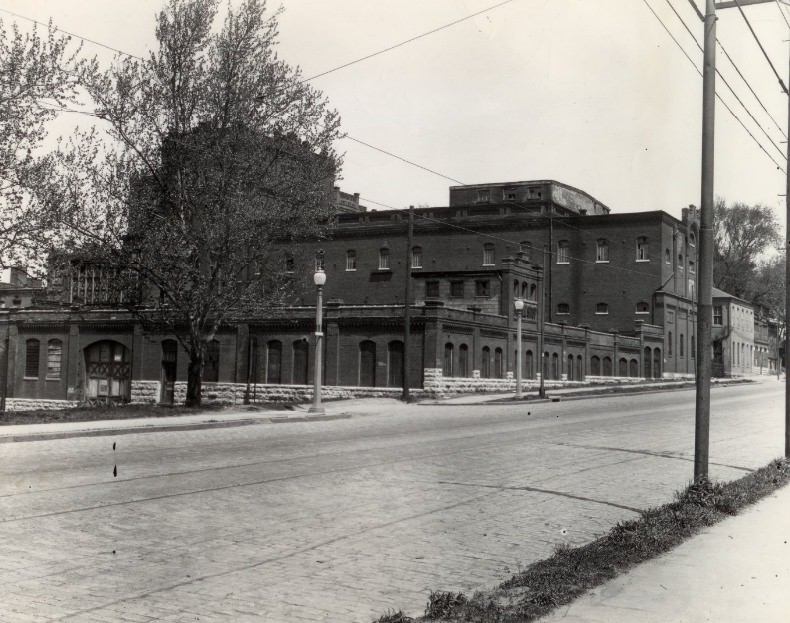
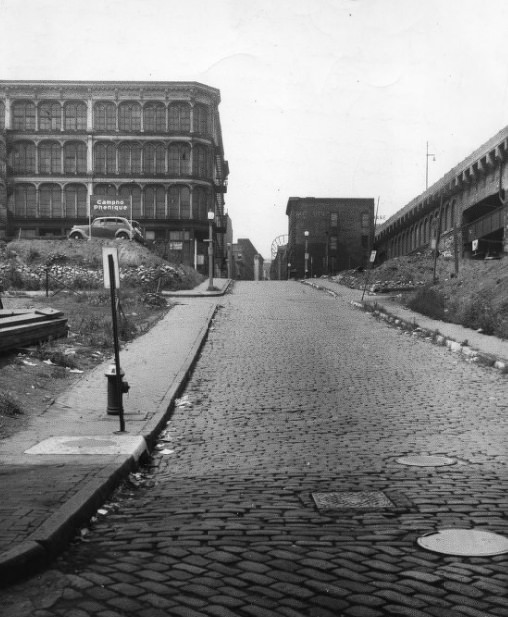
St. Louis had a long brewing tradition that stretched back to the German immigration of 1848. By the 1940s, that heritage was still visible in the city’s architecture and social life. Beer gardens had been a fixture of St. Louis culture for nearly a century. The Anheuser-Busch Brewery was large enough to serve as the location for a documentary film shoot. The Christian Staehlin Phoenix Brewery at Lafayette and Eighteenth Street was one of roughly 40 breweries that had once operated in the city.
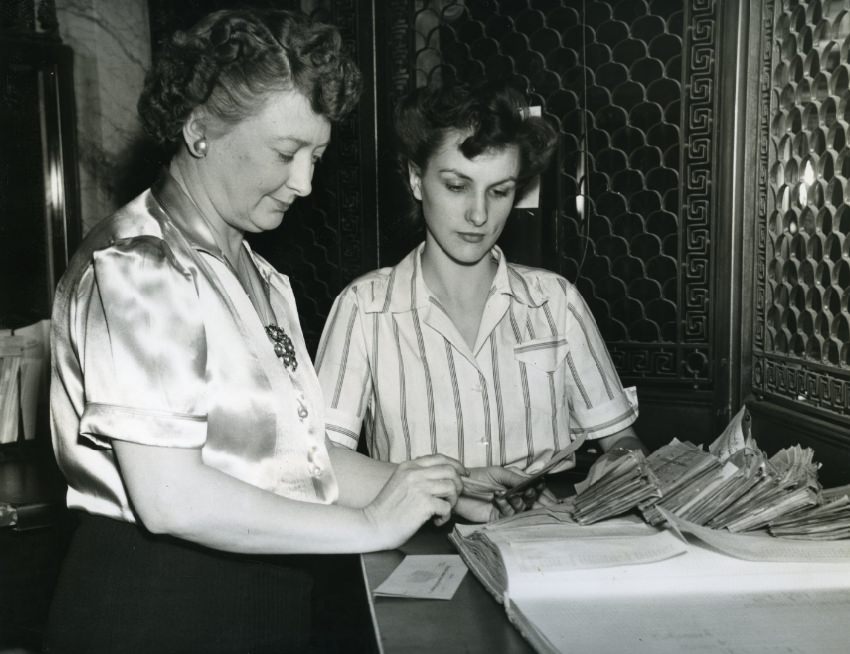
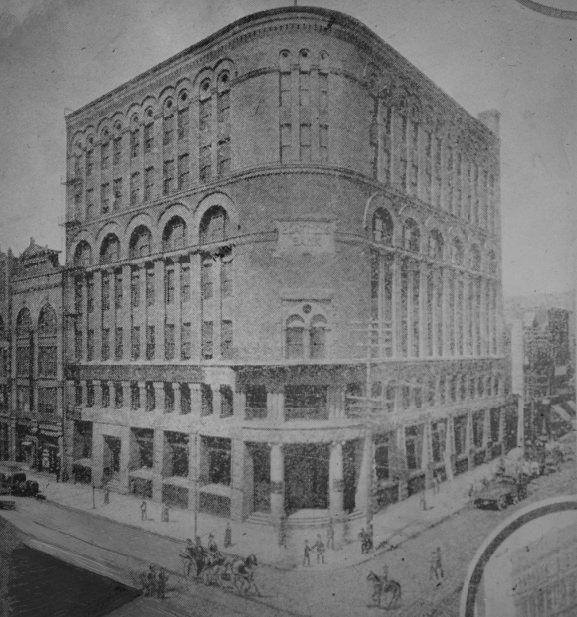
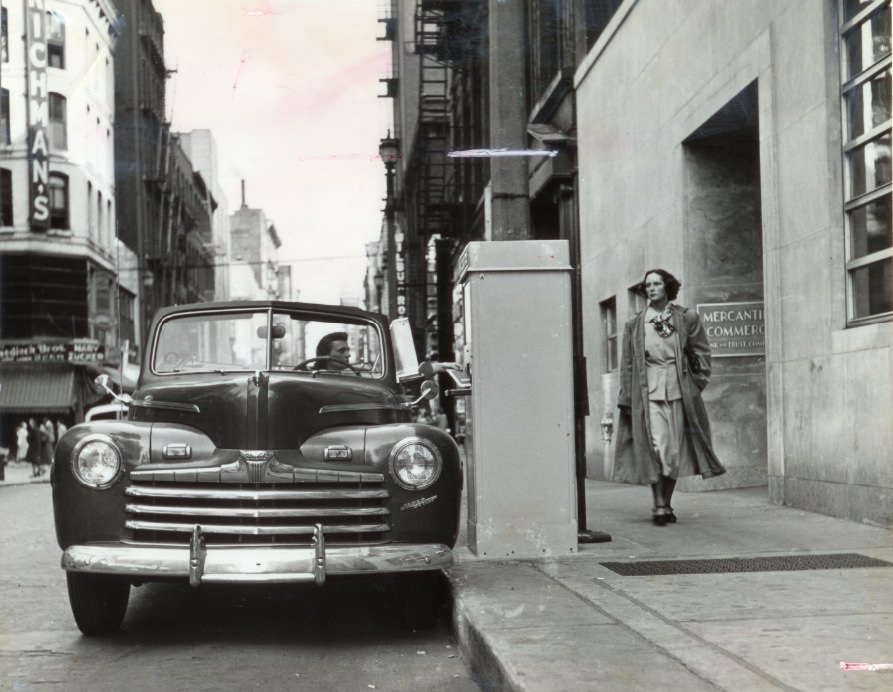
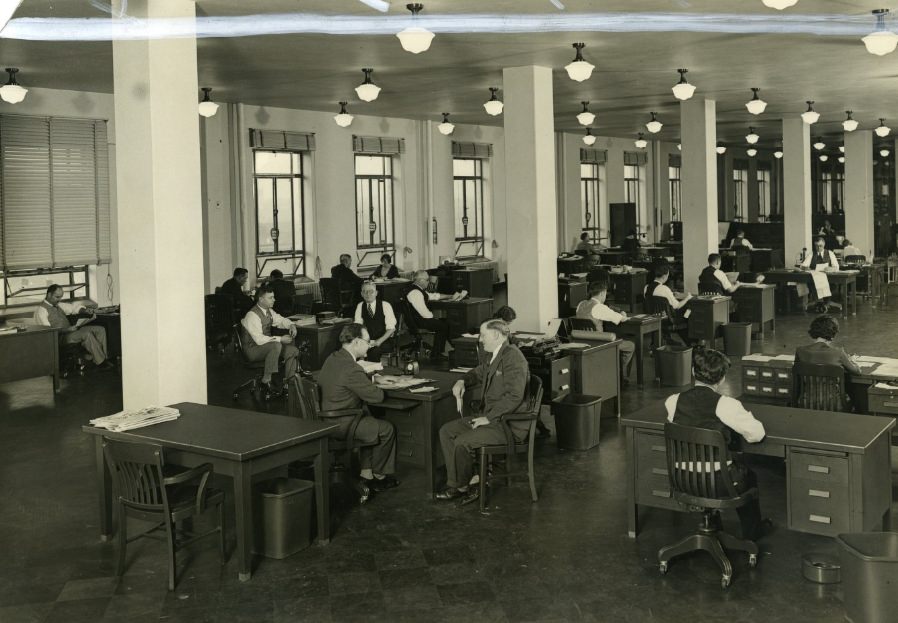
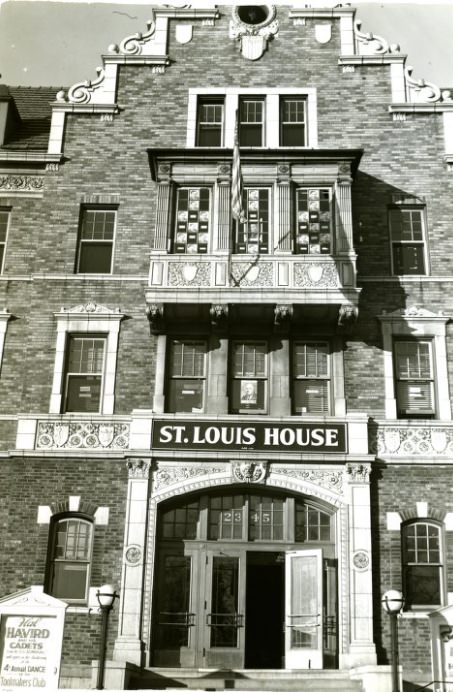
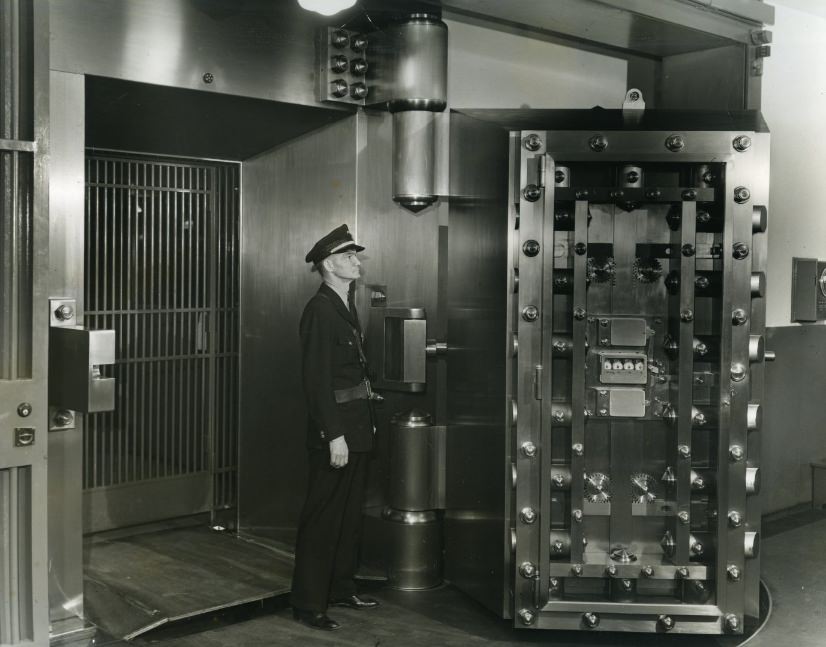
Banking and commerce kept the city running through the wartime economy. The Mercantile Commerce Bank and Trust Company trained new employees on check sorting in 1943 while also pioneering curb-side banking with a kiosk on the street in front of the building by 1948. The Federal Reserve Bank vault at Fourth and Locust held the city’s financial reserves. Buildings changed hands and changed names — the German-American Bloc organization renamed one prominent building to the St. Louis House in 1940 as the country’s relationship with Germany grew more strained.
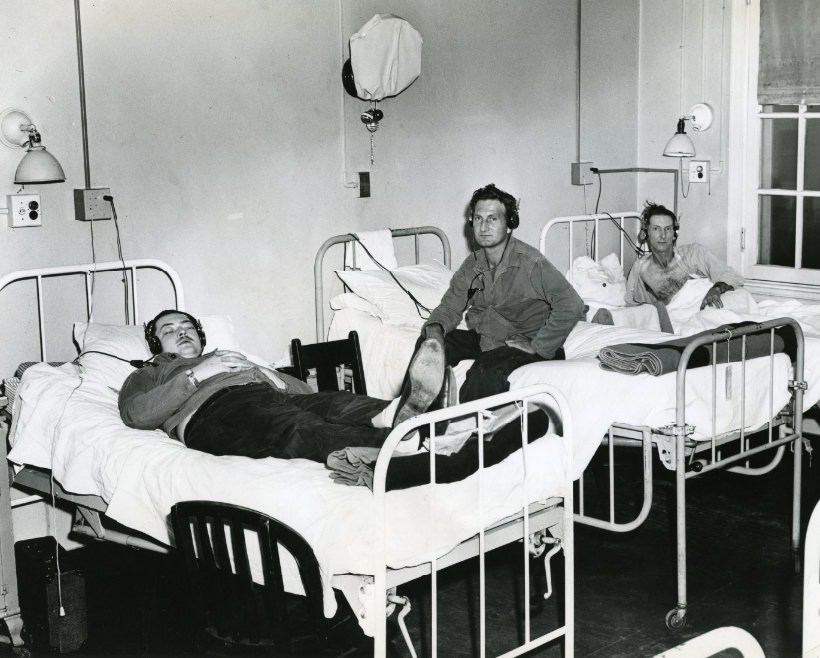
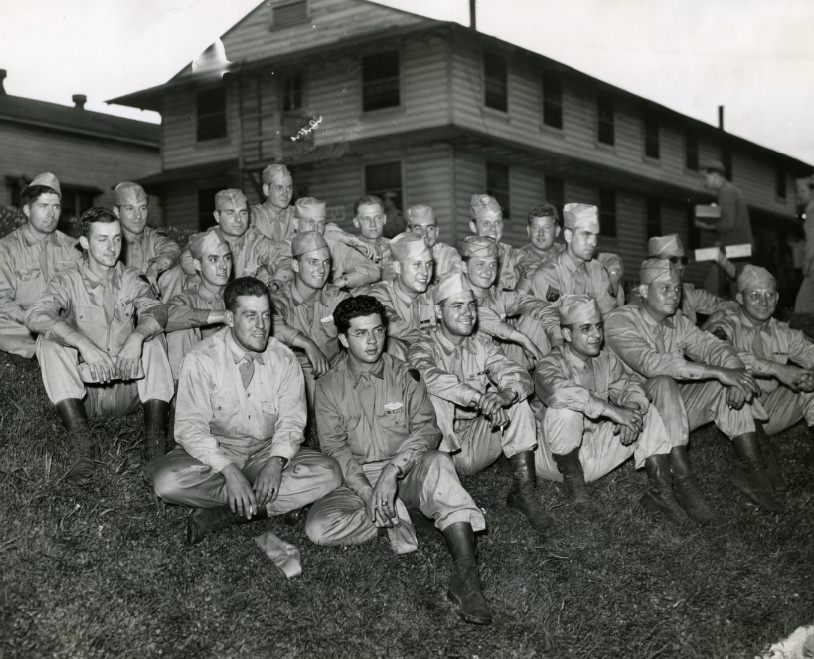
As the war wound down and veterans returned, St. Louis adapted again. Blackhawk veterans sat on the grass at Jefferson Barracks in 1945, waiting for physical examinations before being granted furloughs. The first full unit to return from Europe arrived at the barracks in 1945. Rehabilitation centers opened, and the Veterans’ Hospital on the city’s south side filled with patients — many of them listening to radio programs through earphones at their bedsides by 1949.
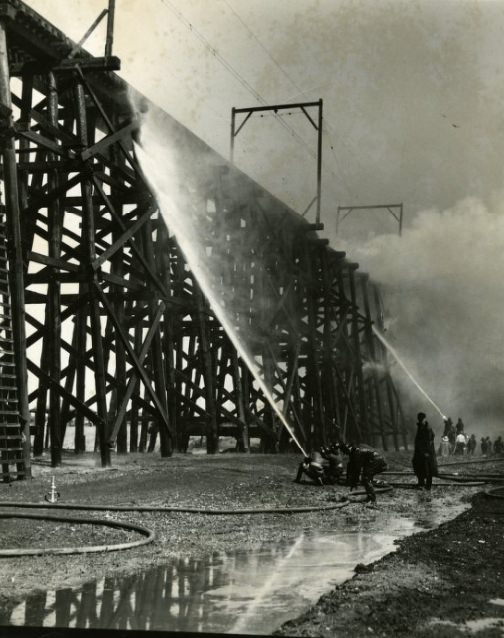
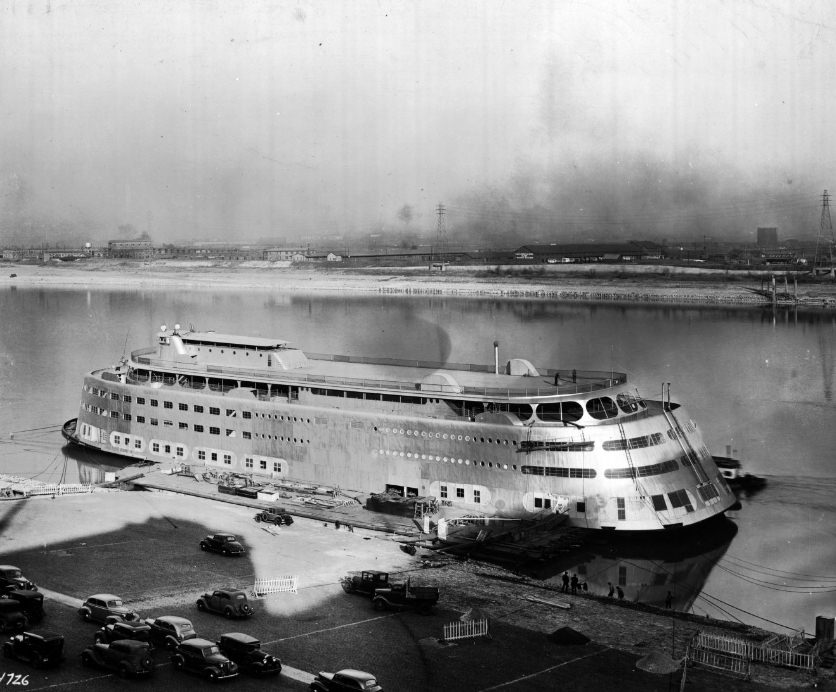
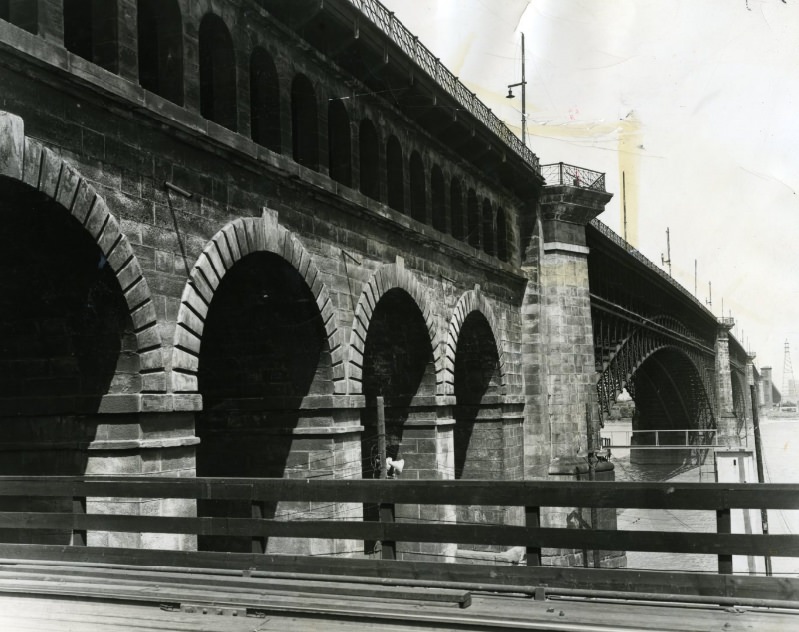
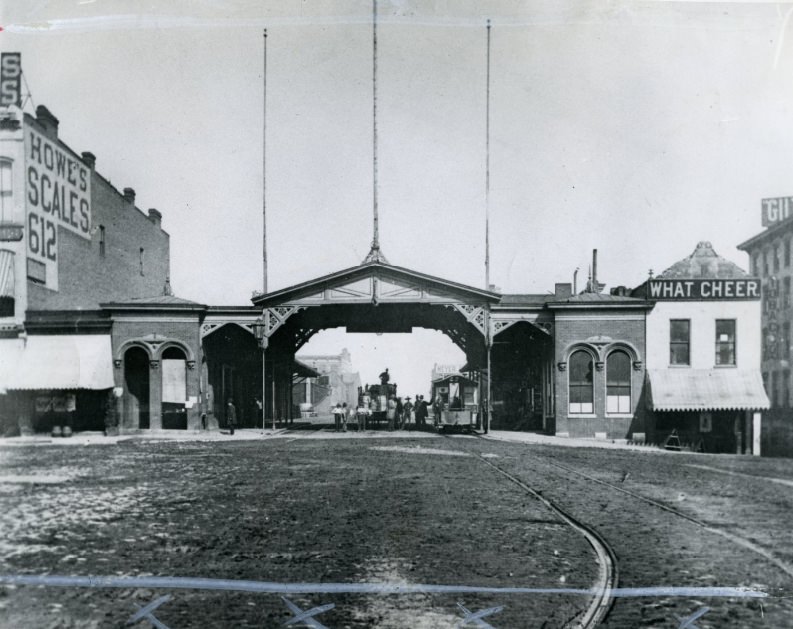
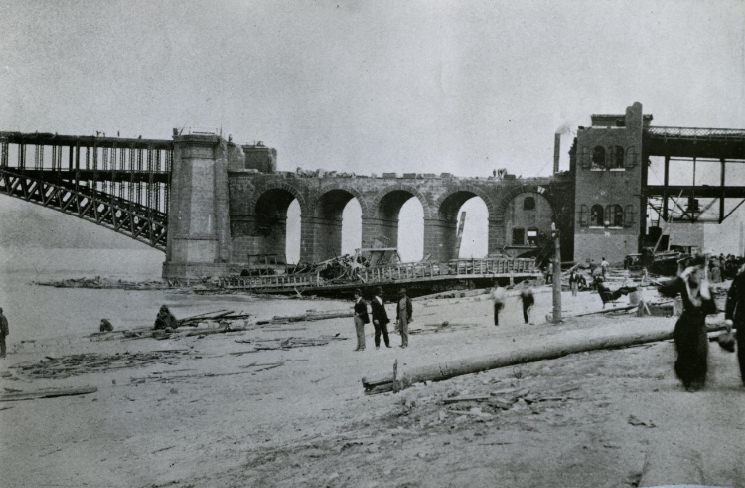
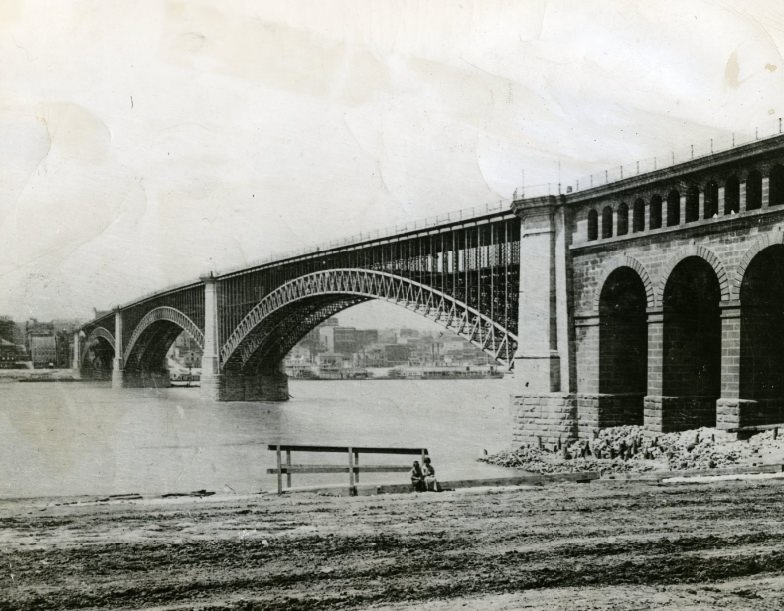
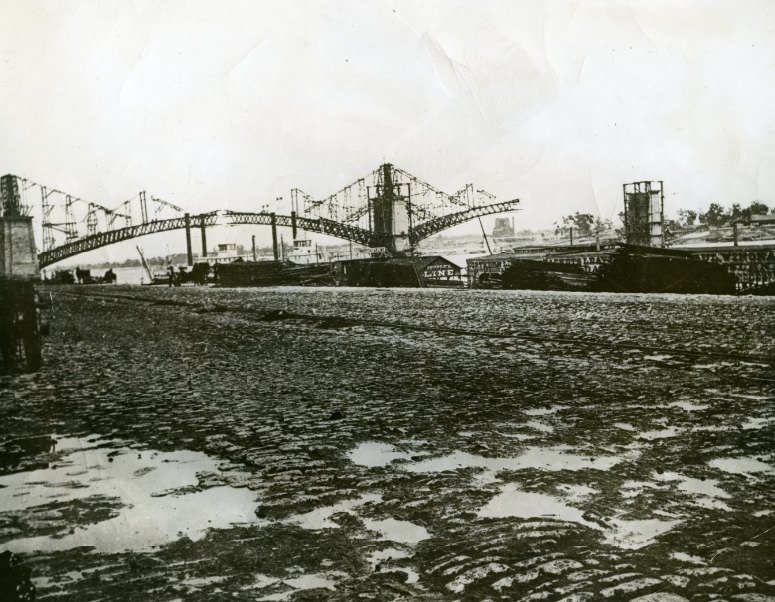
The Eads Bridge remained one of the city’s most recognizable structures throughout the decade. Photographs documented its western and eastern approaches, the river it spanned, and efforts to restore its rails. The McKinley Bridge suffered a serious setback in 1949 when fire destroyed a 300-foot stretch of the Illinois Terminal Railroad trestle at its east approach. Across the river, the Admiral was under construction just north of Eads Bridge, soon to become one of St. Louis’s most famous excursion boats.
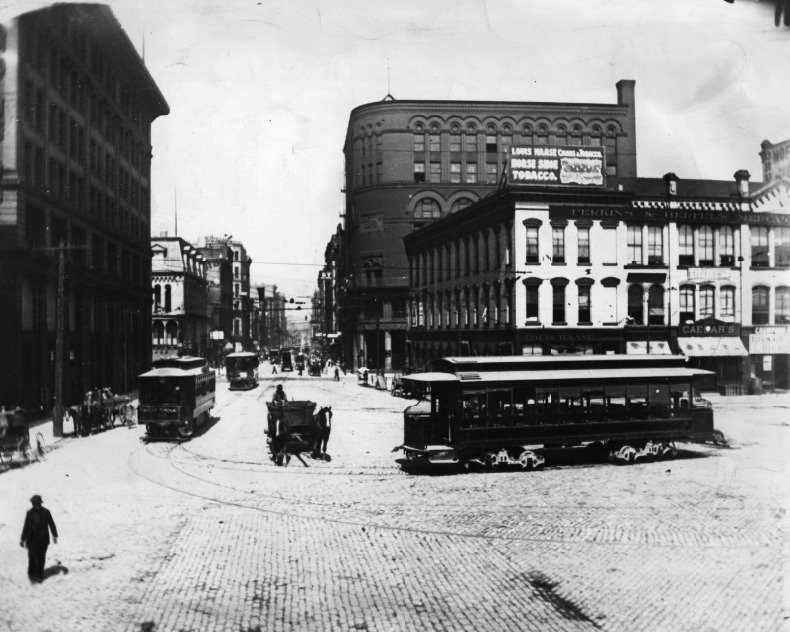
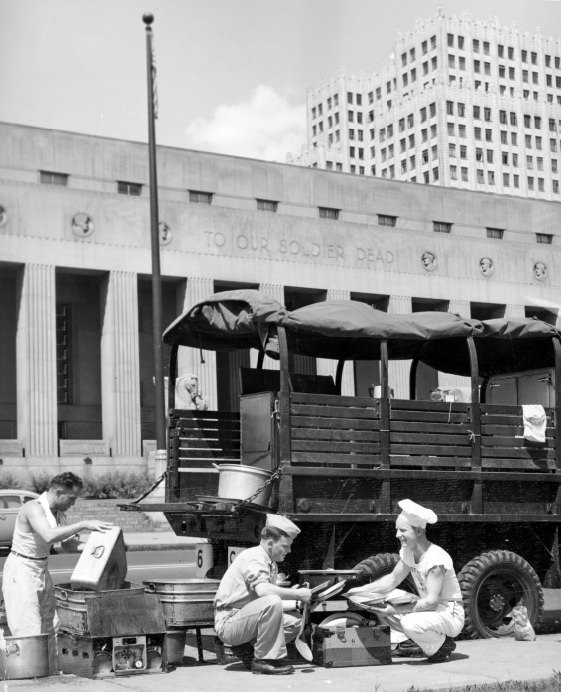
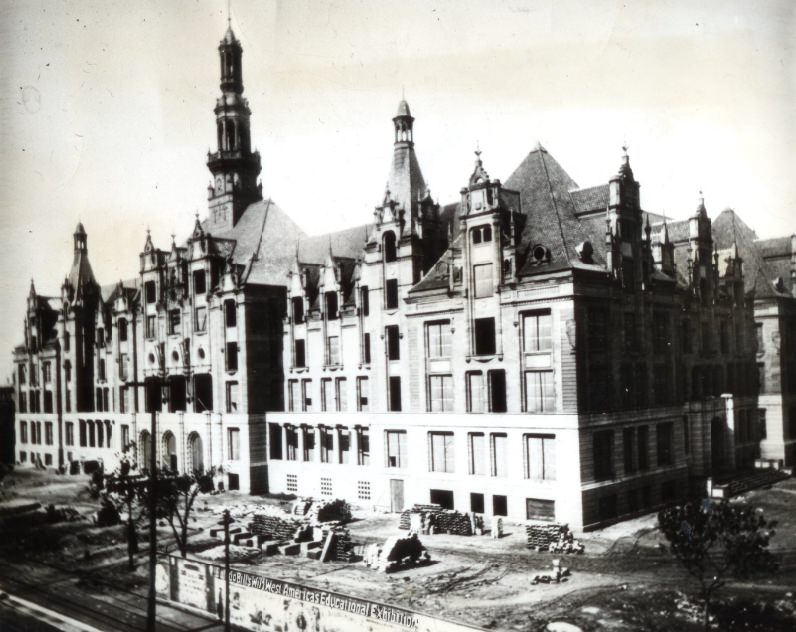
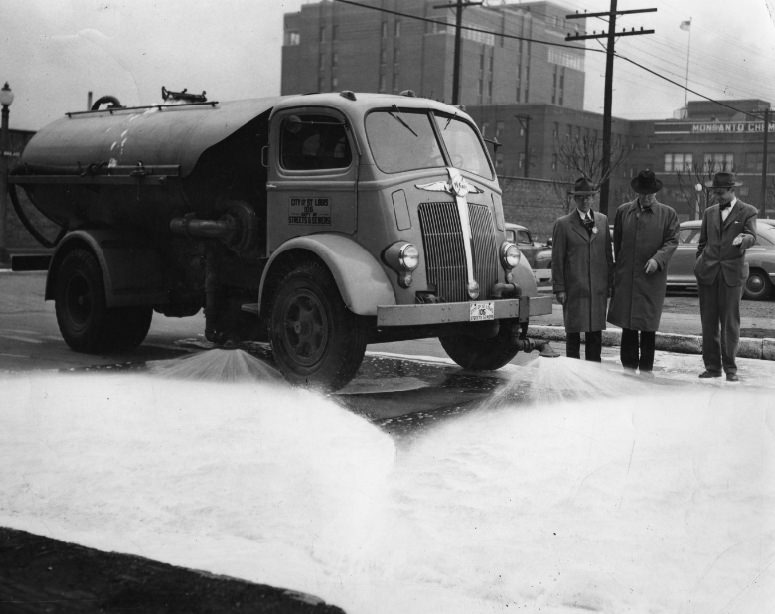
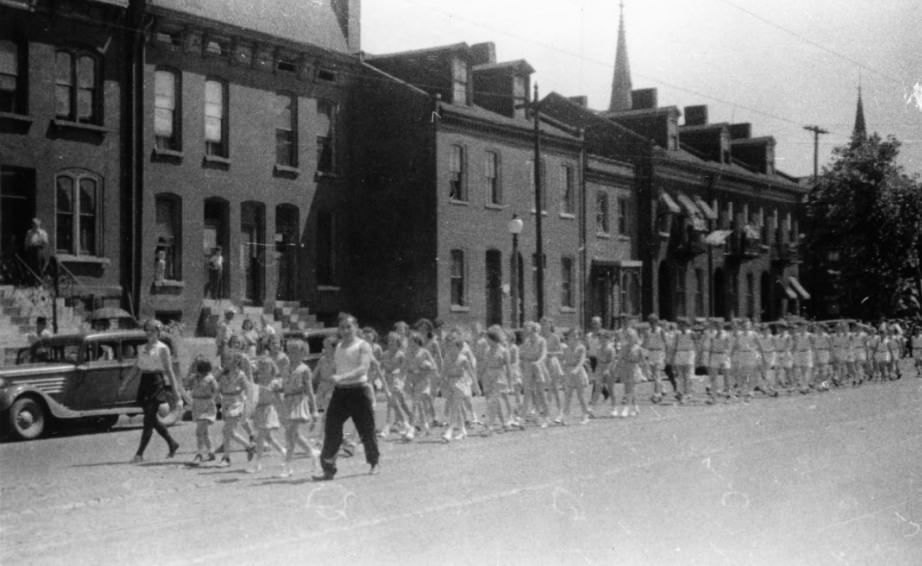
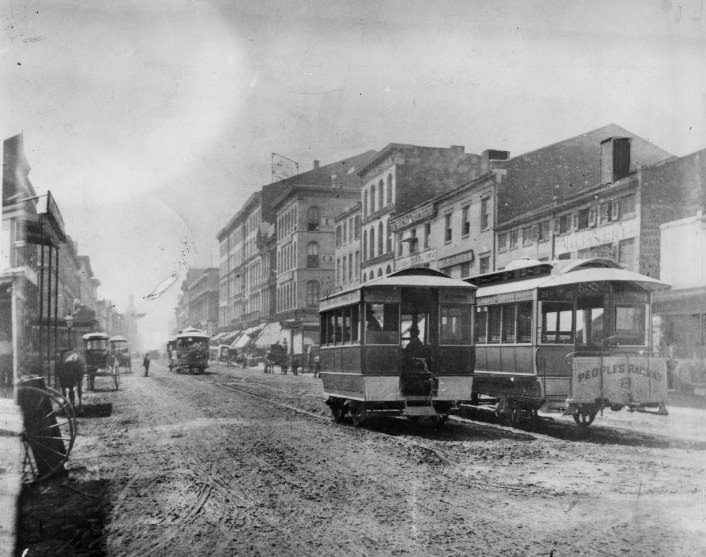
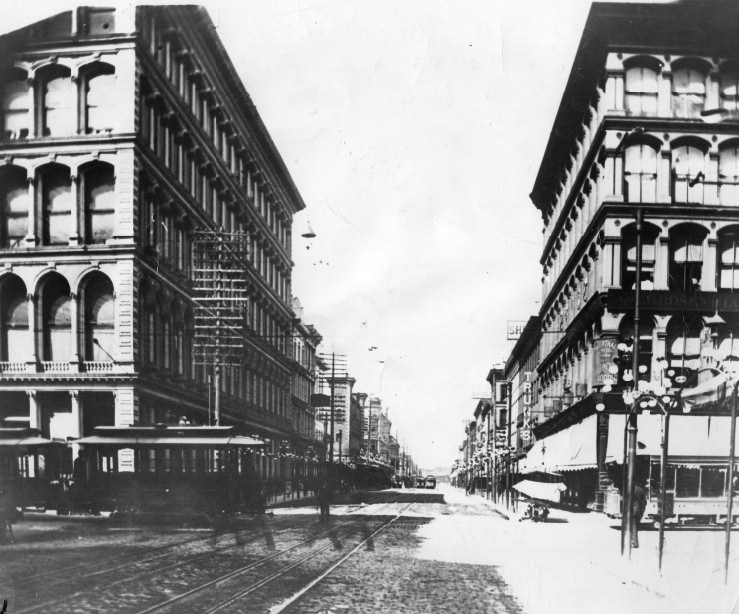
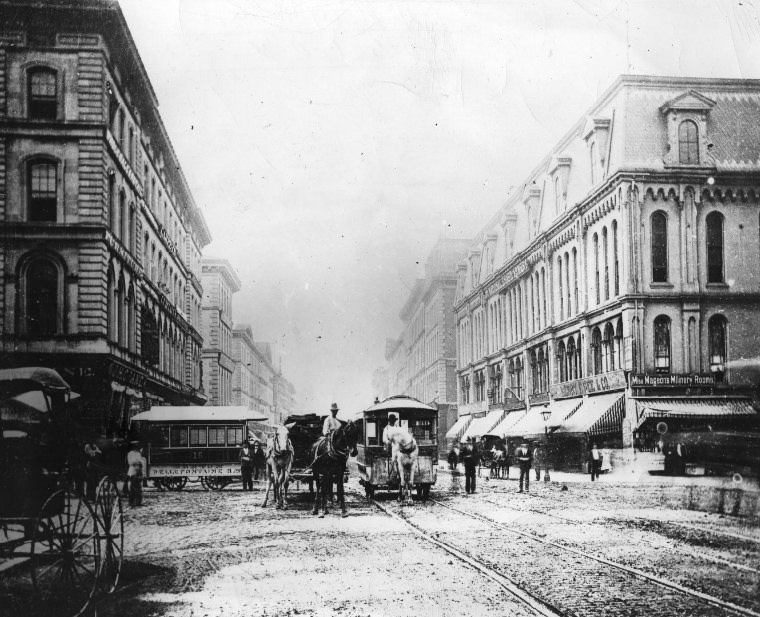
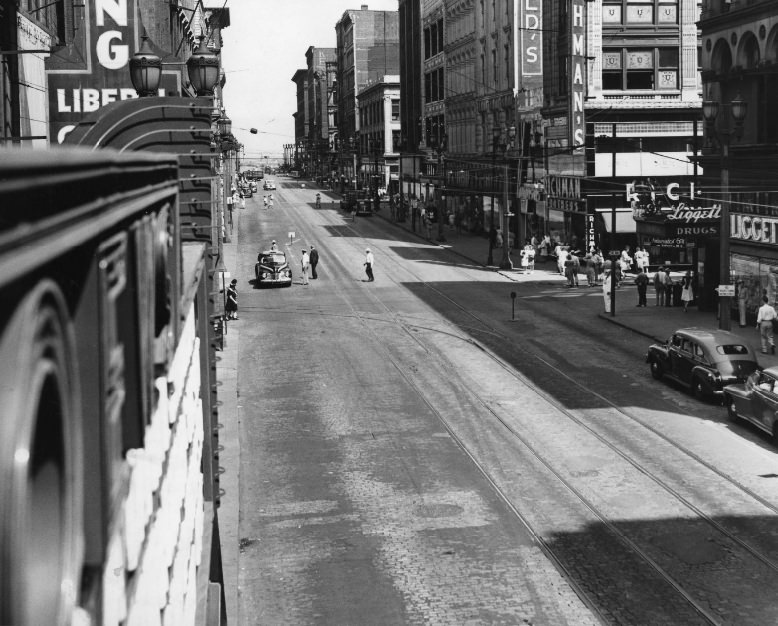
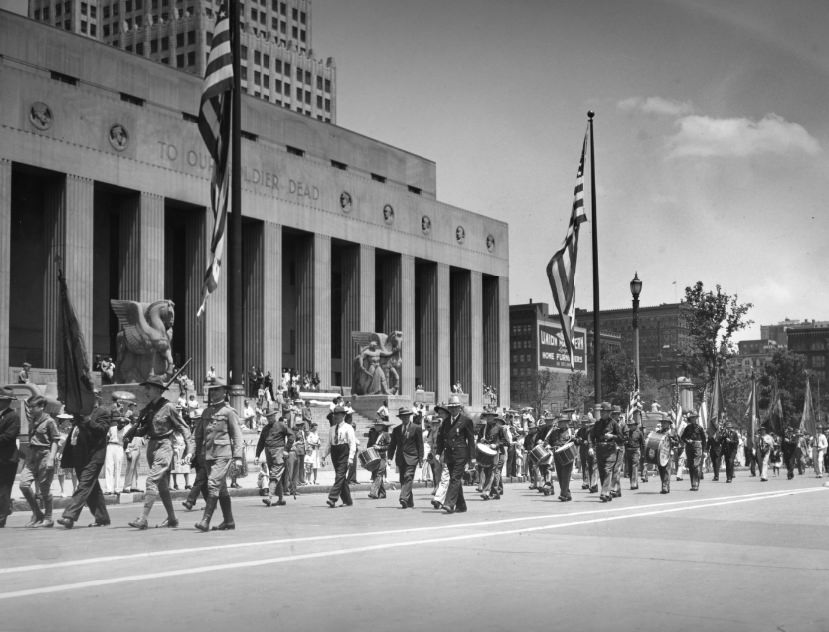
The Soldier’s Memorial stood as a physical reminder of sacrifice in the heart of the city. Parades moved down Ninth Street. Streets were cleaned by city crews. The City Hall, completed in 1895 on a six-acre plot the city had owned since 1840, continued to serve as the center of municipal government. On busy days, downtown St. Louis was packed with pedestrians, streetcars, and automobiles moving through the city’s grid.
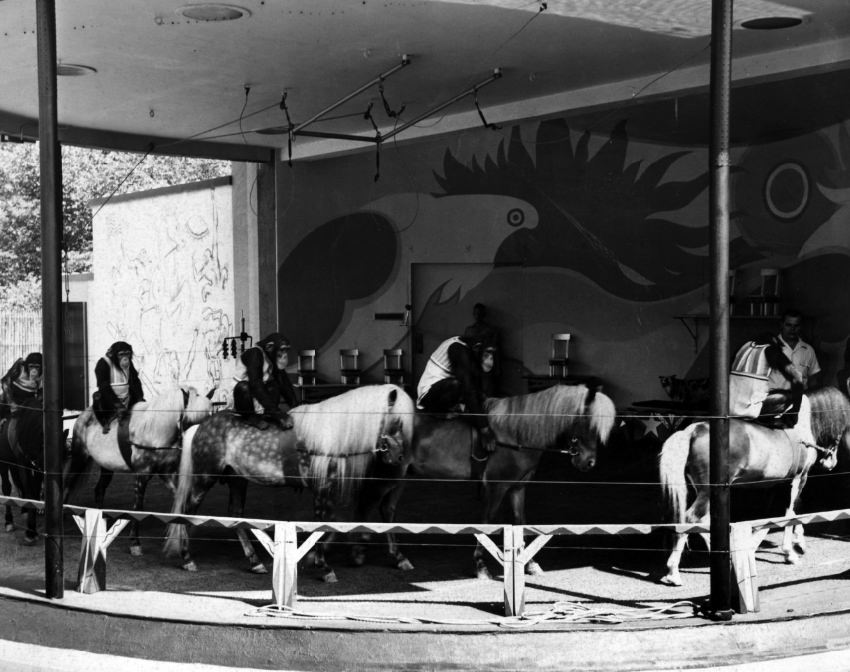
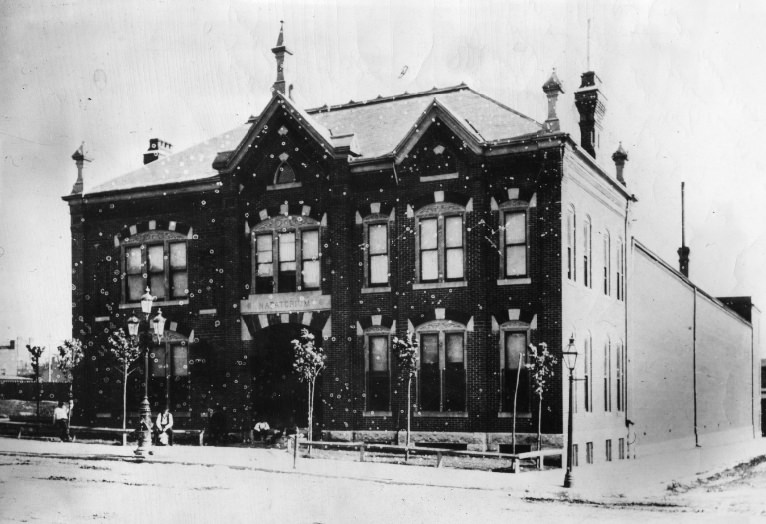
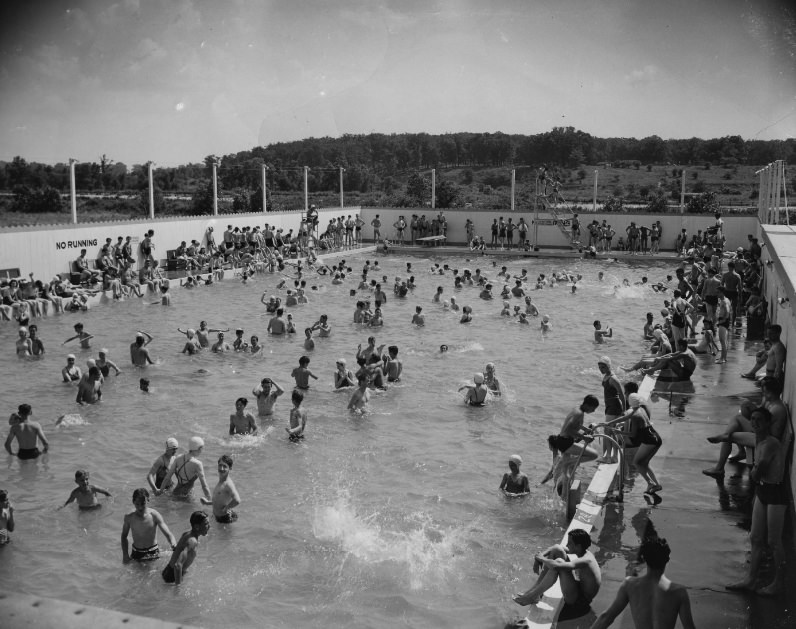
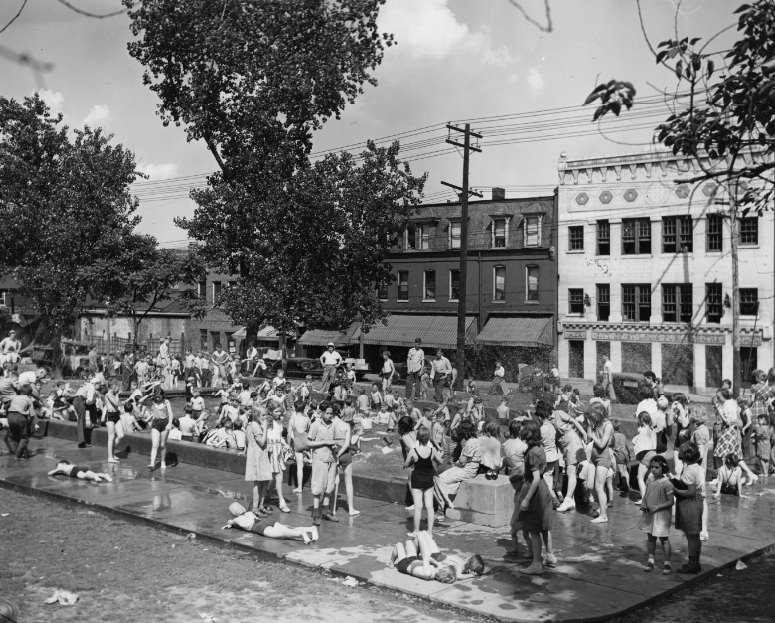
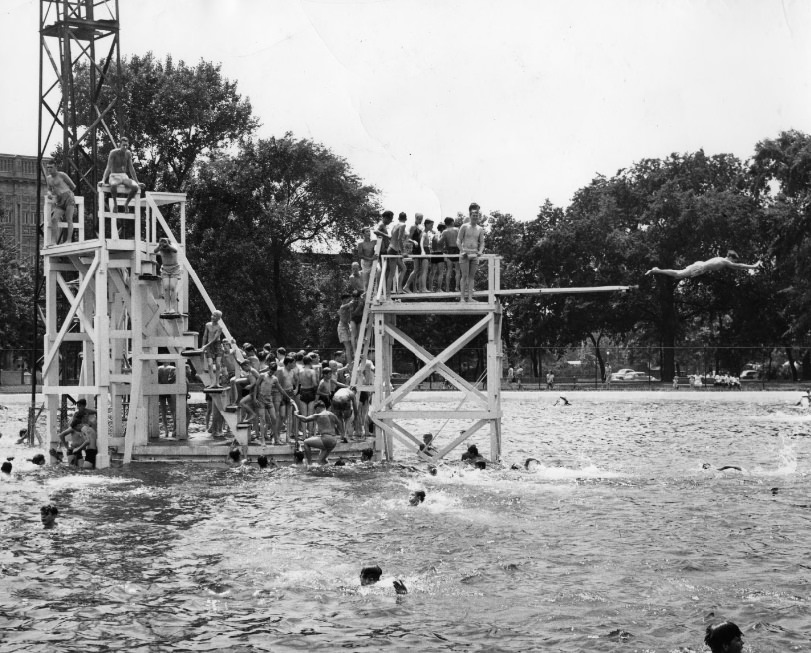
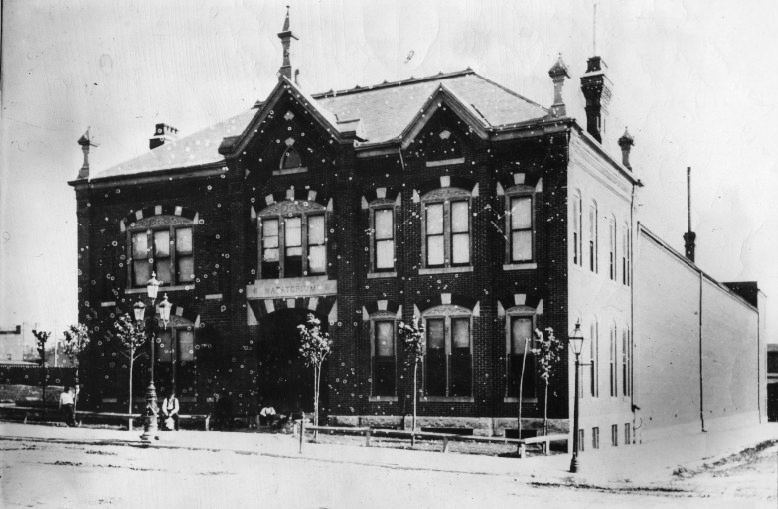
Swimming pools and recreation spots gave residents a break from the pressures of wartime life. The Fairgrounds Swimming Pool, the Downs Amusement Park Swimming Pool, and the wading pool at Seventh and Soulard were all in use in 1940. Clark’s Natatorium offered an indoor bathing pool. The St. Louis Zoo drew families, and its monkey show in 1944 was a popular attraction for both children and adults.
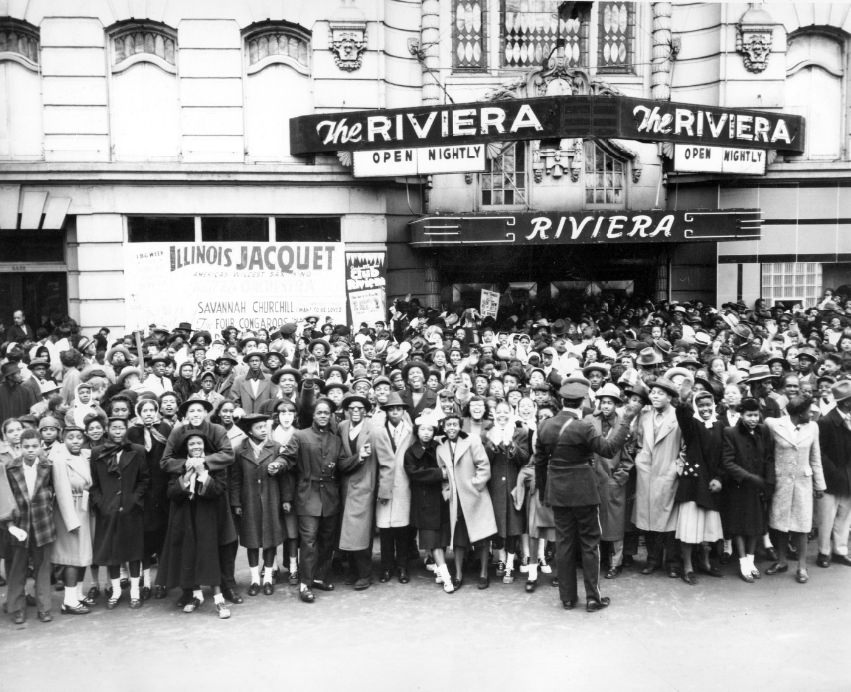
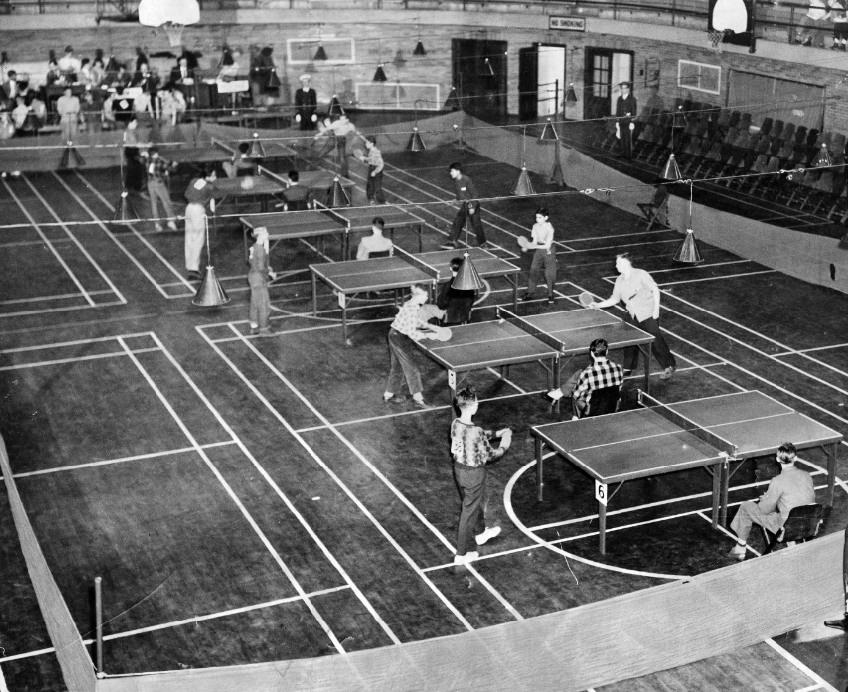
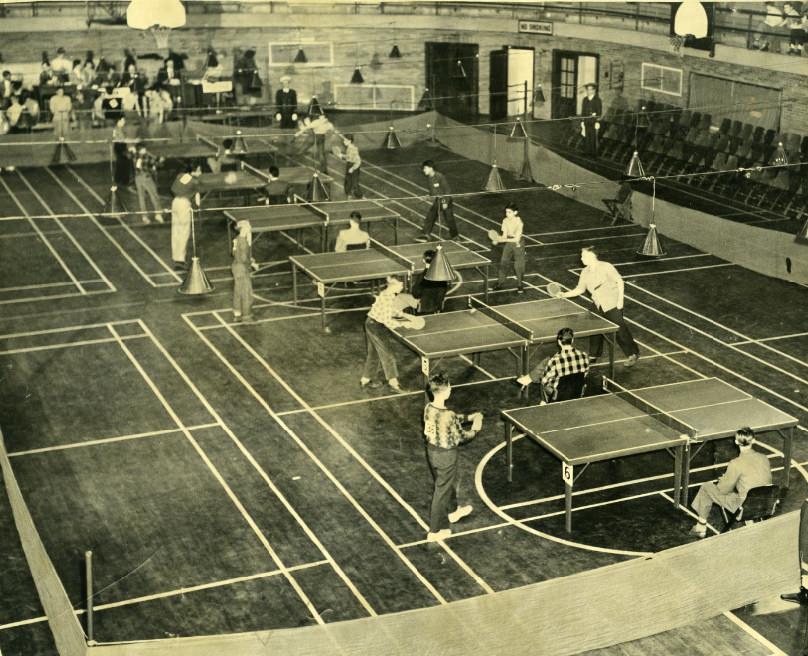
The Riviera Club offered nightlife in 1947, part of a postwar social scene coming back to life after years of wartime austerity. The Globe-Democrat Table Tennis Tournament drew competitors and spectators alike. The Liederkranz, the city’s largest singing society founded in 1870, continued its cultural mission into the 1940s, keeping alive a German-American musical tradition that predated the city’s modern era by generations.
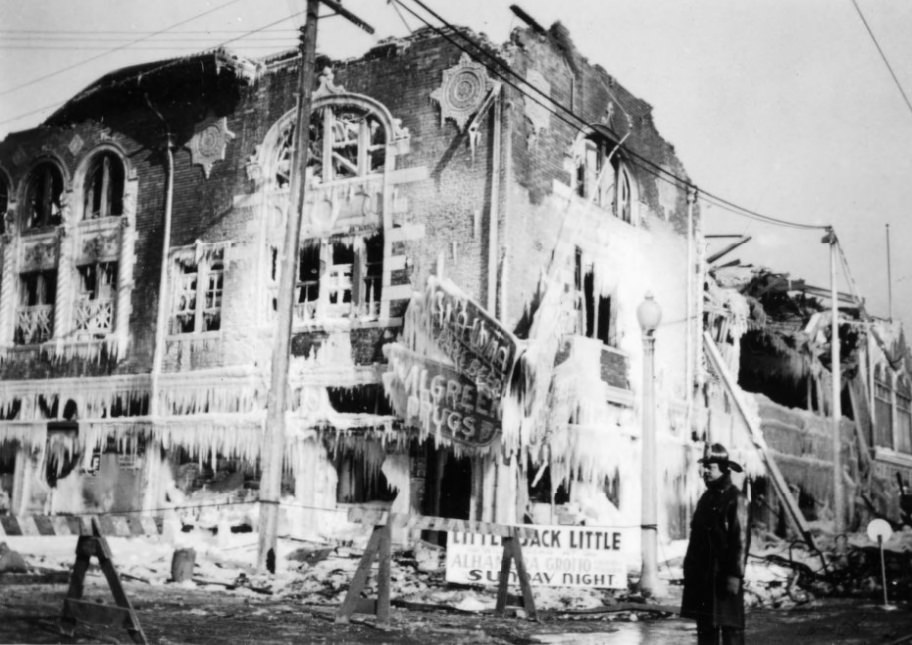
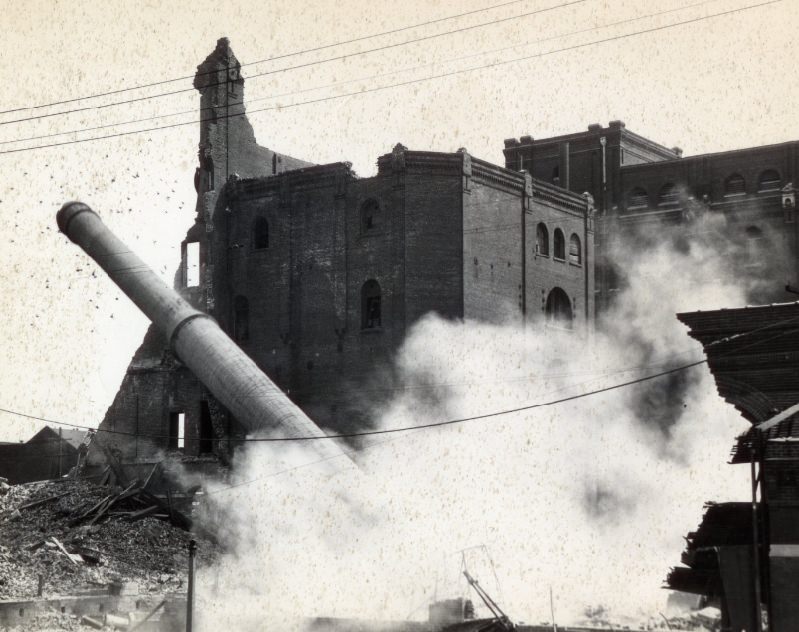
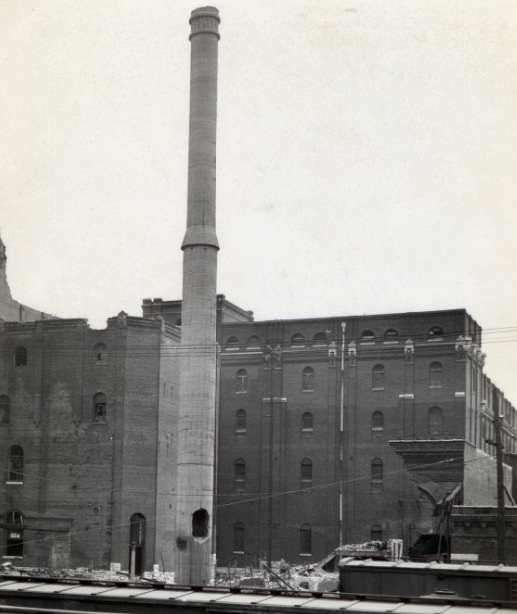
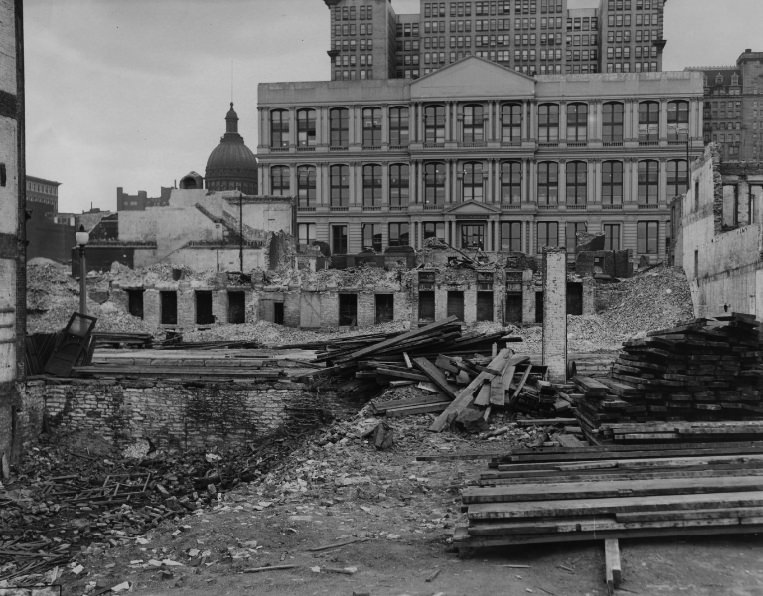
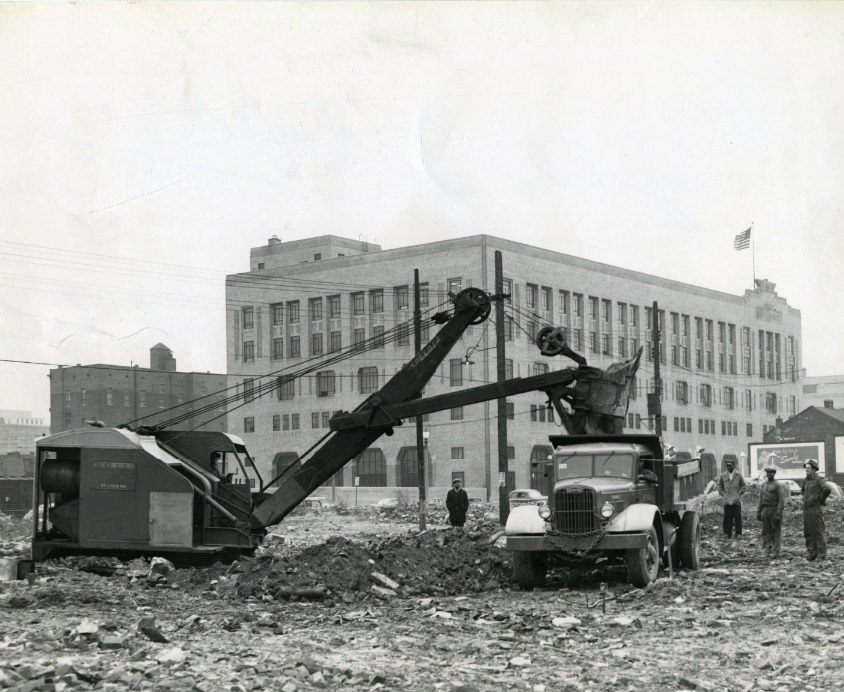
The Casoloma Ballroom at 3453 Iowa Street was encased in ice in January 1940 after a fire ripped through the building. The Wainwright Brewery on Tenth and Gratiot Street came down in a demolition that sent clouds of smoke into the sky as the side building and its pillars collapsed in 1945. These scenes of destruction ran alongside scenes of construction across the city, as old St. Louis was torn down and rebuilt in the same decade.
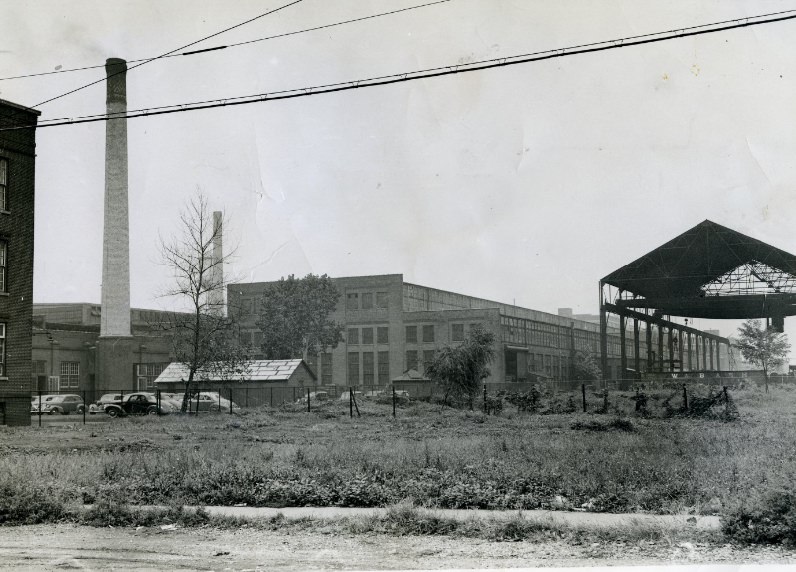
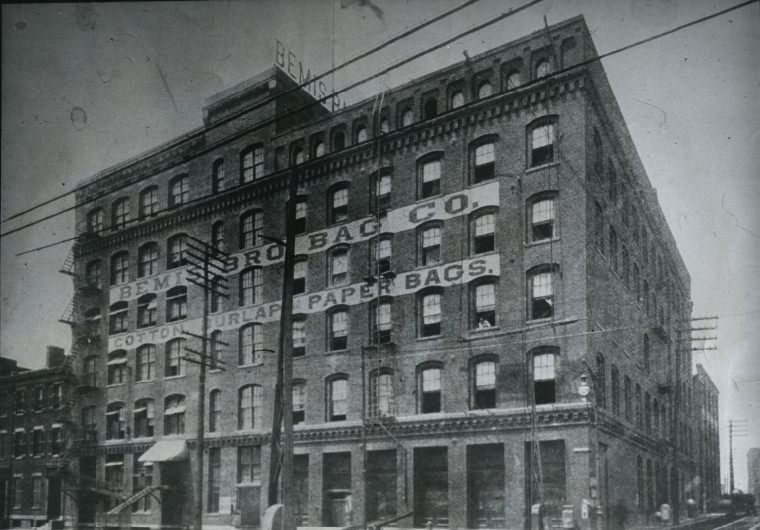
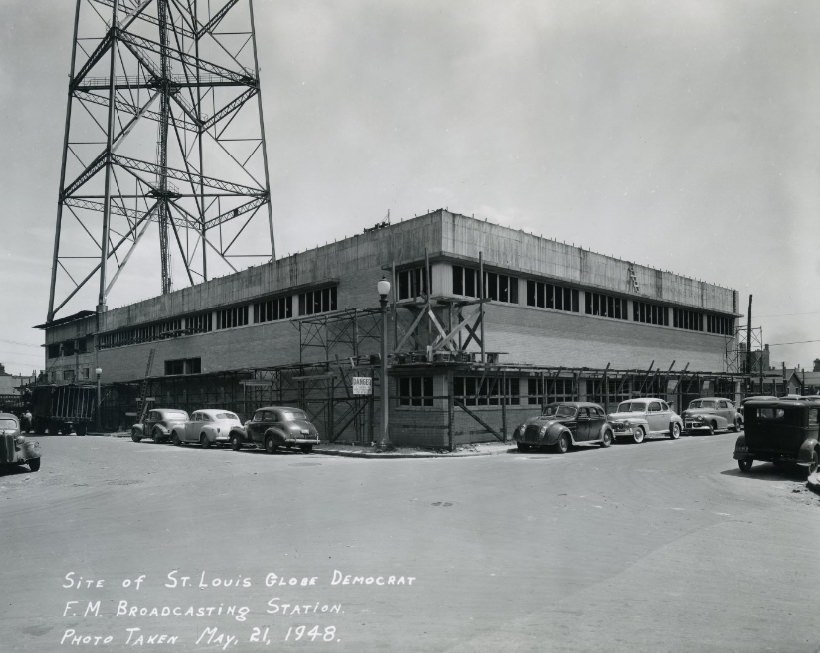
The rock-hewn winery of the American Wine Company at 3015 Cass Avenue was still operating in 1944, tunneled into the earth beneath the city. The Bemis Brothers Bag Company manufactory occupied its building well into the decade. Construction of the KWGD Radio Station began in 1946, and the Globe-Democrat’s finished radio station was photographed two years later in 1948, marking the city’s growing investment in broadcast media.
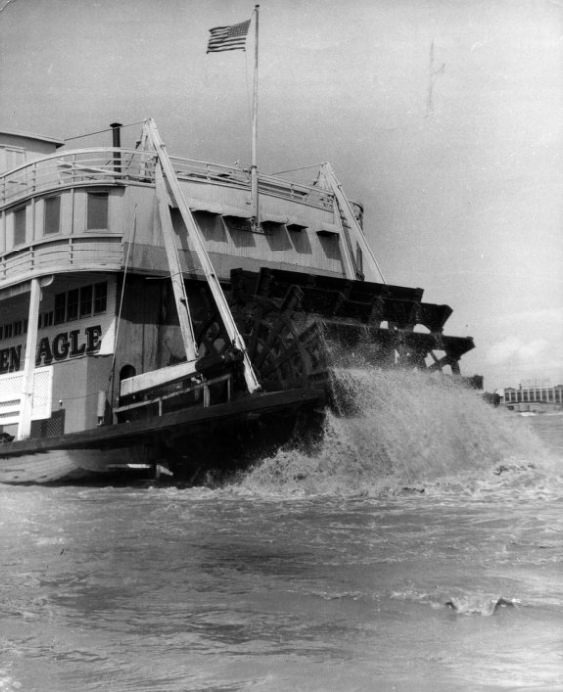
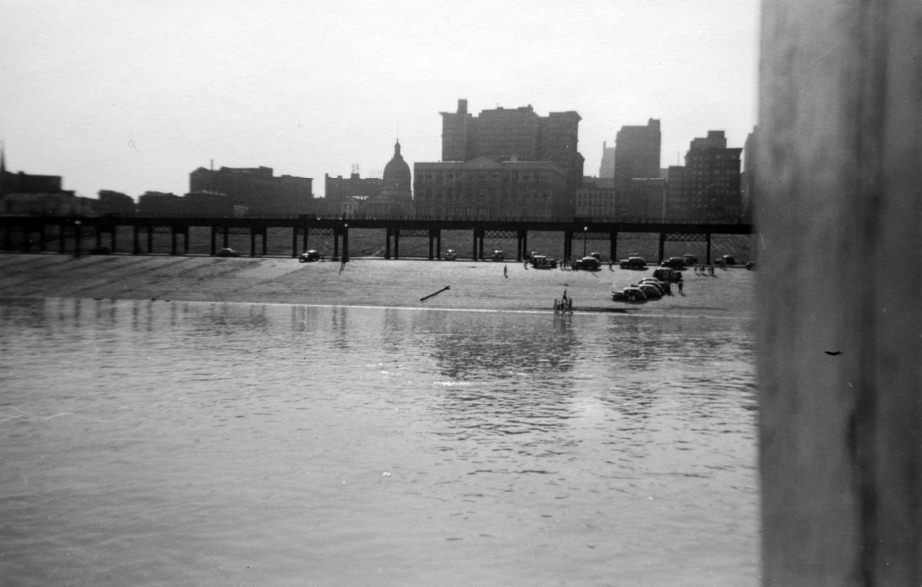
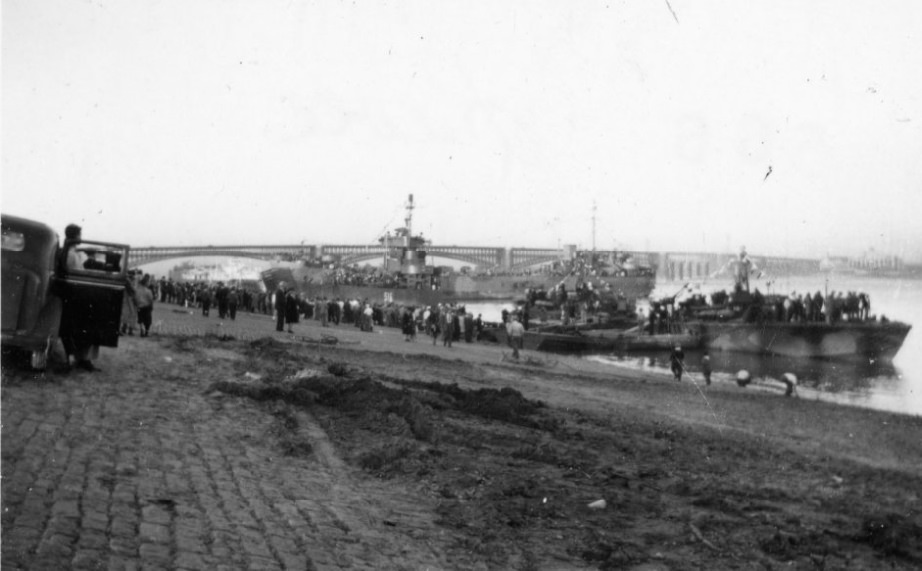
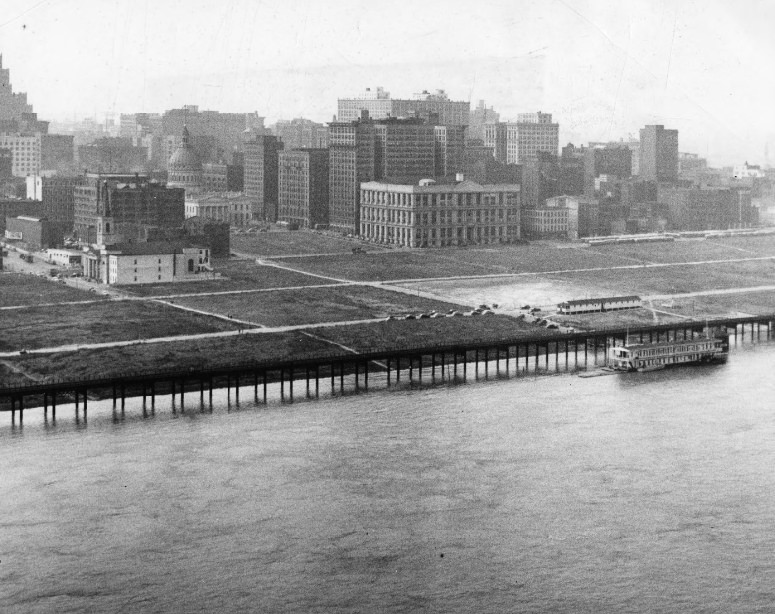
The levee along the St. Louis riverfront was a place of departure and arrival throughout the war years. In 1942, families stood on the levee and watched soldiers load onto boats heading to war. The river itself remained a working waterway, with steamboats, excursion vessels, and freight traffic moving through the city. From the deck of the Golden Eagle in 1946, the St. Louis riverfront stretched out in a panorama of warehouses, bridges, and skyline.
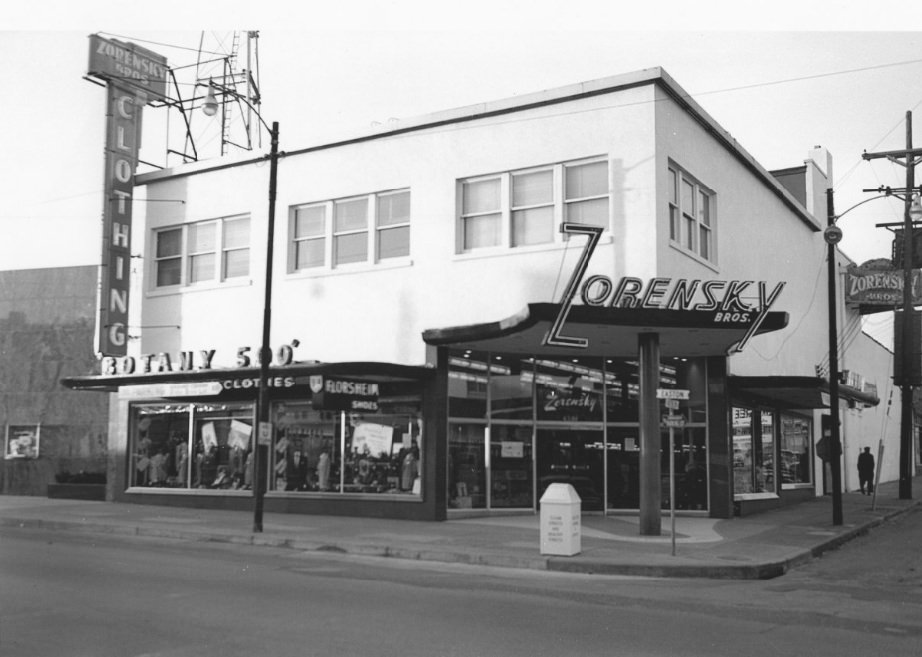
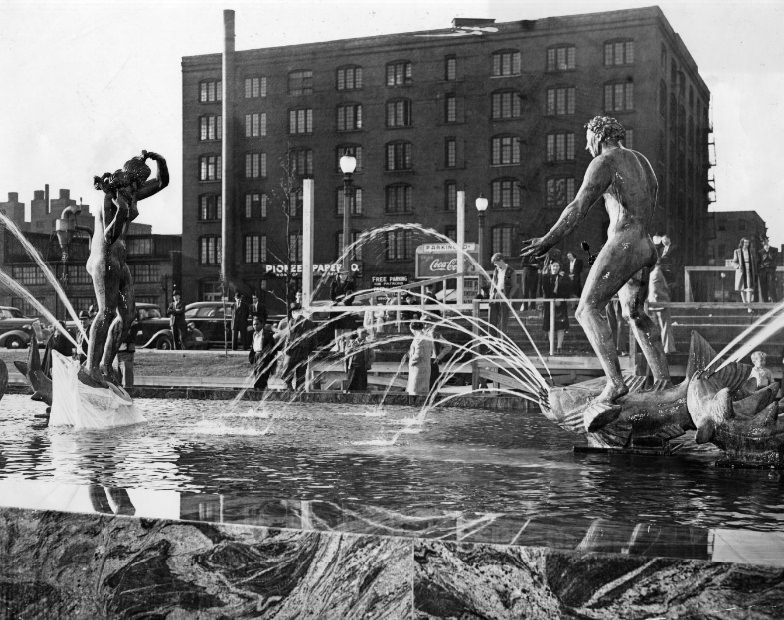
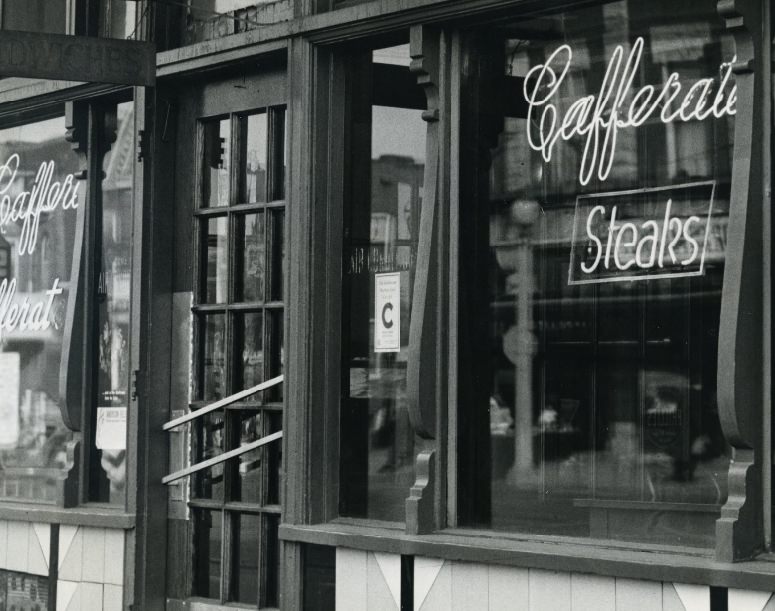
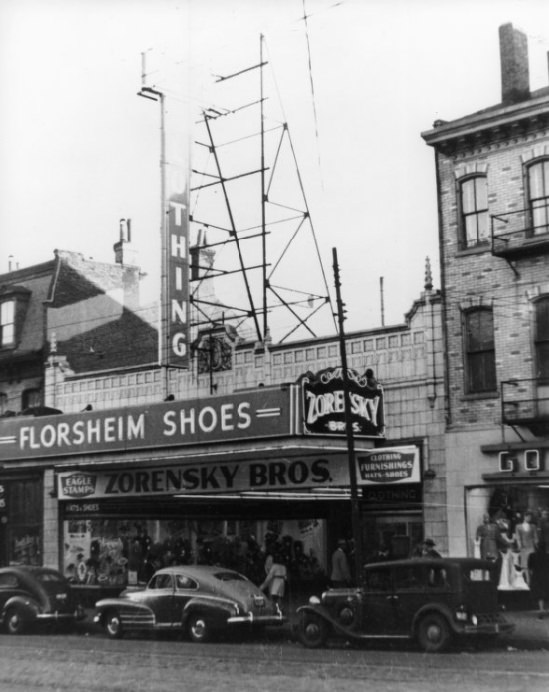
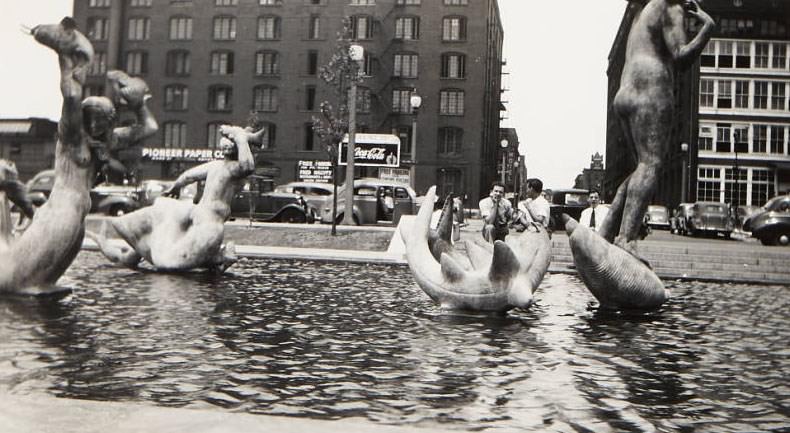
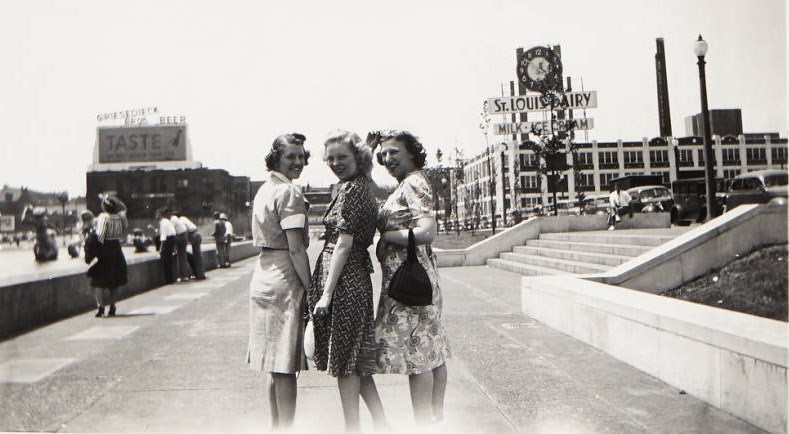
Neighborhood life had its own rhythm in 1940s St. Louis. Stores like the Zorensky Brothers locations on Easton and Franklin Avenues served local communities. The Cafferata Café was a fixture on its block. The Meeting of the Waters fountain in Aloe Plaza, near Union Station, drew visitors who stopped to take in the grand public artwork. Women posed for photographs near the plaza with the St. Louis Dairy building visible in the background.
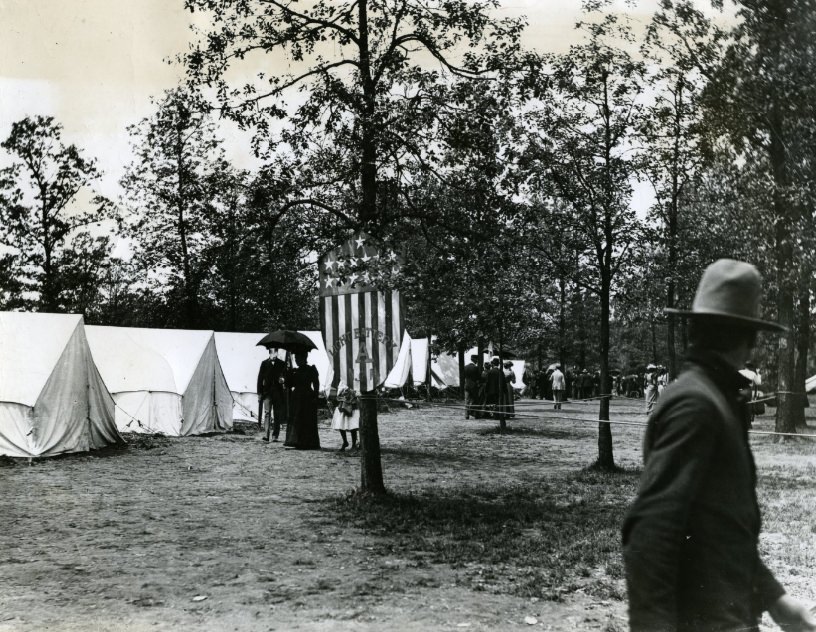
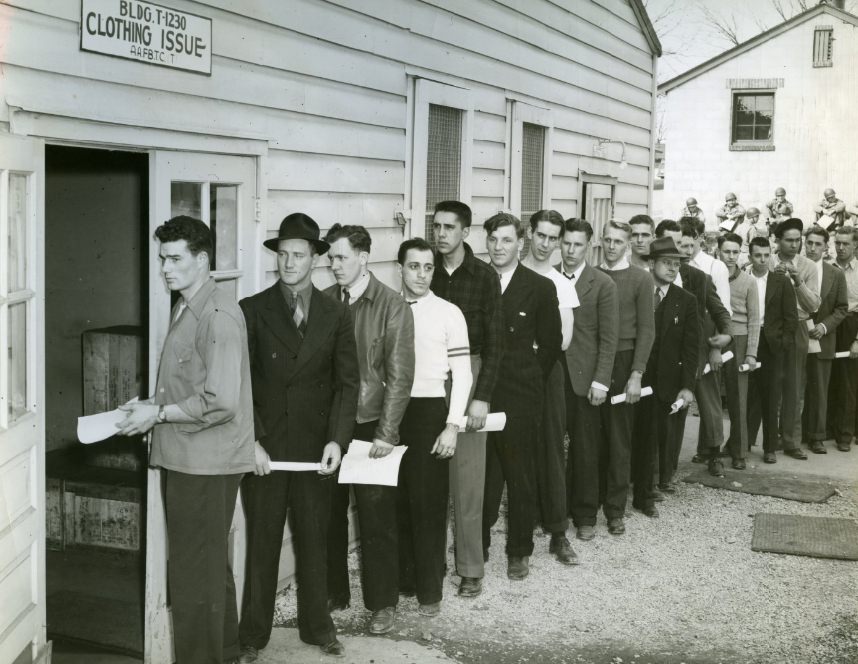
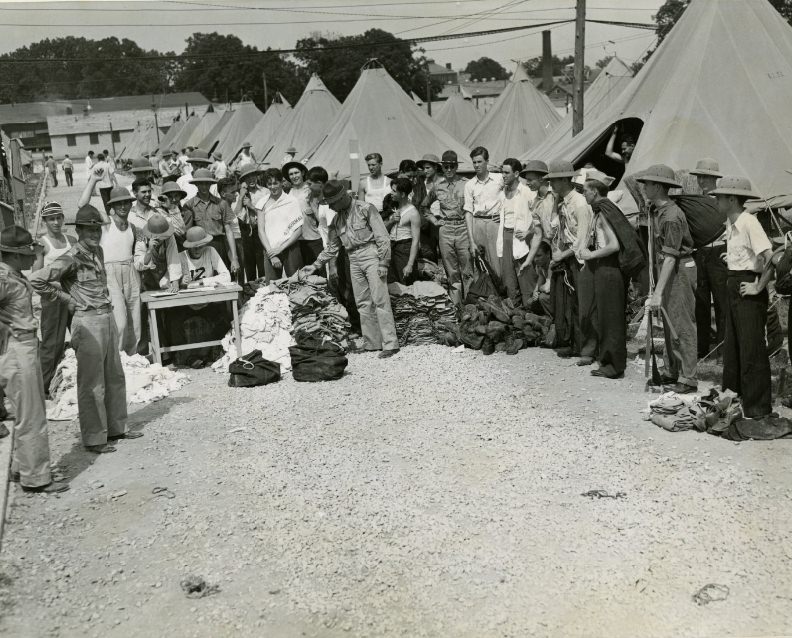
Veterans of earlier wars remained a visible part of city life. Spanish-American War and World War I veterans appeared at public events alongside Boy Scouts in 1941. Citizens’ Military Training Camp participants turned in their uniforms at Jefferson Barracks in 1940, completing training cycles that had prepared them for a war that was already beginning in Europe. The barracks posted signs restricting civilian access — “No Sightseers Beyond This Point” — as military operations intensified.
The Milles Fountain, with its dramatic sculptural grouping, stood in the Plaza area and was photographed in 1940. The Federal Reserve Bank vault at Fourth and Locust held the region’s reserves. The Gamble Community Center building served its neighborhood into the late 1940s. Across the city, cooking schools, public high school athletic programs, and Board of Education meetings filled community calendars even as the war demanded so much of the population’s attention and resources.
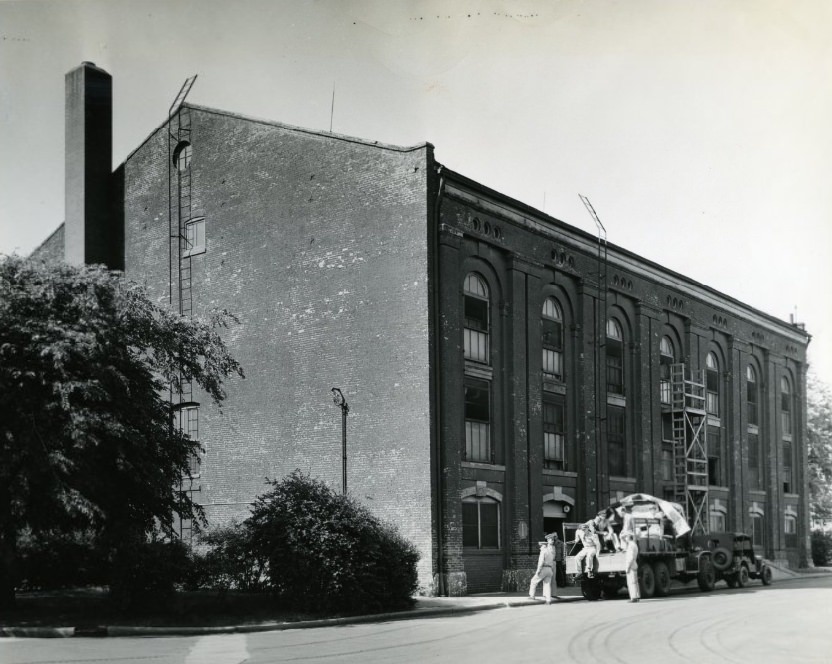
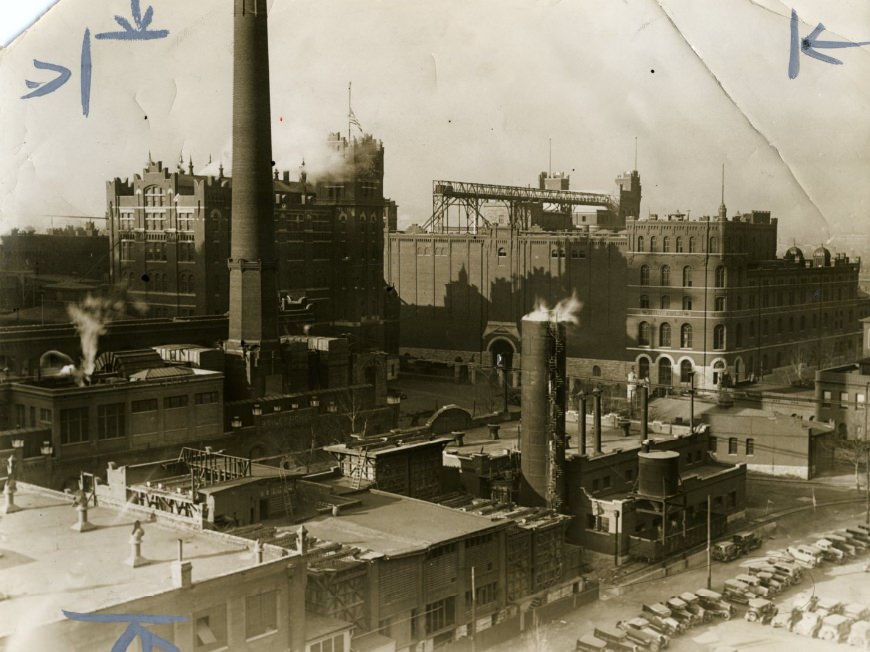
The Anheuser-Busch Brewery anchored the south side of the city. Its operations were large enough and distinctive enough to attract documentary film crews. The brewery was one of the last major survivors of a brewing industry that had once comprised dozens of operations across St. Louis, including the Klausmann Brewery and the Christian Staehlin Phoenix Brewery, both of which were photographed in 1940 as relics of the city’s industrial brewing past.
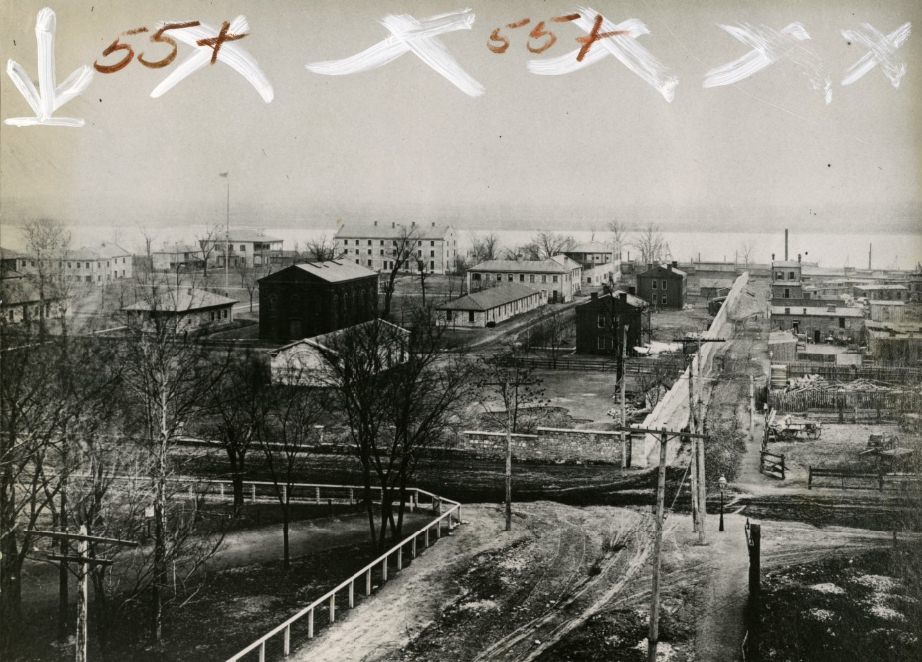
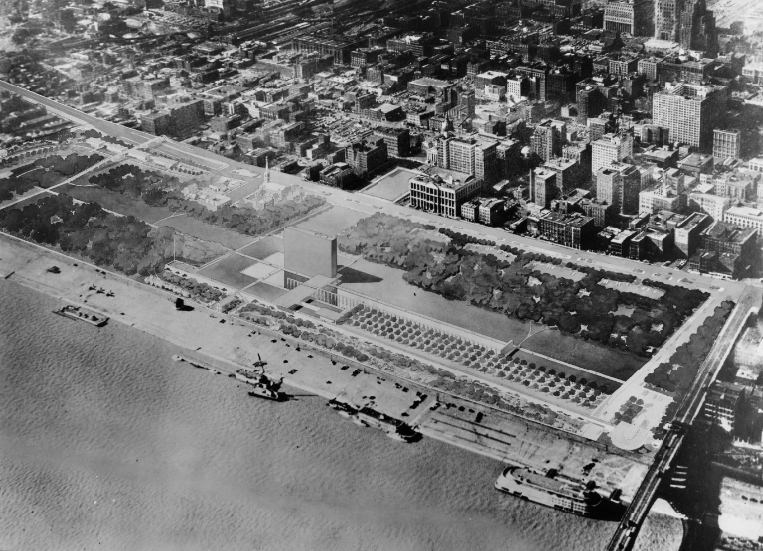
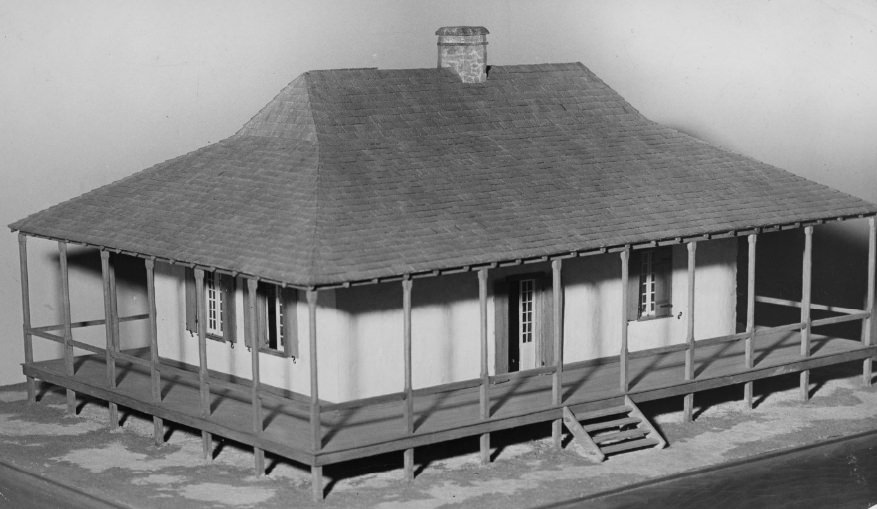
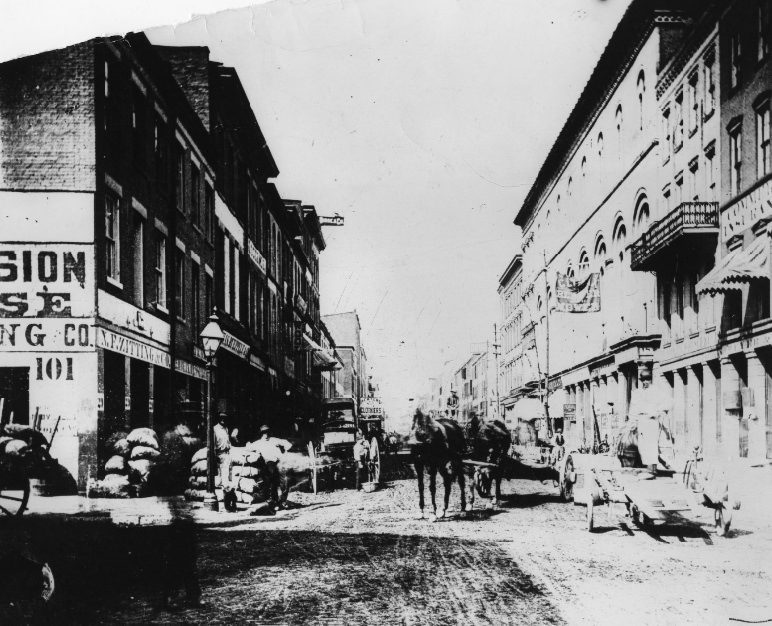
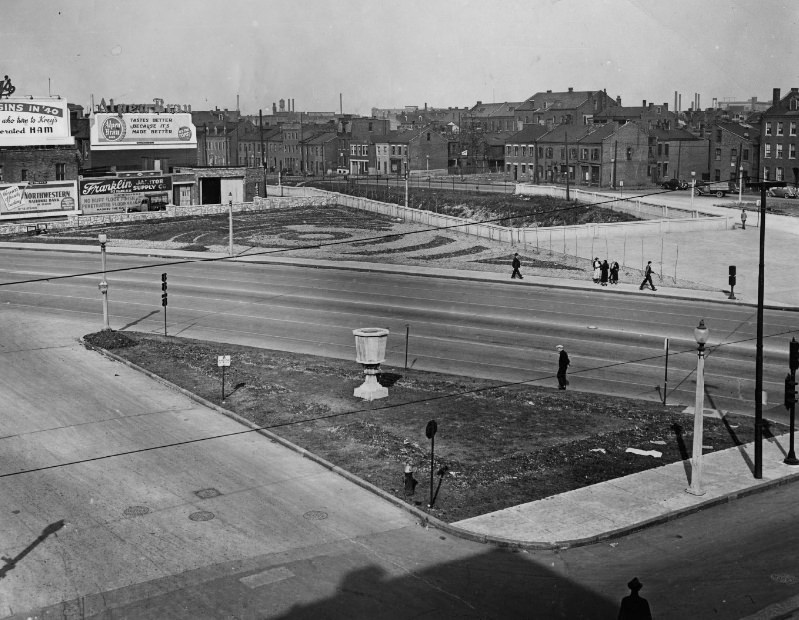
The St. Louis riverfront itself underwent major change during the 1940s. The old Boatmen’s Bank building at Third and Washington, photographed as it appeared during the Spanish-American War, collapsed in 1949 in a fire. The riverfront’s old warehouse district, known from photographs dating back to the city’s earliest days, was being cleared as part of plans for what would eventually become the Gateway Arch grounds. French fur-trader-era structures that had survived for nearly two centuries were among the buildings swept away.
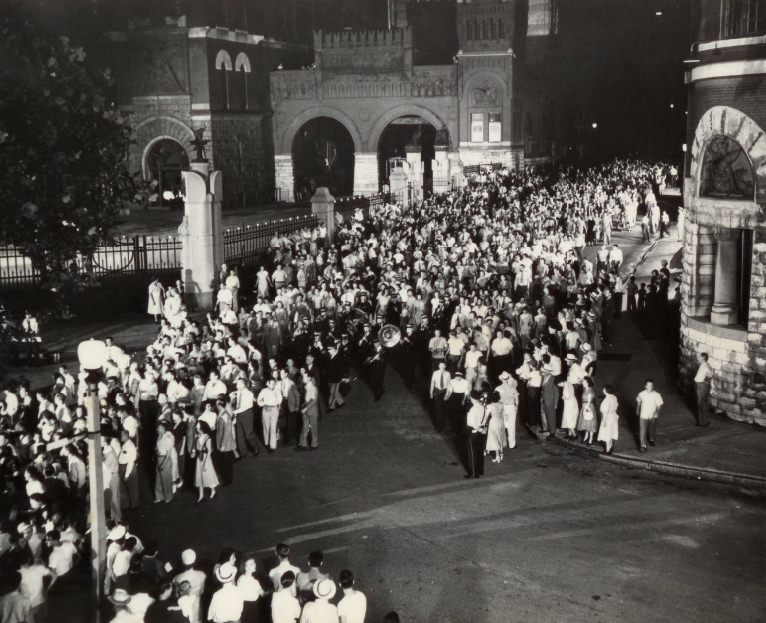
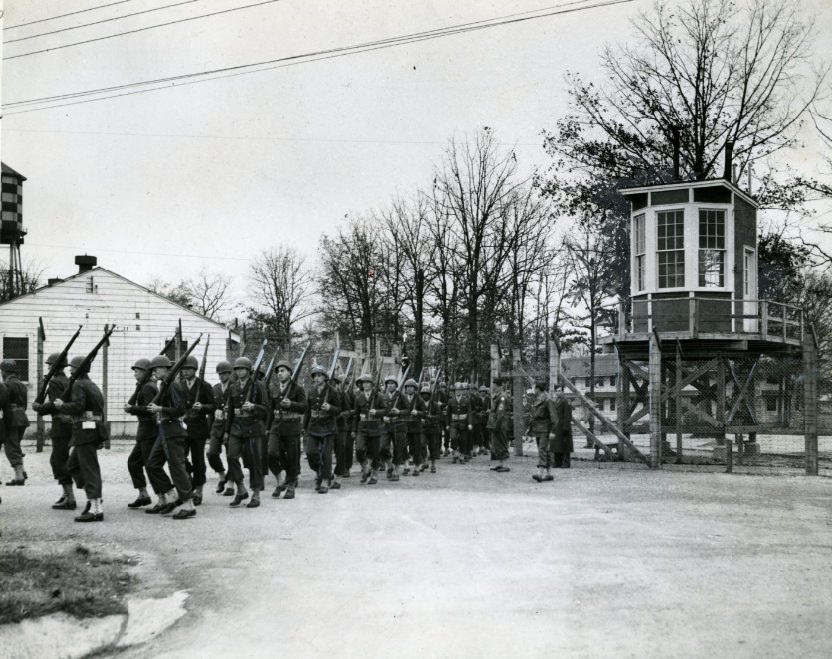
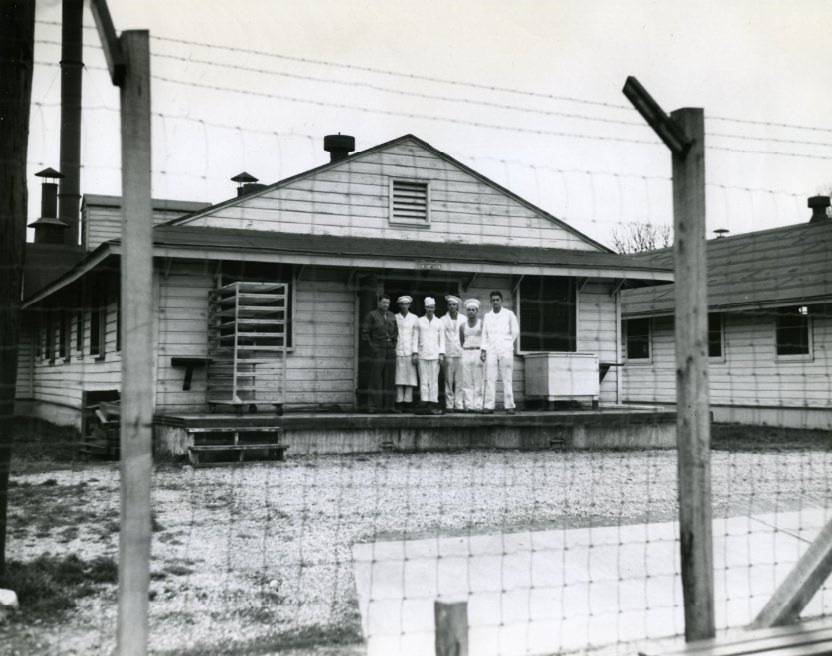
Jefferson Barracks held prisoners of war within its perimeter as well. A 1944 photograph shows soldiers marching from behind a barricade and in the shadow of a guard tower — men who were confined, not free. Rehabilitation center employees worked nearby at the same time, tending to a different group of men broken by the same conflict. The barracks in 1944 held the full range of wartime human experience within its fenced borders.
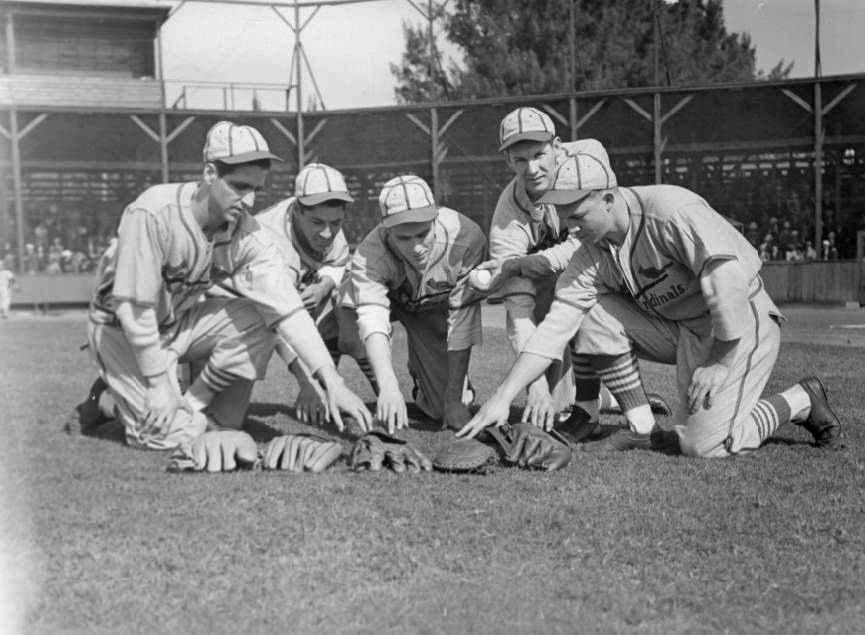
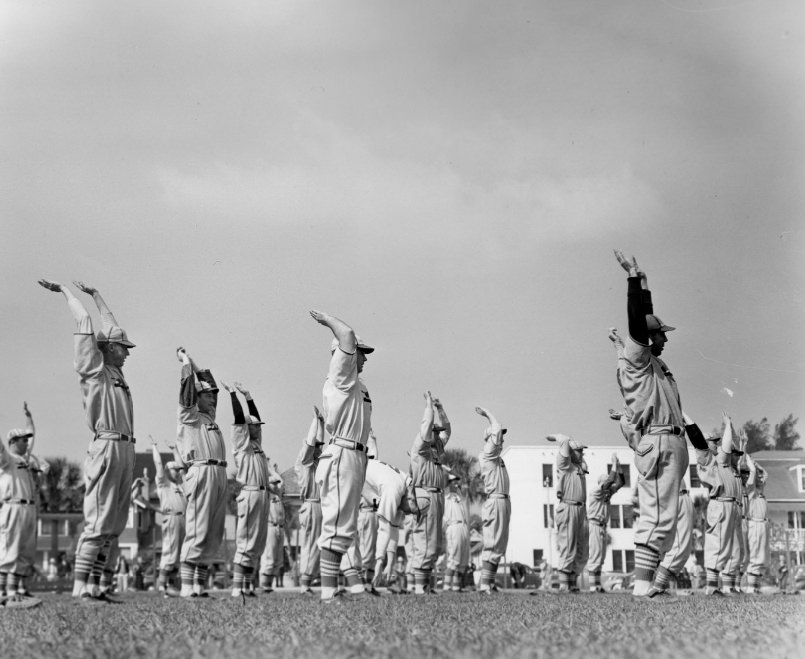
The Cardinals put their players through conditioning in 1940, with five players reaching for gloves and the team going through exercises that would shape one of the decade’s most successful rosters. Johnny Hopp and Enos Slaughter were photographed together in 1940, two players who would help define St. Louis baseball across the war years. The Cardinals’ 1942 season was captured on film as the team played through one of the most unusual periods in American sports history, with rosters constantly shifting as players were drafted into military service.
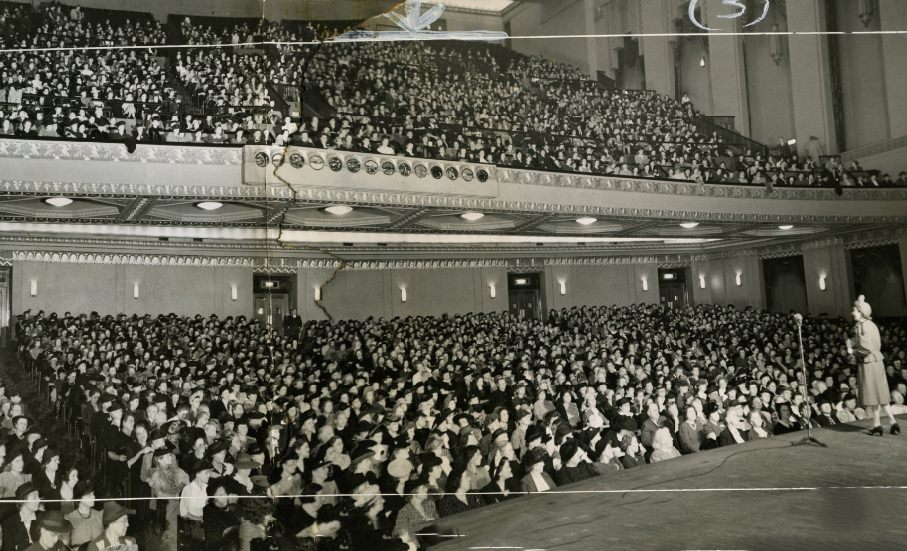
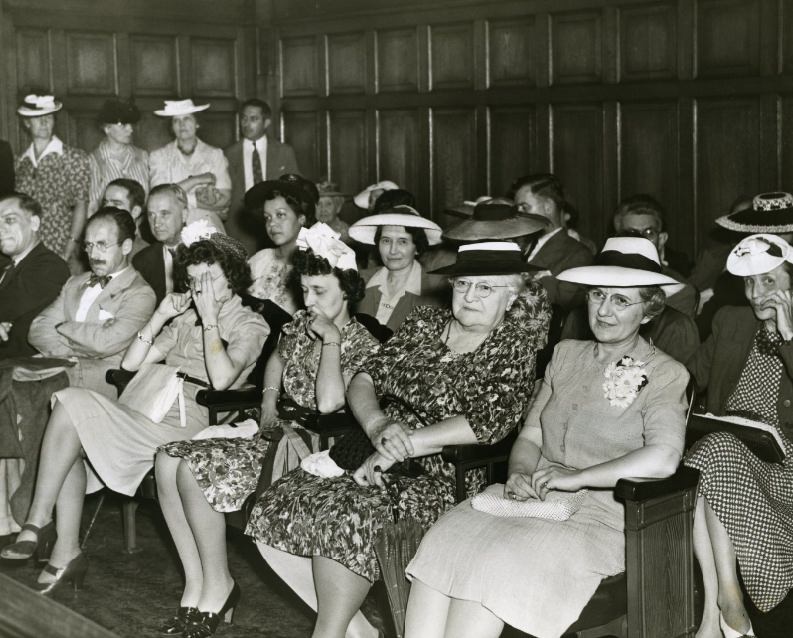
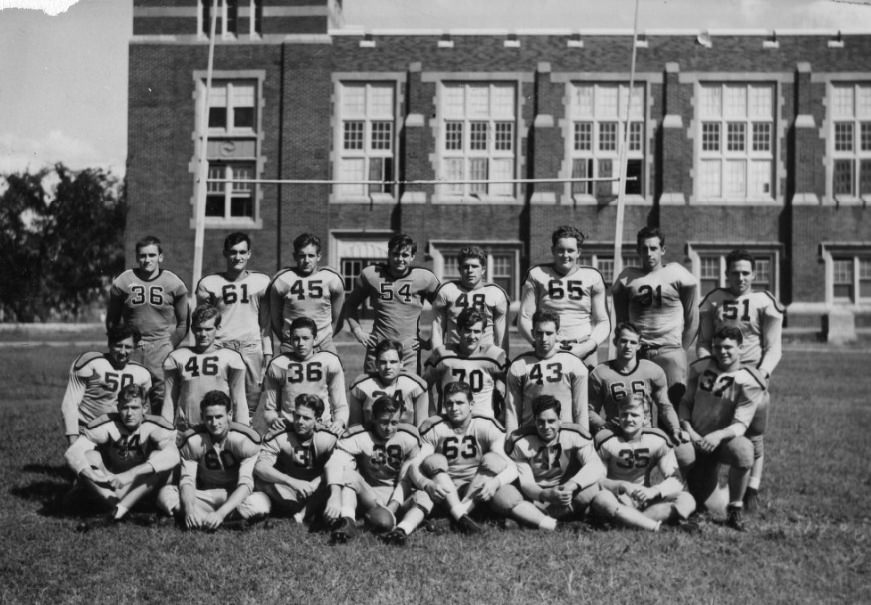
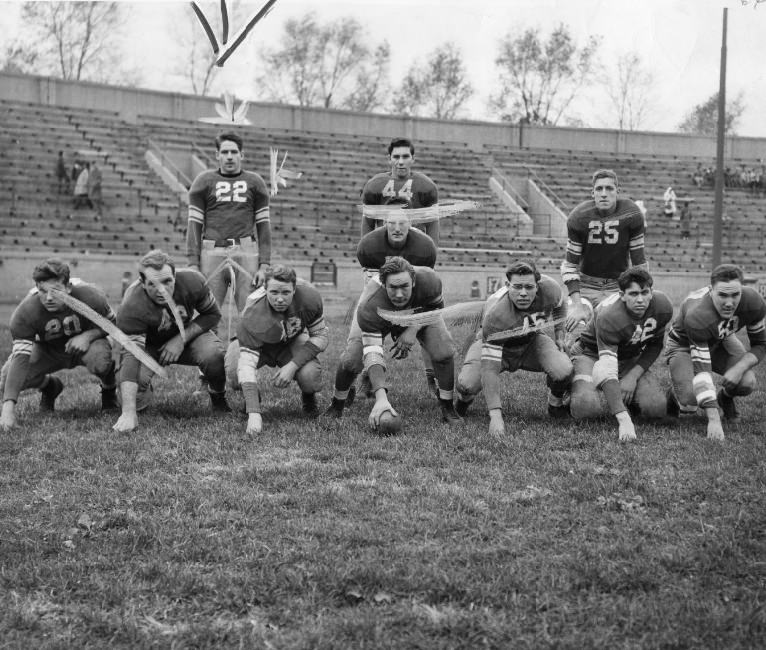
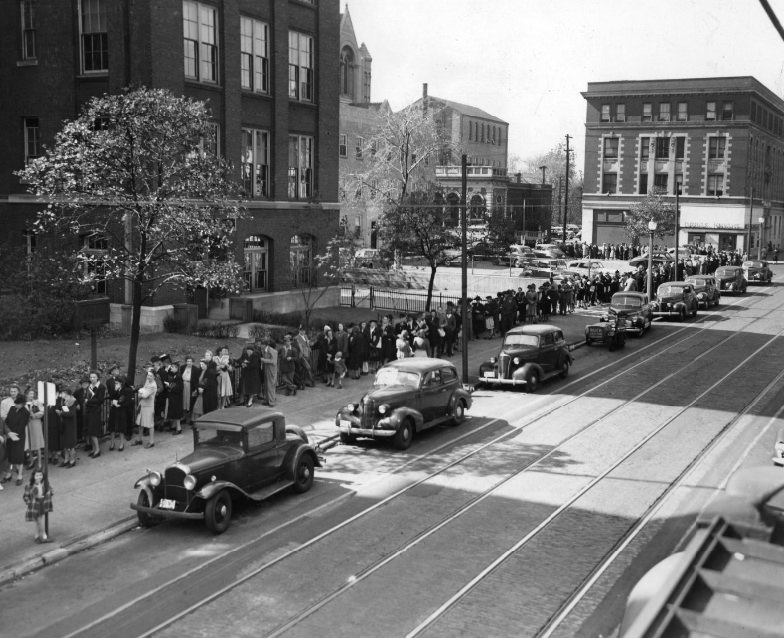
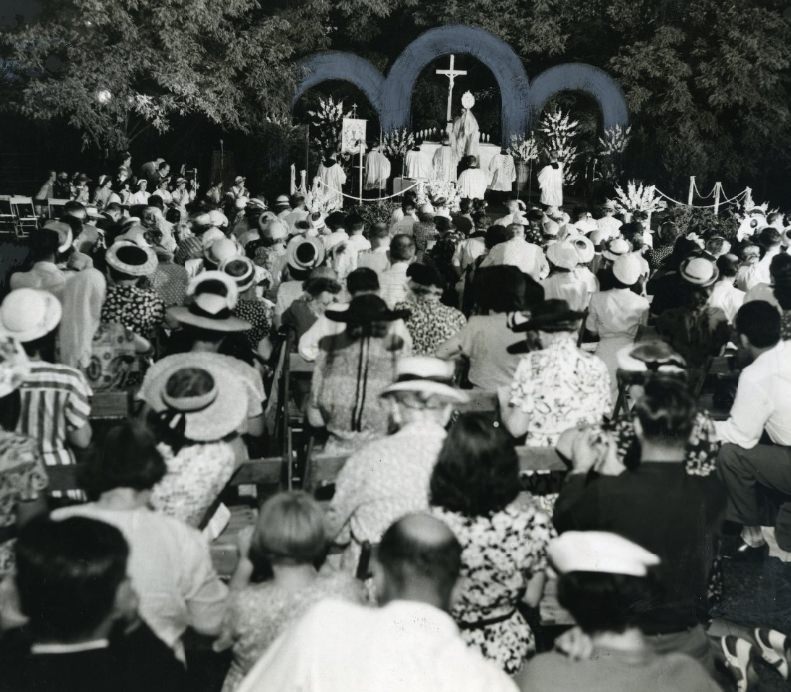
Public gatherings shaped community identity throughout the decade. Thousands stood in line in 1943 for an event that drew a crowd large enough to fill an entire block. The Board of Education held meetings that drew public audiences in 1942. The Public High League crowned athletic champions in 1945, with players carrying the league’s colors in celebration. These civic moments, recorded in photographs, show a city that kept its institutions running even as it sent its young men to fight overseas.
The Milles Fountain and Aloe Plaza near Union Station provided one of the city’s most striking public spaces. Women photographed near the plaza in 1940 had the St. Louis Dairy building rising behind them. Union Station itself was a theater of wartime movement, with soldiers departing and arriving, civilians seeing loved ones off, and the Military Reservation Bureau working from its booth to keep servicemen’s travel organized. The station handled an enormous volume of human traffic throughout the war years.
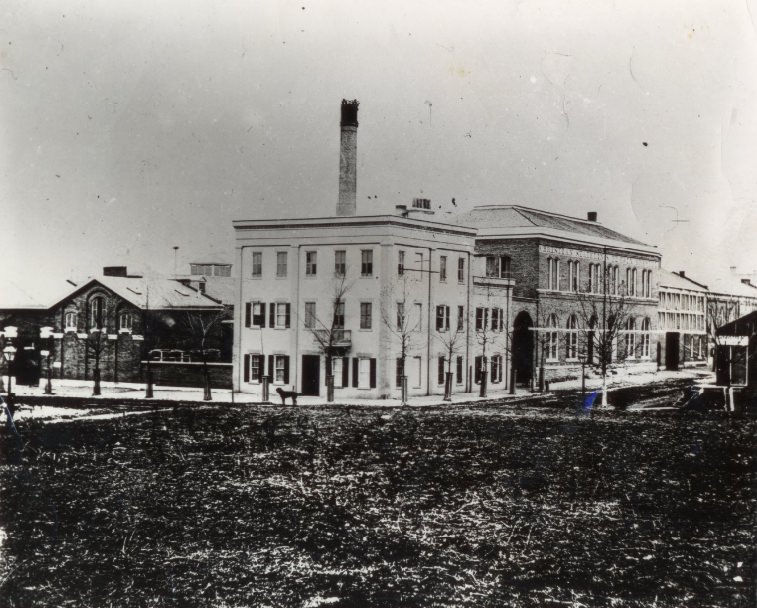
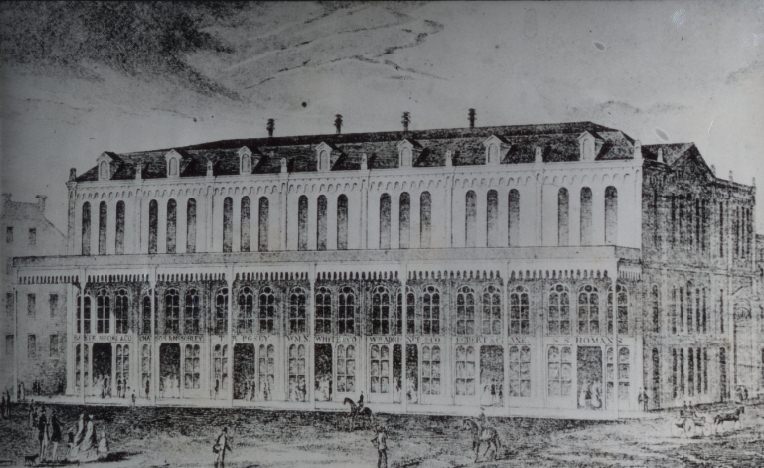
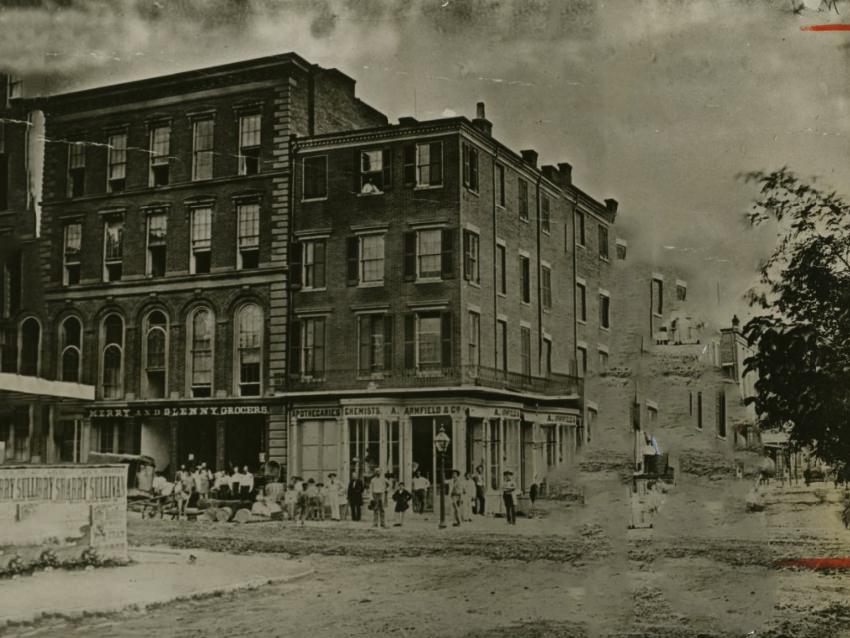
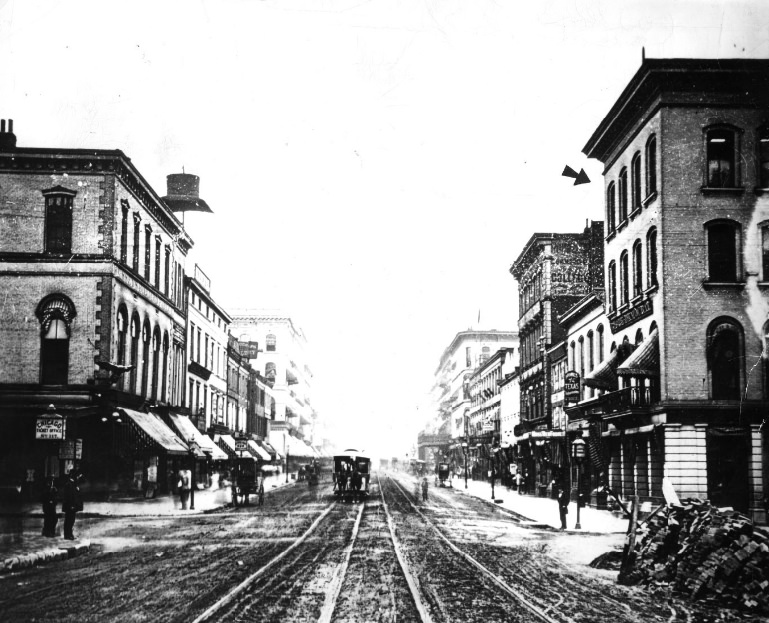
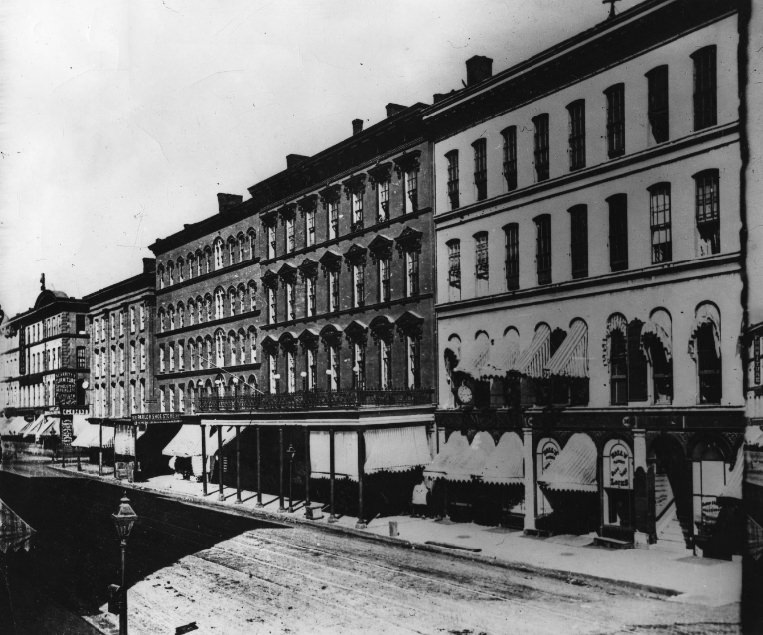
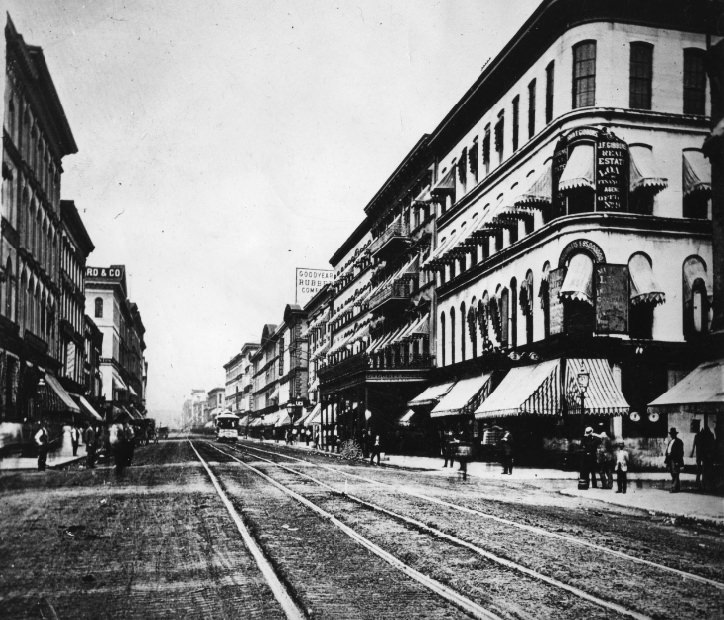
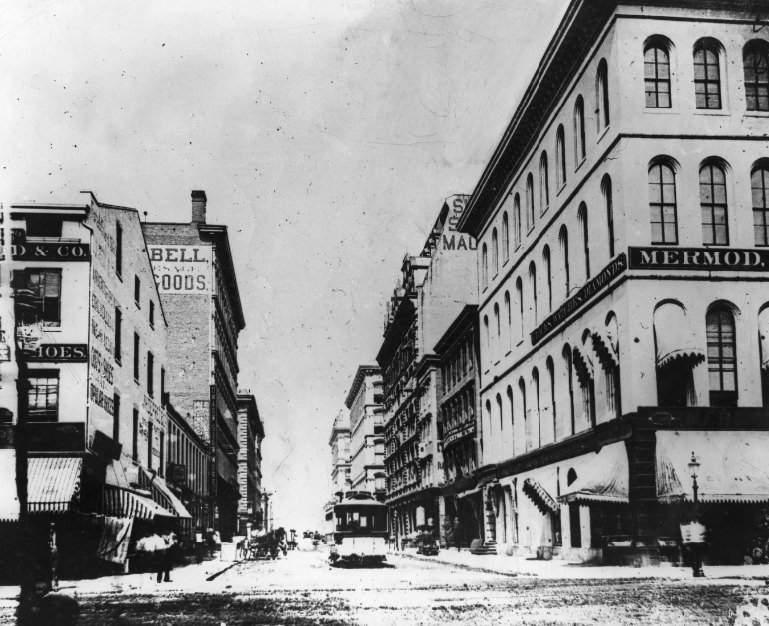
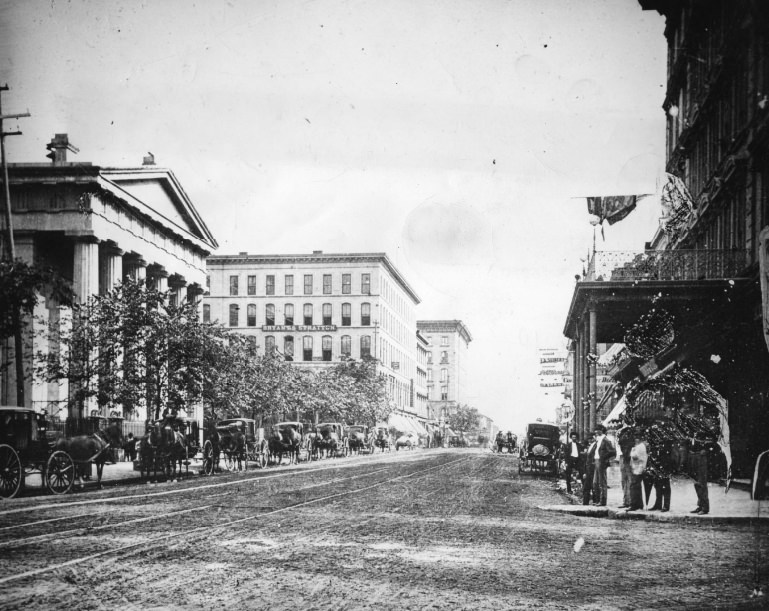
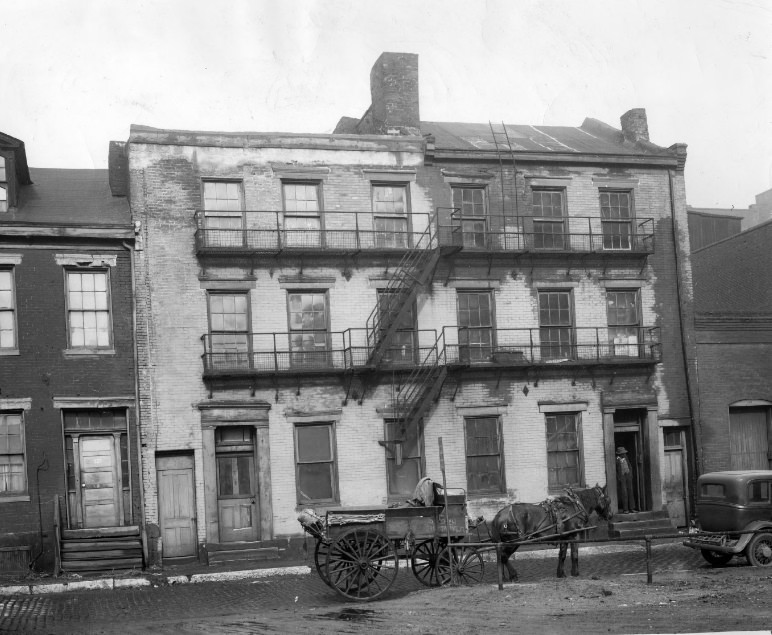
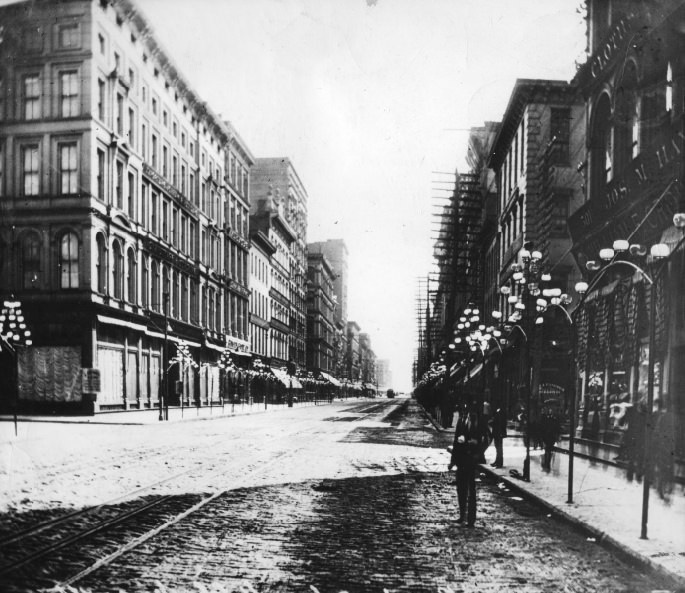
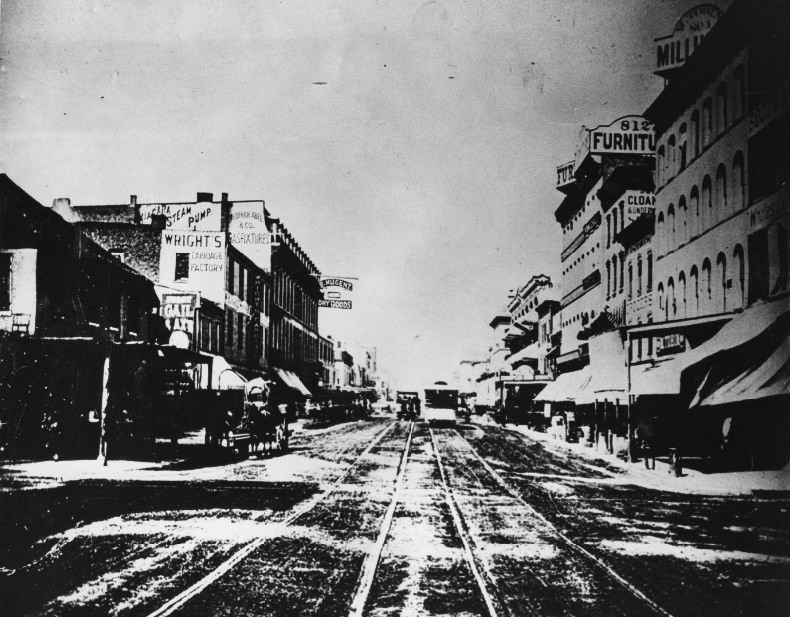
The old Fourth Street corridor showed the layers of the city’s commercial history. The Everett House, with its distinctive upper veranda and iron railing, stood on the east side of Fourth between Olive and Locust. The Mermod, Jaccard & Company occupied Fourth and Locust. Steel lithographs from 1949 documented Verandah Row, capturing the architectural character of blocks that were already being eyed for future redevelopment. These images preserved what was already beginning to disappear.
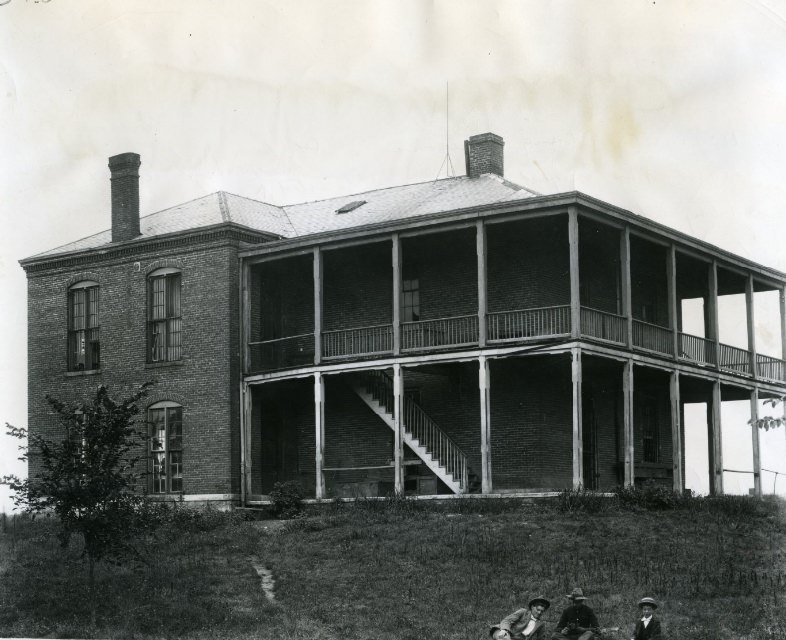
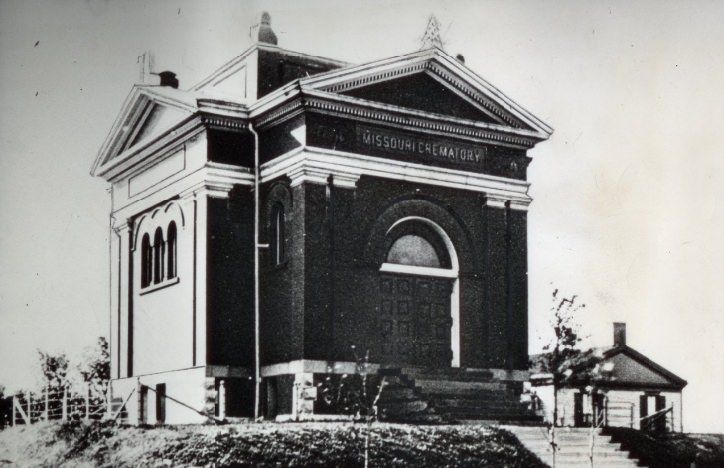
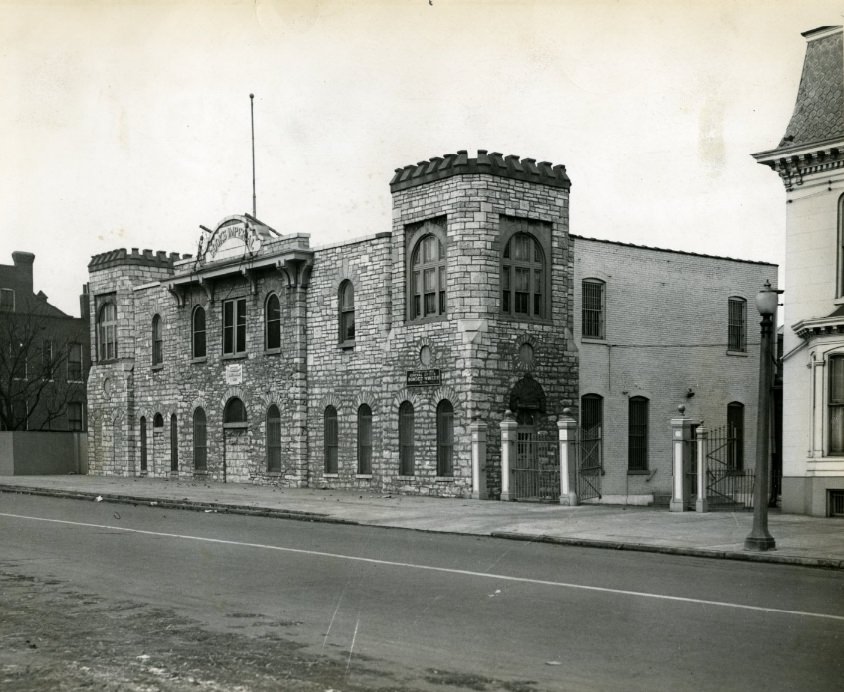
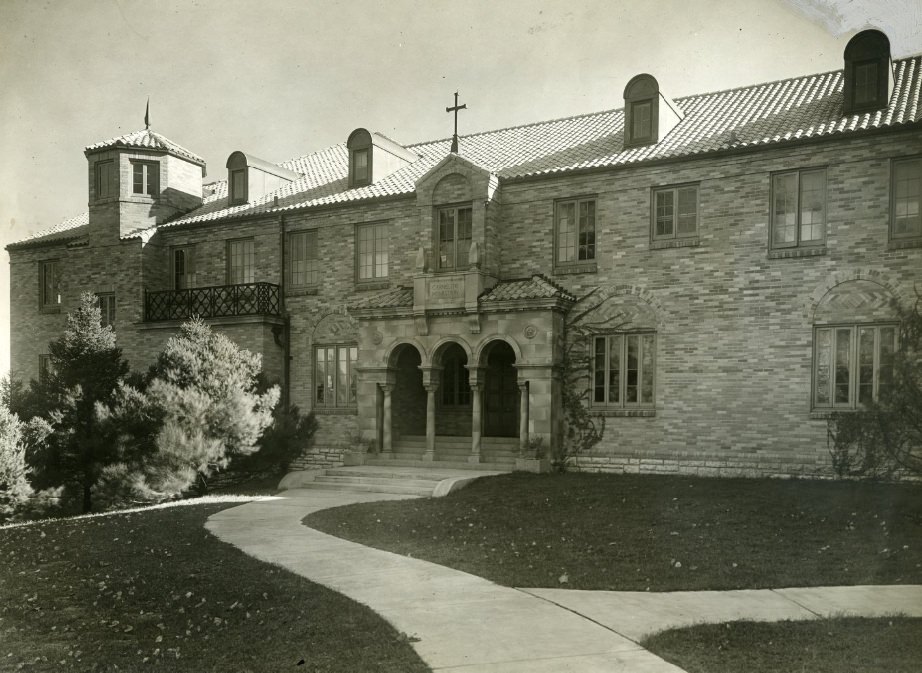
The Carmelite Monastery on Clayton Road provided one of the city’s quieter corners, photographed in 1949 as the surrounding city hummed with postwar activity. The Missouri Crematory Association building at Arsenal and Sublette, built in 1887, was still standing. The old guard house at Jefferson Barracks, built in 1830, was still in active use as soldiers passed through its doors more than a century after its construction. The decade’s photographs reveal a city that carried its history with it, even as it remade itself block by block.
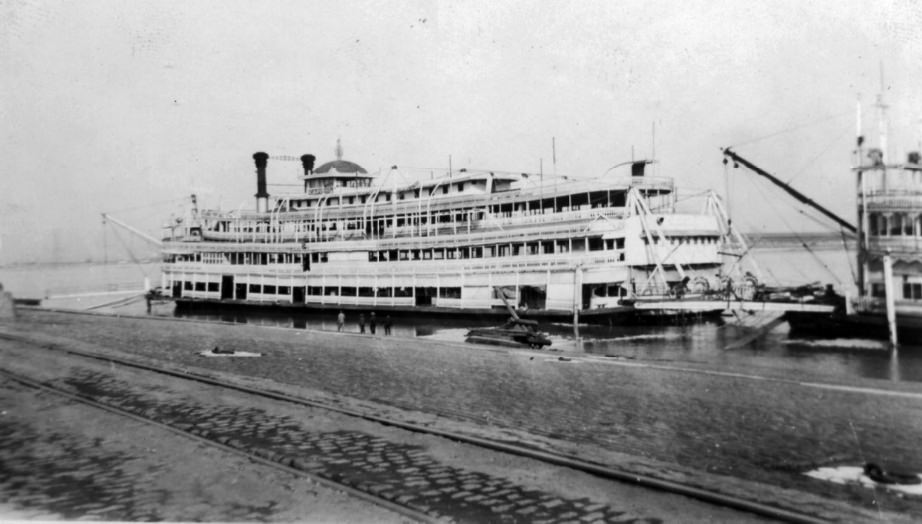

The photos showed the Golden Eagle ferry. I remember it well.