Hey There! Before You Go. 😧
Get the best vintage content straight into your inbox!

Don't worry, we don't spam

The Spirit Photography Photography of William H. Muller from the late 19th Century

In the years following the American Civil War, grief swept across the country on a scale that is hard to fully grasp. Hundreds of thousands of families had lost sons, fathers, and husbands, and many were desperate for any sign that their loved ones lived on. Into that grief stepped William H. Mumler, a Boston jewelry engraver who claimed he could do something no one else had ever done: photograph the dead.

Mumler was born in 1832, and before spirit photography defined his life, he worked a modest trade cutting designs into metal. His turn toward the supernatural came in the early 1860s when he produced a self-portrait that appeared to show the ghostly figure of a long-dead relative standing beside him. That image is now widely recognized as the first spirit photograph ever made — a photograph in which the likeness of a deceased person appears alongside the living. The method behind it was straightforward: Mumler layered an existing photograph of the deceased onto a new exposure featuring the living subject, producing a double image that looked, to the untrained eye, like a ghost.
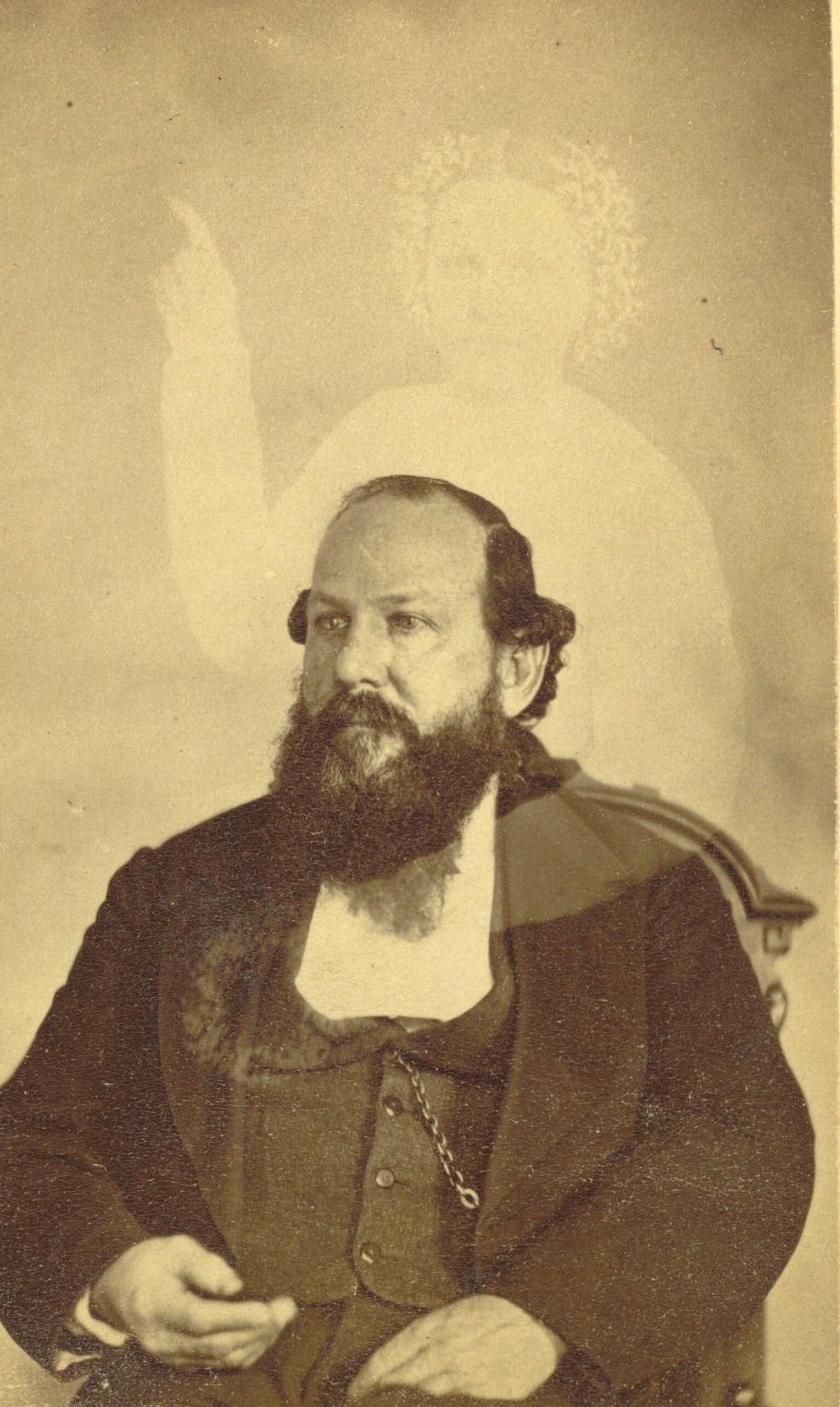
Portrait of Robert Bonner with a faint image of a woman behind him.

Spiritualism, the belief that the souls of the dead can communicate with the living, had been gaining followers in the United States since the 1850s. After the Civil War’s staggering death toll, the movement exploded. Thousands of families visited Mumler hoping to see, in a photograph, the face of someone they had lost. He worked first out of Boston and later moved his operation to New York City, where his reputation had spread well ahead of him.
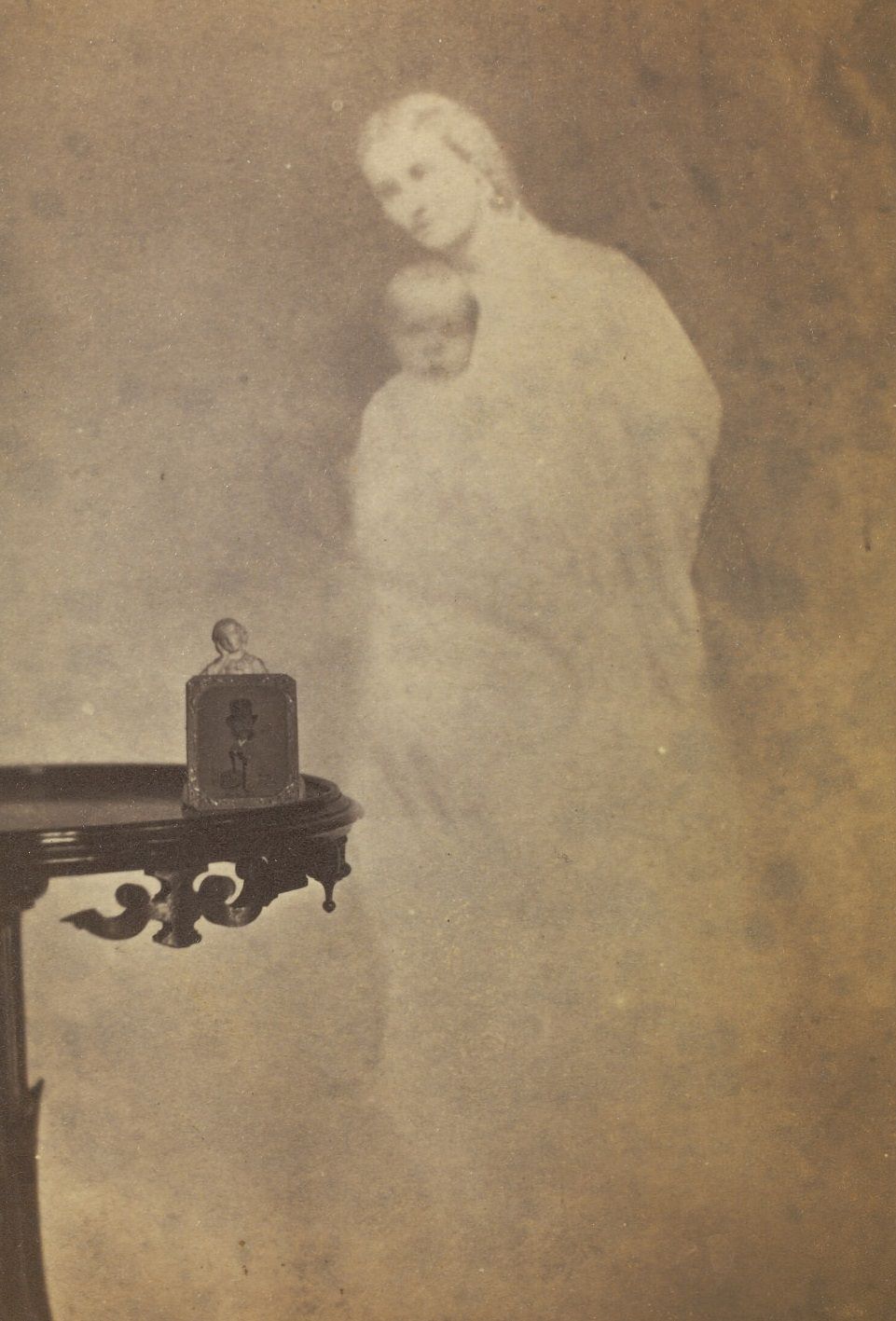
Photograph of a statuette and drawing on a side table, with a faint image of a woman and baby in the background.

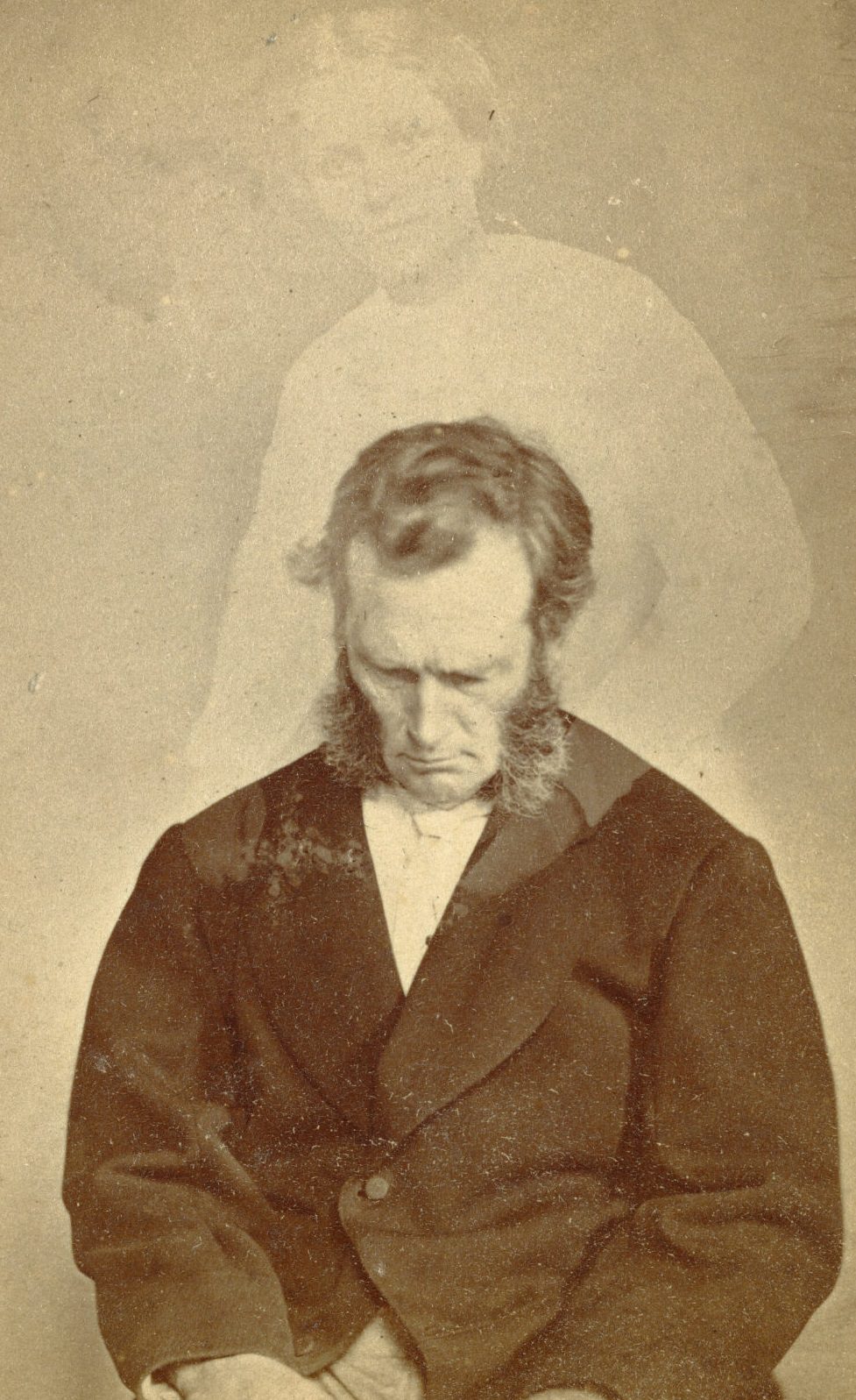
His portraits followed a familiar pattern. A grieving client would sit for the camera, and when the developed image was handed back, a faint, translucent figure would appear hovering nearby — a wife, a child, a parent. The figures were blurred enough to seem otherworldly but recognizable enough to feel personal. For many clients, that was all the proof they needed.
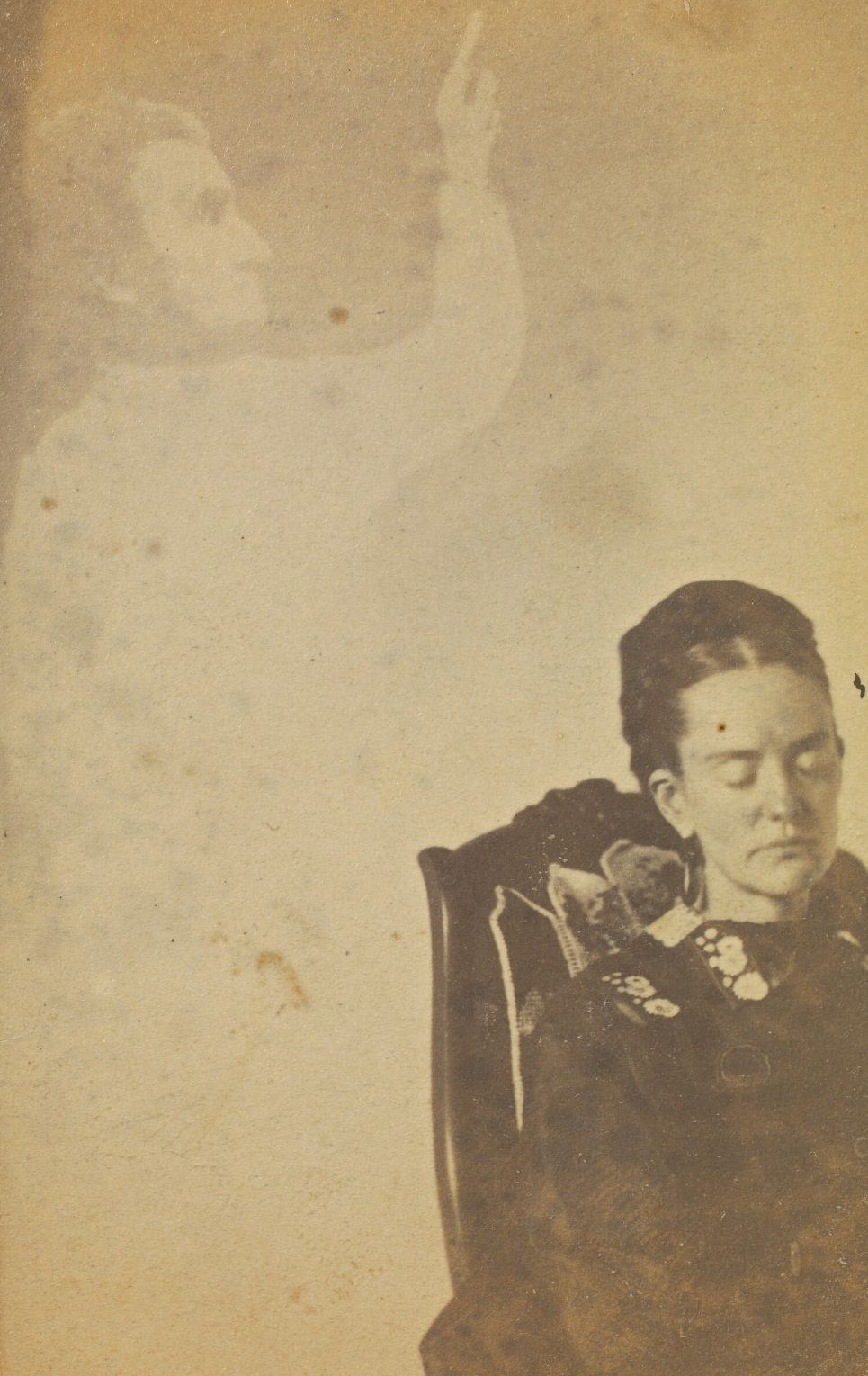
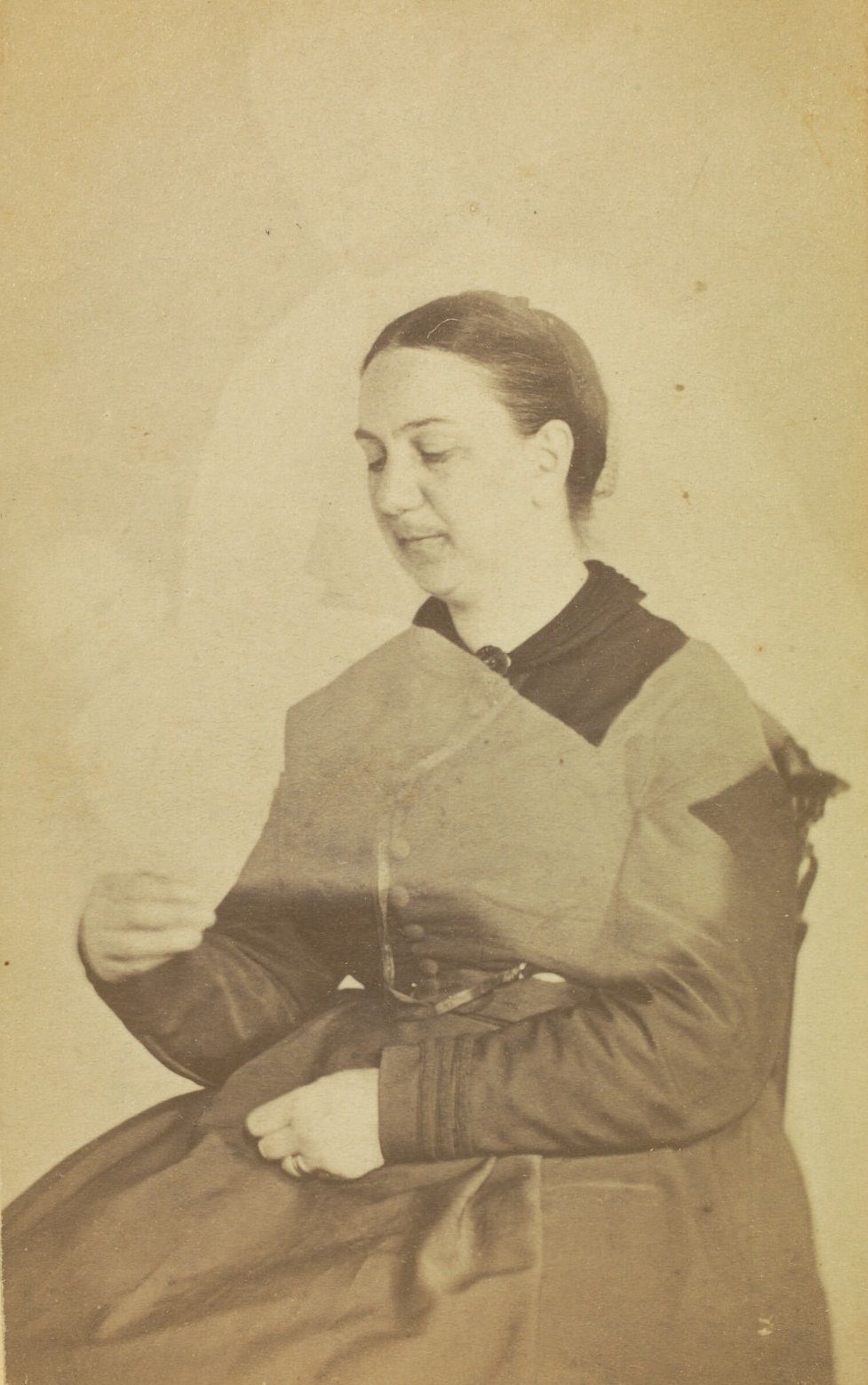
Portrait of a woman sitting in a chair, wearing a dark dress and with her eyes downcase.
Portrait of Col. Cushman with a goatee. There is a faint image of a woman with bobbed hair above him.

Not everyone was convinced. Among the most vocal skeptics was P.T. Barnum, the showman and promoter who accused Mumler of deliberately exploiting the judgment of grief-stricken people. Barnum’s attacks were part of a growing chorus of accusations. Critics charged that Mumler had staged photographs of people who were, in fact, still alive, passing them off as spirits of the dead. Some alleged he stole photographs of deceased relatives from the homes of his clients and used those images without permission.
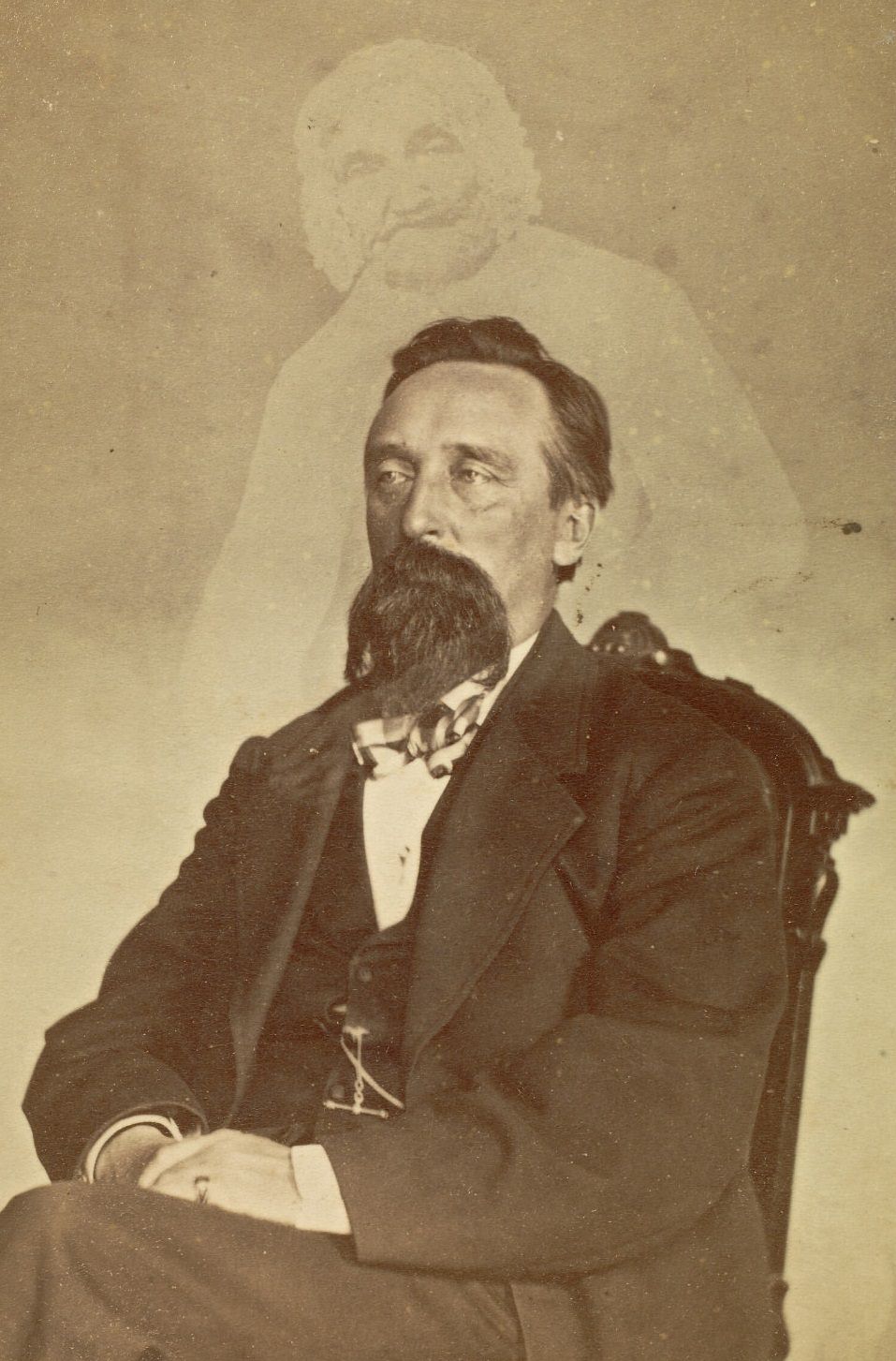
Portrait of John J. Glover, with a faint image of an old woman above him.
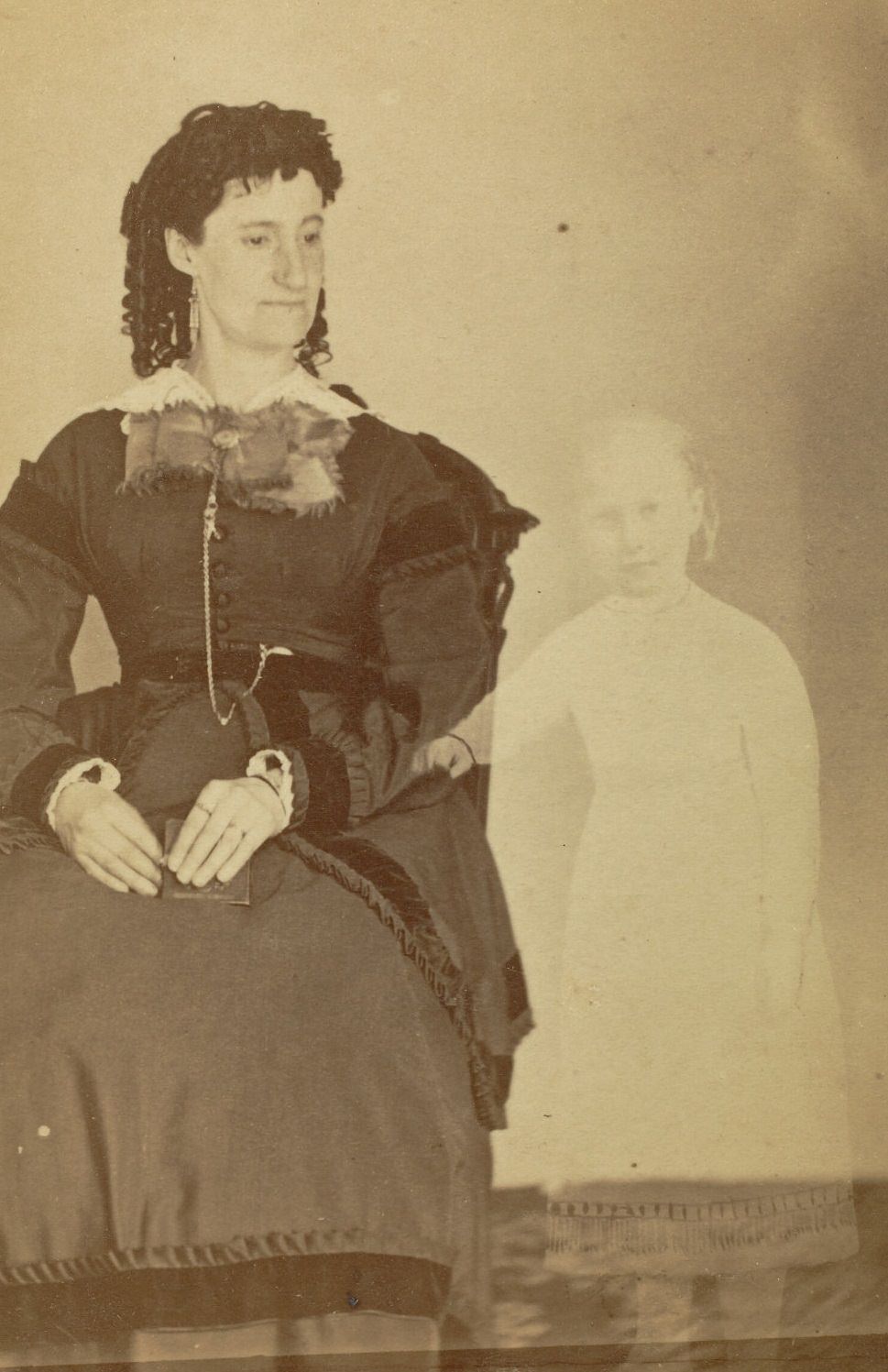
Portrait of Mrs. Tinkham with the spirit of her child.

The moment that did the most damage to Mumler’s credibility came when people recognized some of his supposed spirits as individuals who were still very much alive. That revelation was difficult to explain away. In April 1869, Mumler was brought to trial in New York City on fraud charges. The case drew enormous public attention. To illustrate how easily such images could be faked, Barnum commissioned photographer Abraham Bogardus to produce a portrait showing Barnum himself seated beside the ghostly figure of Abraham Lincoln — a stunt designed to show the jury exactly how the trick worked.
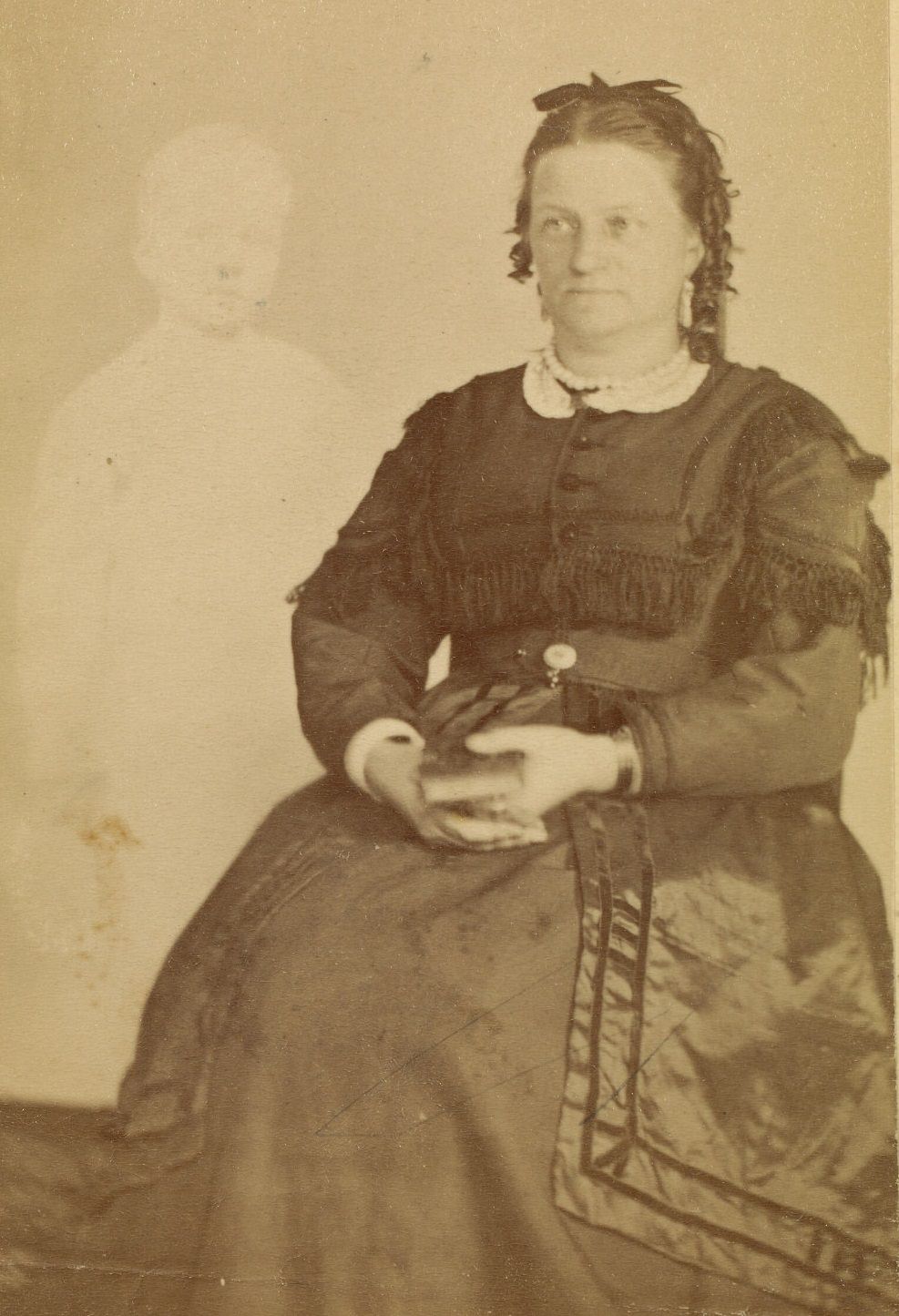
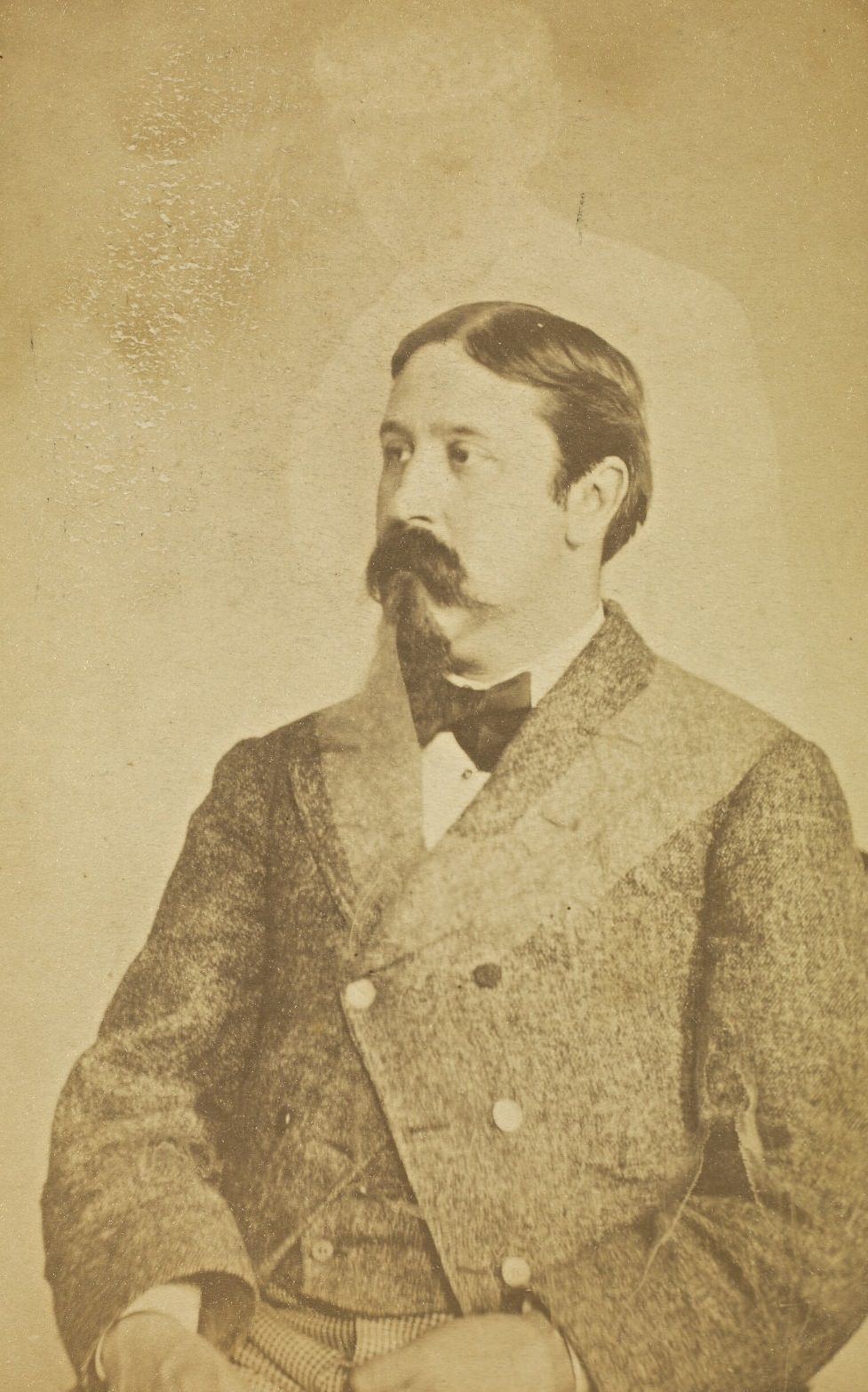
Portrait of Mrs. French, wearing a dark dress, holding a book in her lap. The faint image of a boy appears beside her.
Portrait of Charles H. Foster with a mustache and goatee. A faint image of a woman appears above him.

Mumler had defenders too. Moses A. Dow, a journalist who had personally sat for one of Mumler’s portraits, testified on his behalf. Several photography experts examined Mumler’s work during the trial and found no technical evidence of manipulation. In the end, the prosecution could not prove beyond a reasonable doubt that the photographs had been faked, and Mumler was acquitted.
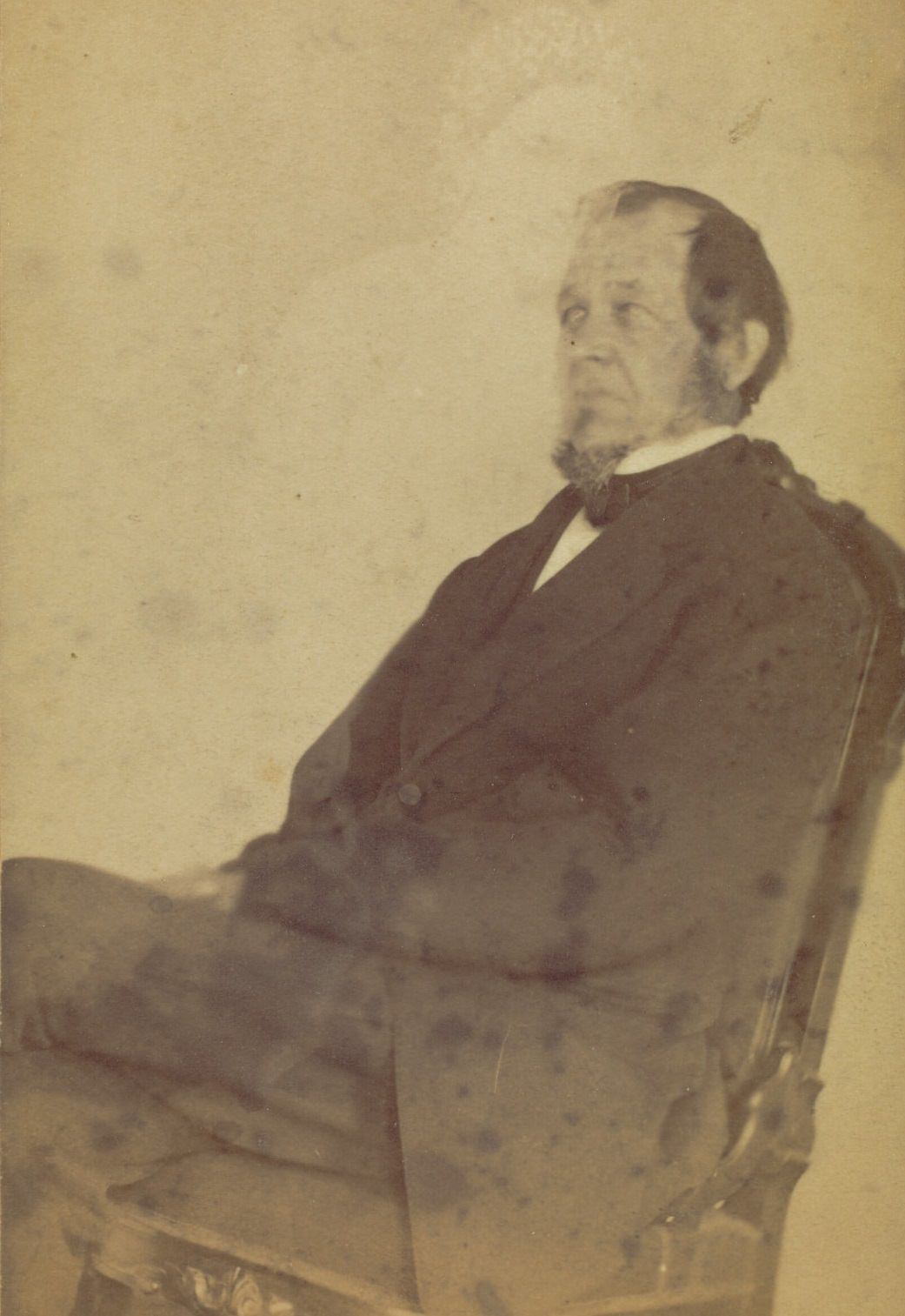
Profile portrait of a seated man with a goatee. A very faint image of a woman is visible above him.
Portrait of Bronson Murray with full sideburns looking down. A faint image of a woman is visible above him.

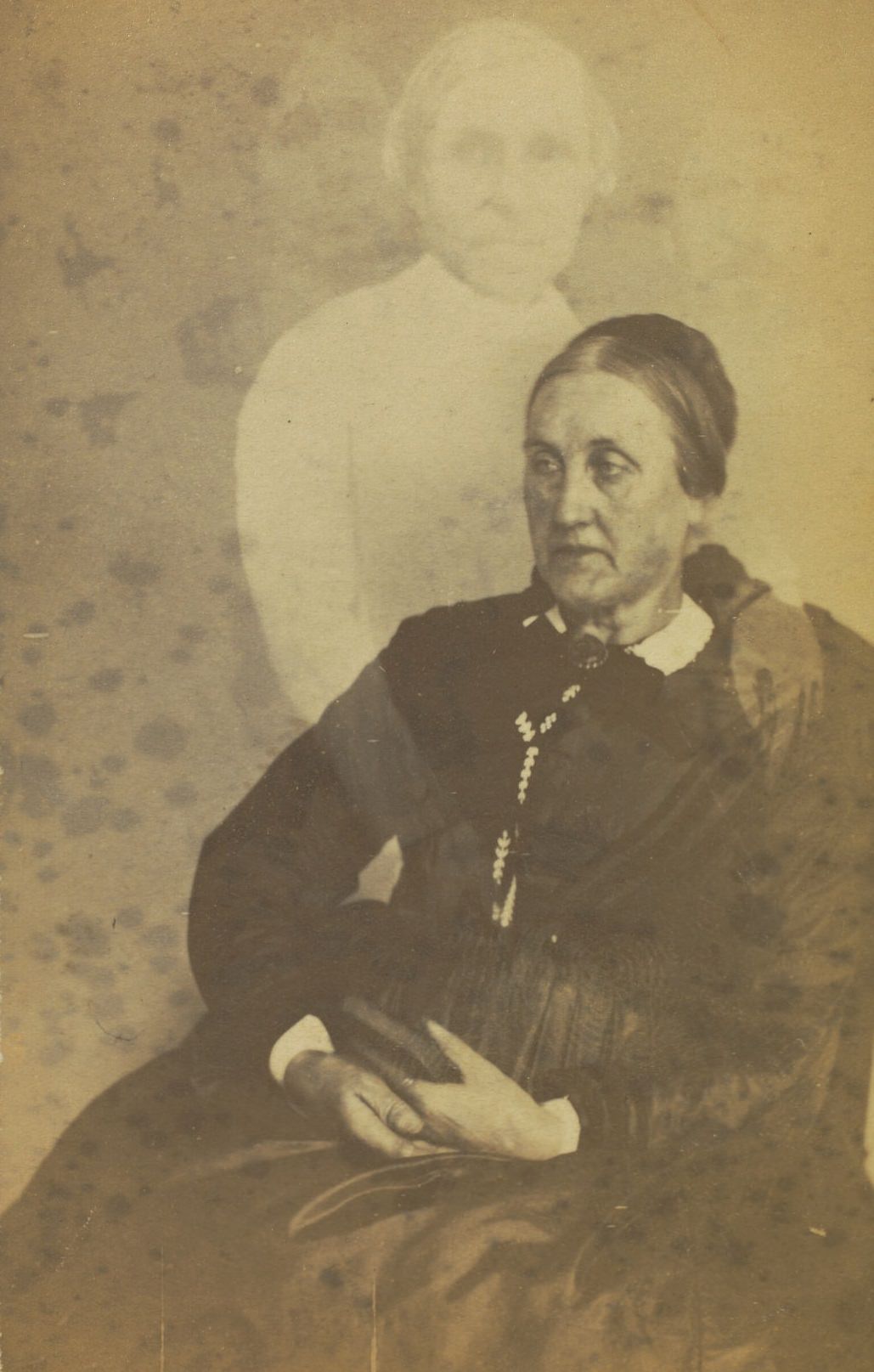
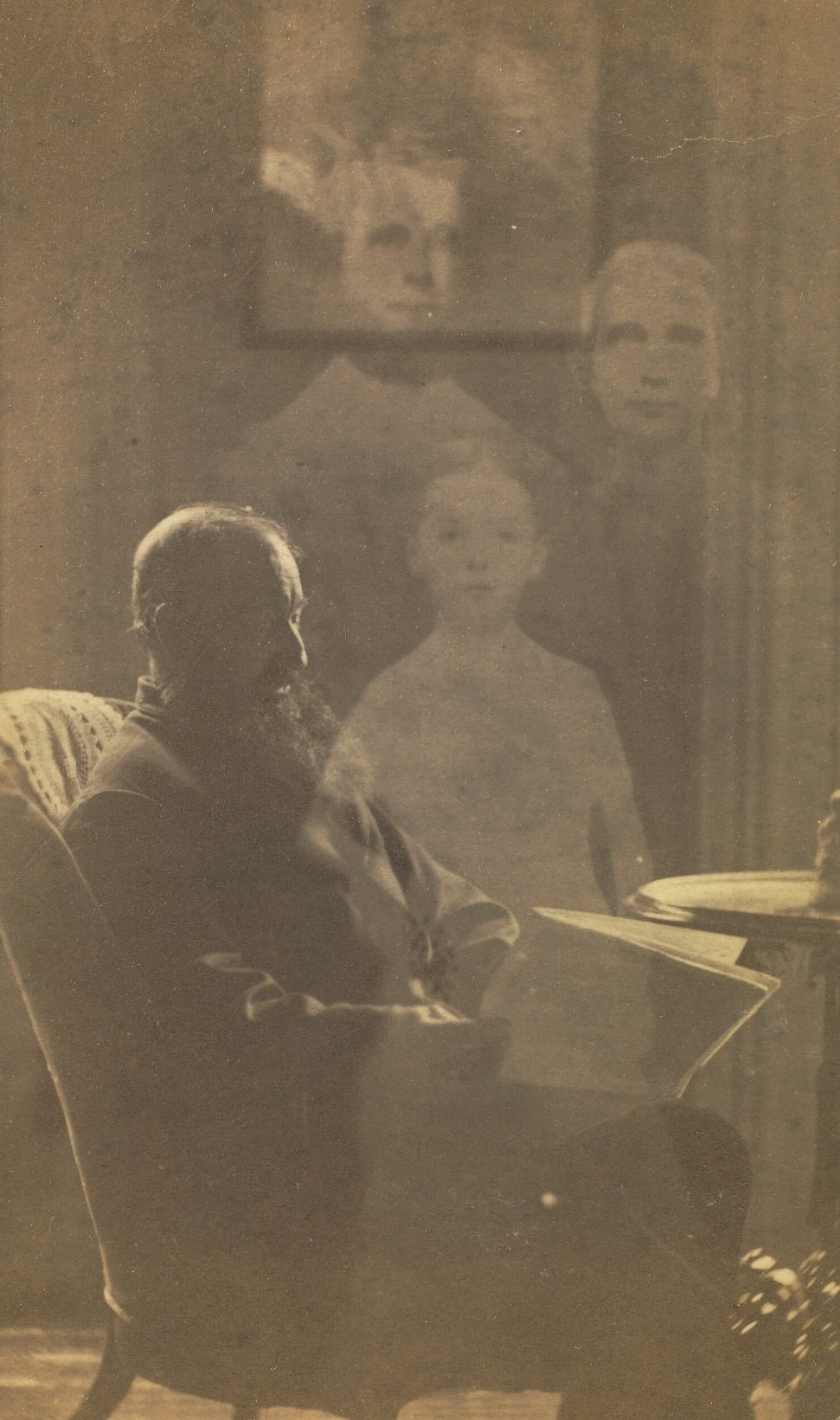
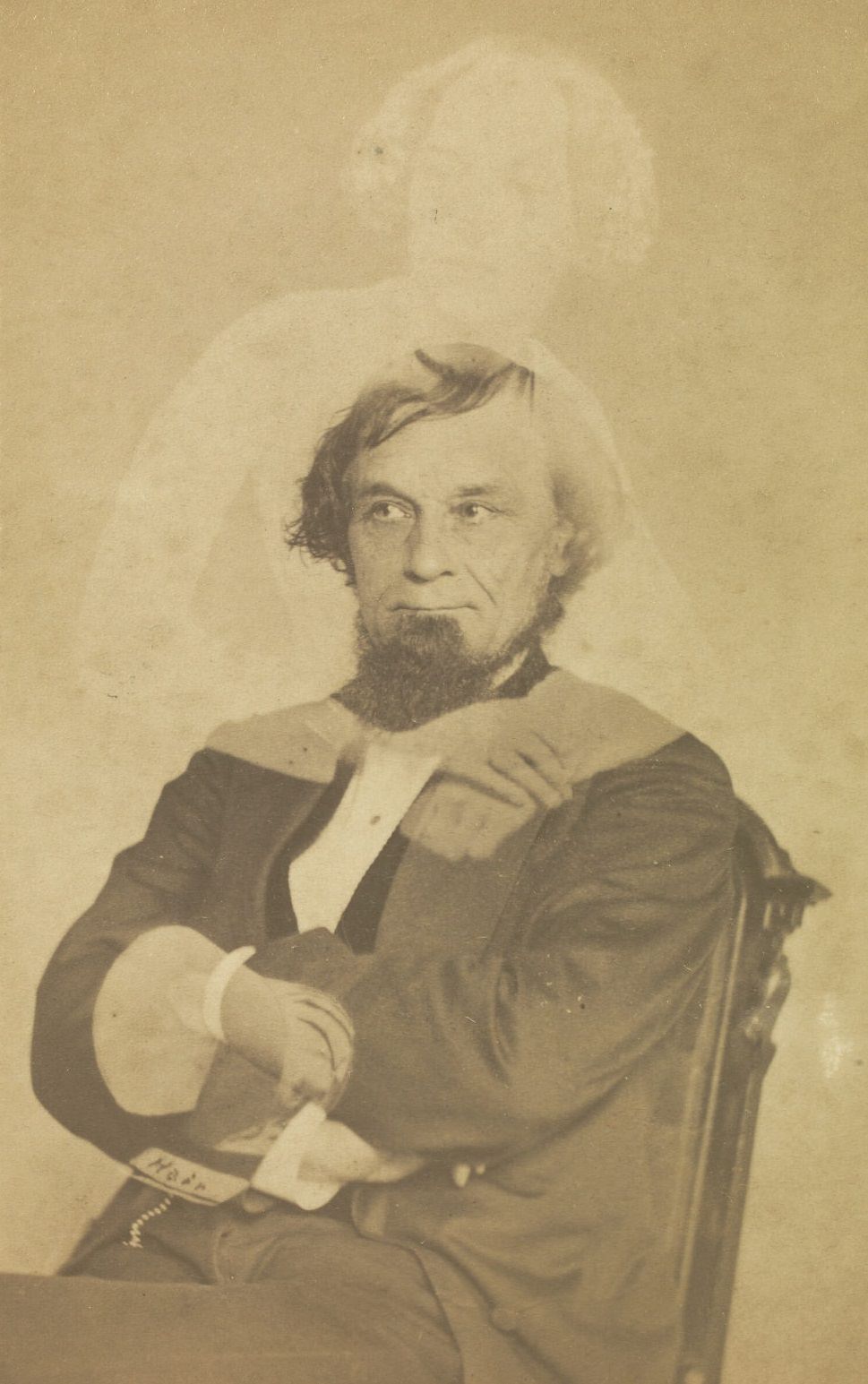
The photographs themselves are striking objects. In portrait after portrait, living subjects sit still and composed before the camera while pale, semi-transparent figures drift into the frame around them — hovering above a shoulder, pressing close behind a seated figure, or reaching toward the sitter with an outstretched hand. Some images show single spirits; others show two or three at once. The deliberate staging of each scene gave clients exactly the kind of visual confirmation their grief was looking for.
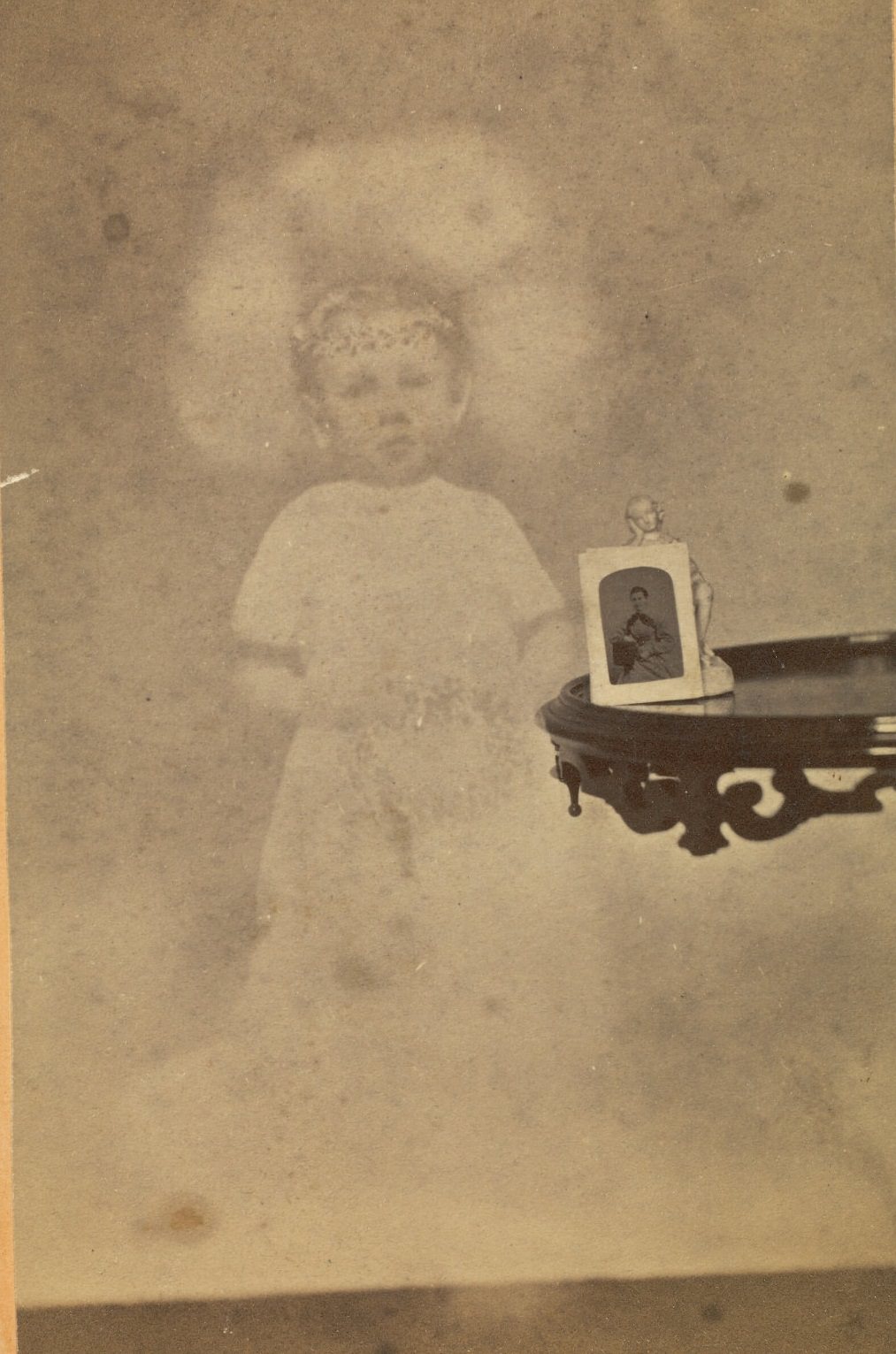
Small statuette and photograph on a side table, with the faint image of a young boy floating next to it.
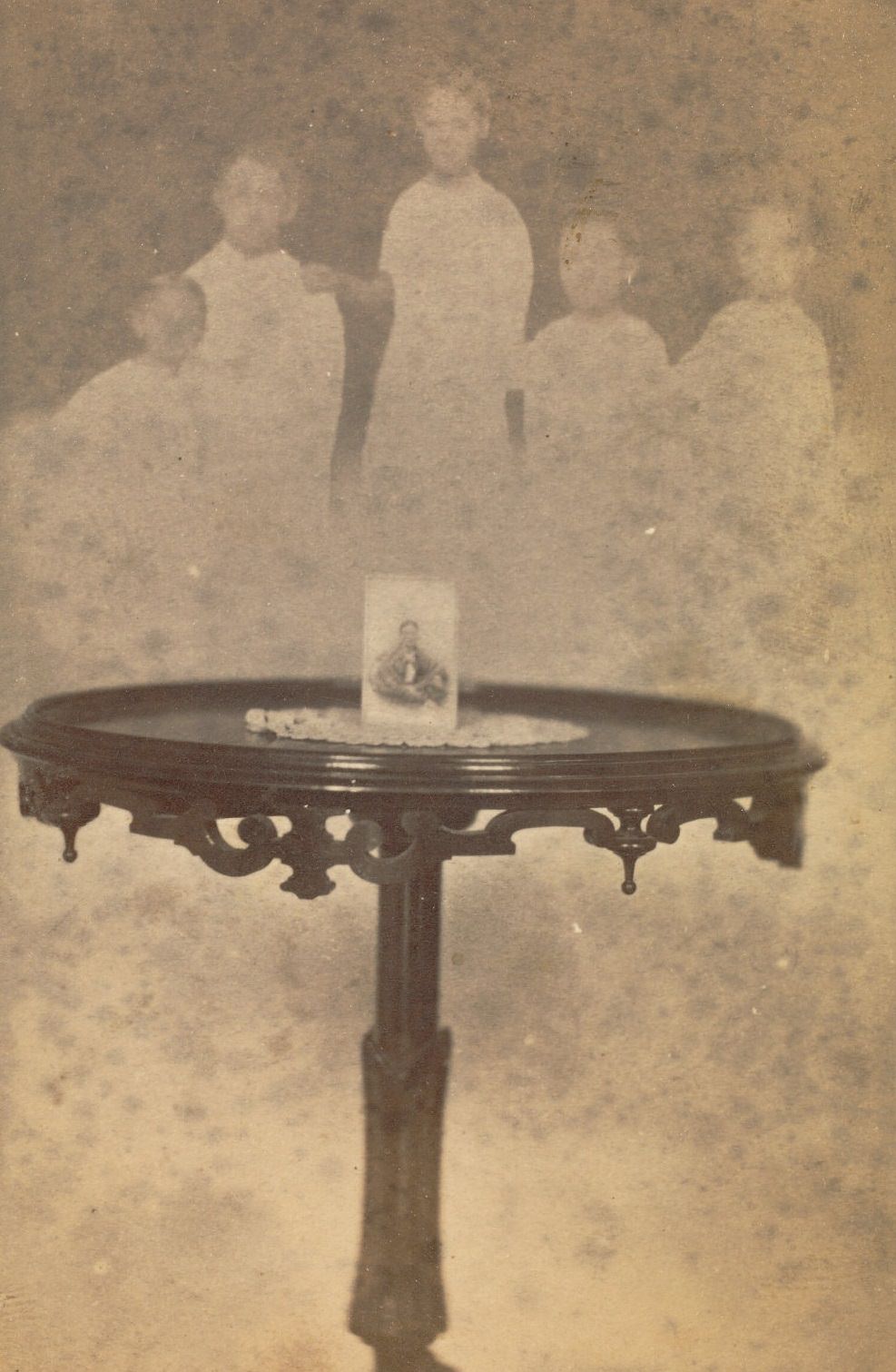
Small round table with a portrait sitting atop it, with the faint image of a group of five people, a man and four children, floating above it

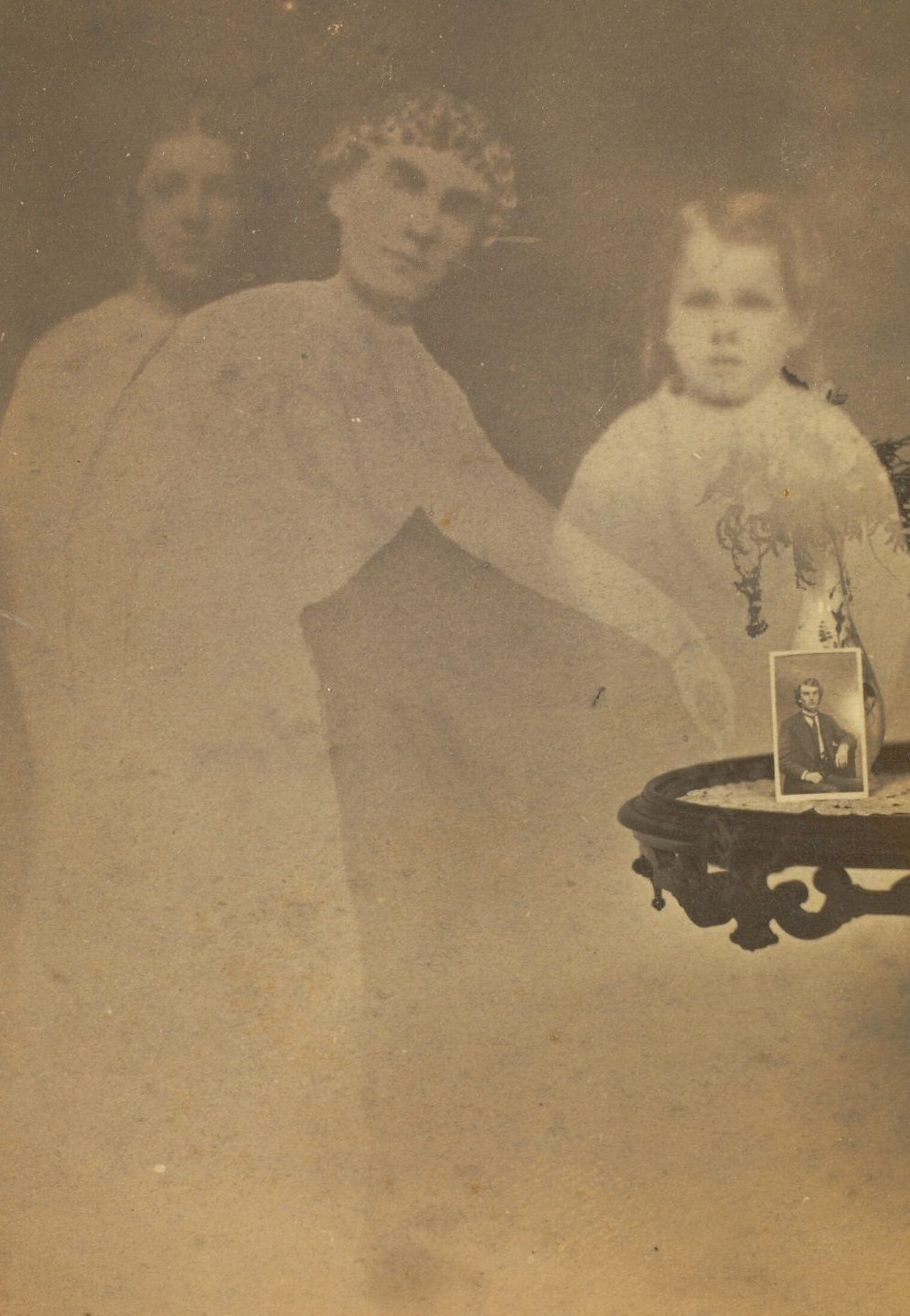
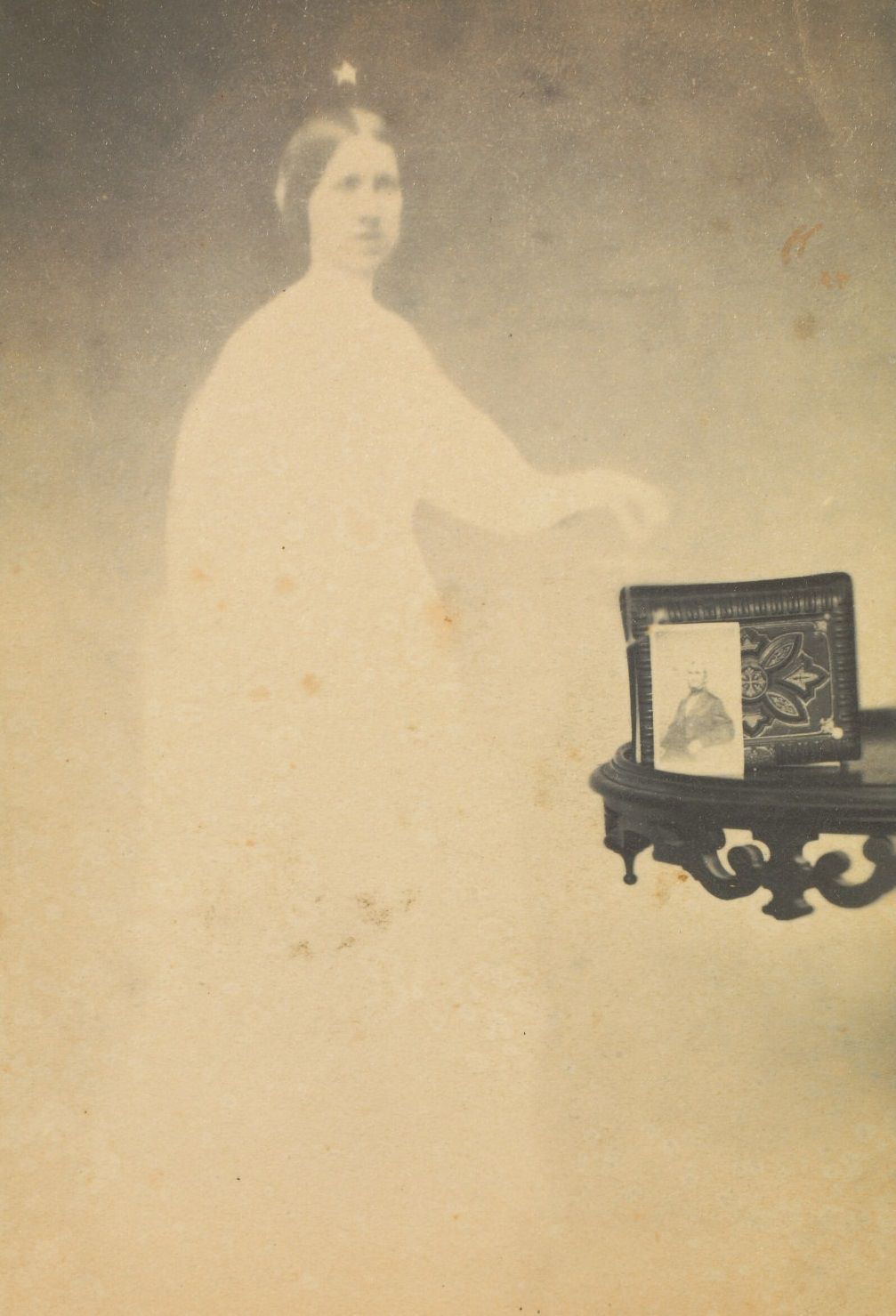
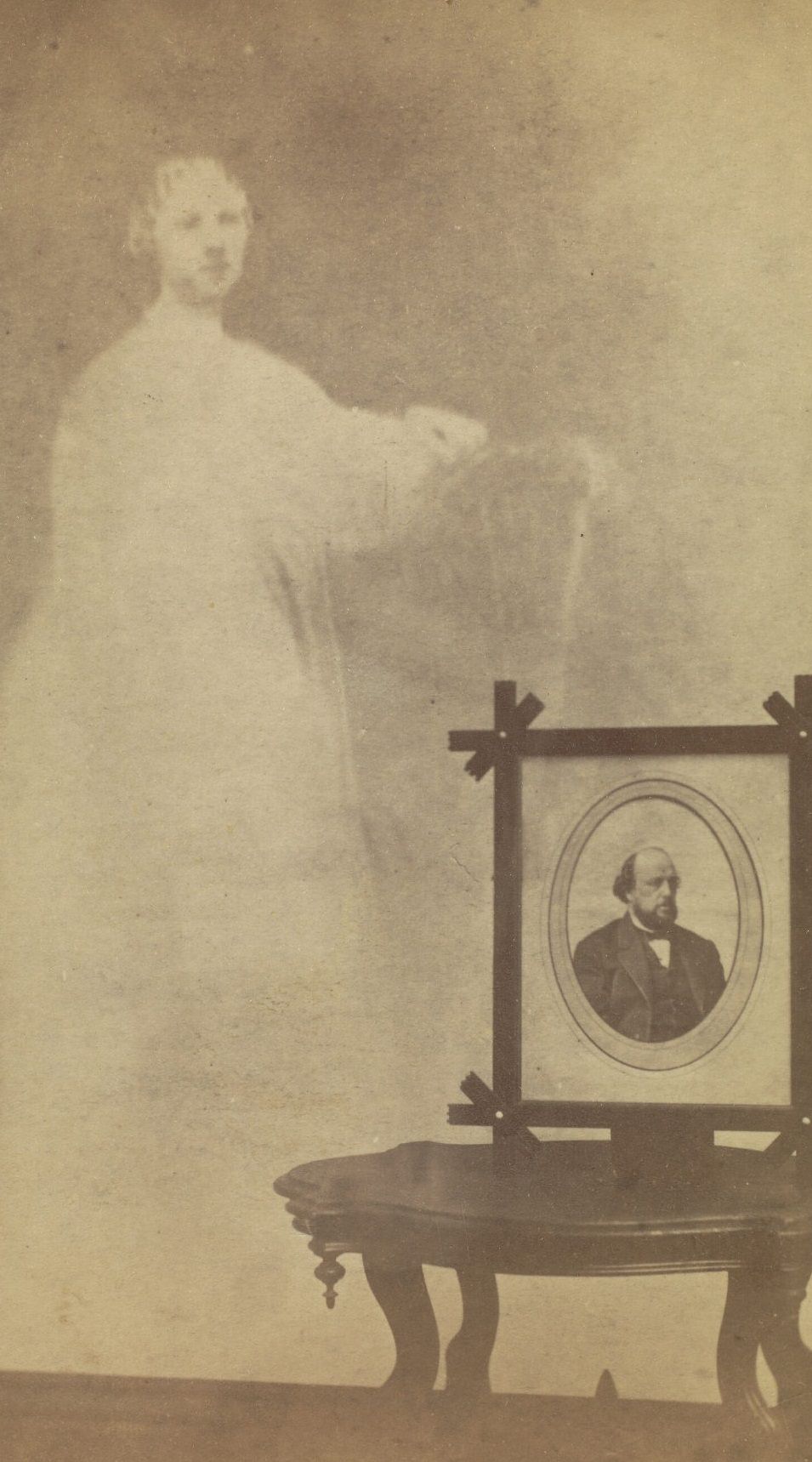
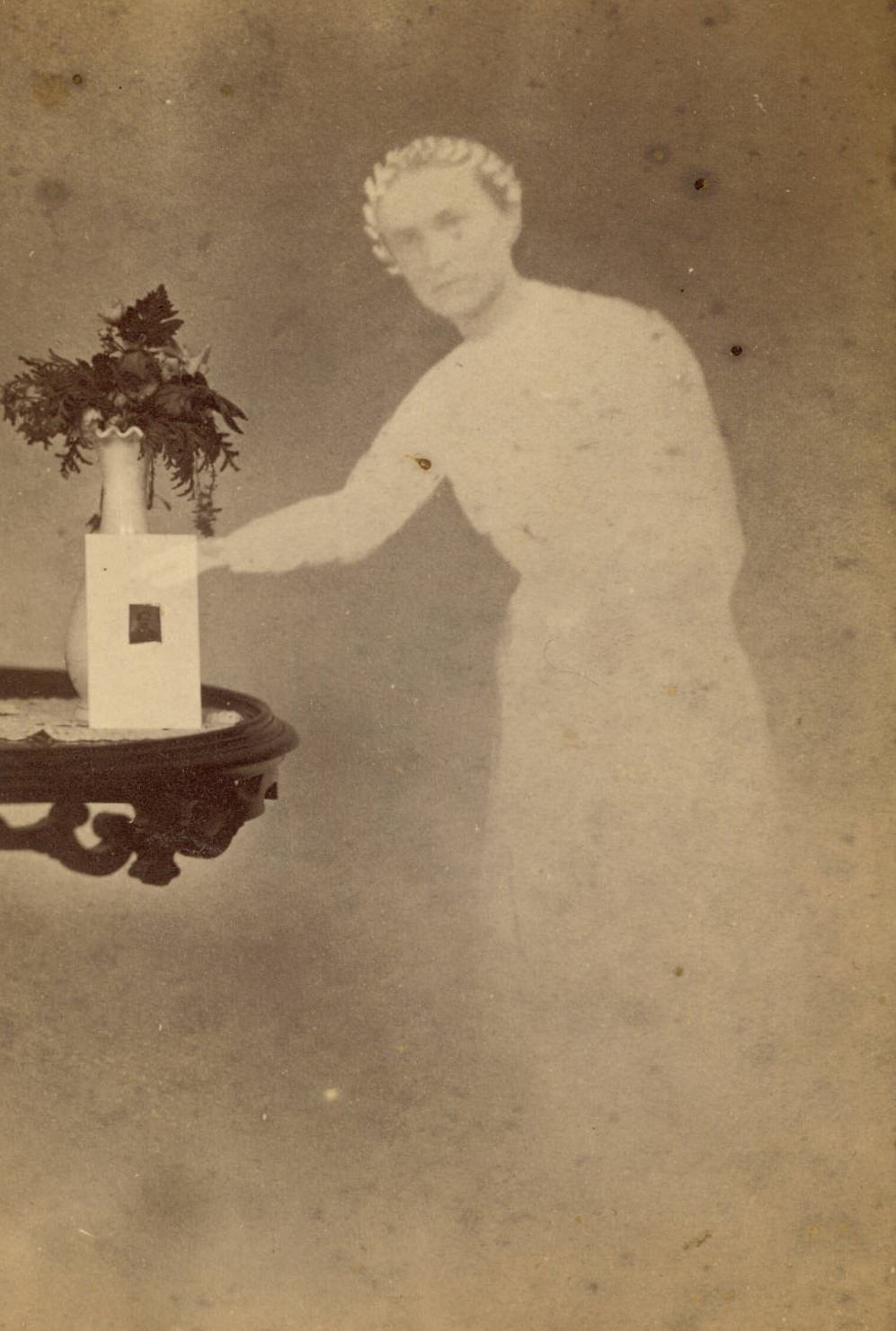
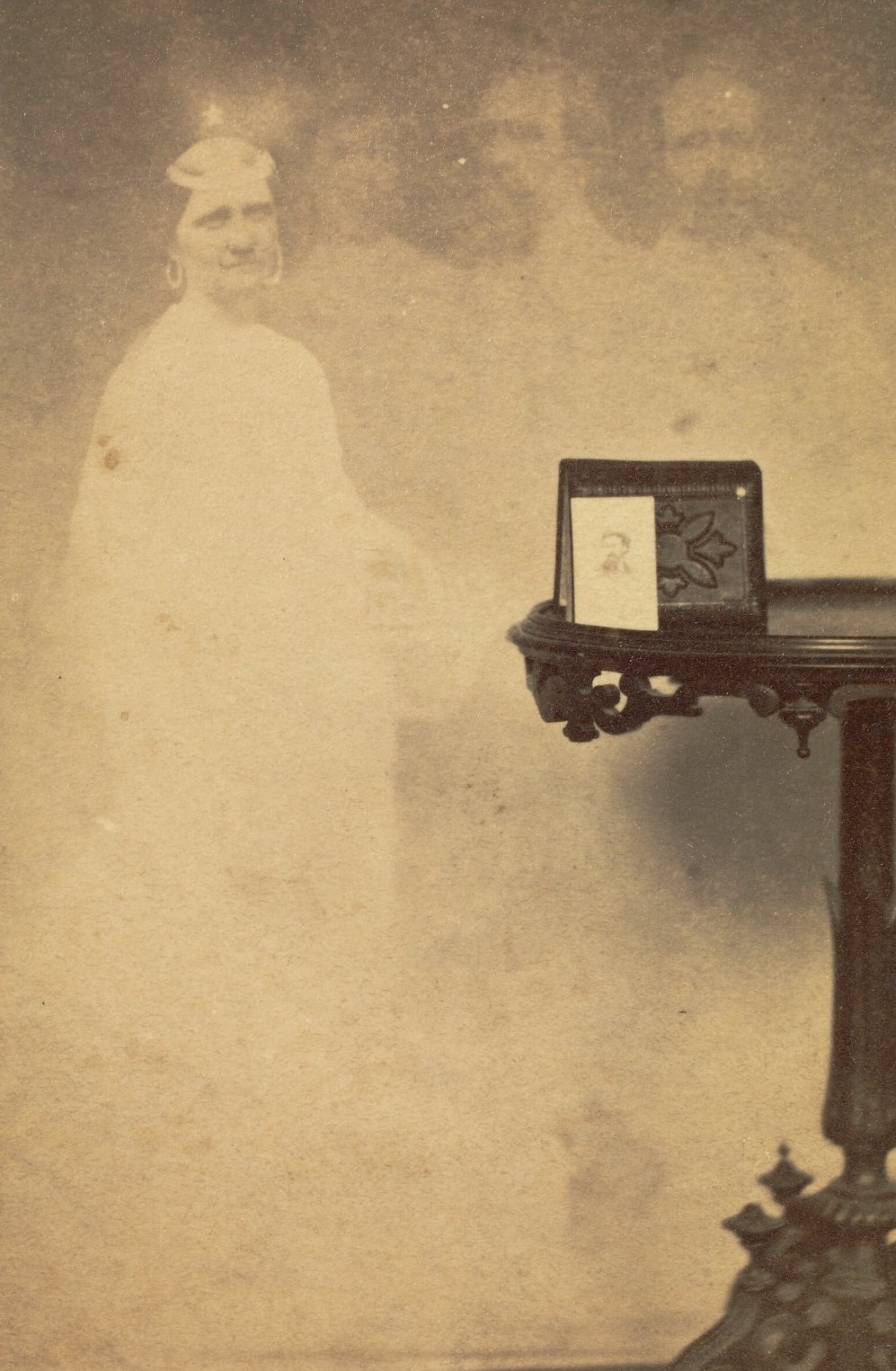
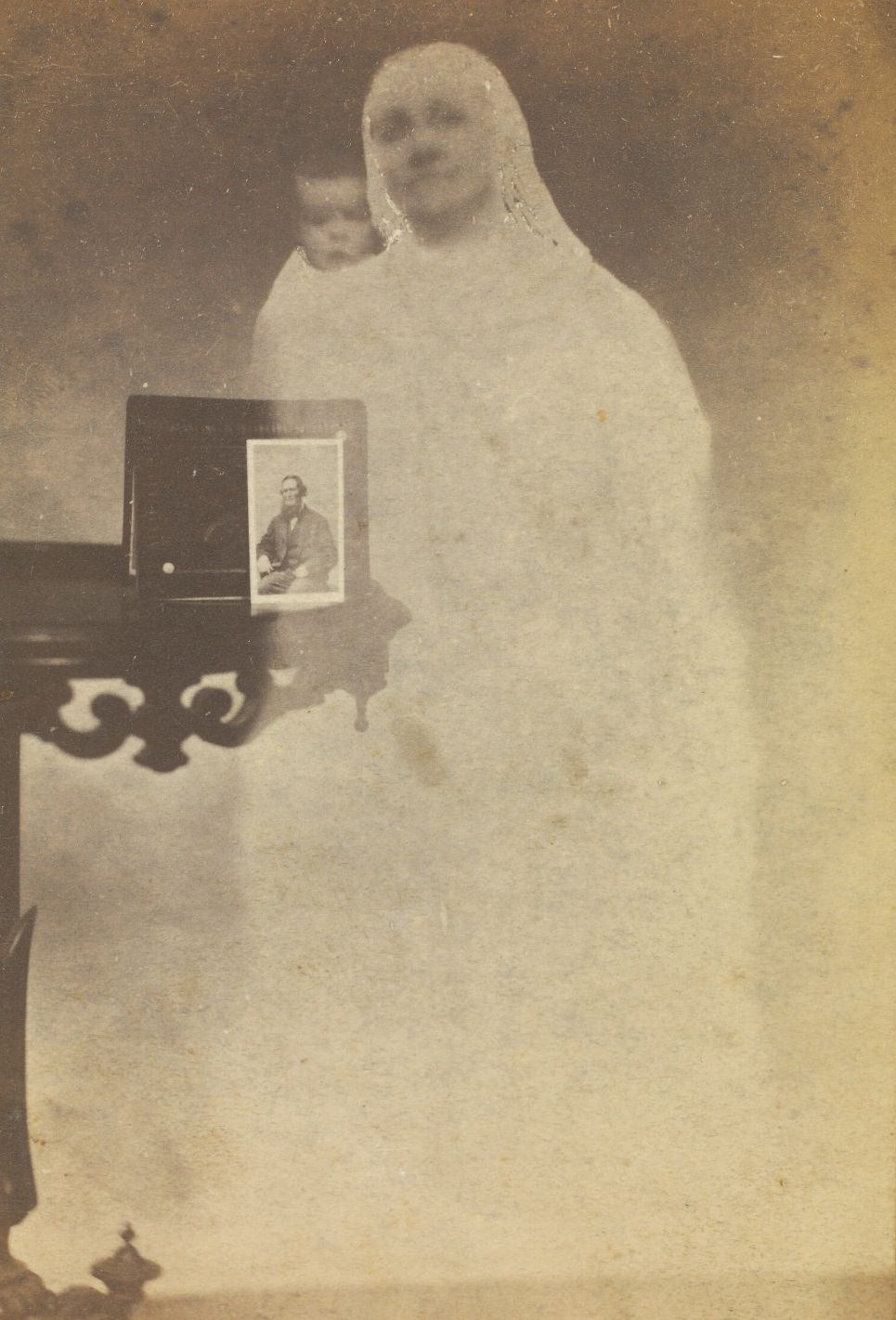
A number of Mumler’s photographs did not feature live subjects at all. Instead, he would photograph a framed portrait or small object placed on a side table, and the spirit figure would materialize in the space beside it. These table compositions gave clients who had no surviving relative to pose in person a way to still participate — they could send a photograph of the deceased, and Mumler would produce an image that appeared to show the spirit emerging from it.
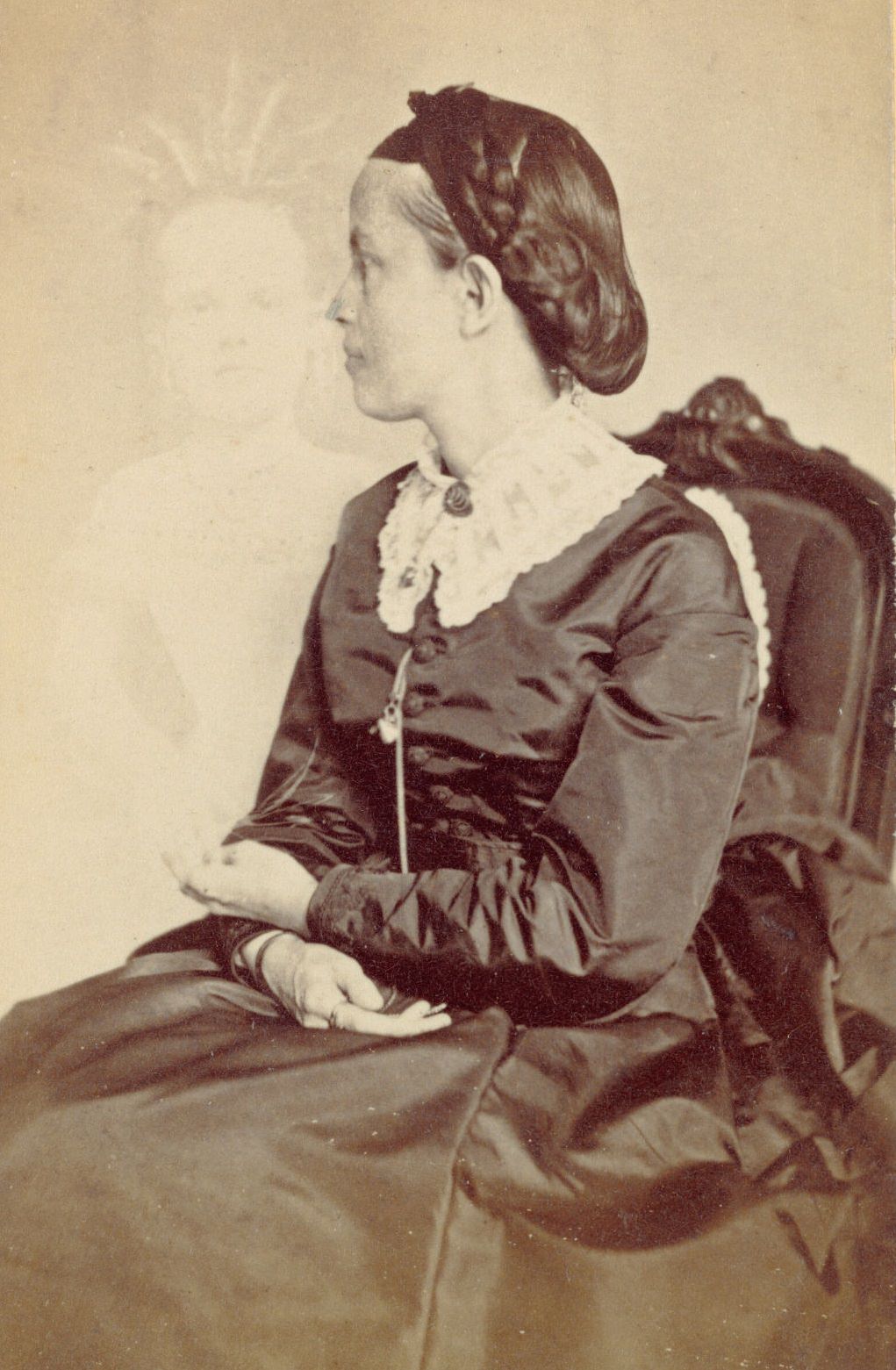
Profile portrait of Ella Bonner, with a faint image of a child visible next to her.
A portrait of Mr. Tinkham perched on a side table, with the faint image of a woman and baby next to it.
A small photograph propped against a vase of flowers on a side table. Faint images of a woman and two children are visible next to the table.

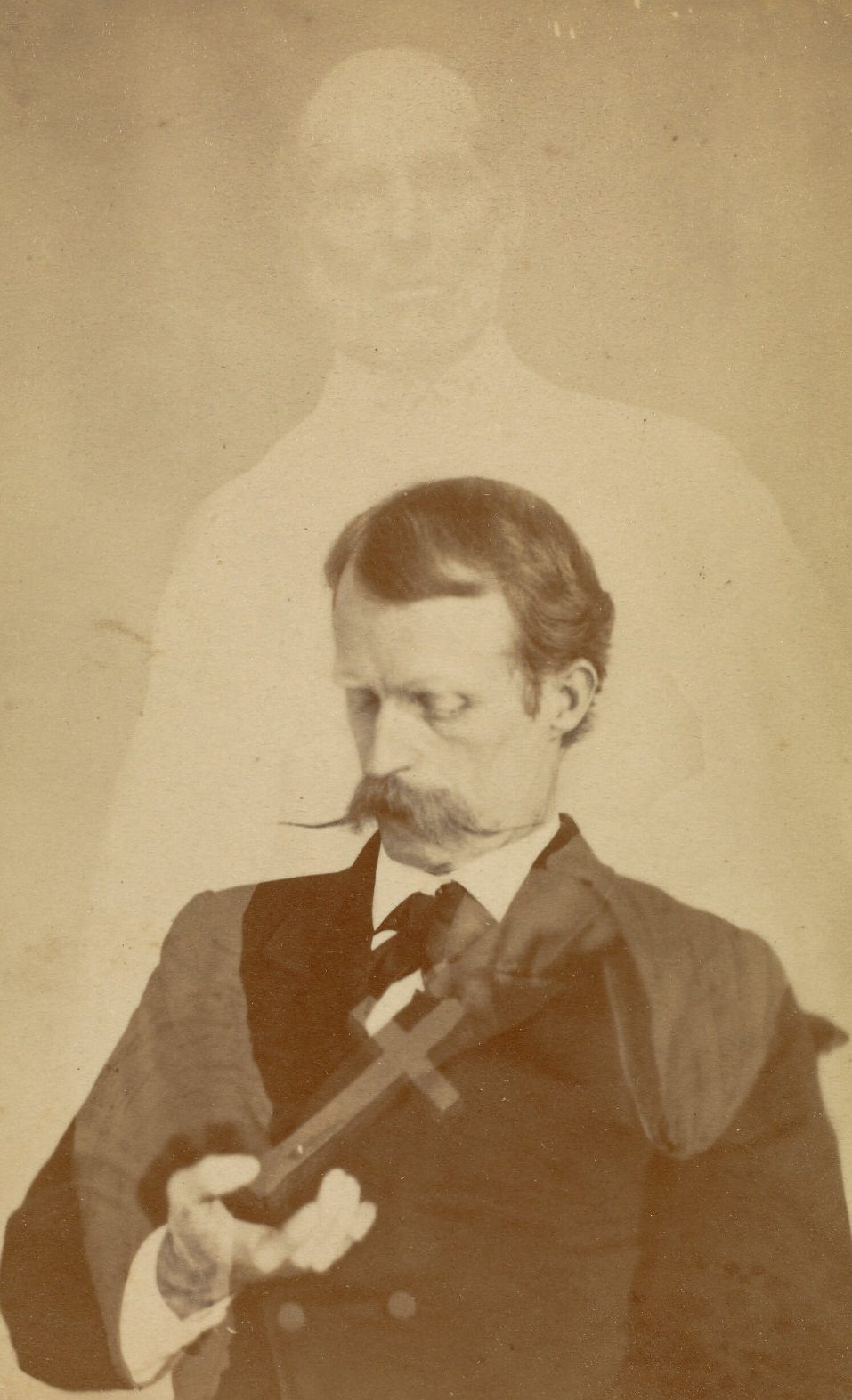
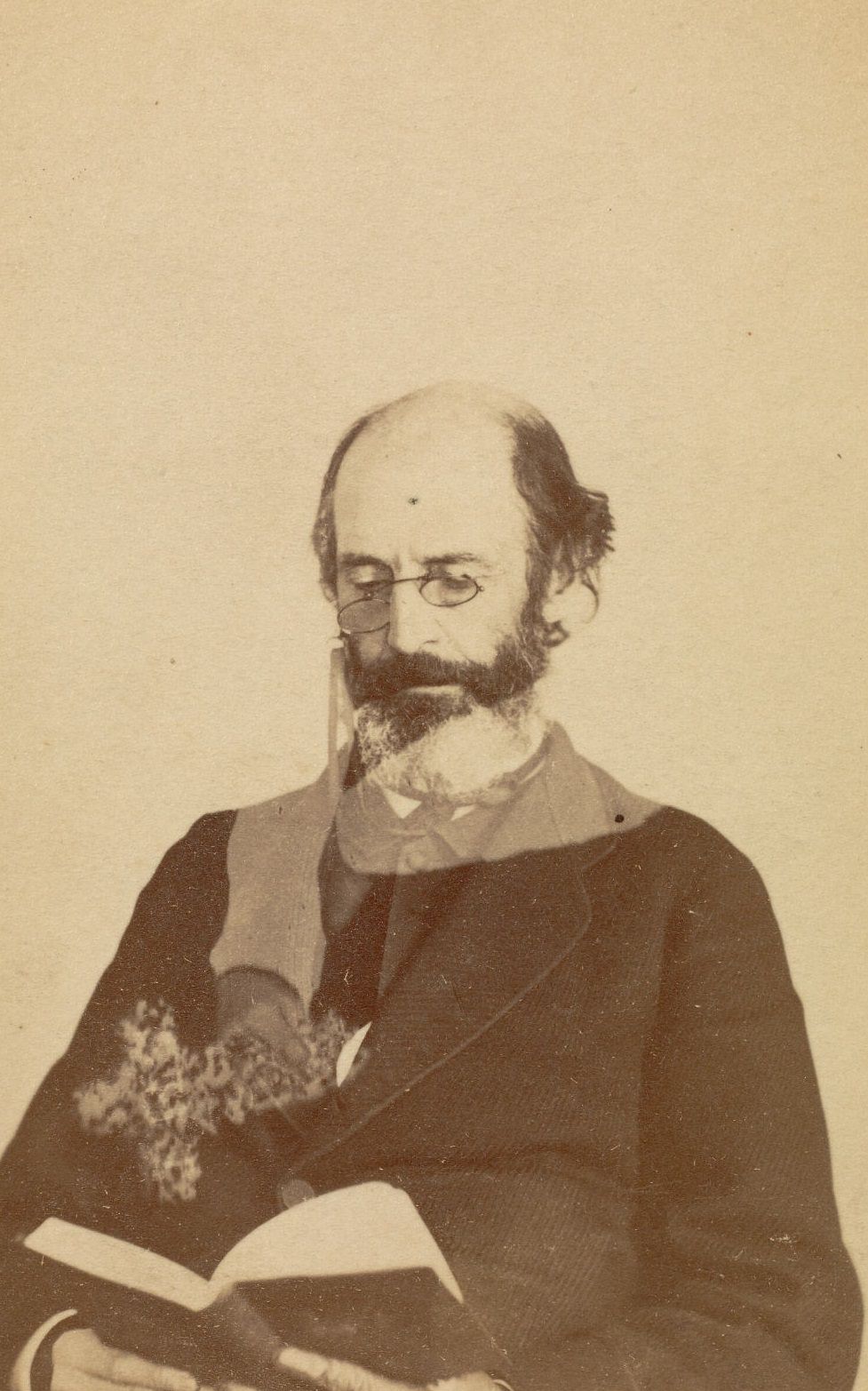
Some of Mumler’s images are more elaborate than others. A portrait of L.A. Bigelow shows a spirit woman whose arms appear to come forward over the sitter’s shoulders and rest on his chest. Another photograph shows Harry Gordon looking down into his open hand while a bearded spirit figure stands behind him, apparently placing a crucifix into the sitter’s palm. These compositions required careful planning and execution, whatever their ultimate origin.
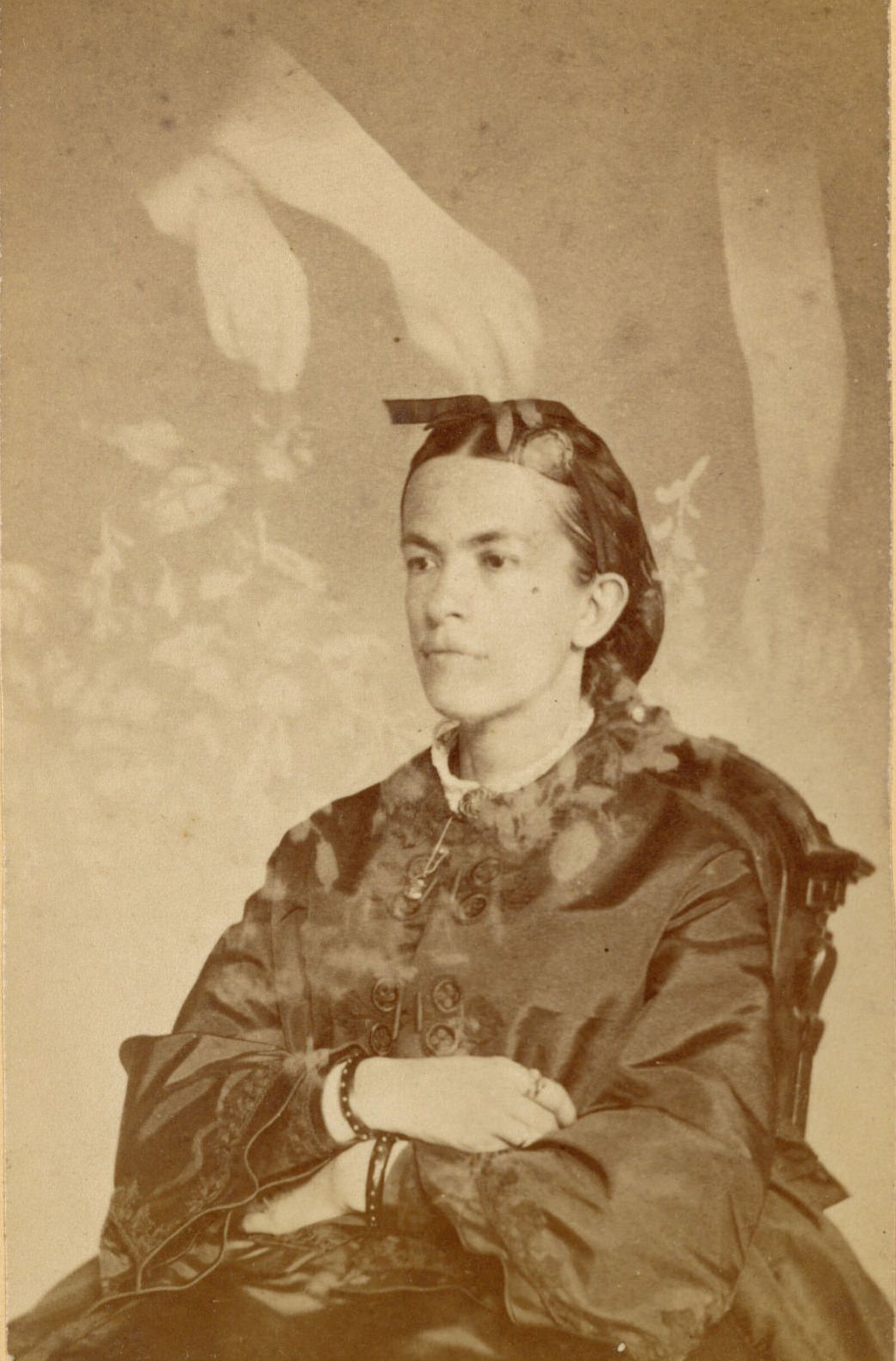
Unidentified young woman seated with her arms crossed. Faint images of three arms and flowers float over her head.
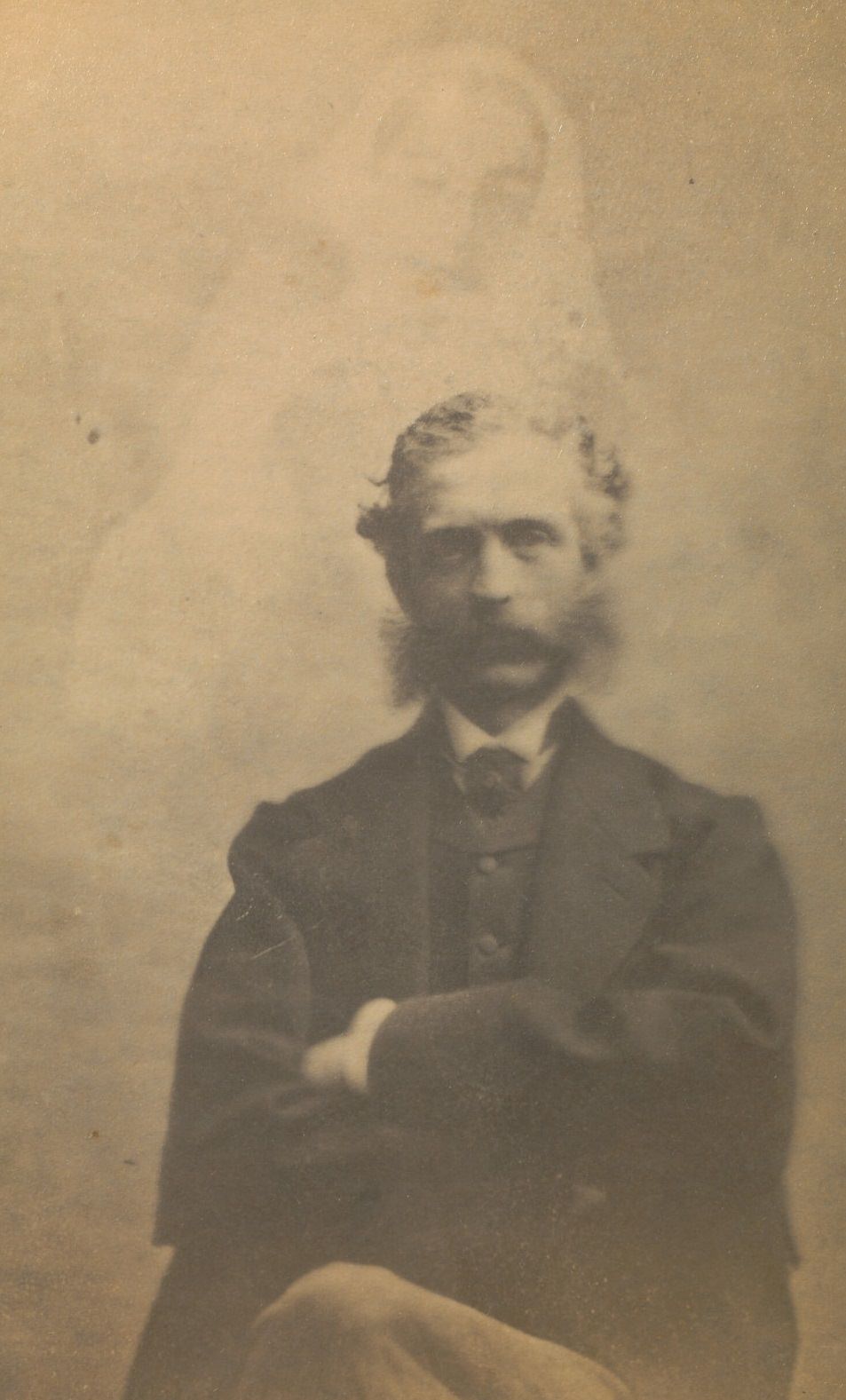
Portrait of a seated man, facing the camera with his arms folded across his chest.
Portrait of a seated elderly woman, holding a book in her lap. Faint images of a woman and two men are visible above her.
A photograph propped against an album on a side table, with the faint image of a woman next to it.

Among those who came to Mumler seeking a spirit portrait was Mary Todd Lincoln, widow of the assassinated president. The resulting photograph shows her seated while a ghostly pair of hands rests on her shoulders — hands that she believed belonged to Abraham Lincoln. Whether she found comfort in the image or later reconsidered its authenticity, she sought Mumler out during one of the most painful periods of her life.
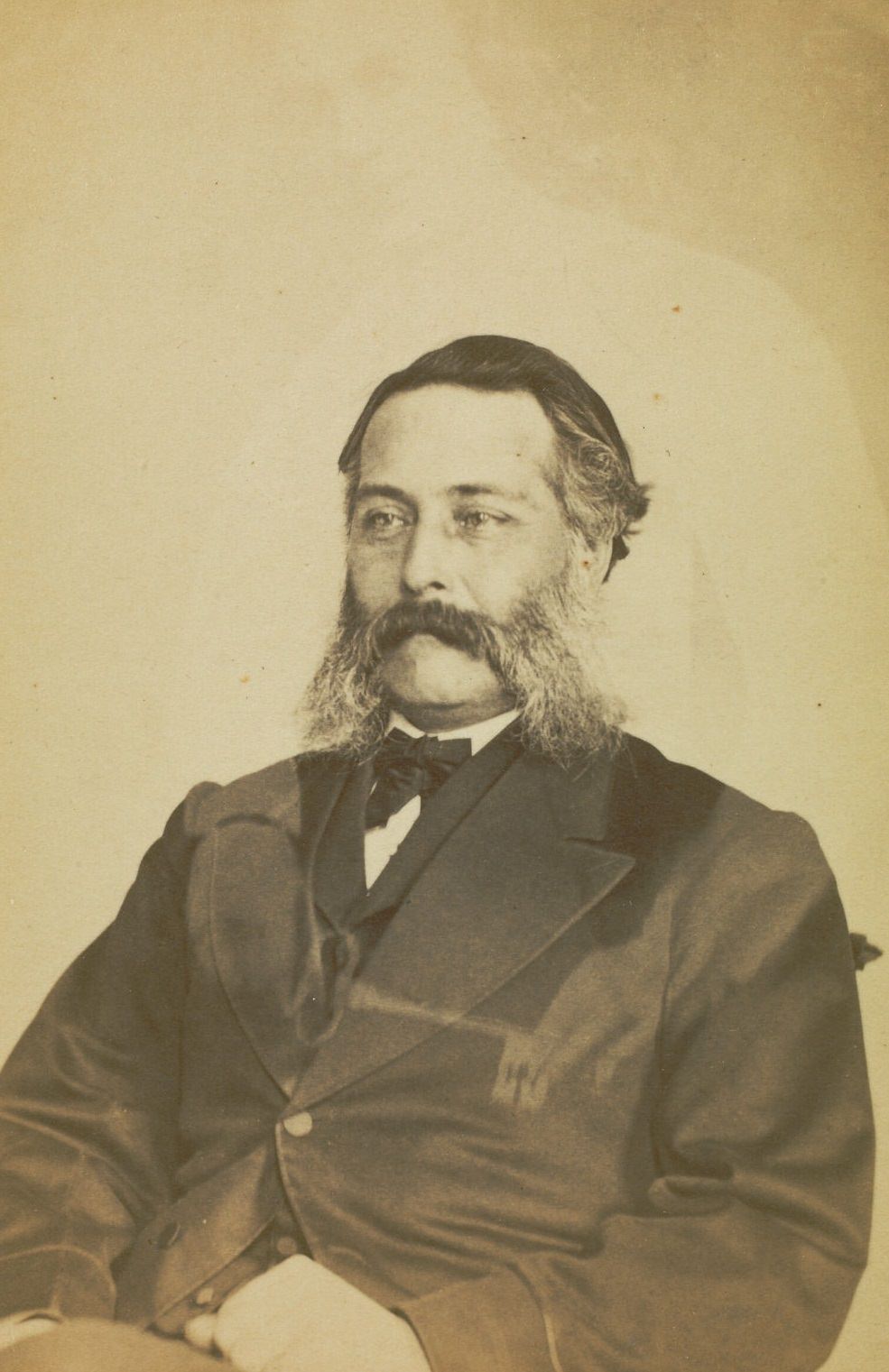
Portrait of L.A. Bigelow with mutton chop whiskers, with the faint image of a woman visible behind him.
Portrait of Mrs. H.B. Sawyer, looking down at her hand. The faint image of a person is visible above her, with the faint image of a baby across her.
Profile portrait of a man with a beard seated in an upholstered chair, next to a side table. The faint images of three children appear behind him.

Mumler’s eight years as a spirit photographer were marked by constant scrutiny. His work attracted not just grieving families but also investigators, journalists, and rival photographers who suspected trickery. Despite the fraud trial, the exact technical methods he used were never proven in court. Photography experts who examined his work during the proceedings said they found no clear signs of manipulation — a fact Mumler’s supporters used to argue for his legitimacy.
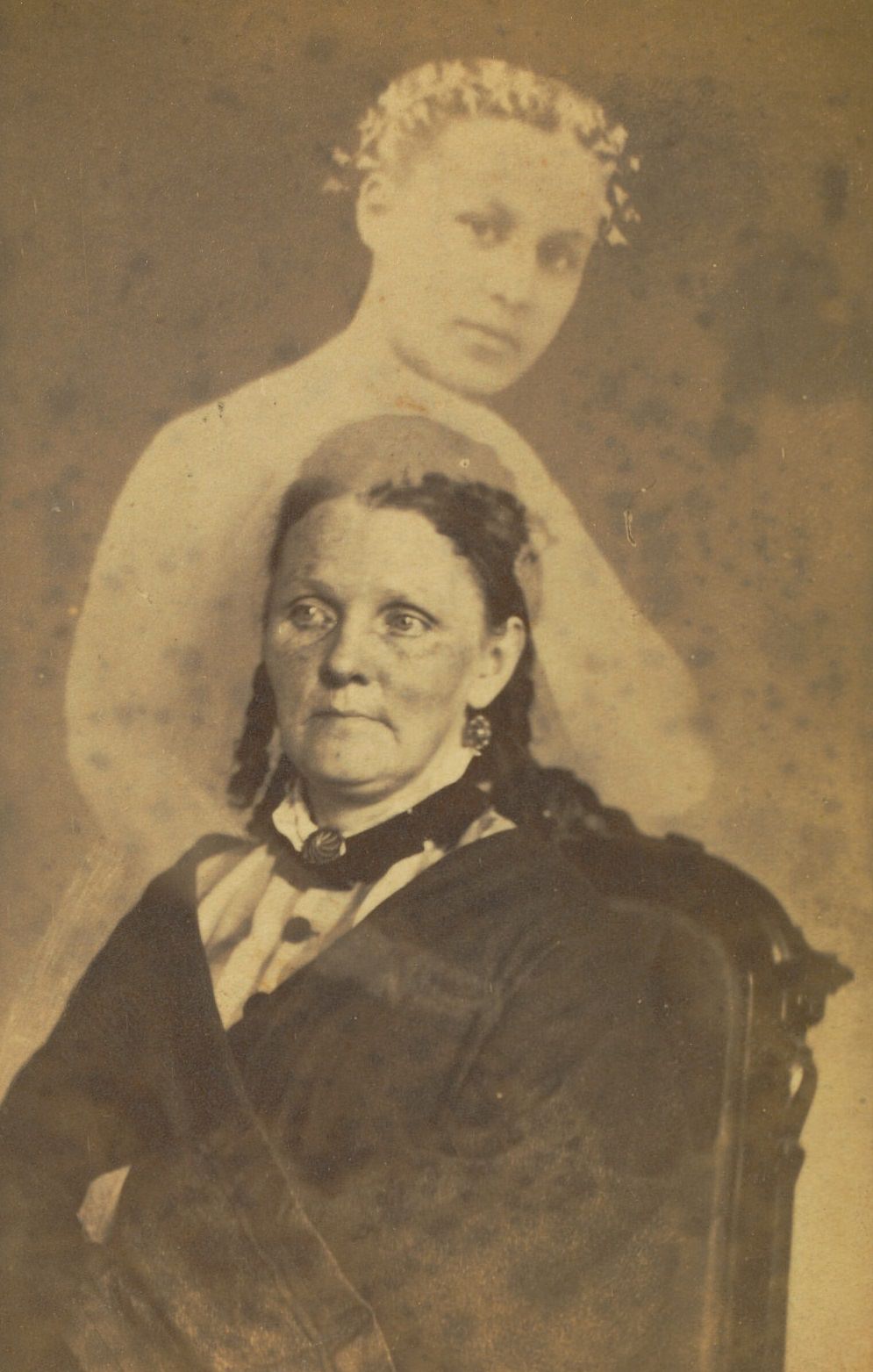
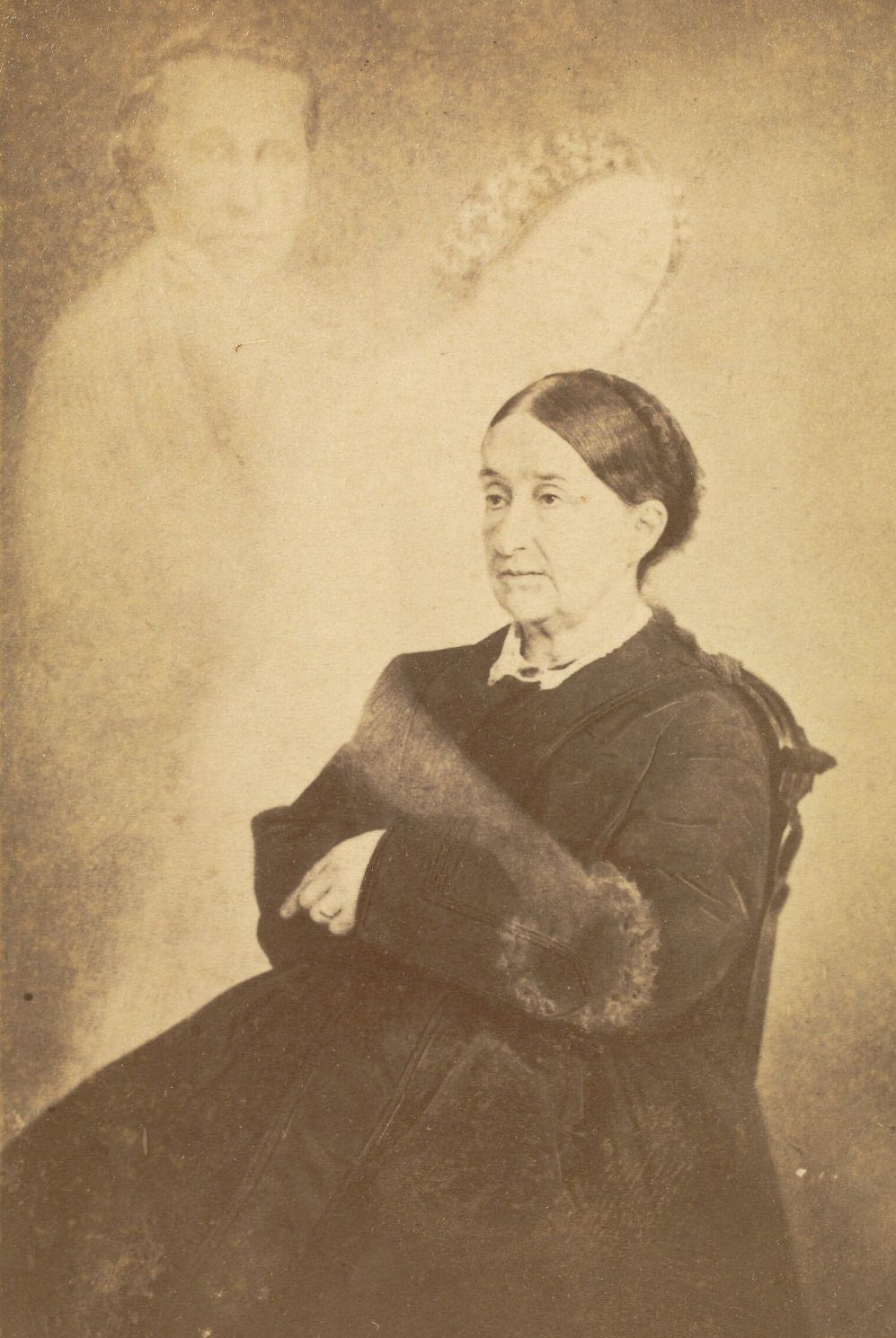
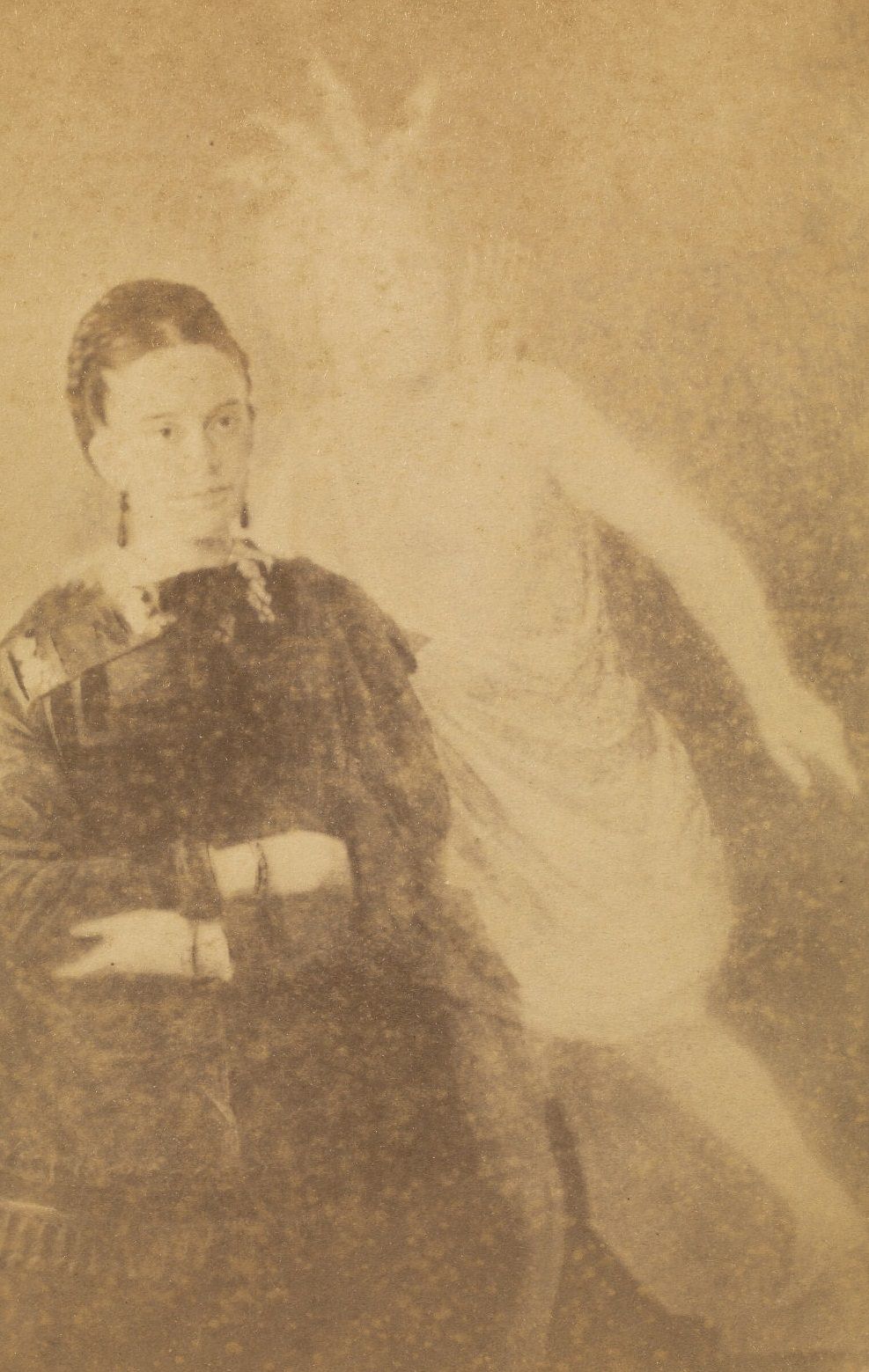
Portrait of a woman seated with her arms crossed. The faint image of a younger woman wearing a floral hair wreath appears above her.
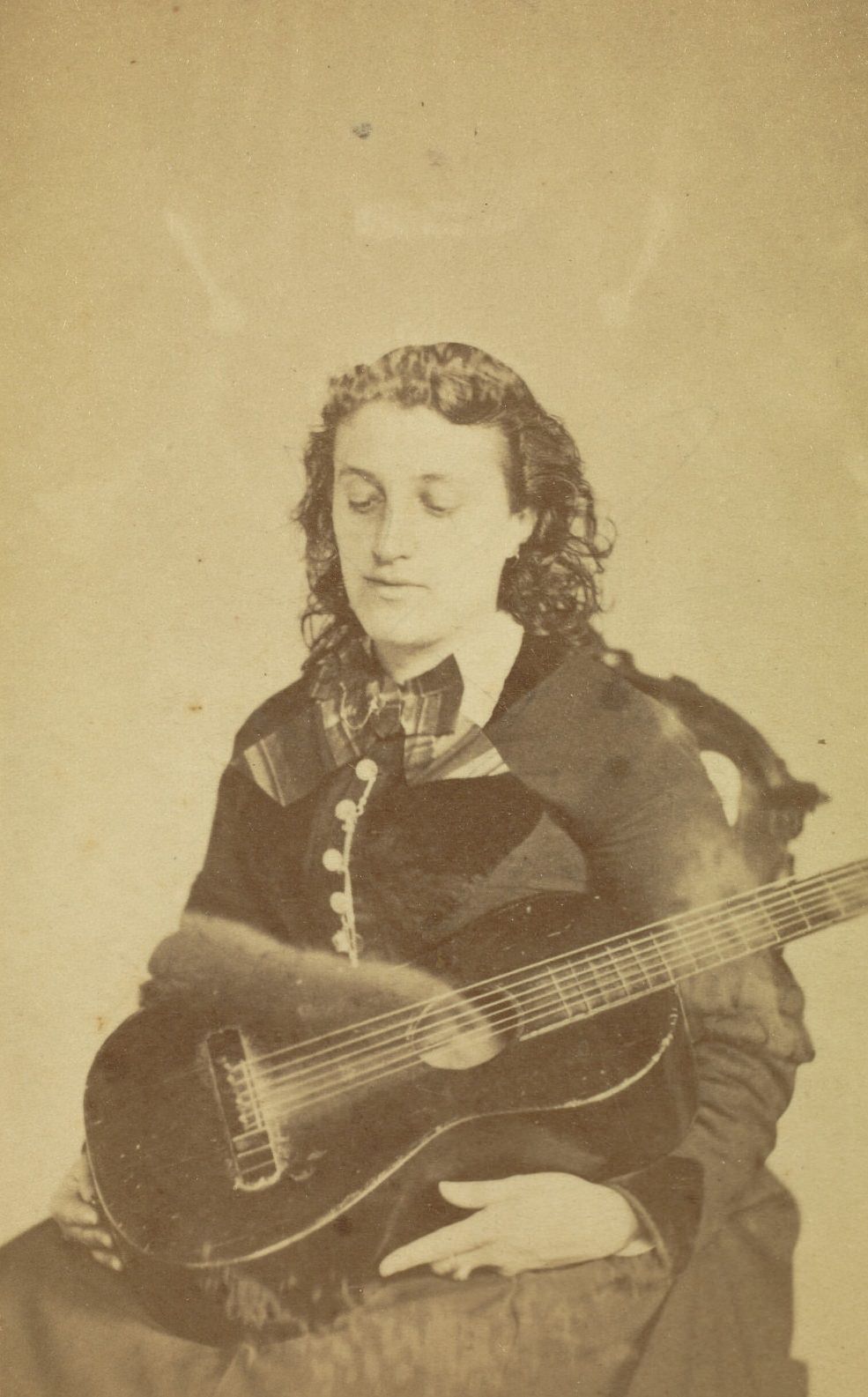
Portrait of a seated woman holding a guitar in her lap. A very, very faint image of a person is behind her.
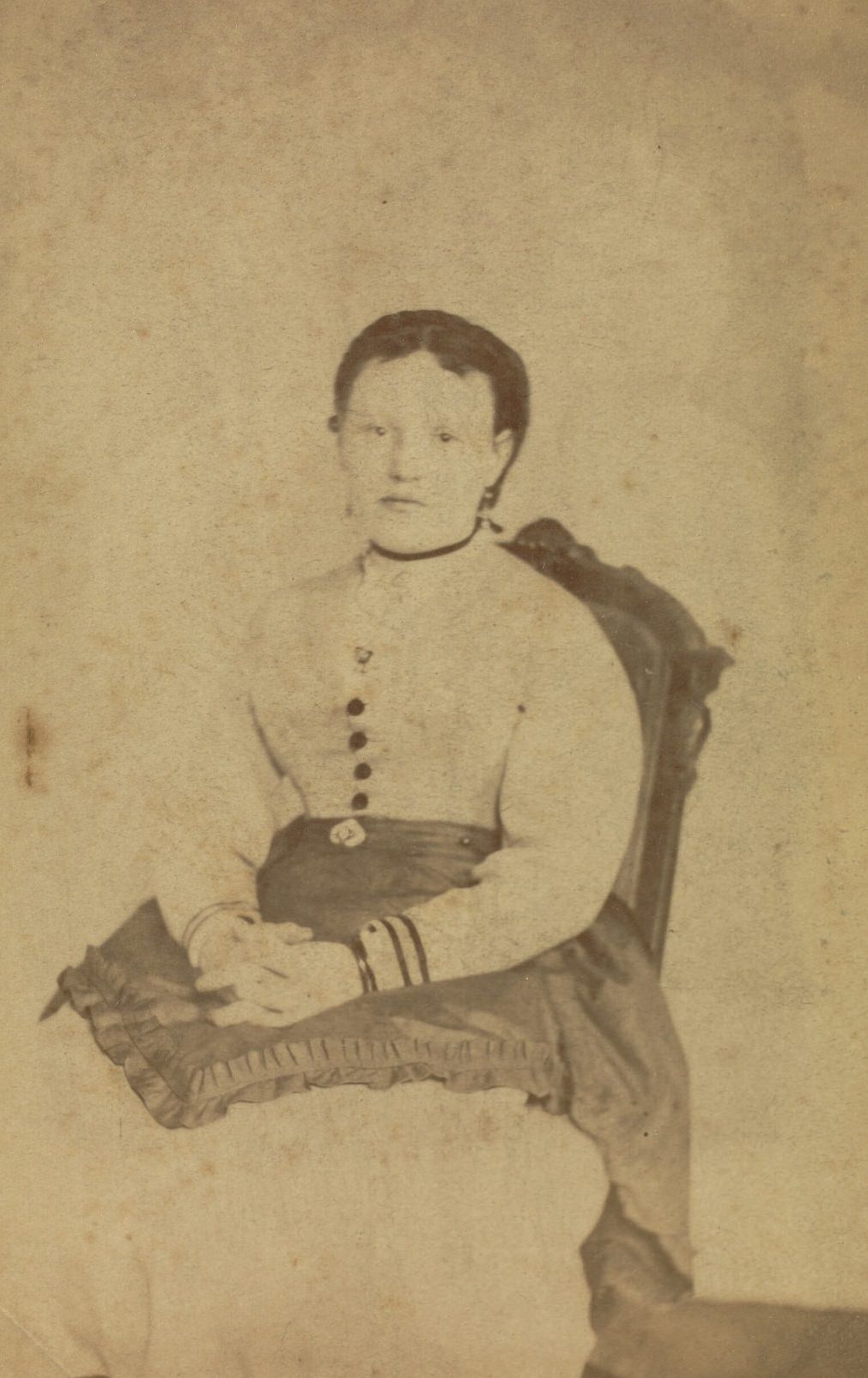
Portrait of a woman seated with her hands clasped in her lap.

His subjects came from across society. Among the recognizable names in his portfolio are William Lloyd Garrison, the prominent abolitionist, as well as journalists, merchants, and ordinary citizens. Some sitters look directly at the camera; others gaze downward or to the side, their expressions solemn. The spirits behind them — women, men, and children alike — appear as soft, almost translucent presences pressed into the photographic paper.
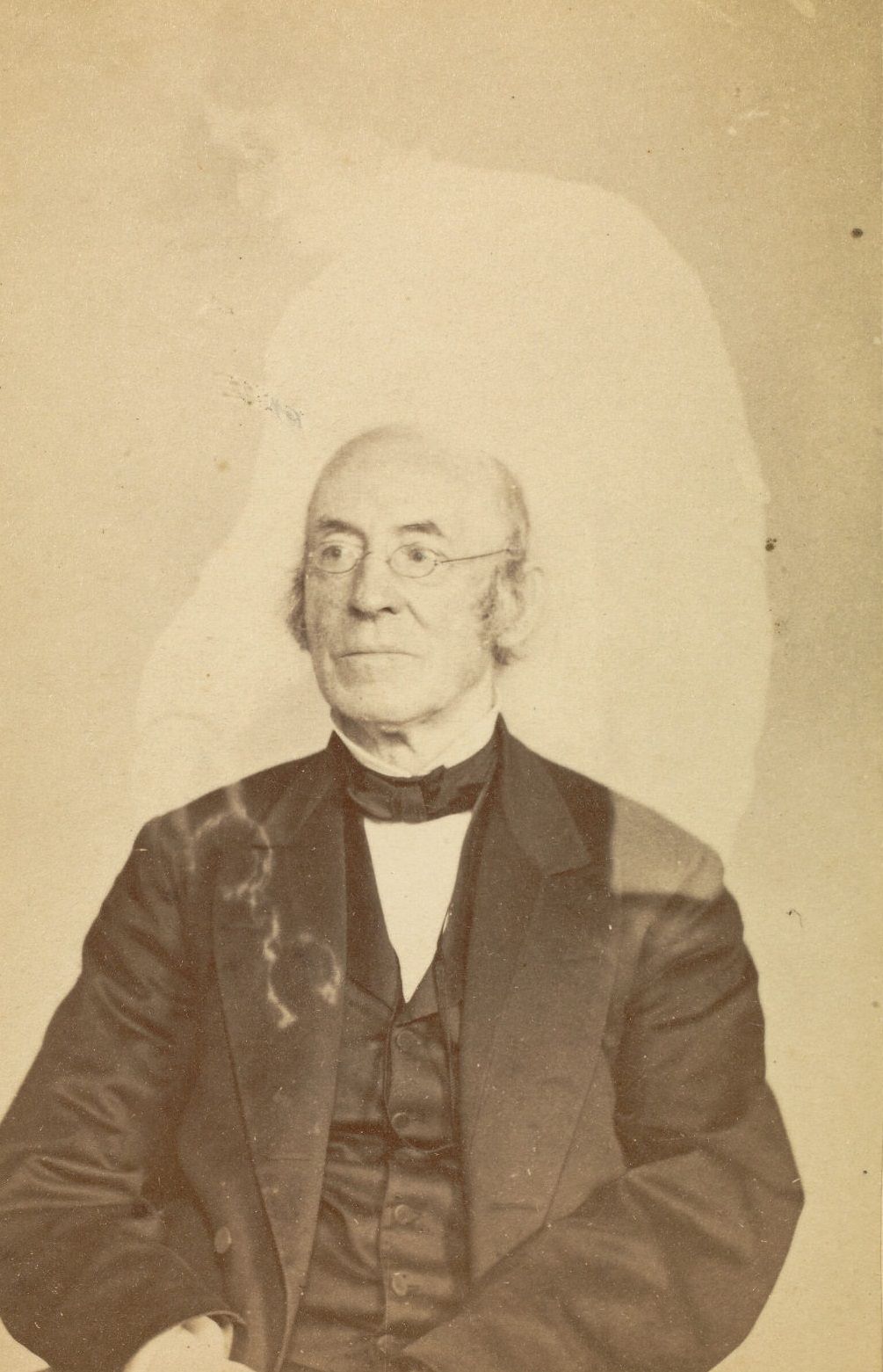
Portrait of William Lloyd Garrison with the faint image of a woman above him.
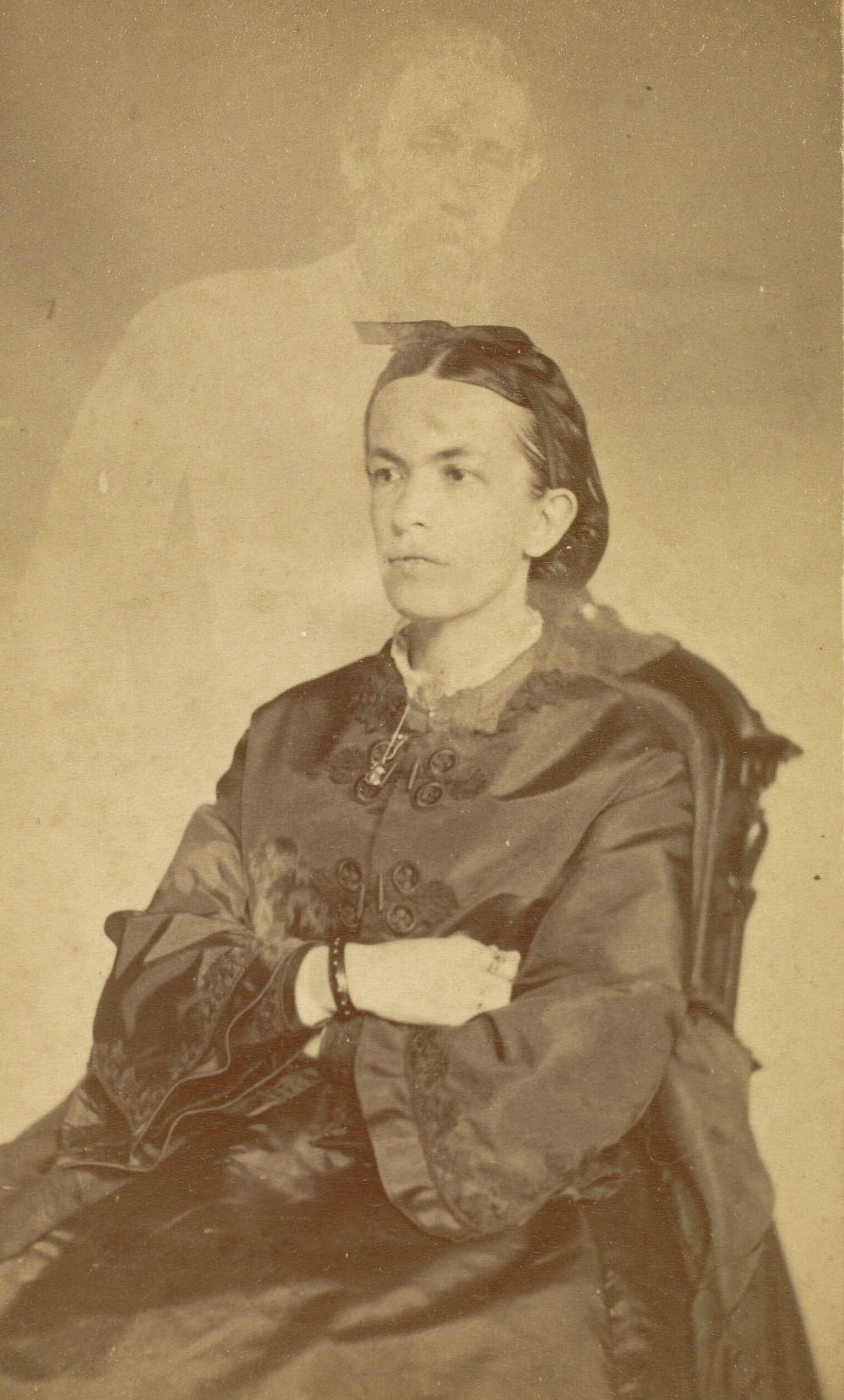
Portrait of Mrs. Conant with her arms crossed. The faint image of a bearded man appears above her.
A framed portrait of Mr. Brown perched on a side table, with the faint image of a woman next to it.

Reports on what happened to Mumler after the trial differed sharply. Some accounts said that the publicity surrounding the case ruined him financially and professionally, and that he died penniless and disgraced. Others claimed the opposite — that the notoriety only brought him more business. What is documented is that he moved on from photography entirely in his later years. He developed an industrial printing technique called the Mumler Process, which allowed photo-electrotypes to be reproduced as quickly as woodcut prints. He died on May 16, 1884. His obituary mentioned the spirit photography scandal in a single line at the very end.
Portrait of Mrs. S.A. Floyd, wearing a dark dress with her arms crossed.
Portrait of a bearded man, holding an open book in his lap. The faint image of a hand holding flowers is coming over one shoulder to his chest.
A photograph propped against a vase of flowers on a side table, with the faint image of a woman reaching out with one arm next to the table.
Portrait of Mrs. Swan with her arms crossed. Faint images of a man and a woman reaching out her hand are next to Mrs. Swan.
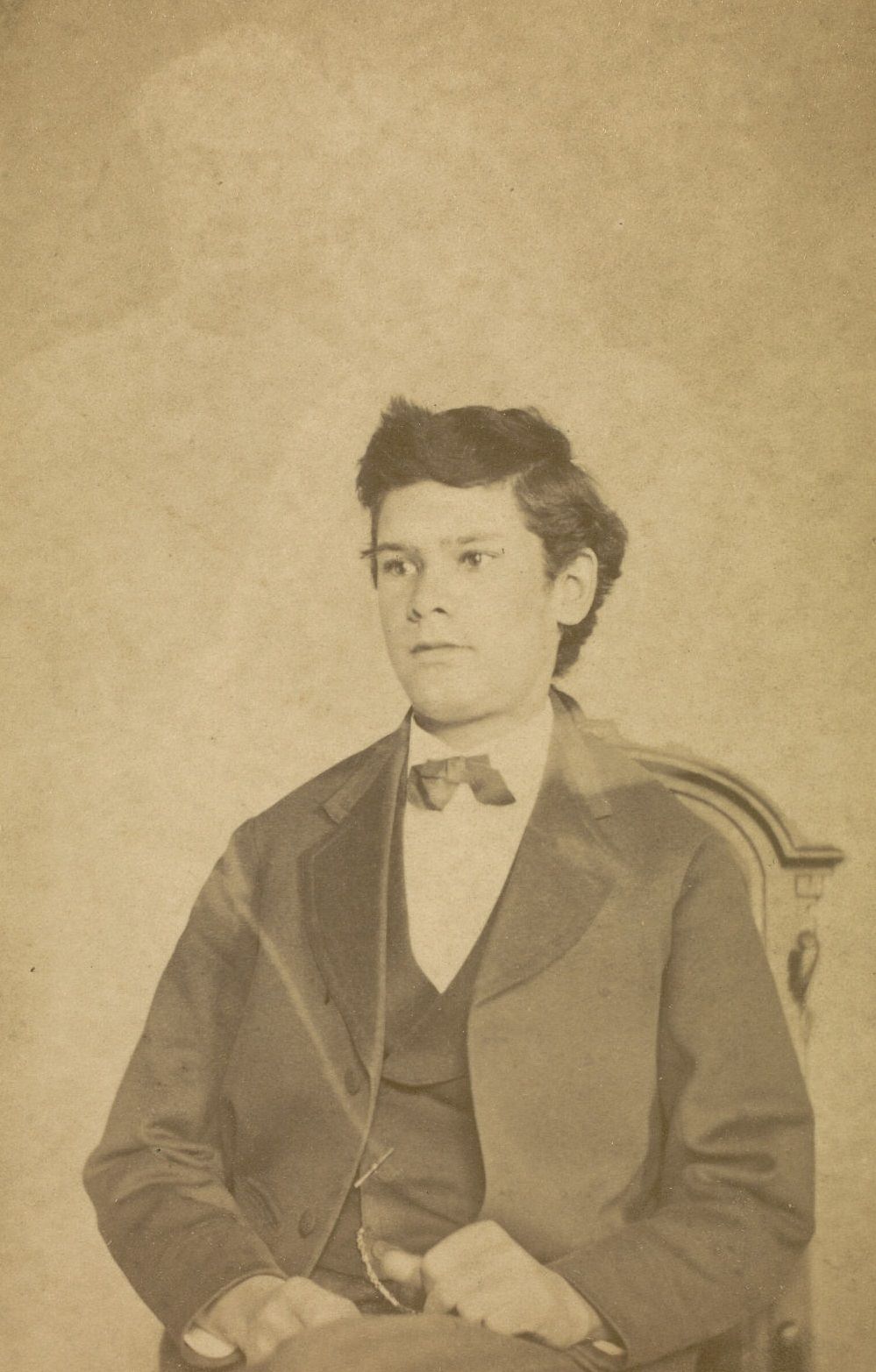
Portrait of Master Herrod. Faint images of a man and a woman are visible behind him.
A photograph propped against an album on a side table, with faint images of a woman and three men floating next to the table.
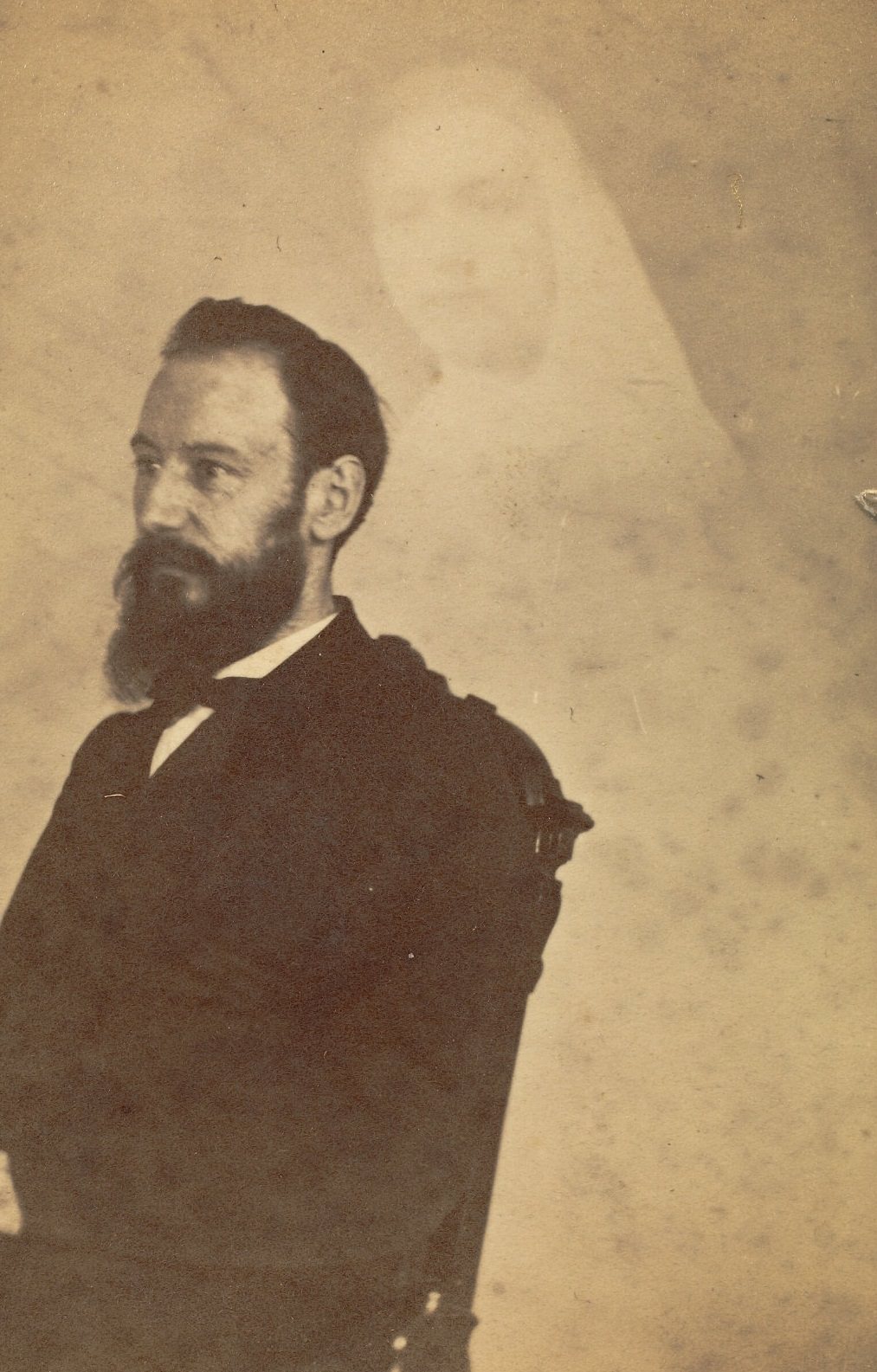
Profile portrait of a seated man with a beard. A faint image of a woman is visible behind him.
Portrait of Harry Gordon looking down into his hand, while the faint figure of a bearded man appears behind him, with hands that seem to be placing a crucifix into the open hand of the sitter.
Enjoyed this post? Get new ones in your inbox.

Leave a Comment

Your email address will not be published. Required fields are marked *

Share this Post 🥺

Please take a moment to share this content. Your support is greatly appreciated! 🙌🙏

Share this Post 🥺

Please take a moment to share this content. Your support is greatly appreciated! 🙌🙏
Scroll to Top
 
Hey Friend, Before You Go.. Please like & follow for more interesting content