Hey There! Before You Go. 😧
Get the best vintage content straight into your inbox!

Don't worry, we don't spam

Spanish Civil War: Powerful Historical Photos Depict the Deadliest Conflict in Spanish History

The Spanish Civil War began on July 18, 1936, when right-wing military officers launched a revolt in Spanish Morocco. Within three days, the rebels — known as Nationalists — had seized Morocco, most of northern Spain, and several key cities in the south. In cities like Madrid, however, Republican forces held their ground and crushed the uprising before it could take full hold. What followed was nearly three years of brutal, total war that left up to a million people dead — the deadliest conflict in Spanish history.

To understand how the war started, you have to go back to 1931. That year, King Alfonso XIII authorized elections, and Spanish voters overwhelmingly chose to abolish the monarchy and create a liberal republic. Alfonso went into exile, and the Second Spanish Republic was born, led by middle-class liberals and moderate socialists. But the new government had powerful enemies: the landed aristocracy, the Catholic Church, and a well-organized military clique all opposed the Republic’s direction. When conservative forces won back control of the government in the 1933 elections, the political fault lines deepened sharply.
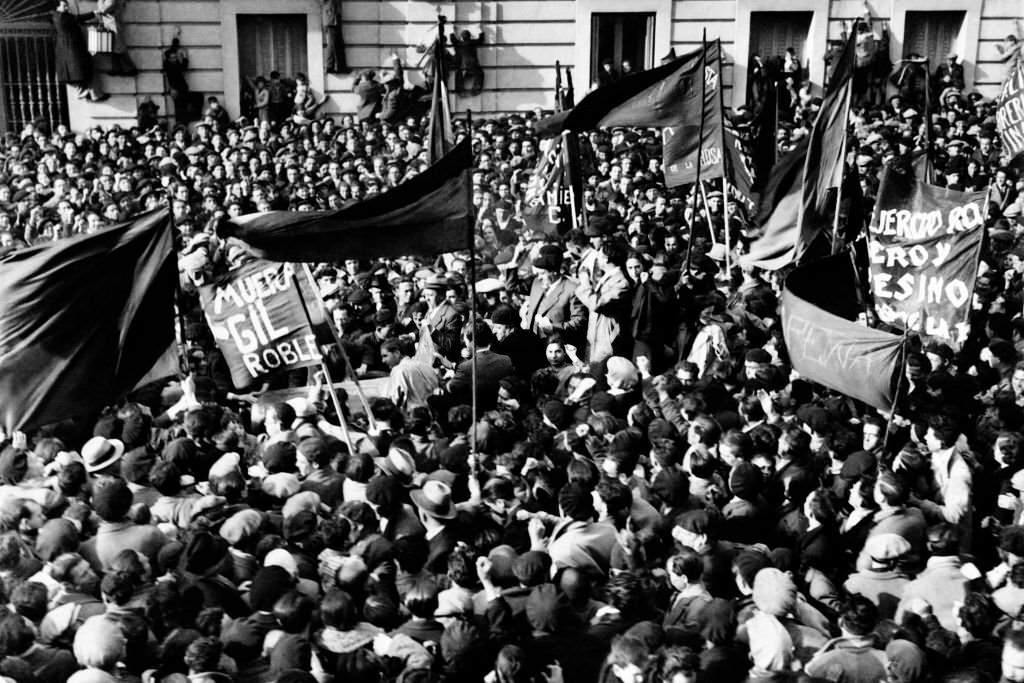
Demonstrators hold banners calling for the death of Gil Robles, the leader of the rightist party CEDA, in Madrid after the Frente Popular's victory at the February 1936 parliamentary elections.
Demonstrators hold banners calling for the death of Gil Robles, the leader of the rightist party CEDA, in Madrid after the Frente Popular’s victory at the February 1936 parliamentary elections.

In the years leading up to the war, Spanish streets were already scenes of intense political conflict. Socialists launched a revolution in the mining districts of Asturias, and Catalan nationalists rose up in Barcelona. General Francisco Franco crushed the so-called October Revolution of 1934 on behalf of the conservative government, earning him a promotion to army chief of staff in 1935. When the leftist Popular Front coalition won the February 1936 elections, nervous military officers began to plan a coup. Franco was quietly reassigned to the Canary Islands, far from the Spanish mainland.
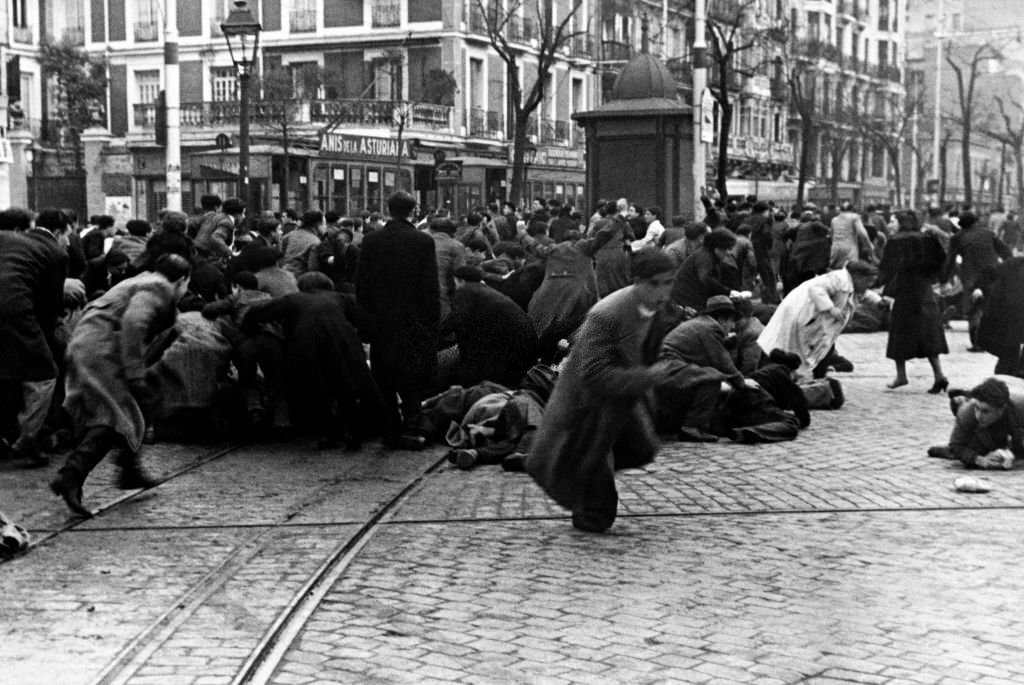
Demonstrators run during a violent demonstration in the streets of Madrid ahead of the February 16, 1936 parlimentary elections that saw the rise to power of the Frente Popular.

Franco reluctantly agreed to join the military conspiracy scheduled to begin in Morocco at 5 a.m. on July 18, 1936, and in mainland Spain 24 hours later. The staggered timing was deliberate — it gave the Army of Africa time to secure Morocco before crossing to Spain’s Andalusian coast. On the afternoon of July 17, however, the rebels’ plan was discovered in Melilla, Morocco, forcing them into premature action. The cities of Melilla, Ceuta, and Tetuan fell quickly to the Nationalists, aided by conservative Moroccan troops. From the Canary Islands, Franco broadcast a message calling on all army officers to join the uprising.
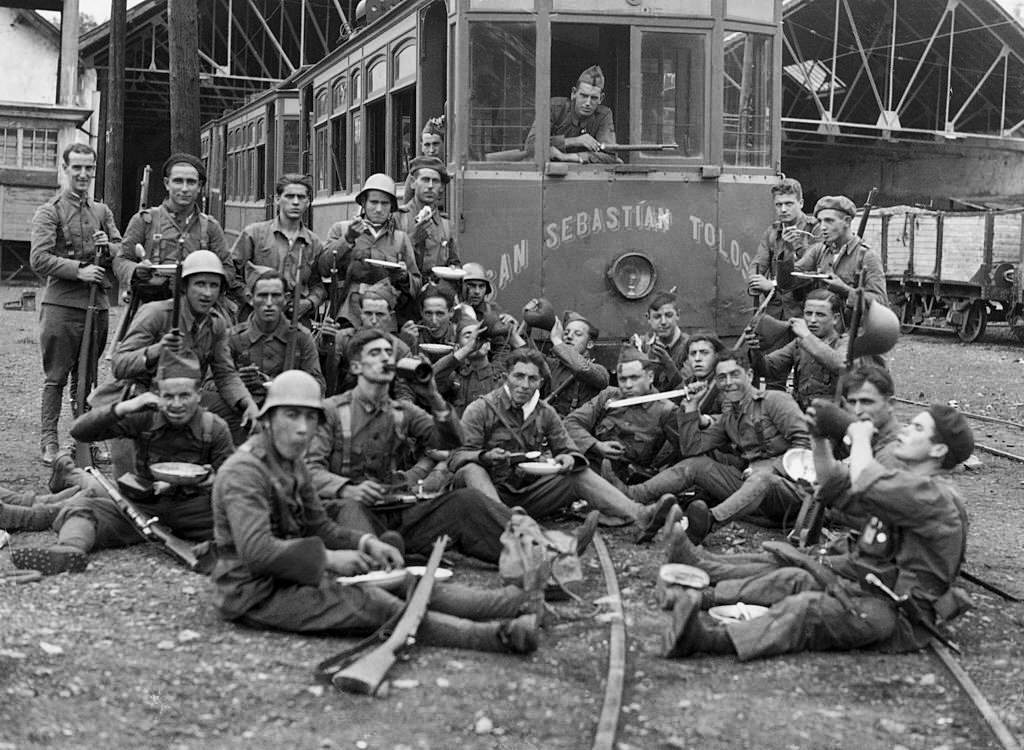
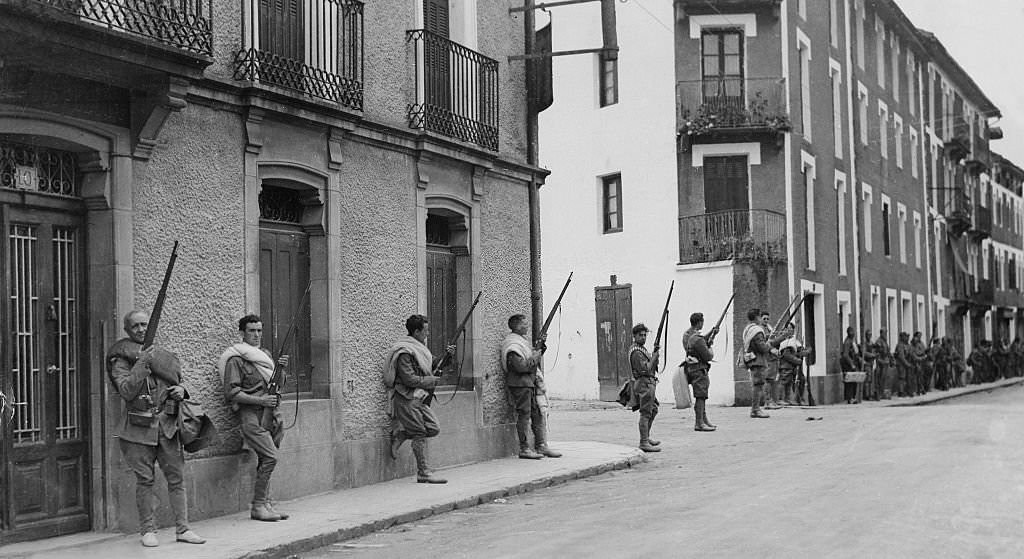
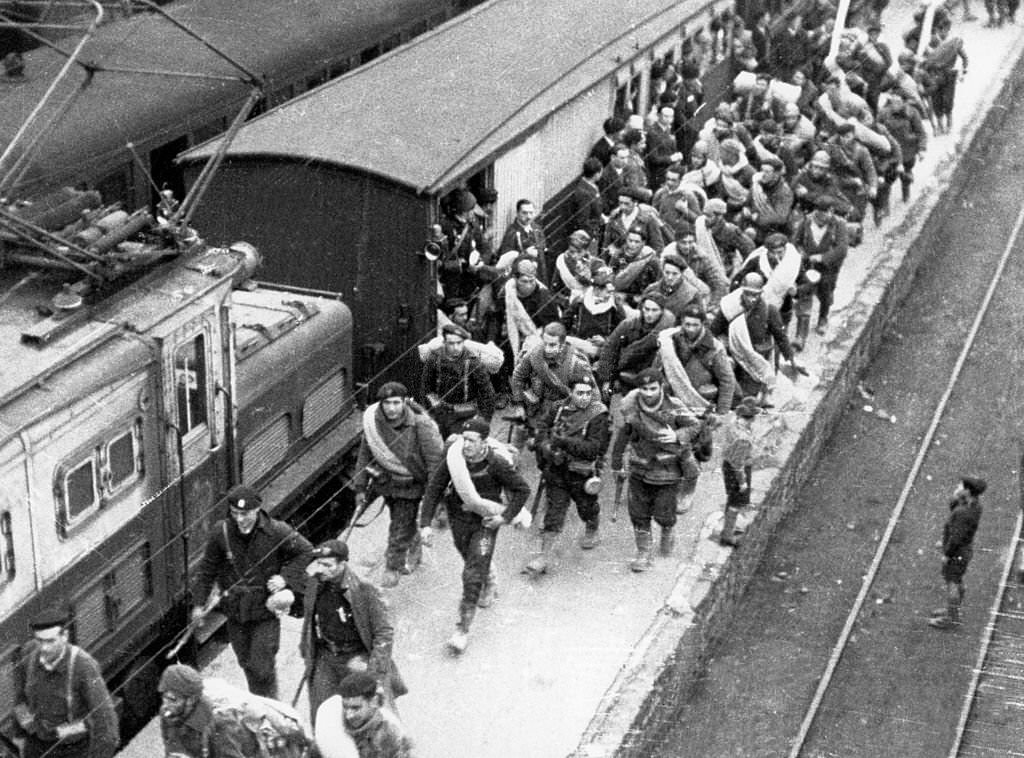
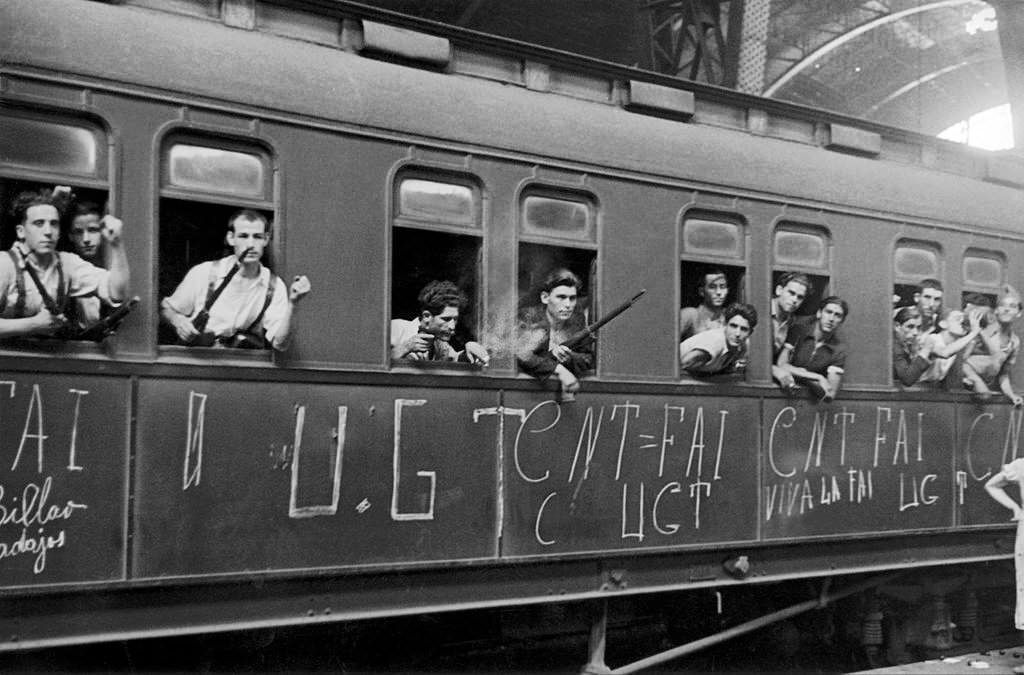
Nationalist Troops occupying a Train Station in San Sebastian, 1936

Across mainland Spain, garrisons rose in revolt on July 18. The Republican government — slow to act and reluctant to arm workers and peasants — lost control of many areas within days. Nationalist forces took hold of conservative regions like Navarre and Old Castile almost immediately. A naval revolt by Nationalist officers largely failed, as sailors’ committees took over warships and secured several coastal cities for the Republic. But Franco’s move to transport his Army of Africa from Morocco to mainland Spain was a turning point. These experienced soldiers quickly overran large Republican territories in central and northern Spain.
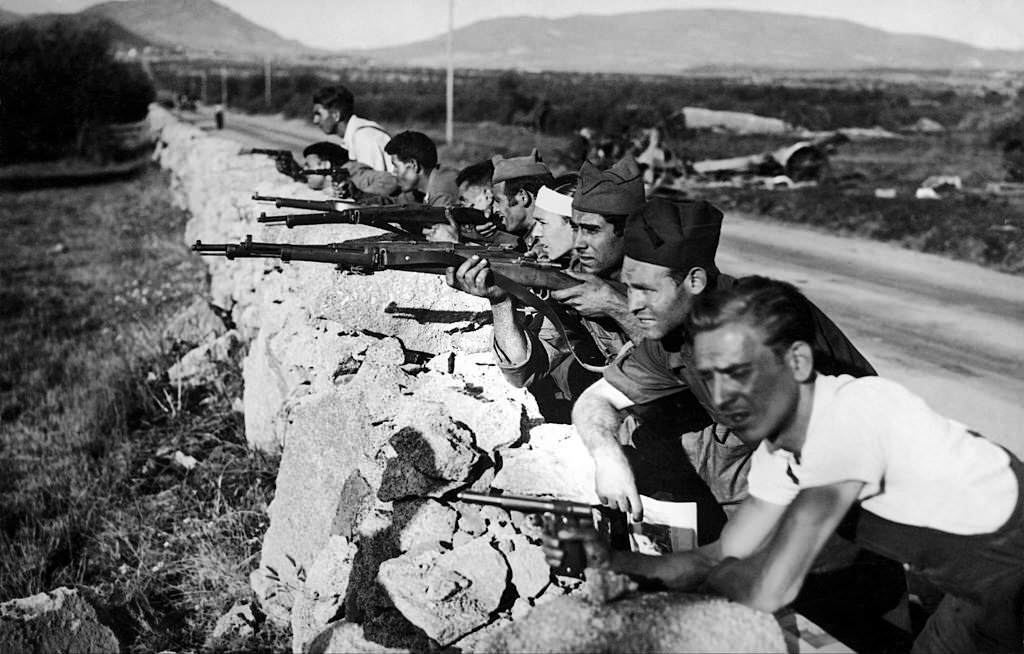
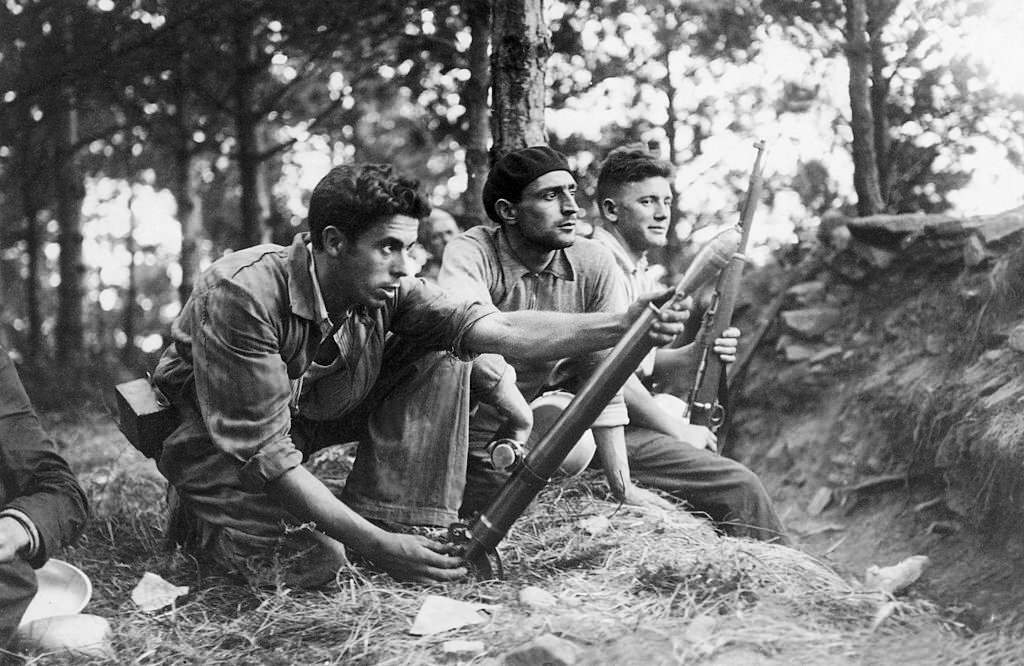
Partisans of The Governmental Troops Fighting on the Front in Guadarrama, Near Madrid, 1936
Militiamen Preparing to attack the Nationalist Enemy by Mortar Fire, 1936

The Nationalists received direct military support from Nazi Germany and Fascist Italy. Germany sent its Condor Legion — a force of aircraft, tanks, and experienced crews — while Italy contributed troops, planes, and artillery. The Republicans, on the other side, received weapons and advisors from the Soviet Union. They also drew thousands of foreign volunteers who formed the International Brigades, made up of communists, socialists, and anti-fascists from France, the United States, Britain, and elsewhere. The most significant contribution of these brigades was helping defend Madrid, which came under siege in November 1936.
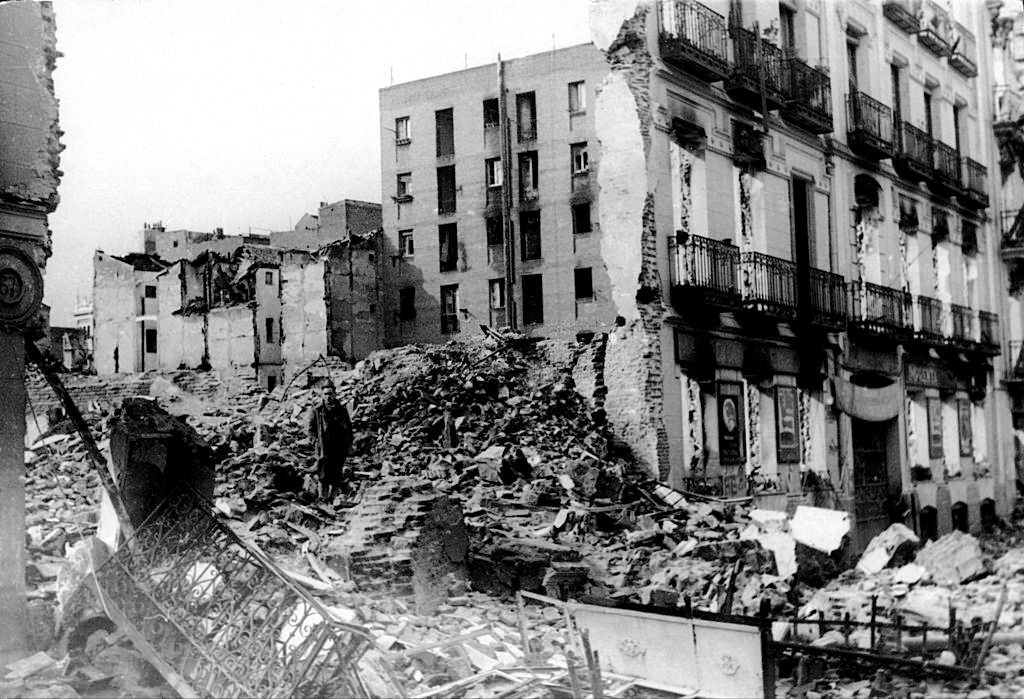
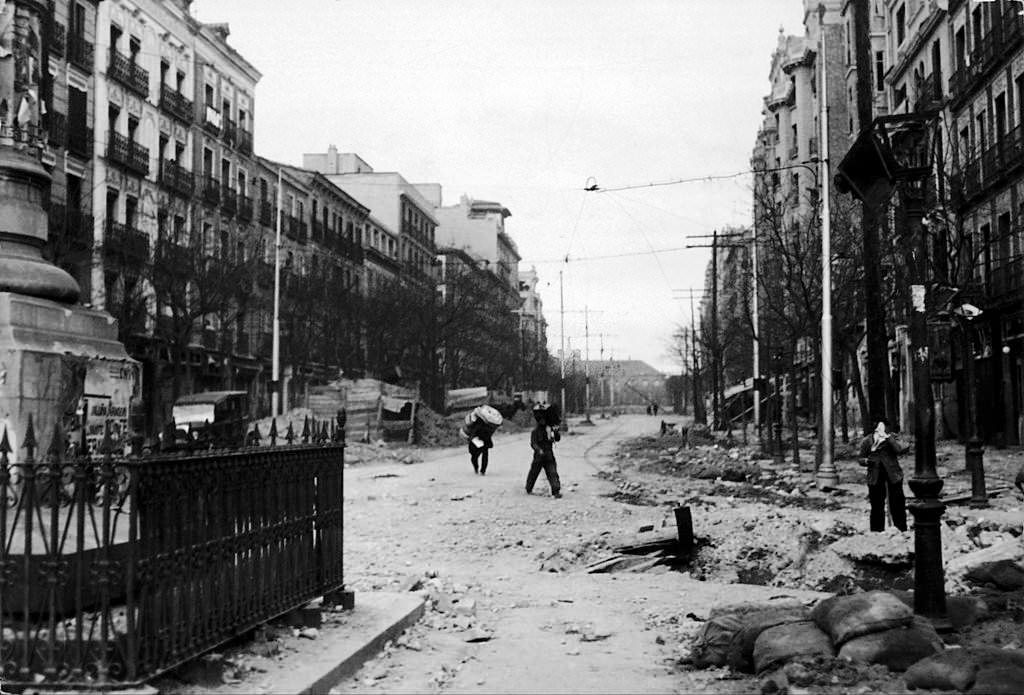
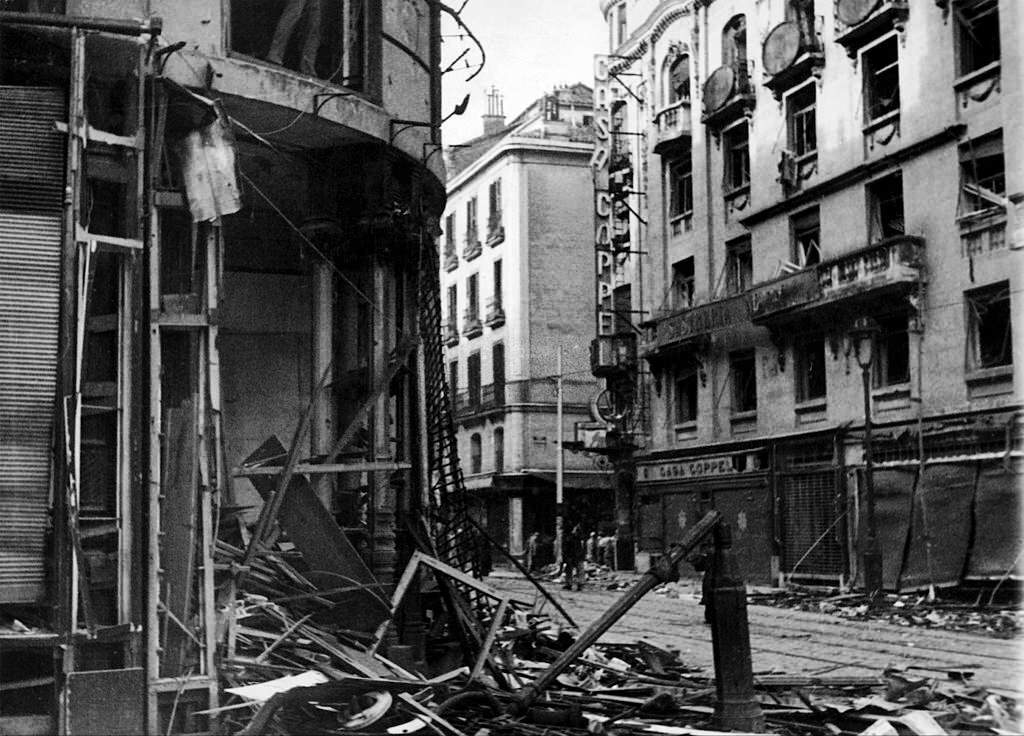
Street of Madrid in Ruins during the Spanish Civil War Around, 1936
Madrid Bombed By The Nationalist Air Force during The Spanish Civil War, 1936

Dolores Ibárruri — known as La Pasionaria — became one of the most recognizable voices of the Republican cause. A Communist Party leader, she delivered fiery speeches that rallied workers, soldiers, and women to fight for the Republic. Her phrase “No pasarán” (They shall not pass) became a defining slogan of the defense of Madrid.
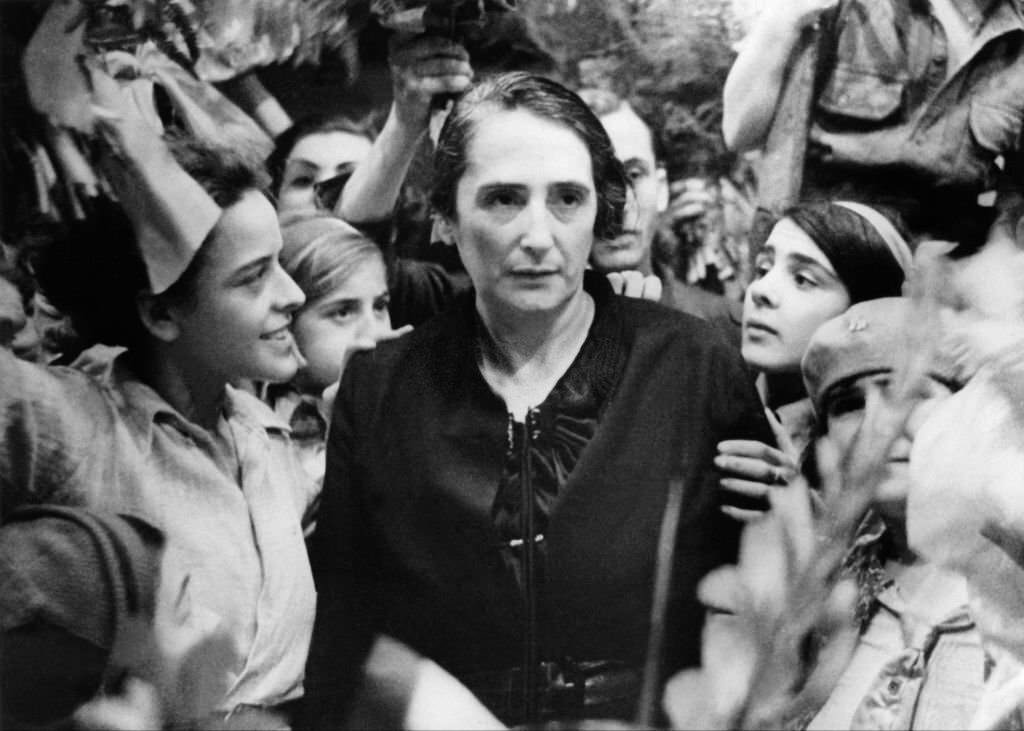
La Passionaria of the Spanish Civil War, Dolores Ibarruri around 1936.

The fighting was ferocious from the start. In August 1936, Republican militiamen defending the city of Badajoz were killed in large numbers as Franco’s Army of Africa pressed northward toward Madrid. Both sides carried out executions of captured fighters and political opponents throughout the war.
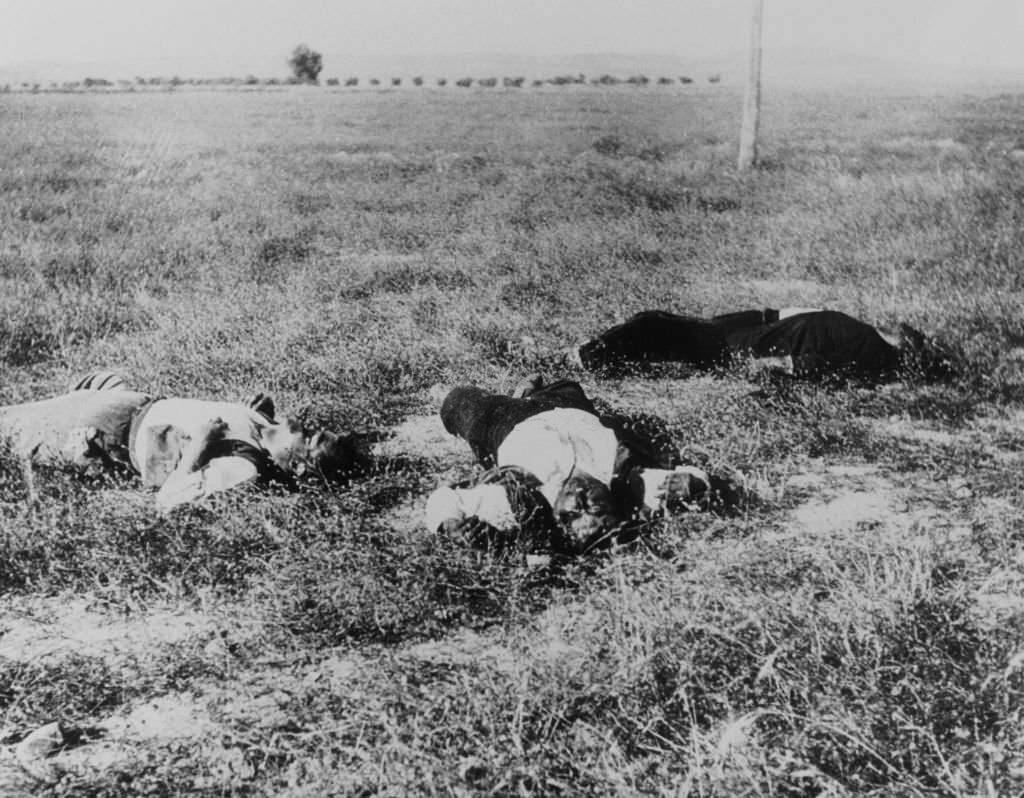
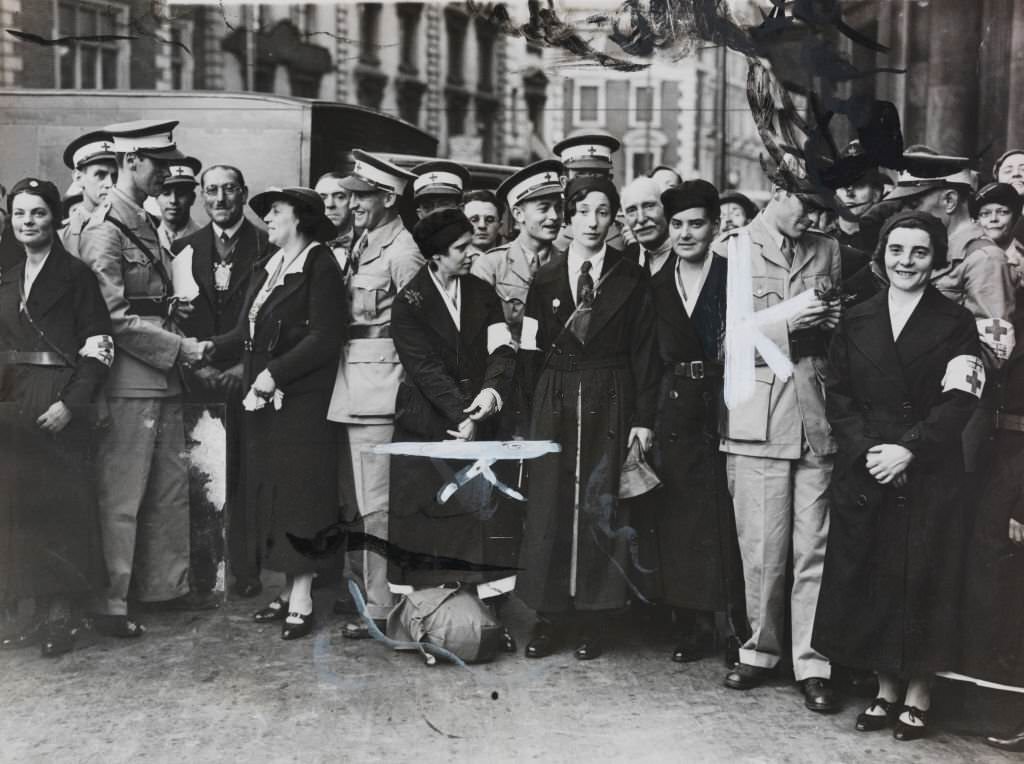
Government militiamen killed in the fighting at Badajoz, Spain, during the Spanish Civil War, 24th August, 1936
Medical Aid Unit who left London for Spain, 1936.
Spanish Civil War, 1936
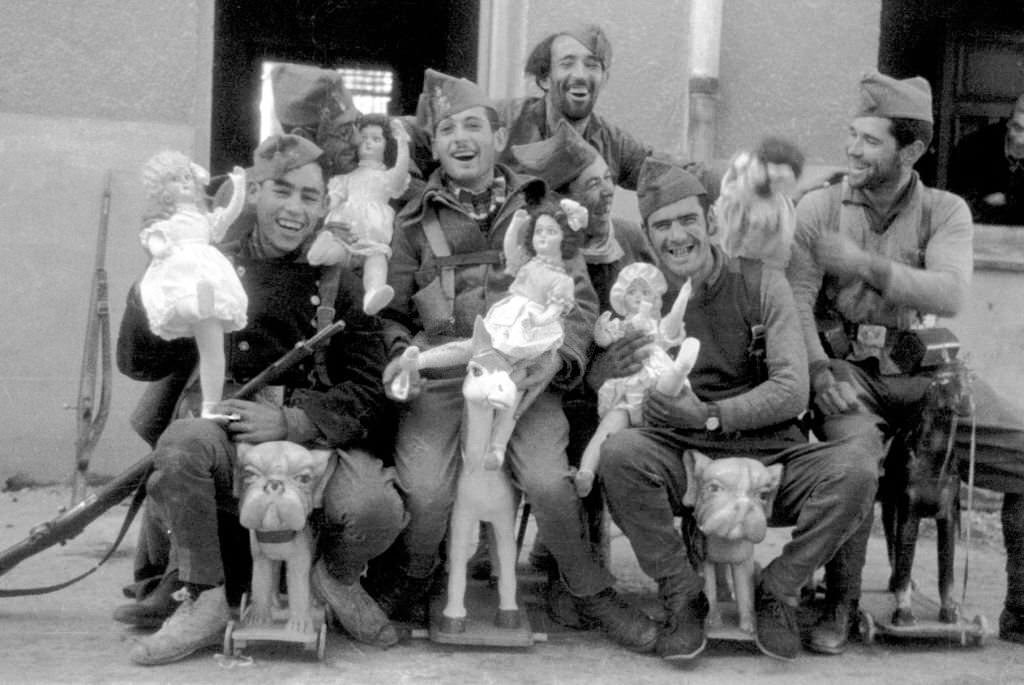
A group of soldiers posing with dolls, 1936

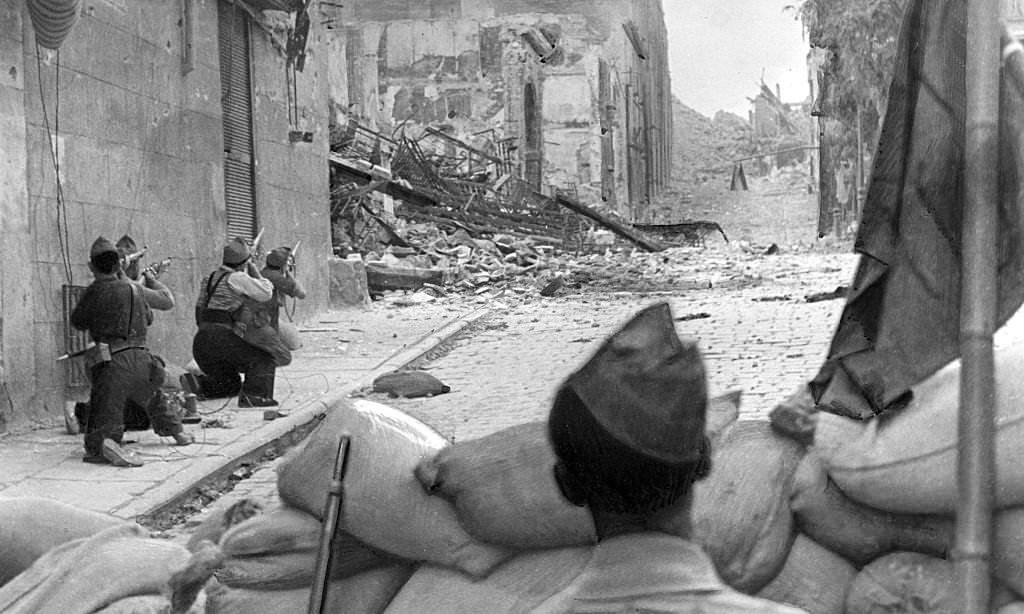
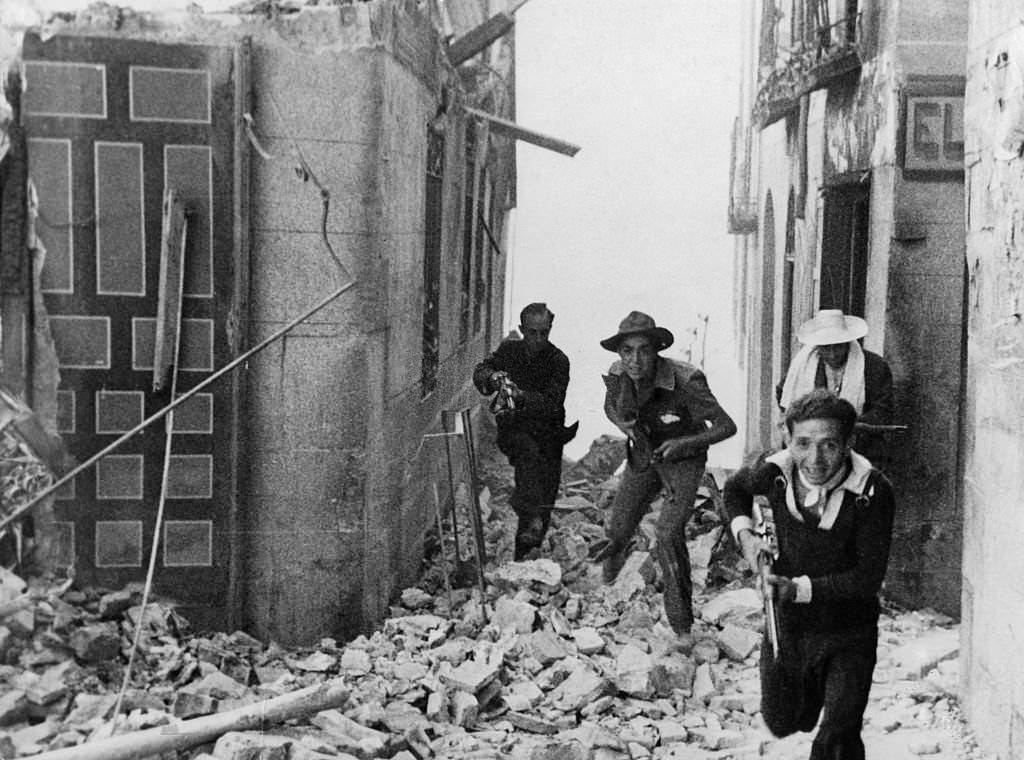
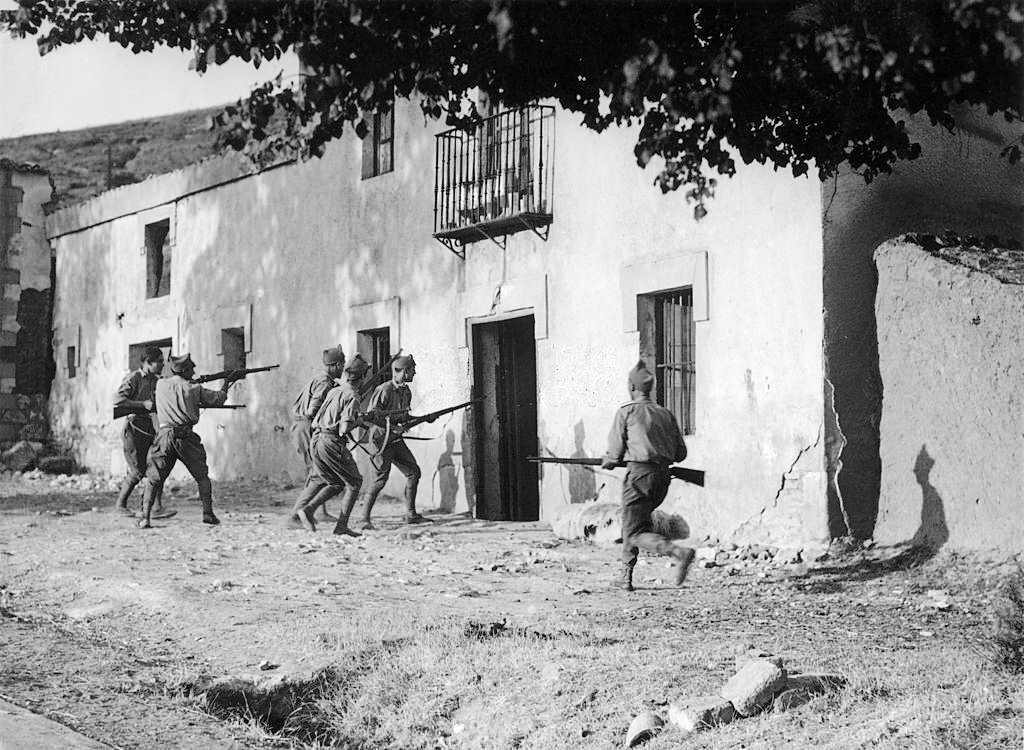
Street fighting was a defining feature of the war in its opening months. Republicans and Nationalists battled block by block through villages and cities alike, often with little more than rifles and improvised barricades. The city of Toledo became one of the most intense early battlegrounds, as Republican forces tried to dislodge Nationalist troops who had fortified themselves inside the historic Alcázar fortress.
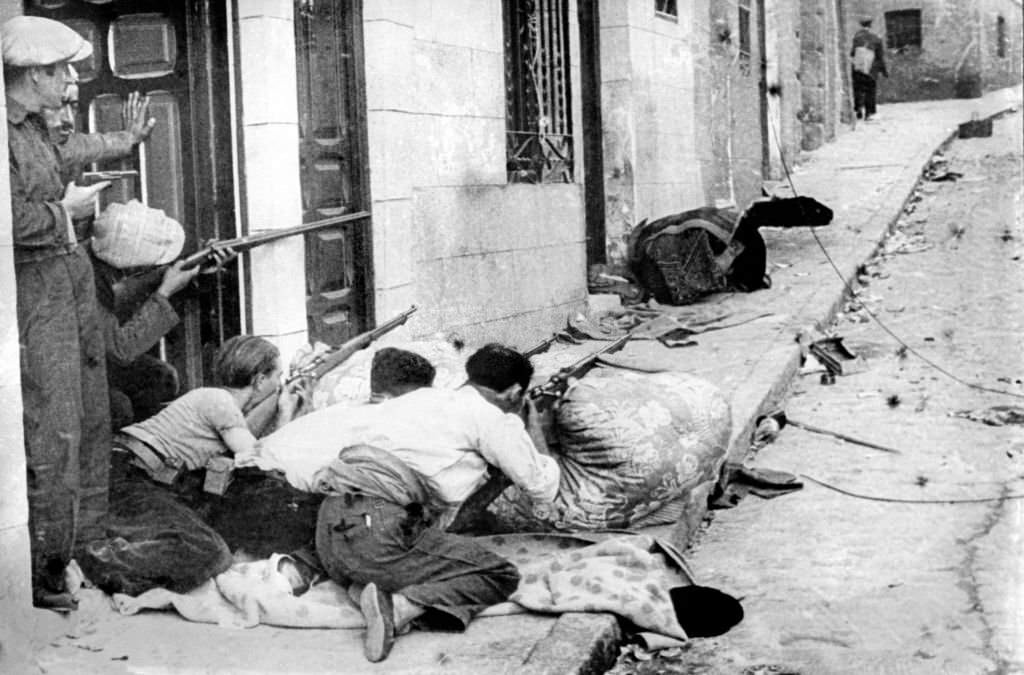
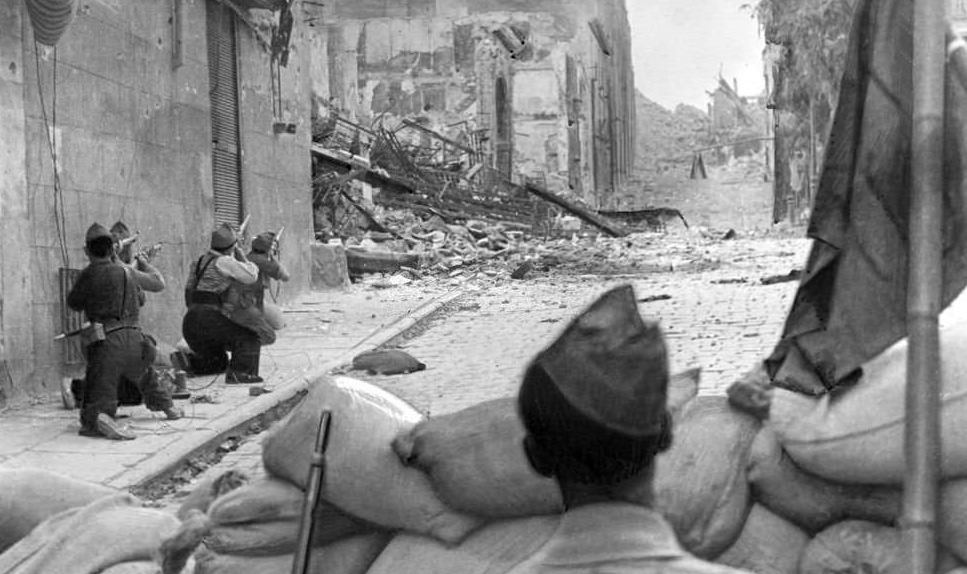
Republicans fighting in a street of an unidentified village, 1936
Republicans forces battle street by street against nationalists near the Alcazar in Toledo 1936.
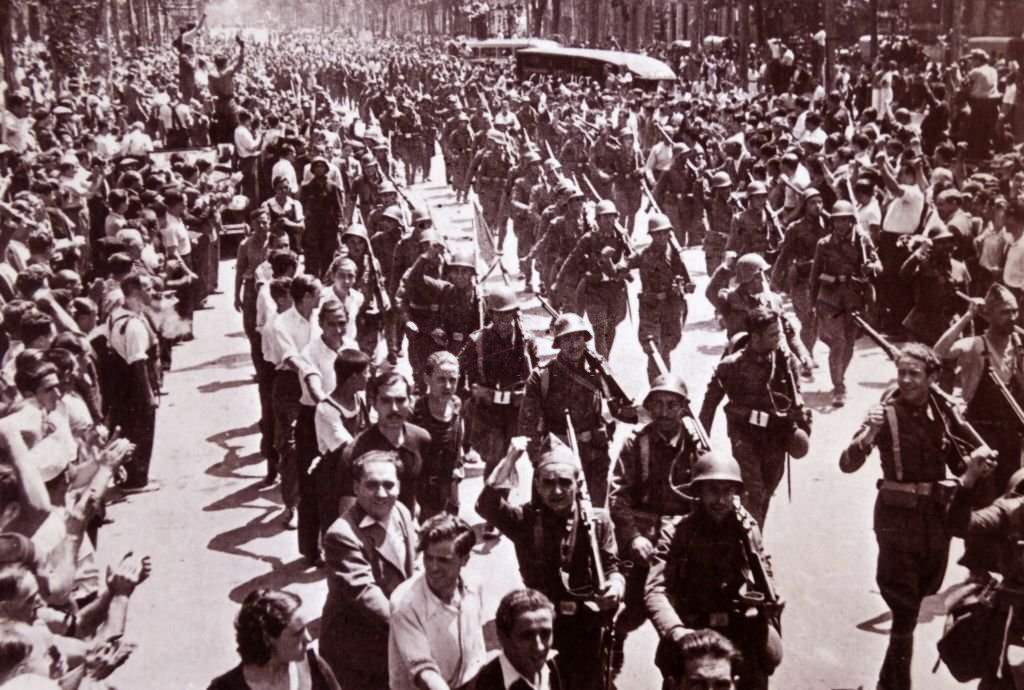
Anti-fascist troops parade through Barcelona, during the Spanish civil war 1936.

The war brought swift and brutal reprisals in the Republican-held capital. A prison in Madrid became the site of mass executions of Nationalist politicians and military officers in August 1936. When the city came under siege that November, hundreds more prisoners were pulled from their cells and shot in the nearby town of Paracuellos de Jarama.
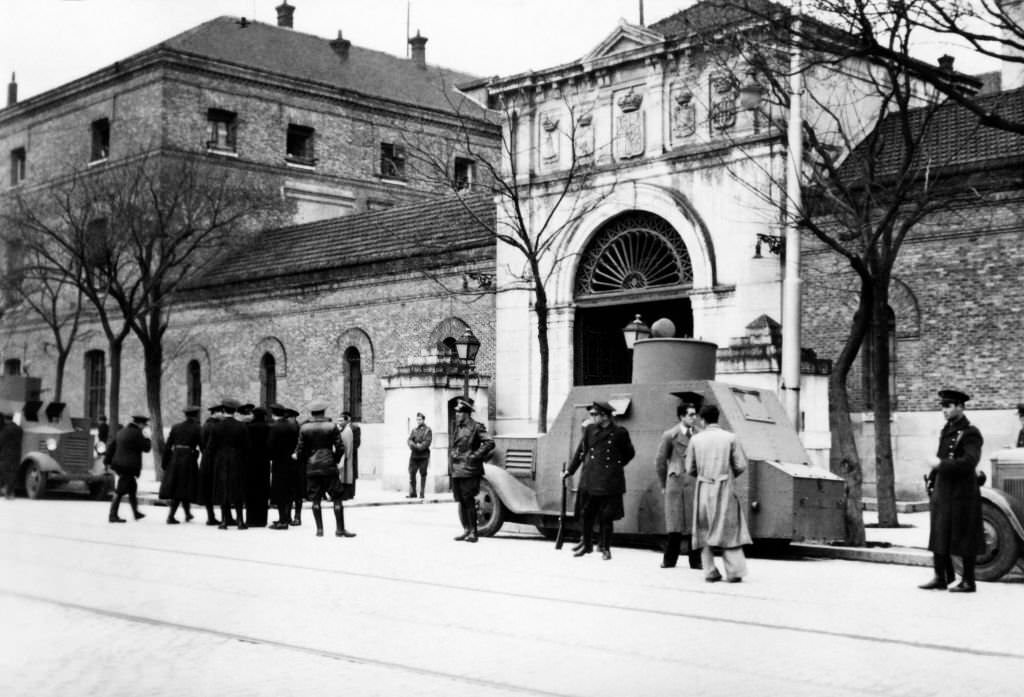
A prison in Madrid where dozens of Nationalist politicians and rebellious military were executed on August 22, 1936.

Anti-clerical violence was another defining element of the Republican side’s conduct in the early weeks of the war. The Catholic Church had openly backed Franco and the Nationalists, and Republican supporters responded with widespread attacks on religious institutions. Churches were looted and burned, and in Barcelona, the bodies of nuns were exhumed from a monastery and put on public display. These acts were both expressions of deep anti-clerical rage and deliberate attempts to shock and humiliate the Church.
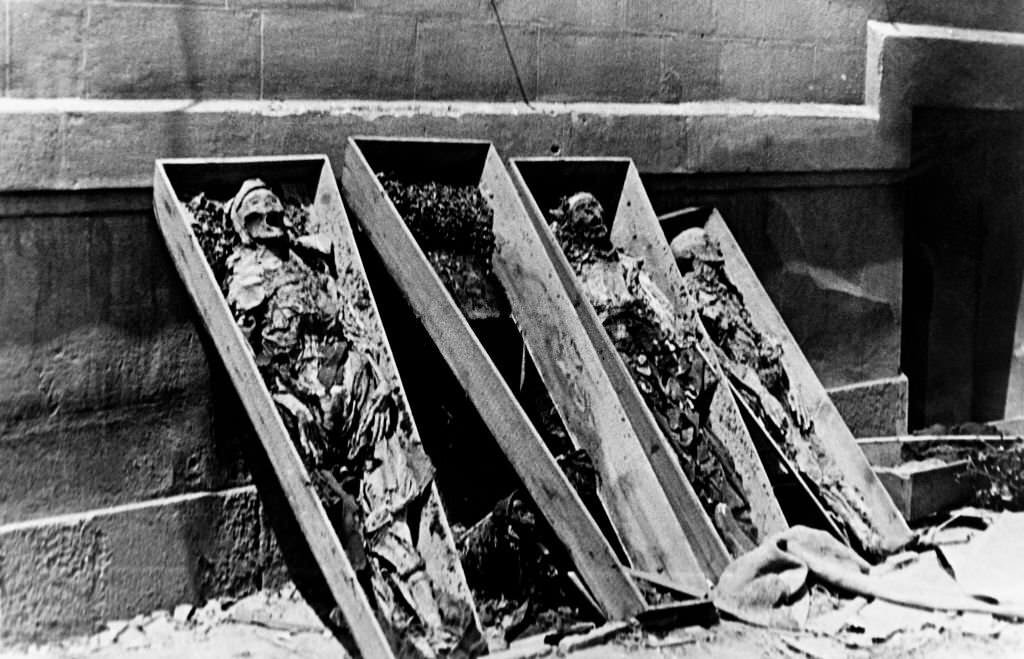
The bodies of religious are displayed in a street of Barcelona by Republicans during the Spanish civil war to show their anticlericalism and protest against the Catholic support to Franco.
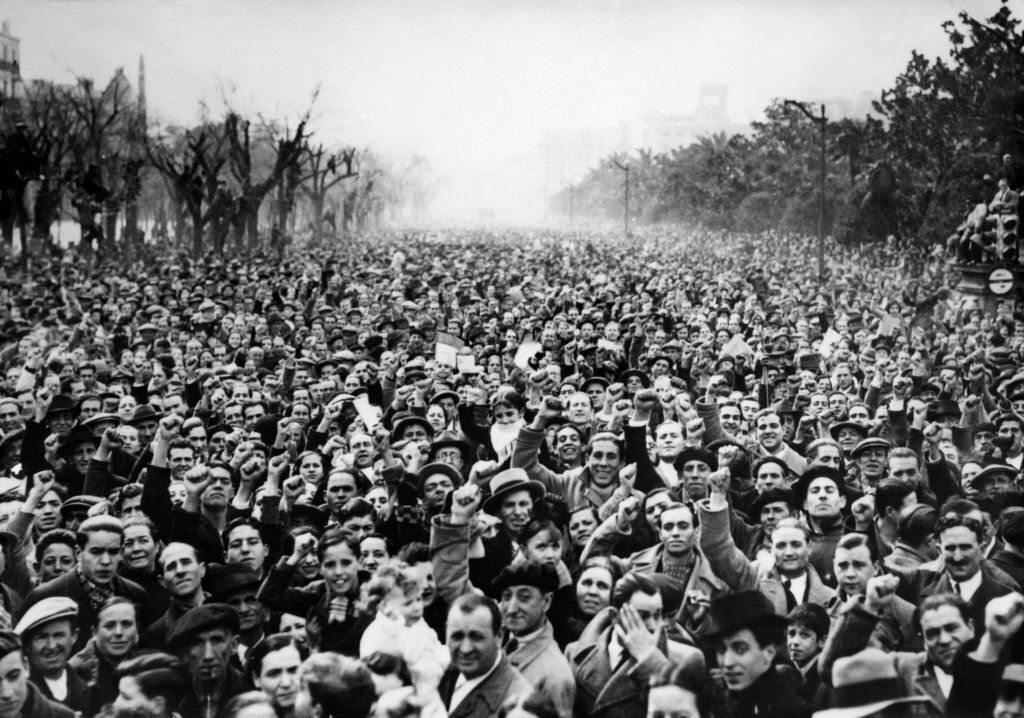
Thousands of Republicans demonstrating in the streets of Madrid against Franco's attempt to overthrow the Spanish Republic.
Thousands of Republicans demonstrating in the streets of Madrid against Franco’s attempt to overthrow the Spanish Republic.
Republicans forces battle street by street against nationalists near the Alcazar in Toledo, 1936.
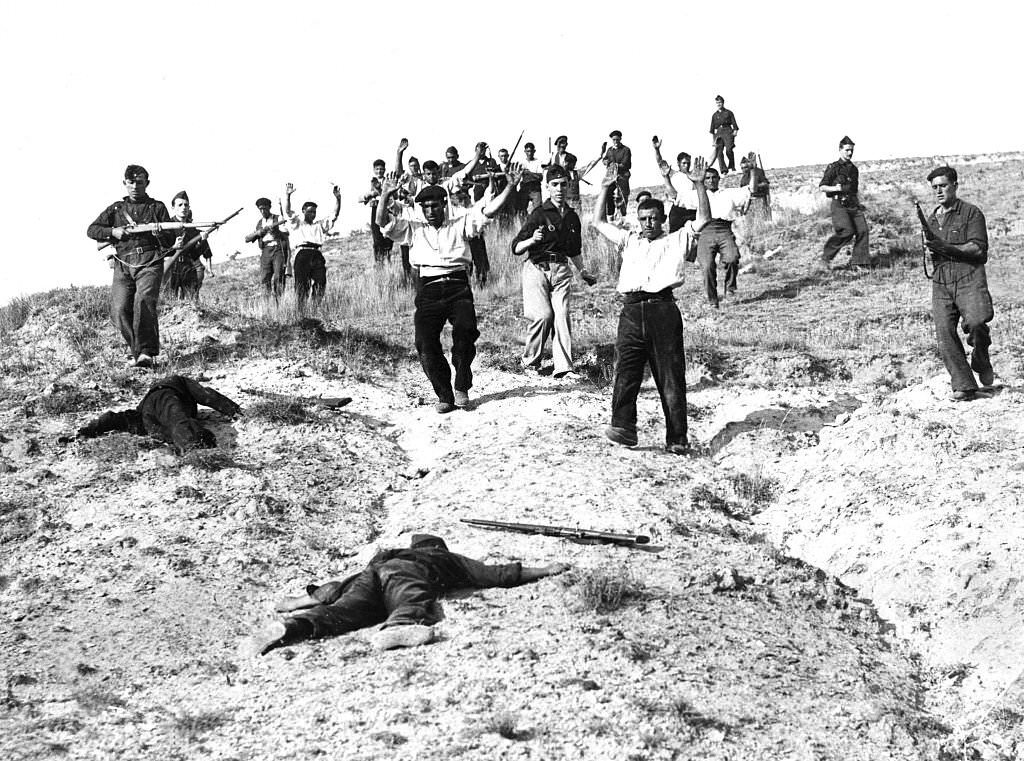
Nationalist troops capture Republican soldiers. In 1936, at the Battle of Somosierra, in the heights of the pass between Carlist and Falangist units and Republican troops.

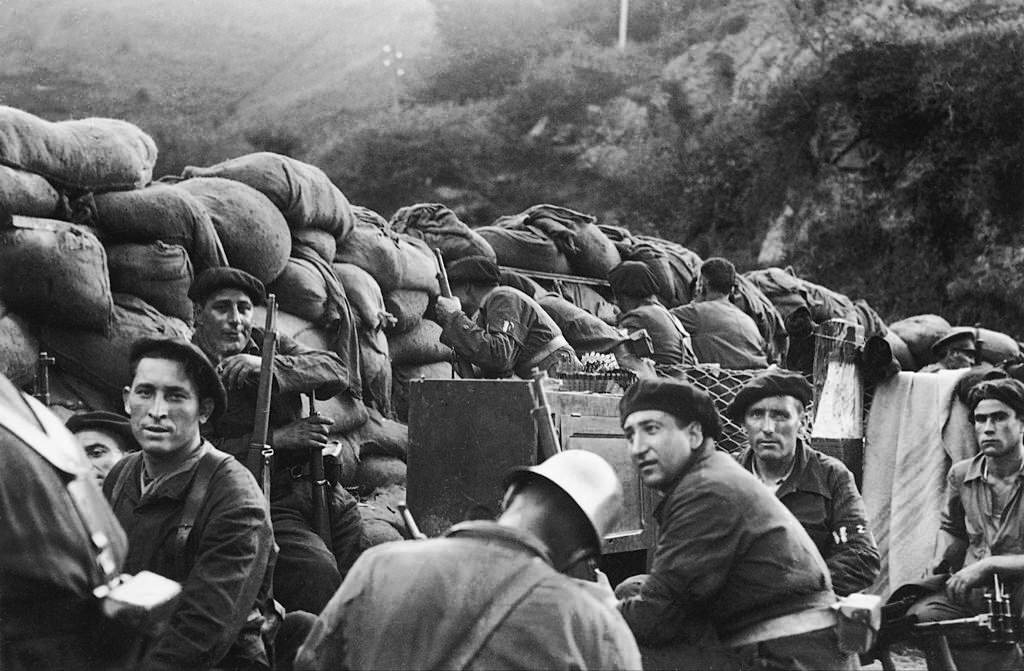
In the northern Basque region, Republican soldiers fought to hold territory against a Nationalist advance backed by German and Italian air power. The Campaign of Gipuzkoa saw the Nationalists eventually conquer the northern province, forcing Republican troops to dig in and retreat under constant pressure. Cities like Irun — on the French border — were bombed and burned as they fell.
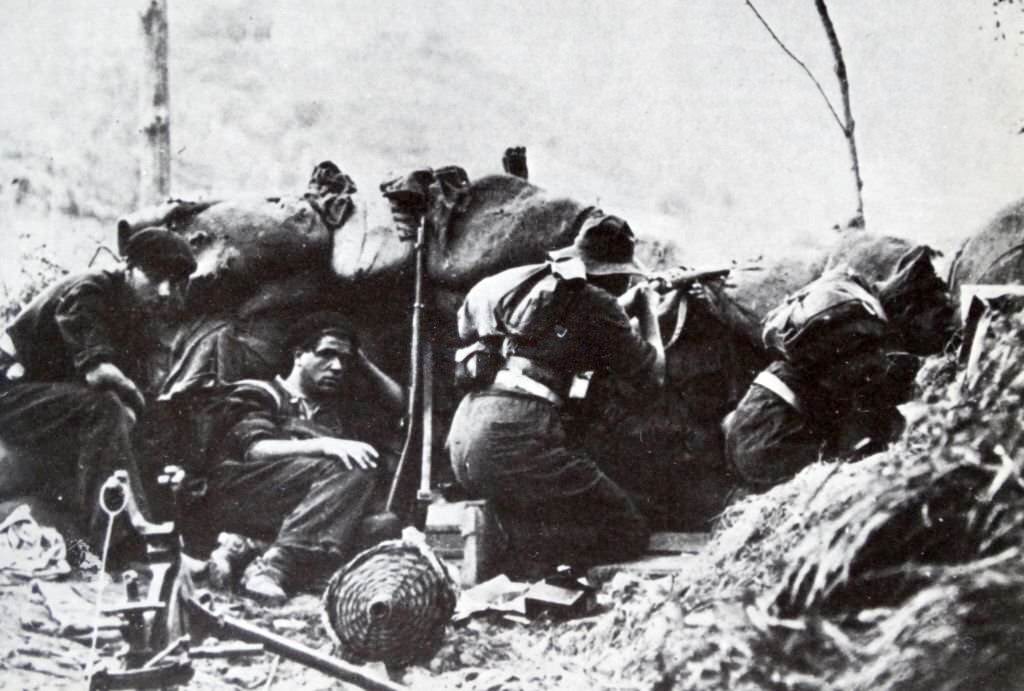
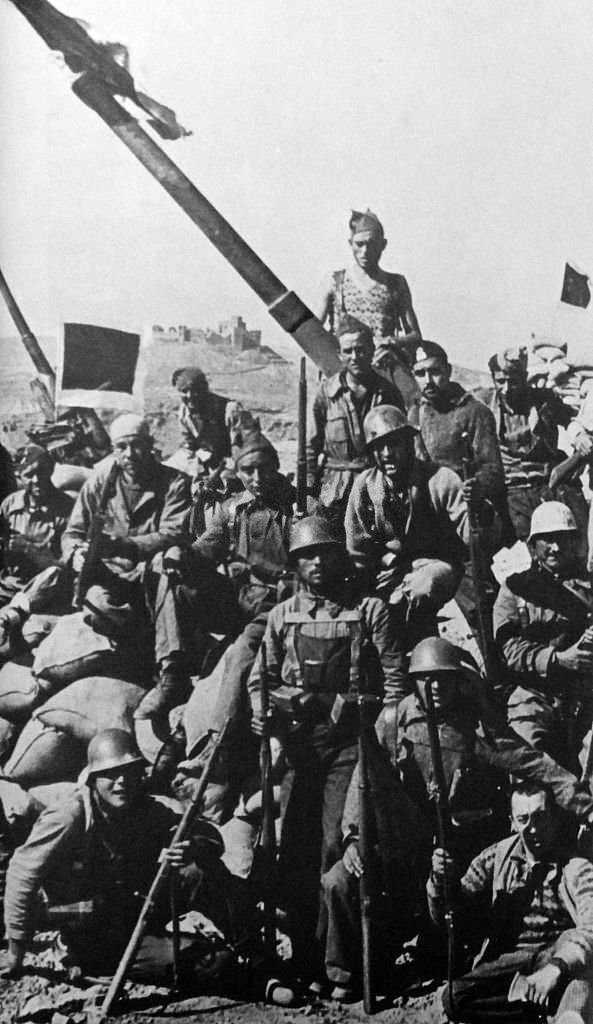
Republican soldiers shelter in a trench during the Campaign of Gipuzkoa, the Spanish Civil War, Nationalist Army conquered the northern province of Gipuzkoa, held by the Republic.
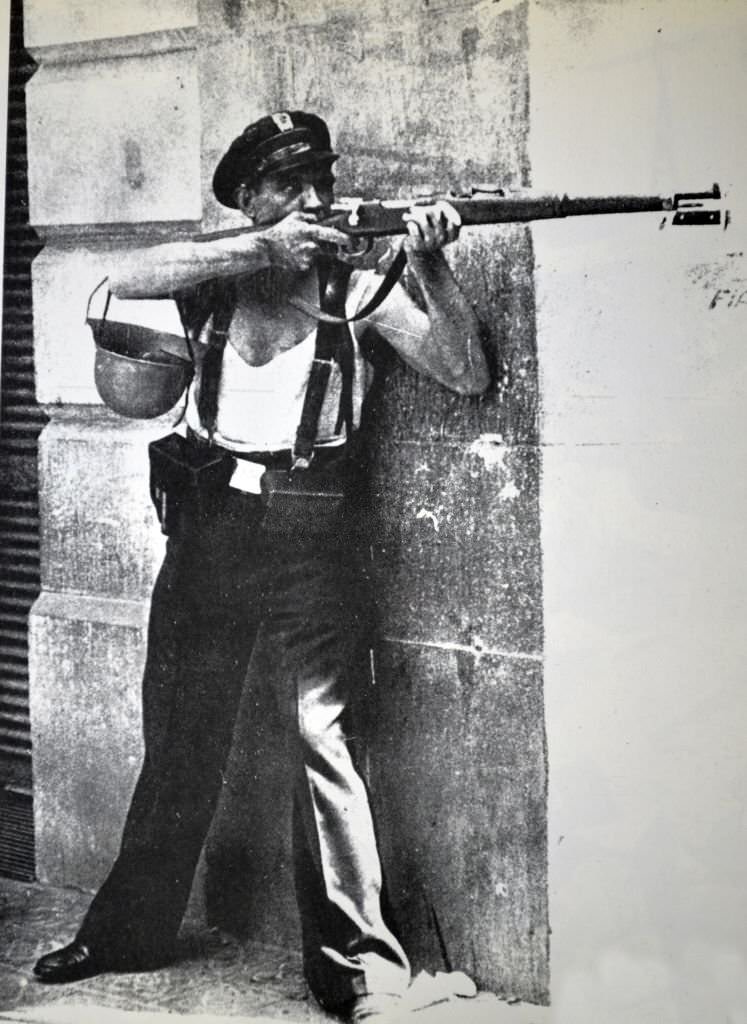
A republican marksman soldier takes shelter behind a street corner during the Spanish civil war, Barcelona 1936.
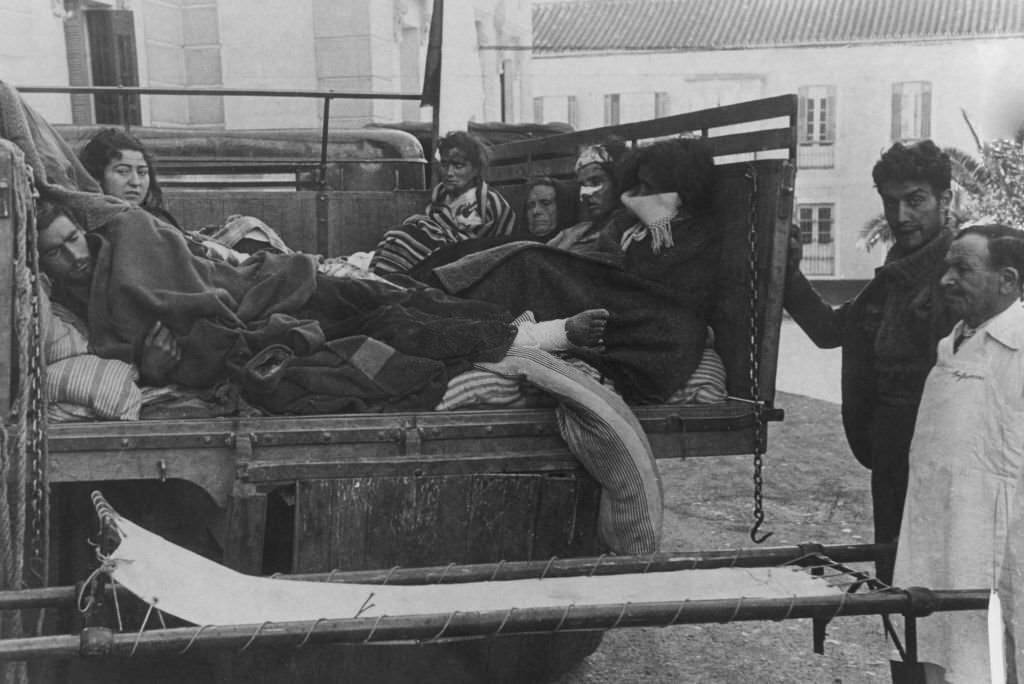
Wounded people were taken from a captured Government ship by the Insurgents and taken to the Miramar Hotel in Malaga which is now a hospital during the Spanish Civil War

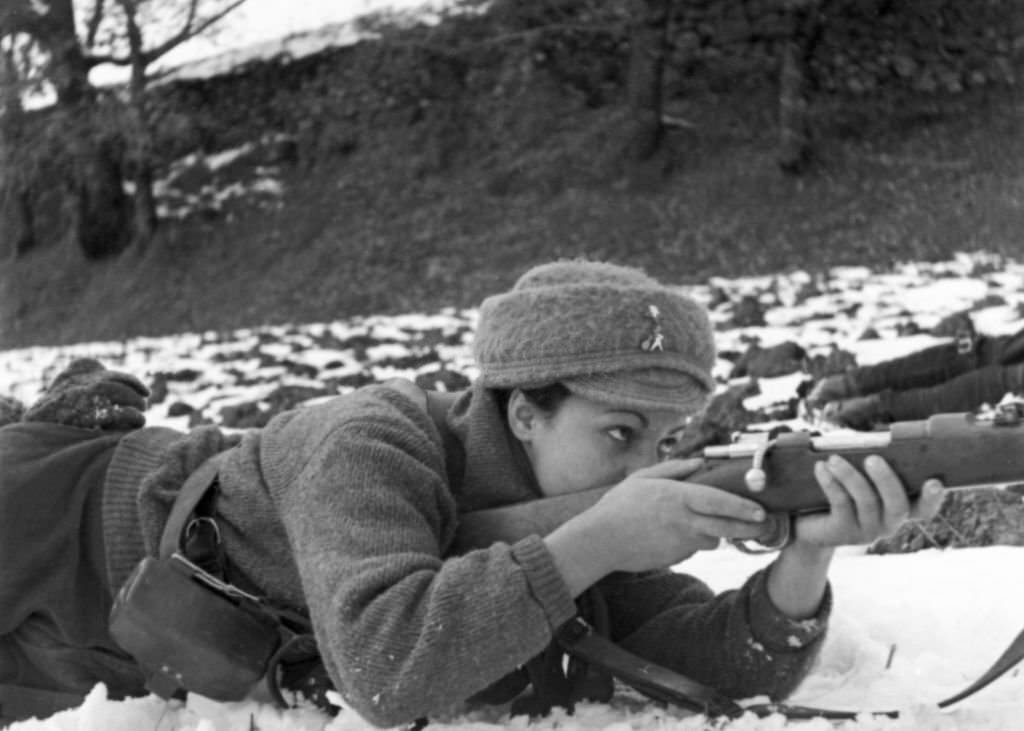
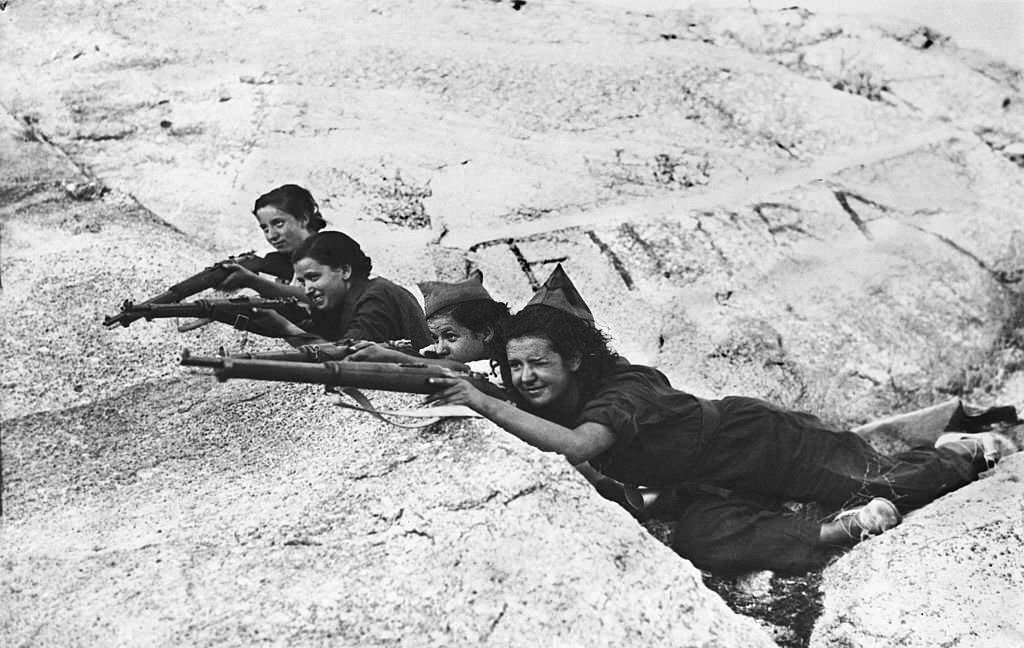
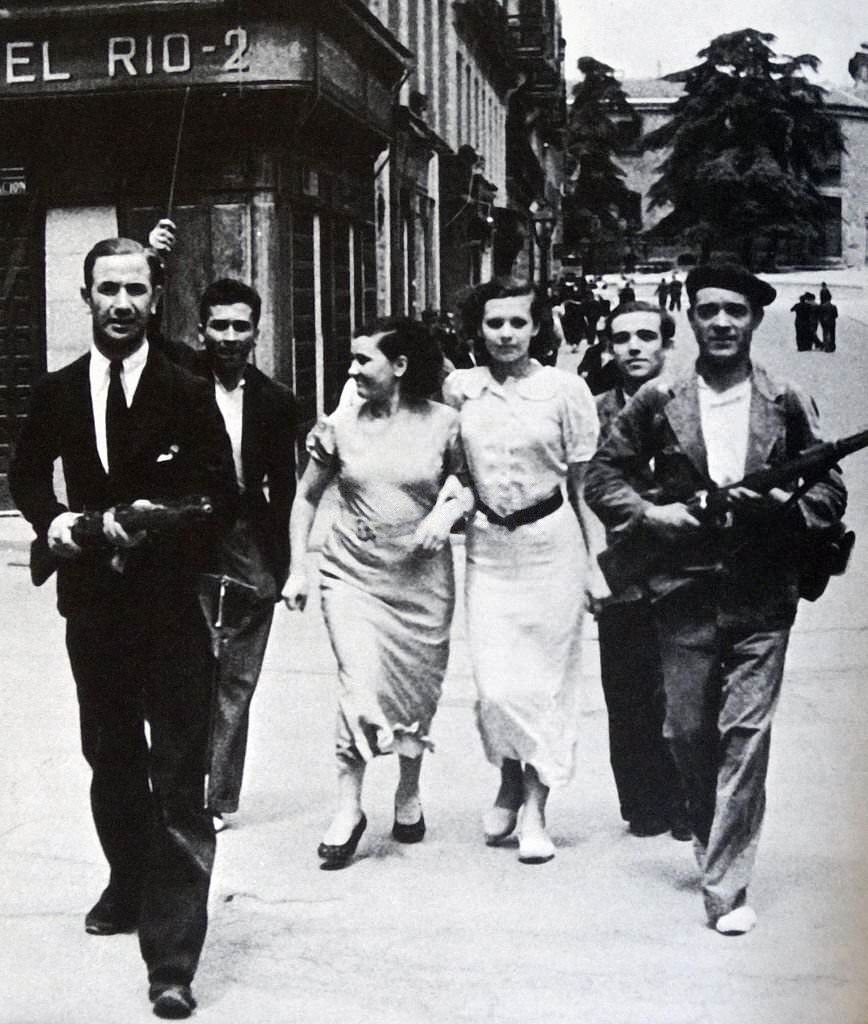
Women played active military roles on the Republican side from the war’s earliest days. Female militia units like the Batallón de Acero (Battalion of Steel) fought alongside men at the front, carrying weapons and taking part in combat. In Barcelona, women armed with rifles stood guard in the streets during the summer of 1936.
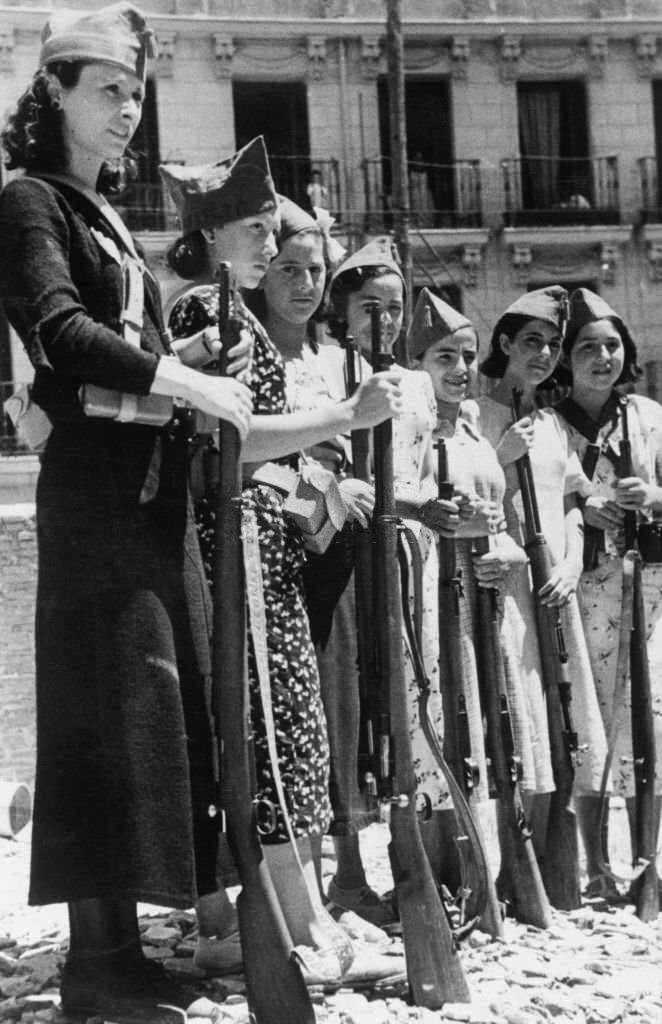
Women belonging to The Batalion of Steel as the Militia during the Spanish Civil War
Women with their weapons in the streets of Barcelona during the Spanish Civil War.
Rebel uprising in Madrid during the Spanish Civil War.
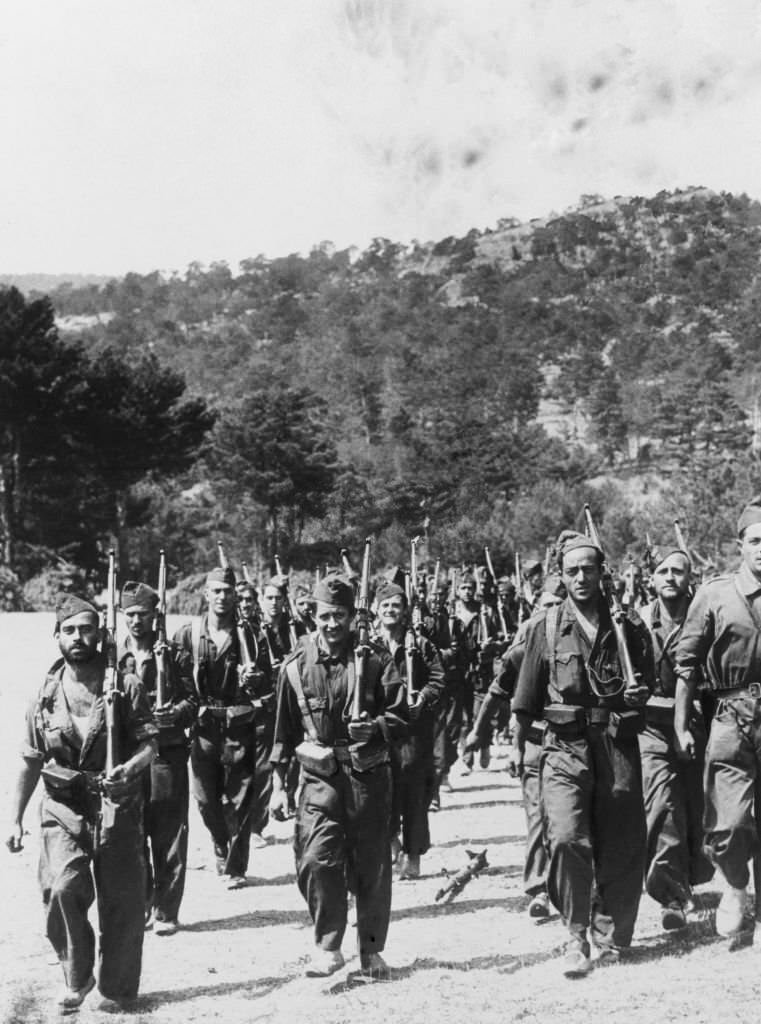
Loyalists marching to the base camp near Santa Maria, north-west of Madrid during the Spanish Civil War.
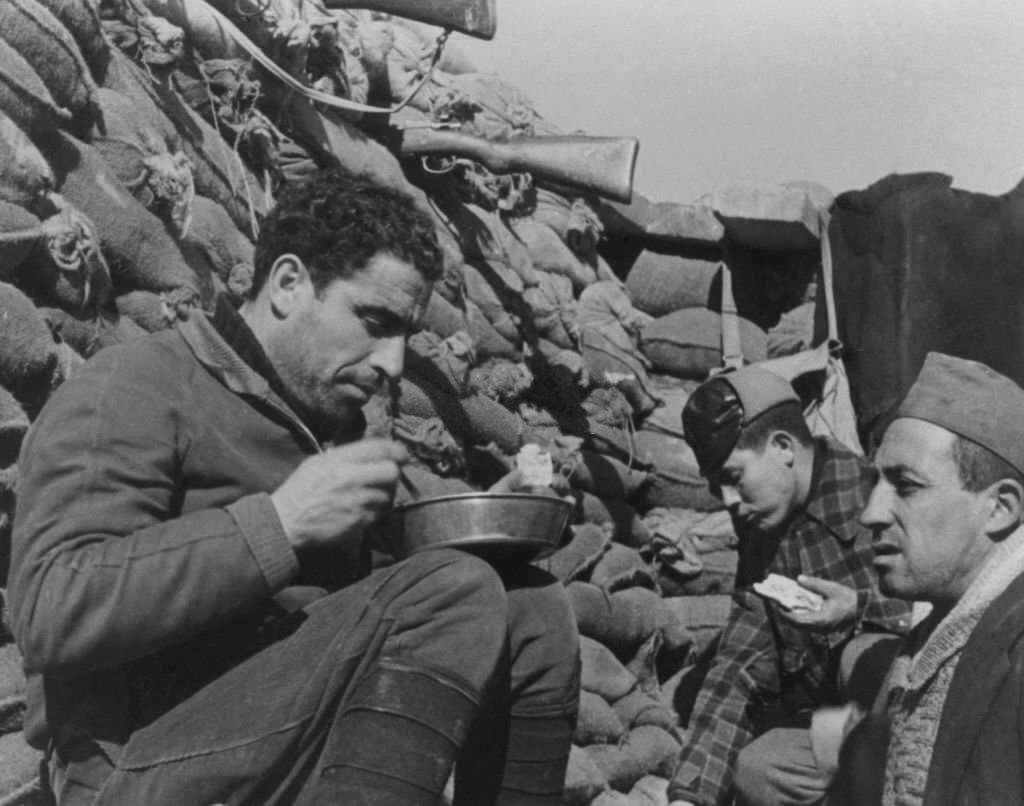
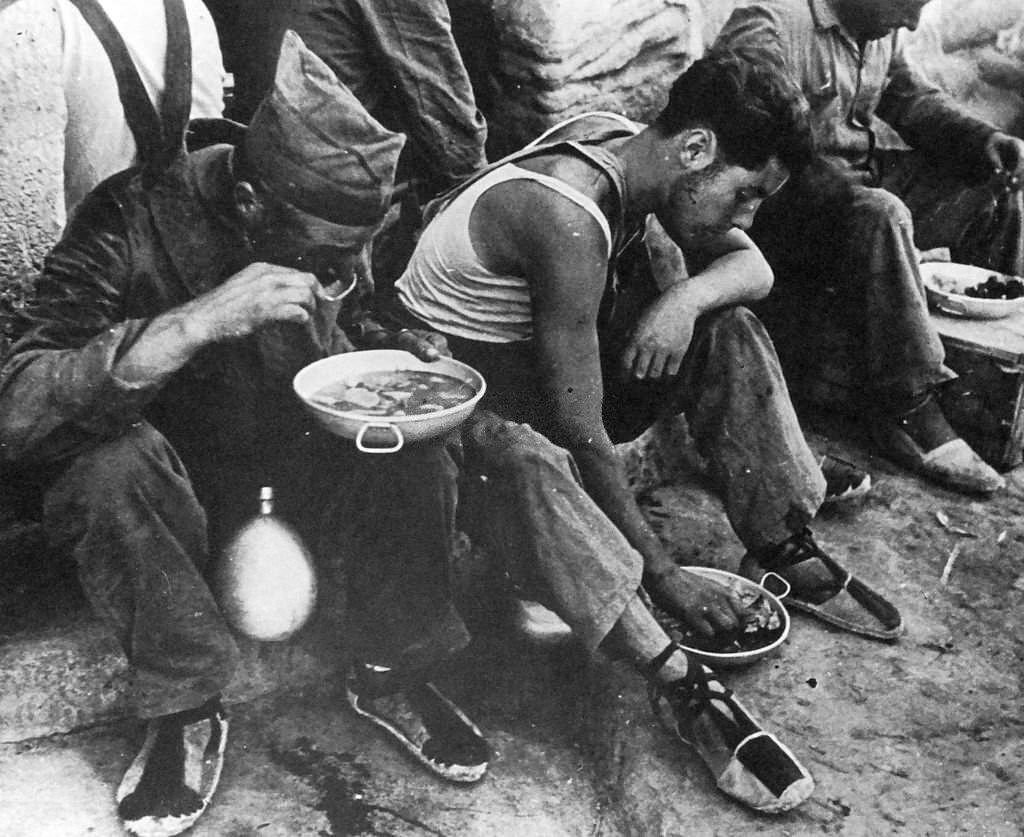
Government troops have a meal in their front line trench during the Spanish Civil War.

Civilians suffered enormously throughout the conflict. Bombing raids on cities and towns killed thousands of non-combatants and left families homeless and destitute. Children were among the most visible victims — photographed beside rubble, fleeing their homes, or waiting in long lines for basic food rations.
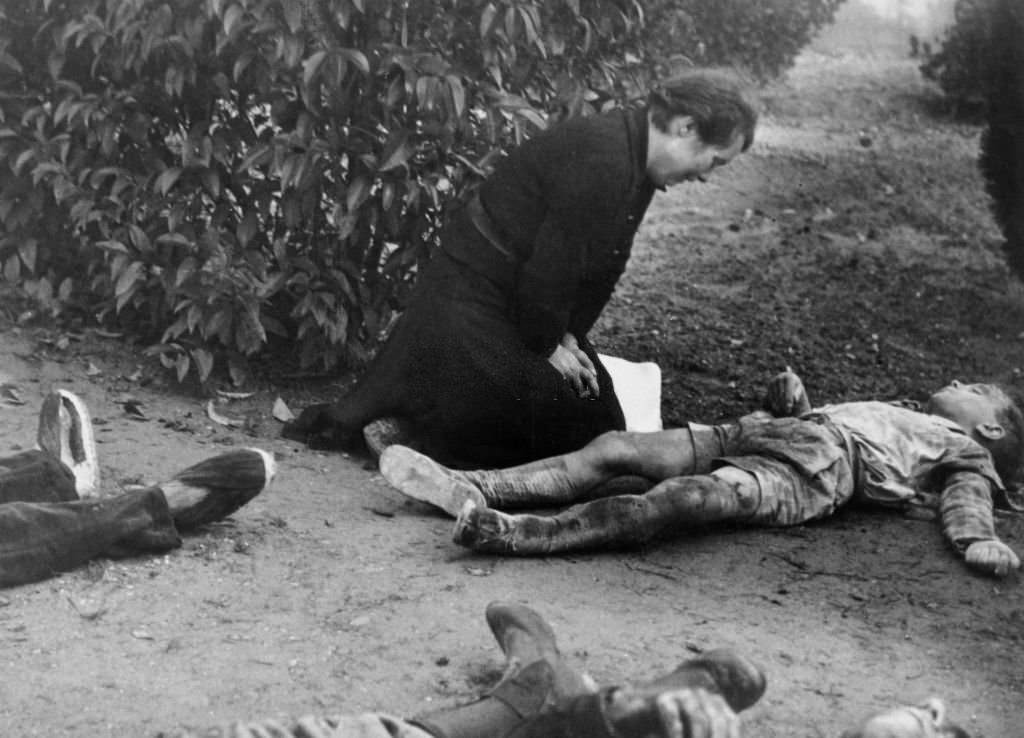
Child victim of bombing in Lerida and his mother, Spain, during the Spanish Civil War
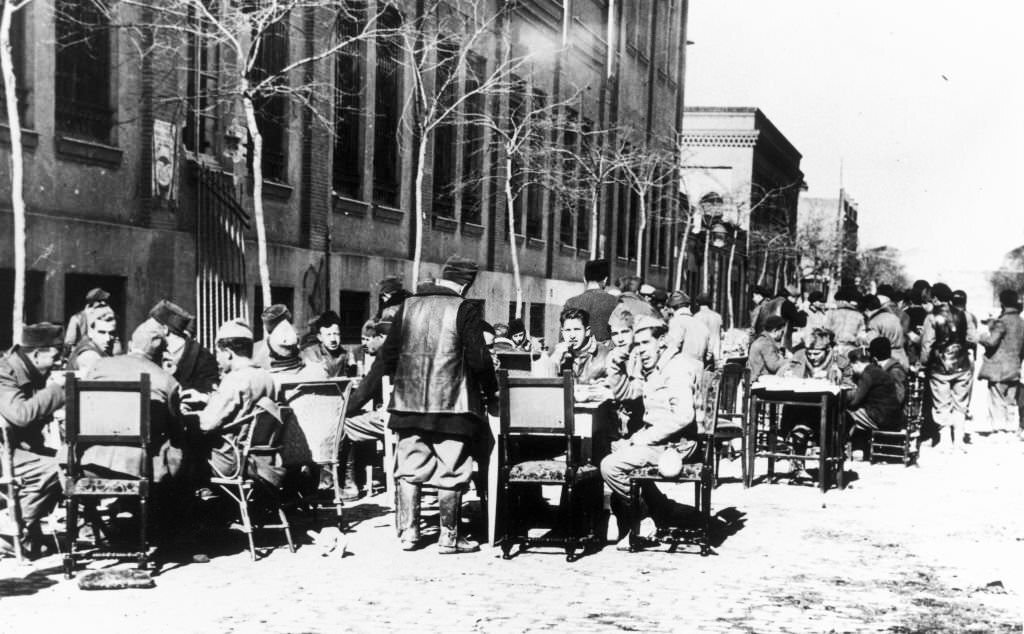
Government militiamen having lunch behind the front lines, Spain, 1937

General Francisco Franco arrived in Spain after the coup to take personal command of the Nationalist forces. Spain’s fascist party, the Falange, unified all Nationalist factions under his authority in 1937, making him the undisputed leader of the rebellion. His Army of Africa — hardened by years of colonial warfare in Morocco — formed the professional backbone of the Nationalist military machine.
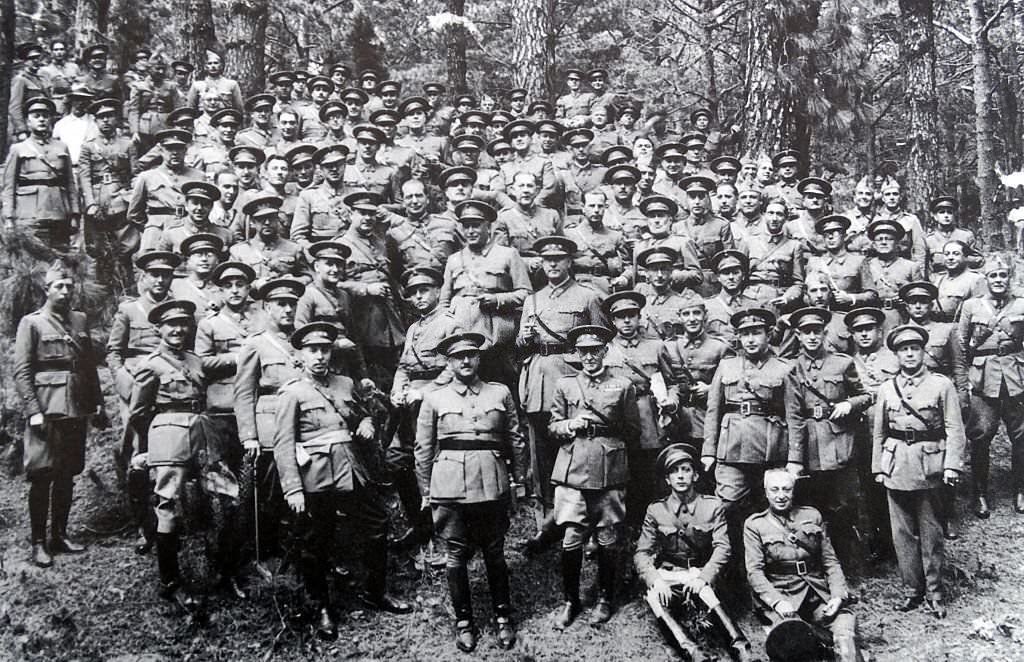
General Francisco Franco 1892-1975 stands with his senior officers after arriving in Spain to take part in the Coup against the Republican Government 1936.
Militia fighters resist the advancing nationalist army in Madrid during the Spanish Civil War.

On November 2, 1937, the German Condor Legion carried out an air attack on the city of Lleida (Lerida) that became one of the most notorious atrocities of the war. The bombing targeted a school called the Liceu Escolar de Lleida. Forty-eight children and several teachers were killed in that single strike. In total, 300 people died in the November 2 bombings. The city was bombed again during the 1938 campaign that brought it under Nationalist control.
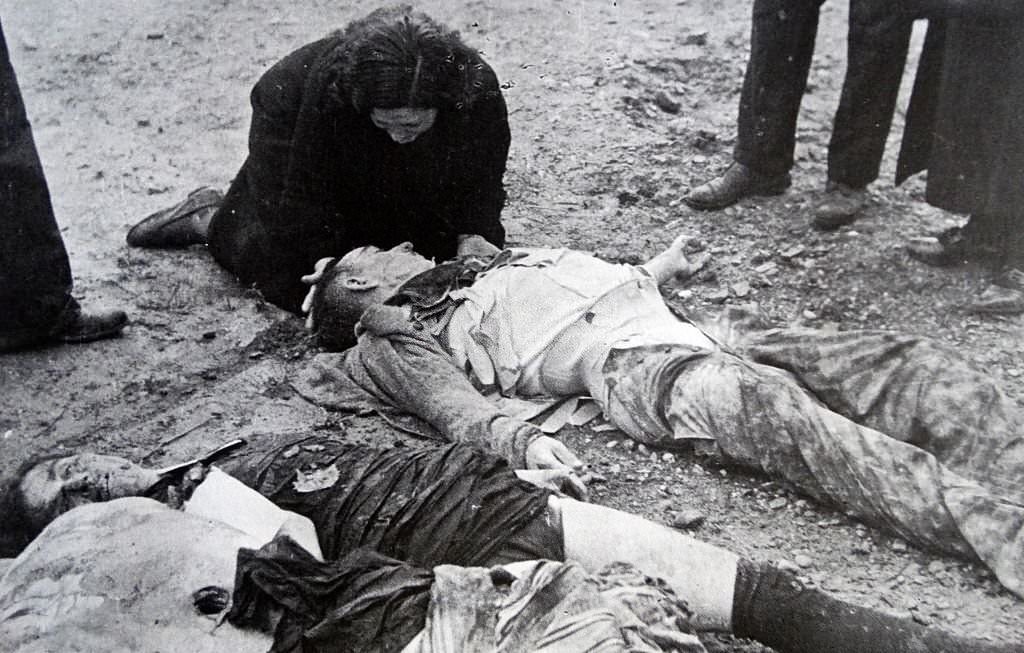
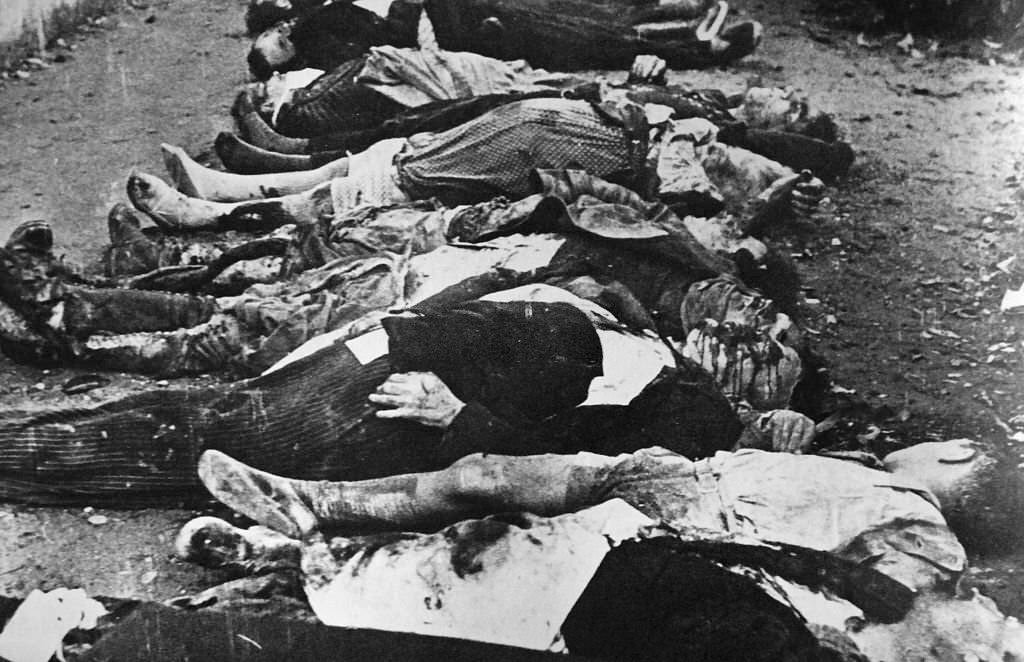
The November 2, 1937 Condor Legion attack on Lleida (Lerida) in Spain, during the Spanish Civil War.
Condor Legion attack on Lleida.
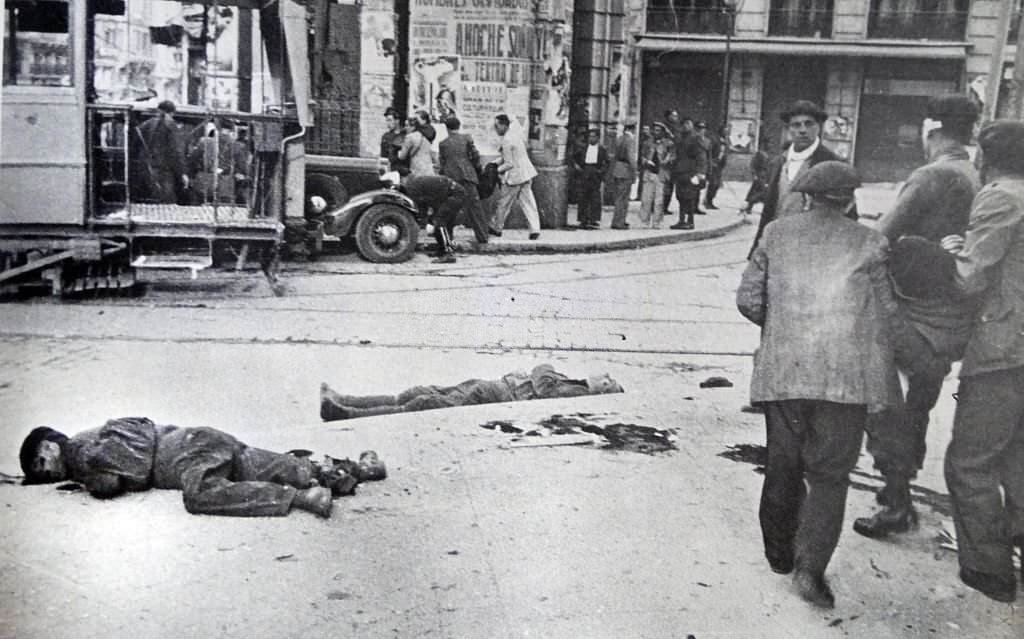
Victims of street fighting in Madrid during the Spanish Civil War.
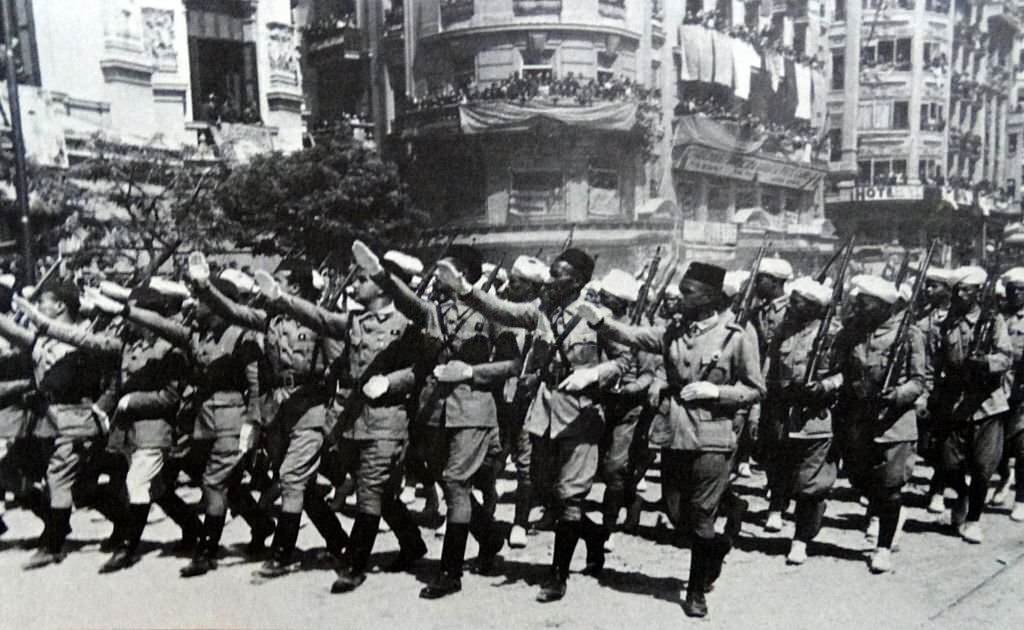
Troops from Spanish Morocco march into Madrid 1939, during the Spanish Civil War.
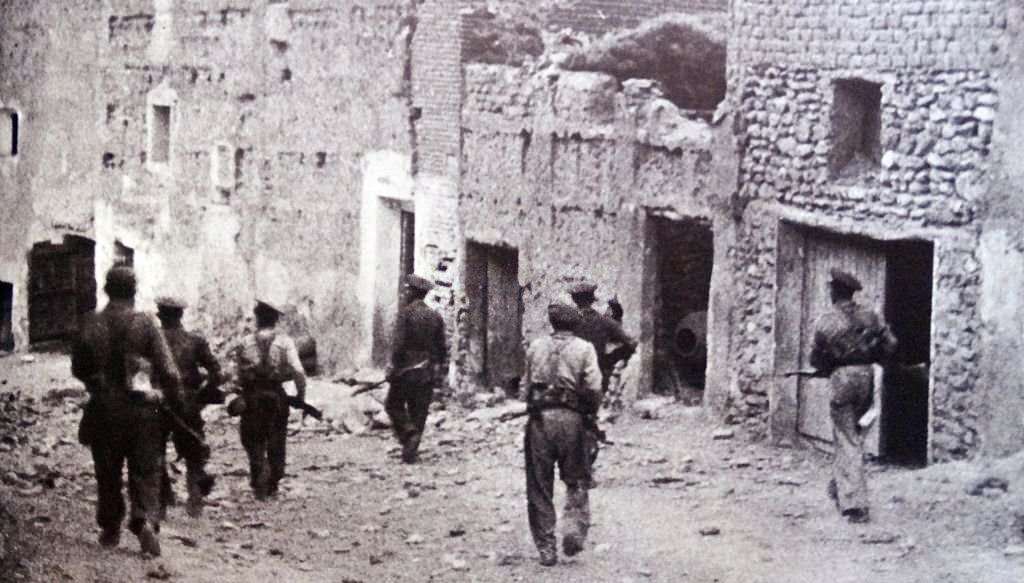
Republican soldiers enter the deserted ruined town of Lleida (Lerida) a key defense point for Barcelona during the Spanish Civil War.

The Battle of Teruel, fought between December 1937 and February 1938 during the worst Spanish winter in twenty years, was one of the bloodiest engagements of the entire war. The city changed hands multiple times — first falling to Republican forces, then recaptured by the Nationalists. Both artillery and aerial bombardment pounded the city relentlessly throughout the two-month fight. Combined casualties for both sides exceeded 140,000.
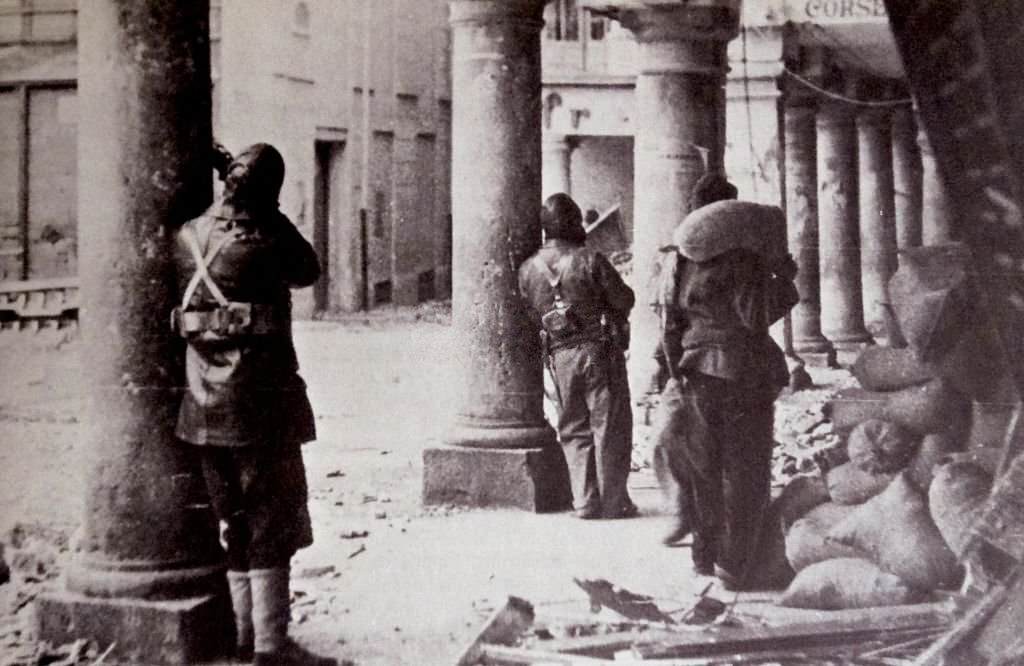
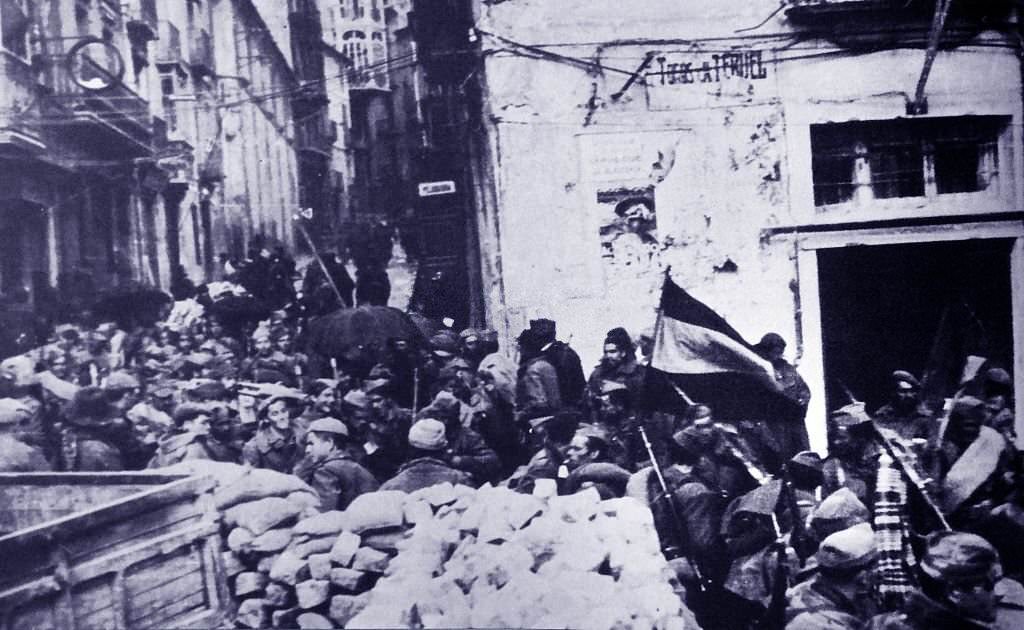
Action at Teruel, during the Spanish Civil War. The combatants fought the battle between December 1937 and February 1938, during the worst Spanish winter in twenty years.
Entry of nationalist forces to the city of Teruel.
Casualties and injured lie on the streets during the Siege of Gijón.

By 1937, the war had begun to displace entire civilian populations. The northern city of Santander saw children evacuated as Nationalist forces advanced. Families fled with whatever they could carry, many of them never returning to their homes.
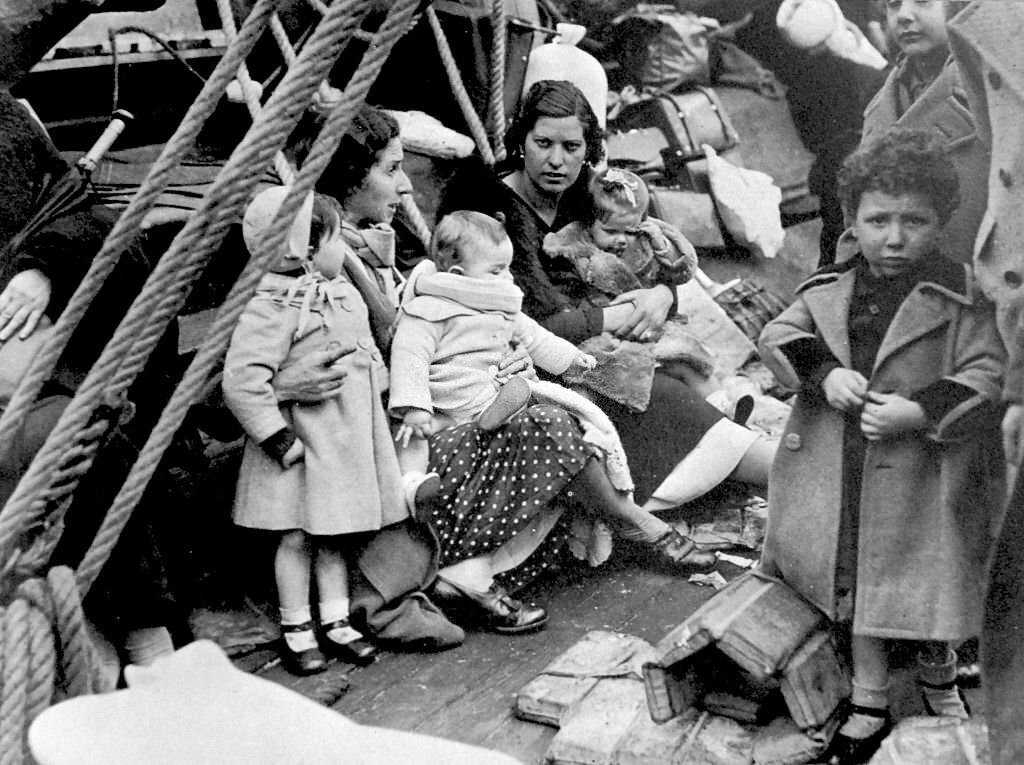
Evacuation of infant children from Santander, during the Spanish Civil War 1937.

The Battle of Brunete in July 1937, fought fifteen miles west of Madrid, was a Republican attempt to relieve the pressure the Nationalists were putting on the capital and on the northern front. The Republicans made early gains but were ultimately forced to retreat, suffering heavy casualties in the process.
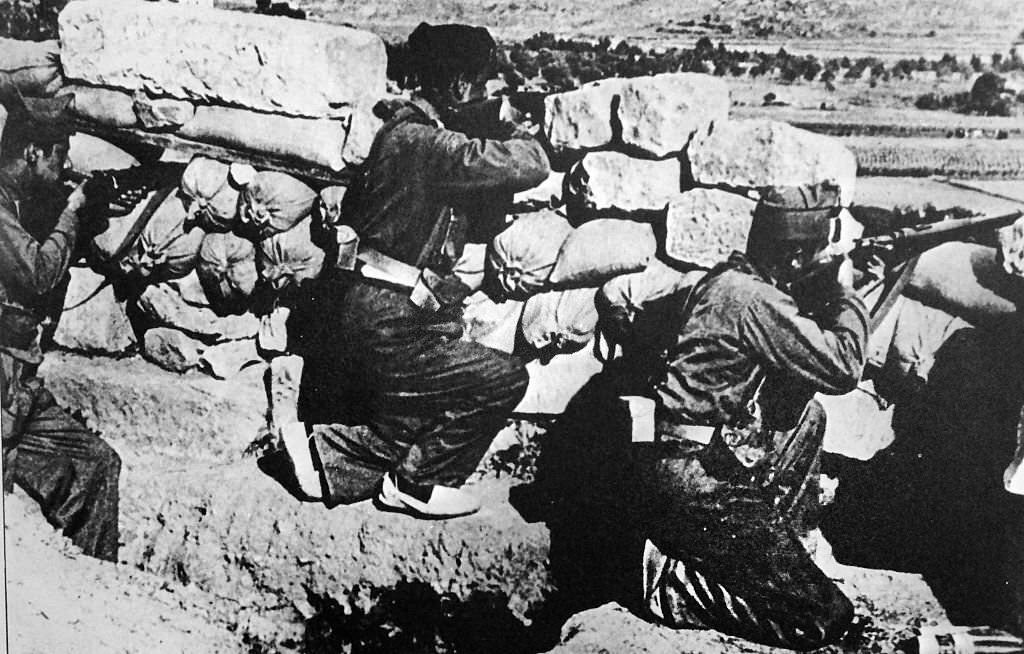
Battle of Brunete.
Battle of Brunete.

The bombing of Guernica on April 26, 1937, stands as one of the most infamous events of the entire war. The German Condor Legion and the Italian Aviazione Legionaria carried out the attack under Operation Rügen, targeting the historic Basque cultural city. The Basque government reported 1,654 people killed. The attack demonstrated to the world the devastating potential of modern aerial bombing against civilian targets.
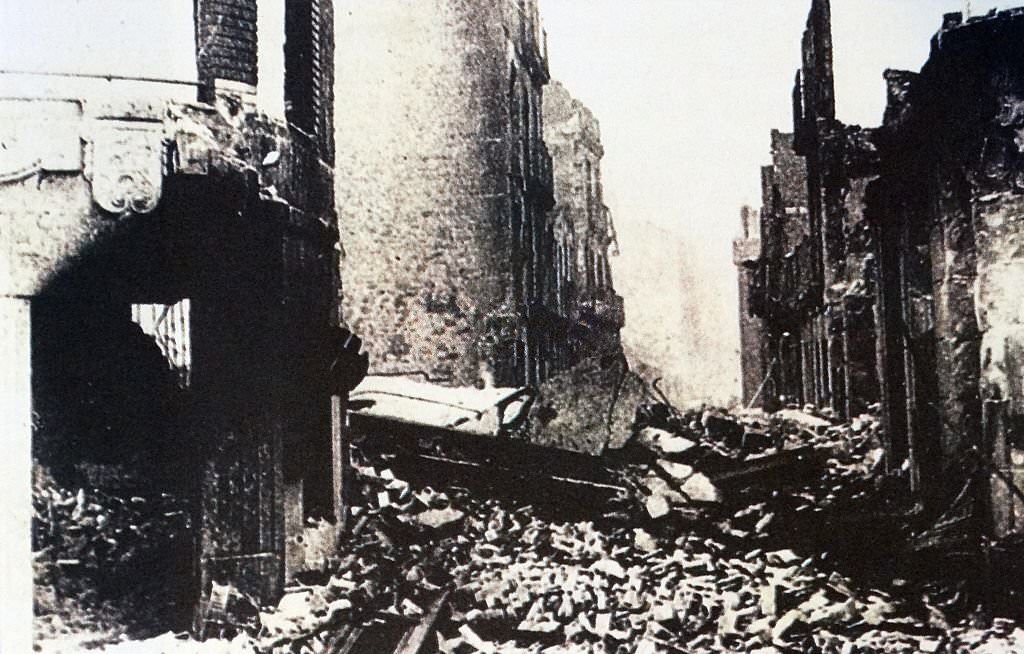
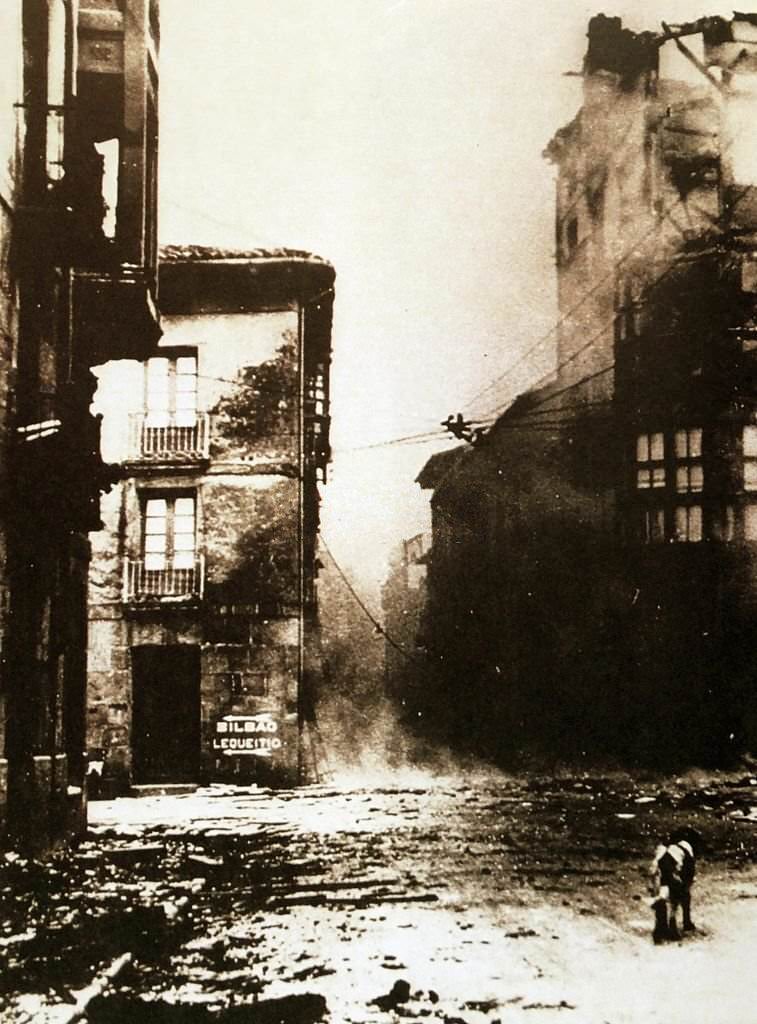
Air raid attack on the Basque town of Guernica, Spain.
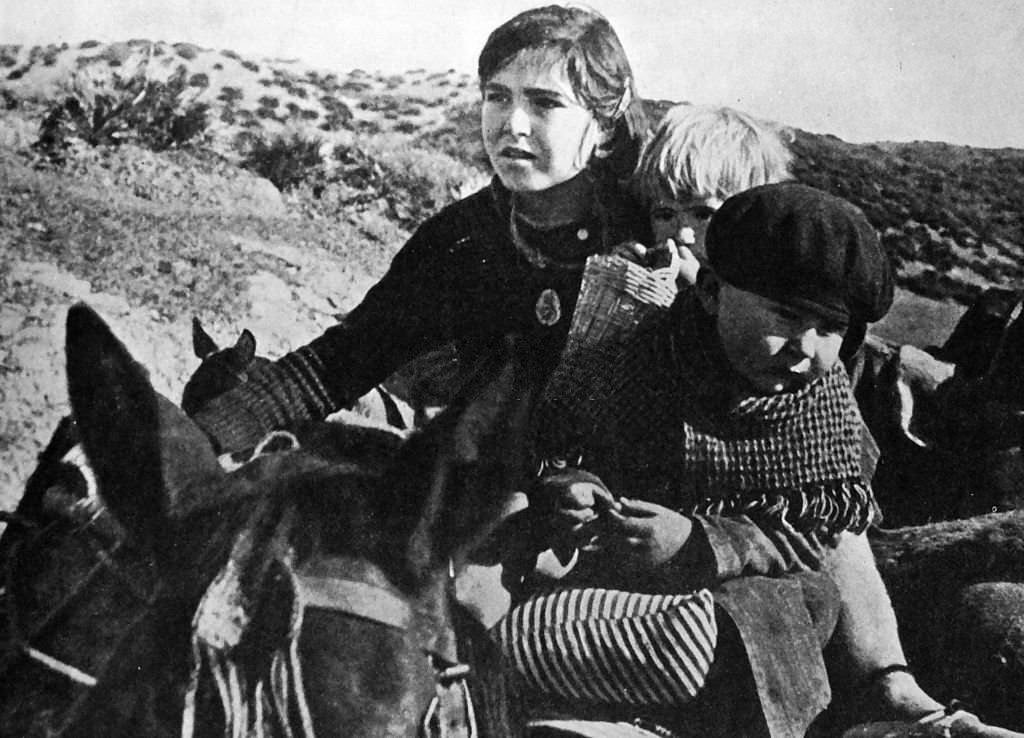
Refugee children escape from Malaga, during the Spanish Civil War.
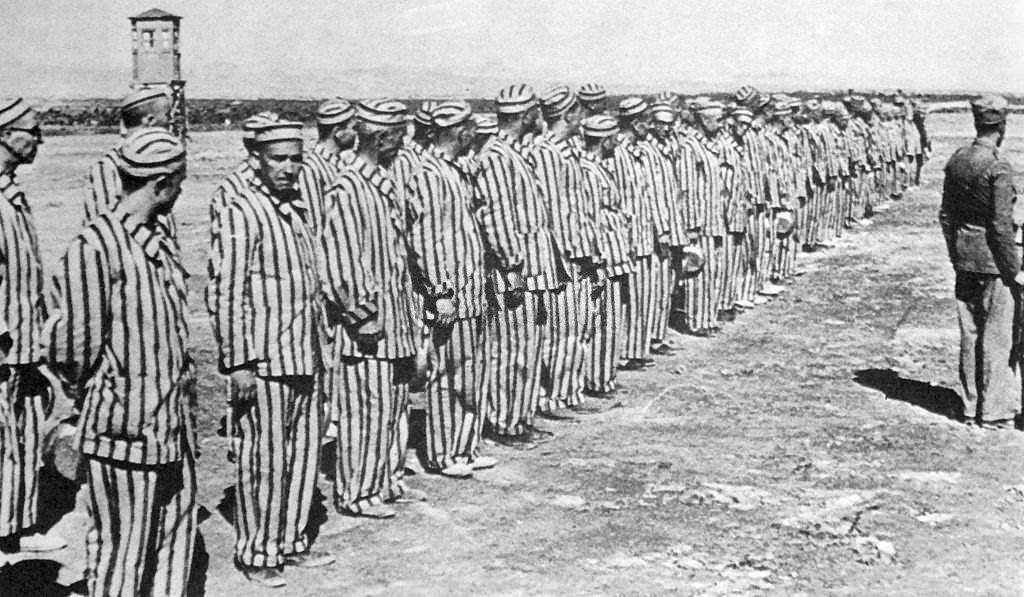
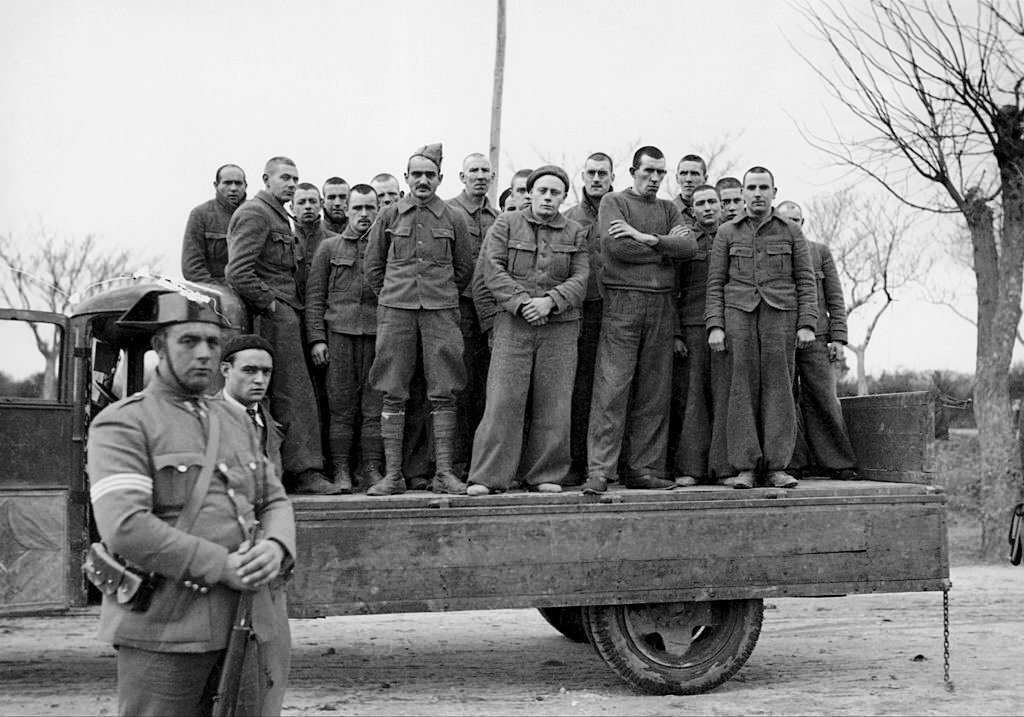
Prisoners in uniform, inside a Civil prison camp, in Republican Spain during the Spanish Civil War.

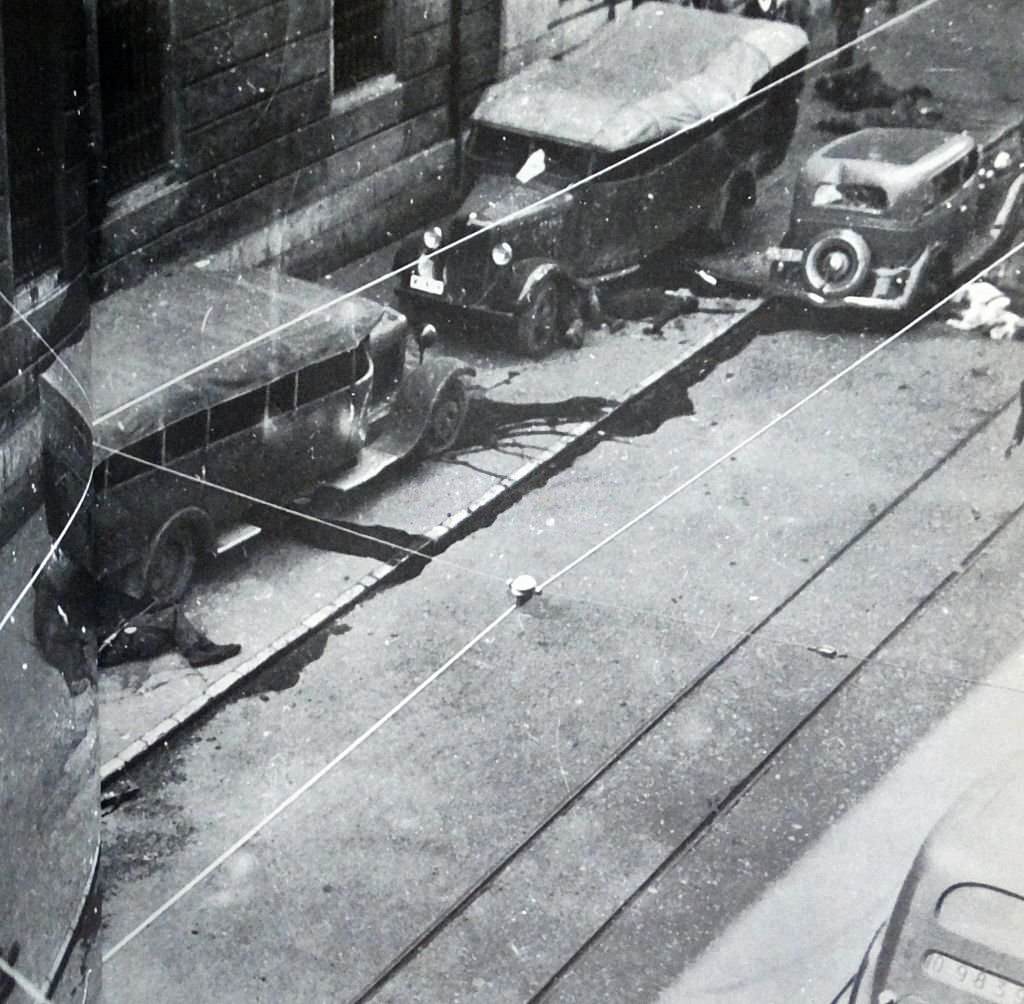
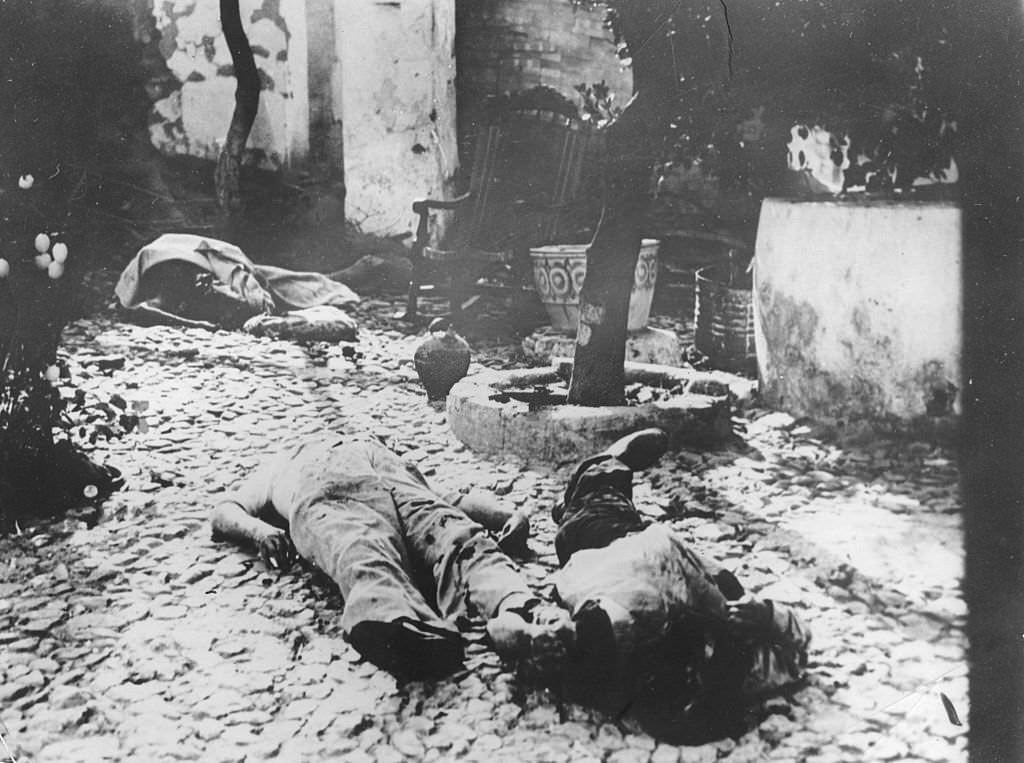
In the Extremadura region, Nationalist forces systematically executed Republican supporters following their military victories. Between 6,600 and 12,000 Republican supporters were killed by Nationalist forces in the region. The campaign culminated in the Battle of Badajoz in August 1936, after which Franco’s Army of Africa pivoted northward to begin its march toward Madrid.
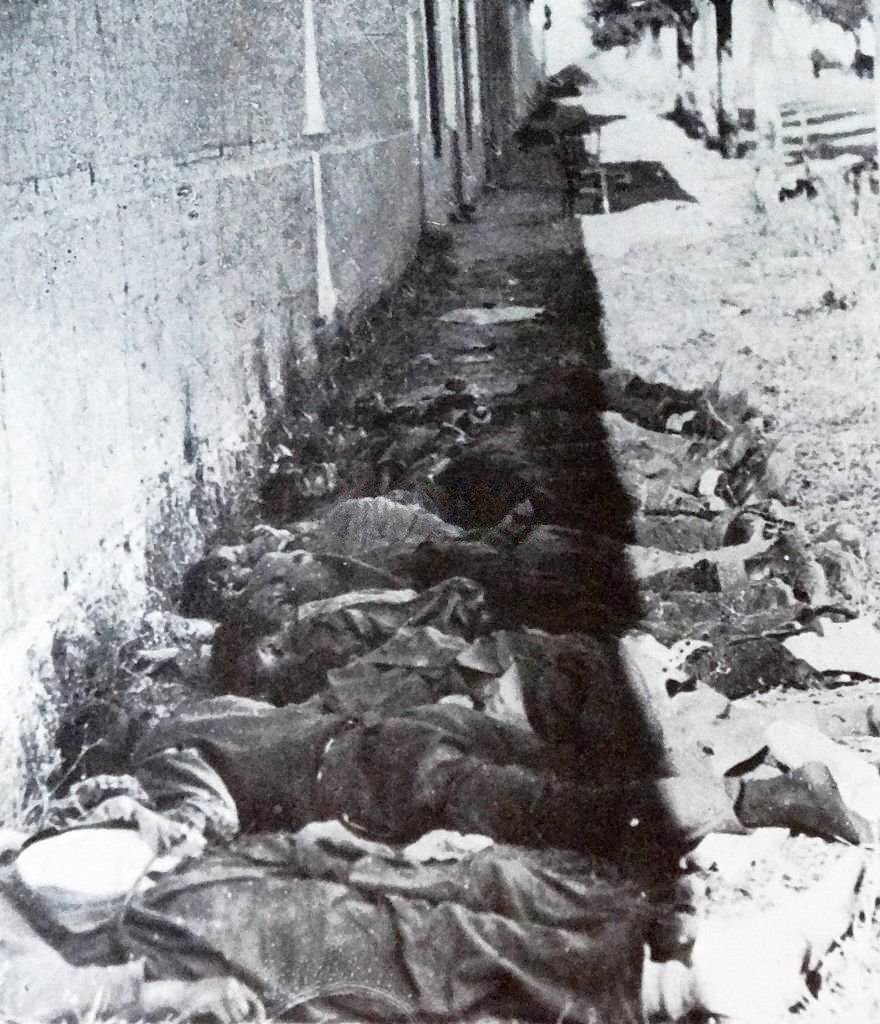
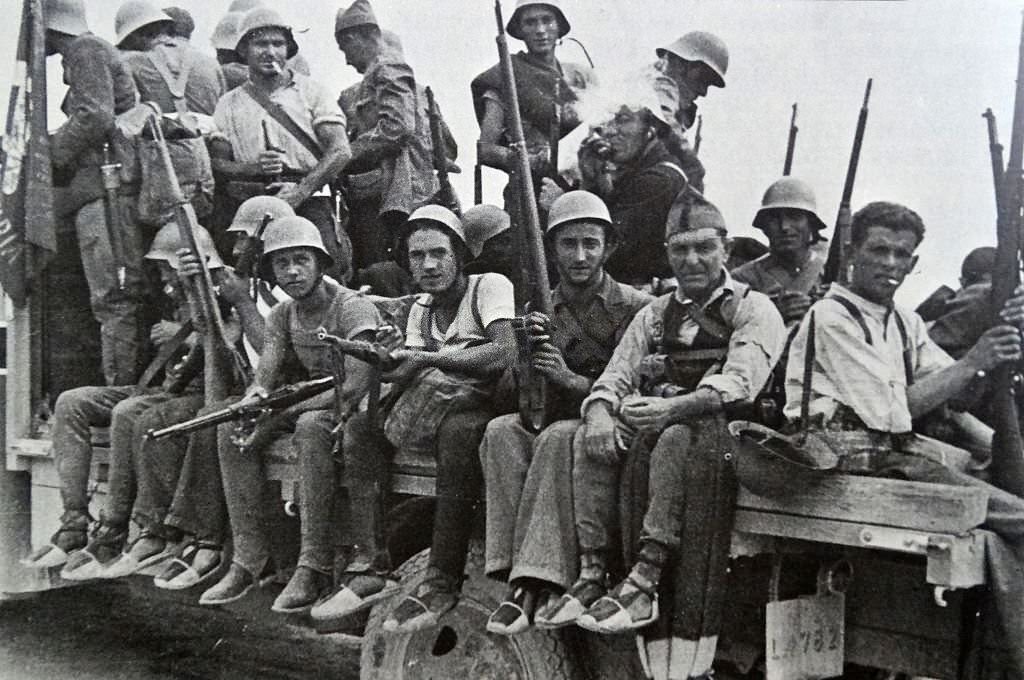
Executed Republicans in Extremadura, during the Spanish Civil War. Between 6,600 and 12,000 Republican supporters were executed by the Nationalists.
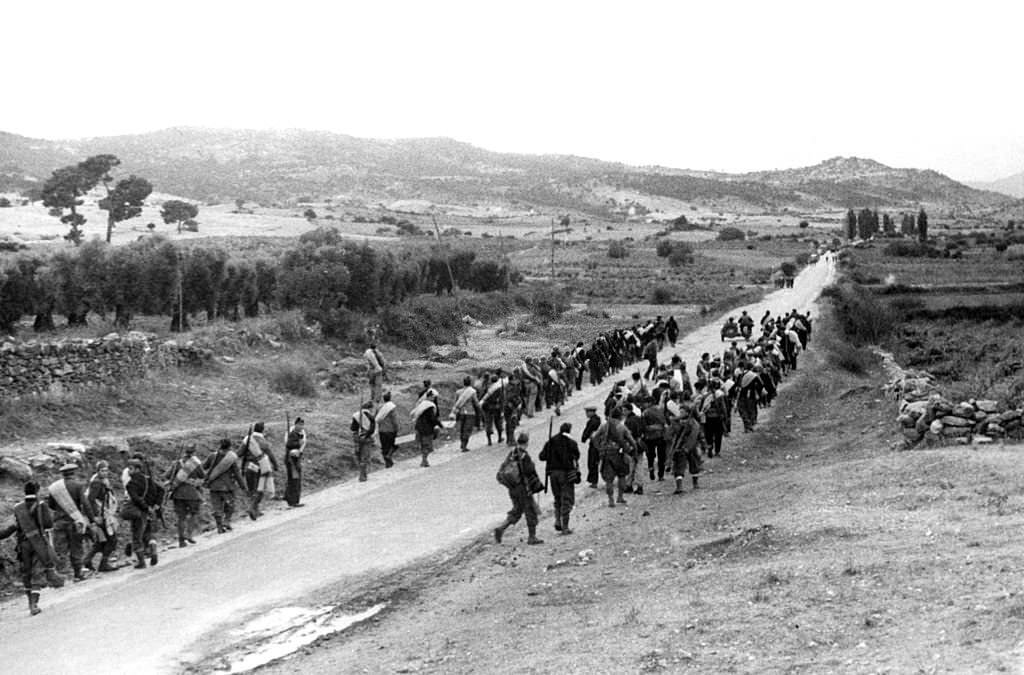
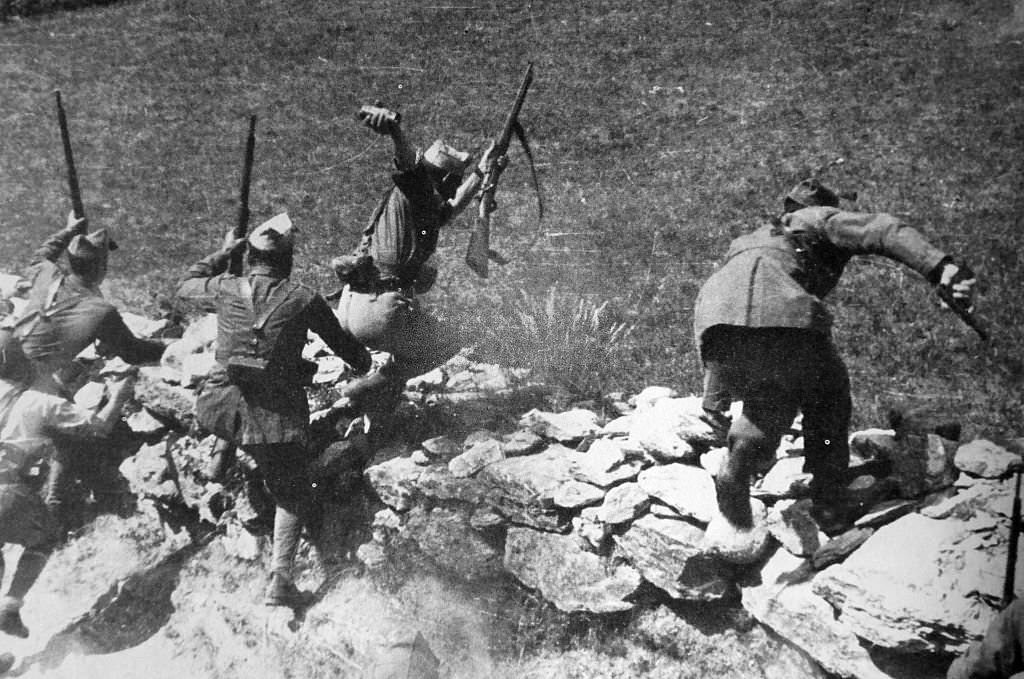
Republican militia on the move towards a battle front in Spain, during the Spanish Civil War.

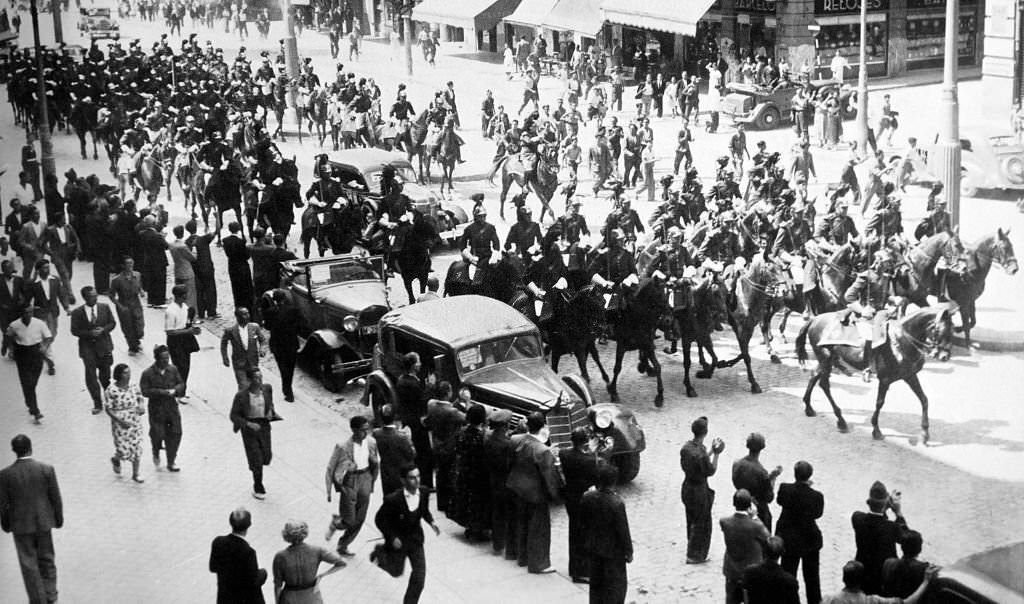
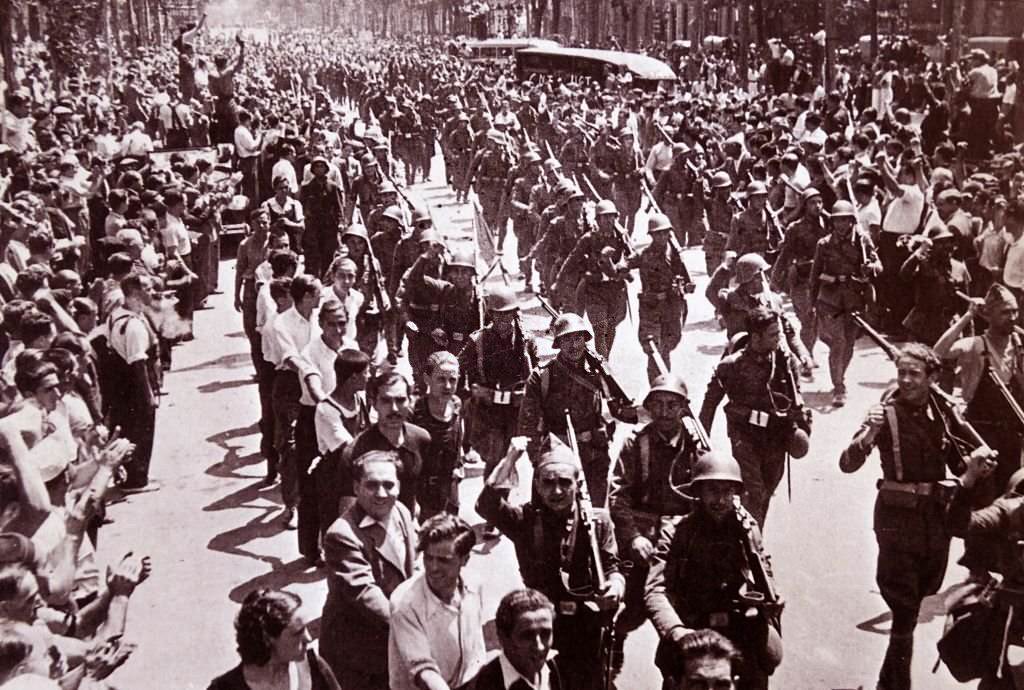
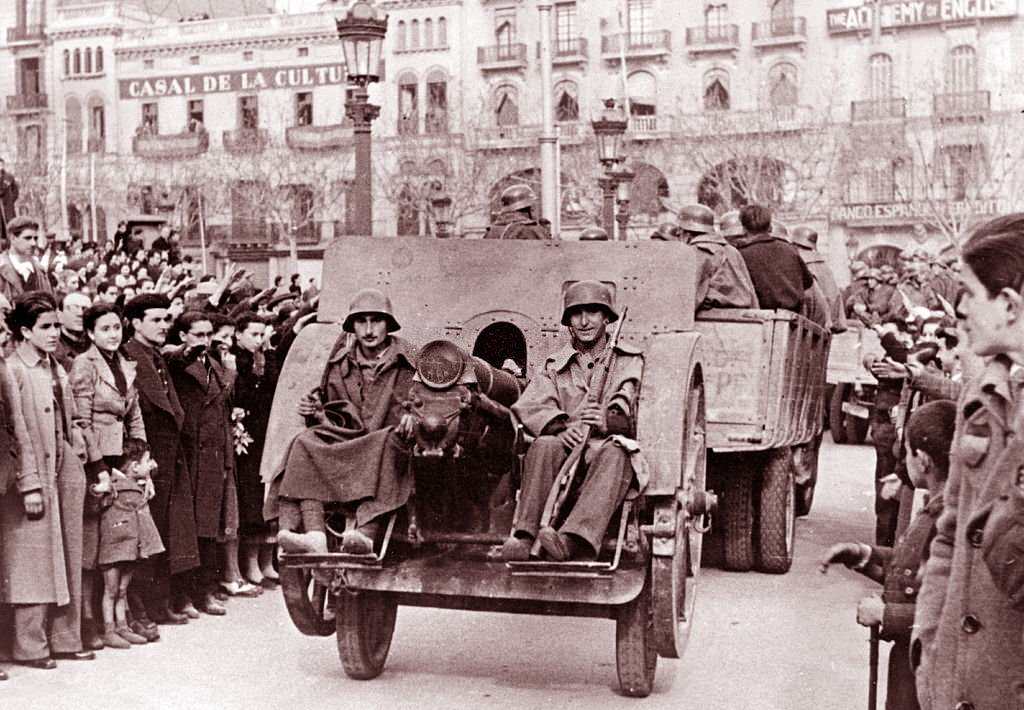
By early 1939, the war was in its final phase. Barcelona fell to Nationalist forces in January 1939, and the rest of Catalonia collapsed shortly after. Nationalist troops paraded through the city’s streets as Republican resistance disintegrated. The Soviet Union had recognized the futility of continued support, and the International Brigades had already been withdrawn.
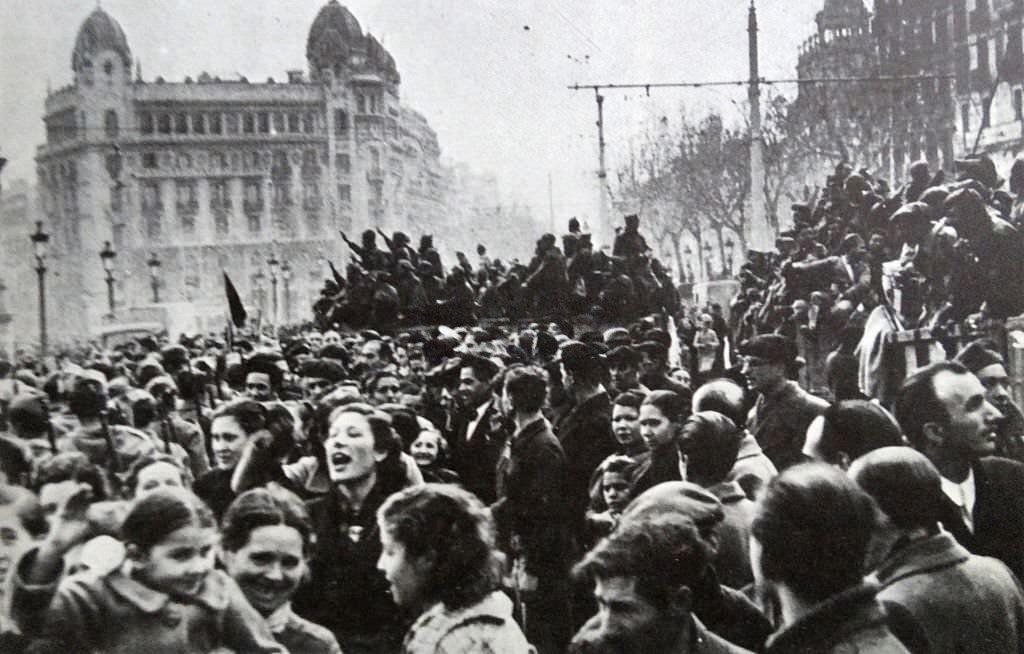
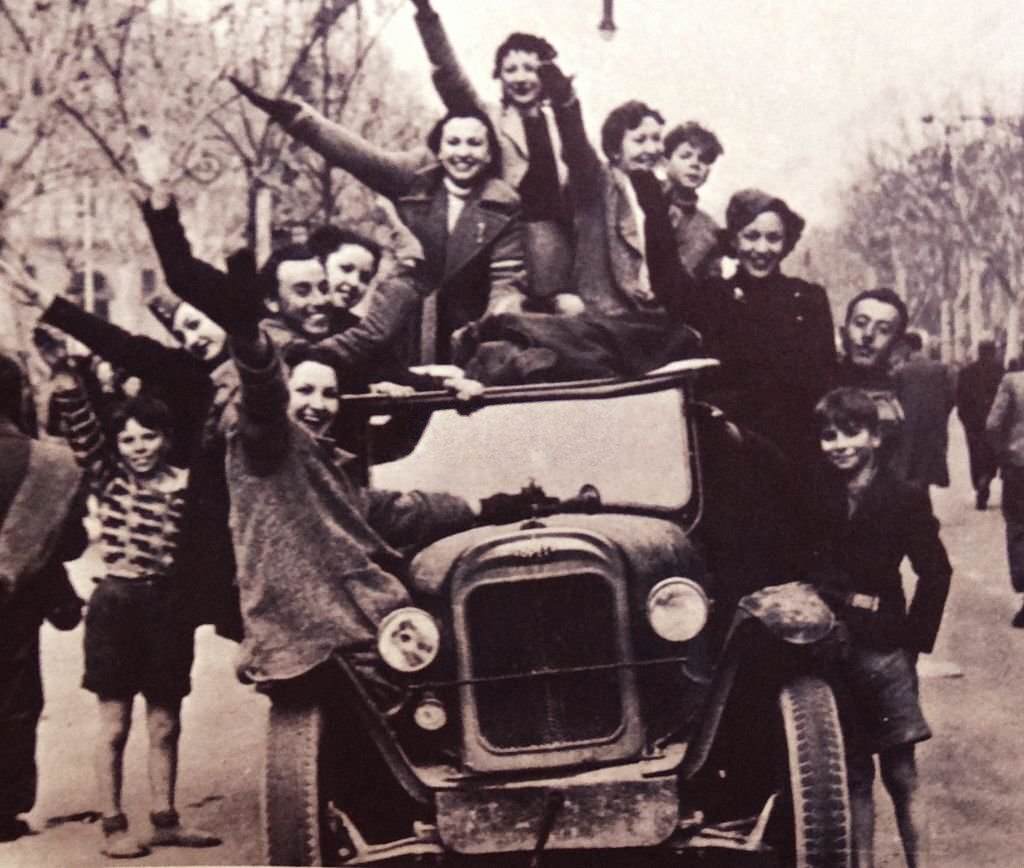
Military parade in Barcelona, after nationalist forces enter the city, 1939 during the Spanish Civil War.
Nationalists celebrate victory in Barcelona, January 27, 1939
Republican parade in Madrid attended by the Soviet Russian delegation to celebrate the supply of arms from Russia during the Spanish Civil War.

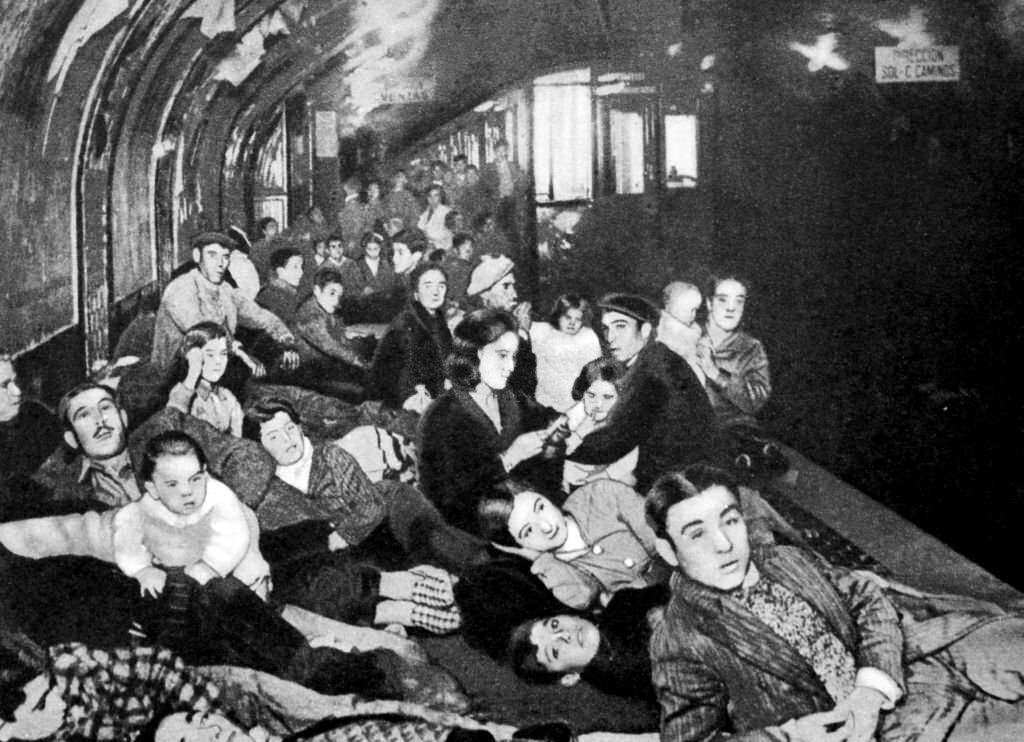
In Madrid, civilians found shelter deep underground in the city’s metro stations as Nationalist bombs fell above them. The siege of Madrid lasted from November 1936 until the very end of the war, making it one of the longest urban sieges of the conflict.
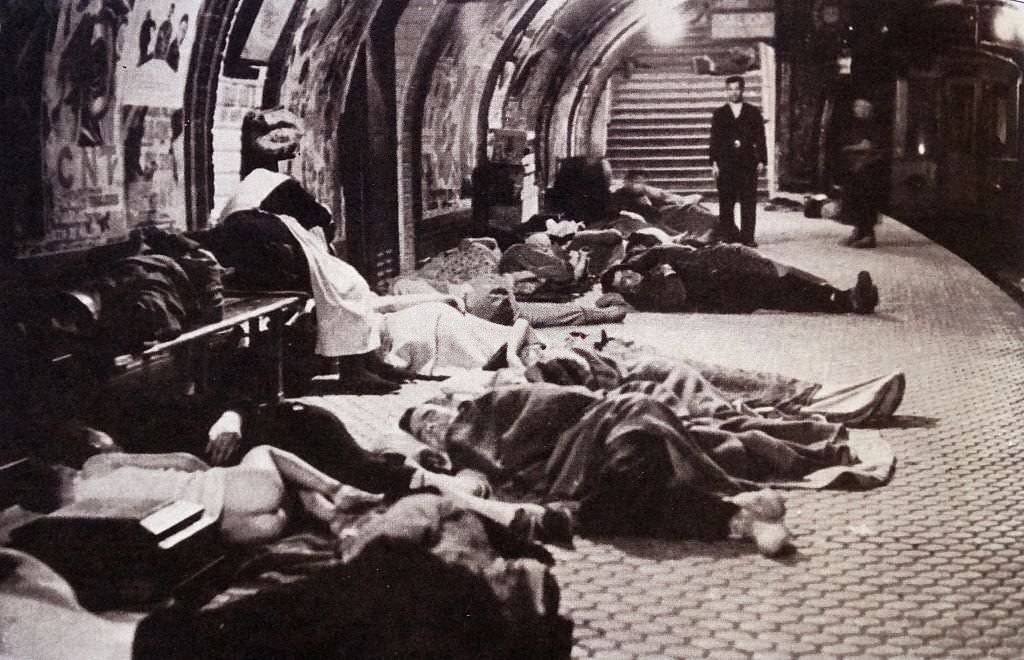
During the Spanish Civil War, civilians take shelter by sleeping on the platforms of the underground metro system.
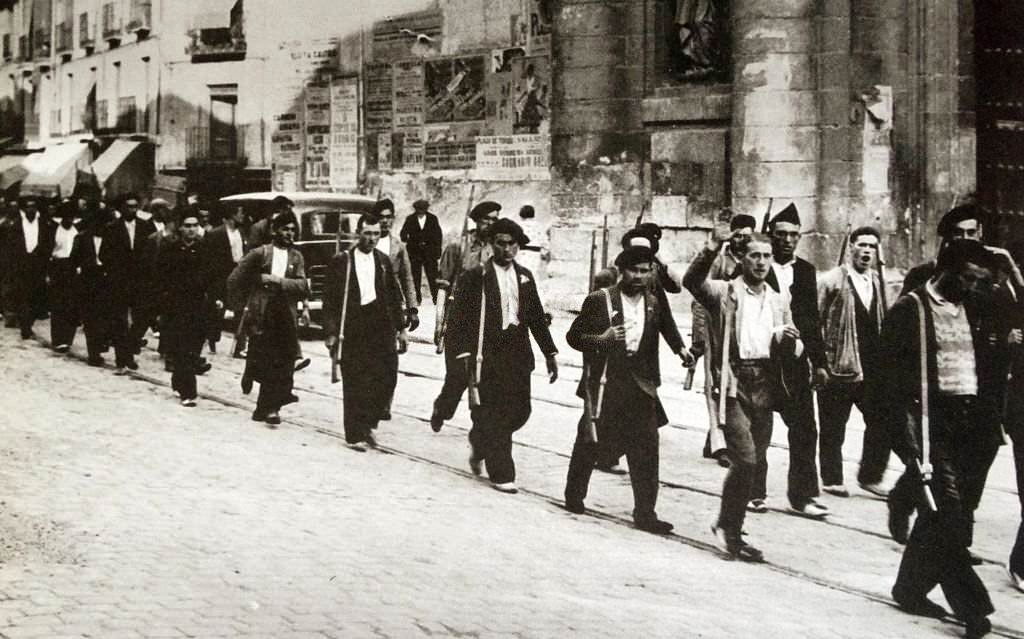
Armed peasants in the Republican army march to Valladolid, during the Spanish Civil War 1936.
Anti-fascist troops parade through Barcelona, during the Spanish civil war 1936.
Civil volunteers take up positions in central Barcelona in the summer of 1936 to defend the republic during the Spanish civil war.
The Almansa regiment enters Tarragon during the Spanish civil war. Tarragona surrendered on 14th January 1939.
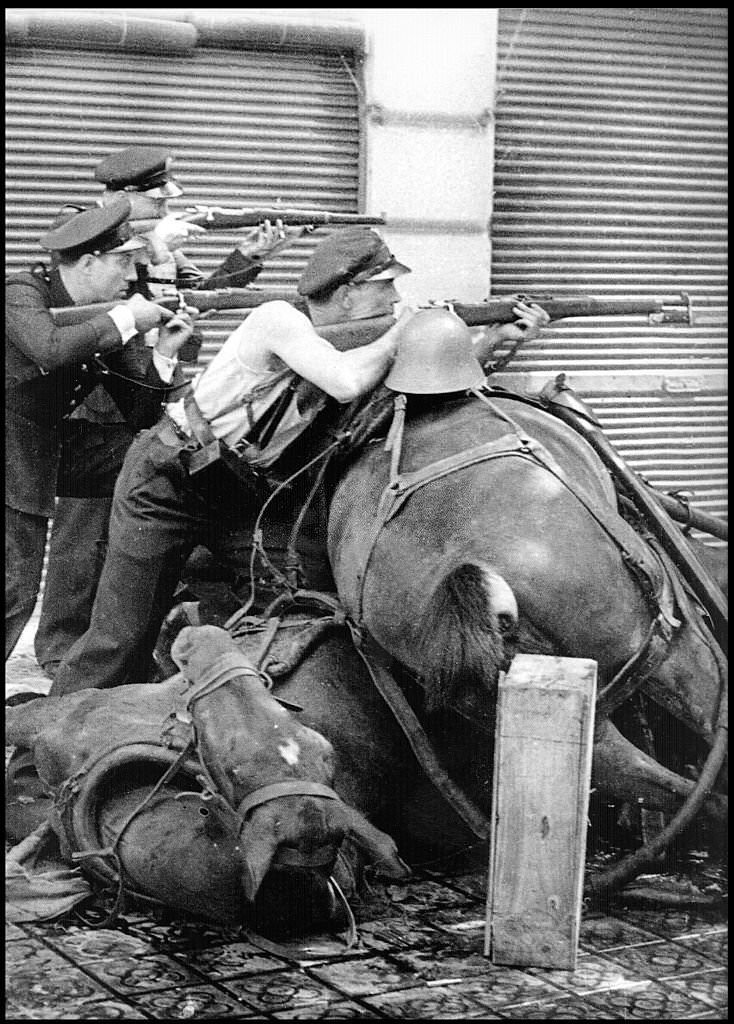
Republican fighters take aim behind a barricade of a dead horses in a street in Barcelona 1937, during the Spanish Civil war.
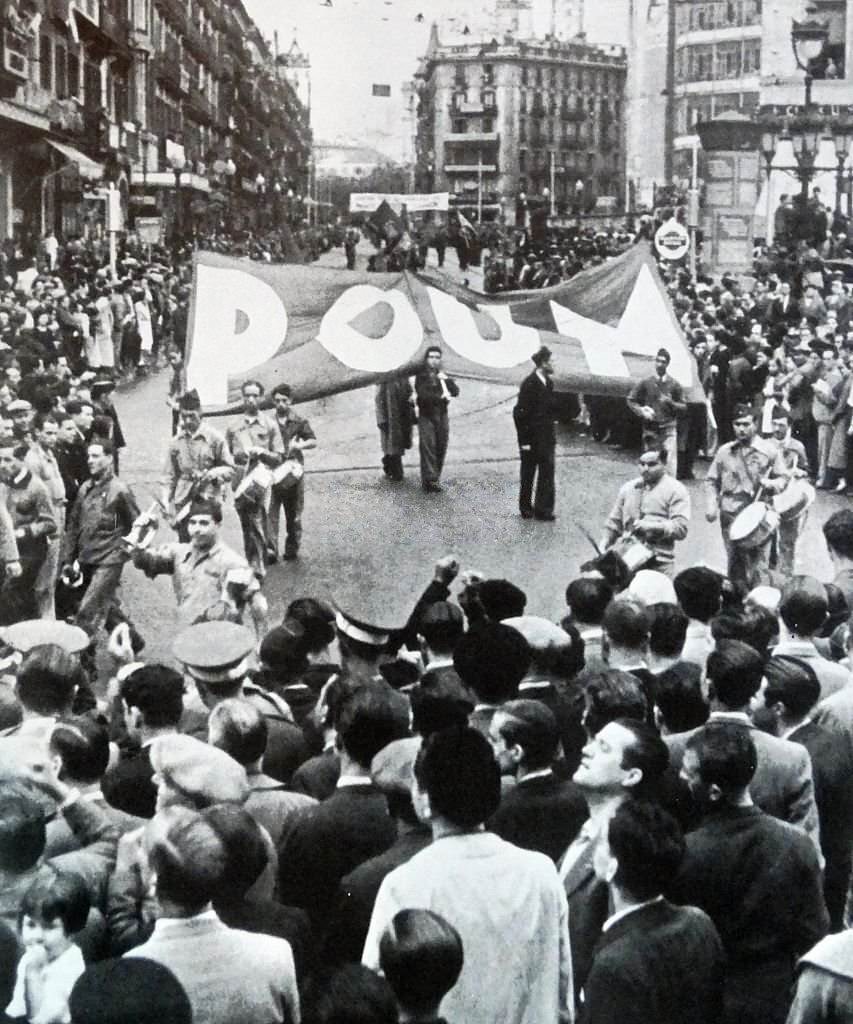
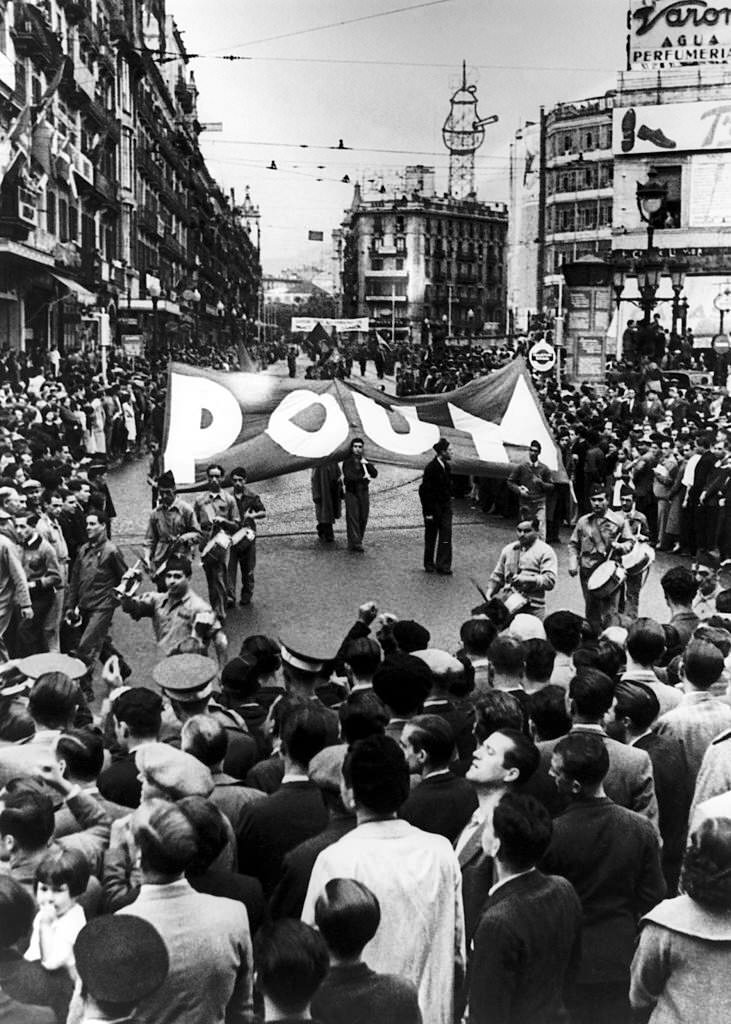
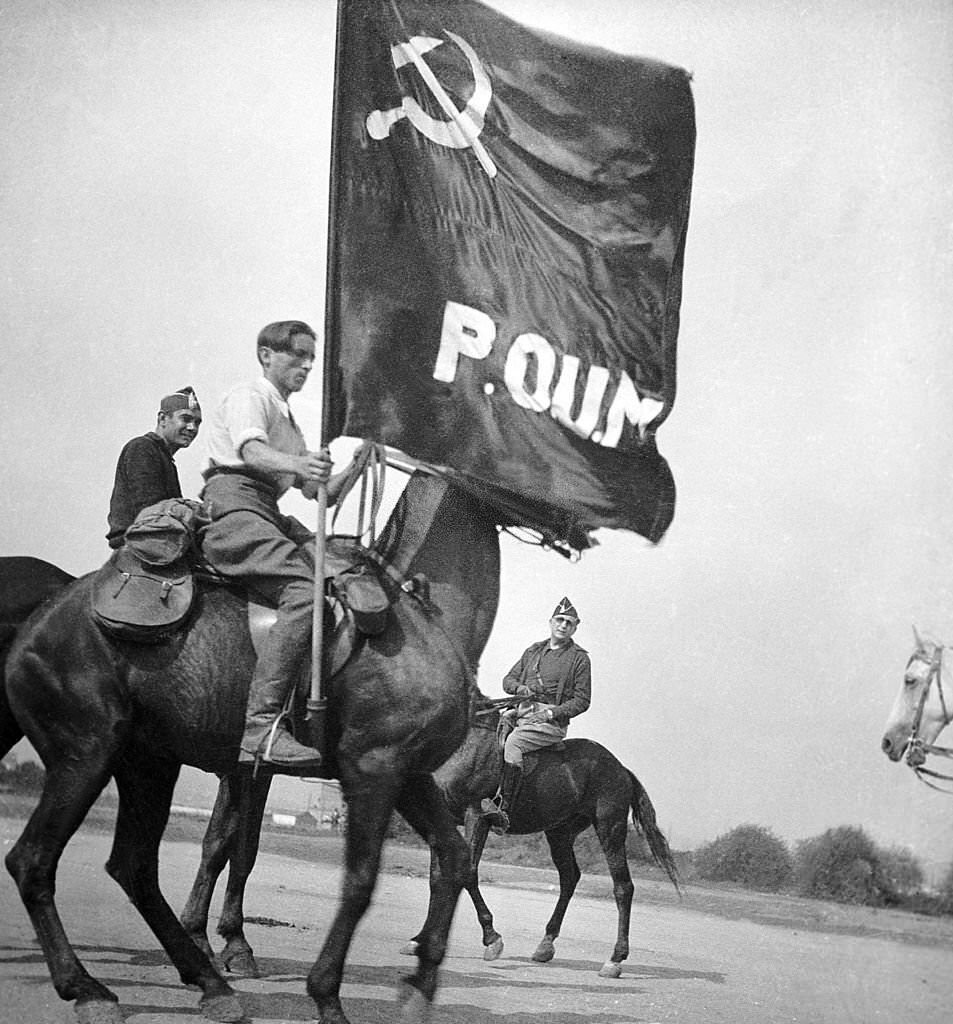
POUM and other republicans march in Barcelona, Spain 1936.

Before the war began, political tensions had already been building for years. In February 1936, crowds gathered outside Barcelona’s prison to welcome the release of left-wing political prisoners, including Catalan nationalists who had been jailed after the 1934 uprising. These scenes of celebration in the streets masked the intensifying crisis below the surface of Spanish political life.
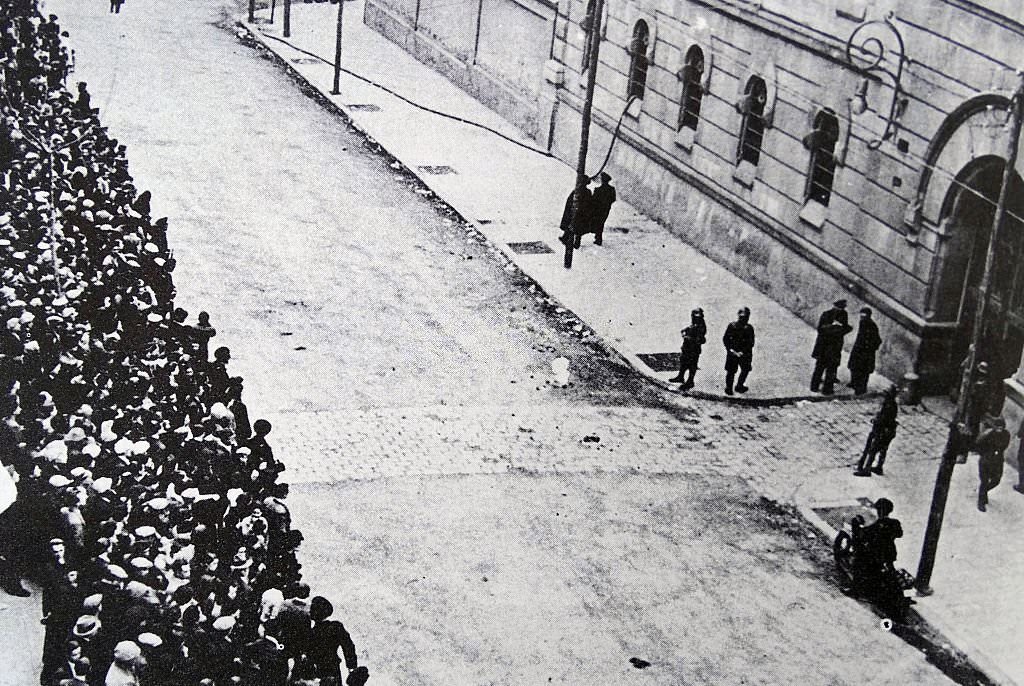
Crowds outside Barcelona prison await the release in February 1936, of left wing political prisoners including Catalan nationalists.

The February 1936 elections were marked by violence. Assault Guards maintained security on election day, but six people were killed during the voting and around thirty more were injured. The election brought the Popular Front to power, deepening the fears of right-wing officers and landowners who had long feared a leftist takeover.
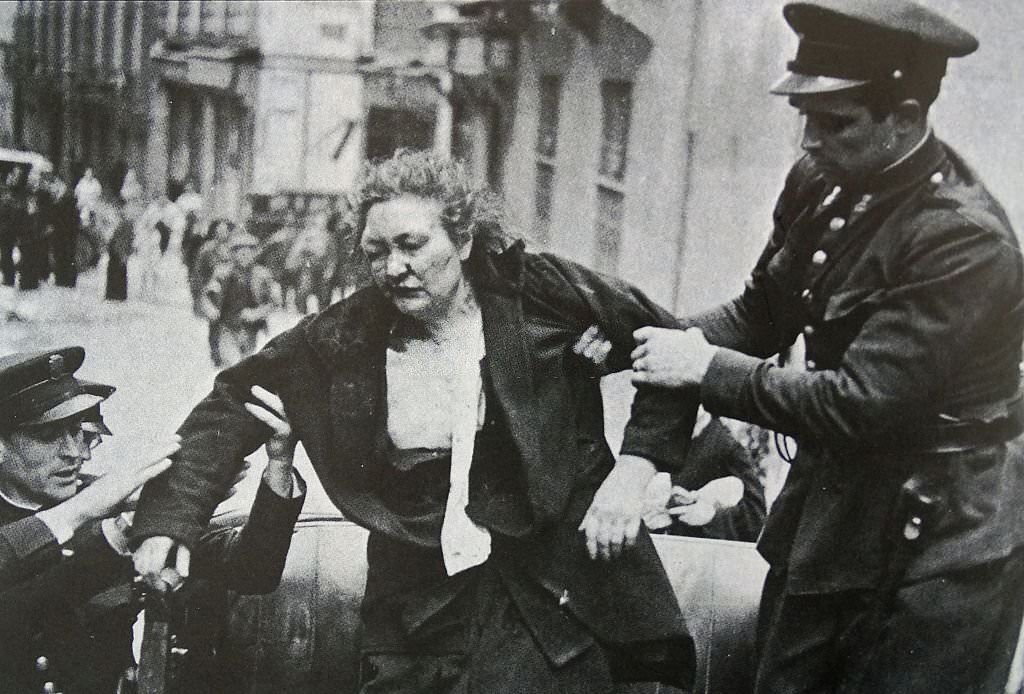
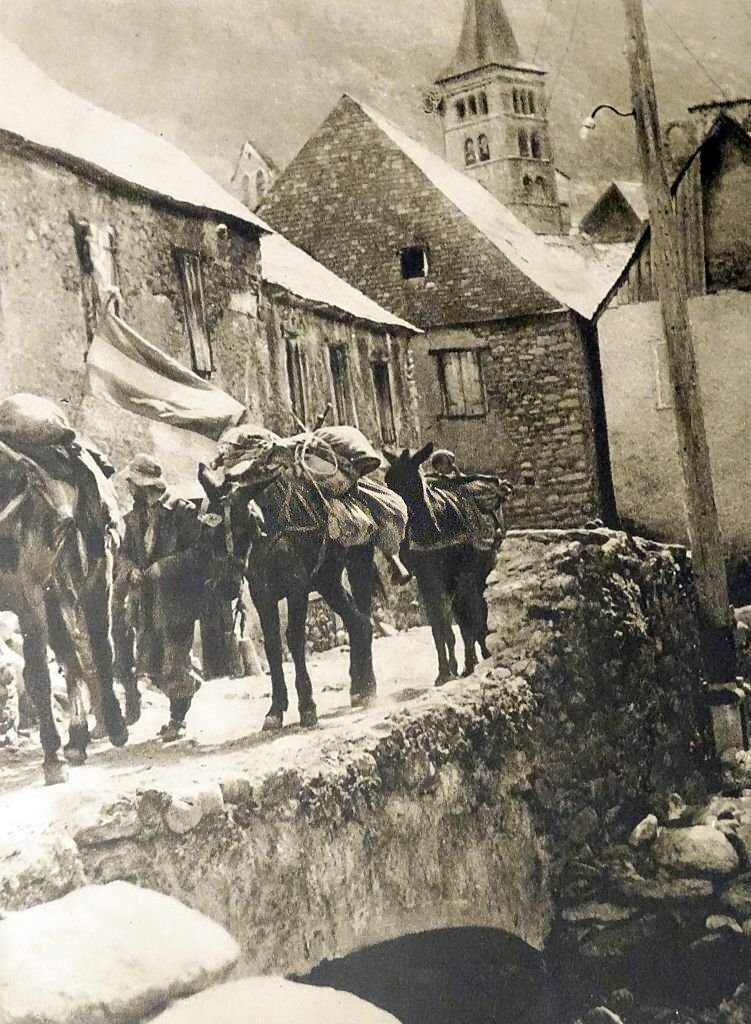
Spanish woman helped by assault guards in Madrid.
Republican soldiers pass through a village in Spain, during the Spanish Civil War.
Spanish children prepare to leave Spain during the Spanish Civil War 1938.

As the Nationalists consolidated control of Madrid in March 1939, Republican prisoners of war were marched through the city’s streets in plain view. The Republican cause was finished. Its leaders had tried to negotiate peace terms, but Franco refused to offer any. Madrid surrendered on March 28, 1939, ending the Spanish Civil War.
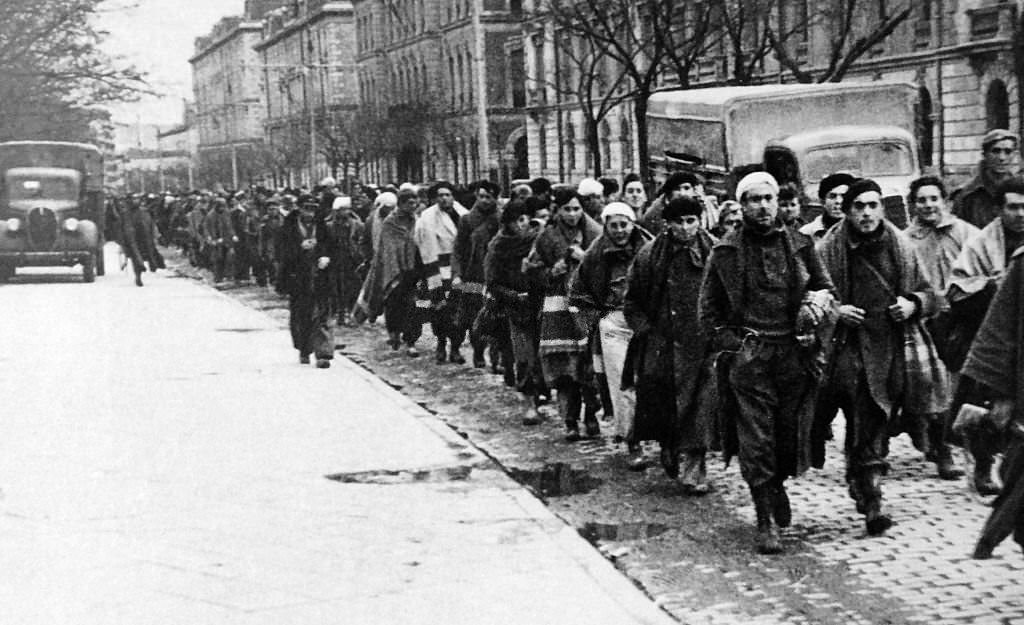
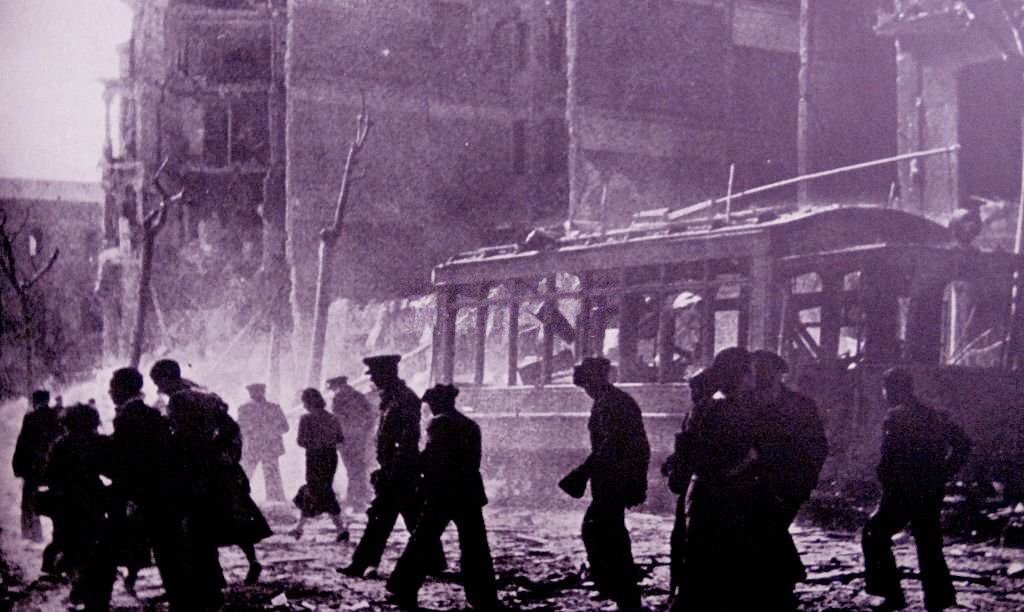
Republican prisoners of war marched through a Madrid Street 1939, during the Spanish Civil War.
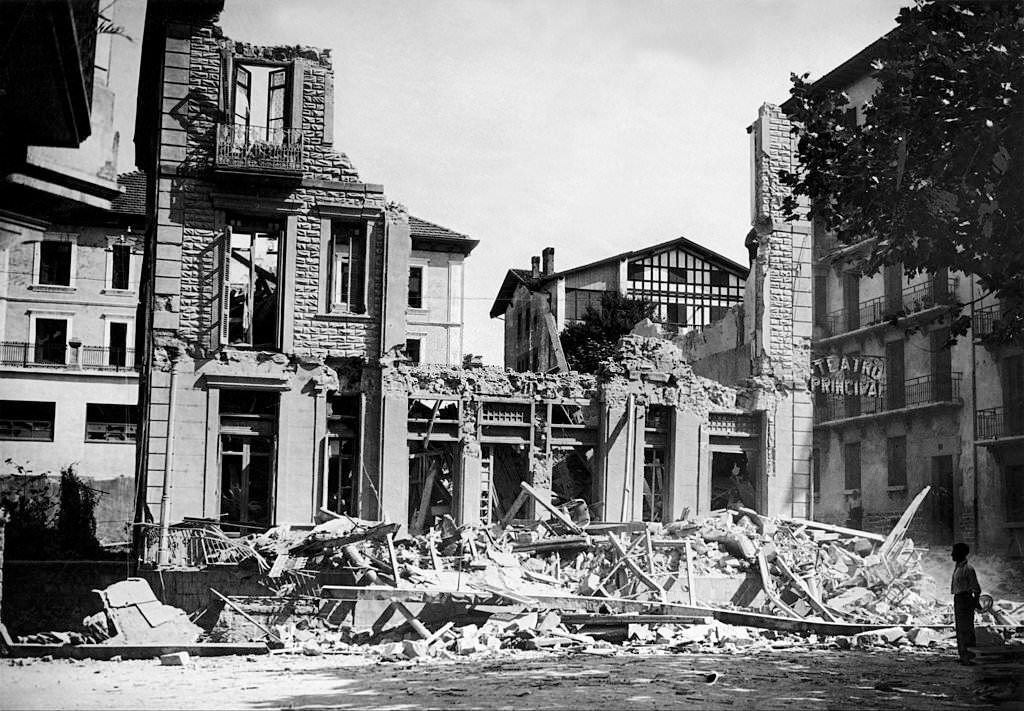
Damage caused by a nationalist air raid on a Spanish city, during the Spanish Civil War.
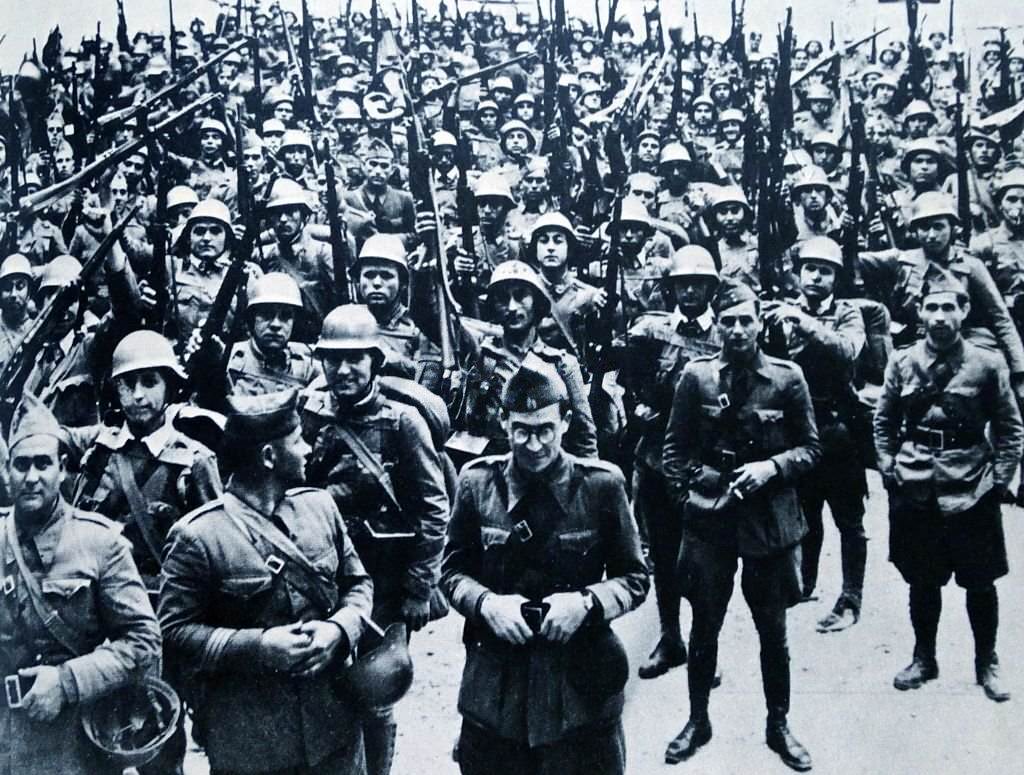
Republican soldiers during the Spanish Civil War.
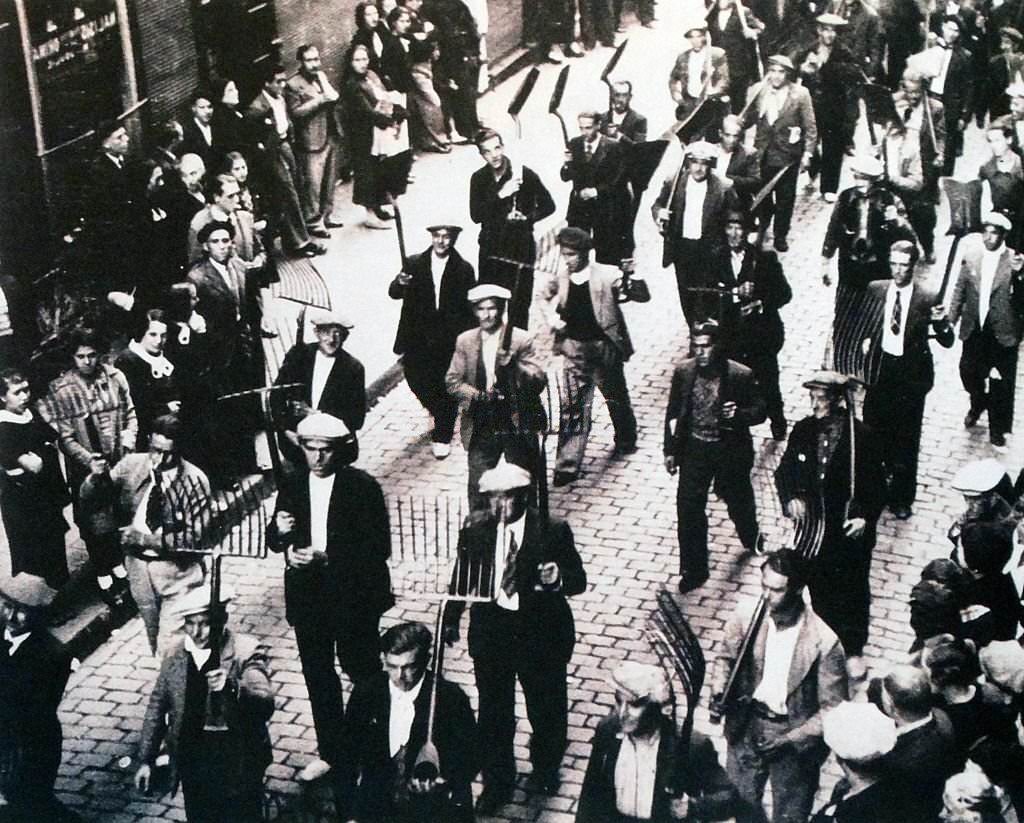
March by mobilised farm workers for the republican war effort in Spain, during the Spanish Civil War.
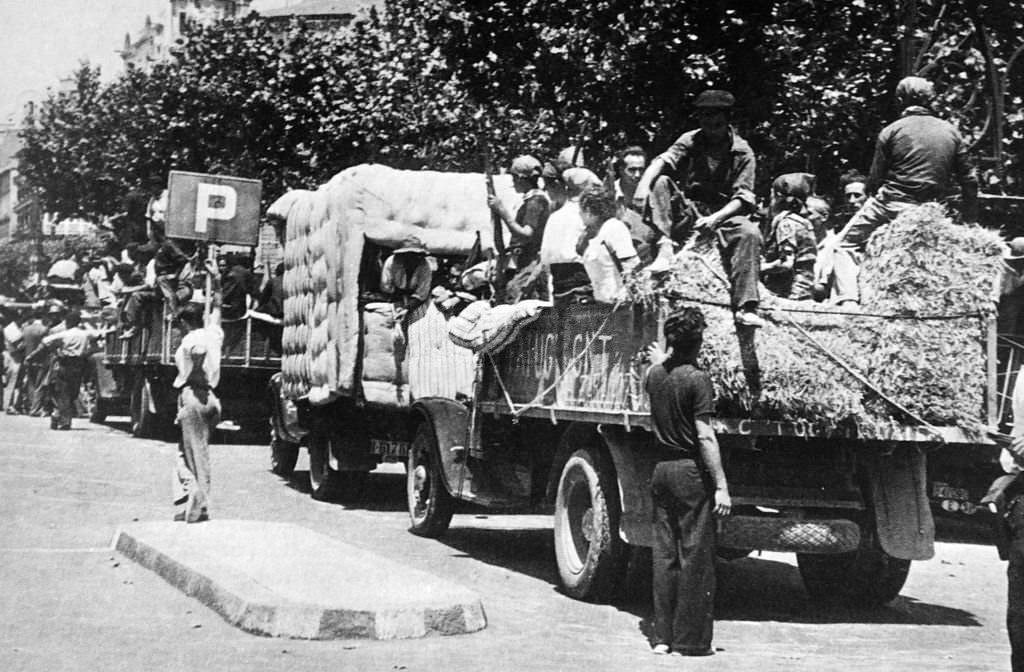
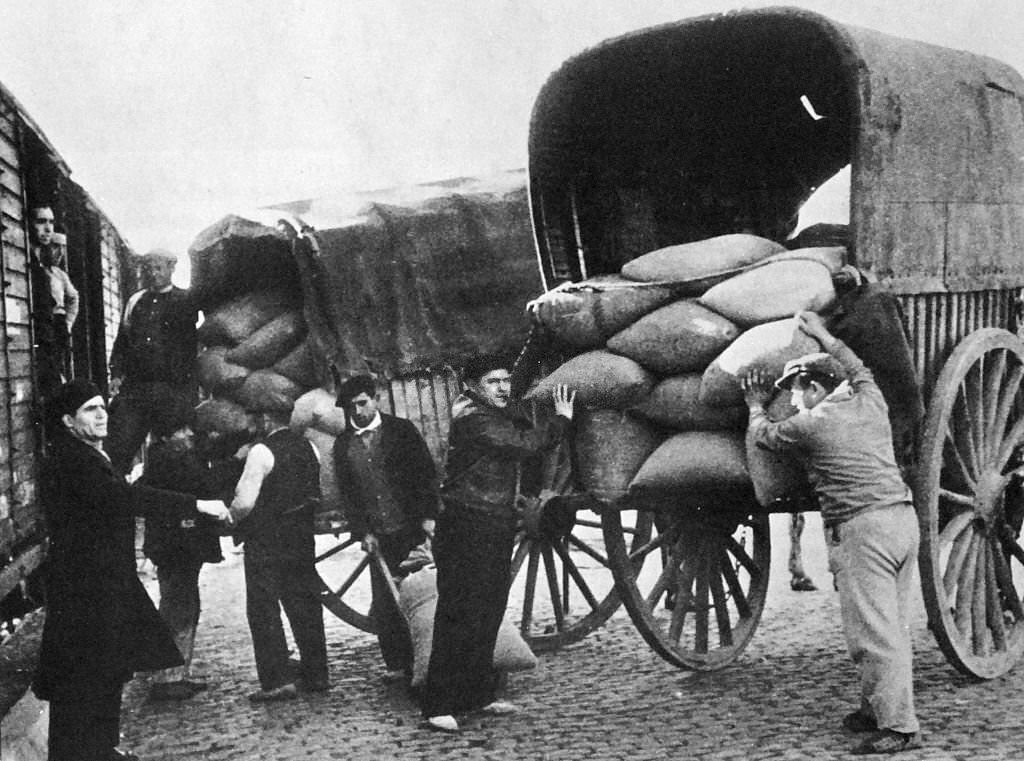
Grain supplies are transferred from carts to rail trucks for distribution during the Spanish Civil War 1936.

The Republicans depended heavily on Soviet supply ships for weapons and materials. At the naval base in Cartagena, crowds gathered at the docks to watch Soviet cargo ships unload their supplies — a moment that captured both the international nature of the conflict and how critical outside aid had become to keeping the Republic fighting.
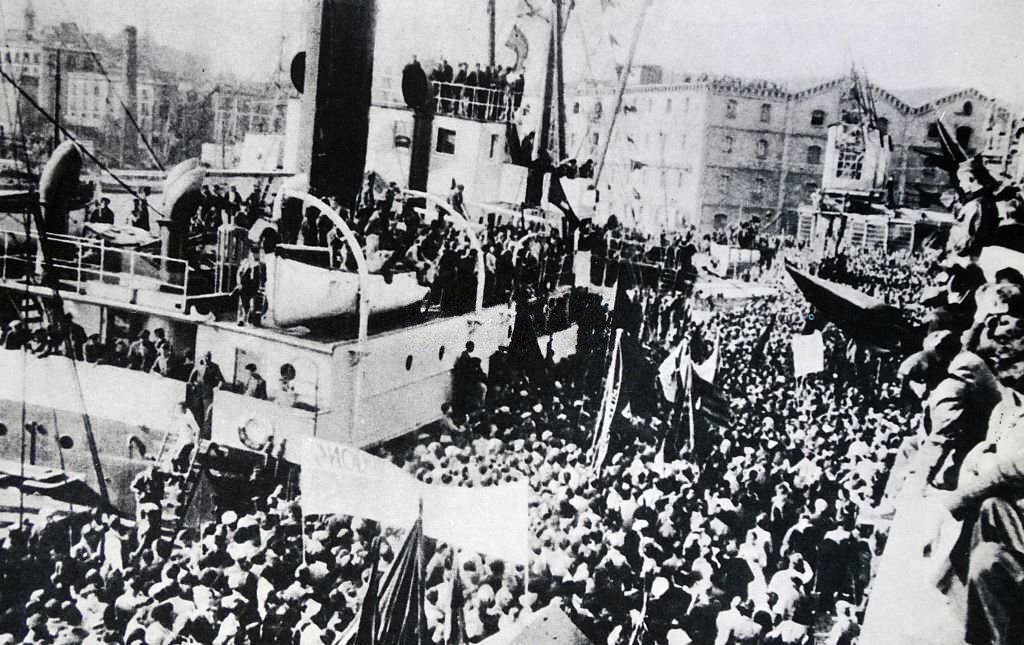
At Cartagena naval base, Spain, republican crowds gather at the arrival of a Soviet Cargo Ship, bringing supplies during the Spanish civil war.
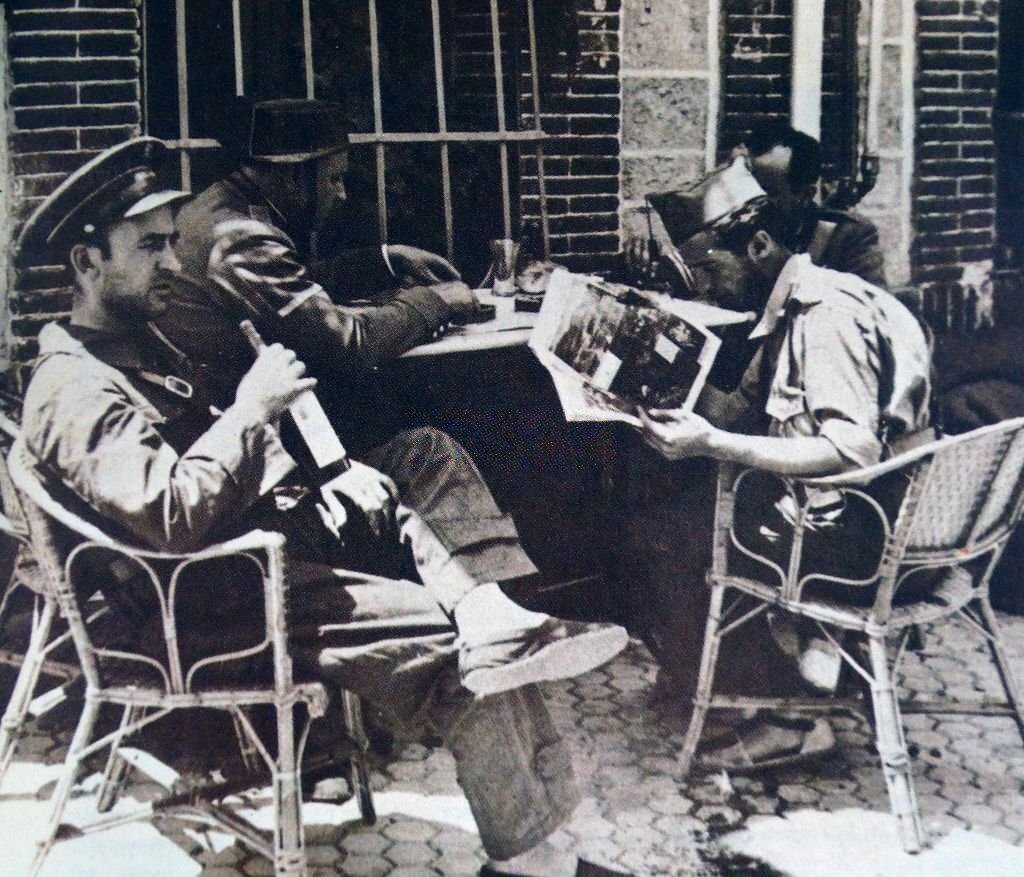
Nationalist troops rest at a café in Guadarrama during the Spanish civil war 1936.
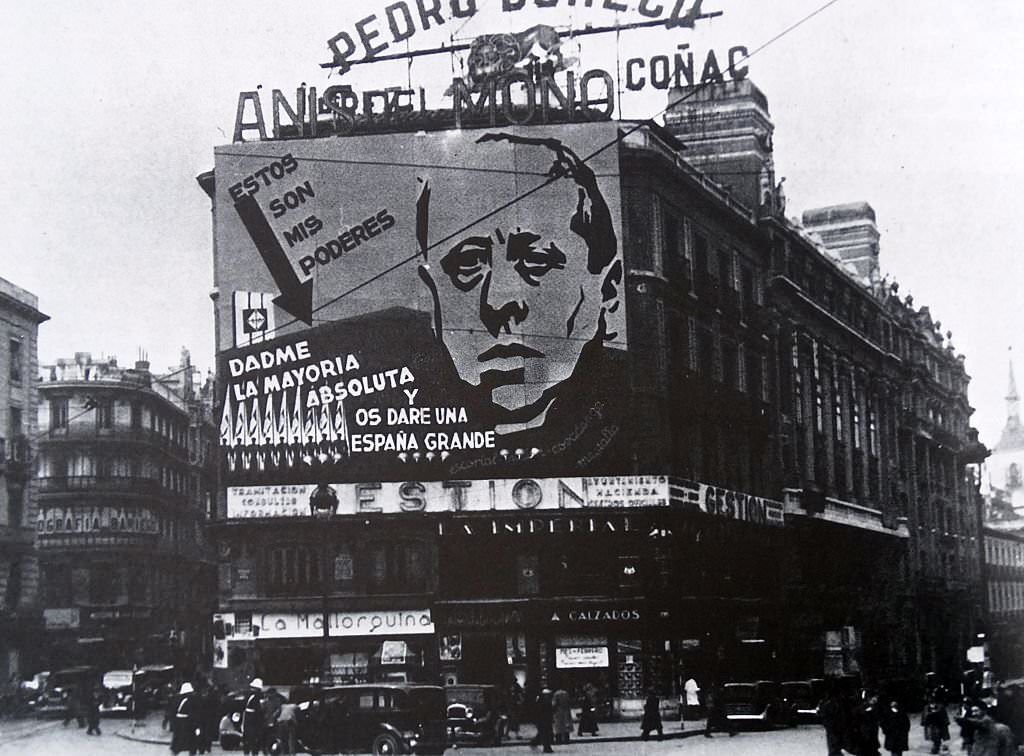
Poster on a Madrid building depicts José María Gil-Robles y a prominent Spanish politician in the period leading up to the Spanish Civil War, speaks in Parliament in 1936.
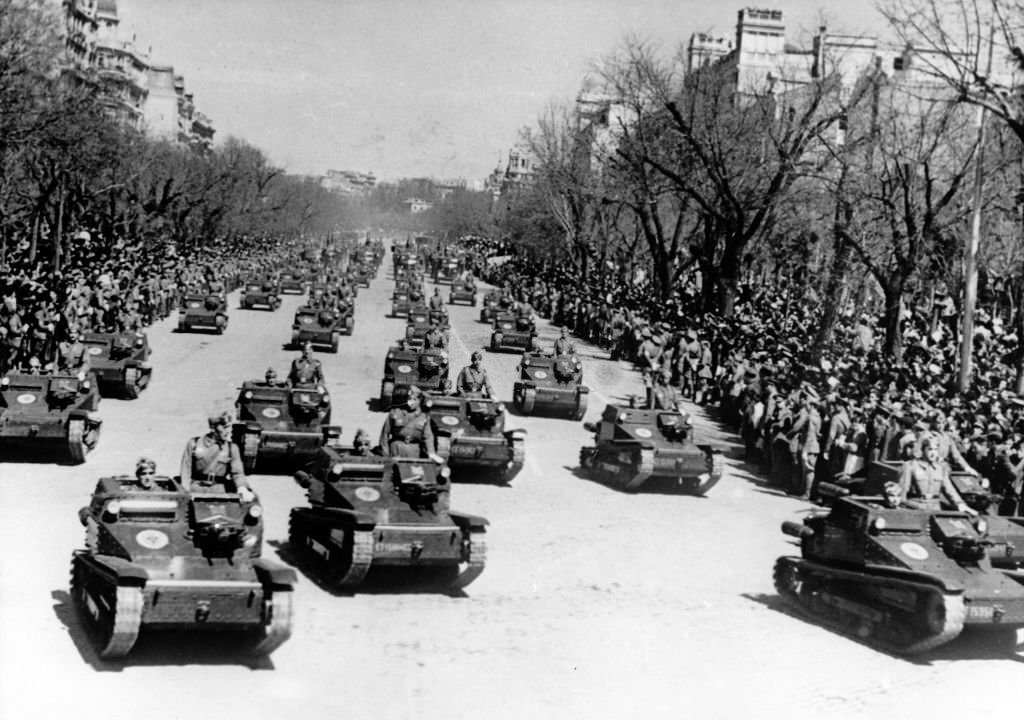
The Nazi propaganda picture shows the march of Spanish troops in front of Spanish dictator Franco in Madrid, Spain, 01 April 1943.
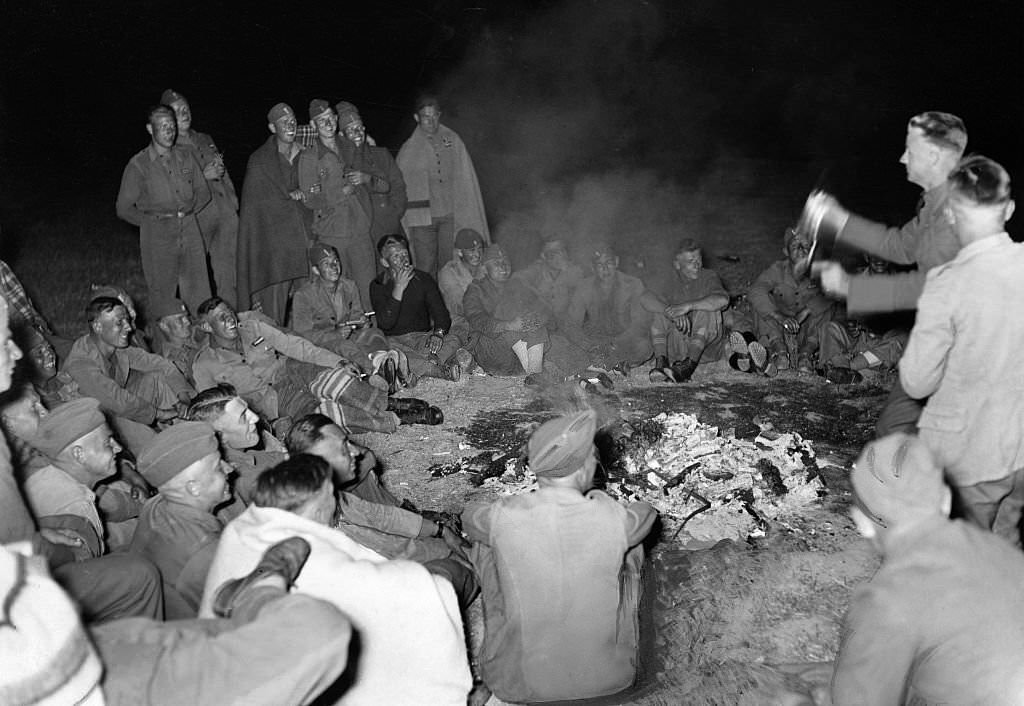
German soldiers of Condor Legion with spanish allies celebrating their victory at a bonfire in Leon, 1939

In Tarragona, which surrendered on January 14, 1939, soldiers from the 5th Division of Navarre knelt in the streets for a public thanksgiving service after taking the city. The religious dimension of the Nationalist cause was ever-present — Franco framed his movement as a crusade to protect Catholic Spain from godless communism.
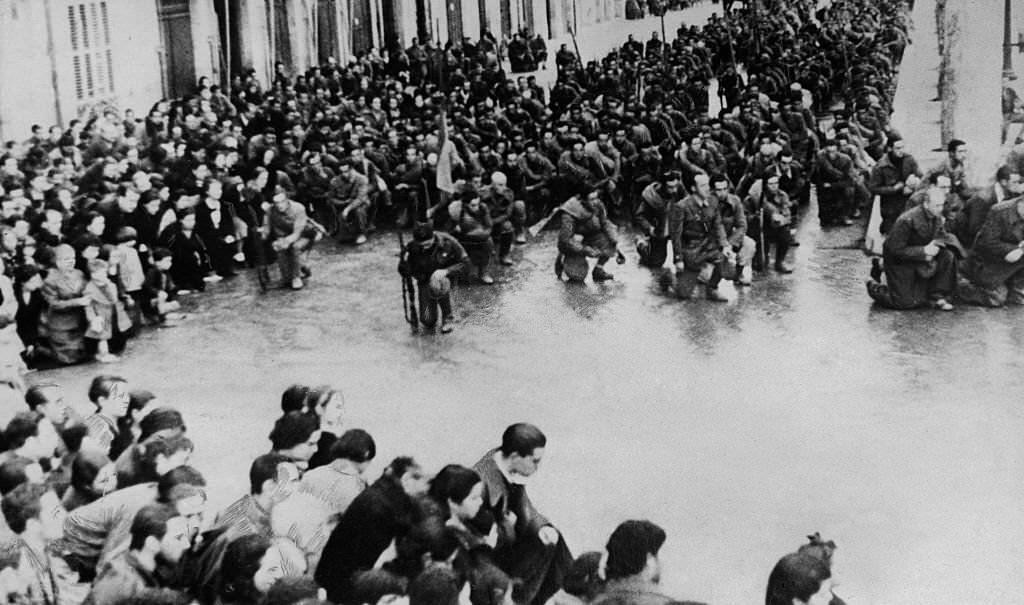
Spain Catalonia Tarragona: Spanish Civil War: after conquering the city members of the 5th division of Navarra are kneeling down in prayer during a thanksgiving service in the streets of Tarragona, 1939

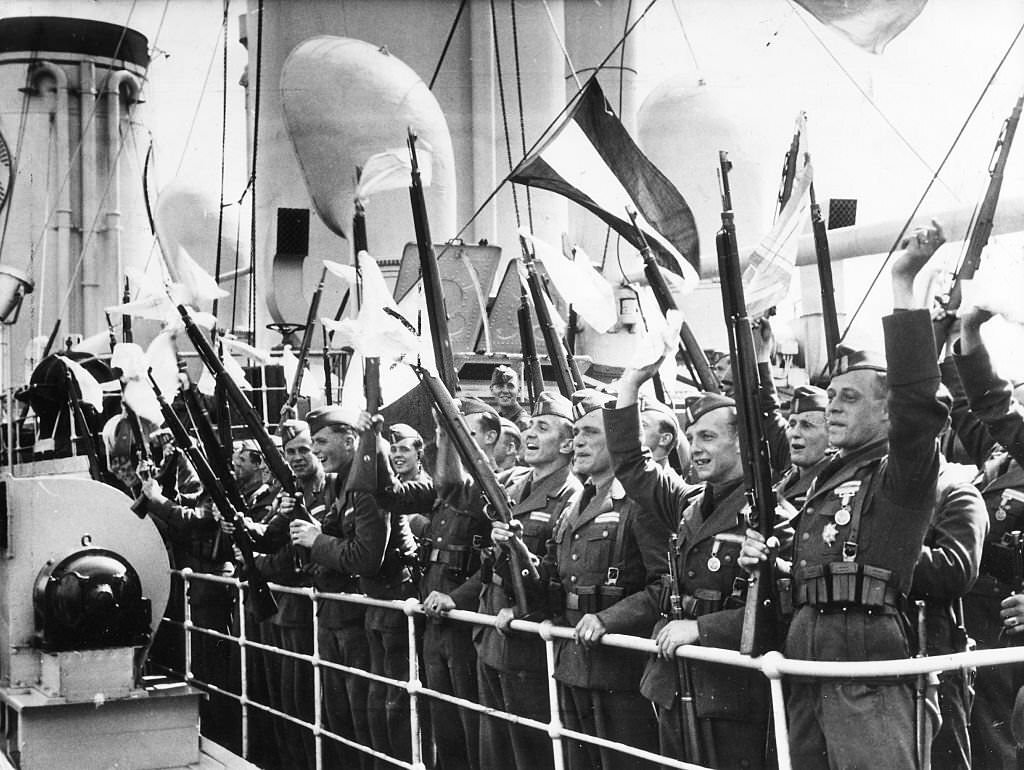
Germany’s Condor Legion fighters returned home in May 1939 after Franco’s victory was complete. At the port of Vigo, they were surrounded by Hitler Youth and Hitler Maidens from the local German community as they boarded trains home. The Condor Legion had given Germany’s military a live combat testing ground for new aircraft, tactics, and aerial bombing techniques.
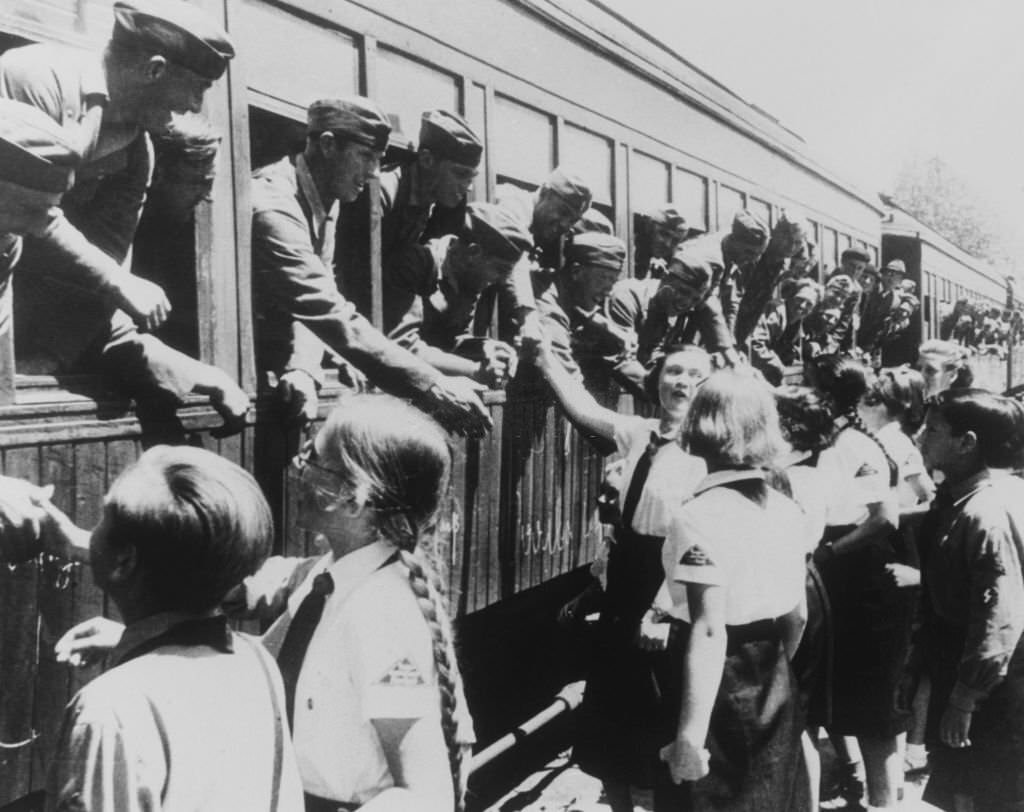
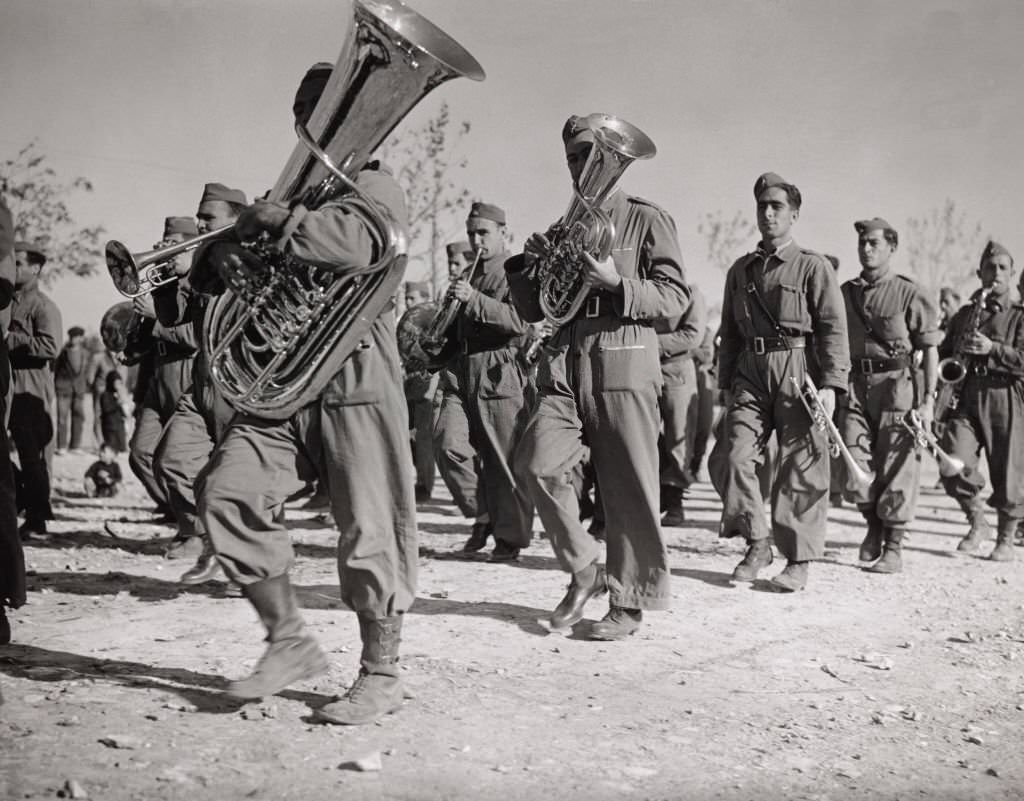
German troops on their way home from Spain, 1939
Marching to the trenches, Spanish Civil War, January 1939
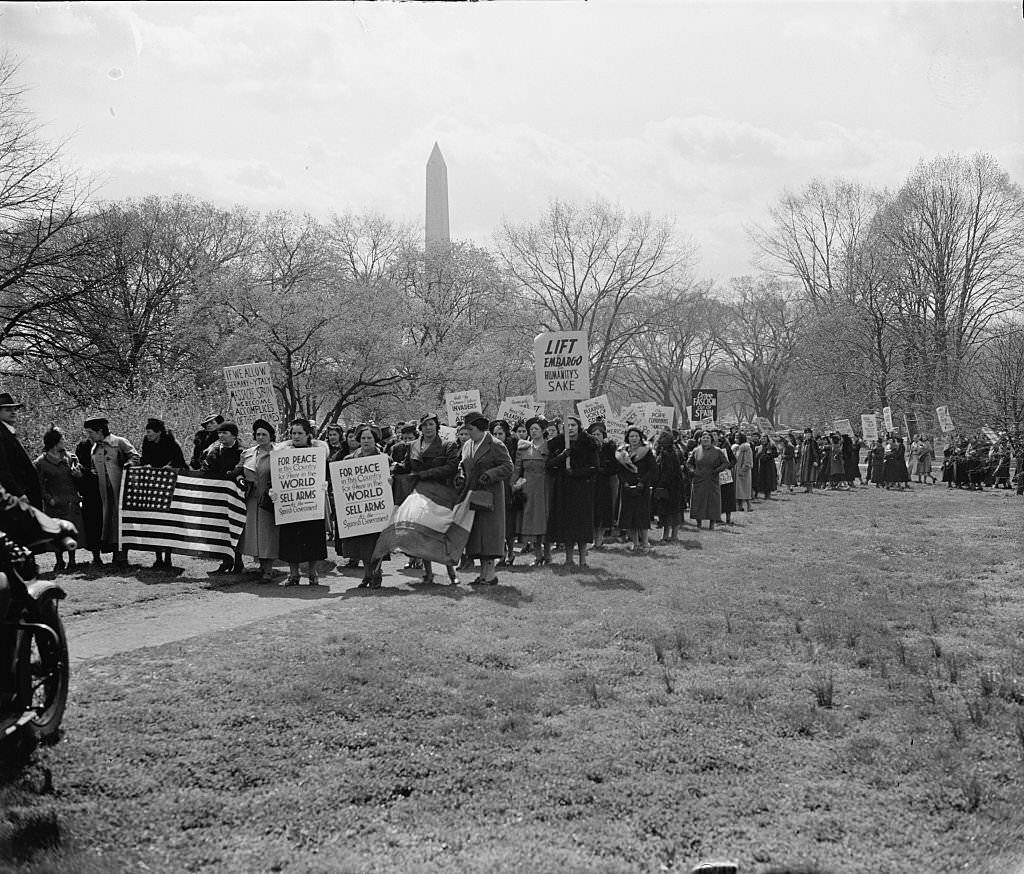
Spanish women to protest at State Department. Washington, D.C., April 4.
Civilians take shelter ina Metro station in Madrid, 1938

Nationalist air raids killed children across Spain’s cities. In Barcelona in 1938, the bodies of several children killed in a bombing raid were laid out in the street. These images circulated internationally, fueling outrage in countries like Britain, France, and the United States — though their governments maintained policies of non-intervention.
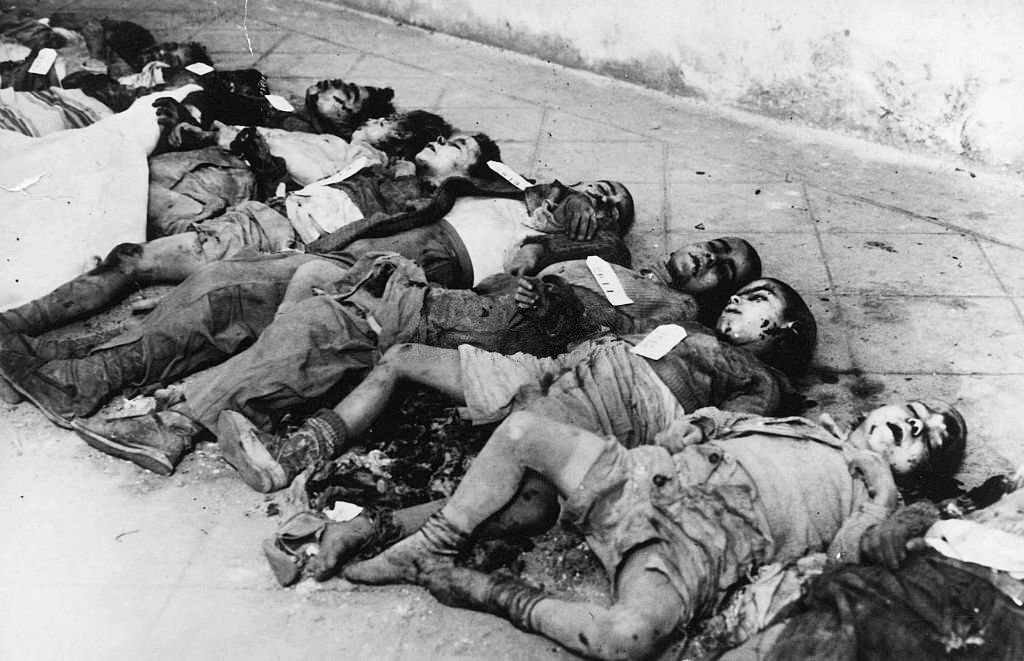
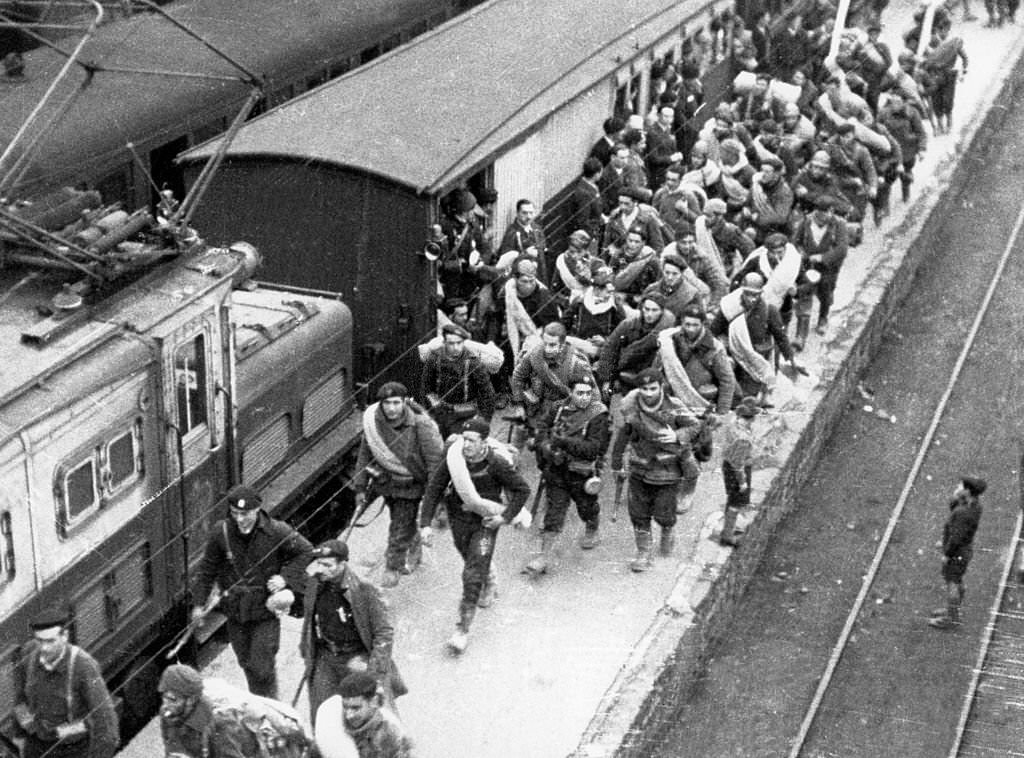
Spanish Civil War, 1938 bodies of several children killed during a nationalist air raid on Barcelona
Republican Troops called in as Reinforcements to reconquer the Town.
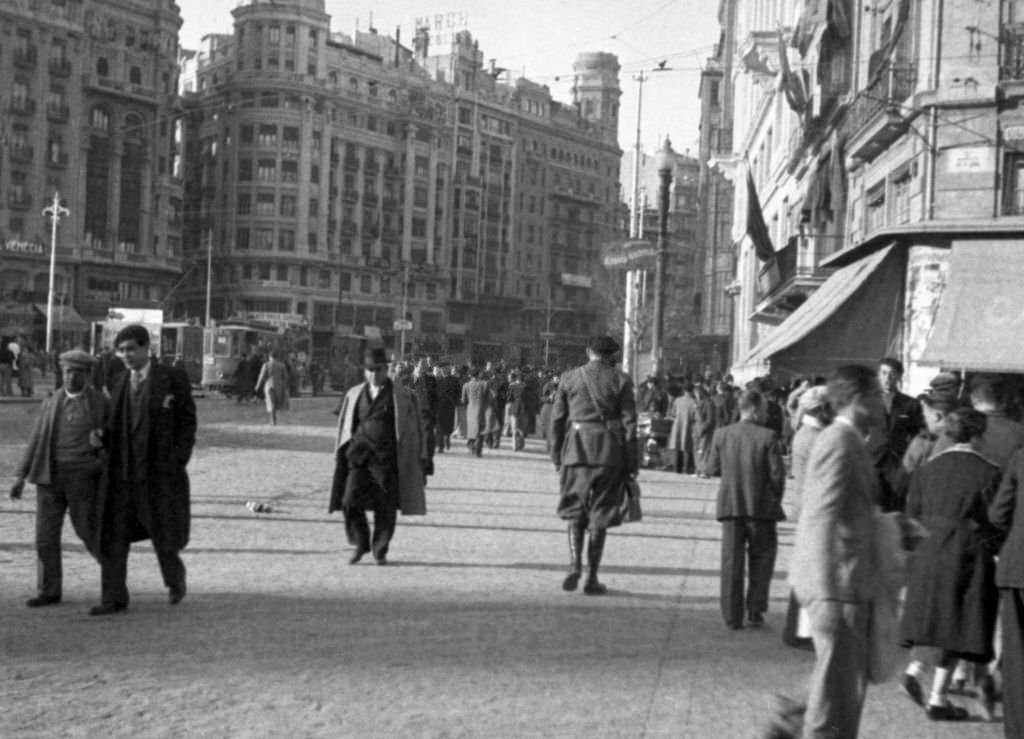
Republican militiaman in the street in Valencia during the Spanish Civil War, 1937

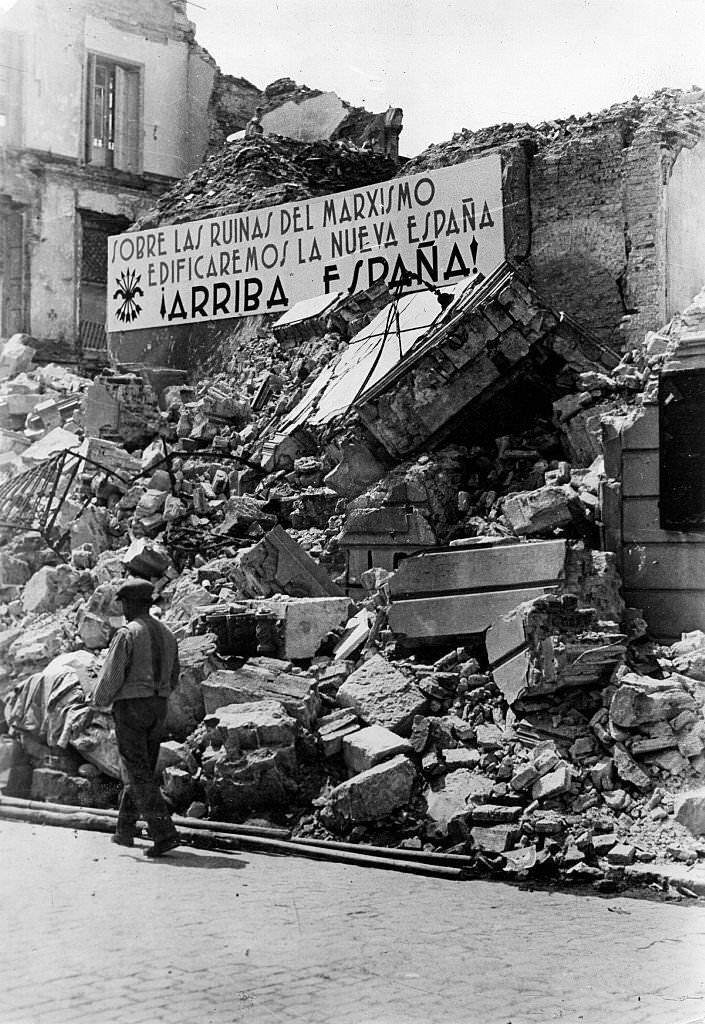
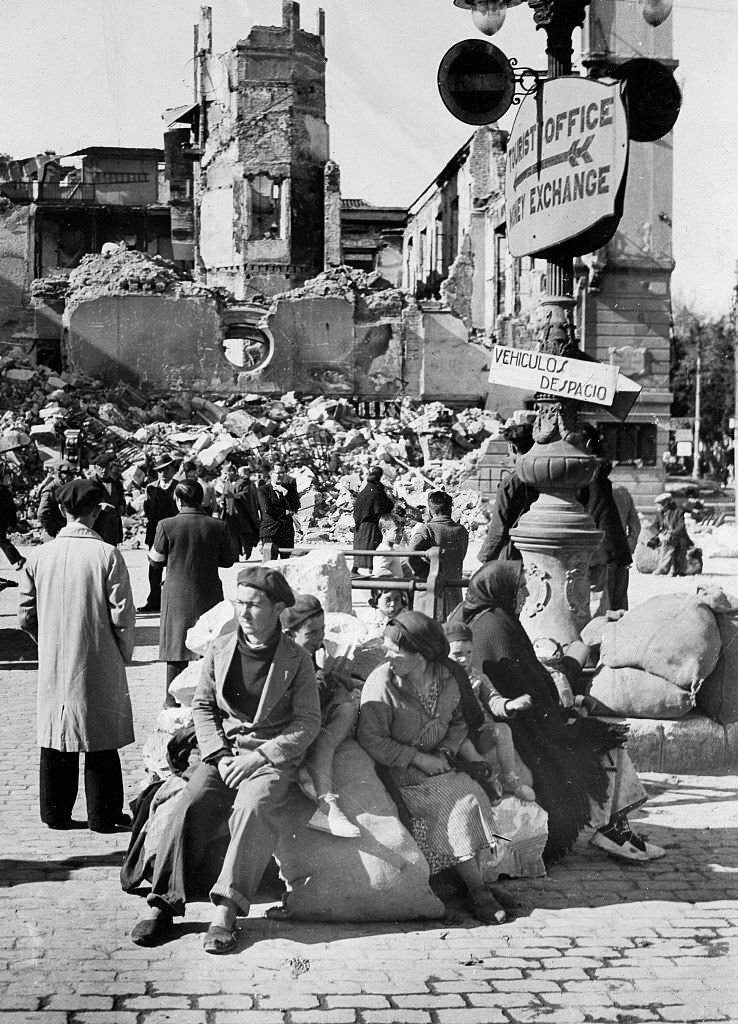
When the Nationalists captured a city, the aftermath was swift and harsh. Republican supporters were arrested and led away. Refugees sat among the ruins of buildings, surrounded by their belongings, with nowhere to go. Propaganda banners appeared almost immediately on bombed-out walls, marking the new order taking hold.
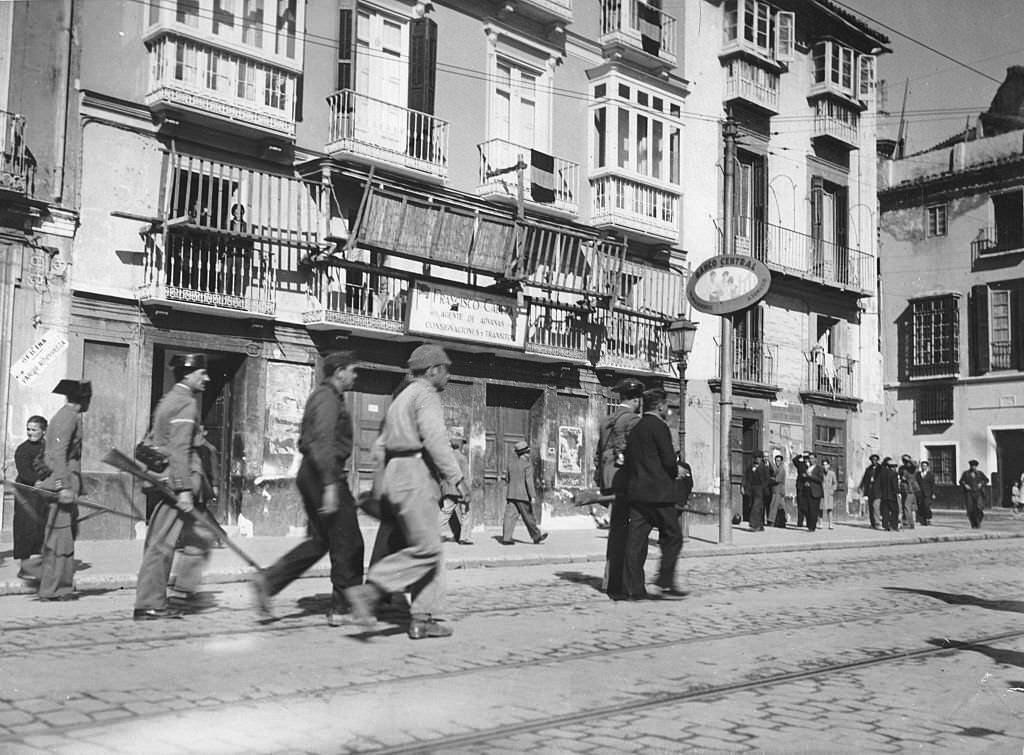
Spanish Civil War Supporters of the Republicans are led away after the capture of the city by the Nationalists on 7 February 1937
Spanish Civil War Refugees sitting on their belongings in front of a ruined building after the capture of the city by the Nationalists on 7 February 1937
Spanish Civil War Propaganda banner at a ruined building after the capture of the city by the Nationalists on 7 February 1937,

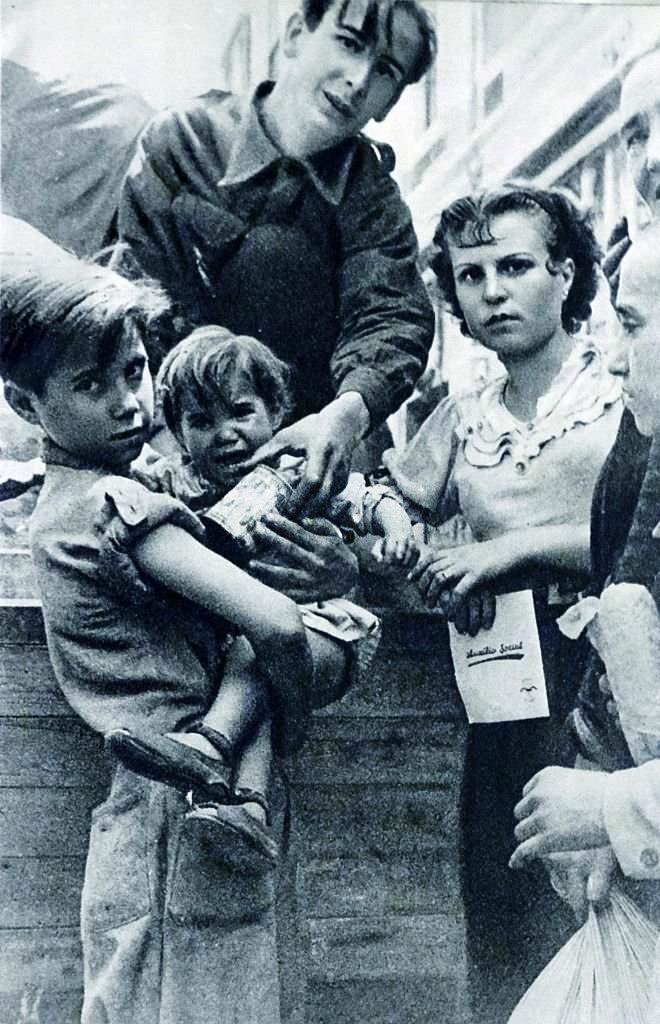
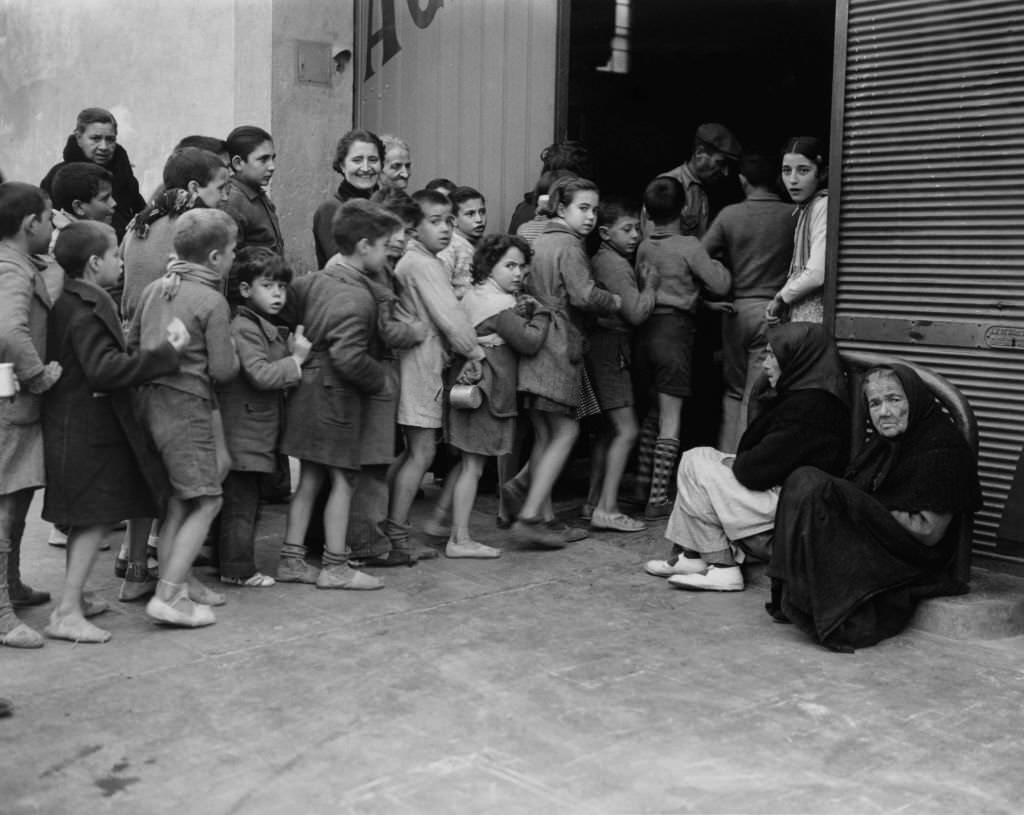
Food shortages were a constant reality for civilians on the Republican side. In Barcelona, hungry women and children formed long lines outside milk depots every day, waiting for their rationed supply. These scenes of ordinary people enduring the grinding hardship of a prolonged siege became some of the most widely reproduced images from the war.
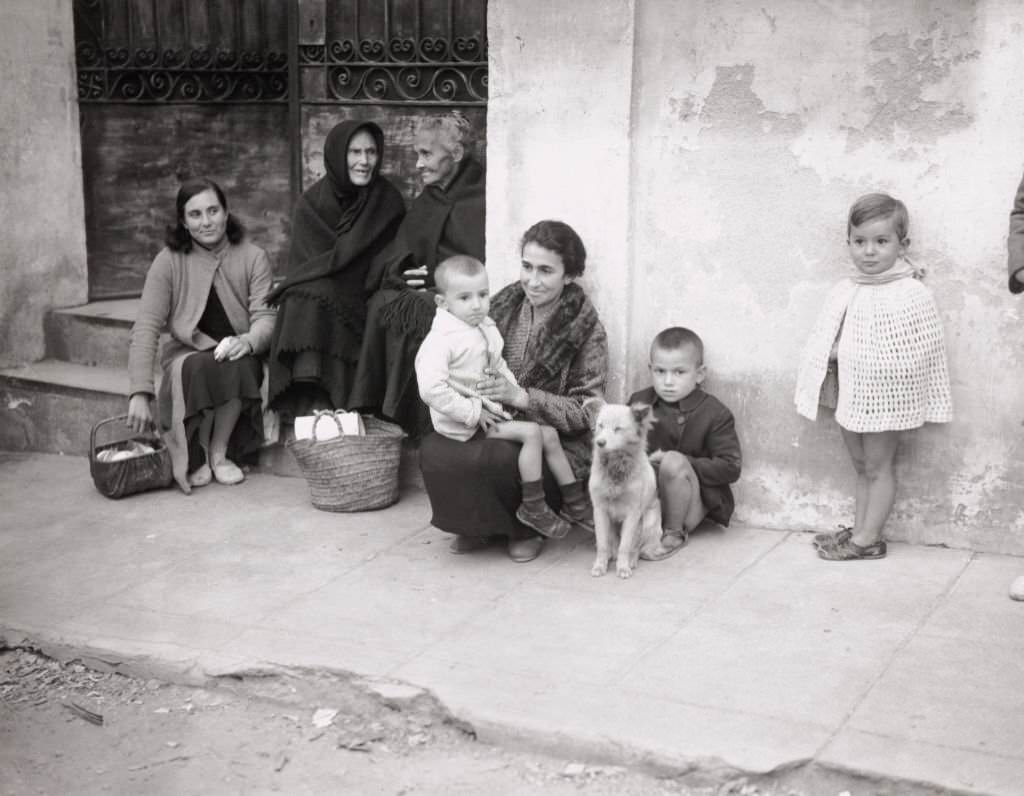
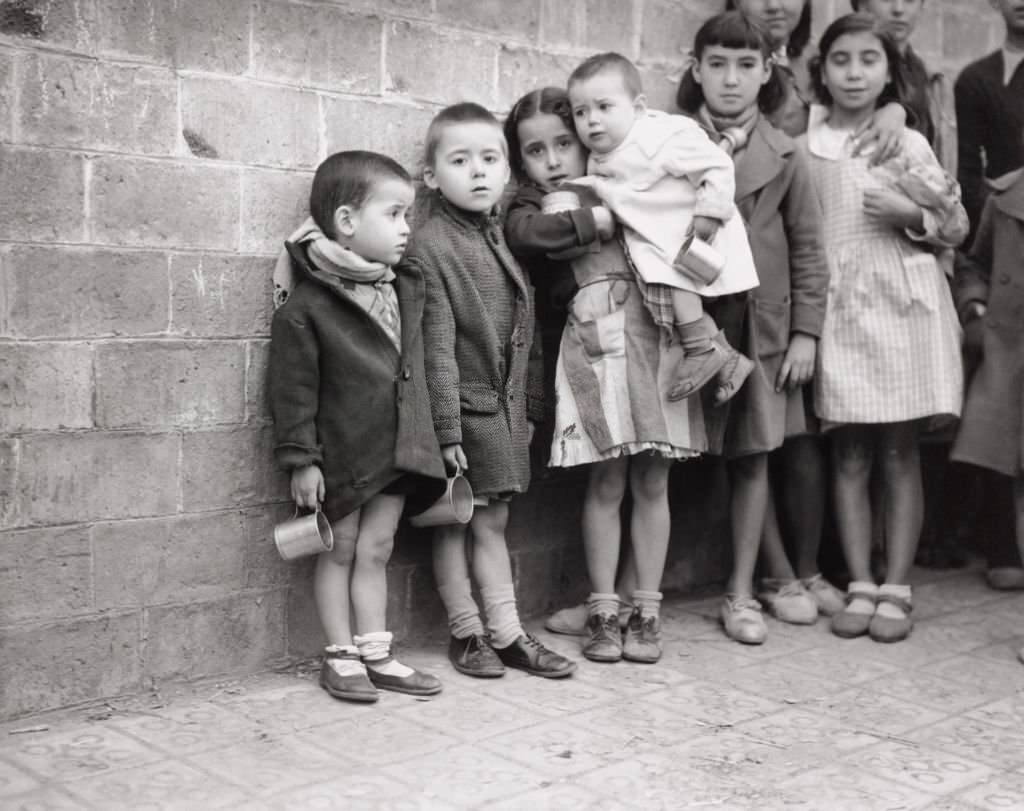
Scenes outside the Barcelona Milk Depot where hungry women and children queue up daily for their milk ration, 1937
Children queuing for milk rations, Spanish Civil War (1936-1939), December 1937.
Children queuing for milk rations, Spanish Civil War, December 1937
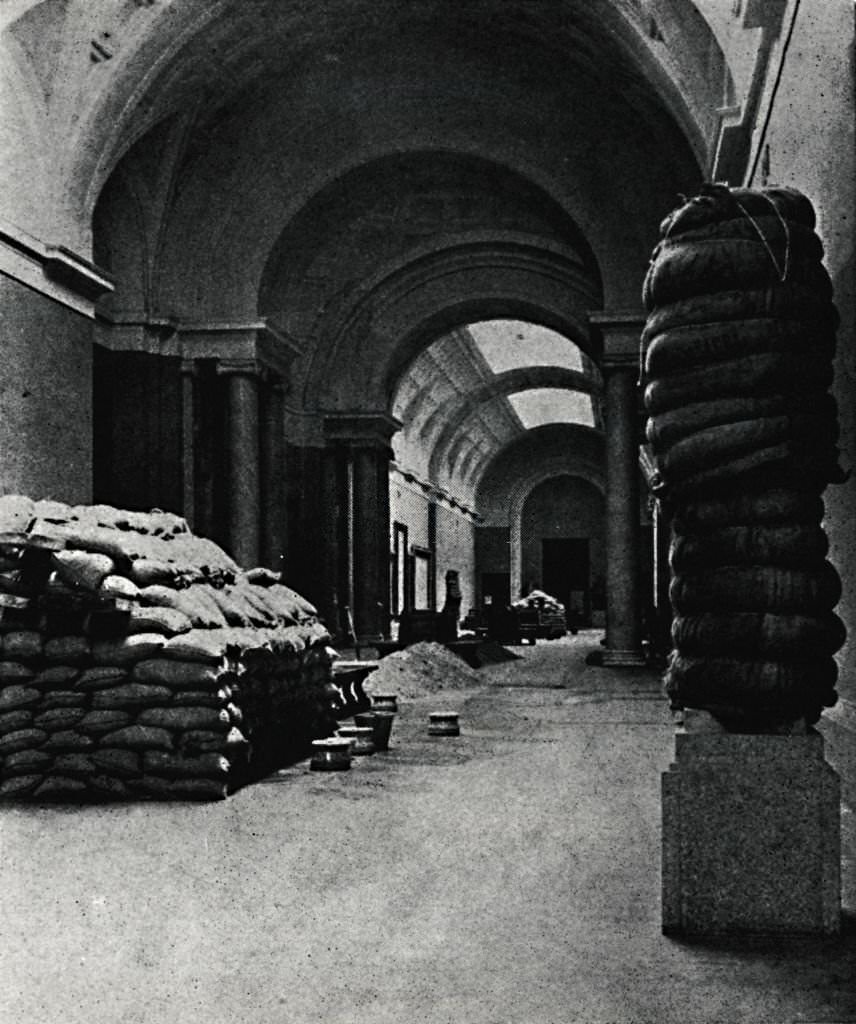
The Prado Museum, 1937
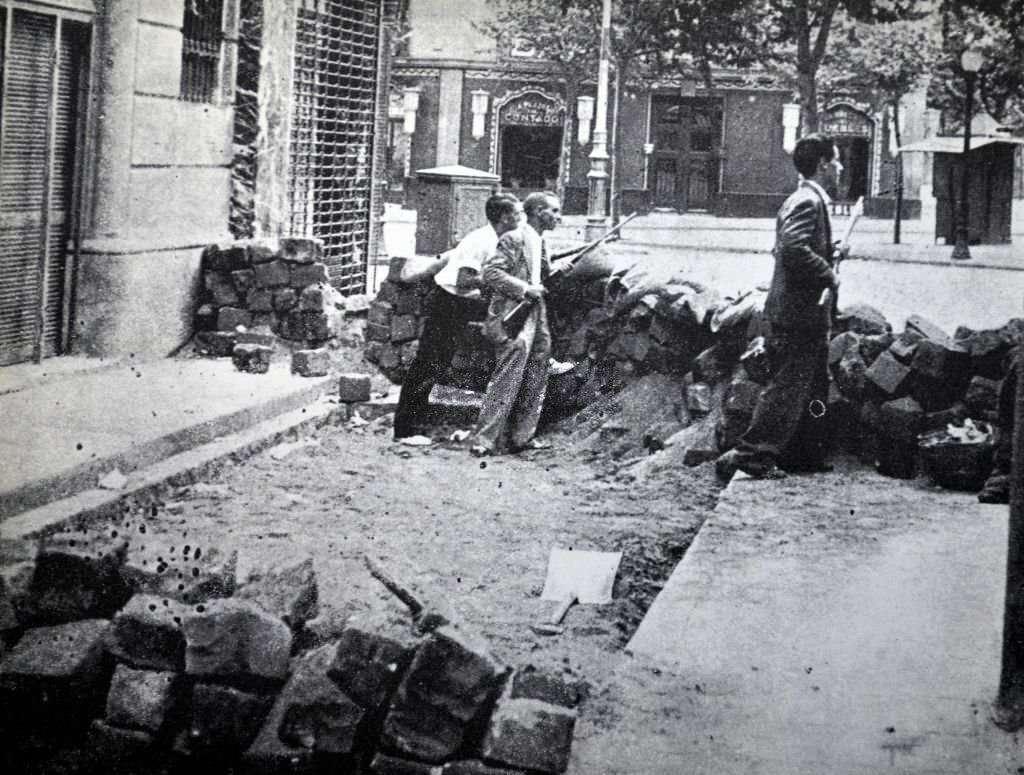
Street barricades in Barcelona during the Spanish Civil War, 1937
Young militiamen during the attack on a village by the Republicans during the Spanish Civil War, December 28, 1936.
The Devastated Calle Mayor in Madrid Following the Bombings by The Nationalists During The Spanish Civil War on December 9, 1936
Spanish Civil War Republican Troops in 1936
Anniversary of the Catalonian Revolution, 1936.

The Alcázar of Toledo became one of the war’s most storied early sieges. Nationalist troops held the fortress against Republican forces for months, and when Franco’s Army of Africa relieved the siege in September 1936, the Alcázar was left in near-total ruin — but it became a powerful symbol of Nationalist resistance.
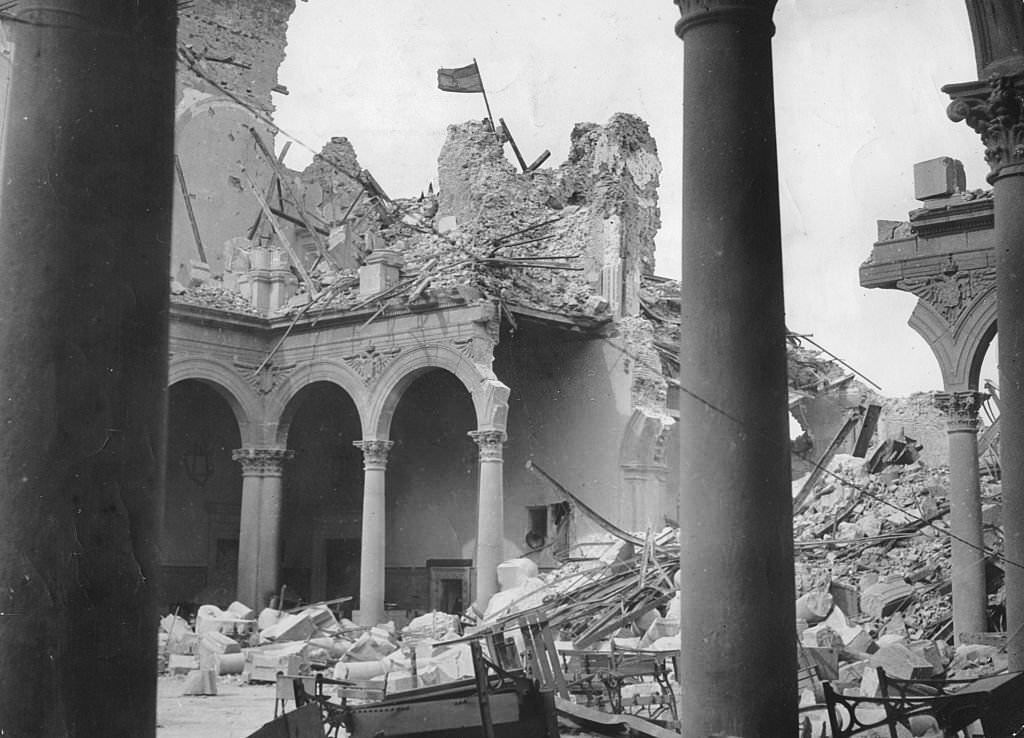
View of the totally destroyed Alcazar (fortress) after the end of the siege by Republican troops
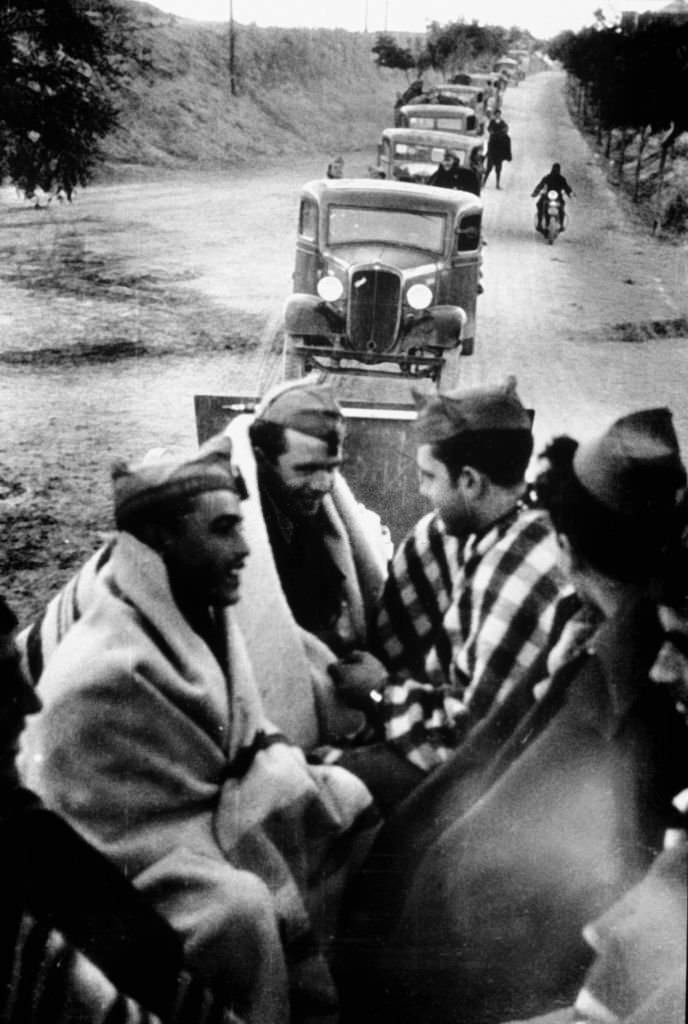
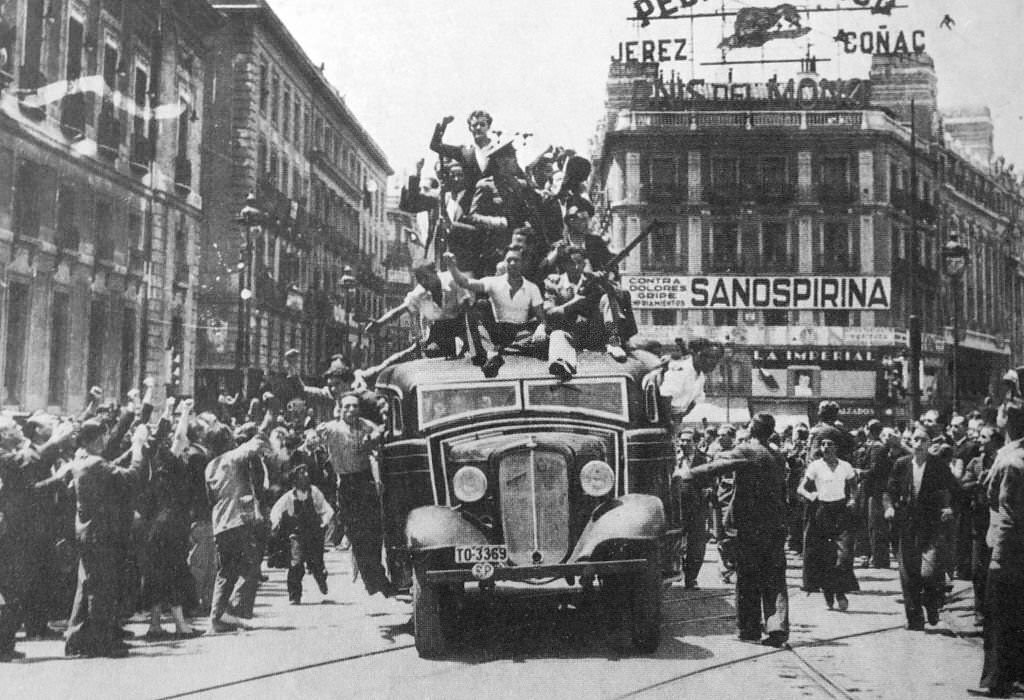
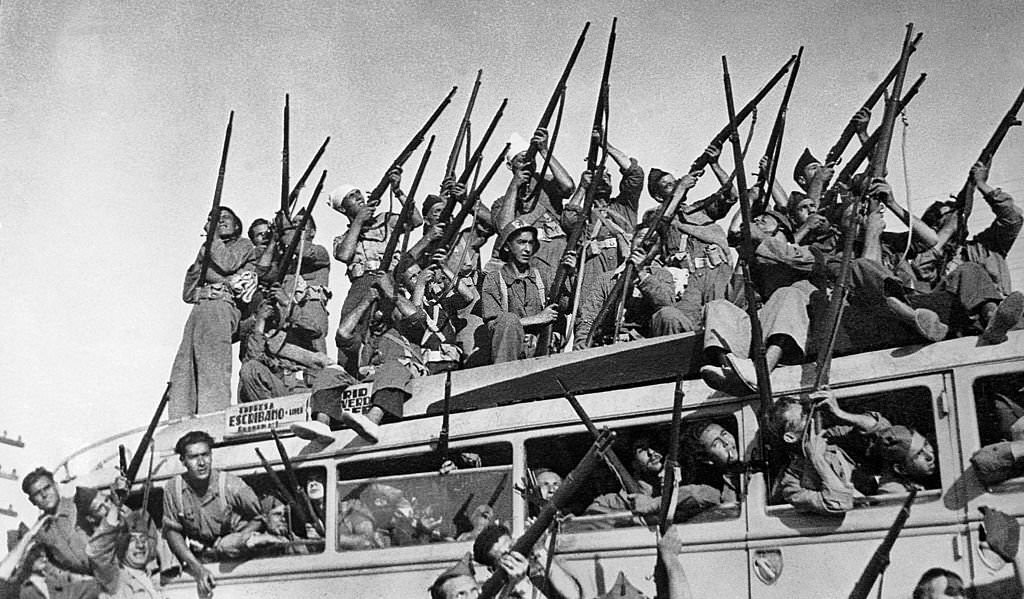
At the Extremadura Front in Spain, a bus full of Republican militiamen waving their arms leaves for the front line. They are for the most part aiming at the sky.

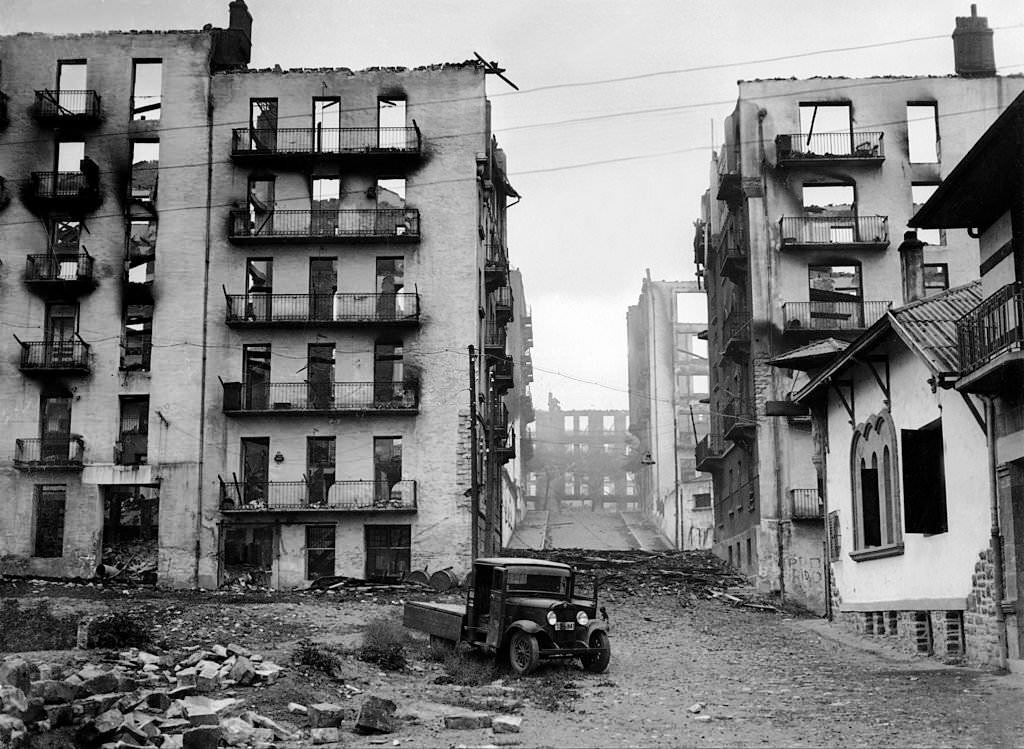
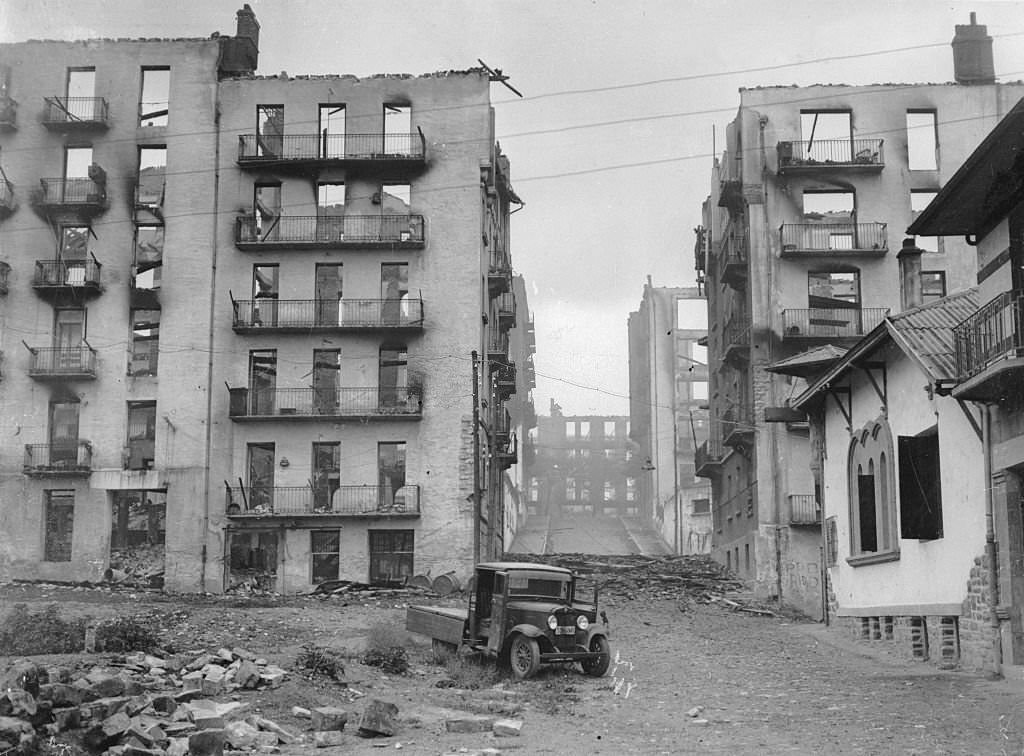
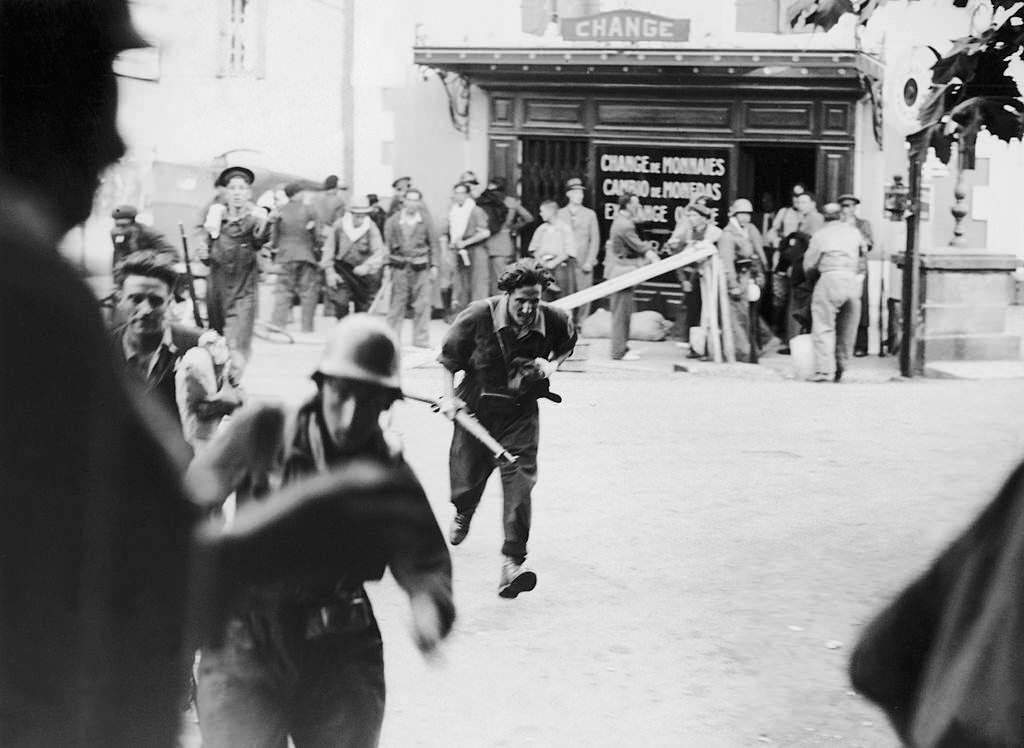
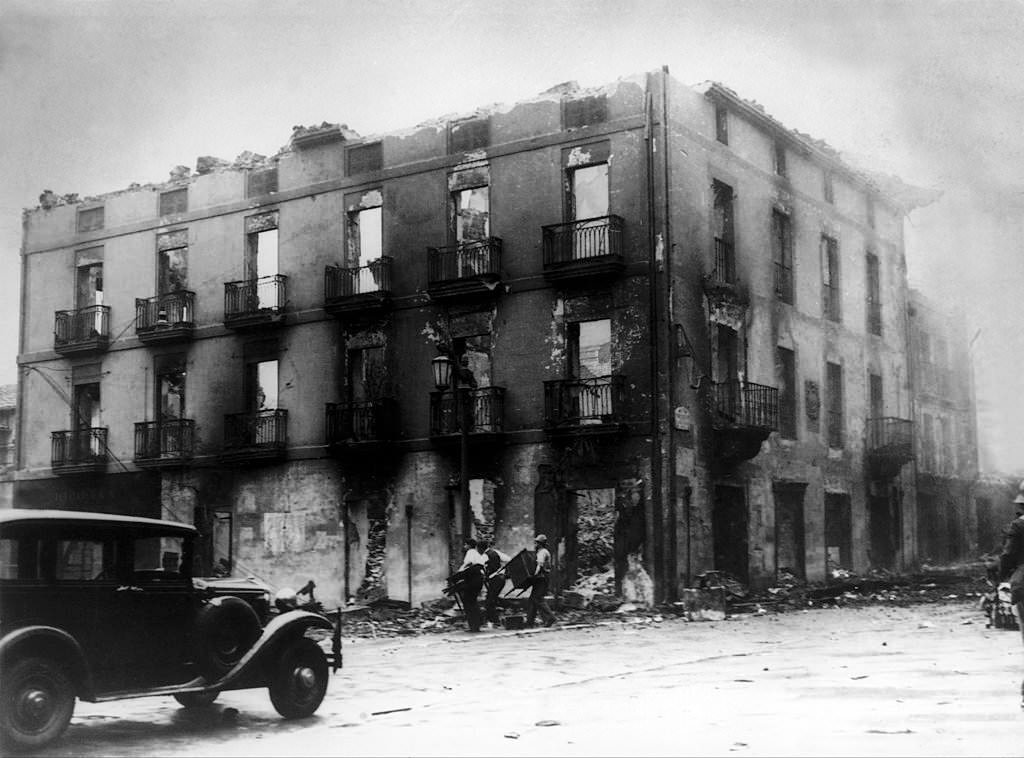
In the Basque Country, Nationalist and Republican forces clashed at the mountain town of Irun, just across the border from France. The town fell to the Nationalists around September 4, 1936, and was left largely in ruins by the fighting and fires that accompanied its capture. A militiaman fleeing across the international bridge at Behobia was photographed mid-retreat — one of many images that captured the human cost of the Nationalist advance in the north.
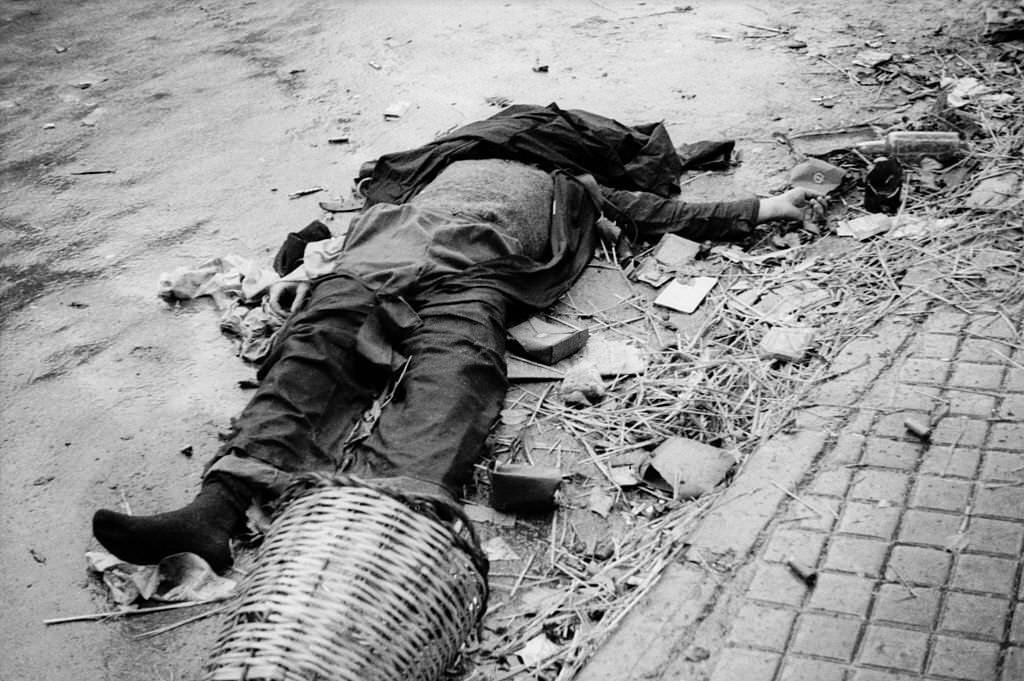
Corpse Laying on the Pavement after the Capture of the Basque Town by The Franco Supporters, 1936
The City Of Irun after a Bombing, 1936
Spain Andalucia Huelva: Spanish Civil War Shot hostages (by Republicans) in Salvochea, Province of Huelva
The Basque City of Irun in Ruins after a Bombing in 1936
Spanish Militiamen awaiting the Enemy on the Slopes of Irun, In Basque Country, On September 4, 1936.
Basque Country Pais Vasco Irun: Spanish Civil War View of the destroyed Irun (Guipozcoa) after the capture by the Nationalists - around 4 September 1936
Basque Country Pais Vasco Irun: Spanish Civil War View of the destroyed Irun (Guipozcoa) after the capture by the Nationalists – around 4 September 1936
Bombing of Irun during The Spanish Civil War, 1936
Spanish Civil War Nationalist soldiers defending a street against attacks from the roofs after they captured the town, 1936
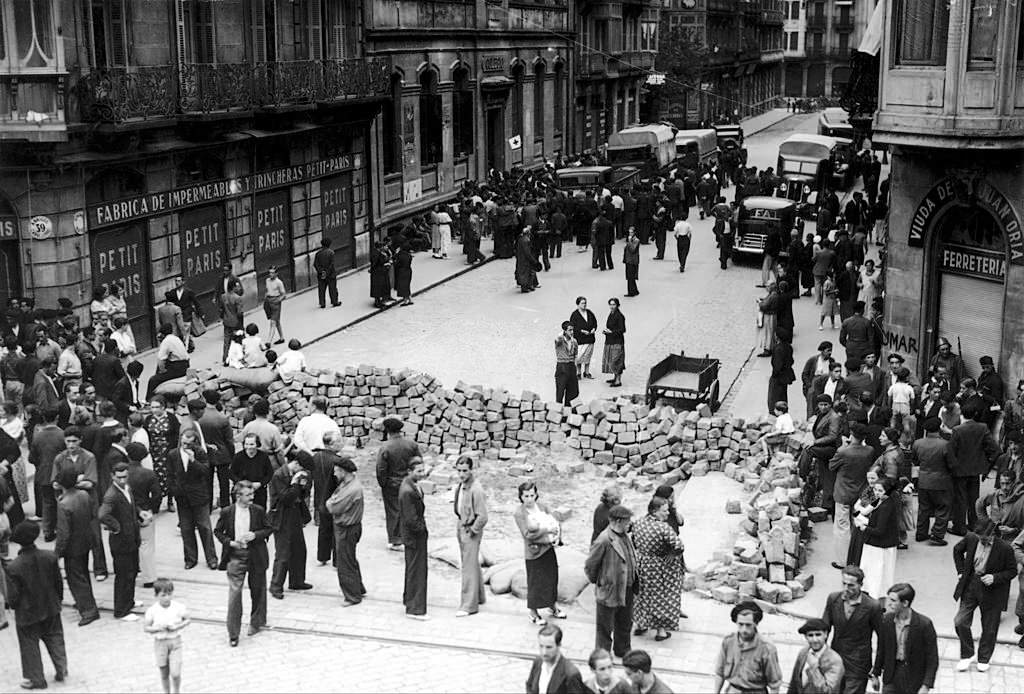
Barricades Erected By Anarchists In San Sebastian, 1936
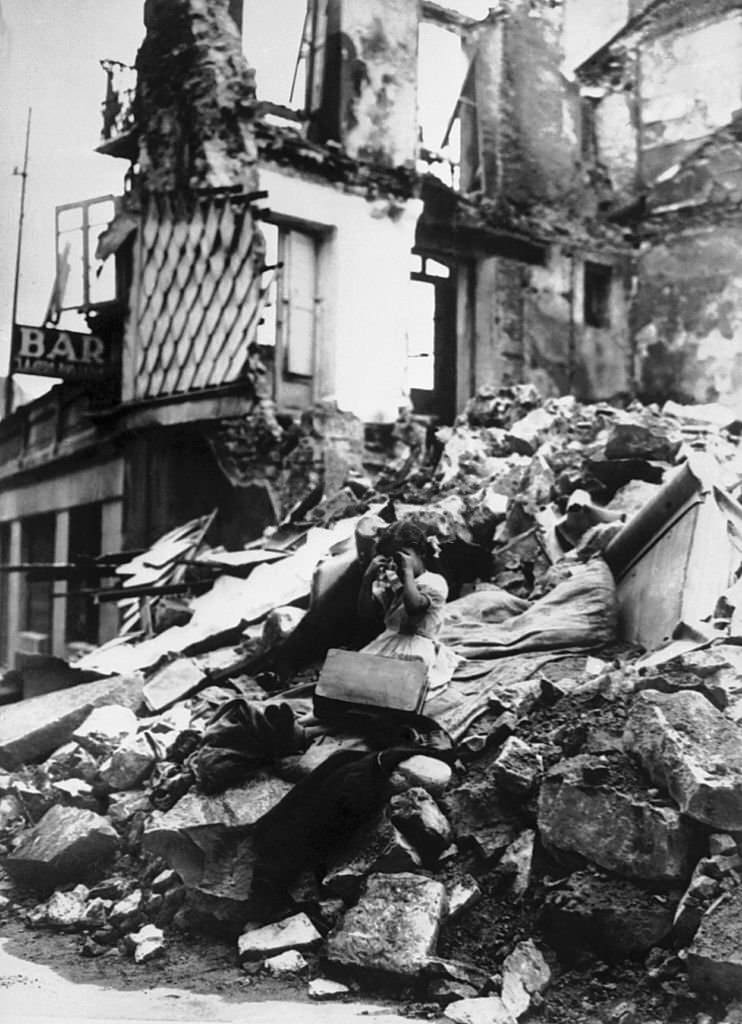
During the Spanish civil war, a young girl is crying and sitting in front of the ruins of her house in Irun.
Spanish Civil War Front of Huesca, 1936
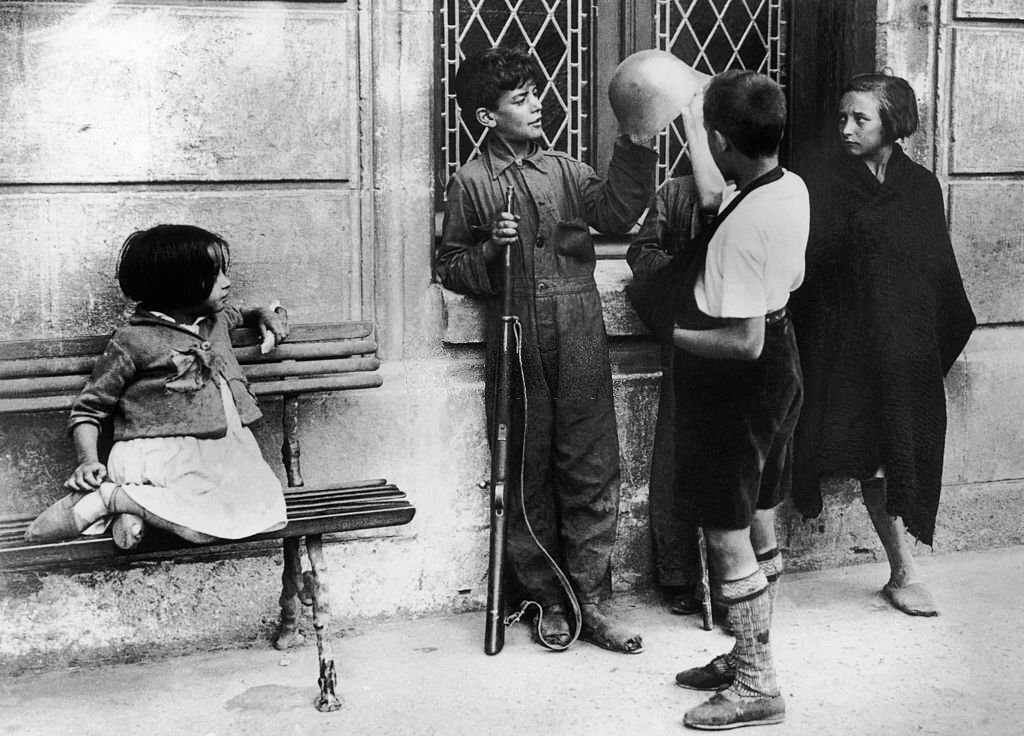
In Burgos during the Spanish civil war, children are admiring the helmet and rifle of the elder brother, signed-up in Franco's troops.
In Burgos during the Spanish civil war, children are admiring the helmet and rifle of the elder brother, signed-up in Franco’s troops.
Spanish Civil War Street fightings in Toledo: Republican forces push Nationalist troops back to the area of the Alcazar fortress, 1936
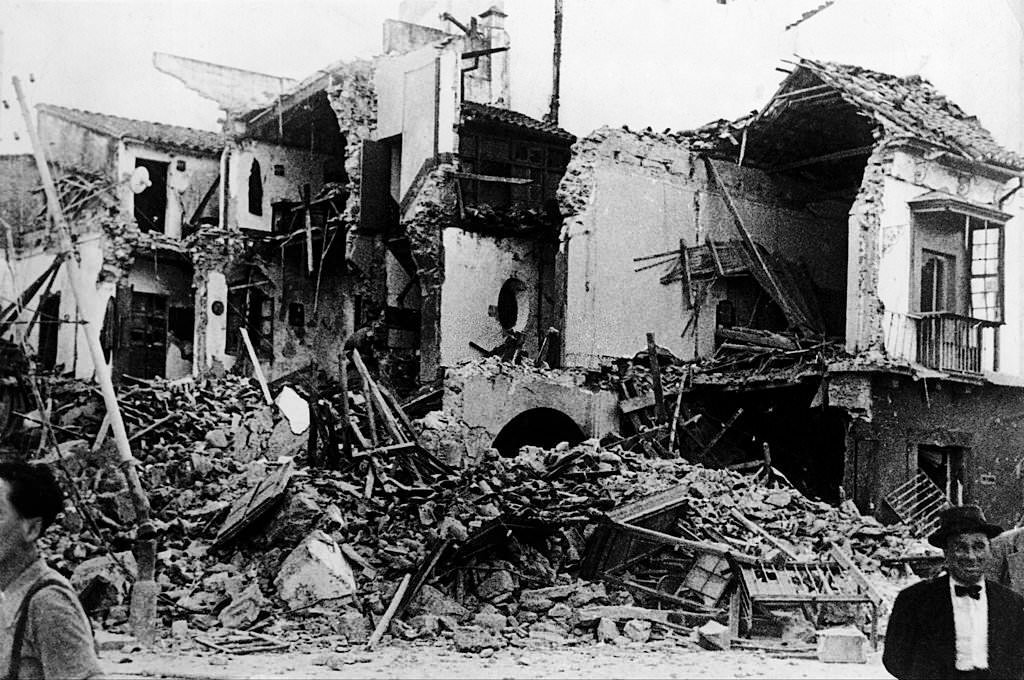
City of Algesiras Bombed during the Spanish Civil War, 1936.
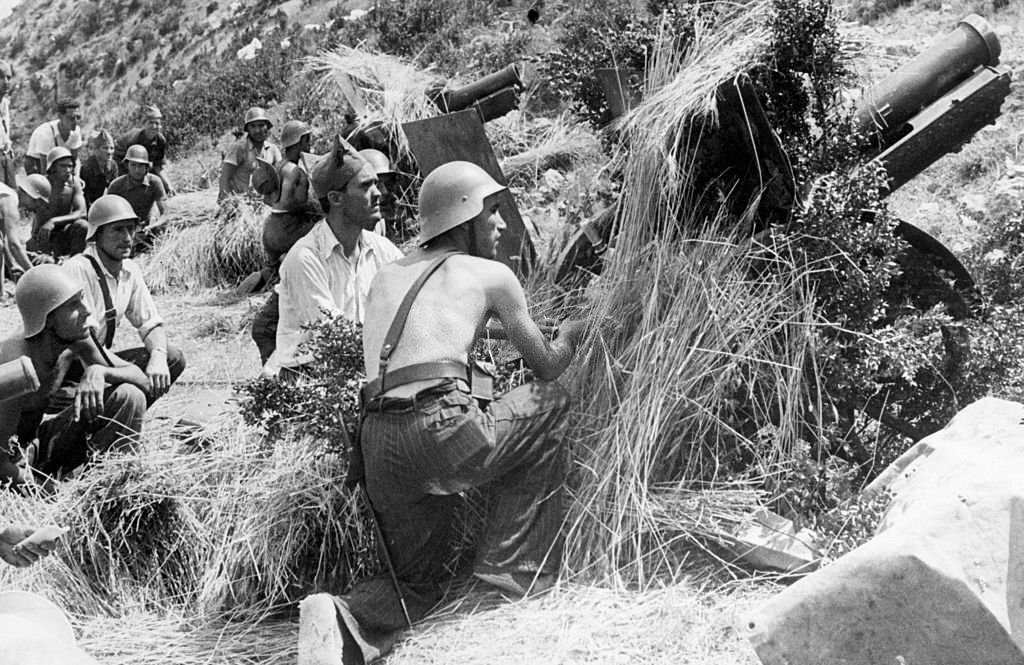
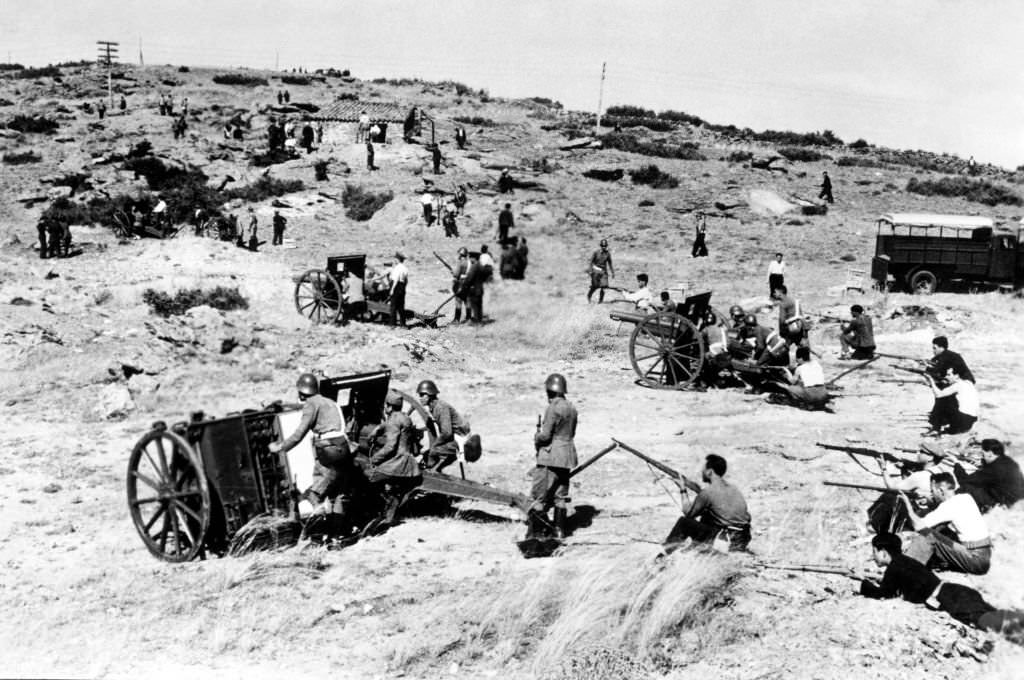
Republican artillery deployed at the Somosierra pass to counter a Nationalist offensive in the Sierra de Guadarrama mountain north of Madrid.

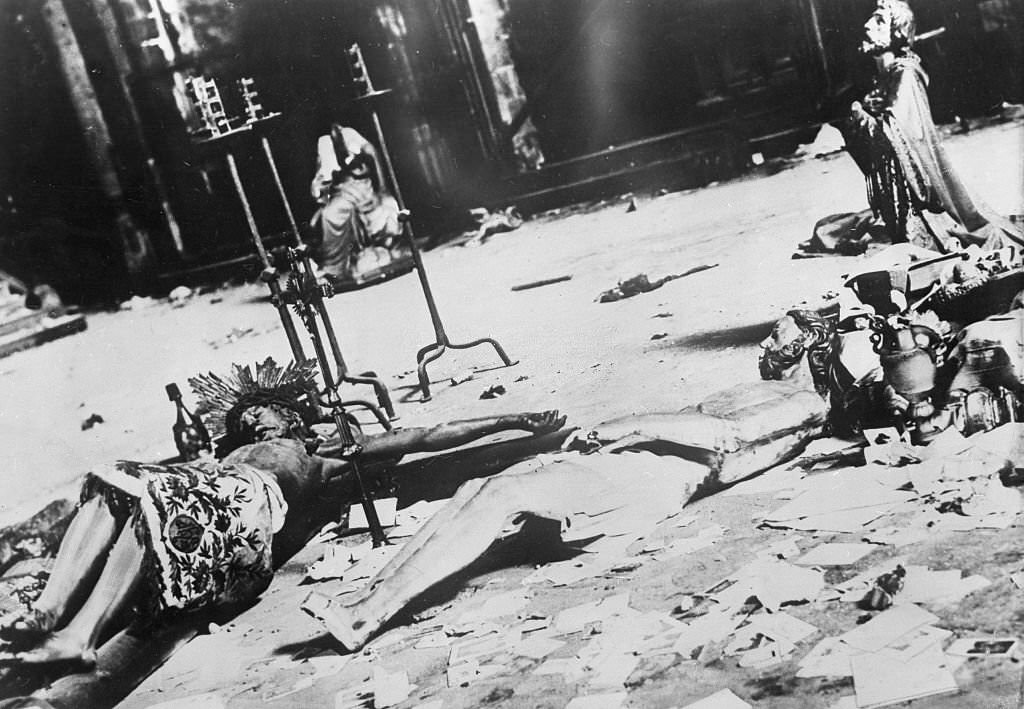
Anti-clerical violence reached its most extreme expression in the destruction and desecration of Catholic institutions. Across Republican-held Spain, churches were gutted, their contents burned in the streets. In Barcelona, Republican supporters exhumed the corpses of nuns from a monastery and displayed them publicly on a wall. These acts were documented by photographers and used by the Nationalist side as powerful propaganda to portray the Republic as godless and savage.
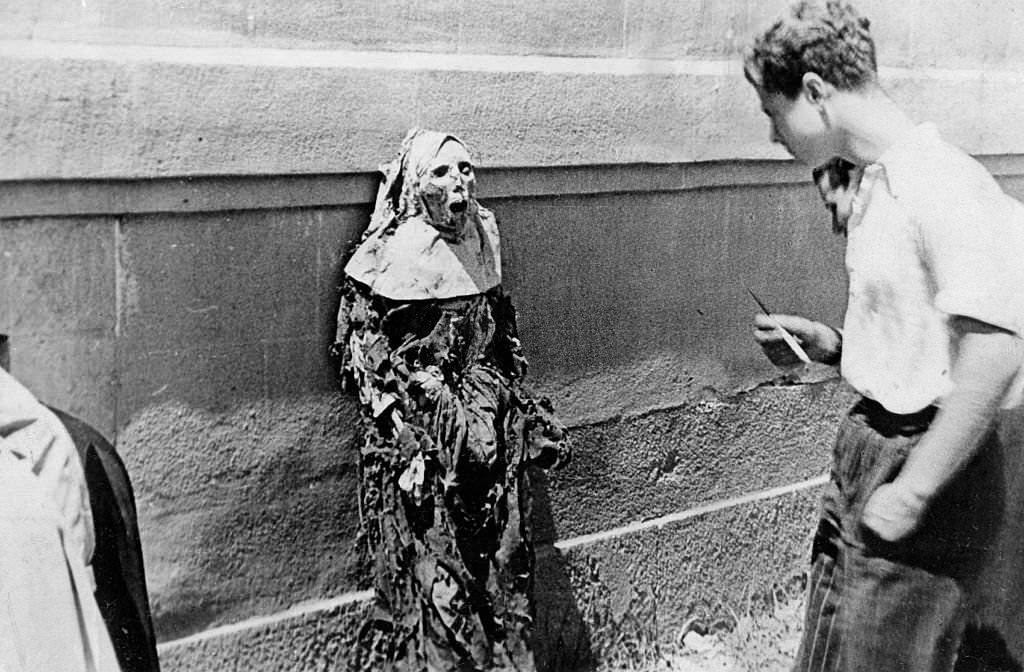
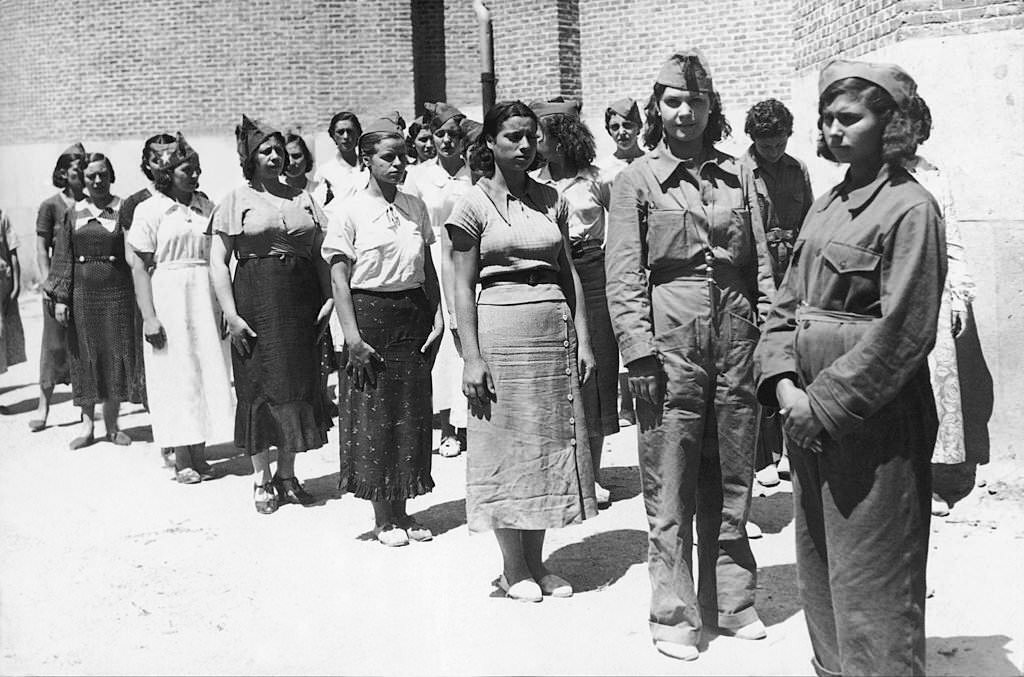
Spanish Civil War Pillaging and desecration of church institutions by supporters of the Republicans; the corpses of nuns from a monastery in Barcelona were ripped out of graves and displayed on a wall -
Spanish Civil War Pillaging and desecration of church institutions by supporters of the Republicans; the corpses of nuns from a monastery in Barcelona were ripped out of graves and displayed on a wall –
Female Republican Troops in Madrid, 1936
Young women of the governmental worker's women milicia fighting in order to resist against the rebels.
Young women of the governmental worker’s women milicia fighting in order to resist against the rebels.
Spanish Civil War Church devastated by Republicans after the outbreak of the Civil War - around July 20, 1936
Spanish Civil War Church devastated by Republicans after the outbreak of the Civil War – around July 20, 1936
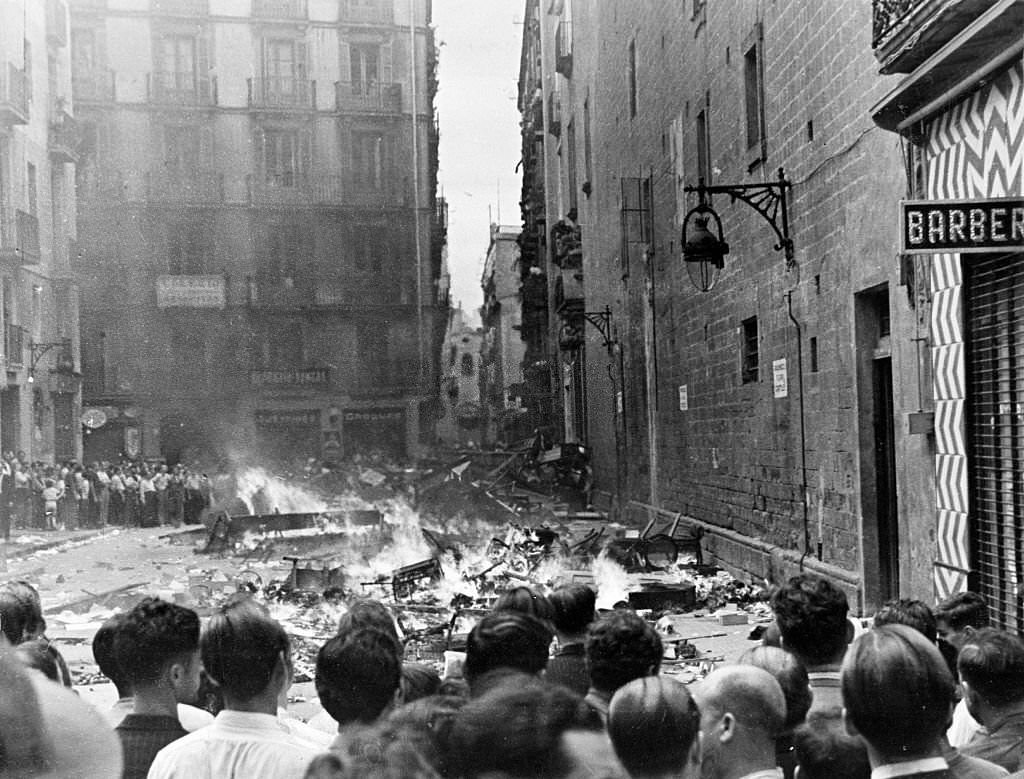
Spanish Civil War Goods of plundered churches are being burnt on the streets (by Republicans) after the end of the street fightings - around July 20, 1936
Spanish Civil War Goods of plundered churches are being burnt on the streets (by Republicans) after the end of the street fightings – around July 20, 1936

In Seville on July 18, 1936, the military uprising that helped spark the war took shape in the streets. Nationalist General Gonzalo Queipo de Llano seized the city in a bold and largely improvised operation, using radio broadcasts and psychological pressure to prevent larger resistance from Republican supporters and workers.
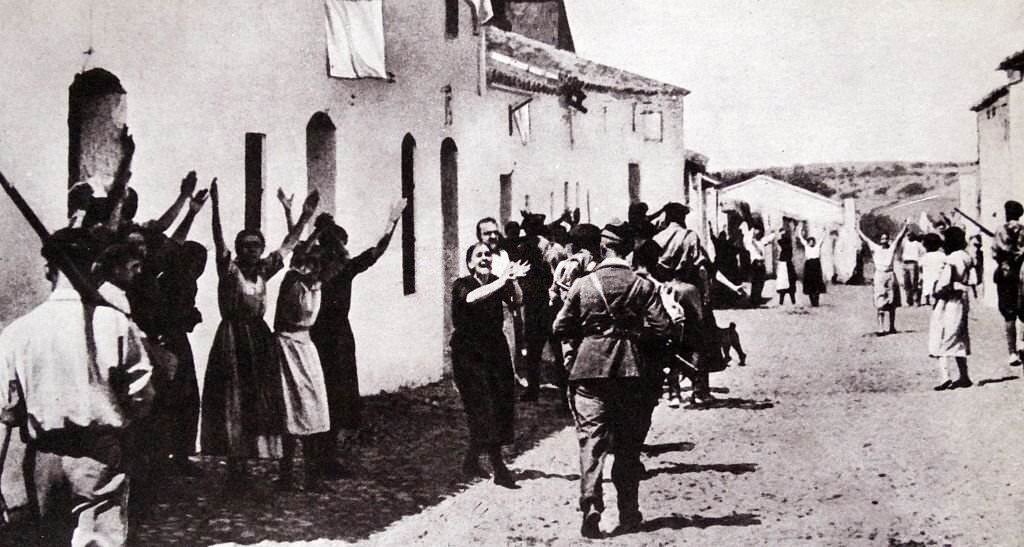
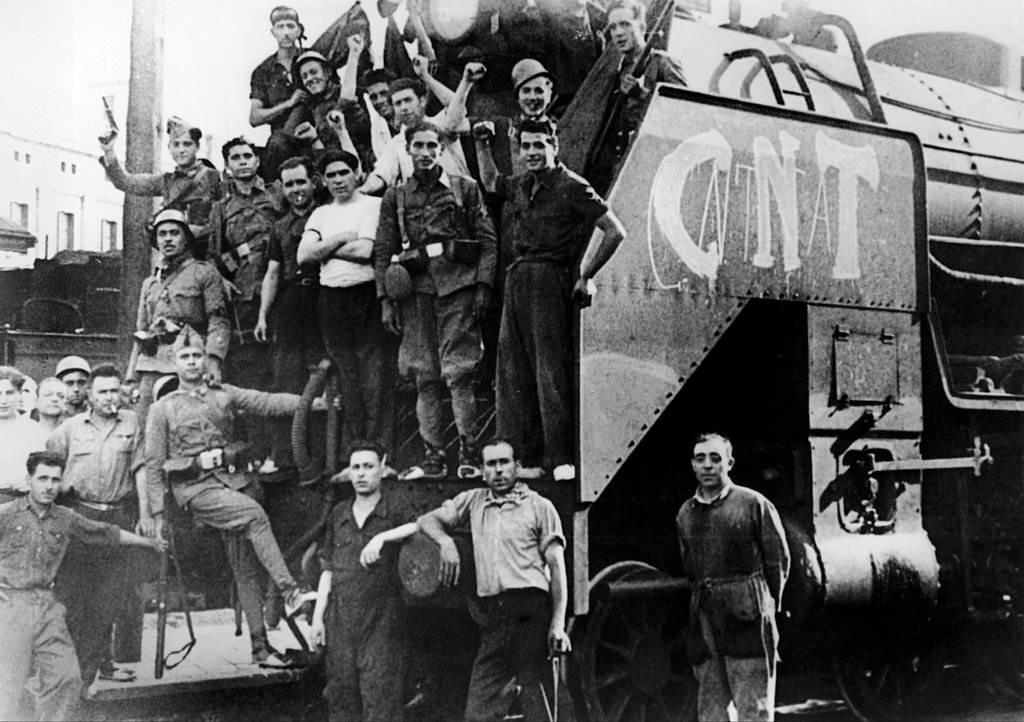
The July military uprising in Seville, Spain on 18 July 1936, which contributed to the start of the Spanish Civil War.
Loyalist Troops in Barcelona, 1936
Republican militias depart from to join forces opposing the nationalists led by Franco. July 1936 at the beginning of the Spanish Civil War.

One of the early Republican victories came in Madrid itself, at the Montaña Barracks. Anti-fascist militia forces stormed the garrison, which was held by Nationalist troops under General Joaquín Fanjul. The militia took the barracks in July 1936 and surveyed their casualties afterward — a moment captured in photographs that showed both the cost of the fight and the determination of those defending the Republic.
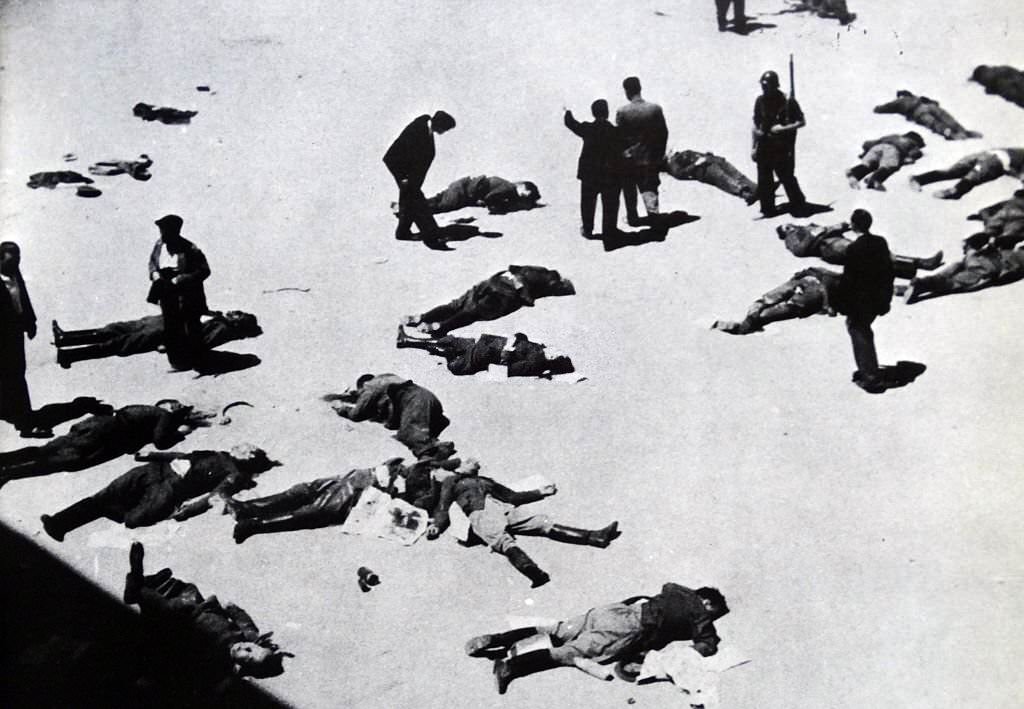
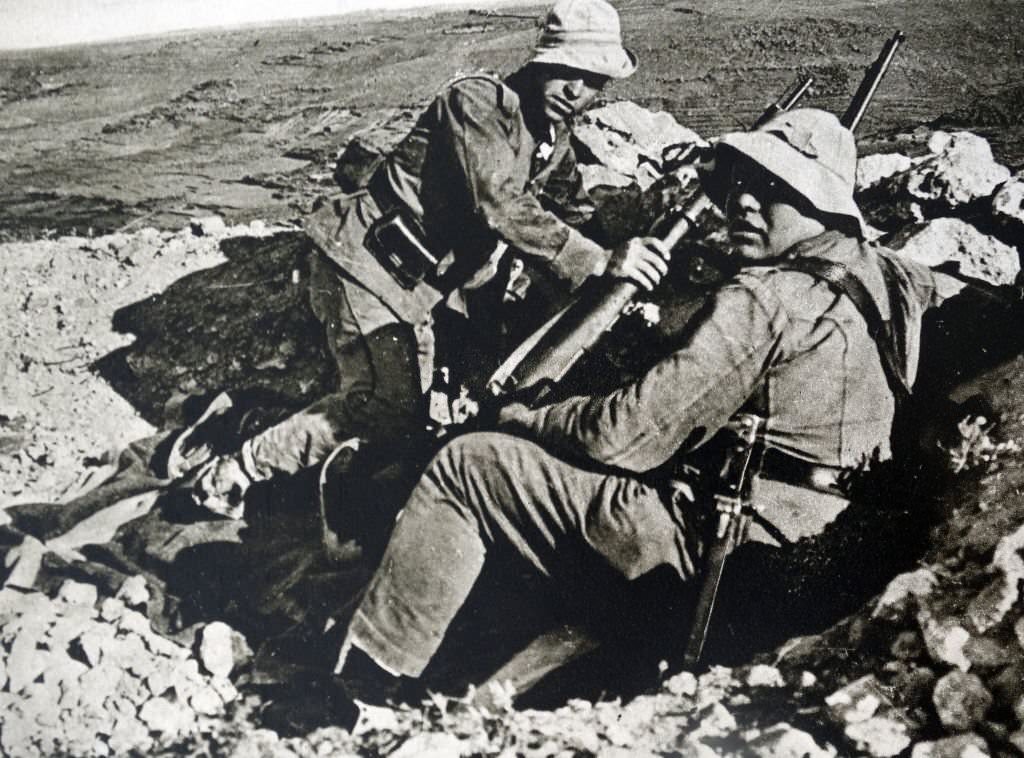
Anti-fascist militias survey their casualties after the capture of the Montaña barracks in Madrid from nationalist forces led by General Joaquín Fanjul, commander of the military garrison. Spanish Civil War July 1936.
Spanish troops during the Spanish Civil War.
Republican Troops called in as Reinforcements to Reconquer the Town, 1937

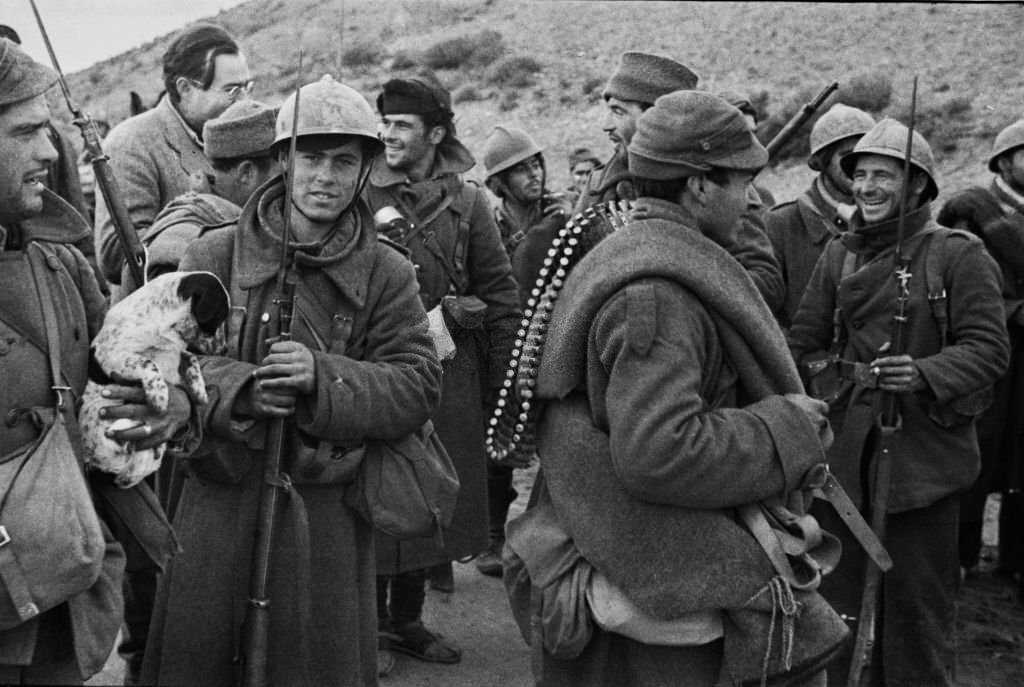
The Battle of Teruel produced some of the war’s most harrowing images. Corpses of Republican soldiers lay frozen on the Aragon front in December 1937, the bitter winter cold adding another layer of misery to the fighting. American writer Ernest Hemingway visited the front at Teruel on December 21, 1937, speaking with Republican soldiers before they went into action. Hemingway was one of several prominent foreign writers who covered the Republican side of the war.
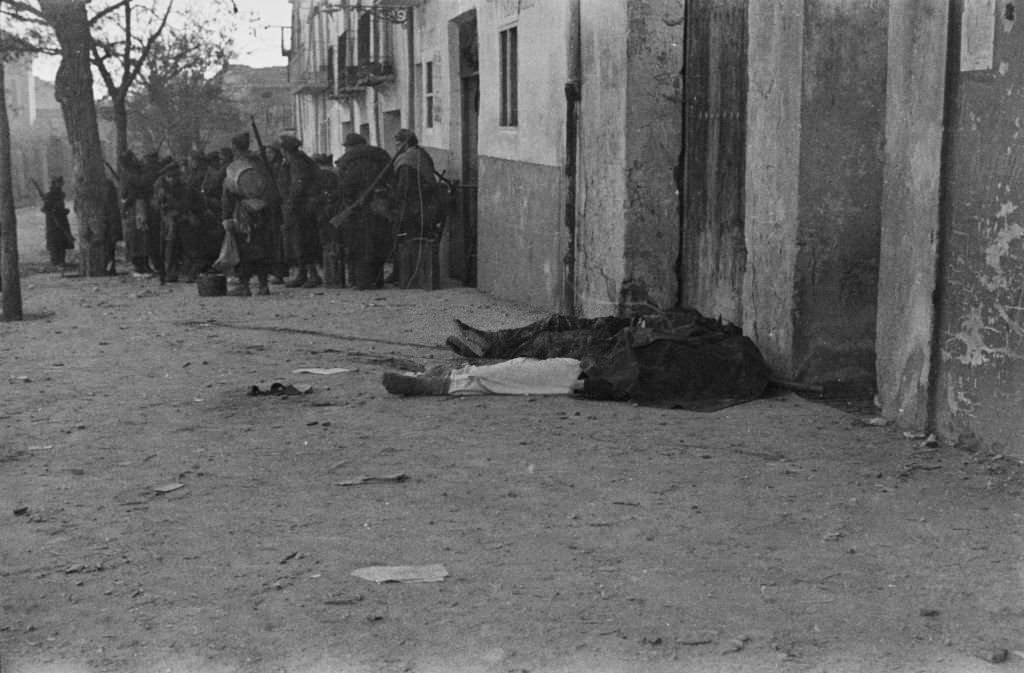
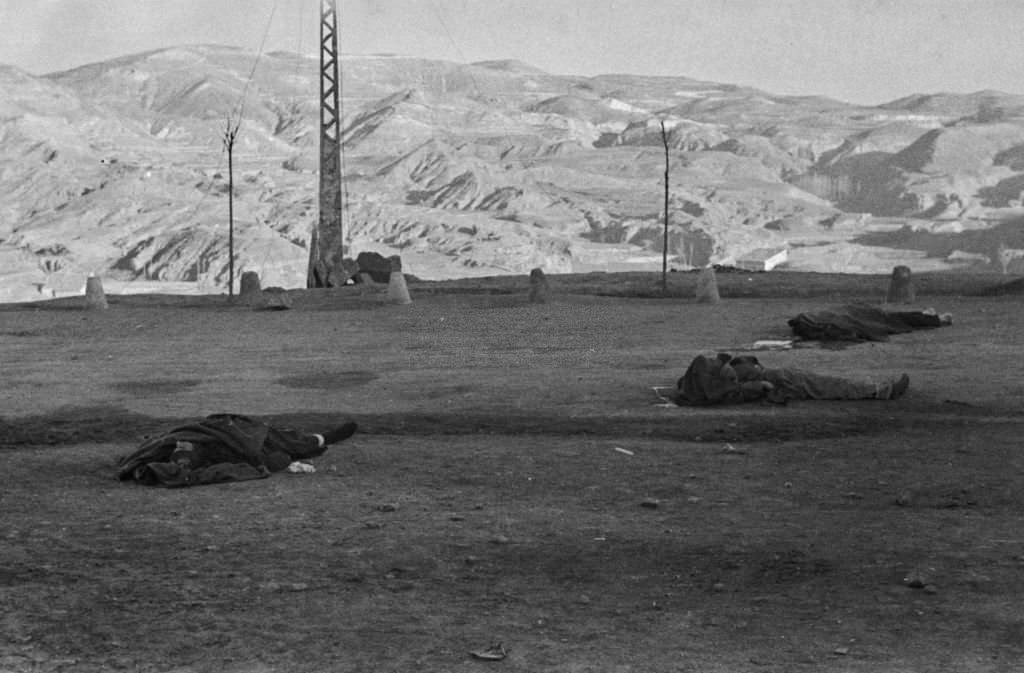
Corpses of Republican soldiers killed on the Aragon front during the Spanish Civil War at the Battle of Teruel on 21st December1937 near Teruel, Aragon, Spain.
Corpses of Republican soldiers killed on the Aragon front during the Spanish Civil War at the Battle of Teruel on 21st December 1937 near Teruel, Aragon, Spain.
Writer and journalist Ernest Hemingway talks with Republican soldiers before they go into action on the Aragon front during the Spanish Civil War at the Battle of Teruel on 21st December 1937 near Teruel, Aragon, Spain.

At Gibraltar, British sentries guarded the only entry point through which Spanish refugees could cross to safety. As Falangist victories mounted in Spain, Britain reinforced the garrison and fortifications at Gibraltar, recognizing that the strategic harbor had taken on new importance in a rapidly shifting Mediterranean political landscape.
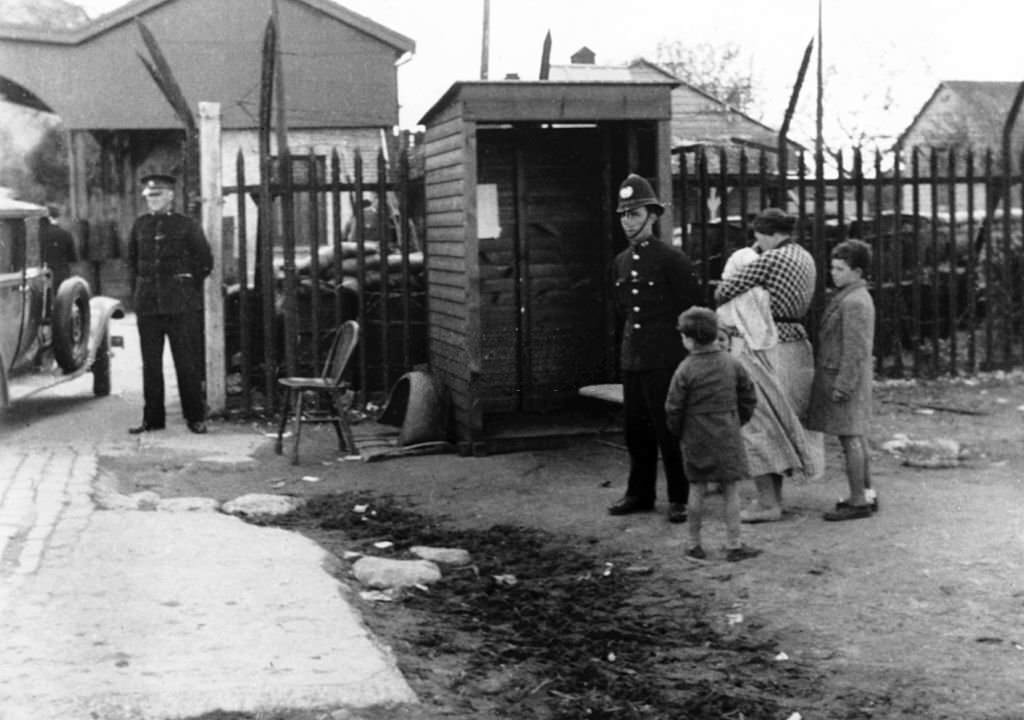
During the Spanish civil war, in Gibraltar, British sentries are guarding the only entry Spanish refugees can enter.
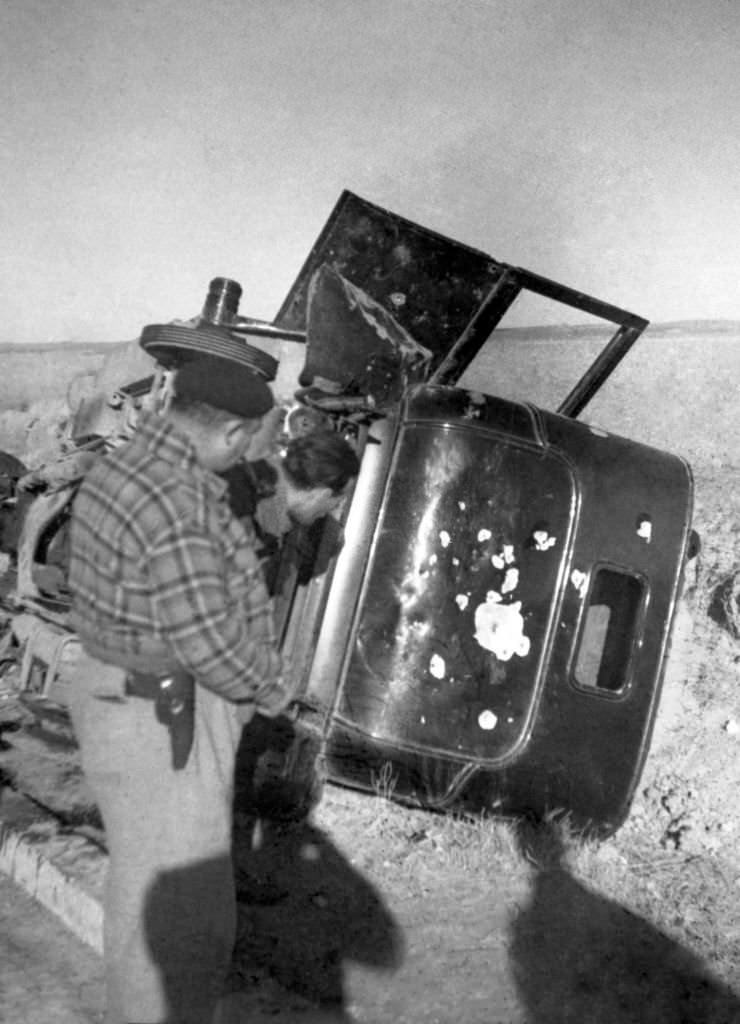
The carcass of a car machine-gunned by a nationalist plane during the war in Spain, in March 1937, in the region of Madrid.
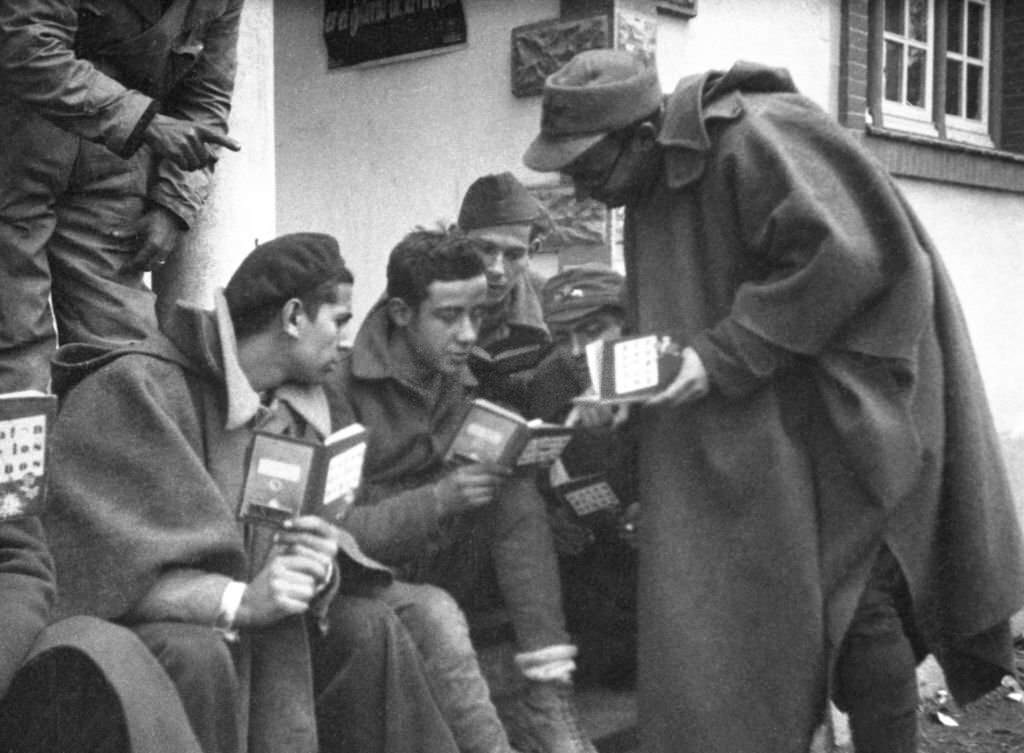
Republican militiamen learning to read in Madrid during the Spanish Civil War, March 1937.
Children queuing for milk rations, Spanish Civil War (1936-1939), December 1937
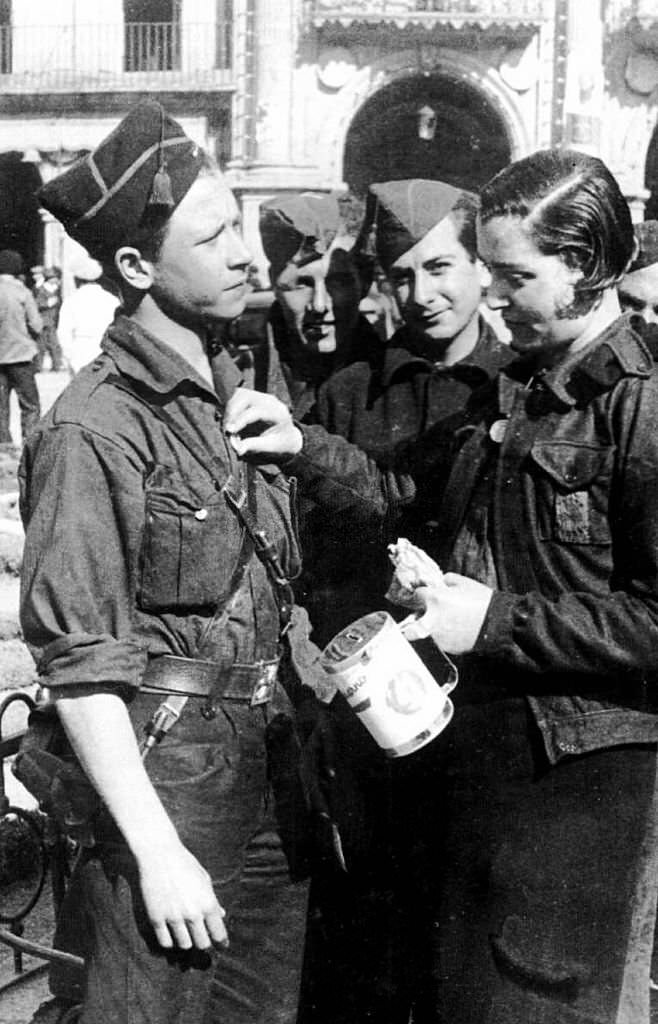
Woman collecting funds for the Nationalist (pro-Franco) forces, in Salamanca during the Spanish Civil War, 1937.
Nationalists on the eastern edge of Madrid.
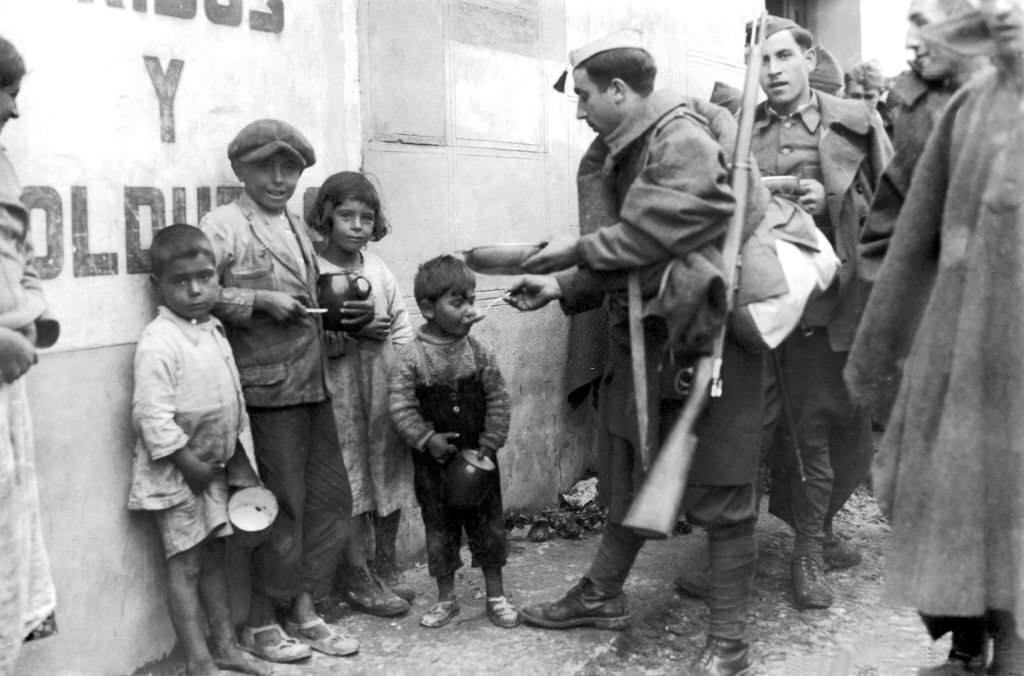
Nationalist Soldiers Giving food provision to Children in Madrid, 1936
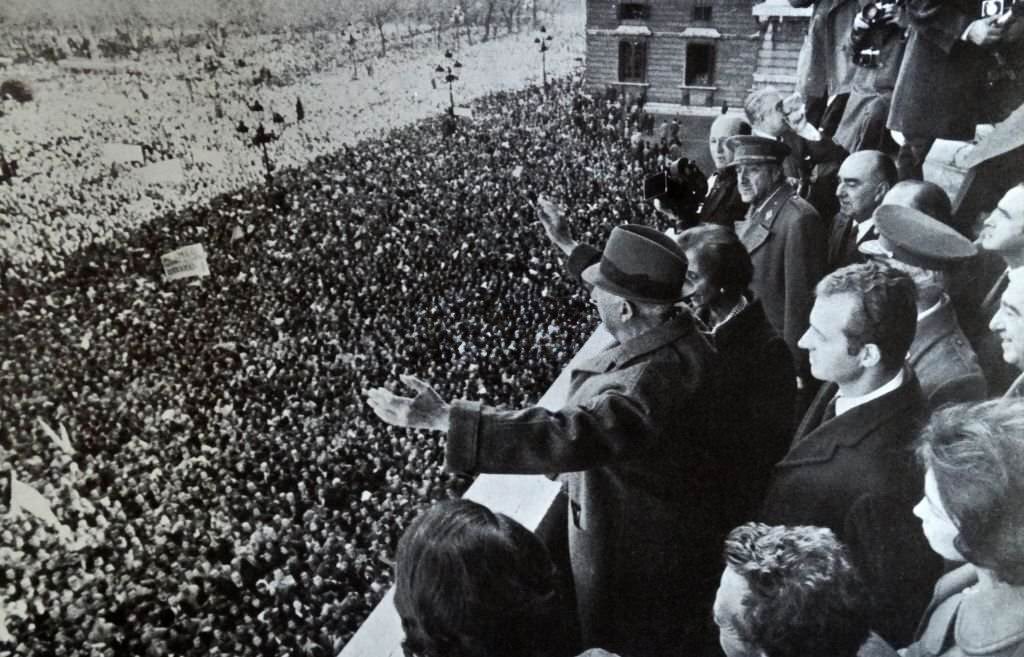
Spanish leader with his wife Carmen Polo and Juan Carlos later King of Spain, 1969.
Nationalist Soldiers Evacuating Houses at the Time of The Seizing of Irun during the Spanish Civil War, 1939
In Irun on the French-Spanish Border in Basque Country, A Militiamen flees the Combat Zone on the Spanish Side of the International Bridge Of Behobie On September 4, 1936
Spanish Civil War Siege of Alcazar fortress by Republican troops, 1936
Spain under the regime of the dictator Francisco Franco
A Tank from the Condor Legion - German Volunteers Participating Alongside Franco'S Nationalist Troops - at the Casa De Campo Near Madrid On May 26, 1939,
A Tank from the Condor Legion – German Volunteers Participating Alongside Franco’S Nationalist Troops – at the Casa De Campo Near Madrid On May 26, 1939,
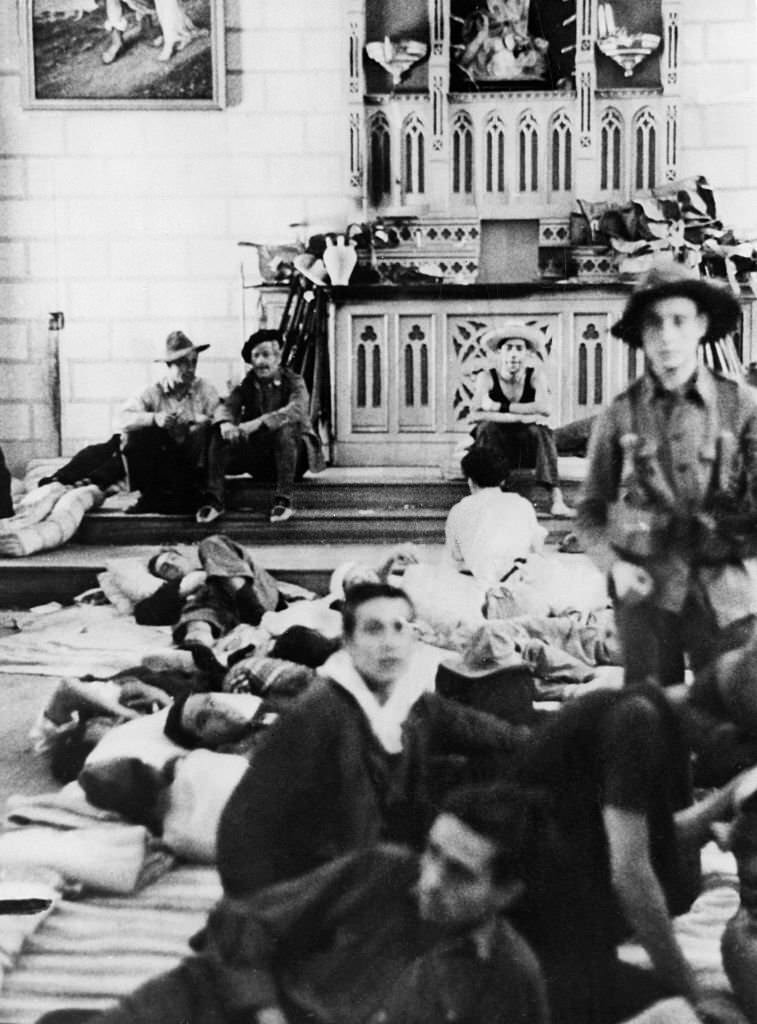
A group of nuns in civilian clothes, protected by governmental militimen in a Toledo's convent, during the Spanish civil war.
A group of nuns in civilian clothes, protected by governmental militimen in a Toledo’s convent, during the Spanish civil war.
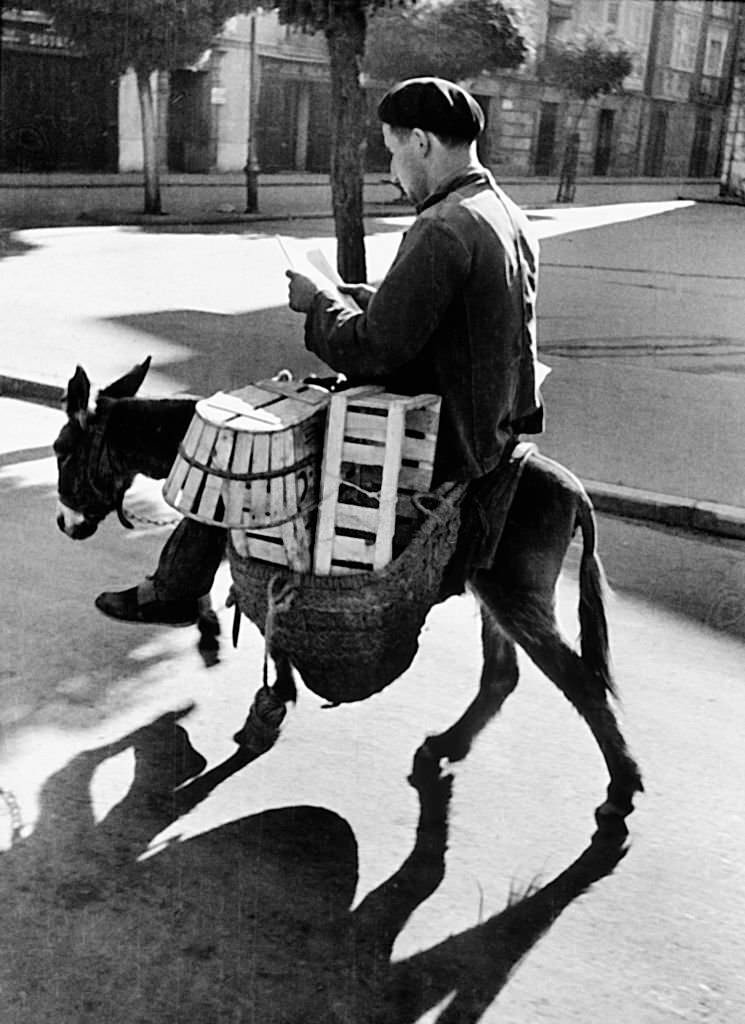
Man rides on a donkey while reading a book. Photo by Erich Andres, taken in times of the Spanish Civil War, 1939

Manuel Azaña served as Spain’s reformist Prime Minister and was elected President of the Republic by parliament on May 10, 1936, taking over from conservative Niceto Alcalá-Zamora. His election came just months before the military uprising, and he would spend the war years trying desperately to hold together a fractious coalition of communists, socialists, anarchists, and liberal republicans against an increasingly powerful Nationalist military.
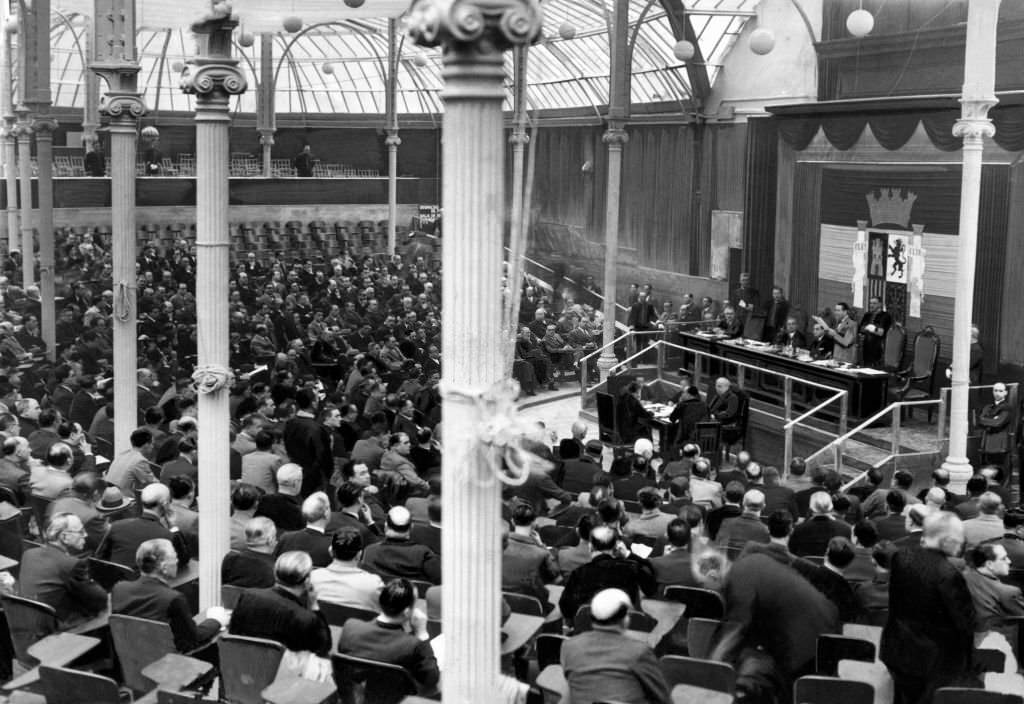
Spanish reformist Prime Minister Manuel Azana is elected President of the Republic by the Parliament gathered at the Crystal Palace in Madrid's Parco del Retiro, and took over from conservative Niceto Alcala-Zamora on May 10, 1936.
Spanish reformist Prime Minister Manuel Azana is elected President of the Republic by the Parliament gathered at the Crystal Palace in Madrid’s Parco del Retiro, and took over from conservative Niceto Alcala-Zamora on May 10, 1936.
Spanish Civil War Return of the Condor Legion to Germany after the end of the Spanish Civil War.
A Militiaman in the Spanish Civil War Between 1936 And 1939.
Madrilene Workers volunteering in the Spanish Republican Army leaving for the Front During The Civil War, 1936.
English Soldiers Made Prisoners By Franco'S Troops Arriving at a camp near Madrid, 1939
English Soldiers Made Prisoners By Franco’S Troops Arriving at a camp near Madrid, 1939

The Condor Legion’s Heinkel He 111 bombers were among the most advanced aircraft deployed in the Spanish Civil War. Ground crews prepared them for mission after mission against Republican targets, giving Germany’s air force real-world experience with precision bombing that would prove directly applicable in the coming world war.
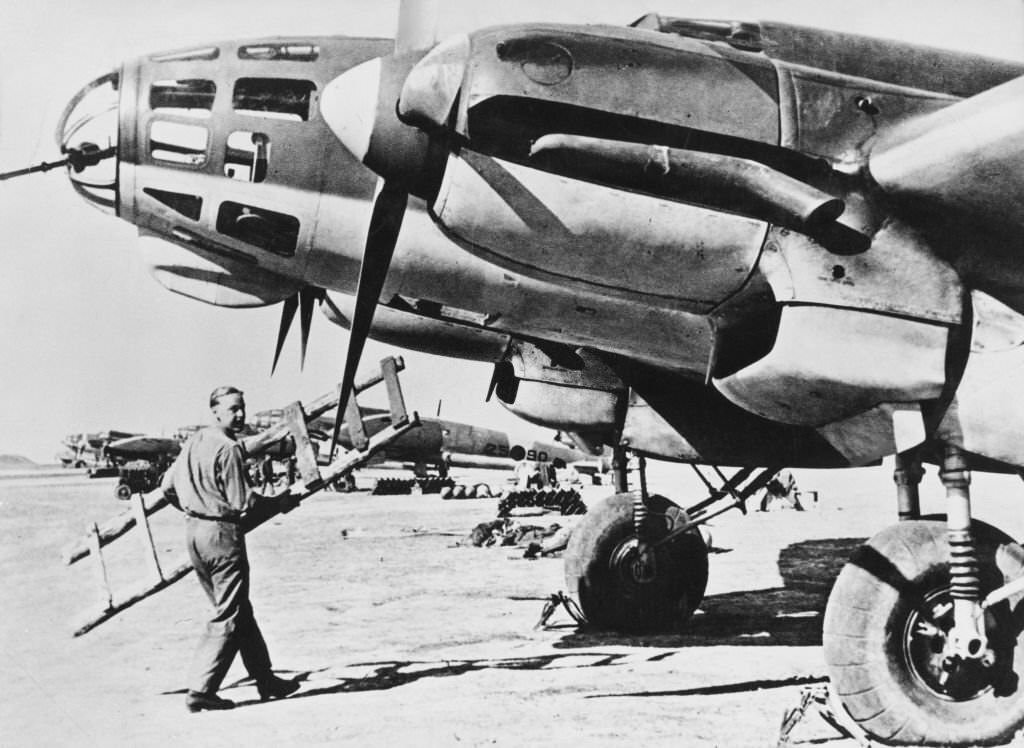
The Condor Legion in the Spanish Civil War 1939.
Republican militiamen on horseback (from the Marxist Worker's party, a Trotskyist faction) operating on the Catalan front in 1936.
Republican militiamen on horseback (from the Marxist Worker’s party, a Trotskyist faction) operating on the Catalan front in 1936.
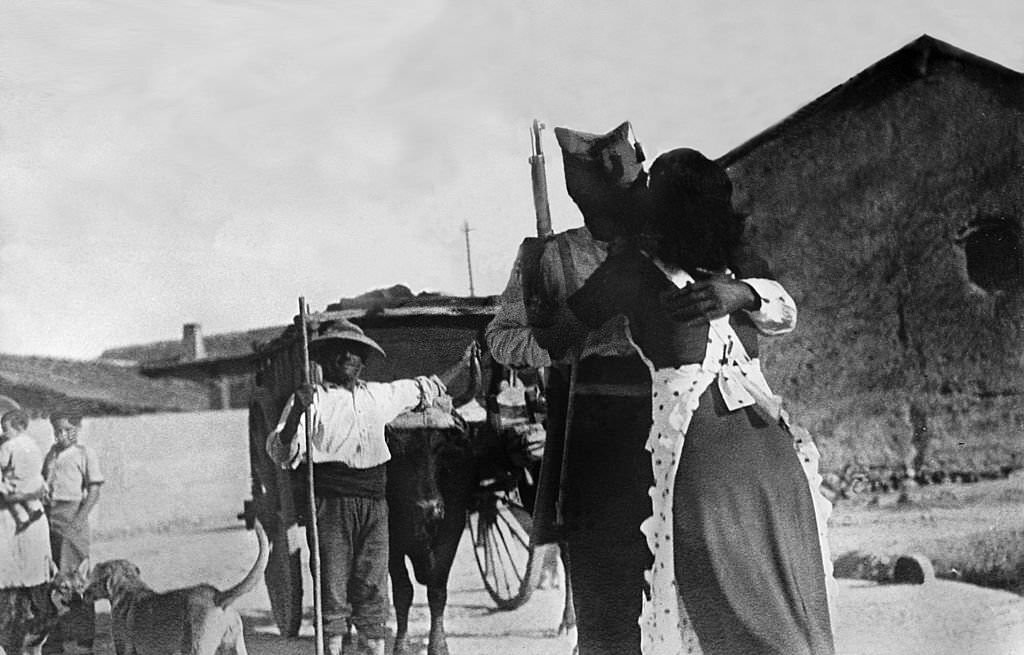
On the Talavera de la Reina front, a militiaman is kissing his wife during the retaking of a village by the Government.
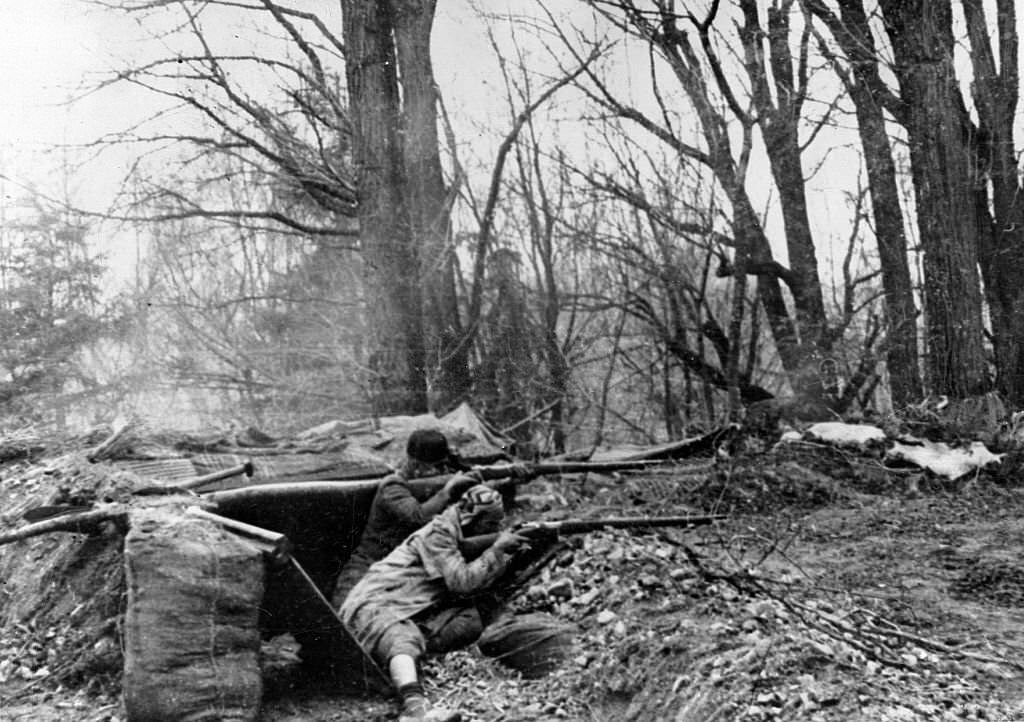
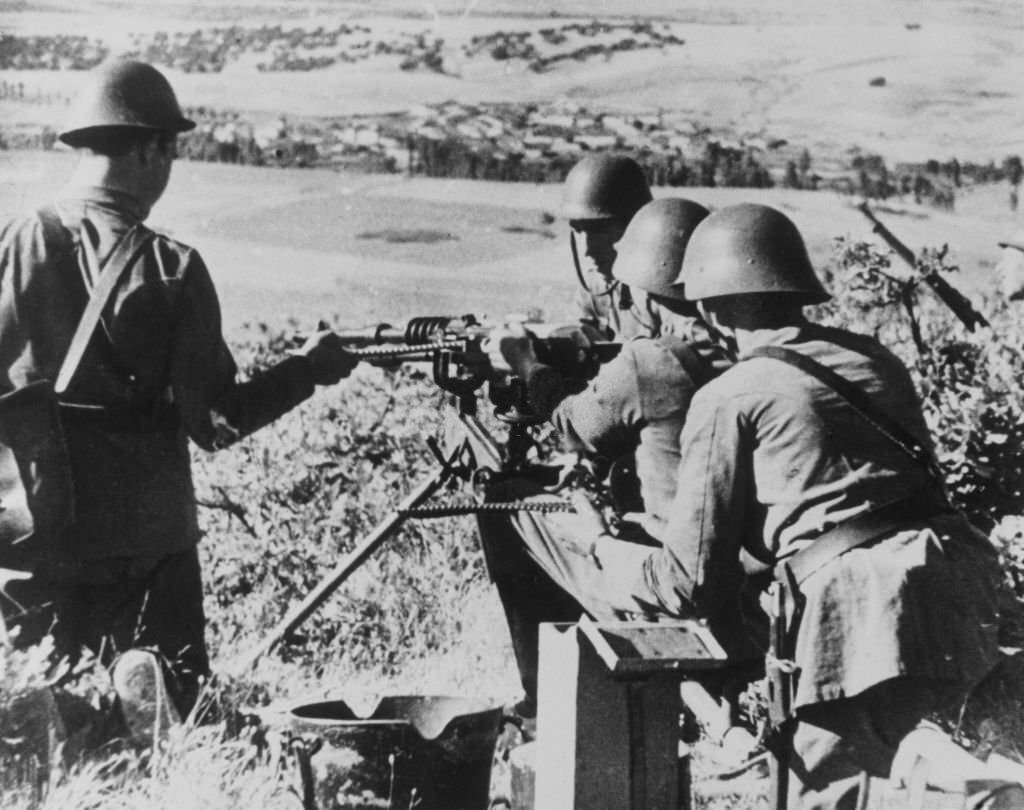
A machine-gun nest, manned by rebels in steel helmets in the Guadarrama Mountains north of Madrid, Spain, July 30th, 1936.
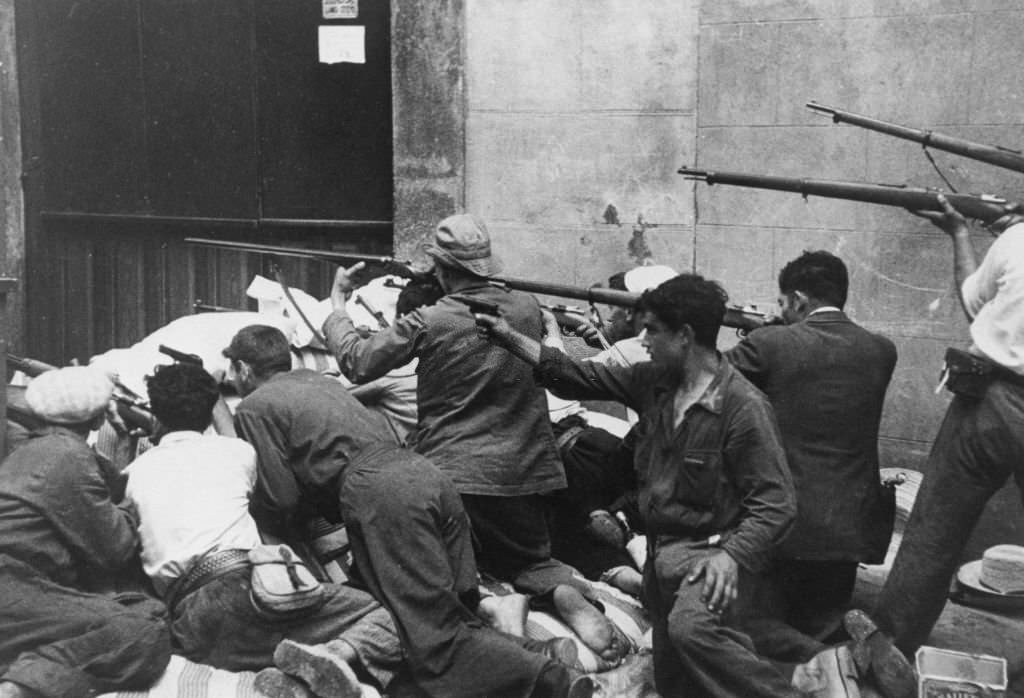
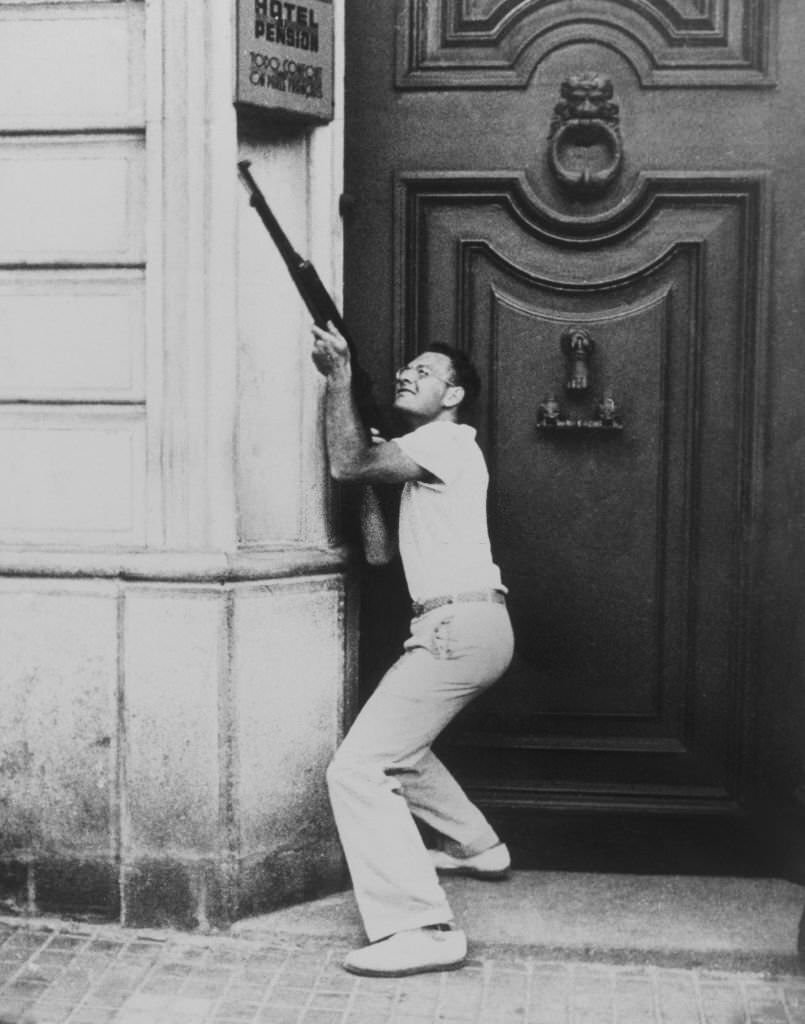
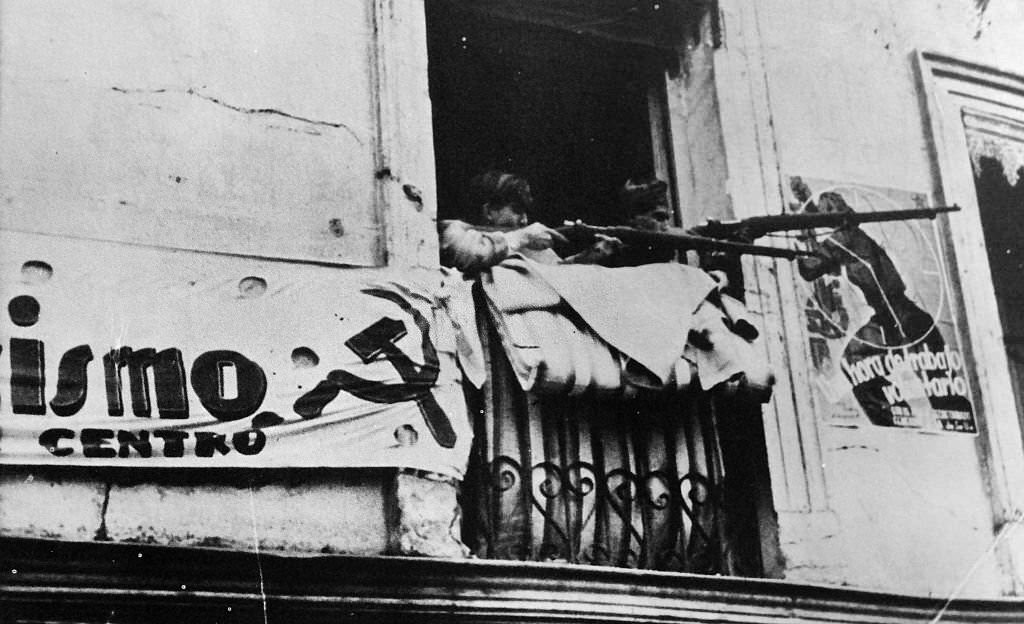
A civilian, armed by the Government, shooting from a doorway in a Barcelona street during the Spanish Civil War, July 22nd, 1936

Franco’s Army of Africa included Moroccan soldiers — known as Regulares — who were experienced, professional fighters. Their deployment on the mainland shocked many Spaniards, as they were seen as foreign troops being used against Spanish citizens. Their presence in the Nationalist ranks was a mark of how quickly and effectively Franco had moved to secure colonial military resources at the start of the war.
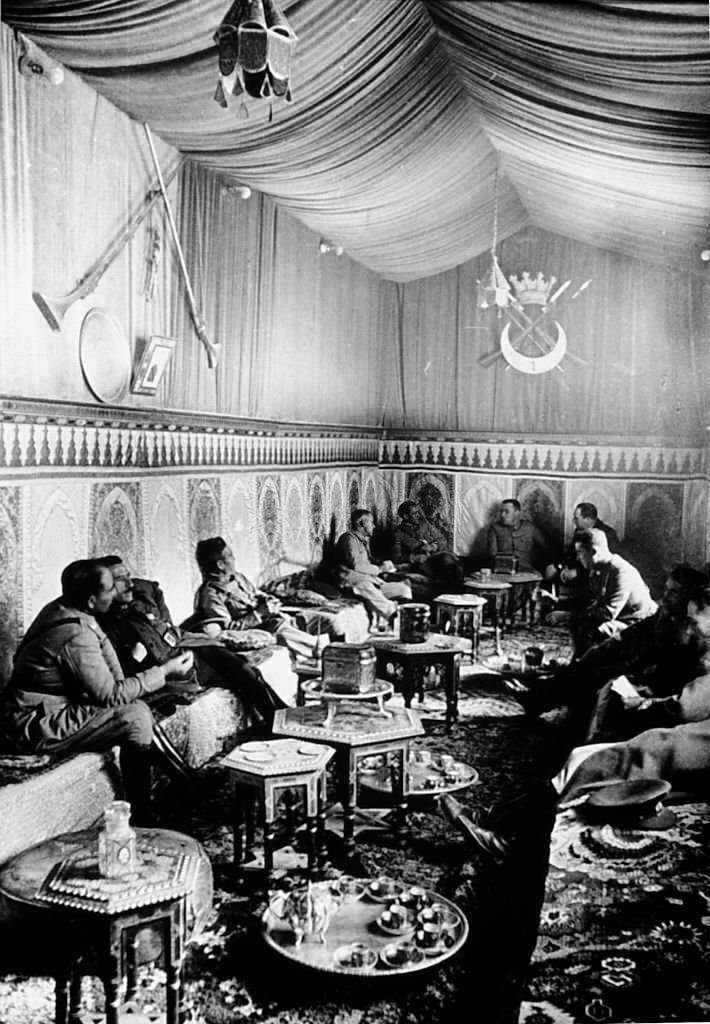
Moroccan soldiers at Spanish Civil War, Spain, 1936.

The Republican Navy’s rank-and-file sailors were largely loyal to the Republic. In most cases, crews stopped their officers from joining the Nationalist uprising — often executing them on the spot. Despite holding several warships, the Republican Navy was disorganized and never played a decisive role in the conflict. Members of the Navy who remained loyal to the Republic posed aboard a C6 submarine just days after the coup began in 1936.
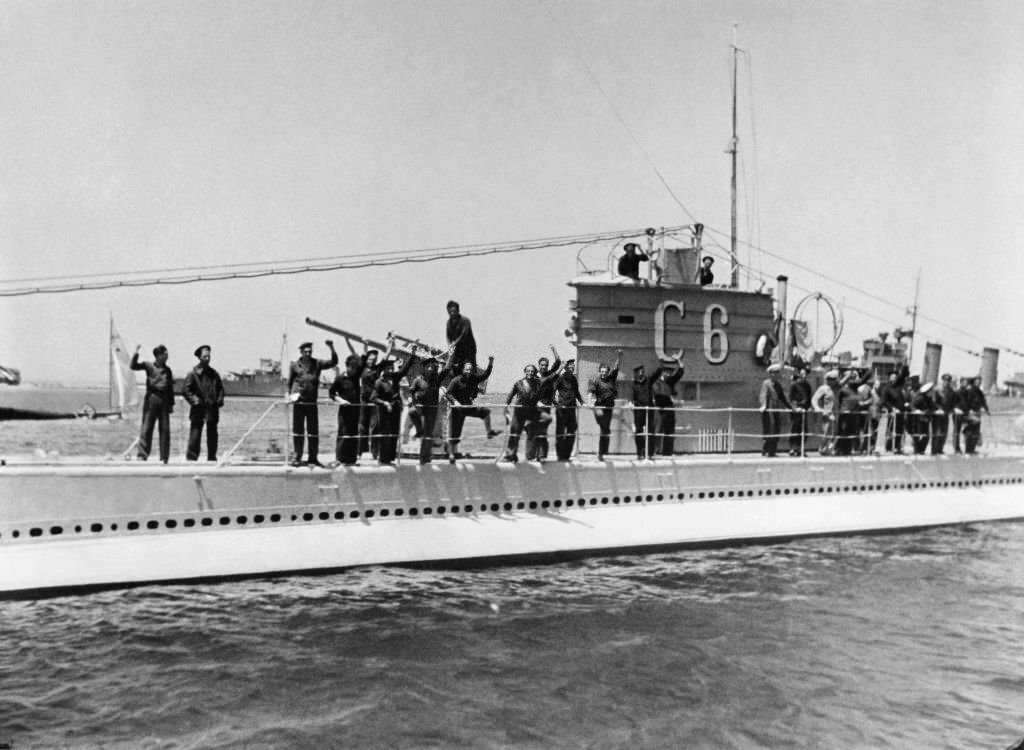
Members of the Navy who remained loyal to the Republic are seen standing on a C6 submarine a few days after the coups in 1936.
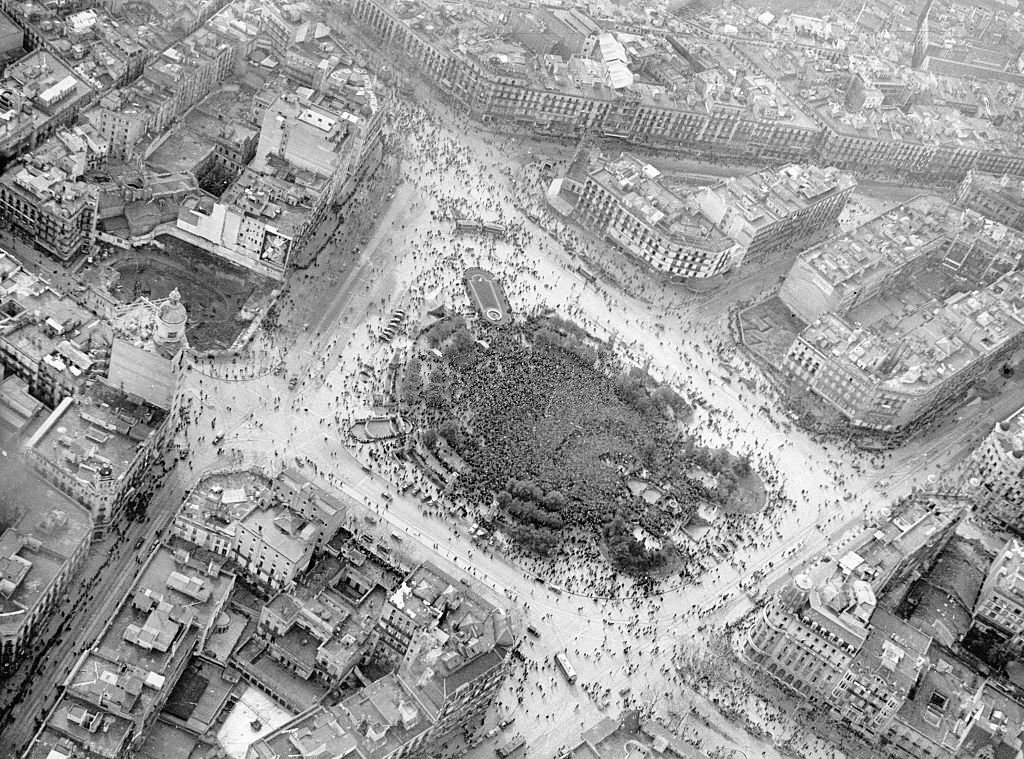
Spanish Civil War Bird's eye view of the victory celebration on the Plaza de Cataluna in Barcelona after the collapse of the Republican defense in Catalonia and the capture of the city by the Nationalists
Spanish Civil War Bird’s eye view of the victory celebration on the Plaza de Cataluna in Barcelona after the collapse of the Republican defense in Catalonia and the capture of the city by the Nationalists
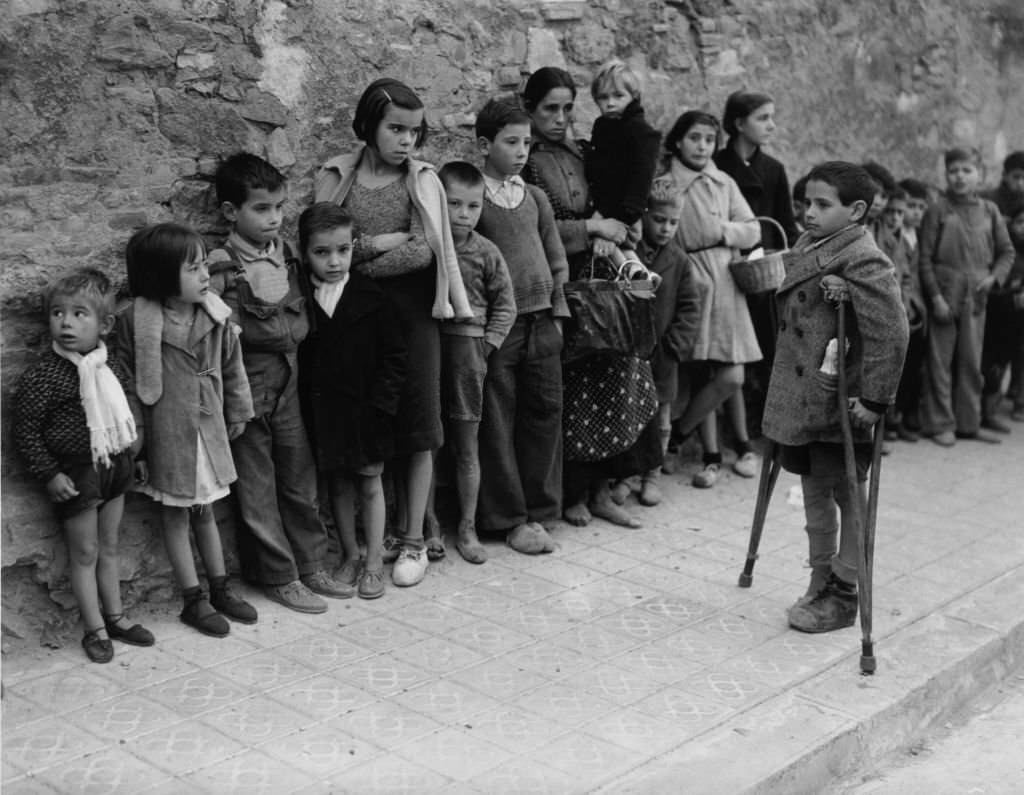
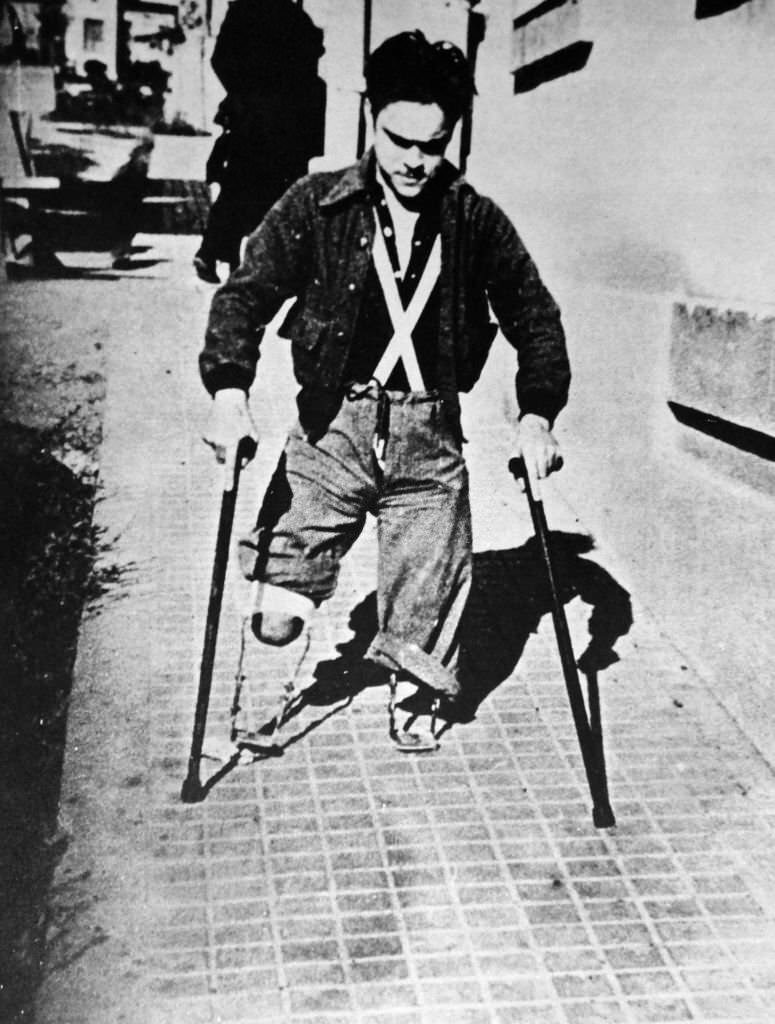
Amputee war veteran, in a Spanish street during the Spanish Civil War.
Republican supporters prepare to defend positions in Madrid during the Spanish Civil War 1936.
Nationalist soldiers in action during an assault on Madrid, during the Spanish Civil War.

As Republican resistance collapsed in Catalonia, hundreds of thousands of civilians and soldiers fled toward the French border. Women, children, and the elderly made the journey on foot in winter conditions, desperate to escape the advancing Nationalist forces. Many crossed into France, where they were interned in camps along the coast.
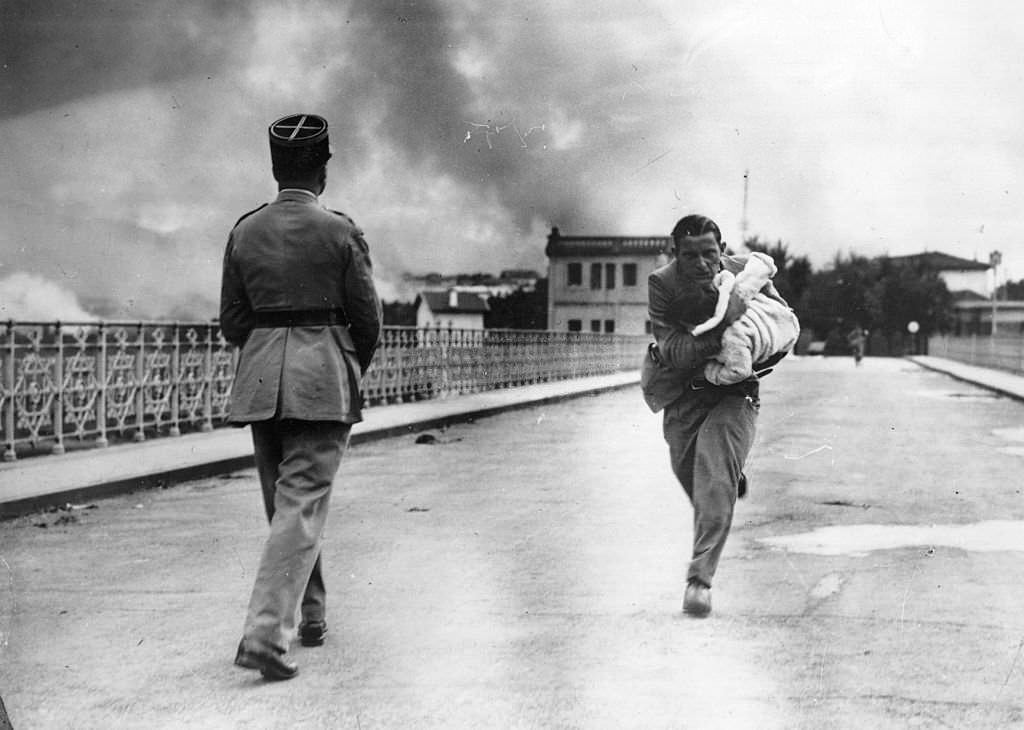
Refugee woman runs towards the Spanish French border, during the Spanish Civil War.
Nationalist troops enter Barcelona during the Spanish Civil War, 1939.
The Church of Vinaros seized by Nationalist Troops, 1938

In Washington, D.C., three thousand Spanish-born women marched on the State Department on April 4, led by the widow of an American killed in Spain. They formally called on the U.S. government to revoke its arms embargo against the Republic. Their plea went unanswered. The United States maintained its policy of non-intervention throughout the war, leaving the Republic to rely almost entirely on Soviet support.
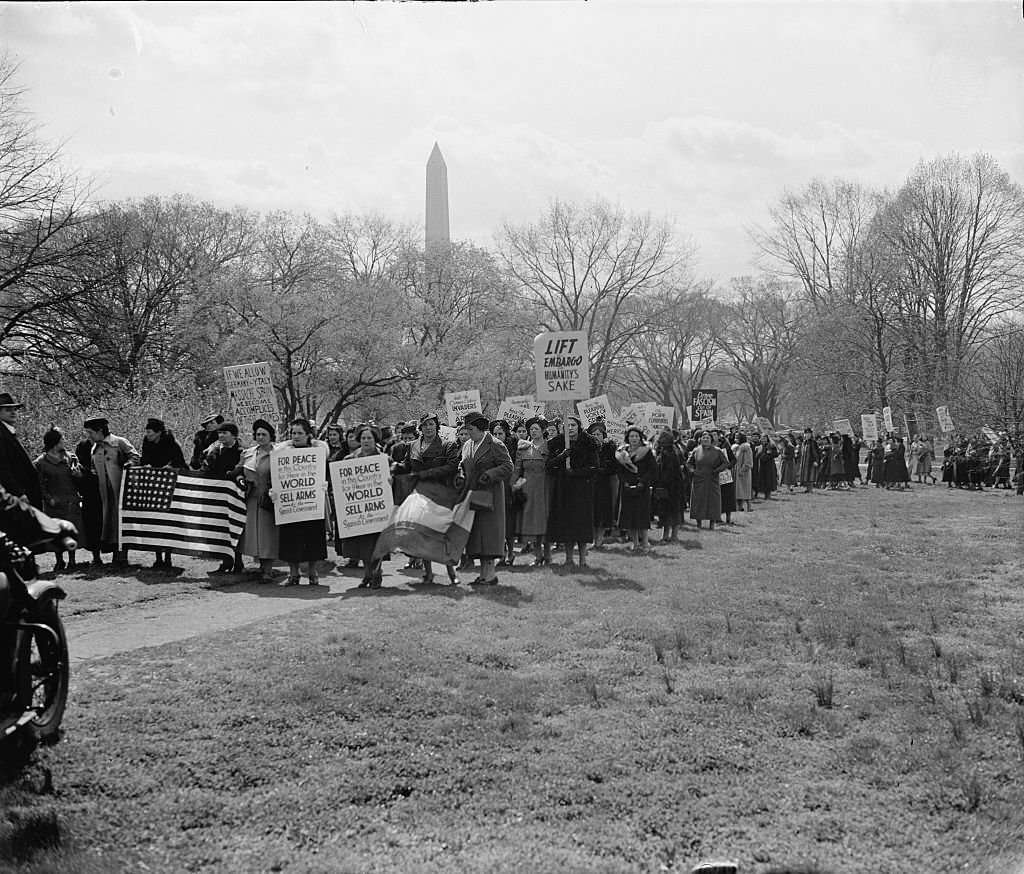
Spanish women to protest at State Department. Washington, D.C., April 4.
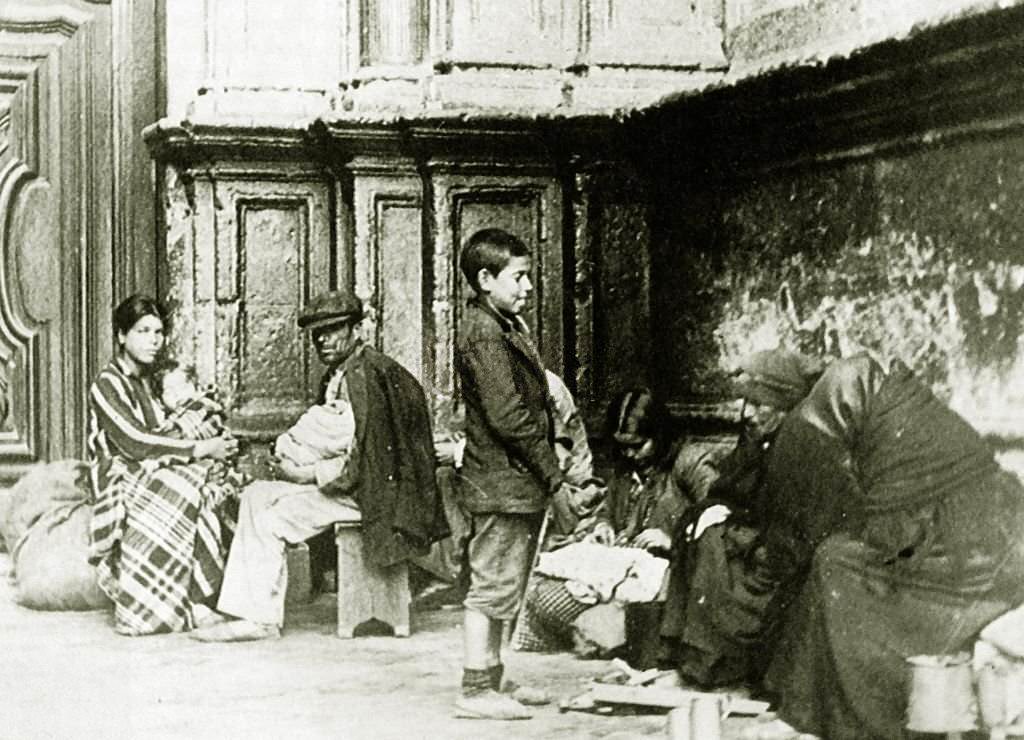
Homeless families living on the streets of Malaga, Spain, during the Spanish Civil War.

The Nationalist leadership consisted of Franco and his senior generals, who coordinated their military strategy from Burgos. General Emilio Mola y Vidal had been the principal architect of the original coup plot, while General José Cavalcanti was among the senior officers who aligned with Franco’s forces from the start.
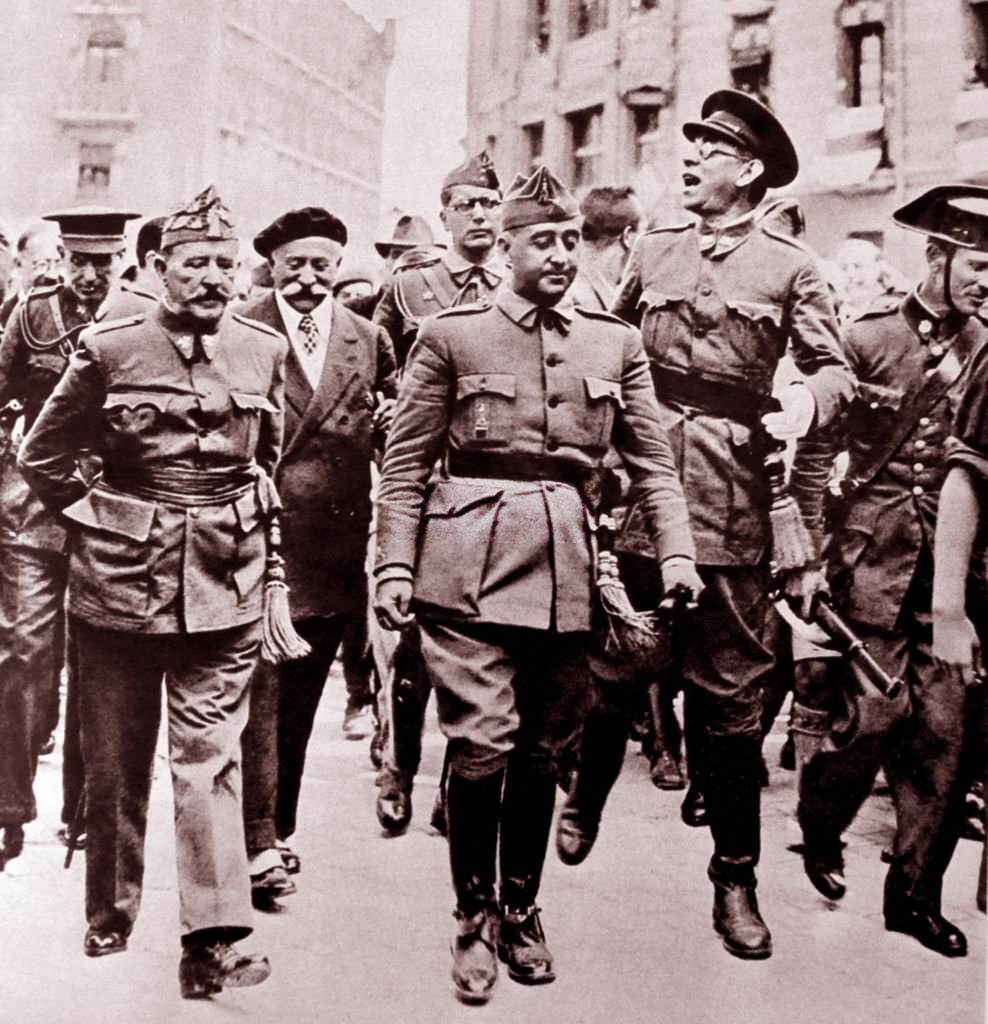
Spanish Civil War nationalist leaders.
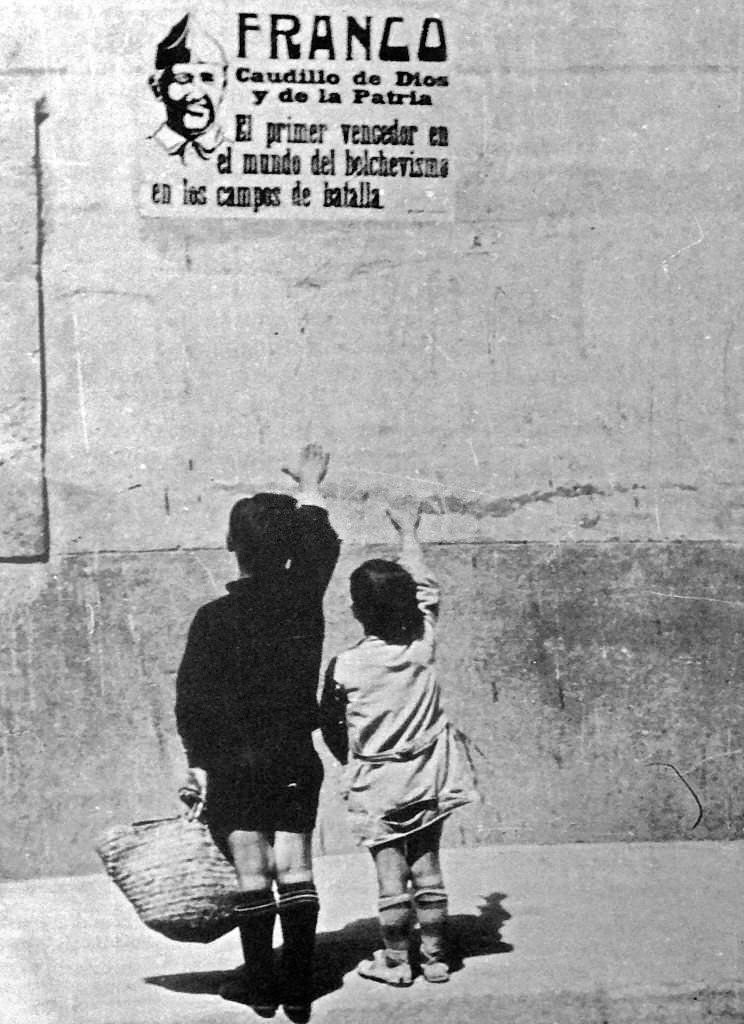
Children salute General Franco on a wall poster in Spain, during the Spanish Civil War, 1937.
Republican soldiers rest for food, during the Spanish Civil War.

In Oviedo, the town garrison under Colonel Antonio Aranda Mata declared for the Nationalist uprising and held out against a prolonged Republican siege. The city sustained serious damage before a Nationalist relief force broke through. The siege of Oviedo lasted months and left the city heavily scarred.
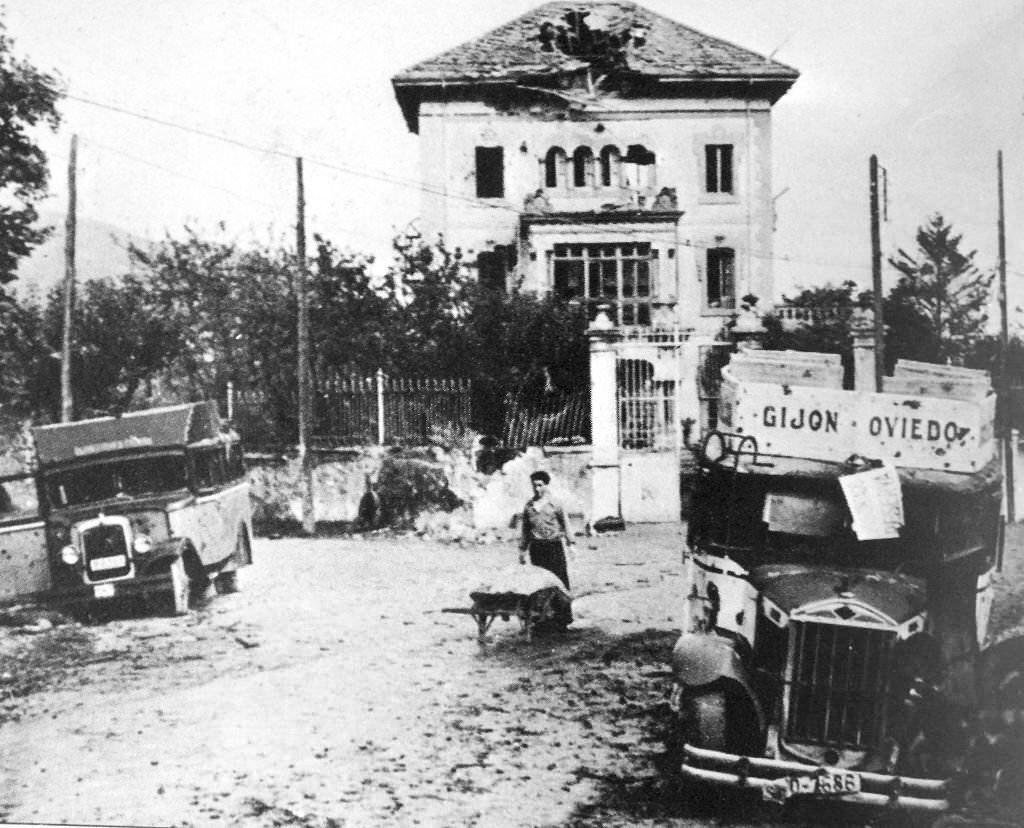
Damage caused in the town of Oviedo, Spain during the Siege of Oviedo, in the Spanish Civil War.

Volunteers who had traveled from Britain to fight in the International Brigades began returning home as the war wound down. A wounded member of the International Brigade arrived back at Victoria Station in London on December 19, 1938, after the brigades were formally withdrawn from Spain. The Soviet Union and the Republic had agreed to remove foreign volunteers in a failed bid to persuade Germany and Italy to do the same.
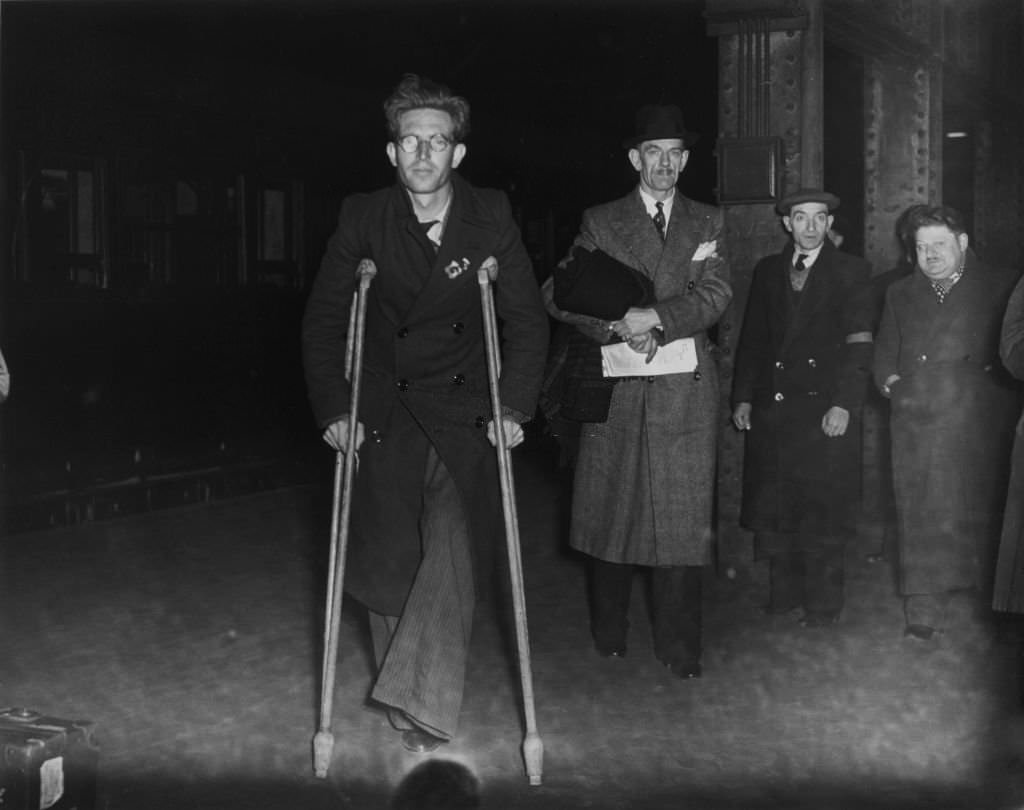
A wounded member of the International Brigade returns to Victoria Station, London, 19 December 1938
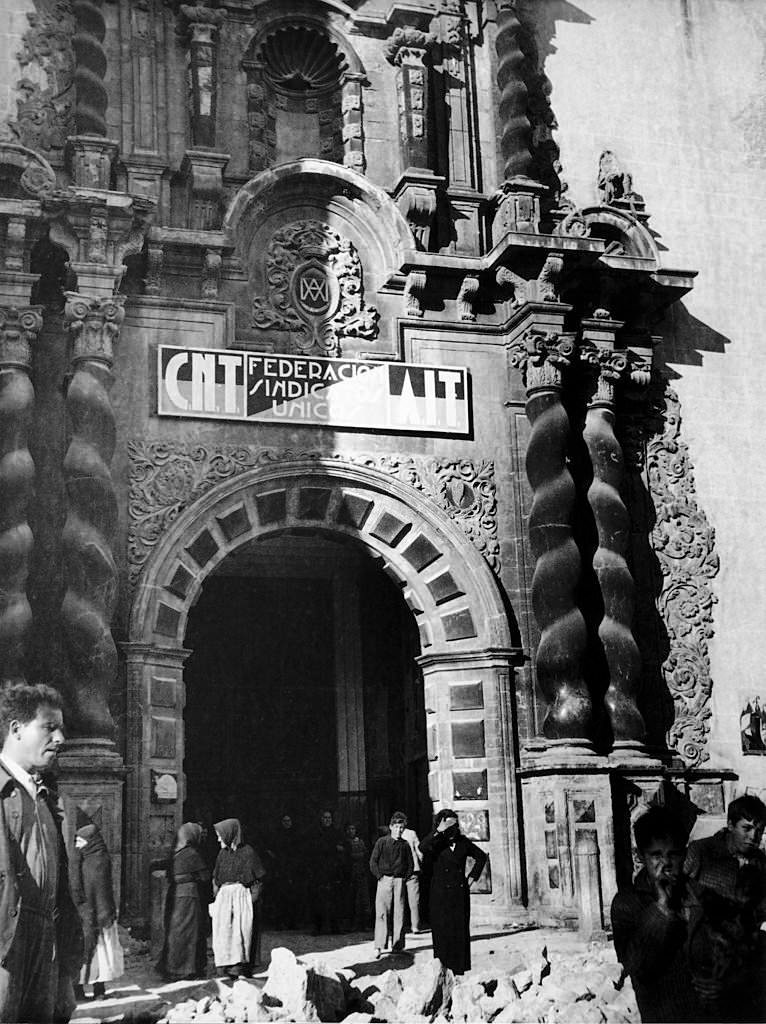
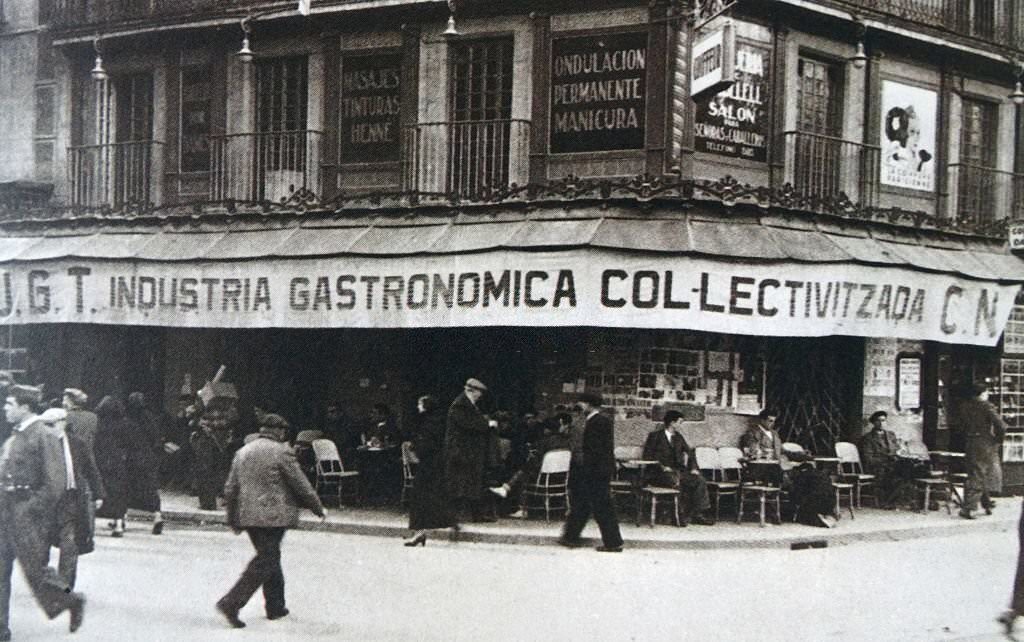
Collective food and general store in Barcelona owned by the CNT-FAI during the Spanish civil war.
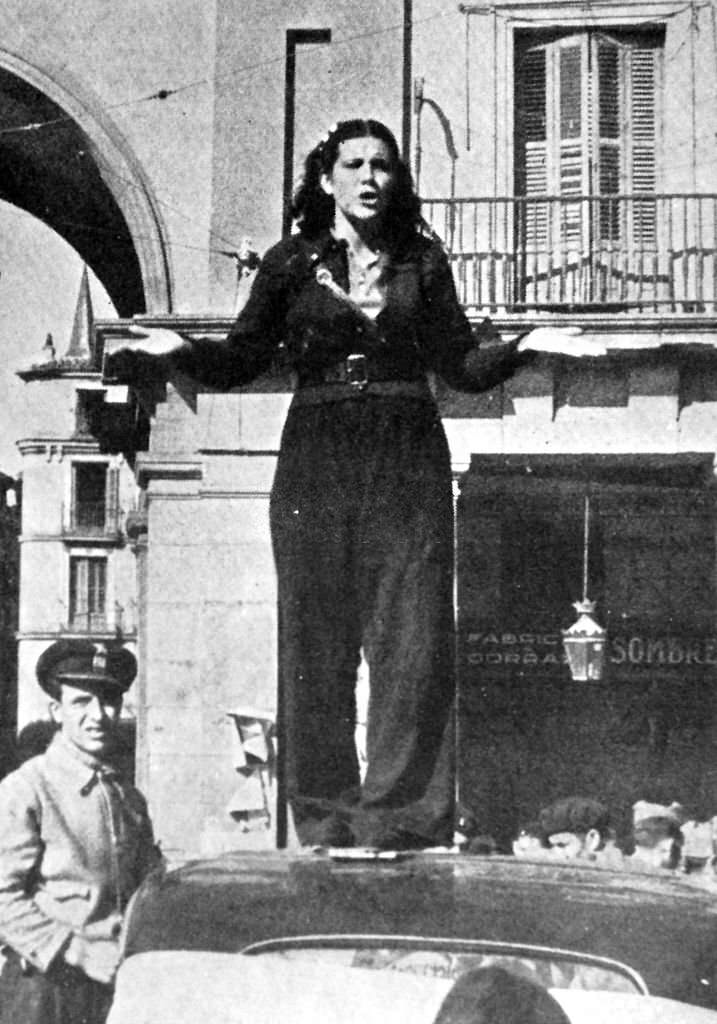
Spanish Civil War Republican militia female guard addressing a crowd in Madrid 1936.

The Battle of the Ebro, fought between July and November 1938, was the longest and largest single battle of the entire war. Franco commanded the Nationalist response as Republican forces crossed the Ebro River in a major offensive. The fighting was concentrated along the lower course of the river, and the Republicans ultimately failed to hold their gains. The defeat effectively sealed the Republic’s fate, leaving Catalonia exposed to the Nationalist advance that followed.
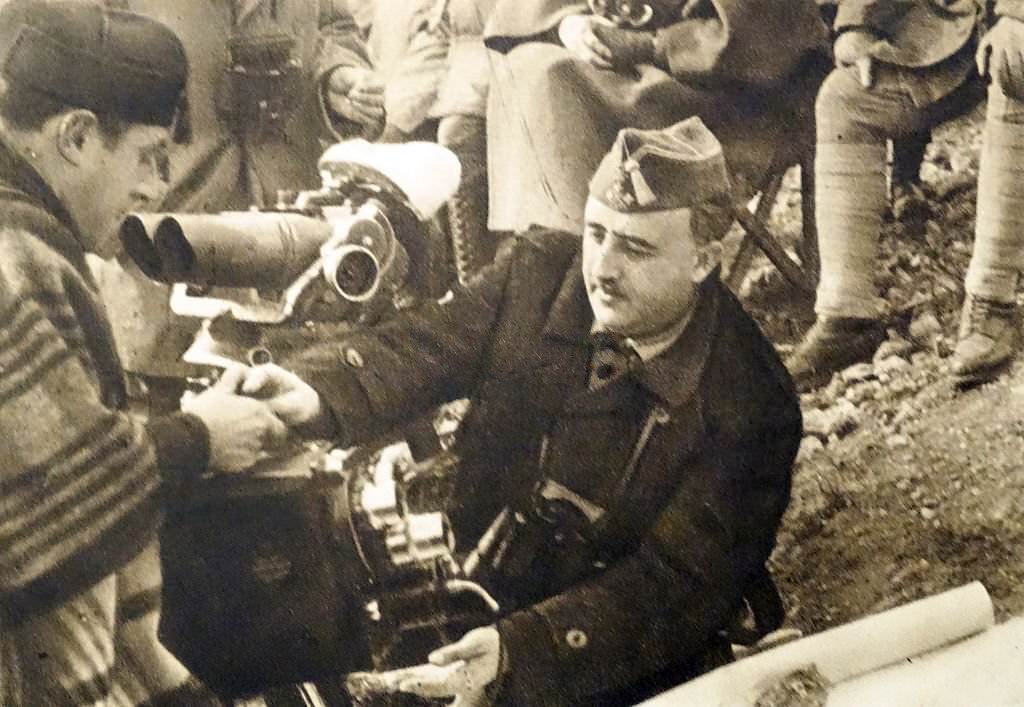
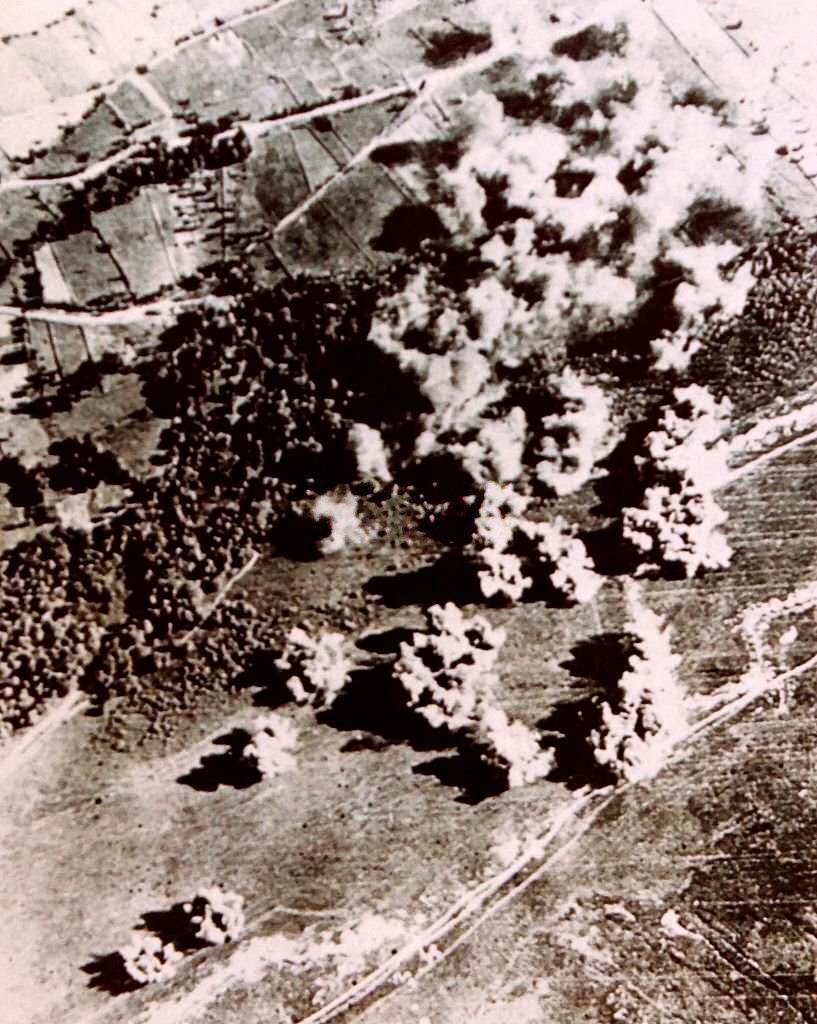
General Francisco Franco at the Battle of the Ebro was the longest and largest battle of the Spanish Civil War.
Aerial attack on republican positions, during the Spanish Civil War.
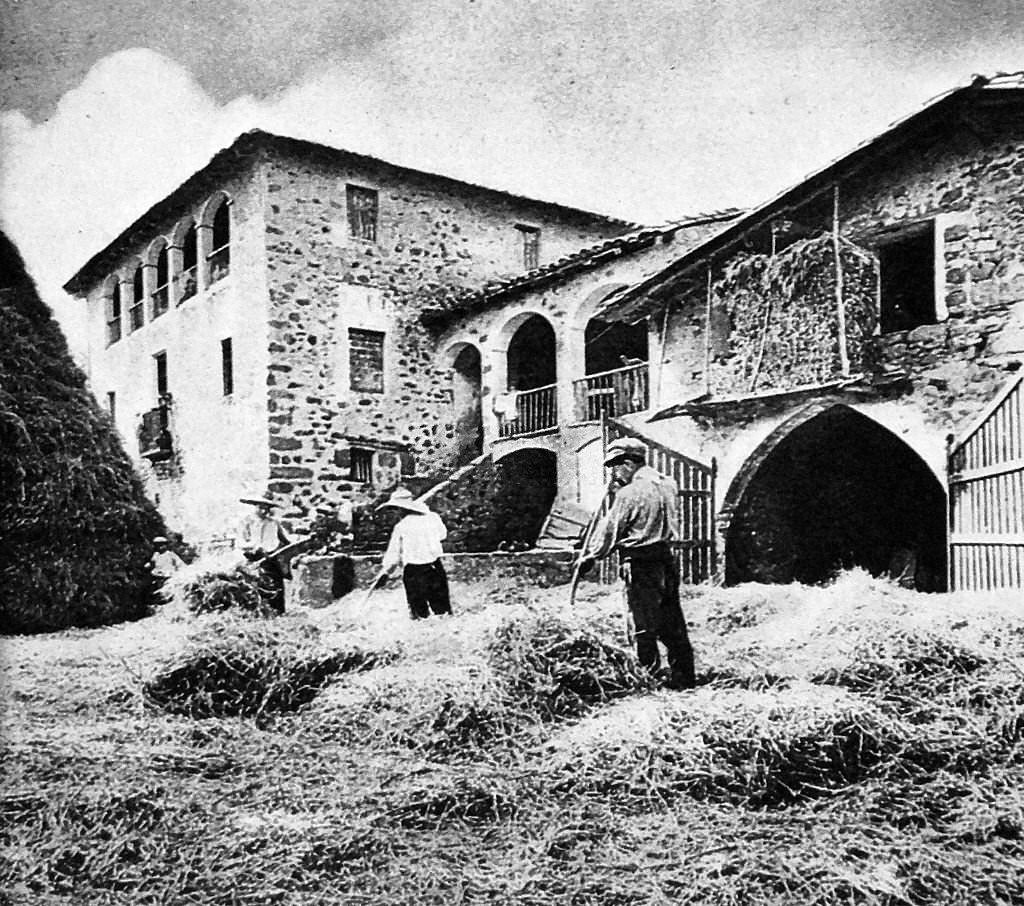
Collective efforts in farm production to meet the republican war effort, during the Spanish Civil War.

Buenaventura Durruti was one of the most prominent anarchist leaders of the Spanish Civil War, a central figure in the CNT and FAI organizations. He led anarchist militias on the Aragon front and later in the defense of Madrid. He was shot on November 19, 1936 — the circumstances remain disputed, with accounts suggesting he was killed either by an accidental discharge or by enemy fire — and died the following day. His death was a major blow to the anarchist movement within the Republic.
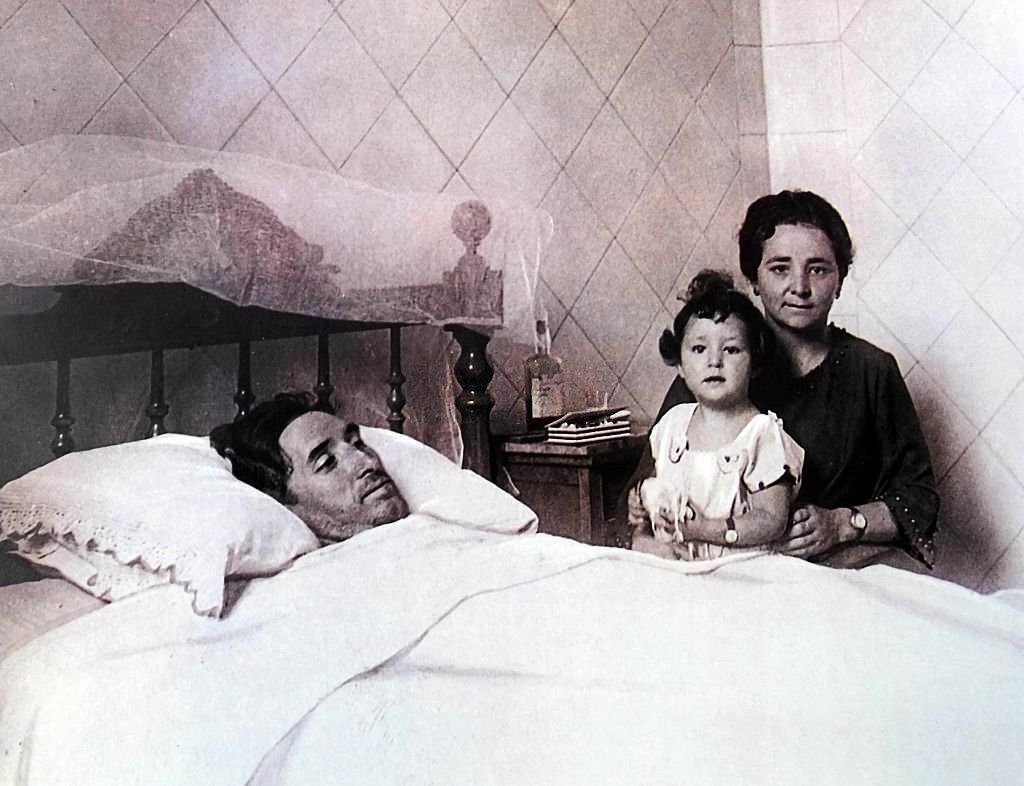
Deathbed photo showing José Buenaventura Durruti Dumange (1896 – 20 November 1936) Anarcho-syndicalist militant involved with the CNT, FAI and other anarchist organisations during the period leading up to and including the Spanish Civil War.

The fall of Barcelona in January 1939 was met with mass celebrations among Nationalist supporters in the city’s Plaza de Catalunya. For Franco, it was the decisive blow. The rest of Catalonia followed within days. The Republican government attempted to negotiate terms, but Franco insisted on unconditional surrender. Madrid held out until March 28, 1939, when it finally capitulated — ending a war that had consumed nearly three years, devastated the country’s cities and countryside, and killed up to a million people. Franco governed Spain with absolute authority until his death in 1975.
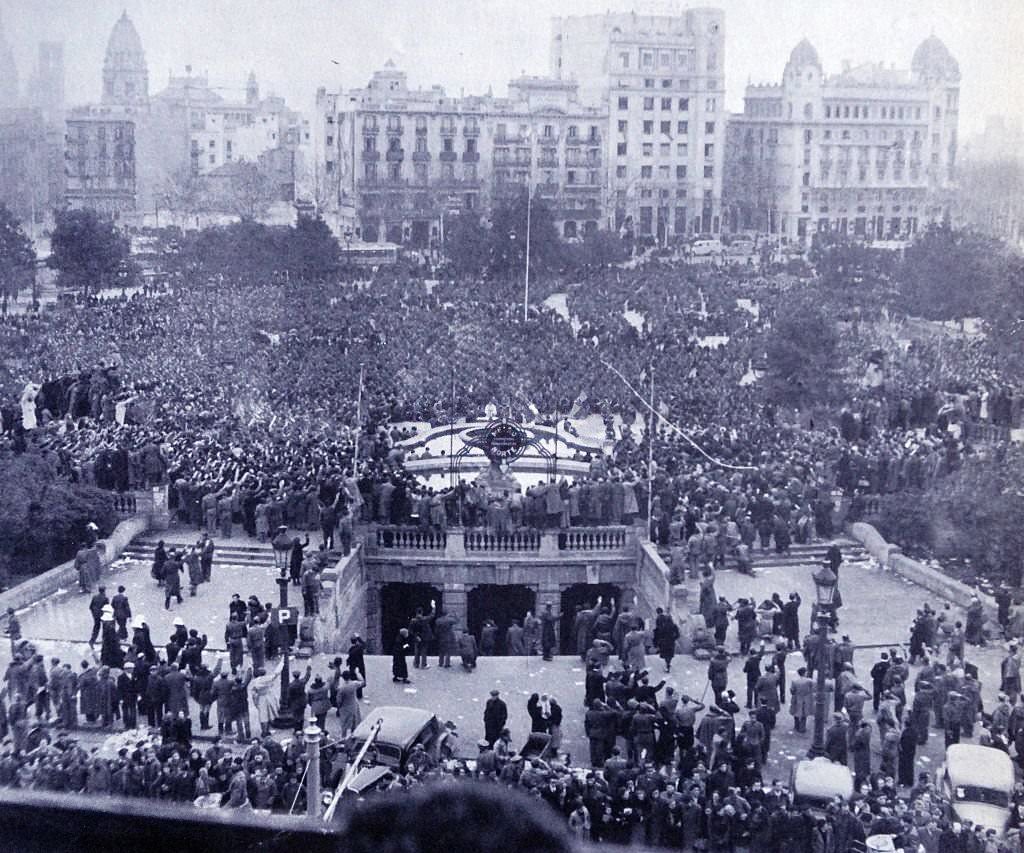

Nationalist supporters gather in Barcelona's Plaza de Catalunya, after the fall of the city in 1939, during the Spanish Civil War.
Nationalist supporters gather in Barcelona’s Plaza de Catalunya, after the fall of the city in 1939, during the Spanish Civil War.
Enjoyed this post? Get new ones in your inbox.

Leave a Comment

Your email address will not be published. Required fields are marked *

Share this Post 🥺

Please take a moment to share this content. Your support is greatly appreciated! 🙌🙏

Share this Post 🥺

Please take a moment to share this content. Your support is greatly appreciated! 🙌🙏
Scroll to Top
 
Hey Friend, Before You Go.. Please like & follow for more interesting content