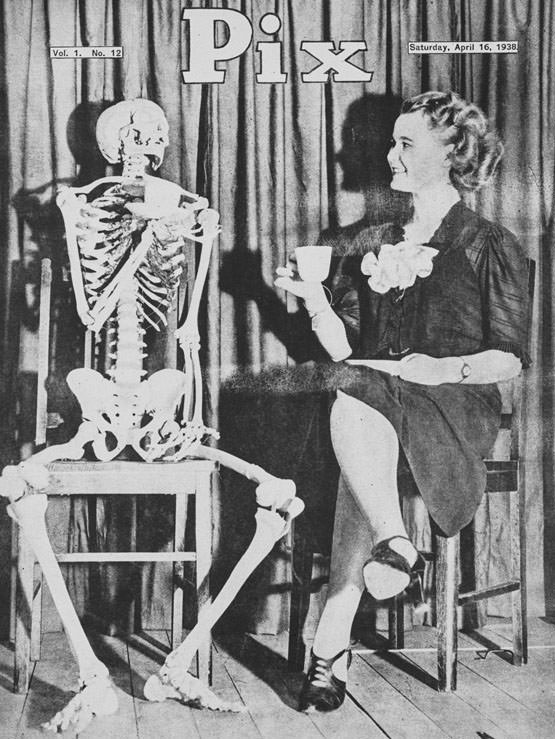
In the April 4, 1938 issue of PIX Magazine, photographer Ray Olson created a series of photos that became one of the more unusual features of the decade. The concept was simple but eye-catching: pose a human skeleton in everyday, lighthearted situations and photograph it as though it were just another person going about its day.
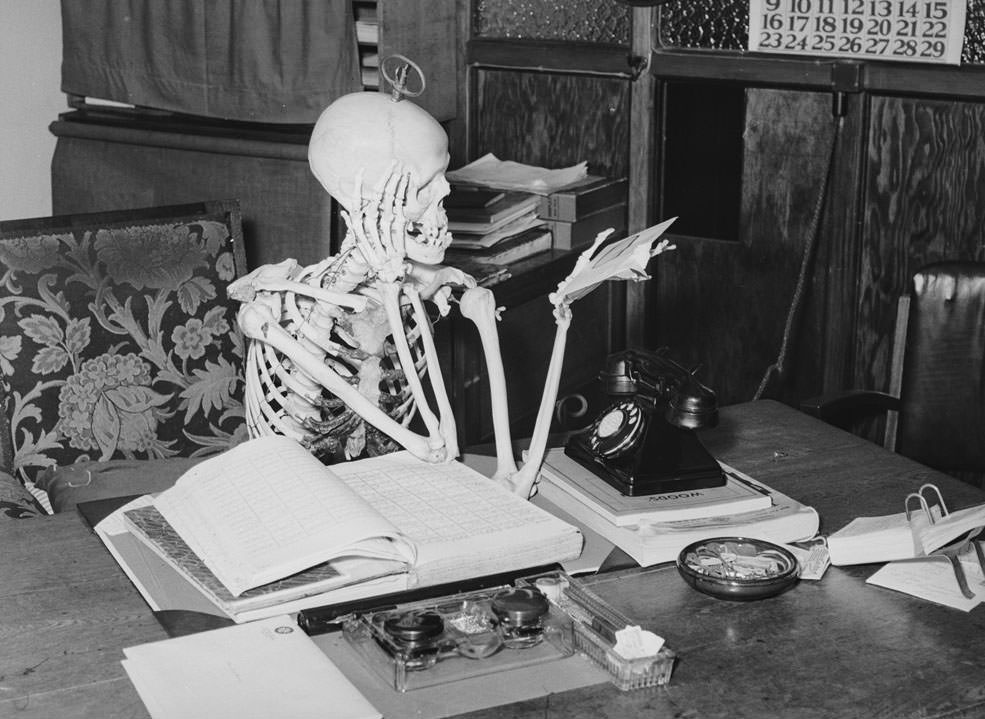
The photos leaned into humor. The skeleton was staged in scenes that most people would recognize — relaxing, playing, and socializing. Placing dry bones into such familiar settings created a sharp and funny contrast that readers found hard to ignore.
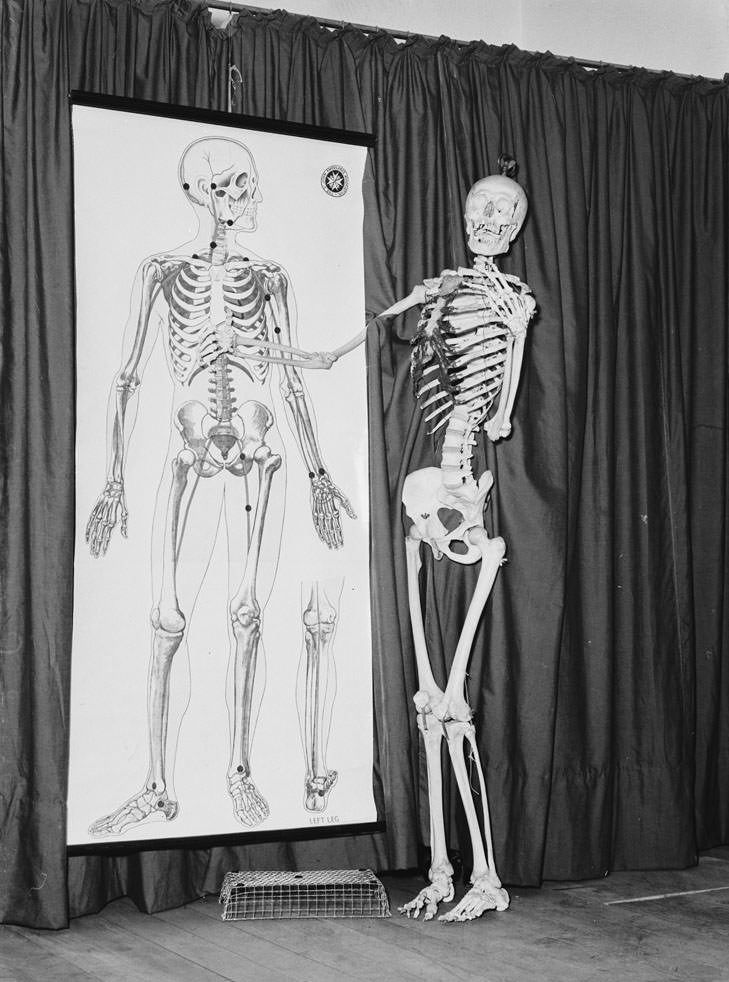
PIX Magazine was known for bold visual content, and this series fit right in. Ray Olson’s careful staging and lighting gave each shot a clean, polished look that made the skeleton feel like a genuine subject rather than a prop.
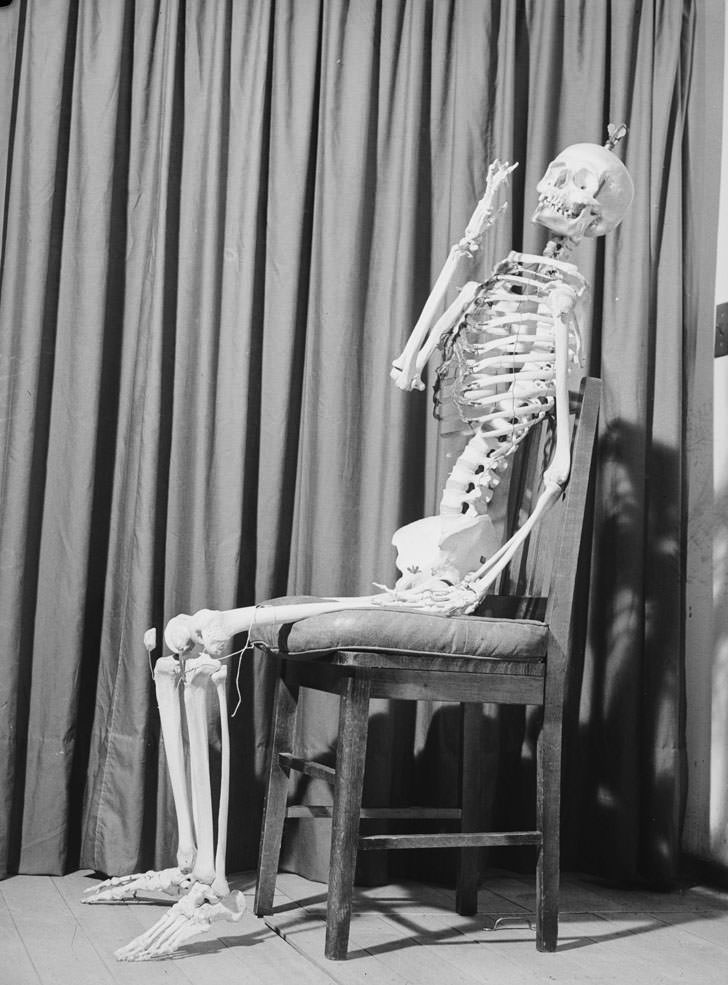
The 1930s were a time when print magazines held enormous reach. A spread like this landed in front of a wide audience, and the blend of dark subject matter with slapstick staging made it genuinely memorable.
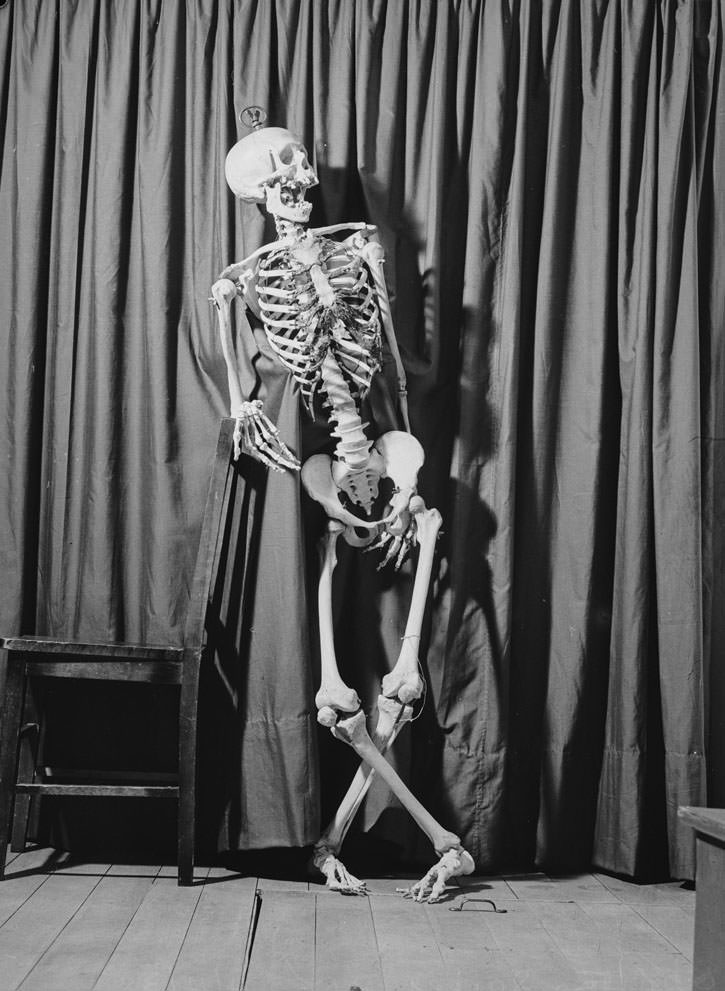
Each photo in the series told its own small story. The skeleton was never just standing still — it was active, engaged, and always doing something a living person might do on a lazy afternoon or a night out.
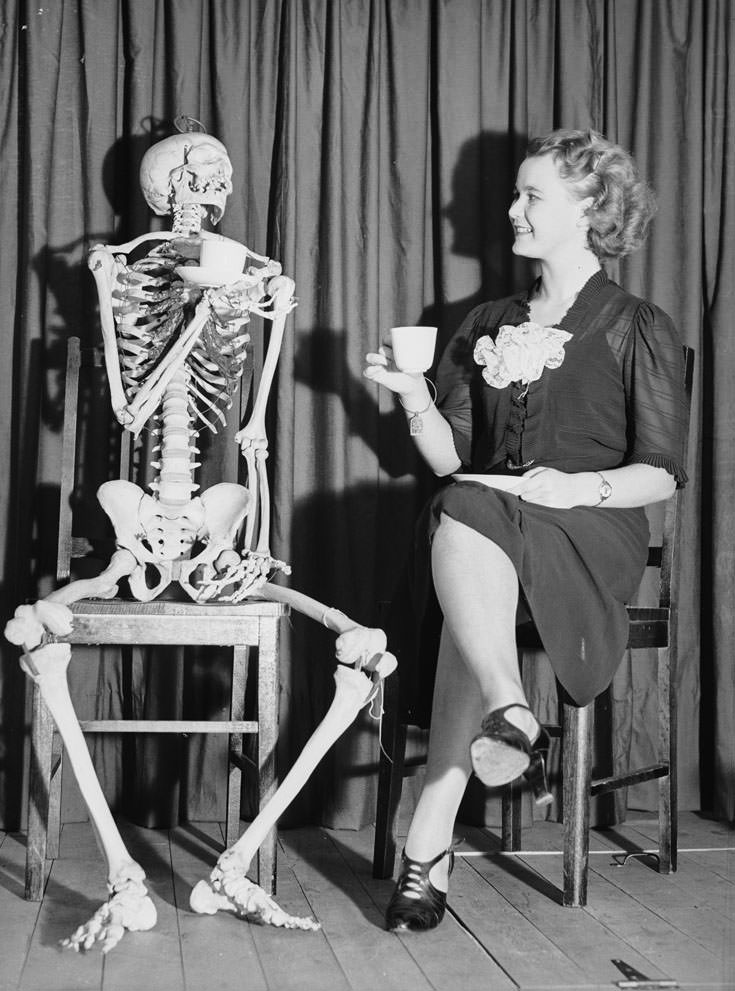
Olson’s work required real technical skill. Keeping a skeleton posed and upright while composing a well-lit, balanced frame was no small task. The results looked effortless, which is a mark of the photographer’s craft.
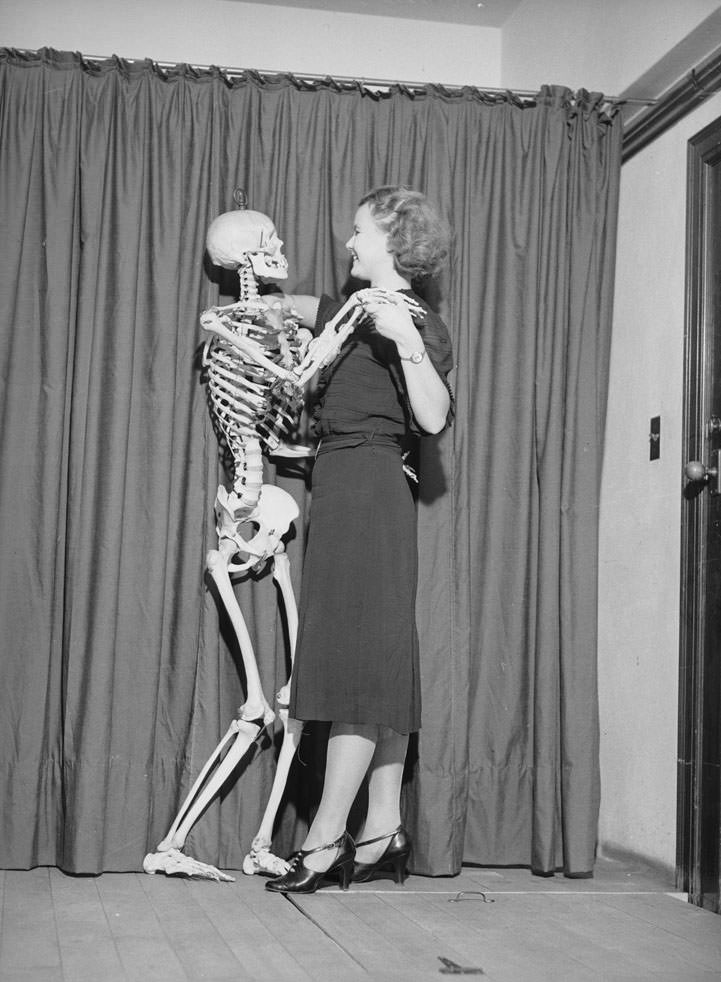
The series ran across several pages of the April issue, giving readers a full look at the skeleton’s busy social life. It remains a fun and oddly charming snapshot of 1930s magazine photography.