Hey There! Before You Go. 😧
Get the best vintage content straight into your inbox!

Don't worry, we don't spam

The Siege of Leningrad Captured in Historic Photos Depicting the City’s Resilience

On September 8, 1941, Nazi Germany and Finland completed their encirclement of Leningrad — the Soviet Union’s second-largest city and a major industrial hub on the Baltic Sea. What followed was one of the longest and deadliest sieges in the history of modern warfare, lasting 872 days and claiming the lives of more than one million civilians, the vast majority from starvation. The siege was a direct product of Operation Barbarossa, Hitler’s invasion of the Soviet Union that had begun just months earlier on June 22, 1941. The Germans aimed to seize Leningrad not only for its symbolic value but to cut Soviet access to the Baltic and strangle a key center of arms production.
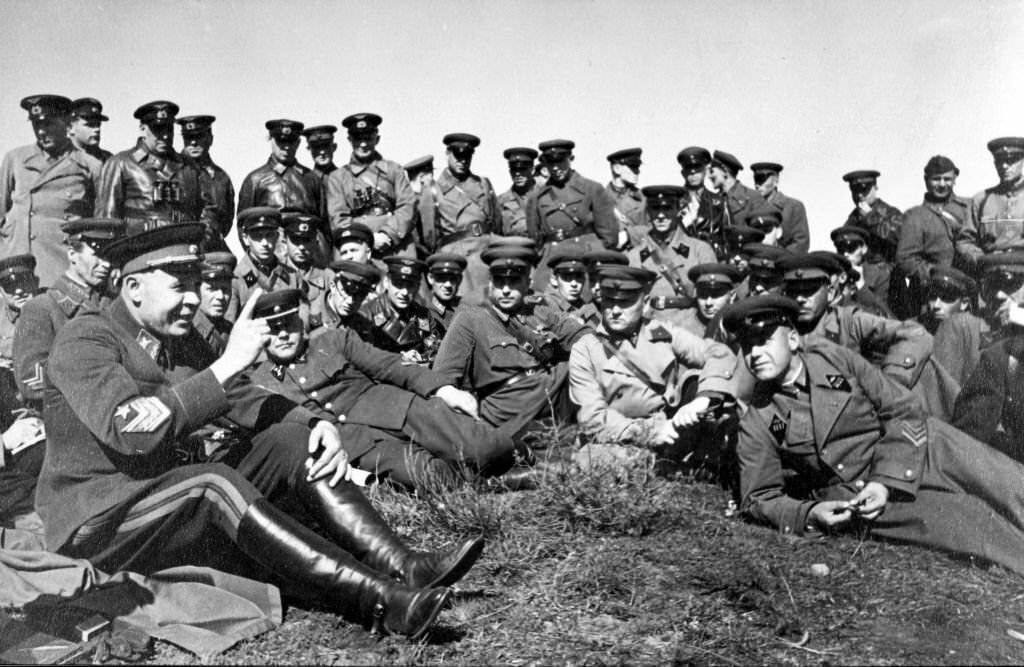
Marshal Semyon Konstantinovich Timoshenko with Red Army Soldiers, Finnish Border, 1940

German forces moved with alarming speed in the summer of 1941. By late July, their armored columns had reached the outskirts of Leningrad. German troops pressed in from the south while Finnish forces advanced from the north, closing the ring around the city. The capture of Schlüsselburg on September 8 sealed the blockade, cutting off all land routes into Leningrad.
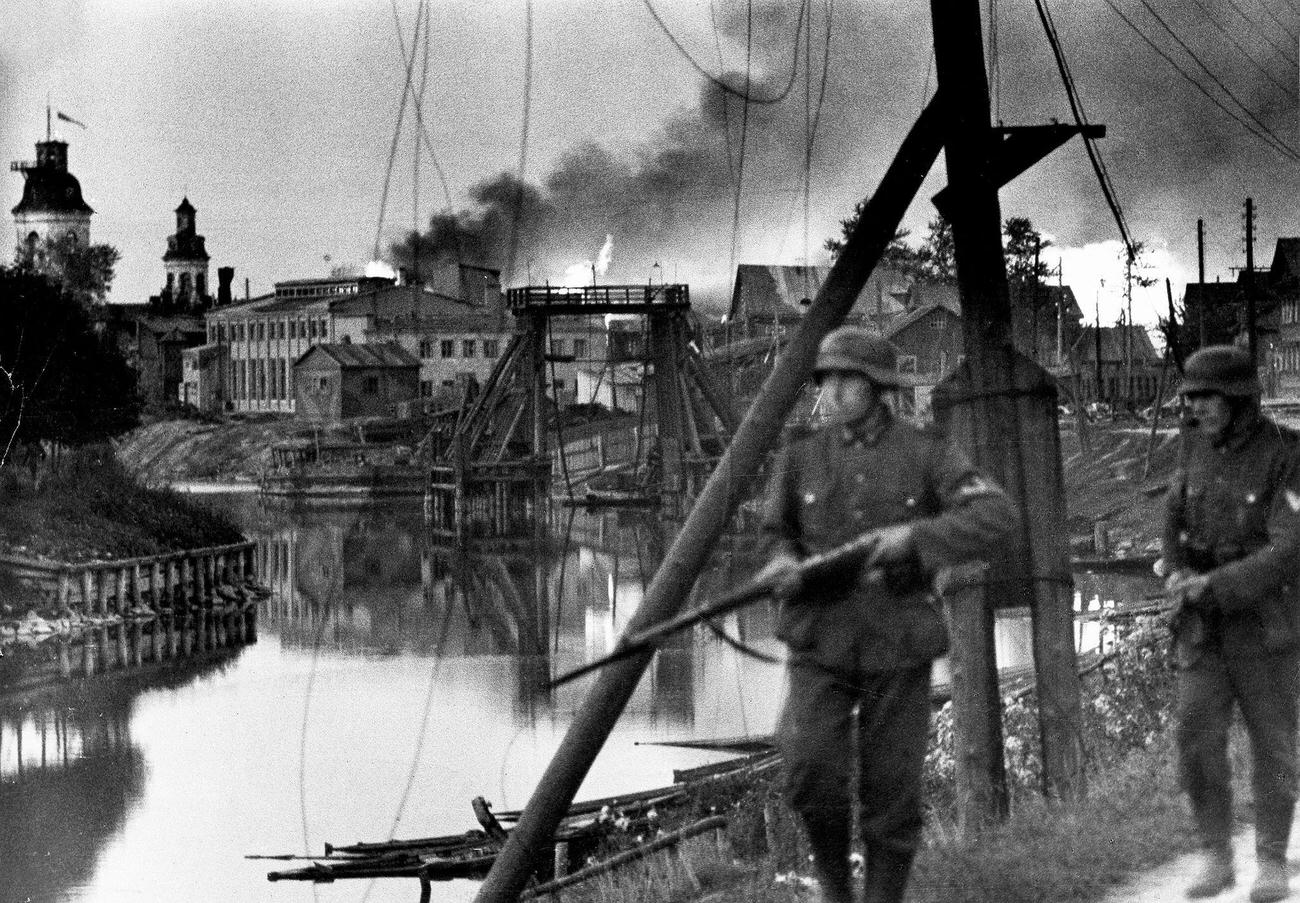
German Army Captures Schluesselburg, Encircling Leningrad, September 8, 1941
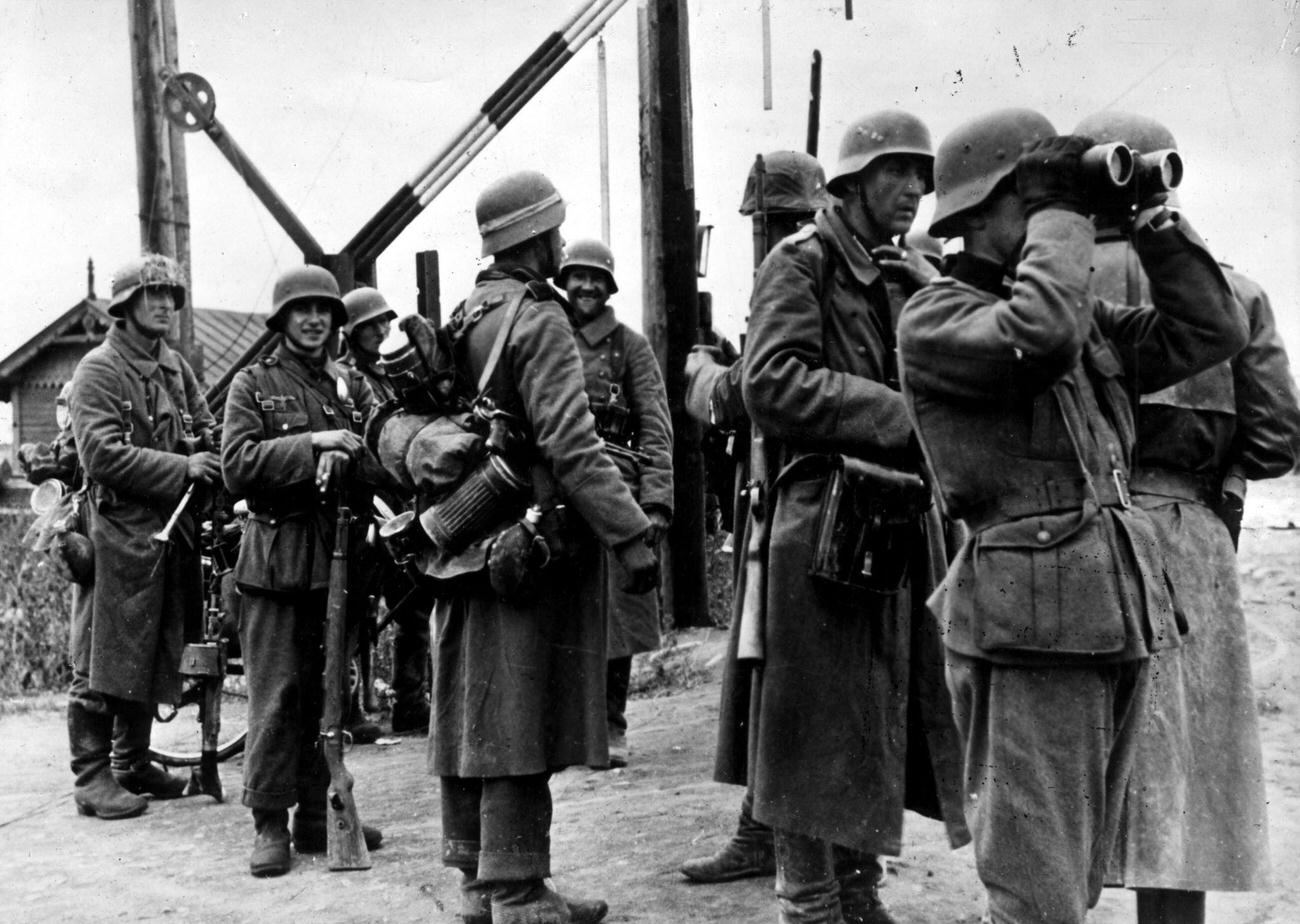
German Soldiers Resting During the Siege of Leningrad, September 1941

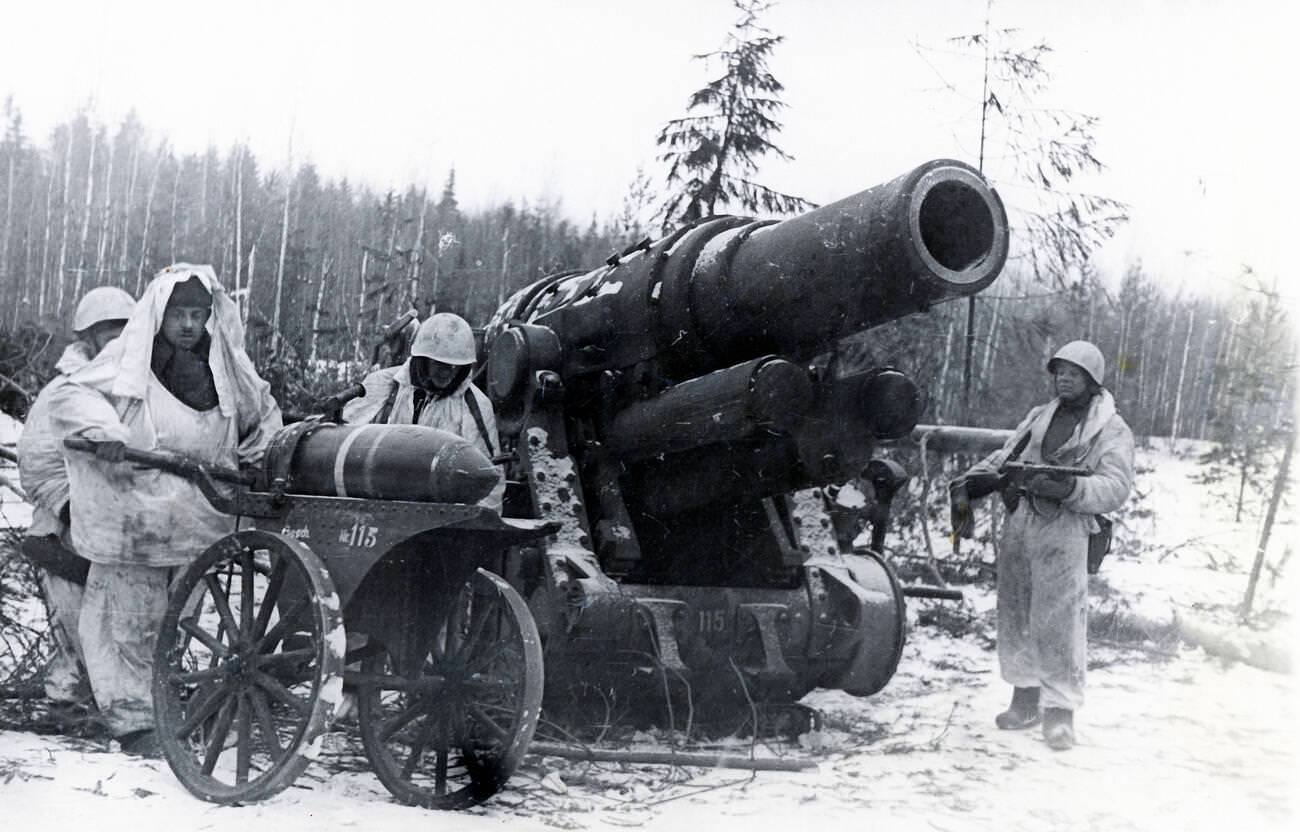
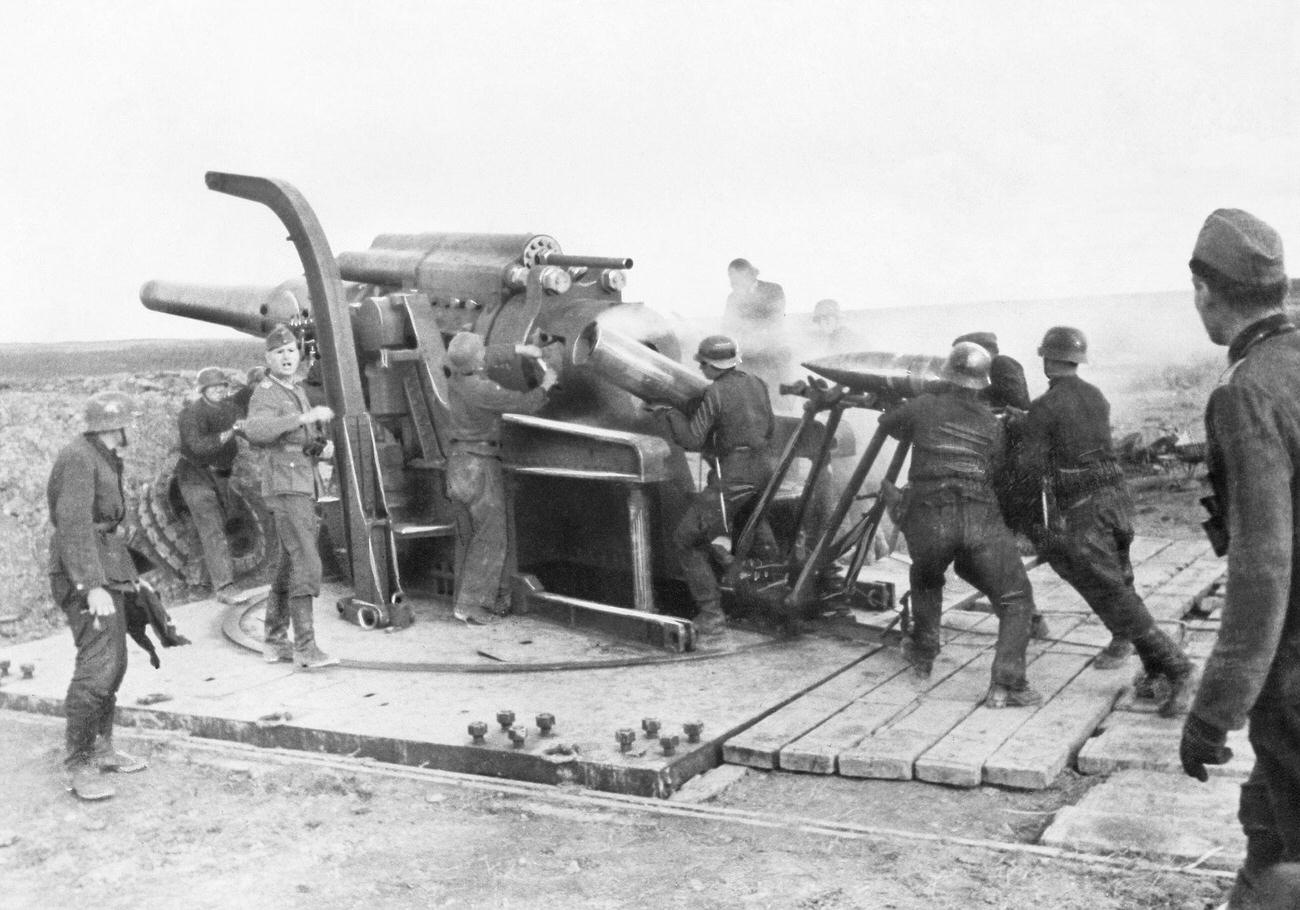
From the German side, the siege was a calculated stranglehold. Artillery units set up positions and hammered the city with long-range fire, targeting factories, infrastructure, and residential neighborhoods alike. Machine-gun nests and rocket launchers were dug into the surrounding terrain as German forces settled in for what their commanders hoped would be a quick surrender.
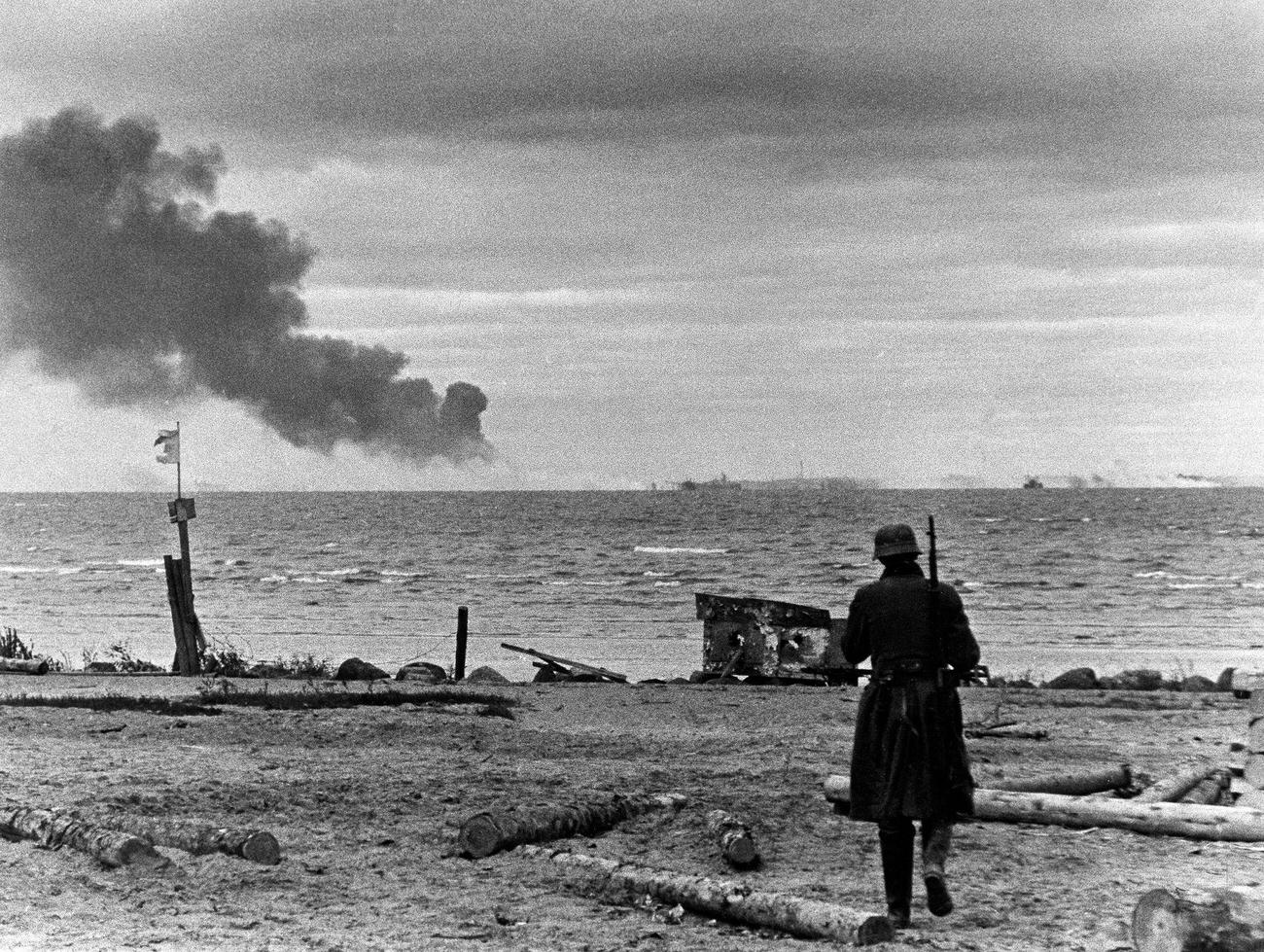
German Long-Range Artillery Shelling Kronstadt, October 1941
Heavy Artillery Firing at the Beginning of the Leningrad Siege, October 1941
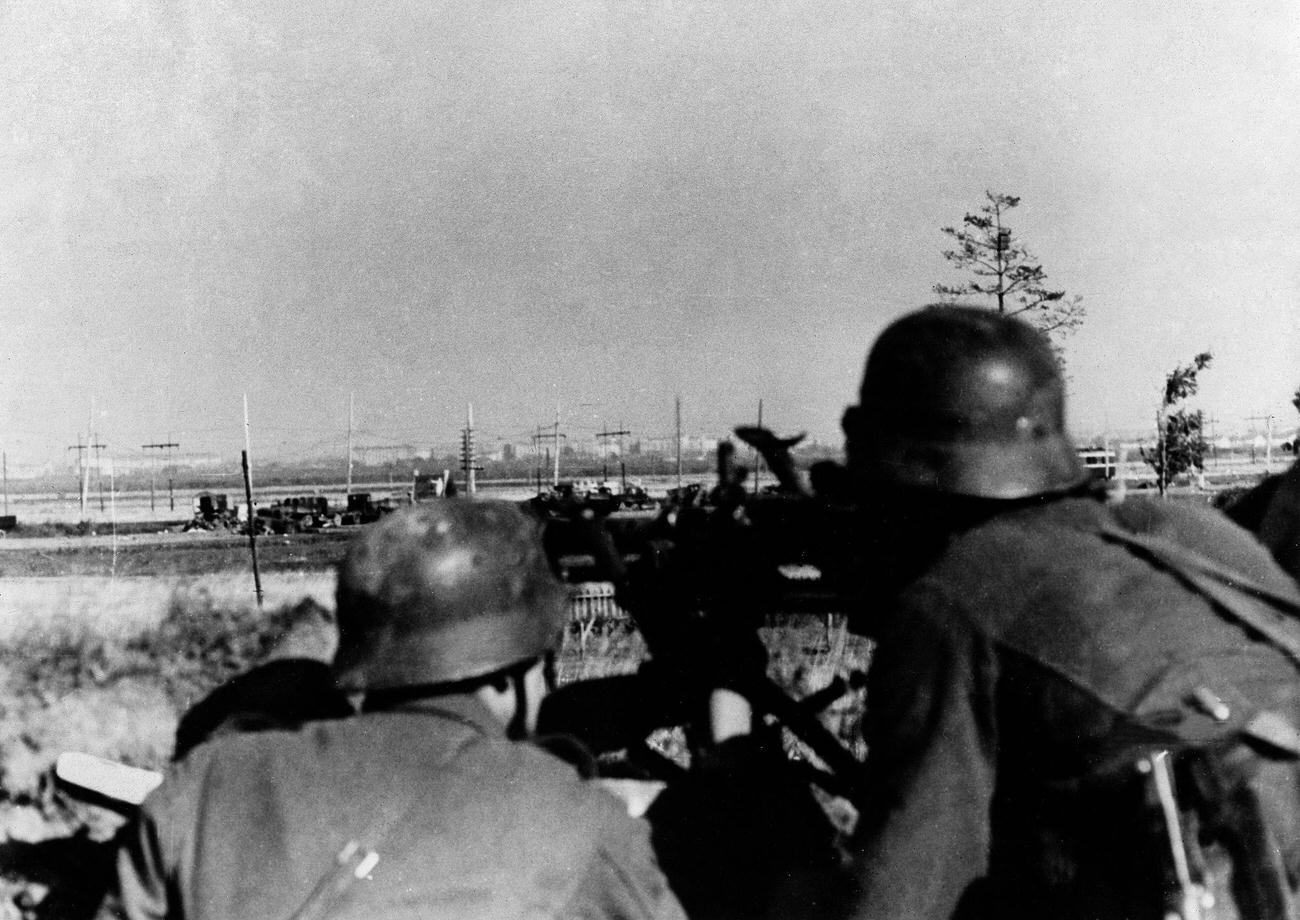
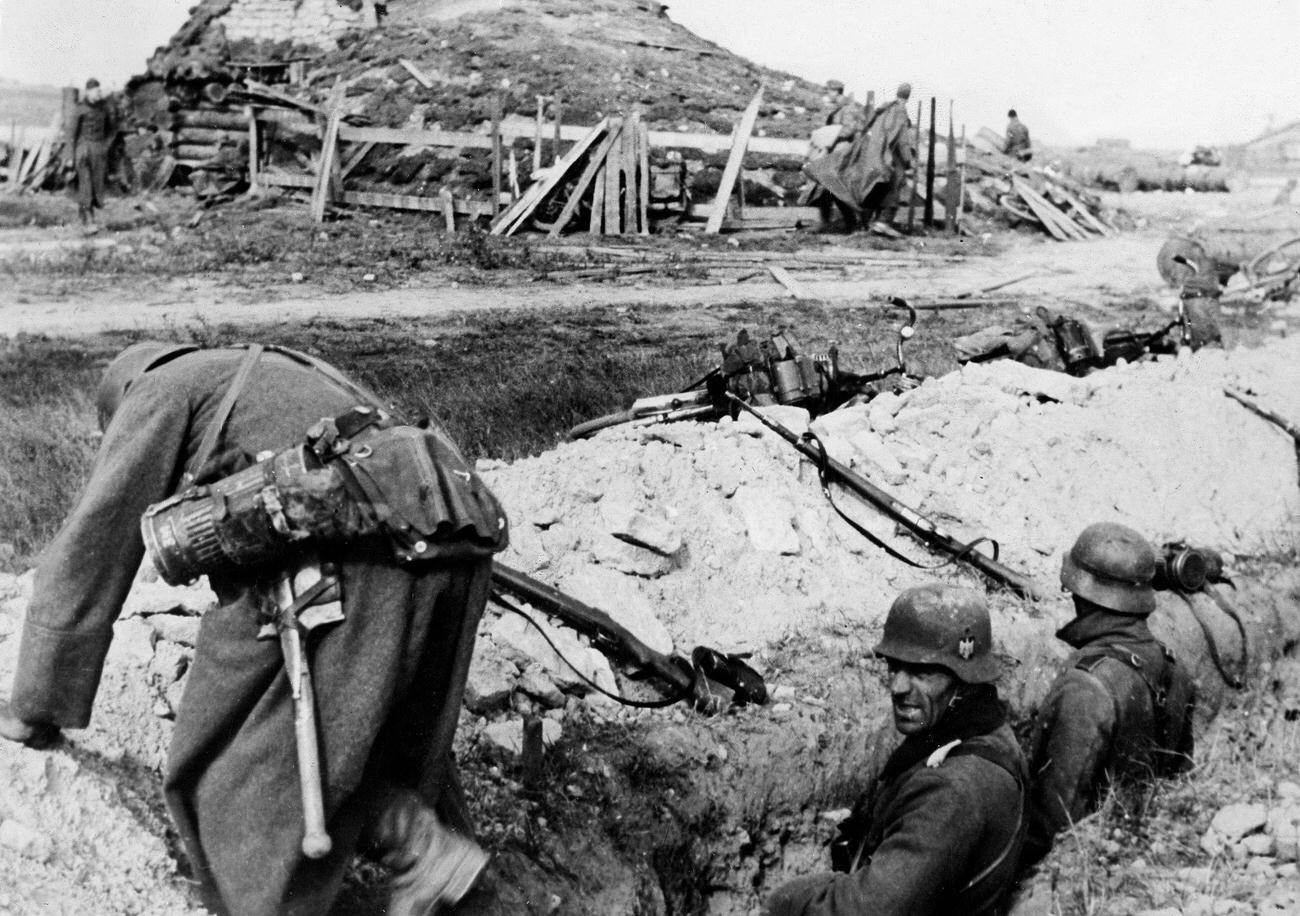
German Machine-Gun Position, Leningrad, October 14, 1941

Inside the city, the population prepared to fight. Civilians — men and women alike — were mobilized almost immediately. Factories that once produced consumer goods were converted to manufacture weapons, artillery shells, and military equipment. Workers at the Kirov Factory, one of the city’s most important industrial sites, formed volunteer units and marched directly to the front lines.
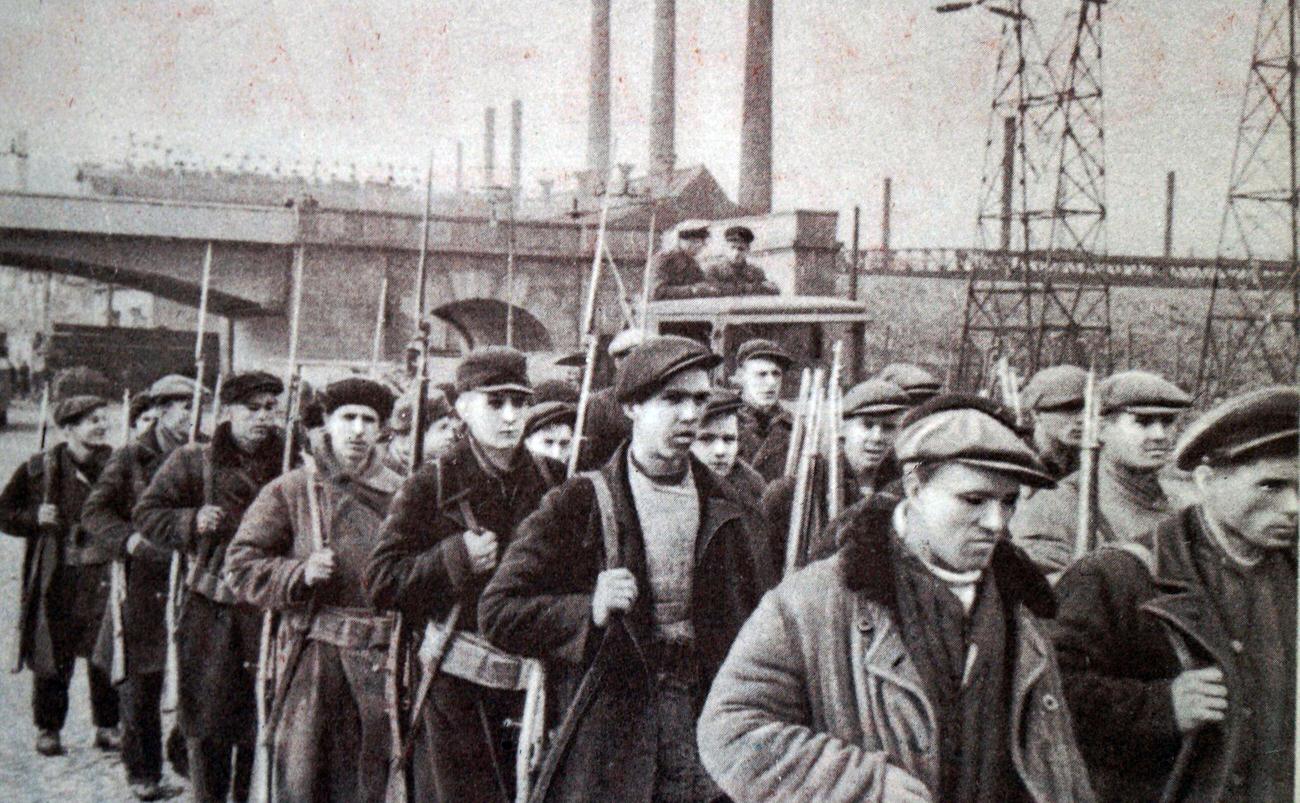
Kirov Factory Volunteers Marching to Defend Leningrad
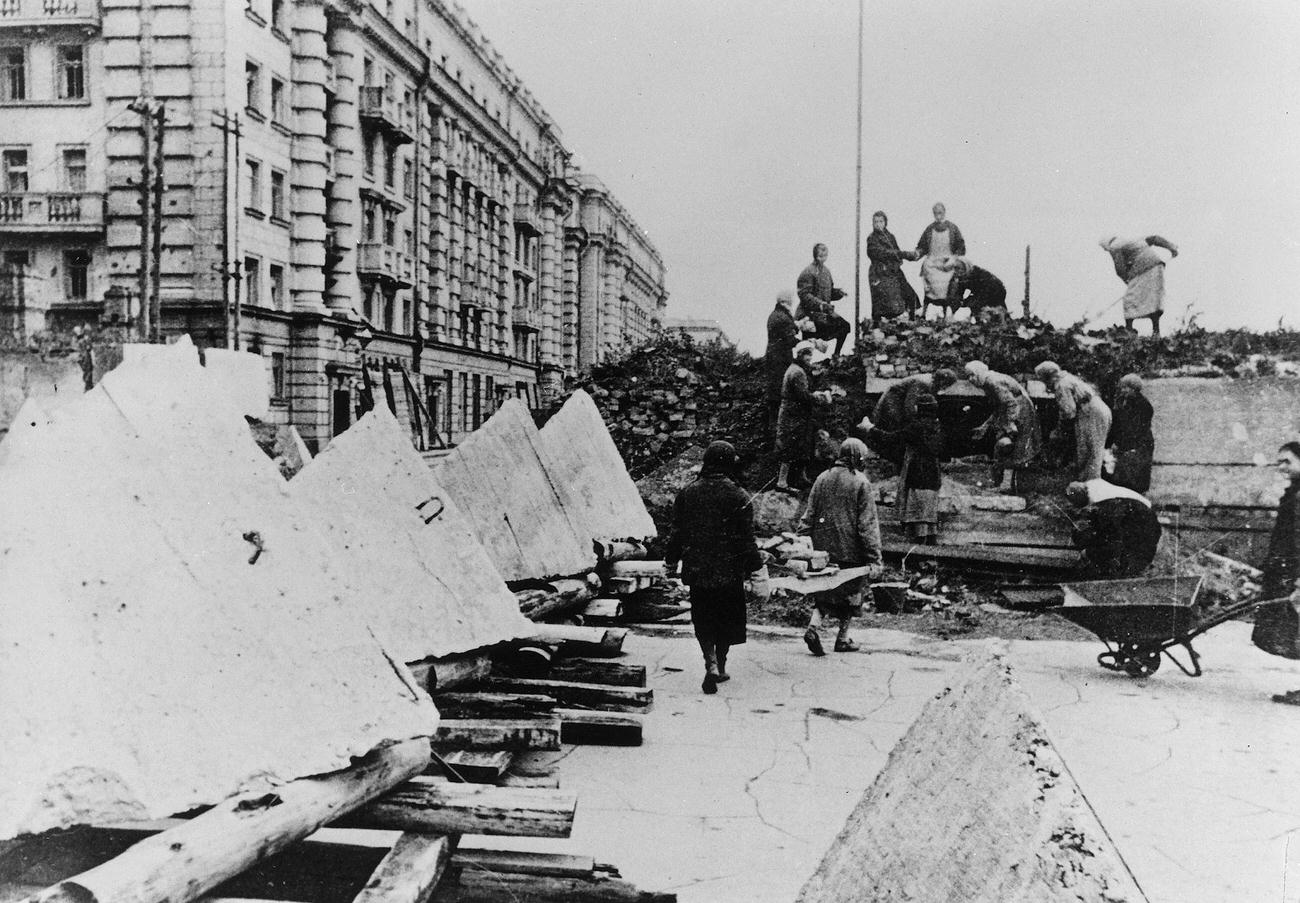
Civilians Building Defense Lines in Leningrad, August 1941

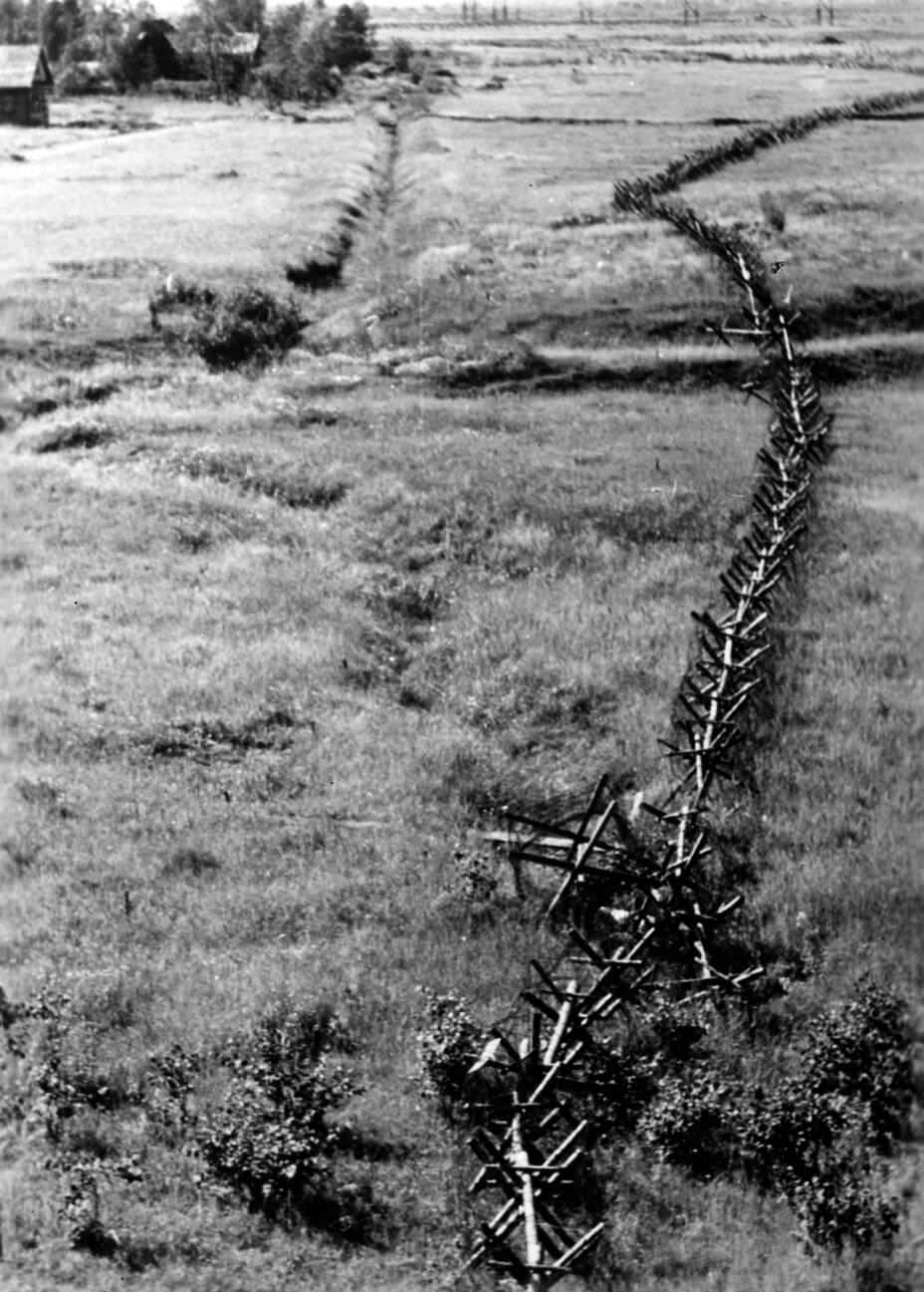
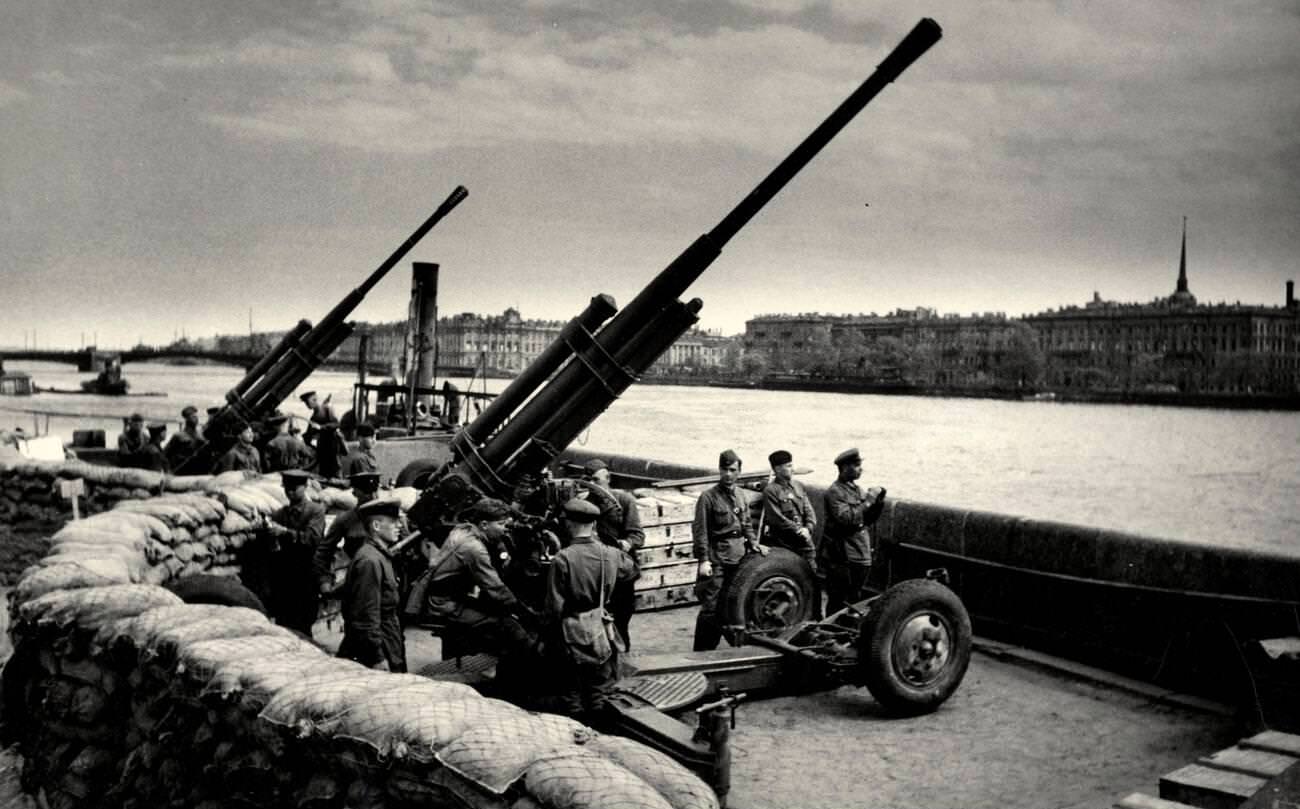
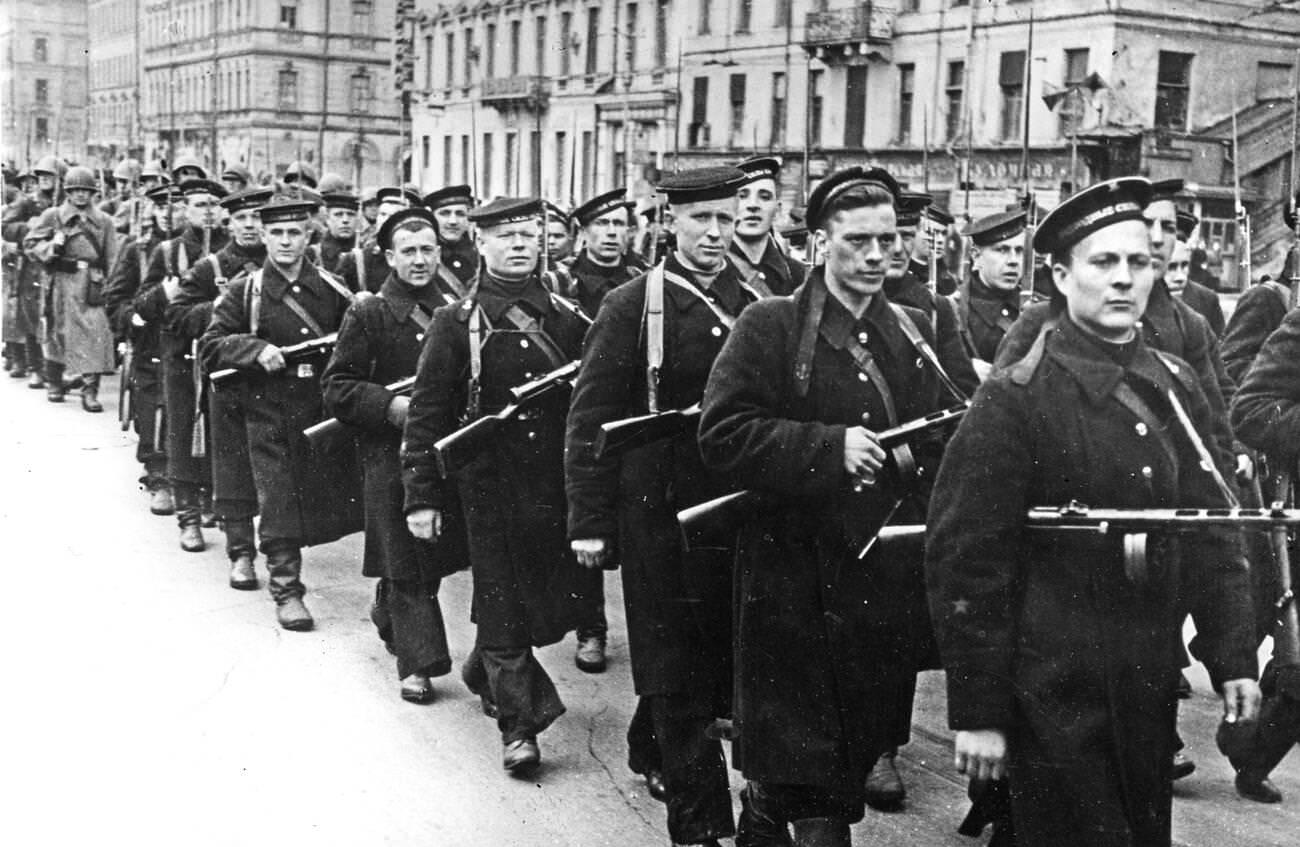
Women took up shovels alongside soldiers, digging anti-tank ditches and artillery emplacements around the city’s perimeter. The defensive network they helped build transformed Leningrad into a fortified position that German ground forces never managed to break through. Soviet marines, fighter pilots, and army units took up positions across the city’s edges, determined to hold every street.
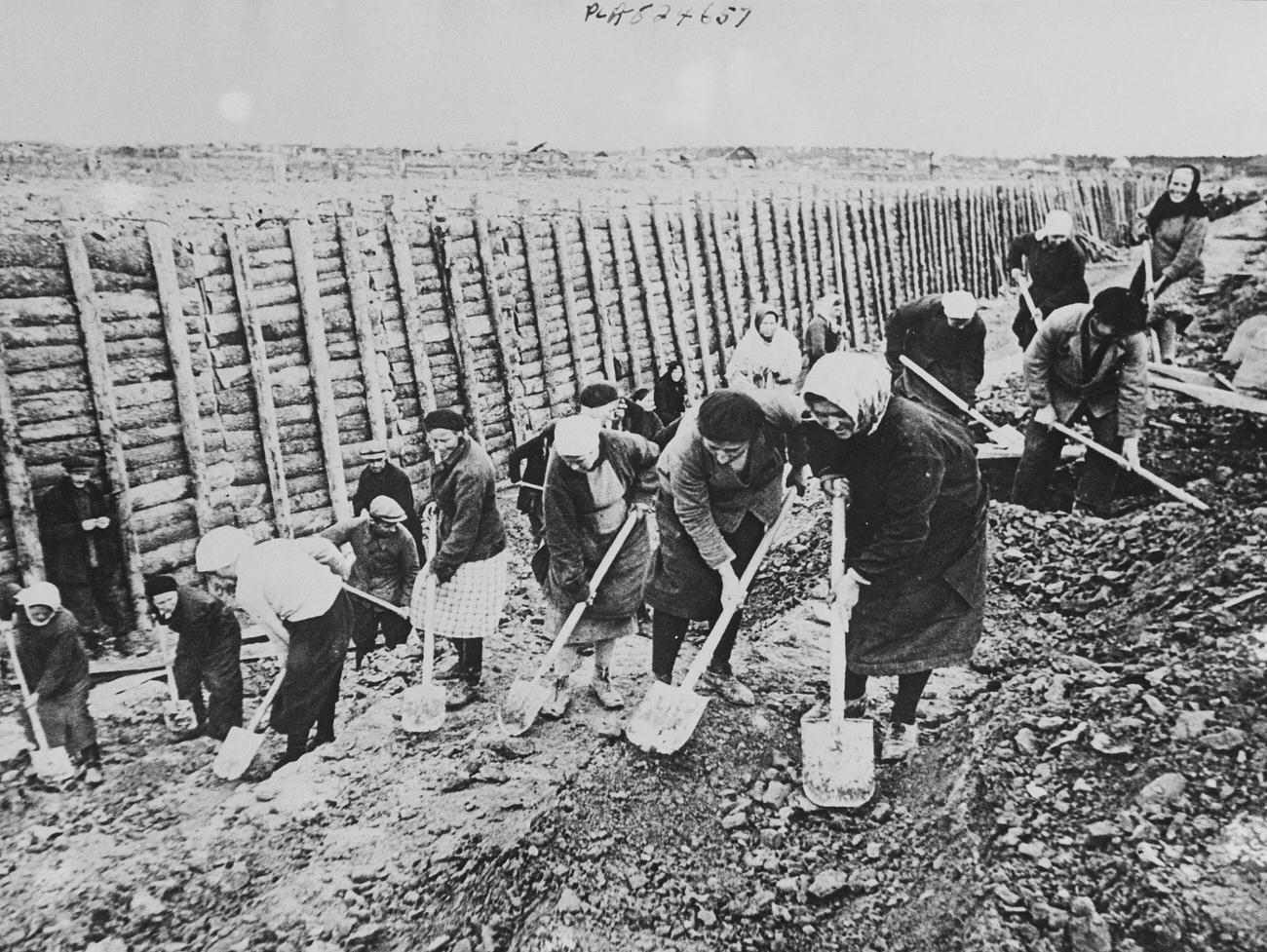
Women Digging Defenses in Leningrad, October 25, 1941
Soviet Marines in Leningrad at the Beginning of the Siege, 1941
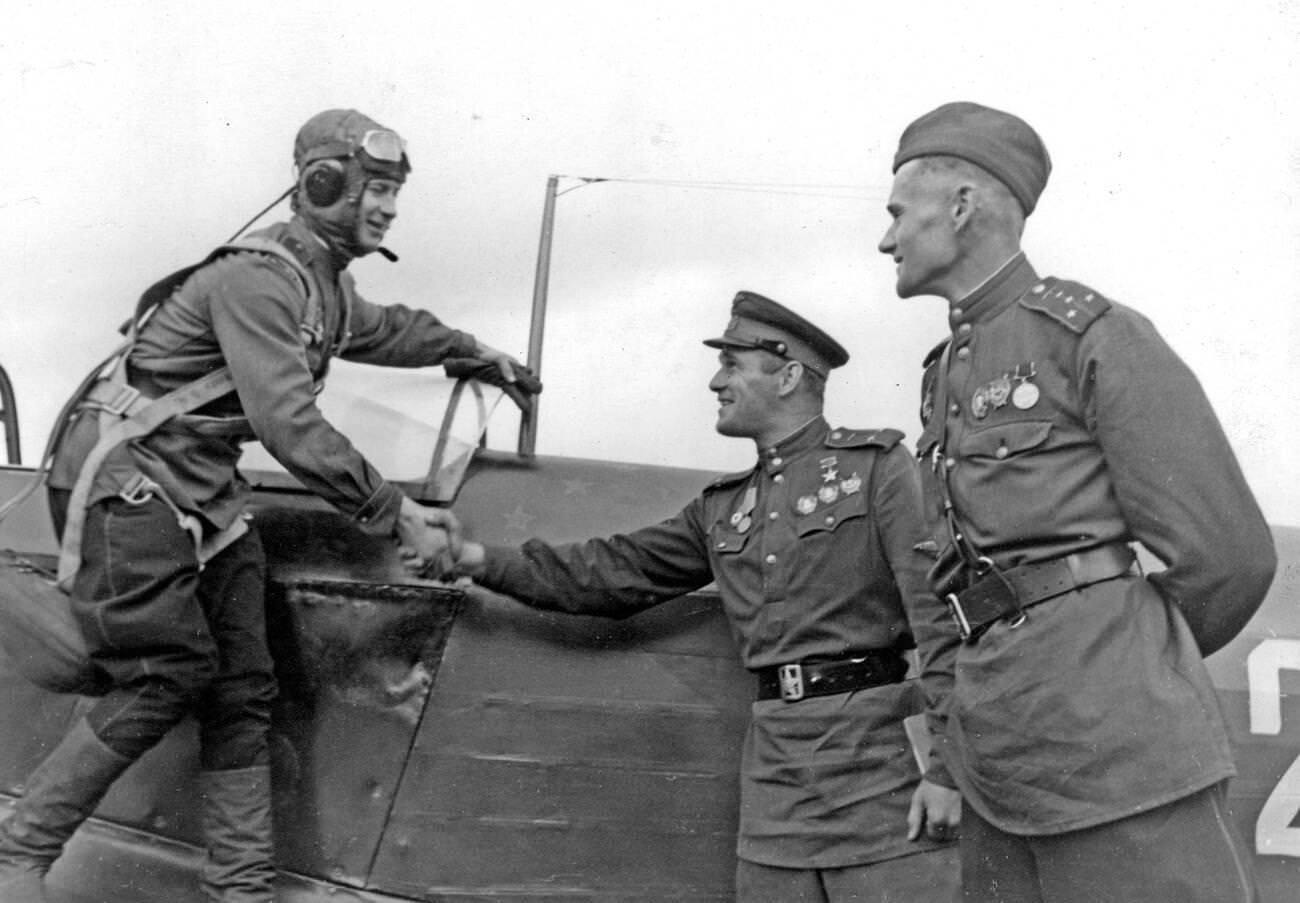
Fighter Pilot Captain Mochalov Returning from Successful Sortie, Leningrad, 1941

The German lines surrounding the city were extensive and heavily manned. Soldiers from occupied and allied nations were drawn into the siege, including a Norwegian volunteer legion that served in the trenches. The front around Leningrad became a grinding, static battlefield where both sides dug in deep.
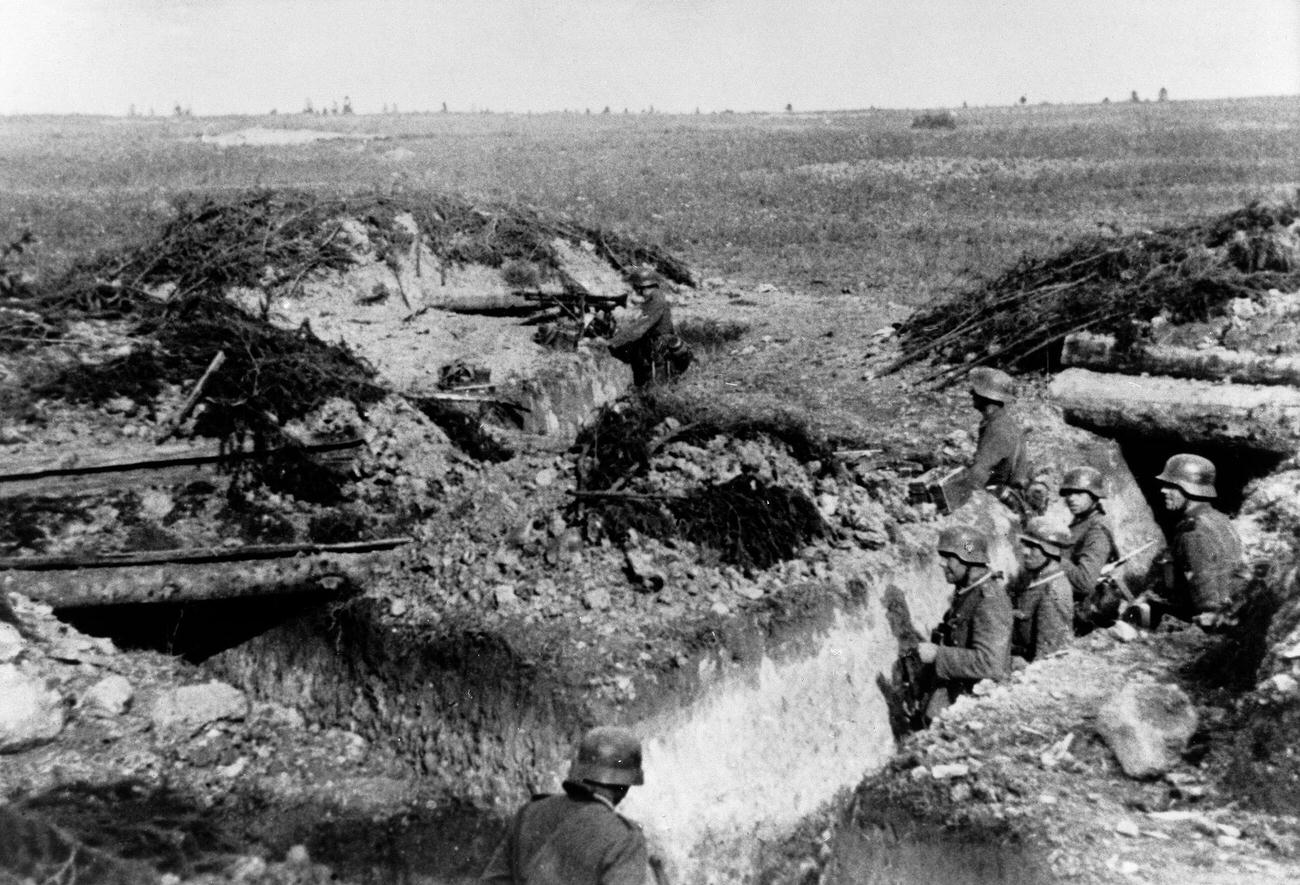
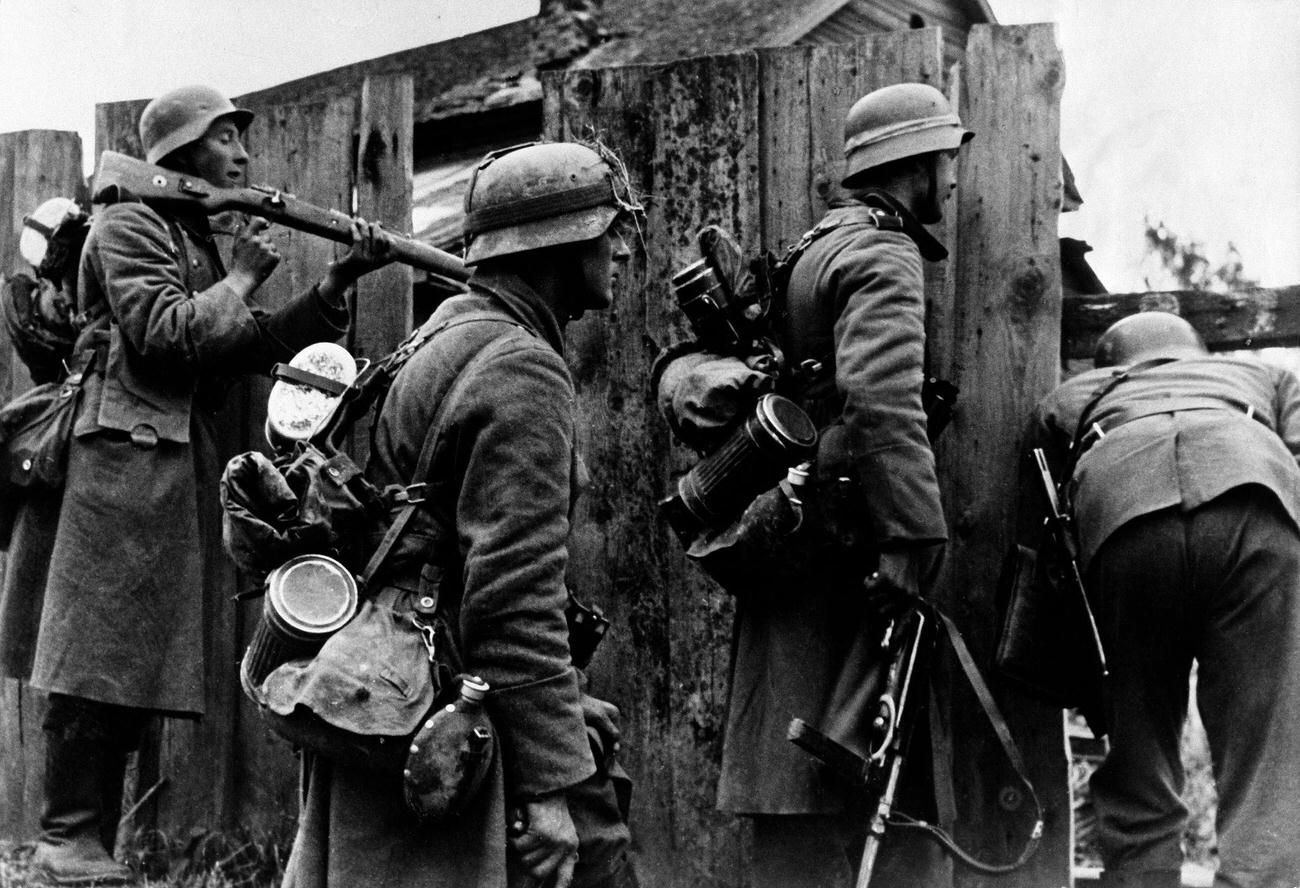
German Soldiers Occupying Soviet Defense Positions, Leningrad, September 1941
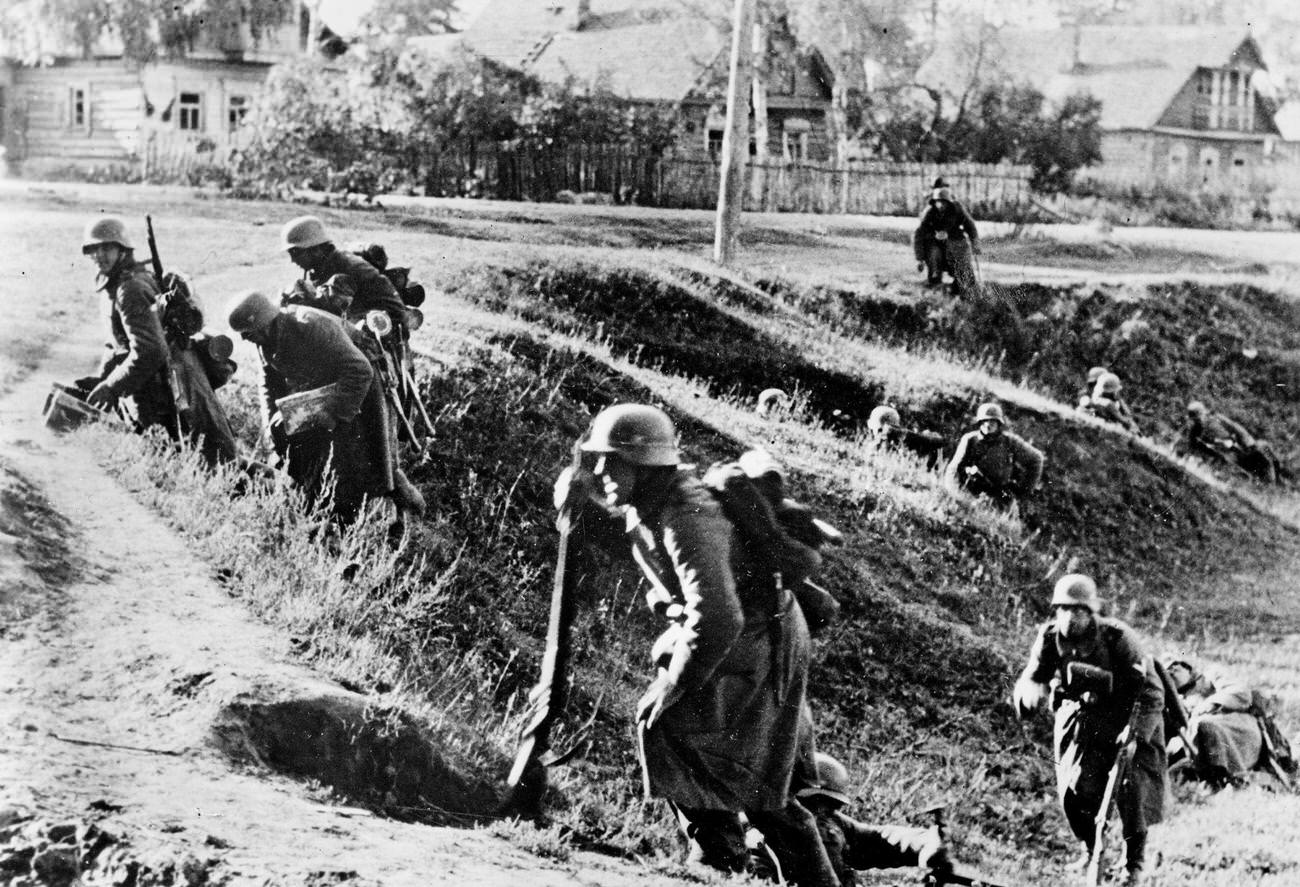
German Soldiers Fighting for a Village Near Leningrad, September 1941
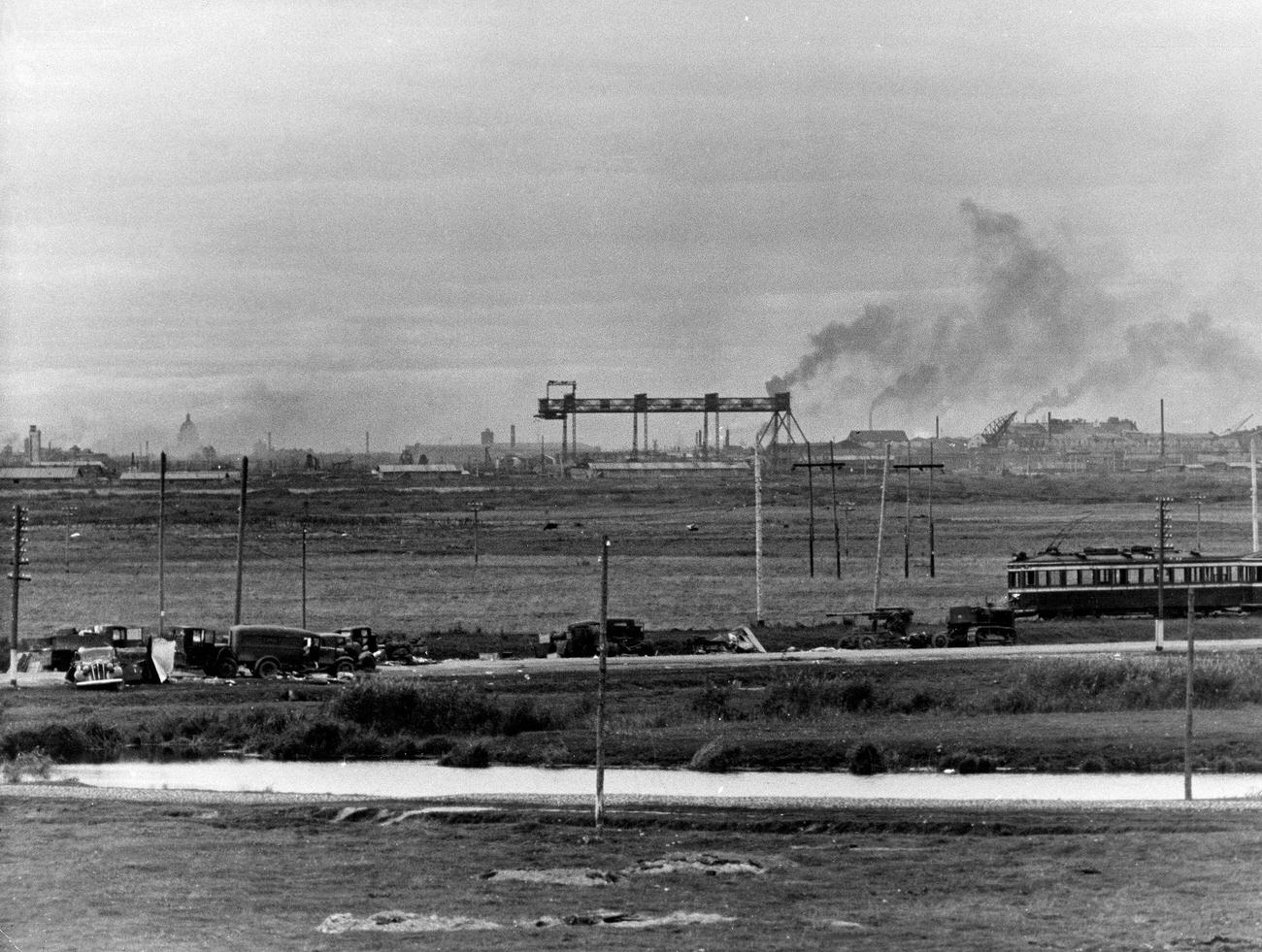
View of Leningrad from 4km at the Frontline, September 1941

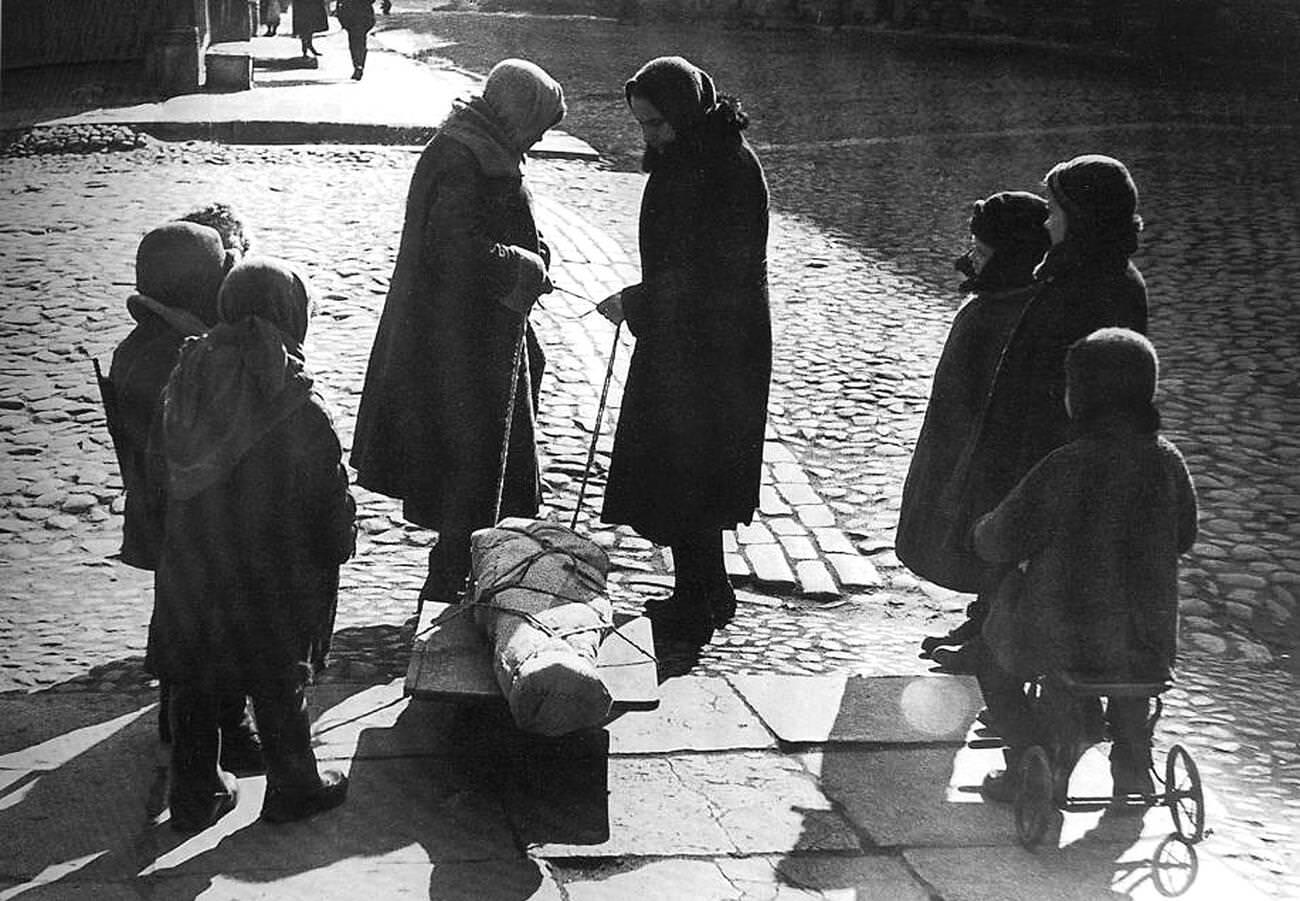
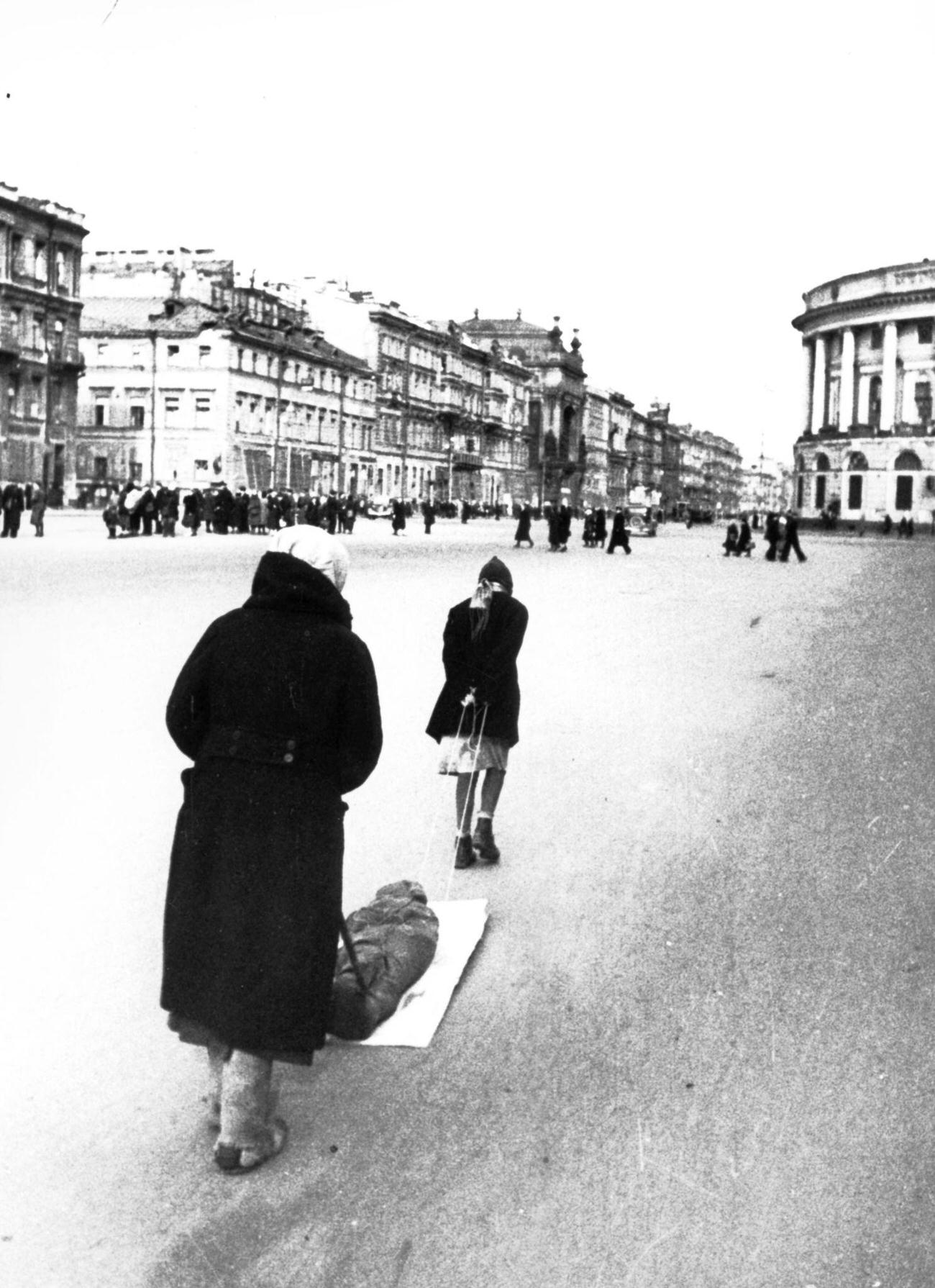
Inside the blockade, conditions deteriorated rapidly. Food rations were cut repeatedly as supplies ran out. By the winter of 1941–1942, daily bread rations for factory workers had dropped to 250 grams; for dependents and children, just 125 grams. Temperatures plunged well below freezing, and fuel for heating was nearly nonexistent. People burned furniture, books, and floorboards to survive the cold. The dead were too numerous to bury quickly. Photographs from the period show women hauling corpses on sledges through the snow-covered streets.
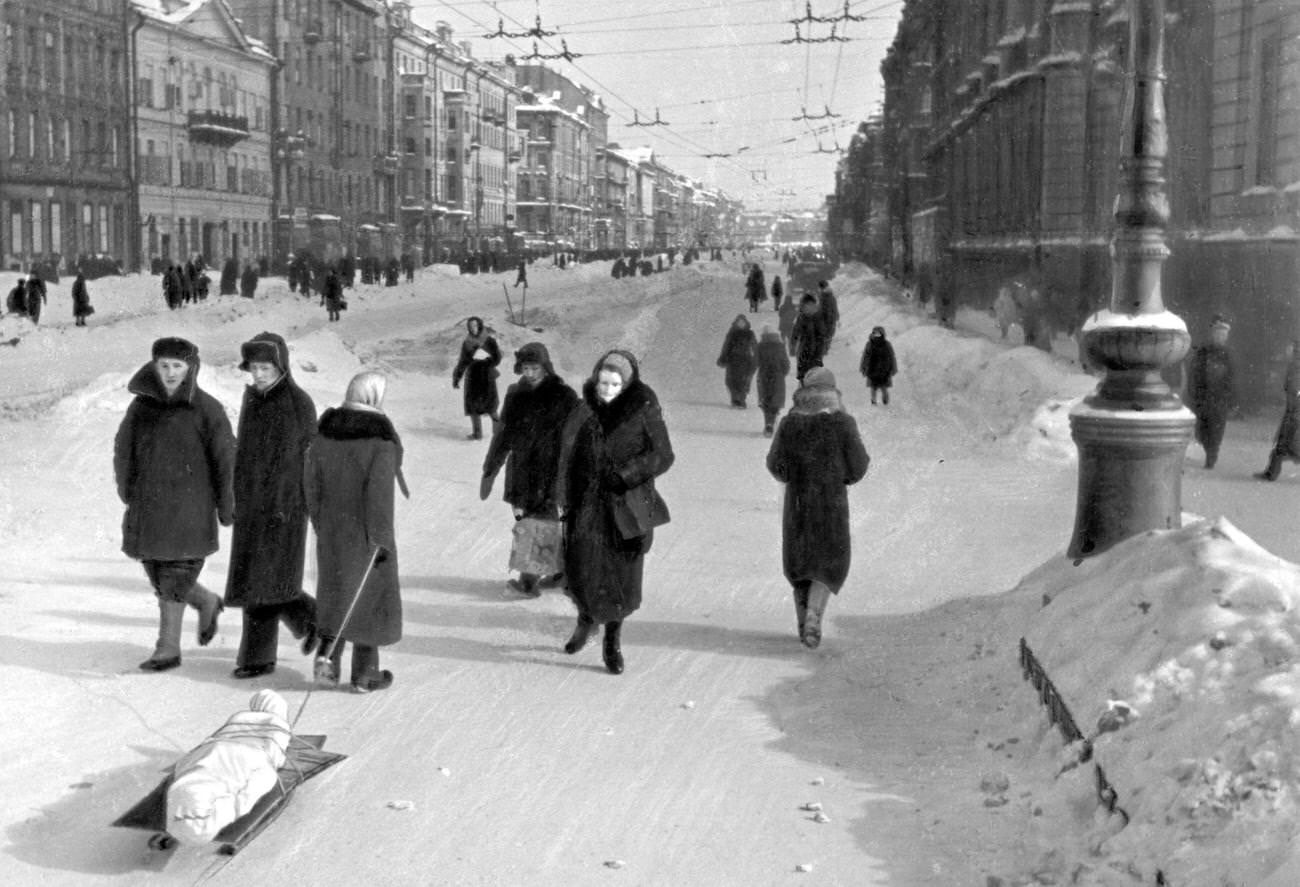
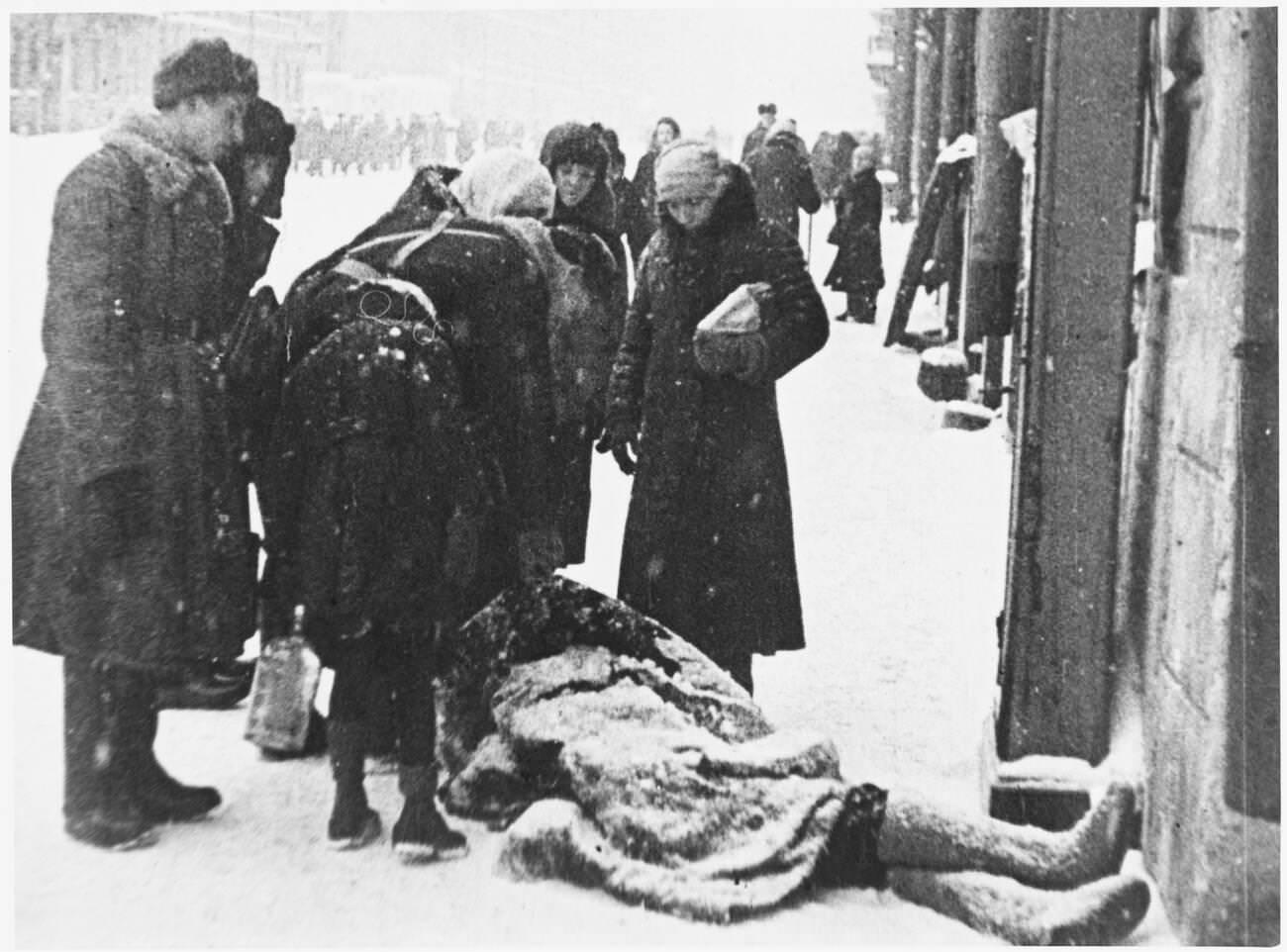
Woman Carrying Corpse on Sledge, Leningrad, February 1942
Leningrad: A Death
Leningrad: A Death

Starvation drove the population to desperate measures. Horses that died in the streets were stripped of their meat within hours. Every source of calories was exploited — including leather, wallpaper paste, and sawdust mixed into bread. The images from this period are unflinching: women collecting flesh from a dead horse in the street, carcasses reduced to bone within days.
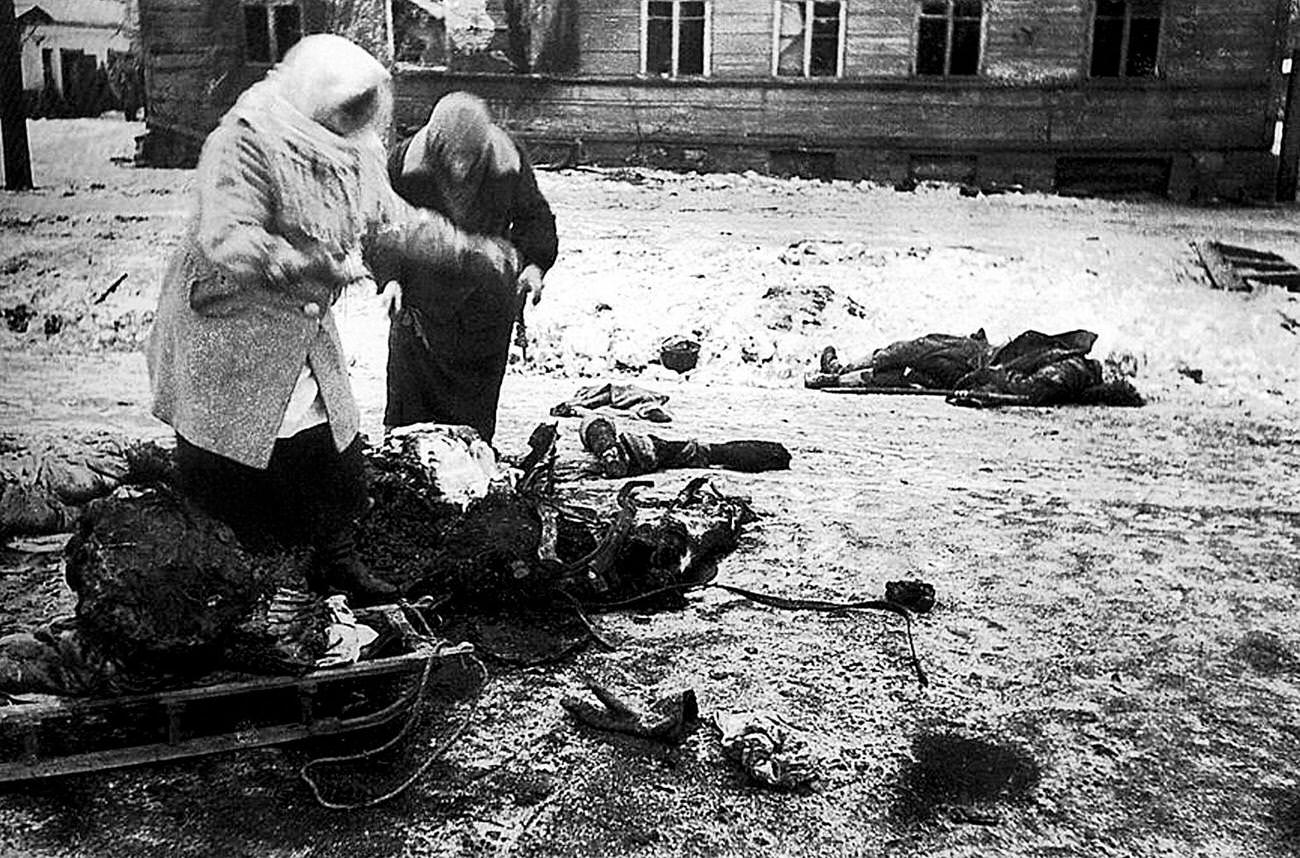
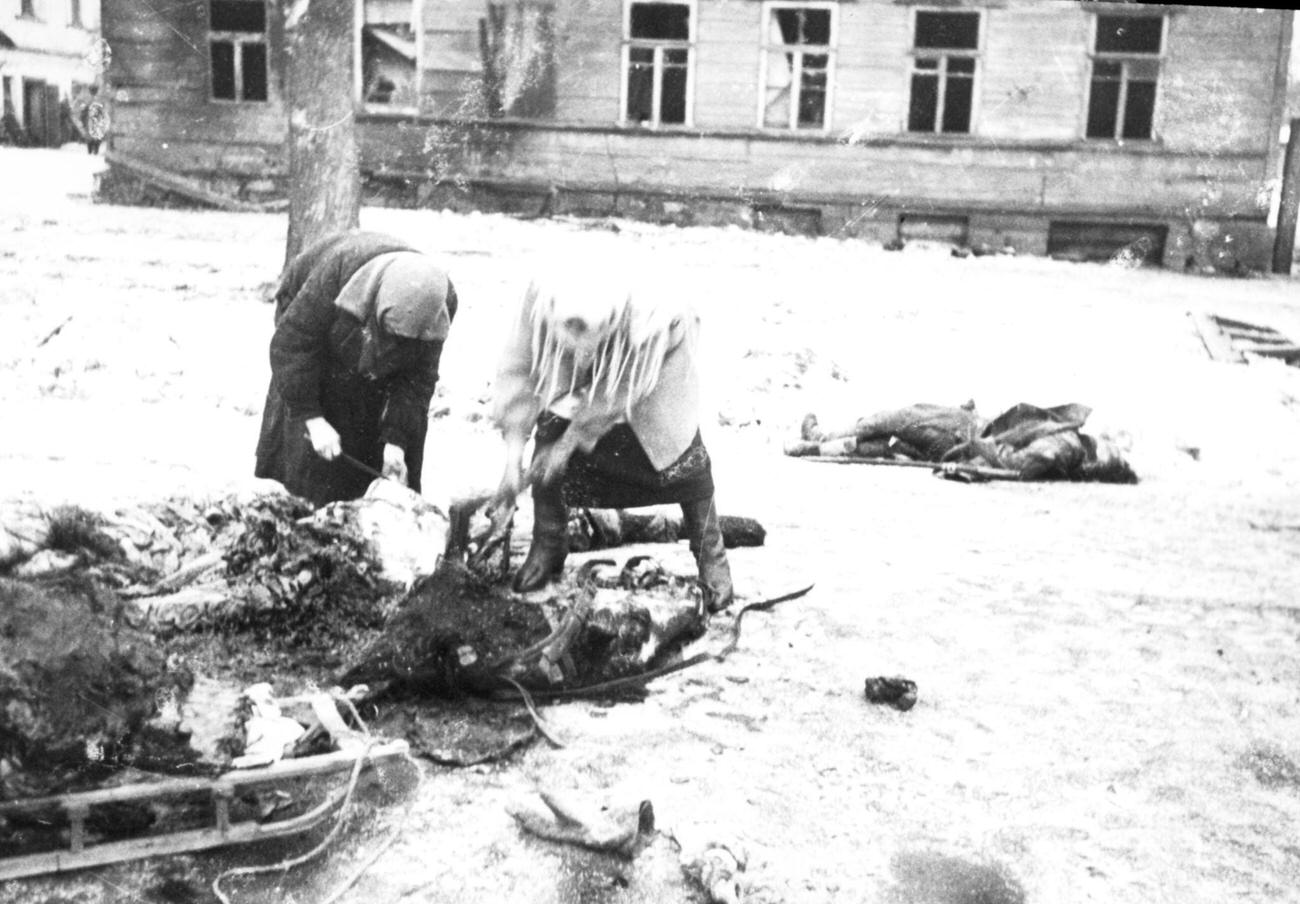
Women Collecting Remains of a Dead Horse, Siege of Leningrad, 1941
Horse Used for Food, Leningrad Blockade, 1943

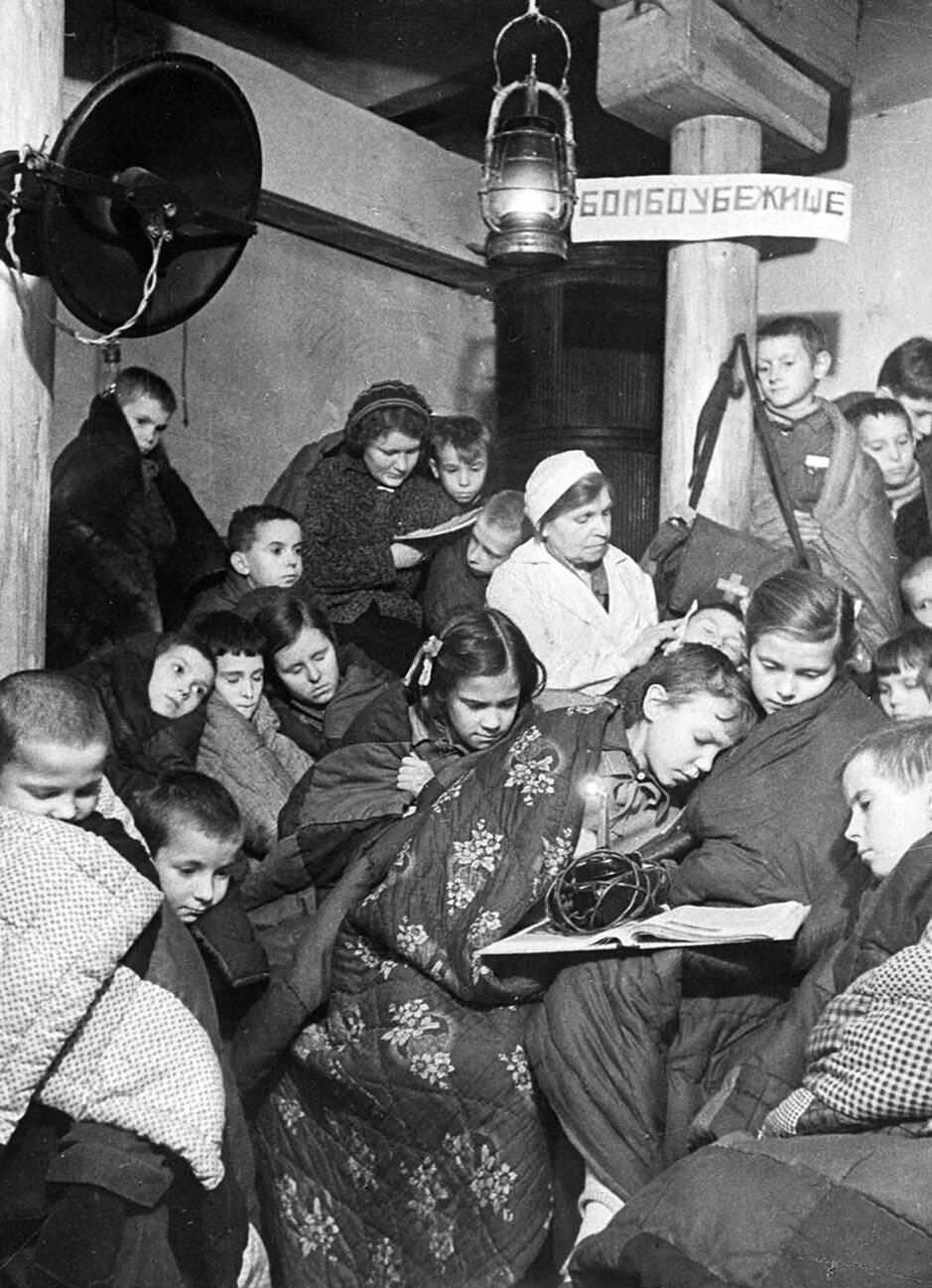
German bombing added to the toll. Air raids struck residential neighborhoods, killing families in their homes. Photographers documented the aftermath without filter — including the bodies of children killed in the attacks. Survivors took shelter wherever they could find it, including subway stations repurposed as air raid shelters beneath the city.
Victims of Nazi Bombing with Dead Child, Leningrad Blockade, 1942
Air Raid Shelter at Subway Station in Leningrad, State Museum of Political History, St. Petersburg

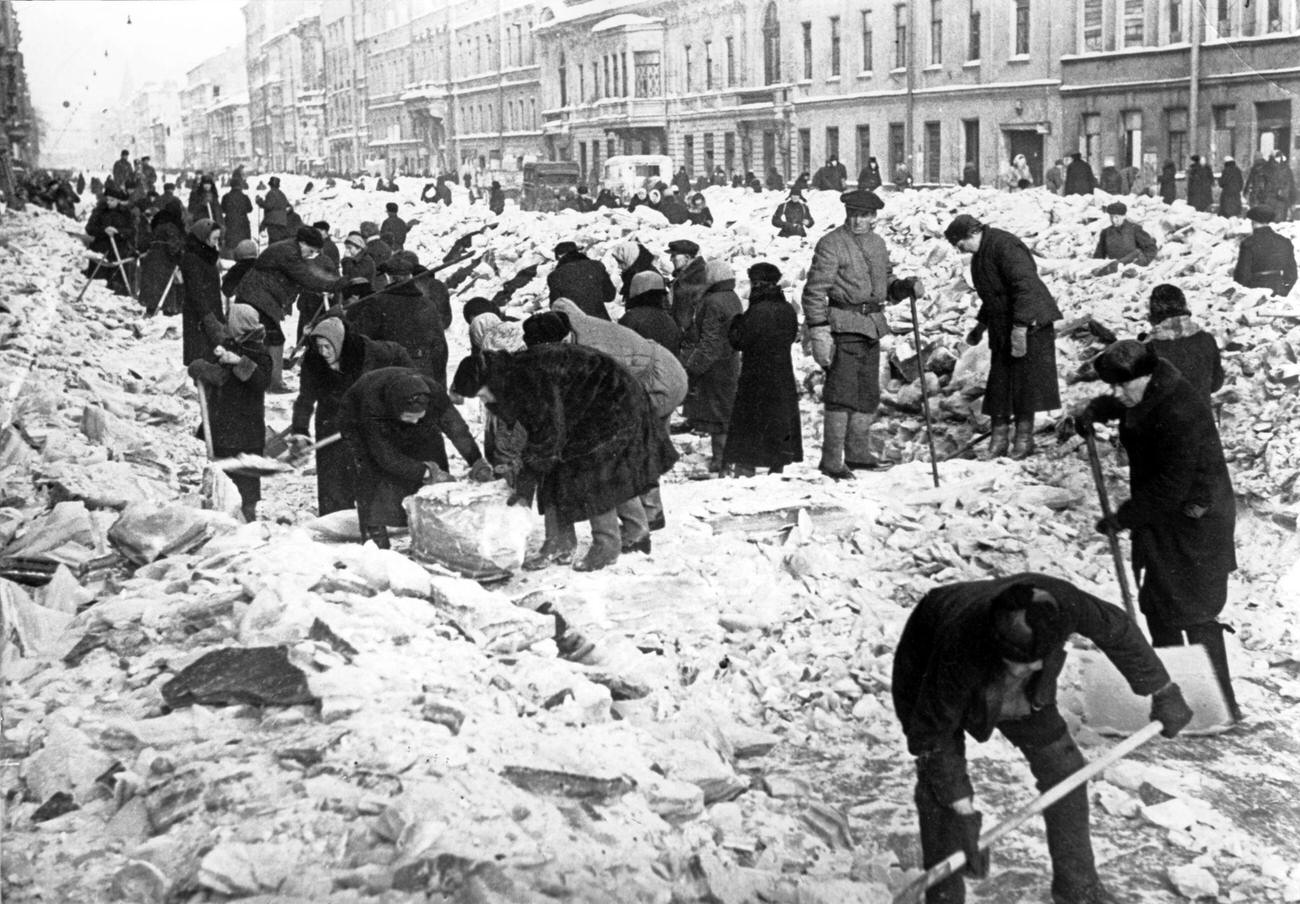
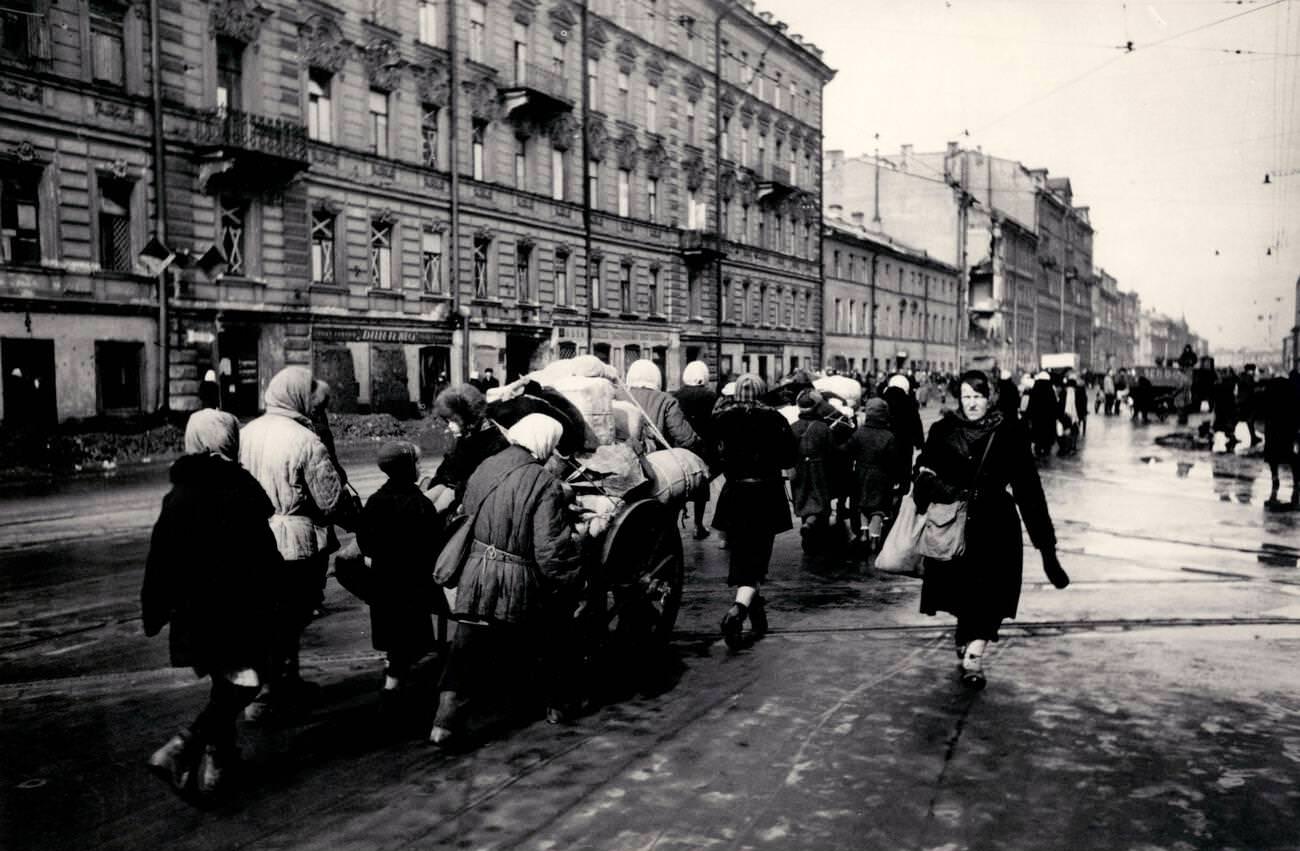
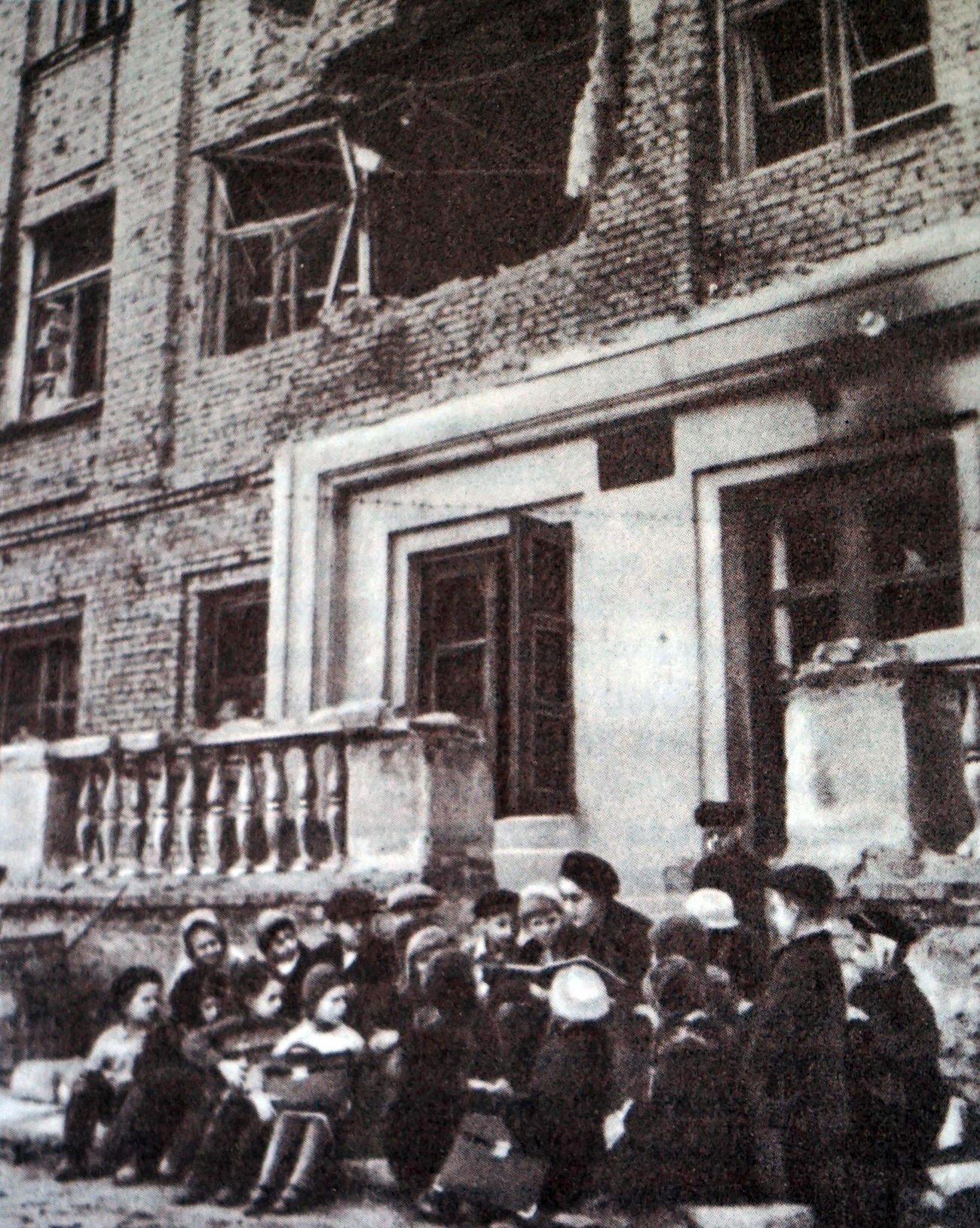
Despite it all, life inside Leningrad never fully stopped. Schools continued operating even as buildings around them lay in ruins. Composer Dmitri Shostakovich remained in the city during the early months of the siege and completed his Seventh Symphony there — a piece that became a symbol of Soviet resistance broadcast to the outside world. Nevsky Prospect, the city’s main boulevard, was kept clear of snow by residents who refused to let the city die.
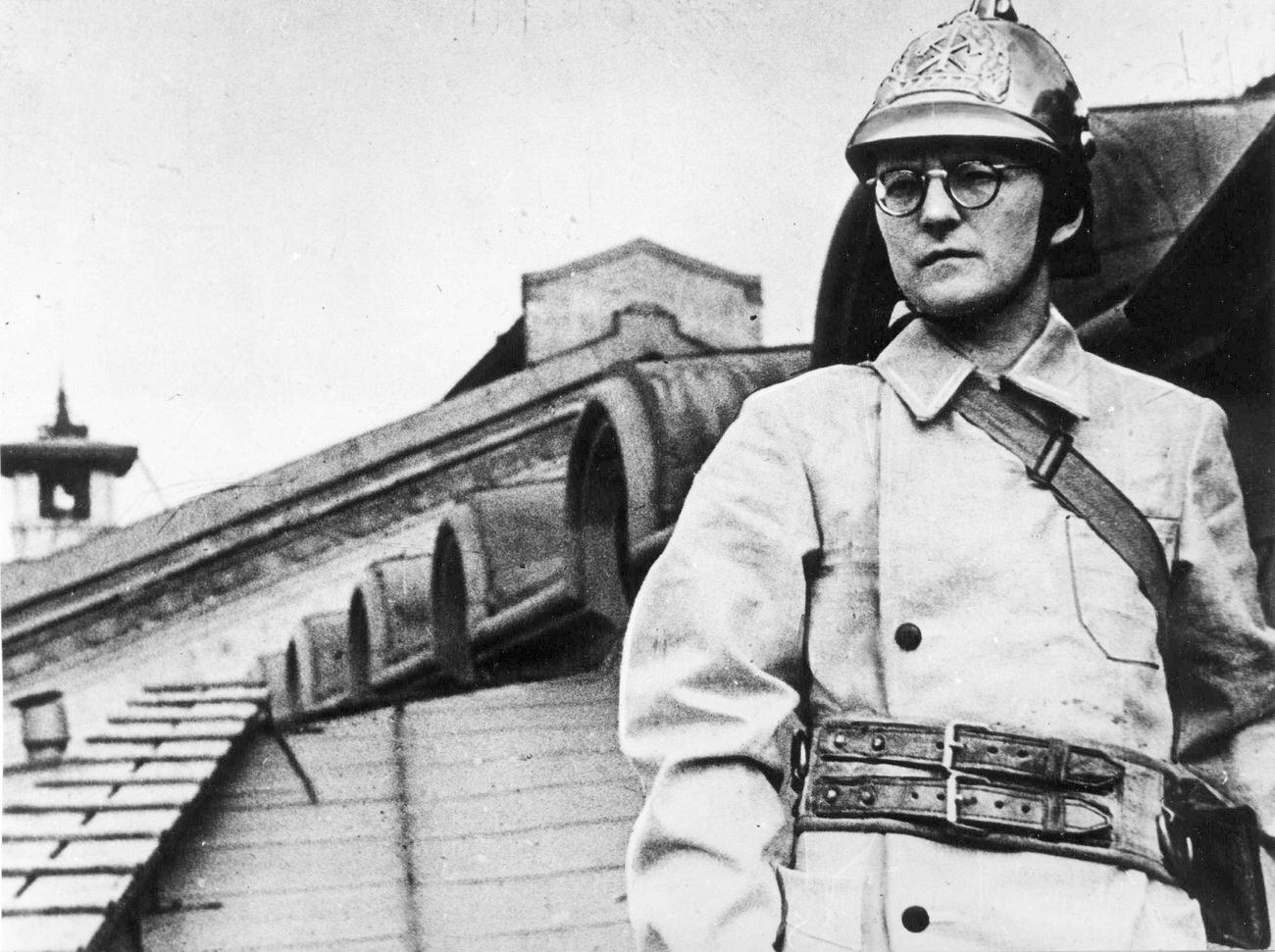
Dmitri Shostakovich During the Siege of Leningrad, USSR, WWII, 1941
Lessons in the Ruins During the Siege of Leningrad, 1941
Residents Clearing Snow from Nevsky Prospect, Leningrad, 1942

The only lifeline into the city ran across Lake Ladoga. Once winter froze the lake solid, Soviet engineers laid a vehicle road directly over the ice. Trucks drove through the night, often under German artillery fire and aircraft attack, carrying food into the city and evacuating civilians out. The route was called the Doroga Zhizni — the Road of Life. It kept the city alive through two brutal winters.
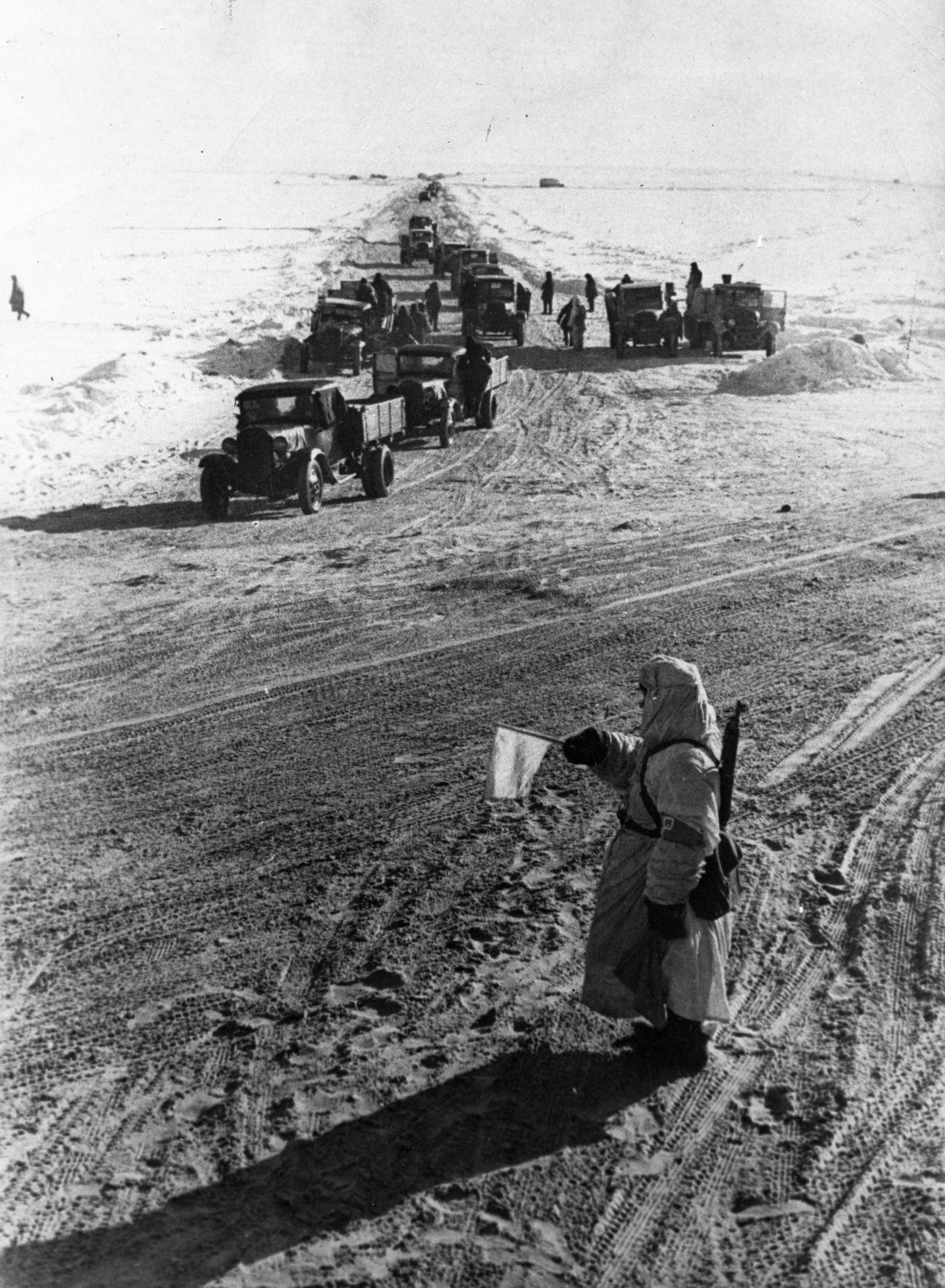
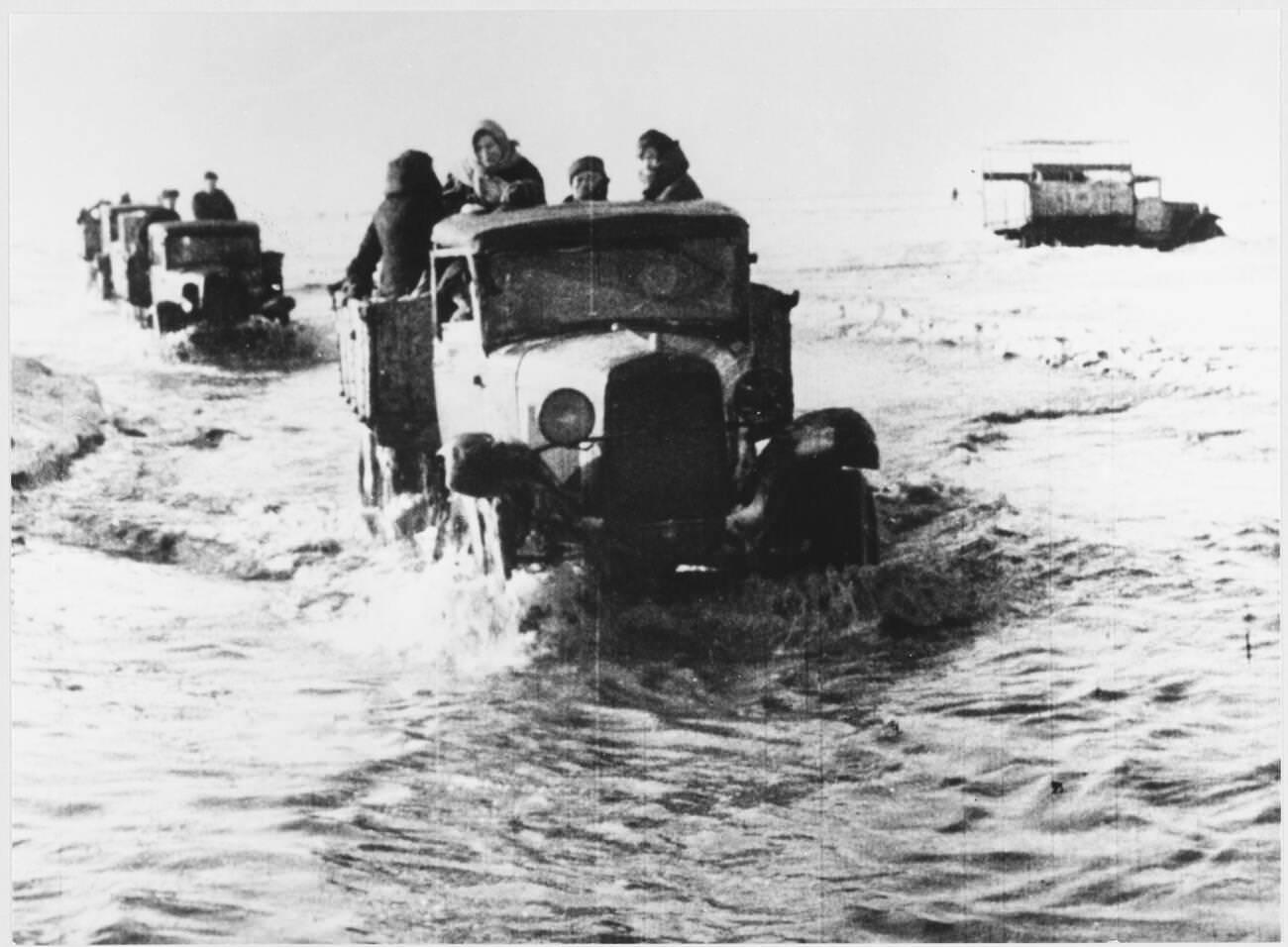
Ice Road over Lake Ladoga, Leningrad, 1942
Supplies for Leningrad Across Lake Ladoga, 'Lifeline Roads', 1942
Supplies for Leningrad Across Lake Ladoga, ‘Lifeline Roads’, 1942

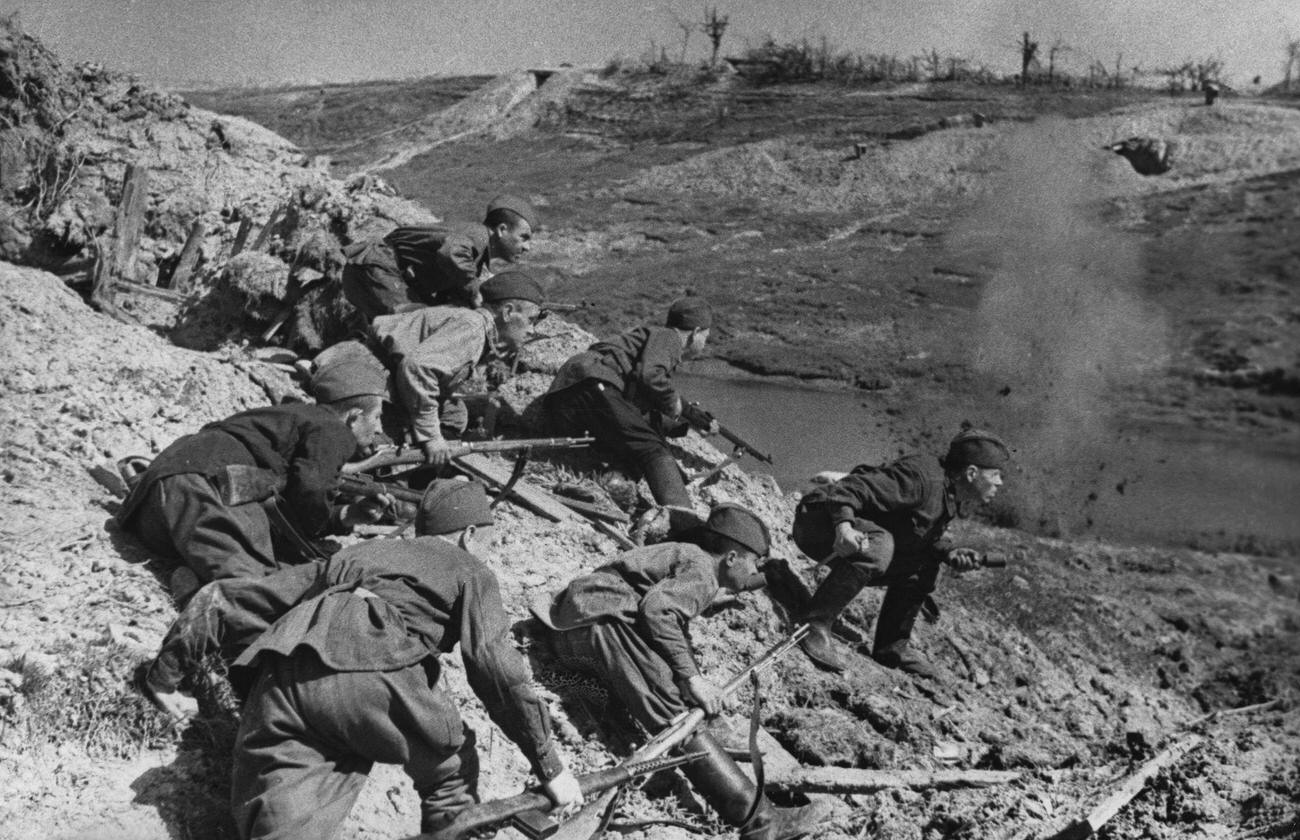
Soviet forces continued to fight back throughout the siege. Counter-attacks were launched repeatedly, even in the worst conditions of winter. Soldiers armed with rifles held positions against a better-equipped enemy, while military photographers like Boris Pavlovich Kudoyarov documented the front lines from inside the blockade.
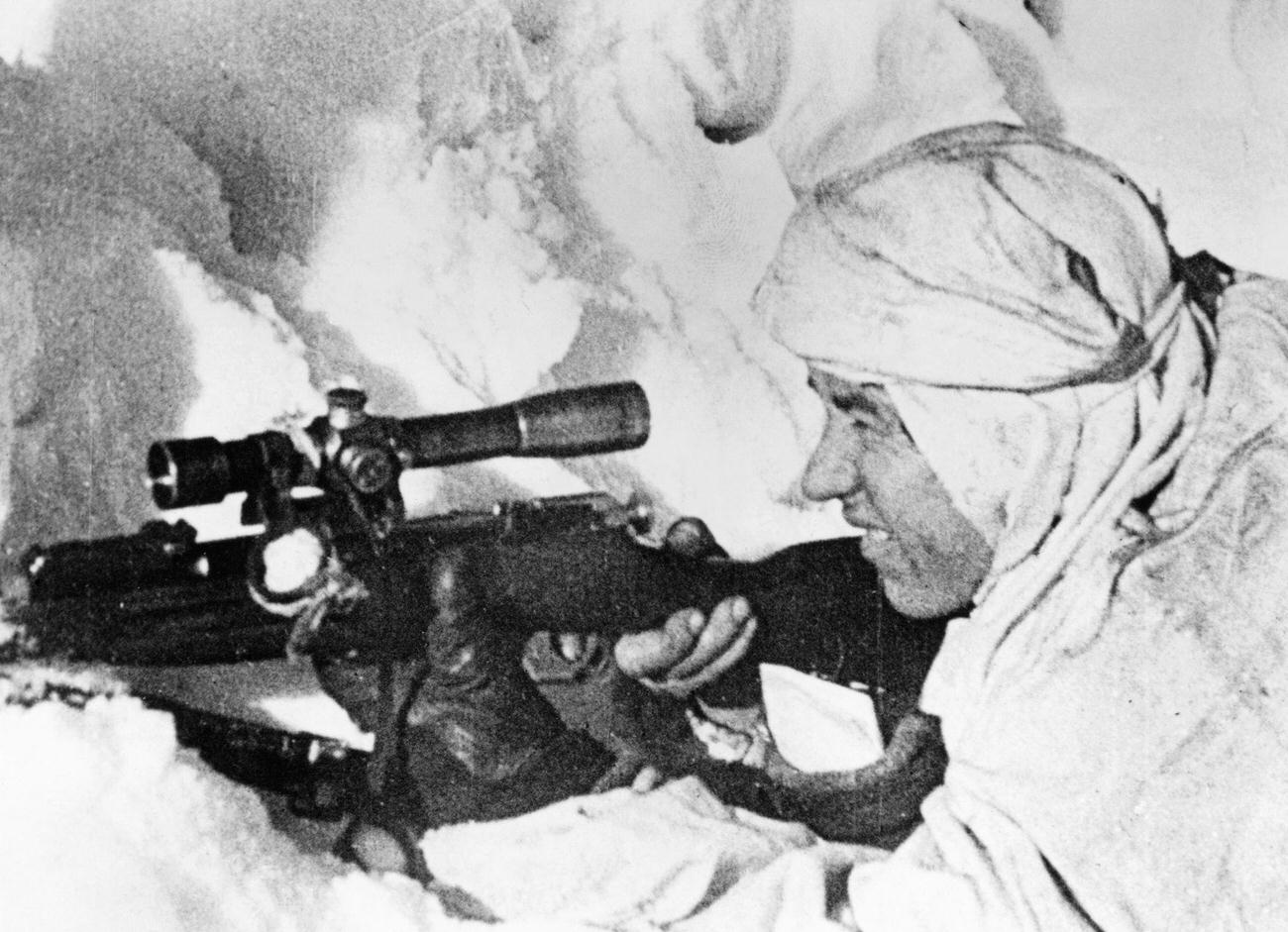
Soviet Soldier with Rifle, Leningrad, 1942
Soviet Troops Counter-Attacking During Siege of Leningrad
The Siege of Leningrad, Boris Pavlovich Kudoyarov, 1941

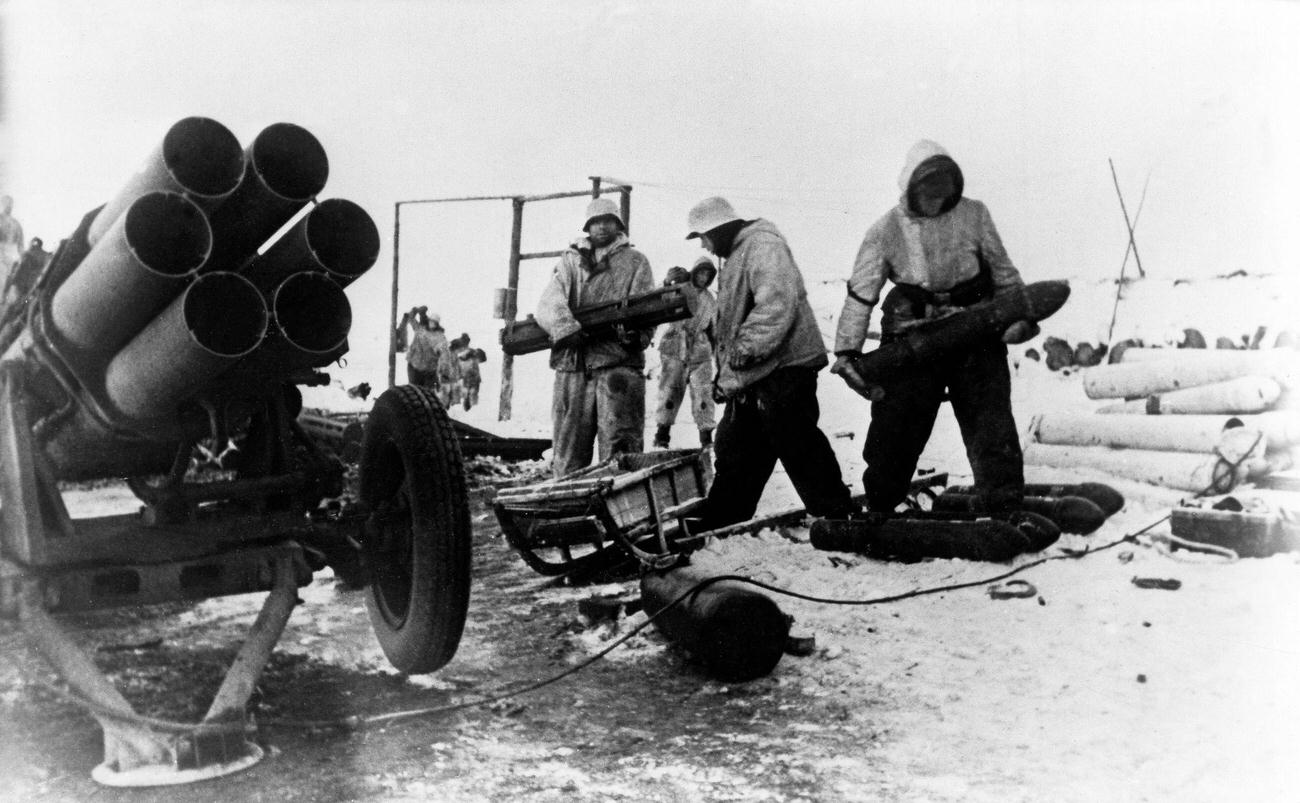
By January 1943, the Red Army launched Operation Iskra, breaking through the German lines along the southern shore of Lake Ladoga and opening a narrow land corridor to the city. It was a turning point, though the siege was not yet over. For another year, German forces held their positions and continued shelling. Their rocket launchers and artillery kept firing into 1944.
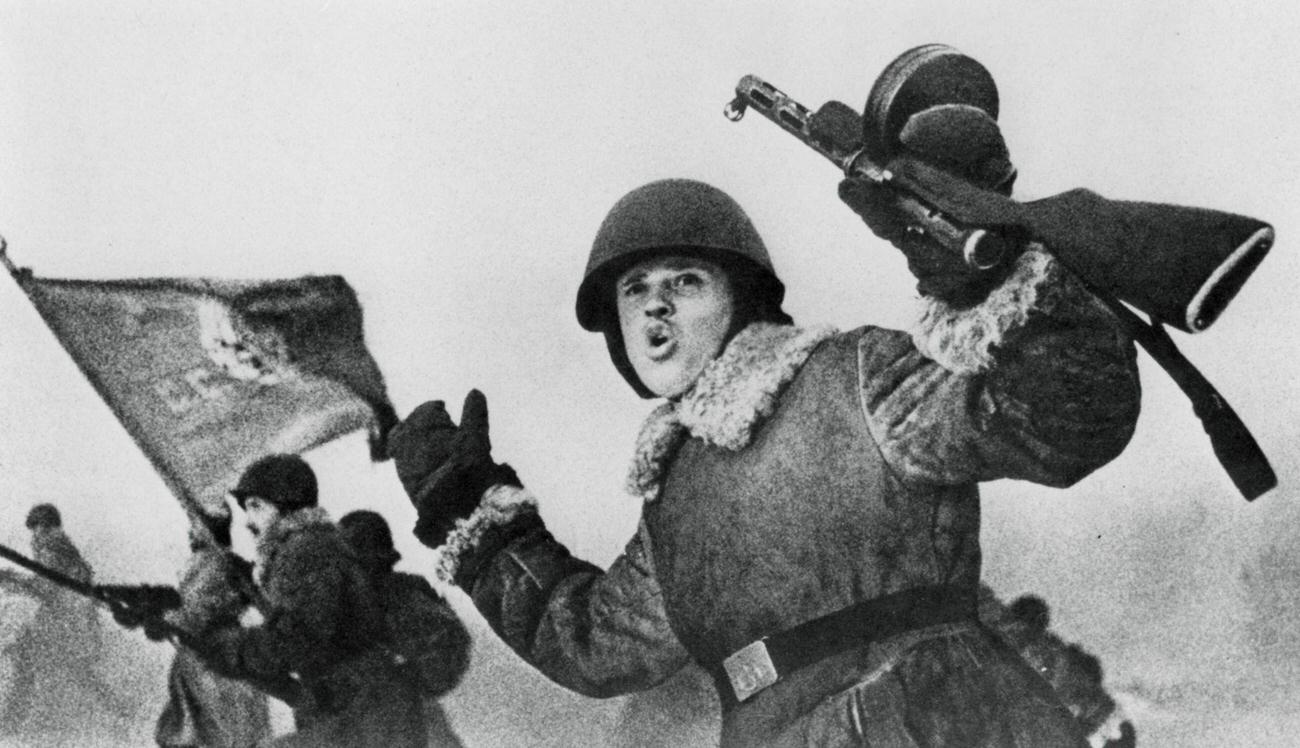
Siege of Leningrad, January 1943
German Soldiers Loading Rocket-Launcher, Leningrad, January 1944

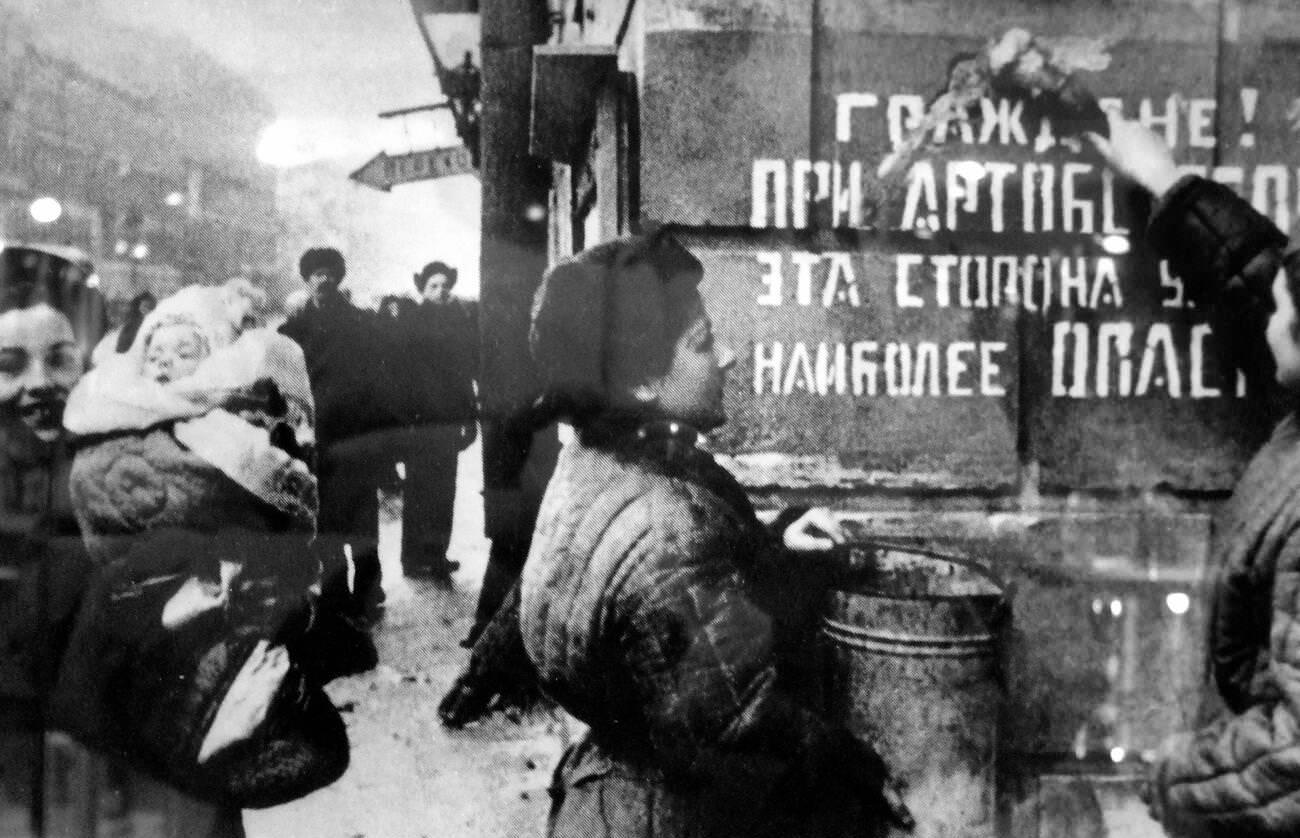
On January 27, 1944, Soviet military operations finally drove German forces back far enough to fully lift the blockade. Captured German soldiers were marched through the streets of Leningrad days later. The city that Hitler had expected to fall within weeks had held out for 872 days.
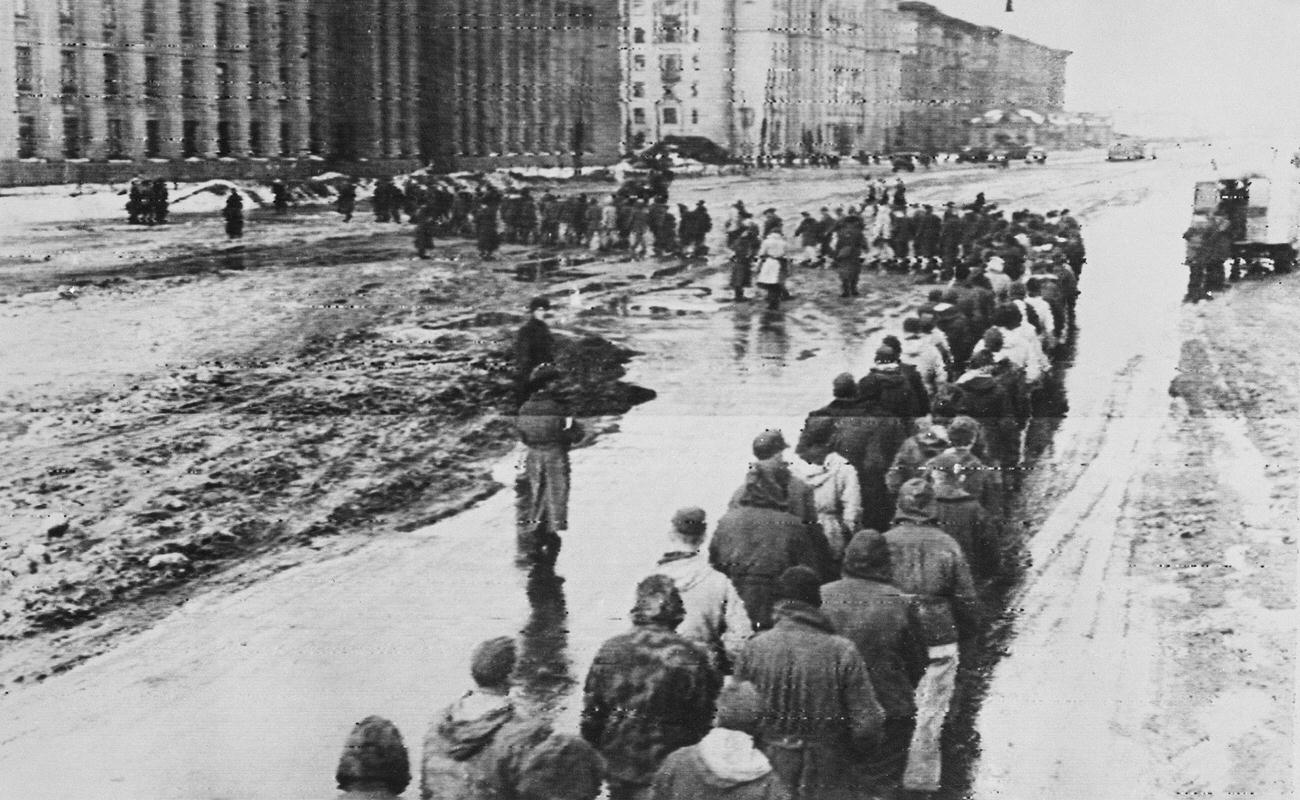
Captured German Soldiers Marched Through Leningrad, January 30, 1944
Exultant Leningrad, Siege Removal, Warning Sign, 1944
Liberation of Leningrad, Russia, WWII, 1944

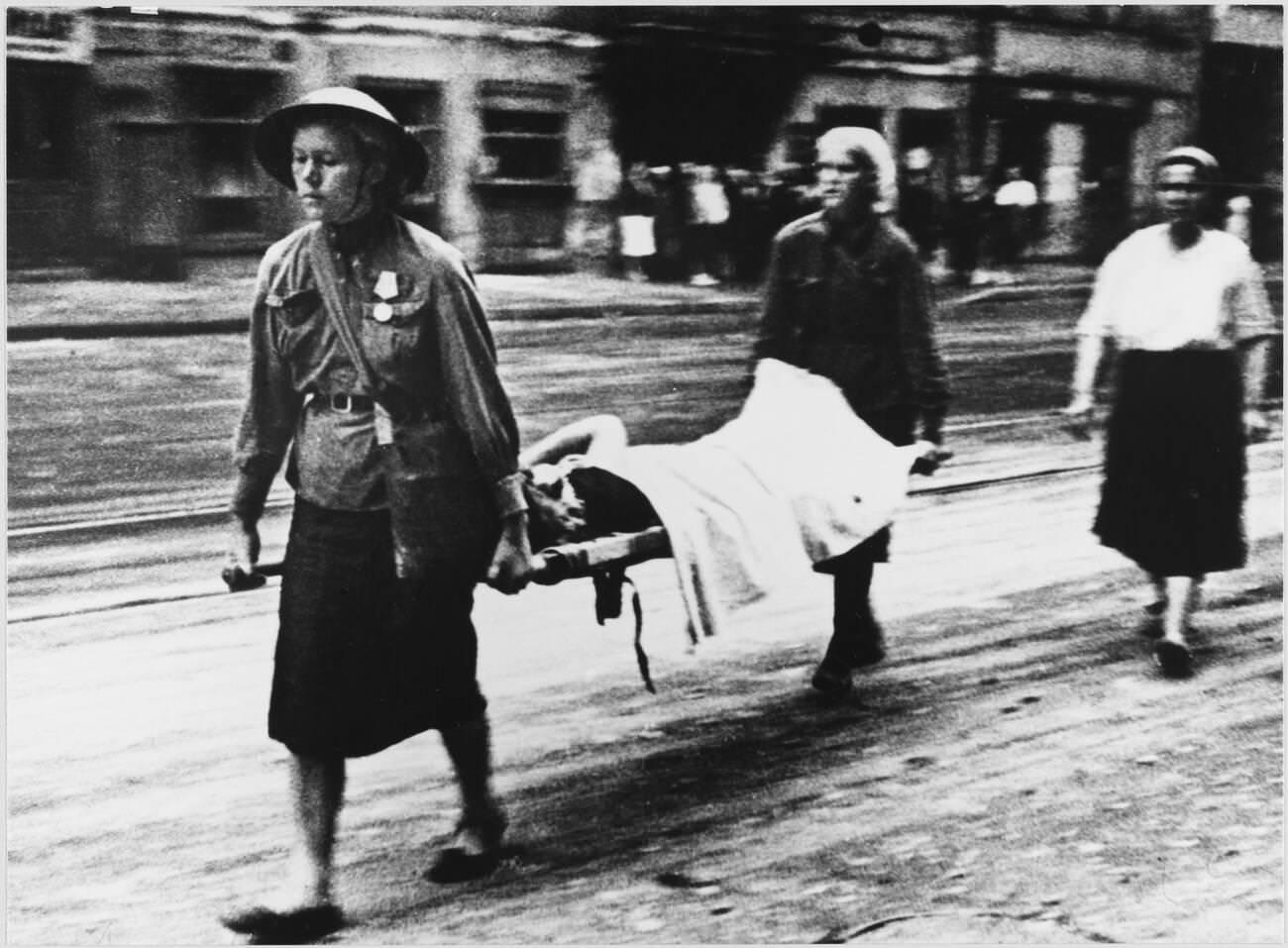
The human cost was staggering. Over one million civilians died during the siege, most from starvation. Thousands of children were left orphaned and placed in state children’s homes. The wounded filled hospitals throughout the blockade. What remained of the city’s population emerged from 872 days of siege into a devastated but unbowed city.
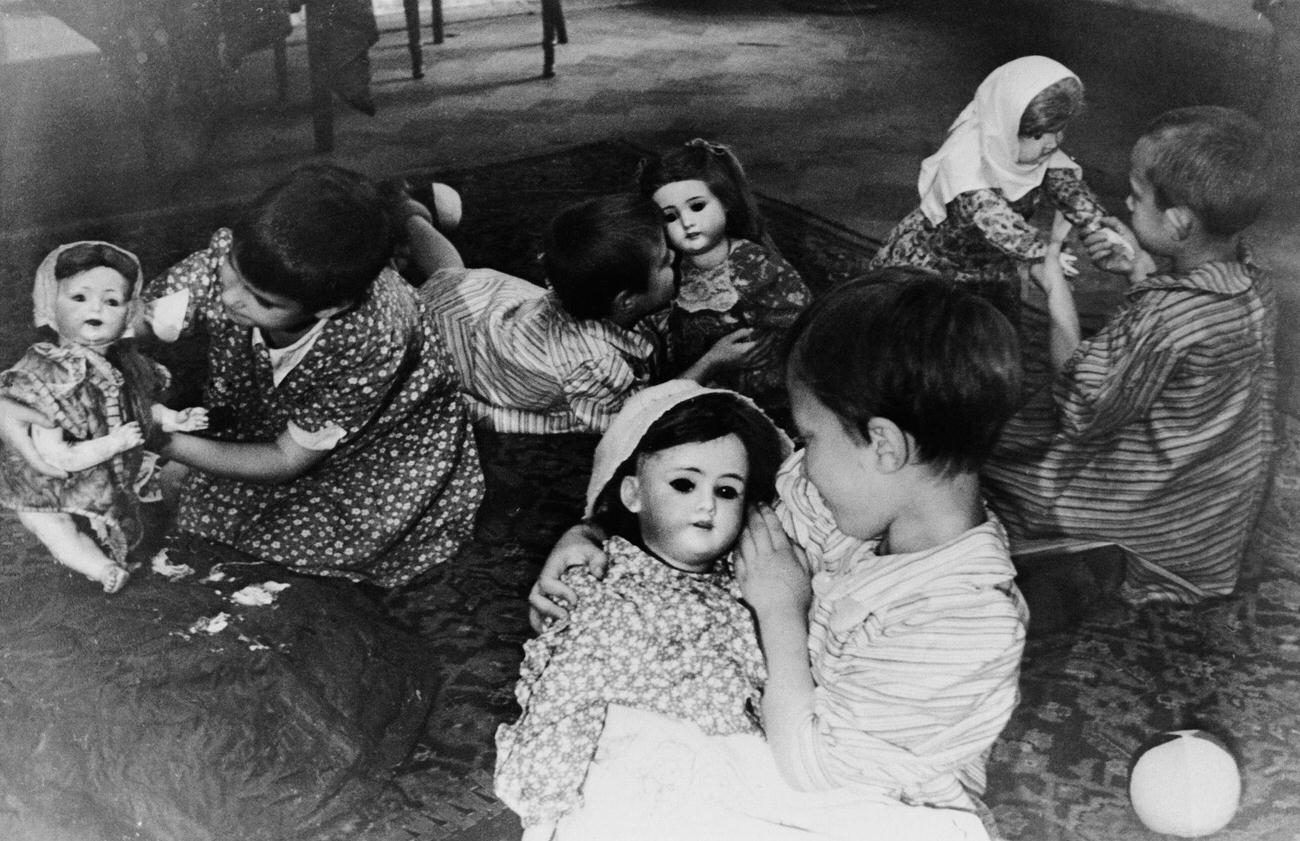
Russian Orphans from Leningrad Siege at Children's Home No.9
Russian Orphans from Leningrad Siege at Children’s Home No.9
Leningrad Wounded
Leningrad Wounded
Siege of Leningrad, Russian Front, September 1941
German Soldiers in Soviet Defense Positions, Leningrad, October 1941
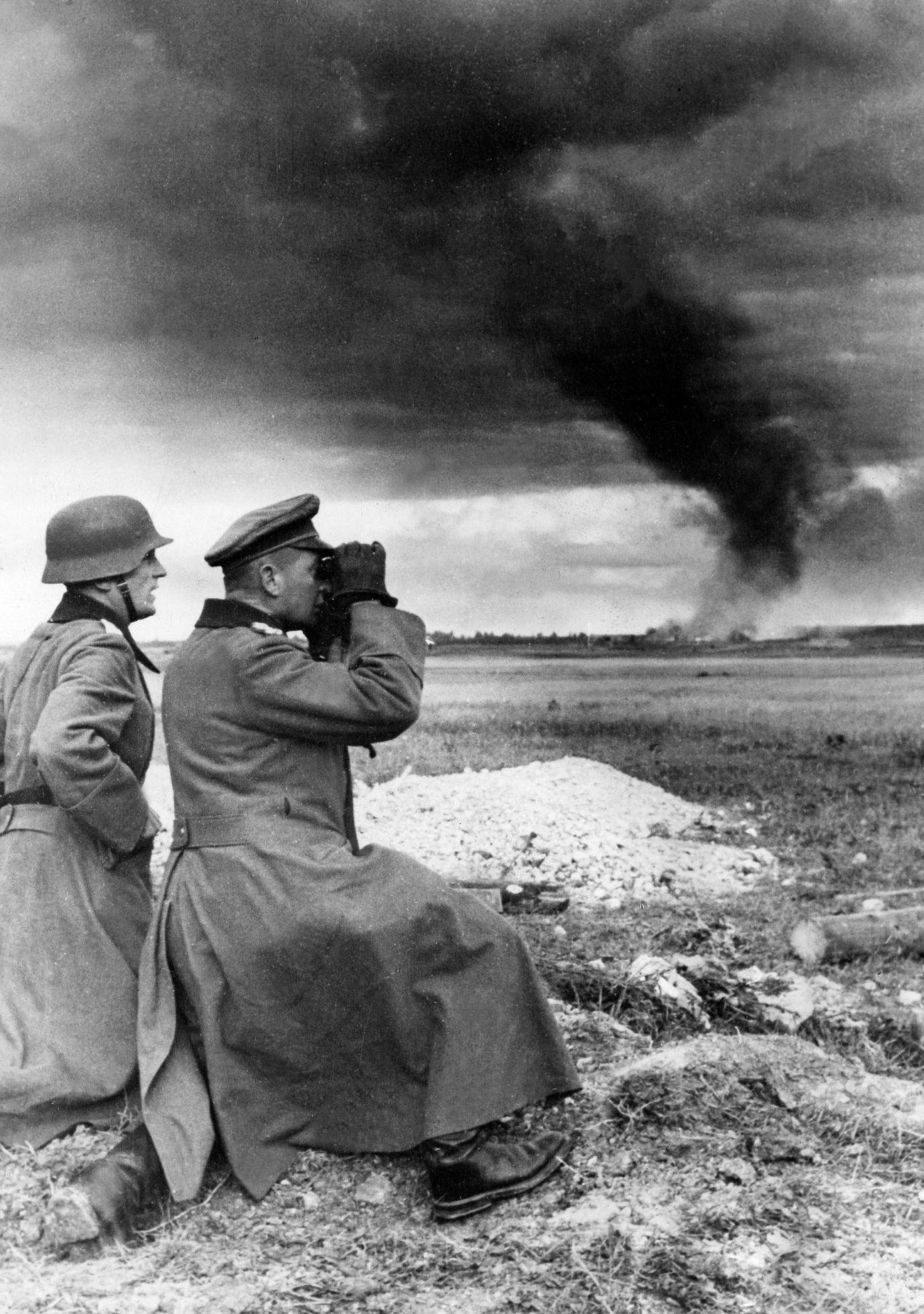
German Soldiers Watching Attacks on Russian Defense Line, Leningrad, 1941
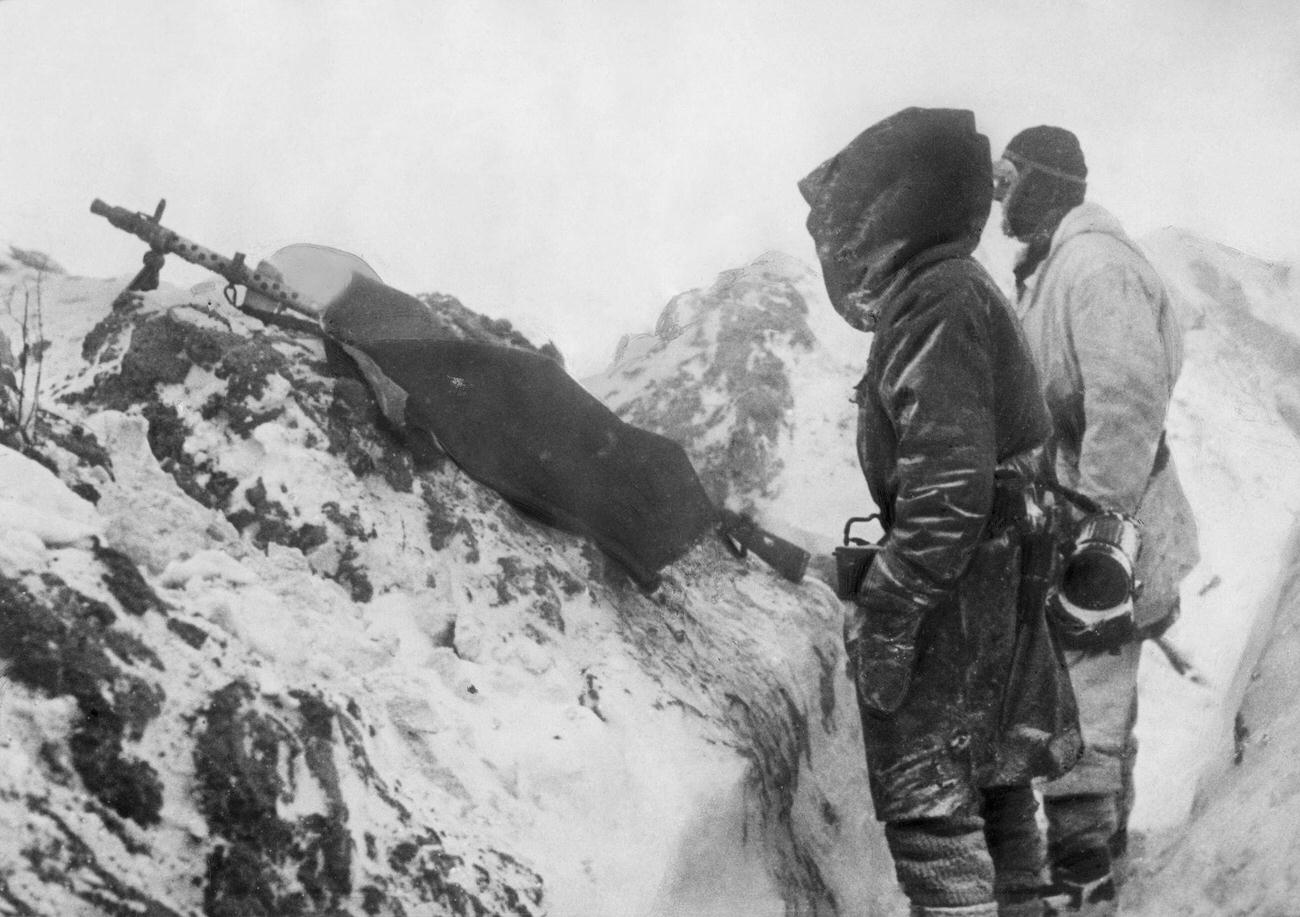
German MG Trench Position, Siege of Leningrad, December 1942
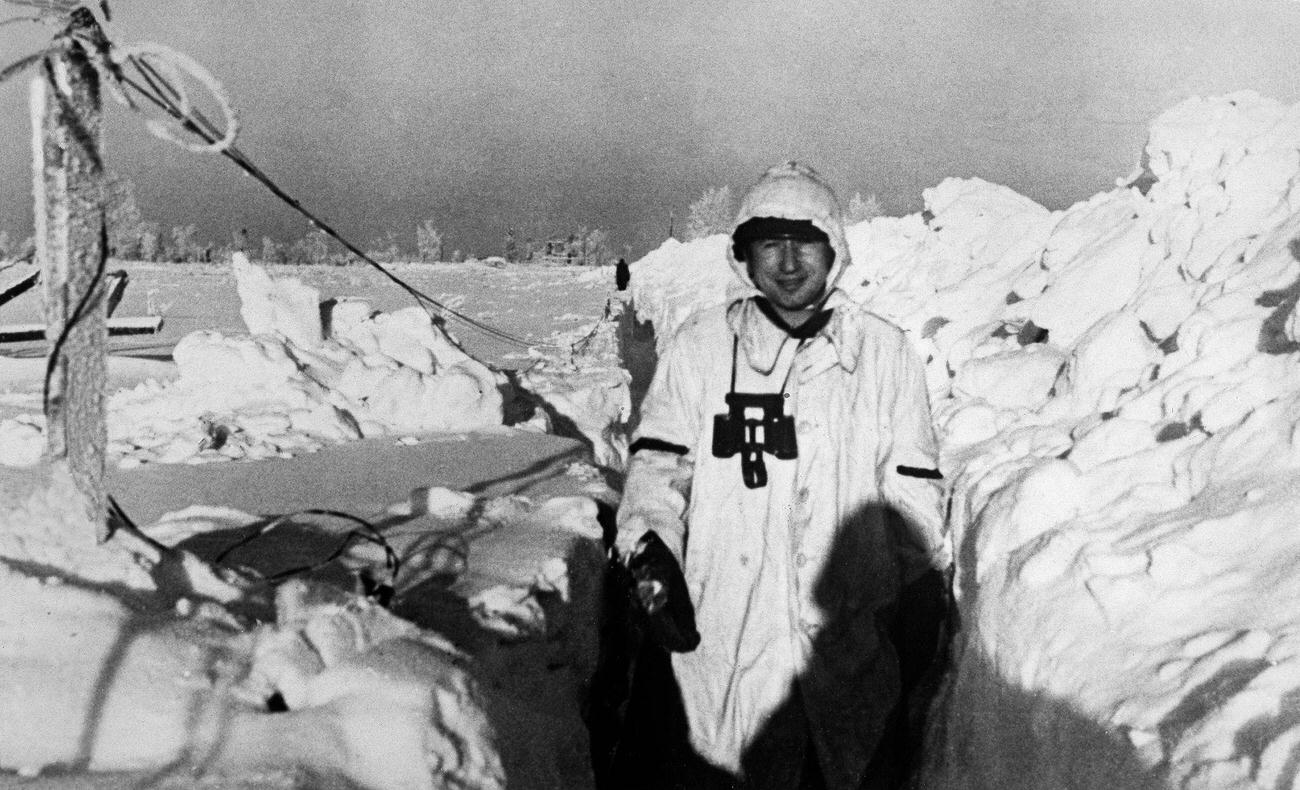
German Soldier in Snow Camouflage, Leningrad, January 1942
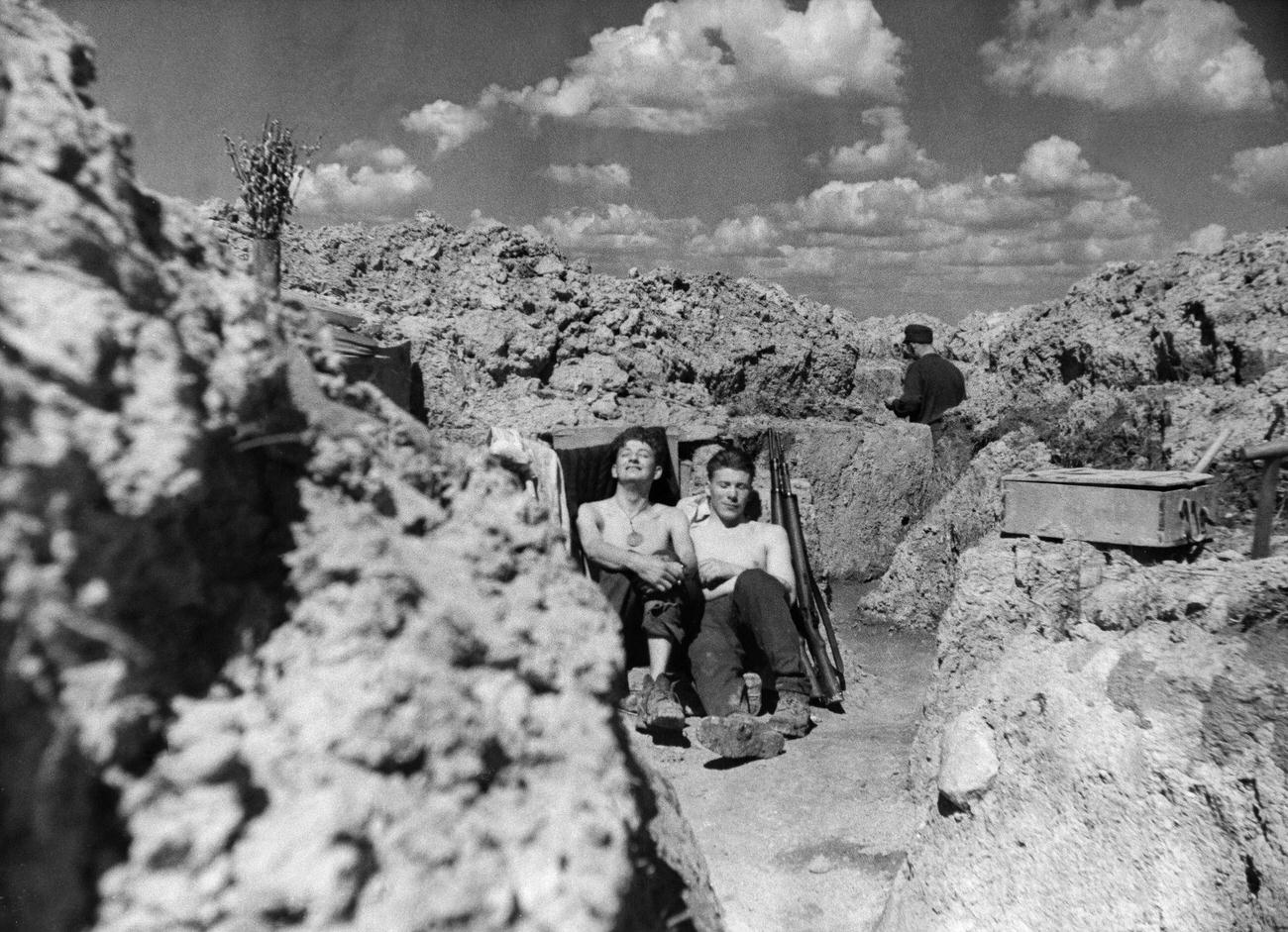
Norwegian Legion Soldiers in Leningrad Trench, 1942
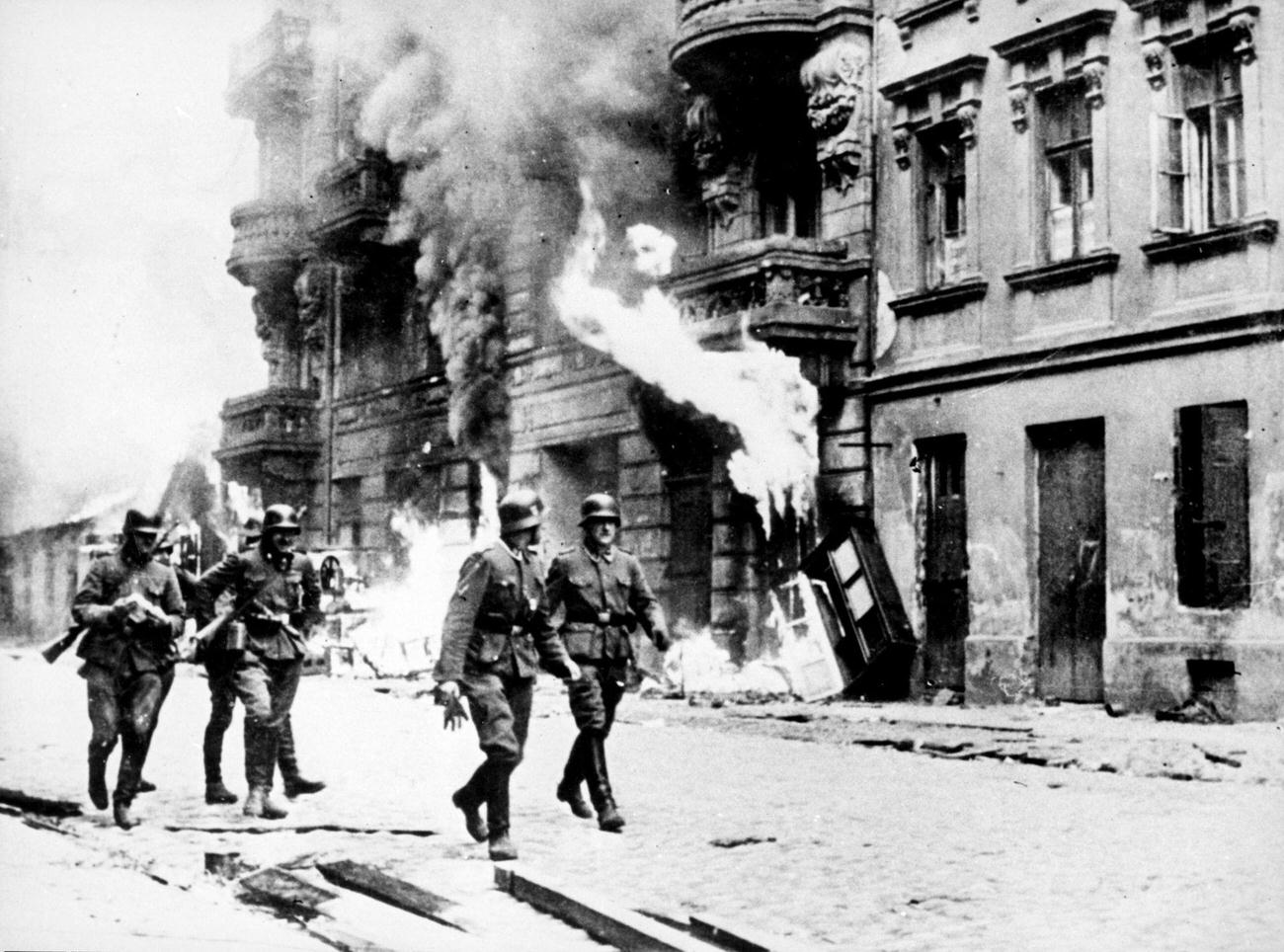
German Troops During the Capture of Leningrad
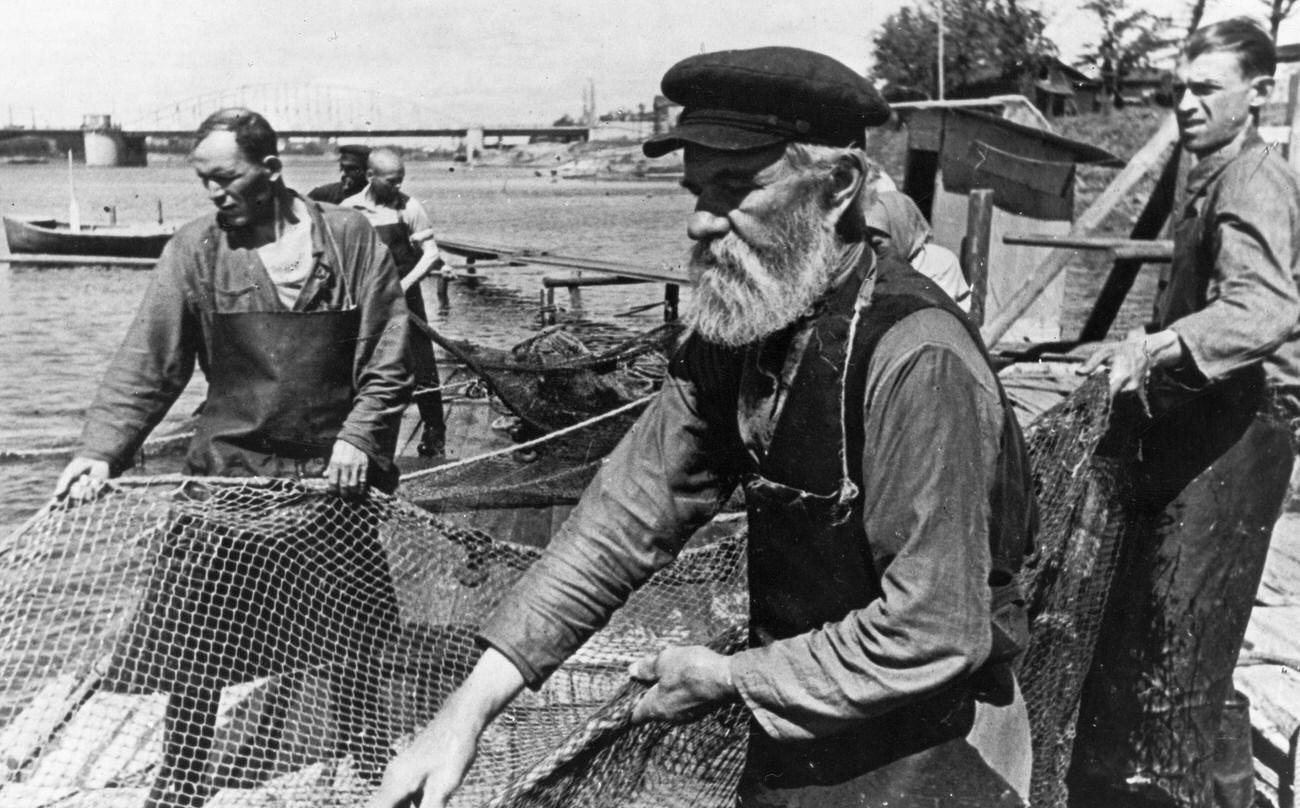
Fishermen Pulling Seine on Neva River, Leningrad, Early 1950s
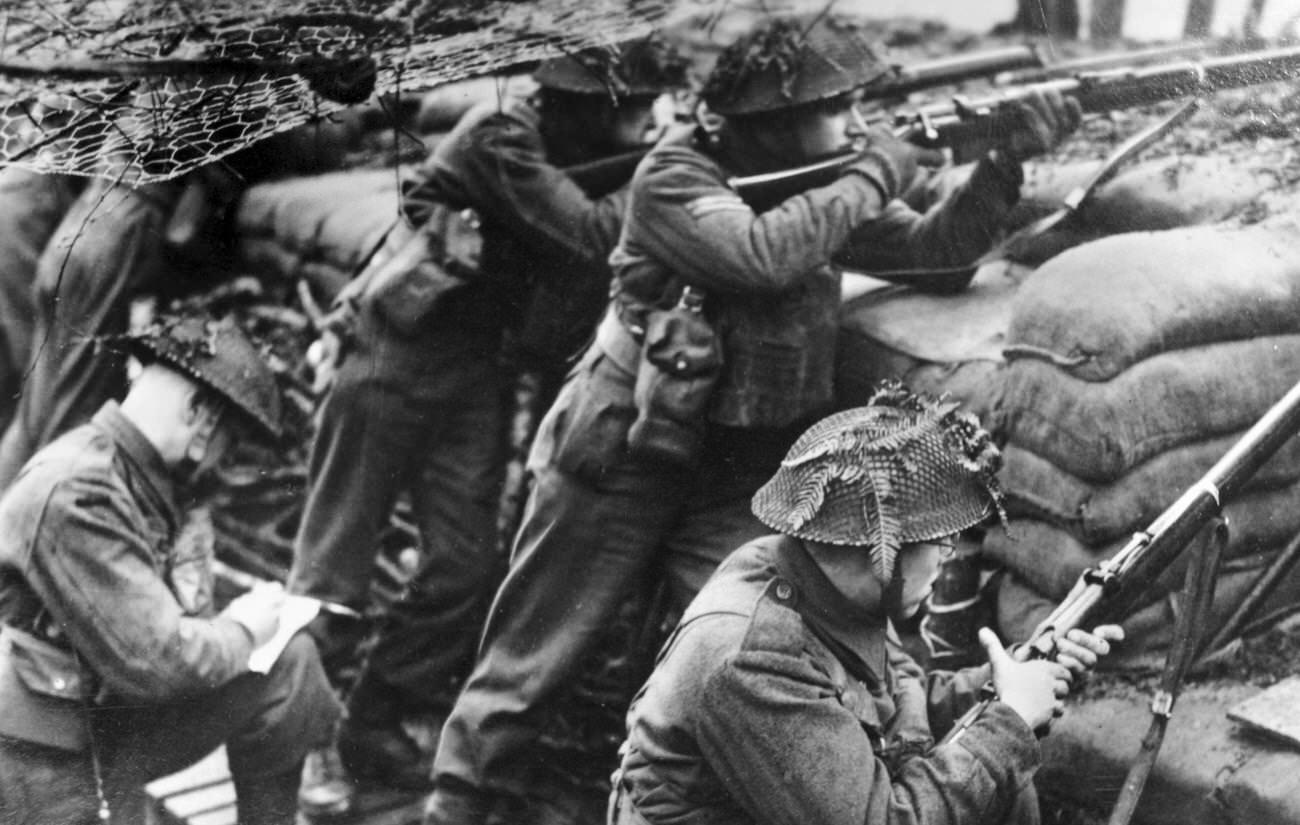
Warwickshire Regiment Riflemen in Battle of France, 1940
During the Siege of Leningrad, State Museum of the Political History, St. Petersburg
Spanish Riders Setting Front Line at Leningrad
Soviet Soldiers, Siege of Leningrad, 1943
The Siege of Leningrad, Boris Pavlovich Kudoyarov, 1941
Enjoyed this post? Get new ones in your inbox.

Leave a Comment

Your email address will not be published. Required fields are marked *

Share this Post 🥺

Please take a moment to share this content. Your support is greatly appreciated! 🙌🙏

Share this Post 🥺

Please take a moment to share this content. Your support is greatly appreciated! 🙌🙏
Scroll to Top
 
Hey Friend, Before You Go.. Please like & follow for more interesting content