Shoreditch sits in the East End of London, historically part of the county of Middlesex before it was absorbed into the County of London in 1889 and then Greater London in 1965. Today it is known for street art, bars, galleries, and a busy nightlife scene. But the Shoreditch that photographer Peter Marshall walked through in the late 1980s looked nothing like that. It was a place of worn-out streets, struggling small businesses, and row after row of decaying Victorian houses — many of them standing empty.
Marshall moved through these streets with a camera, documenting what he saw without dressing it up. The result is a ground-level record of a neighbourhood in a difficult period. Peeling shopfronts, cracked brickwork, and quiet side streets appear again and again in his work. He also photographed Hull, Camden, and Deptford during the same decade, building a broader portrait of urban Britain at a time when many working-class areas were under serious economic pressure.
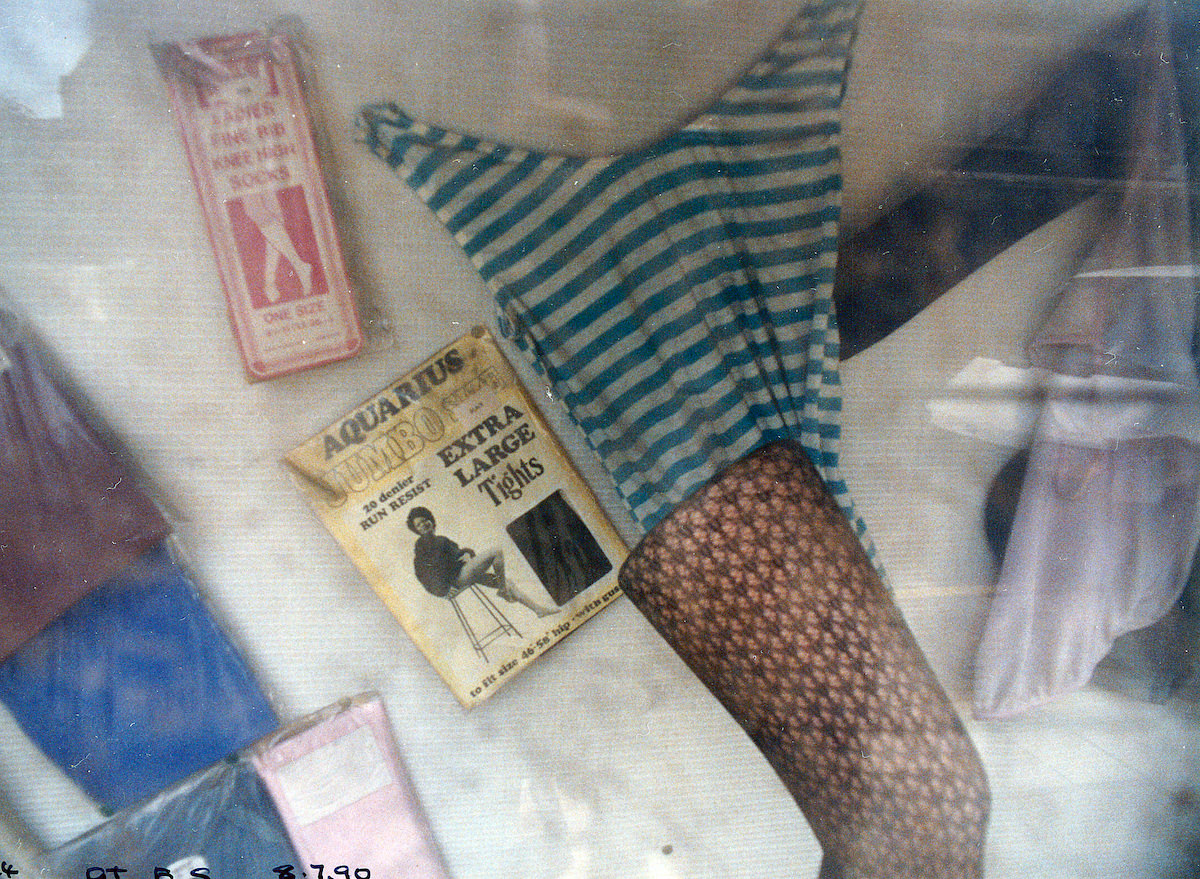
Great Eastern Street was one of the main commercial arteries running through the area, and Marshall returned to it more than once. Shops along this stretch sold everyday goods — the kind of businesses that served local residents rather than passing trade. A tights retailer called Jumbo Tights, photographed in 1990, stands as a small but telling detail of the commercial character of the street at that time.
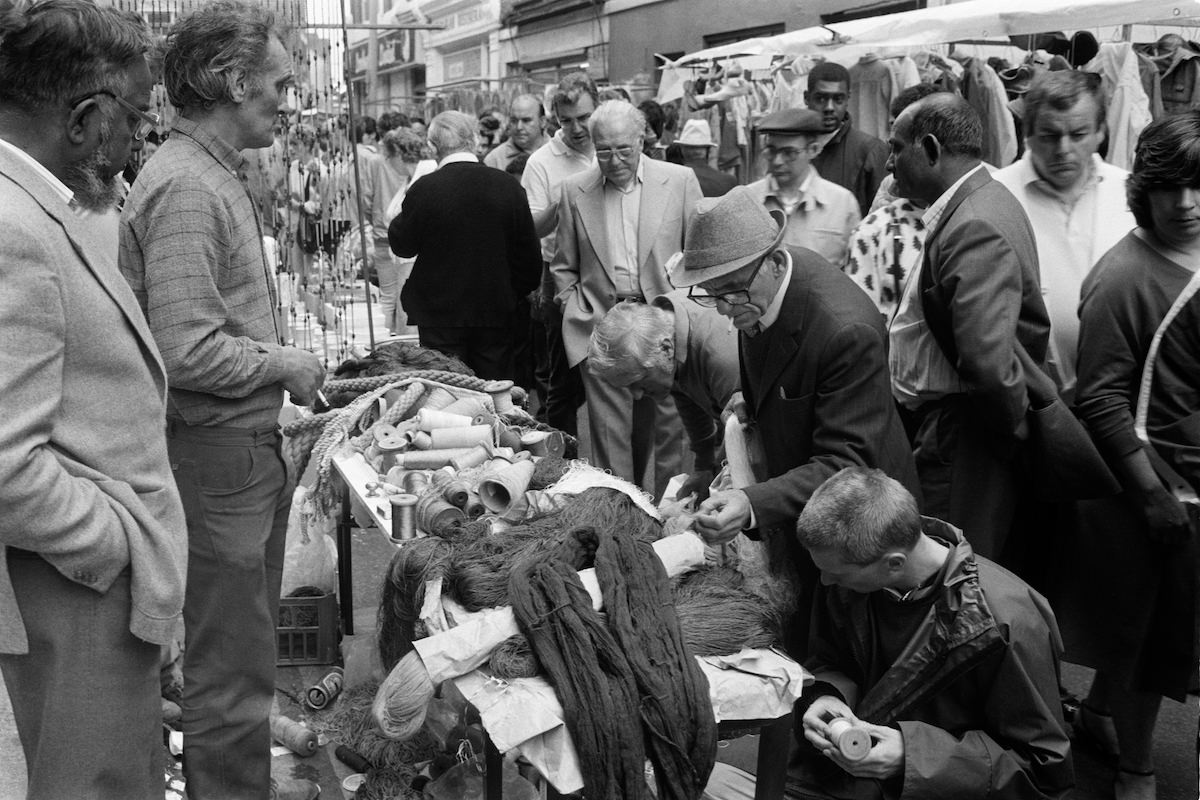
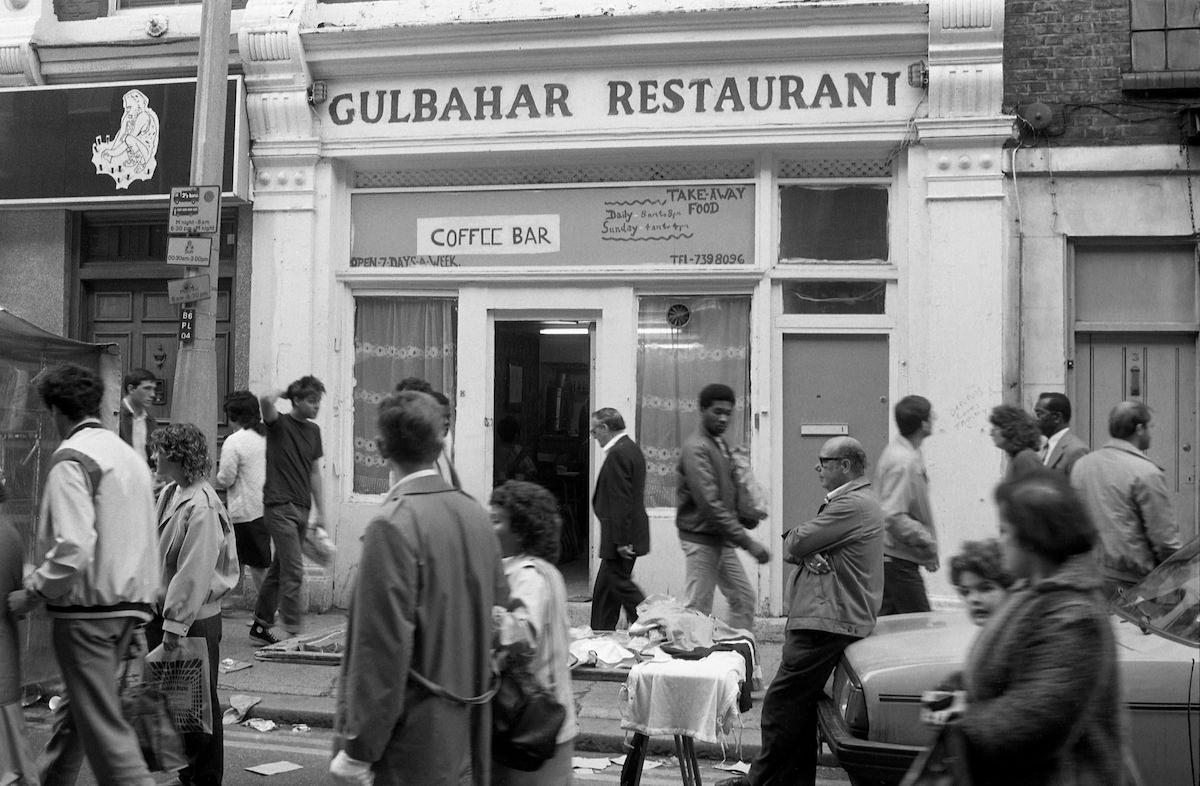
Brick Lane in 1986 was a very different street from the one tourists visit today. It ran through a part of Tower Hamlets that had a large Bangladeshi community, alongside remnants of the Jewish East End that had shaped it for generations before. Marshall’s photograph captures the lane at a moment when that layered identity was still very much present on its walls and storefronts.
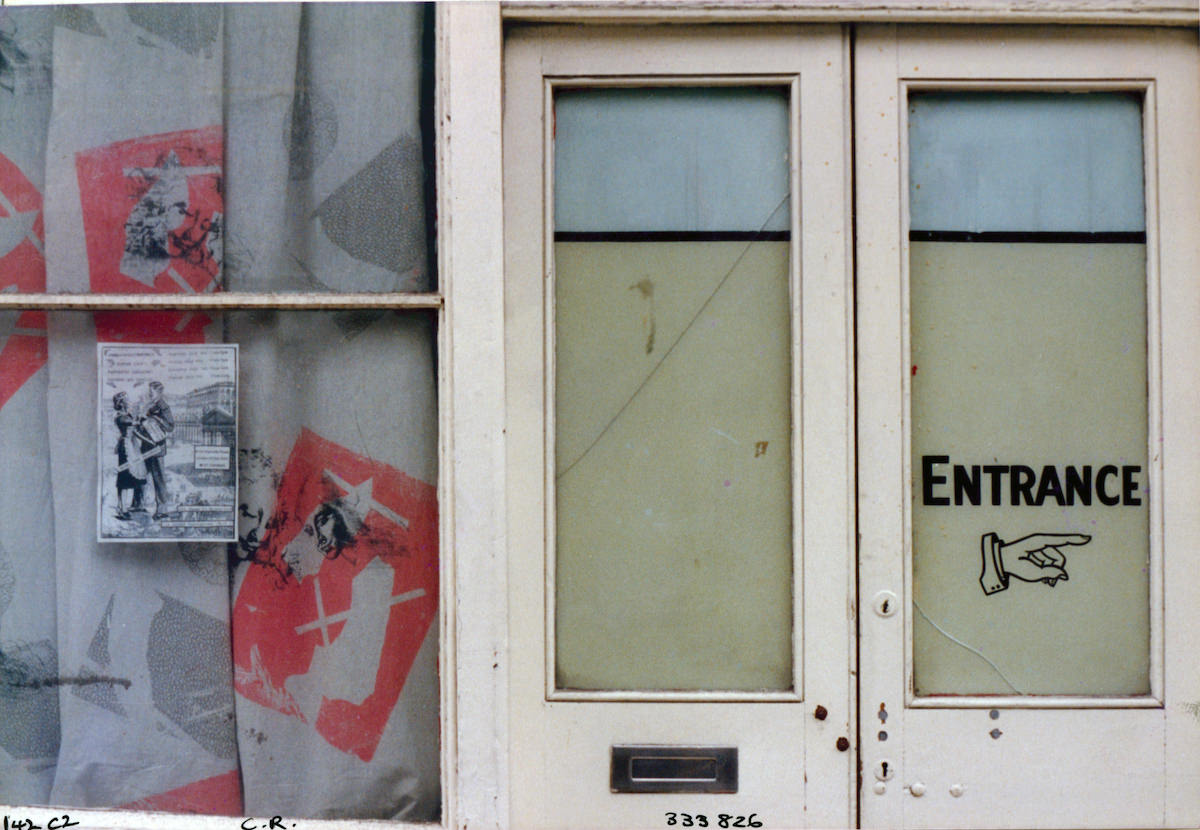
Curtain Road took its name from The Curtain, one of Elizabethan London’s earliest theatres. By 1986, that history was long buried beneath industrial and commercial buildings. Marshall photographed an entrance along the road that year — a doorway or gateway that speaks to the working nature of the street, which was then home to warehouses and small manufacturers.
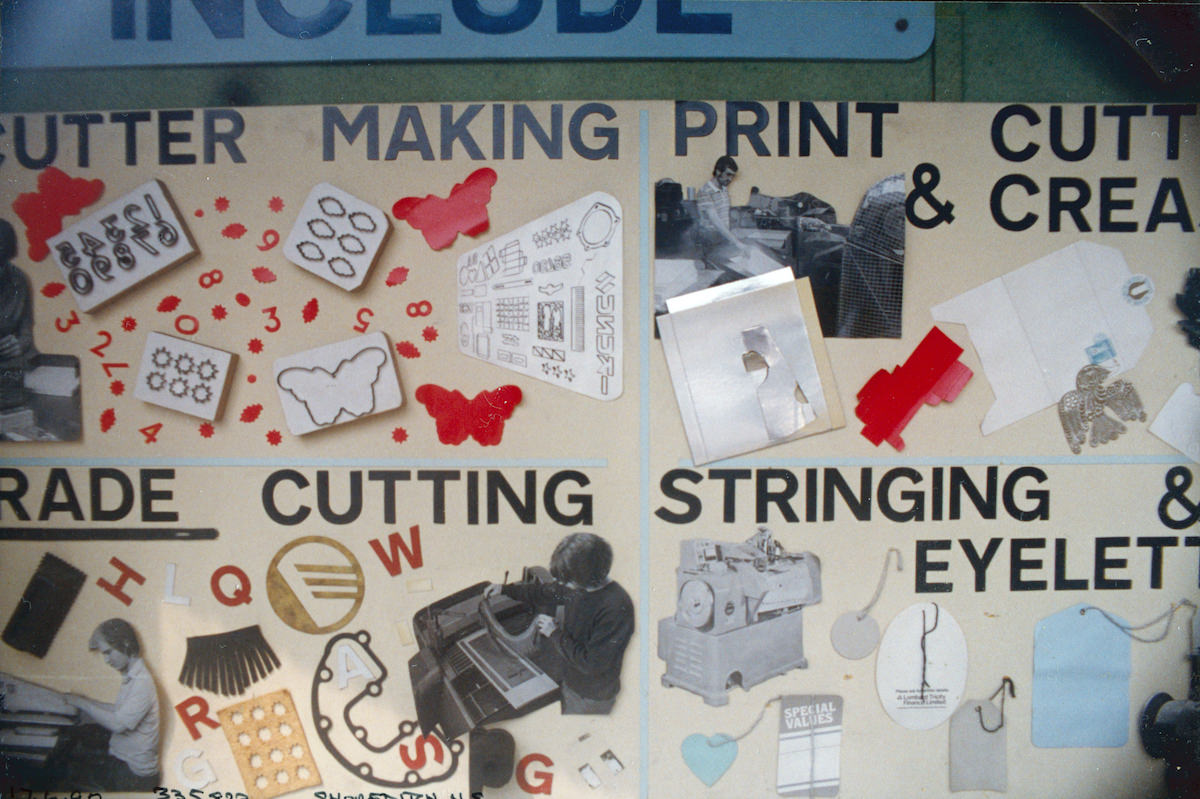
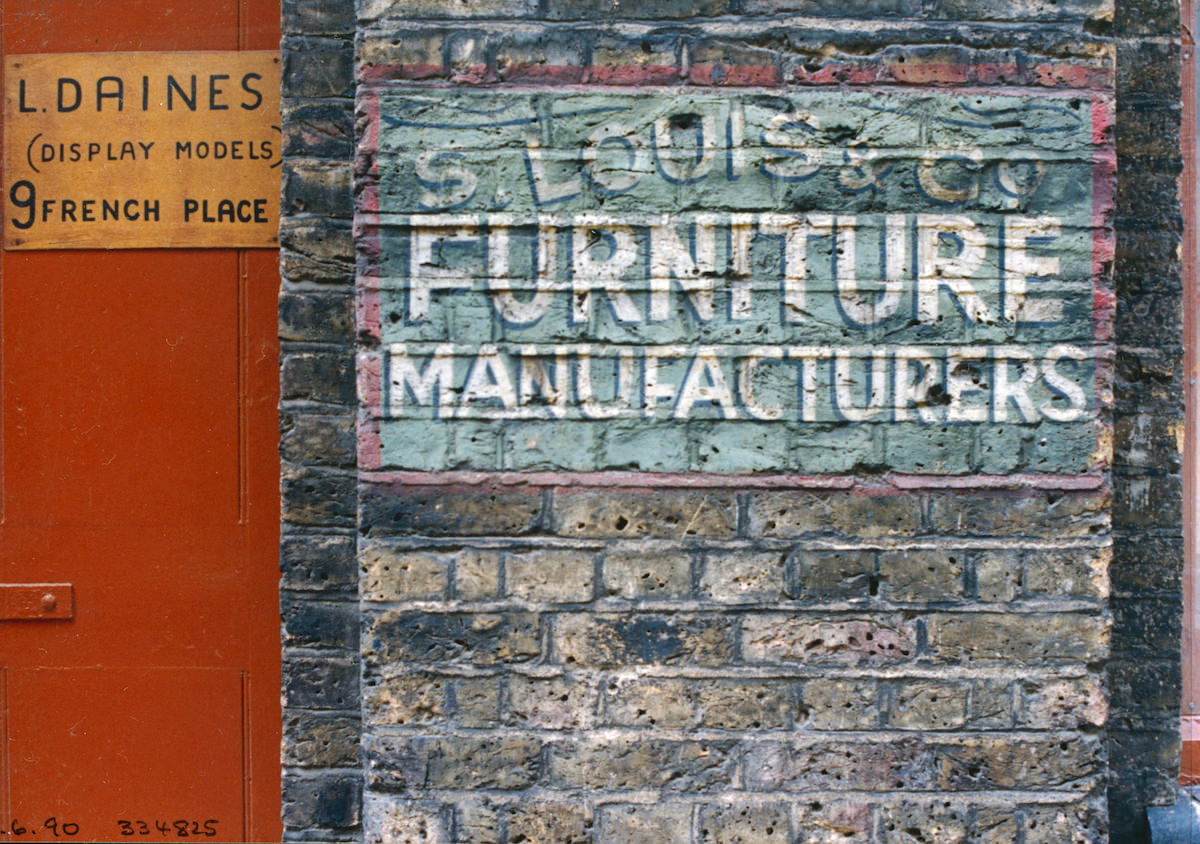
French Place, just off the High Street, was home to small manufacturing operations. S Louis, Furniture Manufacturers, photographed in 1990, represents the kind of trade that had kept Shoreditch working for decades. Cabinet makers, furniture builders, and workshop craftsmen were a significant part of the local economy, and their premises — often tucked into narrow streets and yards — are a recurring subject in Marshall’s photographs.
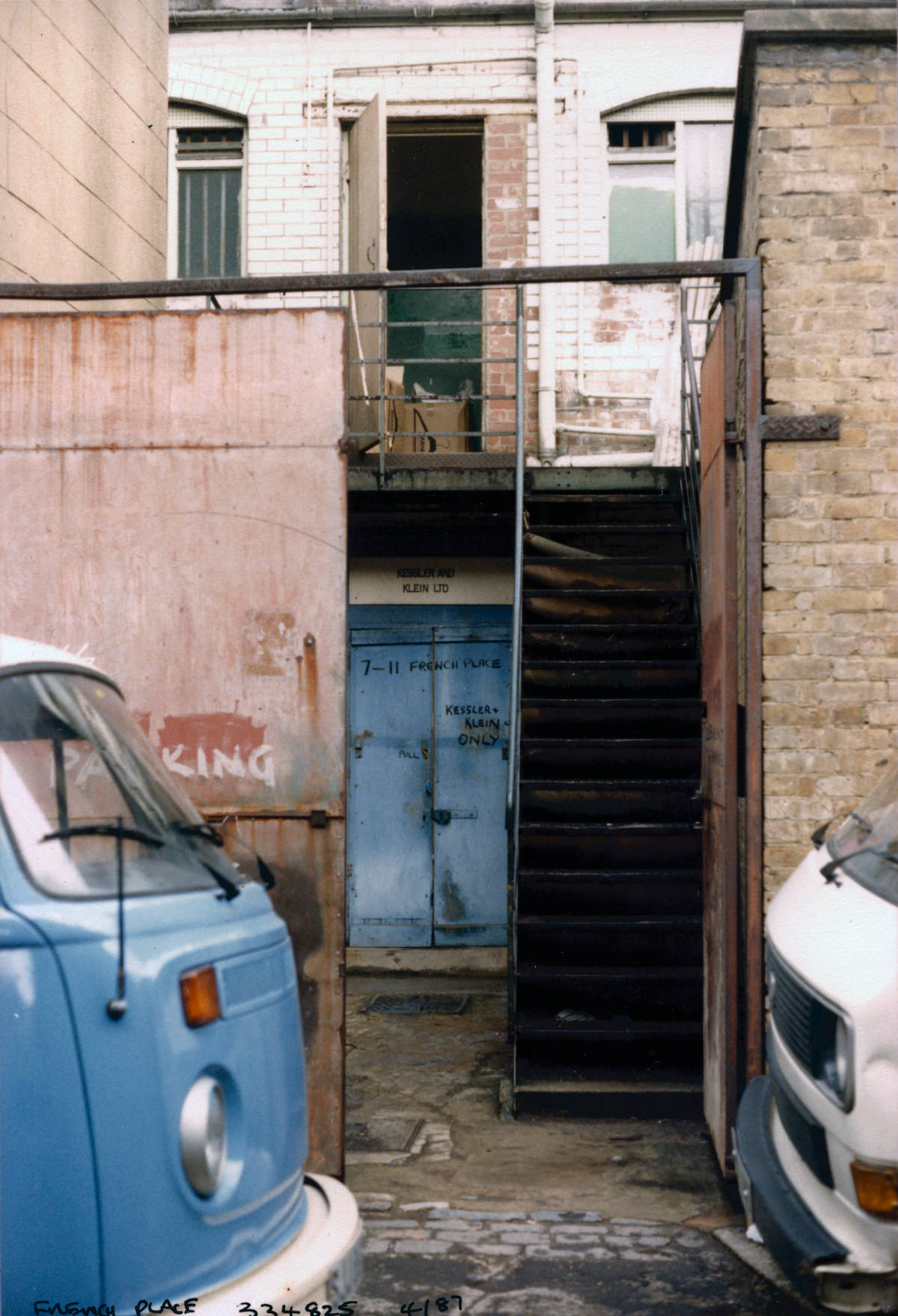
Three years before the furniture manufacturer image, Marshall had already photographed French Place in 1987. The street’s character was consistent across those years — tight, functional, and bearing the marks of decades of industrial use. These kinds of back streets rarely appeared in mainstream coverage of London, which made Marshall’s attention to them all the more valuable as a document.
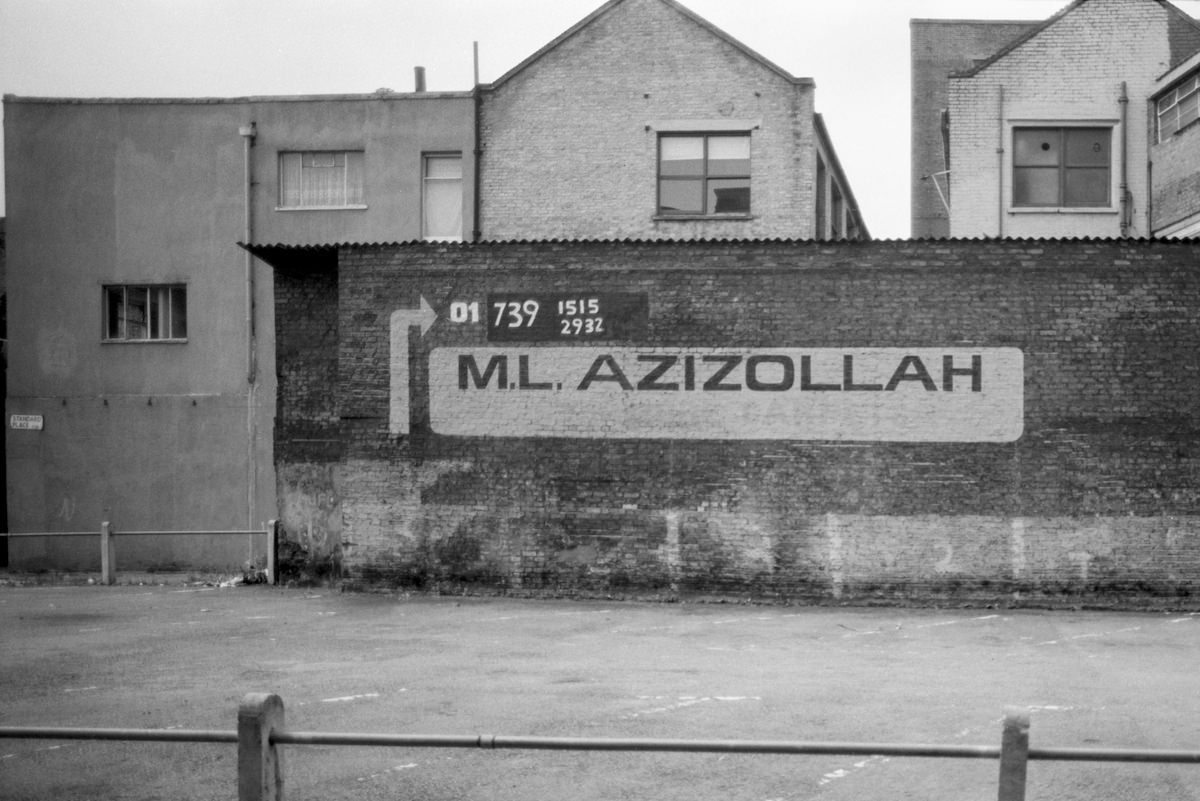
Rivington Street and its surrounding yards held a mix of small trades and residential life. Standard Place, photographed in 1986, is one of the quiet corners that Marshall sought out. These were not famous streets. They were the spaces in between — the alleys, yards, and passages that made up the texture of daily life in the area.
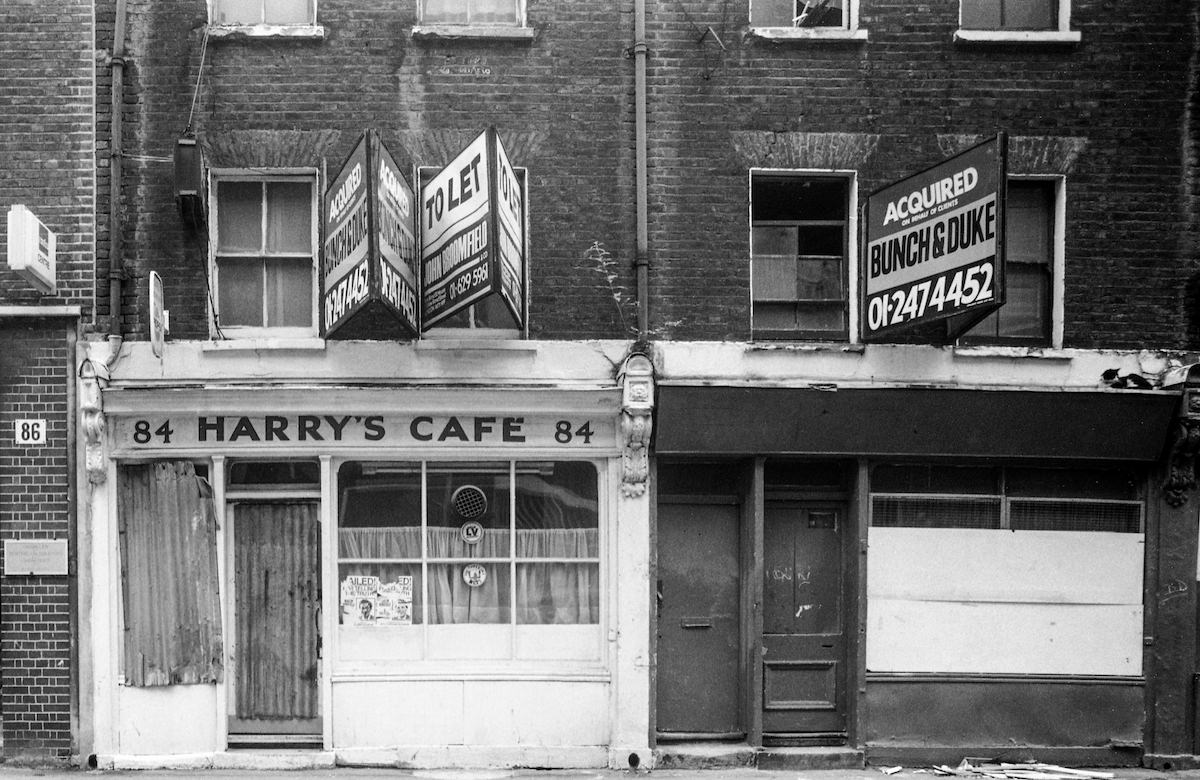
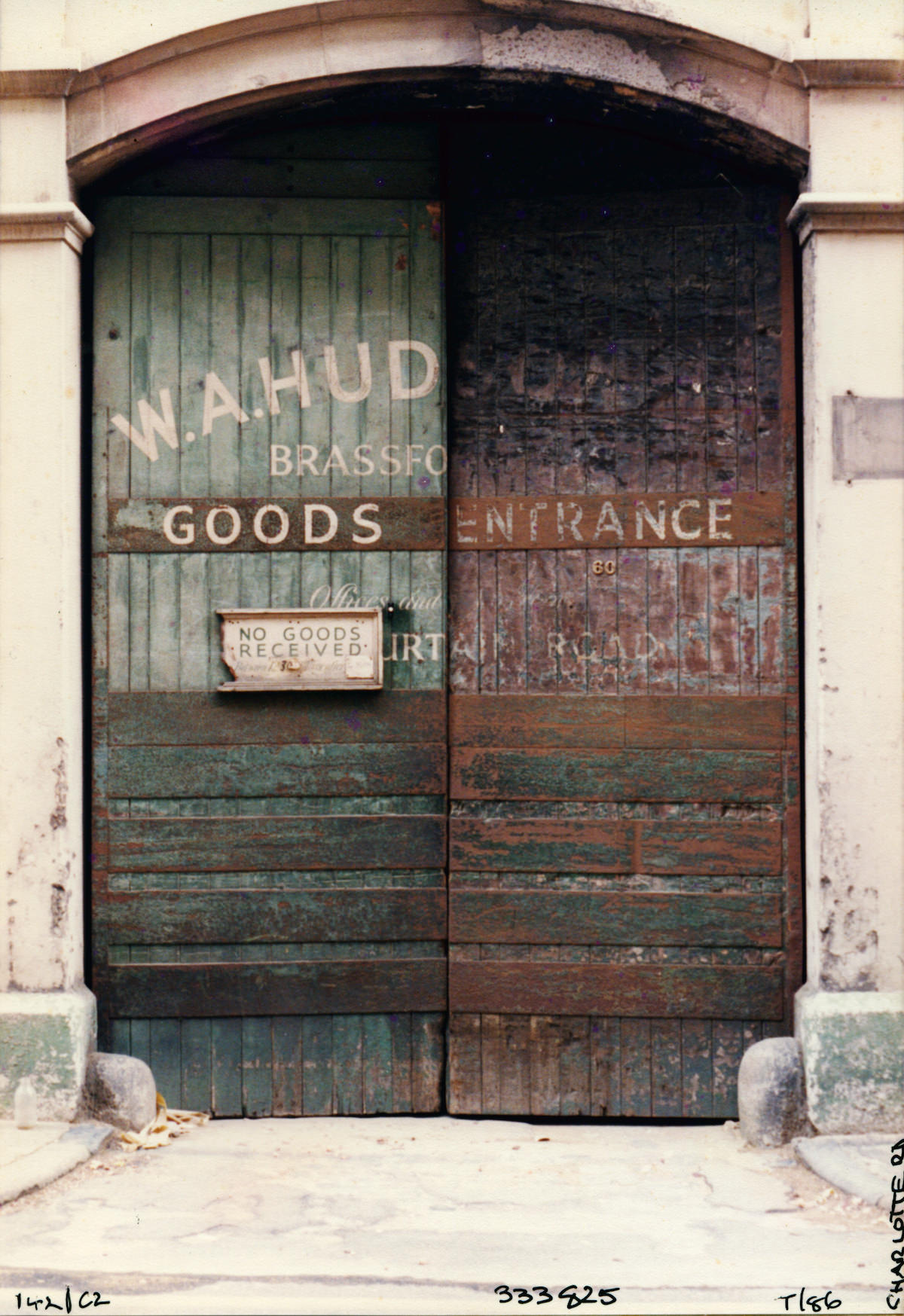
Charlotte Road in 1986 was home to businesses like W A Hudson, a firm whose signage Marshall photographed that year. Streets like Charlotte Road were defined by their small independent traders — names painted directly onto brickwork or mounted above narrow doorways, marking premises that had often been in use for generations.
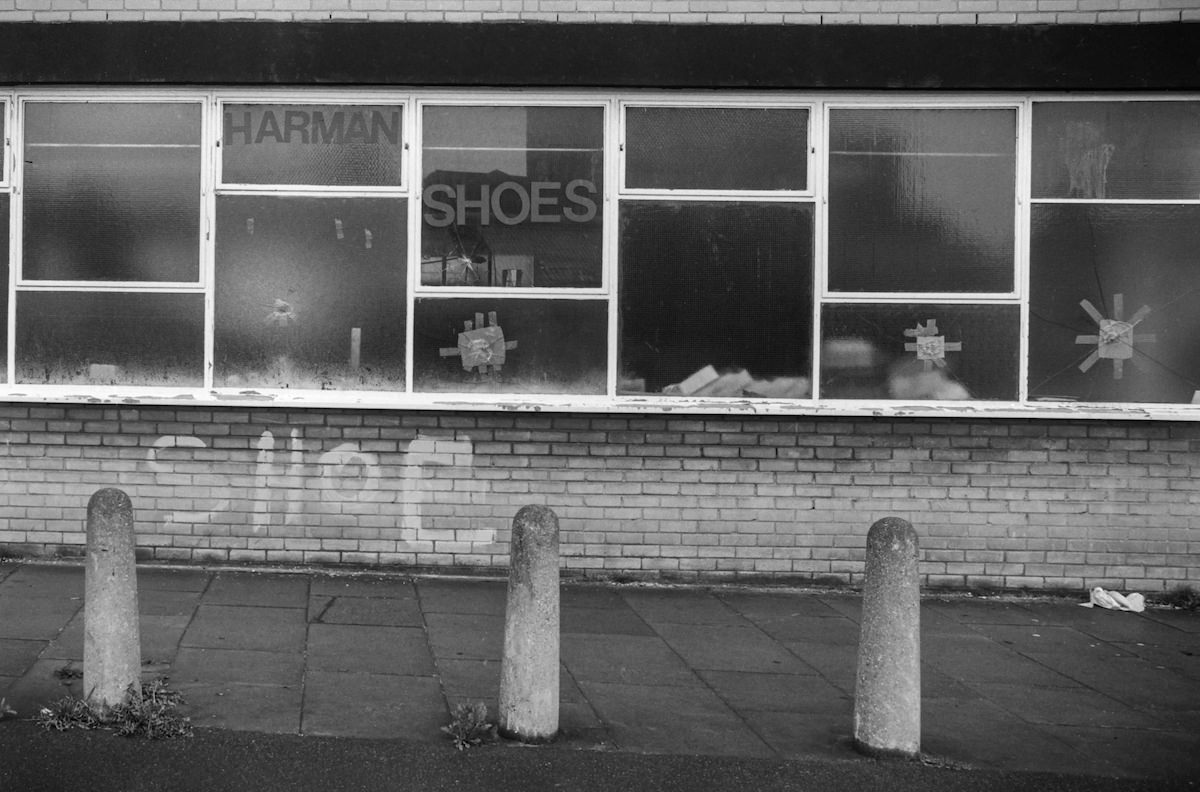
Waterson Street, photographed in 1986, shows the residential side of Shoreditch. The Victorian terraces that Marshall documented throughout this period were built in the mid-to-late 19th century to house the area’s working population. By the 1980s, many had fallen into poor repair. Some were empty. The housing stock across Shoreditch had been neglected for years, and the physical evidence of that neglect was visible at street level.
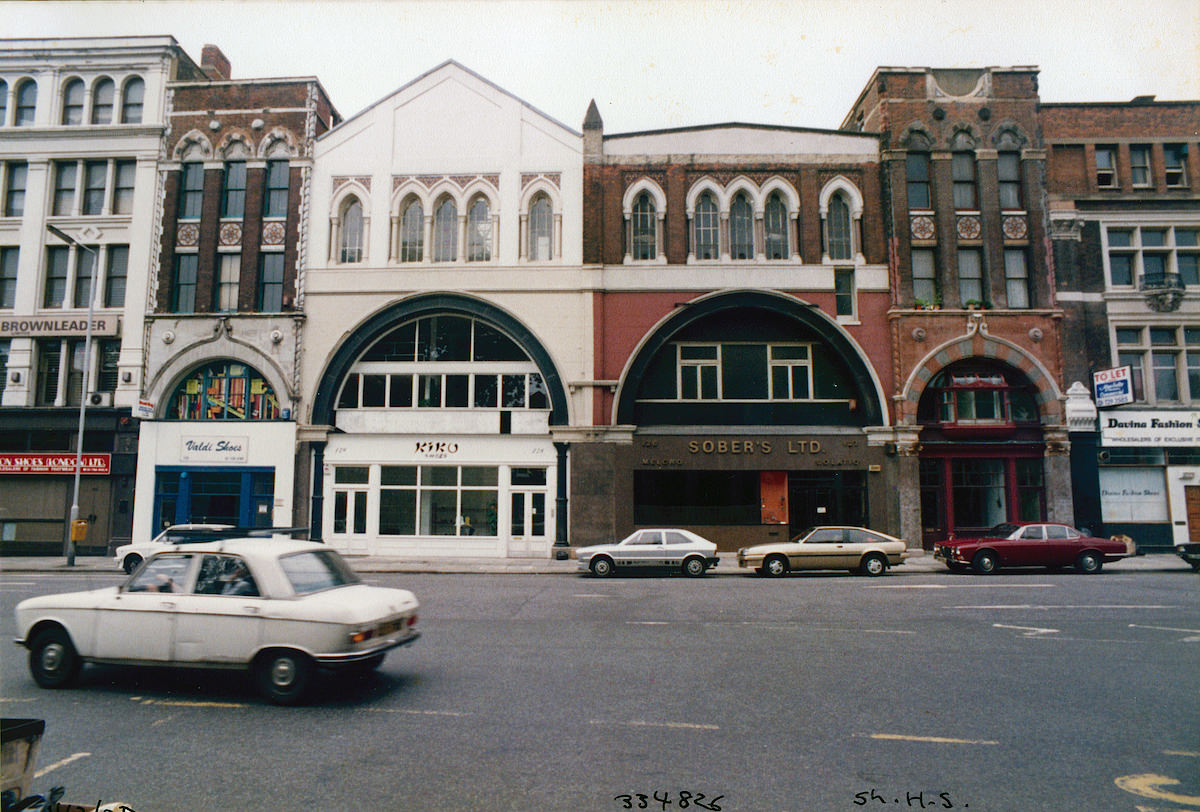
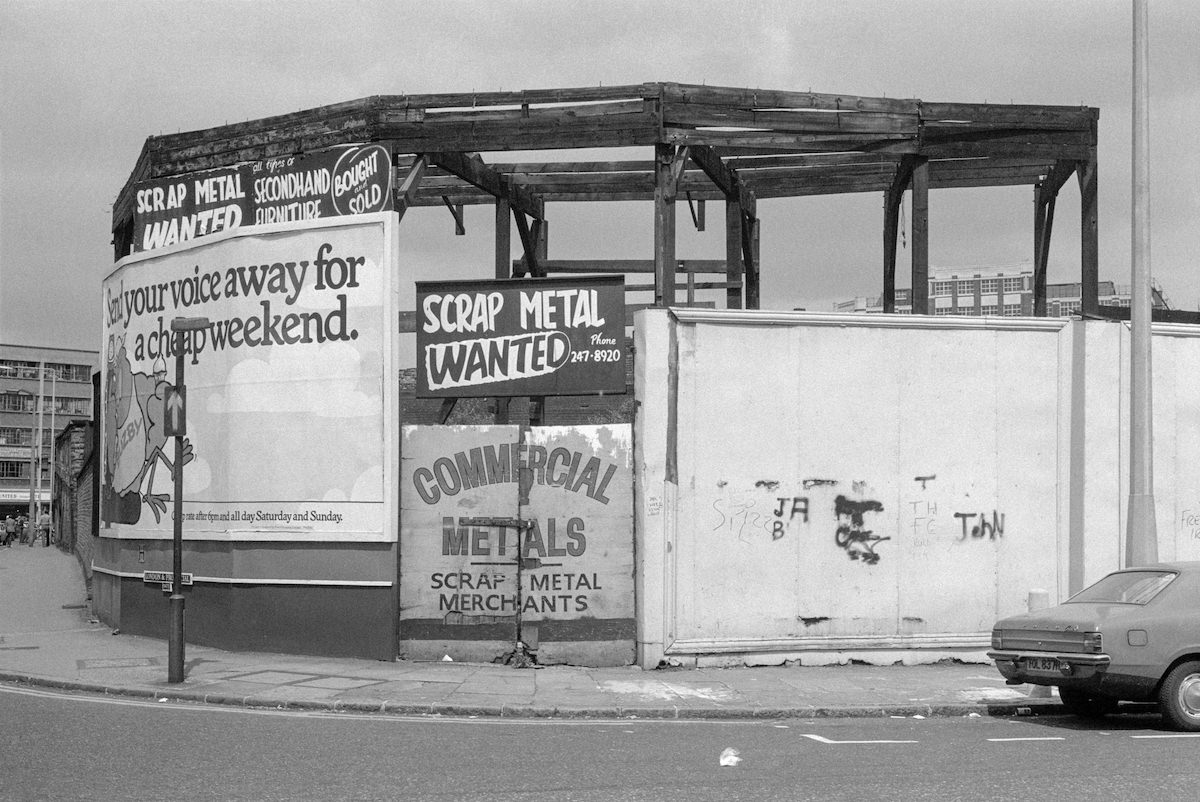
As early as 1980, Marshall was documenting Shoreditch’s Commercial Street, where scrap metal merchants operated alongside other trades. The scrap trade was a fixture of East End commerce, and premises like these occupied the ground floors of buildings that were themselves often in a state of partial disrepair. The contrast between active trade and structural decay is a defining feature of Marshall’s early Shoreditch images.
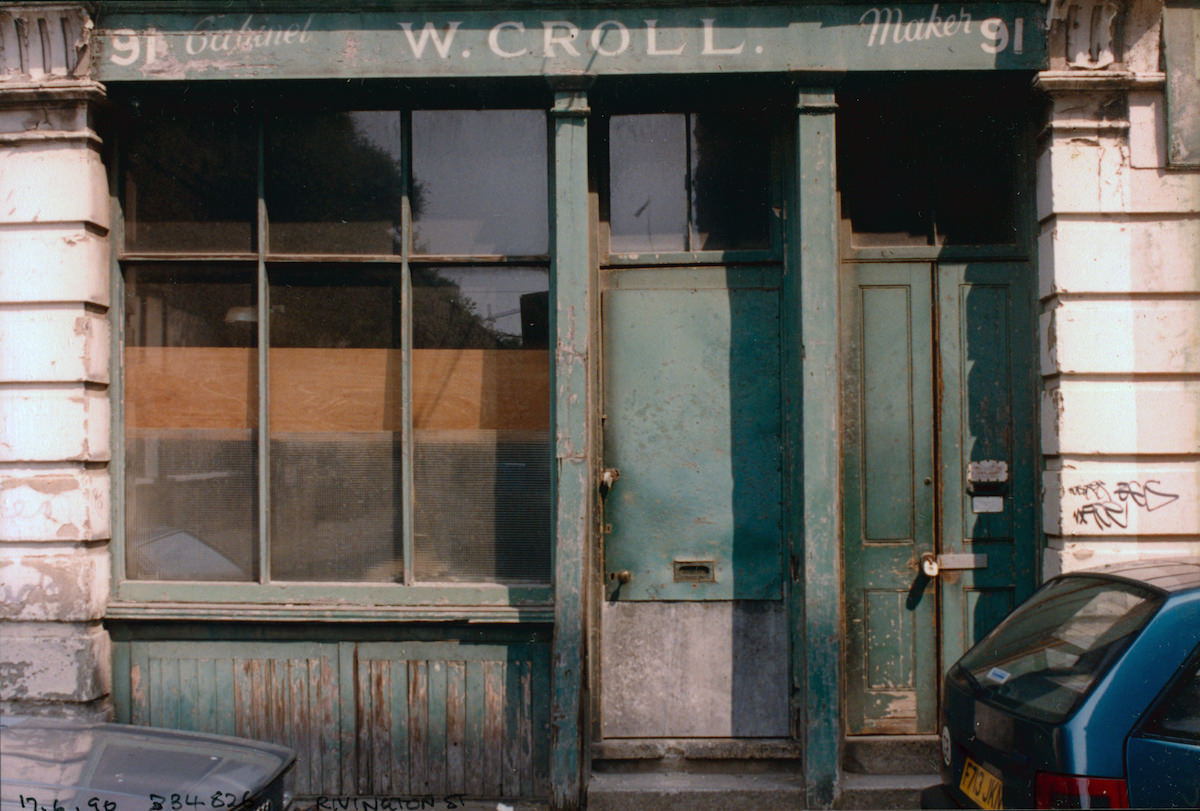
W Croll, a cabinet maker on Rivington Street, was still operating in 1990. The furniture trade had deep roots in the East End, and Shoreditch in particular had been a centre for cabinet making since the 18th century. By the time Marshall photographed Croll’s premises, this kind of small workshop business was becoming increasingly rare as the area’s industrial base continued to shrink.
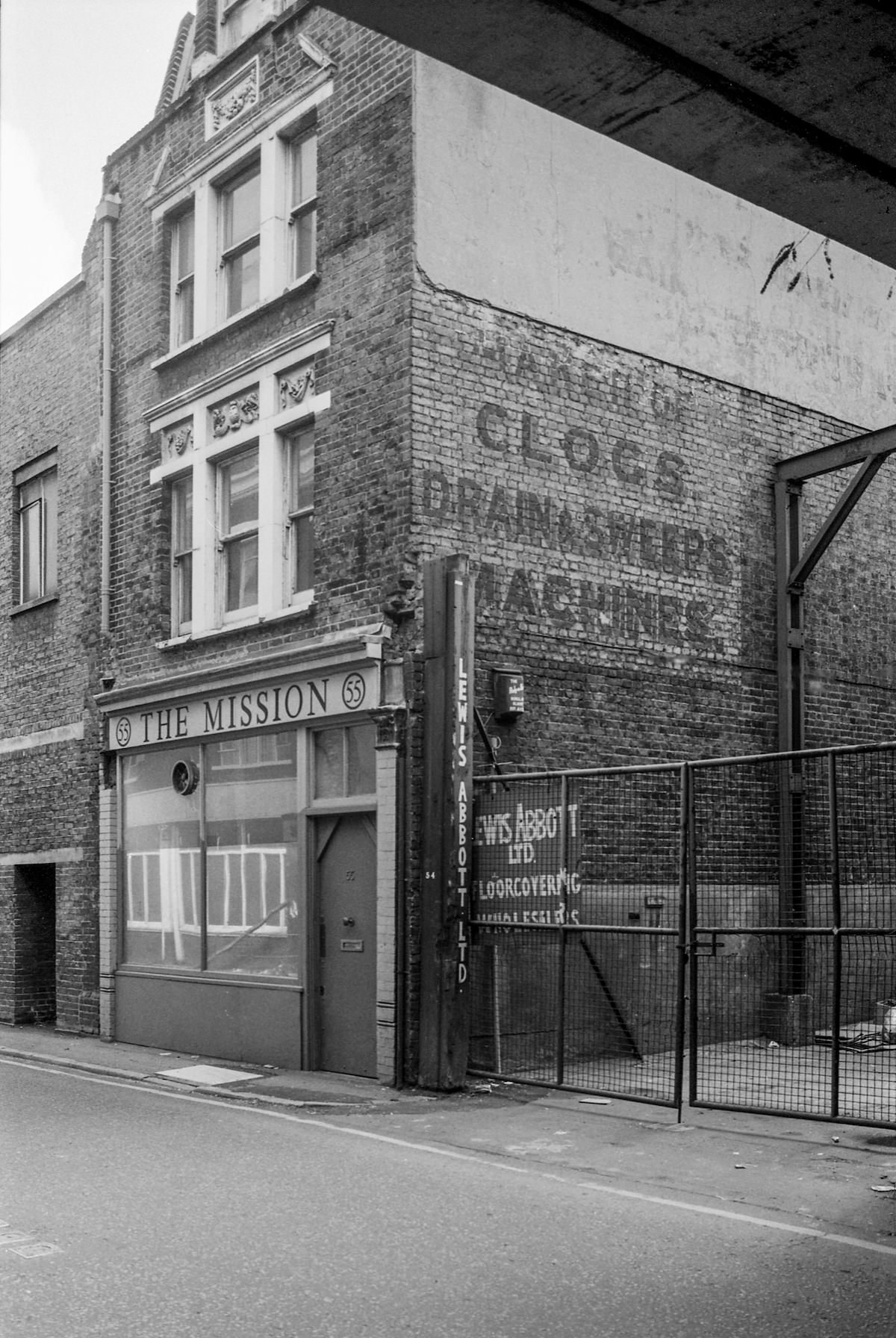
Holywell Lane in 1986 was home to a mission building — a type of charitable or religious institution that had served poor urban communities since the Victorian era. These buildings were a common feature of East End streets, set up to provide practical and spiritual support to local residents. Marshall’s photograph of The Mission documents a kind of architecture and social infrastructure that has largely disappeared from the area.
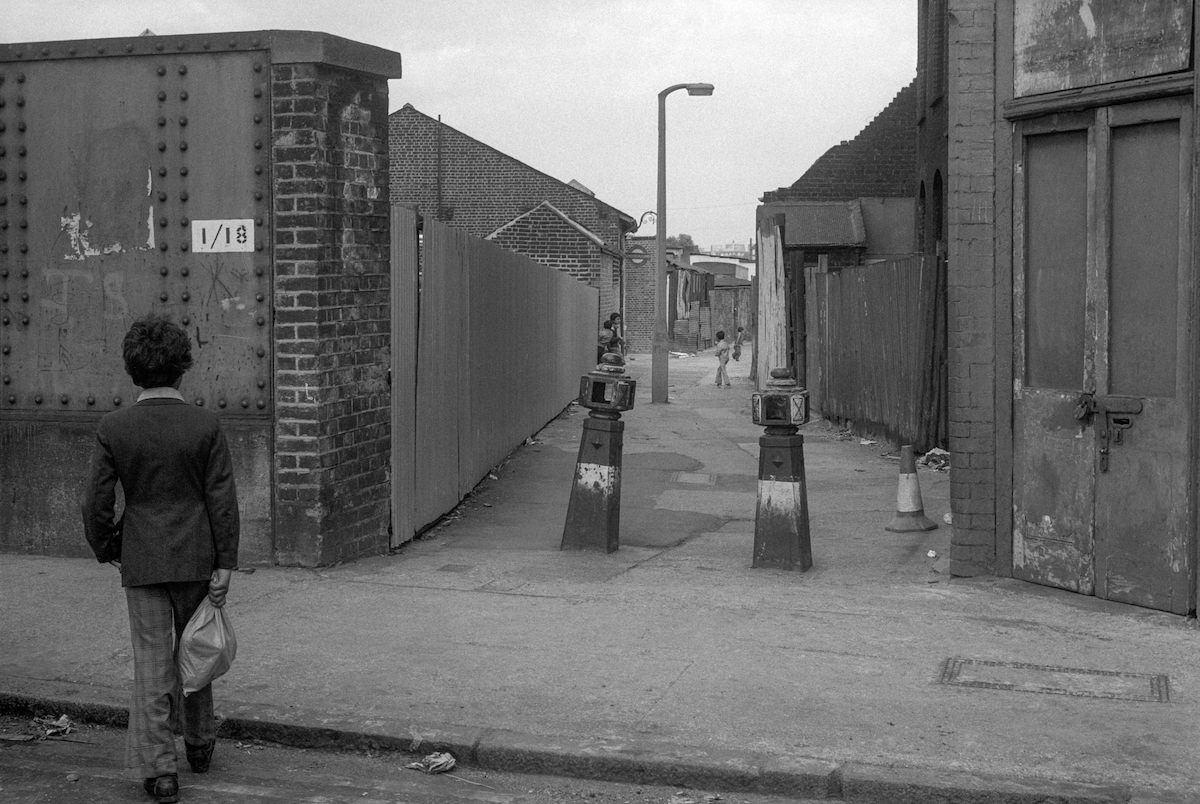
Shoreditch High Street station — originally called Shoreditch — was a terminal station on the East London Railway. By 1980, when Marshall photographed an alley near the old Shoreditch Underground station off Brick Lane, the station had already been closed for several years. It shut in 1940 and never reopened. The alley Marshall captured beside it reflects the quiet, worn character of a part of the city that had been bypassed by development.
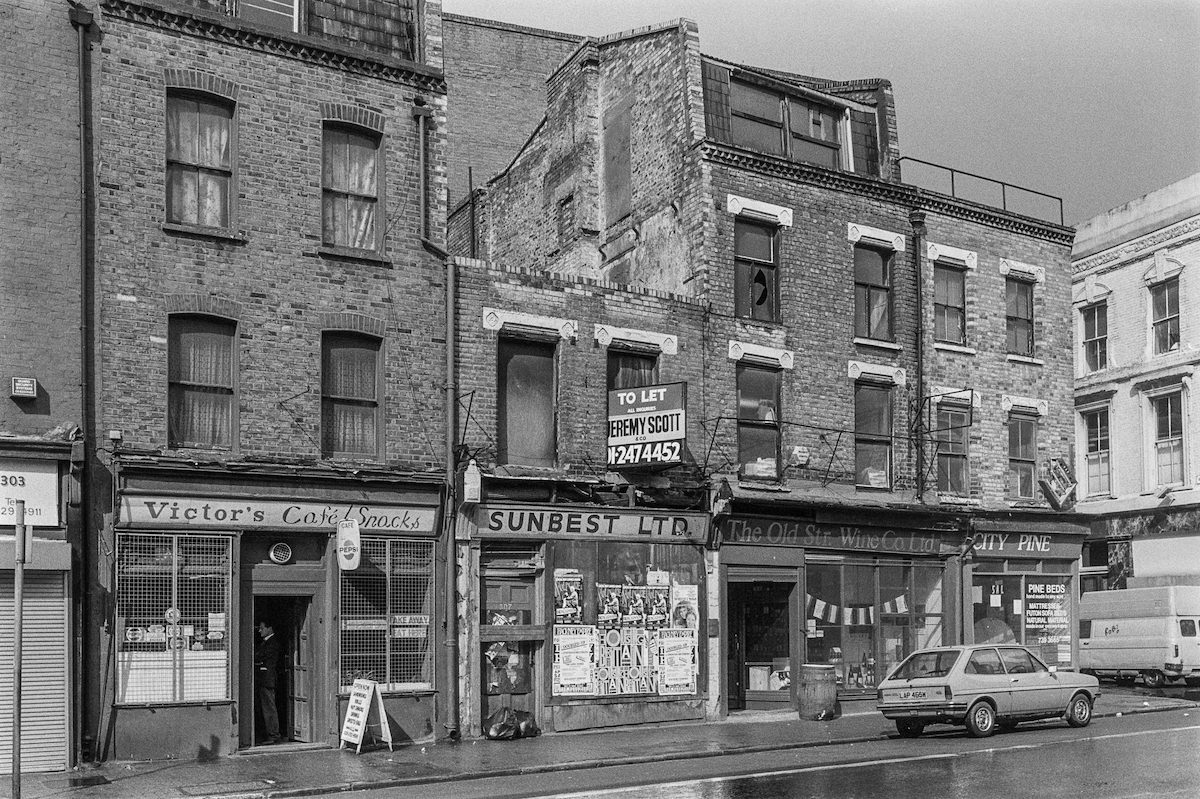
Old Street in 1987 was a busy through-road running along the northern edge of the area. Its junction — later nicknamed Silicon Roundabout — was decades away from becoming a tech hub. In Marshall’s photograph, it appears as a functional urban road, lined with the kind of buildings and businesses that served the area’s working population.
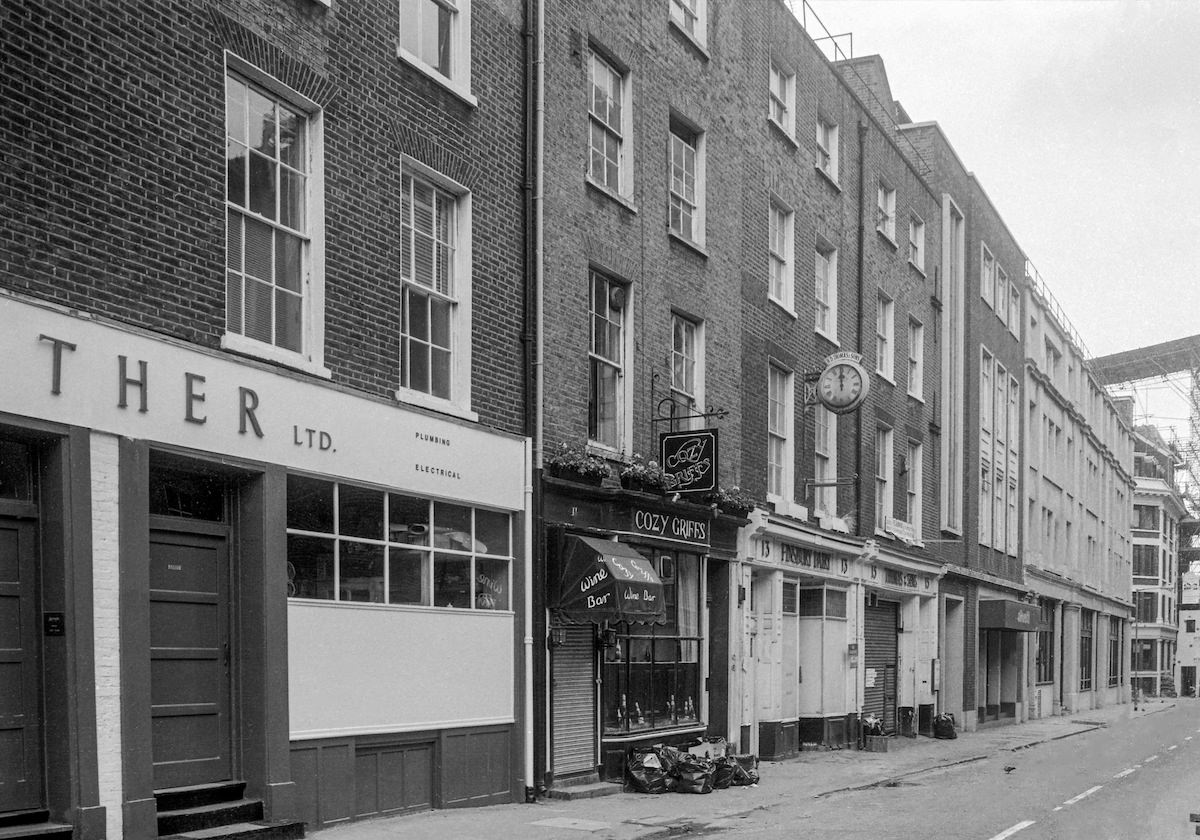
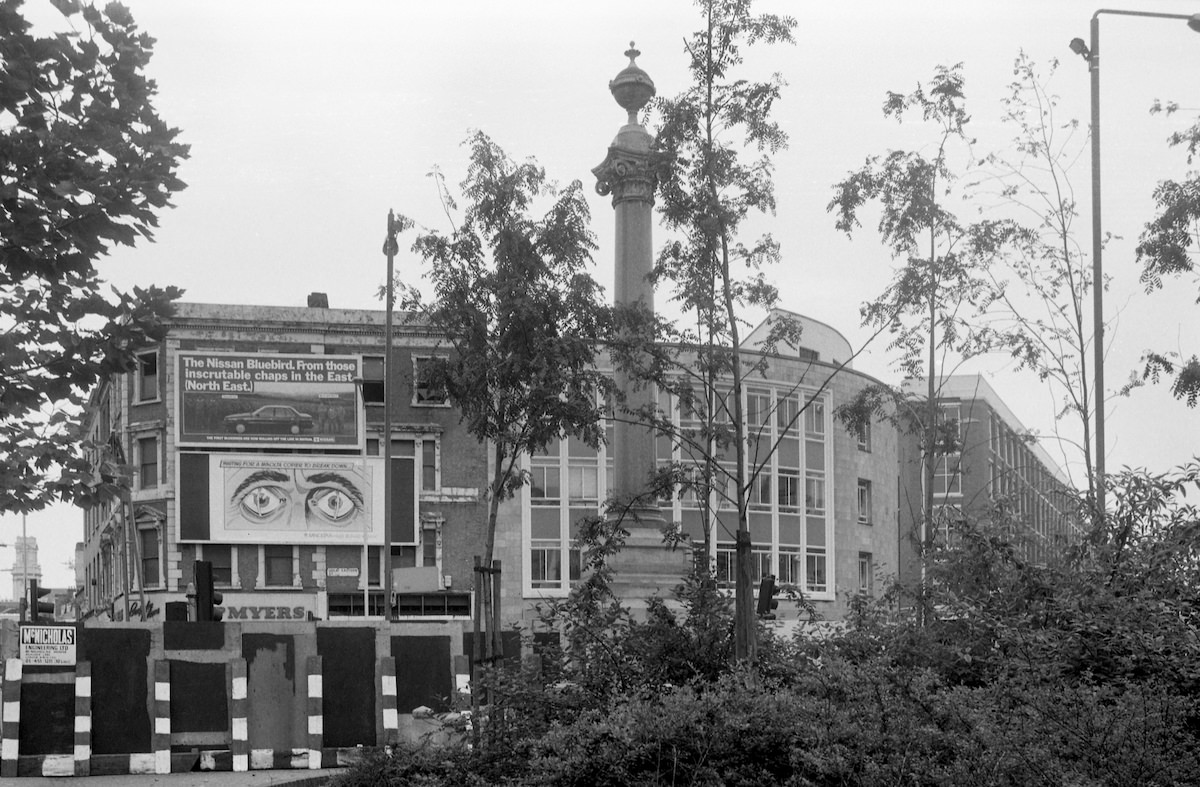
Marshall’s photographs from Shoreditch High Street in 1990 show a street that had changed little in surface appearance since the mid-20th century. Shop windows displayed the goods of small independent businesses, and the architecture retained the Victorian and Edwardian fabric that had defined the streetscape for generations. The details he captured — signage, window displays, doorways — record a commercial environment that was already in the early stages of transformation.
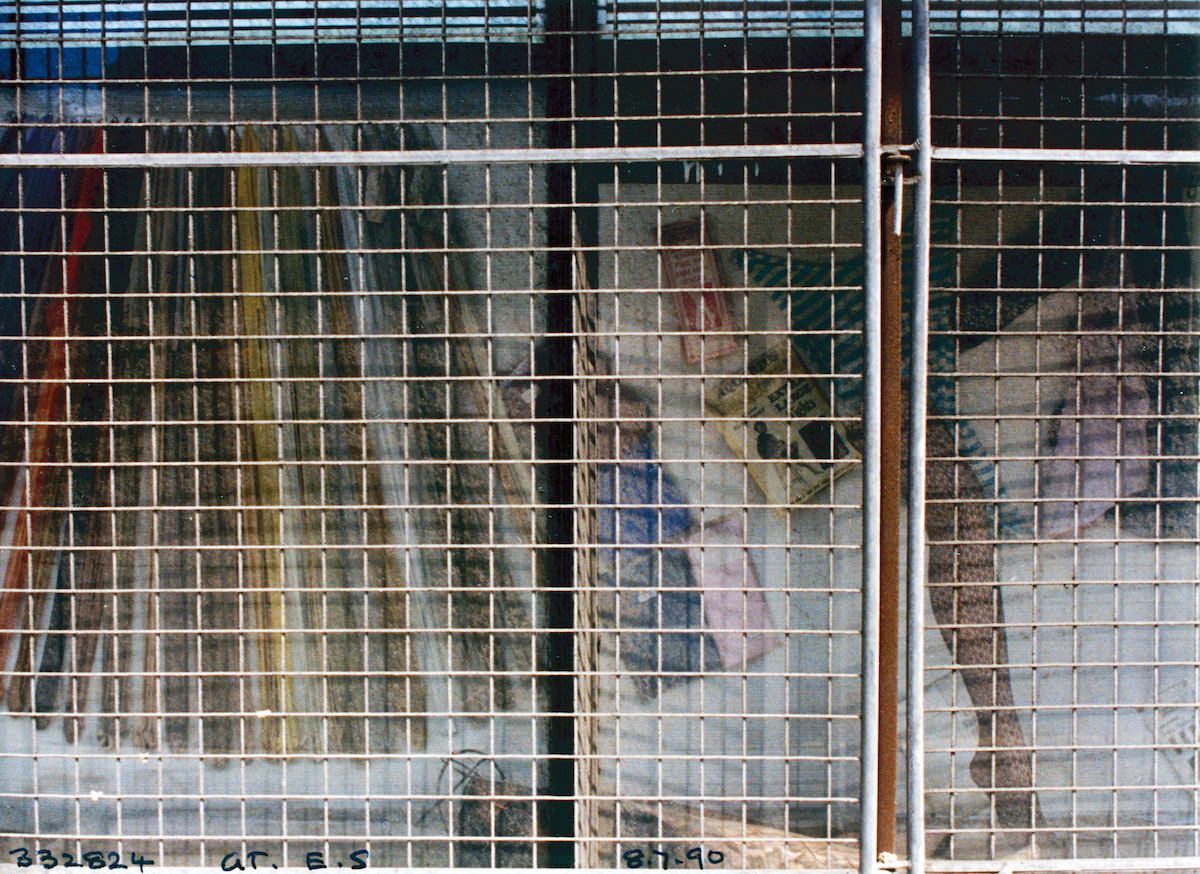
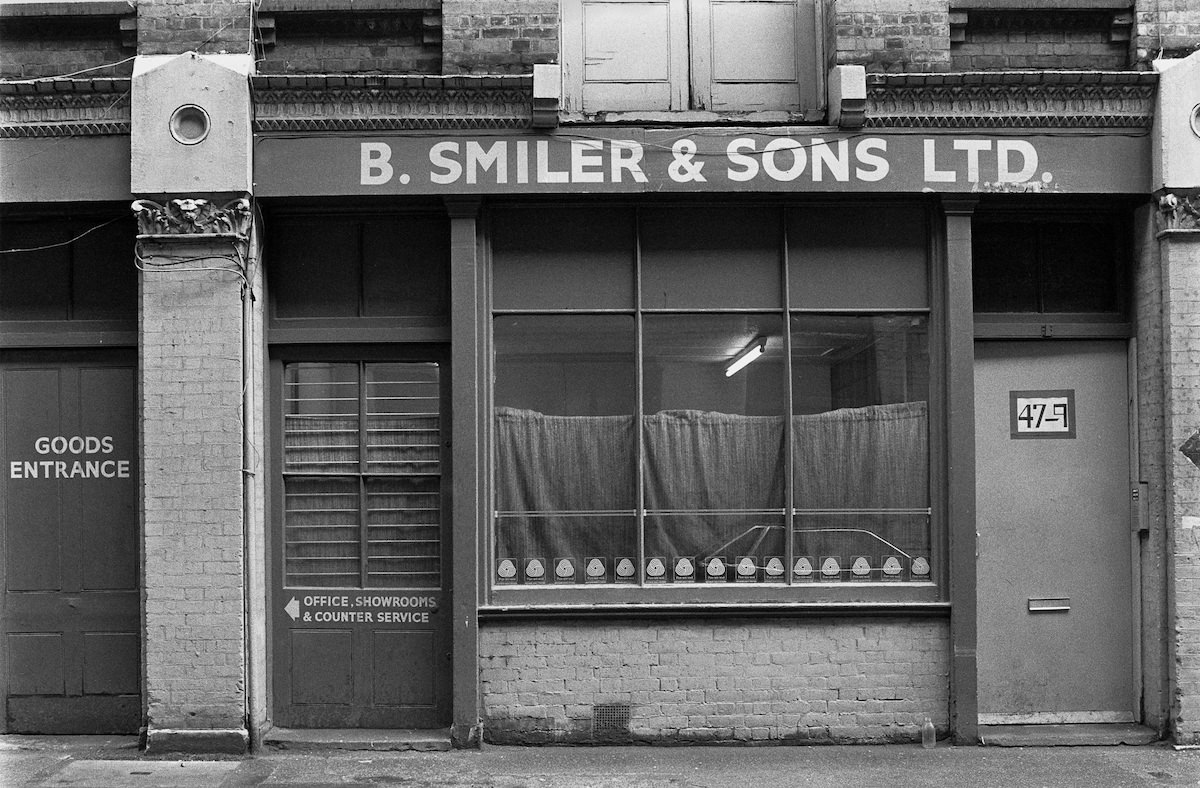
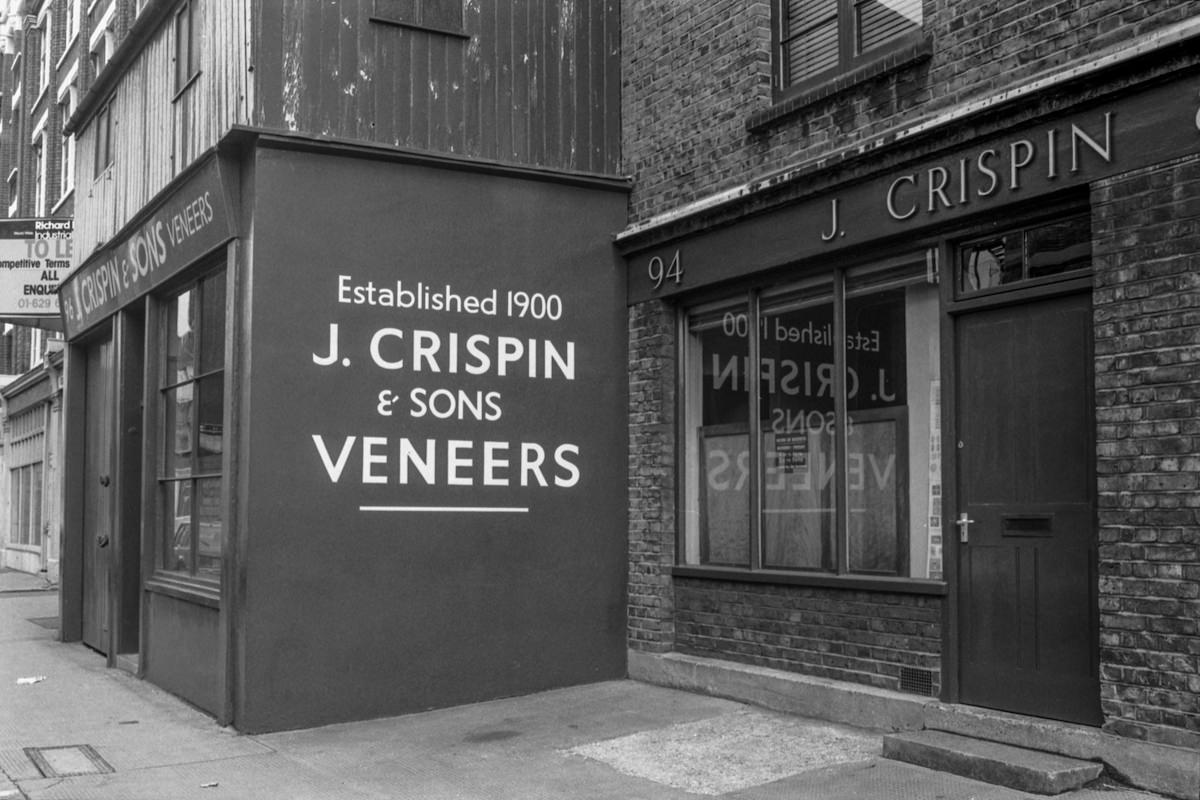
Great Eastern Street in 1990 continued to reflect the same working character it had held throughout the decade. Marshall’s photograph from that year shows the street as a place of business rather than leisure — a commercial strip serving local needs, lined with the kinds of modest premises that defined Shoreditch’s economy before redevelopment began in earnest.
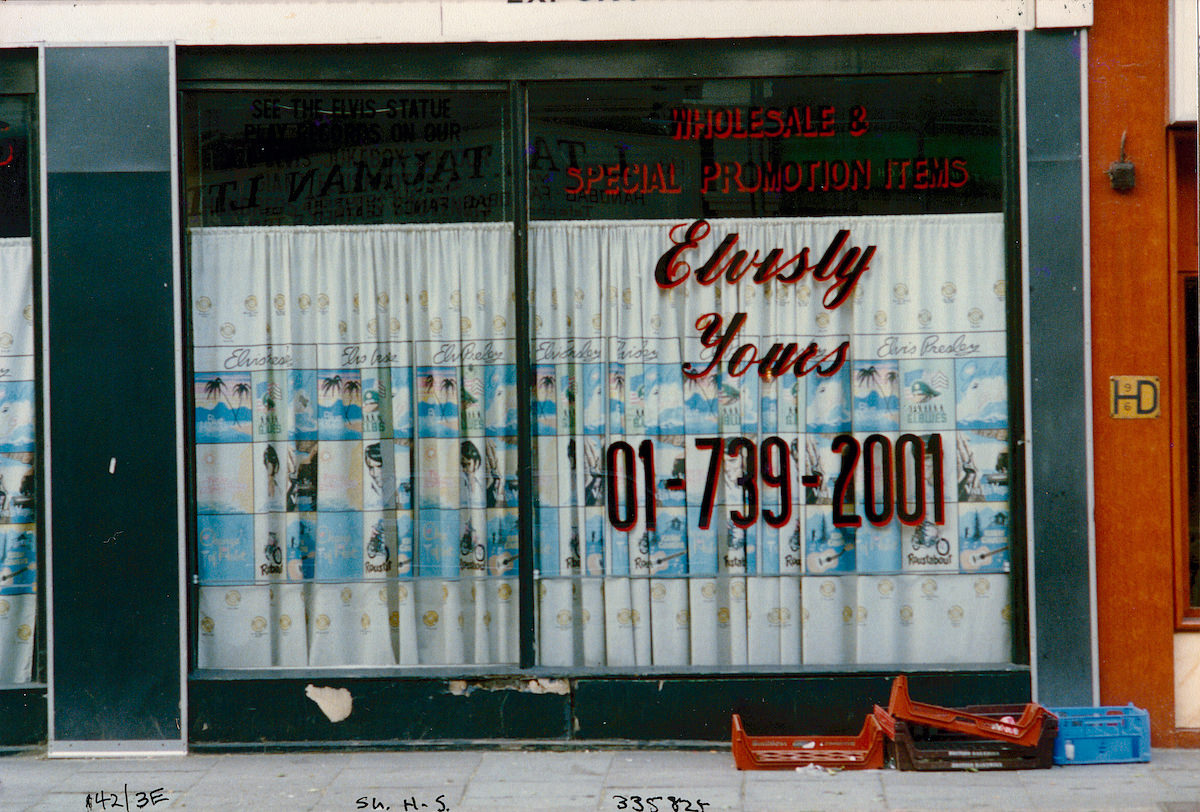
One of the more distinctive photographs from Shoreditch High Street in 1986 is Marshall’s shot of a shop called Elvisly Yours — a business dedicated to Elvis Presley memorabilia. Its presence on a street better known for furniture makers and local traders is a reminder that even in a declining area, small niche businesses found a foothold. The shop’s bold signage stands out against the more muted commercial landscape surrounding it.
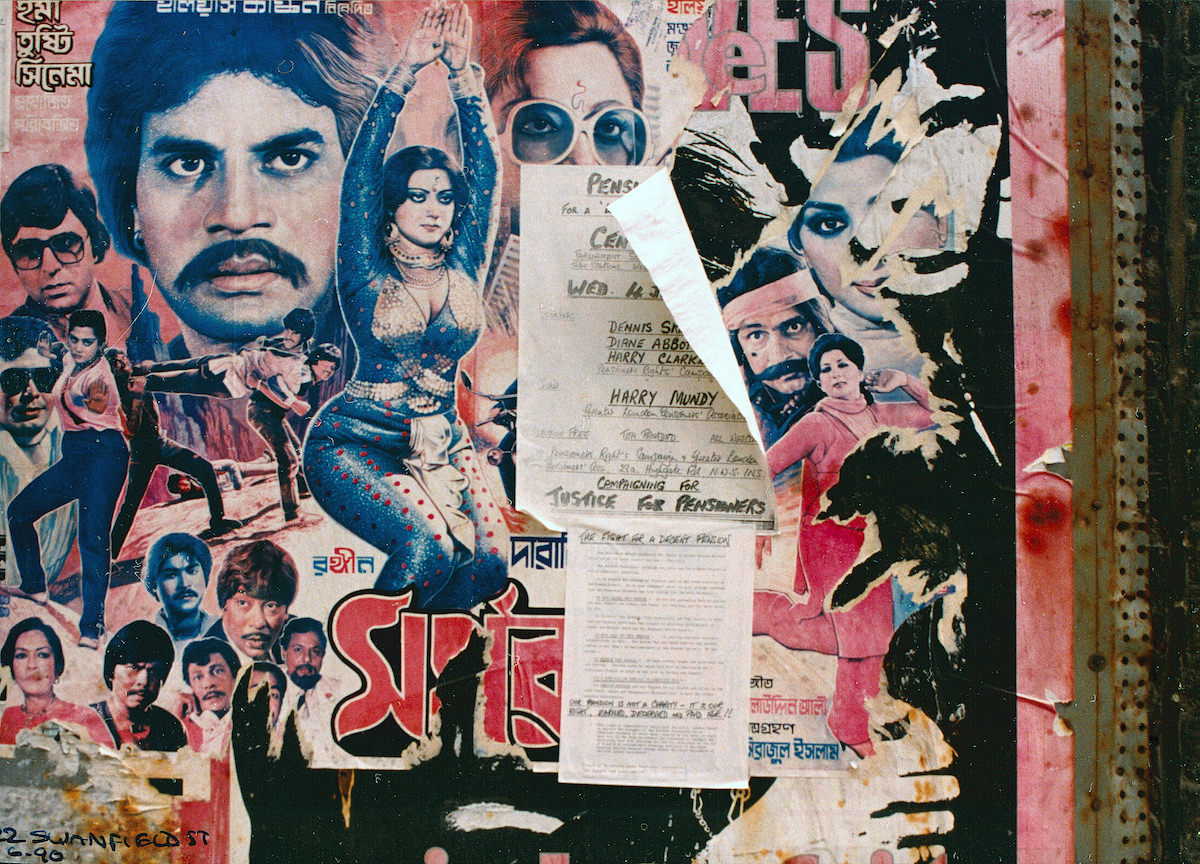
Swanfield Street in 1990, in Tower Hamlets, gave Marshall the subject of a poster-covered wall — a common sight on underused or vacant property in East London. Fly-posting was widespread across the area in this period, with entertainment and political posters layered over one another across entire sections of brickwork. These walls functioned as an unofficial public noticeboard for the communities around them.
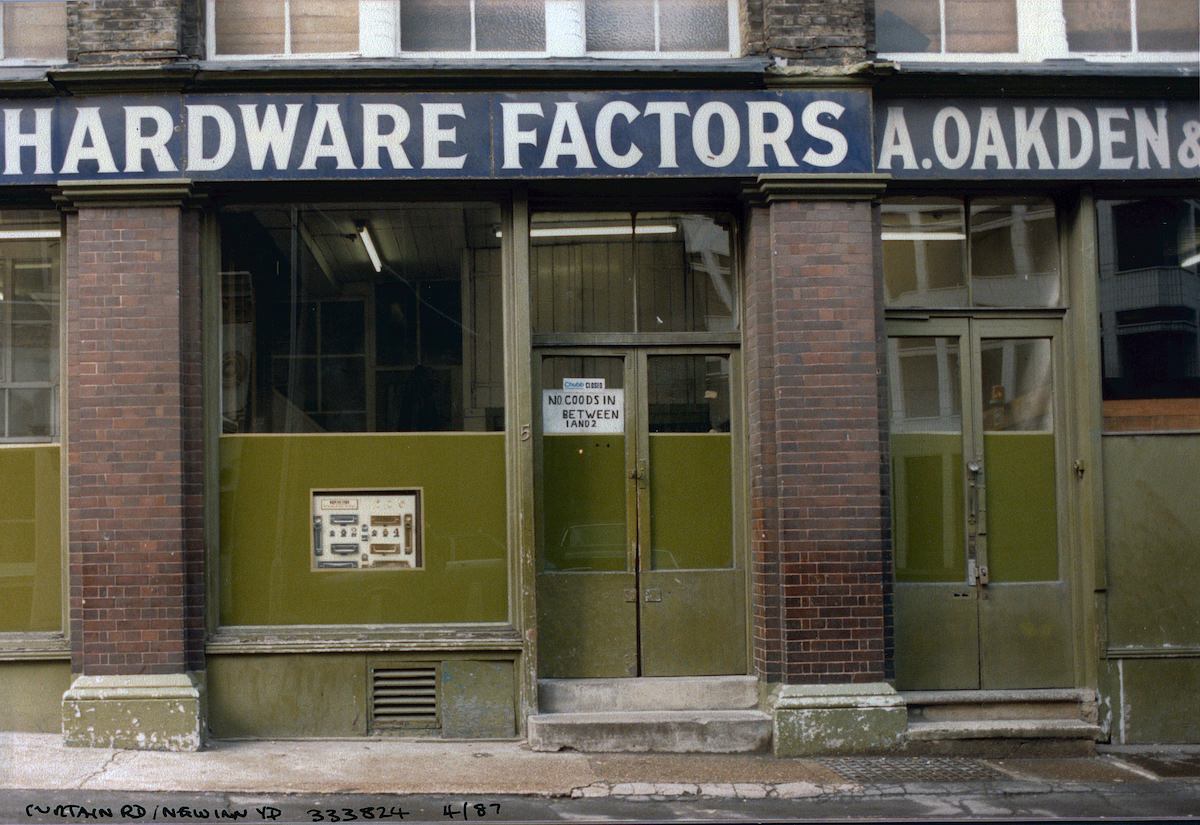
On Curtain Road, at the corner of New Inn Yard, Marshall photographed the premises of a hardware factors business in 1987. Hardware suppliers and factors — wholesalers who sold to tradespeople — were a common feature of Shoreditch’s commercial landscape. Their presence reflected the dense network of small manufacturers and craftsmen who still relied on local suppliers for their materials and tools.