Hey There! Before You Go. 😧
Get the best vintage content straight into your inbox!

Don't worry, we don't spam

San Antonio in the 1940s: What San Antonio looked like During World War II

San Antonio entered the 1940s already shaped by its military roots, but the decade that followed transformed it in ways the city had never seen. Its population jumped from 253,854 in 1940 to 408,442 by 1950 — a leap of more than 150,000 people in just ten years. Young recruits poured in from across the country, wartime industries pushed the local economy forward, and daily life on the streets carried the unmistakable mark of a nation at war. This is what San Antonio looked like during that era.
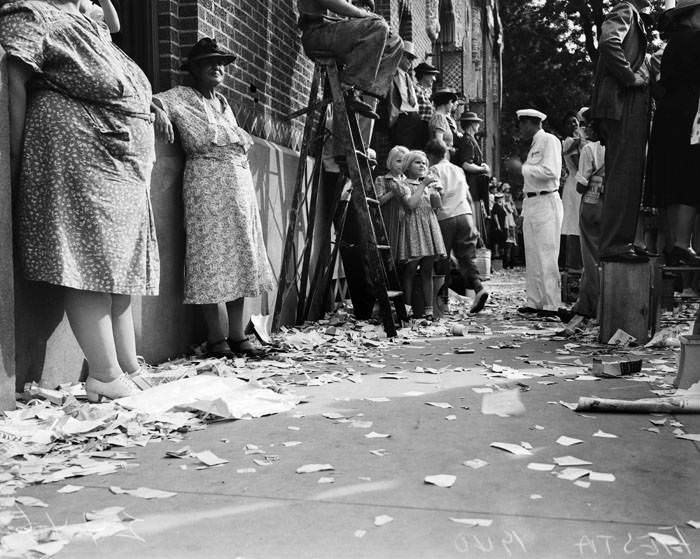
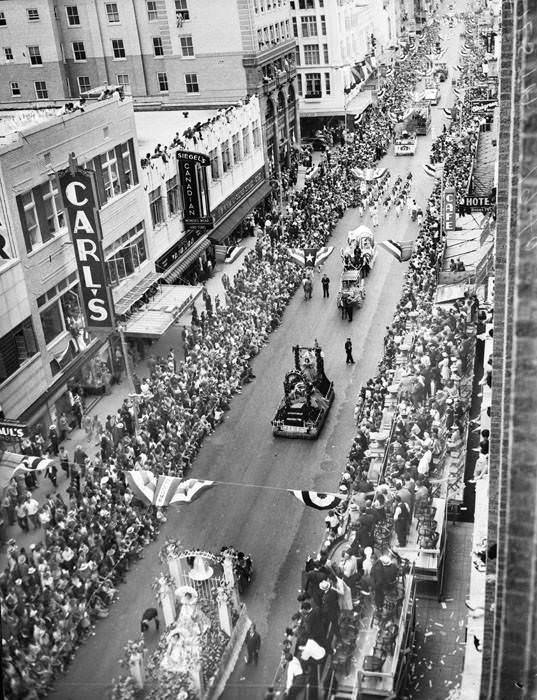
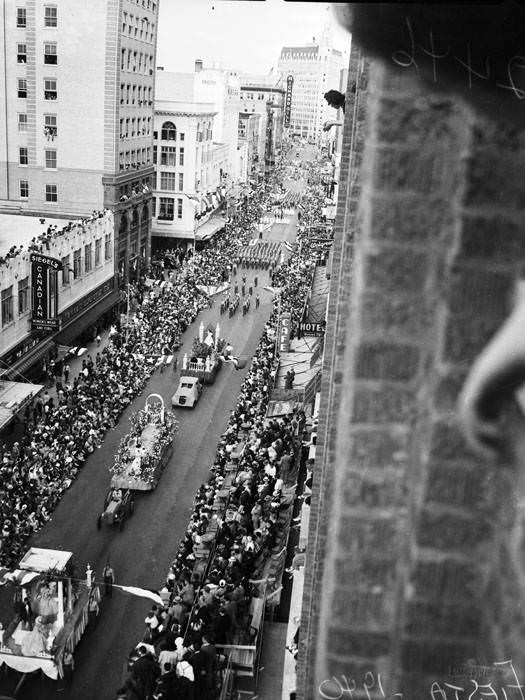
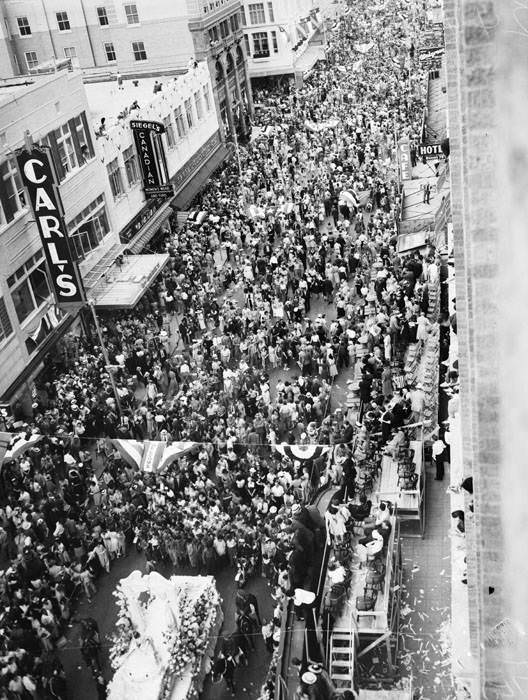
Crowds watching the 1940 Battle of Flowers Parade, 1940

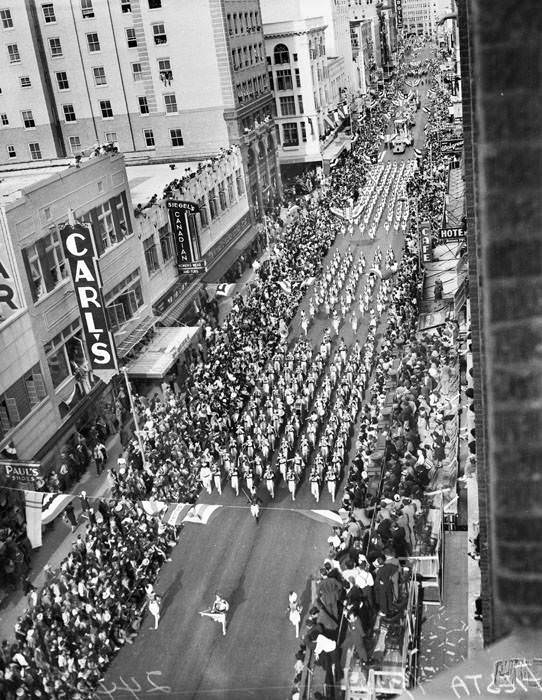
Even before the United States formally entered World War II, San Antonio was preparing. The city’s annual celebrations, like the Battle of Flowers Parade, still drew massive crowds to downtown streets. Floats, school groups, and marching bands rolled past packed sidewalks. Community life continued — but with a growing awareness that the country was edging toward conflict.
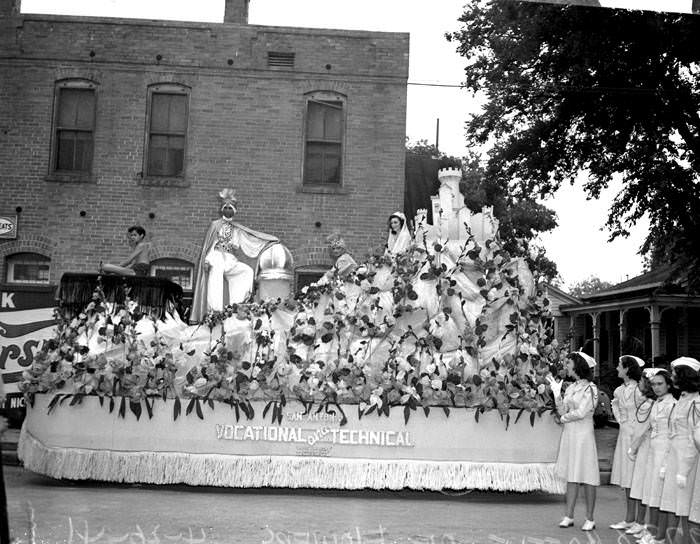
Battle of Flowers Parade with San Antonio Vocational & Technical School float, 1941
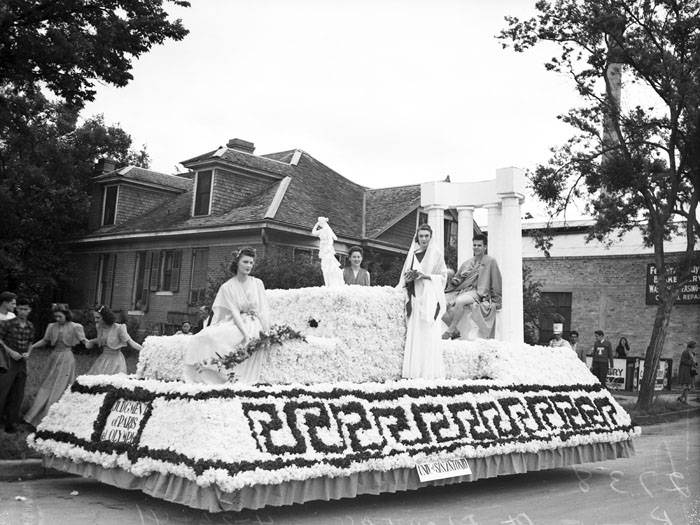
1941 Battle of Flowers Parade float Judgement of Paris at Olympus, 1941

The 1941 Battle of Flowers Parade drew schools, civic groups, and spectators in full force, just months before the attack on Pearl Harbor changed everything. High school drill teams and lasso performers had been a fixture of the city’s Fiesta celebrations for years. By the time the war was officially underway, these same schools and community organizations would redirect much of their energy toward the war effort.
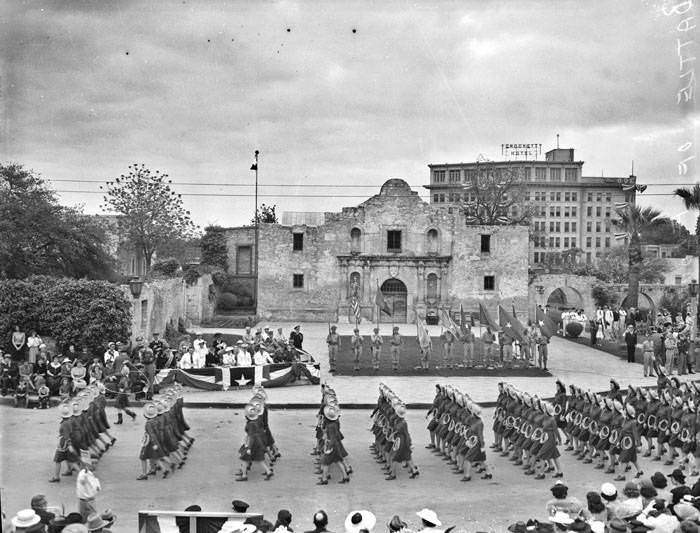
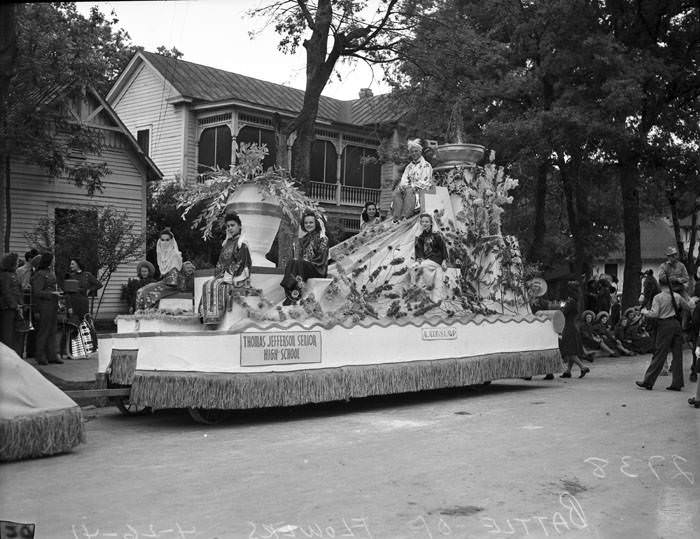
Battle of Flowers Parade with Jefferson Lassos passing before the Alamo,1941
Battle of Flowers Parade Jefferson High School float, 1941

San Antonio’s military presence was already significant before the war, but World War II made it undeniable. Kelly Field, Brooks Field, Randolph Field, and Lackland Field — Lackland having opened in 1930 — all served as critical training installations. Recruits from every corner of the United States arrived in San Antonio to train, many of them seeing the city for the first time. The sheer volume of uniformed personnel changed the texture of everyday life downtown.
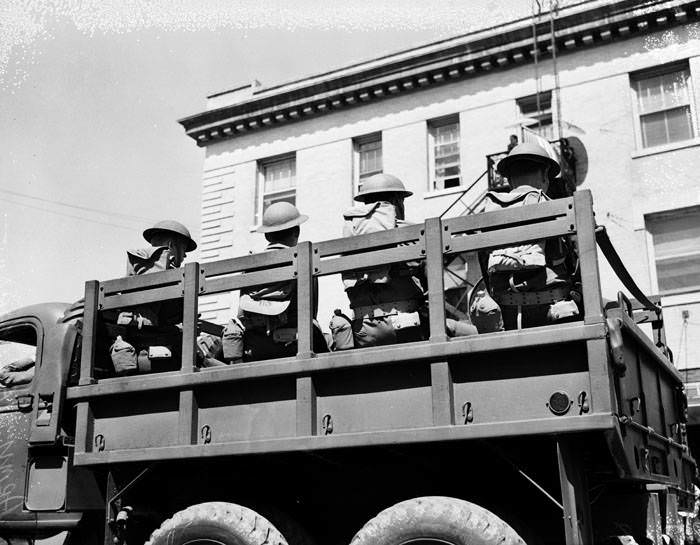
Army Day Parade on N. Alamo Street, 1941
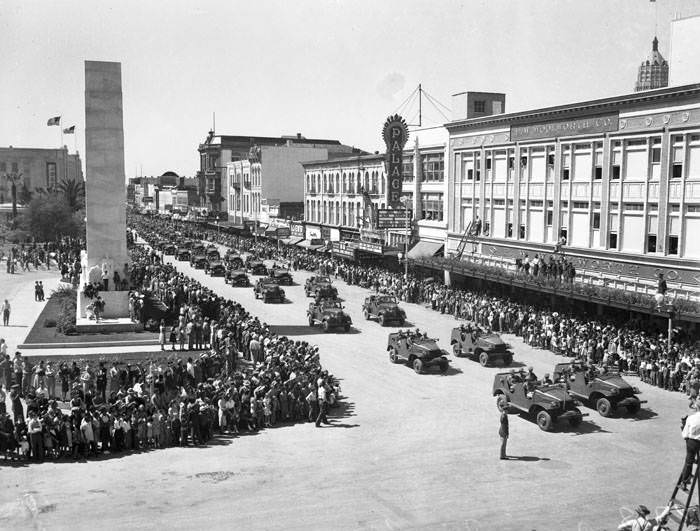
Army Day parade in Alamo Plaza, 1941

Army Day parades moved through Alamo Plaza and along North Alamo Street, drawing crowds that came to watch tanks, troops, and military vehicles roll through the heart of the city. These events weren’t just spectacle — they were a deliberate display of military readiness at a moment when the country was on edge. The military’s footprint in San Antonio wasn’t confined to the bases; it extended into city streets, churches, schools, and hospitals.
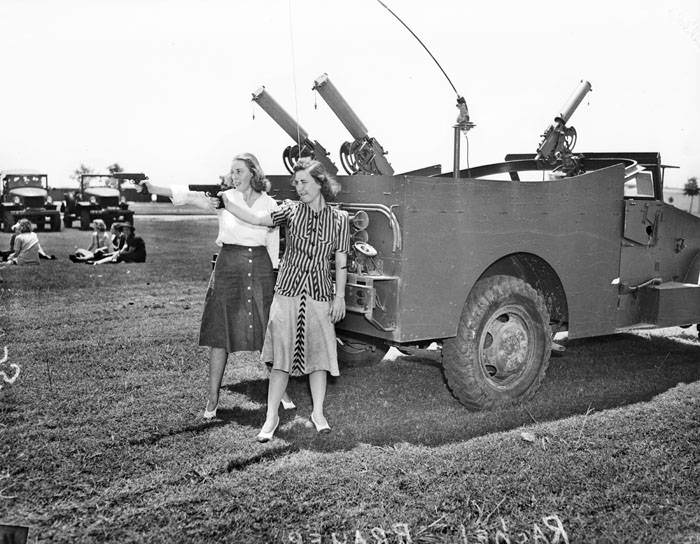
Women's Motor Corp members firing pistols, 1941
Women’s Motor Corp members firing pistols, 1941

Civilians trained alongside the military in their own capacity. Members of the Women’s Motor Corps took pistol instruction in 1941, learning to fire handguns as part of their wartime preparedness training. Organizations like this recruited women into active defense-support roles well before the U.S. officially entered the war.
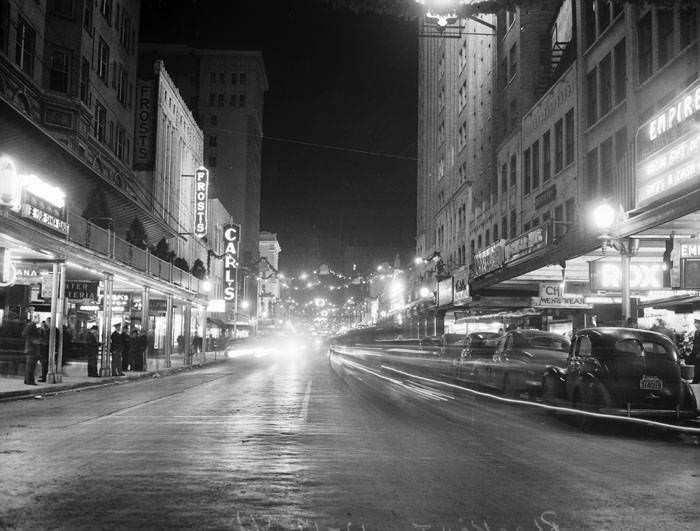
Houston looking east from St. Mary's Street intersection during city blackout, 1941
Houston looking east from St. Mary’s Street intersection during city blackout, 1941
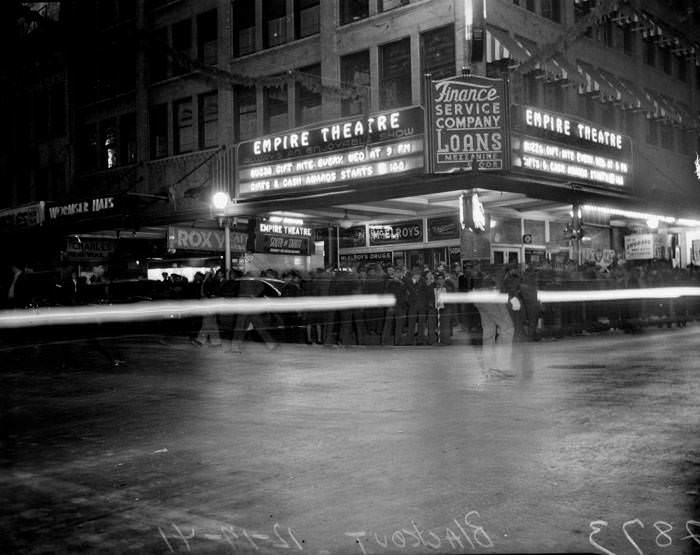
Crowd on Houston Street for practice blackout, 1941

San Antonio conducted practice blackouts in 1941, plunging downtown streets into darkness to prepare residents and businesses for potential air raids. Photos taken on Houston Street during these drills show a city that took the threat seriously. Crowds gathered, traffic stopped, and the lights of the commercial district went dark — a striking sight in a city that rarely went quiet.
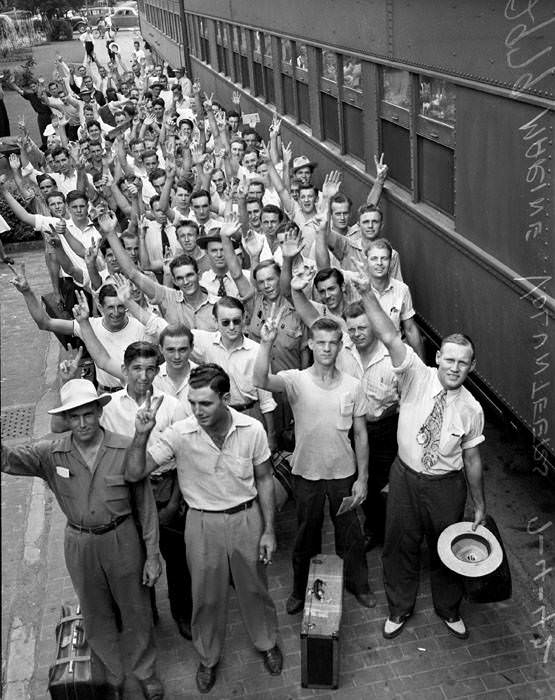
Marine volunteers posed beside train at Southern Pacific Depot, San Antonio, 1942
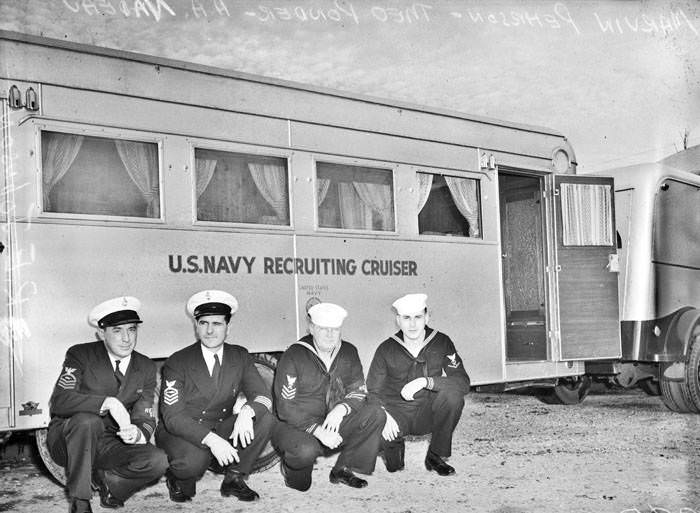
Navy recruiters beside recruiting trailor, 1942

Recruiters set up wherever they could find foot traffic. Navy recruiters parked beside a recruiting trailer on city streets, while Marine volunteers posed for photos at the Southern Pacific Depot before shipping out. The depot became a familiar gathering point — a place of departures and, eventually, homecomings.
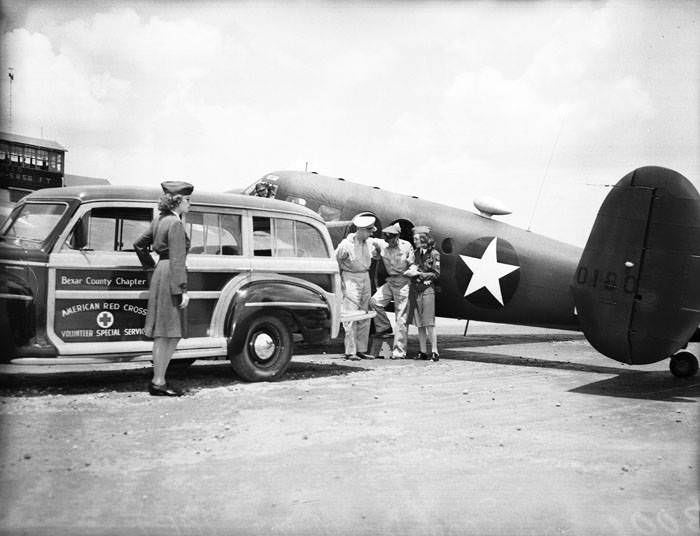
Red Cross motor corps members prepare to transport patient from plane to automobile, 1942

Behind the recruitment posters and parades, the medical side of the war was always present. Brooke Army Medical Center served as a primary hub for surgical research, medical field training, and long-term recovery care. Red Cross Motor Corps members worked alongside military medical staff, transporting patients from planes to ground vehicles and supporting operations that touched thousands of wounded soldiers.
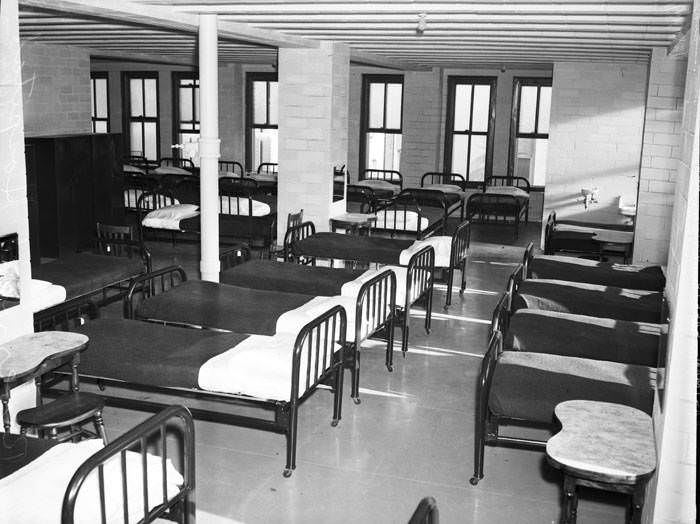
Bed wards at Riverview Hospital, 1943

Hospital wards across the city filled with patients during the war years. Riverview Hospital’s bed wards in 1943 show rows of beds in a facility stretched to meet wartime demand. Medical care — both military and civilian — was under pressure throughout the decade, as the city absorbed a growing population while supporting an enormous military training operation.
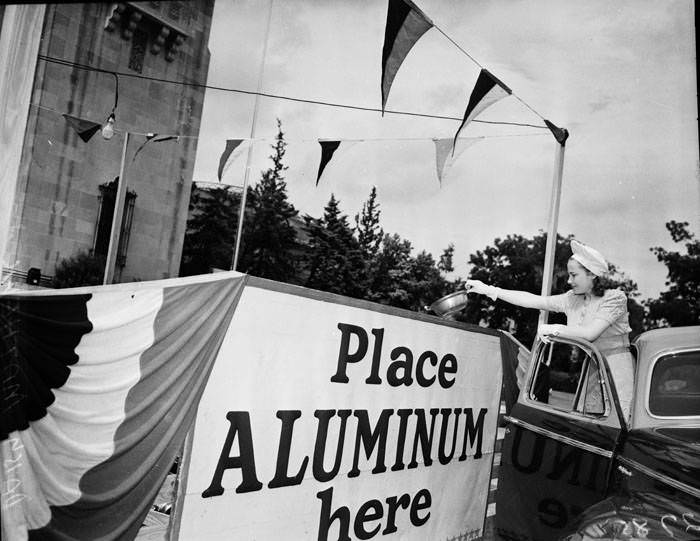
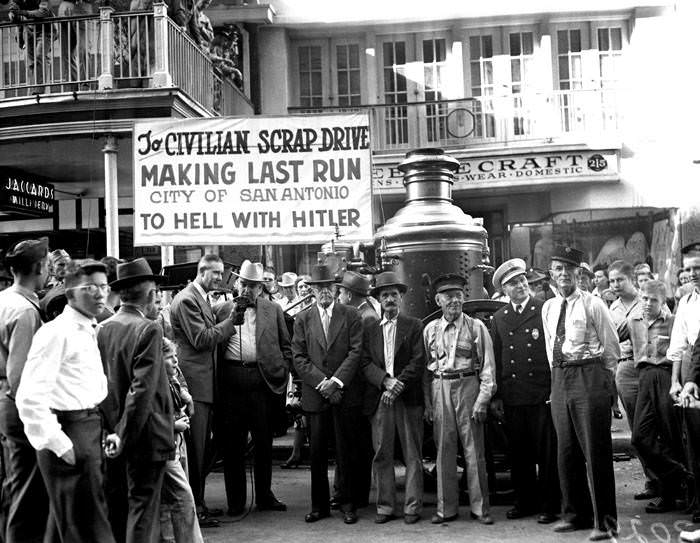
Daisy Mathews donates to scrap aluminum drive, 1941
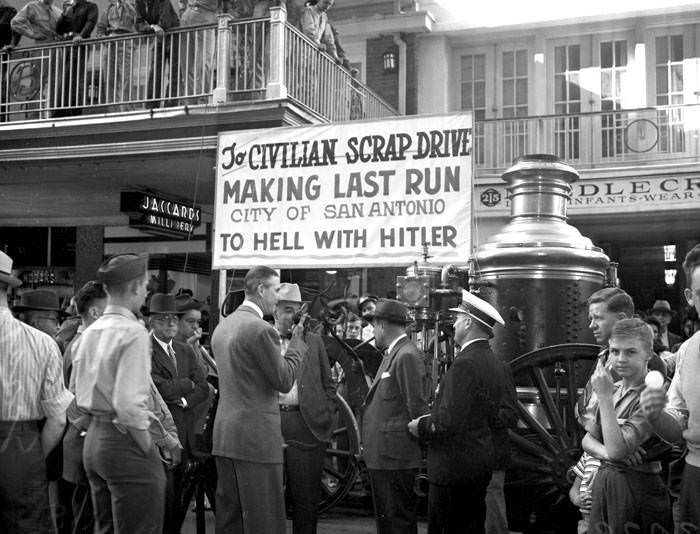
Horse-drawn fire pumper is donated to scrap metal drive, 1942

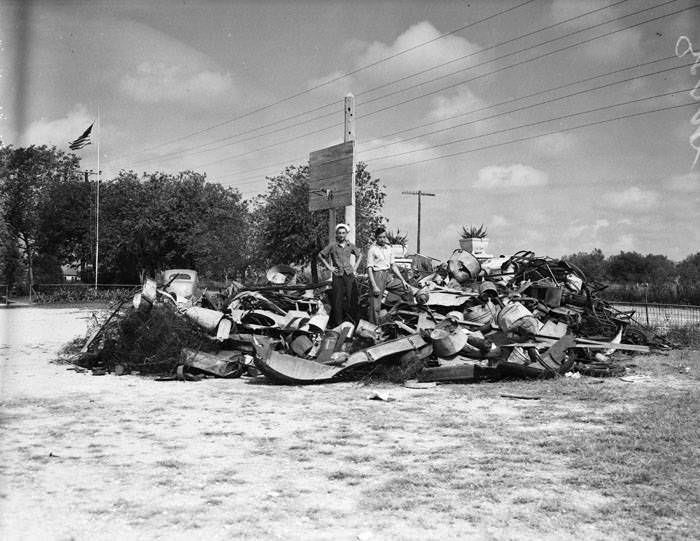
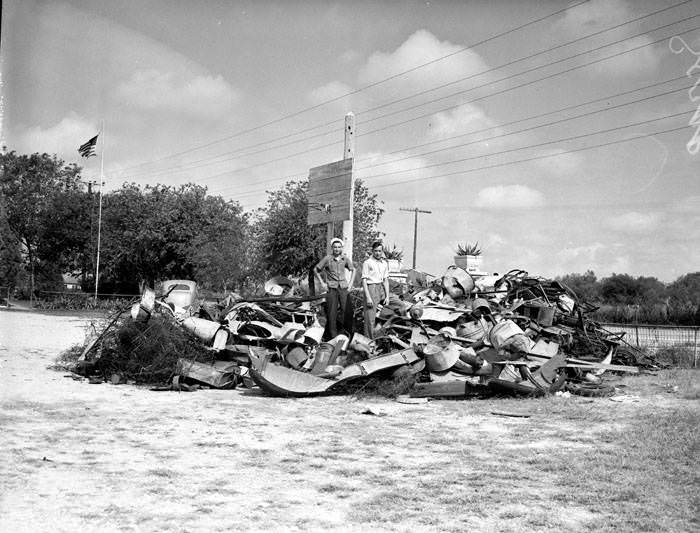
The scrap metal drives of the early war years pulled the whole city together. Residents donated pots, pans, and household aluminum. The city itself donated an old horse-drawn fire pumper at a ceremony on Houston and St. Mary’s Streets. Schools organized their own drives, stacking enormous piles of salvaged metal on their campuses.
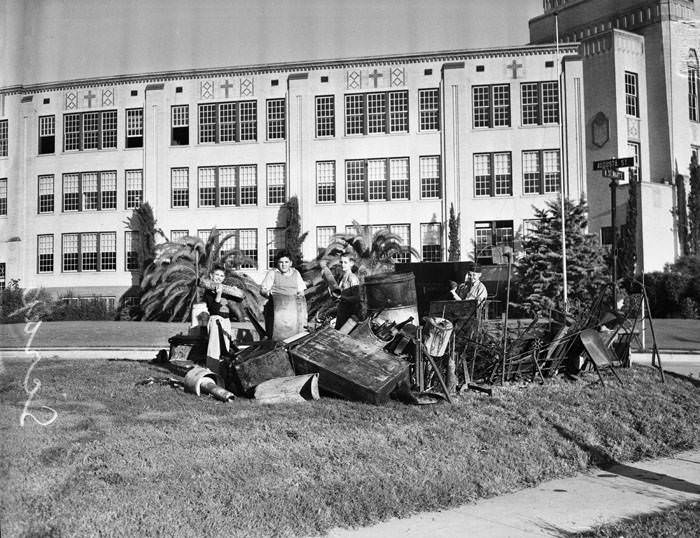
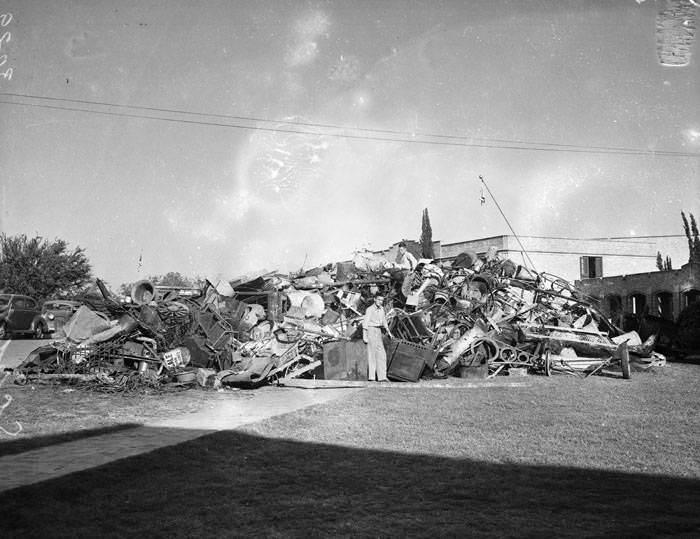
Central Catholic High School's scrap metal pile, 1942
Central Catholic High School’s scrap metal pile, 1942
Scrap metal pile in front of Alamo Heights High School, 1942

Alamo Heights High School alone collected an estimated 50 tons of scrap metal, spread across three separate piles representing its elementary, junior high, and high school divisions. Schools across Bexar County — from urban campuses like Burbank High School to rural Leon Springs — joined the campaign. Tractor parts, butter churns, and dairy equipment made up the rural collections, while city schools filled their piles with a wider mix of donated goods.
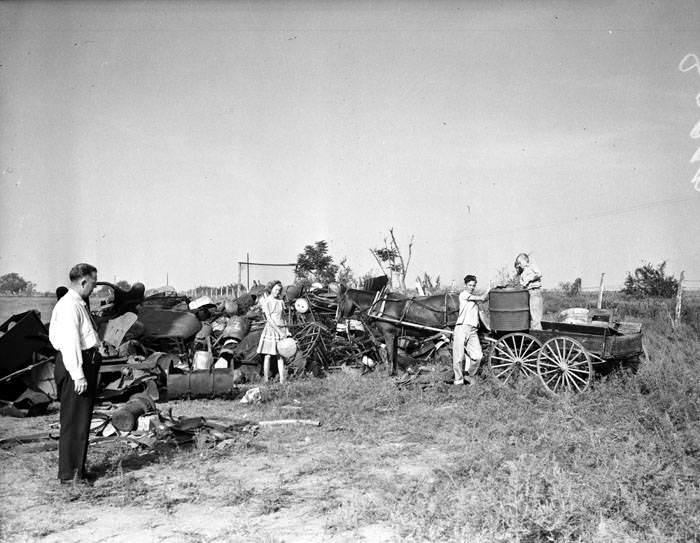
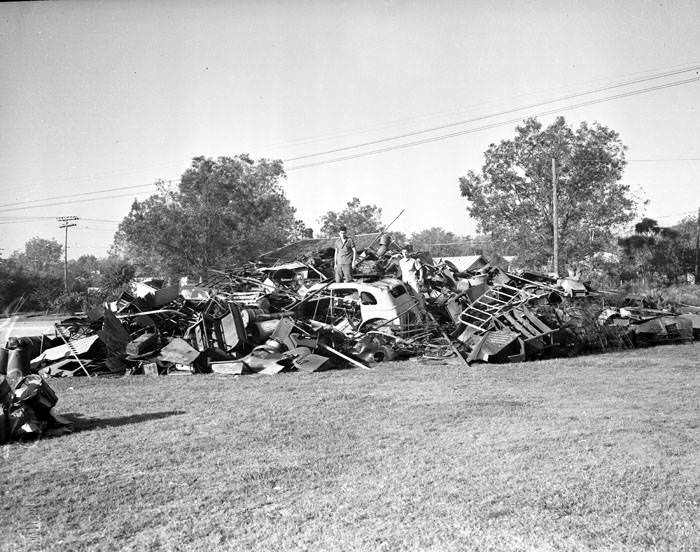
Scrap metal pile near Elmendorf school, 1942
Scrap metal pile at Burbank High School, 1942
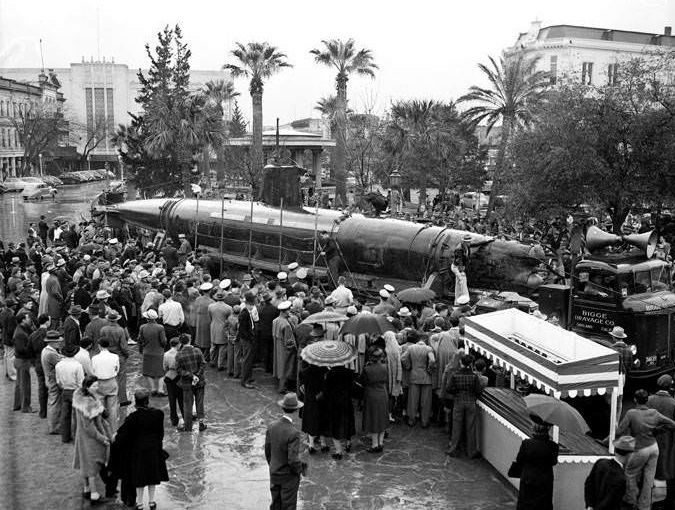
Japanese submarine on display at Alamo Plaza, 1943

In 1943, a Japanese submarine captured at Pearl Harbor went on public display at Alamo Plaza. The craft toured the country to sell war bonds, and San Antonio’s crowds gathered around it with a mix of curiosity and anger — the submarine was, as described at the time, constructed for the very attack it had been built to carry out. The display raised millions in war bonds nationwide.
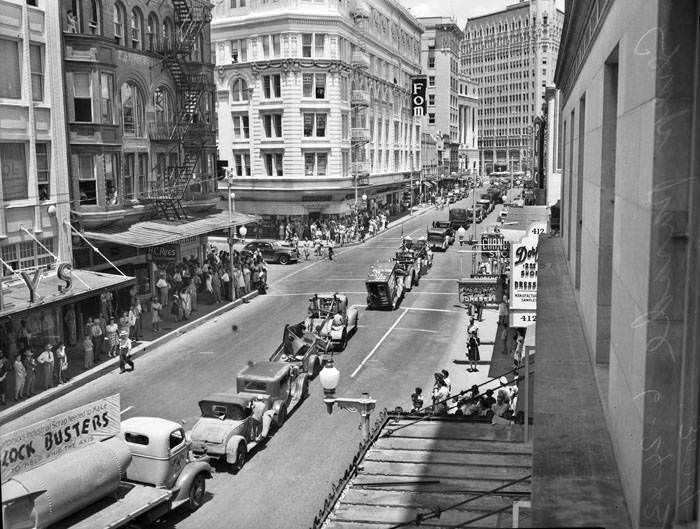
1943 parade of junk cars on Houston Street, 1943
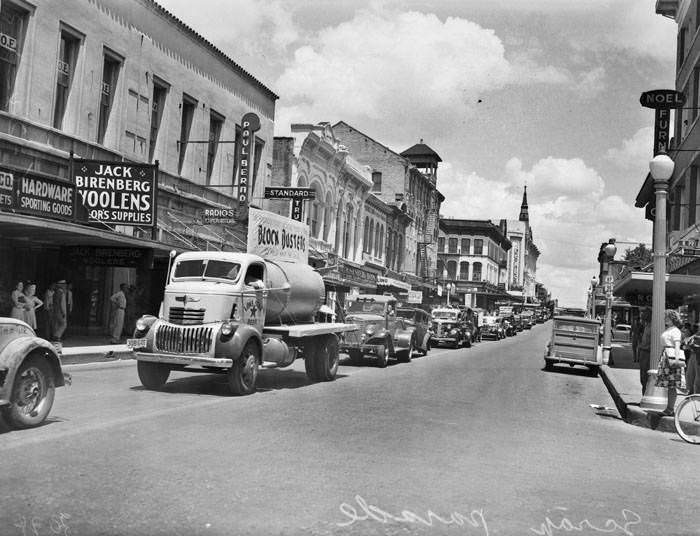
Parade of junk cars on Commerce Street, 1943

Wartime parades took on new forms. In 1943, a “jalopy parade” of old and worn-out cars rolled down Houston and Commerce Streets, with a replica of a “blockbuster” bomb on a truck trailing behind the jalopies. The event mixed civic spectacle with wartime messaging, encouraging residents to contribute to the scrap and salvage effort.
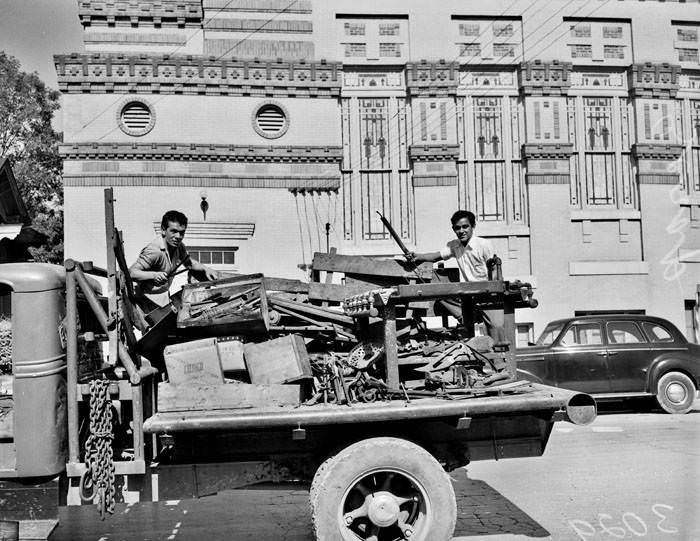
Truck-bed full of scrap metal for war effort, 1942
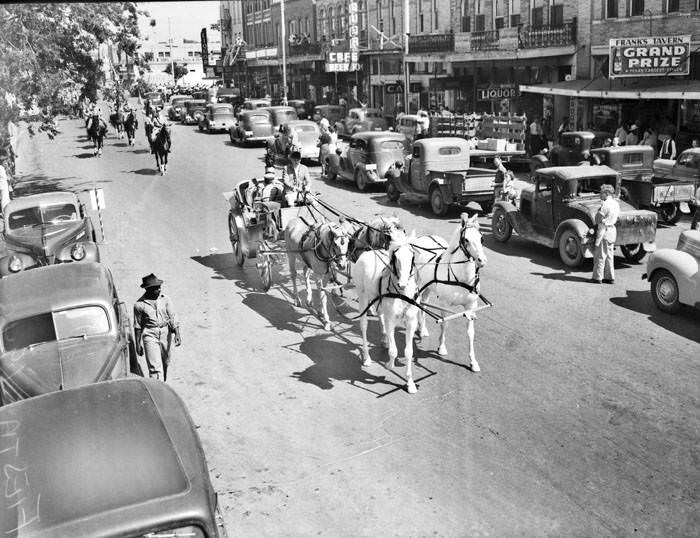
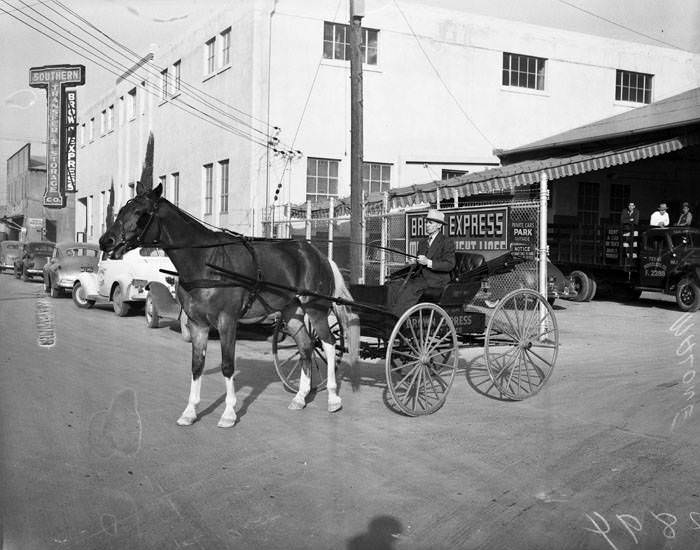
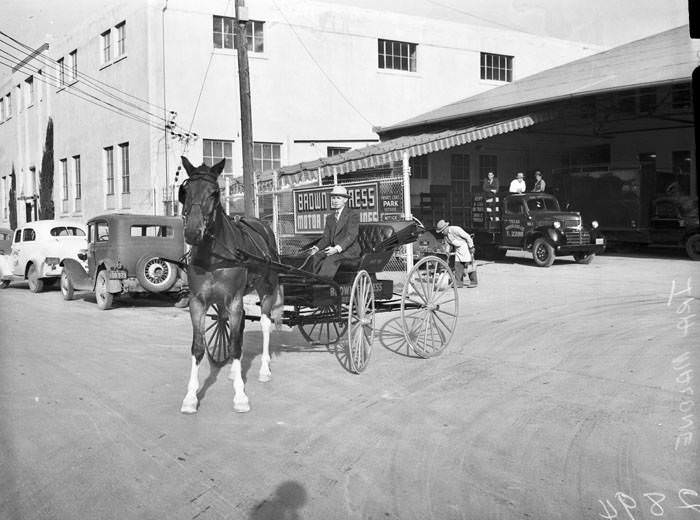
Ira Malone in horse-drawn buggy, 1942

Wartime rubber and gasoline rationing pushed San Antonians to get creative with transportation. Ira Malone, a freight solicitor for Brown Express Company, gave up his car after nine years and returned to a 35-year-old horse-drawn buggy. His horse, Pat, became a familiar sight on city streets. Malone was direct about his reasoning: he wanted to save rubber and gasoline for what he called “the more important business” of the war effort.
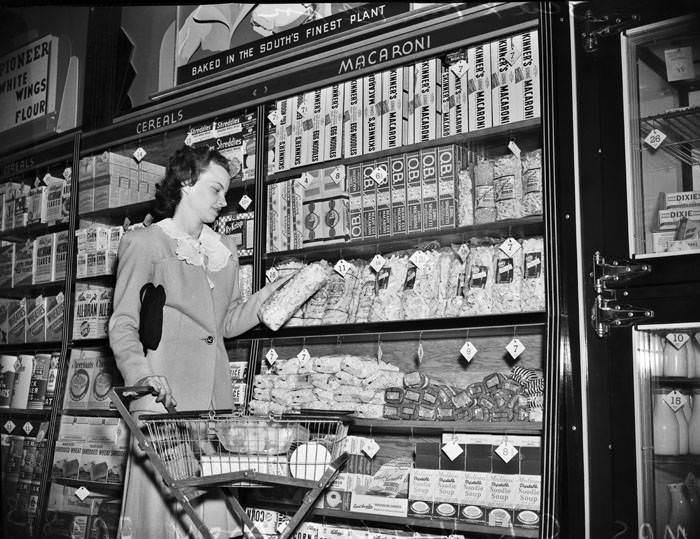
Mrs. C.L. Witherspoon, Jr. shopping in grocery store, 1943

Rationing shaped daily routines for civilians throughout the war. Grocery shopping required careful planning around what was available and what the government allowed. The Office of Price Administration controlled prices and rationing across the country, and its reach was felt in every San Antonio household. Poultry ranchers in nearby Gonzales County saw their operations shut down for the duration of the war, blaming OPA regulations for making their businesses unworkable.
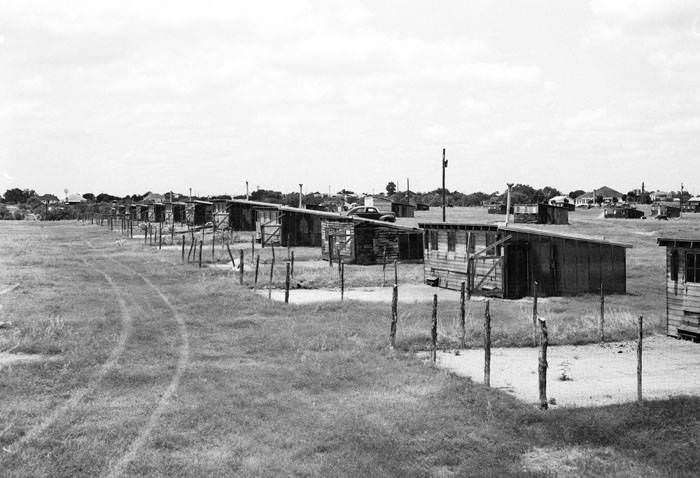
Empty poultry houses, 1943
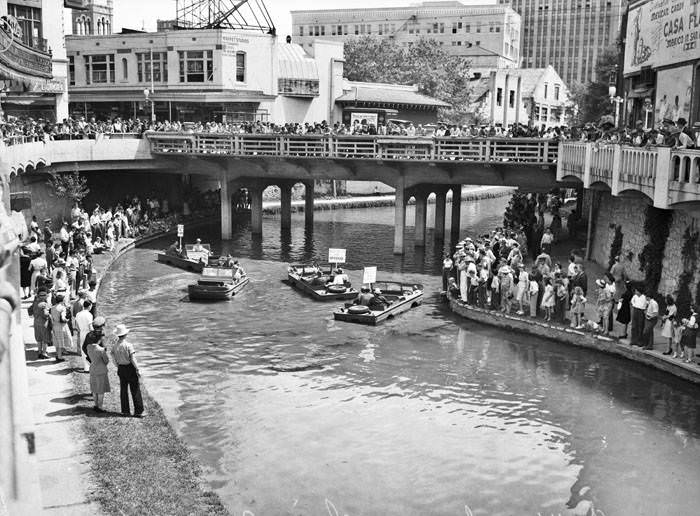
Amphibious jeeps in the San Antonio River north of Houston Street bridge, 1943

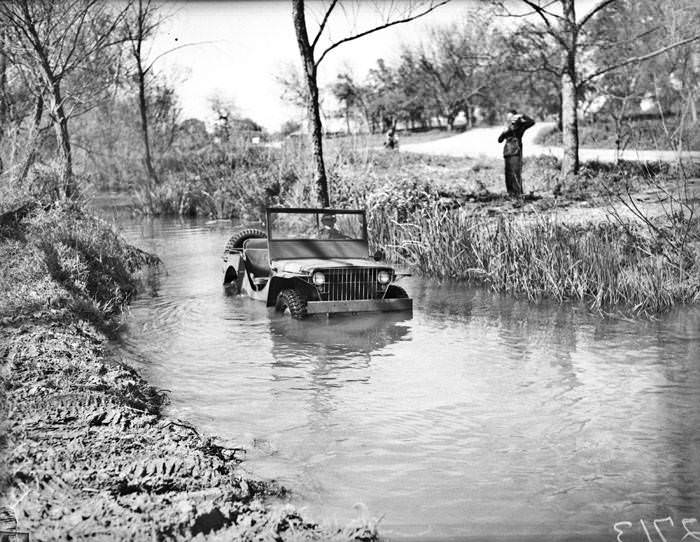
Military equipment made regular appearances in and around the city. Amphibious jeeps entered the San Antonio River between St. Mary’s and Navarro Streets in 1943, used for demonstration and training purposes. Military police showed off “blitz buggy” jeeps in Salado Creek in 1941. The river, normally a quiet commercial corridor, occasionally served as a testing ground for wartime vehicles.
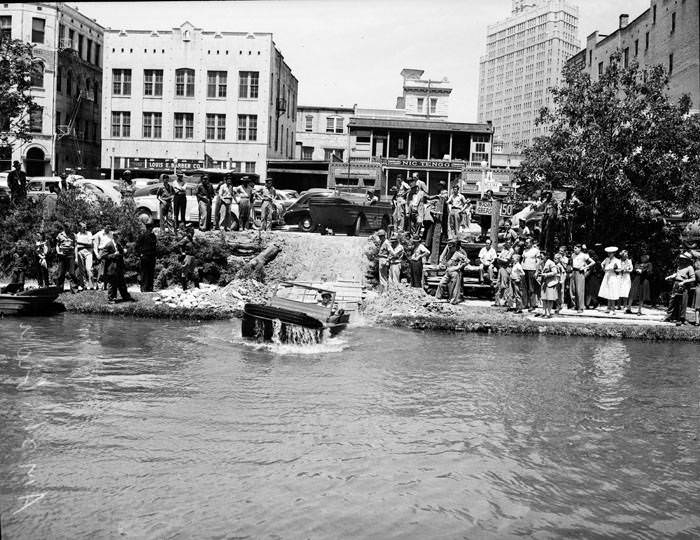
Amphibious jeep entering San Antonio River between St. Mary's and Navarro Streets, 1943
Amphibious jeep entering San Antonio River between St. Mary’s and Navarro Streets, 1943
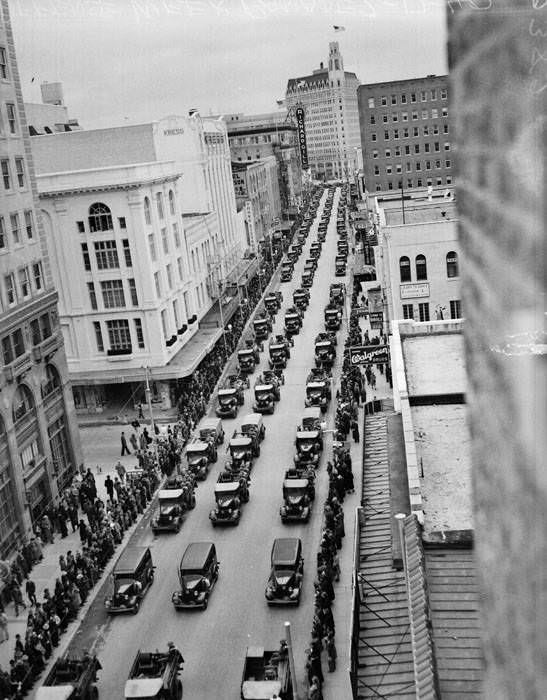
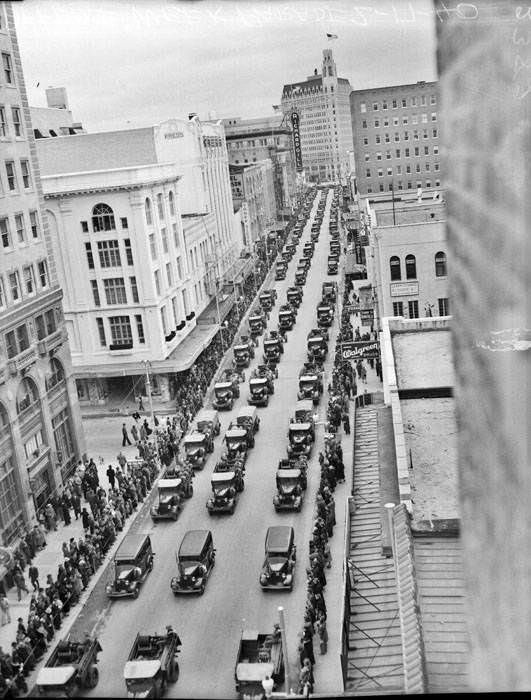
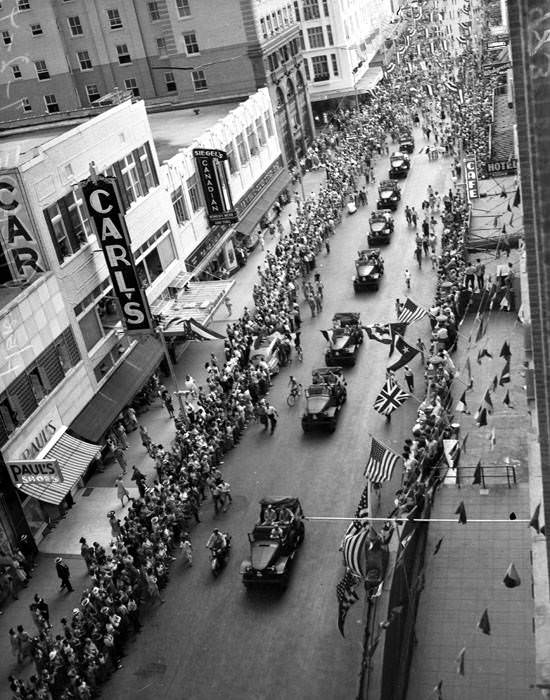
War Heroes Day parade, viewed from Majestic Theater, San Antonio, 1942
War Heroes Day parade on Houston St., San Antonio, 1942

San Antonio held a War Heroes Day parade in 1942, drawing crowds along Houston Street. Viewed from the balcony of the Majestic Theater, the scale of the turnout was clear — this was a city that took its role in the war personally. The bases nearby meant that many residents had a direct connection to someone in uniform.
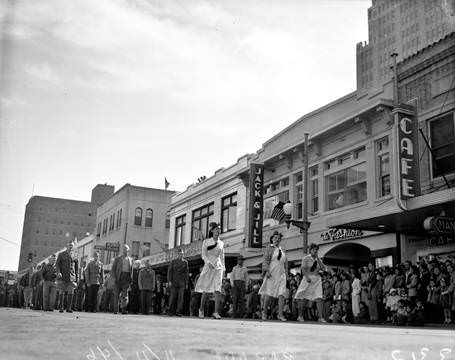
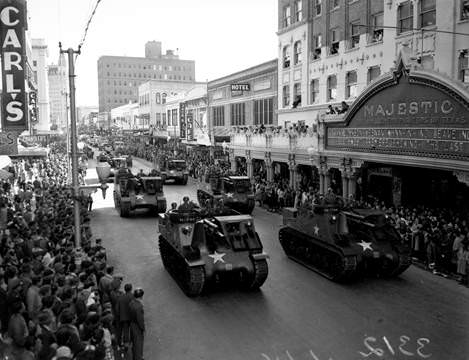
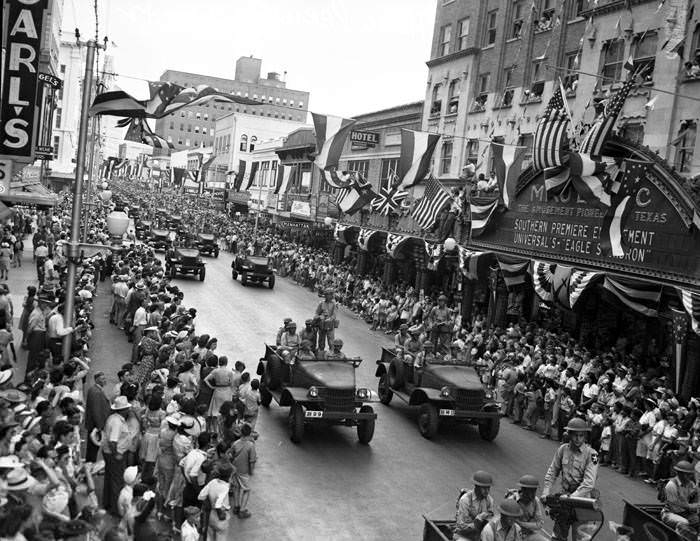
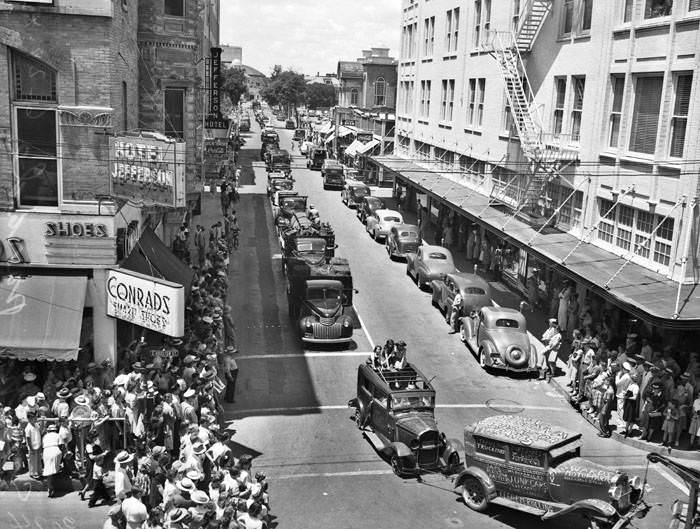
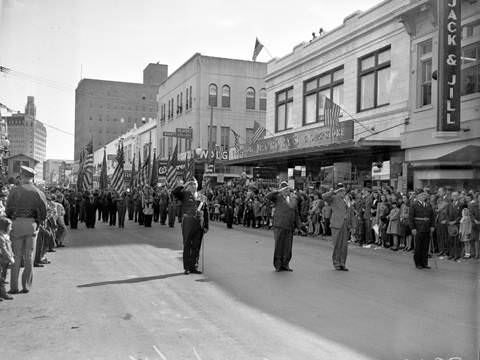
Armistice Day, San Antonio, Texas, 1946

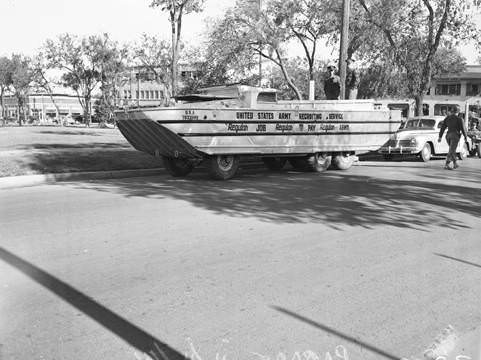
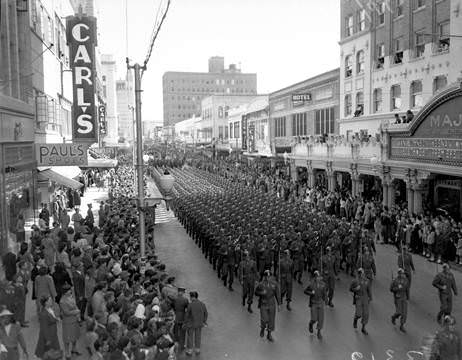
When the war ended, San Antonio marked Armistice Day in 1946 with full military pageantry. Tanks — including 105mm Howitzer Motor Carriage M7 “Priest” vehicles — rolled down the 200 block of East Houston Street. Troops marched in formation past the Gunter Hotel. DUKW amphibious vehicles, fresh from wartime use, carried U.S. Army Recruiting Service signs through the streets. Veterans lined the parade route as both marchers and spectators.
Armistice Day, San Antonio, 1946
Armistice Day, San Antonio, Texas, 1946
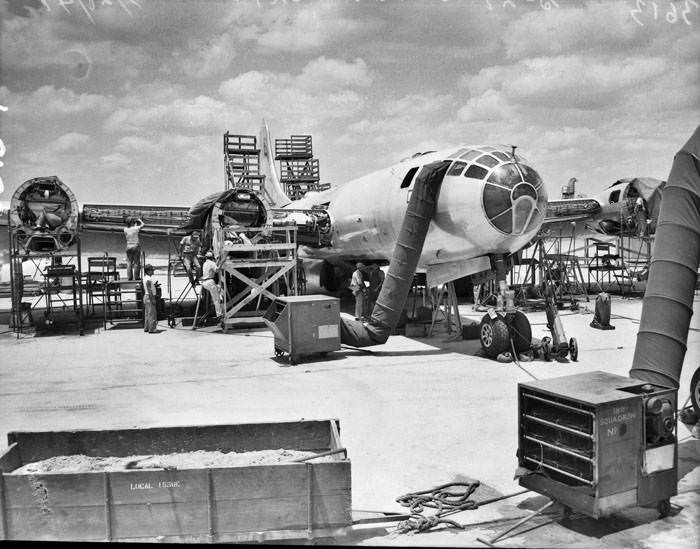
B-29 Superfort at Kelly Air Force Base, 1948

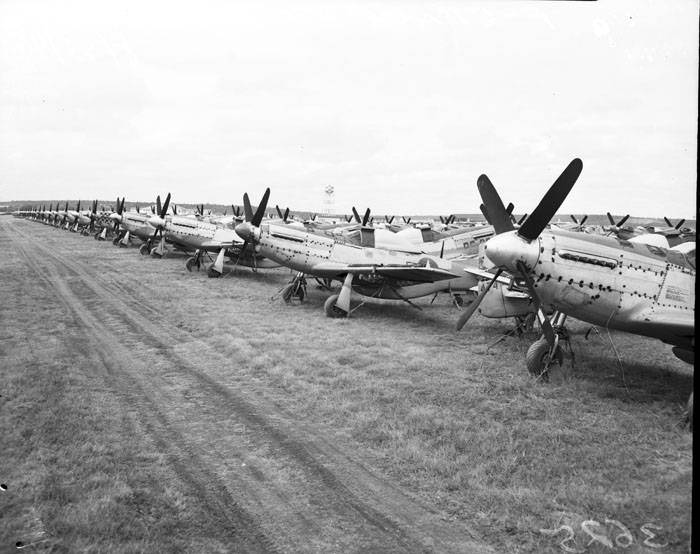
After the war, the U.S. Air Force separated from the Army and established its own command structure. Kelly, Brooks, Randolph, and Lackland — now designated Air Force Bases — remained central to San Antonio’s economy and identity. Kelly Air Force Base in particular hosted major aircraft, including B-29 Superforts and F-5 fighter planes, making it a visible reminder of the city’s continued military importance in the postwar years.
F-5 fighter airplanes at Kelly Air Force Base, 1948
Goodyear blimp at the new municipal airport, 1947

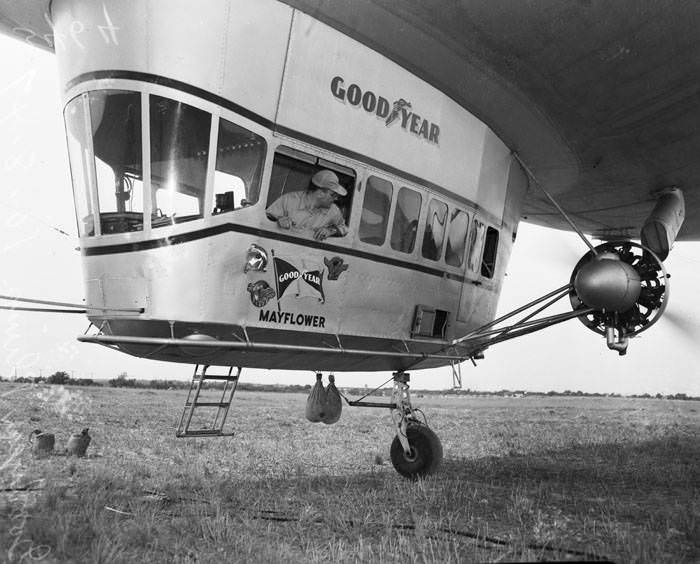
San Antonio’s aviation story extended beyond the military. In 1941, the city purchased 1,200 acres north of the city limits to build an airport. What opened first as a military training facility would eventually become San Antonio International Airport. By 1947, the new municipal airport was drawing civilian interest, including the famous Goodyear blimp — a former naval airship that had served in World War II — which visited on a 14-state tour promoting lighter-than-air aircraft.
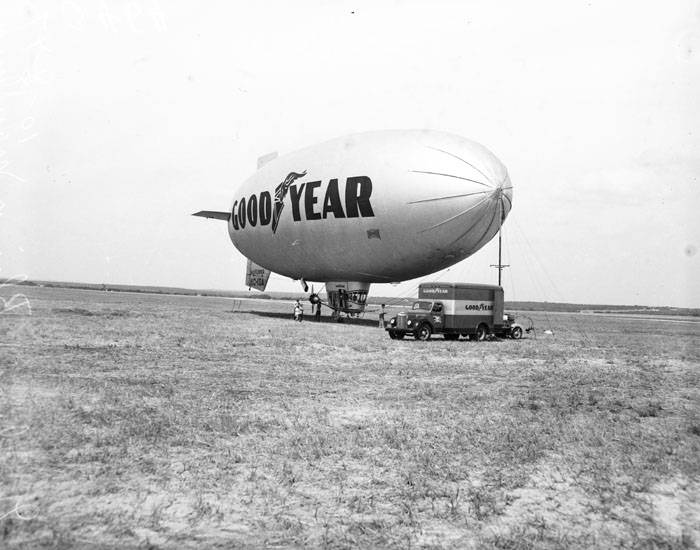
Goodyear blimp at the new municipal airport, 1947
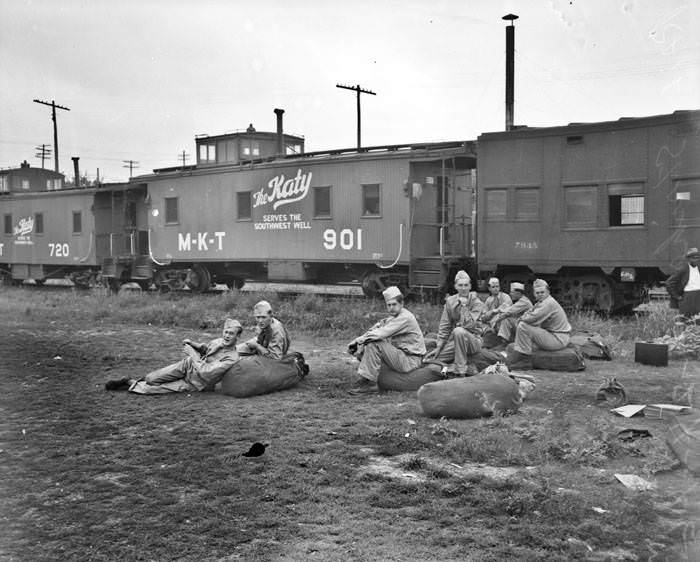
Soldiers waiting outside of train, 1946

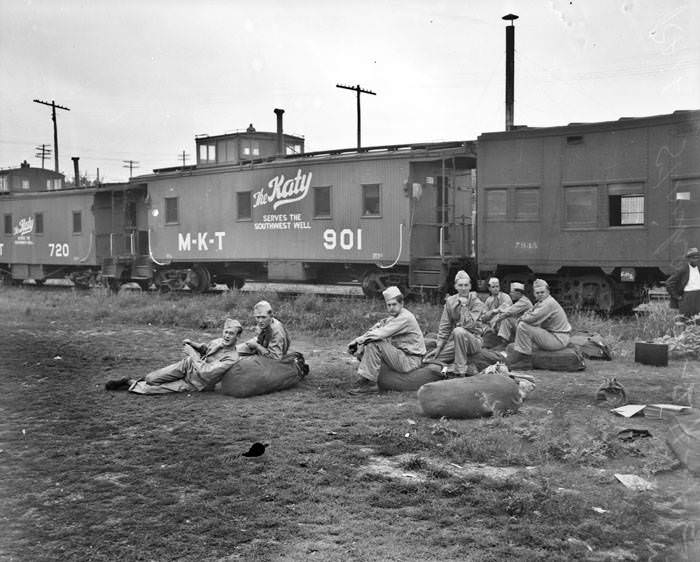
Returning soldiers arrived by train. In 1946, troops who had just finished basic training at Camp Chaffee, Arkansas, were on their way to military police training at Fort Sam Houston when their train halted near the Nogalitos Street overpass. Rail workers refused to take the train to the Army post, leaving soldiers waiting outside the cars in the San Antonio heat. It was a small but telling moment — the friction of a postwar world trying to find its footing.
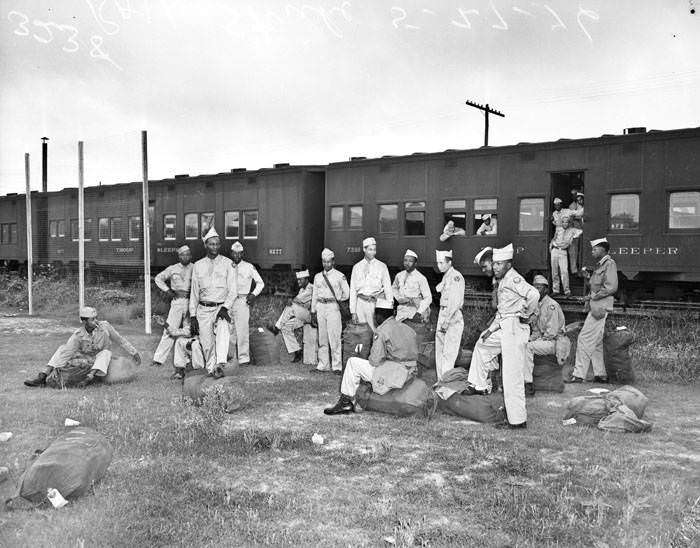
African American soldiers wait outside of train, 1946
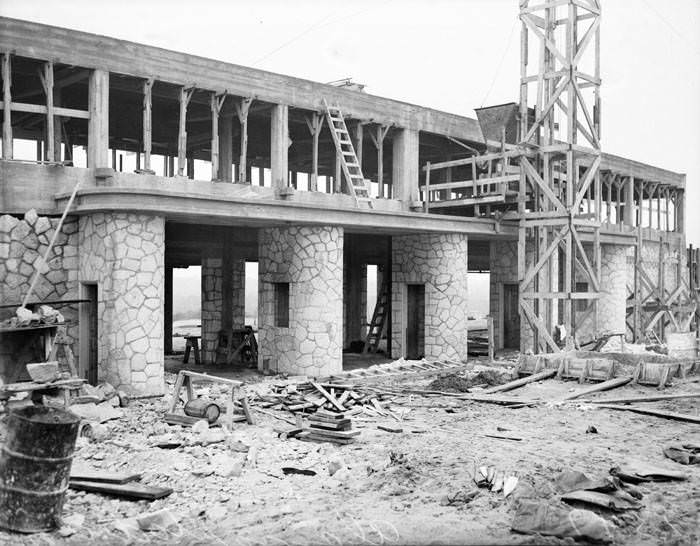
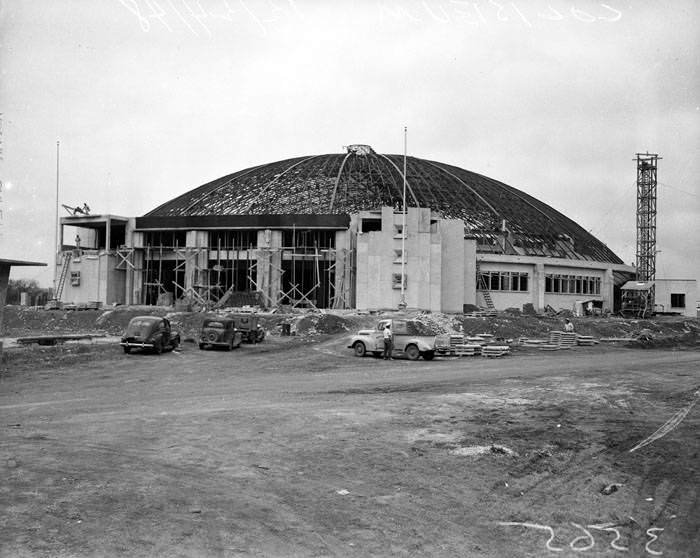
Construction of Joe and Harry Freeman Coliseum, Dec. 22, 1948

With veterans returning and the population surging, San Antonio invested in new public infrastructure. Construction on the Joe and Harry Freeman Coliseum began in 1948, with the structure nearing completion by year’s end. Its dome was covered with $250,000 worth of fireproof gypsum planks set on a steel frame. The coliseum was expected to be ready for the stock show in February 1949.
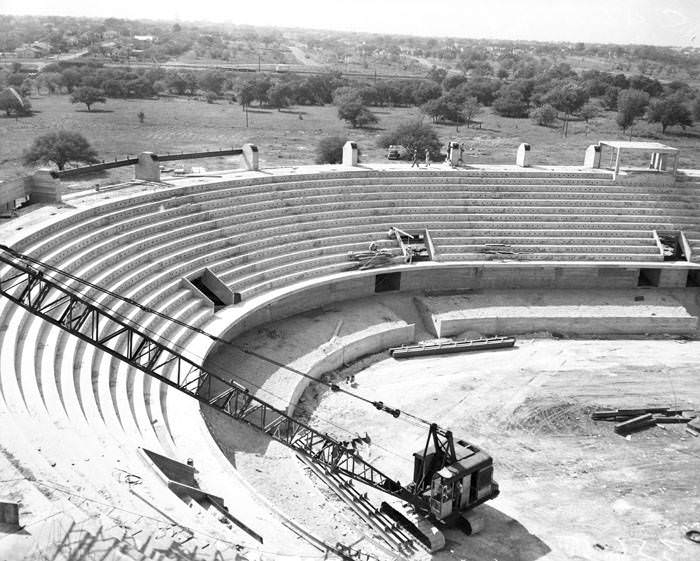
Construction of Joe and Harry Freeman Coliseum, 1948
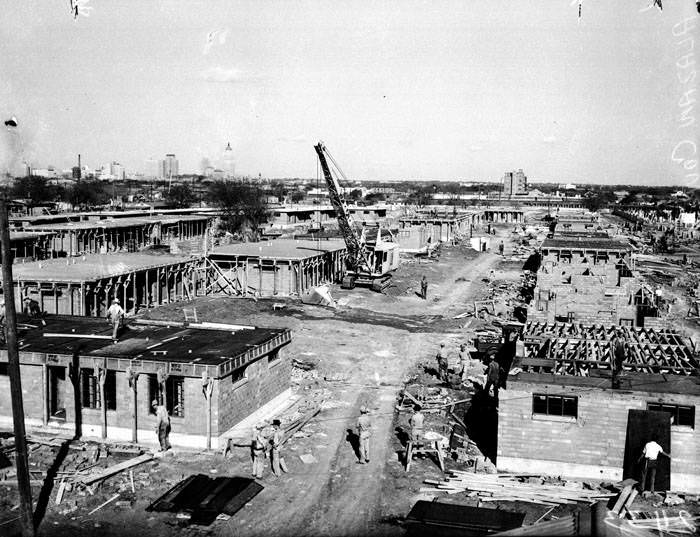
Views of Alazan Courts under construction, 1940

Earlier in the decade, federal low-rent housing projects were going up to address longstanding housing shortages. The Alazan Courts, under construction in 1940, were built using federal funds and designed to bring basic housing to some of the city’s poorest residents. Construction photos from Brazos Street show the three simultaneous phases of work — underground utilities, foundations, and building erection — all advancing at once.
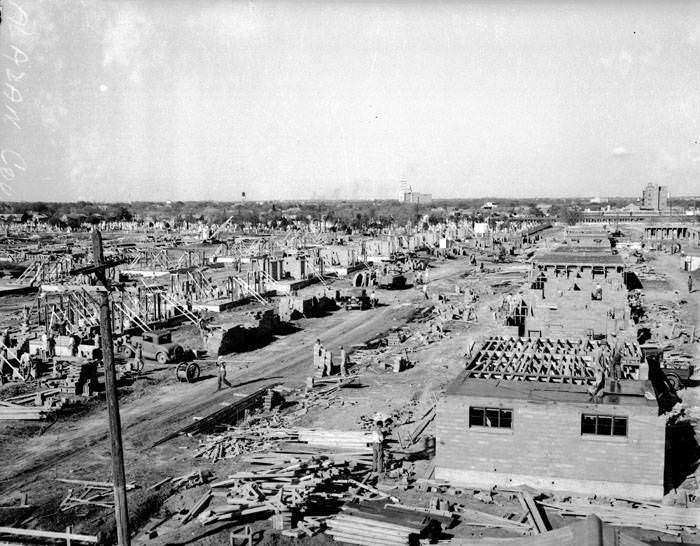
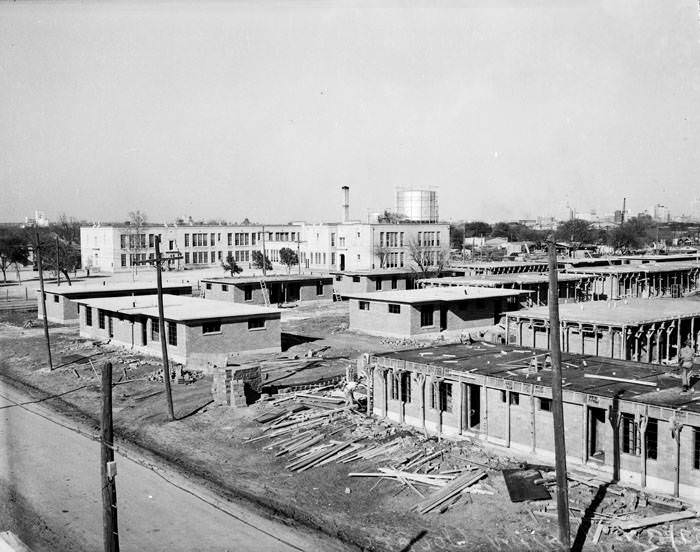
Views of Alazan Courts under construction, 1940
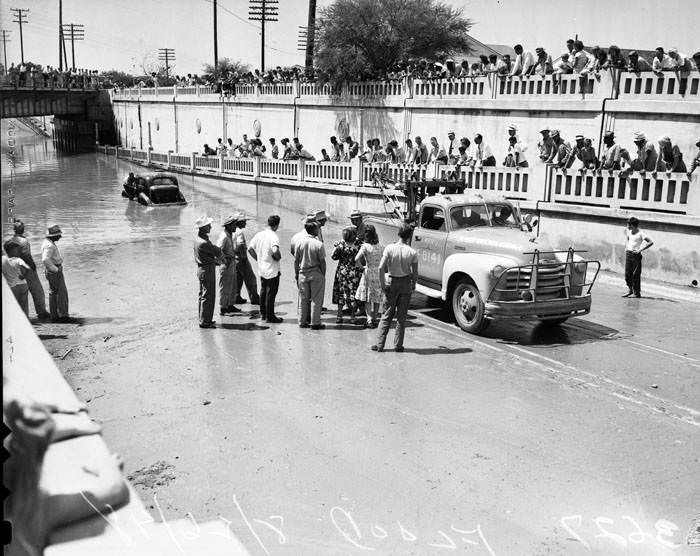
Crowds watch a wrecker pull a car from flooded San Pedro underpass, 1948

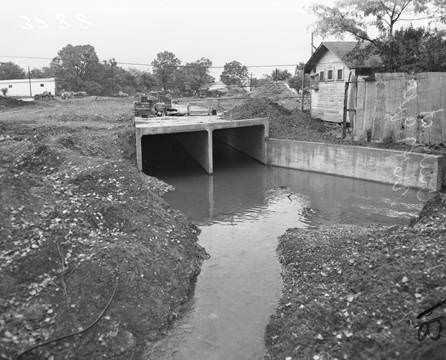
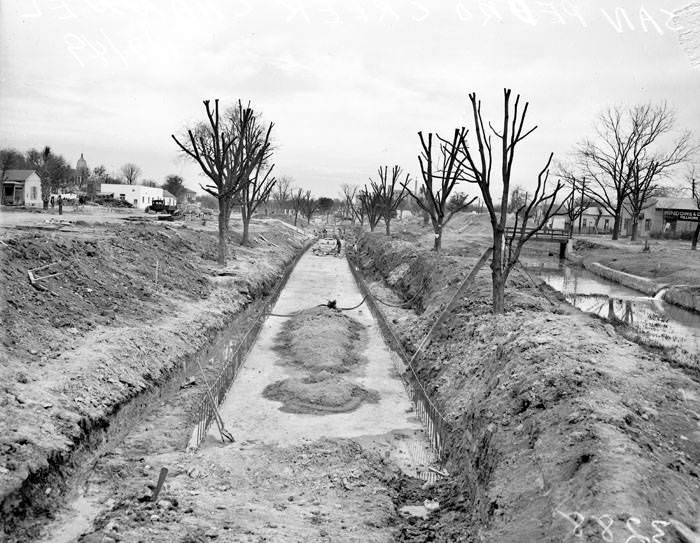
San Antonio’s infrastructure faced constant strain during the 1940s. Floods regularly overwhelmed underpasses and low-lying streets. In 1948, crowds gathered at San Pedro Avenue to watch a wrecker pull a car out of the flooded underpass. The San Pedro Creek, which cut through the city, was a recurring problem — eventually prompting a major relocation of the creek itself to accommodate new highway construction by the end of the decade.
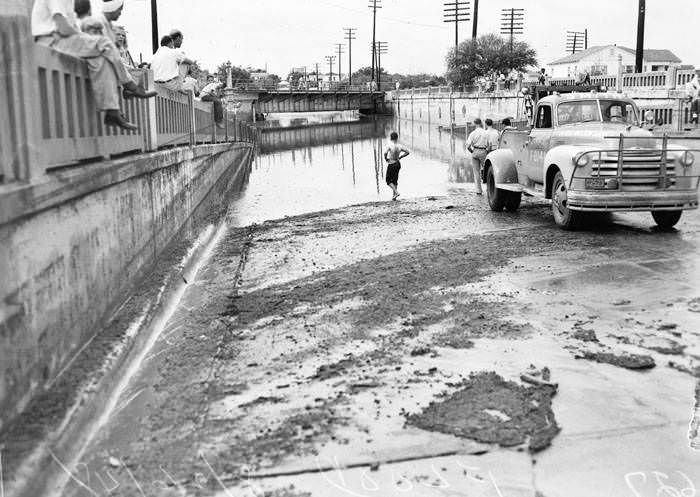
Floodwaters in San Pedro Avenue Underpass, San Antonio, 1948
Relocation of San Pedro Creek for new highway construction, 1949
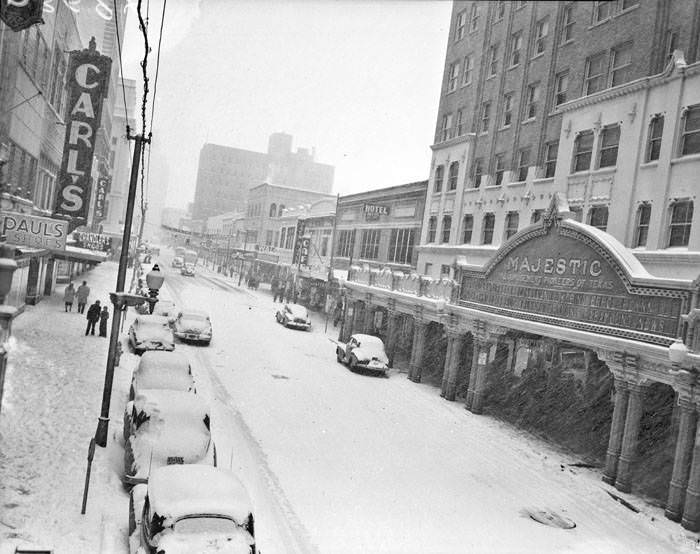
Snow on Houston Street, San Antonio, 1949

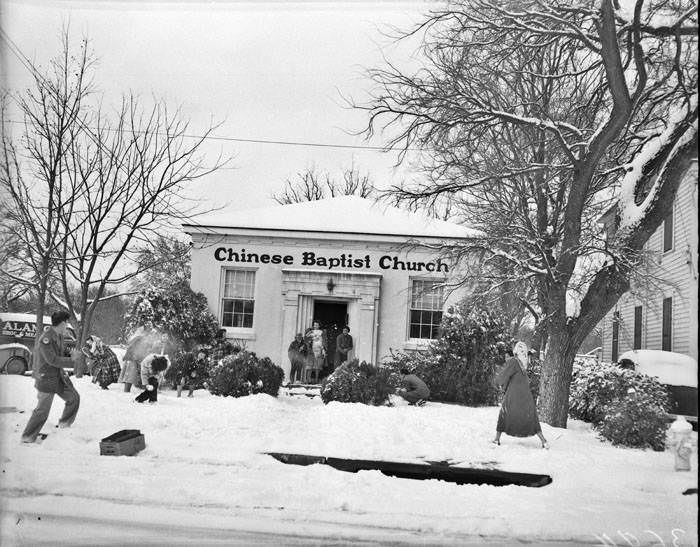
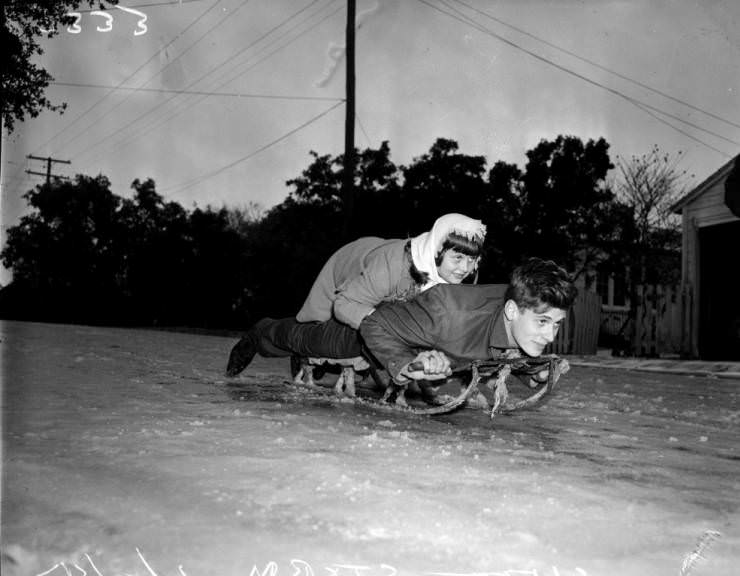
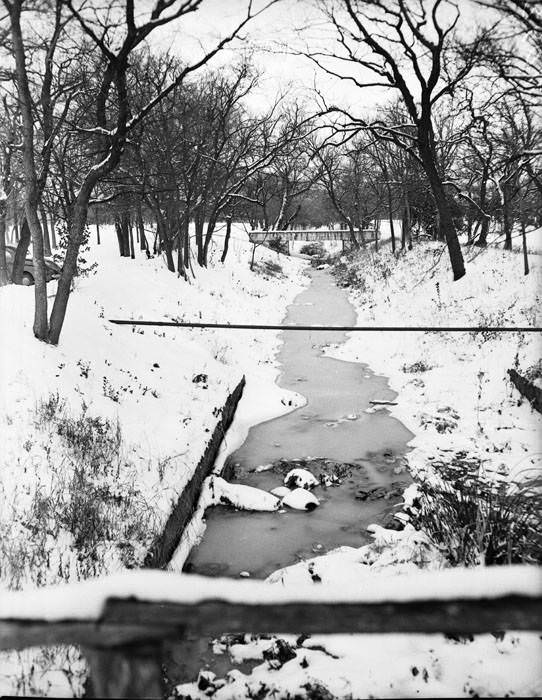
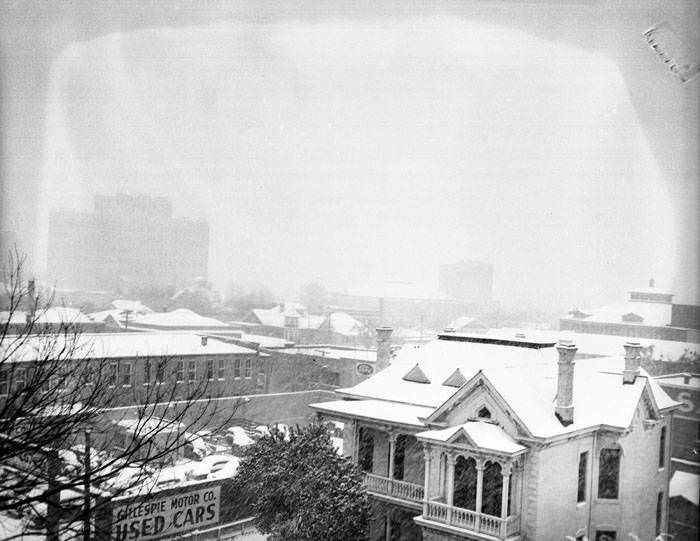
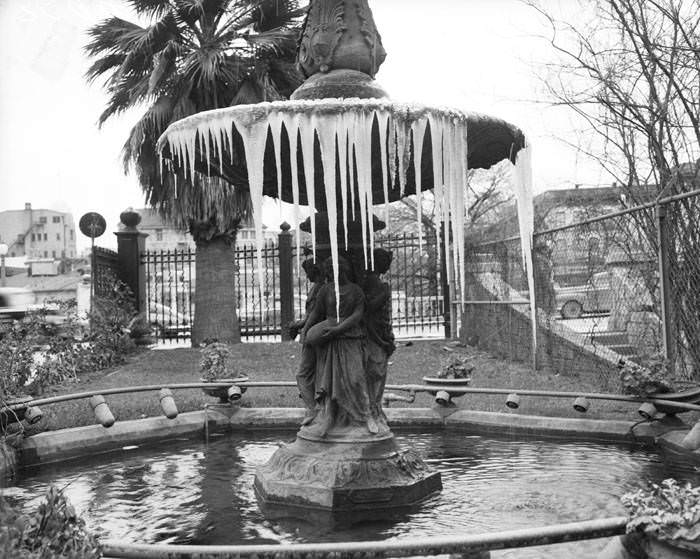
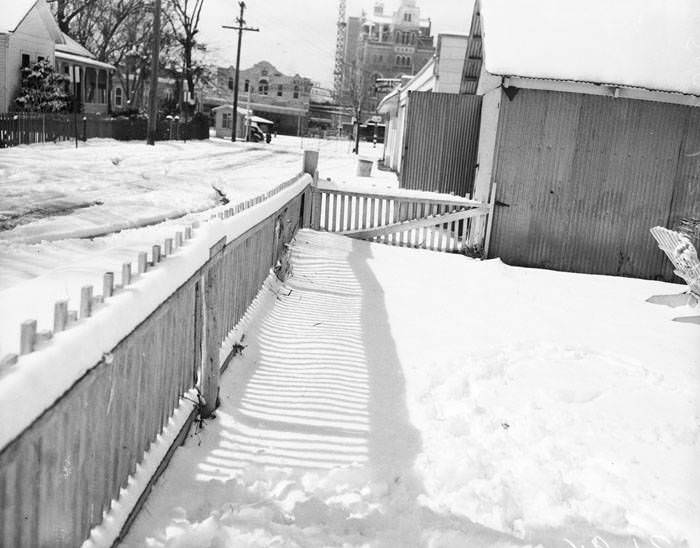
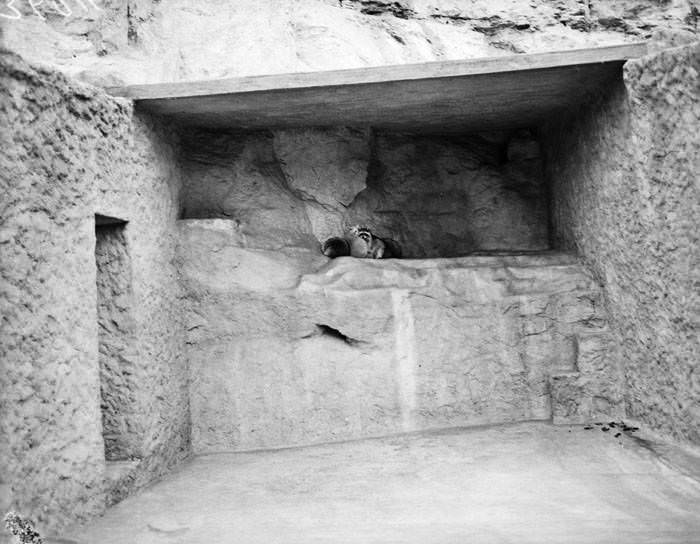
The winter of 1949 brought nearly five inches of snow to San Antonio — a rare and dramatic event for a city accustomed to mild winters. Streets went white, the San Antonio River froze along its banks, and downtown rooftops disappeared under a thick layer of snow. Residents responded with snowball fights, sledding in Alamo Heights, and walks along the river. The San Antonio Zoo was blanketed in snow, and the City Water Board fountain on Market Street grew a crown of heavy icicles.
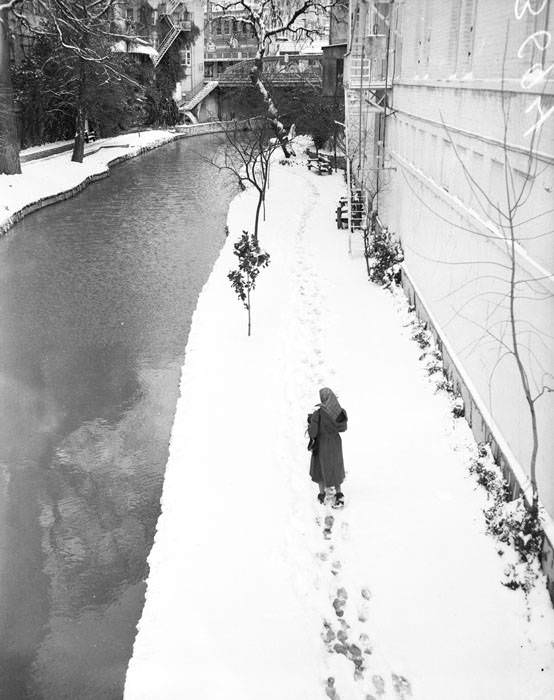
Snow on the San Antonio River, San Antonio, 1949
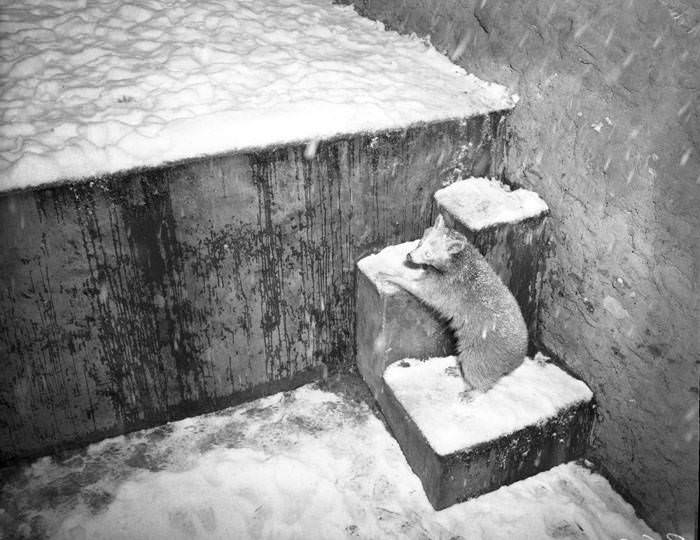
Snow at San Antonio Zoo, San Antonio, 1949
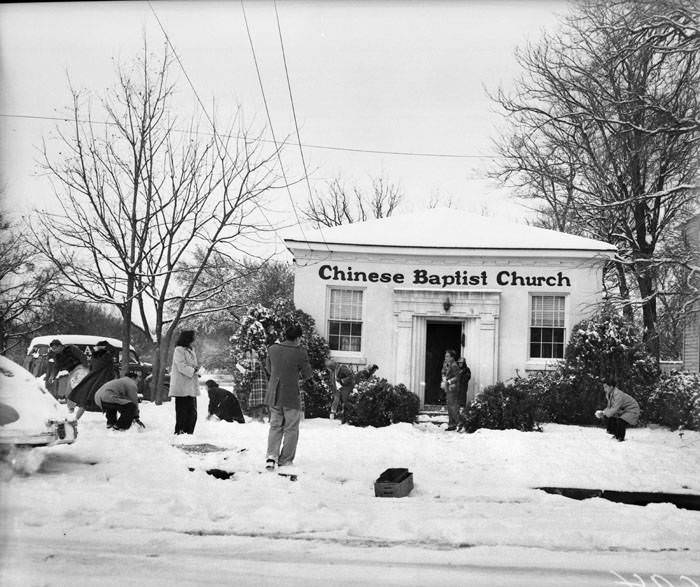
Snowball fight in San Antonio, 1949
Sledding in San Antonio? Kay Hornaday and Ray Conder ride a snow sled down an icy hill in Alamo Heights, 1946

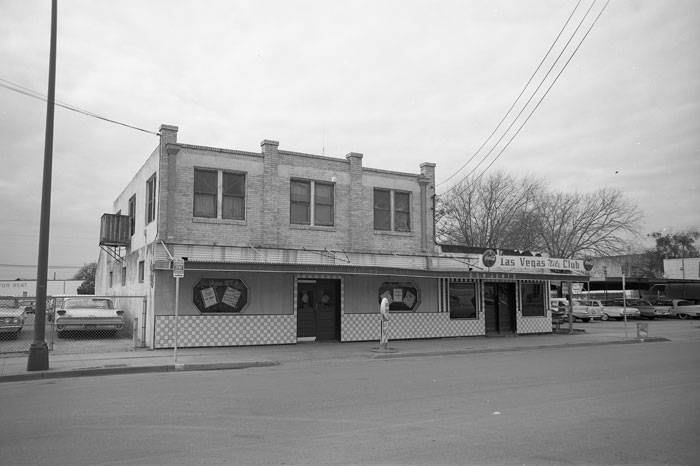
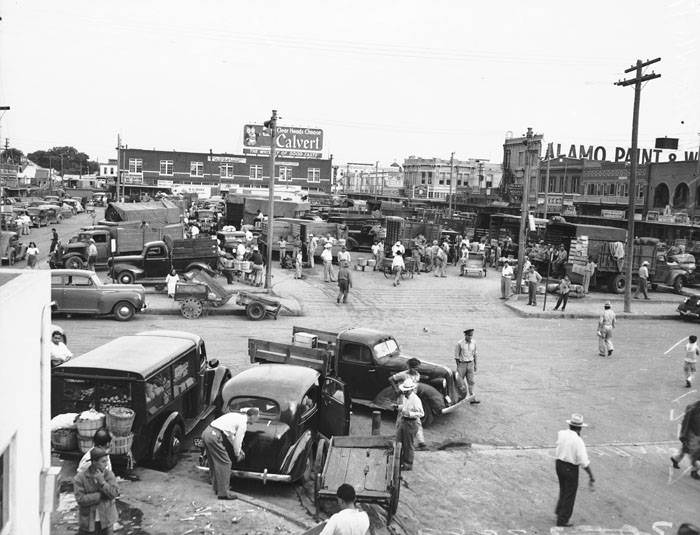
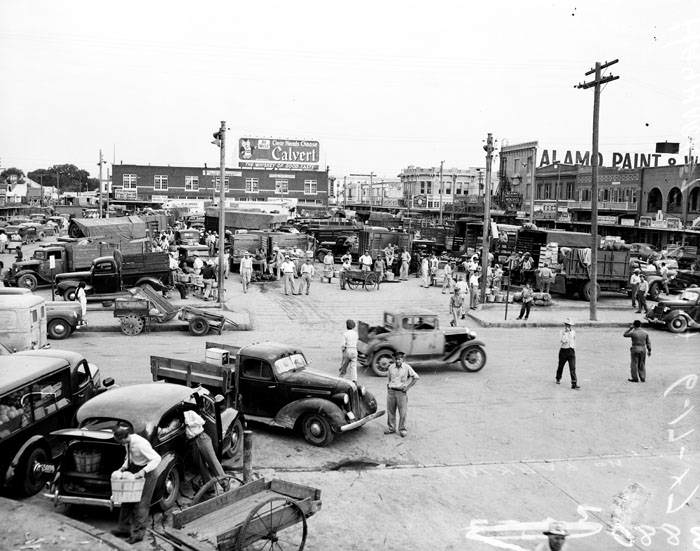
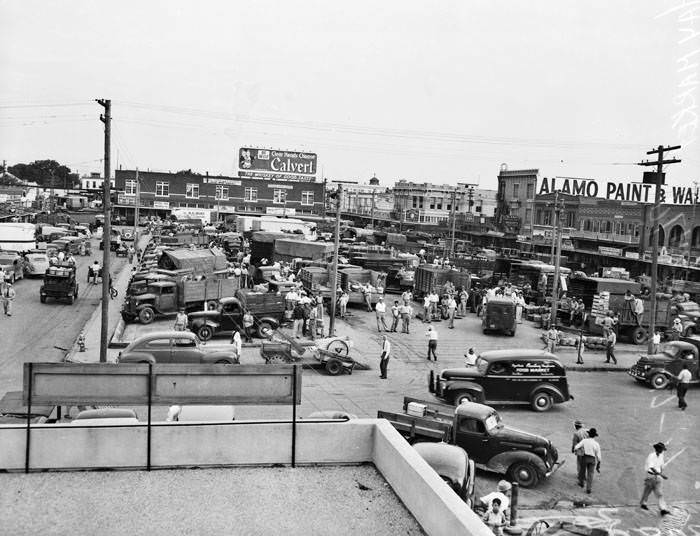
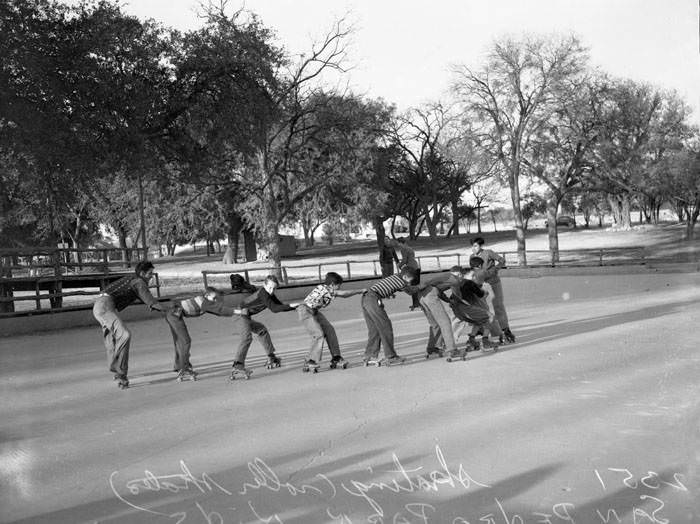
Ordinary life in 1940s San Antonio had a texture all its own. Street vendors sold goods from carts, water carriers hauled barrels through neighborhoods that lacked running water, children roller-skated in San Pedro Park, and locals gathered at Haymarket Plaza to buy fresh produce. The Las Vegas Night Club on East Market Street drew nighttime crowds. Salesmen, street cleaners, and city workers kept the machinery of daily life moving even as the war reshaped everything around them.
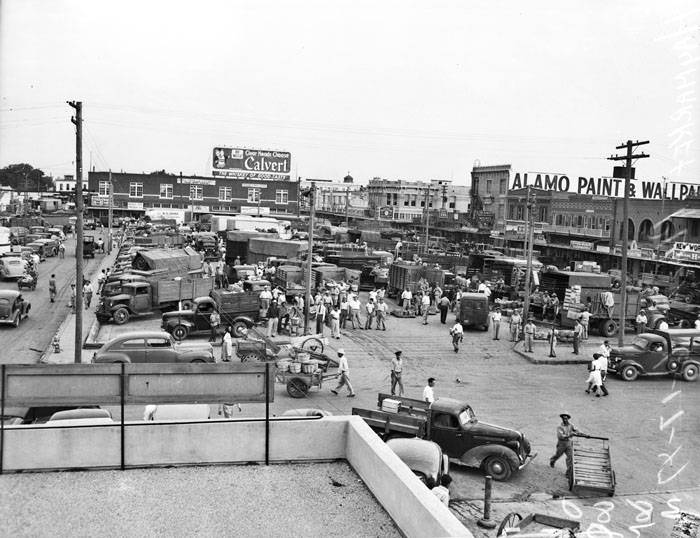
Haymarket Plaza, San Antonio, 1947
Children roller skating in San Pedro Park, 1940
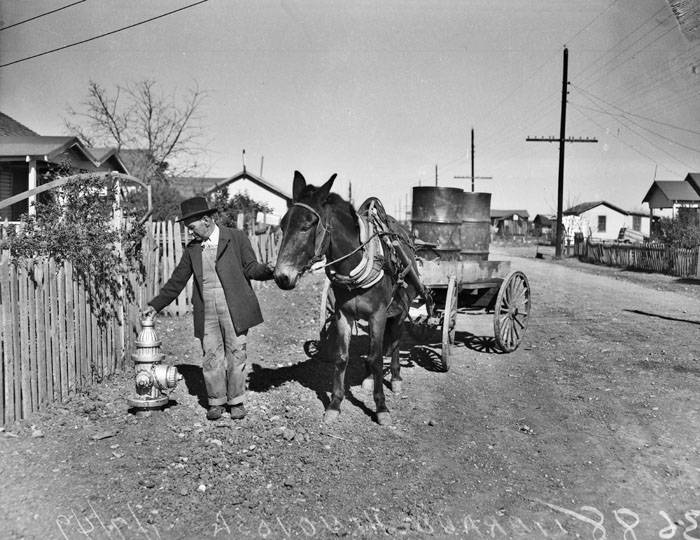
Librado Hinojosa with horse-drawn water cart, 1949

By the late 1940s, the city’s water carriers — aguadores who had hauled water to neighborhoods, and who had been forced to serve General Santa Anna’s troops long before — were nearing the end of their long tradition. Running water was finally reaching the Las Colonias area, pushing out a practice that had defined parts of San Antonio for generations. Librado Hinojosa, who charged 30 cents a barrel, stood near a fire hydrant that would make his trade obsolete.
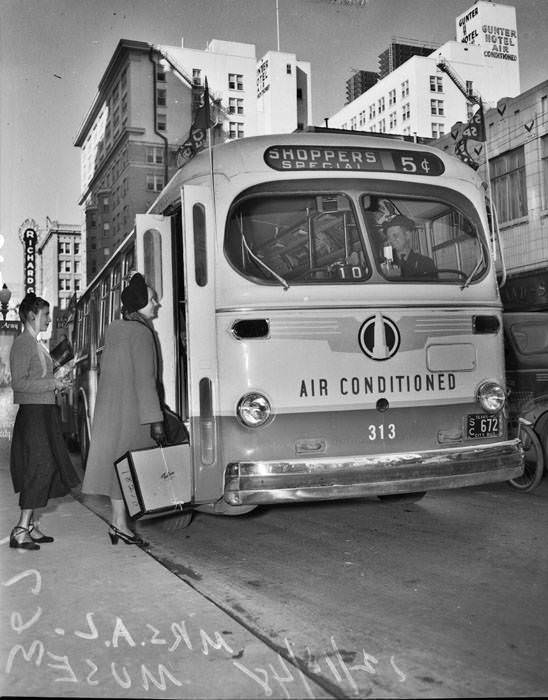
Mrs. A.L. Muse boarding 'shoppers special' bus, 1948
Mrs. A.L. Muse boarding ‘shoppers special’ bus, 1948

Transportation in downtown San Antonio was being reorganized by the late 1940s. A “Shoppers’ Special” bus shuttle began operating along Commerce, Soledad, and Houston Streets and Alamo Plaza, aiming to ease traffic congestion. Parking was banned on sections of Commerce and Houston Streets as the city tried to manage the volume of people and vehicles moving through its commercial core.
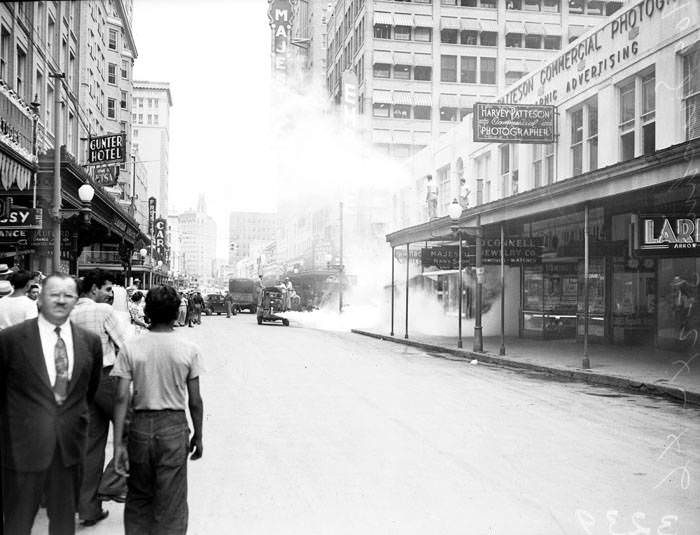
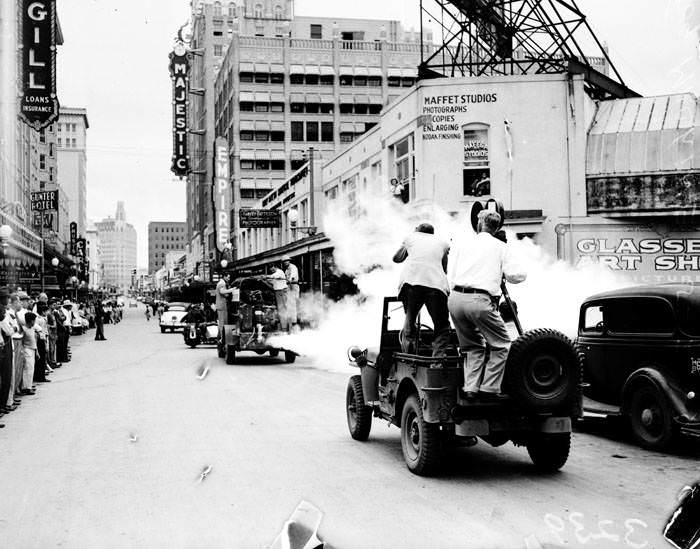
Insecticide spraying on Houston Street, 1946

In 1946, the city deployed a portable DDT fog machine along Houston Street, slowly moving it through the business and theater districts as a public health measure. The machine spread DDT fog throughout the area, and while the city’s health department declared it harmless to anything other than insects, many residents found the spray annoying and complained loudly. It was a familiar postwar tension — the eagerness to apply wartime technology to peacetime problems, with mixed results.
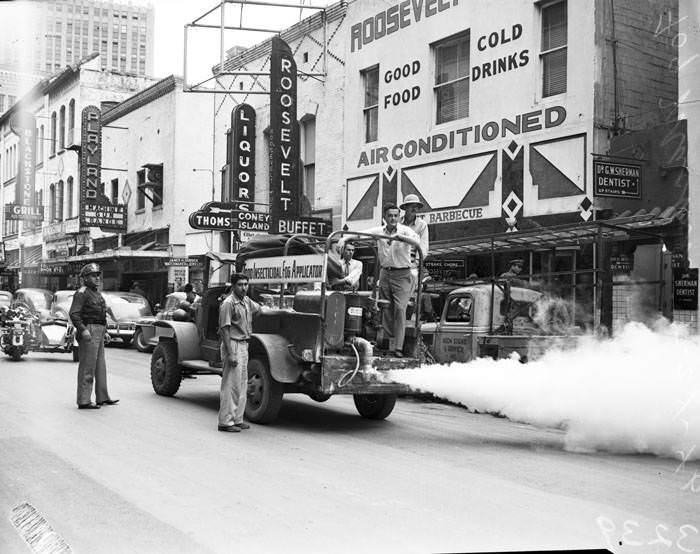
Todd Insecticidal Fog Applicator used to spray DDT, 1946
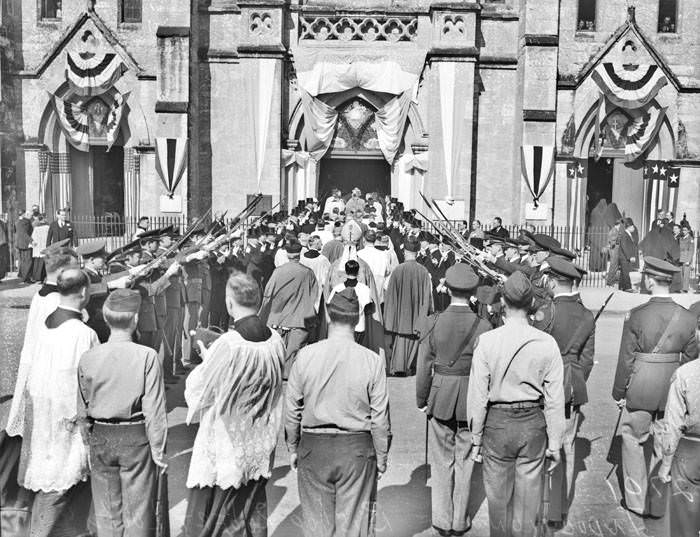
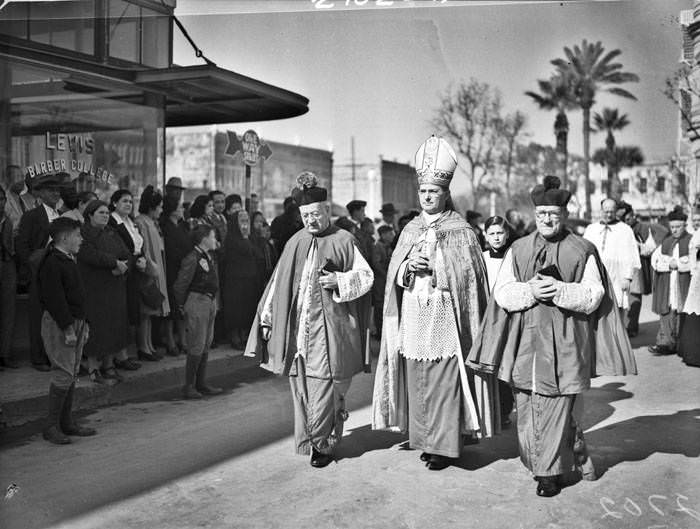
Archbishop Robert E. Lucey in procession, 1941

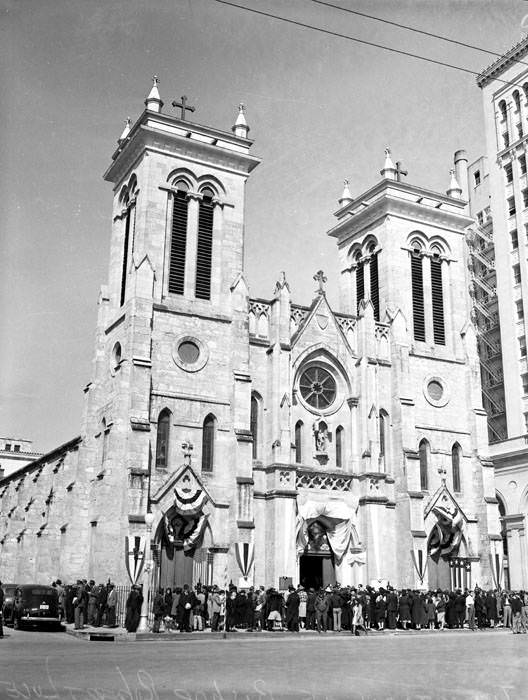
The installation of Archbishop Robert E. Lucey in 1941 drew enormous crowds to San Fernando Cathedral. The procession wound through the streets of San Antonio, and the cathedral overflowed with worshippers. For a city with deep Catholic roots going back to Spanish colonial times, the arrival of a new archbishop was a major community event — one that unfolded just months before the country went to war.
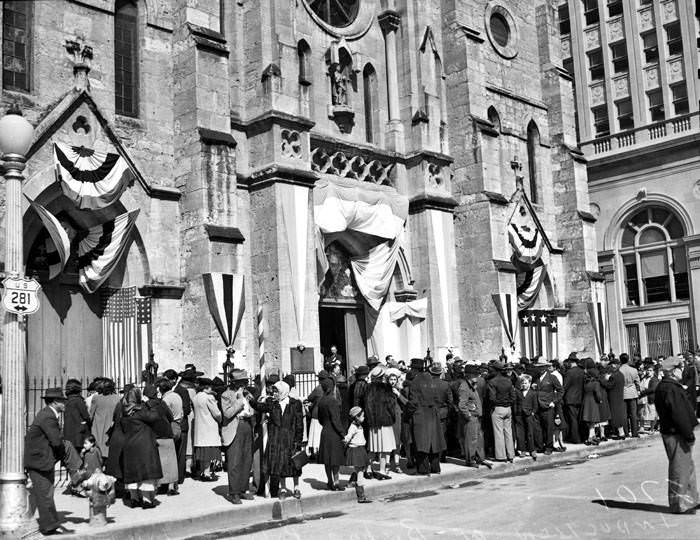
Crowd at San Fernando Cathedral during installation of Archbishop Lucey, 1941
Lyndon B. and Lady Bird Johnson on steps of airplane, 1941

In 1941, U.S. Congressman Lyndon B. Johnson and Lady Bird Johnson stepped off a Braniff Airways plane in San Antonio at the end of his campaign for a U.S. Senate seat. Johnson lost that race — narrowly — but would go on to win a Senate seat in 1948. His visits to San Antonio during this period placed him in a city that was deeply tied to military and political power, a connection that would only deepen in the years ahead.
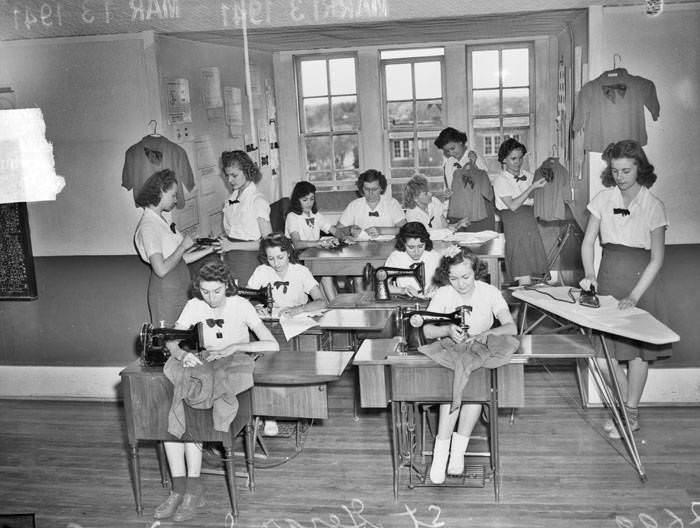
Students sewing garments for Red Cross, 1941

Students across San Antonio contributed to the war effort in practical ways. In 1941, students sewed garments for the Red Cross, part of a broader civilian mobilization that put needles, thread, and scissors in the hands of young people who wanted to do something useful. School campuses became centers of wartime production — whether through scrap drives, sewing projects, or training activities.
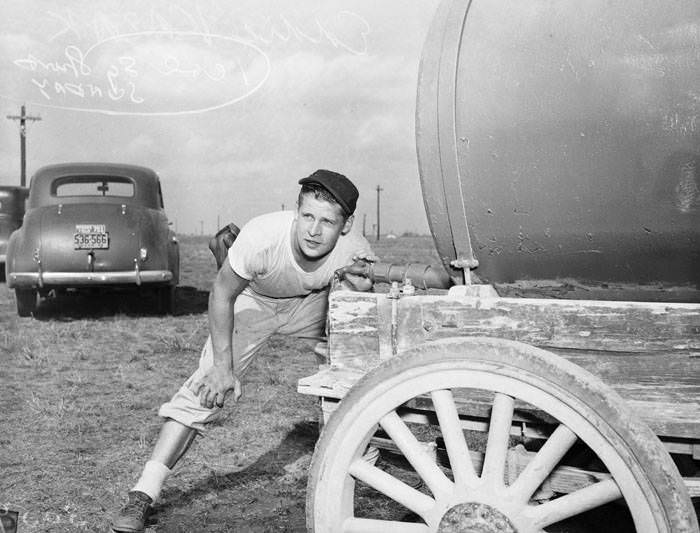
Eddie Kazak drinks from water wagon during baseball practice, 1943
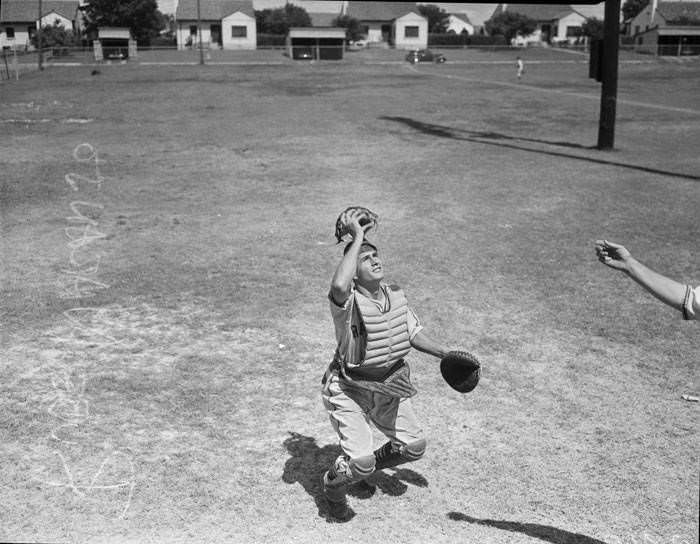
Reuben Naranjo, catcher for the Randolph Field baseball team, 1941

Baseball at the military bases kept morale up during the war years. Randolph Field had its own team, and the Army Baseball League drew players from professional ranks. Eddie Kazak, a 1942 Houston outfielder, slaked his thirst from a water wagon during practice at Brooks Field. Sergeant Bob Lieckert, the first-string catcher for the Brooks Field team, worked on capturing pop fouls as the Army Baseball League prepared to open its season.
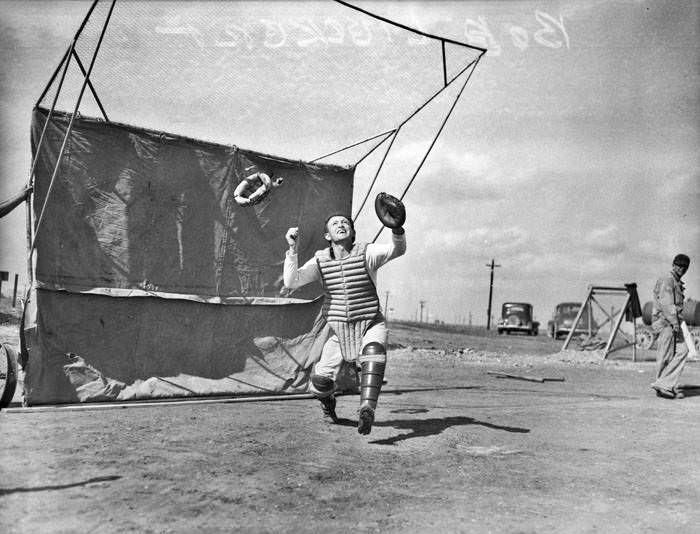
Bob Lieckert fields pop fouls, 1943
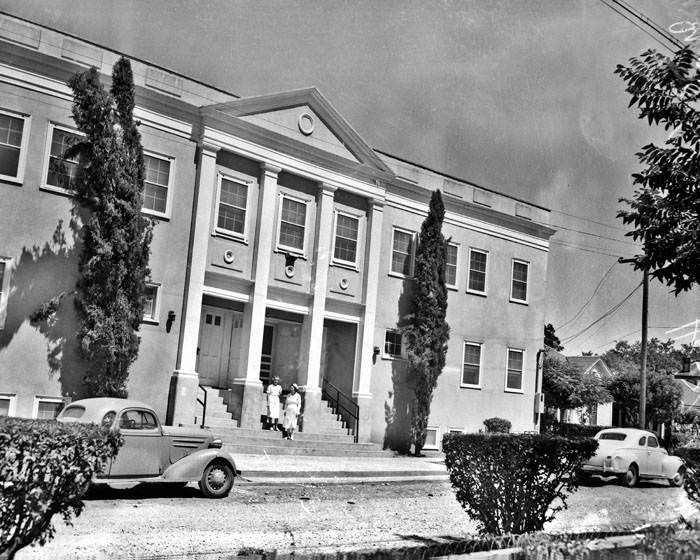
Good Samaritan Hospital, San Antonio, 1948

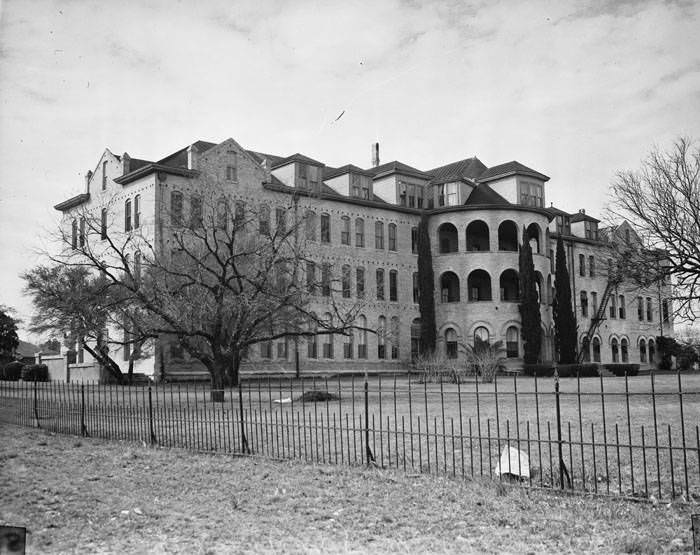
In 1948, Good Samaritan Hospital opened in a converted Corinth Baptist Church building at 1602 Dakota Street. It was designed to serve San Antonio’s Black population of roughly 30,000 people, who had long been excluded from equal access to medical care. The opening of a dedicated hospital represented a significant moment for the community, even as the broader structures of segregation remained in place throughout the city.
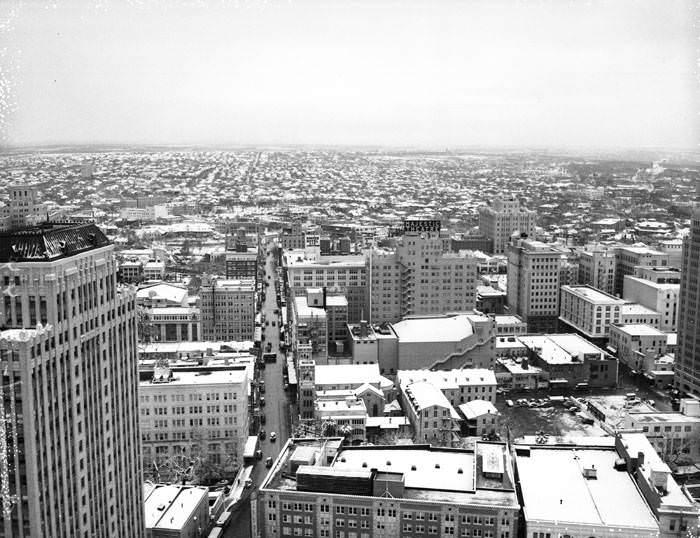
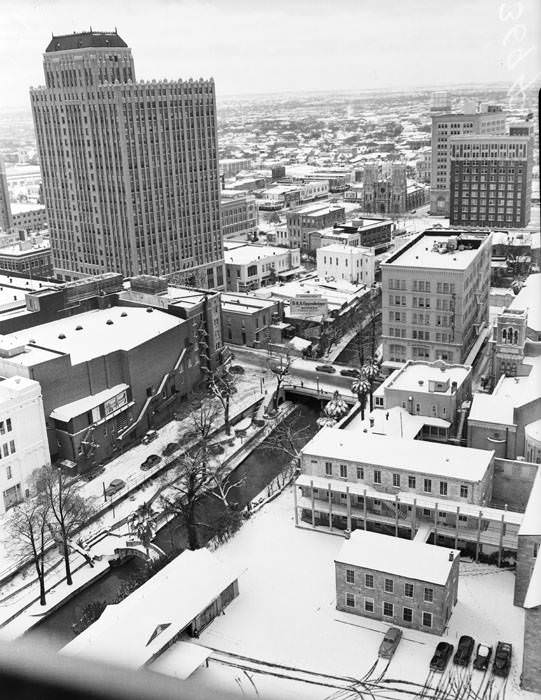
Downtown San Antonio looking north from Smith-Young Tower, 1944

From the observation deck of the Smith-Young Tower, downtown San Antonio in 1944 showed a city in the thick of wartime activity. The Alamo National Bank stood to the far left, and North St. Mary’s Street stretched out ahead, dusted with a thin coating of snow. The photograph captures a city that was denser, busier, and more militarized than it had ever been — and was only partway through the decade that would change it permanently.
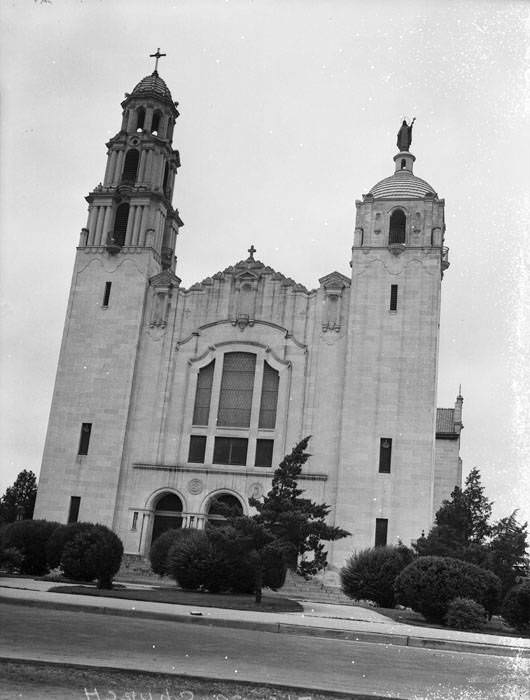
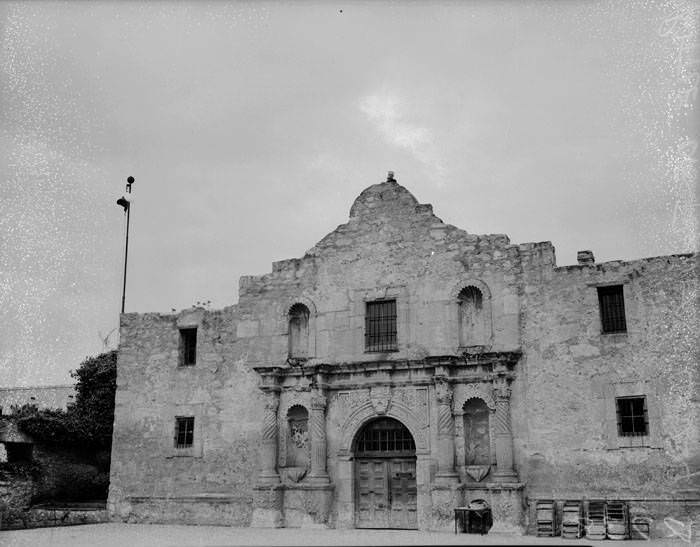
Exterior of Shrine of the Little Flower, San Antonio, 1942
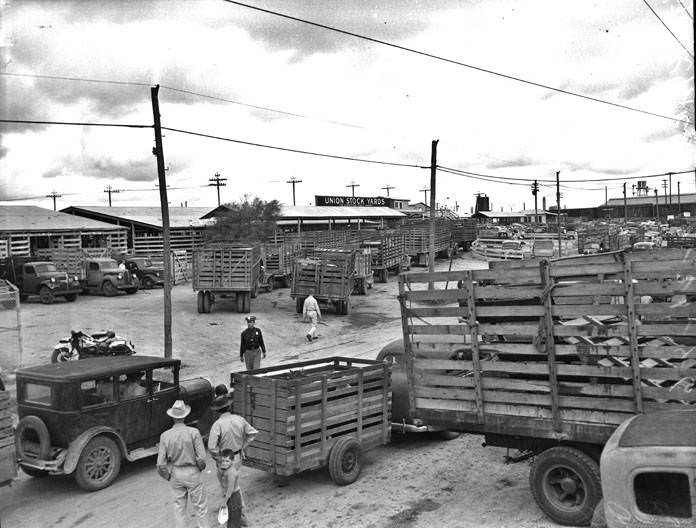
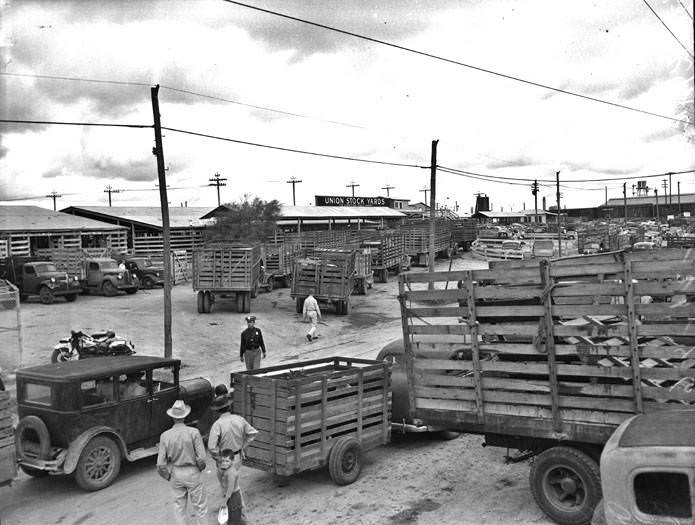
Scenes at Union Stock Yards, 1946
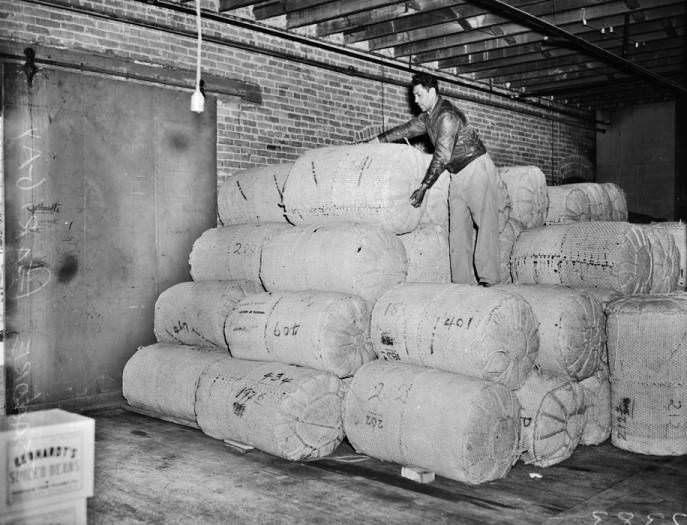
Isadore Garibay with 500-pound sacks of chili pods, 1940
Carolyn Schulz of the Witte Museum wears a hat from 1890 from the museum's collection, 1946.
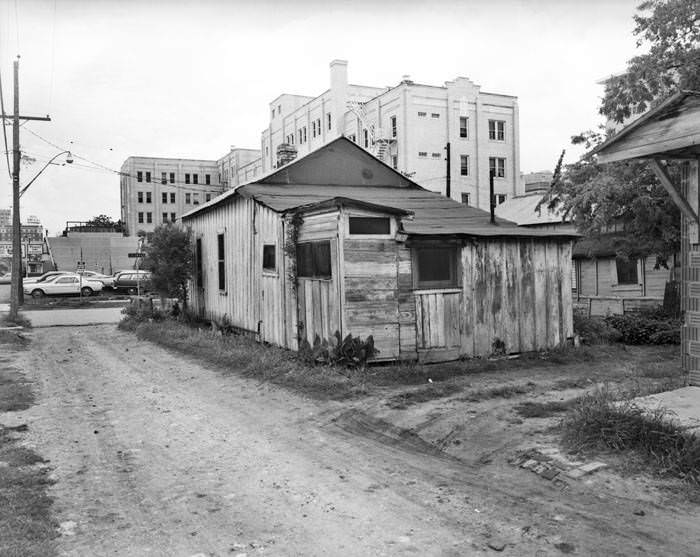
Carolyn Schulz of the Witte Museum wears a hat from 1890 from the museum’s collection, 1946.
Scenes at Union Stock Yards, 1946
Snow at San Antonio Zoo, San Antonio, 1949
Snow on San Antonio River at Brackenridge Park, San Antonio, Texas, 1949
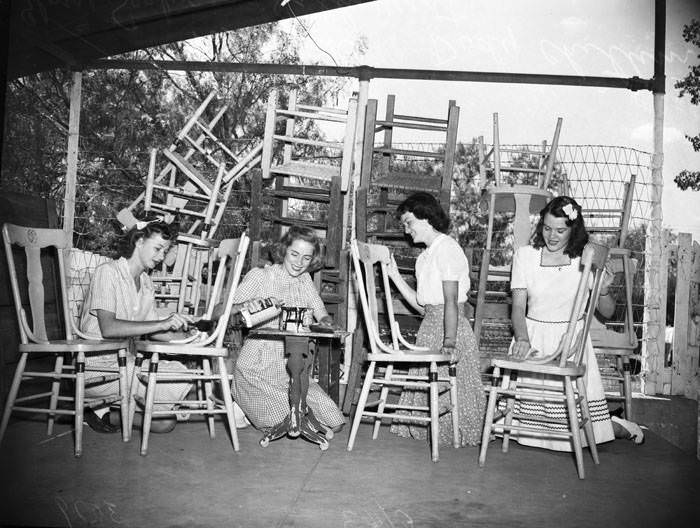
Volunteers refinishing chairs, 1943
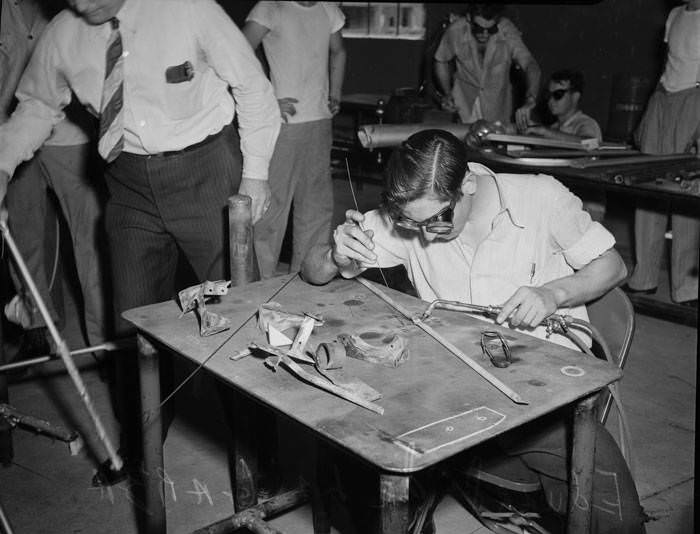
Edward de la Garza soldering, 1941
San Pedro Creek conduit, San Antonio, Texas, 1947
Views of procession for installation of Archbishop Lucey, 1941
Crowd at San Fernando Cathedral during installation of Archbishop Lucey, 1941
Looking southeast towards 1100 block of East Commerce Street just after arrival of King, 1940
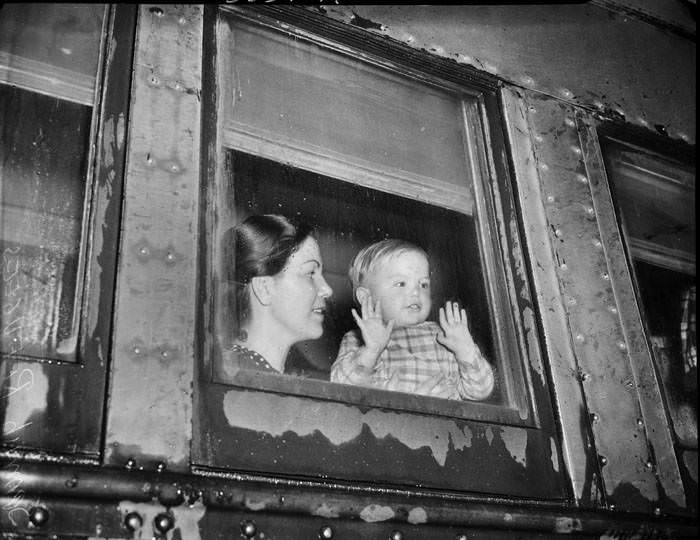
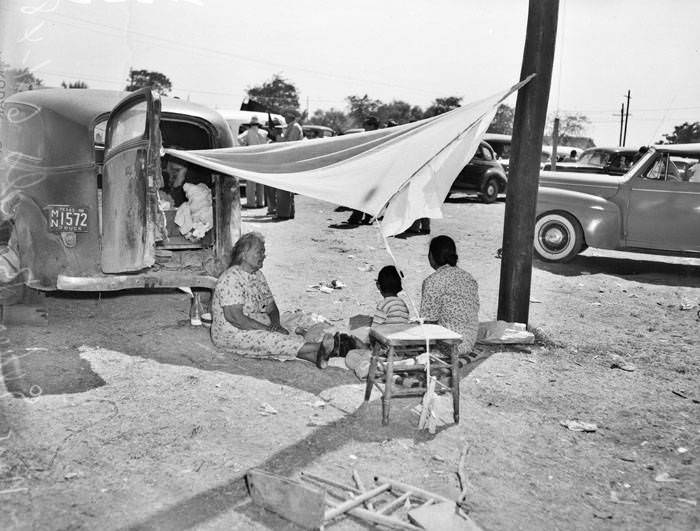
Spanish Civil War refugees on train, 1940
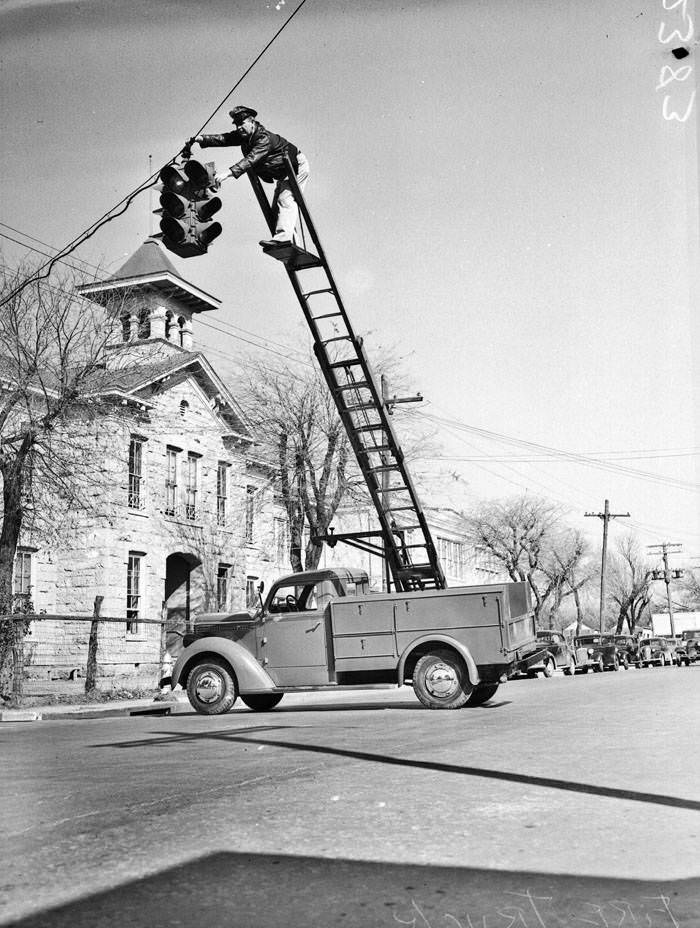
Lineman P. Stowe repairing a traffic light, 1940
Daniel Solis in firefighter training activity, 1948
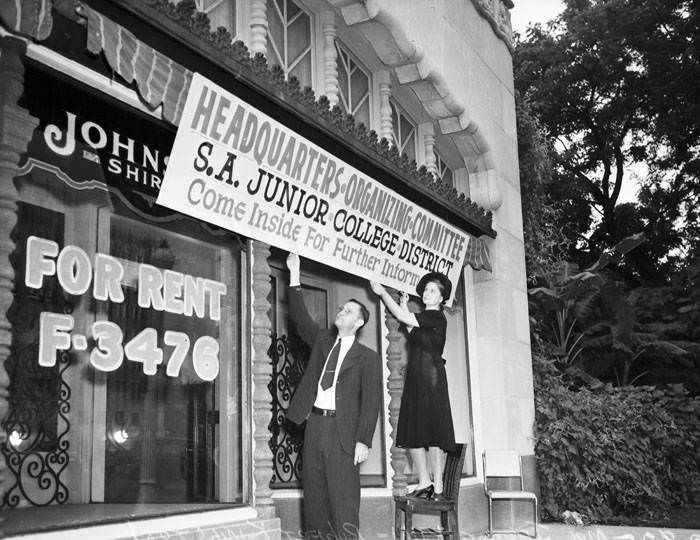
Robert Kingston and Mrs. Jerome Kuhl hang banner at headquarters for San Antonio Junior College, 1941
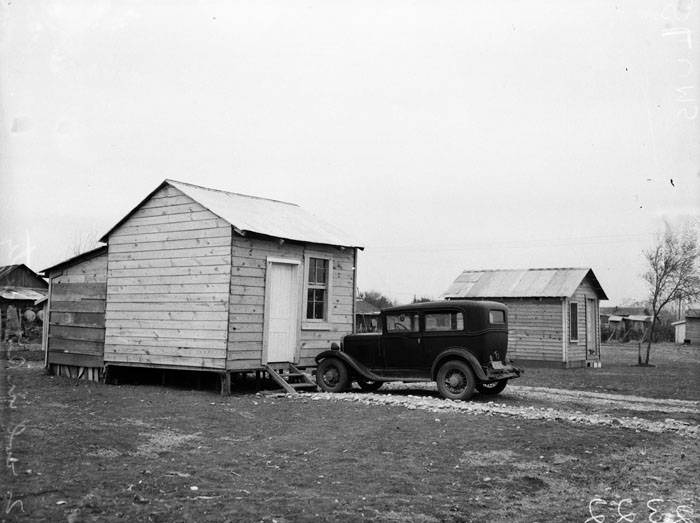
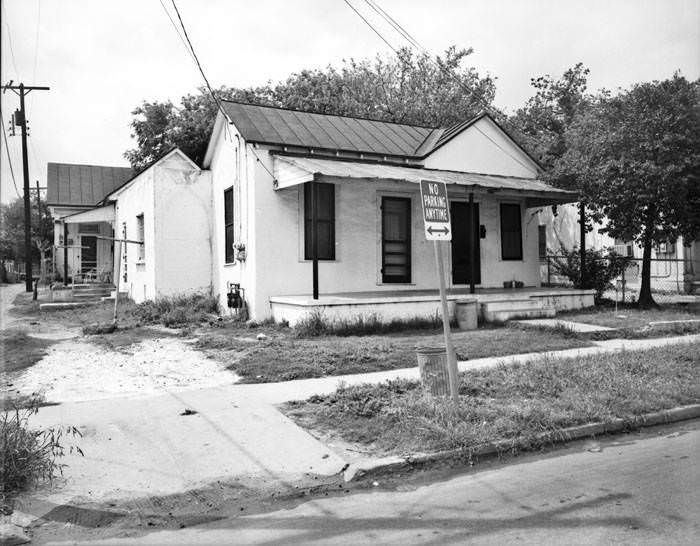
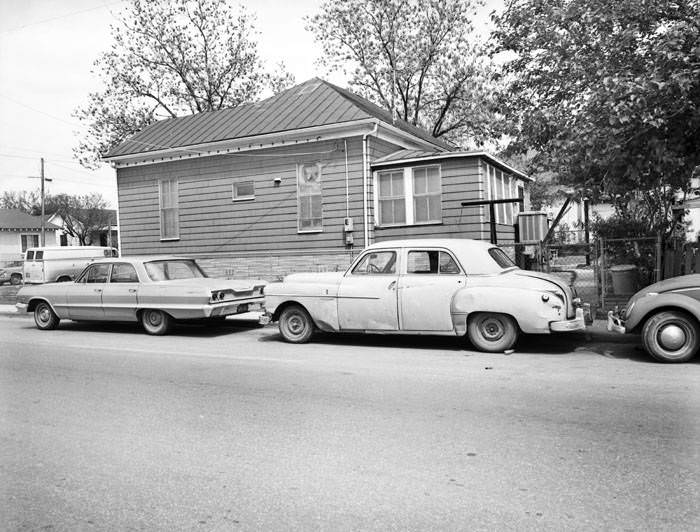
Automobile parked in front of small residence, 1940
Snow on building rooftops, San Antonio, 1949
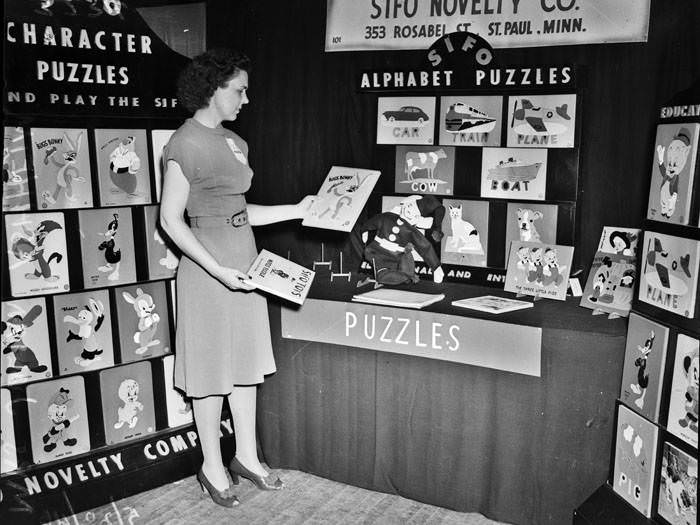
Mrs. Julian Ashheim looks over display of puzzles, 1946
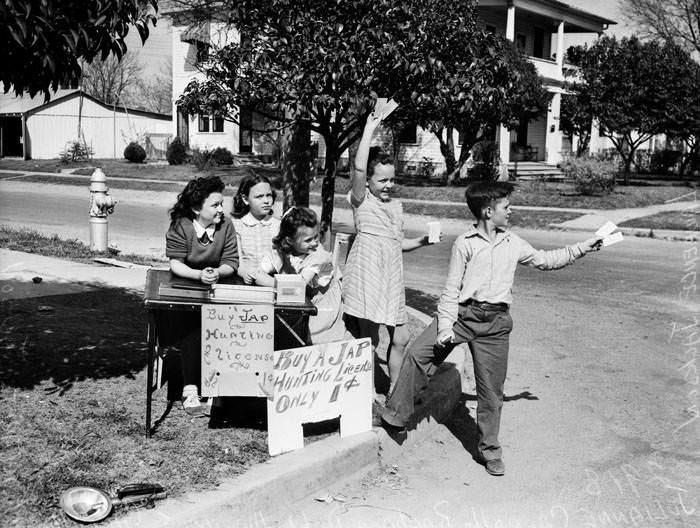
Children selling ''permits'' at sidewalk stand, 1942
Children selling ”permits” at sidewalk stand, 1942
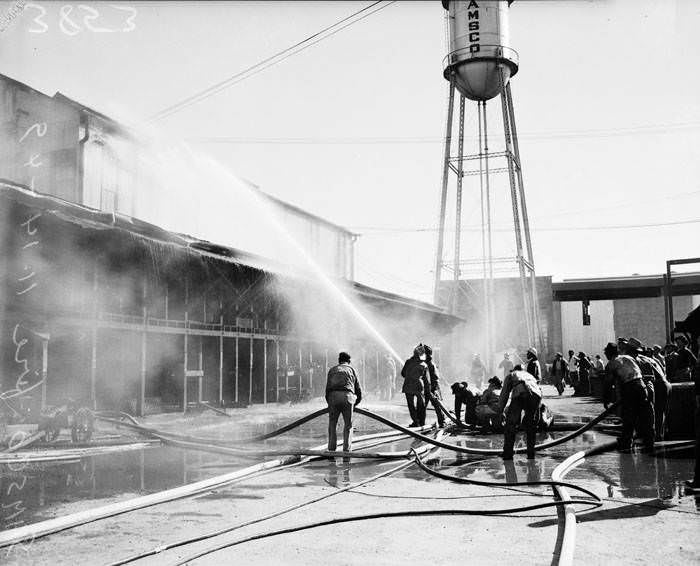
Firemen, with hoses, fight fire at San Antonio Machine & Supply Company, 1949
Luz Diaz Deleon with his garbage pushcart, 1947
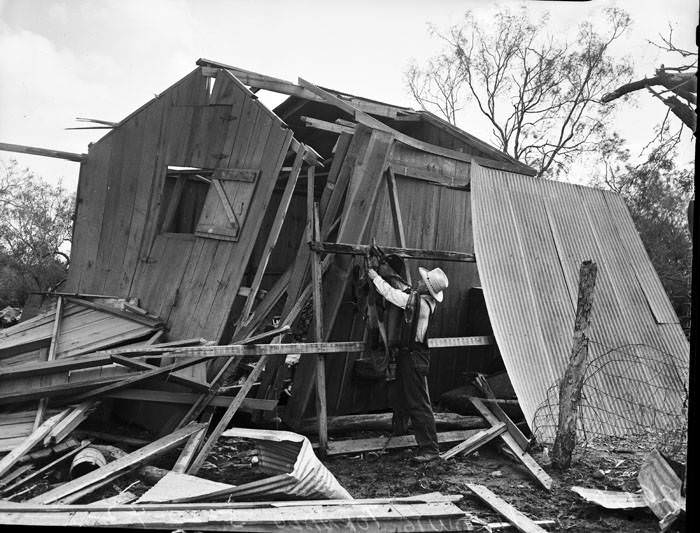
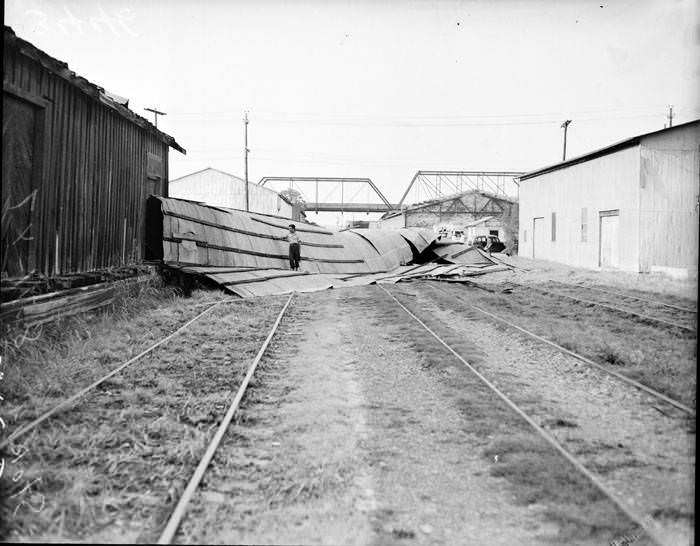
Man examines tornado damage to farm building, 1942
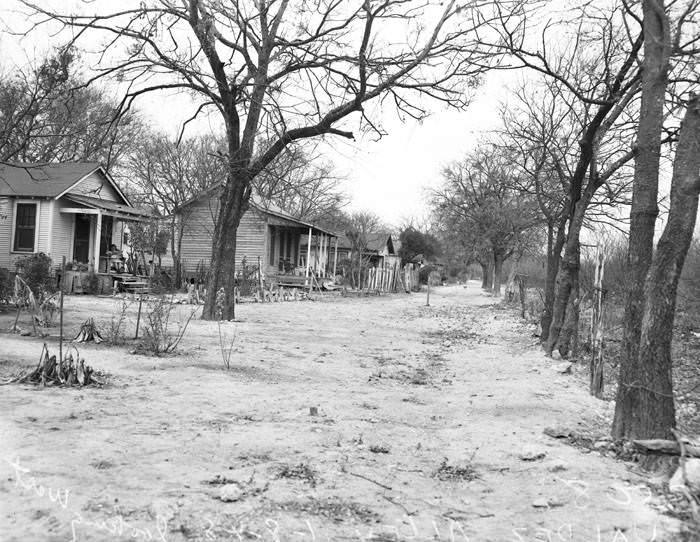
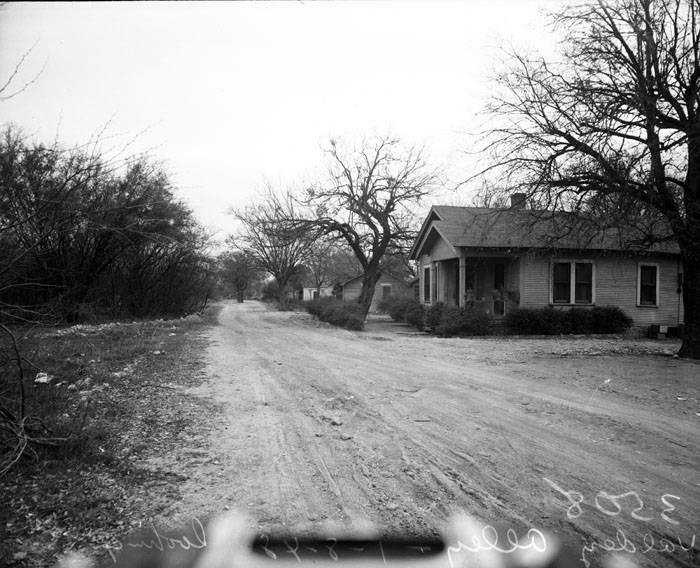
Houses on Valdez Alley, San Antonio, 1948
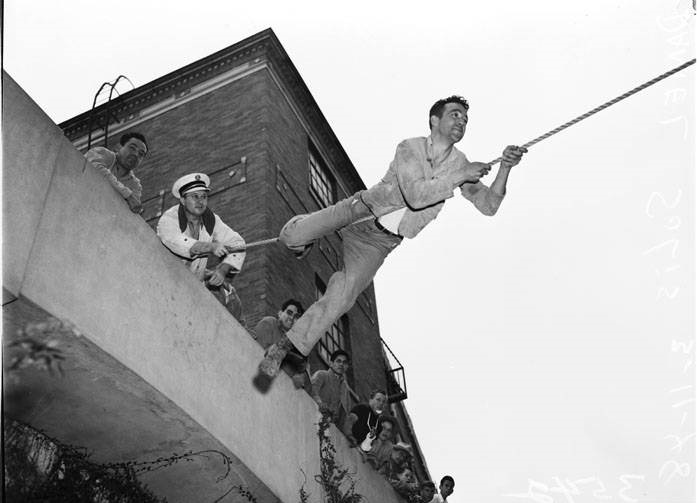
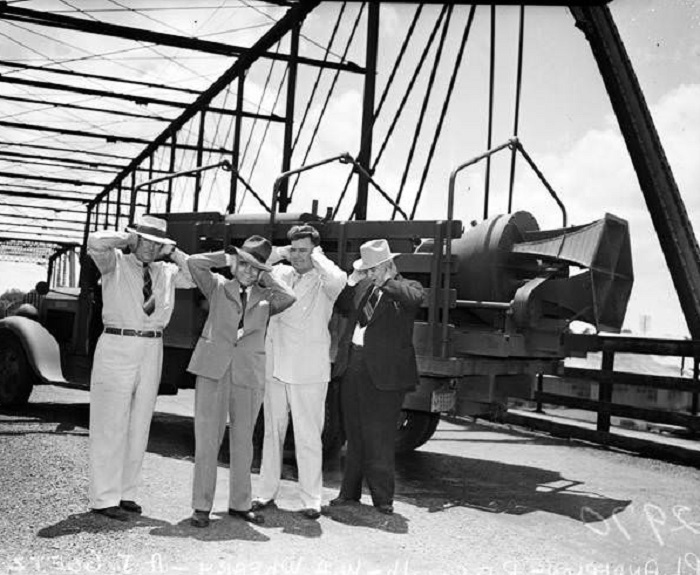
Men on Hays Street bridge holding hands over ears, 1942
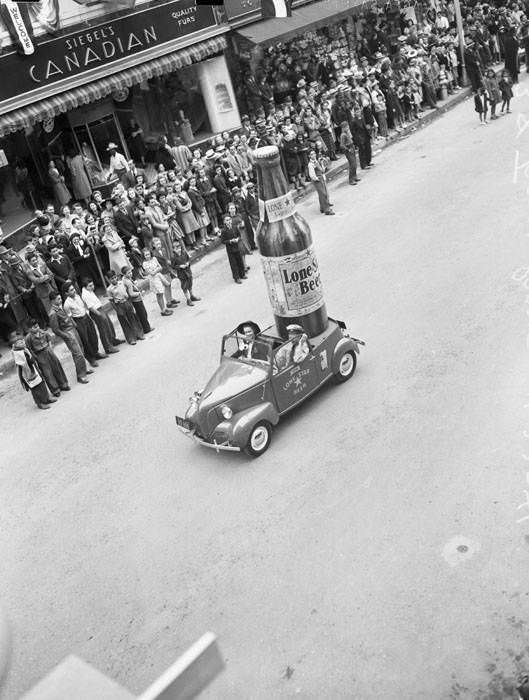
Trade Day Parade with Lone Star Beer float, 1941
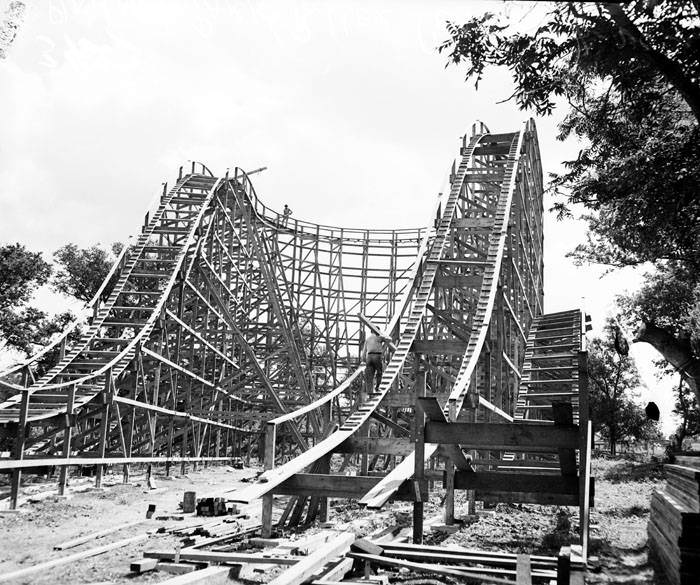
Roller coaster construction in San Antonio, Texas, 1947
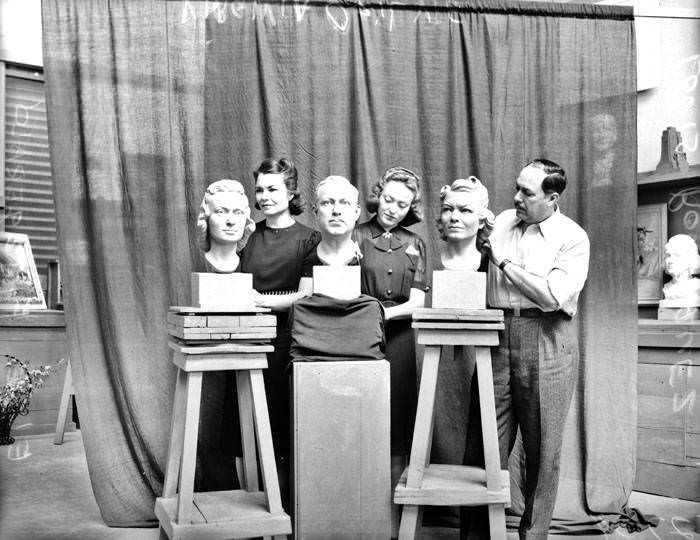
Sculptors at work, 1941
Parade of junk cars on Jefferson Street, 1943. Looking north on Jefferson Street, from Broadway, toward jalopy parade.
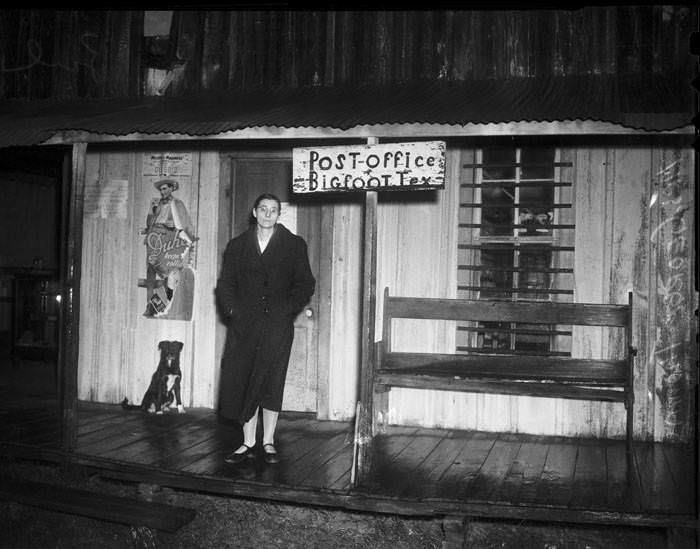
Mrs. George Thomas, postmistress at Bigfoot, Texas, 1941
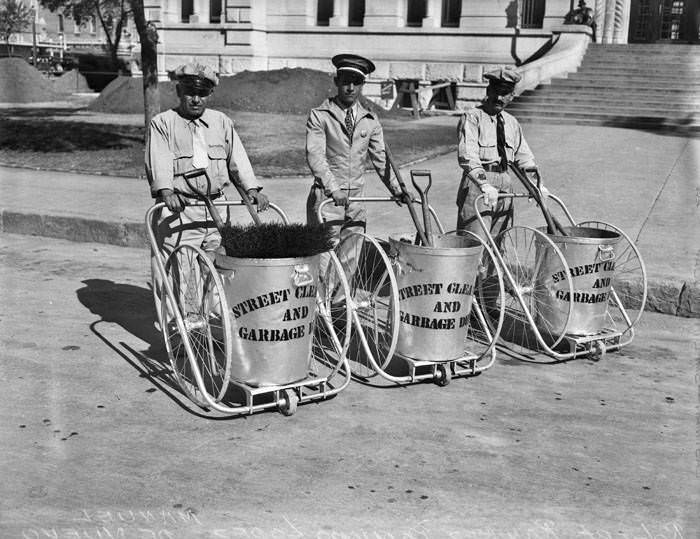
City workmen from the city street-cleaning department, 1940
Scenes in Big Foot, Texas, 1941
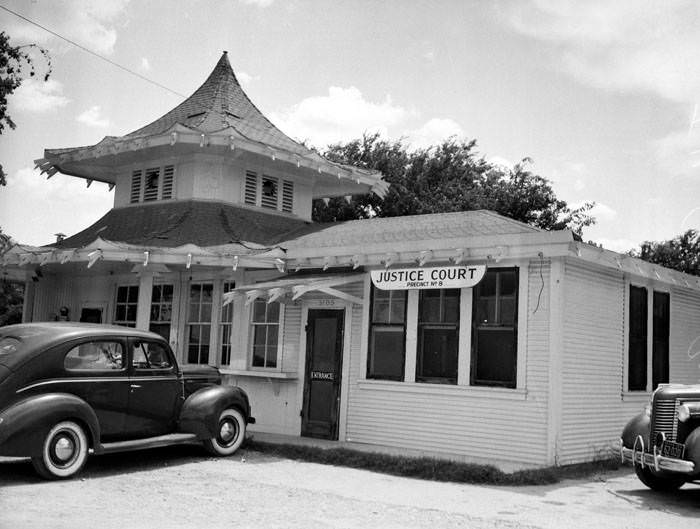
Exterior of Precinct No. 8 Court at 3105 McCullough Avenue, 1941
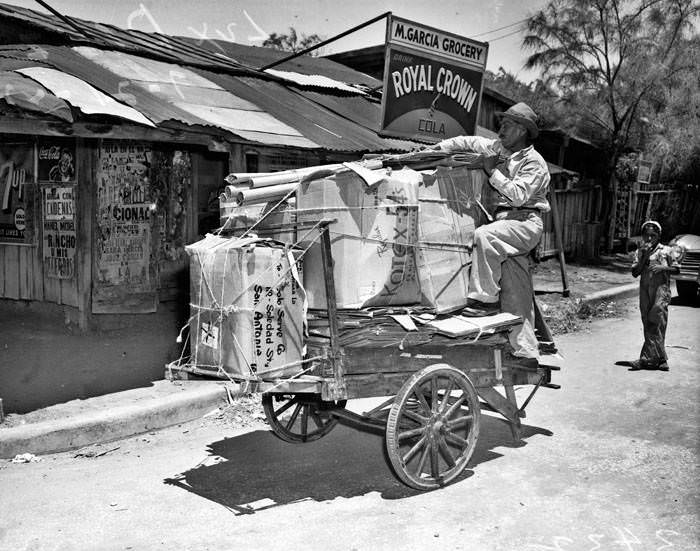
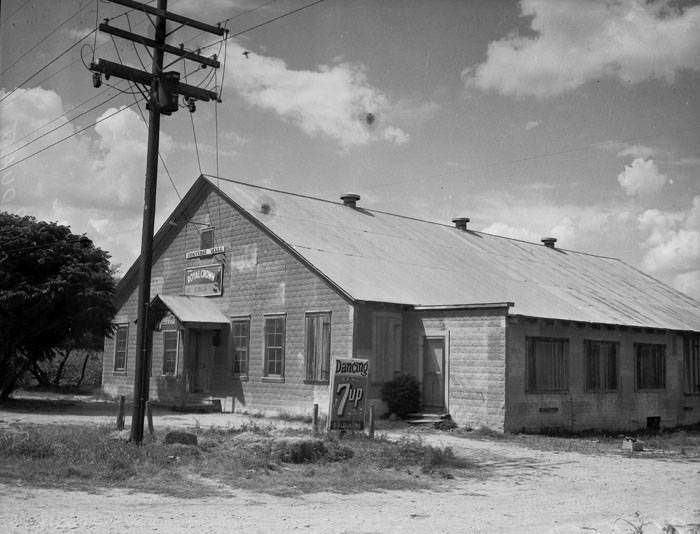
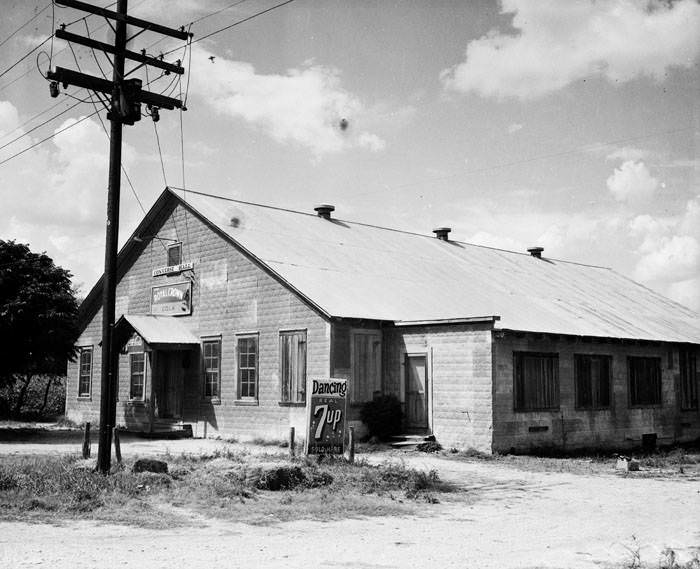
Exterior of Converse Hall, 1941. The exterior of Converse Hall with Royal Crown cola sign and 7-Up sign.
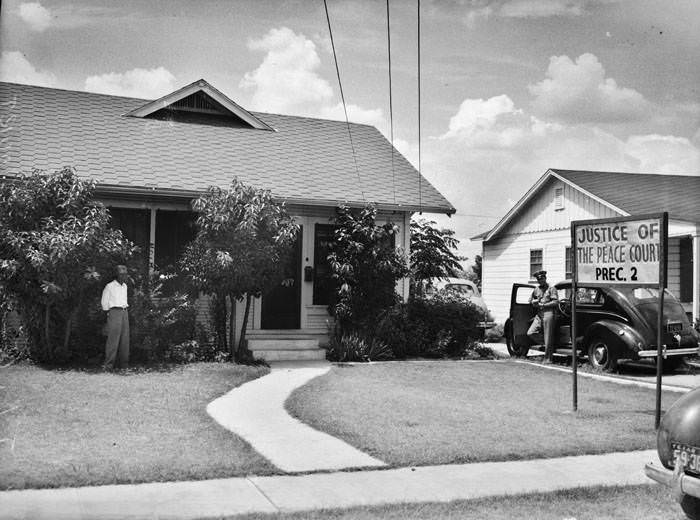
Exterior of Justice of the Peace John Geraghty's residence, 1941. South and east elevations of the building, northwest corner of W. Houston and Camaron Streets.
Exterior of Justice of the Peace John Geraghty’s residence, 1941. South and east elevations of the building, northwest corner of W. Houston and Camaron Streets.
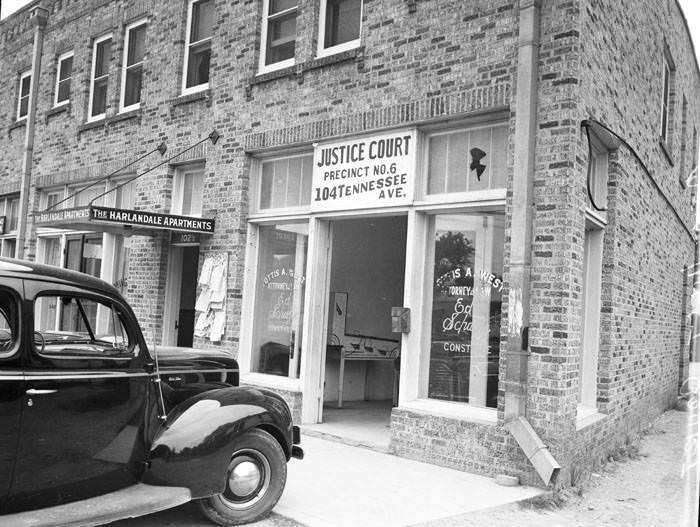
Exterior of Justice of Peace Court No. 6, 1941
Battle of Flowers Parade - man on roof of Alamo, 1941
Battle of Flowers Parade – man on roof of Alamo, 1941
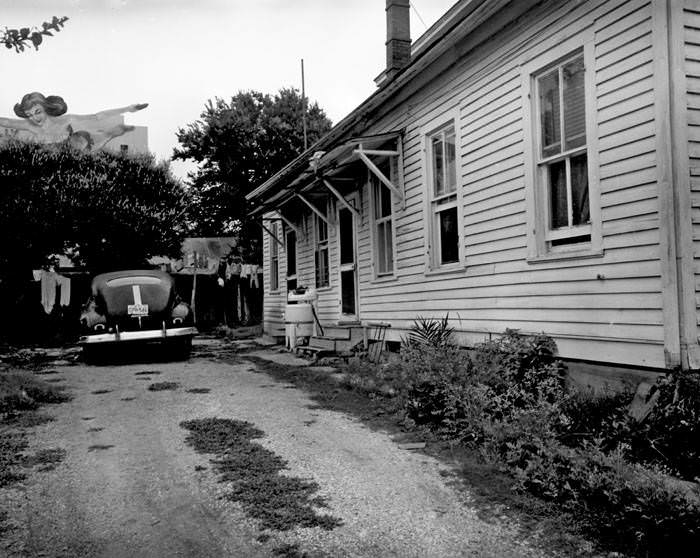
Driveway behind San Saba Apartments, 401 San Saba Street, San Antonio, 1940s
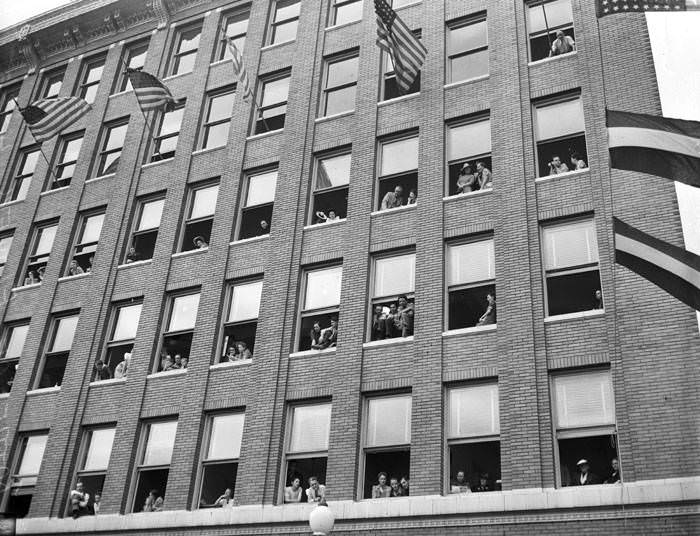
Battle of Flowers crowd in the windows of the Calcasieu Building, 1941
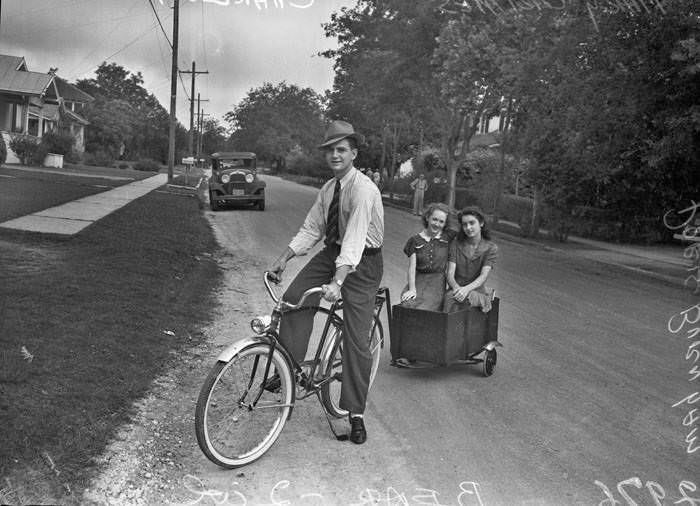
Charles Merritt on bicycle, pulling trailer holding Mary Catherine Grimes and Doris Burnham, 1942
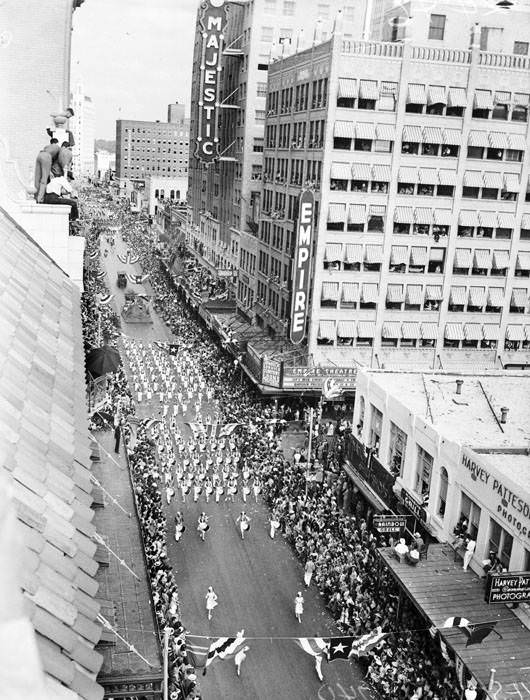
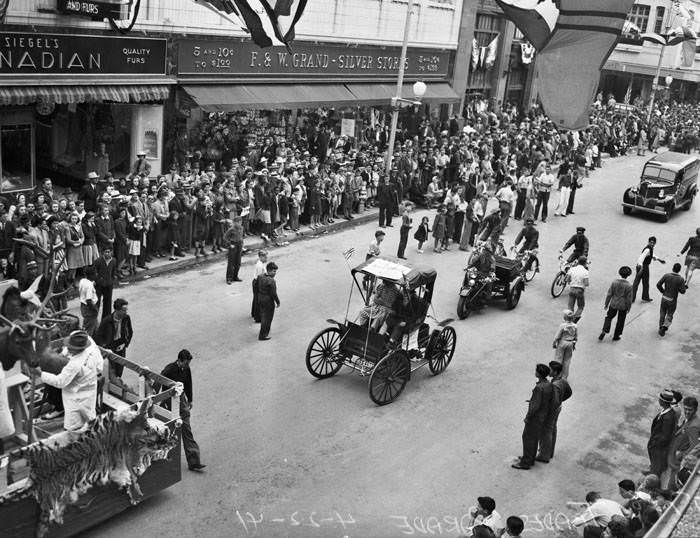
Battle of Flowers Parade at intersection of Houston and St. Mary's Streets, 1940
Battle of Flowers Parade at intersection of Houston and St. Mary’s Streets, 1940
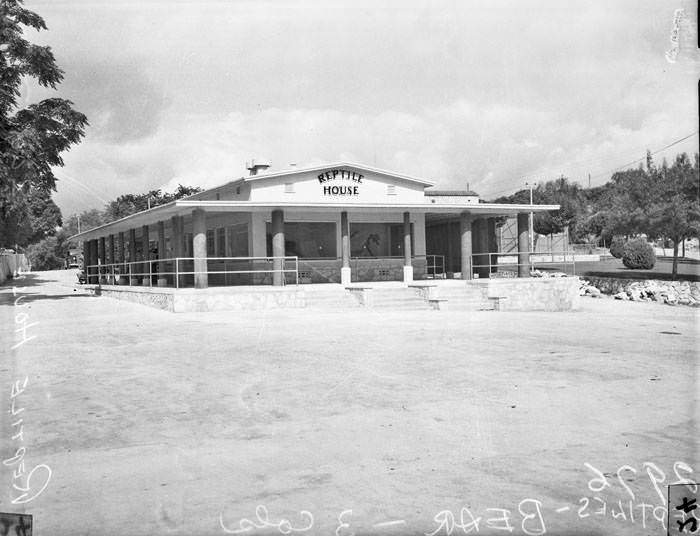
Exterior of Reptile House at San Antonio Zoo, San Antonio, 1942
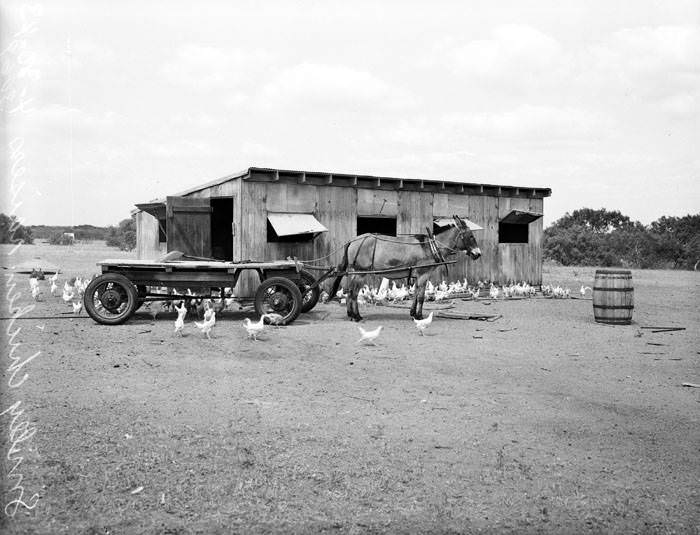
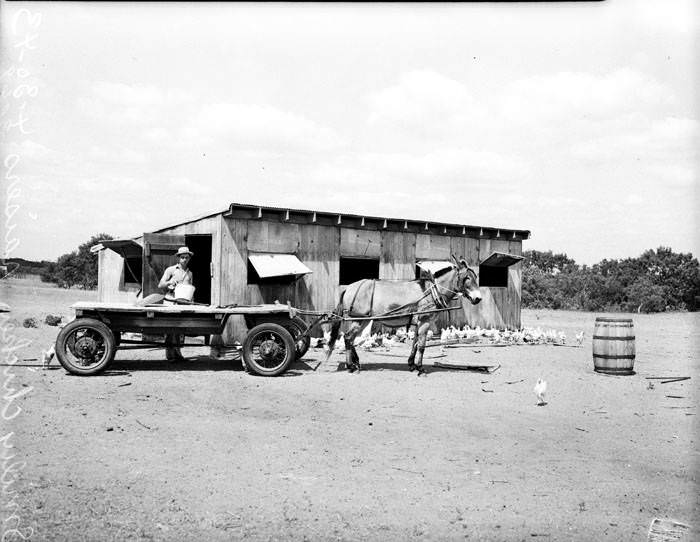
Mule-pulled wagon in front of poultry house 1943
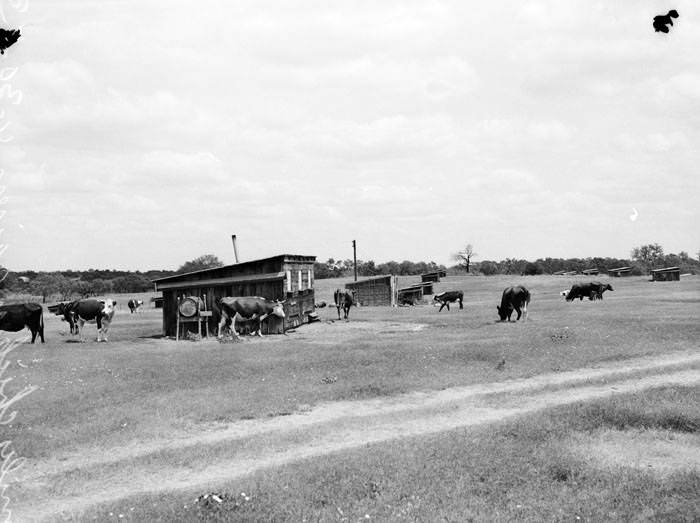
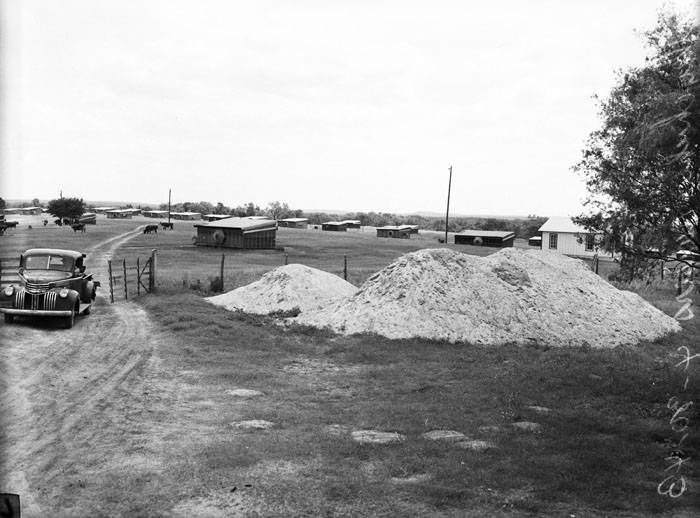
Cattle and poultry houses, 1943. L-3069-G shows close up of cattle around poultry houses.
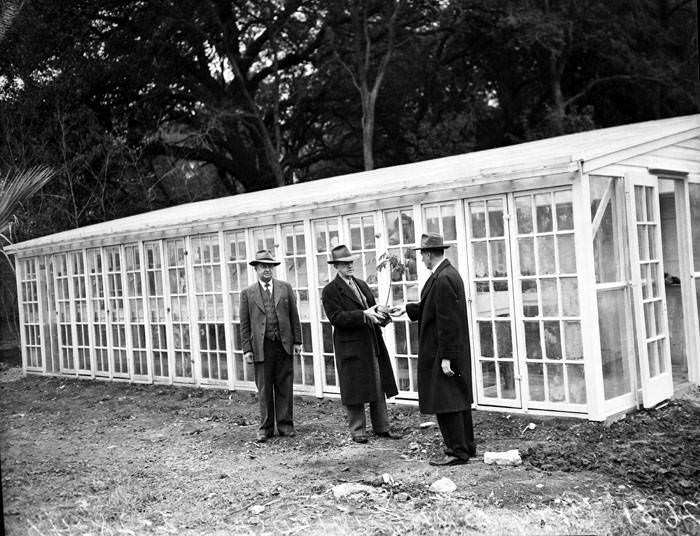
Exterior of recently completed greenhouse at Brackenridge Park, 1941
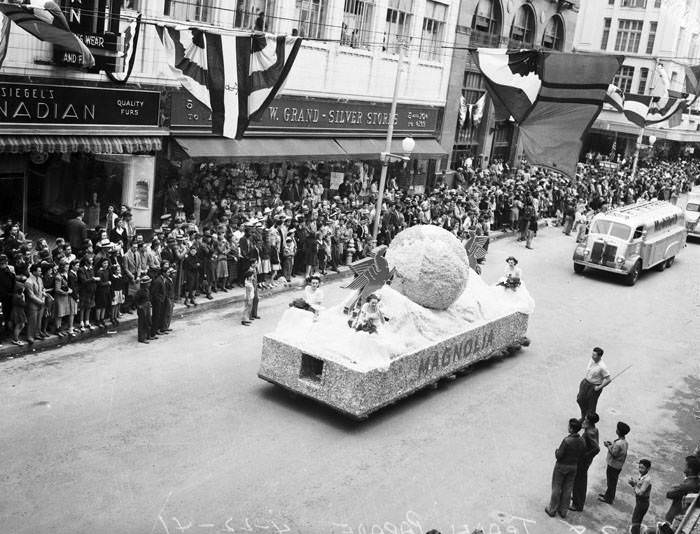
1941 Trades Day Parade with Magnolia Petroleum Company float, 1941
Cattle around poultry houses, 1943
Las Vegas Night Club at 326 East Market Street, 1940s
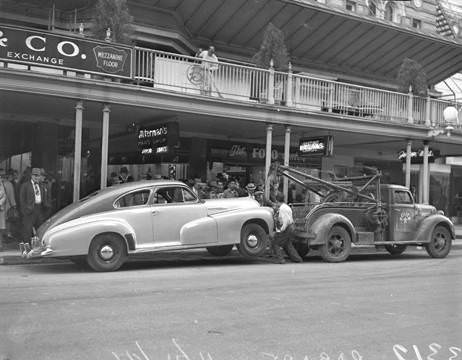
Tow truck on E. Houston Street, San Antonio, Texas, 1946
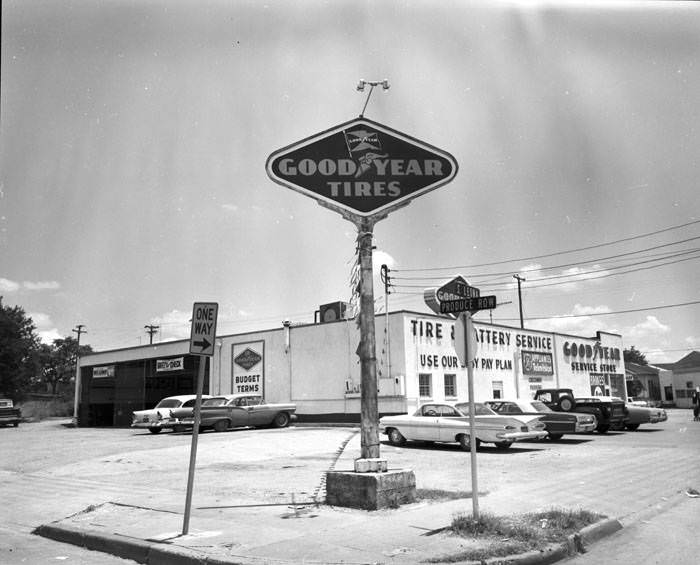
Goodyear Tire and Rubber Company Service Store 2, 423 Buena Vista Street, San Antonio, 1940s
Trade Day Parade, 1941
Armistice Day, San Antonio, 1946
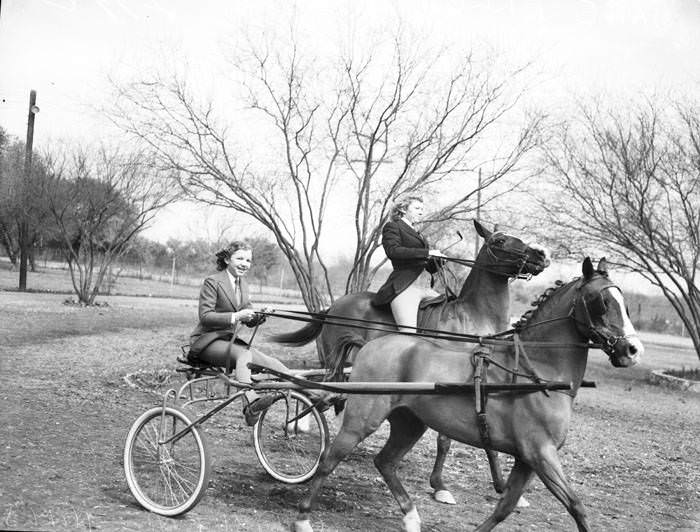
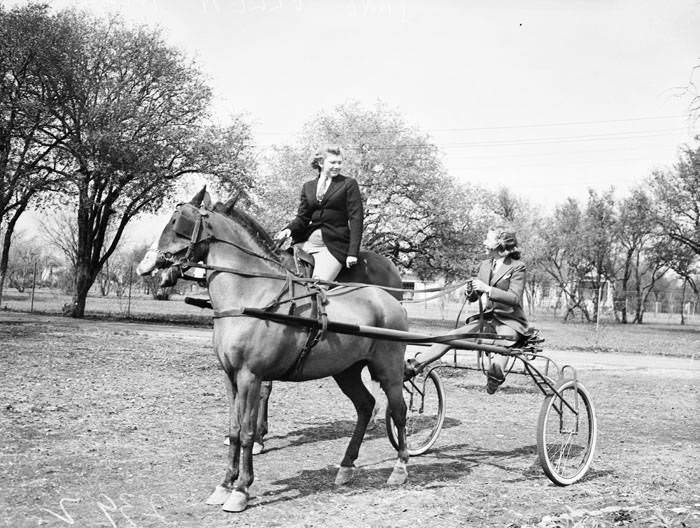
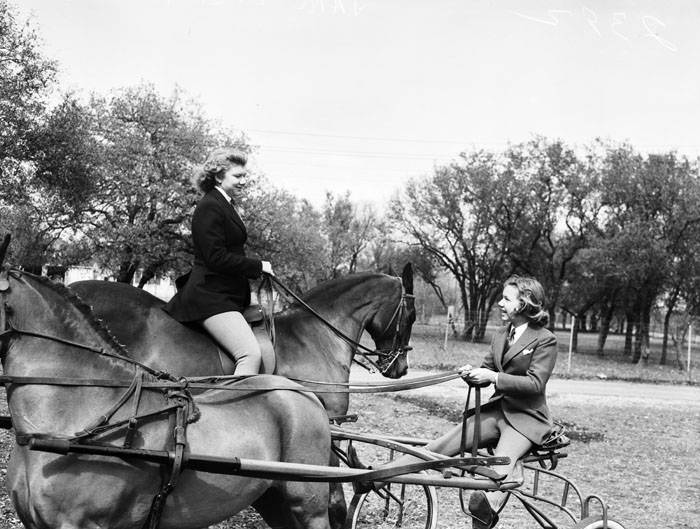
Hillje sisters with their horses, 1940
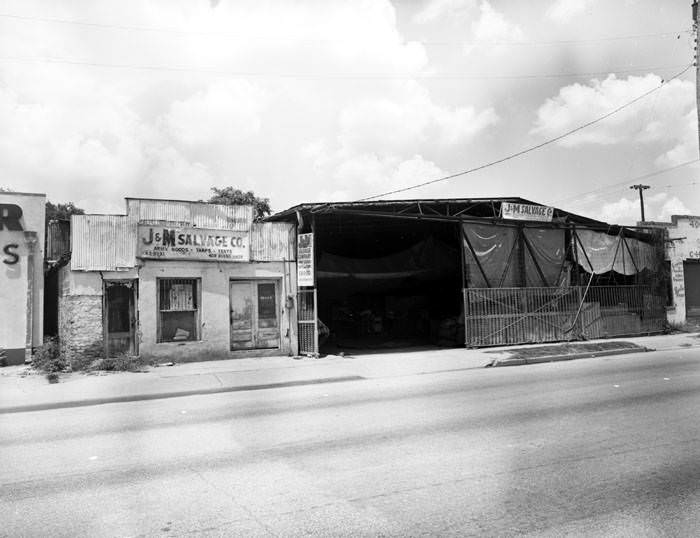
J and M Salvage Company, 409 Buena Vista Street, San Antonio, 1940s
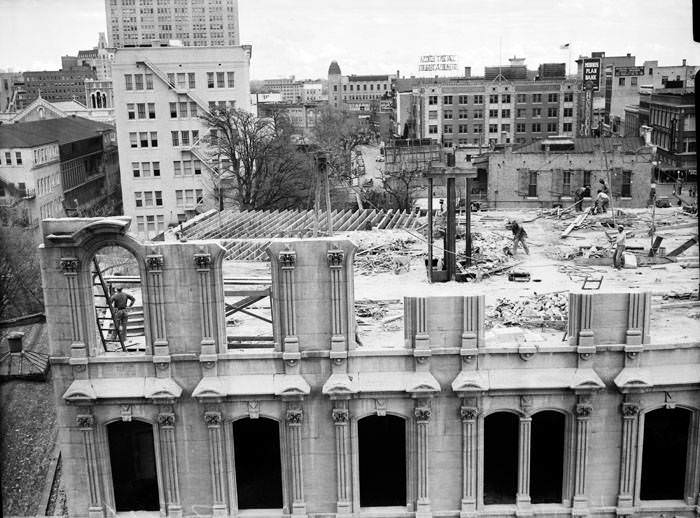
Demolition of the Kampmann Bank Building, 1940
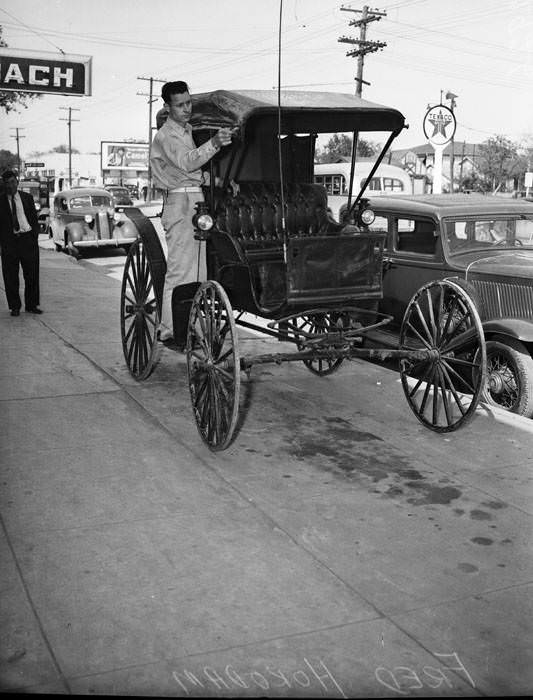
Frank Horadam putting top on reconditioned surrey, 1942
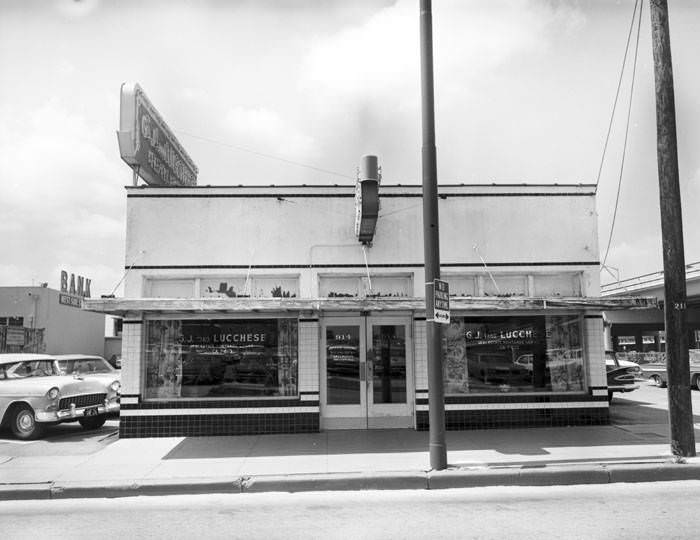
G. J. "Tano" Lucchese Real Estate Company, 714 W. Houston Street, San Antonio, 1940s
G. J. “Tano” Lucchese Real Estate Company, 714 W. Houston Street, San Antonio, 1940s
Mule-pulled wagon in front of poultry house, 1943
Armistice Day, San Antonio, 1946
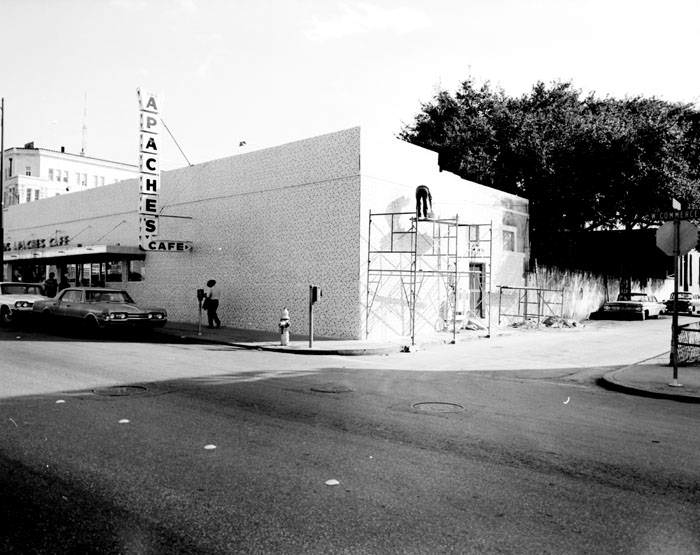
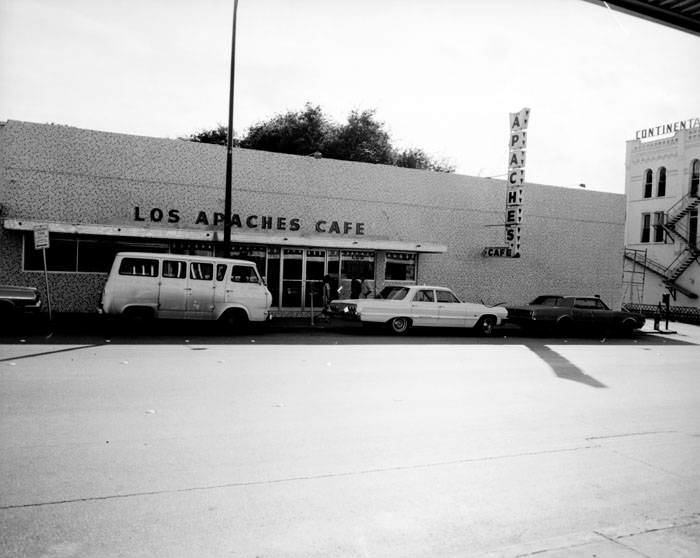
Los Apaches Cafe, 712 W. Commerce Street, San Antonio, 1940s
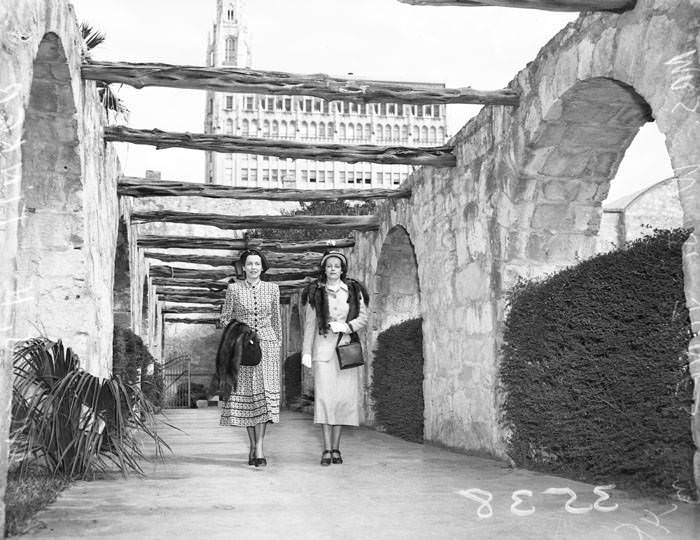
Mrs. J.H. Tinker and Mrs. W.J. Jones posed at Alamo in San Antonio, 1948
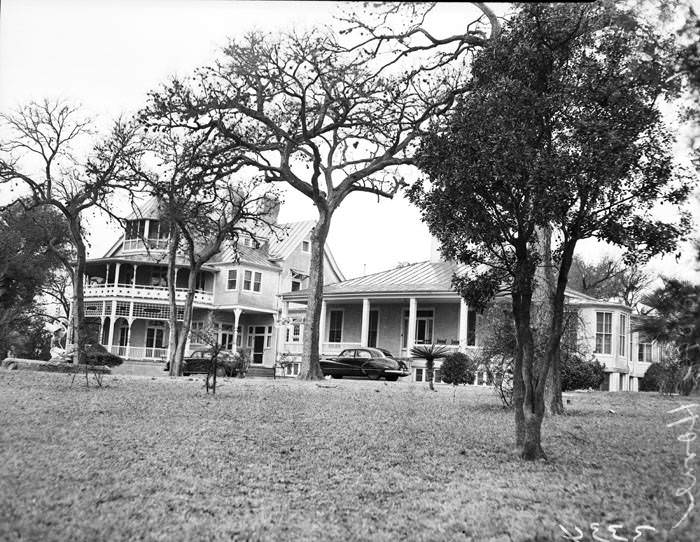
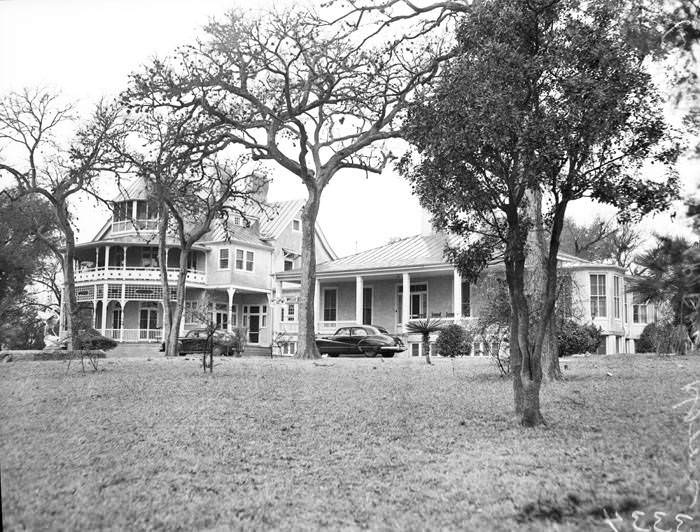
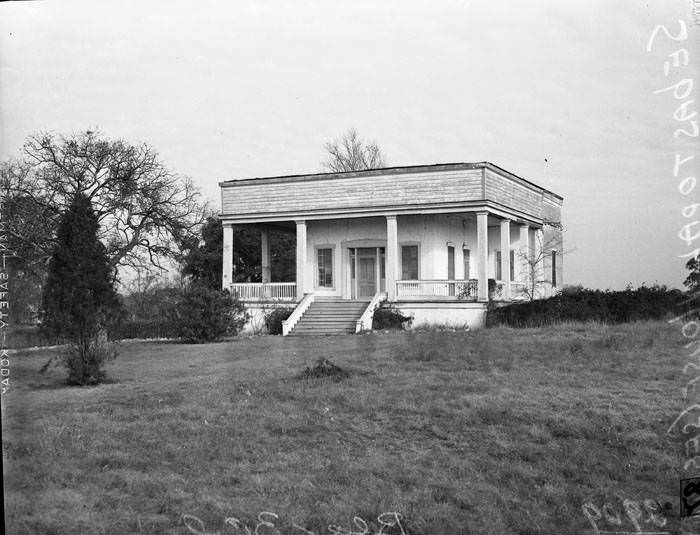
Exterior of the George Brackenridge residence, 1947
Armistice Day, San Antonio, Texas, 1946
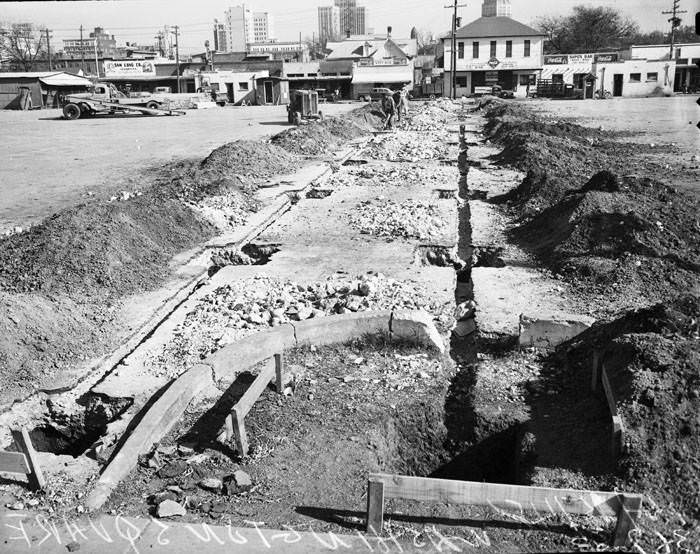
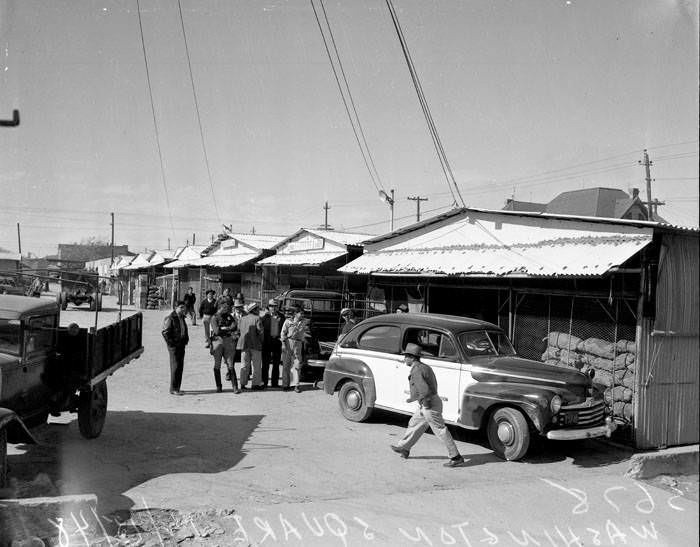
Washington Square, San Antonio, 1948
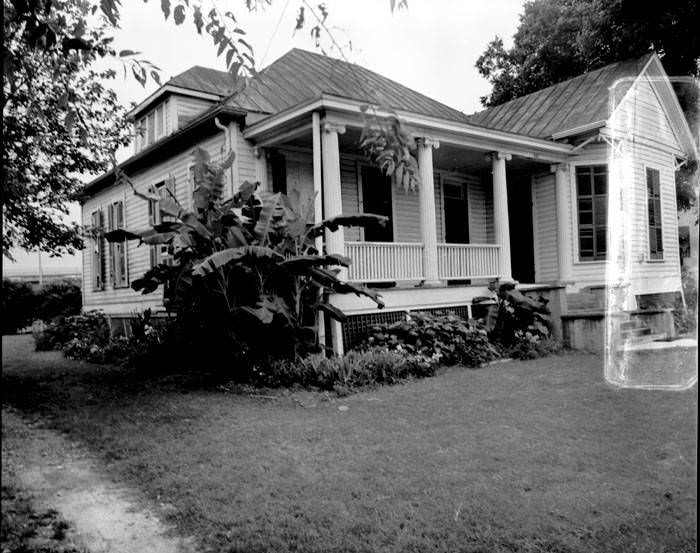
One-story frame house, 415 N. San Saba Street, San Antonio, 1945
Crown over Residence on North Flores Street, 1941
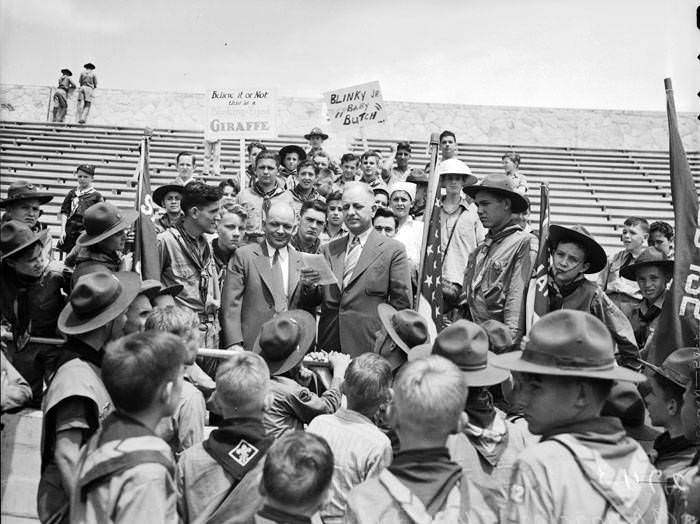
Boy Scouts at Alamo Stadium, 1941
Ira Malone in horse-drawn buggy, 1942
Russell Nye family intent on Olmos Drive, 1947
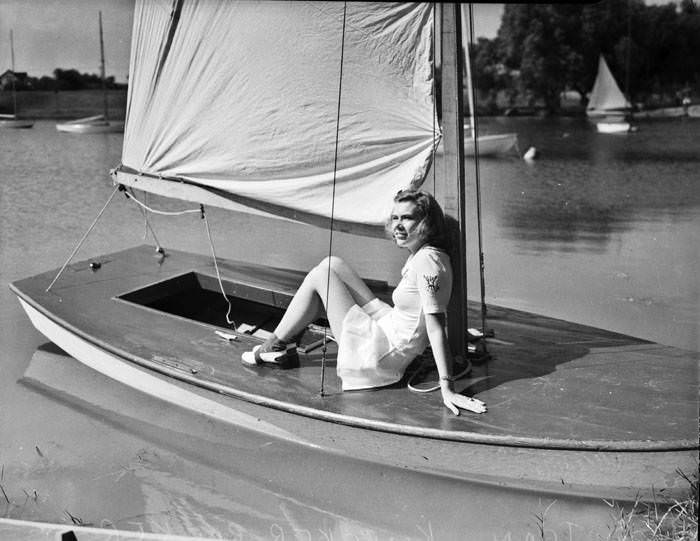
Jean Knickerbocker on sailboat at Woodlawn Lake, 1941
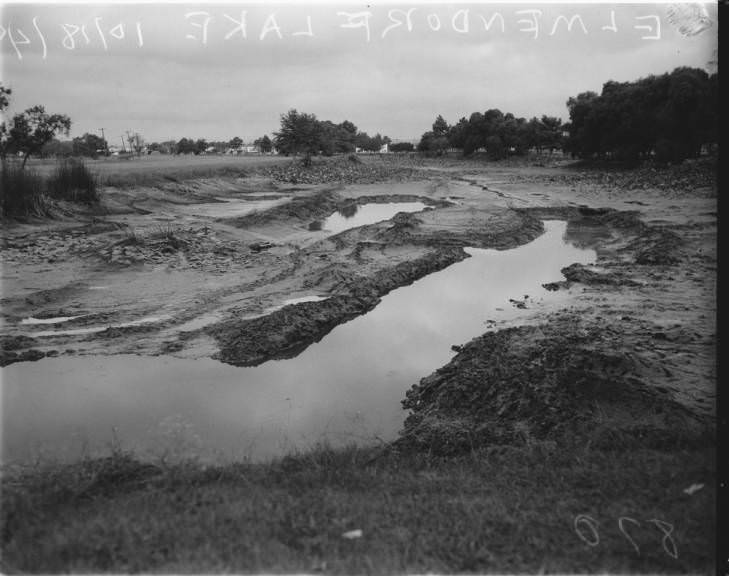
Elmendore Lake, possibly before being completely filled, 1948
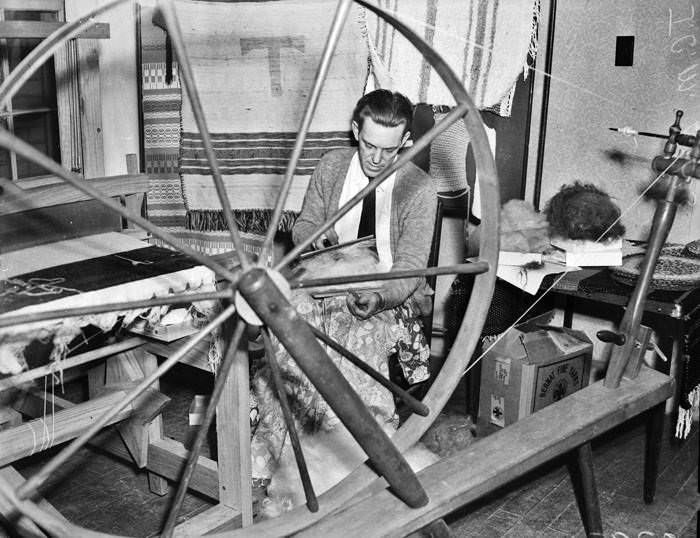
J.C.M. Bills weaving a suit of clothes for himself, 1940
Exterior of the George Brackenridge residence, 1947
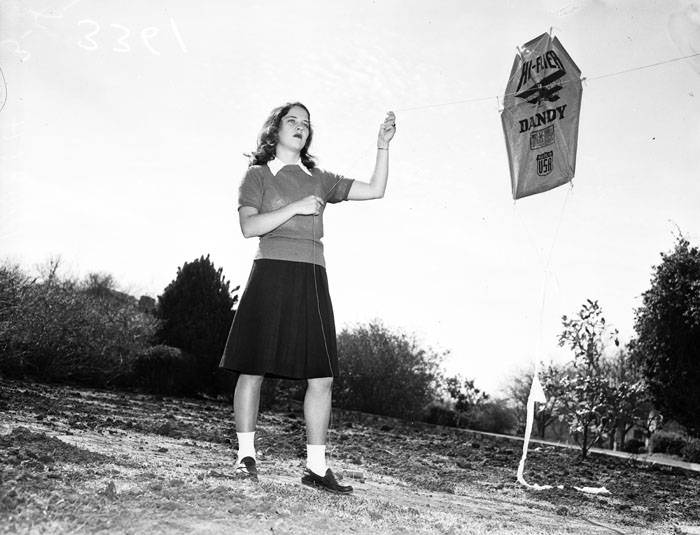
Sally Farnsworth flying a kite, 1947
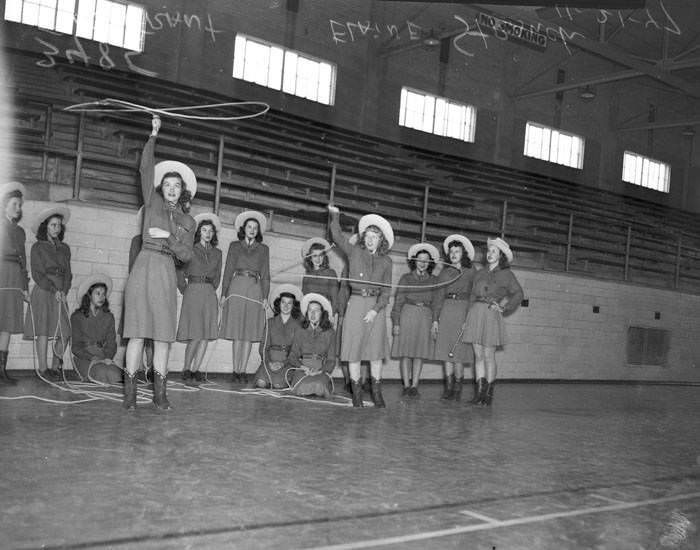
Jefferson High School Lassos practicing twirling lassos in a gymnasium, 1947
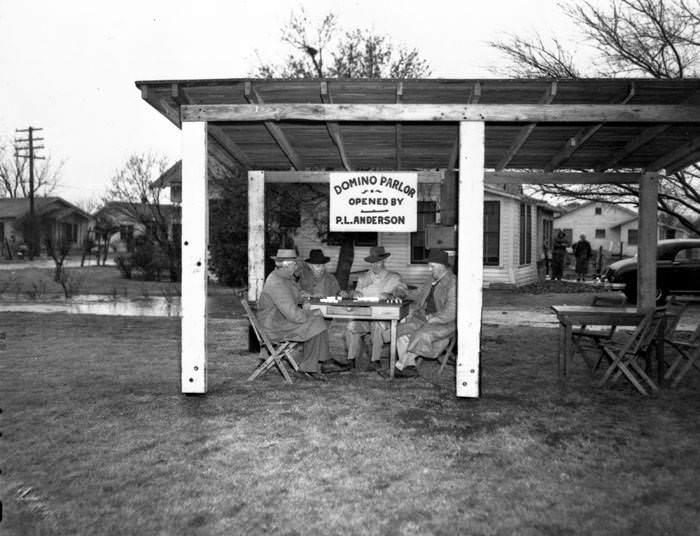
Men playing dominoes under an open air shed, 1947
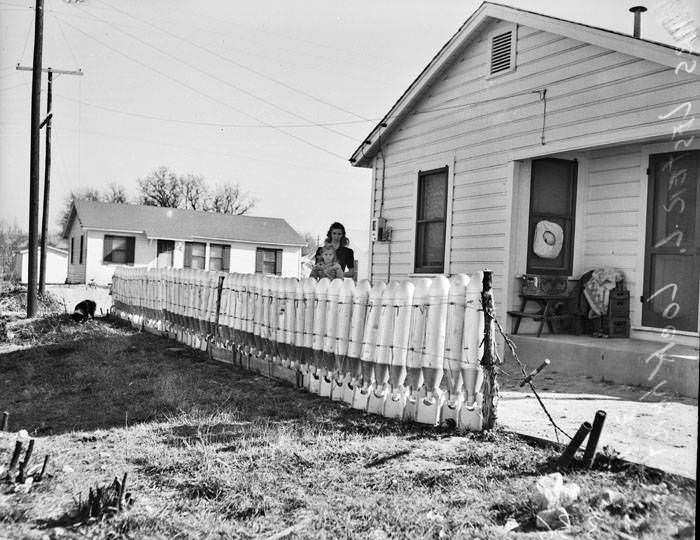
Mrs. Lester Lockhart poses with daughter behind fence, 1947
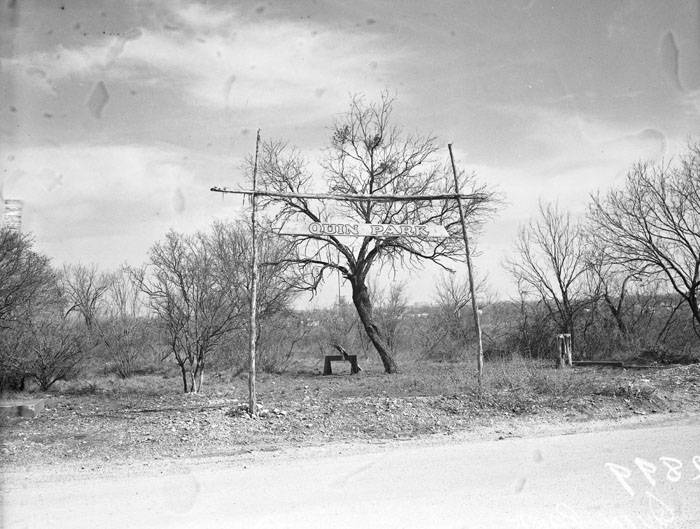
Rustic sign in field for Quin Park, 1942
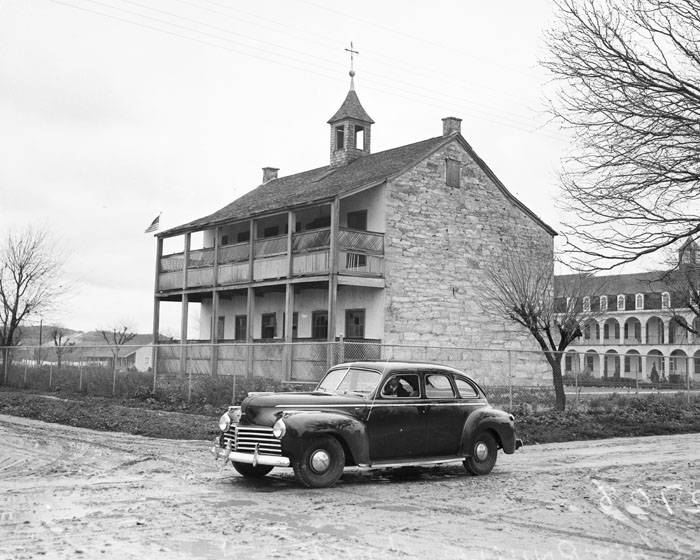
Old St. Louis School building (left) and Moye Military Academy, 1941
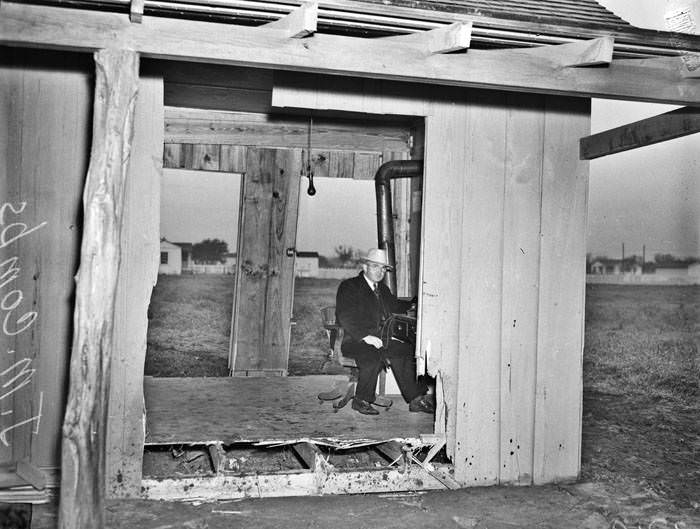
Aftermath of automobile driving through small office, 1941
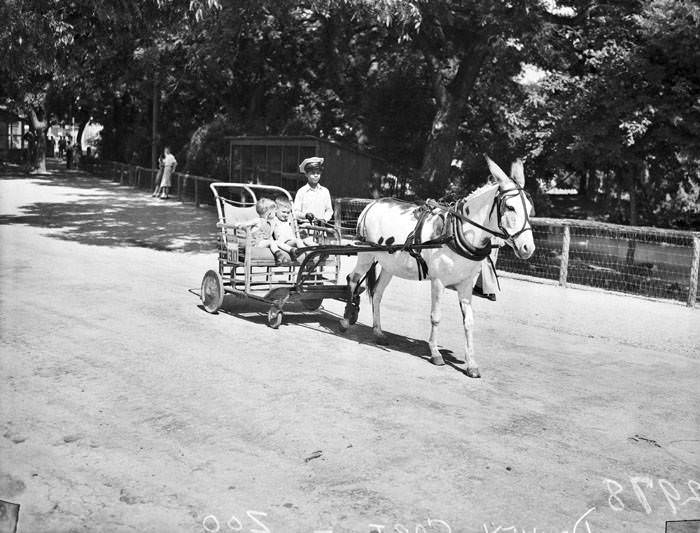
Children riding in horse-drawn cart at San Antonio Zoo, San Antonio, 1942
Robert B. Green Hospital, closed for renovation, 1947
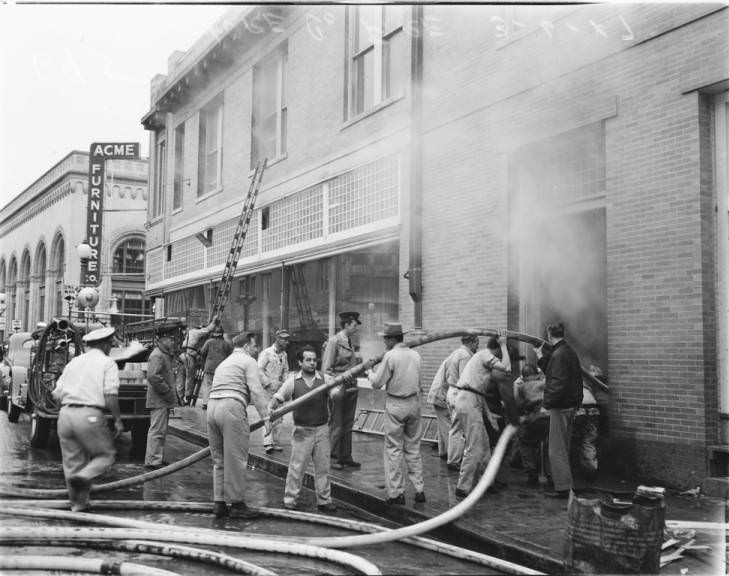
A firemen trying to extinguish a fire at the Acme Furniture Company on East Commerce, 1947
Officers quarters at Camp Verde, 1941
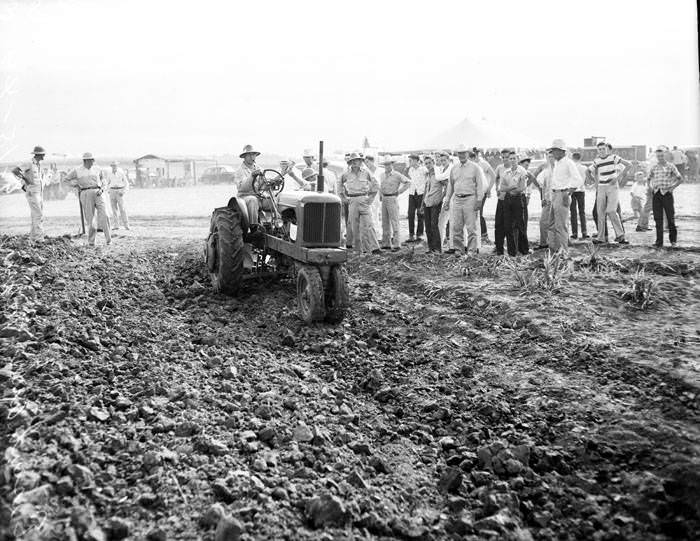
Spectators watch tractor demonstration on Eisenhauer farm near San Antonio, 1949
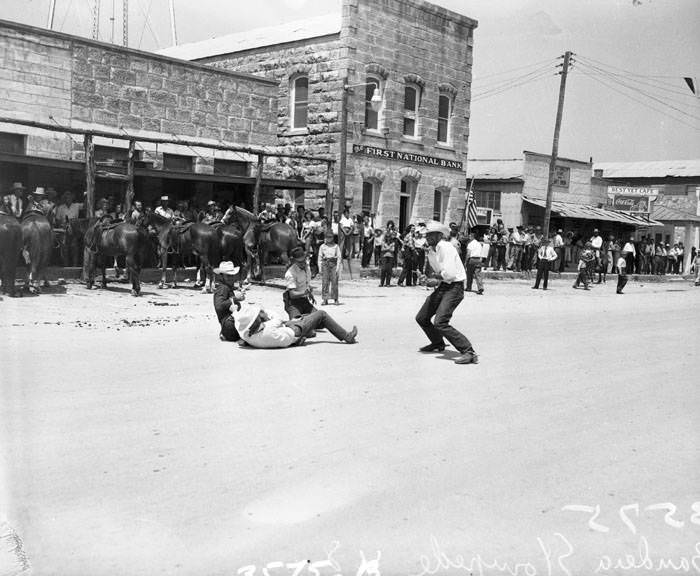
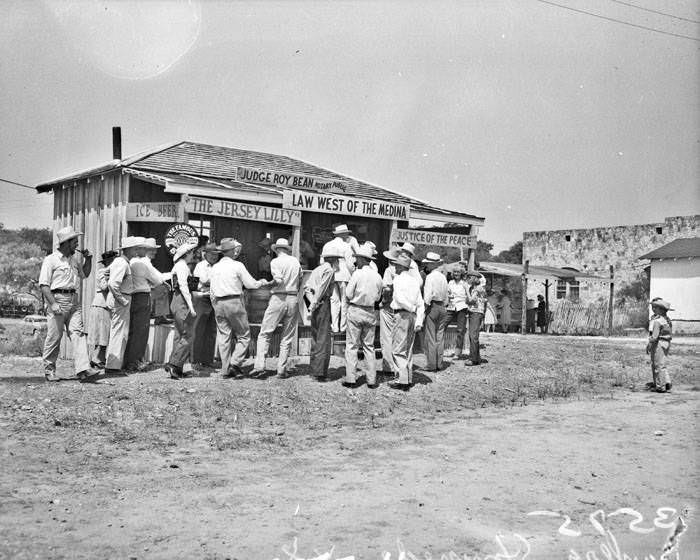
Bandera Stompede, Bandera, 1948
Military police demonstrate ''blitz buggy'' jeep in Salado Creek, 1941
Military police demonstrate ”blitz buggy” jeep in Salado Creek, 1941
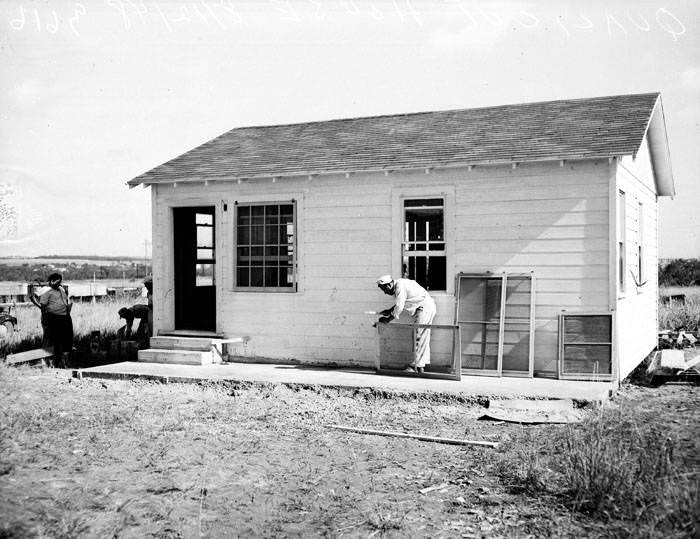
Man prepares to hang window screen on Quali-Cut residence, 1948
Bandera Stompede, Bandera, 1948
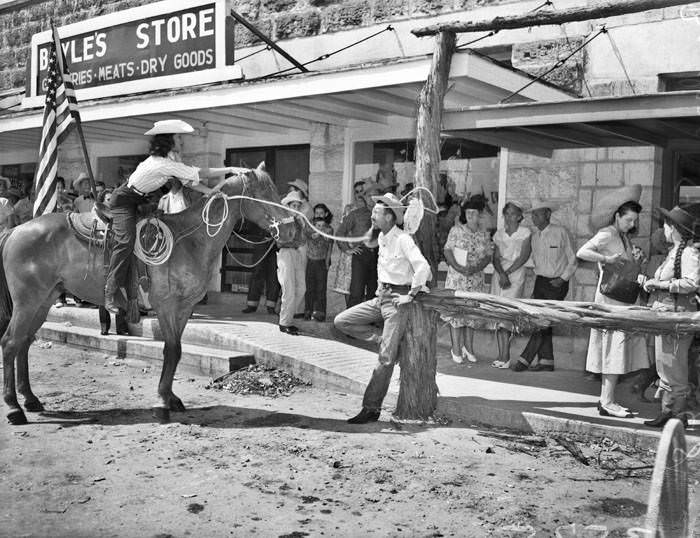
Cowgirl on horse roping a bystander on Main Street, 1948
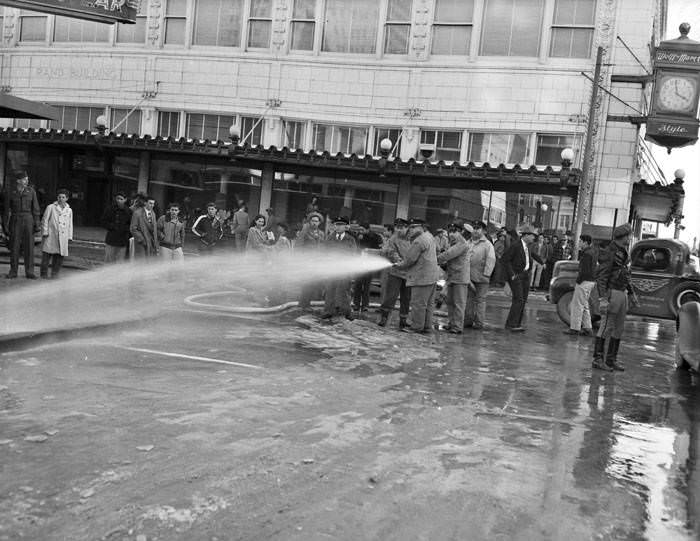
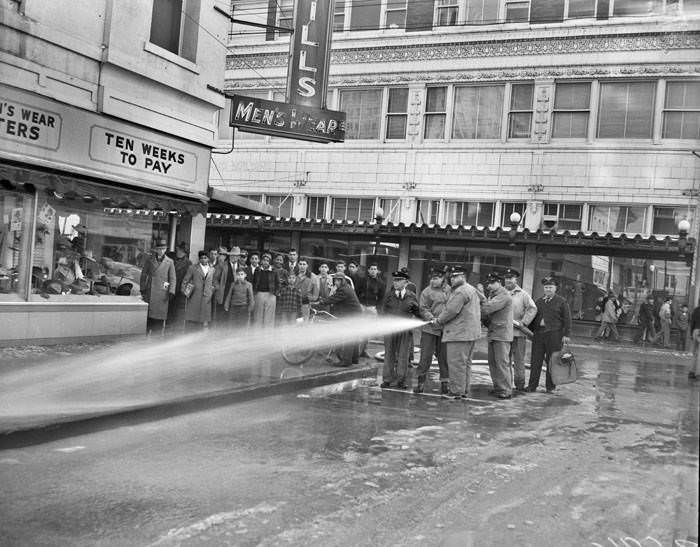
Firemen cleaning street after snow and ice storm, San Antonio, 1949
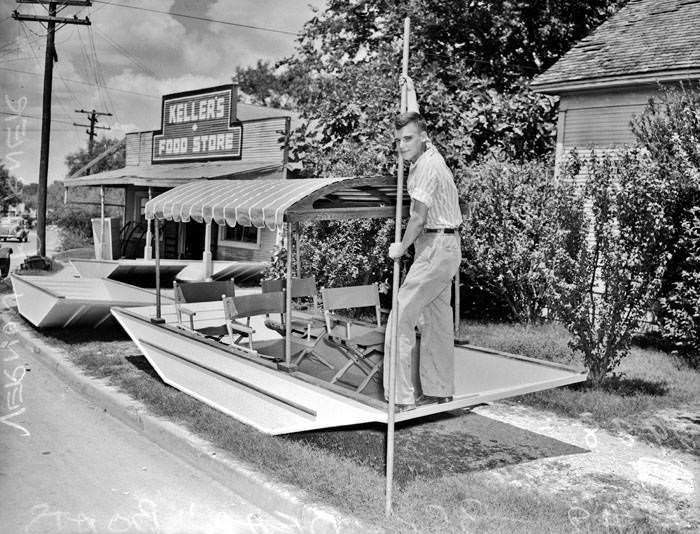
Vernon Poerner, posed with flat-bottom boat he helped build, 1942
Bandera Stompede, Bandera, 1948
Back of house at southwest corner of Columbus Street and Dinero Alley, San Antonio, 1982
Snowball fight in San Antonio, 1949
One-story house with stucco walls, 315 Columbus Street, San Antonio, 1949
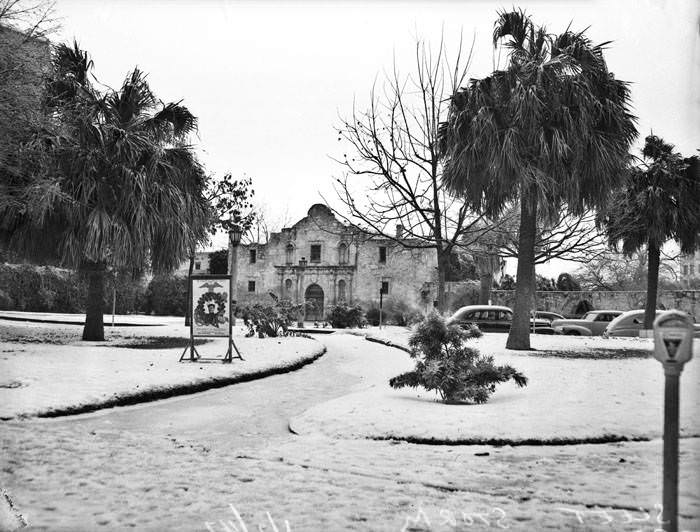
The Alamo after sleet storm.1947
Icicles on City Water Board fountain on Market St., San Antonio, 1949
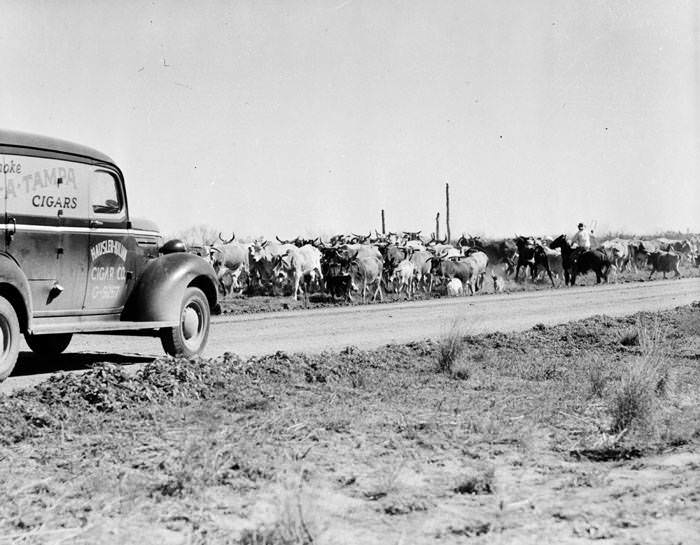
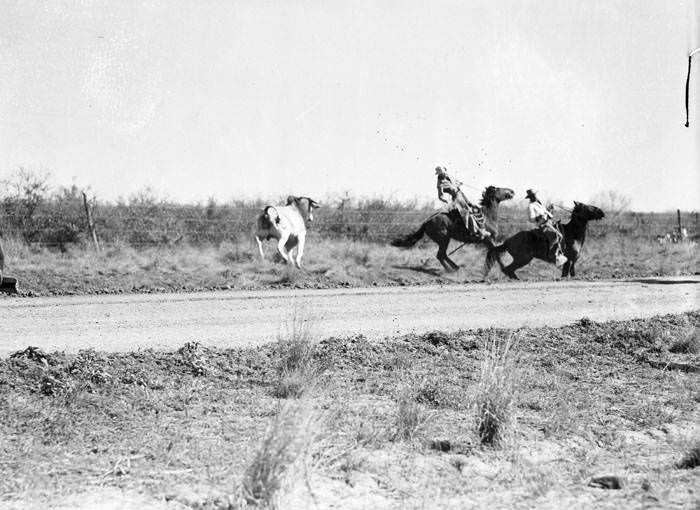
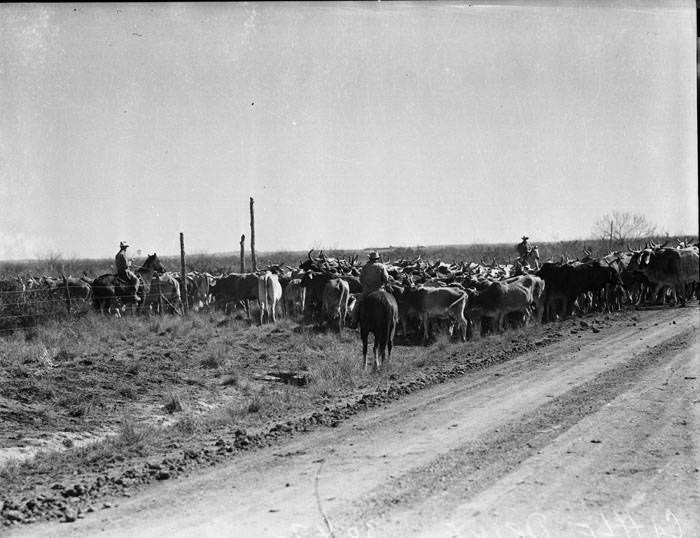
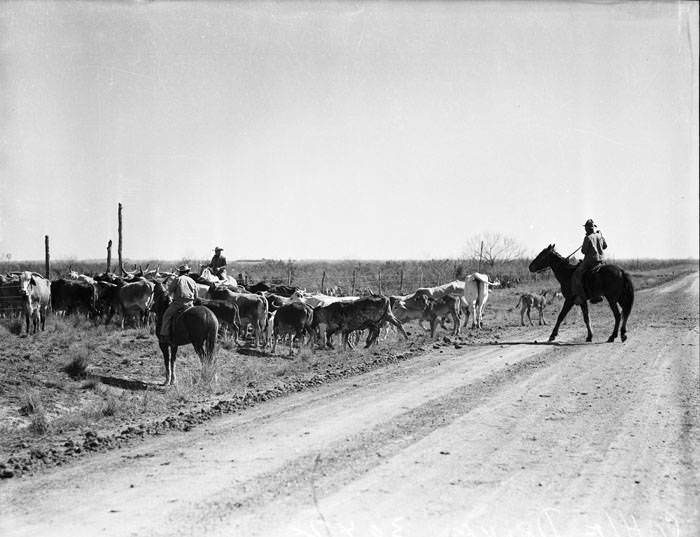
Cattle round-up on ranch in La Salle County, 1941
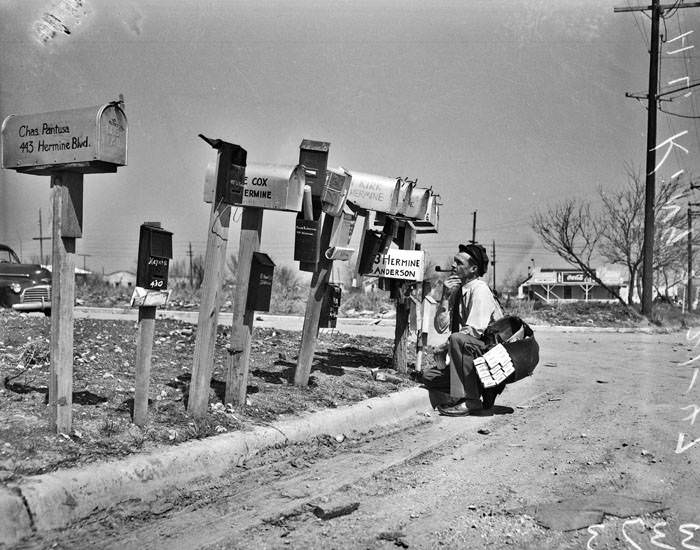
Postman H.L. King at row of mailboxes, 1947
Cattle round-up on ranch in La Salle County, 1941
Jose V. Martinez house, 620 W. Salinas Street, San Antonio, 1948
Mobile-Soft Serve Ice Cream Company, 415 East Market Street at Water Street (foreground), 1948
New market sheds on Washington Square, 1949
Snow on building rooftops, San Antonio, 1949
Snow in downtown San Antonio, 1949
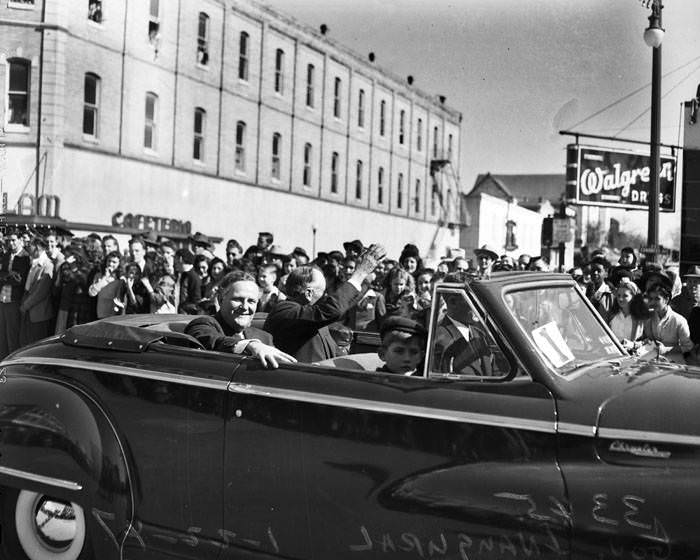
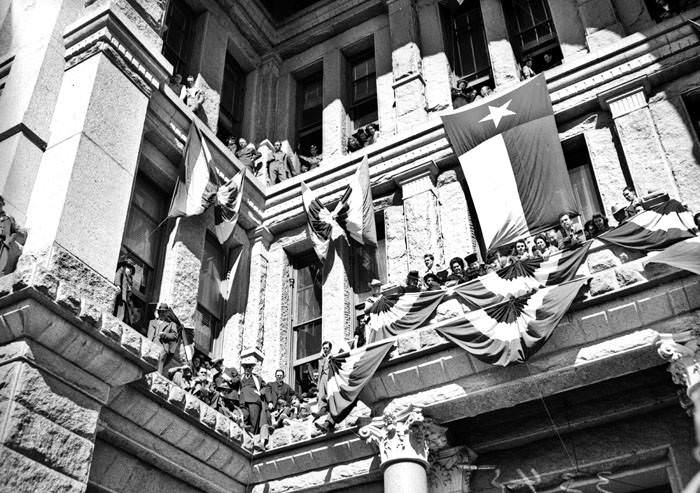
Governors Stevenson and Jester in inaugural parade, 1947
Exterior of ''Sebastopol,'' Col. Joshua Young's house, Seguin, 1942
Exterior of ”Sebastopol,” Col. Joshua Young’s house, Seguin, 1942
Former Westmoorland College building, part of University of San Antonio, 1942
Views of the Jester and Shivers inauguration, 1947
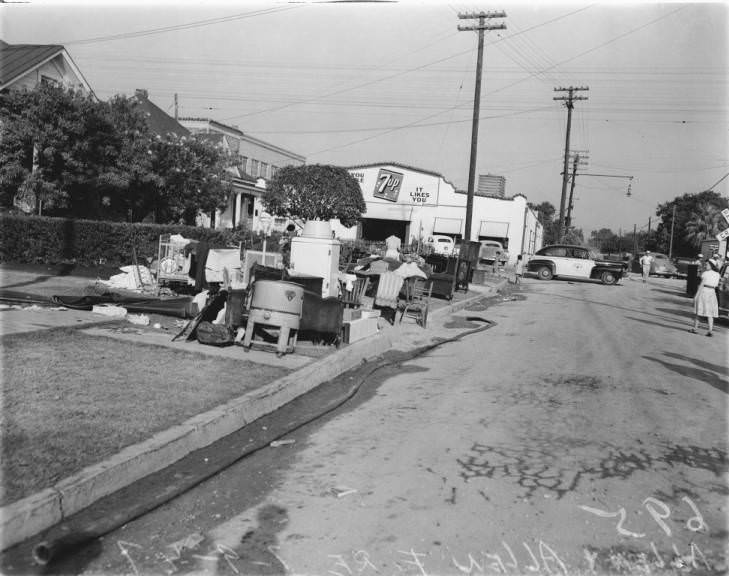
Photograph of furniture moved out of houses endanger of the fire at the Allen and Allen lumberyard, 1947
Storm damage in San Antonio, 1947
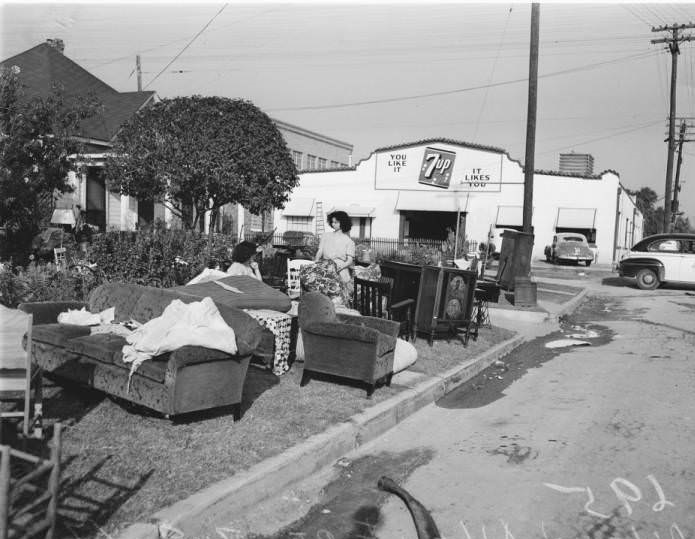
Furniture moved out of houses endanger of the fire at the Allen and Allen lumberyard, 1947
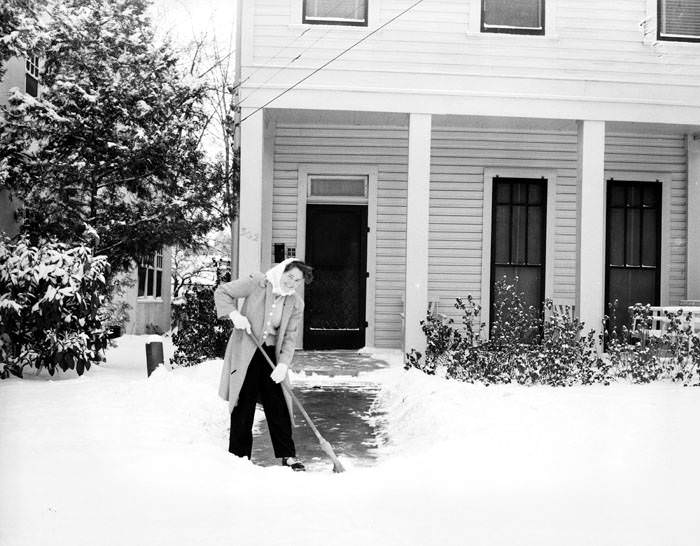
Woman sweeping snow off sidewalk, 1949
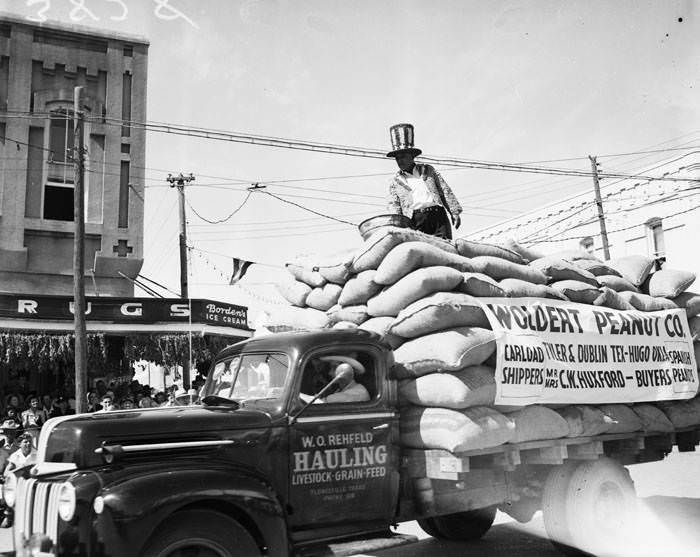
Woldert Peanut Company float in parade, Peanut Festival, 1949.
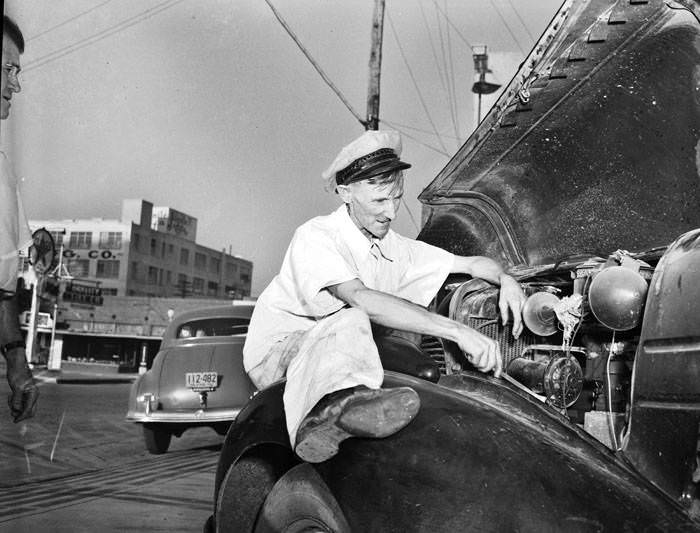
Jack Wiley looks at automobile engine, 1942
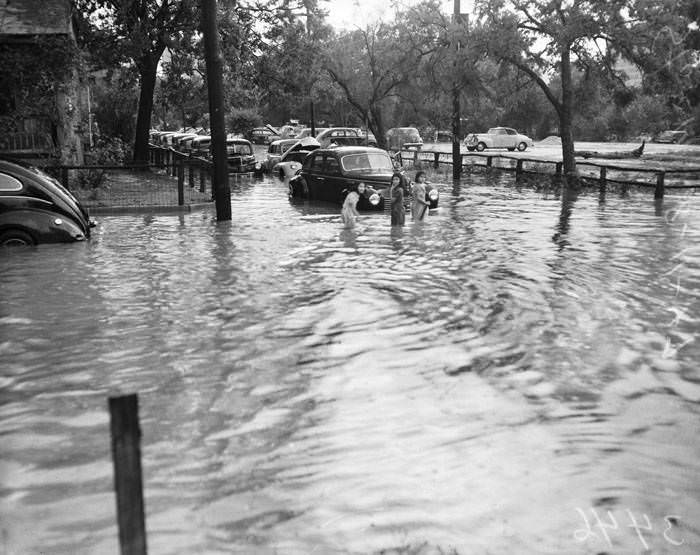
People and automobiles in flooded street, 1947
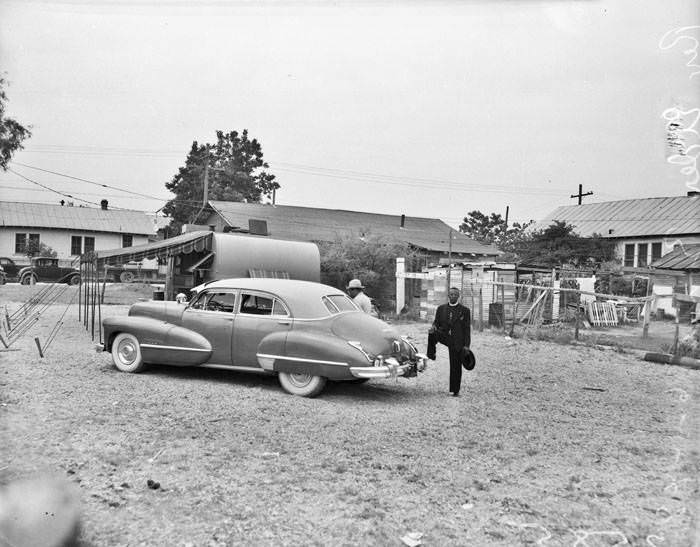
Rev. Elder Bonds at Lincoln Courts Park, San Antonio, 1948
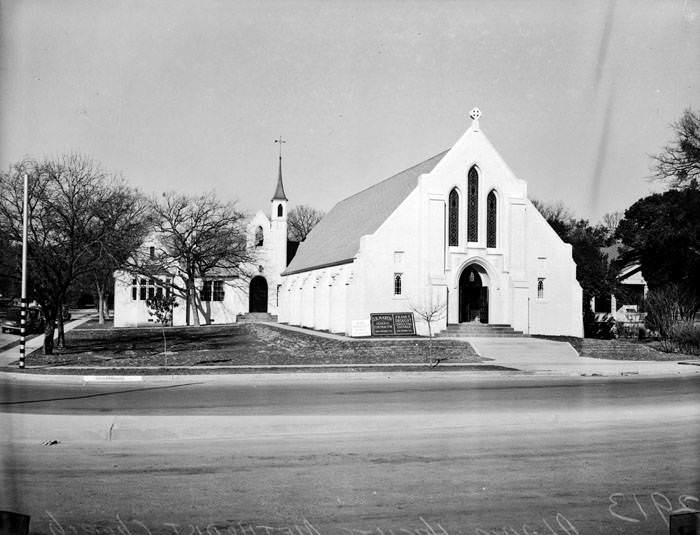
Alamo Heights Methodist Church, exterior view, 1942
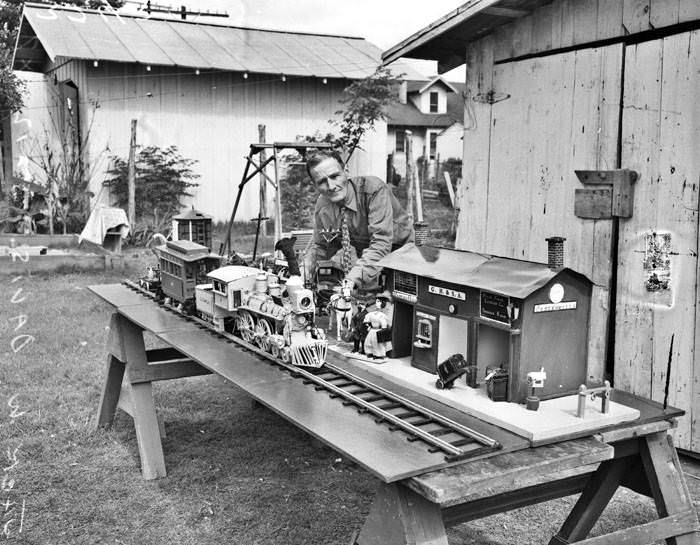
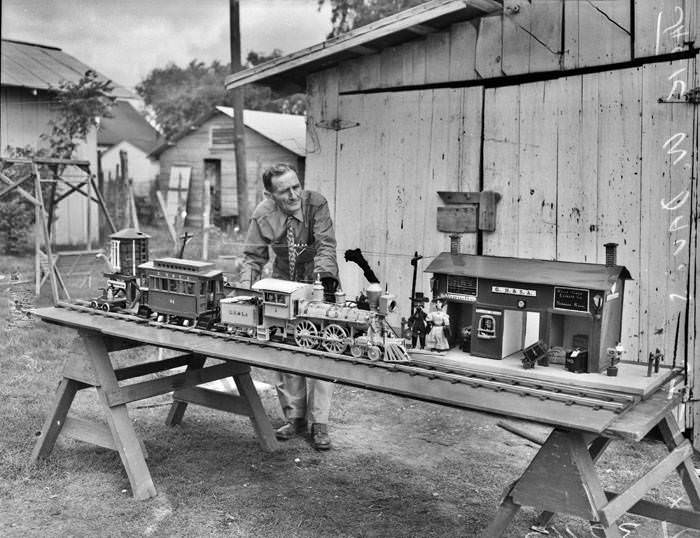
Jack W. Davis and model wooden train and station, 1947
Rev. Elder Bonds at Lincoln Courts Park, San Antonio, 1948
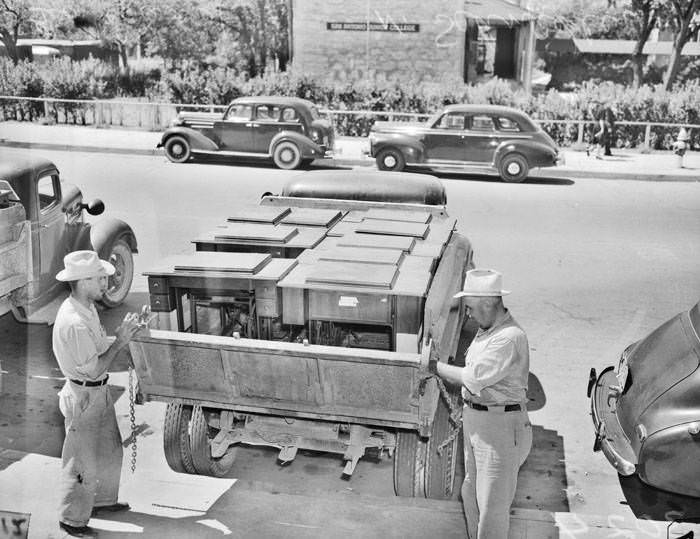
County seizes W.P.A. sewing machines from Beethoven Hall, 1942
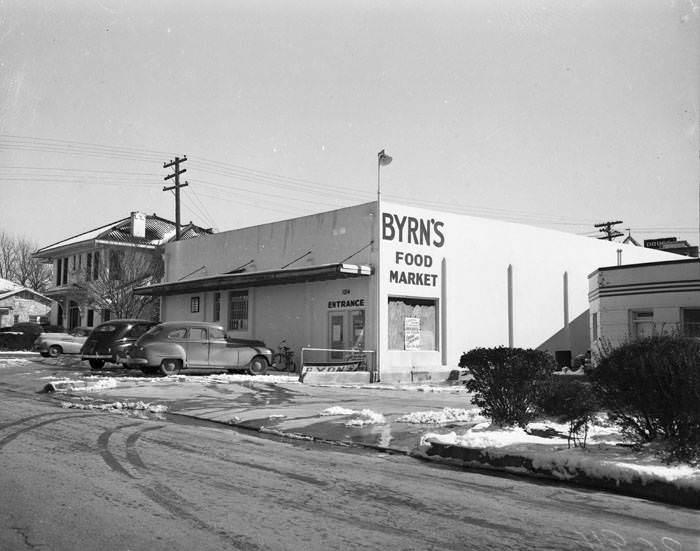
Snow at Byrn's Food Market, San Antonio, 1949
Snow at Byrn’s Food Market, San Antonio, 1949
Horse-drawn fire pumper is donated to scrap metal drive, 1942
Soldiers waiting outside of train, 1946
Train Engineer J.O.Sowell walks through SP Gate, 1946
Henry Hein operating new mechanical street sweeper, 1940
East entrance to Alamo Stadium during construction, 1940
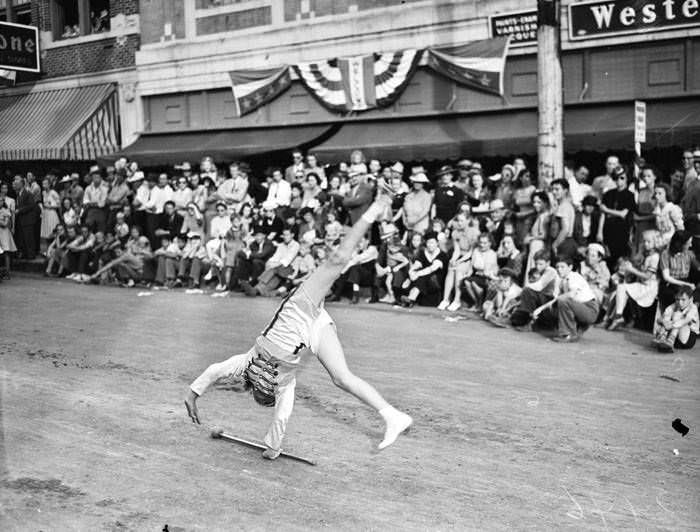
1940 Battle of Flowers Parade - Drum major turning cartwheel, 1940
1940 Battle of Flowers Parade – Drum major turning cartwheel, 1940
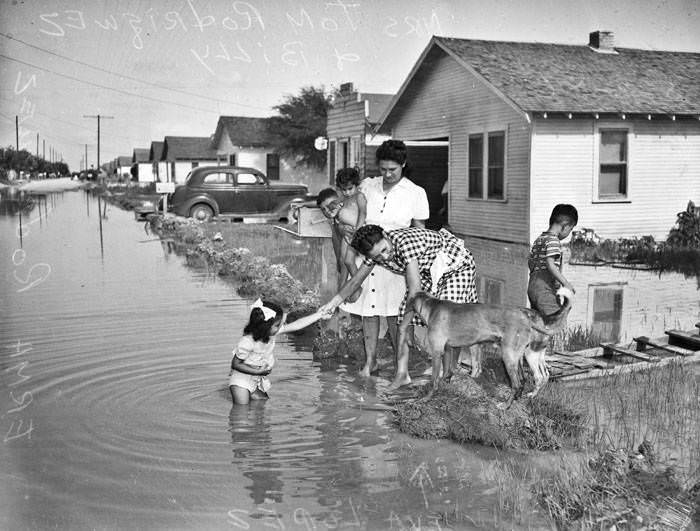
Family on flooded Flanders Street, 1946
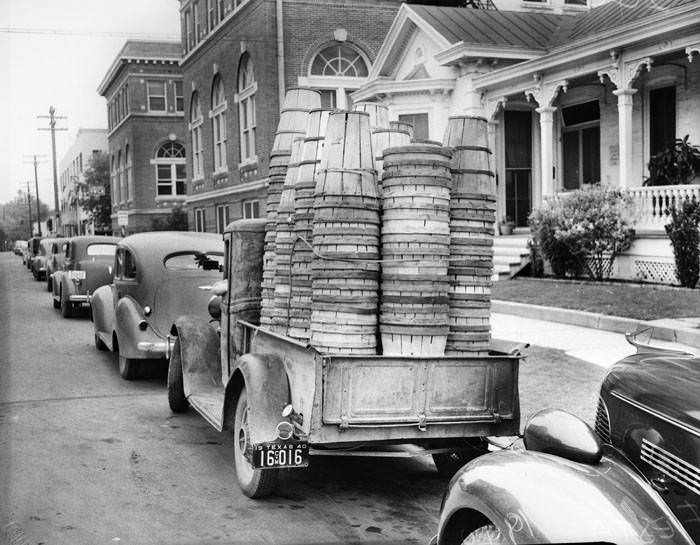
Pickup truck with load of spinach crates for Battle of Flowers Parade, 1940
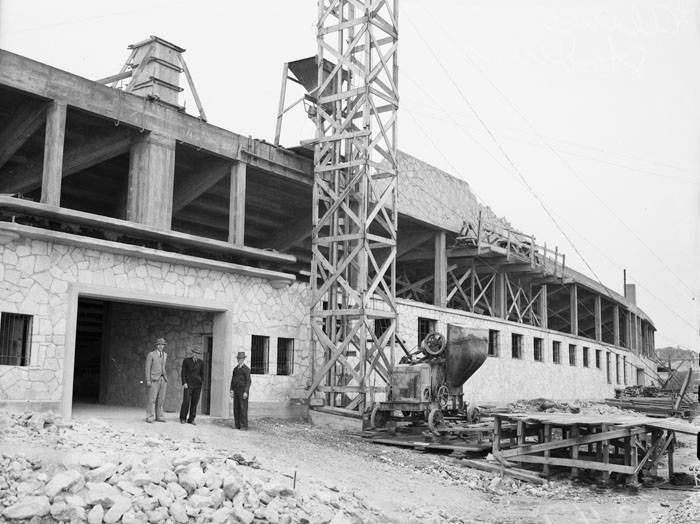
Main entrance to Alamo Stadium under construction, 1940
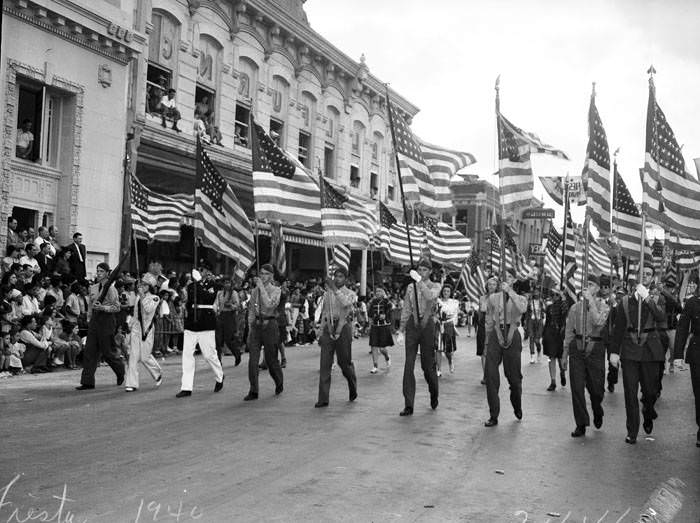
Battle of Flowers Parade - Student color guard, 1940
Battle of Flowers Parade – Student color guard, 1940
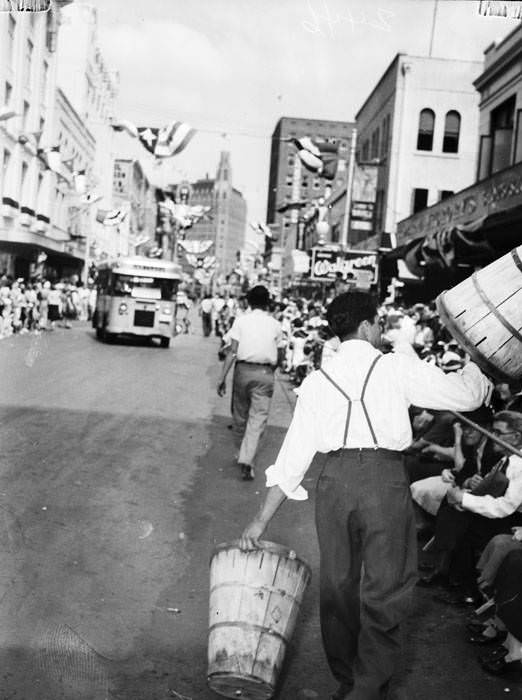
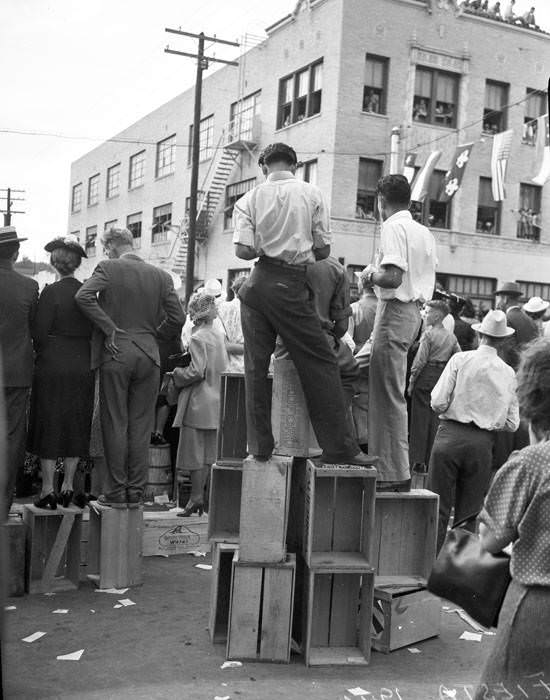
Crate vendors at 1940 Battle of Flowers Parade, 1940
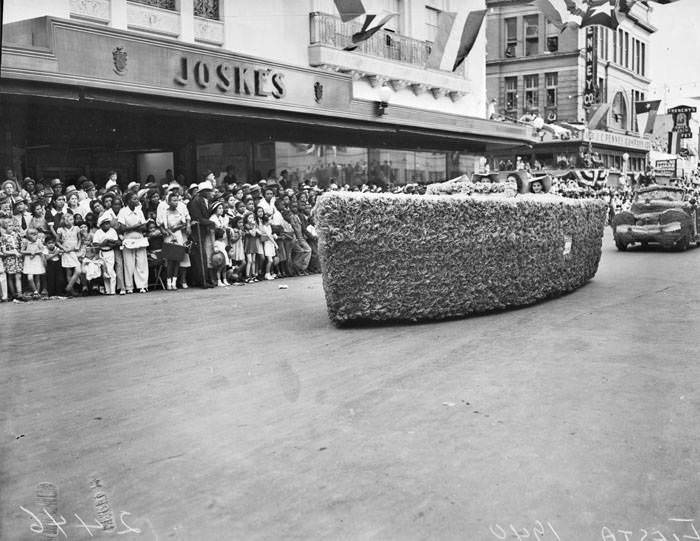
Battle of Flowers Parade - Gamma Chi sorority float, 1940
Battle of Flowers Parade – Gamma Chi sorority float, 1940
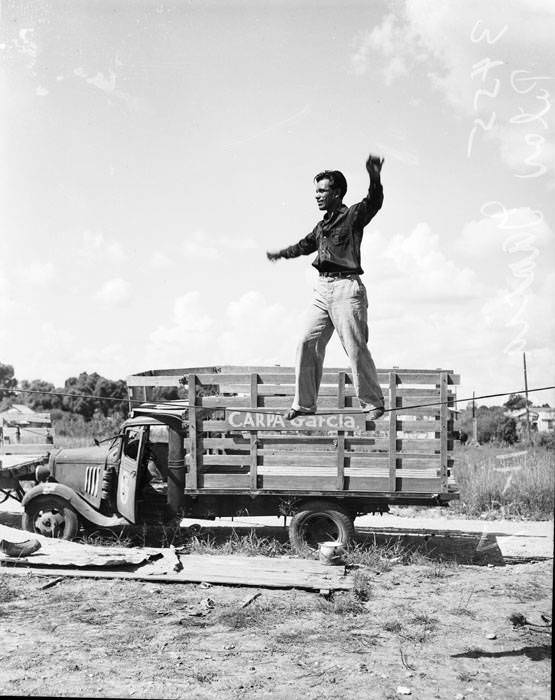
Pilar Garcia on tightrope, 1947
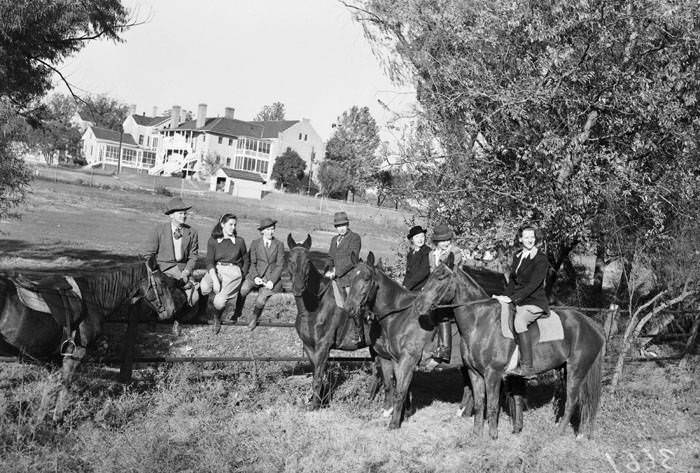
Members of the Boots and Saddle Club on horseback, 1948
Scrap metal pile at Leon Springs school, 1942
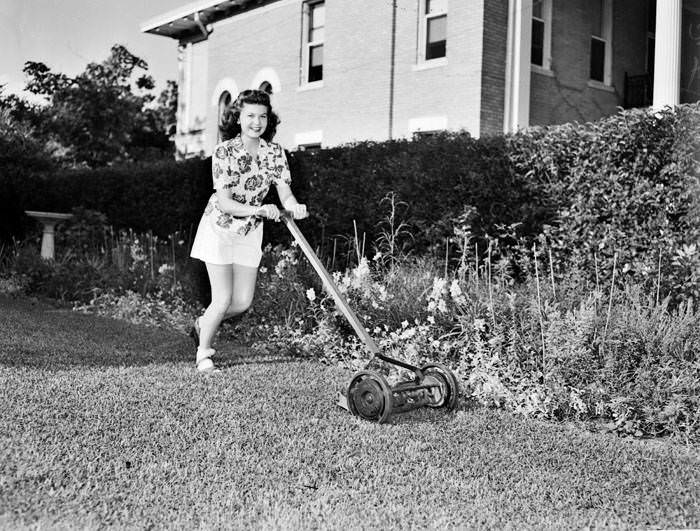
Miss Pat Holden mowing lawn, 1946
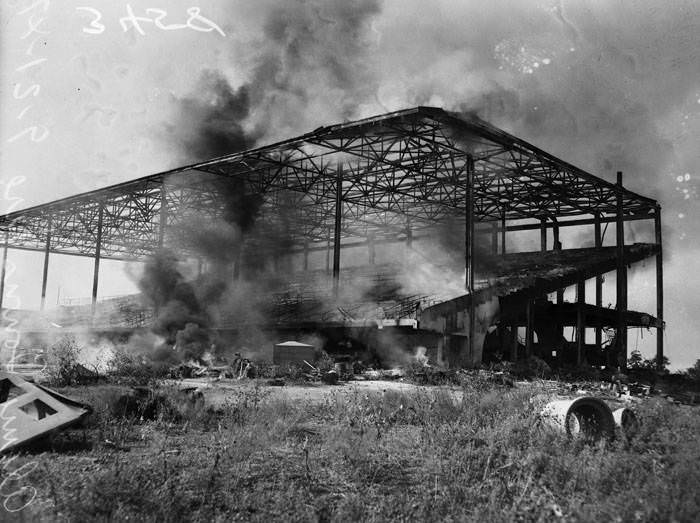
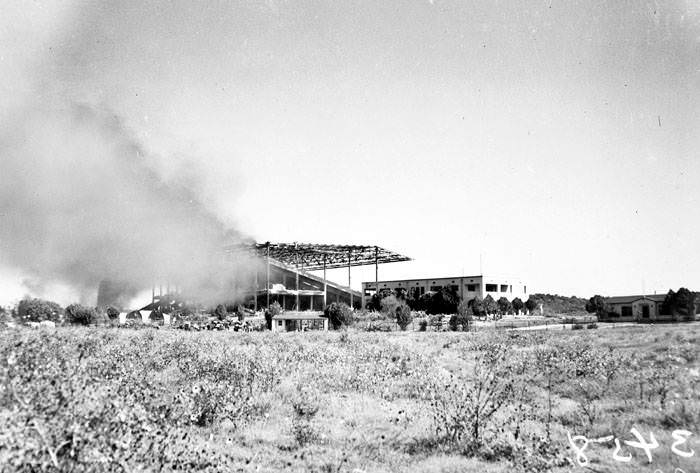
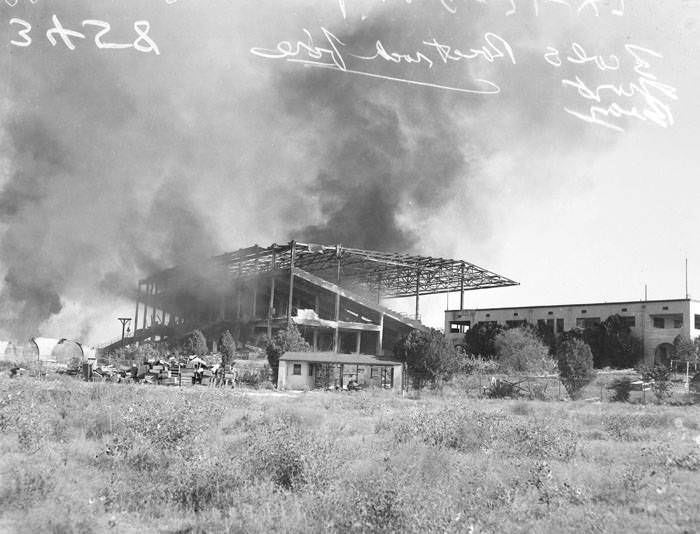
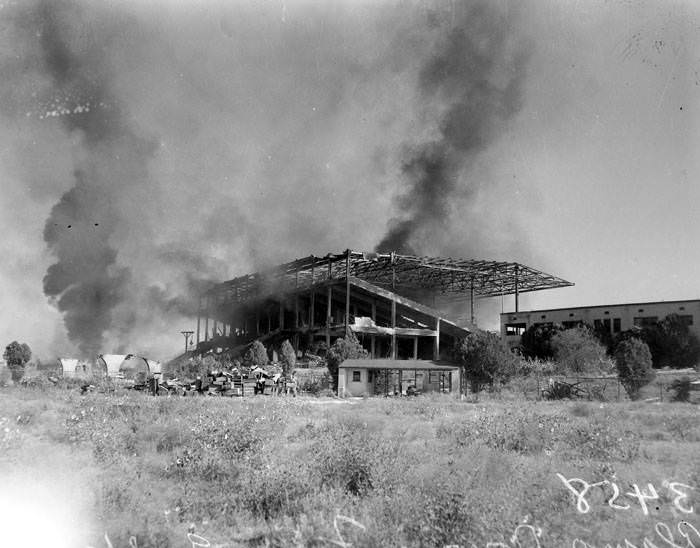
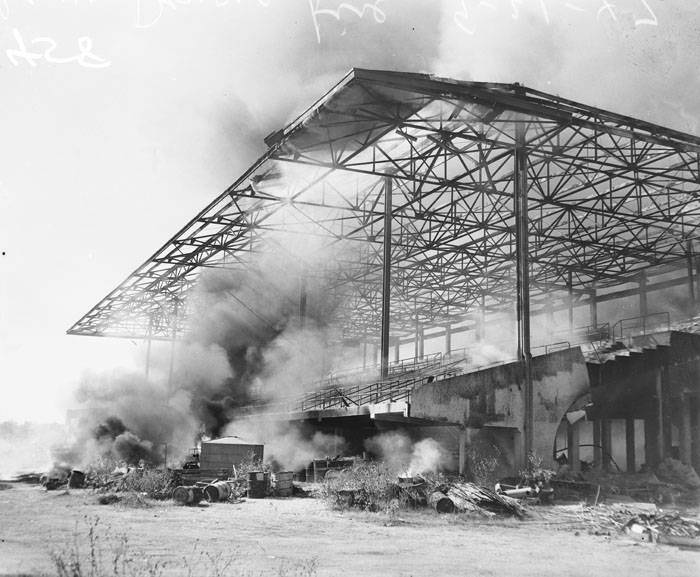
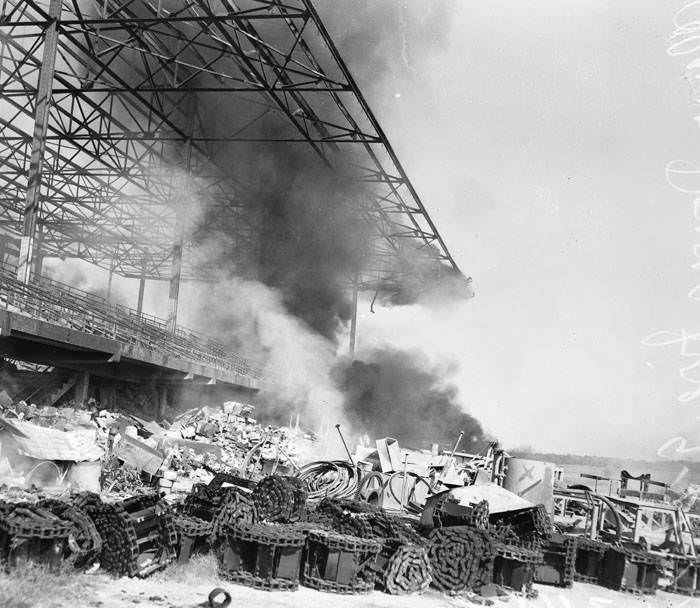
Fire at Alamo Downs Race Track, 1947
1940 Battle of Flowers Parade - Parade participants on Houston Street, 1940
1940 Battle of Flowers Parade – Parade participants on Houston Street, 1940
Fire at Alamo Downs Race Track, 1947
Battle of Flowers Parade - Parade participants on Houston Street, 1940
Battle of Flowers Parade – Parade participants on Houston Street, 1940
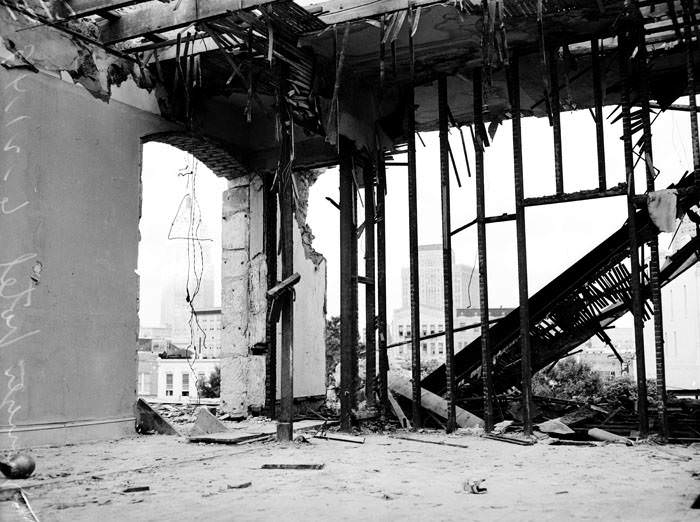
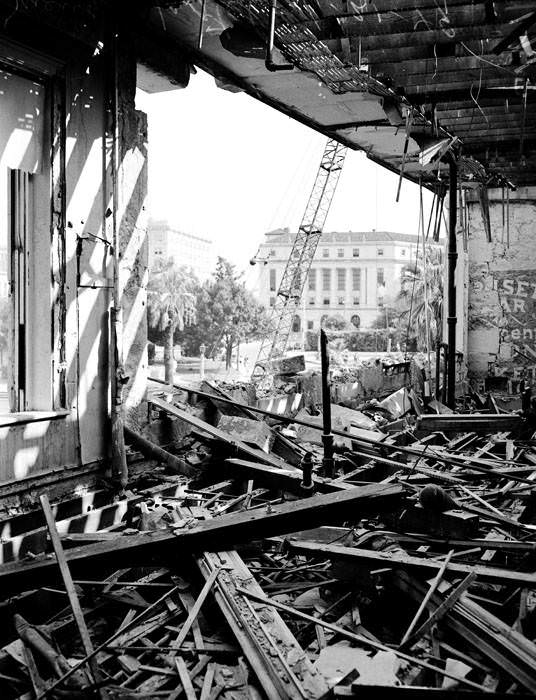
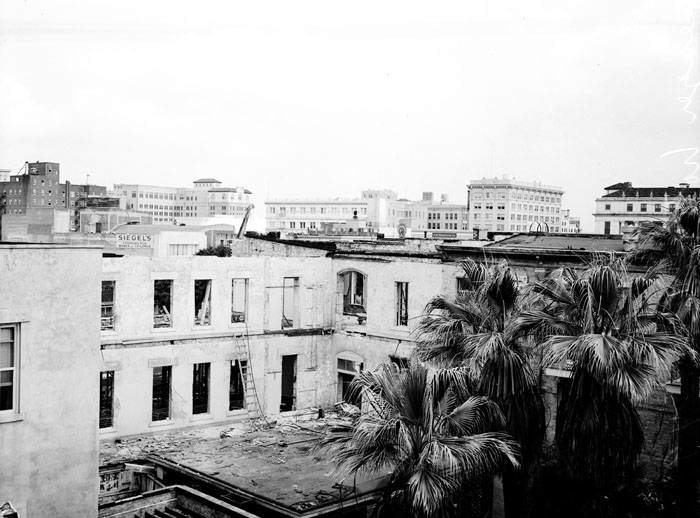
Demolition of north addition of Menger Hotel, 1949.
Fire at Alamo Downs Race Track, 1947
Battle of Flowers Parade - Parade participants on Houston Street, 1940
Battle of Flowers Parade – Parade participants on Houston Street, 1940
Demolition of north addition of Menger Hotel, 1949
Fire at Alamo Downs Race Track, 1947
Demolition of north addition of Menger Hotel. June 21, 1949.
Fire at Alamo Downs Race Track, 1947
National Defense Week military parade, 1940
City workmen from the city street-cleaning department, 1940
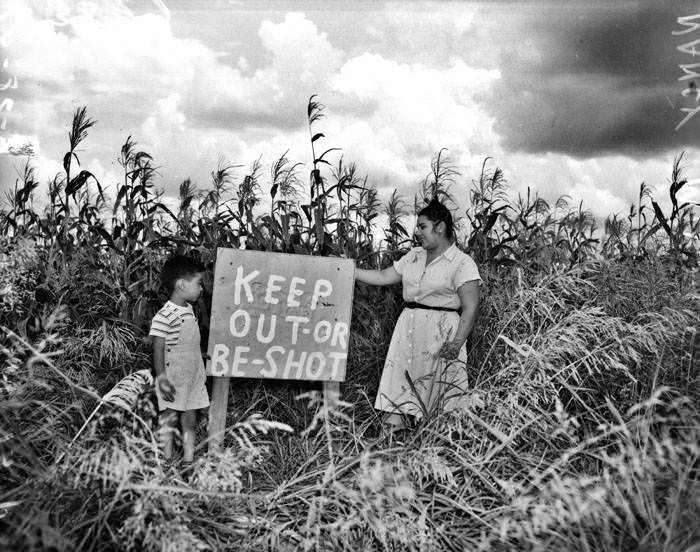
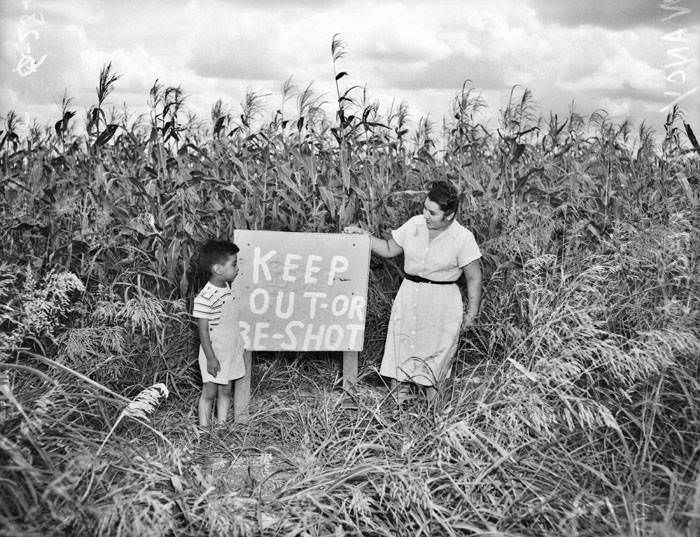
Nancy Mireles and son Joel, with sign in corn field, 1948
Fire at Alamo Downs Race Track, 1947
Spectators on Houston Street - 1940 Battle of Flowers Parade, 1940
Spectators on Houston Street – 1940 Battle of Flowers Parade, 1940
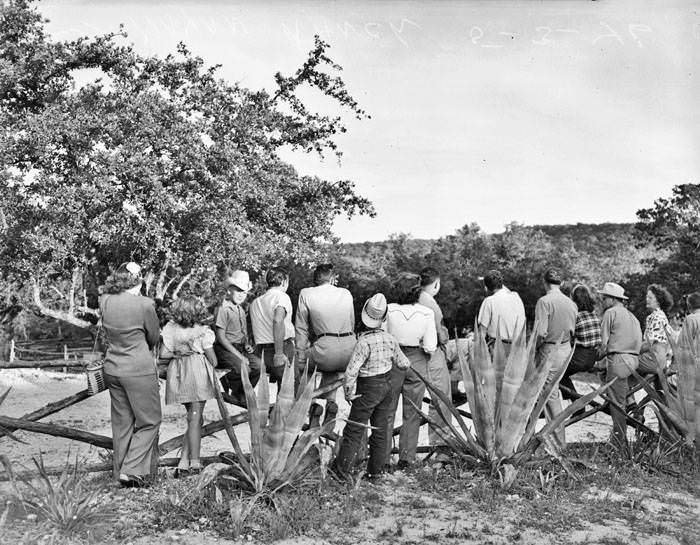
Guests at Mayan Dude Ranch, Bandera, 1946
Nancy Mireles and son Joel, with sign in corn field, 1948
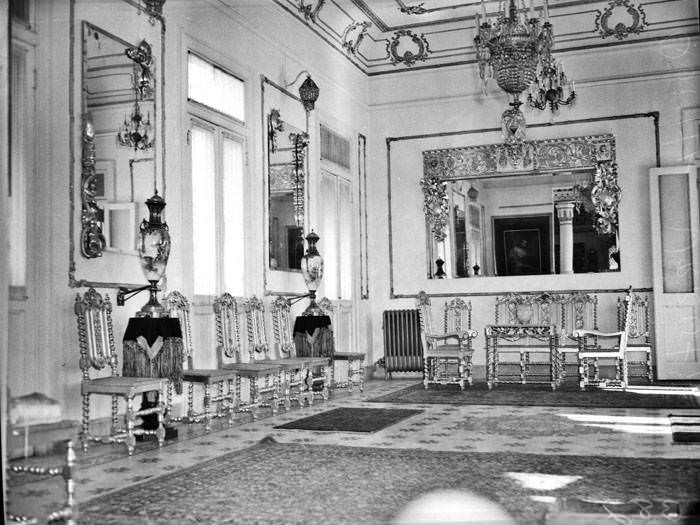
Drawing room at Quinta Urrutia, 1940
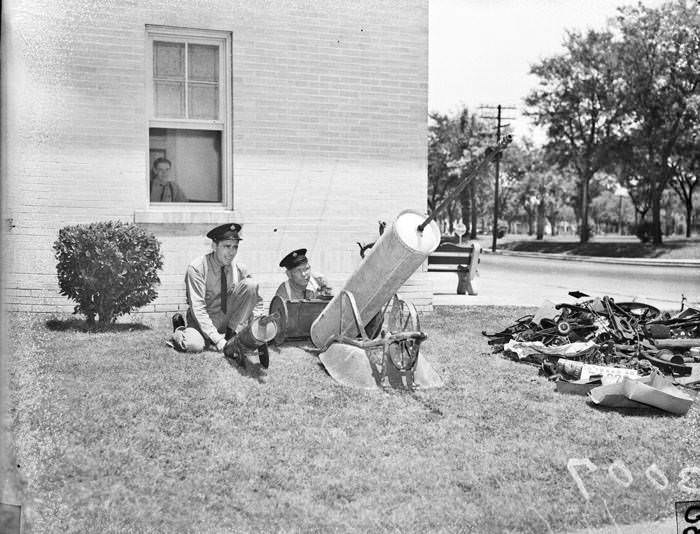
M.B. Goodwin and L.E. Cox with scrap metal guns, 1947
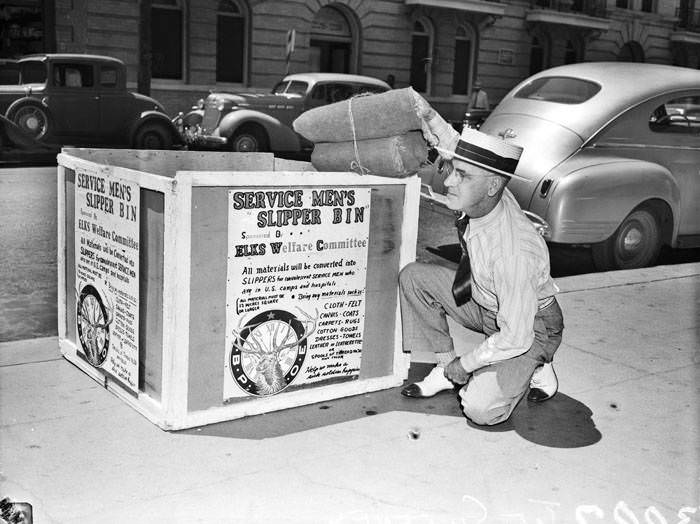
Joe Sweeney donates rugs for servicemen's footgear, 1942
Joe Sweeney donates rugs for servicemen’s footgear, 1942
Commanding Officer's Residence, U.S. Arsenal, San Antonio, 1948
Commanding Officer’s Residence, U.S. Arsenal, San Antonio, 1948
Battle of Flowers Parade - Crowd on Houston Street, 1940
Battle of Flowers Parade – Crowd on Houston Street, 1940
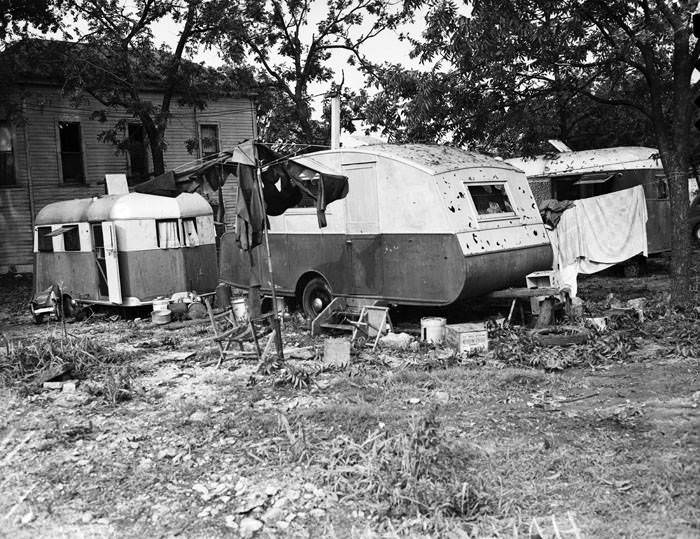
Hail-damaged house trailers, 1946
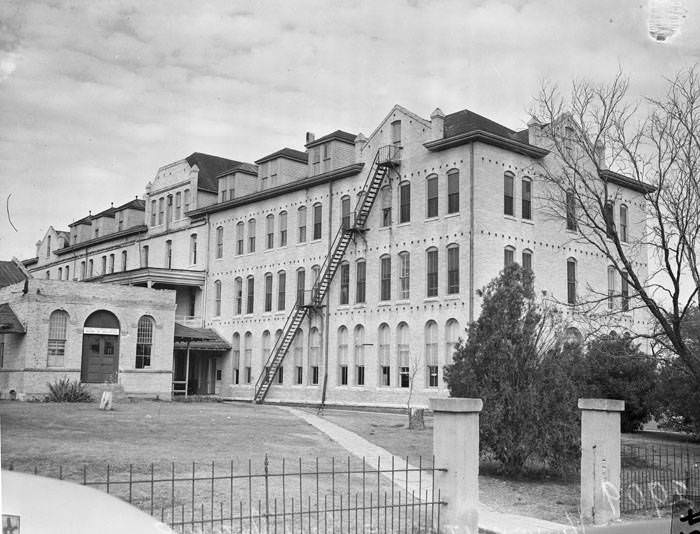
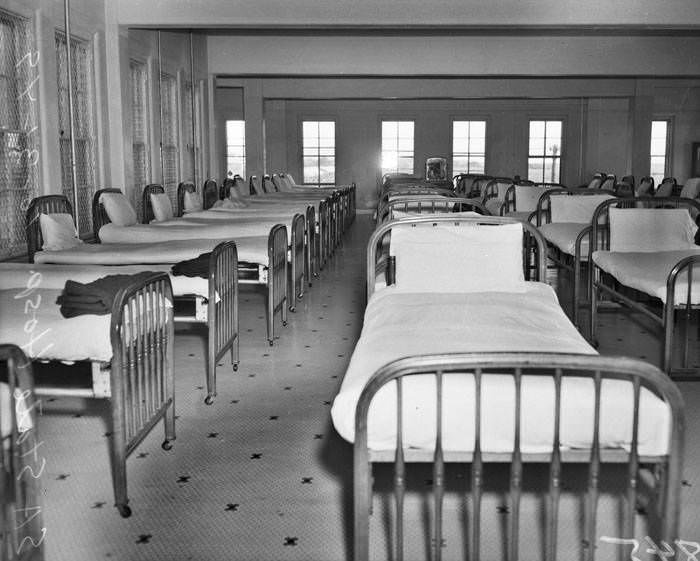
Beds in ward at San Antonio State Hospital, 1949
Produce dealers on Washington Square, San Antonio, 1948
Hillje sisters with their horses, 1940
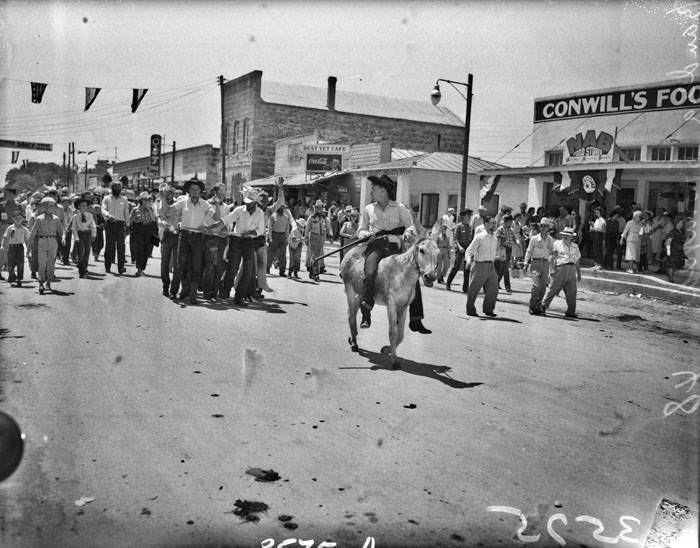
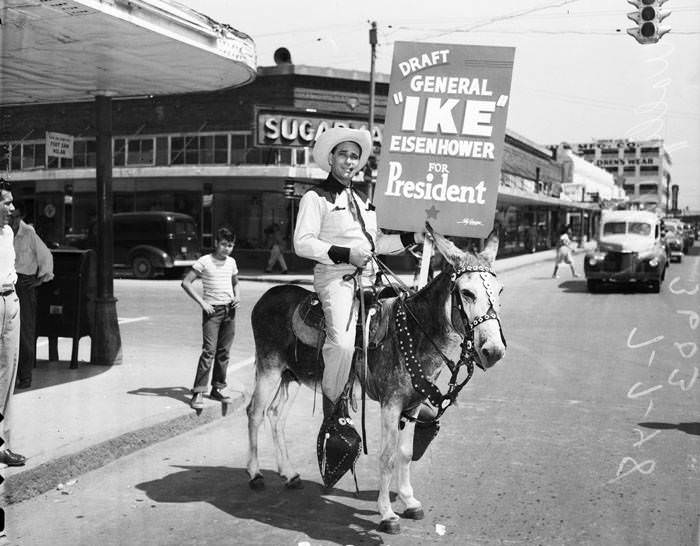
Wally West in western clothing carrying sign, riding donkey, 1948
Haymarket Plaza, San Antonio, 1947. View looking west from market building towards Haymarket Plaza.
Hillje sisters with their horses, 1940
Haymarket Plaza, San Antonio, 1947
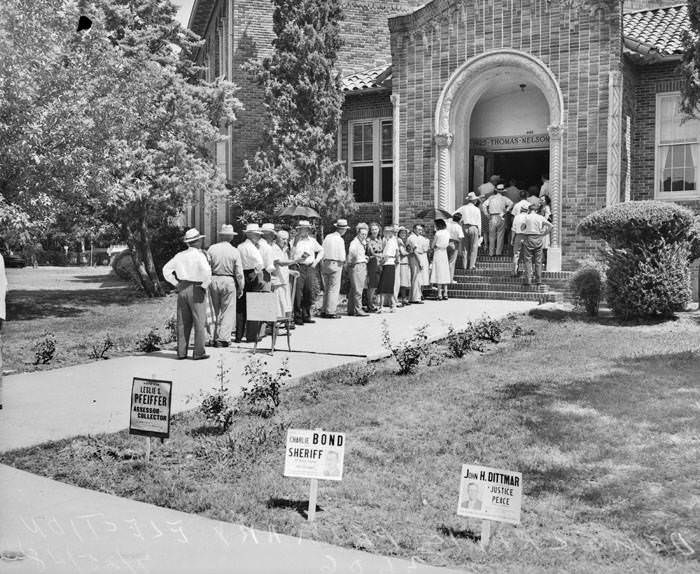
Democratic Primary, San Antonio, 1948
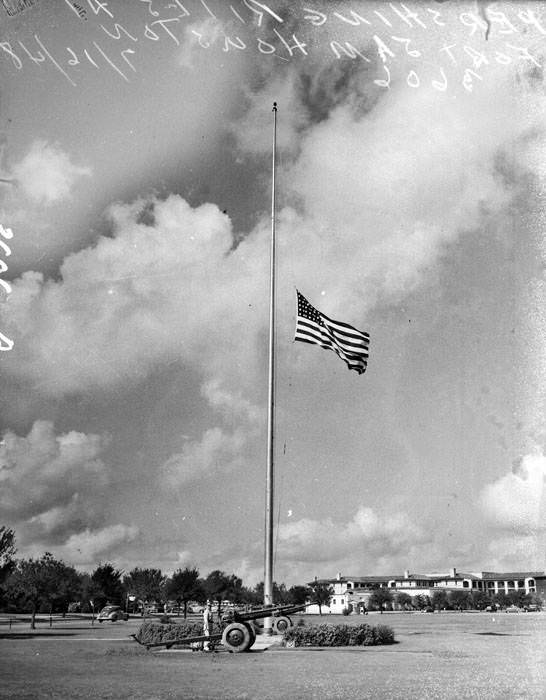
Flag at half-mast in Fort Sam Houston quadrangle, San Antonio, 1948
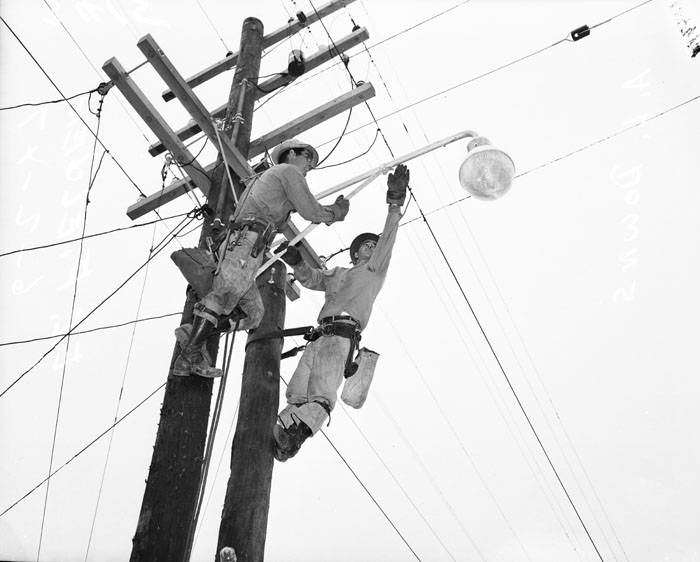
E.F. Fielder and A.L. Downs installing light on utility pole, 1947
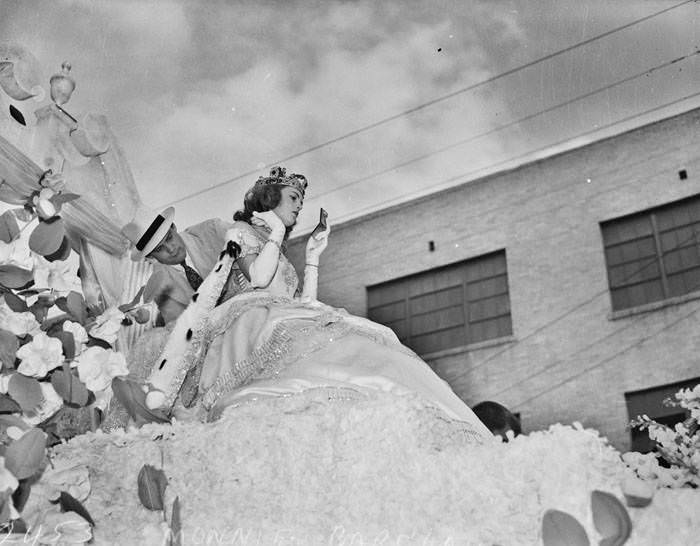
Margaret ''Monnie'' Barclay, Fiesta Queen, 1940
Margaret ”Monnie” Barclay, Fiesta Queen, 1940
Enjoyed this post? Get new ones in your inbox.

7 thoughts on “San Antonio in the 1940s: What San Antonio looked like During World War II”

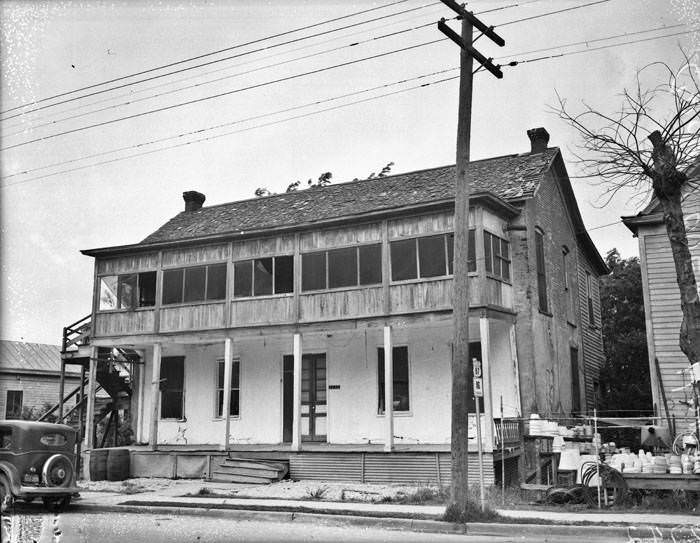
  1. I have often wondered if any of the older areas ever looked new, but it doesn’t seem like it. However, many of the houses in those photos could be used today in numerous places, with just a fresh coat of paint.

Leave a Comment

Your email address will not be published. Required fields are marked *

Share this Post 🥺

Please take a moment to share this content. Your support is greatly appreciated! 🙌🙏

Share this Post 🥺

Please take a moment to share this content. Your support is greatly appreciated! 🙌🙏
Scroll to Top
 
Hey Friend, Before You Go.. Please like & follow for more interesting content