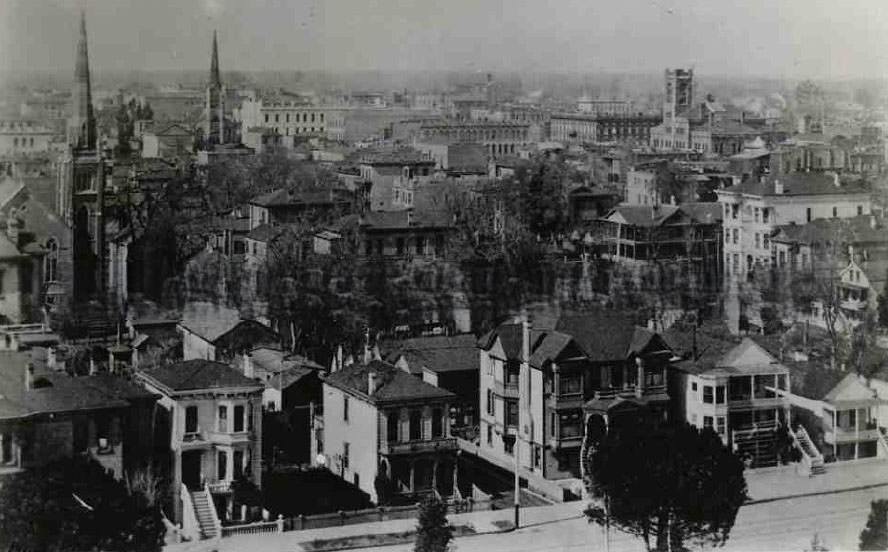
By the 1890s, Sacramento had shed most of its rough Gold Rush identity and grown into one of California’s most important cities. It was the state capital, a railroad hub, an agricultural powerhouse, and a place where thousands of people went about their daily lives — shopping, working, attending school, and building homes. The photographs from this era offer a rare window into a city that was confident in its direction and growing fast.
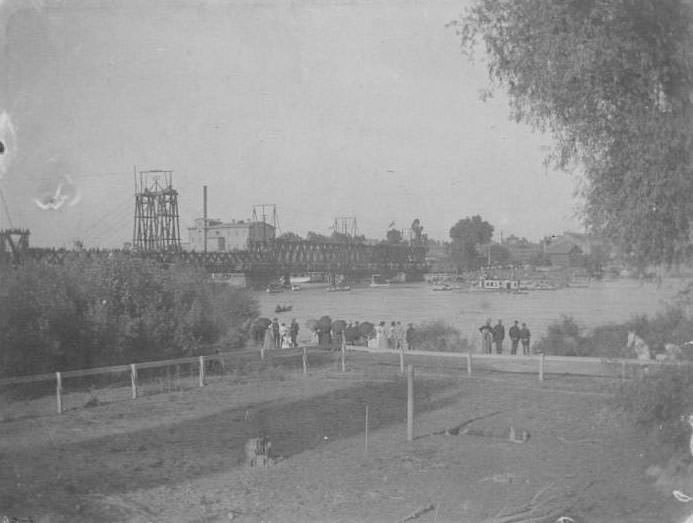
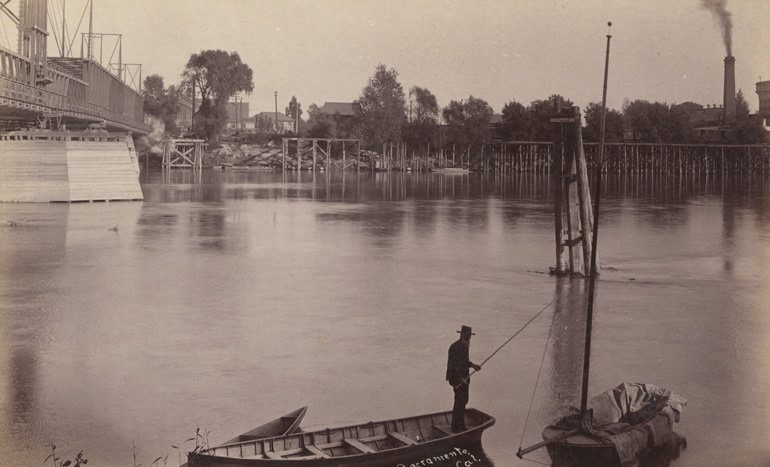
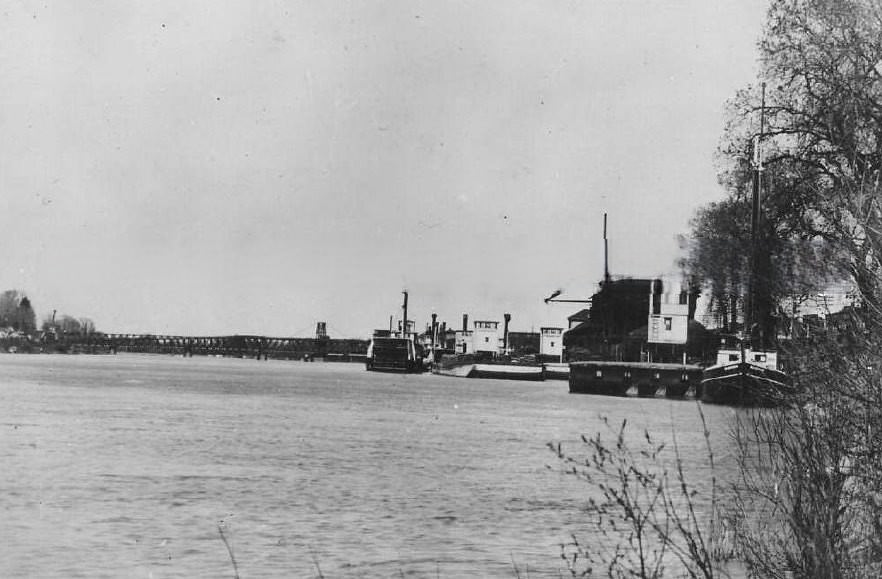
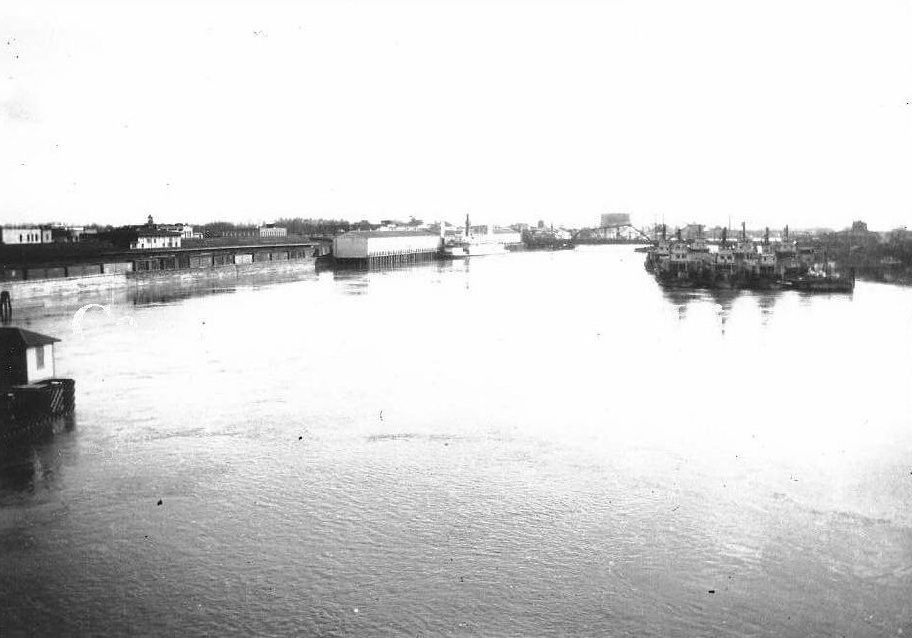
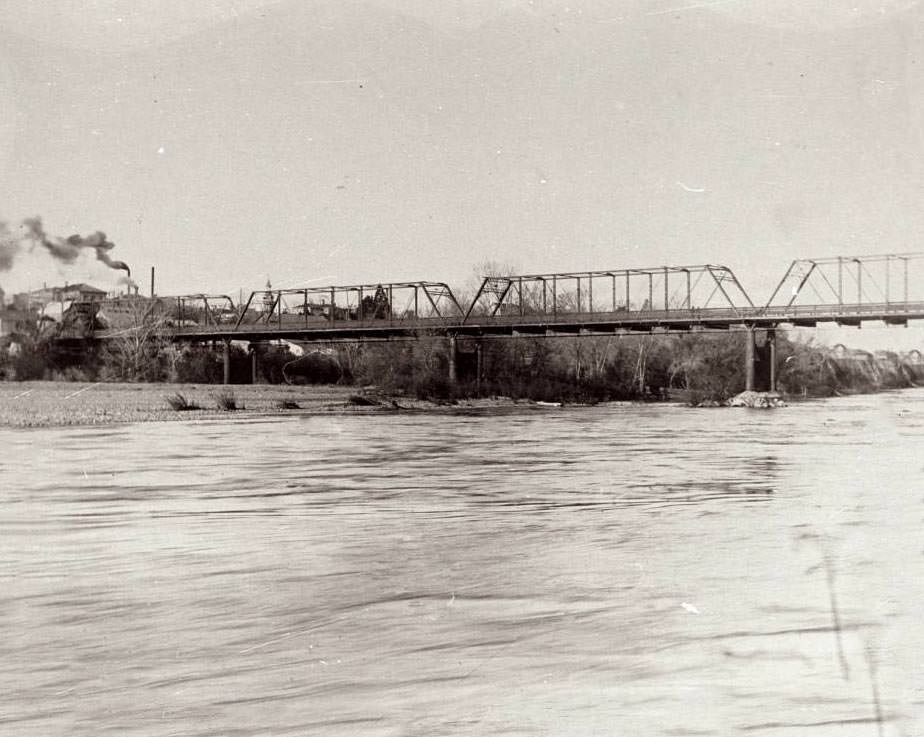
The Sacramento River was the city’s lifeblood. Sitting at the meeting point of the Sacramento and American Rivers, the city had a natural geographic advantage that made it a center of trade from its earliest days. Steamboats moved goods and passengers along the river constantly, and the wharves were busy year-round. Grain, canned goods, and agricultural products flowed through Sacramento’s docks on their way to markets across the state and beyond.
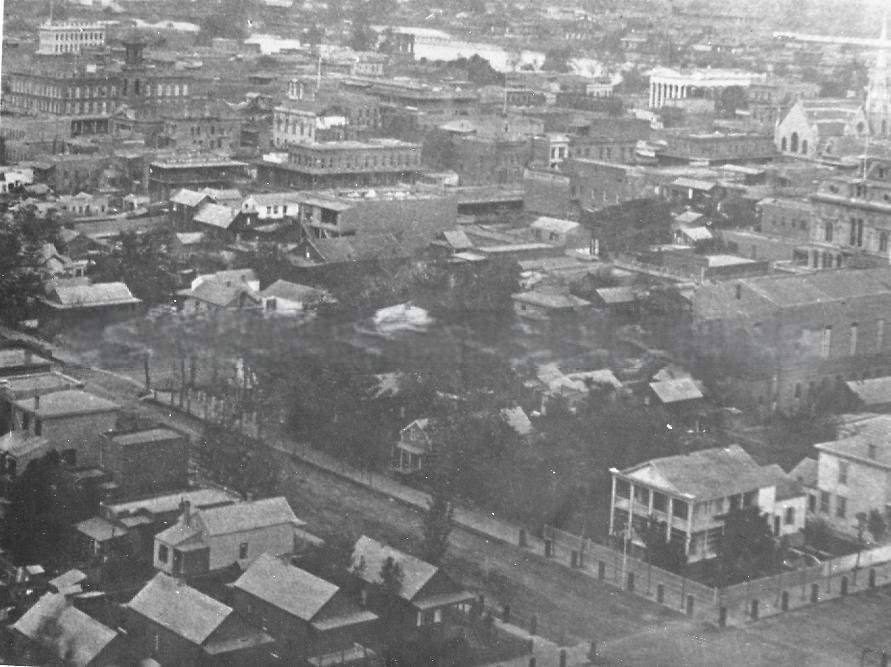
Sacramento River from West Sacramento side, 1890View on Sacramento River at Sacramento, 1895Sacramento River looking toward the 4th Street Bridge in 1896.The Sacramento River. 1890
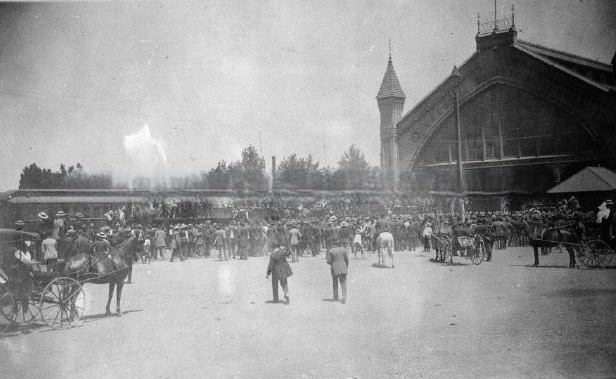
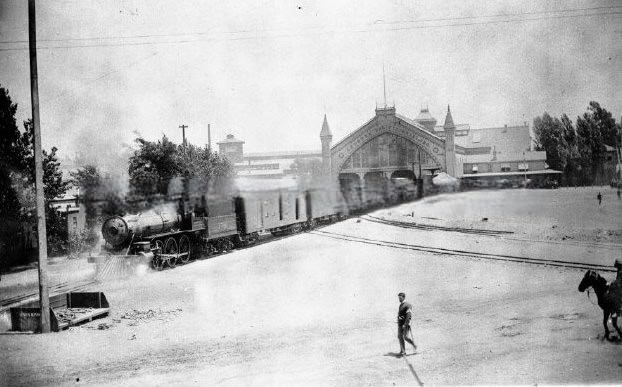
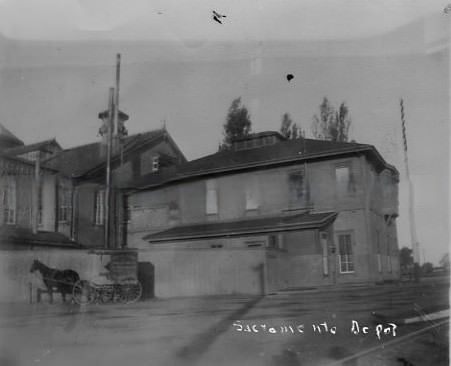
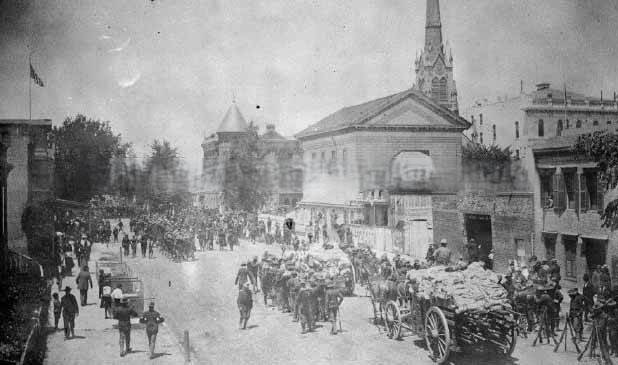
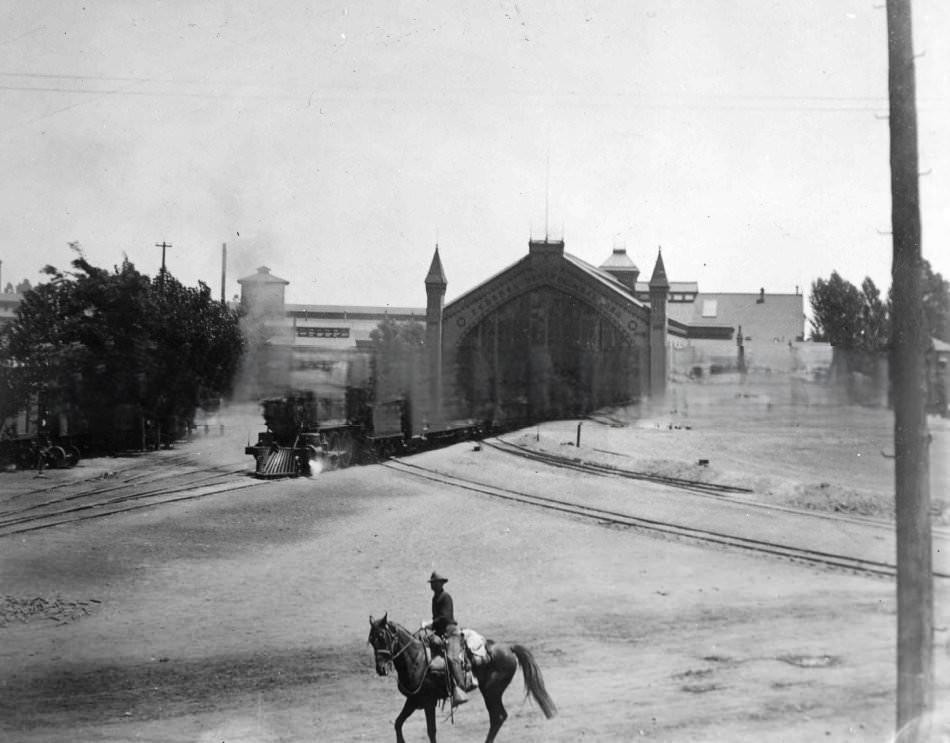
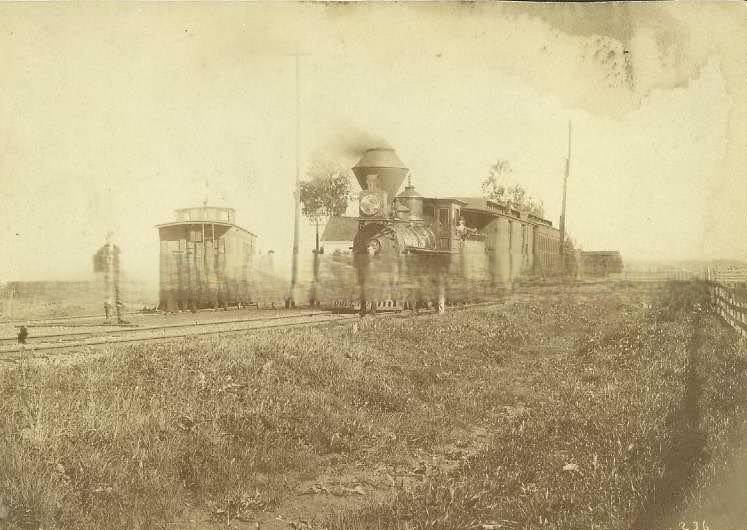
The Southern Pacific Railroad was one of the most powerful forces shaping Sacramento in this decade. The railroad’s major repair facility in the city employed thousands of workers, making it one of the largest single employers in the region. The Southern Pacific Depot served as the main gateway for both freight and passengers, connecting Sacramento to the rest of the country. But the railroad’s power also made it a target. In 1894, the Pullman Strike — a nationwide railroad labor dispute — reached Sacramento directly. Workers walked off the job, and the U.S. National Guard was called in to restore order at the depot.
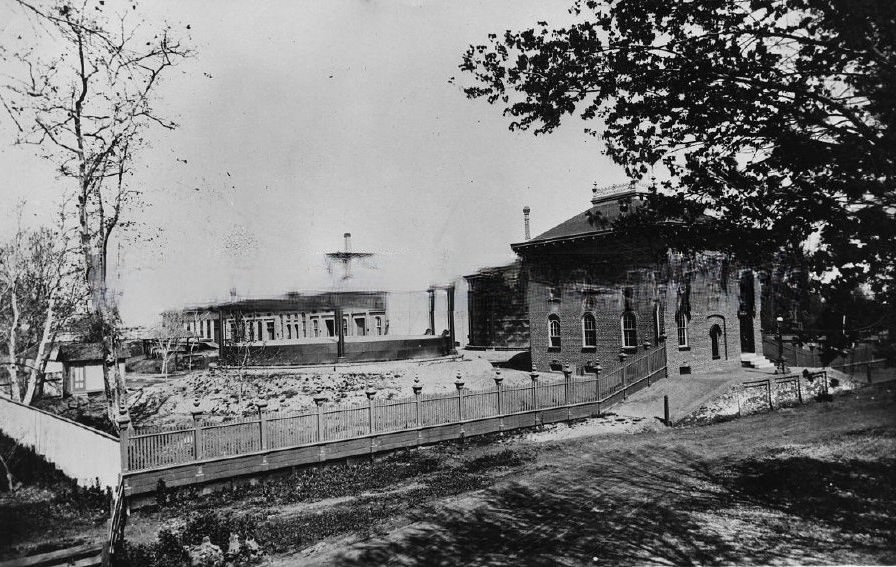
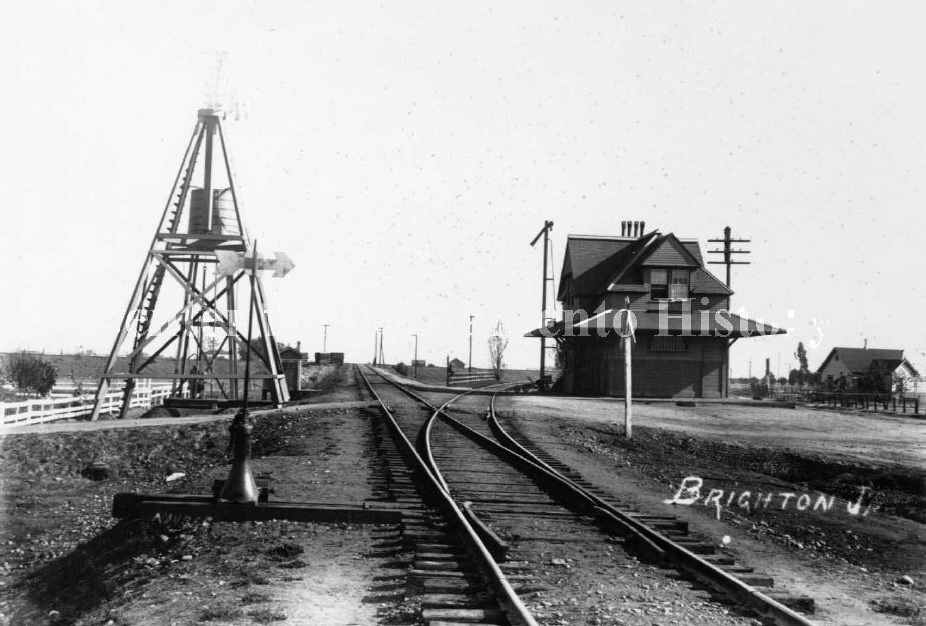
Sacramento Depot during the Pullman Strike of 1894.Sacramento Gas Works at R and Front Streets, 1890Brighton, 1895Sacramento Depot during the Pullman Railroad Strike of 1894.
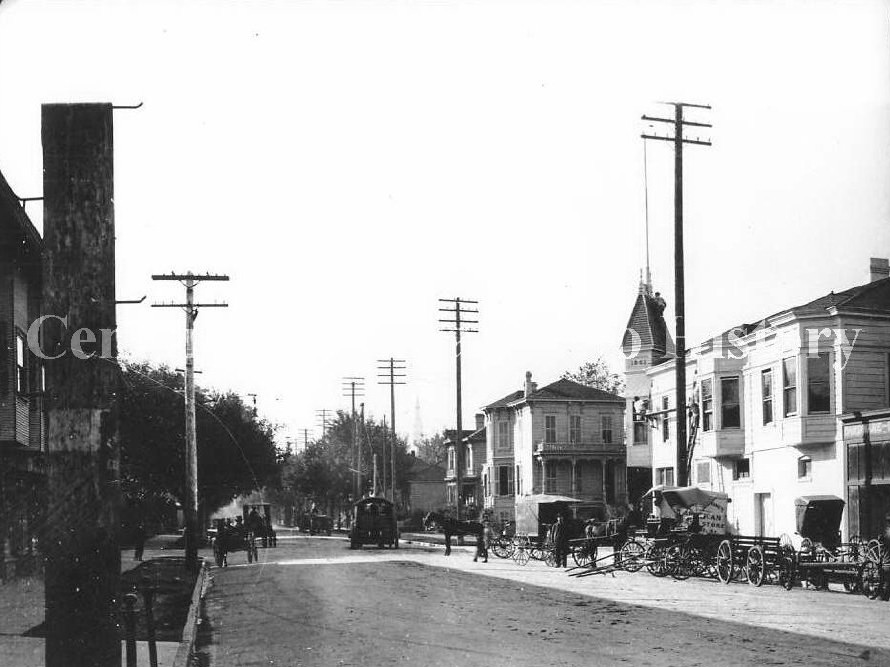
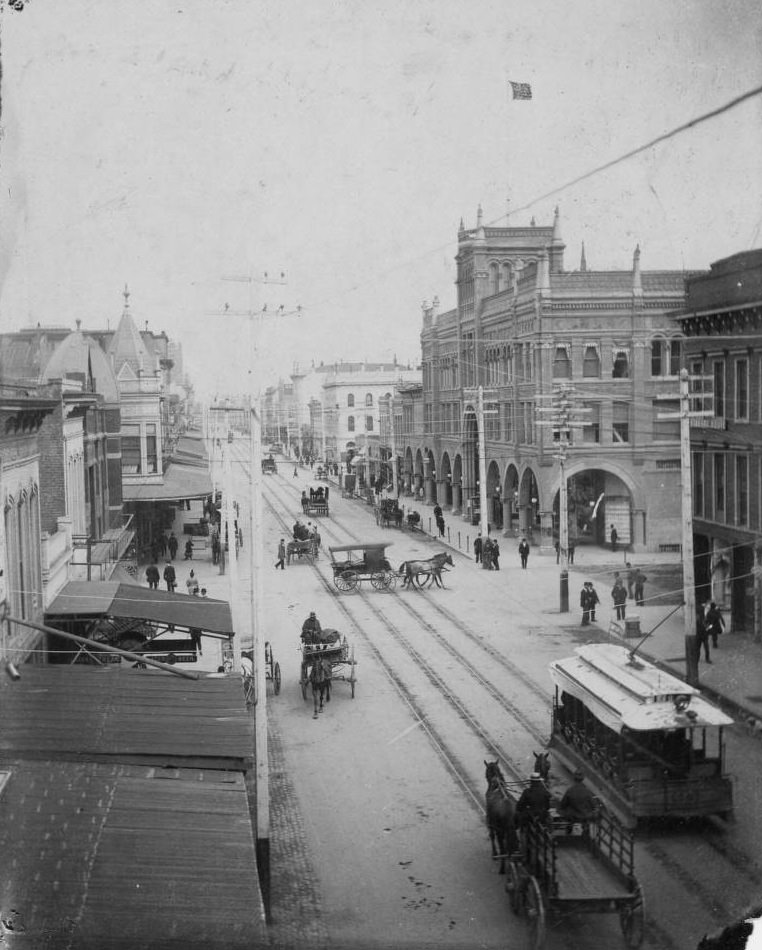
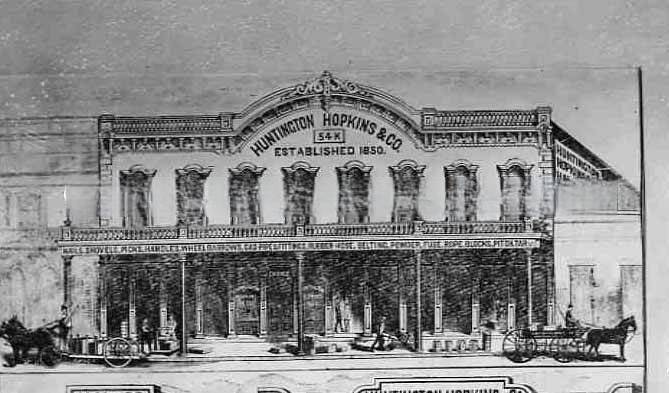
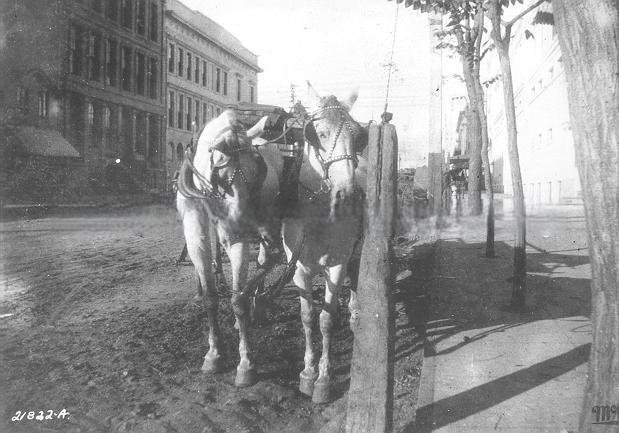
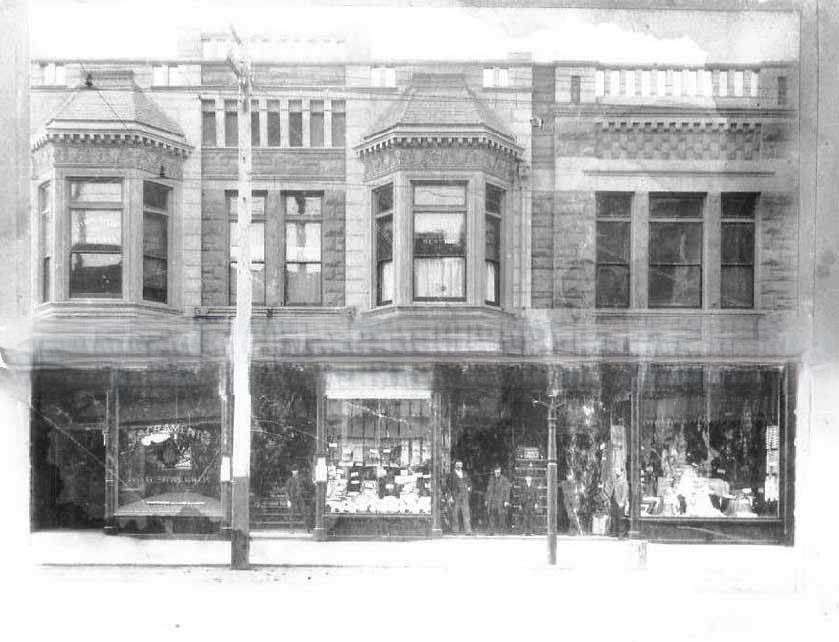
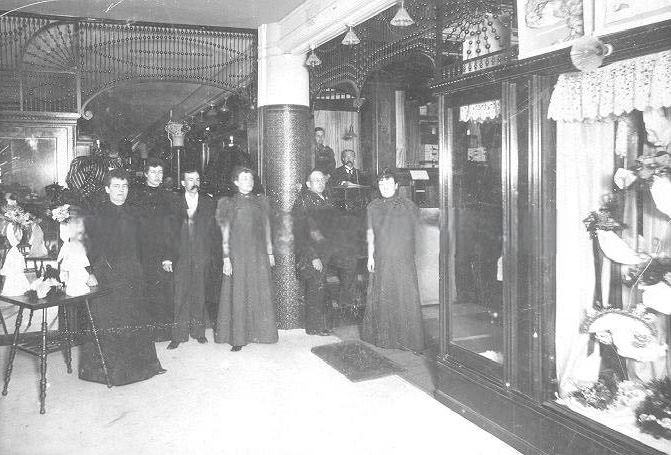
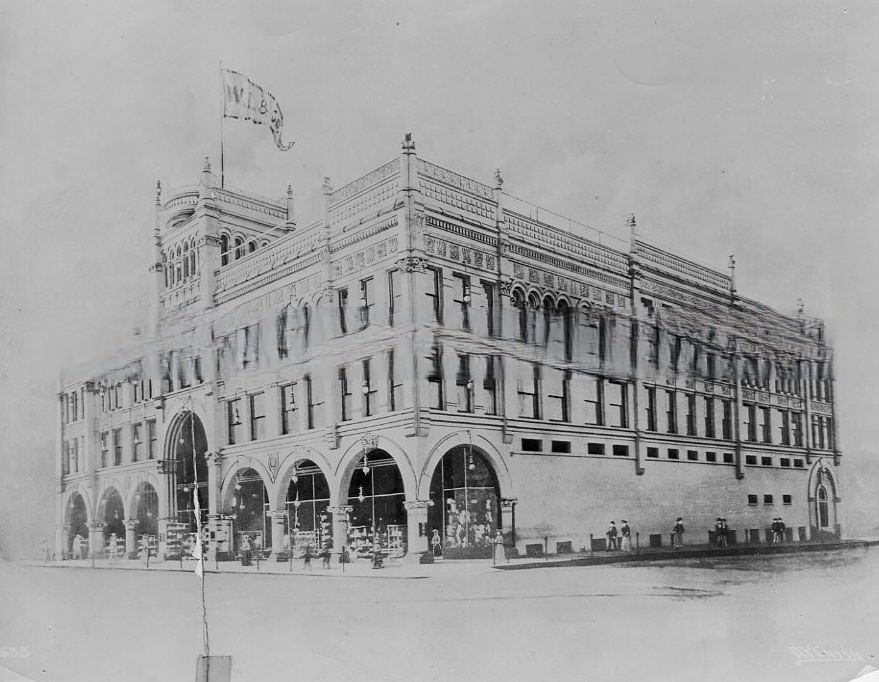
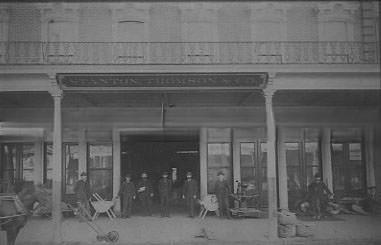
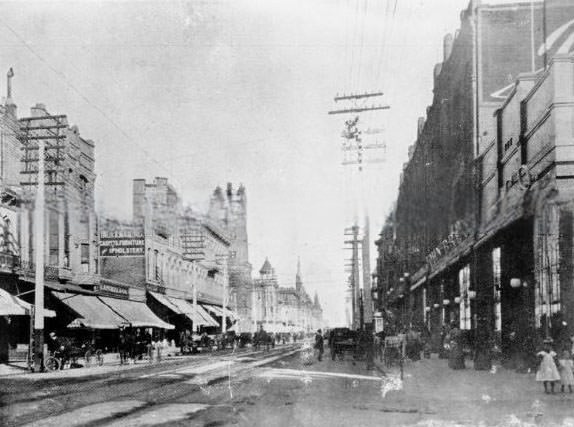
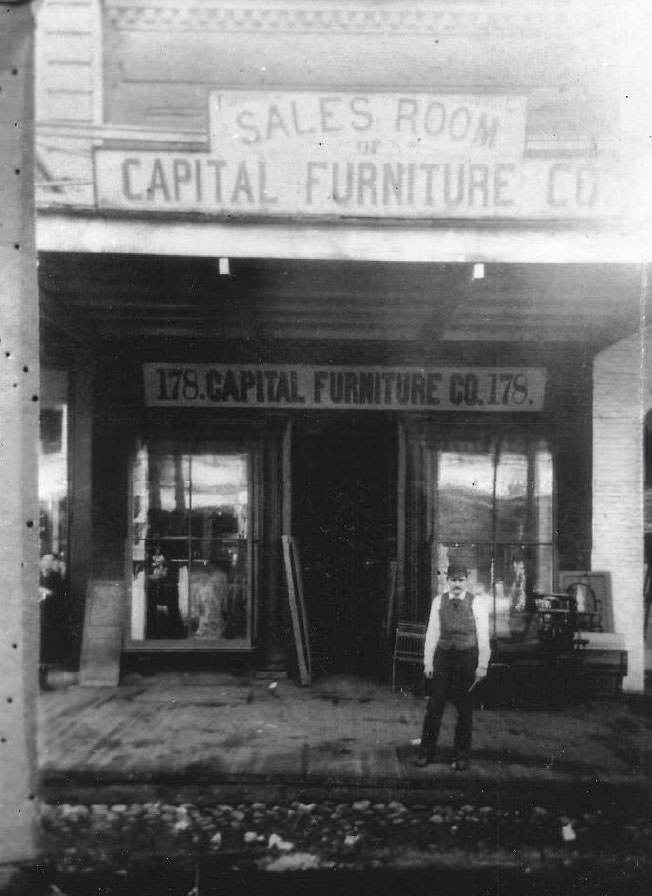
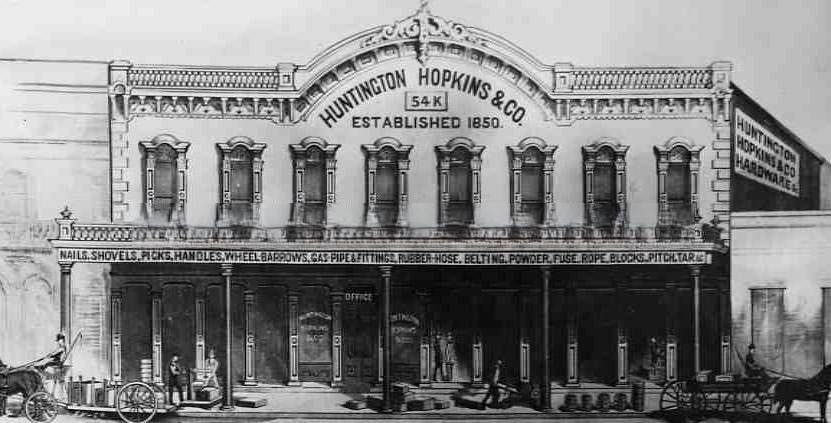
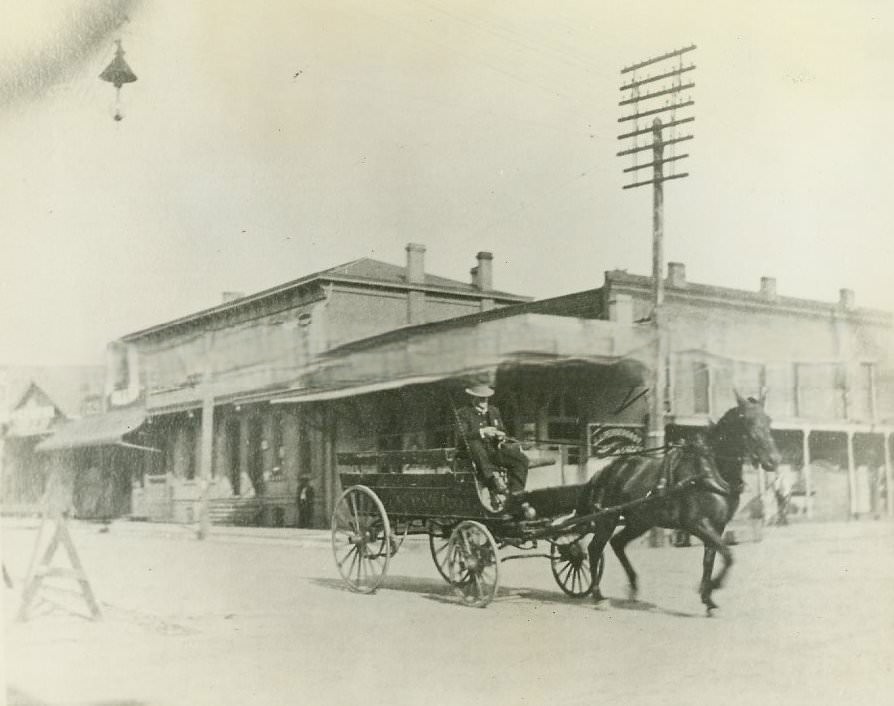
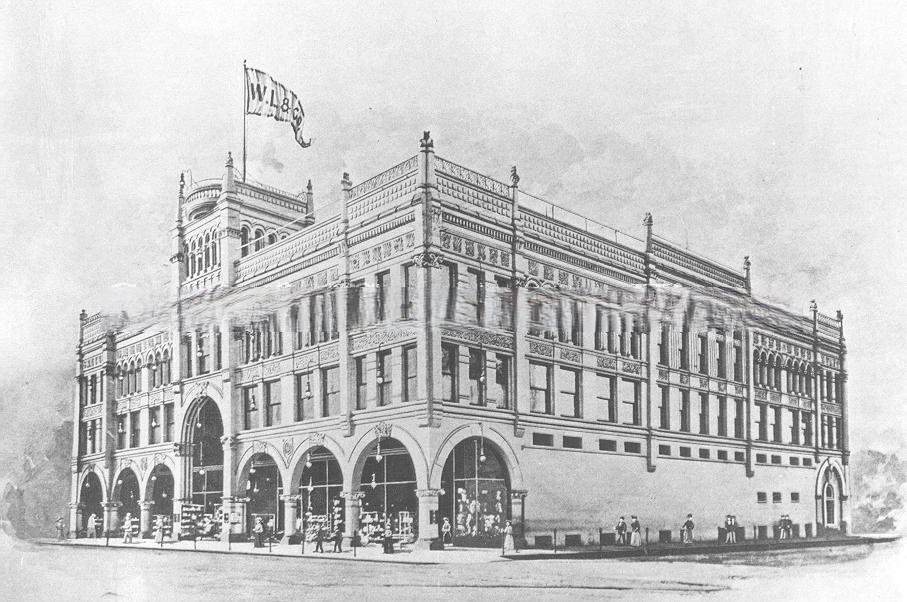
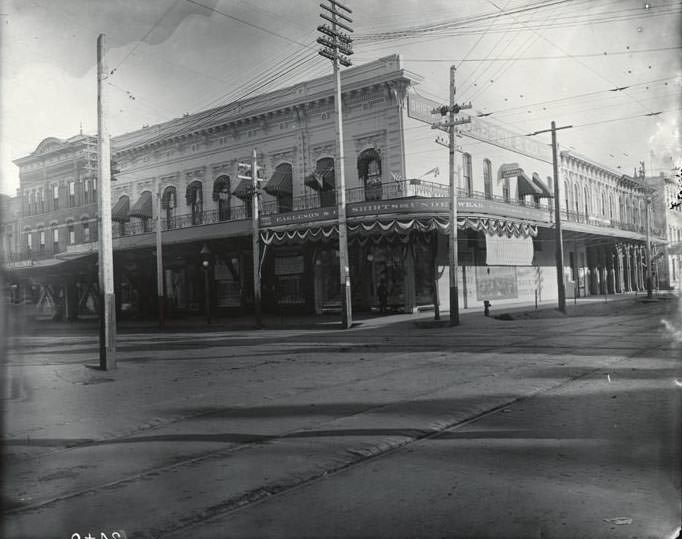
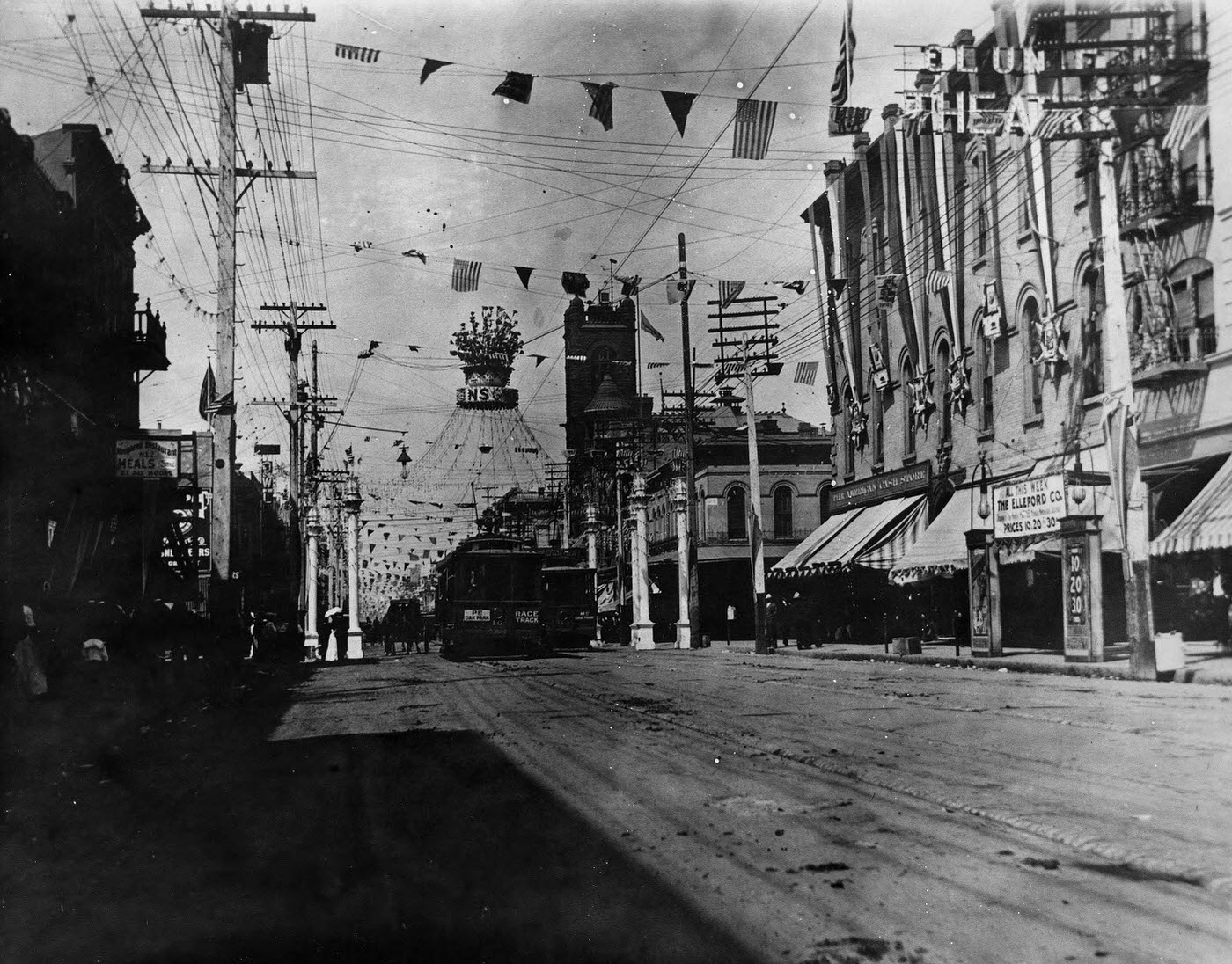
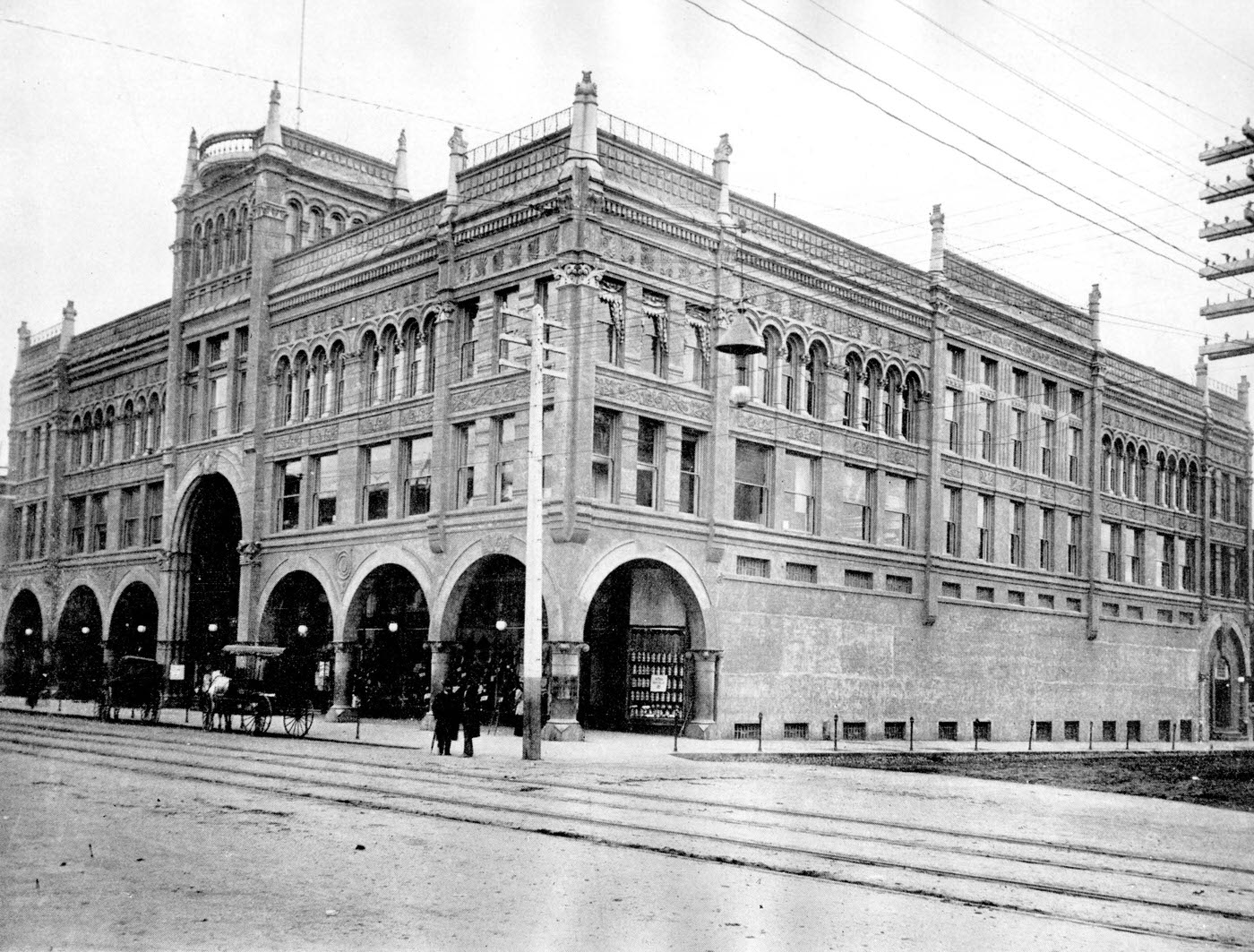
Downtown Sacramento in the 1890s was a dense, active place. J Street and K Street were the main commercial corridors, lined with hardware stores, furniture showrooms, grocers, restaurants, and department stores. Weinstock, Lubin & Company operated a prominent department store at 4th and K Streets, drawing shoppers from across the city. Huntington, Hopkins & Co. sold hardware from a well-known storefront that dated back to the Gold Rush era. The streets were a mix of horse-drawn wagons, early electric streetcars, and pedestrians going about their business.
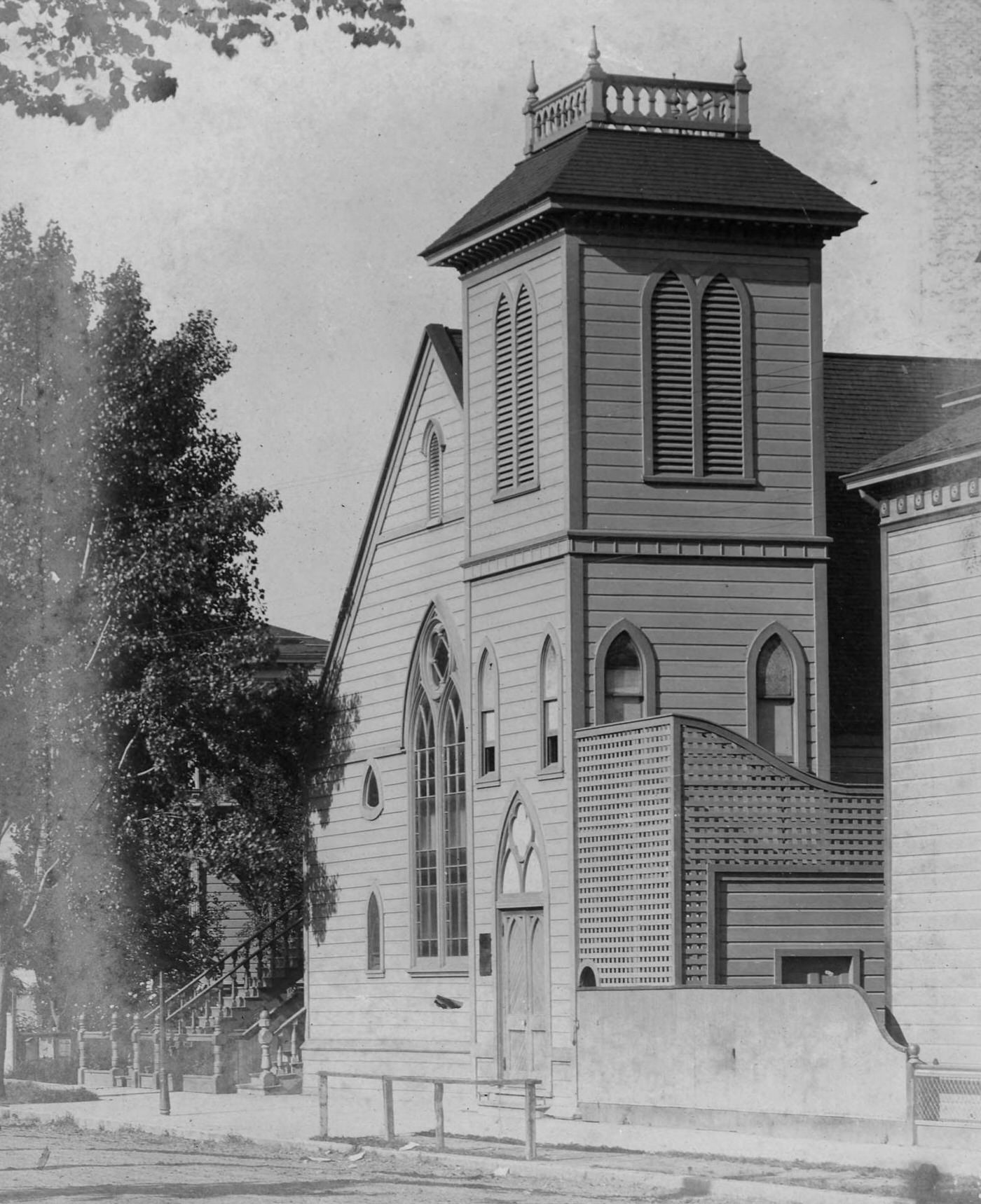
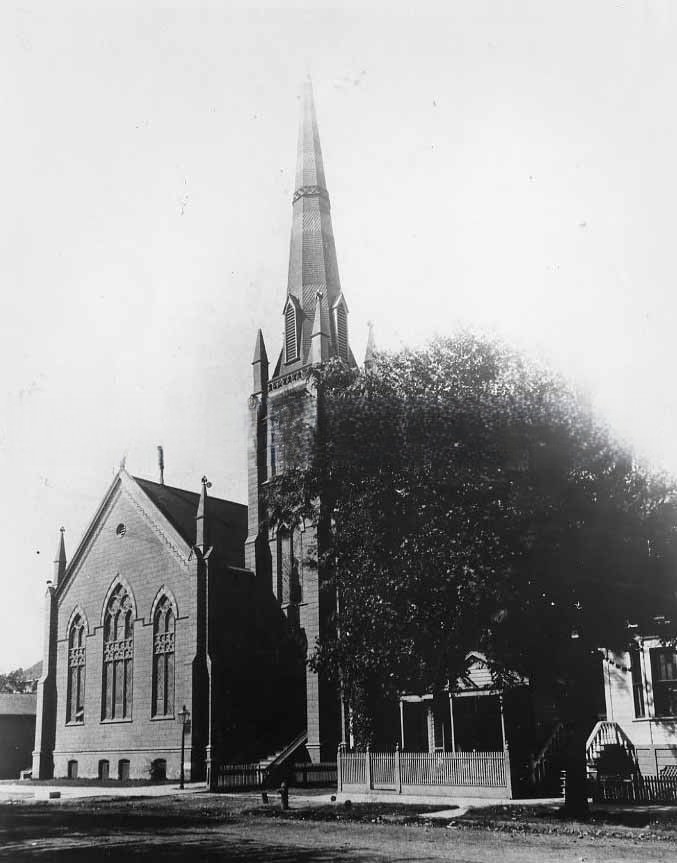
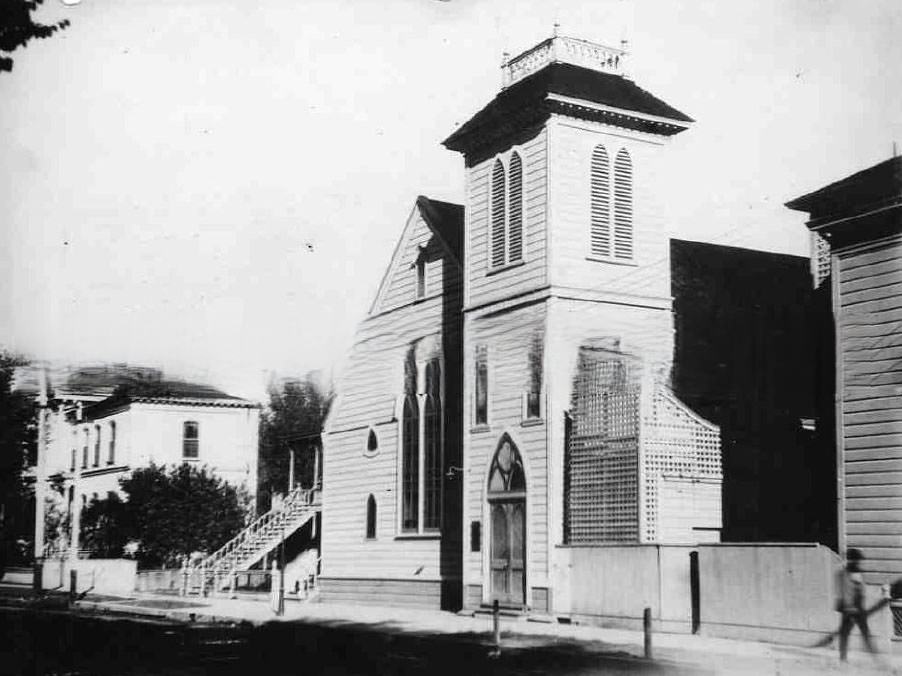
Sacramento street scene, 1890Southern Pacific Depot at 6th and I St. Sacramento, 1890Sacramento, State Capitol, 1890Sacramento, Plaza Park, 1890Sacramento, church exterior, 1890Sacramento, Capitol Park, 1890
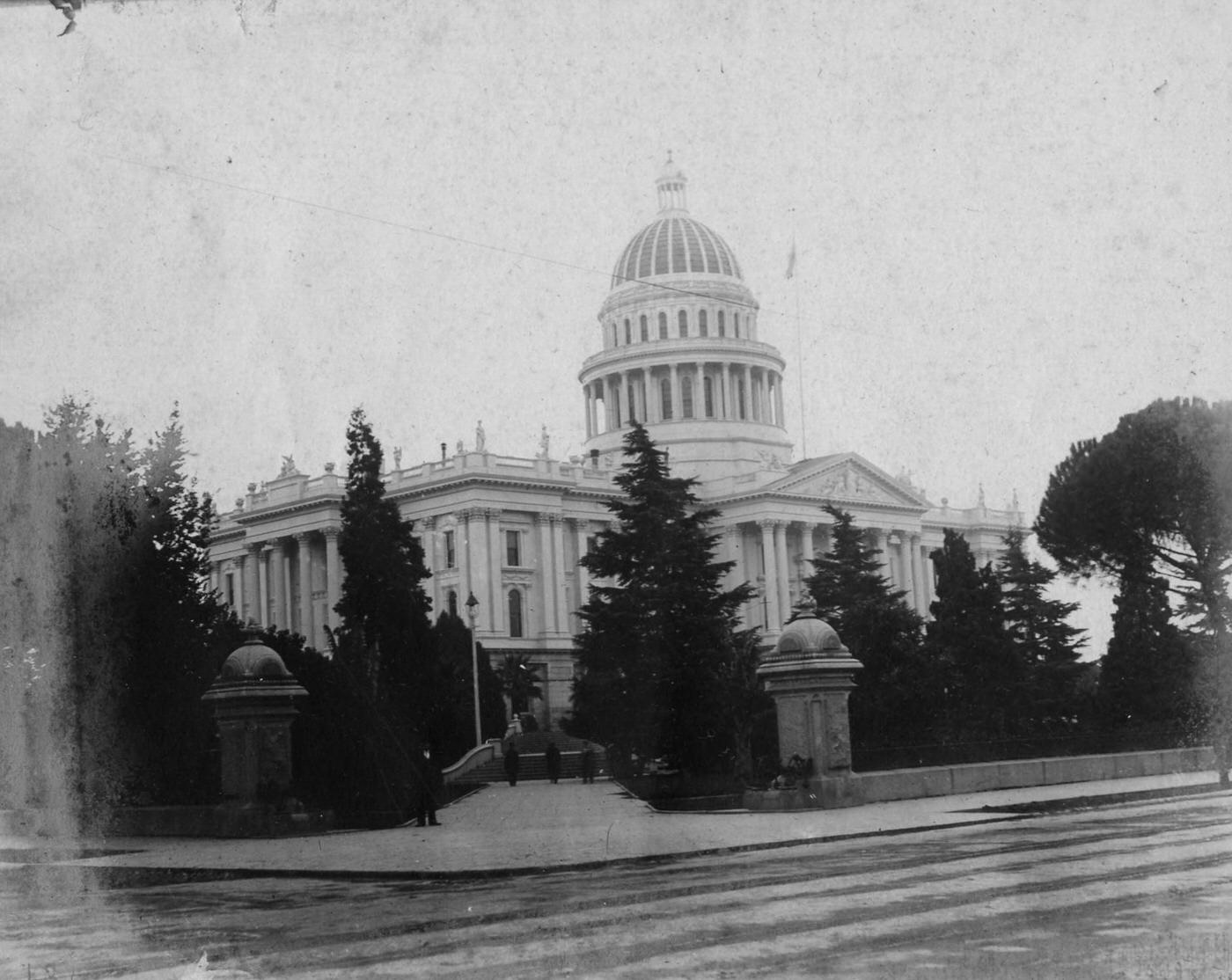
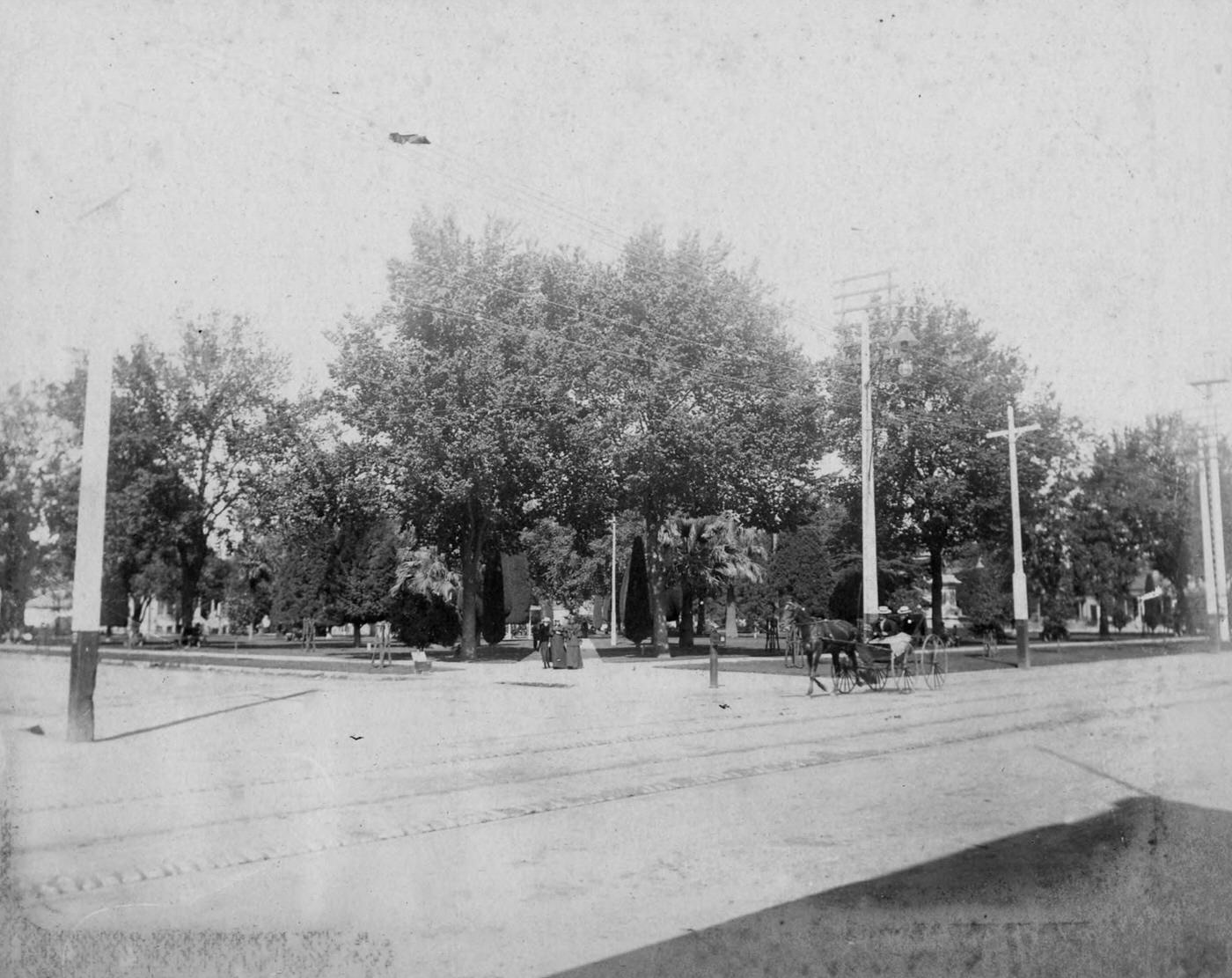
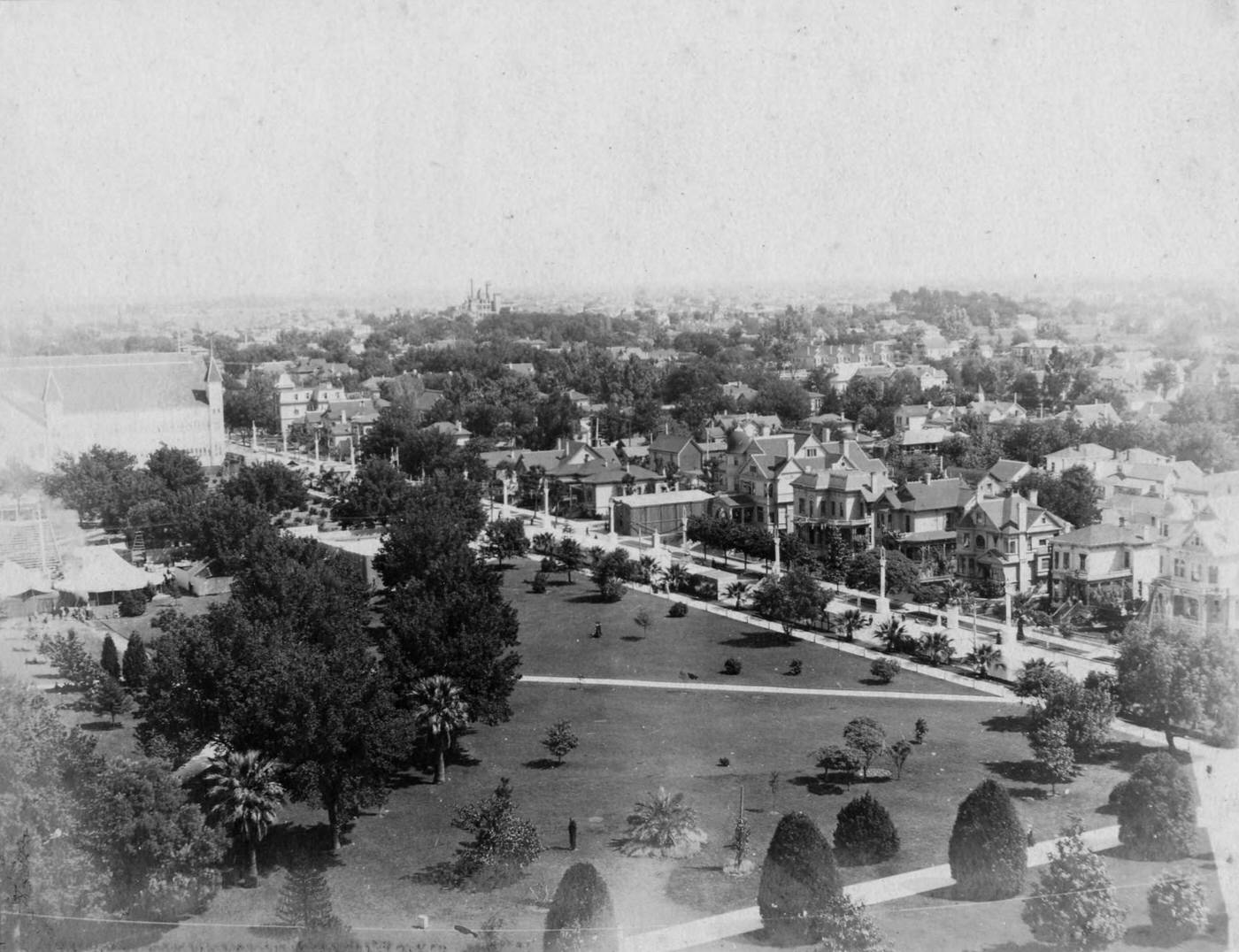
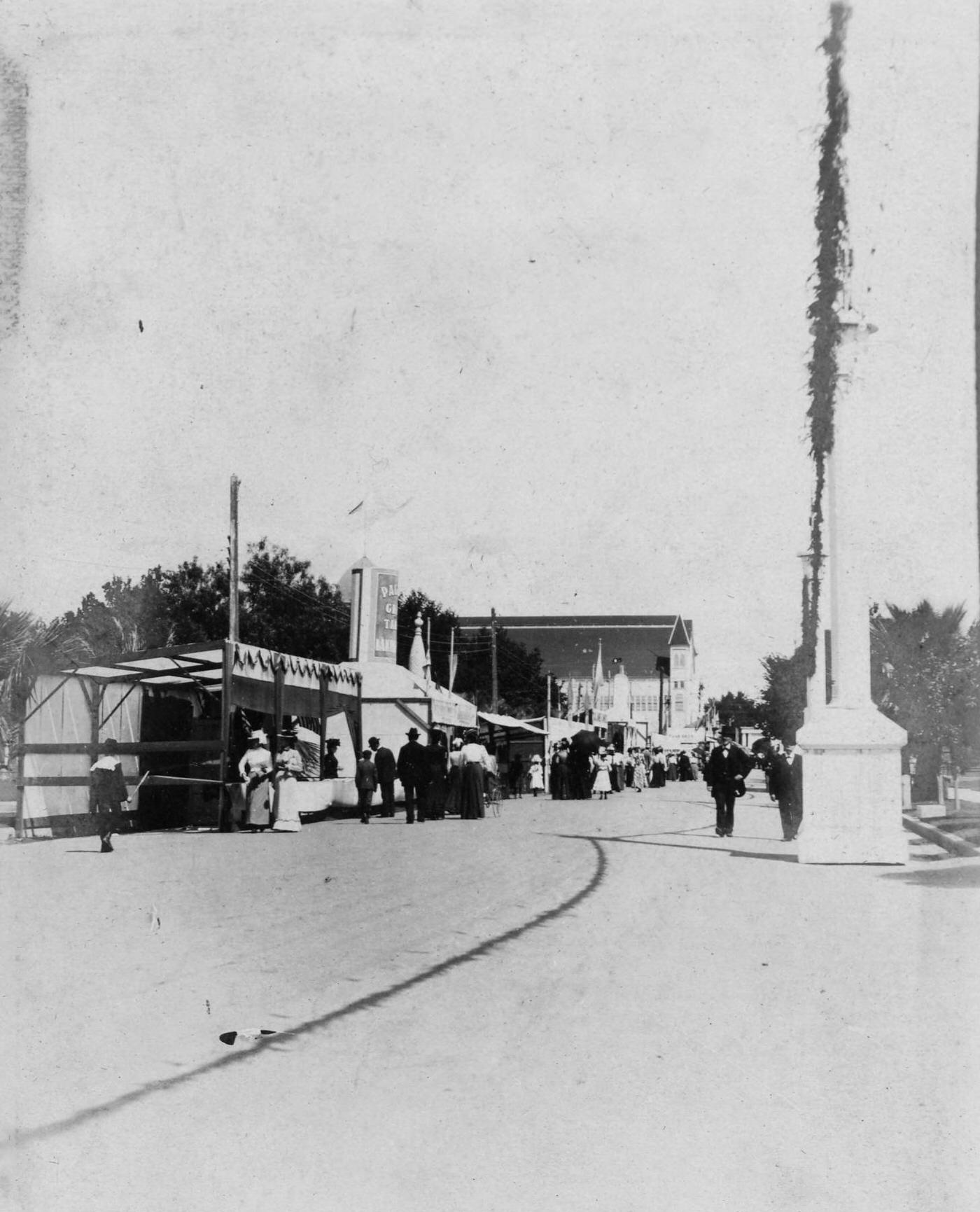
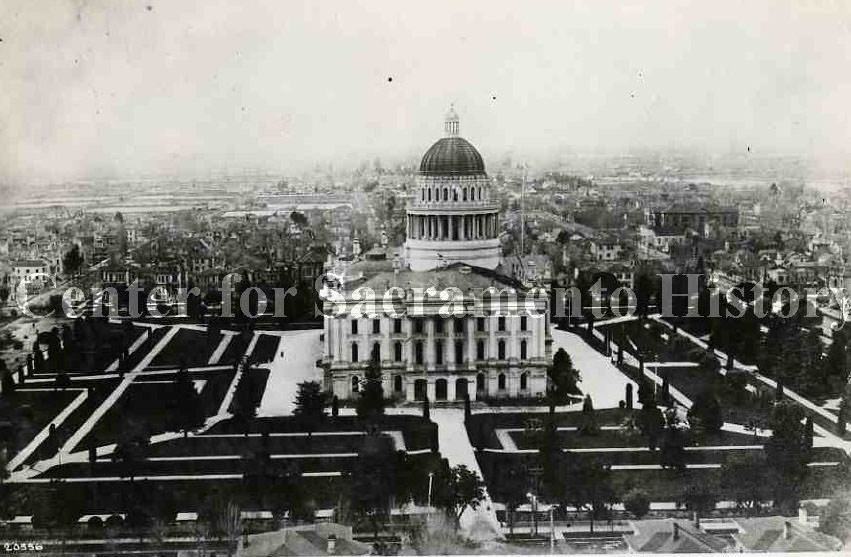
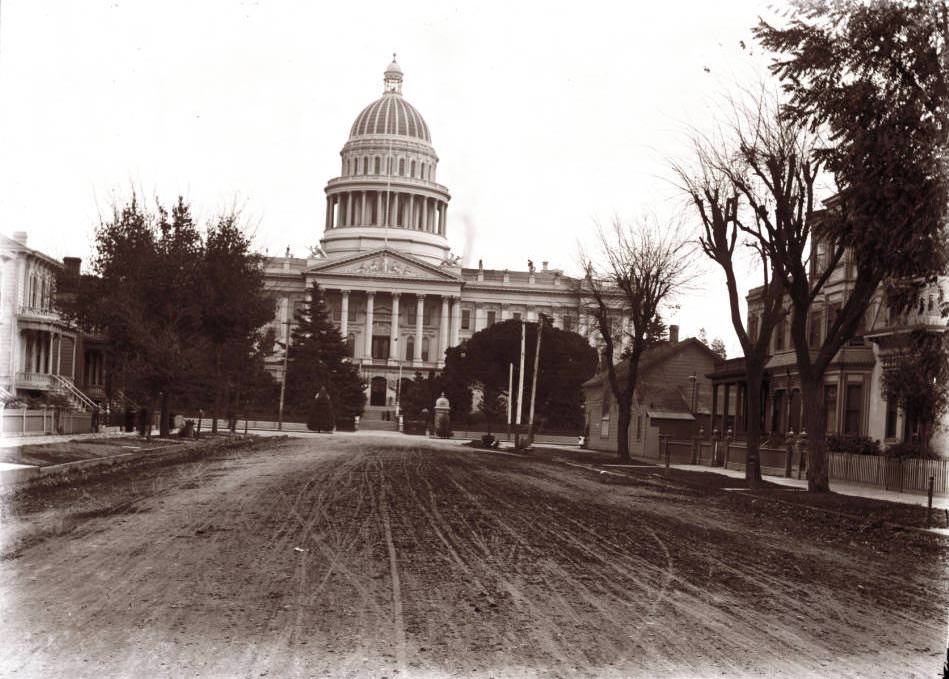
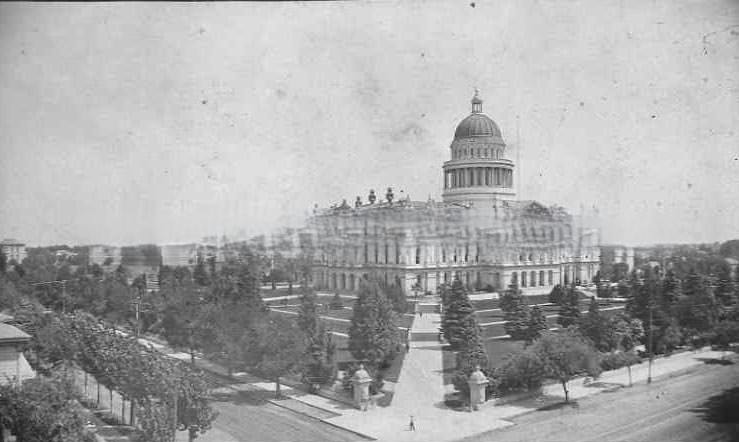
As California’s capital, Sacramento hosted the state government and all the political activity that came with it. The State Capitol building dominated the city’s center, surrounded by Capitol Park. The annual State Fair drew large crowds to the city, filling hotels and giving local merchants a surge in business. Women’s suffrage was a growing movement in Sacramento during the 1890s, with local activists organizing meetings and petitions as part of a broader push that would eventually succeed in California in 1911.
Sacramento, Capitol Park during State Fair, 1890
Sacramento, downtown, 1890
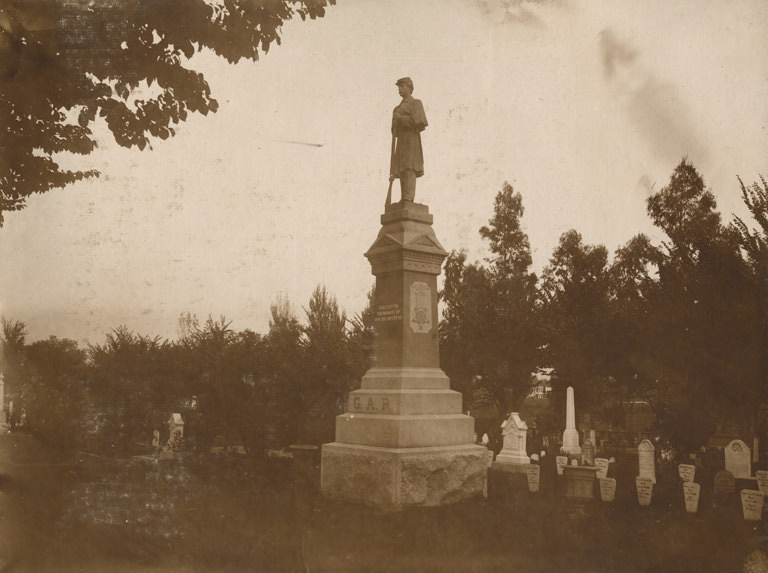
Sacramento, promenade downtown, 1890View from Capitol building looking northwest. Old Courthouse visible at 7th and I Sts. in distance, 1890G.A.R. monument, City Cemetery, 1890,
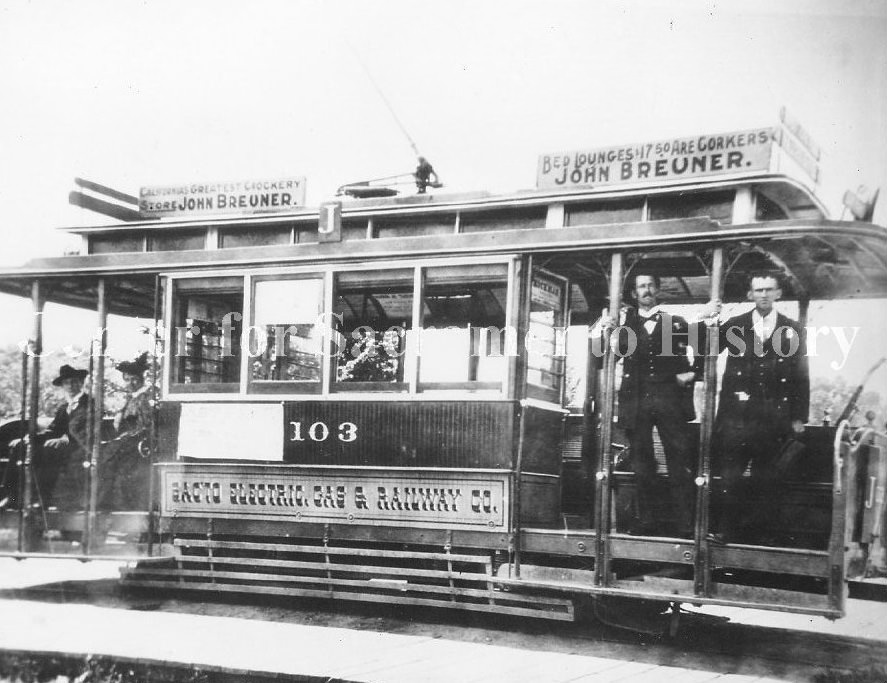
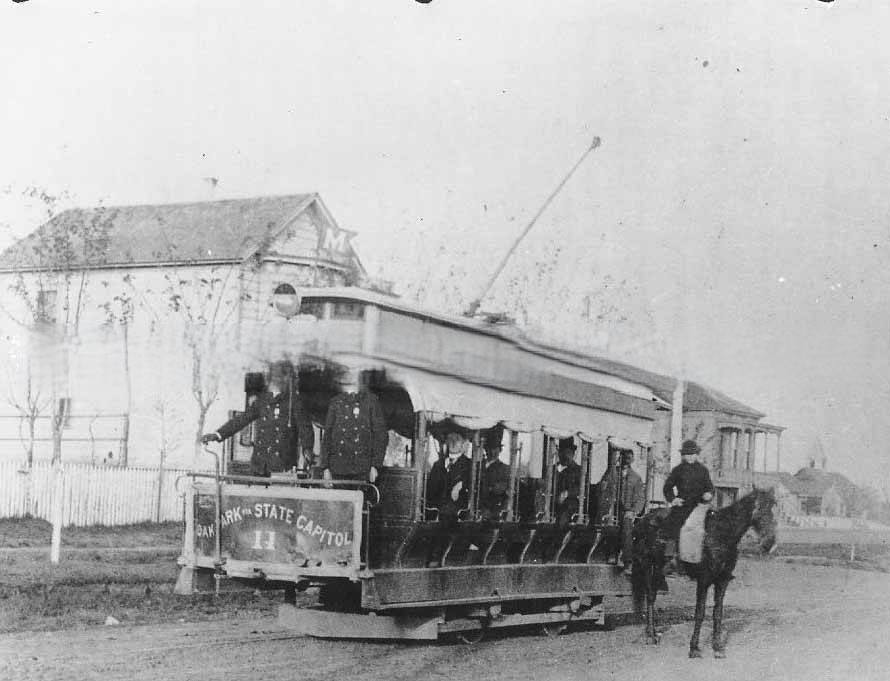
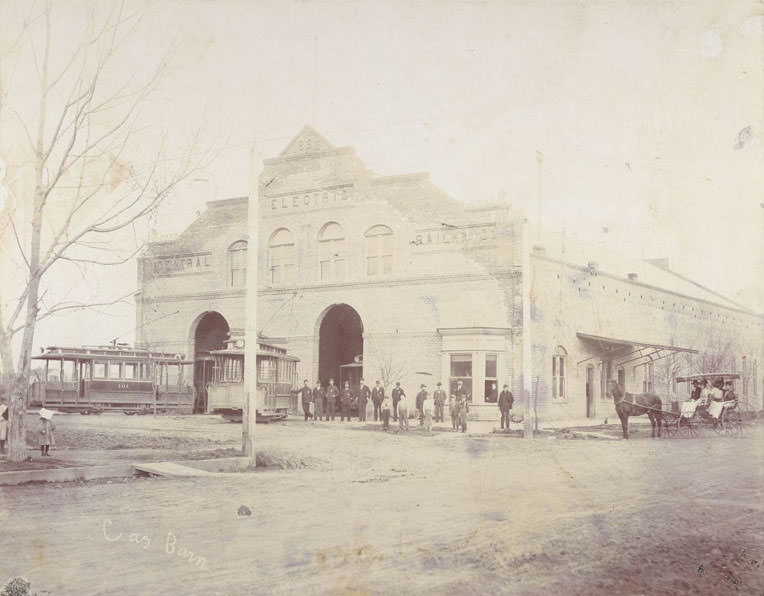
Transportation within the city was changing rapidly. The Sacramento Electric Gas & Railway Company operated electric streetcars that ran through the downtown area and out to neighborhoods like Oak Park. These streetcars replaced older horse-drawn car lines and made it easier for residents to travel across the expanding city. By the mid-1890s, the streetcar network had become a familiar part of daily life in Sacramento.
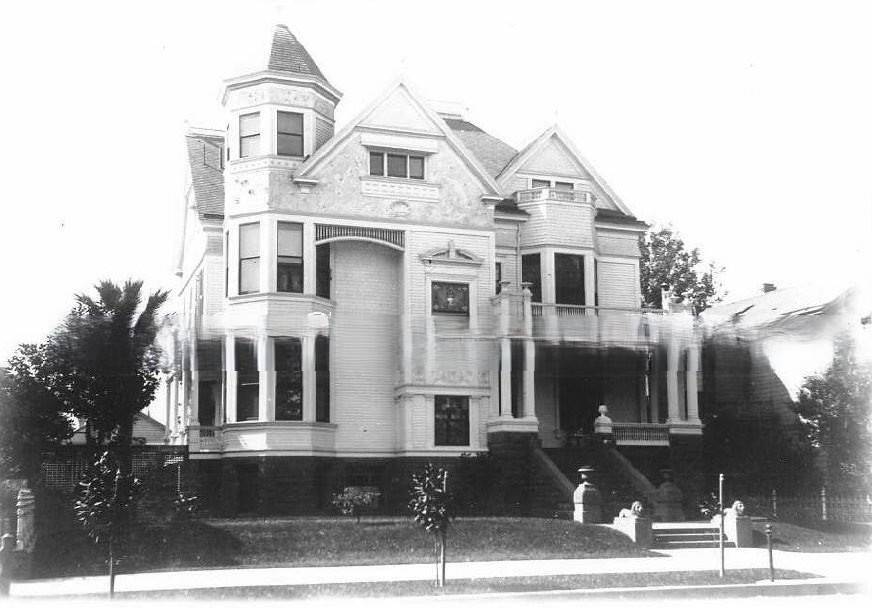
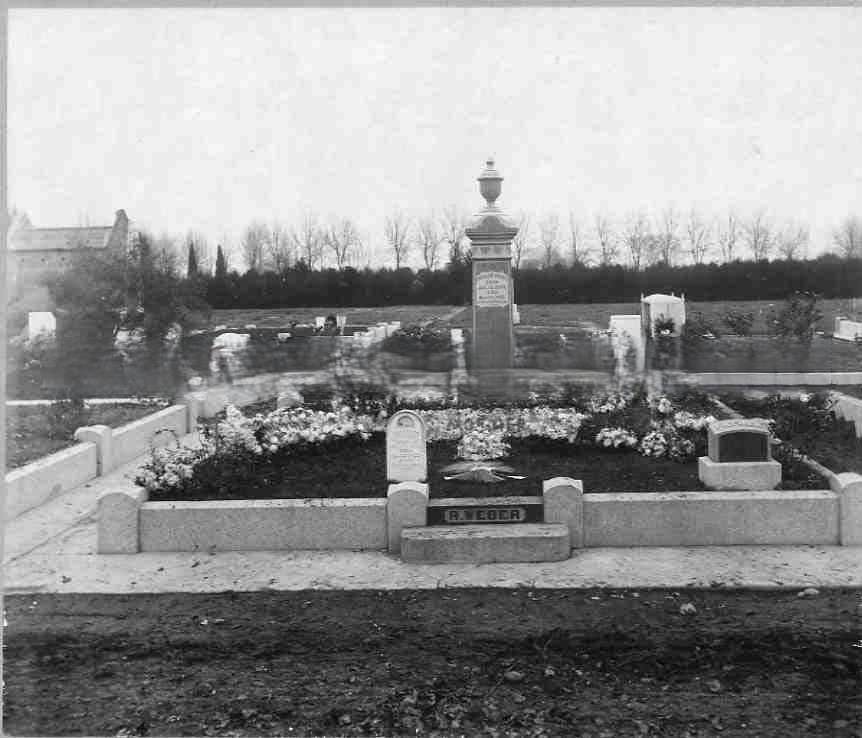
Electric street car number 103 of the Sacramento Electric Gas & Railway Co., 1895California Winery, Sacramento, 1890-1900Captain Frank Ruhstaller’s Residence, Sacramento, 1890-1910Huntington Hopkins & Co. hardware store, 1850-1900Pullman Railroad Strike of 1894 – National Guard Arrival, SacramentoRudolph Weber Family Plot, City Cemetery, 1895Southern Pacific Depot during the Pullman Strike, 1897
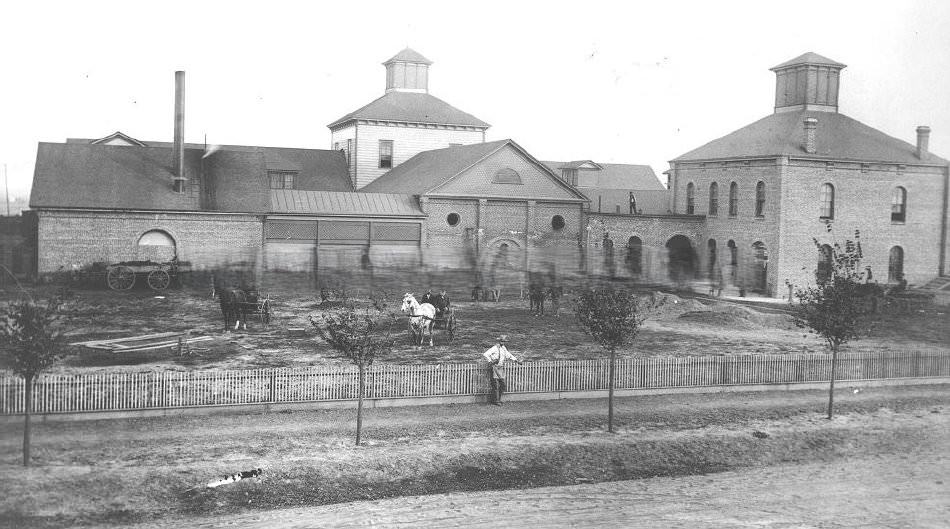
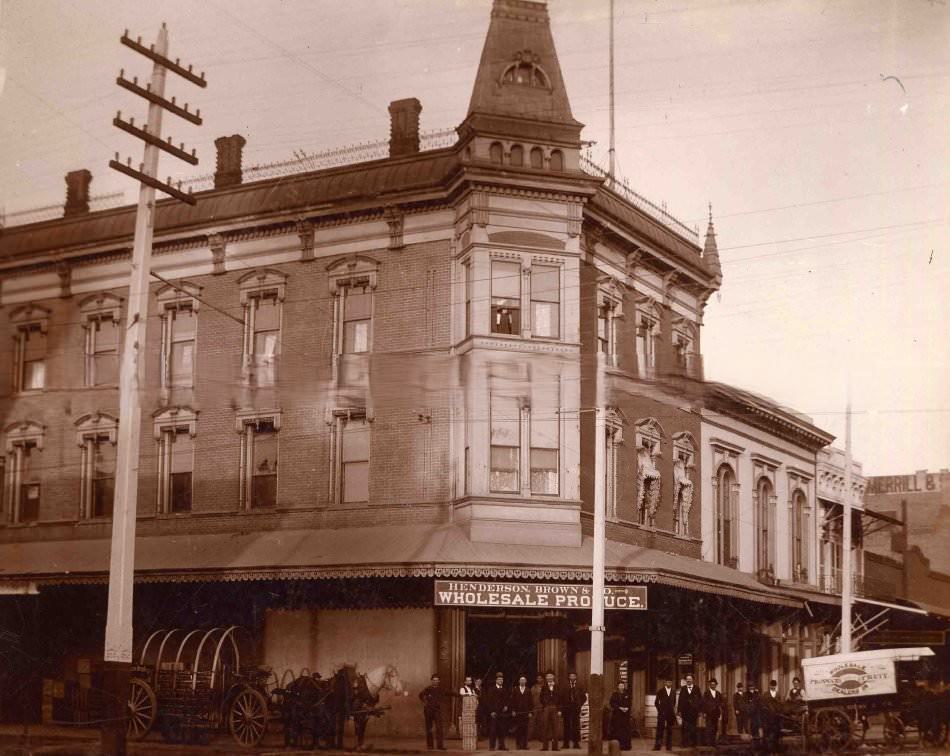
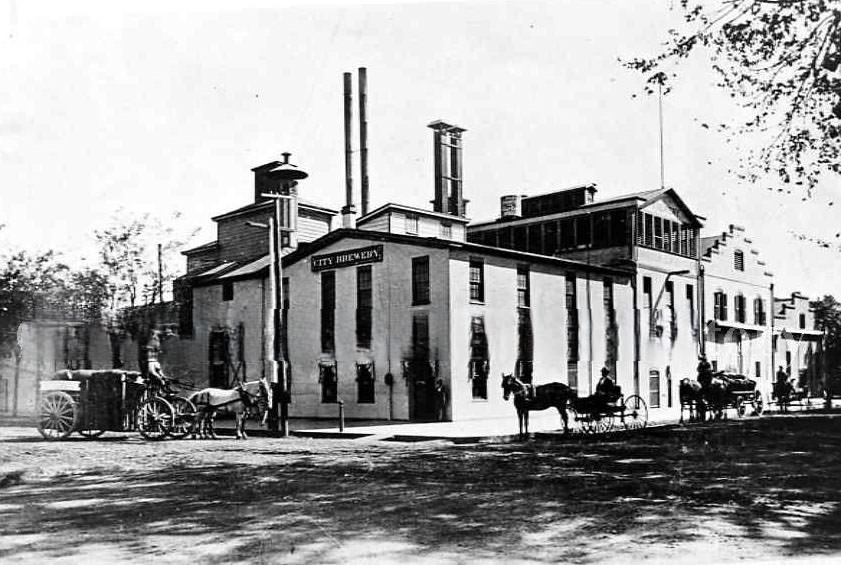
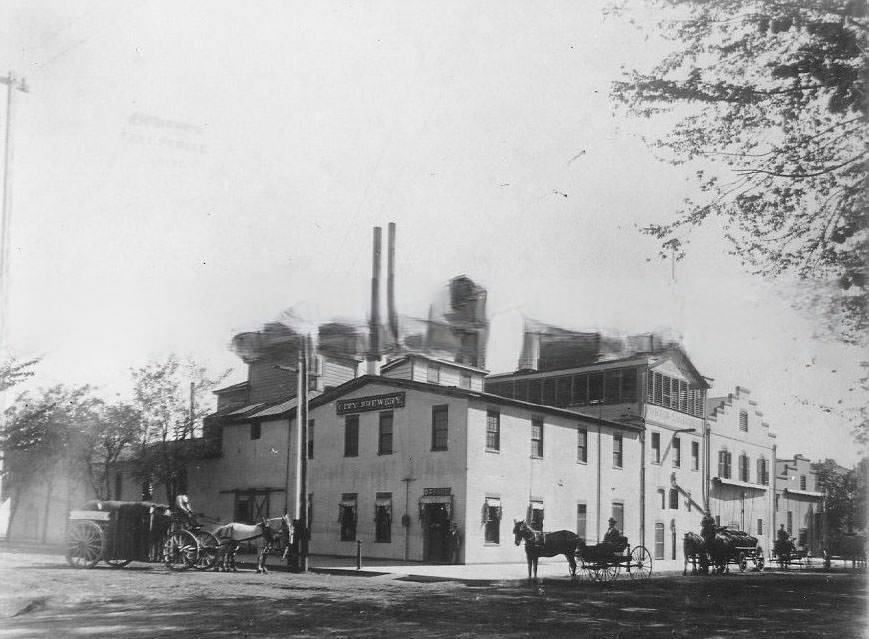
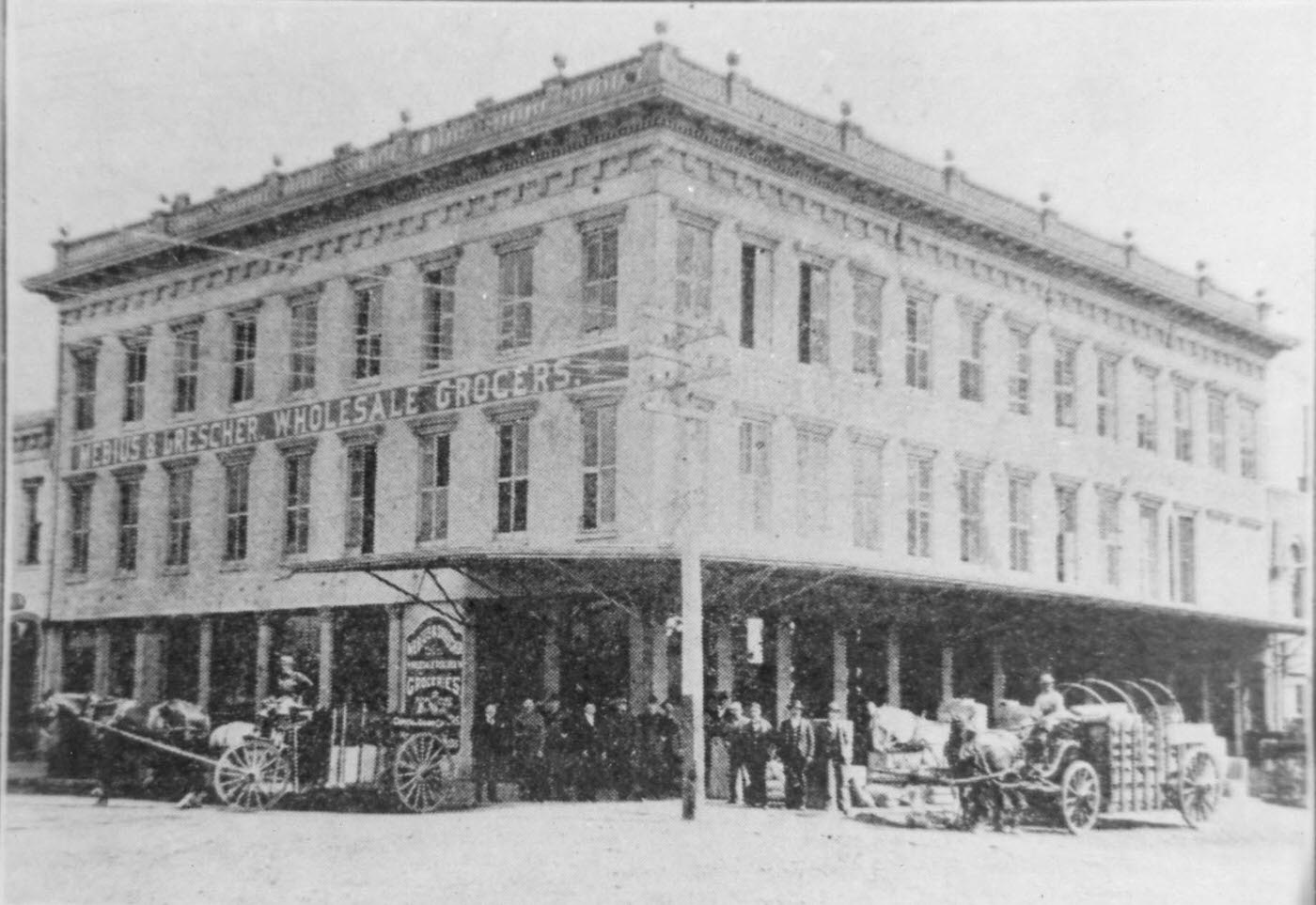
Commerce in Sacramento extended well beyond the railroad. Local businesses ranged from small grocers and stables to larger operations like the City Brewery, which produced Ruhstaller’s “Gilt Edge” steam beer. The California Fruit Canners Association, founded in Sacramento in 1899, grew into the largest fruit canning company in the world. The region’s fertile farmland supplied the raw materials, and Sacramento’s factories and warehouses processed and distributed goods across the country. Wholesale produce operations like Henderson, Brown & Co. at 201 J Street handled enormous volumes of agricultural goods.
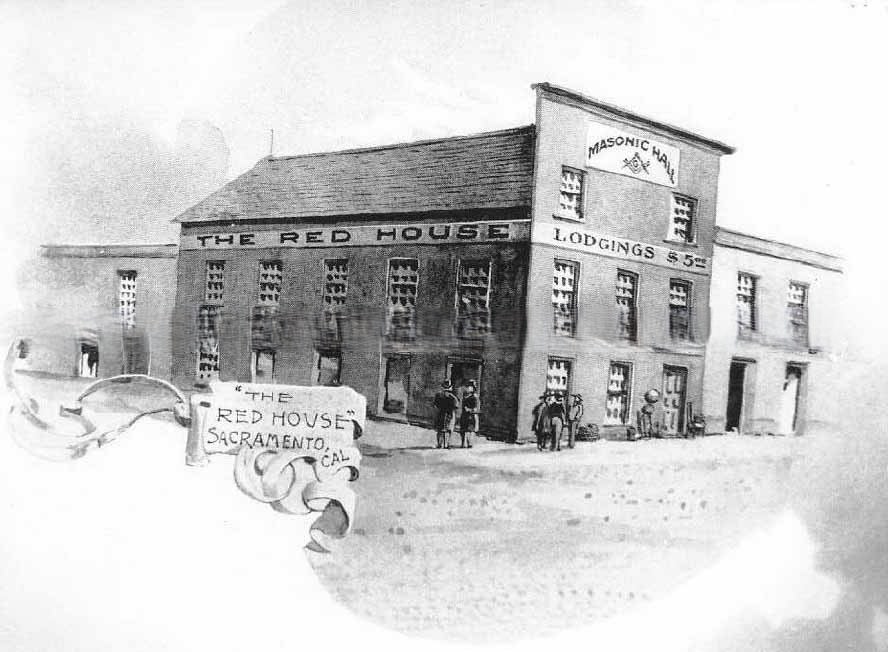
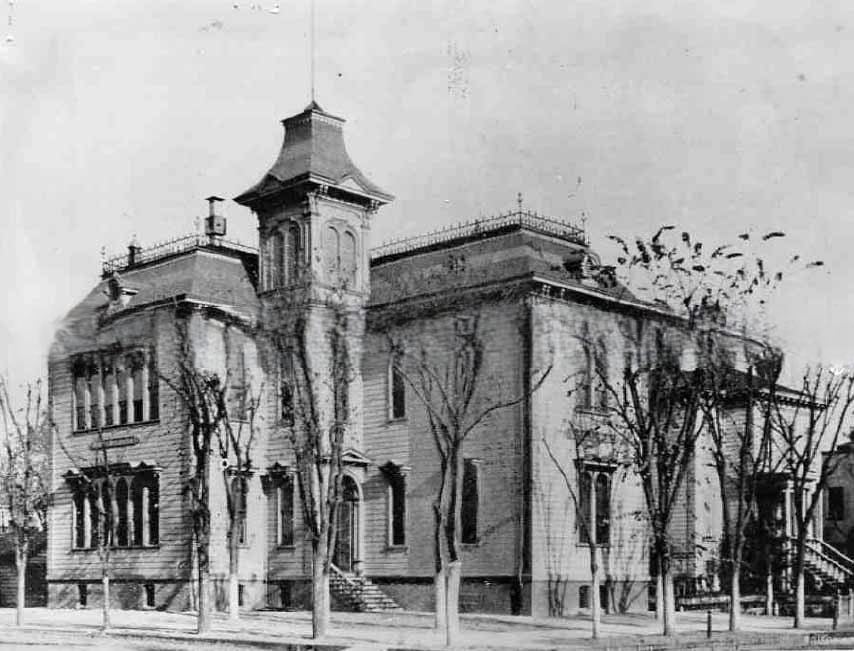
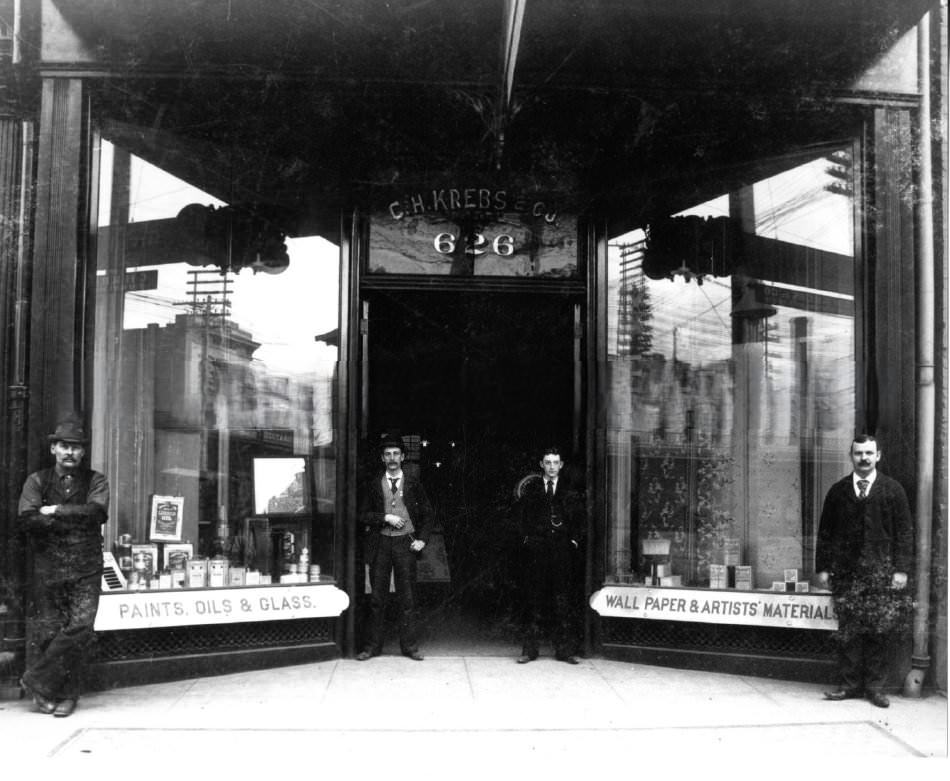
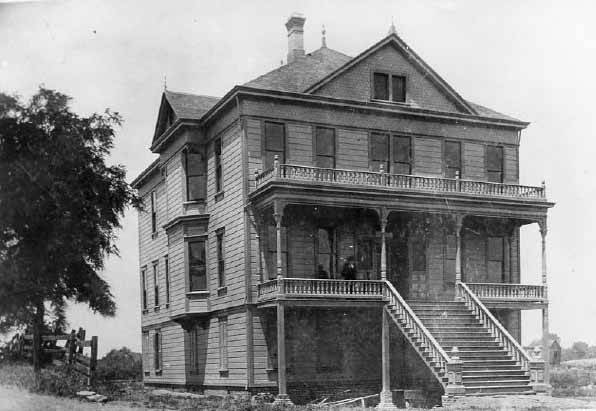
Weinstocks-Lubin Delivery Carriage, 1895Storefront at unidentified location, 1890-1910The Red House, Sacramento, 1860-1900Sacramento High School, 1894C.H. Krebs & Co. Store, Sacramento, 1896Old Foundling Home, 1890
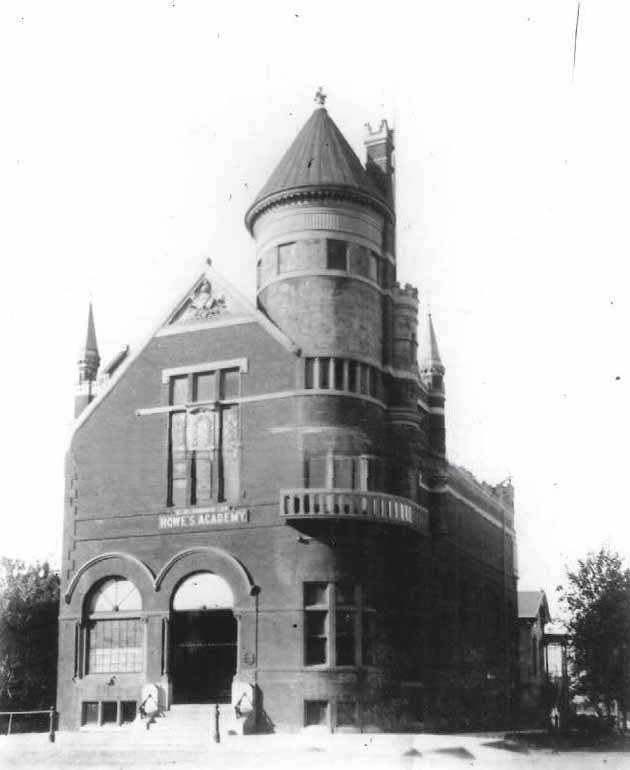
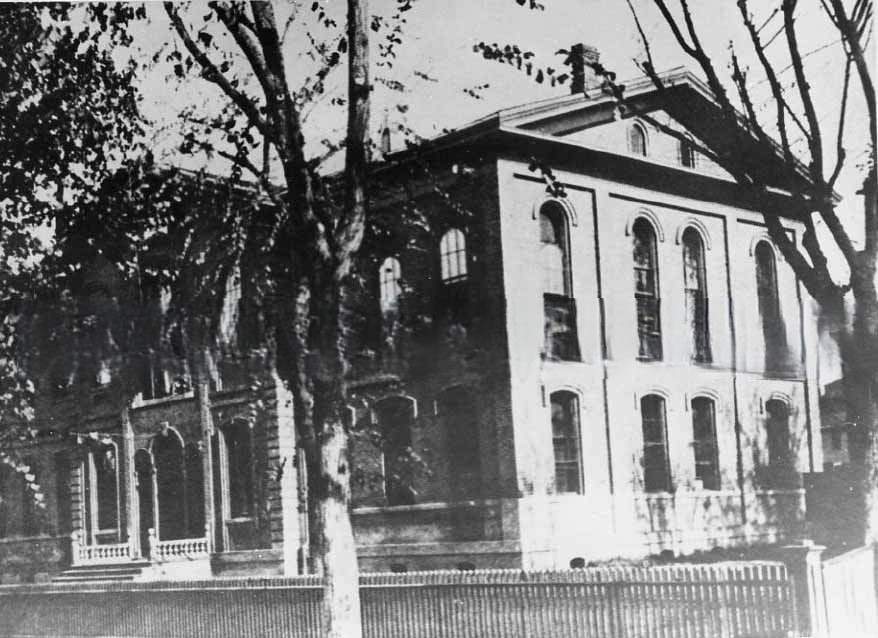
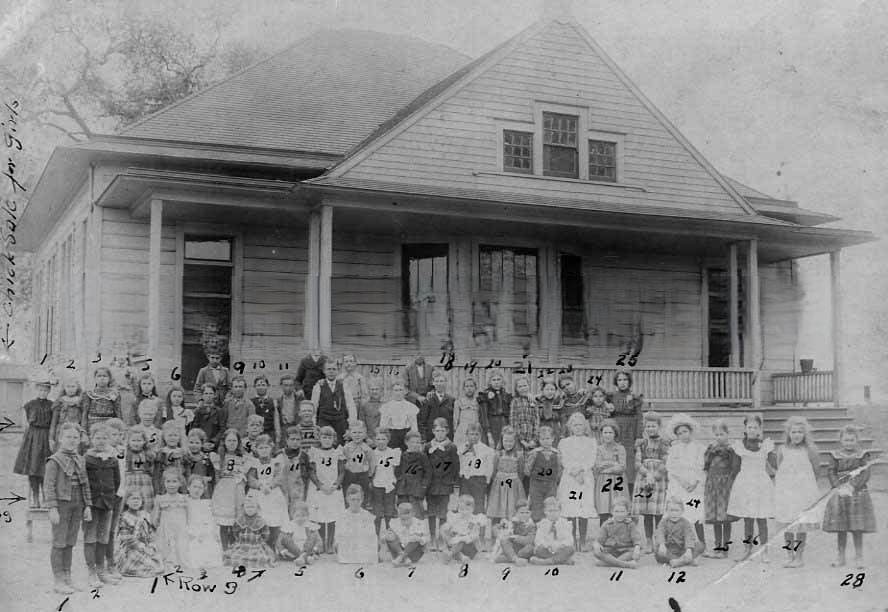
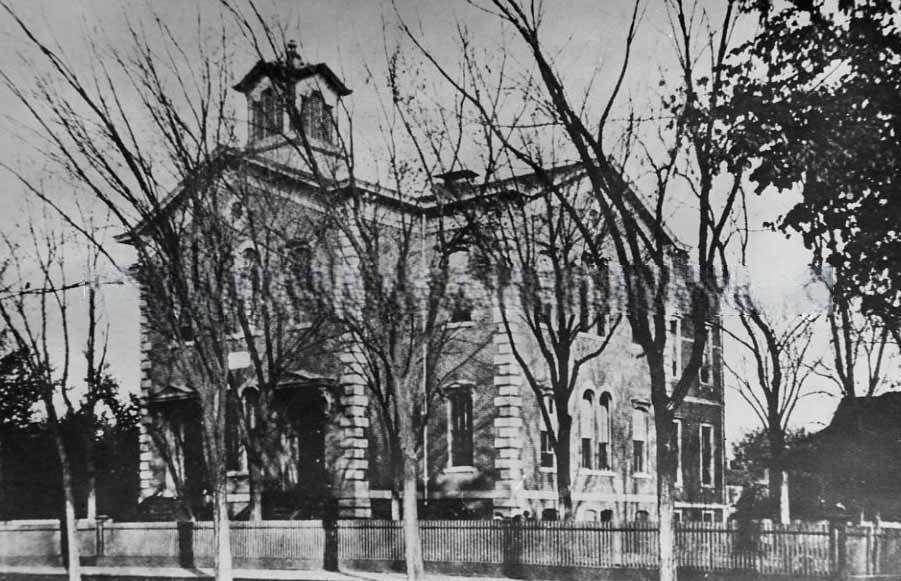
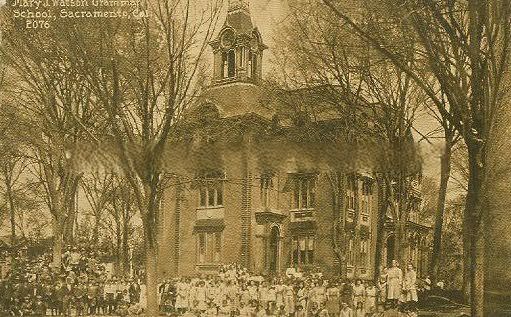
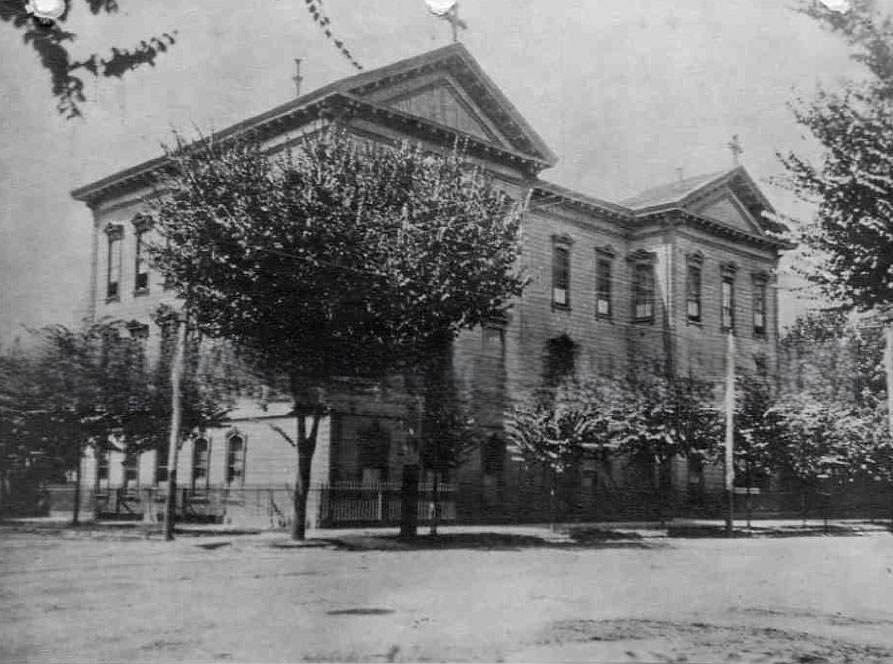
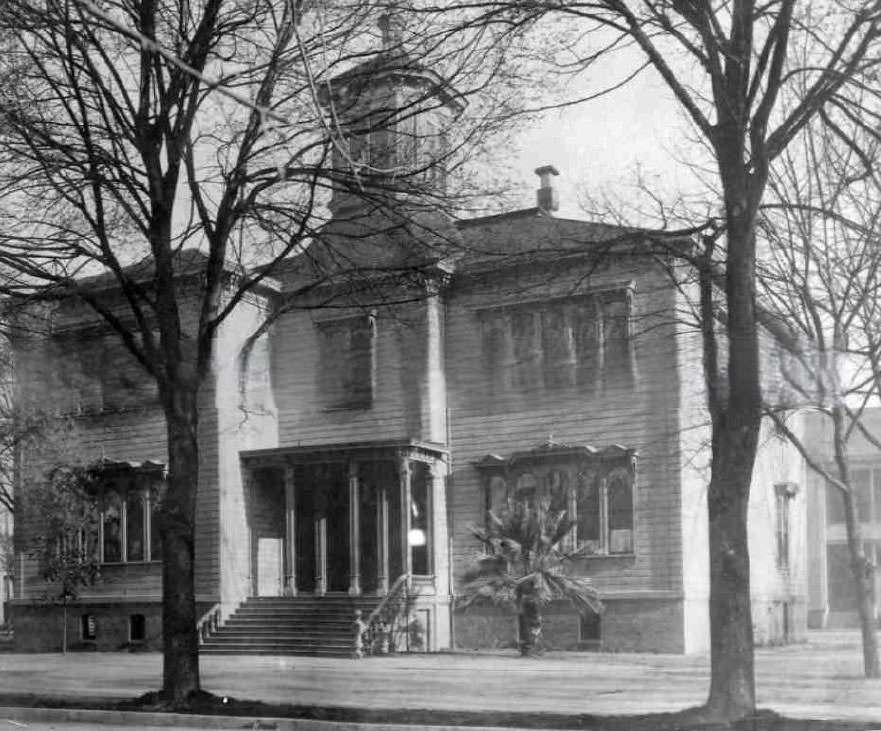
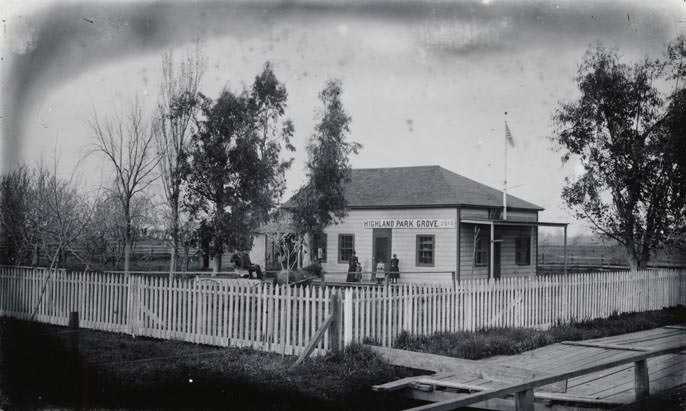
Education was a clear priority for Sacramento in the 1890s. The city operated multiple public schools across its neighborhoods — Washington Primary School, Marshall Primary School, Capitol Primary School, Highland Park School, and the Jefferson Free School, among others. Sacramento High School served older students, and private institutions like Christian Brothers College and Howe’s Academy offered additional options. The city’s investment in schools reflected how seriously it took the task of educating a rapidly growing population.
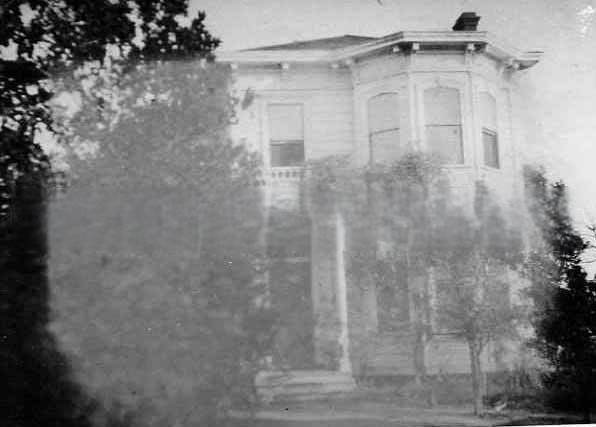
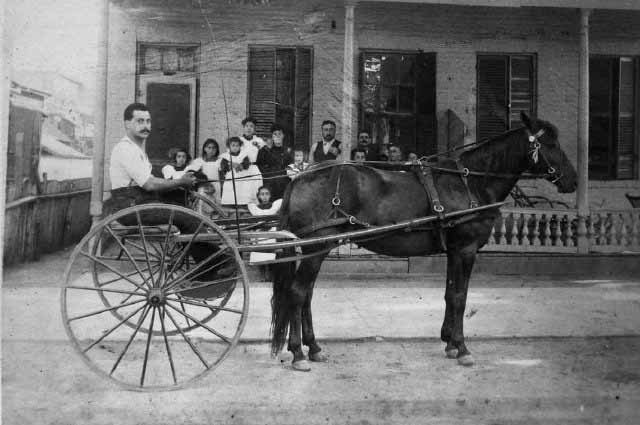
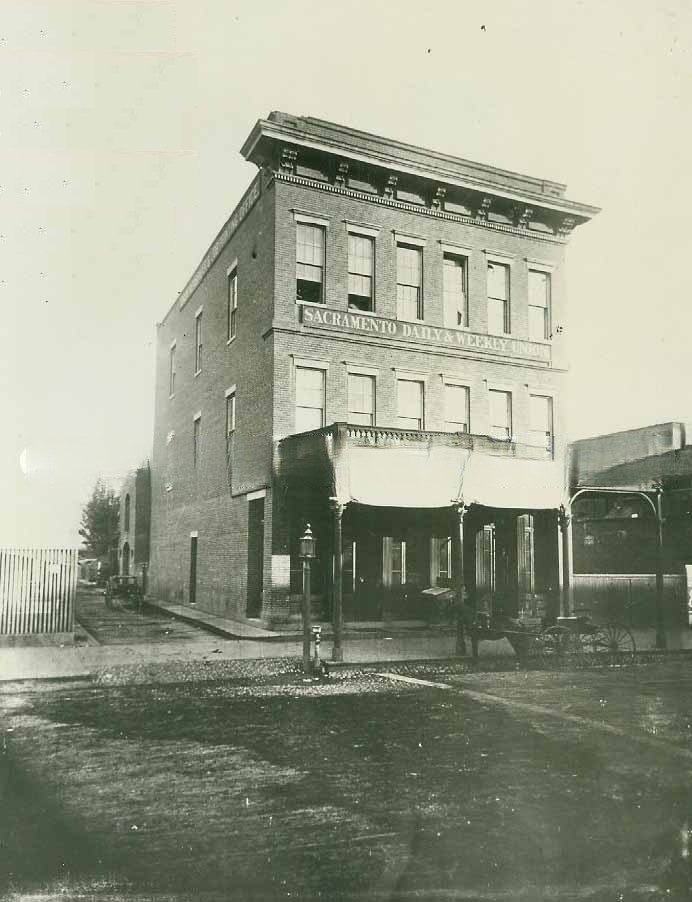
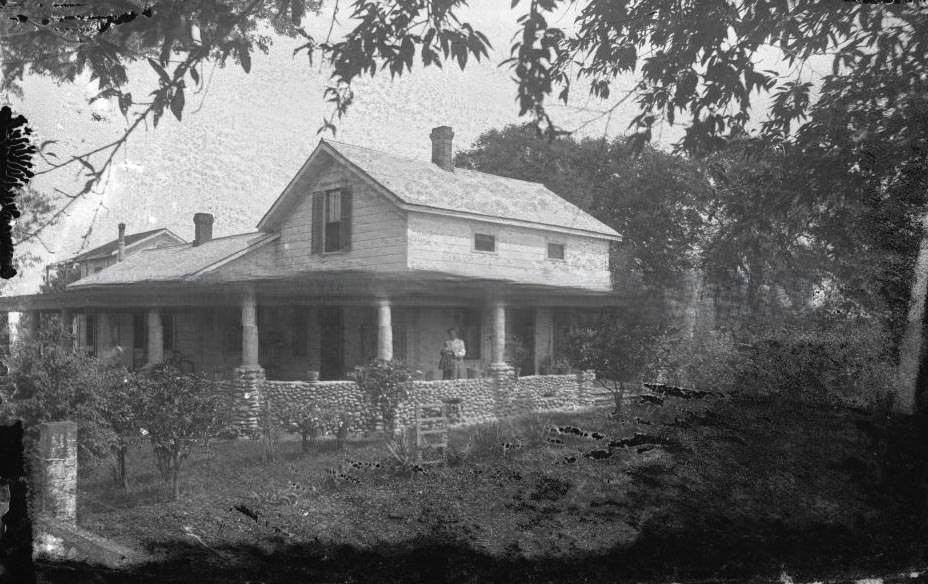
Howe’s Academy, N. W. Cor. Ninth and I Sts., Sacramento, 1890Edward Page Howe Family Home, Sacramento, 1890Washington Primary School, Sacramento, 1894Highland Park School, Sacramento, 1898Family Posing on Porch, Sacramento, 1896Sacramento Daily & Weekly Union Newspaper Building.
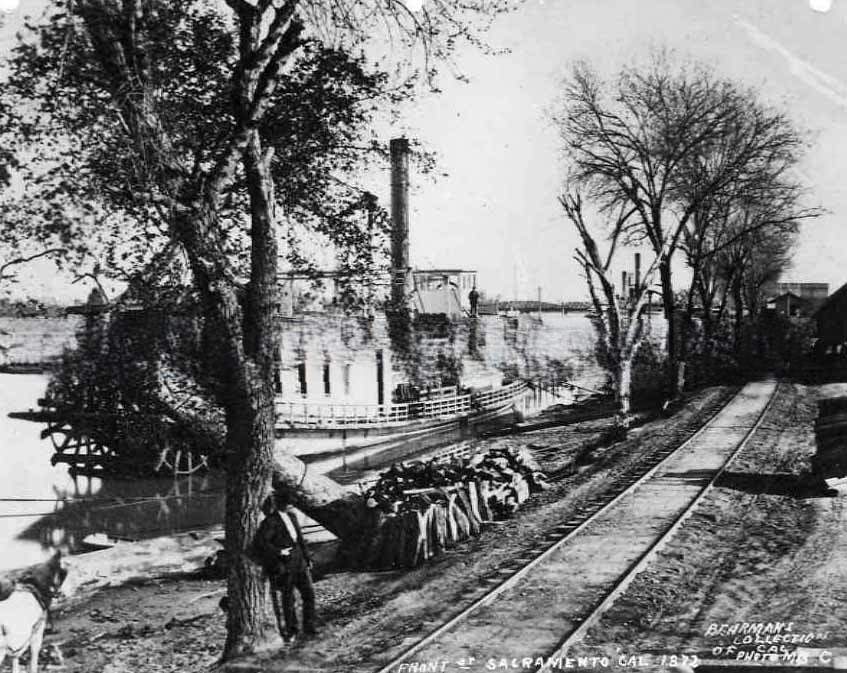
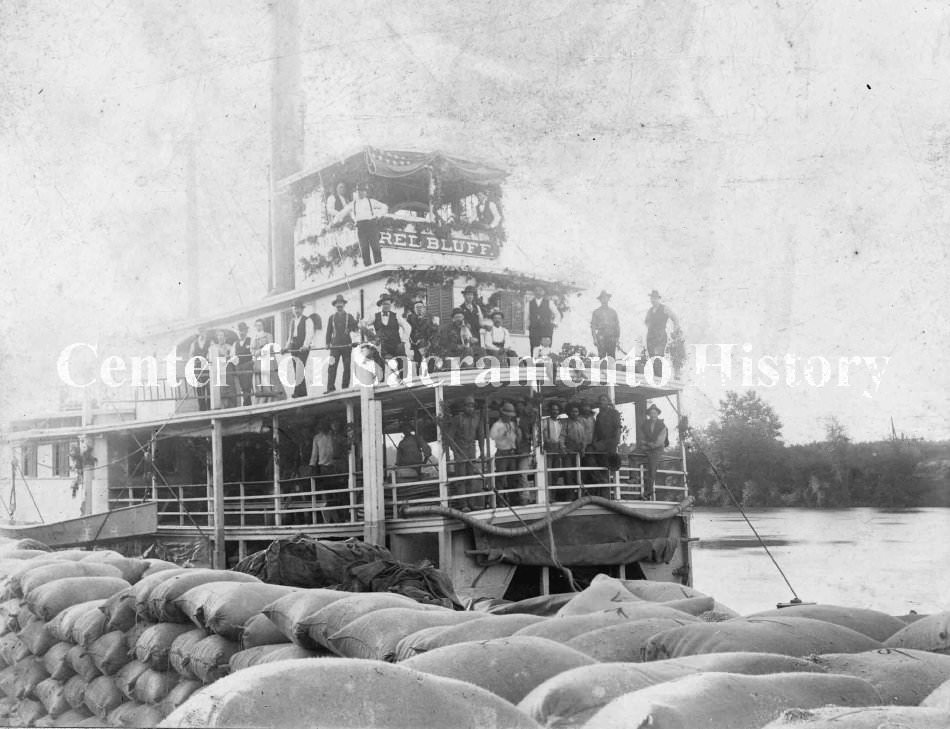
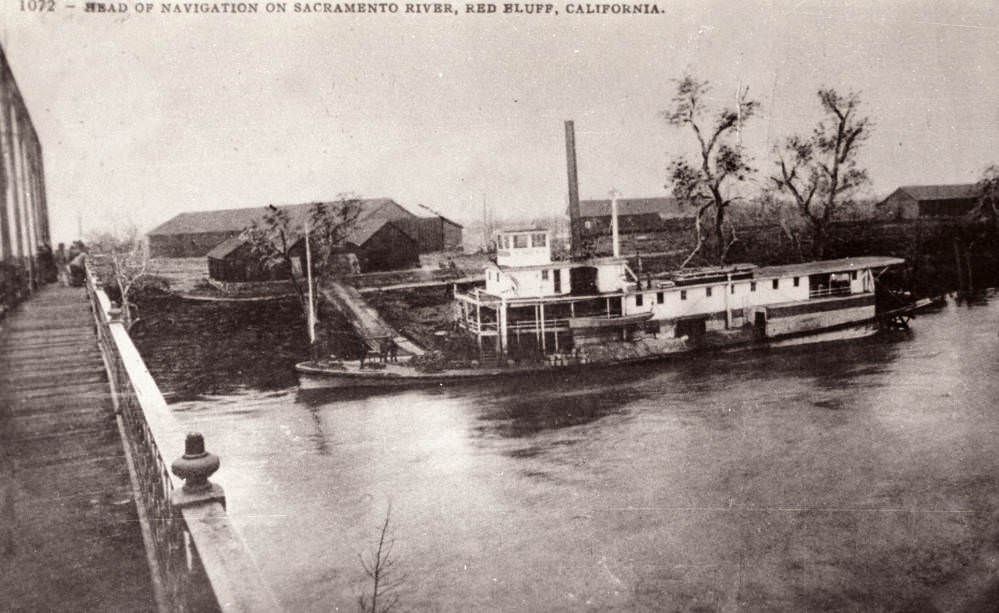
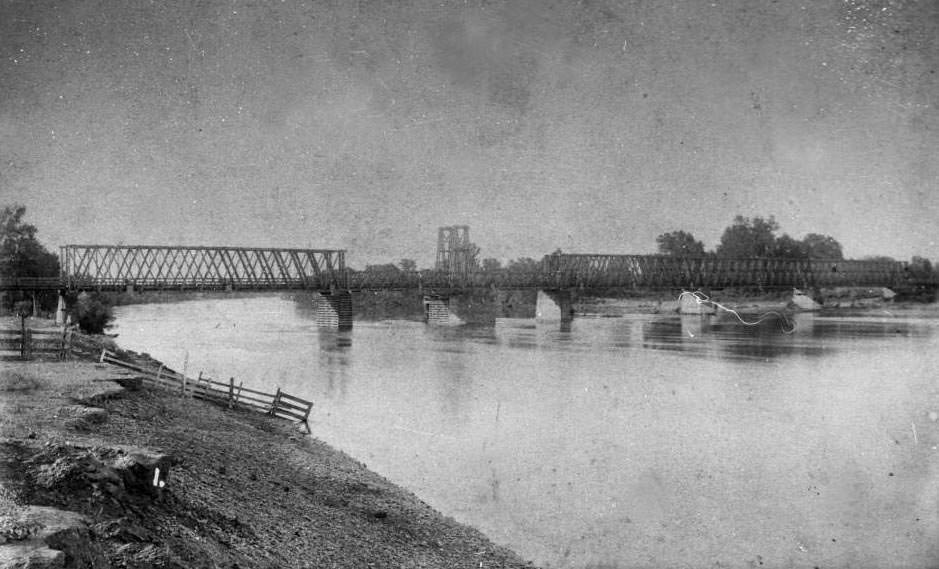
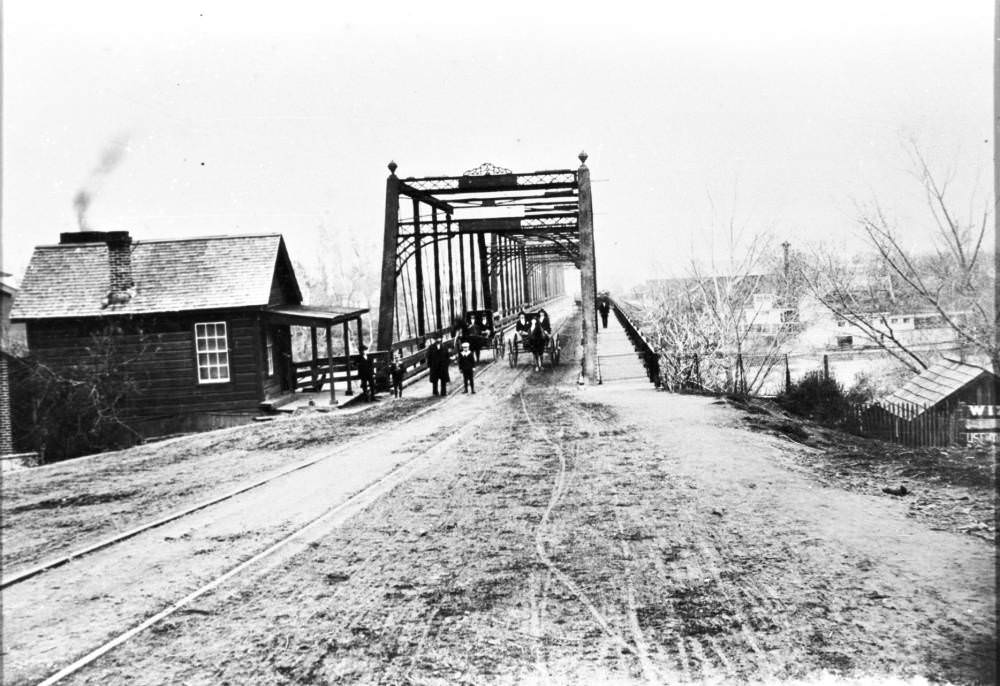
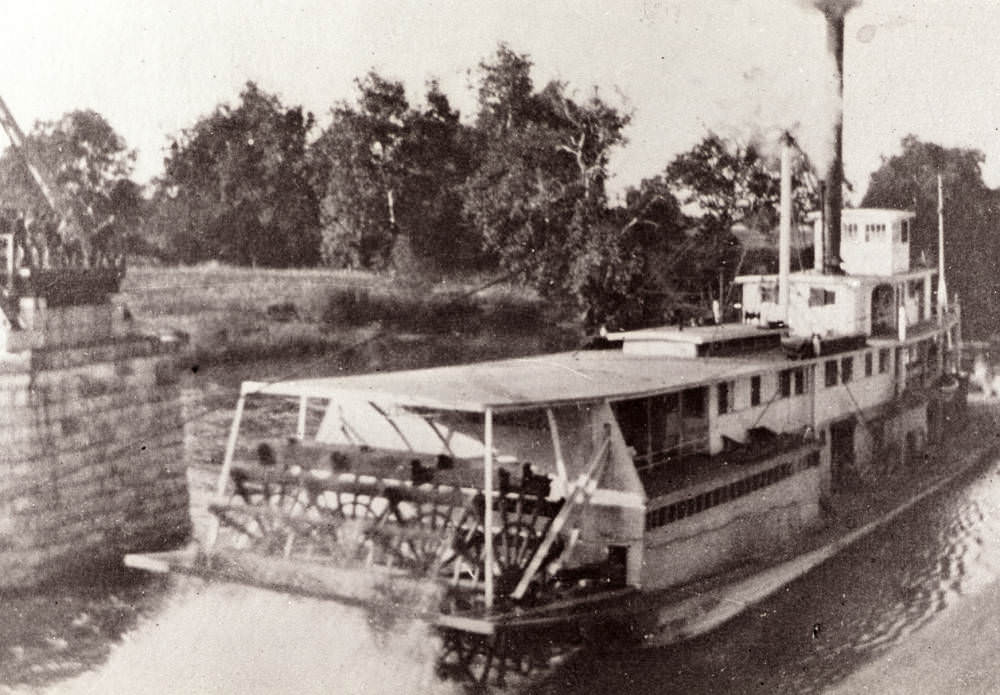
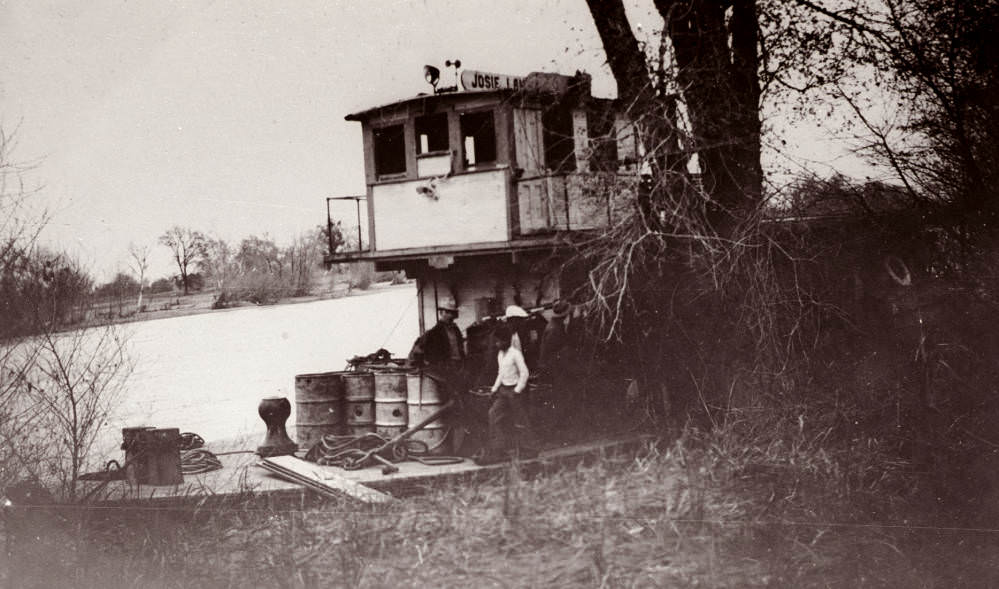
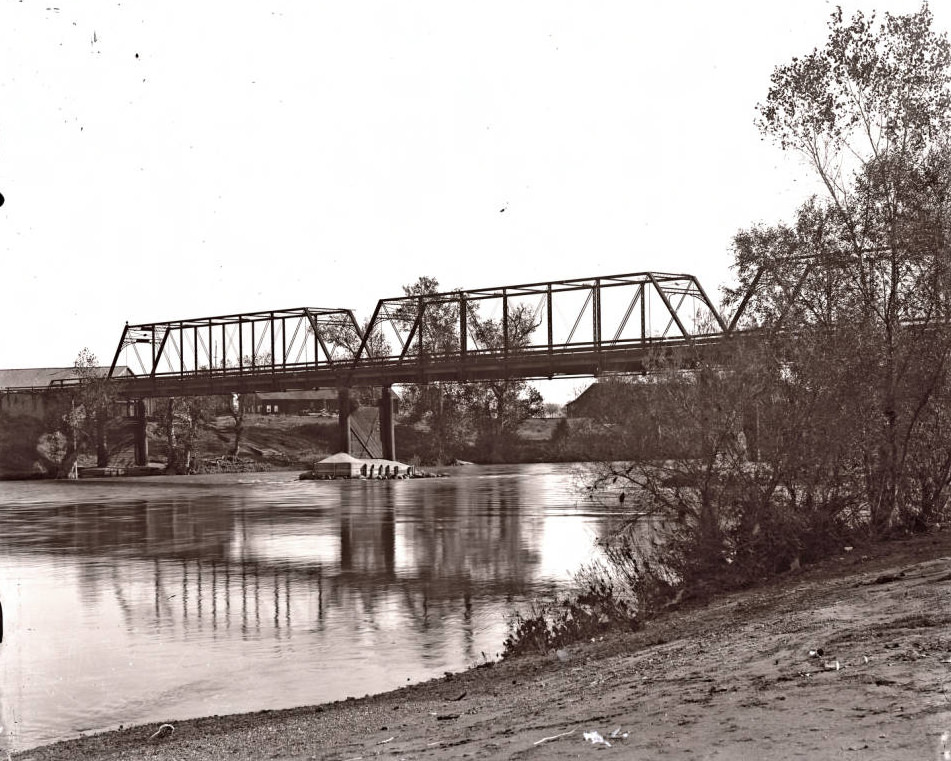
The Sacramento waterfront remained a defining feature of the city throughout the decade. Steamboats like the Red Bluff docked at the wharf alongside grain-laden cargo vessels. Bridges spanned the Sacramento River at multiple points, and the sight of steamboats passing through the bridge openings was a routine part of life along the riverbank. Steel bridges replaced older wooden structures during this period, a sign of the city’s growing infrastructure investment.
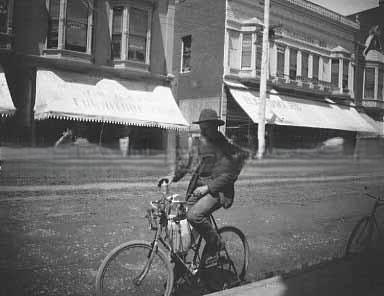
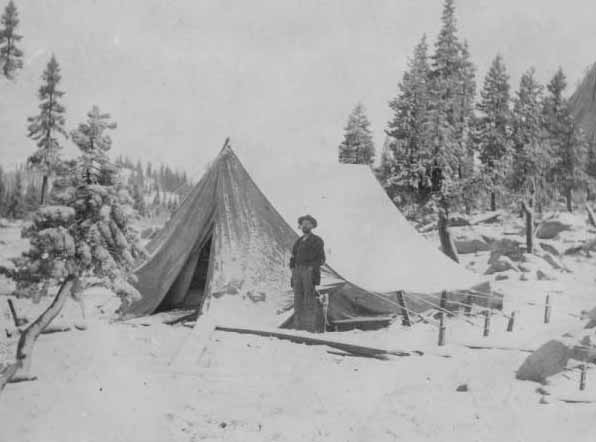
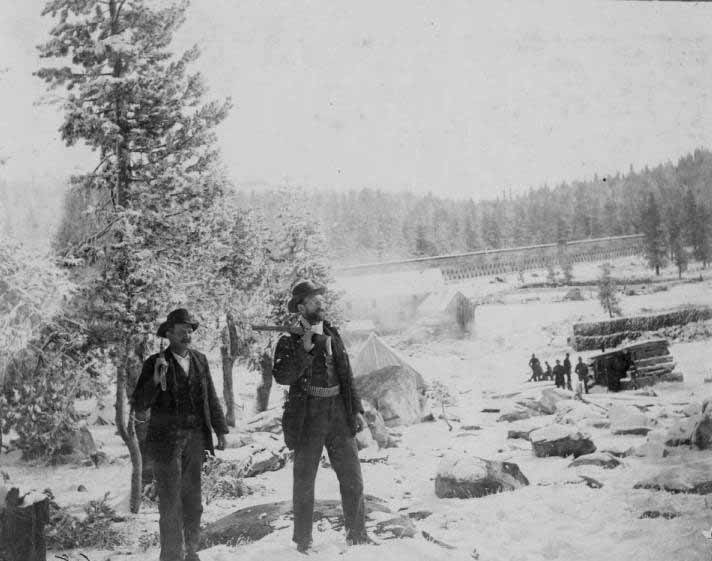
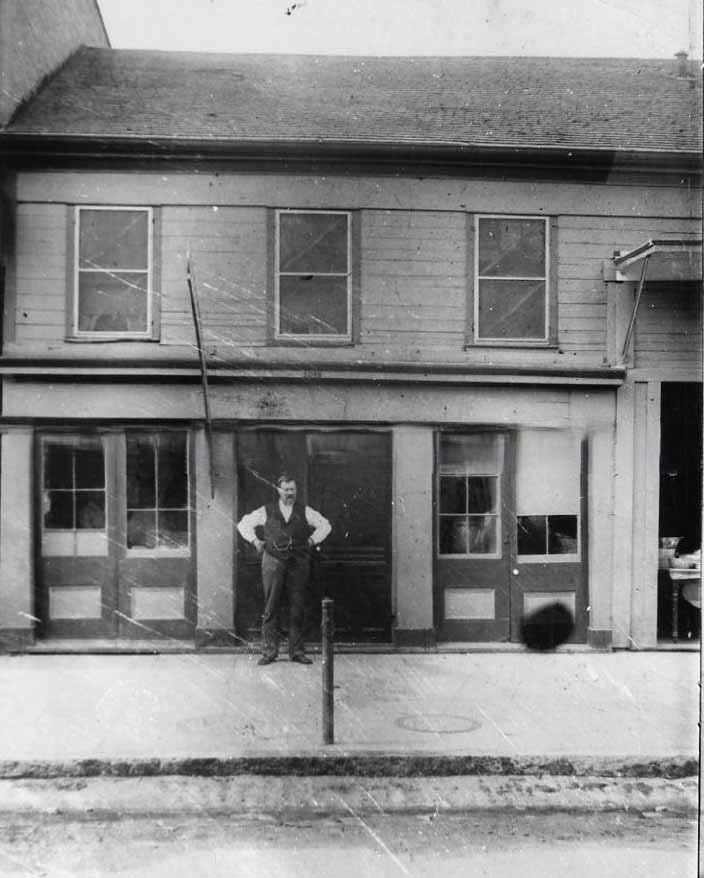
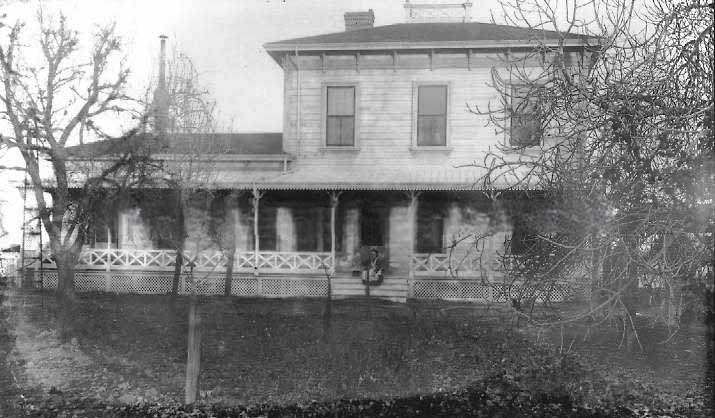
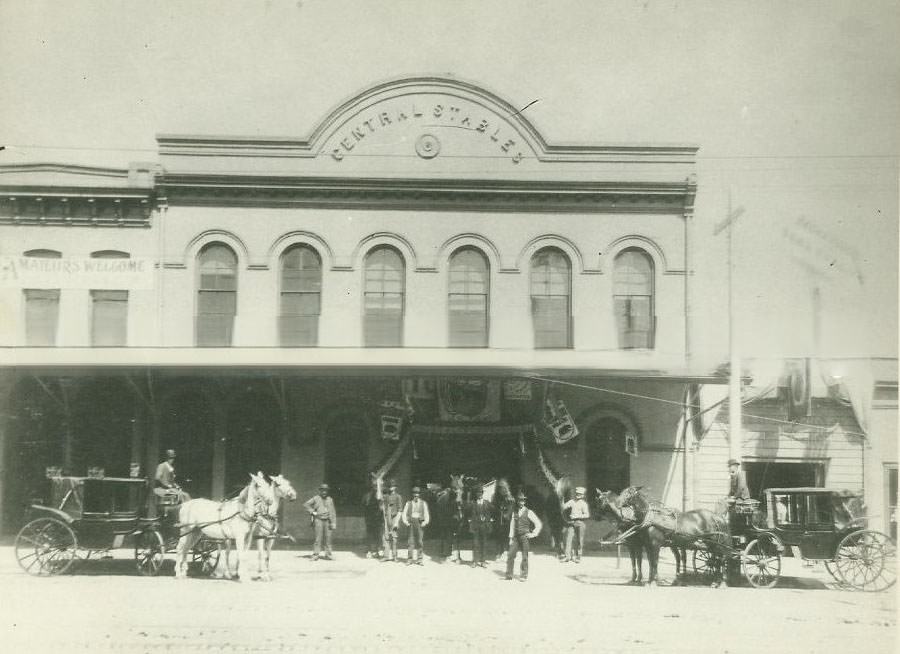
Sacramento Wharf with Steamboat Docked.Man Riding a Bicycle in Sacramento, 1890Frank Appleton at Winter Camp, 1890Two armed men at winter camp, 1890Plymouth Restaurant at 1018 J Street in 1893.Rear of McFarland House, 1895Sacramento ,1895John Breuner Company, 1895Central Stables, 1021 J Street, 1895
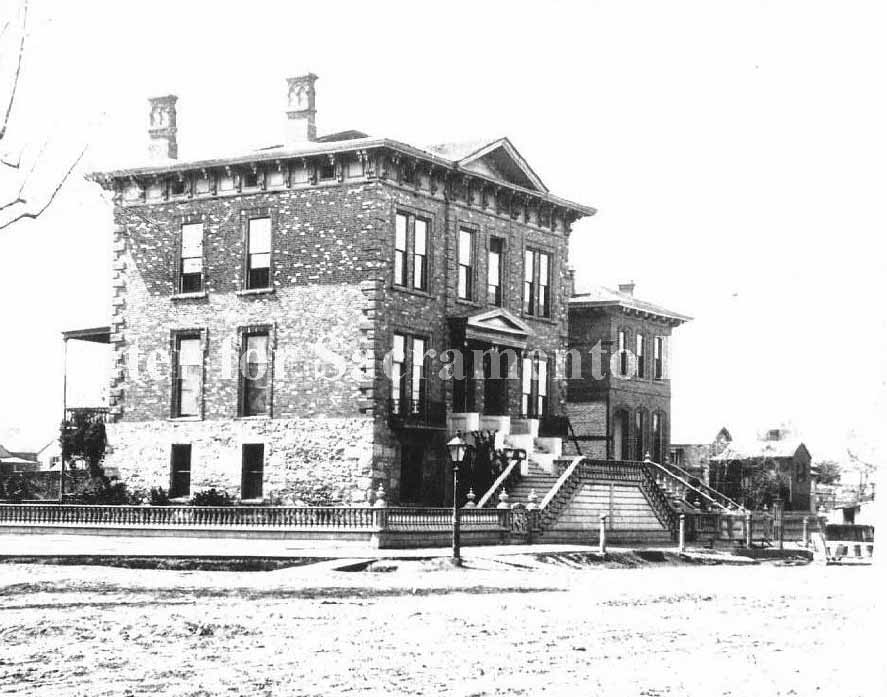
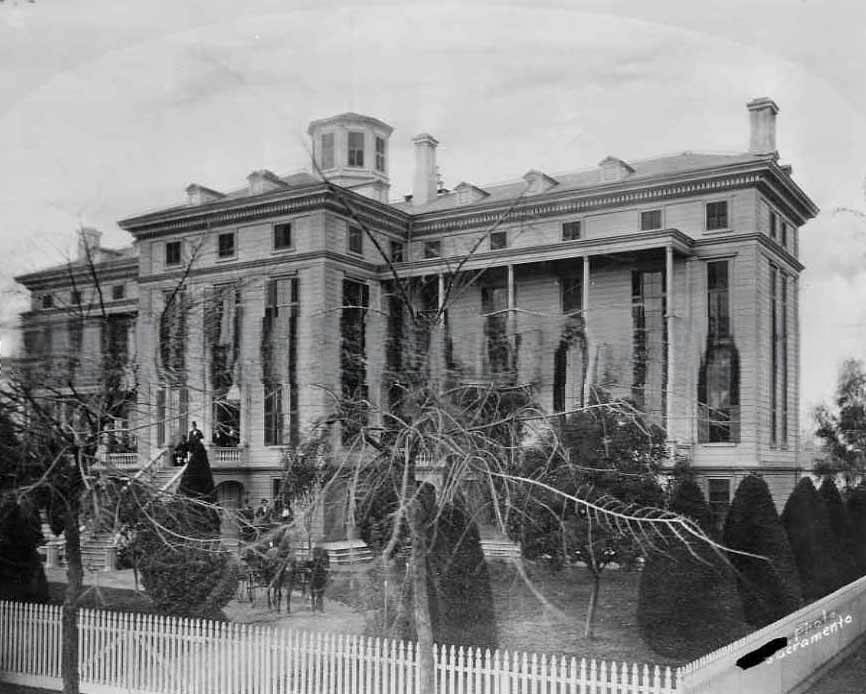
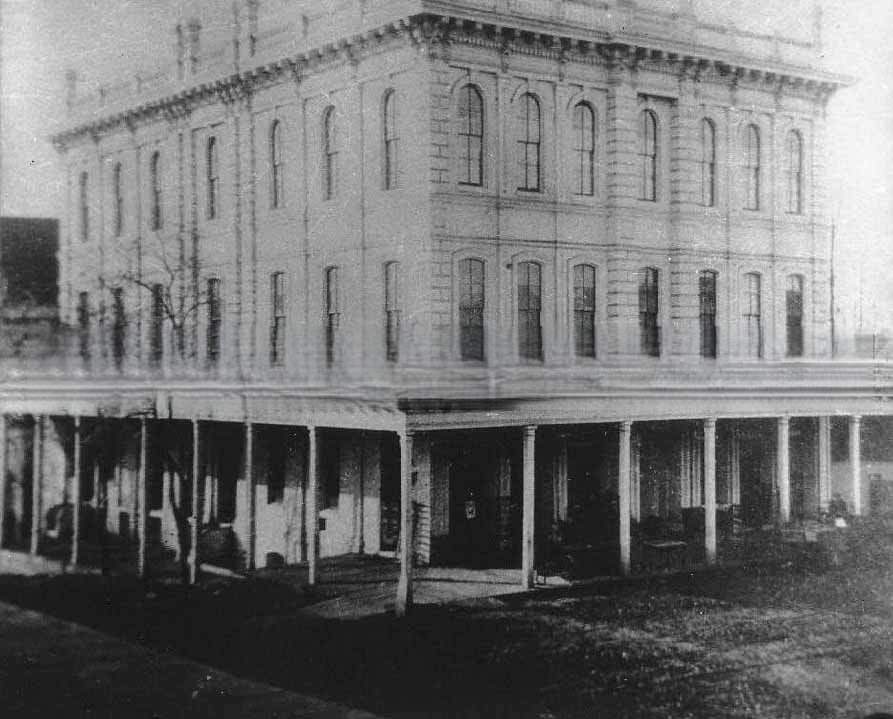
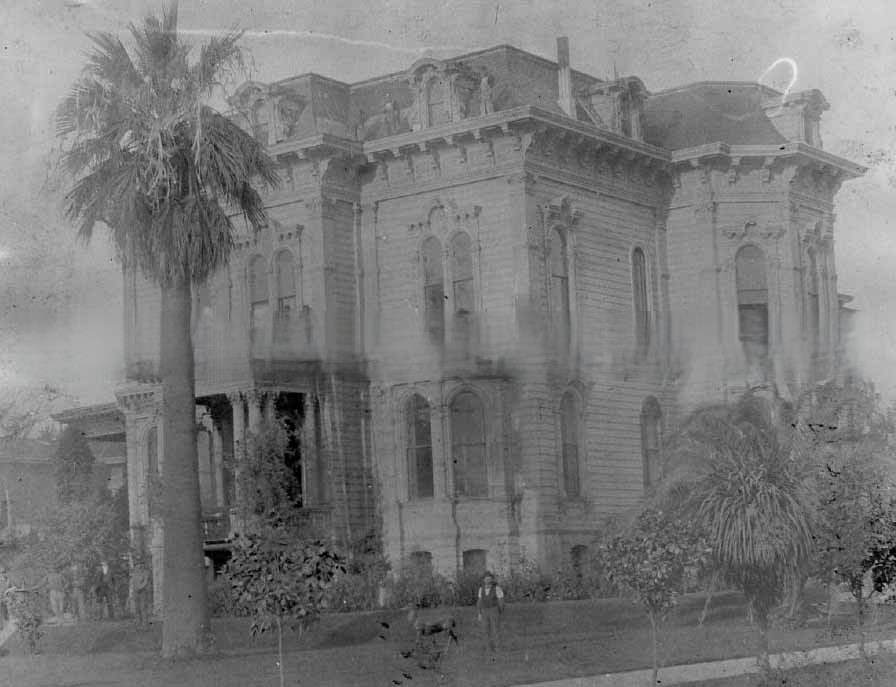
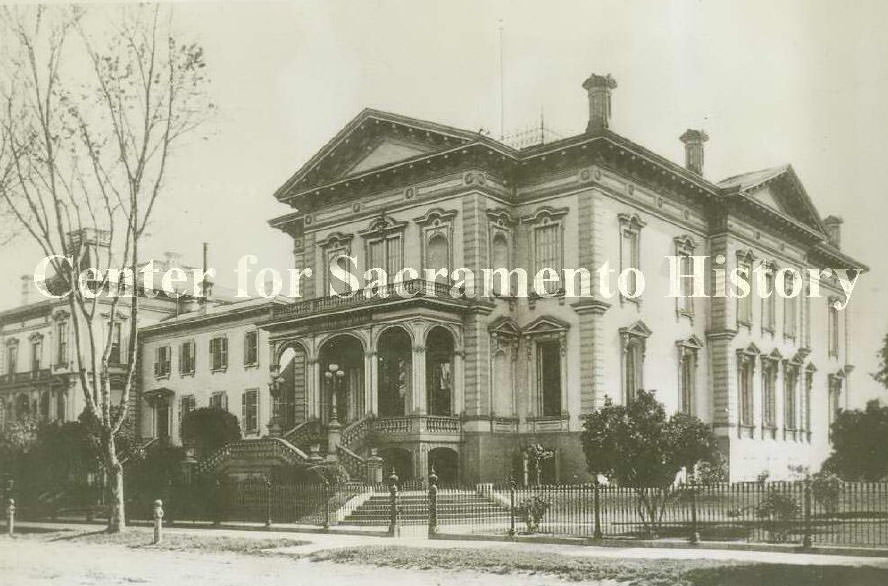
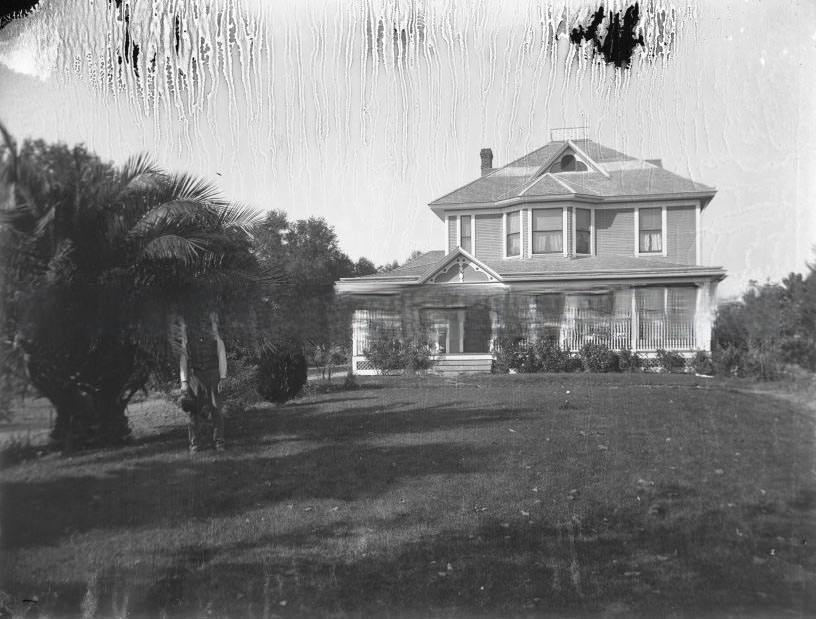
Wealthy Sacramento residents built impressive homes throughout the city. The Stanford Mansion at 8th and N Streets stood as one of the most recognizable private residences, a large brick structure tied to the legacy of railroad magnate and former governor Leland Stanford. Nearby, Charles Crocker’s home at 8th and F Streets reflected similar prosperity. The Crocker Art Museum, which opened to the public in 1885 and was based in the Crocker family’s former home, continued to operate as one of the oldest art museums west of the Mississippi.
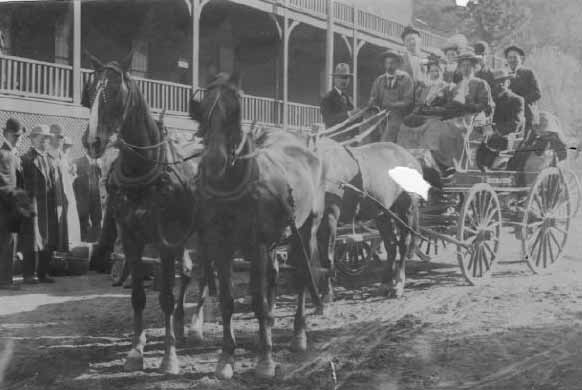
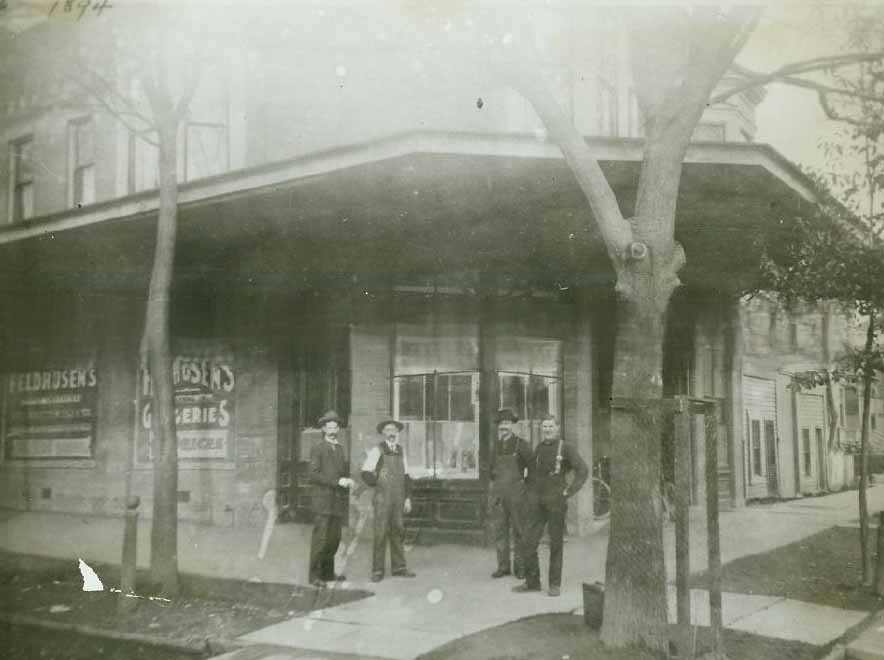
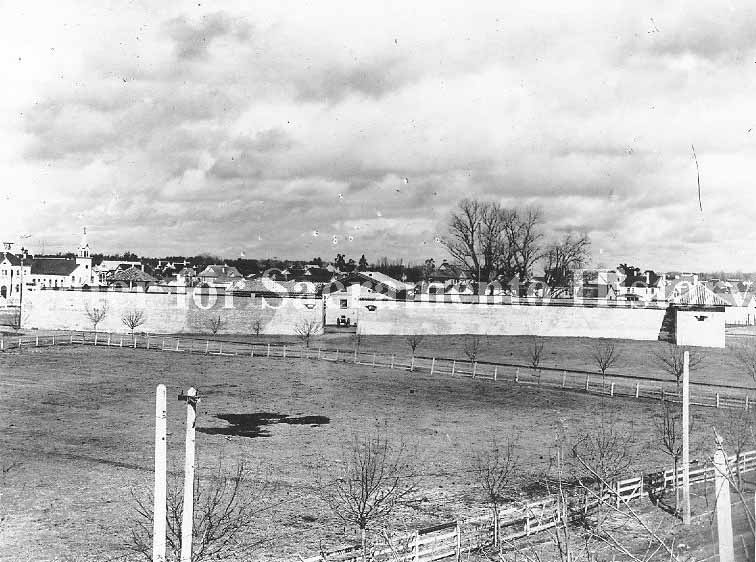
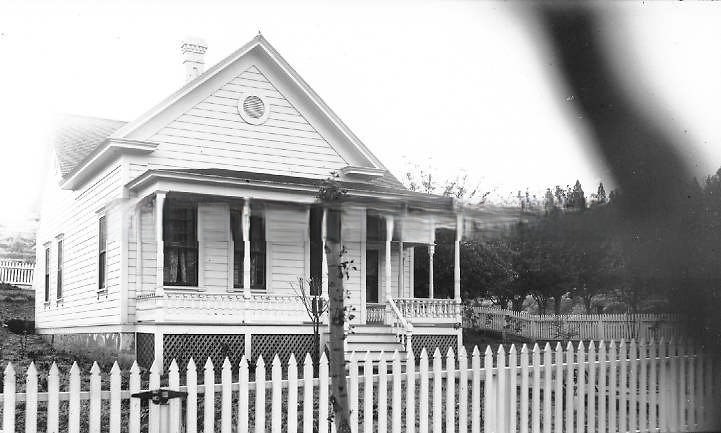
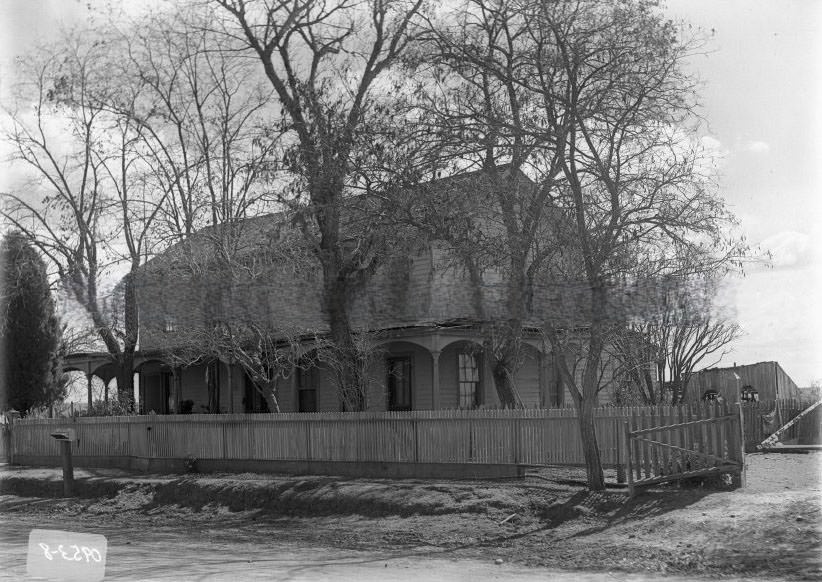
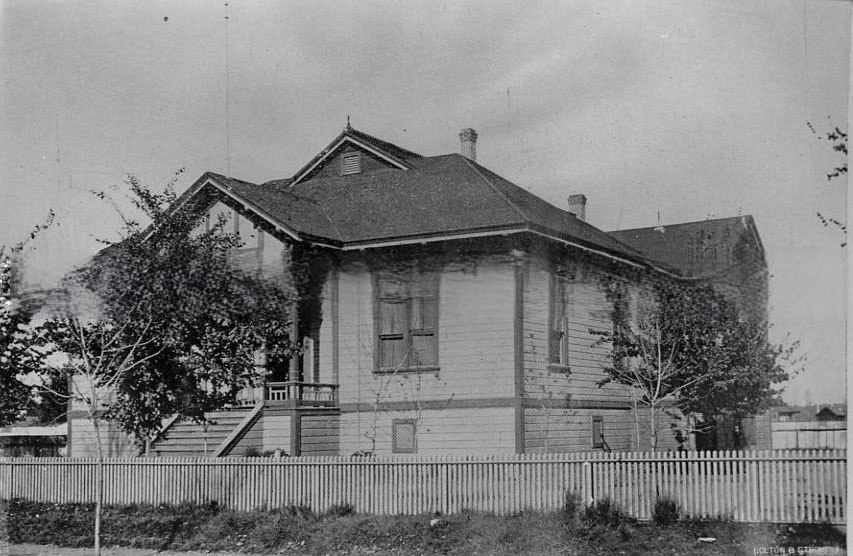
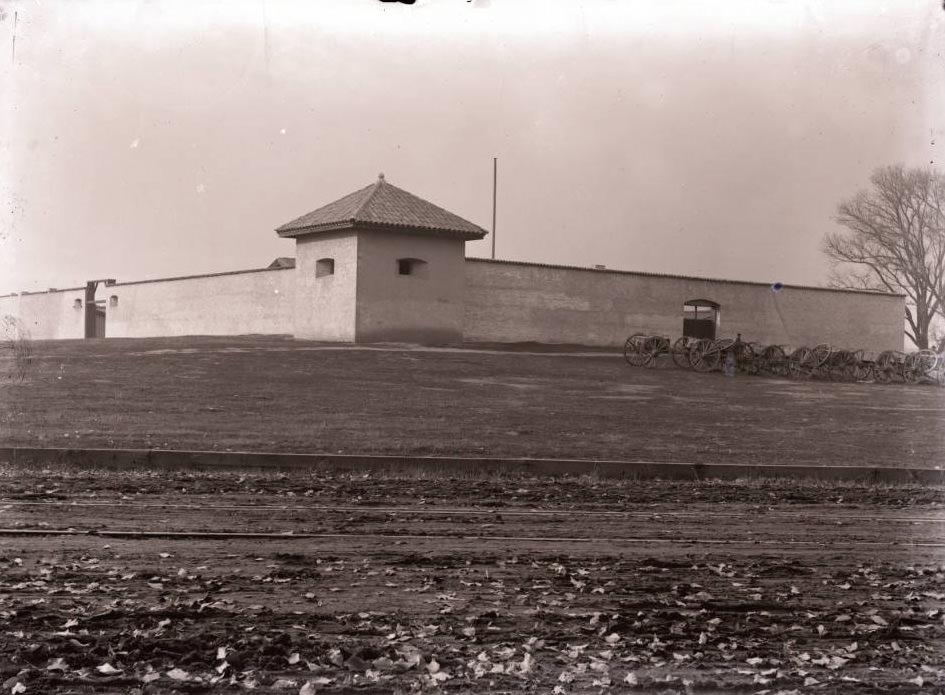
A large brick building at the Stanford Mansion at 8th and N streets, 1890People riding in wagon, 1890Feldhusen’s Groceries, 1894Sutter’s Fort shortly after being rebuilt, 1895Small Victorian-styled house with white picket fence, 1895Electric street car number 11 the Oak Park via State Capitol line, 1891
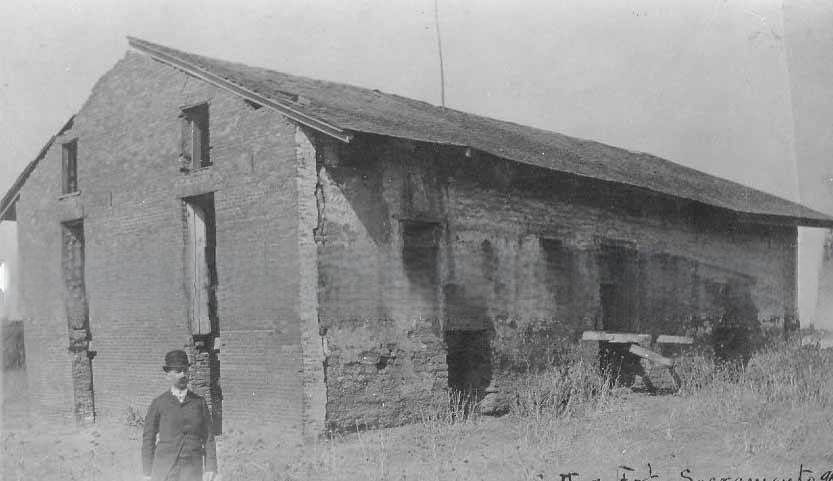
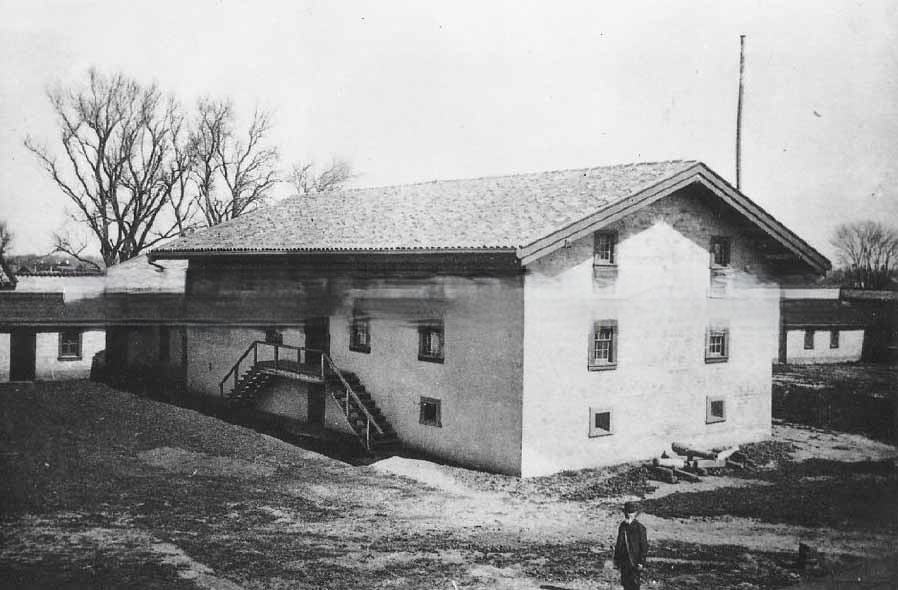
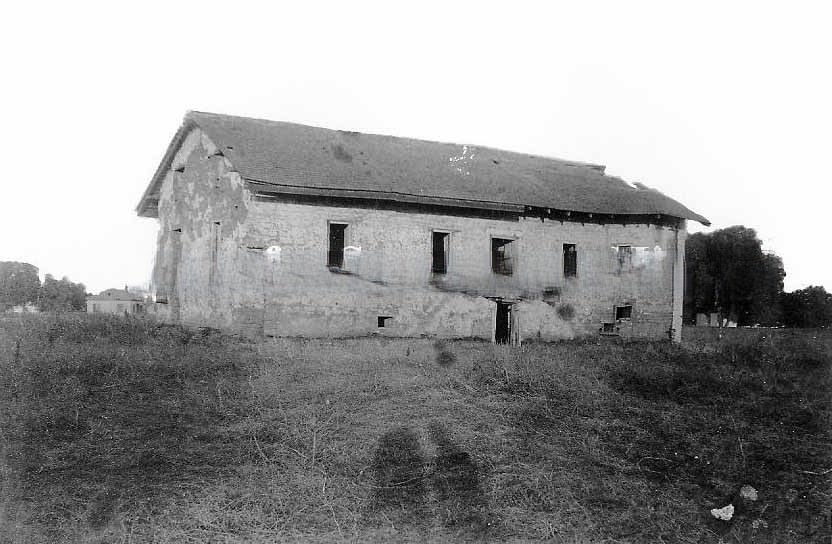
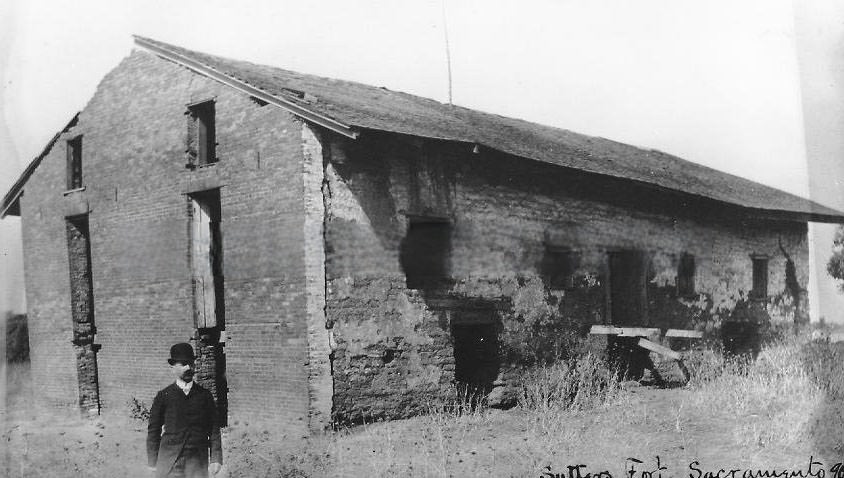
Sutter’s Fort, the original settlement that gave rise to Sacramento, had fallen into serious disrepair by the 1880s. In the early 1890s, the Native Sons of the Golden West led an effort to restore the adobe structure. By 1891, restoration work was underway, and by 1895 the fort had been largely rebuilt, preserving one of California’s most significant historical landmarks for future generations.
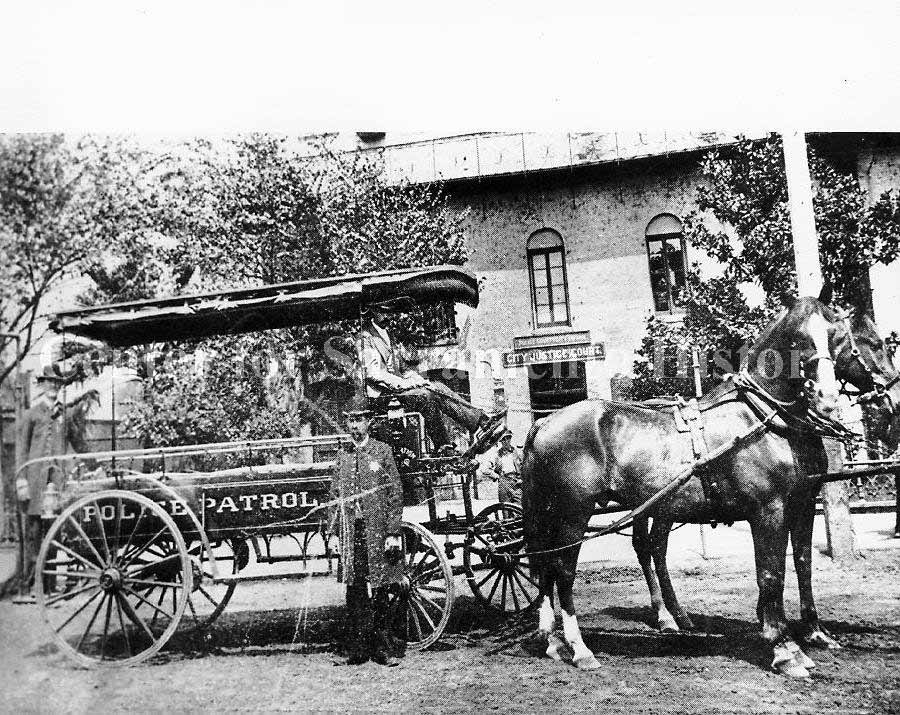
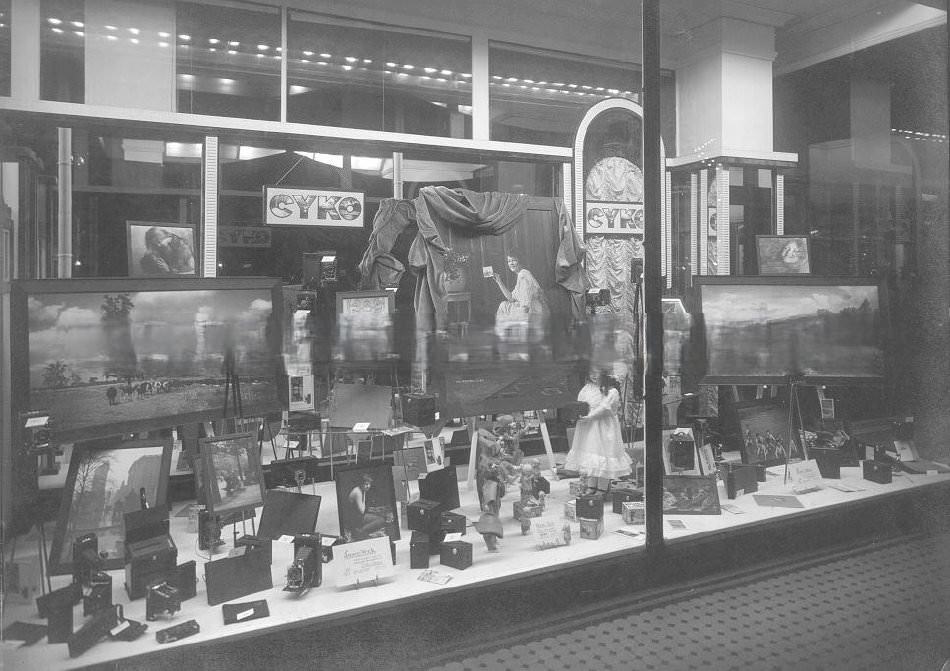
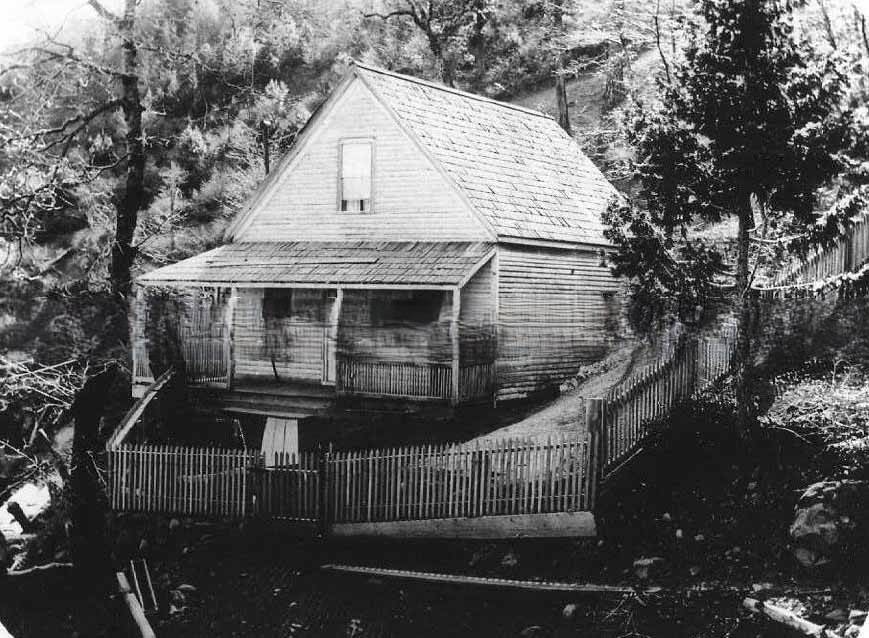
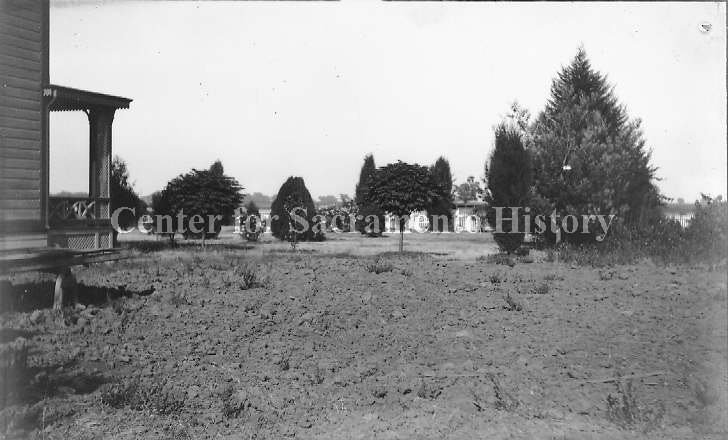
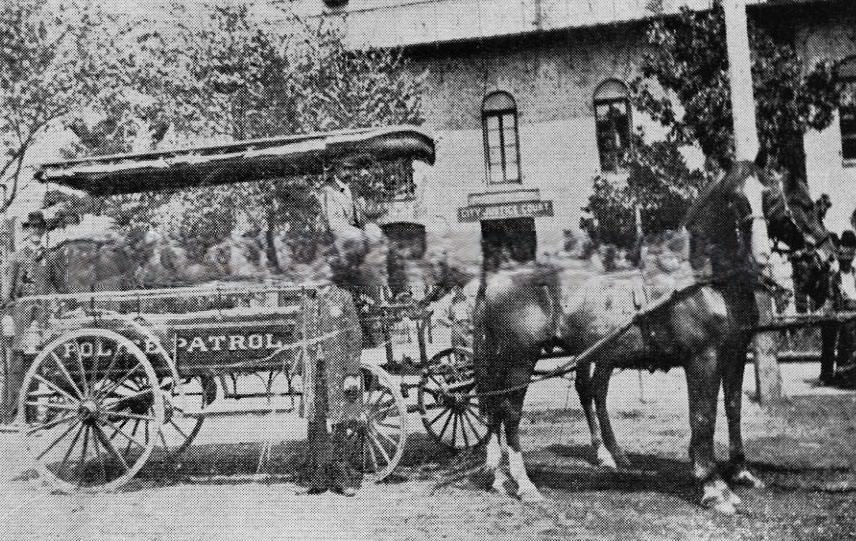
Patrol Wagon, 1895. This horse-drawn wagon was the police department’s first vehicle. Dubbed the ‘Black Maria’, it served as prisoner transport and ambulance.Window display of cameras and photographic equipment, 1890Sutter’s Fort, 1890.The First Baptist Church on 9th Street between L and M Streets, 1898Wood frame house in the mountains, 1890View of plowed ground on side of McFarland house, 1895Southern Pacific hospital, 1896
The Southern Pacific Railroad operated its own hospital in Sacramento to care for its large workforce. The Sisters of Mercy also ran a hospital in the city, which was under construction in 1895 and served Sacramento’s broader civilian population. Medical care was becoming more organized and institutionalized during this period, moving away from informal arrangements and toward purpose-built facilities.
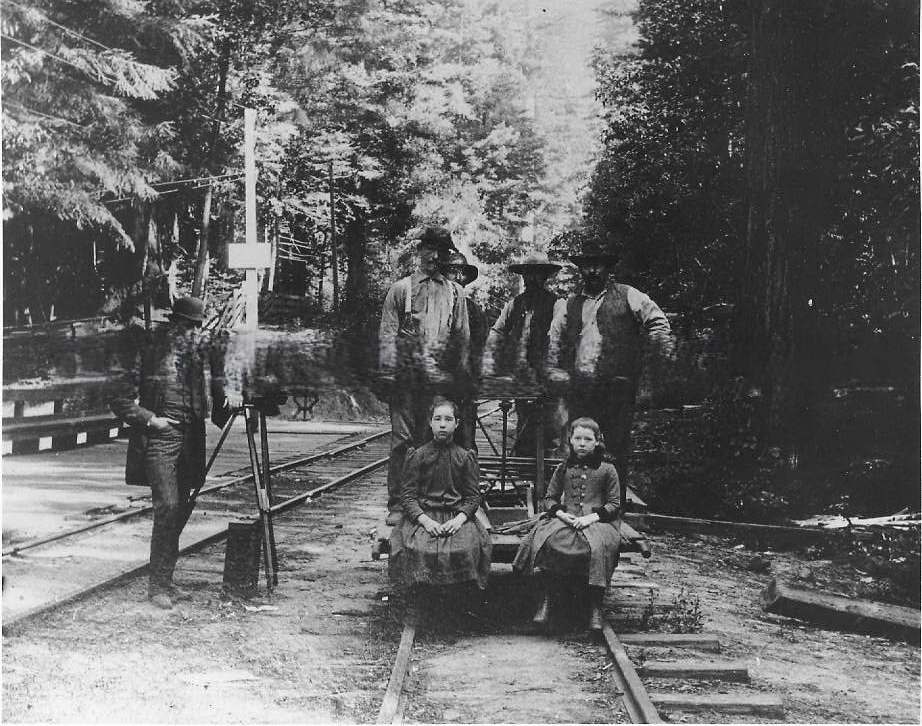
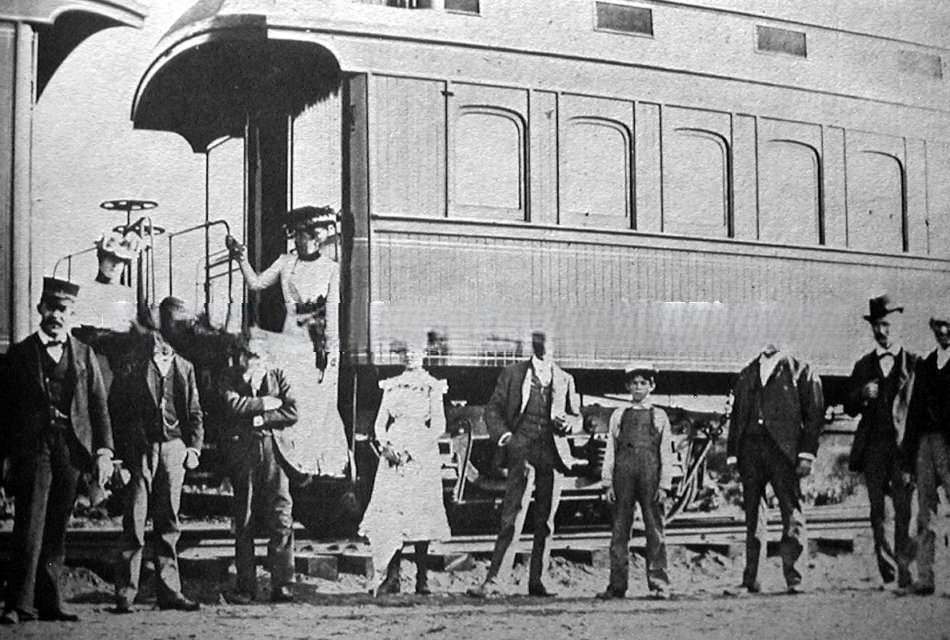
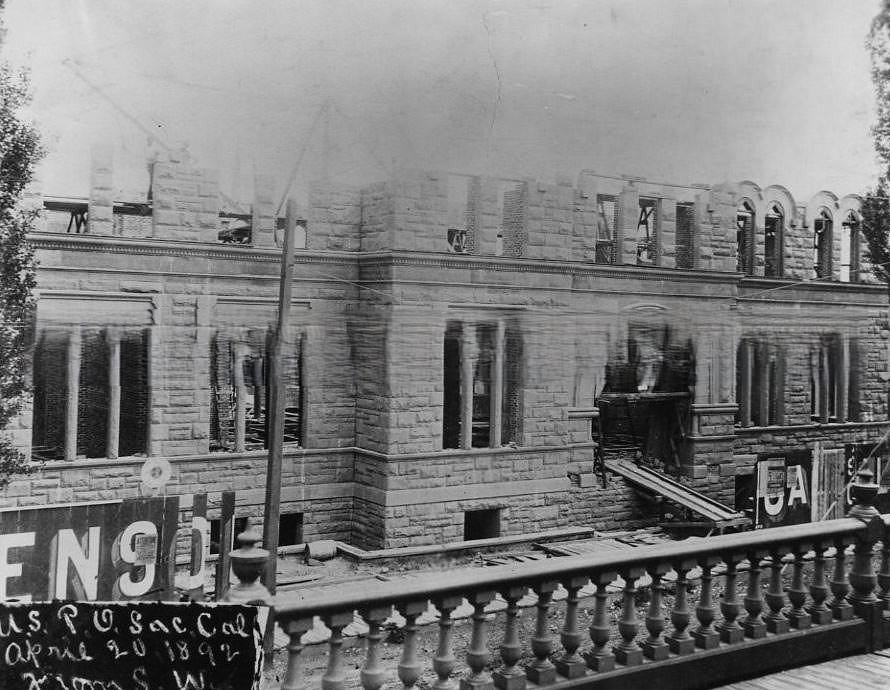
Wilson’s Stables at 318 K Street, 1896U. S. Post Office under construction, 1892House with white picket fence, 1895Train wreck over a slough in Sacramento. Groups of men standing on the bank of the slough, bridge and on the wrecked cars and locomotive, 1890Sacramento, 1897Four men stand on a railroad handcar, two school-aged girls sit on front of it, 1895First Excursionists, 1895Eighth and K Streets in 1895
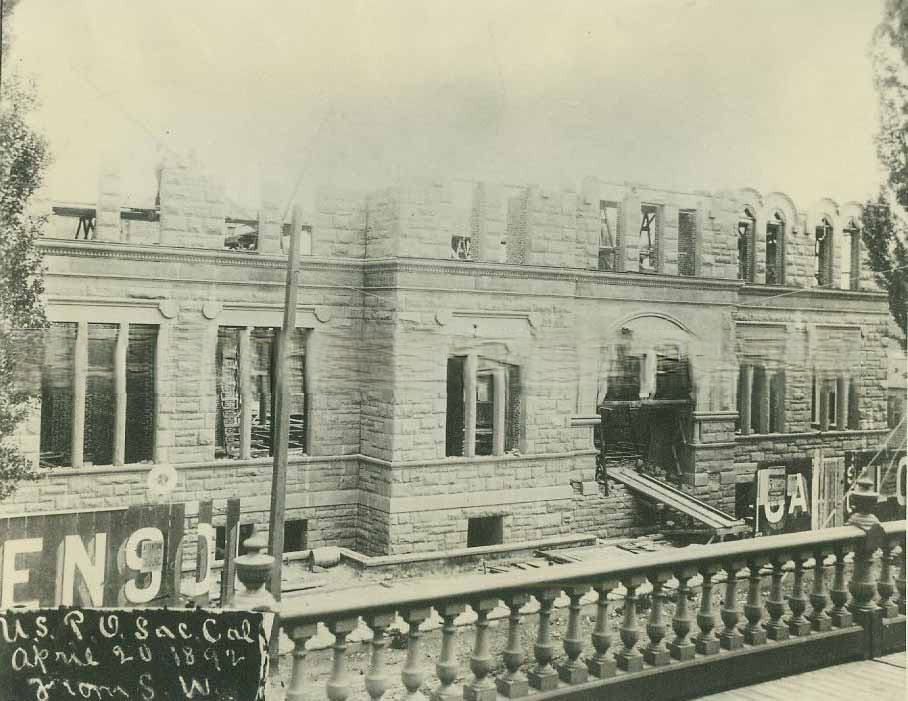
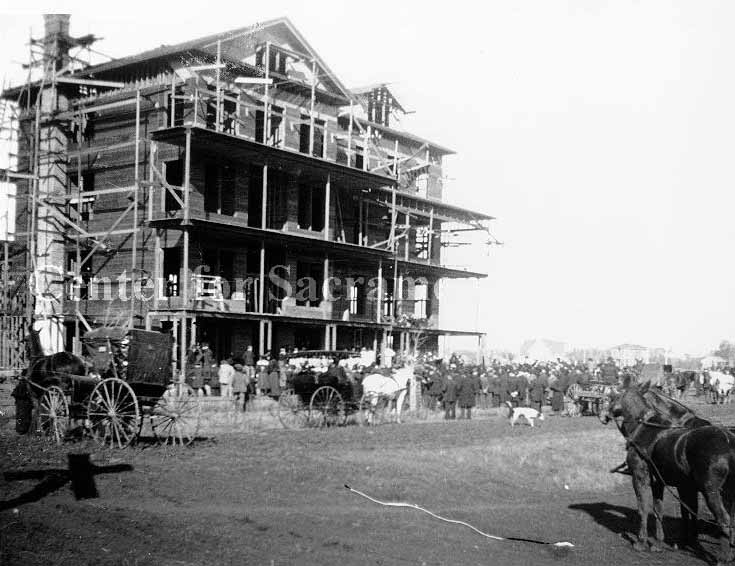
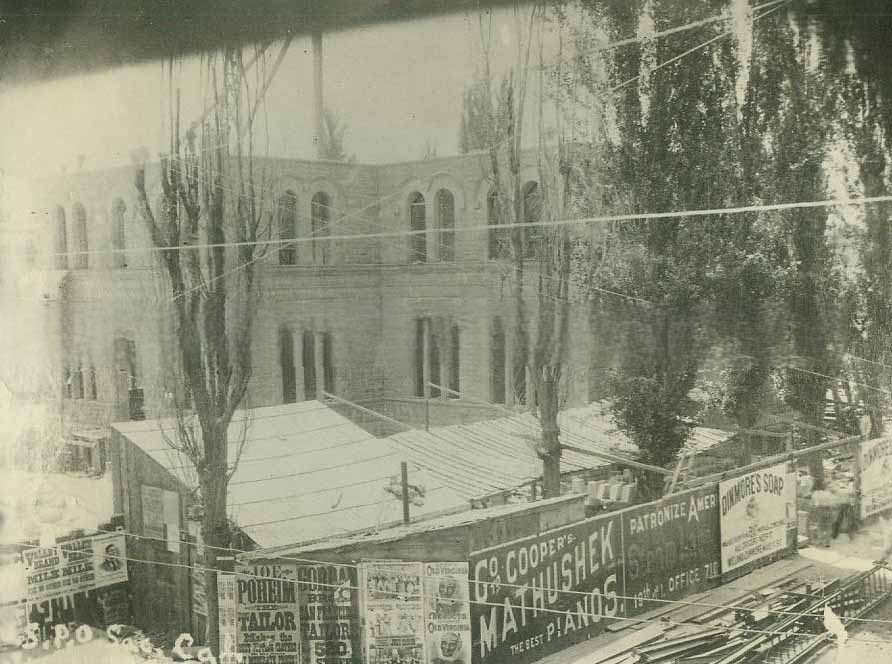
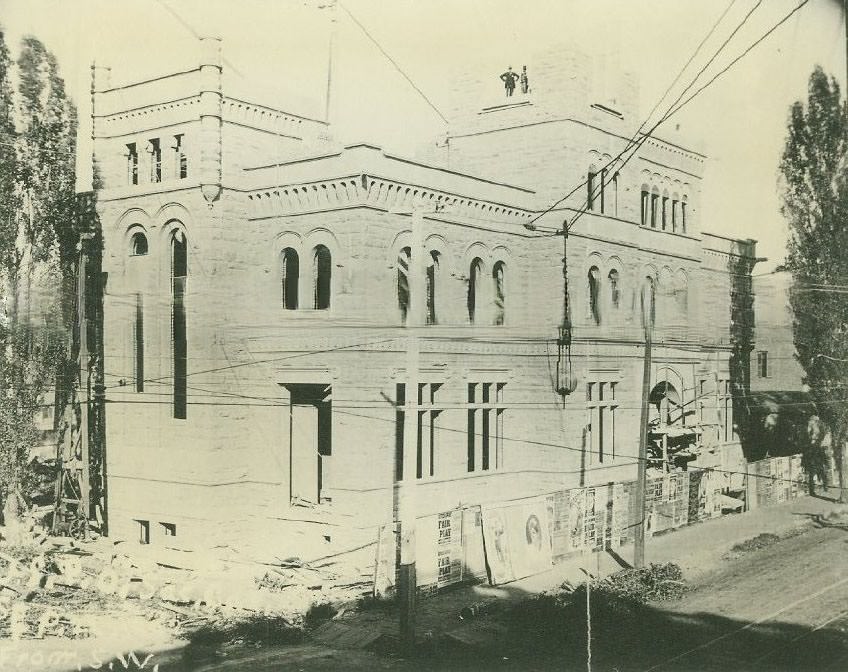
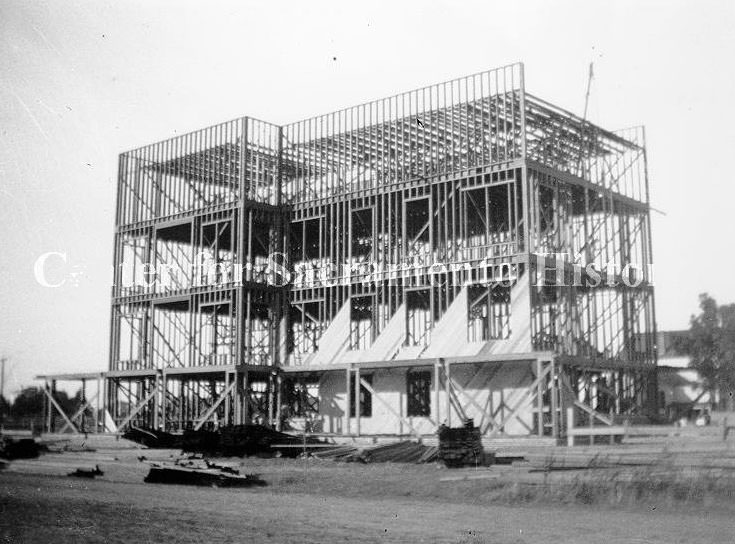
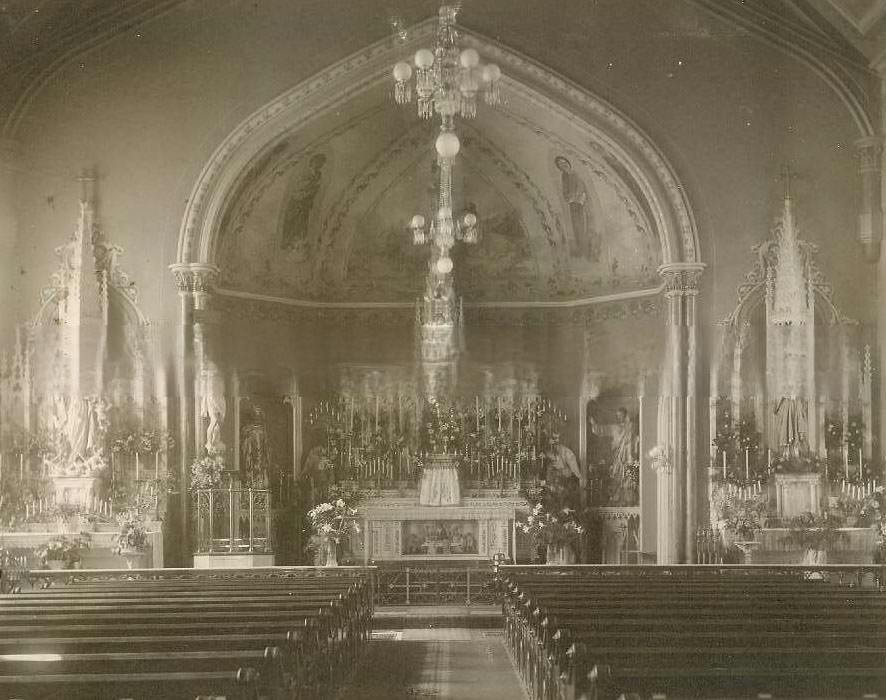
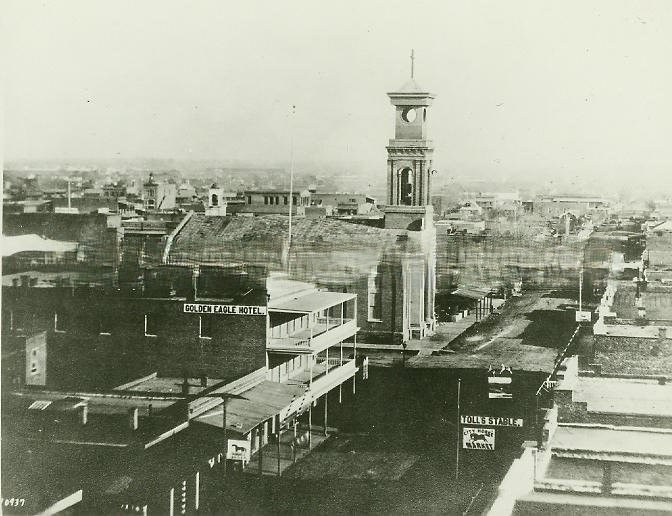
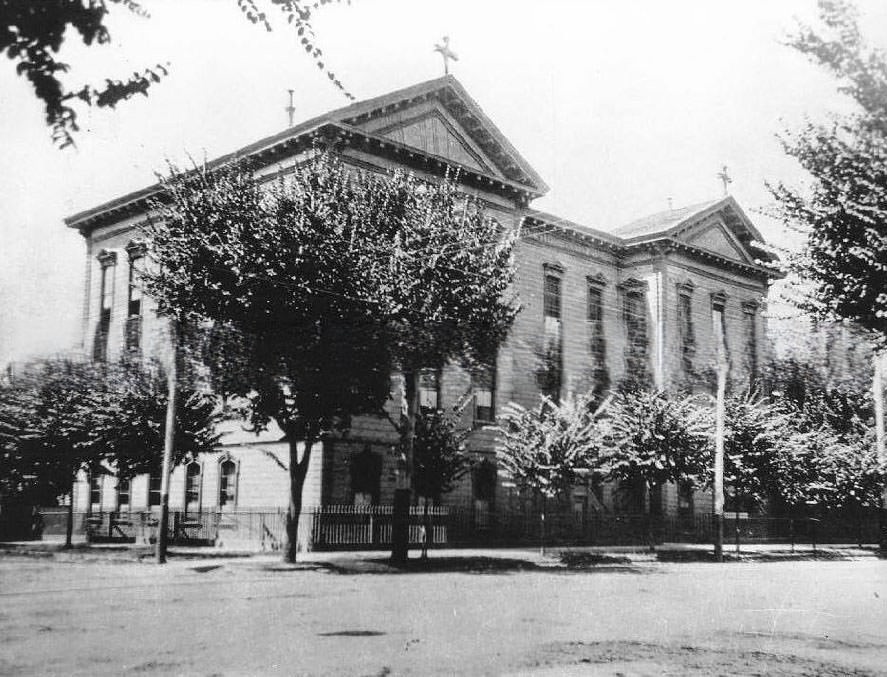
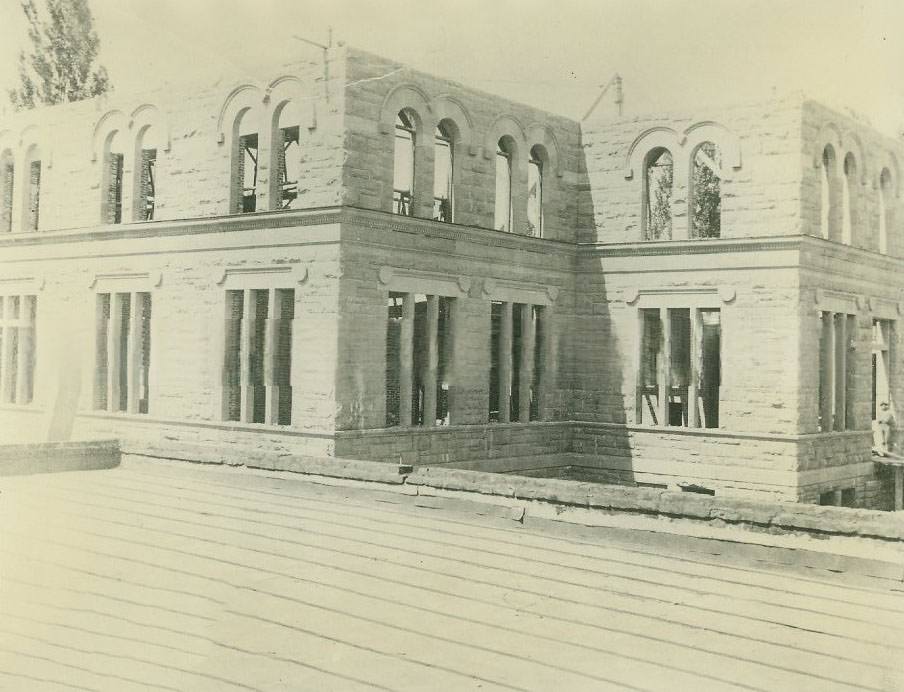
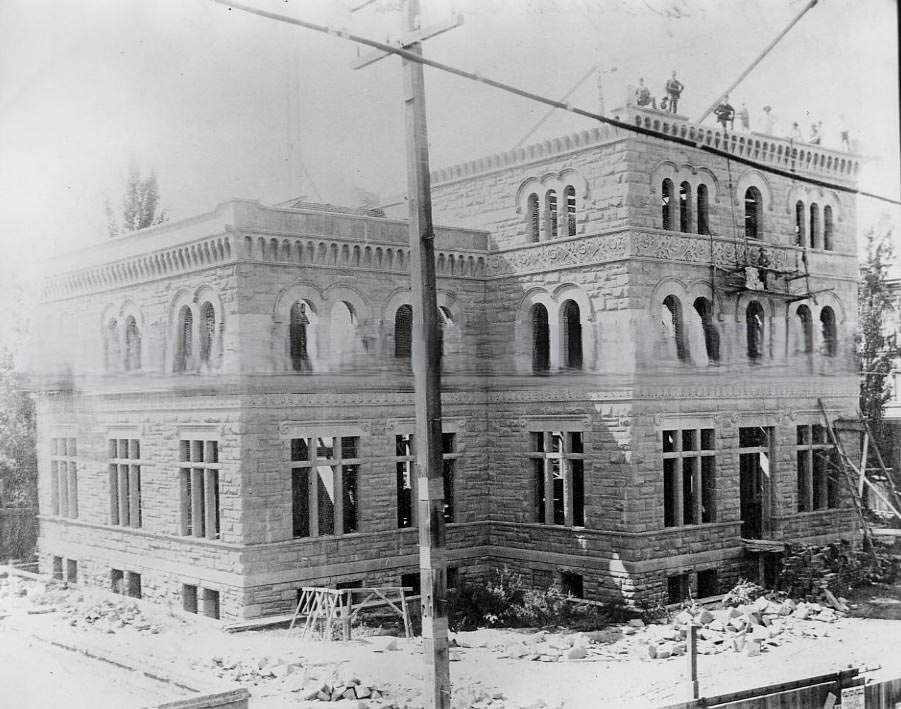
K Street was one of Sacramento’s busiest commercial strips. Looking east from 6th Street, the road was lined with storefronts, hotels, and churches. The Golden Eagle Hotel stood prominently on one side, while St. Rose of Lima Catholic Church anchored another corner. Toll’s Stable and the City Horse Market served the still horse-dependent city. The U.S. Post Office was under construction during the early 1890s, and its progress was photographed at multiple stages between 1891 and 1894.
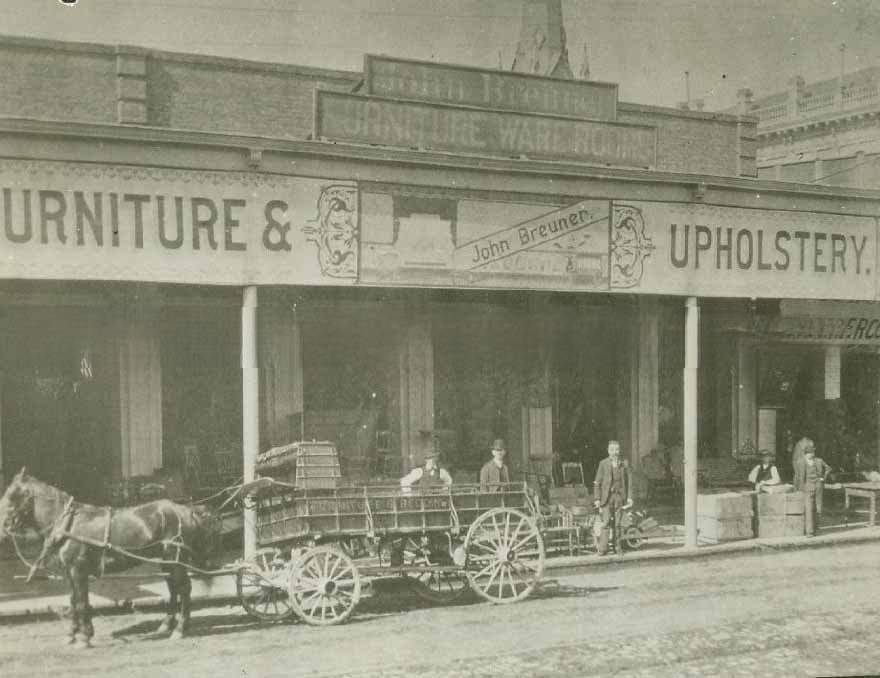
John Bruener Furniture Ware Rooms at 160 K Street, 1890View of the Jefferson Free School at 16th and N Streets in 1896Sutter’s Fort shortly after restoration, interior view of grounds showing central building, 1891Henderson, Brown & Co. Wholesale Produces, 201 J Street, 1890.Exterior view of Charles Crocker’s home at 8th and F Streets, 1890Sisters of Mercy Hospital, 1895View of the central building at Sutter’s Fort before restoration, 1890William Brome Grocery Store at the southwest corner of 8th and O Streets, 1899Sacramento street scene, 1890U. S. Post Office under construction in Sacramento, 1891
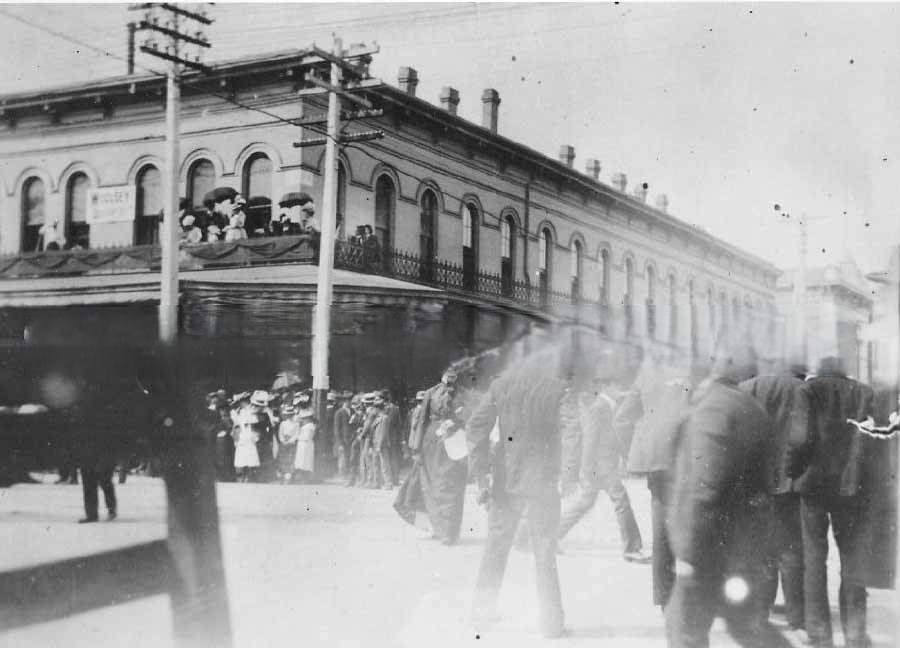
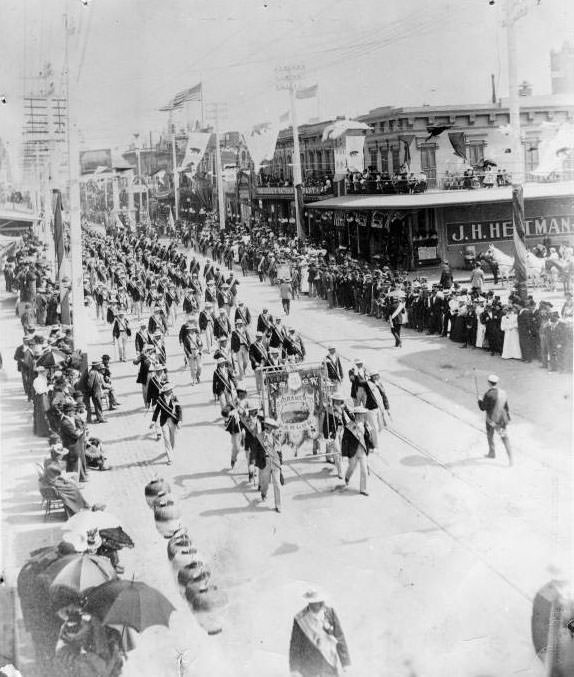
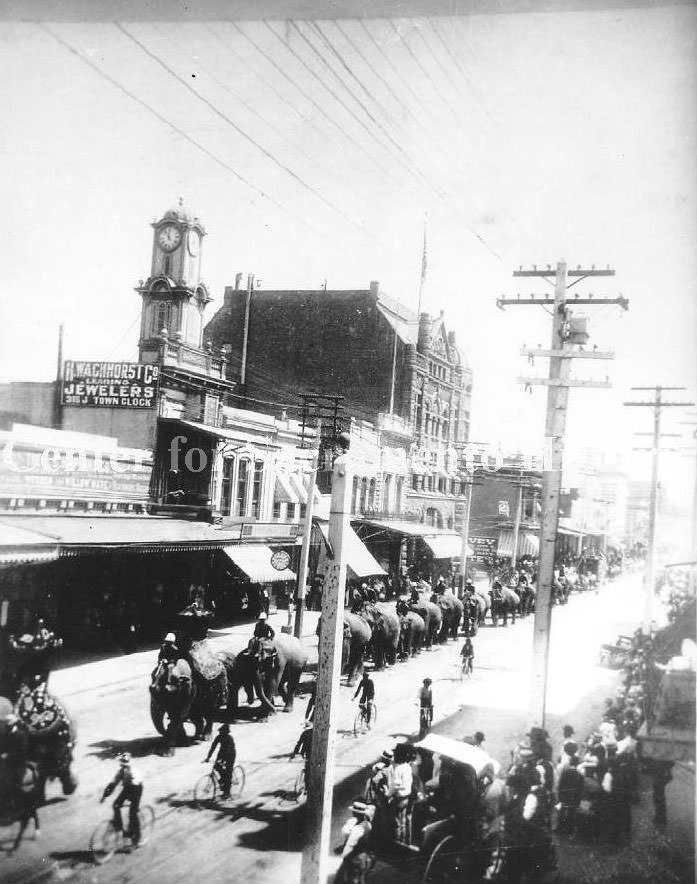
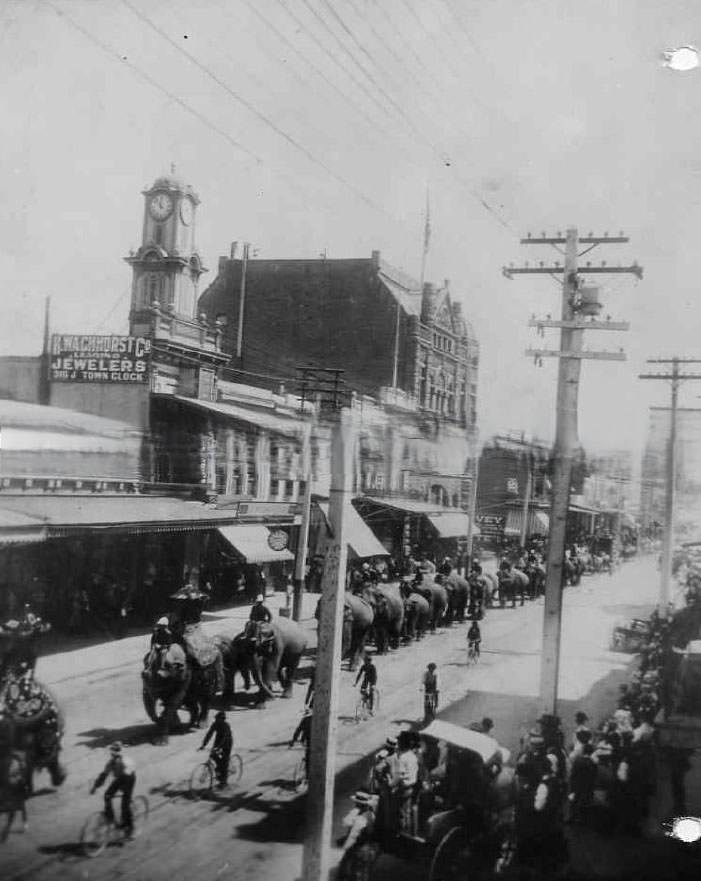
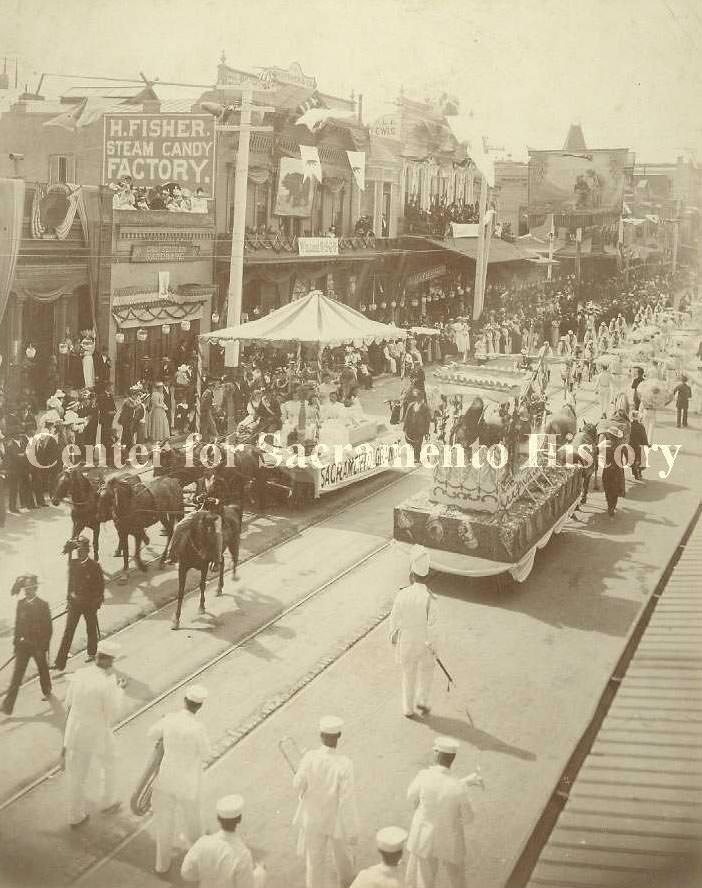
Public celebrations were a regular part of Sacramento life in the 1890s. The Admission Day Parade, which commemorated California’s entry into the Union in 1850, drew crowds to K Street each year. The Native Sons of the Golden West held their own parade on J Street in 1895. The Grand Electric Carnival of 1895 brought daytime festivities that filled the downtown streets. Circus parades with elephants marching down J Street were not an unusual sight — photographs from 1890 and 1891 both capture these processions.
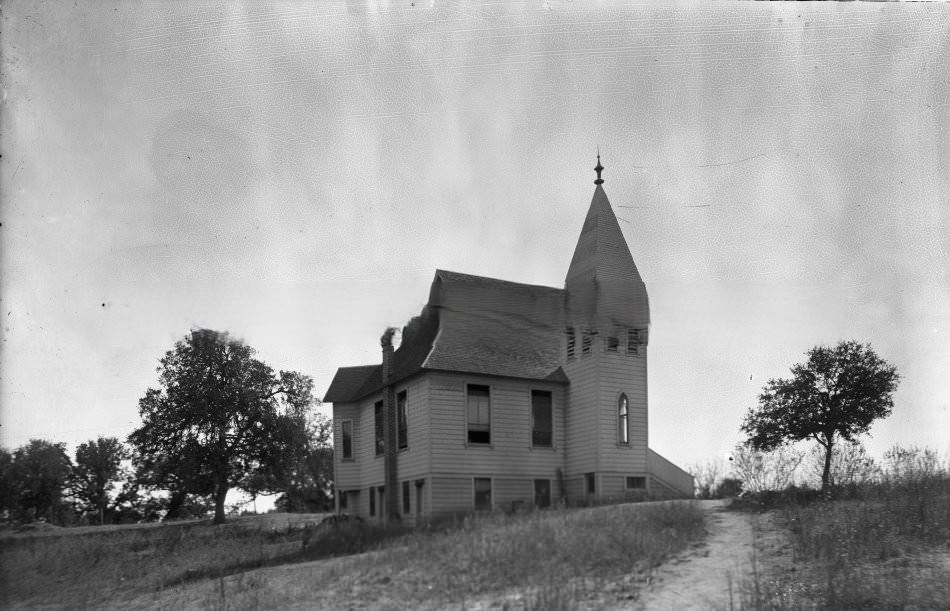
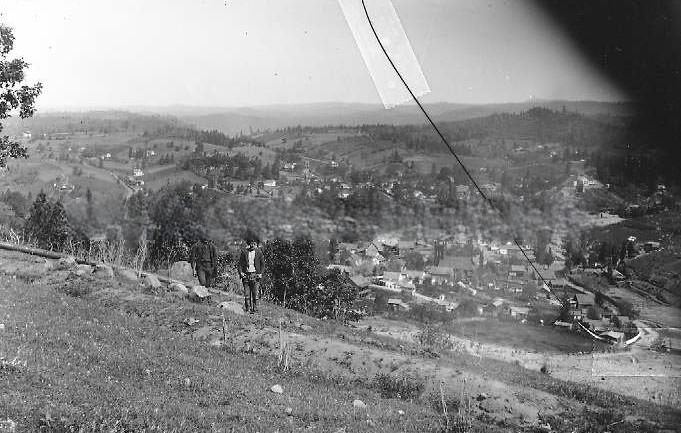
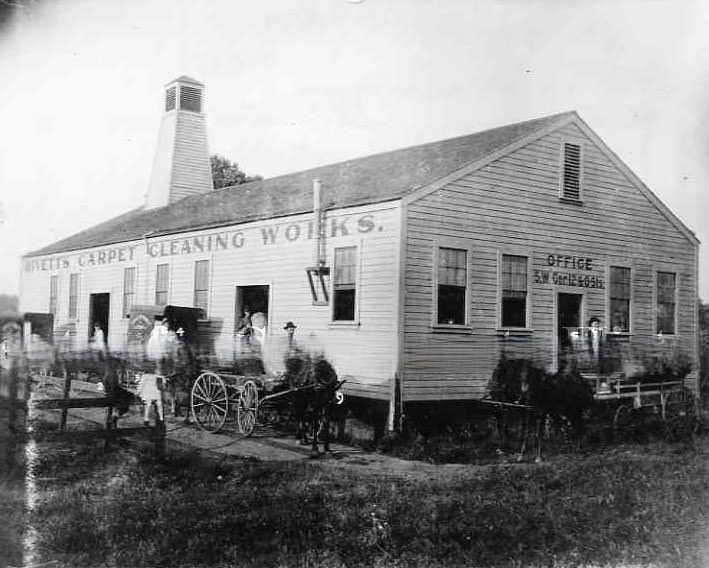
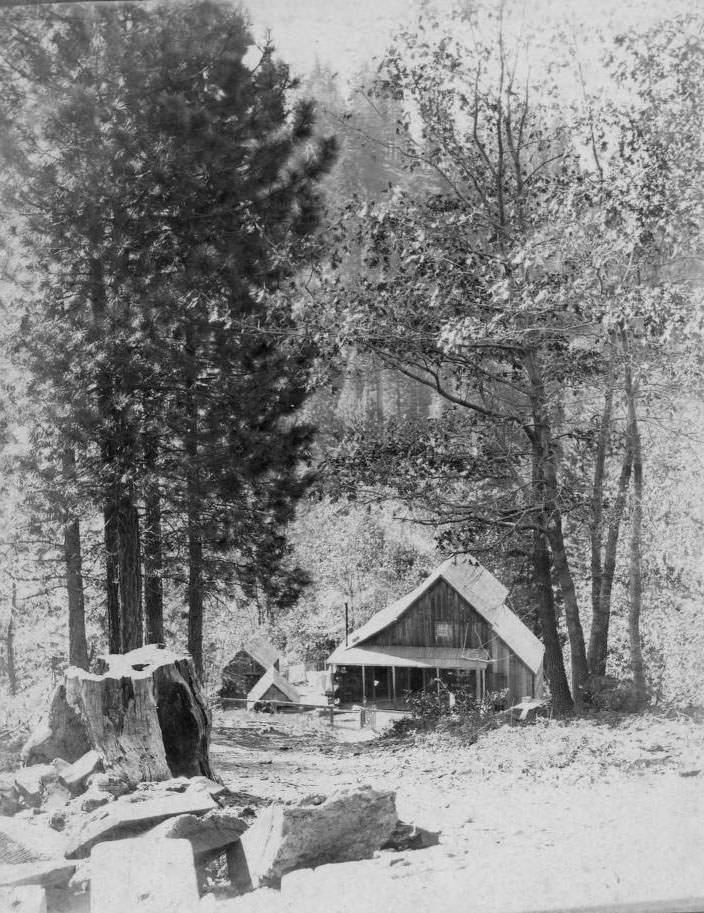
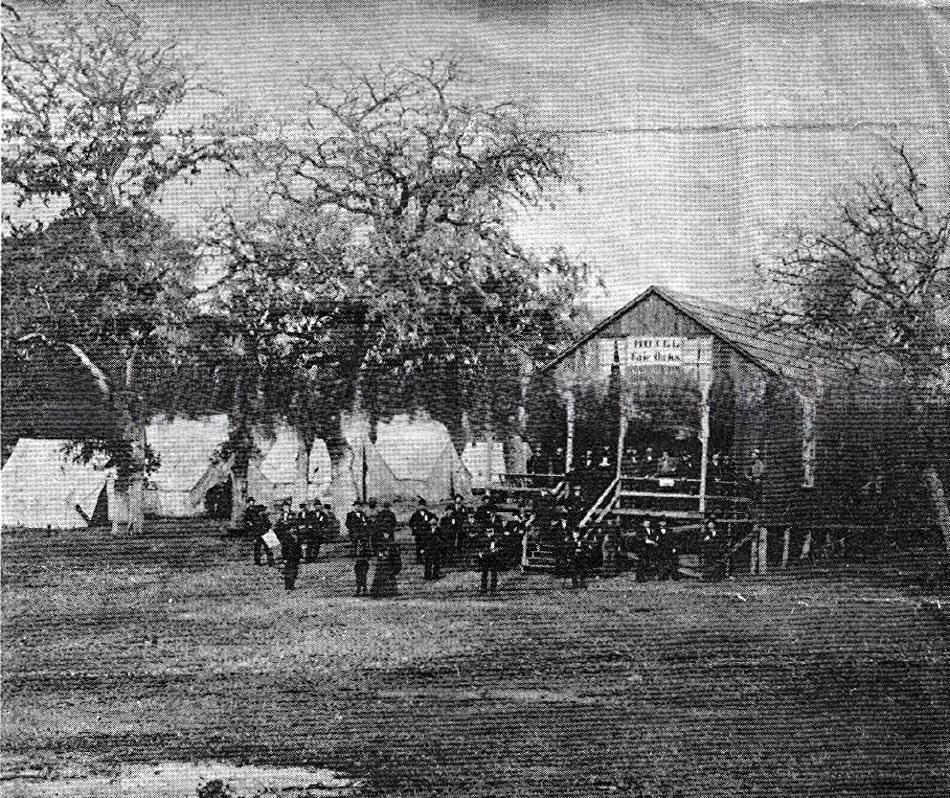
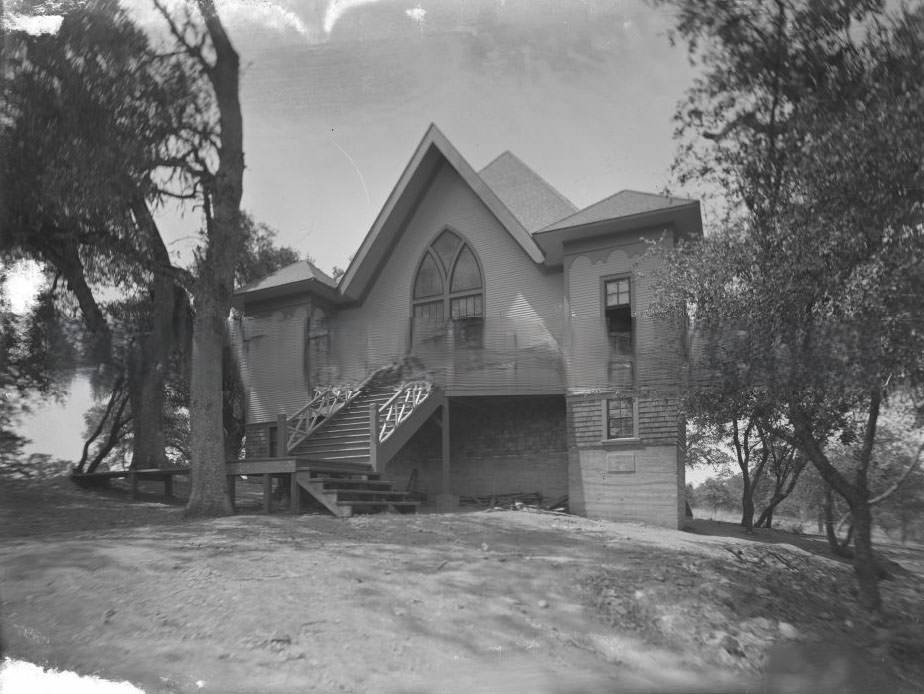
Visu Stables building at 908 9th Street, 1898Cityscape of Sacramento, 1897Native Sons of the Golden West Parade on J Street, 1895U. S. Post Office under construction, ,1894Exterior view of the Fair Oaks Methodist-Episcopal Church, 1890Placerville from Hangtown Hill, 1895.Group in Front of T.R. Stephens Stable, 1895Sisters of Mercy Hospital under construction, 1895St. Francis Catholic Church, 1895View of three people standing in front of a house, 1890Rivett’s Carpet Cleaning Works, 1893Mountain cabin,1890
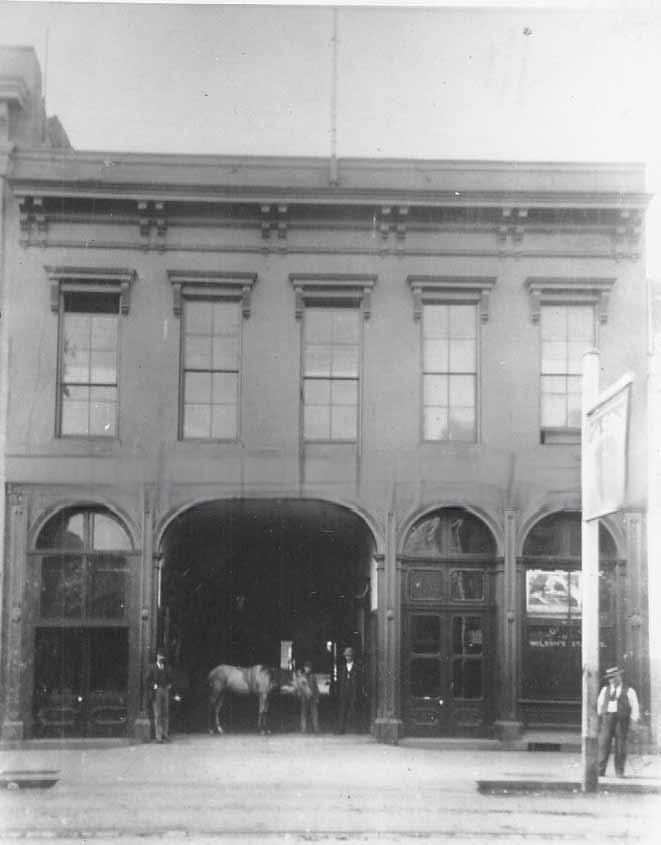
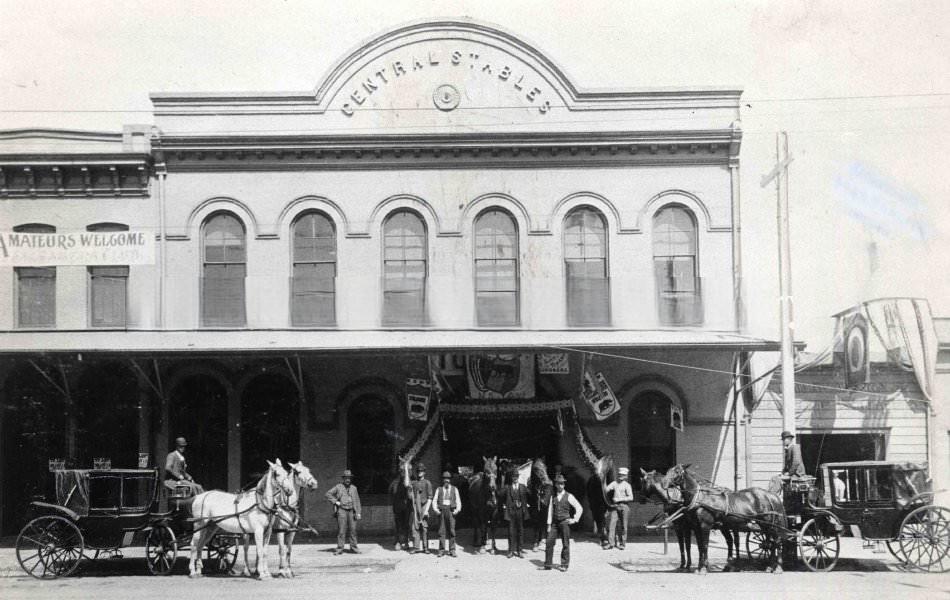
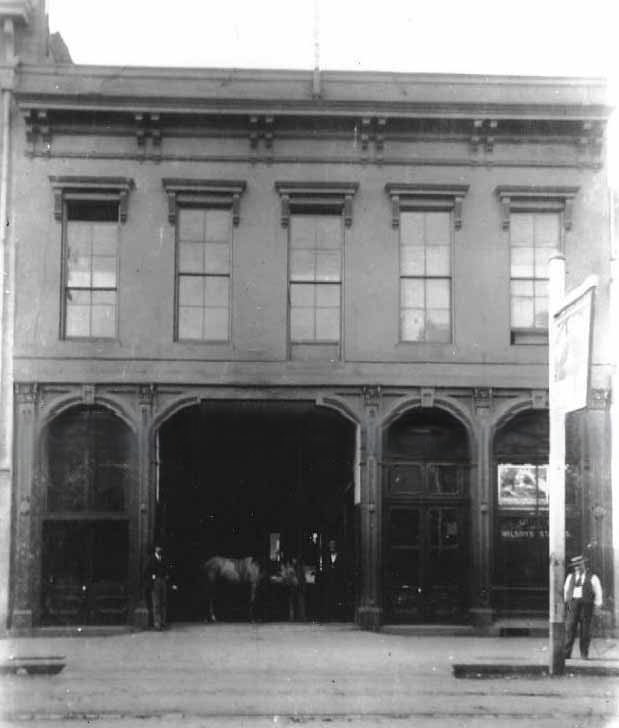
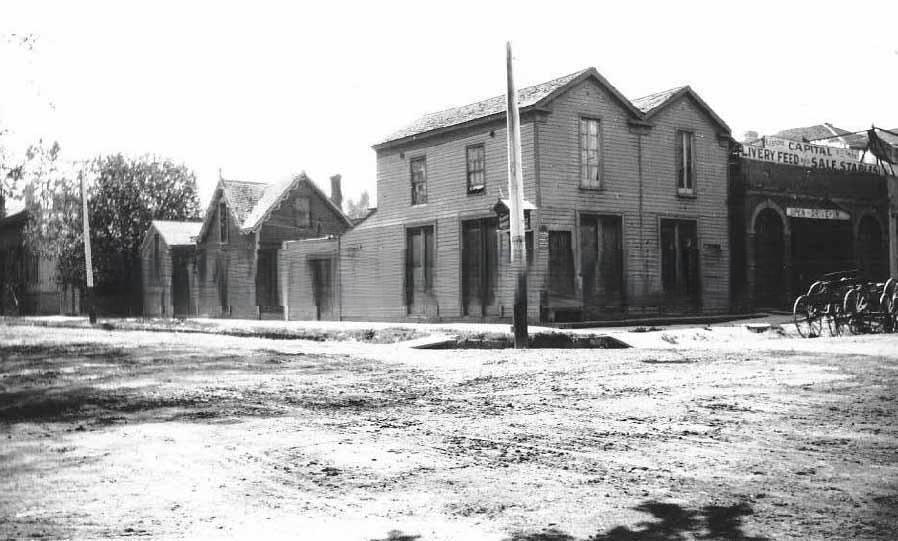
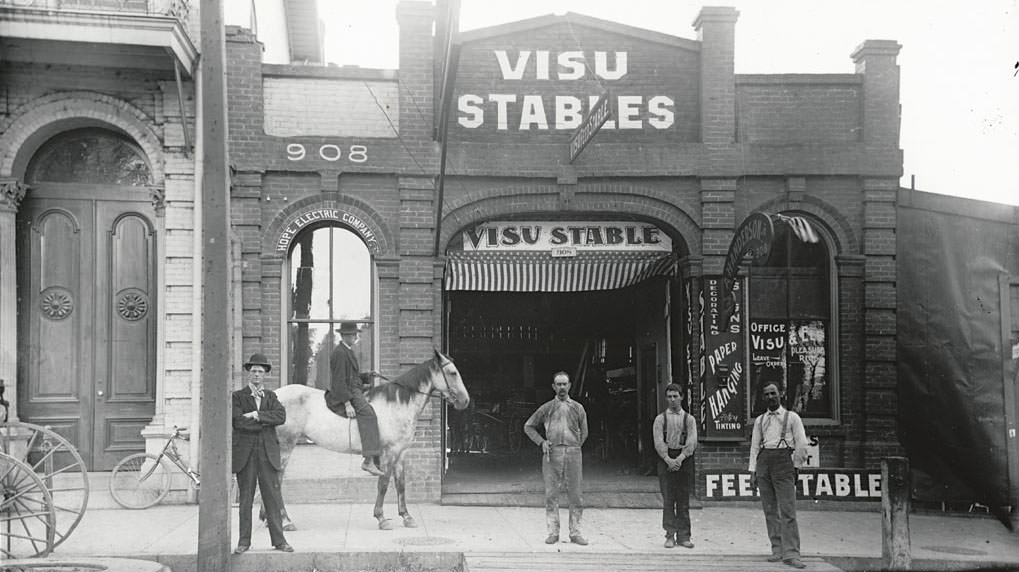
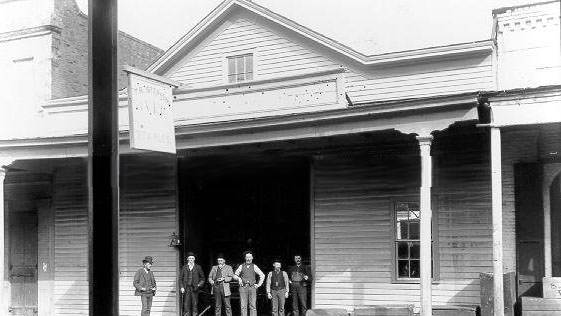
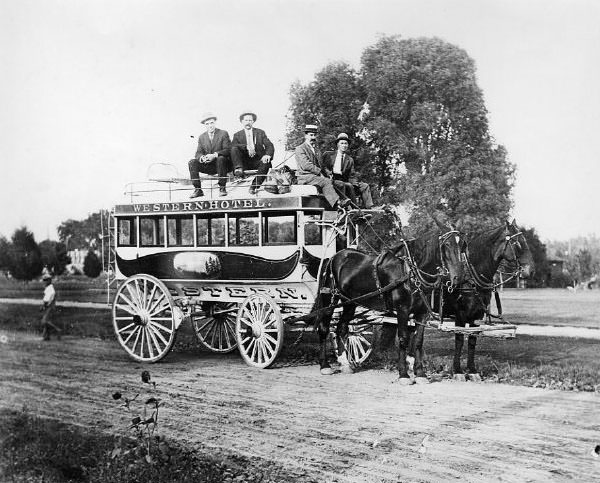
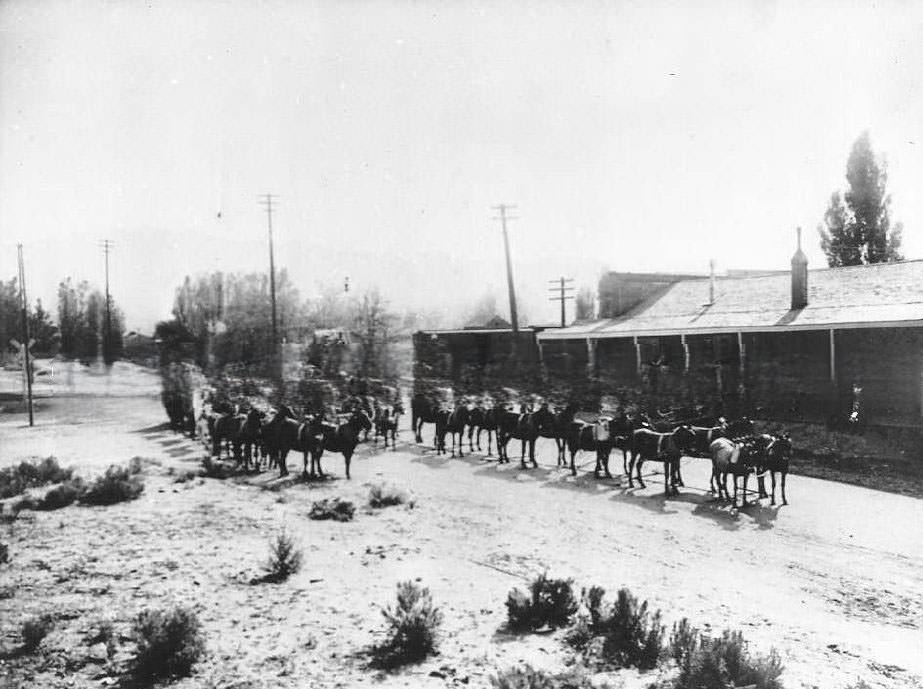
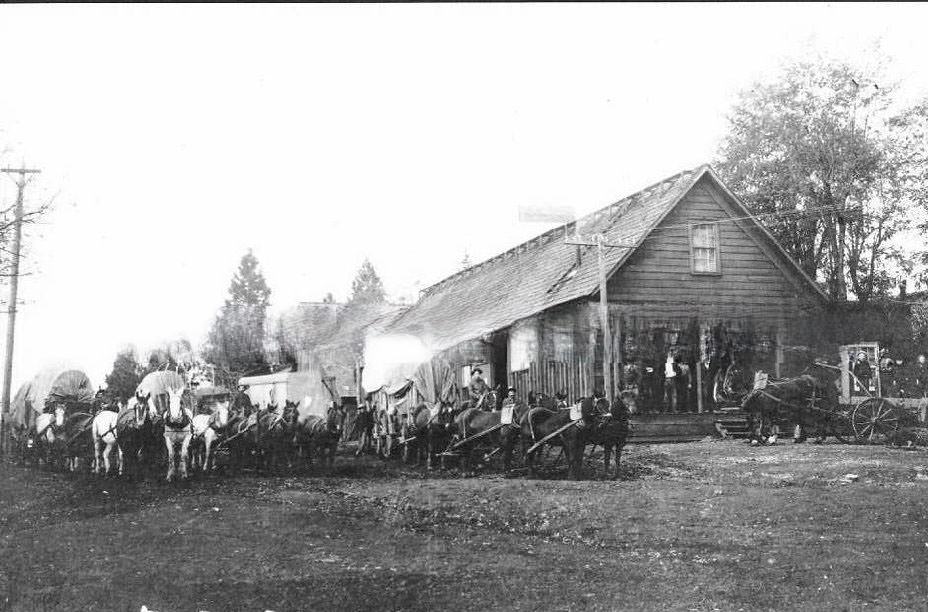
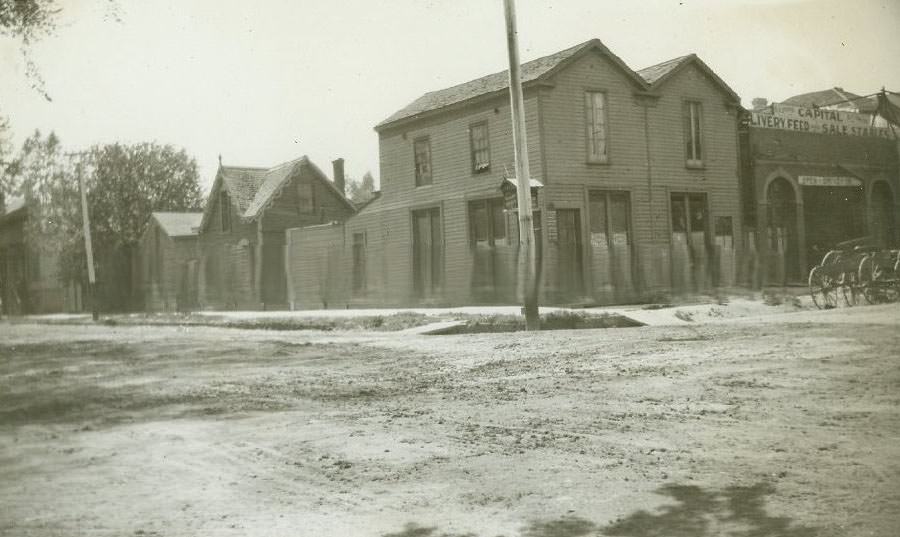
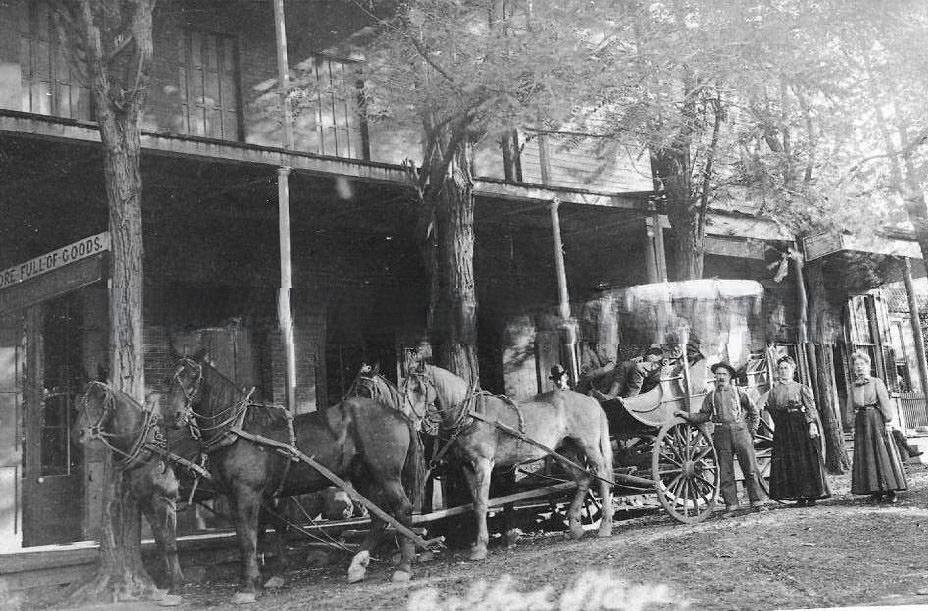
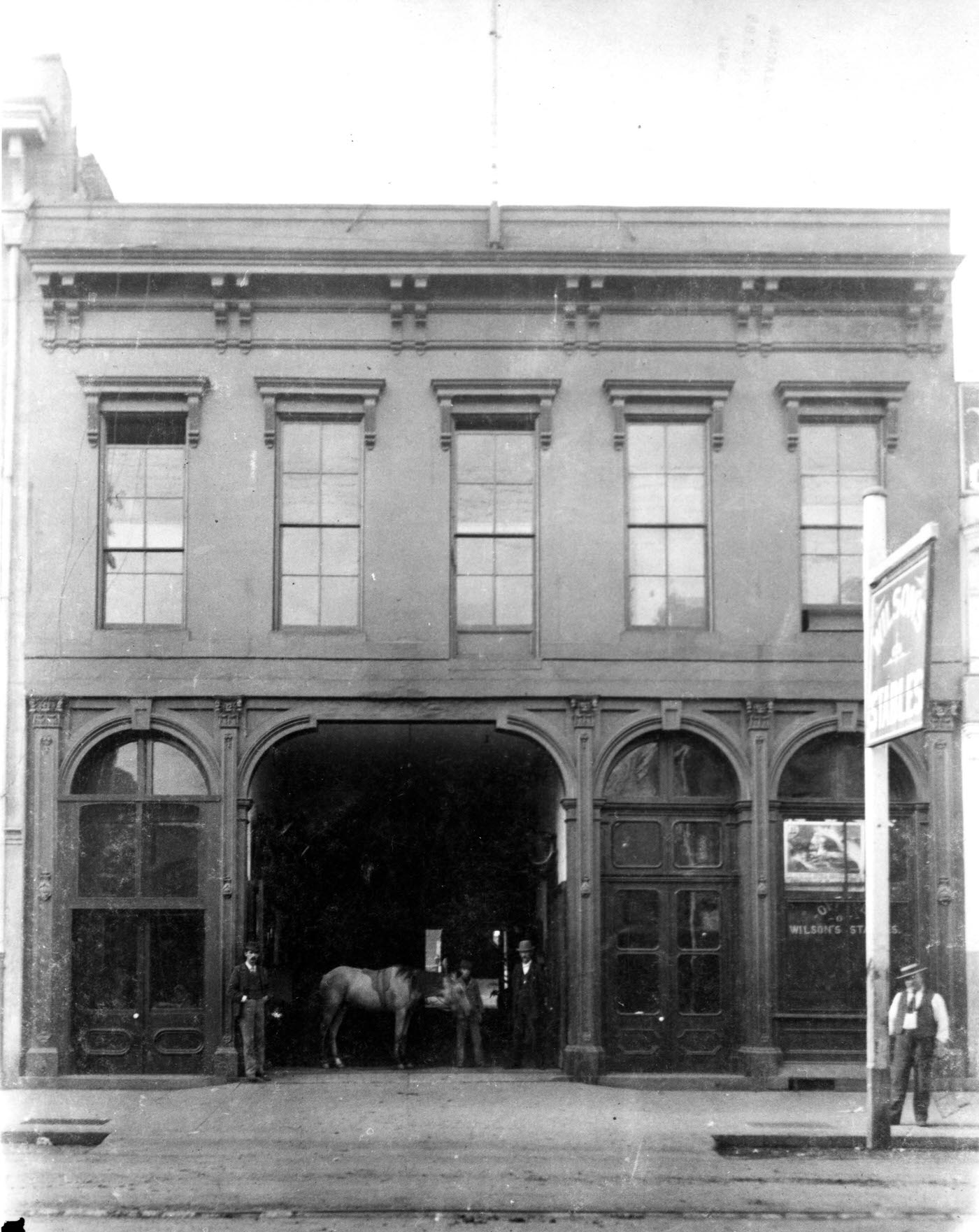
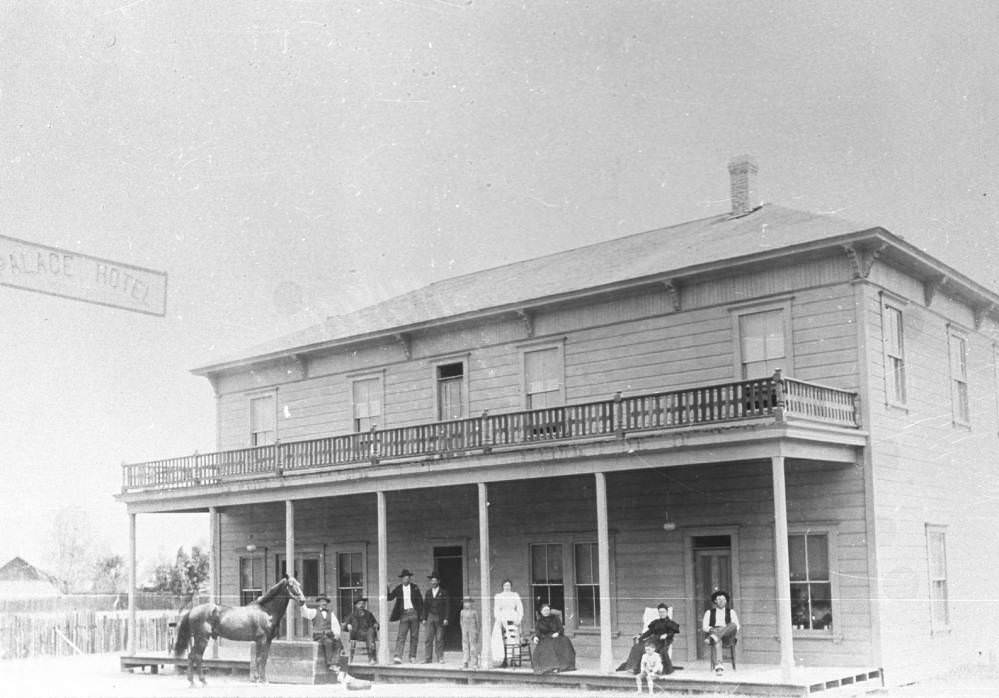
Hotels, stables, and service businesses made up a large part of Sacramento’s commercial landscape. The Western Hotel operated a horse-drawn passenger wagon that transported guests around the city. The Central Stables at 1021 J Street, Wilson’s Stables at 318 K Street, and the Visu Stables at 908 9th Street all served the city’s ongoing dependence on horses for freight and personal transport. Livery and feed operations were scattered across the downtown grid.
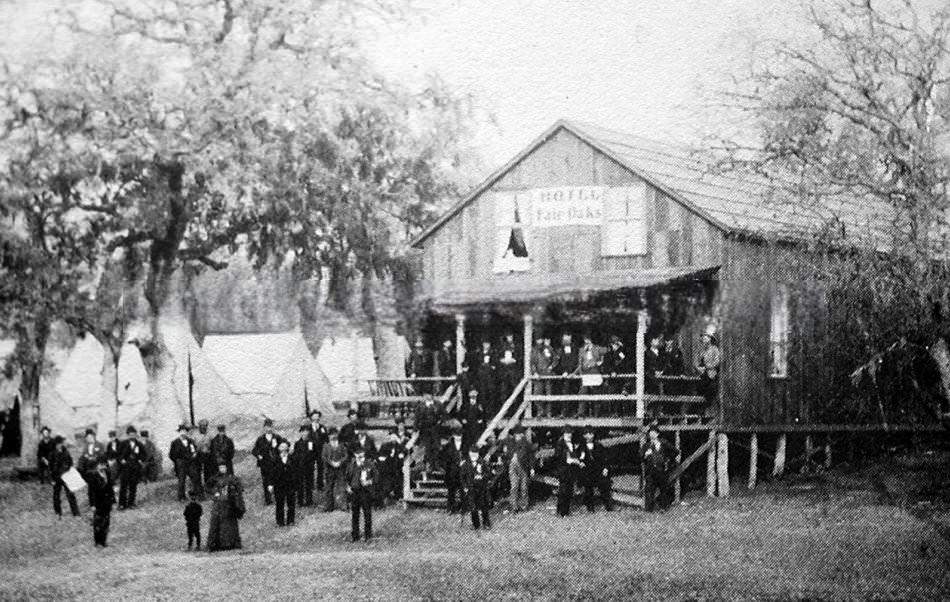
Exterior view of the Western Hotel’s horse-drawn passenger wagon, 1890s.Mary Orr’s House from the Rear,1895Mary Watson Grammar School, 1890Christian Brothers College, 1890Capitol Primary School, 1894Fair Oaks Hotel,1895Construction of Head Dam, Folsom, 1898
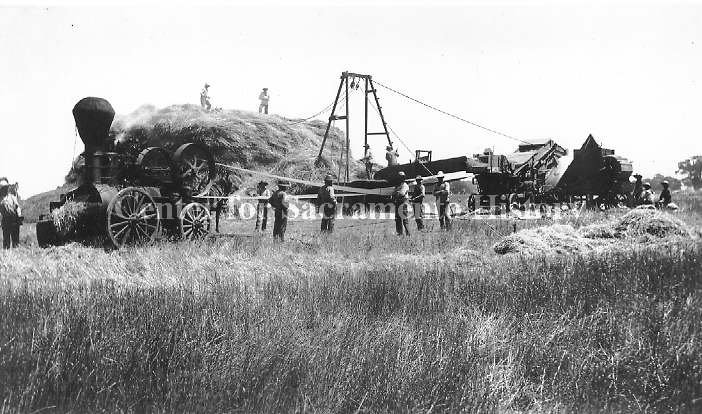
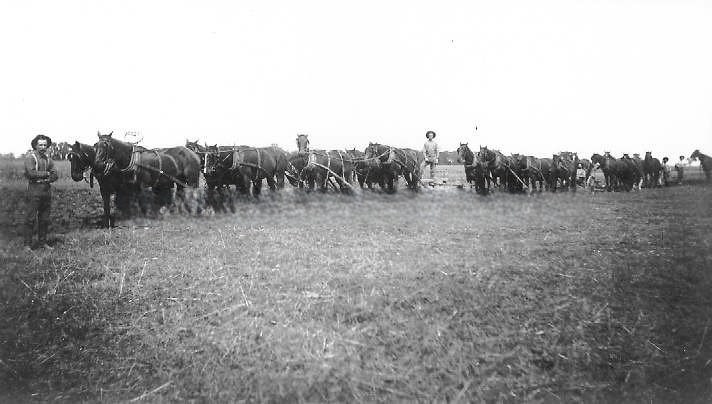
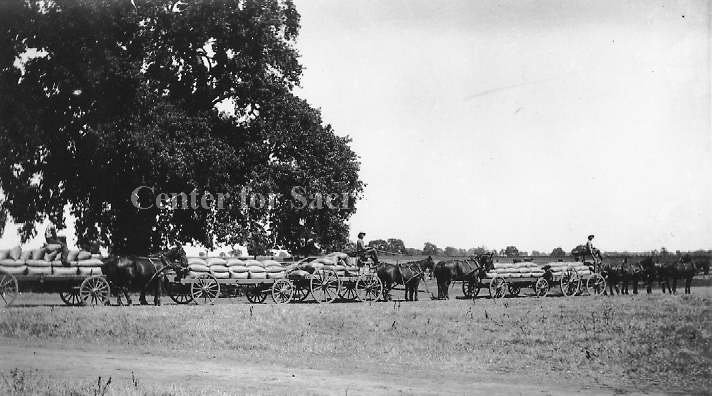
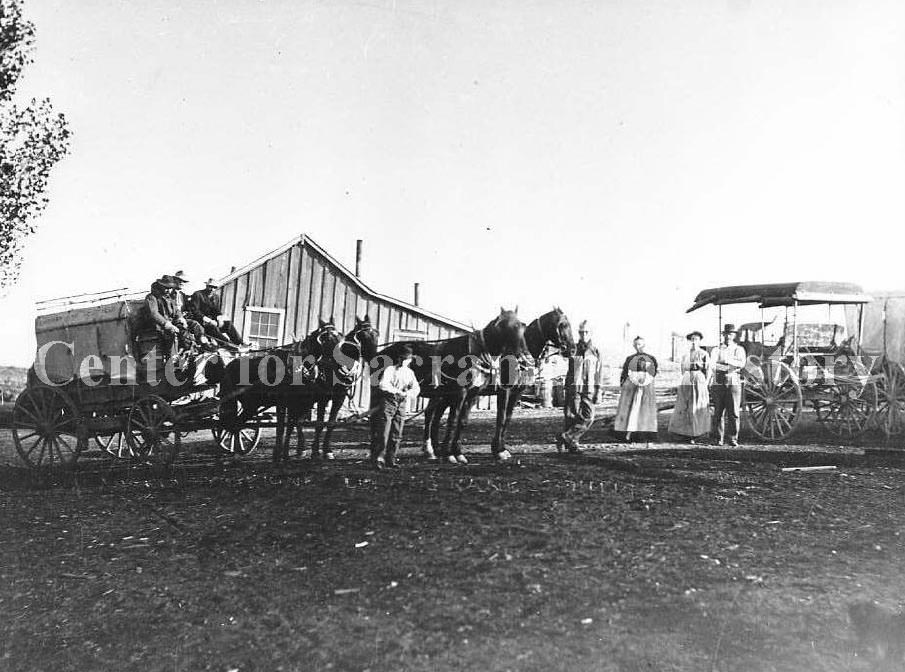
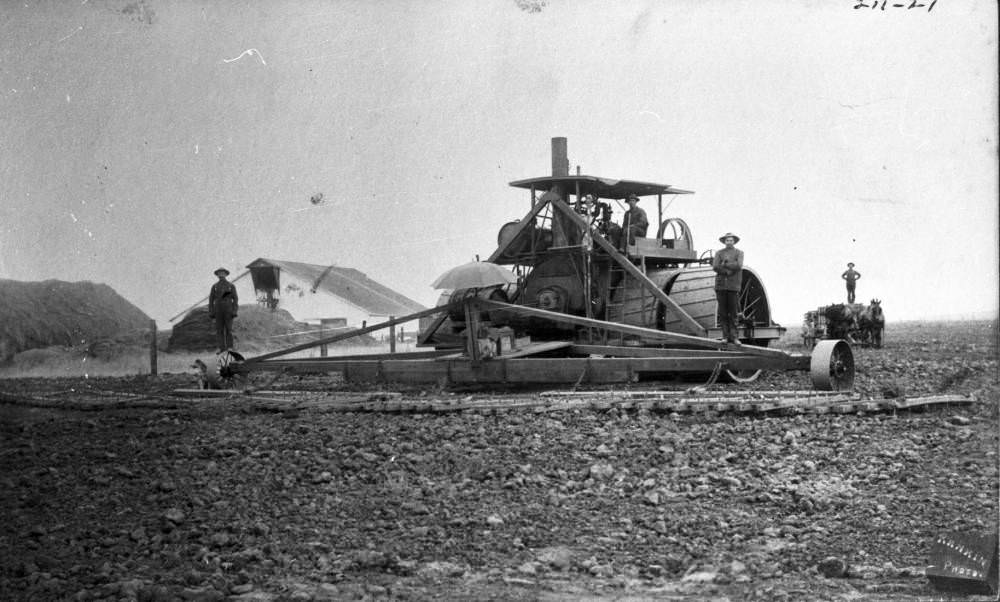
Agricultural work in the Sacramento region was hard and constant. Ranch hands used horse-drawn equipment and, increasingly, steam-powered machinery to harvest and stack hay across the valley. Carts loaded with bags of grain were a common sight near the railroad depots and river wharves. The region’s farms fed into a food processing economy that made Sacramento one of the most productive agricultural centers in the American West.
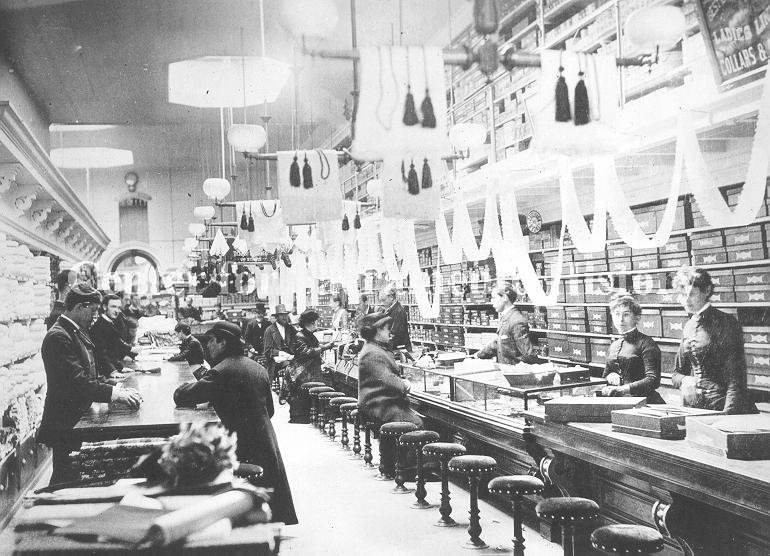
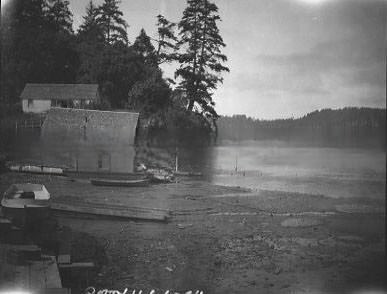
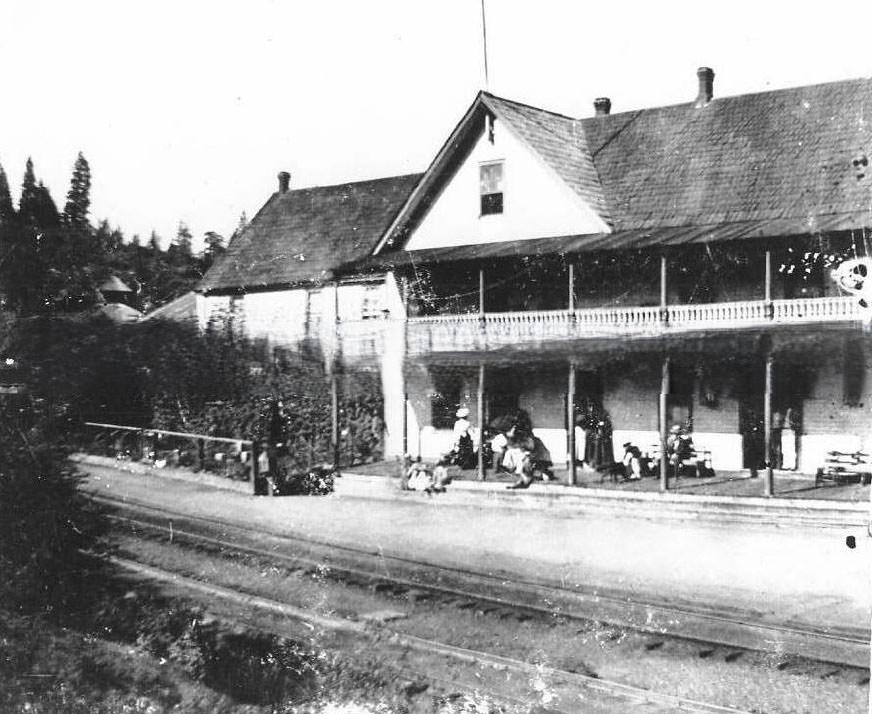
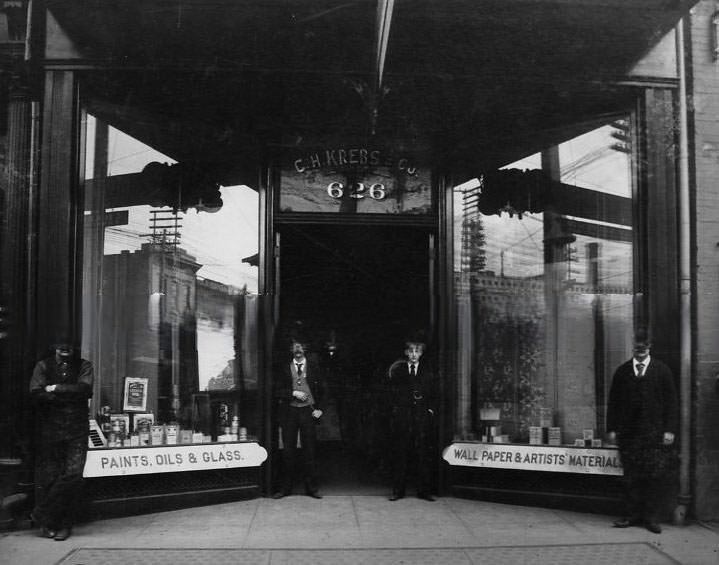
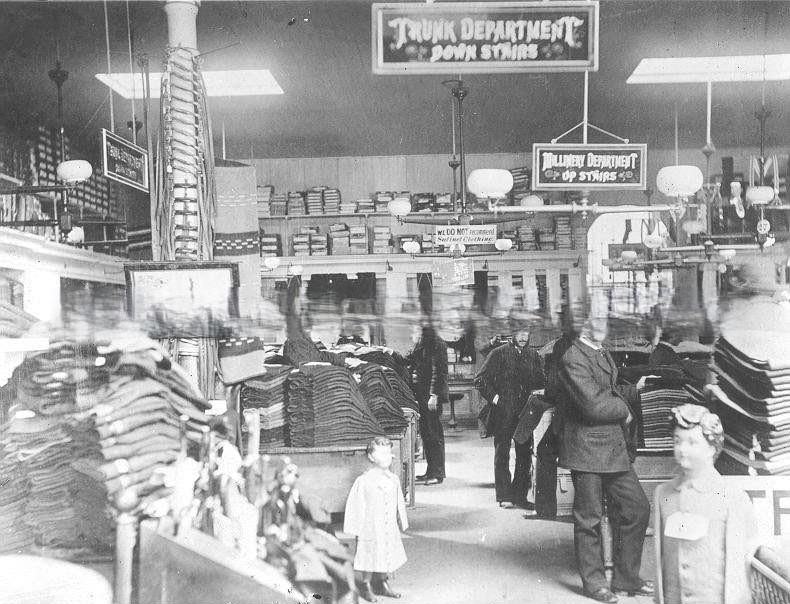
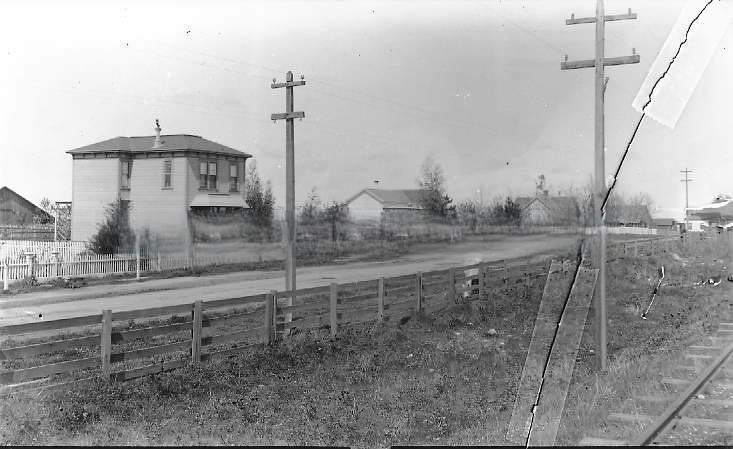
Sales people wait on customers seated at counter in shirt department, 1890House in rural setting, 1890Exterior view of the Charles Deterding residence.Sacramento street scene, 1890-1910A parade of elephants on the 300 block of J Street, 1890A shoreline with several boats, a boat house, and a house on a small hill overlooking the water, 1890Building next to railroad tracks, 1890Sutter’s Fort, 1890C. H. Krebs & Company at 626 J Street specializing in wall coverings, 1896City Brewery, maker of Ruhstaller’s “Gilt Edge” steam beer, 1890Weinstock’s Department Store, 1891Opening day for Weinstock Lubin’s new store, 1895Ranch workers stack hay in large pile with help of steam-powered machinery, 1895Two twelve horse hitch freight wagons parked next to a railroad depot, 1890
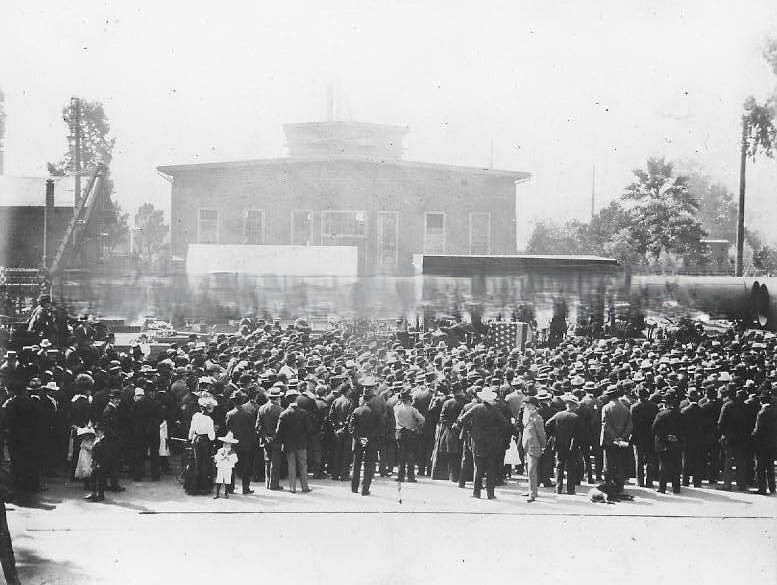
When Collis P. Huntington — one of the Central Pacific Railroad’s original founders — died in 1900, a memorial service was held at the Southern Pacific Shops in Sacramento. Thousands of workers gathered at the repair facility where so many of them had built their livelihoods. It was a measure of just how deeply the railroad’s fortunes were woven into the city’s identity.
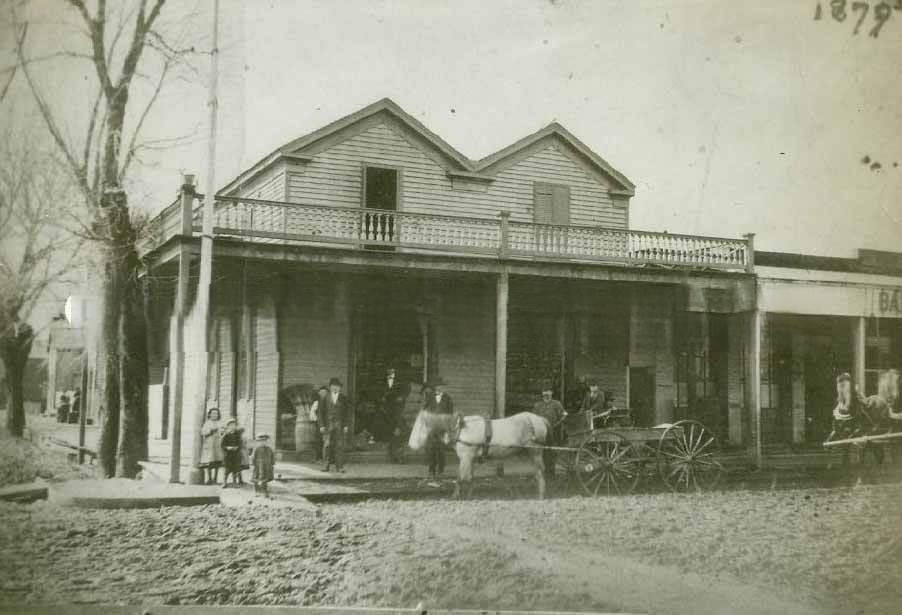
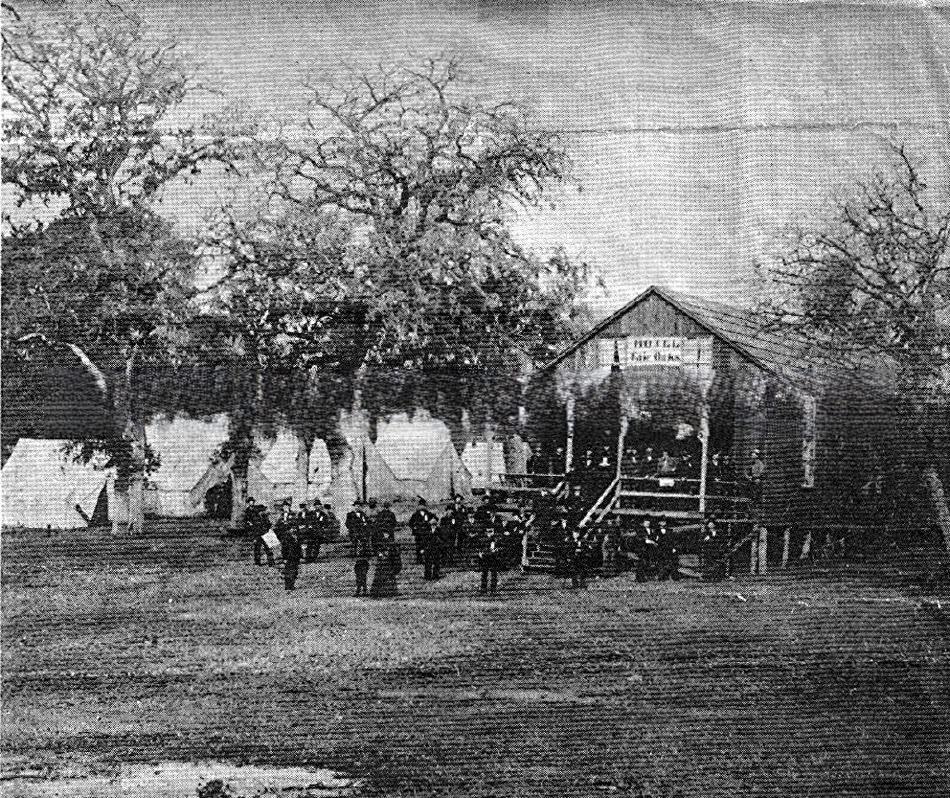
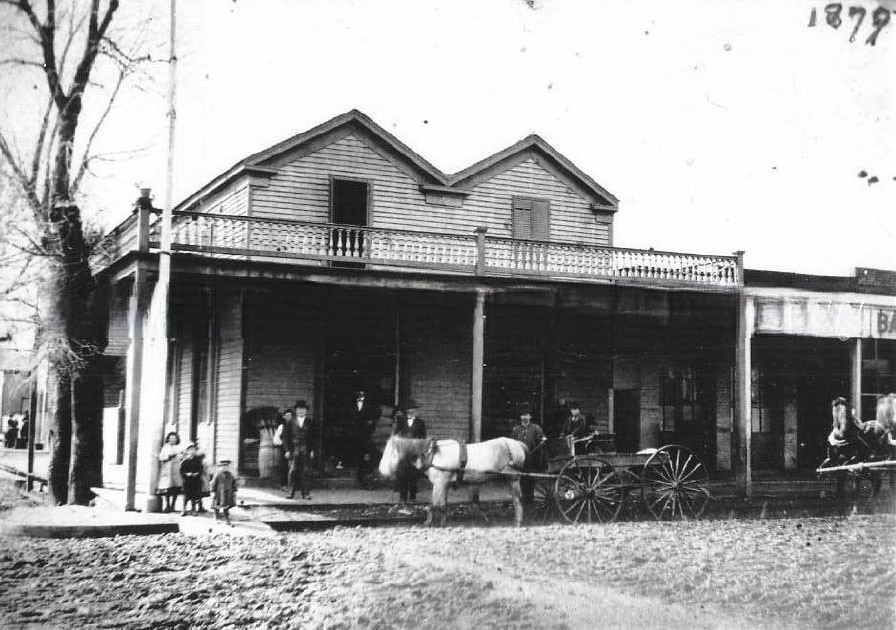
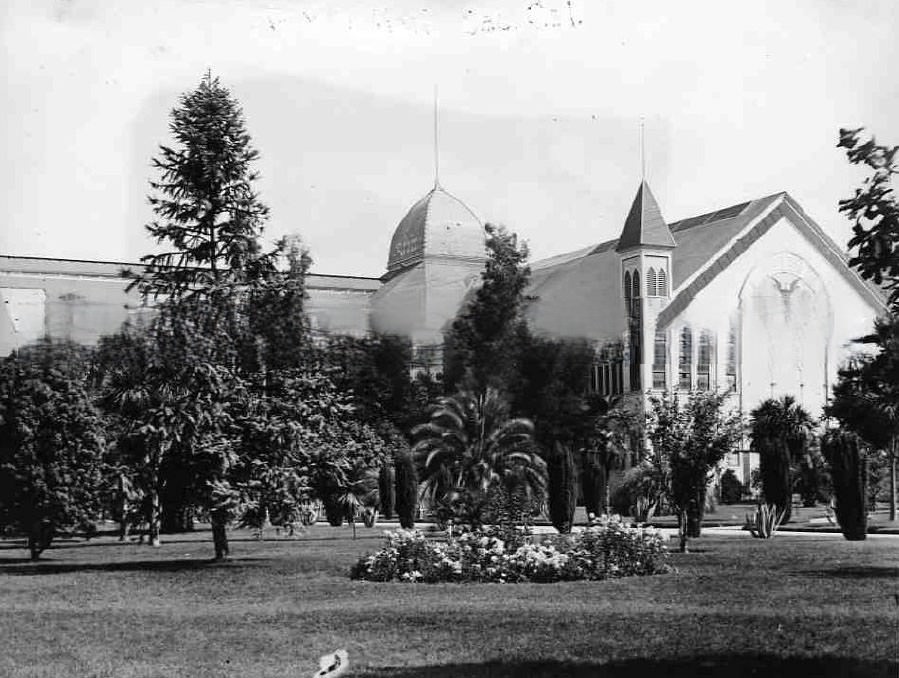
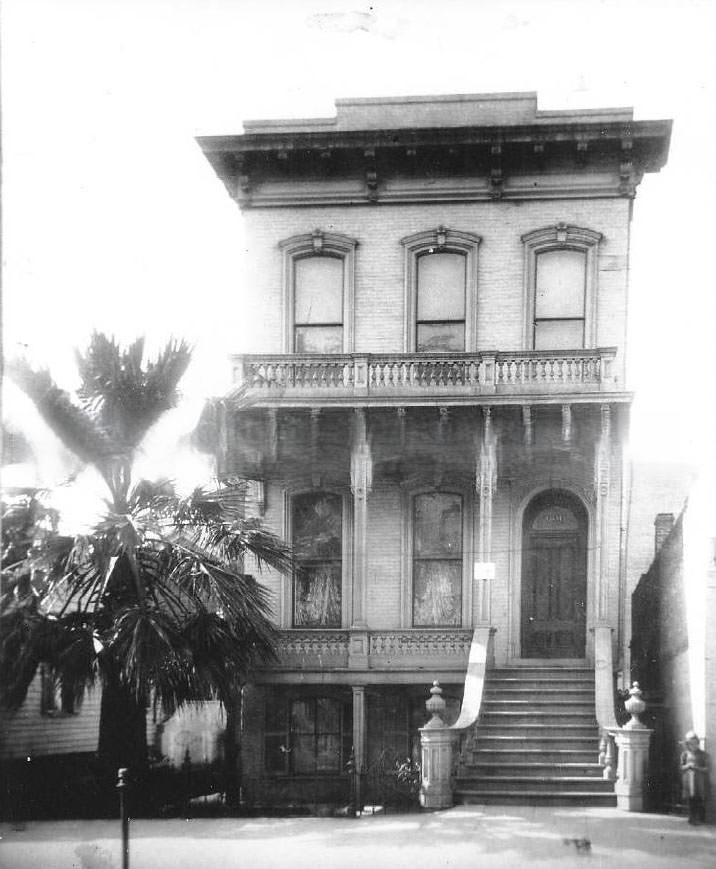
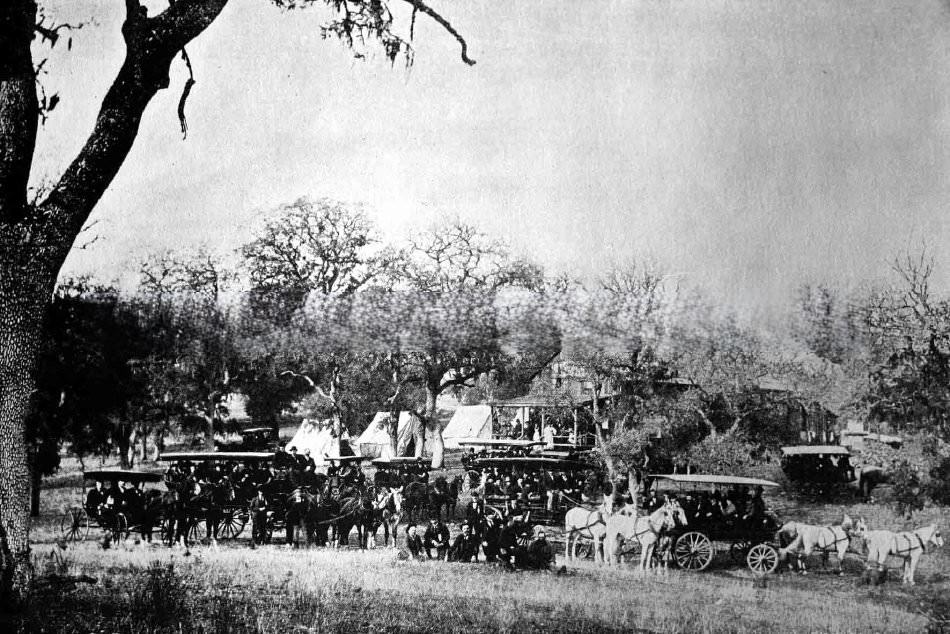
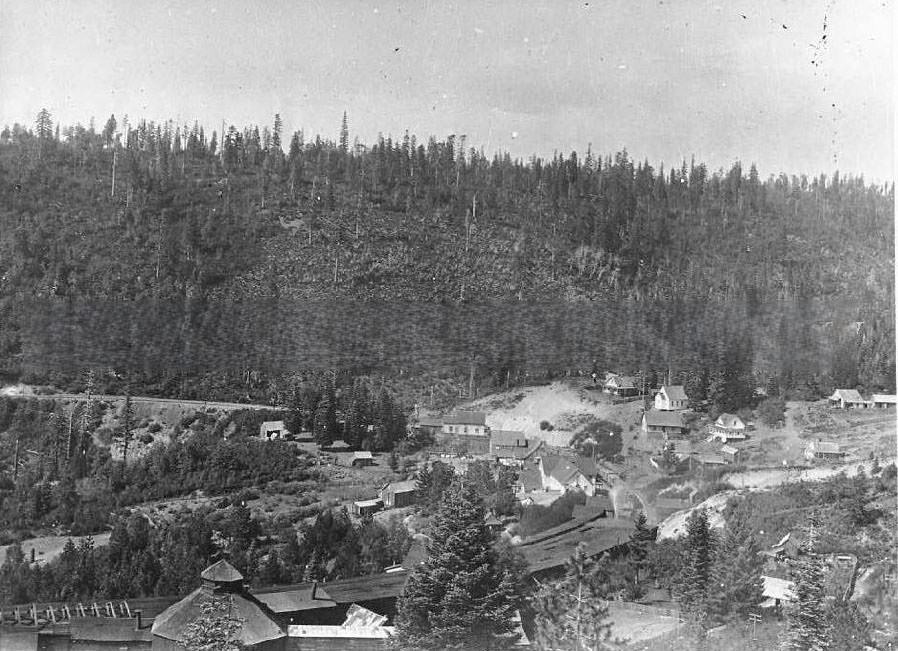
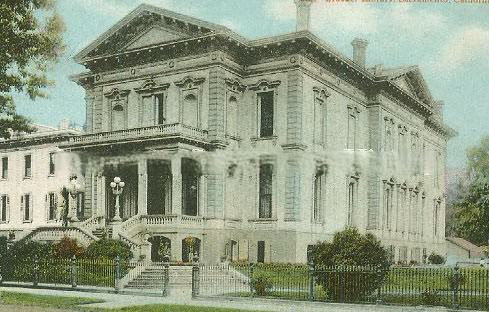
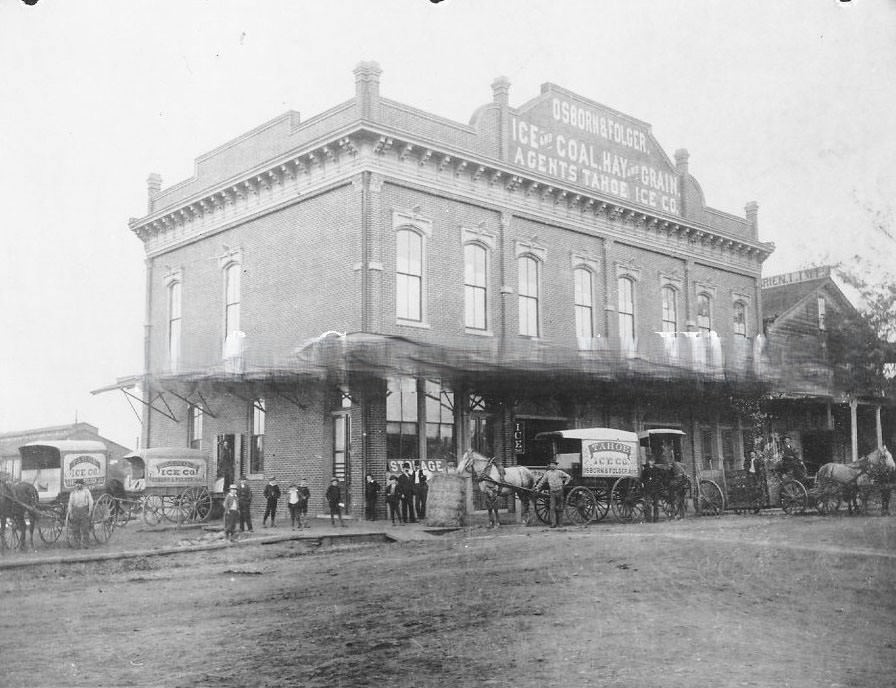
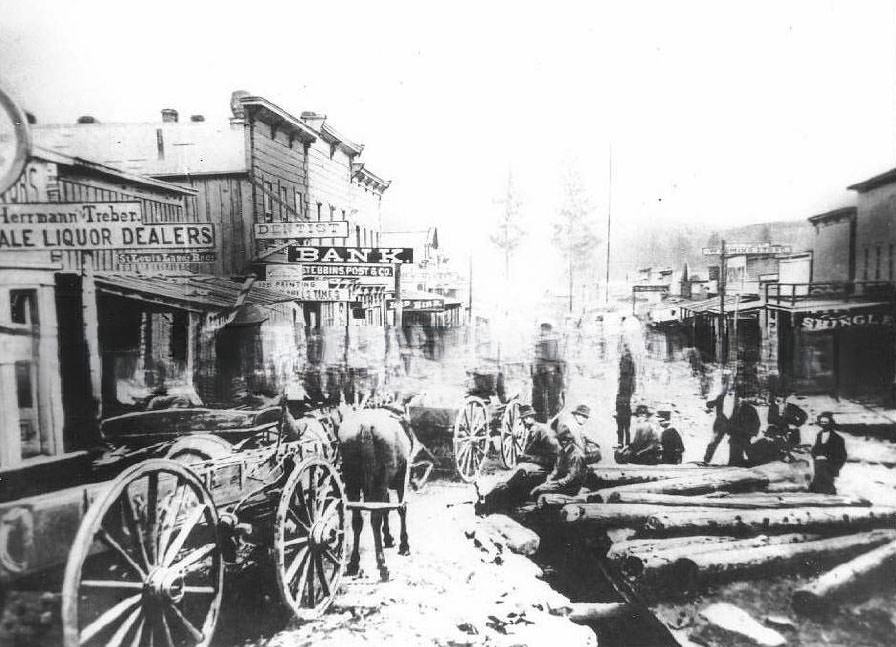
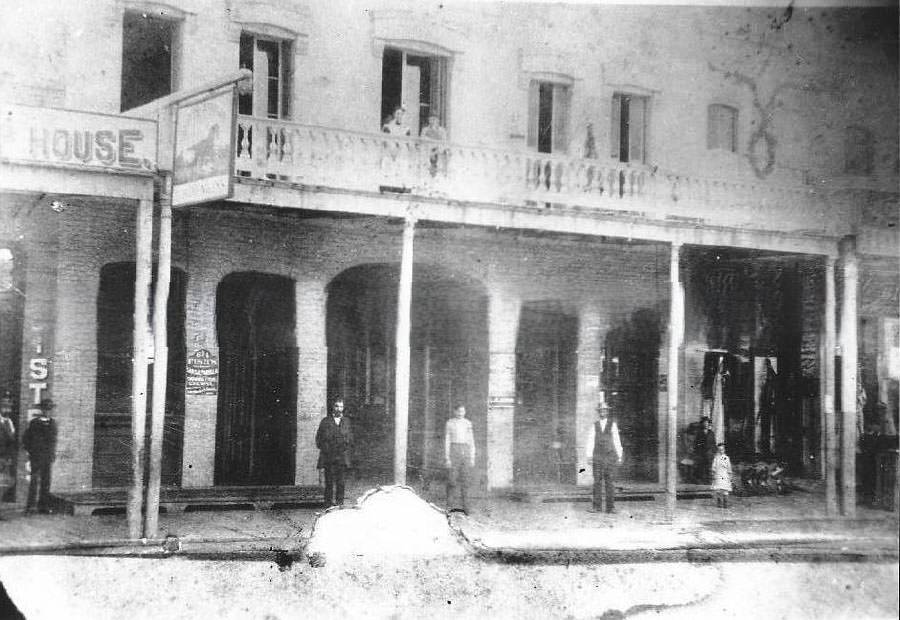
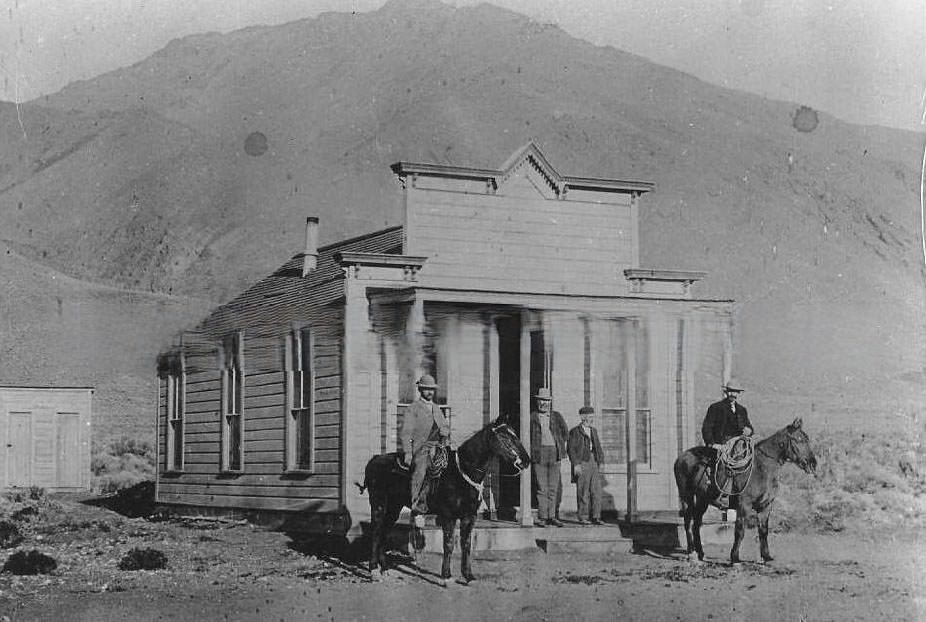
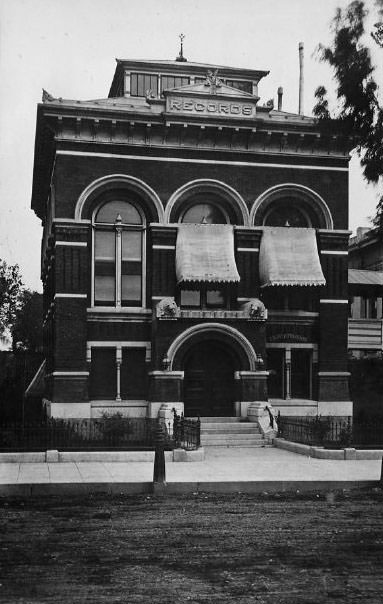
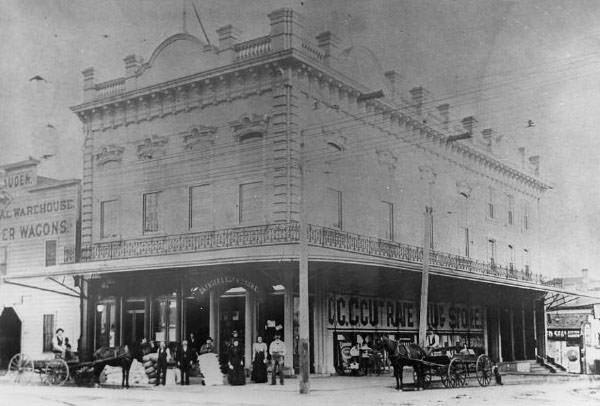
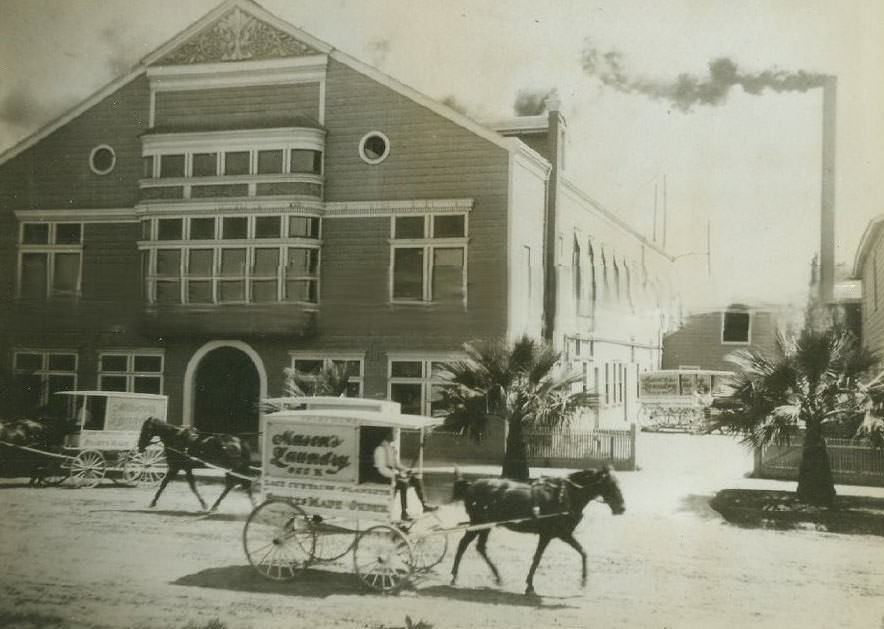
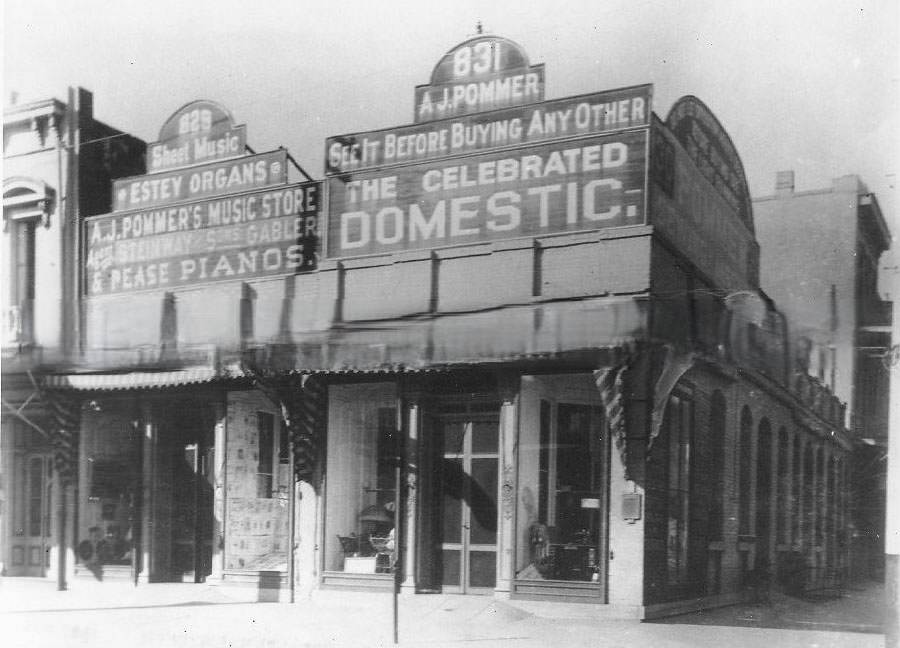
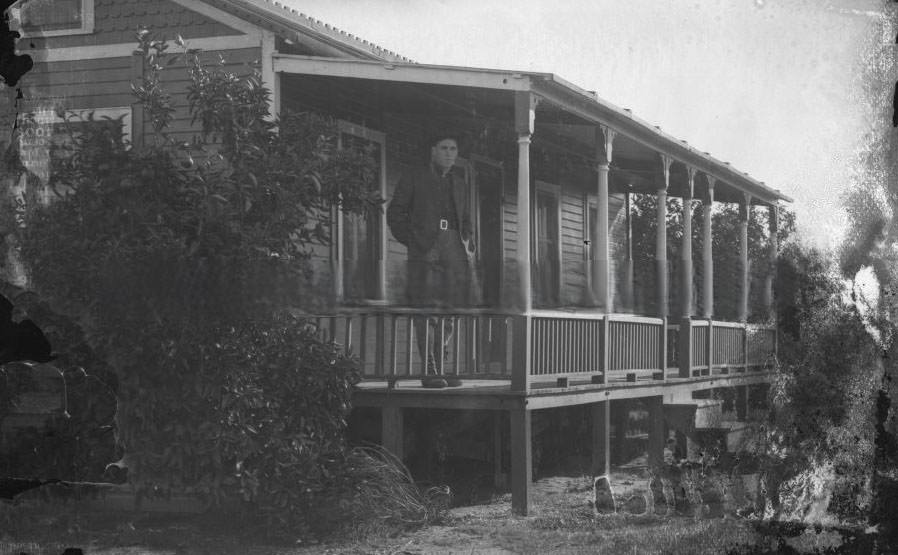
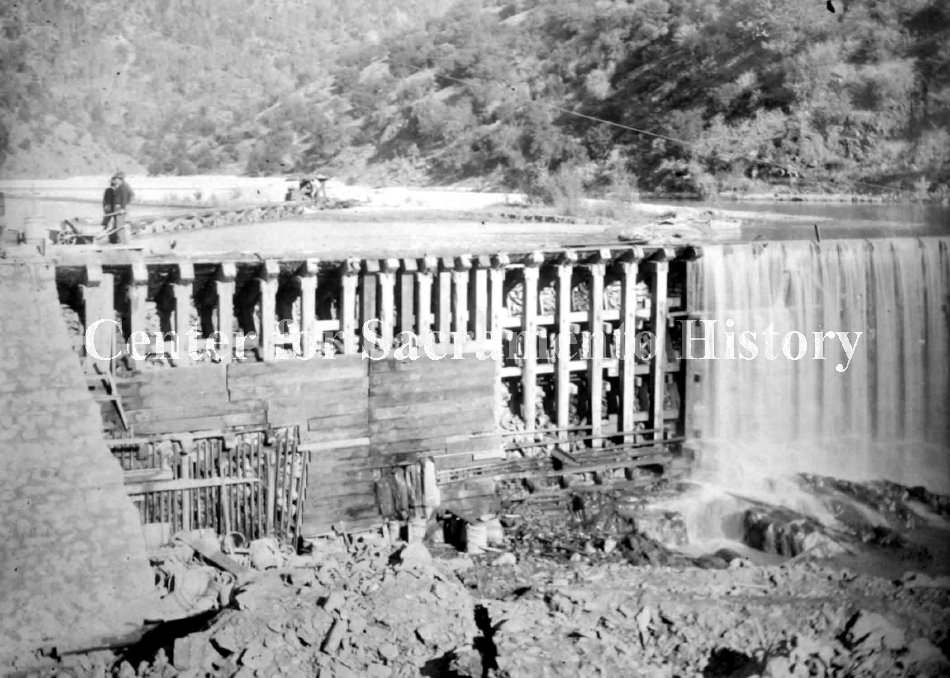
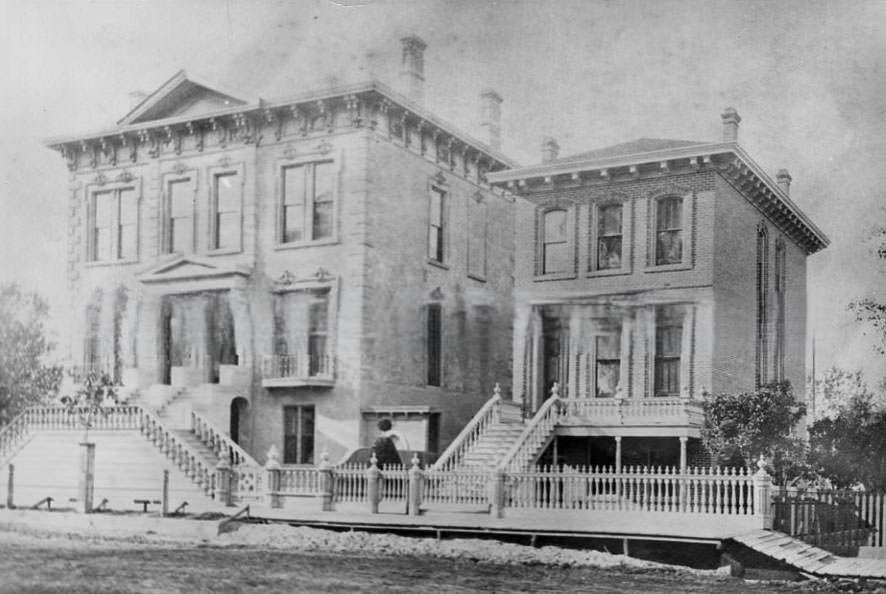
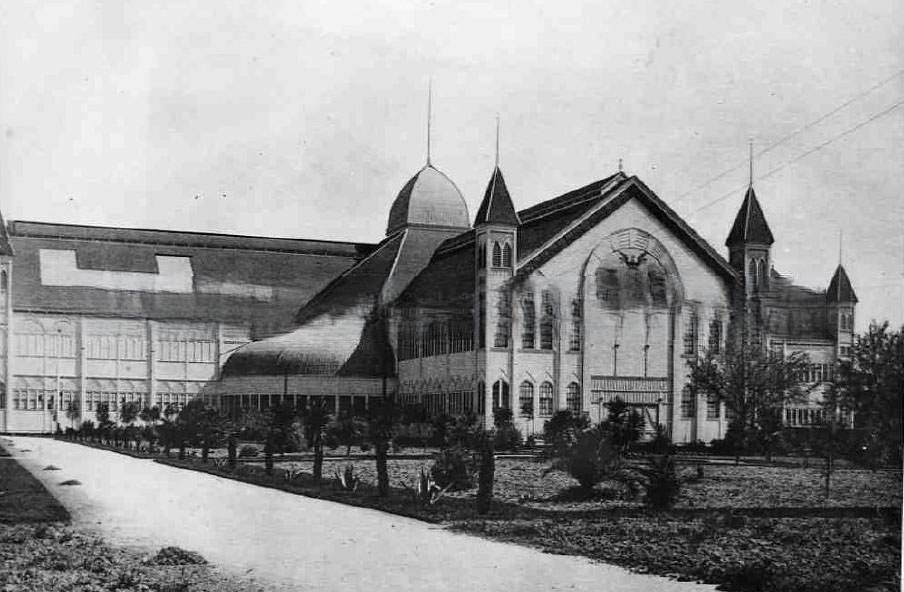
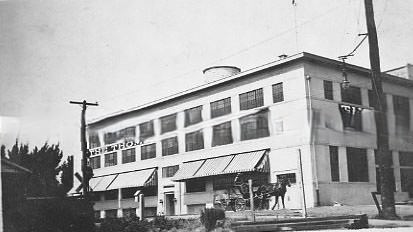
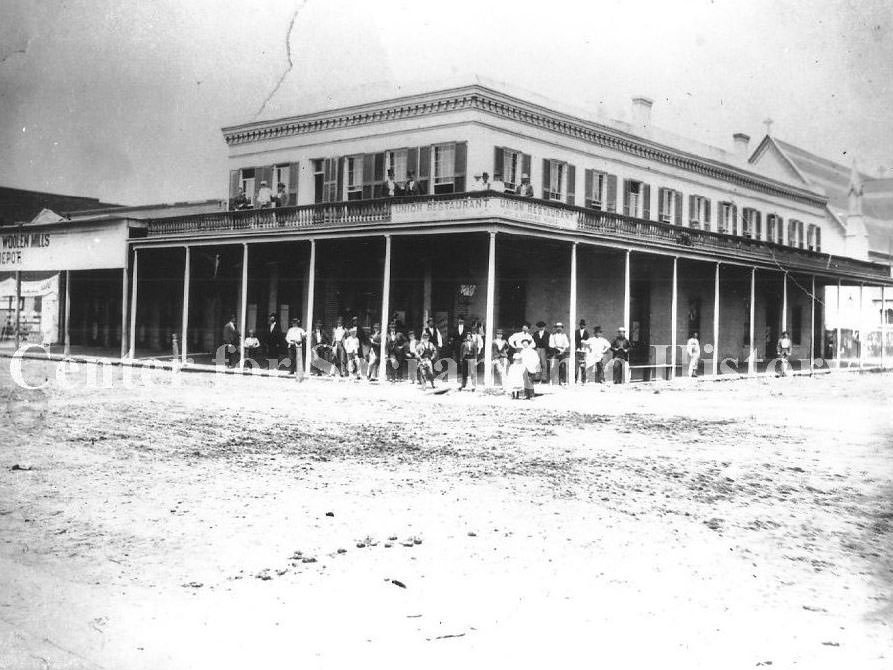
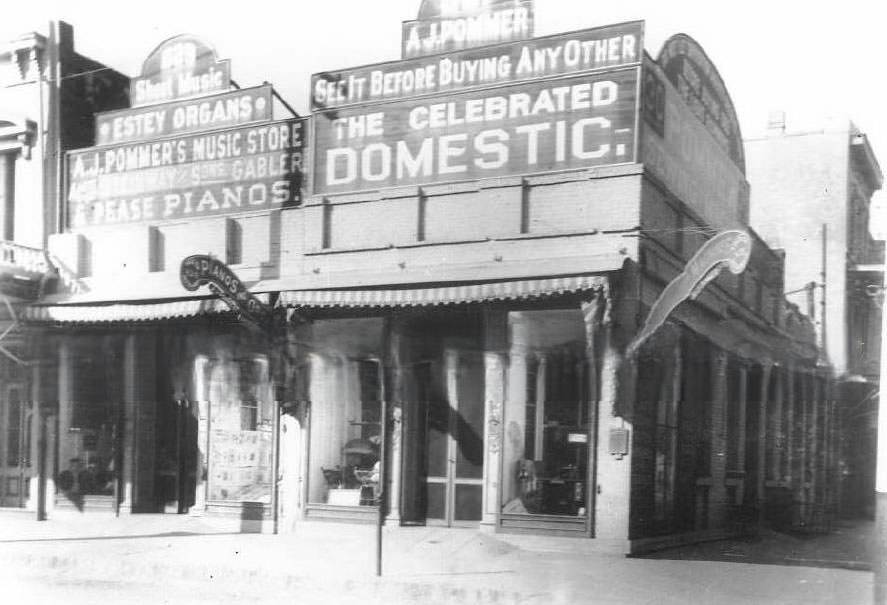
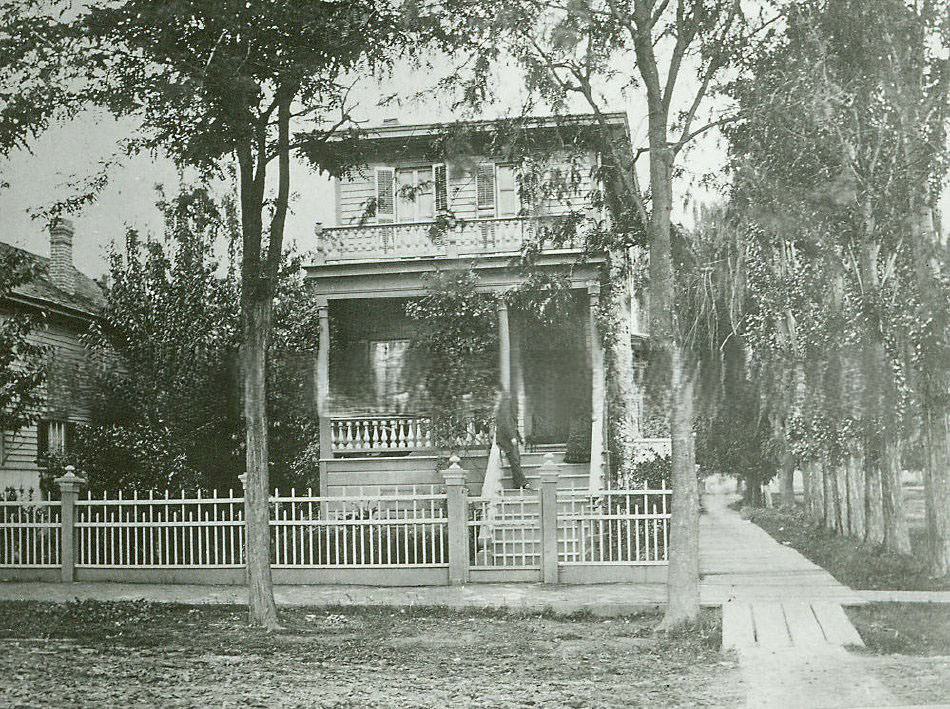
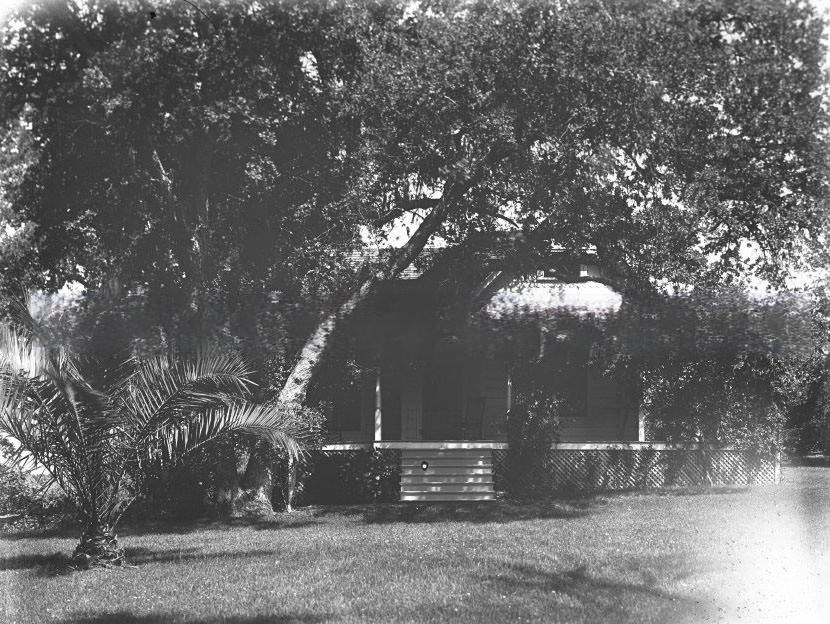
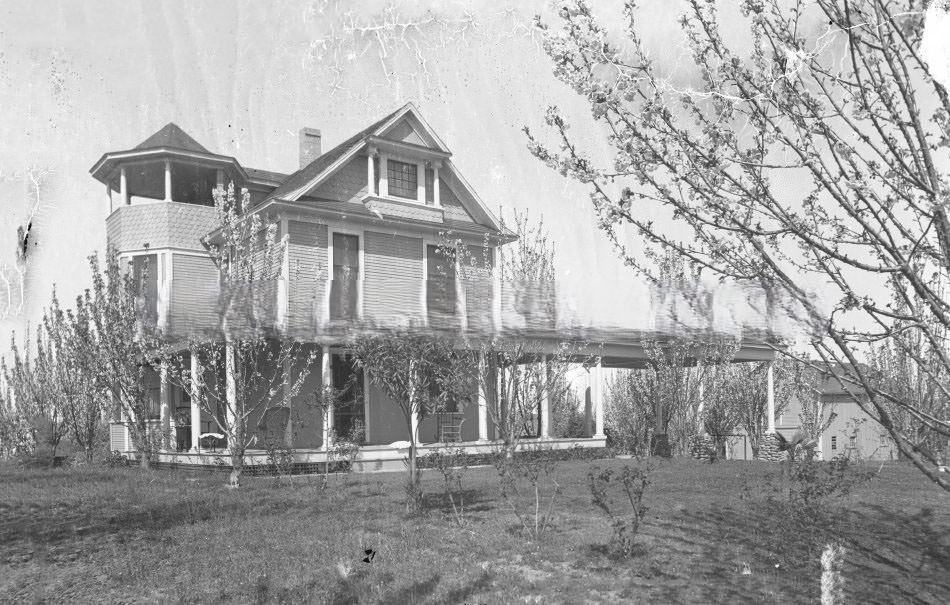
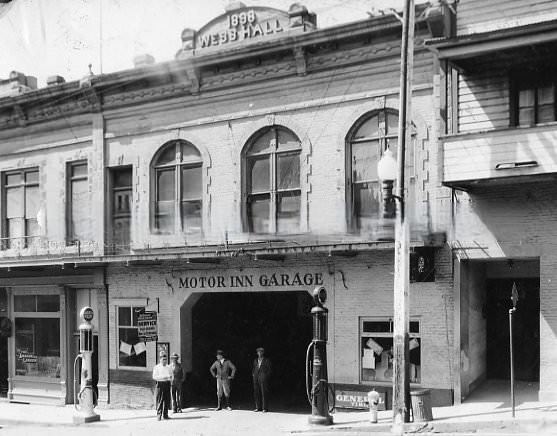
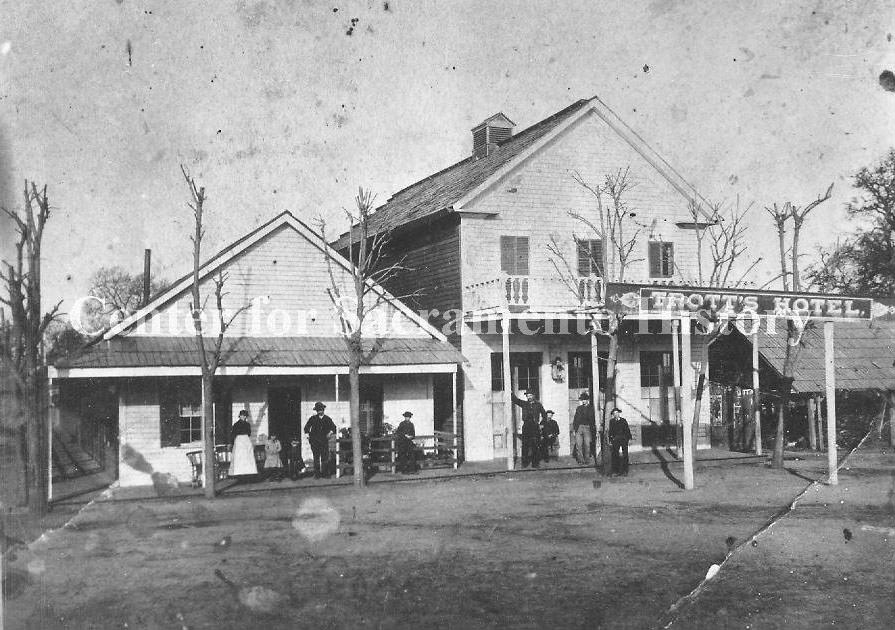
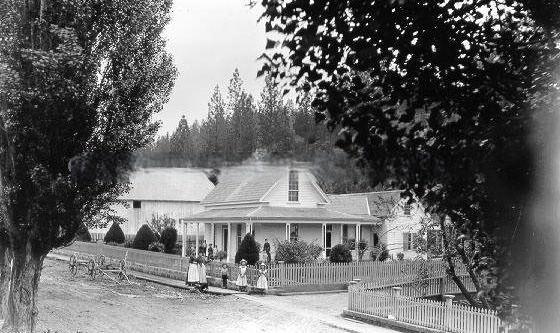
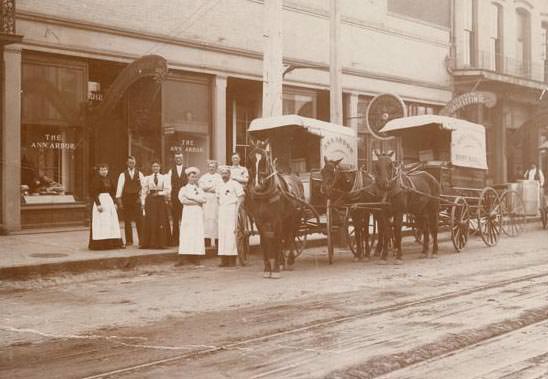
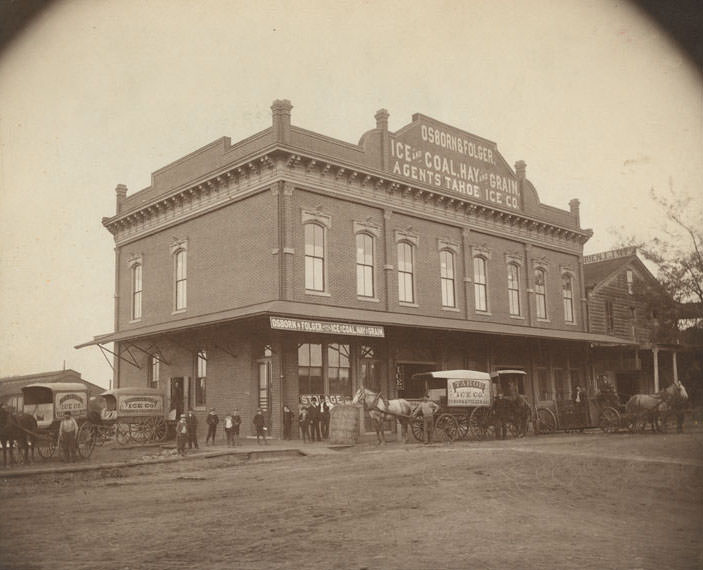
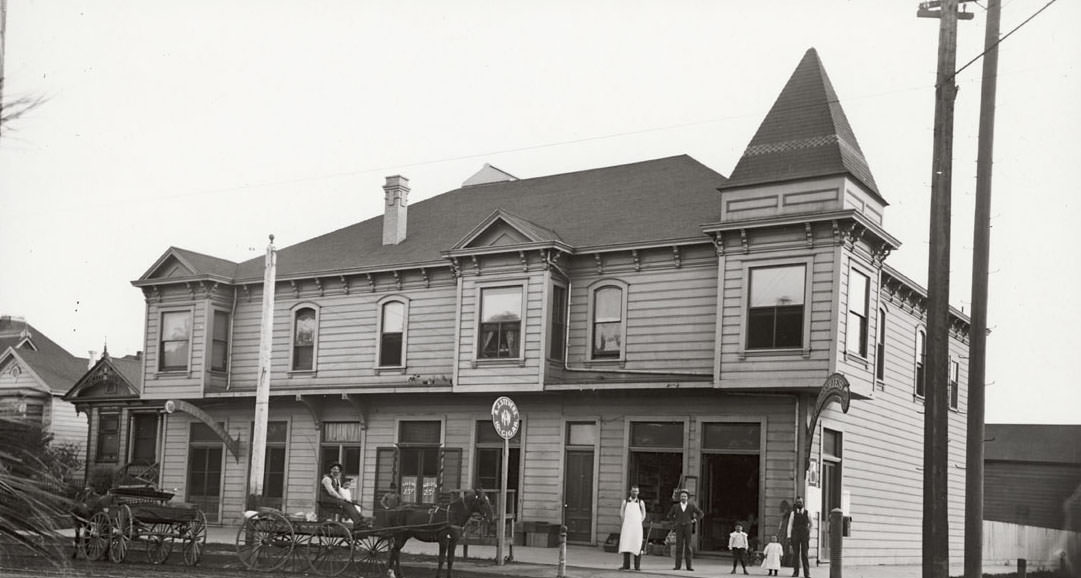
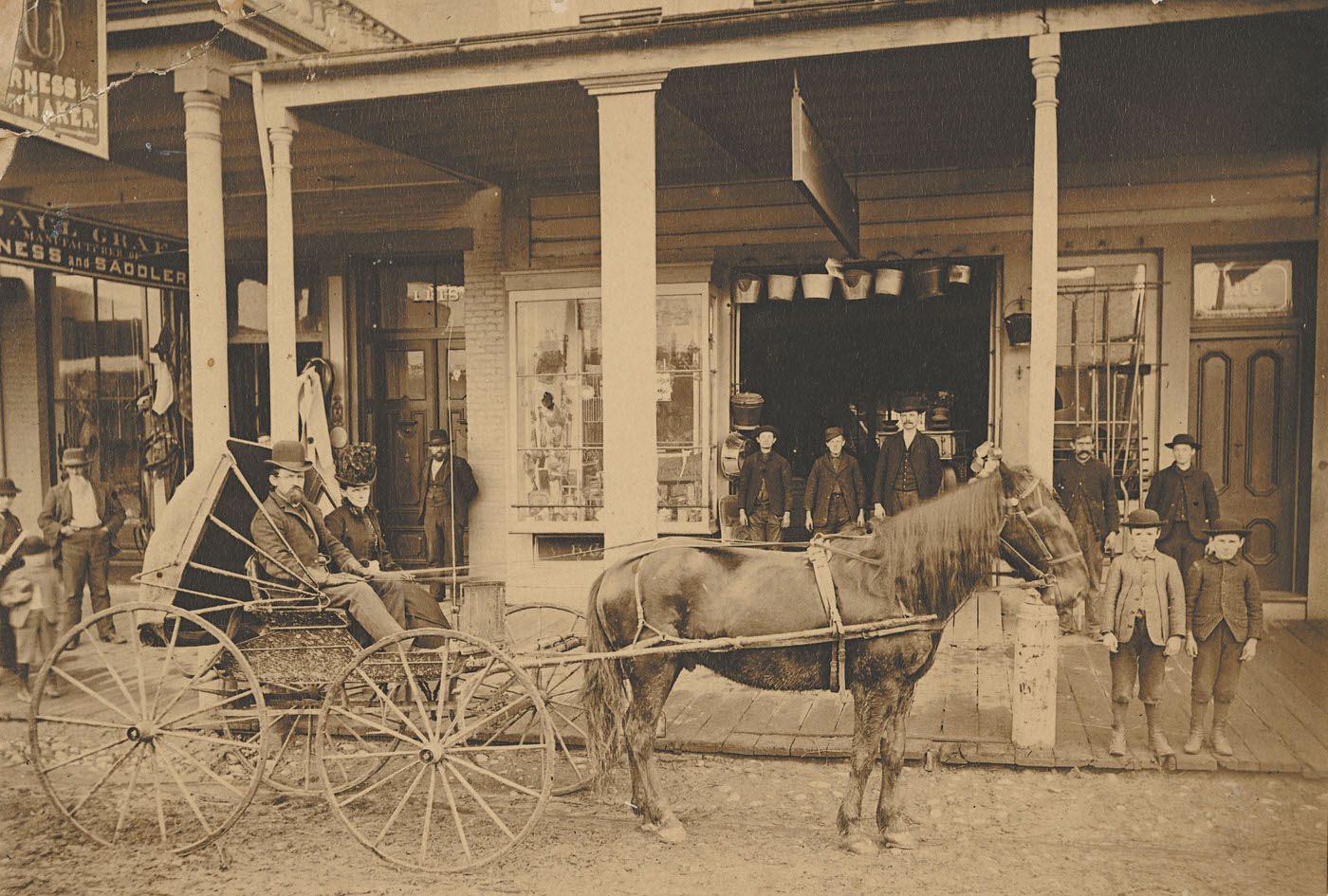
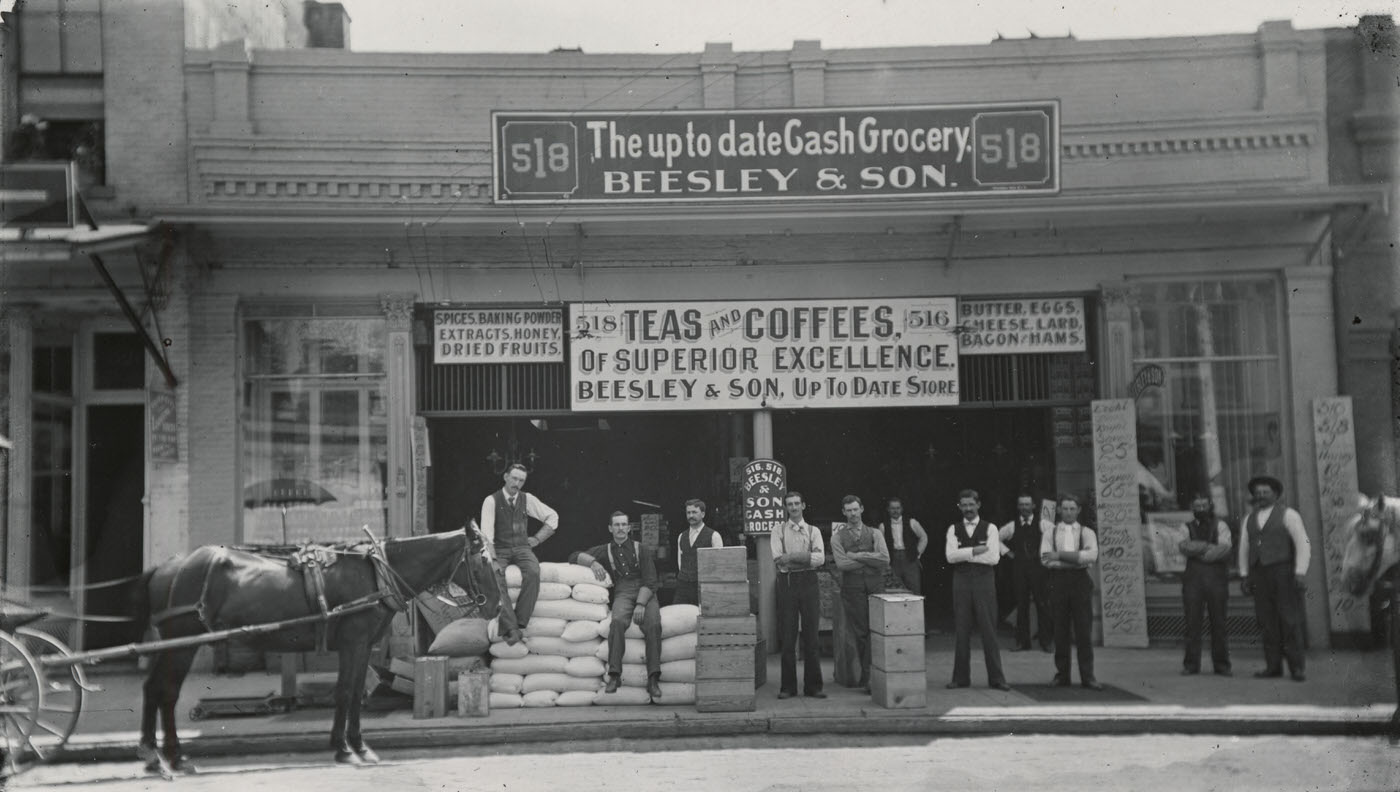
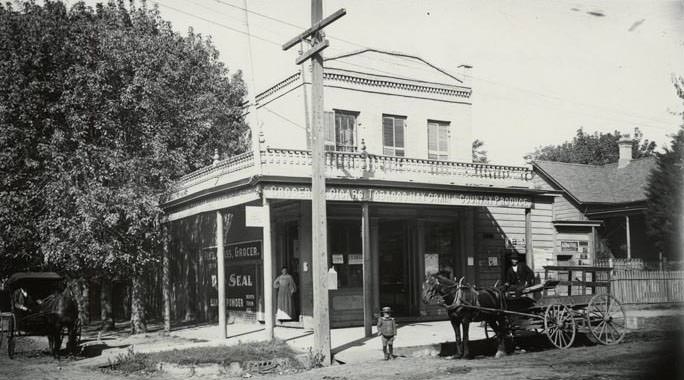
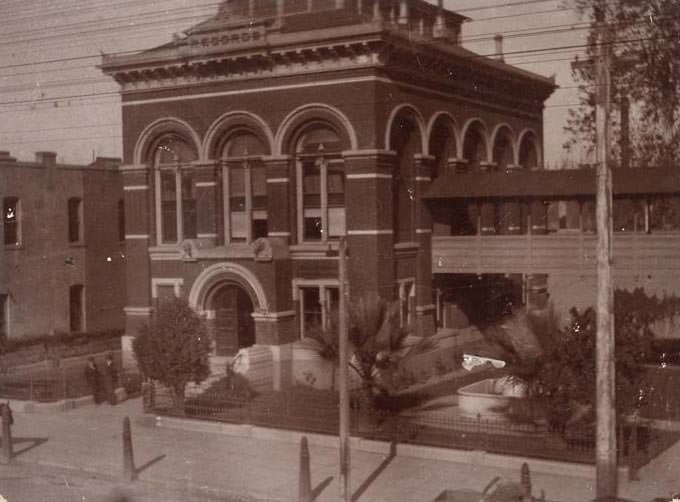
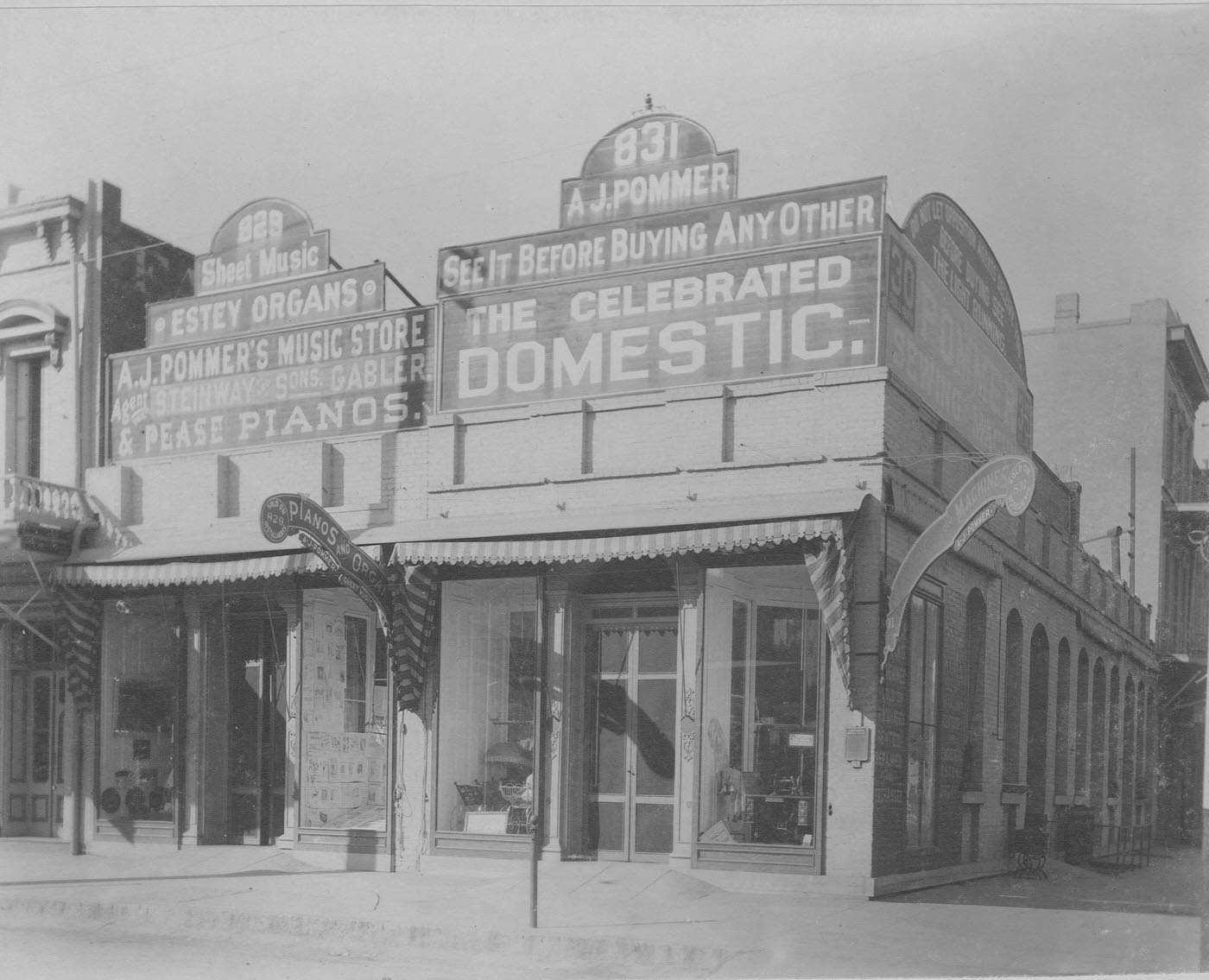
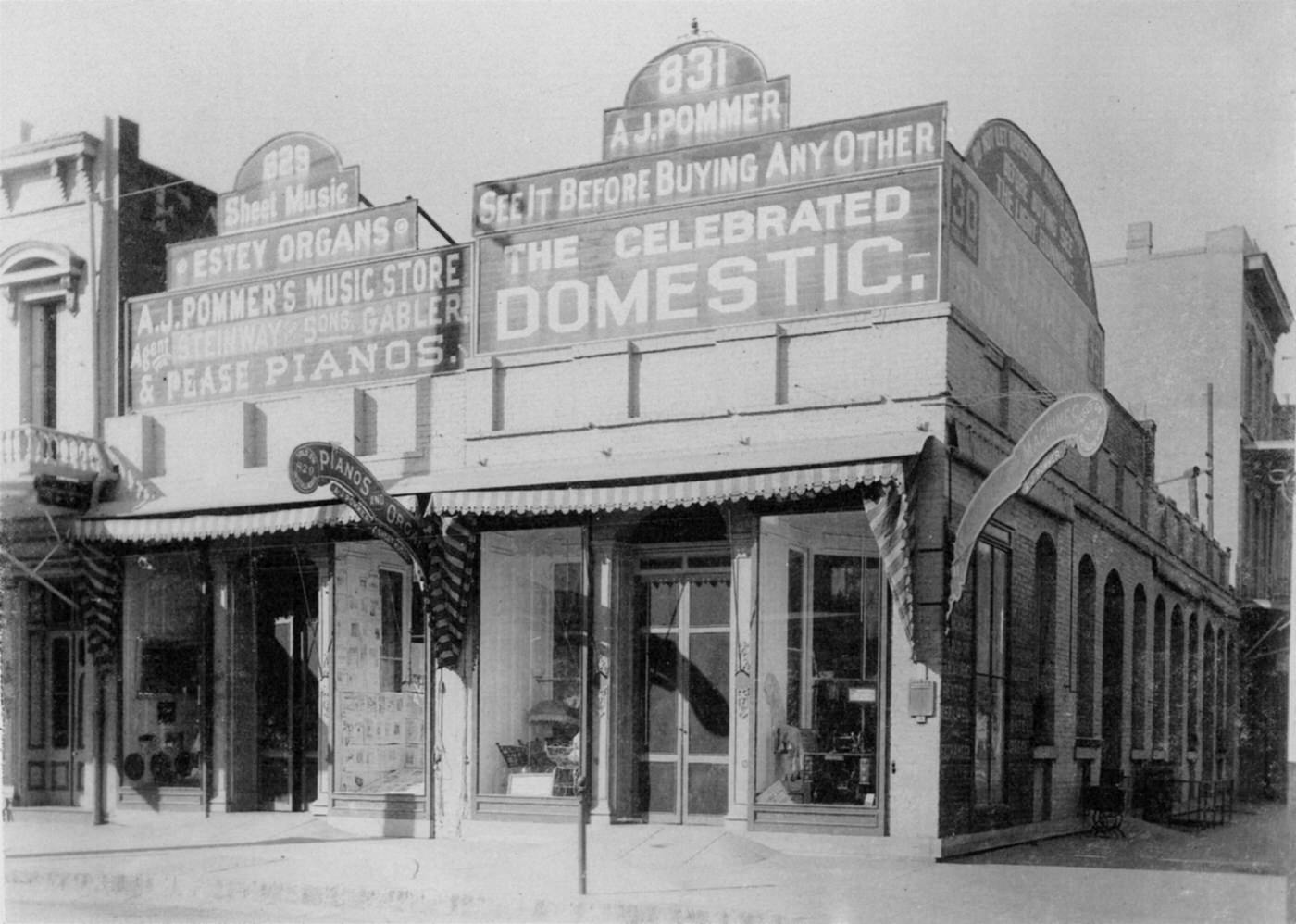
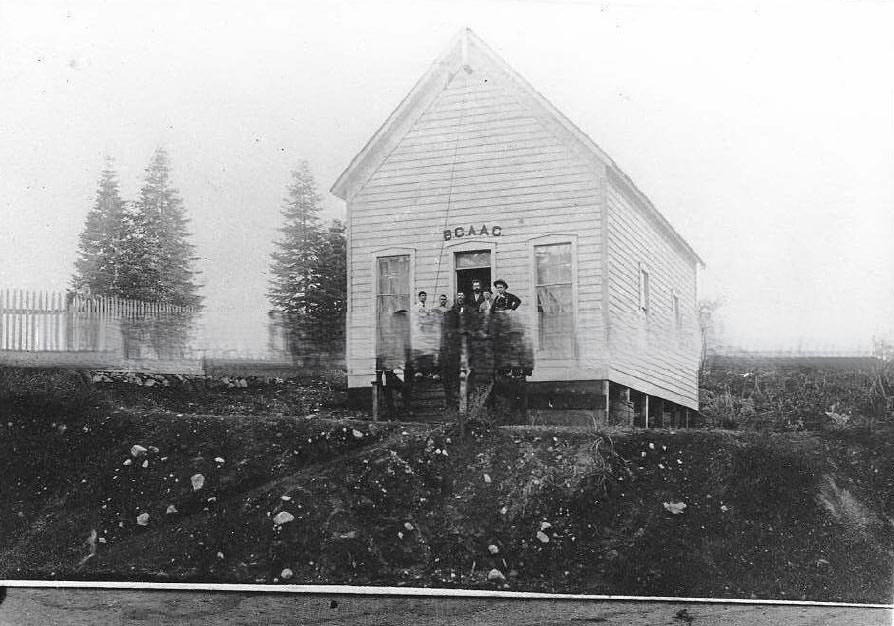
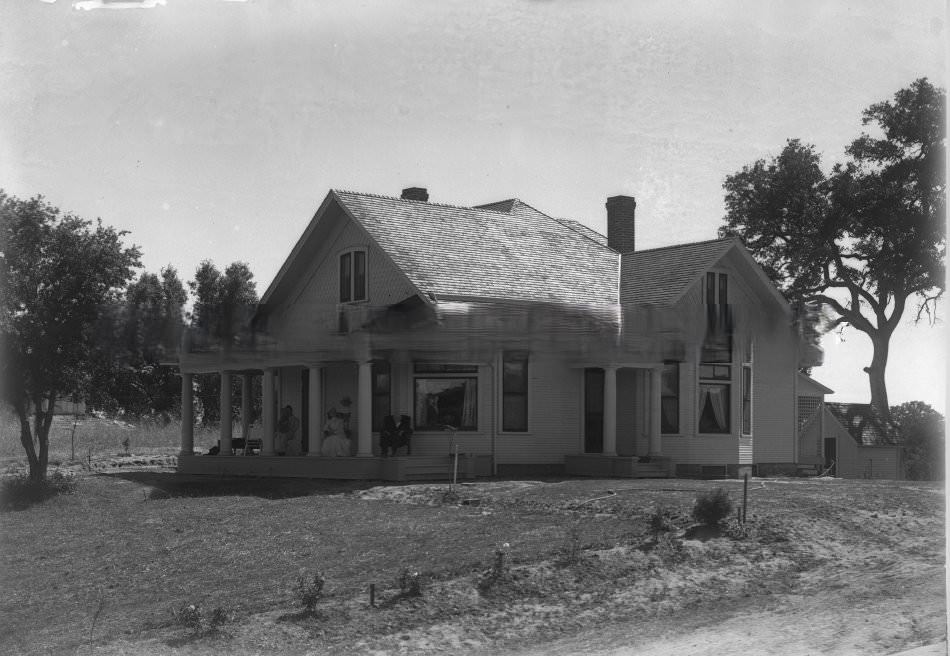
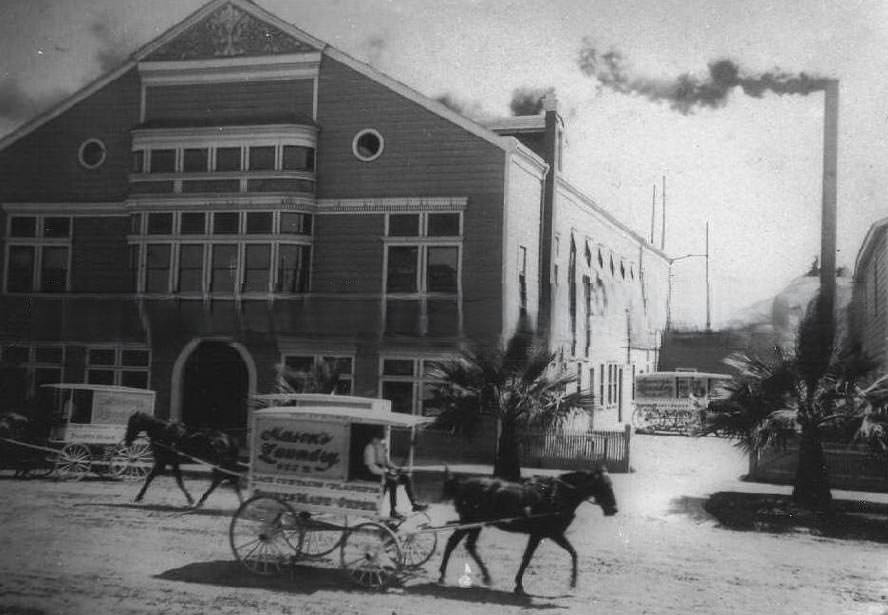
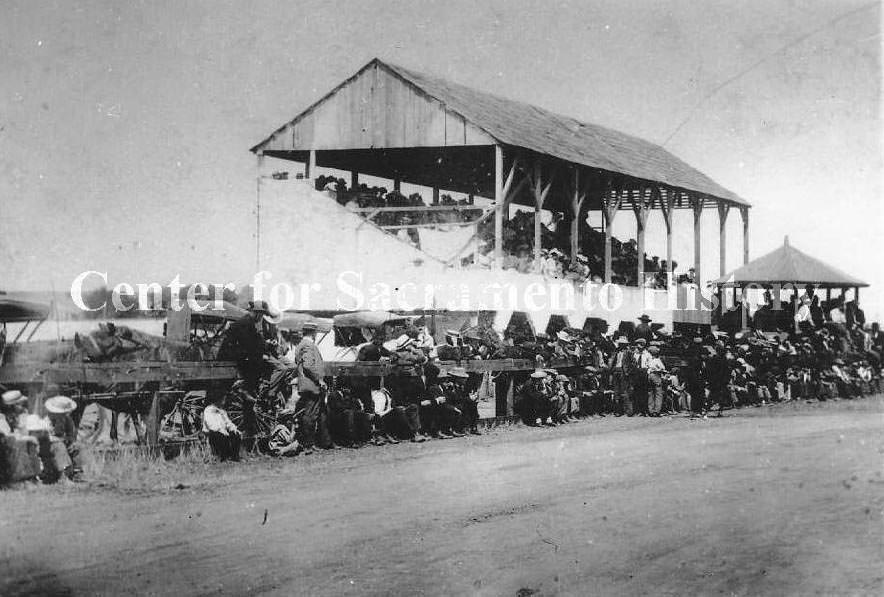
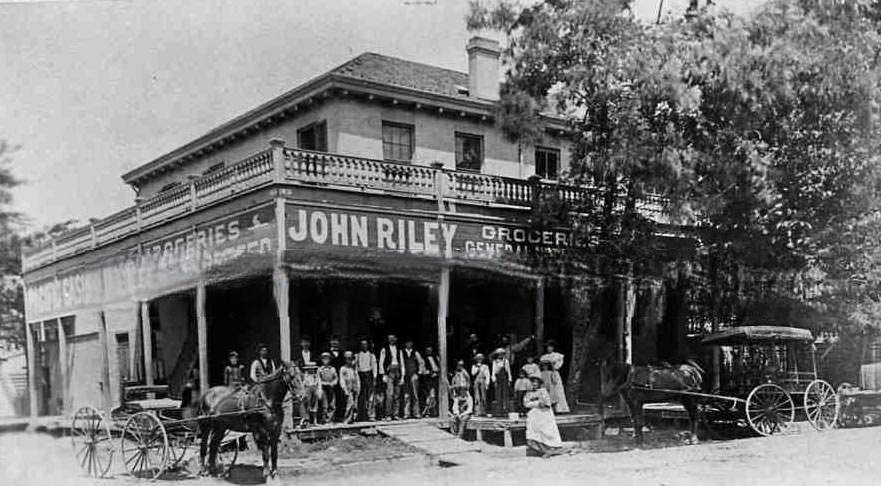
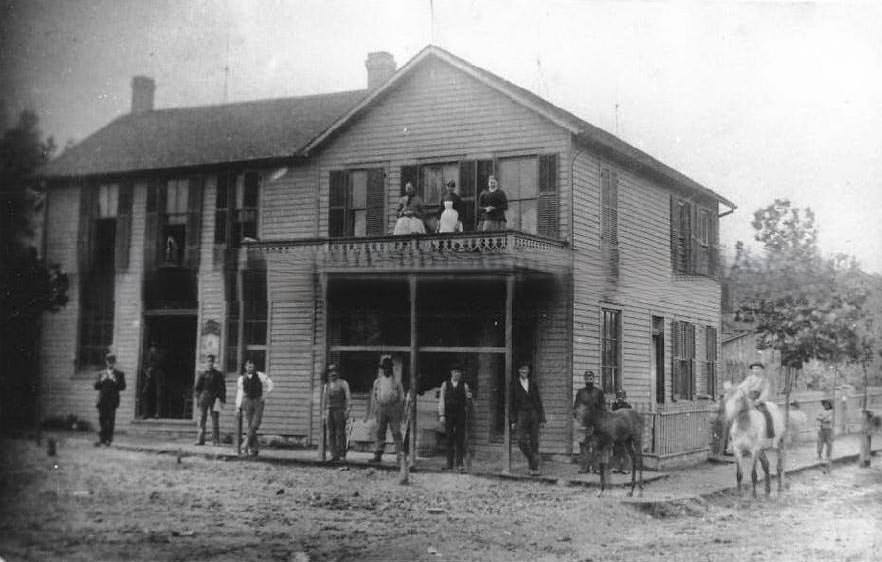
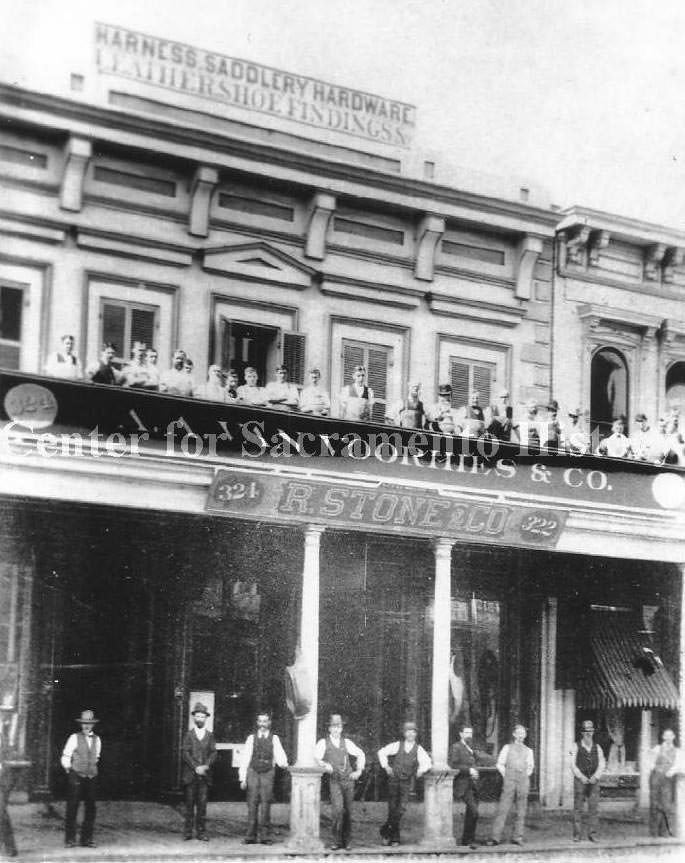
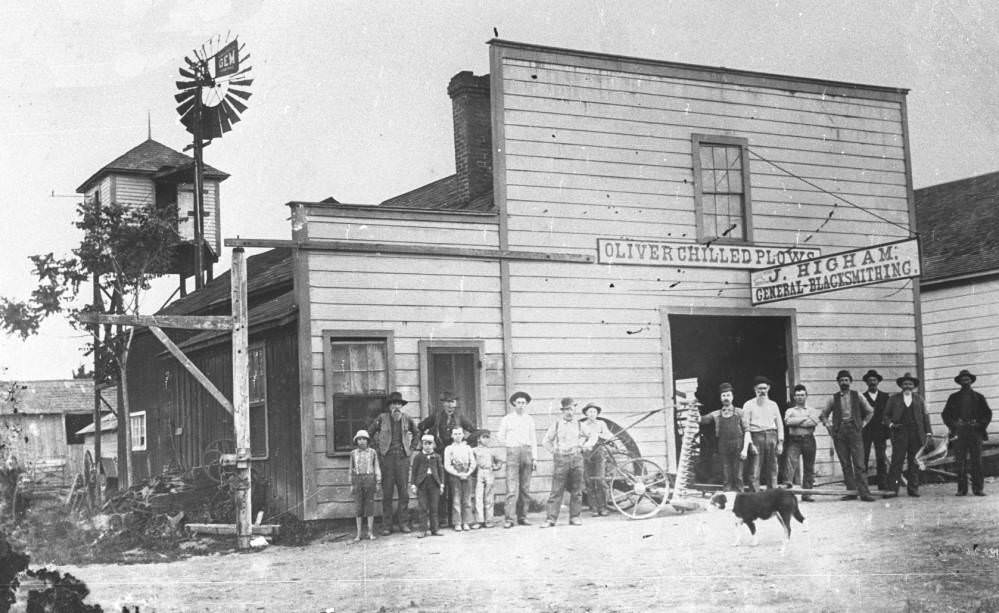
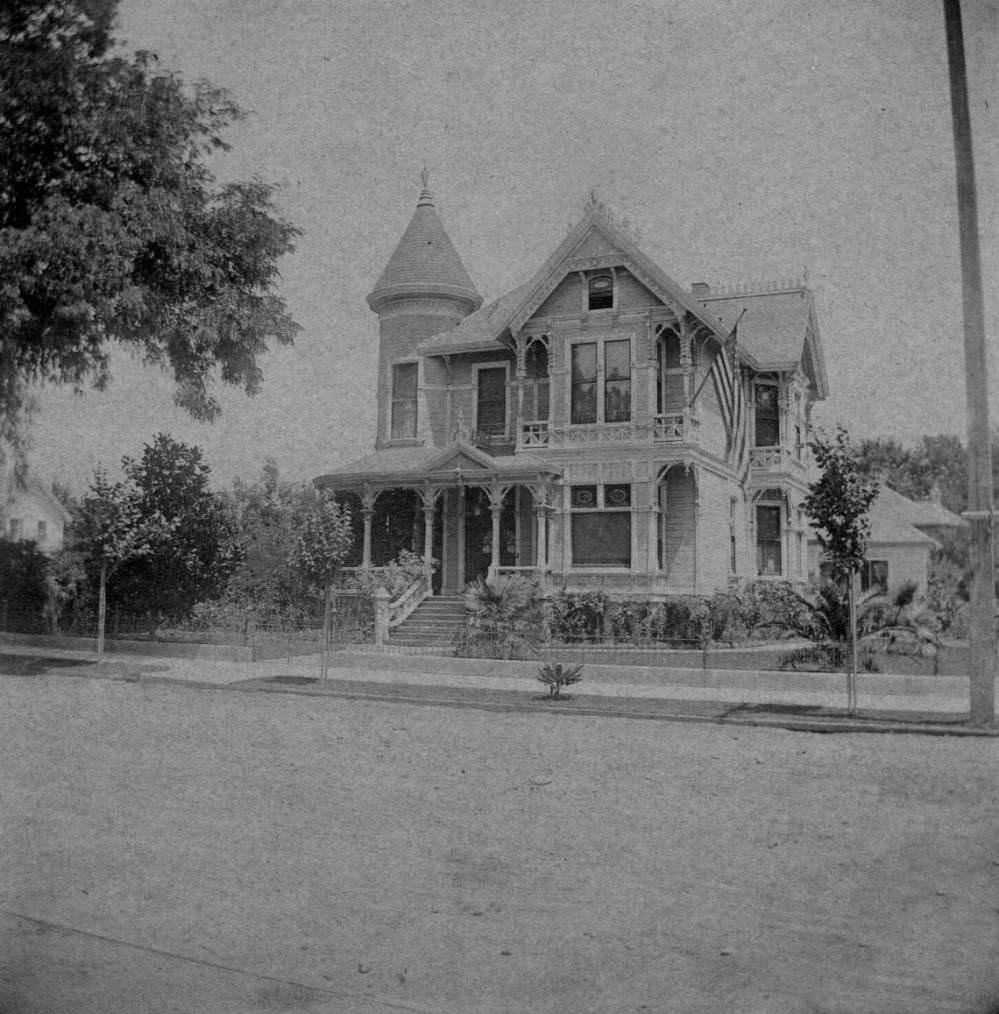
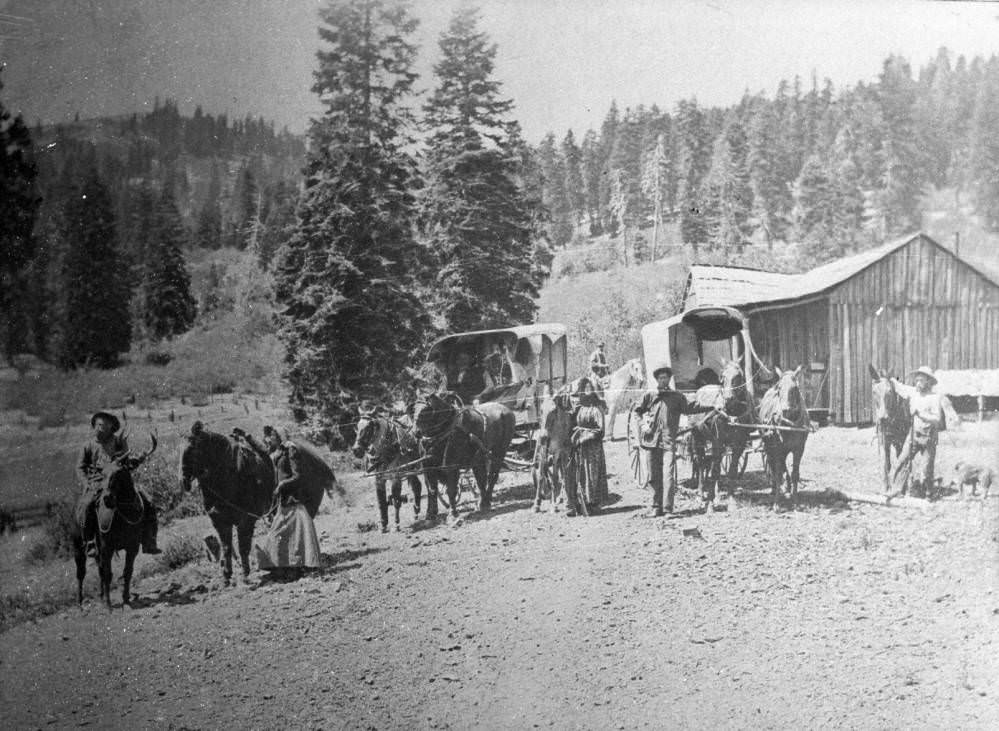
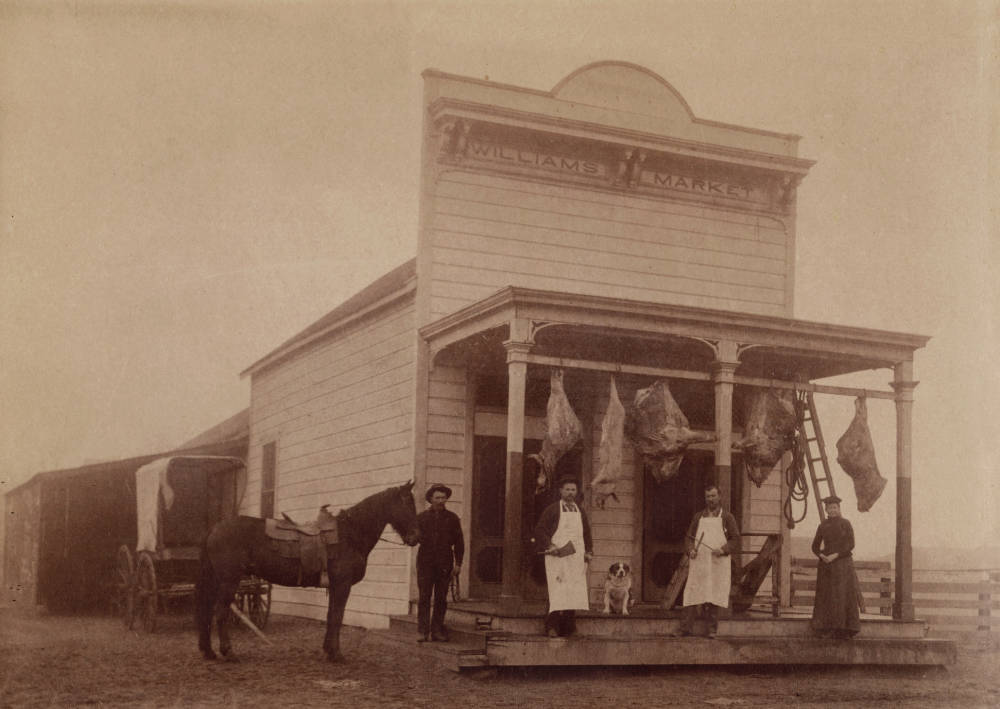
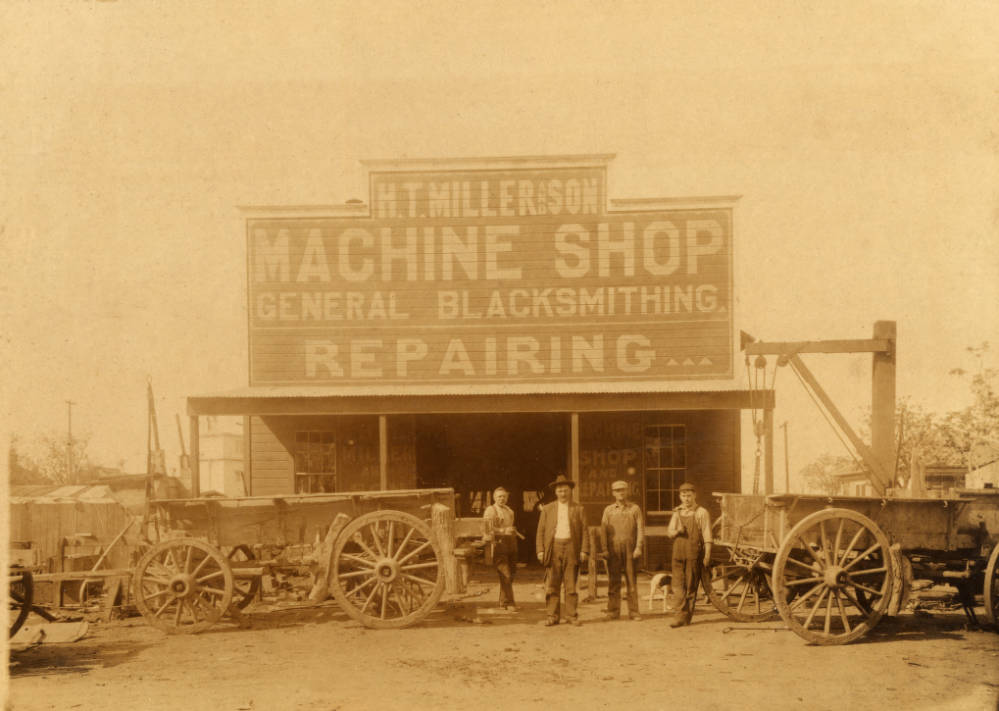
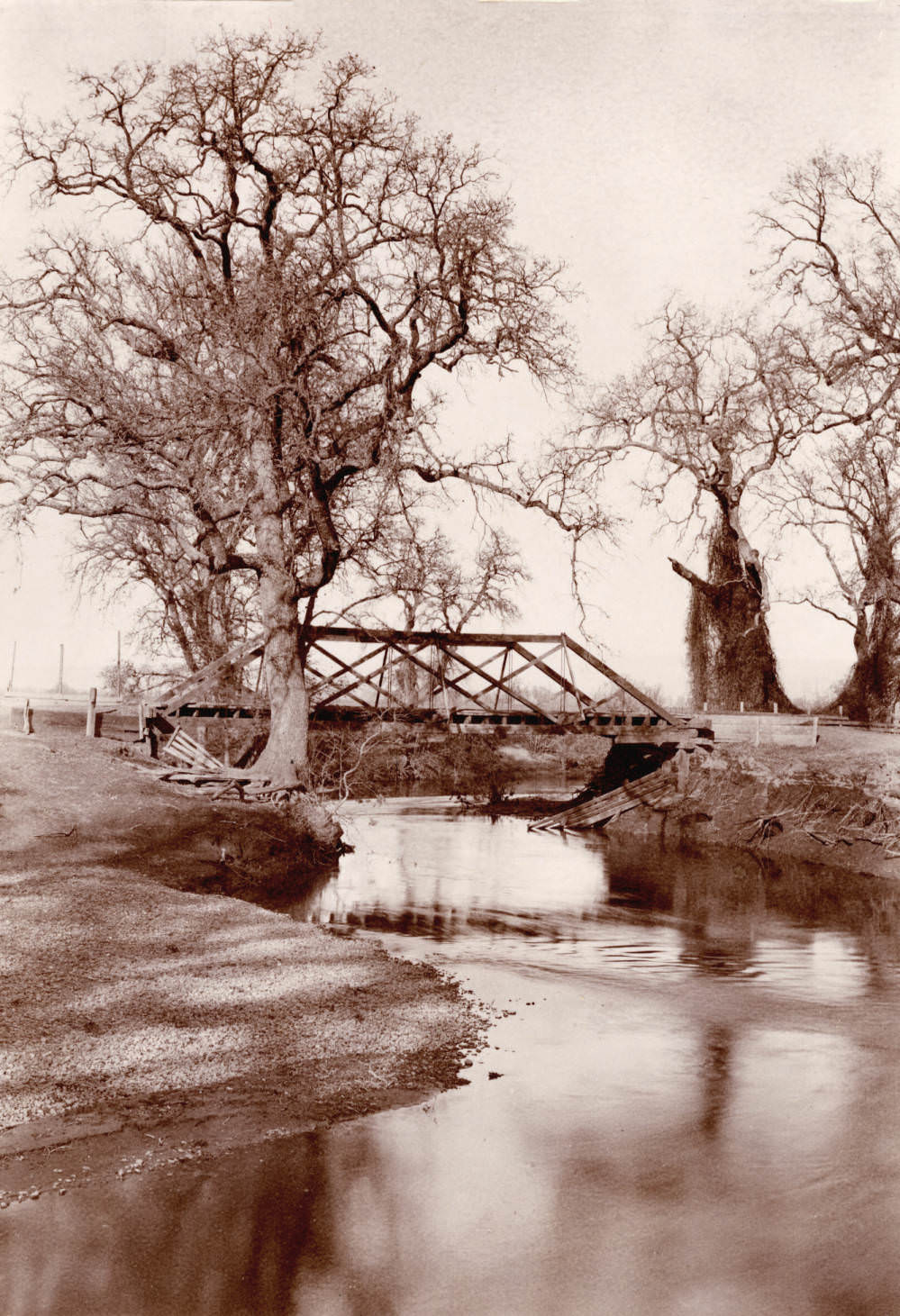
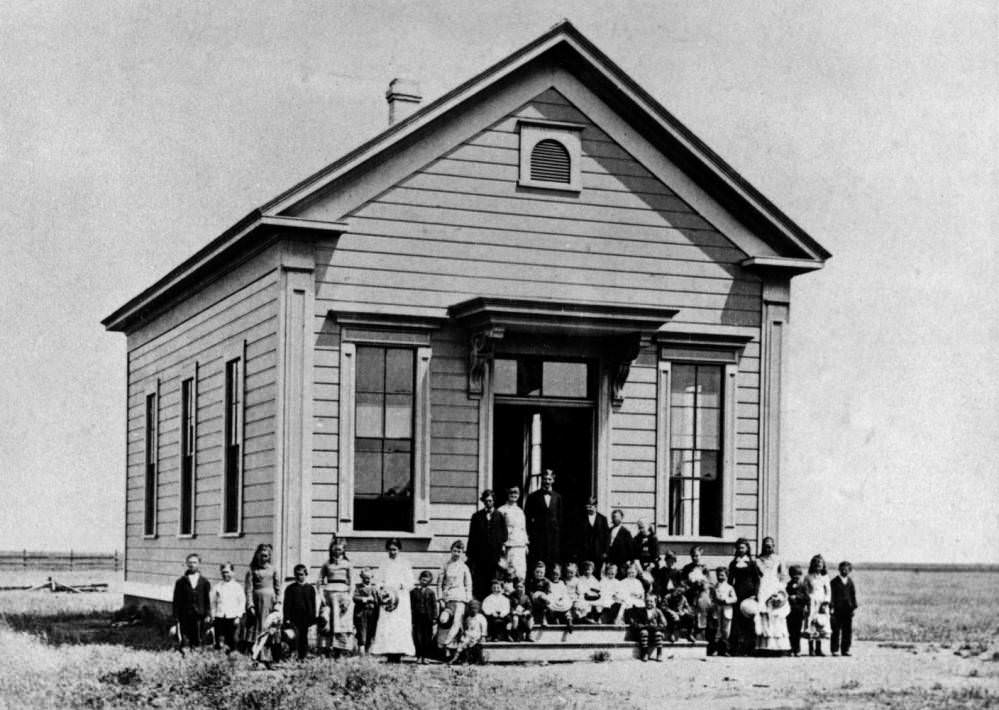
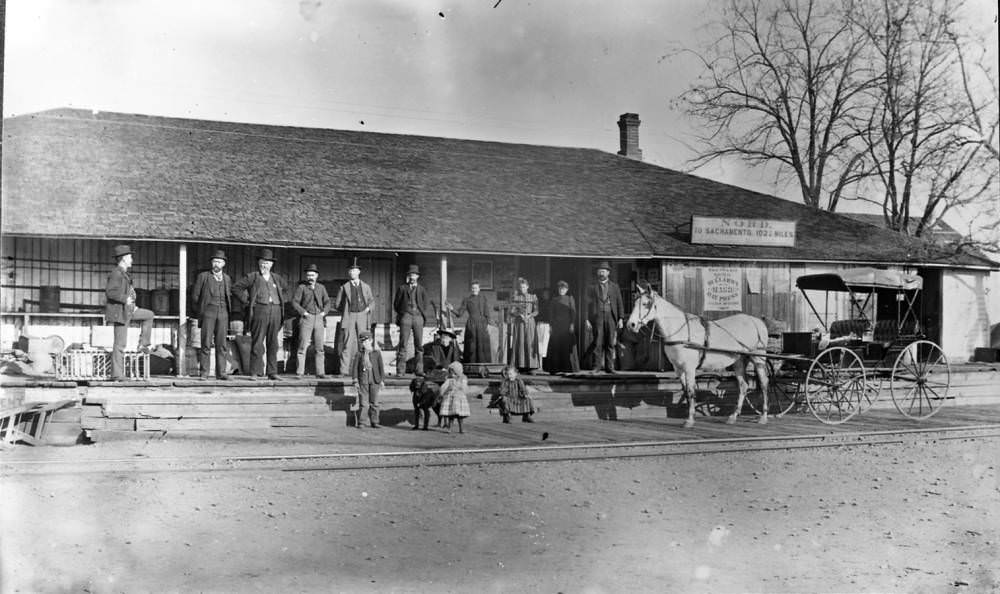
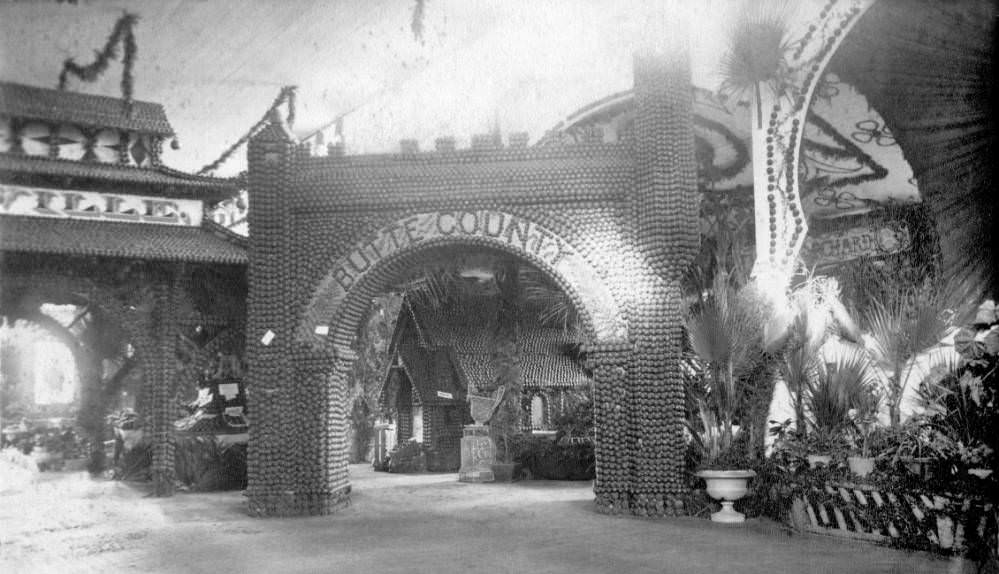
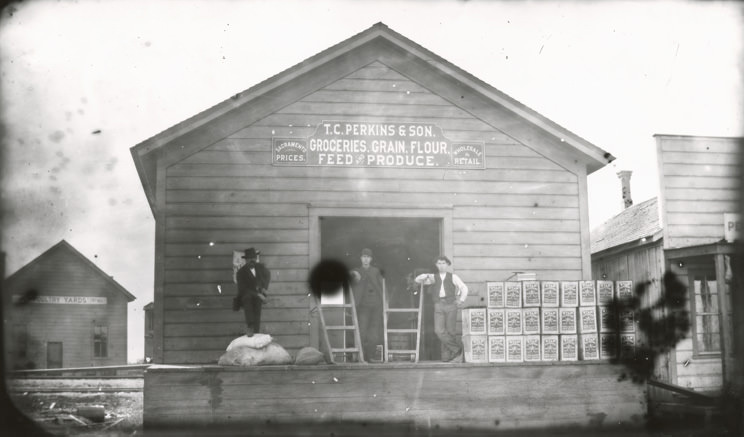
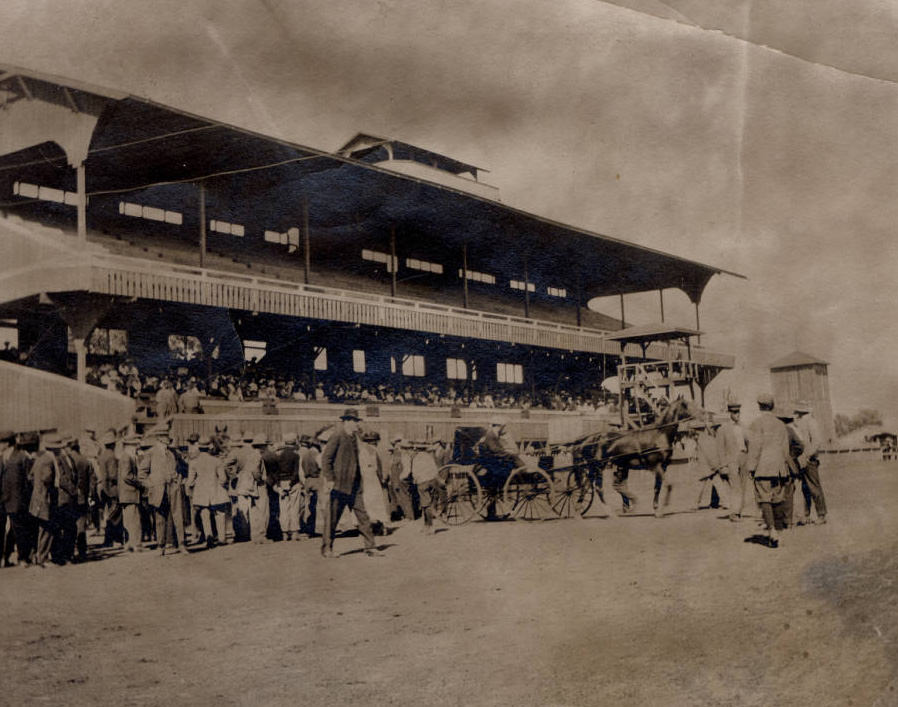
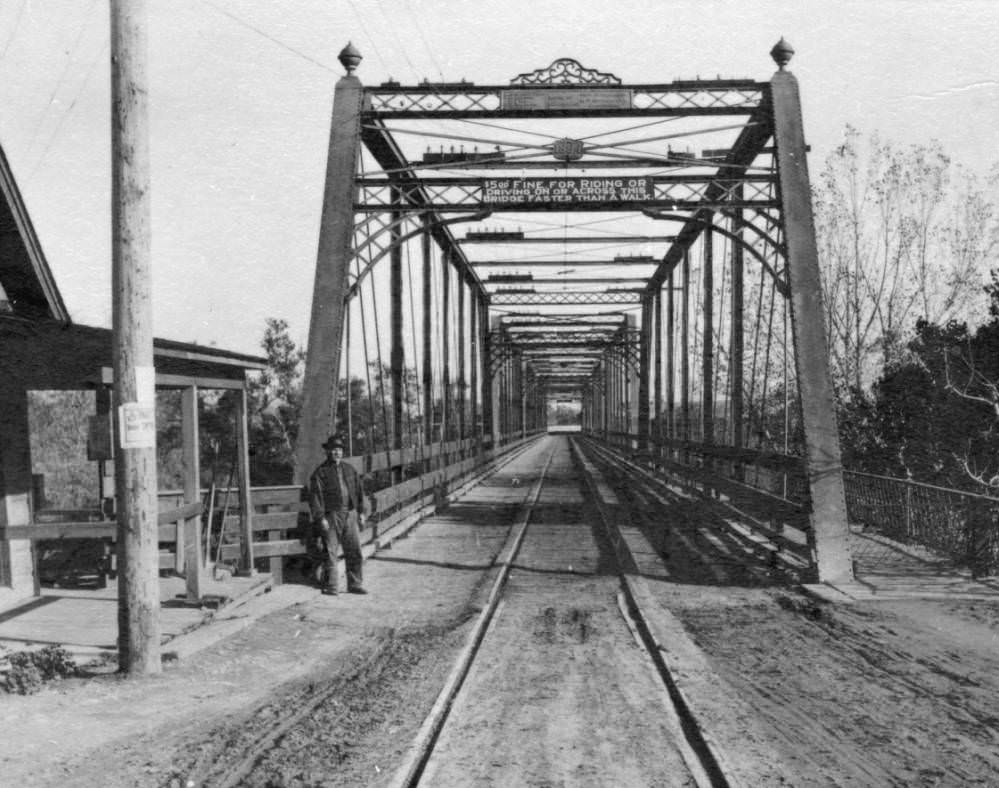
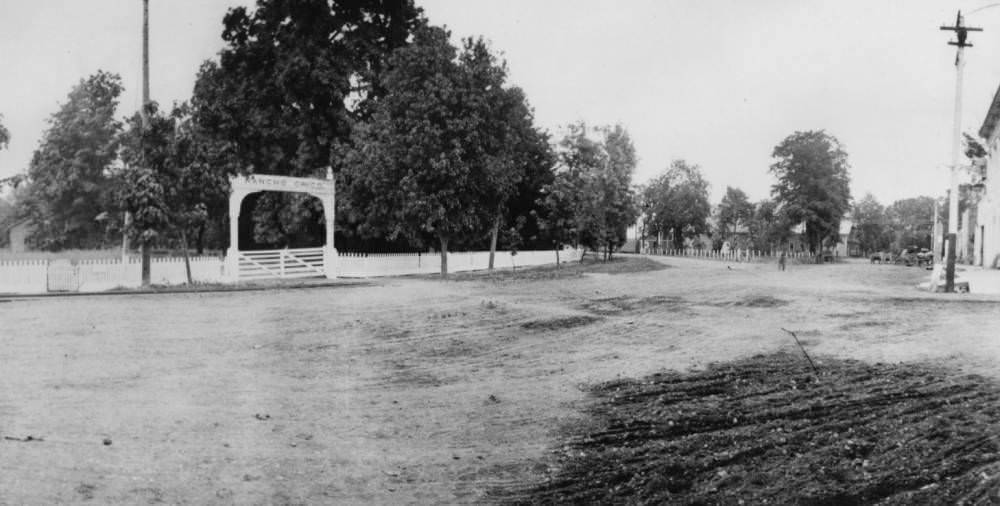
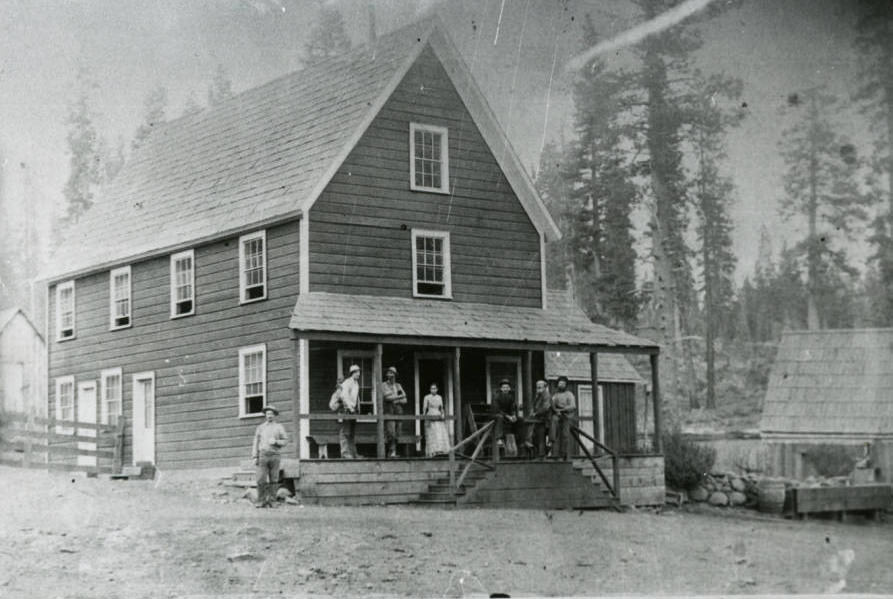
A memorial service taking place for C.P. Huntington at the Southern Pacific Shops, 1899The Agricultural Pavilion at 15th & L Streets, 1894Weinstock Lubin Department Store at 4th and K Streets in 1891.Victorian era house, 1890Ford Bros Shop, 1890Fair Oaks Excursionists, 1897Mountain town with railroad snow sheds, 1890Crocker Art Museum, 1890Circus parade with elephants marching along J Street, 1891.A front exterior view of the Stanton, Thomson & Co. hardware store at 308-312 J Street, 1890Osborn & Co. Building, I Street, 1890A mountain town street scene, 1890Sacramento Street scene with storefronts, 1890Two men mounted on horses and two men standing on the porch of a house, 1890Steamship Red Bluff, bags of grain in foreground, 1890County Hall of Records, 1890The Grangers’ Hall at the southeast corner of 10th and K Streets in 1896.K Street looking east from 6th Street, 1895,W. R. Gore’s Ranch on Sunset Avenue, 1897Mason’s Steam Laundry, 1890Elevated view looking down K St. from 7th. Golden Eagle Hotel and St. Rose of Lima Catholic Church to left. Toll’s Stable and the City Horse Market to right, 1890Marshall Primary School at 27th and J Streets, 1890View of a home in Fair Oaks, 1890Central Livery and Feed Stables, 1895Martin’s, Bryant’s, and Haller’s Houses, 1895City Police Patrol wagon in front of the City Jail and City Justice Court in the old City Hall at Front and I Streets, 1890Shops in Sacramento, 1895Exterior view of a man standing on the porch of a house, 1890Construction of Head Dam, Folsom, 1898View of the Leland Stanford home at 8th and N Streets, 1890Ranch Hands and Horse-drawn Farm Equipment, 1895Capital Furniture Sales Room at 178 J Street, 1890Huntington Hopkins & Co. hardware store, 1890Sacramento, 1897McFarland House, 1895The Christian Brothers’ College at 12th and K Streets, 1890Crocker Mansion, 1893The Agricultural Pavilion of the California State Agricultural Society, 1896Three views of theThomson-Diggs Co. building at 1806 3rd Street, 1890Union Restaurant and Capital Woolen Mills, 1890A. J. Pommer’s Building, a piano, organ and musical goods business located at 829 and 831 J Street, 1890Exterior view a two-story Victorian house with fenced yard, 1890Exterior view of Fair Oaks Presbyterian Church, 1890Exterior view of a house in Fair Oaks, 1890Central Methodist Church, 1890sCalifornia State Capitol ,1895The Blanchard residence, 1890sCity Brewery, 1895Webb Hall, 1898U. S. Post Office under construction, 1892Sacramento street scene,1892Carts Loaded with Bags of Grain or Seed, 1895Tavenor’s House from West Dixon’s Hills, 1895View of several people standing on front porch of Trott’s Hotel, 1890Weinstock Lubin, 1891Large family group stands in front of house and fence, 1895People in front of the Ann Arbor Bakery, 1898Brick Central Electric Railway Co. barn with two arched entryways and bay window at front,1892Brick building at 501 I Street, Sacramento, 1890Eureka Market, 1895Miller Bros. store, 1893Mrs. Samuel Conrad and family, 1893Beesley & Son (Albert V. and Charles A.) grocery store located at 518 J Steet. Shows bags and boxes stacked in front, 1896Eagleson & Co.building at 631 J Street, corner of 7th housing, 1896Grocery store at 1330 7th Street, 1893Highland Park Grove School, 24th & Y Streets, 1896Admission Day Parade K Street, Sacramento, 1895Mebius and Drescher Wholesale Grocers, 1893State capitol, Sacramento, 1898Hall of Records on the north side of K Street between 6th & 7th Streets, 1895A. J. Pommer’s building as it stood in 1896. Its 829 J St. location sold musical supplies, while sewing machines were offered at 831 J St. Both stores were at the northwest corner of Ninth and J streets.Shades of Sacramento – A. J. Pommer’s Building, 1896A stage coach, 1890B.C.A.A.C. lodge building, 1890Exterior view of three people sitting on the porch of a house in Fair Oaks, 1890View of the California State Capitol building circa 1890.Mason’s Steam Laundry, 1890Race track, 1895Post Office at corner of 7th and K Streets, 1892John Riley Groceries. Previously known as Wagner’s Grocery, and later as Tru Value Market, 1890Grocery and Provisions, 1890Central Pacific locomotive at Napa Junction, 1890Man in front of the Cunningham house on Sunset Ave, 1890View of the Dewey home on Dewey and Winding Way, 1890A. A. Van Voorhies & Co, at 322 J Street, 1897N. R. Smith’s residenc, 1897Fair Oaks Hotel, 1895Post Office, 1892Stage coach, 1890Daytime Prelude to Grand Electric Carnival, 1895Steel Bridge across Sacramento River, 1890The Weinstock, Lubin, and Company department store at 4th and K Street, now part of the site of the Downtown, 1894Wilson’s Stables, 1895River Boat at Red Bluff Landing, 1890Bridge over Sacramento River at Tehama, 1890Sacramento River Bridge, 1890sRiver Boat Through Bridge at Red Bluff, 1890River Boat Josie Lane tied up at Red Bluff Dock at Pine Street, 1890Centennial Bridge, 1890Sutter’s Fort, 1899J. Higham General Blacksmithing, 1890Palace Hotel, 1892View of the Hayman home on the corner of 5th and Randolph Street, 1895Mountain House, 1893Dan Evans, 1895Williams Market, 1890Alta and her father and mother, 1898H.T. Miller and Son Machine Shop, 1890Chico Creek bridge, 1893Students and teachers standing in front of a school building, 1890Nord railroad to Sacramento, 1895Citrus Fair,1890T.C. Perkins & Son, groceries, grain flour, 1899Chico Race Track, 1890Bridge Tender Jim Lange at the Centennial Bridge, 1890The Rancho Chico Gate, 1890Chaparral House with 7 people outside of it, 1898






Can we get more pics of Sacramento in the 1990s?