
Pittsburgh earned the nickname “Steel City” for good reason. In the 1940s and 1950s, the city was one of the most industrially active places in the United States. Steel mills ran around the clock. Factories burned coal by the ton. Homes were heated with it too. Coal was not just a fuel — it was the engine behind nearly every aspect of life in Pittsburgh. And it left its mark on everything.
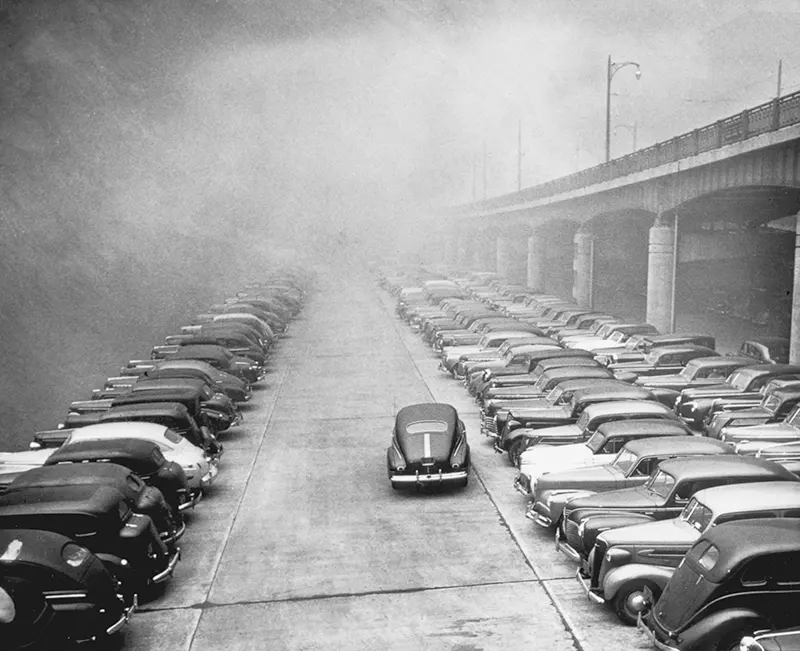
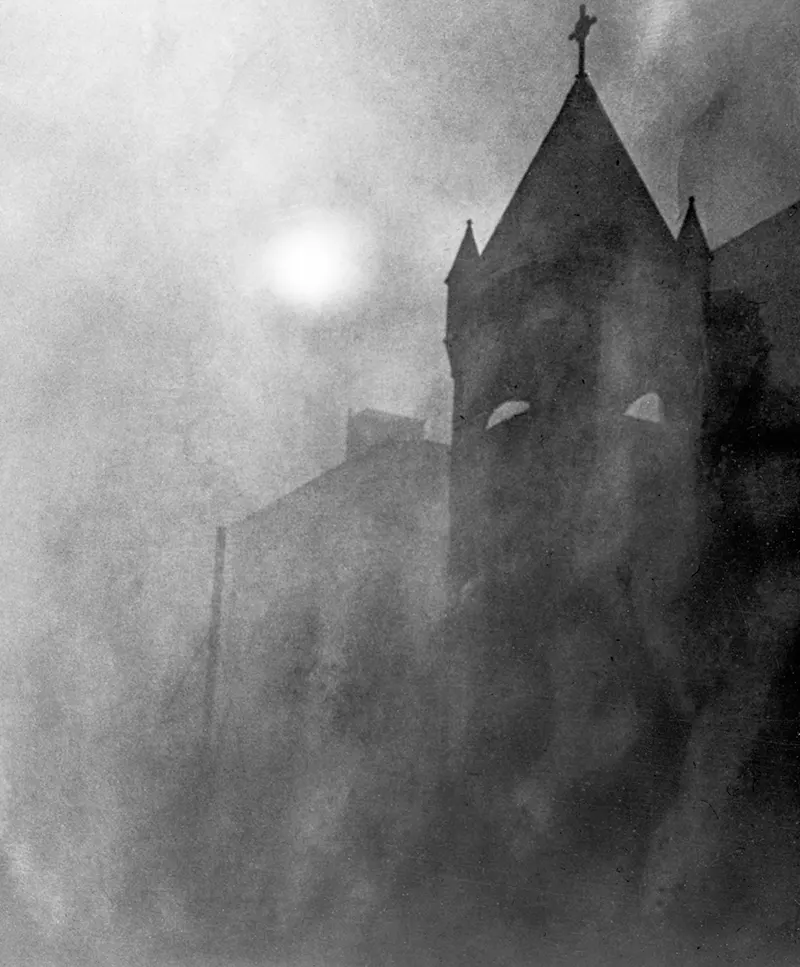
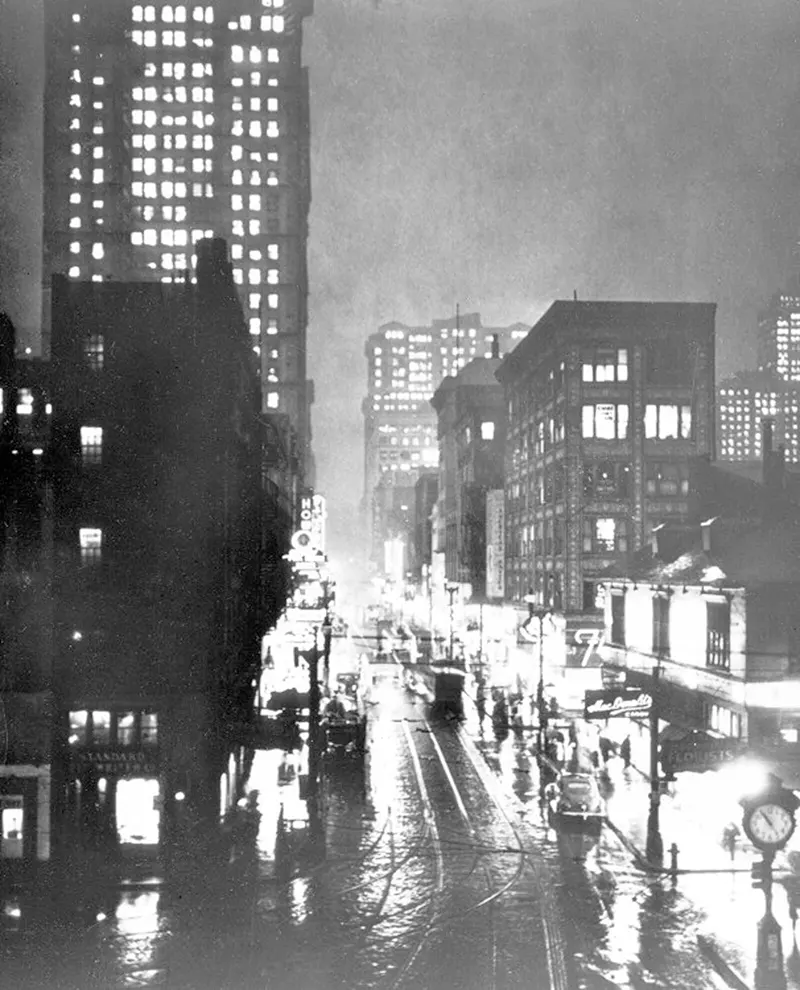
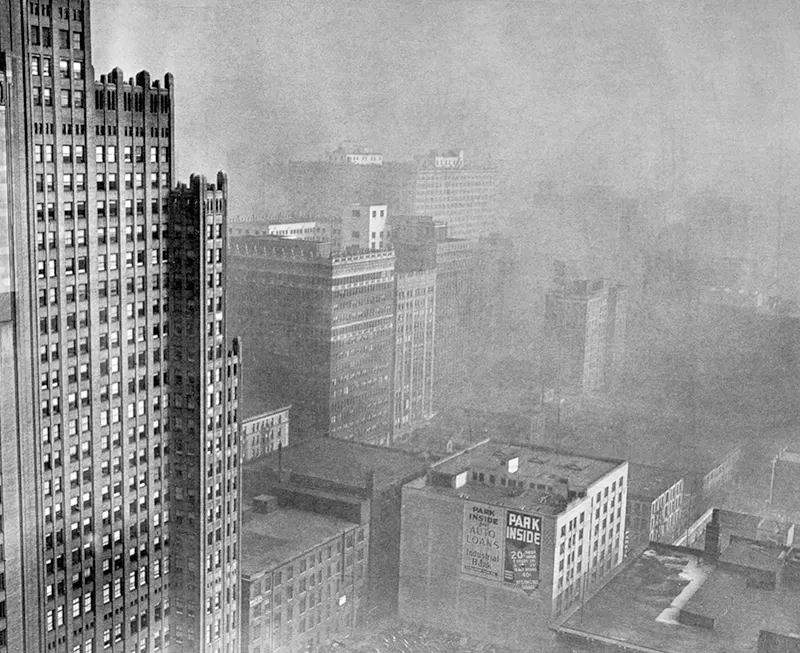
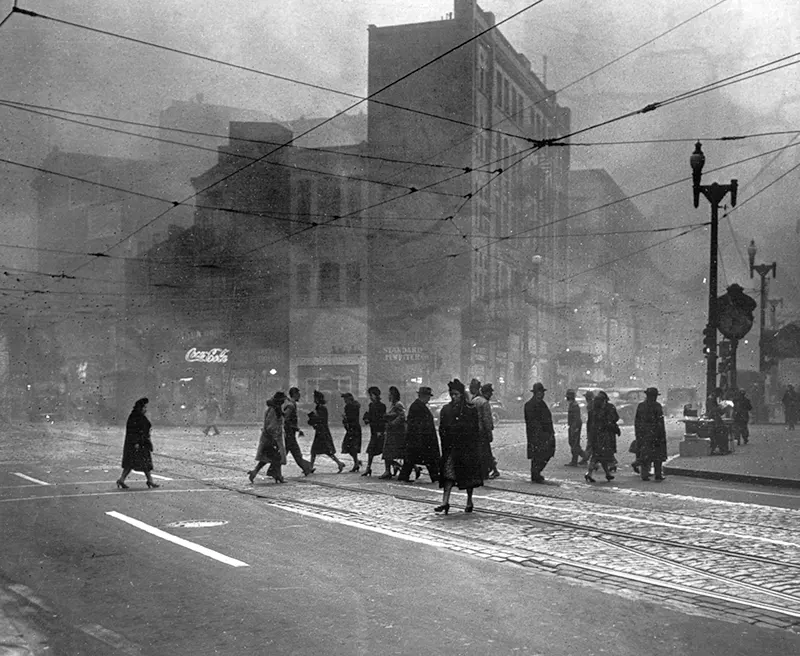
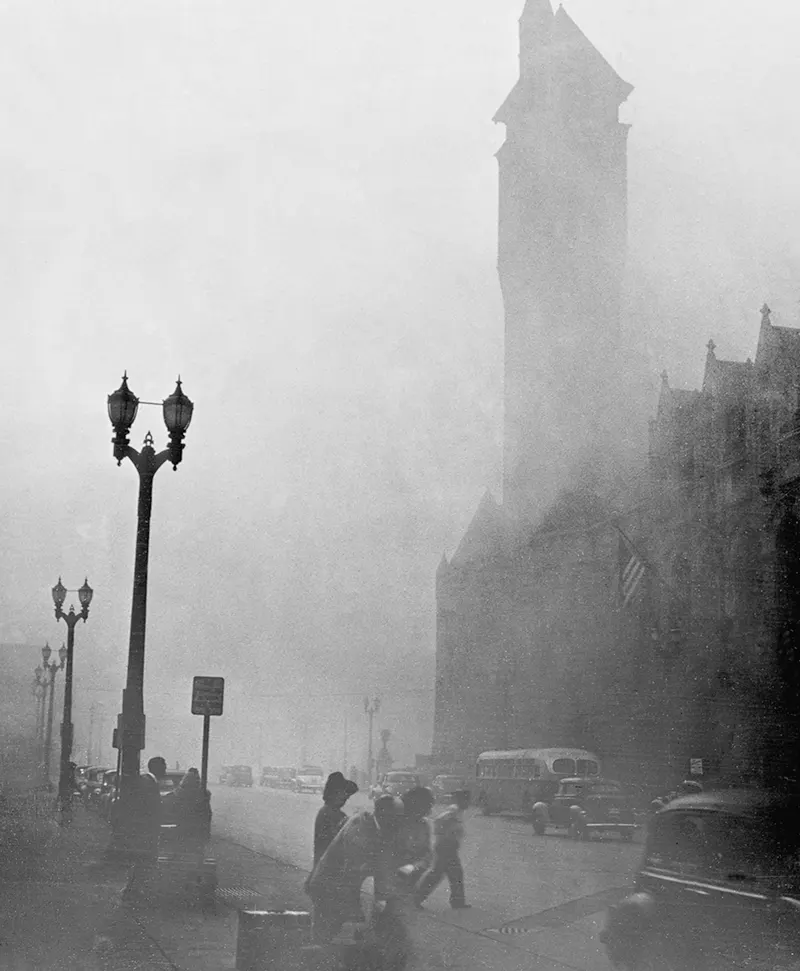
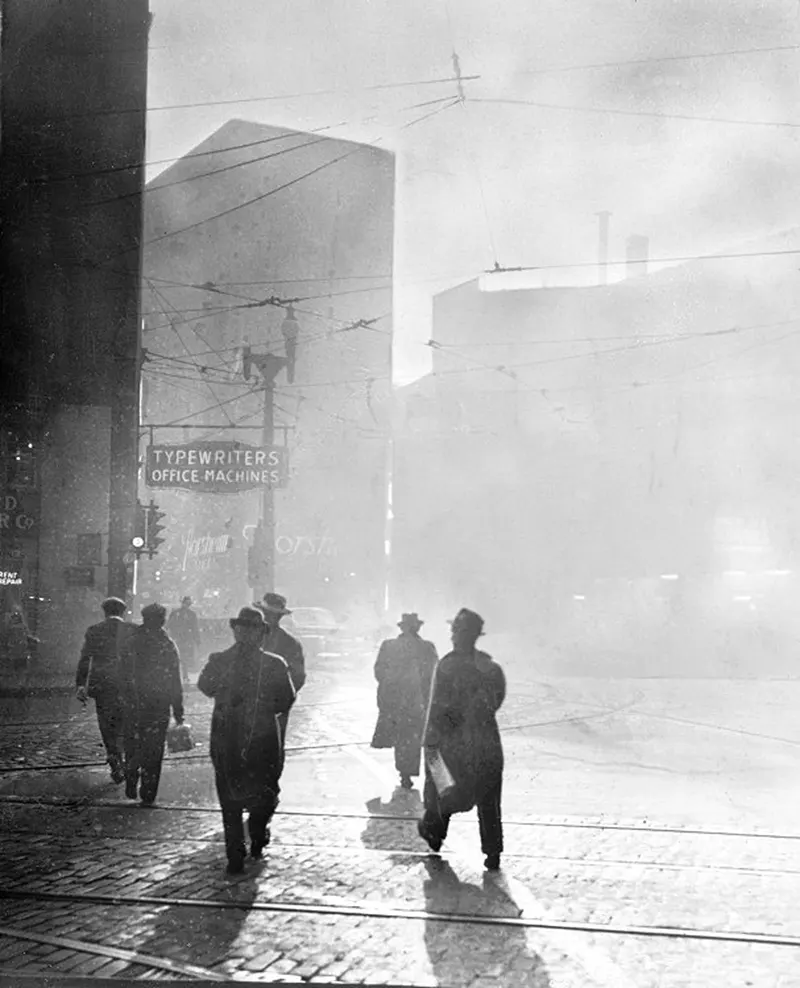
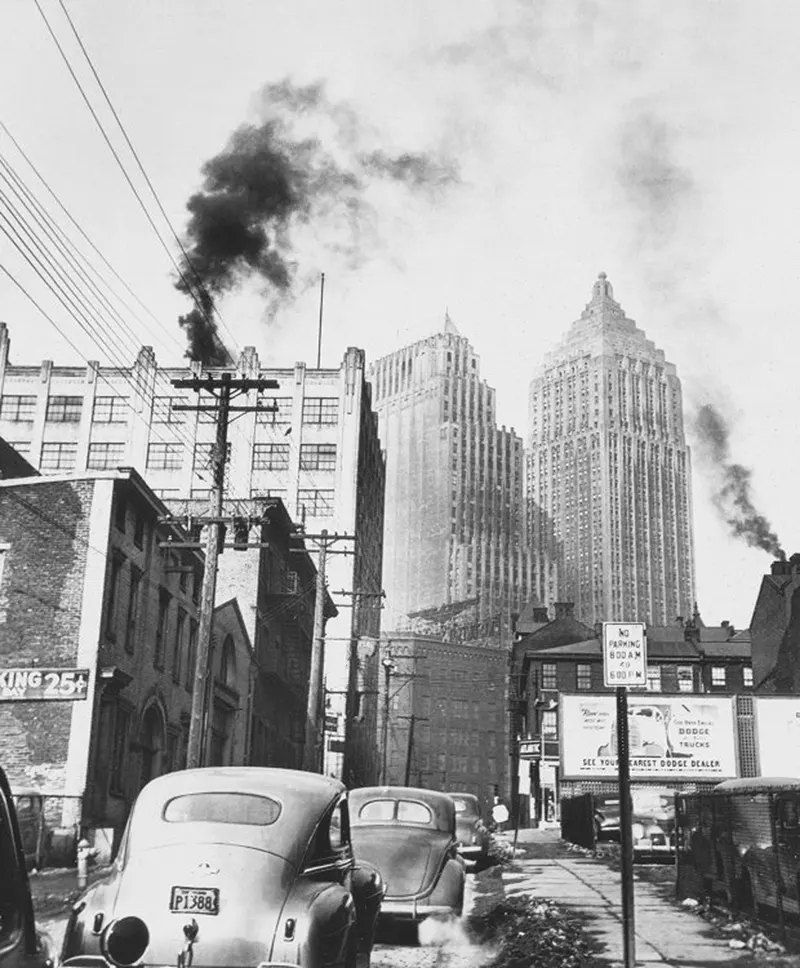
The air above Pittsburgh told the story plainly. Thick clouds of coal smoke rolled out of industrial stacks, chimneys, and furnaces day and night. The smoke was so dense and constant that midday often looked more like dusk. Streets that should have been bright with afternoon sun sat under a gray, sooty haze. This was not an occasional bad day — it was the permanent condition of the city.
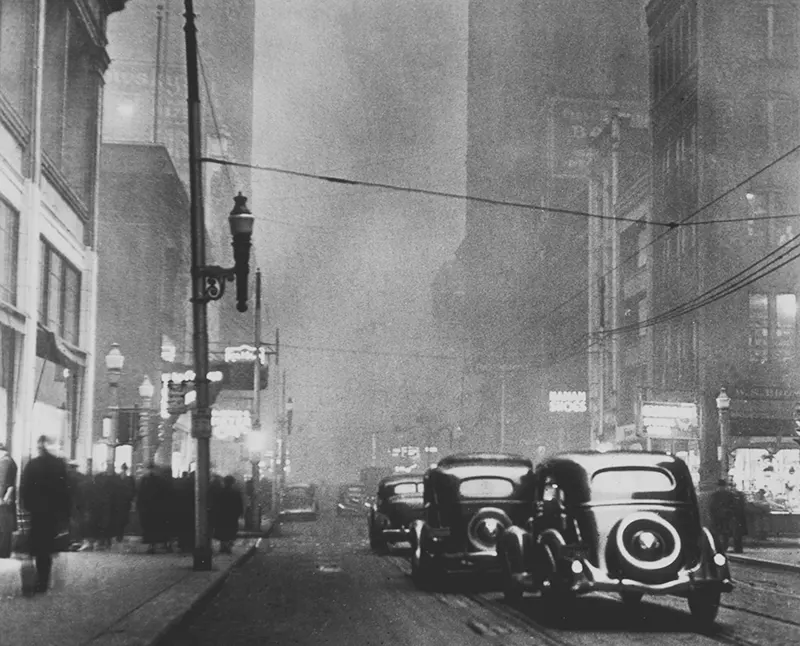
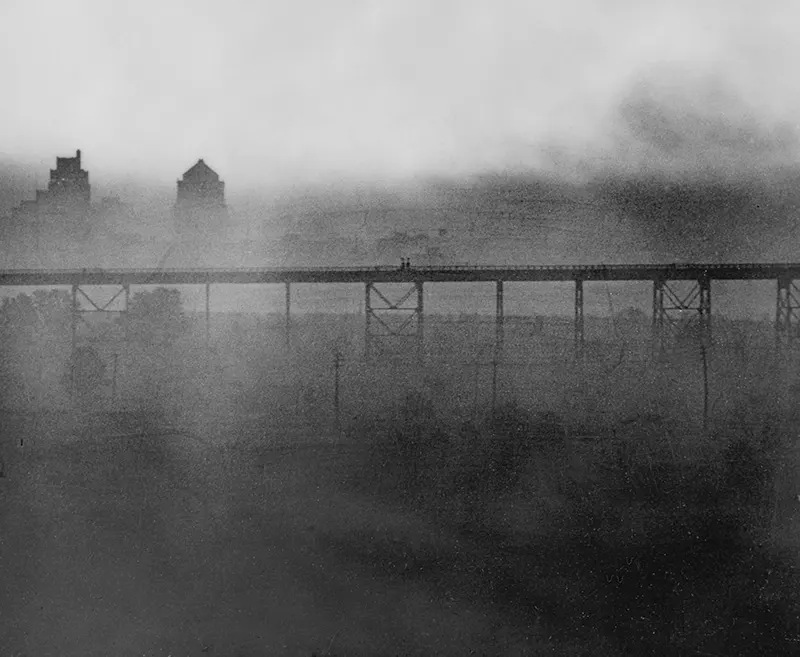
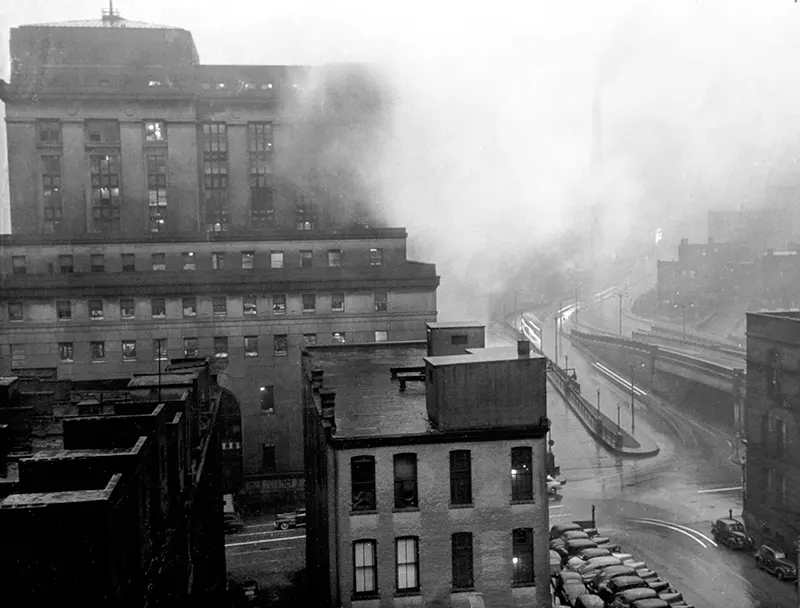
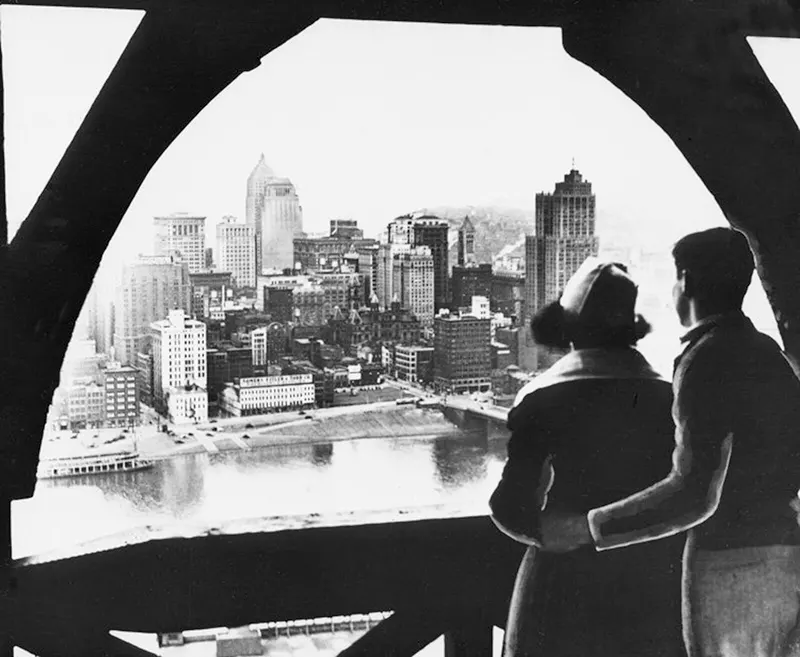
Looking across the Monongahela or Allegheny rivers, bridges and buildings disappeared into the haze. The smoke did not settle at the edges of the industrial zones — it spread across the entire city, from the riverfront wharves to the busiest commercial streets downtown.
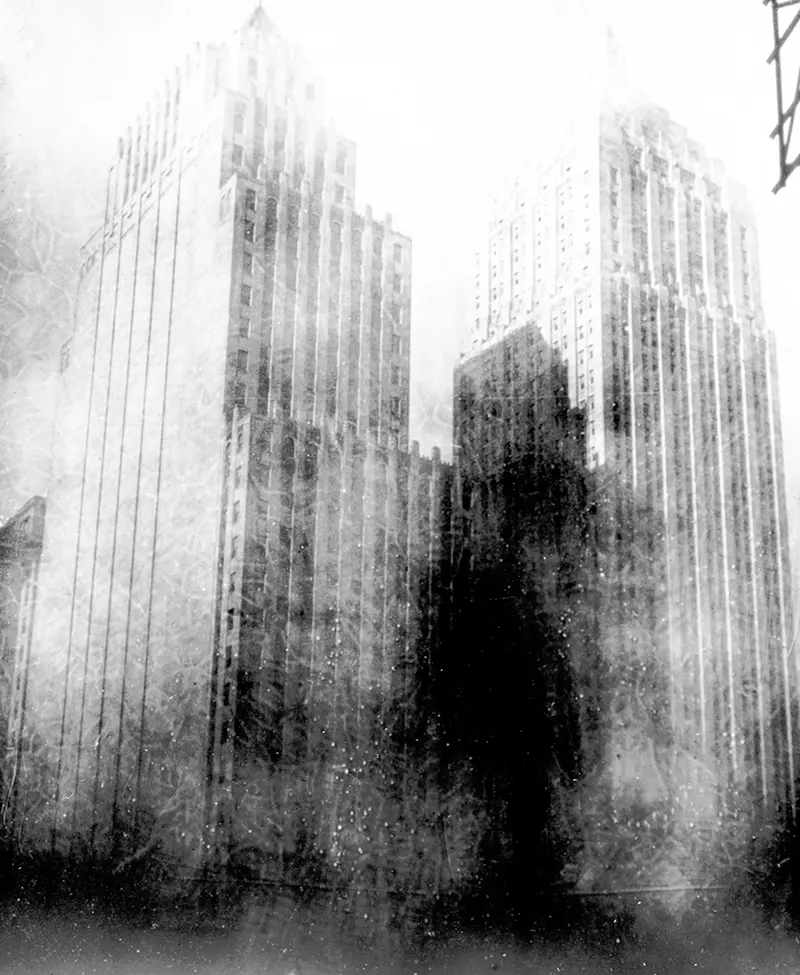
Major companies like Koppers Coal operated right in the city’s core. Their buildings and those of neighboring firms like Gulf Oil were often barely visible behind walls of smoke. Even at street level, looking up at these structures meant squinting through a brown-gray curtain.
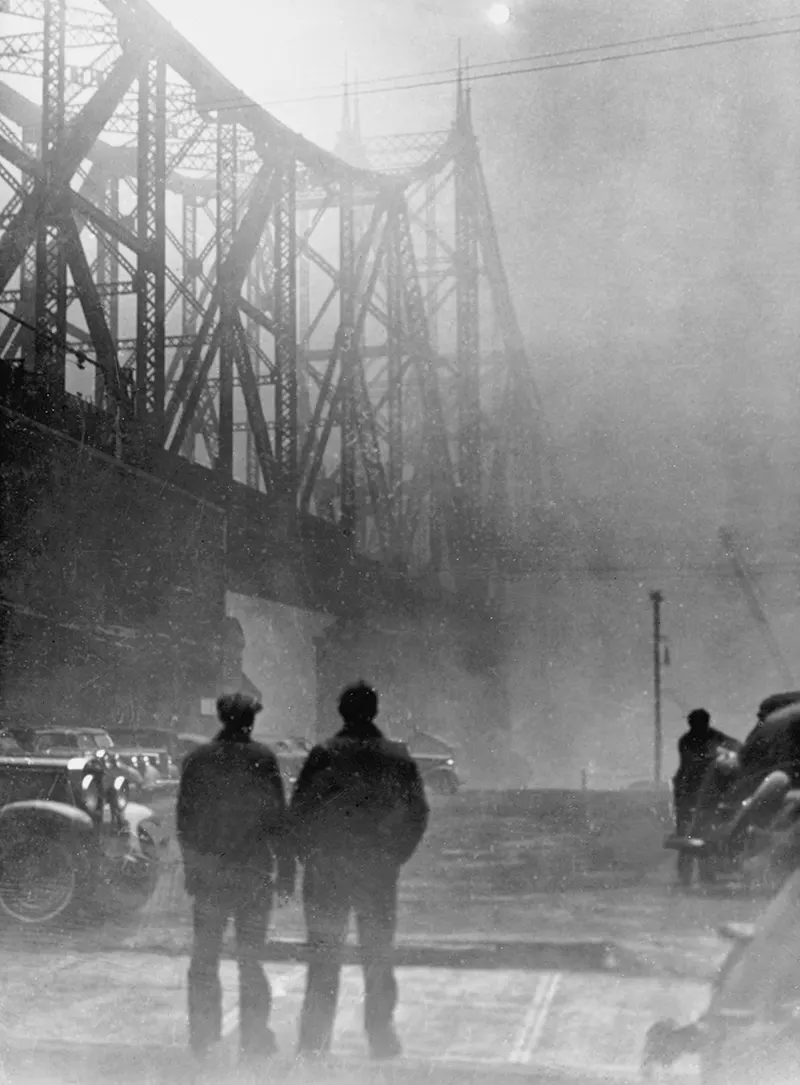
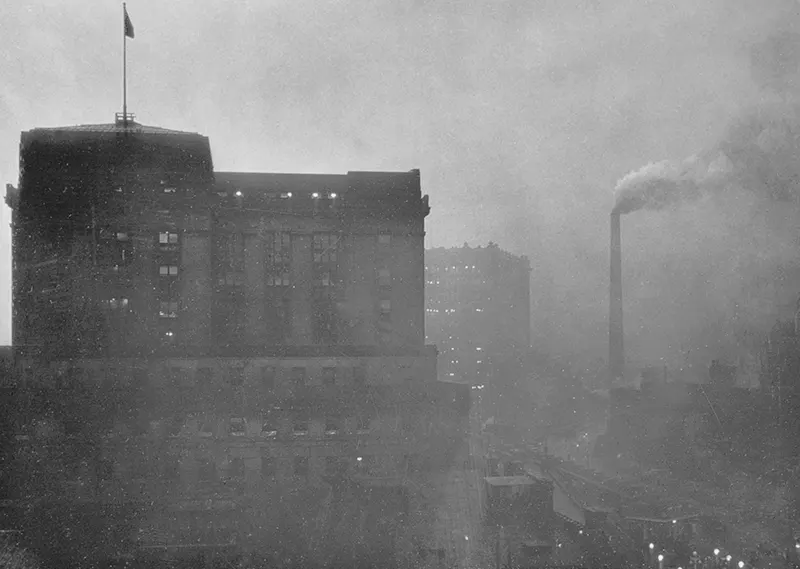
Industrial chimneys were a constant fixture of the Pittsburgh skyline. Each one poured smoke into an atmosphere that was already struggling. On some days, the sun punched through just enough to cast an eerie orange glow over the city — visible but filtered, as if seen through dirty glass.
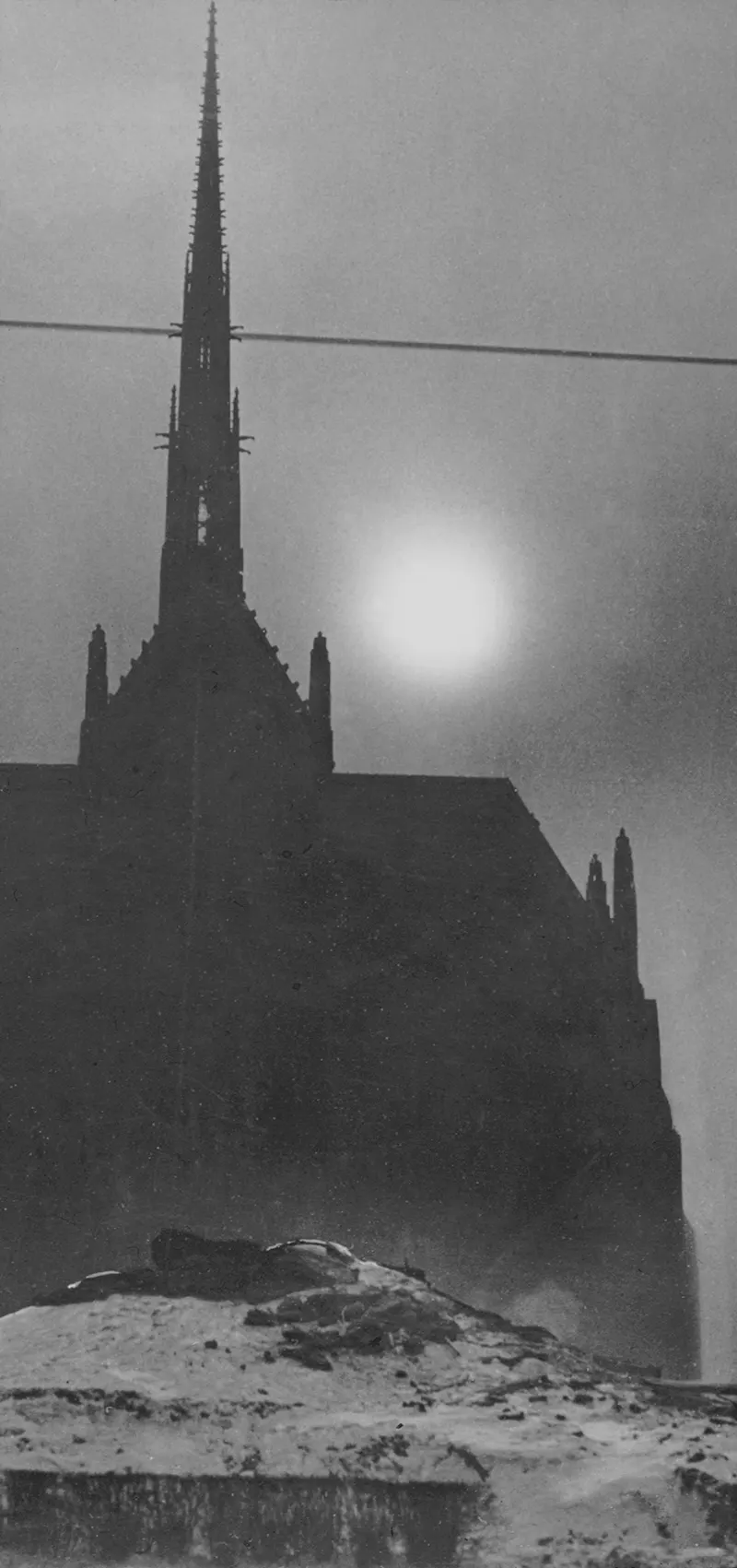
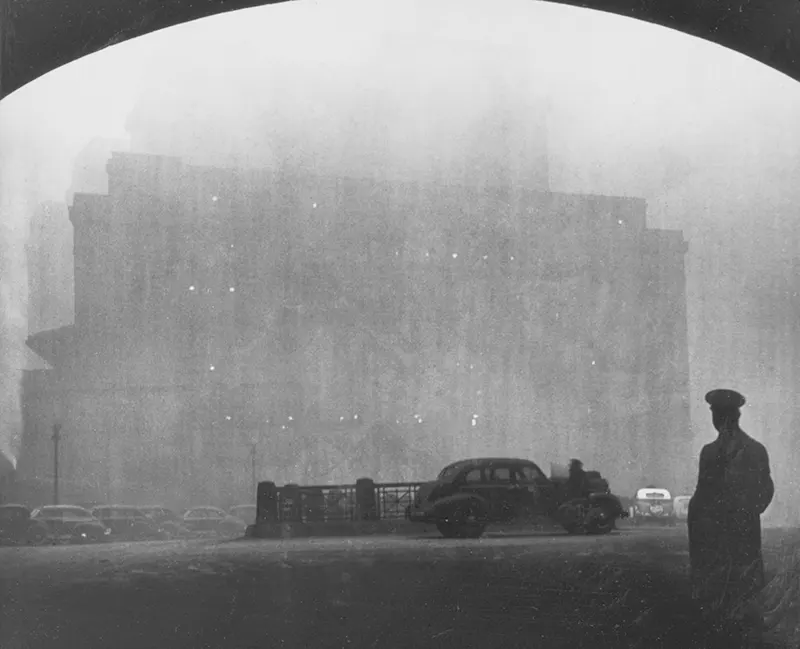
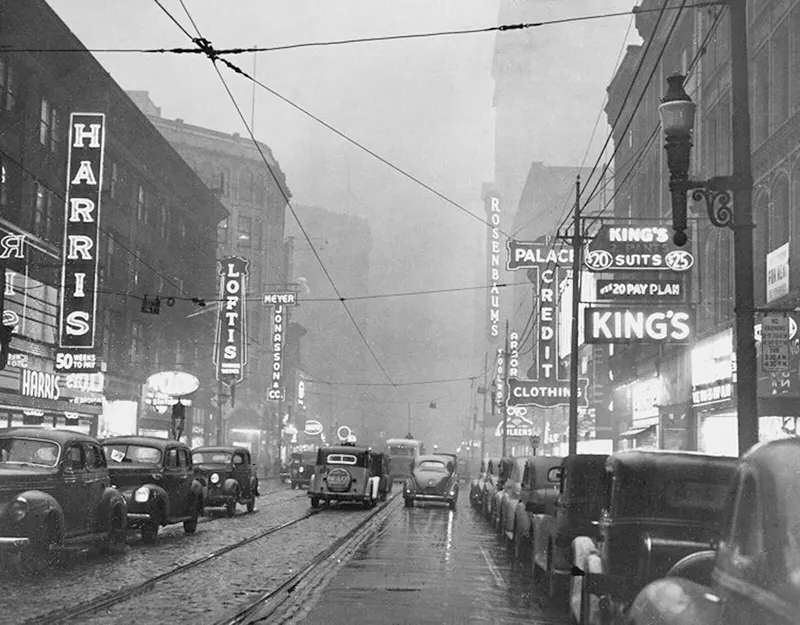
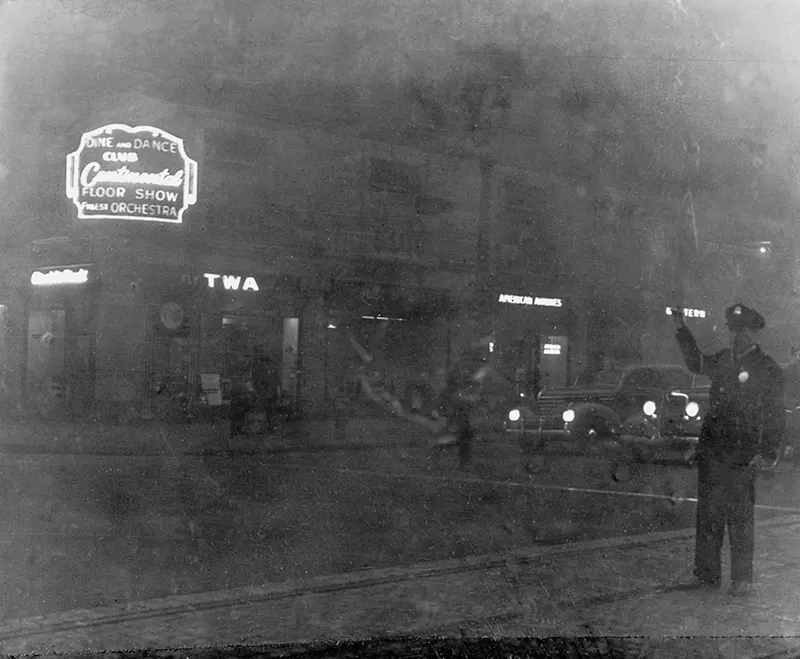
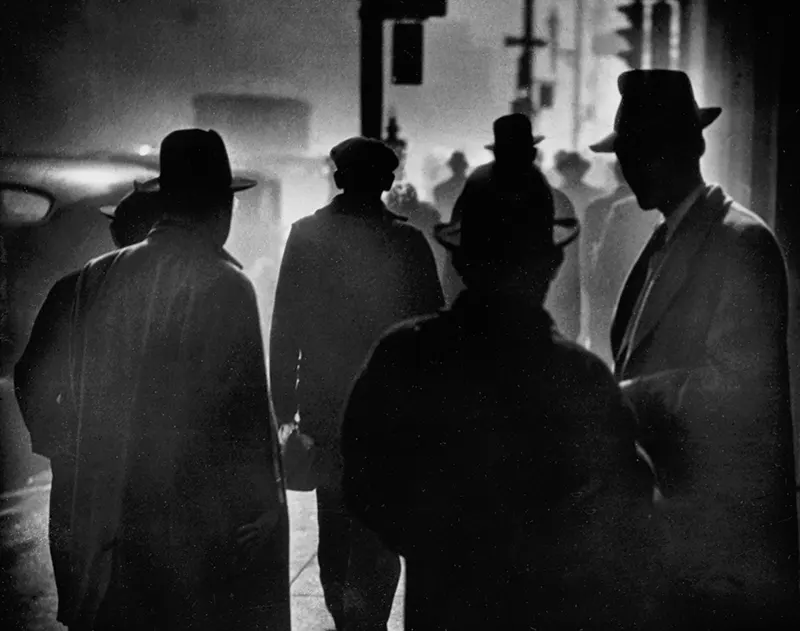
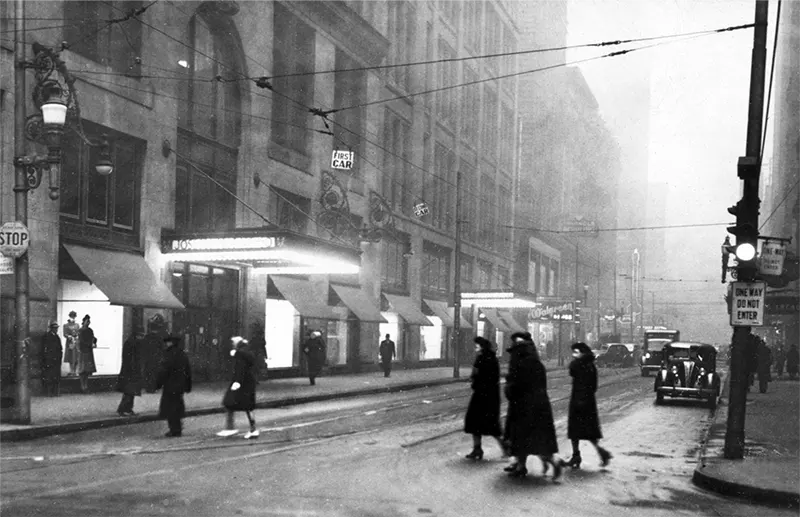
Downtown Pittsburgh was the commercial heart of the city, and it was no cleaner than the industrial zones. Liberty Avenue was one of the busiest corridors in the region, packed with shops, streetcars, and pedestrians. But the smoke followed everyone there too. Figures moved through the haze like silhouettes, their outlines sharpened only when they stepped close.
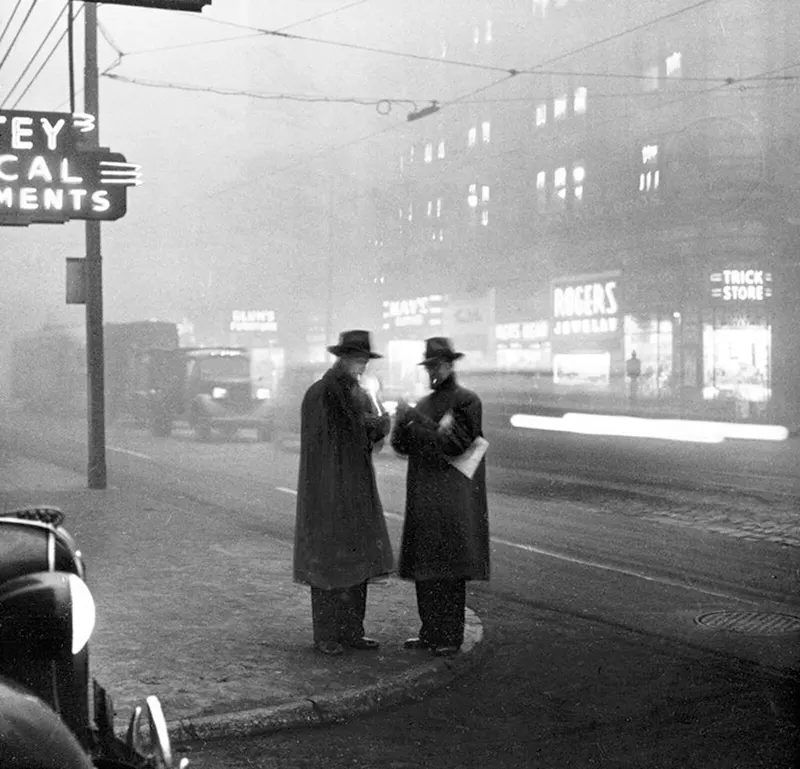
Life went on despite the smoke. People shopped, worked, and socialized on Liberty Avenue and along Fifth. The streets were busy with foot traffic, storefronts, and the sounds of a working city. But the smog was always there — coating jackets, stinging eyes, and settling onto every surface. Laundry hung out to dry came back in dirtier than it went out. Streetlights ran during daylight hours just to help people navigate.
The health toll was serious and well-documented. Chronic bronchitis and asthma were widespread, especially among children and elderly residents. Respiratory illness was not an edge-case problem — it was a defining public health issue for the city. Doctors saw it in their patients. Families felt it in their homes. The smoke was not just unpleasant; it was actively harmful.
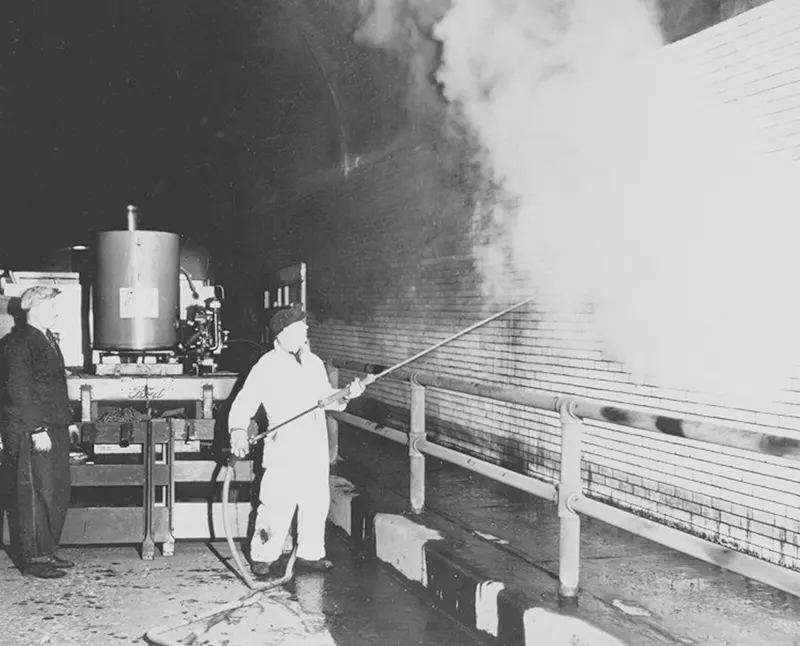
Soot settled onto every building in Pittsburgh. Brick walls turned black. Stone facades were caked with layers of carbon deposits. Cleaning crews worked to scrub buildings down — specialty machines like the “Jenny” cleaner were brought in to blast soot off exteriors — but the work was never finished for long. The smoke simply kept coming.
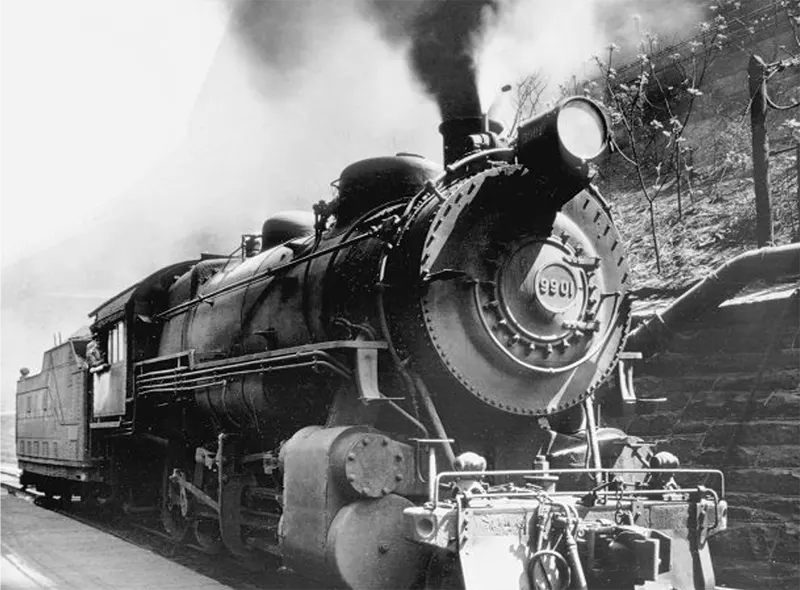
Industry was not the only source of pollution. Steam locomotives running in and out of Pittsburgh’s rail stations added their own contribution to the atmosphere. Train smoke mixed with mill smoke and residential coal smoke into a single, city-wide layer of pollution that sat over Pittsburgh like a lid.
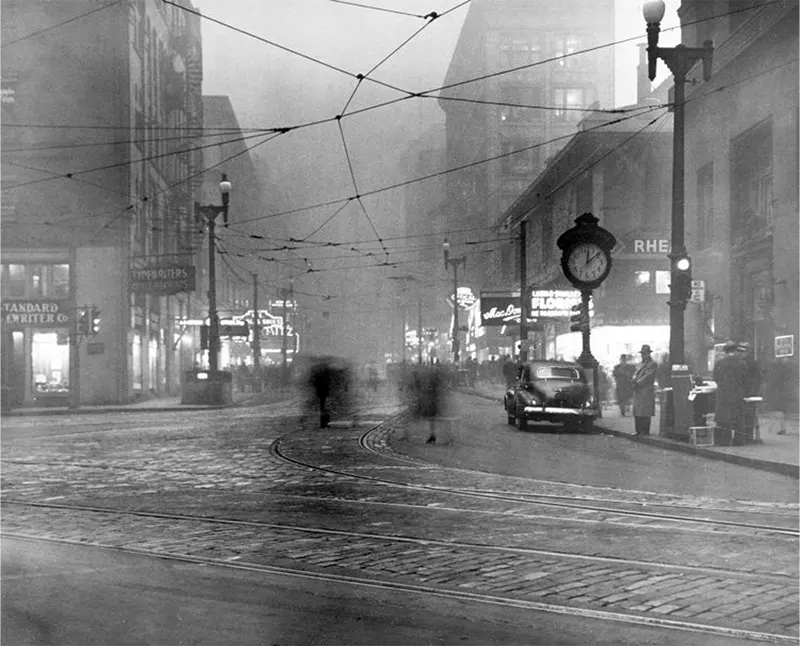
For many Pittsburgh residents during this era, smoke was not only a nuisance — it was seen as proof that the city was working. A clear sky might have meant the mills were idle, which meant workers were out of jobs. The smog carried an economic meaning alongside its environmental one. That attitude began to shift as public health concerns grew louder and residents demanded change from local government.
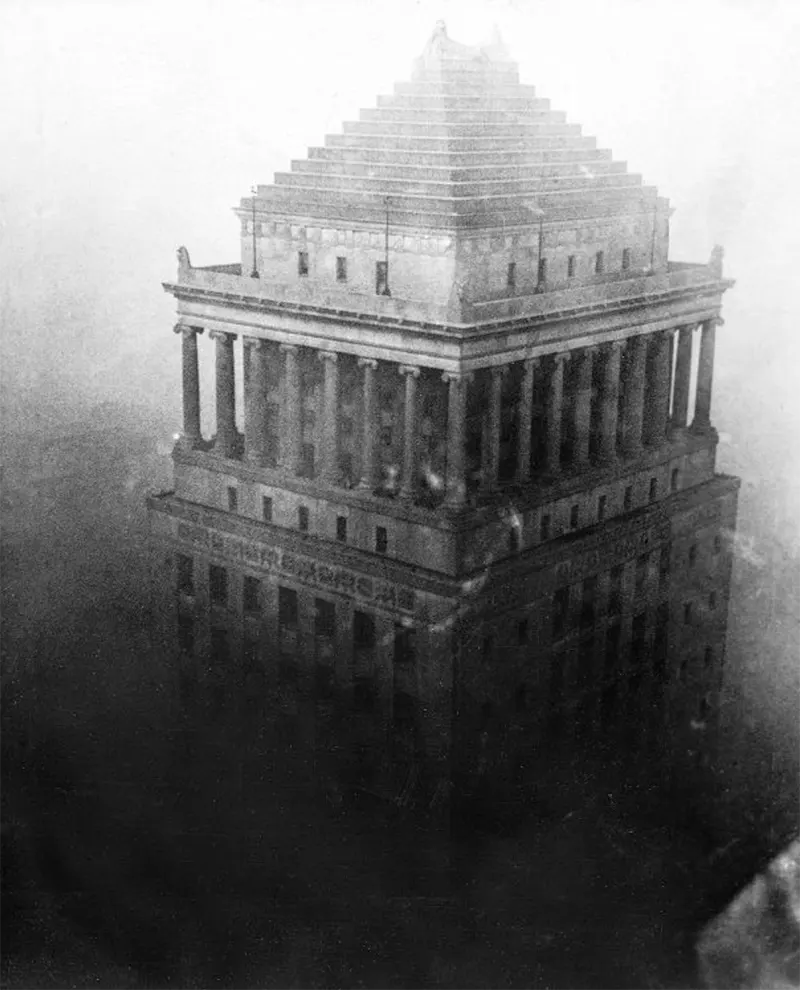
Pittsburgh was not alone. Cities across the industrial Midwest faced the same problem. St. Louis, Missouri, was among the most heavily affected. Before smoke ordinances were passed there, aerial views of the city showed buildings disappearing into a thick blanket of industrial haze. The photographs taken as part of smoke investigation studies in St. Louis documented just how widespread the crisis had become.
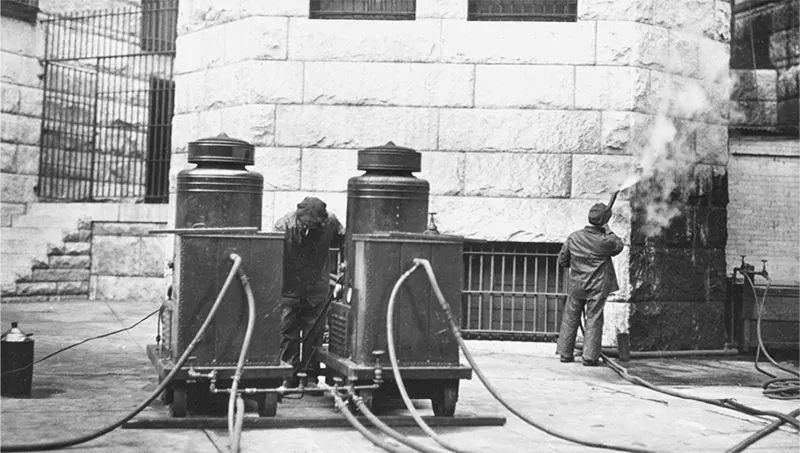
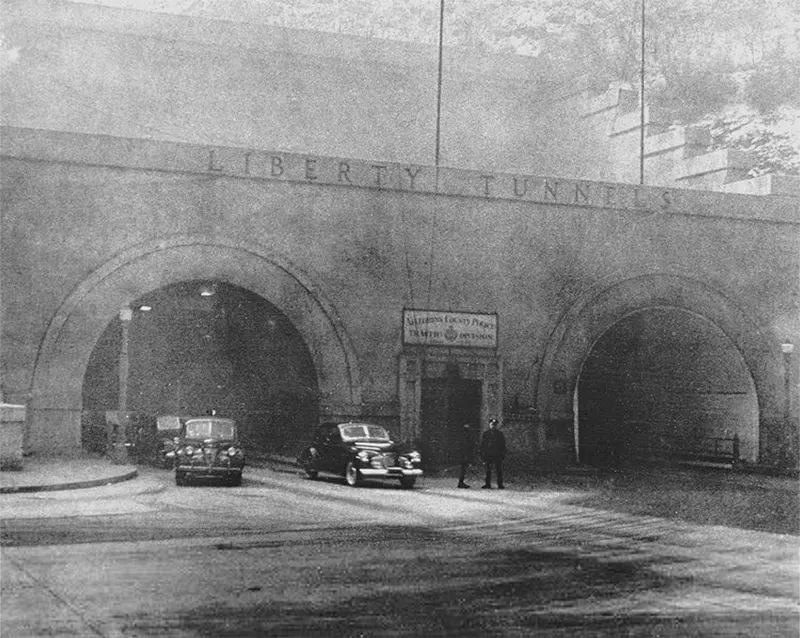
Even the major civic landmarks were not spared. The Allegheny County Courthouse — one of Pittsburgh’s most prominent buildings — required regular cleaning crews to chip and wash away the soot that built up on its stone exterior. At the Liberty Tunnels, smoke and traffic fumes combined to make even routine commuting a grimy experience.
Pressure from residents and civic groups eventually pushed local governments into action. Pittsburgh passed anti-pollution regulations that restricted the types of coal that could be burned and required industrial facilities to control their smoke output. The city also began investing in cleaner technologies. By the late 1950s, natural gas and oil were replacing coal in many homes and factories, and the steel industry was modernizing its production methods.





Lol
Evertime some dumbass libertarian talks about deregulation, show them this
My grandfather and uncles said they changed their shirt midday. At lunch. Then maybe after work. They said they had to look crisp and fresh doing business and the air was so bad their shirts were dirty.
Also fascinating is I had family that lived in homes on city hills that never had views of the city growing up. It was not until after Pghs air cleared that the homes got the amazing views that there are now.
I believe it. When we had the fire smoke settle down over Pittsburgh my great aunt scoffed. Shes almost 100. She thought we were being silly making kids stay in because it was “barely anything”.
Older individuals, those who are over 85 remember a very different city. Theyre always fascinating to speak with.