
In the small Italian village of Venzone, nestled in the Friuli region of northeastern Italy, the dead never quite felt gone. For centuries, the villagers here shared their daily lives with the mummified remains of their ancestors — not out of fear, but out of deep respect. By 1950, this remarkable tradition had been going on for hundreds of years, and American photographer Jack Birns arrived to document it for LIFE magazine. The photos he captured stunned the world.
The story begins in the 14th century, when the Black Death tore through Venzone and killed a large number of its residents. The village cemetery could not hold all the bodies, so 42 of the dead were placed in coffins and stored in the basement of the Chapel of San Michael. When the coffins were later opened, something unexpected had happened — the bodies had not decayed. Instead, they had dried out and mummified naturally, their skin and features still remarkably preserved.
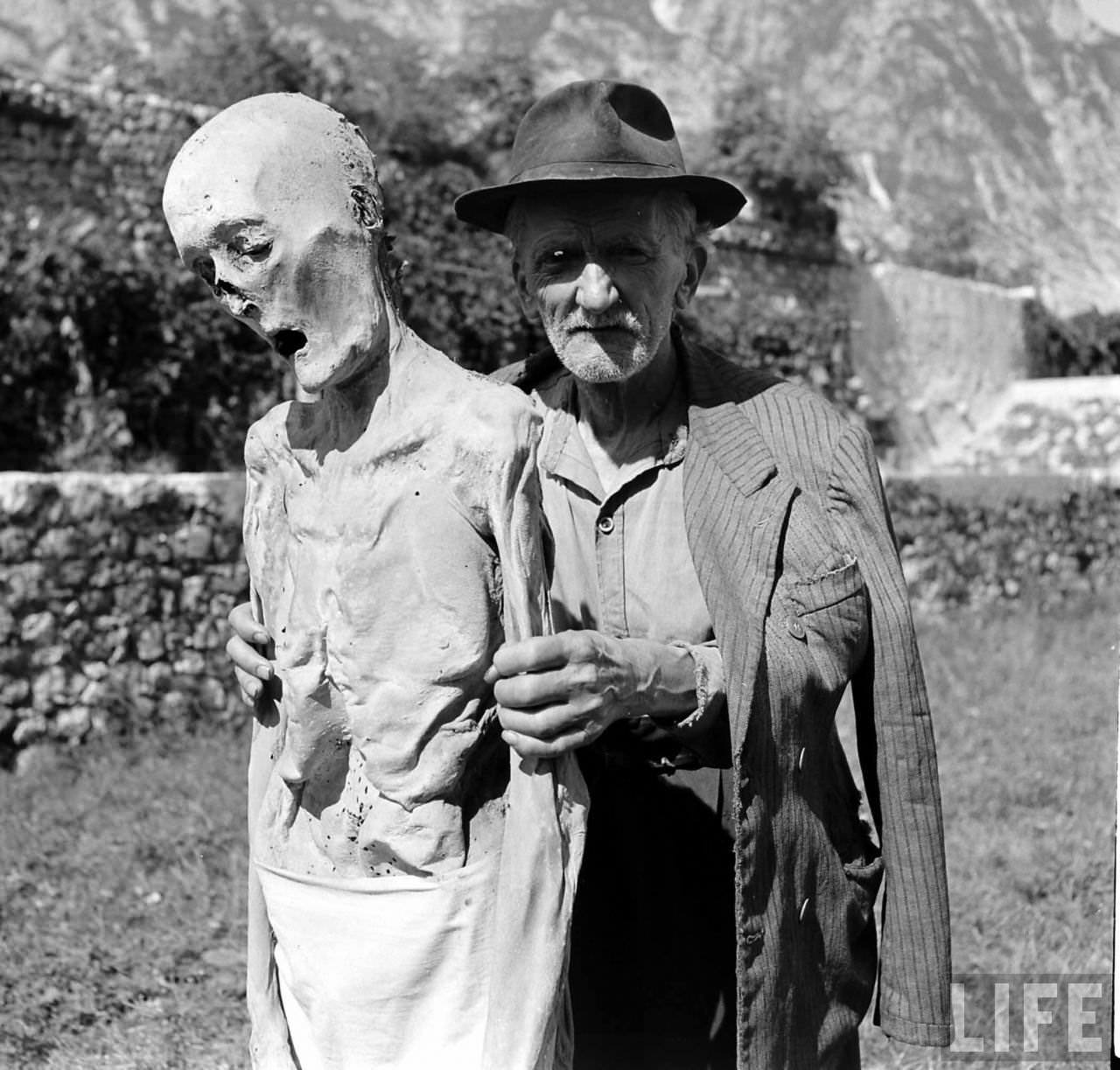
Typical mummification, as practiced in ancient Egypt, requires the removal of internal organs and the use of embalming treatments to stop the body from breaking down. The mummies of Venzone went through none of that. Their preservation was entirely natural, caused by a combination of the dry air in the chapel basement and a particular type of fungus — Hypha tombicina — that absorbed moisture from the bodies before decay could set in. The result was 42 remarkably intact human forms, untouched by any human hand.
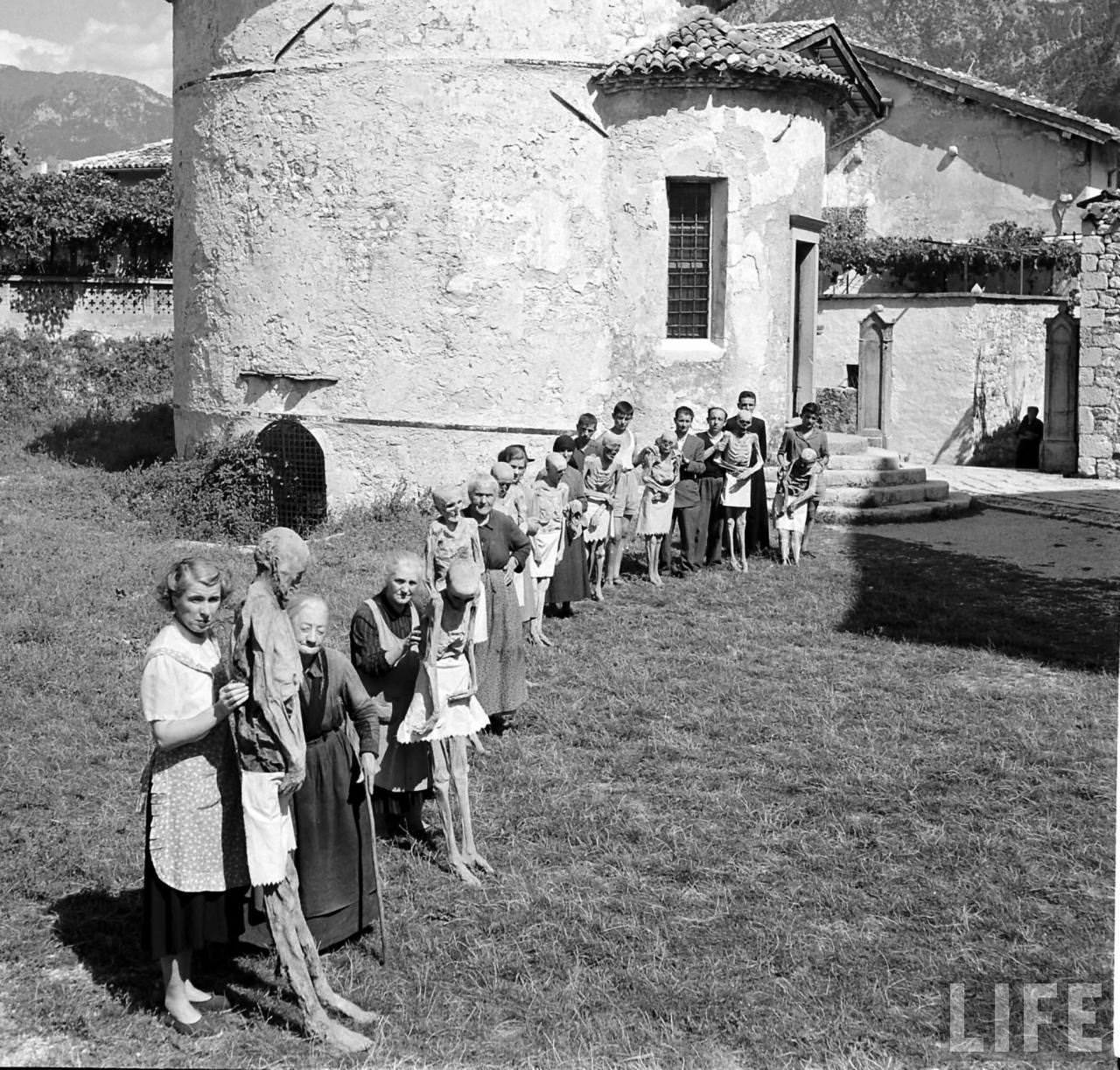
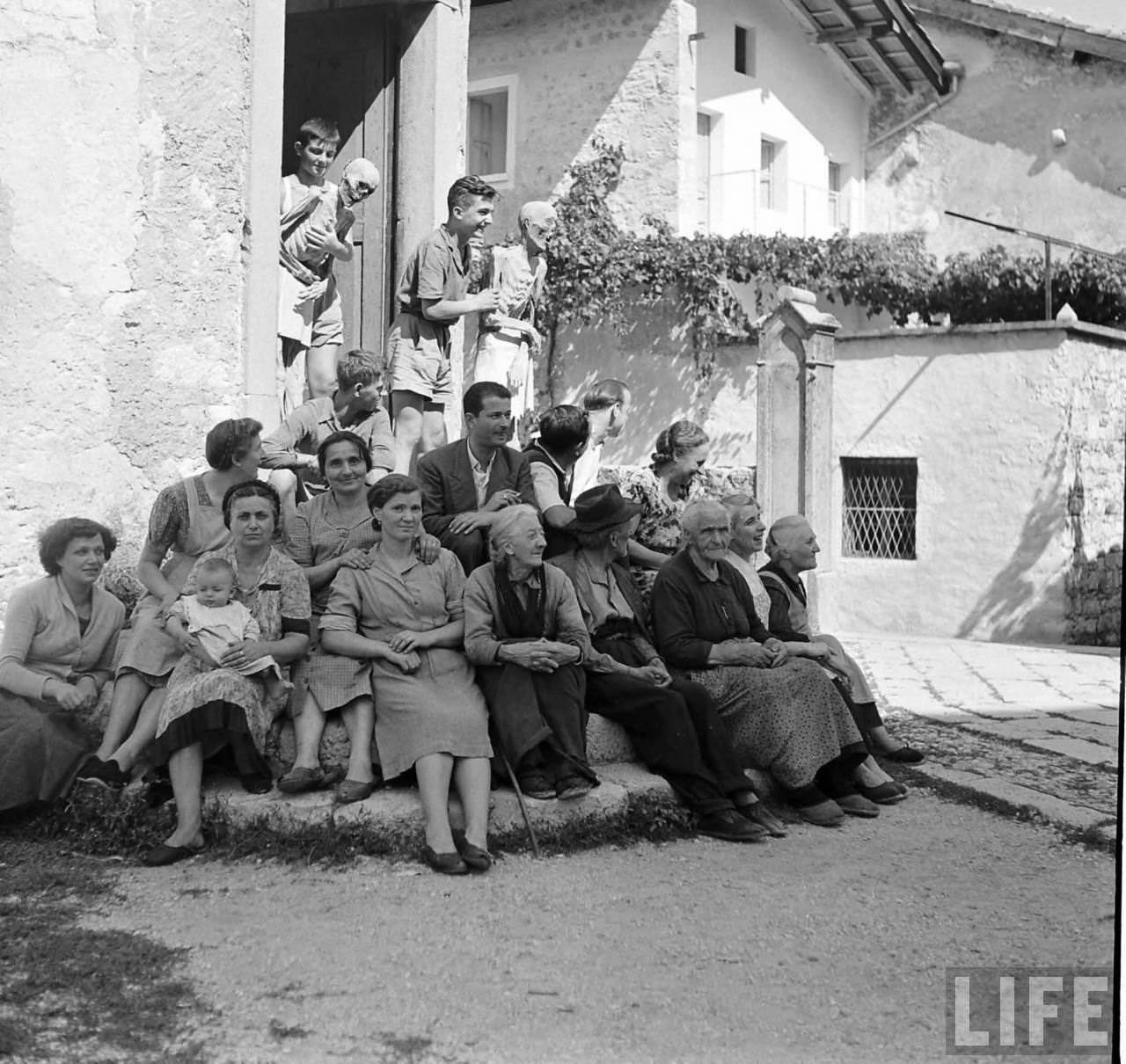
The villagers did not treat this as something strange or frightening. They saw it as a sign from God — a belief that their ancestors had been sent back to watch over and protect the living. The mummies were treated with the same respect given to the eldest members of the community. They were given names, visited regularly, and considered an active part of village life. This was not a superstition practiced in secret. It was an open, cherished tradition.
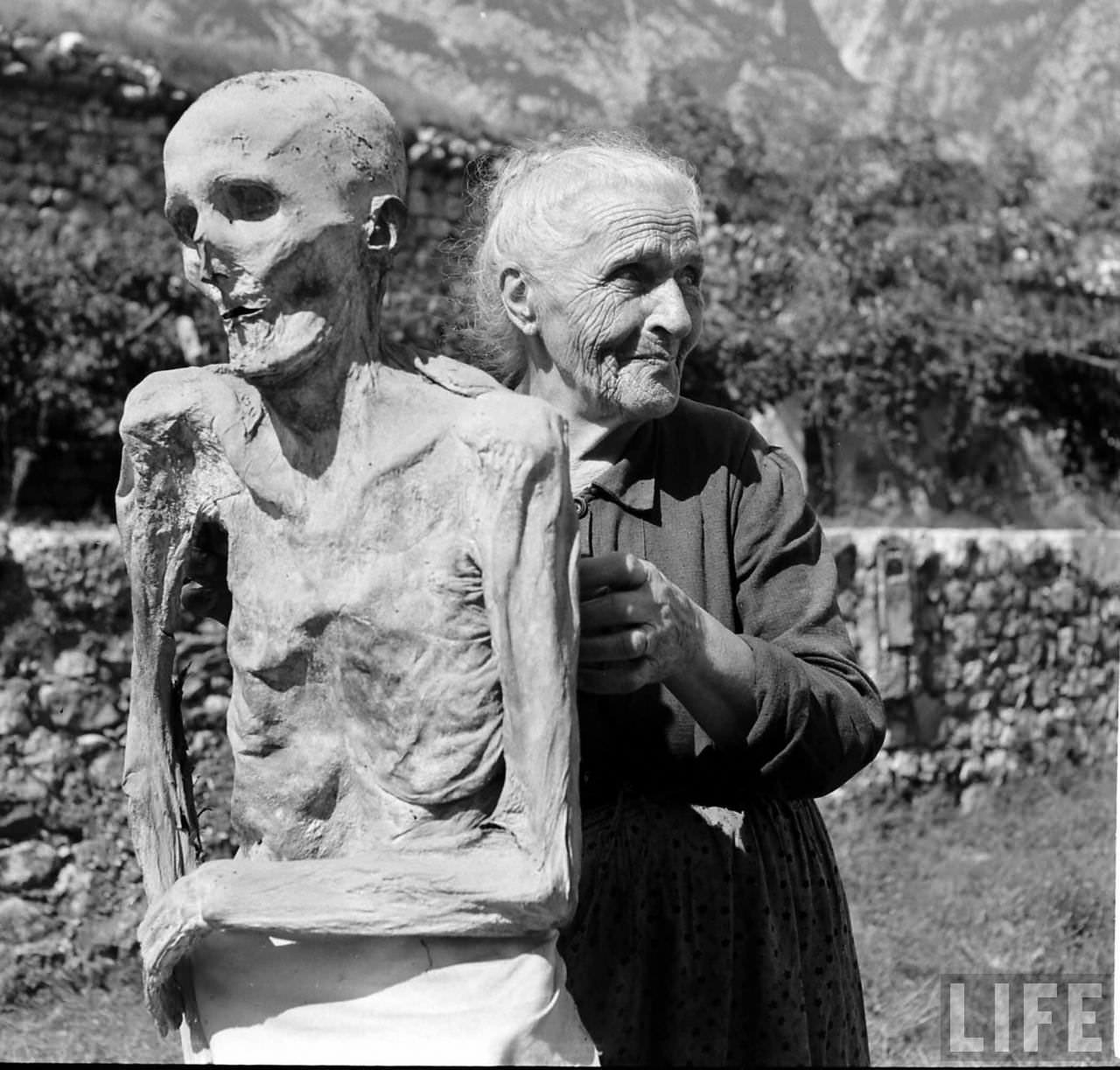
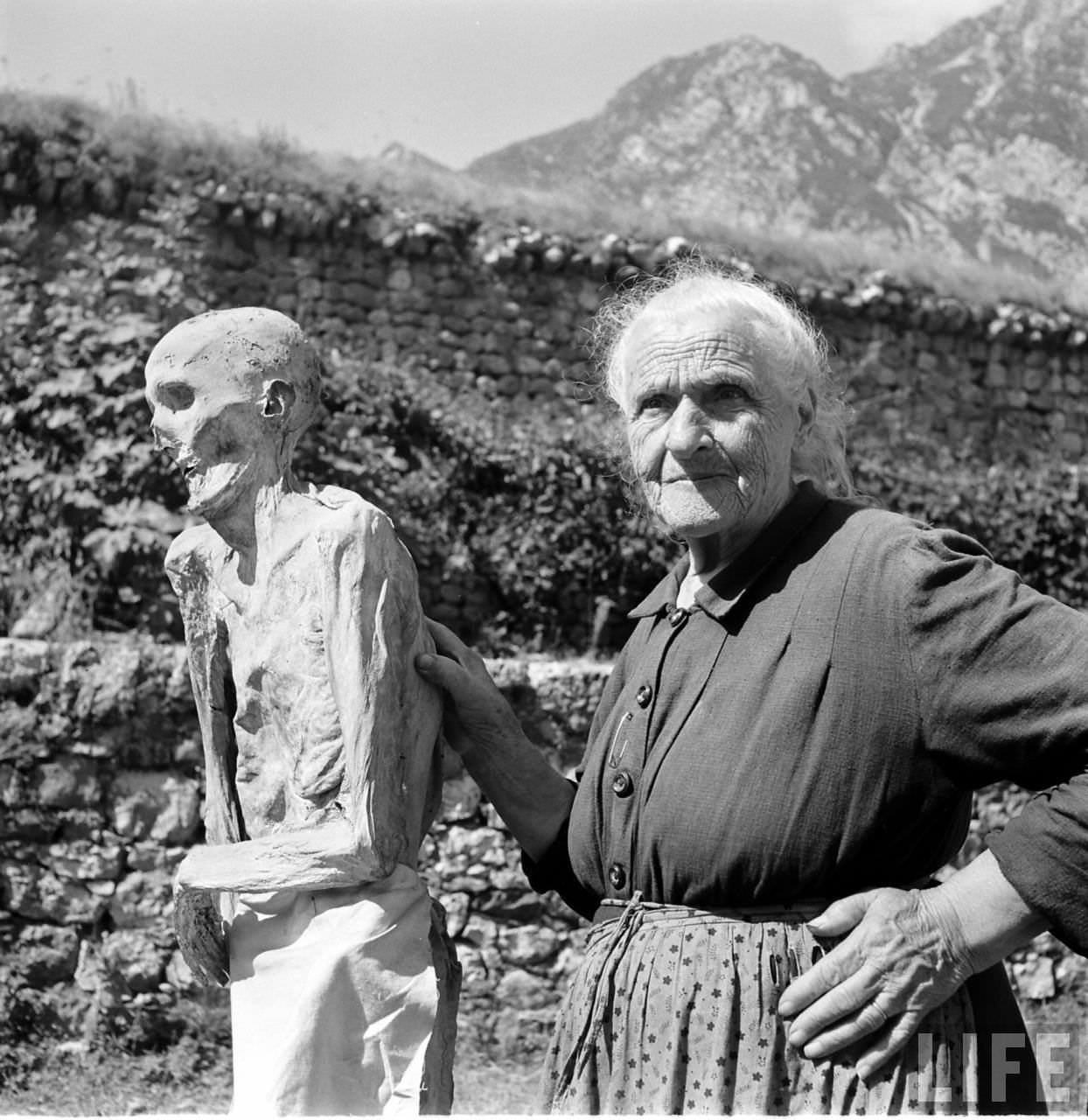
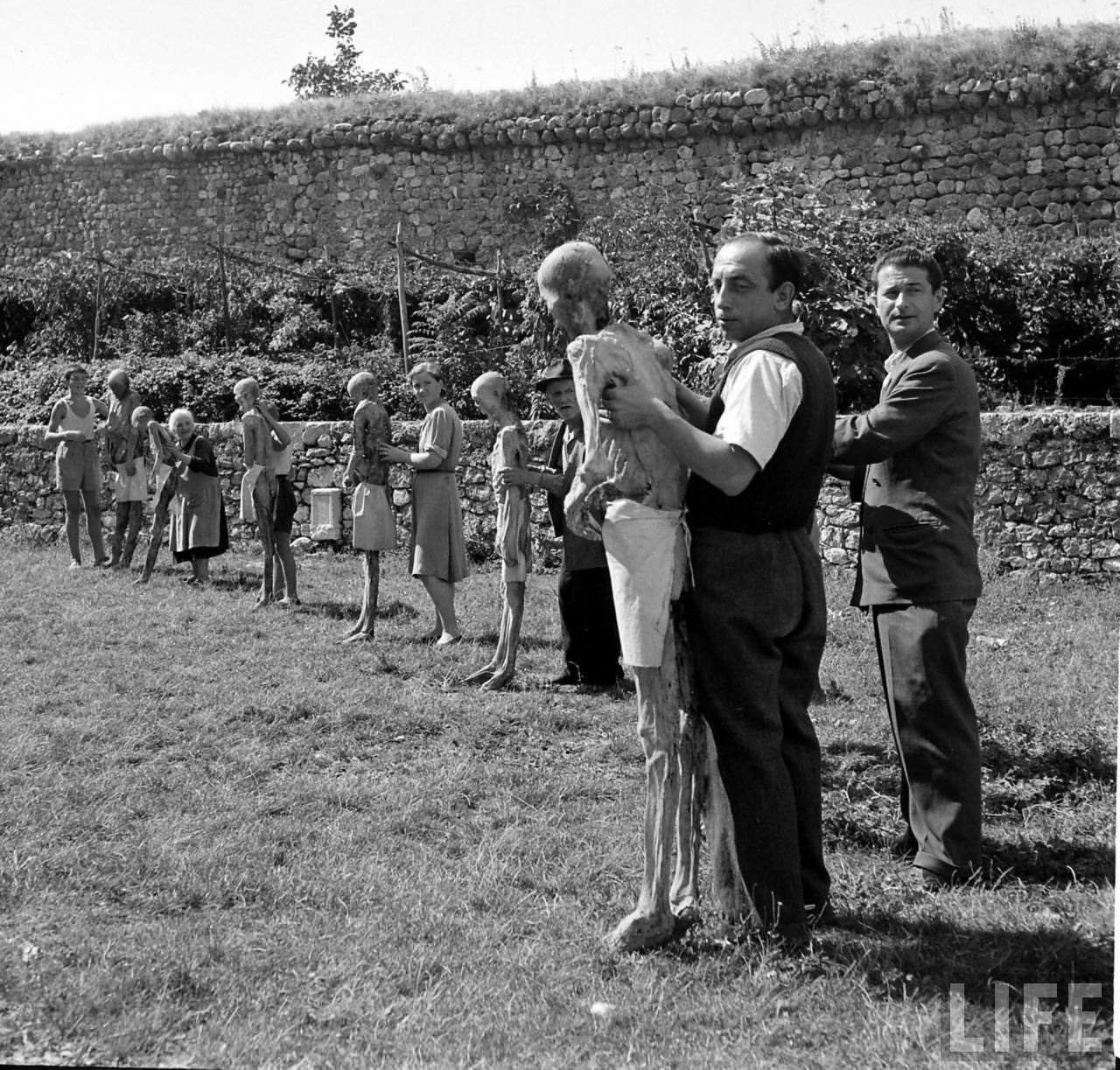
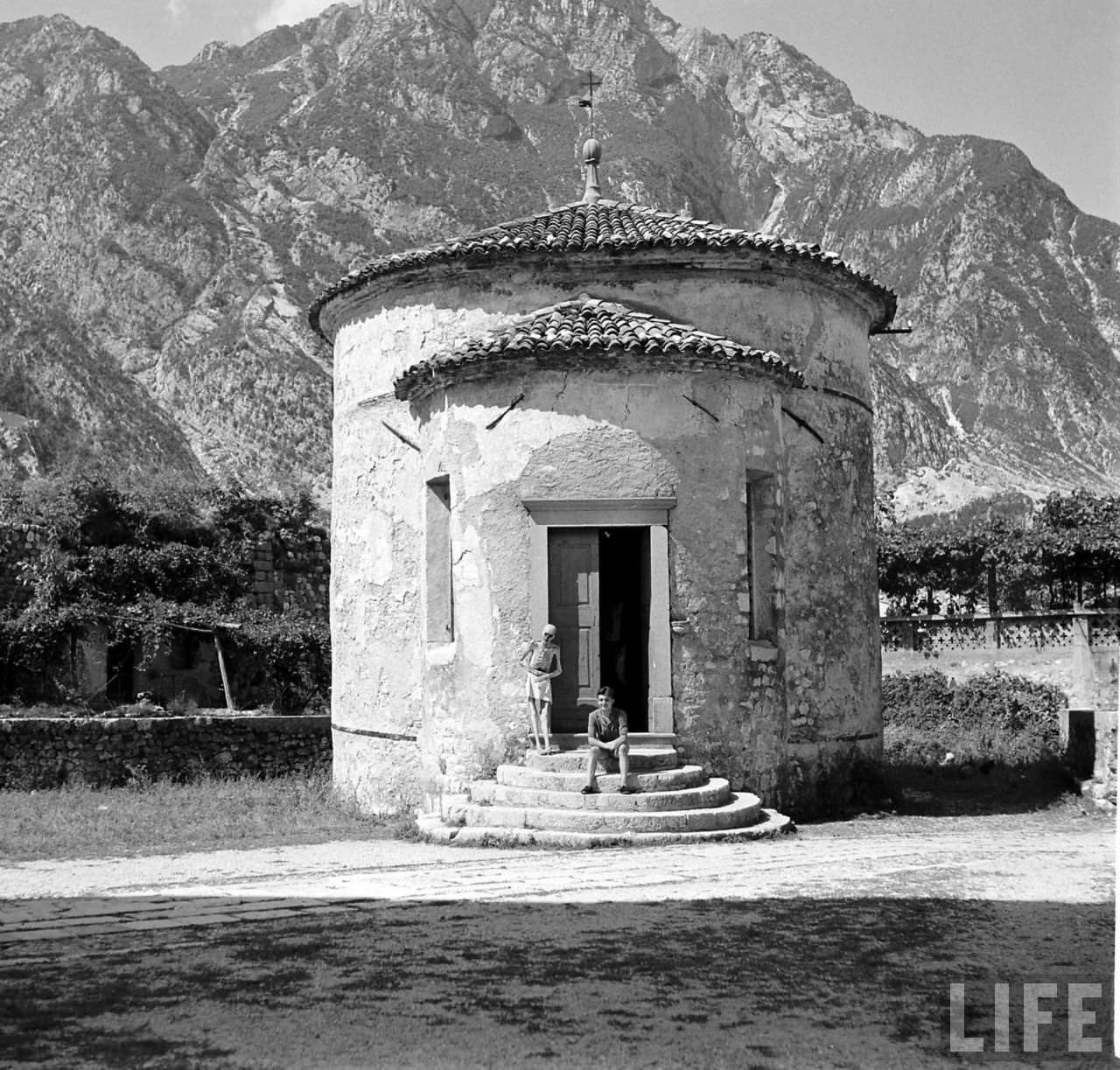
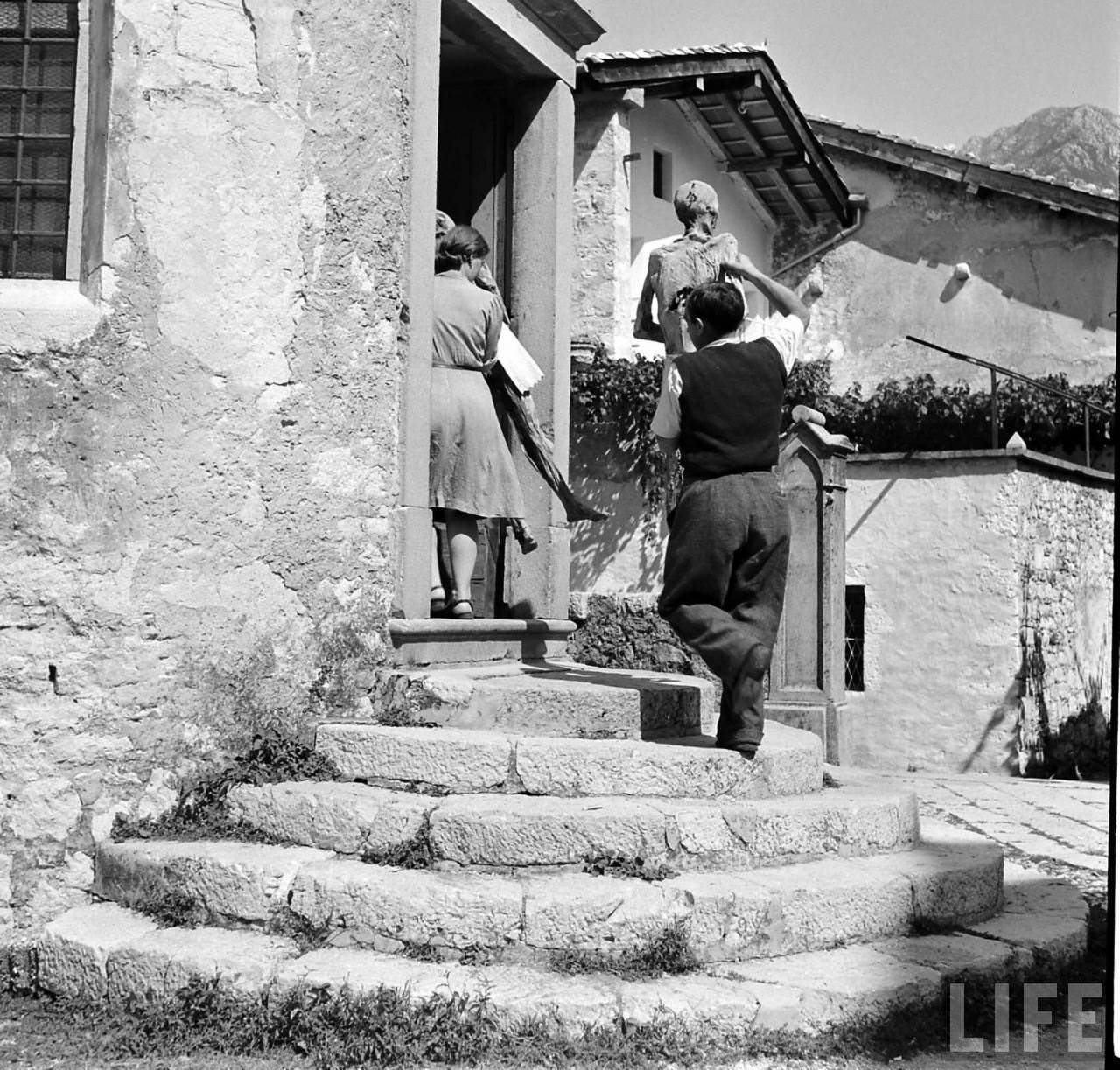
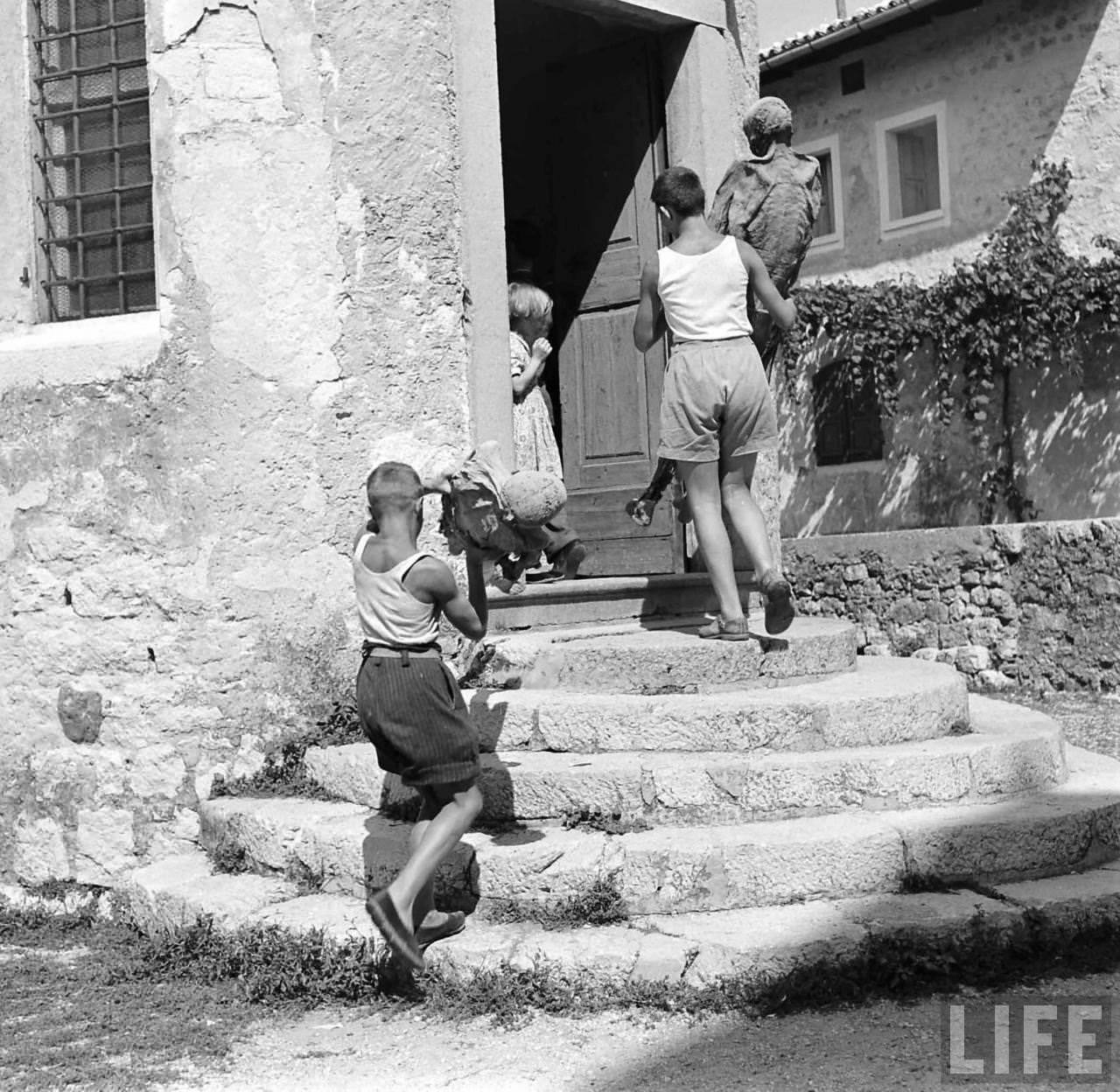
When Jack Birns arrived in 1950, he photographed exactly what he found — villagers standing beside the mummies, children in the same room as the preserved bodies, and the mummies themselves propped upright and displayed in the chapel. The images were direct and unflinching. There was nothing staged about the relationship between the living and the dead in Venzone. It was simply life as the villagers knew it.
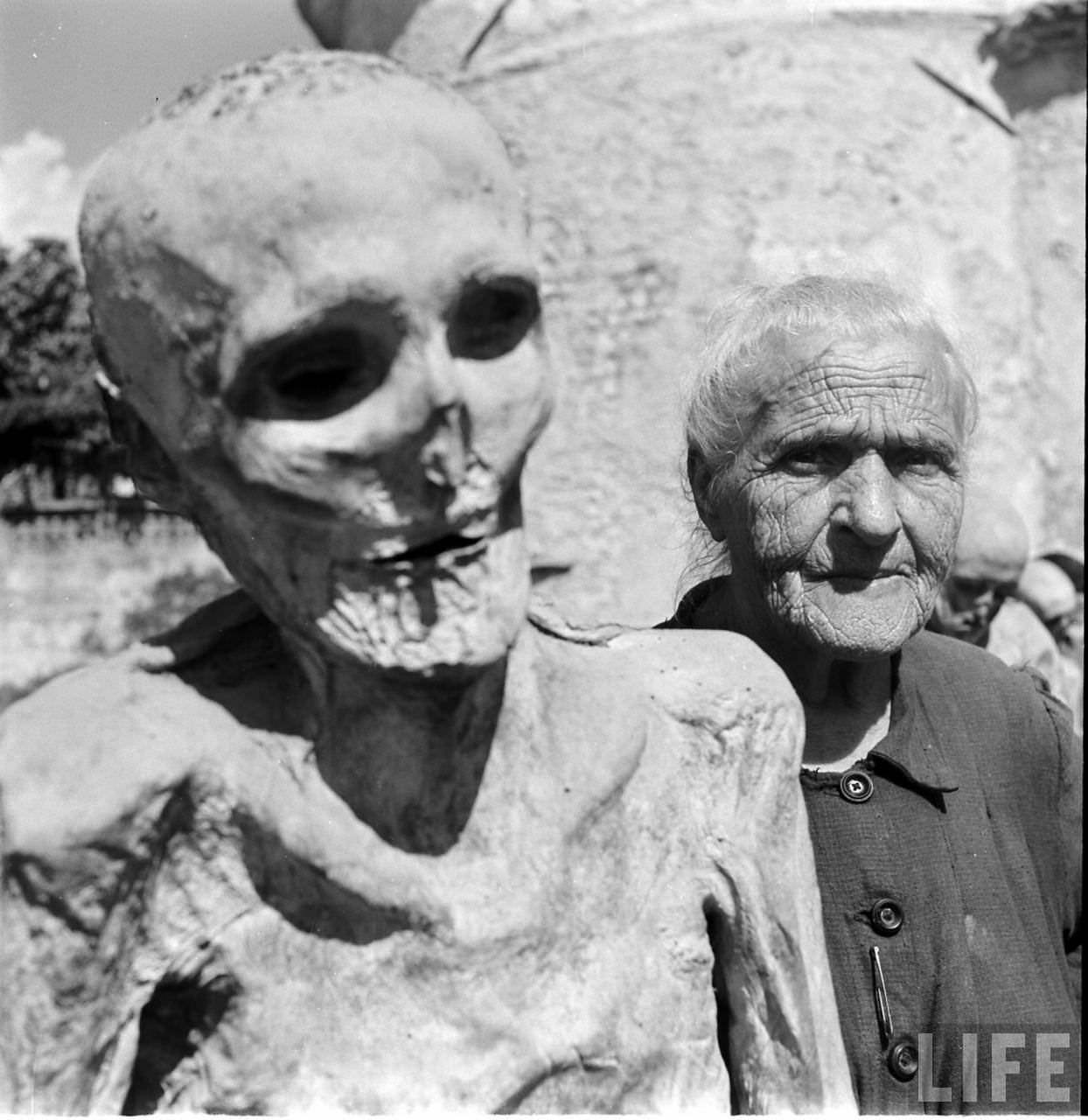
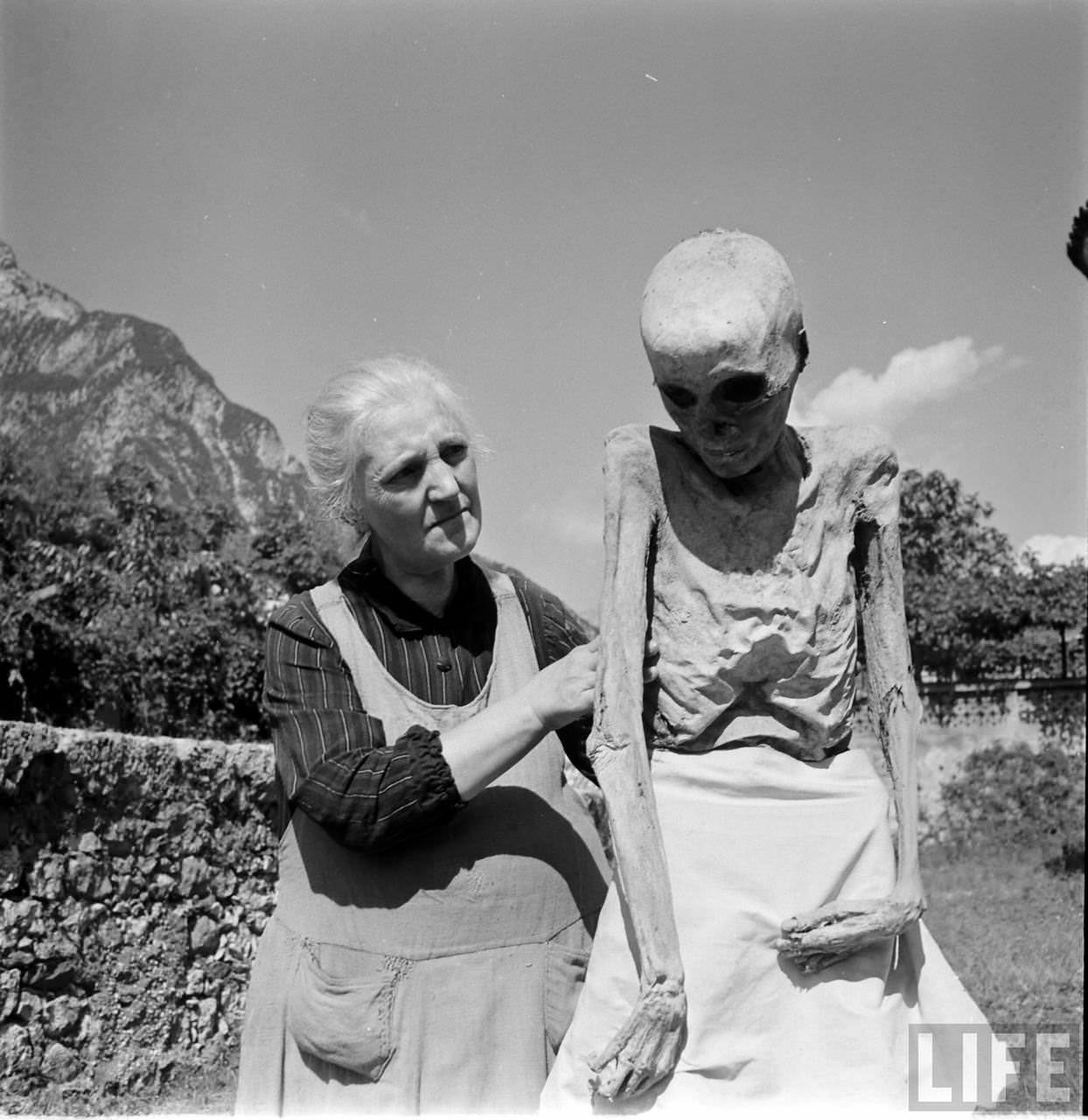
LIFE magazine published Birns’ photographs, and the reaction around the world was immediate. Readers were fascinated and unsettled in equal measure. For people outside Venzone, the idea of treating mummified bodies as honored elders was completely foreign. But for the people of Venzone, it had always been normal. The photos sparked widespread conversation about death, preservation, and the many different ways human cultures relate to those who have passed.
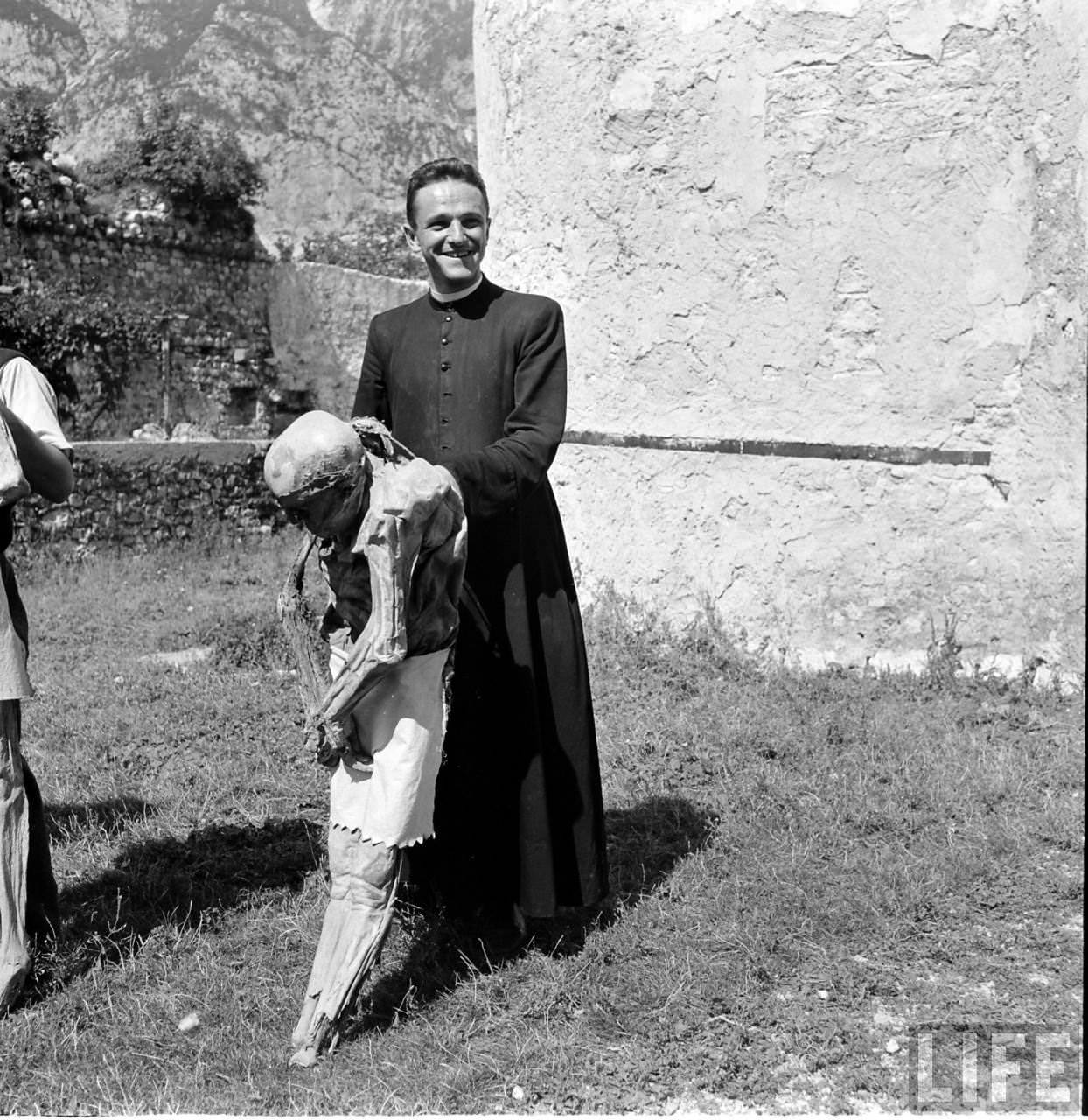
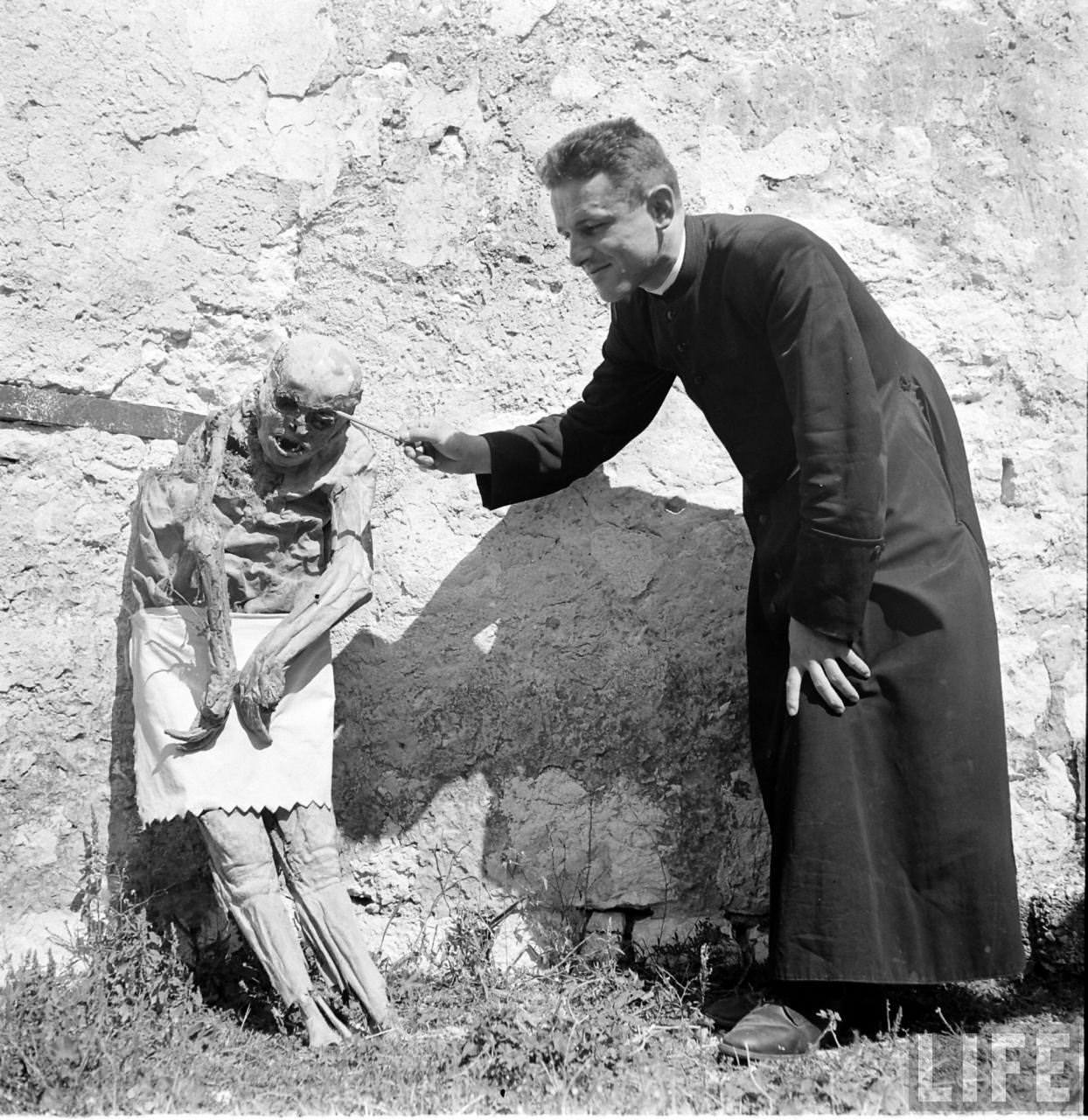
The mummies were kept in the Crypt of the Cemetery Chapel, where visitors could see them up close. Each one had its own identity within the village. One of the most well-known was called “Il Gobbo” — the Hunchback — recognized by his curved spine. Villagers would bring guests to meet the mummies the same way they might introduce them to a living relative. The line between the living and the ancestral dead was, in Venzone, unusually thin.
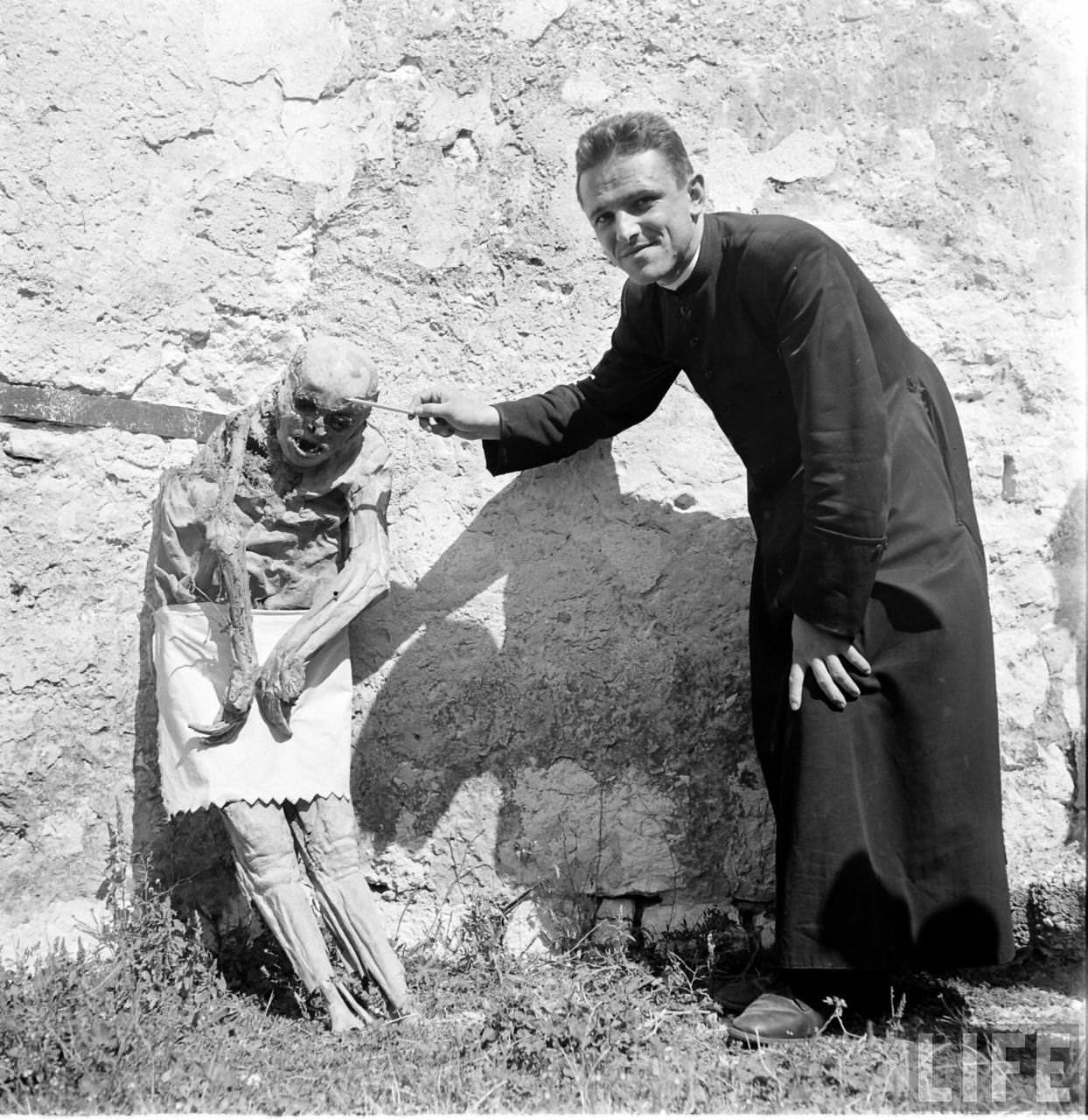
The mummies dated from a broad stretch of time — not just the 14th century plague victims, but others added over the centuries who had been buried in the chapel and later found preserved in the same way. The chapel’s unique conditions continued to produce natural mummies long after the Black Death had passed. By the time Birns photographed them, the collection represented several hundred years of Venzone’s history in physical form.
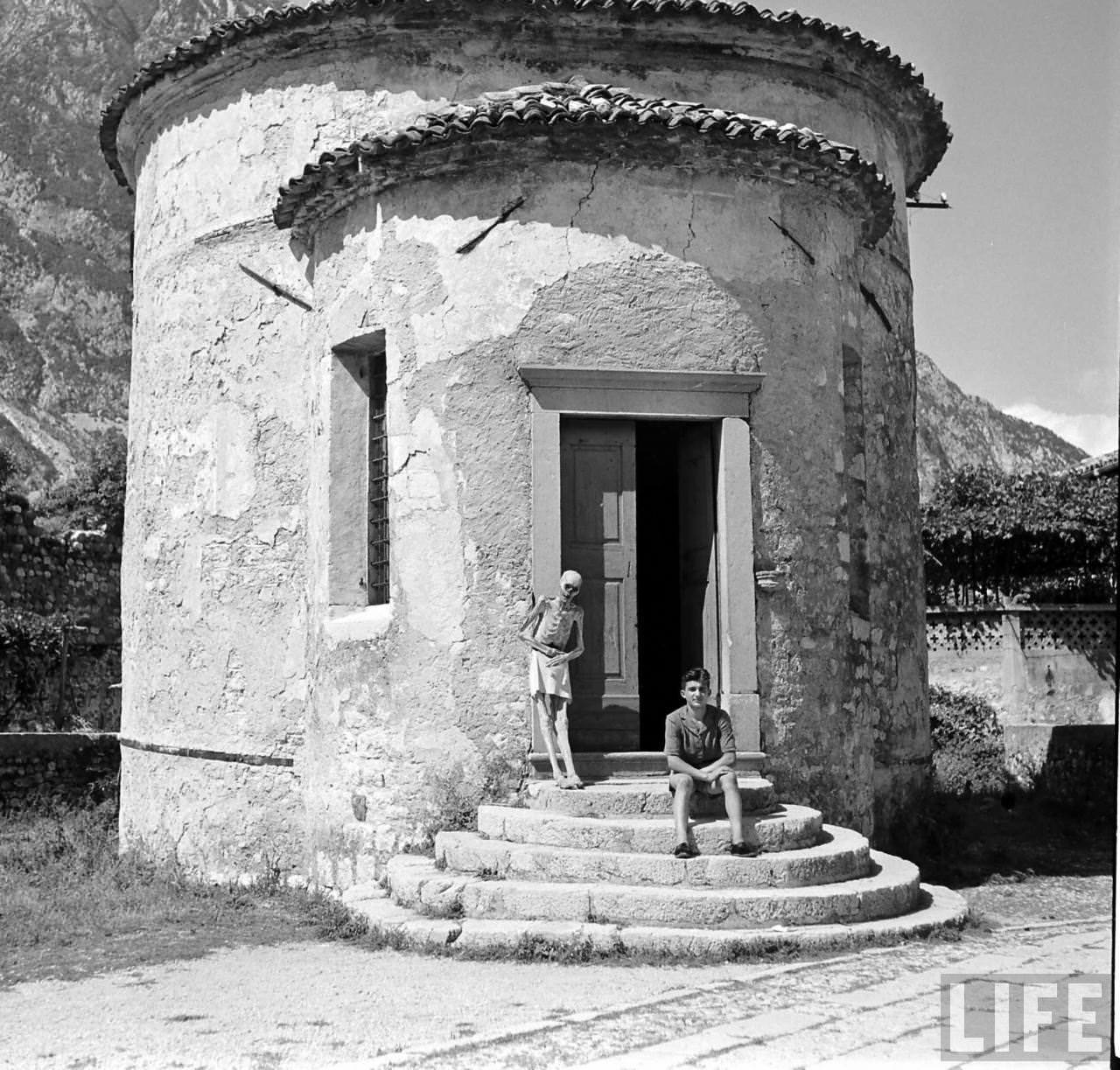
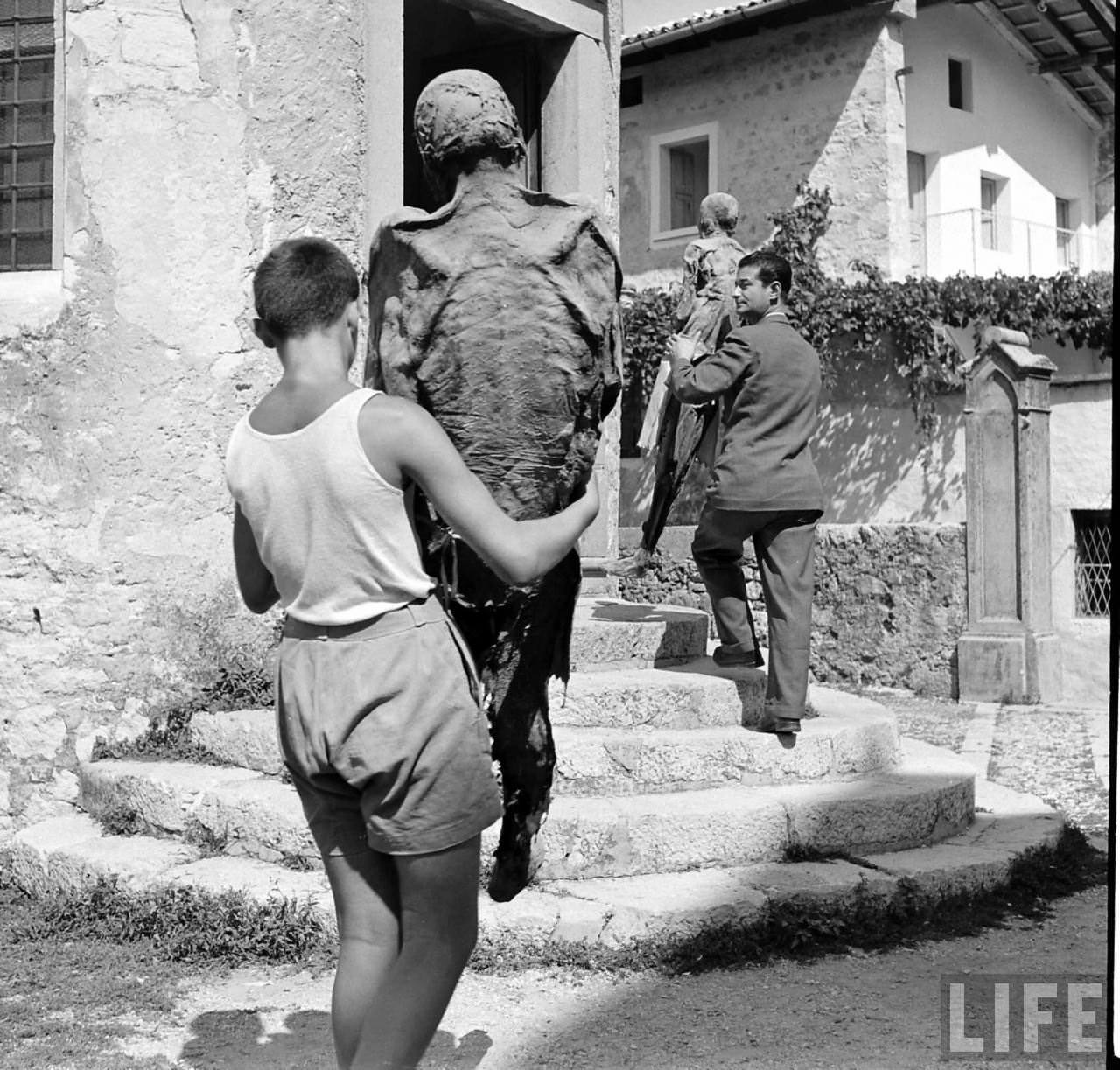
The tradition of living alongside the mummies continued right up through the mid-20th century. The villagers saw no reason to change what had been a meaningful and deeply rooted part of their community for generations. The mummies were not museum pieces. They were not curiosities behind glass. They stood in the chapel accessible and present, part of the fabric of daily life in Venzone.
Everything changed on May 6, 1976. A powerful earthquake struck the Friuli region, killing nearly a thousand people and destroying much of Venzone. The chapel and crypt suffered serious damage. Many of the mummies were broken or lost entirely in the disaster. When the recovery efforts were complete, only 15 of the original mummies had survived intact. The centuries-old collection, once numbering in the dozens, was reduced to a fraction of what it had been.
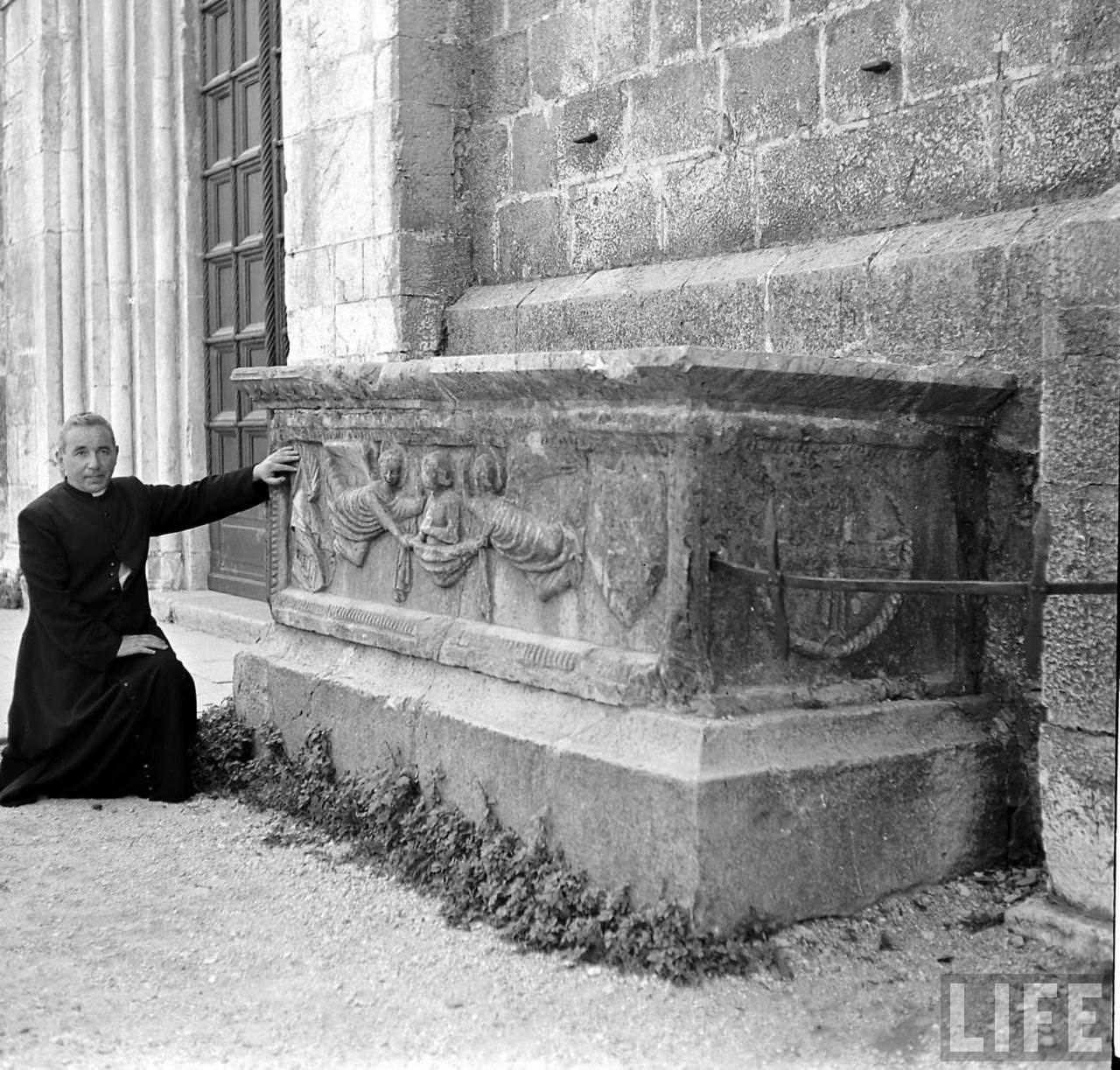
Those 15 surviving mummies are now housed in the Crypt of the Cemetery Chapel, which was carefully restored after the earthquake. They remain in Venzone today, preserved behind protective displays. The chapel itself was rebuilt stone by stone, using the original fragments wherever possible, and it stands again as a working monument to the village’s long history.
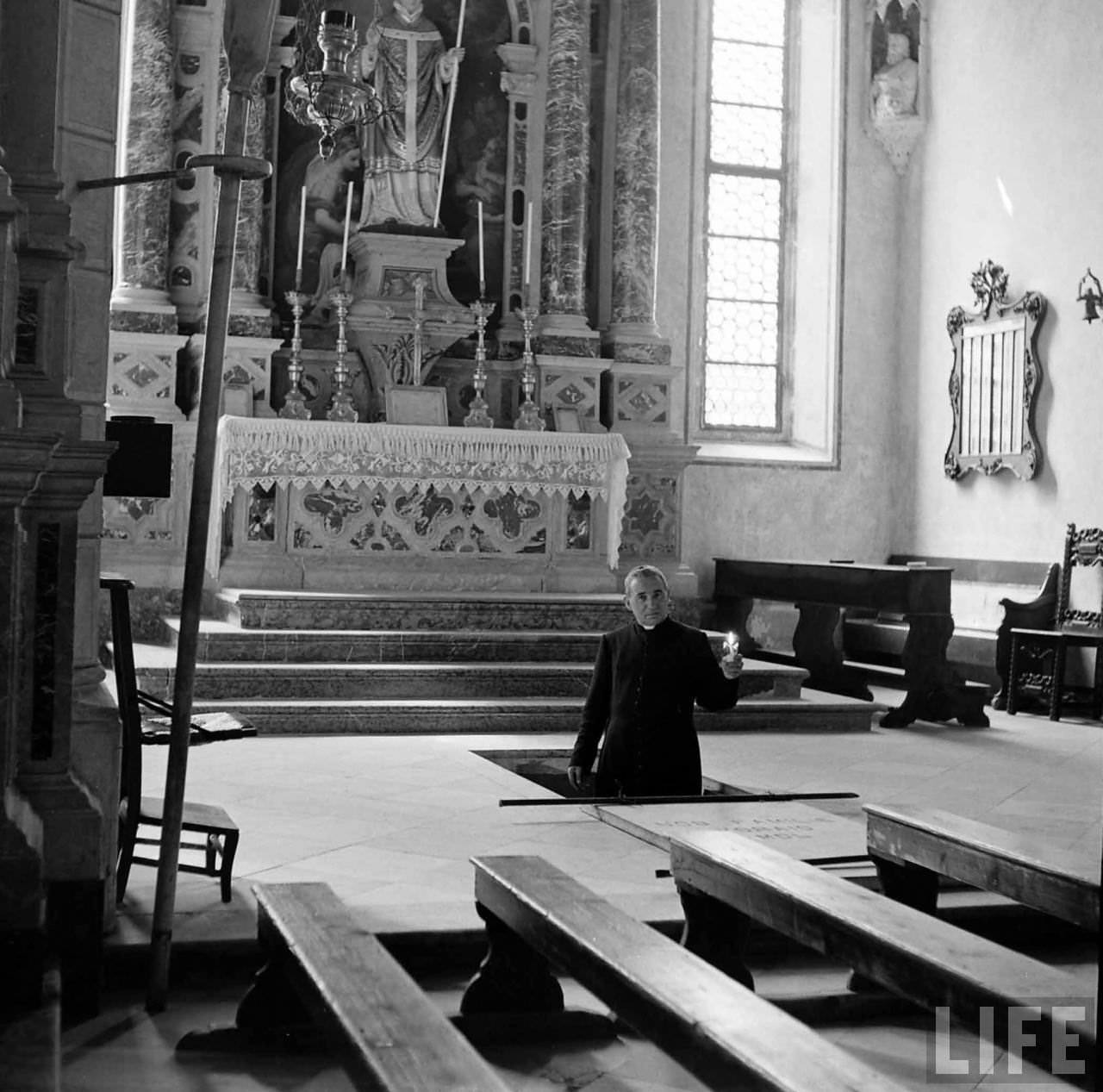
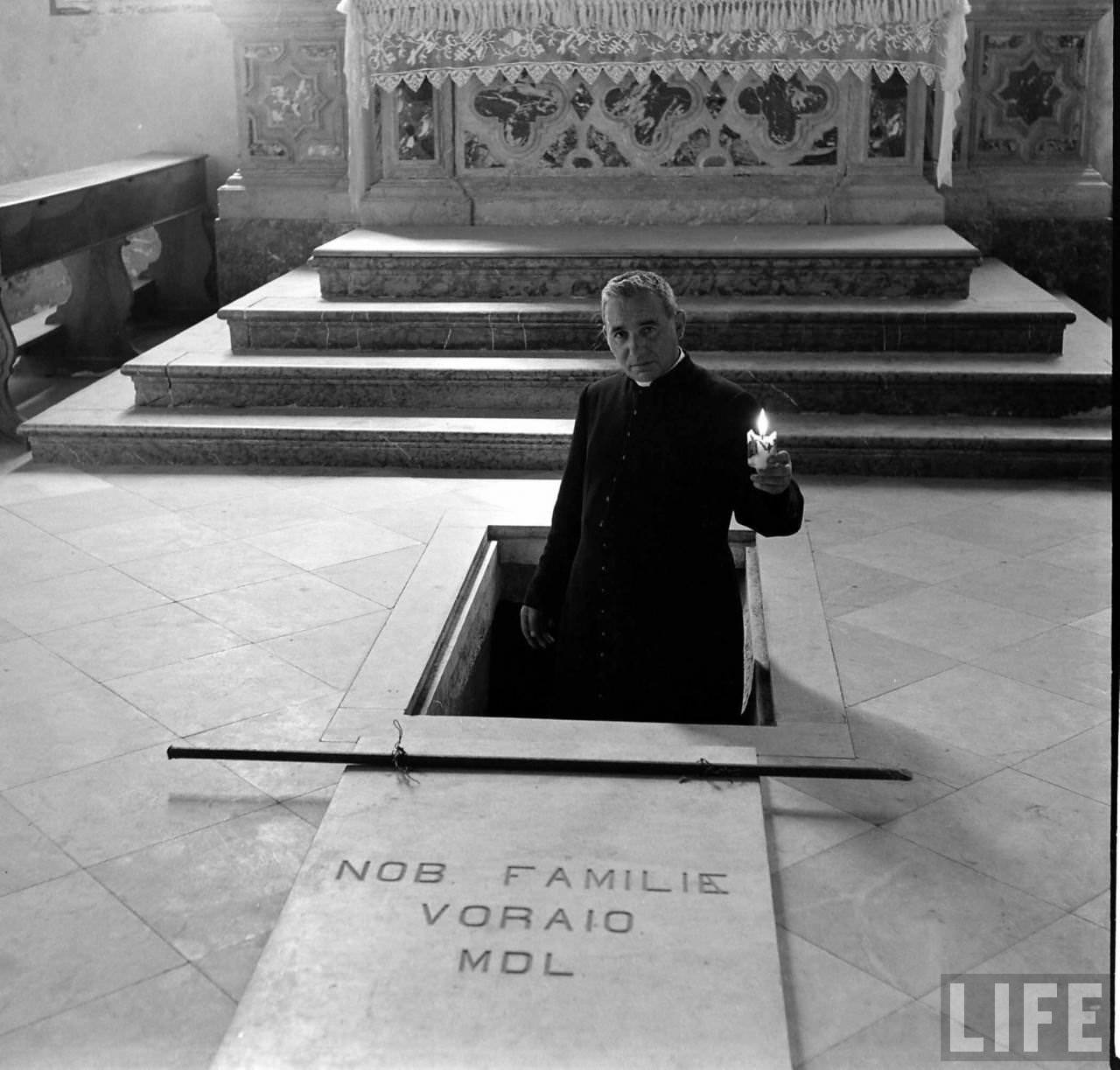
Jack Birns’ photographs from 1950 remain the most complete visual record of what life in Venzone looked like when the mummies were still woven into everyday existence. His images show a village that had made peace with death in one of the most literal ways imaginable — by keeping the dead present, named, and respected. The photos captured something that no longer exists in quite the same form: a living community and its preserved ancestors, side by side.
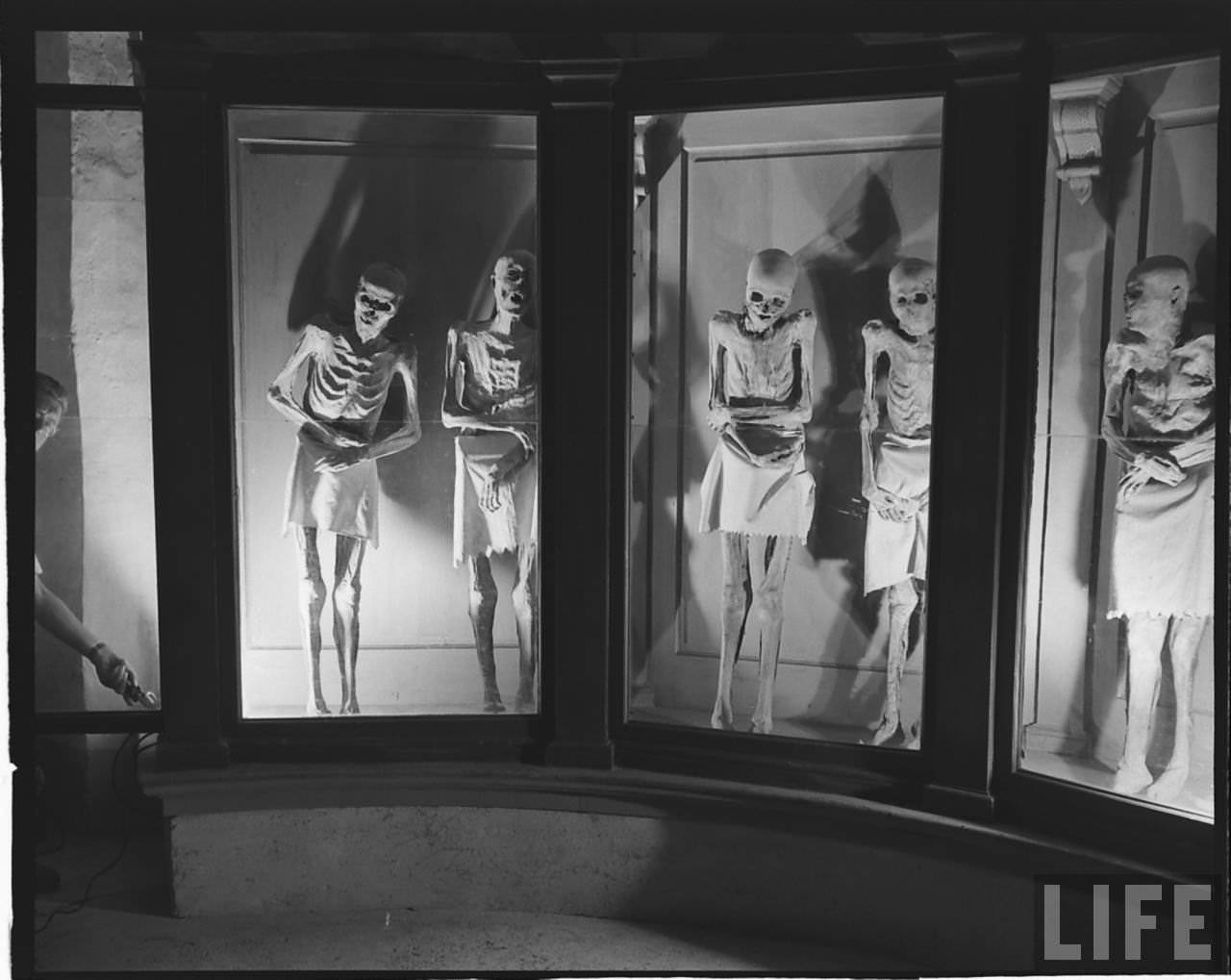

They all look like their mummies
That is terrifying
What a creepy and gross thing to do!
When I was a kid, I visited that museum. It terrified me. All I could think of was that they’d come to life like in Night of the Living Dead or Dawn of the Dead. Even the restrooms looked uncomfortable. Lighting was dim, and stall doors were so loud they could have woken the dead.