
Providence, Rhode Island has one of the longest histories of any city in the United States. Roger Williams, a minister banished from the Massachusetts Bay Colony for his religious views, founded it in 1636. The city was formally incorporated in 1831 and became the sole capital of Rhode Island in 1900. By then, Providence was already well on its way to becoming one of the most important industrial cities in the country.
One of Providence’s most iconic landmarks had already been standing for decades by the time the 20th century began. The Arcade, built in 1828, is considered the oldest indoor shopping mall in the United States. It connected Westminster and Weybosset Streets with a grand Greek Revival design and drew shoppers from across the region.
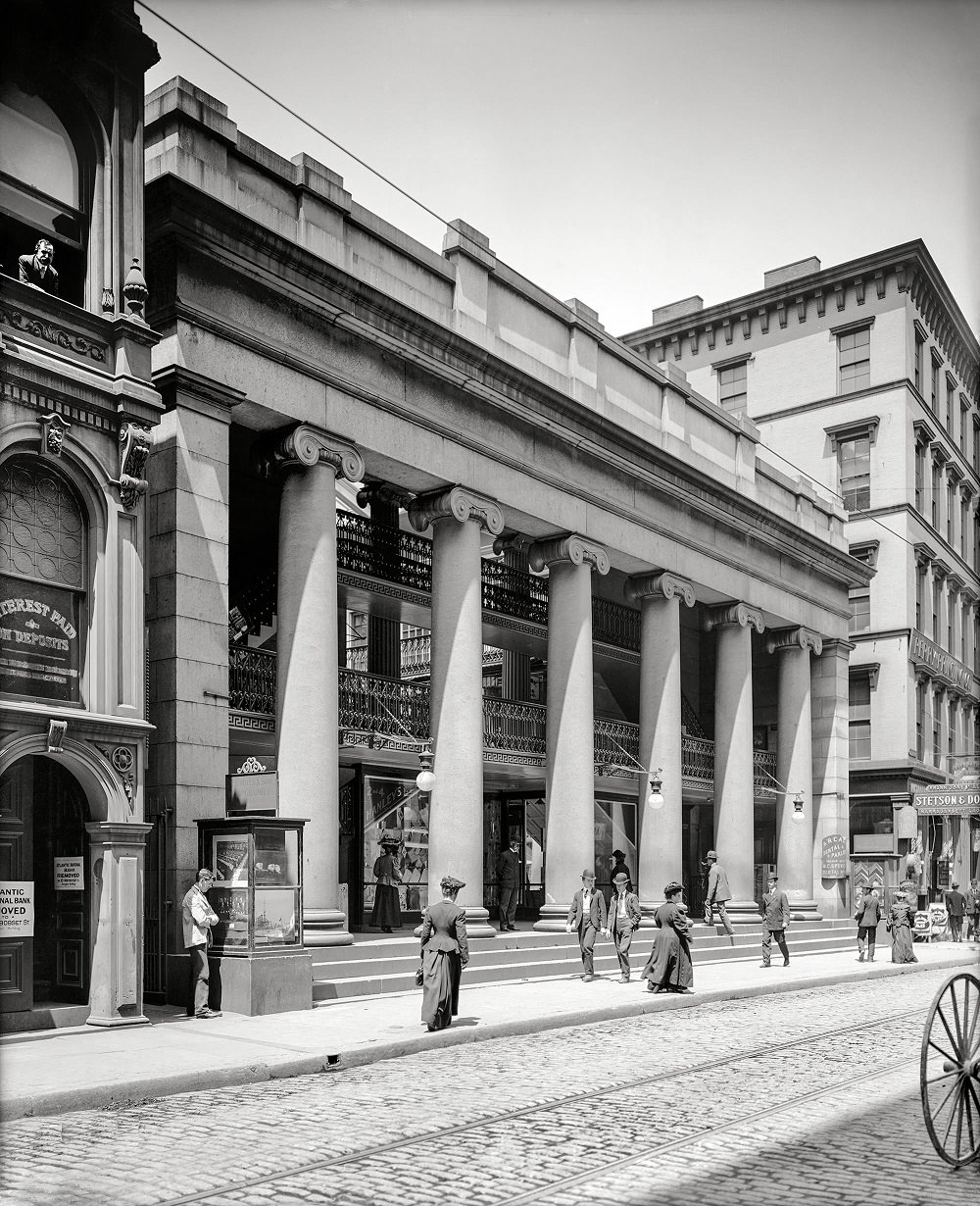
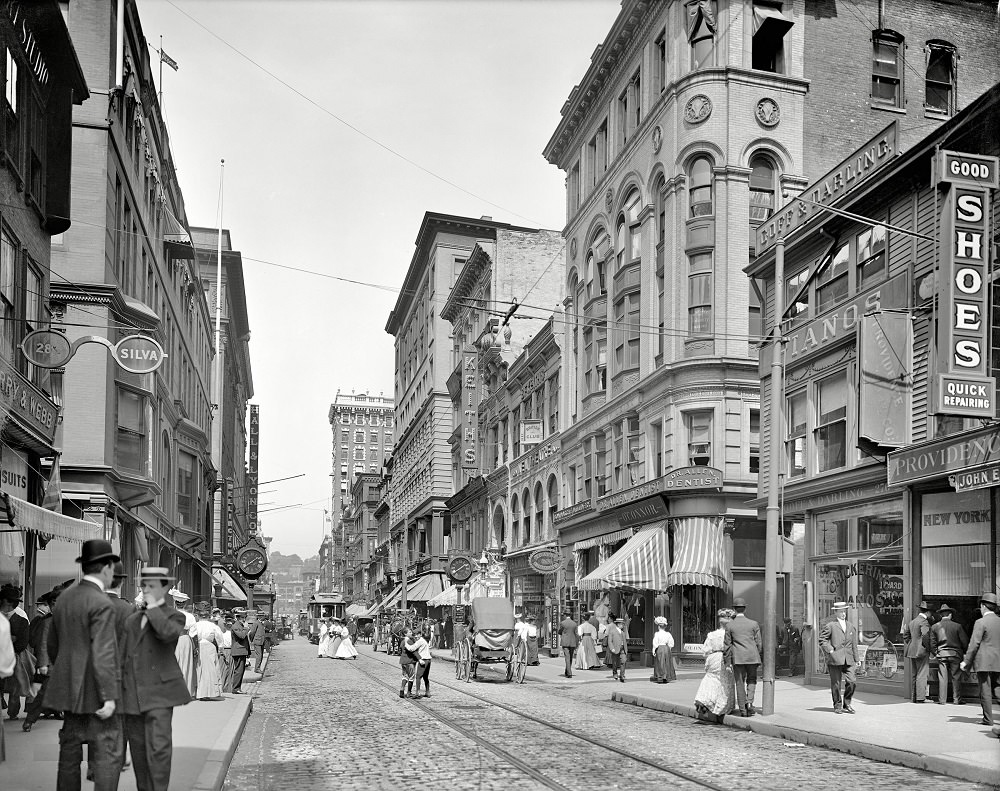
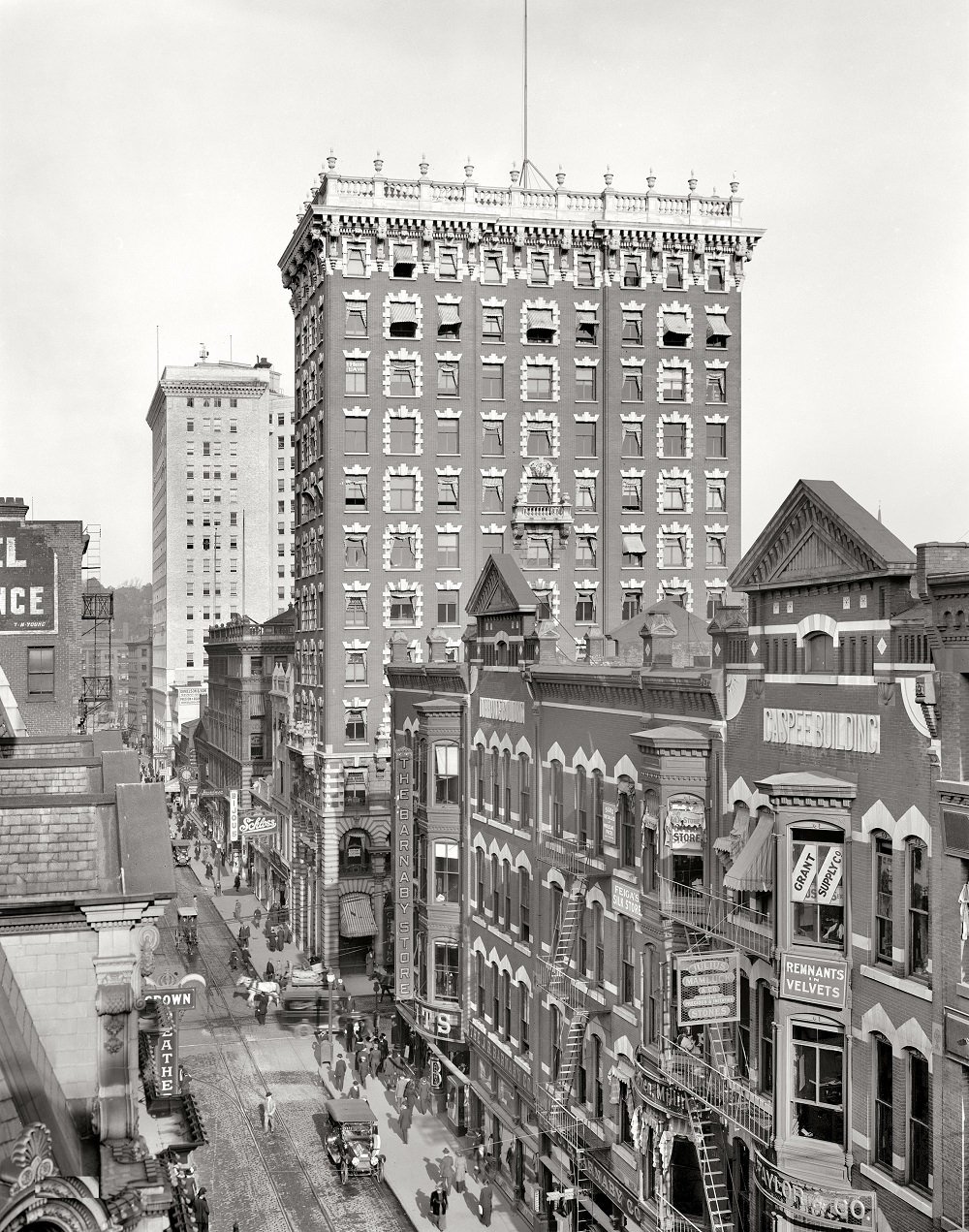
Westminster Street was the commercial heart of downtown Providence in the early 1900s. Lined with storefronts, banks, and foot traffic, it reflected the city’s growing prosperity. Trolley lines ran through the street, and pedestrians dressed in the fashions of the era crowded the sidewalks on a typical weekday.
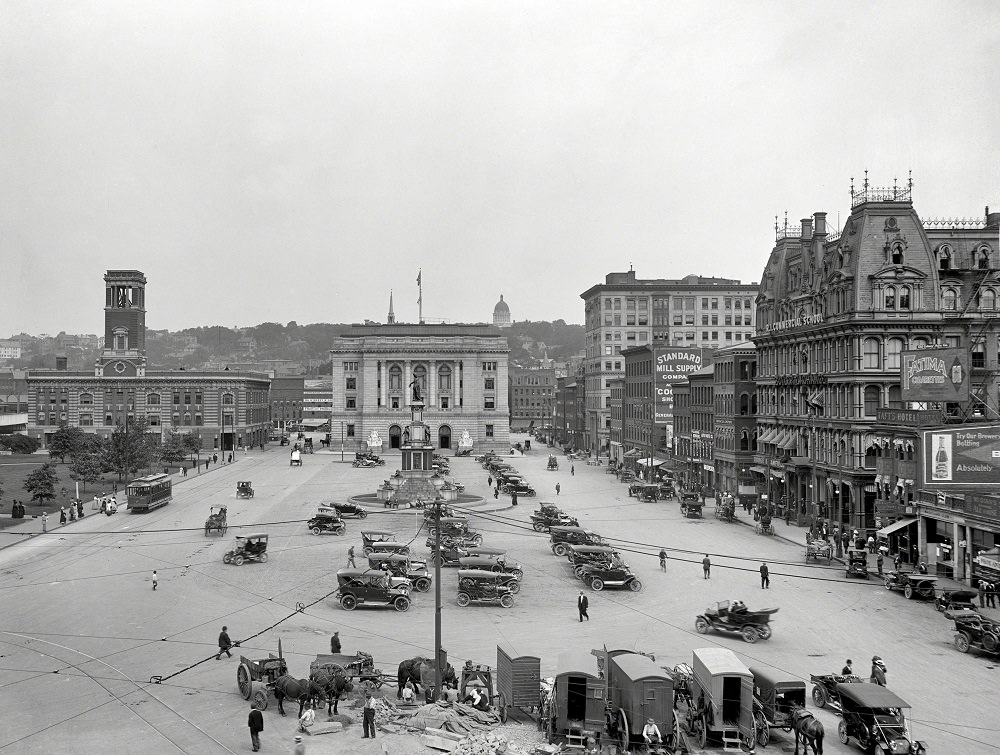
Exchange Place served as the civic and commercial center of Providence. Surrounded by city hall, banks, and office buildings, it was the hub of daily business life. Streetcars passed through regularly, and the area bustled with workers, merchants, and city officials throughout the day.
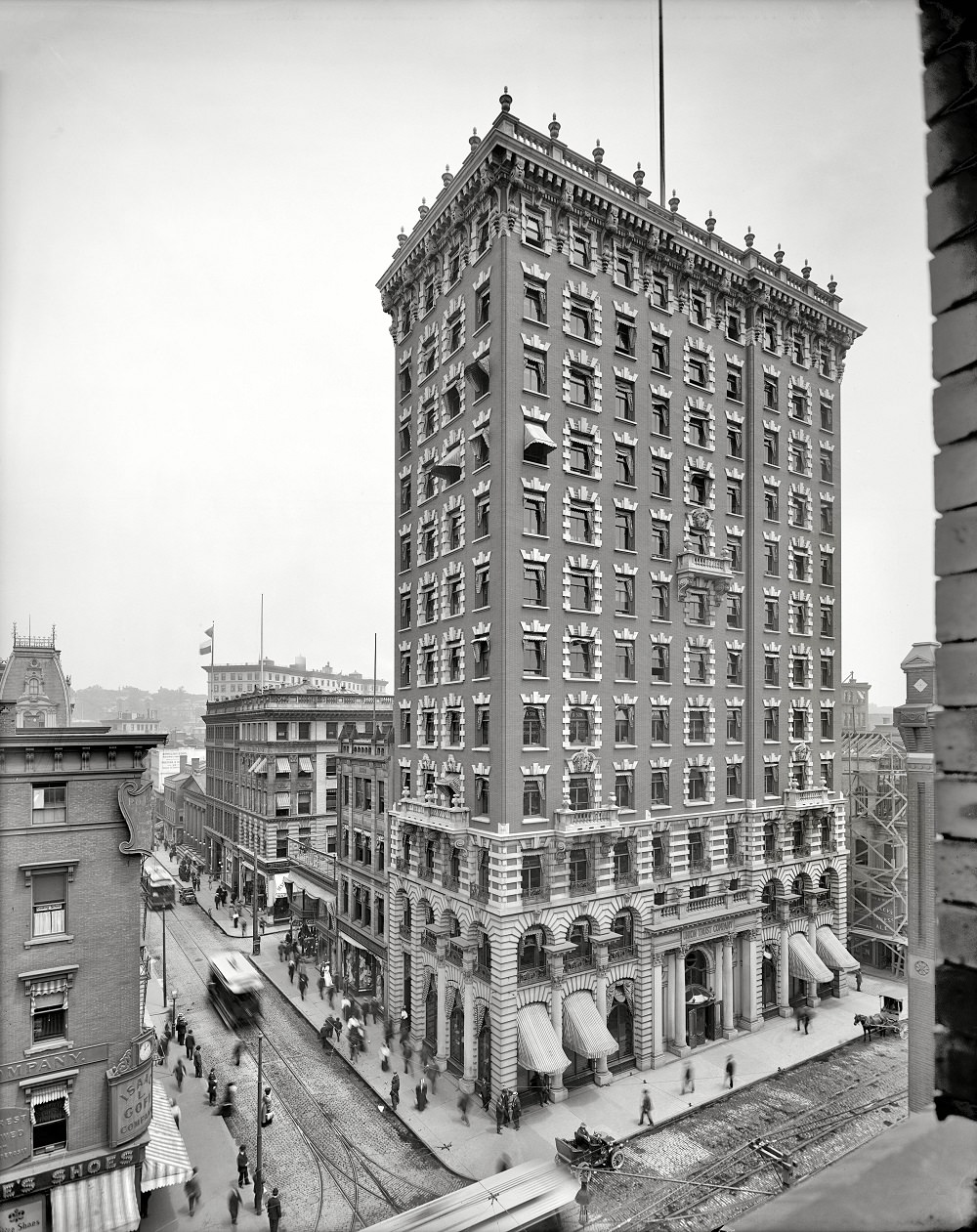
The Union Trust building was among the most prominent structures in early 20th-century Providence. Rising above the surrounding streetscape, it represented the financial power growing in the city during those boom years. Banks and trust companies were thriving, fueled by the wealth generated from manufacturing and trade.
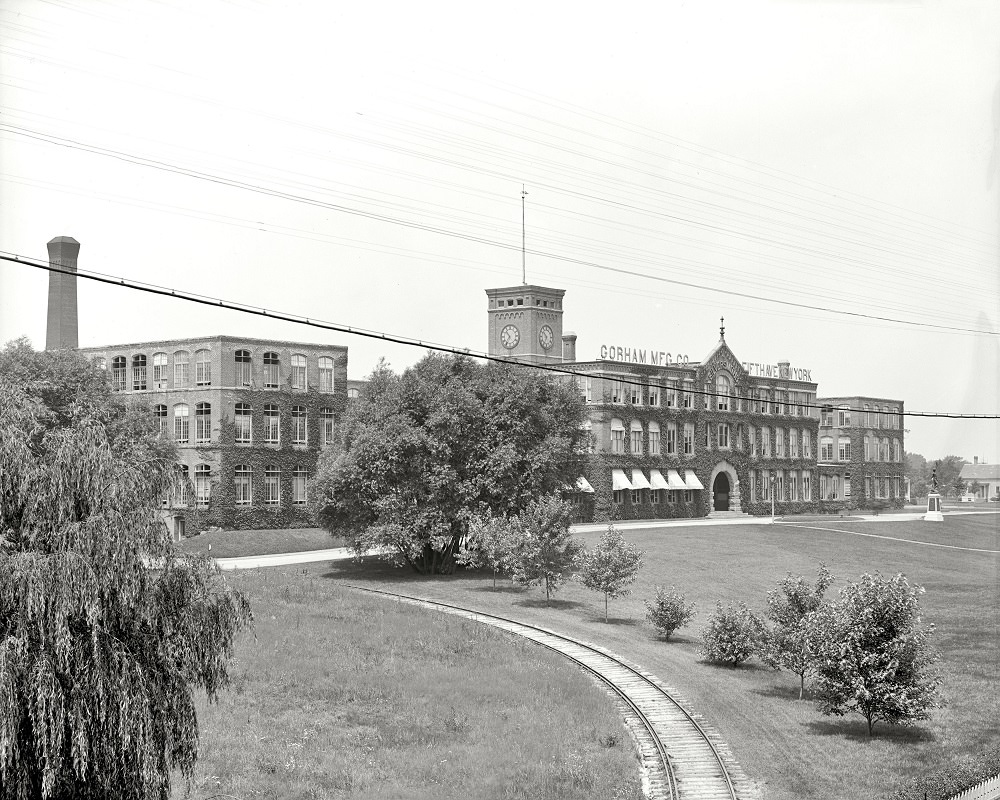
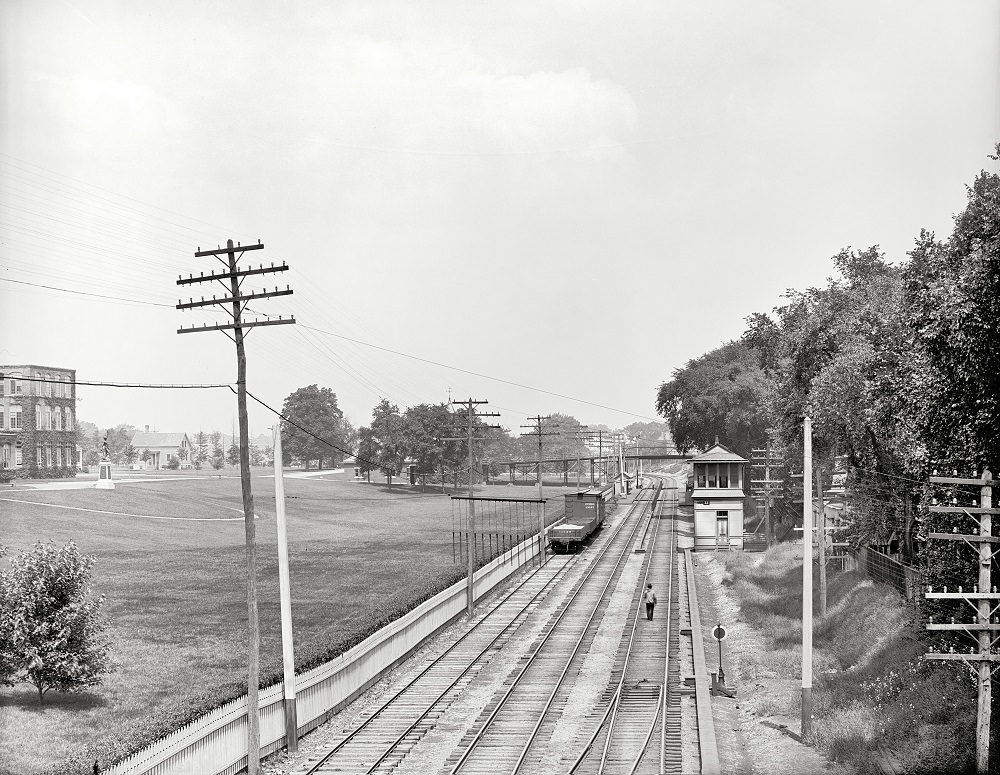
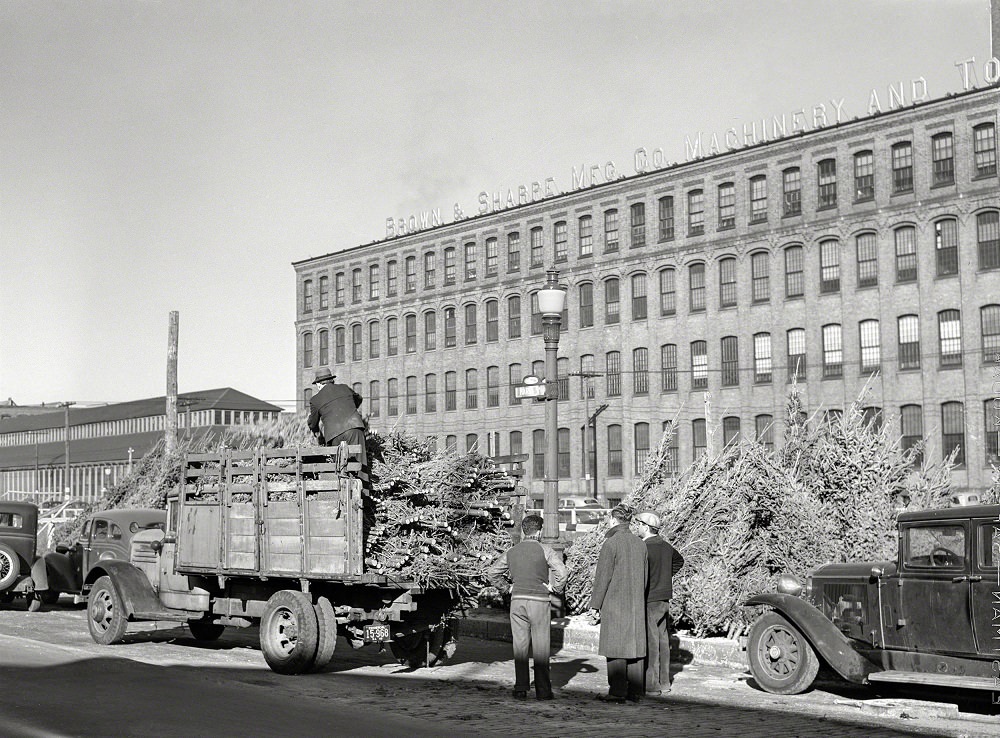
At the same time, Providence was home to some of the largest manufacturing operations in the entire country. Brown and Sharpe, which made precision tools and machinery, was one of the biggest employers. The city’s iron, steam engine, and textile industries drew workers from across New England and beyond. Among the most celebrated manufacturers was the Gorham Manufacturing Company, which produced some of the finest silverware in the world.
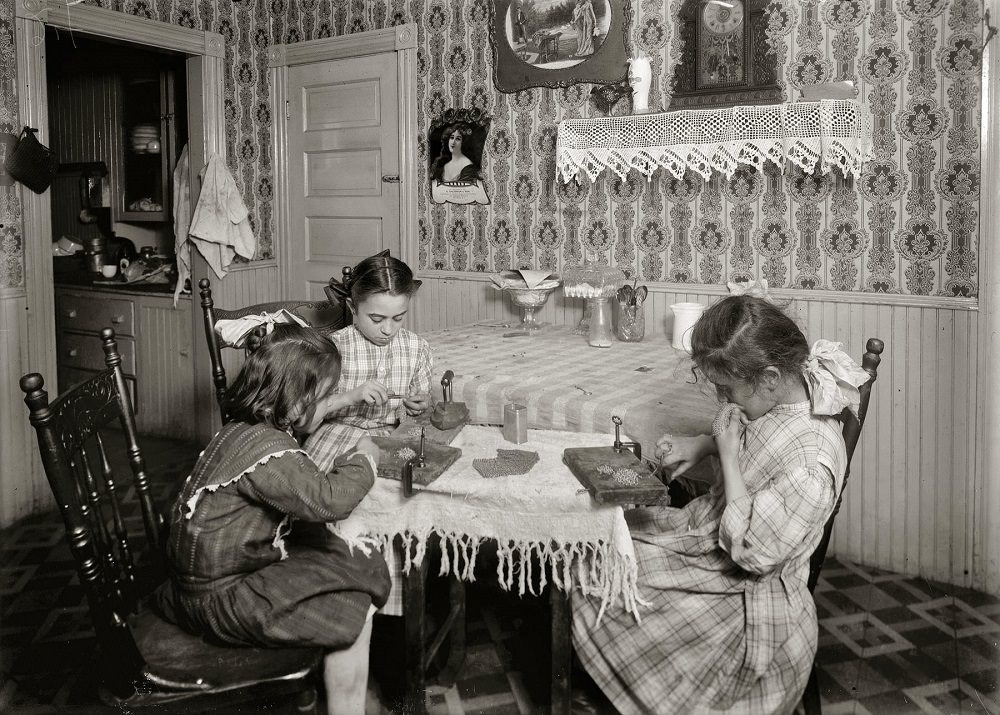
Jewelry making was another cornerstone of Providence’s economy. The industry drew both American and foreign craftsmen to the city, and Providence eventually became known as the jewelry capital of the United States. Skilled workers settled in neighborhoods throughout the city, and many families supplemented their income by doing piecework at home. In November 1912, photographer Lewis Hine documented some of those workers — including young girls as young as six years old — crafting chain-bags inside a Knight Street home.
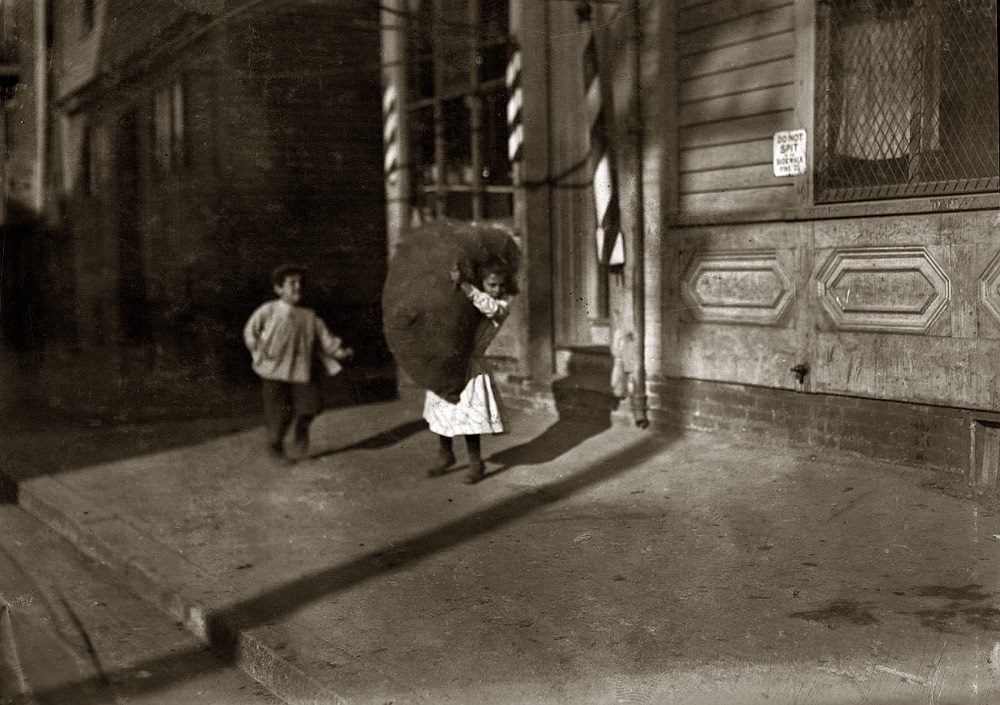
Hine’s 1912 photographs captured more than just labor. They showed the texture of working-class life in Providence with unflinching detail. On Spruce Street, he photographed a tiny girl hauling a large bag home on her own. Nearby, children pitched pennies on the sidewalk — a common street game of the era.
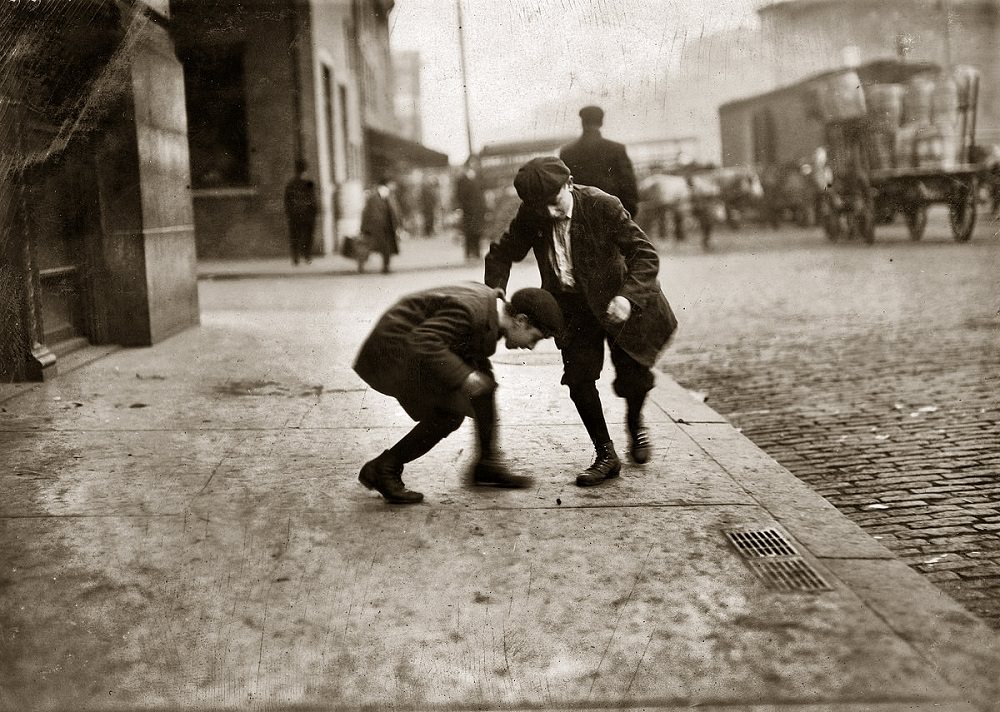
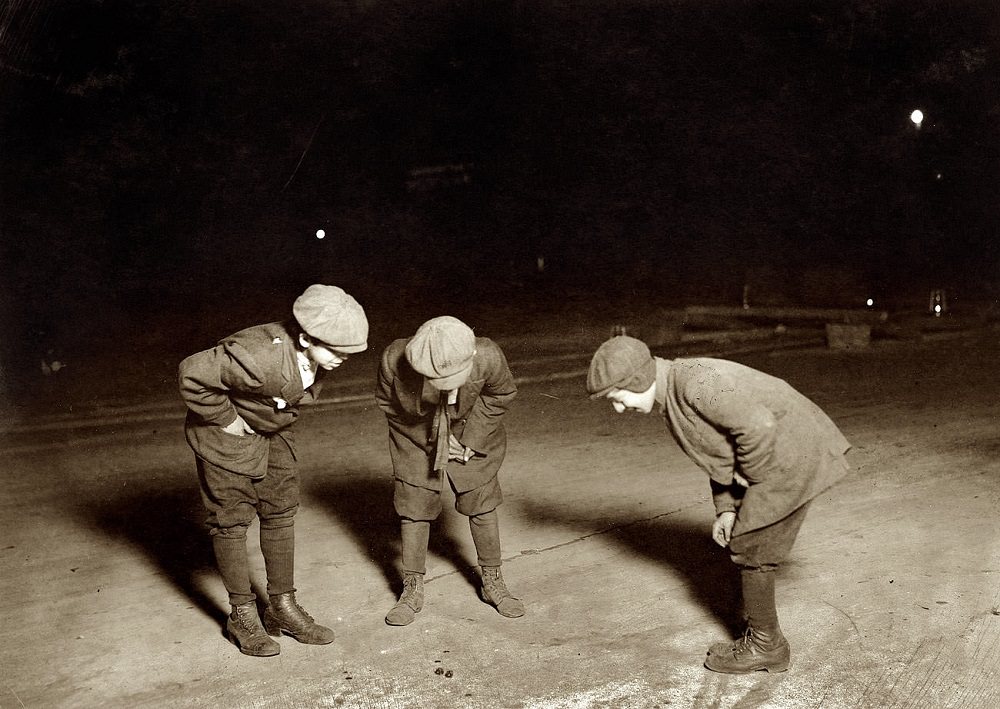
Not all nighttime activity was innocent. Late on November 23, 1912, a midnight craps game was photographed in the street near Providence’s Post Office. The players crouched around the game in the dark, a glimpse into the informal underground economy operating just outside the city’s respectable institutions.
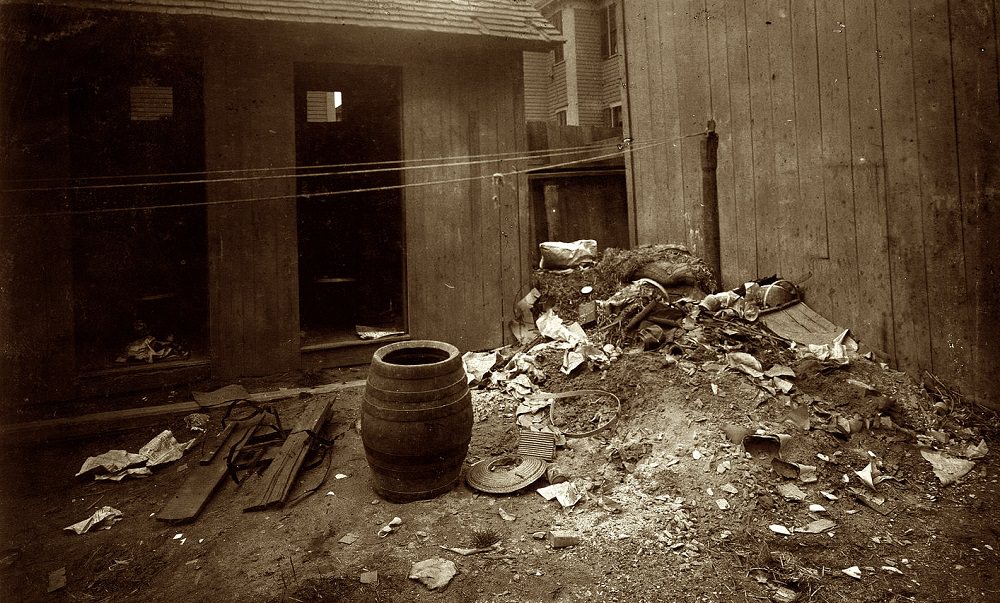
Residential life in Providence’s working-class neighborhoods was crowded and modest. A photograph taken at 70 Borden Street shows the back of a tenement with outhouses and laundry lines strung between buildings — a common sight in densely packed urban neighborhoods of the time. These were the homes of factory workers, craftsmen, and immigrant families building their lives in the city.
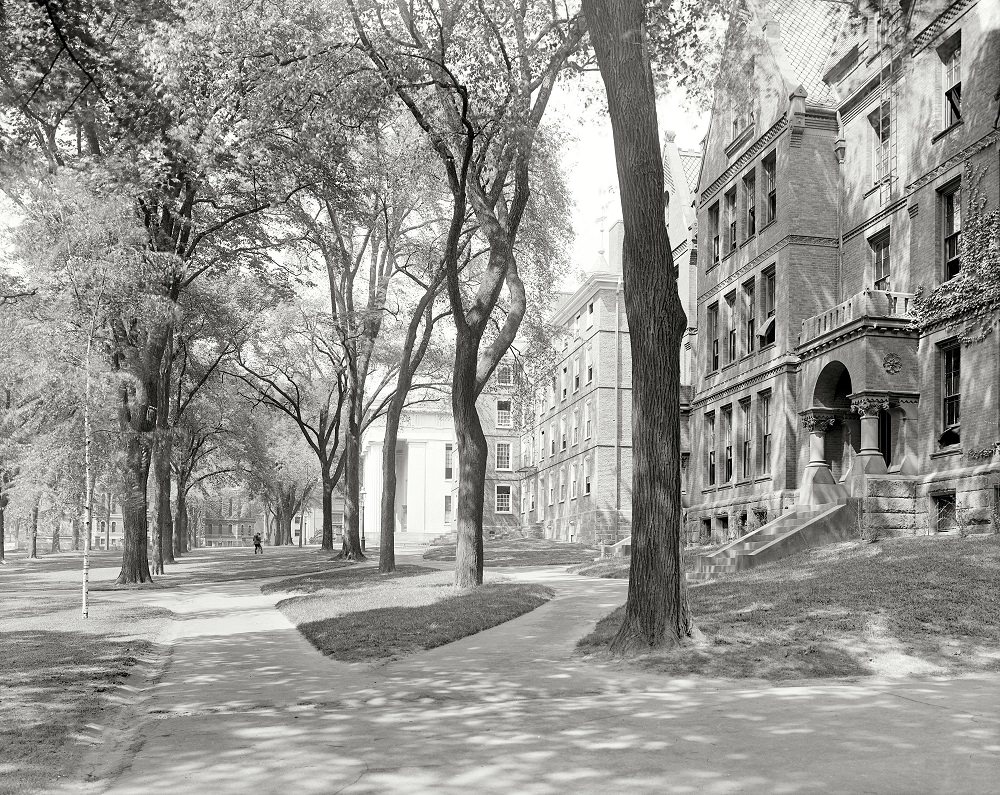
Brown University, founded in 1764, sat above the city on College Hill and offered a stark contrast to the industrial neighborhoods below. Its front campus in 1906 was a quiet, tree-lined space, home to one of the oldest and most respected universities in the country. The school drew students from across the nation and added to Providence’s reputation as a city of both industry and learning.
Prospect Street, located in the College Hill neighborhood, offered a very different view of the city. Its elevated position provided a sweeping look at Providence’s rooftops and skyline. Elegant homes lined the street, home to the city’s professional class and university affiliates.
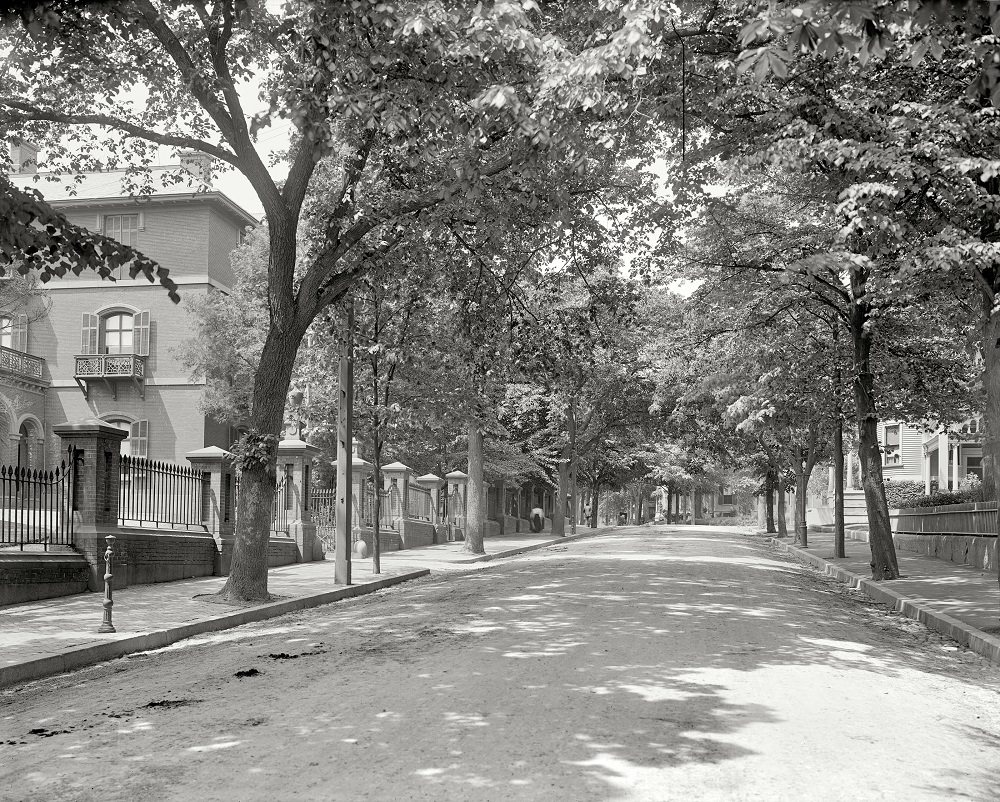
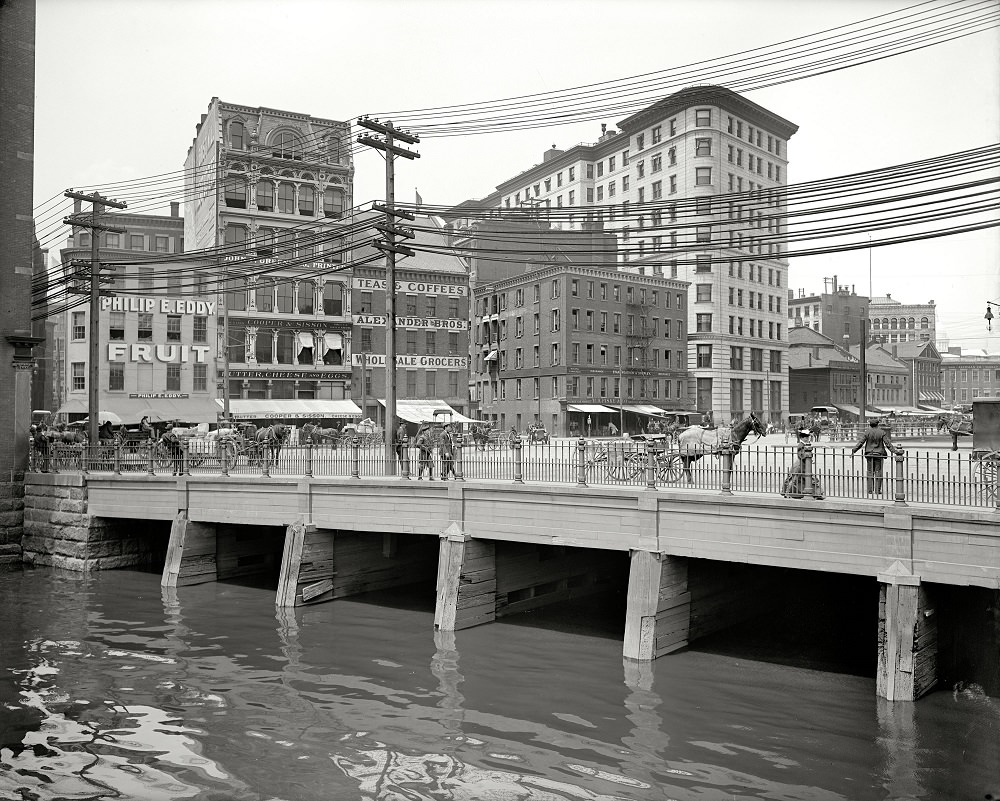
The Crawford Street Bridge was a key crossing over the Providence River, connecting different parts of the growing city. By 1906, Providence’s infrastructure had expanded rapidly to keep pace with its population and industrial output. Bridges, trolley lines, and paved streets knit the city’s various neighborhoods together.
Westminster Street remained the center of retail life well into the mid-20th century. By circa 1910, the street was even more developed, with department stores and commercial signage filling every available space. Shoppers and workers moved along the sidewalks in a rhythm that defined urban life in New England’s cities.
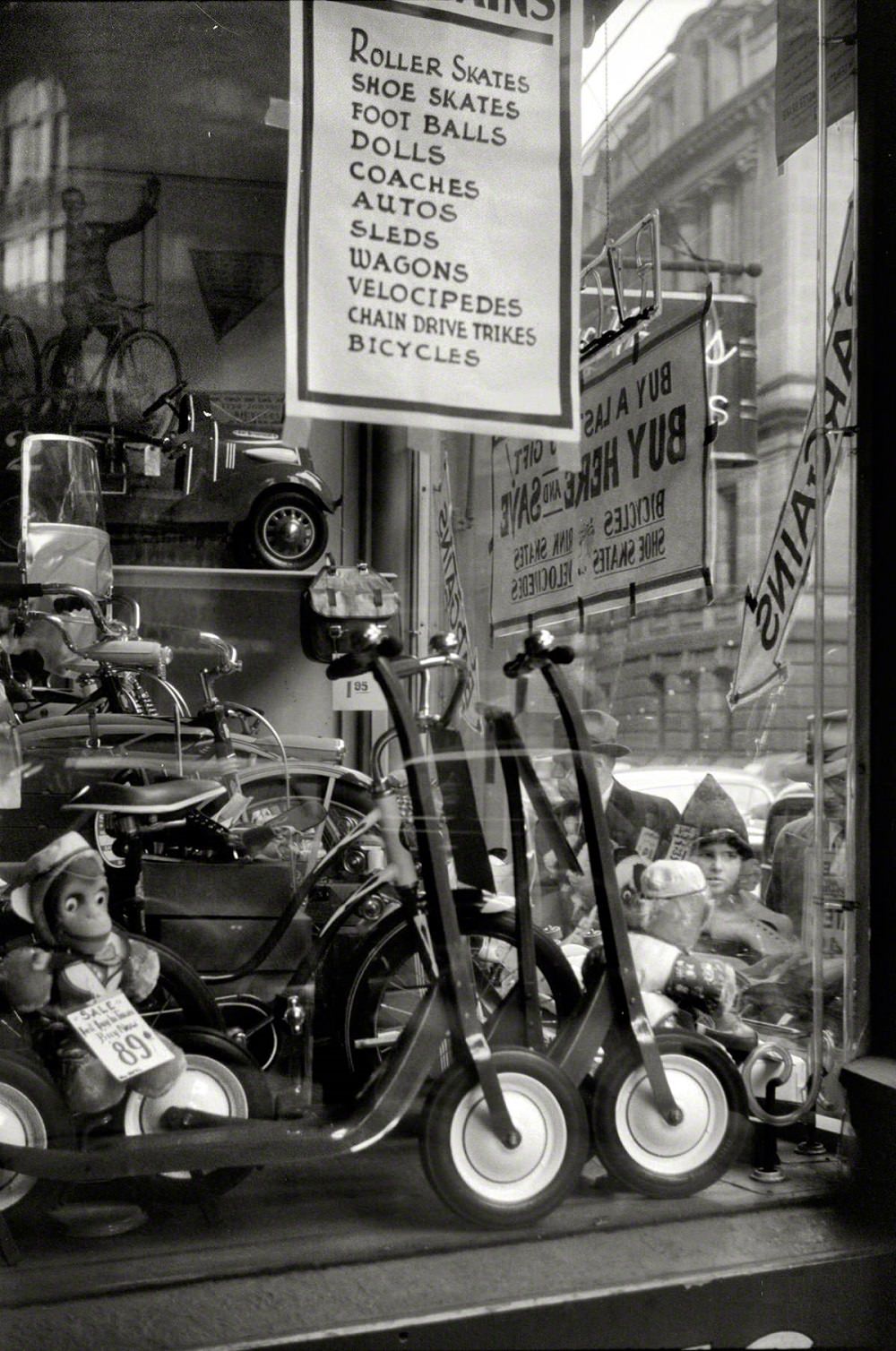
By December 1940, the Great Depression had taken a serious toll on Providence. Textile mills and manufacturing plants had shed workers throughout the 1930s, and the city’s rapid industrial growth had slowed considerably. But the holiday season still brought commerce back to the streets. Christmas tree vendors set up at the market, and shop windows filled with festive displays to draw in shoppers.
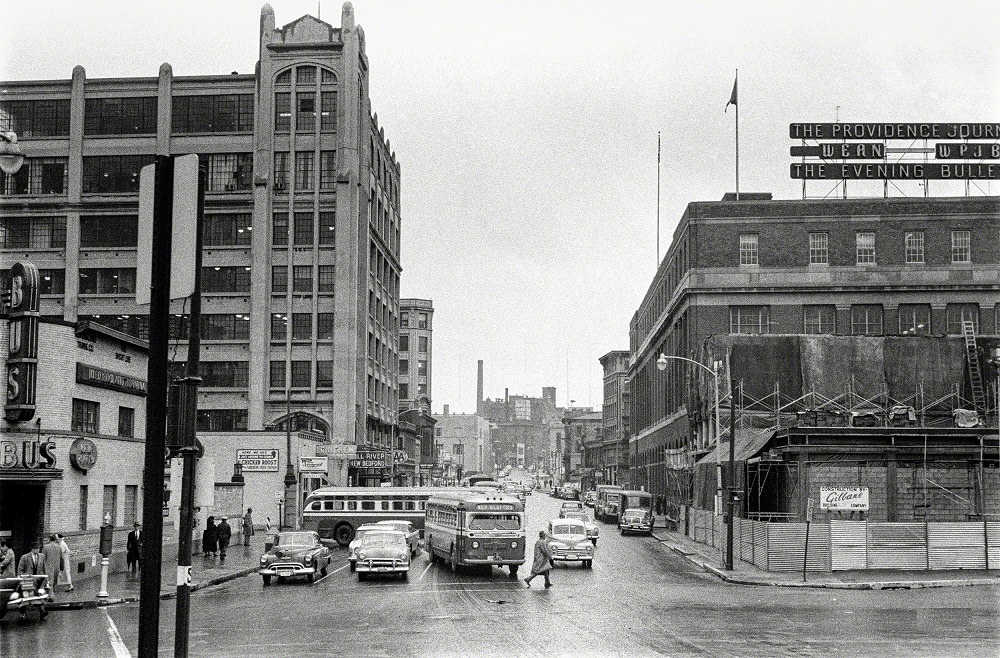
By 1957, Providence looked noticeably different from its early 20th-century self. Cars had replaced streetcars, neon signs advertised businesses along the main corridors, and the postwar economy had reshaped the urban landscape. The street scene from that year shows a city in transition — still alive and active, but carrying the weight of industrial decline that would deepen in the decades ahead.





It would be great to have a collection of historical photos of Rhode Island in the 70s and 80s, just before the Providence Renaissance. It would give younger generations a glimpse of life during the Stranger Things era.
The Soldiers’ and Sailors’ Monument at Exchange Place appears to have lost some steps over time. Comparing the older photograph to newer ones, it seems to be much higher in the former.
It was like Gotham City…
Depressing seeing all of those trams we used to have.
Wow great shots. Sad most of the buildings near the Crawford st bridge are gone
That’s Gorham, famous silver company. They were on Adelaide Ave and Reservoir at that time, where the abandoned Stop and Shop is, and Alvarez High School.
Providence was the silicon valley of the industrial revolution
It was so beautiful, and still is so beautiful. I wish it were as bustling as it once was
The loss of the Gorham Manufacturing Co building was a tragedy, not just for Providence, but for architecture as a whole.
The building was so ornate and unique that pictures of it appear over 700 times in the Smithsonian Museum’s archives of American art.
Unfortunately, after laying vacant for years, the decision was made to demolish it – only a few years before the city enacted tax breaks for restoring and redeveloping mills. If only we’d waited a little bit longer, this story could’ve had a happy ending. Imagine if this beautiful work of craftsmanship still stood in Reservior, housing hundreds of Rhode Islanders?
https://artinruins.com/property/gorham-manufacturing-co/
Is that Kennedy Plaza???
Yes, before Kennedy was even born.
Huh, I never realized it was named after him.
I went to double-check (it is indeed for JFK, he gave a speech there) and the Wikipedia page is actually pretty neat.
It’s worth a read, but my favorite tidbit was Harry Houdini performed twice in Kennedy Plaza. He escaped a straitjacket while dangling from a building.