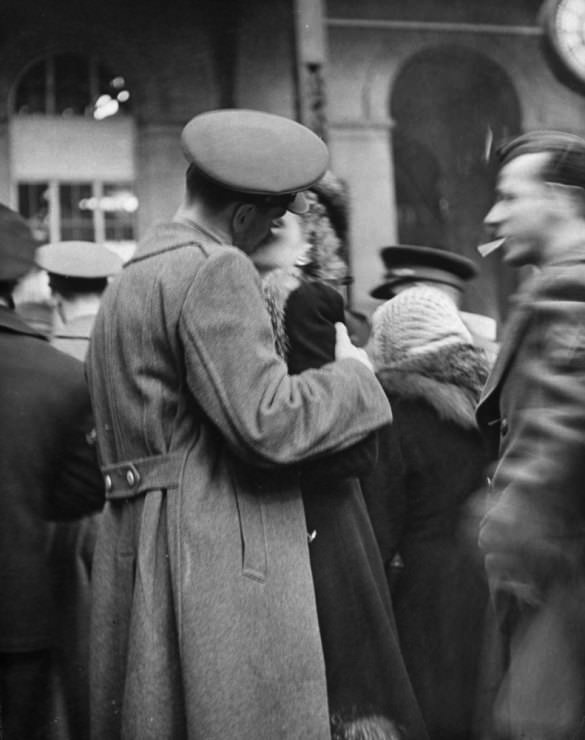
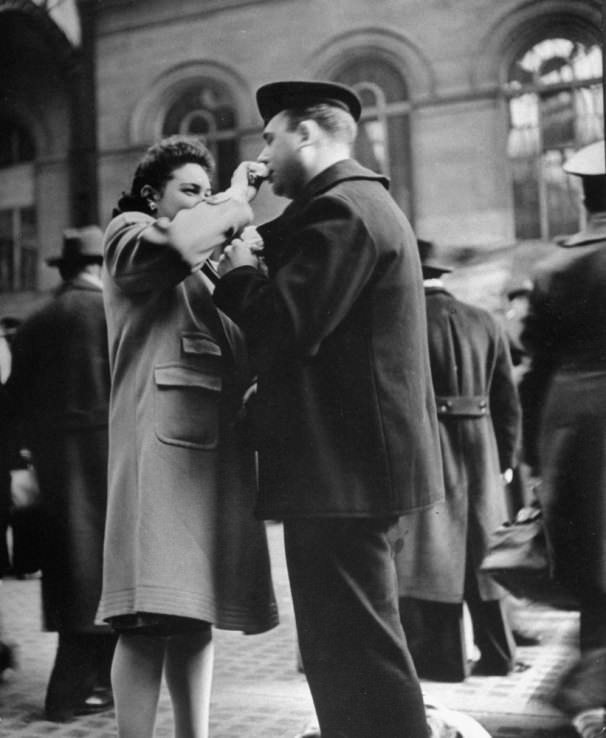
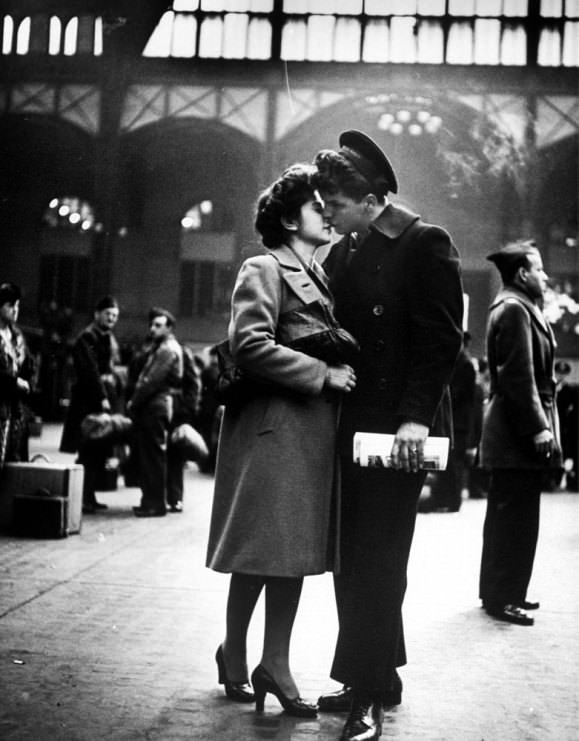
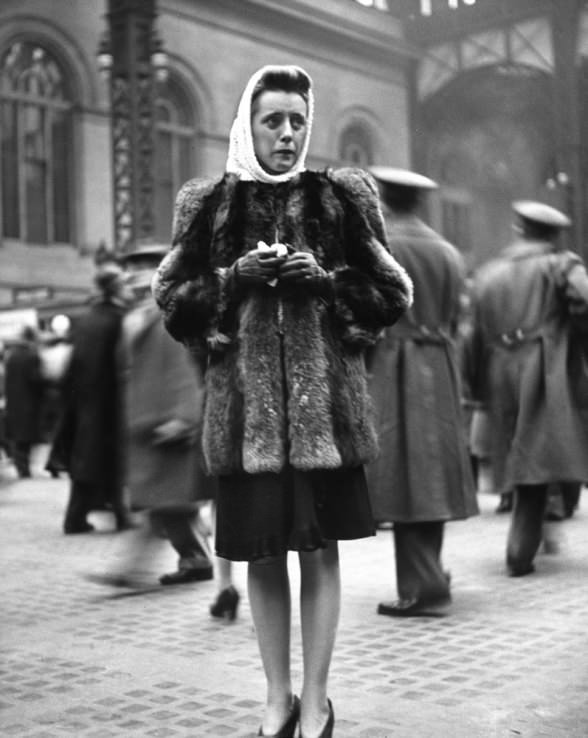
In April 1943, at the height of World War II, photographer Alfred Eisenstaedt arrived at Pennsylvania Station in New York City with his camera. What he found was not pageantry or patriotic ceremony — it was grief, love, and fear playing out in real time.
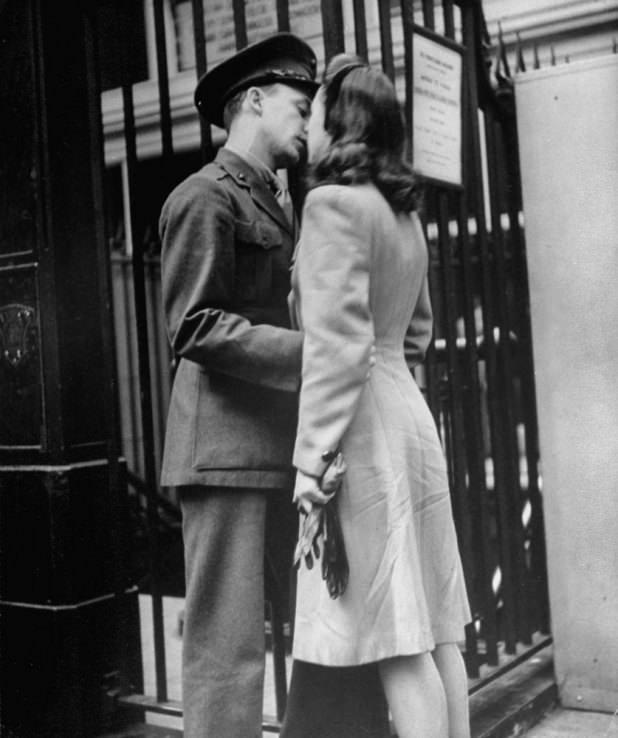
Penn Station was one of the busiest departure points in the country. Every day, soldiers boarded trains bound for training camps or directly to the front lines of the war. For many families, the platform was the last place they would stand together.
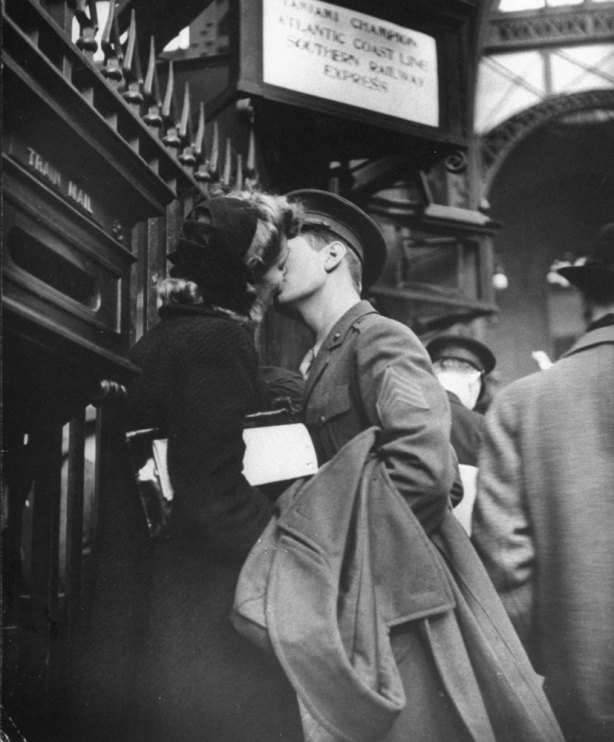
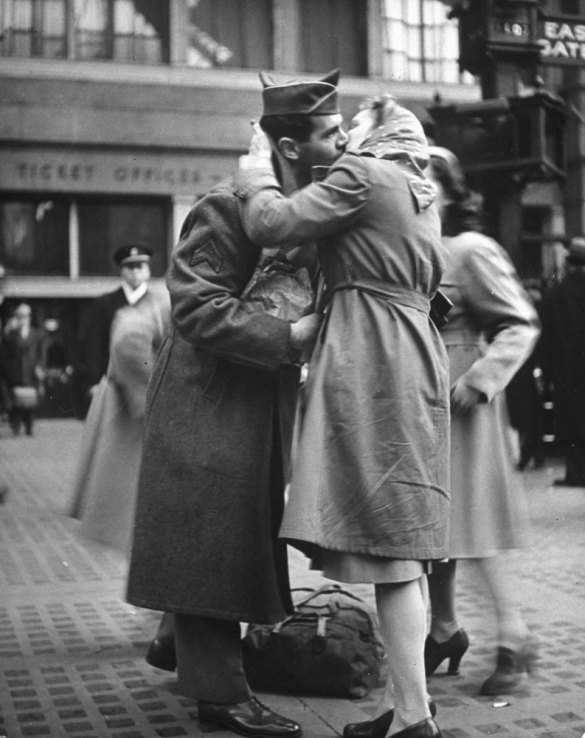
Eisenstaedt’s lens moved through the crowds without staging a single shot. He captured couples locked in tight embraces, mothers gripping their sons, and friends exchanging quiet, heavy words. Soldiers stood straight in their uniforms but carried visible worry in their eyes.
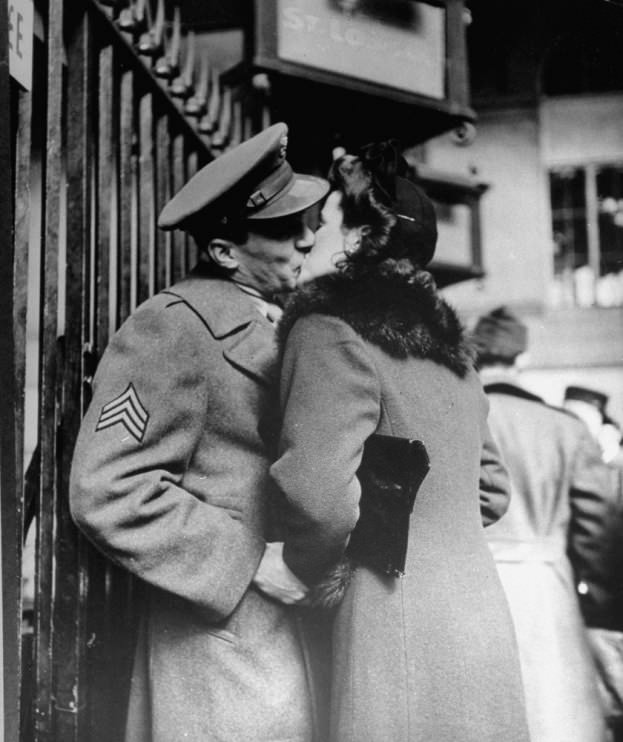
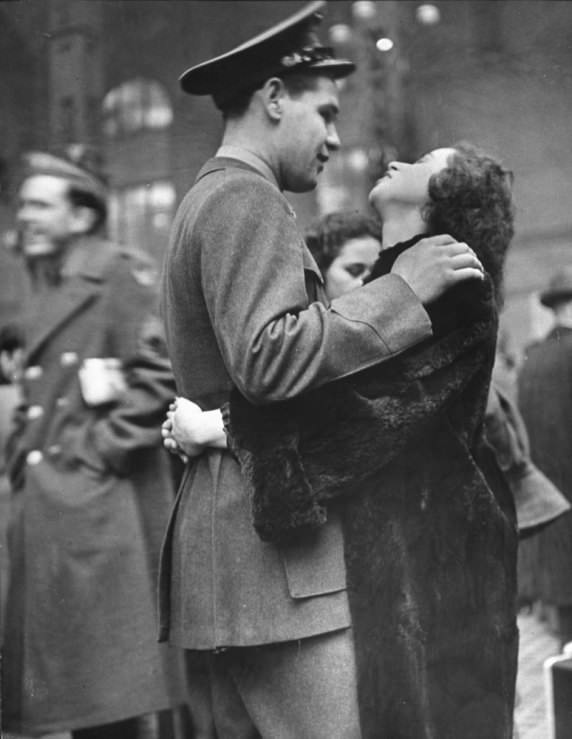
The women in these photographs tell their own stories. Some clung tightly to their partners. Others forced thin smiles while tears ran down their faces. Children stood nearby, confused and unsure why the men in their lives were being taken away by a train.
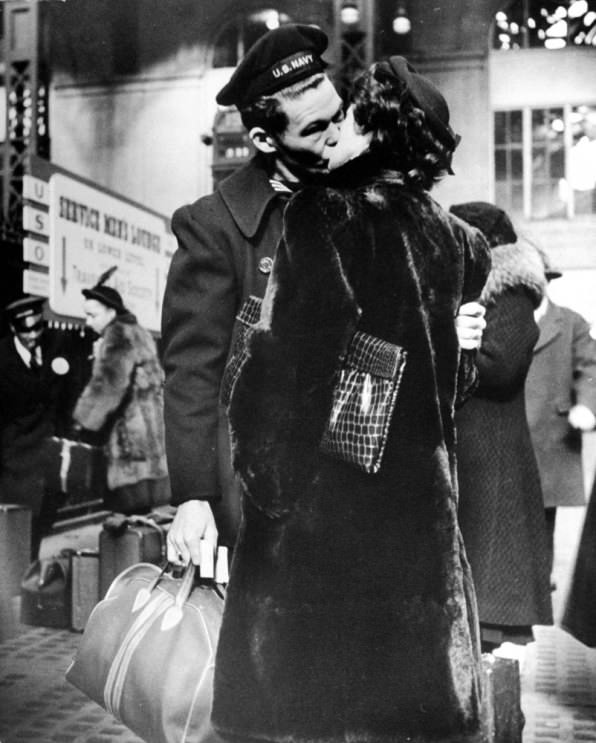
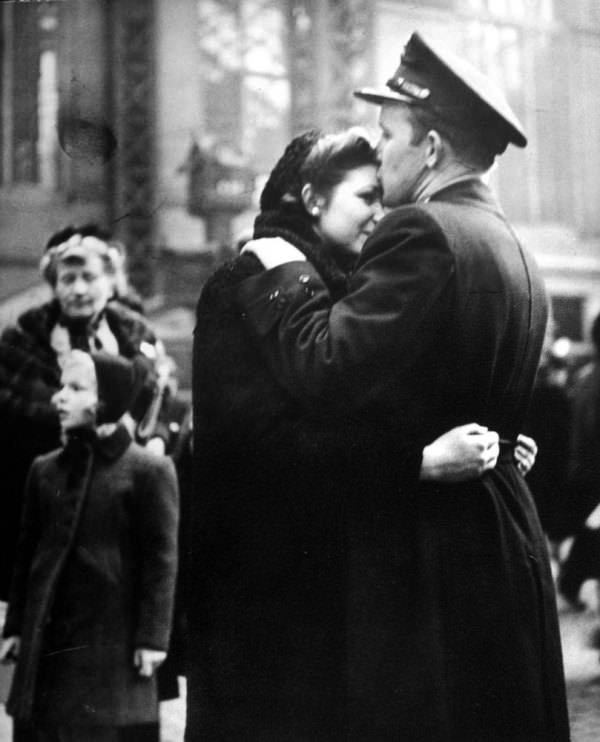
Every hug carried extra weight because everyone in that station understood the stakes. Soldiers leaving that April morning faced real danger. Many would not return. That knowledge made each goodbye longer, tighter, and more desperate.
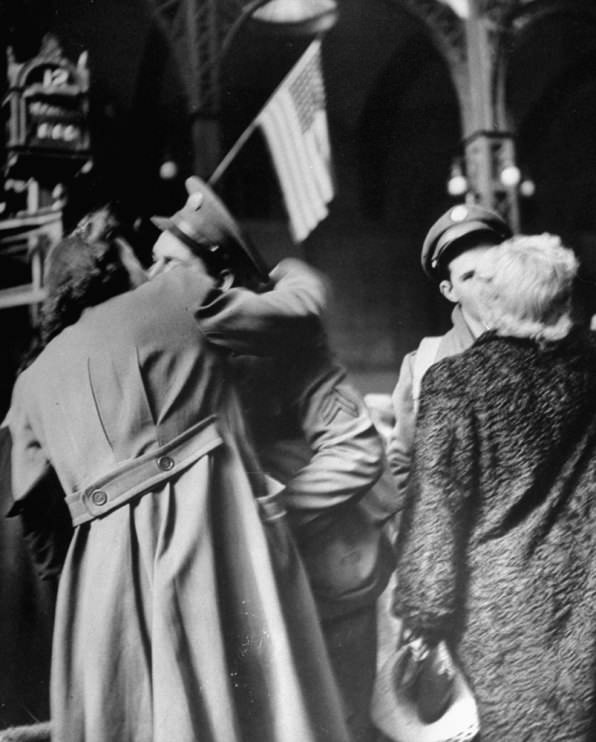
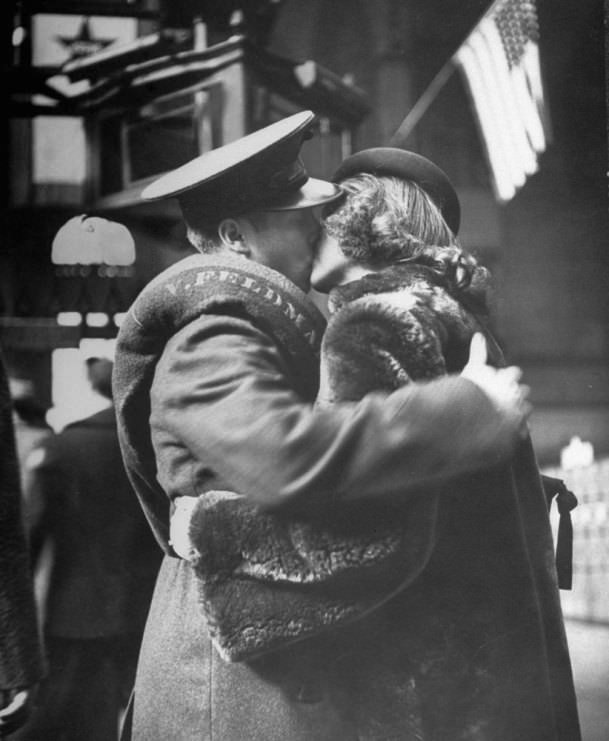
Eisenstaedt did not focus only on soldiers. He also turned his camera toward conductors, passing passengers, and bystanders. Their faces reflected the same tension. The war had reached everyone, even those who were simply passing through.
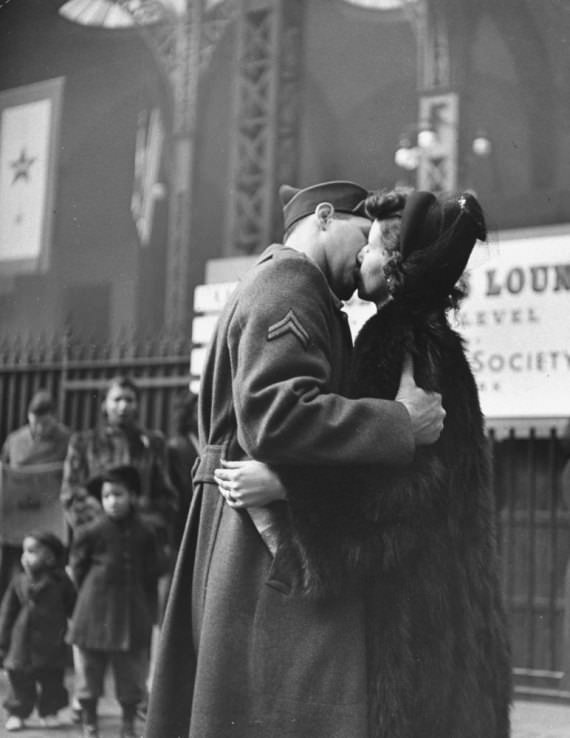
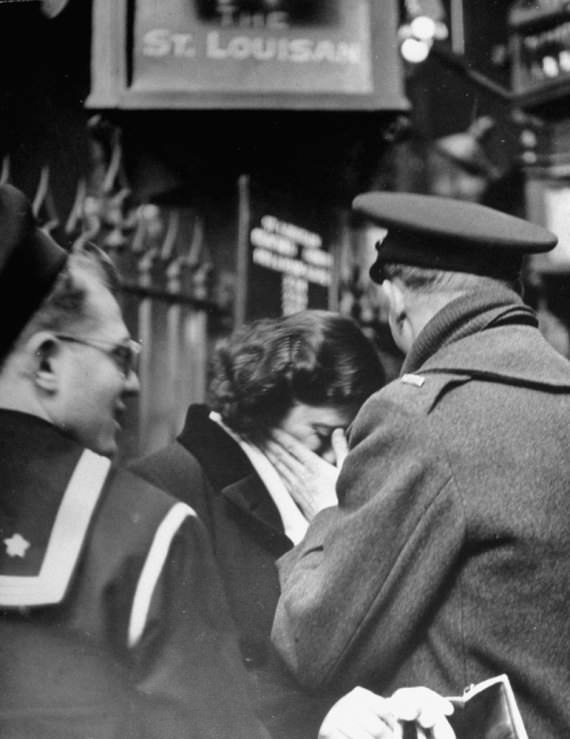
The station itself formed a sharp contrast with the scenes unfolding inside it. Its grand columns and high ceilings were built for commerce and movement, not for mourning. Yet that April, it became a place where ordinary Americans confronted the full human cost of war.
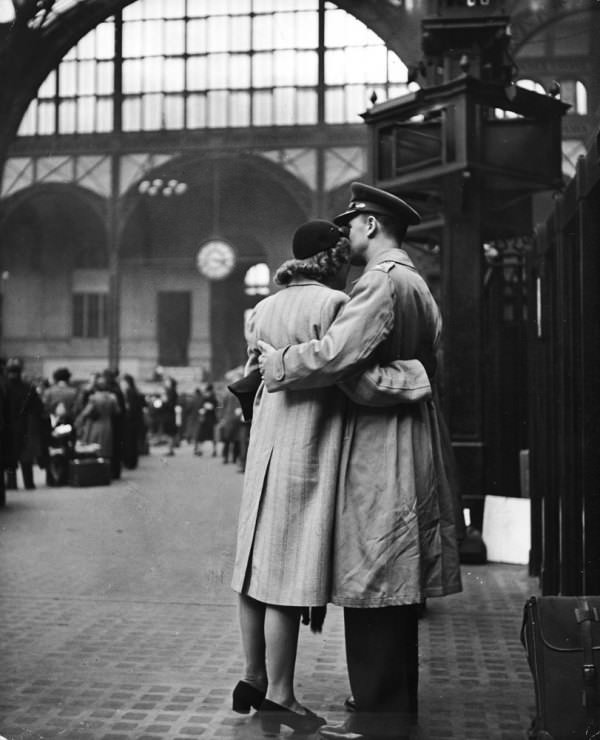
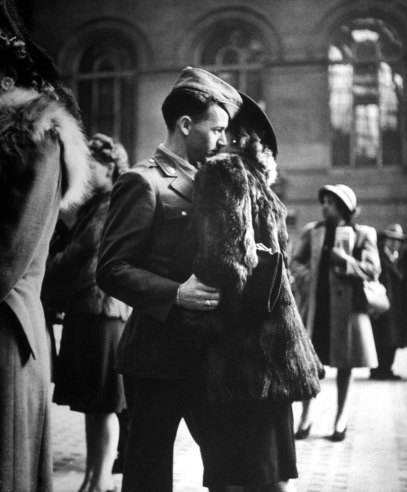
None of these photographs show heroes posing or victories being celebrated. There are no flags or speeches. Just people — scared, loving, and trying to hold on to each other for a few more seconds before the train pulled away.
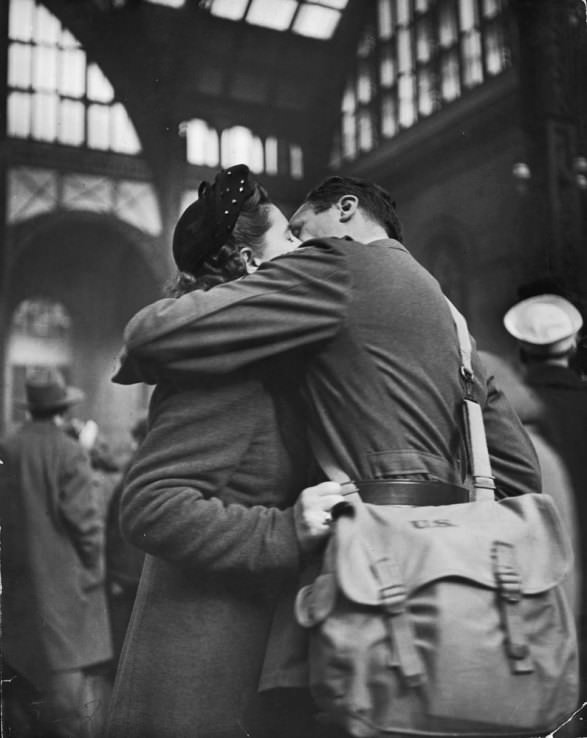
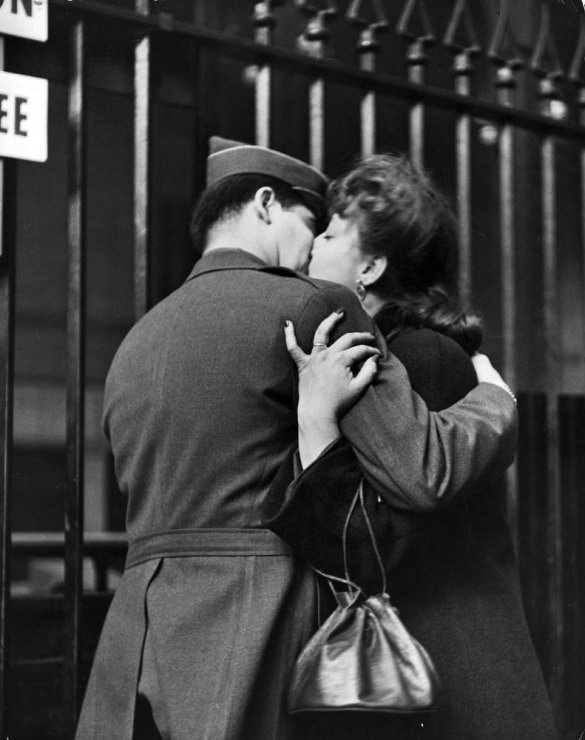
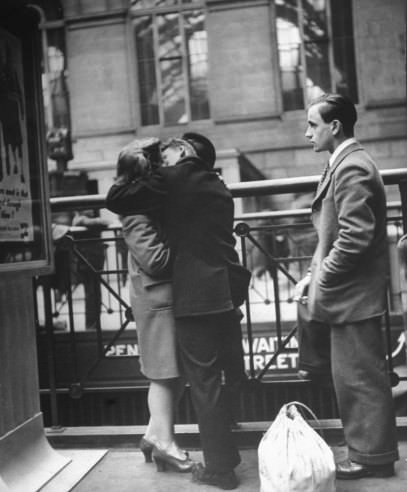
Eisenstaedt’s work at Penn Station stands as a direct record of wartime’s quietest and most painful moments. These were not soldiers yet at war. They were sons, husbands, brothers, and friends — standing on a platform, saying goodbye.