
New York City in the 1880s was a place of rapid change. Streets buzzed with horse-drawn coaches, immigrant workers, and well-dressed crowds gathering outside newspaper buildings. These photographs capture that world in remarkable detail — not as posed portraits, but as genuine slices of daily life across Brooklyn, Manhattan, Queens, and Coney Island.
The man behind the camera was Wallace G. Levison, a chemist and founder of the Departments of Mineralogy and Astronomy at the Brooklyn Institute of Arts & Sciences. He was also a passionate photographer who used the technology both as a scientific instrument and a personal hobby. His images document a city and a community with unusual intimacy.
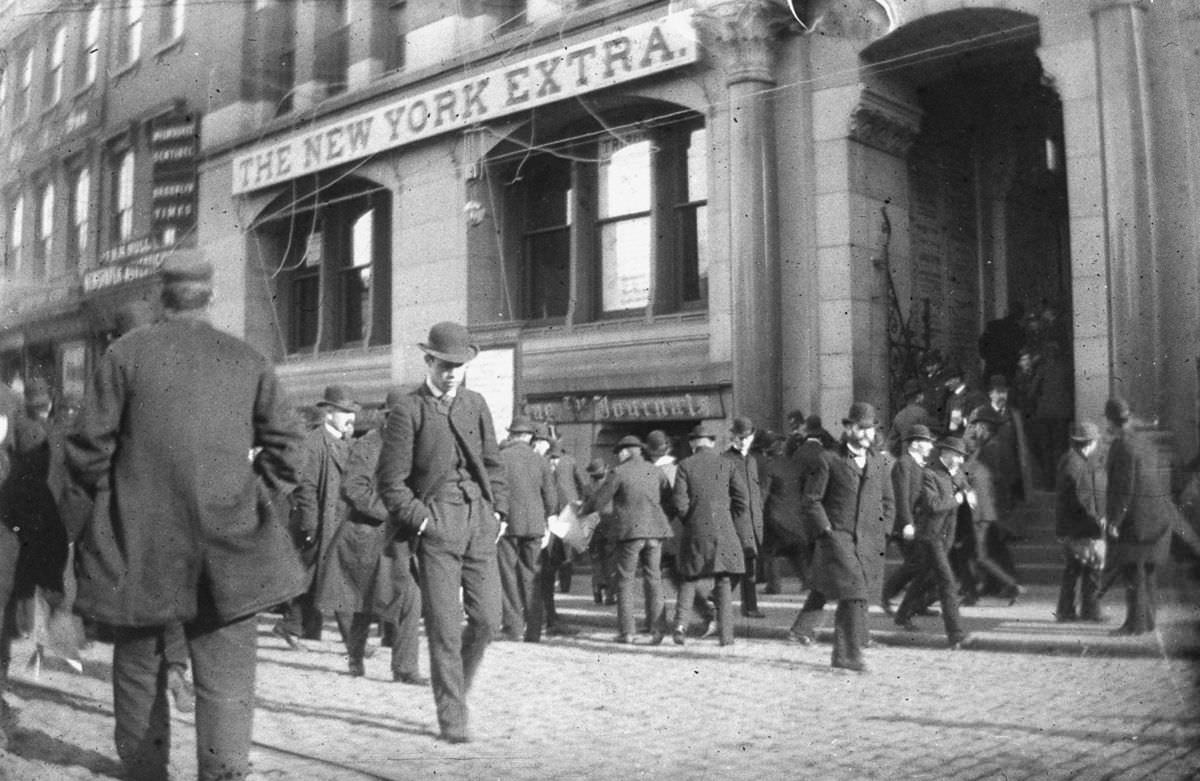
Men in suits and top hats pack the sidewalks of lower Manhattan. On November 6, 1884 — Election Day — crowds gathered outside the New York Tribune building, eager for news. This was a city that moved fast and dressed formally, even in its public excitement.
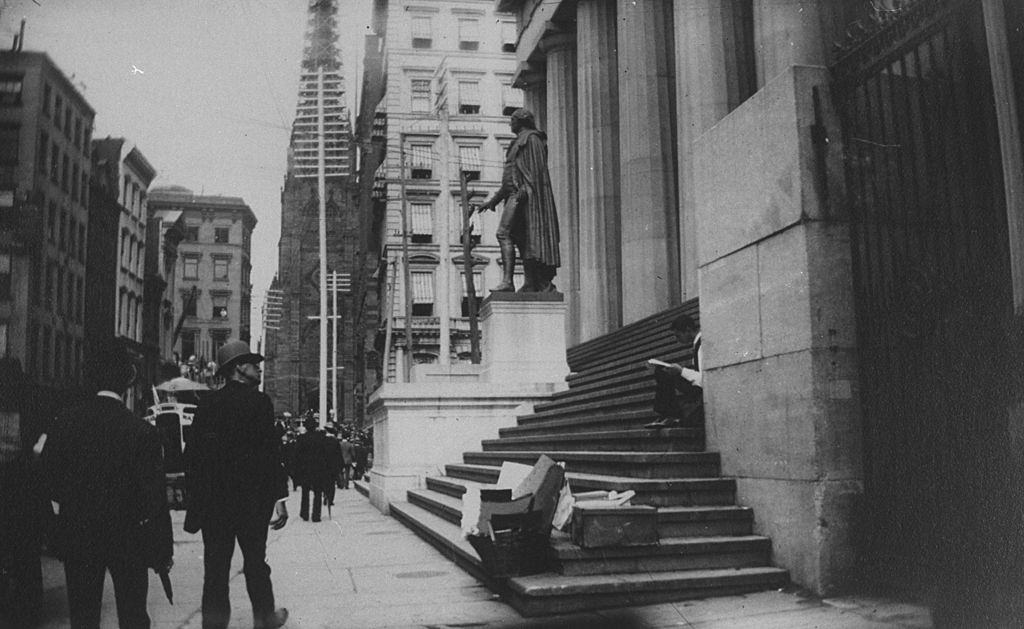
Wall Street in 1884 was already a center of financial power. The statue of George Washington stood at Federal Hall, where men in coats walked briskly past. Meanwhile, just a short distance away, immigrant communities were building their own corner of the city.
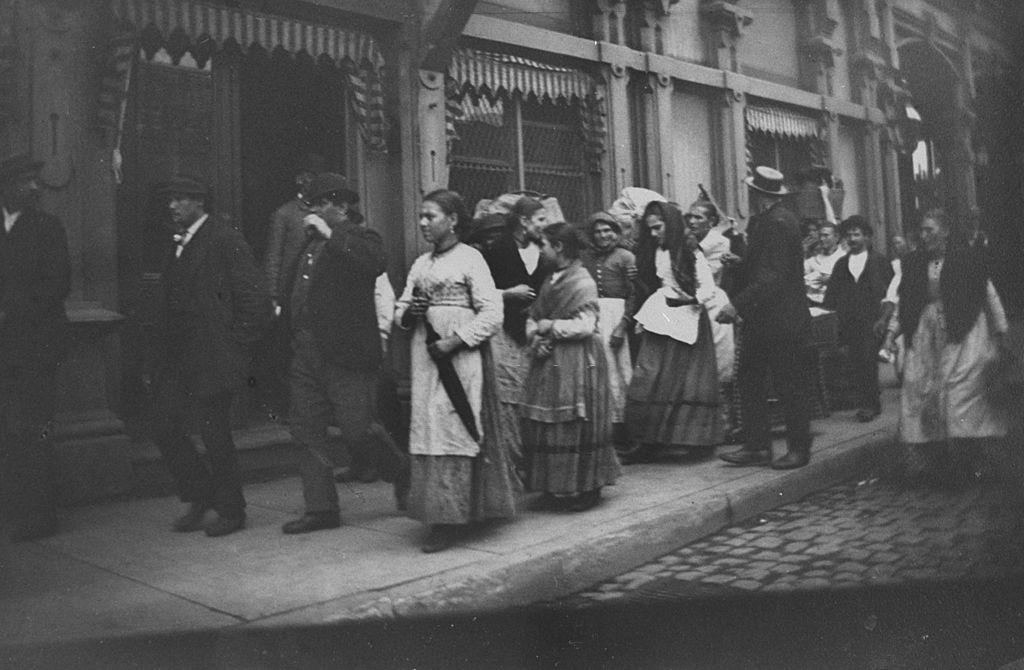
Near the Fulton Ferry, Italian immigrants navigated narrow sidewalks carrying the weight of a new life. This part of the city was dense and working-class — a sharp contrast to the polished crowds uptown. Levison’s lens didn’t shy away from these scenes.
Levison also turned his camera toward the parks and open spaces of Brooklyn, where children and adults spent leisure time with energy and creativity. Fort Greene Park was a favorite setting. He photographed friends and neighbors jumping off walls, racing, and playing — documenting a surprisingly active social life.
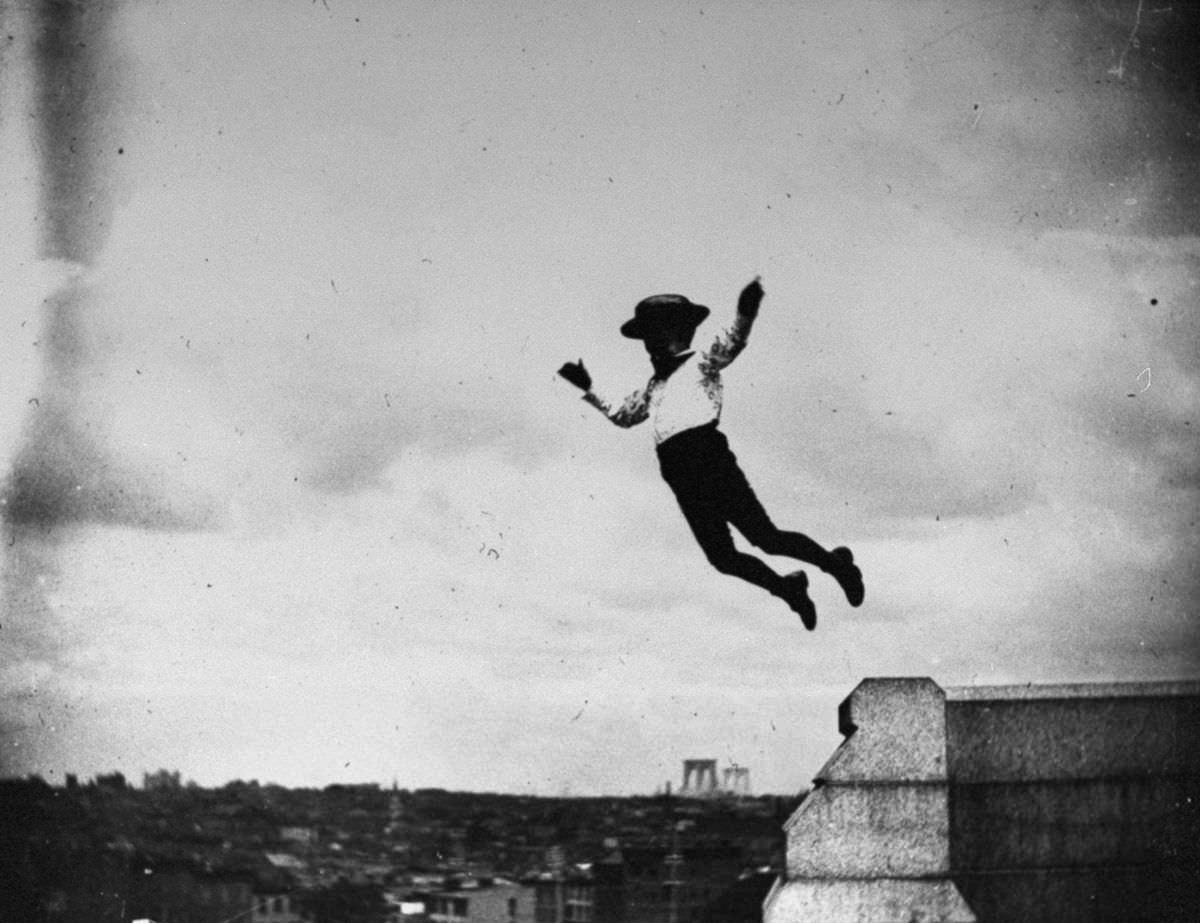
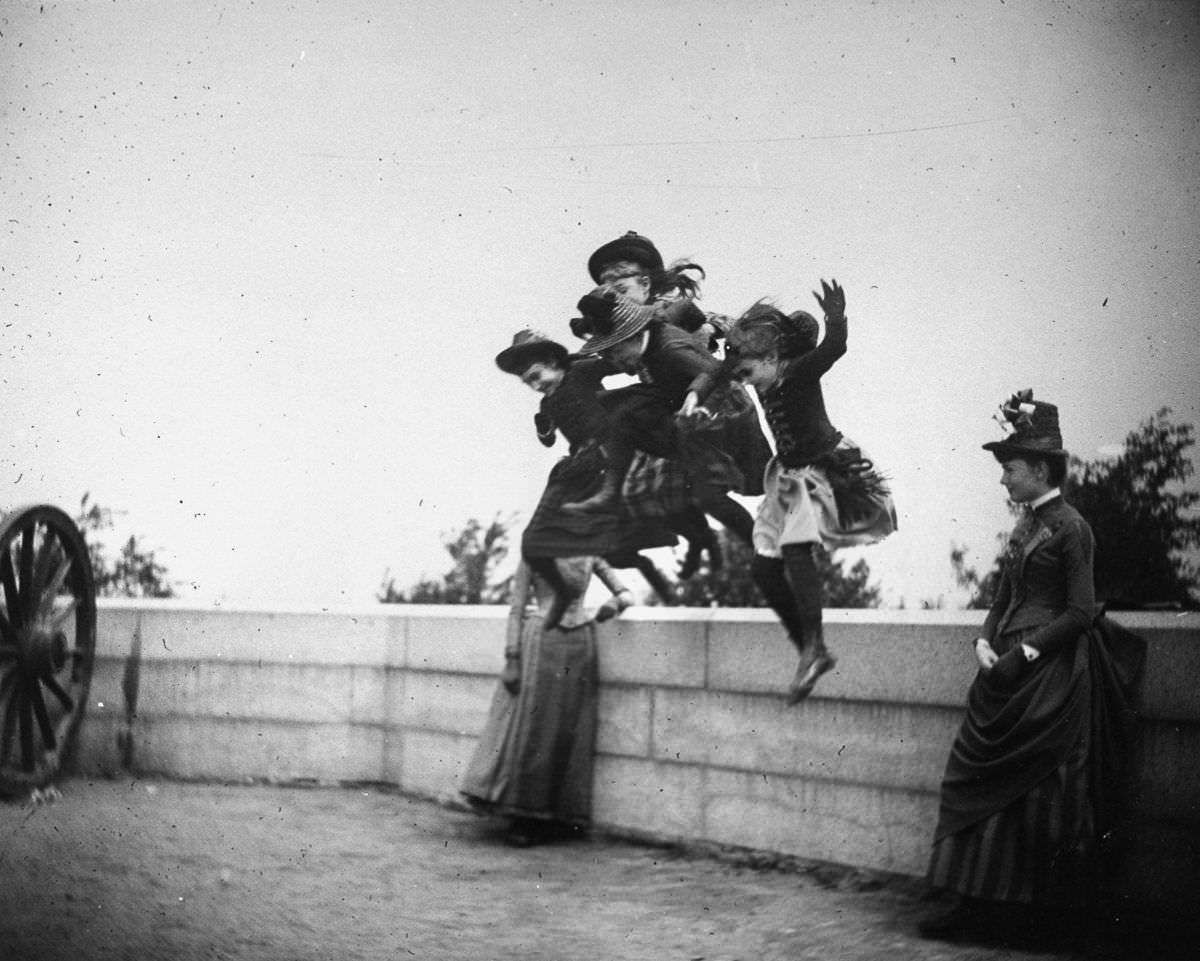
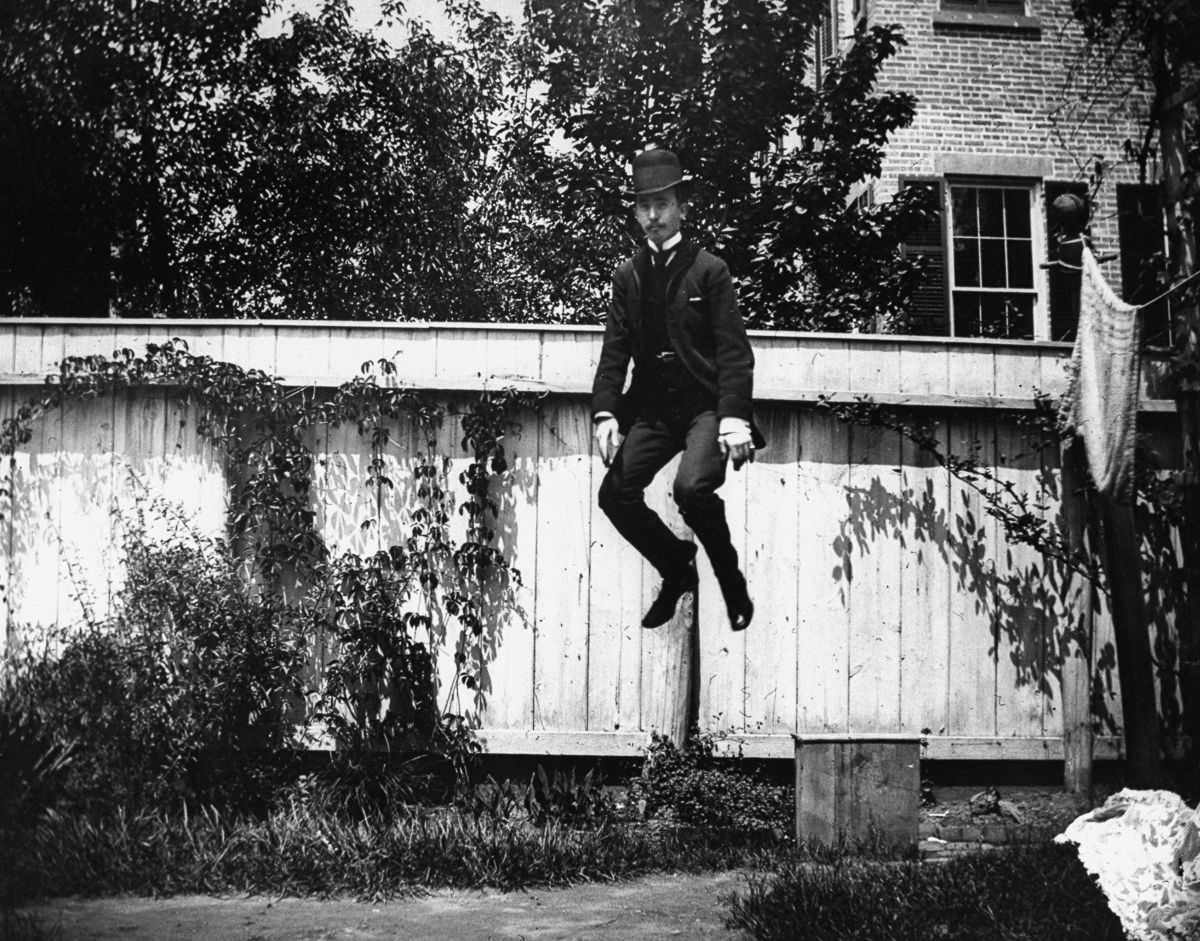
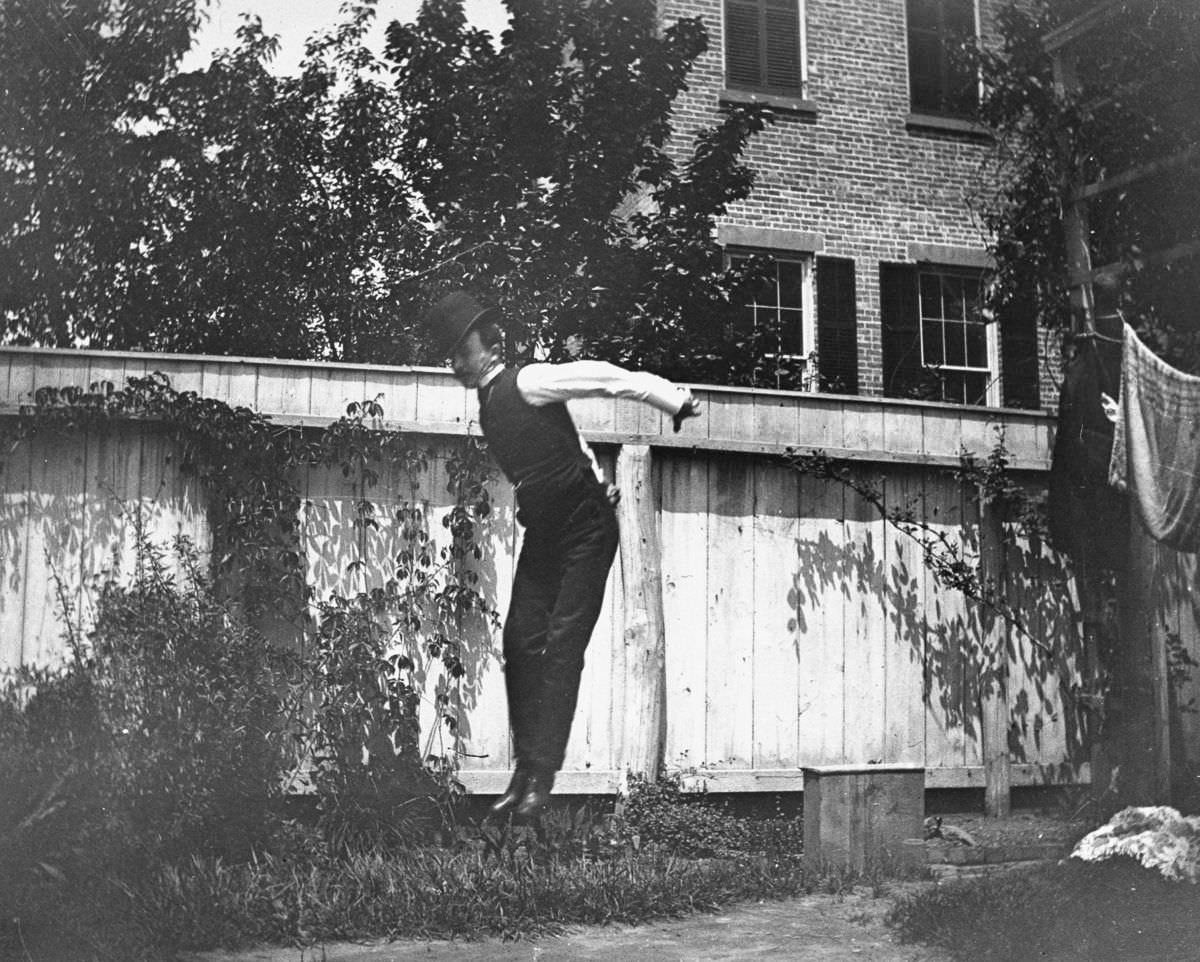
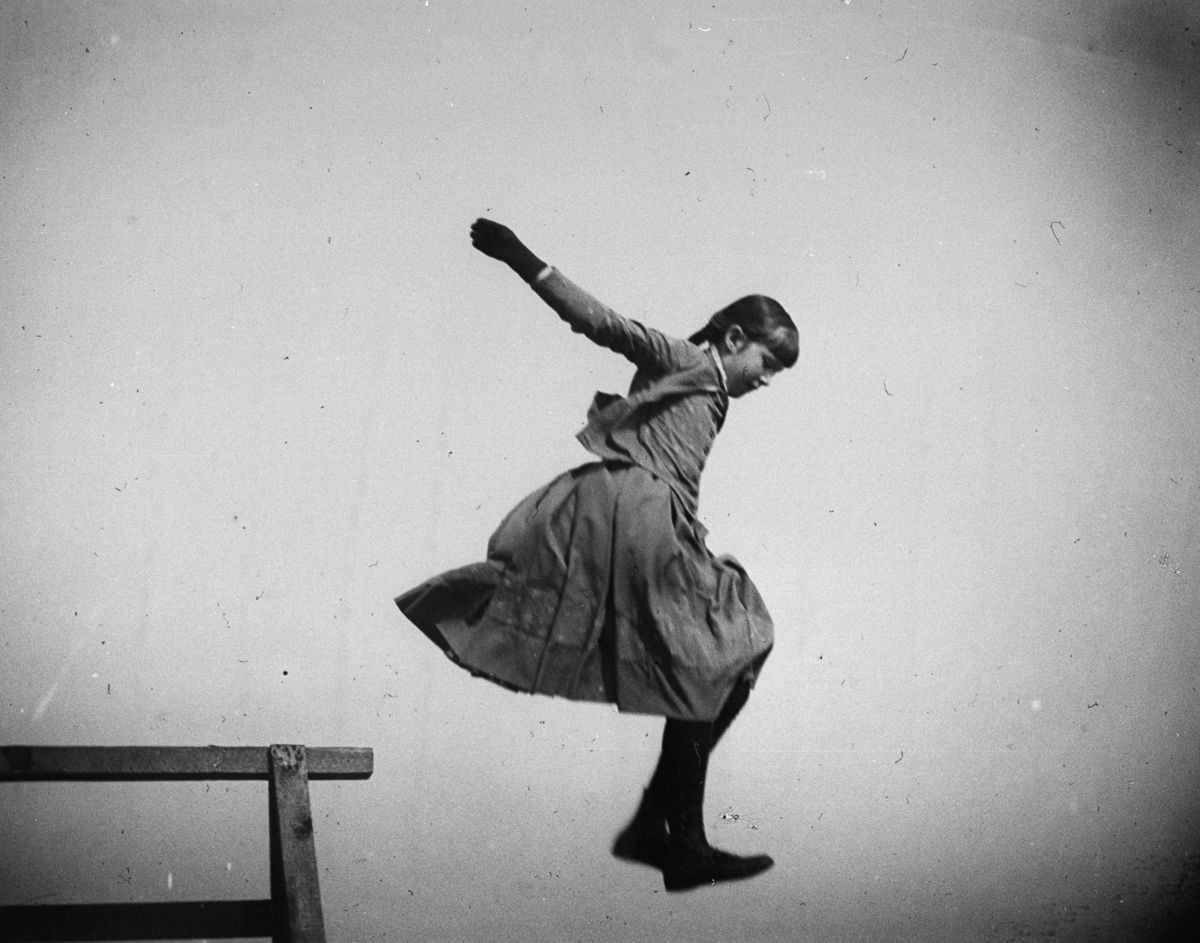
Capturing motion on film in the 1880s required precise timing and a fast shutter. Levison repeatedly photographed people mid-jump — a technical challenge he clearly enjoyed. His subjects included neighbors, family friends, and even his own daughter, Zelma.
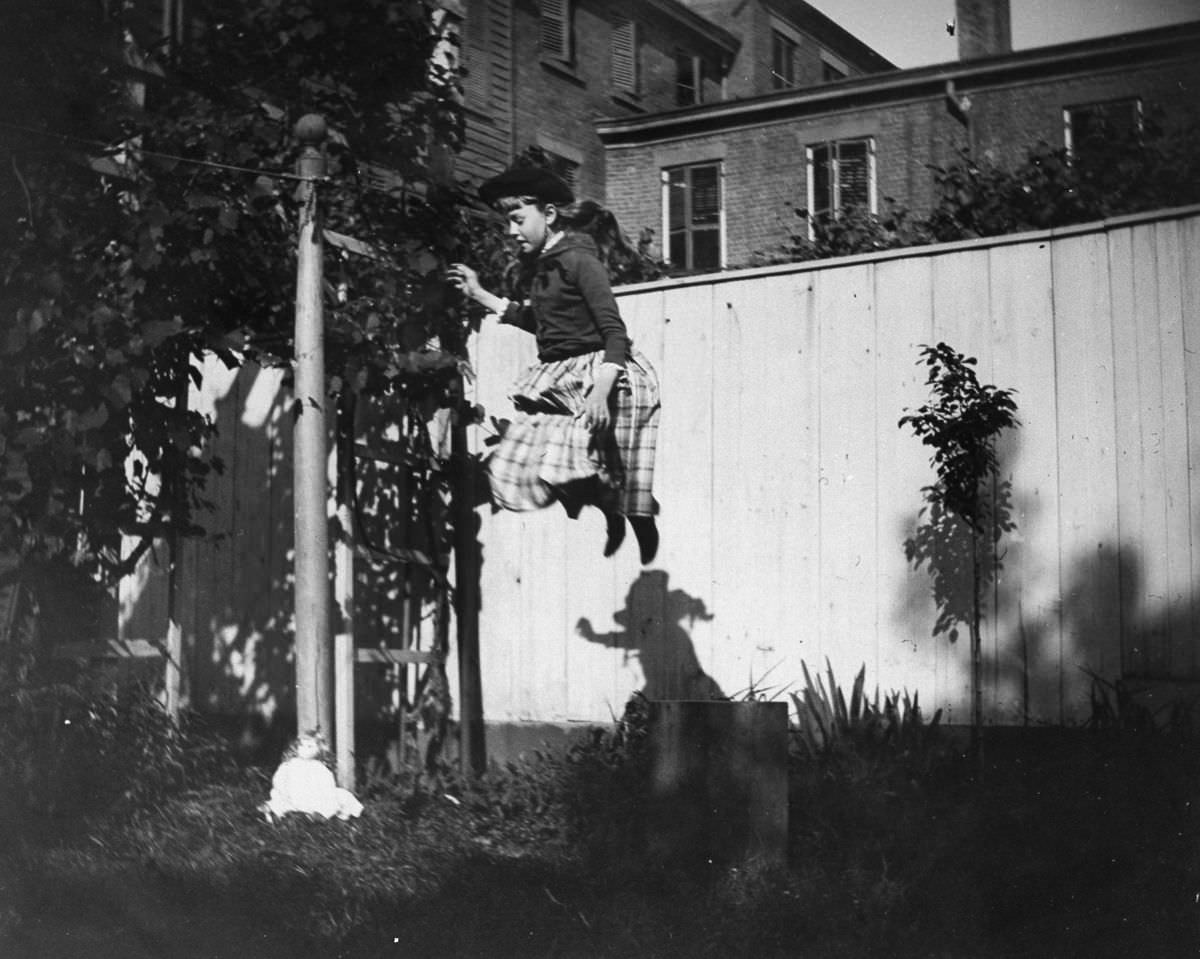
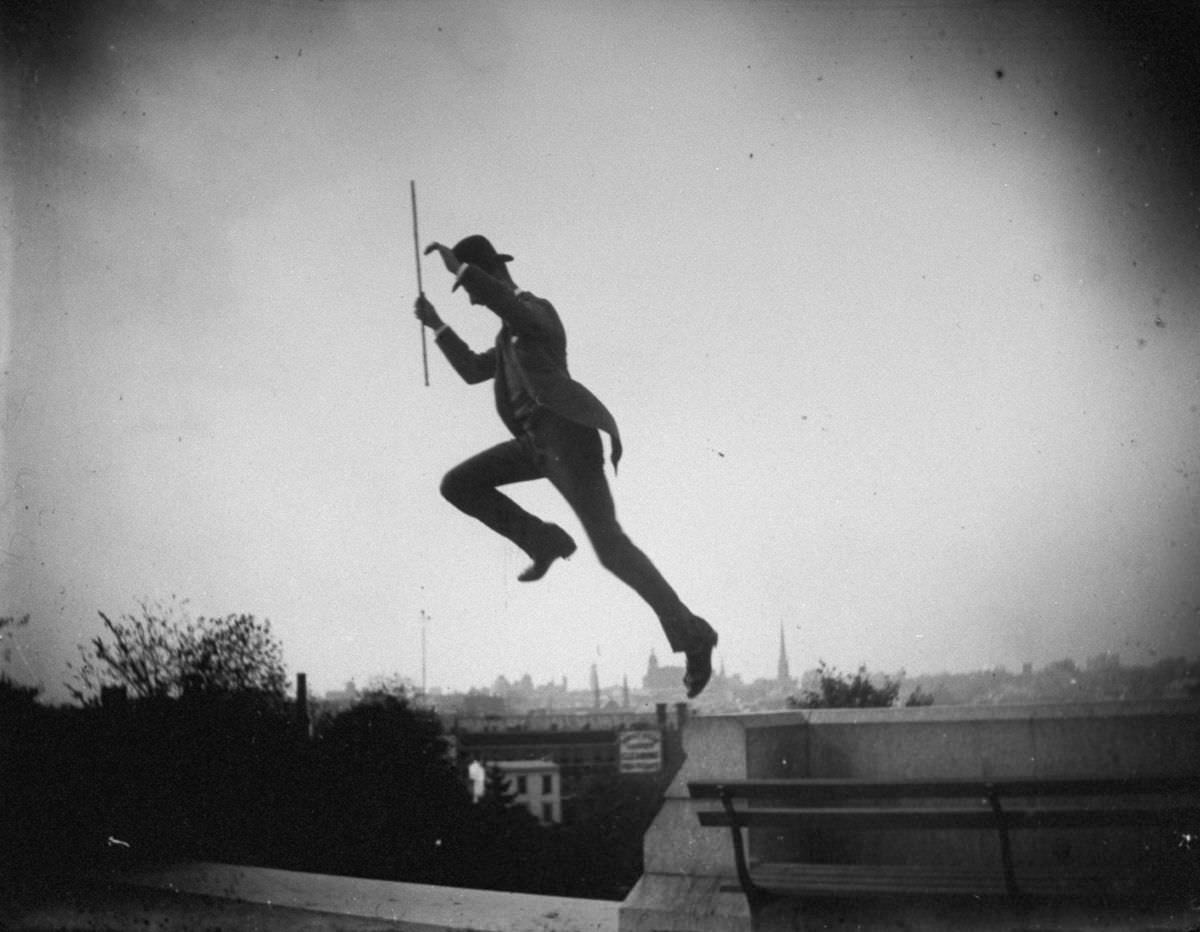
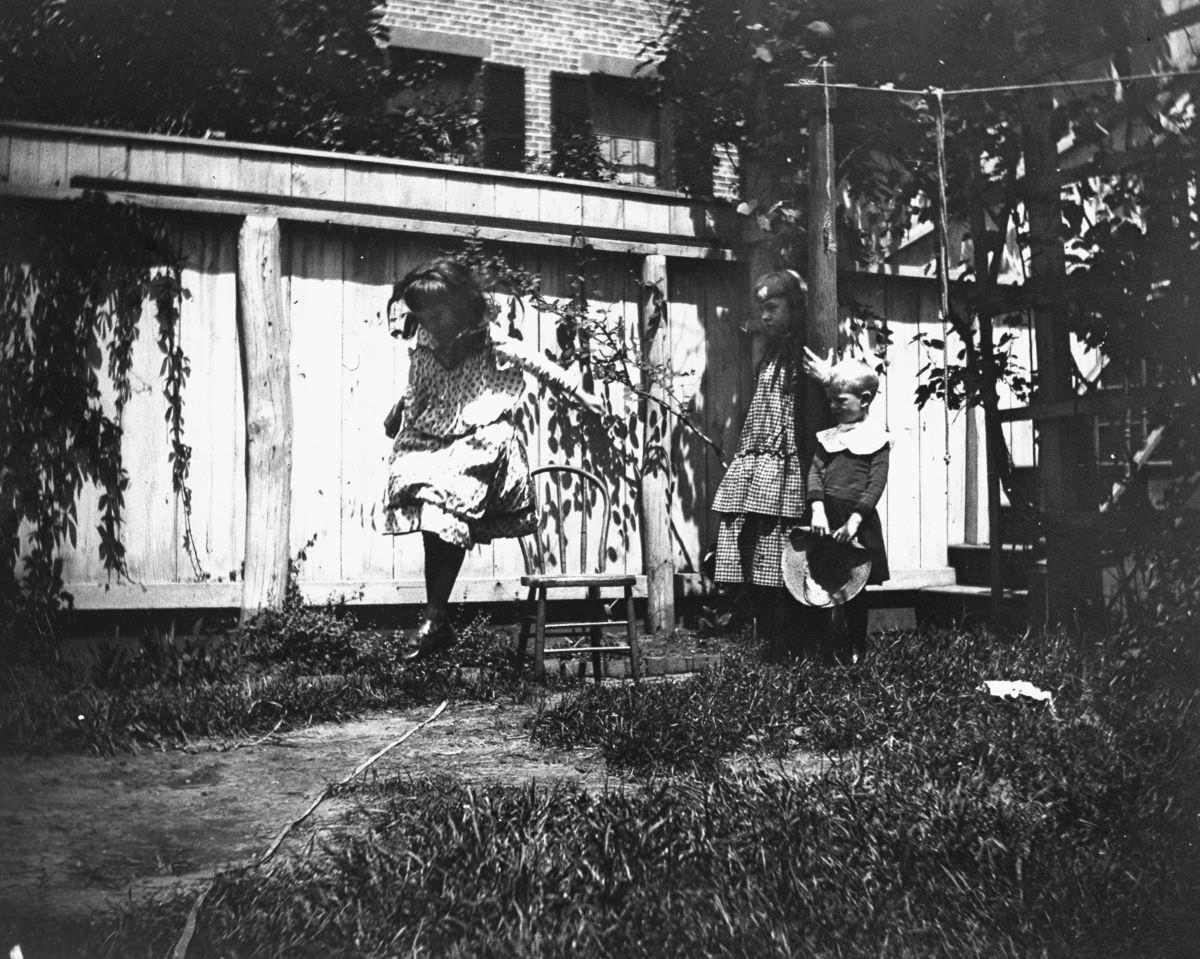
The backyard at 314 Livingston Street became a recurring stage for Levison’s experiments. On consecutive days in June 1886, J.M. Cornell leaped in the yard while friends watched. A day later, Mildred Grimwood took her turn as Victor Grimwood and Zelma Levison looked on.
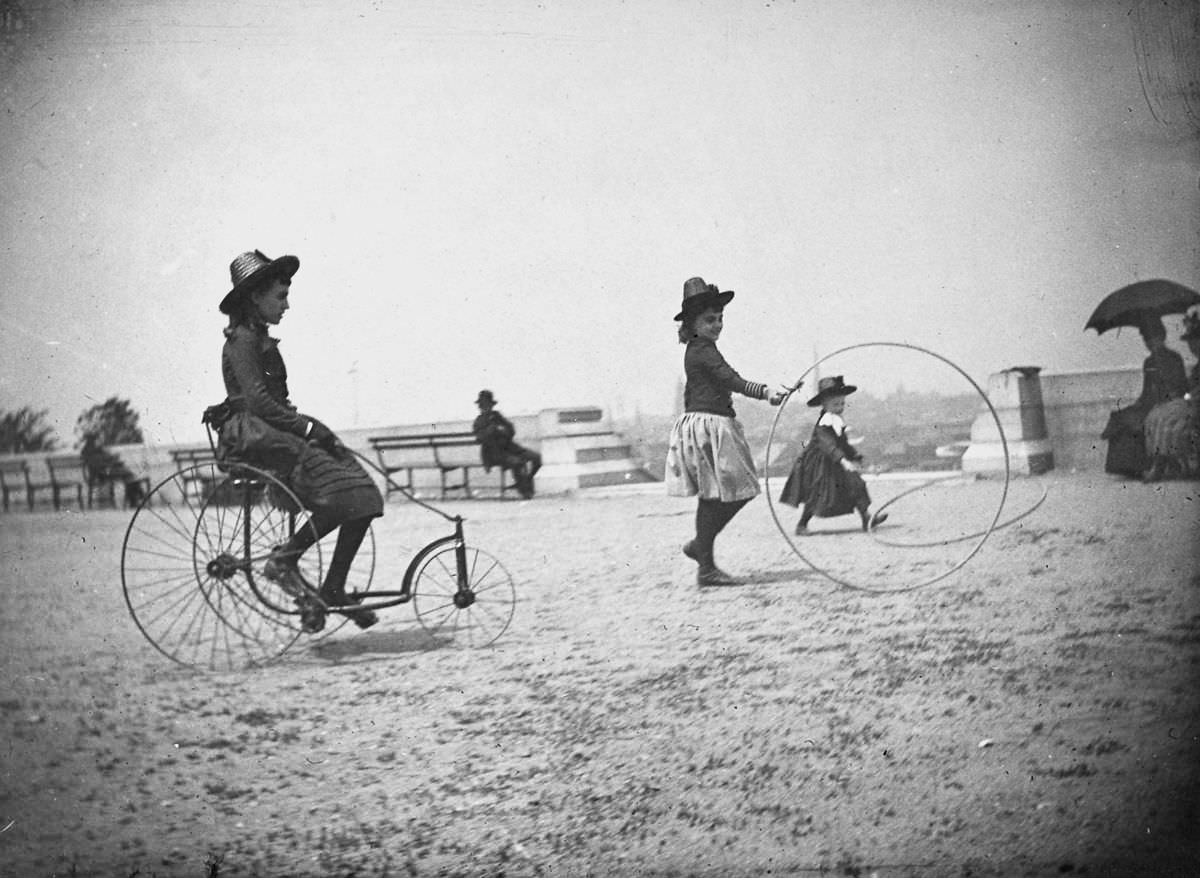
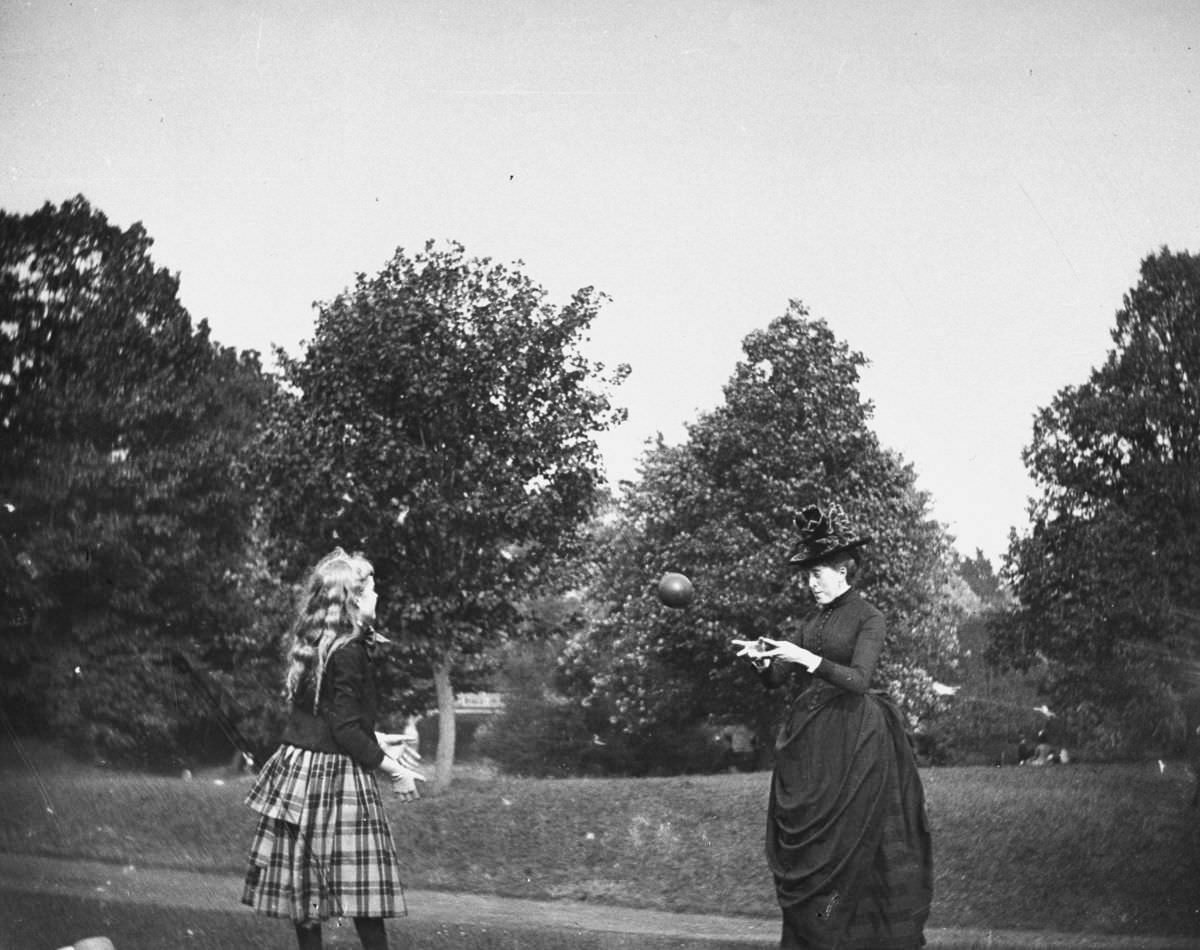
Children in Fort Greene didn’t just jump — they raced hoops, rode tricycles, and played ball in the park. Isabel Harter rode a tricycle while her sister Nellie rolled a hoop alongside her. These were ordinary afternoons made extraordinary by the fact that someone thought to photograph them.
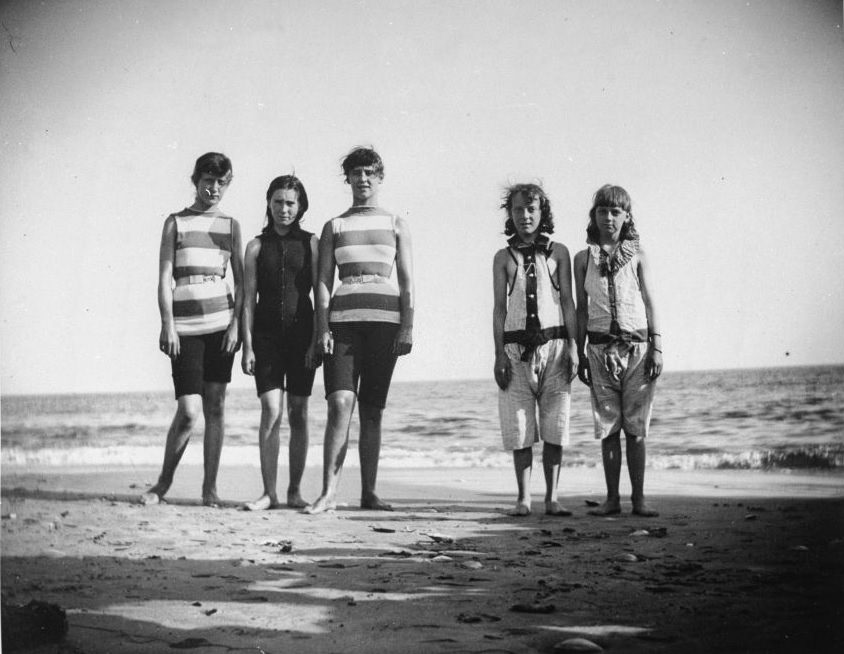
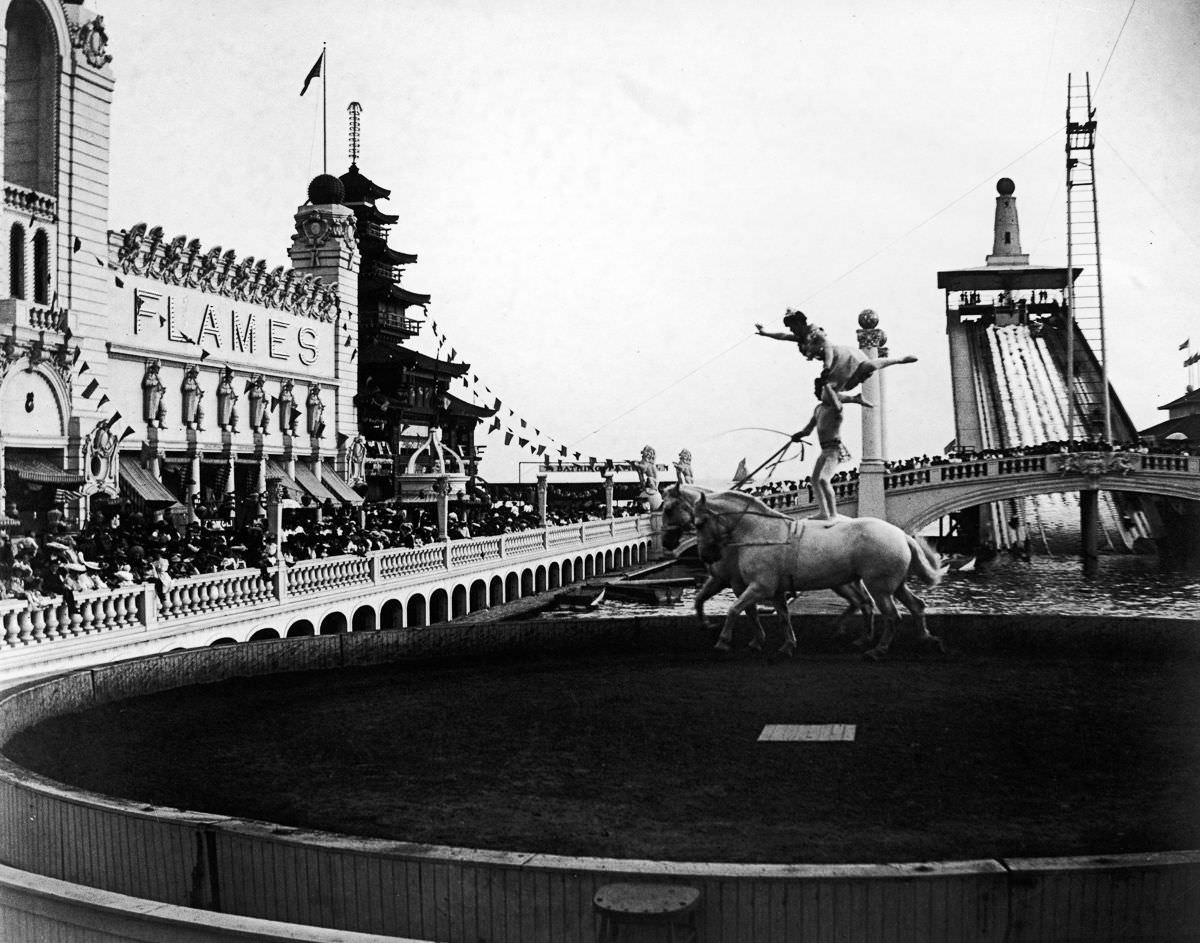
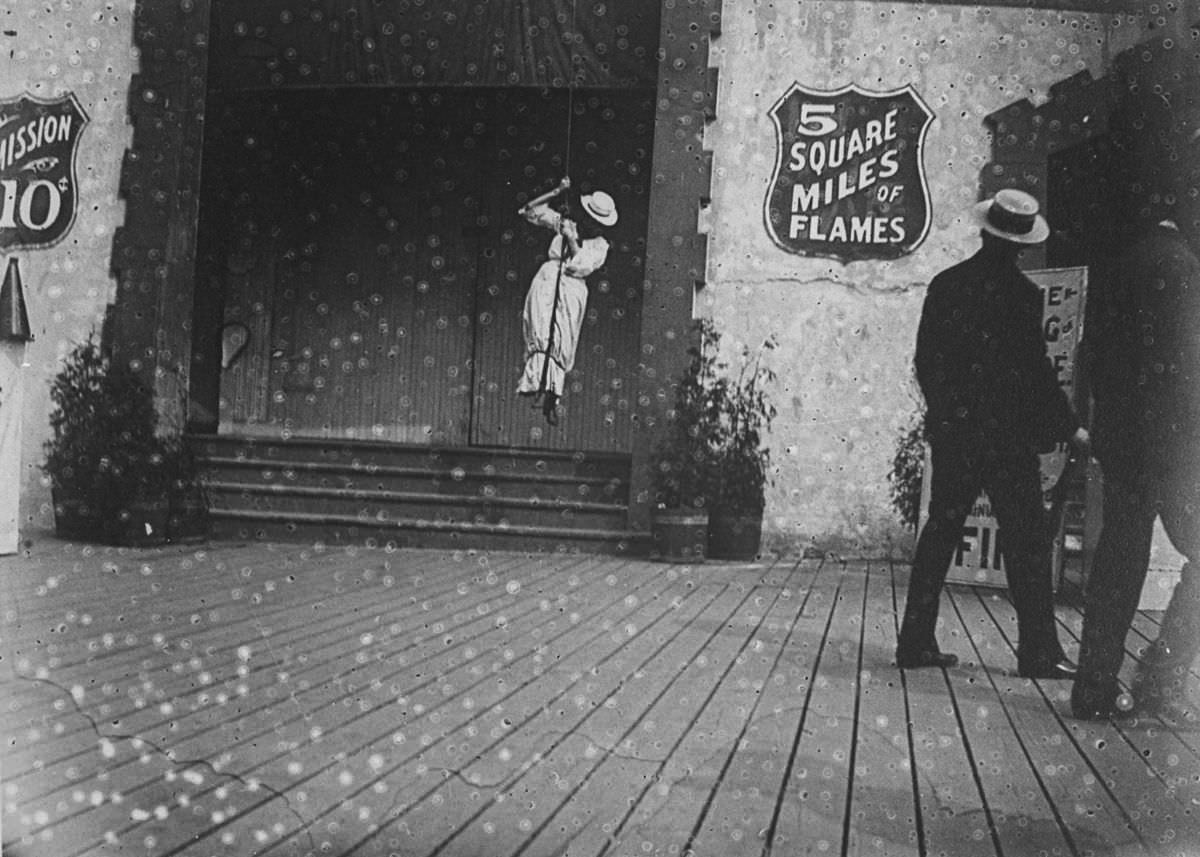
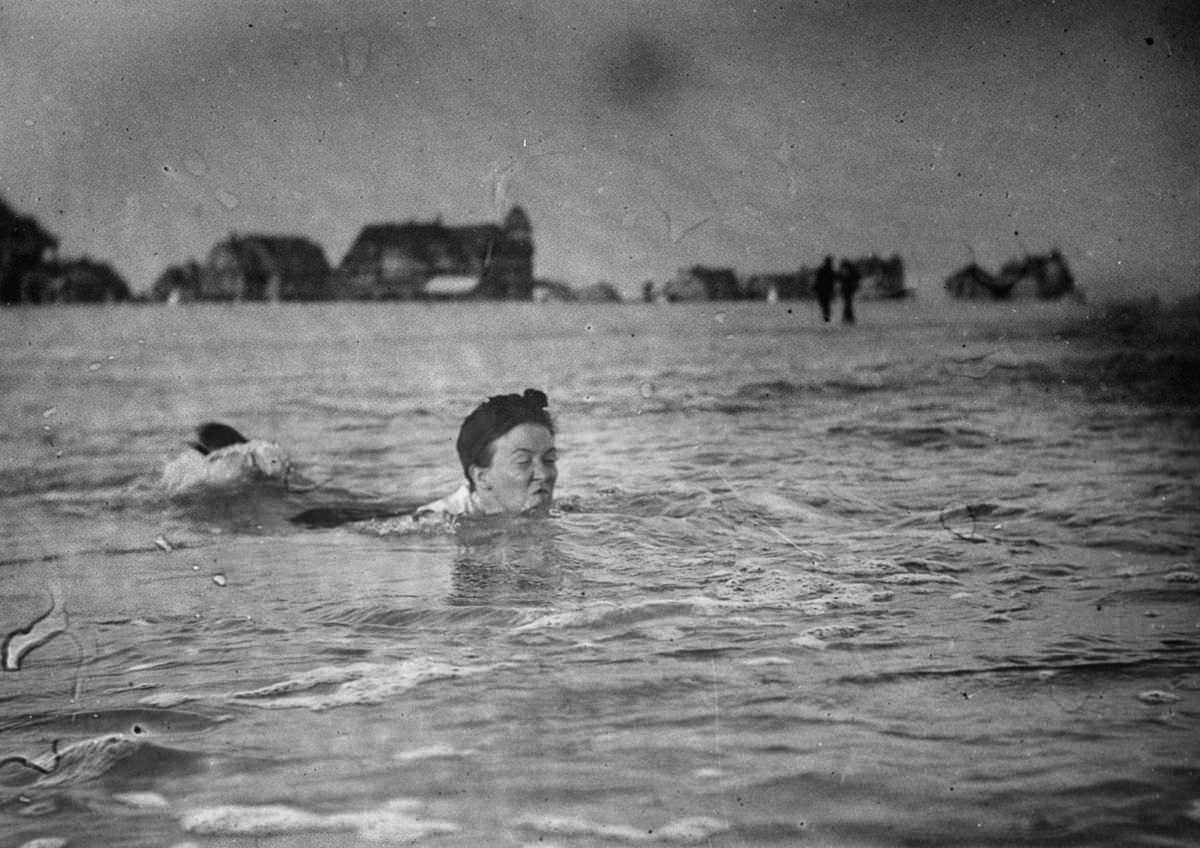
Coney Island drew New Yorkers by the thousands during the summer months. Levison photographed bathers, performers, and beachgoers in scenes that show just how lively the shoreline was. Five girls posed by the water before a swimming match in 1887, and acrobats performed daring balancing acts on horseback at Dreamland.
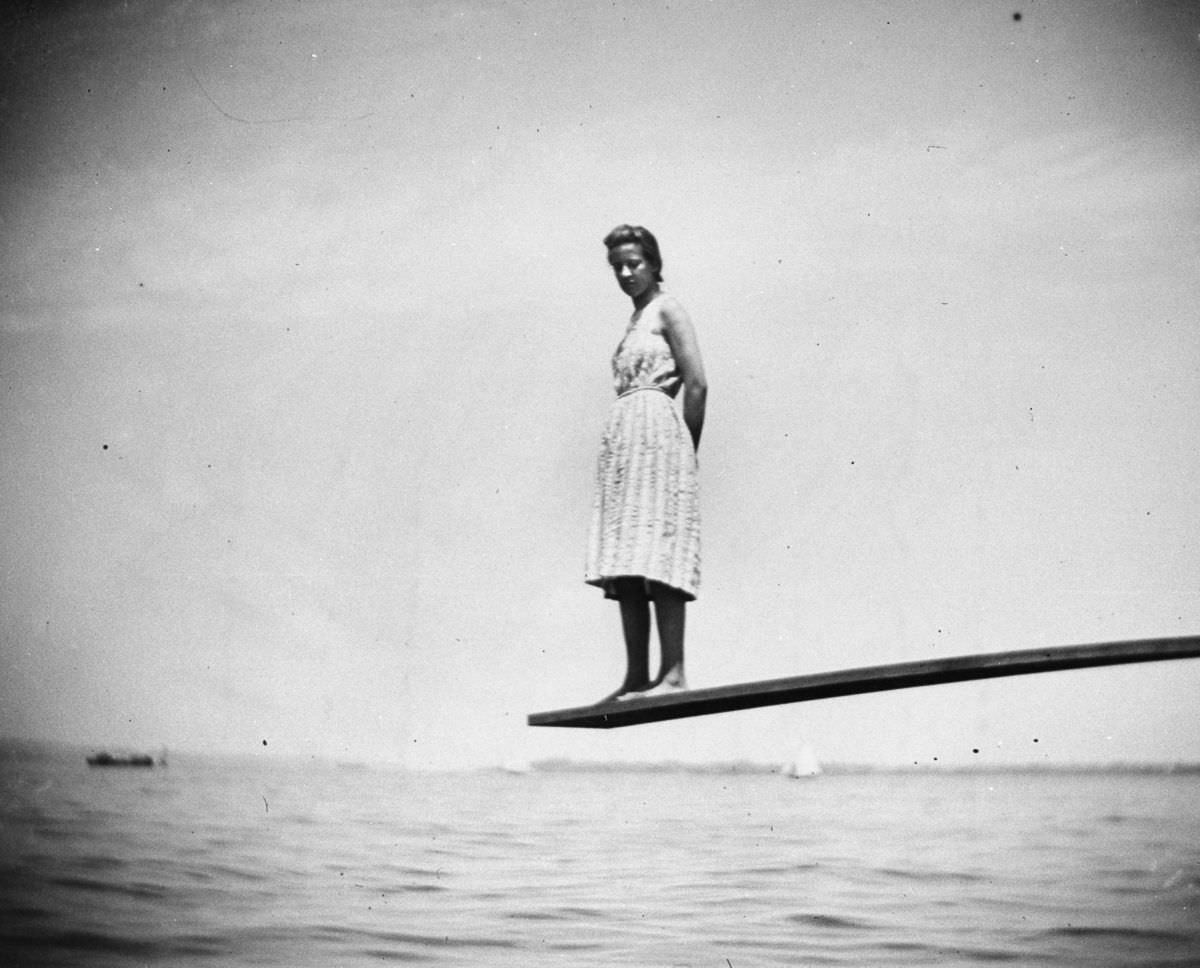
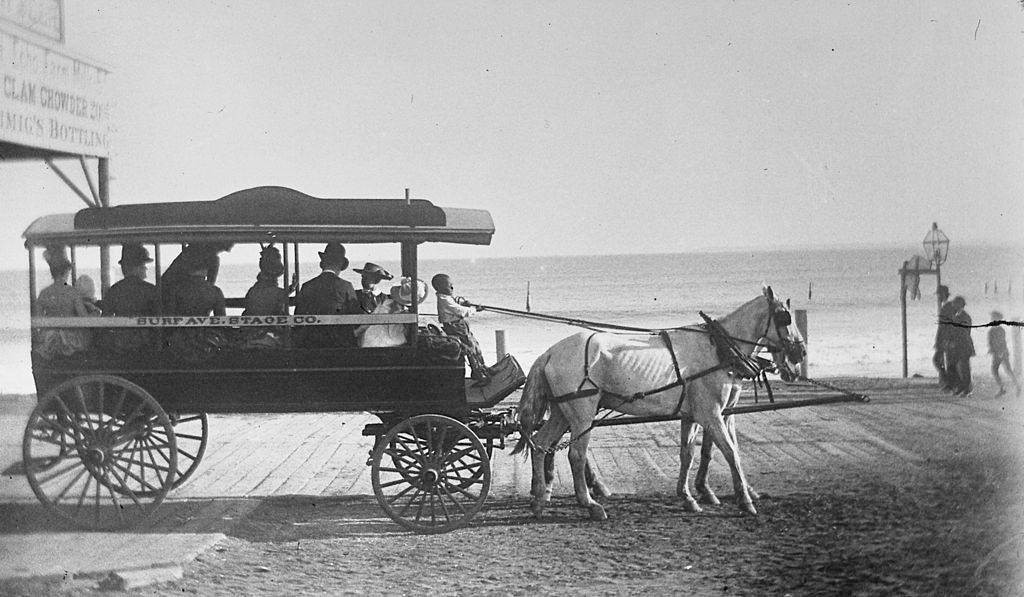
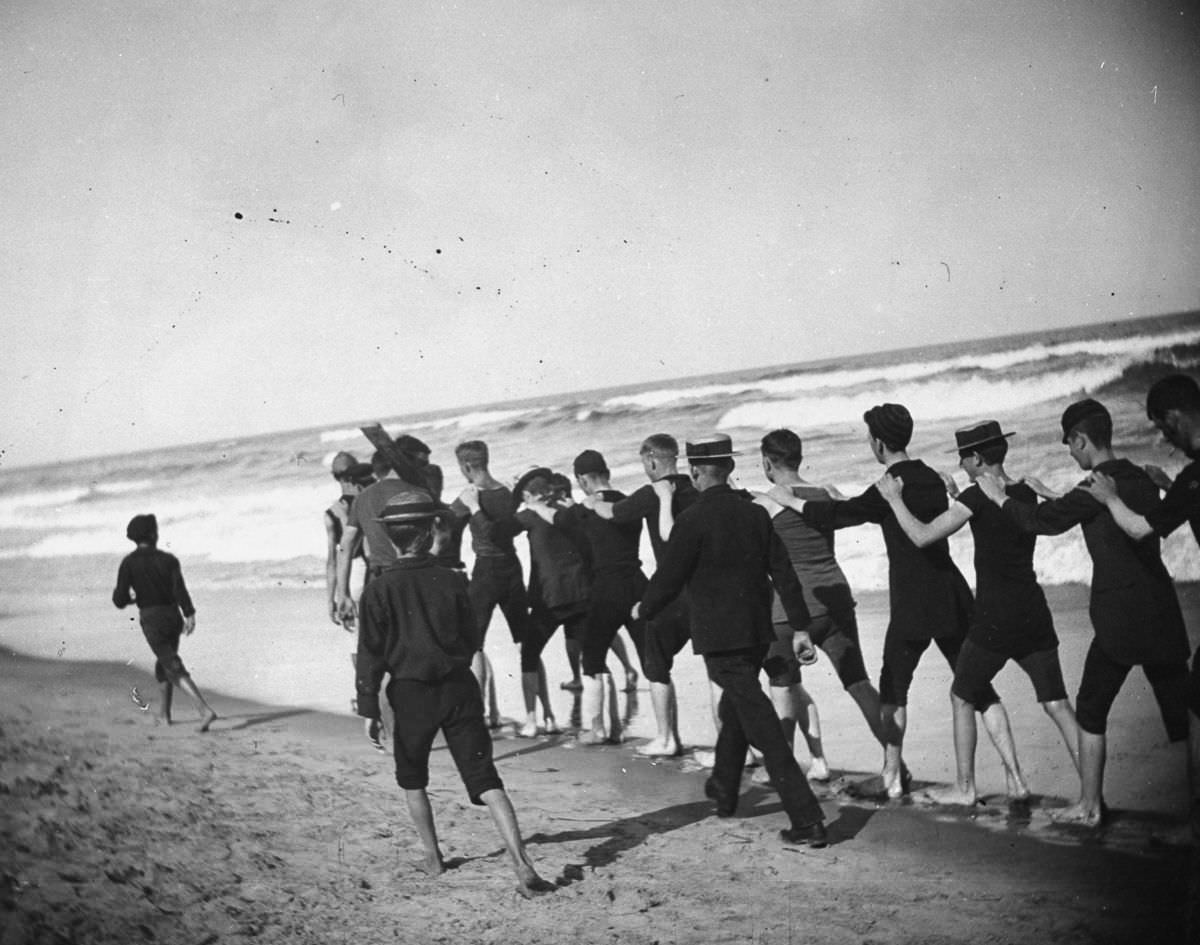
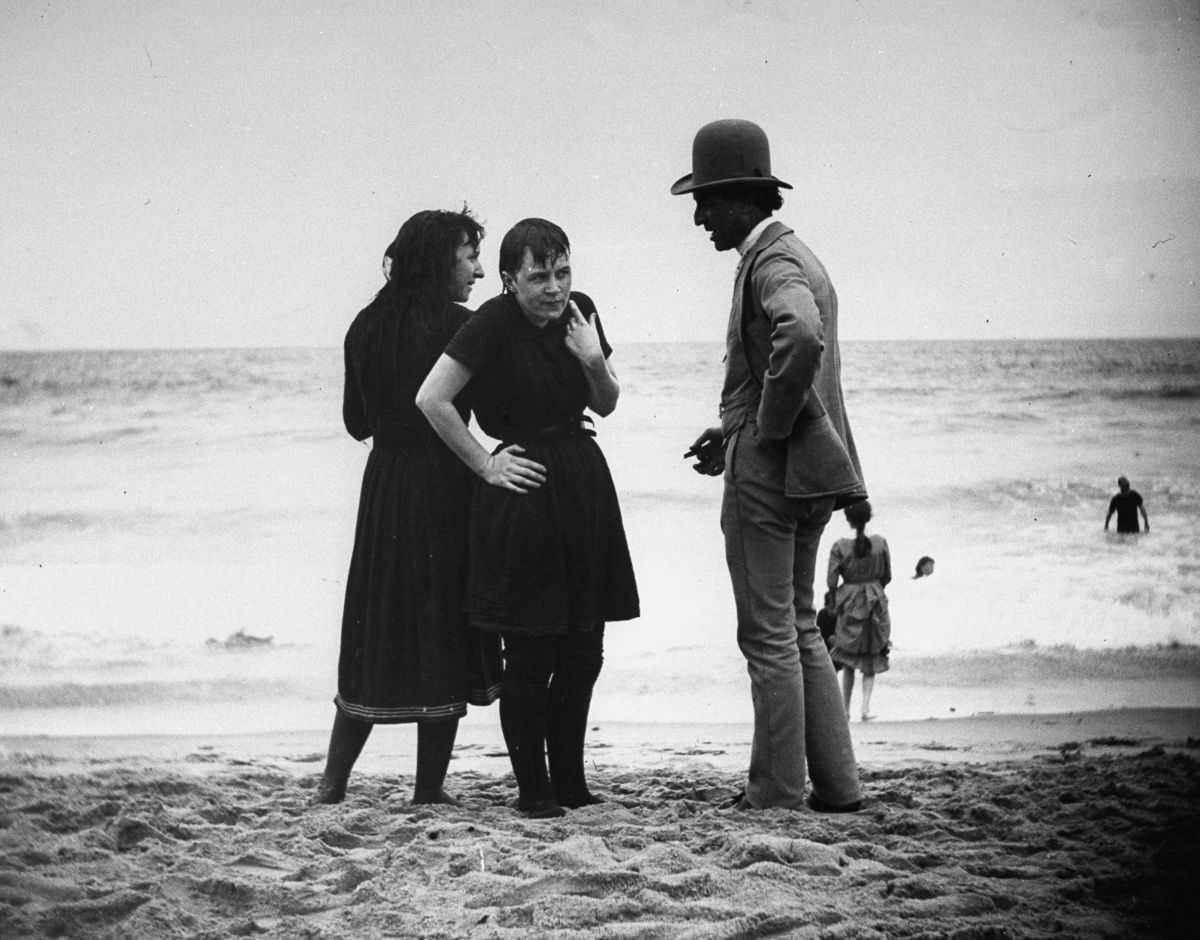
Beach culture in late 19th-century New York was lively and social. Young male bathers walked in single file along the shoreline, actors chatted with swimmers, and women swung on ropes over the sand. A young Black boy guided a horse-drawn coach for the Surf Ave. Stage Co. along the Coney Island boardwalk — one of many workers whose labor kept the resort running.
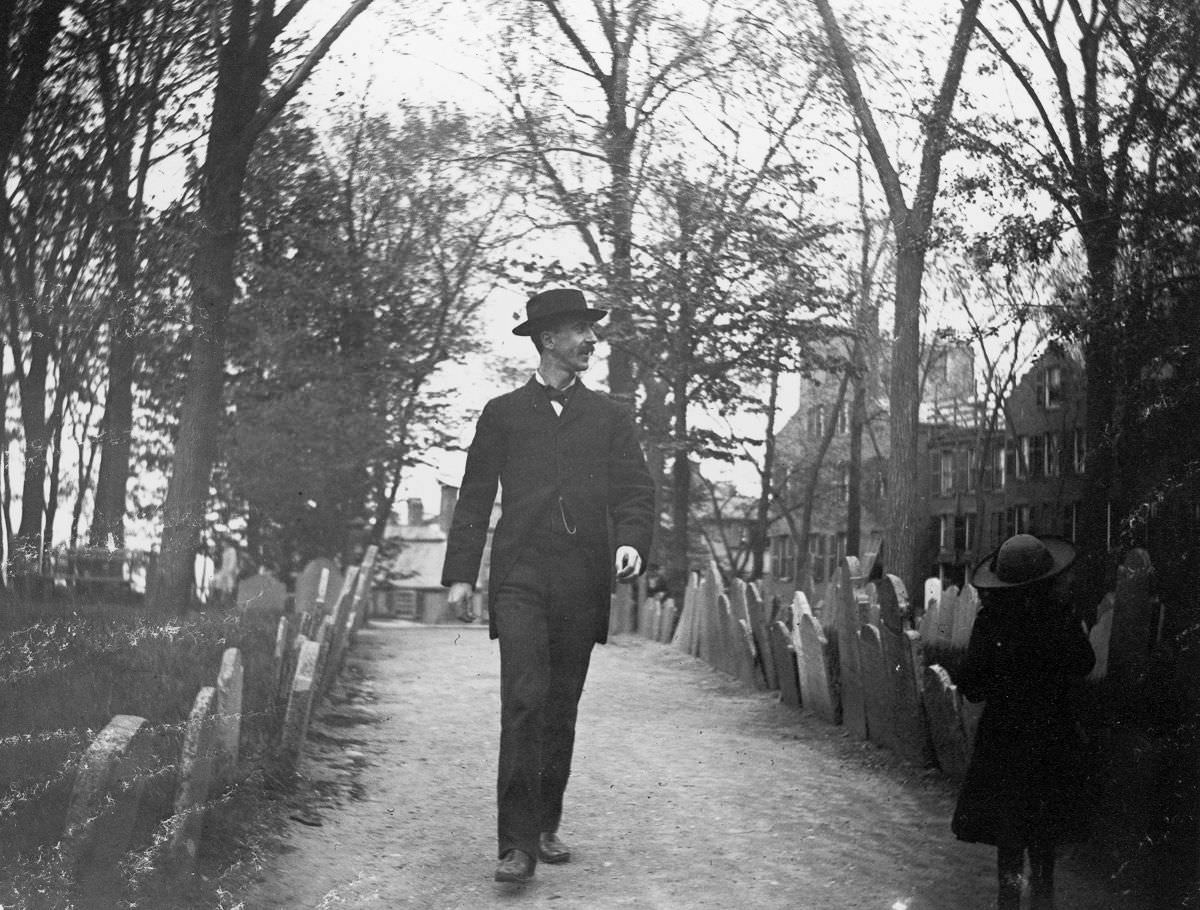
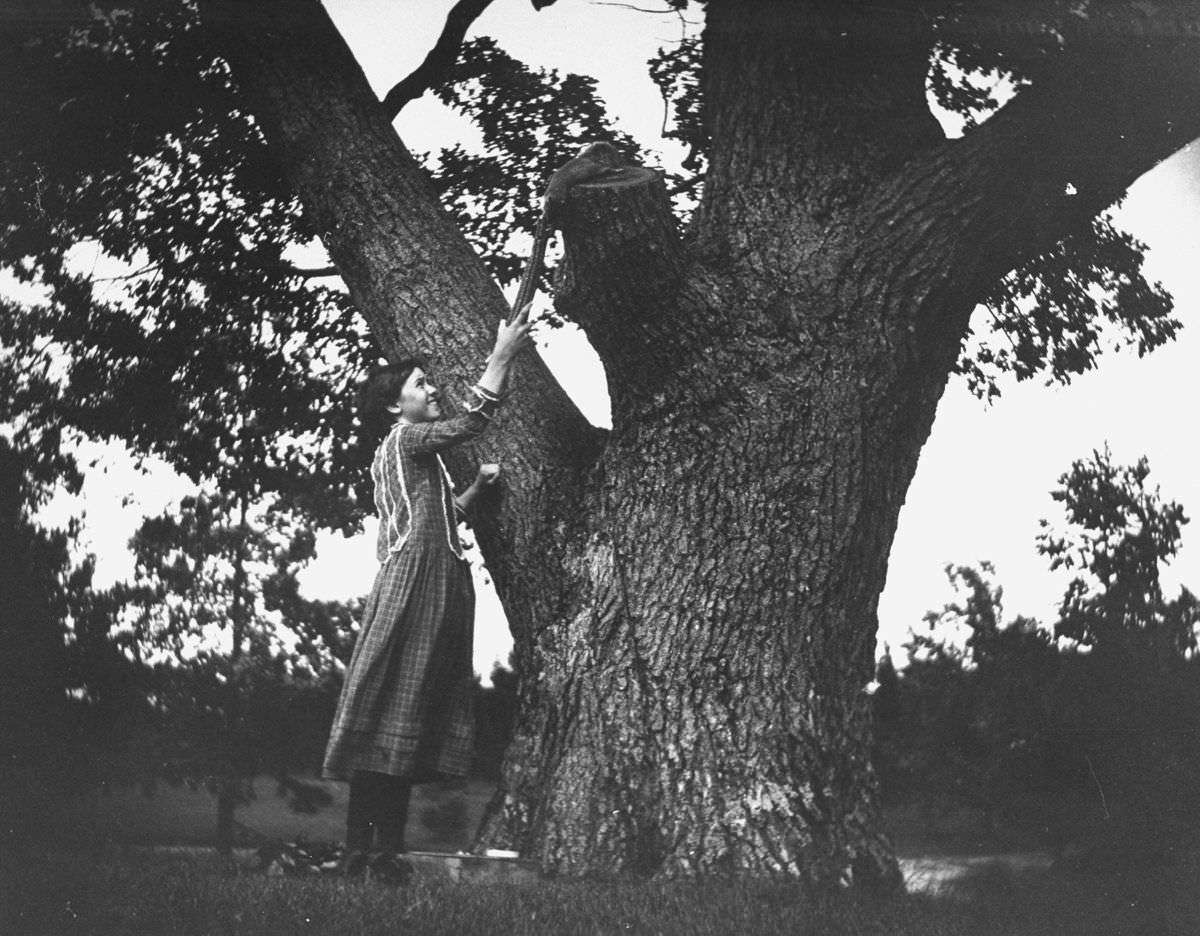
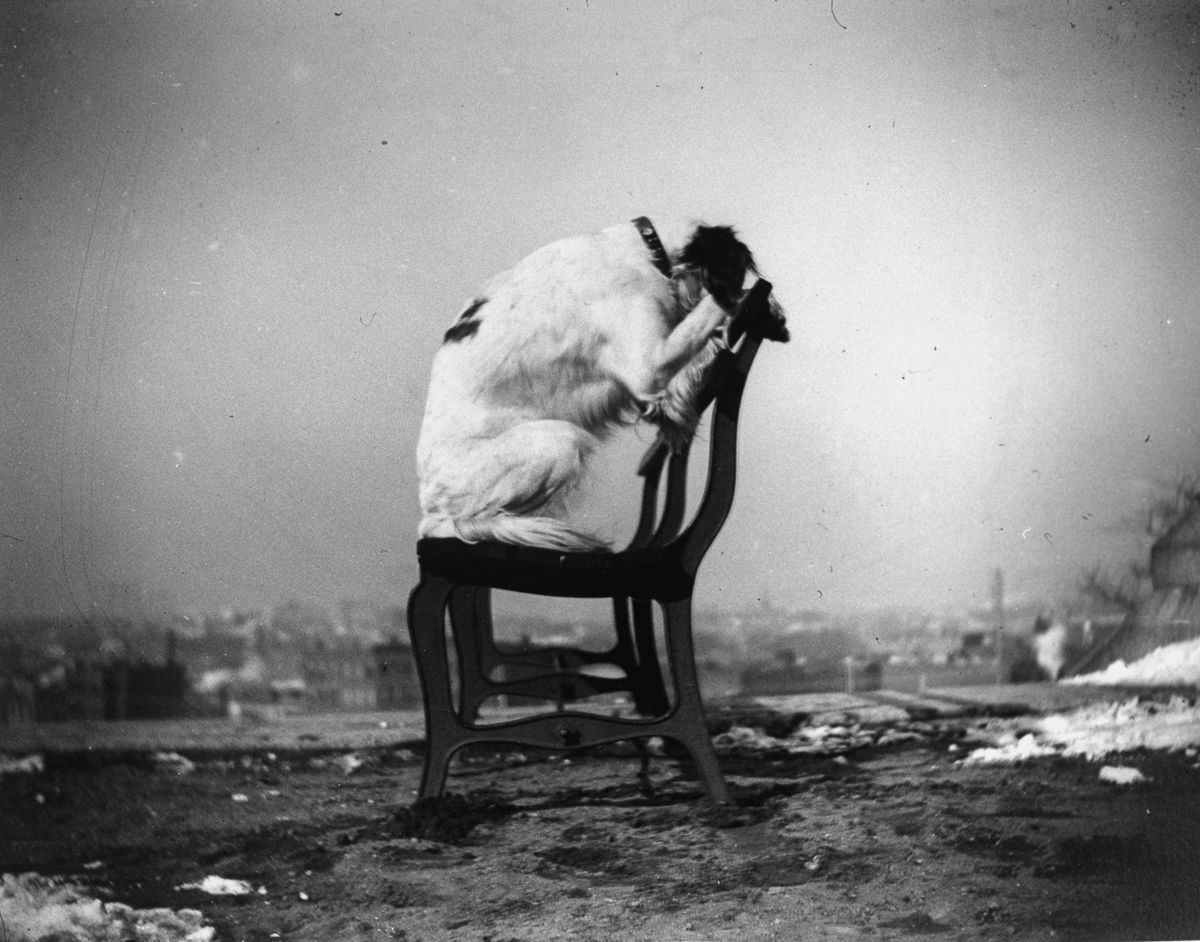
Beyond the beaches, Levison documented quieter moments. Nathan Abbott and a young girl walked through Copp’s Hill Cemetery in May 1886. Miss Brown offered a cob of maize to a squirrel in 1888. H.B. Leckler’s dog Mace posed on a chair in Fort Greene in December of that same year. These small details bring the era to life in ways that grand historical accounts rarely do.
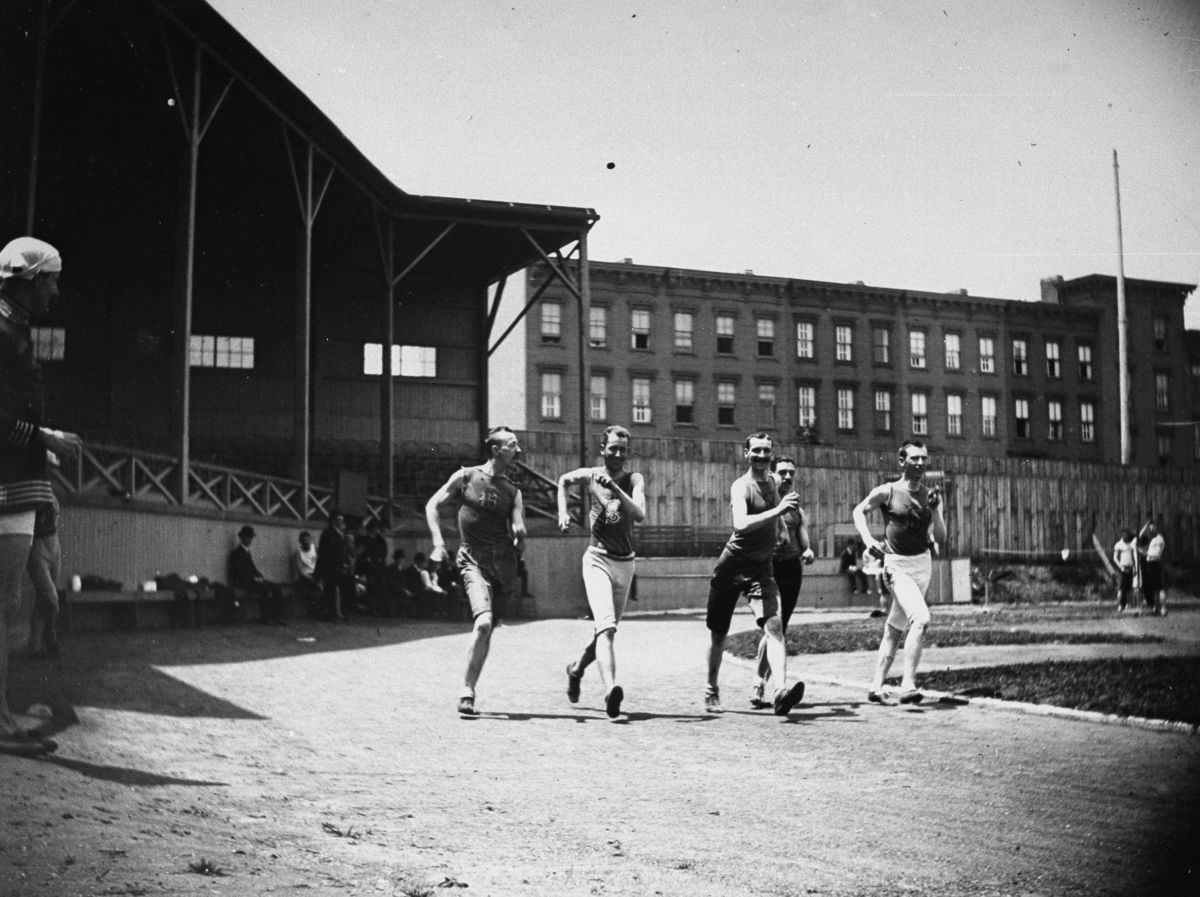
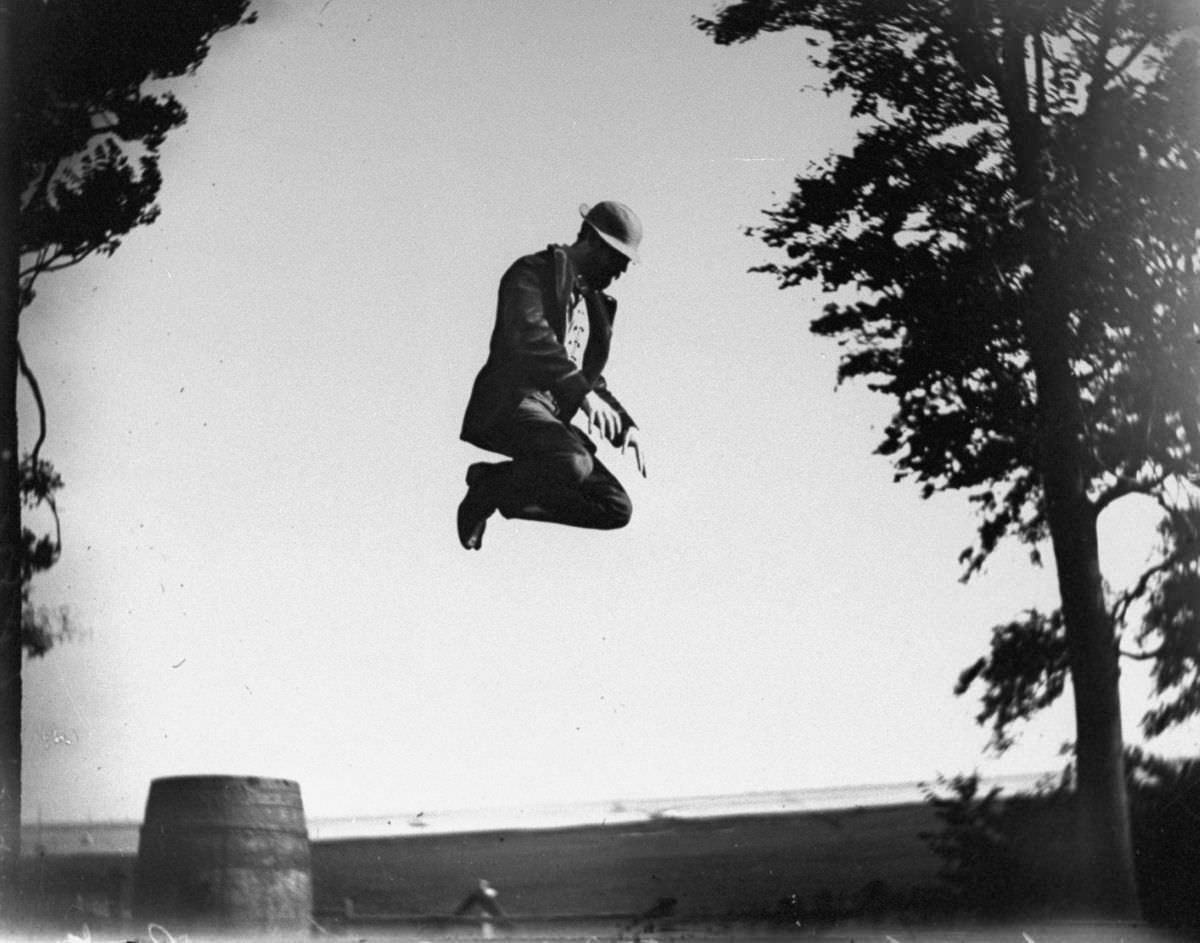
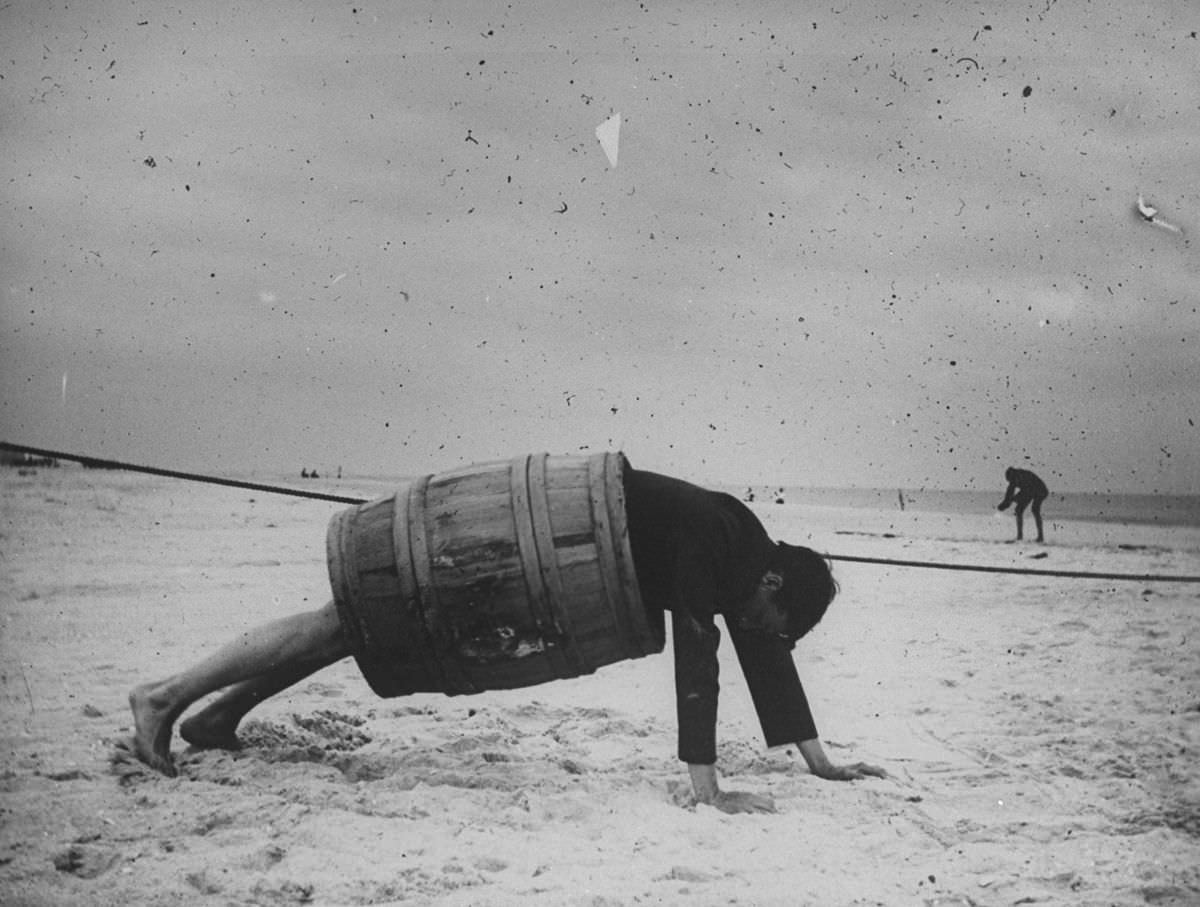
Five men competed in a walking race in June 1886. Edgar J. Taylor jumped off a barrel the following year. A man did push-ups inside a barrel on the beach in 1897. These were not staged publicity shots — they were records of genuine, spontaneous activity.
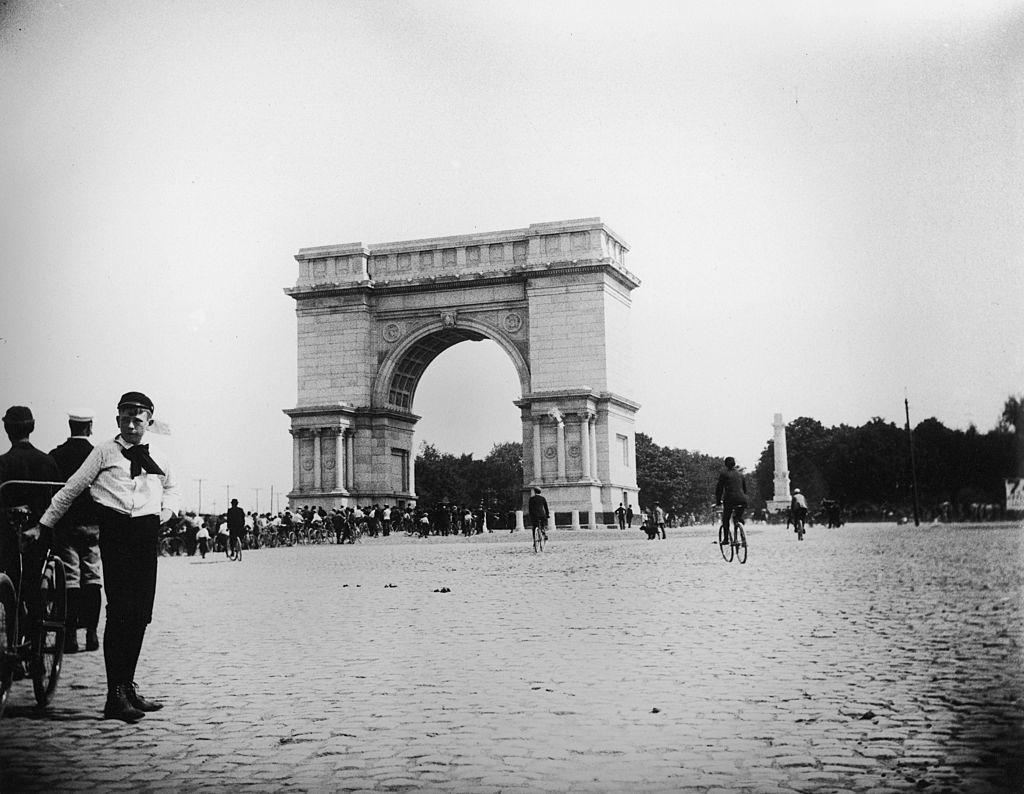
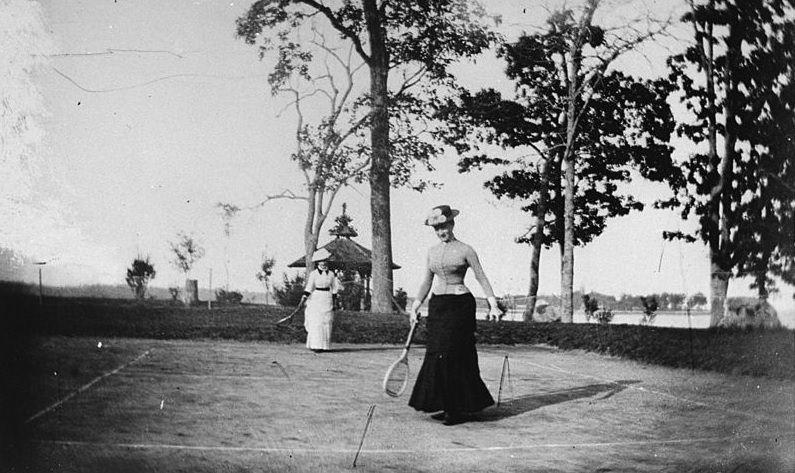
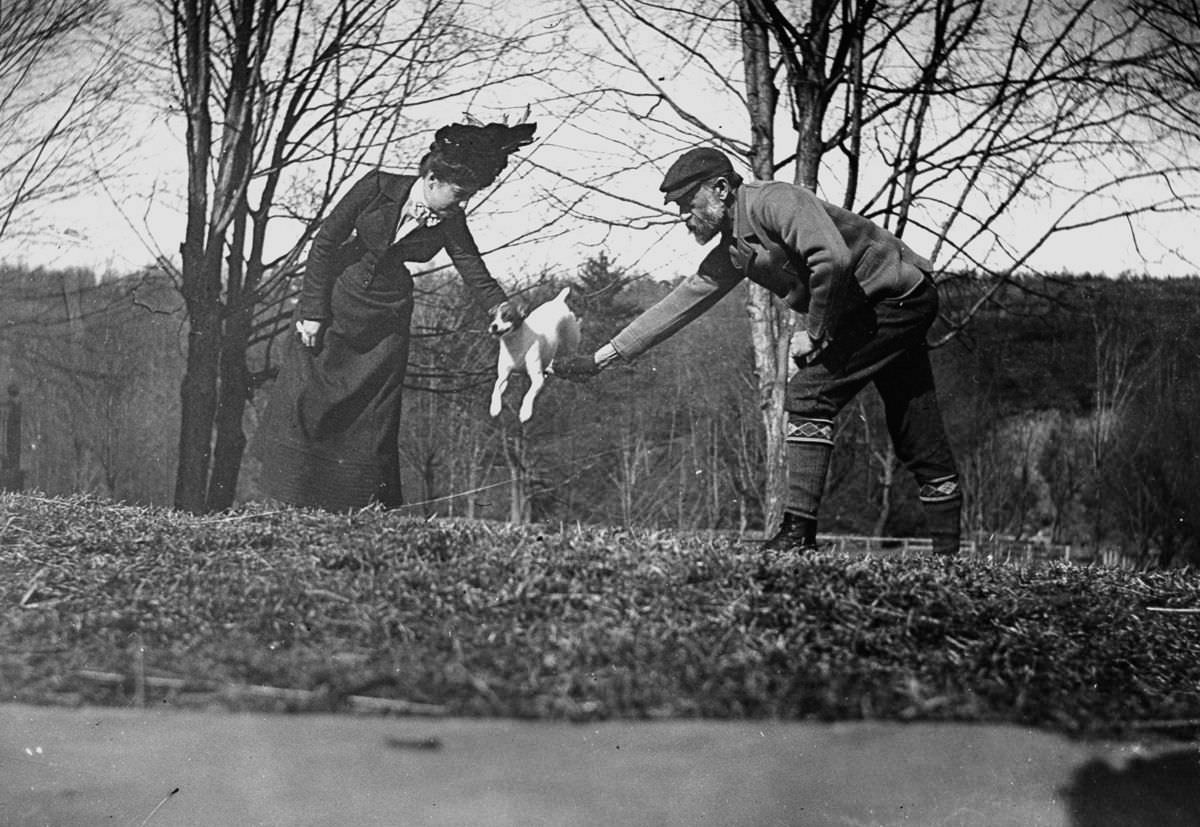
Prospect Park hosted bicycle parades by the mid-1890s, with riders streaming through the arch as spectators watched. Two well-dressed women played lawn tennis beside a lake. Dr. Ernest Palmer and his wife joined hands to form a bar for their dog to leap over. The city’s leisure culture was varied, physical, and deeply communal.
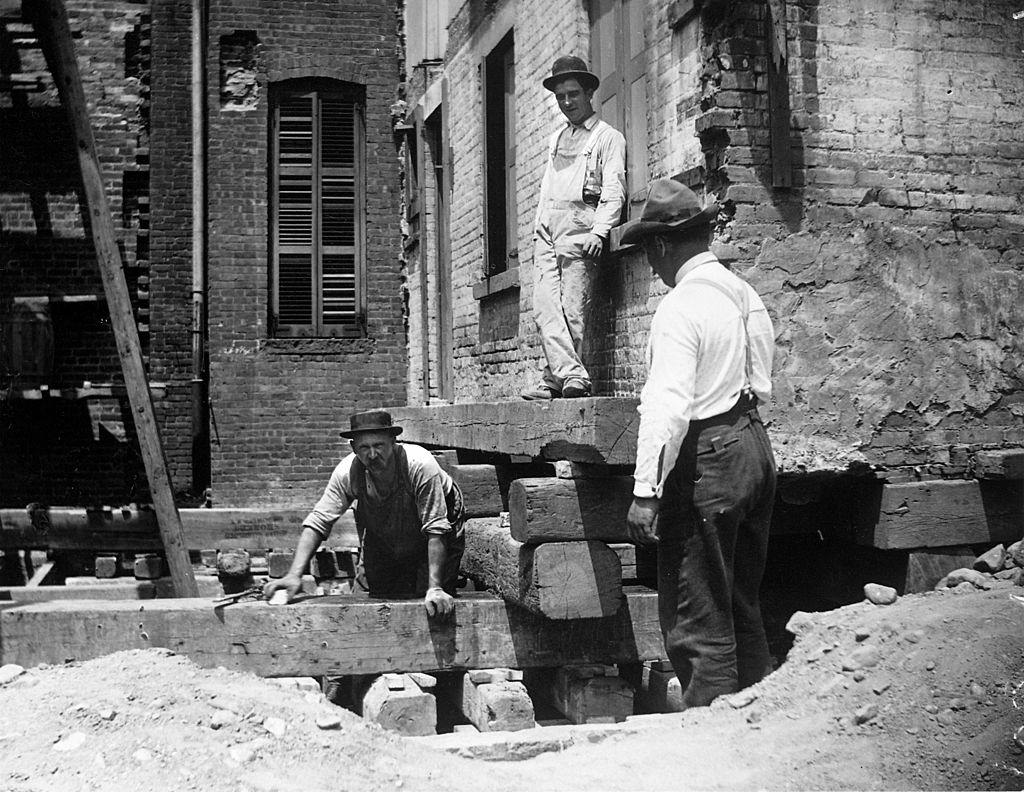
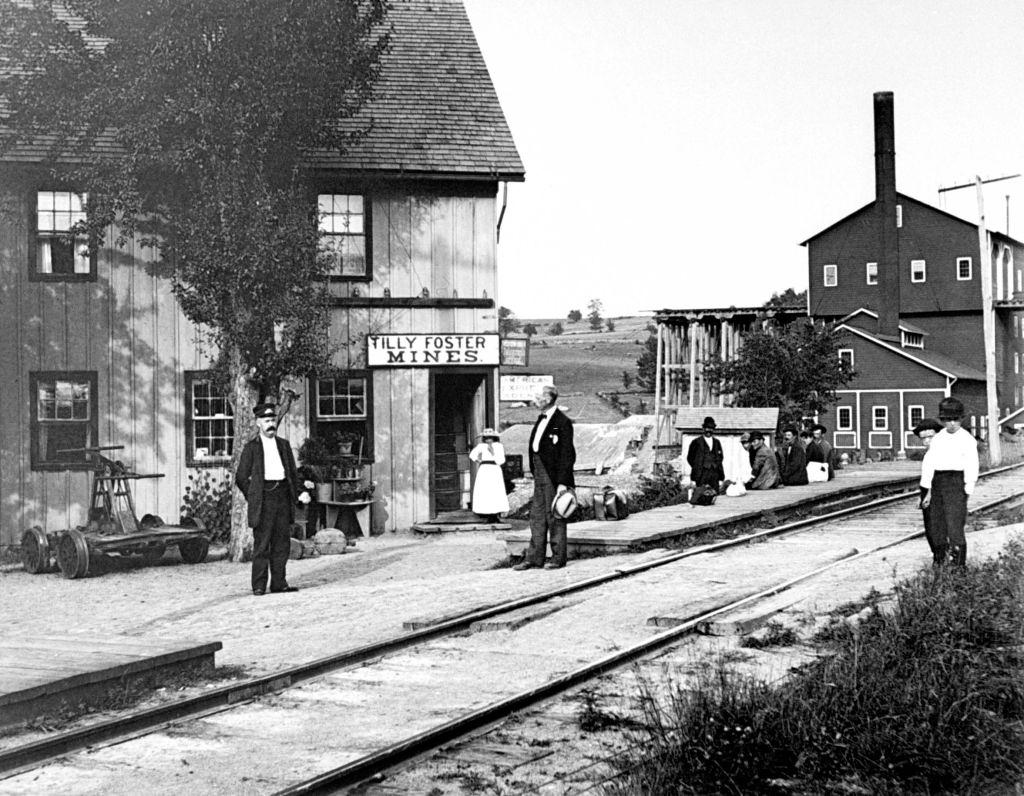
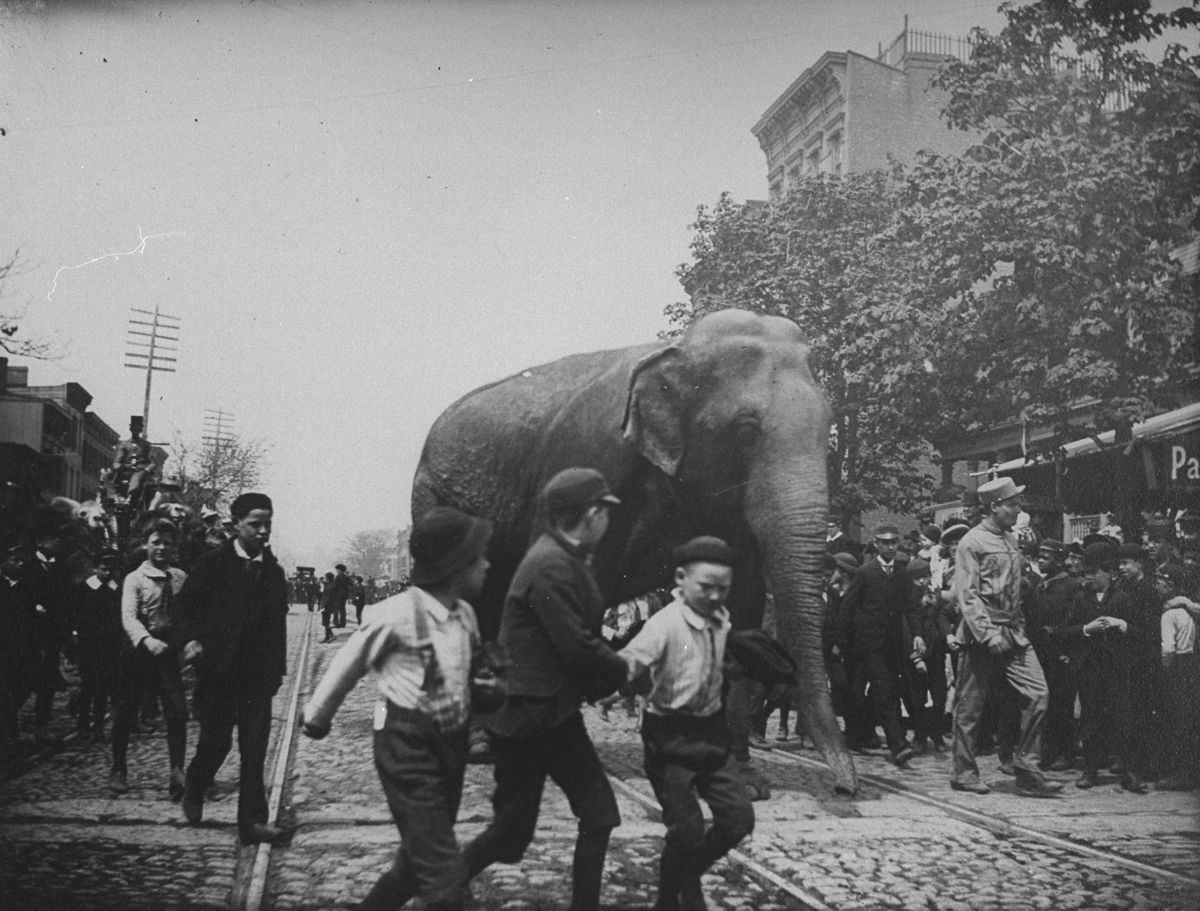
Levison also photographed everyday labor and local commerce. In 1889, a foreman and two workers prepared a house at 314 Livingston Street for moving. That same year, people gathered outside a railroad station bearing signs for the Tilly Foster Mines. An elephant from the Barnes Circus walked down Atlantic Street in Brooklyn in 1891 — a sight that stopped traffic and turned heads.
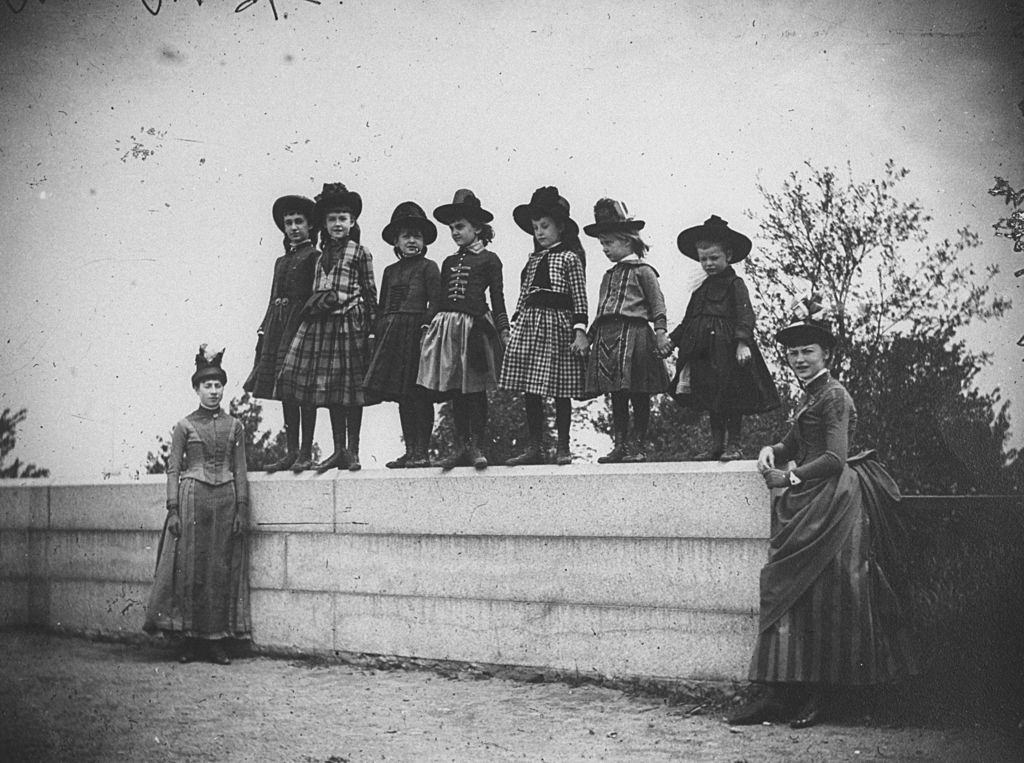
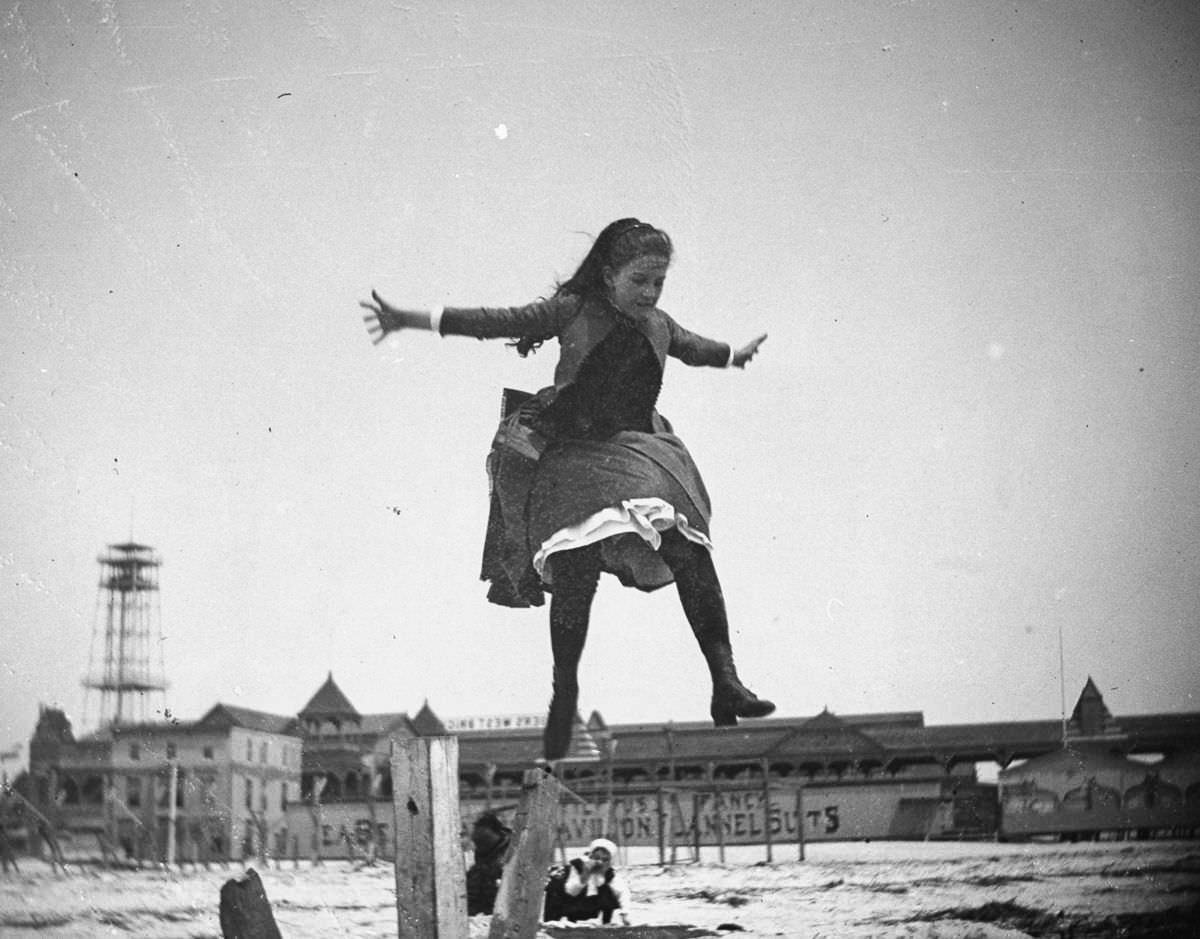
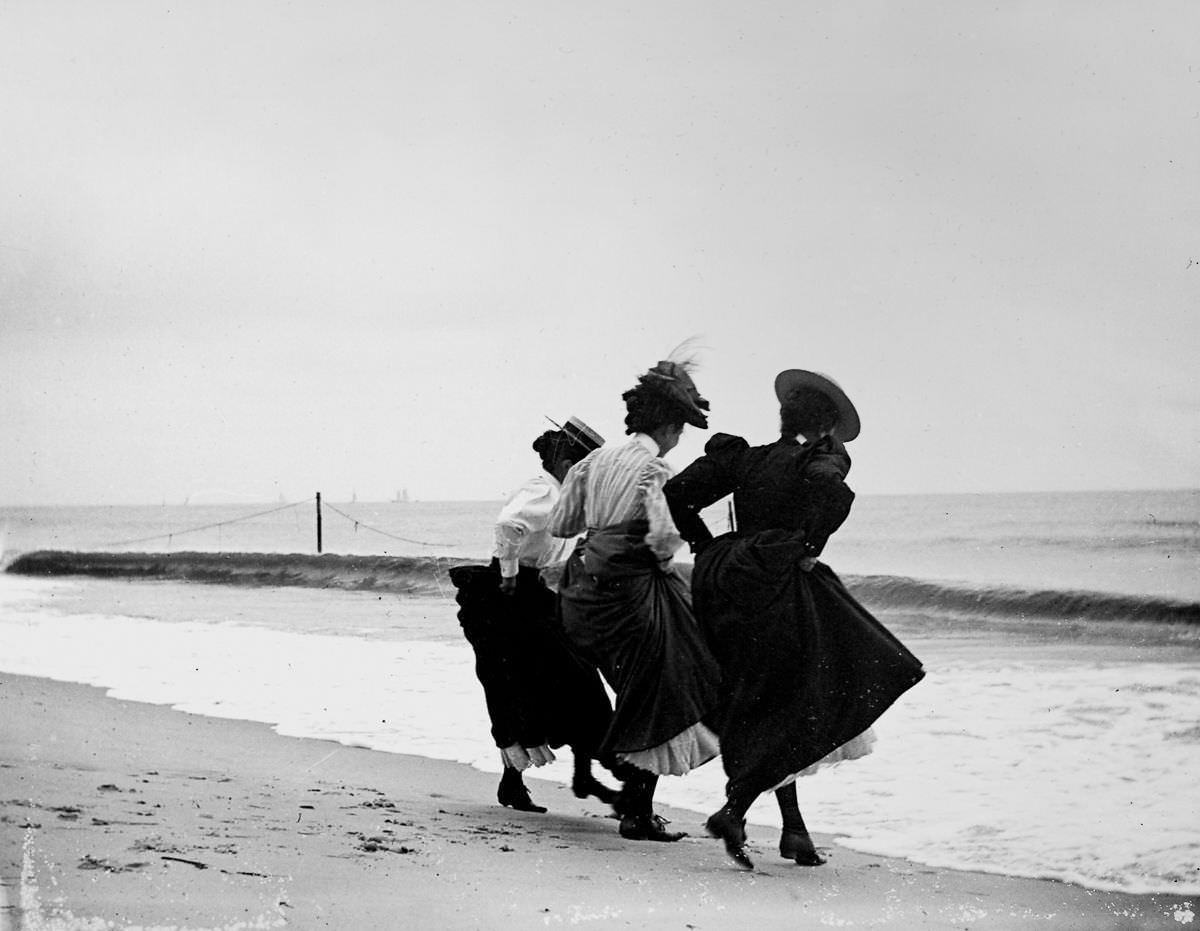
Seven girls — including Isabel and Nellie Harter, Nellie and Edie Dwight, Zelma Levison, and Edie Swan — stood together on a wall with two women in 1886. Gertrude Hubbell, Ruth Peters, and Mildred Grimwood played near the water at Arverne, Queens in 1897. Edith Poey leaped from a wooden pole onto the sand at Coney Island in 1887. These are not anonymous faces — Levison recorded names, dates, and places with the care of a true archivist.





The purest form of collective culture is architecture. Harmonization and speed of transformation are machines unto themselves.
Modernism is a disease.
No, but it’s wasteful to replace an ornate and beautiful structure with a sleek concrete slab. In this case, a fucking statue replaced the building.
It doesn’t make sense to me that people think anything old is a master piece if someone left a Beaux-Arts mansion above it. It looks pretty silly, a high rise is not a four-story mansion, so why do you insist on building a mansion as a roof?
On a four-story mansion, this roof would look out of place. It’s much too big for that. An interesting silhouette and a soaring sense of grandeur and character are perfectly suited to a tower of this nature.
That’s a lot of jumping.
I think it was a fetish
What else was there to do in the 1880s? Get TB?
Migrants then and migrants now we can never stop them migrating to NYC.