
When the United States acquired New Orleans in 1803 as part of the Louisiana Purchase — a deal that cost just $15 million — the city held a population of roughly 8,000 people. That number included about 4,000 white residents, 2,700 enslaved people, and approximately 1,300 free persons of color. Few could have predicted how quickly it would grow into one of the most powerful cities in North America.
Through the first half of the 19th century, New Orleans became the wealthiest and third-largest city in the United States. The arrival of steamboats transformed the city’s economy, turning it into a trade hub that ranked as the fourth-busiest port in the world by 1840. Cotton, sugar, and goods of all kinds moved through its wharves at a staggering pace.
During the Civil War, New Orleans was the largest city in the Confederacy. It fell to Union forces in 1862 without a battle being fought in the city itself — a swift and largely bloodless capture that proved a major blow to the Confederate cause. The city then fell under the Fifth Military District during Reconstruction, a period that reshaped its social and political landscape.
After Reconstruction ended, New Orleans struggled financially. The city defaulted on its debts and dropped from third to twelfth place in national population rankings. Despite this setback, the city made steady progress through the late 19th century, and by the 1890s its population had climbed to 287,104.
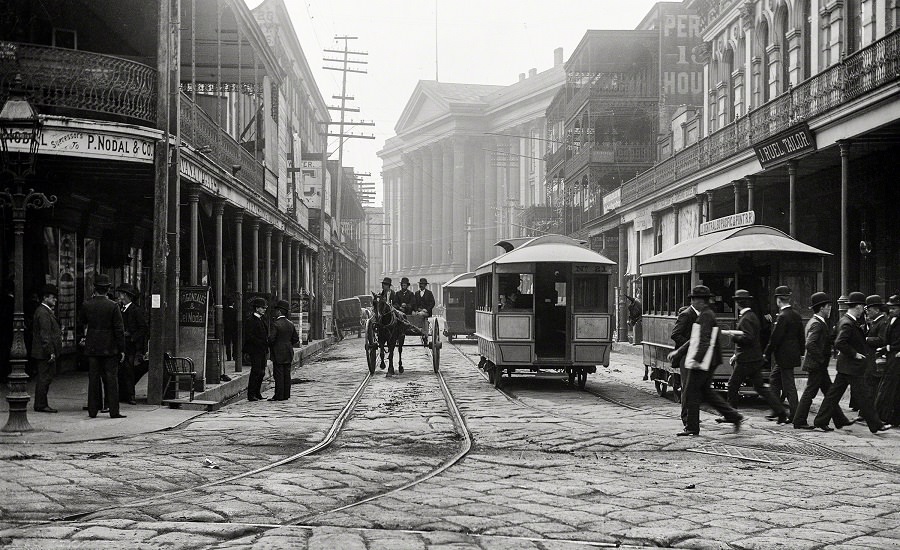
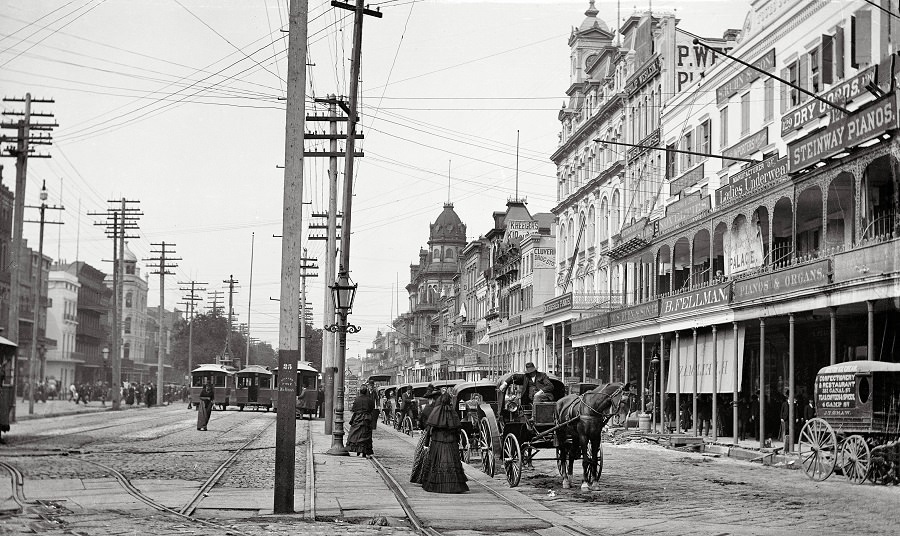
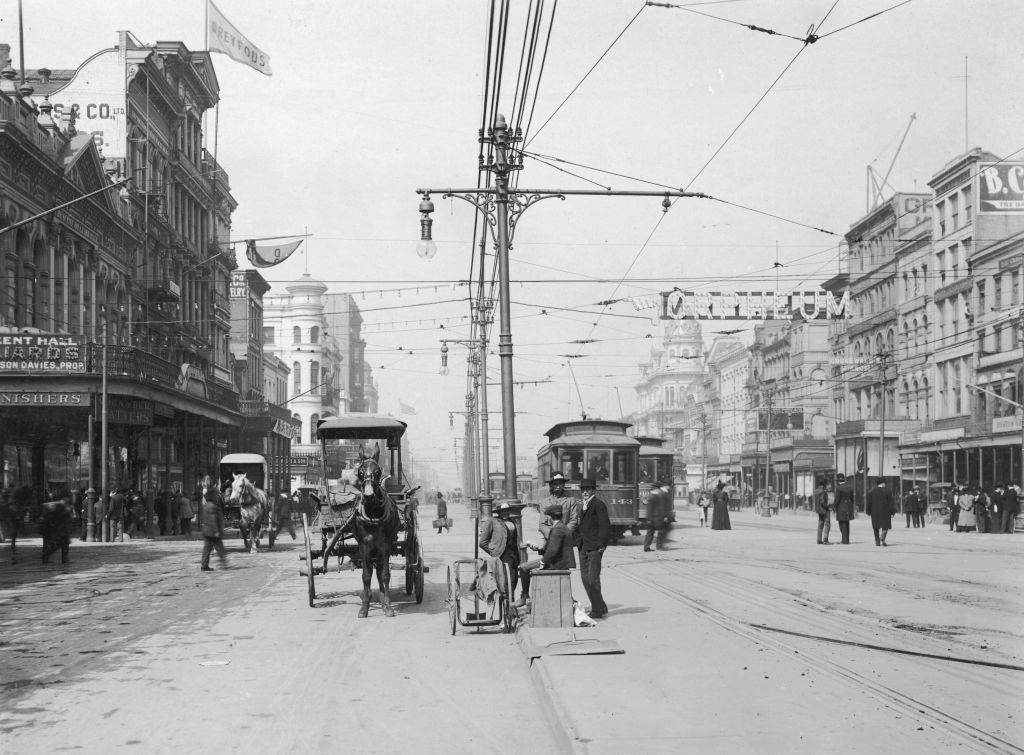
The streets of New Orleans in the 1890s reflected a city in transition. Horse-drawn carriages still dominated the roads, but electric streetcars were beginning to appear. Carbon arc lamps cast new light over thoroughfares that had long relied on gas. Canal Street, in particular, became a showcase of this shift — wide, busy, and lined with commerce.
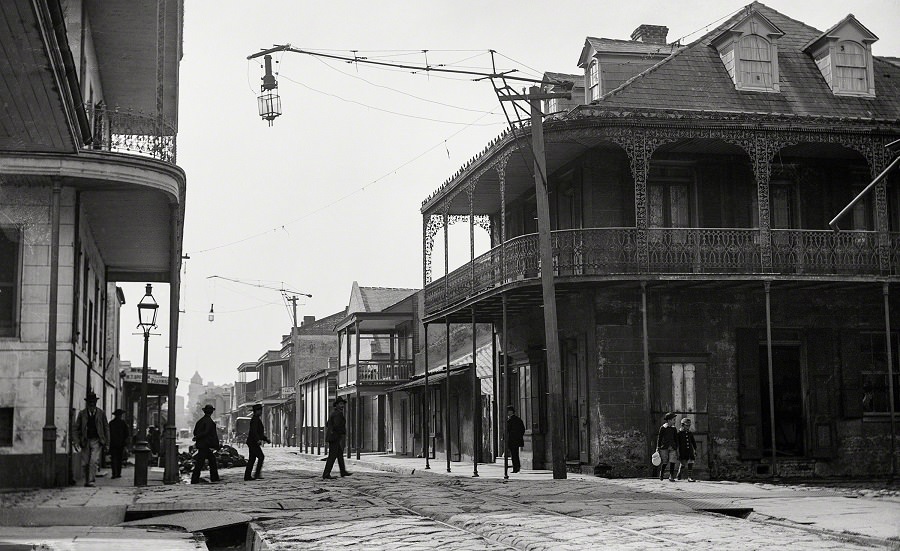
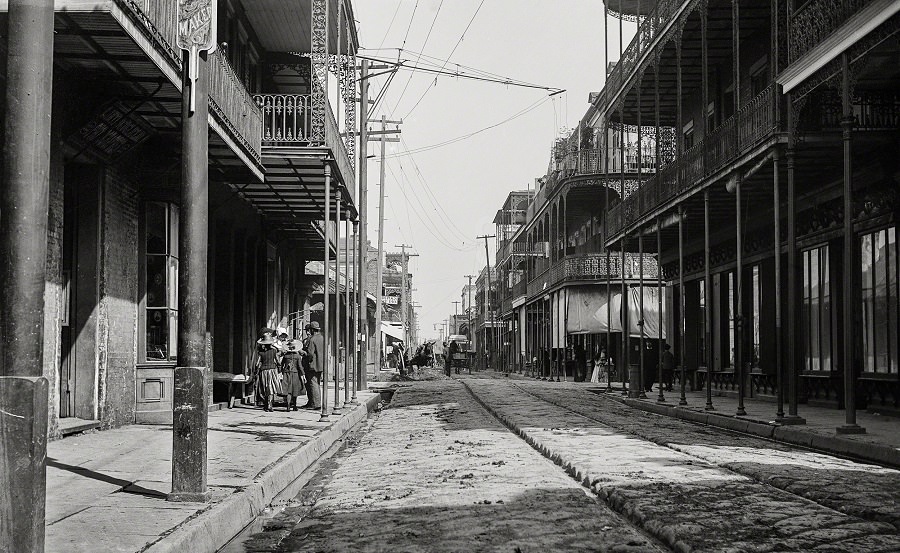
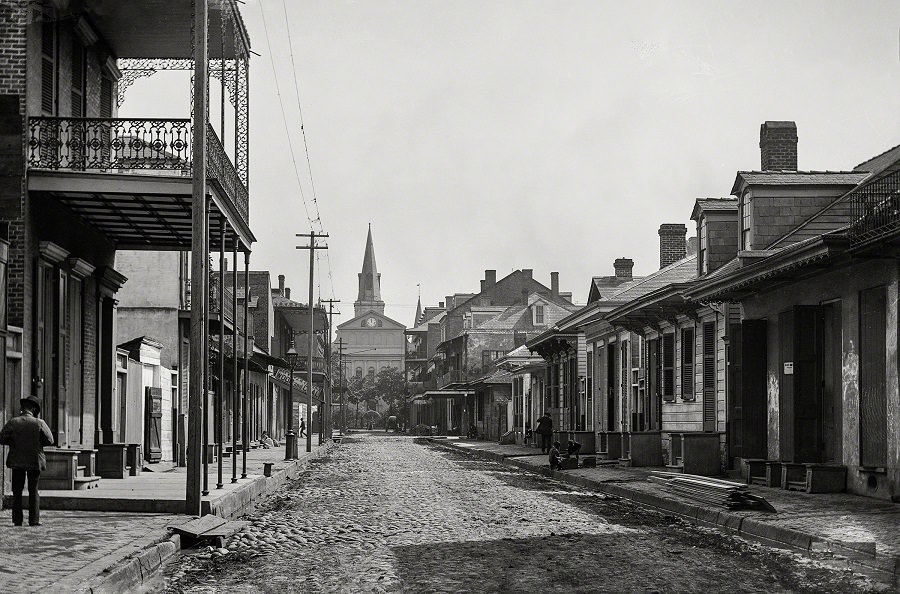
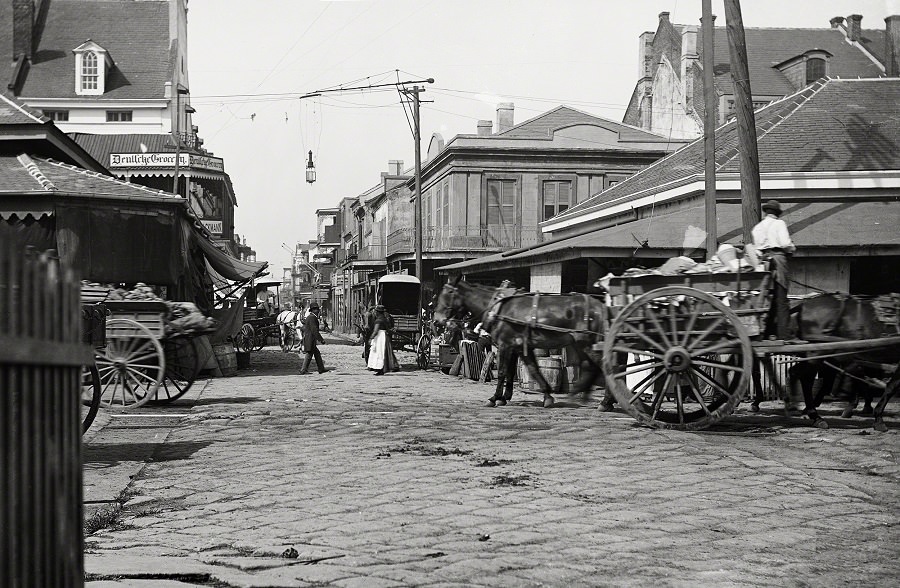
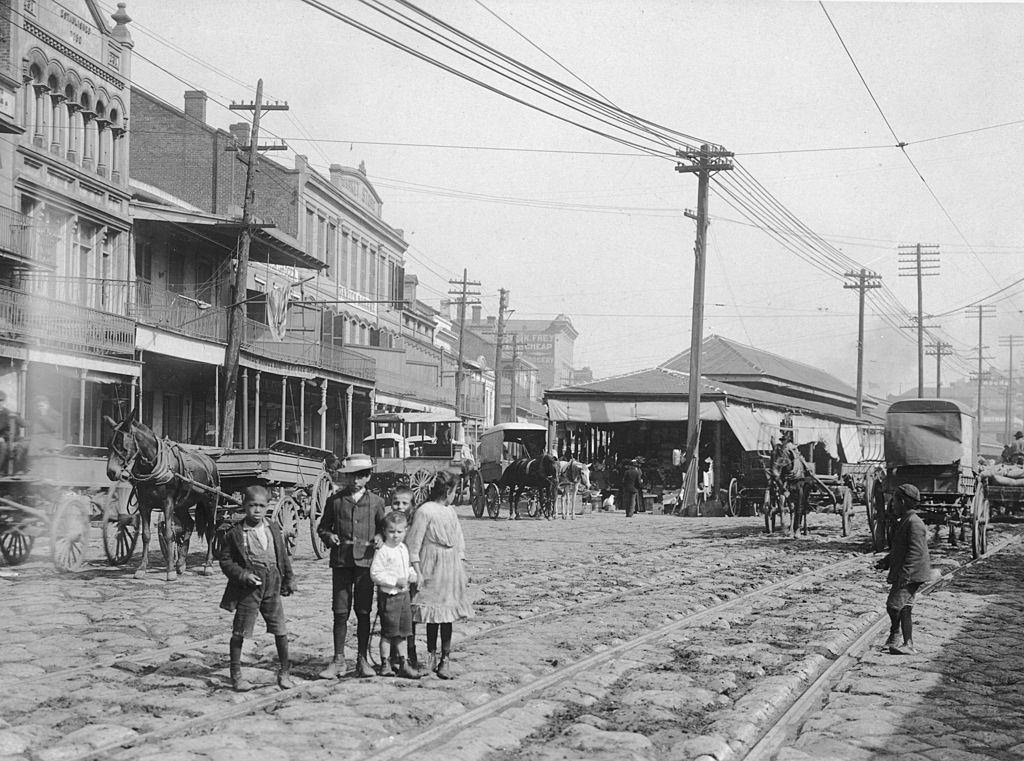
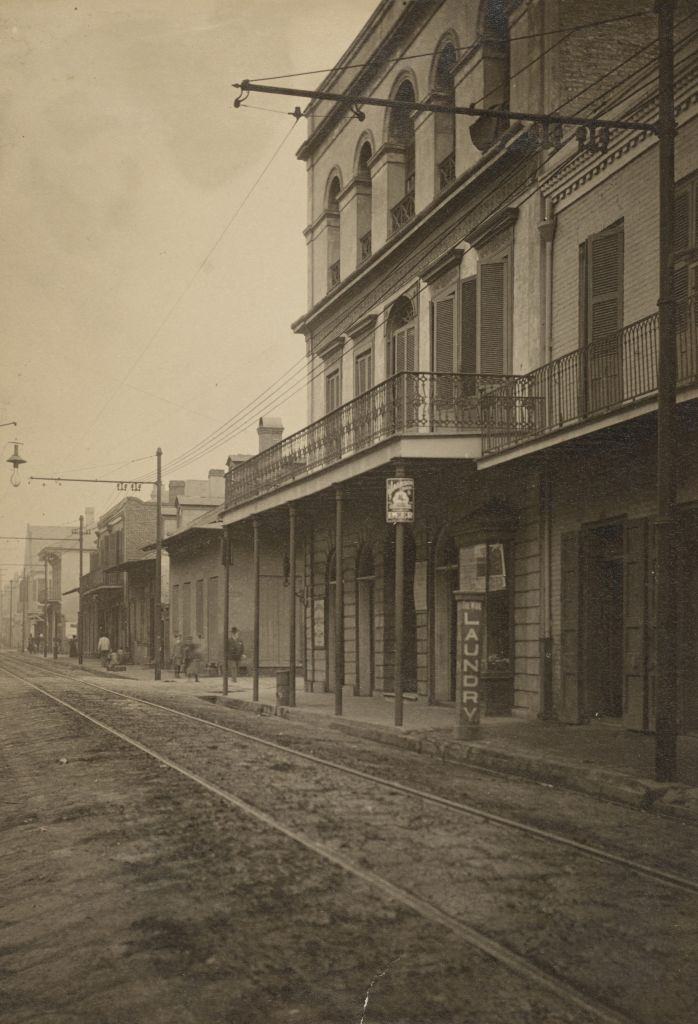
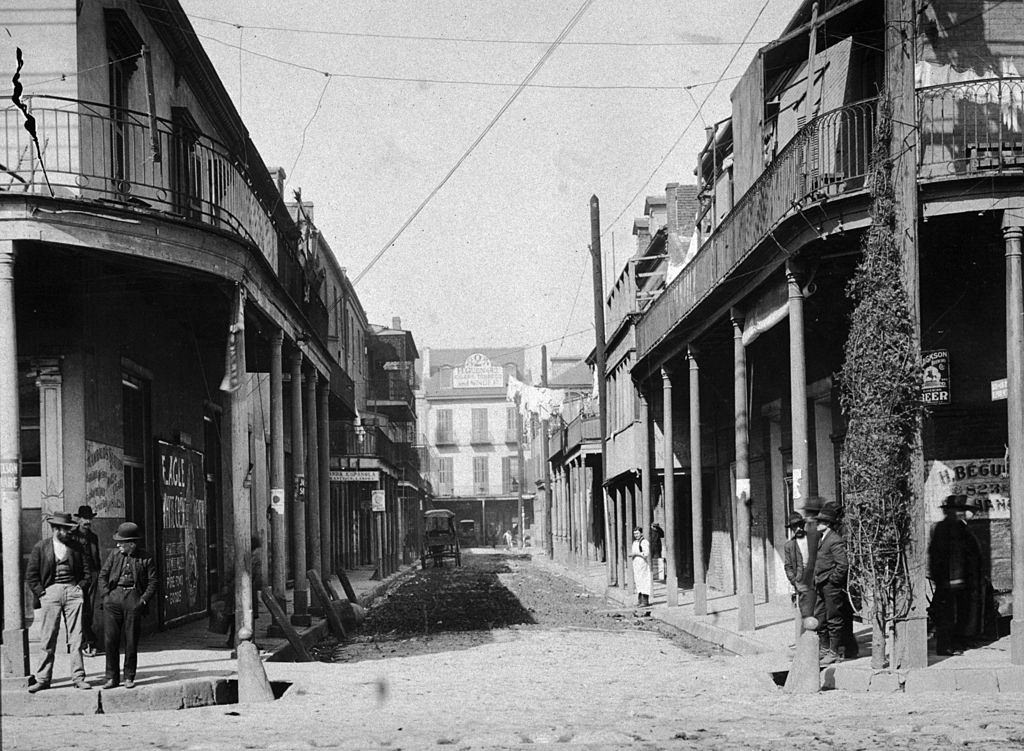
The French Quarter remained the cultural and commercial heart of the city. Royal Street and Orleans Street were lined with iron-lacework balconies and old Creole architecture. The French Market — one of the oldest public markets in the country — drew vendors and buyers from across the region every day.
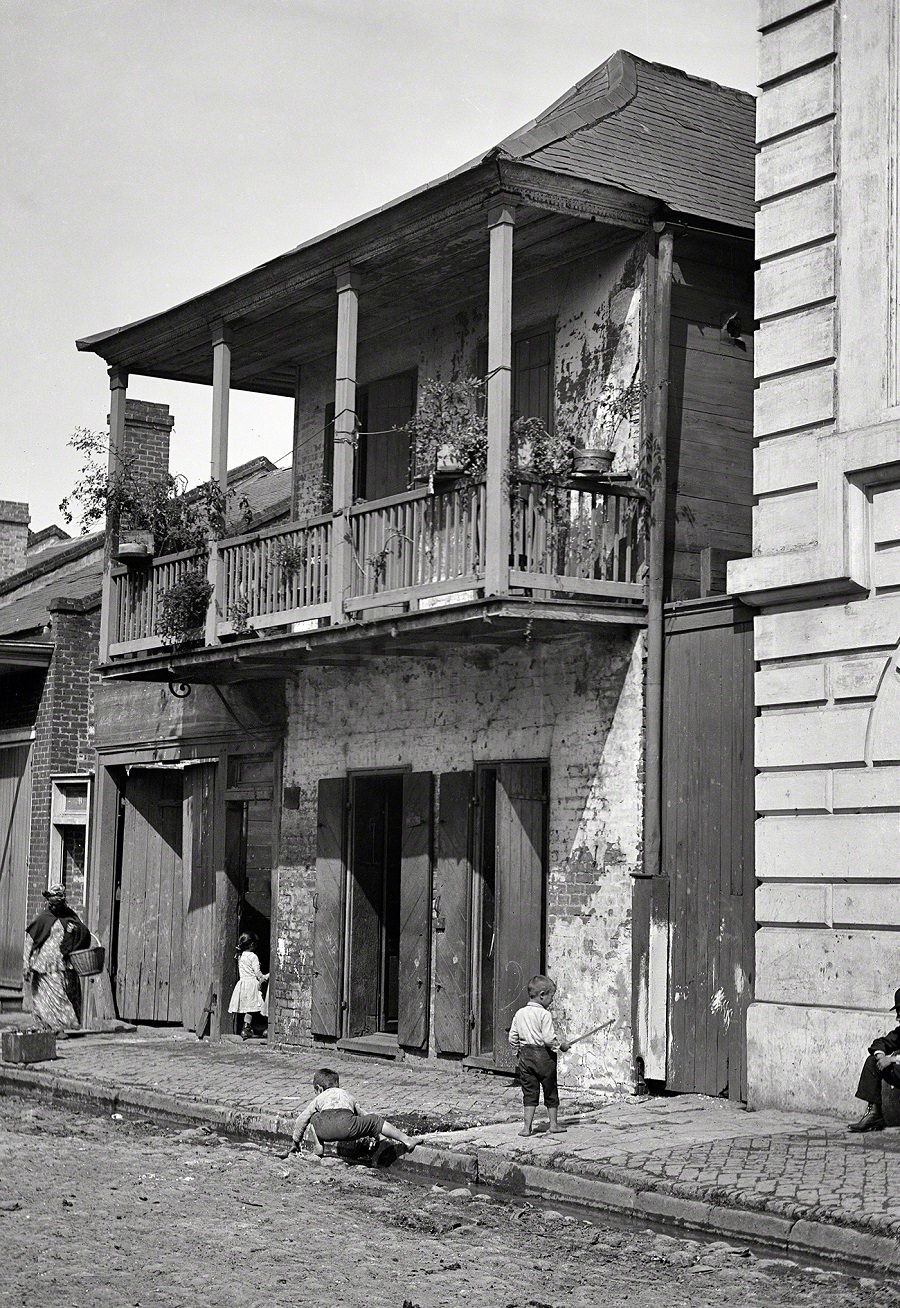
By the 1890s, the French Quarter had earned the nickname “Little Palermo” due to a wave of Sicilian immigrants who had settled there. Tensions between rival factions — specifically the Provenzano and Matranga gangs — resulted in the murder of New Orleans Police Chief David Hennessy in 1890. When a jury returned a not-guilty verdict for the accused, a mob responded by lynching 11 of the 19 indicted men. National newspapers used the word “Mafia” to describe the event, one of the earliest uses of the term in American press.
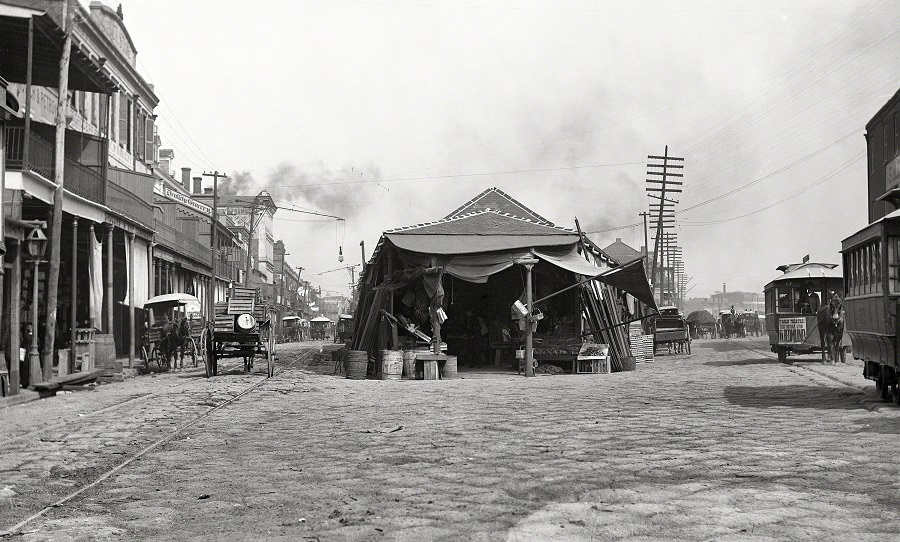
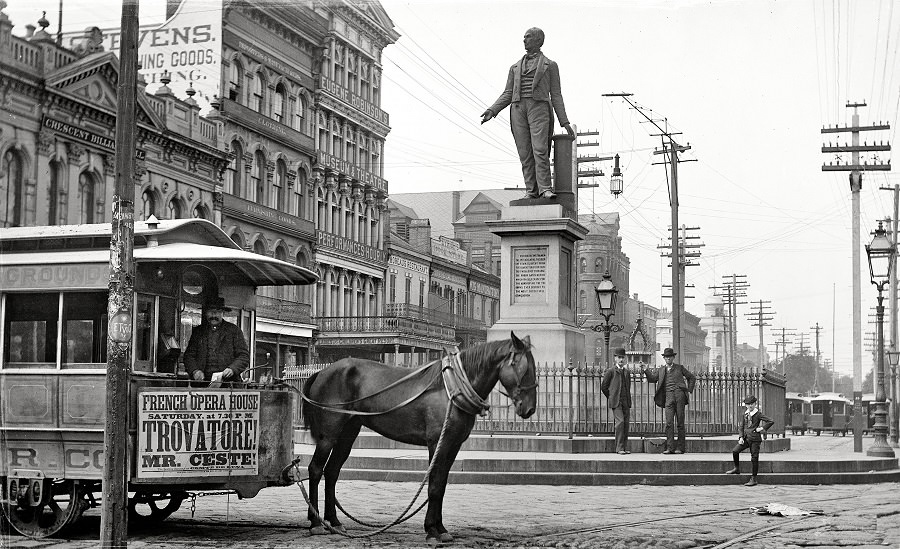
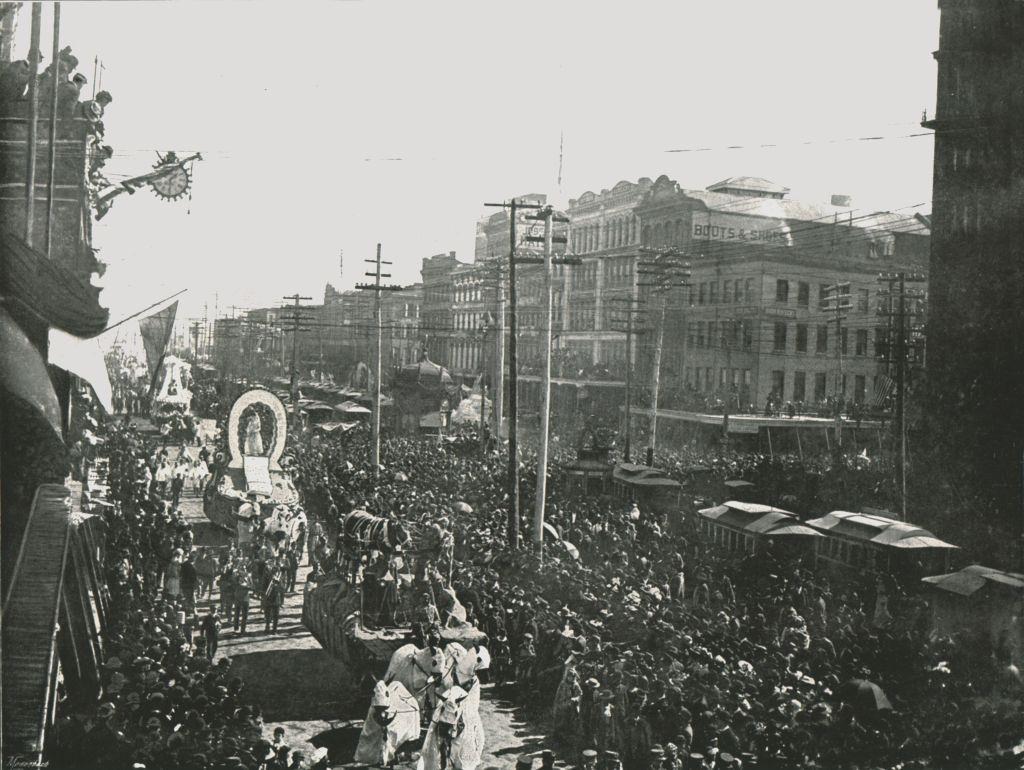
Canal Street served as the city’s main artery. The Clay Monument stood as a prominent landmark along its length, surrounded by horsecars, early electric lamps, and a dense cluster of shop signage. The switch to electric streetcars began in 1894, with new cars delivered to the city starting in 1896, replacing the older horse-drawn lines.
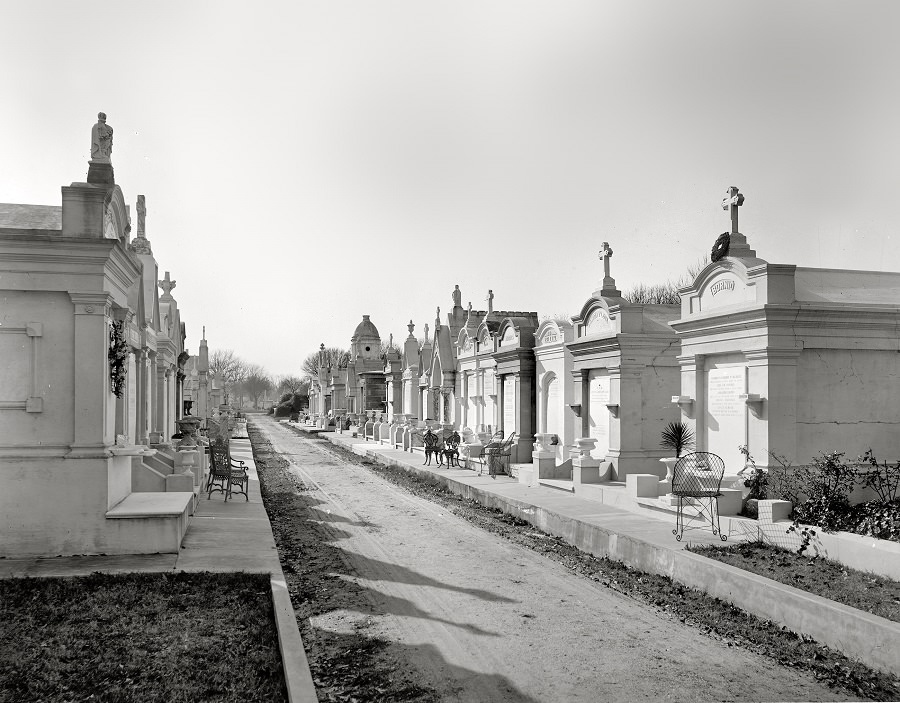
Metairie Cemetery, photographed here in 1895, was more than a burial ground — it was a popular garden destination for residents. Among those entombed there are baseball Hall of Famer Mel Ott, trumpeter Al Hirt, and bandleader Louis Prima. The elaborate above-ground tombs reflect the city’s long tradition of ornate burial practices, shaped in part by the region’s high water table.
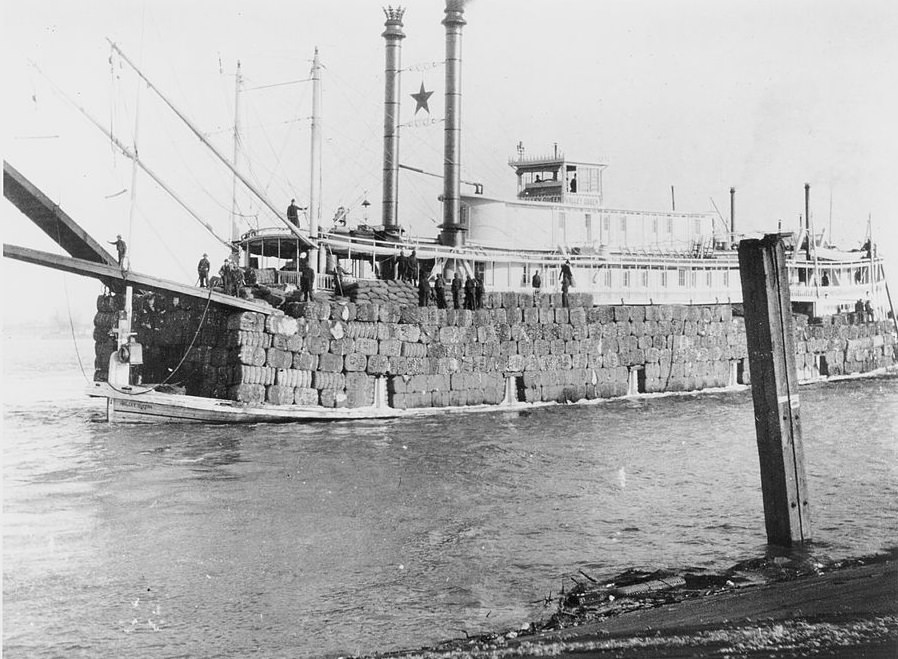
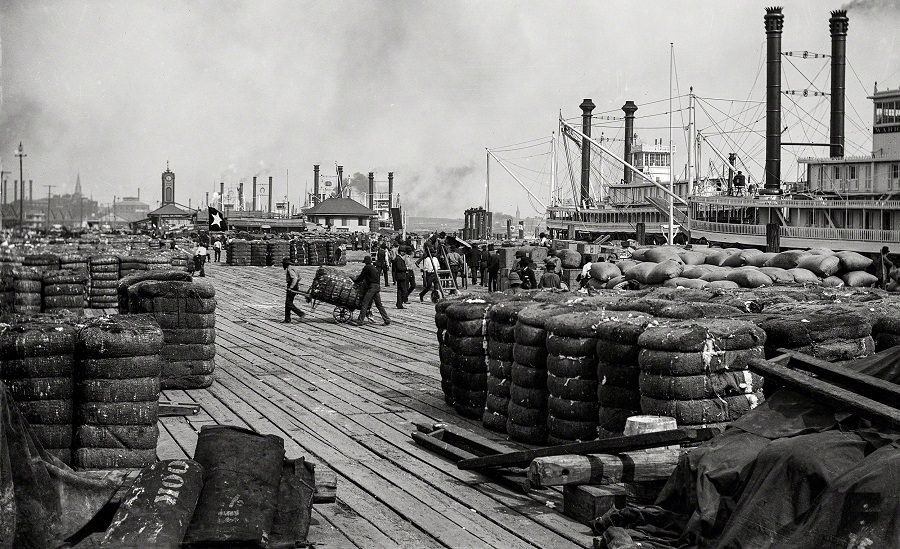
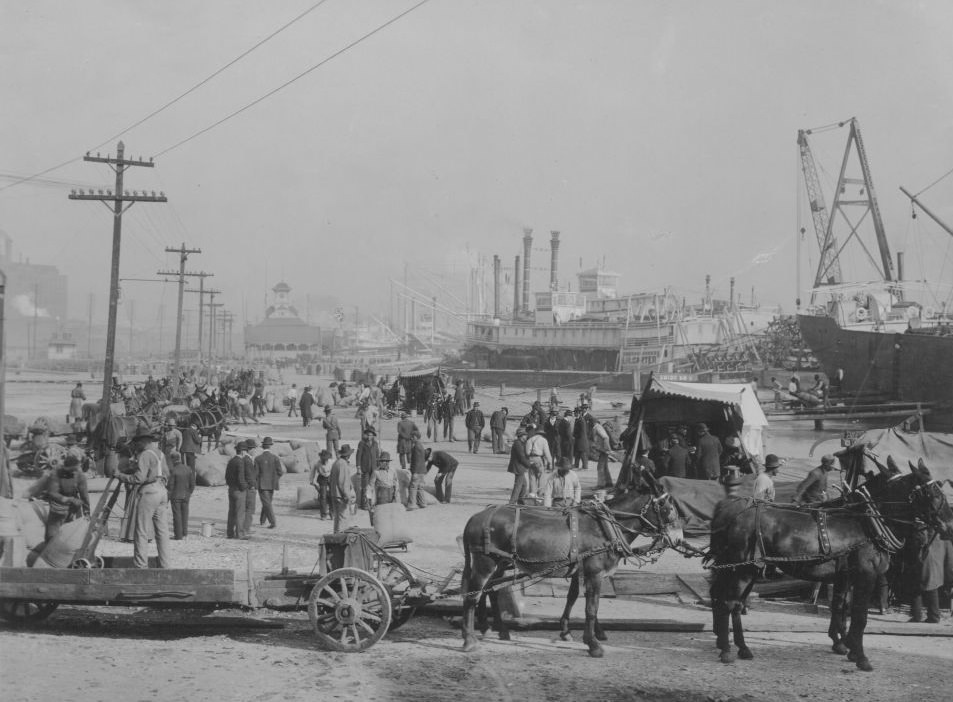
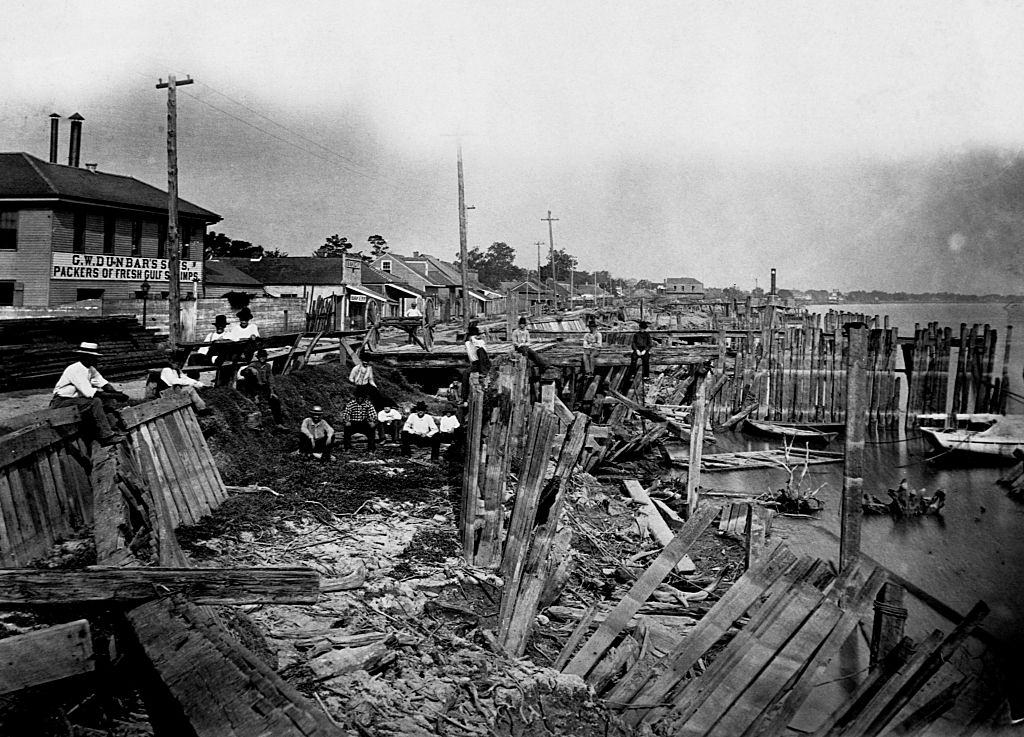
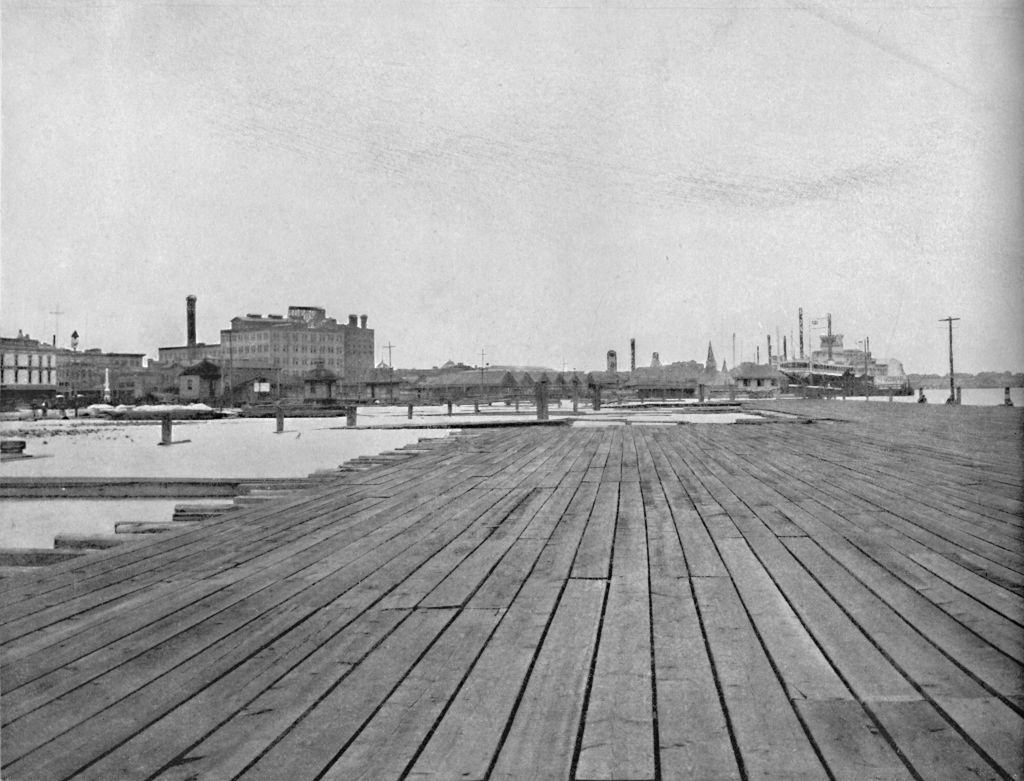
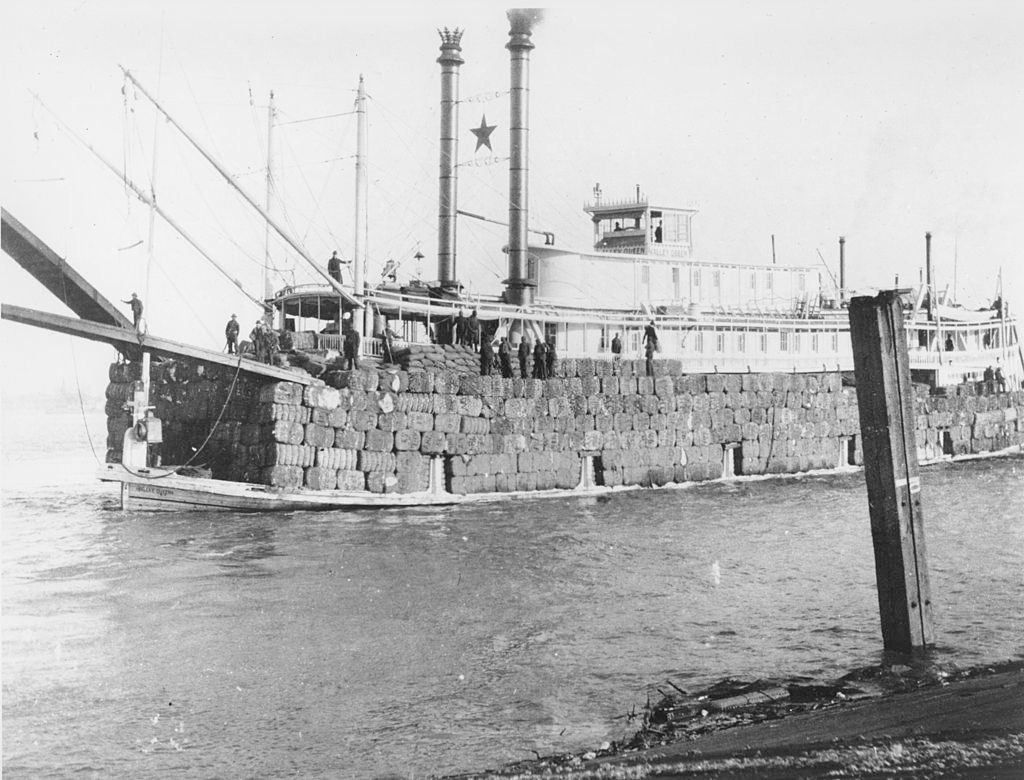
The Mississippi River was the economic lifeline of New Orleans. Steamboats loaded with cotton bales and sugar shipments moved constantly along the wharves, connecting the city to markets throughout the country. The docks between Piety and Desire Streets were particularly active, with laborers unloading cargo and workers of all kinds gathered along the levee.
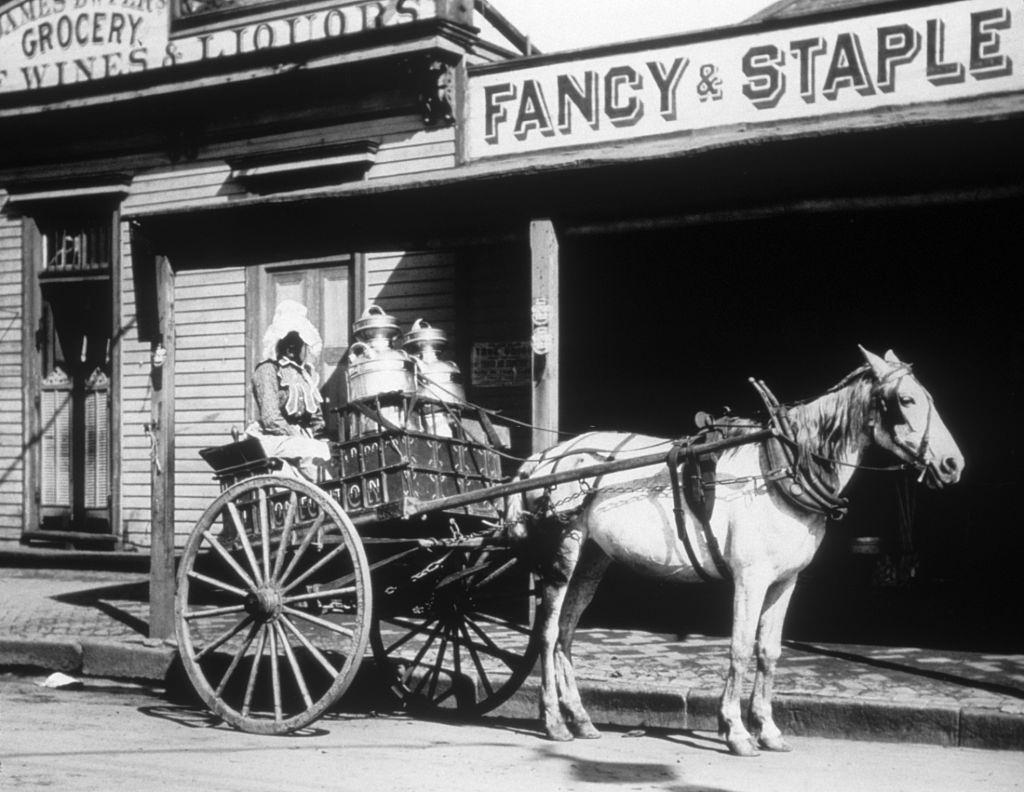
Life in late 19th-century New Orleans played out at many different levels of society. Milk wagons made their morning rounds through residential streets, children gathered near the French Market as horse-drawn carriages rolled across cobblestones, and Mardi Gras parades drew crowds to Canal Street each year — a celebration deeply woven into the city’s identity.
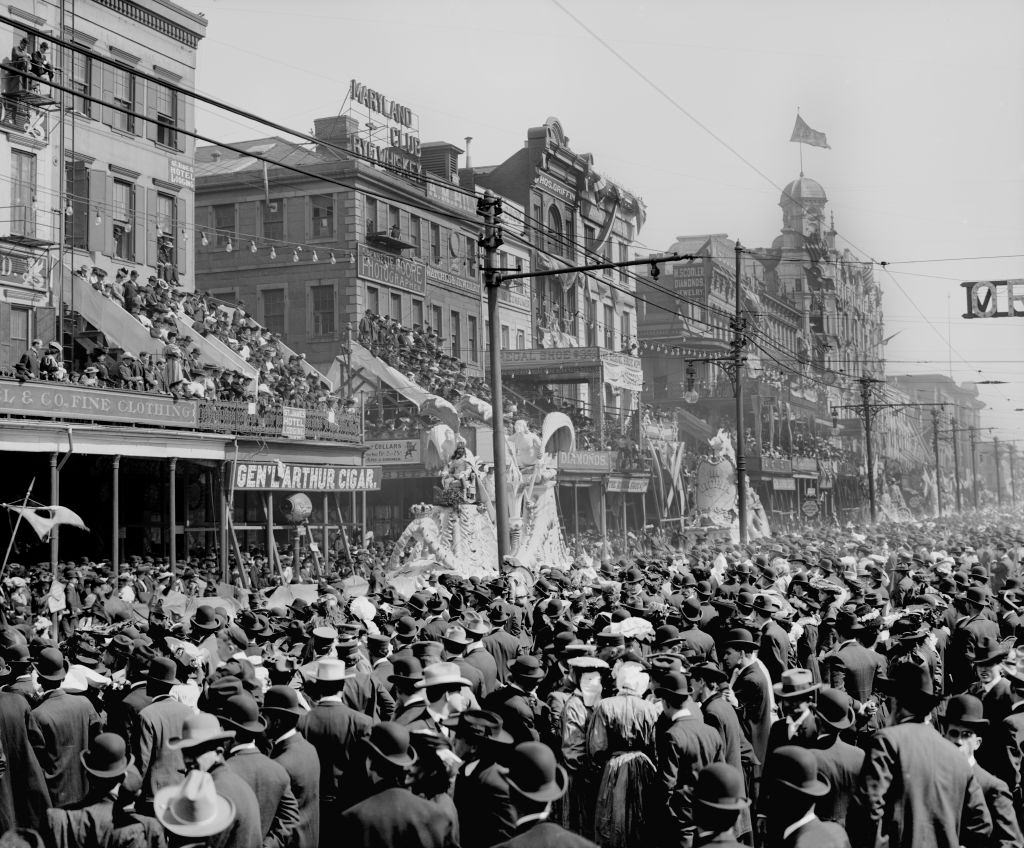
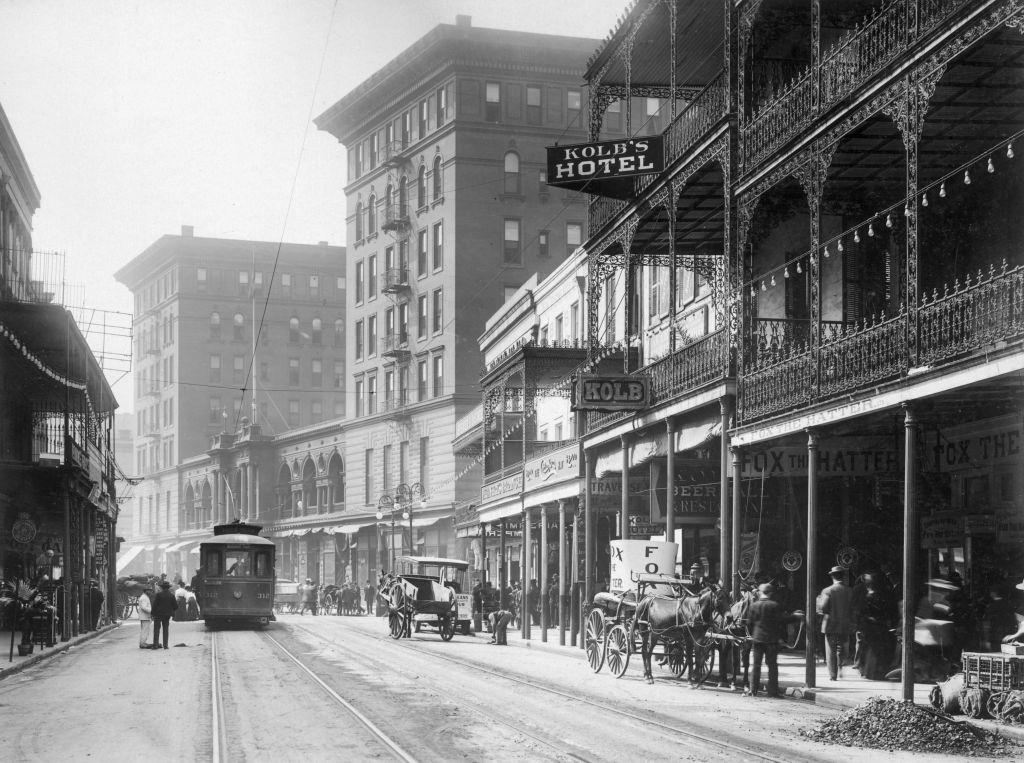
By the mid-1890s, Canal Street had evolved into a showcase of the city’s modern ambitions. Trolleys ran on overhead electric lines alongside horse-drawn carriages, and hotels like Kolb’s on Charles Street displayed terraced facades that signaled prosperity. The 1895 Mardi Gras parade drew enormous crowds to Canal Street, filling the boulevard with floats, music, and spectators packed along every inch of curb.
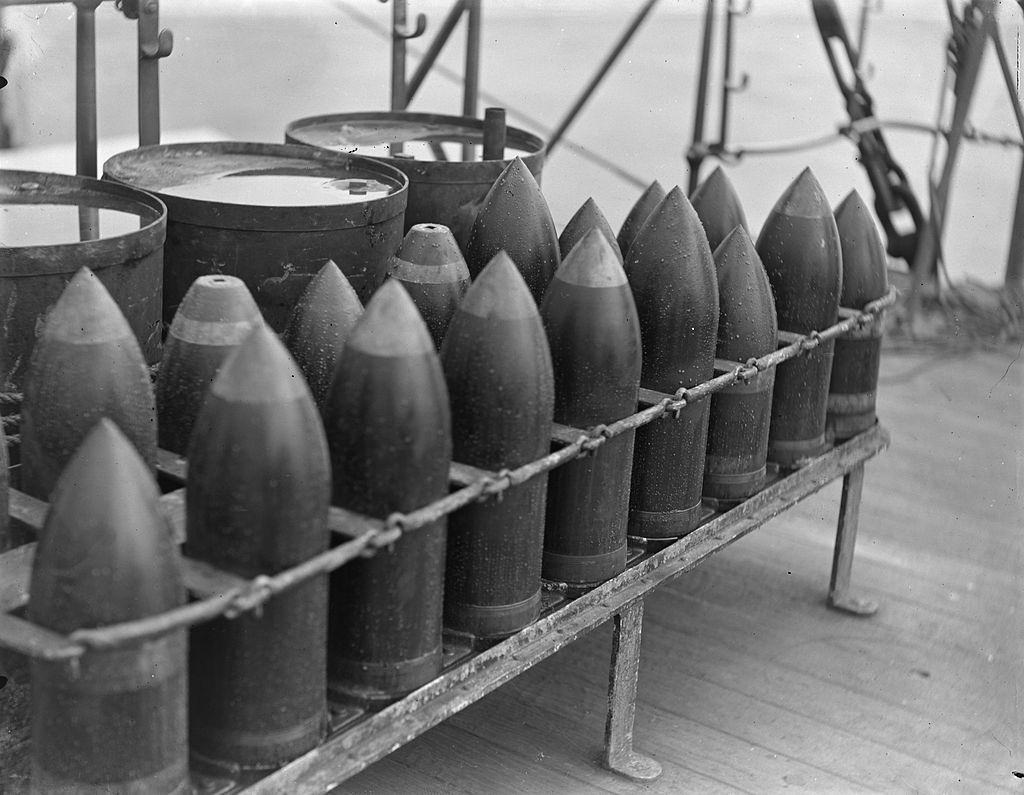
The Mississippi remained as busy as ever in the late 1890s. The levee and steamboat landing served as the gateway for goods entering and leaving the city. Cotton ships loaded with tightly packed bales sat heavy in the water, bound for ports along the eastern seaboard and beyond. In 1898, the USS New Orleans — a light cruiser in the U.S. Navy — saw action in the Spanish-American War, carrying artillery supplies that reflected the city’s continued ties to national military affairs.
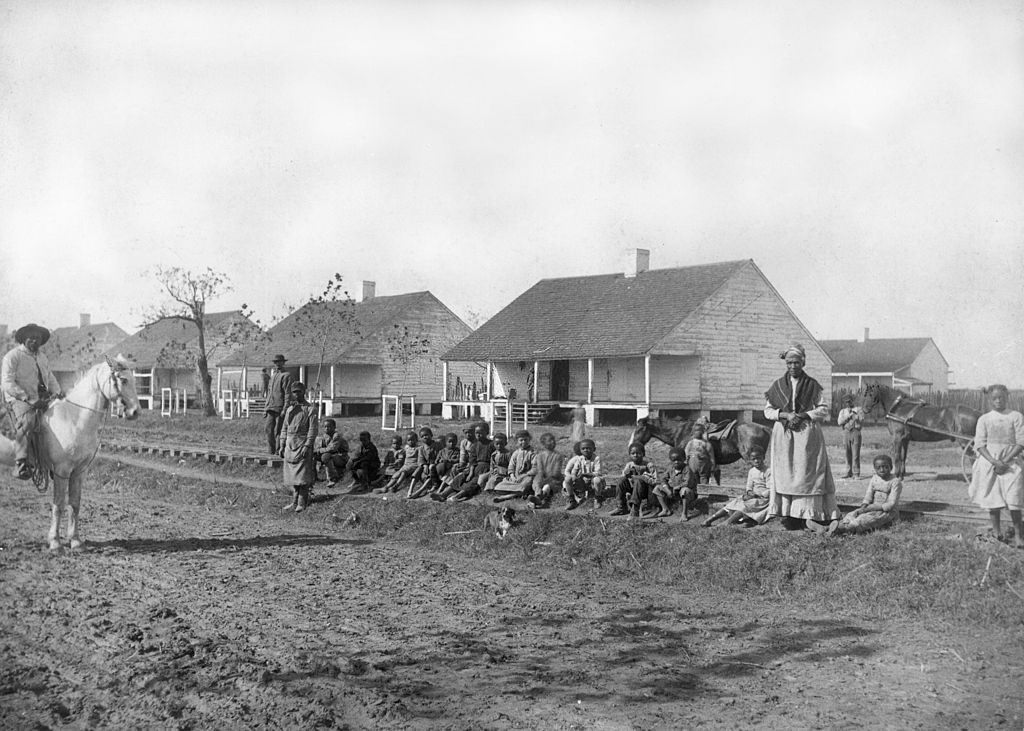
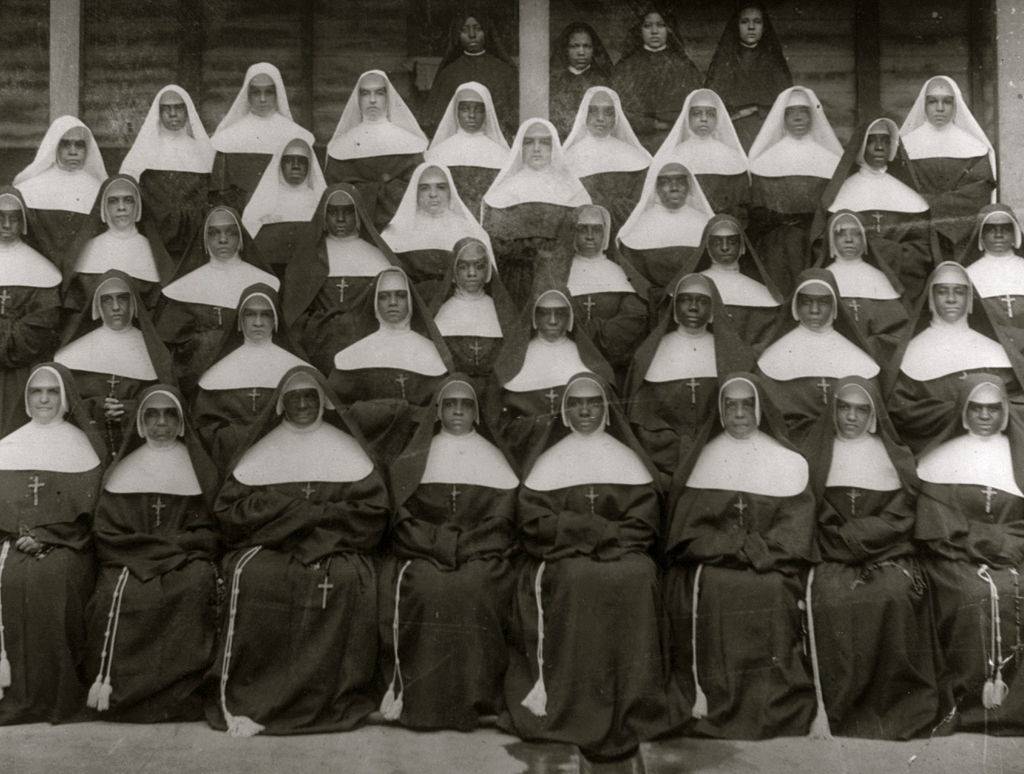
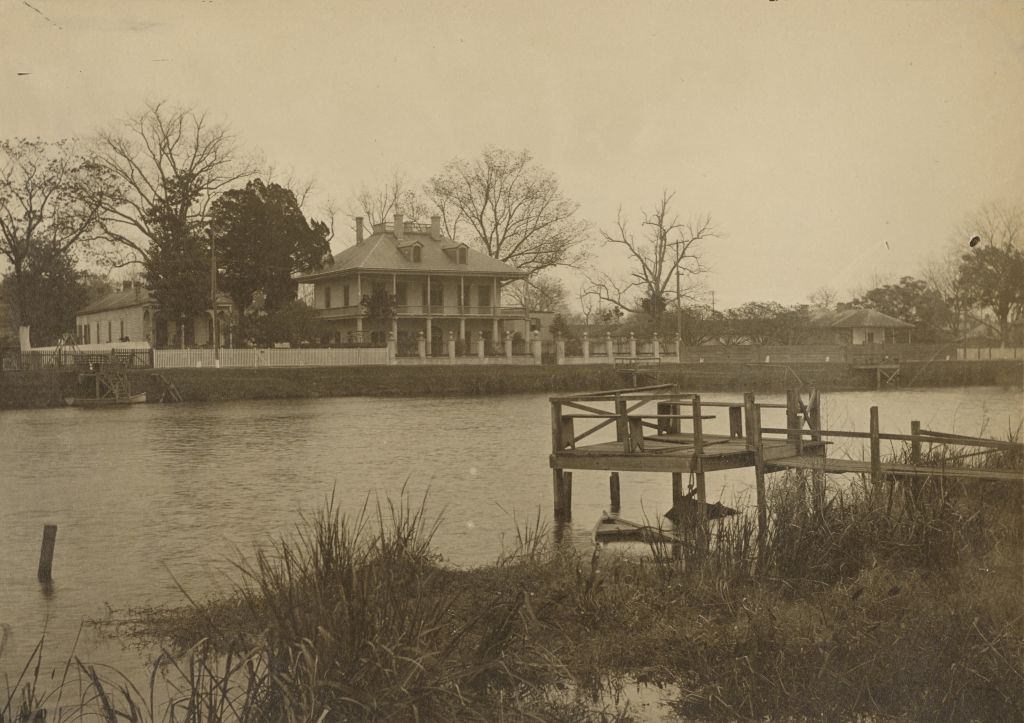
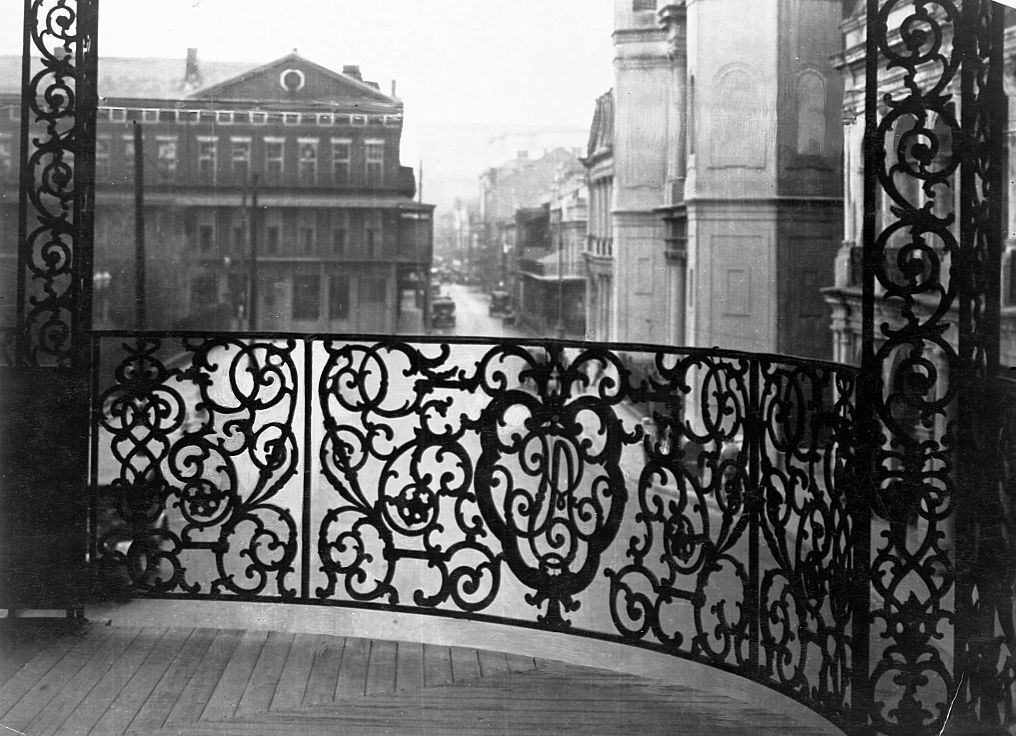
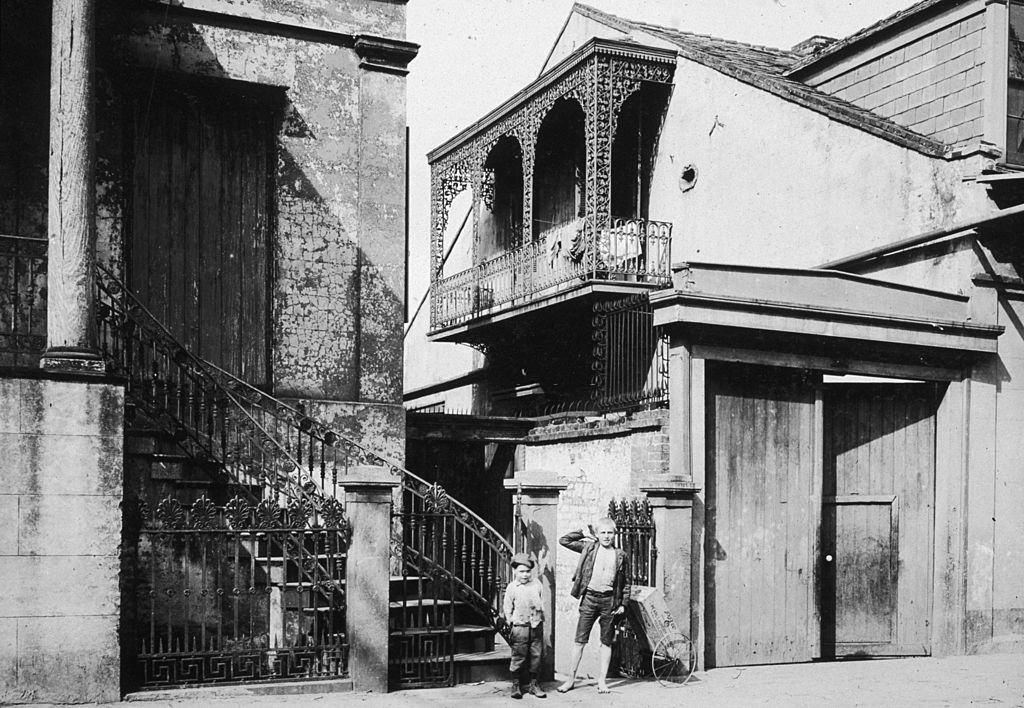
As the century closed, New Orleans retained the layered character it had built over decades. The Sisters of the Holy Family — a religious order founded by free women of color — continued their work in the city. Elegant ironwork railings adorned the upper floors of old buildings along the narrow streets. Historic homes like the Beauregard House in the French Quarter and Madame John’s Legacy stood as reminders of the city’s deep Creole roots, while plantation houses on the outskirts preserved a darker chapter of Louisiana’s history.





One of these photos says it’s from 1899 and there is a Chevy from the mid 20th century in the frame. lol
This is just Saint Denis from Red Dead Redemption
IT’S AMAZING HOW MANY OF THESE ARE DATED 1899, I’D LIKE TO KNOW HOW YOU GOT THOSE DATES? ALSO THE #30 PICTURE IS FROM THE BALCONY OF THE PONTALBA APARTMENTS, BUILT BY BARONESS PONTALBA AS A RESIDENCE. THE ONE ON THE EAST SIDE OF JACKSON SQUARE AND OWNED BY THE CITY OF NEW ORLEANS, THE ONE ON THE WEST SIDE OF THE SQUARE IS OWNED BY THE STATE. THE BOTTOM FLOORS ARE COMMERCIAL THE UPPER FLOORS ARE RESIDENTIAL APARTMENTS BUT THE WAITING LIST IS SO LONG YOU SHOULD PUT YOUR CHILDREN’S NAMES ON THE LIST WHEN THEY’RE BORN AND THEY MAY GET IN WHEN THEY RETIRE!!!