Mollie Parnis built one of the most recognizable names in American fashion without ever attending a single design school. Born in 1899 and raised in New York City, she learned the fashion industry from the ground up, working her way through its ranks before launching her own label in the 1940s. What started as a small dress shop grew into a celebrated brand worn by some of the most prominent women in the country.
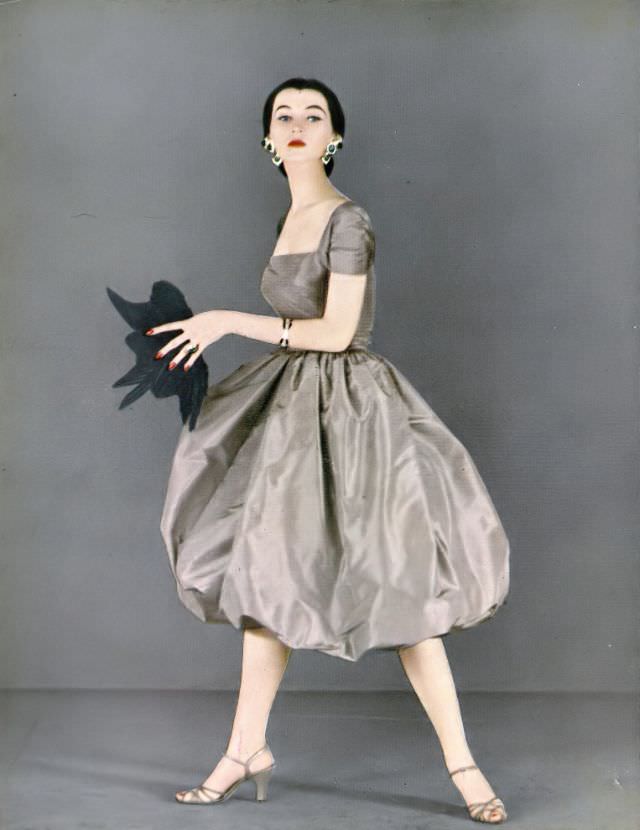
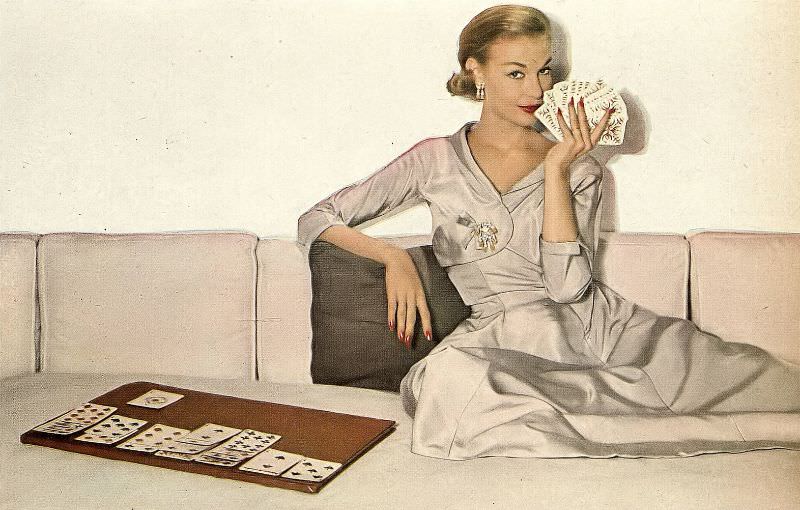
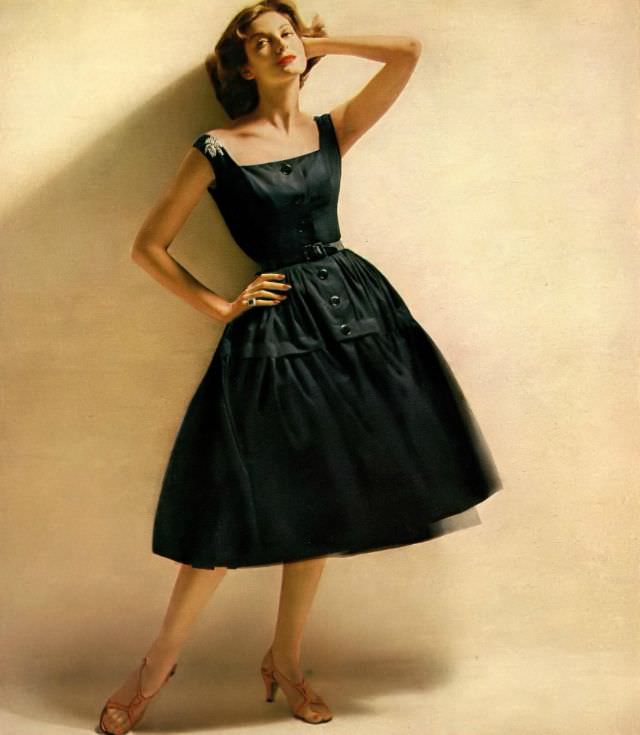
Dovima in bouffant silk taffeta skirt with separate square-cut taffeta top by Mollie Parnis, Coro earrings, Hattie Carnegie fan, Harper’s Bazaar, February 1951
By the early 1950s, Parnis had become a fixture in the pages of Harper’s Bazaar and Vogue. Her designs favored luxurious fabrics — silk taffeta, fine wool, and sheer organdy — and she worked them with precision. Embellishments were never an afterthought. Rhinestone accents, velvet collars, jeweled buttons, and beaded yokes appeared throughout her collections, always placed with intention.
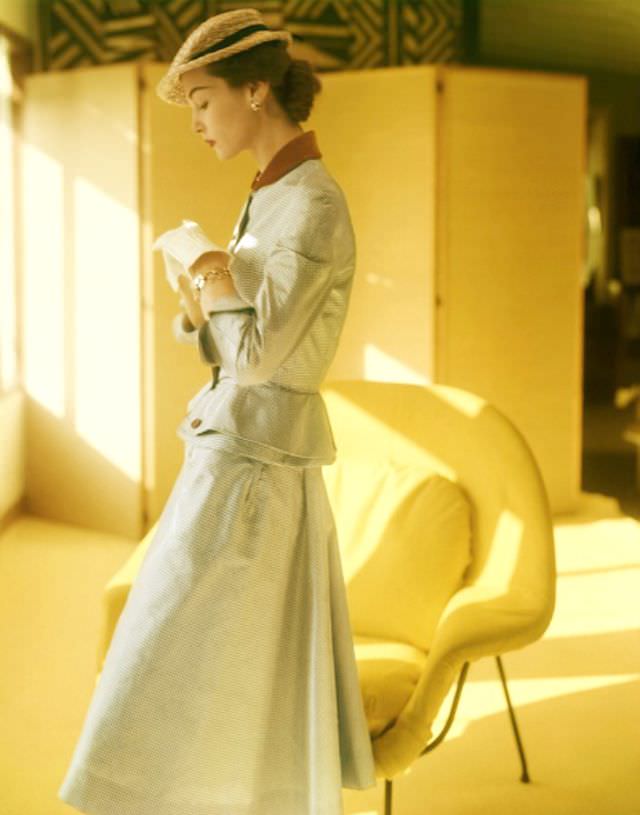
Eva Gerney wearing a suit of silk taffeta with peplum and velvet collar by Mollie Parnis, photo by Horst P. Horst, February 1951
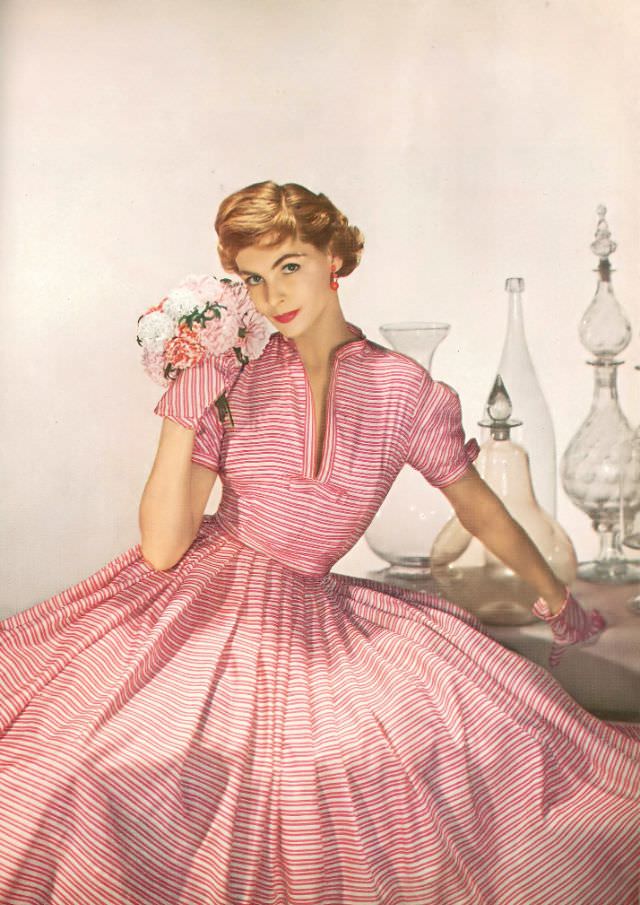
Georgia Hamilton in dress of white and pink striped silk by Mollie Parnis, Harper’s Bazaar, April 1952
Her range was broader than many designers of the era. Parnis dressed women for afternoon luncheons, formal dinners, and everything between. A pale pink poodle coat paired with pleated silk shantung, a crisp white linen summer dress, a checked Princess coat-dress lined in red taffeta — each piece spoke to a woman who cared about looking polished in every setting.
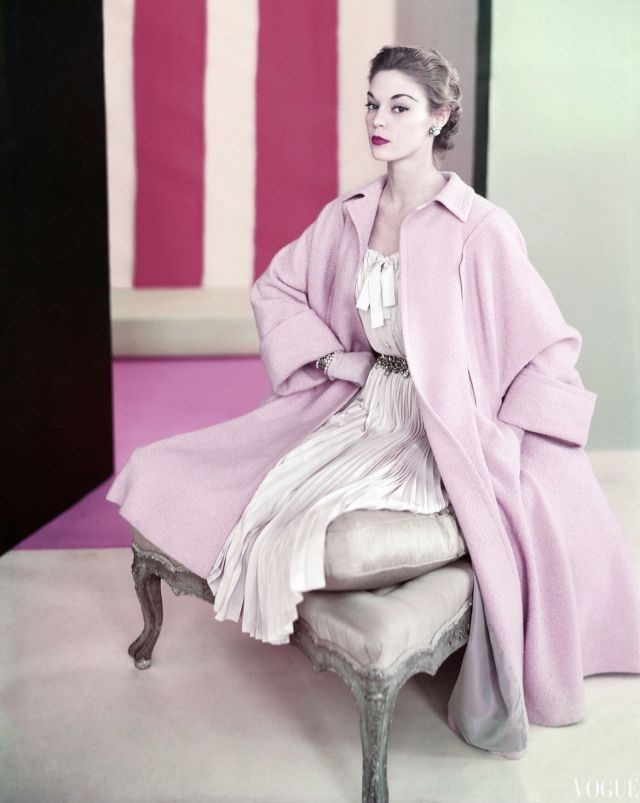
Jean Patchett wearing pale pink poodle coat by Swansdown over dress of pleated silk Shantung by Mollie Parnis, jewelry by Miriam Haskell, 1952Liz Pringle in pale silk dinner dress with small matching jacket by Mollie Parnis, Harper’s Bazaar, October 1952
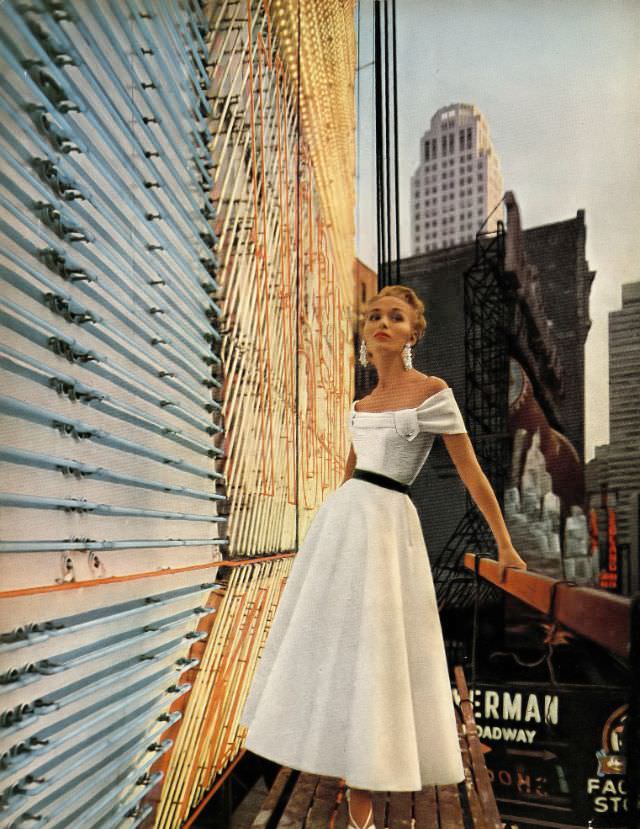
Sandra Nelson in white silk organdy dress with a little shawl around the shoulders by Mollie Parnis, Harper’s Bazaar, December 1952
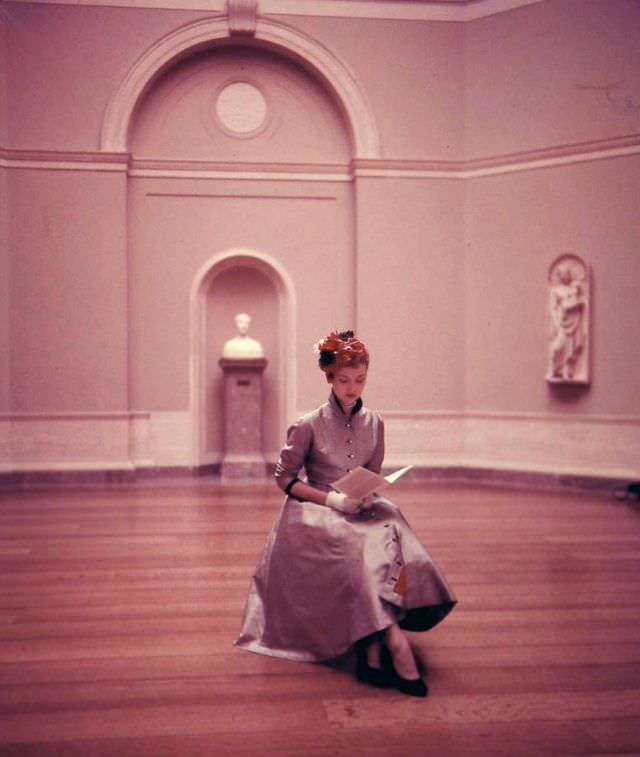
Sheila Kilgore wears a Princess coat-dress of checked stiff, ridged silk lined in red taffeta with jeweled buttons and half belt in back by Mollie Parnis, Washington D.C., February 1952
The models photographed in Parnis designs read like a who’s-who of 1950s fashion. Suzy Parker, Dovima, Jean Patchett, and Carmen Dell’Orefice all wore her pieces in major editorial spreads. These were the faces that defined the decade, and Parnis was the designer putting them in silk twill sheaths, summer linens, and structured suits.
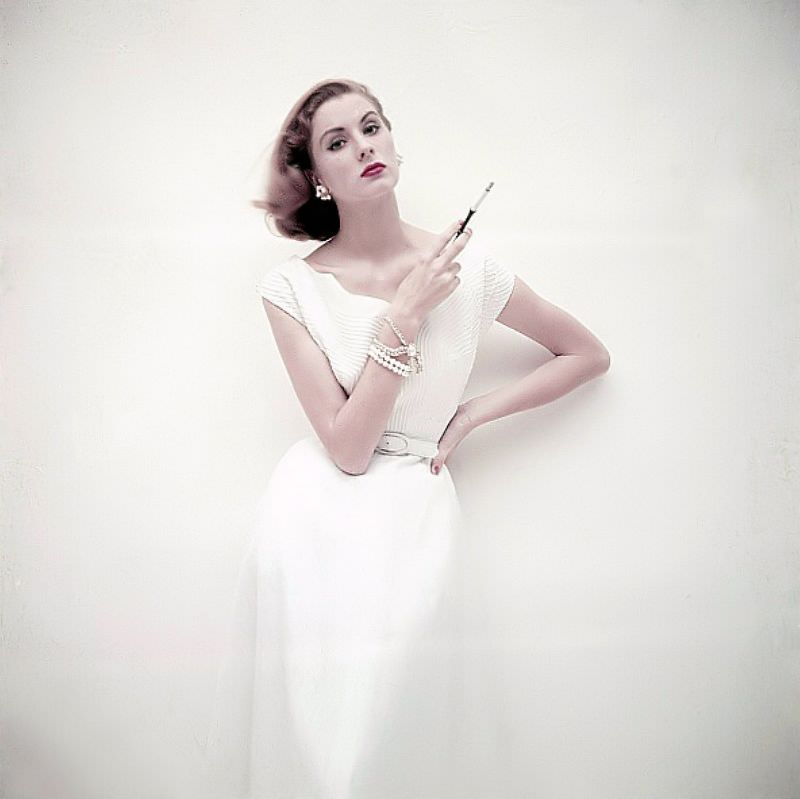
Suzy Parker in a summer dress of white linen by Mollie Parnis, February 1952
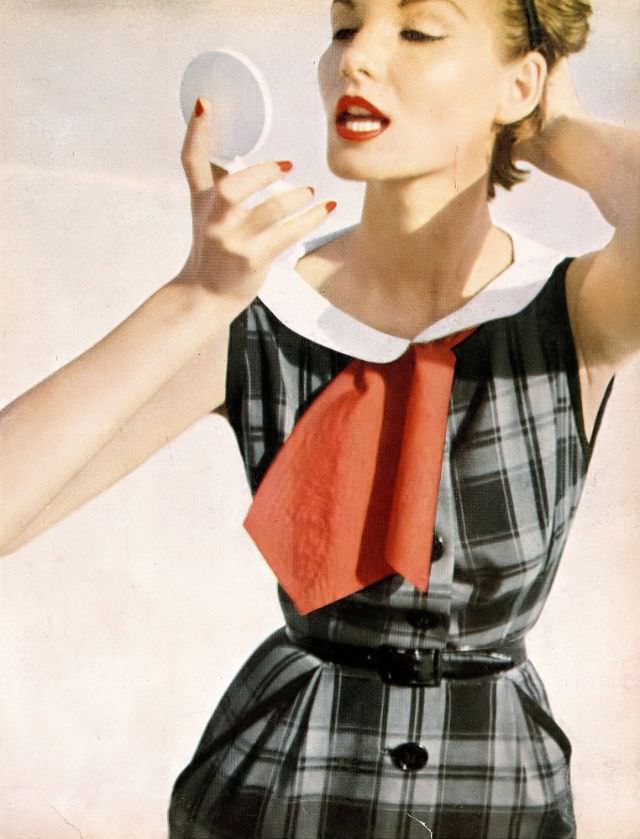
Cherry Nelms in black and gray plaid cotton dress with white piqué collar and black patent leather belt by Mollie Parnis, Bermuda, Harper’s Bazaar, May 1953
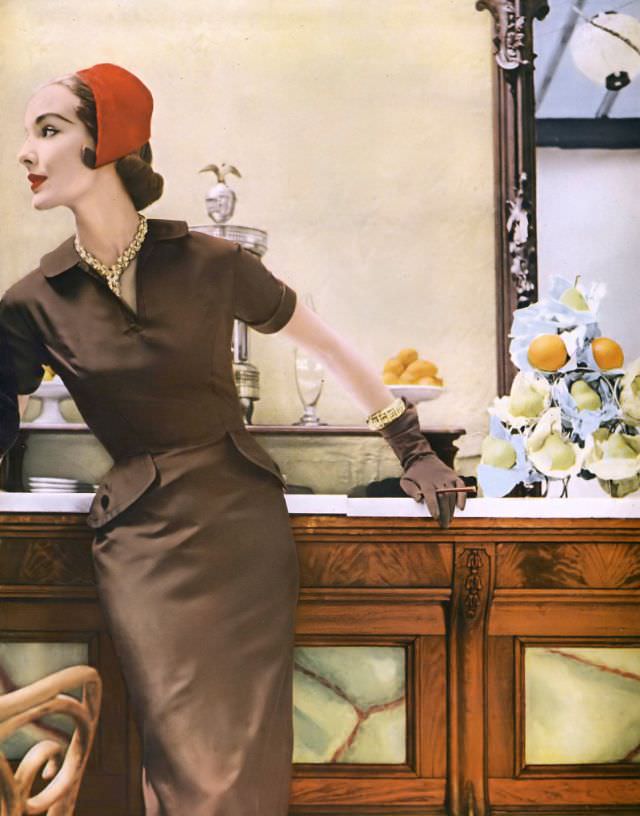
Cherry Nelms in taupe silk twill sheath by Mollie Parnis, red brushed velours cap by John Frederics, gold and diamond necklace and bracelet by Van Cleef & Arpels, Vogue, July 1953
Parnis understood color and print as well as she understood cut. A red silk twill dress with a bustle-bow, a vibrant Pima cotton voile in scarlet, a plum-red and blue Liberty of London print — these were not timid choices. She used bold hues confidently, pairing them with high-end accessories from jewelers like Van Cleef & Arpels, Harry Winston, and David Webb.
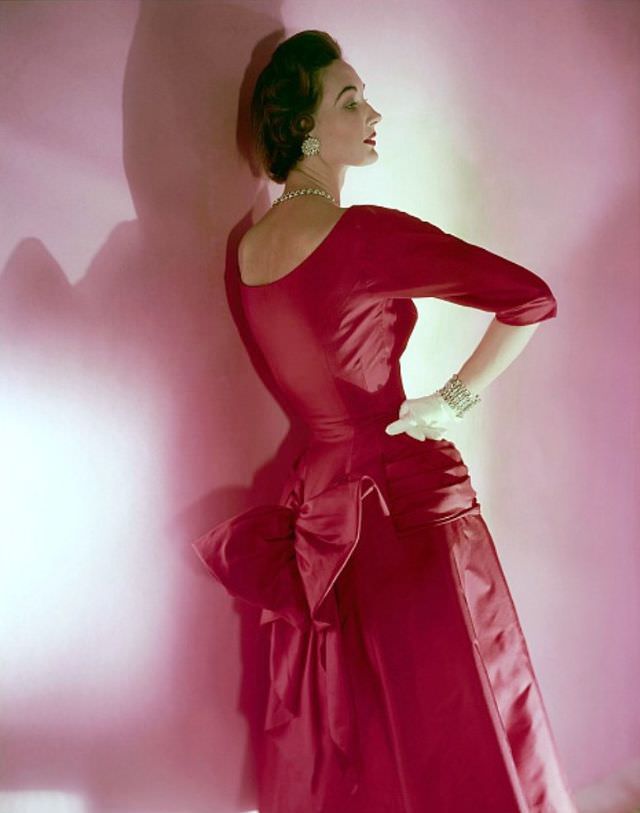
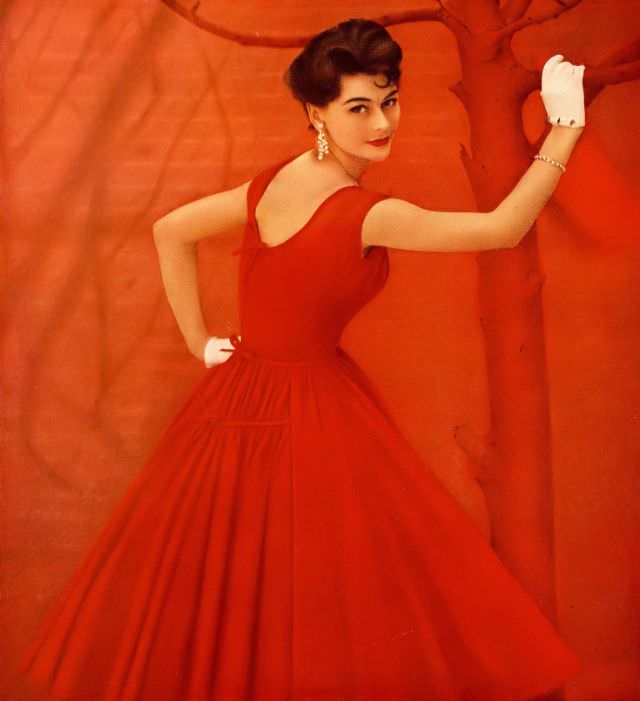
Evelyn Tripp in a red silk twill dress with a bustle-bow by Mollie Parnis, rhinestone jewellery by Bogoff, Vogue, November 15, 1953
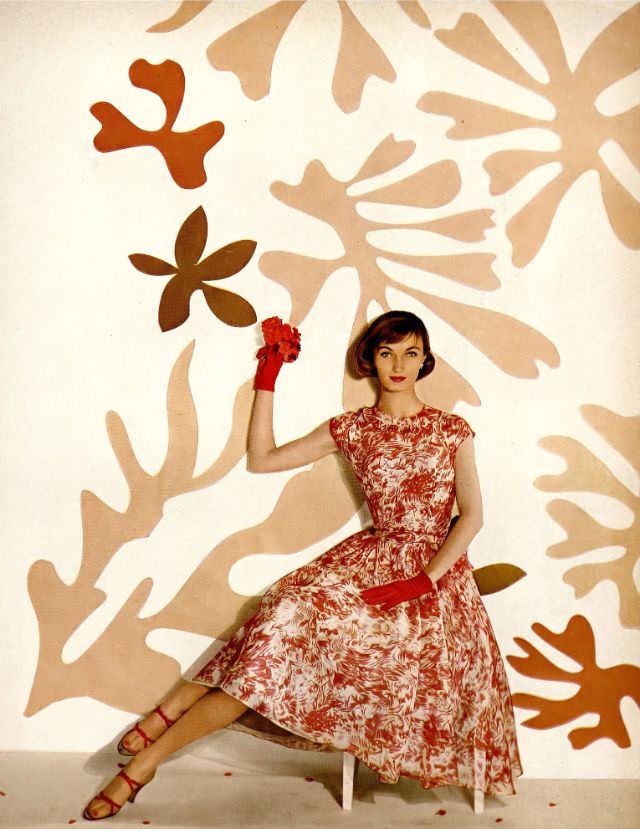
Kathy Dennis in dress by Mollie Parnis, background by Marcel Vertés, Horst, 1953
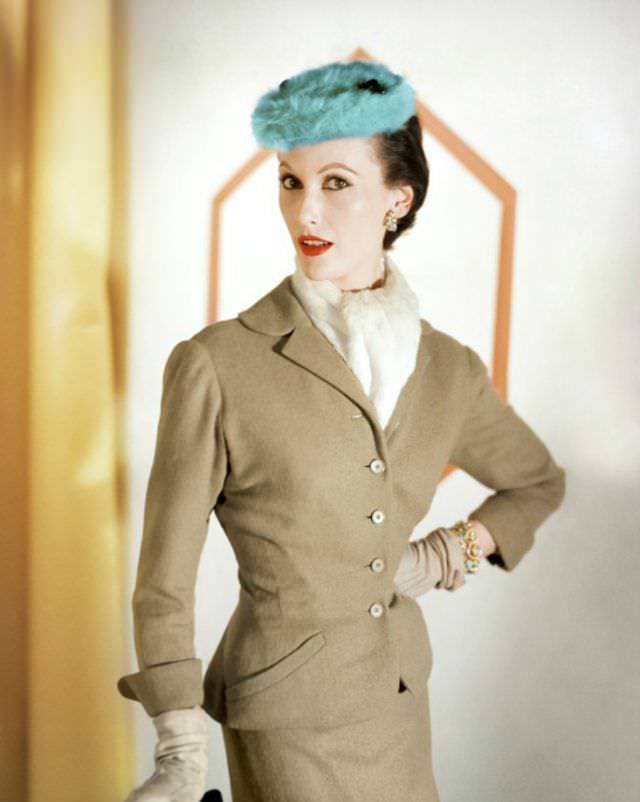
Mary Jane Russell in a camel wool suit by Mollie Parnis and a fur turquoise hat by Emme, 1953
By the mid-1950s, her work was appearing across every major fashion season. She moved fluidly between day and eveningwear, designing floral print silk twill jackets for spring and sheer organdy print gowns over taffeta for summer. The variety was intentional — Parnis wanted her customer’s wardrobe to be complete.
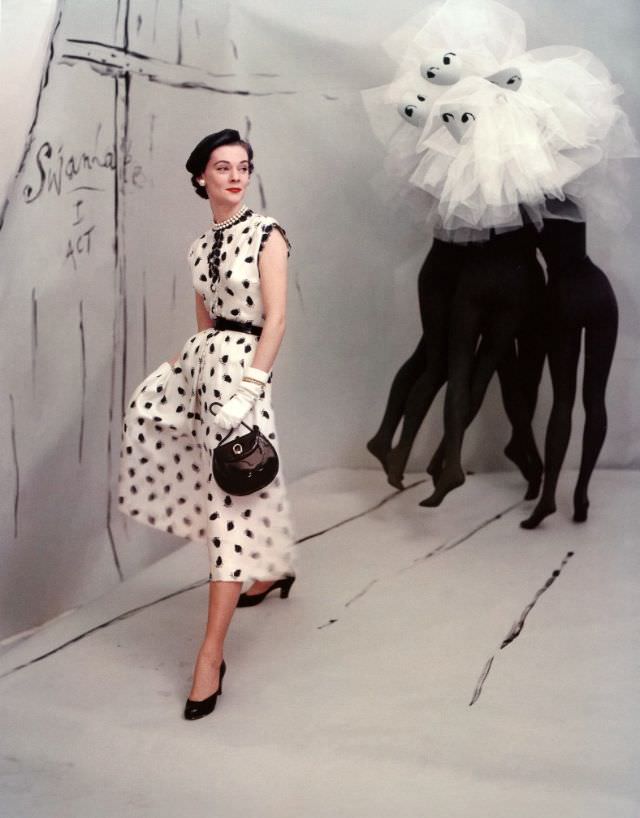
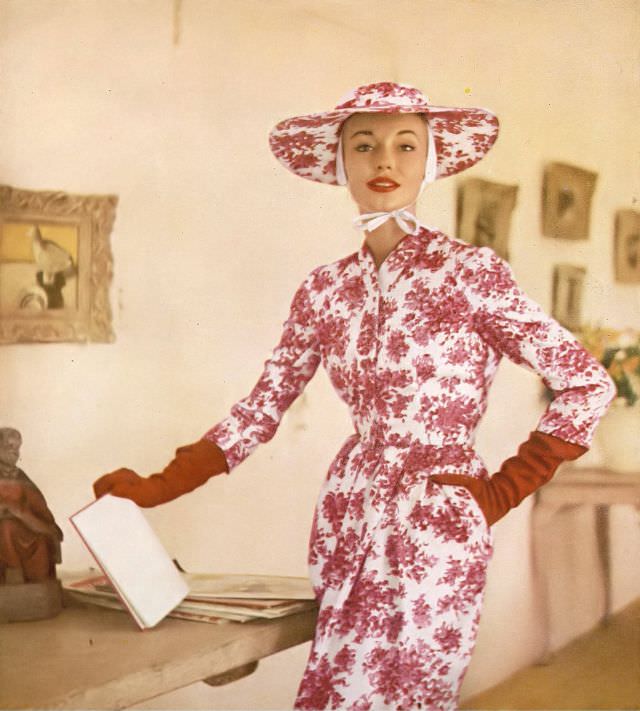
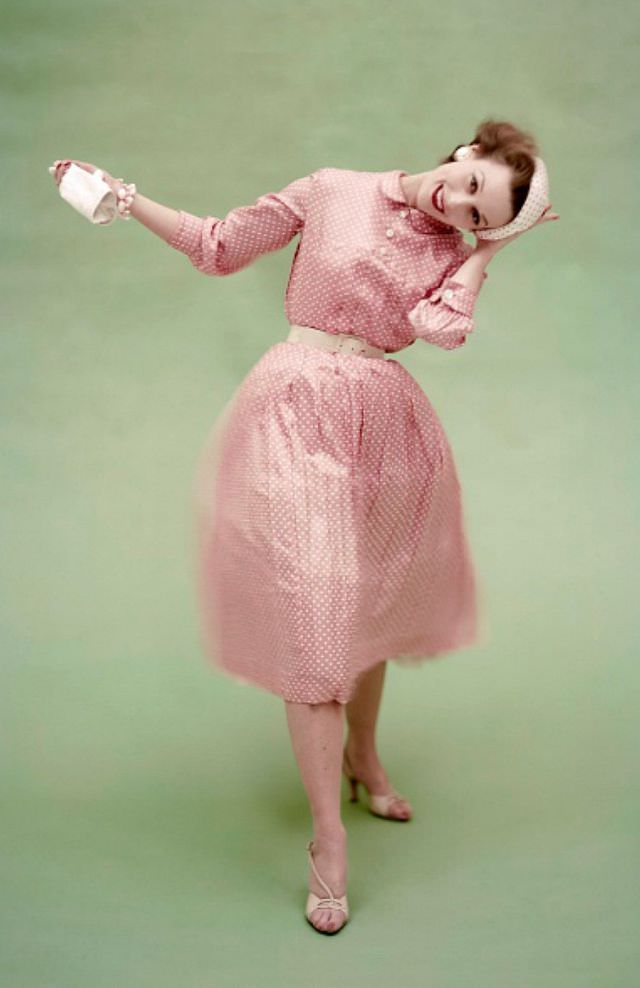
Evelyn Tripp in lovely summer dress of sheer organdy print over taffeta by Mollie Parnis, shoes by De Liso Debs, Harper’s Bazaar, May 1955Liz Pringle in floral print silk twill dress and jacket by Mollie Parnis, baby cap with same print cartwheel by Emme, April 1955Model in a pink with white polka dot silk surah dress by Mollie Parnis and reverse dot beret, Vogue, March 1, 1955
Society women, celebrities, and First Ladies turned to Parnis throughout the late 1950s and into the 1960s. Jacqueline Kennedy was among those who wore her designs. This was not fashion for the masses — it was fashion for women who moved in rooms where what you wore carried real weight. Parnis met that expectation consistently.
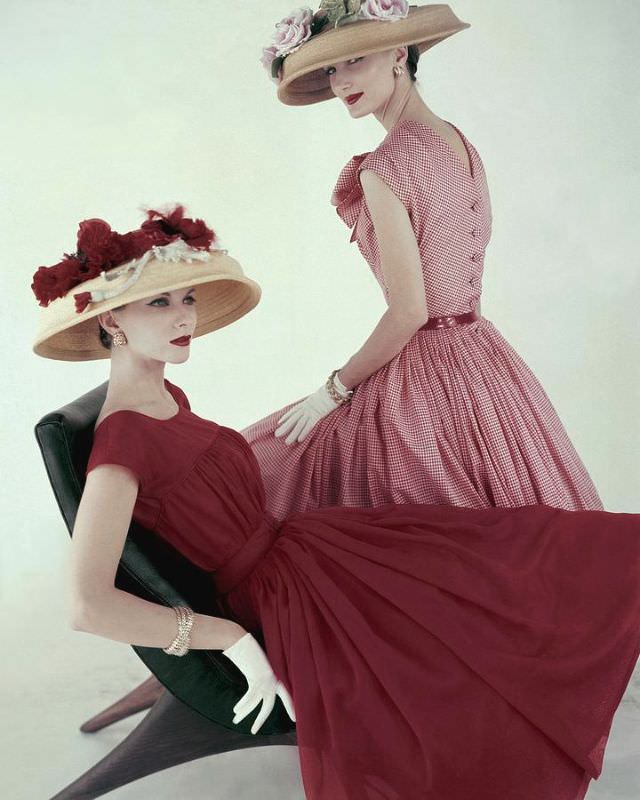
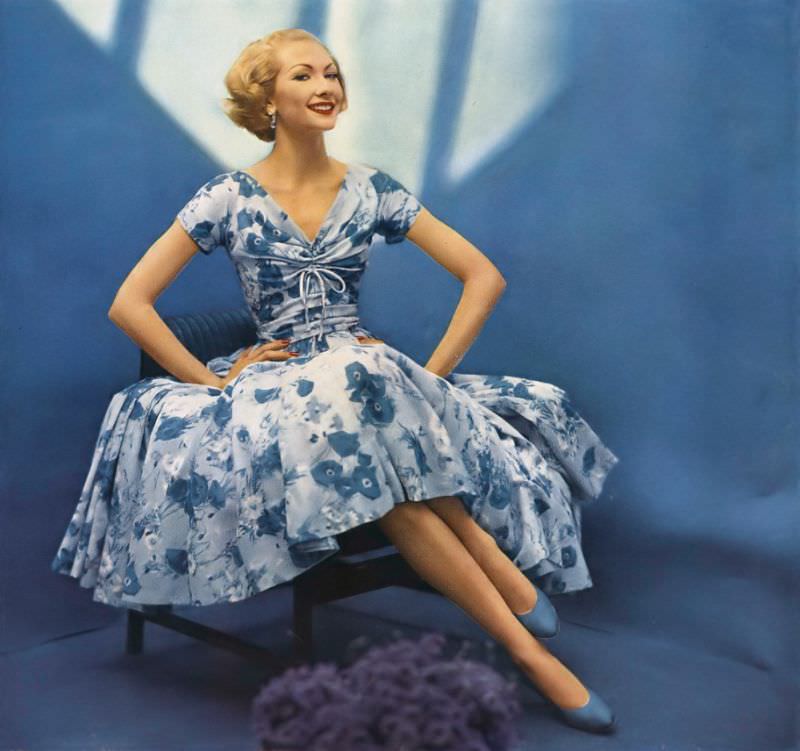
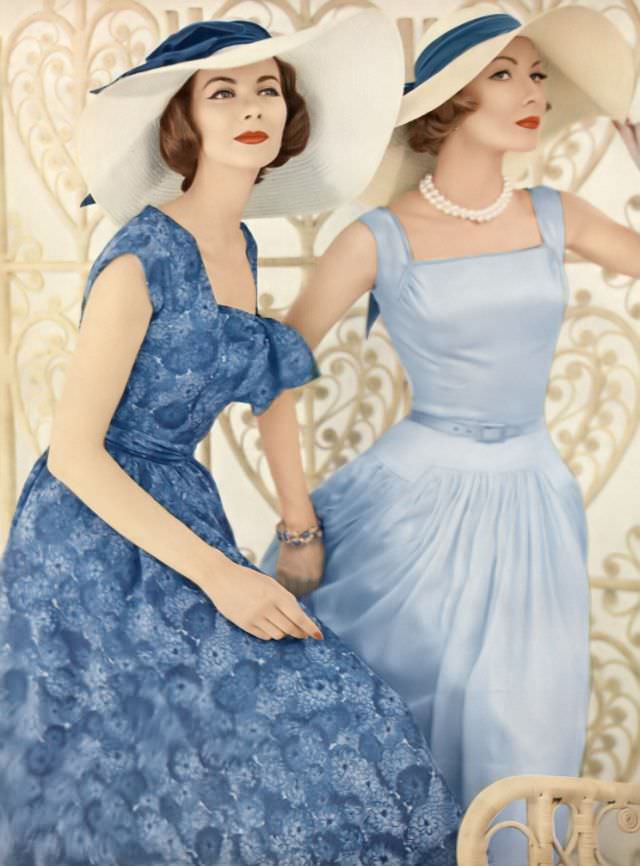
Carmen Dell’ Orefice in very pretty dress of black piqué swirling out from a camisole bodice by Mollie Parnis, diamond brooch and ring by Harry Winston, 1956Evelyn Tripp and Joan Friedman in dresses by Mollie Parnis and flowered hats by Adolfo of Emme, Vogue, April 15, 1956Jessica Ford in blue floral print Wamsutta Supervoile dress by Mollie Parnis, Wamsutta fabric ad, Vogue, December 1, 1956Joan Friedman and Jessica Ford in pretty thin-as-air cotton shiffon dresses by Mollie Parnis, hats by Emme, December 1, 1956
Her designs also appeared in fabric industry advertisements, a sign that textile manufacturers saw the Parnis name as a selling point in itself. Wamsutta, one of the leading American fabric producers, featured her dresses in their Vogue ads during 1956. The association worked both ways — her reputation elevated the fabric, and the fabric’s quality reinforced her standards.
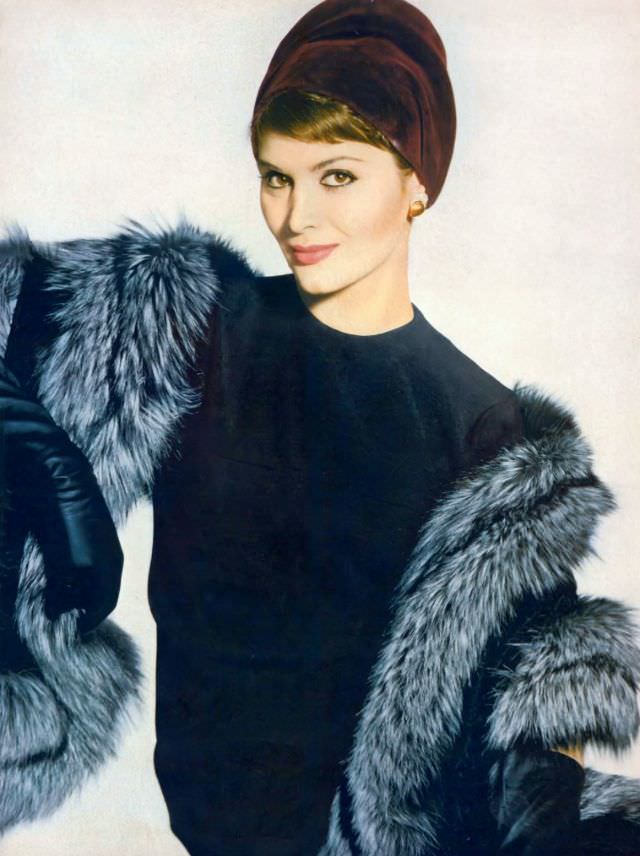
Sunny Harnett in silk printed sheath with short bolero by Mollie Parnis, Vogue, 1956Anne Gunning in vibrant red Pima cotton voile dress by Mollie Parnis, Harper’s Bazaar, May 1957Isabella Albonico in black worsted jersey dress by Mollie Parnis, a raisin-colored velours hat by Sally Victor, and stole of black-dyed Russian broadtail lamb and Canadian fox by Fredrica, September 15, 1958
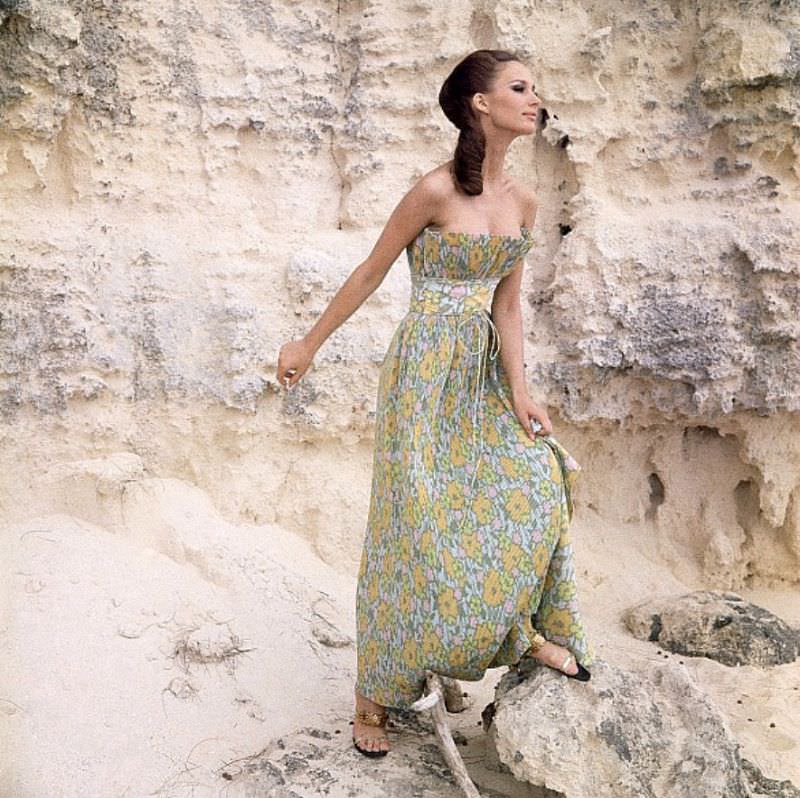
As the 1960s arrived, Parnis adapted without losing her core identity. Her silhouettes shifted slightly — skirts grew shorter, cuts became cleaner — but her commitment to fine materials never wavered. Liberty of London silk, sky-blue wool tweed, brown linen, pale chiffon with ostrich-feather fringing: the fabrics remained exceptional.
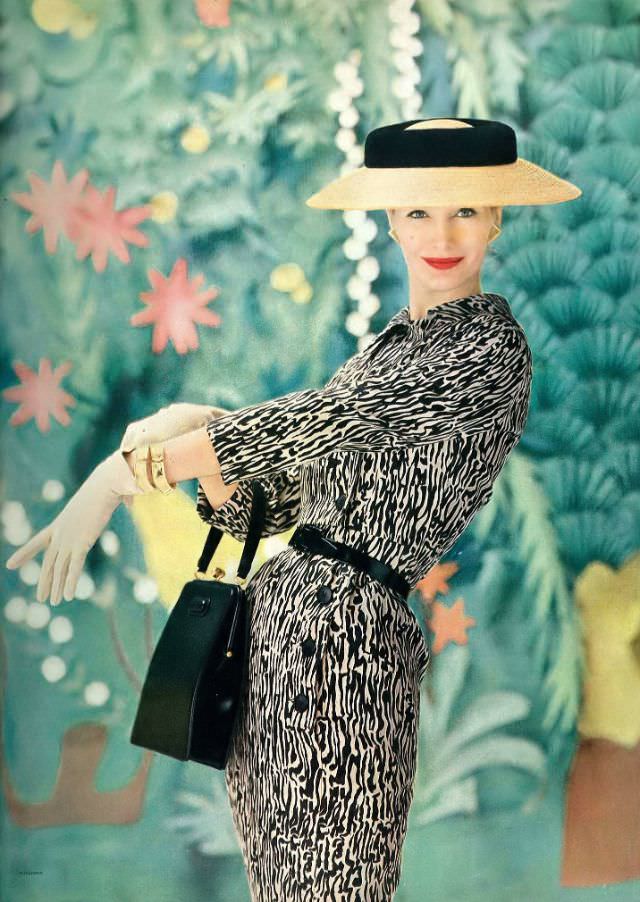
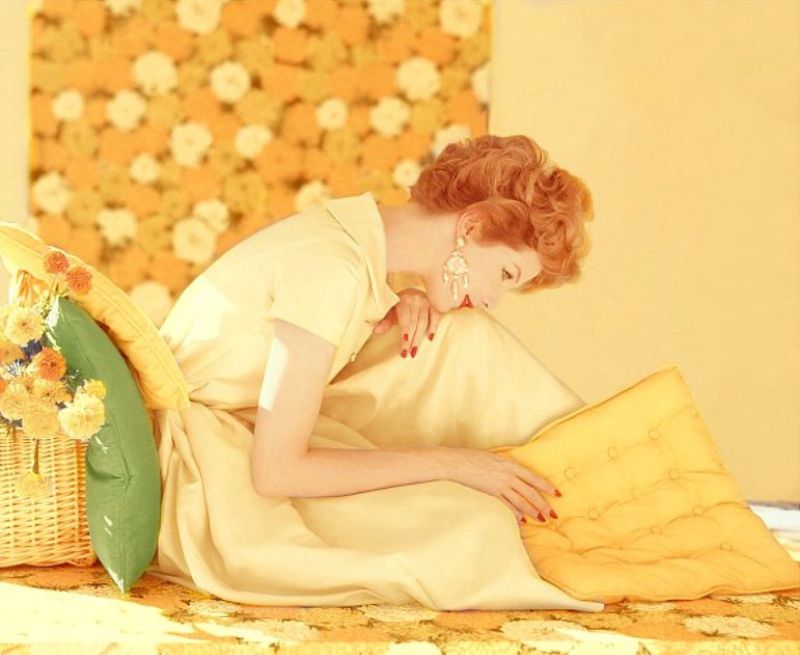
Model wearing yellow dress with rhinestone buttons, by Mollie Parnis, and earrings by Mosell, 1959
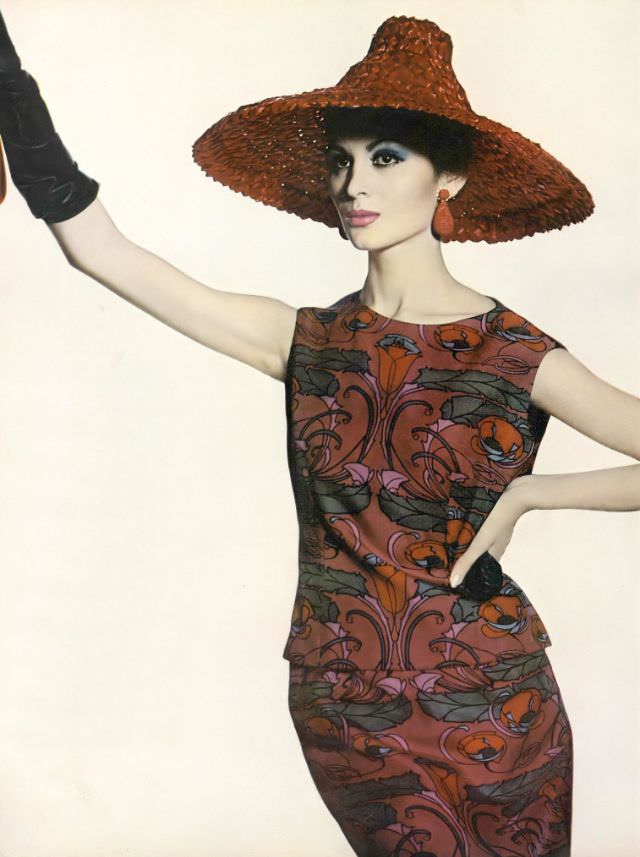
Isabella Albonico in boldly colored plum-red and blue print two-piece dress on Liberty of London silk by Mollie Parnis, red straw pagoda hat by Sally Victor, earrings by Hattie Carnegie, April 1, 1961
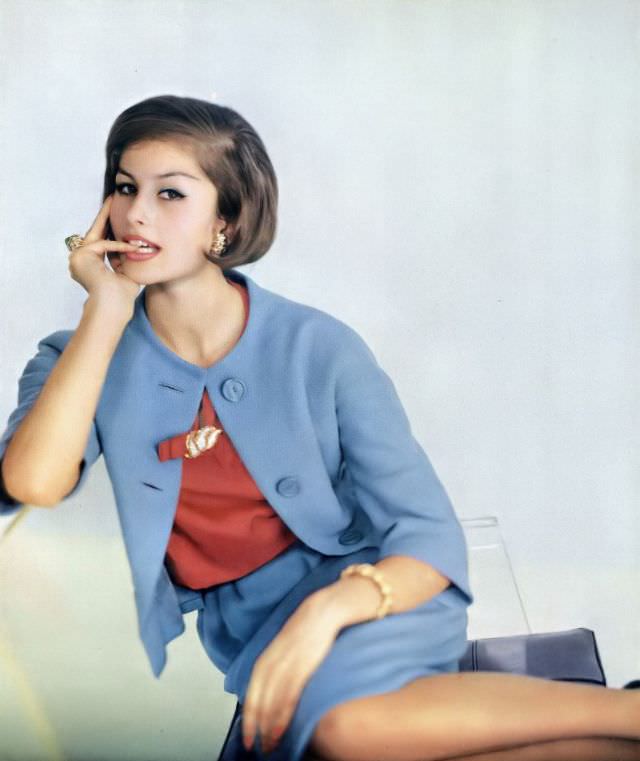
Tamara Nyman in sky-blue wool tweed suit with geranium-pink silk blouse by Mollie Parnis, jewelry by David Webb, January 1, 1961
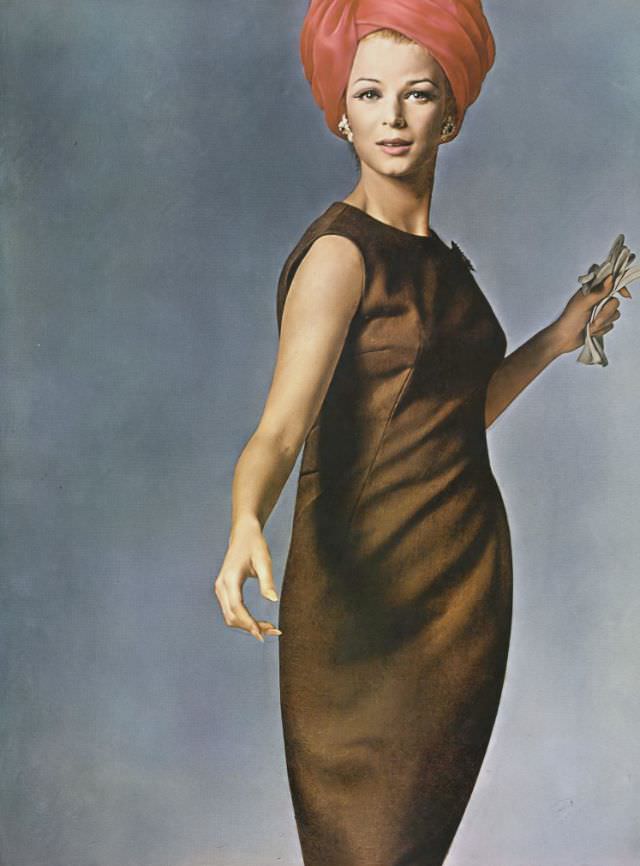
Anne de Zogheb in sleeveless brown linen skimmer, half-belted in back, by Mollie Parnis, earrings by Schlumberger of Tiffany’s, May 1, 1962
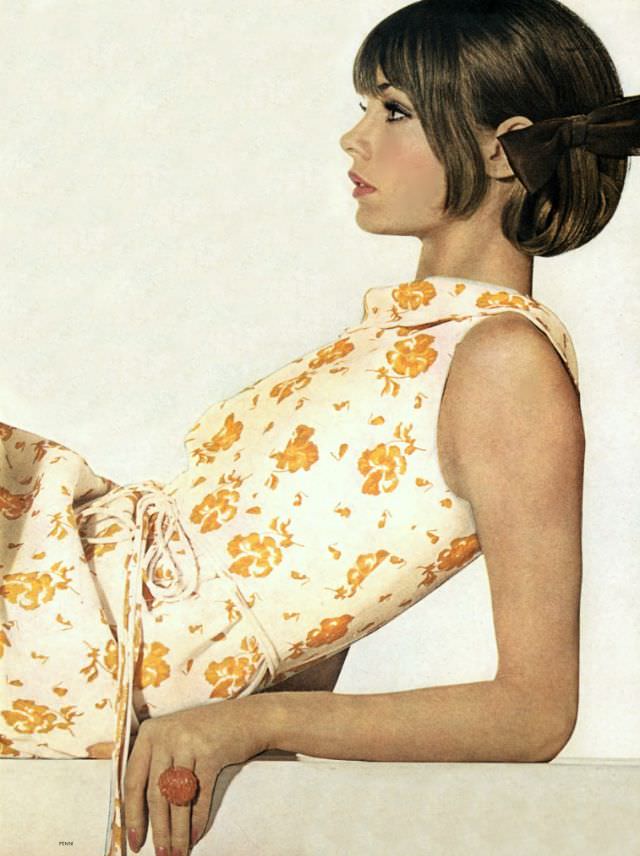
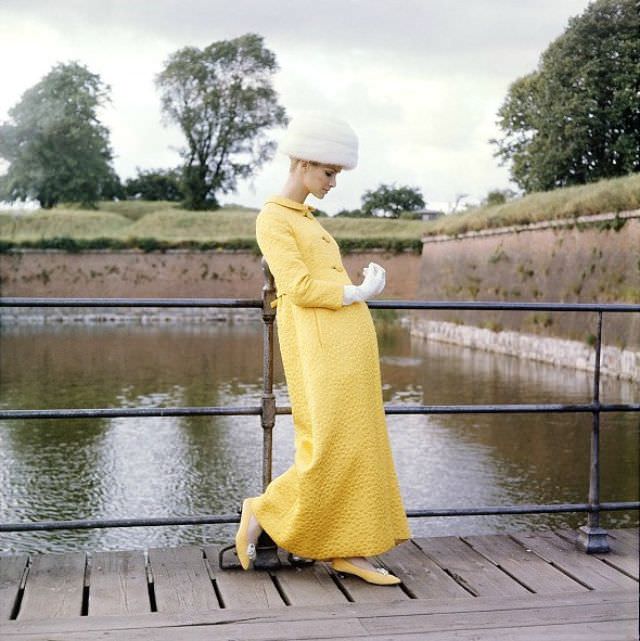
Jean Shrimpton, one of the defining faces of 1960s fashion, appeared in a Parnis white linen dress printed with spice-yellow pansies in 1964. That same year, Parnis sent an evening coat of yellow matelassé to be photographed in Denmark for Vogue. Her reach extended well beyond New York showrooms.
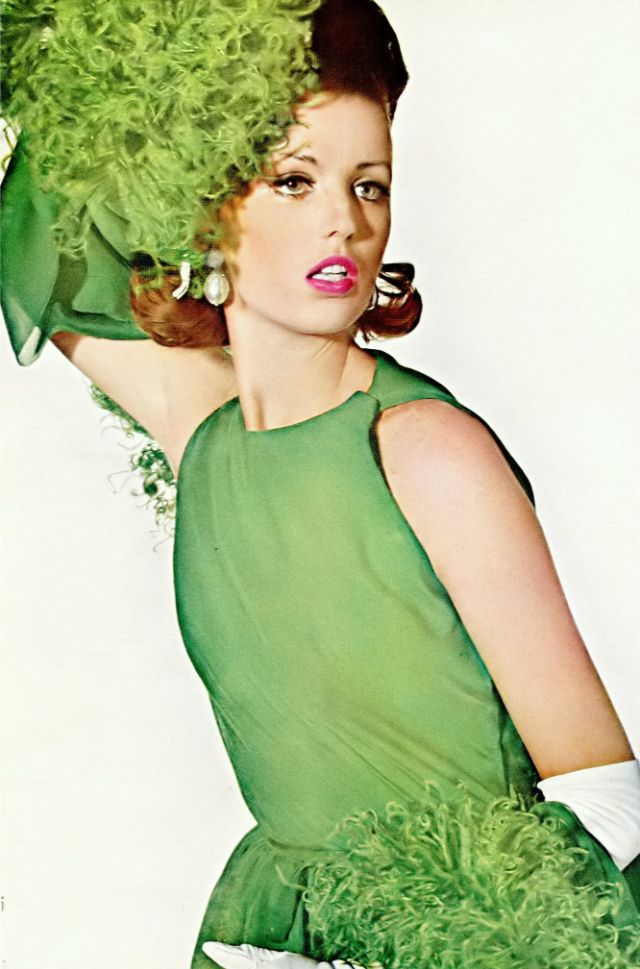
Dorothea in a bright green chiffon dress and stole fringed with ostrich feathers by Mollie Parnis, Vogue US, March 1963Brigitte Bauer in a pin-pleat evening with fan-pleated top in pale floral print by Mollie Parnis, Vogue, April 15, 1964Jean Shrimpton in white linen dress printed with spice-yellow pansies, with turtleneck and string tie at the waist by Mollie Parnis, KJL ring, June 1, 1964Model in an evening coat of yellow matelasse by Mollie Parnis, Denmark, Vogue, October 1, 1964
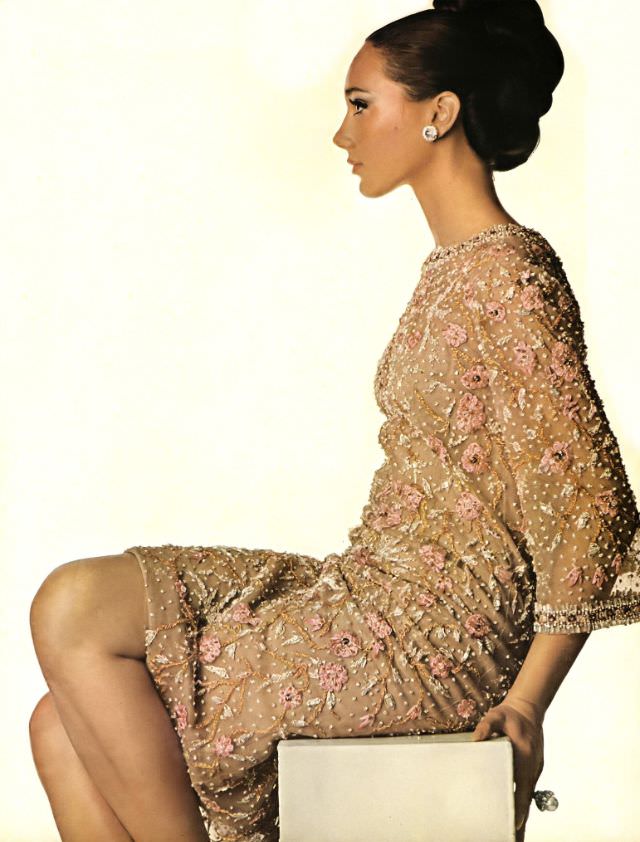
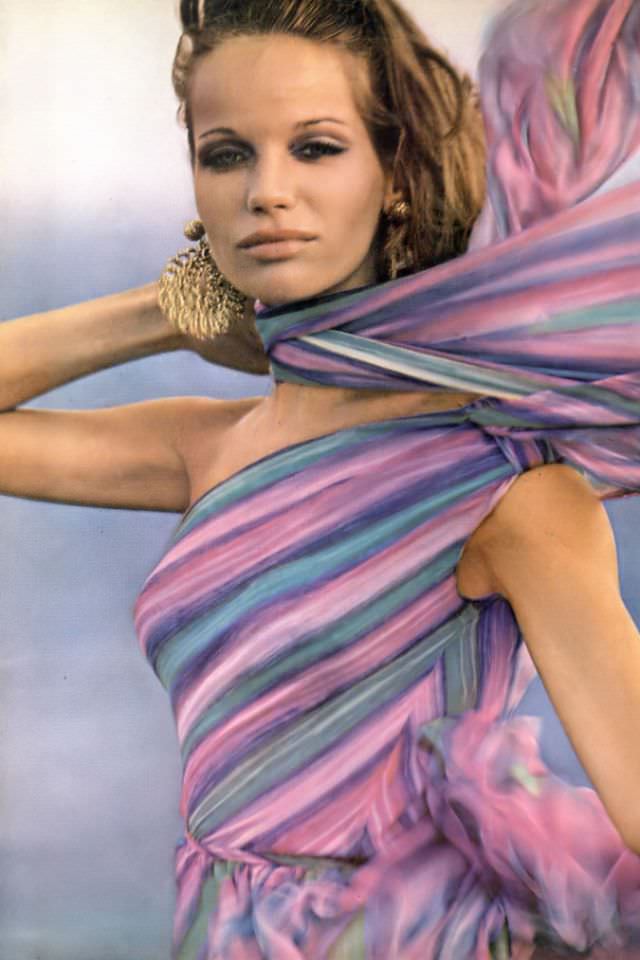
By the mid-to-late 1960s, Parnis was producing some of her most technically intricate work. A 1965 dress photographed on Marisa Berenson featured pale flowers embroidered in beads on a nude-colored net over crêpe, with bands of silver and gold at the neck and sleeves. Veruschka wore a silk chiffon gown that scarfed one shoulder and moved with the body. These were not simple constructions.
Marisa Berenson in dress of pale flowers embroidered in beads on a nude-colored net over crêpe with bands of silver and gold at the neck and sleeves by Mollie Parnis, September 1, 1965
Veruschka in beautiful colorful silk chiffon dress that scarfs one shoulder and swirls the body in a silken swirl, by Mollie Parnis, Vogue, April 1, 1965
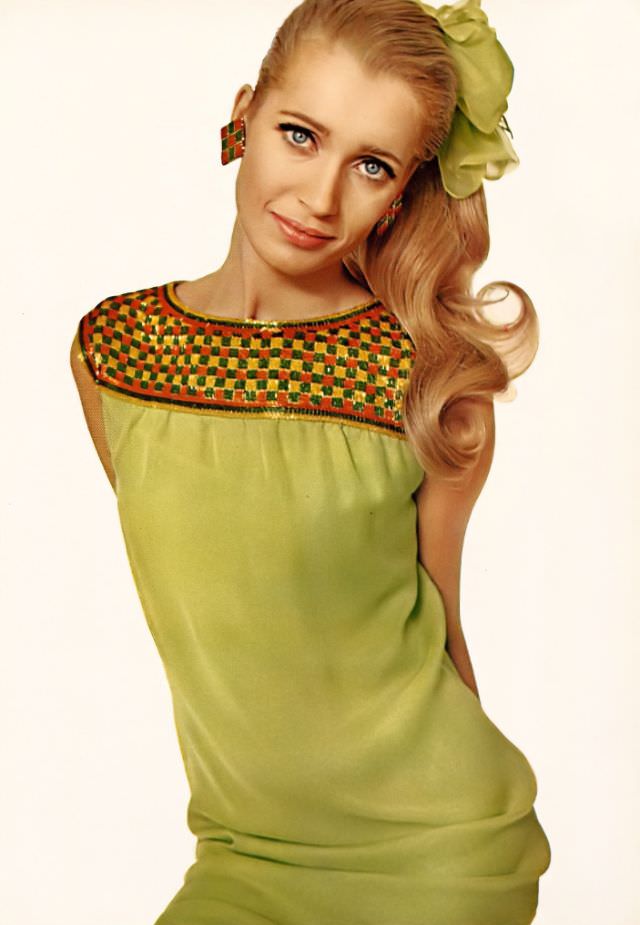
Isa Stoppi in celery-green short silk chiffon smock with sparkling orange and green beaded yoke by Mollie Parnis, earrings by Charles Elkaim, Harper’s Bazaar, February 1966
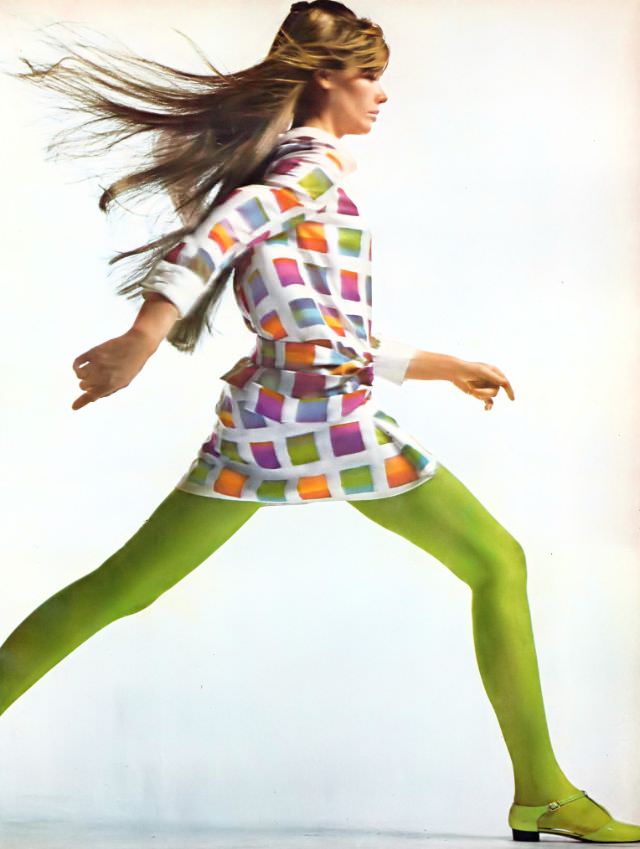
Her late-1960s work reflected the energy of the era without abandoning elegance. A 1967 silk belted shirtdress featured bright colors blocked like ships’ flags on a white field, worn by Françoise Hardy. That same year, a short lace dress woven in silver and gold, finished with a jeweled neck and scalloped hem, showed Parnis still commanding eveningwear at a high level. In 1970, she was inducted into the Fashion Hall of Fame — recognition that formalized what the industry had long known.
Françoise Hardy in silk belted shirtdress with bright colors blocked out like ships’ flags on a field of white by Mollie Parnis, shoes by Golo, Vogue, March 1, 1967
Gloria Friedrich in short, floaty dress of lace woven in silver and gold falling from a jeweled neck ending in a scalloped hem by Mollie Parnis, earrings by Schreiner, coiffure by Kenneth, September 1, 1967
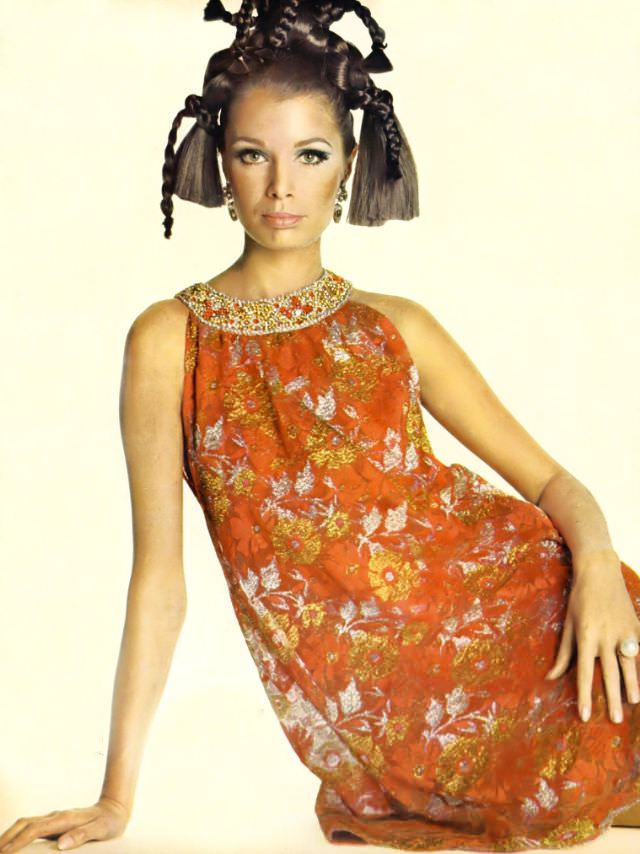
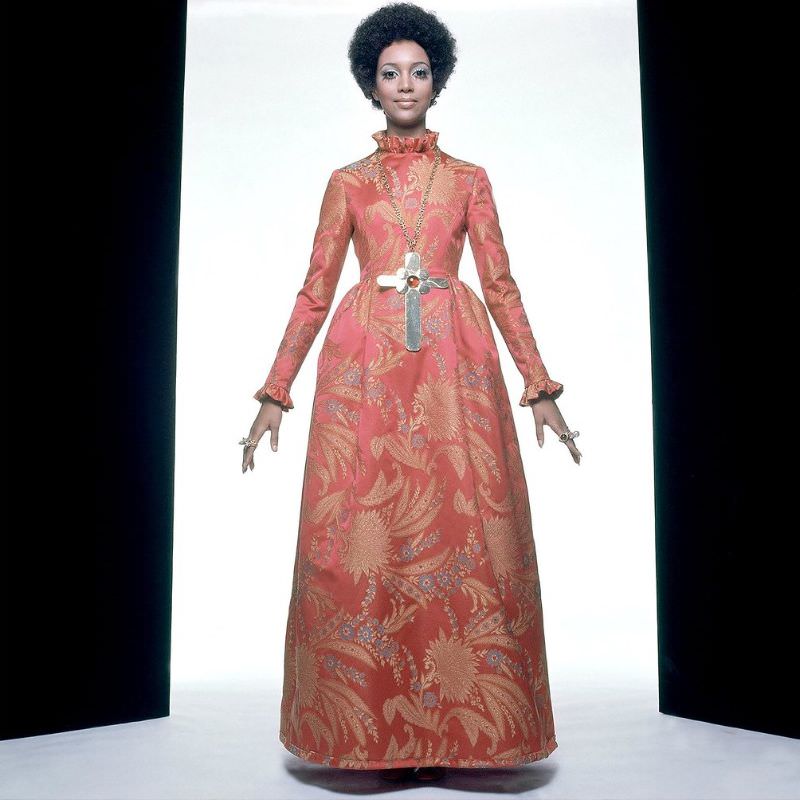
Charlene Dash in dress of richly woven fabric with the look of tapestry by Mollie Parnis, Vogue US, July 1969