Marianne Evelyn Gabriel Faithfull built one of the most dramatic careers in 1960s British music. She was a singer, songwriter, and actress — and her rise began almost by accident. In 1964, Rolling Stones manager Andrew Loog Oldham spotted her at a party in London and immediately recognized her talent. Within weeks, she was in a recording studio cutting her debut single, “As Tears Go By,” written by Mick Jagger and Keith Richards. She was just 17 years old.

“As Tears Go By” became a hit, and Faithfull’s profile rose quickly. Her early press appearances and promotional shoots captured a young woman stepping into the spotlight with a quiet confidence that cameras loved. Decca Records signed her, and the label wasted no time building her public image.


In 1964, she was photographed near her childhood home in Reading, a quiet town that felt worlds away from the London music scene she was quickly becoming part of. These early images show a teenager still close to her roots, even as her career was pulling her toward something much larger.


By the end of 1964, she was performing live across the UK. Backstage photos from this period show her in dressing rooms and wings, absorbing the world of touring that would define the next several years of her life.

In 1965, her personal life made headlines when she became engaged to art student John Dunbar. She was 18 at the time, and the press took notice. The Daily Mail ran a feature on the engagement, and photographers captured her for multiple newspaper articles around the announcement.


Her television appearances in 1965 kept her firmly in the public eye. She performed on BBC’s music program “Gadzooks!” in June of that year and appeared on the popular show “Ready Steady Go,” both of which broadcast her music to mass audiences across Britain.


Photographers frequently sought her out during this period. One outtake from 1965 placed her above the rooftops of London — a fitting image for someone who had climbed so fast. She also visited Churchill College in Cambridge around this time, a setting that spoke to the intellectual world she moved through beyond the stage.


By 1966, Faithfull was an international figure. She traveled through Belgium, Amsterdam, and appeared on French television. Photographer John ‘Hoppy’ Hopkins shot one of the most recognized portraits of her that year, commissioned by Melody Maker magazine for a photo series.


In January 1967, Faithfull traveled to San Remo, Italy, to perform at the San Remo Song Festival. Photos from backstage show her opening fan mail between performances — a candid glimpse at the volume of public attention she was receiving at the time.


Back in London, photographers captured her at home in 1967 — both in her flat in Lennox Gardens and in other domestic settings. These images offer a quieter side of Faithfull, away from the stage and the press circuit.


1967 also marked her expansion into film. She was cast in “The Girl On A Motorcycle,” a role that required her to carry a film largely on her own screen presence. Promotional shoots and on-set photos from the production show her in full costume, including the film’s signature leather-clad imagery. The film was released in 1968.


Also in 1967, she traveled to Heidelberg, Germany, and was photographed at Heathrow Airport in the late part of the year — images that reflect the near-constant movement that defined life as a working musician and actress during the decade.


In 1968, she entered the studio with The Rolling Stones to record backup vocals for their album “Beggars Banquet.” By this point, her relationship with Mick Jagger was well established, and her involvement with the band extended well beyond a personal connection — she was contributing directly to their music.


The late 1960s brought serious trouble. In May 1969, police raided the home she shared with Mick Jagger at Cheyne Walk. The following day, she walked into court to face the consequences of that raid — a moment captured by press photographers. The image is striking: poised under intense public scrutiny.

Also in 1969, she went into rehearsals for a stage production of “Hamlet,” demonstrating that her ambitions extended beyond pop music and film into serious theater. That same year, while in Sydney, Australia, she was hospitalized after an accidental overdose of sleeping pills that left her in a coma for a week. She walked out of Mount St. Margaret Hospital upon her recovery, where photographers were waiting.


Throughout the decade, Faithfull and Mick Jagger were one of the most photographed couples in British popular culture. Their appearances together documented a relationship that sat at the center of the era’s rock and roll scene.


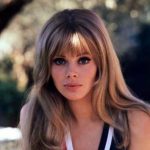
The photographs below round out this visual record of Faithfull during the 1960s — portraits, candid shots, and stills that together document one of the decade’s most compelling figures.