Born Germaine Emilie Krebs in Paris in 1903, Madame Grès built one of the most distinctive careers in the history of French fashion. She was not a designer who followed trends. She created her own visual language — one built on draped fabric, sculptural pleats, and an almost architectural understanding of the human body. Her work stood apart from everything around it, and Paris took notice quickly.
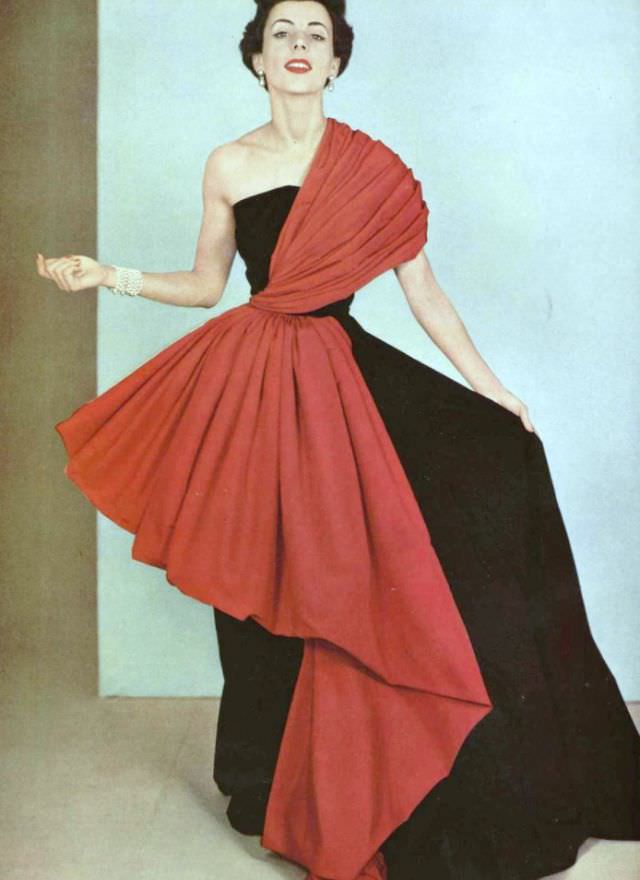
Model in intricately draped red faille on black faille gown by Grès, 1950
Grès began her career in the late 1920s, working at the couture houses of Callot Sœurs and Lanvin. These early years sharpened her technical skills and gave her direct exposure to the standards of Parisian haute couture. By 1942, she had opened her own fashion house, and her reputation grew fast. Clients and critics alike recognized that something genuinely new was happening in her atelier.
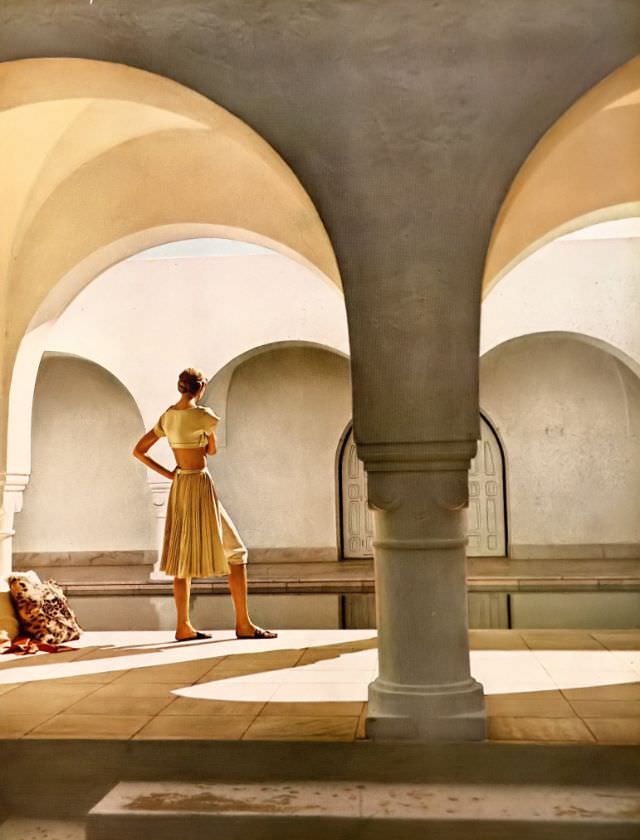
Natalie Paine in bleached beige high tiny top and ingenious combination of skirt and knickers, the one joined inseparably to the other, by Grès, June 1950
Her collections were defined by fluid, elegant lines and an expert command of luxurious materials — silk, chiffon, and velvet among them. But her true signature was her use of pleating. She manipulated pleats to create dramatic, sculptural silhouettes that seemed to move with the body rather than simply hang from it. Each garment required enormous labor and precision to produce.
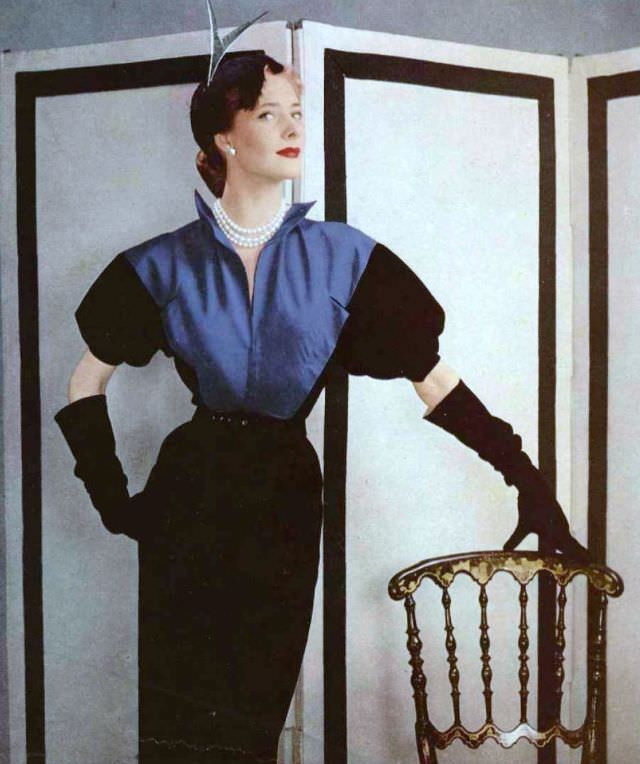
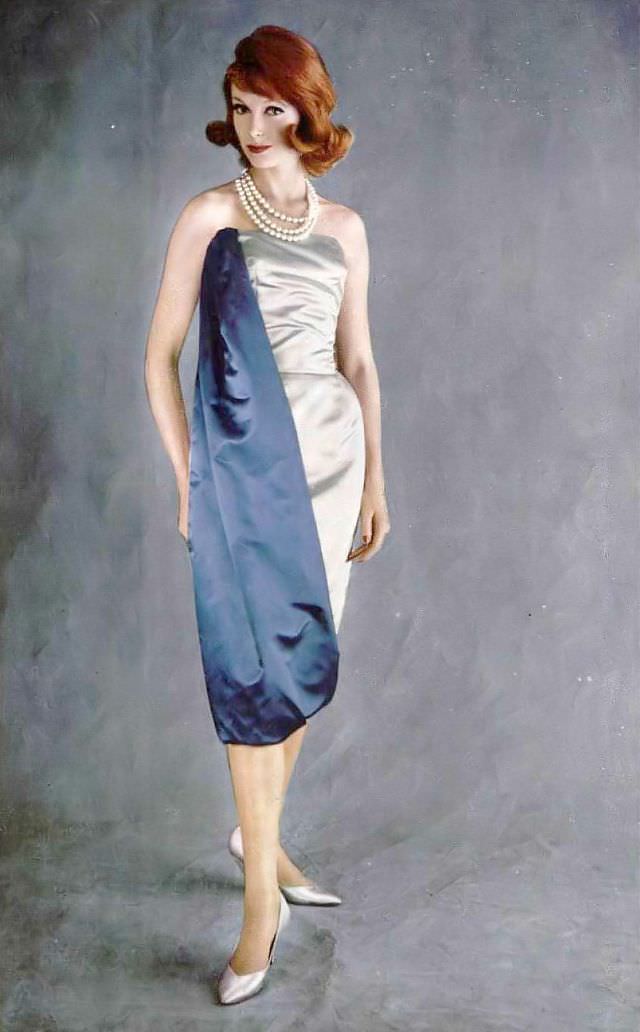
Model in black wool sheath dress, the bodice is of peacock blue faille, by Grès, 1951
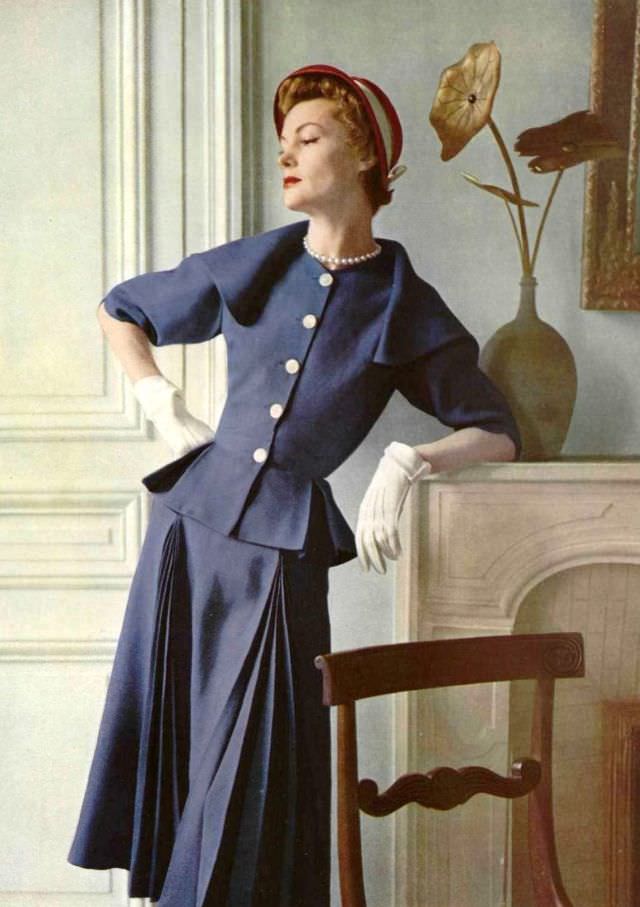
Model in blue linen two-piece, exquisite in its simplicity, by Grès, 1951
The range of Grès’ work was wide. She moved effortlessly between sleek daywear and elaborate evening gowns, between strict tailoring and flowing, goddess-like draping. Her pieces could be strikingly simple or breathtakingly complex — sometimes within the same garment.
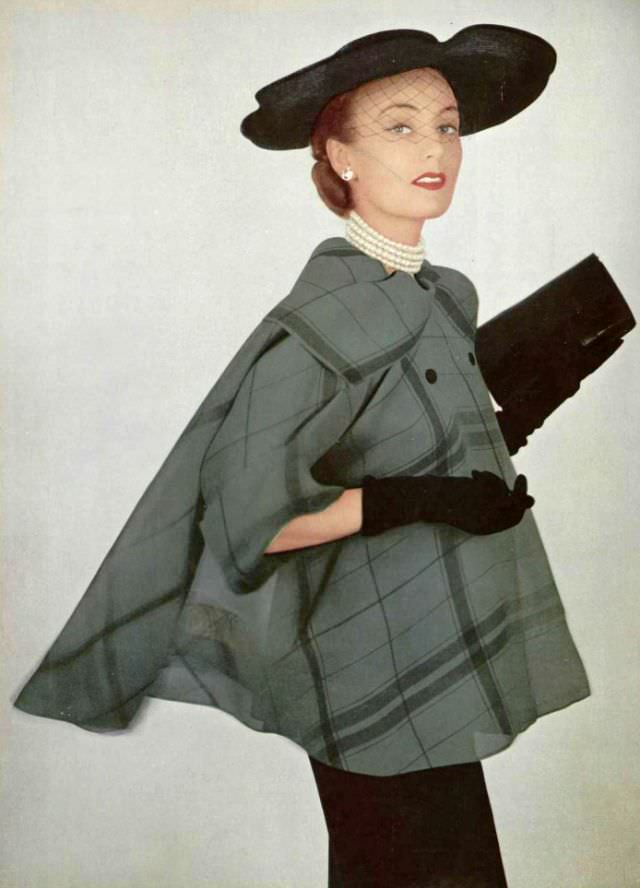
Model in figure-hugging black dress worn with light sheer organza plaid jacket by Grès, hat by Gilbert Orcel, 1951
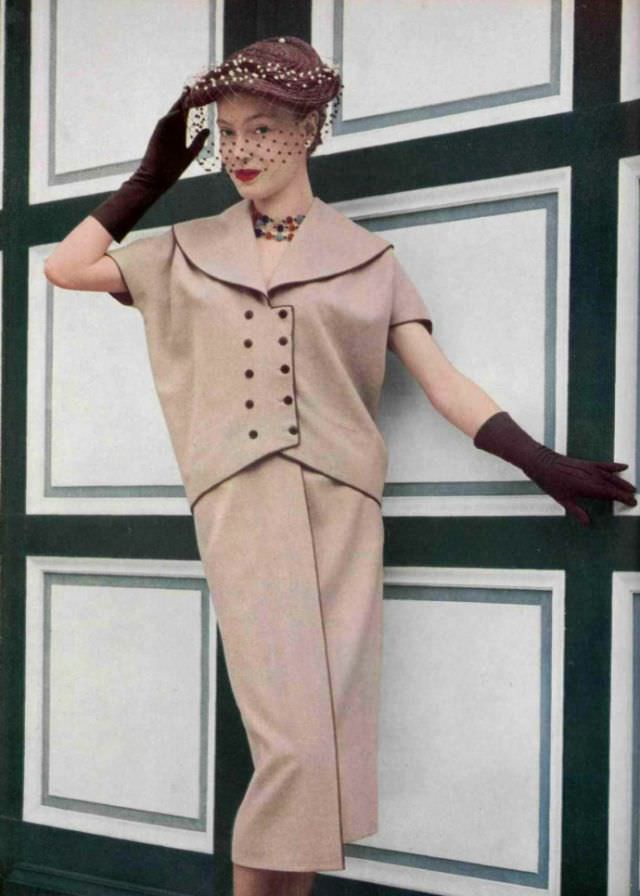
Anne Campion in dusty pink flannel two-piece by Grès, hat with voilette by Rose Valois, 1952
Publications like Vogue and Harper’s Bazaar regularly featured her designs throughout the 1950s. Her clients included Jacqueline Kennedy and Marlene Dietrich — women who moved in the highest public and cultural circles of the era. Beyond fashion, she also designed costumes for ballets and operas, applying the same principles of structure and movement to the stage.
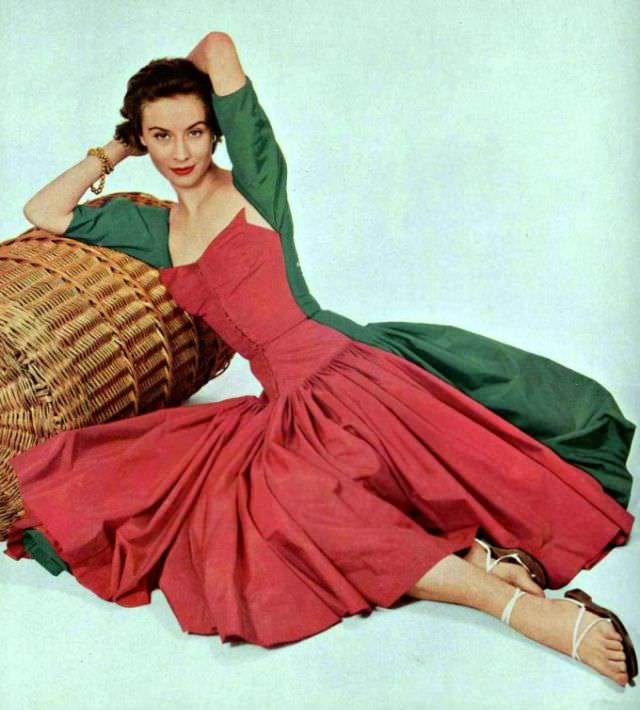
Gigi Terwalgne in a fun summer dress of two opposing colors by Grès, 1952
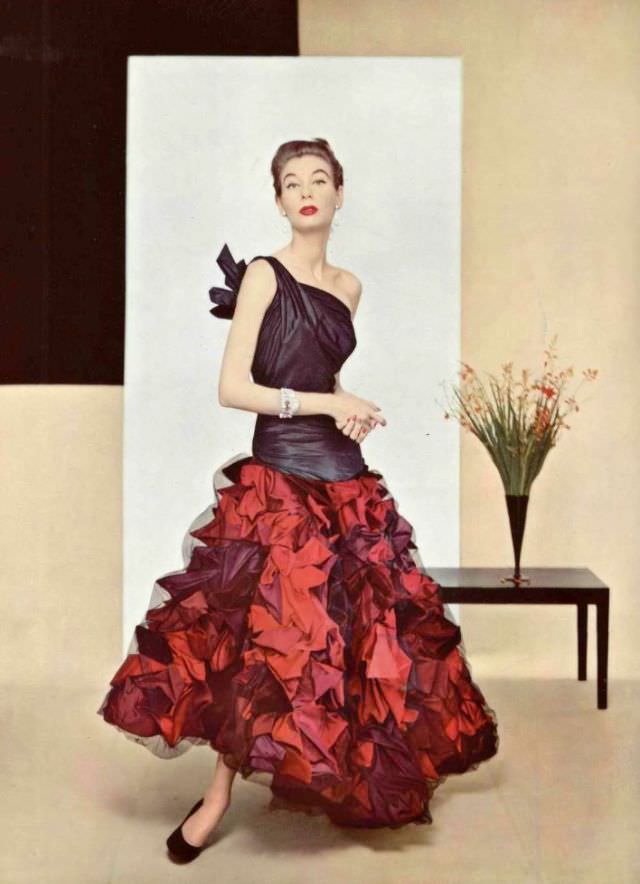
Model in evening gown of extraordinary work in taffeta, the elongated bodice has one shoulder knotted in back, skirt is made of shells in several tones covered with fine net of black tulle by Grès, 1952
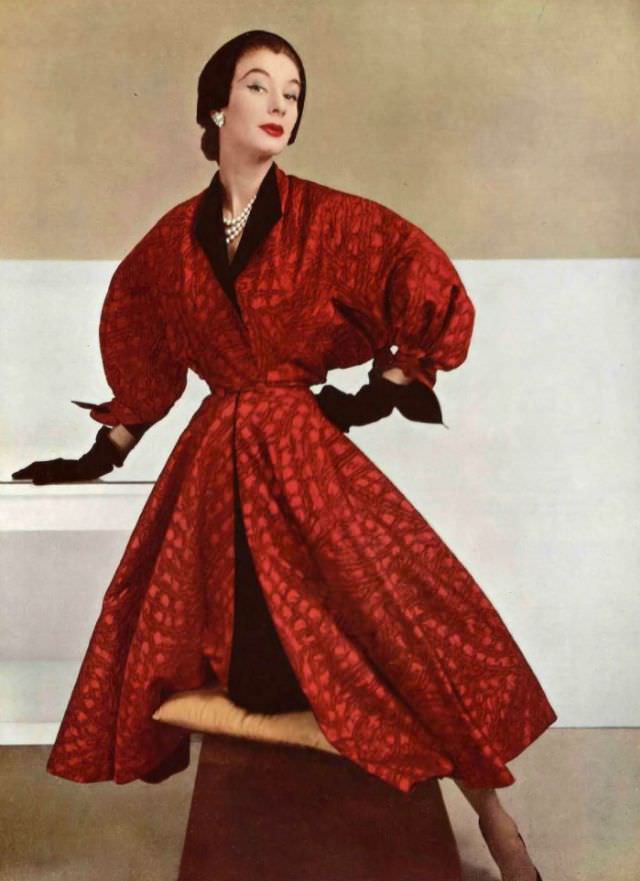
Model in red printed satin evening coat with full balloon sleeves, the collar and cuffs lined in black silk, two-button closure at the waist, 1952
Her evening wear from the early 1950s shows the full scope of her ambition. Taffeta gowns with knotted one-shoulder bodices, skirts constructed from layered shells of fabric covered in black tulle, silk satin coats with balloon sleeves — these were not safe choices. They were declarations.
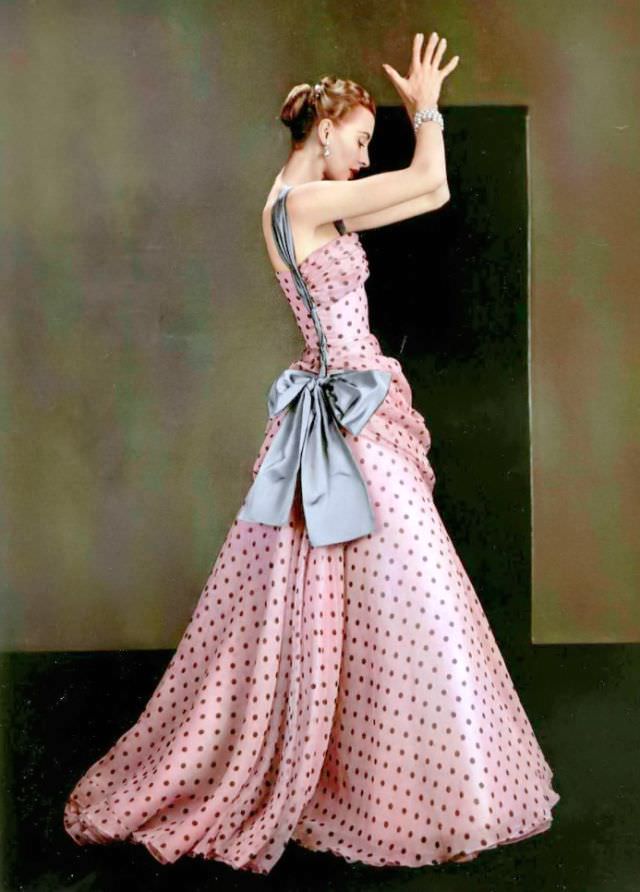
Marie-Thérèse is wearing pink organza dotted evening gown adorned with large grey satin bow by Grès, 1953
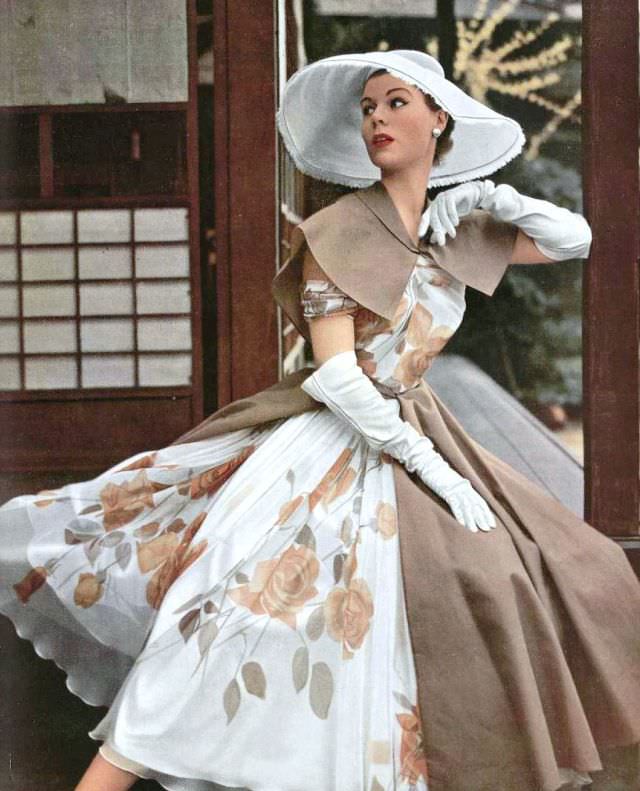
Stella in print mousseline and organdy manteau perfect for a garden party by Grès, 1953
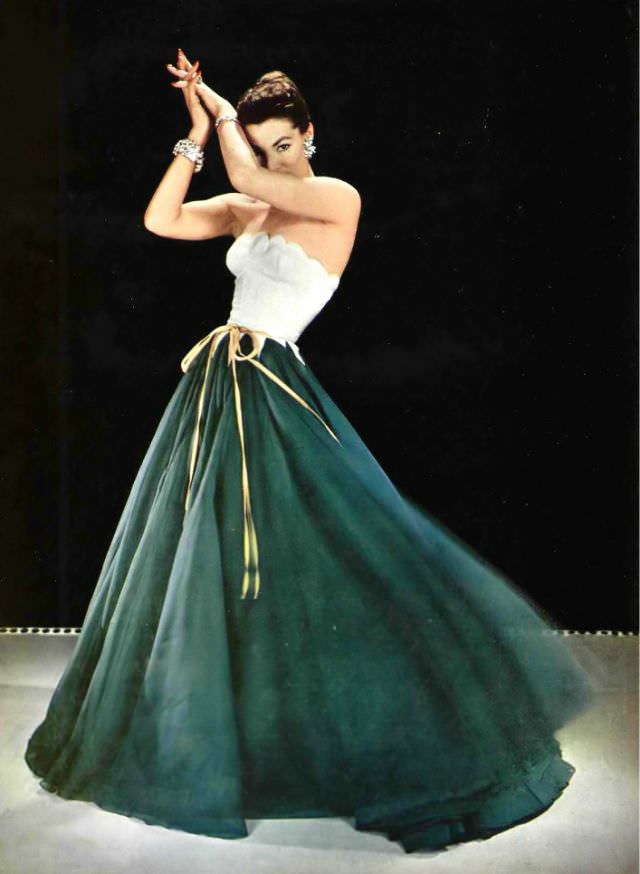
Lucky in evening gown, the skirt in two tones of silk organza, the bodice is scalloped on top and pointed below the waist, tied with gold ribbons, by Grès, 1954
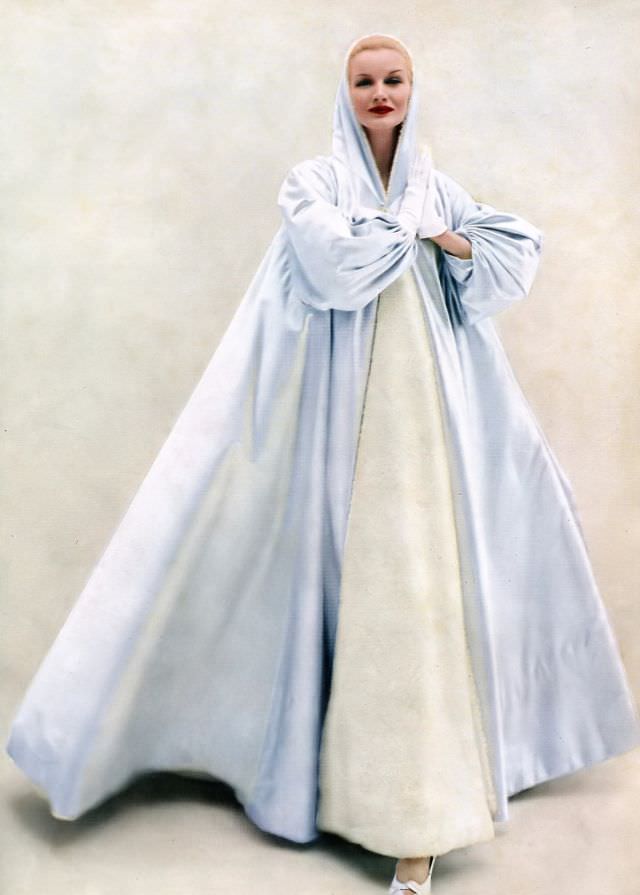
Sunny Hartnett in a billowing hooded evening coat of ice blue satin by Grès, 1954
By the mid-1950s, Grès had established herself as a master of evening wear. Her hooded coats, draped jersey gowns, and multi-toned silk organza skirts showed a designer in full command of her craft. Every seam, every fold served a purpose.
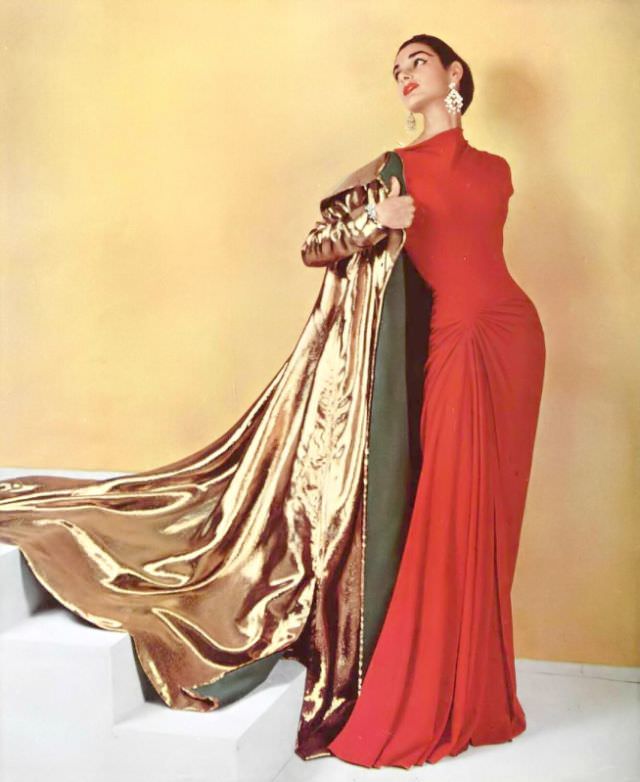
Jacky Mazel in figure-hugging coral silk-jersey evening dress worn with gold lamé evening coat by Grès, chandelier earrings by Scémama, 1955
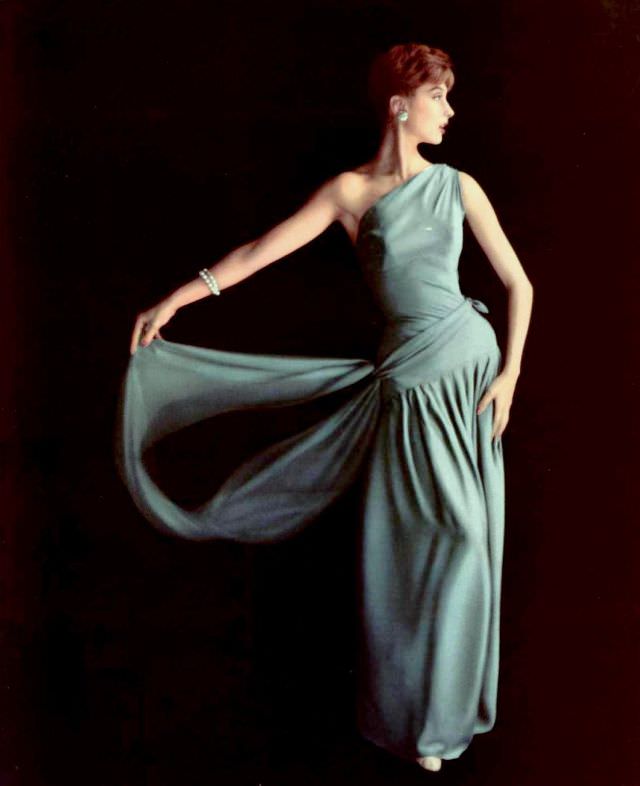
Marie-Hélène Arnaud in one-shoulder crêpe de chatillon evening gown by Grès, 1955
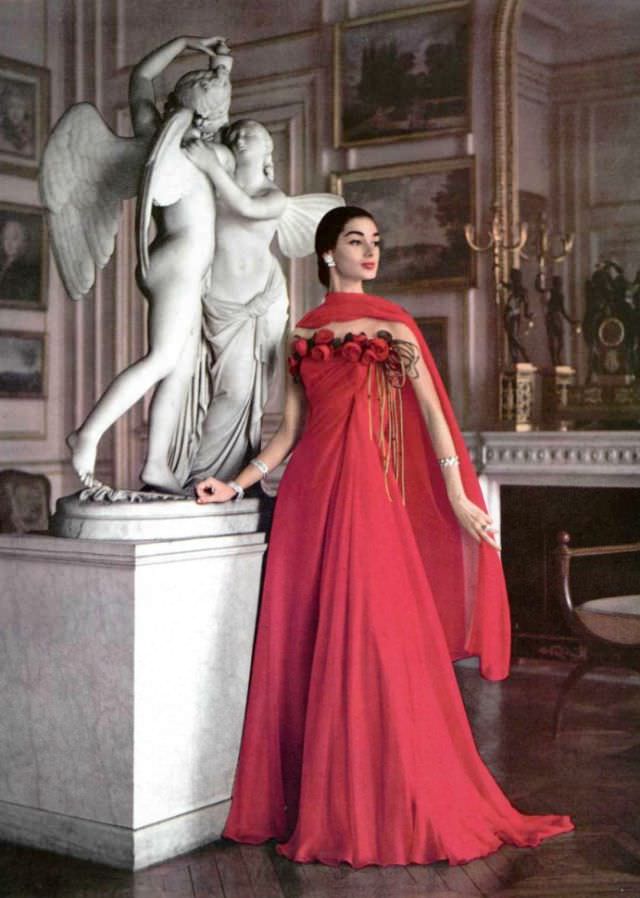
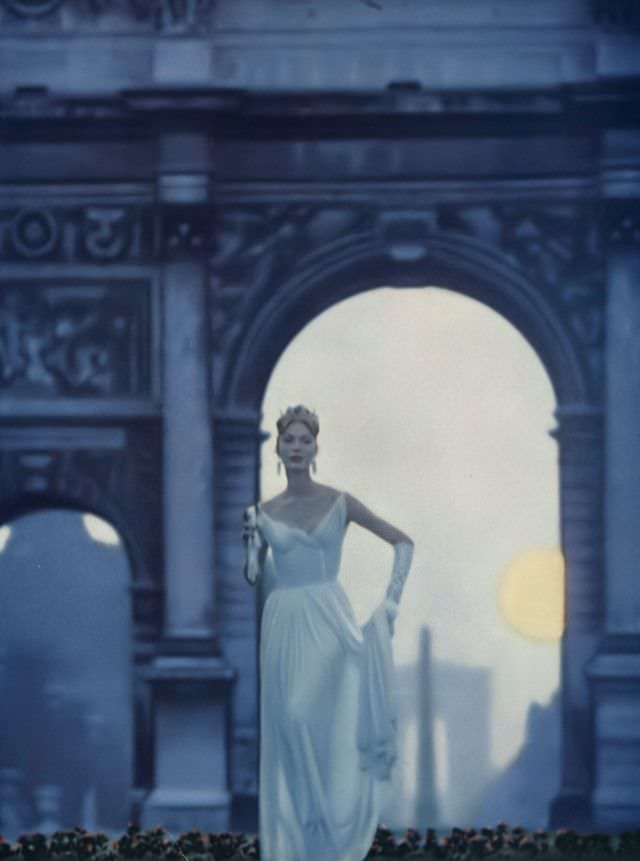
Jacky Mazel in fiery red chiffon gown, a row of roses borders the draped bodice, by Grès, jewelry by Boucheron, Paris, 1956
Color played a deliberate role in her collections. Fiery reds, cool blues, dusty pinks, and earthy neutrals all appeared across her work — each chosen to complement the structure of the garment rather than compete with it. A row of roses bordering a draped chiffon bodice was not decoration for its own sake. It was part of the architecture.
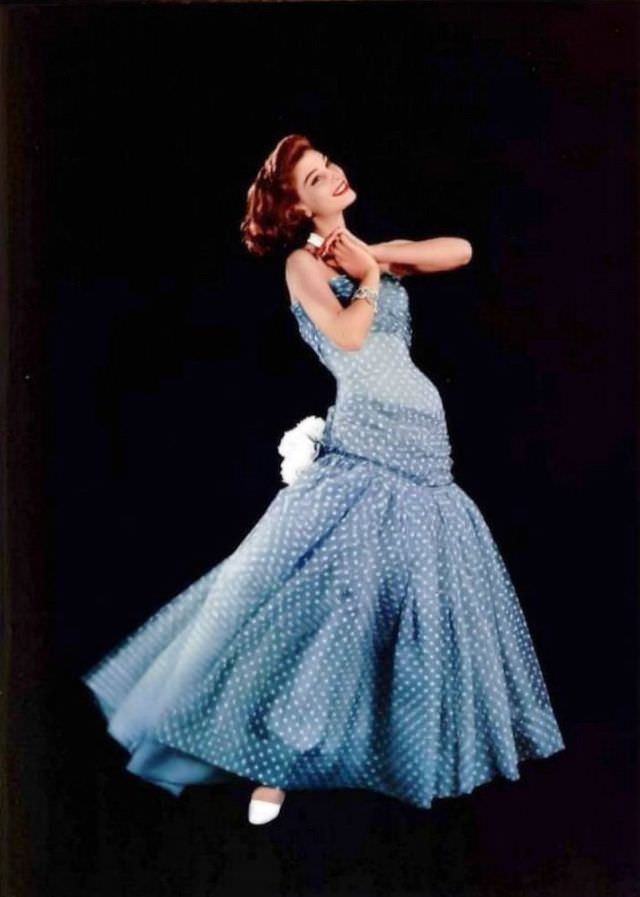
Marie-Helene Arnaud in a lovely dotted mousseline evening gown by Grès, L’Officiel, 1956
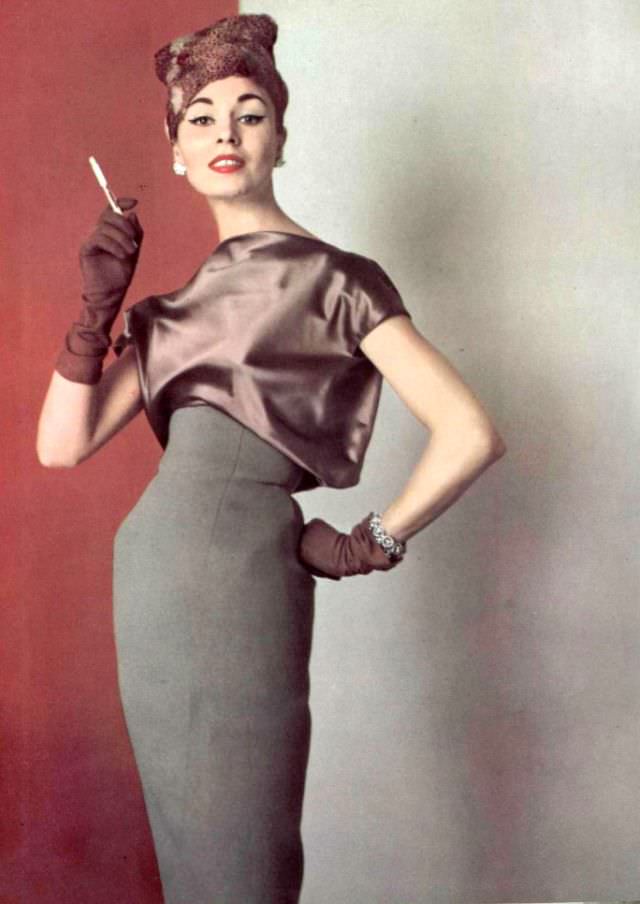
Model in elegant understated gray wool dress with satin blouson bodice by Grès, hat by Svend, 1956
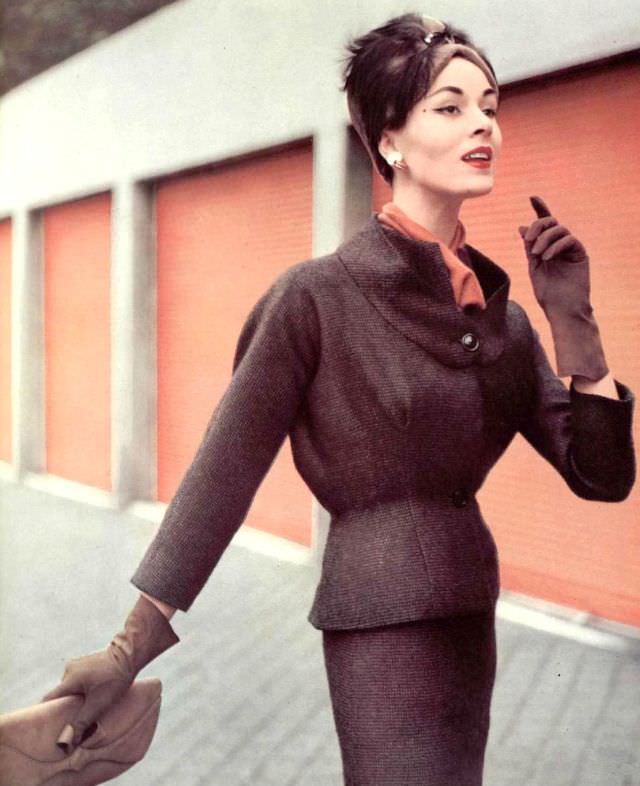
Model in fine wool checked suit, jacket has expanded bust and flexible back, worn over jersey blouse, by Grès, hat by Legroux, clutch by Muth, 1956
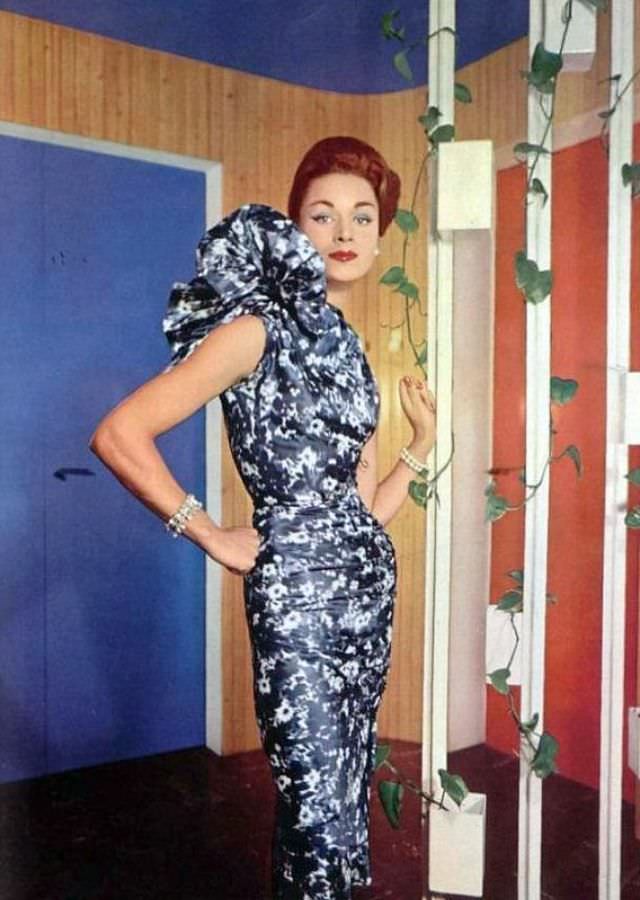
Elegant blue and white silk print dress with enormous coxcomb on one shoulder by Grès, photo by Philippe Pottier, L’Officiel, 1957
By 1957, her daywear had grown equally bold. Wool checked suits with expanded busts and flexible backs, silk print dresses with dramatic shoulder details, jersey dresses draped and gathered at the waist — her tailoring carried the same inventive energy as her evening collections.
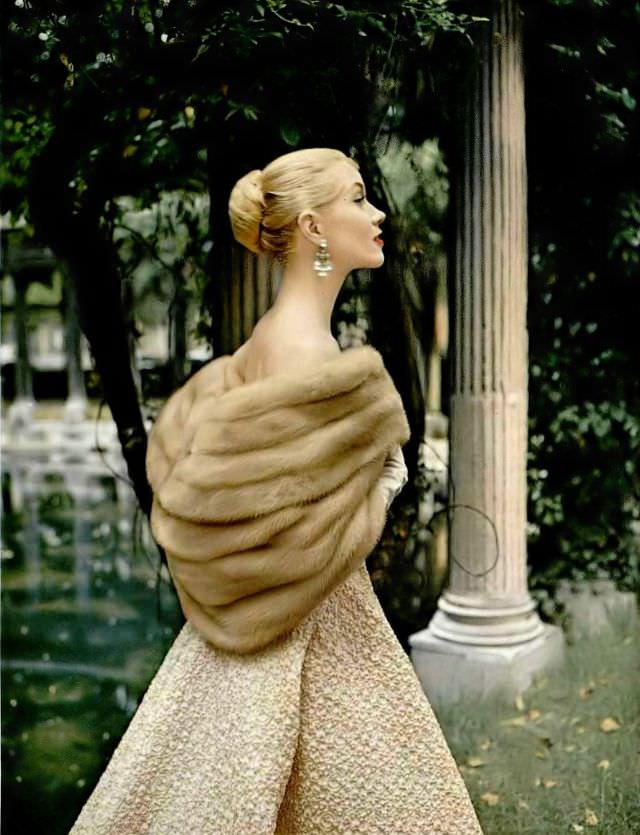
Model in Desert Gold EMBA mink stole by Max Reby, gold matelasse gown by Grès, 1957
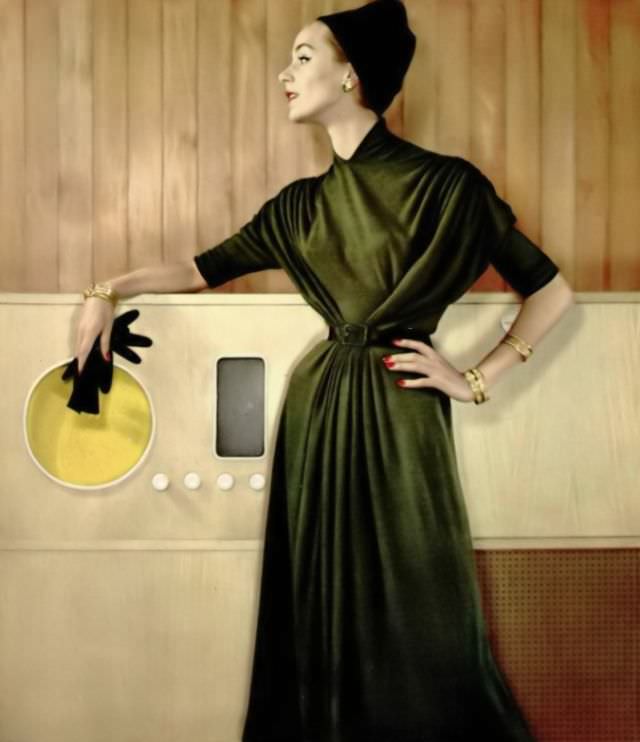
Model in green wool jersey dress draped and gathered at the waist by Grès, 1957
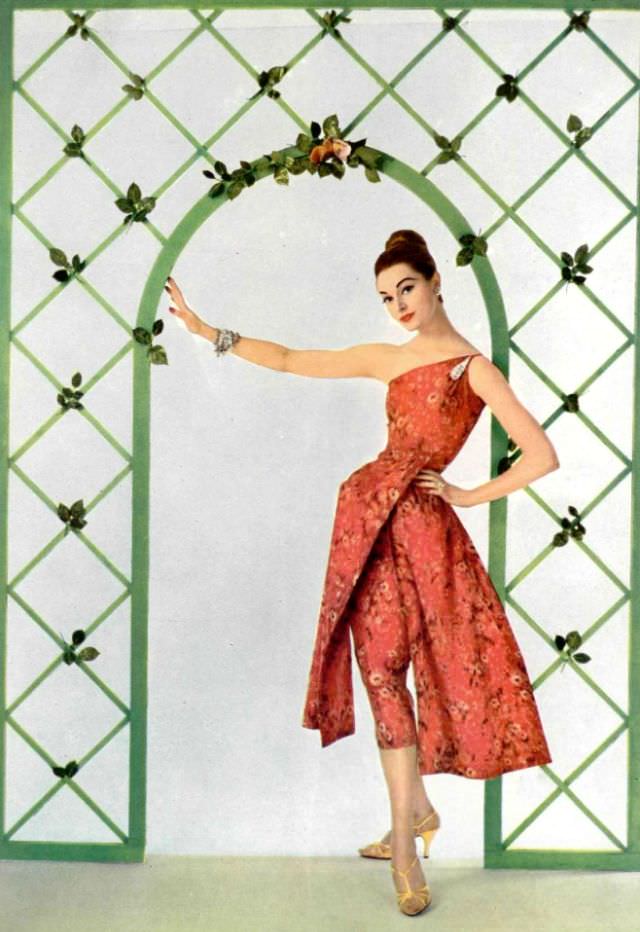
Model in print silk taffeta dress, one-shoulder bodice and over-skirt is split in two panels by Grès, 1957
Model in white crêpe gown flowing out of itself into pleats that follow the shape of the figure by Grès, Vogue, October 1, 1957
The white crêpe gown featured in Vogue in October 1957 captures what made Grès so singular. The fabric appears to flow naturally from the body, with pleats that trace every contour of the figure. There is no rigidity — only movement and form working in complete harmony.
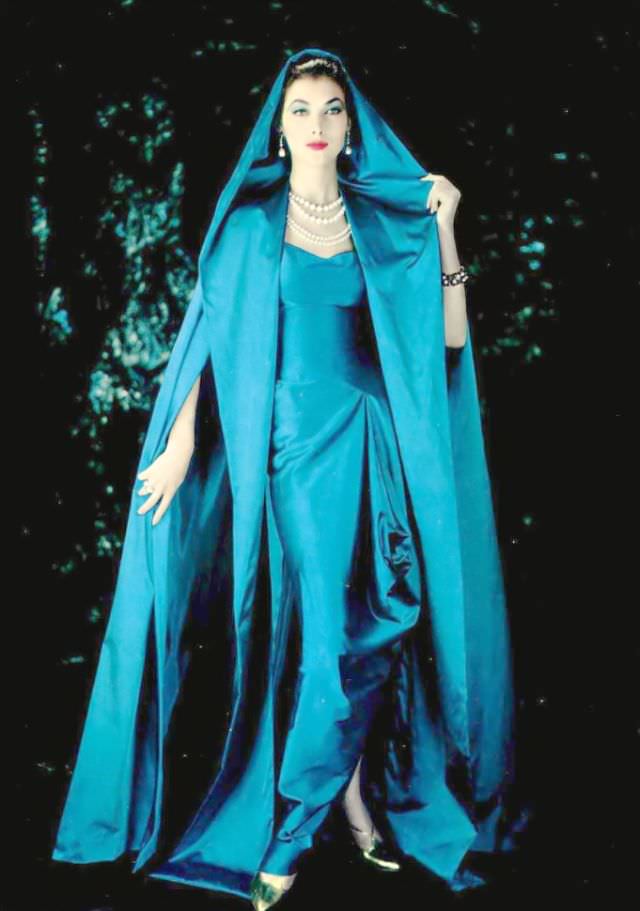
Rose Marie in gorgeous blue draped satin gown gathered at the hip and split at the ankles worn under a hooded cloak of same material by Grès, 1957
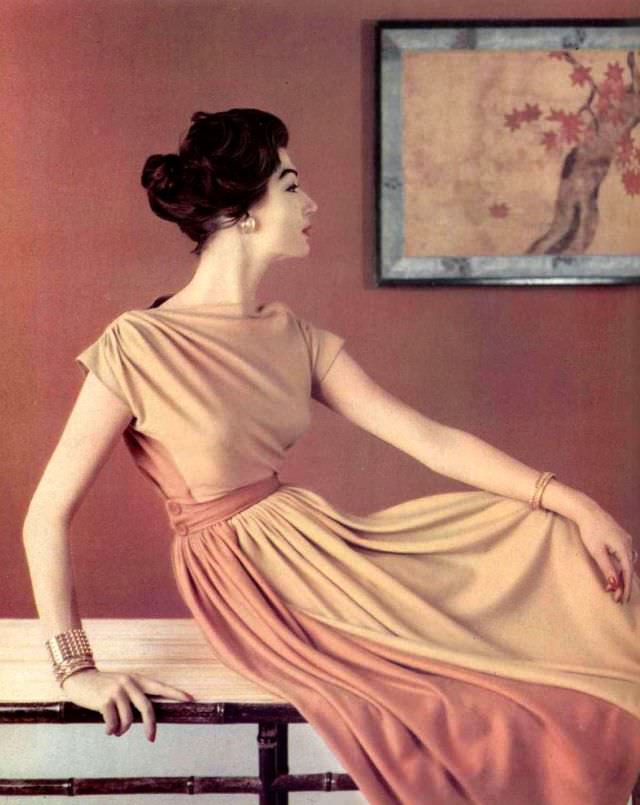
Simone d’Aillencourt in beige and orange jersey dress, bodice is gathered at the shoulders and buttoned belt holds pleats in front, by Grès, 1957
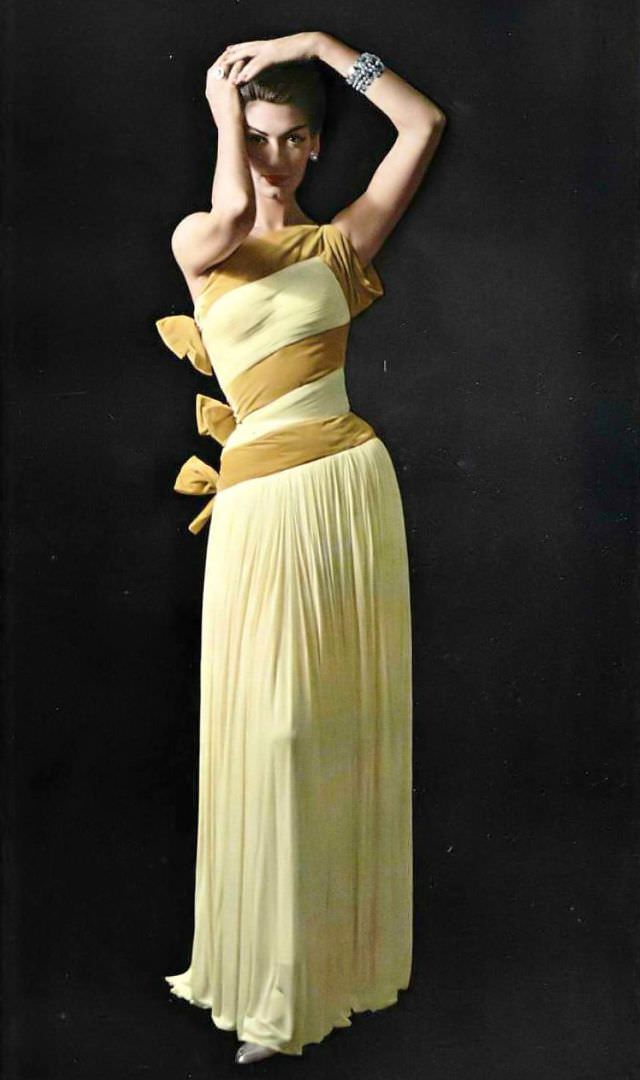
Simone d’Aillencourt in fluid one-shoulder mousseline jersey gown banded and tied in bows of velvet by Grès, jewelry by Scémama, 1957
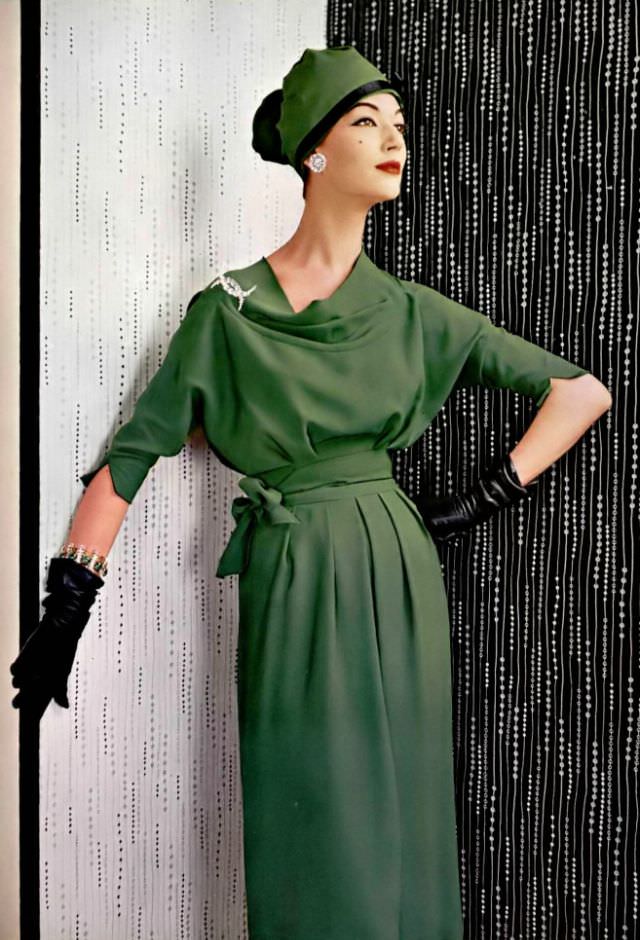
Simone d’Aillencourt in green crêpe dress, the supple bodice with cowl neck ends in scalloped sleeves, belt of the same material is tied in knot at the side, by Grès, jewelry by Roger Scémama, 1957
Model Simone d’Aillencourt appeared in multiple Grès looks throughout 1957 and 1958, each one showcasing a different dimension of the designer’s approach — from velvet-tied mousseline gowns to scallop-sleeved crêpe dresses with cowl necks and knotted sash belts.
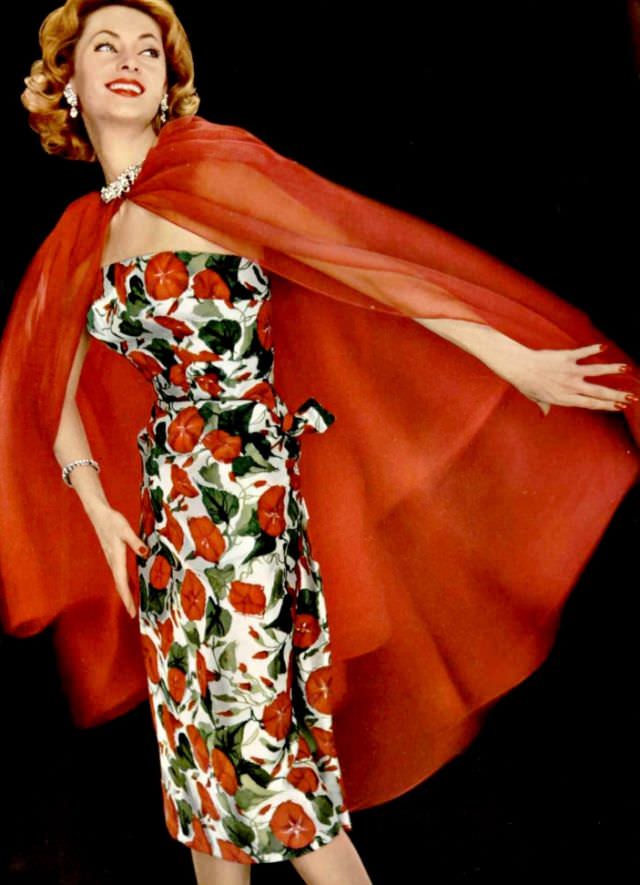
Ghislaine Arsac is wearing strapless silk floral print dress with vibrant red organdy cape by Grès, L’Officiel, 1958
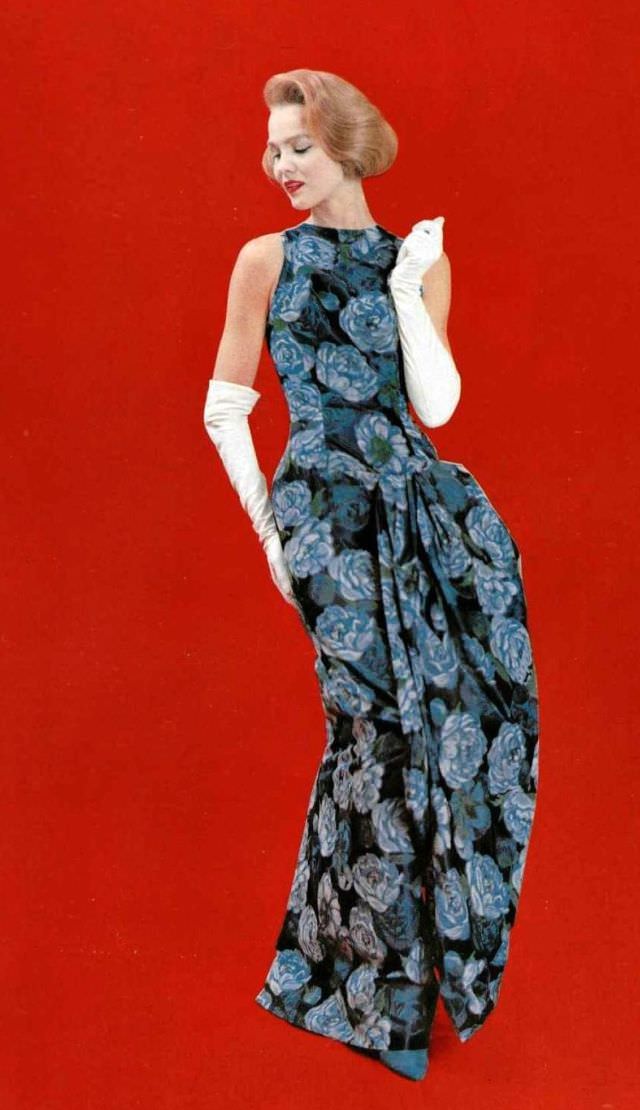
Model in silk print evening gown by Grès, photo by Jacques Decaux, 1958
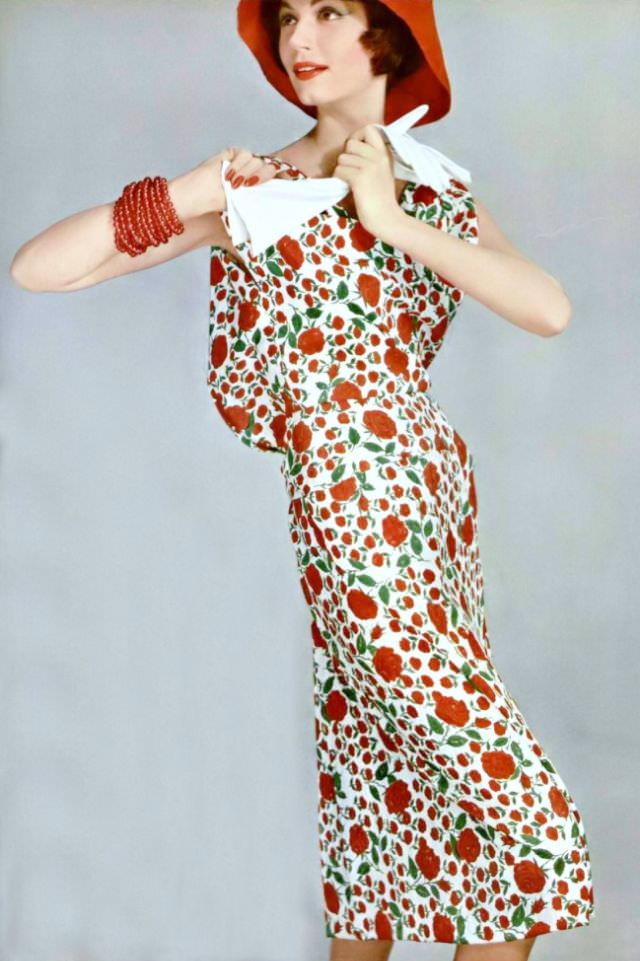
Simone d’Aillencourt in pretty floral silk print dress with a blouson top by Grès, 1958
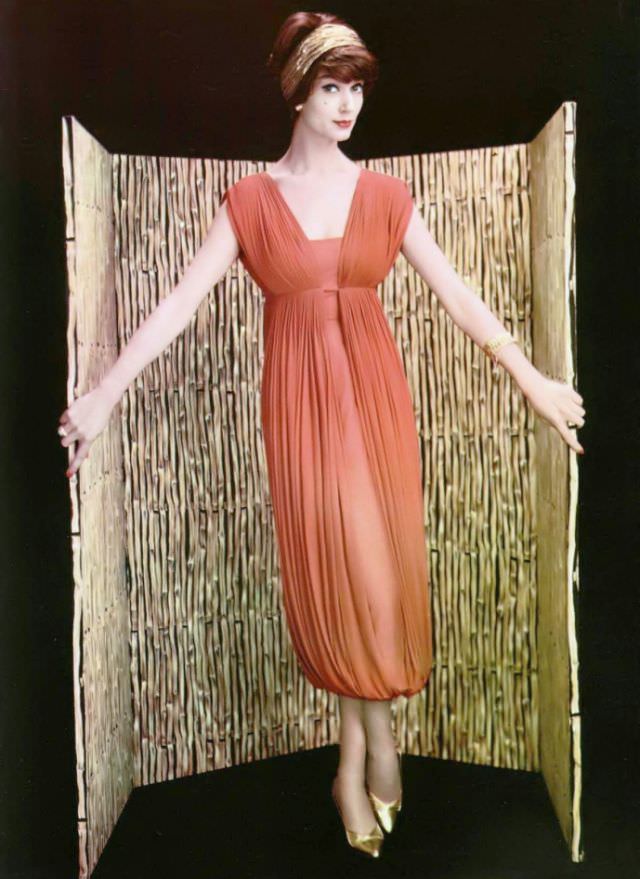
Simone d’Aillencourt in silk jersey dress draped and pleated by Grès, 1958
Denise Sarrault in gala evening gown of rose Cigaline de Bucol by Grès, jewelry by Sterlé, 1959
As the decade closed, her gala gowns reached new levels of refinement. Rose Cigaline de Bucol, Venetian green velvet, blue and green print taffeta — the fabrics themselves became central to each garment’s identity. Paired with jewels from Sterlé and Van Cleef & Arpels, these were pieces made for women who occupied the front row of public life.
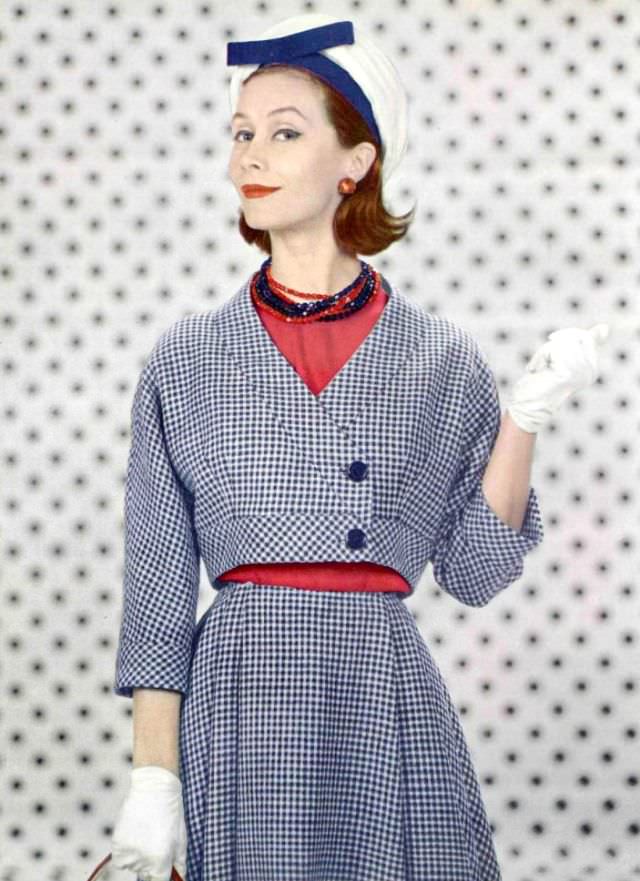
Gigi Terwalgne in blue and white wool houndstooth, short collarless bolero worn over red silk blouse by Grès, hat by Jane Blanchot, 1959
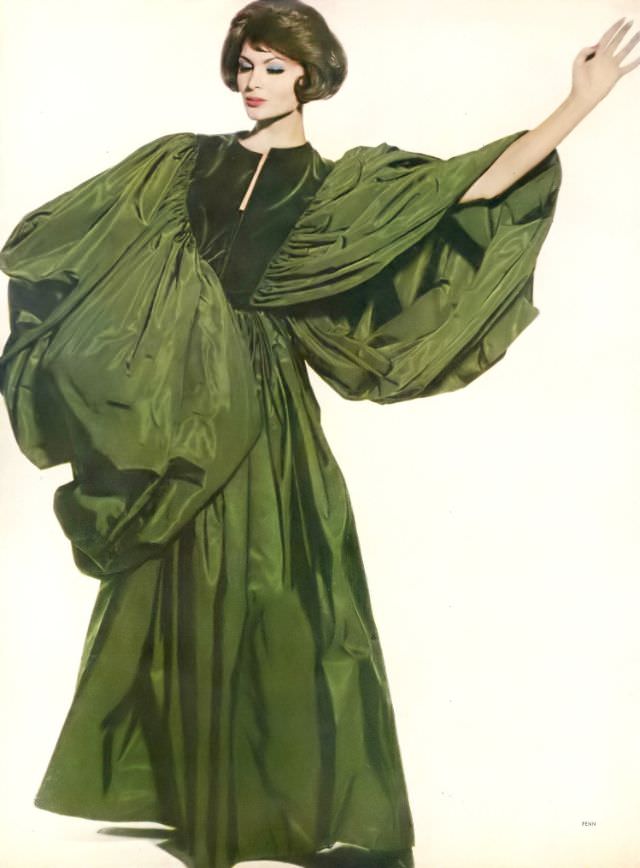
Isabella Albonico in magnificent gown with enormous wing-like sleeves of Venetian green velvet and taffeta by Grès, December 1, 1959
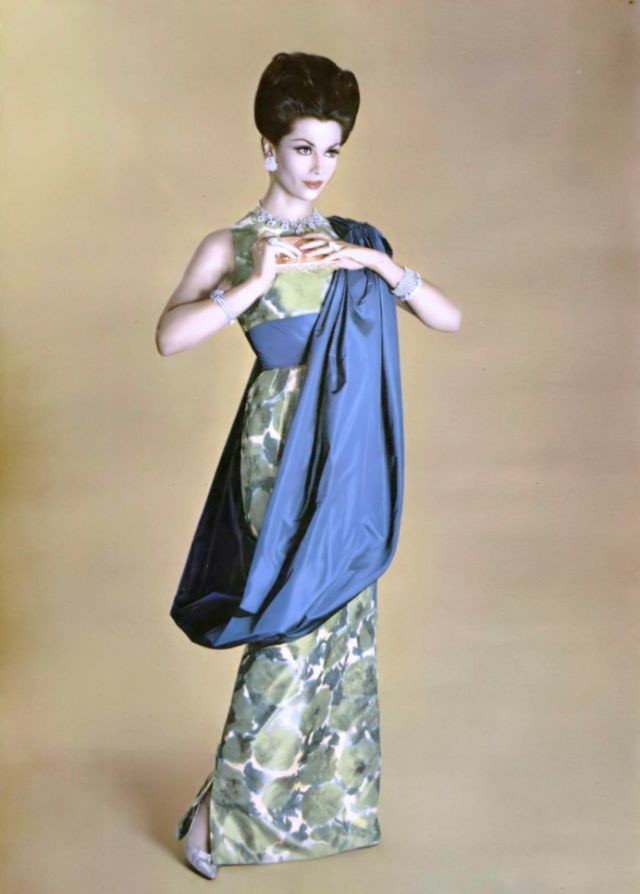
Jean Newington in blue and green print taffeta evening gown with blue taffeta circular stole, by Grès, jewelry by Van Cleef & Arpels, 1959
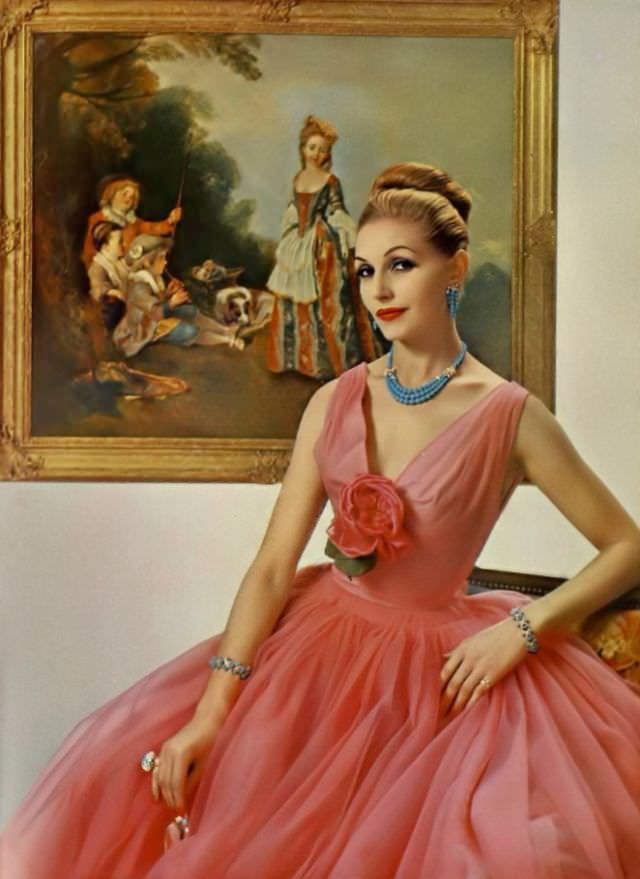
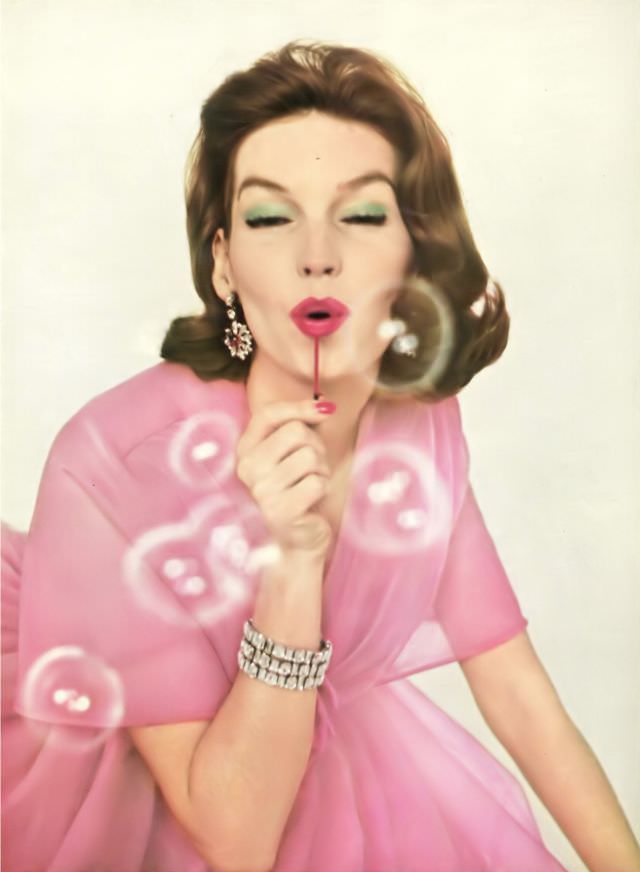
Joanna McCormick in frothy tulle pink ball gown by Grès, Rue de la Pink lipstick by Coty, Vogue, April 15, 1959
Model in Bianchini lunasatin cocktail dress by Grès, photo by Sabine Weiss, 1959
Model in cozy reversible wool coat by Grès, hat by Jean Barthet, shoes by Charles Jourdan, 1959
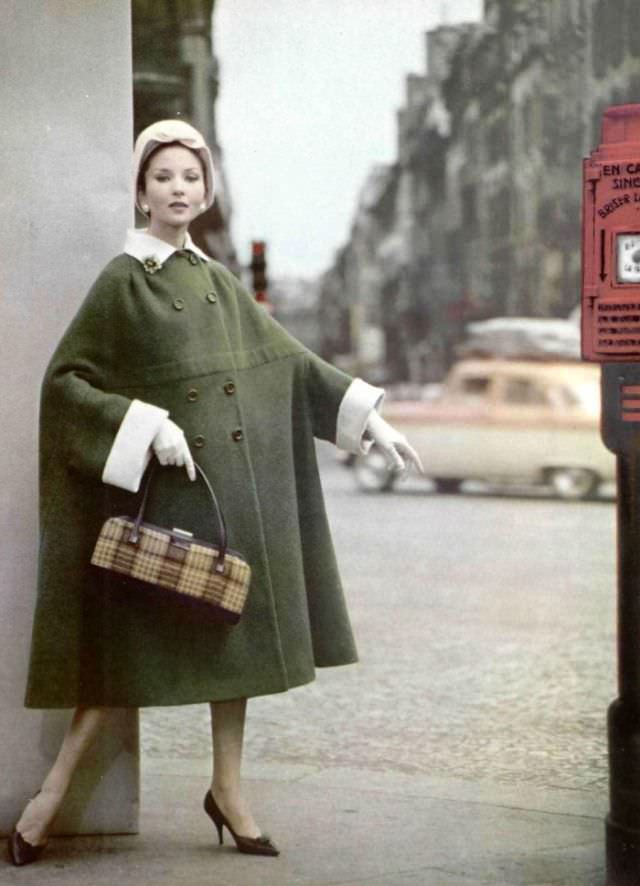
Model in silky wool coat by Grès, hat by Jean Barthet, handbag by Durer, necklace by Scémama, 1959
From her structured wool coats to her frothy tulle ball gowns, the breadth of Grès’ 1959 output alone demonstrates why her fashion house commanded such respect. She retired from fashion in the late 1970s, and she died in 1993. The decade captured in these photographs — the 1950s — represents the fullest expression of a designer who treated fabric the way a sculptor treats stone.