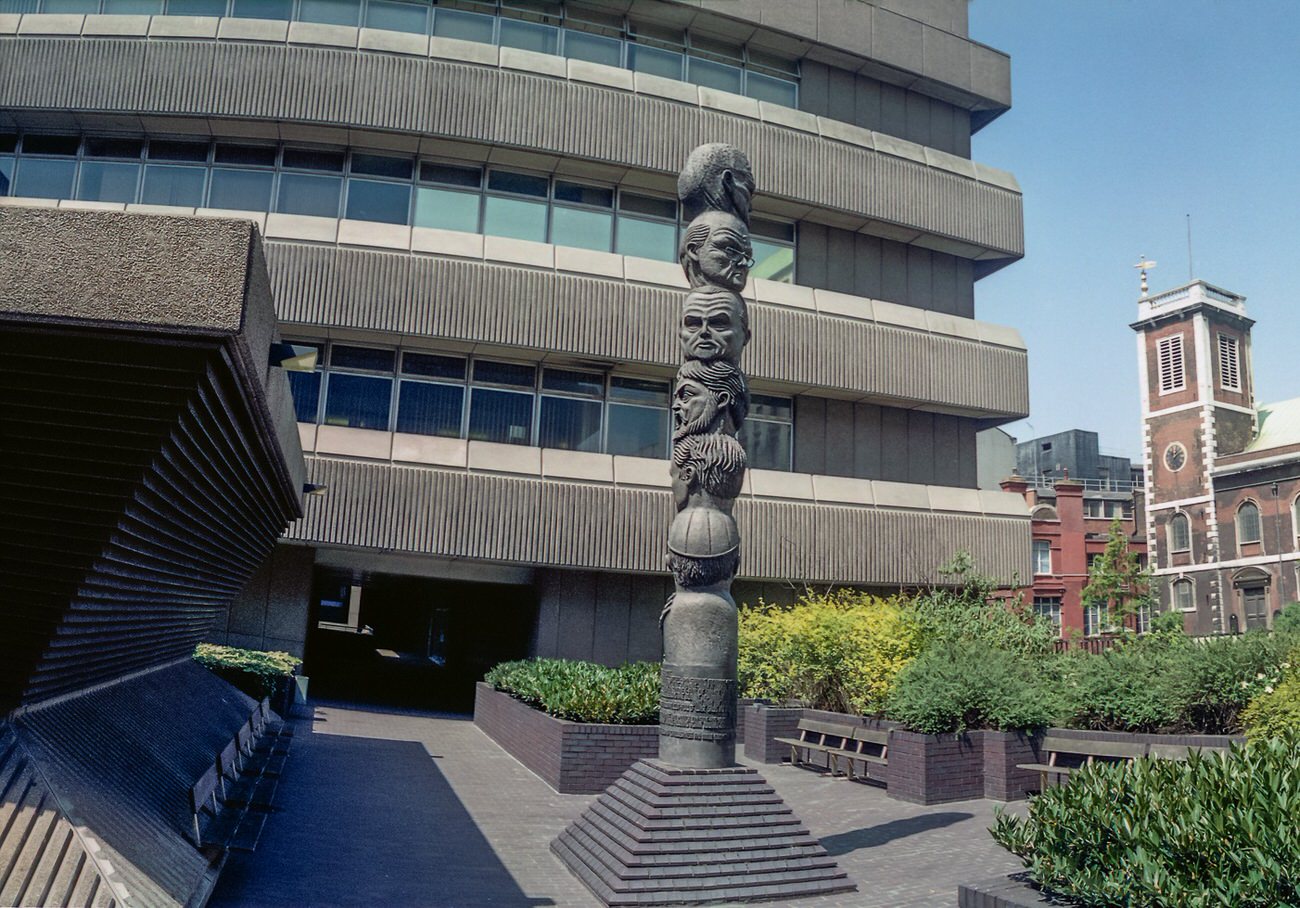
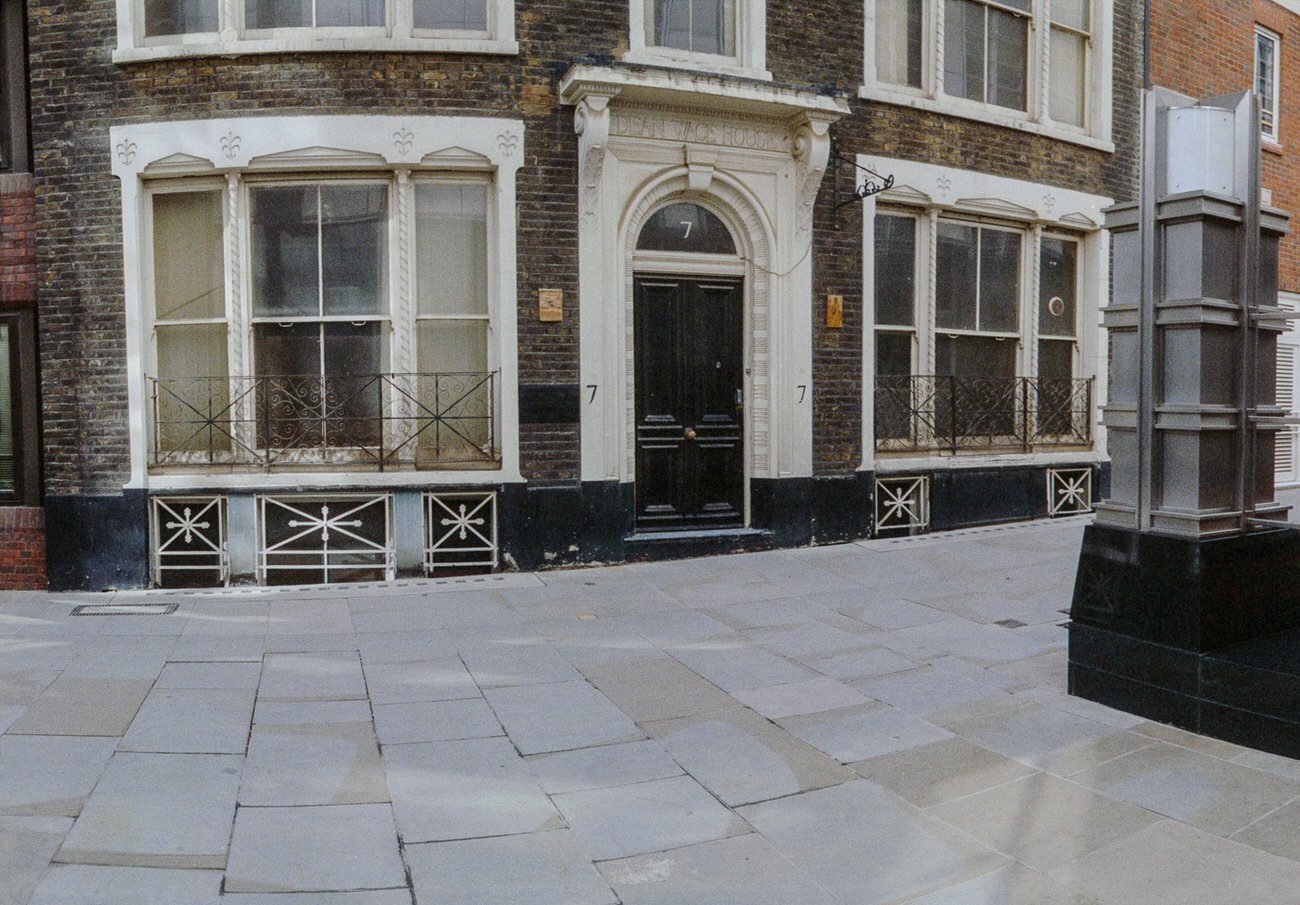
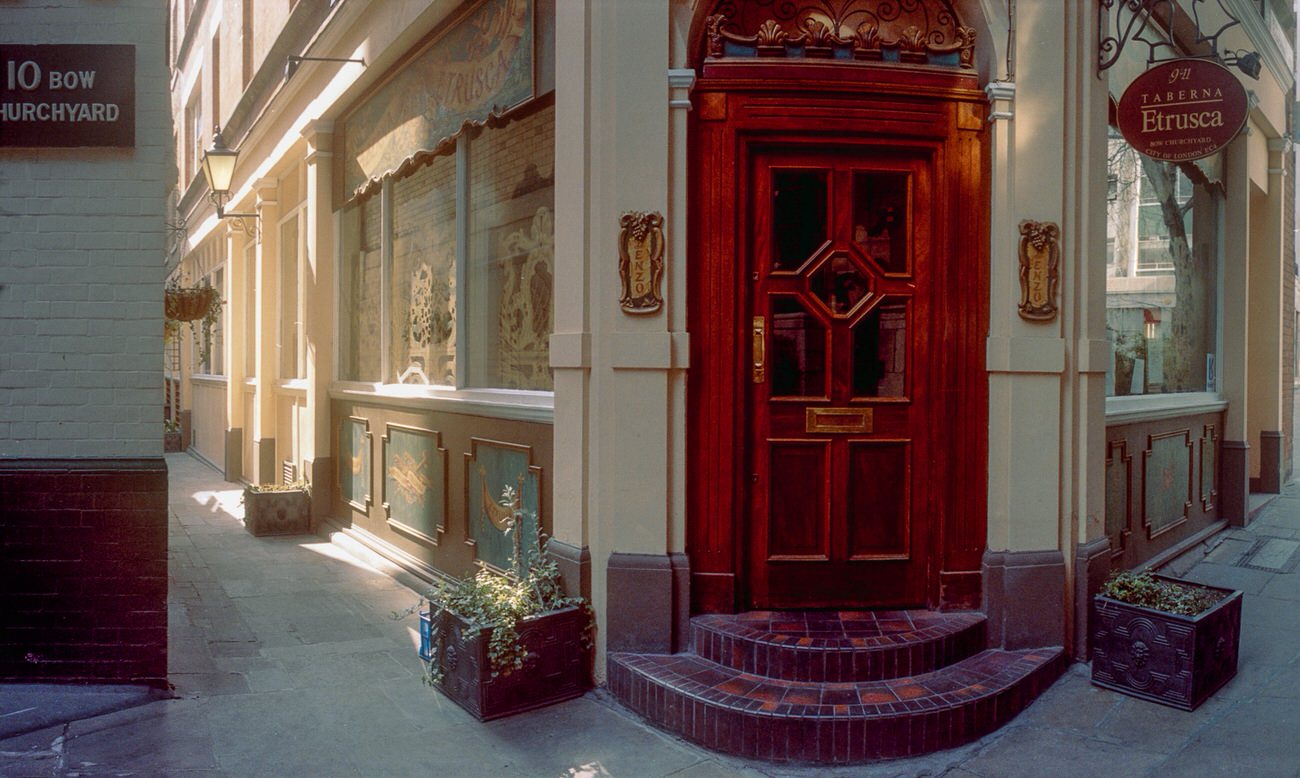
In 1992, London was a city caught between its past and an uncertain future. Photographer Peter Marshall walked the streets with his camera and captured the City of London — its narrow lanes, ancient churches, financial institutions, and riverside edges — at a moment when the country was under enormous pressure. The Conservative Party had just won a fourth consecutive general election, keeping John Major in Downing Street. Unemployment was high, the economy was struggling, and the year would only get harder.
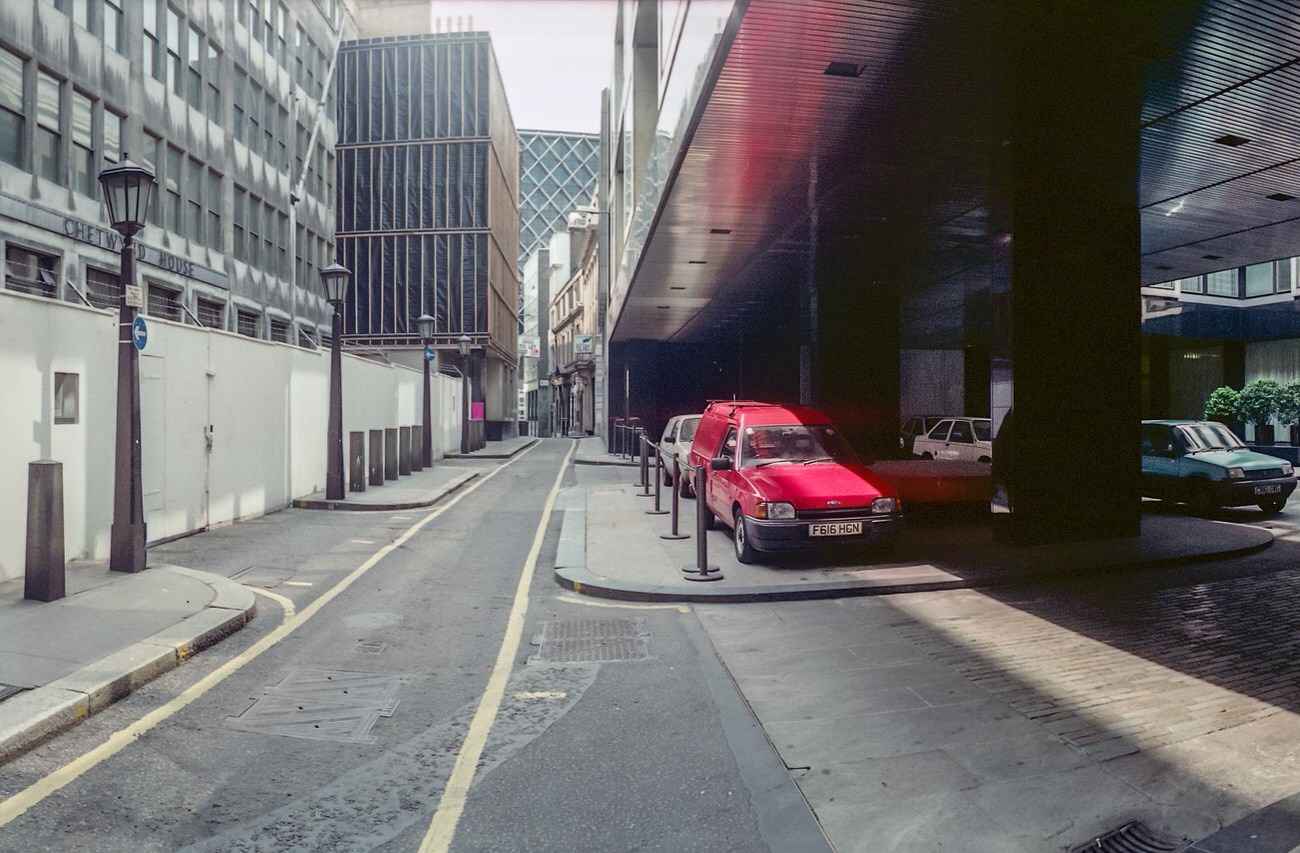
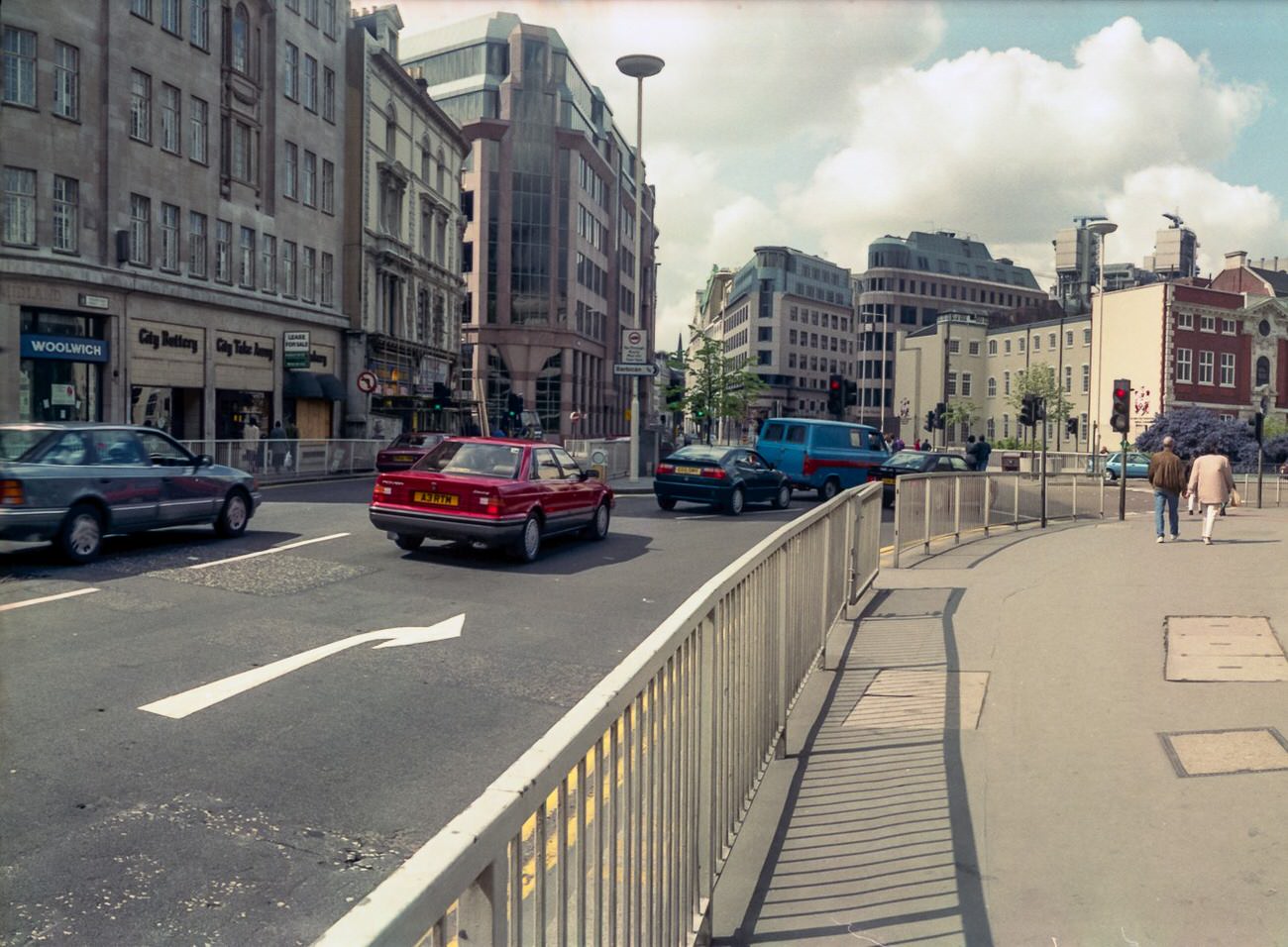
The City of London — the historic square mile at the heart of the capital — was the financial engine of the country. Its alleyways and backstreets had barely changed in centuries, even as the trading floors inside its buildings moved at lightning speed. Streets like St Swithin’s Lane wound between tall buildings, offering glimpses of a world where old stone and modern money existed side by side.
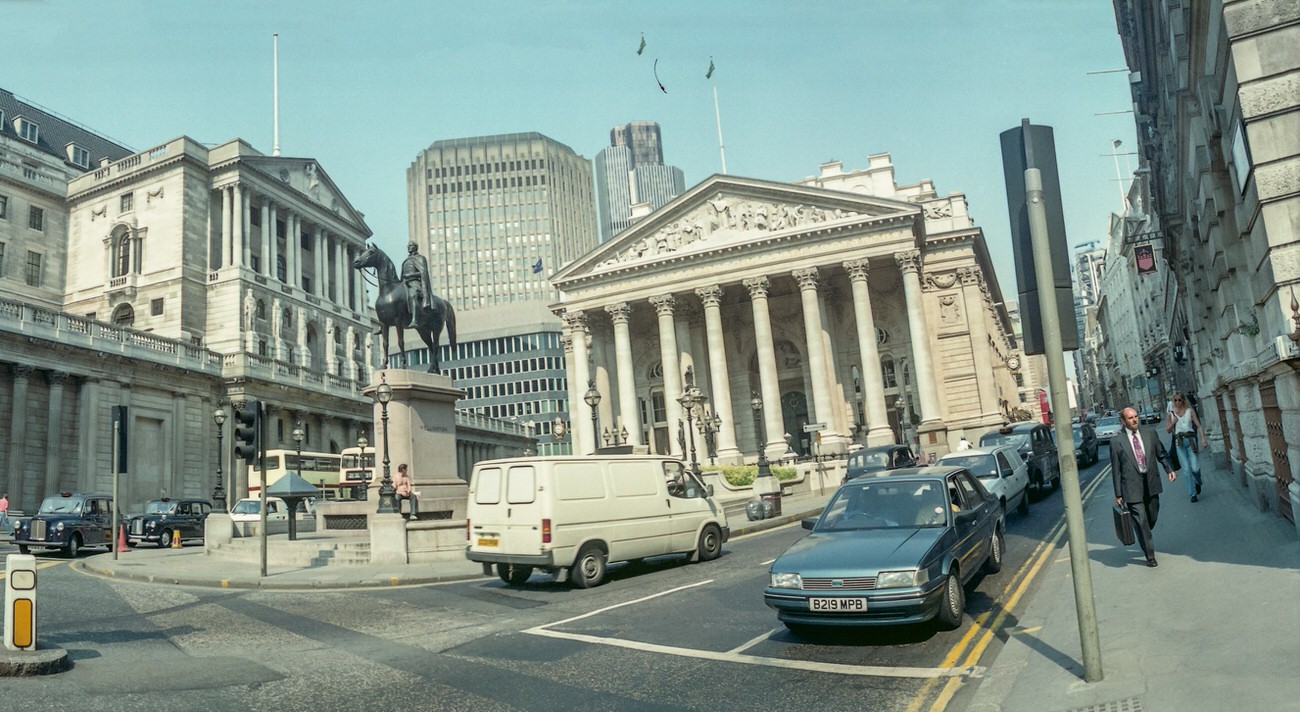
The Bank of England and the Royal Exchange stood at the symbolic center of British finance. In September 1992, that symbolism was shattered. On what became known as “Black Wednesday,” the UK was forced out of the European Exchange Rate Mechanism. The pound collapsed in value, interest rates spiked to 15 percent in a single day, and the government’s economic credibility was destroyed. The events played out just steps from the buildings Marshall photographed.
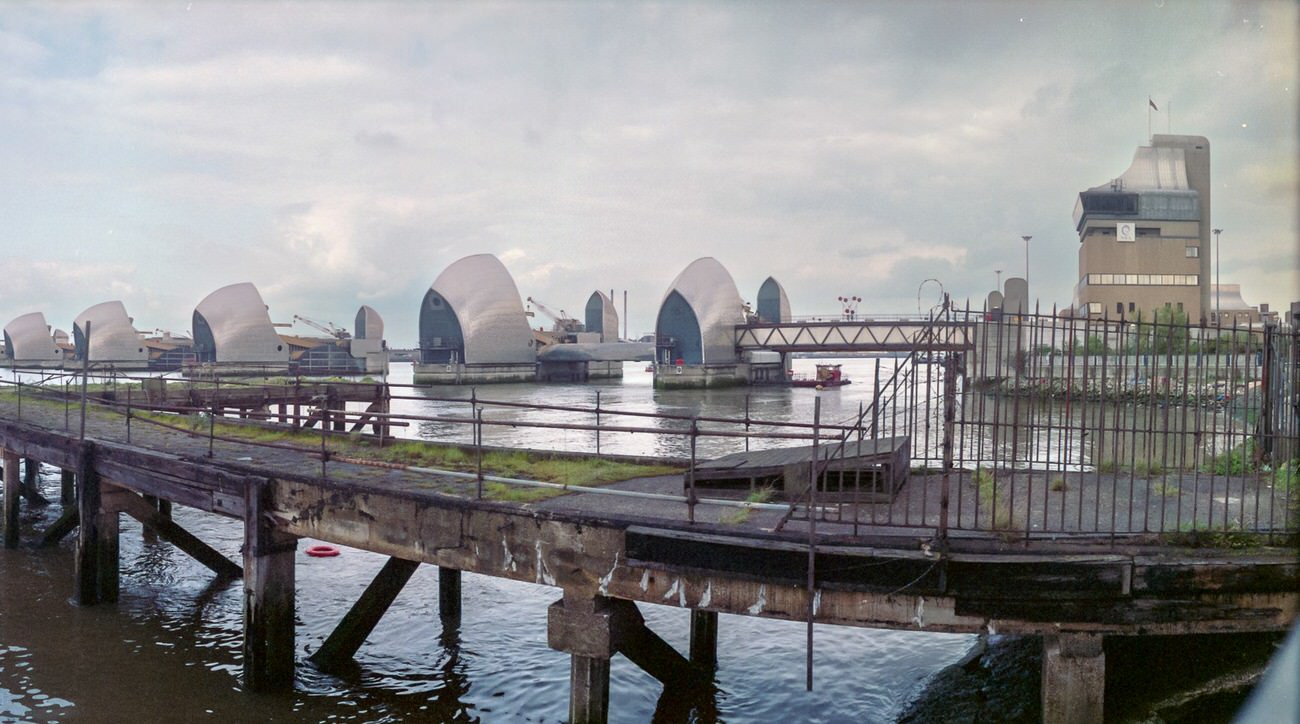
Beyond the financial district, Marshall traveled to the Thames Barrier at New Charlton in Greenwich. Completed in 1982, the barrier stood as one of Britain’s great feats of engineering — a moveable flood defense designed to protect London from tidal surges. By 1992, it was already an iconic structure on the river, its gleaming steel shells visible from both banks.
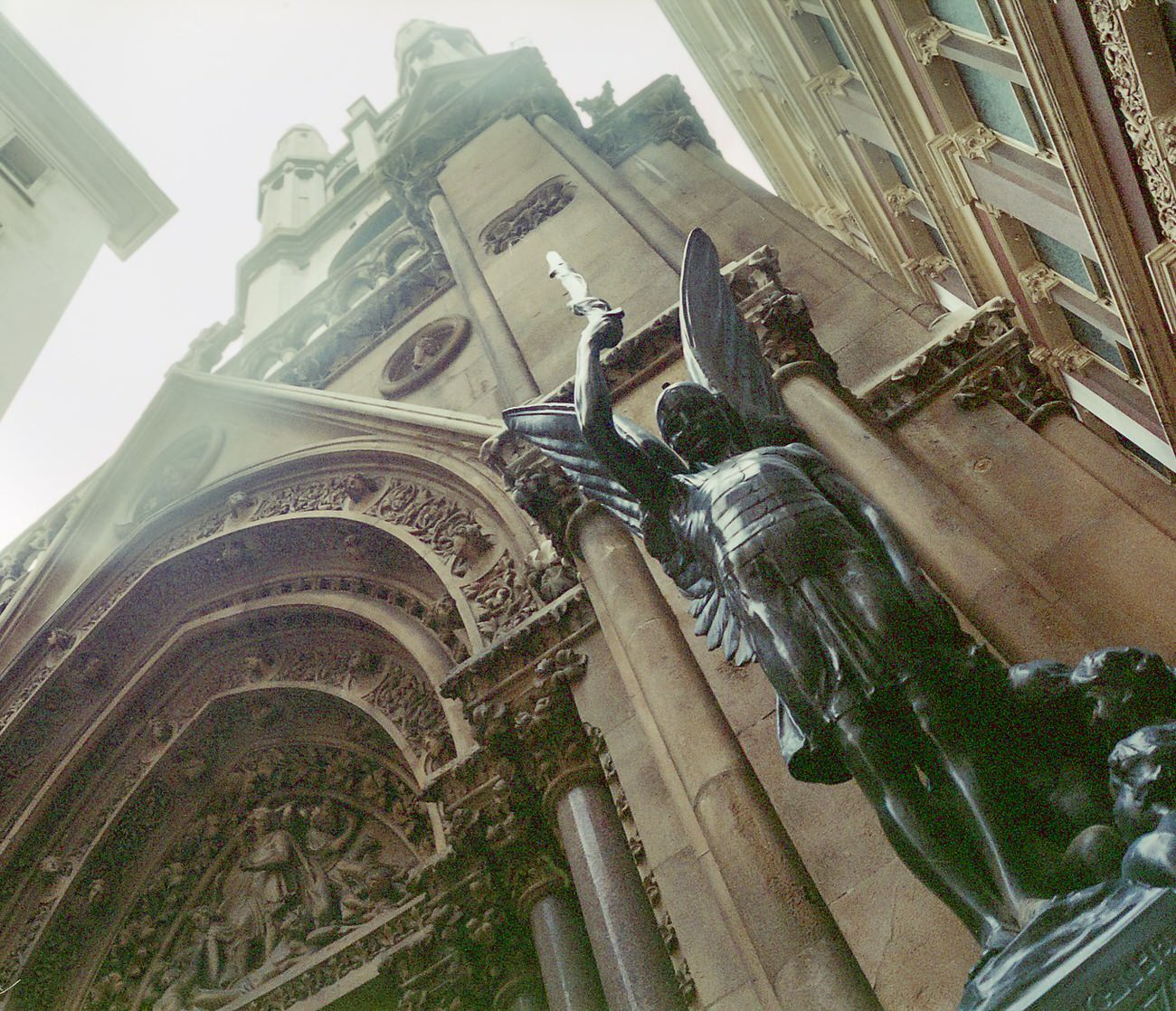
Churches were a constant presence in Marshall’s City photographs. The Square Mile is home to dozens of them, many rebuilt by Sir Christopher Wren after the Great Fire of 1666. St Michael’s Cornhill is one of the oldest church sites in London, with origins stretching back over a thousand years. In 1992, it sat quietly among the offices and trading houses, a reminder that the City had always been as much a place of community as of commerce.
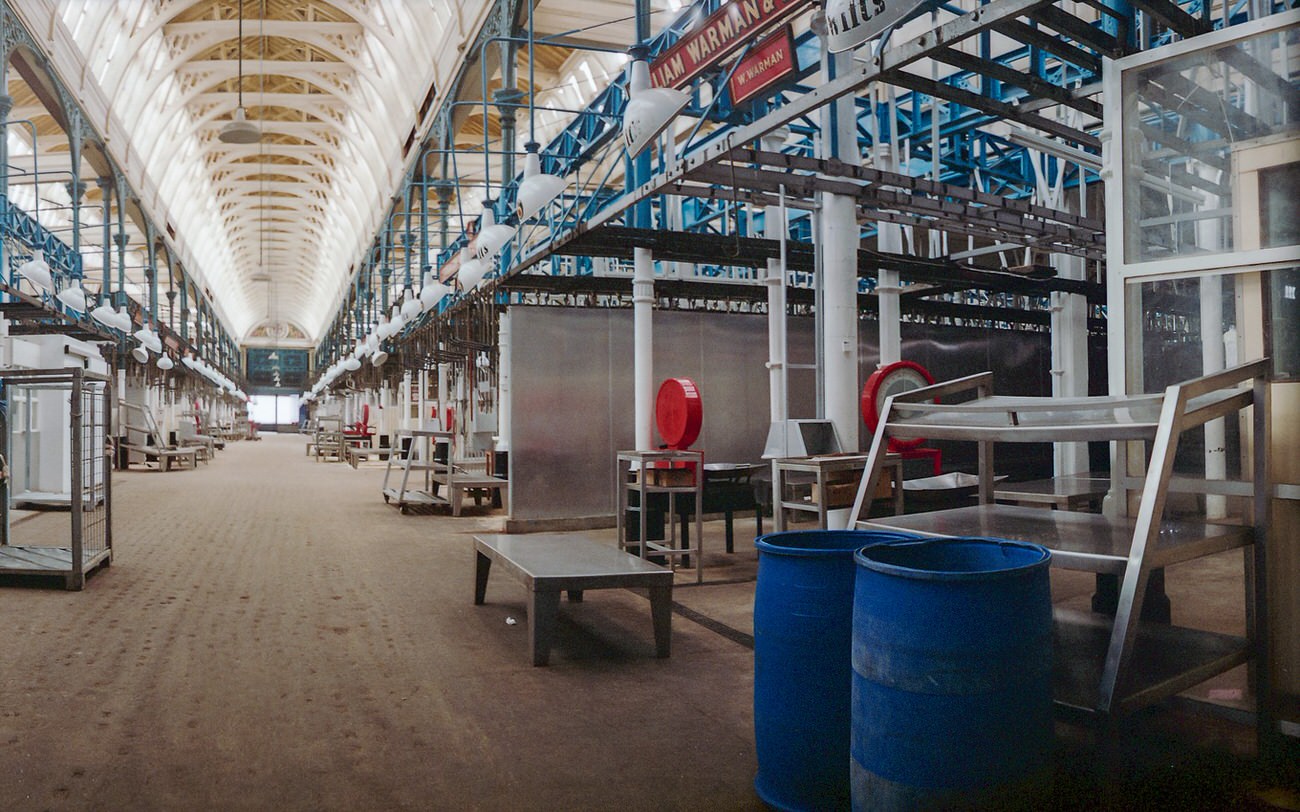
Smithfield Market, on the northwestern edge of the City, had operated as a meat market for centuries. In 1992 it was still fully functional, its Victorian iron halls filled before dawn each day with traders, buyers, and the work of the wholesale meat trade. It was one of the few places in the City where manual labor dominated, a sharp contrast to the nearby office towers.
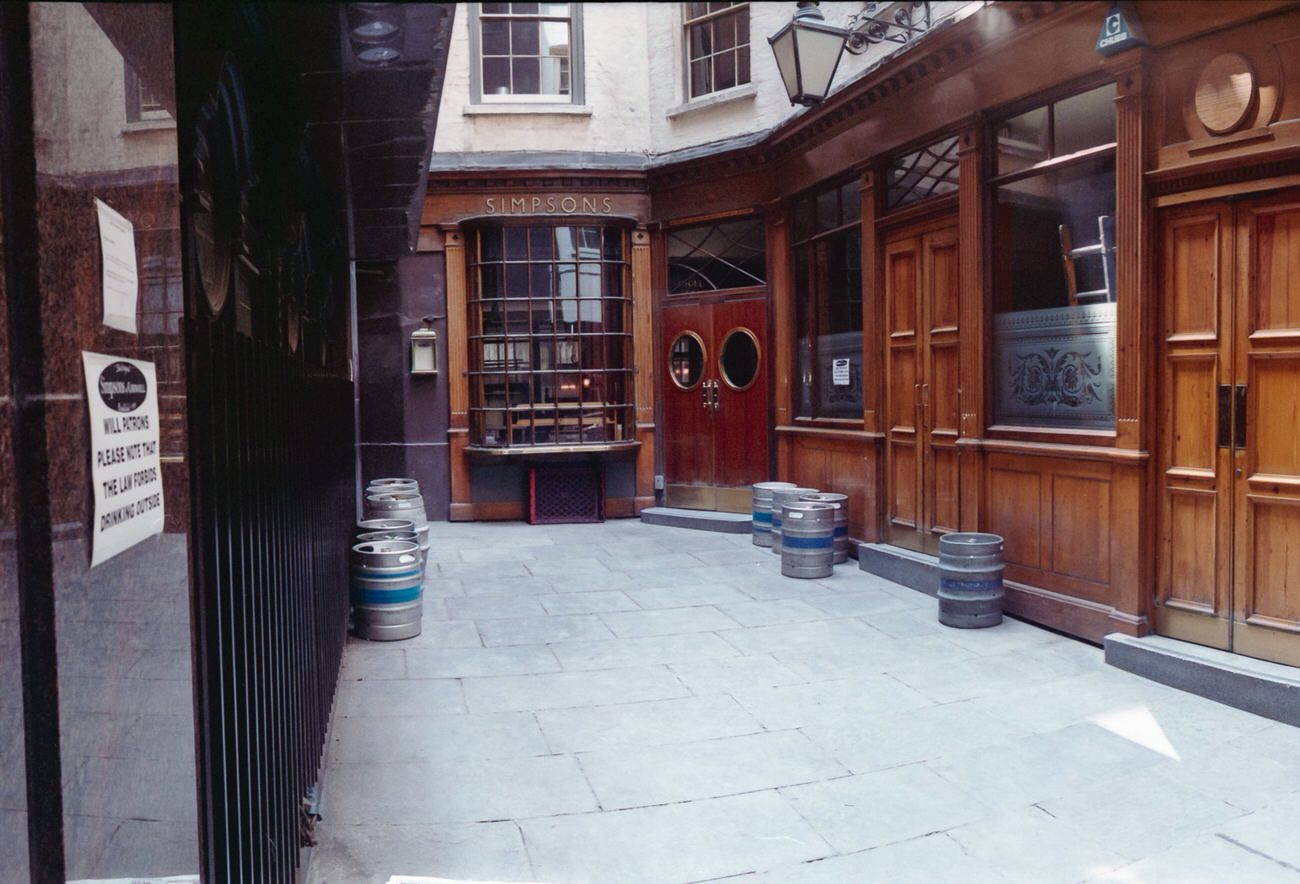
Tucked away in Ball Court off Cornhill, Simpson’s Chop House was one of the oldest eating establishments in the City. Founded in 1757, it had served City workers for over two centuries. In 1992, it still drew a lunchtime crowd from the surrounding banks and trading firms — a place where the rituals of the working day hadn’t changed much since the Victorian era.
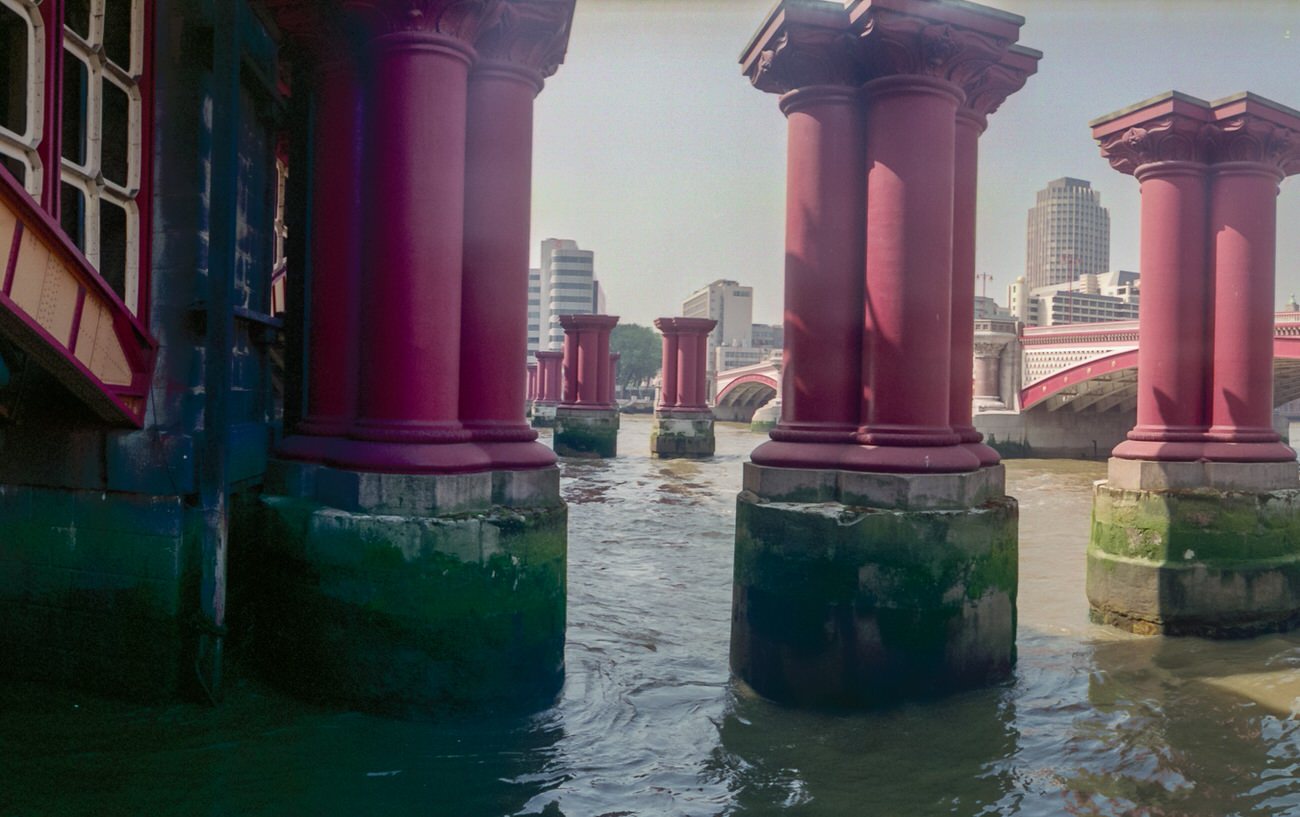
The River Thames ran along the southern edge of the City, and Marshall returned to it repeatedly. The old piers of Blackfriars Rail Bridge — iron structures that once supported a Victorian railway crossing — still jutted from the water in 1992, long after the bridge above had been demolished. They were a quiet piece of industrial archaeology, visible to anyone who looked.
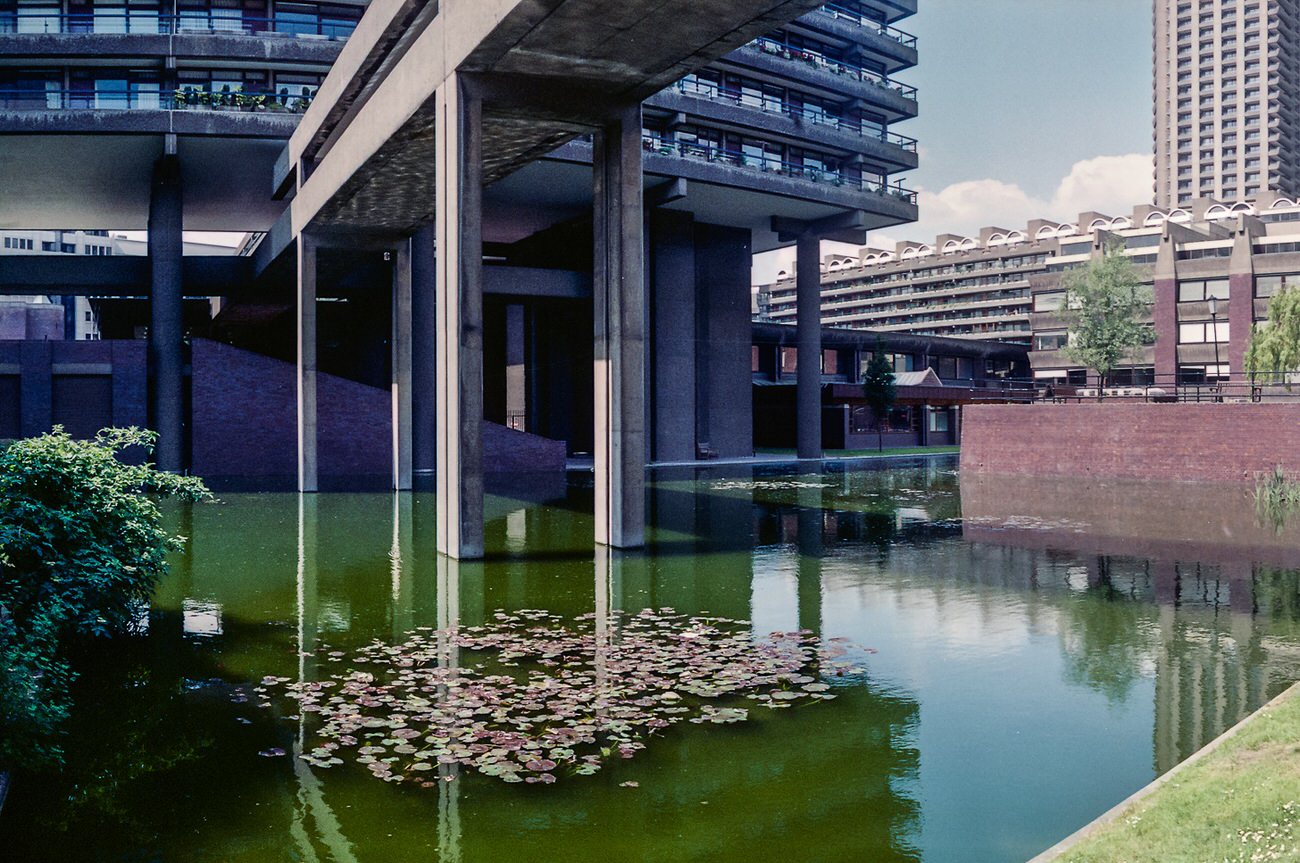
The Barbican estate, built on land devastated by the Blitz, incorporated sections of London’s original Roman wall. These ancient stones, some dating back nearly two thousand years, formed part of the estate’s landscaping. Marshall photographed them in 1992, a moment where the modern brutalist architecture of the Barbican stood directly against the oldest surviving structure in the city.
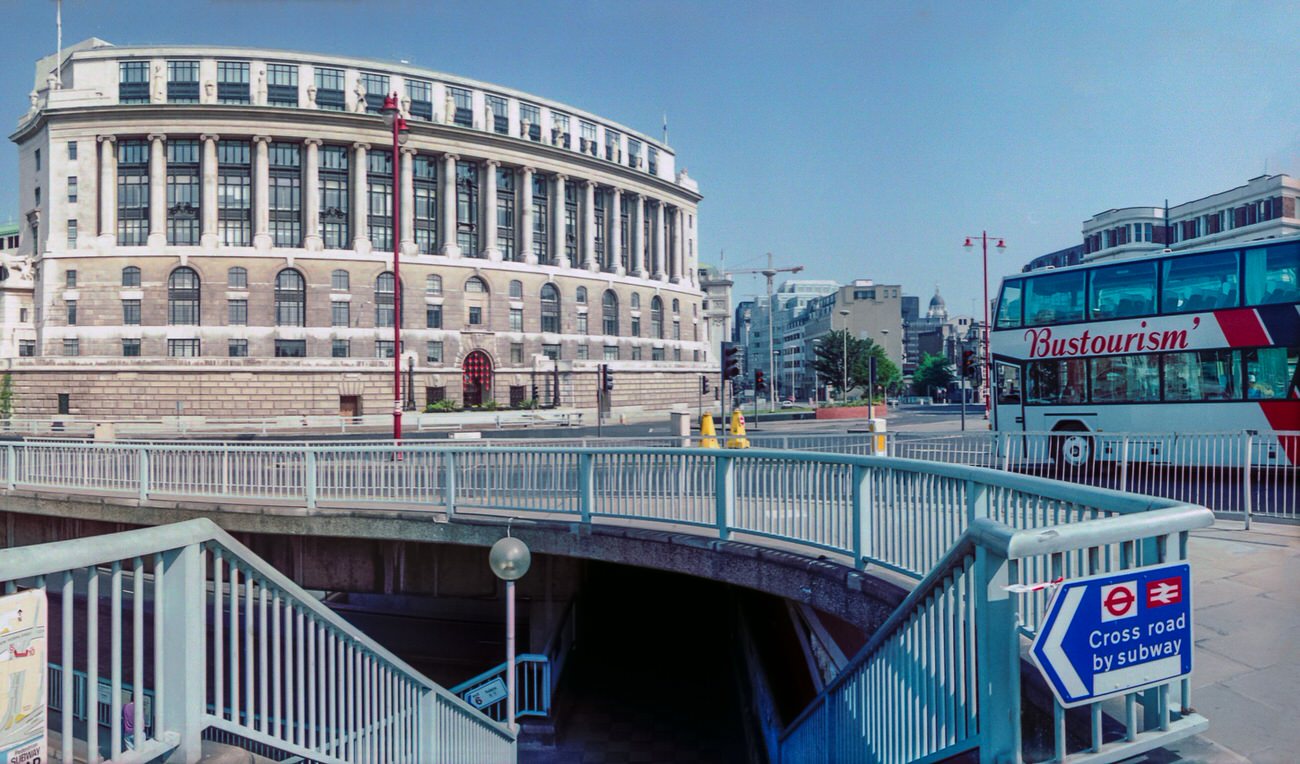
Throgmorton Street ran alongside the old Stock Exchange building, a street defined by finance and dealing. The London Stock Exchange had moved to a new building in 1972, but the area remained the beating heart of equity trading. By 1992, the shift toward electronic trading — accelerated by the Big Bang reforms of 1986 — had already changed who worked on these streets and how.
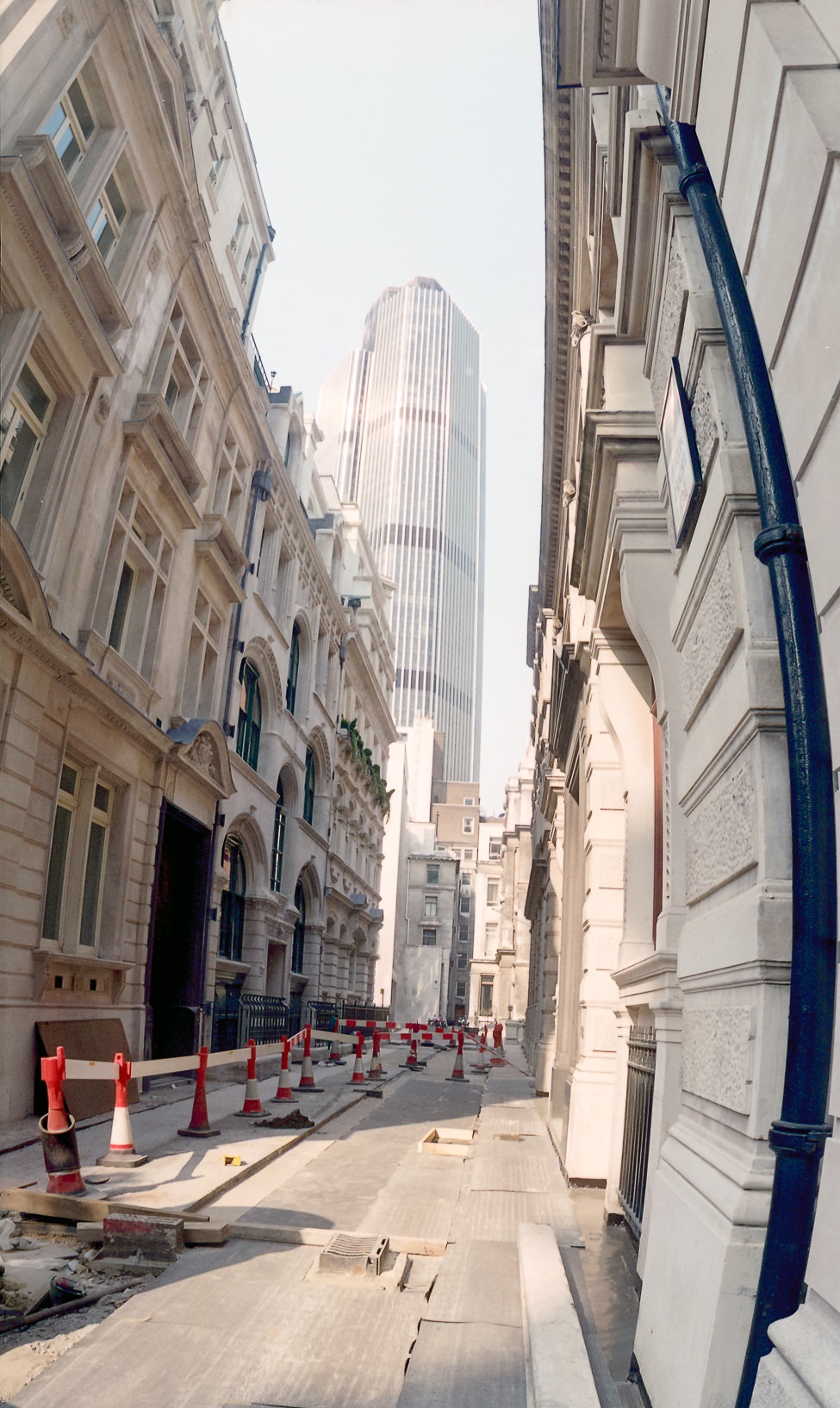
The City’s pubs were as much a part of its daily rhythm as the offices. The Cockpit on St Andrew’s Hill took its name from the cockfighting pit that once stood nearby. By 1992 it was simply a pub, well-worn and familiar, serving workers from the nearby newspaper district and the legal profession.
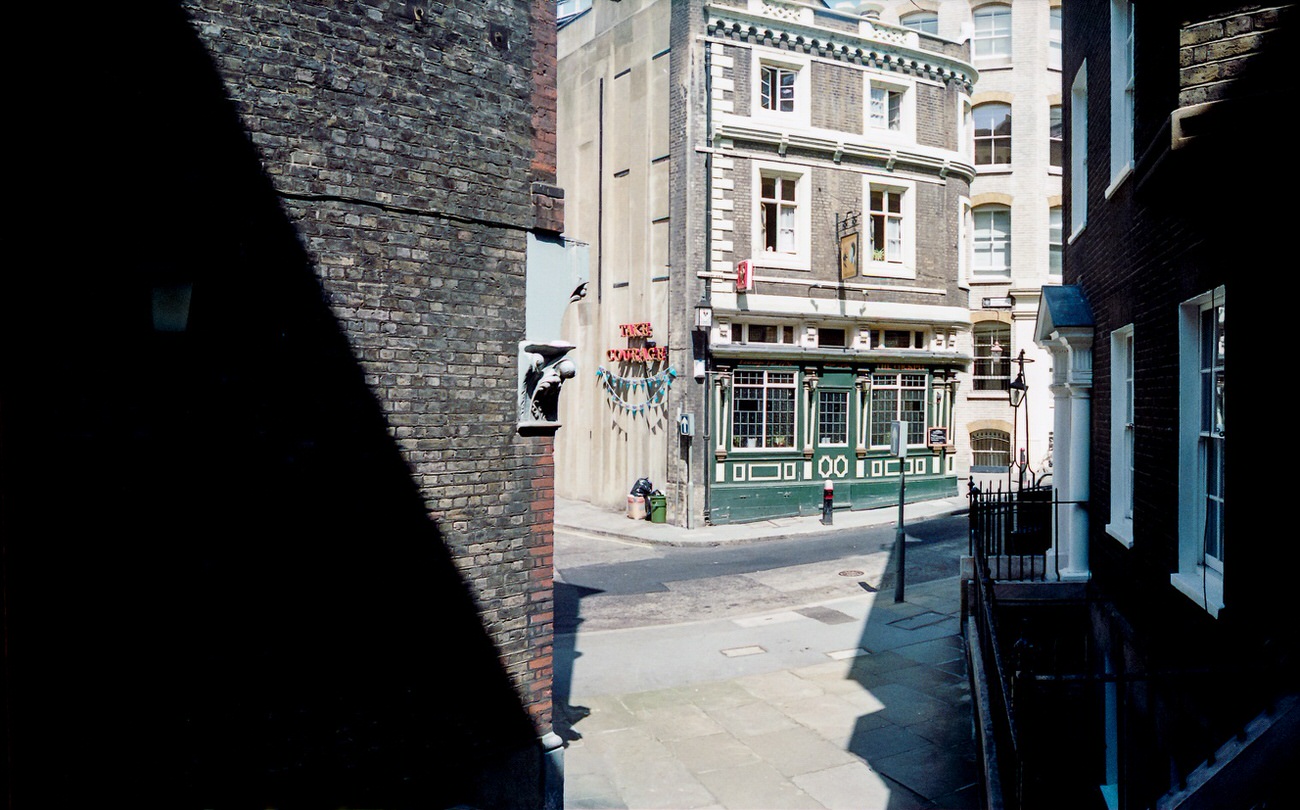
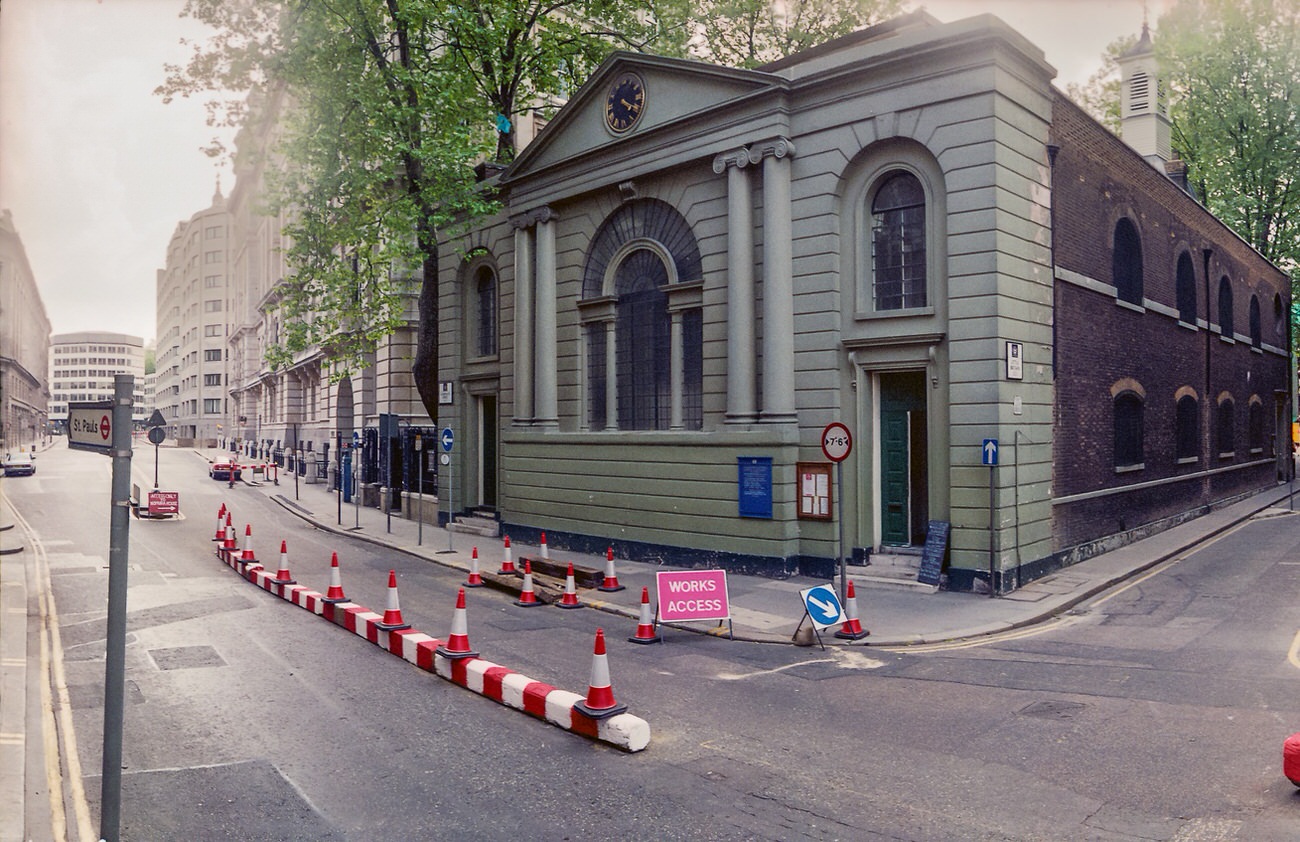
Wardrobe Place, a quiet courtyard off Carter Lane, took its name from the King’s Wardrobe — a royal storehouse that stood there in the medieval period. In 1992, it was a calm pocket of the City, largely unknown to those who didn’t work nearby. Marshall’s camera found these overlooked corners throughout his time in London.
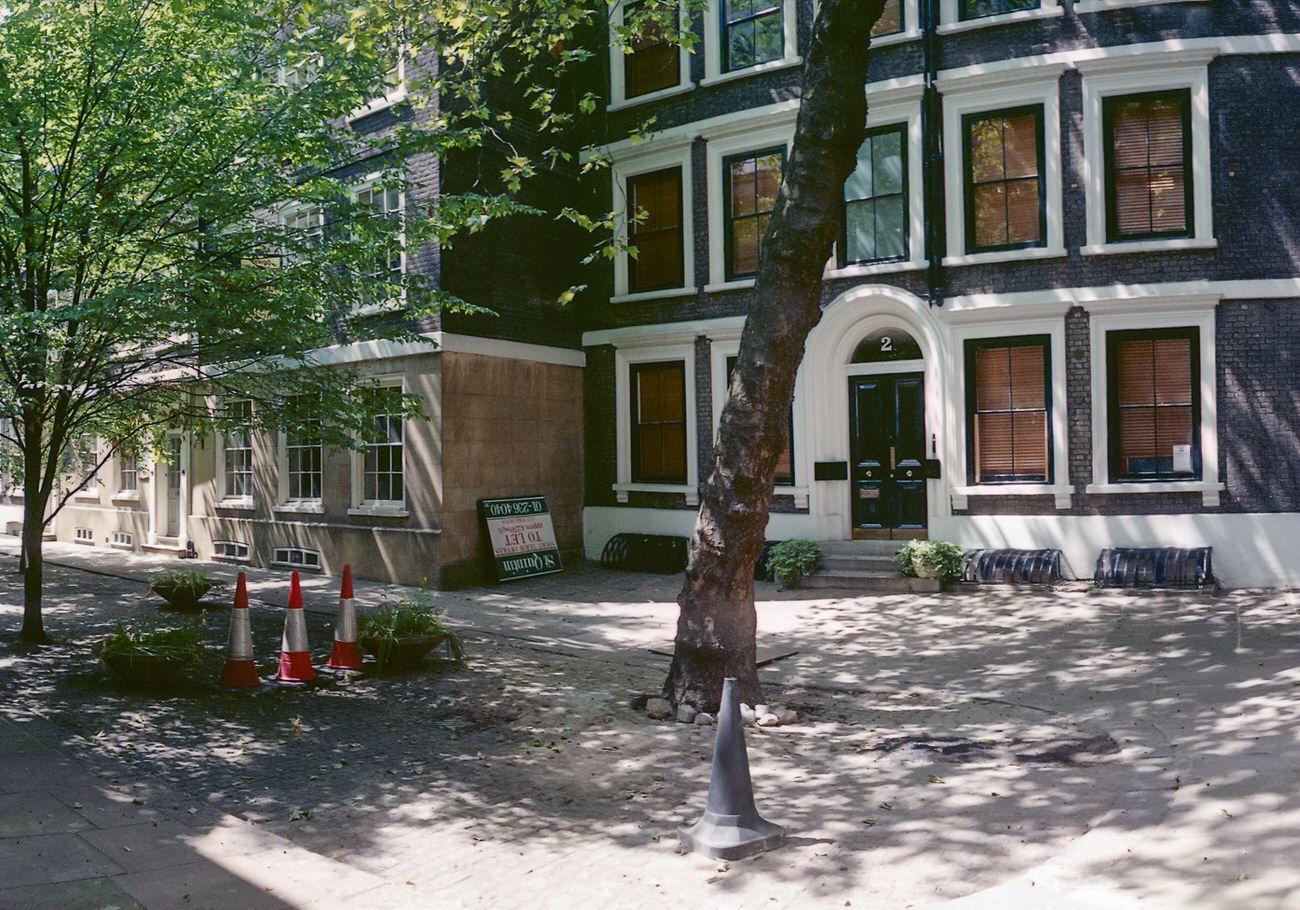
The Lloyd’s Building on Lime Street was still a relatively new arrival in 1992, having opened in 1986. Designed by Richard Rogers, its inside-out architecture — pipes, ducts, and service towers on the outside — made it one of the most talked-about buildings in London. It stood in stark contrast to the Georgian and Victorian buildings surrounding it.
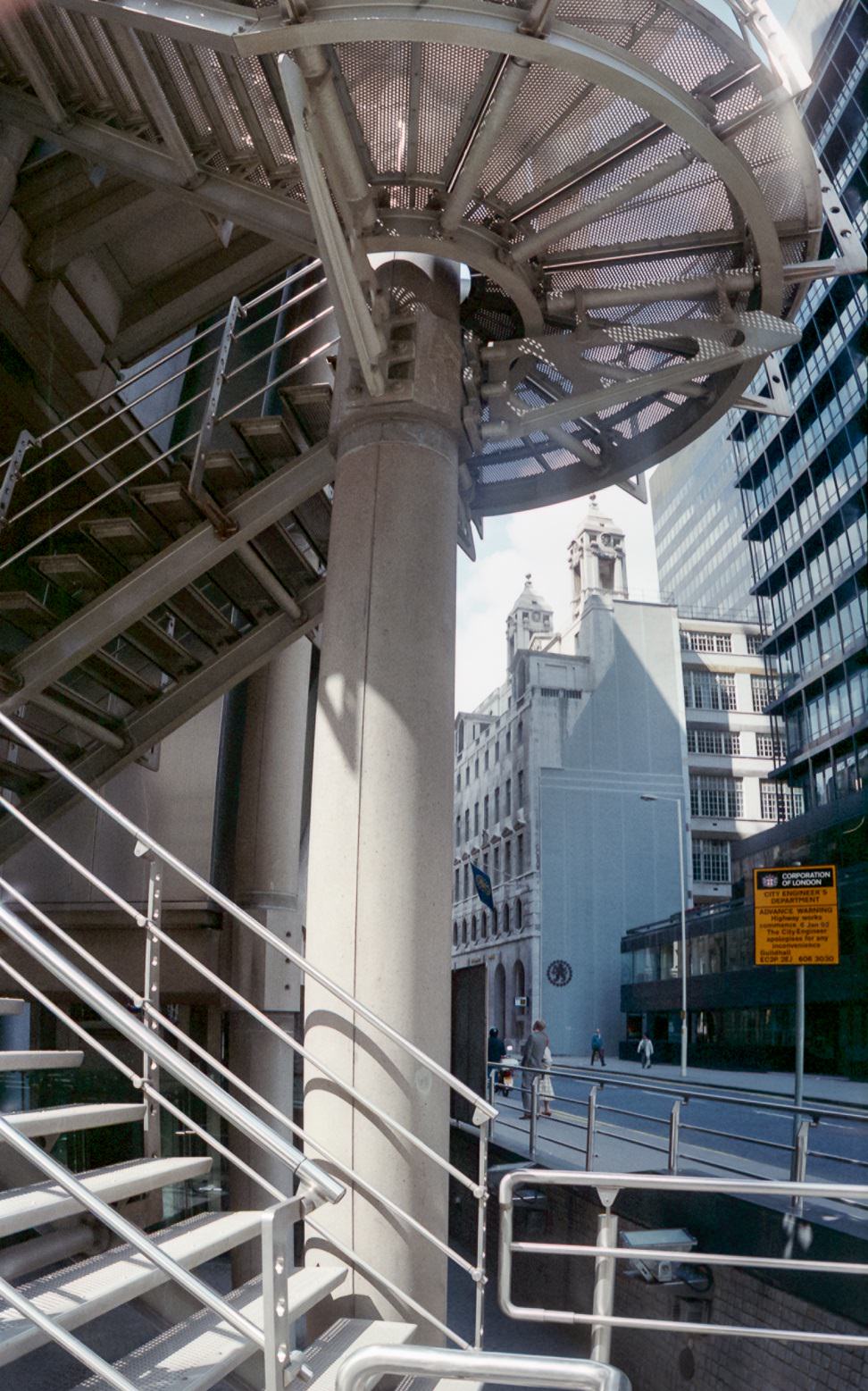
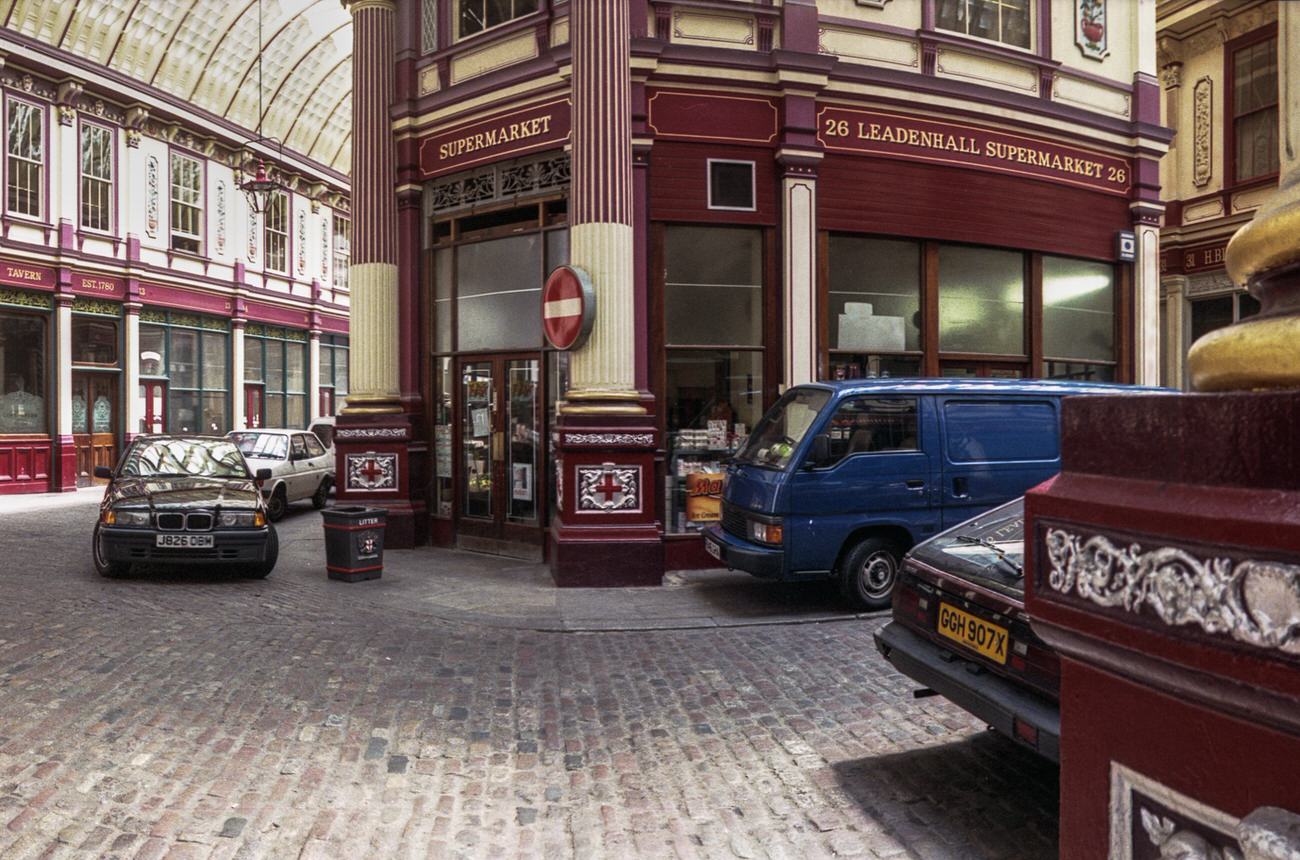
Leadenhall Market, with its ornate Victorian ironwork and painted roof, sat just around the corner from Lloyd’s. Built in 1881 on the site of the Roman basilica, it housed butchers, fishmongers, and food stalls. In 1992 it was still a working market, drawing City workers at lunchtime and serving the surrounding area much as it had for over a century.
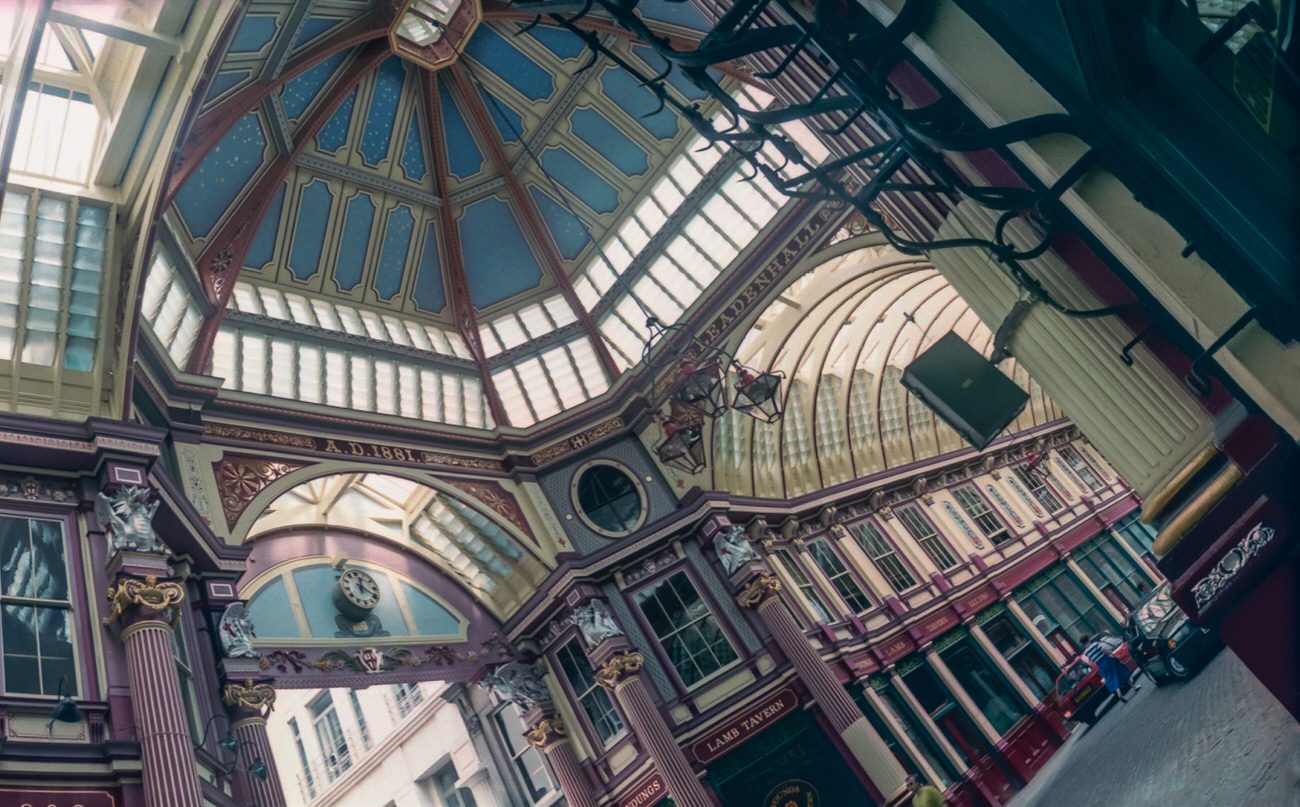
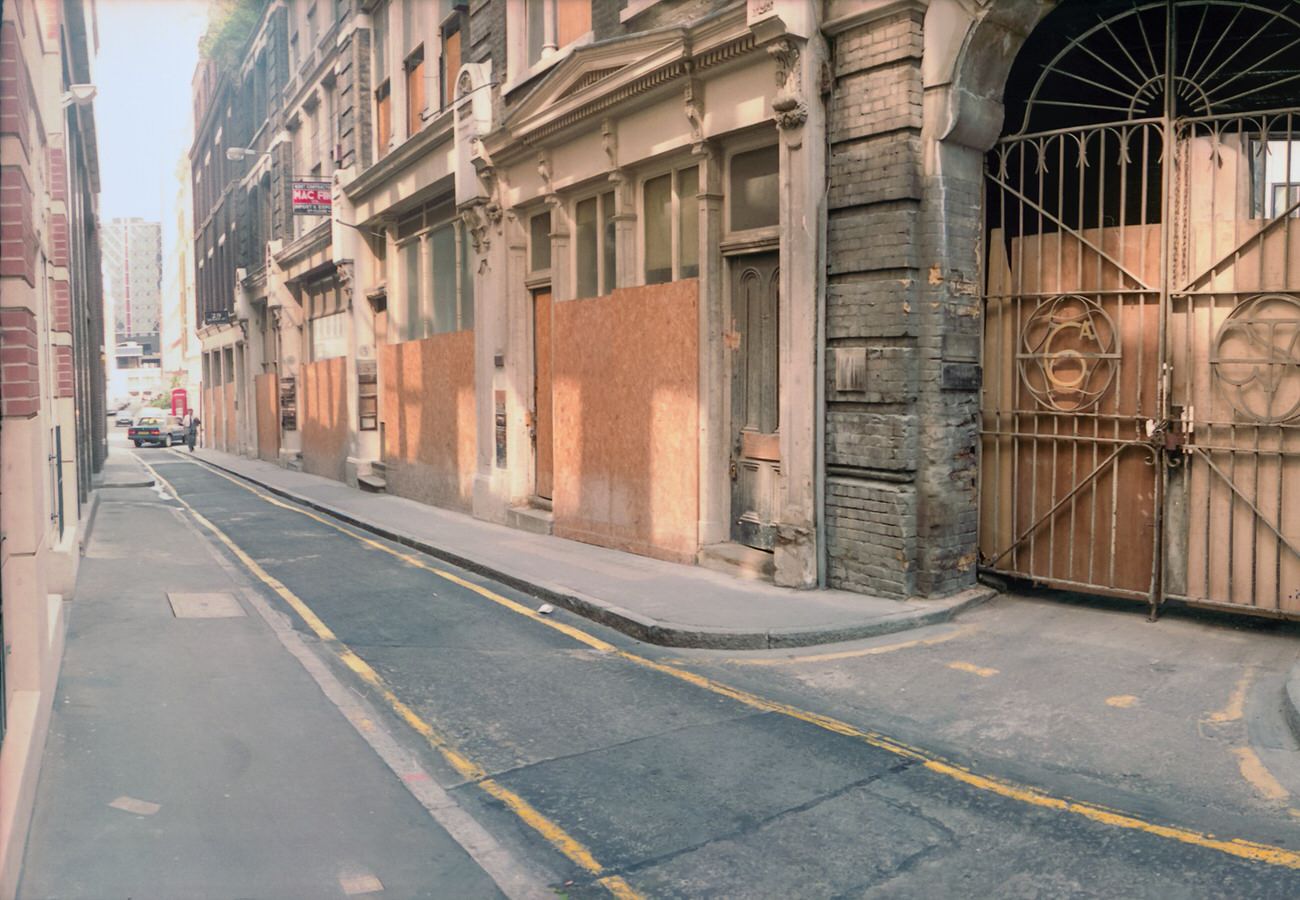
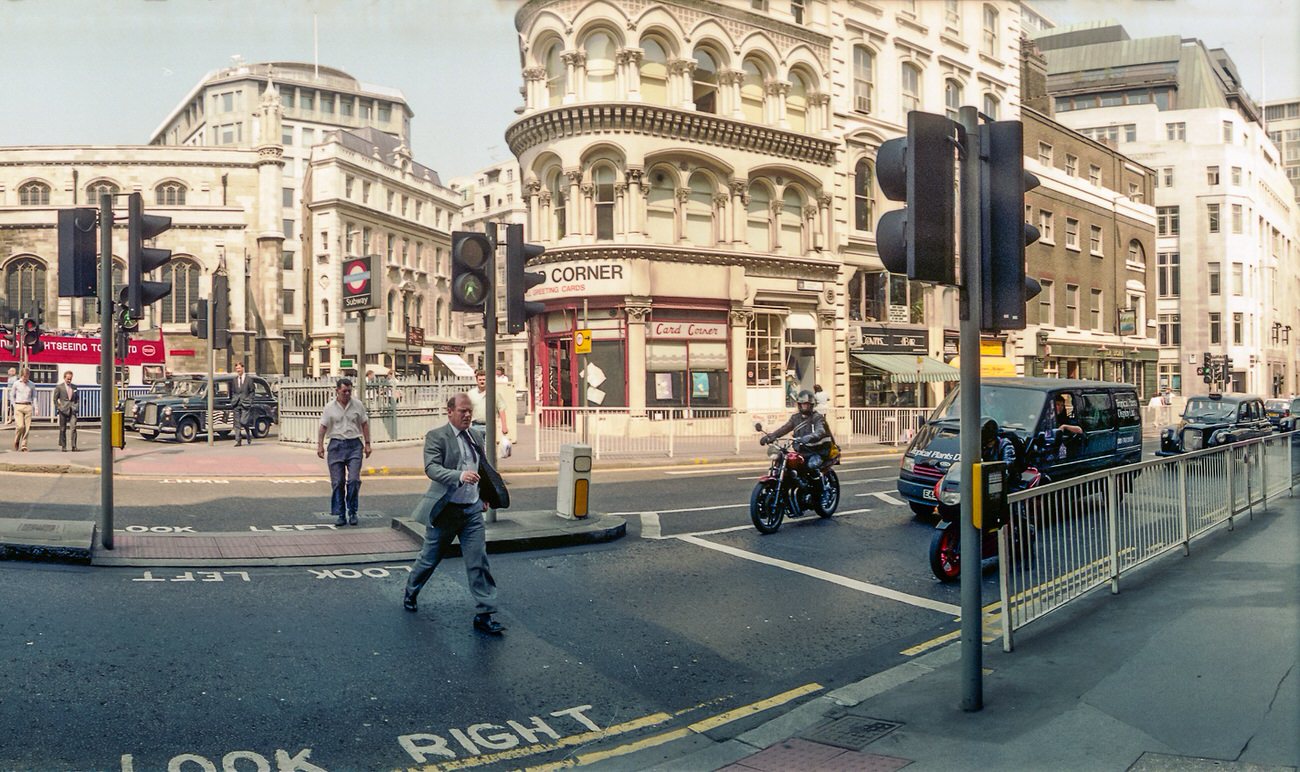
Blackfriars Bridge, connecting the City to the South Bank, carried both road and foot traffic across the Thames. Marshall photographed it in 1992, a year when London was under a real and sustained terrorist threat. The IRA had detonated a bomb at the Baltic Exchange in April of that year, killing three people and injuring over a hundred. The City’s streets carried an edge of tension that Marshall’s photographs quietly record.
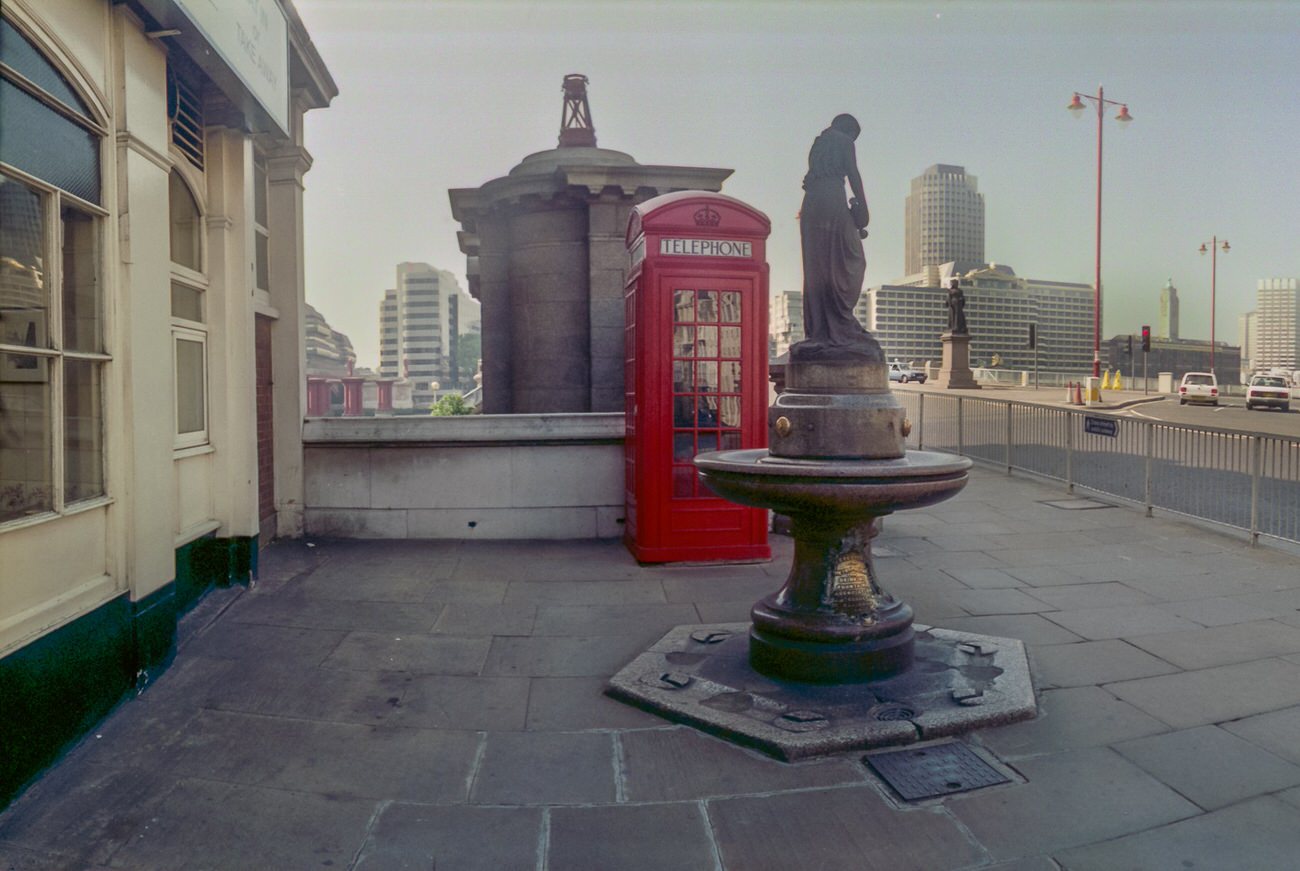
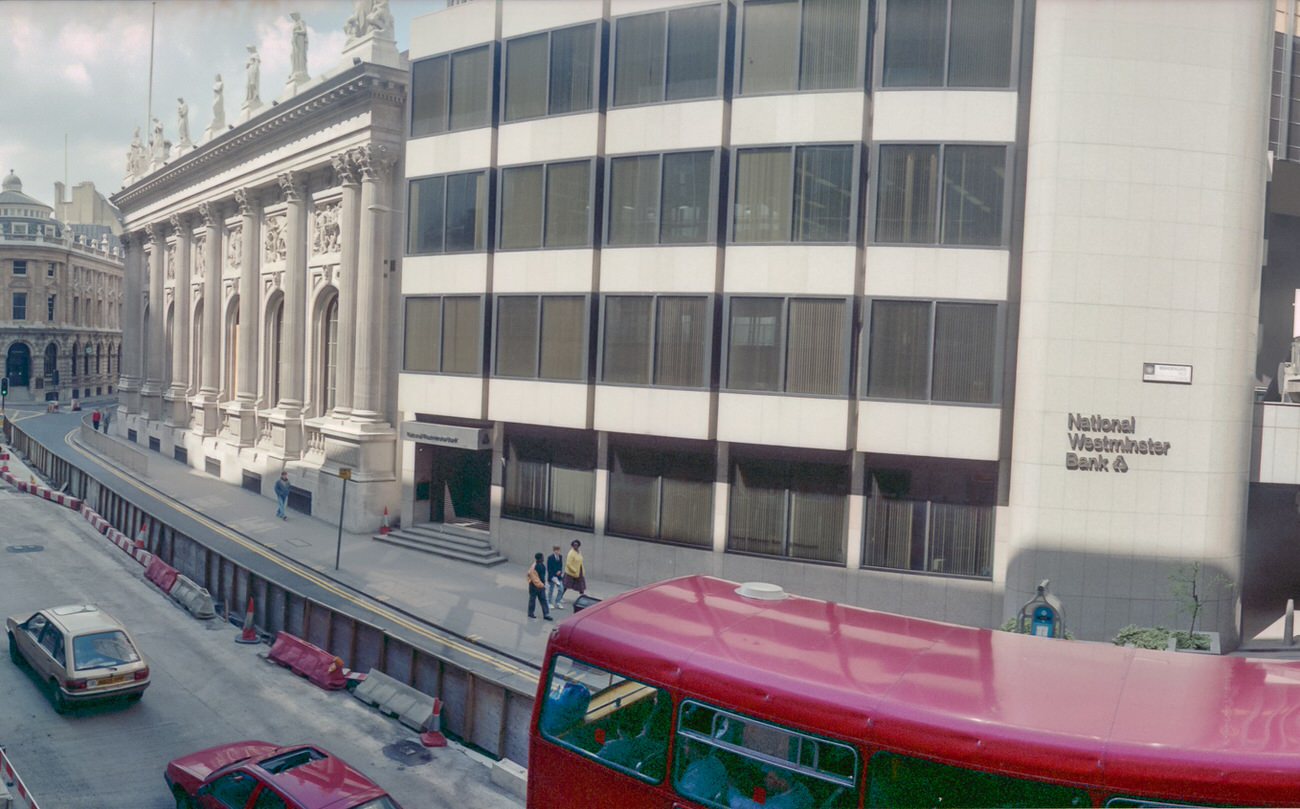
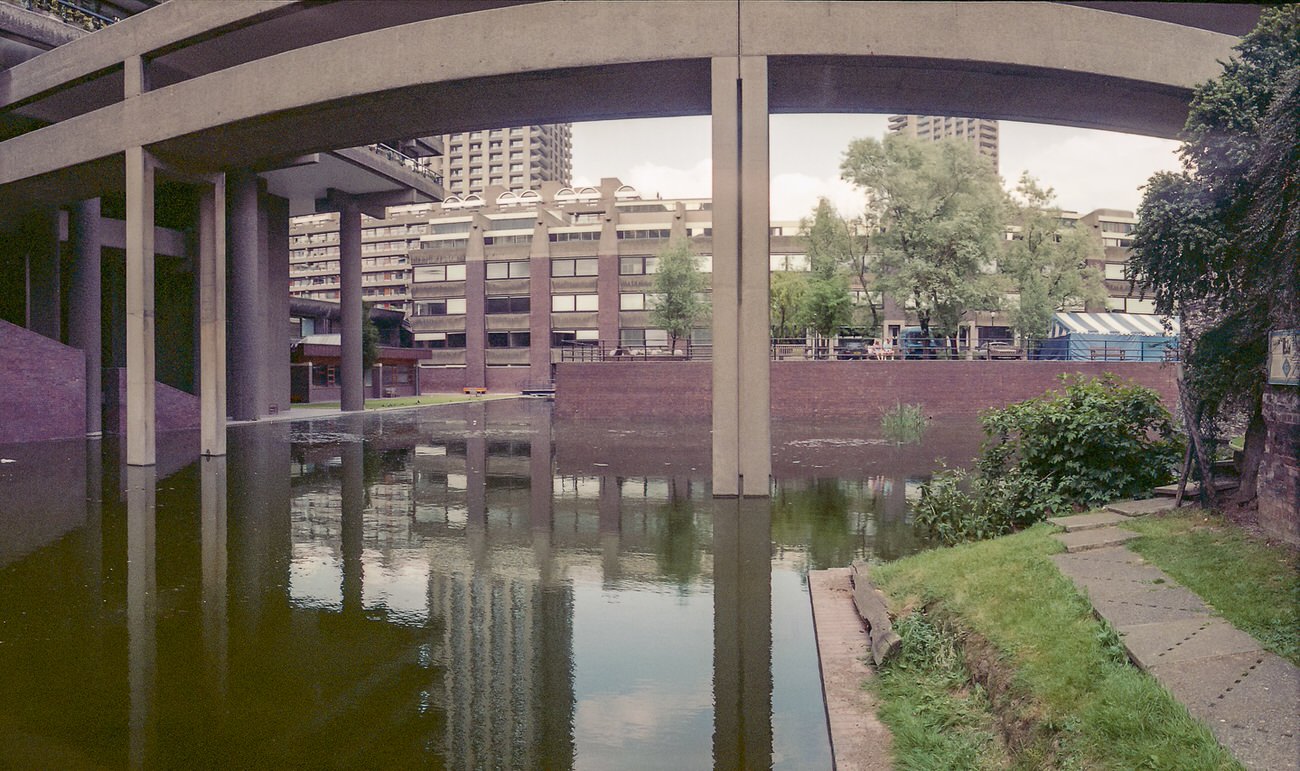
West Smithfield bordered both the meat market and St Bartholomew’s Hospital, one of the oldest hospitals in the world. The open space had historically been used for public executions, tournaments, and fairs. By 1992, it was a junction of delivery trucks, nurses on break, and commuters cutting through from Farringdon Station.
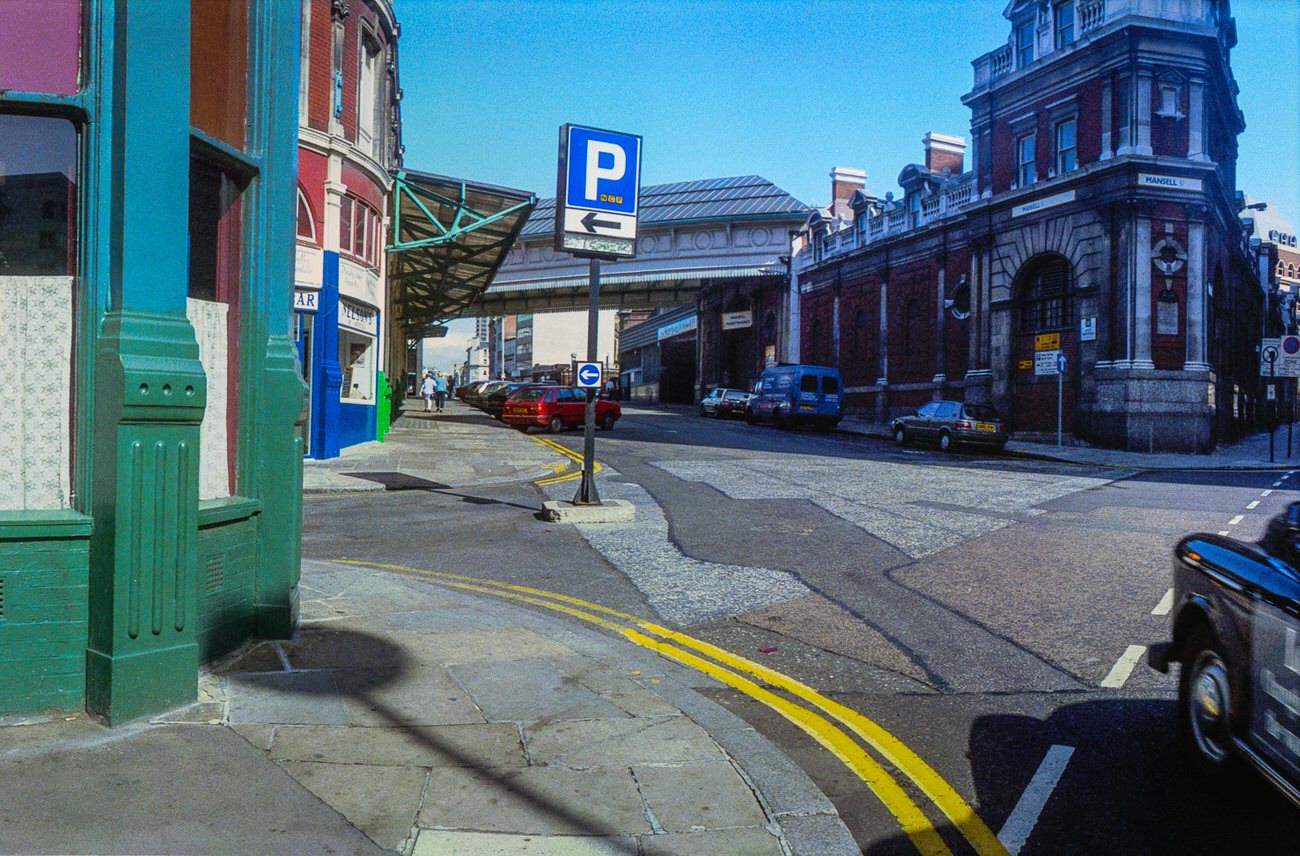
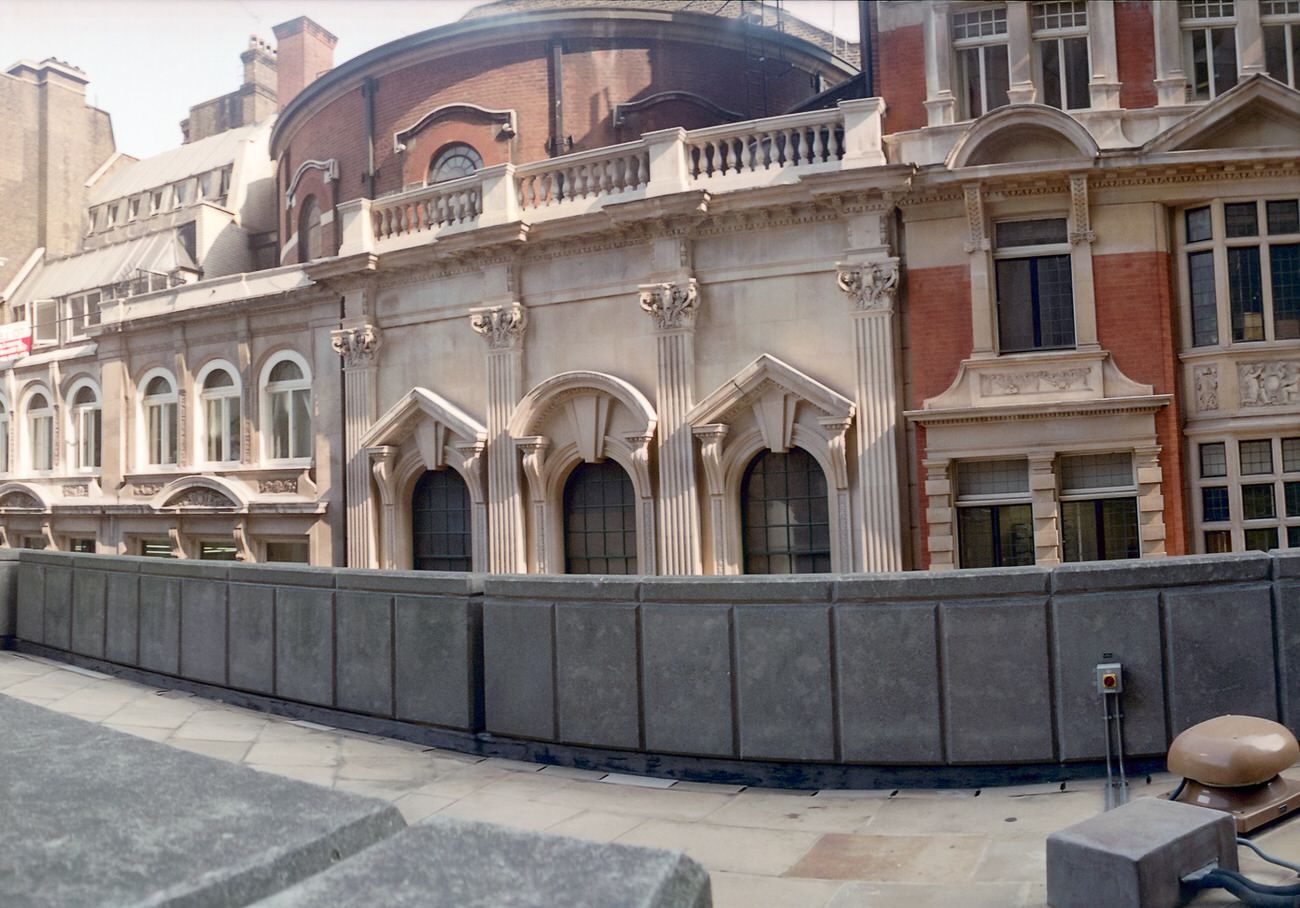
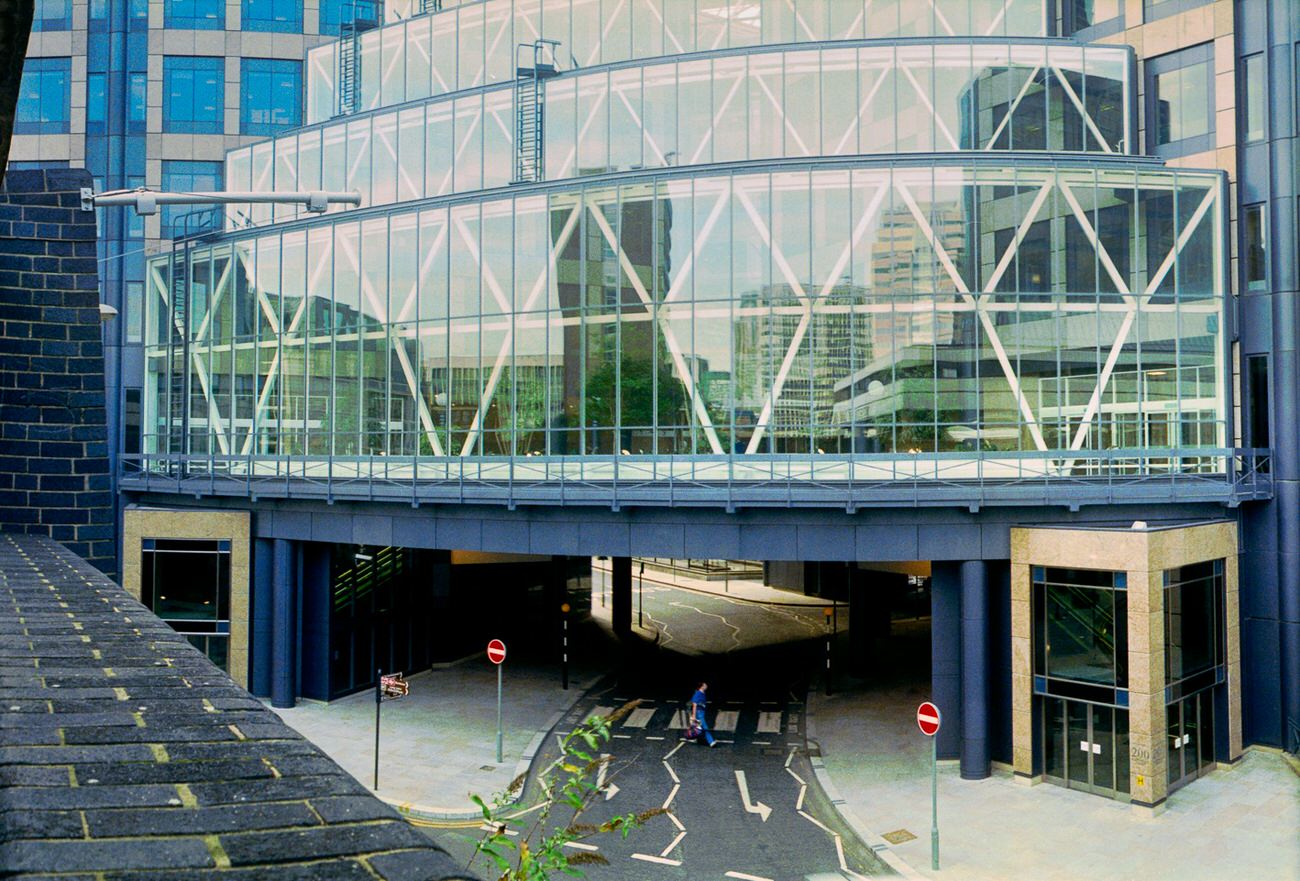
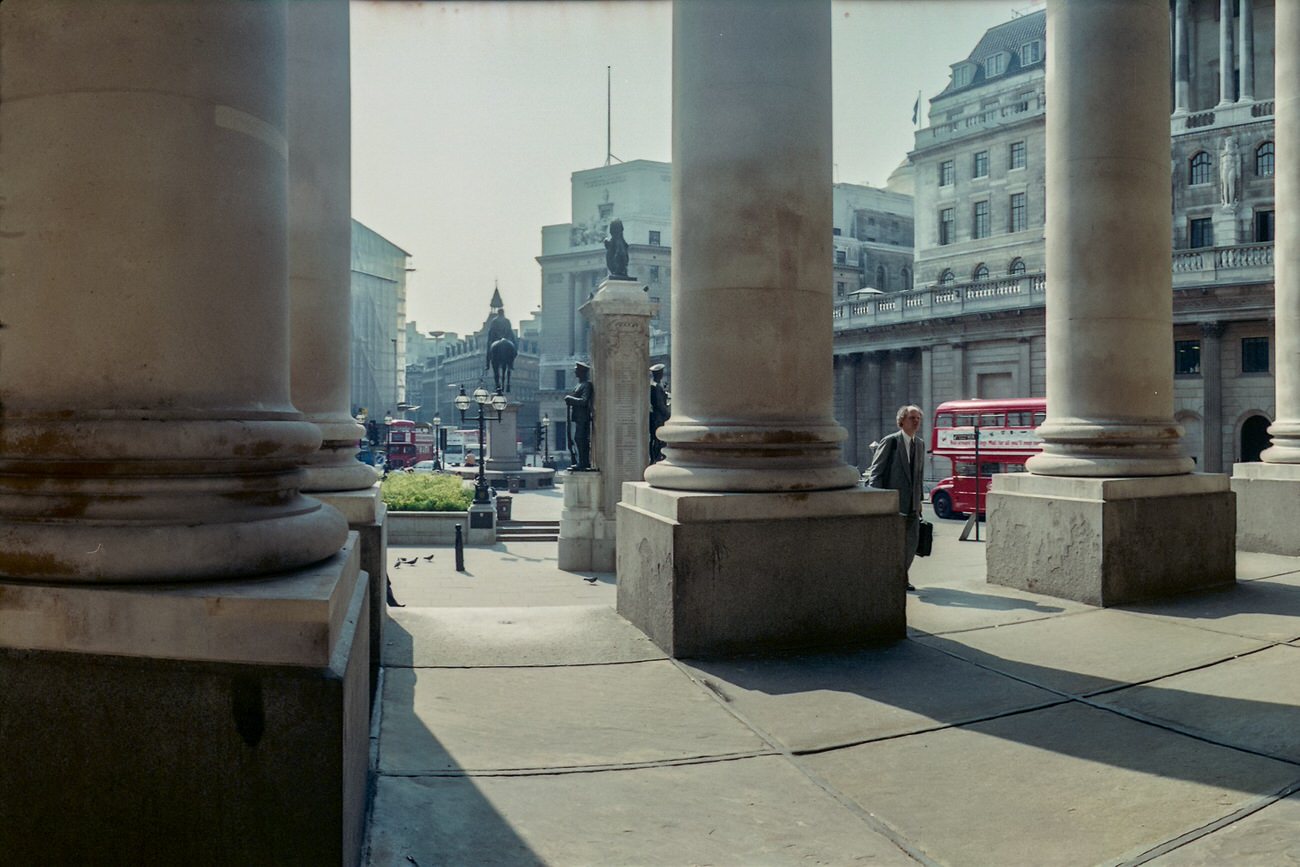
The Royal Exchange, originally built in the sixteenth century as a centre for merchants to conduct business, had by 1992 ceased to function as a trading venue. It stood at the junction of Threadneedle Street and Cornhill, flanked by the Bank of England, its columned portico one of the most photographed facades in the City.
Leadenhall Market appeared in Marshall’s work more than once — a sign of how central it was to the daily life of the City. At peak hours, the covered lanes filled with workers grabbing food, stopping at wine bars, or simply passing through. The market’s Victorian shell gave it a timeless quality that made it feel removed from the financial chaos happening just outside.
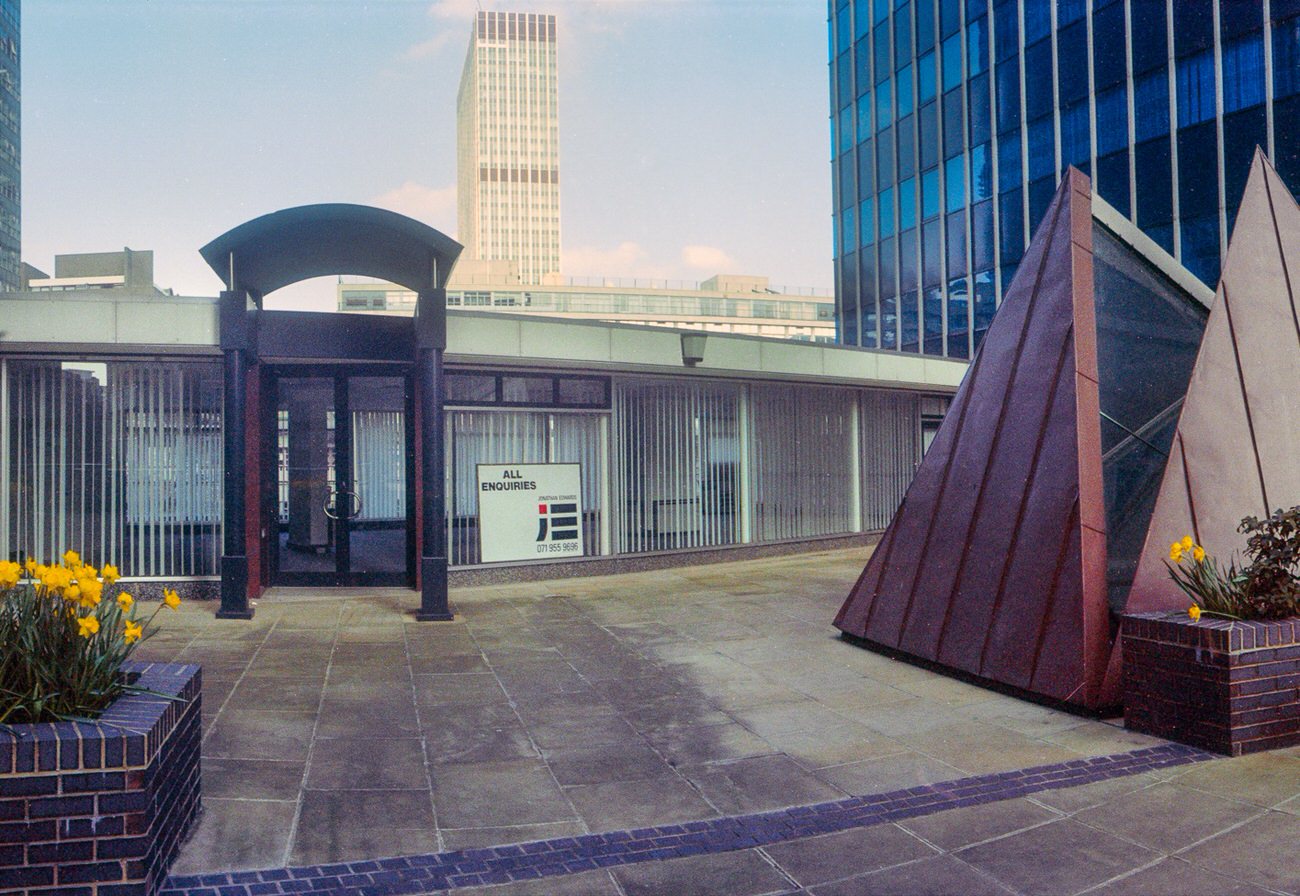
The highwalks and elevated pedestrian routes of the Barbican and London Wall area were a 1960s planning experiment — the idea being that pedestrians and cars would be entirely separated on different levels. By the early 1990s, parts of this network were underused and often confusing, but they remained a distinctive feature of the City’s postwar landscape.
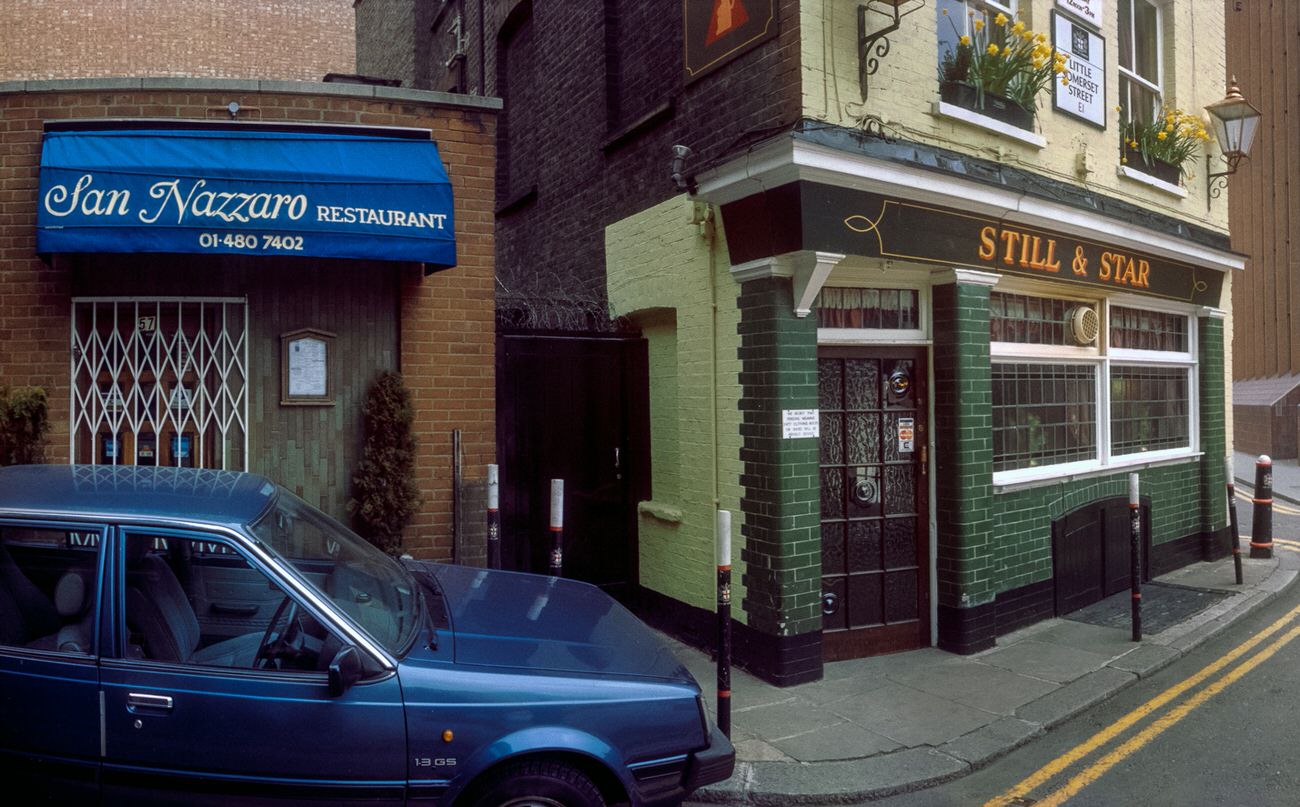
The Still & Star on Little Somerset Street was one of the older surviving pubs in the area. Small, plain, and easy to miss, it served the kind of crowd that preferred a quiet drink away from the busier City bars. Marshall’s photograph of it placed it among the other details of a working city — unremarkable to those who passed it daily, but worth preserving.
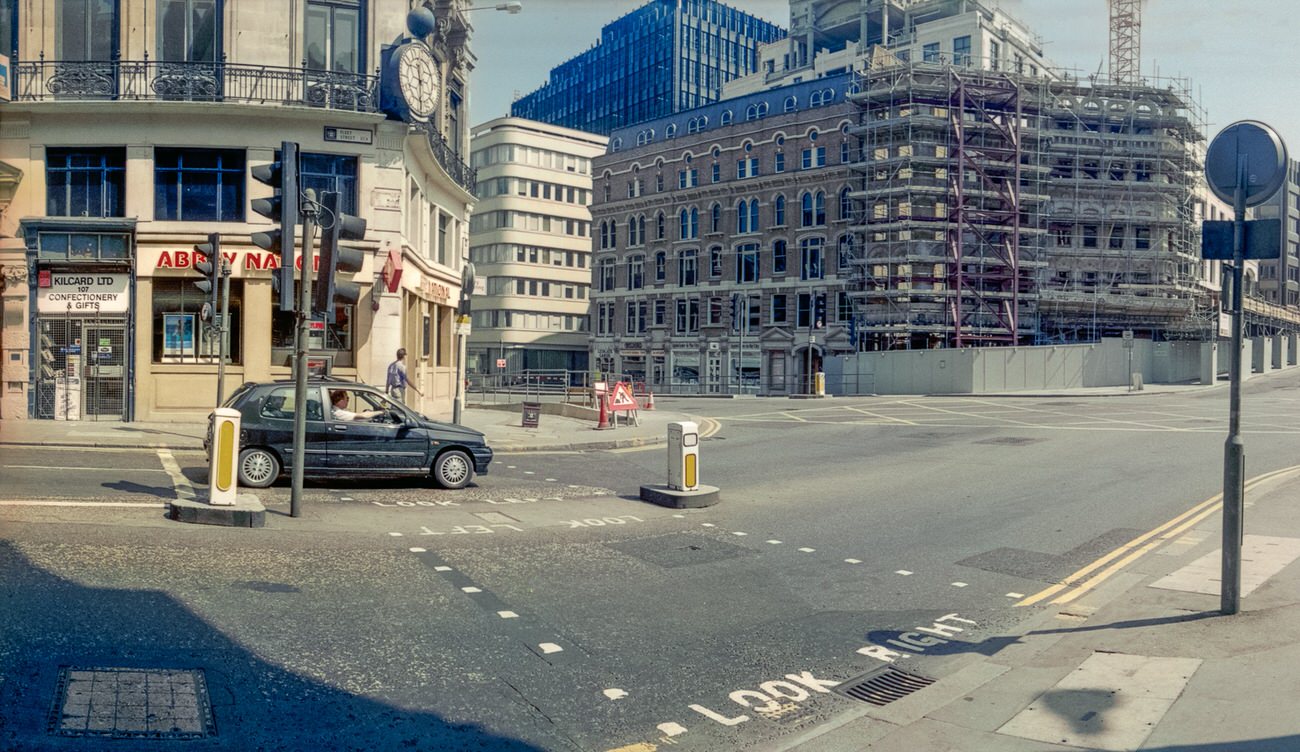
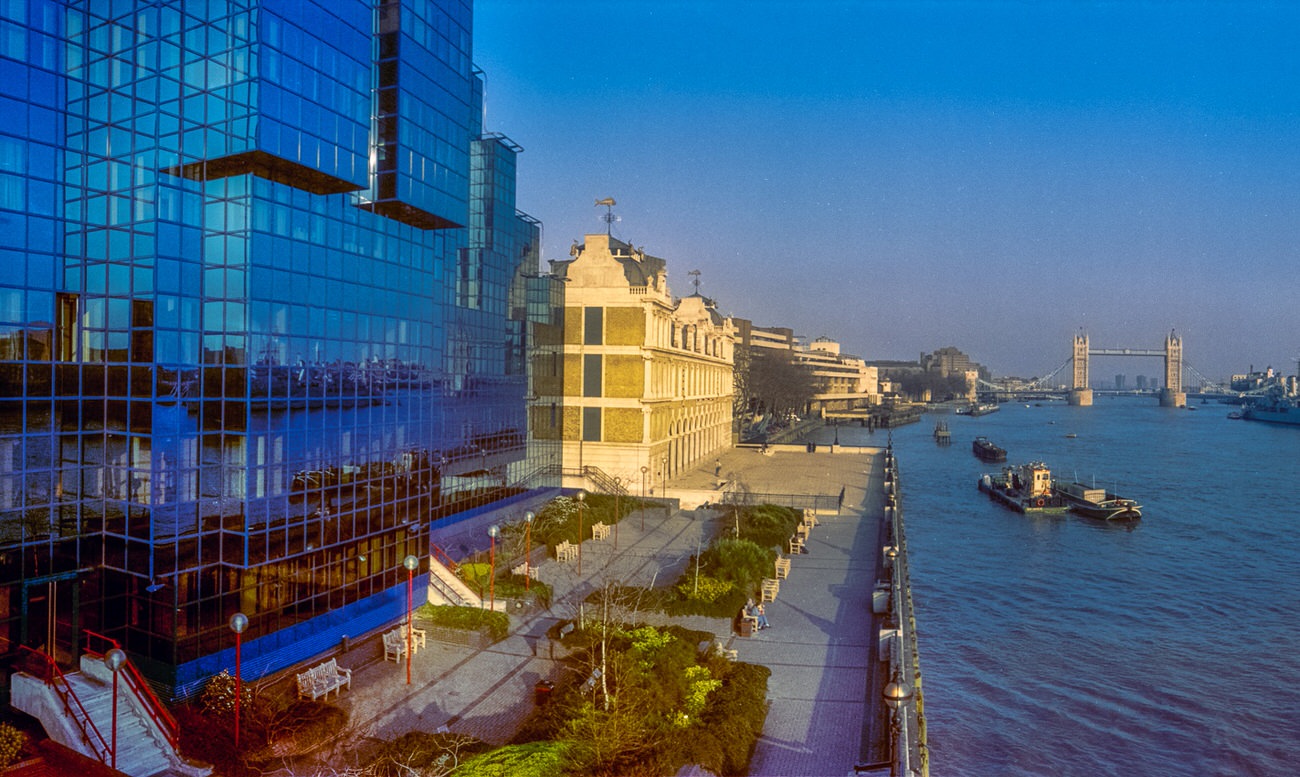
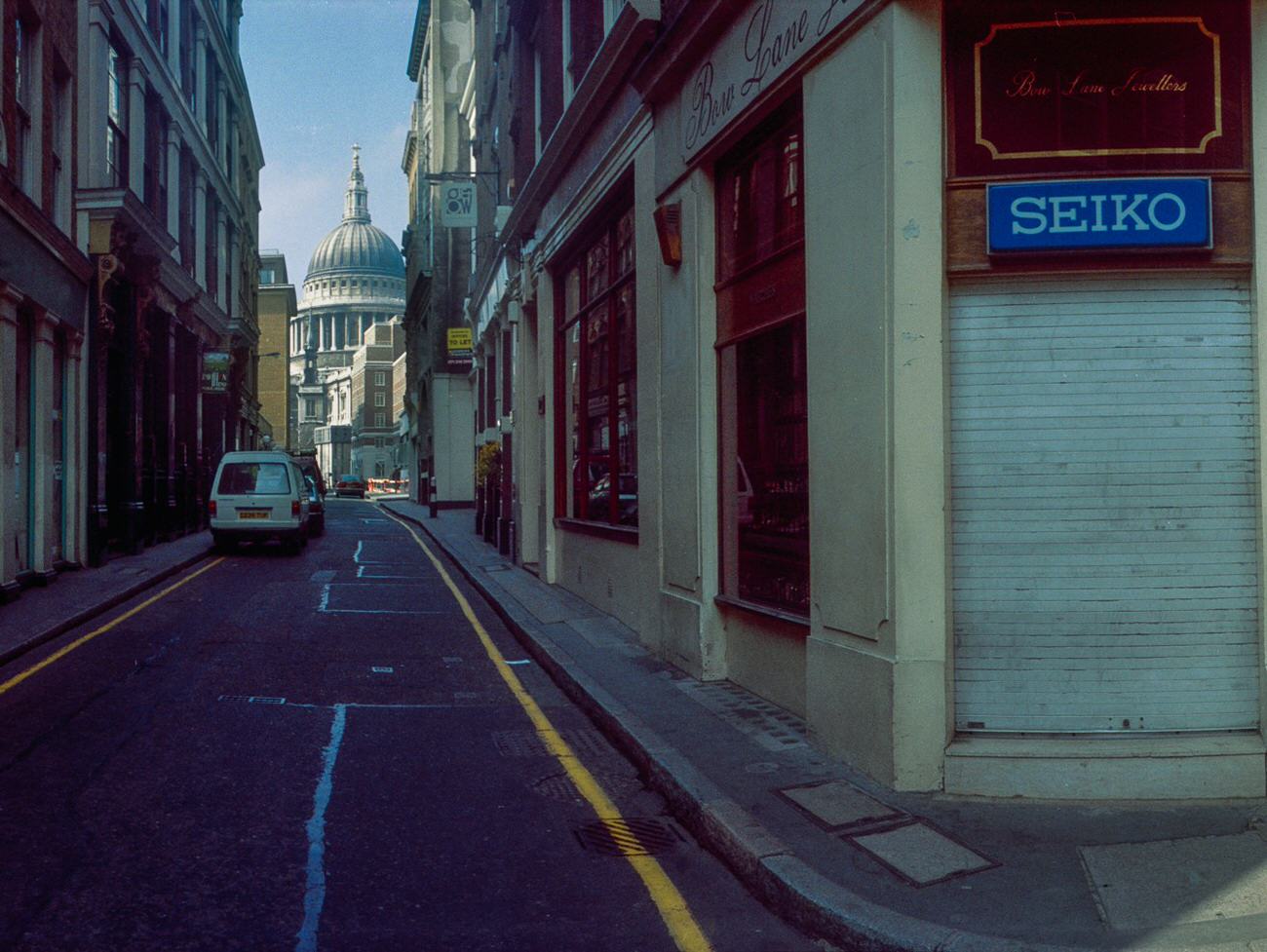
Construction was active across the City in 1992. The Jubilee Line Extension was underway, and various development projects were reshaping streets and skylines. Building sites on Ludgate Hill reflected how much the area around St Paul’s Cathedral was being physically reworked during this period. The result would alter views of the cathedral that had existed for decades.
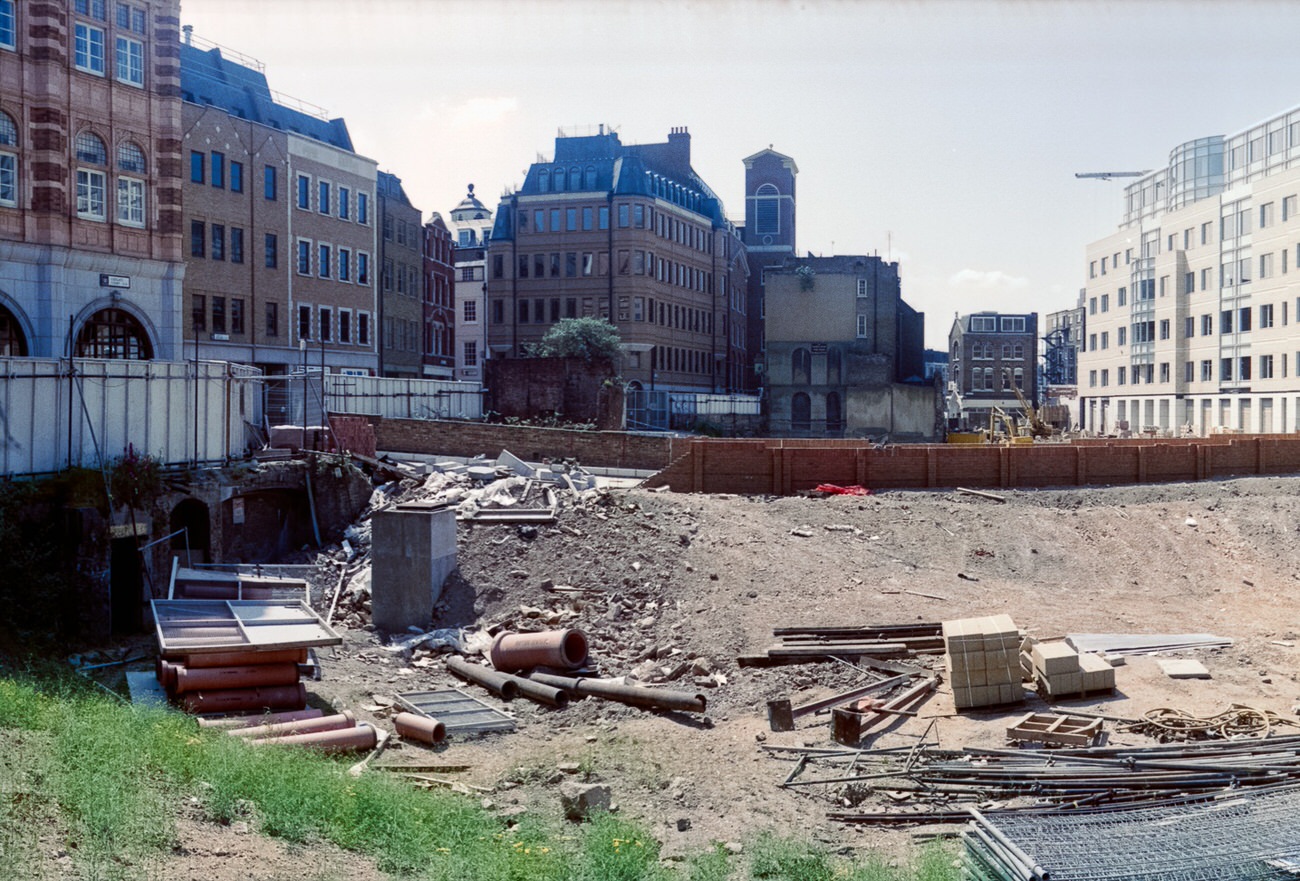
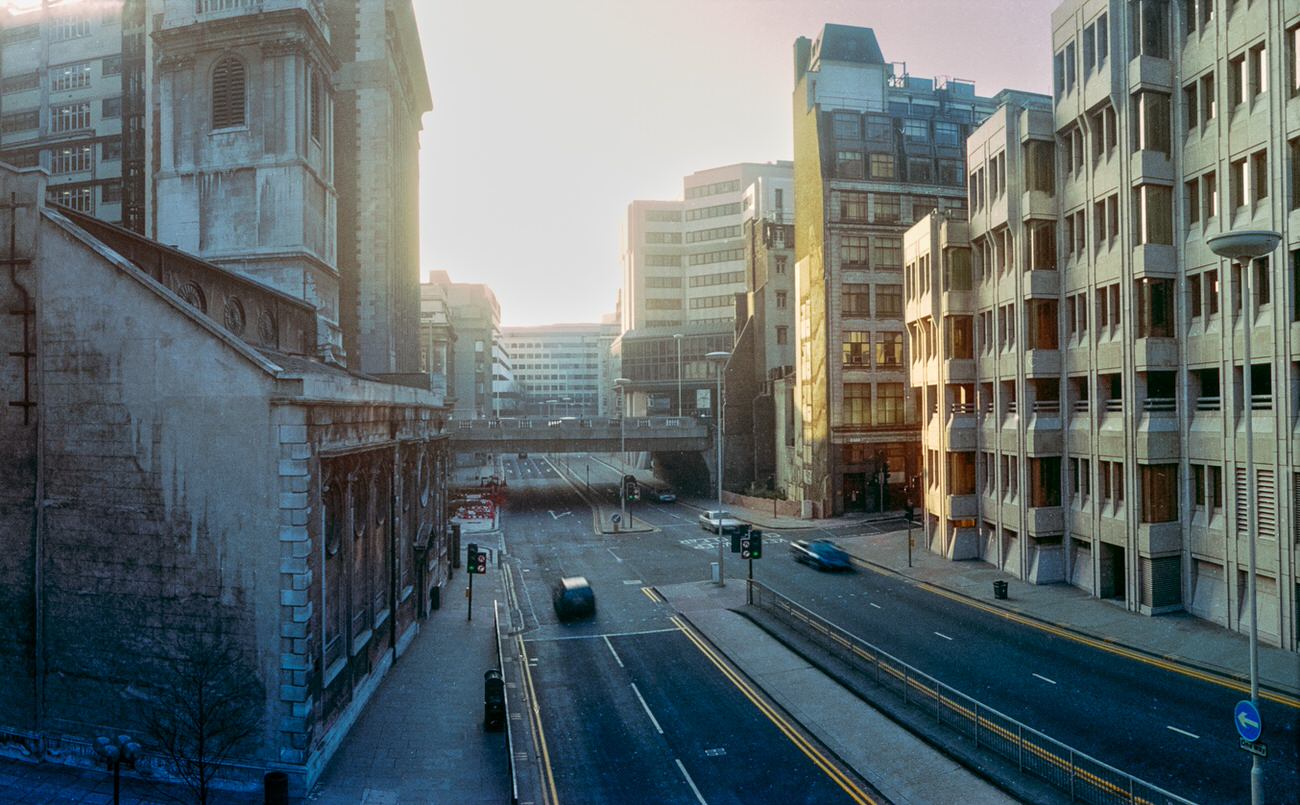
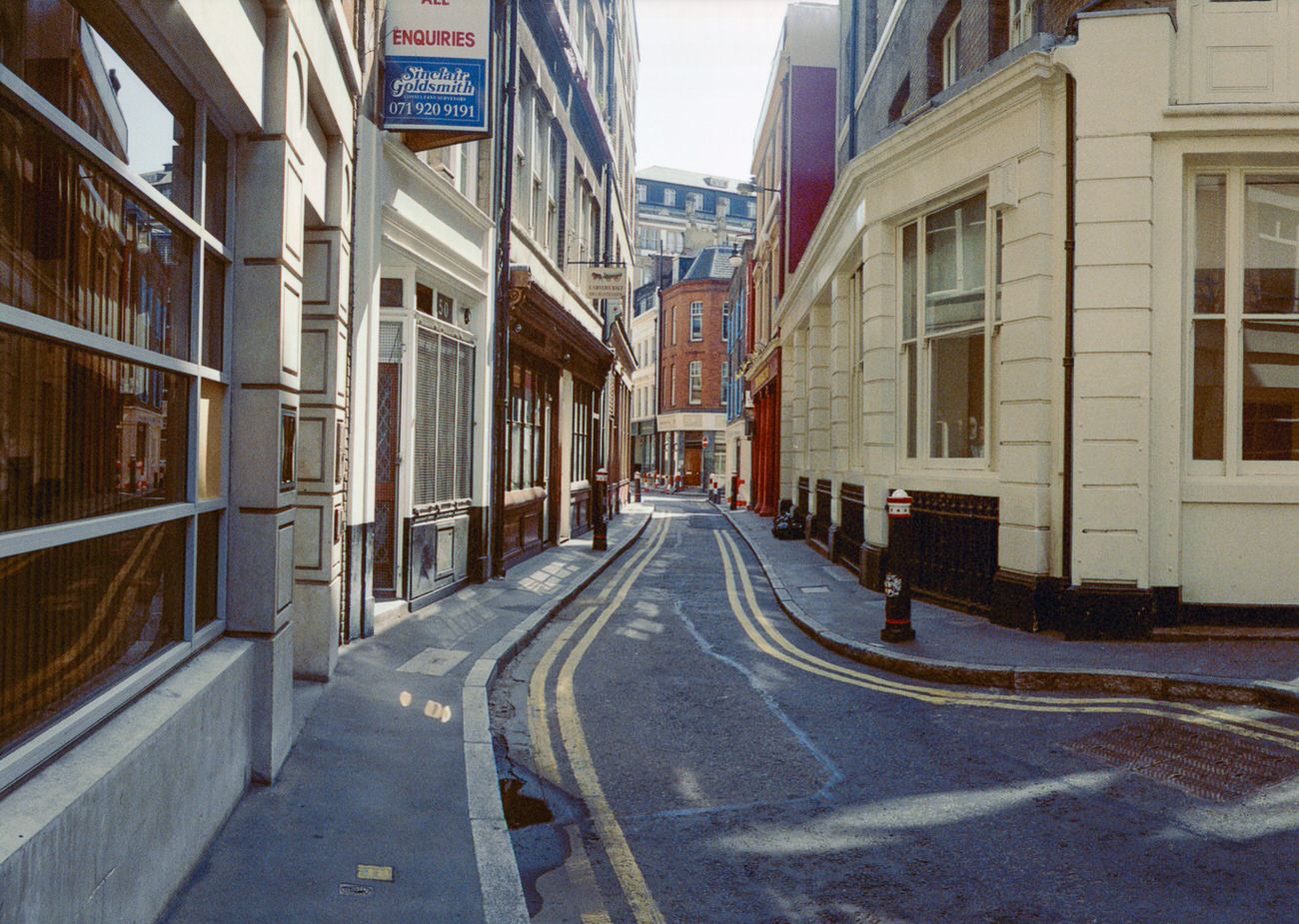
Swan Lane Pier near London Bridge was one of several Thames piers used by the river bus services that ran through the city. The Thames was still very much a working river in 1992, carrying commercial traffic as well as the growing number of commuter and leisure boats. Marshall photographed it against the familiar backdrop of London Bridge and the surrounding riverfront.
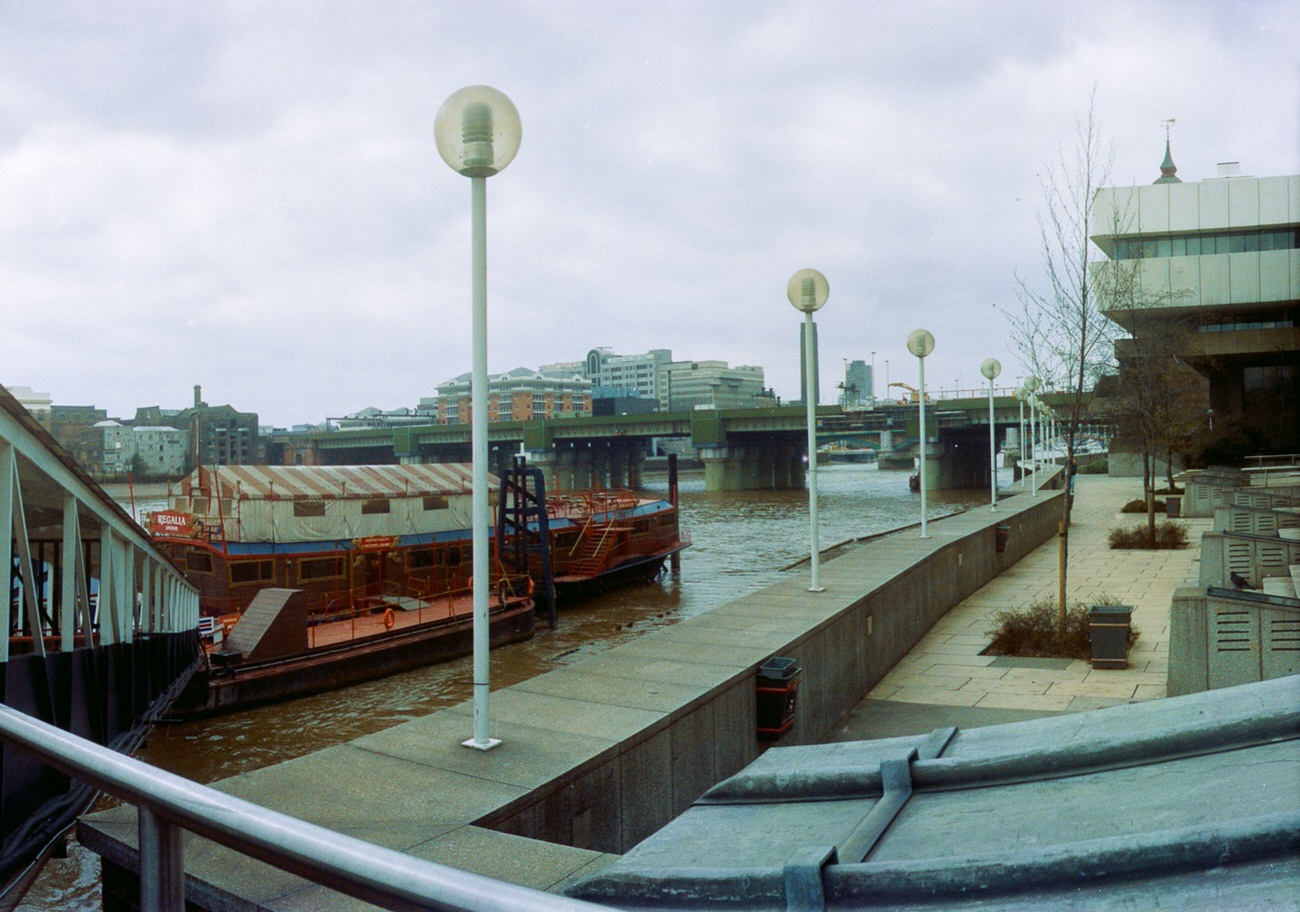
Baynard House on Queen Victoria Street was a large postwar office block built on a site with deep historical roots. The original Baynard’s Castle, a medieval fortress, had stood nearby until the Great Fire. By 1992, the name survived only in the building that replaced what had come before — a pattern repeated all across the Square Mile, where history lived in street names and building names long after the original structures were gone.