In 1868, Kyoto lost its status as Japan’s capital after more than a thousand years. The emperor moved to Tokyo, and the Meiji Restoration began reshaping the entire country. Western technology, education, and ideas flooded in. Yet Kyoto held its ground as a cultural heart of Japan.
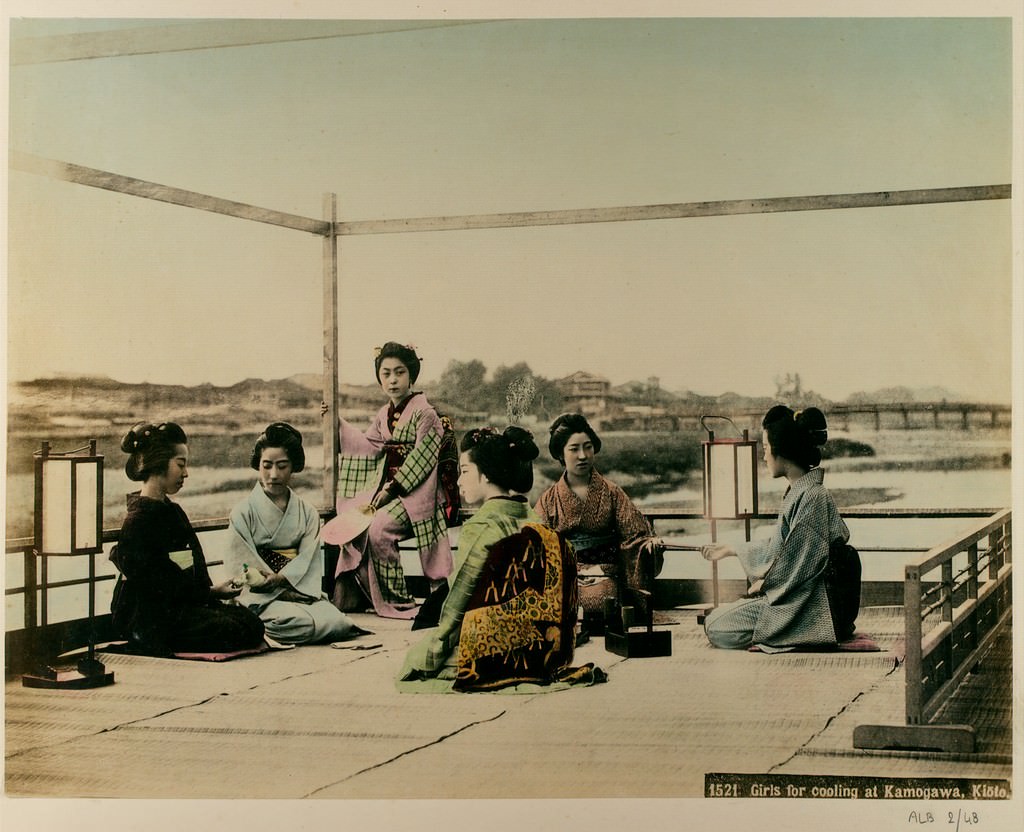
The Kamogawa River ran through the city and was a gathering place for locals, especially during hot summers. Life along the river continued much as it had for generations, even as the world around it changed quickly.
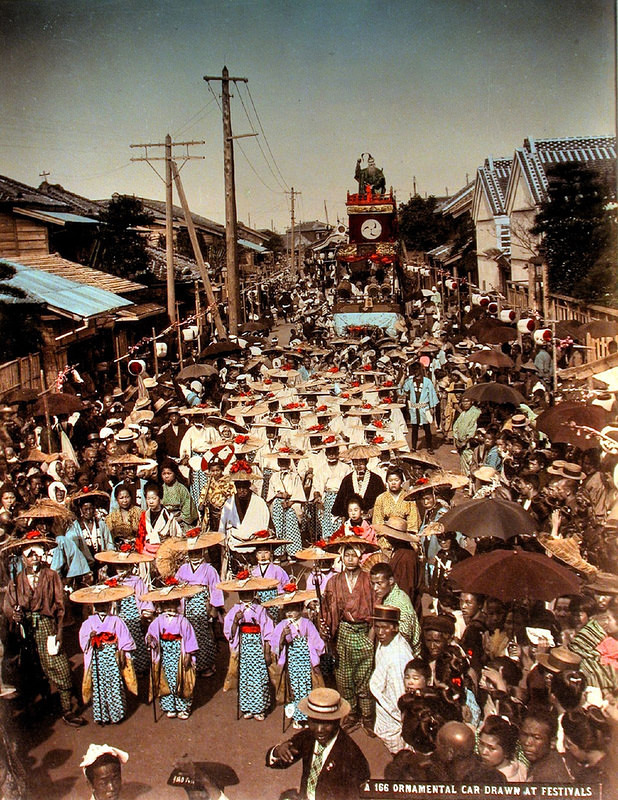
Kyoto’s festivals remained a vital part of city life. Elaborate processions wound through the streets, drawing crowds from across the region. Craftsmen in the city produced the textiles, lacquerware, and ceramics used in these celebrations — goods that were famous throughout Japan and beyond.
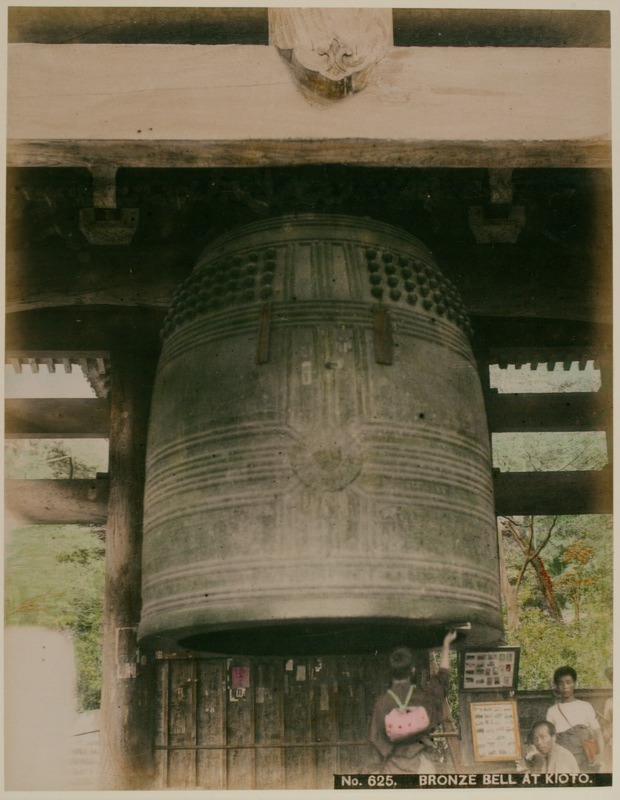
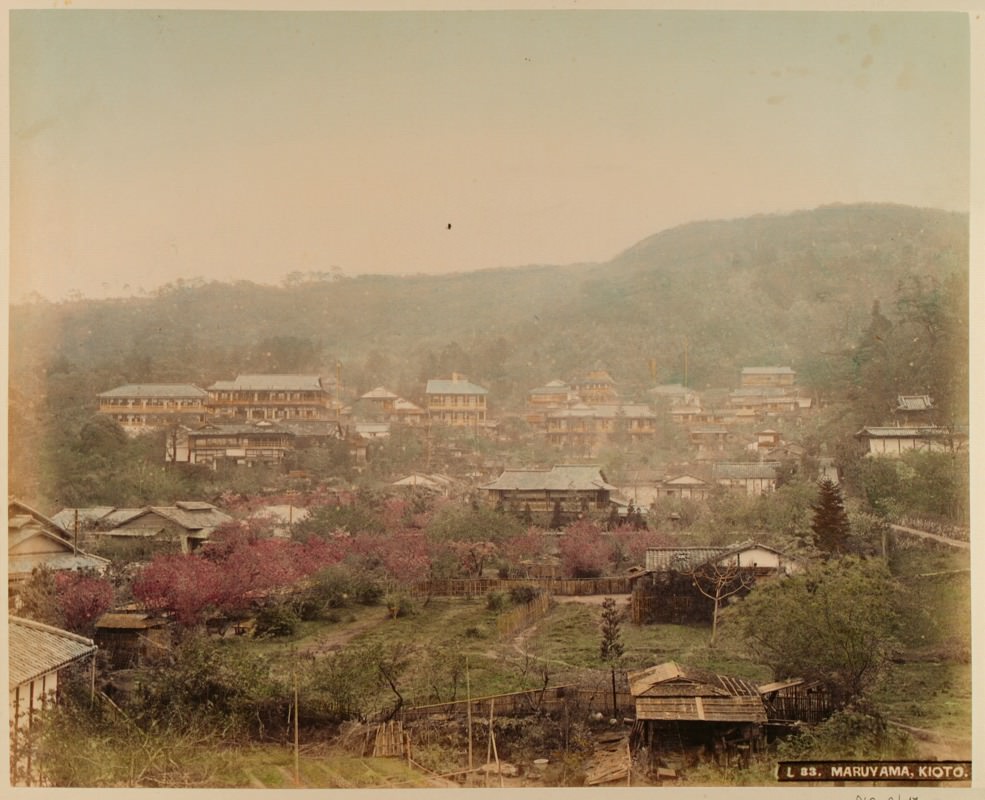
Maruyama Park was one of Kyoto’s most visited public spaces. Temples and shrines throughout the city continued to serve as centers of religious life, drawing worshippers and pilgrims year-round.
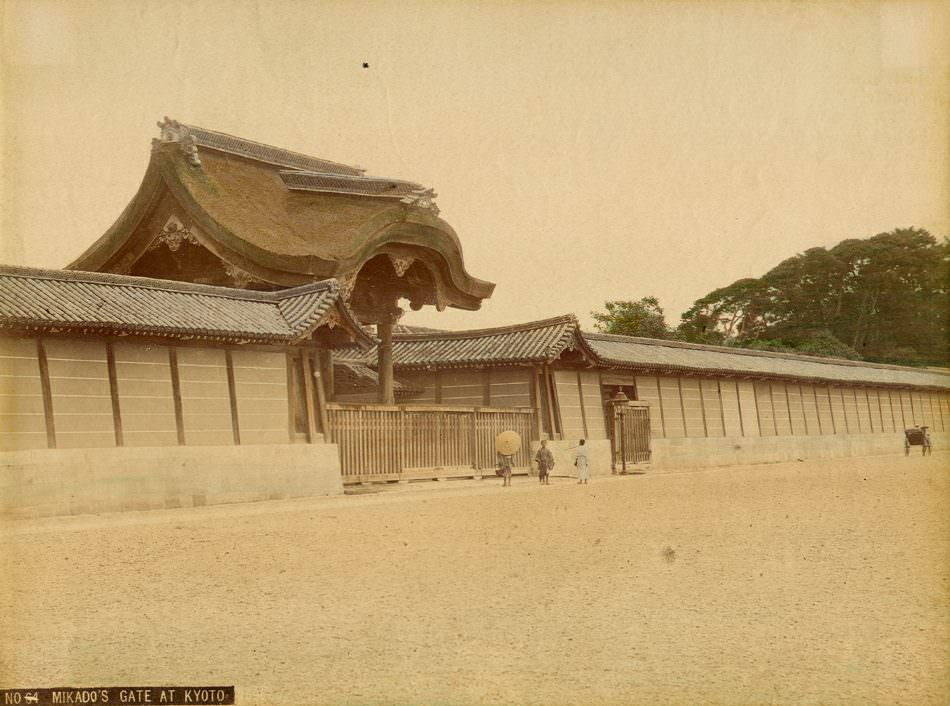
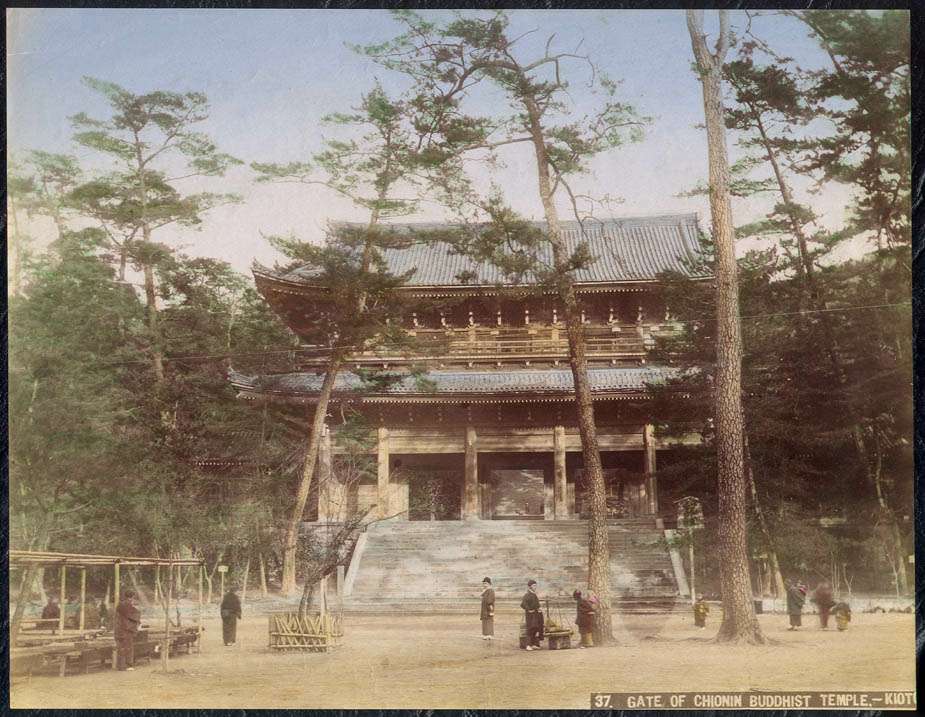
The grand gates of Kyoto’s imperial and temple complexes stood as symbols of the city’s long history. The first railway line reached Kyoto in 1877, and rickshaws were a common sight on the streets. Traditional wooden buildings stood next to newer Western-style structures, and people wore both kimono and Western clothing.
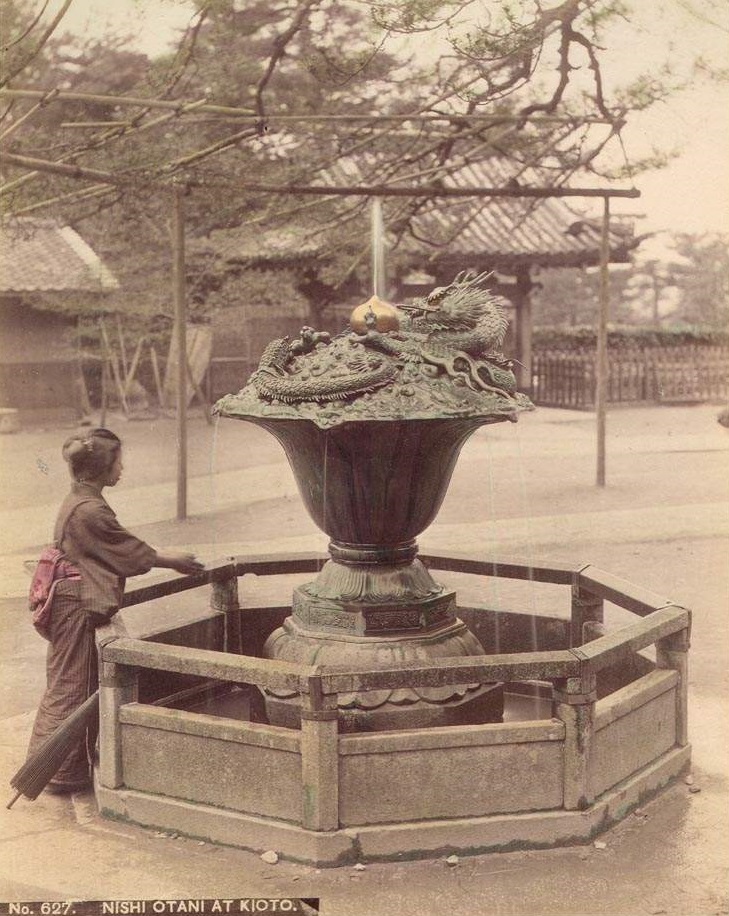
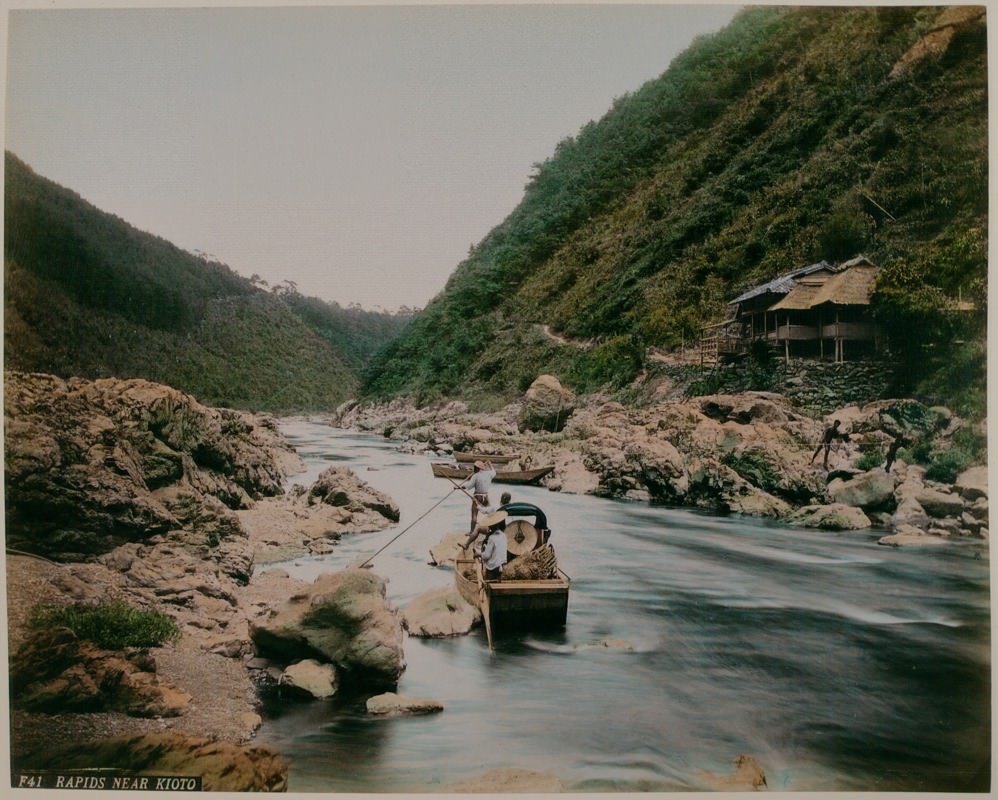
The Hozu River cut through the mountains west of Kyoto, its rapids a striking natural feature of the region. The city’s geography — rivers, hills, and wooded valleys — shaped where temples and shrines were built over the centuries.
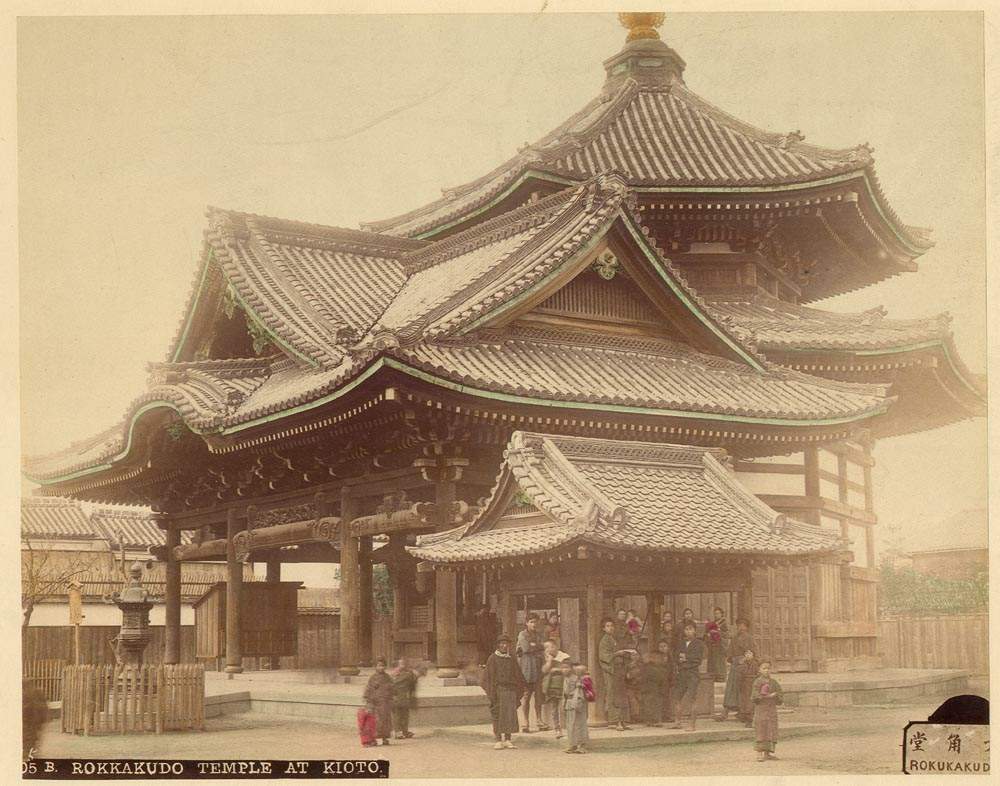
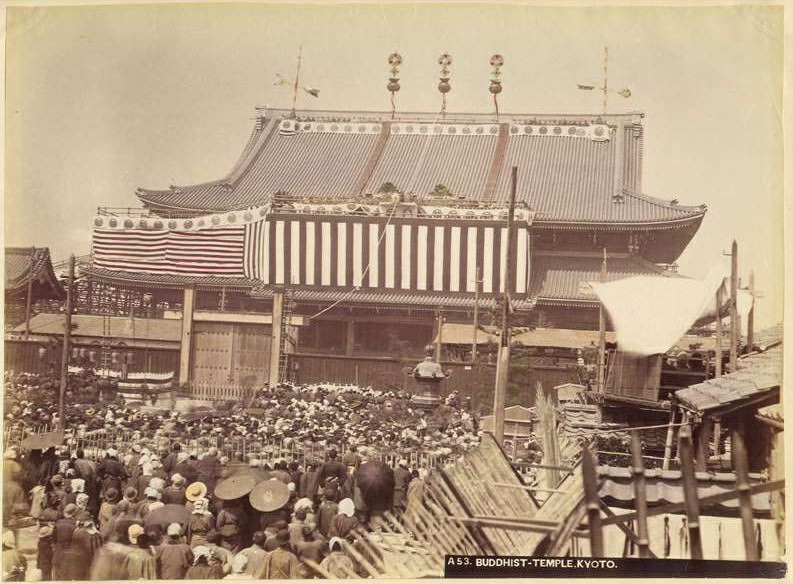
Buddhist temples were woven into every corner of the city. Kyoto’s geisha districts, including Gion, continued to thrive during this period. New schools opened across the city, teaching both traditional Japanese subjects and Western knowledge to a growing population that included migrants from rural areas.
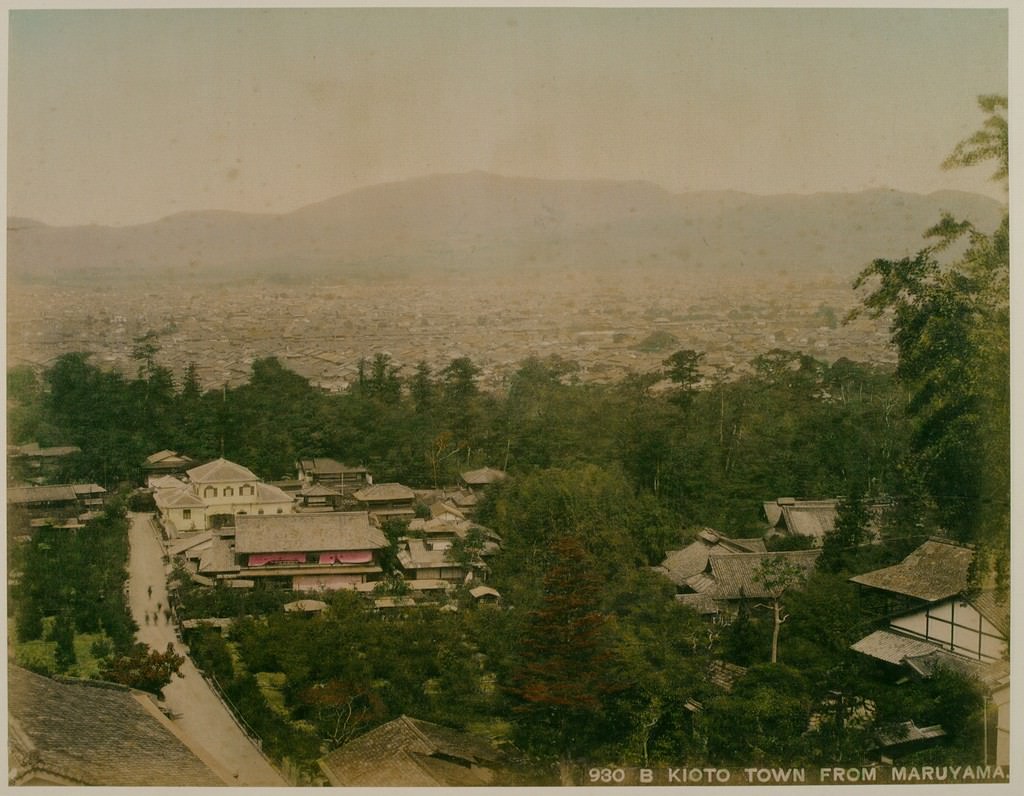
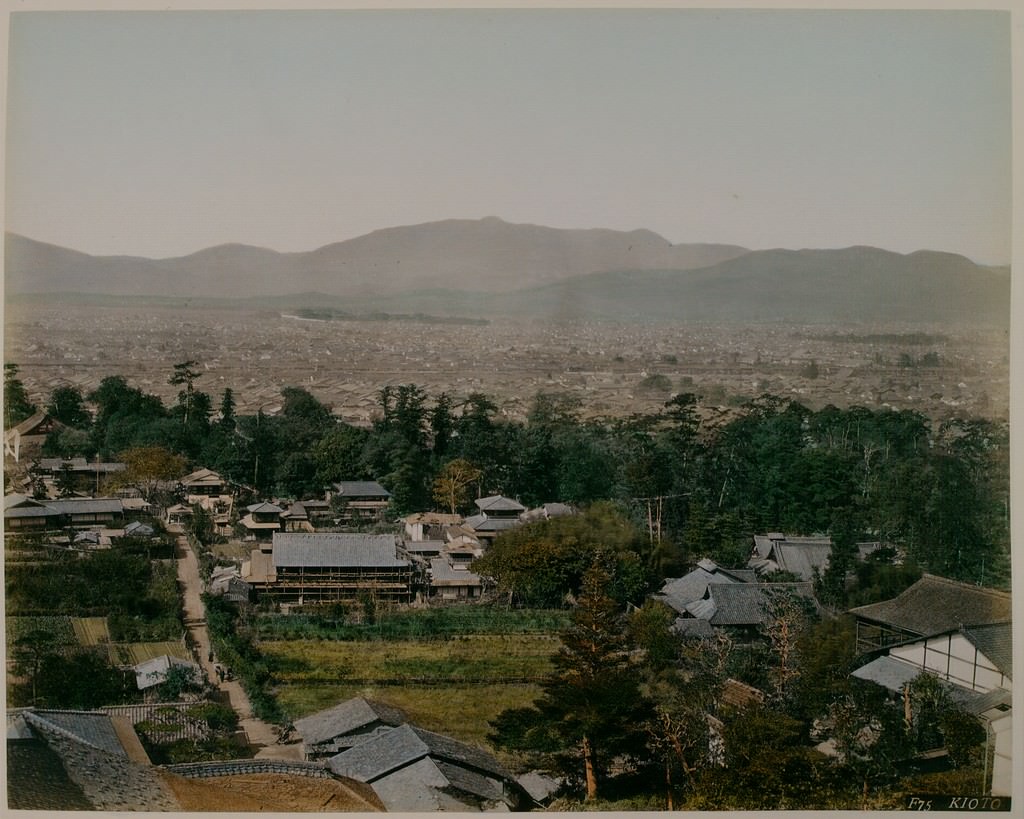
Photography was becoming more common in Japan during the 1880s. These early images captured Kyoto at a precise moment — a city modernizing under Meiji policy while its palaces, gardens, and ancient sites remained largely intact.
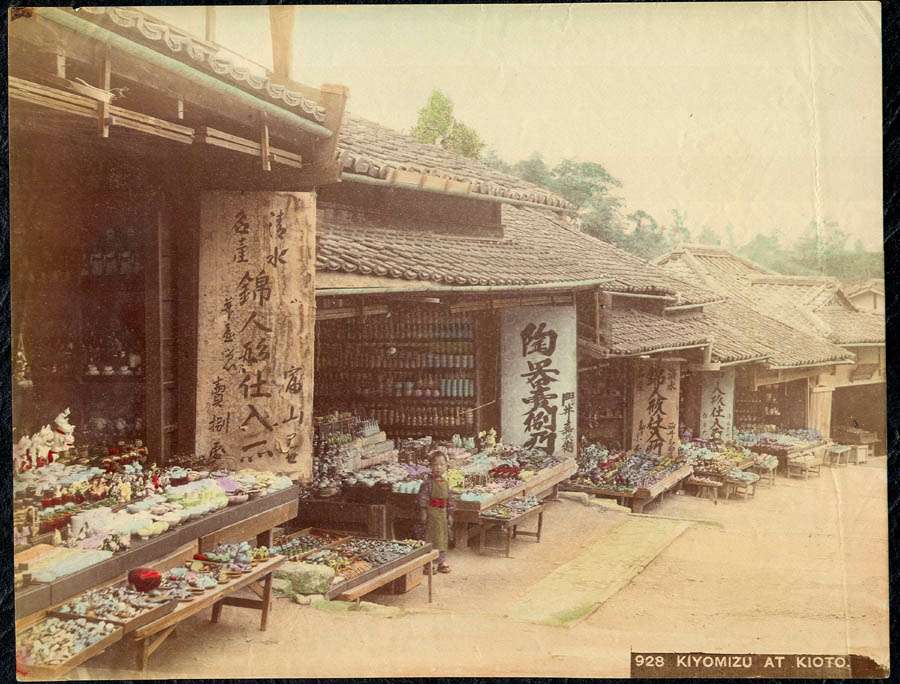
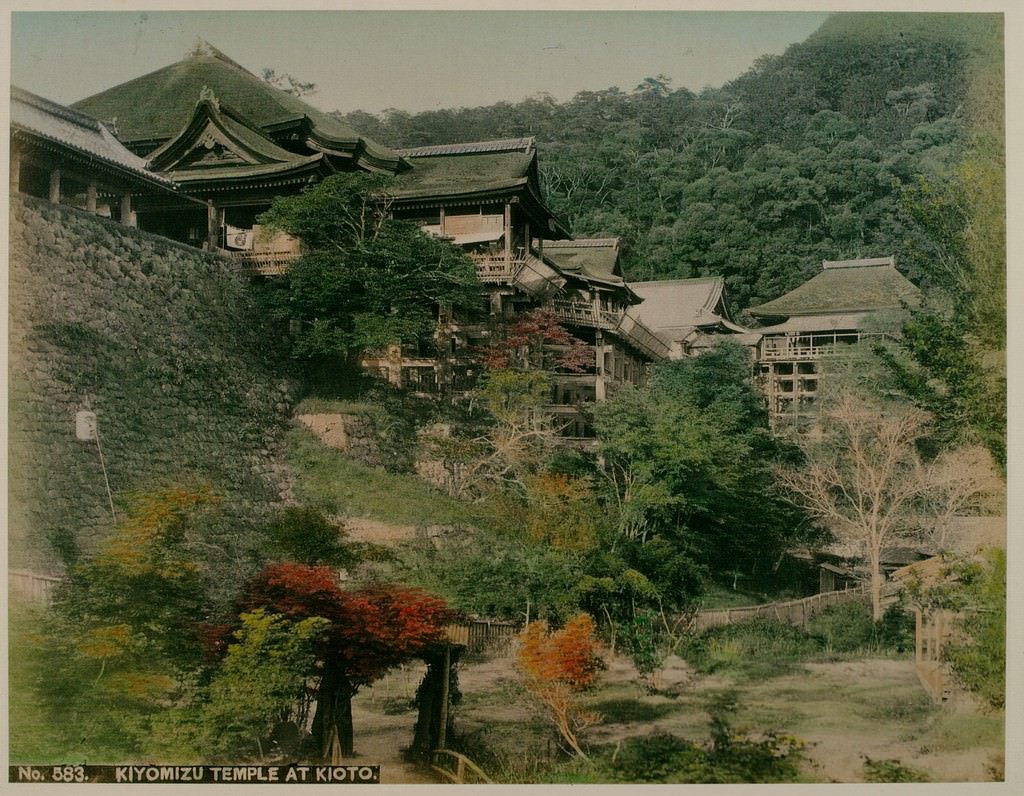
Kiyomizudera, perched on a hillside in eastern Kyoto, was one of the city’s most prominent religious sites. Its wooden stage, built without nails, extended out over the hillside and offered sweeping views of the city below.
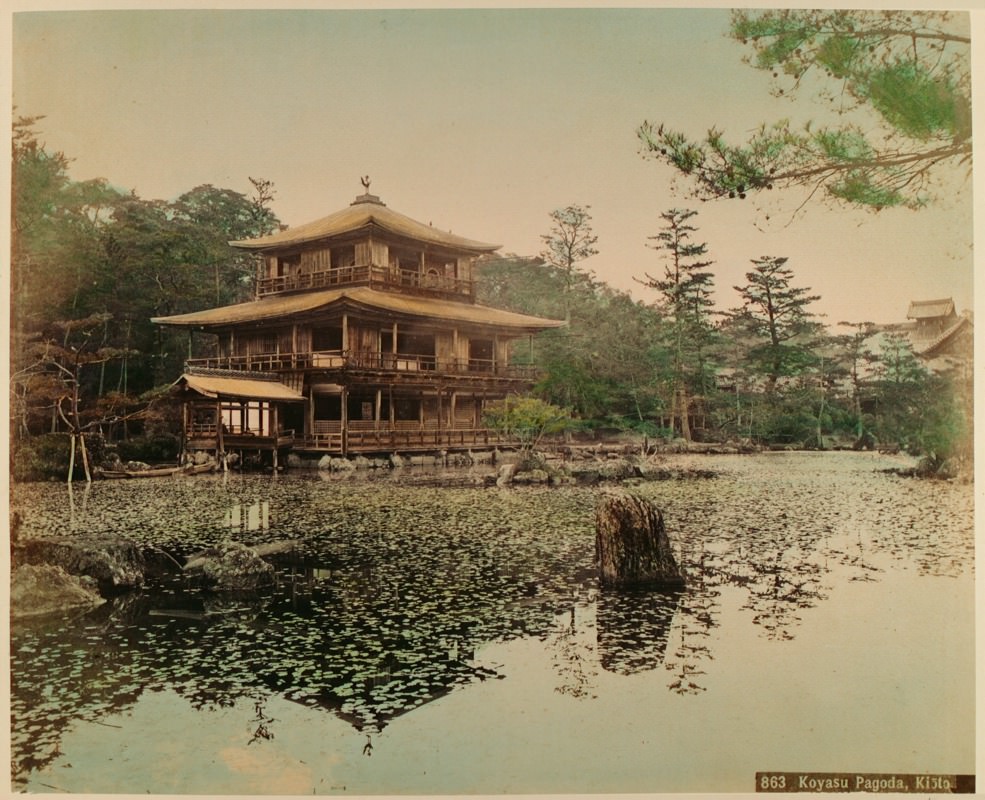
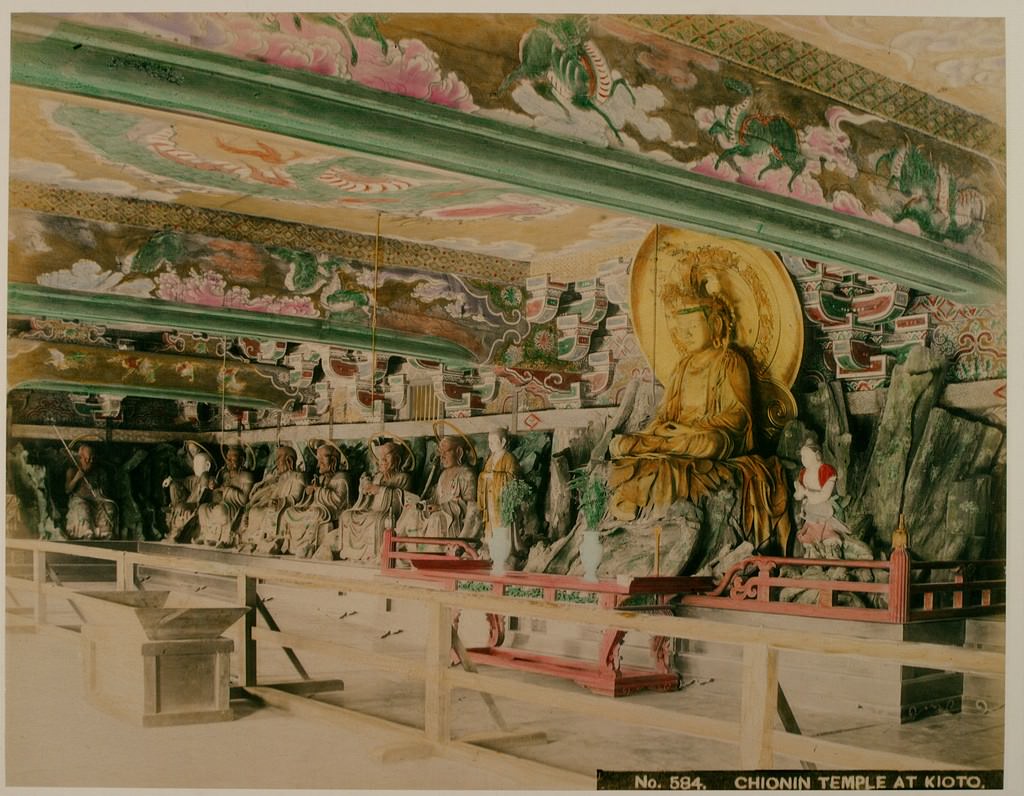
Chion-in Temple was home to one of the largest wooden gates in all of Japan. Its massive Sanmon gate and sprawling complex reflected the scale of religious architecture Kyoto had sustained for centuries, even as the Meiji government pushed the country toward a modern future.