
Kansas City in the 1960s was a city caught between its past and its future. Old neighborhoods were being torn down to make room for parking lots, new buildings, and expanding commercial zones. At the same time, the city pushed its borders outward, annexing land to the south and growing its footprint year by year. The result was a city in motion — busy, changing, and full of life. These vintage photos capture that era up close, from military aircraft on the tarmac to students relaxing on campus lawns.
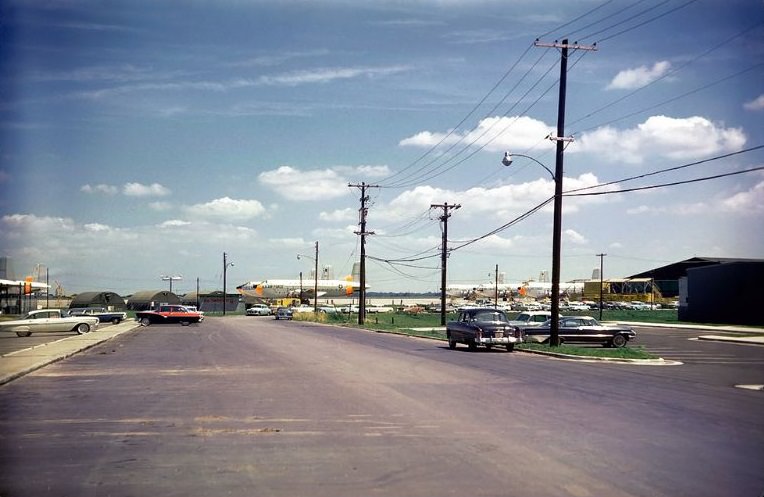
In July 1961, Richards-Gebaur Air Force Base was a working military installation just south of Kansas City. The base served as a hub for the Air Defense Command and hosted some of the largest aircraft in the U.S. military fleet. One of those was the Douglas C-124C Globemaster II, a massive propeller-driven cargo plane that could haul tanks, vehicles, or hundreds of troops in a single flight. On the ground beside it, rows of vintage cars reflect just how different that world looked compared to today.
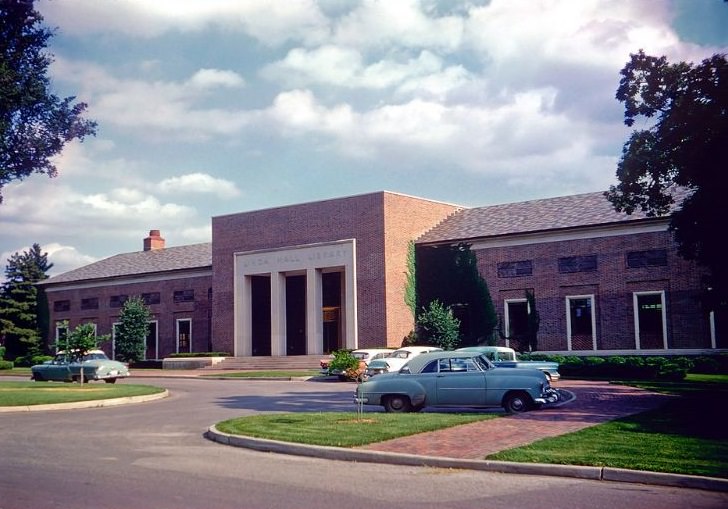
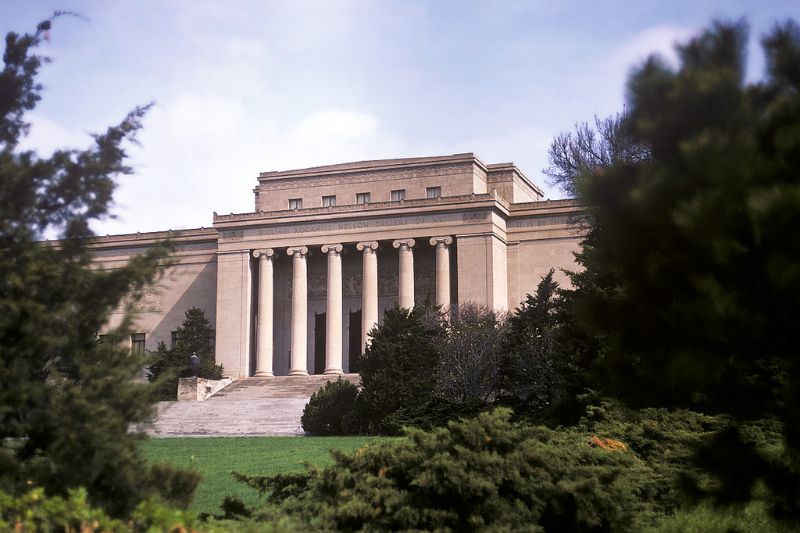
Not far from the base, the University of Kansas City — later renamed the University of Missouri–Kansas City — was home to one of the most impressive research libraries in the region. The Linda Hall Library, located on the university’s campus, specialized in science and technology resources and drew researchers from across the country. By 1961, it had already built a reputation as one of the finest independent science libraries in the United States.
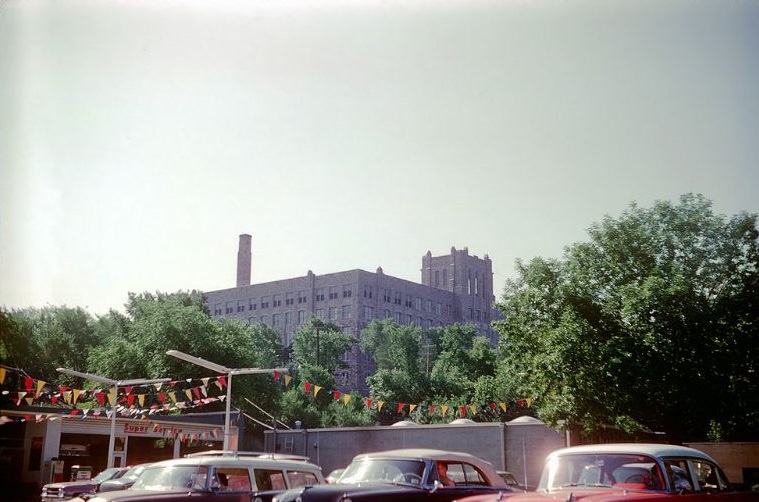
Kansas City’s public schools were a source of neighborhood pride. Paseo High School, seen here from the corner of Volker Boulevard and The Paseo, was one of the city’s most recognized institutions. The school sat in a part of the city that had once been a fashionable residential district, and the surrounding streets still carried that older, tree-lined character in 1961.
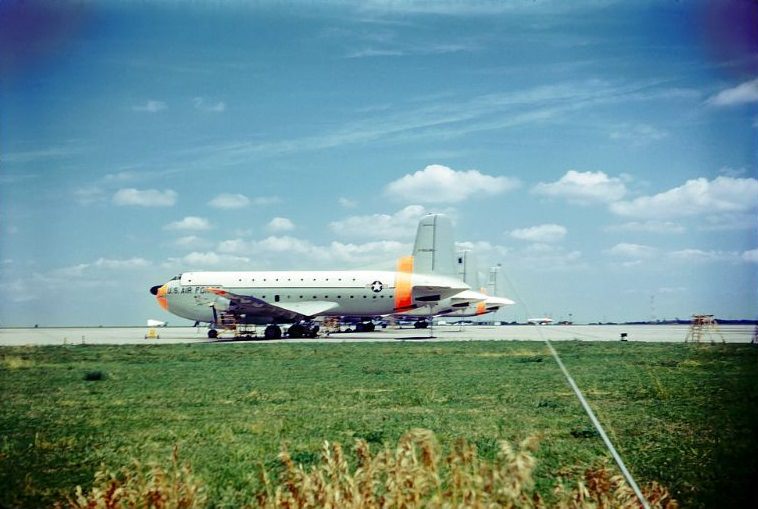
The Douglas C-124C Globemaster II was a workhorse of the Cold War era. With a cavernous fuselage and clamshell nose doors, it could carry oversized cargo that no other transport plane of the time could manage. At Richards-Gebaur, these aircraft were a common sight throughout the early 1960s as the base supported both domestic and overseas military operations.
By June 1963, Kansas City’s downtown skyline told its own story of growth and redevelopment. Cranes and new construction sat alongside older brick buildings that had anchored the city for decades. The skyline wasn’t yet dramatic by modern standards, but it showed a city actively investing in itself, even as older structures were being cleared to make way for what came next.
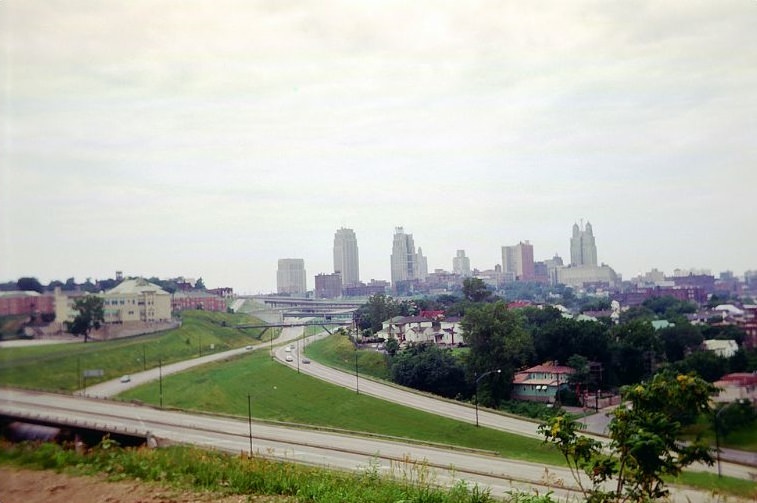
Kansas City had a strong cycling culture in the early 1960s, and group riders were a familiar sight on the city’s streets and parks. These trailblazers — likely members of a local cycling club — represent the kind of organized recreation that brought communities together before the era of suburban sprawl fully took hold.
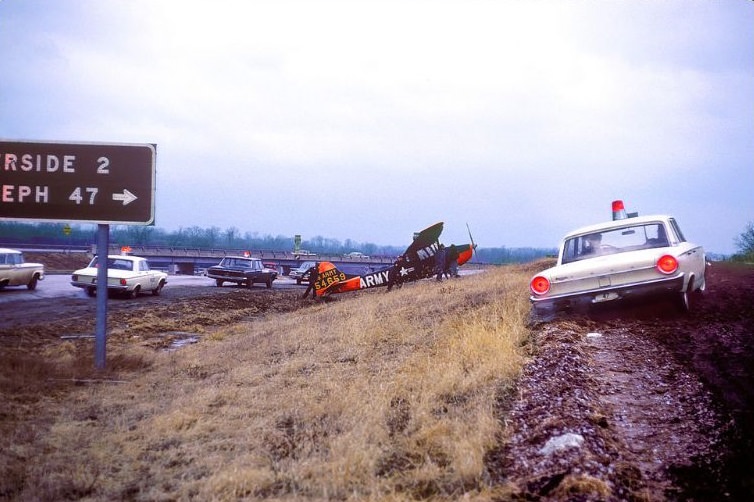
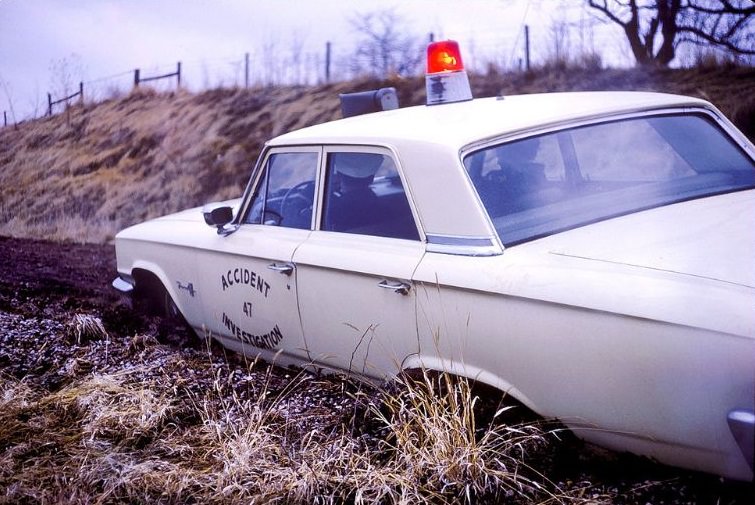
Not everything in 1963 Kansas City went smoothly. A police cruiser buried axle-deep in mud is a reminder that the city’s infrastructure — particularly in areas being developed or redeveloped — was still catching up with its ambitions. Roads were unpaved or poorly graded in many outlying areas, and heavy rain could turn a routine patrol into a muddy ordeal.
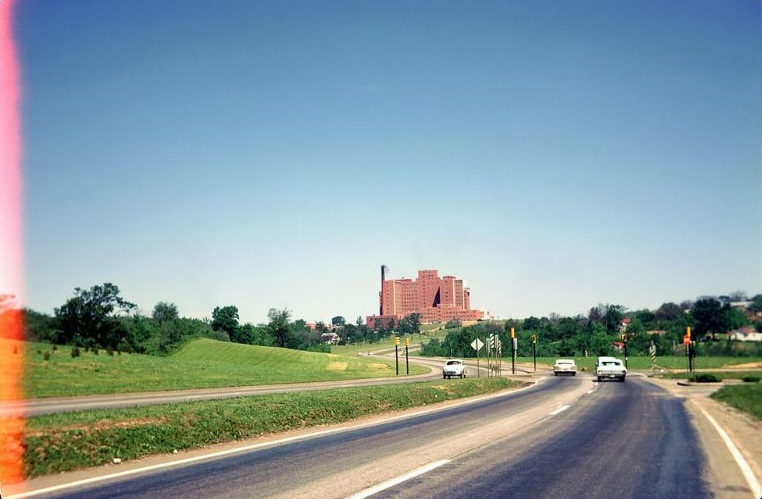
The Van Brunt Extension in May 1963 shows one of the many roadway projects underway as Kansas City worked to connect its expanding neighborhoods. These road extensions were part of a broader effort to move traffic more efficiently through a city that was growing faster than its original street grid could handle.
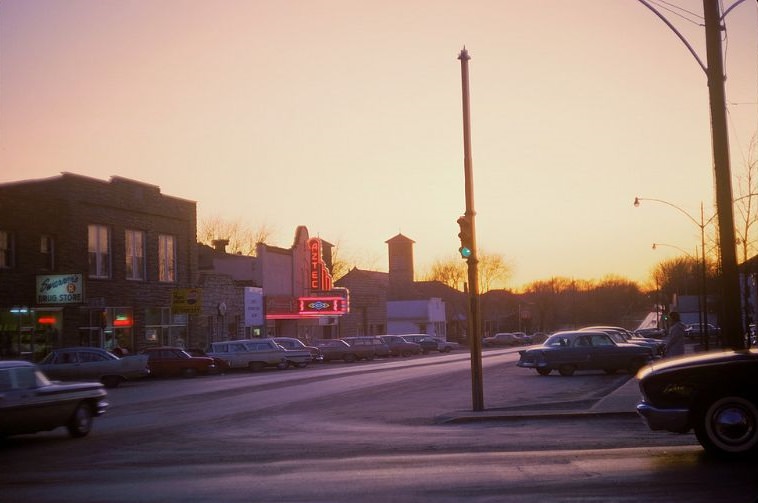
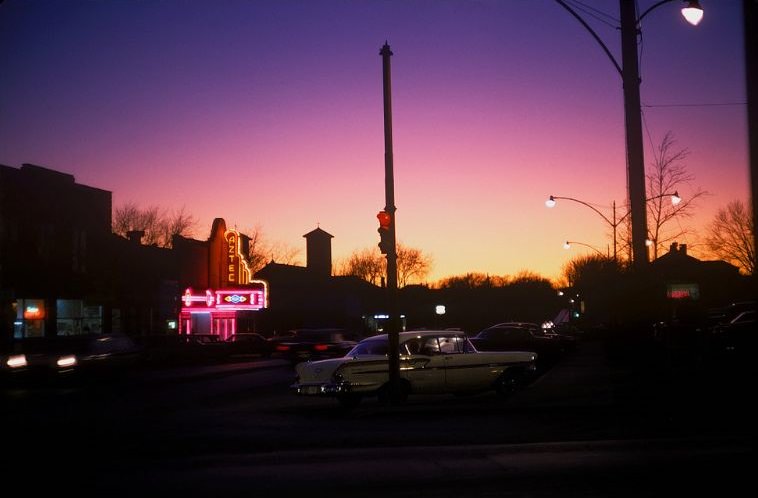
The Aztec Theater in Shawnee was one of the suburban movie houses that thrived during the early 1960s. As Kansas City expanded southward and westward, communities like Shawnee built their own entertainment venues to serve growing local populations. The Aztec’s distinctive name and marquee made it a local landmark at a time when going to the movies was still the primary form of out-of-home entertainment for most families.
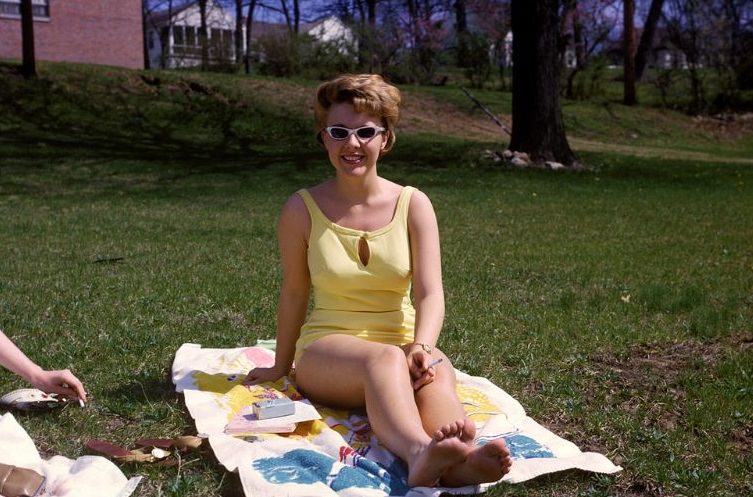
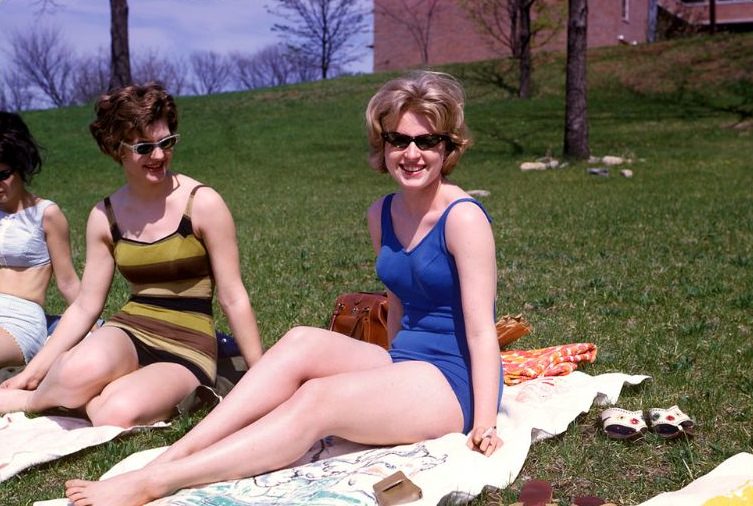
Campus life at UMKC in the spring of 1964 had its quieter moments too. Students made the most of warm May afternoons between classes, and the university’s open green spaces gave them room to do it. These photos offer a candid glimpse into the daily rhythms of college life in mid-century Kansas City.
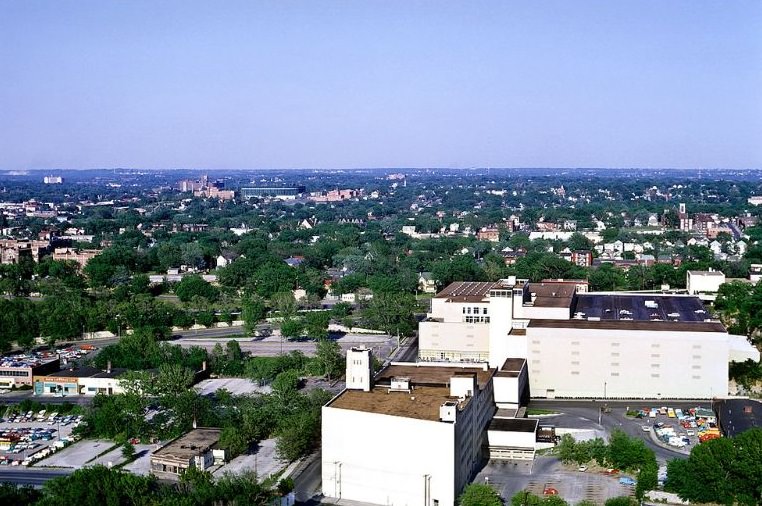
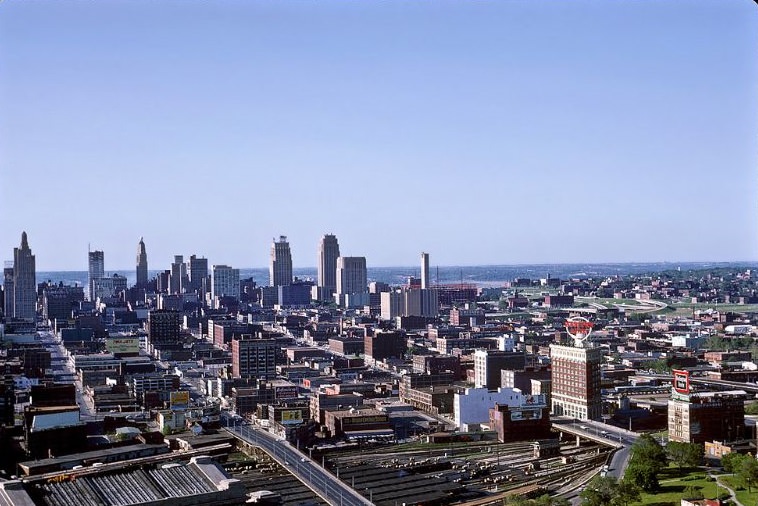
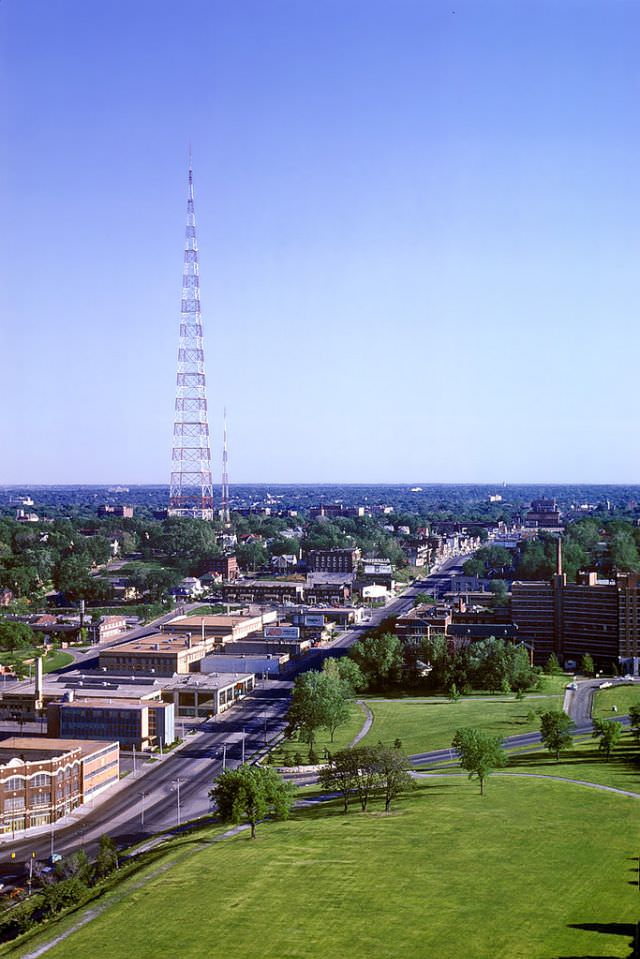
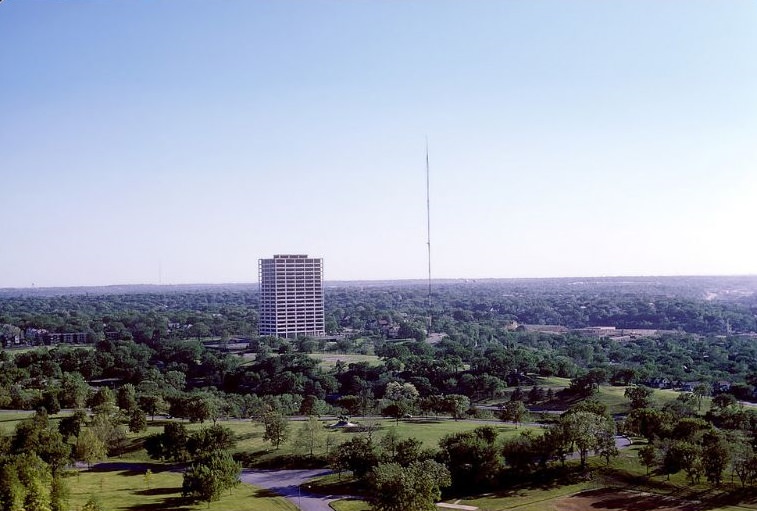
Few spots in Kansas City offered a better view of the city than the top of the Liberty Memorial. Built to honor the American soldiers who served in World War I, the memorial sat on a hill overlooking downtown and offered sightlines in every direction. These four photographs, all taken in May 1964, show the city from the east, north, south, and southwest — a panoramic record of how Kansas City looked at the midpoint of the decade.
The Nelson-Atkins Museum of Art was already one of the most respected art museums in the American Midwest by 1964. Its neoclassical stone facade and formal grounds set it apart from the surrounding residential streets. The museum had opened in 1933 and by the 1960s held a collection that spanned ancient Asian art, European paintings, and American works. It remained free to the public, making it accessible to all Kansas City residents.
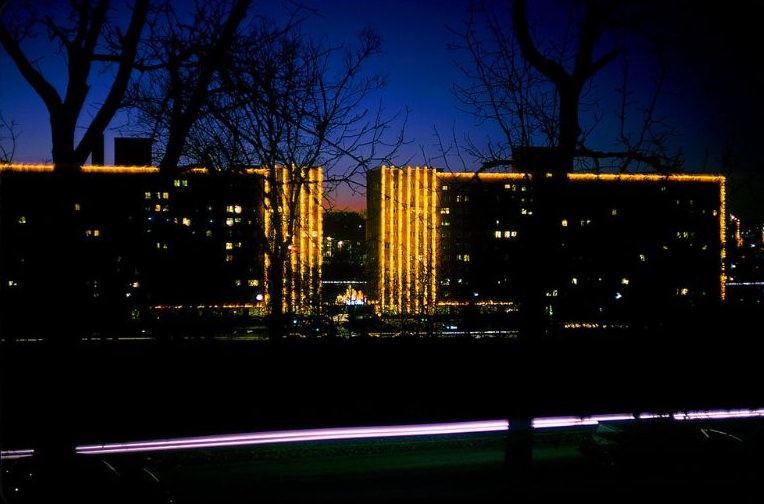
By December 1964, the Oak Street Apartments on the UMKC campus were dressed up for the holidays. Christmas lights strung from the dormitory added warmth to a winter scene, and the photo captures the kind of small, personal detail that official city records rarely preserve. Student life continued through the seasons, even as the city outside was being reshaped block by block.
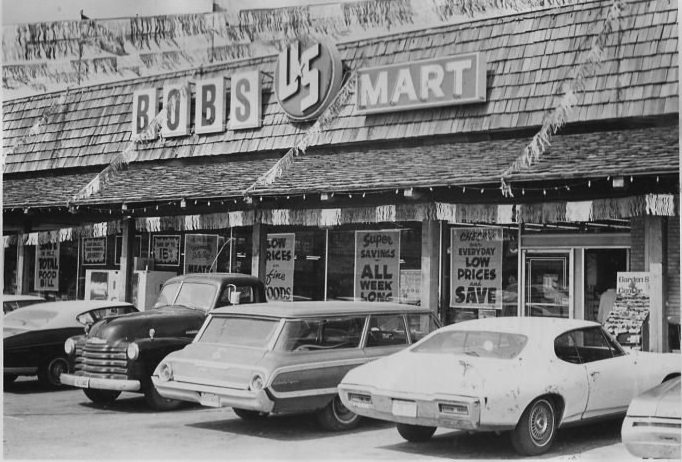
Bob’s Mart was the kind of neighborhood store that anchored commercial strips across Kansas City throughout the 1960s. Small, independently owned grocers and general merchandise shops were still common before large chain supermarkets and strip malls took over. The storefront’s signage and layout are a clear product of mid-century retail design.
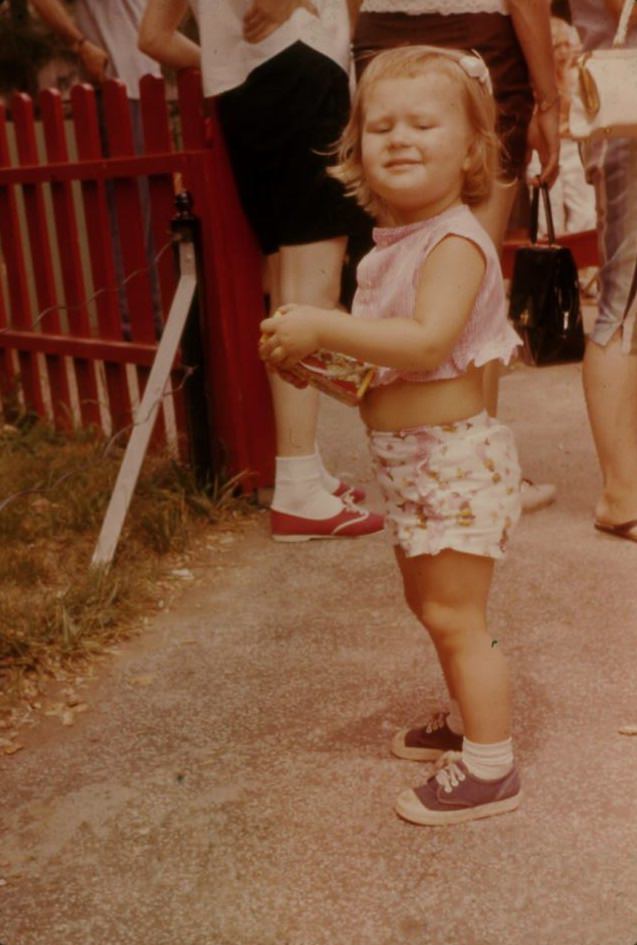
The Kansas City Zoo was a popular family destination throughout the decade. In 1962, it was still a traditional zoo with open-air exhibits and close viewing distances that gave children an up-close experience with animals they would never see anywhere else. A young visitor here is clearly delighted by what’s in front of them — the kind of moment that defined countless childhood memories in the city.
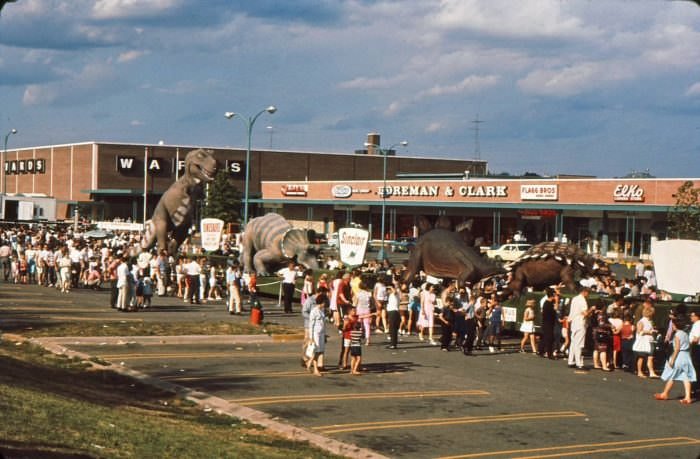
In 1966, the Sinclair Oil Company sent a traveling exhibit of life-size dinosaur sculptures on tour across the country. The display had originally debuted at the 1964 World’s Fair in New York, where it drew enormous crowds. When the tour rolled through Kansas City, it drew the same mix of wide-eyed wonder from children and curious adults. Sinclair had long used a green brontosaurus as its company logo, so the dinosaur exhibit doubled as a massive promotional event.
The American Royal Parade was one of Kansas City’s biggest annual events, drawing crowds from across the region each fall. Tied to the American Royal livestock and horse show, the parade featured marching bands, floats, and community groups. In 1967, a young boy walked the parade route promoting the Soap Box Derby — a race that gave kids the chance to build and pilot their own gravity-powered cars down a sloped track. Soap Box Derbies were a fixture of American youth culture in the postwar decades, and Kansas City had a long tradition of participation.
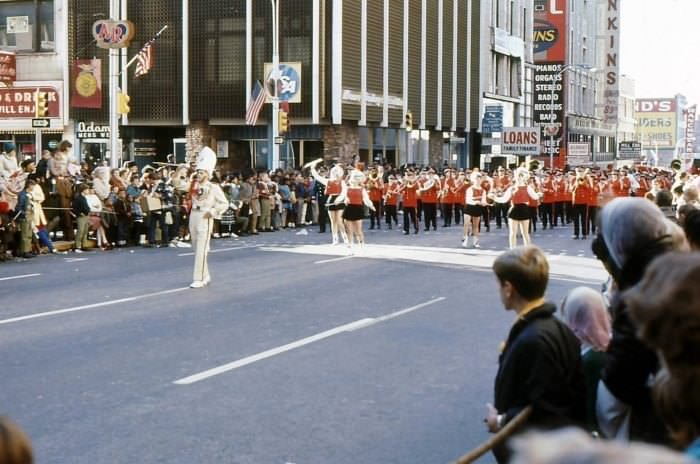
Marching bands were a centerpiece of the American Royal Parade, and the 1967 edition was no exception. Dressed in sharp uniforms and moving in tight formation, these musicians represented schools and organizations from across the Kansas City area. The parade brought the city’s streets to a halt and filled them with music, color, and community pride.
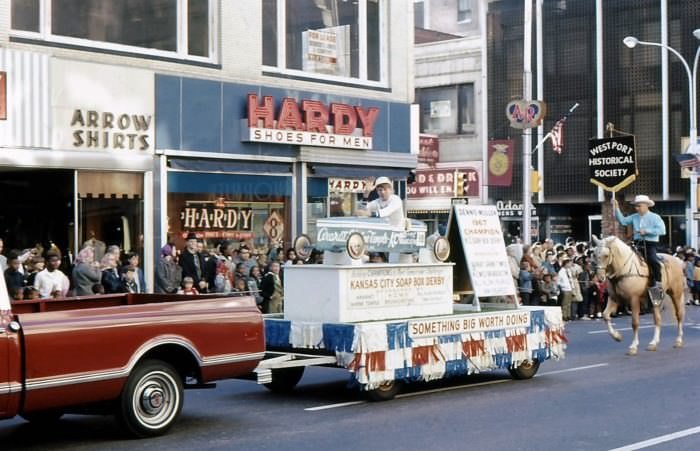





Hey, the BMA building! My mom worked in that building in the 60s.
It’s cool seeing how much downtown was relatively intact compared to now.
So many more trees
Weird to think there was a time that Twin Oaks looked decent. It was a giant roach motel when I lived there.
I instantly noticed there isn’t trash everywhere