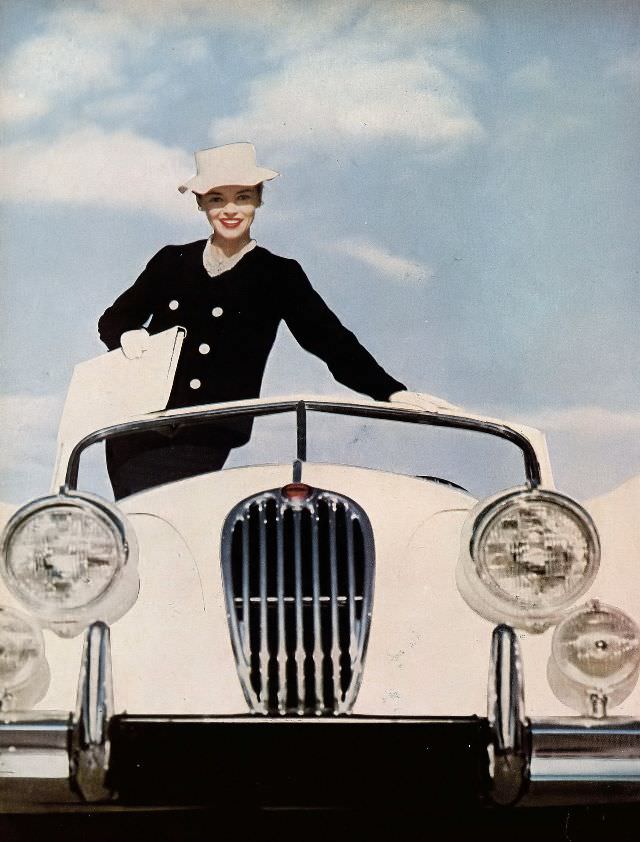
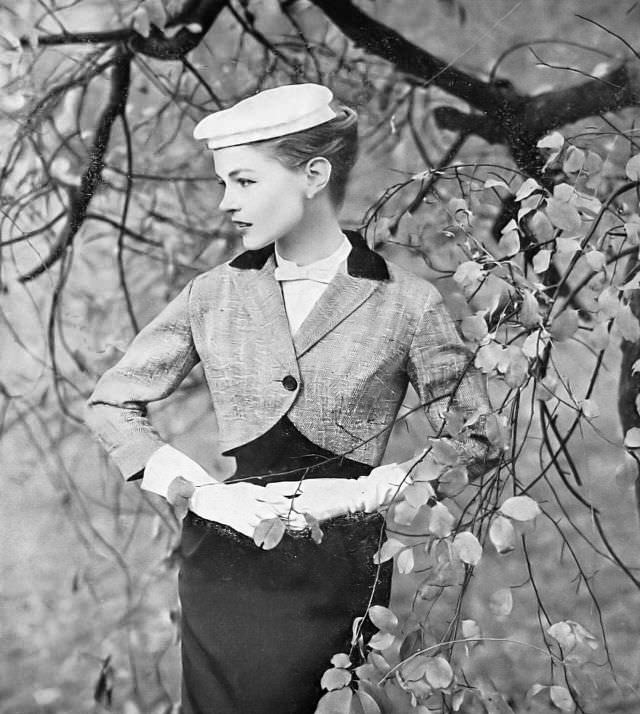
Joan Olson was born in Minneapolis in 1929, and her path into the fashion world started early. While still in high school, she entered beauty contests, building the kind of stage presence that would later serve her well in front of a camera. She went on to study at the University of Southern California, where she began modeling in Los Angeles alongside her coursework.
One early milestone in her career came when she served as a princess in the Pasadena Rose Queen Royal Court. Television was still technically primitive in those years, and Olson recalled having to wear brown lipstick for the broadcasts because of how early TV cameras captured color. She described the effect as looking awful. It was a small but telling detail about how much the industry — and its technology — would change over the decade ahead.
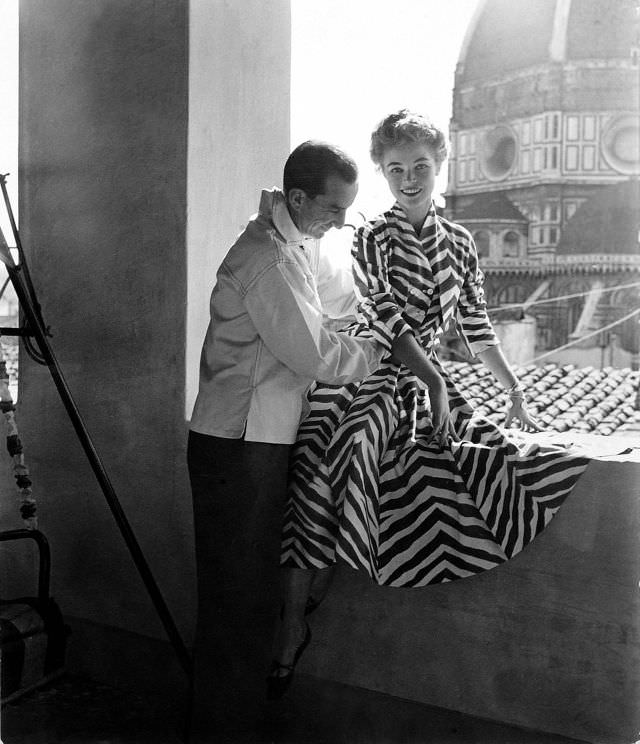
When her modeling career gained real momentum, Olson left college and headed to New York, where she signed with the Ford Models agency. She then moved to Paris, the undisputed center of high fashion in the early 1950s. At five feet five inches, she was classified in the industry as a “junior” model — a designation based on height — and she concentrated primarily on photography rather than runway work. The French fashion houses and their photographers gave her the kind of assignments that would define her portfolio for years to come. One of her most striking early bookings came with Florentine designer Emilio Pucci in 1952.
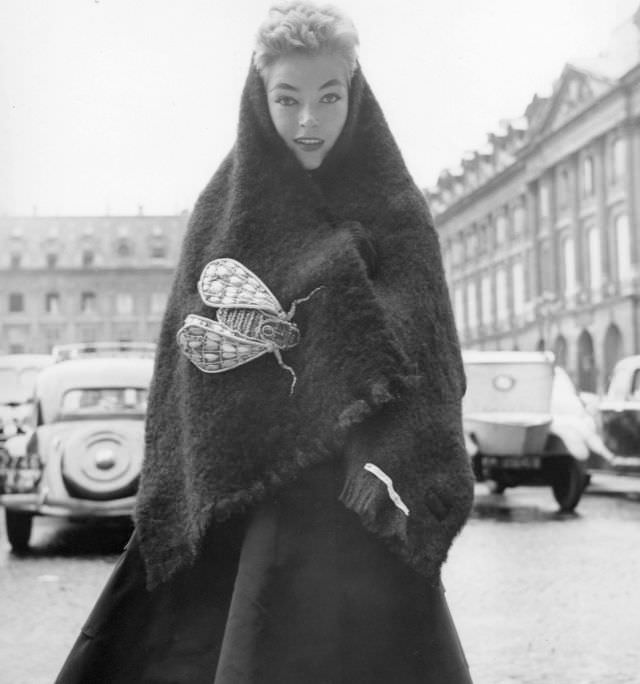
Also in 1952, Olson was photographed wearing pieces from Elsa Schiaparelli, the Italian-born designer known for her bold, surrealist-influenced work. The black bouclé Shetland stole paired with an oversized insect pin was exactly the kind of theatrical accessory that Schiaparelli had built her reputation on.
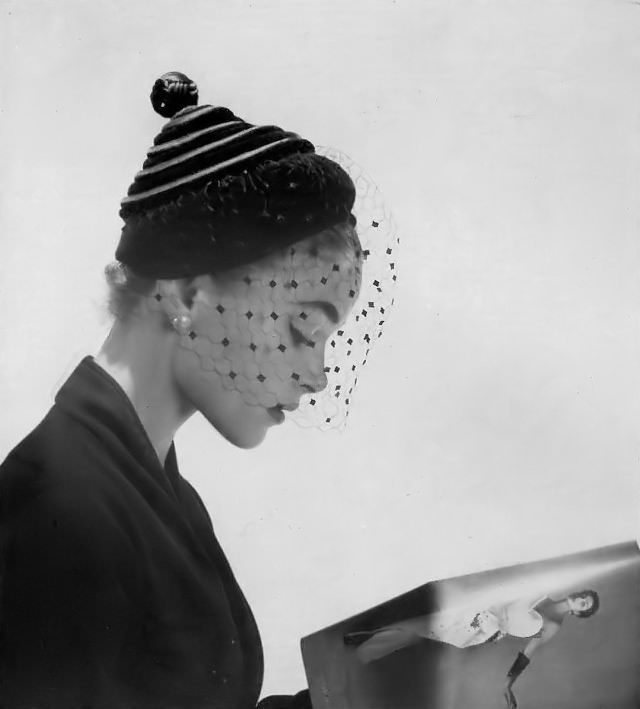
Hats were a central feature of 1950s fashion photography, and Olson wore them with particular authority. Le Monnier’s structured black velvet and satin spiral hat with voilette, photographed in 1952, showcased the elaborate millinery work that Paris was famous for during this era.
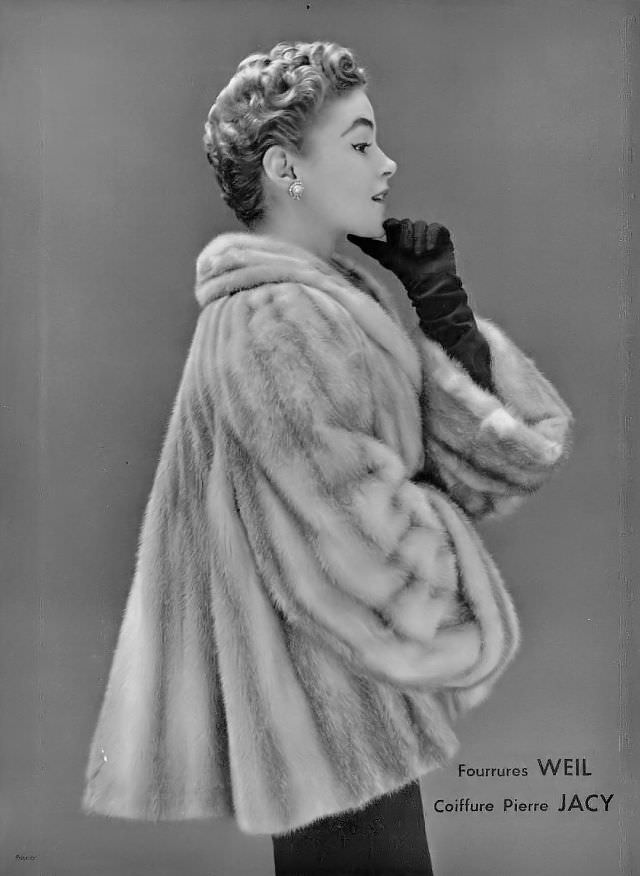
Luxury fur was another staple of the early 1950s fashion calendar, and Olson appeared in several high-profile fur shoots that year. Her work with Weil and Max Reby placed her squarely within the upper tier of fashion photography.
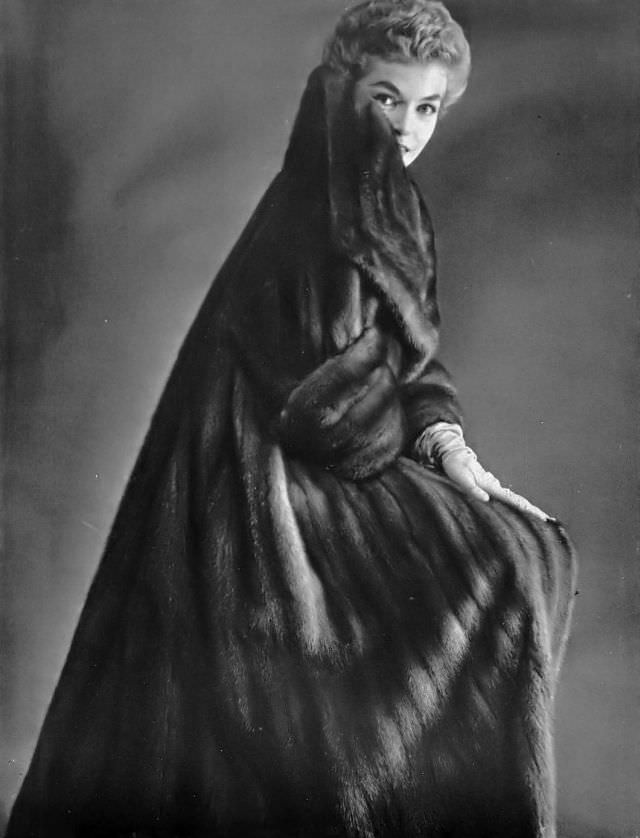
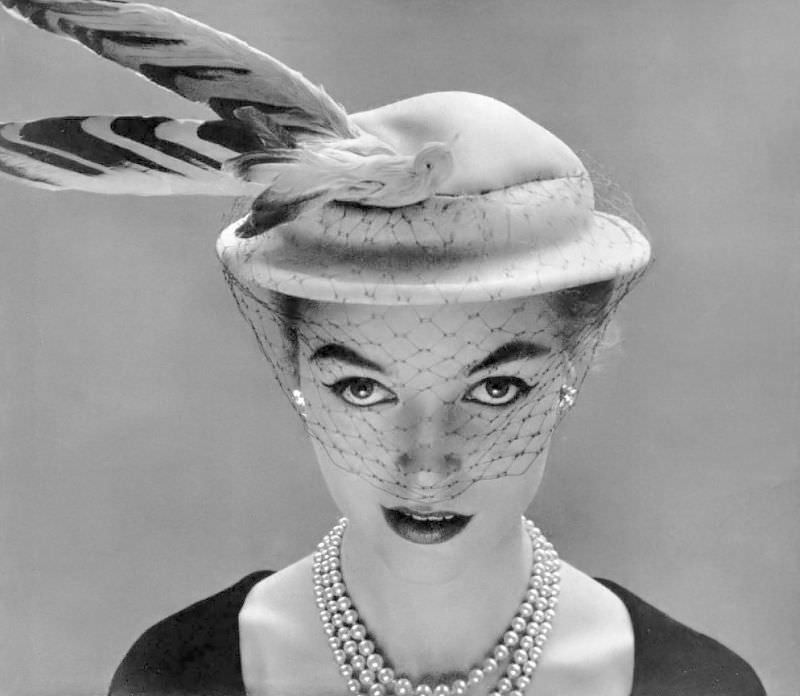
Christian Dior and Jacques Fath were among the most powerful names in Parisian couture during this period, and Olson worked with both houses extensively in 1952. Dior’s taupe cap with honey-colored voilette and Fath’s veiled astrakhan hat with two large feathers both appeared in major fashion publications that year.
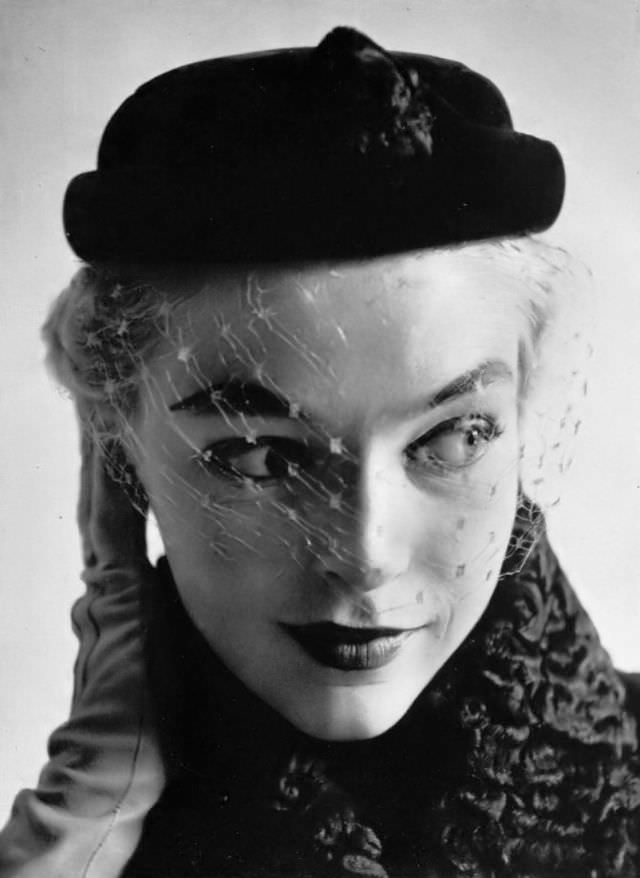
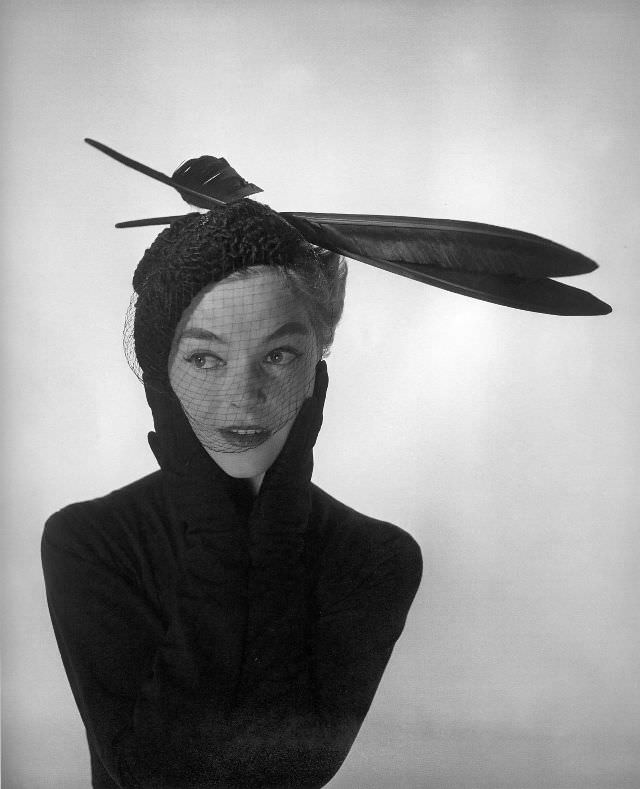
Beyond the couture houses, Olson also worked with prominent photographers who were shaping the visual language of fashion in the 1950s. Milton Greene, who became well known for his celebrity portraits — most famously of Marilyn Monroe — photographed Olson in 1952, as did Guy Arsac, with hair styled by Carita.
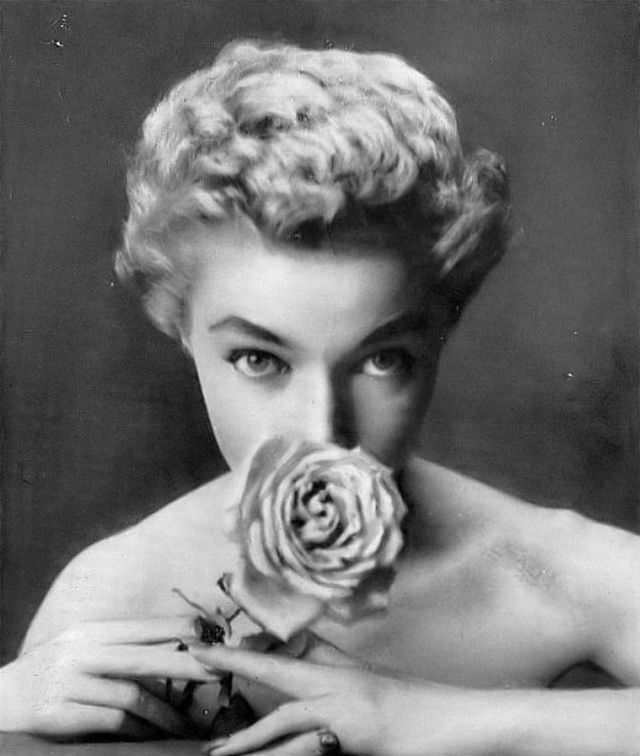
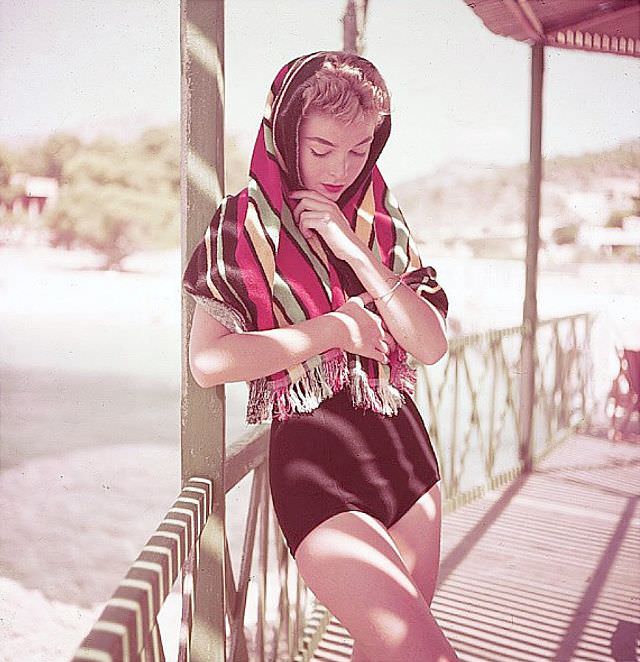
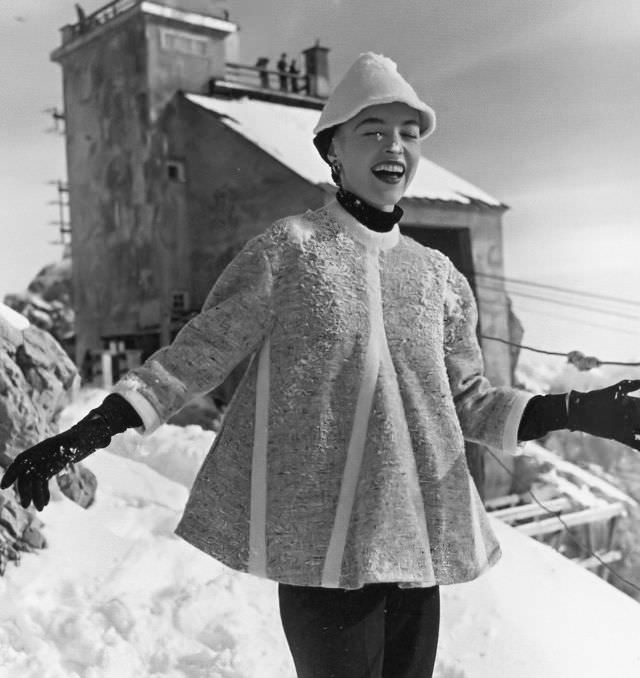
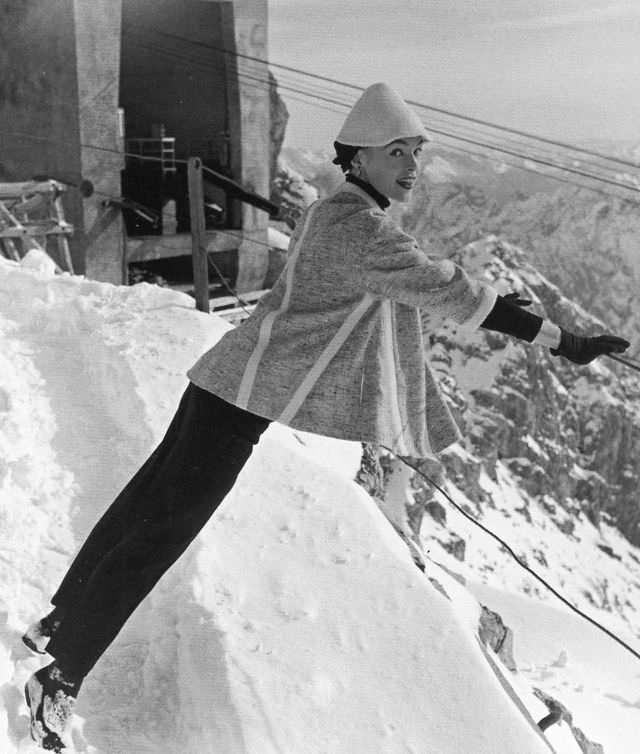
Moving into 1953, Olson’s bookings reflected the broad range of her work — from relaxed ready-to-wear to structured Parisian millinery. New York designer Bessie Becker’s smock jacket gave her a more casual, approachable look compared to the couture shoots of the previous year.
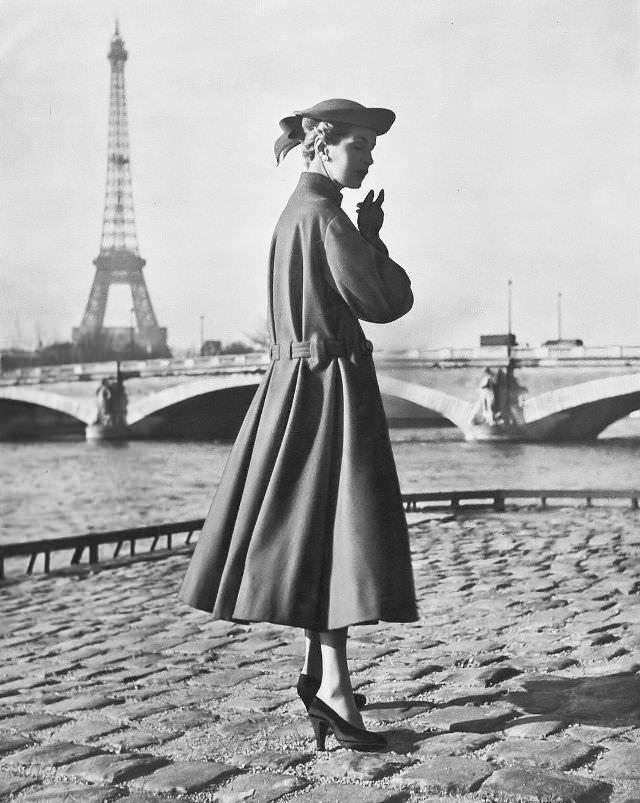
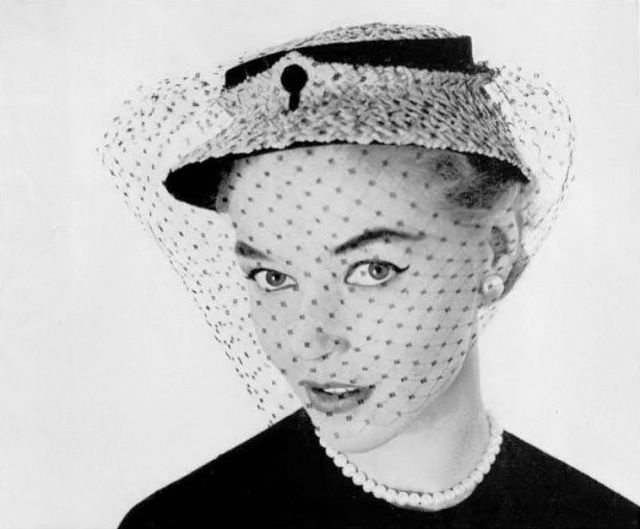
Jacques Fath continued to be a major presence in her work through 1953. His loose geranium-red wool coat, with a below-the-waist belt gathering the back pleats, was one of the more architecturally interesting pieces she modeled that year. At the same time, she was photographed wearing precise millinery pieces from Janette Columbier and Legroux Soeurs, continuing the hat-forward editorial trend of the decade.
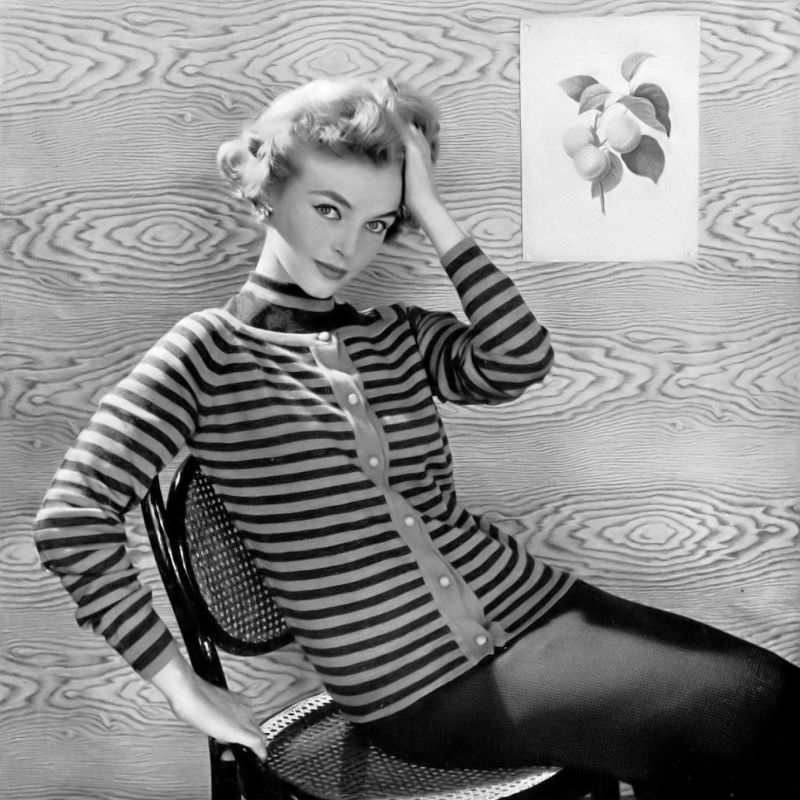
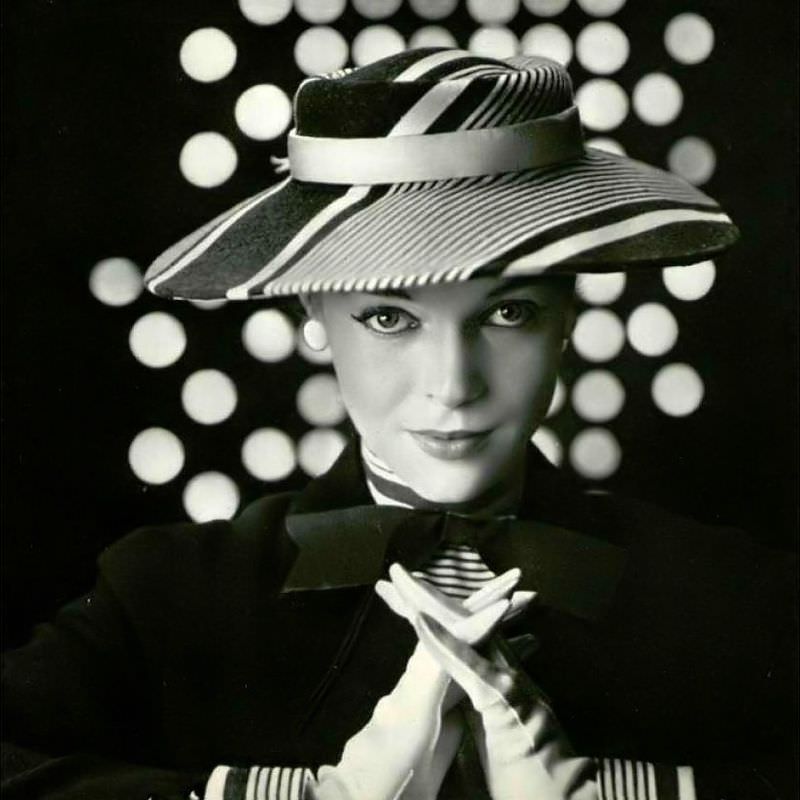
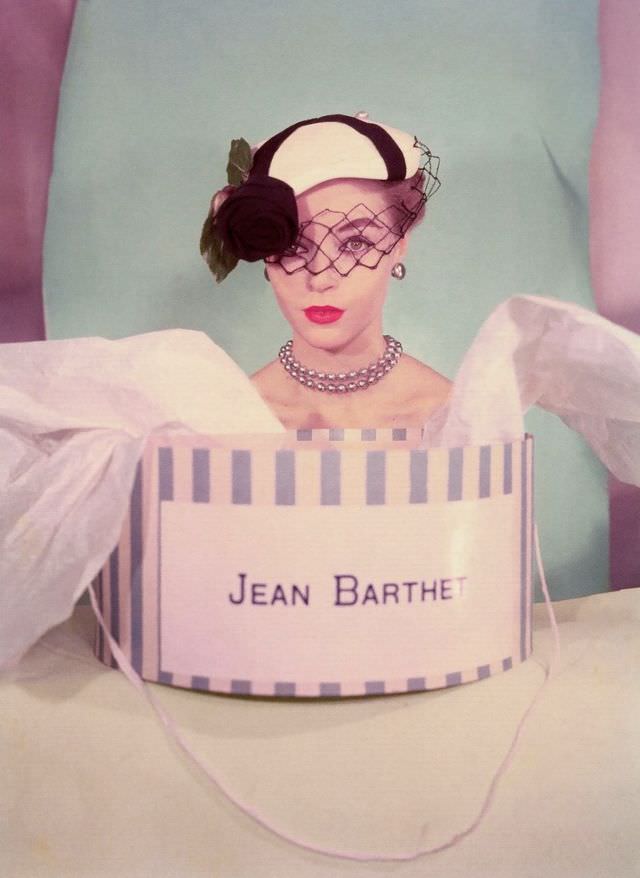
Sportswear and knitwear also featured in Olson’s 1953 work, with Korrigan Lesur’s gray and green striped twin-set offering a sharp contrast to the heavy couture pieces. Jean Barthet, one of Paris’s leading milliners in the 1950s, appeared twice in her bookings that year — once with a striped straw hat worn alongside a matching jacket, and again in a separate Paris shoot.
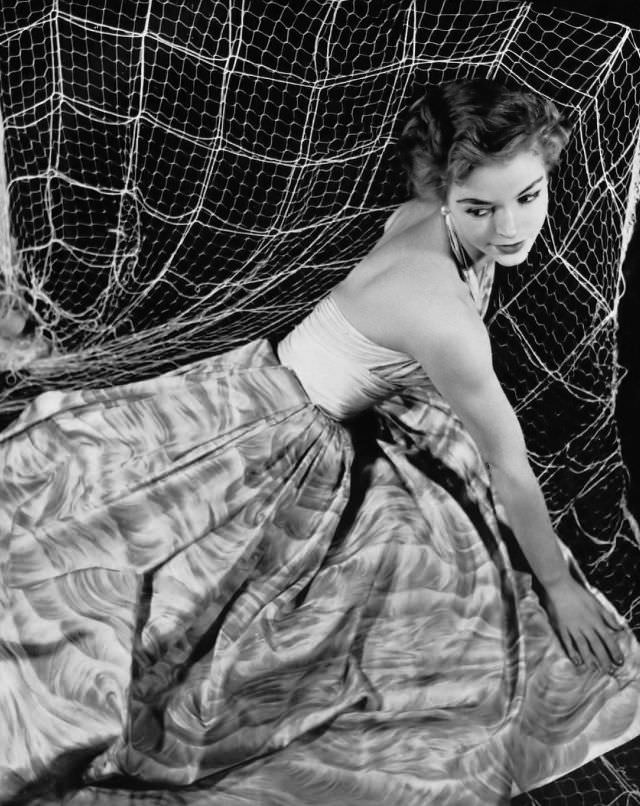
By 1954, Olson’s bookings reached some of the biggest names in Paris couture. Pierre Balmain, Jean Patou, Jean Dessès, Lanvin-Castillo, and Madame Grès all appear in her work from that year — a lineup that reflects the full sweep of Parisian fashion at its mid-century peak. Balmain put her in an embroidered blue-striped white organdy dress and, separately, a silk halter dress with a wave-motif print called “La Mer.”
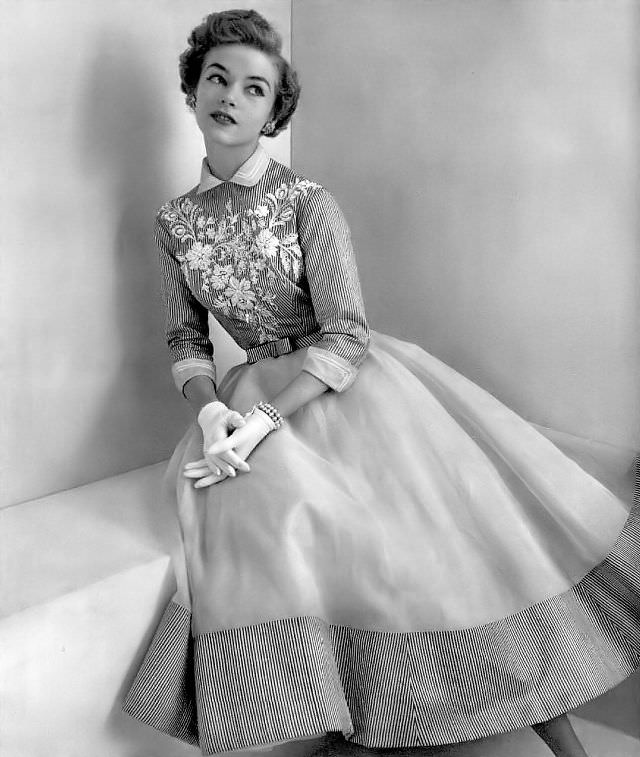
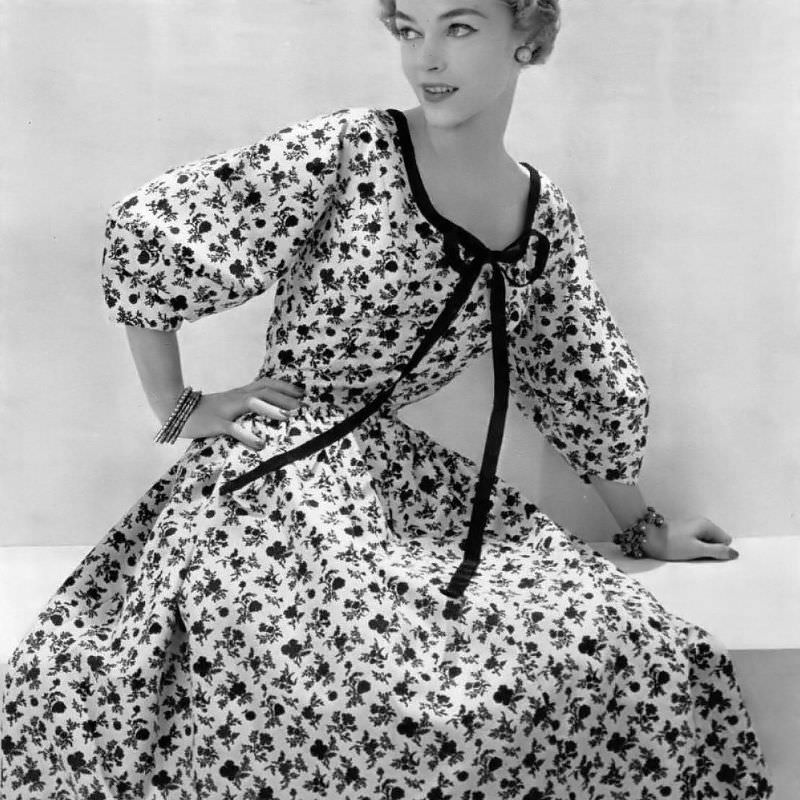
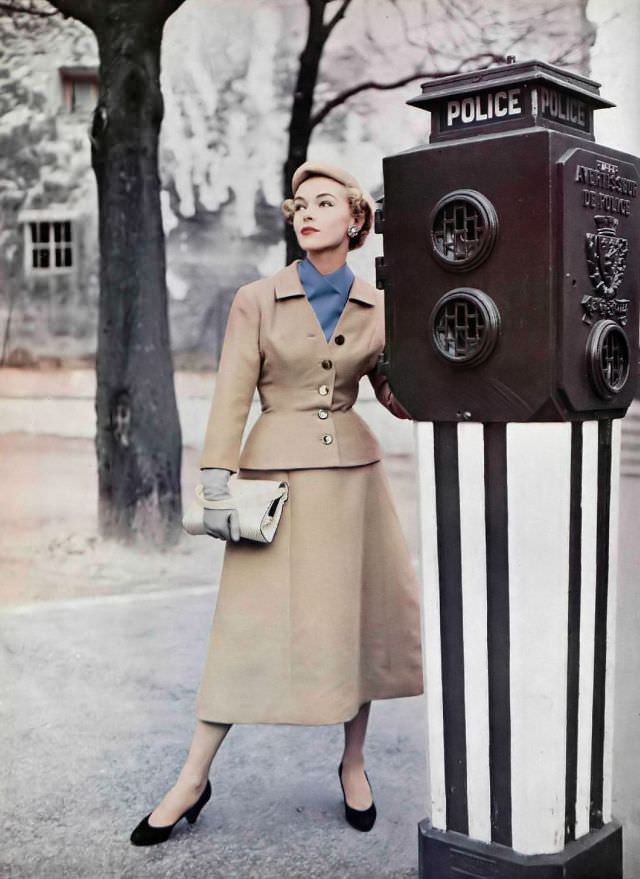
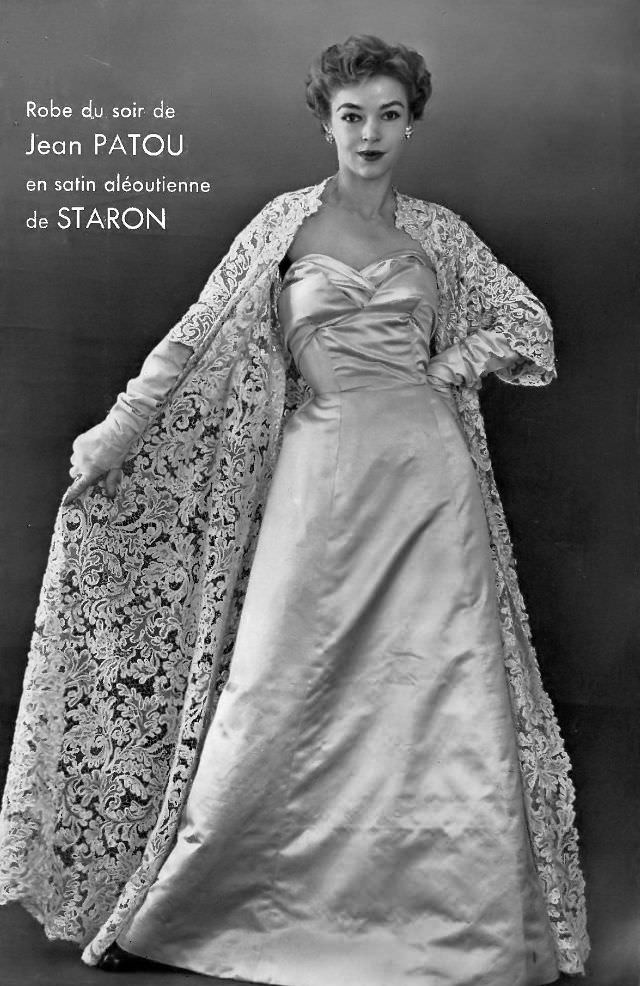
Jean Patou dressed her in two strikingly different looks: a classic beige bell-skirted suit with a nipped waist and a bright blue scarf at the neck, and a satin evening gown worn beneath a full-length lace coat. These two pieces alone illustrated how wide Olson’s modeling range was — from crisp daywear to formal evening dress.
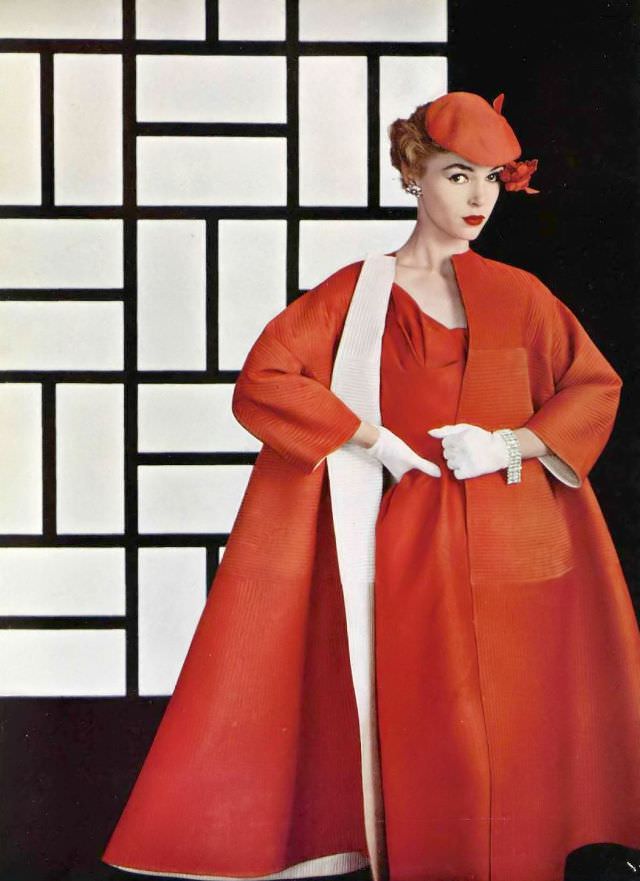
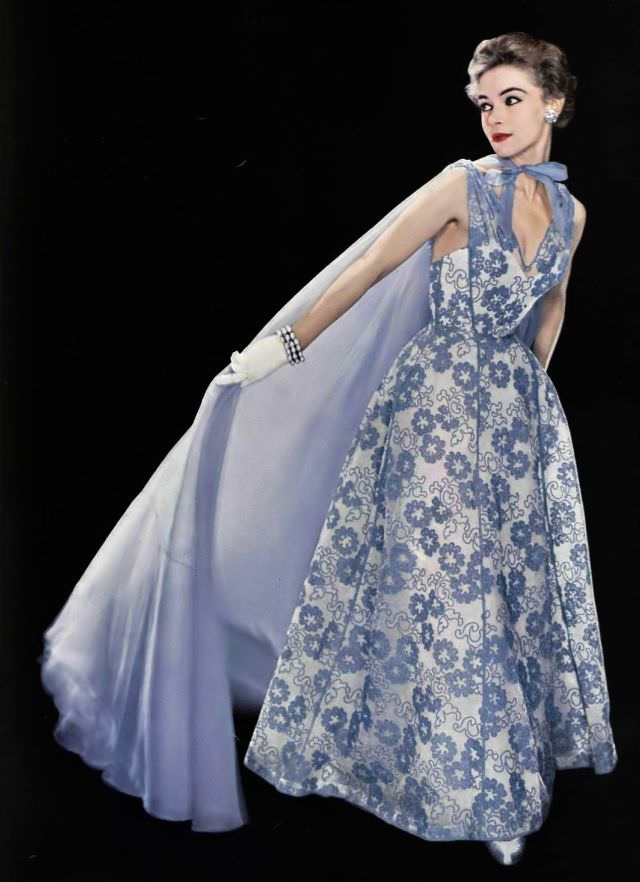
Christian Dior also claimed a spot in her 1954 work. A sophisticated day suit — sharp and structured — illustrated Dior’s signature emphasis on defined silhouettes, a style he had established with the “New Look” in 1947 and continued to refine throughout the decade. Madame Grès, known for her mastery of draped fabric, contributed a jersey gown with a pale pink silk draped bodice and two satin bows — one of the more sculptural pieces in Olson’s portfolio.
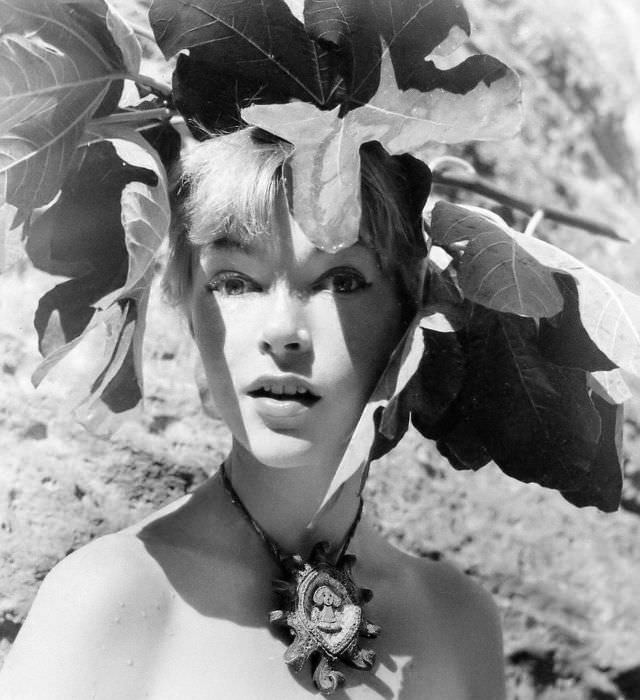
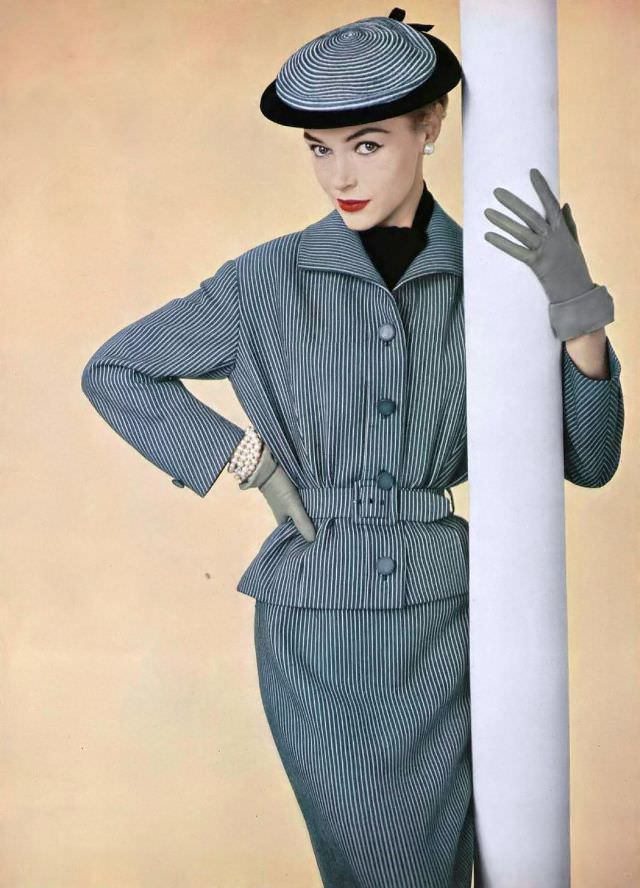
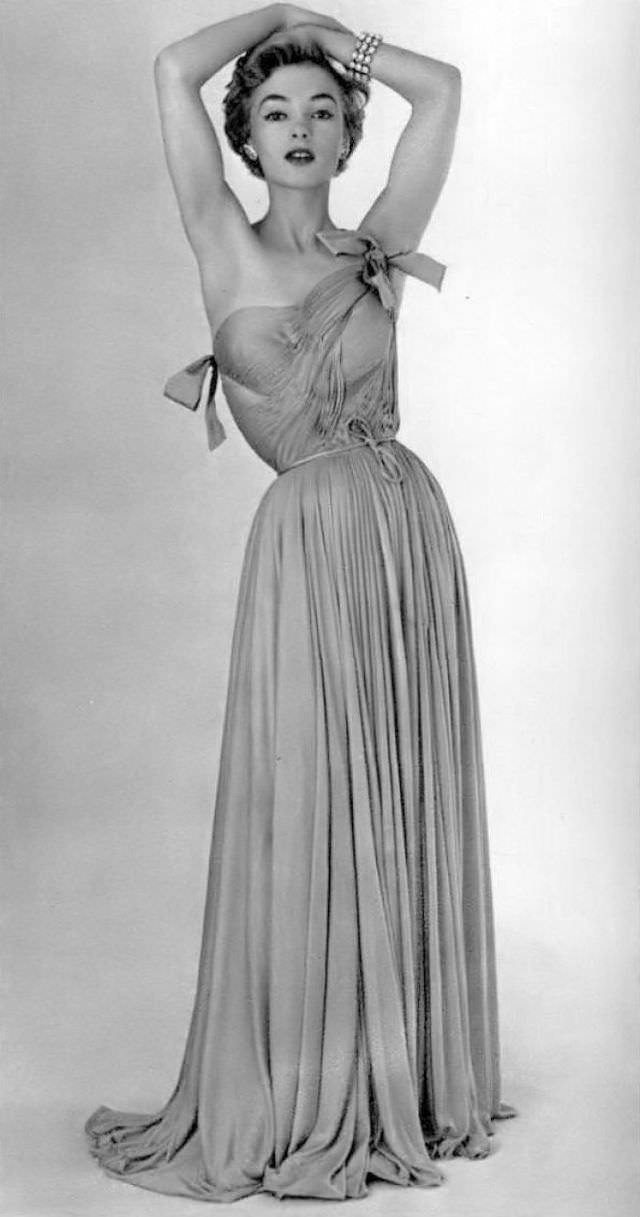
Throughout her career, Olson moved in a close-knit circle of models that included Tippi Hedren, Ivy Nicholson, Brynne Johnson, Barbara Stetson, and June Ross. Two of these friendships had an interesting connection to the photography world: Art Kane, a celebrated photographer known for his work in jazz and music photography, was married to June Ross, while Ray Slowinski, another prominent photographer, was married to Brynne Johnson.
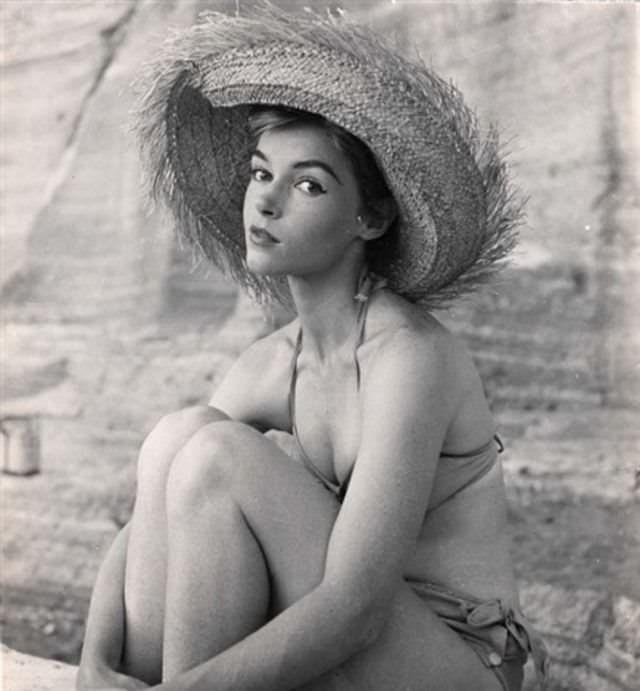
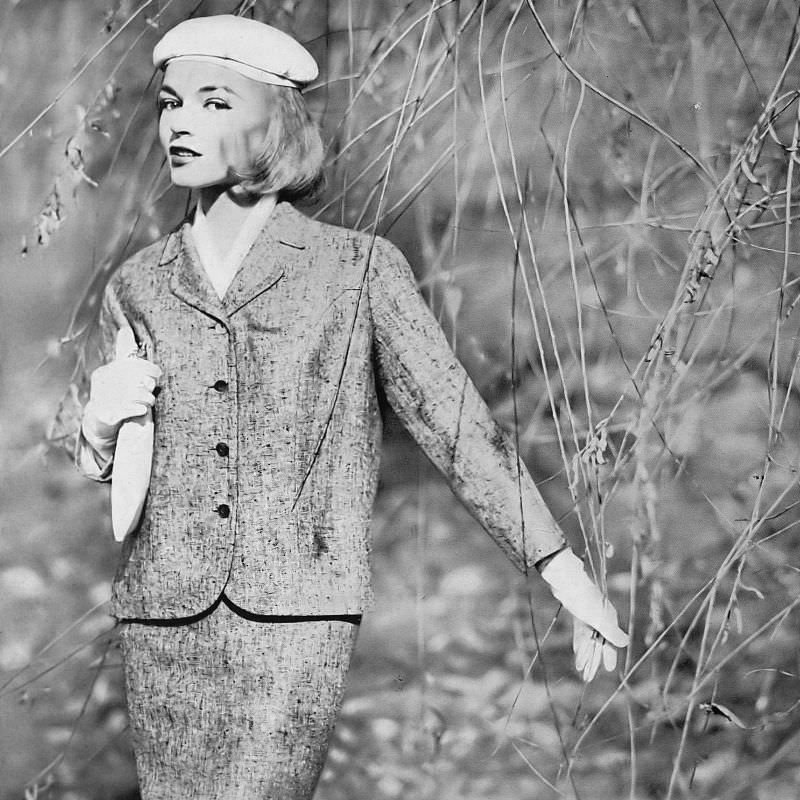
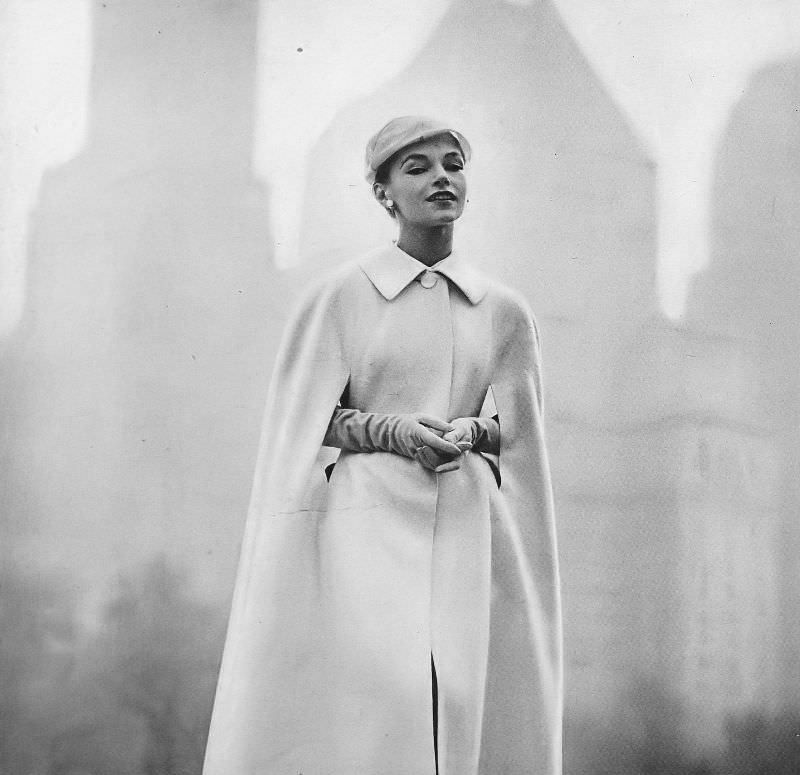
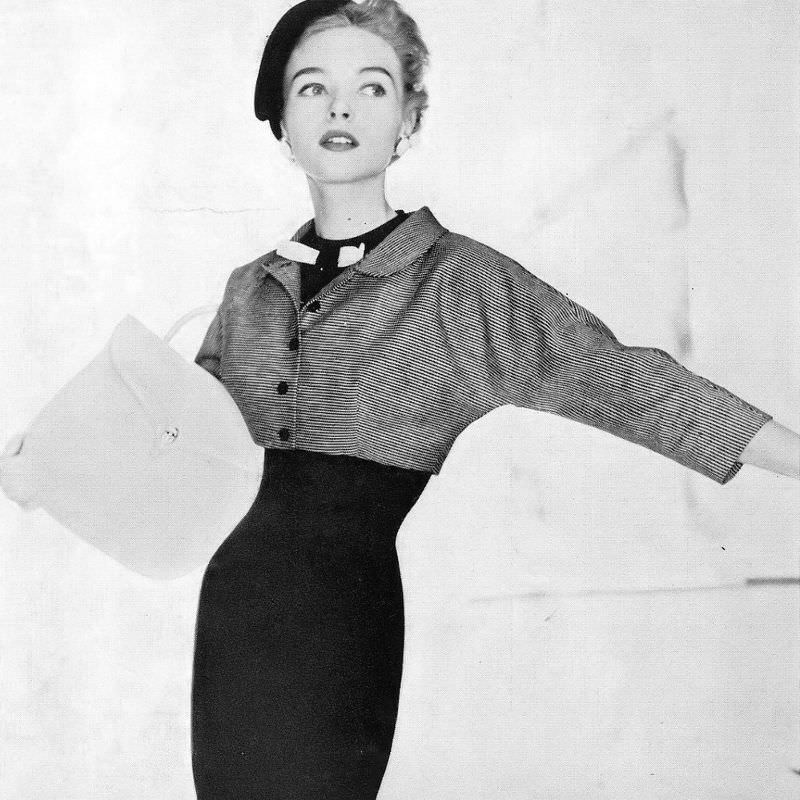
By 1957, Olson was appearing in the pages of Harper’s Bazaar, one of the most prestigious fashion magazines in America. That February issue featured her in two looks — a salt and pepper tweed linen suit by Towncliffe with a beret by John Frederics Charmer, and a full-length lightweight tweed cape by Petite Juniors with a chiffon hat, again by John Frederics Charmer. The Petite Juniors billing was consistent with her “junior” classification in the industry. Donald Brooks for Darbury and Hayette also appear in her 1957 bookings, with a black flannel sheath dress paired with a double-breasted jacket and a herringbone tweed chesterfield jacket lined in red satin, respectively.