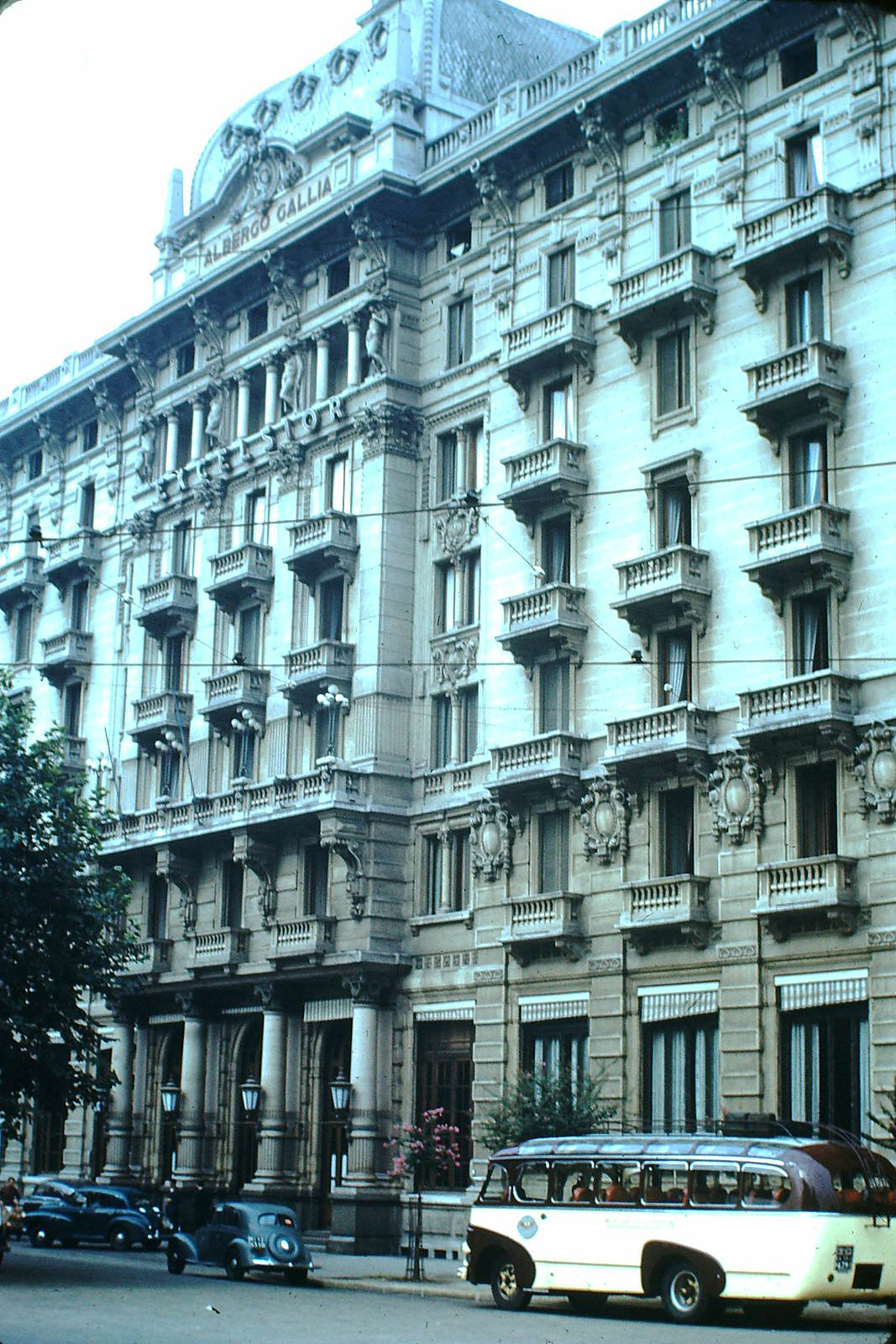
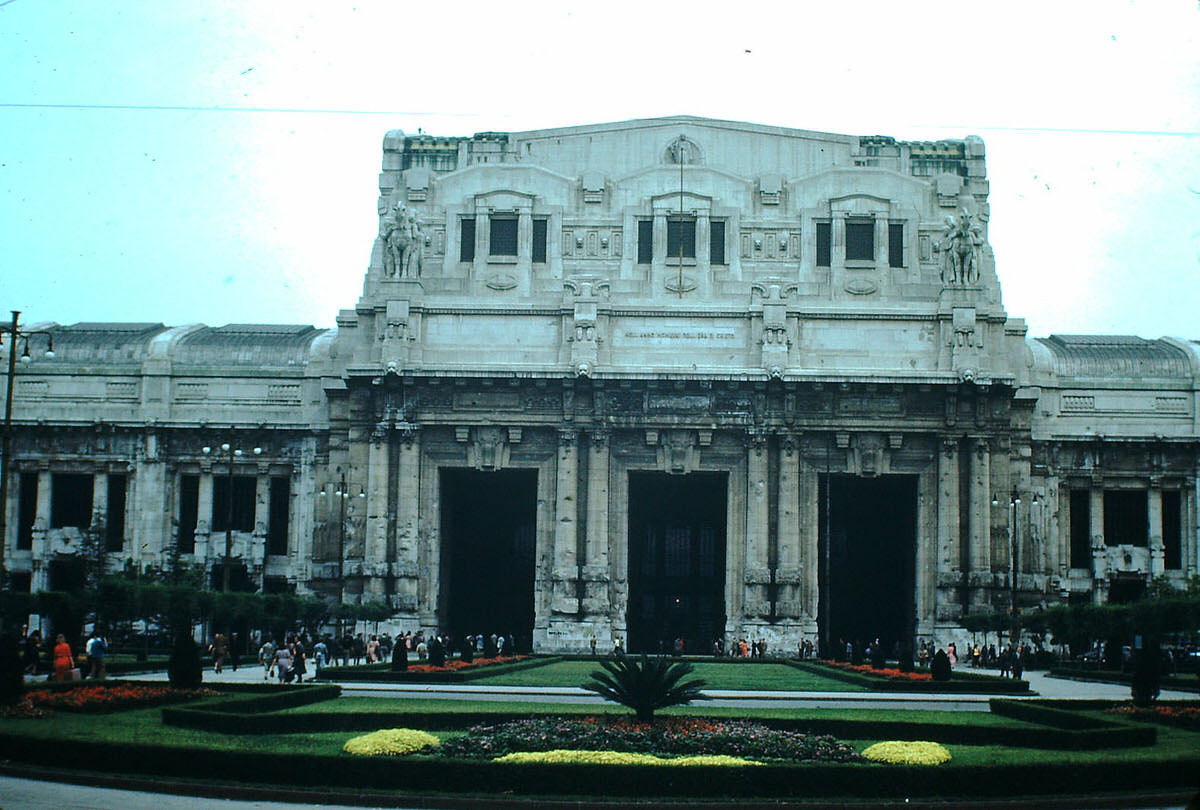
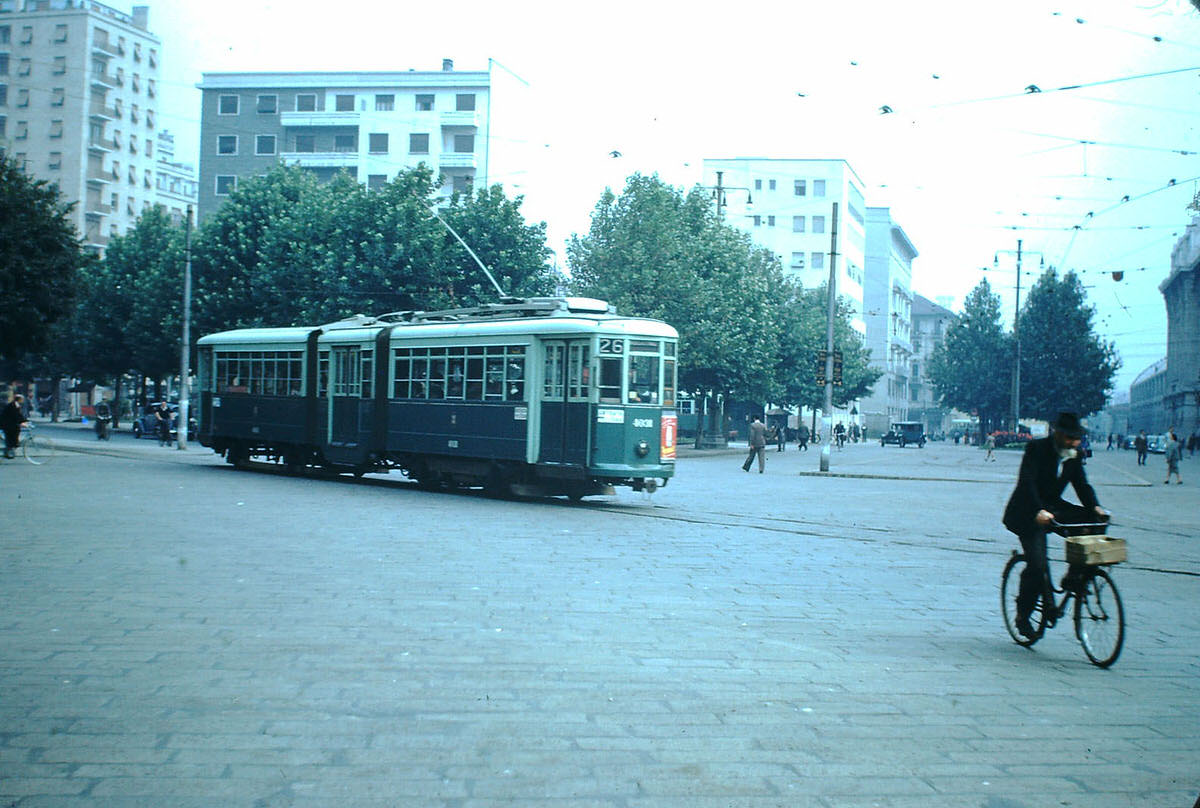
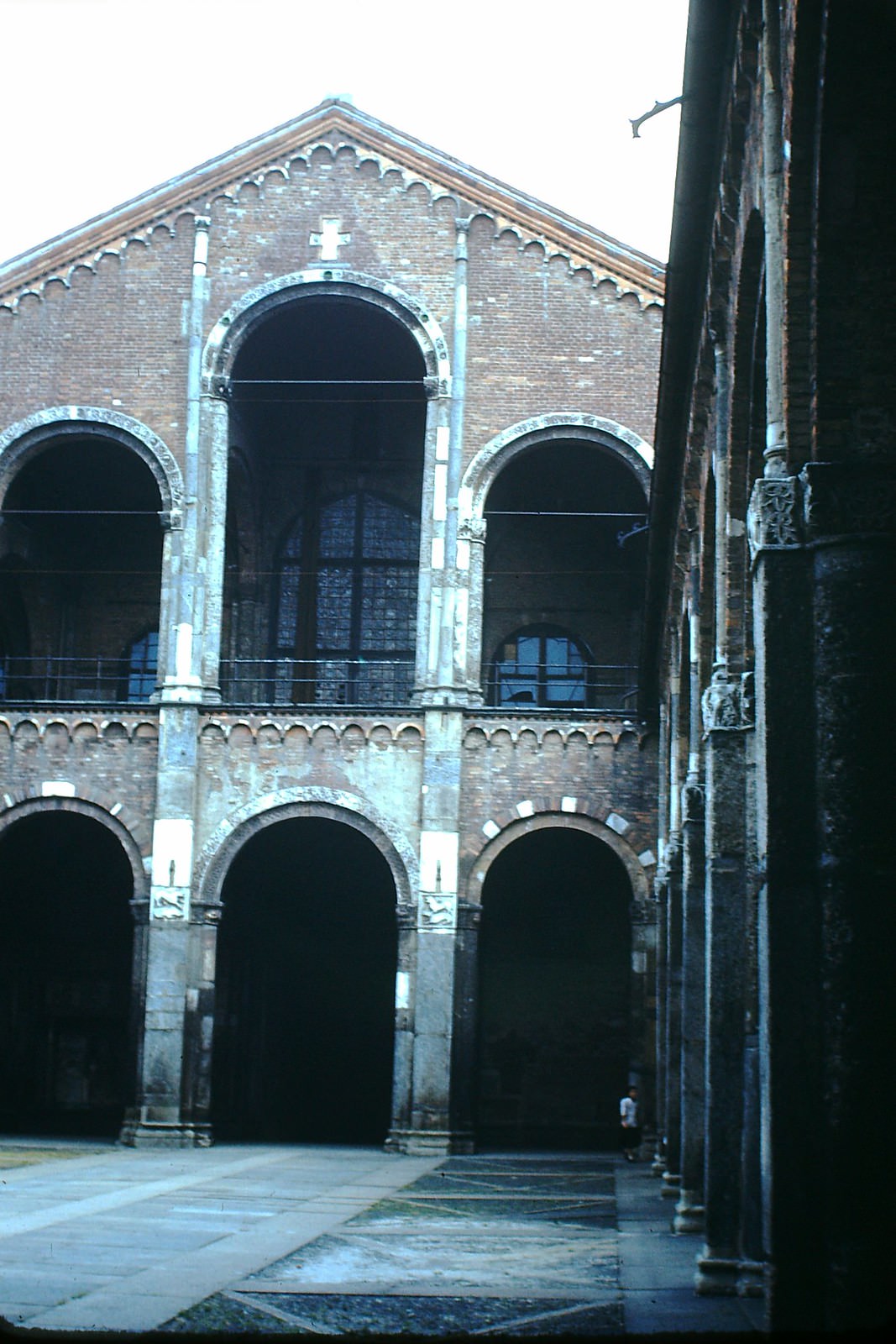
By 1954, Italy was nine years removed from the end of World War II, and the scars were still visible. Bombed-out buildings, makeshift bridges, and damaged monuments stood alongside a country working hard to rebuild itself. Yet something else was happening at the same time — an economic surge that historians would later call the “Italian economic miracle.” Industrial output climbed, exports grew, and ordinary Italians began to feel a cautious optimism about the future. These photographs capture that exact moment: a country still healing, but very much alive. Milan was the engine driving much of that recovery. As Italy’s financial and industrial capital, it hummed with activity in 1954. Grand hotels, busy train stations, and tramlines running past some of Europe’s most impressive architecture gave the city an energy that felt both old and new at once.
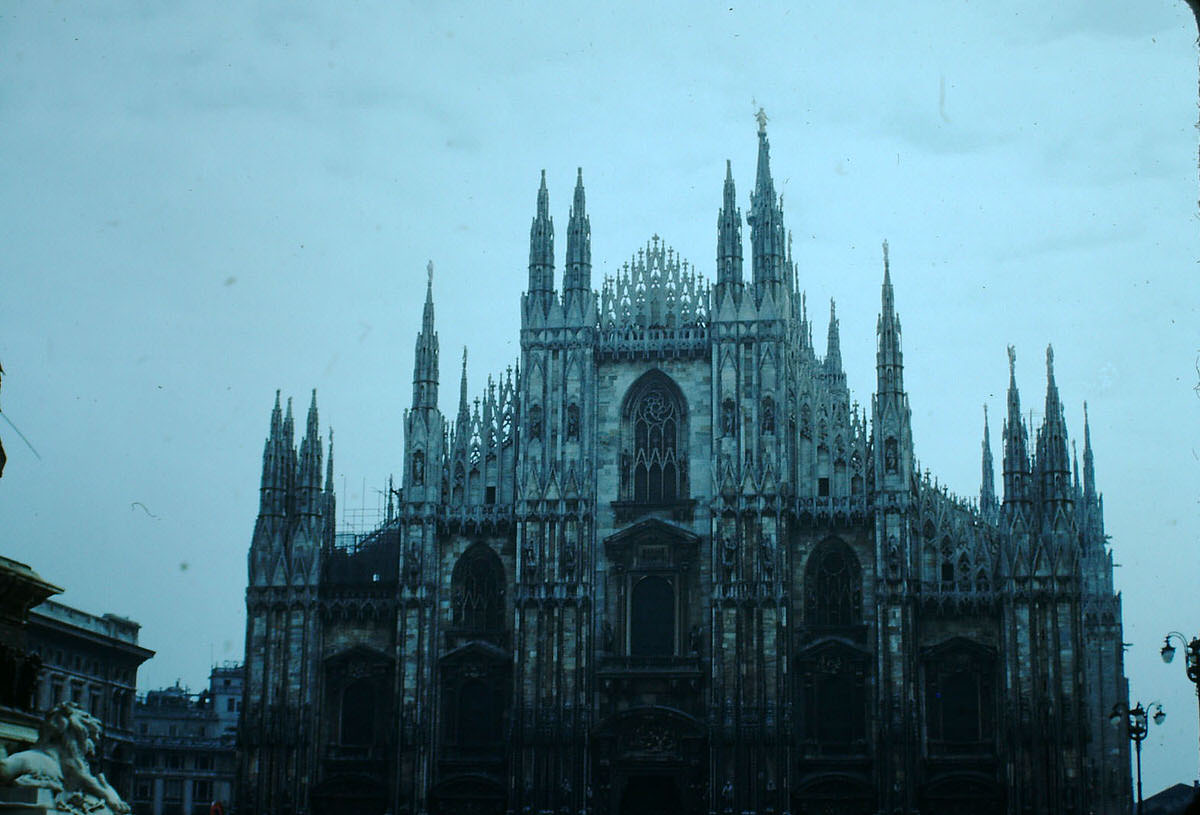
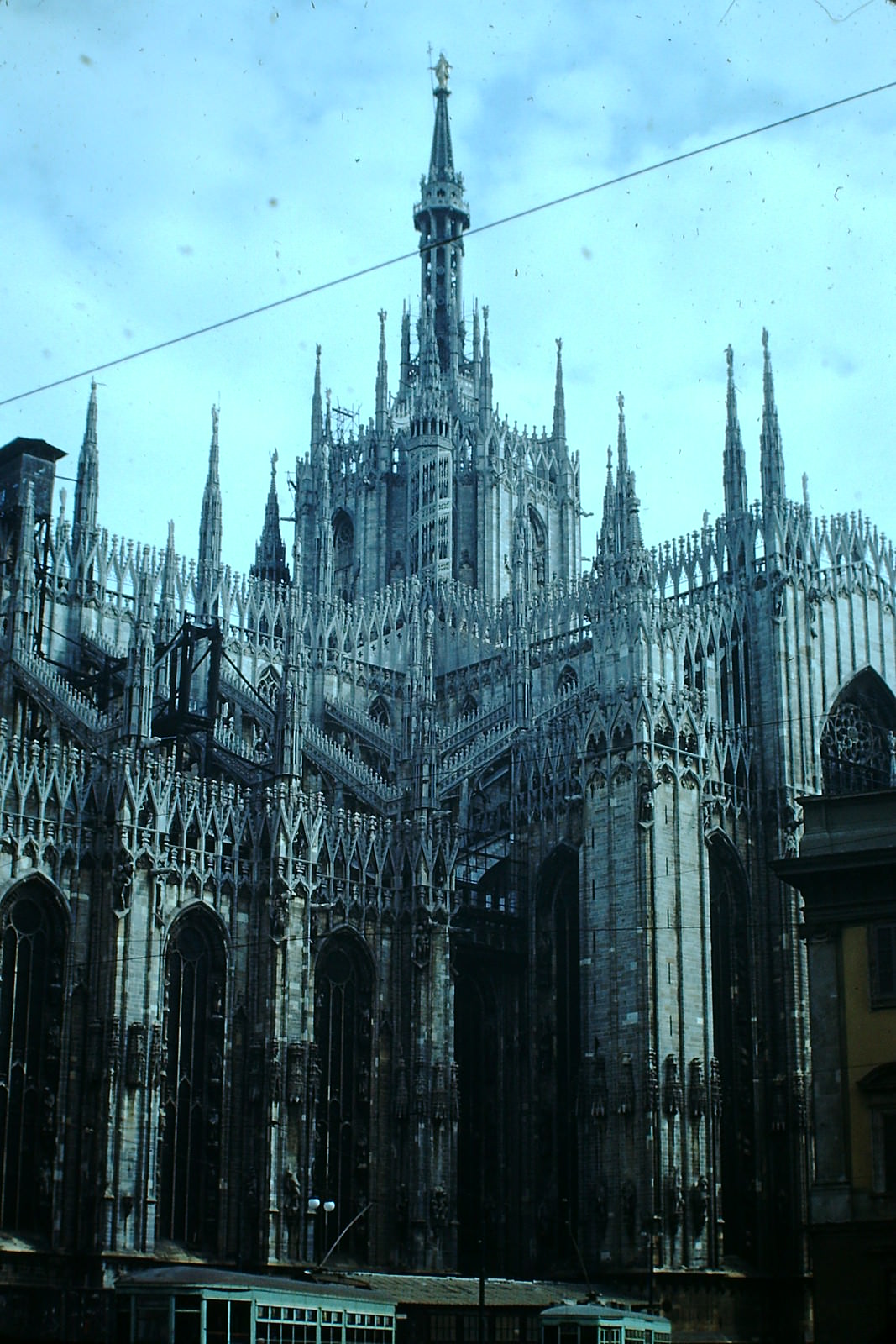
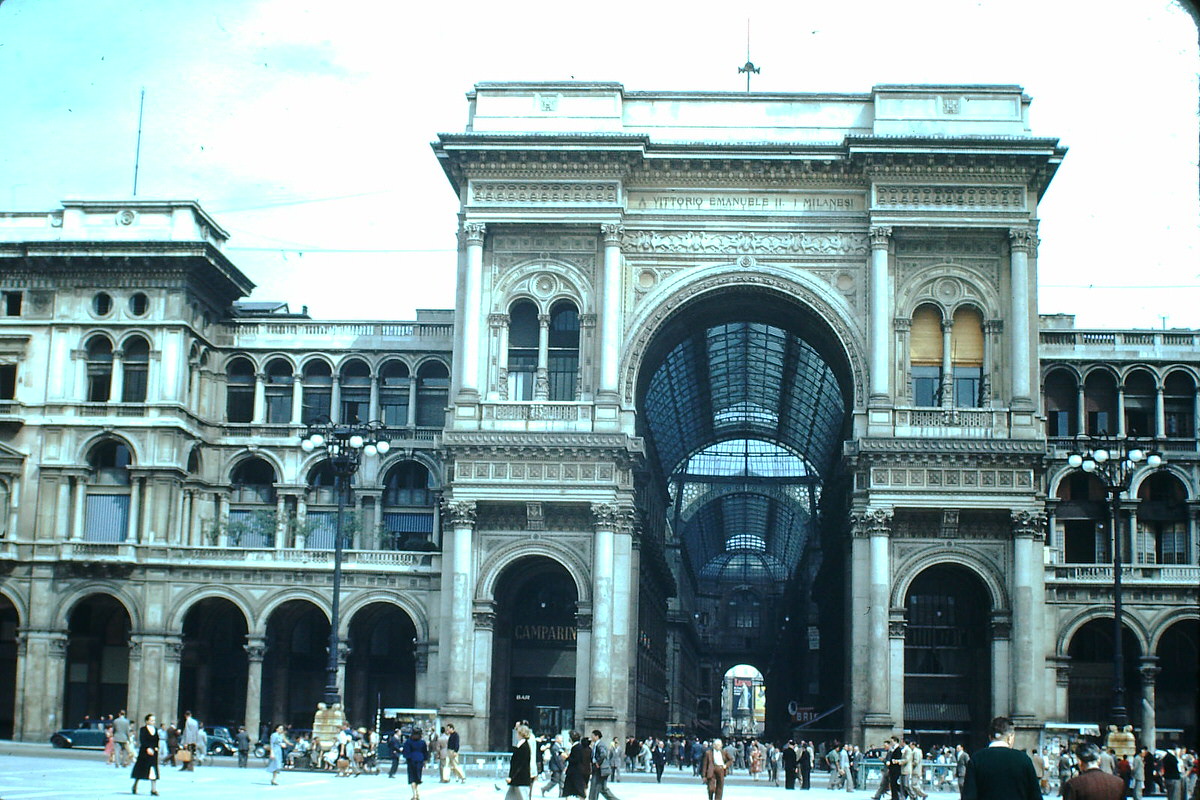
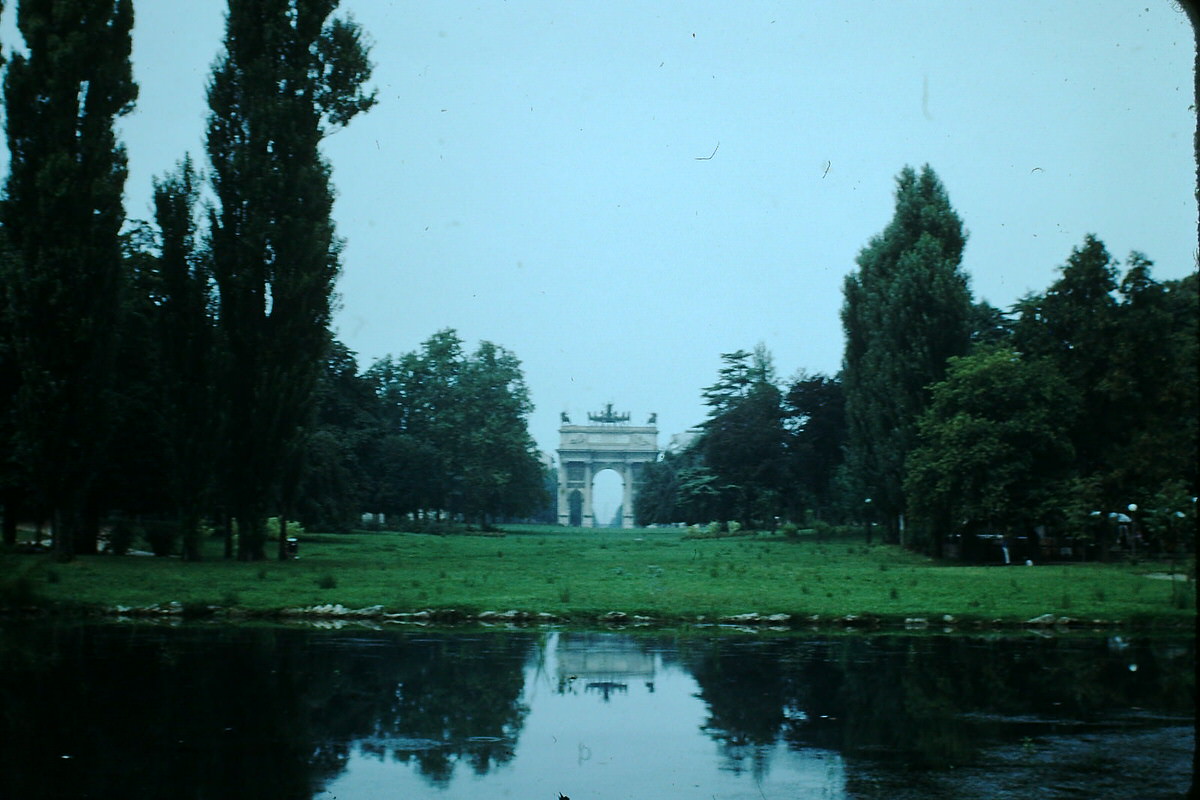
Milan’s Duomo — the city’s famous Gothic cathedral — dominated the skyline as it had for centuries. Its white marble facade and hundreds of spires were a symbol of permanence in a city rapidly modernizing. Nearby, the Galleria Vittorio Emanuele II served as a covered shopping arcade where Milanese residents browsed shops beneath a soaring iron-and-glass roof. The Arch of Peace, built in the early 19th century, stood at the city’s edge as a monument to a very different era.
Not far from the city center, the refectory of Santa Maria delle Grazie housed Leonardo da Vinci’s “The Last Supper” — a mural that had survived Allied bombing during the war partly due to sandbag protection efforts. Visitors in 1954 could still see evidence of the war’s reach across the city, but the cultural landmarks remained a source of national pride.
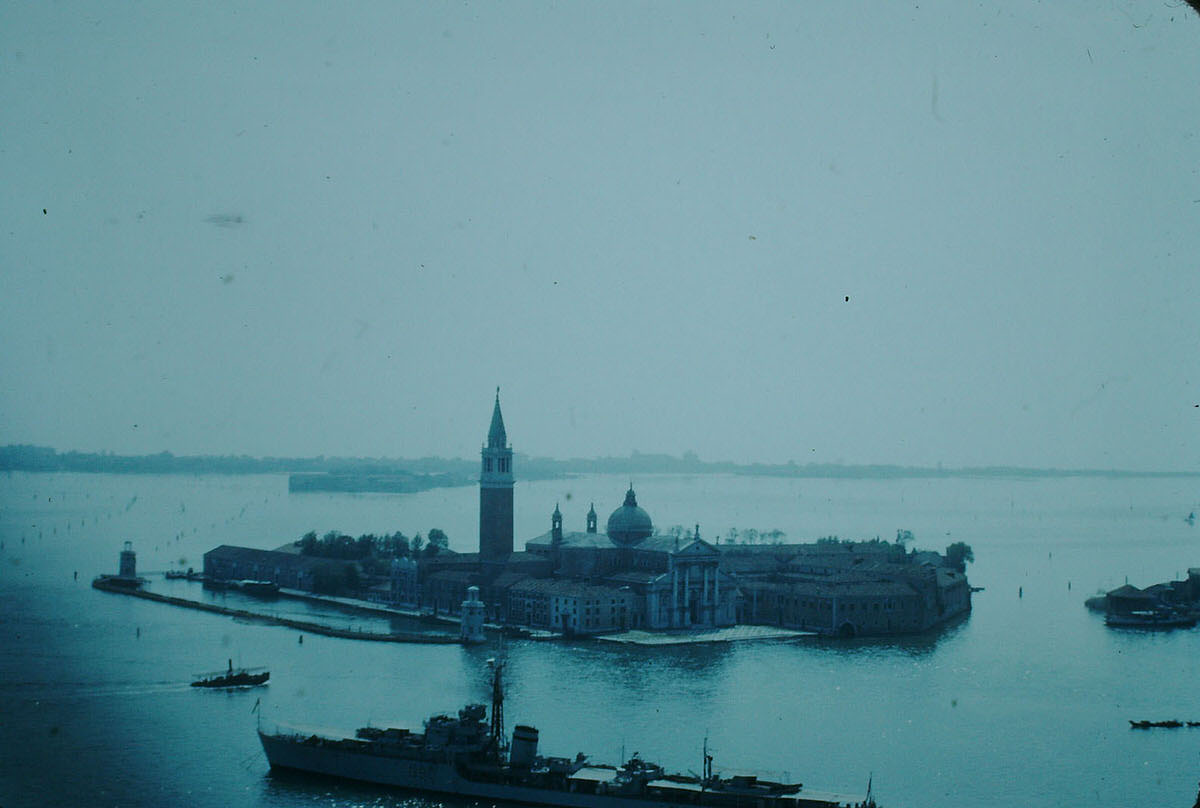
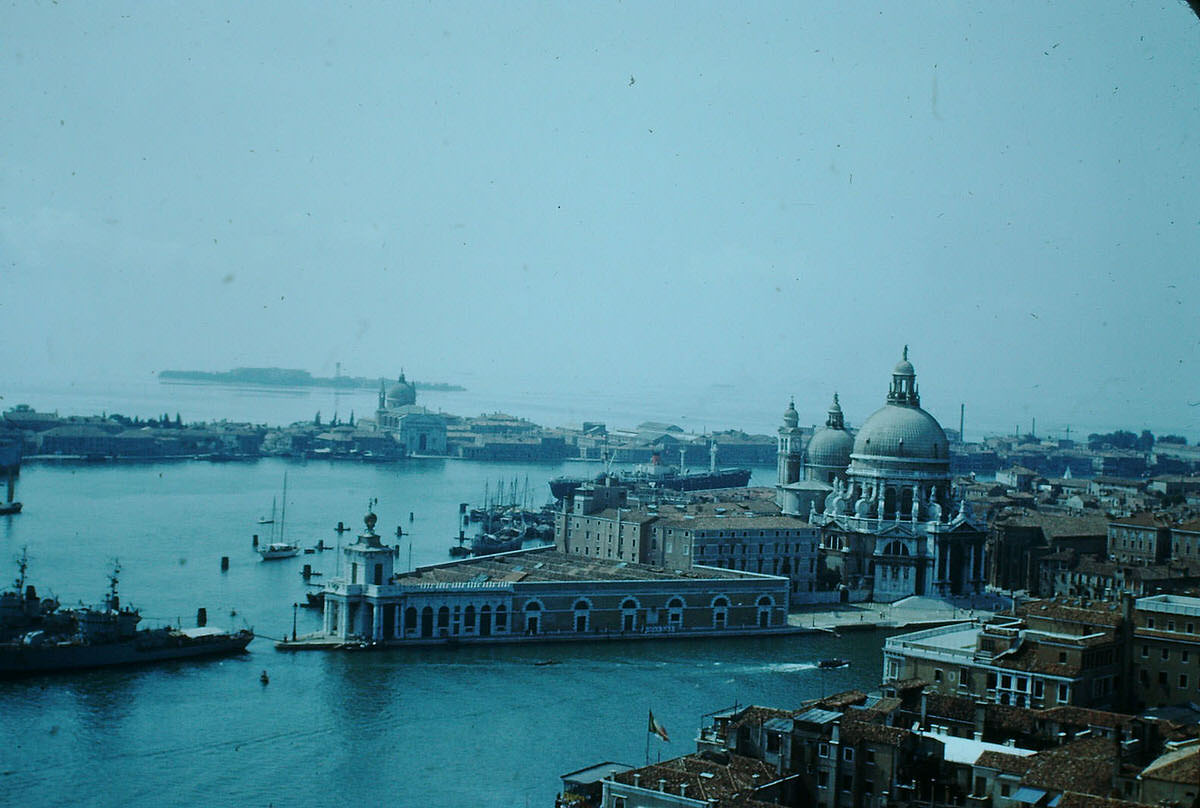
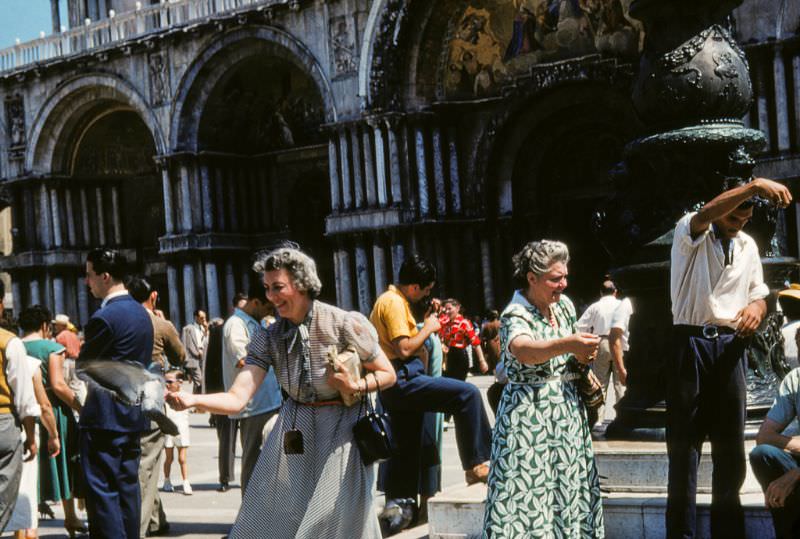
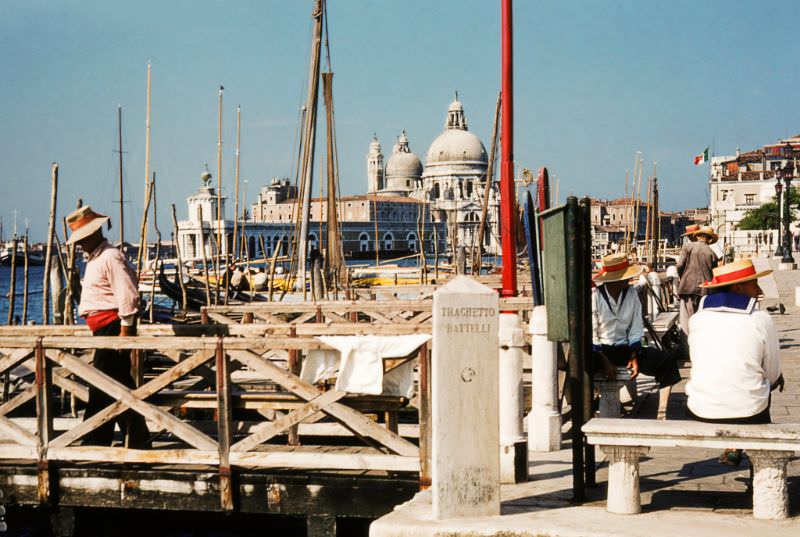
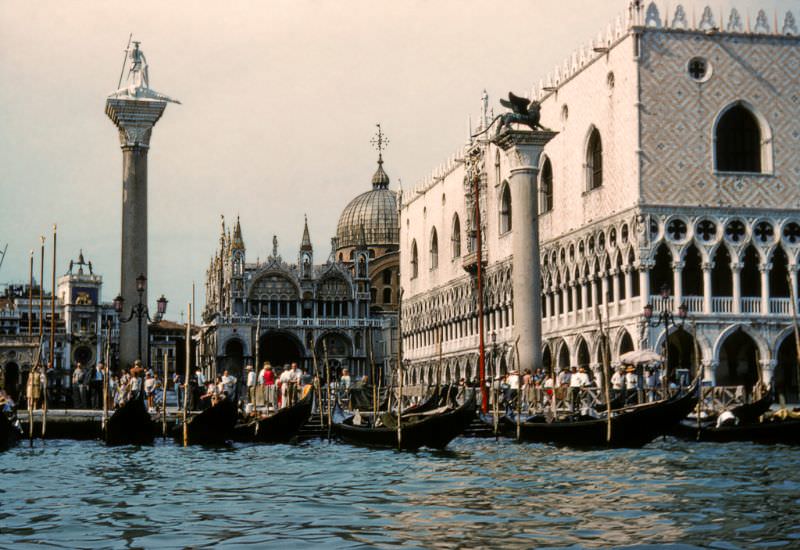
Venice offered a completely different kind of Italy. Built across a lagoon on 118 small islands, the city had no roads — only canals. In 1954, gondolas were still a primary means of getting around, and the waterways bustled with activity. St. Mark’s Square, the Doge’s Palace, and the Church of Santa Maria della Salute drew visitors from across the world. The city looked much as it had for centuries, its unique geography shielding it from the kind of wartime destruction seen on the mainland.
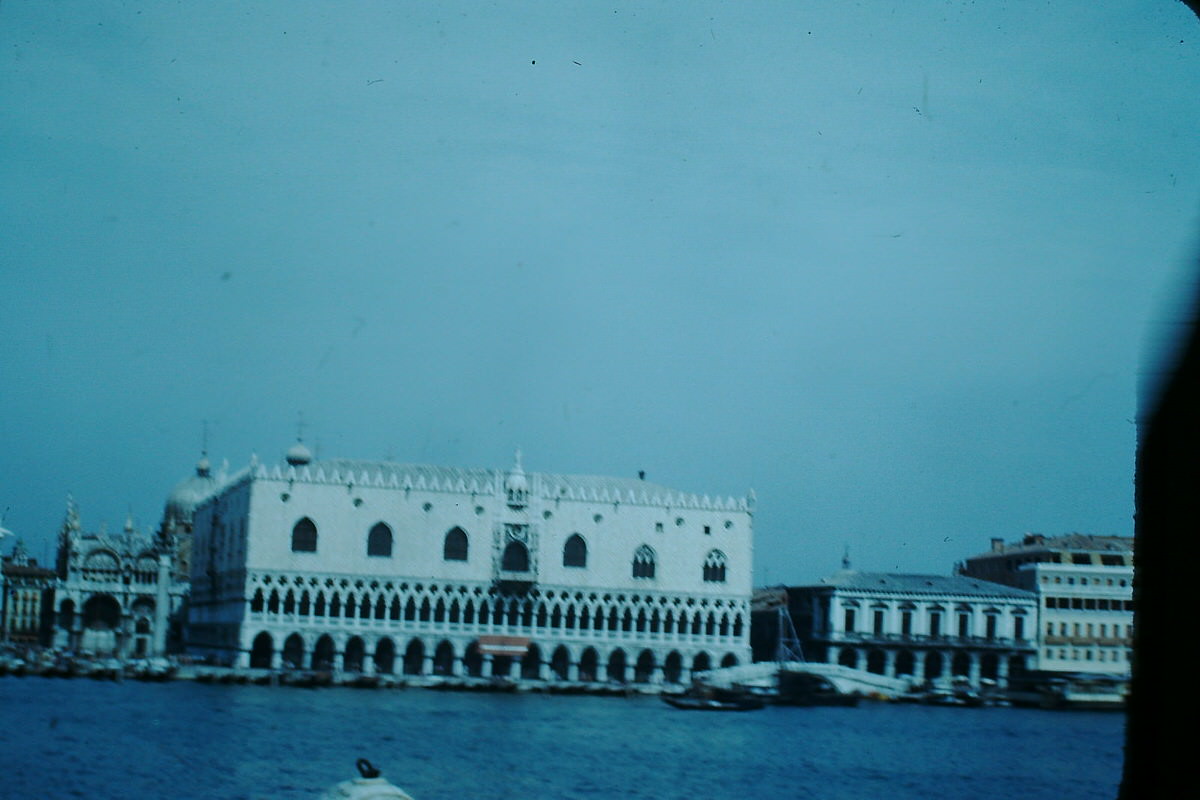
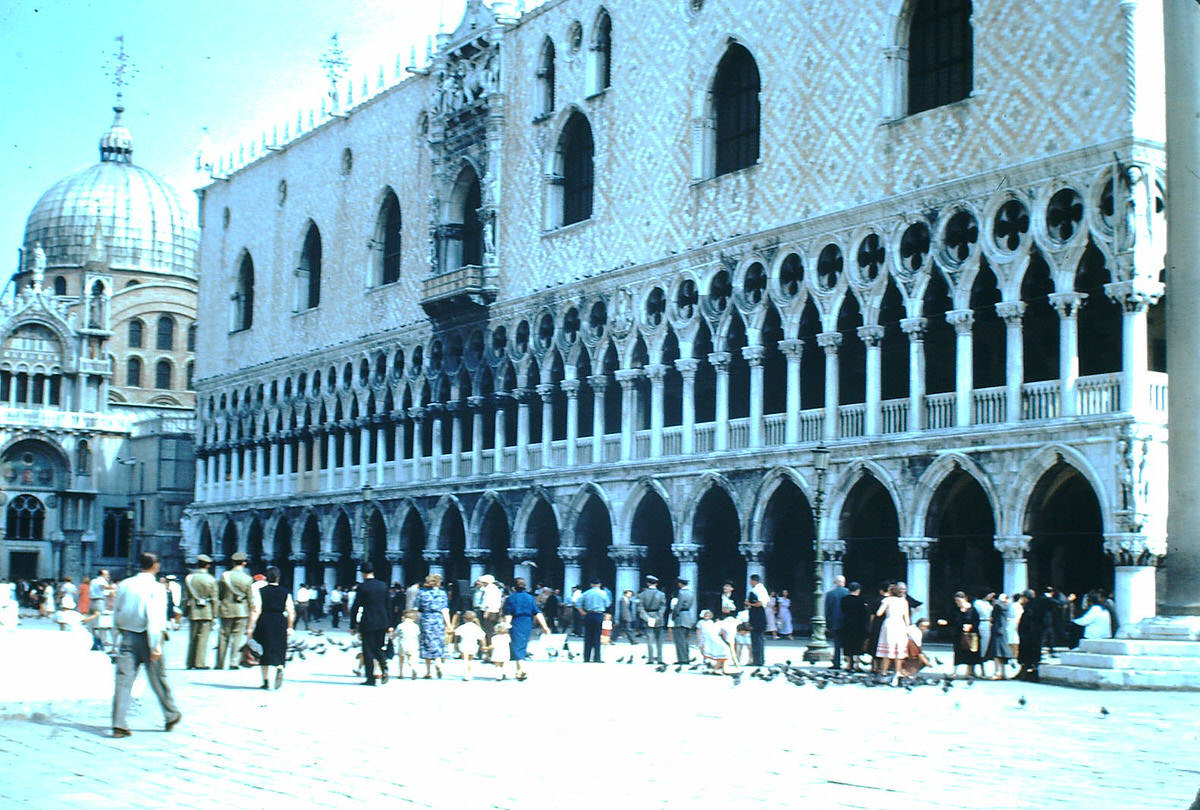
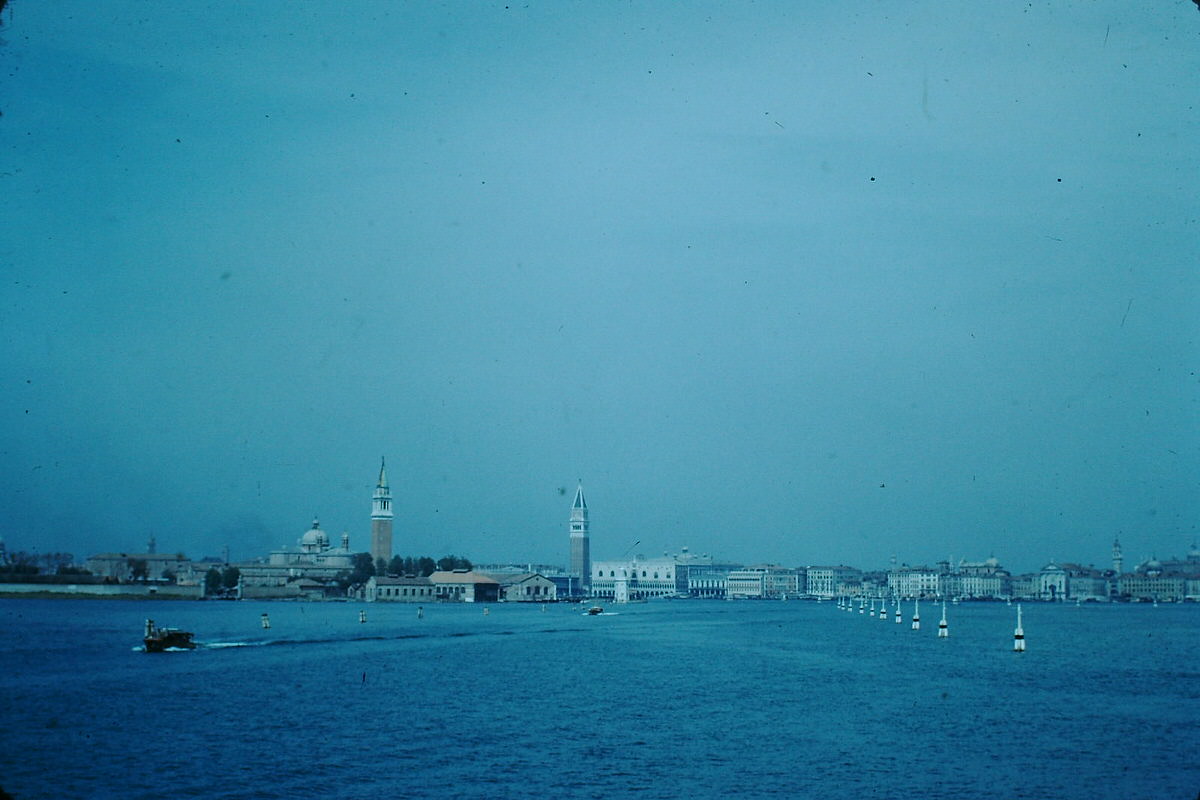
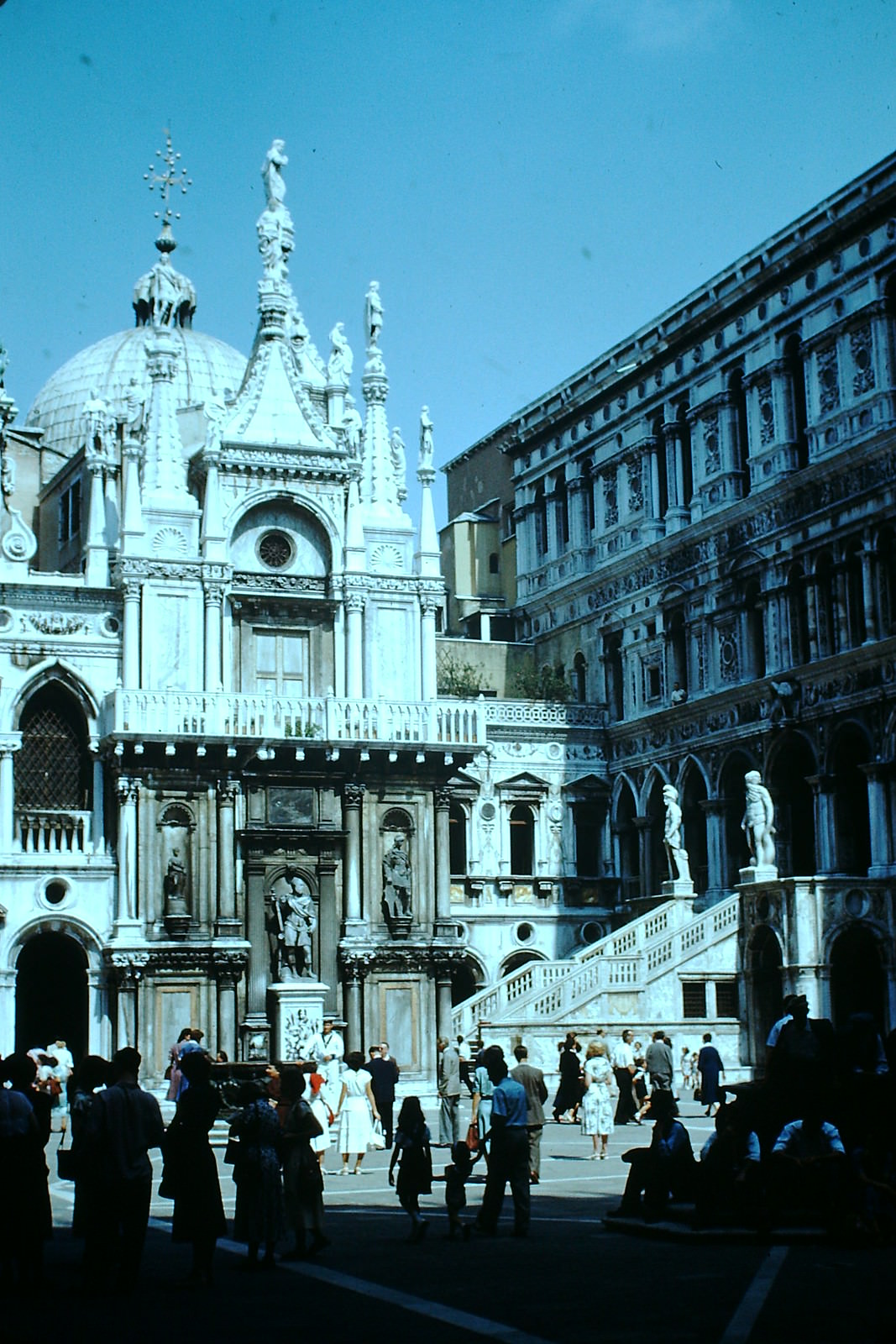
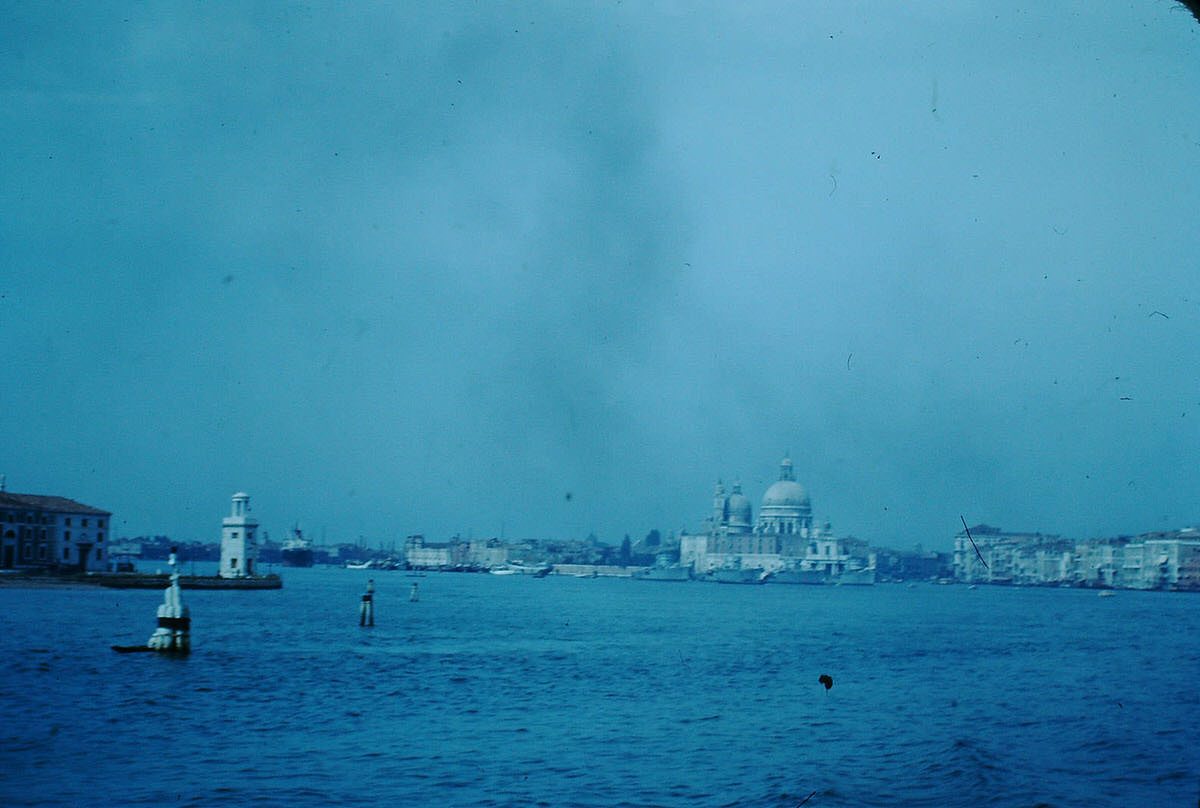
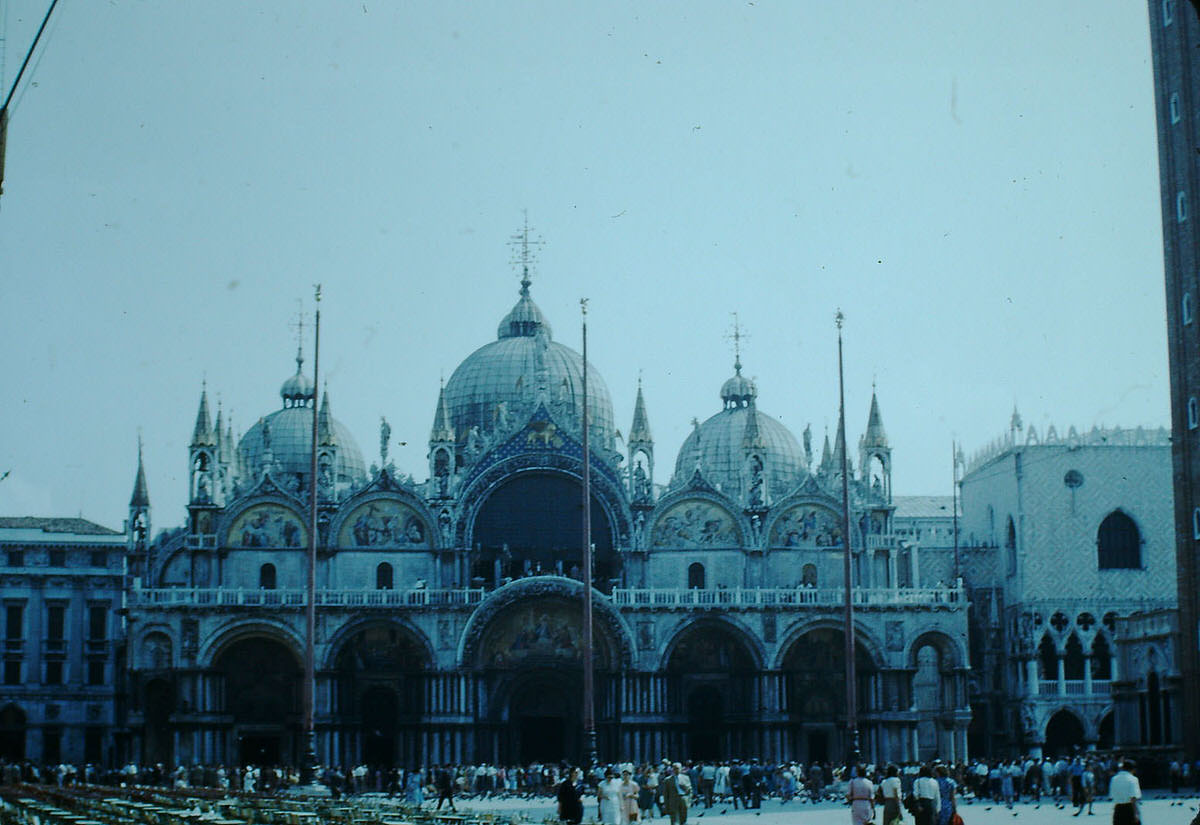
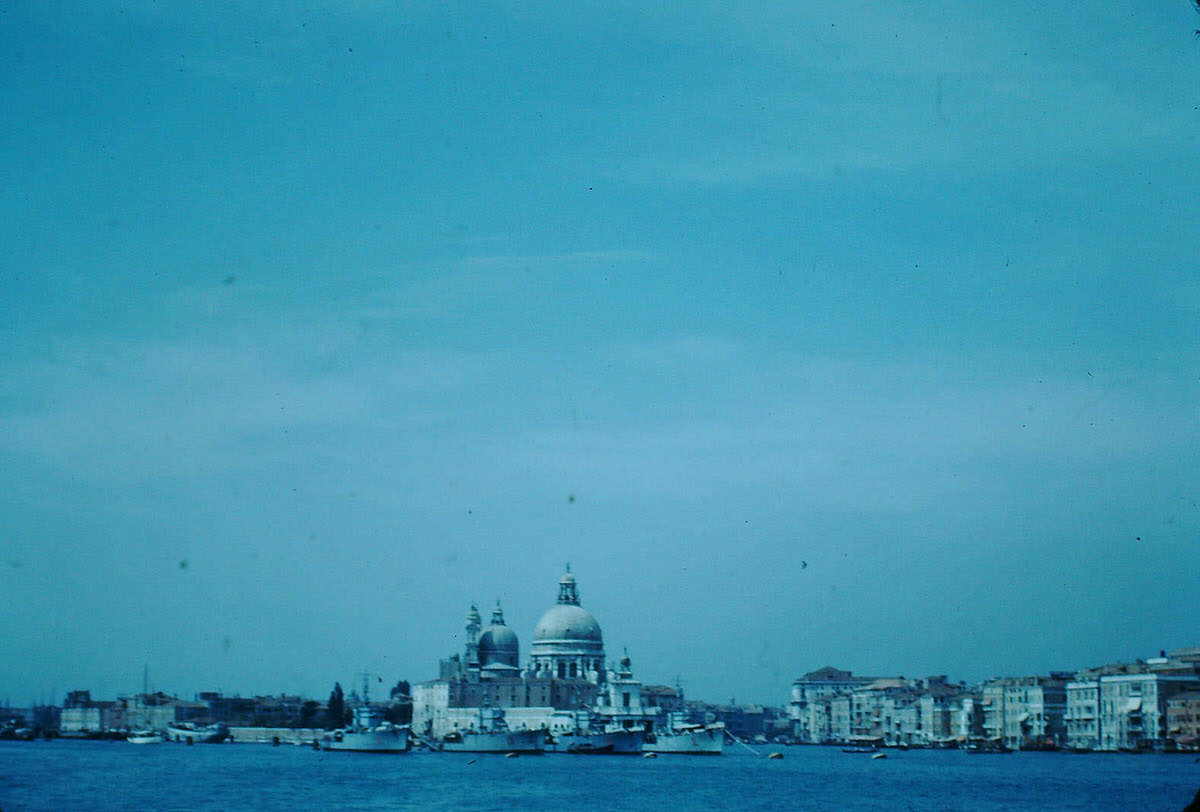
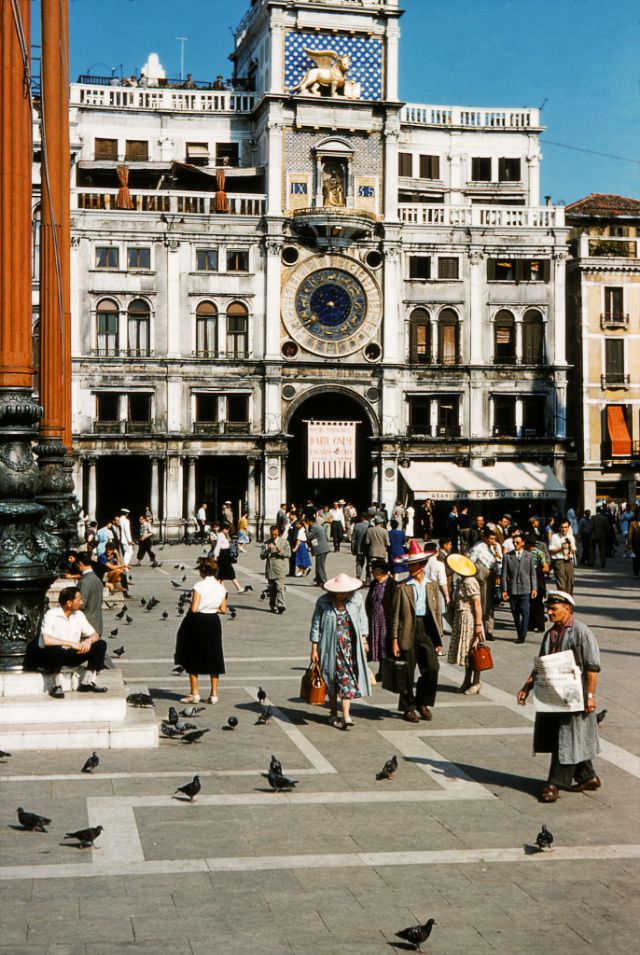
St. Mark’s Square was the social heart of Venice. The Torre dell’Orologio — the clock tower at the edge of the square — marked the hours with its distinctive astronomical clock face. Outdoor cafes filled the piazza, and the square’s bell tower, the Campanile, gave visitors a sweeping view of the city and the lagoon beyond.
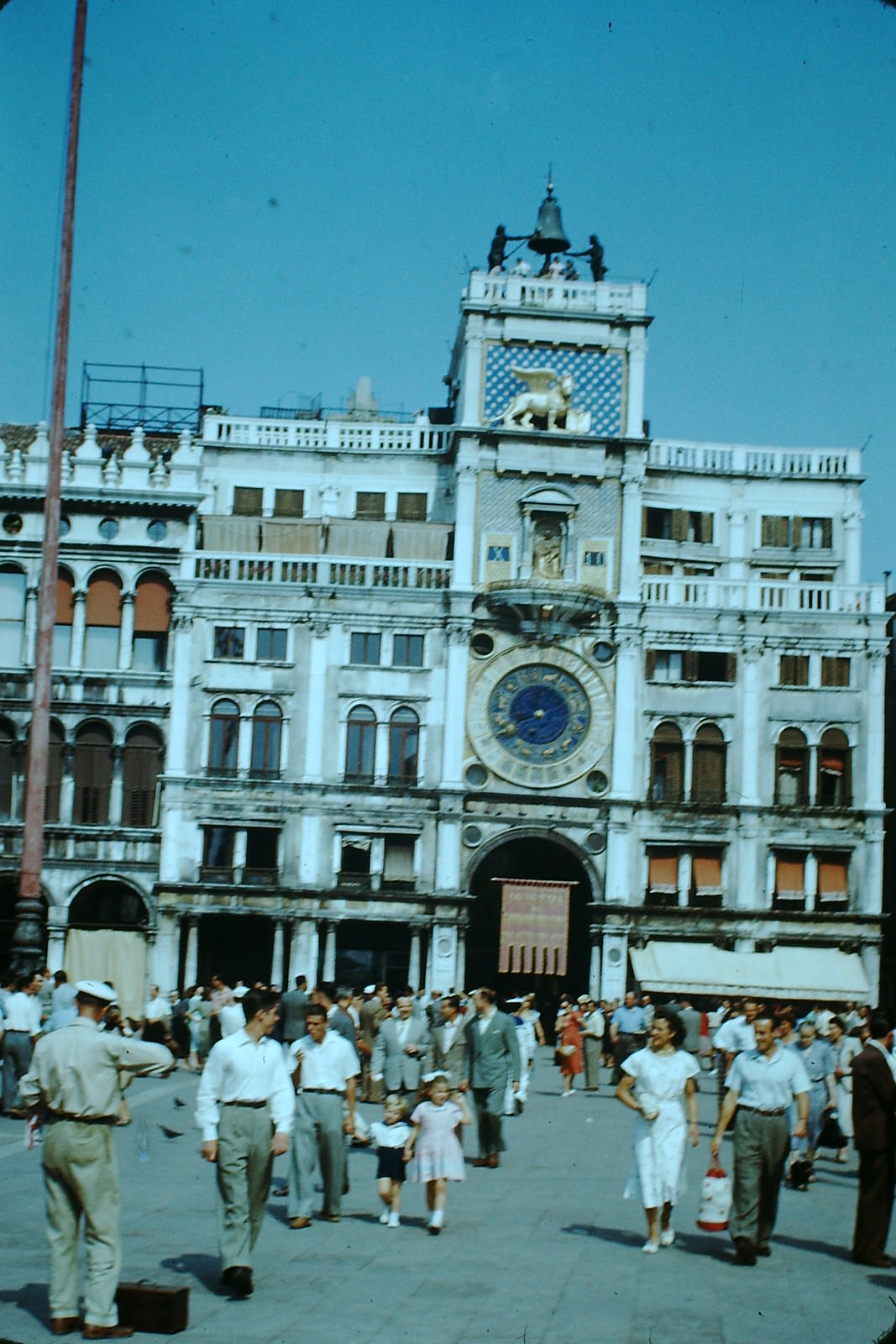
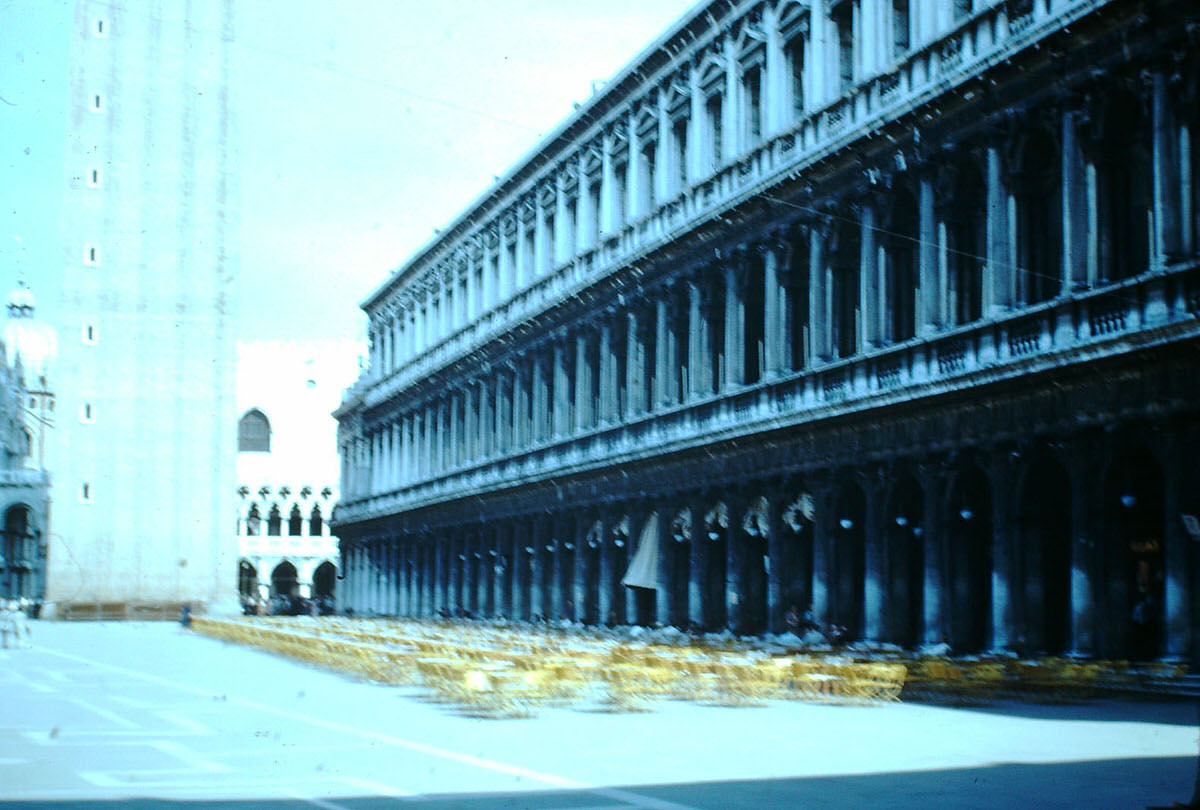
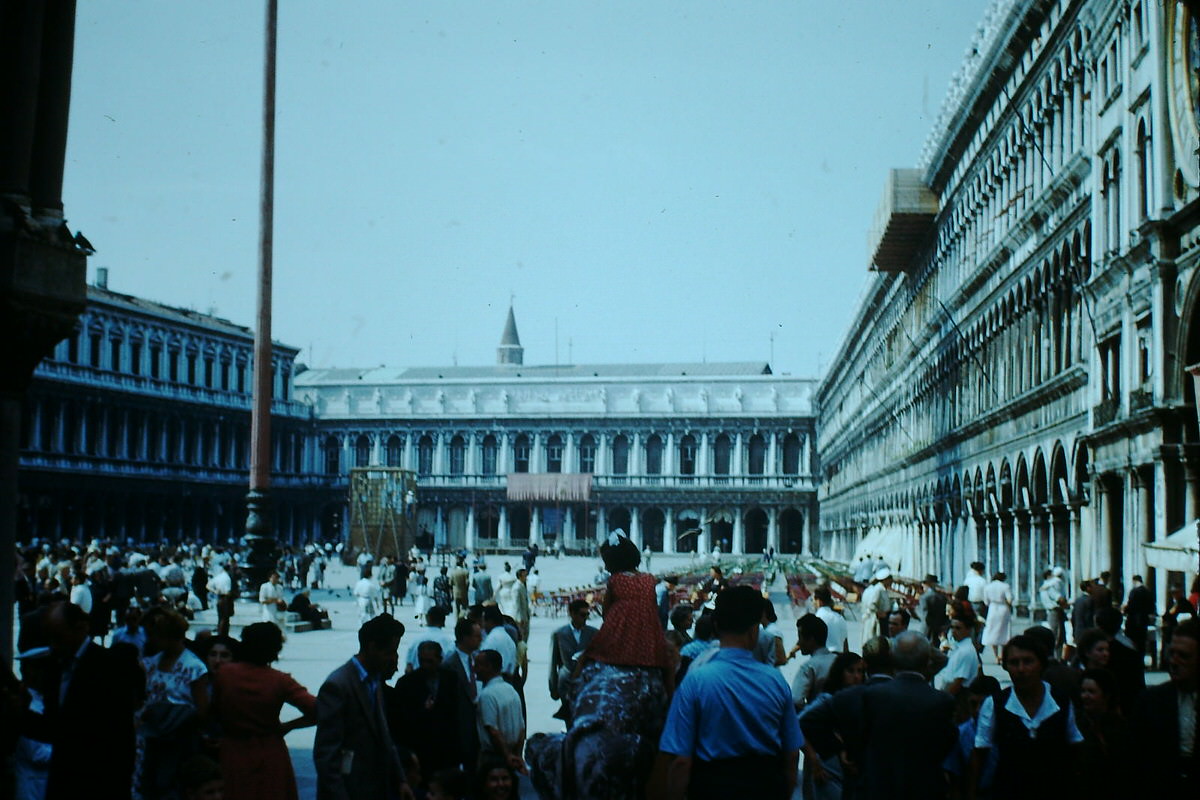
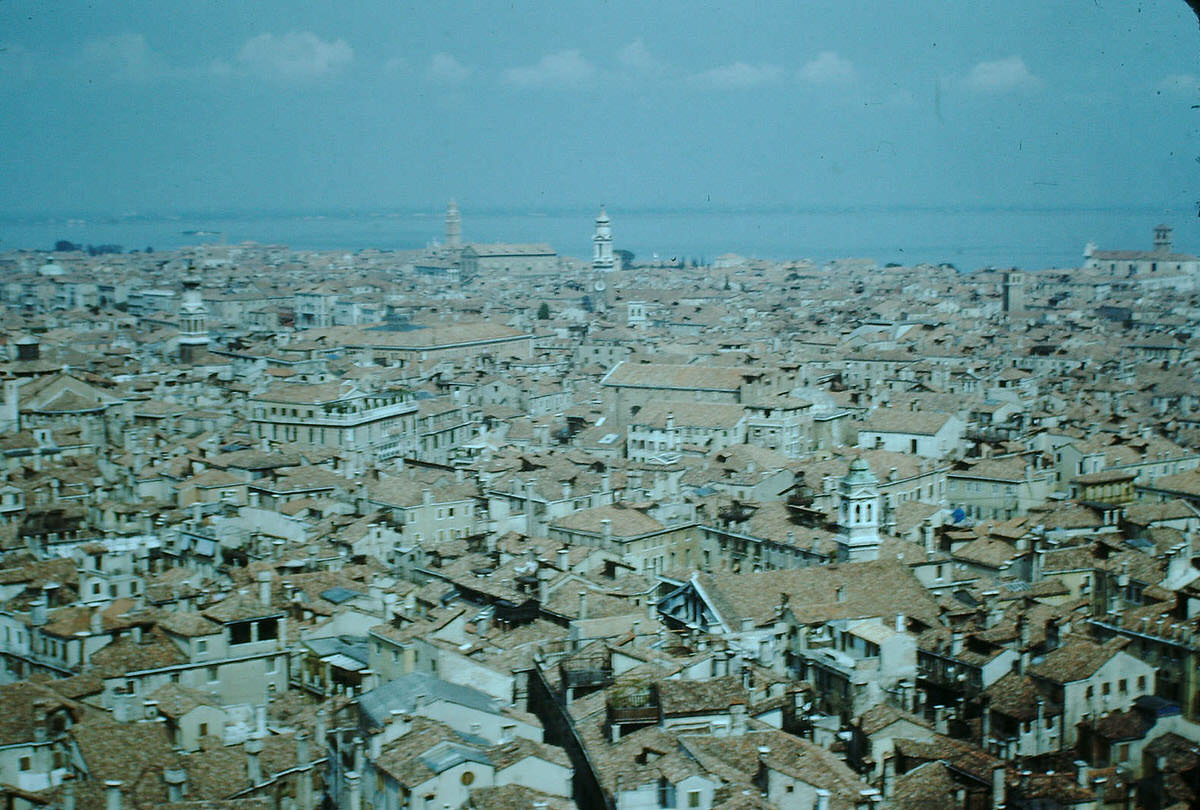
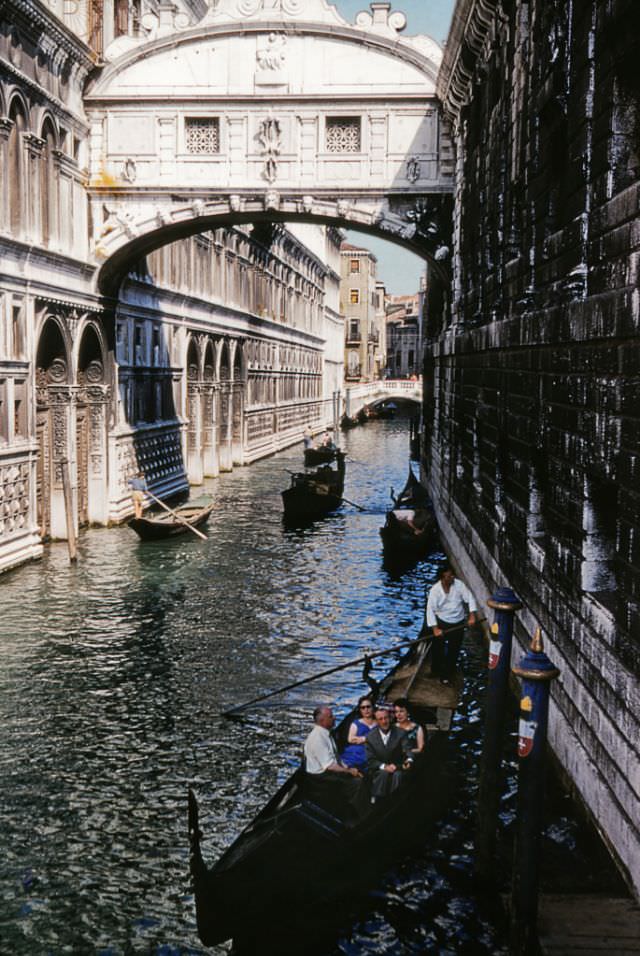
The Bridge of Sighs — the enclosed limestone bridge connecting the Doge’s Palace to the prison — was one of Venice’s most photographed landmarks. Legend held that prisoners crossing it caught their last glimpse of the outside world through its small windows. By 1954, it was a tourist attraction, though no less striking in person.
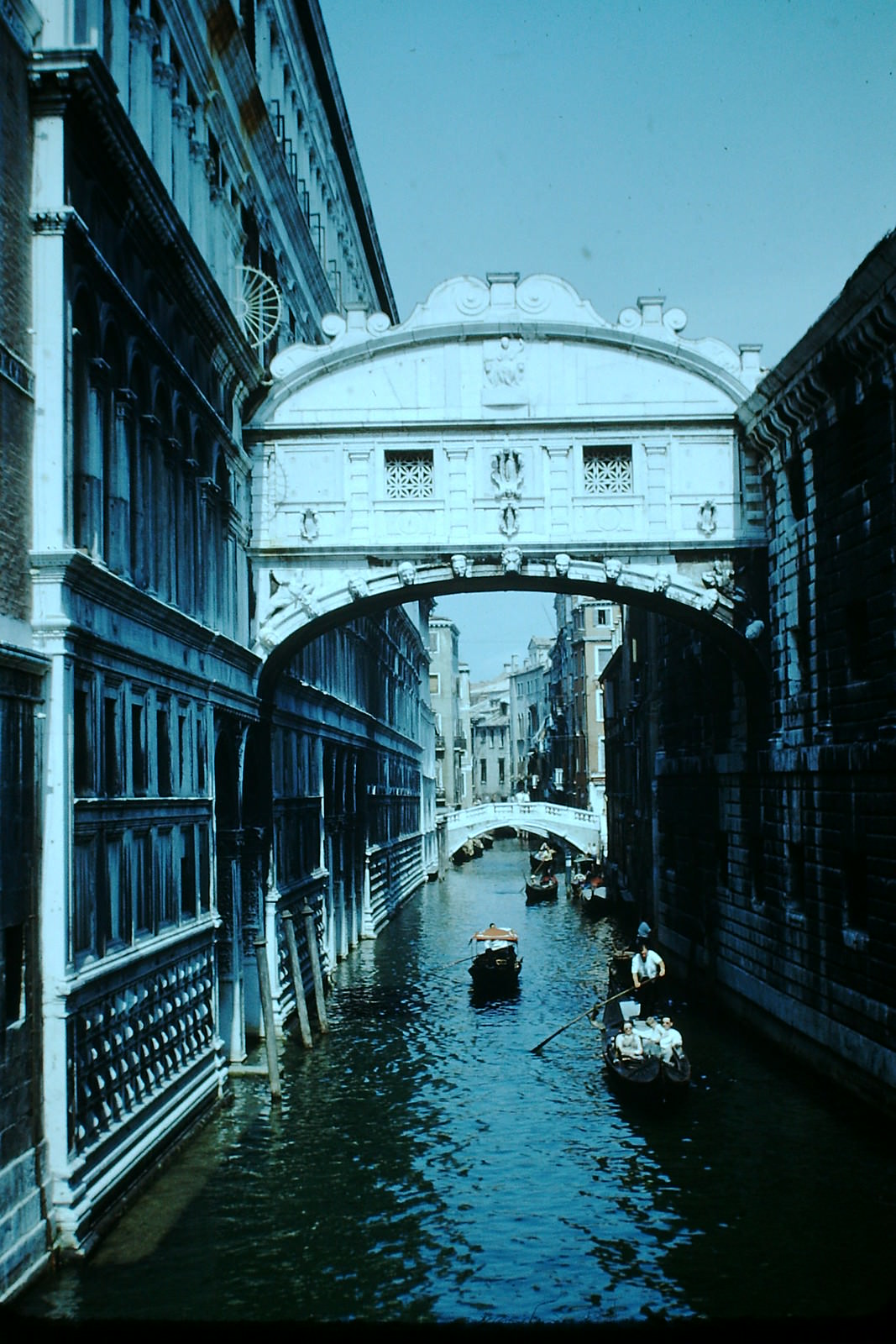
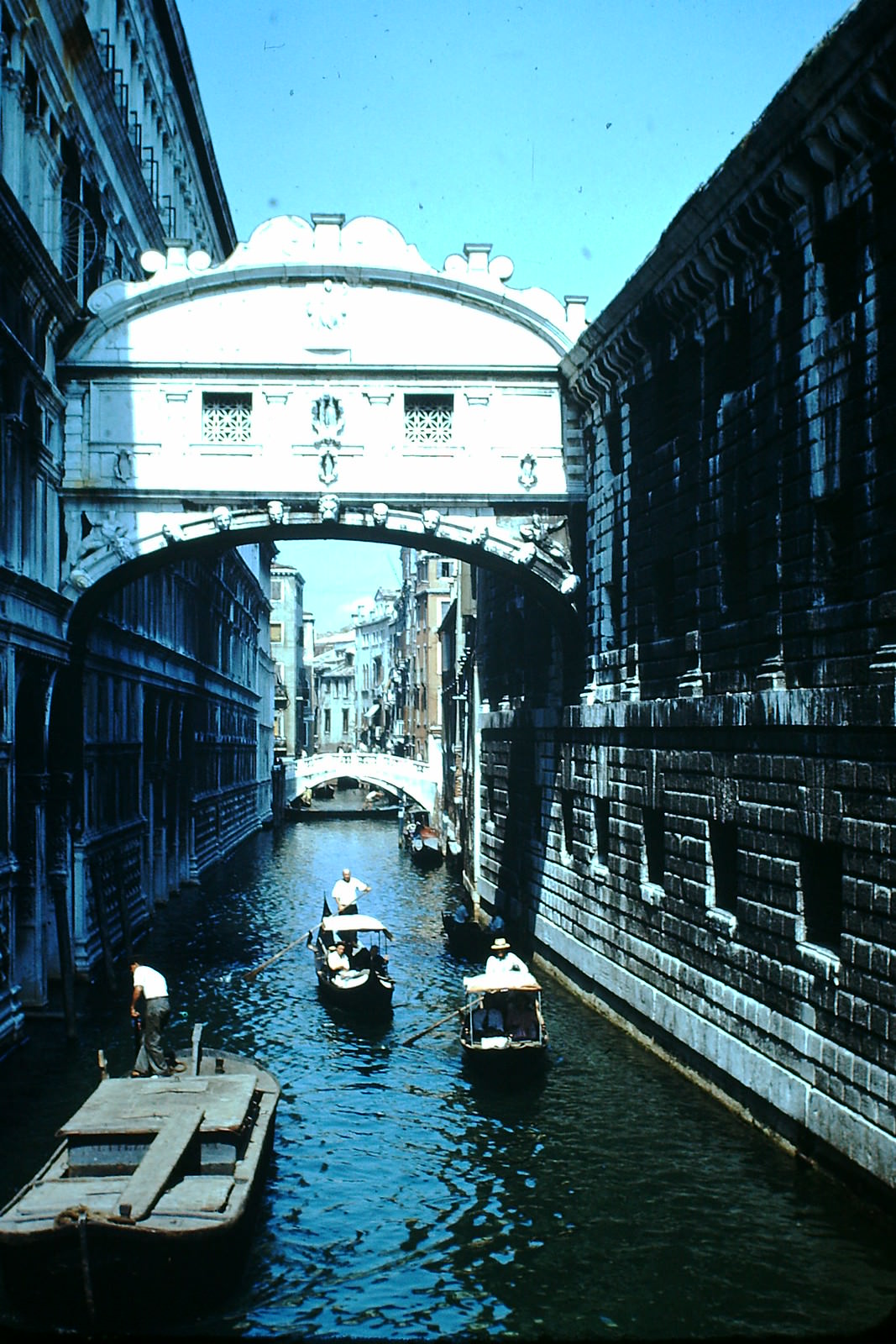
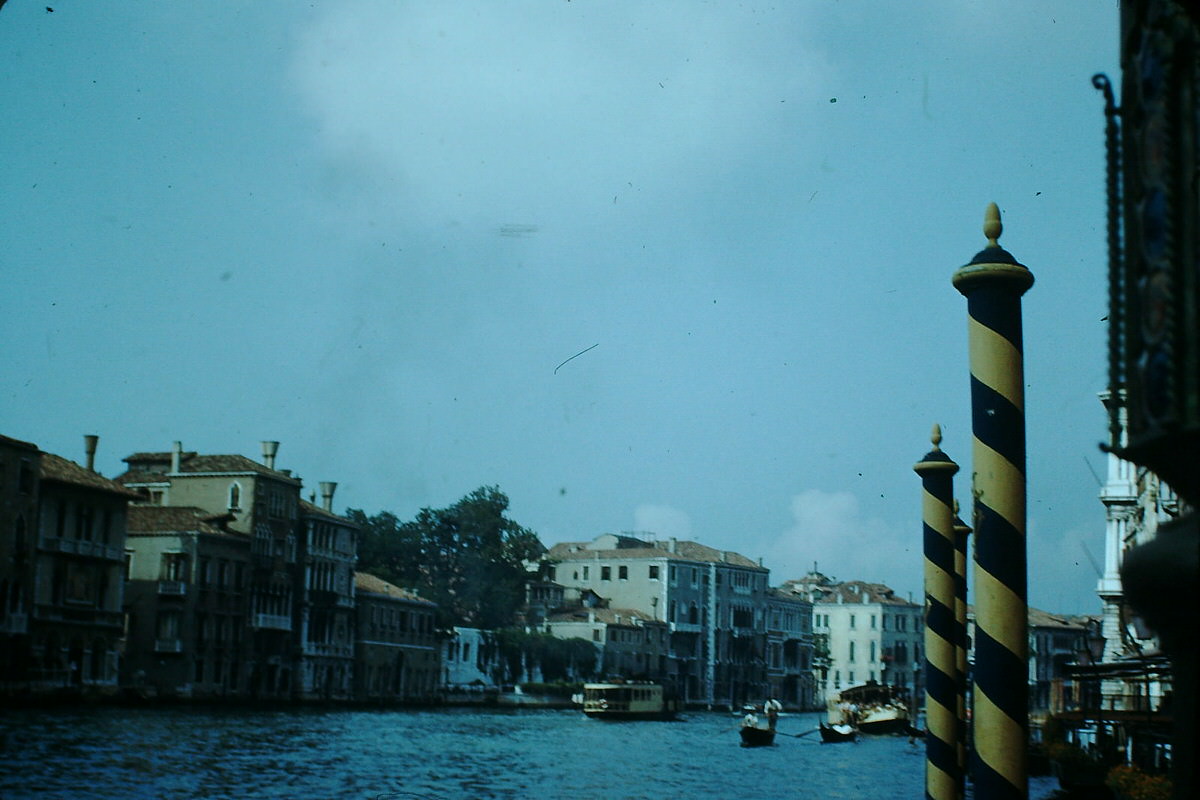
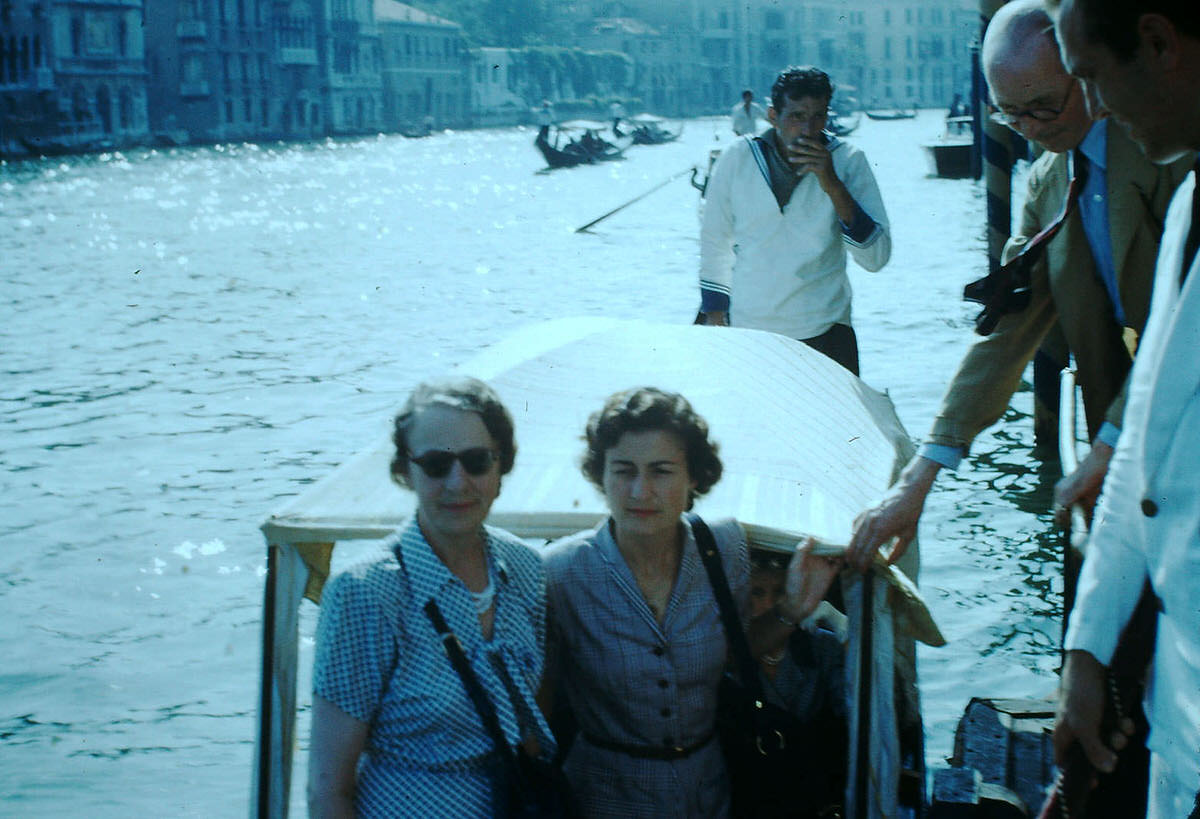
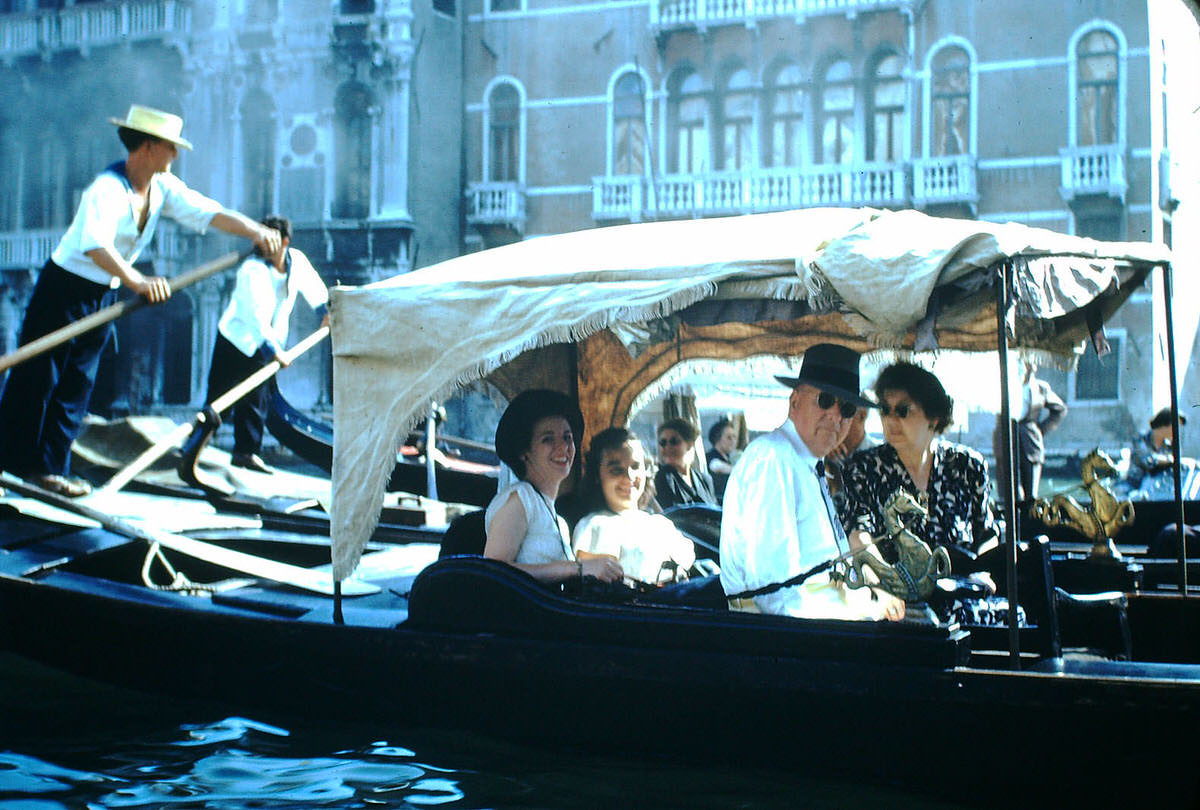
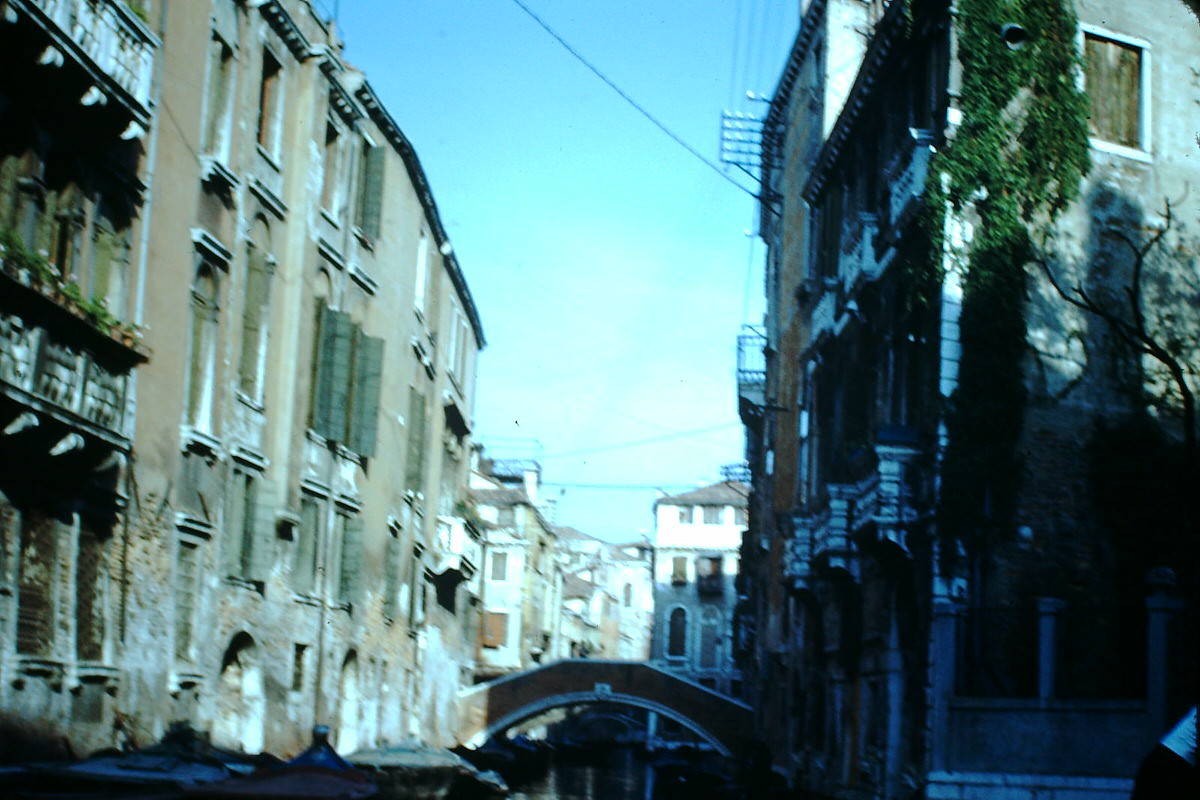
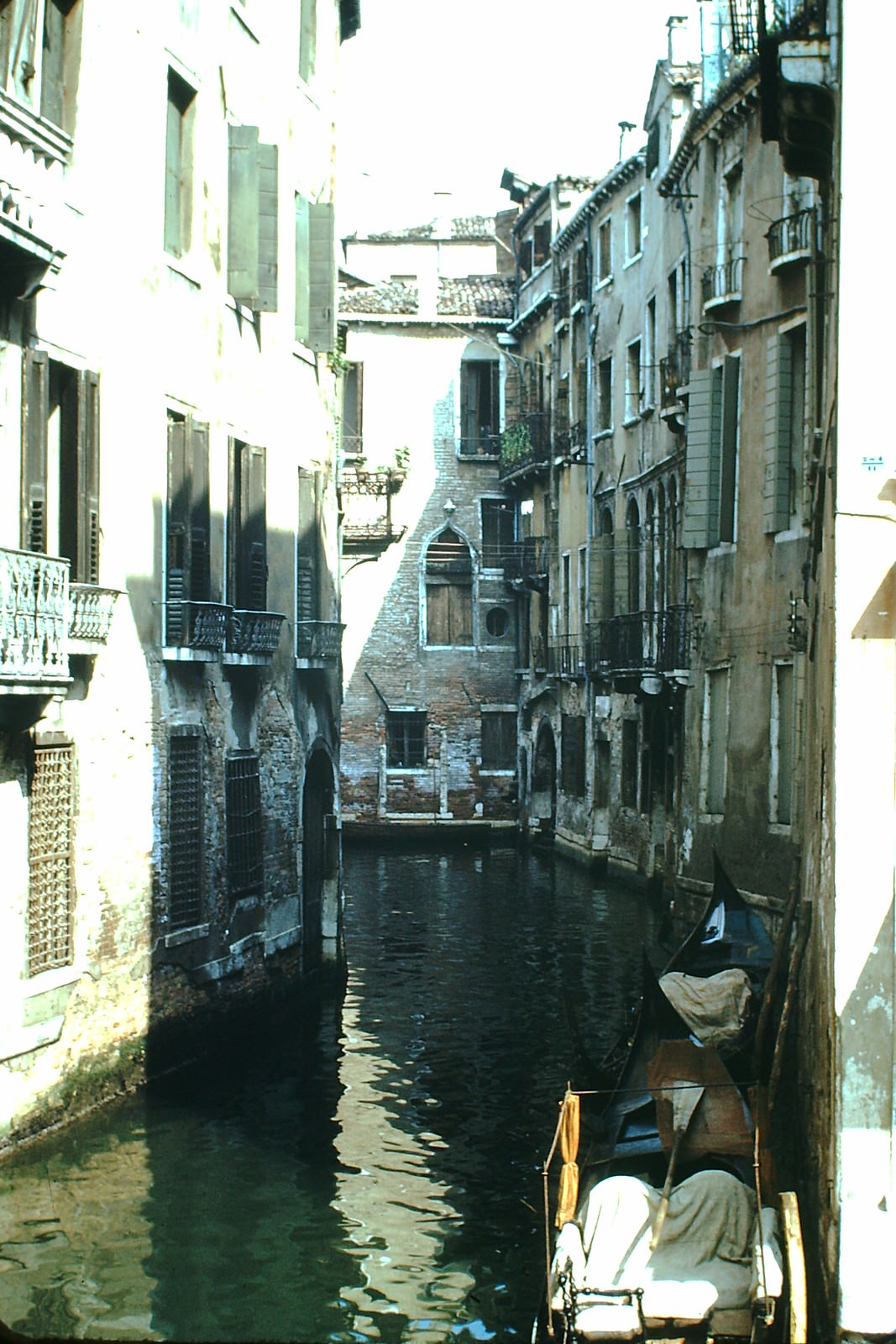
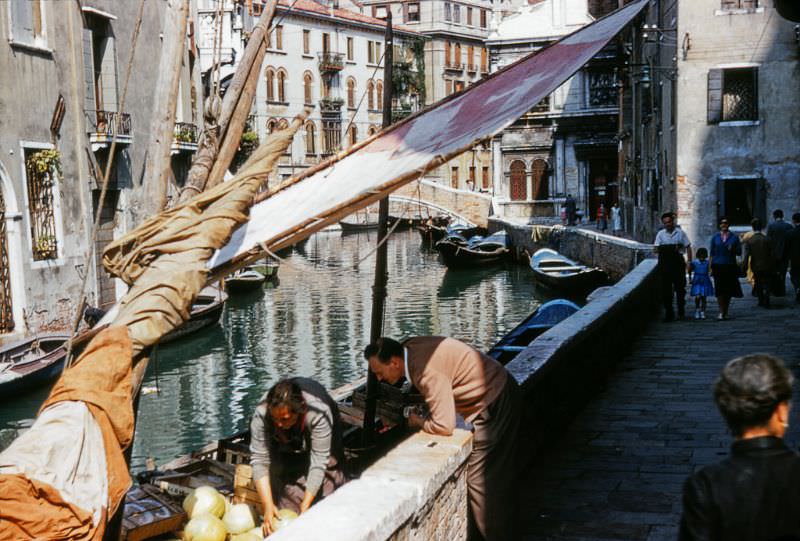
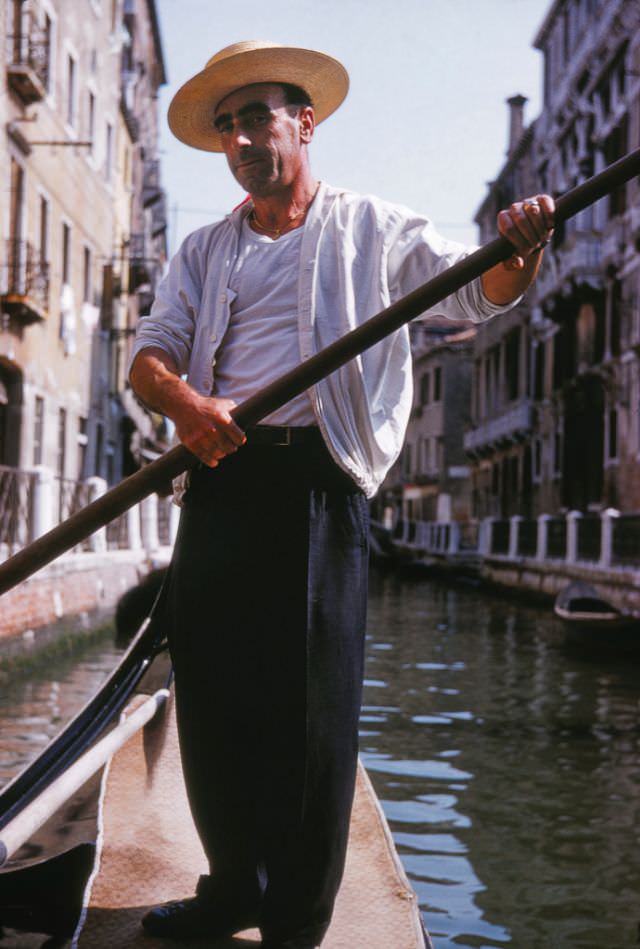
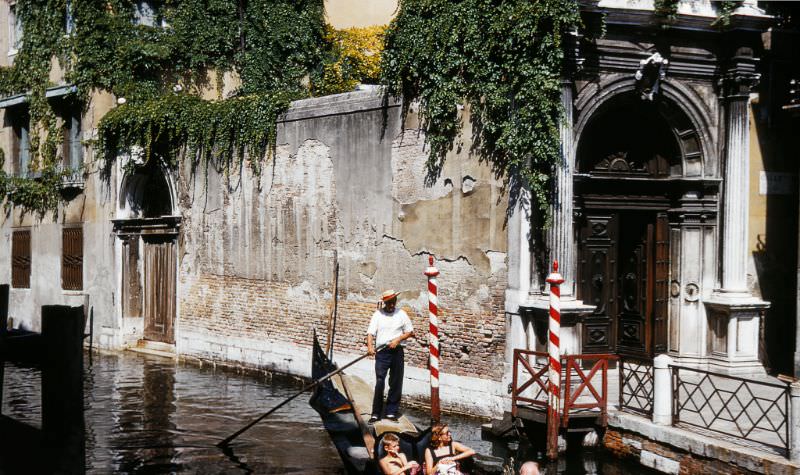
Taking a gondola through Venice’s narrow canals was the most intimate way to experience the city. Visitors in 1954 boarded gondolas from wooden docks along the waterfront and drifted past centuries-old palazzos, laundry strung between windows, and the quiet reflections of buildings in dark water.
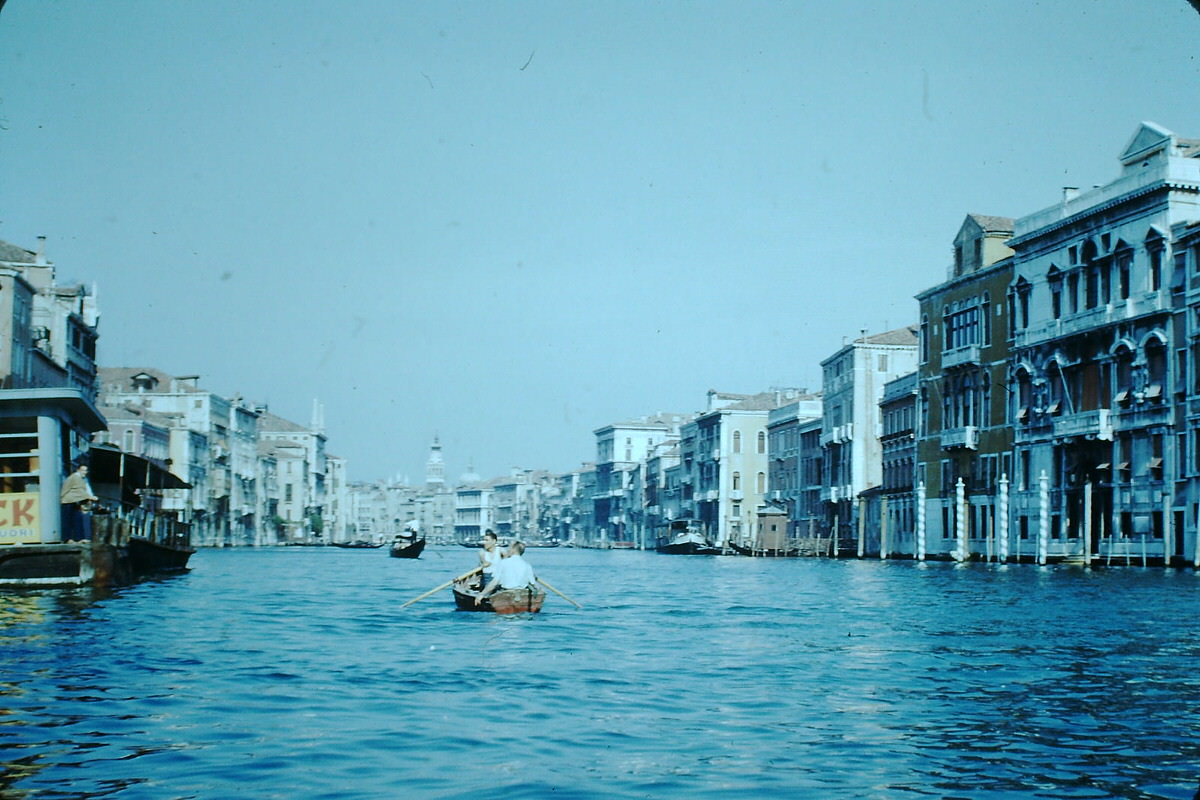
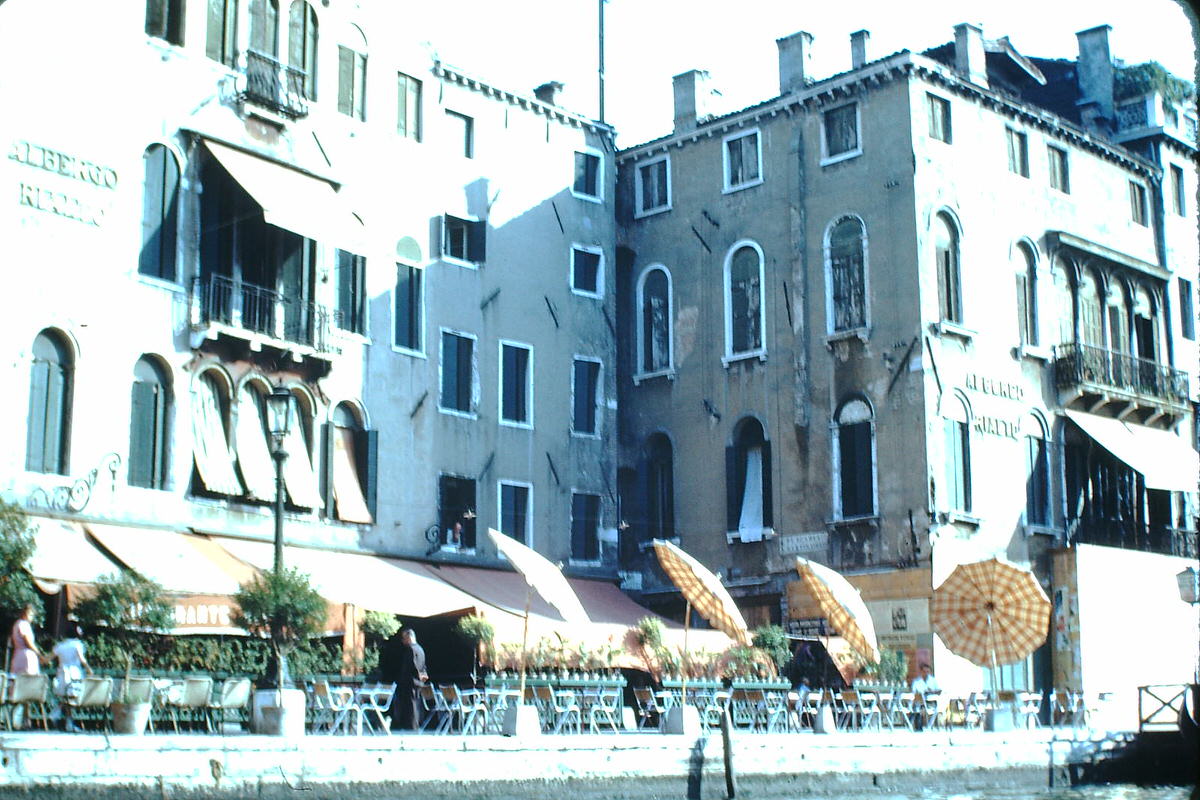
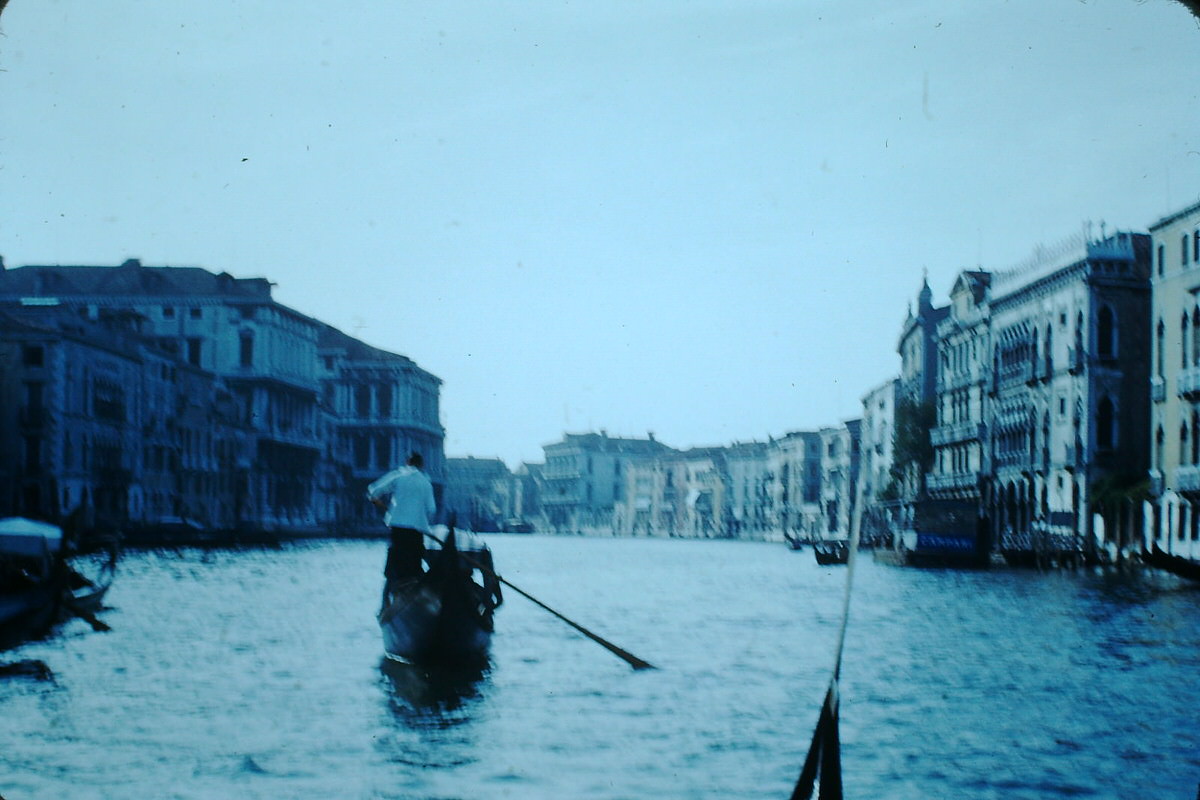
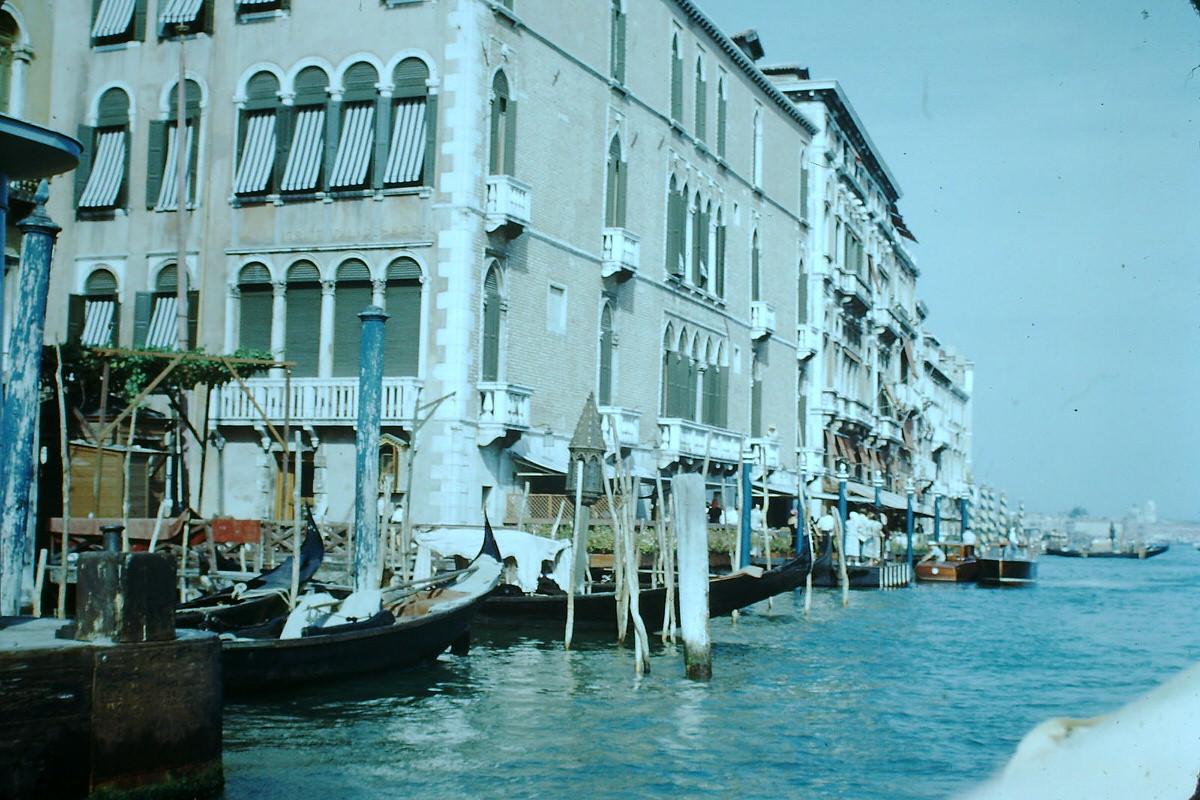
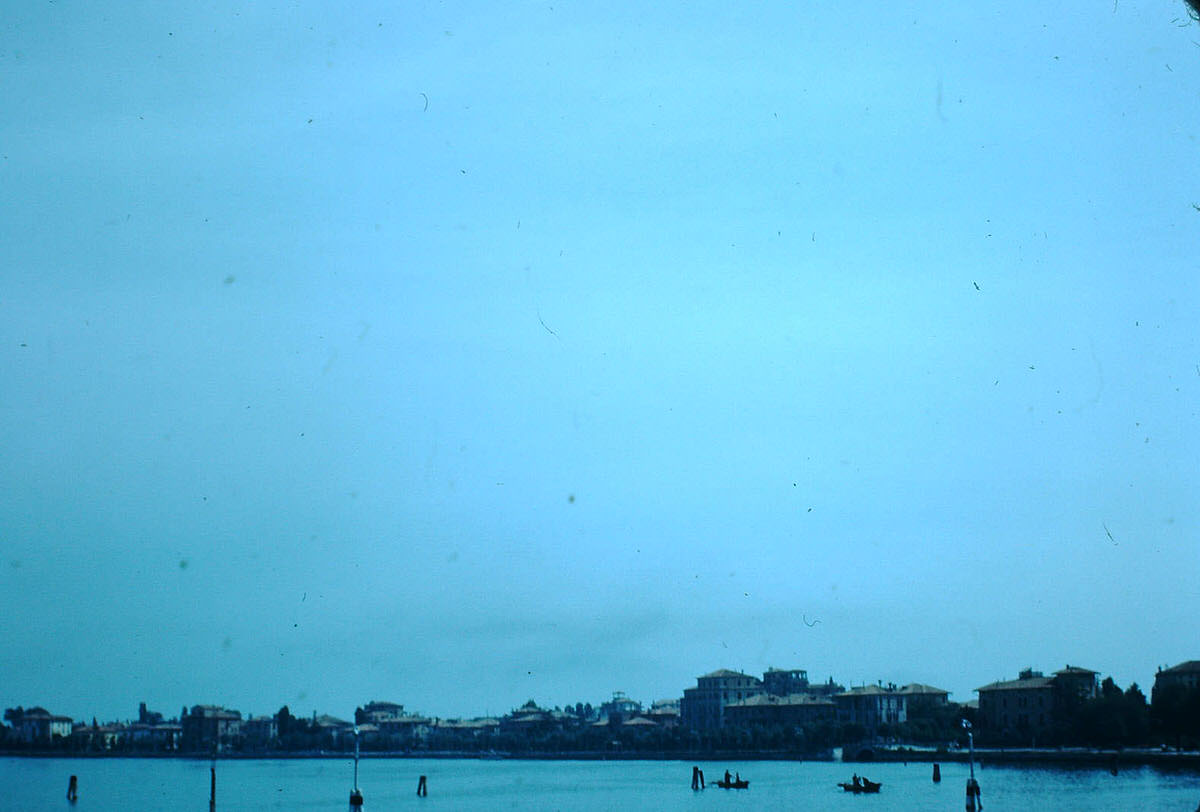
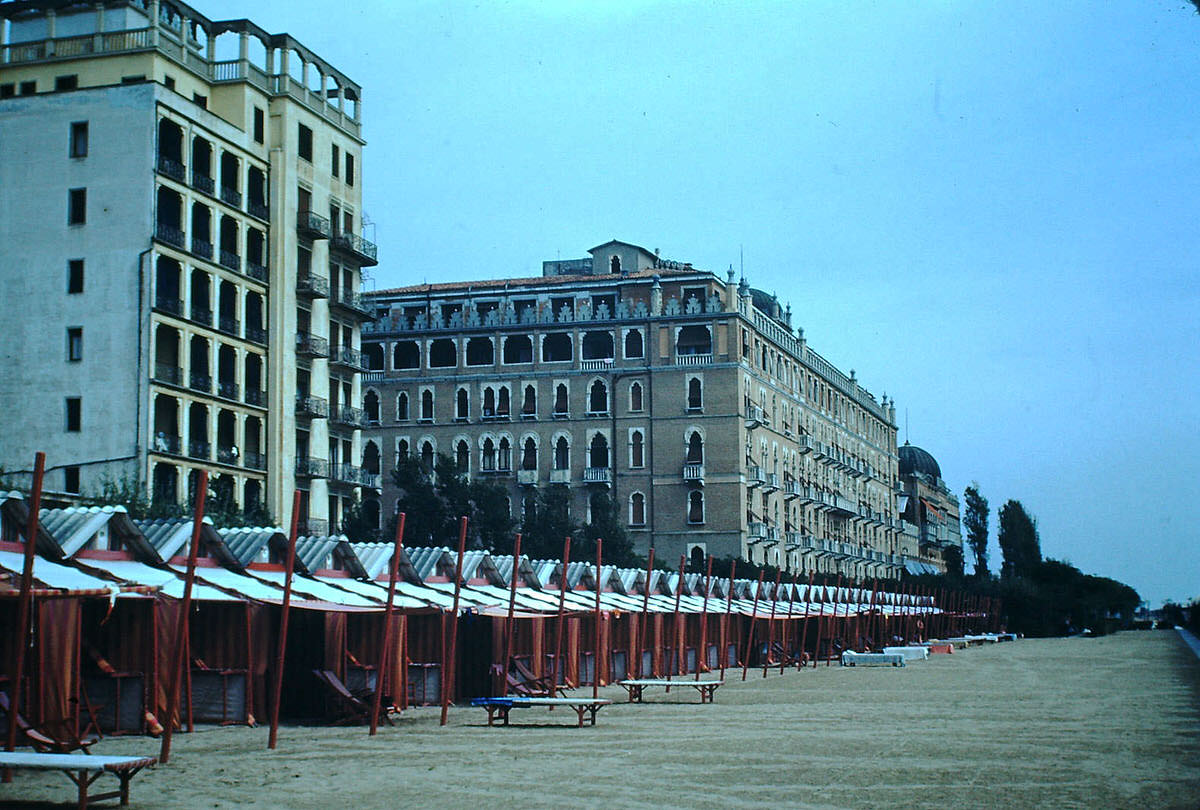
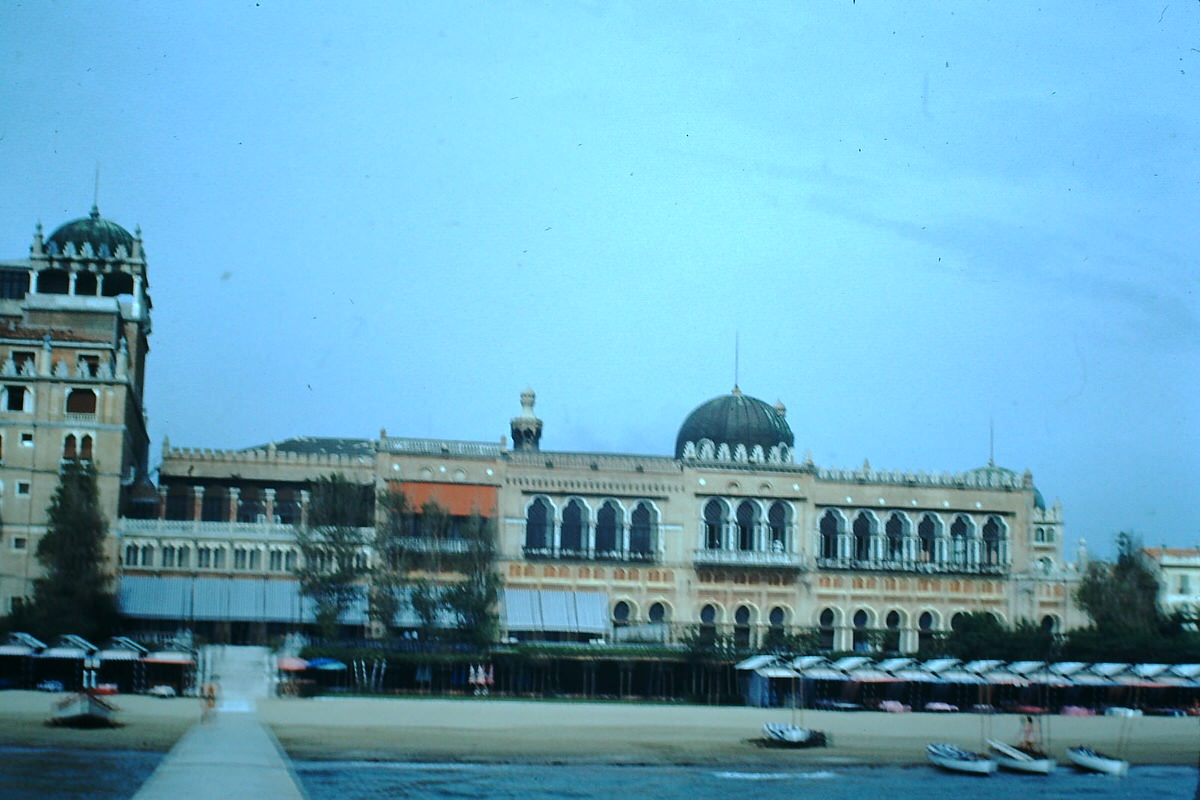
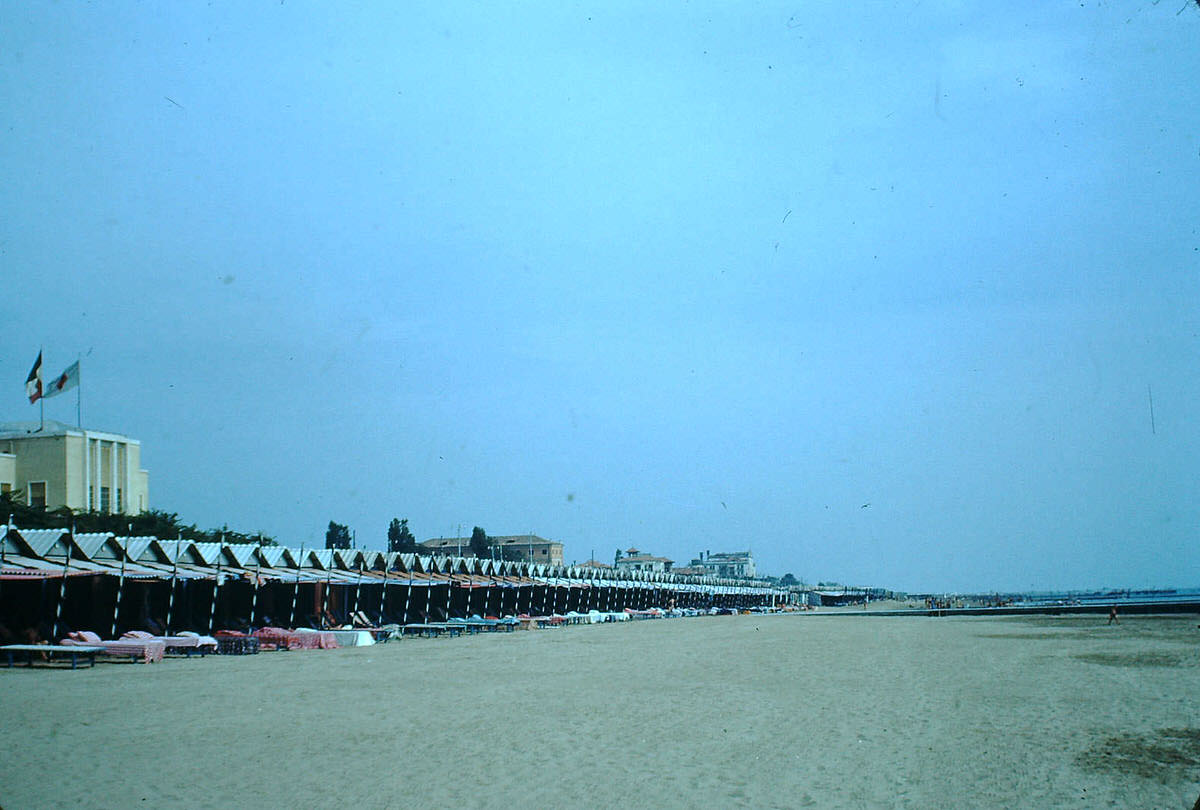
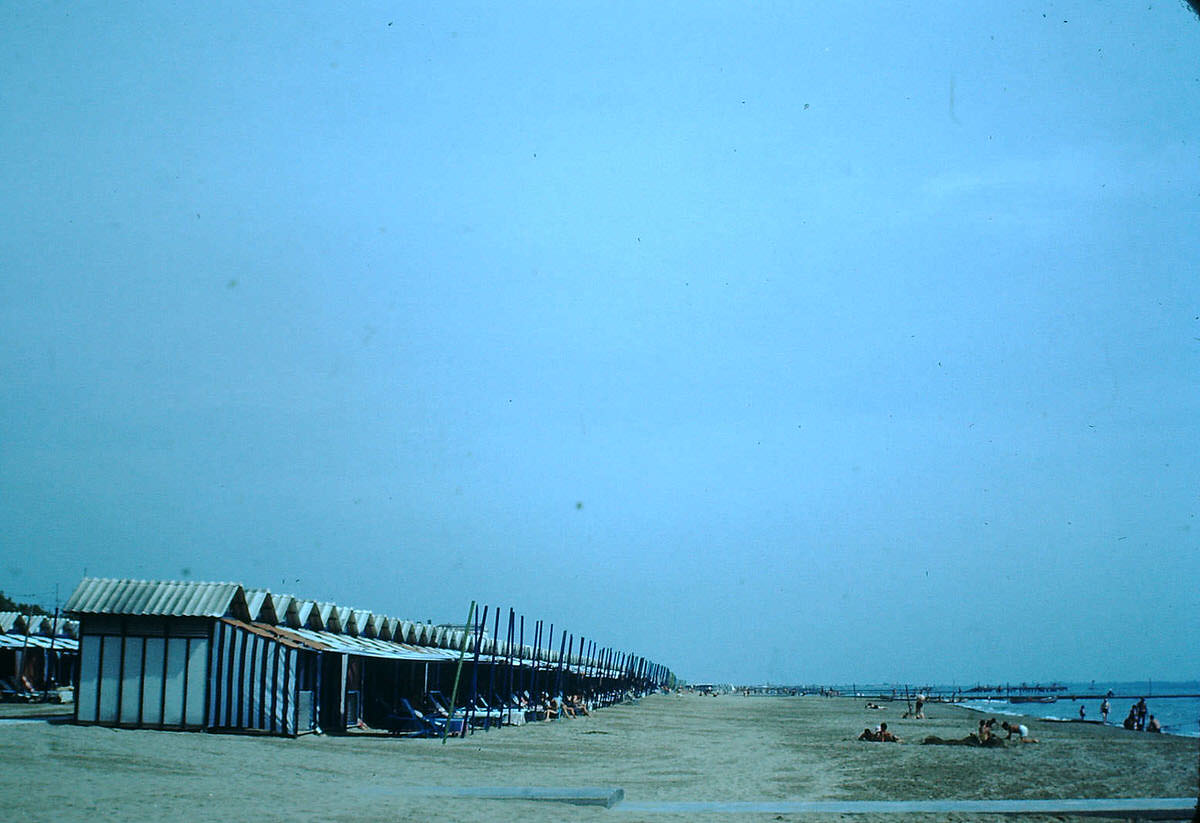
Lido Island, a narrow barrier island separating the Venetian Lagoon from the Adriatic Sea, offered something completely different. Its long sandy beach was lined with luxury cabanas and grand hotels, including the famous Excelsior. Wealthy tourists and Venetian families alike retreated there in summer. The Municipal Casino nearby added another layer of glamour to the island’s reputation.
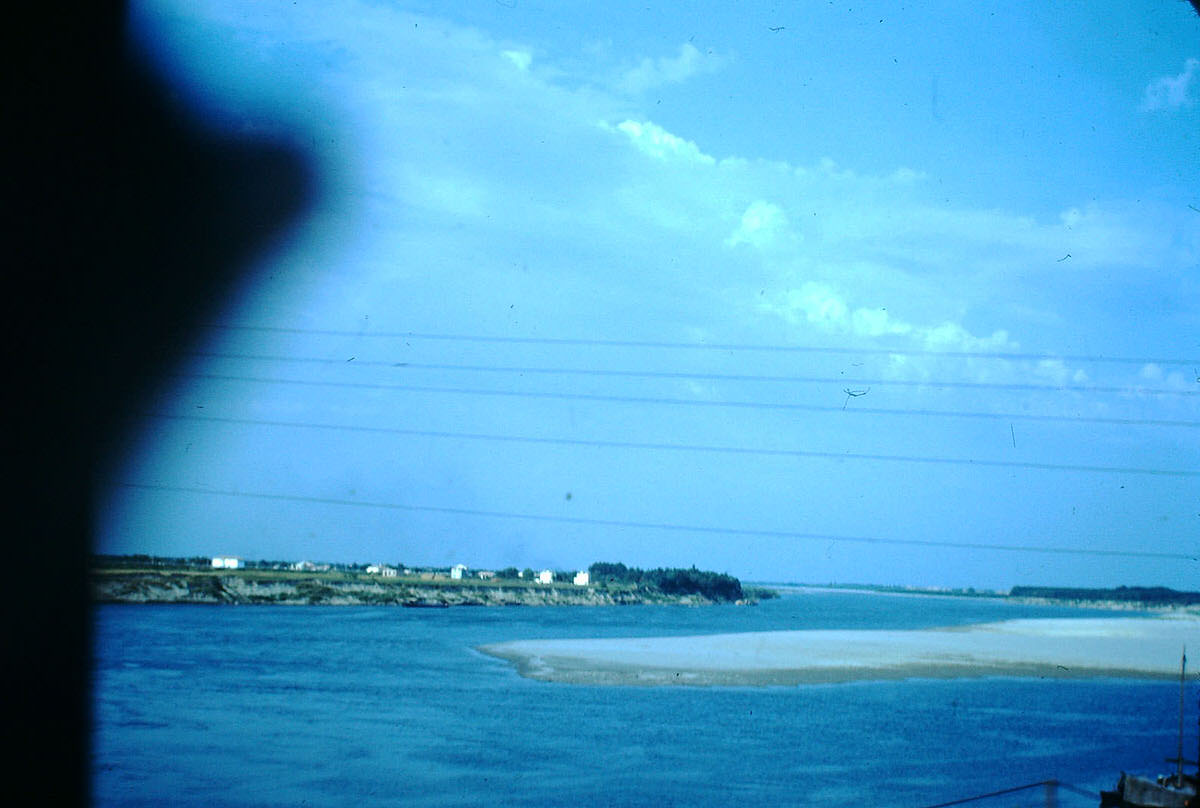
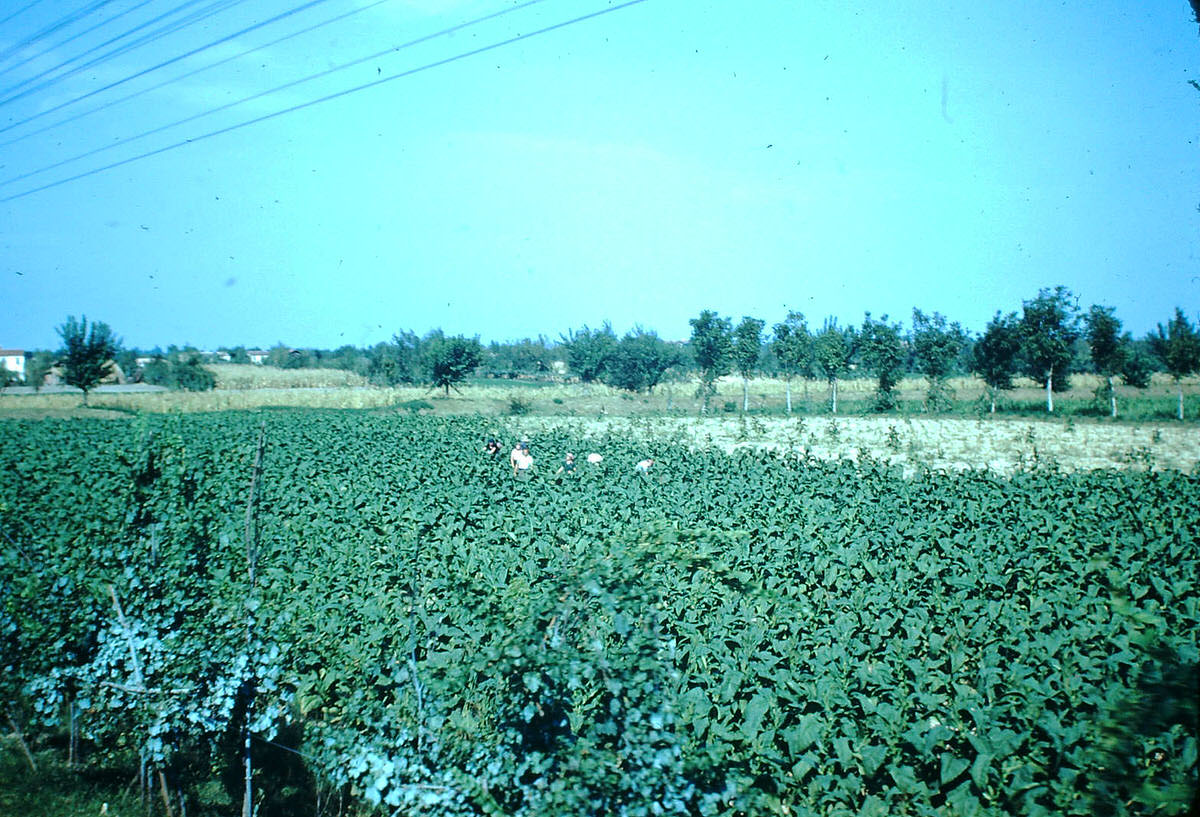
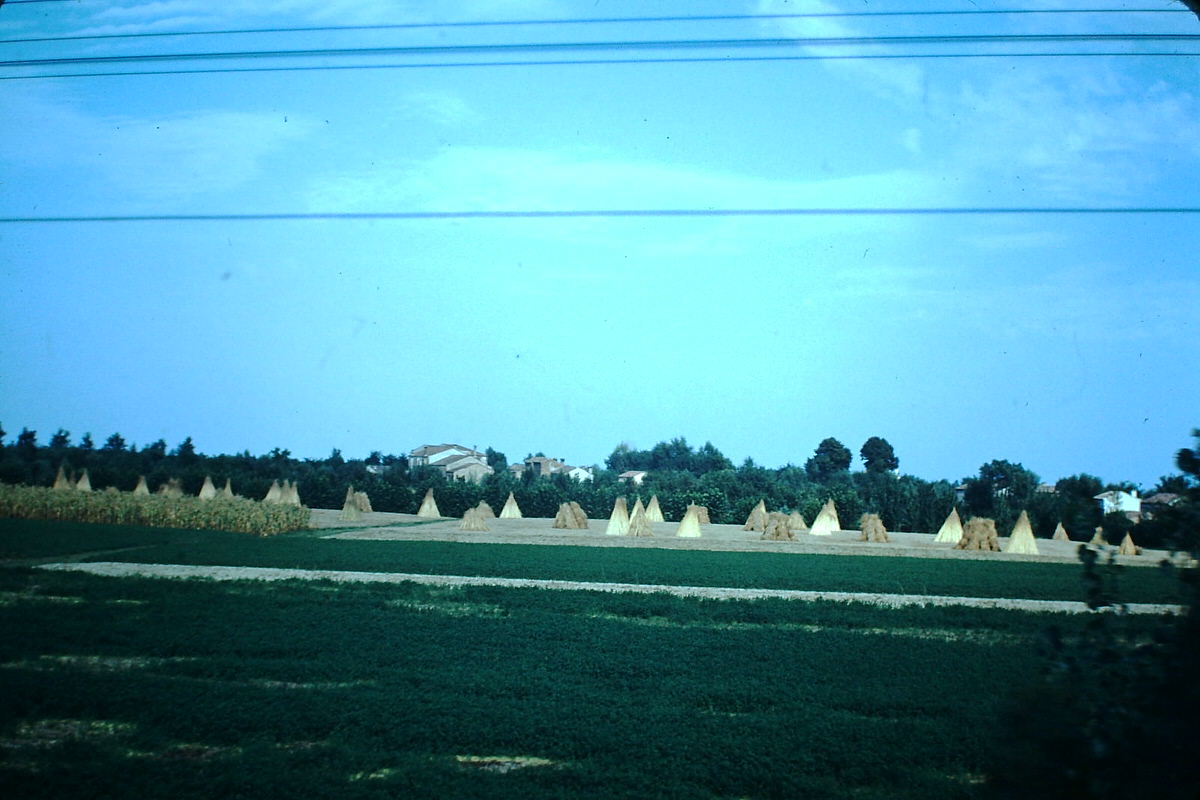
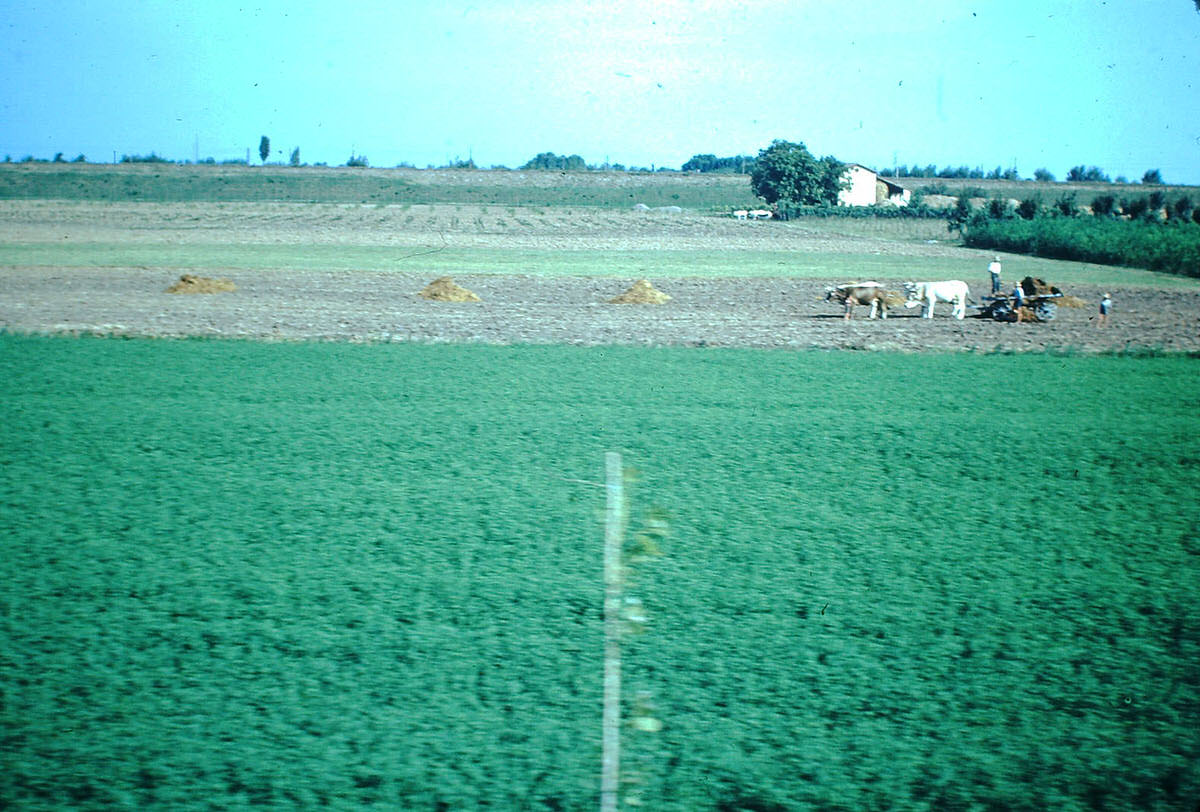
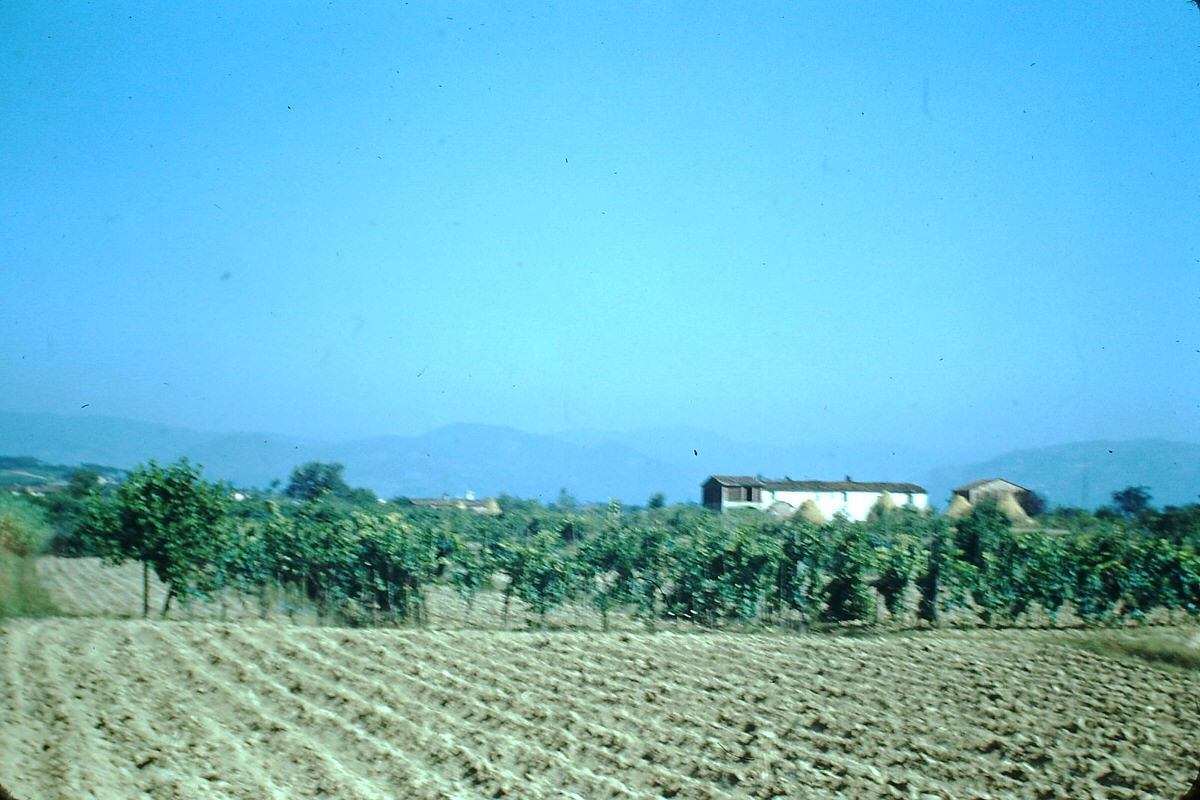
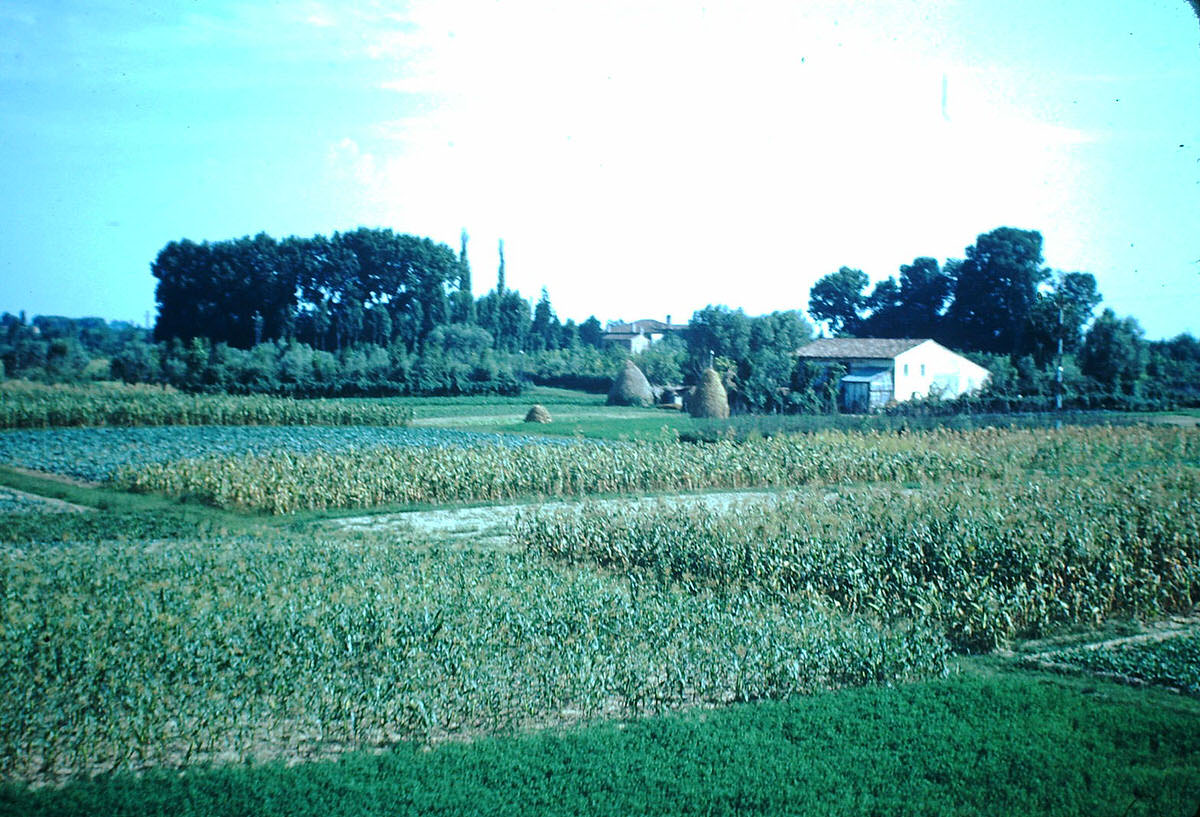
The train journey from Venice south toward Florence passed through the Po River valley — Italy’s most fertile agricultural region and the industrial heartland of the north. From the train windows, travelers could see fields, farmhouses, and small towns passing in quick succession before Florence’s skyline came into view, dominated by Brunelleschi’s famous dome.
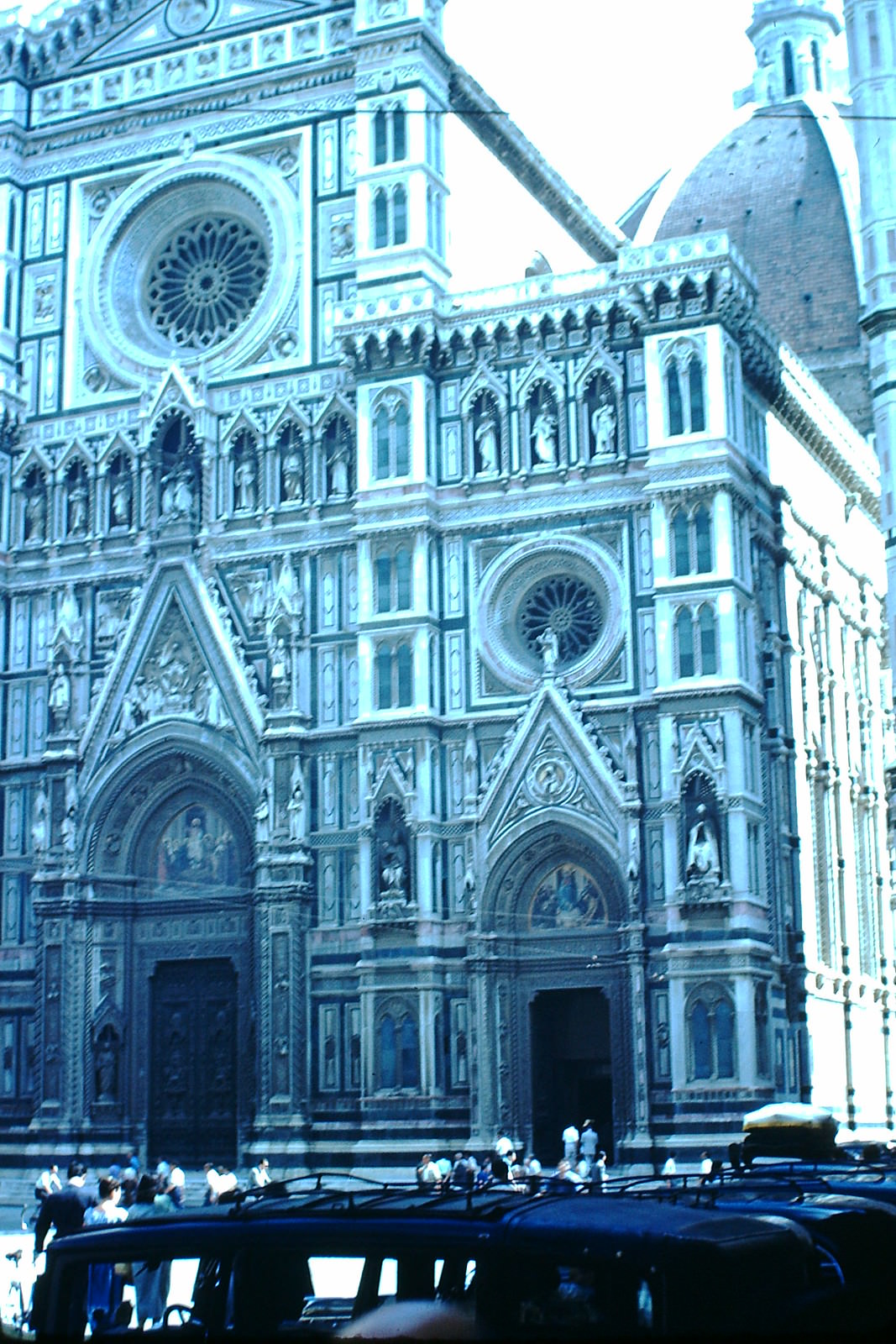
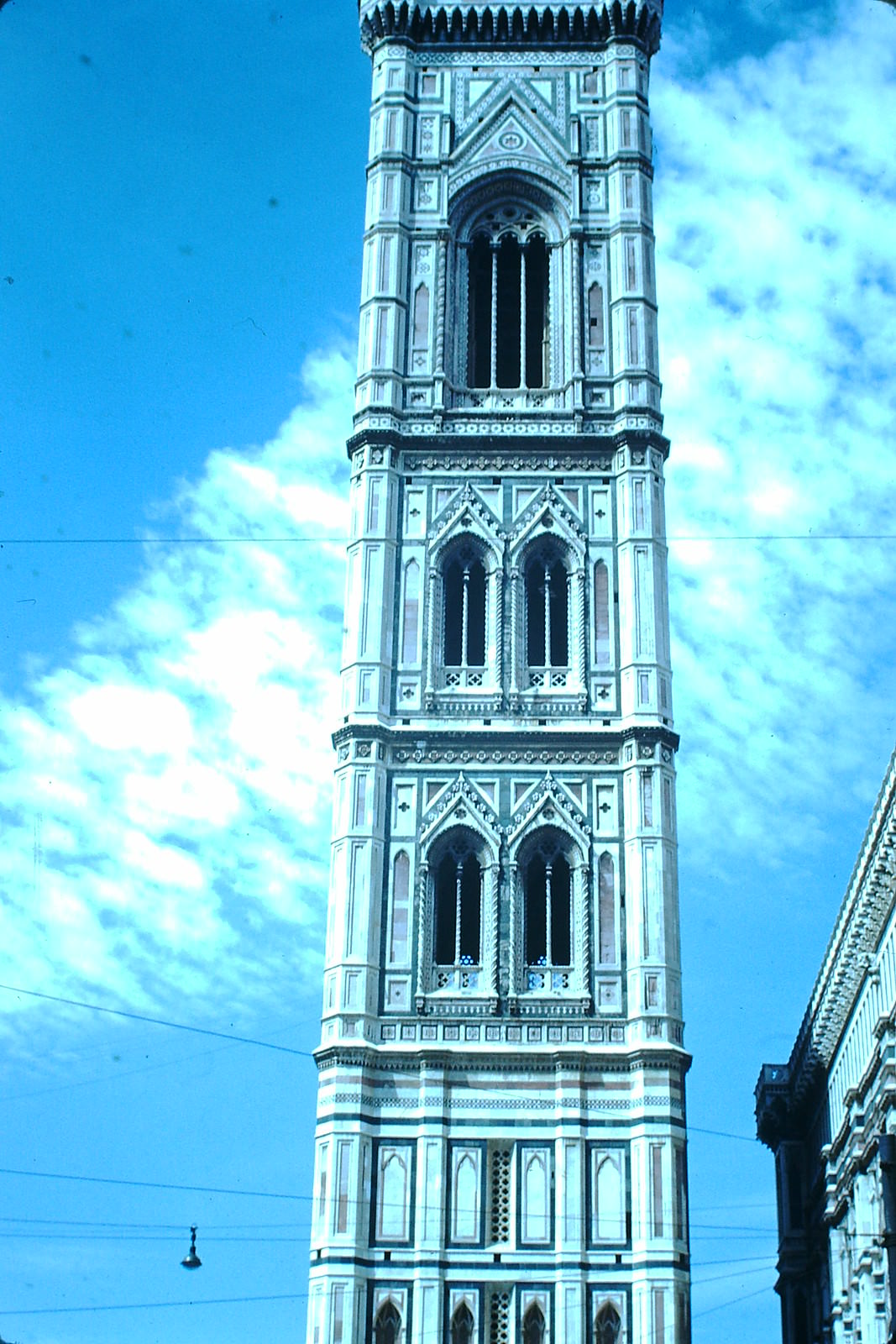
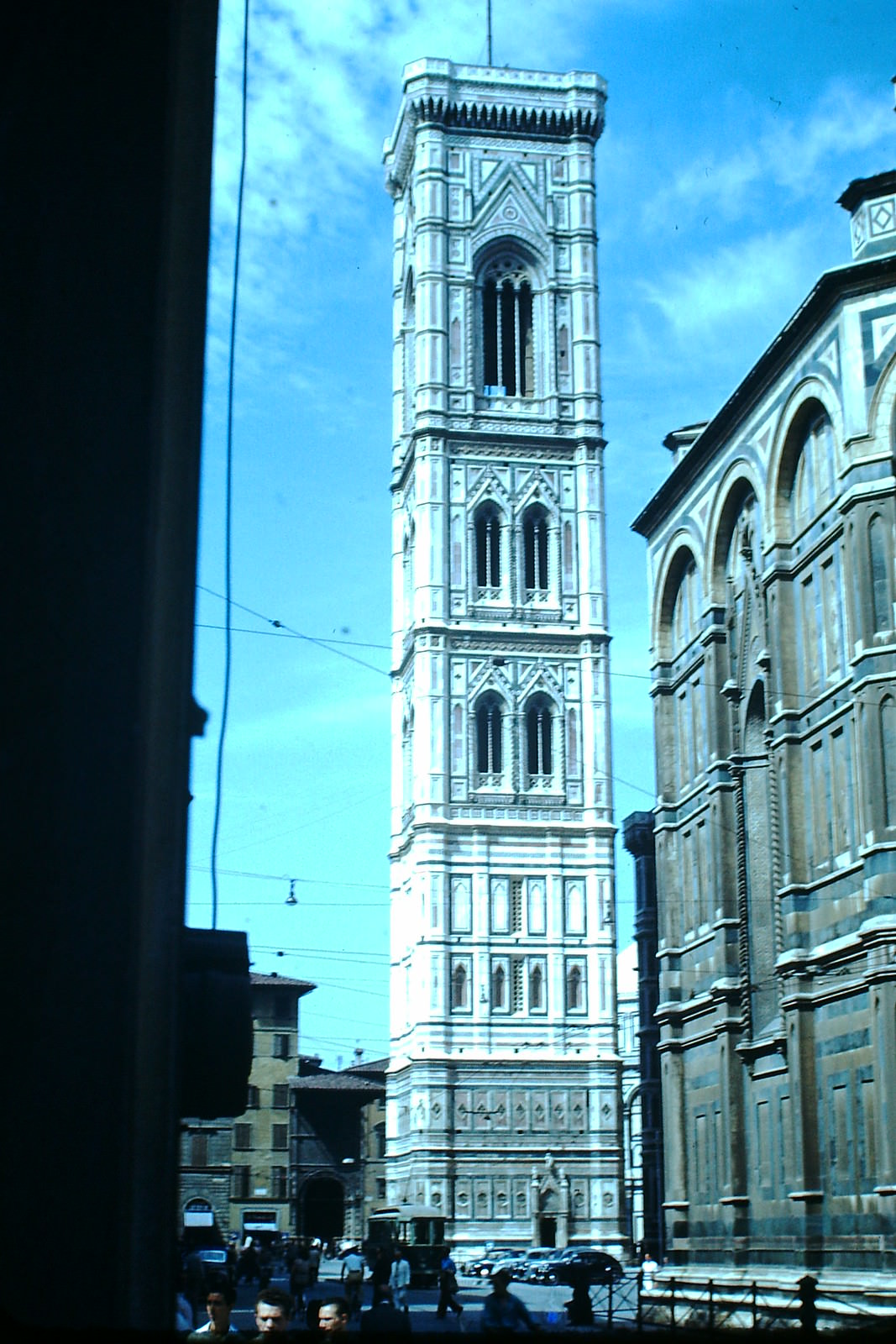
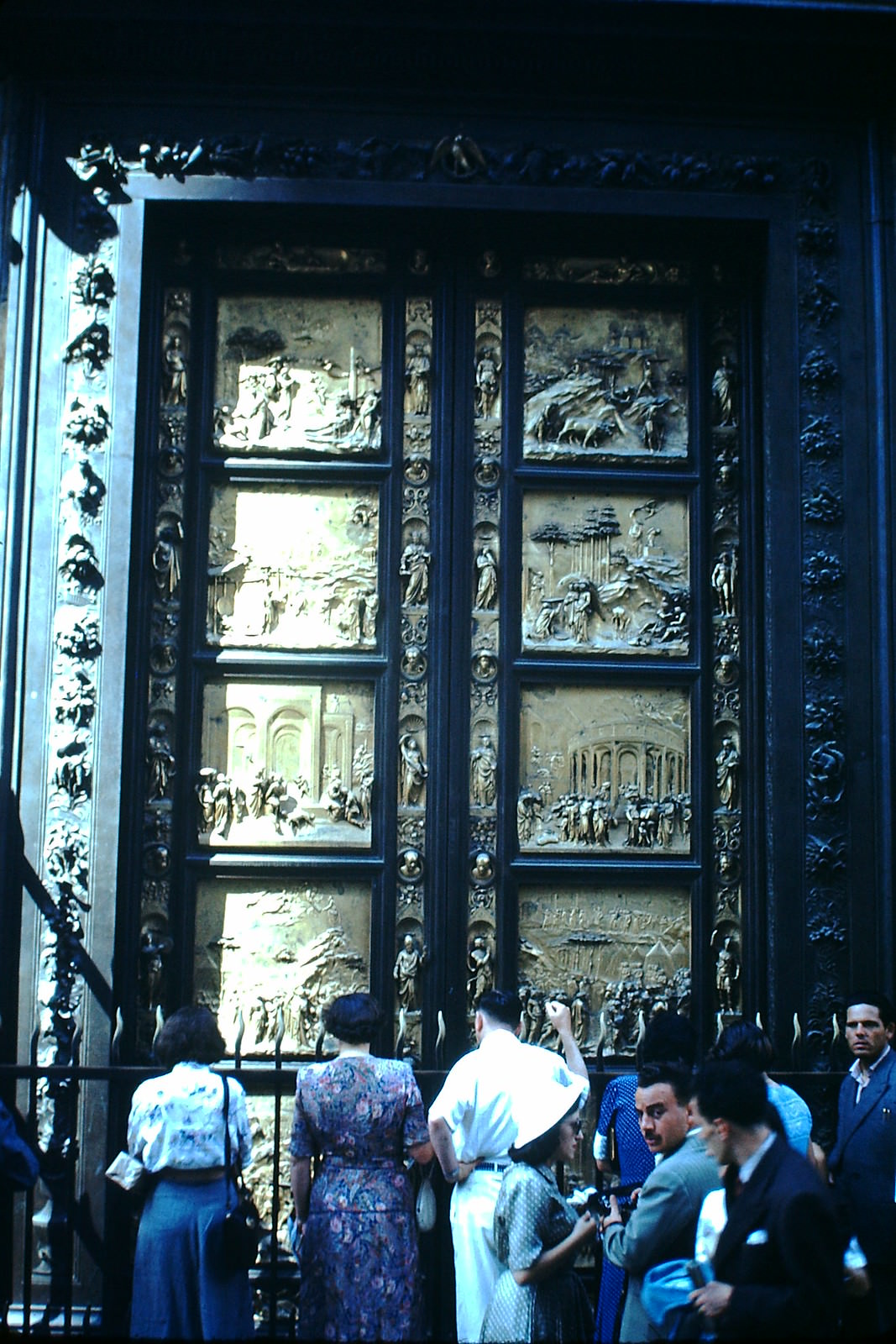
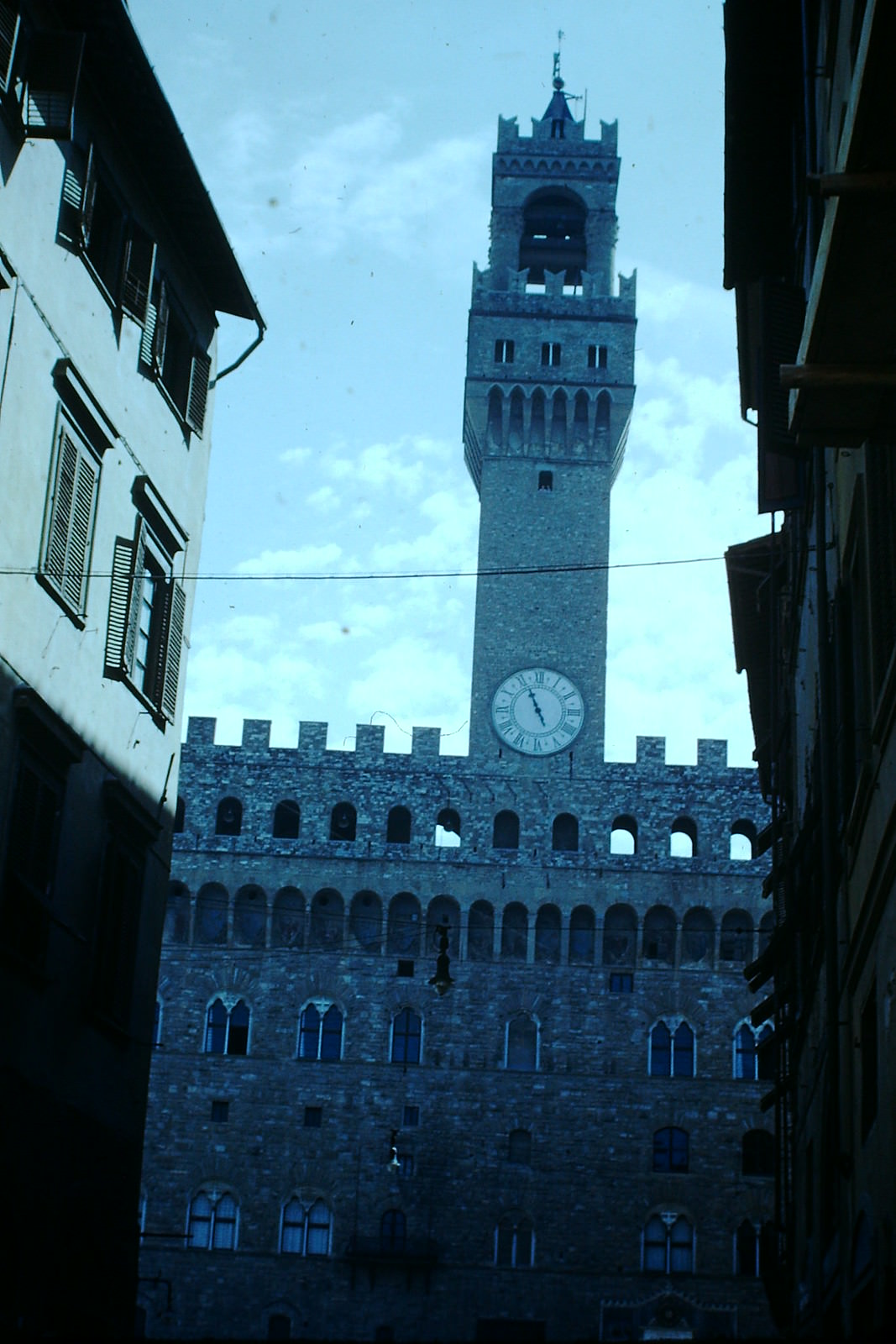
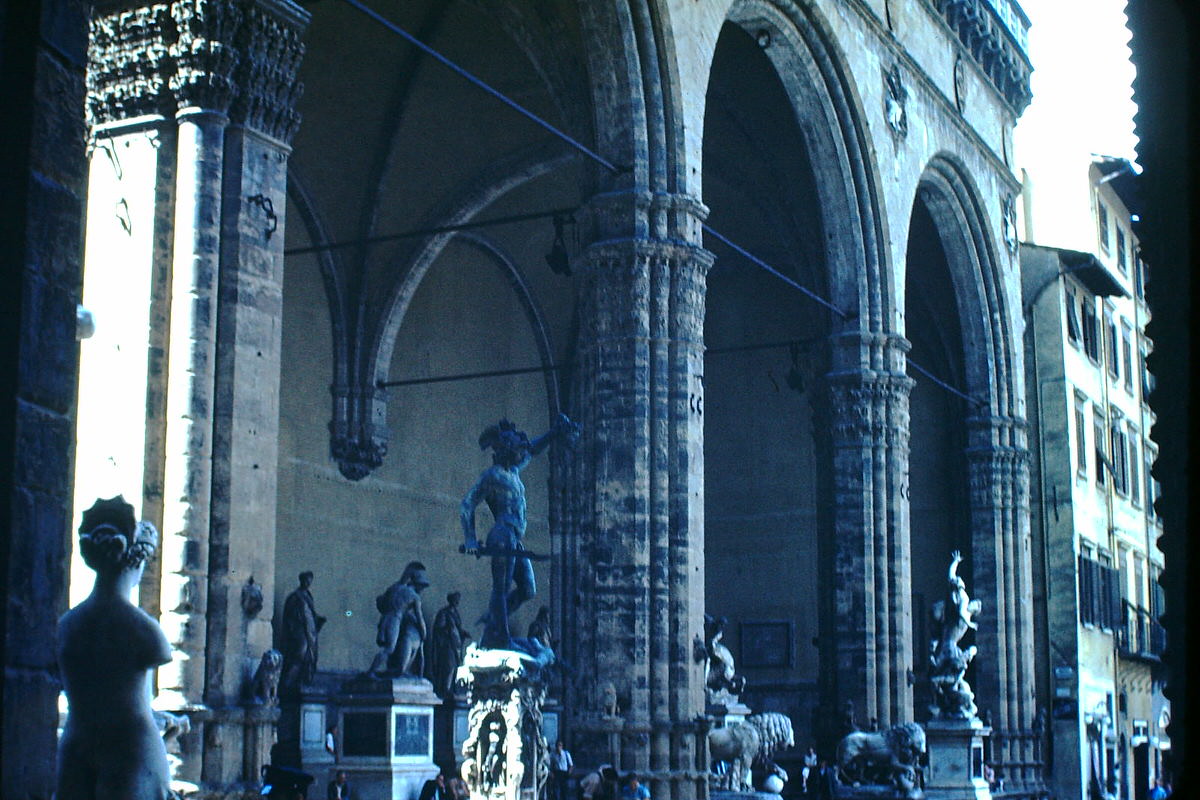
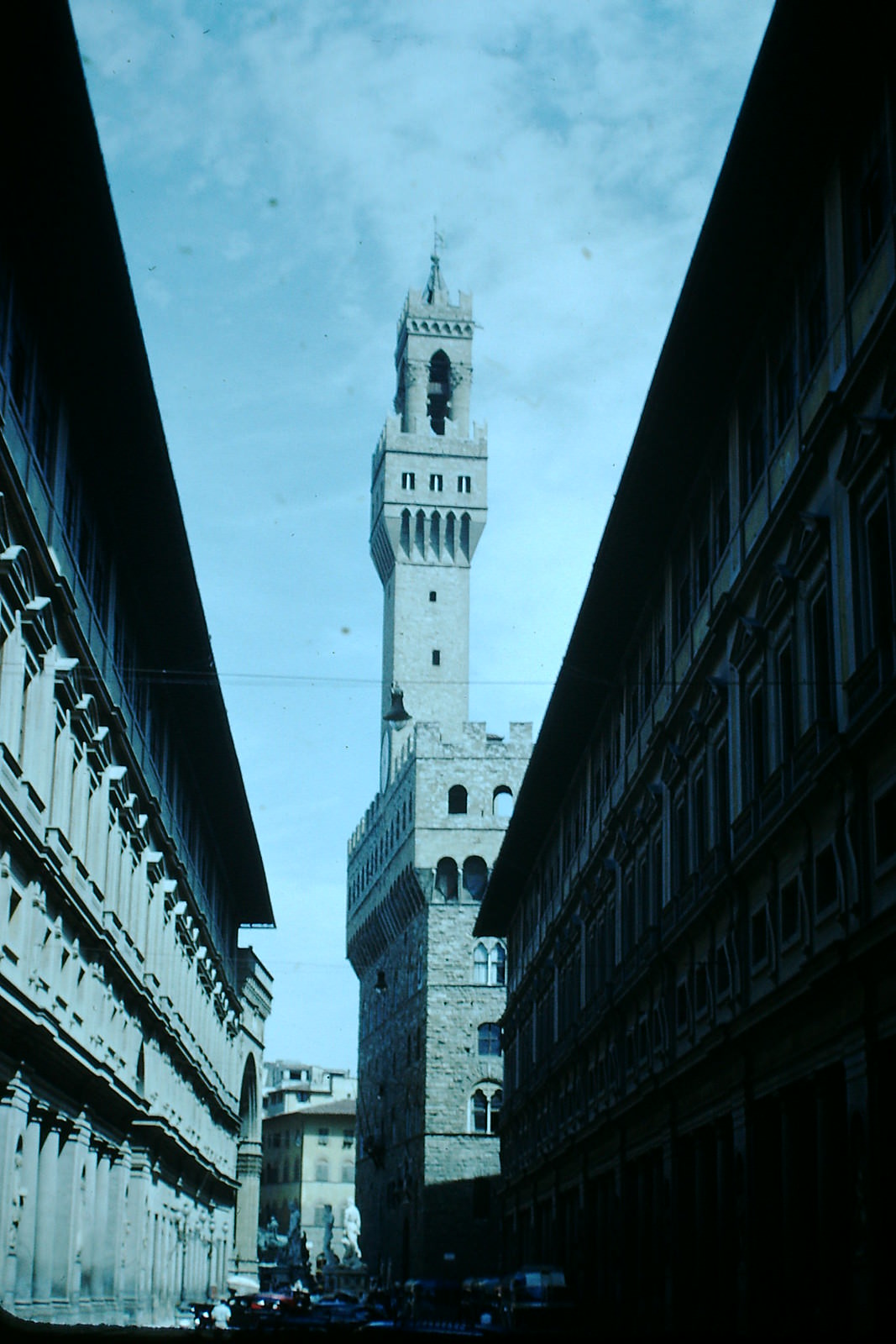
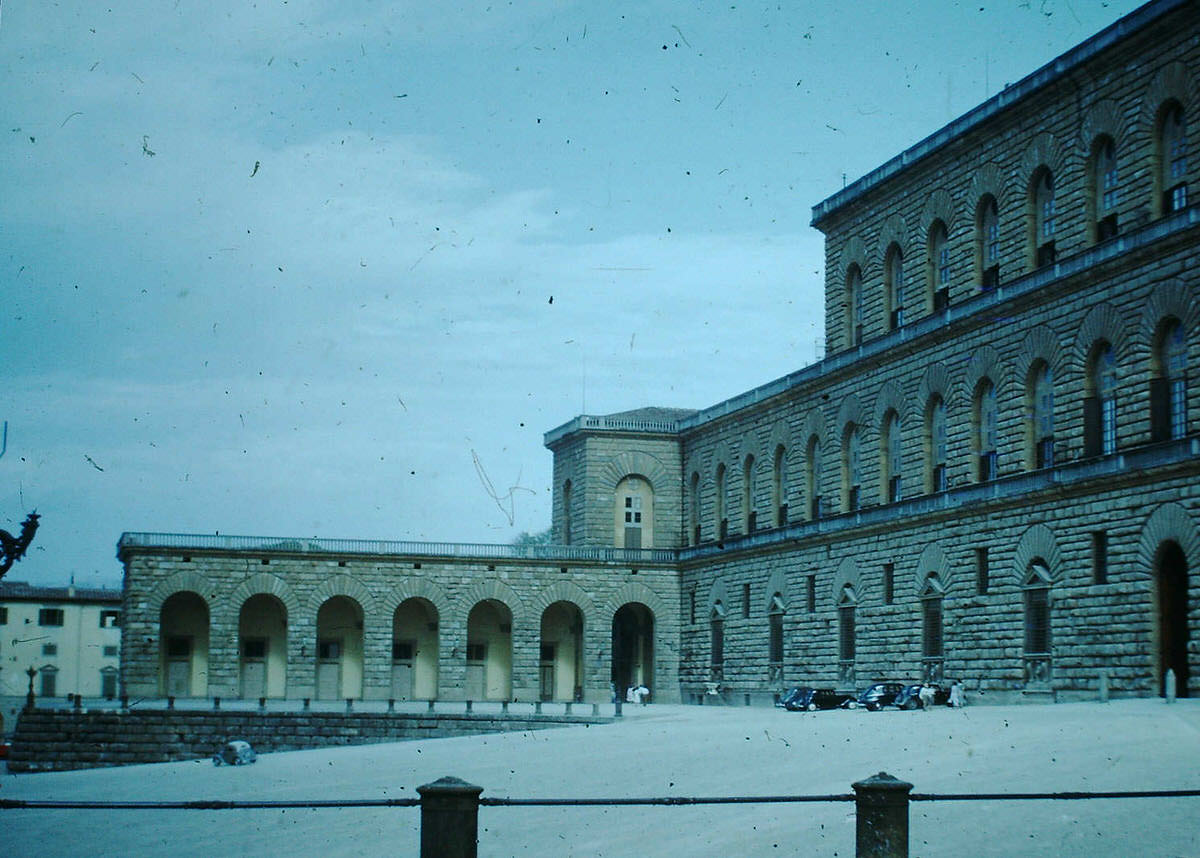
Florence in 1954 was both a Renaissance treasure and a city still dealing with wartime wounds. The Cathedral of Santa Maria del Fiore and Giotto’s Bell Tower stood intact, but other parts of the city bore clear marks of the war. Florence had been declared an open city in 1944, which spared it from heavy bombing — but the retreating German forces blew up all of the city’s bridges except the Ponte Vecchio before they left.
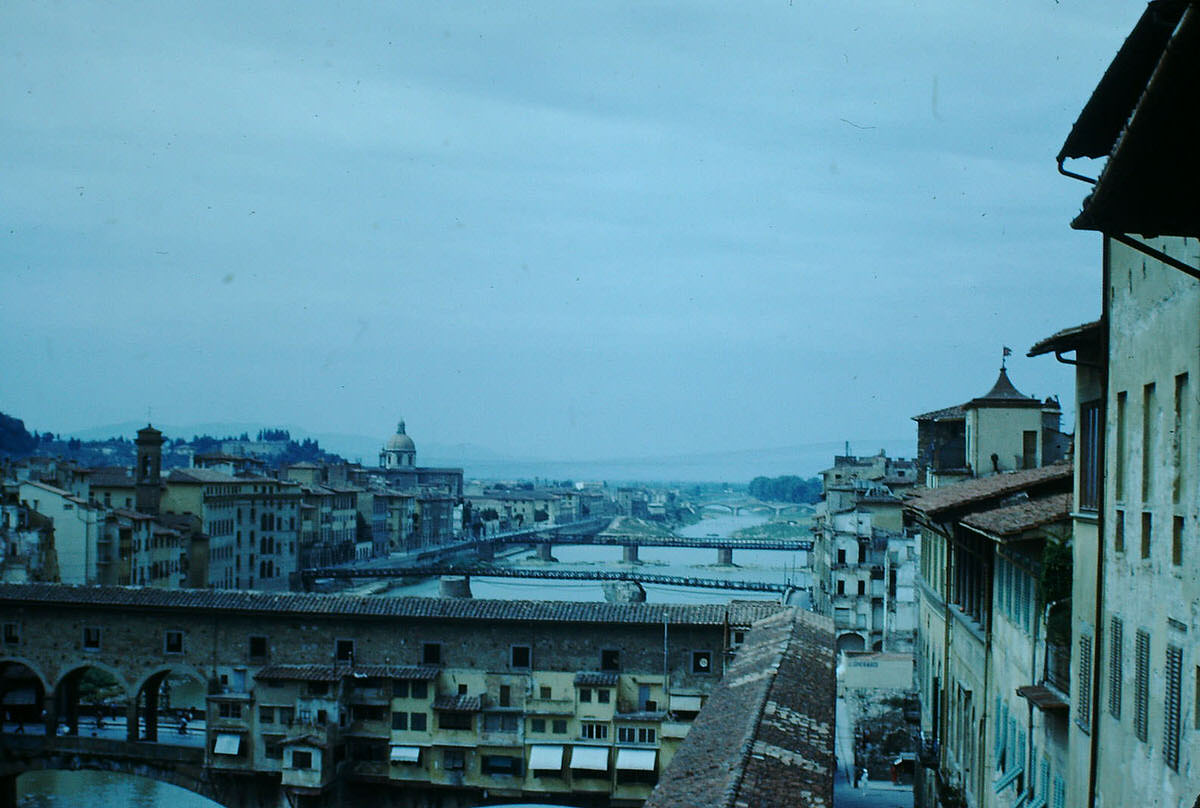
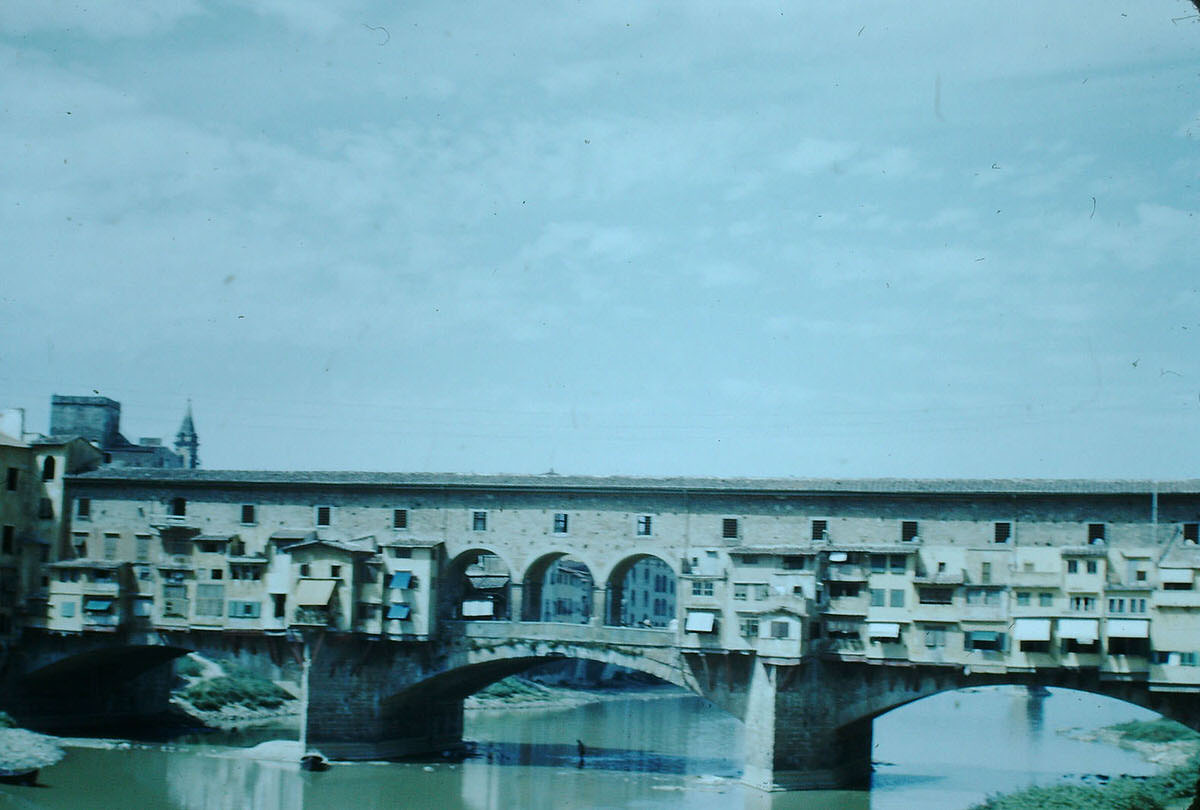
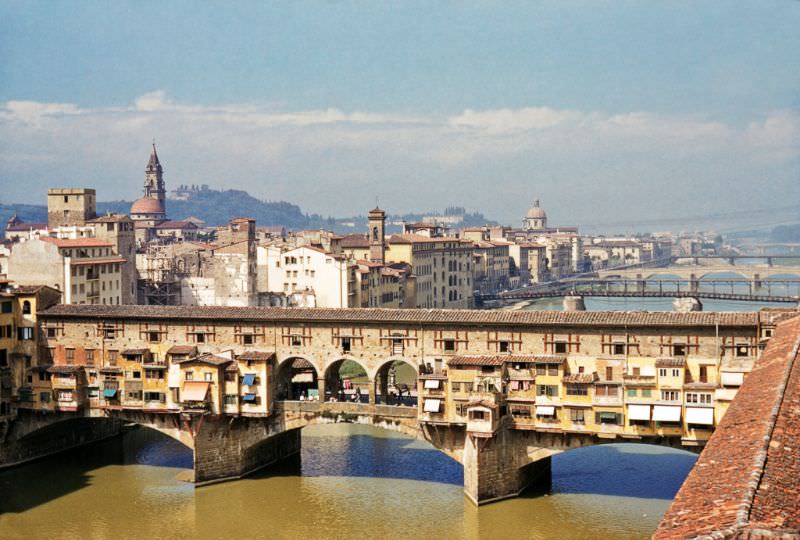
The Ponte Vecchio was the one bridge the Germans spared, reportedly on direct orders from Hitler himself. But by 1954, the rebuilt bridges were still partly temporary steel structures. One photograph from this year captures both the medieval Ponte Vecchio and the functional postwar steel spans behind it — a striking image of old Italy standing beside its own recovery.
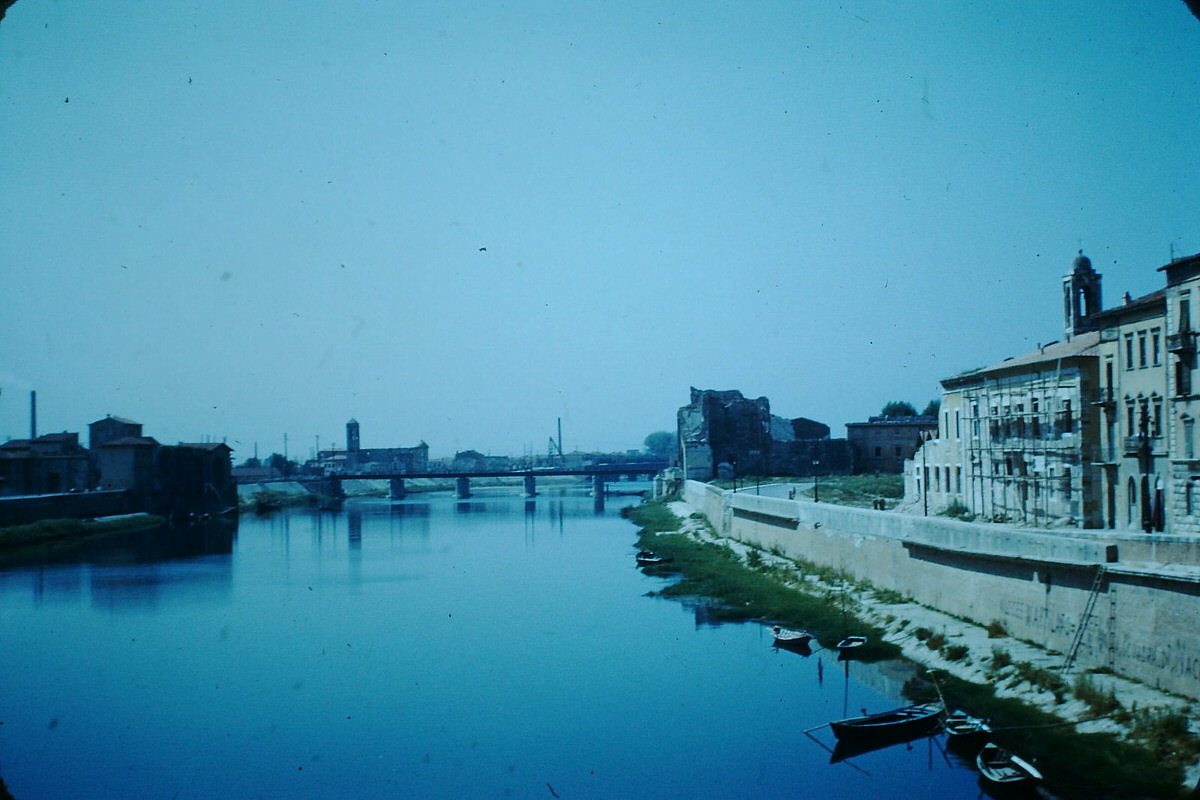
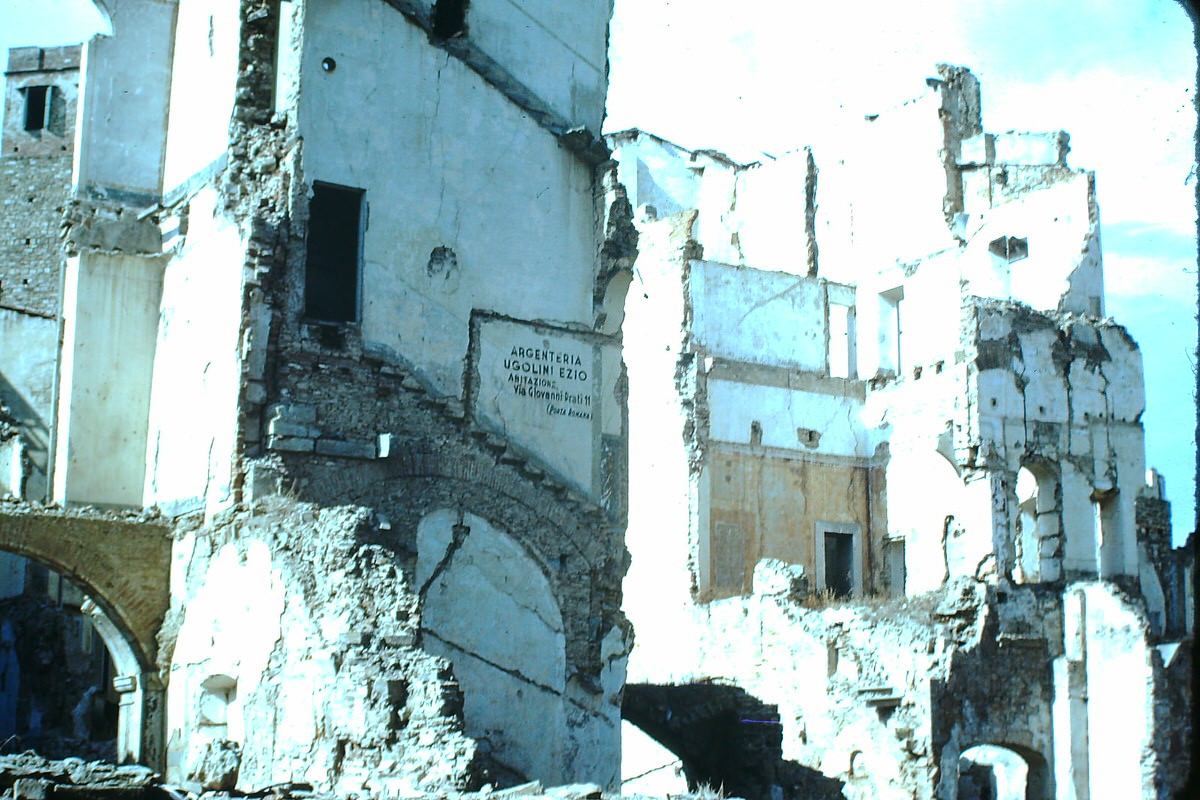
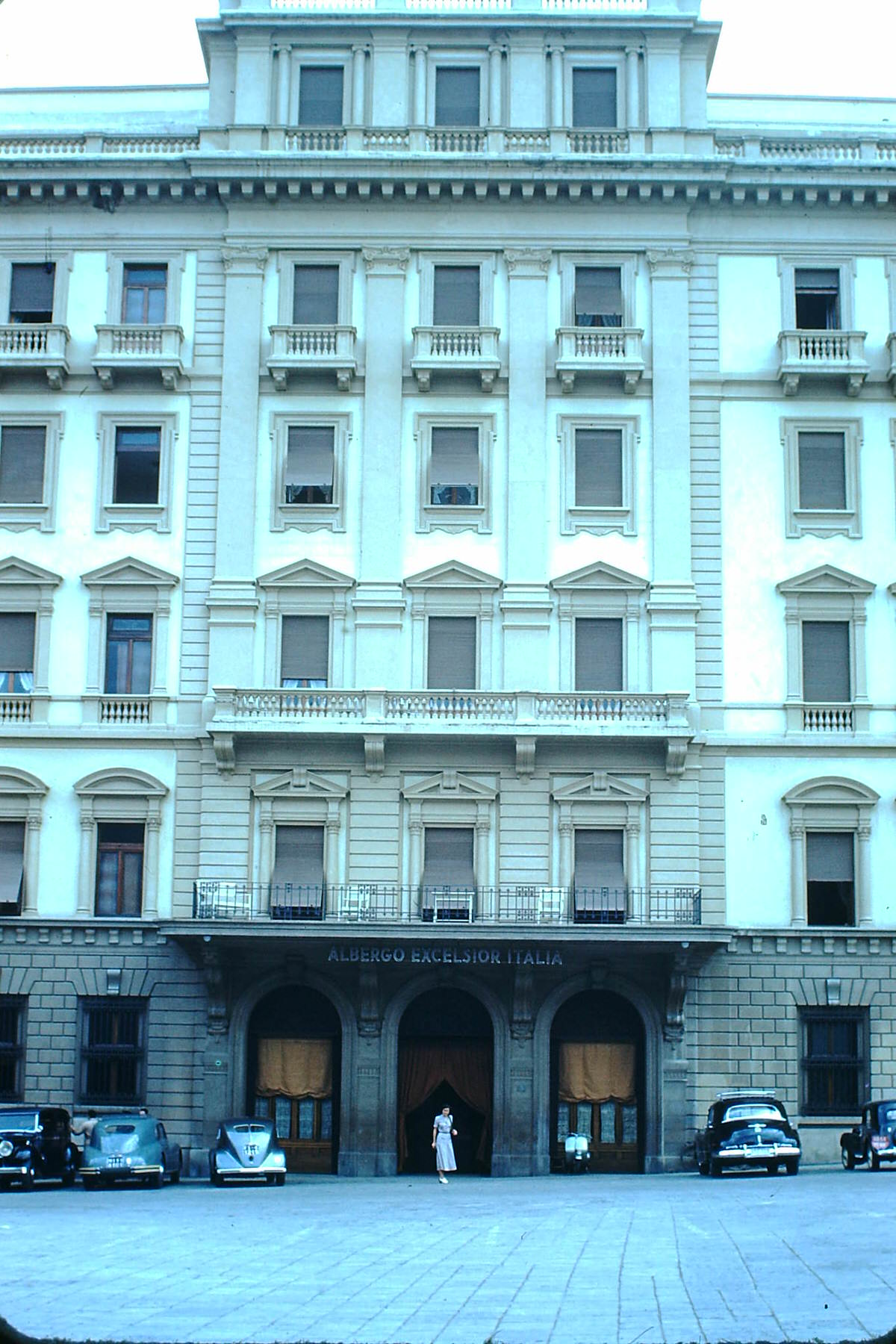
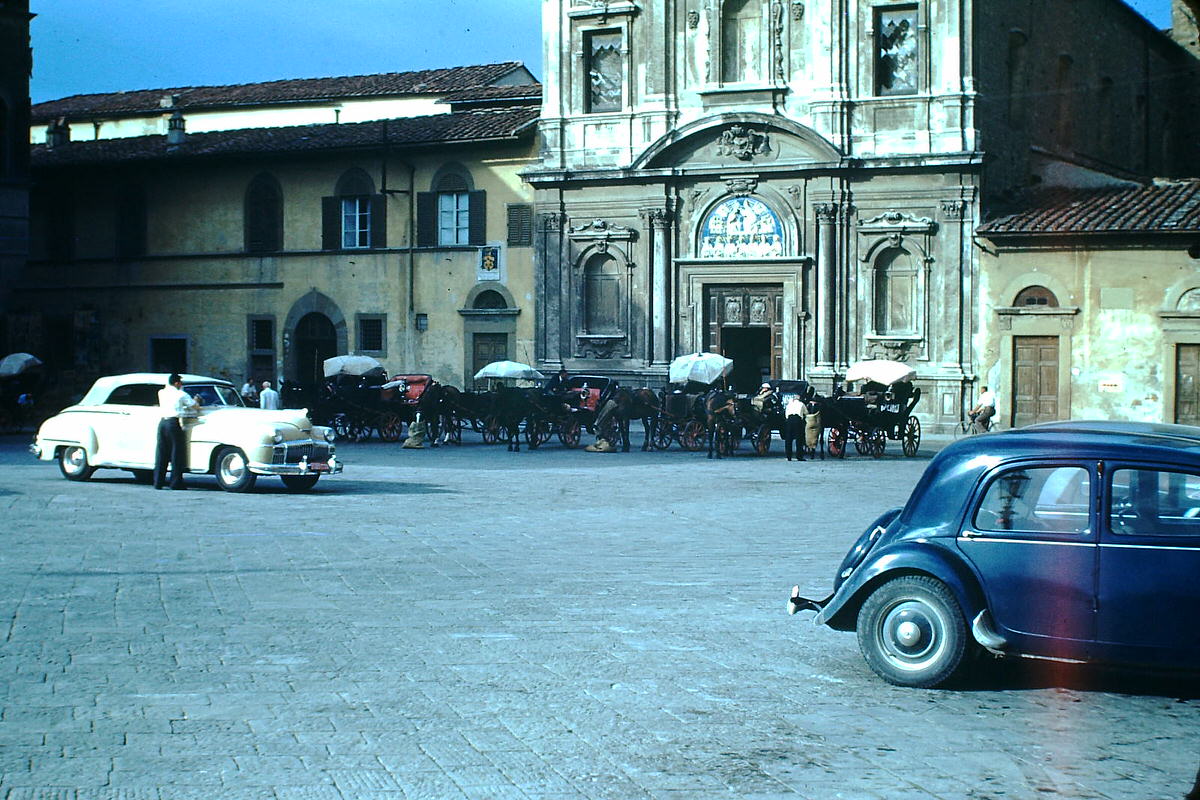
Some photographs taken in Florence in 1954 document bomb destruction that was still plainly visible nearly a decade after the war’s end. Rebuilding was slow, and not every damaged site had been restored. These images sit alongside photos of the Hotel Excelsior and nearby churches — the contrast between damage and daily life tells its own story about Italy in this period.
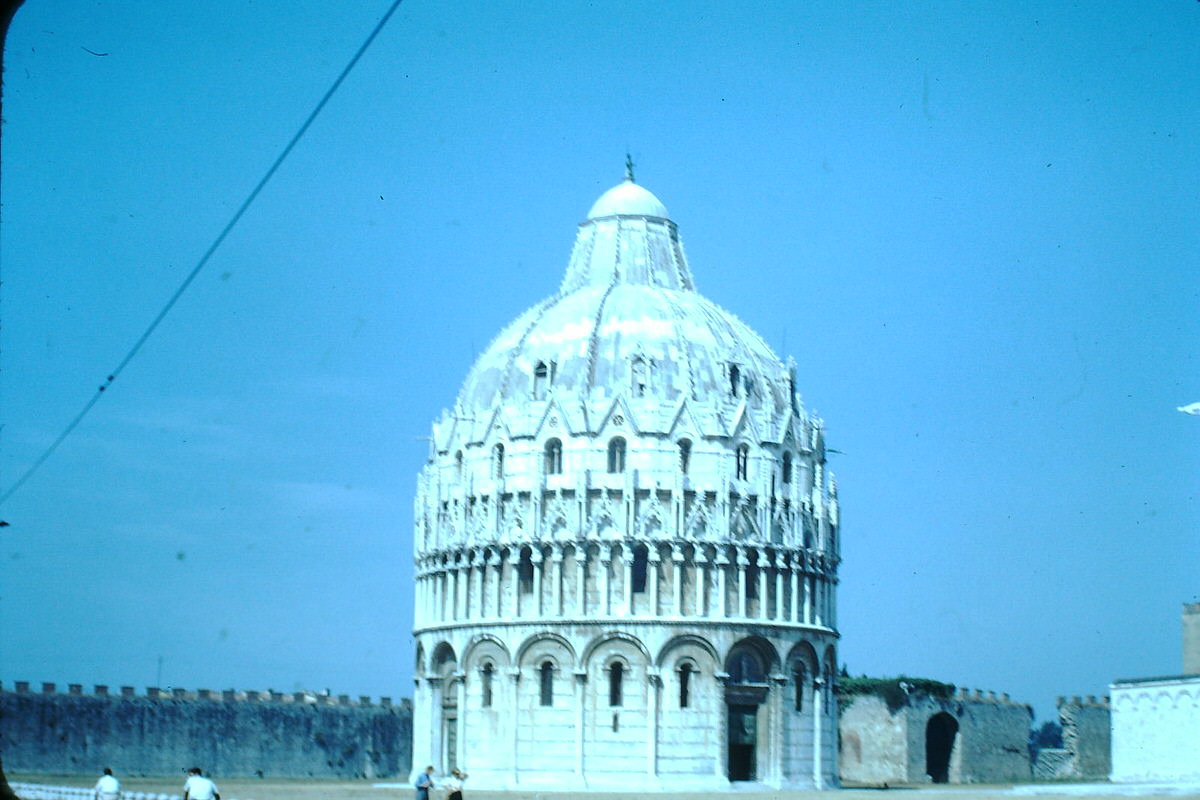
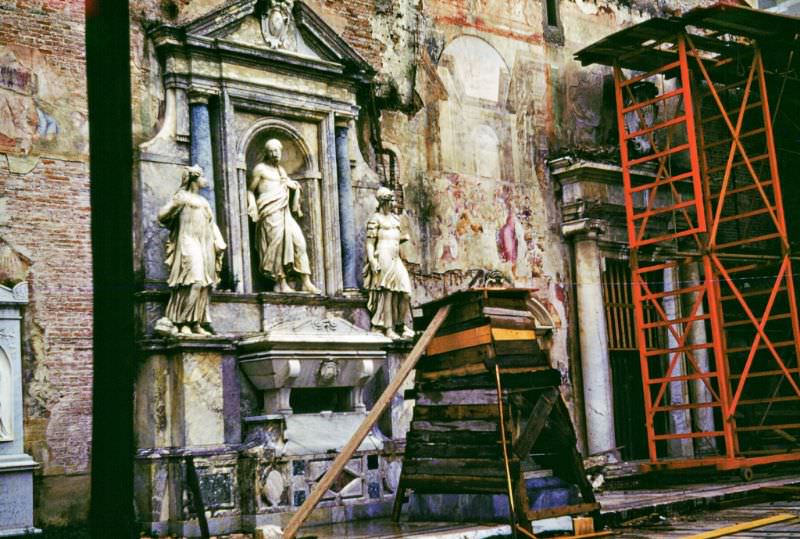
Pisa, just west of Florence, was home to its famous Campo dei Miracoli — the Field of Miracles — where the cathedral, baptistry, and the iconic Leaning Tower clustered together on a green lawn. Wartime damage had struck here too. Workers in 1954 were still repairing bomb damage to the Monumental Cemetery, one of the oldest and most ornate in Italy. A photo from that year captures the repair work in progress.
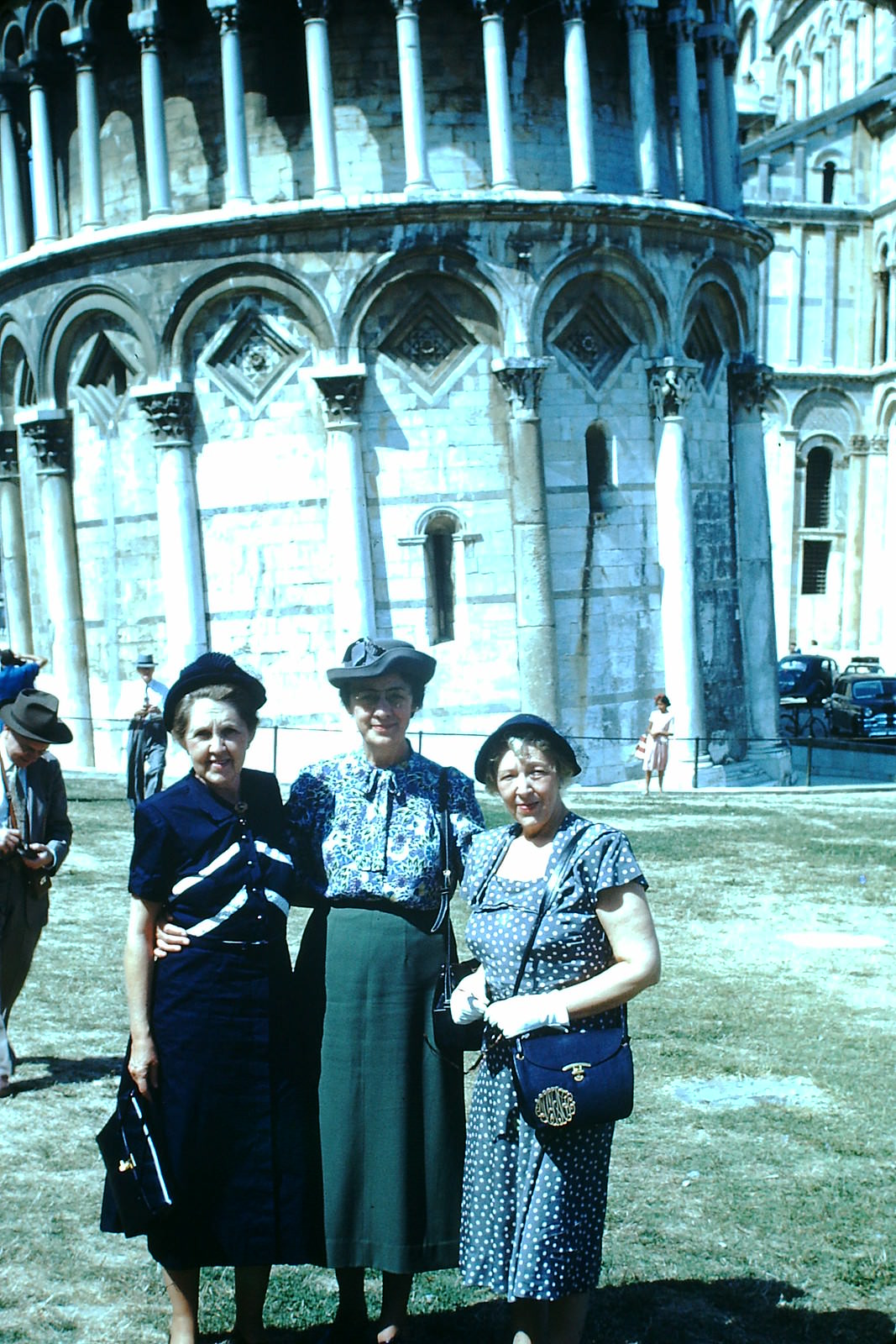
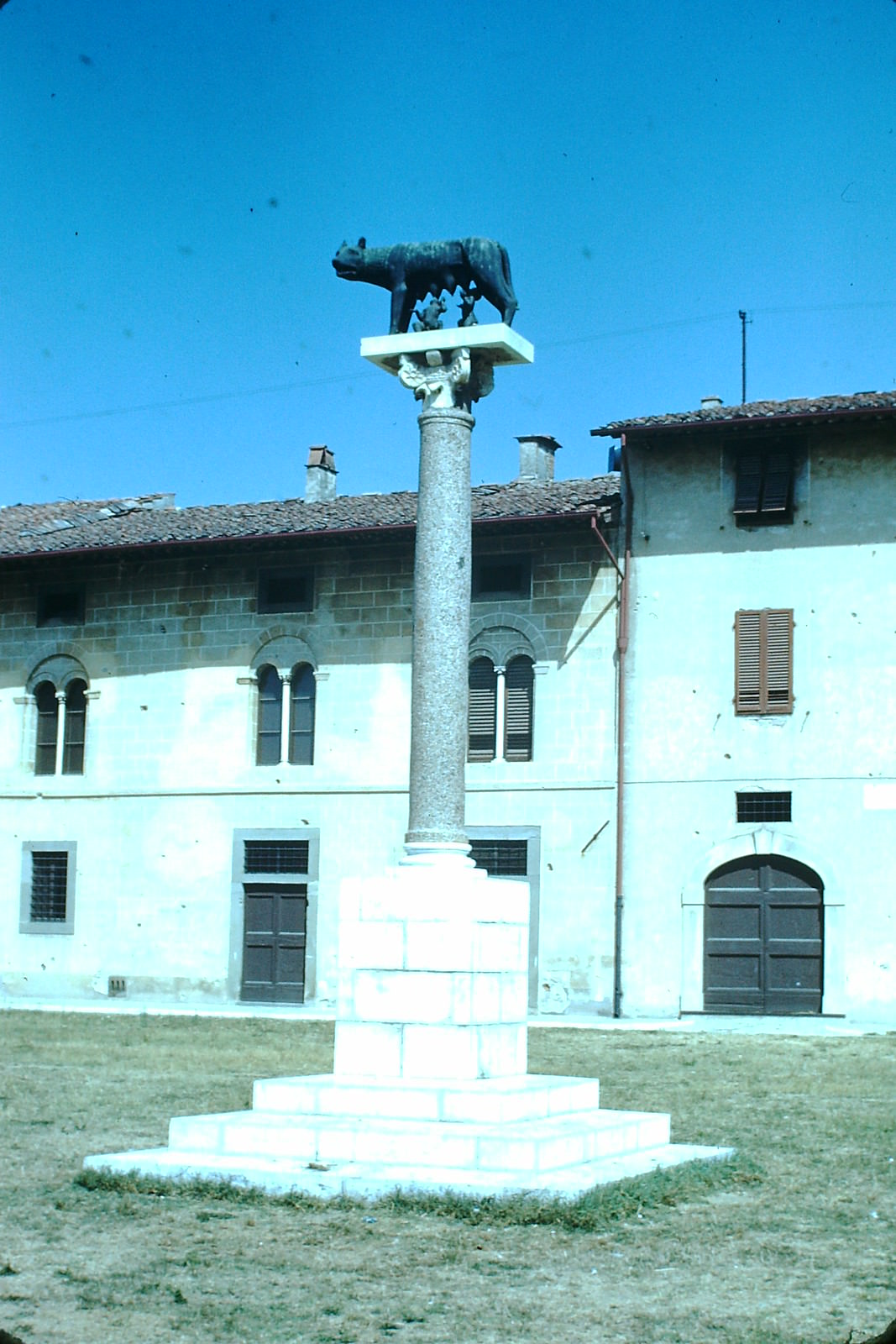
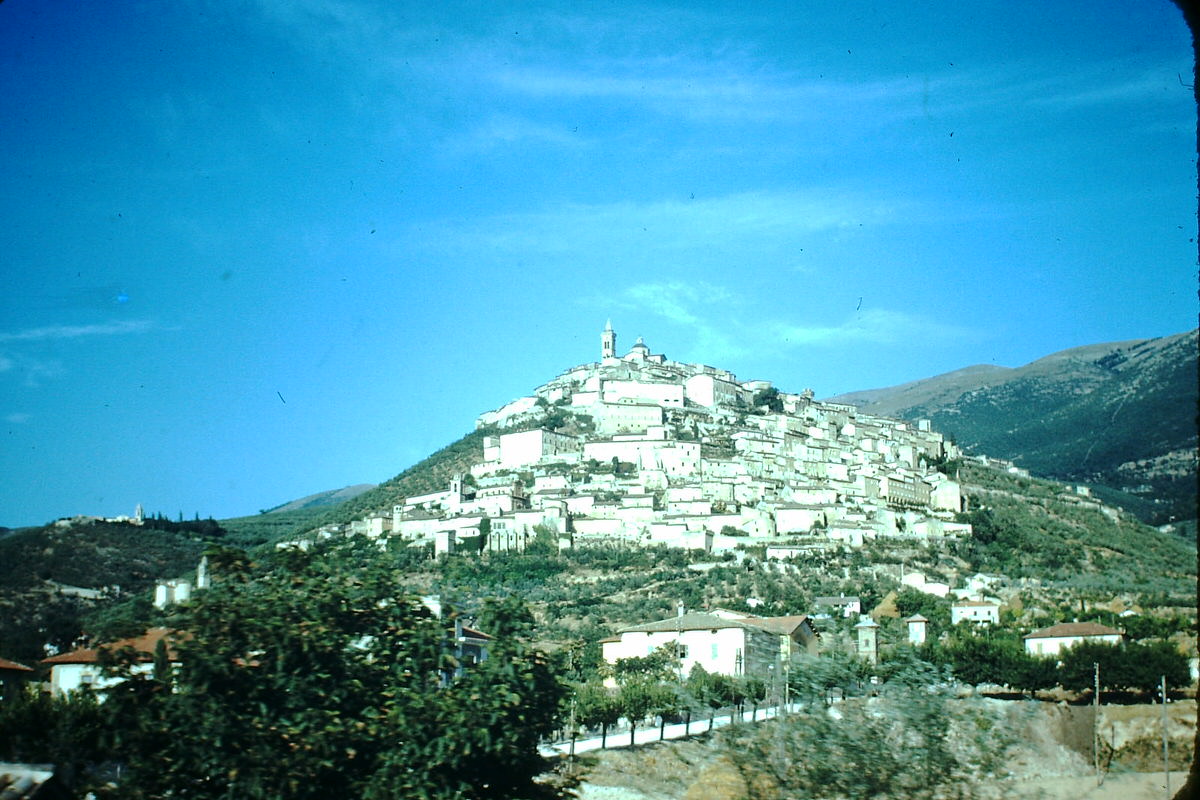
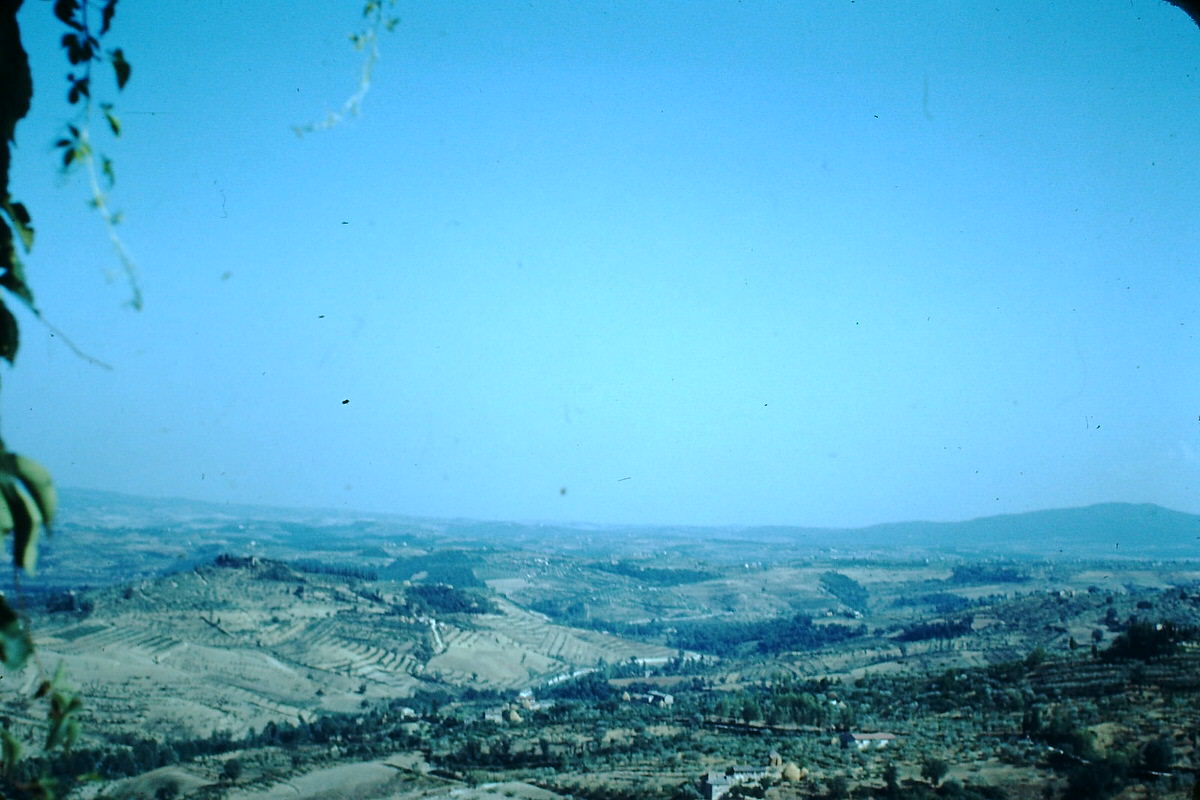
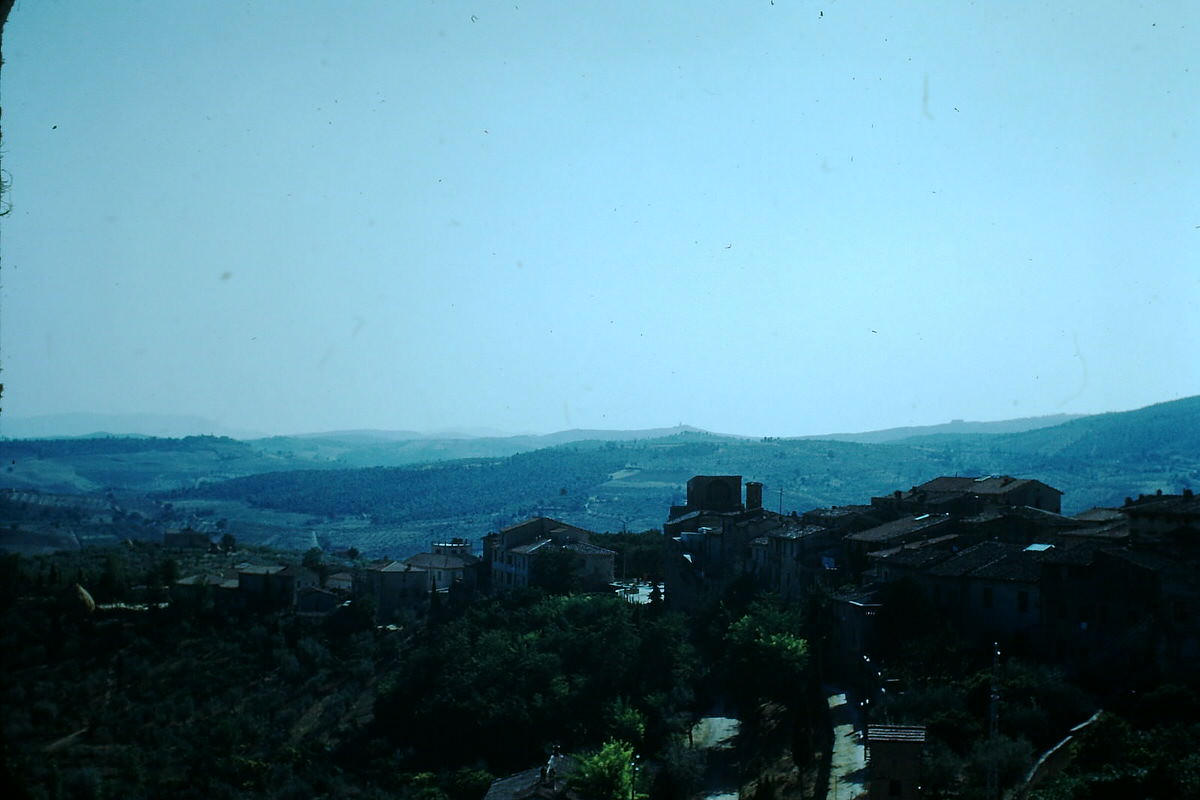
Tuscany’s countryside unfolded between its famous towns in a landscape of vineyards, olive groves, and medieval hill settlements. San Gimignano, known for its towers — a sign of wealth and rivalry among noble families in the Middle Ages — rose dramatically above the surrounding valley. By 1954 it was a well-preserved relic of medieval Italy, its towers still standing despite the passage of centuries.
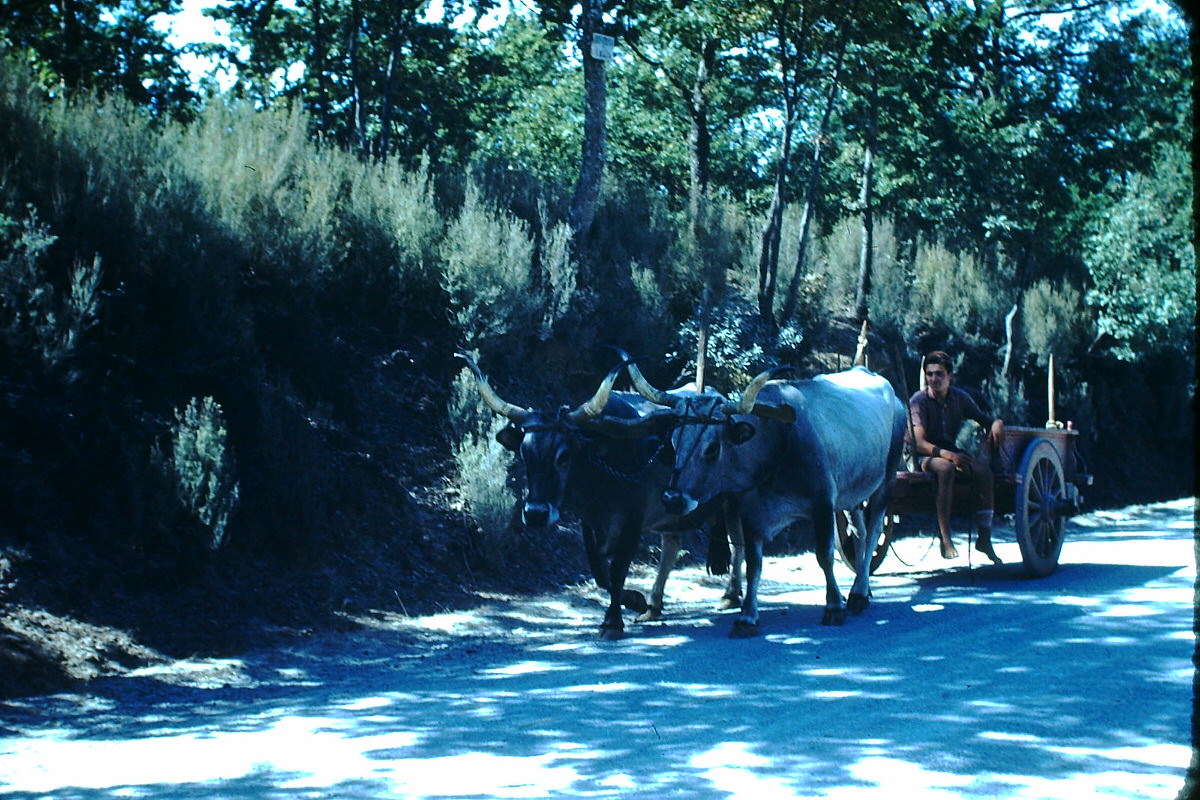
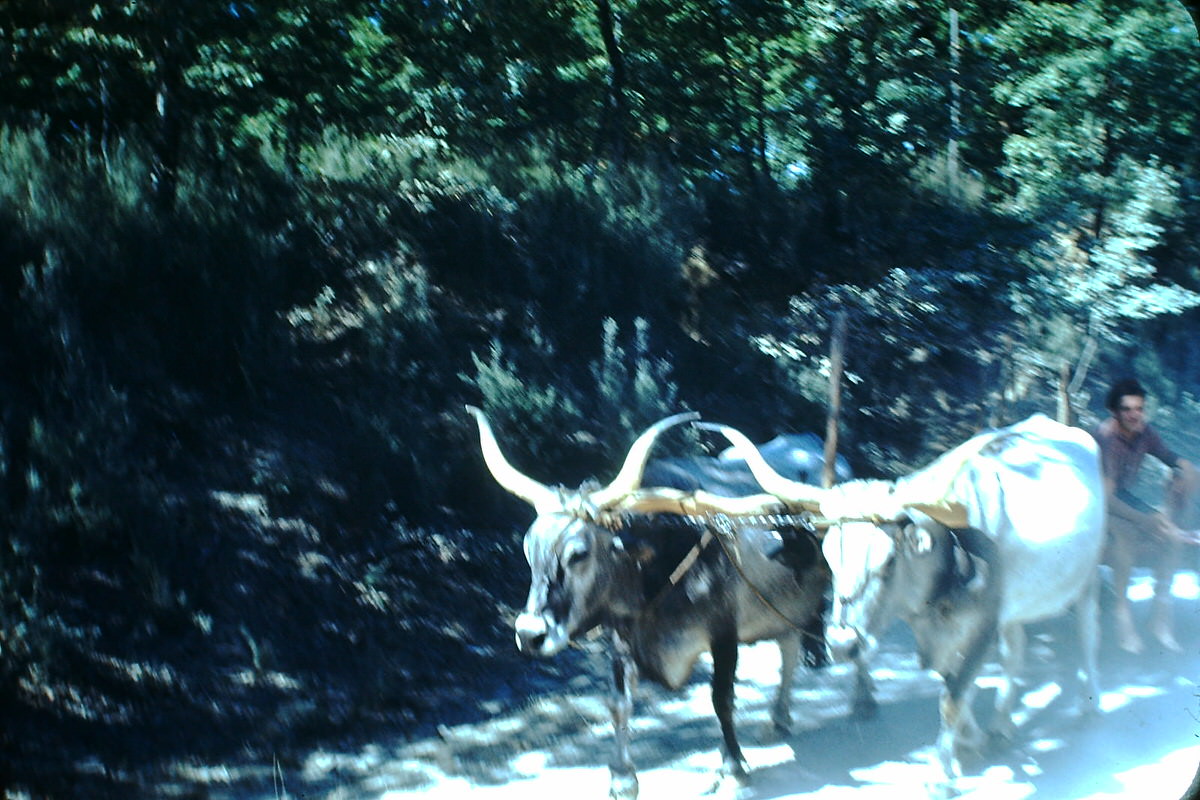
On the roads between towns, oxen were still used to pull carts and work the land. In rural Tuscany and Umbria, mechanized farming had not yet fully replaced traditional methods. These photographs of oxen on the road to Perugia show that for many Italians in 1954, daily life in the countryside had changed little since the prewar years.
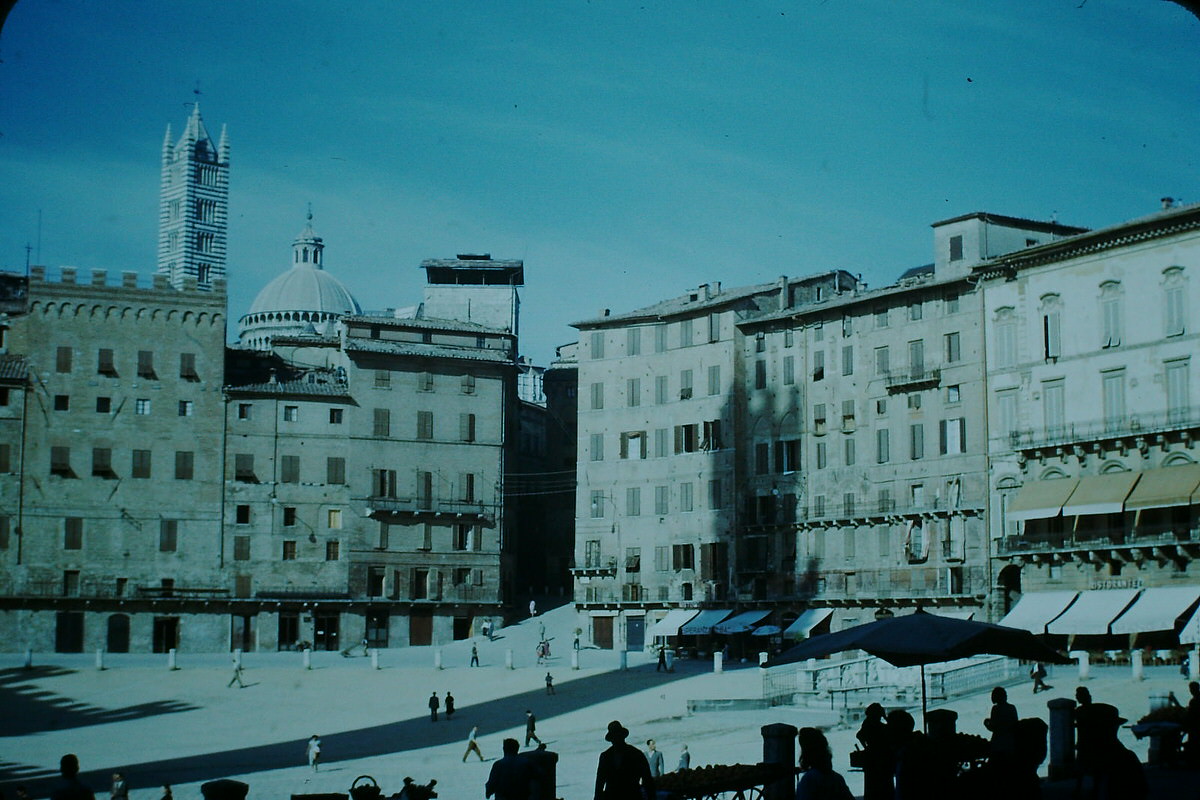
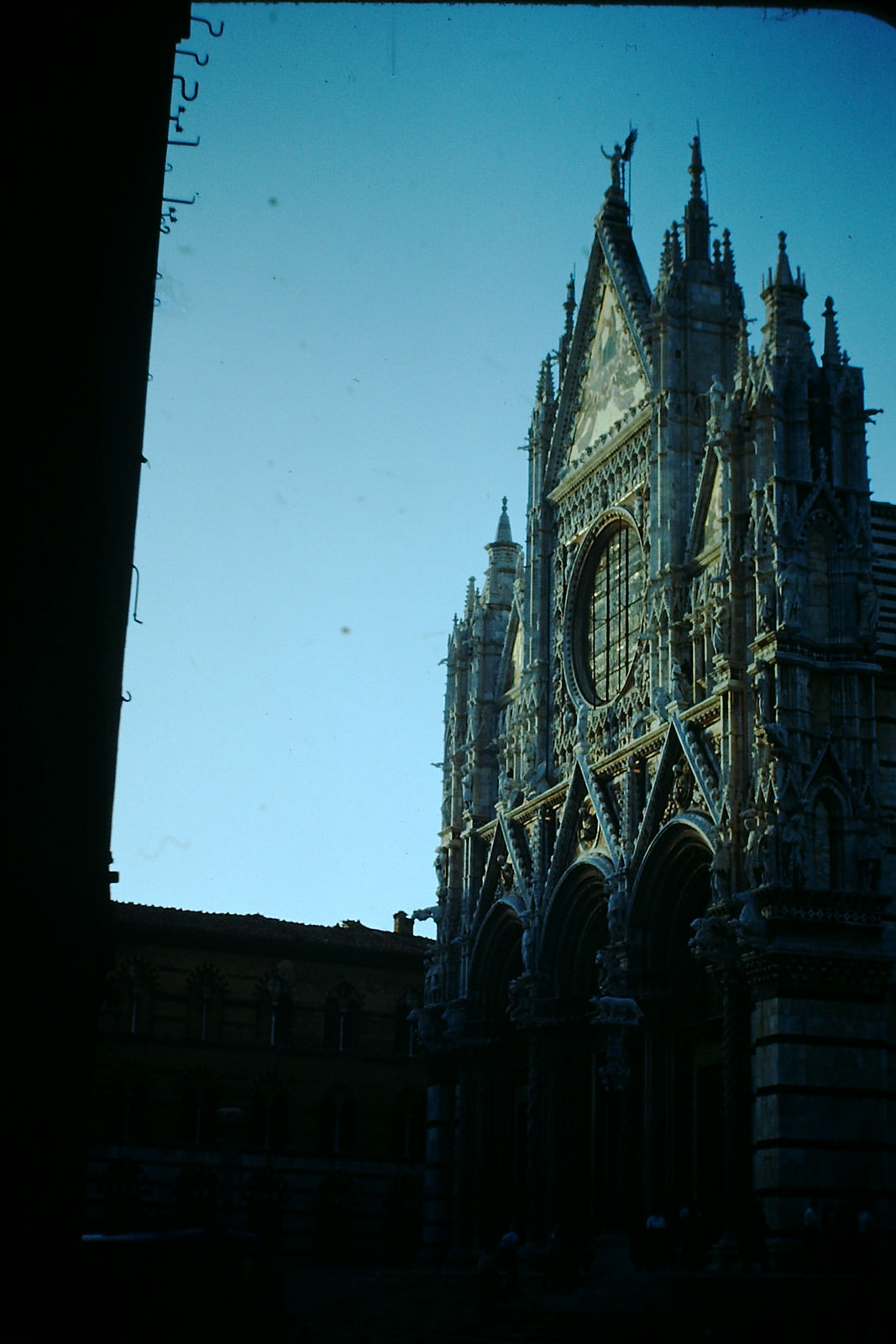
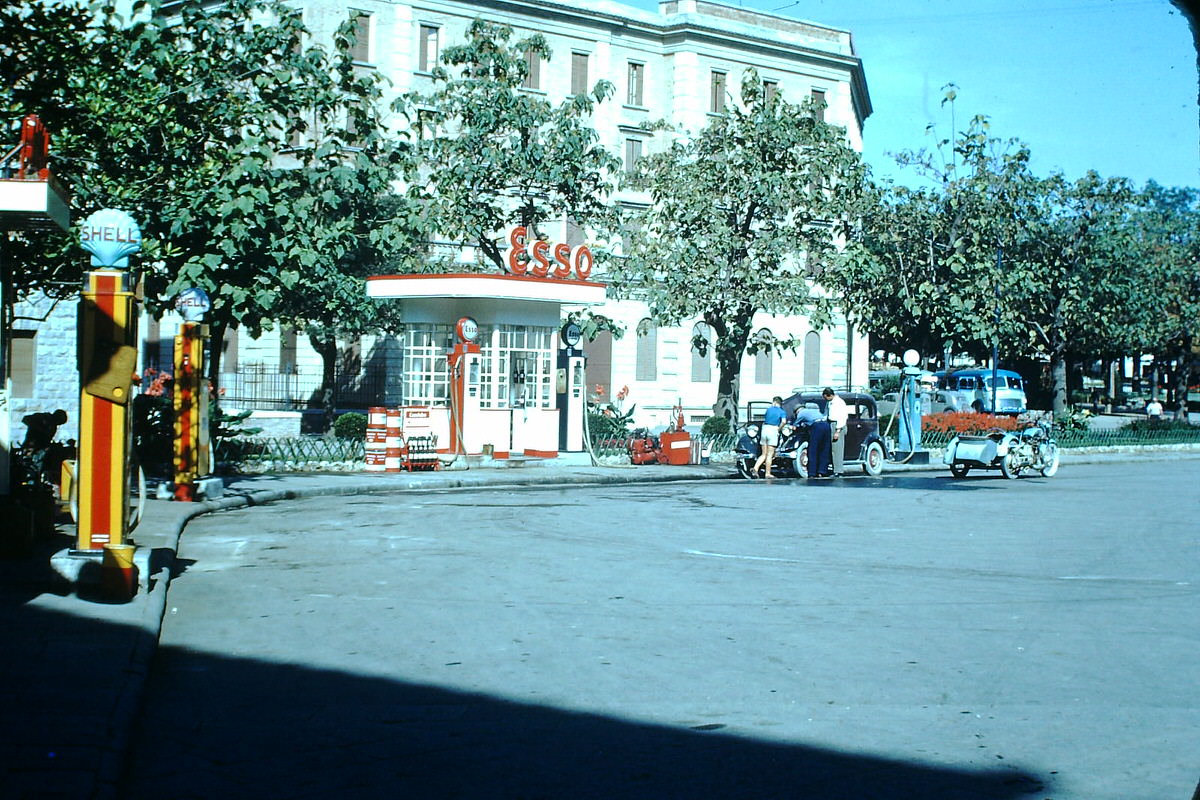
Siena’s central piazza — the Piazza del Campo — was already famous across Italy as the venue for the Palio, a twice-yearly horse race run around the edge of the square. Riders representing rival city districts compete in a chaotic and dangerous race that has taken place since the Middle Ages. The city’s cathedral, with its striped marble exterior, was one of the finest Gothic buildings in Europe. Photos from Siena in 1954 also show early signs of modernity creeping into the ancient city.
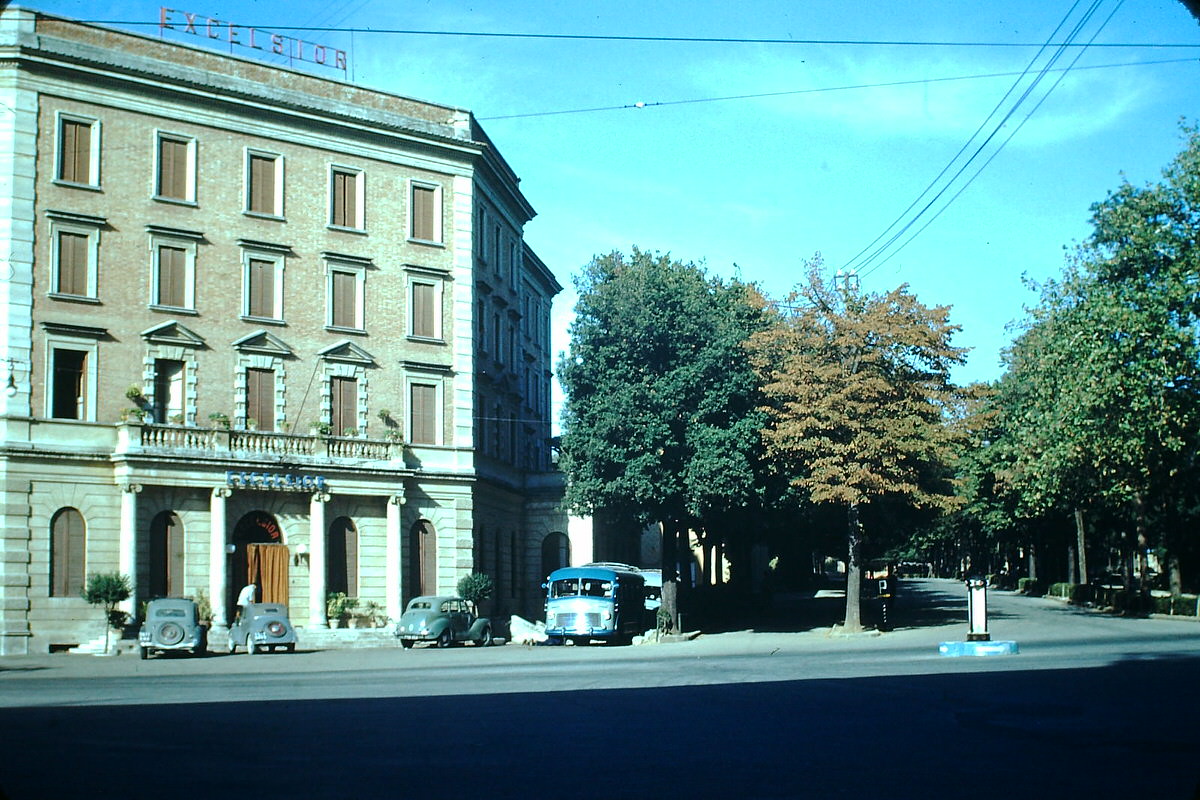
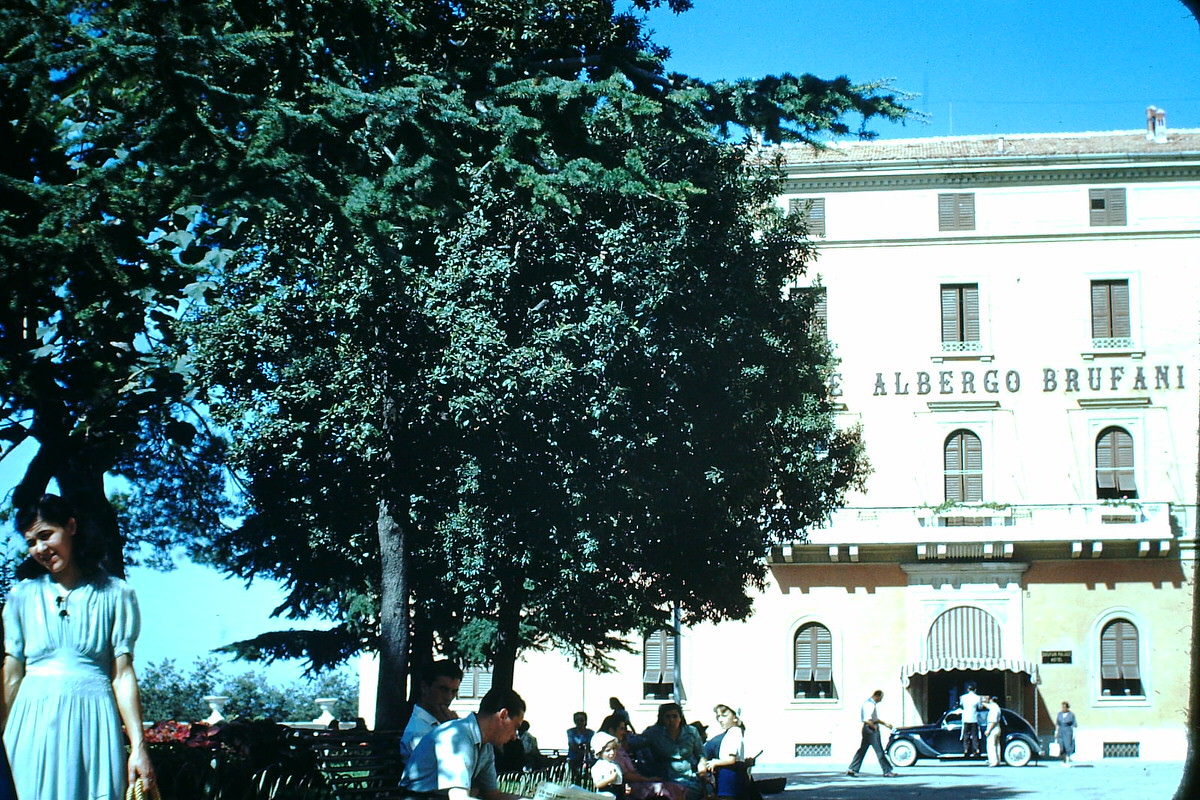
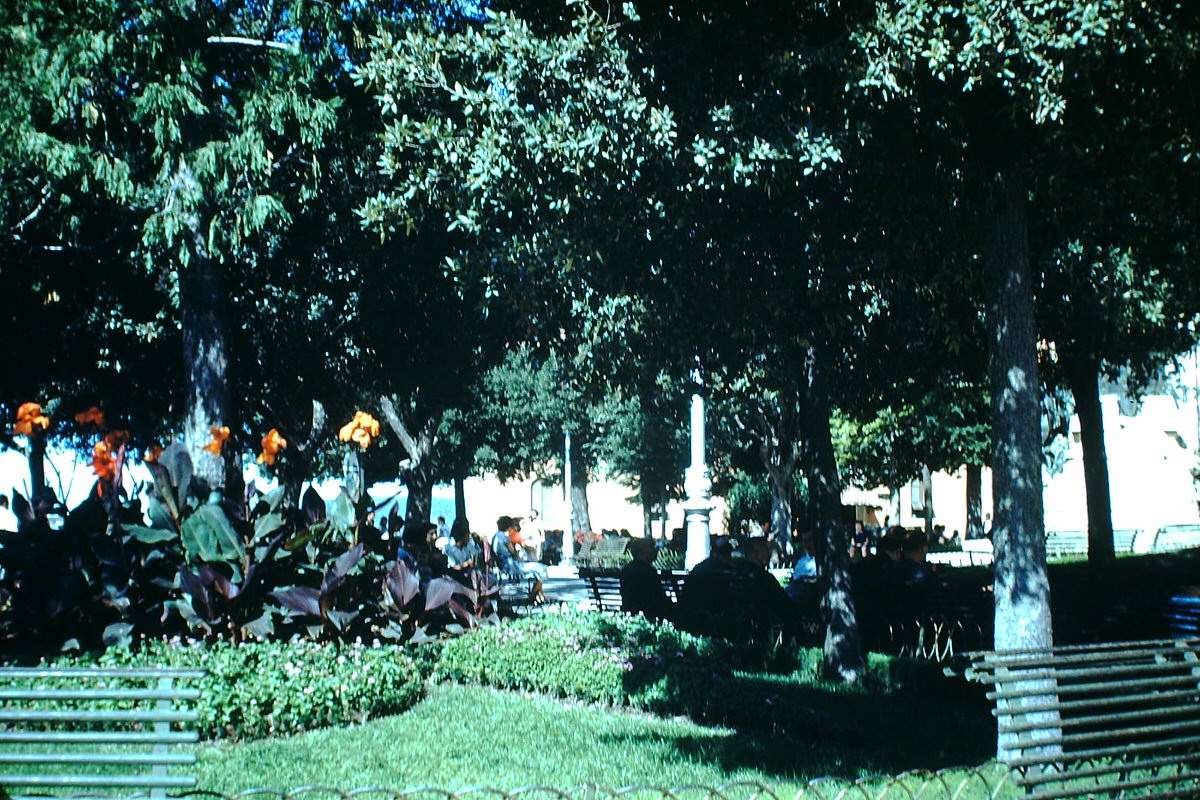
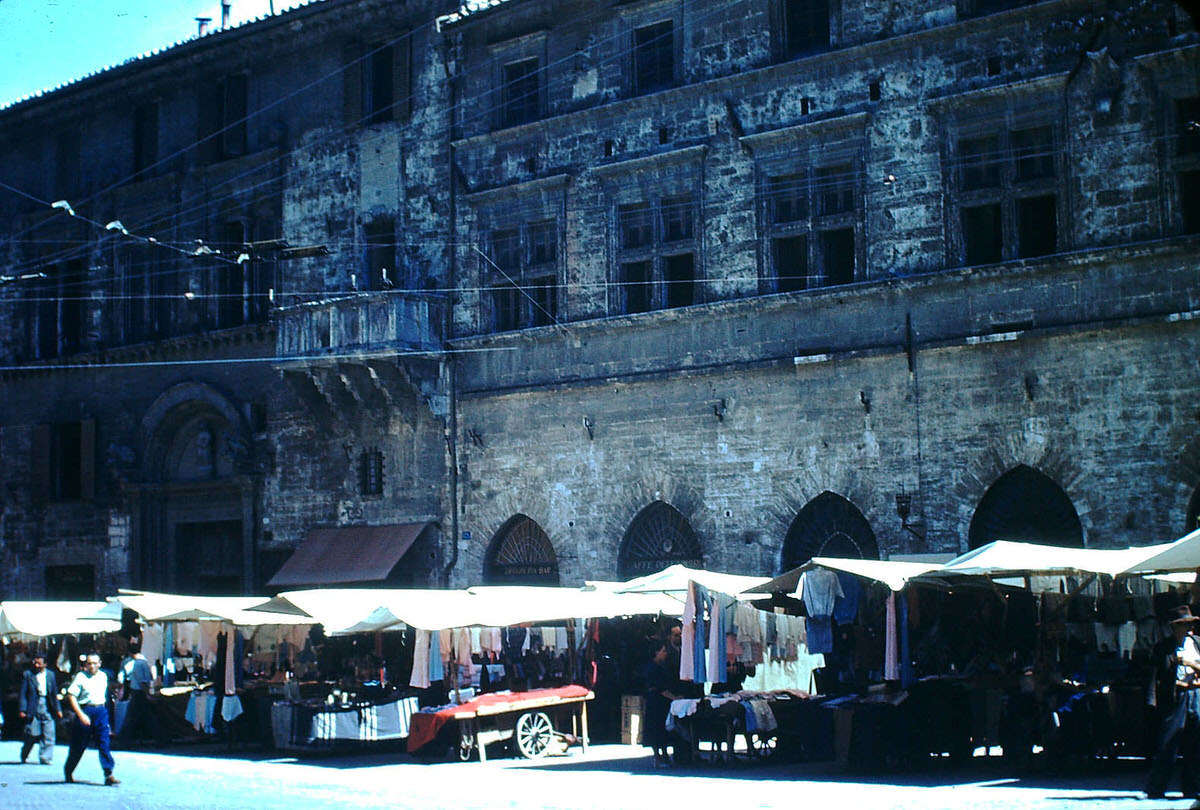
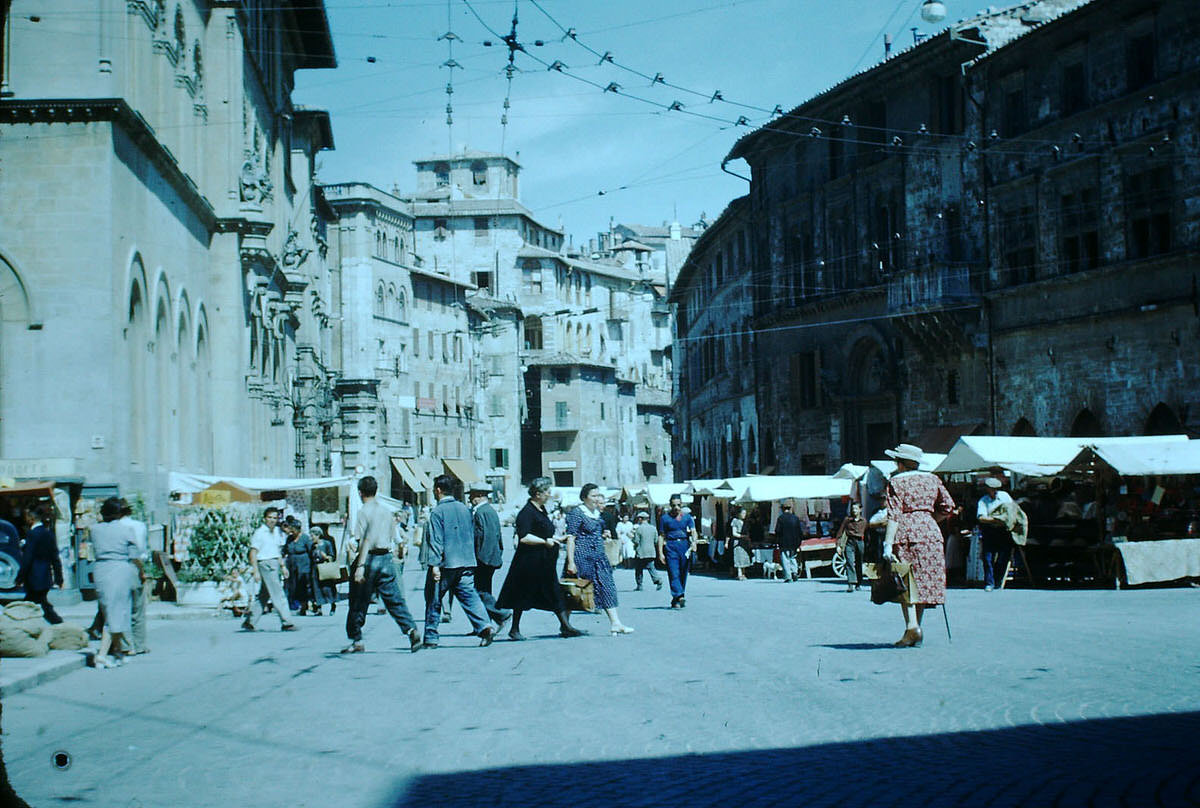
Perugia, the hilltop capital of Umbria, looked out across a wide valley from its elevated position. The Hotel Brufani, one of the city’s most prominent hotels, sat at the edge of the hill with views over the surrounding countryside. The city’s open-air market brought together vendors and shoppers in a scene that felt unchanged from earlier decades.
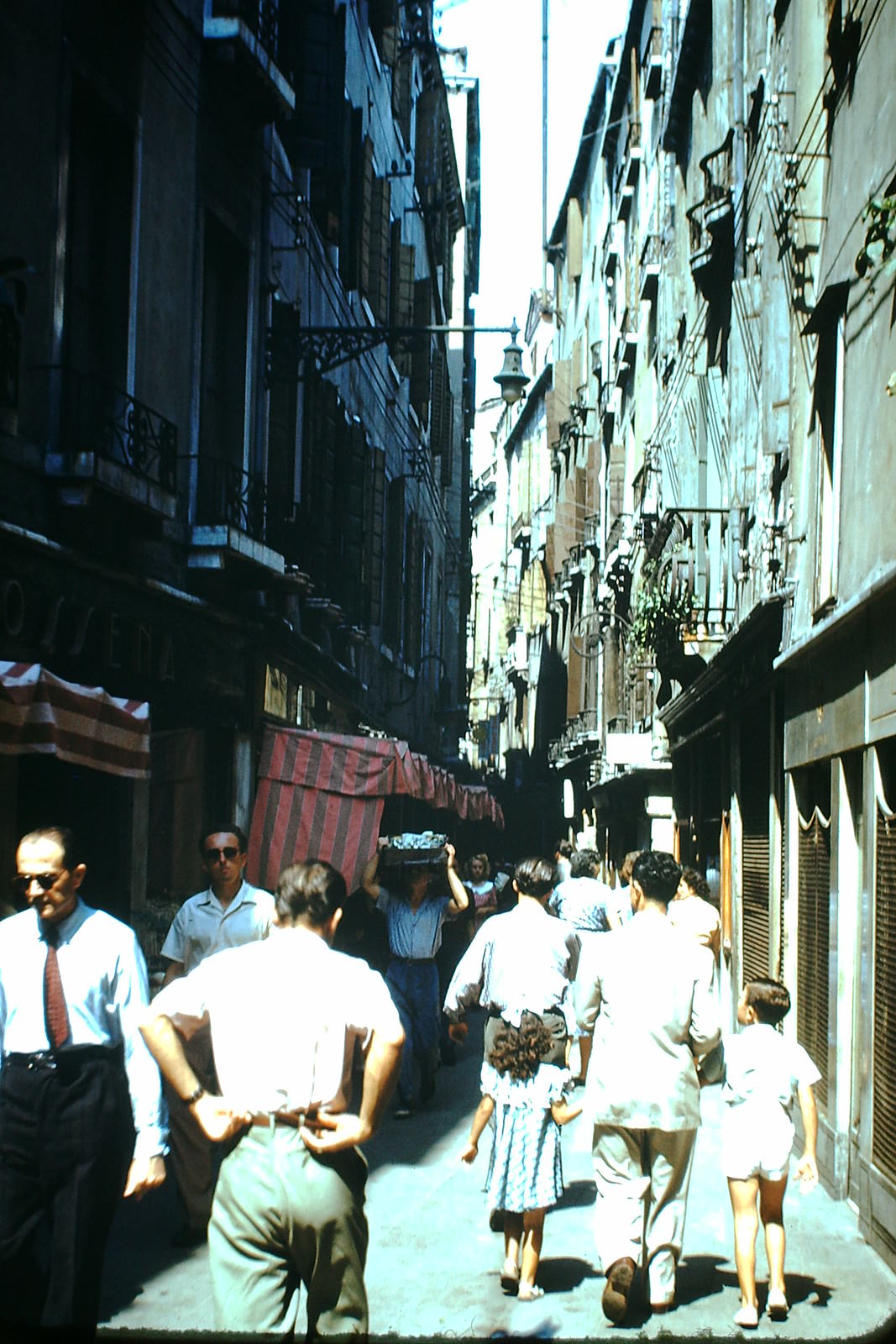
More photographs of Venice from this period show the city’s canals and streets from different angles — the Rio de la Pleta, the Riva degli Schiavoni waterfront promenade, and the Piazzetta between St. Mark’s and the lagoon. Each shot captures the texture of daily Venetian life: boats moored along stone embankments, pedestrians crossing narrow bridges, and the constant presence of water at every turn.
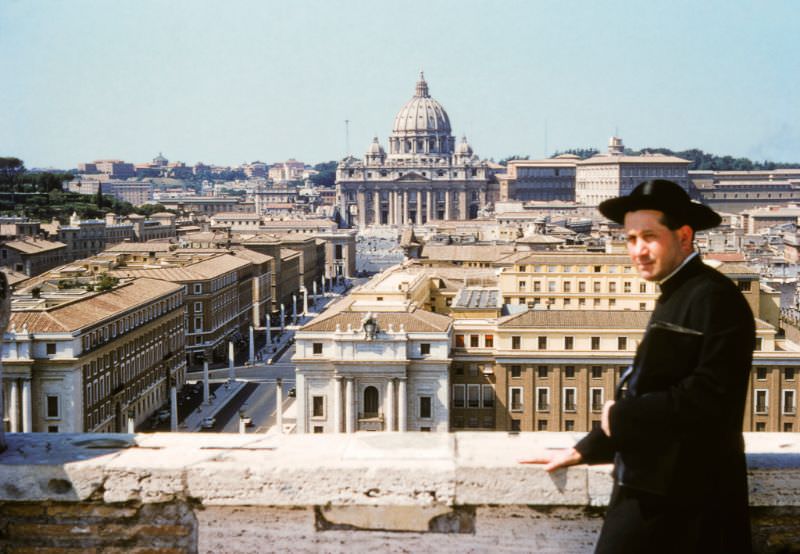
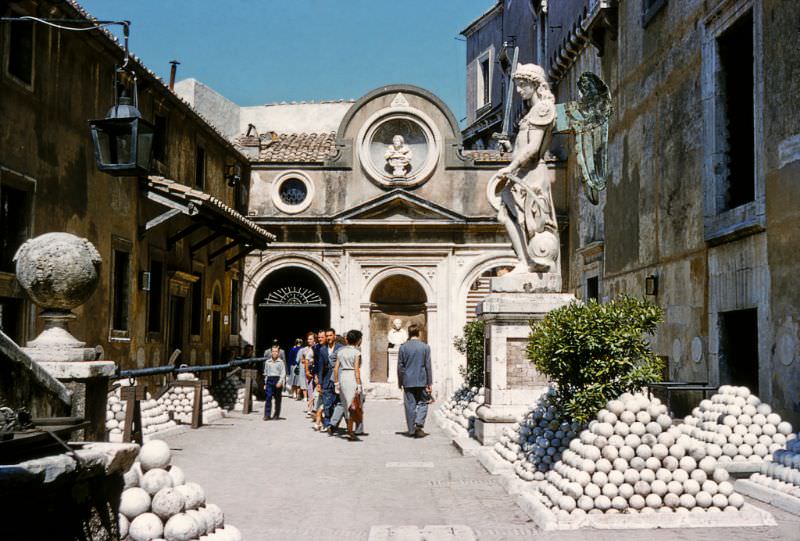
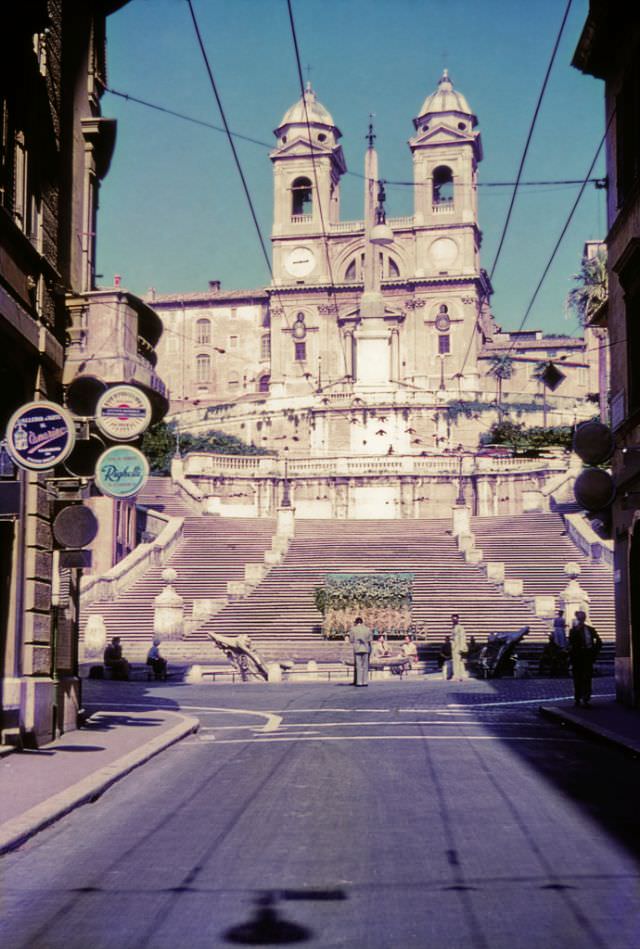
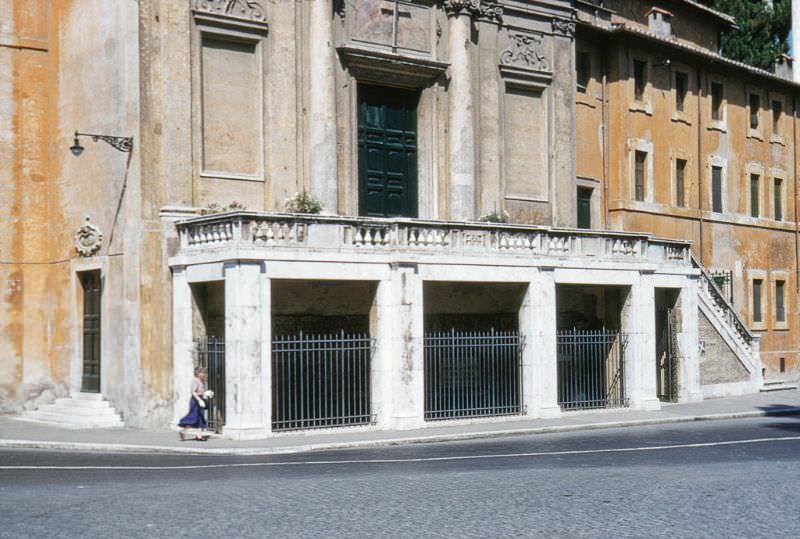
Rome in 1954 was the political capital of the republic and home to layers of history stacked on top of one another. The view from Castel Sant’Angelo looked straight down the Via della Conciliazione to St. Peter’s Basilica — an axis that Mussolini had ordered cleared in the 1930s by demolishing the old medieval neighborhood that once stood in between. The Spanish Steps drew visitors as they had for centuries, while the Mamertine Prison — where the Romans had once held captives before execution — now served as a church.
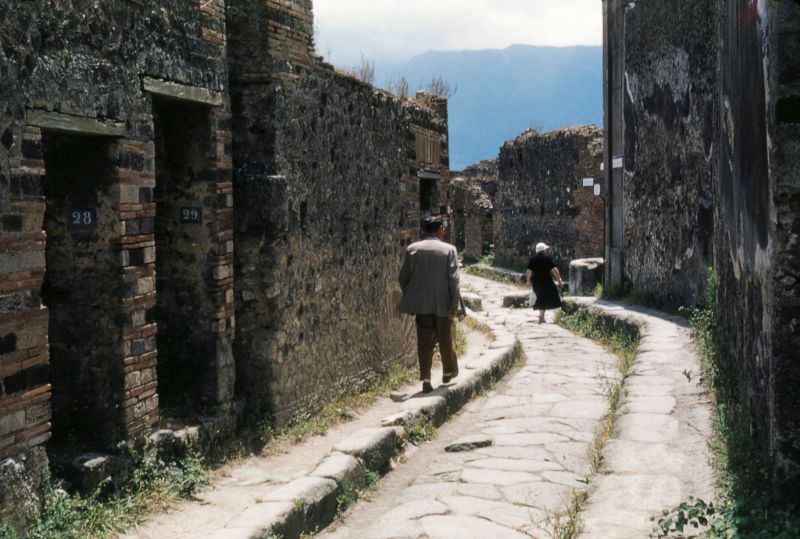
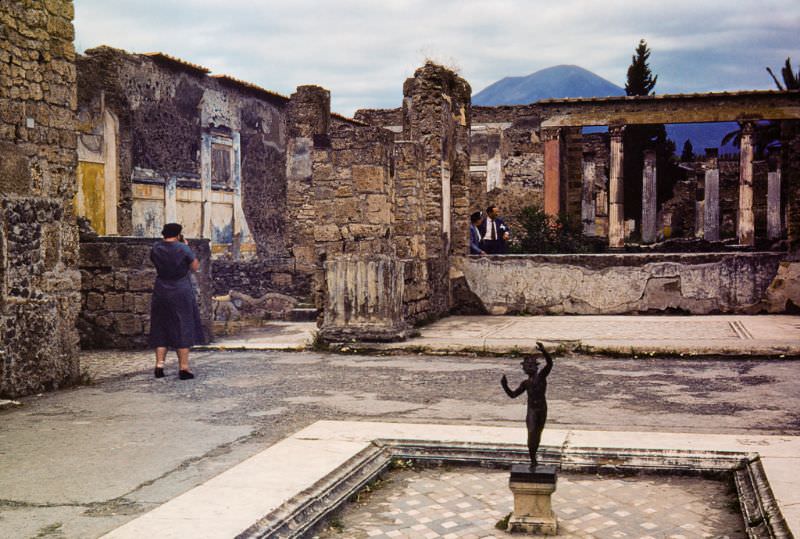
South of Rome, Pompeii remained one of Italy’s most extraordinary archaeological sites. The ancient Roman city, buried under volcanic ash from the eruption of Mount Vesuvius in 79 AD, was still being excavated in 1954. The House of the Faun — one of Pompeii’s largest and most elaborate private homes — gave visitors a direct look at how wealthy Romans had lived nearly two thousand years before.
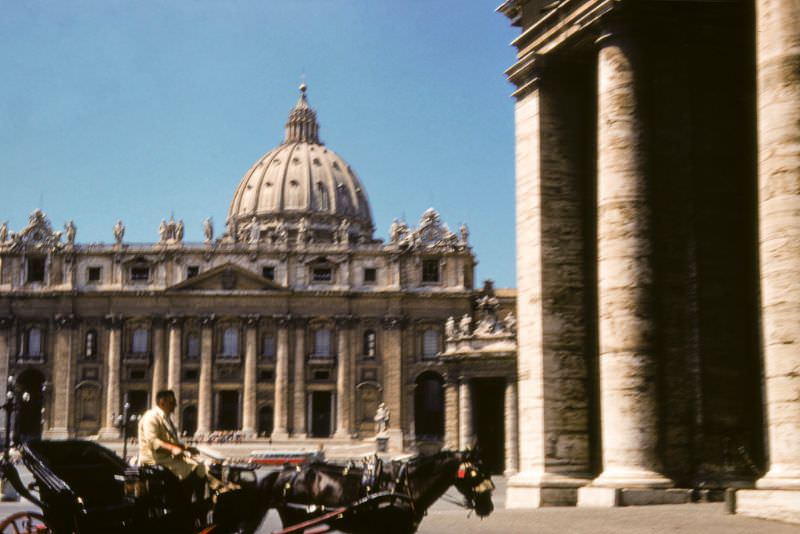
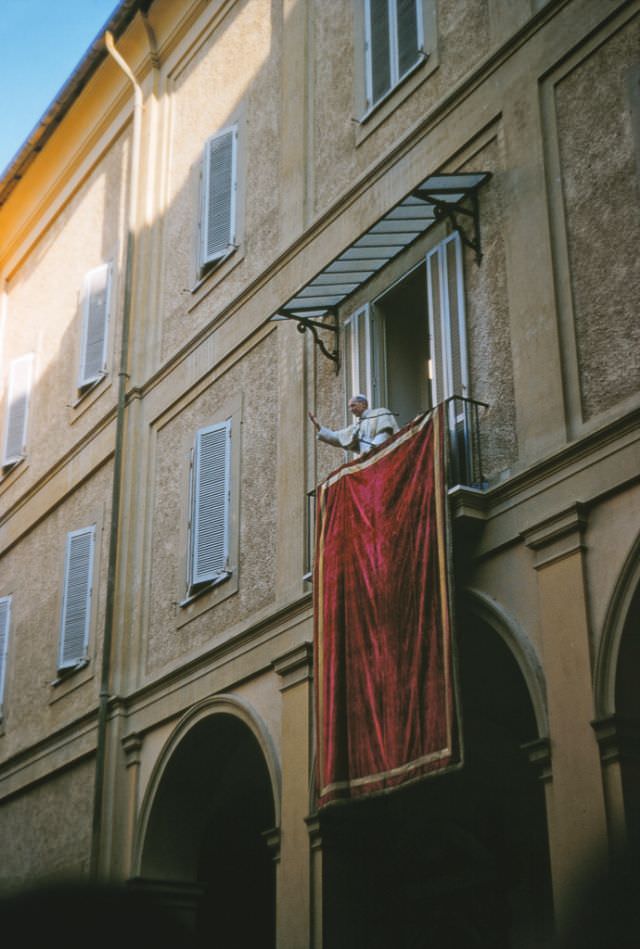
Vatican City, the world’s smallest independent state, sat entirely within Rome’s borders. St. Peter’s Basilica and the vast colonnaded square in front of it were the center of Catholic life worldwide. In 1954, Pope Pius XII was the reigning pontiff. One photograph from this year shows him in the courtyard of the Papal Palace at Castel Gandolfo, his summer residence in the hills southeast of Rome.
Back in Pisa, workers were still repairing wartime damage to the Camposanto Monumentale — a medieval cemetery whose ancient frescoes had been largely destroyed when Allied bombs hit the roof in 1944, causing the lead to melt and run across the paintings below. The repair work visible in the 1954 photograph represents one of the most significant cultural losses Italy suffered during the war.
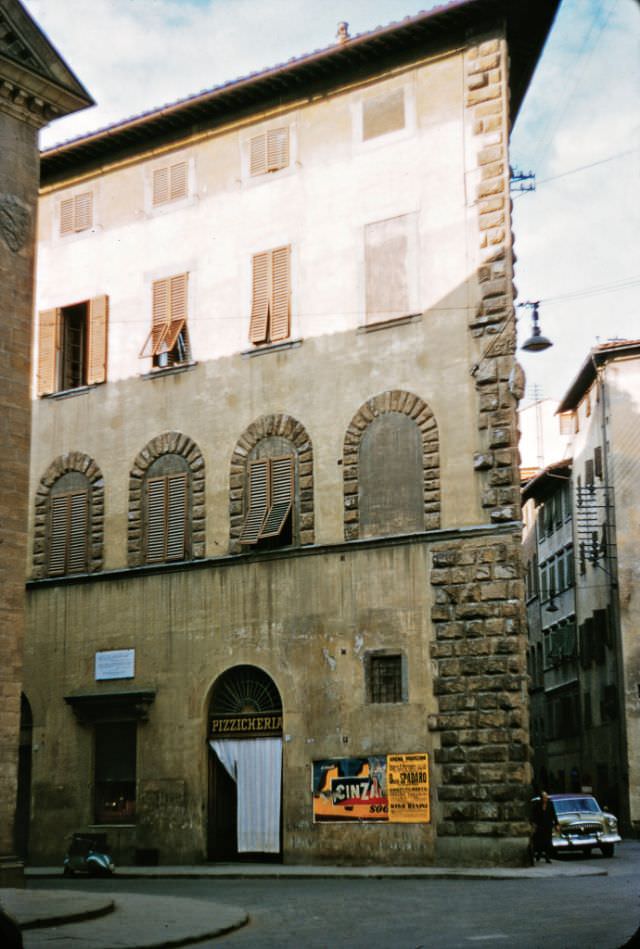
In Florence, Casa Guidi on Via Mazzetta was the home of English poets Robert and Elizabeth Barrett Browning during the 1840s and 1850s. Elizabeth died there in 1861. By 1954, the building was still standing, a quiet landmark in a city full of them. Nearby, the Ponte Vecchio photograph taken that year is particularly revealing — the medieval bridge lined with jewellers’ shops stands in the foreground, while the temporary steel bridges built after the war are visible behind it, a direct juxtaposition of Italy’s past and its postwar present.
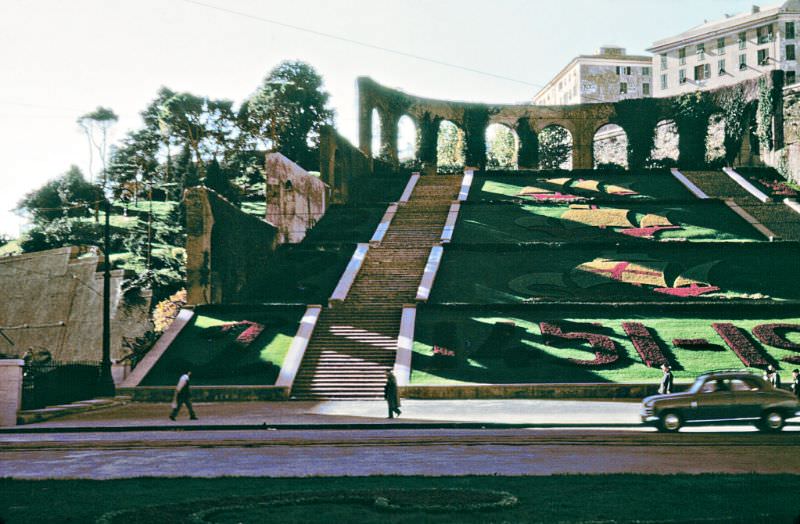
Genoa, on the Ligurian coast, was one of Italy’s busiest port cities and had been heavily bombed during the war. The Scalinata del Milite Ignoto — the staircase of the Unknown Soldier — was a civic monument that carried particular weight in 1954, still within living memory of the conflict. The Ligurian Riviera stretching east from Genoa included the resort town of Rapallo, where the waterfront promenade along the Lungomare Vittorio Veneto offered a calmer, more leisurely version of Italian coastal life.
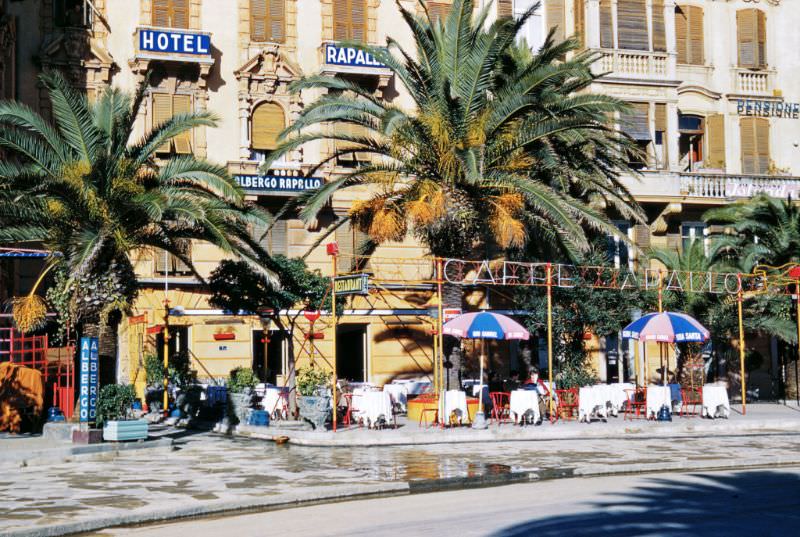
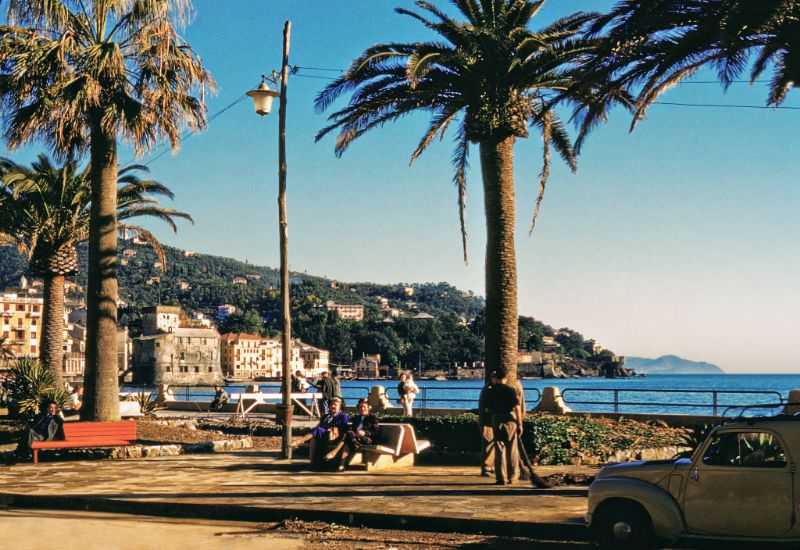
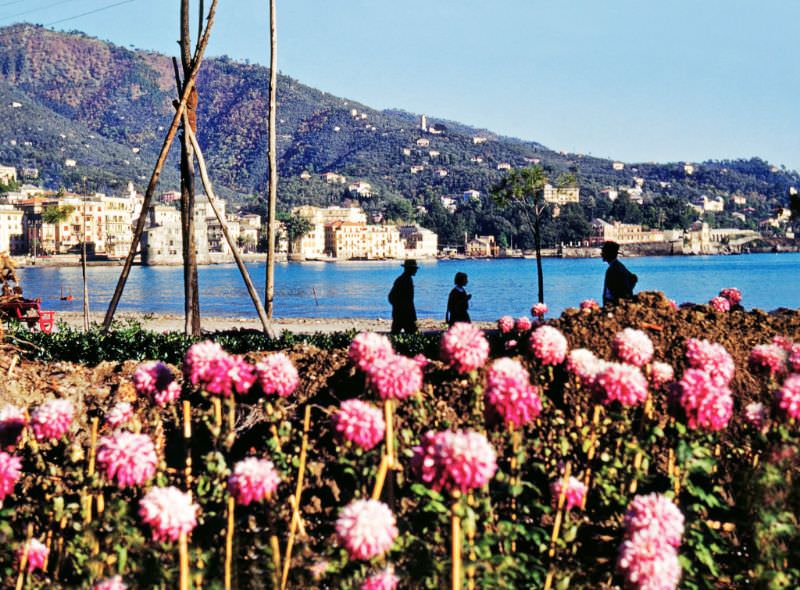
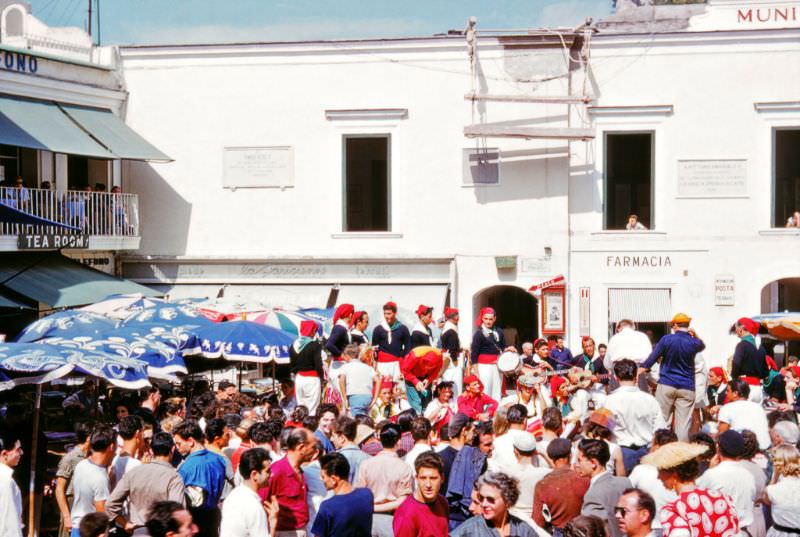
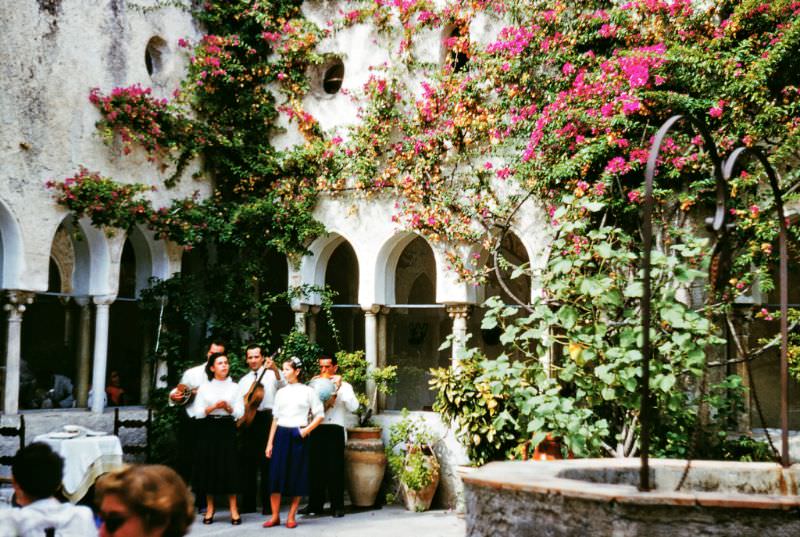
Further south, the island of Capri drew visitors to its rocky shores and charming piazzas. The port at Marina Grande was the entry point for travelers arriving by boat from Naples. Up in the Piazza Umberto — the small main square at the top of the island — local performers put on folkloric shows for tourists. The Amalfi Coast, one of the most dramatic coastlines in Europe, offered another kind of beauty entirely: clifftop towns, terraced lemon groves, and narrow roads winding above the sea.
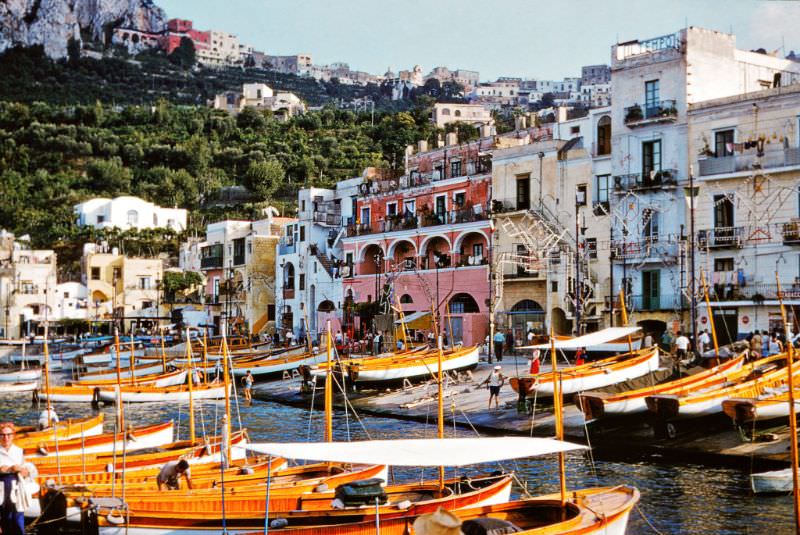
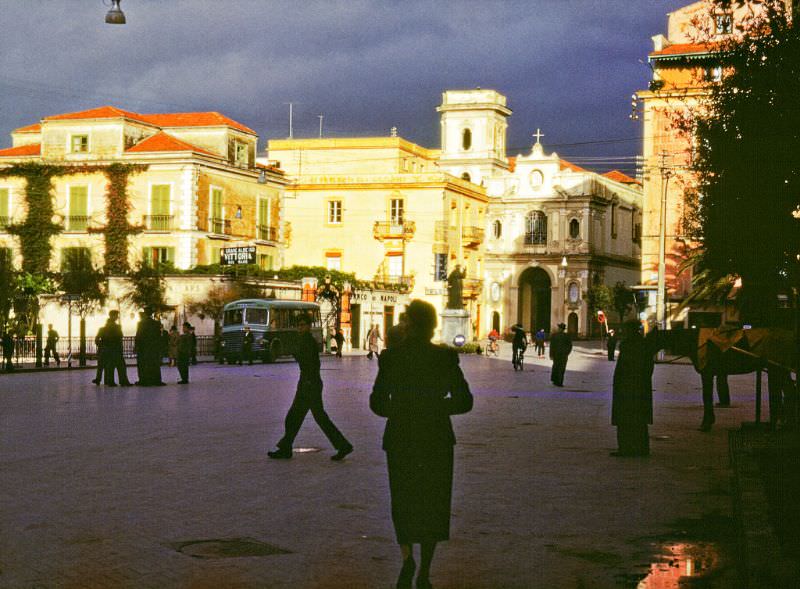
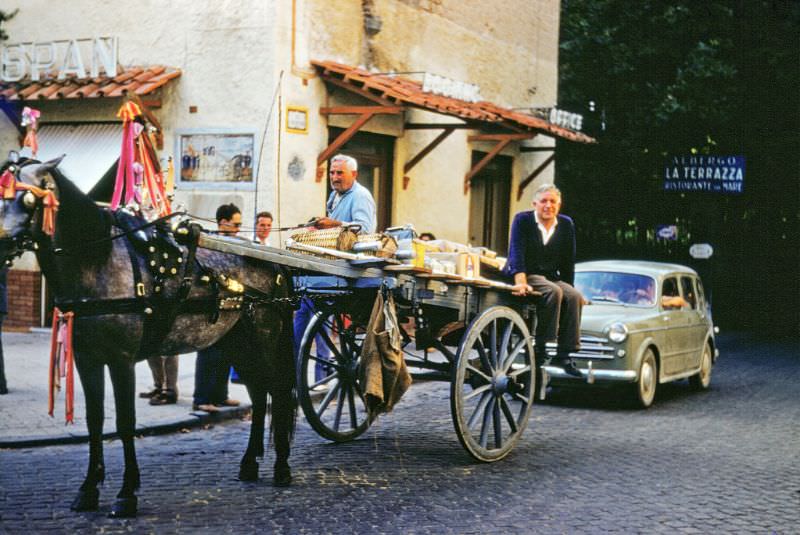
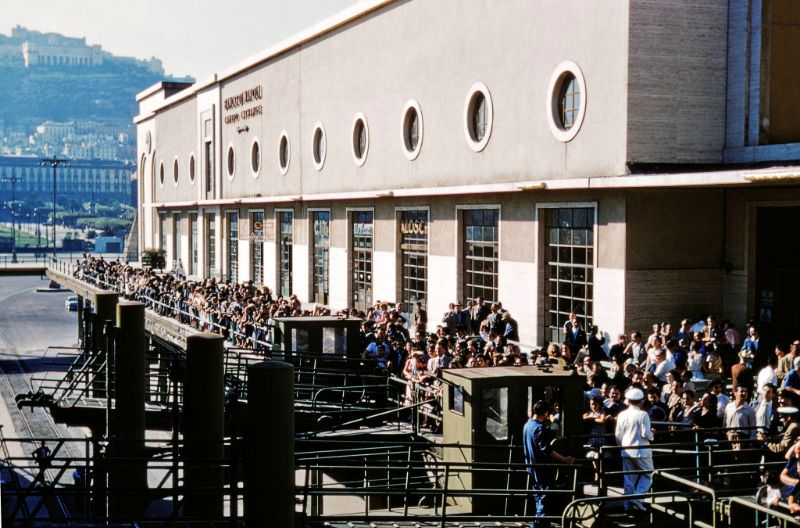
Sorrento sat at the top of the peninsula overlooking the Bay of Naples. Its main square, Piazza Tasso, was the gathering point for locals and visitors alike. The streets nearby were lined with lemon trees, artisan shops, and restaurants overlooking the sea. Naples, at the base of that same bay, was Italy’s largest southern city and a major port — its passenger terminal handled ships arriving from across the Mediterranean.
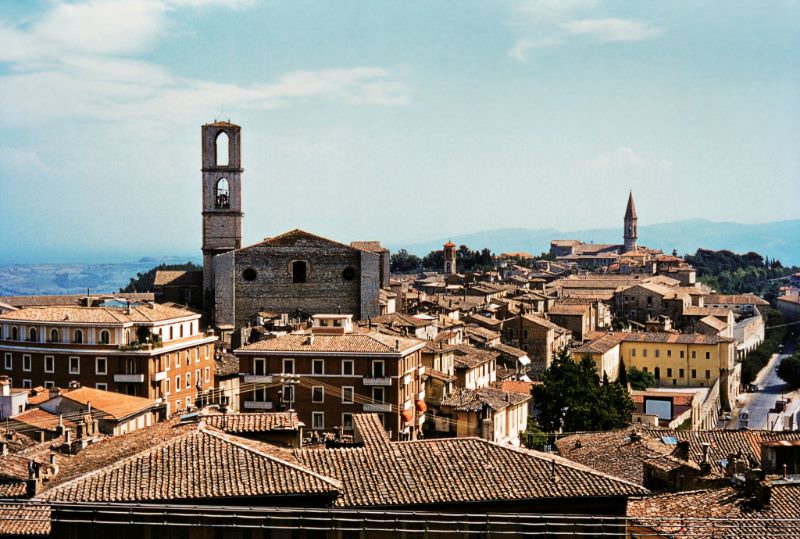
Back in Perugia, a view from the City Museum showed the Basilica of San Domenico rising above the surrounding rooftops — its Gothic bell tower, one of the tallest in Italy, a fixture of the city’s skyline since the 14th century. These final photographs close the tour of Italy in 1954 where it began: in the hilltop towns and ancient cities of the interior, where the weight of history was felt on every street corner.