Hey There! Before You Go. 😧
Get the best vintage content straight into your inbox!

Don't worry, we don't spam

Hungarian Revolution of 1956: When the Soviet Brutally Crushed the Revolt Against Soviet-Backed Regime in November, 1956

In the autumn of 1956, Hungary erupted. What began as a student protest in Budapest grew into a nationwide revolt against the Soviet-backed Hungarian People’s Republic — one of the most dramatic uprisings of the Cold War era. For nearly two weeks, ordinary Hungarians — students, factory workers, soldiers, and civilians — took up arms against one of the most powerful military forces in the world. The Soviet Union’s response was swift and brutal.
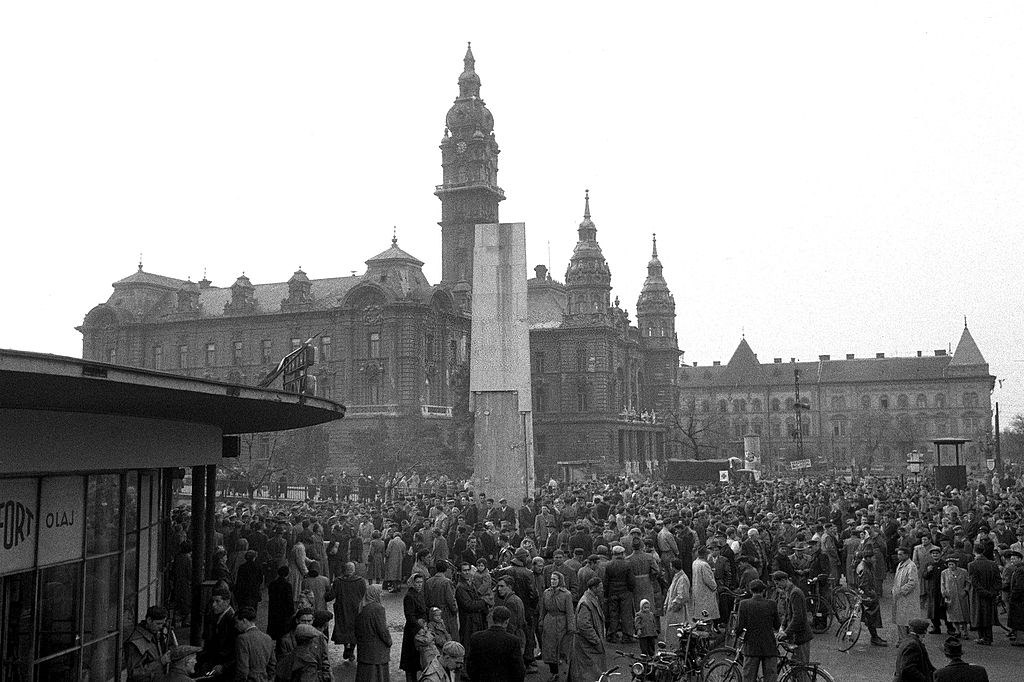
Hungarian town of Gyor, mass rally in front of the town hall in Gyor, Hungary on October 23, 1956

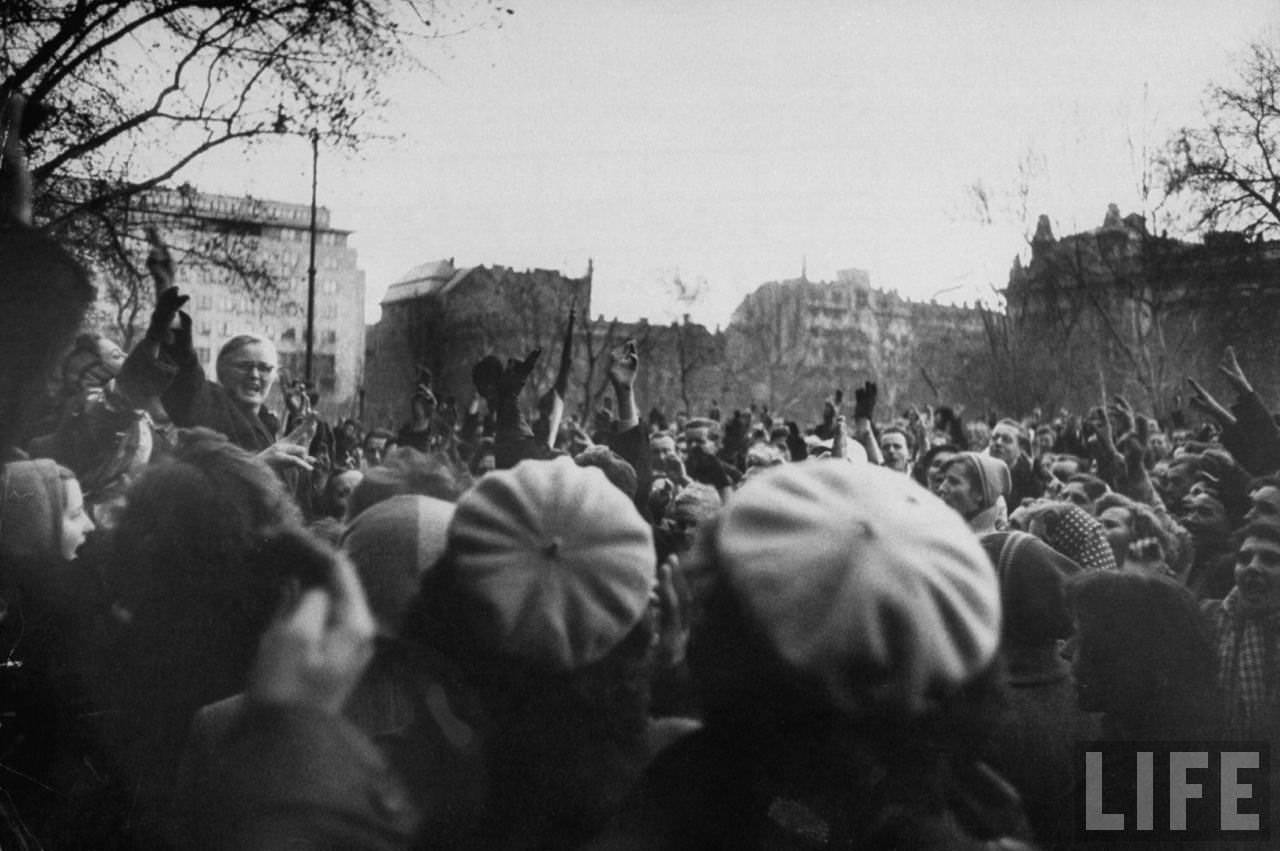
October 23, 1956 is the date the revolution began in earnest. Tens of thousands of people flooded the streets of Budapest and other cities, including Győr, demanding an end to Soviet control and the policies of the Hungarian Working People’s Party. The demonstrators were led largely by young intellectuals and university students who had grown increasingly frustrated with political repression, economic hardship, and the suffocating influence of Moscow.
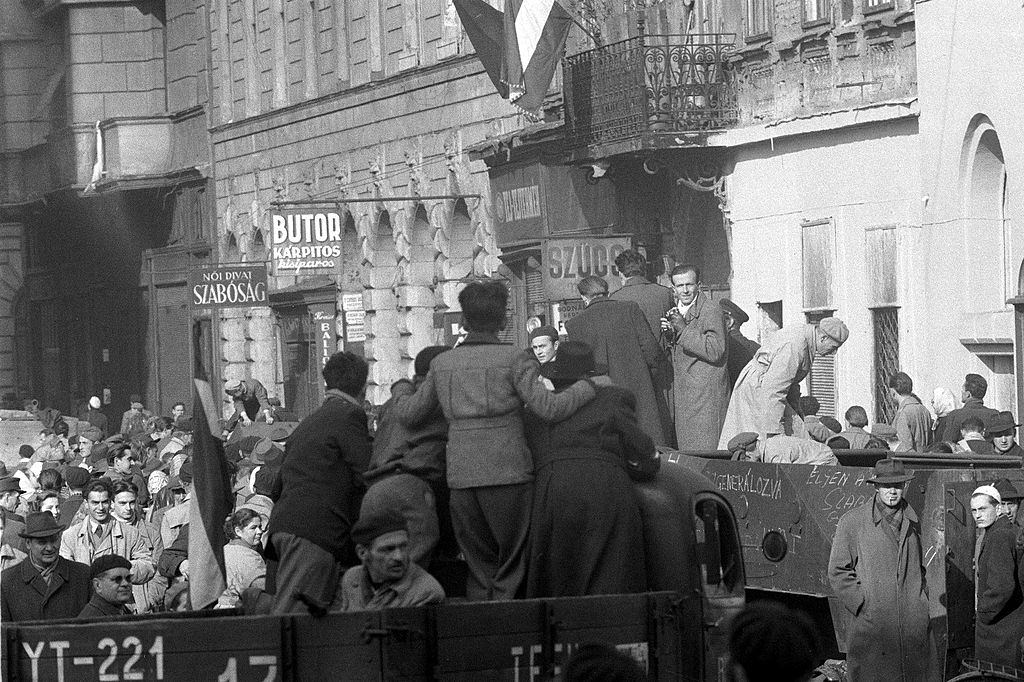
Tens of thousands of people have taken to the streets in Hungary to demand an end to Soviet rule in Gyor, Hungary on October 23, 1956.

The crowds marched toward the Hungarian Parliament in Budapest, their voices amplified by loudspeakers mounted on vans rolling through the streets. A group of students made their way to the national radio building, hoping to broadcast their demands to the country. The State Security Police, known as the ÁVH, arrested them. When the crowd outside demanded their release, ÁVH officers opened fire from inside the building. Several students were killed on the spot. Their bodies were wrapped in Hungarian flags and held above the crowd. That moment turned a protest into a revolution.
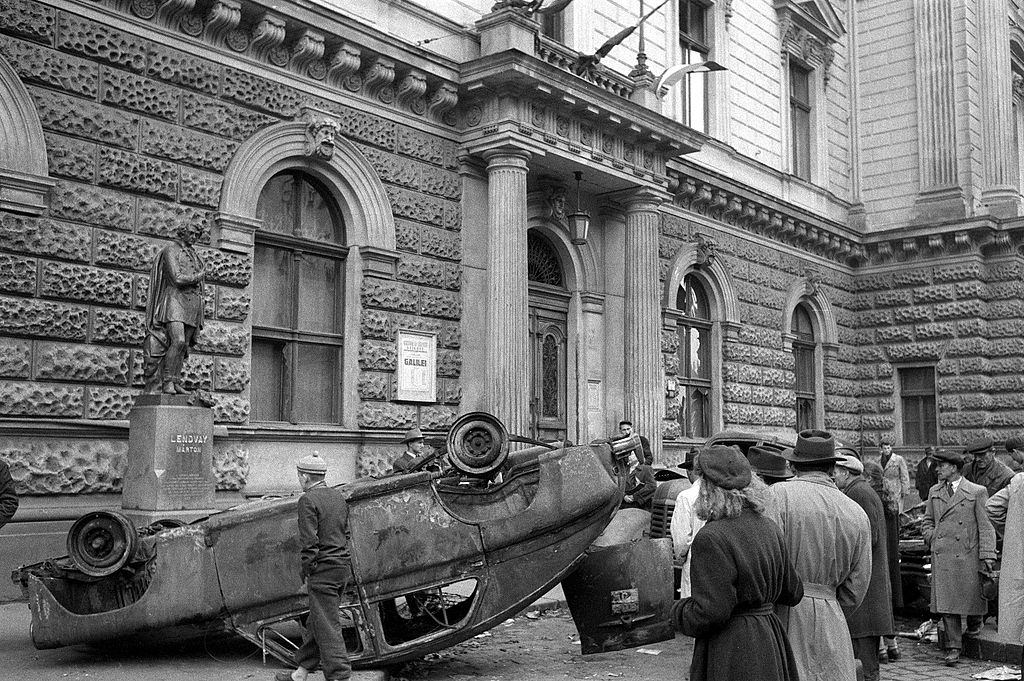
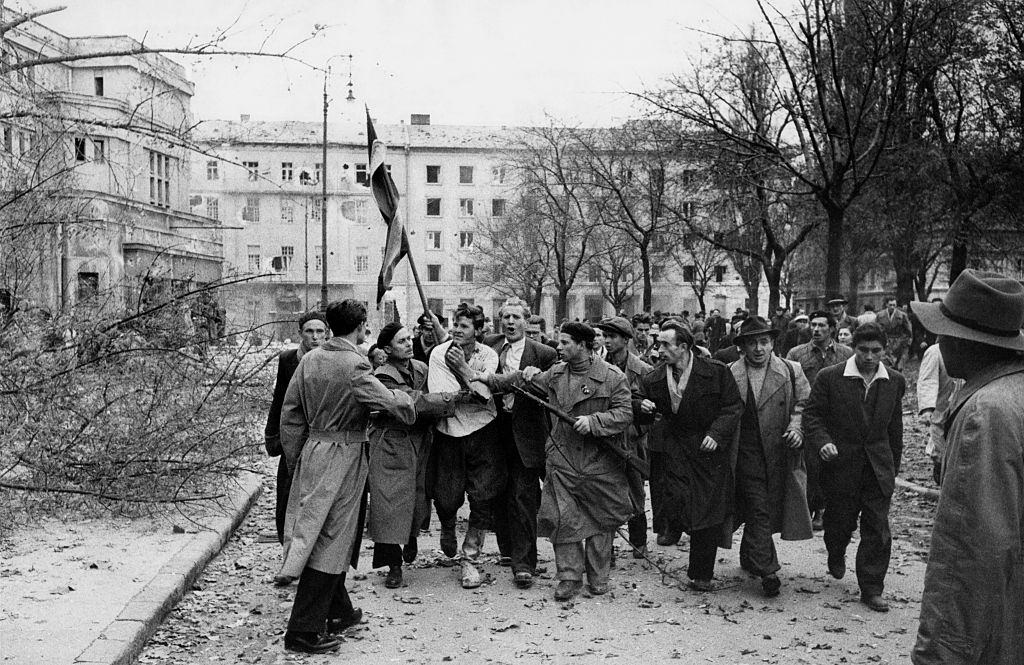
A student demonstration in Budapest got out of control, 1956.

News of the shootings spread rapidly. Riots broke out across the country. Ordinary citizens joined the students, and within hours, armed militias had formed in the streets of Budapest. The uprising moved fast — faster than the government could contain it.
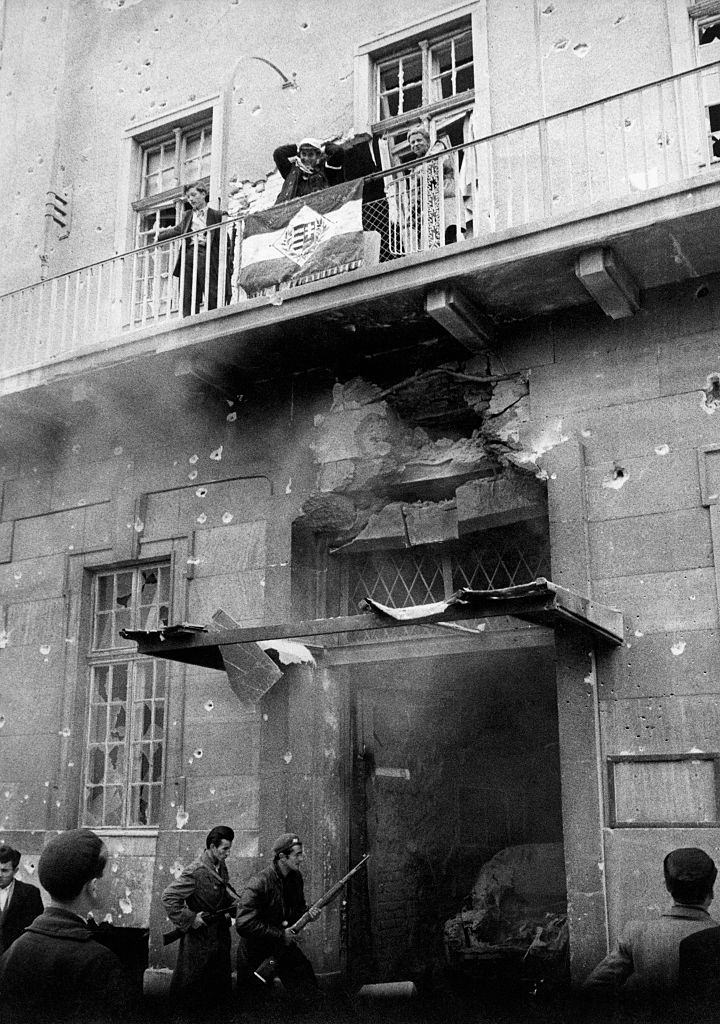
After the occupation of the headquarters of the Communist Party, on the balcony appeared the Hungarian national flag. Budapest, November 1956.

One of the most visible targets of the uprising was the Communist Party headquarters at Köztársaság Square. Rebels seized the building in fierce fighting, and the Hungarian national flag was raised from its balcony — a direct symbol of defiance against Soviet-imposed rule. The battle there was among the bloodiest of the revolt.
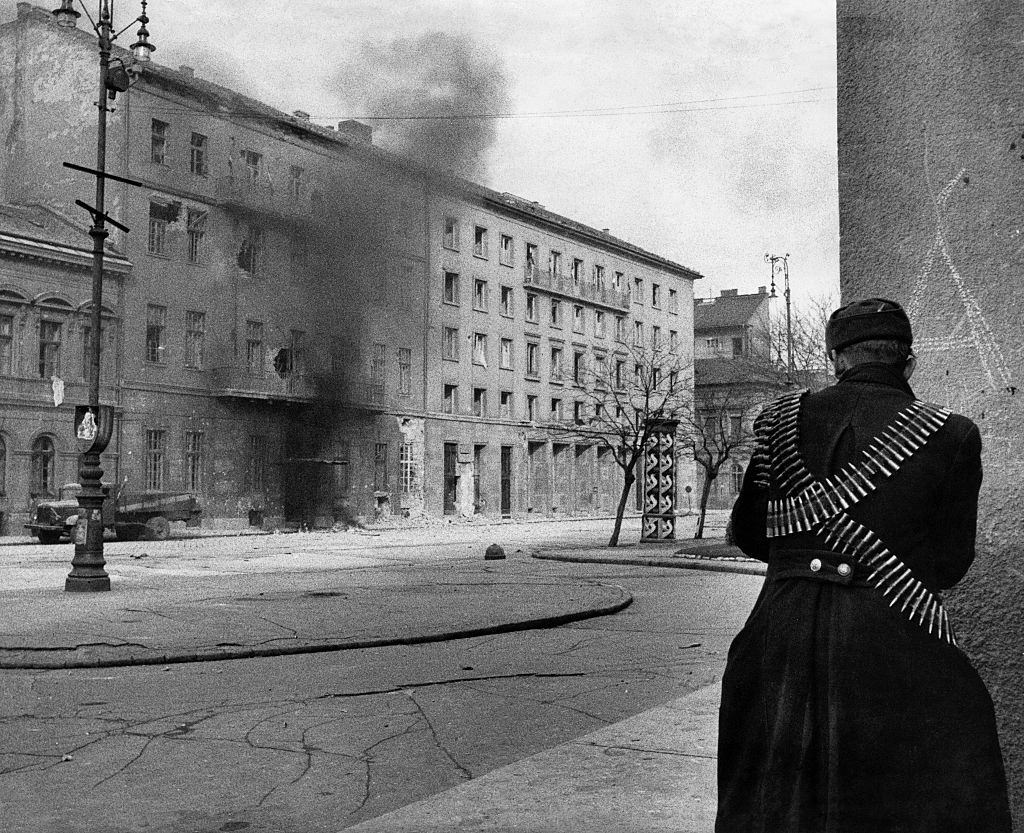
In Koztarsasag square gunmen fighting for the conquest of the headquarters of the Communist Party during the revolt. Budapest, November 1956

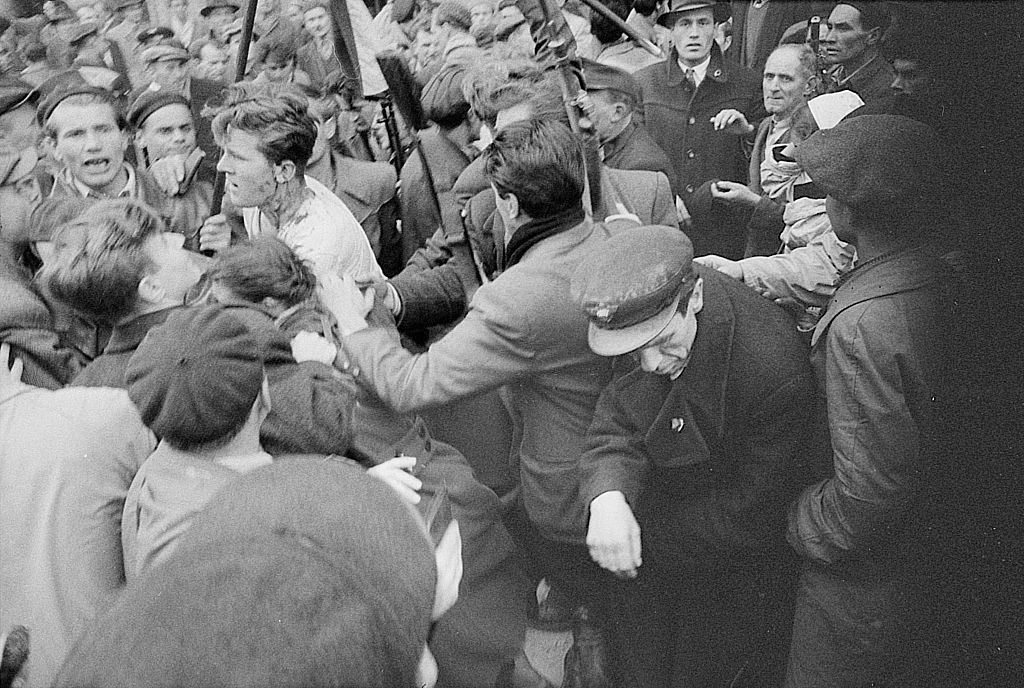
The ÁVH — the secret police — became the primary target of public rage. For years, they had tortured political prisoners, spied on citizens, and enforced the regime’s will through fear. When the uprising gave people the chance to fight back, many ÁVH members were hunted down in the streets.
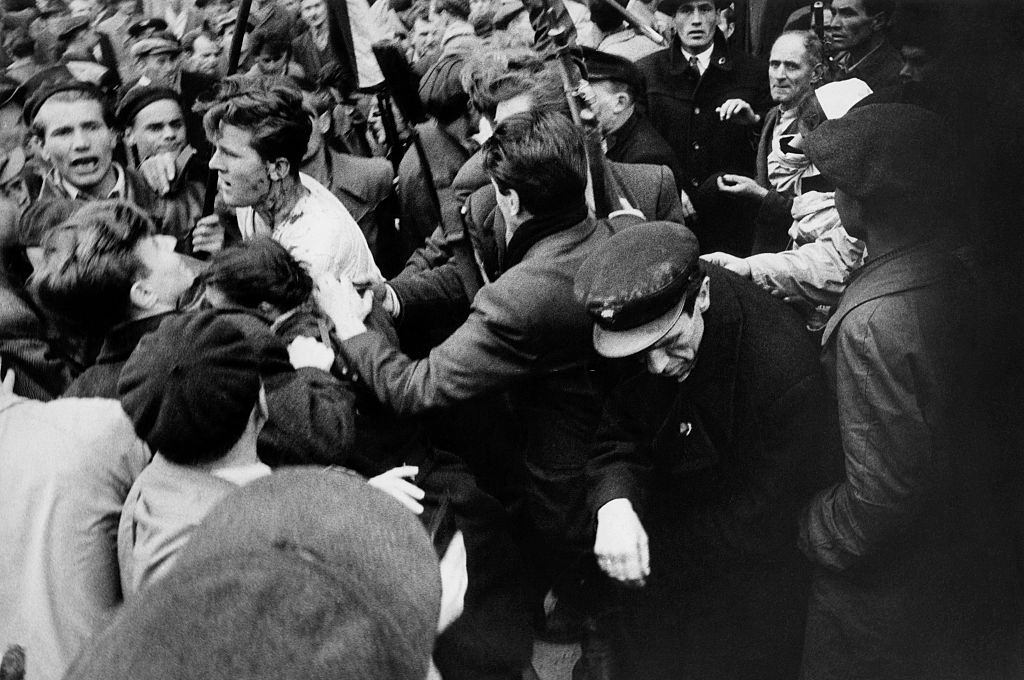
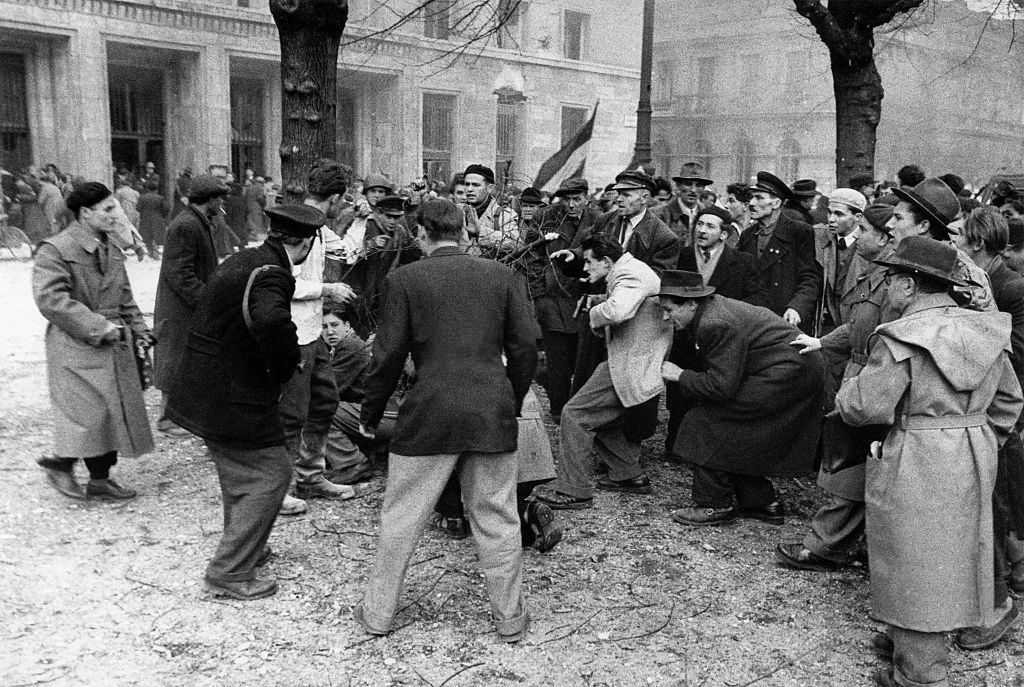
Member of the Hungarian secret police (AVH) surrounded by the enraged crowd during the revolt. Budapest, November 1956.
A member of the Hungarian secret police (AVH) is surrounded by the enraged crowd. Budapest, November 1956
Member of the Hungarian secret police (AVH) surrounded by the enraged crowd during the revolt.  Budapest, November 1956
Member of the Hungarian secret police (AVH) surrounded by the enraged crowd during the revolt. Budapest, November 1956

Captured ÁVH officers faced brutal treatment at the hands of enraged crowds. Many were beaten, dragged through the streets, and lynched. Former political prisoners were released from detention and handed weapons. The years of state-sanctioned torture and disappearances had built up a fury that now had nowhere to go but outward.
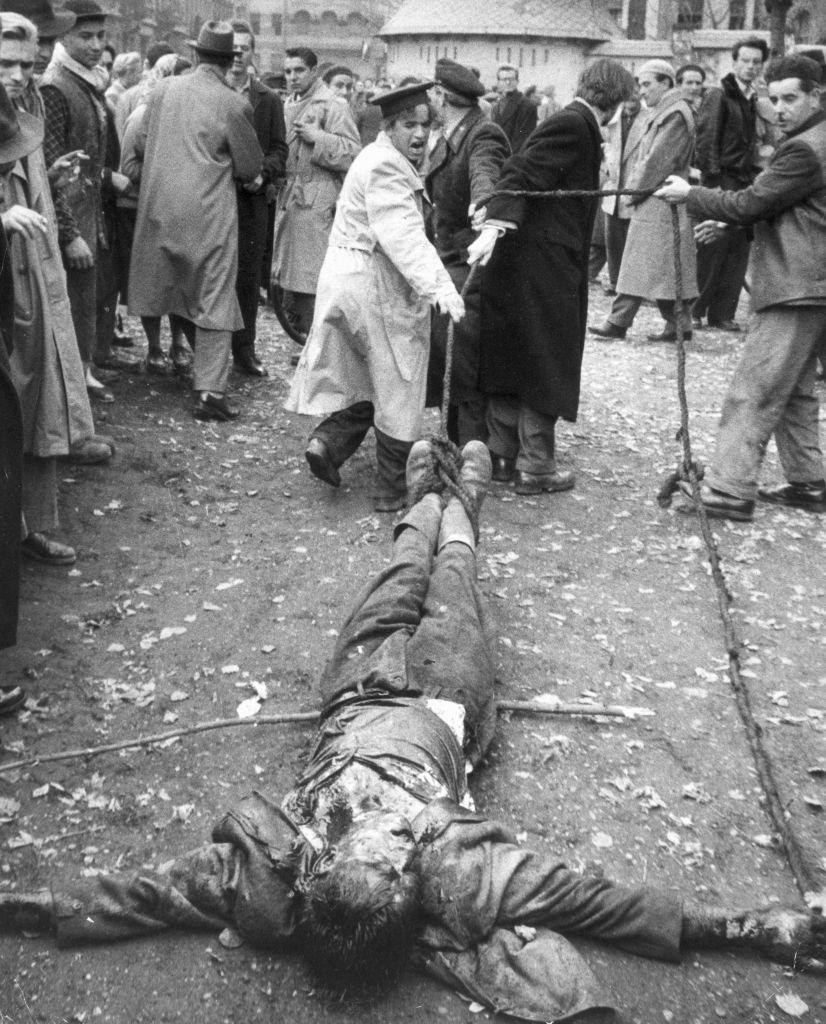
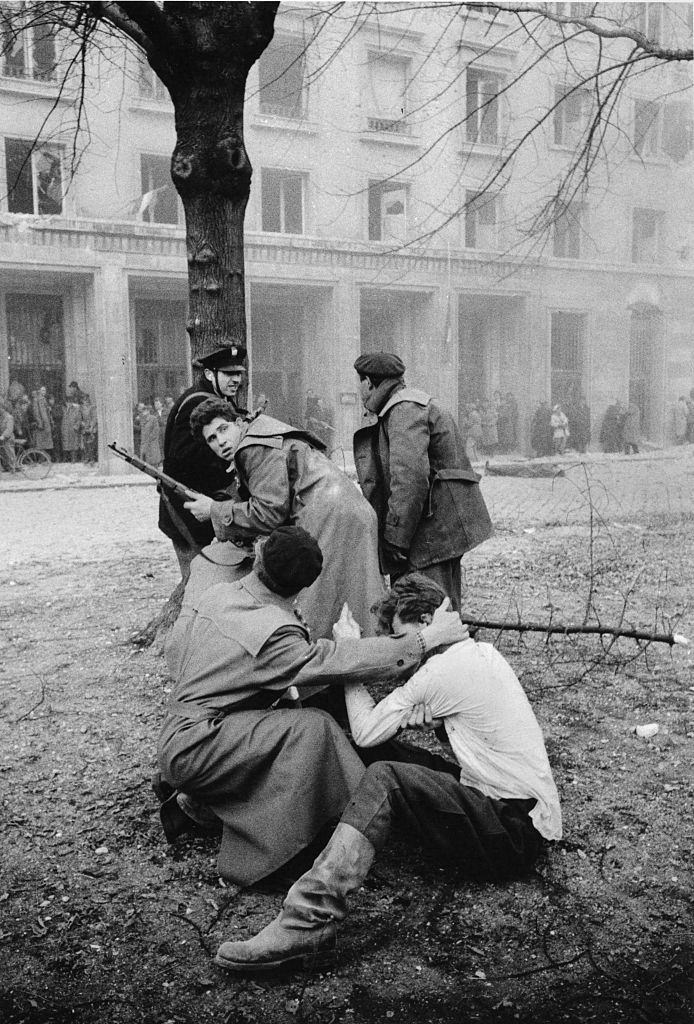
A beaten Hungarian colonel in the AVO, the secret police of the communist regime, is dragged along the ground by ropes attached to his ankles by angry protesters.
A member of the Hungarian secret police (AVH) has been captured by the enraged crowd during the revolt. Budapest, October 30, 1956
Injured officer of the Hungarian political police being caught by the rebels. Budapest, October 30, 1956.

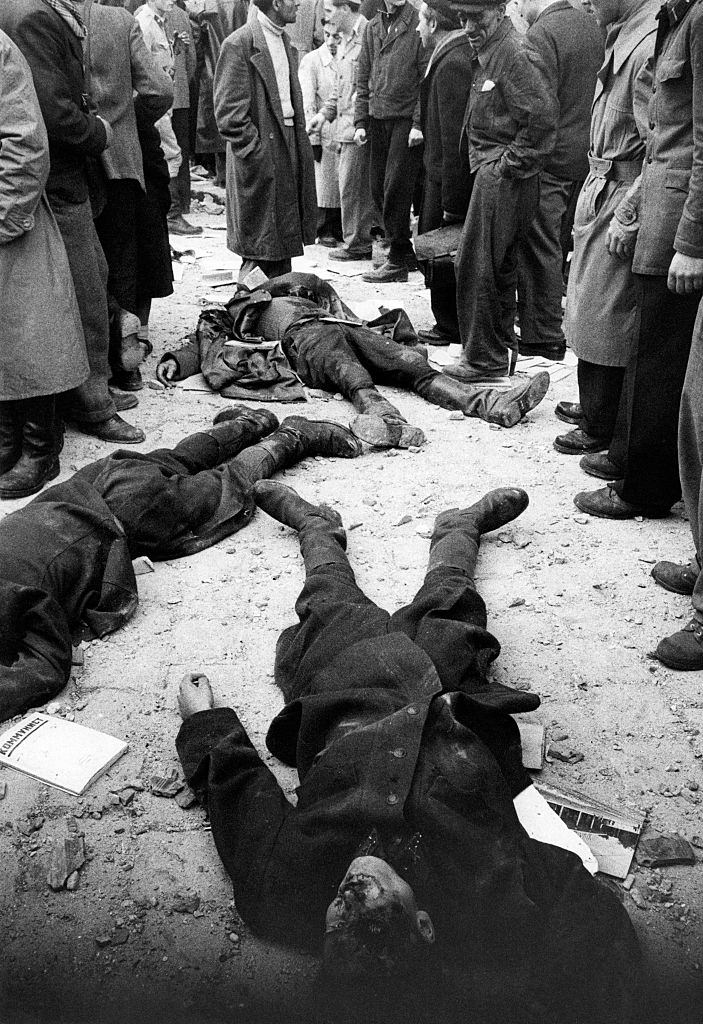
After the battle for the Communist Party headquarters, the bodies of ÁVH agents lay in the square. Rebels rifled through their papers, looking for names of informants and evidence of the regime’s crimes. Marxist books, thrown from the windows of the building, lay scattered beside the dead.
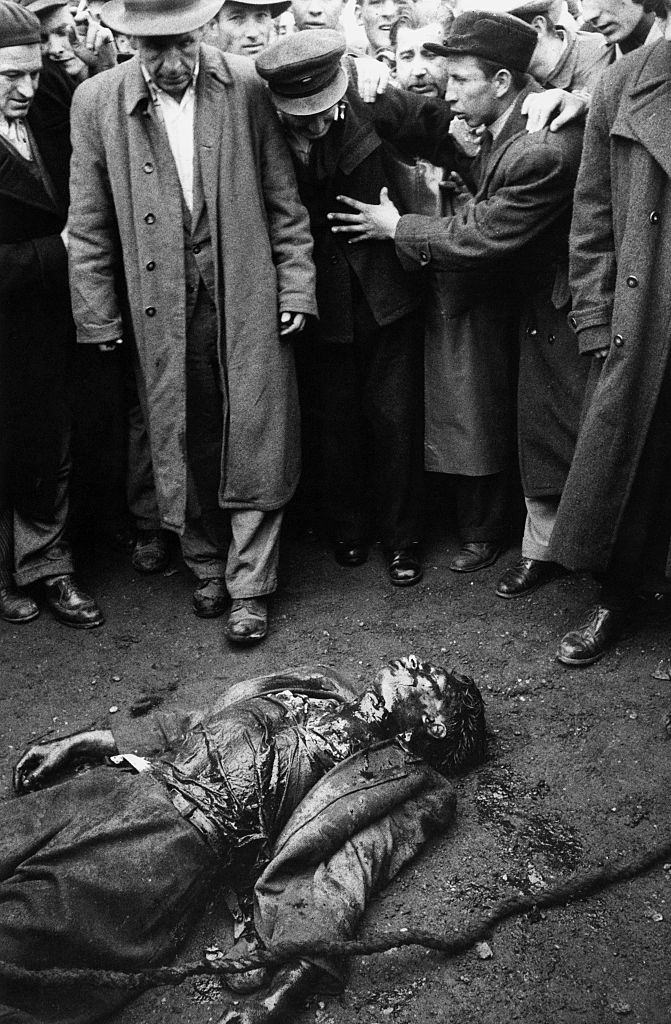
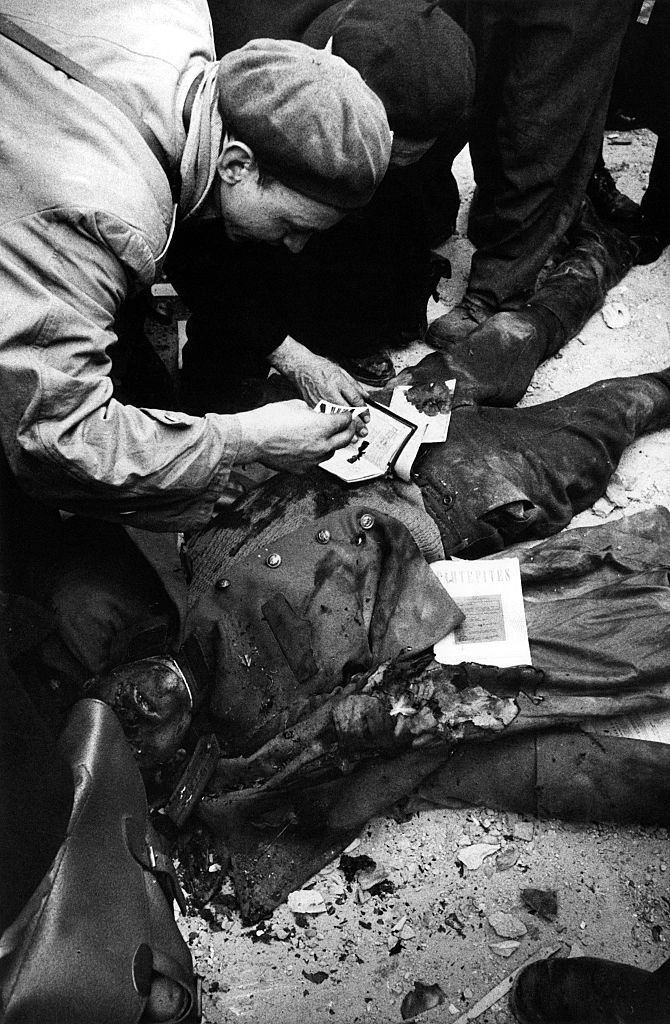
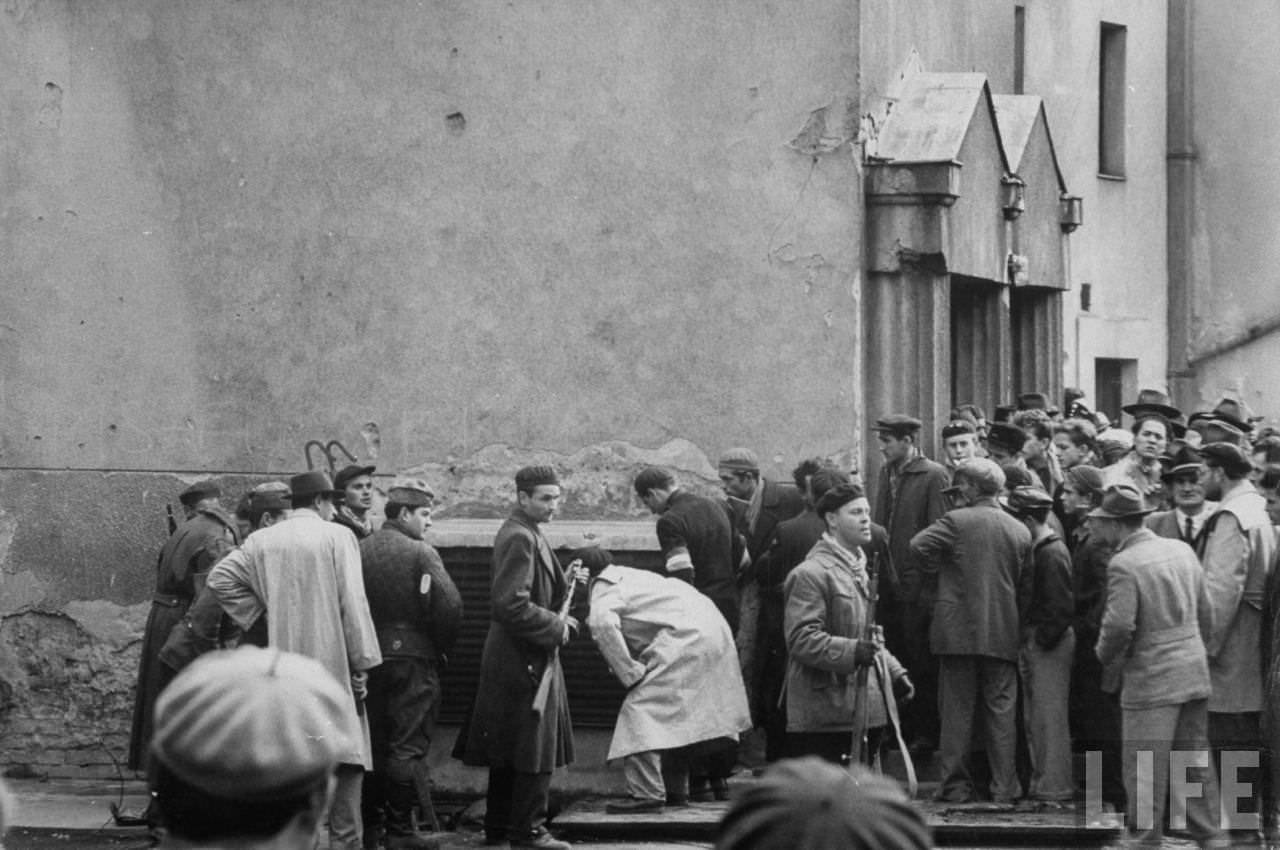
Insurgents watcing the deceased body  of a colonel of the Hungarian secret police (AVH) dead during the clashes. Budapest, November 1956
Insurgents watcing the deceased body of a colonel of the Hungarian secret police (AVH) dead during the clashes. Budapest, November 1956
Some insurgents leafing through the documents found on the body of an agent of the Hungarian secret police (AVH). Budapest, November 1956
After the battle for the headquarters of the Communist Party, on the ground remain the bodies of Hungarian secret police agents (AVH).

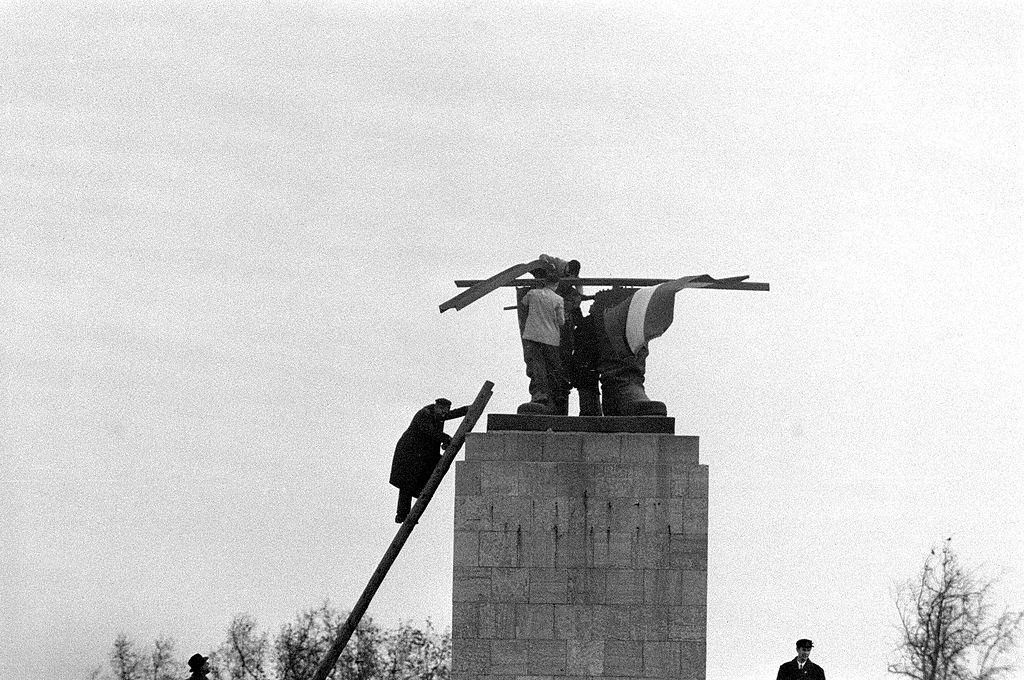
The rebels also took aim at the physical symbols of Soviet and Stalinist rule. The enormous bronze statue of Joseph Stalin that stood near the National Theatre in Budapest was toppled and hacked to pieces. Only his boots remained on the plinth. Protesters planted a Hungarian flag in them — a defiant image that was photographed and circulated around the world.
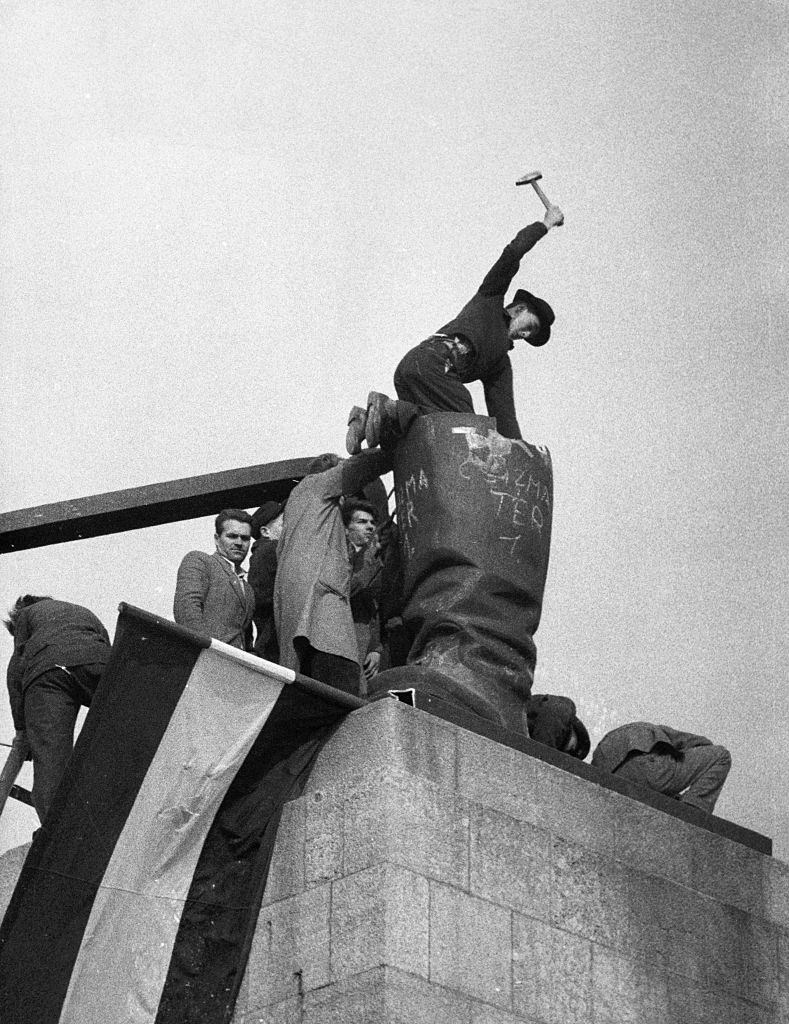
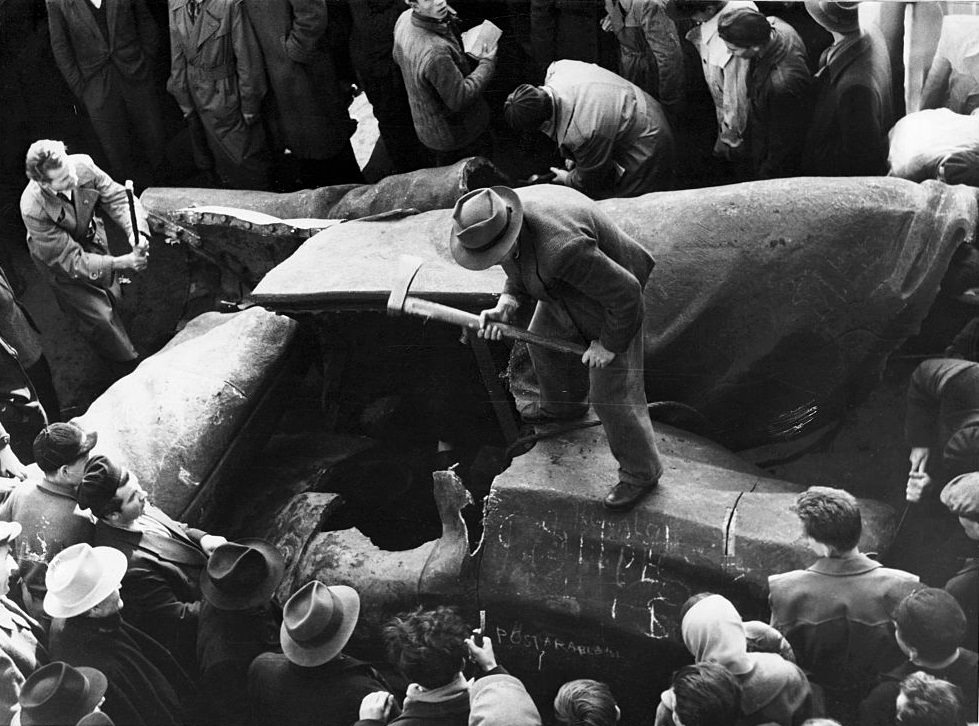
Revolutionaries breaking up a Statue of Stalin.
Giant statue of Stalin is chopped to pieces - near the National Theatre Budapest, 1956.
Giant statue of Stalin is chopped to pieces – near the National Theatre Budapest, 1956.
Protestors putting Hungarian flag in what remained of Stalin's boots, and the head fell to the ground in Gyor, Hungary on October 23, 1956
Protestors putting Hungarian flag in what remained of Stalin’s boots, and the head fell to the ground in Gyor, Hungary on October 23, 1956

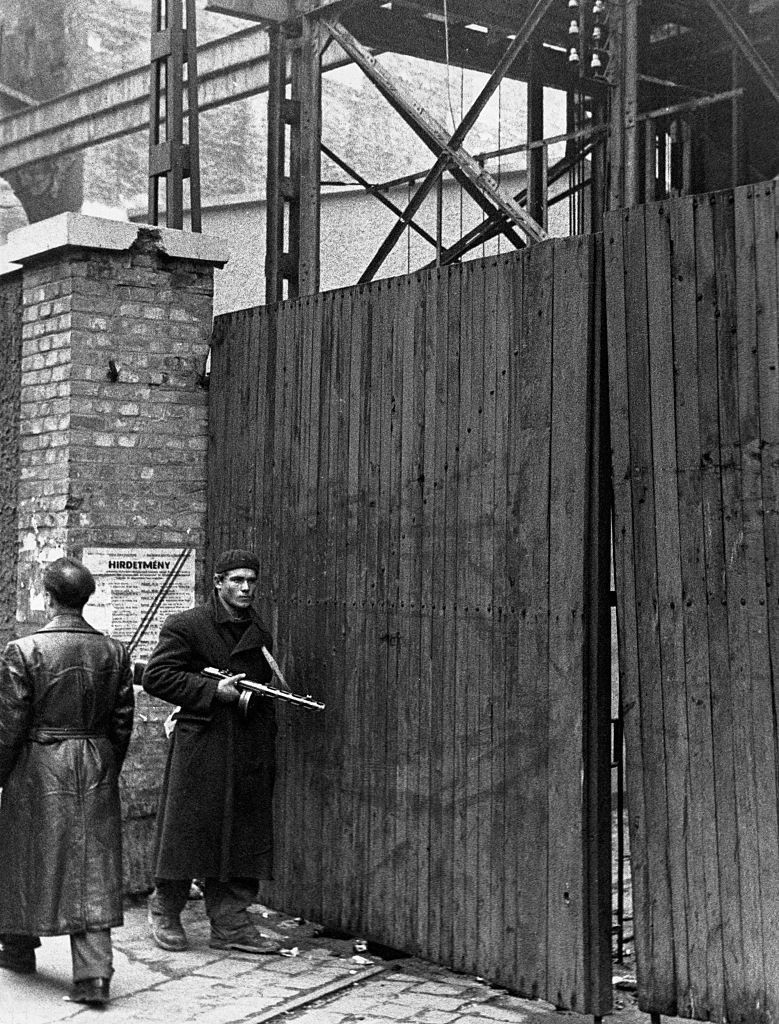
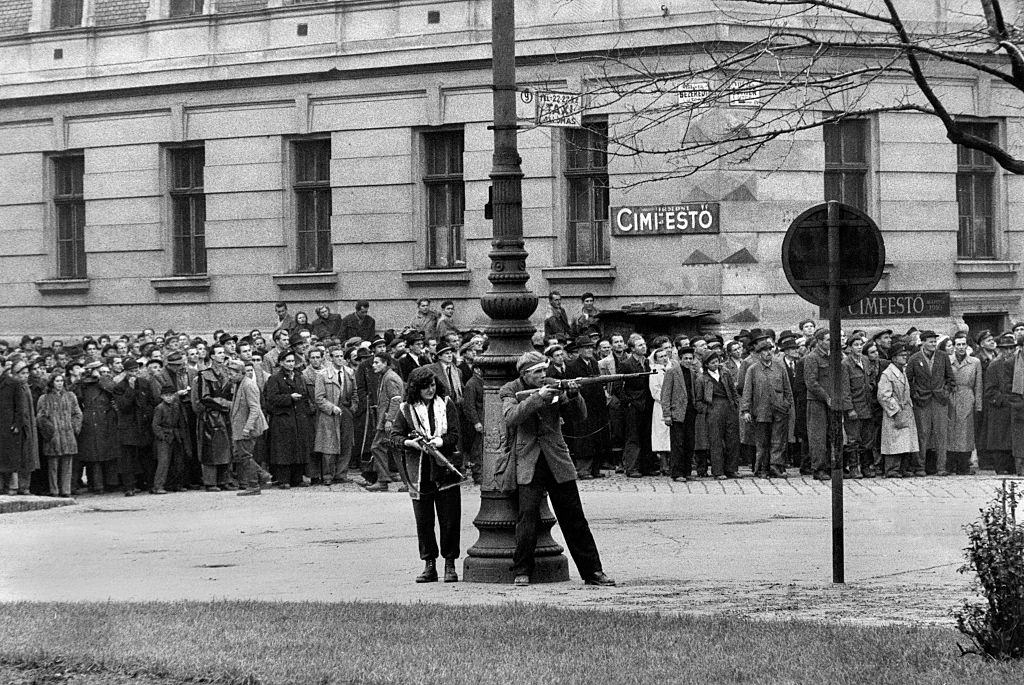
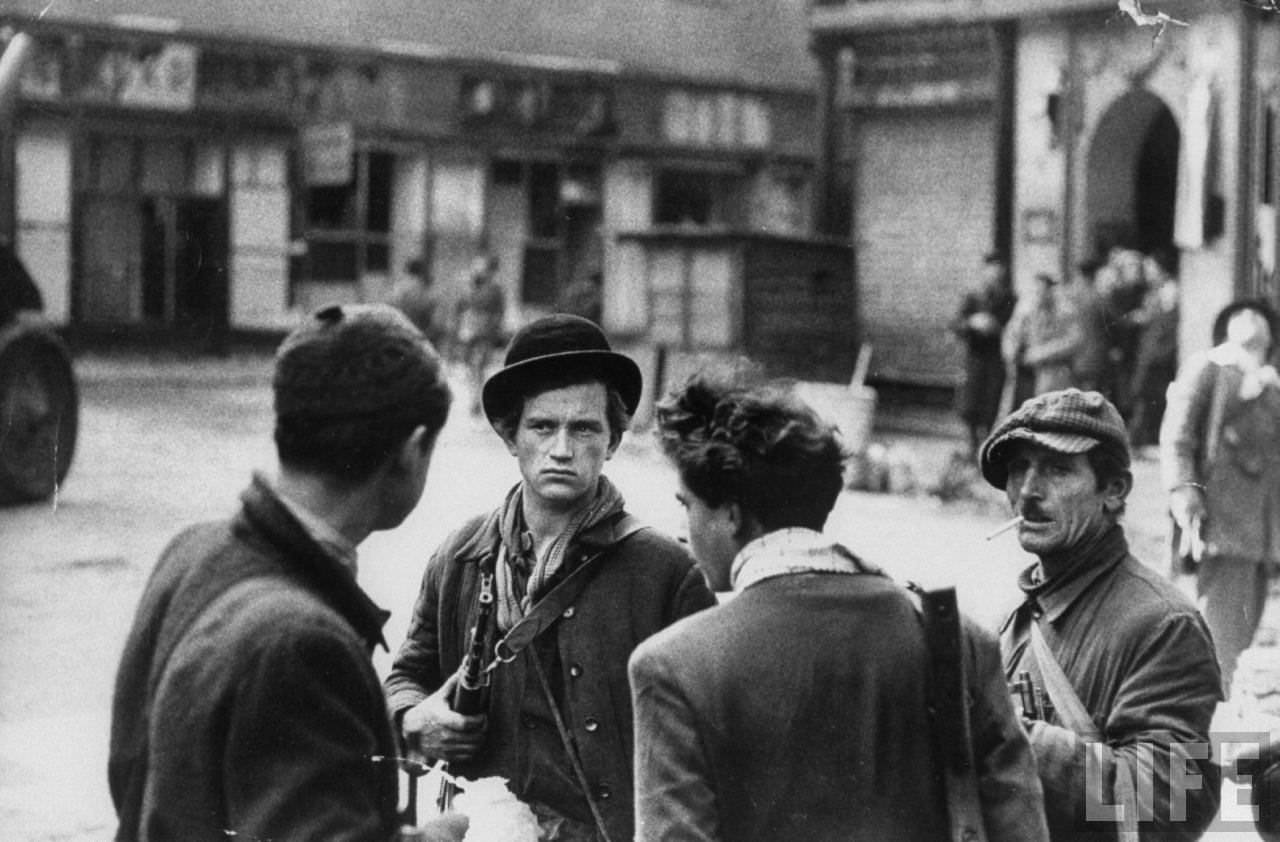
The fighting drew in people from all walks of life. Young men and women, factory workers, and even children took up weapons. The rebels were not a professional army — they were civilians who armed themselves with whatever they could find, including captured tanks and military equipment.
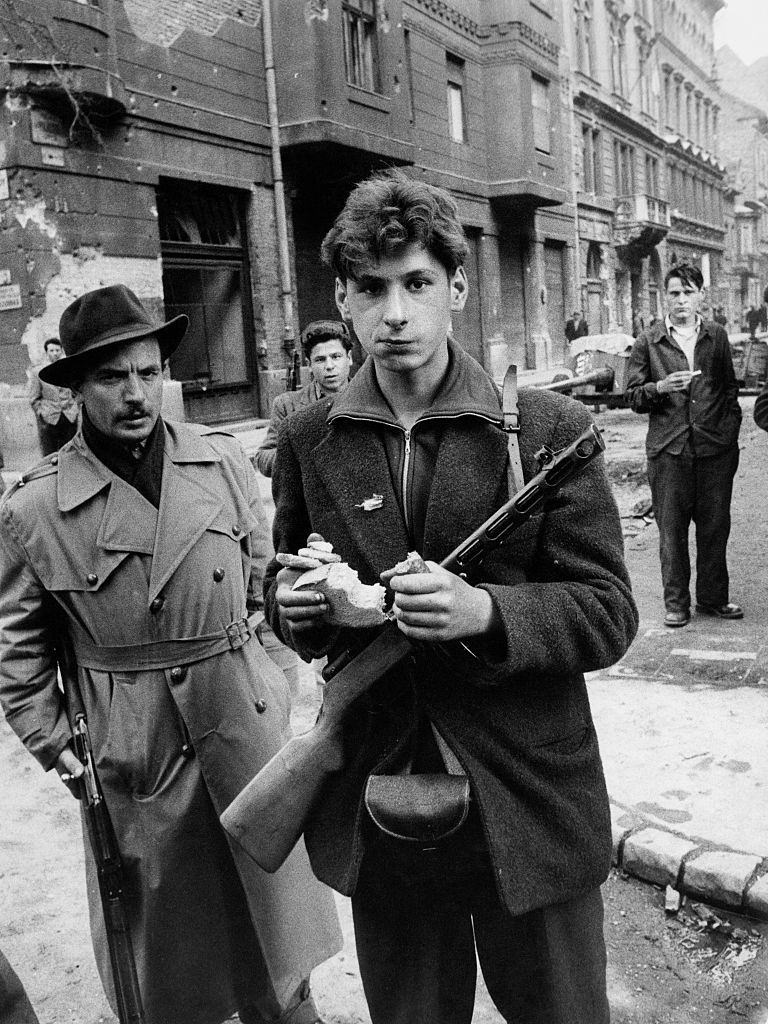
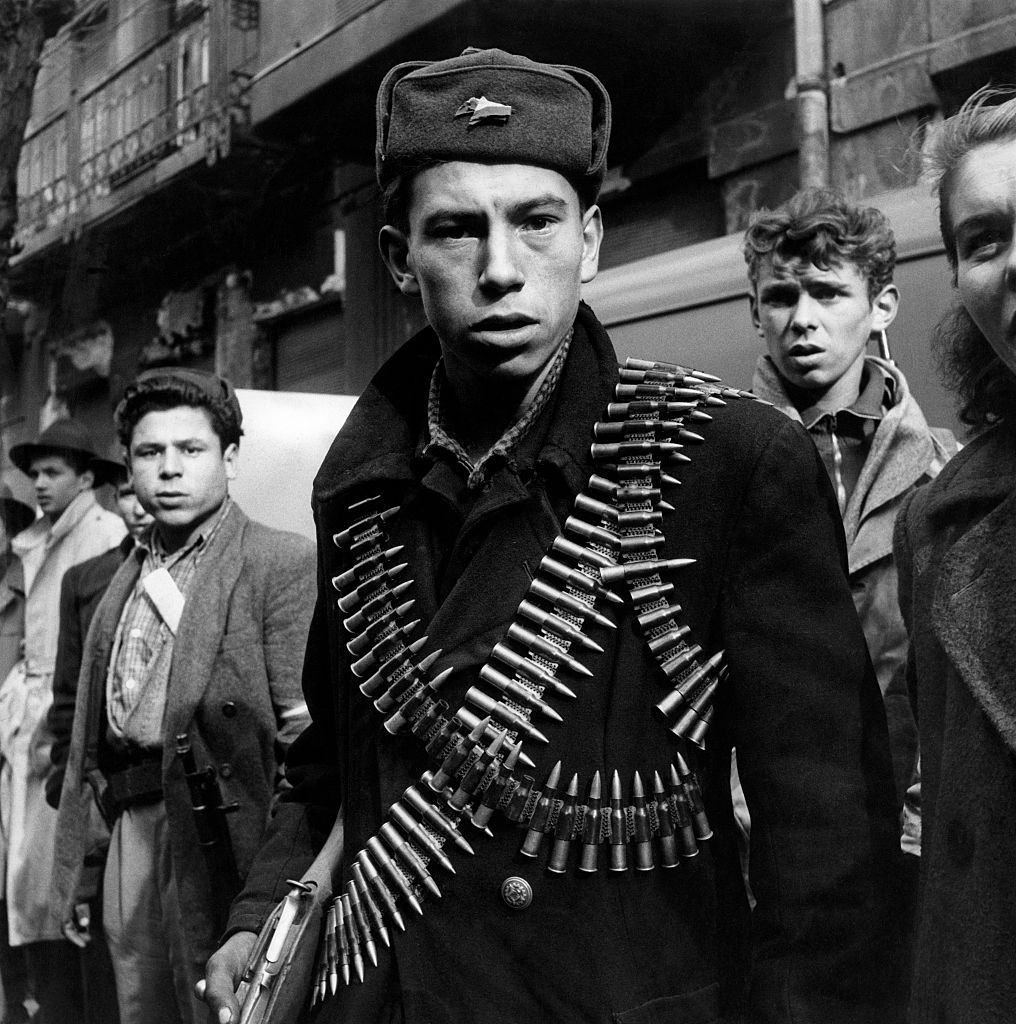
A young insurgent  during the revolt of the Hungarian people against the Soviet tyranny. Budapest, November 1956
A young insurgent during the revolt of the Hungarian people against the Soviet tyranny. Budapest, November 1956
A young rebel with two cartridge belts loaded with bullets taking part in the Hungarian Revolution of 1956.
A female Hungarian resistance fighter during the Hungarian Revolution of 1956.

Insurgent-controlled tanks patrolled the streets, guarding key locations. One tank played a notable role in escorting Cardinal József Mindszenty — who had been imprisoned by the communist regime — from his place of detention to the archbishop’s palace during the revolt.
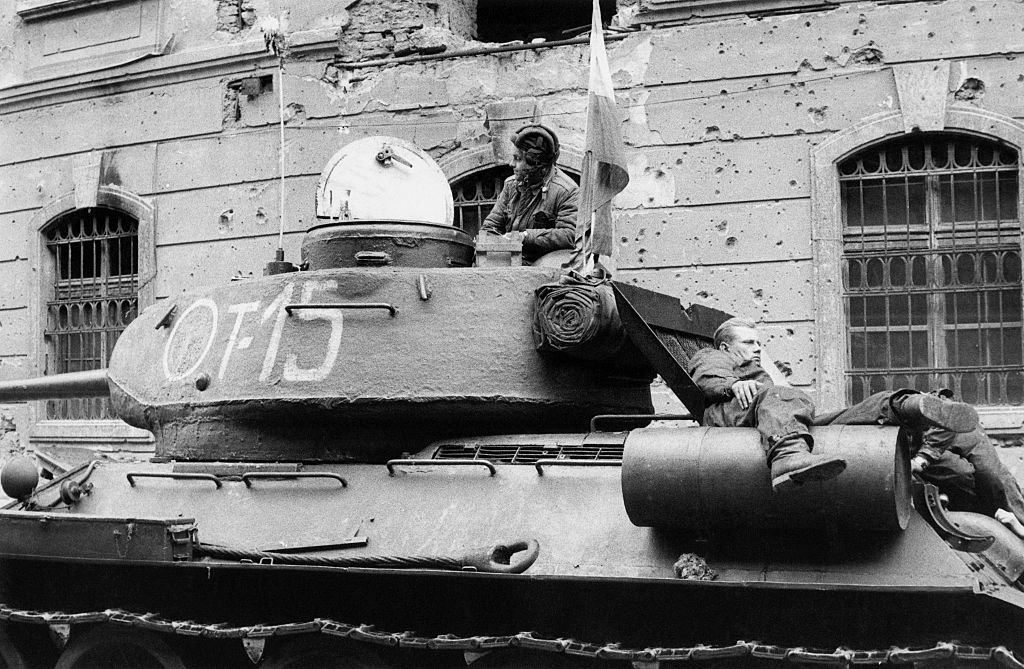
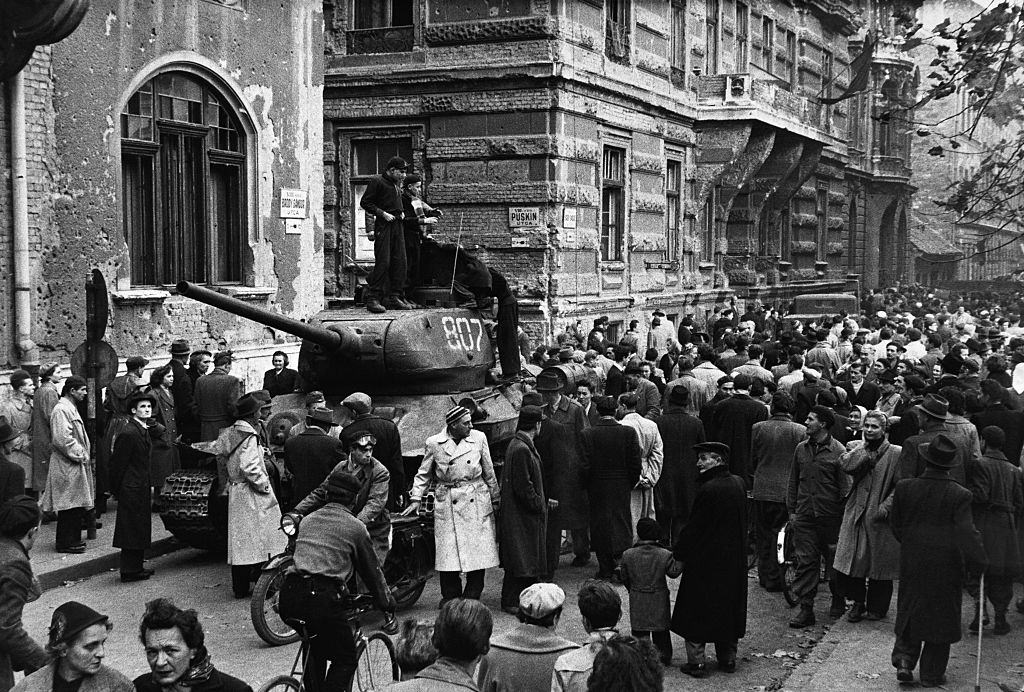
Tank of the Hungarian insurgents.
Crowds surround a captured Russian tank during the anti-Communist revolution in Hungary.

As the fighting consumed the capital, workers seized control of factories and city districts from Communist Party officials. They formed workers’ councils and demanded political change. Russian flags were torn down and burned in the streets. The speed of the collapse shocked even the rebels themselves.
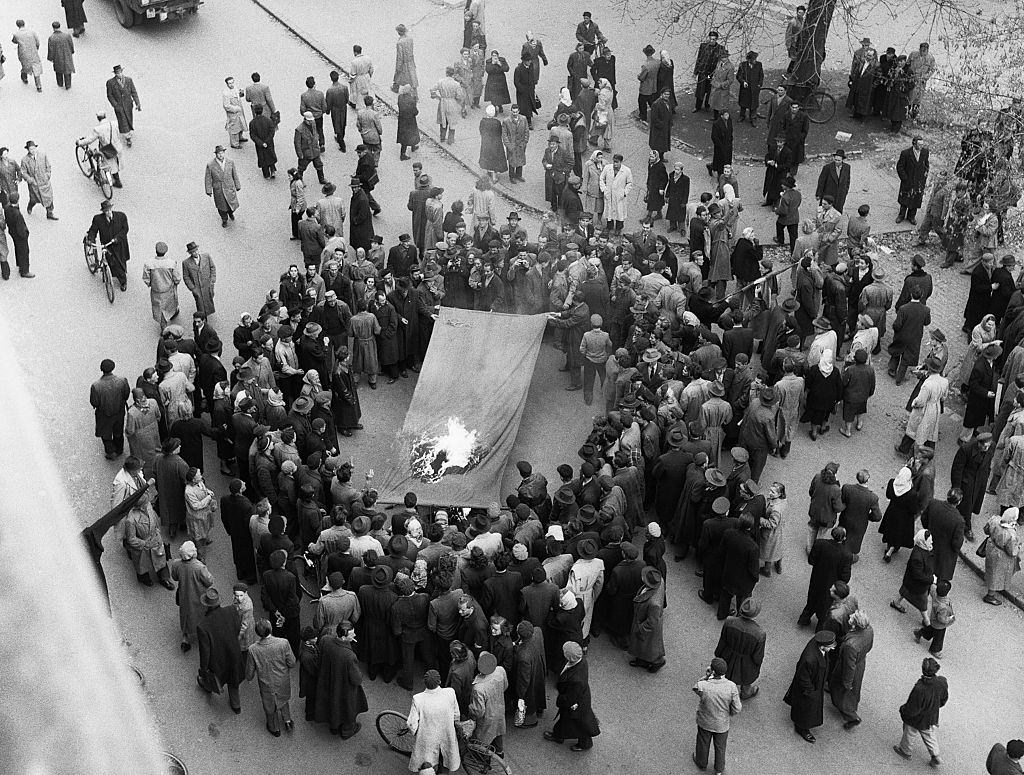
Hungarian Revolutionaries burning Russian Flag, 1956.
A worker keeps guard outside a striking factory during the 1956 anti communist revolution in Hungary.

The Hungarian government collapsed under the pressure. Imre Nagy, a reform-minded communist, was placed at the head of a new government. He made a series of stunning announcements: the ÁVH would be dissolved, Hungary would withdraw from the Warsaw Pact, and free elections would be restored. By the end of October, active fighting had largely died down. For a brief moment, it seemed Hungary had won.
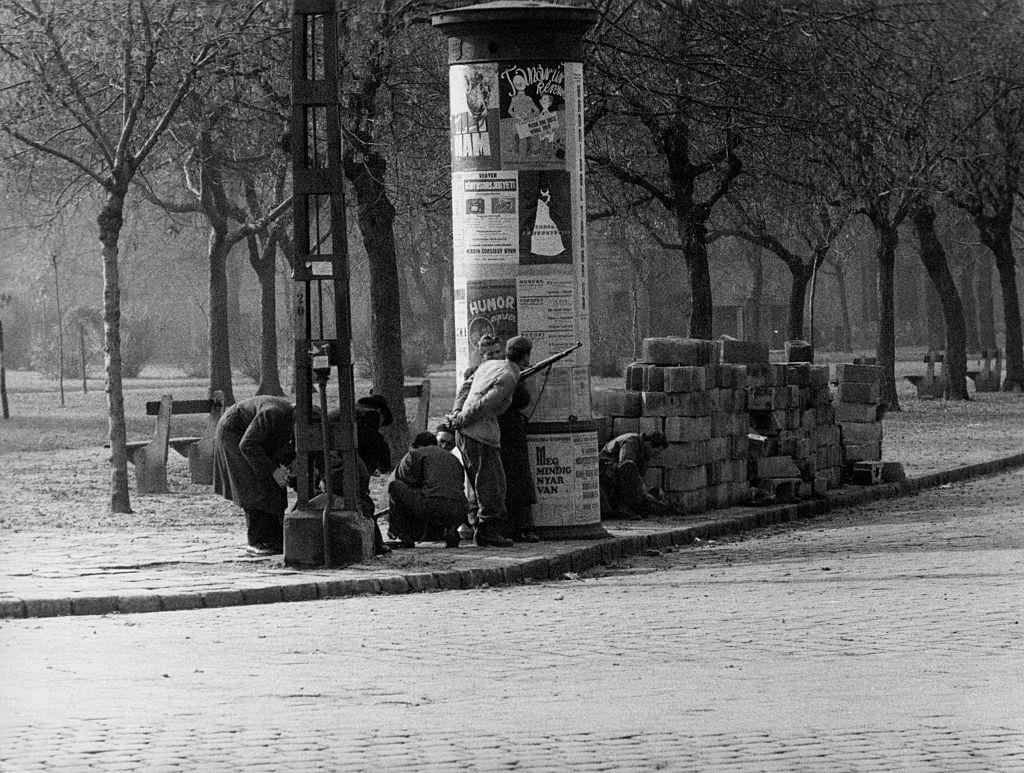
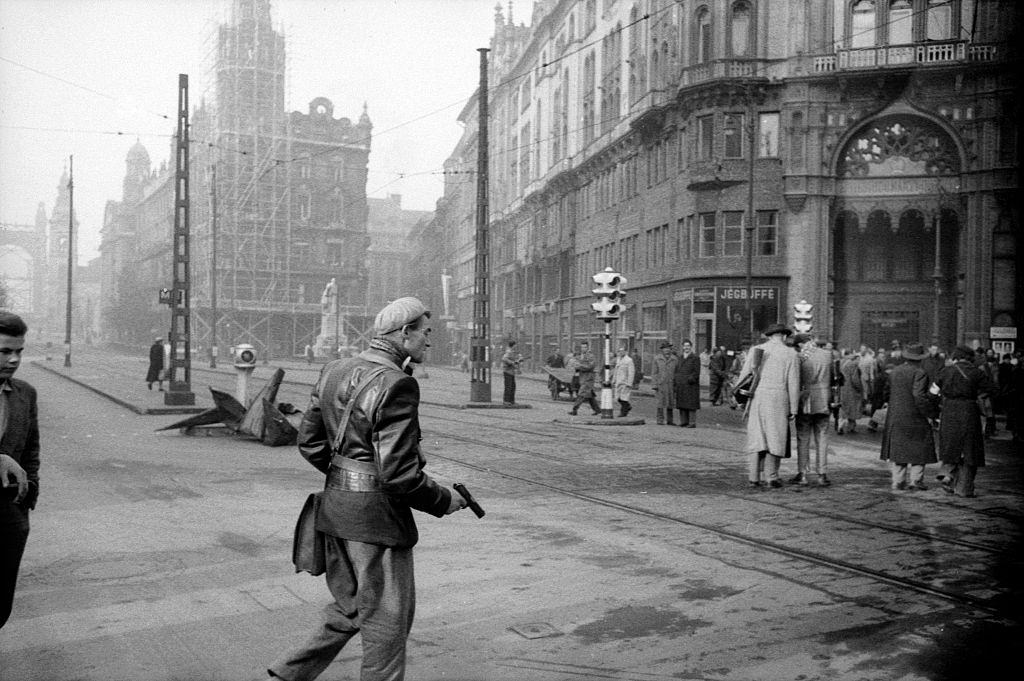
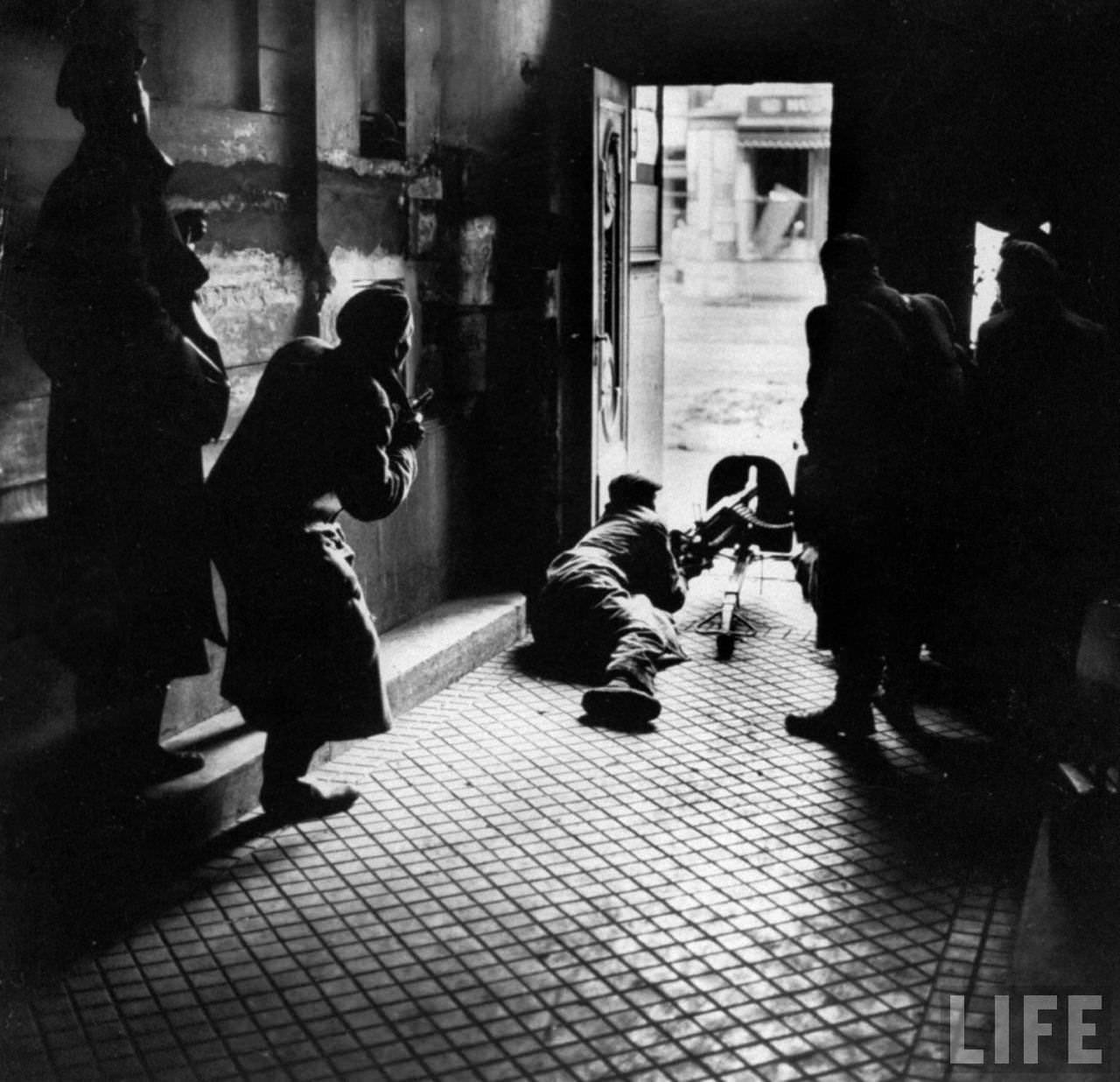
Men lying in wait at a street corner during the revolt of the Hungarian people against the Soviet tyranny. Budapest, November 1956
Rebels and citizens in the streets of the city. Budapest, 29th October 1956.

That moment did not last. The Soviet leadership in Moscow had initially appeared to consider negotiating, but as the scope of Hungary’s demands became clear — particularly the intention to leave the Warsaw Pact — they made the decision to crush the revolution by force. Soviet tanks and troops massed on the borders.
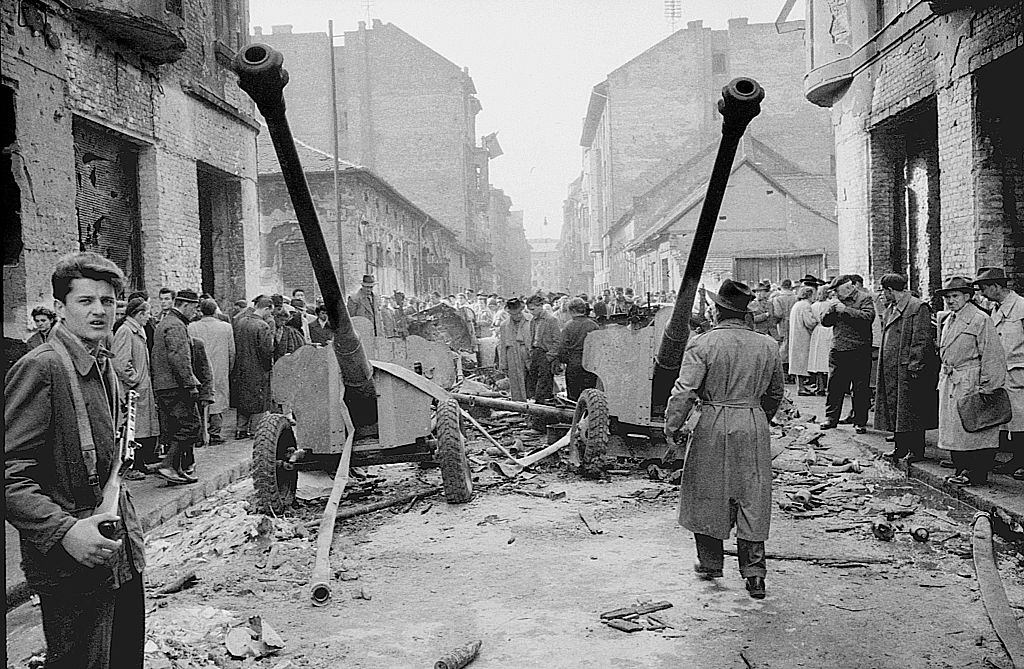
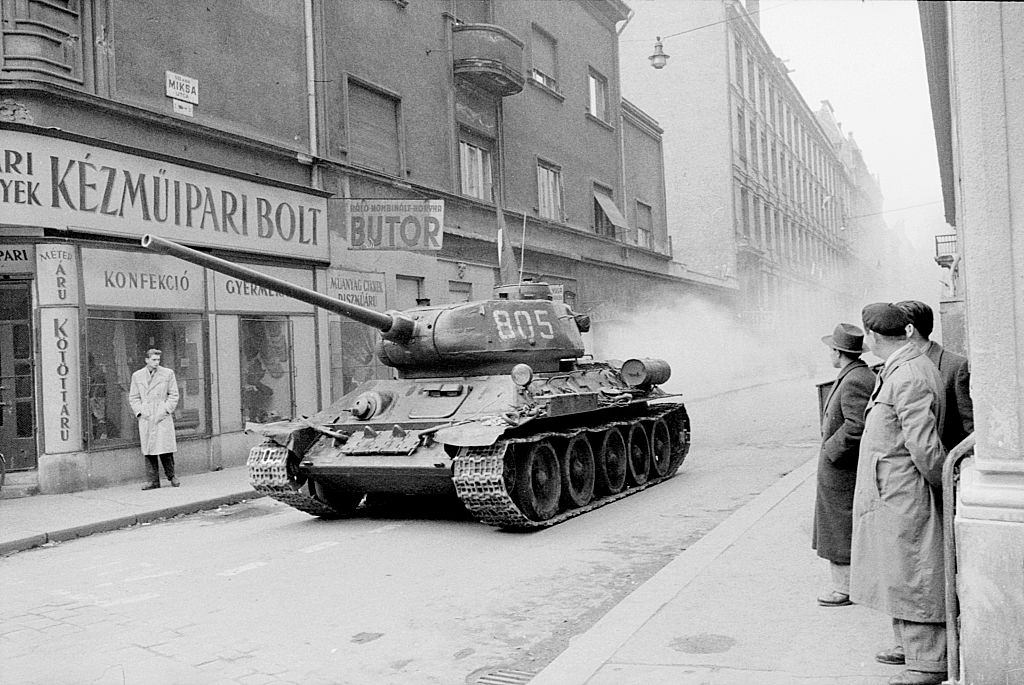
Rebels and mortars on the street during the riots. Budapest, October 29, 1956.
Tank on the street during the riots. Budapest, October 29, 1956.

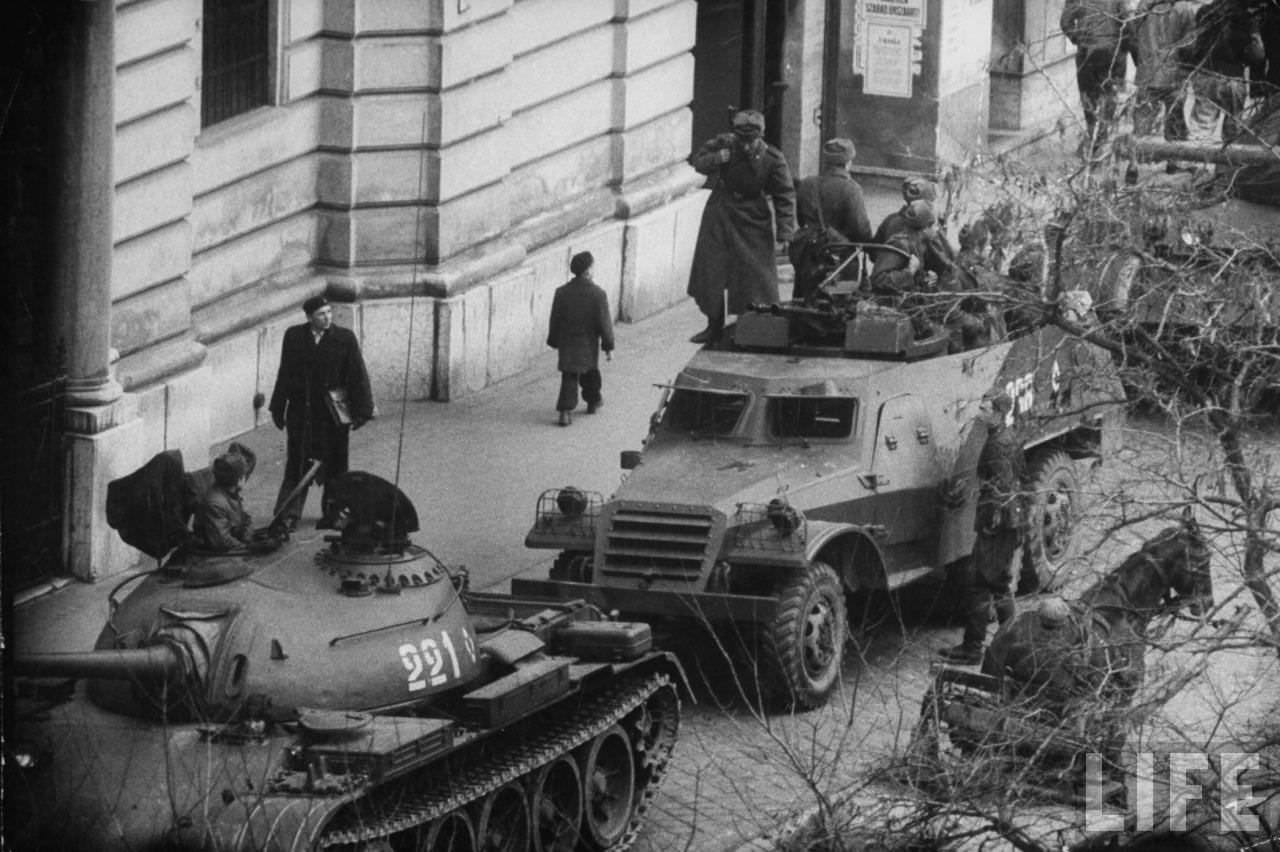
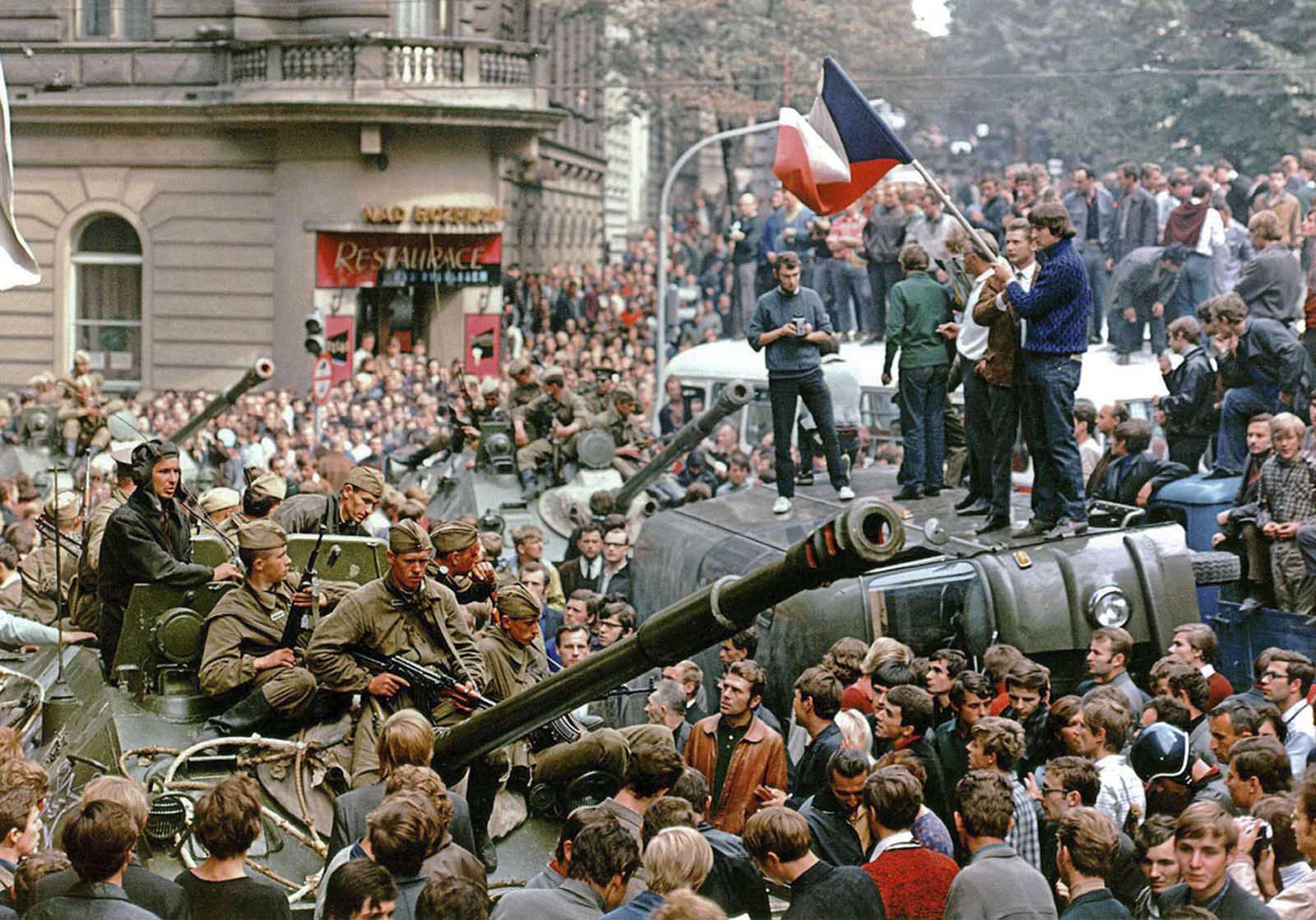
On November 4, 1956, the Soviet military launched a full-scale invasion of Hungary. Hundreds of tanks rolled into Budapest and other cities. The assault was called Operation Whirlwind. The rebels, armed with small weapons and improvised explosives, fought back from street corners, doorways, and bombed-out buildings. The unequal battle lasted until November 10.
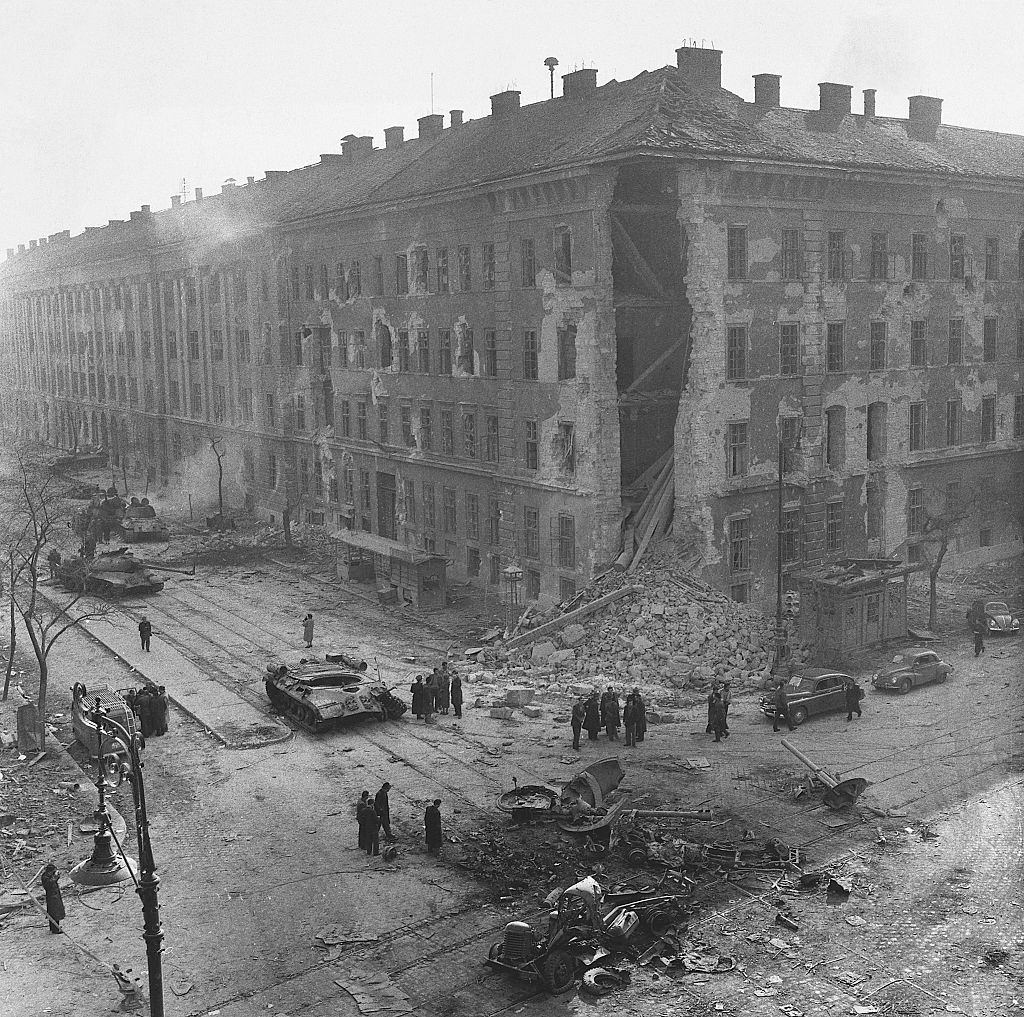
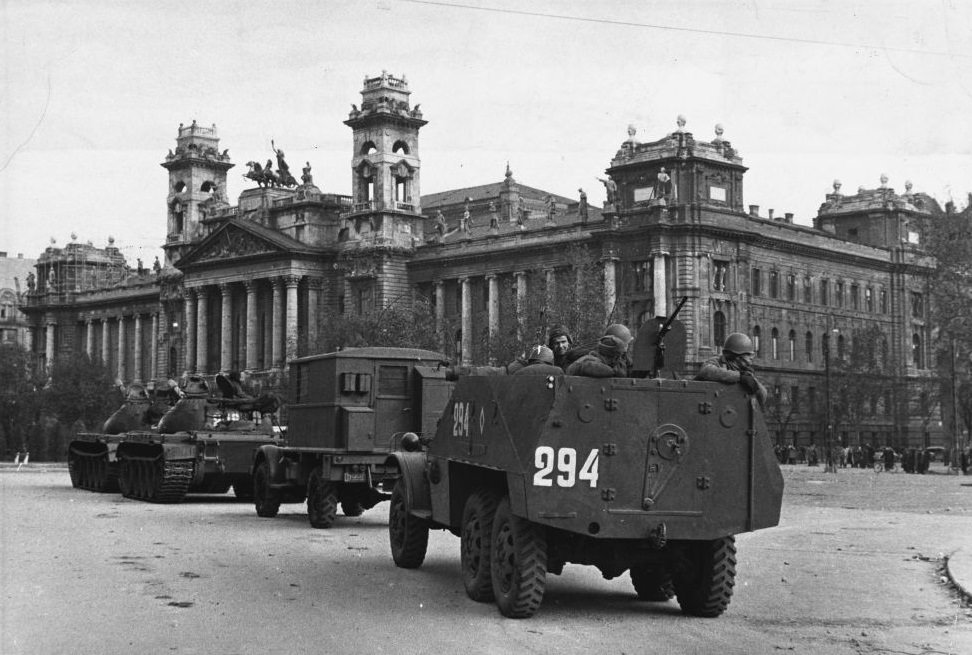
Russian tanks in front of the Kilian Barracks after the invasion of Hungary by Russian troops to suppress the anti-Communist revolution.
Soviet tanks surround the Parliament Building in Budapest during the repression of the anti-Communist revolution.
Russian tanks in Budapest following an attempted revolution by Hungarians against Soviet-backed regime.

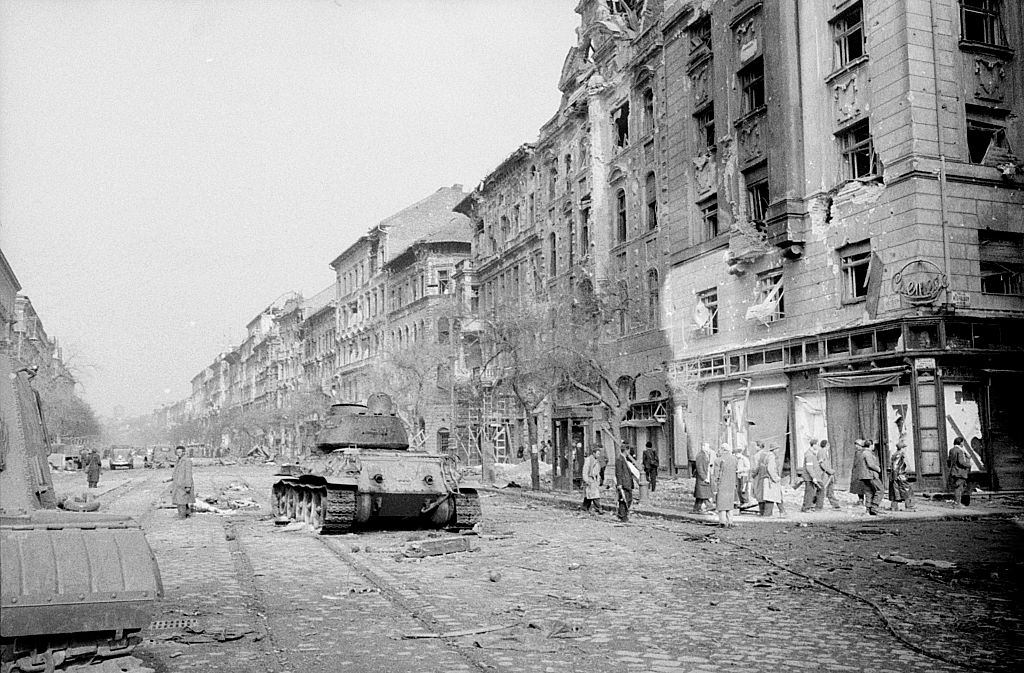
The destruction left behind was enormous. Buildings were gutted, vehicles burned out, and streets littered with rubble and bodies. The Kilian Barracks, which had been a major stronghold for Hungarian fighters, was left in ruins. Civilians picked through the wreckage in the days that followed.
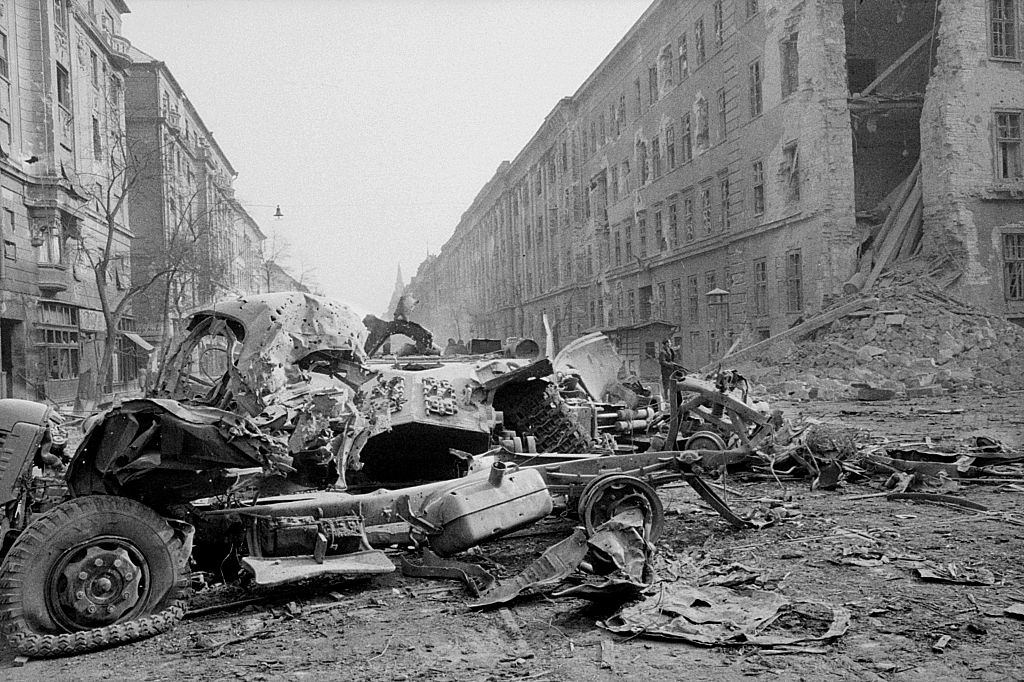
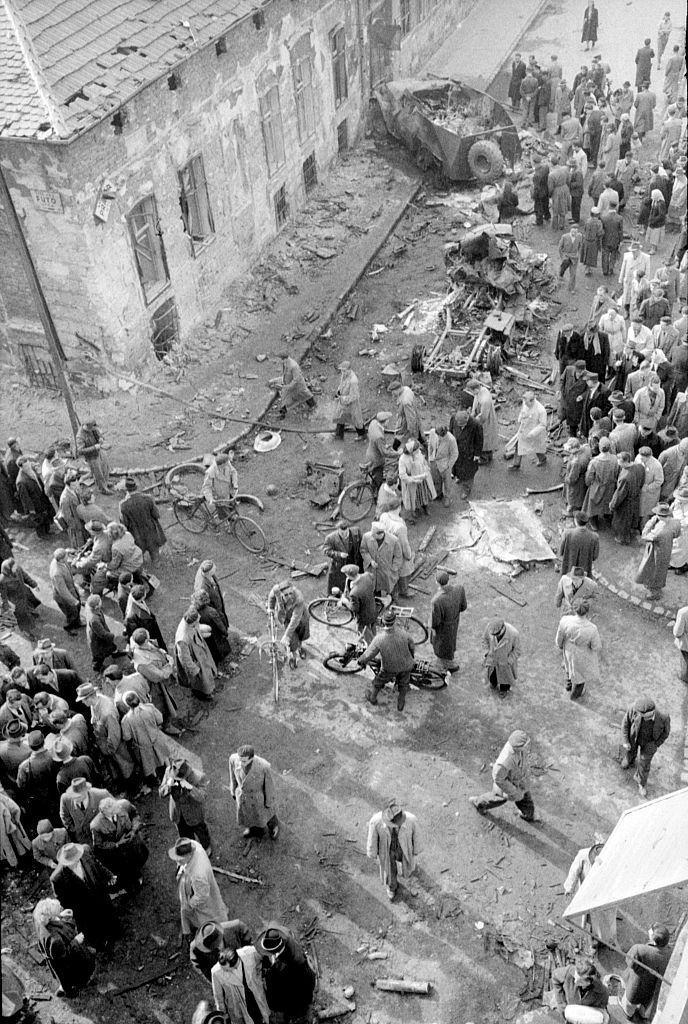
Destroyed vehicles and ruins near the Kilian barracks. Budapest, 29th October 1956.
The crowd looking at the ruins after the uprising that took place in the streets of the city.
A panzer standing in a street of the capital destroyed by the fights.

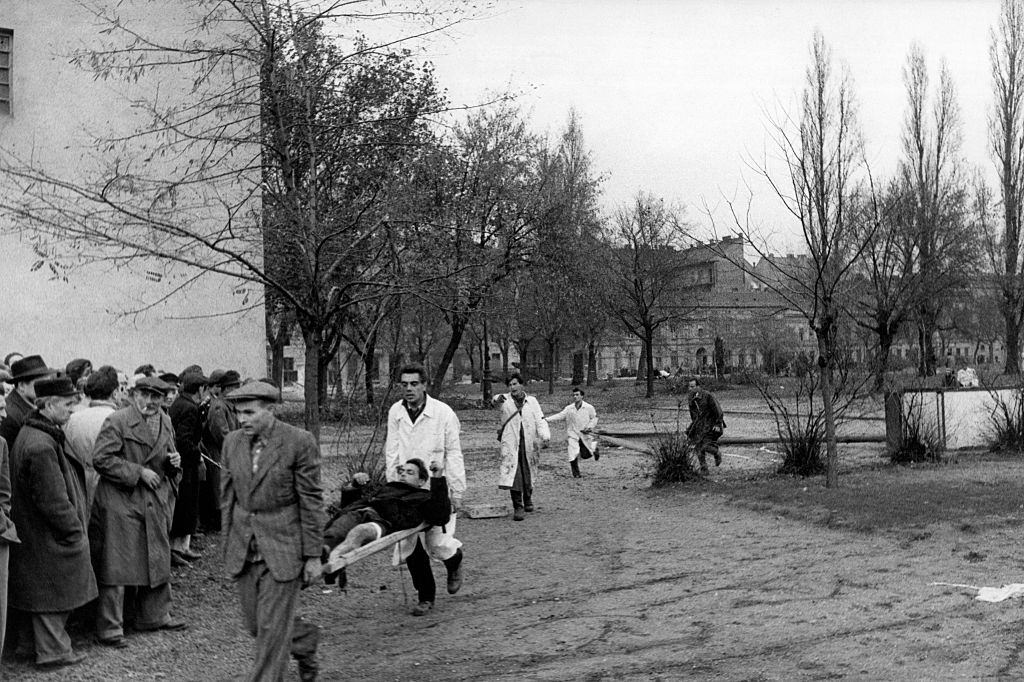
When the fighting ended, more than 2,500 Hungarians and approximately 700 Soviet troops were dead. Thousands more were wounded. Soviet forces and the new Soviet-backed government arrested thousands of people across the country. Rebellion leaders were taken into custody. By January 1957, all organized public opposition had been suppressed.
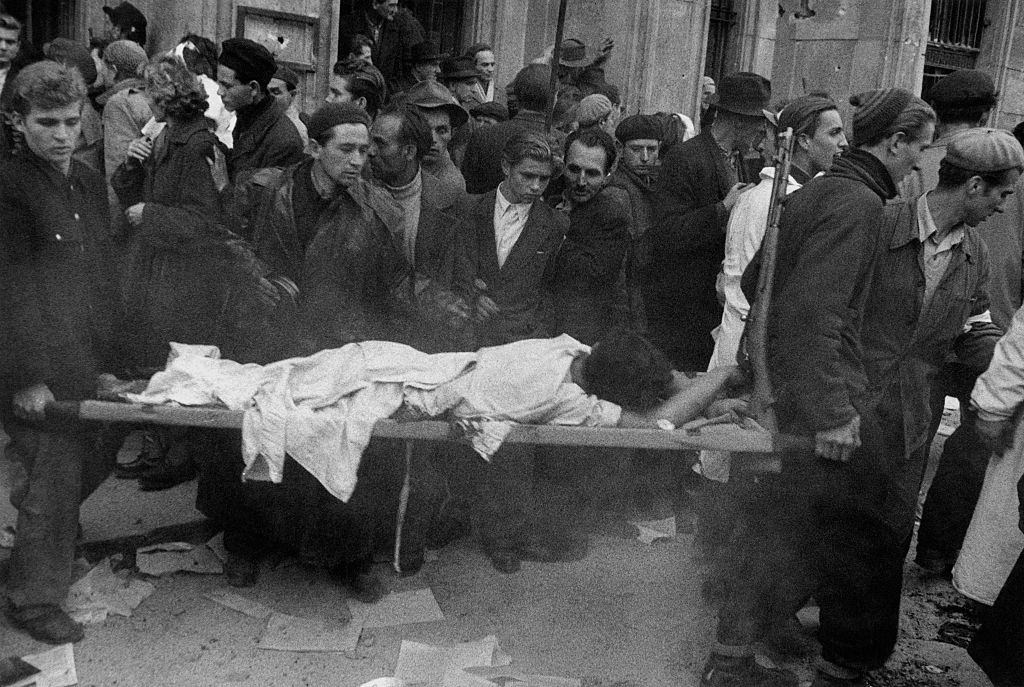
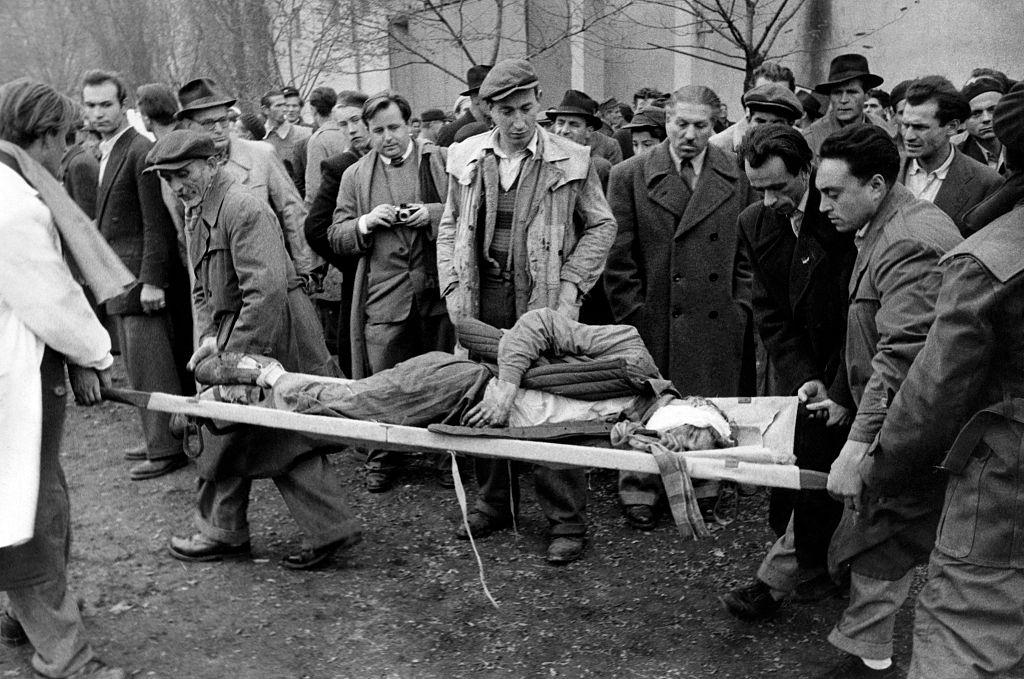
An Hungarian insurgent wounded in the battle for the headquarters of the Communist Party is carried on a stretcher during the revolt. Budapest, November 1956
A patriot, wounded during the battle for the headquarters of the Communist Party, is transported on a stretcher to the improvised aid stations. Budapest, November 1956
A wounded man is led to safety during the revolt.  Budapest, November 1956
A wounded man is led to safety during the revolt. Budapest, November 1956

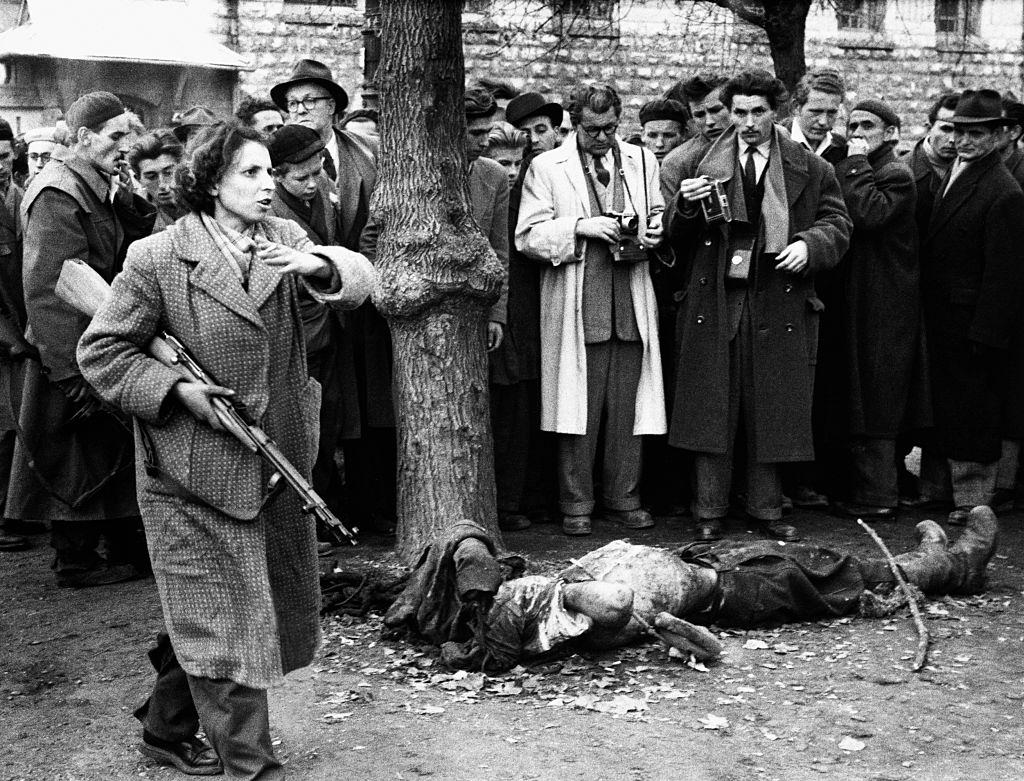
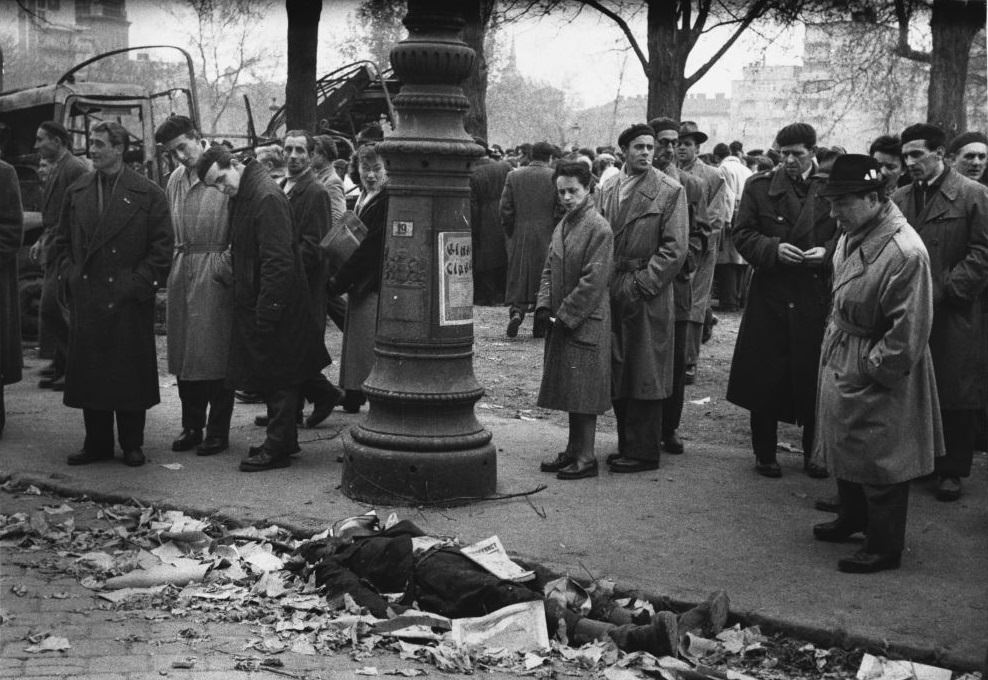
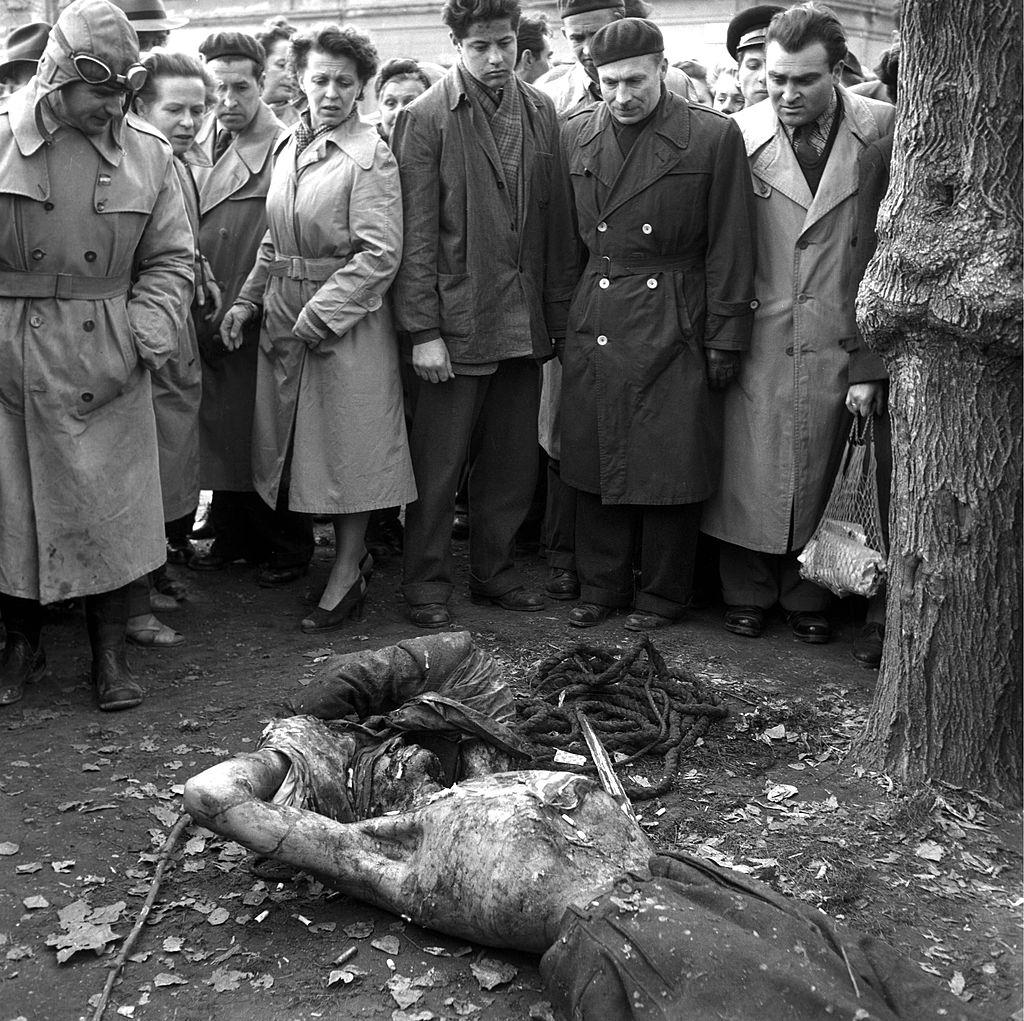
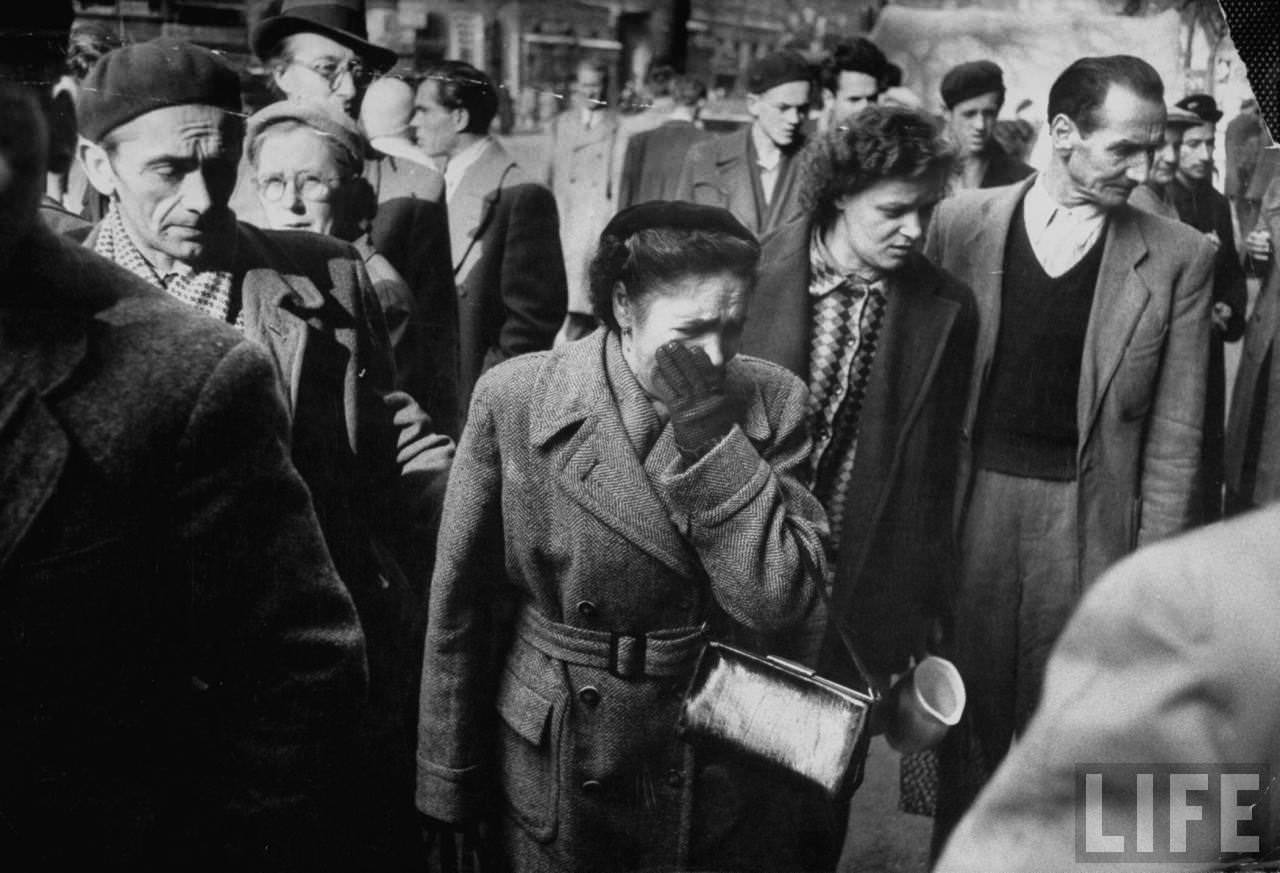
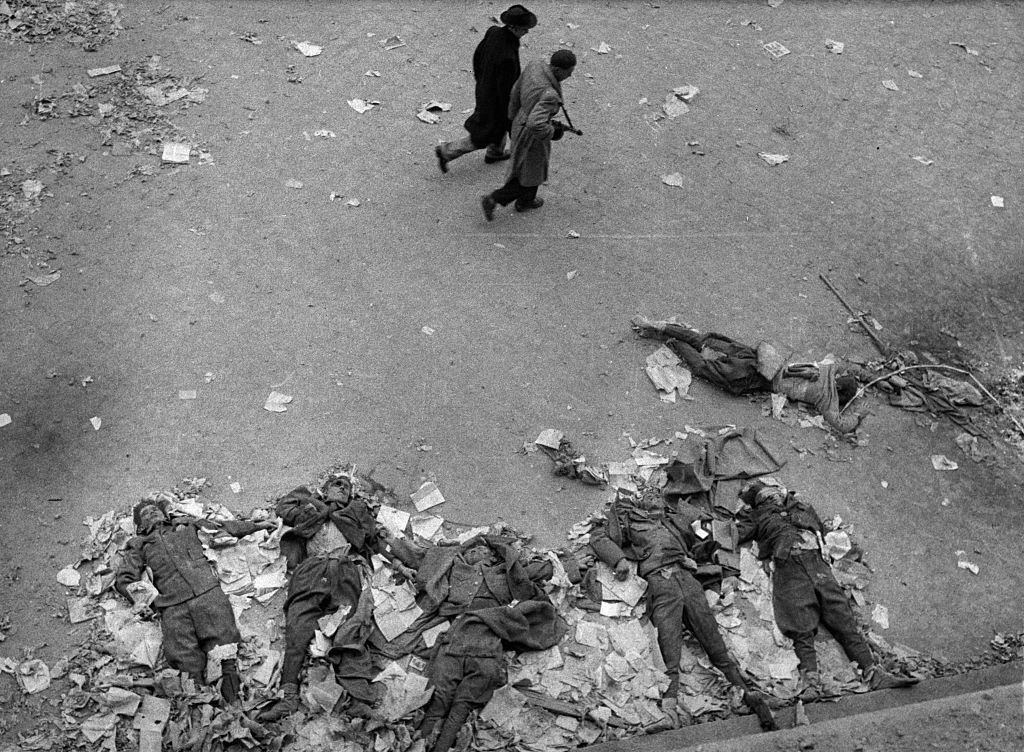
The human cost extended far beyond those killed in battle. Bodies lay in the streets of Budapest for days. Crowds gathered around the fallen, stunned by the scale of the defeat.
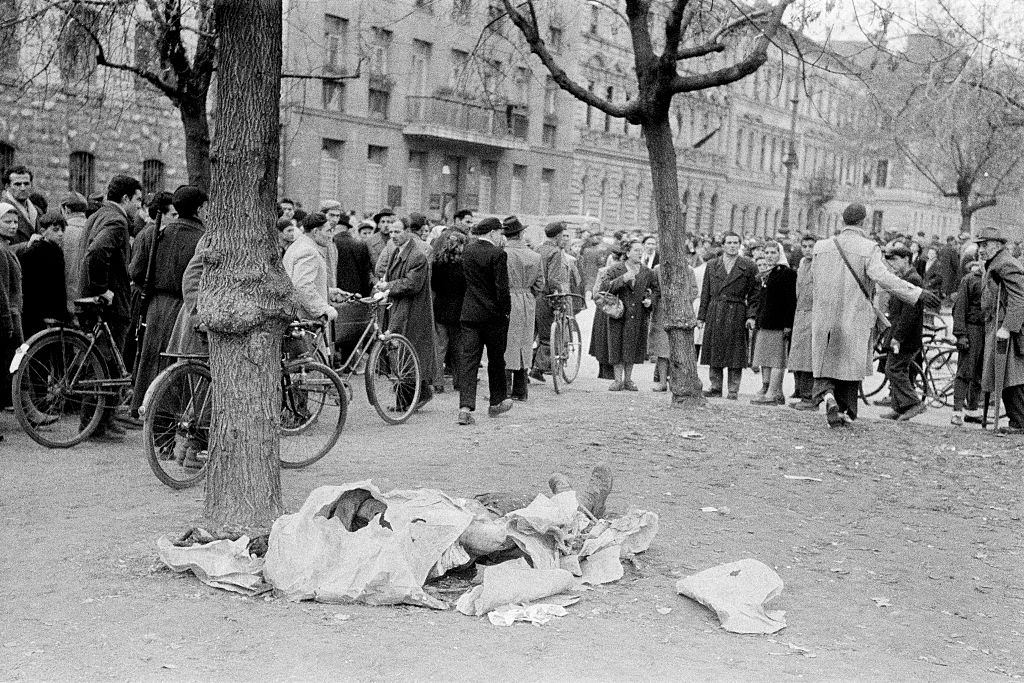
People gathered around a deceased body in Budapest, 1956
Two Hungarian soldiers walk past the deceased bodies of Soviet secret police during the anti-Communist revolution.
Hungarians stare at the remains of a man from the secret police, the A.V.H. during the 1956 revolution.
People looking at the deceased body, 1956.

Imre Nagy, the prime minister who had led the reform government, sought asylum at the Yugoslav Embassy in Budapest after the Soviet invasion. He was lured out of the embassy under a promise of safe passage, then immediately arrested by Soviet and Hungarian authorities. Two years later, in 1958, he was tried in secret and executed.
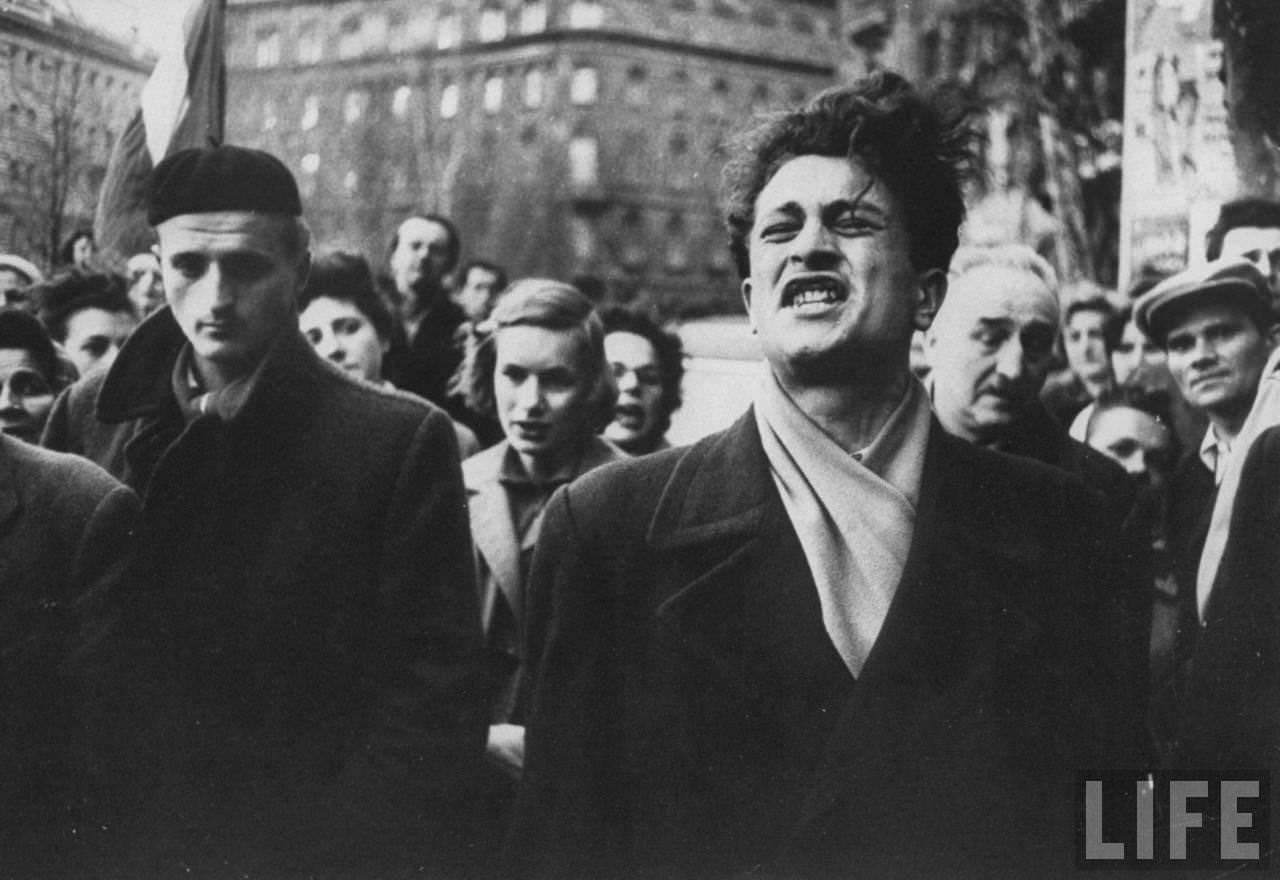
Revolt of the Hungarian people against the Soviet tyranny. Budapest, November 1956
Hungarian man singing patriotic song as Soviet tanks move into Budapest during Hungarian revolution.

Even as the Soviet tanks rolled through the streets, some Hungarians continued to resist. Women blocked roads and held back crowds from combat zones. Workers maintained strikes in factories. The defiance was stubborn, even when the outcome was no longer in question.
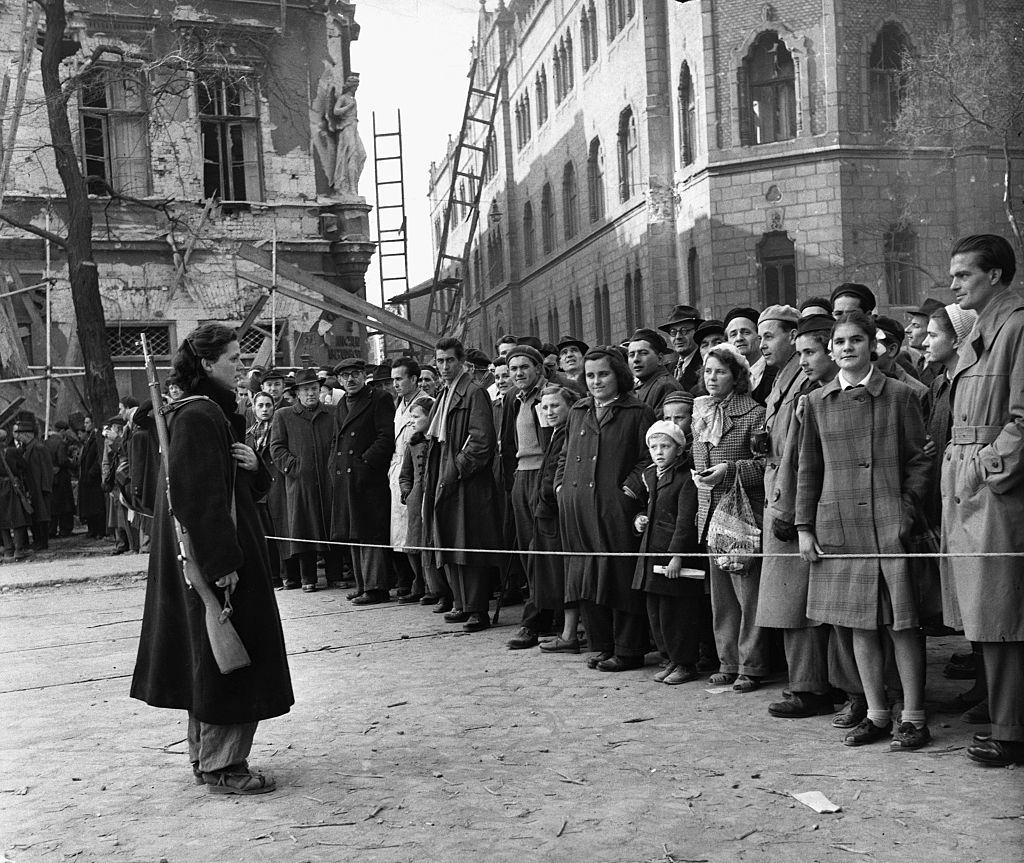
A woman patriot keeps back the crowds from the war zone.
Hungarian Freedom Fighters during revolution against Soviet backed communist government.
Hungarian patriot grimacing during revolution against Soviet-backed regime.
Hopeful Hungarian rebel demonstrators during revolution against Soviet-backed regime.
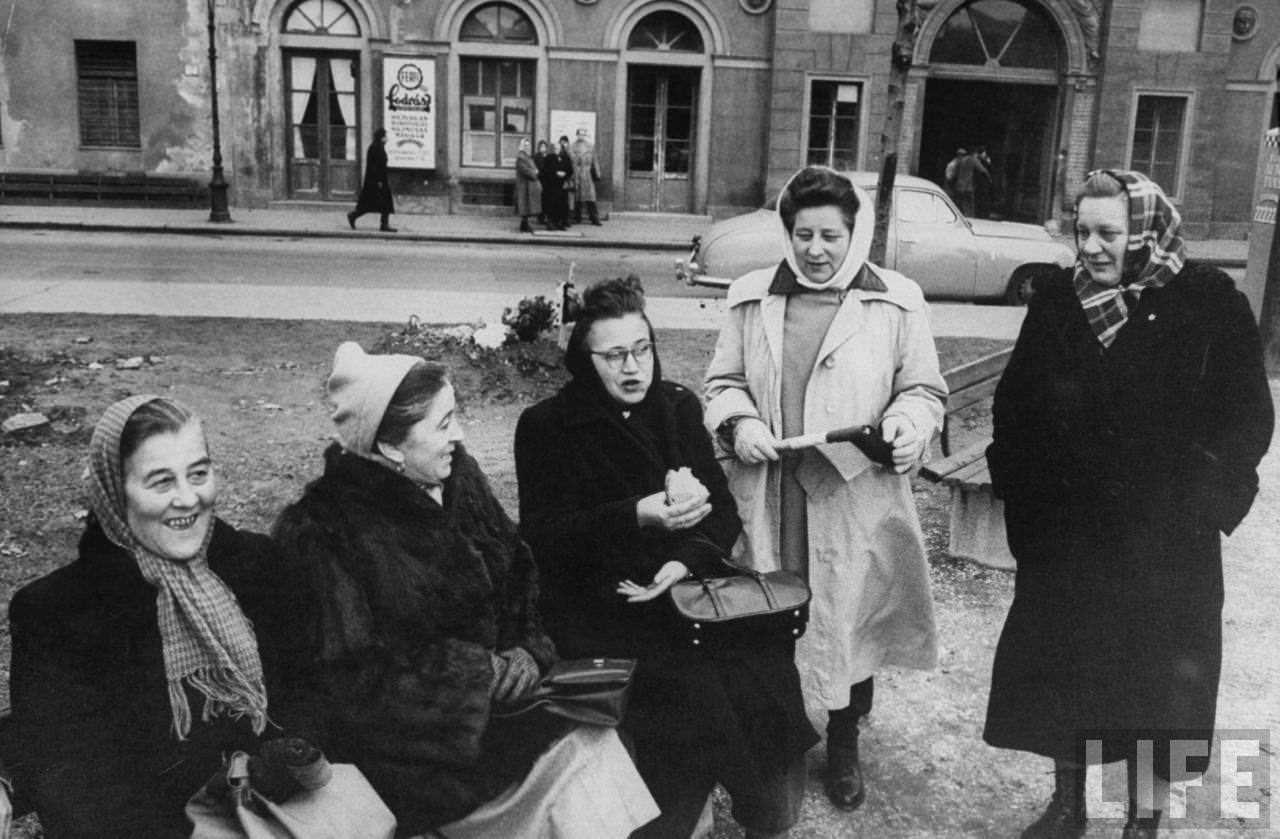
Hungarian women during the revolution.
Hungarian Freedom Fighters during revolution against Soviet-backed regime.
Budapest rebel demonstrators, during revolution against Soviet-backed Hungarian regime.
Hungarian Freedom Fighters during revolution against Soviet-backed regime.
Hungarian Freedom Fighters gathered in the streets during revolution against Soviet-backed regime.
Hungarian Freedom Fighters during revolution against Soviet-backed regime.

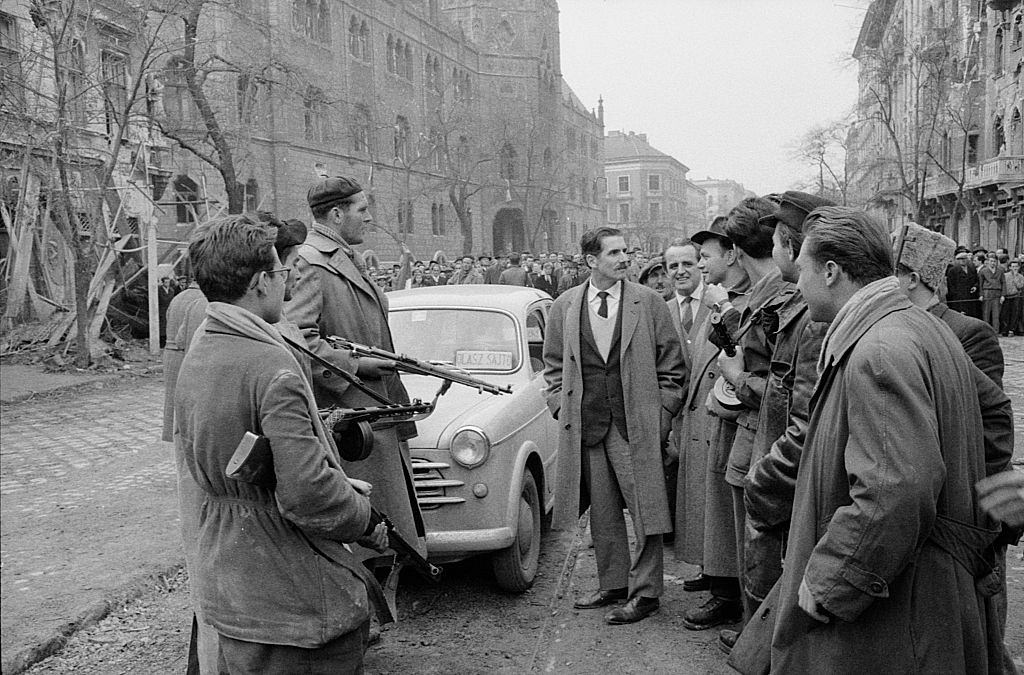
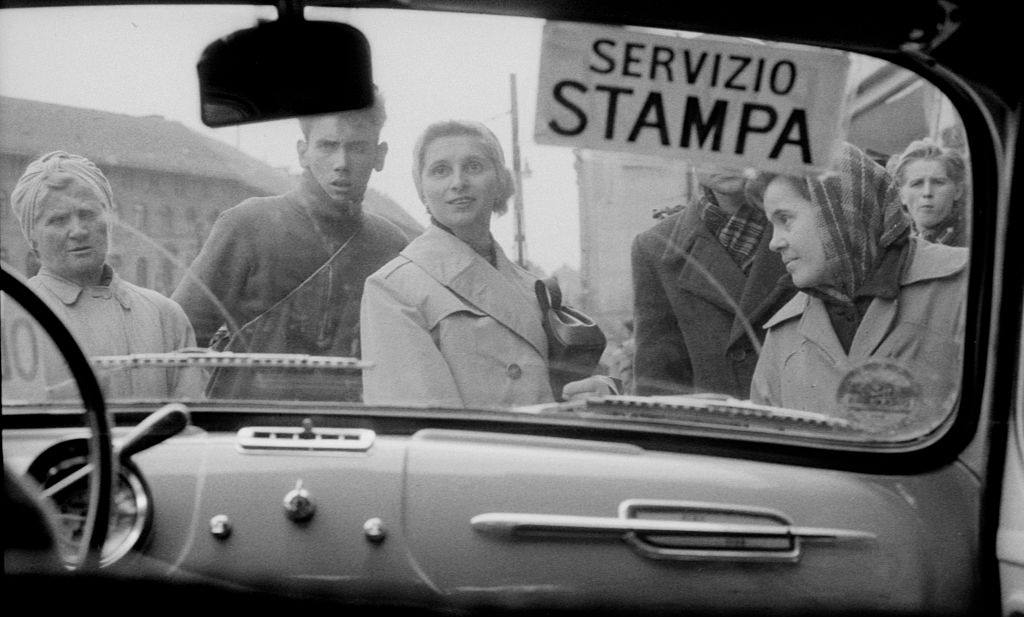
The international press documented the uprising closely. Photojournalists from across Europe rushed to Budapest to capture what was happening. Italian journalist Massimo Mauri and photographer Mario De Biasi were among those who arrived in the city during the fighting, their car immediately surrounded by curious and suspicious rebels when they crossed into Budapest.
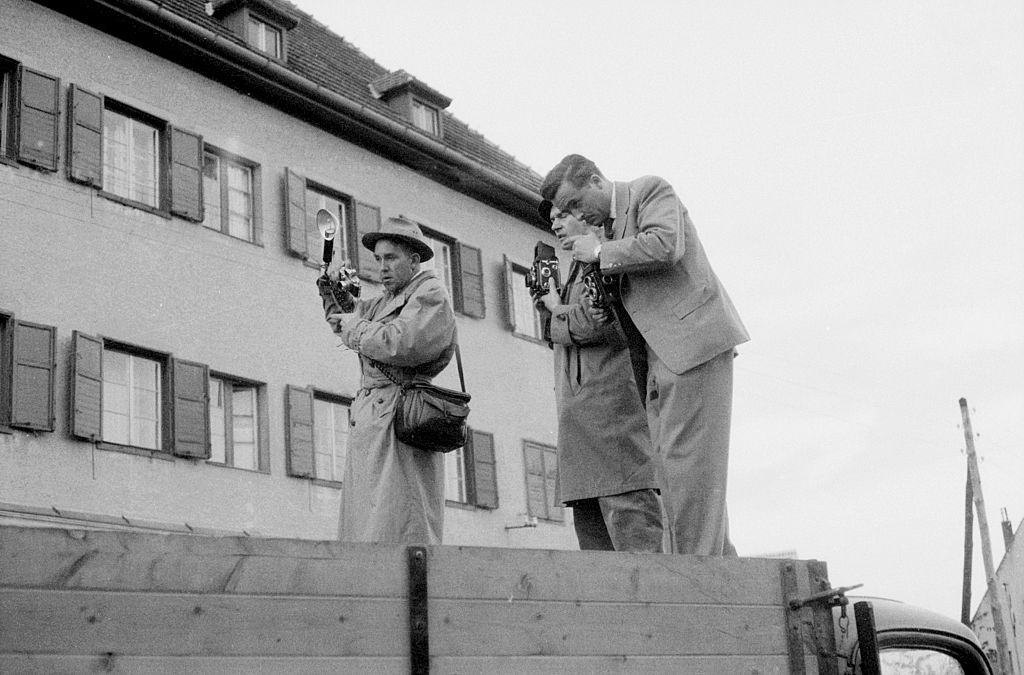
Three photographers on a van taking photos of the uprising. Budapest, 30th October 1956
The crowd peeks inside the car of the journalist Massimo Mauri and the photographer Mario De Biasi just arrived in the Hungarian city to document the uprising against Soviet regime.
The journalist Massimo Mauri meeting some rebels when arriving in the capital.

Outside Hungary, the revolution stirred strong reactions. Many Western Marxists were deeply troubled by the Soviet Union’s decision to send tanks against a working-class uprising. Communist parties in Western Europe and elsewhere saw significant splits and membership losses in the aftermath. The United States government, however, issued statements of sympathy but took no direct action to support the Hungarian rebels.
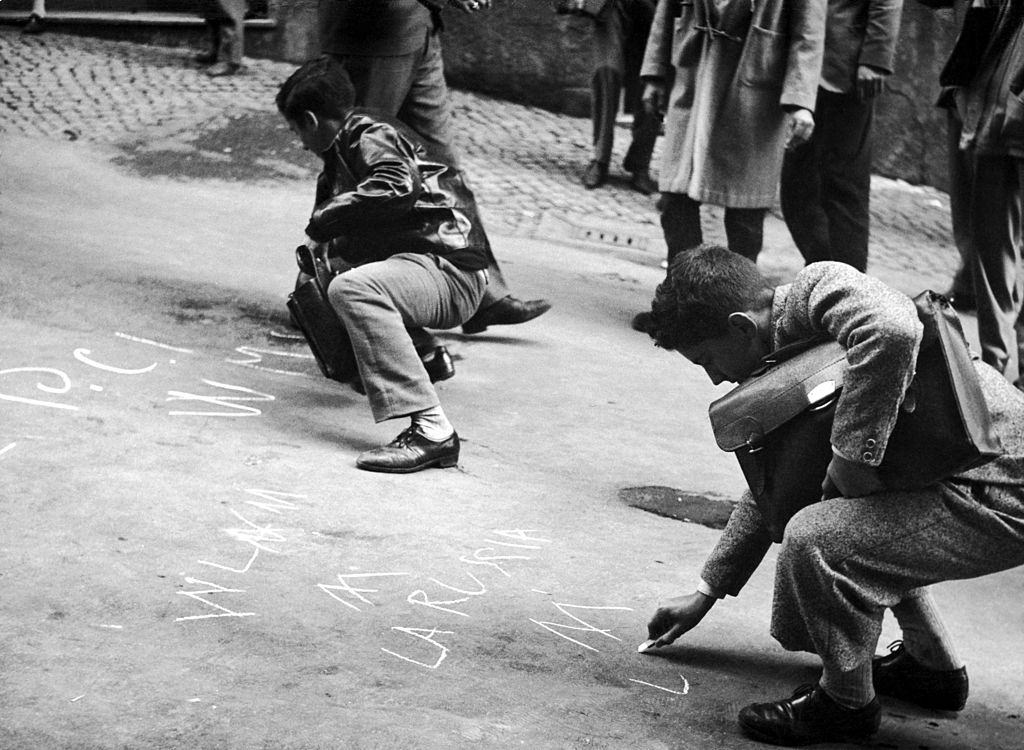
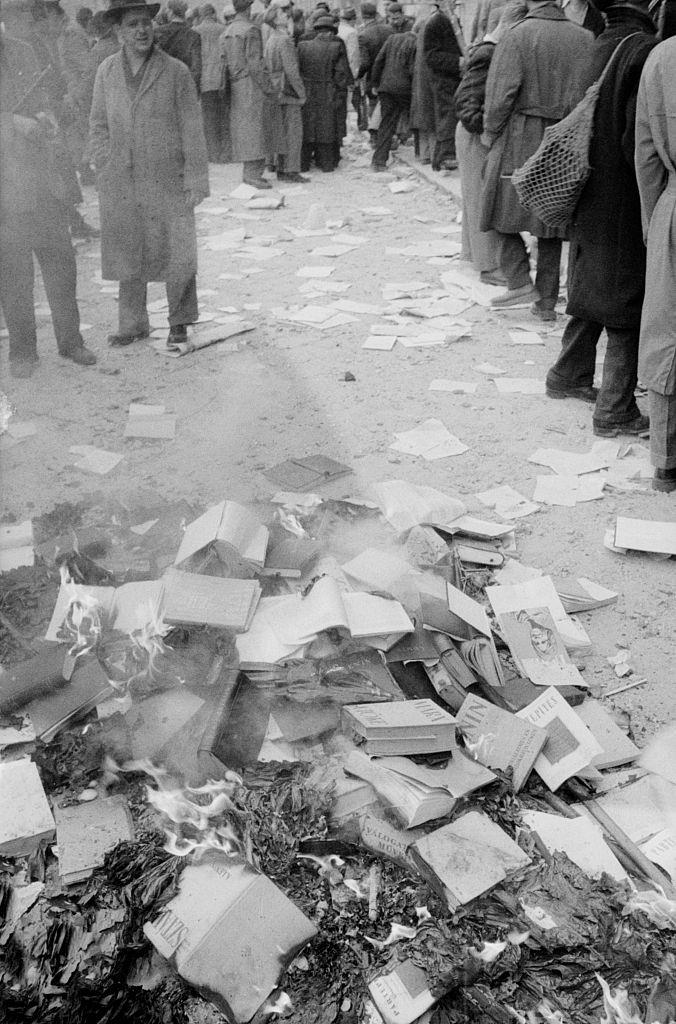
Students writing on the ground some solidarity messages to the rebels in Hunary after the repression by Soviet Tanks, 1956.
Rebels setting fire to Marxist books. Budapest, October 30, 1956.

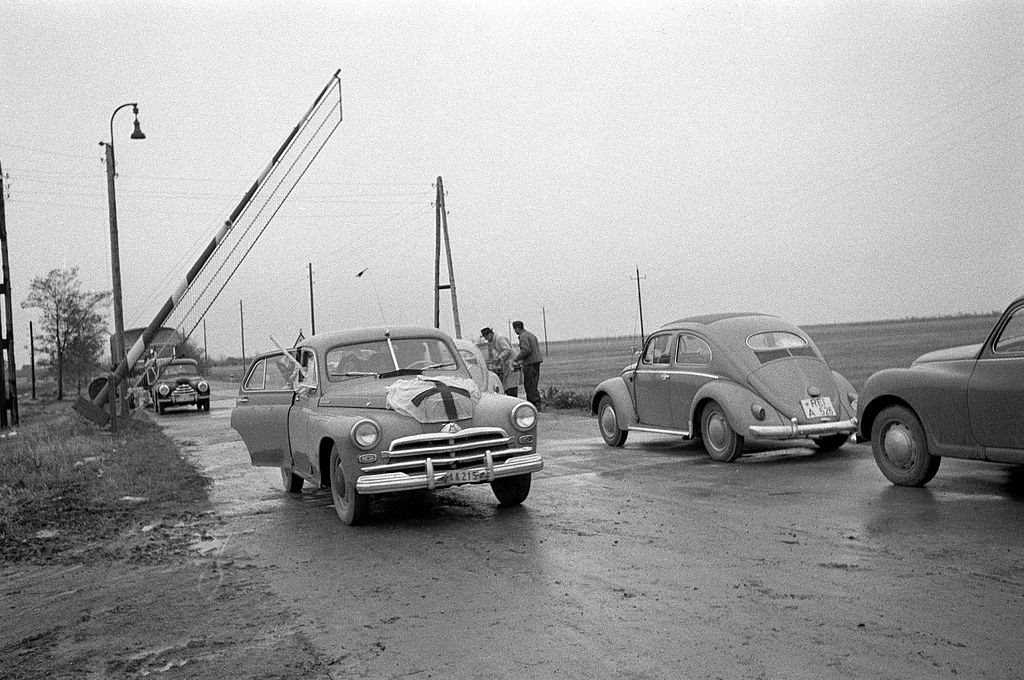
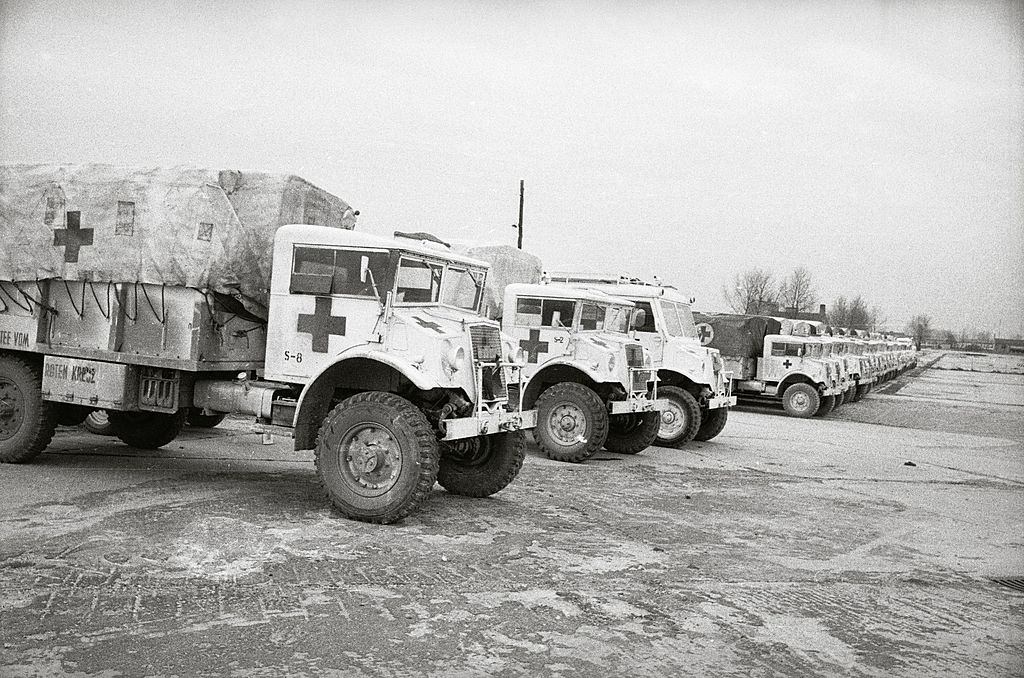
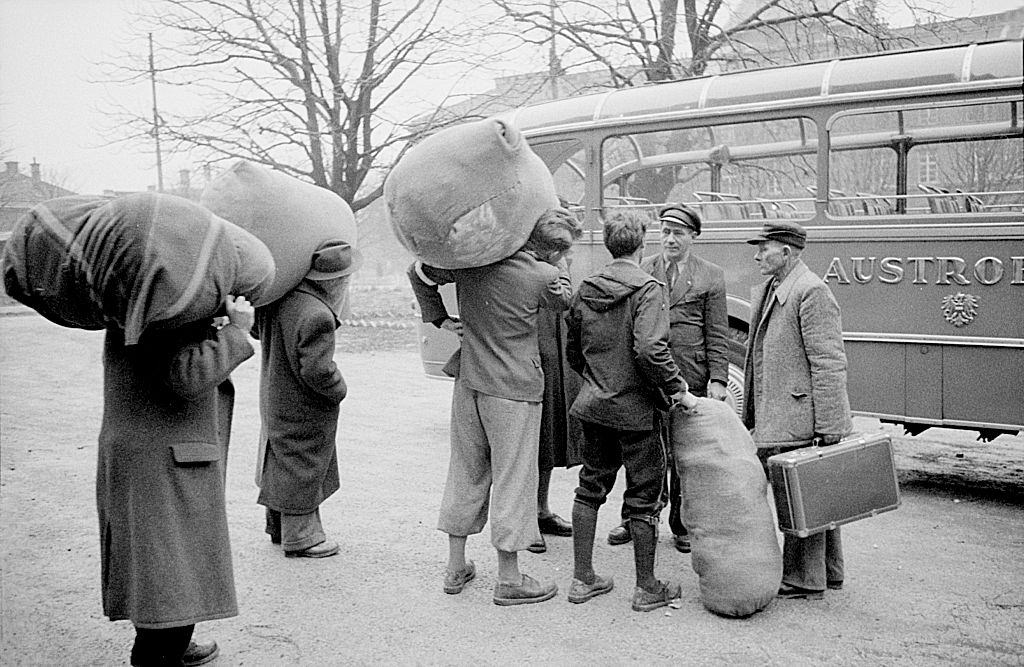
With the revolution crushed, hundreds of thousands of Hungarians fled the country. They crossed into Austria on foot, through forests and fields, carrying what little they could. Refugee camps filled up quickly. The Red Cross and international aid organizations scrambled to provide shelter, food, and medical care.
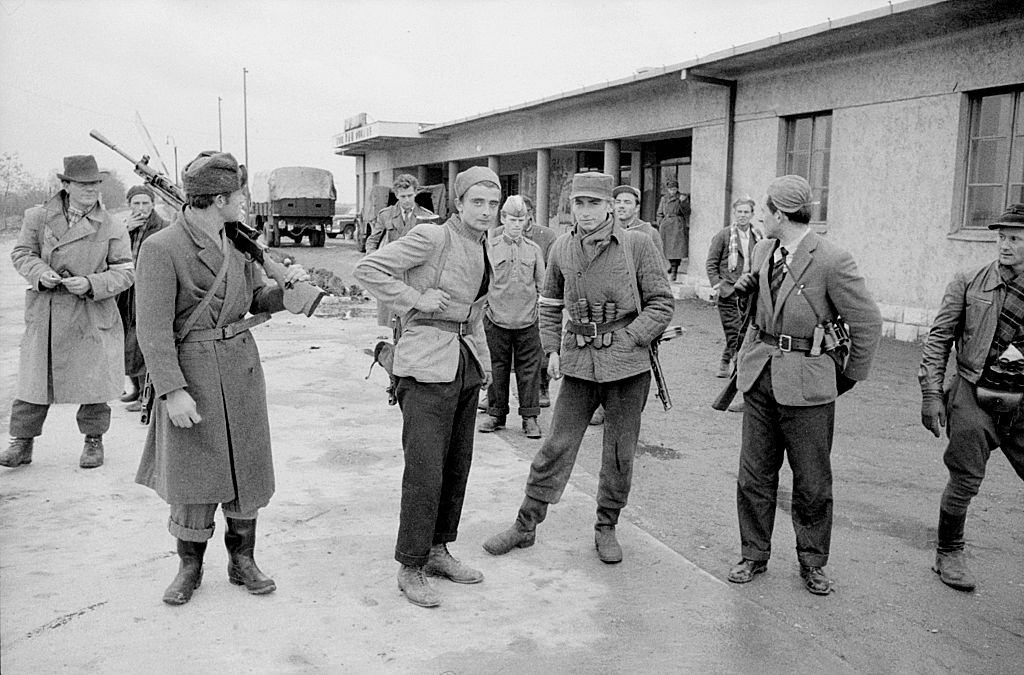
Some revolutionaries controlling the border between Austria and Hungary during the Hungarian uprising against the Soviet regime.
Hungarian refugees leaving toward Austria. November 1956
Thousands of refugees flee toward the Austrian border, Red Cross in Gyor, Hungary on October 23, 1956.
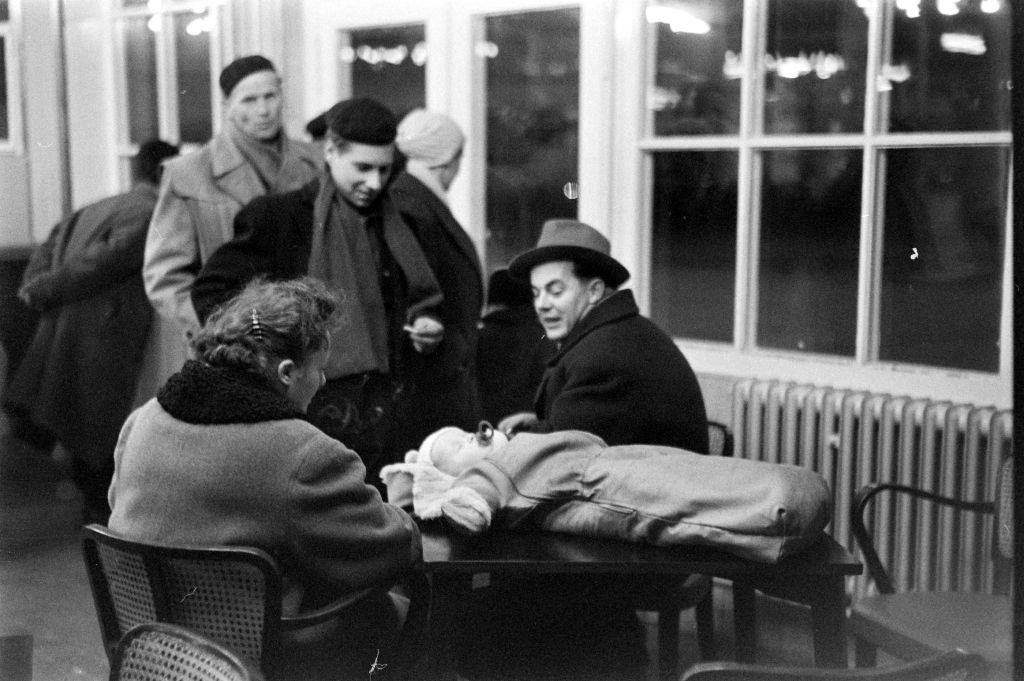
Hungarian refugees talking at the relocation during the Hungarian Revolution, Hungary, 1956.
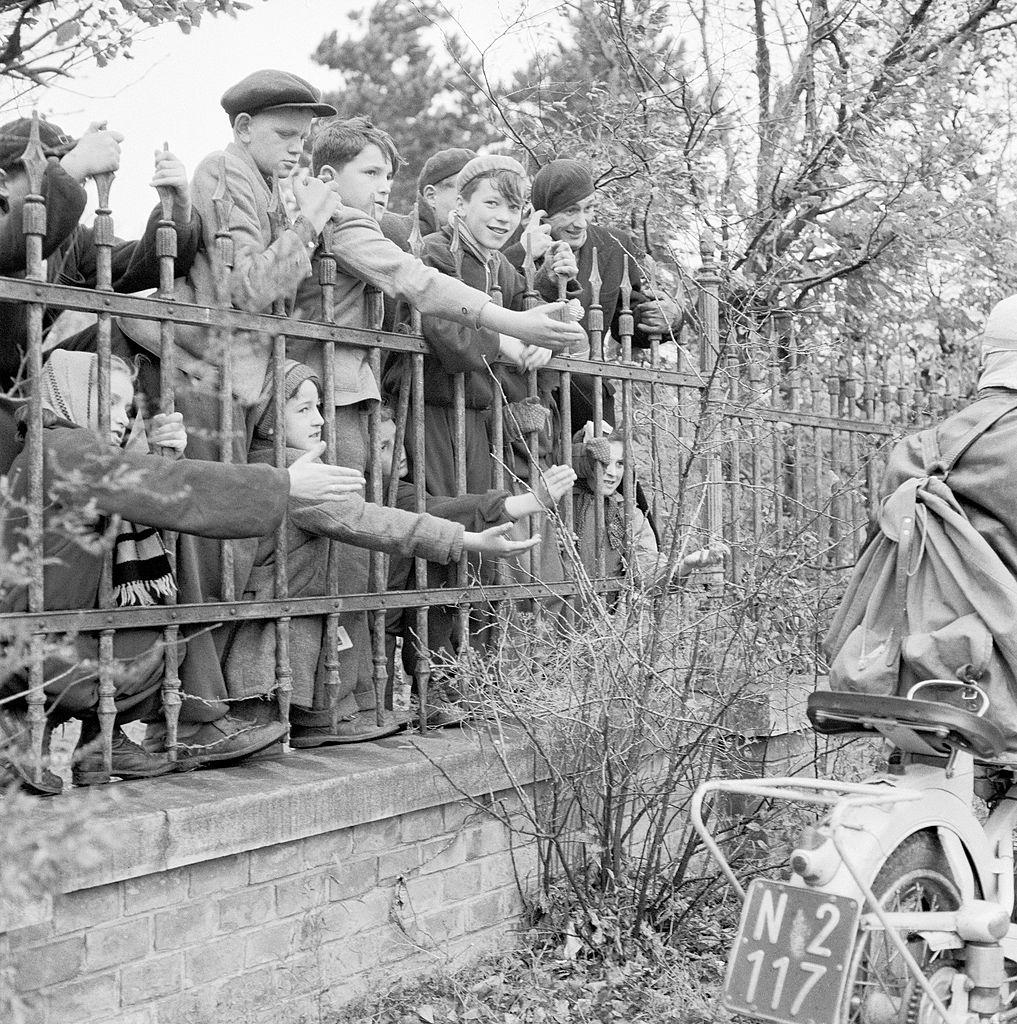
Hungarian refugee children in a camp in Austria, 1956.
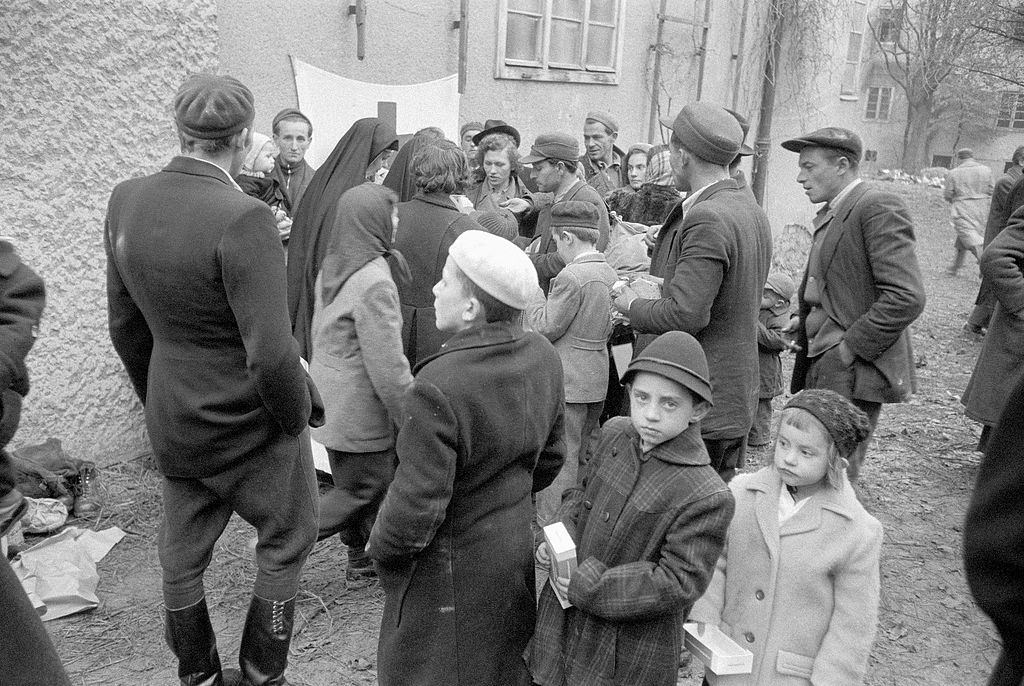
Hungarian refugees in a refugee camp, 1956.
Trucks with aid supplies are waiting for the tripp to Hungary, 1956.
Hungarian refugee children in a camp. 1956.

The photographs taken during those weeks tell a story that official Soviet accounts worked hard to suppress. They show rebels young and old, men and women, armed and unarmed, standing in rubble-filled streets, carrying their wounded, burning flags, and staring down tanks. The images were published in newspapers across the free world and became some of the defining visual documents of the Cold War.
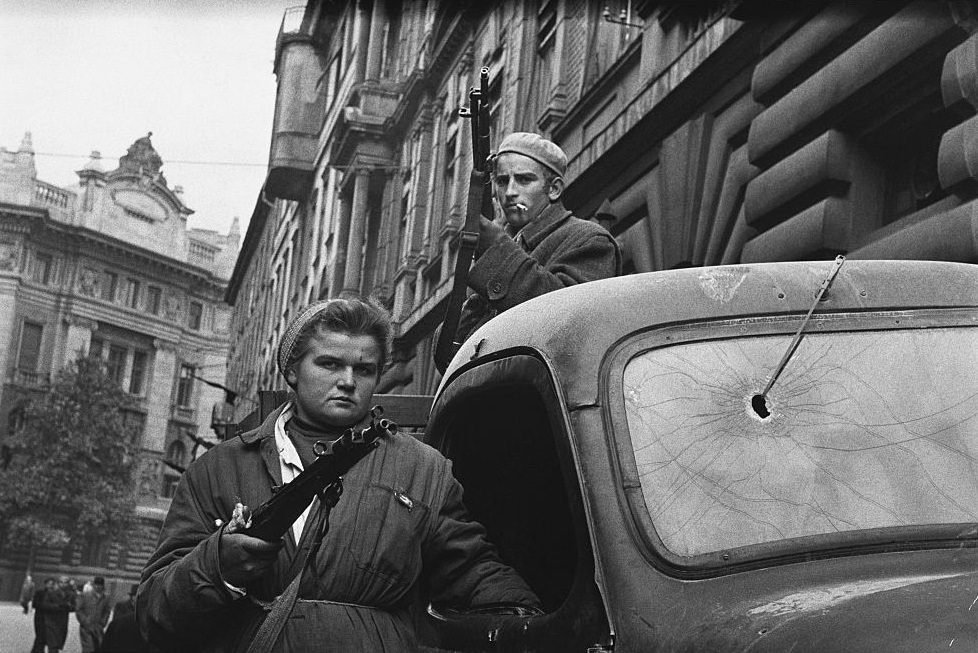
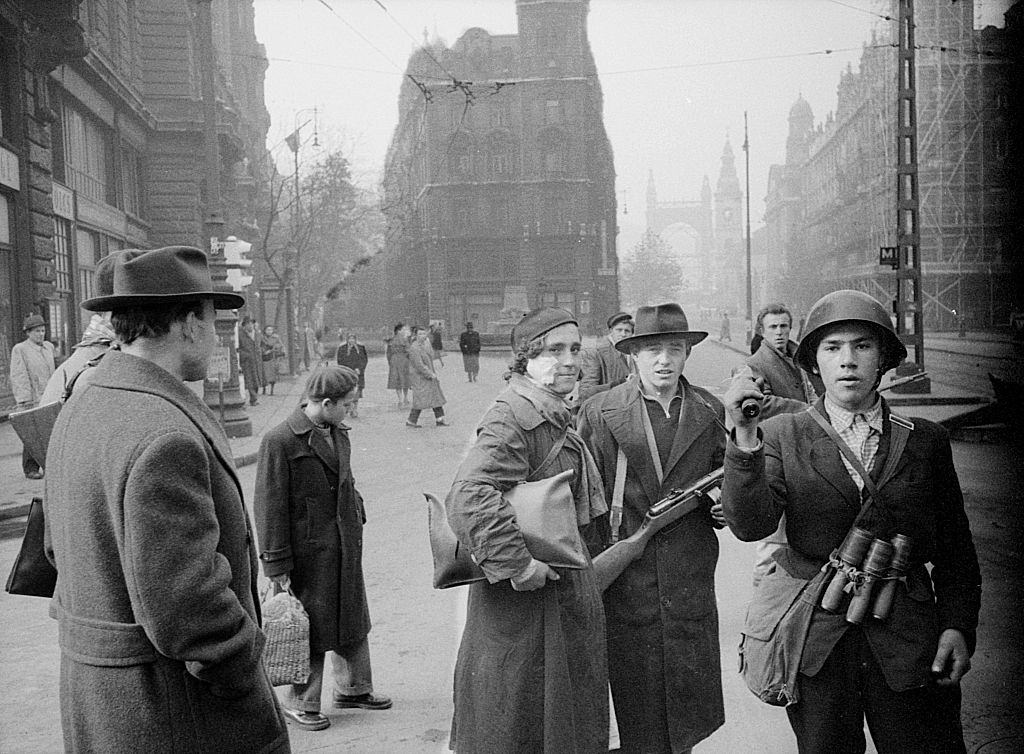
Two Hungarian freedom fighters stand armed by a truck in Budapest during the Hungarian Revolution of 1956.
Two young revolutionaries in the streets of the city during the uprising against the Soviet regime.
Hungarian Revolution of 1956.

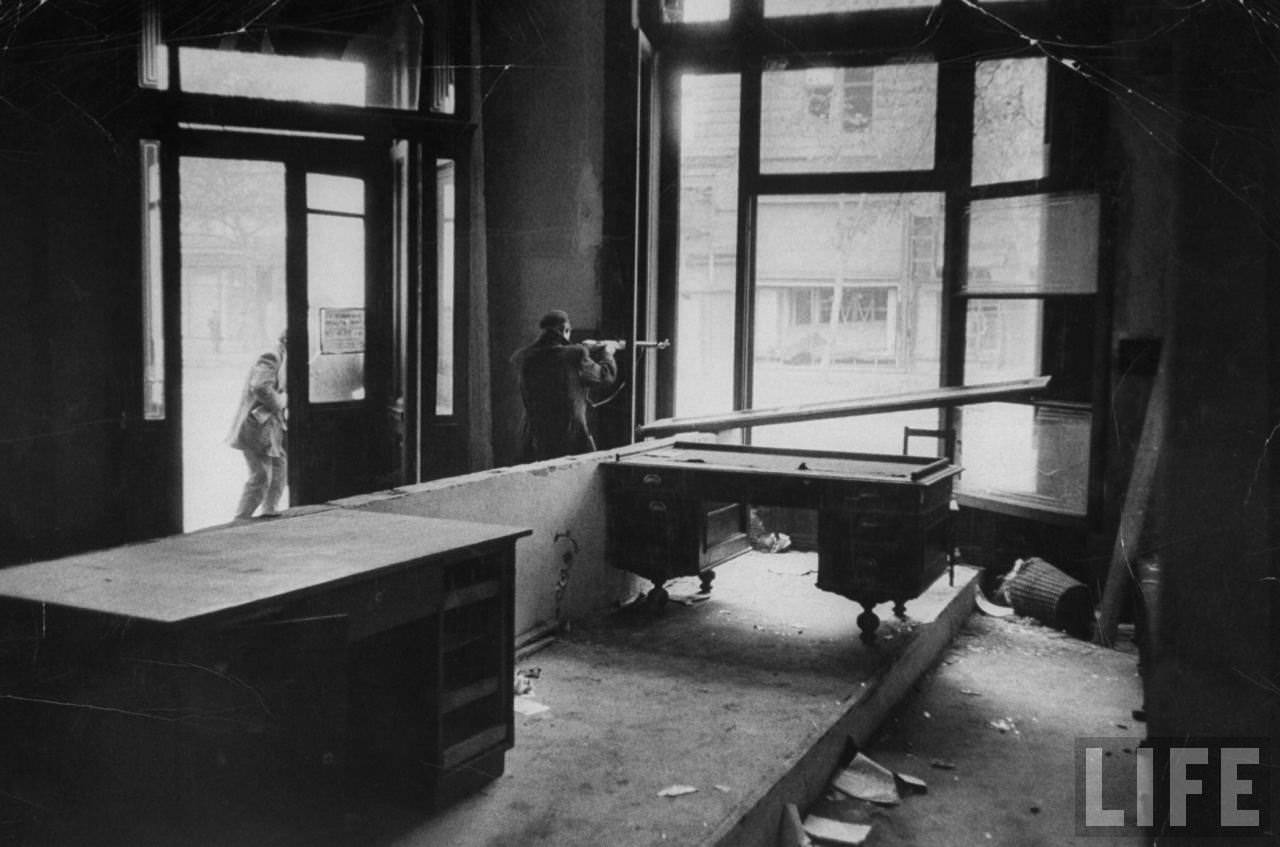
Rebel forces held their positions with rifles, mortars, and whatever equipment they could seize. Street corners became defensive positions. Burned-out vehicles served as barricades. The city that had been a place of rallies and protests just weeks earlier was now a war zone.
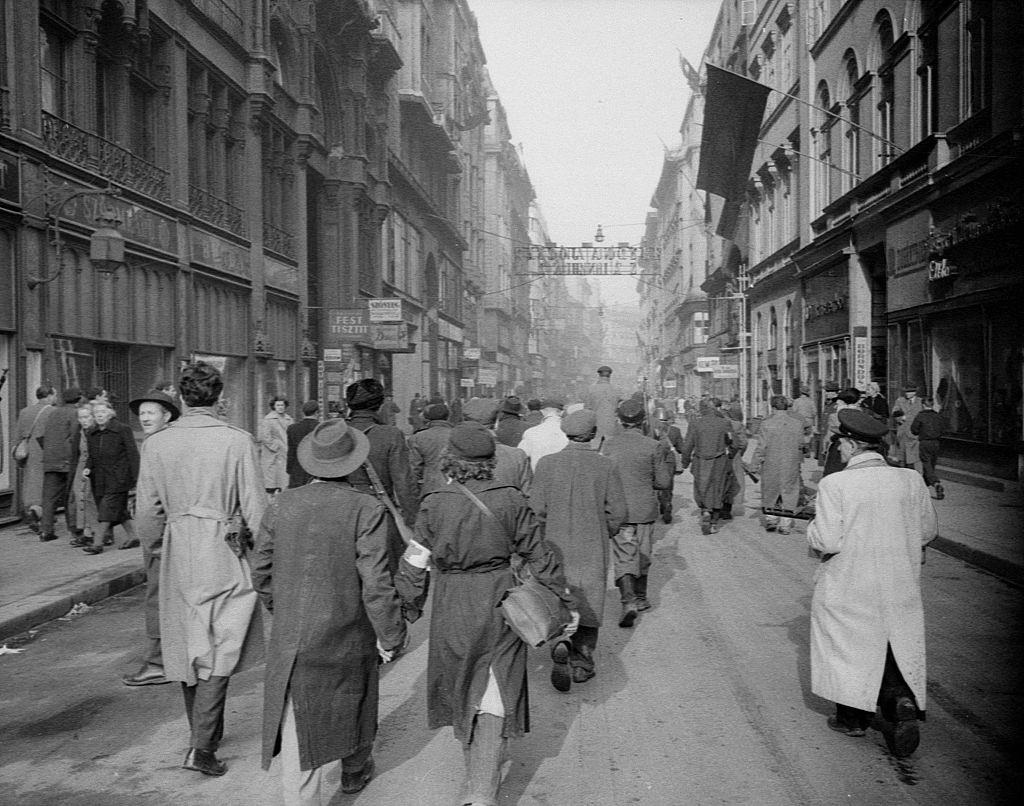
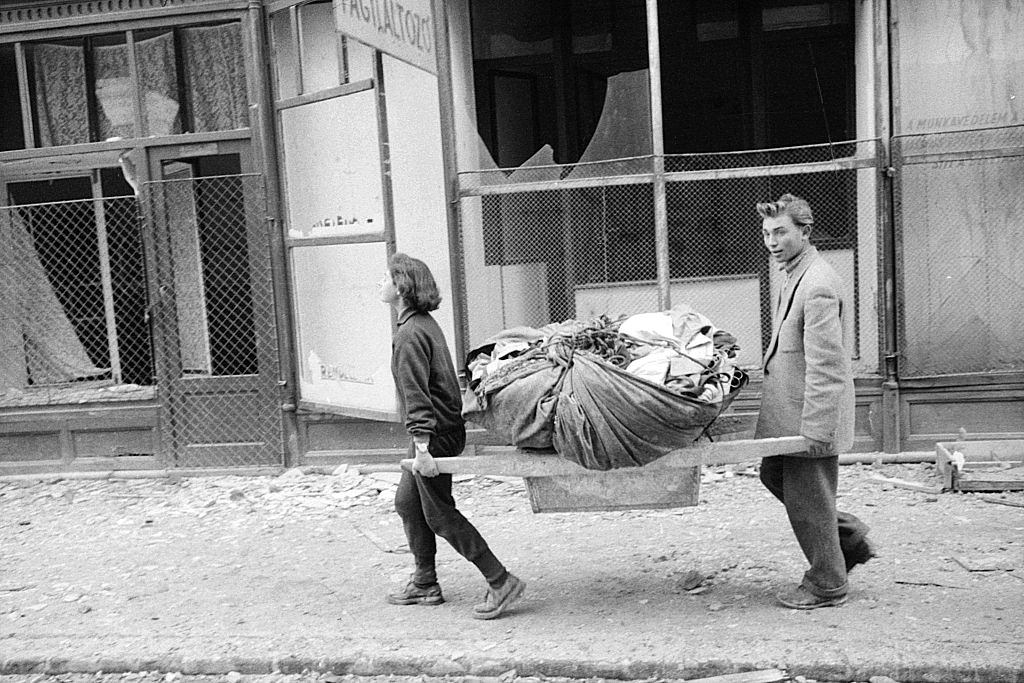
Rebels and citizens in the streets of the city. Budapest, 29th October 1956
Two people carrying their things across the ruins of the city. Budapest, 29th October 1956.

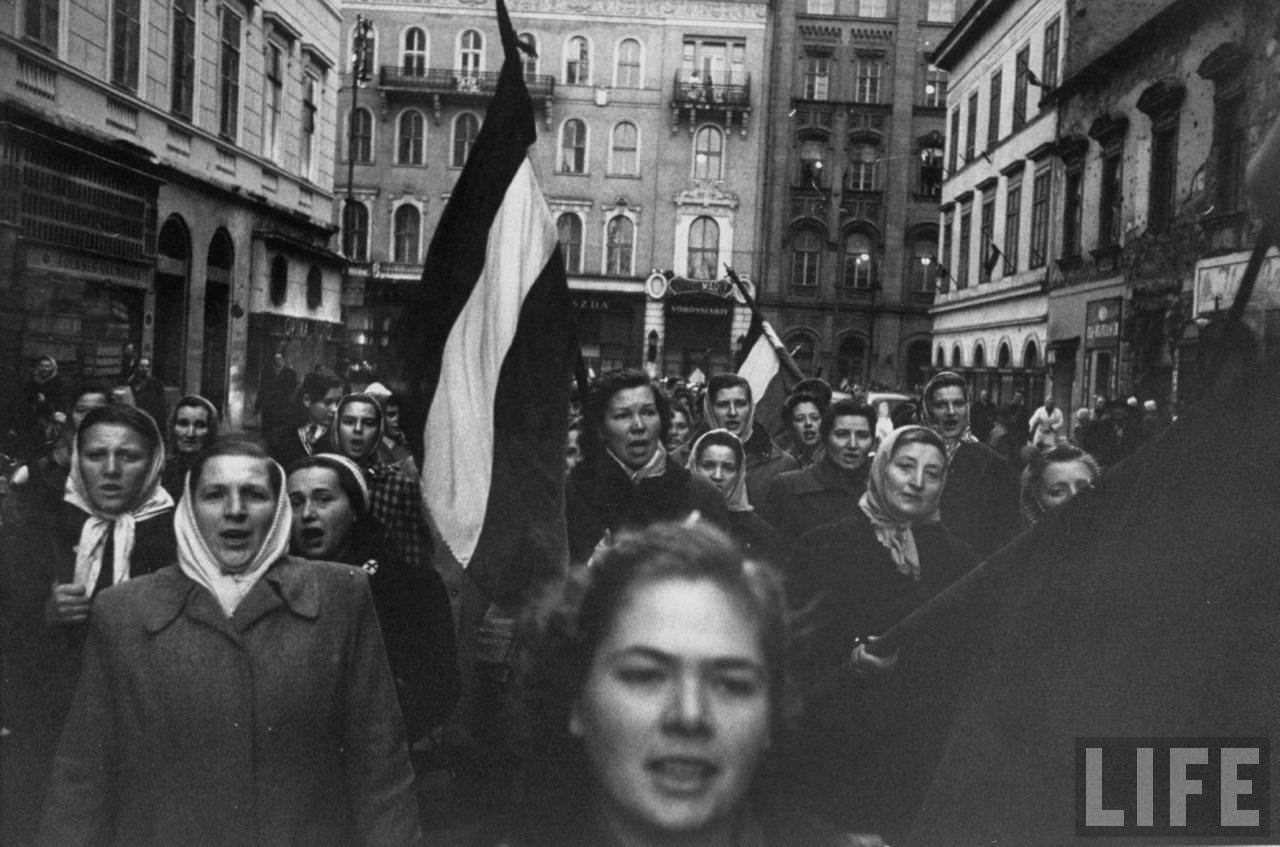
The women of Hungary were present throughout the revolution — not just as bystanders, but as fighters, organizers, and mourners. After the Soviet crackdown ended the fighting, women gathered in Budapest to march in honor of the men who had died in the revolt.
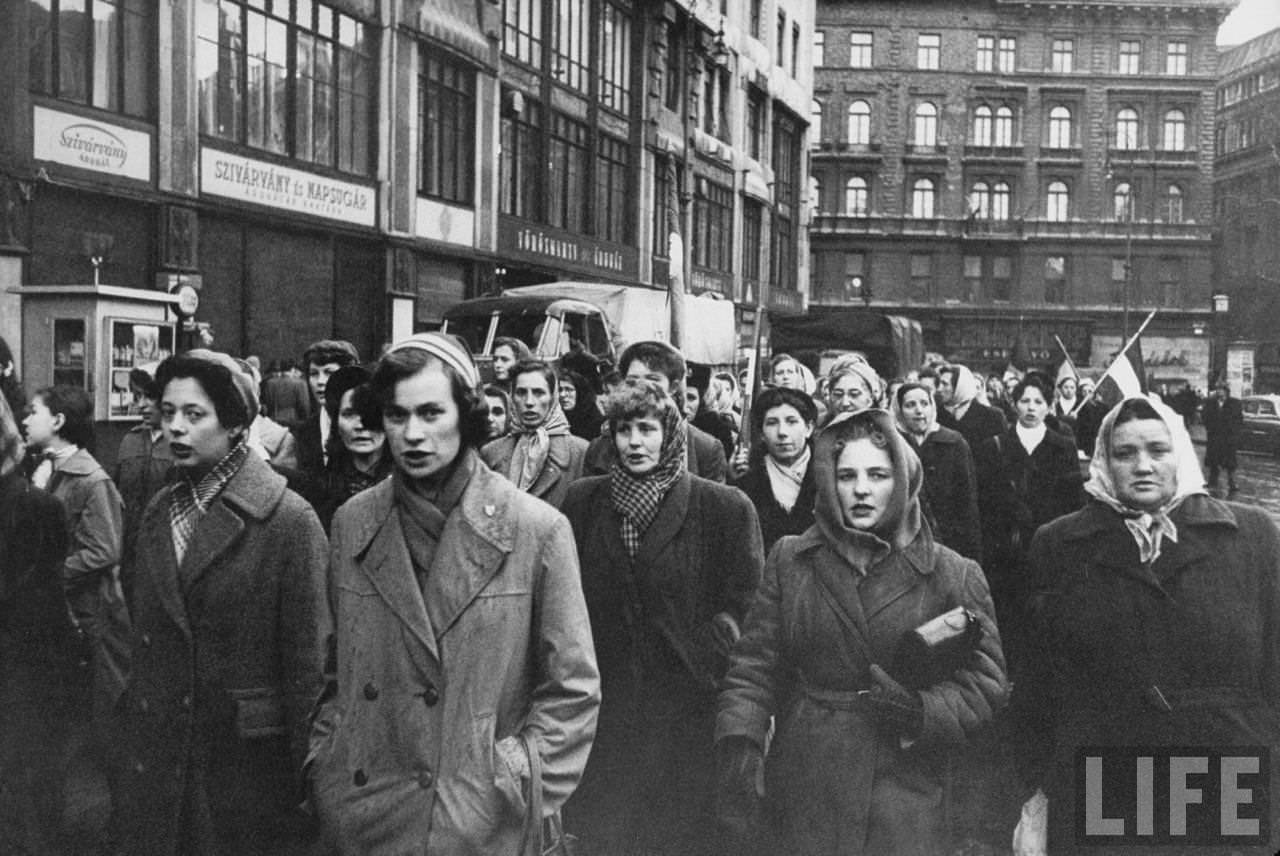
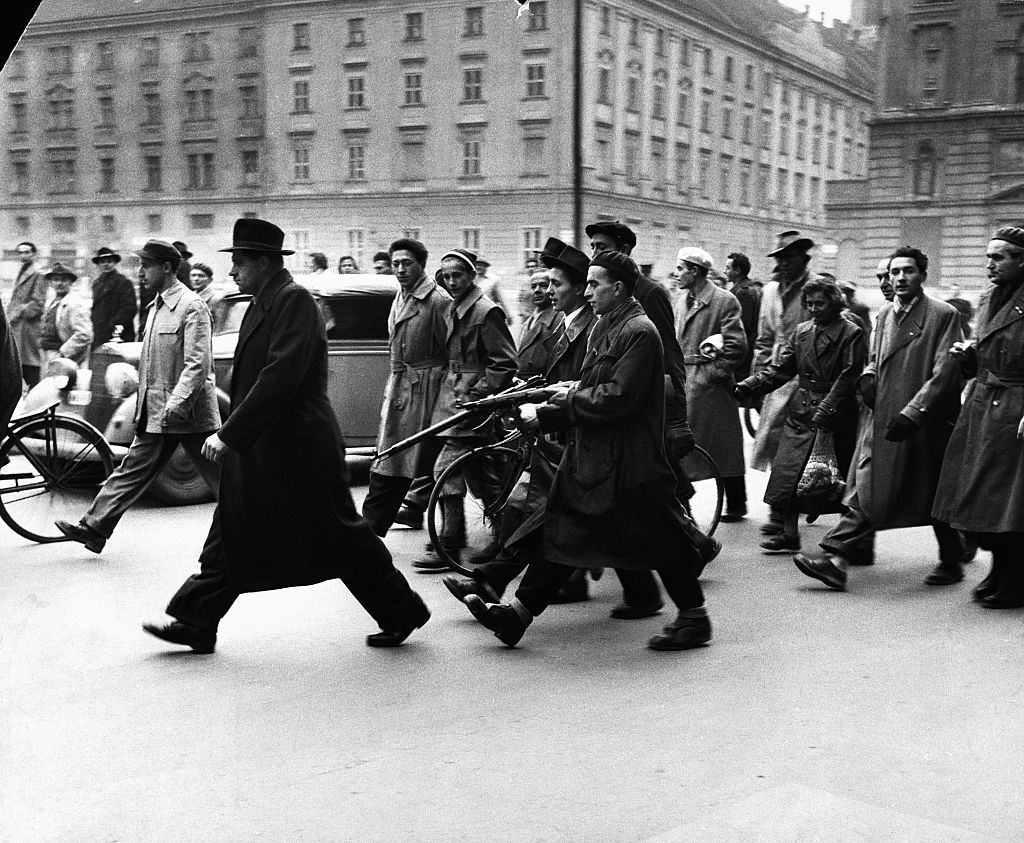
Women in Budapest march in honor of the Hungarian men who died in revolution fighting Soviet-backed communist regime.
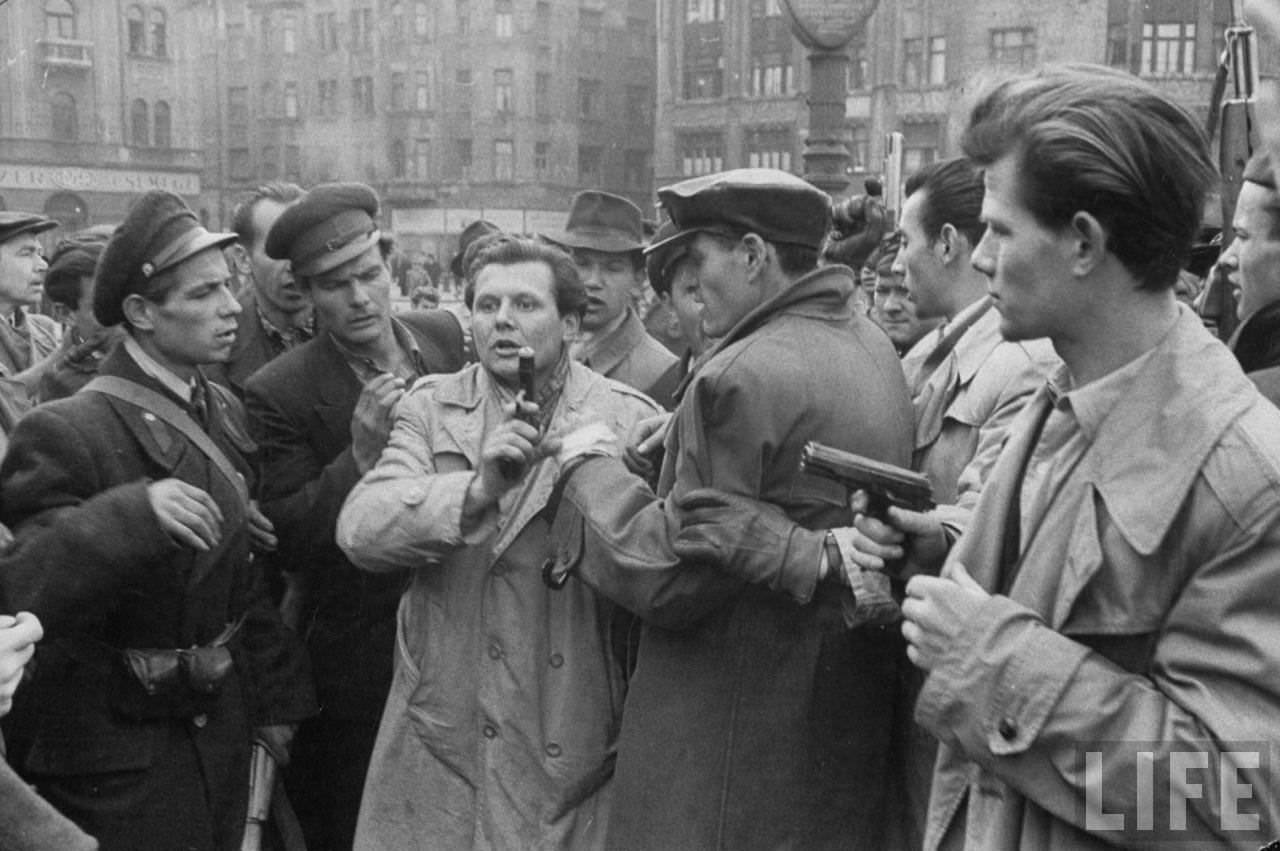
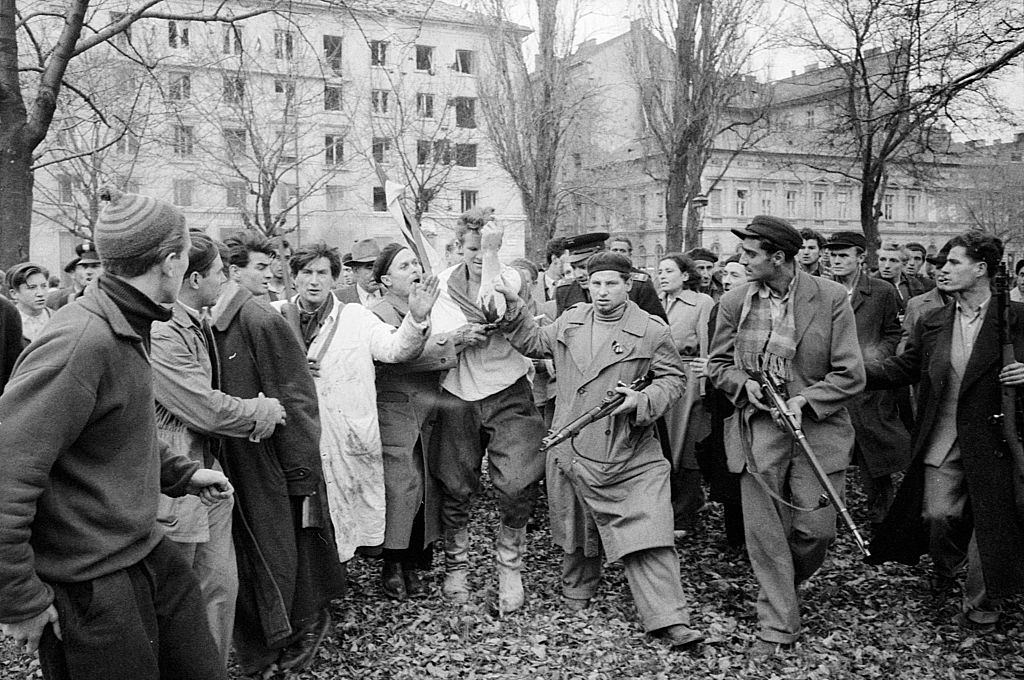
Hungarians arrest a member of the secret police during the revolution of 1956

Two years after the revolution ended, Hungarian soldiers stood guard over a country that had been forcibly returned to Soviet control. The new Soviet-installed government under János Kádár worked systematically to eliminate any remaining resistance. Thousands were tried and imprisoned. The uprising had been erased from public memory by state decree — it was not to be discussed, commemorated, or acknowledged.
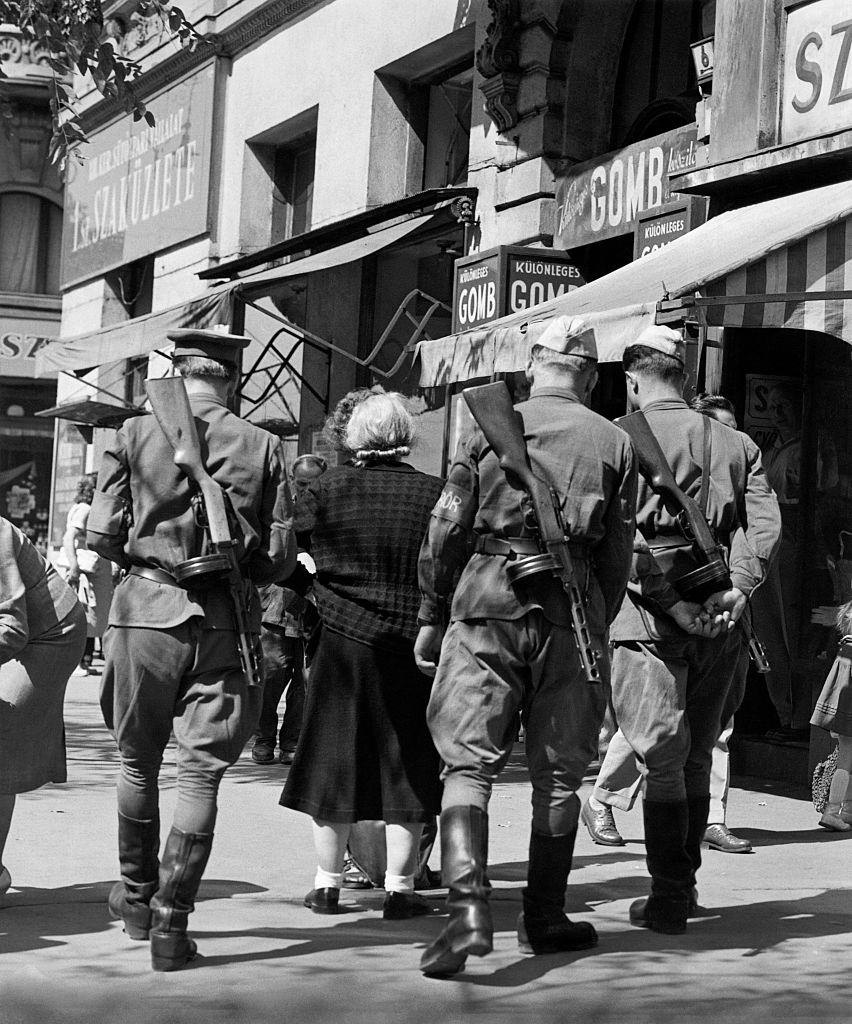
Hungarian soldiers off duty two years after the end of the revolution.
Injured officer of the Hungarian political police being caught by the rebels. Budapest, October 30, 1956.
Enjoyed this post? Get new ones in your inbox.

Leave a Comment

Your email address will not be published. Required fields are marked *

4 Comments

Share this Post 🥺

Please take a moment to share this content. Your support is greatly appreciated! 🙌🙏

Share this Post 🥺

Please take a moment to share this content. Your support is greatly appreciated! 🙌🙏
Scroll to Top
 
Hey Friend, Before You Go.. Please like & follow for more interesting content