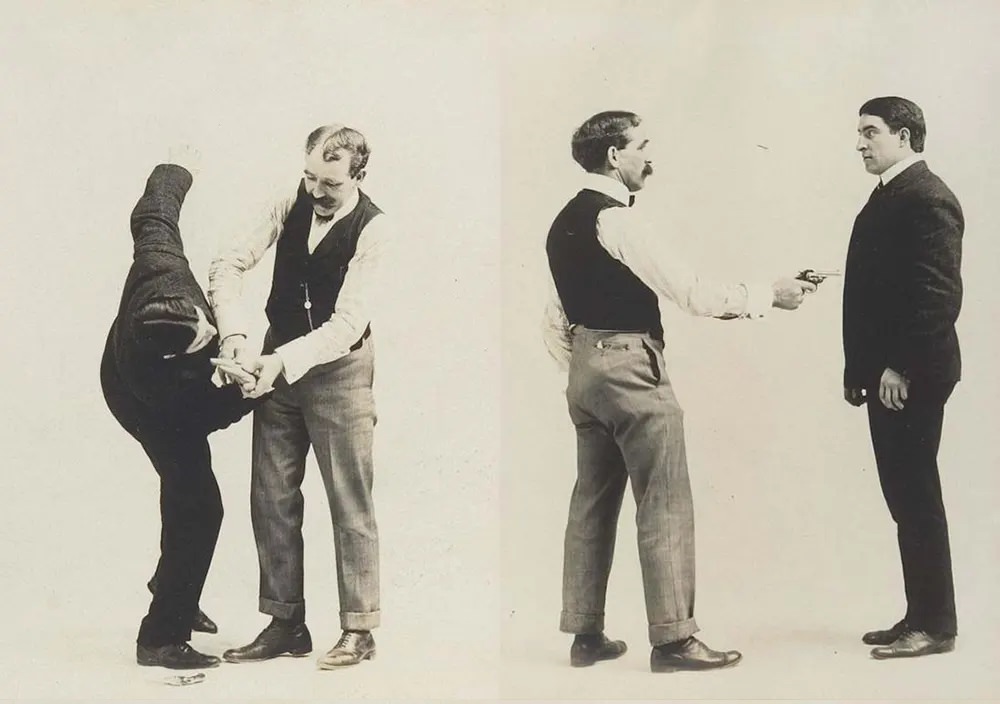
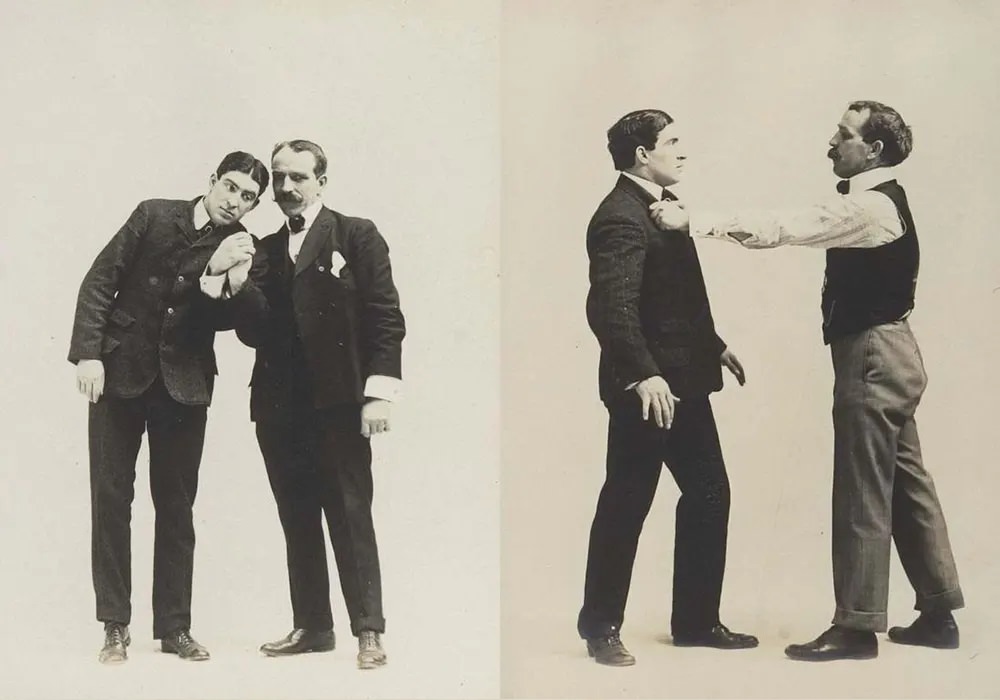
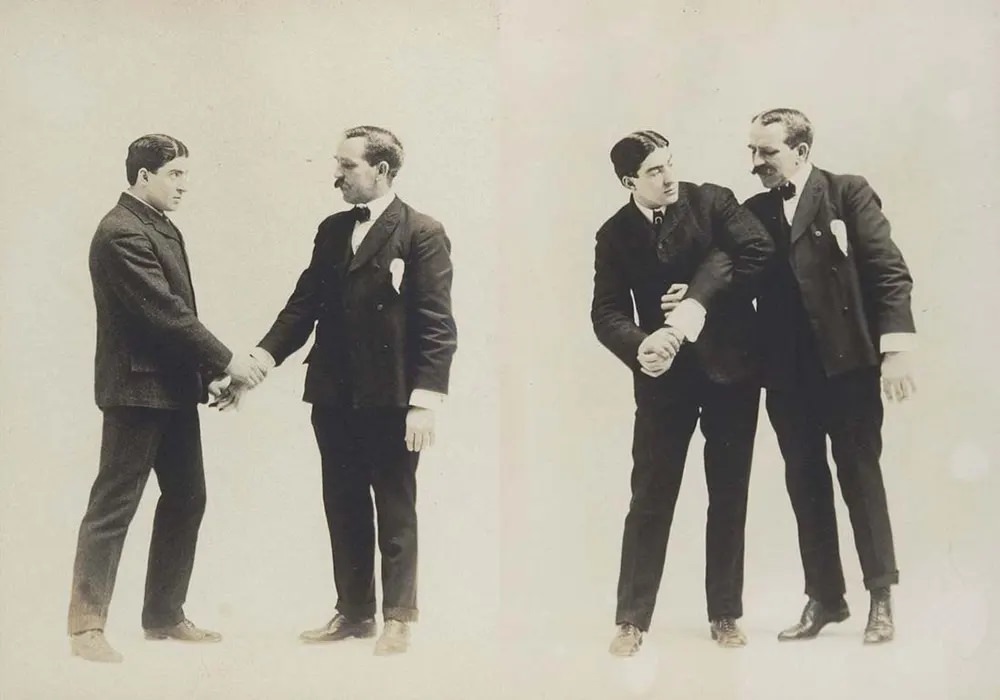
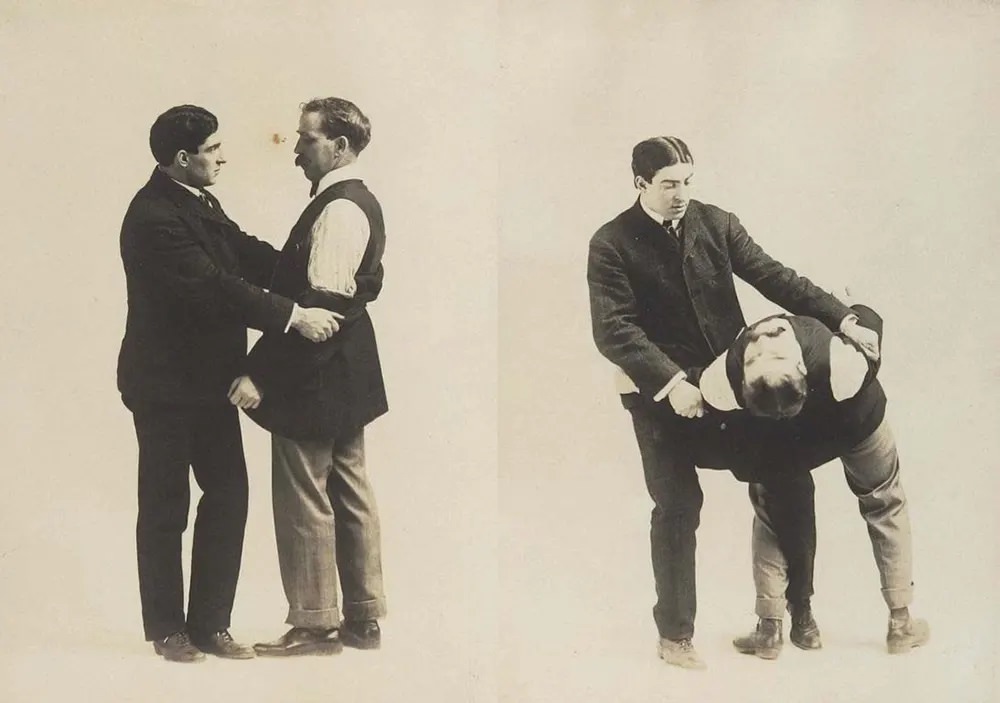
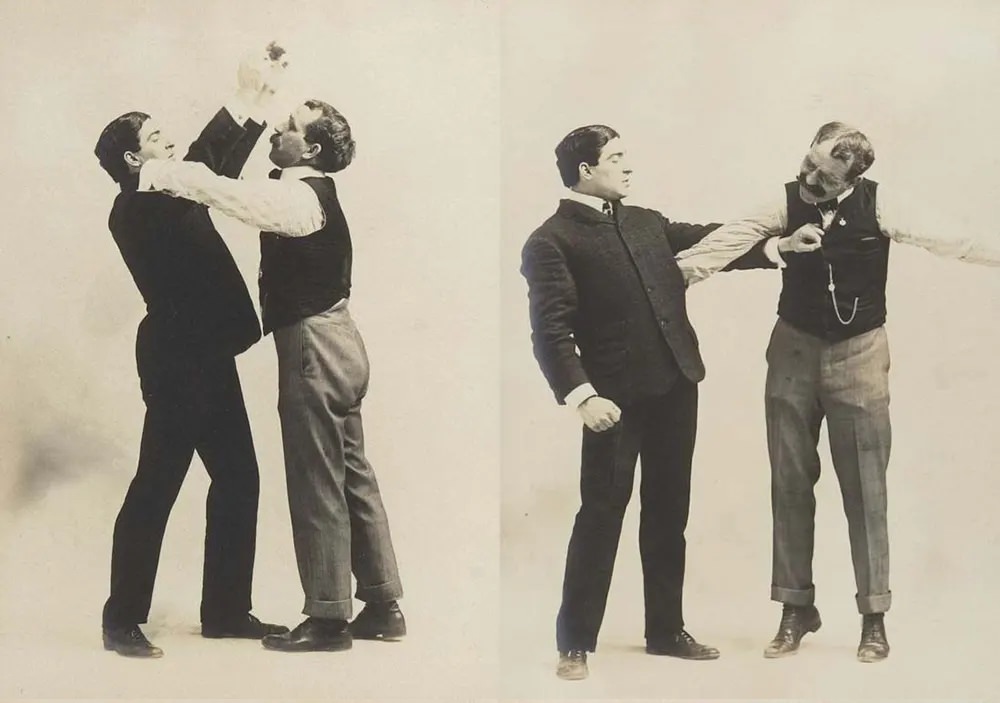
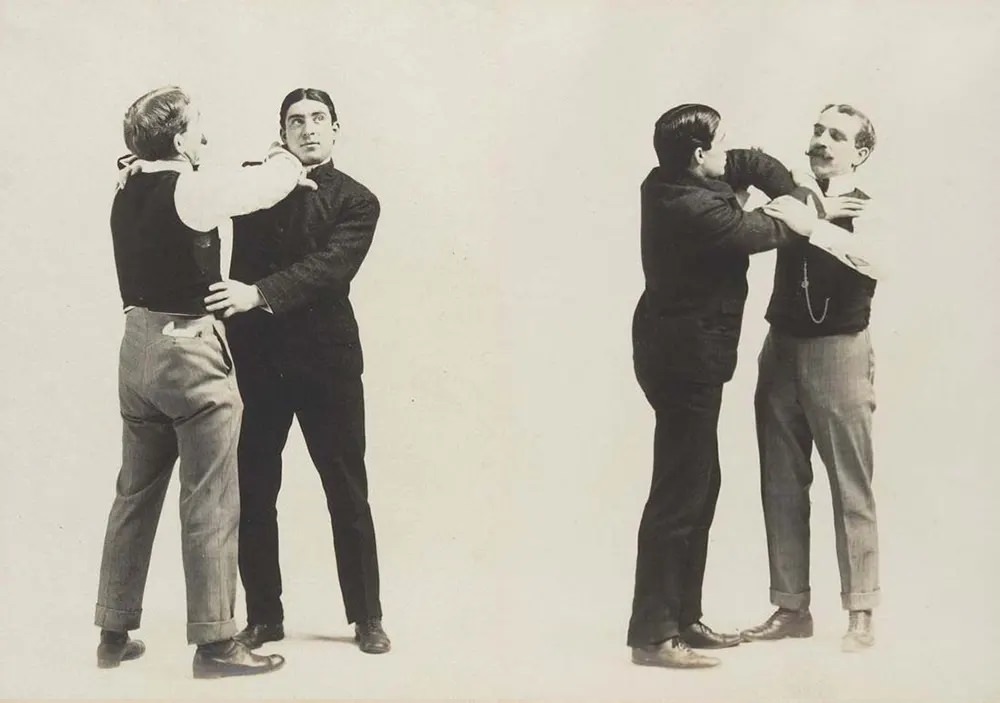
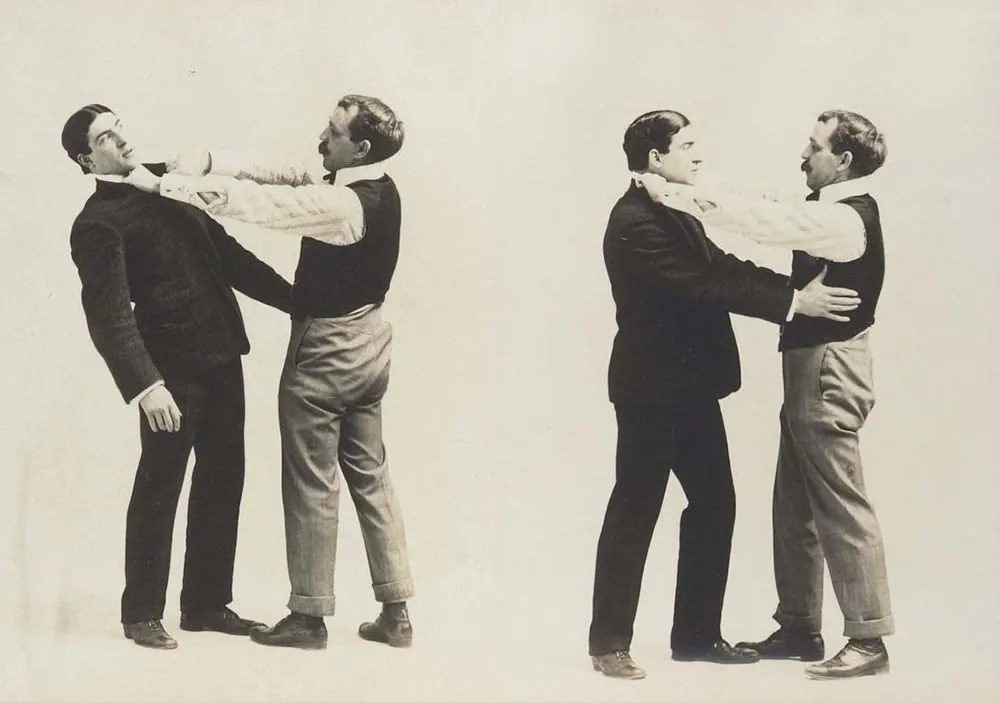
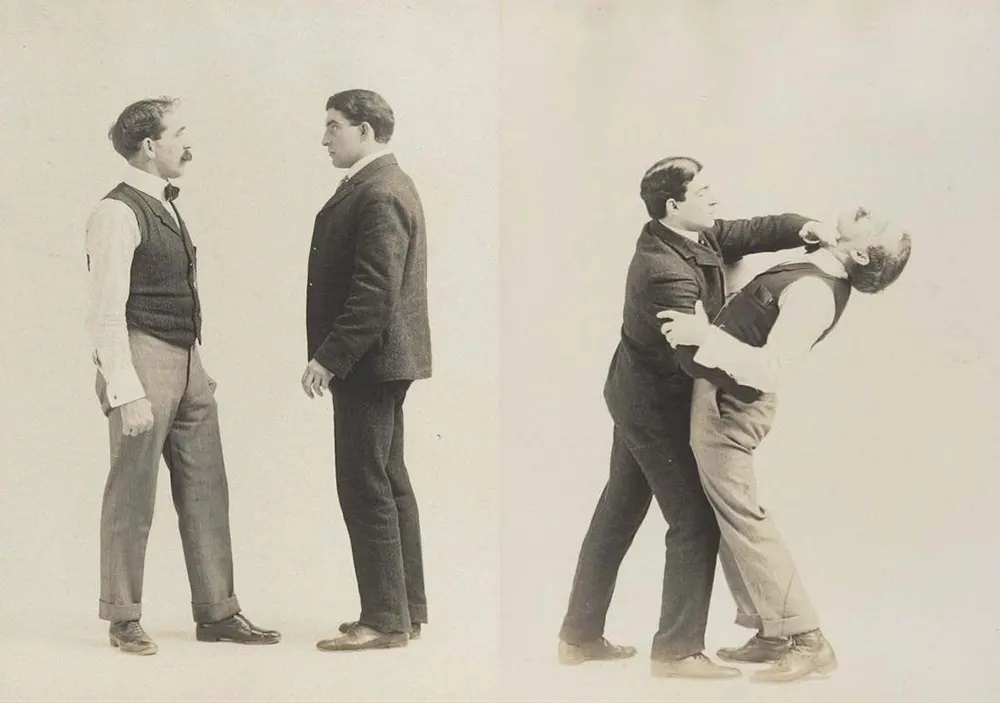
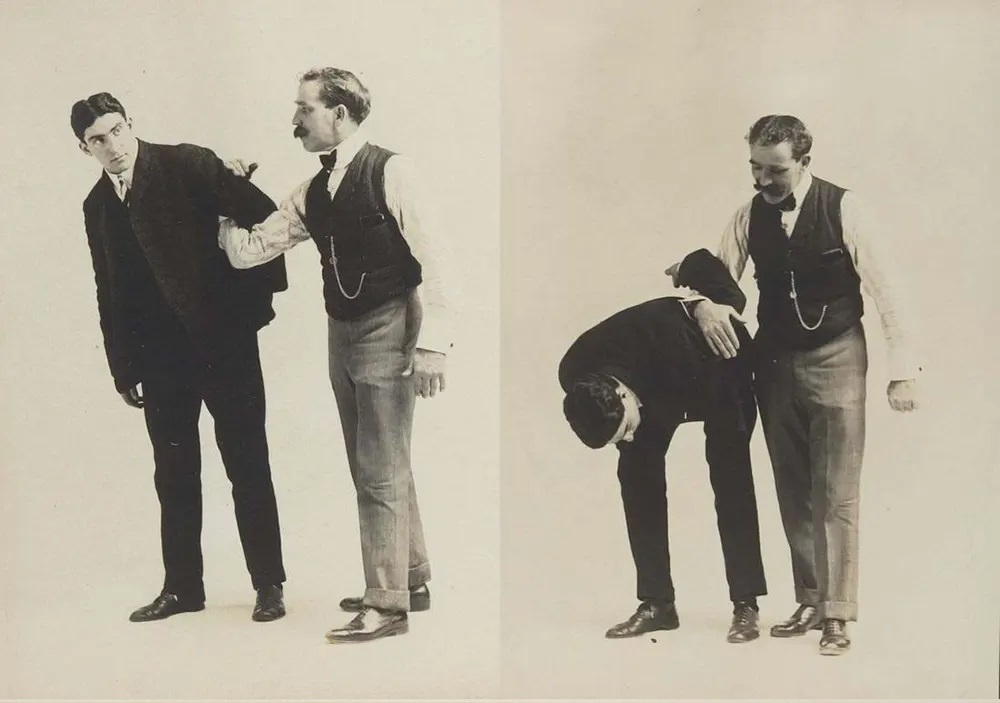
By the 1890s, photography had become more than just a way to capture portraits and landscapes. Educators and instructors were using it as a teaching tool, and this untitled album from 1895 is a perfect example of that. It documents a series of hand-to-hand self-defense techniques, photographed in sequence, with two formally dressed Victorian gentlemen as the subjects.
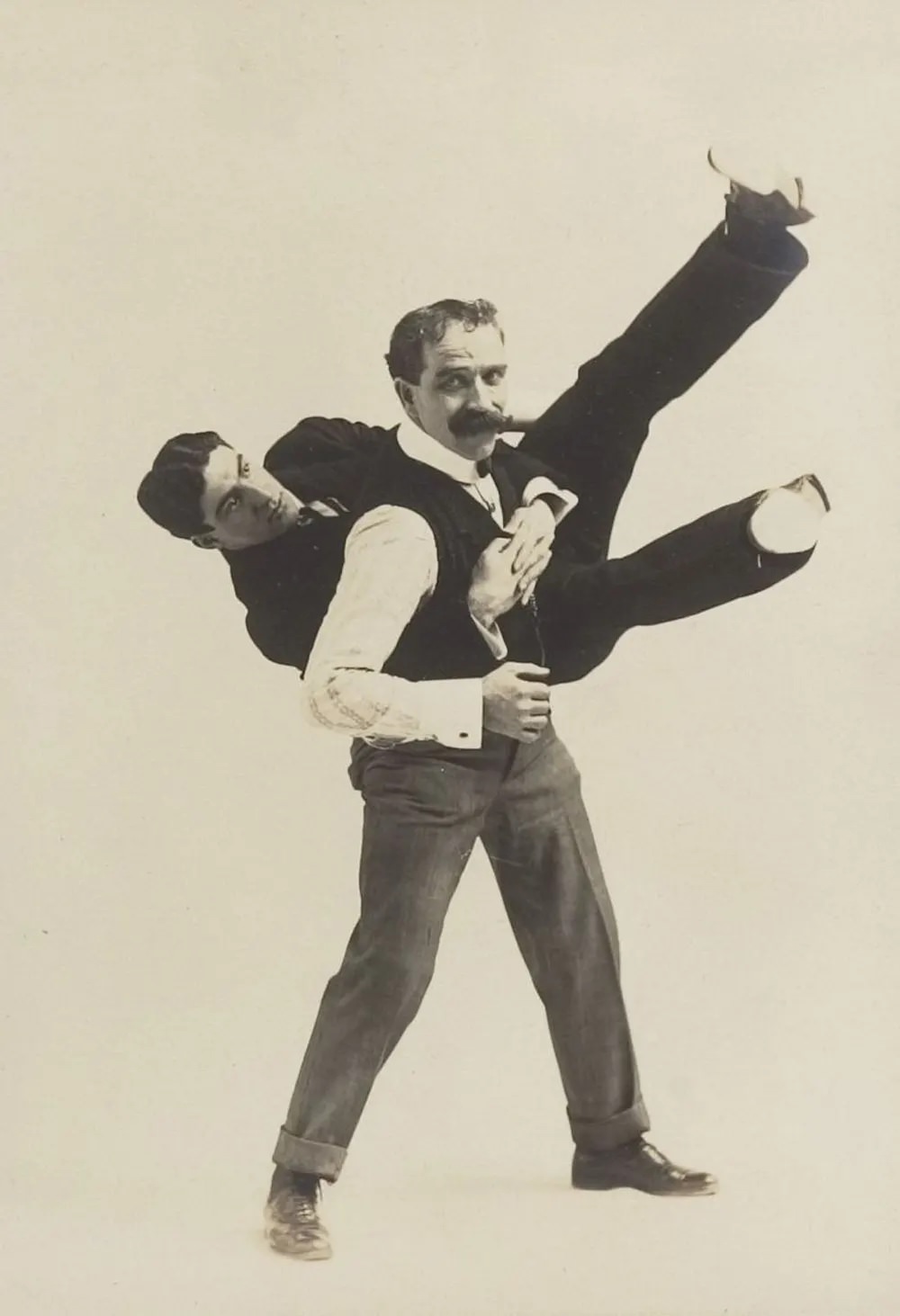
The two men are finely dressed throughout the album — suits, collars, and all — which makes the maneuvers they perform all the more striking. They demonstrate chokeholds, body slams, kicks, arm twists, and chops across dozens of photographs. Each confrontation is set up with a threatening pose, followed by the correct defensive response.
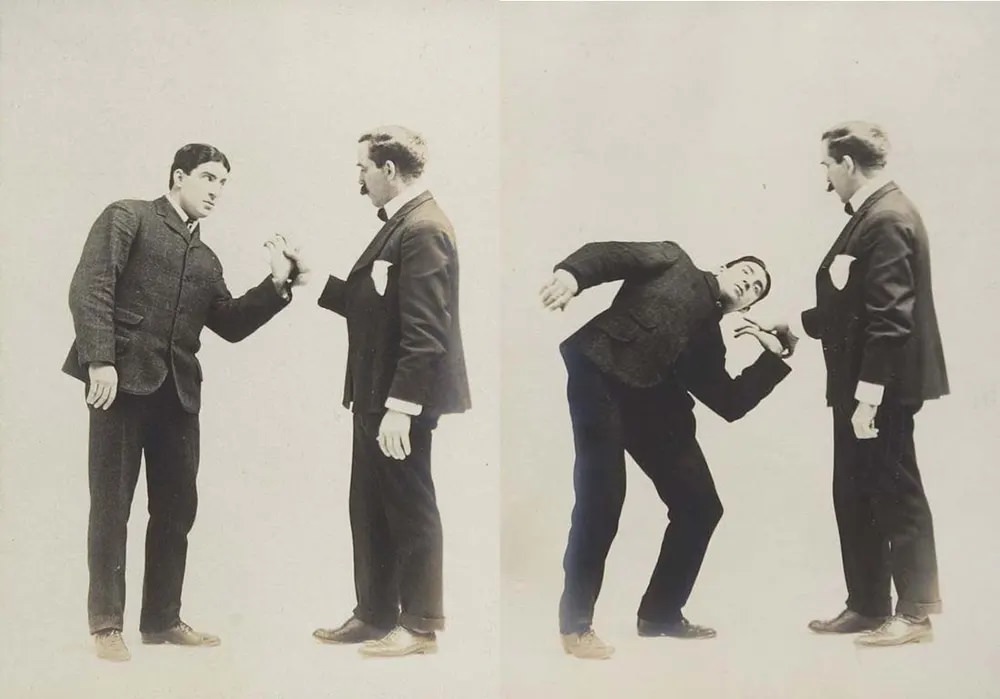
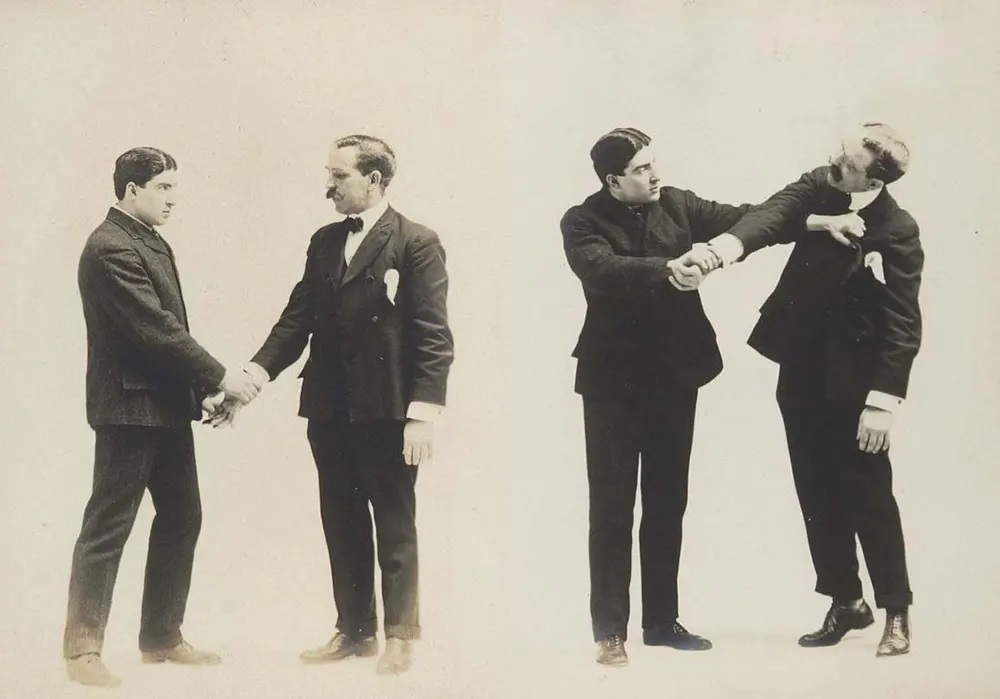
What stands out about this album is how systematic it is. Each technique is broken down into a clear before-and-after format. The men glower at each other in the setup shot, and then the defensive move is shown in the next frame. The goal was clearly to teach, not just to document.
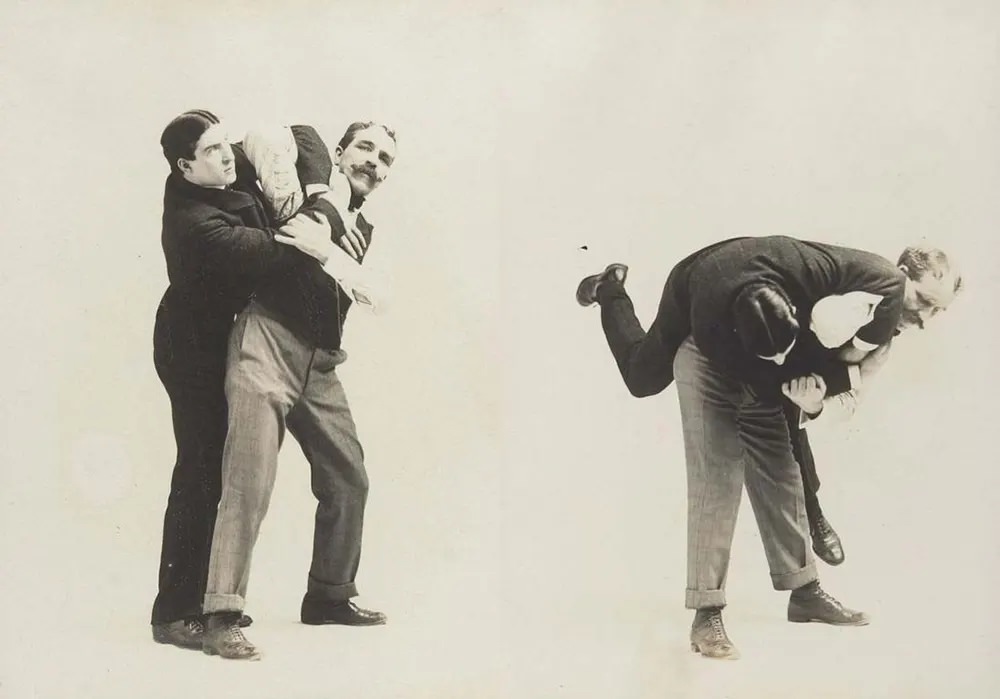
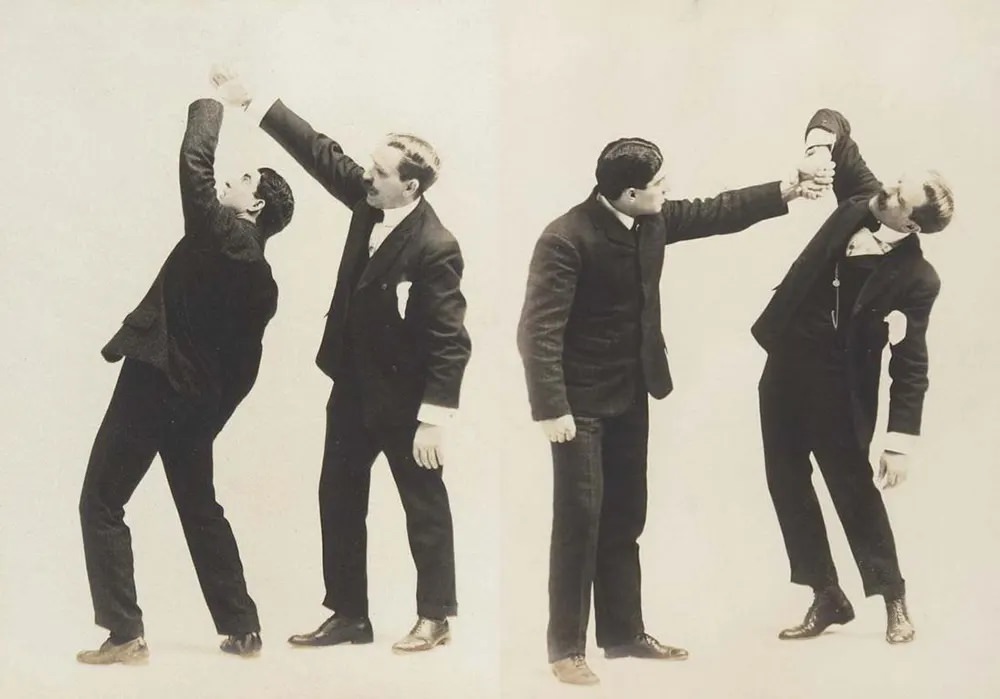
Self-defense as a structured practice goes back thousands of years. Early humans had to fight to survive, and over time those instincts were refined into organized systems. What we now call martial arts grew out of that process — turning raw survival tactics into disciplined, repeatable techniques.
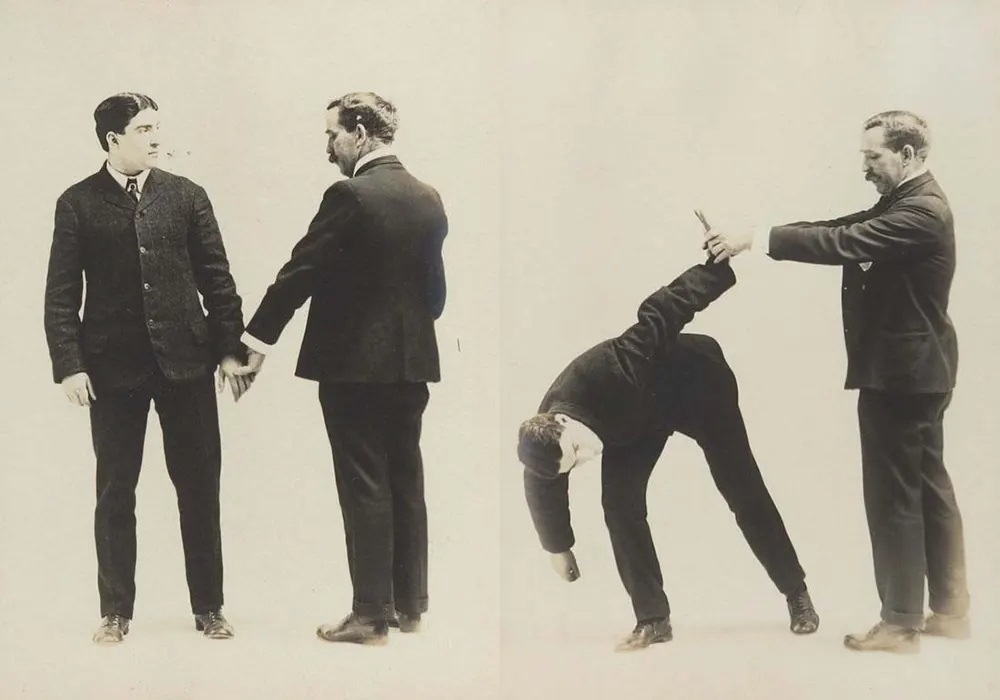
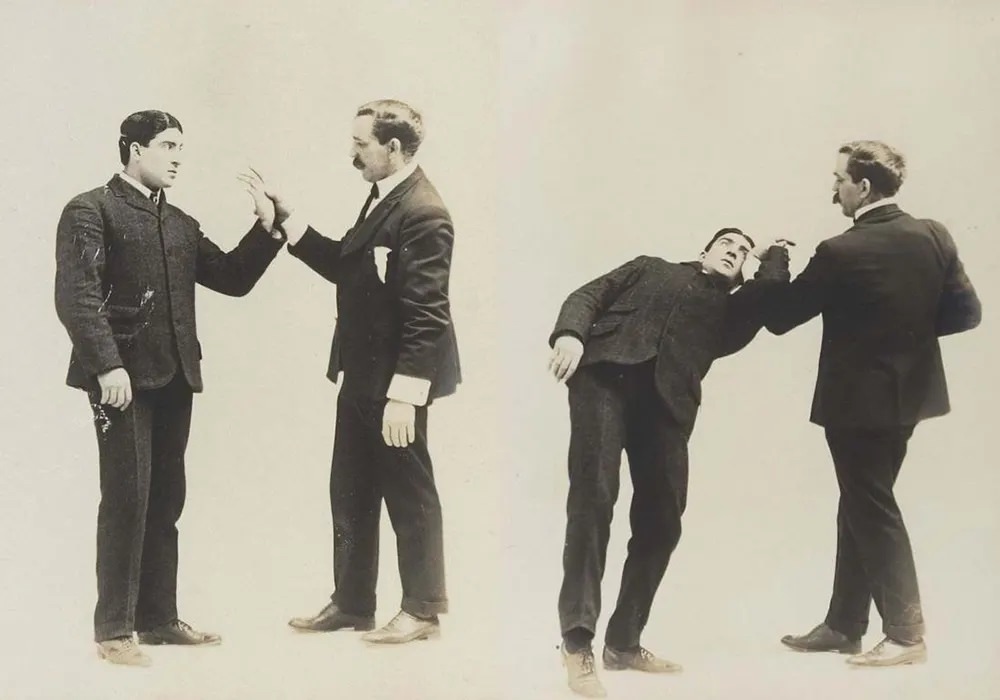
Martial arts are most commonly associated with East Asian cultures, and traditions like kung fu, judo, and kendo have deep roots in countries like China, Japan, and Korea. Many of these systems are tied to spiritual codes drawn from Buddhism, Daoism, or Shinto. But organized combat arts are far from exclusive to Asia.
Europe had its own rich tradition of structured combat. Historical European Martial Arts, often abbreviated as HEMA, refers to the fighting systems that existed across the continent through the medieval and early modern periods. These included sword fighting, wrestling, and grappling methods that were carefully recorded in instructional manuscripts — much like the album shown here.
France developed its own distinct fighting style called Savate, a form of kickboxing that originated among sailors and street fighters. Unlike many traditional martial arts, Savate was born from necessity on the docks and back alleys of French port cities, where fighters used their feet as weapons with precision and speed.
Across the Atlantic, Indigenous peoples of North America had long-standing traditions of open-handed combat, including wrestling. In Hawaii, martial arts focused on joint manipulation — both small joints like fingers and large joints like shoulders and knees. These were not casual fighting methods but formalized systems passed down through generations.
In Brazil, Capoeira emerged as one of the most unique fighting arts in the world. Enslaved Africans brought combat skills from their homelands and developed Capoeira as a way to train and resist. The art blends striking, acrobatics, and music into a form that is both athletic and deeply cultural.
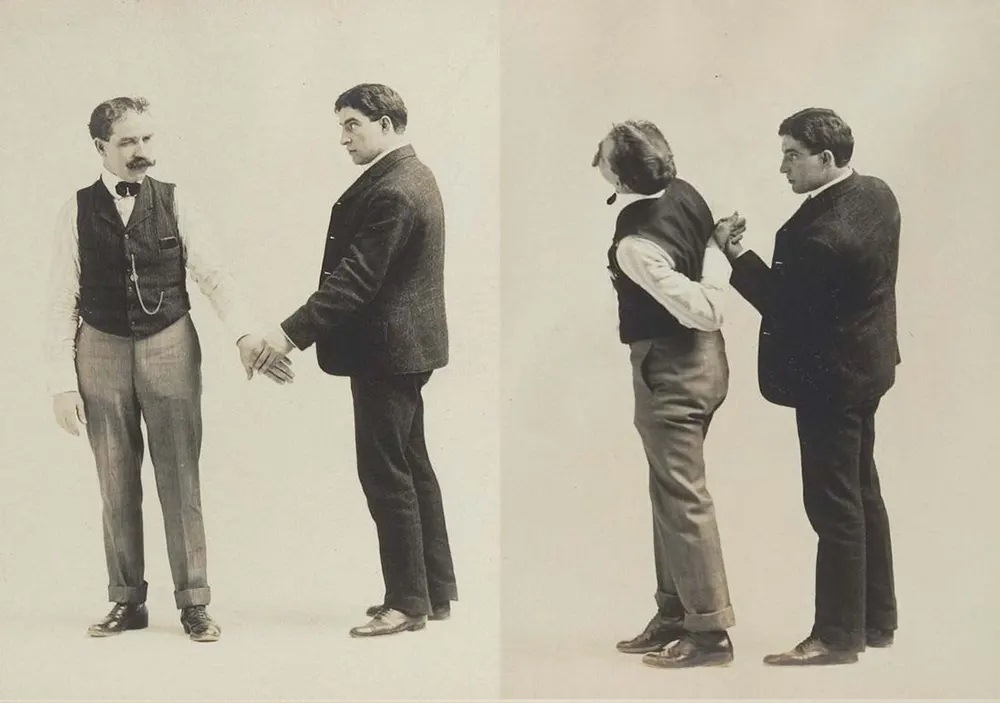
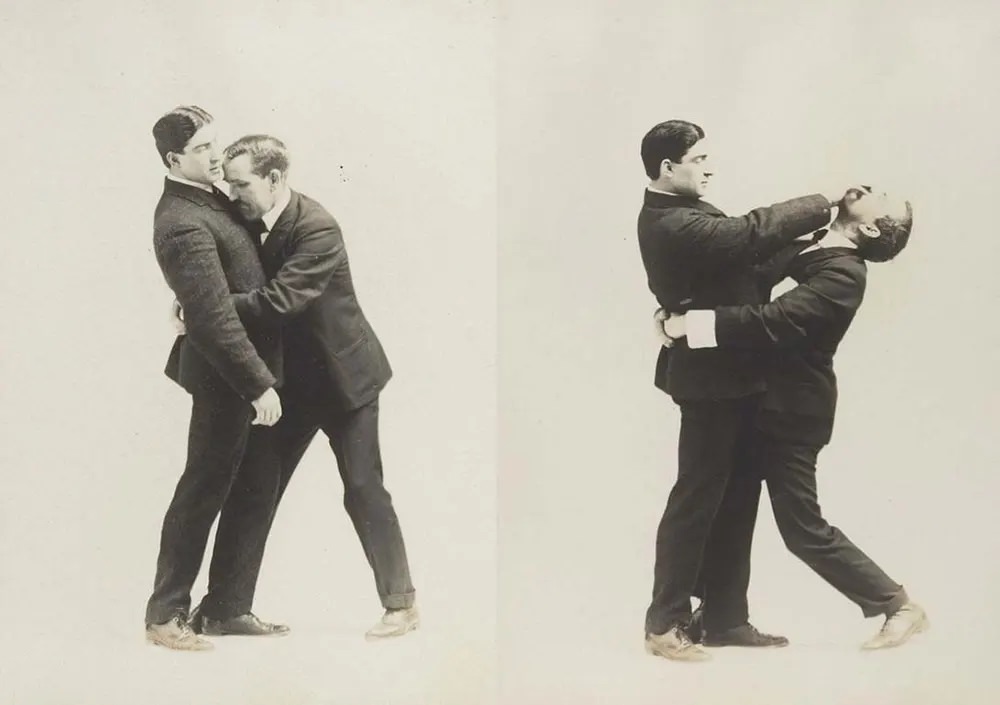
The 1895 album fits into this broader global tradition of recording and teaching combat techniques. Photography gave Victorian instructors a new and powerful way to freeze a moment in time and show exactly how a move should be performed. A written description of a chokehold is far less clear than a photograph of one.
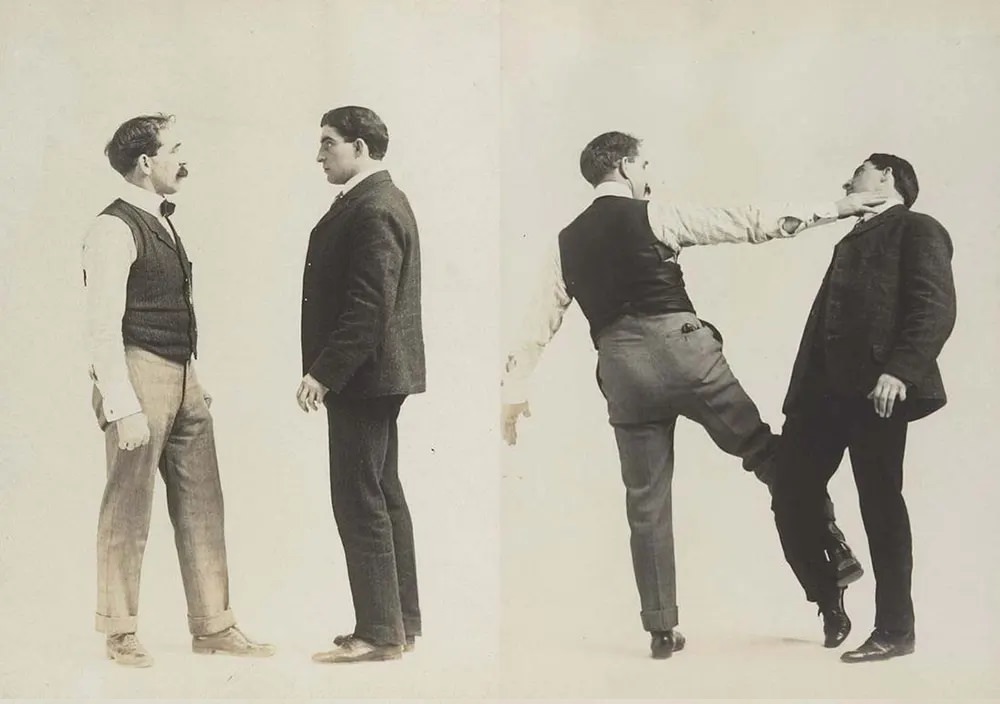
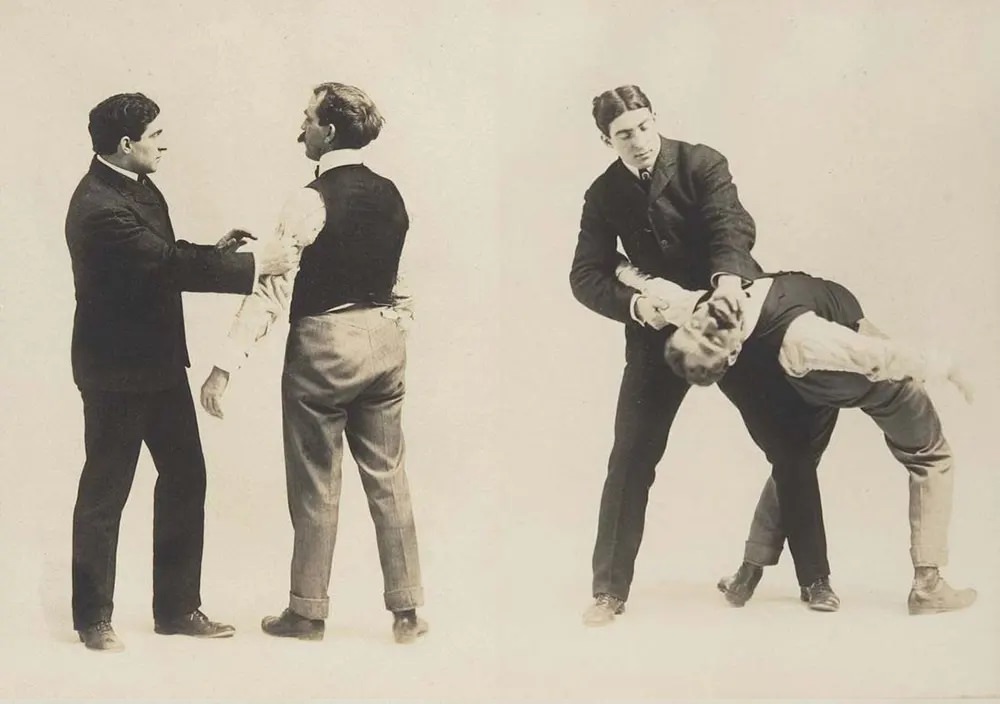
The specific style shown in the album is not labeled, which leaves the exact school of thought open. However, the focus on close-quarters grappling, arm control, and body leverage places it firmly within the kind of practical self-defense thinking that was popular in late 19th-century Britain and Europe. Gentlemen of the era were expected to be capable of defending themselves in a physical confrontation.
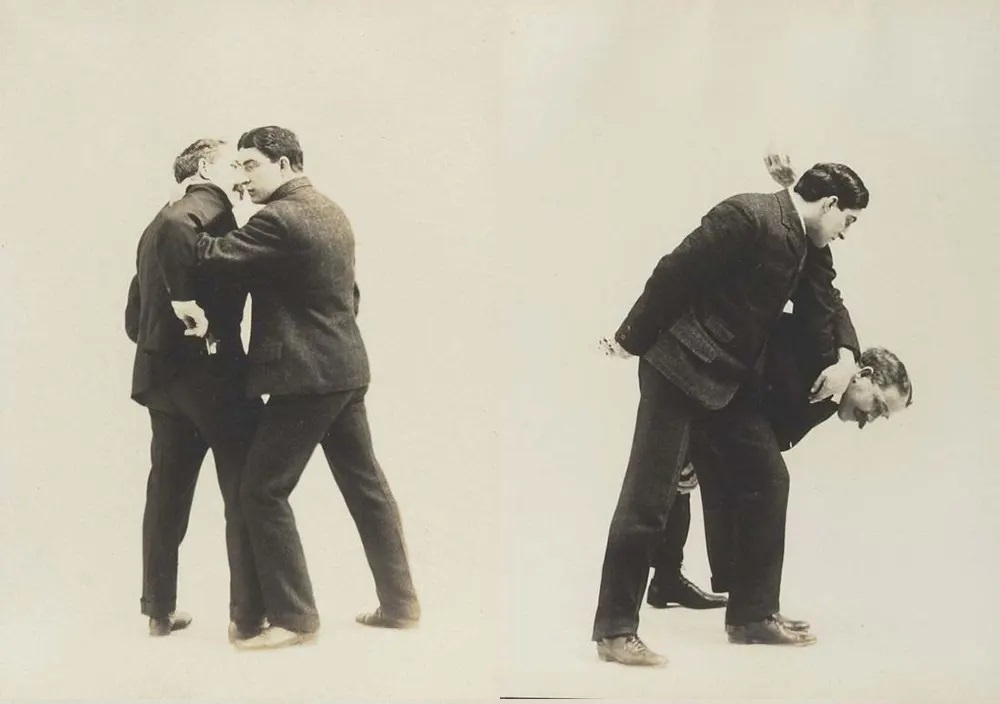
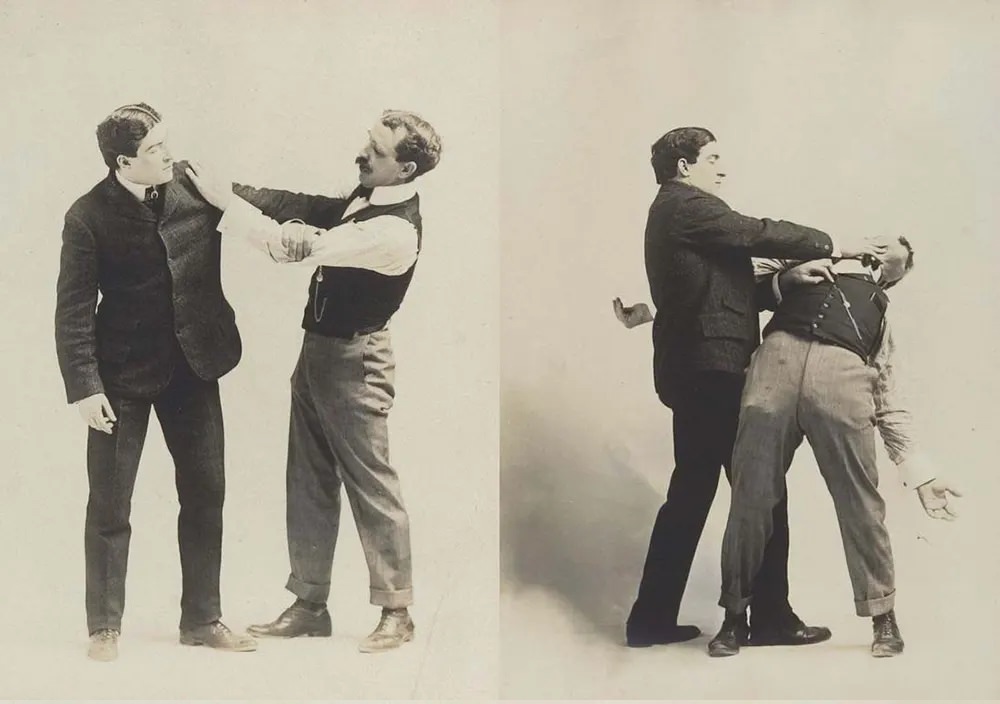
Some of the techniques shown look unusual to a modern eye — certain moves appear impractical or overly complex for a real street fight. But that reflects the thinking of the time. Victorian self-defense manuals often blended genuine practicality with theatrical flair, designed as much to impress as to instruct.
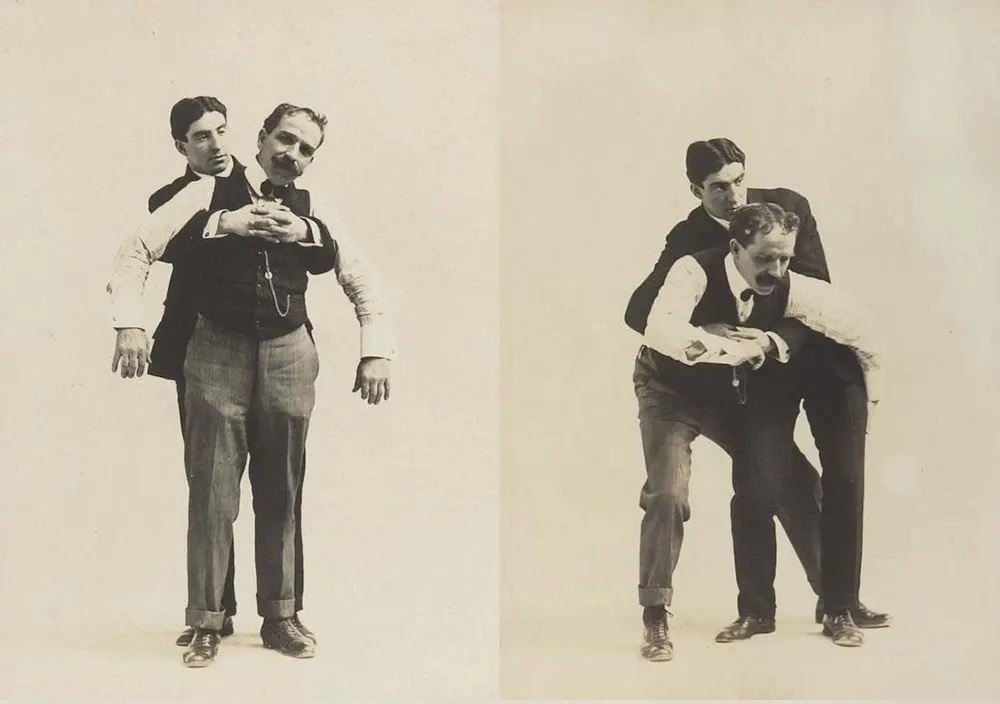
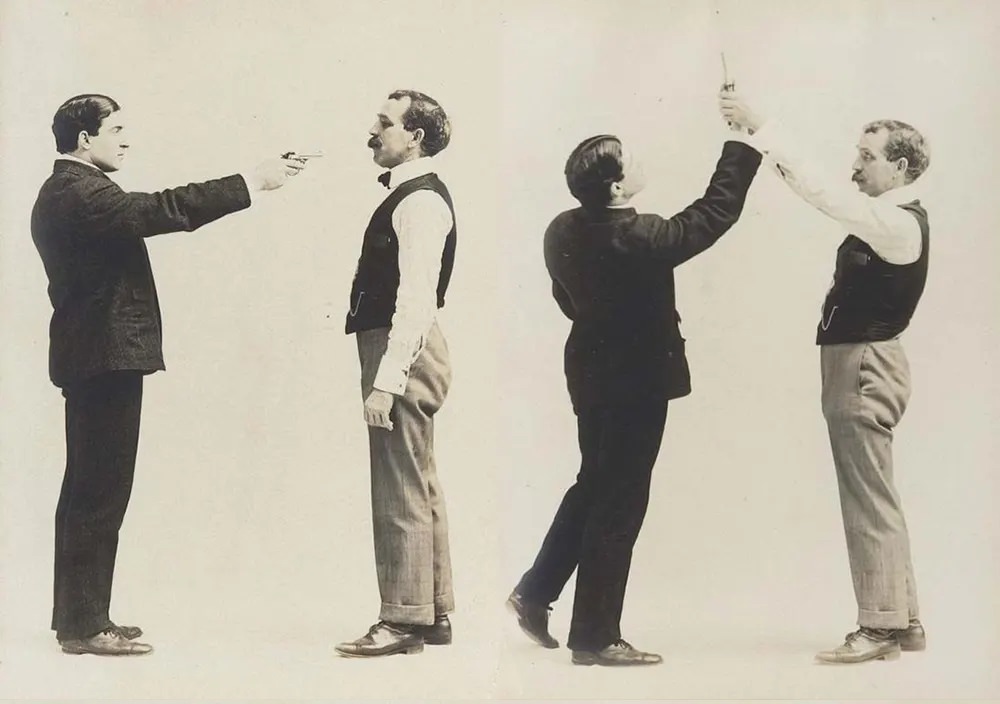
What the album represents, above all, is a snapshot of how one era chose to document and share knowledge about physical defense. The two suited men performing body slams and arm twists for the camera were part of a long human tradition — the desire to teach others how to protect themselves.