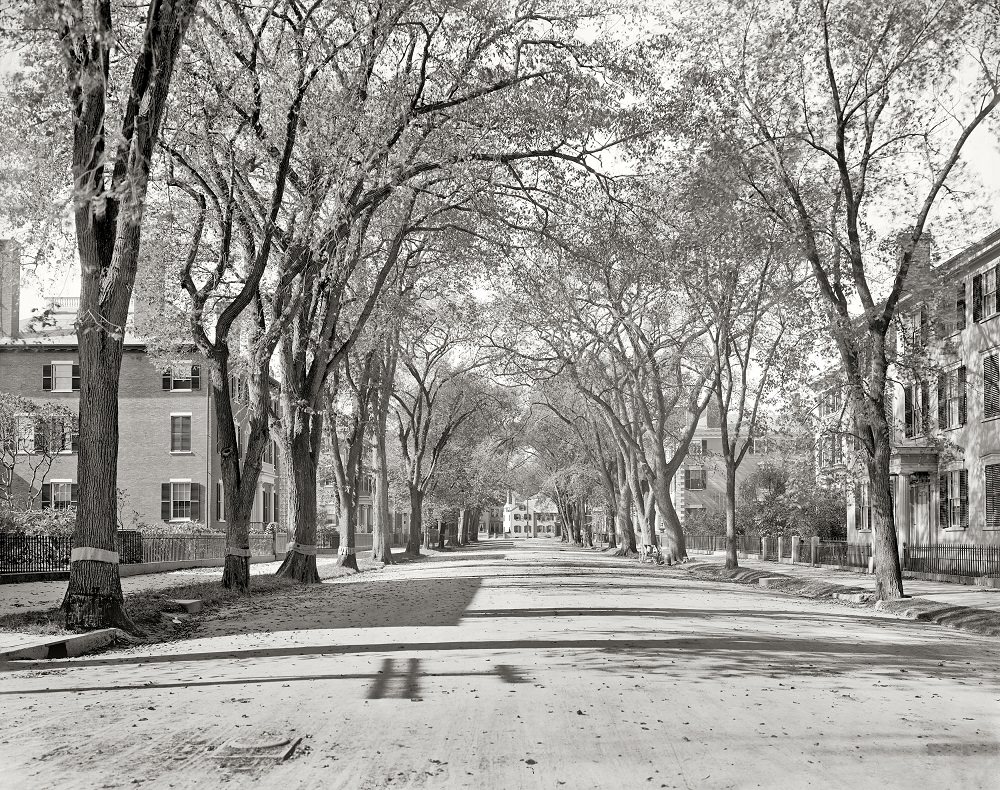
Salem, Massachusetts, was incorporated as a city on March 23, 1836. Long before that official designation, it had already built a reputation as a powerhouse of American commerce. During the 18th and 19th centuries, Salem was one of the most active maritime and shipbuilding centers on the East Coast. Its wharves handled goods from across the globe, and its merchant ships made the city wealthy. As the 19th century wore on, the shipping trade began to shrink. Salem’s economy shifted toward manufacturing to keep pace. Tanneries opened, shoe factories took root, and the Naumkeag Steam Cotton Company became a major employer. The city was reinventing itself, block by block.
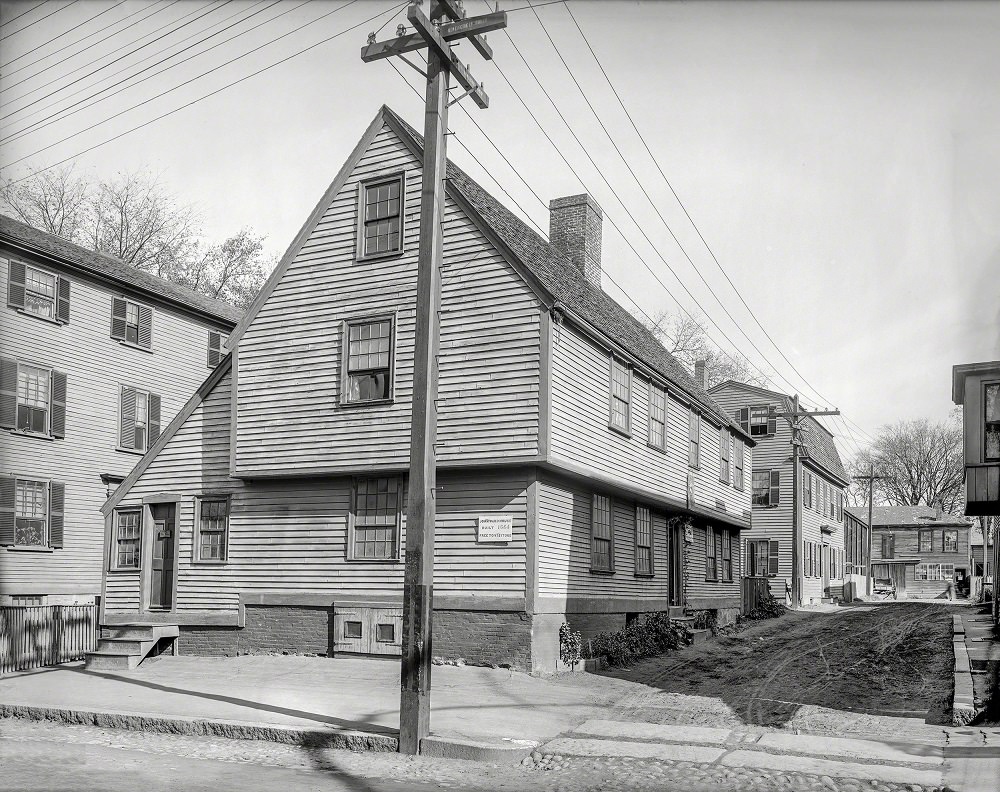
The John Ward House, photographed around 1906 on Prison Lane, is one of Salem’s most recognizable colonial-era structures. Built in 1684, it reflects the steep-roofed, timber-framed style common to 17th-century New England. By the early 20th century, it had already survived more than two hundred years of Salem’s dramatic history. Salem’s public buildings kept pace with its growth. The Bertram-Waters House, located at 370 Essex Street, was repurposed to serve as the Salem Public Library by 1910. It stood as a symbol of the city’s investment in civic life and education.
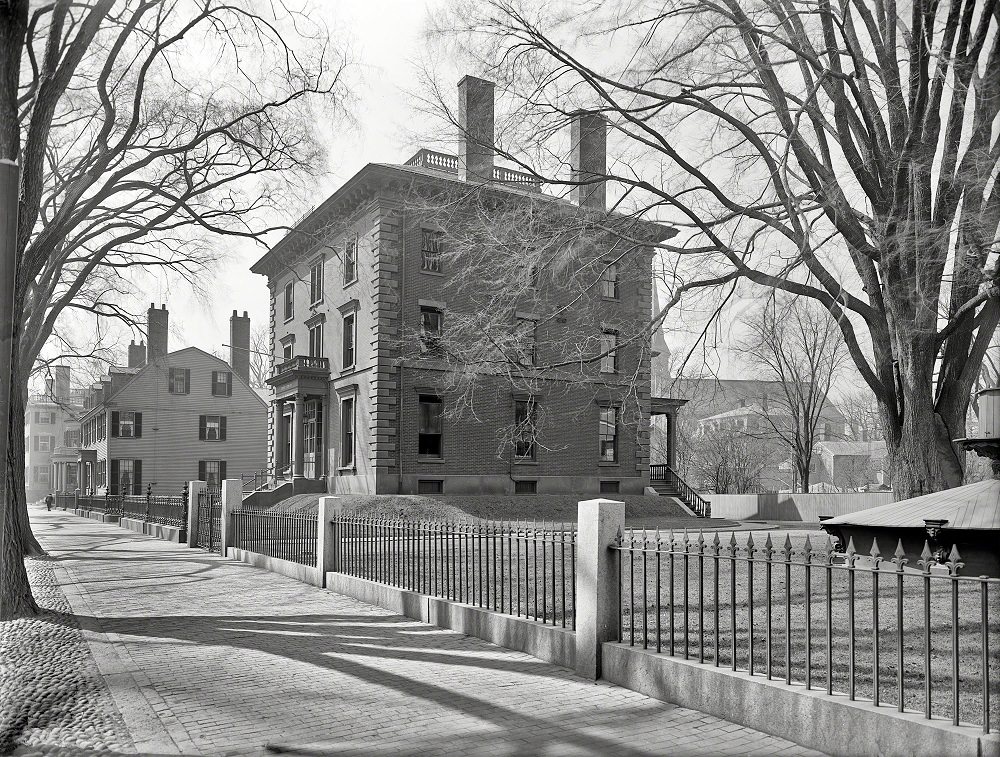
Few names are more tied to Salem than Nathaniel Hawthorne. Born in the city in 1804, Hawthorne drew heavily on Salem’s dark colonial past — particularly the witch trials of 1692 — to shape works like The Scarlet Letter and The House of the Seven Gables. His former home drew visitors and photographers well into the early 1900s.
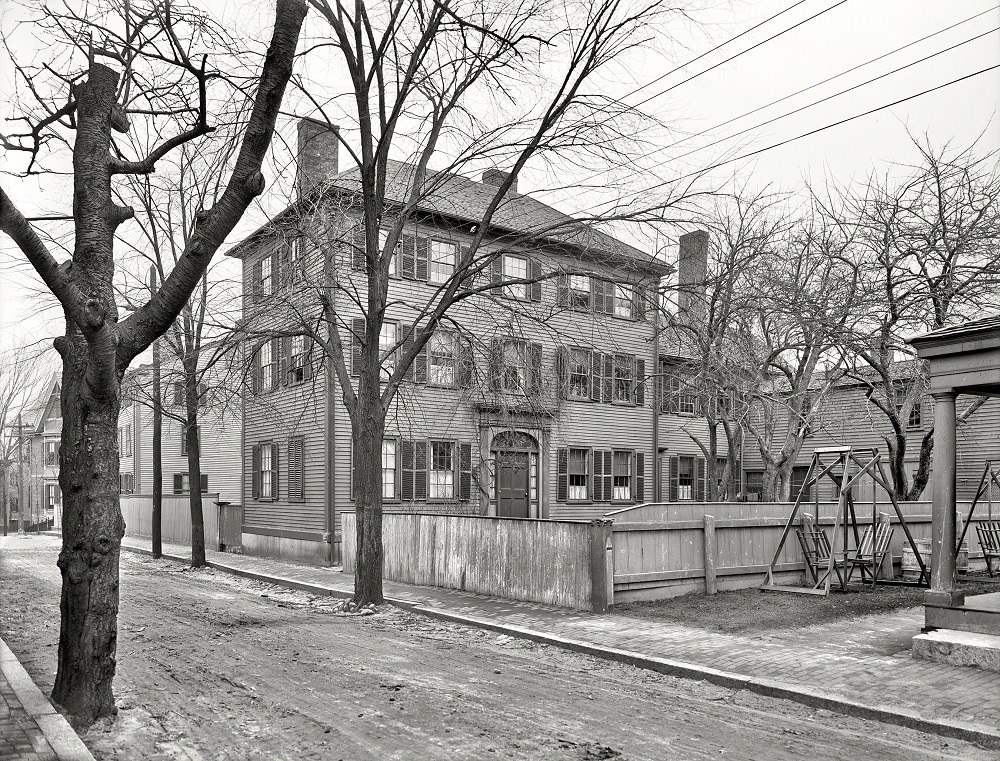
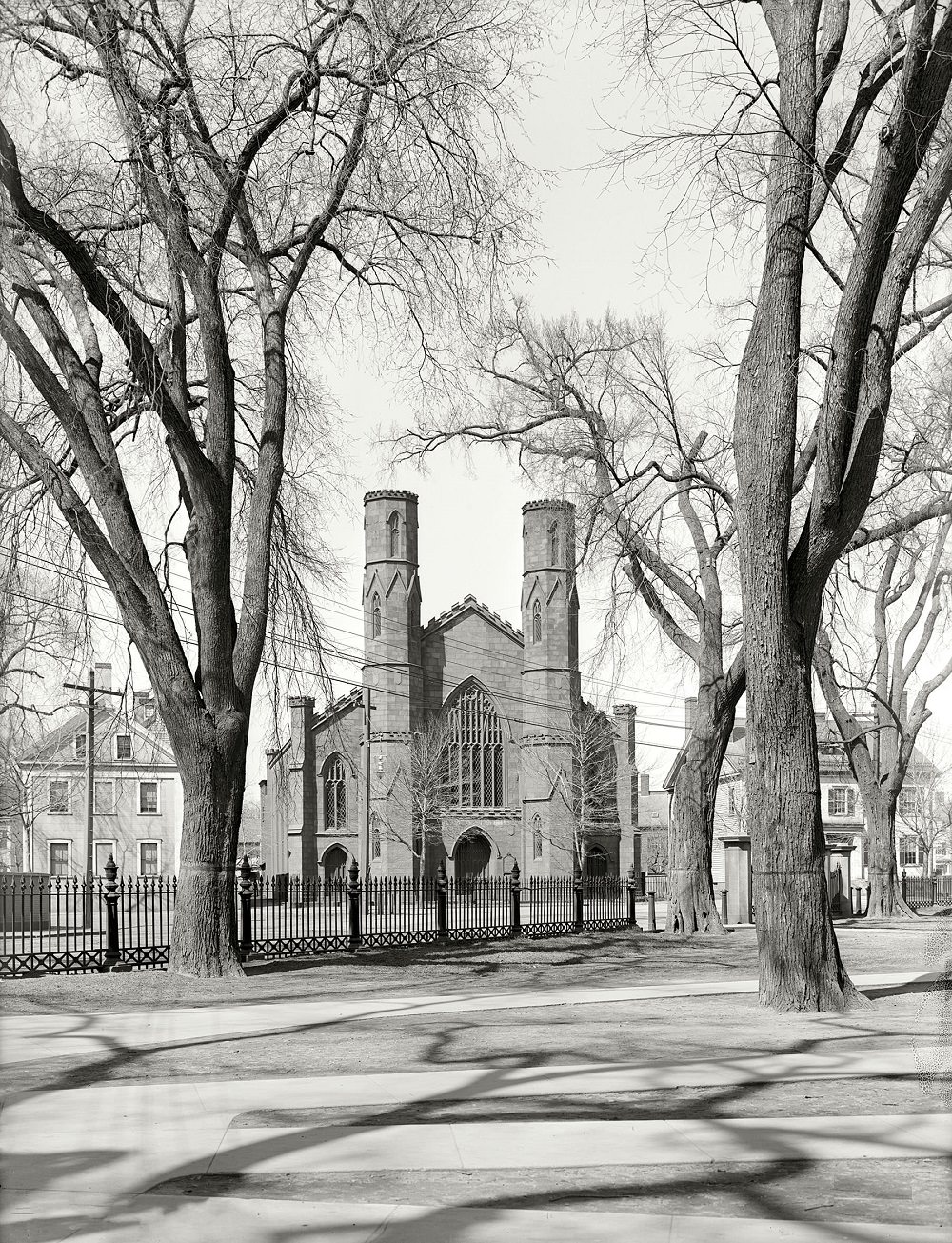
The building now known as the Salem Witch Museum was originally the East Church, photographed here in 1910. Its striking Gothic Revival architecture made it one of the most visually prominent structures in the city. The 1692 witch trials cast a long shadow over Salem, and many of the city’s most visited landmarks trace directly back to that period.
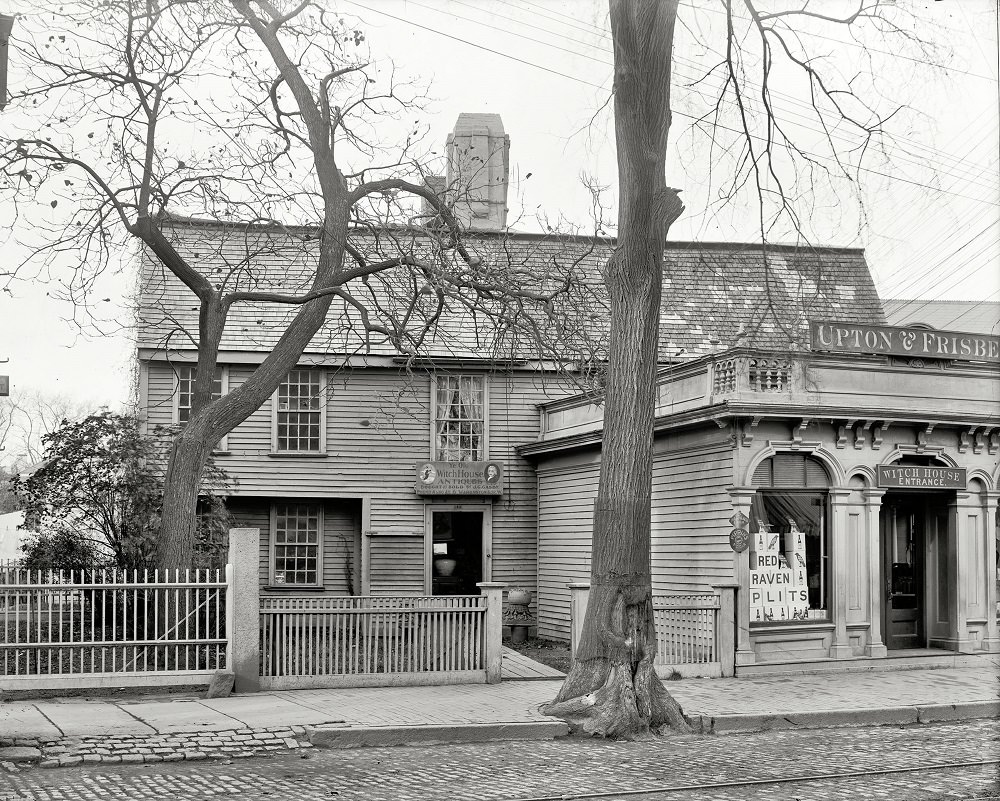
The Witch House — the former home of Judge Jonathan Corwin, one of the magistrates who presided over the 1692 witch trials — had a very different look in 1901. This photograph shows the ground floor operating as a commercial space selling antiques, cigars, and spirits. Practical commerce shared a roof with one of the most sobering addresses in American history.
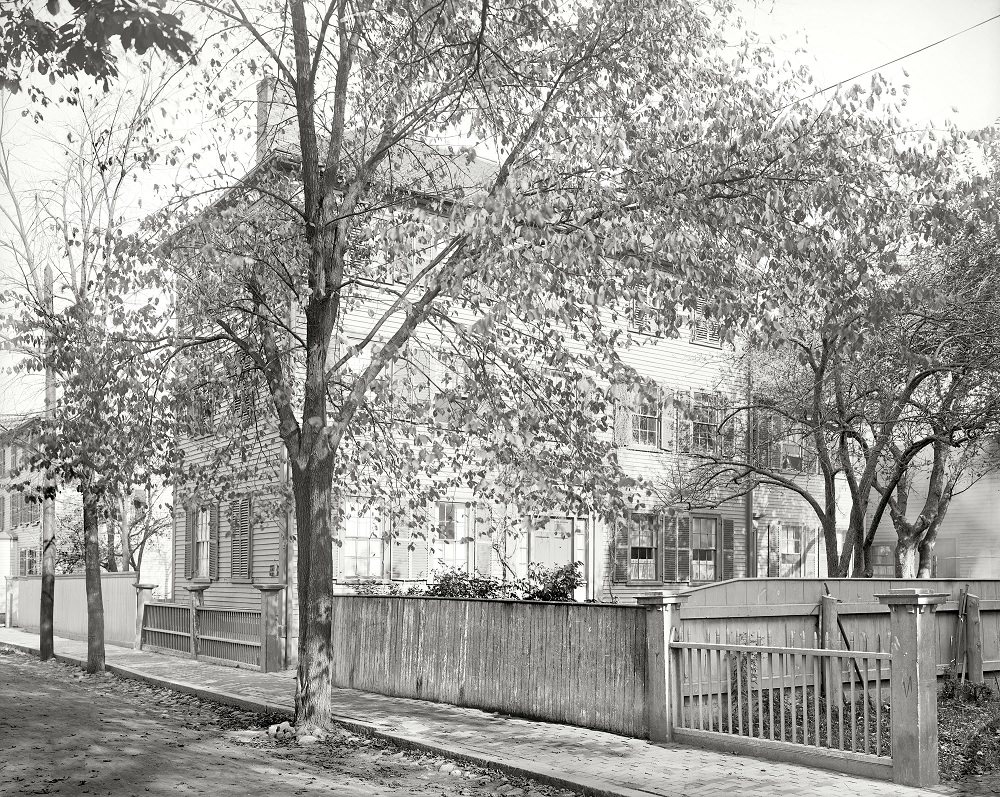
Another view of the Nathaniel Hawthorne house, captured around 1906, shows the building in its neighborhood context. The surrounding streetscape gives a clear sense of what early 20th-century Salem looked like at ground level — modest wooden structures packed tightly together along narrow lanes.
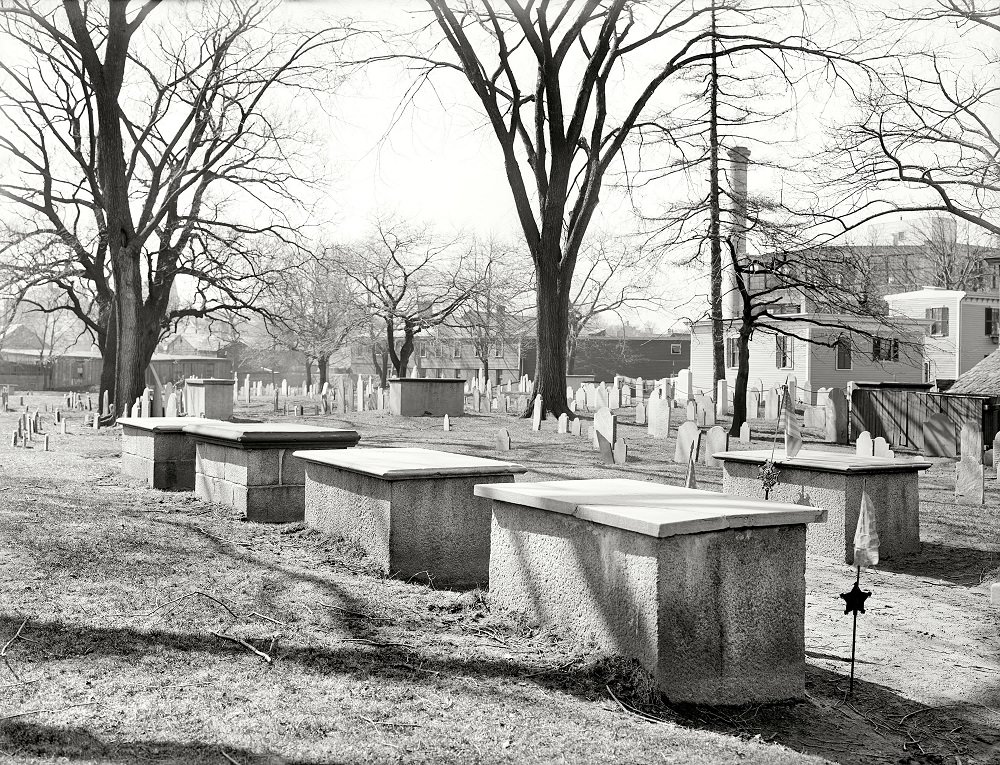
Charter Street Cemetery is one of the oldest burial grounds in the United States, established in 1637. By 1906, when this photograph was taken, it had been a fixture of Salem for nearly 270 years. Several victims and accusers from the 1692 witch trials are buried within its stone walls, including Judge John Hathorne, an ancestor of Nathaniel Hawthorne.
The Witch House, seen here in a 1906 photograph, presents a cleaner and more preserved appearance than the 1901 commercial image. Built around 1675, the structure is the only remaining building in Salem with a direct connection to the 1692 witch trials. Its distinctive overhanging second story and small leaded windows have made it one of the most photographed buildings in New England.
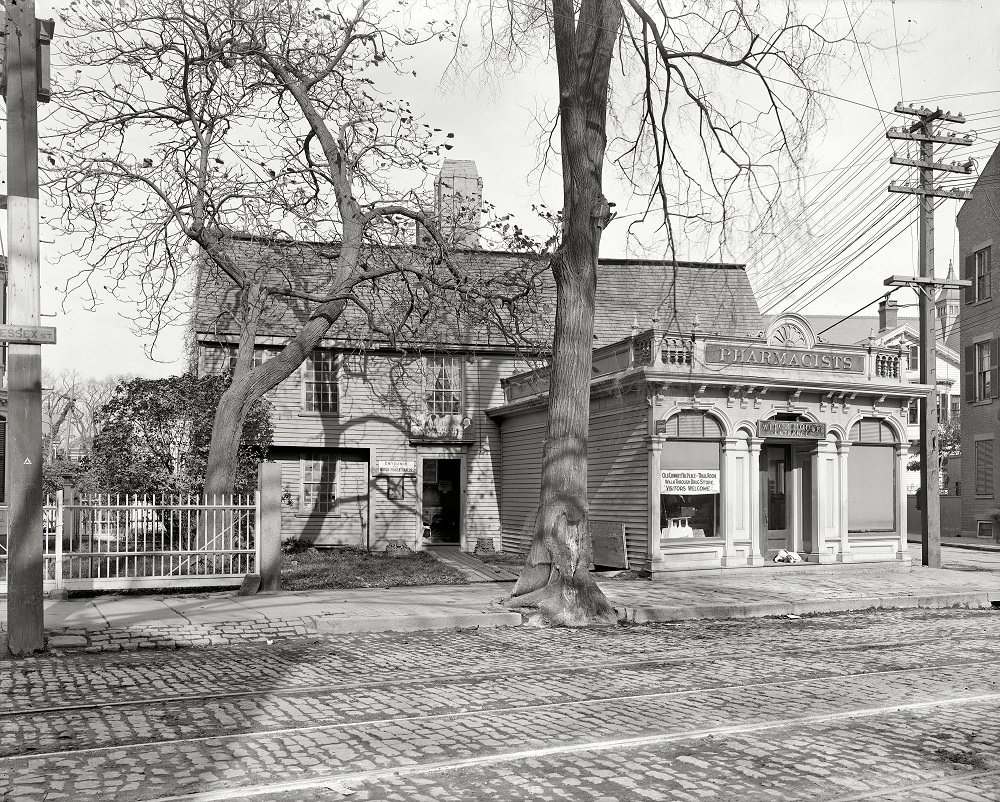
The Grimshawe House, photographed around 1906, carries its own literary connection. Nathaniel Hawthorne used this structure as the setting for his unfinished novel Septimius Felton and later Doctor Grimshawe’s Secret. The house sits near Charter Street Cemetery, and Hawthorne reportedly wrote while looking out over the old burial ground.
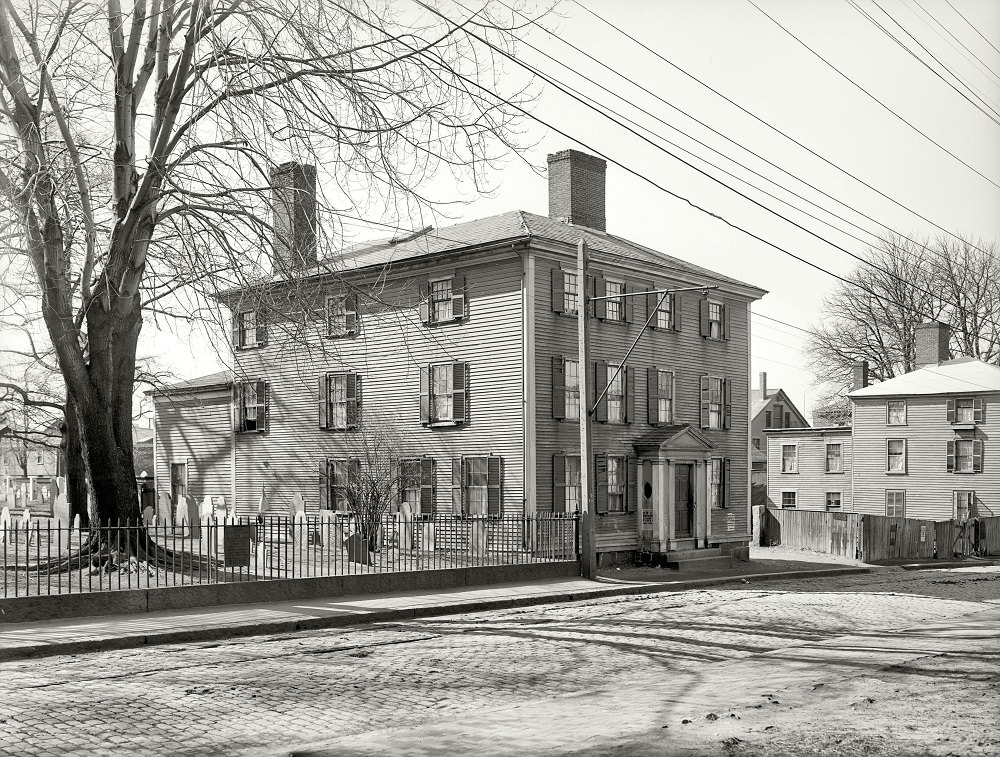
The Frisbee Moxie Witch House photograph from 1906 captures a commercial adaptation of Salem’s iconic landmarks. Moxie, one of the oldest mass-produced soft drinks in the United States, used Salem’s witch imagery to advertise its products on the building’s exterior. Signage like this reveals how Salem’s reputation was already being turned into a marketing tool in the early 1900s.
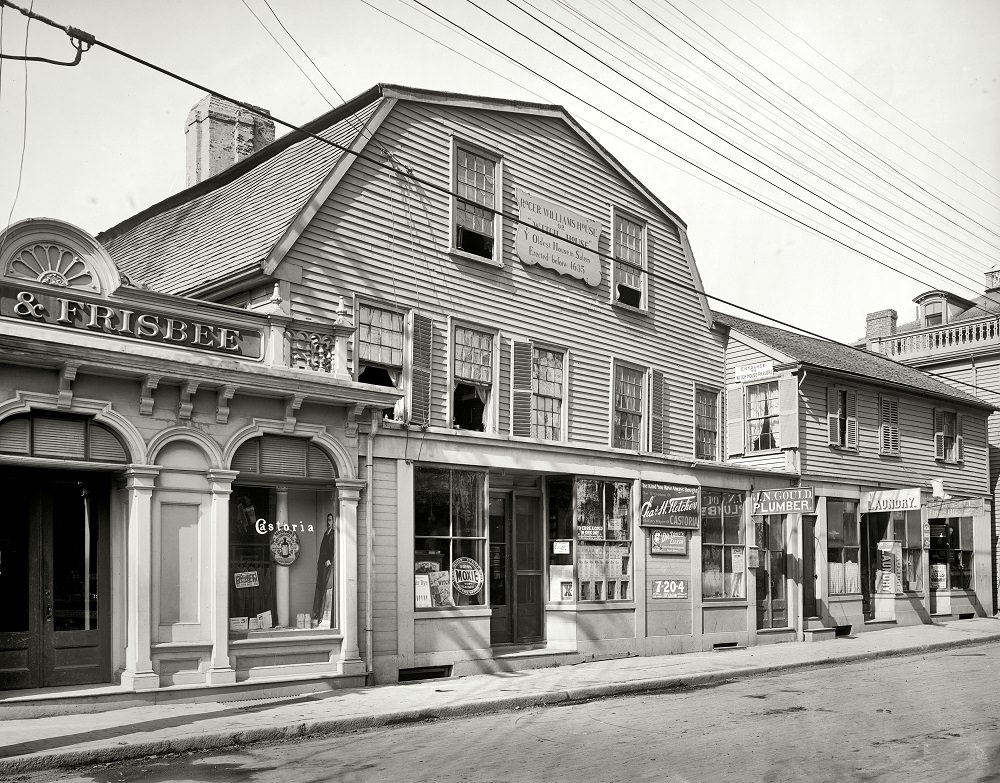
Transportation was central to Salem’s early 20th-century identity. The Boston and Maine Railroad depot at Riley Plaza connected Salem to Boston and beyond, making it a key node for both passengers and freight. Around 1910, the depot was a busy, functional hub that kept Salem integrated with the broader regional economy.
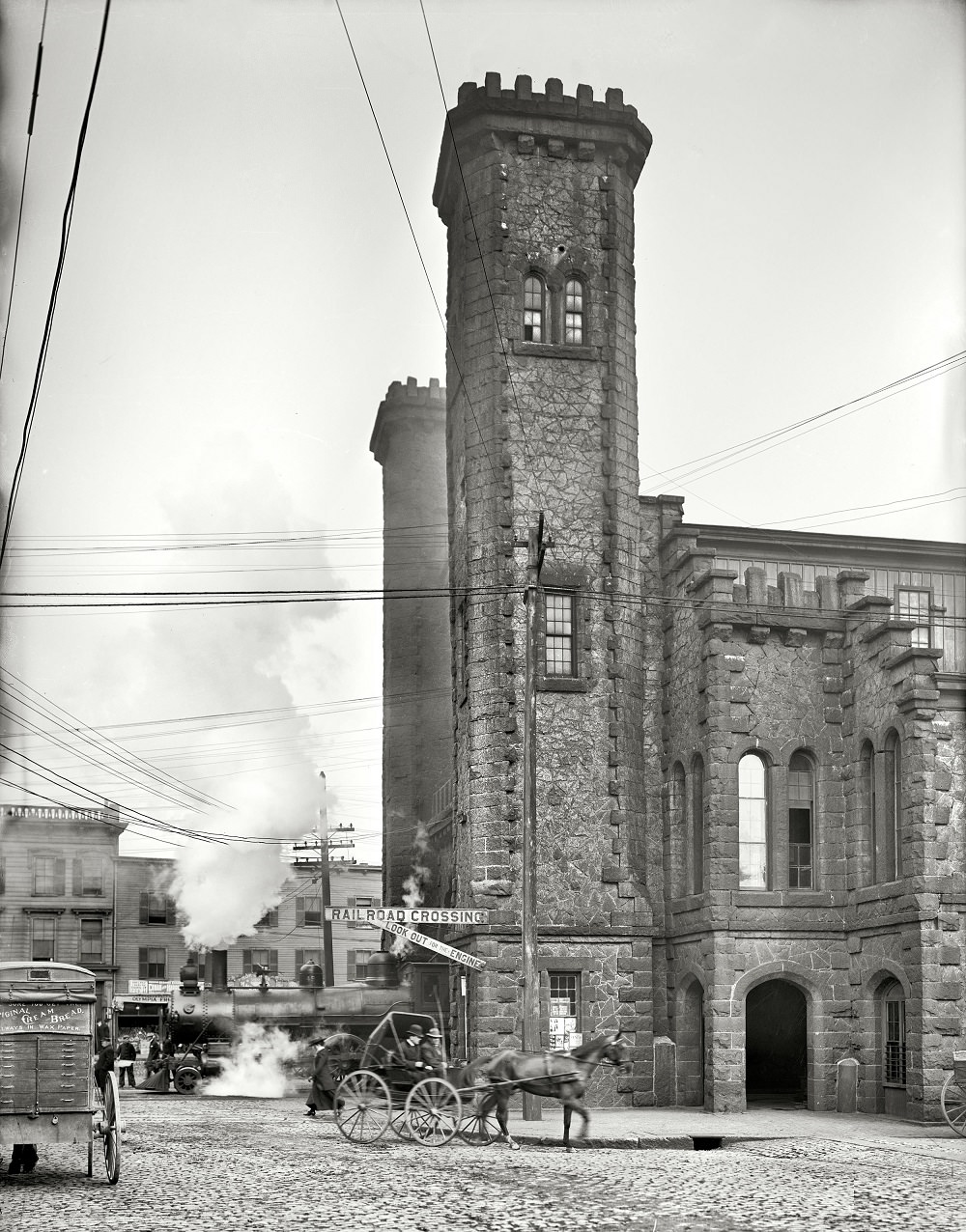
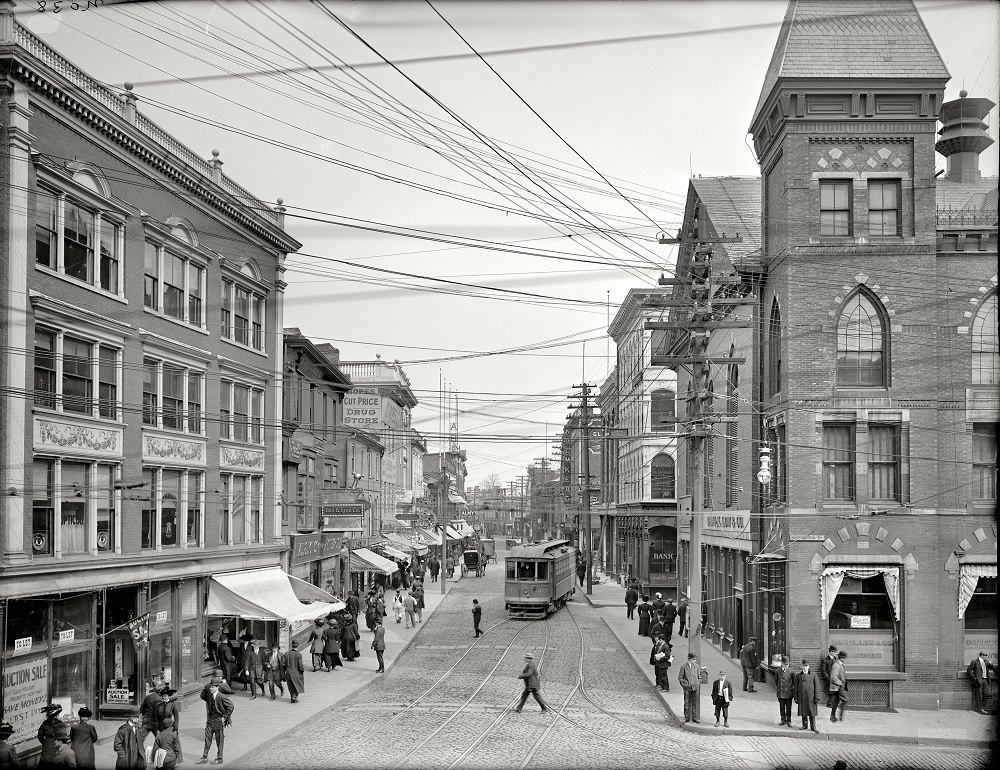
Essex Street, photographed around 1906 looking north from Town Square, shows the commercial heart of Salem in the early 20th century. Storefronts line both sides of the road, and the scene captures a city that was fully functioning and economically active — just years before the Great Fire would reshape much of it. On June 25, 1914, the Great Salem Fire tore through the city. The blaze destroyed over 400 homes and 1,376 buildings in total, leaving 3,500 families without shelter. The fire started in a leather factory and spread rapidly through the densely built neighborhoods. The scale of the destruction prompted the creation of the United States Employment Service, as officials scrambled to coordinate relief and reconstruction efforts.
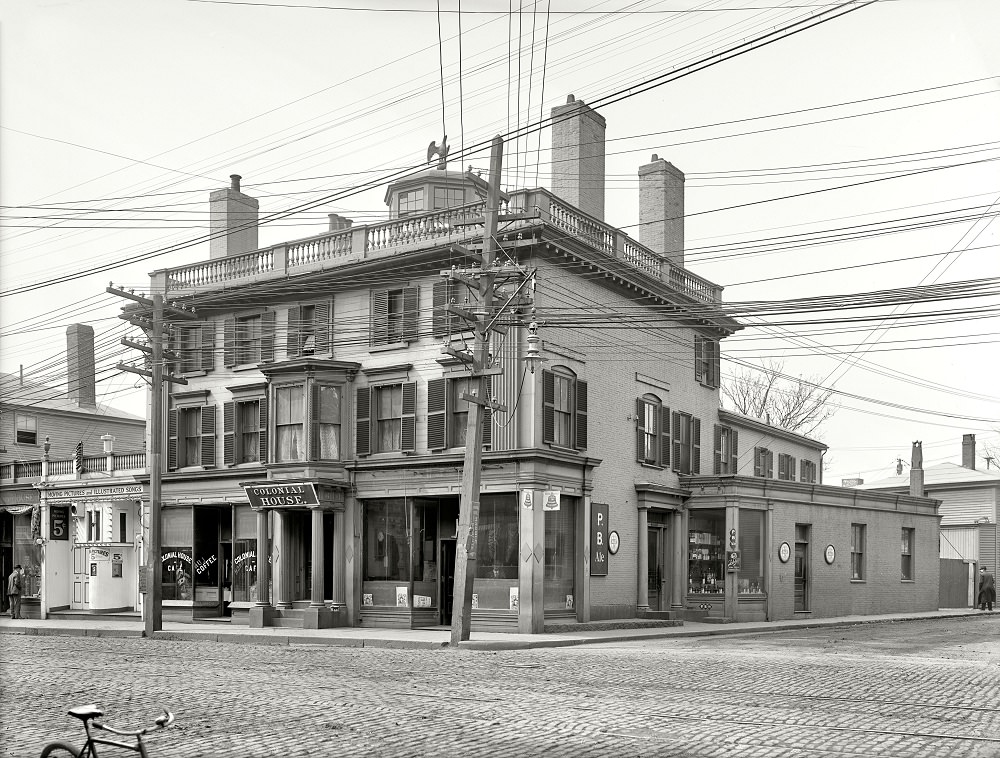
The Colonial House Cafe, photographed in 1906, gives a glimpse into everyday Salem life before the fire. Restaurants and cafes like this one served the workers, merchants, and residents who made up the city’s daily rhythm. The signage and architecture reflect a city comfortable with its colonial identity, wearing its history as both a cultural badge and a commercial draw.
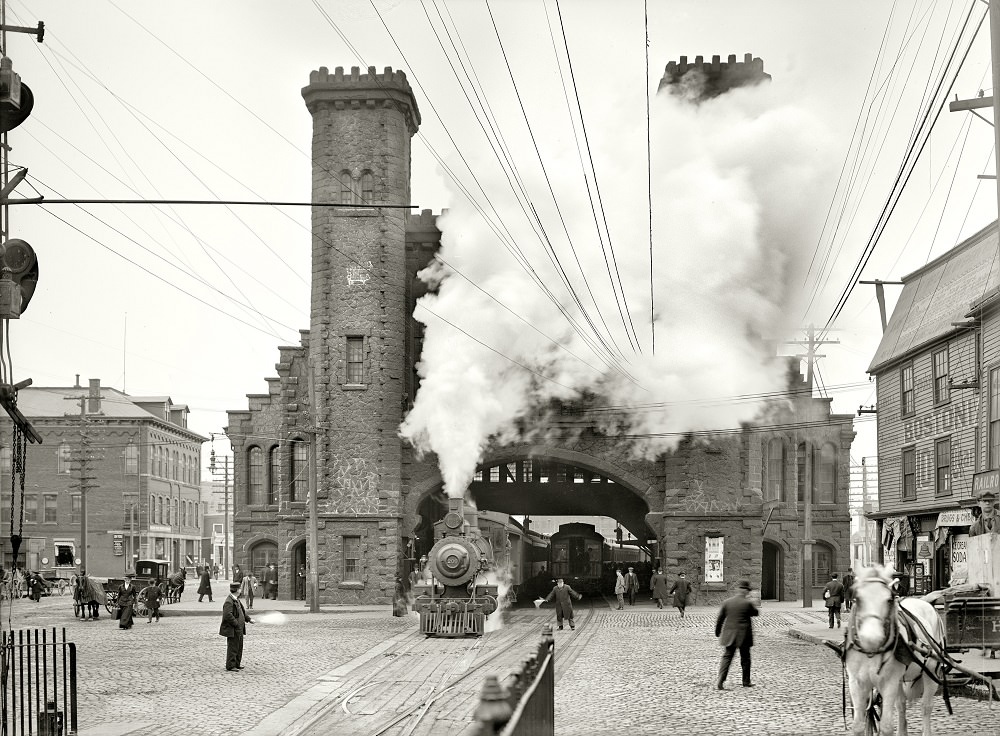
A second photograph of the Boston and Maine Railroad depot at Riley Plaza, also taken around 1910, captures the station from a different angle. The depot served as a daily artery for Salem’s residents, connecting them to employment, trade, and travel. Its presence in multiple photographs from this era reflects just how central the railroad was to city life.
Chestnut Street, photographed around 1906, stands as one of Salem’s most elegant residential corridors. Lined with Federal-style mansions built by wealthy merchants in the early 19th century, the street reflects Salem’s maritime prosperity at its peak. The American Institute of Architects has recognized Chestnut Street as one of the finest streets in the United States. These photographs of Chestnut Street and the surrounding neighborhoods preserve what Salem looked like in the years leading up to the Great Fire — a city still shaped by centuries of history, caught in a moment just before dramatic change.