
Helsinki became the capital of Finland in 1810, when the country was under Russian rule. At that time, the city held just 4,000 people. By 1890, that number had surged to 60,000. The city grew fast, pulling in workers, merchants, and institutions that would shape it for generations. New buildings rose, streets were laid, and the harbor became a hub of trade and movement.
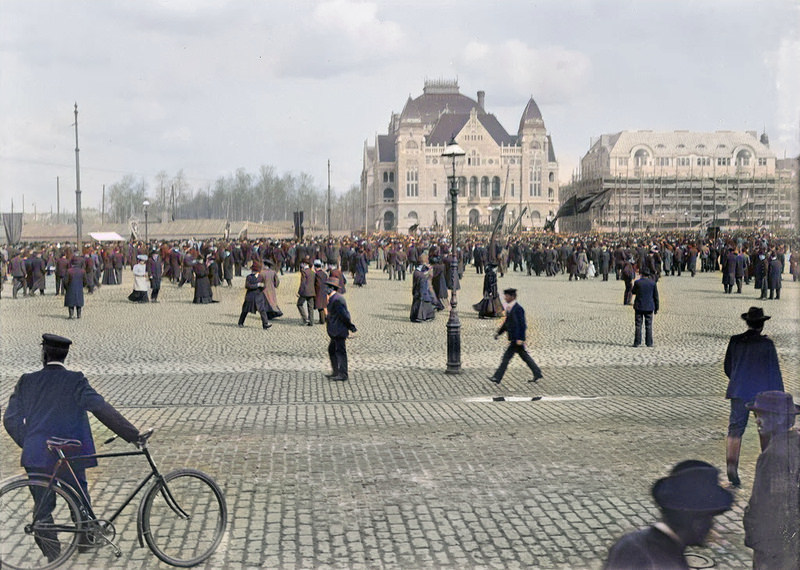
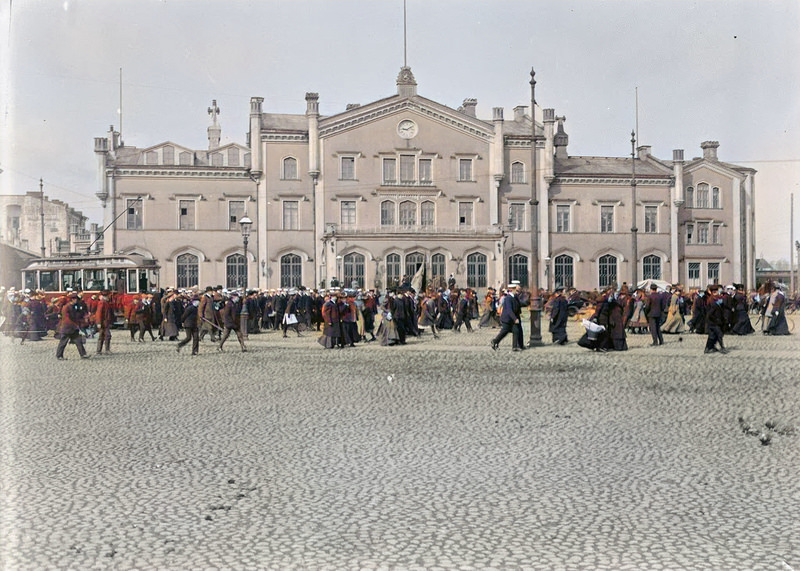
The Finnish National Theater and the Central Railway Station stood at the heart of this growing city. Both landmarks anchored the public life of Helsinki and drew crowds of residents and visitors alike. The railway station, completed in 1919, was a modern gateway to a city on the move.
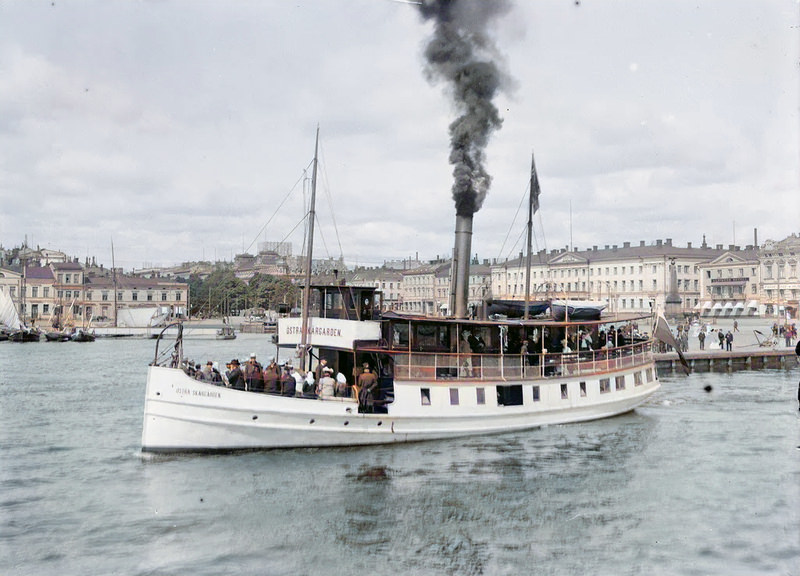
The South Harbor and Market Square were the beating heart of Helsinki’s waterfront. Steam ships connected the city to the Baltic Sea and beyond, carrying goods and passengers in and out of the Finnish capital.
Finland declared independence from Russia in December 1917. The break from Russian rule did not come peacefully. A civil war broke out almost immediately, pitting conservative government forces — called the Whites — against leftist rebel units known as the Reds. The fighting was short but brutal. By 1919, Helsinki’s parliament had elected Finland’s first president, bringing a measure of stability to the young nation.
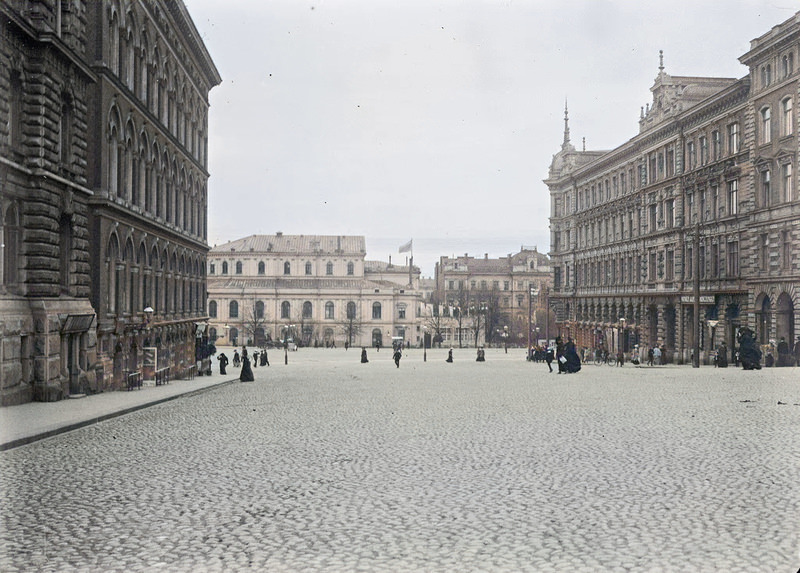
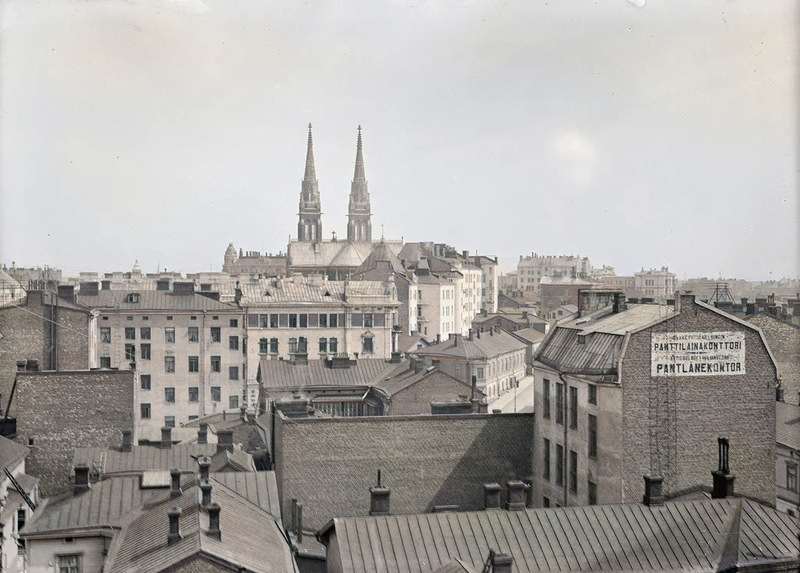
The neighborhoods of Punavuori and Ullanlinna developed distinctive residential characters during this period. Rows of apartment buildings and tree-lined streets gave these areas a dense, urban feel that was still relatively new for a city of Helsinki’s size.
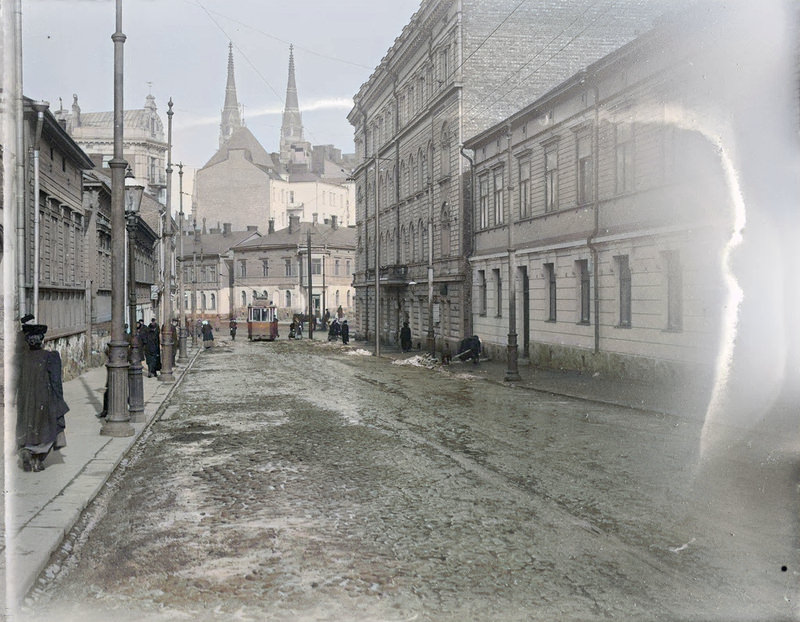
St. John’s Church dominated the Punavuori skyline. Built in the late 19th century, it remained one of the largest churches in Finland and a defining feature of the southern Helsinki landscape.
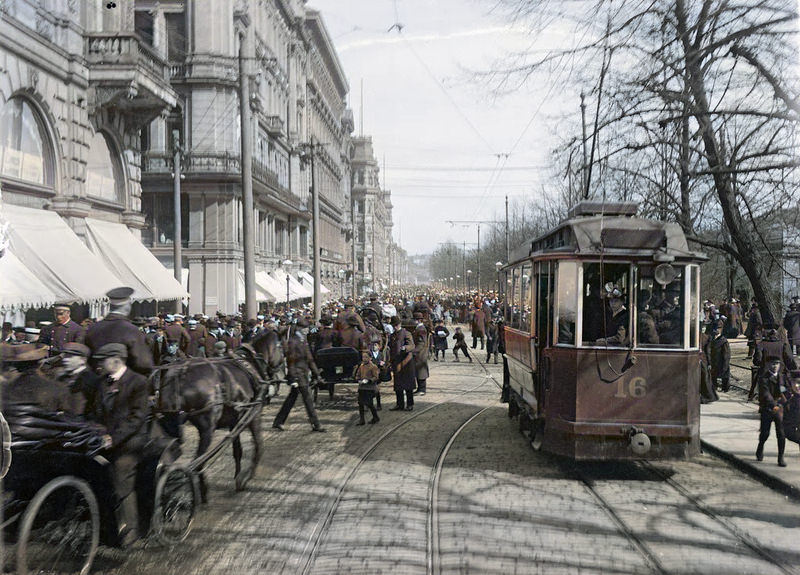
Public life in Helsinki was lively. May Day brought crowds into the streets each year, with celebrations that carried both cultural and political meaning — especially in the years following the civil war. The holiday was observed across social classes, though its tone differed sharply between workers and students.
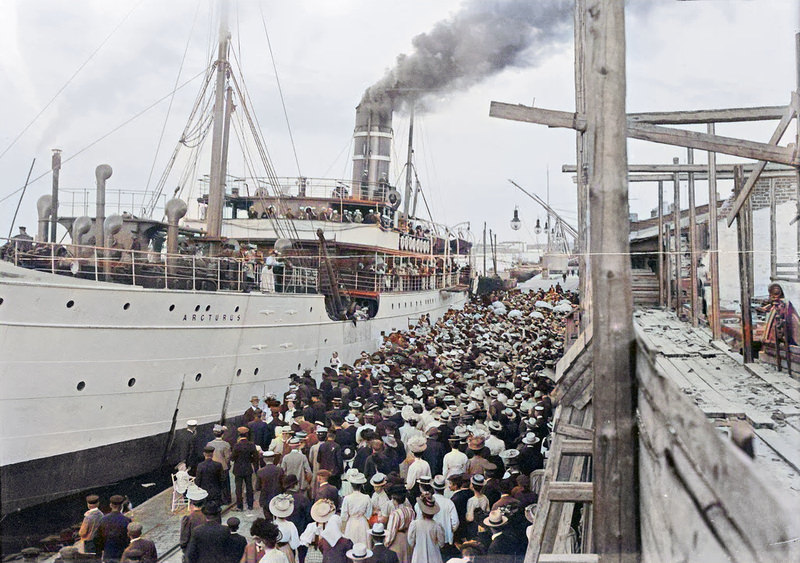
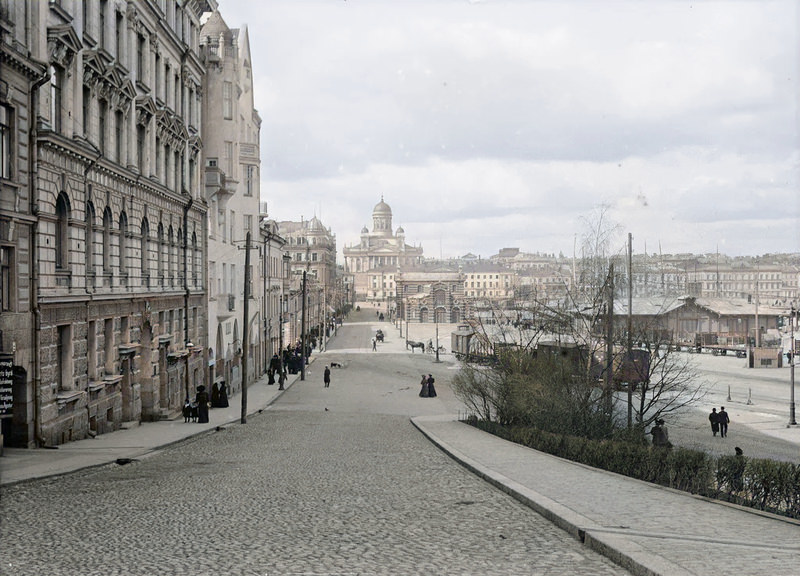
The South Harbor was Helsinki’s main point of departure and arrival. Steam ships like the Arcturus made regular runs along the Finnish coastline and across the Baltic, keeping the city connected to the wider world during the early decades of independence.
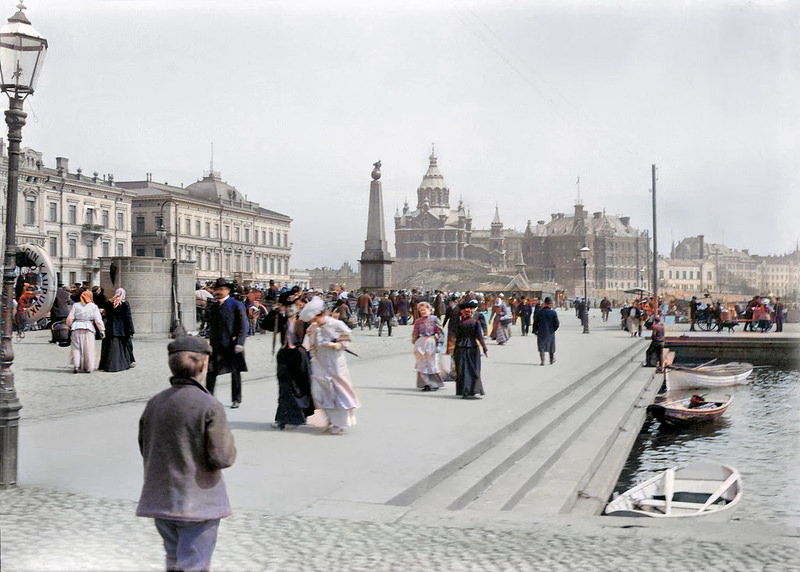
The Market Square sat at the edge of the harbor and served as Helsinki’s most important public gathering space. Vendors sold fish, produce, and goods there daily. The square also hosted larger events and political demonstrations throughout the year.
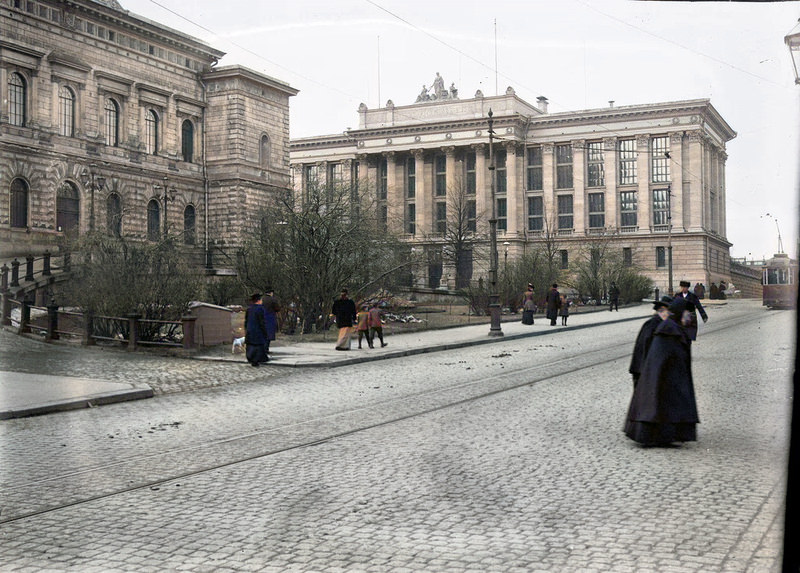
Helsinki’s financial and administrative institutions established themselves in solid, imposing buildings that projected stability. The Bank of Finland and the National Archives were key anchors of the city’s government district, symbolizing the new republic’s ambition to build lasting institutions.
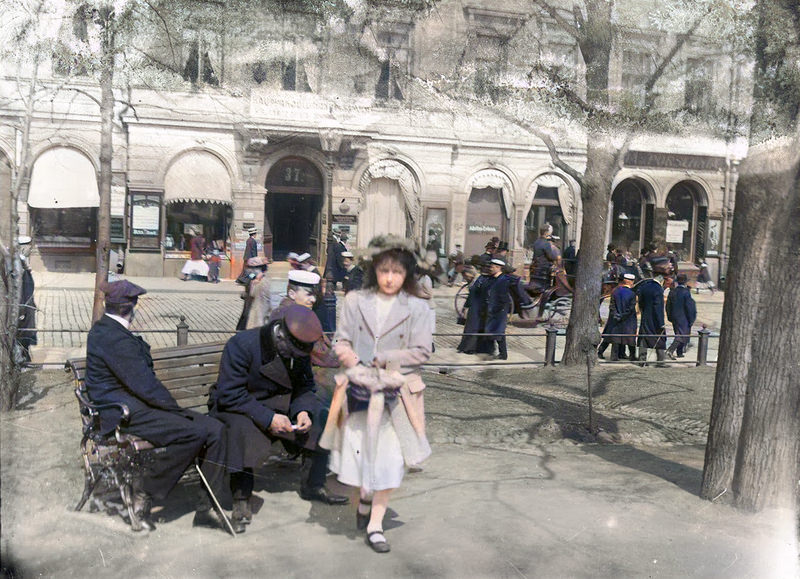
Esplanadi Park ran through the center of the city and was a popular spot for leisure. Street vendors, including young girls selling lottery tickets, were a regular sight along its paths. The park offered a rare open green space in what was quickly becoming a dense urban environment.
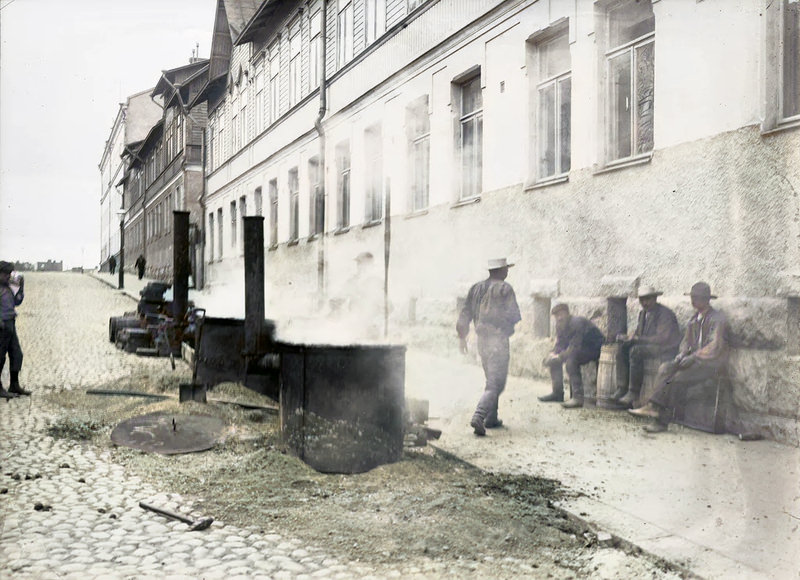
Infrastructure work was constant in early 20th-century Helsinki. Roads were being built, repaved, and expanded to keep up with the growing city. Workers operated largely by hand, with crews filling the streets at all hours.
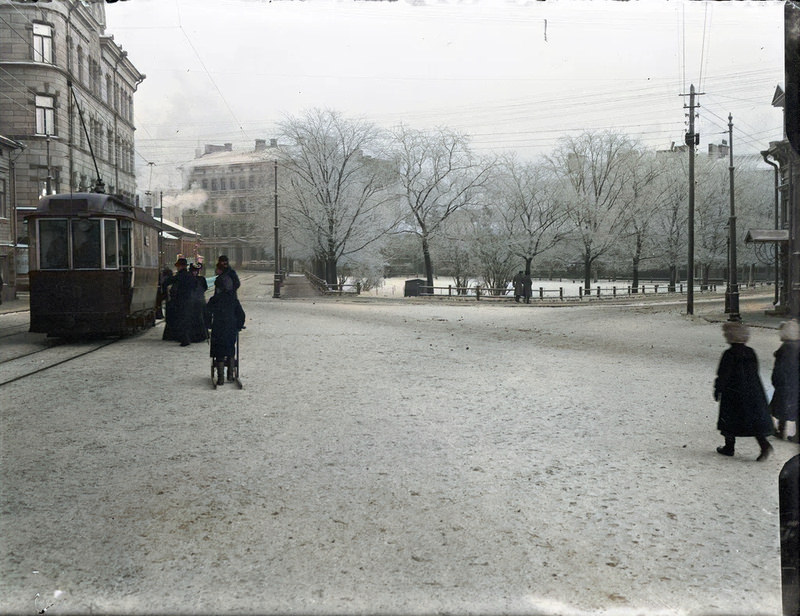
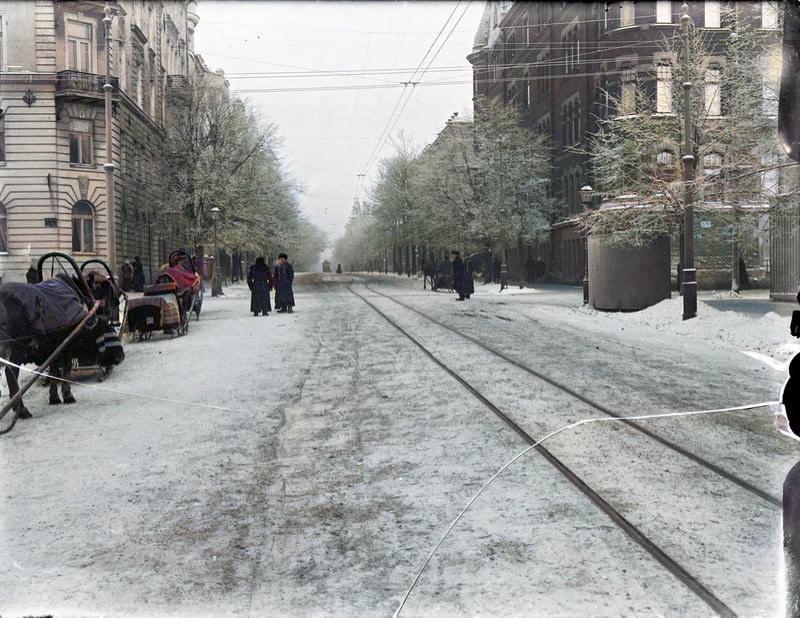
Bulevardi was one of Helsinki’s main commercial streets. Its wide sidewalks and storefronts attracted shoppers and residents from across the city. Alongside it, streets like Lapinlahdenkatu and Albertinkatu formed the dense grid of southern Helsinki’s working neighborhoods.
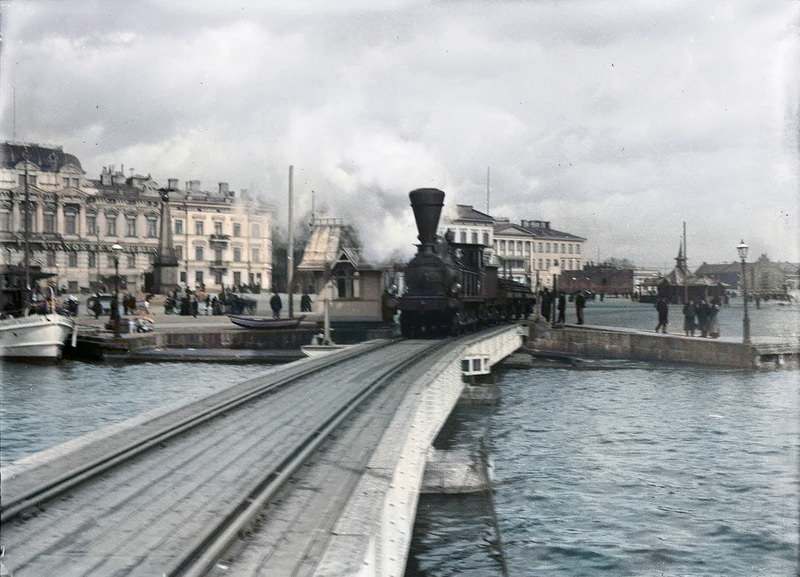
A locomotive at the Market Square was not an unusual sight during this era. The rail network played a central role in moving goods into and around the city, and tracks ran through areas that would later become pedestrian-only zones.
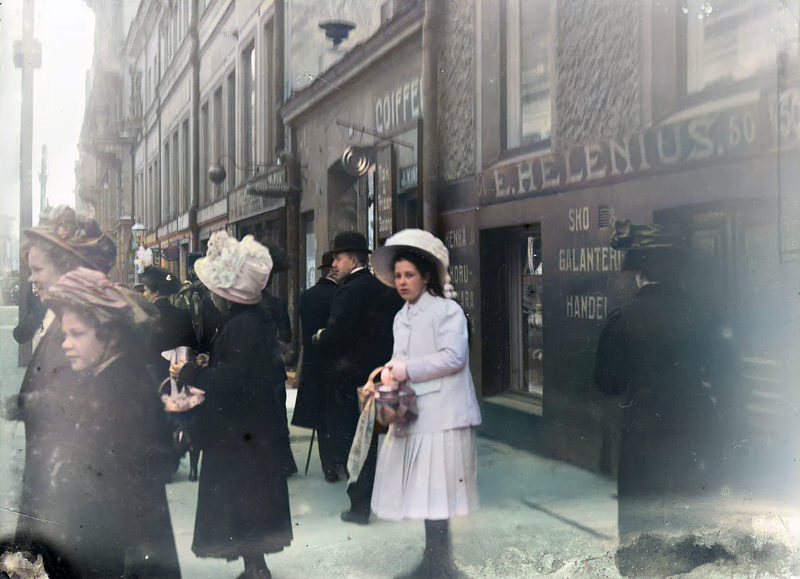
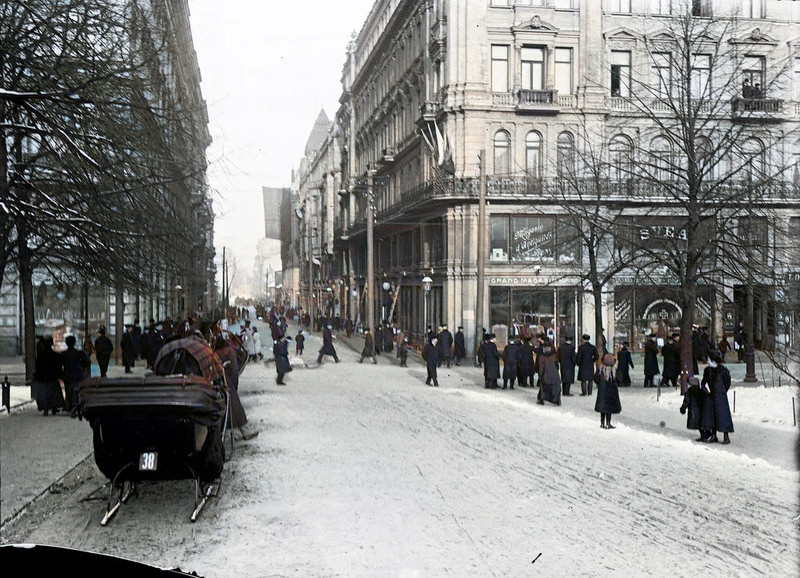
Streets like Mikonkatu and Aleksanterinkatu formed the commercial spine of central Helsinki. Trams, pedestrians, and horse-drawn carts shared the road in these early years, creating a busy, layered street life that reflected the city’s rapid growth.
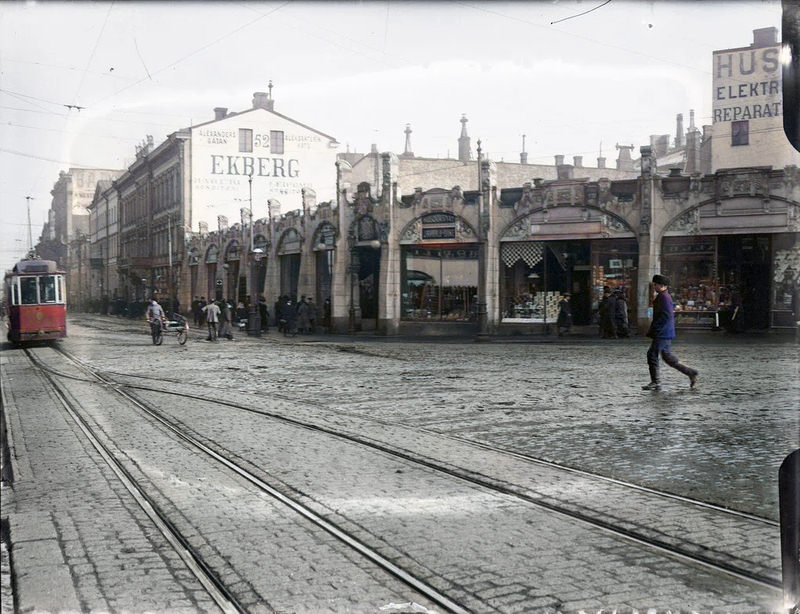
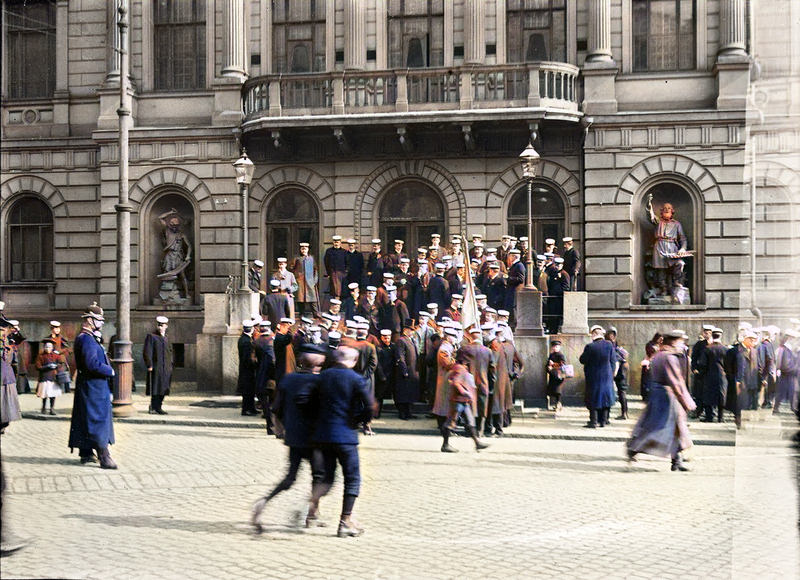
The Old Student House, known in Finnish as Vanha ylioppilastalo, served as a cultural and social center for university students. It hosted events, debates, and performances, making it a significant venue in Helsinki’s intellectual life during the early 20th century.
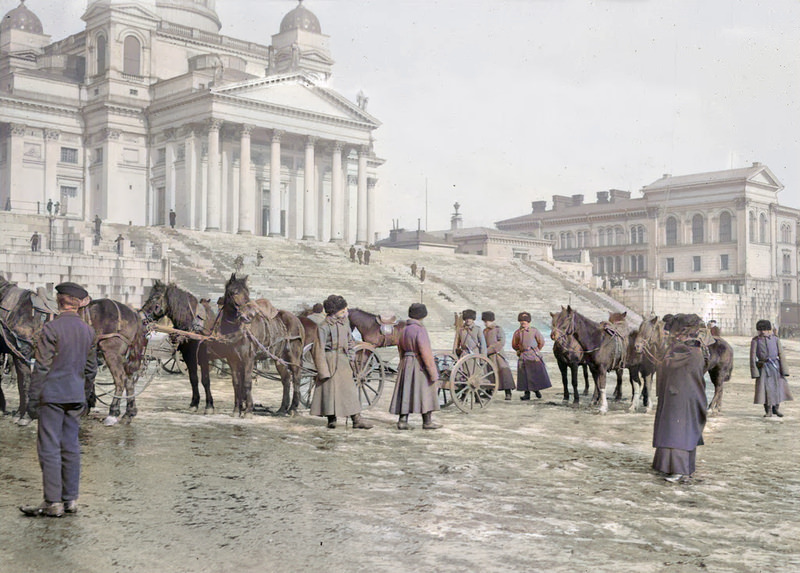
Before independence, Russian soldiers were a visible presence on Helsinki’s streets. Senate Square, with its grand cathedral and government buildings, served as a backdrop to the Russian imperial authority that governed Finland until 1917. Photos of soldiers there capture the city’s pre-independence reality.
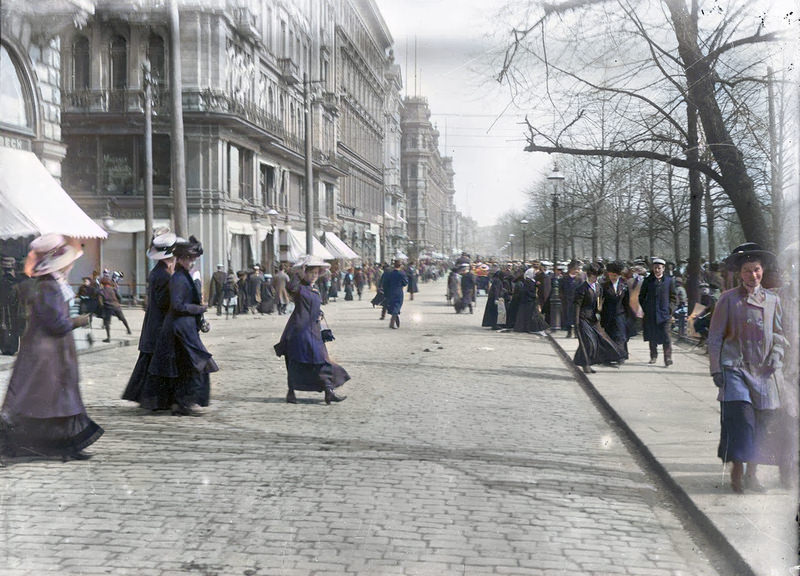
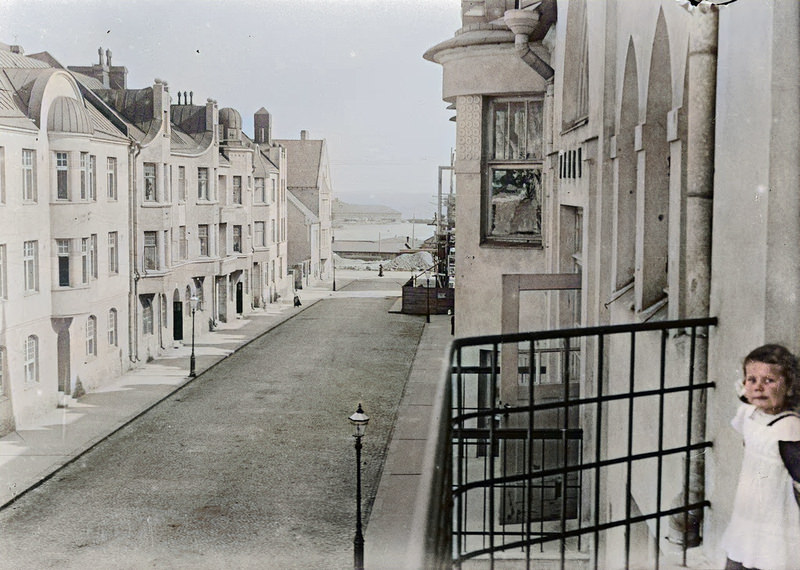
The Northern Esplanadi lined the northern edge of the park boulevard and featured some of Helsinki’s most prominent addresses. Further south, residential streets like Huvilakatu offered a quieter pace, lined with wooden and stone buildings that housed the city’s middle-class families.
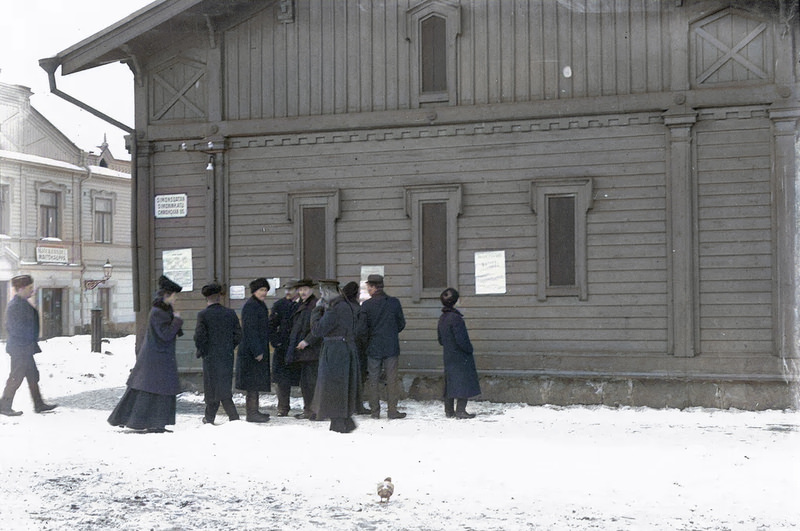
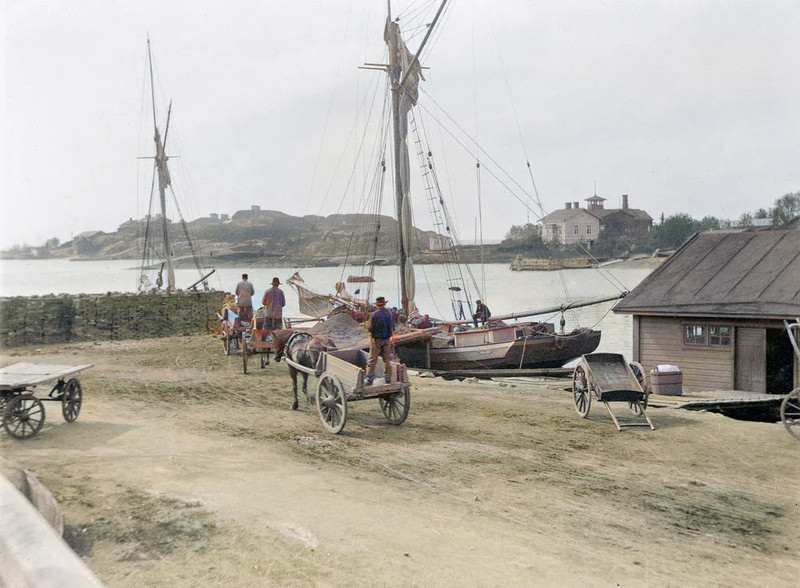
Kaivopuisto, known in Swedish as Brunnsparken, was Helsinki’s oldest public park. Located on a peninsula overlooking the sea, it was a favored spot for the city’s upper classes and a place where residents gathered to walk and socialize on warmer days.
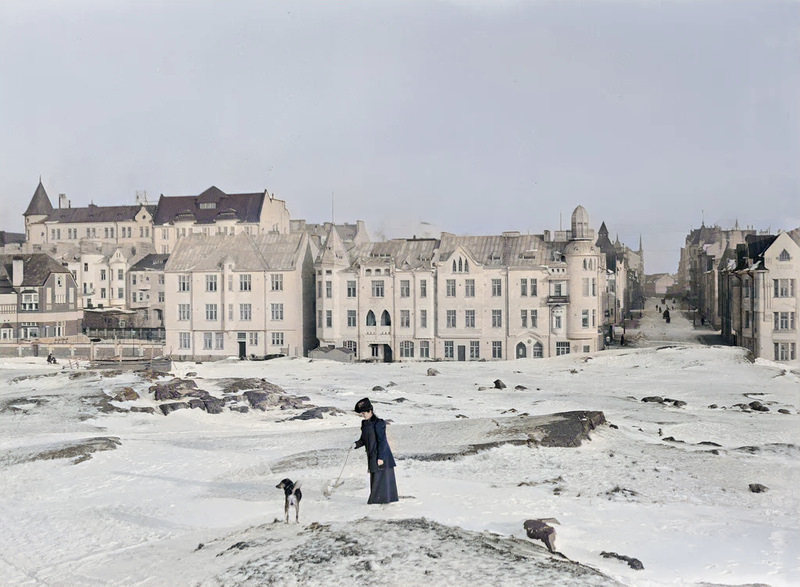
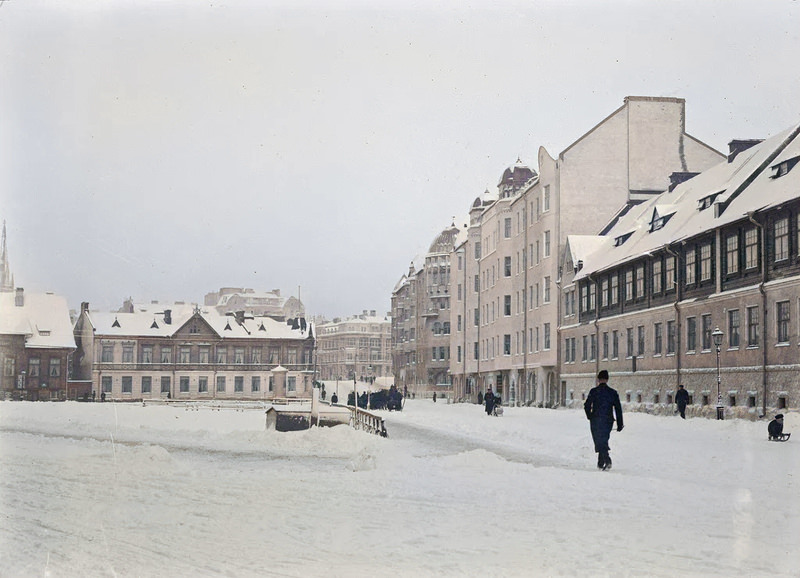
The Eira and Ullanlinna districts developed as prestigious residential areas in the late 19th and early 20th centuries. Their Art Nouveau architecture and proximity to the sea made them among the most sought-after addresses in the Finnish capital.
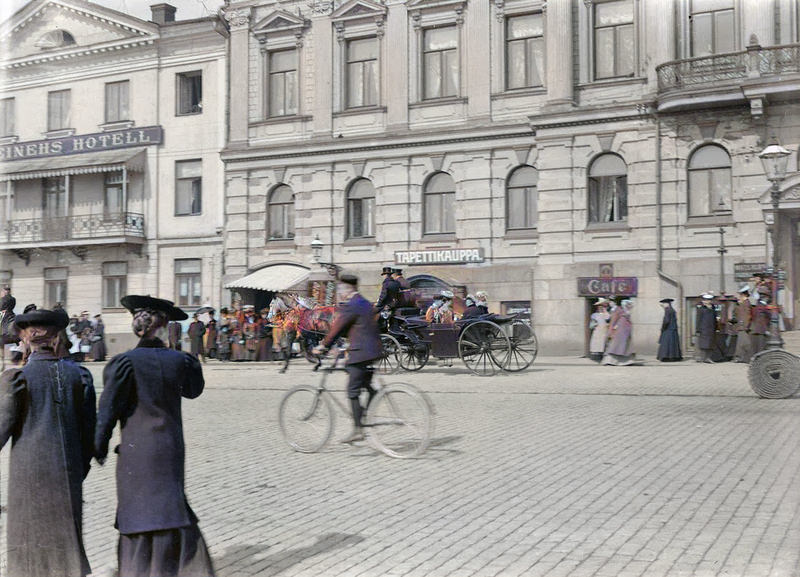
Kleinehs Hotel on Pohjoisesplanadi 9 was one of Helsinki’s well-known establishments during this period. Hotels along the Esplanadi catered to travelers arriving by sea and rail, placing guests at the center of the city’s commercial and cultural life.
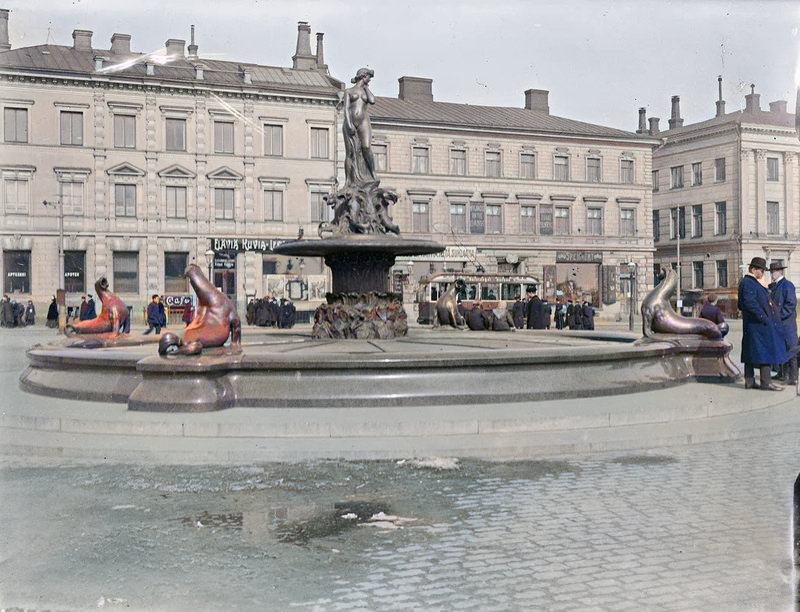
The Havis Amanda statue, sculpted by Ville Wallgren and unveiled in 1908, became one of Helsinki’s most recognized landmarks. Placed at the edge of the Market Square near the harbor, the bronze figure of a young woman rising from the sea drew both admiration and controversy when it was first installed. It quickly became a symbol of the city itself.





The Normen house can be seen in the background. The HQ of Stora Enso was demolished to make room for Alvar Aalto’s ‘sugar cube’, Finland’s most hated building. That’s a huge loss.
I wasn’t aware that the “sugar cube” was hated. I don’t think it’s that bad.
I hope you have seen the images from the 1930s and 40’s