
Helsinki sits at the southern tip of Finland, on a peninsula that juts into the Gulf of Finland. It is the country’s capital, its busiest seaport, and its main industrial hub. By the early 1980s, the city had built a reputation as one of the most liveable places on earth, with clean streets, reliable public transit, and a steadily improving quality of life for its residents.
The early 1980s were a period of real stability for Finland. The economy was growing, and everyday life was getting more comfortable. More Finnish families were buying color television sets and their first or second car. Foreign travel, once a luxury, was becoming a normal part of life. Helsinki, as the country’s capital and largest city, reflected all of this progress in its busy streets and bustling public spaces.
At the heart of the city’s retail life was Aleksanterinkatu, the main shopping street in central Helsinki. In 1981, it was lined with shops and filled with pedestrians, a place where the city’s commercial energy was on full display.
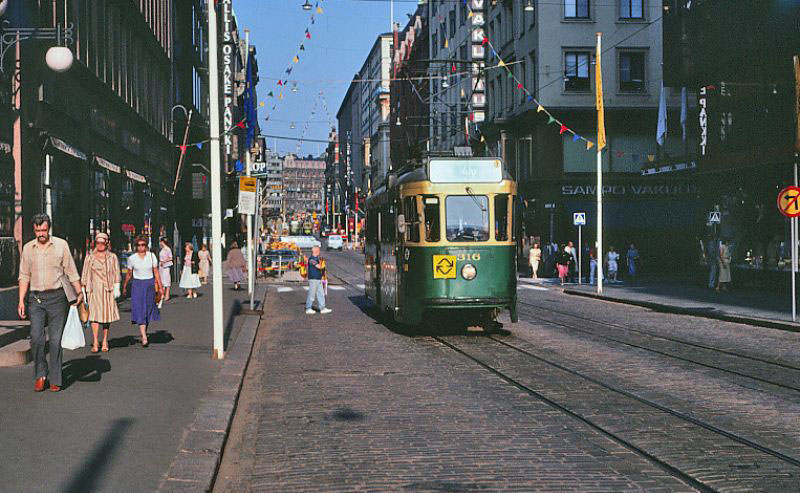
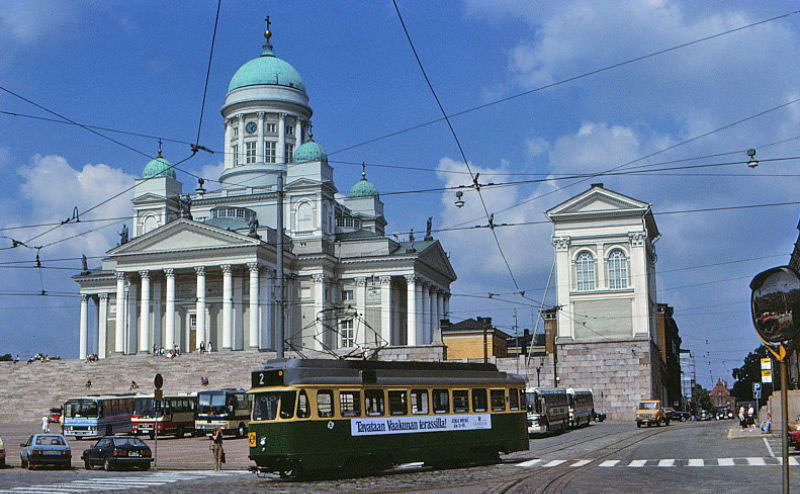
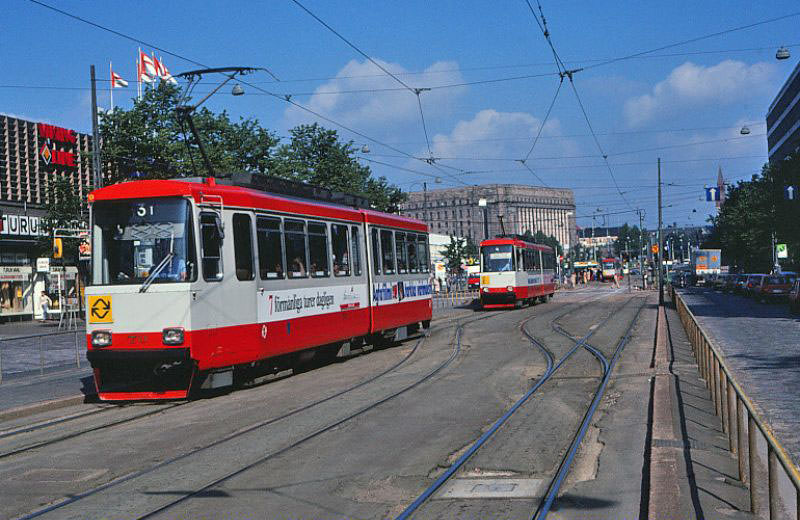
Helsinki’s tram network was a defining feature of the city. The trams ran on fixed routes through the urban core, connecting neighborhoods and landmarks efficiently. One of the most recognizable intersections was at Senate Square, where Snellmaninkatu meets Aleksanterinkatu. The HM V class tramcars that worked these lines were sturdy, well-used vehicles that were a familiar sight to every Helsinki resident.
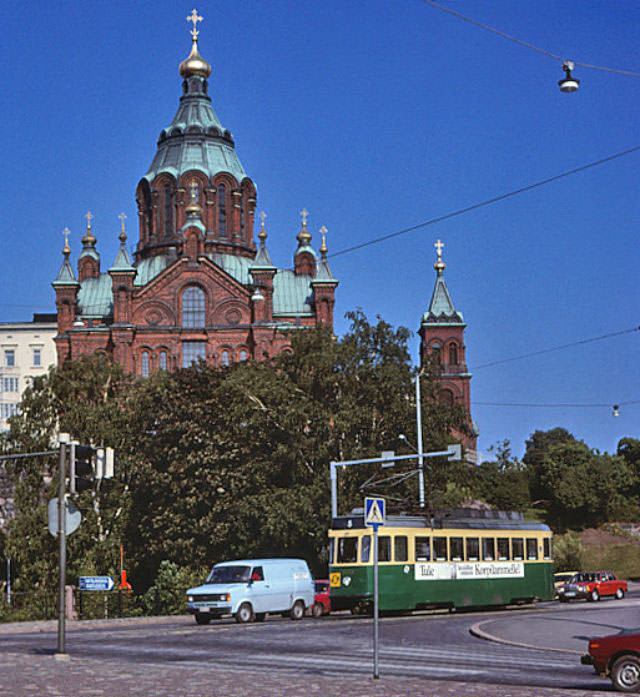
Not far from the city center, Kanavakatu offered one of Helsinki’s most striking visual contrasts. The street ran near the waterfront, and rising above it was the Uspenski Cathedral — a large Russian Orthodox cathedral built in red brick, completed in 1868. Its onion domes and Byzantine architecture made it one of the most visually distinct buildings in the entire city.
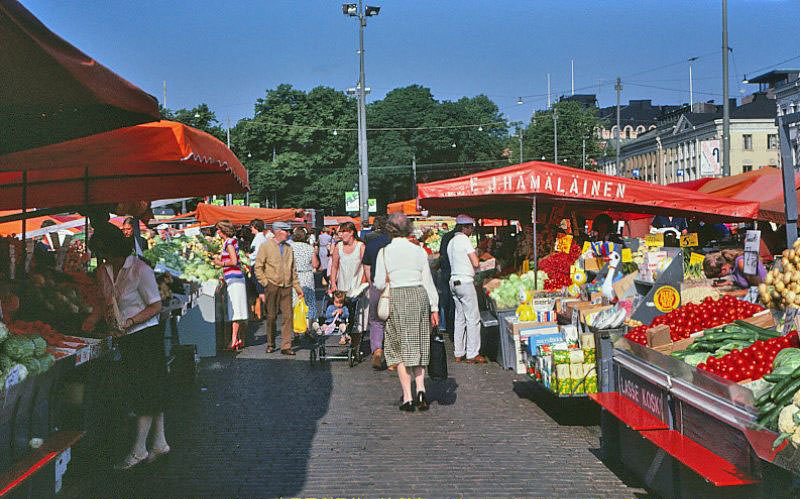
Down by the waterfront, the Kauppatori — Helsinki’s famous open-air market square — drew locals and visitors alike. Vendors set up stalls selling fresh produce, fish, flowers, and handmade goods. The marketplace sat right at the edge of the South Harbour, with ferry terminals and the sea as its backdrop. It was, and still is, one of the most lively public spaces in the city.
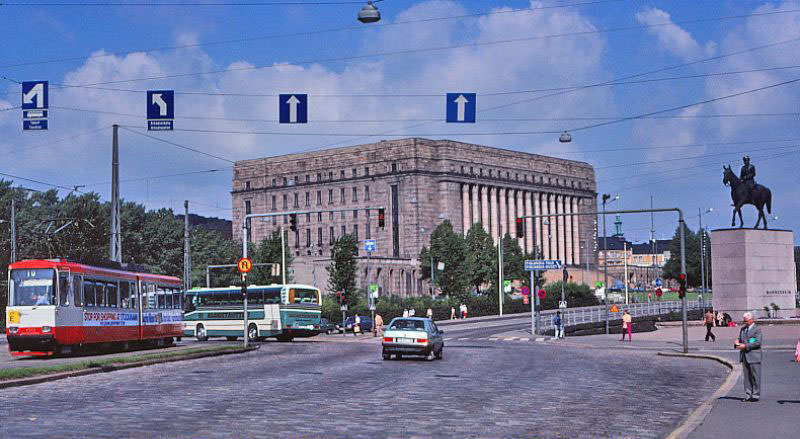
Mannerheimintie was Helsinki’s main artery — a broad, busy boulevard named after the Finnish military commander and statesman Carl Gustaf Emil Mannerheim. Running through the heart of the city, the street carried heavy traffic and tram lines. At its intersection with Arkadiankatu, the scale and rhythm of 1980s Helsinki urban life was clearly visible.
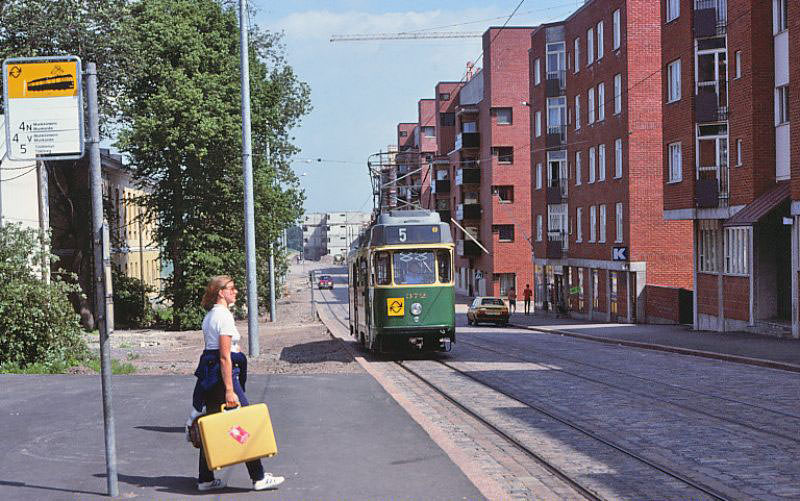
Away from the main boulevard, quieter streets like Merikasarminkatu showed a different side of the city — orderly, well-maintained, and architecturally consistent, with buildings that reflected Helsinki’s history of Nordic and Russian Imperial influences.
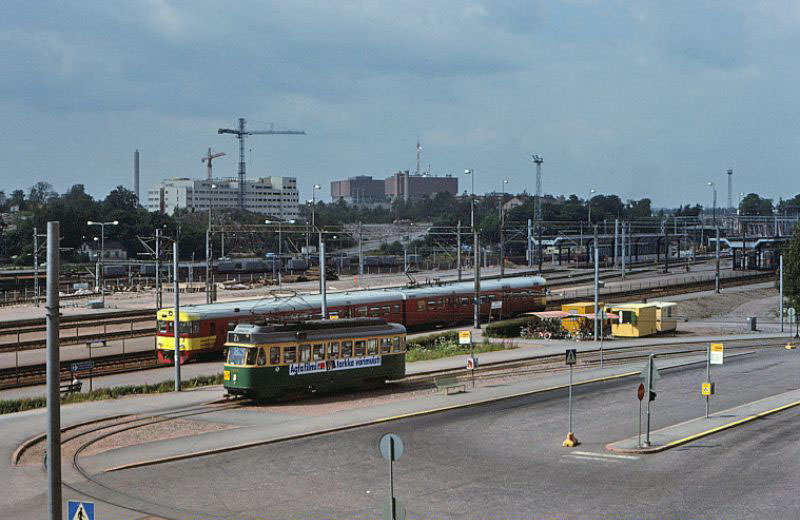
The tram network extended well beyond the city center. The Pasilan asema tram stop served the Pasila district, a key area north of the downtown core that was growing in importance during this period. Pasila was home to railway infrastructure, broadcasting facilities, and increasing commercial development throughout the 1980s.
The Sokos chain was one of Finland’s most recognized department store brands, with locations spread across the country. The Helsinki flagship store stood as a prominent landmark in the city center, drawing shoppers looking for everything from clothing to household goods under one roof.
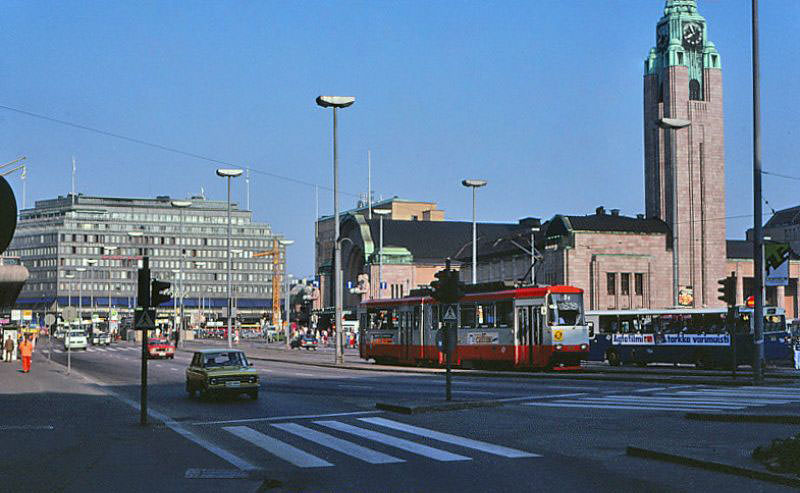
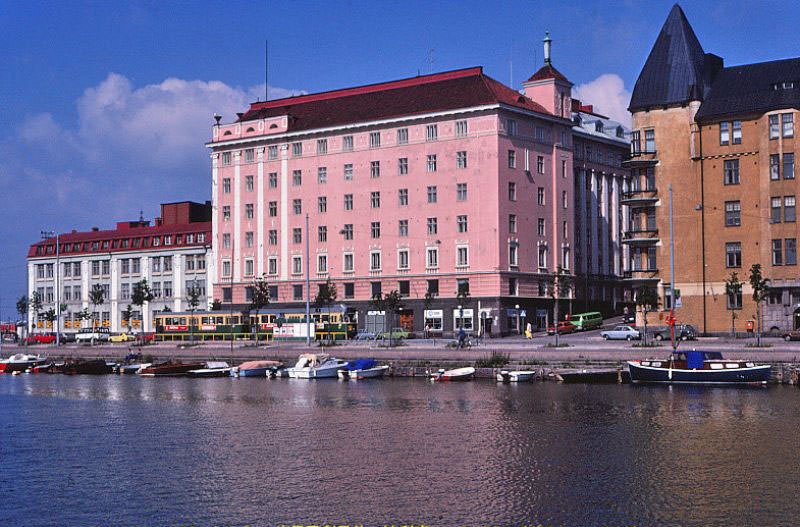
Along the South Shore, Etelärantankatu carried tram traffic as part of the city’s coastal routes. Tramcar 41, working the former Line 3T, passed through this stretch at Pohjoinen Makasiinikatu. The South Shore was a scenic part of the city, with the sea on one side and a mix of historic and commercial buildings on the other.
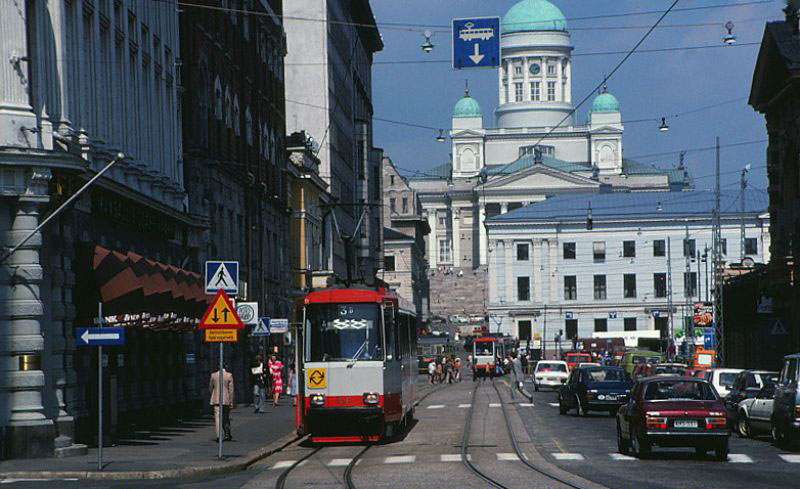
On the western waterfront, Hietalahdenranta was home to another stretch of tramway track. The line running through this area would later become today’s Line 6. In 1981, it moved passengers along the shoreline past the Hietalahti shipyard area, connecting the western neighborhoods to the city center.
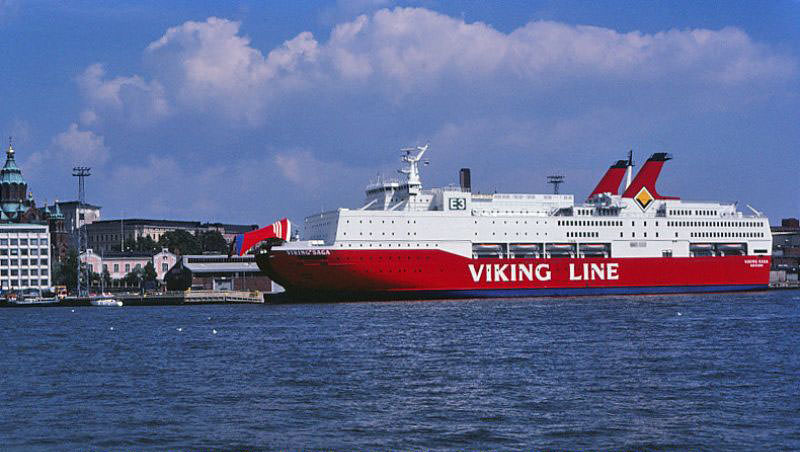
Helsinki’s role as a major seaport was never far from view. The Viking Line cruise ferry Viking Saga was a regular presence in Helsinki’s harbour in 1981. Viking Line operated routes between Finland, Sweden, and Estonia, and its large ferries were an important part of both regional transport and leisure travel. The Viking Saga, with its distinctive white hull, was one of the more recognizable vessels on these Baltic Sea routes.





So many people on the streets, and no one is staring at their phone!