By 1938, Czechoslovakia found itself in a dangerously exposed position. The country had signed defense treaties with France in 1926 and the Soviet Union in 1935, but neither alliance delivered real protection when it mattered most. The Soviet Union stated it would only act if France moved first. France never moved. The Little Entente — a regional alliance between Czechoslovakia, Romania, and Yugoslavia — also failed to offer any concrete defense against Hungarian aggression. Czechoslovakia stood largely alone.
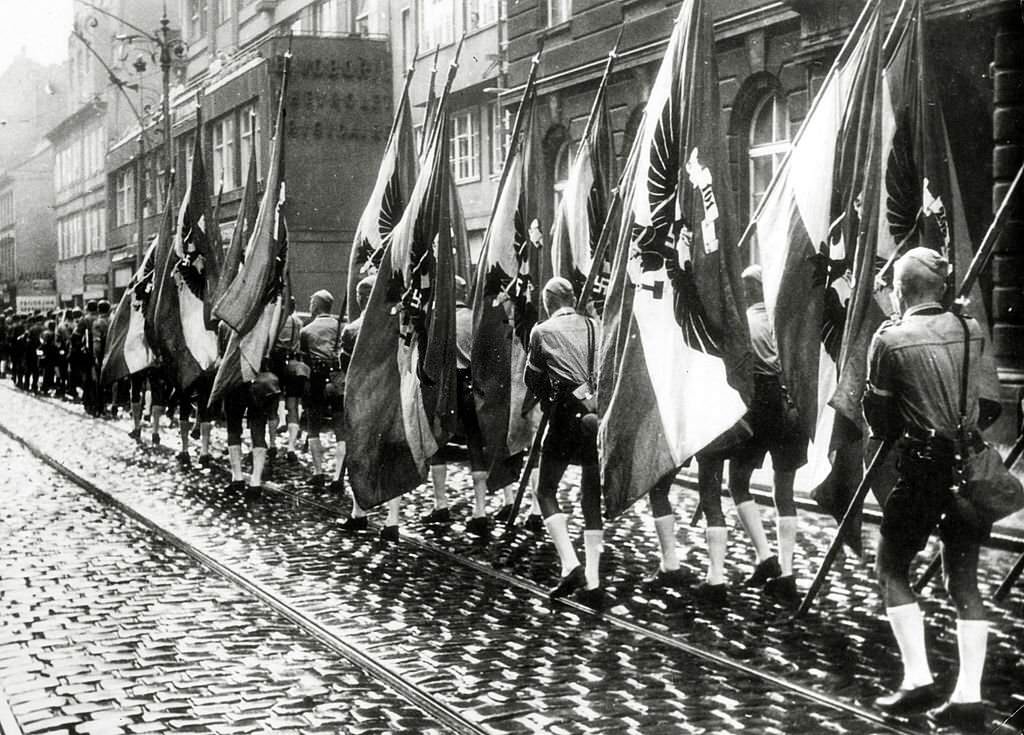
The most immediate pressure came from within. The Sudeten Germans — ethnic Germans living in the western borderlands of Czechoslovakia — had long pushed back against governance from Prague. Their movement was led by Konrad Henlein, who had direct backing from the Nazi government in Berlin. Henlein’s goal was clear: the Sudetenland had to be unified with Germany. Two months after Hitler annexed Austria in March 1938, German troops were positioned near the Czechoslovak border, and the tension reached a breaking point.
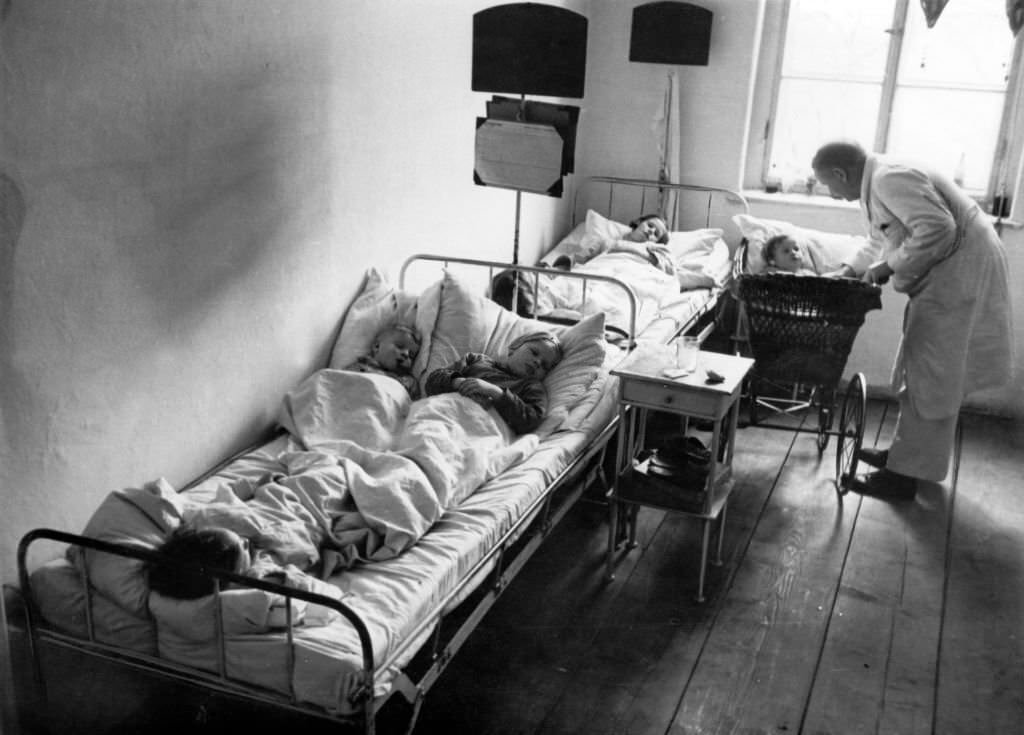
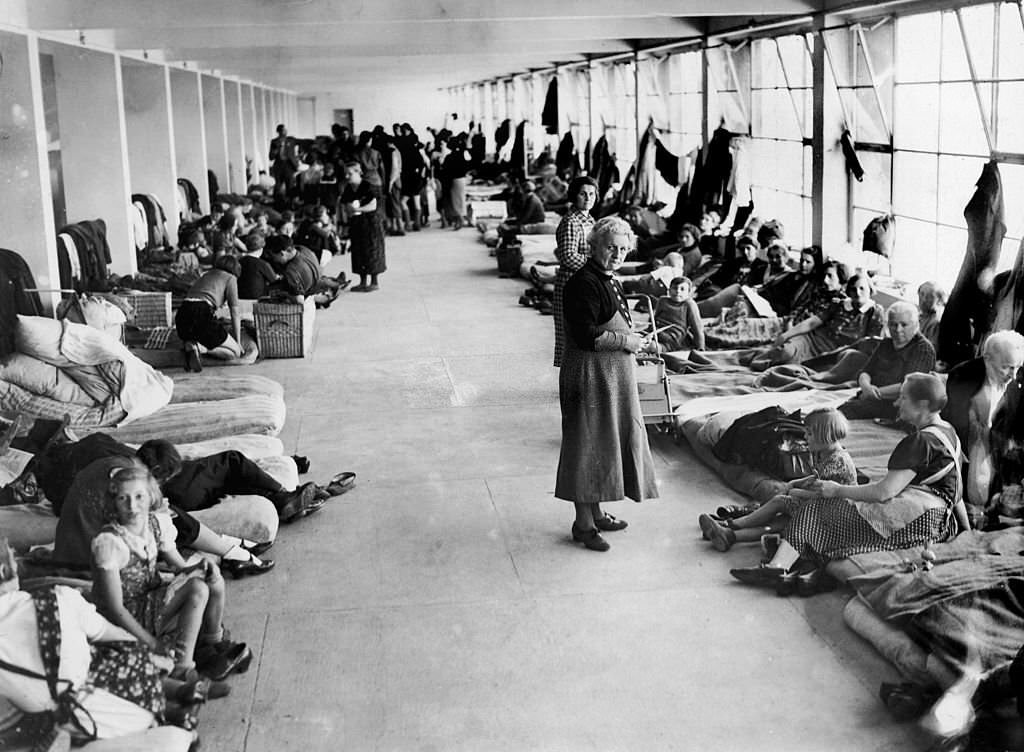
A Sudeten German hospital in Czech Elbogen (Looket) in May 1938.
The German propaganda machine worked hard to justify intervention by portraying Sudeten Germans as mistreated and living under poor conditions inside Czechoslovakia. Images circulated through German media were used specifically to build that case — even when those conditions were not representative of broader reality. Henlein’s party used these narratives to push for full unification with the Reich, and Berlin used them to pressure both Czechoslovakia and the Western powers.
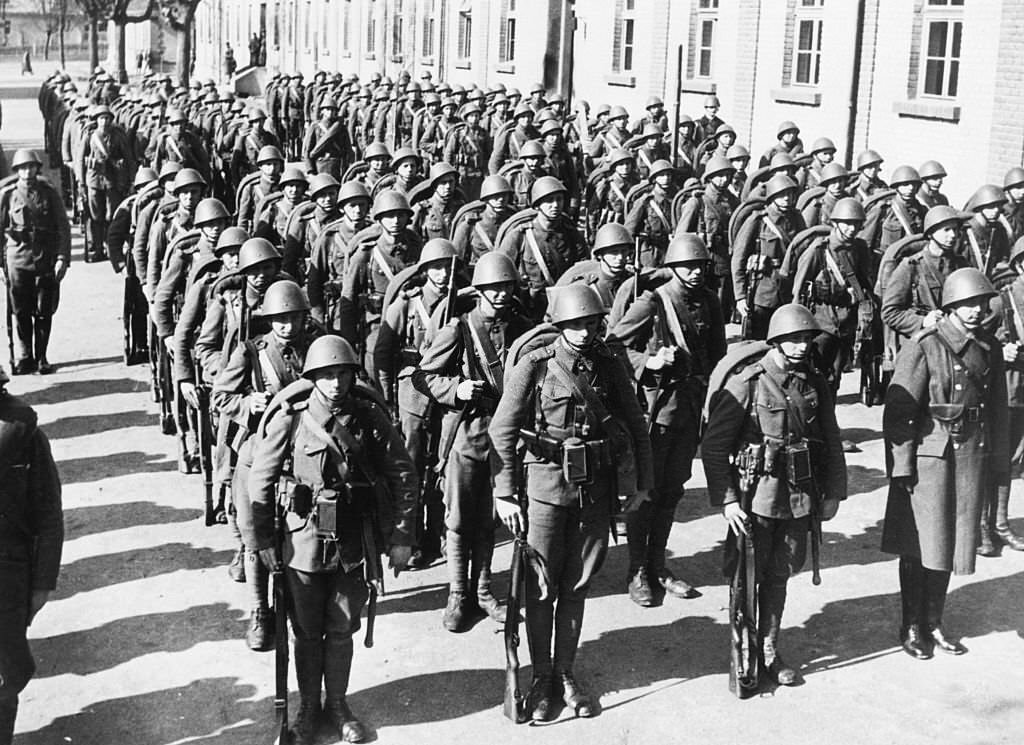
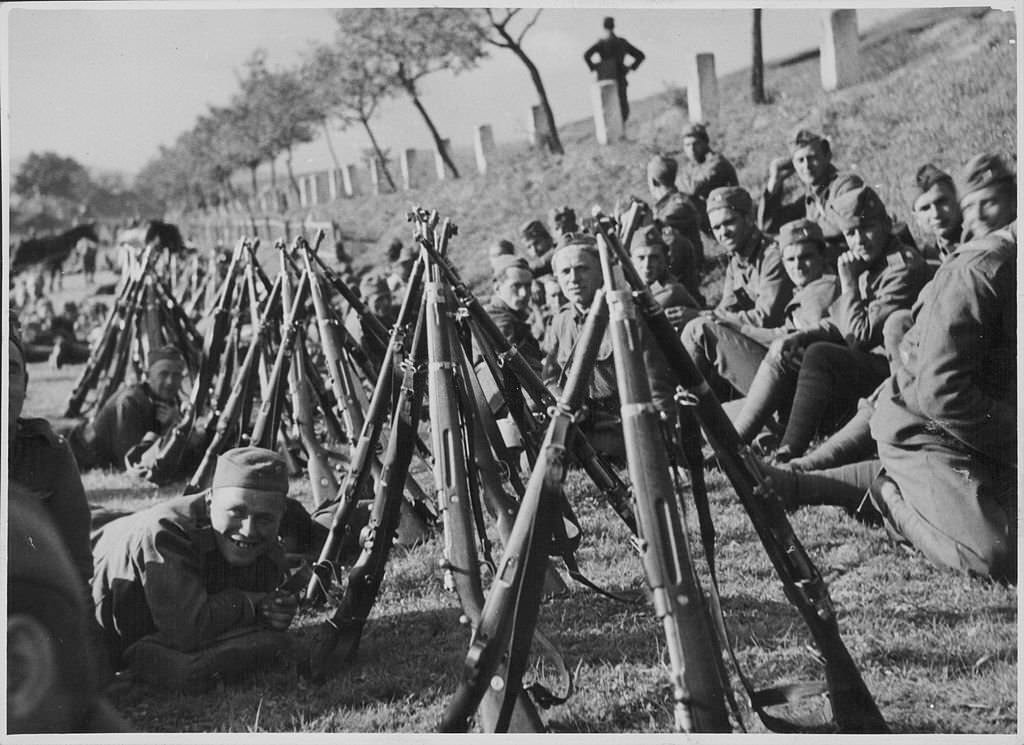
Czechoslovakian Army at Attention.
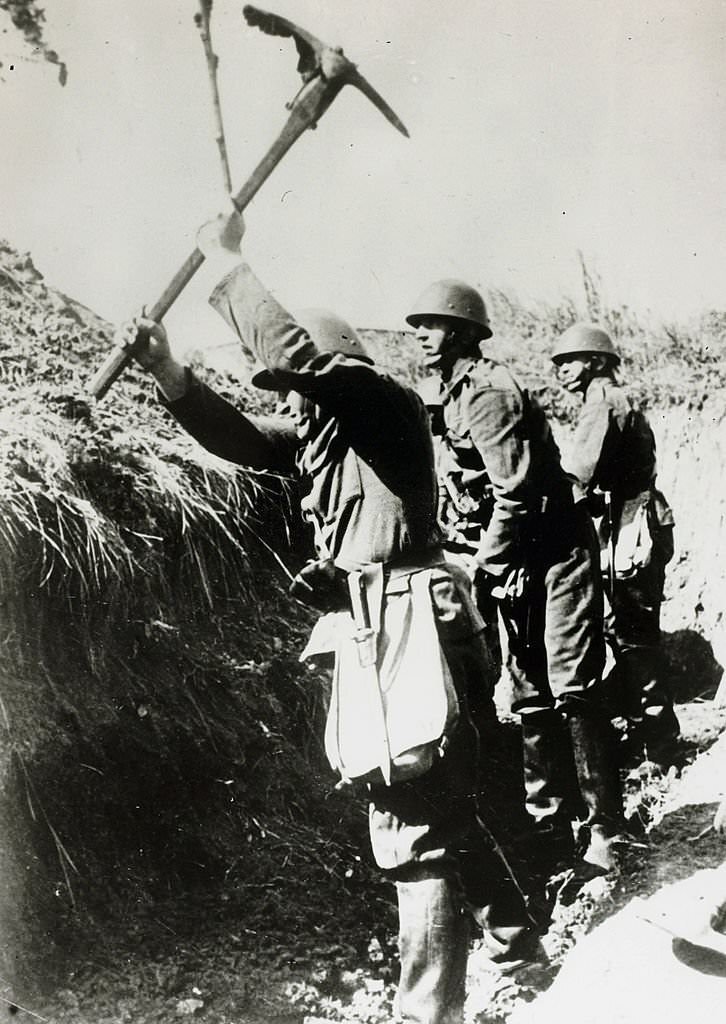
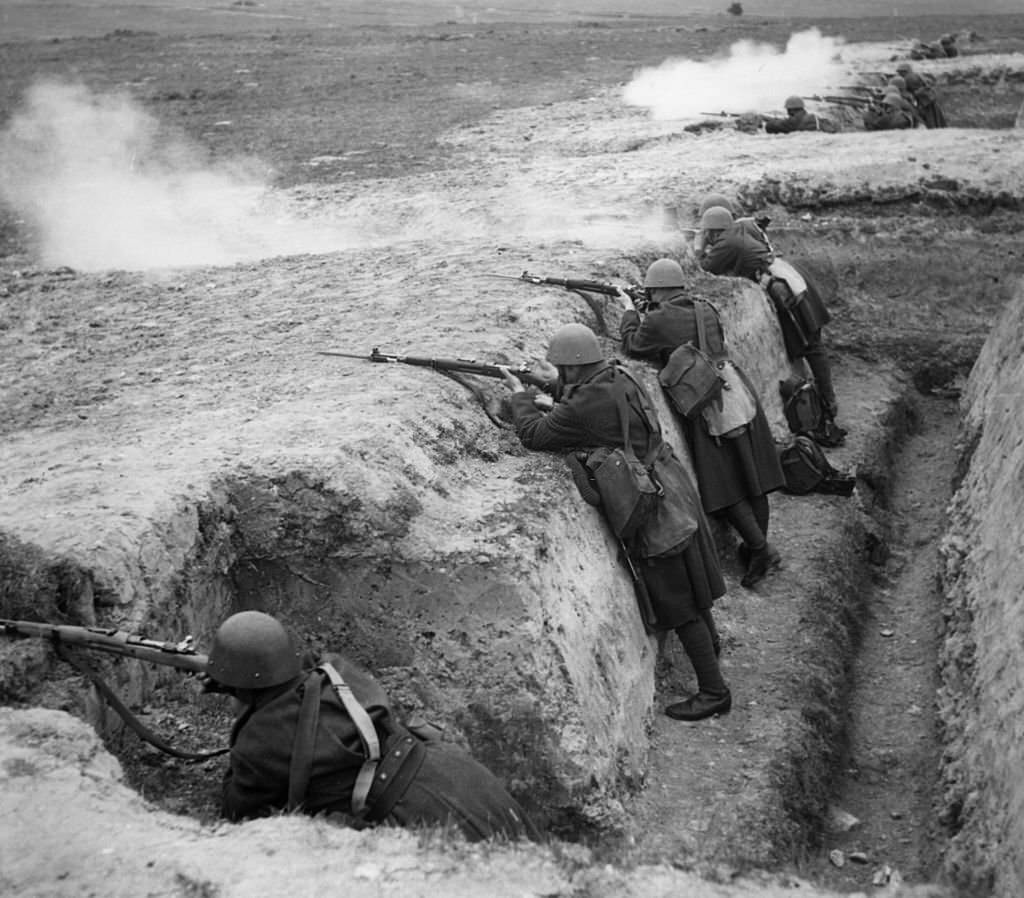
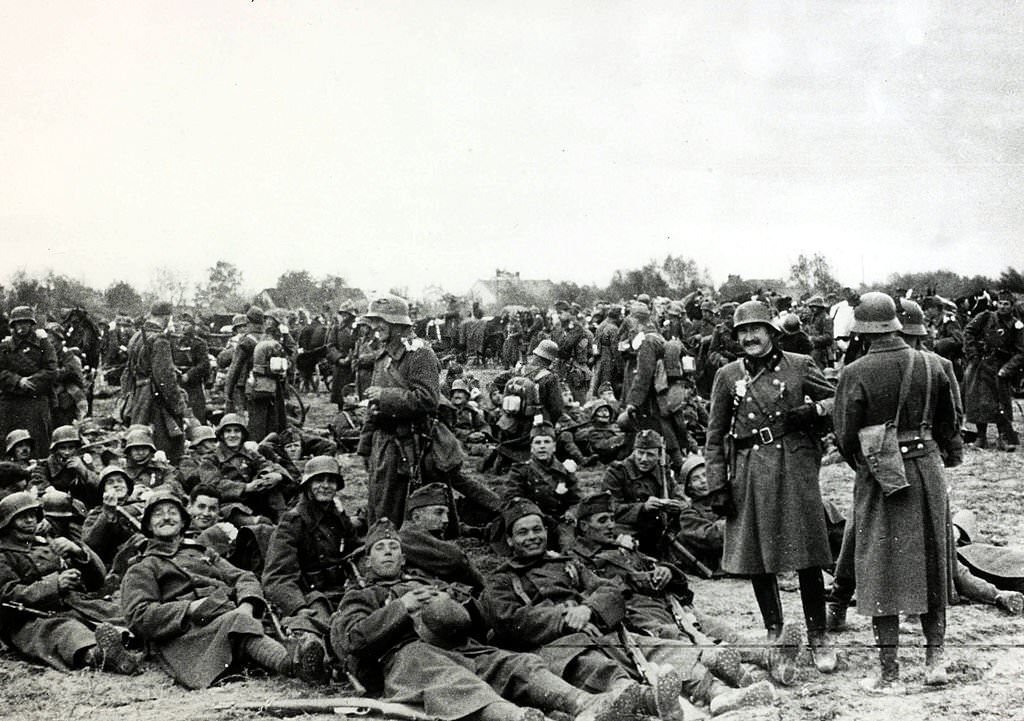
Czechoslovakia’s military was not unprepared. The army mobilized and took up defensive positions as the crisis deepened. Czech soldiers dug trenches, moved to garrisons near Prague, and readied their air force for potential combat. But the country’s fortifications were concentrated in the Sudetenland — the very territory that was being demanded. Losing that ground meant losing the physical backbone of the country’s defense.
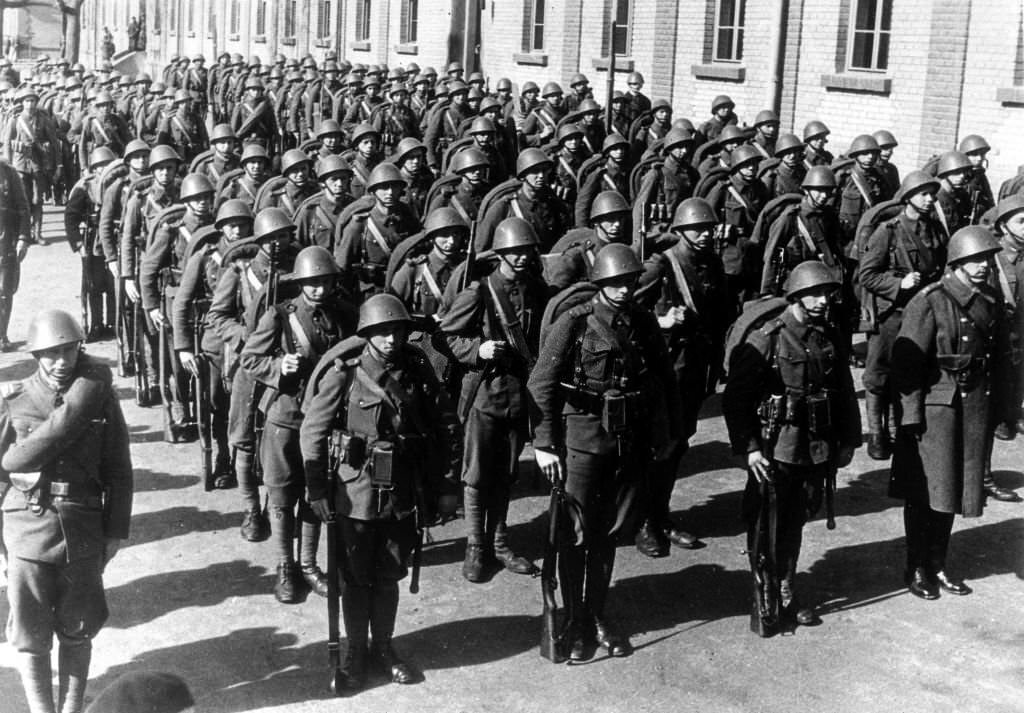
Czech soldiers digging trenches in the face of imminent German attack, The Sudetenland, the Czechoslovakia border regions, were ceded to Germany after the Munich agreement of 1938,A Czechoslovakian troops in full war equipment ready and prepared to march from a garrison near Prague.
On September 19, 1938, ambassadors from France and Great Britain approached Czech President Edvard Beneš with a note that was effectively an ultimatum: hand over the Sudeten territories to Germany or face an immediate Wehrmacht invasion. Beneš and his government understood that this was not a negotiation. Four days later, on September 23, Czechoslovakia mobilized its armed forces again — a final, desperate signal that the country was not willing to simply give in without resistance.
Czechoslovakian troops stand in a trench with rifles, preparing to defend themselves against the Germans.
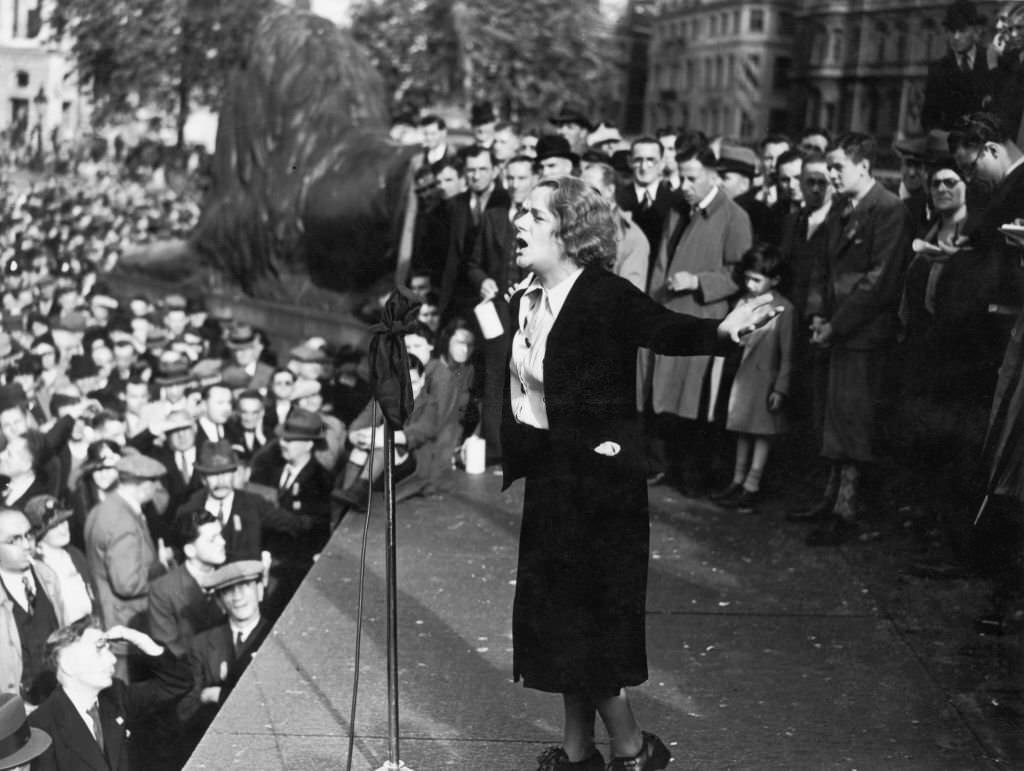
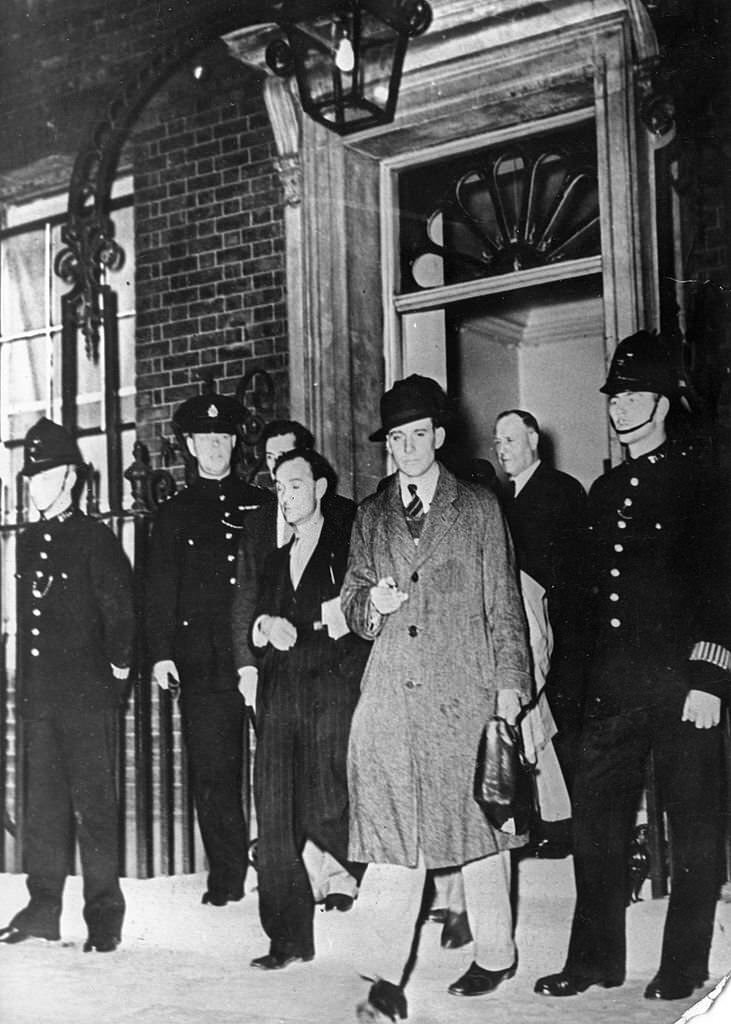
The political maneuvering happening in Europe’s capitals was drawing significant public attention. In London, protesters filled Trafalgar Square demanding that Britain take a firm stand against German aggression. Members of Parliament visited Downing Street to push for open debate on the crisis. But the British government, led by Neville Chamberlain, was already pursuing a different path.
Labour politician Ellen Wilkinson making a speech at a ‘Save Peace’ demonstration in Trafalgar Square, London, on the Czech-German crisis, 18th September 1938.A delegation of British Communist members of Parliament called on Prime Minister Chamberlain and demanded that a special session be convened where the question of Britain’s position towards Czechoslovakia would be debated
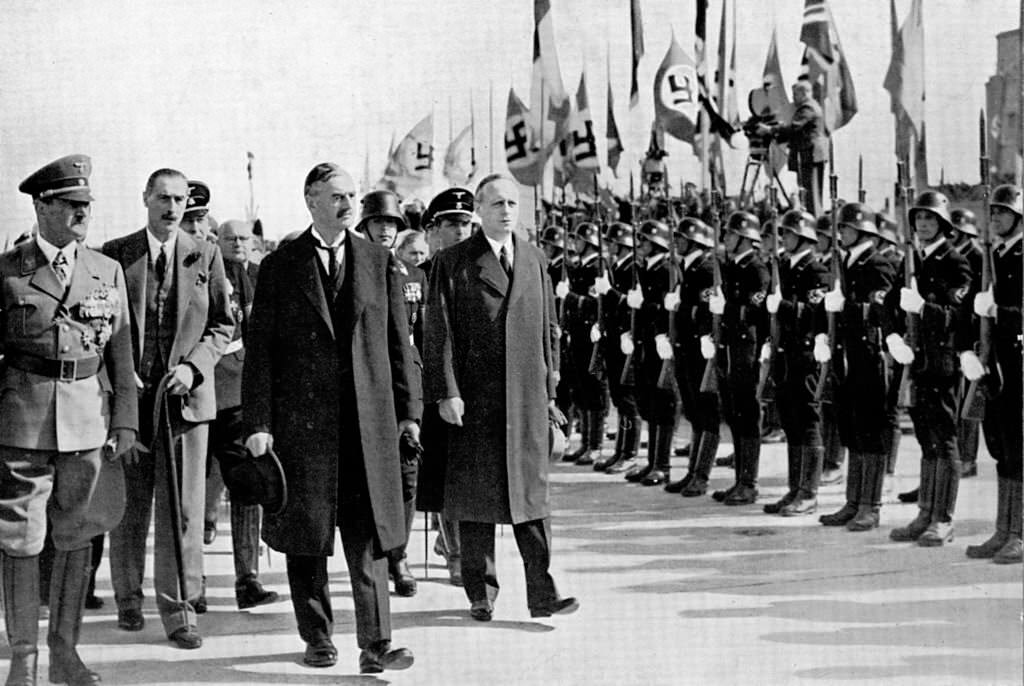
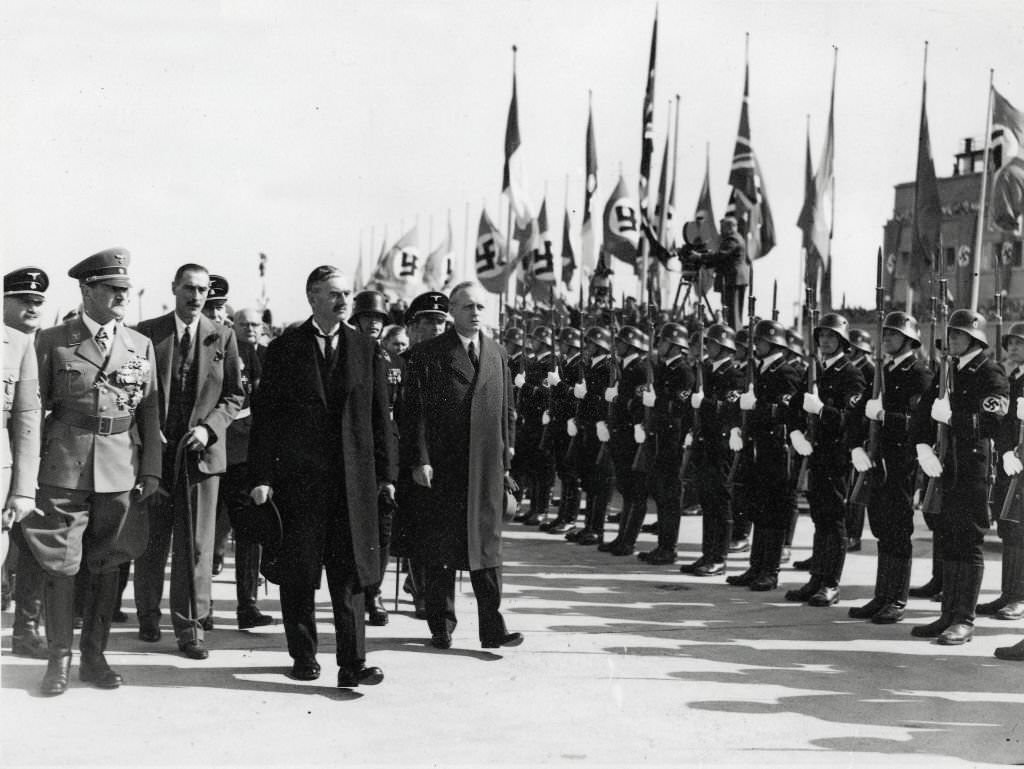
Chamberlain traveled to the continent multiple times in the weeks following Germany’s annexation of Austria. His aim was to reach a diplomatic agreement that would prevent war. Italian dictator Benito Mussolini proposed a four-power conference to resolve the crisis. The resulting Munich Conference — attended by Germany, Britain, France, and Italy — excluded Czechoslovakia entirely. The Czechoslovak delegation was not allowed in the room where its country’s fate was being decided.
British Prime Minister Neville Chamberlain passes a Germn honour guard on his arrival at Oberwiesenfeld airport before a meeting with Adolf Hitler over the latter’s threats to invade Czechoslovakia, 29th September 1938.Chamberlain Arrives In Munich
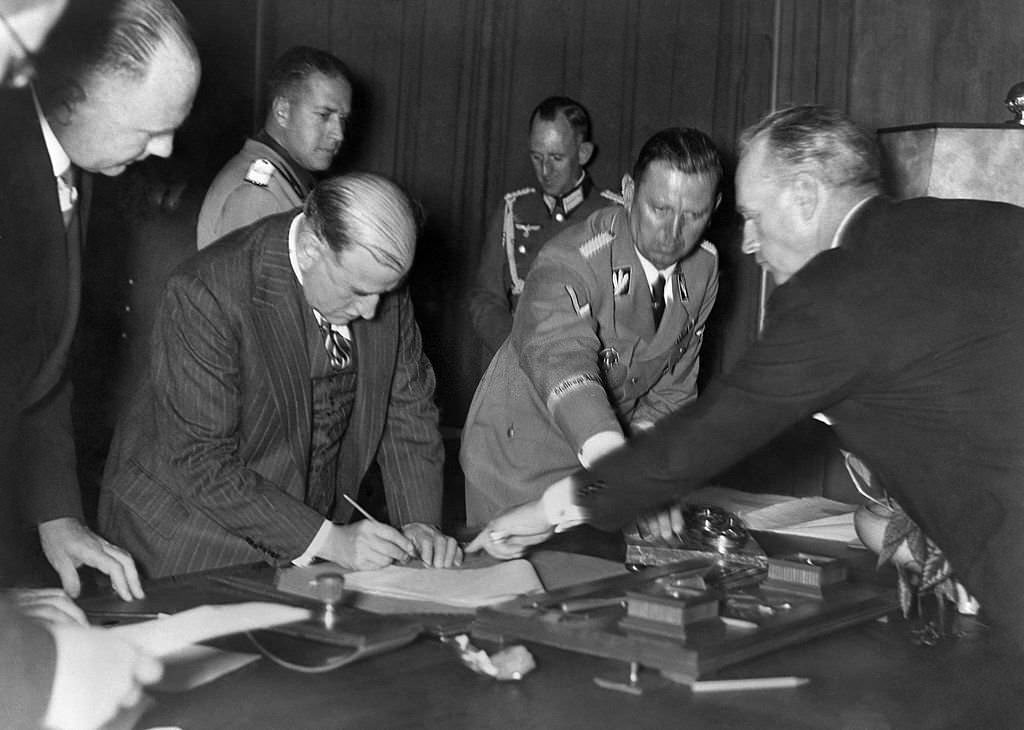
On September 29, 1938, French Premier Édouard Daladier, Chamberlain, Hitler, and Mussolini signed the Munich Agreement. It gave Germany everything it had demanded. Not a single concession was extracted from Berlin in return.
French Head of Government Edouard Daladier is signing the Munich Treaty as Hitler’s Secretary Martin Bormann (2nd R) and Germn Foreign Minister Joachim von Ribbentrop (R) look on on September 29, 1938 in Munich.
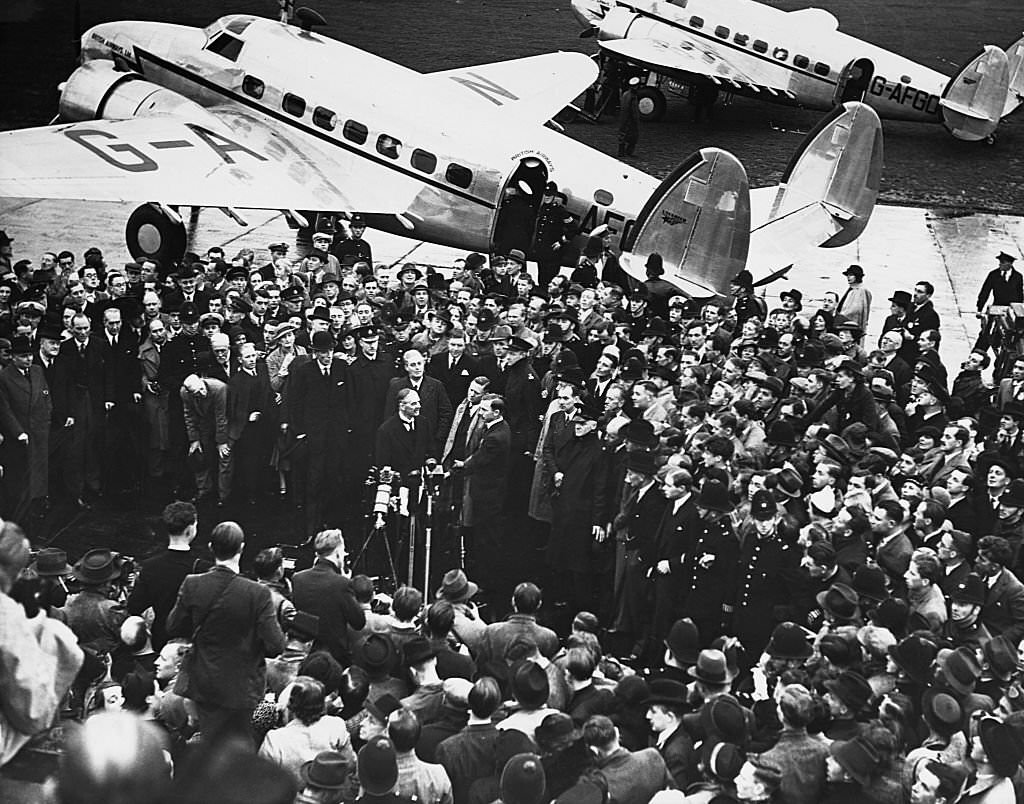
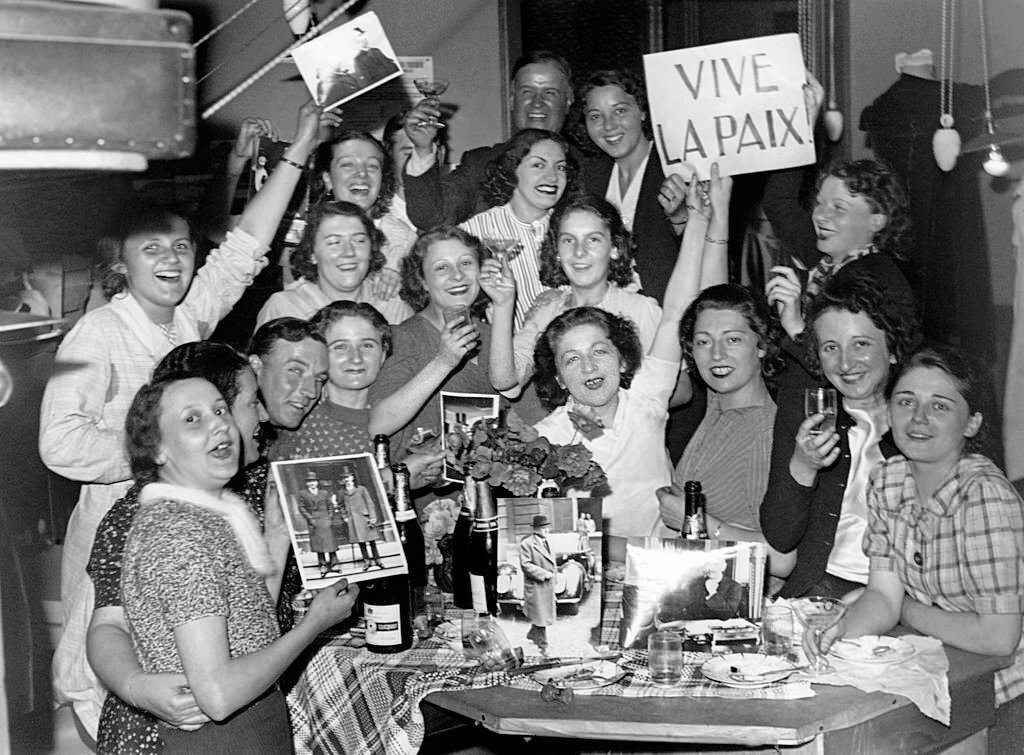
Chamberlain returned to England and addressed a crowd at the airfield. He declared the agreement would bring “peace in our time.” The British public largely welcomed the news. Many were exhausted by the memory of the First World War and desperate to believe that another one had been avoided. Workers in factories and ordinary citizens celebrated what they thought was a victory for diplomacy.
Neville Chamberlain Addressing Crowd at AirfieldThe Seamstresses Celebrate The Agreements Of Munich 1938
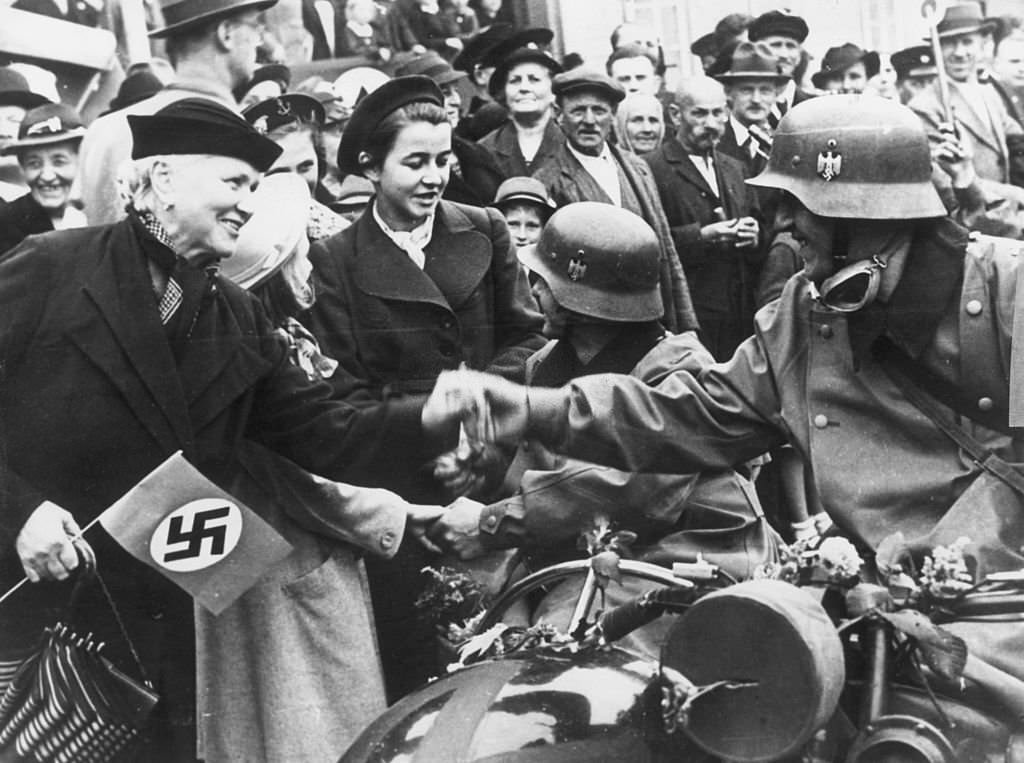
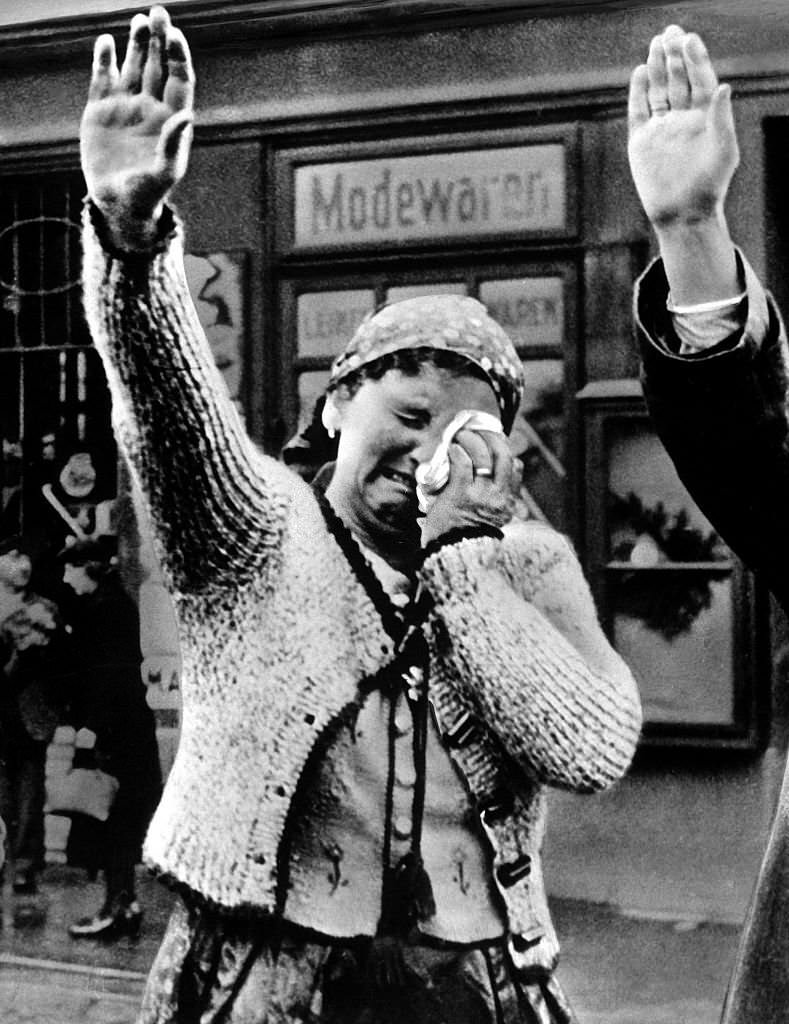
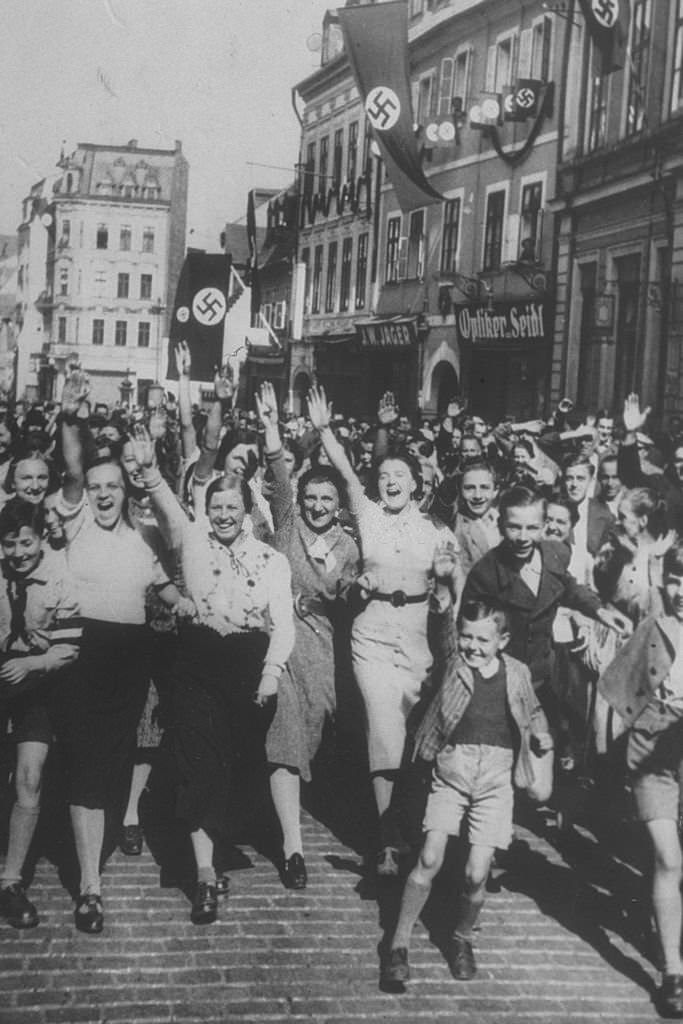
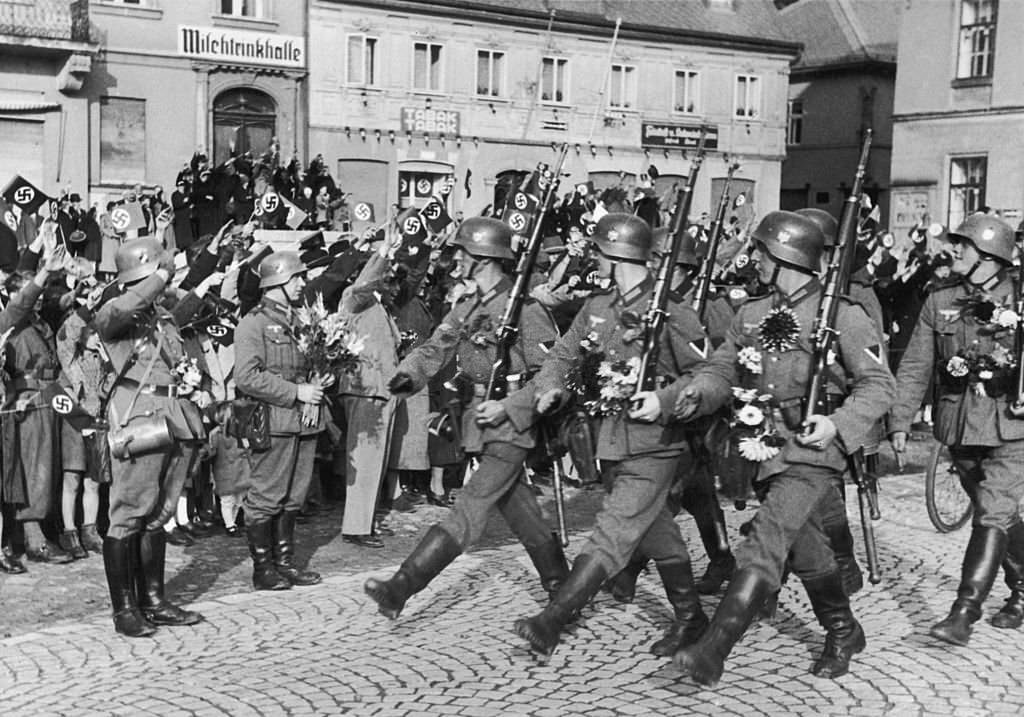
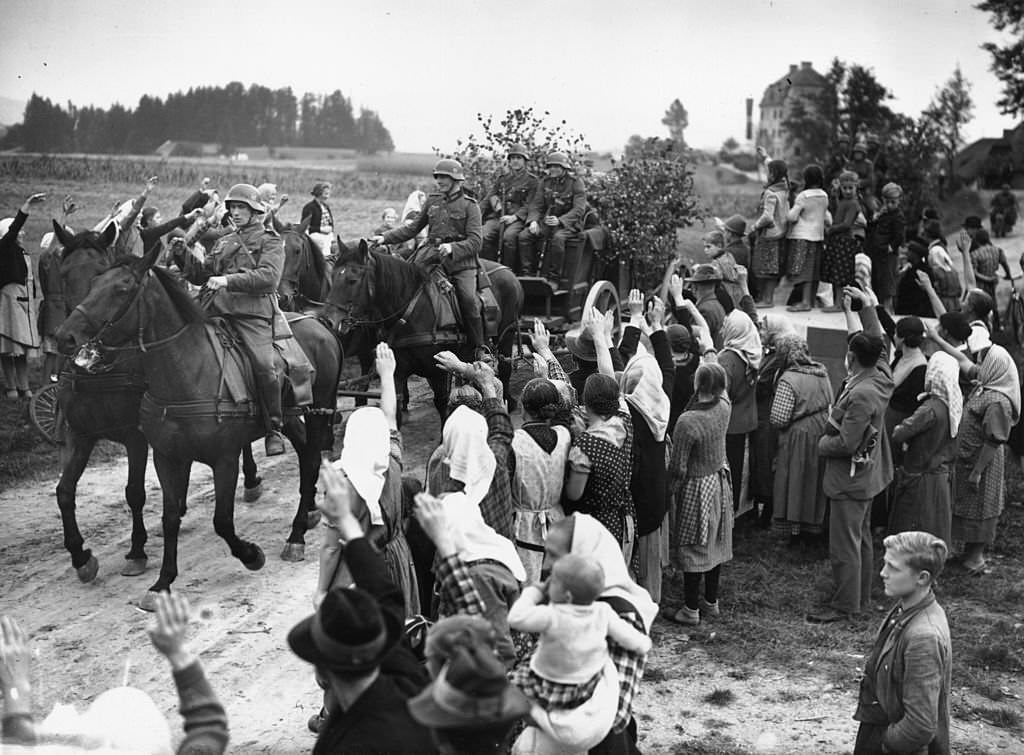
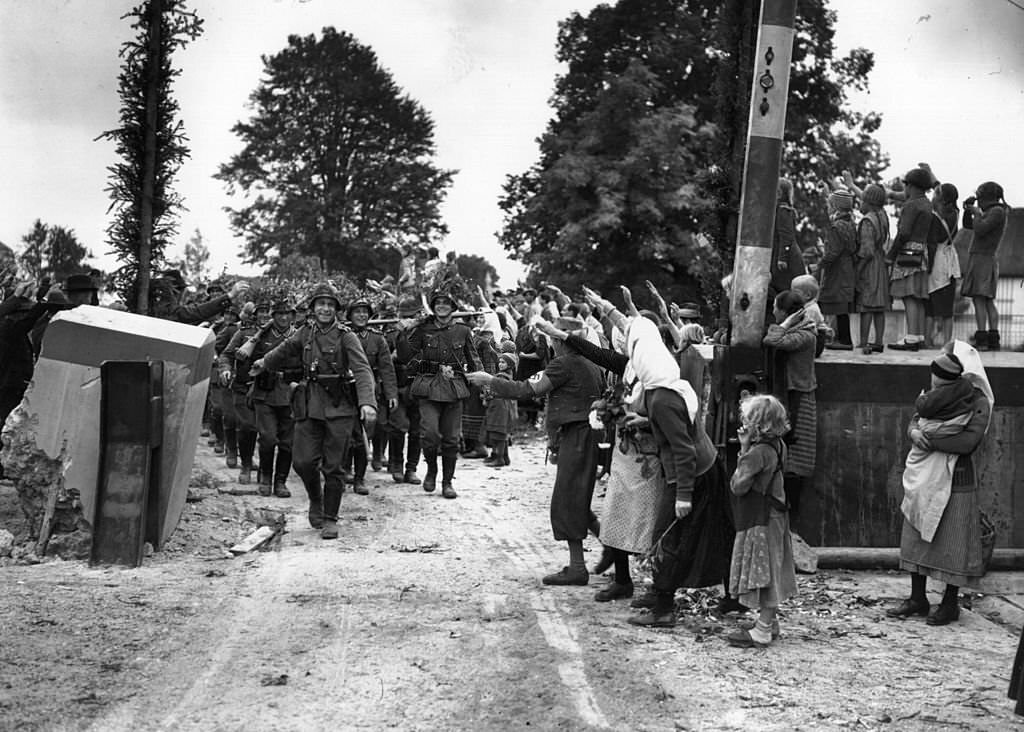
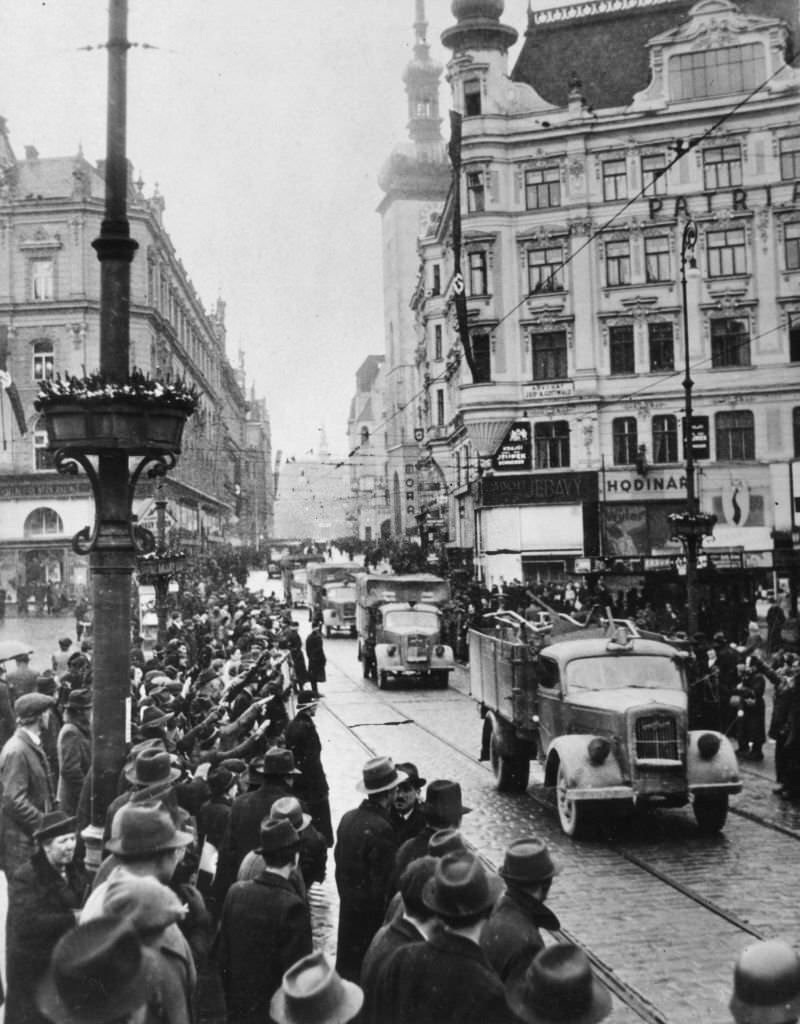
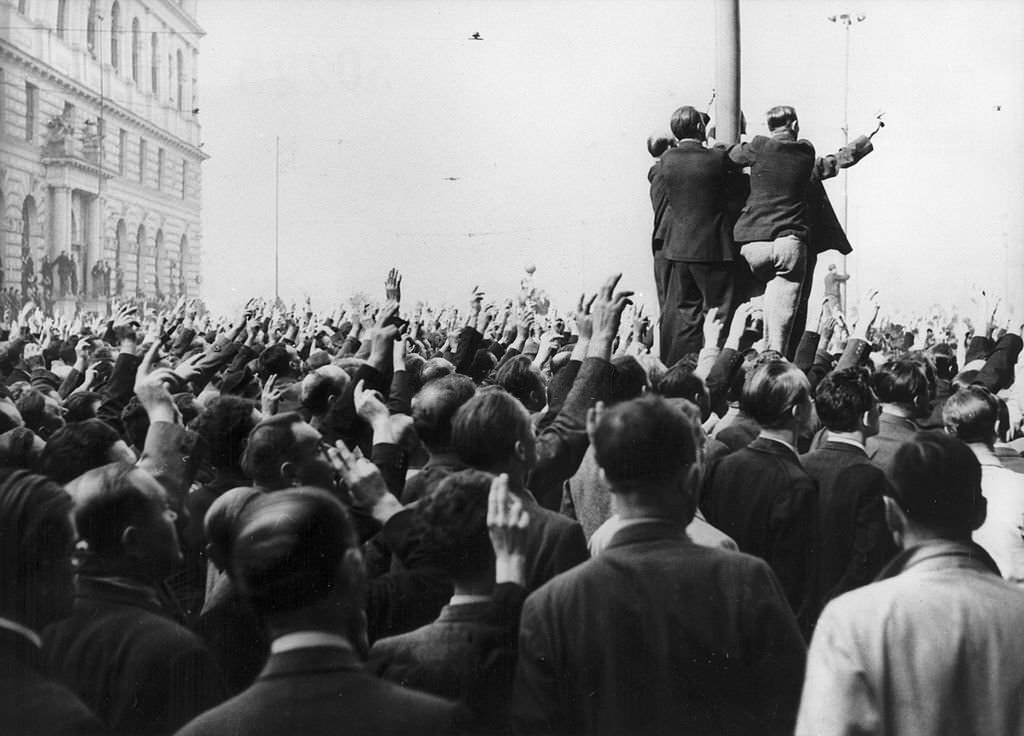
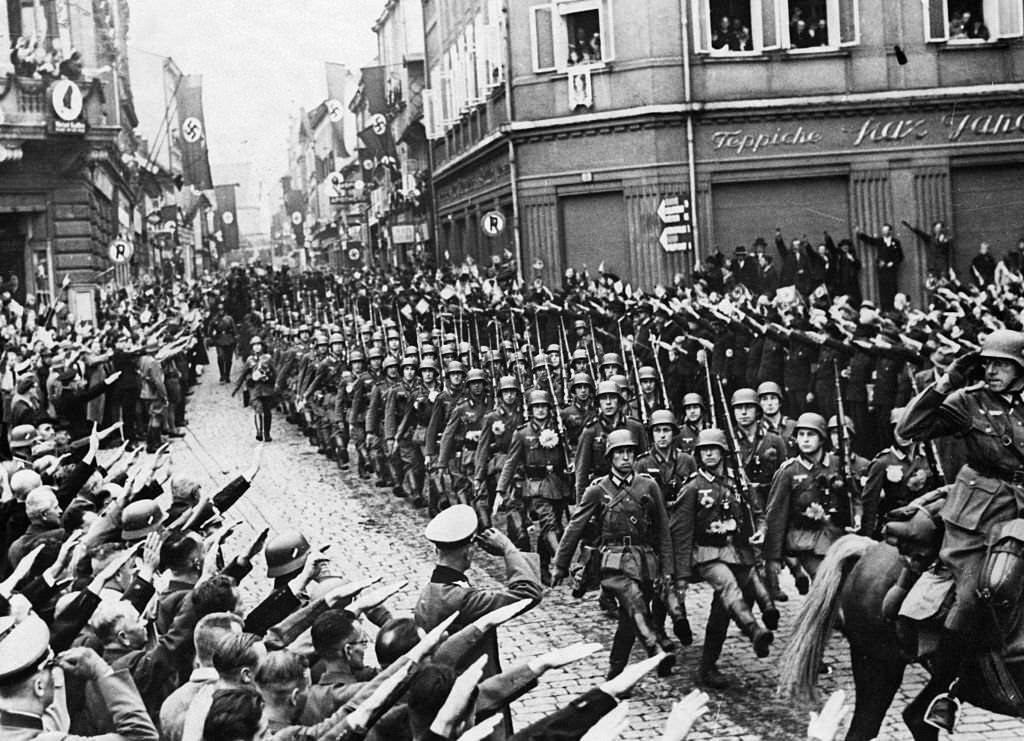
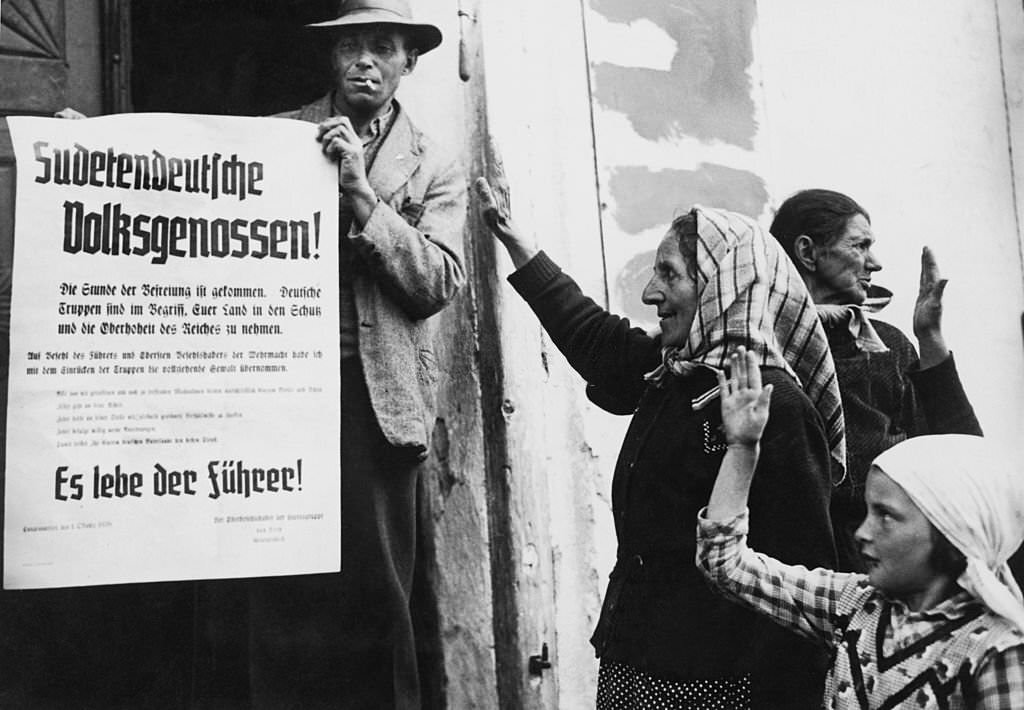
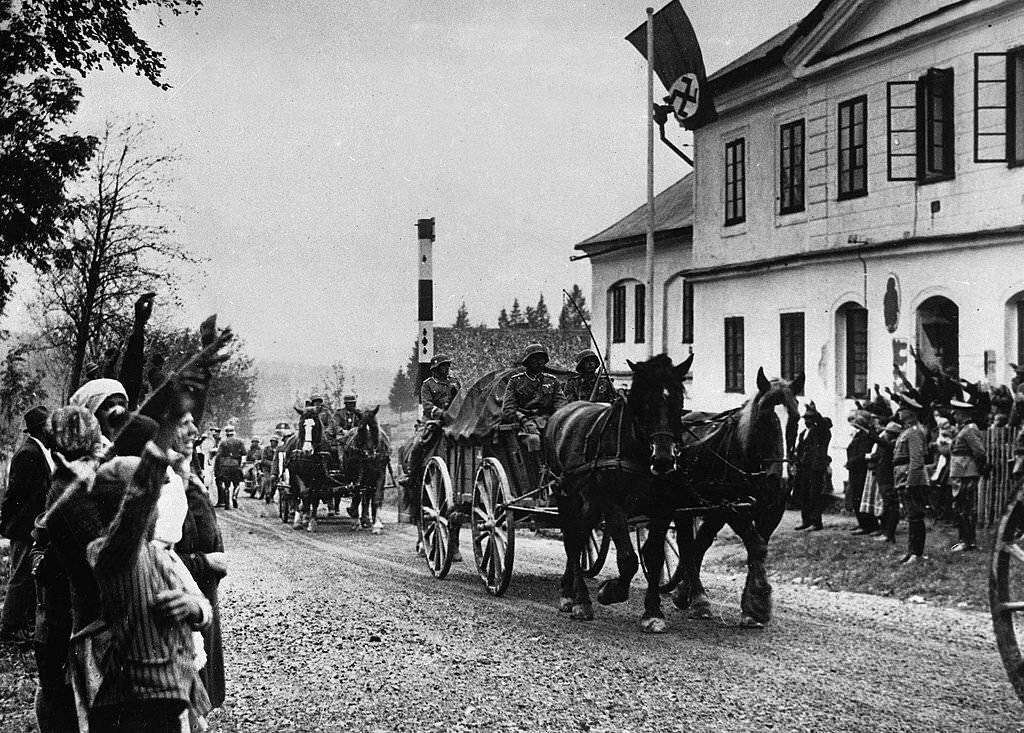
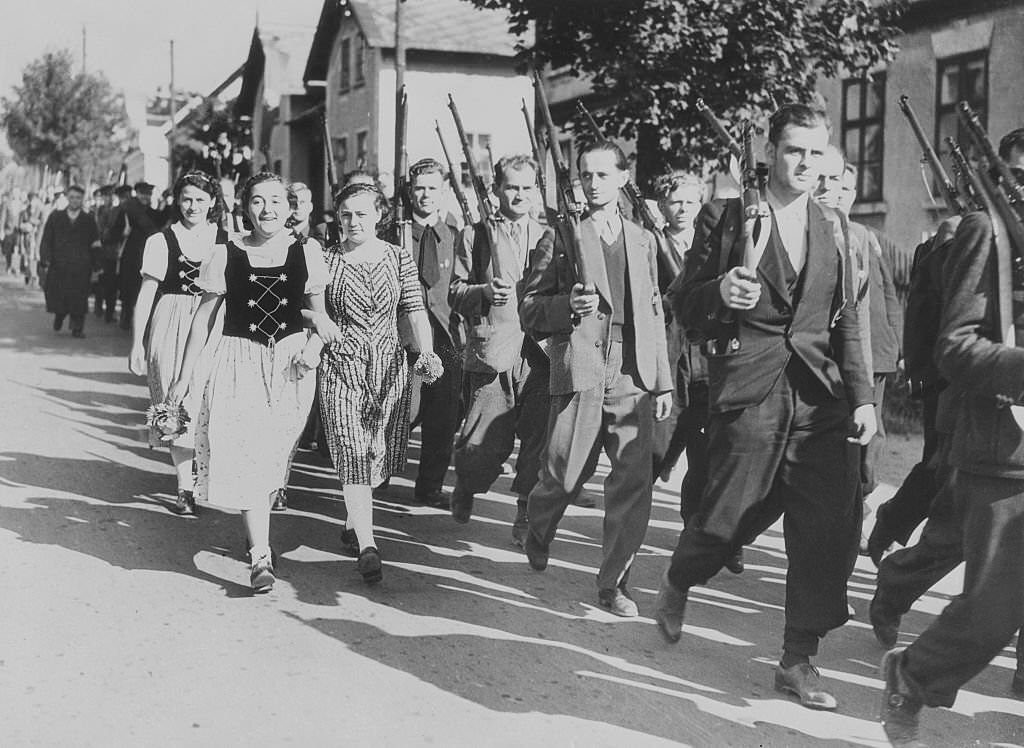
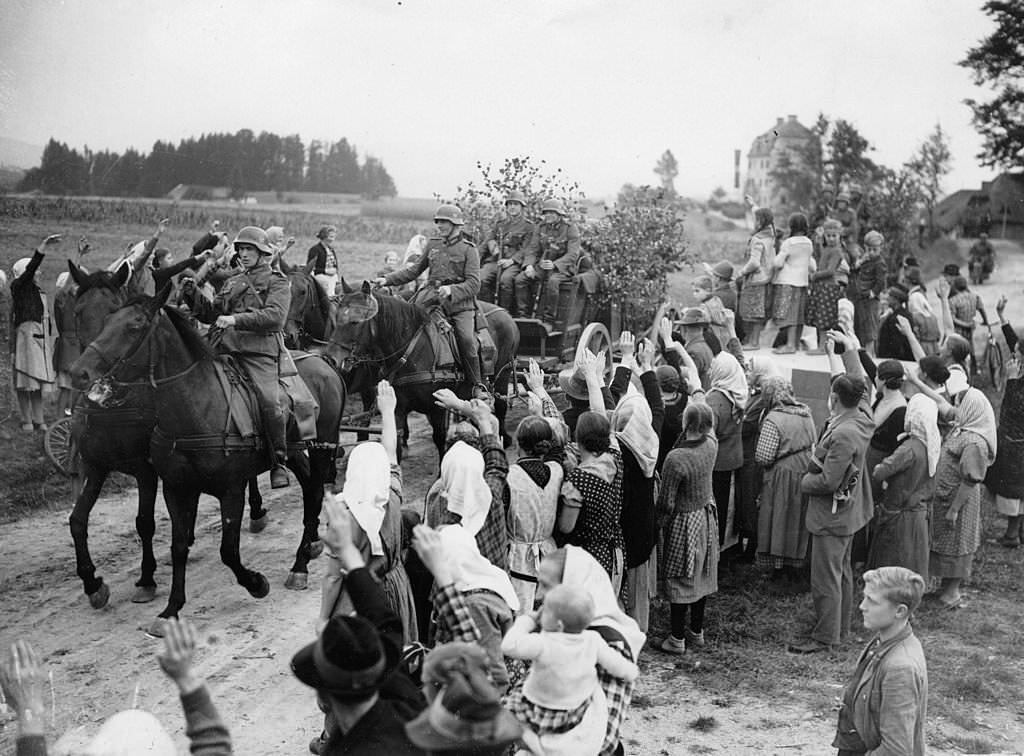
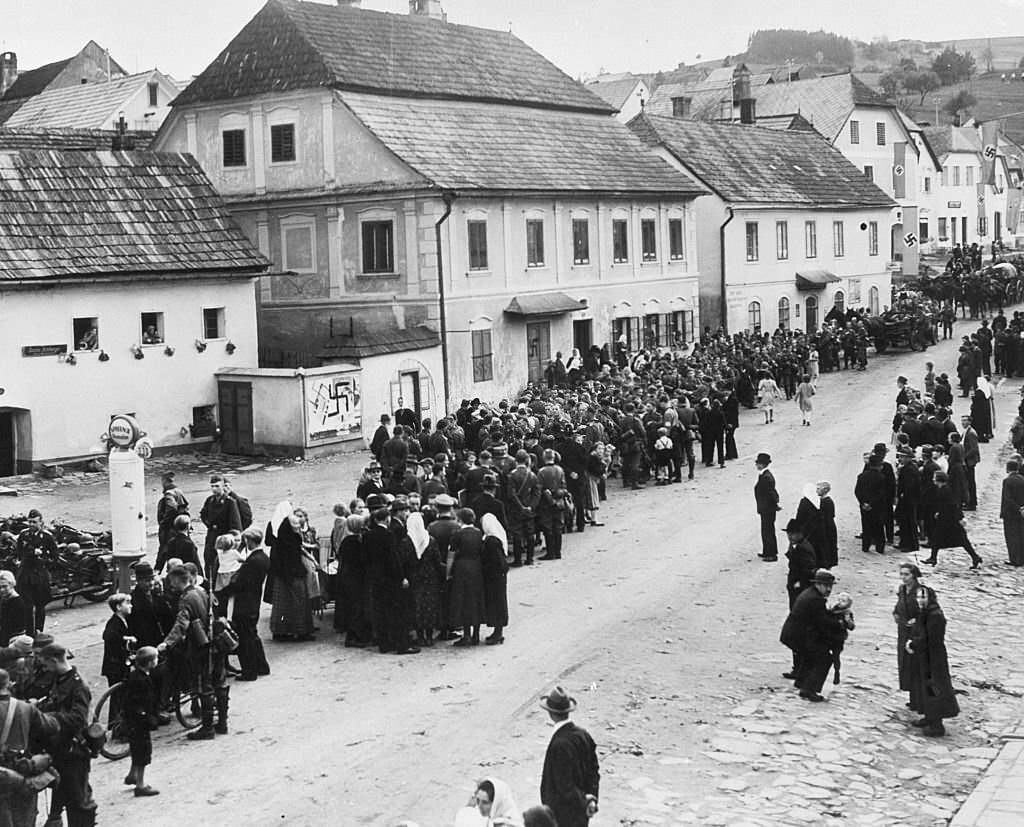
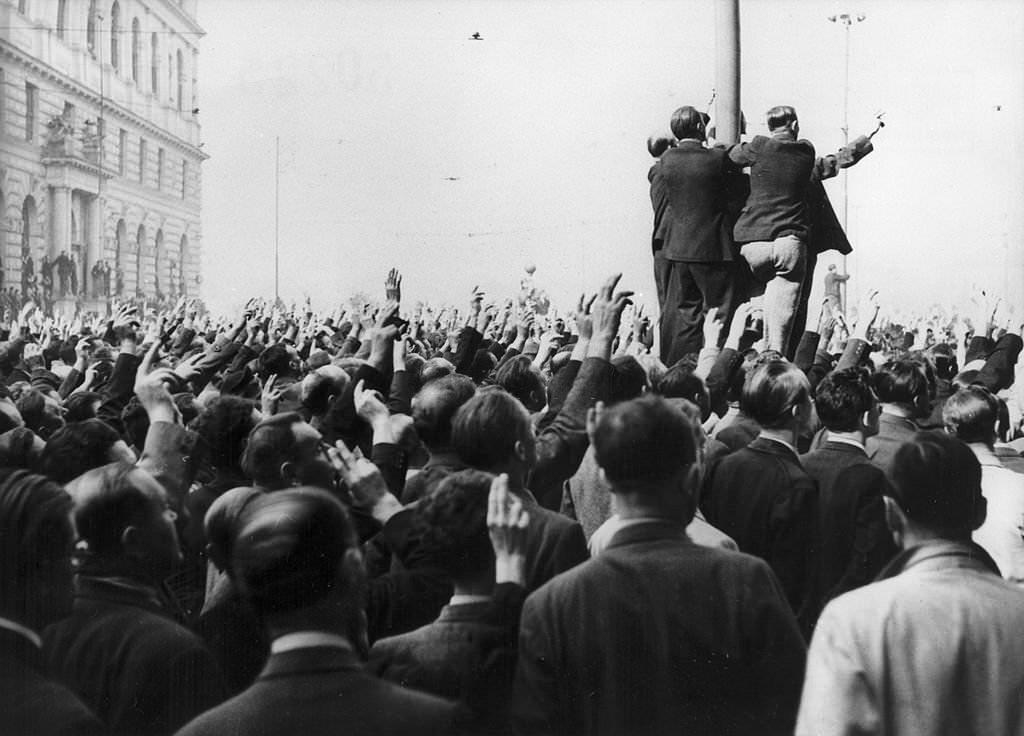
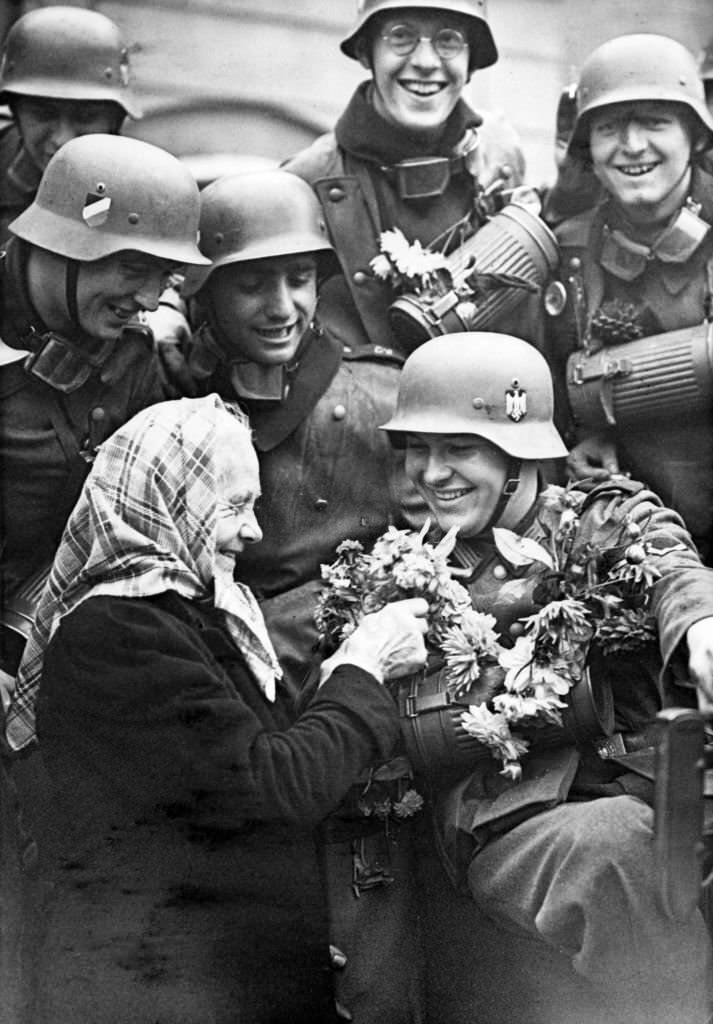
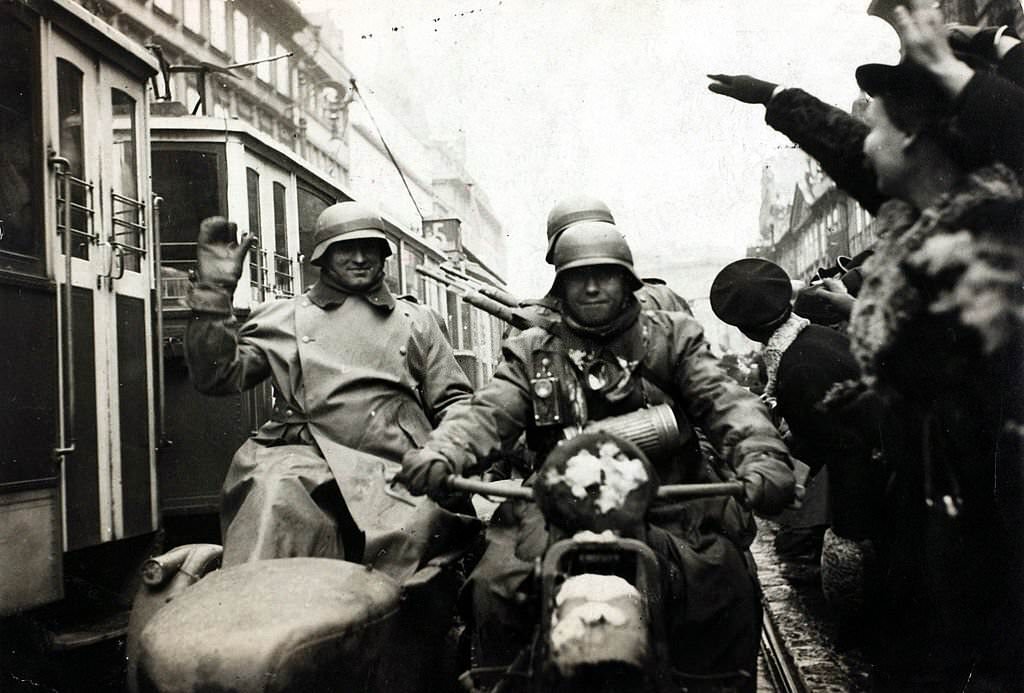
For Czechs, the Munich Agreement was not a peace deal — it was a betrayal. The word “Munich” became synonymous with abandonment. On September 30, just one week after mobilizing its military, Czechoslovakia capitulated. German troops crossed the border on October 1, 1938, and began occupying the Sudetenland. Ethnic Germans in the region lined the streets, saluting and cheering as Wehrmacht columns rolled through their towns.
Ethnic Germans living in the Sudetenland in Czechoslovakia welcome the German troops who have arrived to annex the region under the terms of the Munich Pact.
A woman in the Sudetenland greets incoming German troops with tears and a German Salute.
Women and young boys celebrating the German occupation of Asch, home of Konrad Henlein, leader of the Sudeten German party.
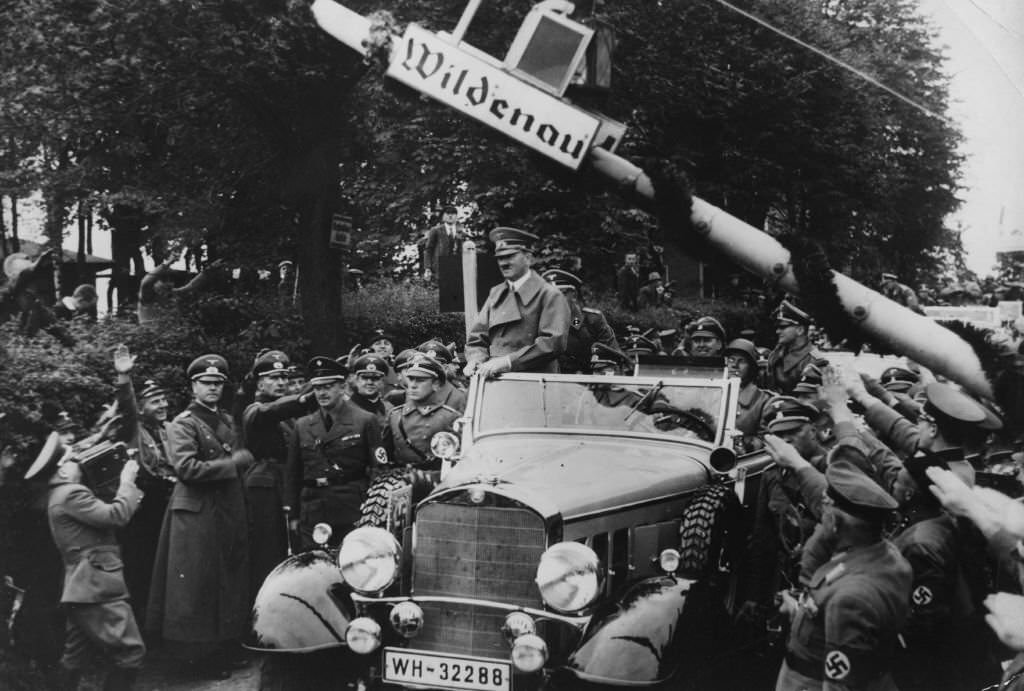
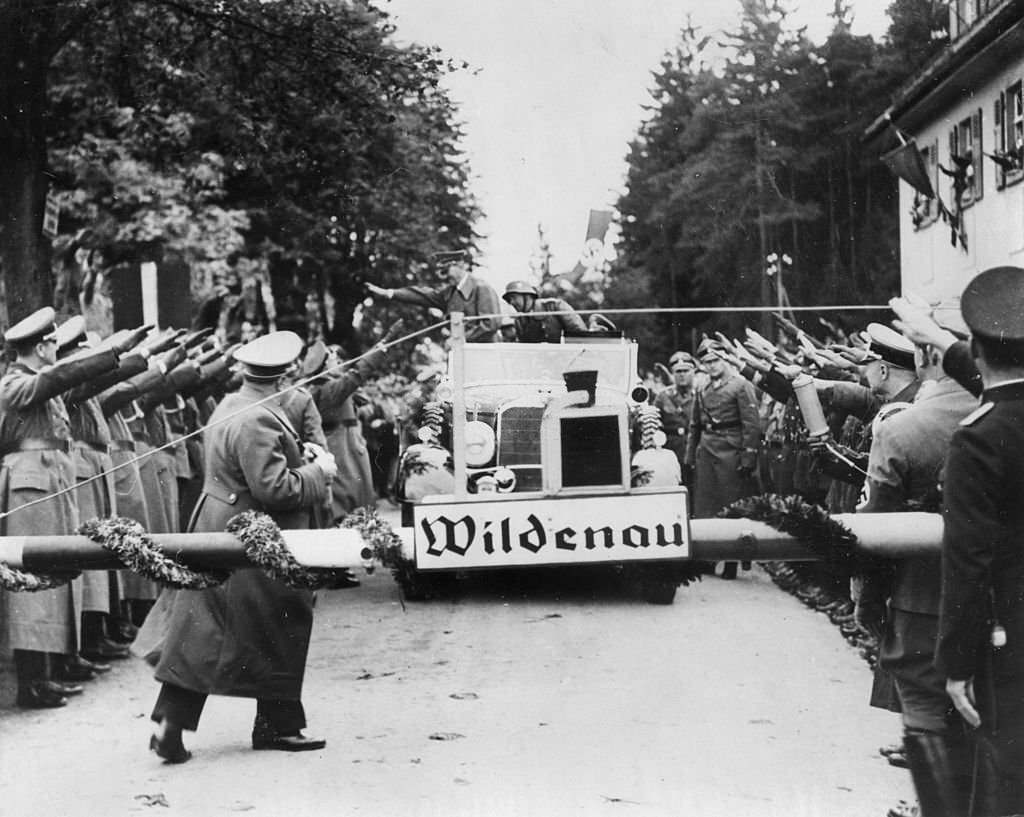
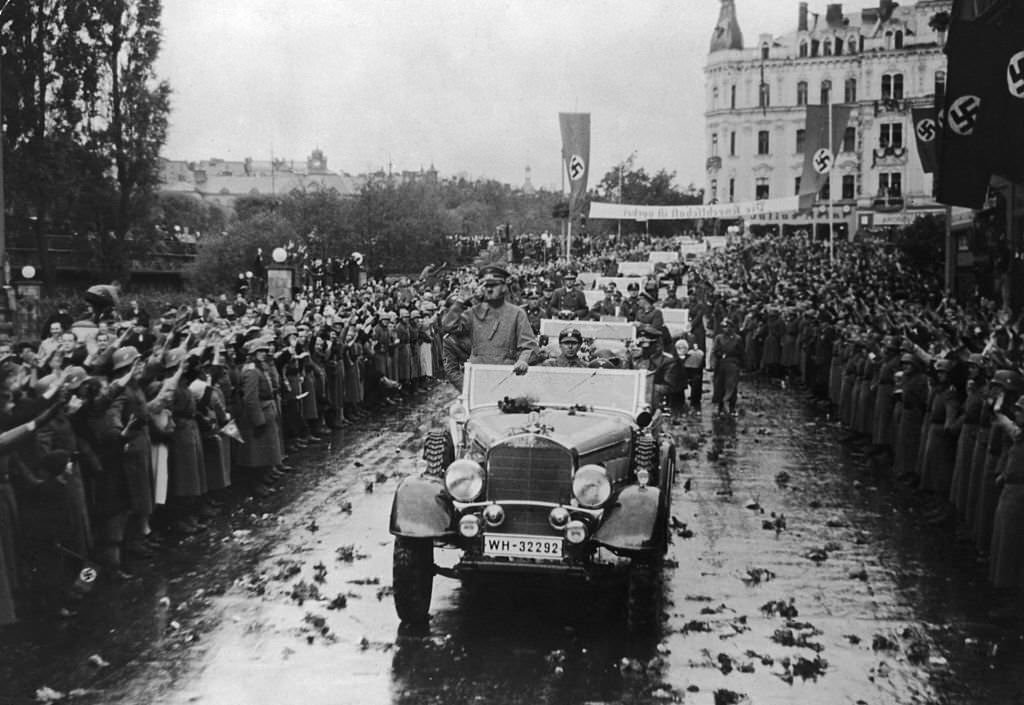
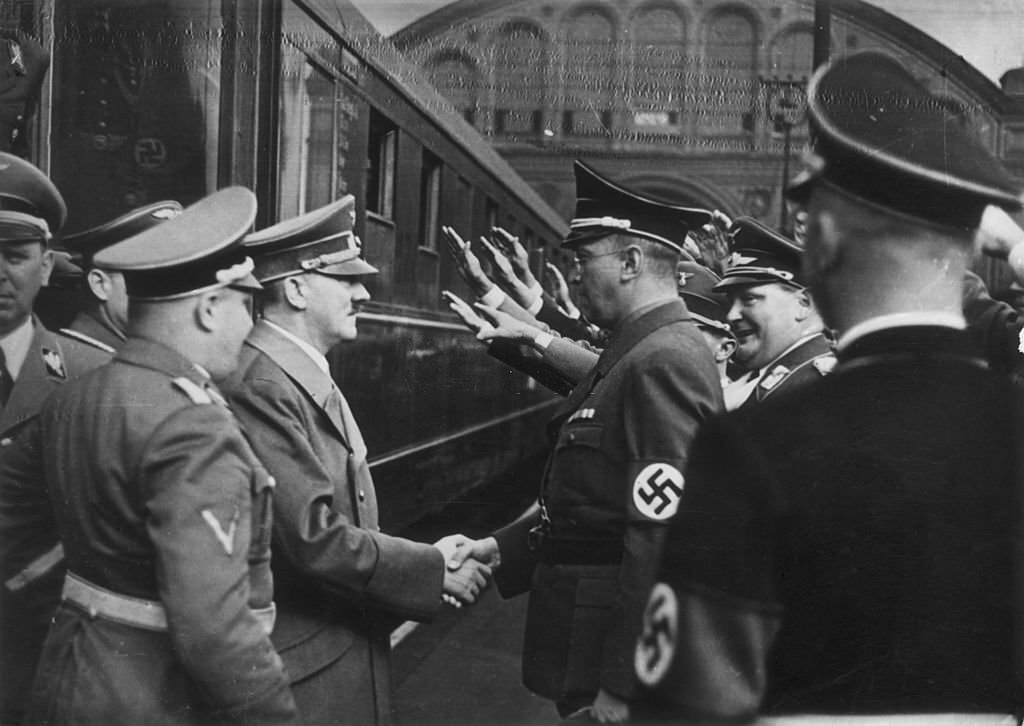
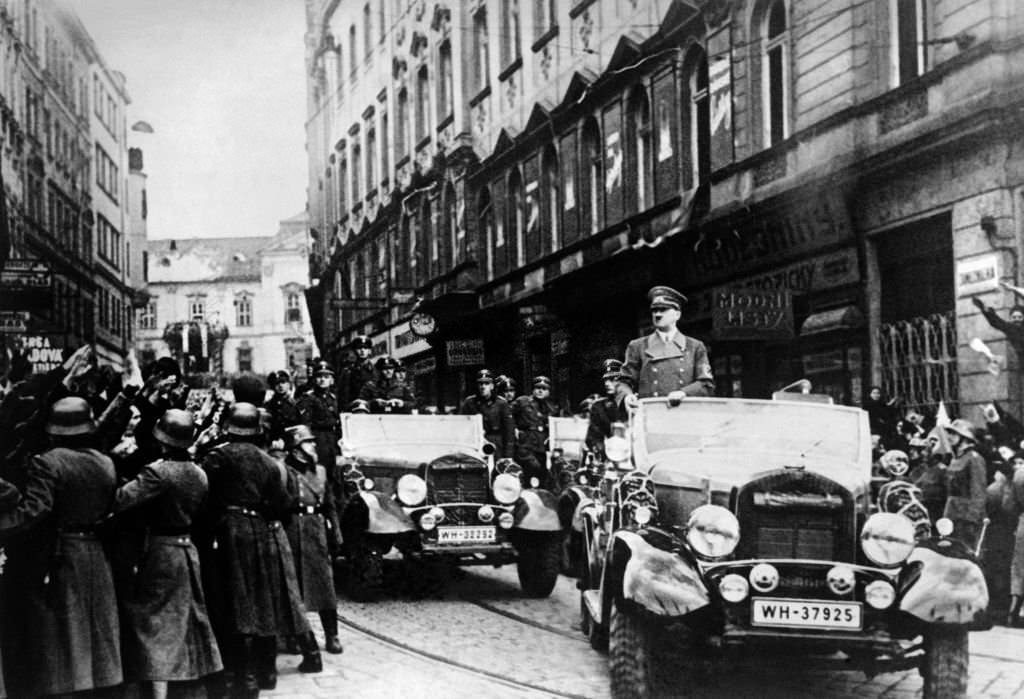
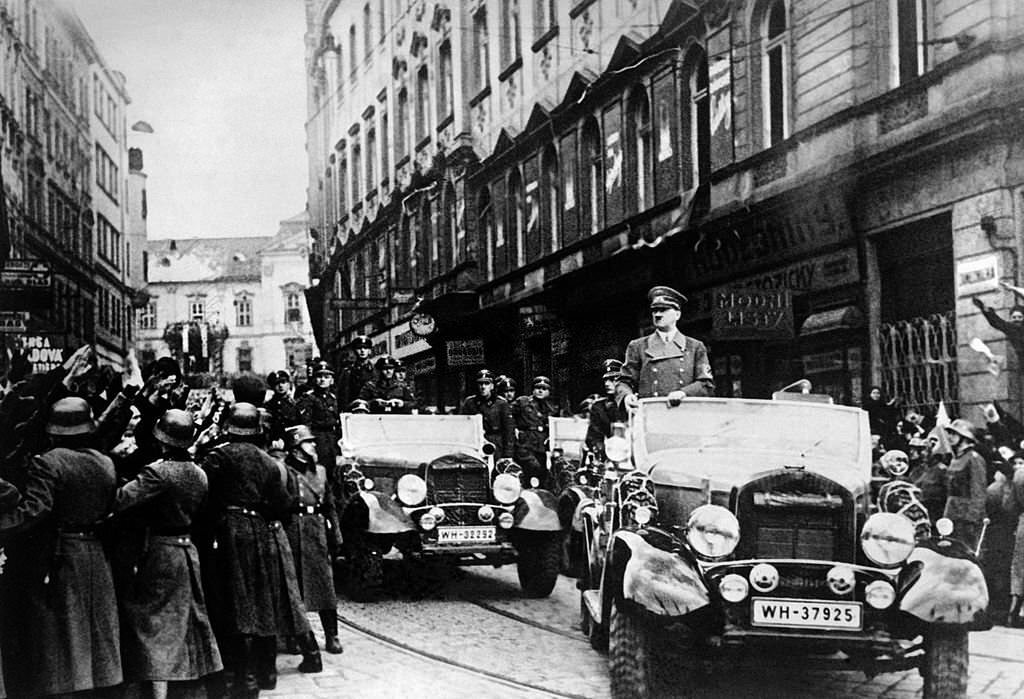
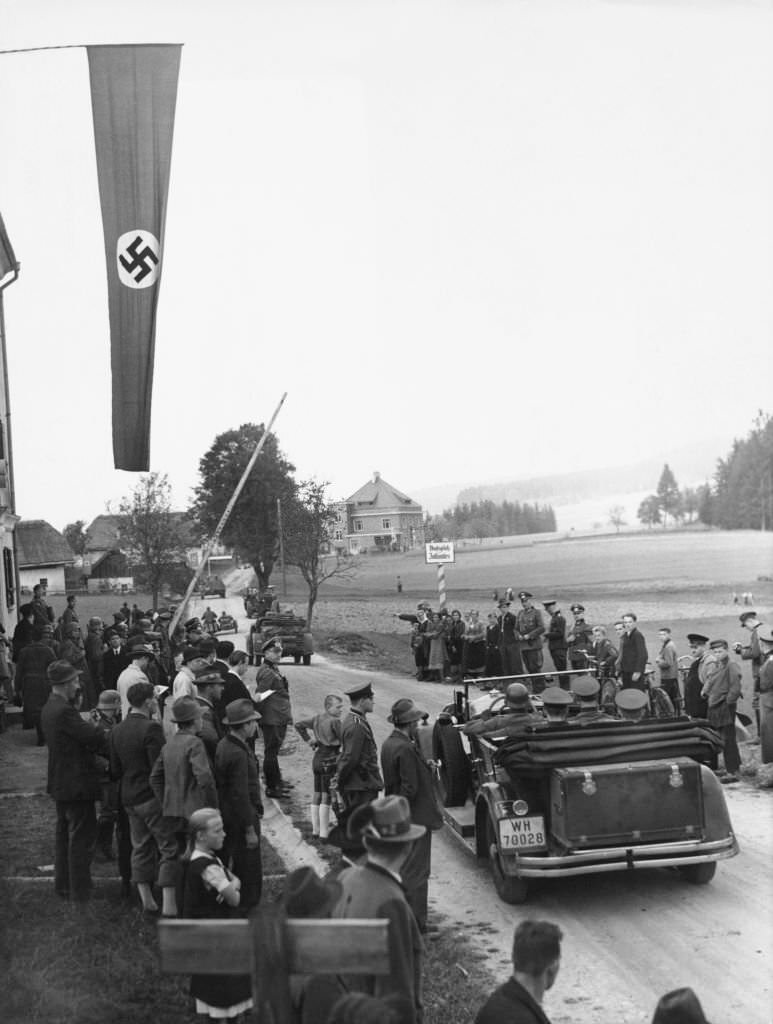
Hitler himself crossed into the Sudetenland to mark the occasion. He stood in his car and was greeted by crowds as his motorcade moved through the annexed territory. Konrad Henlein, whose years of agitation had helped deliver the Sudetenland to Germany, was there to greet Hitler upon his return to Berlin.
Adolf Hitler stands up in his car to acknowledge his welcome as he crosses the frontier into Sudetenland.Adolf Hitler crosses the Wildenau border from Germany into Sudetenland with his troops at the start of World War II. Sudetenland or Sudety, formerly a frontier region of the Czech Republic was ceded to Germany in the Munich Pact, but restored after the war. (Photo by Keystone/Getty Images)Adolf Hitler is welcomed by crowds lining the streets of Carlsbad (now Karlovy Vary) in the Sudetenland, Czechoslovakia, after the annexation of the territory into the German Reich, 6th October 1938.After signing the Munich Pact, German chancellor, Adolf Hitler (1889 – 1945) returns to Berlin in triumph and is greeted by Konrad Henlein (right), leader of the Sudeten German Party.
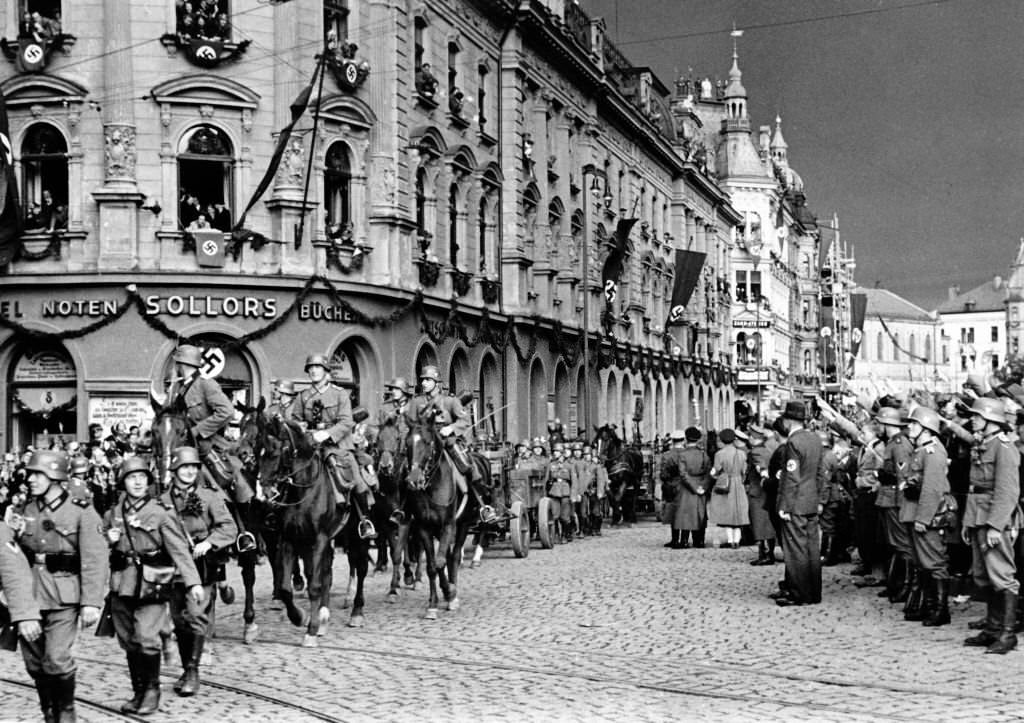
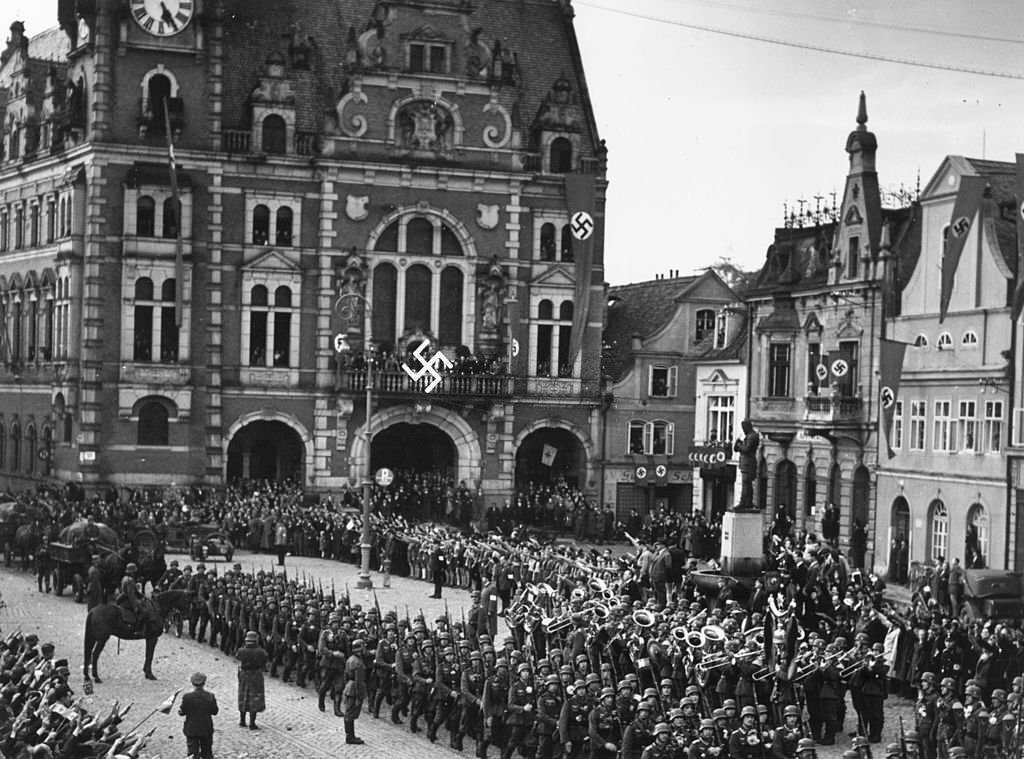
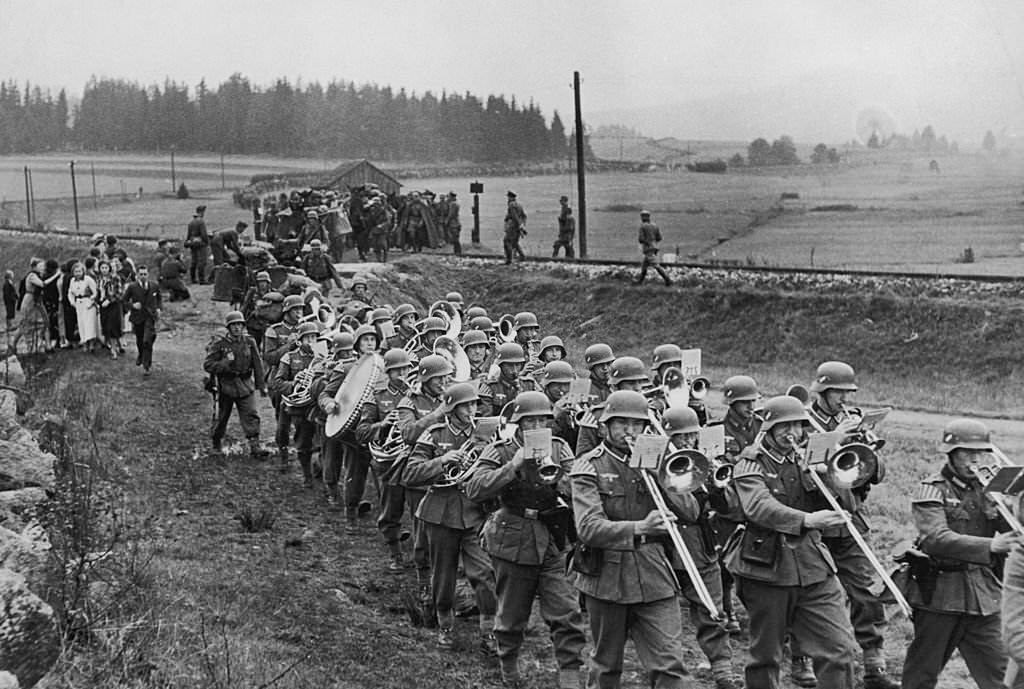
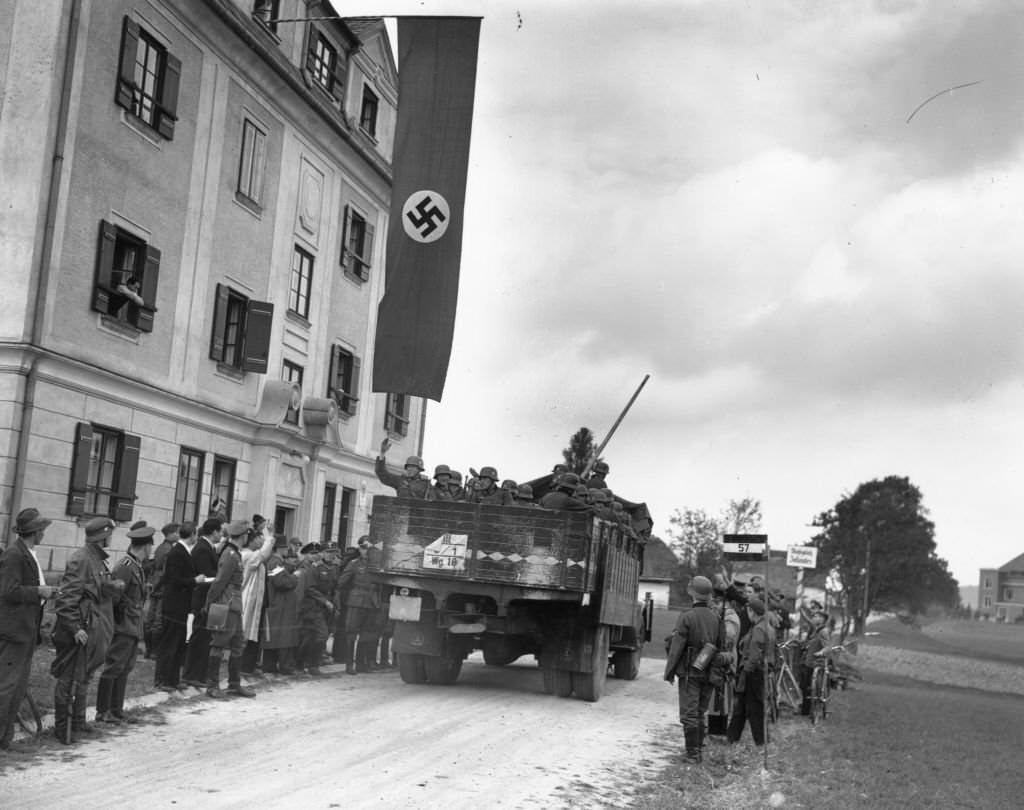
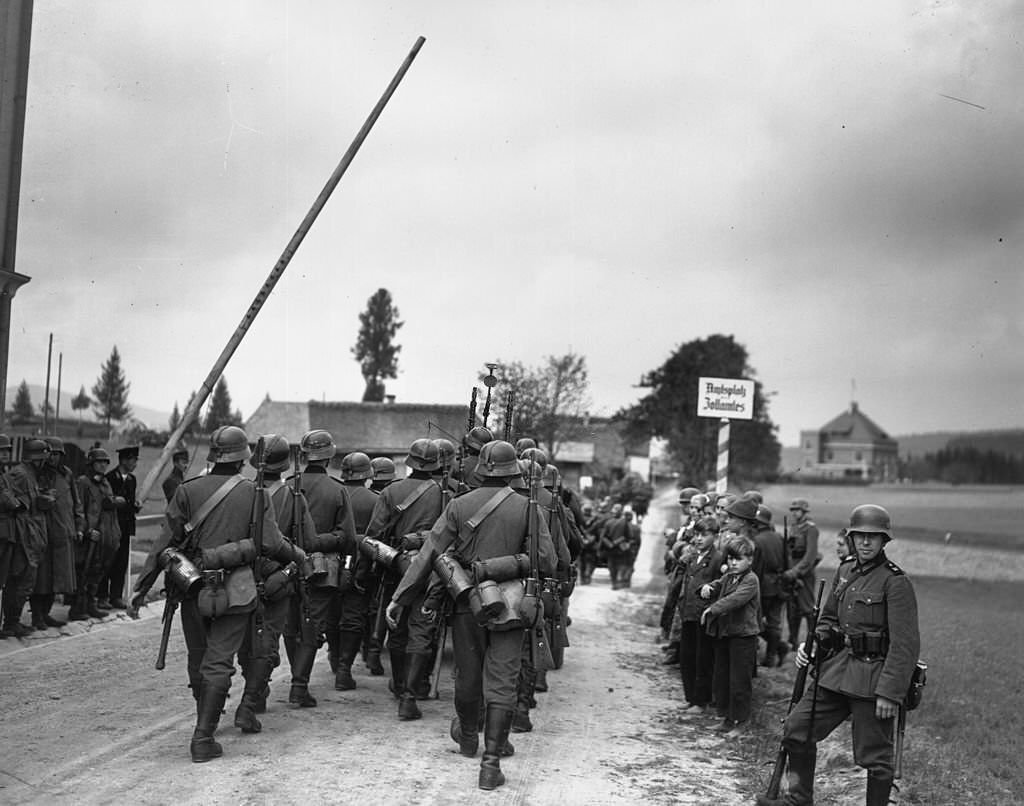
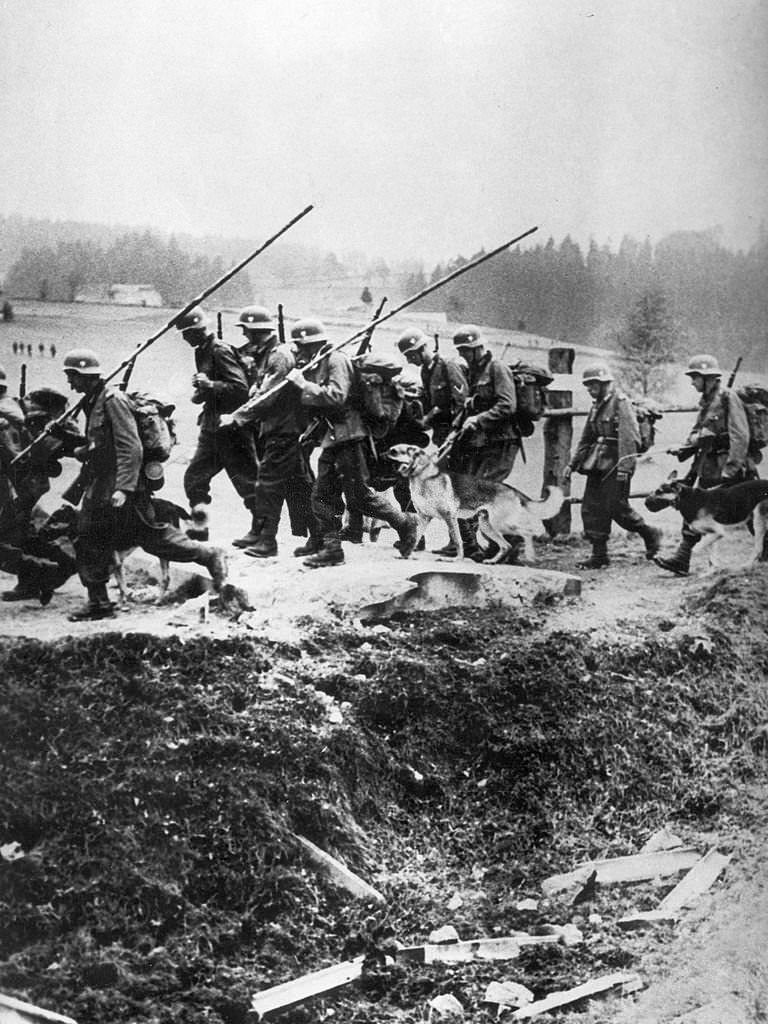
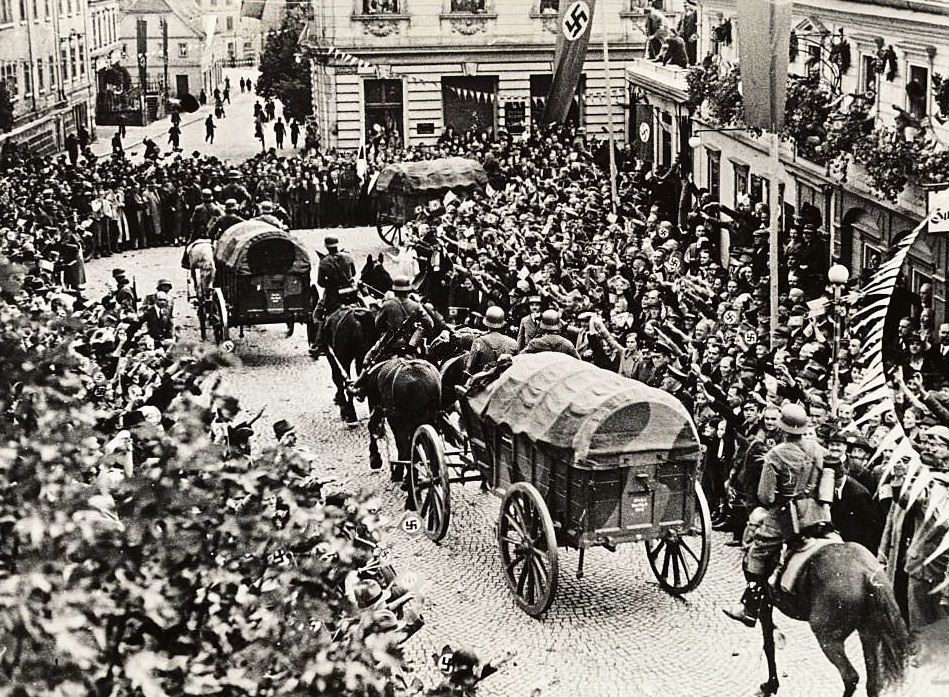
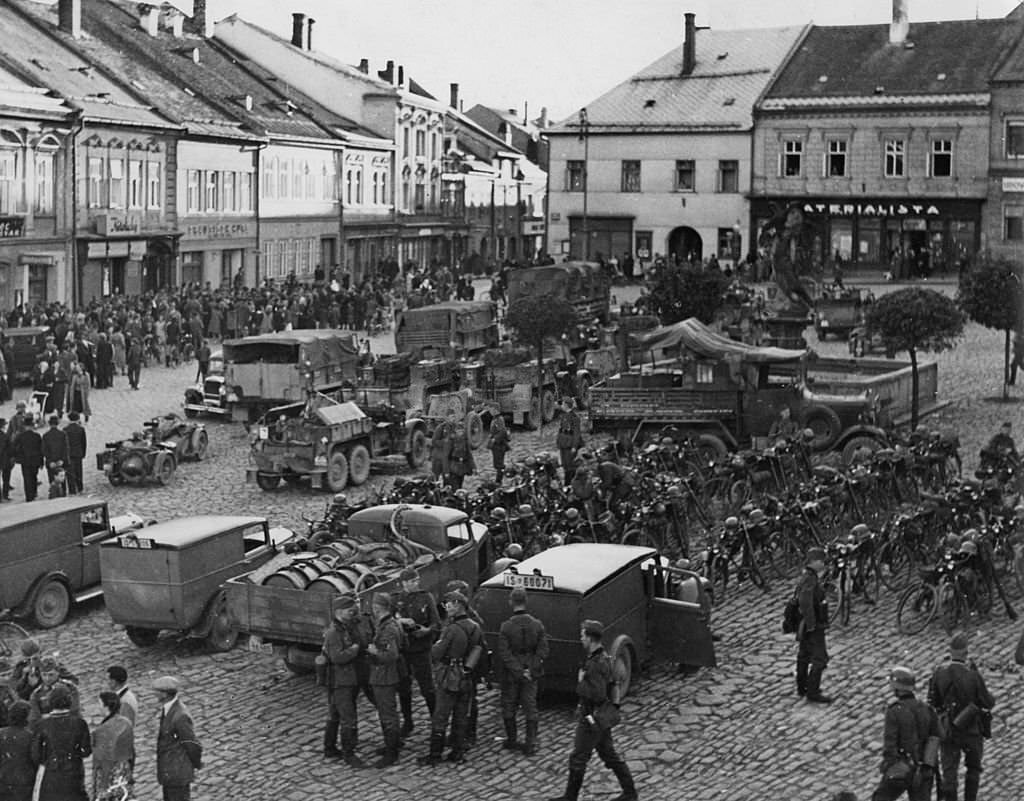
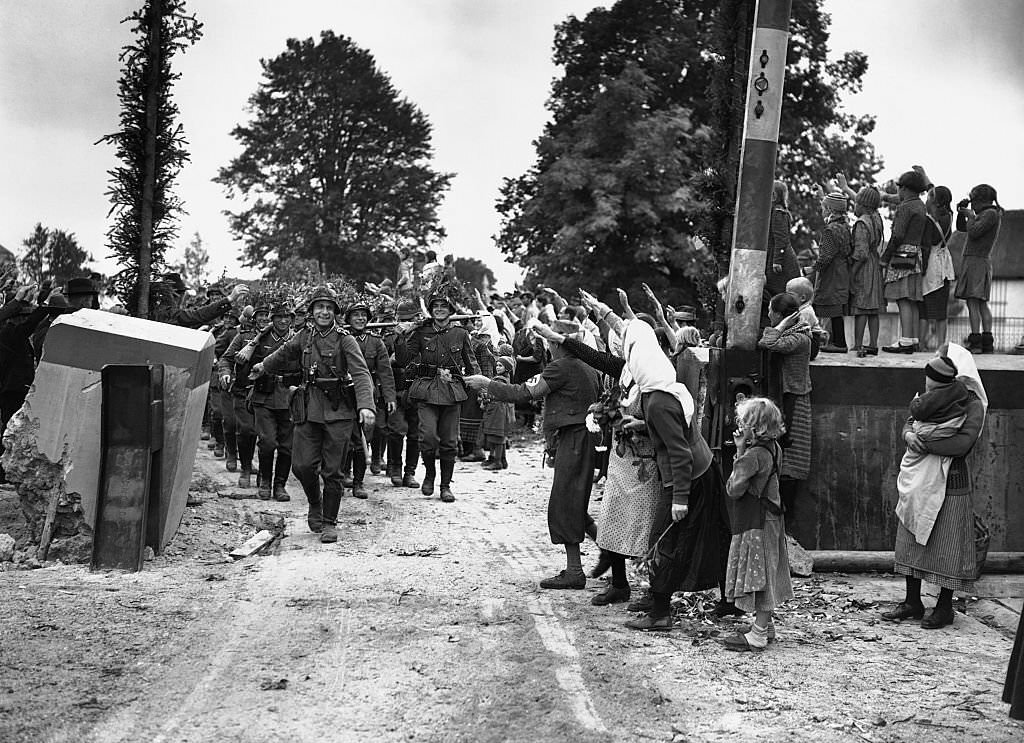
German troops marched into Sudeten towns one after another. In Reichenberg, Rumburg, Schönlinde, Waldhaeusl, and dozens of other towns, Wehrmacht columns moved in while locals lined the streets. A German marching band crossed the Bavarian border near Haidmühle on October 1. German aircraft flew over the newly acquired territory. German armored vehicles pushed through customs checkpoints that had marked the border just days before.
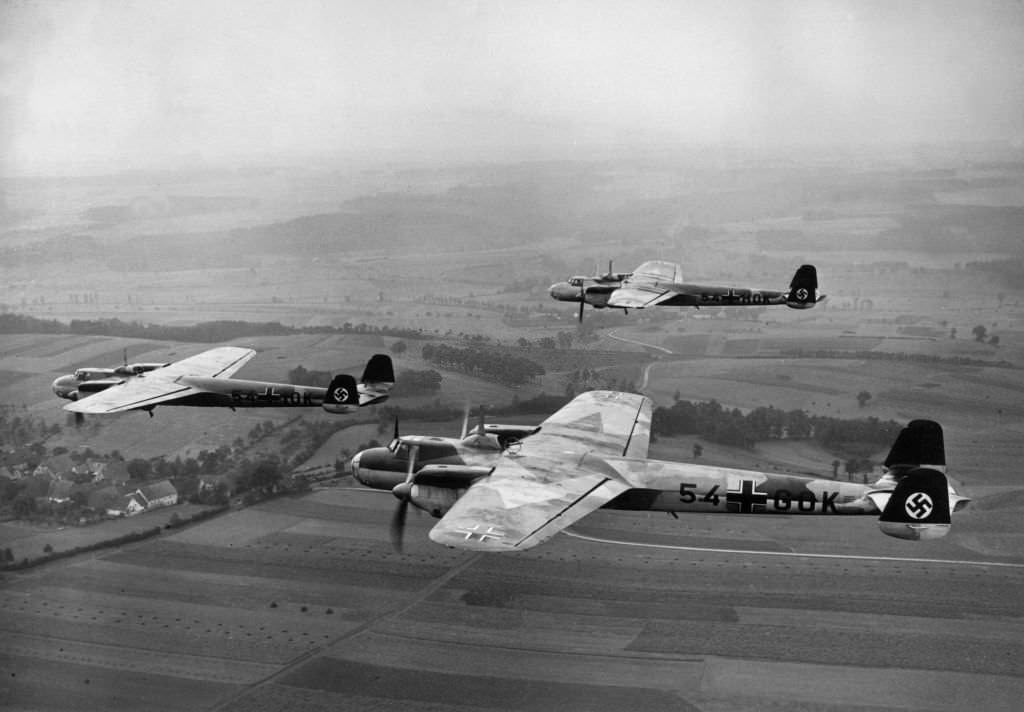
The German propaganda picture shows German troops marching into Reichenberg, Sudetenland (today Liberec, Czech Republic) in October 1938.Troops of the German army march into Czechoslovakian territory and parade in the town square at Rumberg, which has been decorated with swastika banners.German troops enter Schonlinde (Krasna Lipa) in the Sudetenland, as Germany annexes the region, 2nd October 1938.A German marching band crosses the border near Haidmuhle in Bavaria to enter the Sudetenland, as Germany begins its annexation of the region, 1st October 1938.German armoured vehicles pass through a customs barrier between Germany and Czechoslovakia.Three German 5.4 GOK bombers fly over Sudetenland after Germany took control of the region with the signing of the Munich Pact, Czechoslovakia.
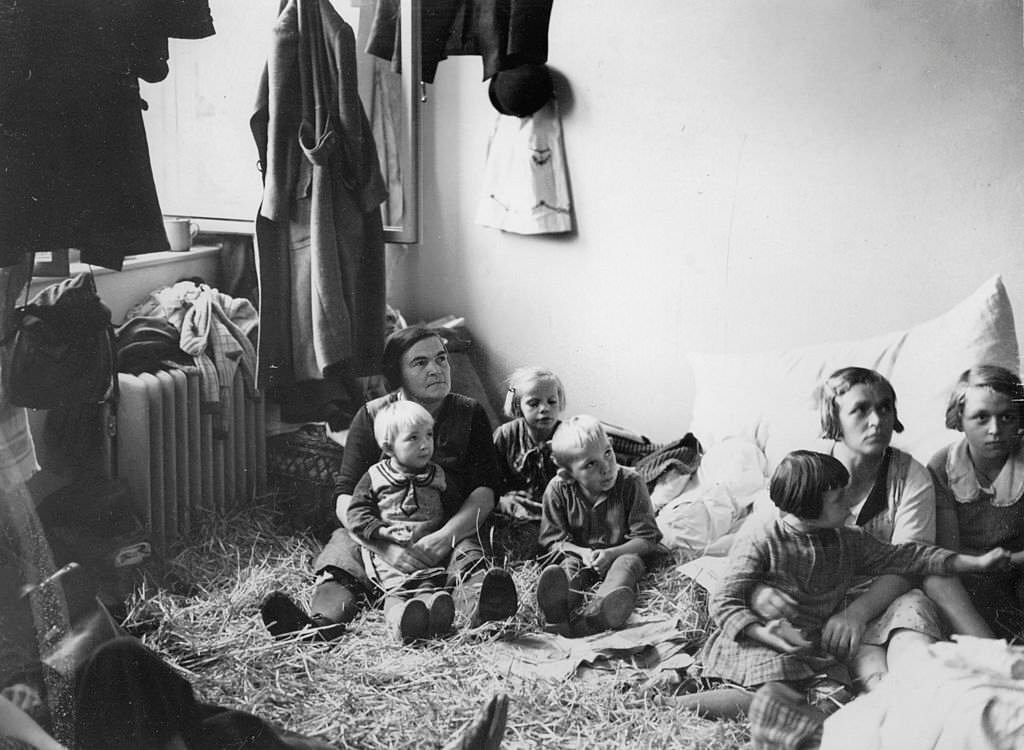
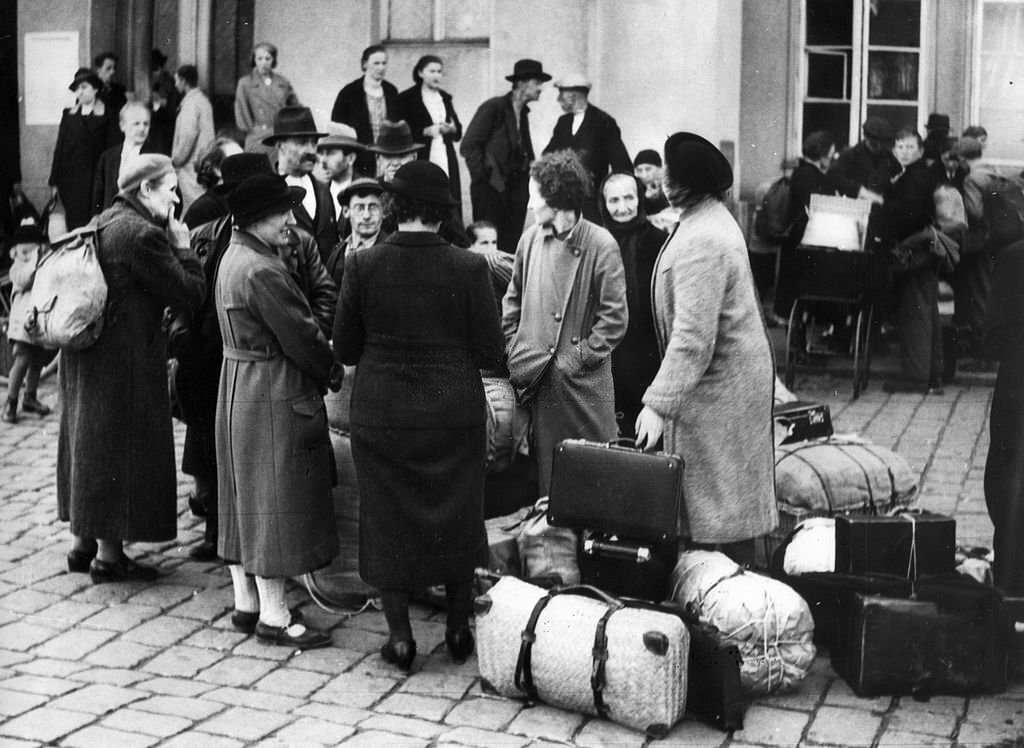
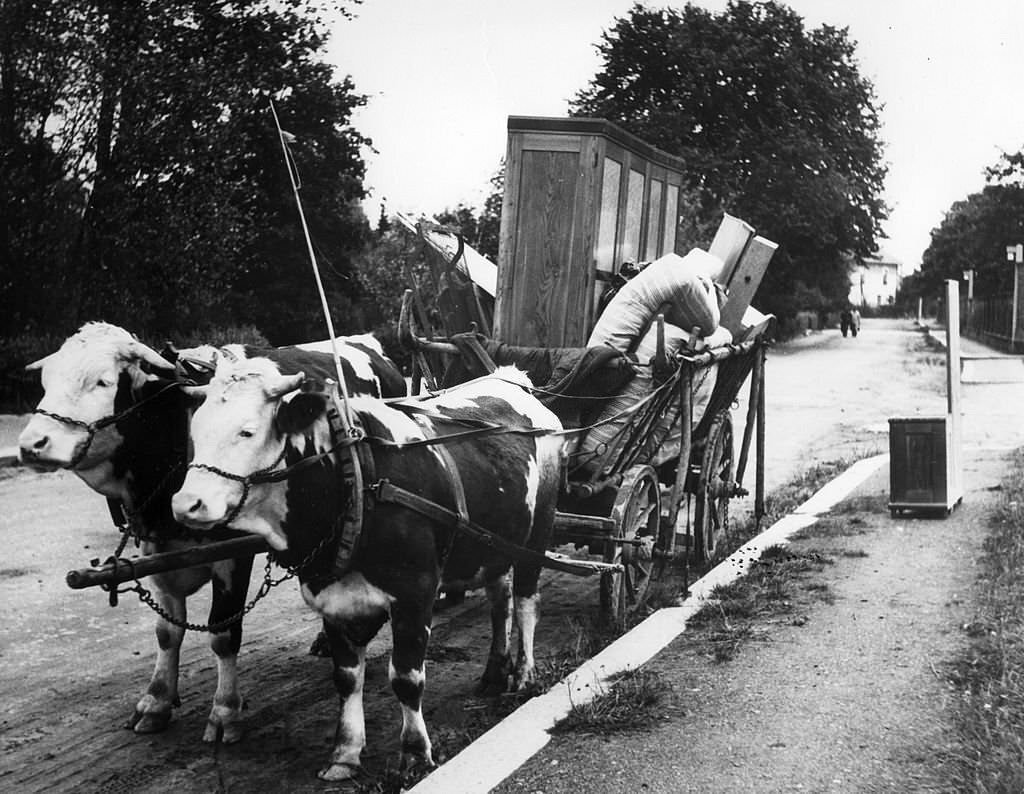
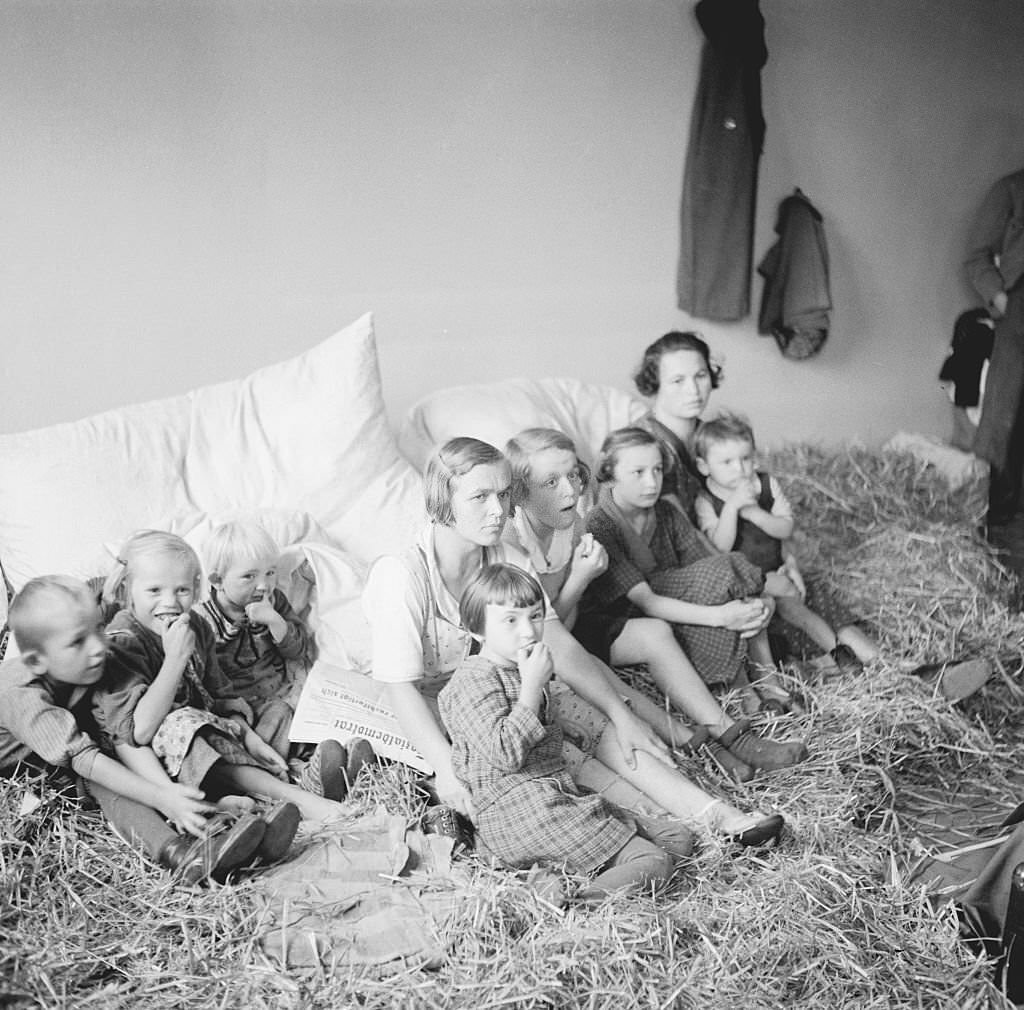
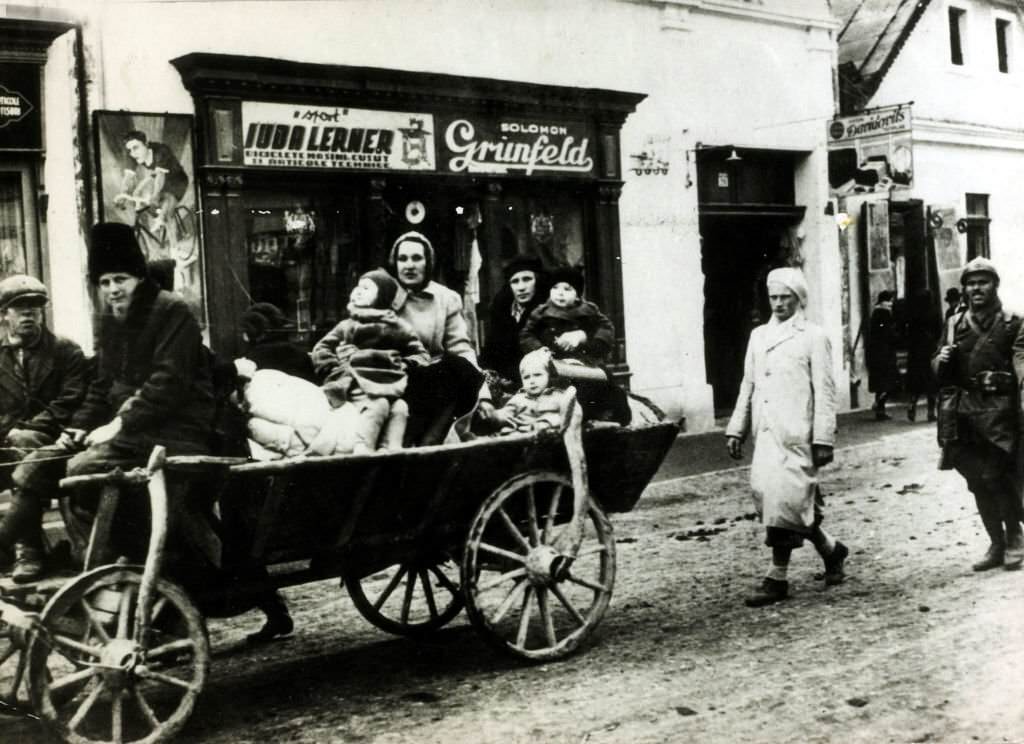
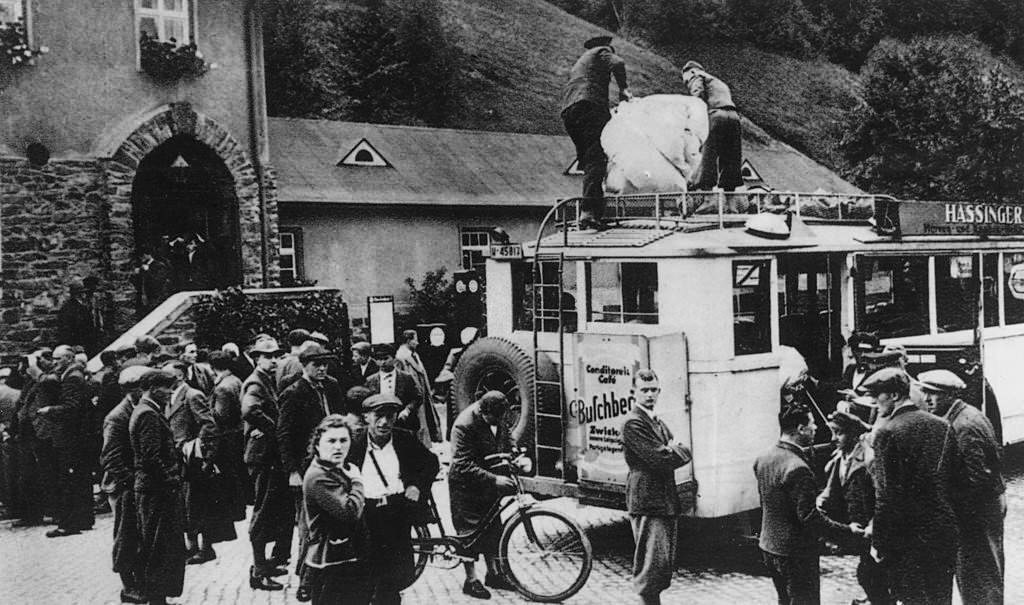
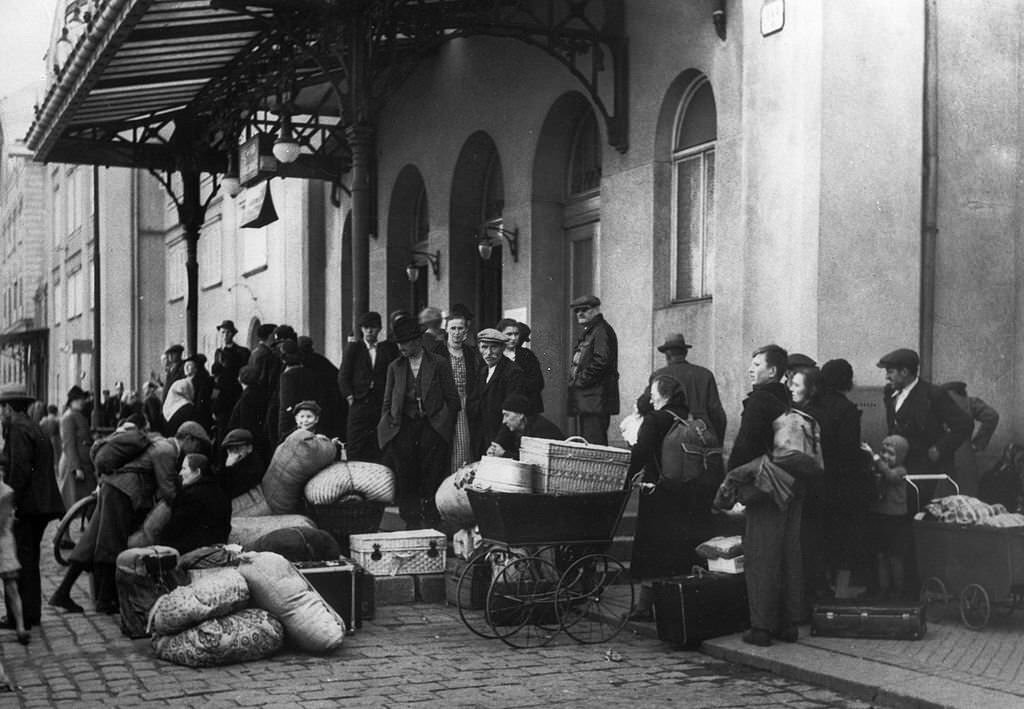
For Czech civilians, October 1938 meant flight. Tens of thousands of people — Czechs and anti-Nazi Germans alike — were pushed out of the borderland districts by the advancing German forces. Families piled their belongings onto carts or carried what they could on foot. Refugee camps filled quickly. Children sat on straw in crowded conditions far from their homes. Some families made it as far as Romania. The human cost of the Munich Agreement was visible on every road leading away from the Sudetenland.
Refugee Families Of The Sudetes At Masaryk Stadium Near Prague in 1938Czech refugees from the german settelment area in the bohemian countries, so called Sudetenland after the invasion of the German armed forces, 1938Events leading up to the German occupation of Bohemia and Moravia on March 15, 1939Events leading up to the German occupation of Bohemia and Moravia on March 15, 1939.Czech Refugee Children sitting on Straw.Czech refugees, women and children in a typical cart, arrive in the Romanian border town of Sighet Marmatiei.
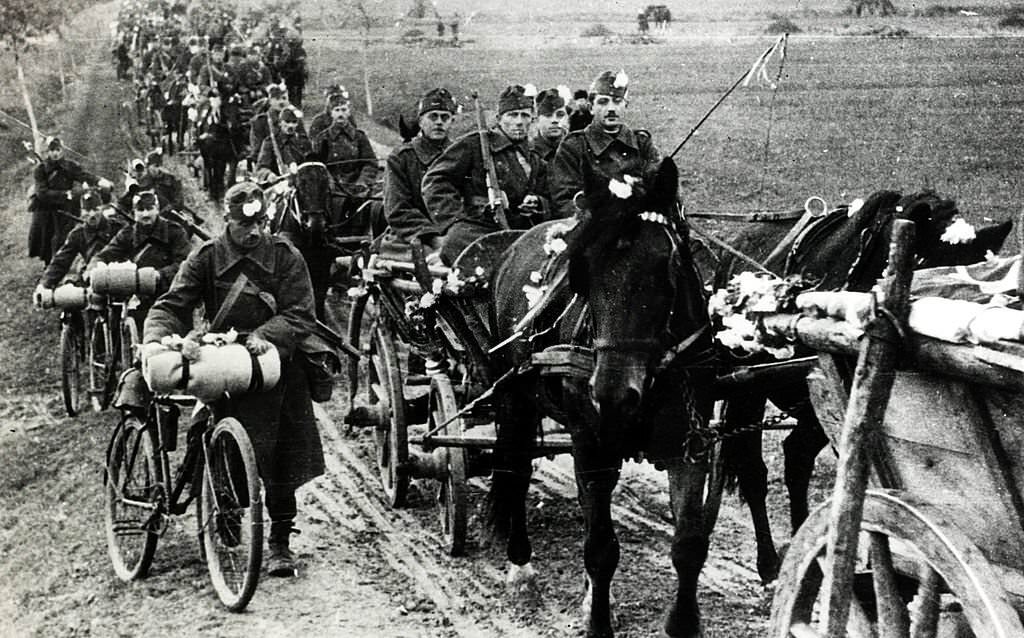
What Czechoslovakia lost in October 1938 went far beyond territory. The Sudetenland contained the country’s main line of fortifications against Germany. It held major iron, steel, and textile industries. Its loss left the remaining Czech state militarily and economically crippled. Czechoslovakia’s shrinking borders also invited further predatory moves from its neighbors. Poland seized the Zaolzie region, citing earlier territorial disputes from 1918 to 1920. Under the First Vienna Award, Hungary took the southern strips of Slovakia and Carpathian Ruthenia, areas with large Hungarian-speaking populations.
Hungarian troops on the march during the occupation of Zone A, consisting of parts of the Csallokez, ceded to Hungary by Czechoslovakia.Hungarian troops on the march during the occupation of Zone A, consisting of parts of the Csallokez, ceded to Hungary by Czechoslovakia.
In March 1939, the final act began. Slovakia declared itself an independent state, and on that same day Hungary occupied and annexed the remainder of Carpathian Ruthenia. The Czech prime minister, fearing a full Hungarian invasion of the remaining Czech lands, asked Germany to send in the Wehrmacht for “protection.” It was a fatal decision. On March 15, 1939, German troops entered what remained of Czechoslovakia. The only organized armed resistance came from a single infantry company in Místek, commanded by Captain Karel Pavlík, which fought the invaders before being overwhelmed. Elsewhere, the takeover was effectively unopposed.
Czech soldiers attempt to protect their borders from imminent German attack during World War Two, March 14th 1939.German troops enter Czechoslovakia.German troops entering Waldhaeusl in Czechoslovakia.Troops of the German ‘defence force’ (Wehrmacht) are welcomed as they march across the border at Wald Haenst into Czechoslovakia.
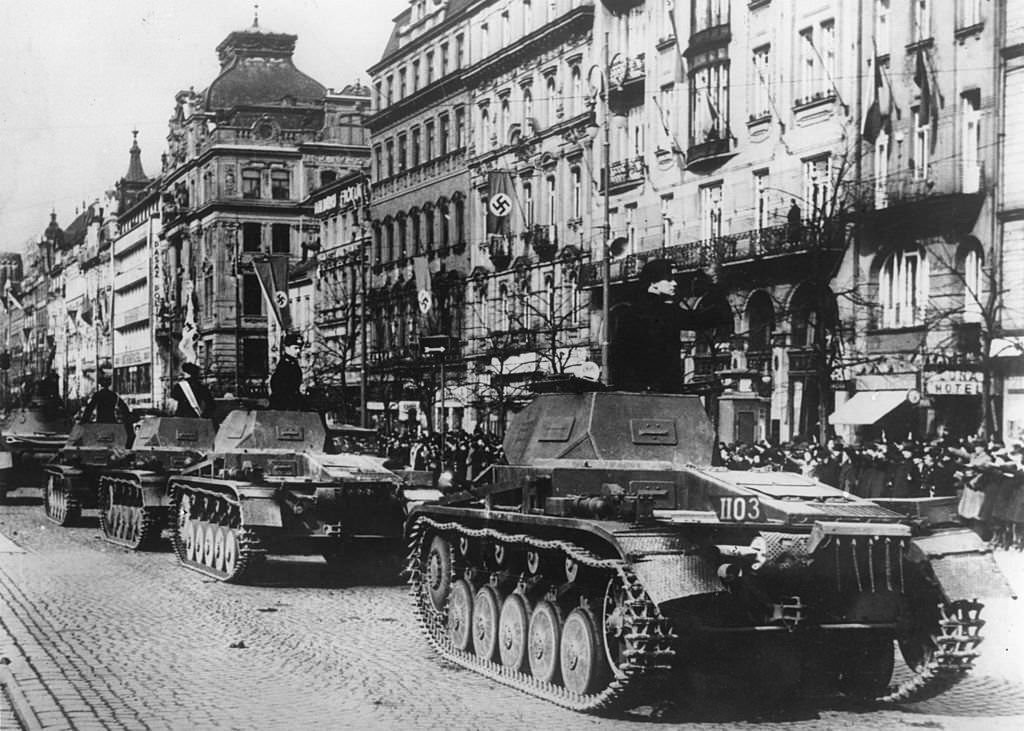
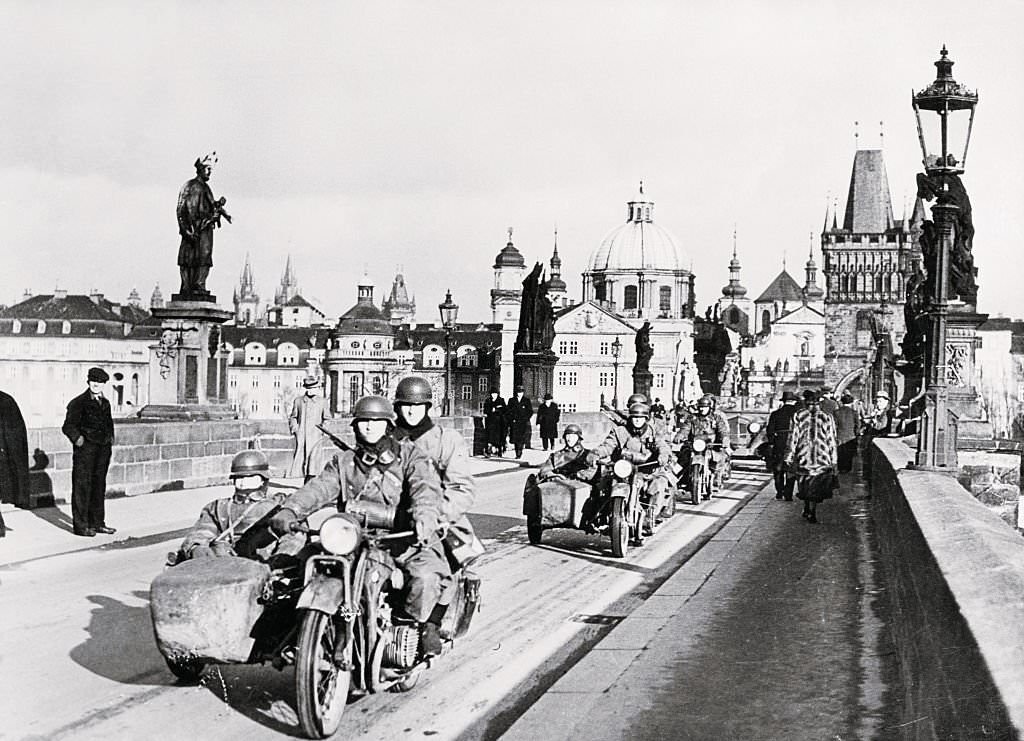
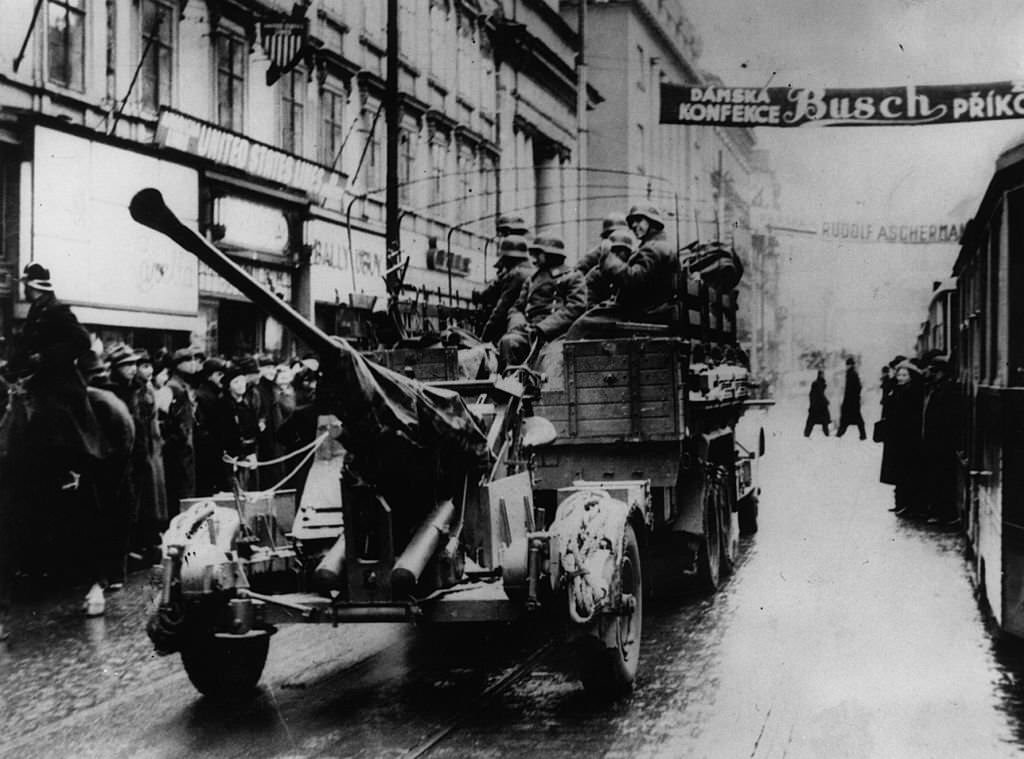
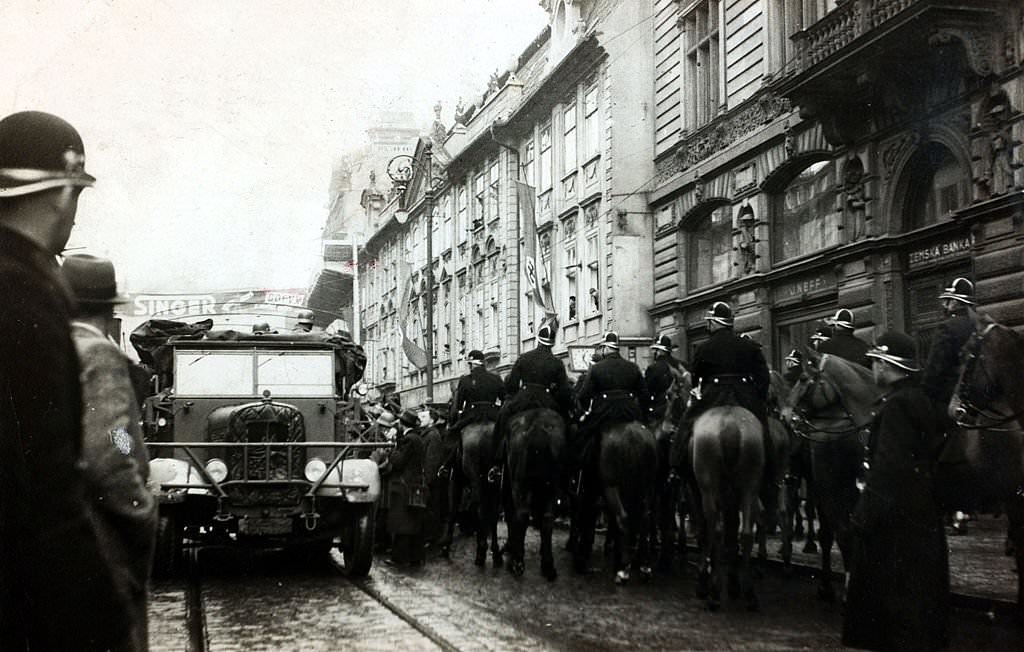
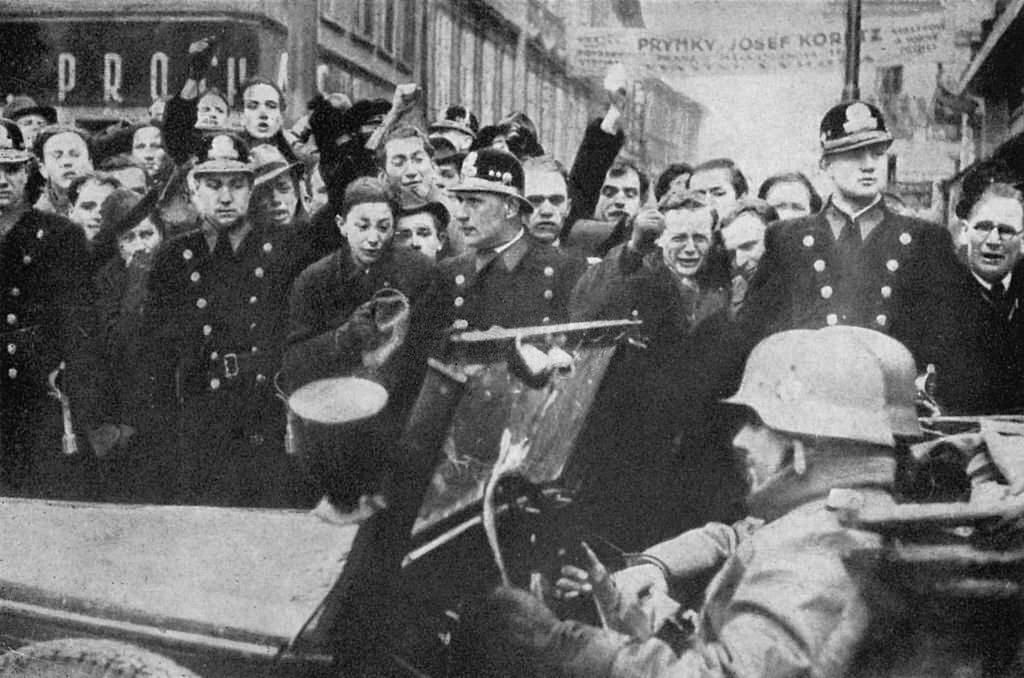
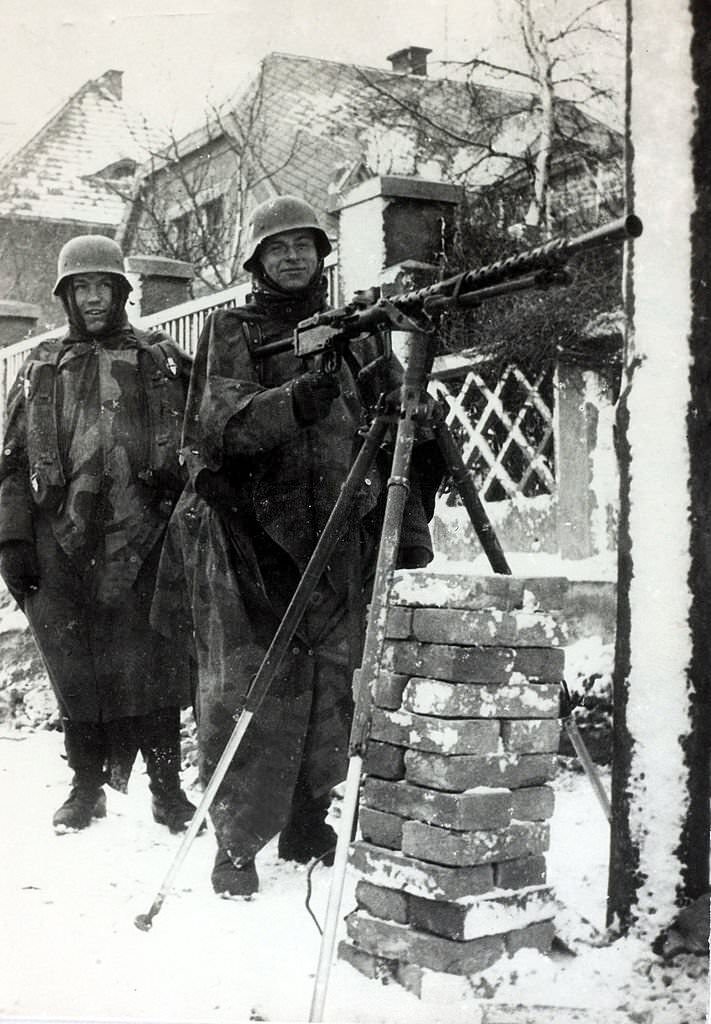
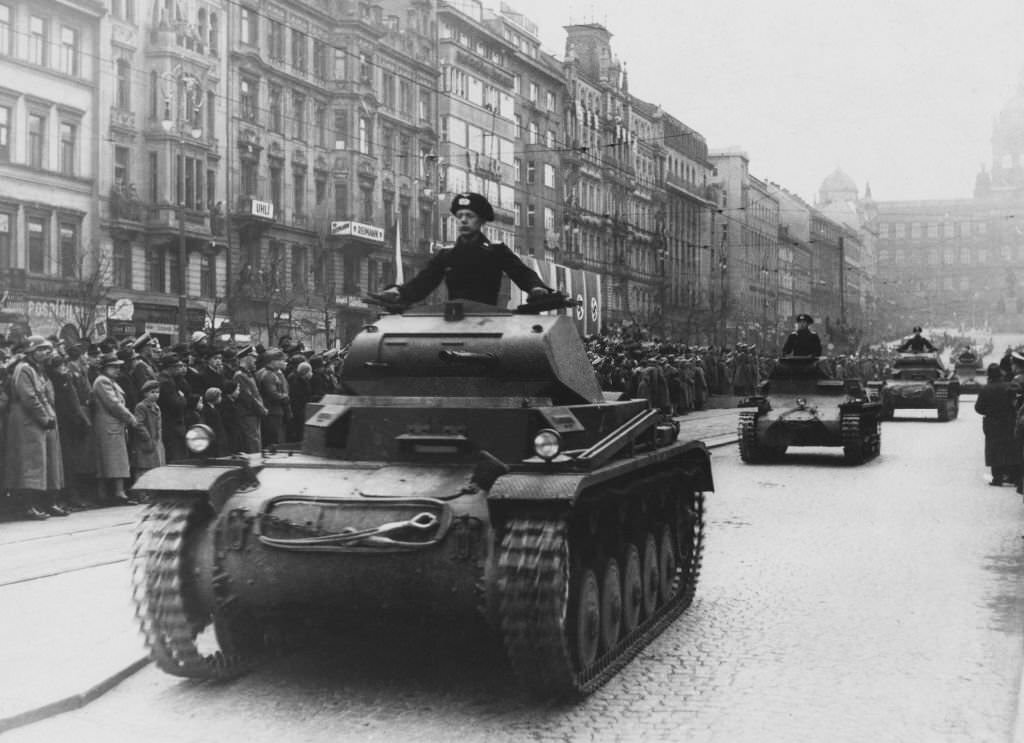
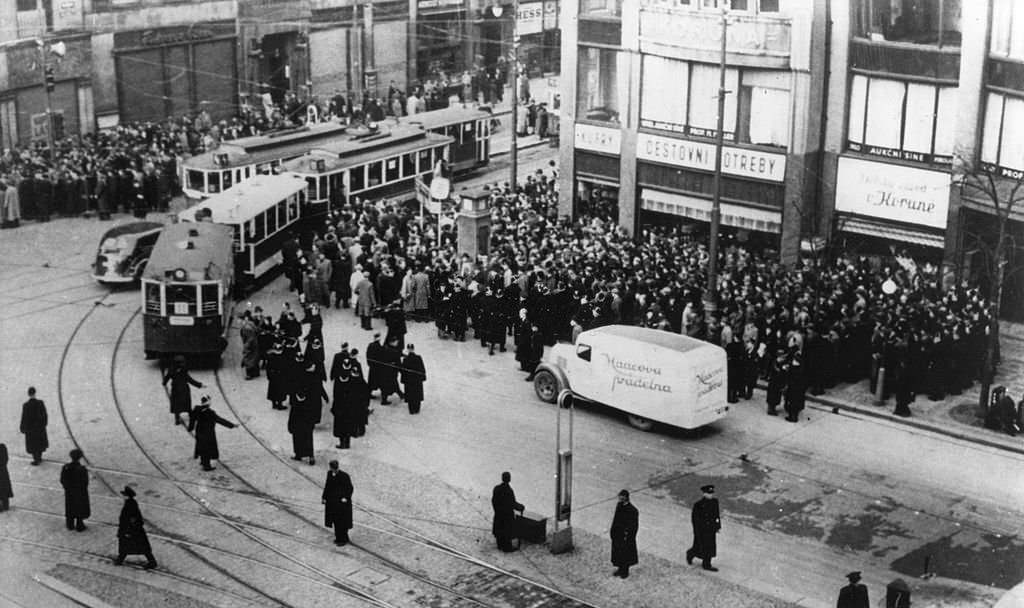
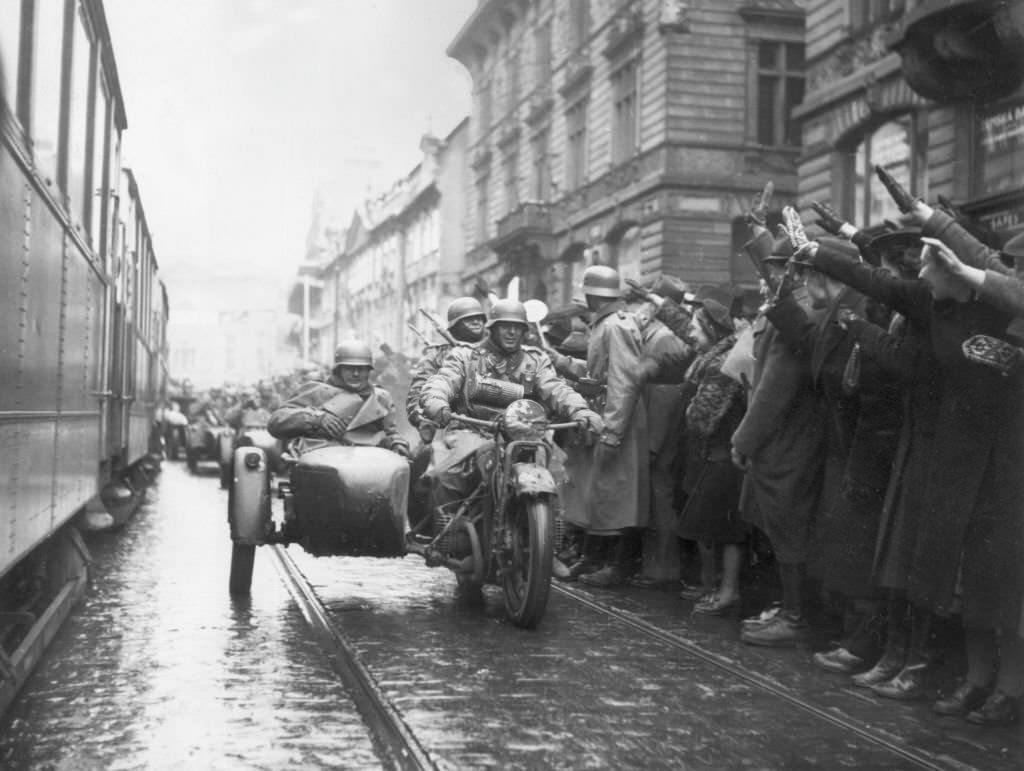
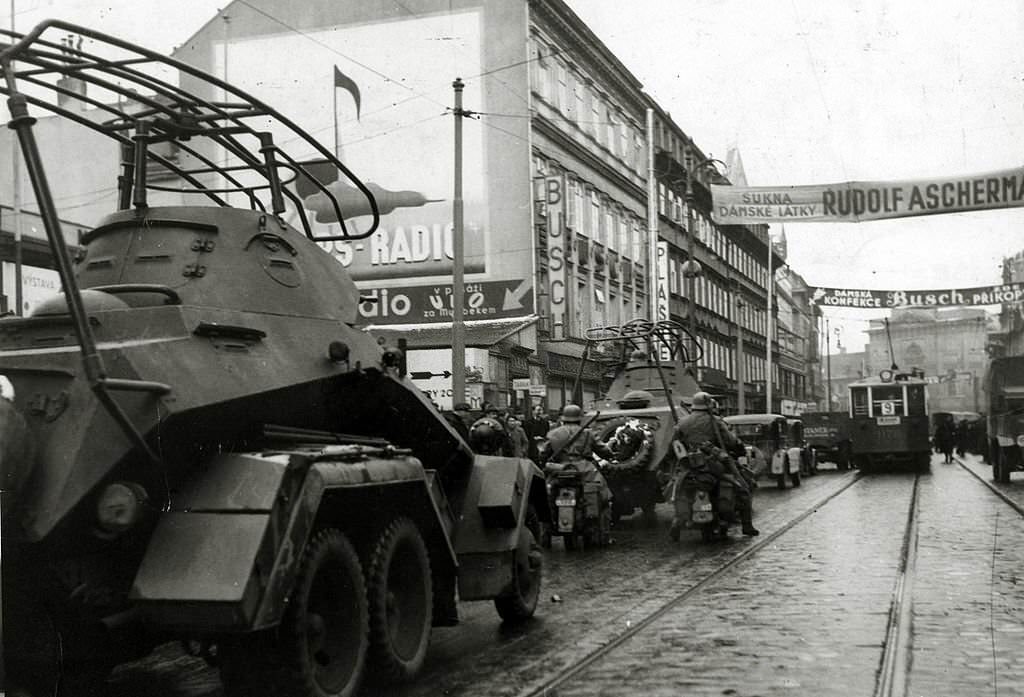
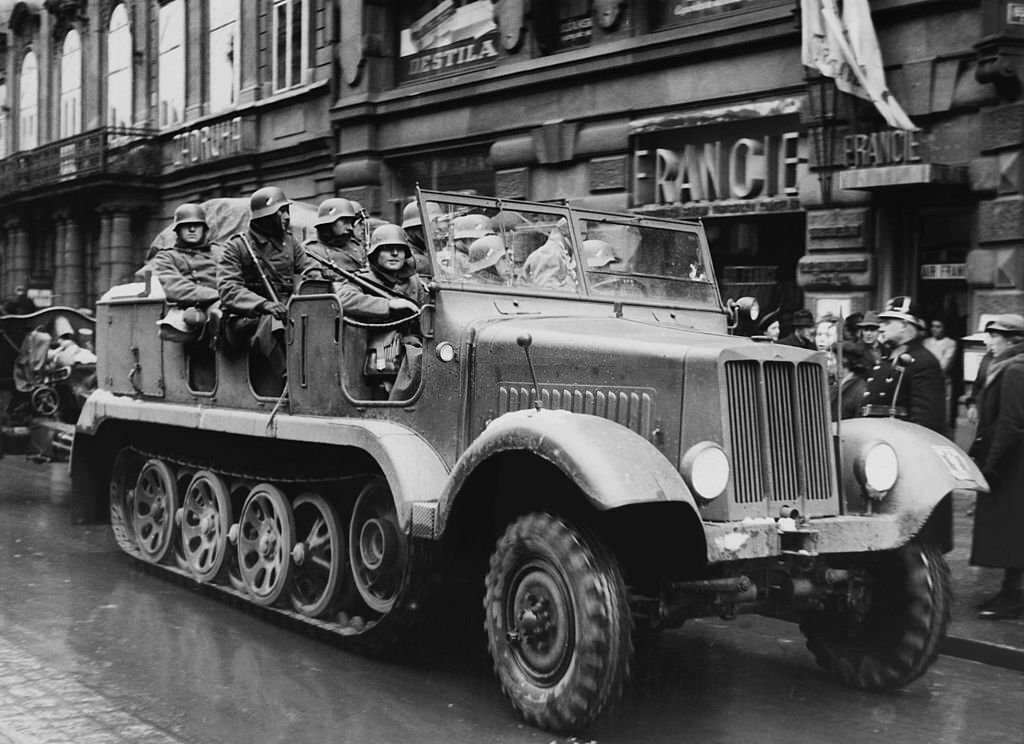
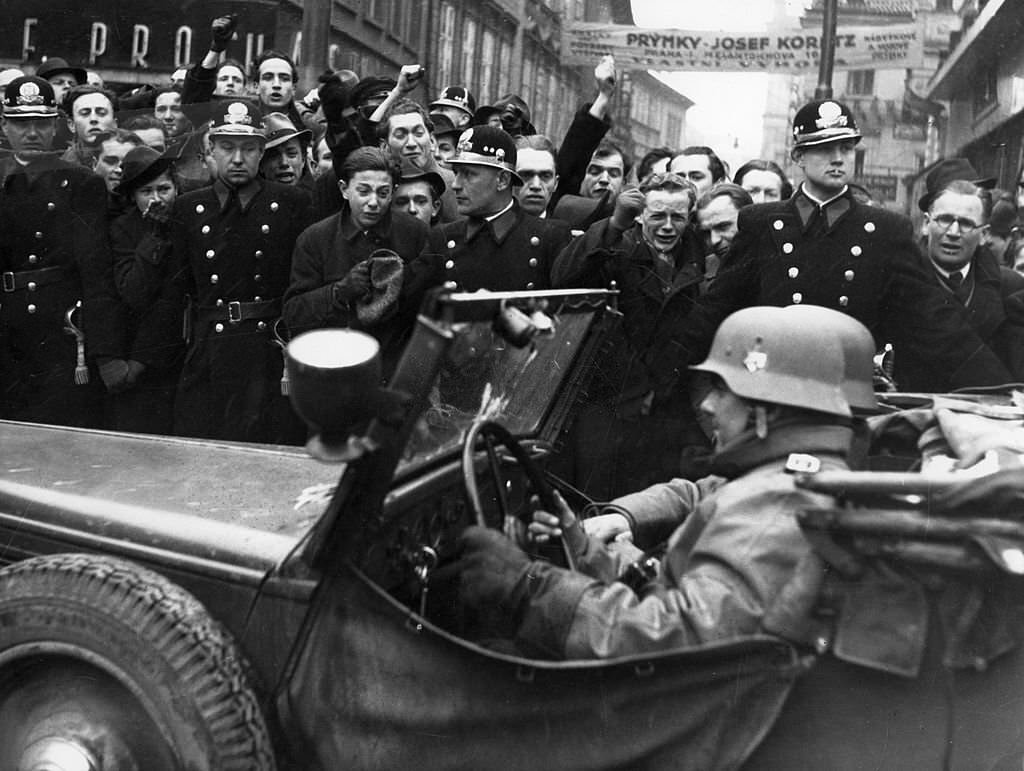
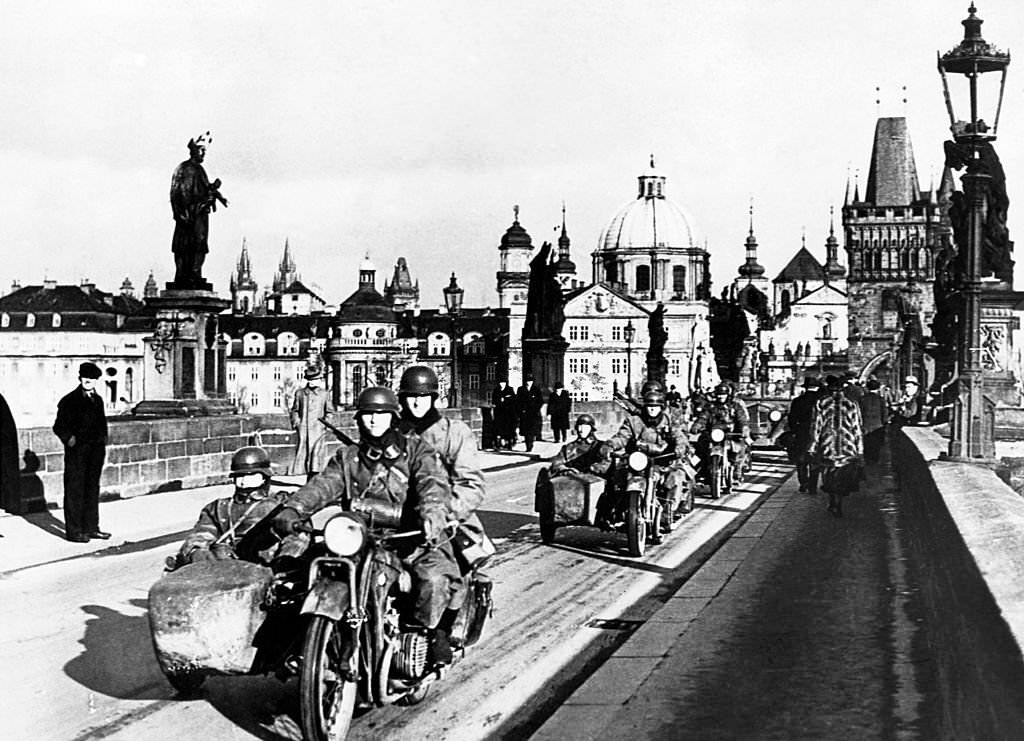
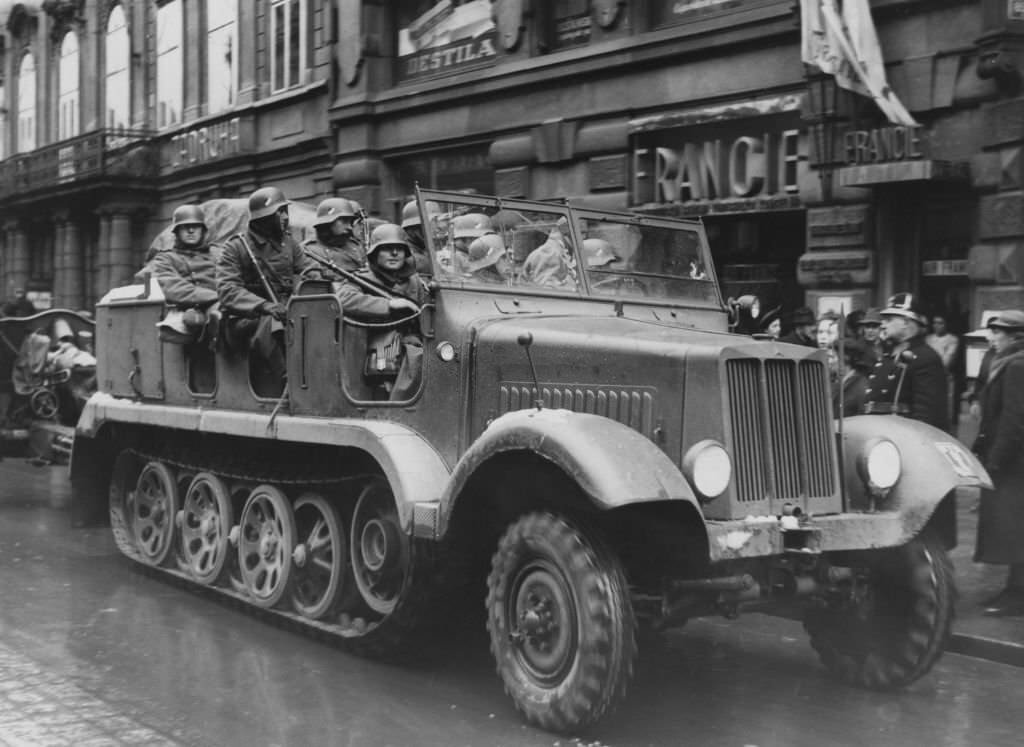
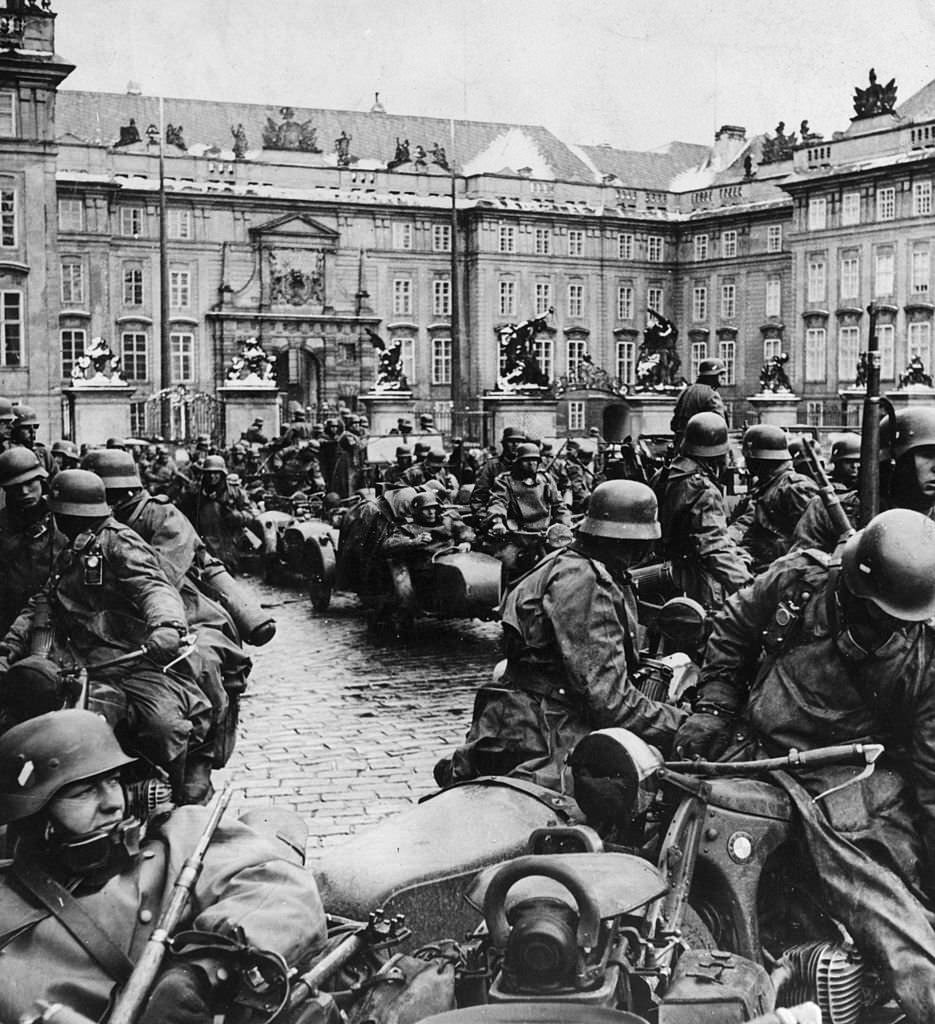
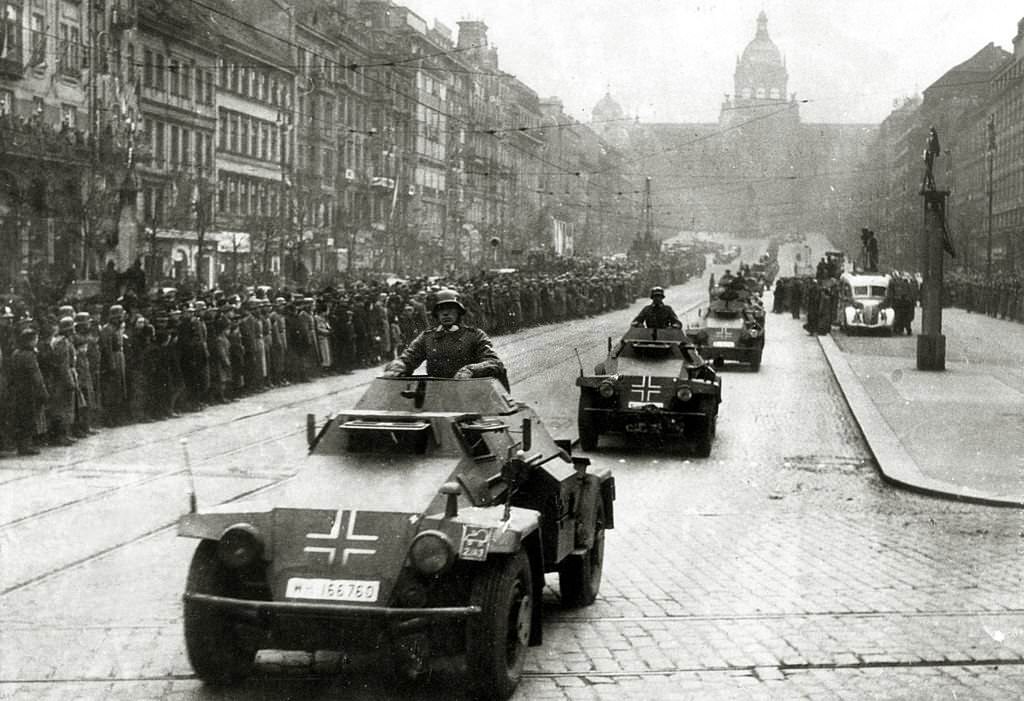
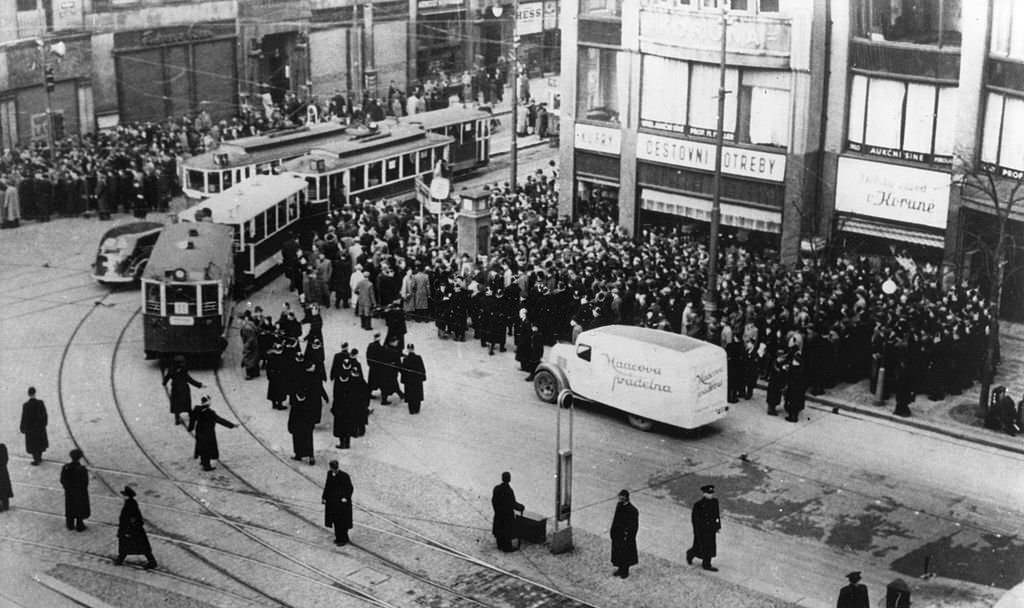
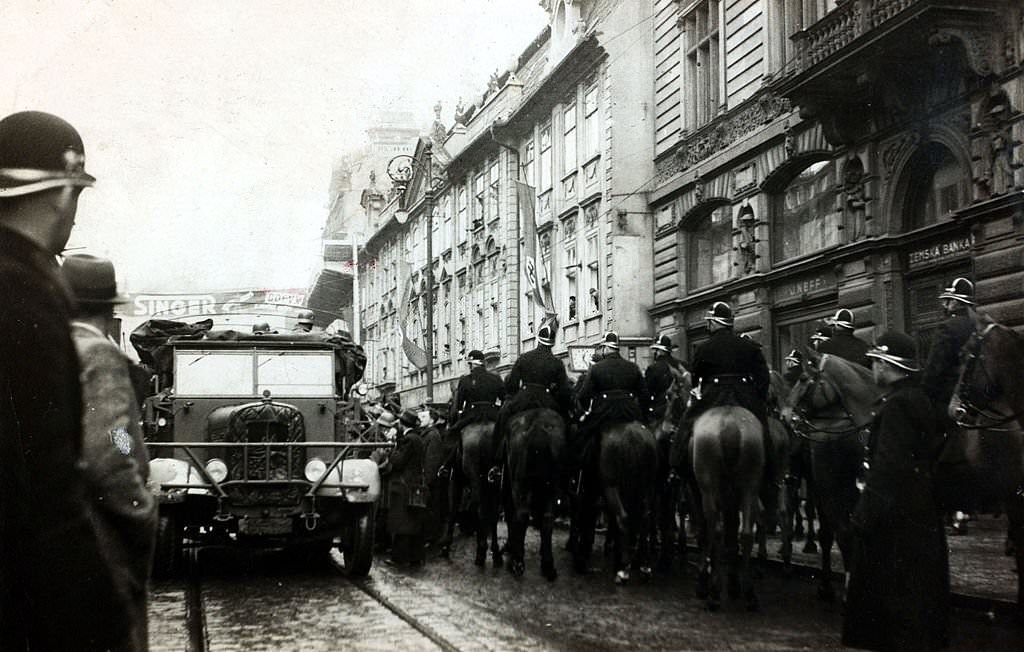
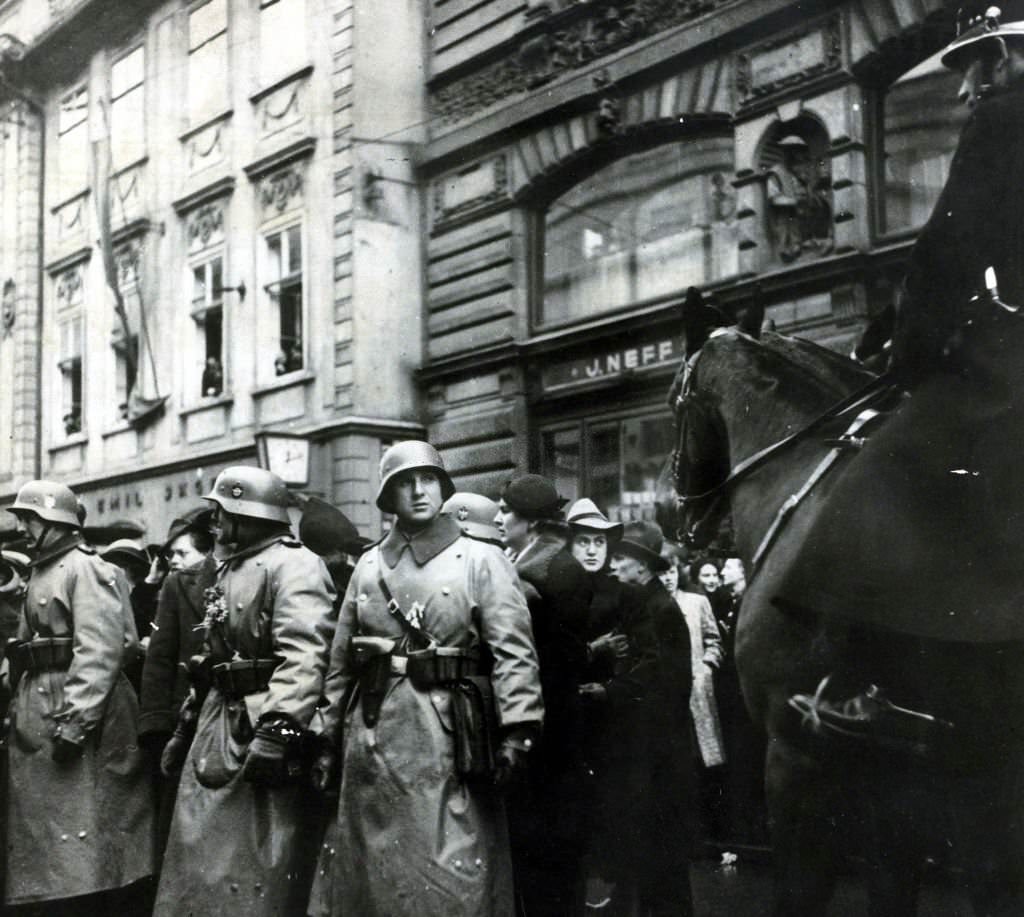
German columns entered Prague on March 15. Tanks rolled through Wenceslas Square. Motorcycles crossed the Charles Bridge. Trucks towing anti-aircraft guns moved down the city’s main avenues. Czech mounted police watched from the sides of the road as German military vehicles passed. Some bystanders raised their fists in defiance. Others stood in silence. German machine gunners were positioned in the streets, bundled against the cold, weapons pointed outward.
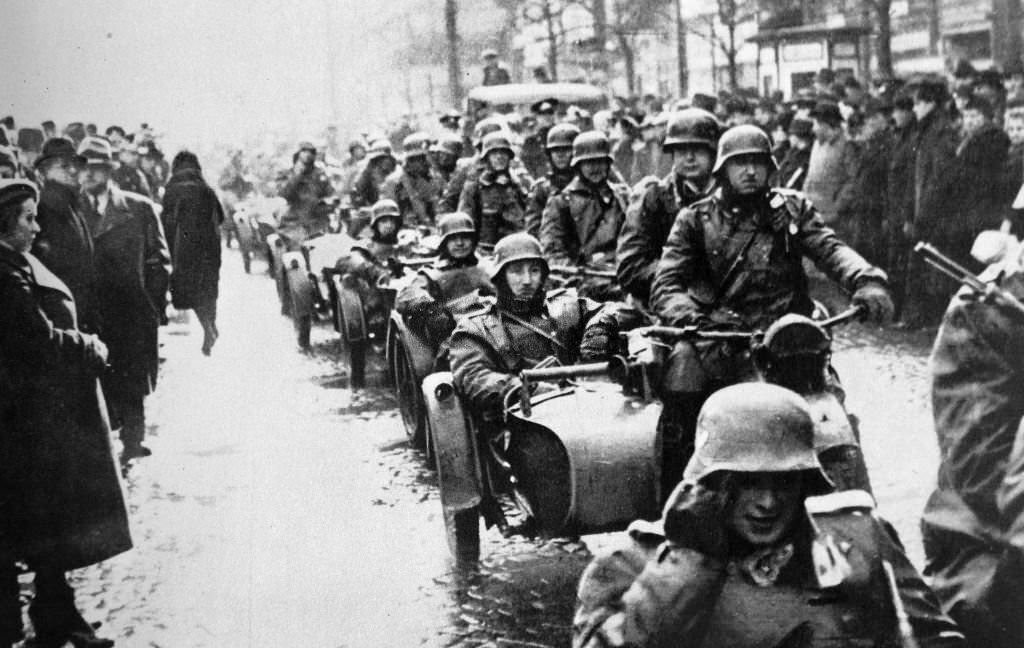
A parade of German PzKpfw II light tanks in Wenceslas Square, Prague, Czechoslovakia.A Detachment of Motorcycle TroopsGerman troops entering Prague by lorry, towing anti-aircraft guns.The Occupation of Czechoslovakia, Czech mounted police watching a German truck pass through the streets of PragueGerman invasion of Prague 15 March 1939.German machine gunners muffled to the ears against the severe cold stand ready for action in a Prague street.
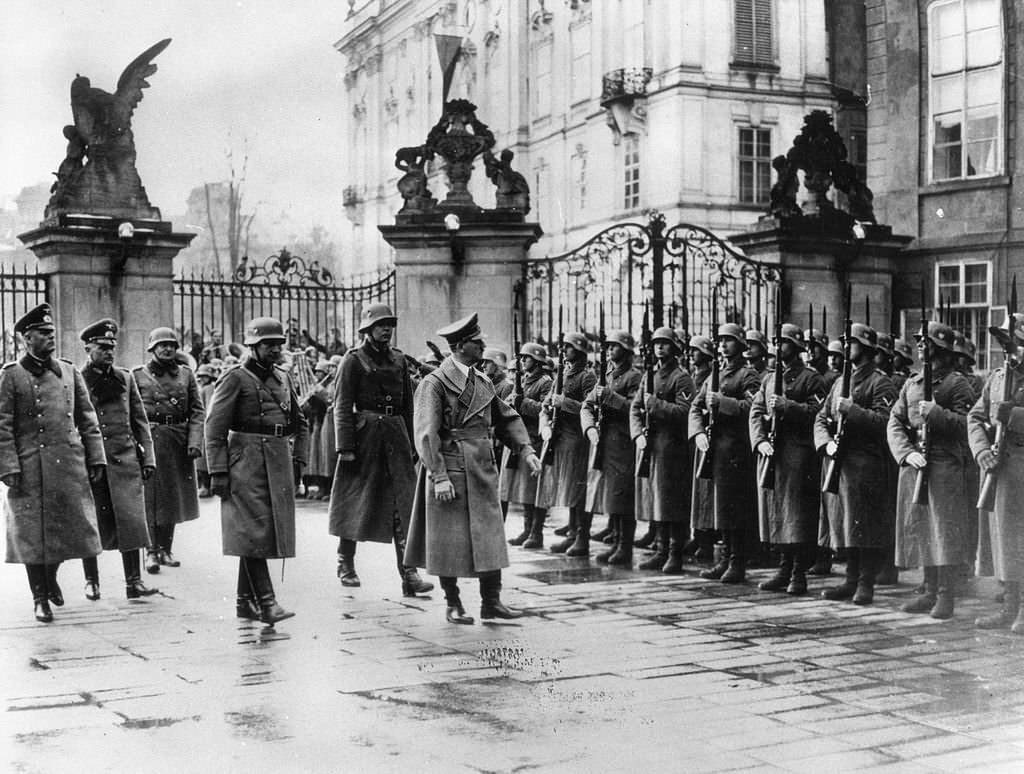
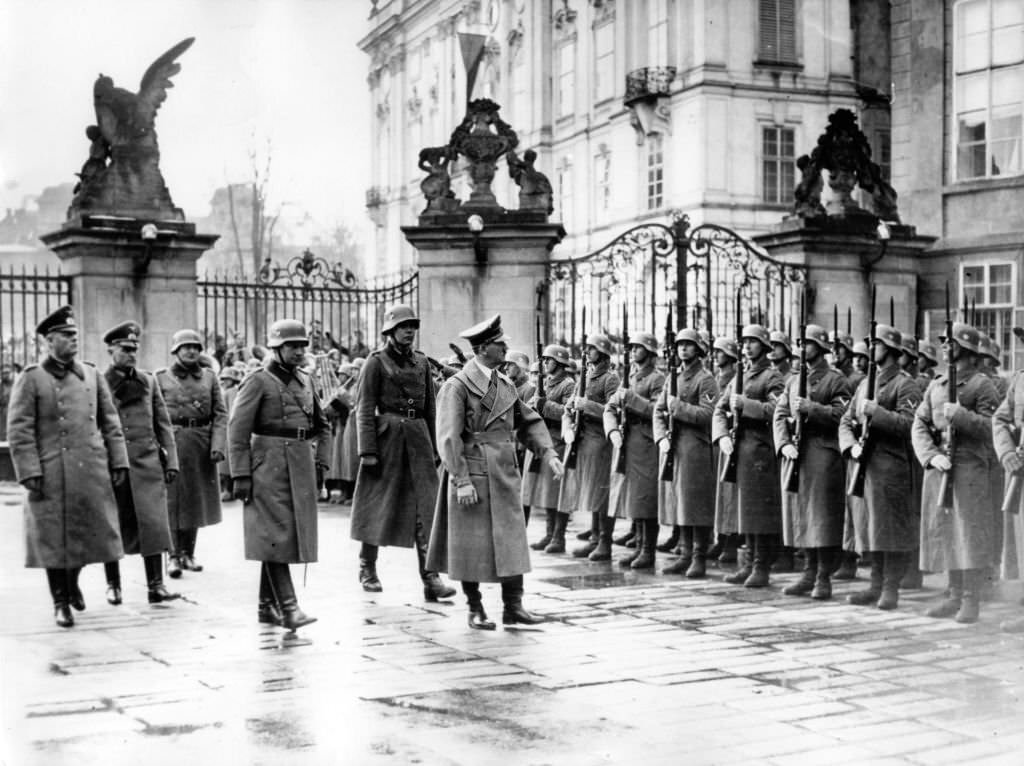
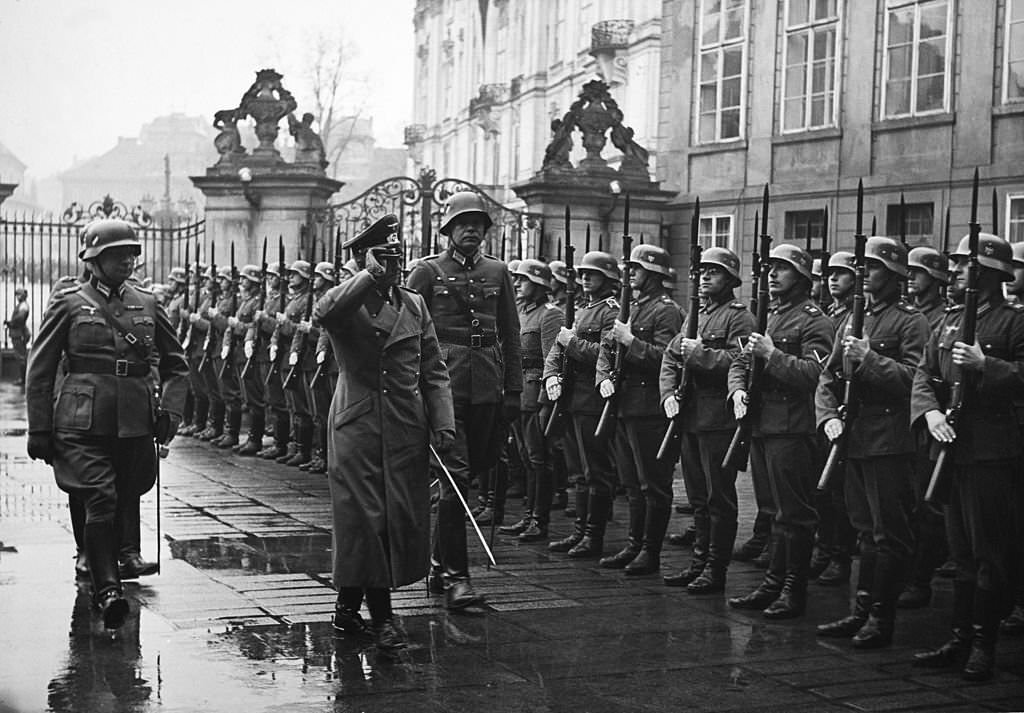
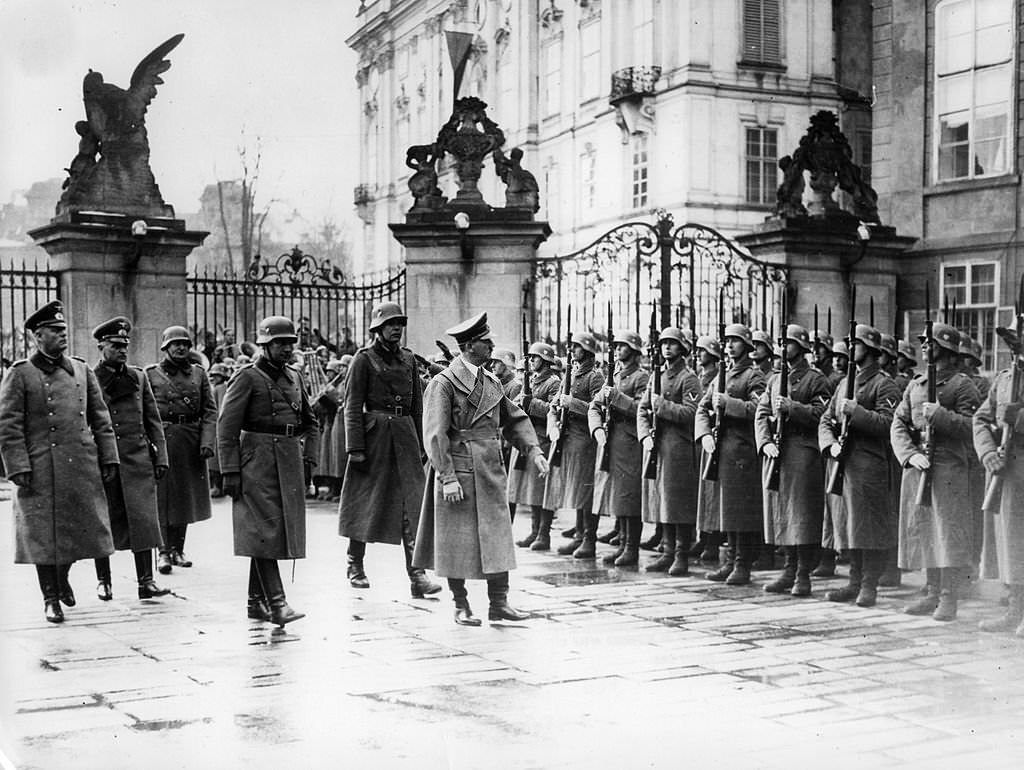
On March 16, 1939, Hitler traveled to Prague and stood at Prague Castle. From there, he declared Bohemia and Moravia a German Protectorate. The proclamation stated that “Bohemia and Moravia have been the Lebensraum of the German people for thousands of years.” With that declaration, Germany had absorbed seven million Czechs — people who were not ethnically German and had no desire to be part of the Reich. This directly contradicted Hitler’s repeated public claims that his territorial ambitions were about uniting ethnic Germans, not conquering non-German peoples.
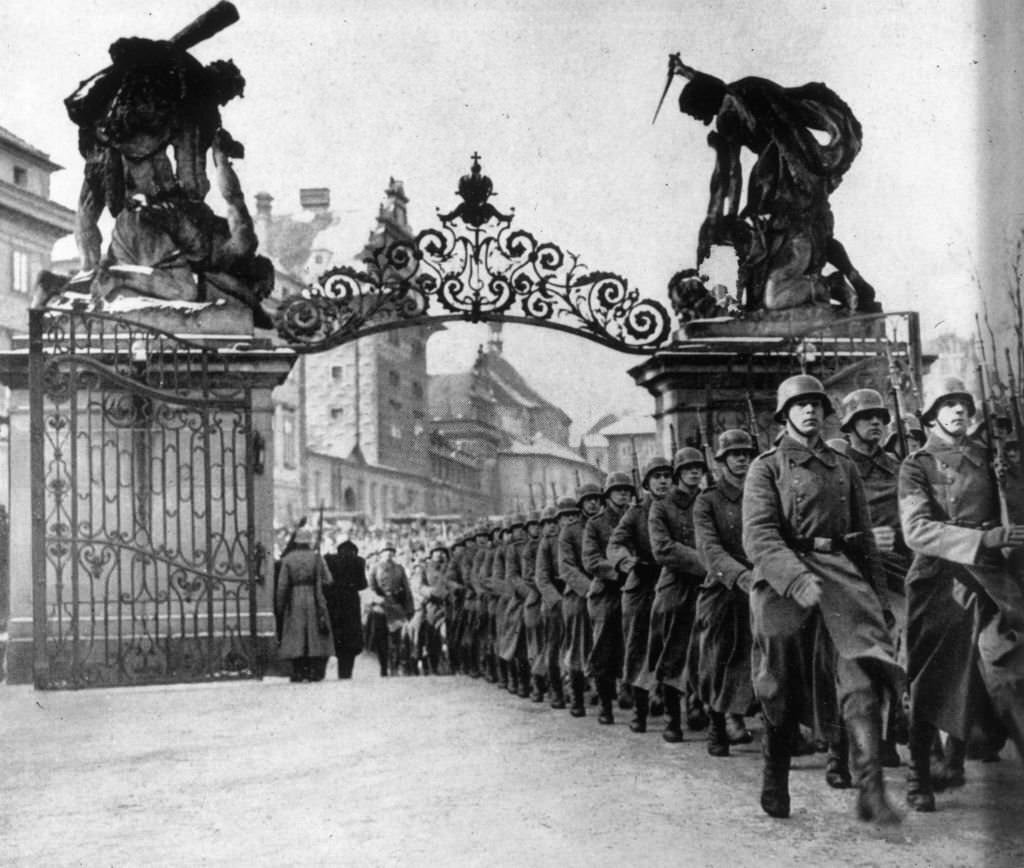
German troops enter Hradschin Castle in Prague during their invasion of Czechoslovakia prior to WW II.The German occupation of Bohemia and Moravia on March 15, 1939. Adolf Hitler reviewing his troops in the 1st courtyard of Prague CastleThird Reich – Hitler in Prague 1939.Adolf Hitler and his army parade in Prague on March 15, 1939 day of the invasion of Czechoslovakia by the Wehrmacht.Adolf Hitler and his army parade in Prague on March 15, 1939 day of the invasion of Czechoslovakia by the Wehrmacht.
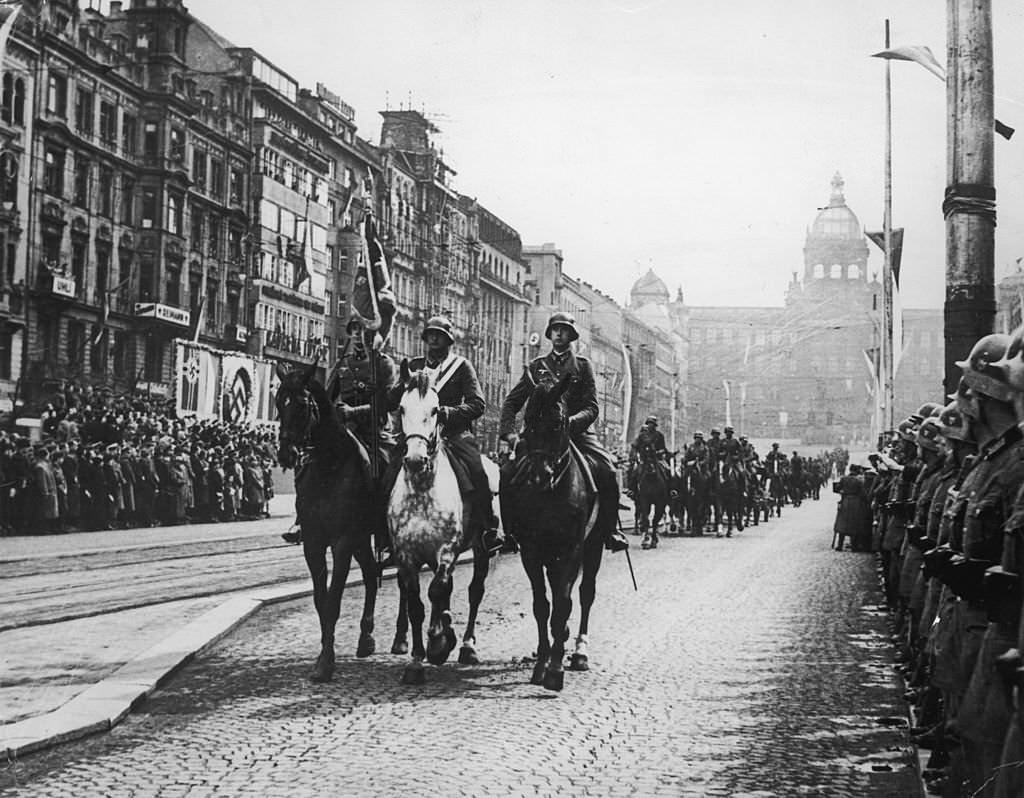
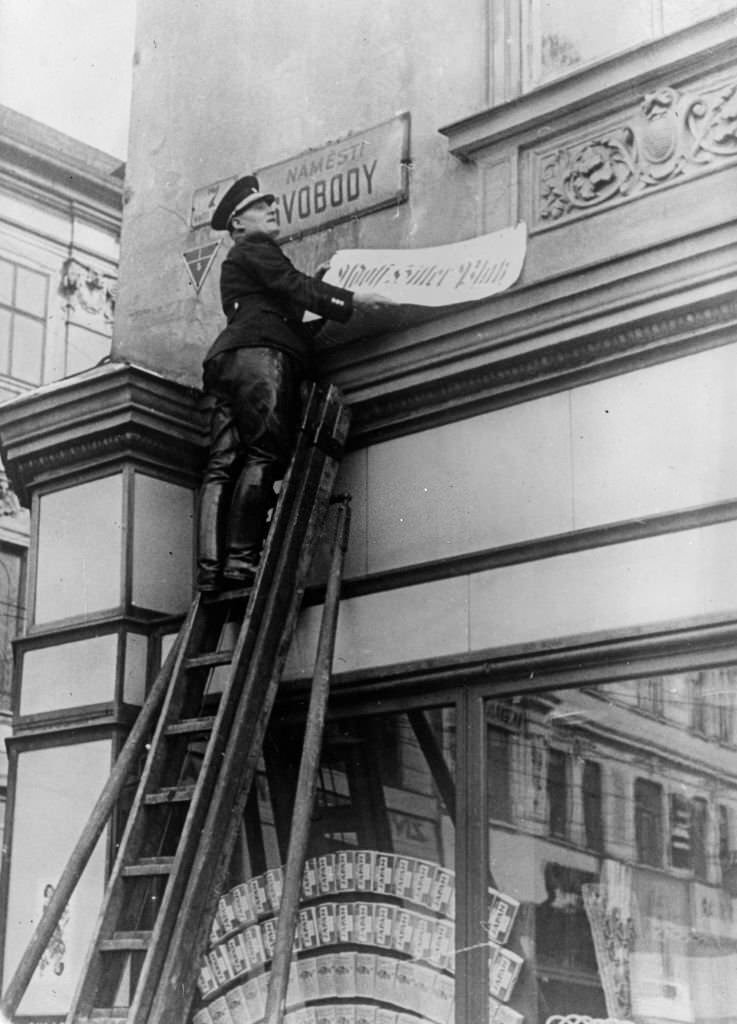
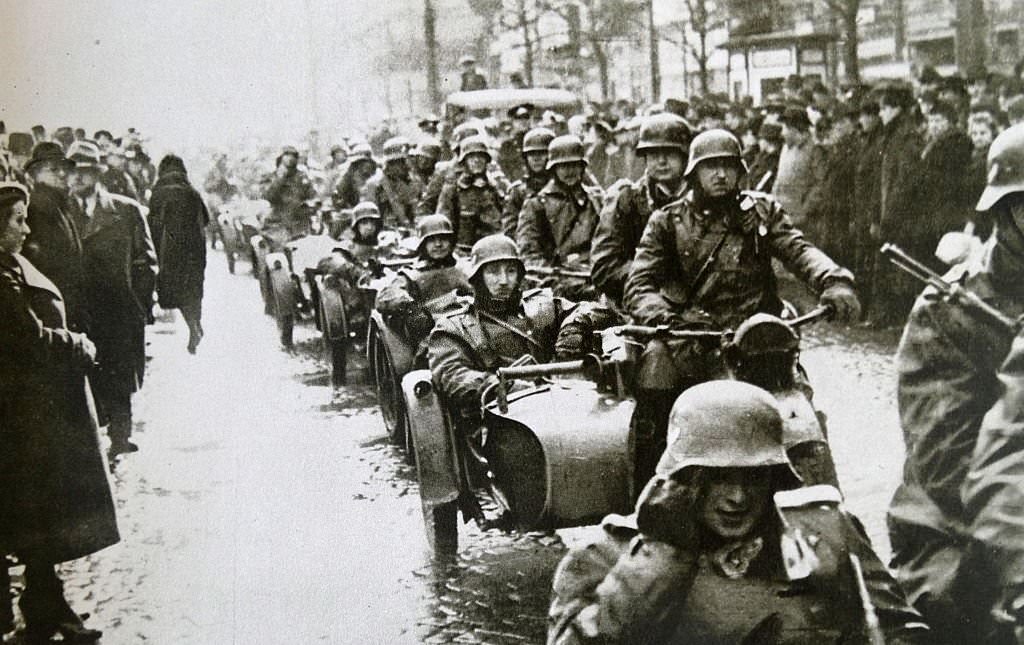
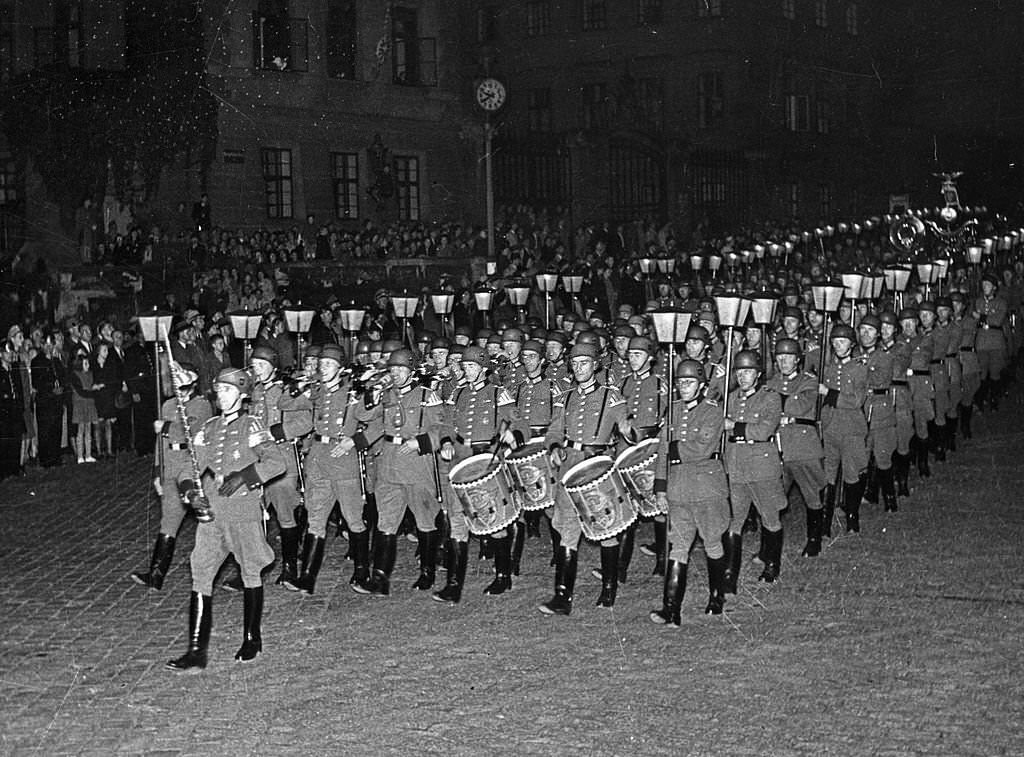
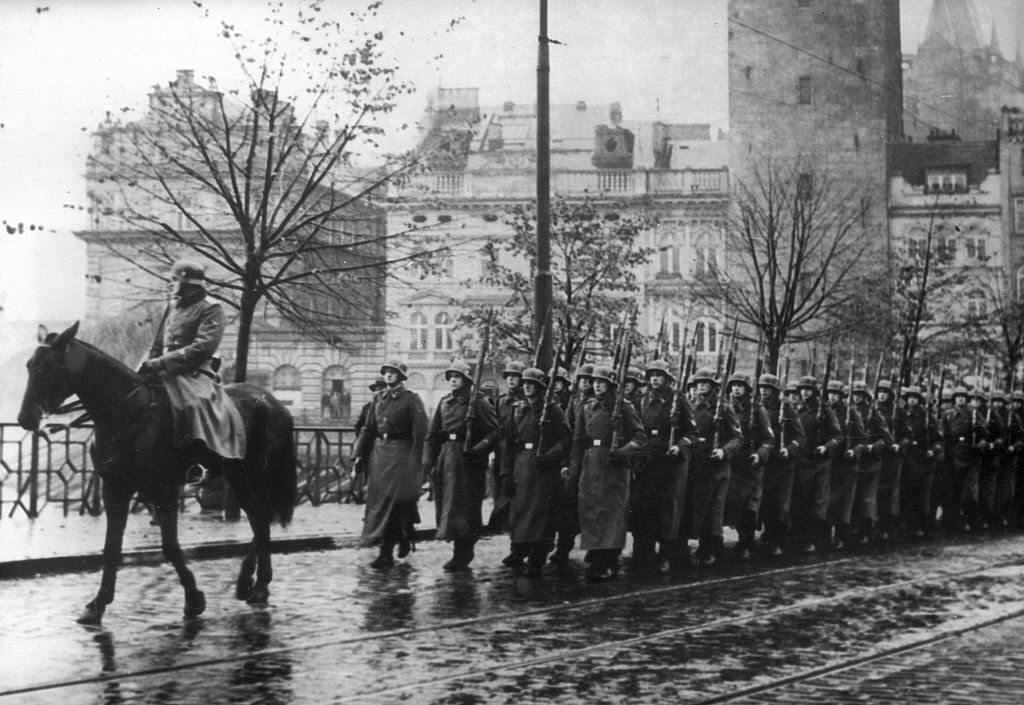
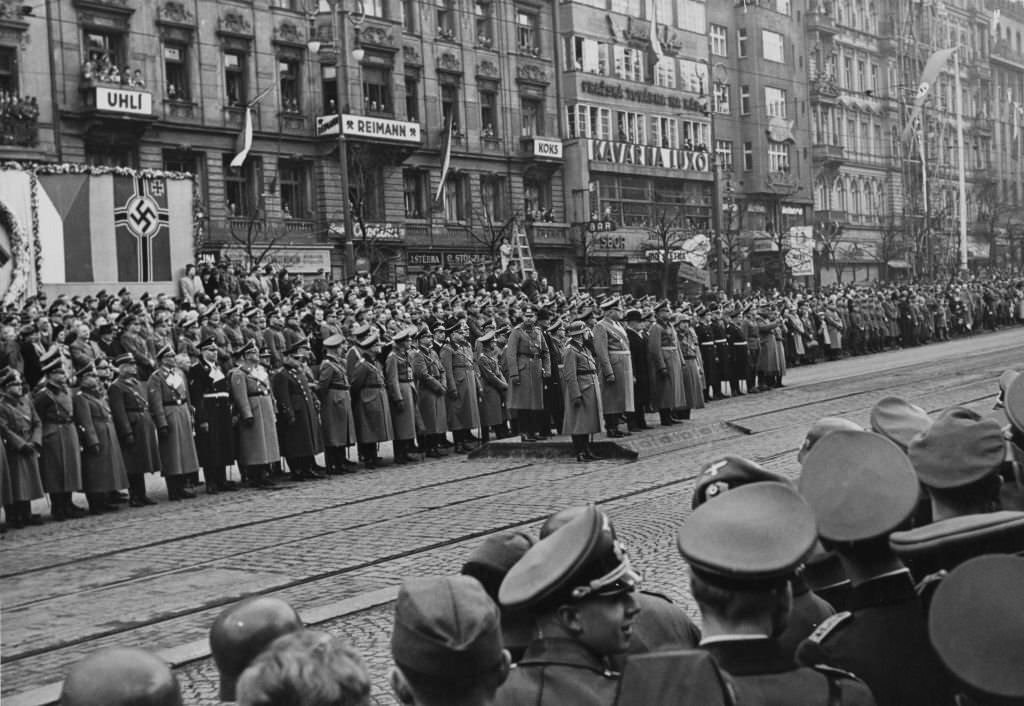
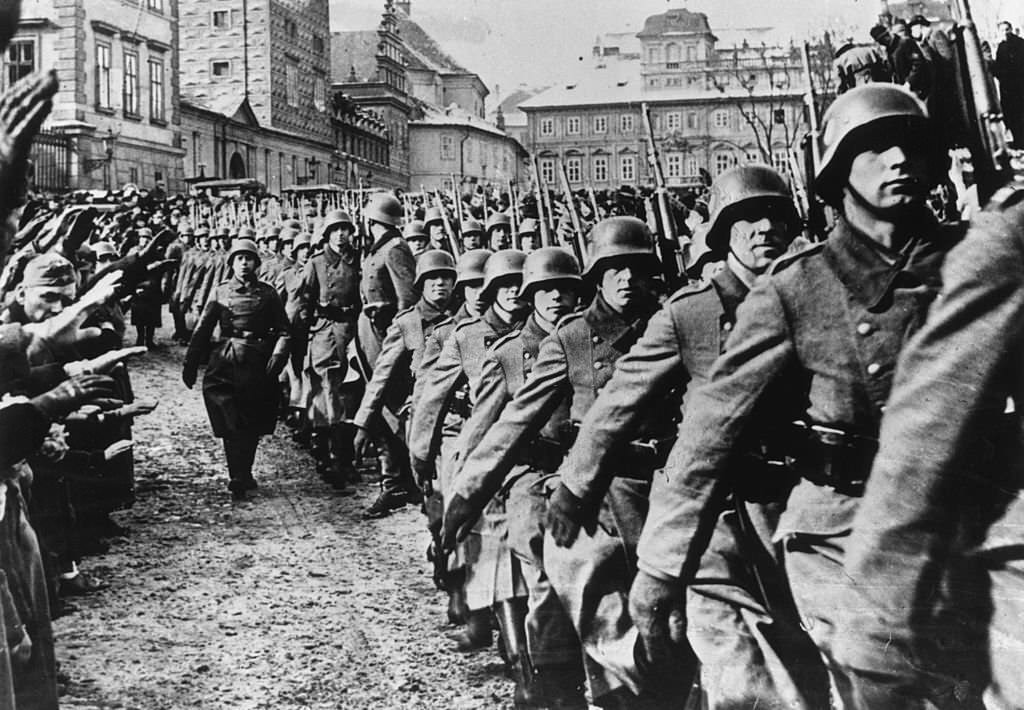
German troops paraded through the streets and squares of Prague in the days that followed. Crowds on the sidewalks watched as motorcycle infantry, cavalry, and motorized columns moved through the city. A formal Wehrmacht parade passed through Wenceslas Square on March 18. The German army also marched into Prague Castle, the historic seat of Czech power, in a deliberate show of conquest. Street names were changed — one was renamed “Adolf Hitler Platz” almost immediately after the occupation began.
The German Wehrmacht parade through Wenceslas Square (Wenzelsplatz) in Prague, during the German occupation of Czechoslovakia, 18th March 1939.The German occupation of Bohemia and Moravia. The German army marching into Prague Castle on March 15, 1939.Crowds on the sidewalk salute Nazi soldiers riding in a motorcycle infantry unit as German troops enter Prague, Czechoslovakia.German troops riding on horseback during a parade through Prague shortly after the German takeover of Czechoslovakia and the creation of the Protectorate of Bohemia and Moravia, World War II.A jack booted official changing the name of a street in Brunn, Czechoslovakia, to ‘Adolf Hitler Platz’ after the German invasion.
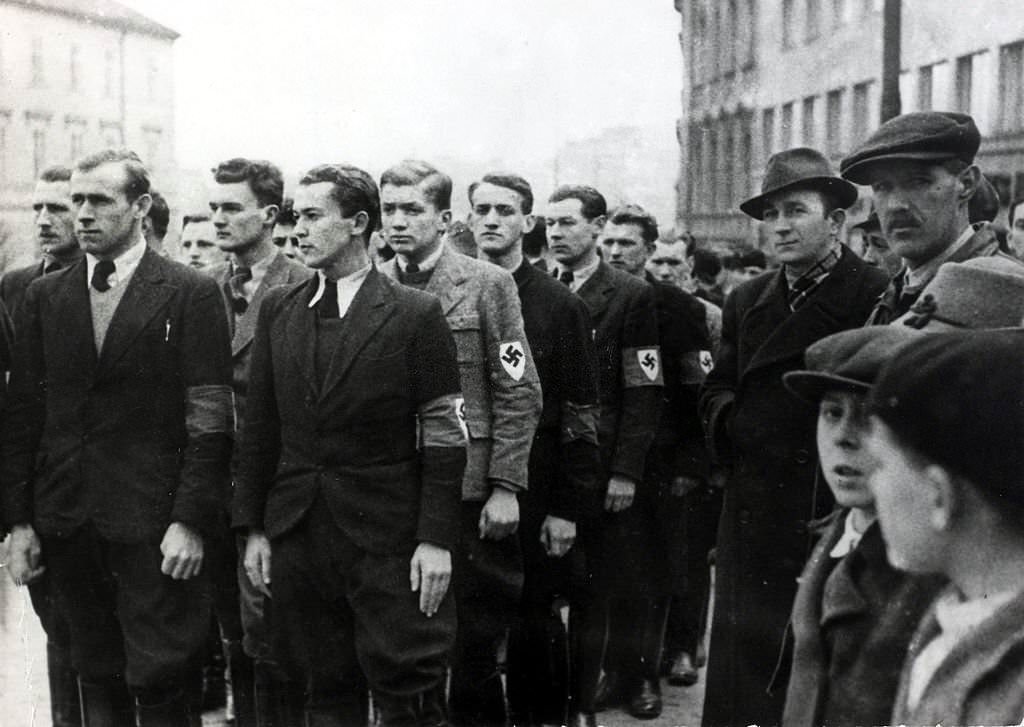
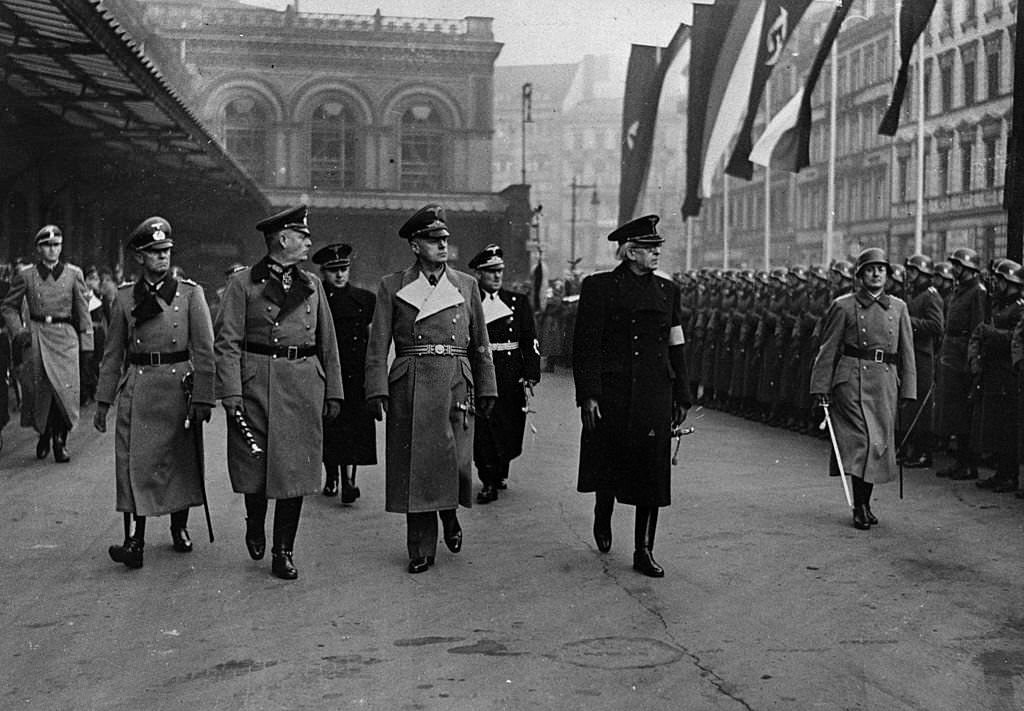
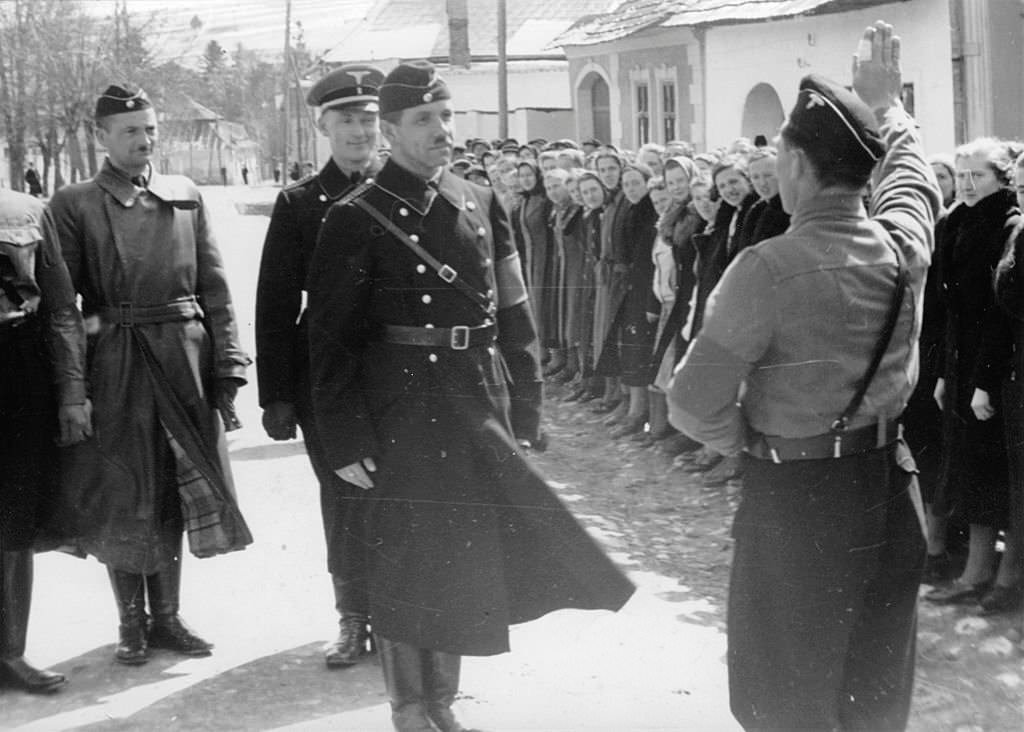
The occupation spread beyond Prague. German troops marched into Brno in Moravia as crowds watched. In newly declared Slovakia, pro-German paramilitary groups known as the Hlinka Guards wore swastika armbands and stationed themselves near public buildings. Slovak political leaders, including Prime Minister Vojtech Tuka, traveled to Berlin to meet with German officials, cementing Slovakia’s role as a German client state.
Crowds watching as German troops enter Brno in Moravia.The Hlinka Guards displaying German armbands near the Town Hall.Visit of the president Tuka (prime minister of Slovakia) in Berlin (in the center, Ribbentrop).
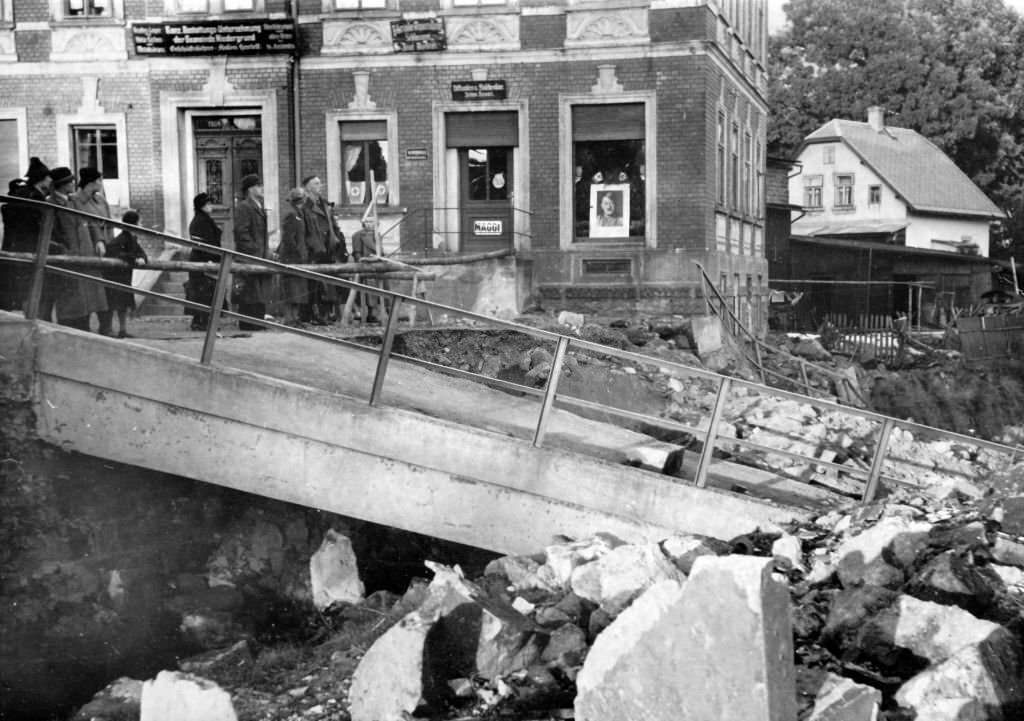
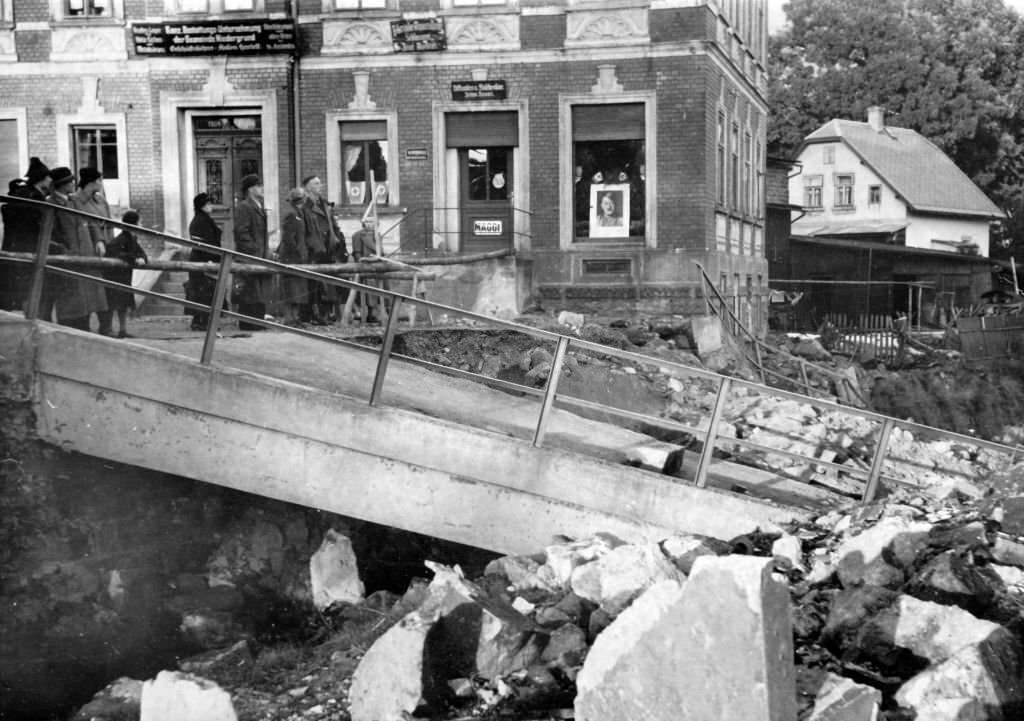
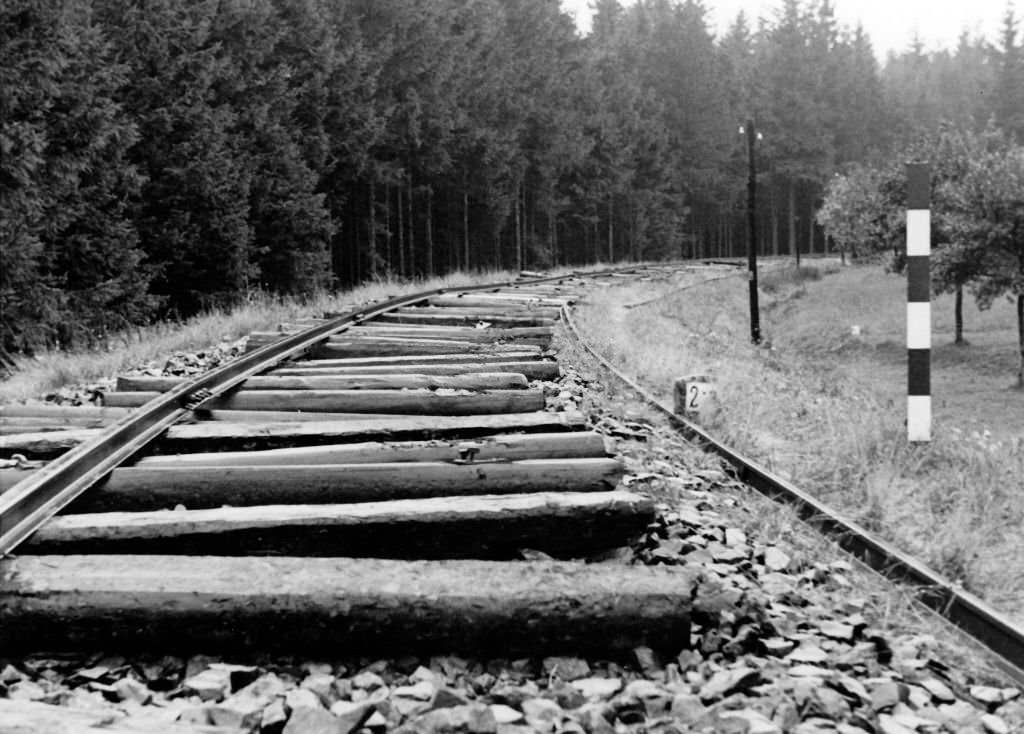
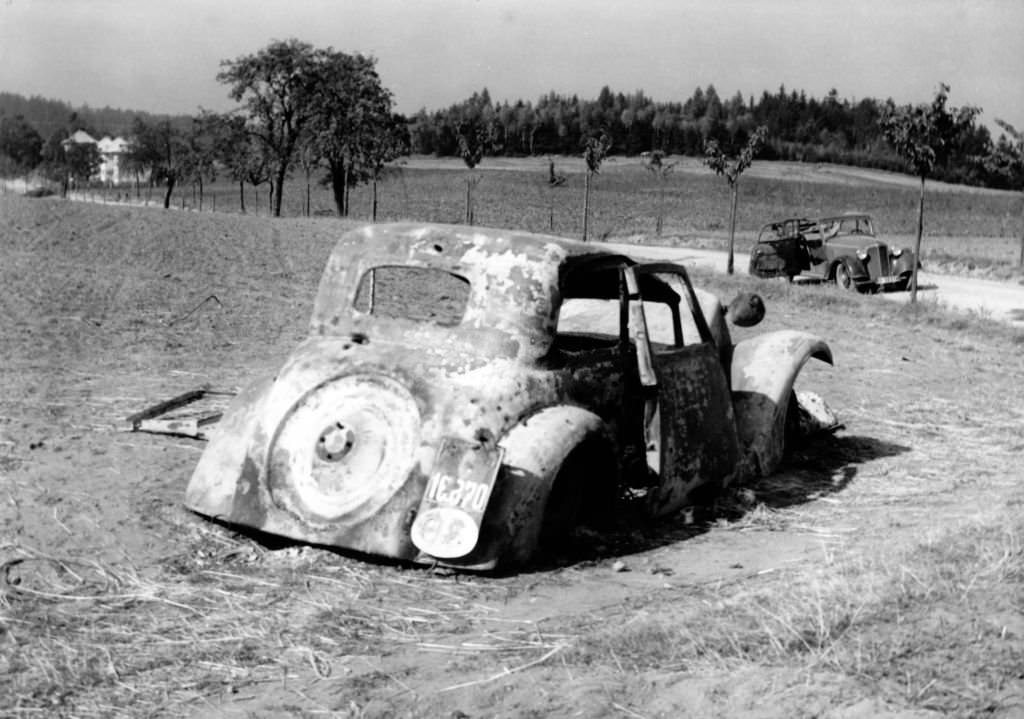
German propaganda played an active role in managing public perception of the occupation. Photos of destruction in the Sudetenland — blown bridges, wrecked vehicles, torn-up railway tracks — were distributed with captions blaming Czech forces for the damage. Shop windows displayed Hitler’s portrait next to swastika flags. The German news service published its own accounts of the occupation that shaped how events were reported in Germany.
The Germn propaganda picture shows destruction after the German occupation of the Sudetenland in October 1938.The Germn propaganda picture shows destruction after the German occupation of the Sudetenland in October 1938.The German propaganda picture shows (during the withdrawal of the Czechs?) destroyed railway tracks after the German occupation of the Sudetenland in October 1938.The German propaganda picture shows a destroyed car after the German occupation of the Sudetenland in October 1938.
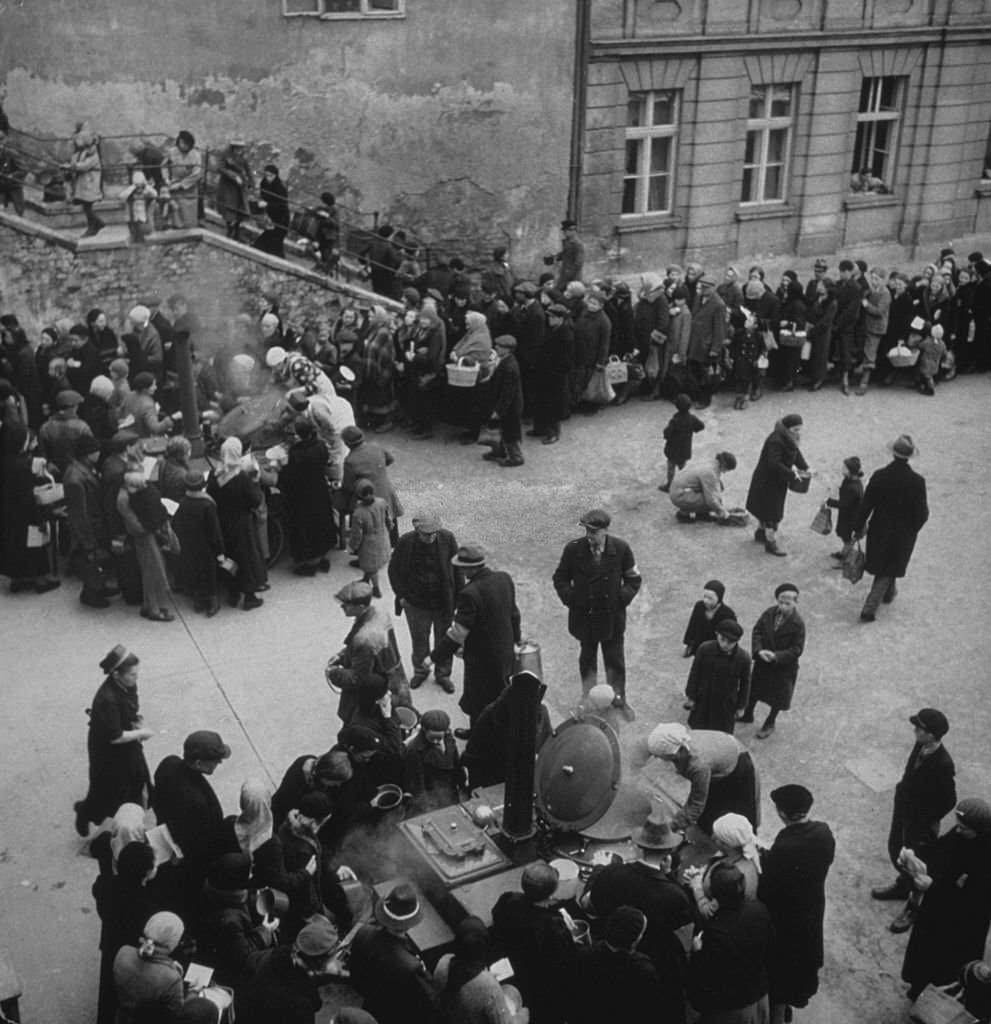
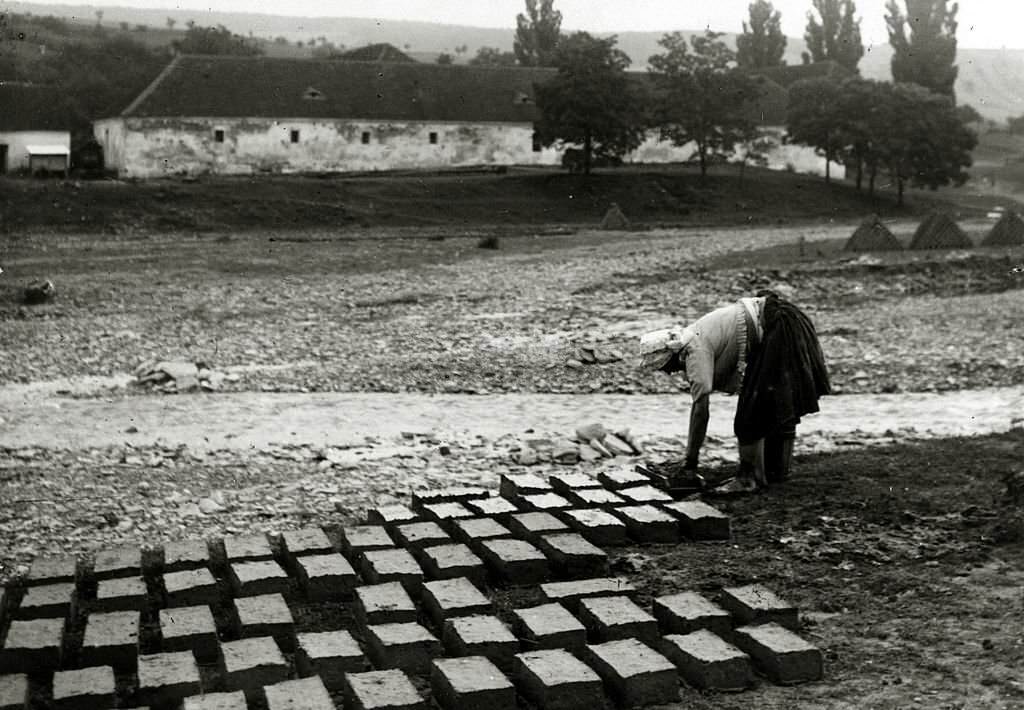
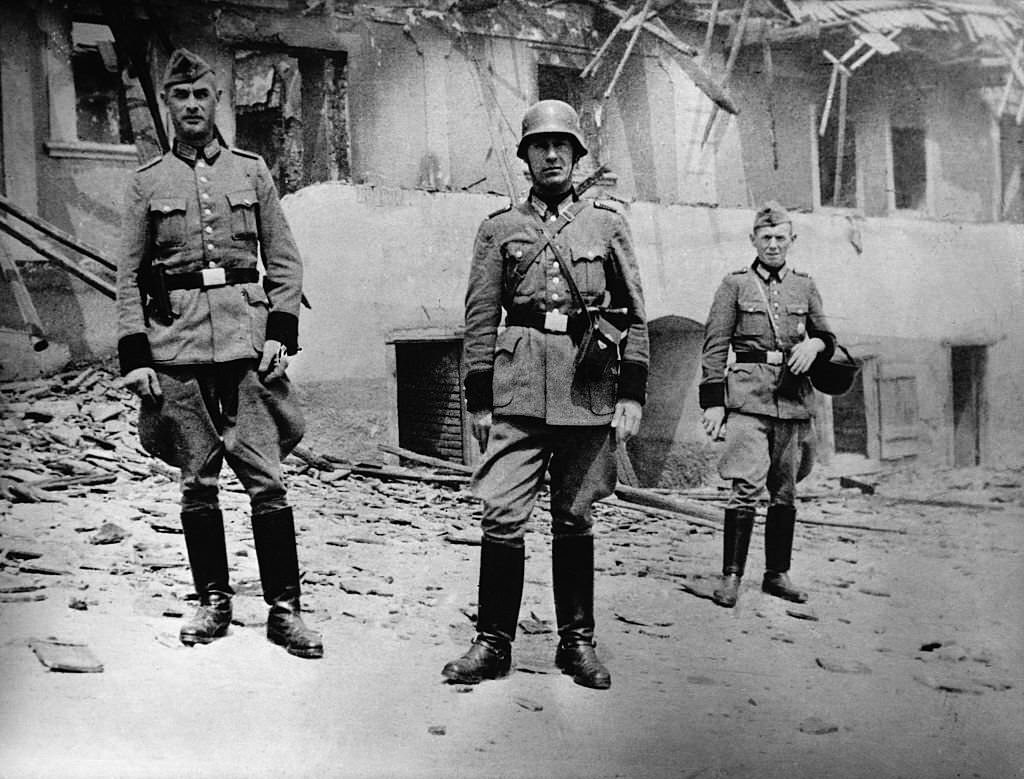
For ordinary Czechs under occupation, daily life deteriorated sharply. Food became scarce. Long lines formed outside shops in Prague. Czech women were pressed into forced labor. The village of Lidice was destroyed by German soldiers as a reprisal — its buildings burned to the ground. By 1939, Germany had also redirected Czechoslovakia’s industrial capacity toward its war machine. Czech factories produced aircraft, tanks, artillery, and other armaments for the Wehrmacht.
Food queues in German-occupied Prague, Czechoslovakia.A Czech woman pressed into service making bricks after the German occupation of her country, Adolf’s Hitler’s Germany invaded Czechoslovakia in March 1939German soldiers pose in front of the burnt out shell of a farmhouse in Lidice.
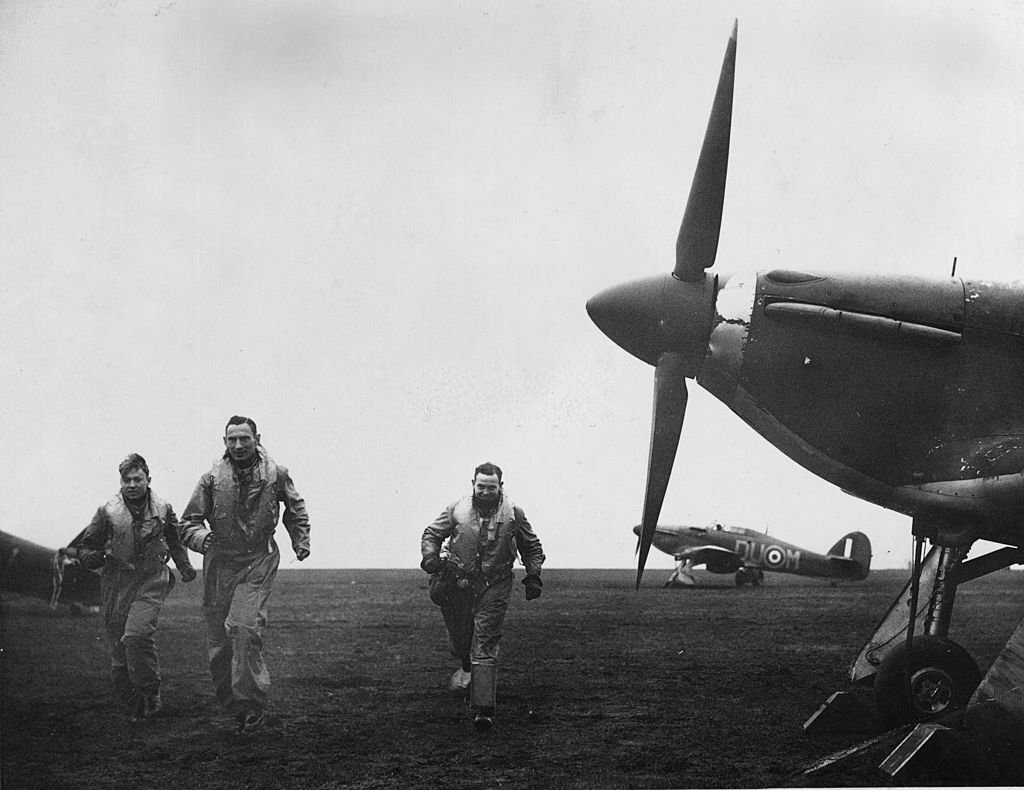
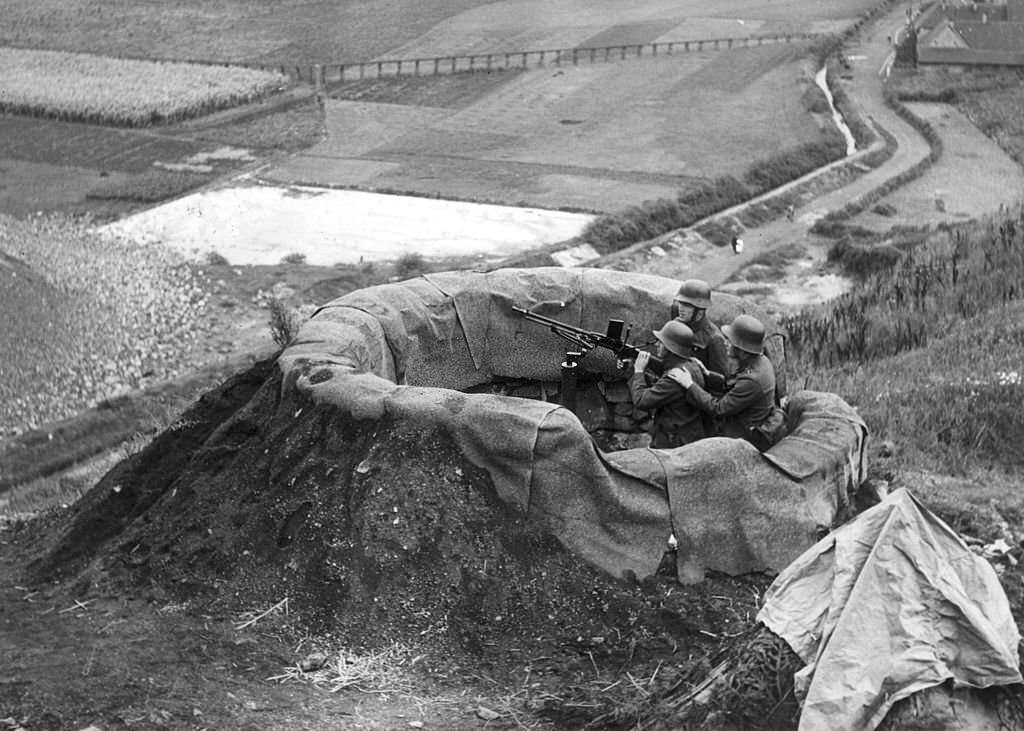
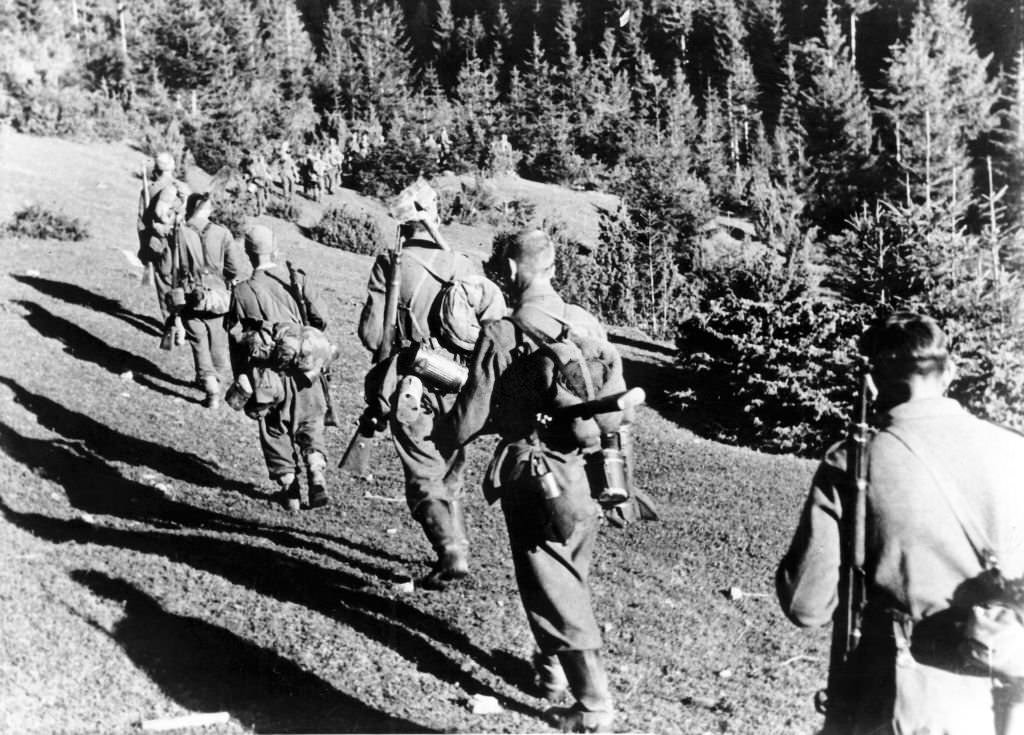
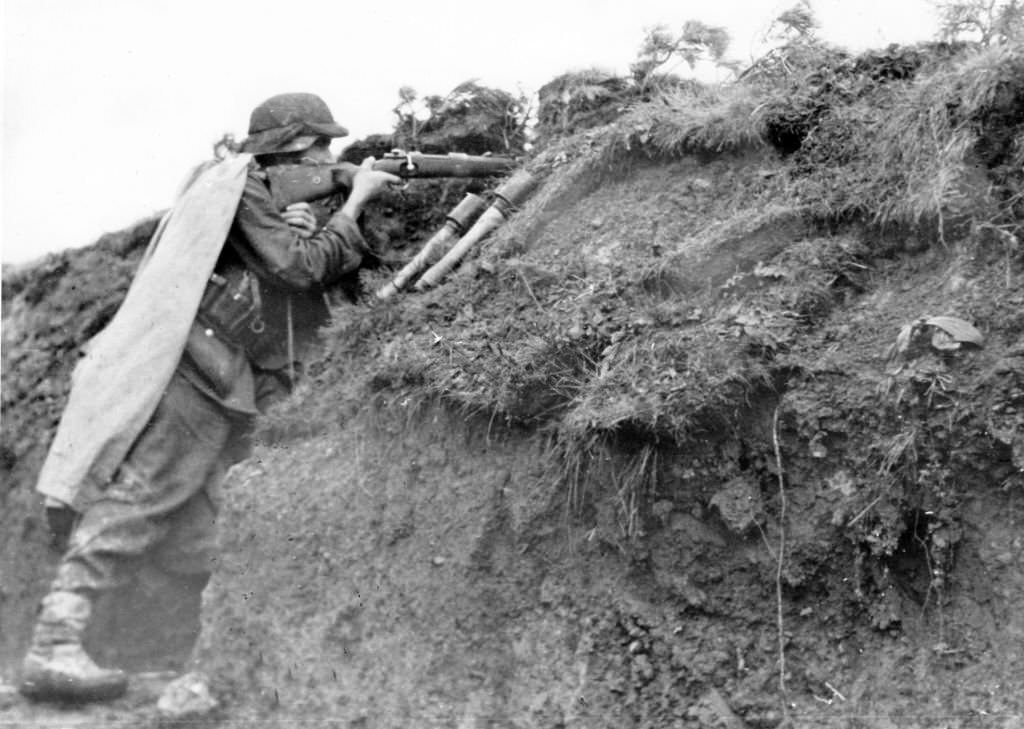
Czechoslovak pilots who had escaped the occupation flew with the Royal Air Force from airfields in England. Czech units contributed to the Allied war effort from abroad, even as their homeland remained under German control. In occupied Czechoslovakia, German forces maintained a constant armed presence — anti-aircraft positions overlooked the Sudetenland countryside, and German military engineers operated in the Carpathian Mountains on the Eastern Front.
Czechoslovakian pilots running to their Hurricane fighter planes on an airfield ‘somewhere’ in the north of England after receiving an alert.Three German soldiers sit behind an anti-aircraft machine in a camouflaged post overlooking the Sudetenland countryside, Czechoslovakia, World War II.The German propaganda picture shows military engineers of the German Wehrmacht in the Carpathian Mountains on the Eastern Front.The German Wehrmacht in the Carpathian Mountains on the Eastern Front.
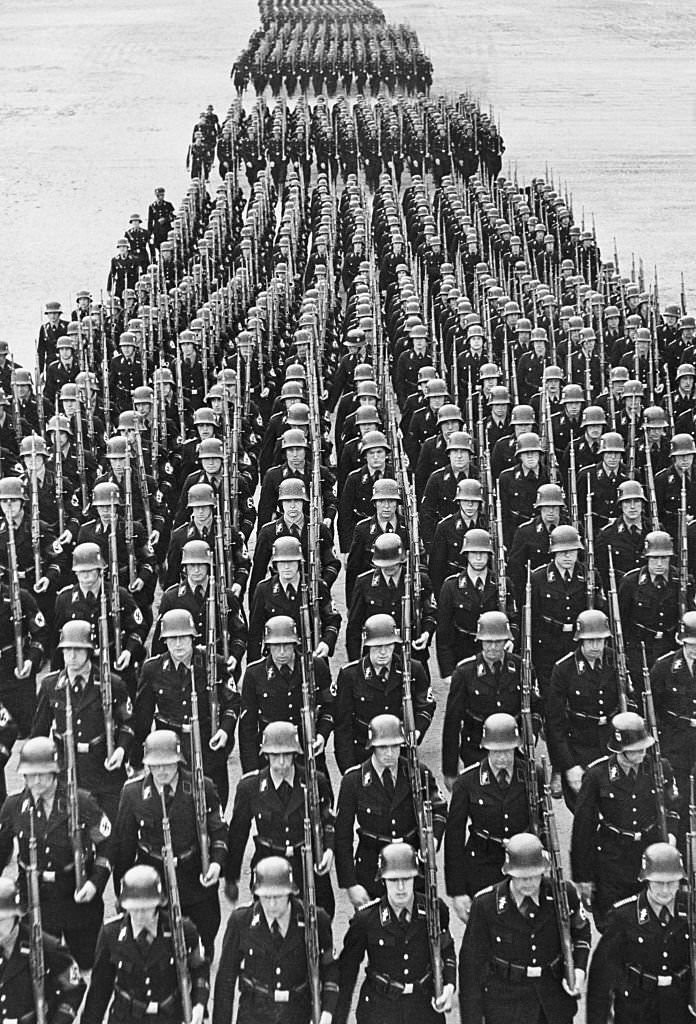
Germany occupied Hungary in March 1944 during Operation Margarethe, and Slovakia faced German military intervention in August 1944 during the Slovak National Uprising. The scale of killing during the entire occupation period was immense. Between 294,000 and 320,000 people were murdered under German occupation — the majority of them Jews. The occupation of Czechoslovakia was not a bloodless administrative exercise. It was a systematic process of conquest, exploitation, and mass killing that lasted until Germany’s defeat in 1945.
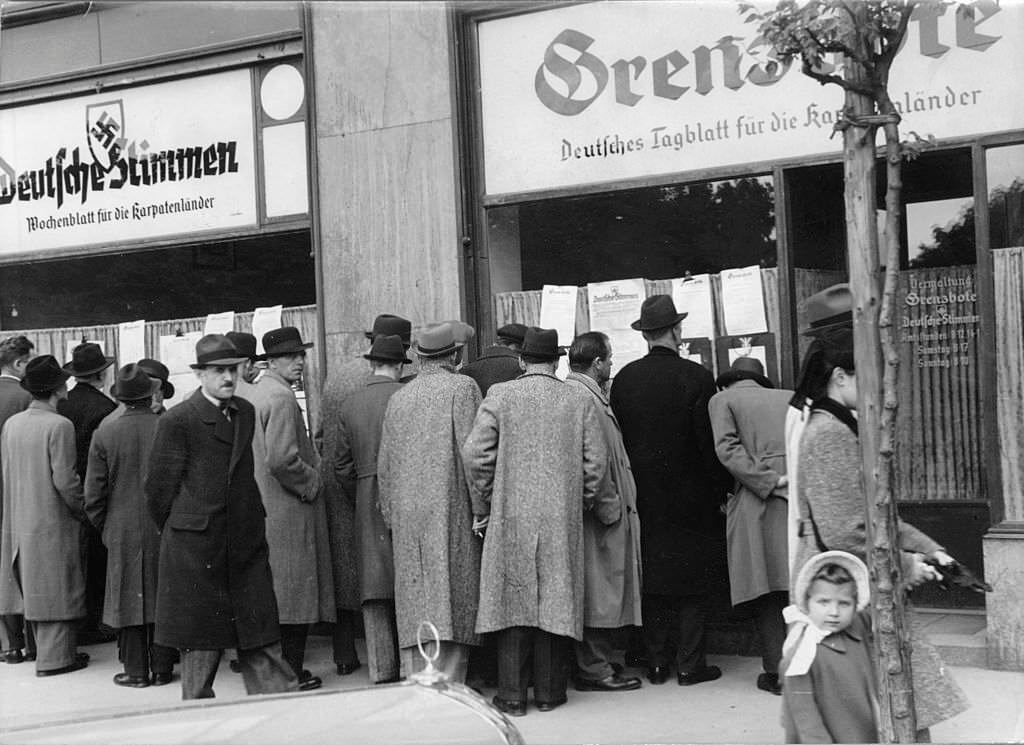
Hitler’s Elite Guard marches through Prague to enforce martial law after three Czech rebels were executedGerman population in front of the windows of the editorial office of german Newspapers in occupied Slowakia, Bratislava, 1940Franz Karmasin (Volksgruppenfuehrer) in Gross-Lomnitz, A lokal leader of the german party (deutsche Partei) gives report, 1940
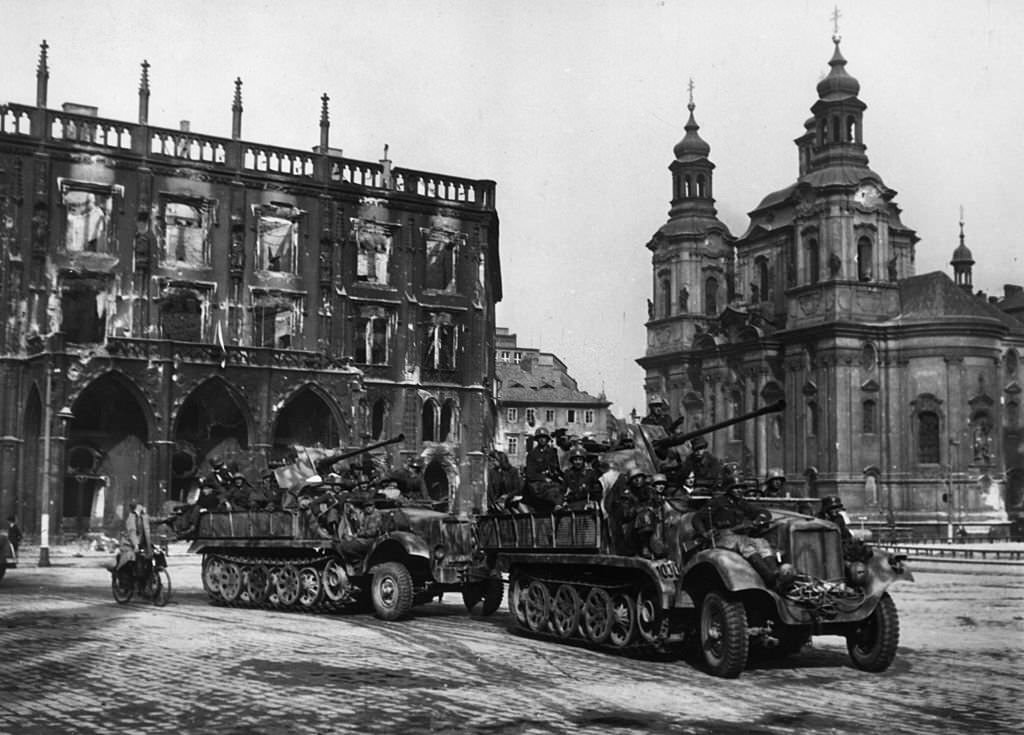
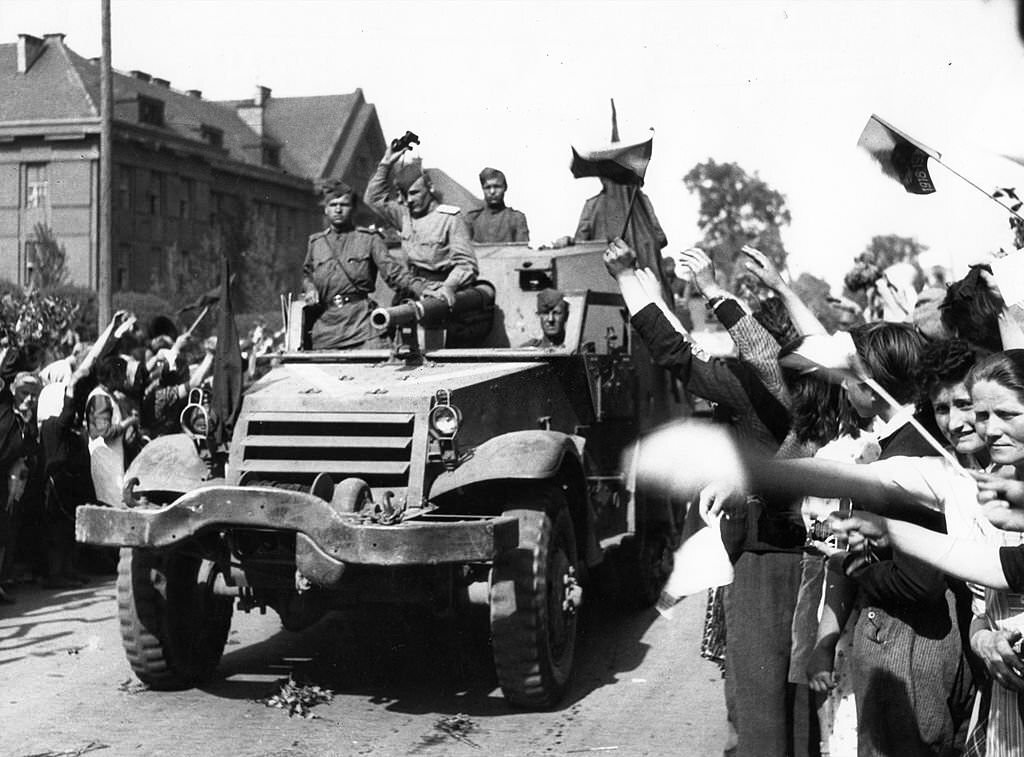
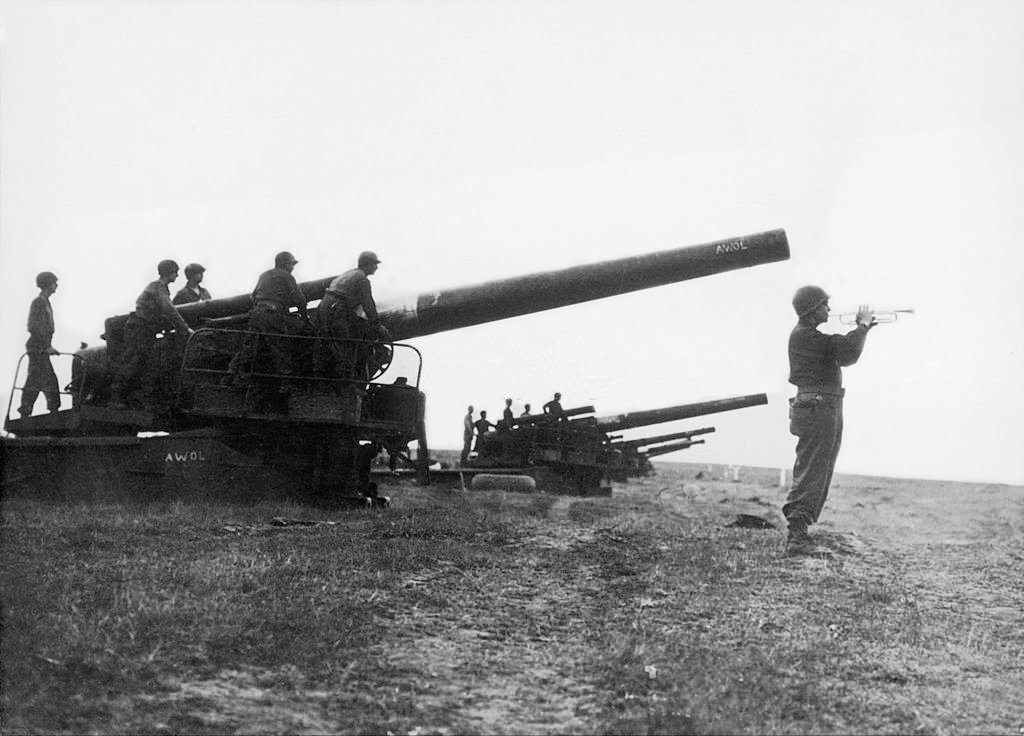
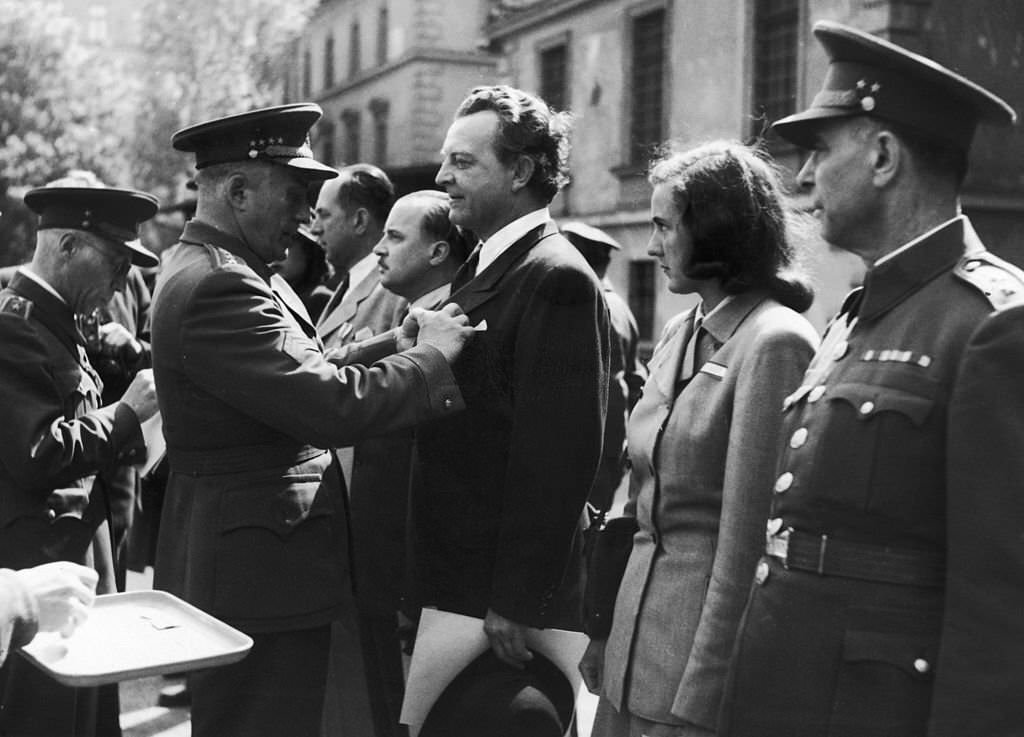
As Germany’s military situation collapsed in 1945, the occupation of Czechoslovakia came to a violent and chaotic end. German forces retreated from Prague in trucks and were captured in large numbers. Soviet troops entered Prague in May 1945 and were met by crowds of civilians in the streets. Czech General Ludvík Svoboda decorated members of the Revolutionary Factory Committees who had seized control of industrial facilities from the retreating Germans. The cease-fire on the Western Front — announced by bugle call at the German-Czech border — marked the formal end of German military operations in the region.
View of German troops exiting Prague in trucks after their surrender, Czechoslovakia, World War II.Remnants of the German Army in Prague surrendering to the Allies.The liberation of Prague, May 1945. Soviet troops being greeted by citizens of Prague.Cease-Fire On The Western Front 1945.Czech General Ludvik Svoboda decorates members of the Revolutionary Factory Committees, who took over the running of facilities after the Germans were defeated, 1945.
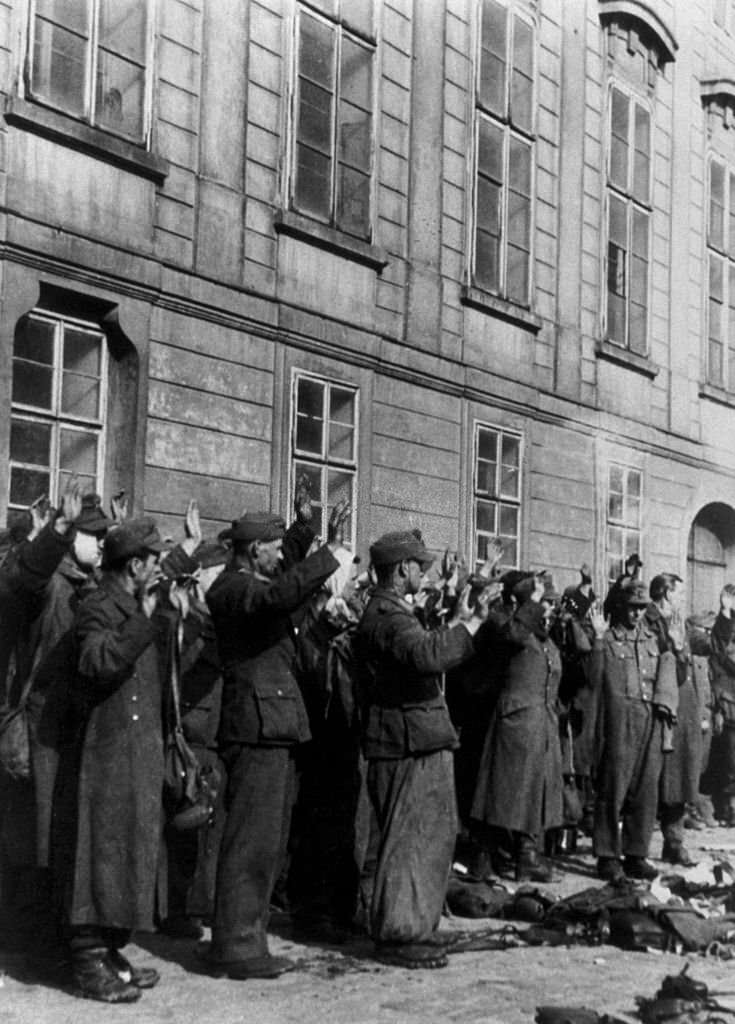
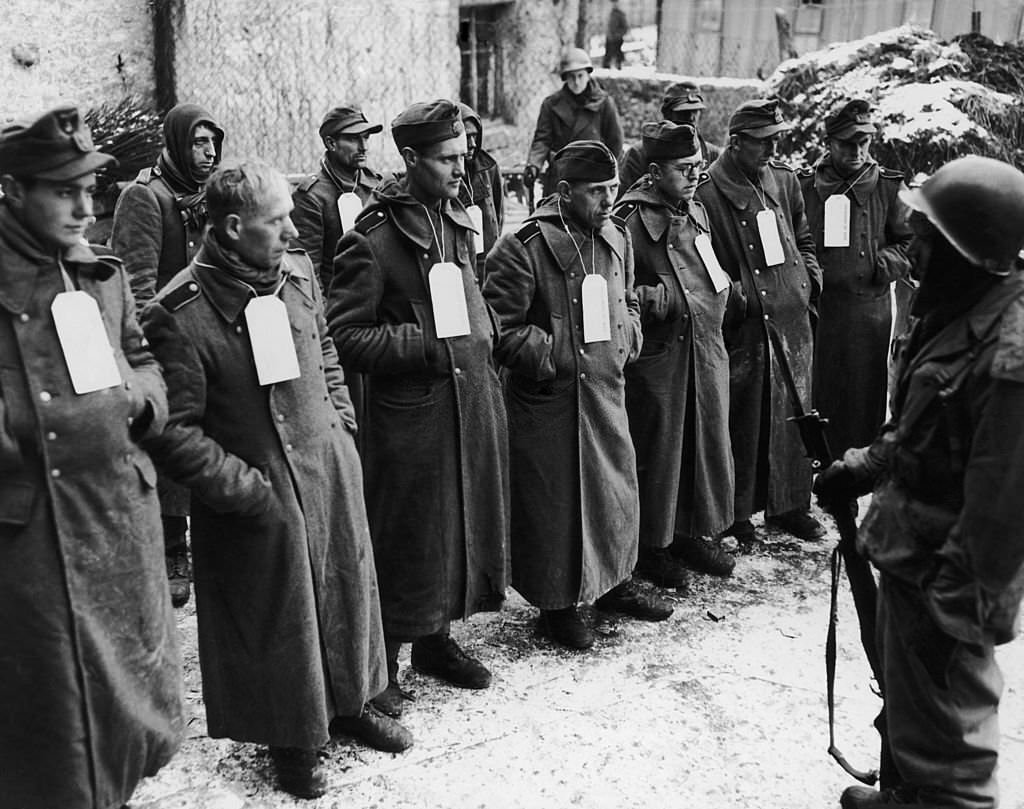
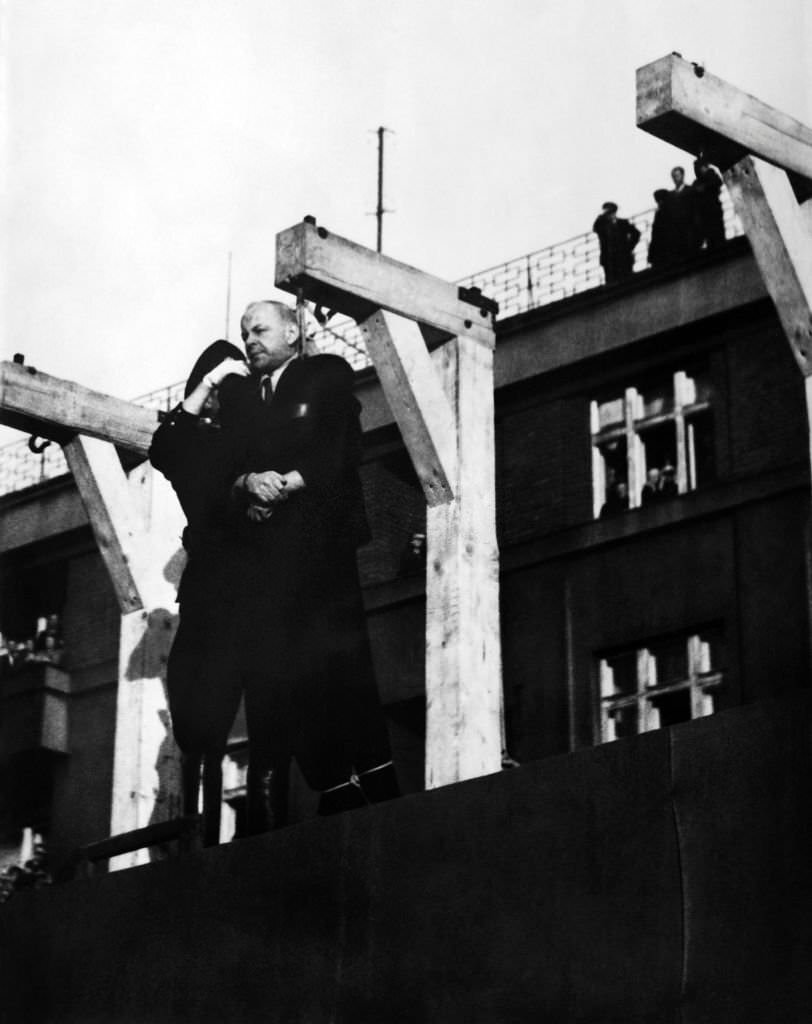
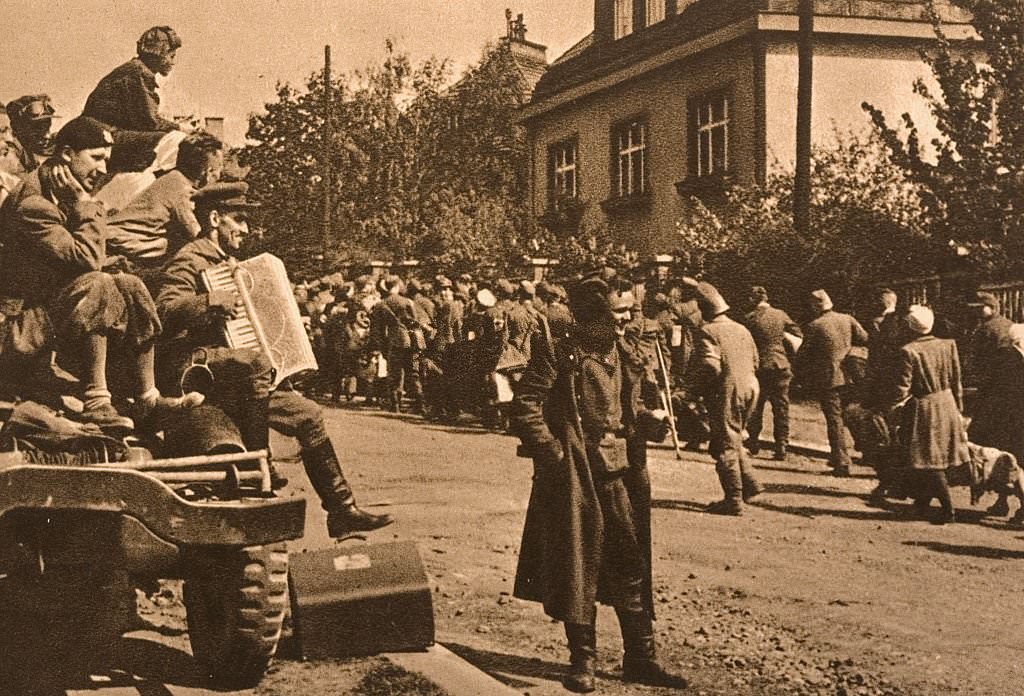
In the aftermath, captured German troops — including SS members, Luftwaffe personnel, and volunteers from Poland and Czechoslovakia who had served Germany — were held as prisoners. Josef Pfitzner, the German deputy mayor of Prague who had served the Nazi administration, was publicly hanged on September 6, 1945, after being convicted of participation in Nazi organizations. President Edvard Beneš, who had been forced into exile, returned to Czechoslovakia. Soldiers celebrated Germany’s defeat in the streets as refugees continued to make their way across the country’s roads.
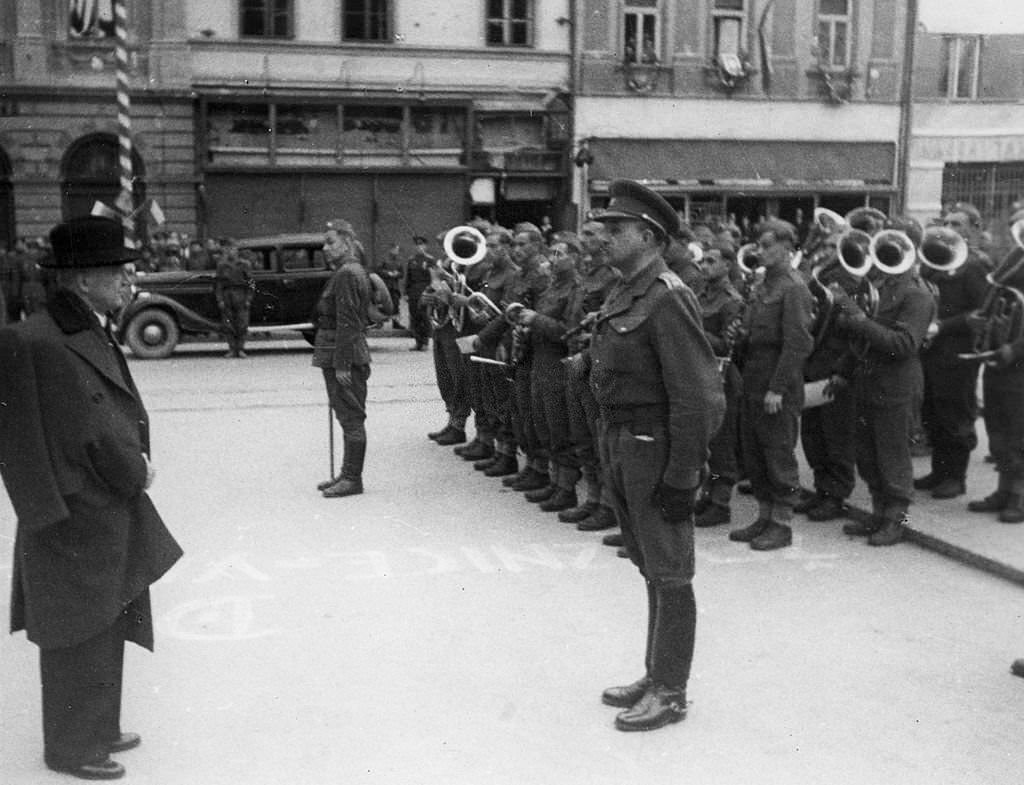
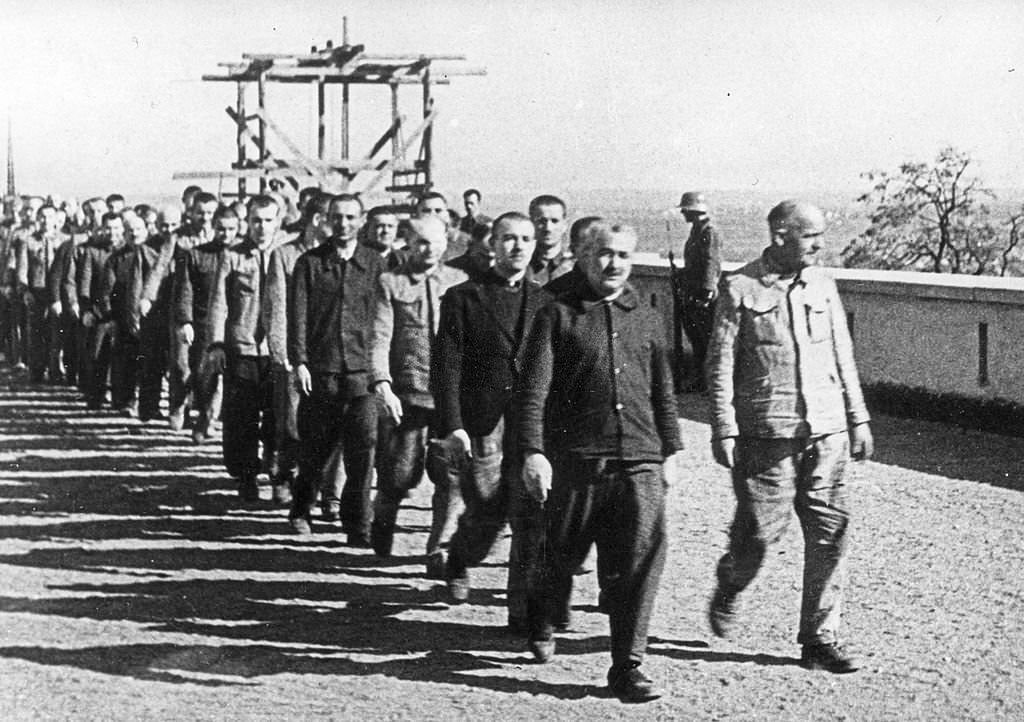
Captured German troops, including members of the SS and Luftwaffe, and volunteers from Poland and Czechoslovakia, during World War II, 1st June 1945.German deputy mayor of Prague Josef Pfitzner is hanged on a public place after being convicted for taking part in Nazi organisations on September 6, 1945The arrival of President E. Benes and members of the Czechoslovakian government in Czechoslovakia.Soldiers play an accordion in celebration of the defeat of Germany as refugees file by at the end of World War II in Czechoslovakia.
Below is a broader collection of historical photographs documenting the German occupation of Czechoslovakia from 1938 to 1945.
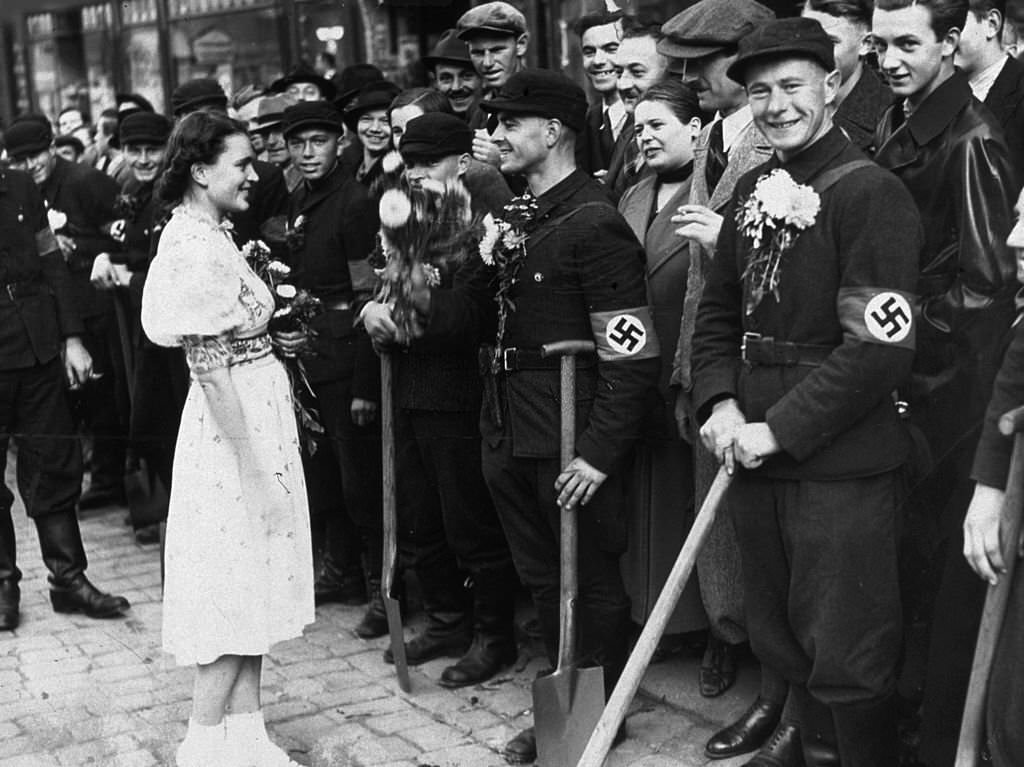
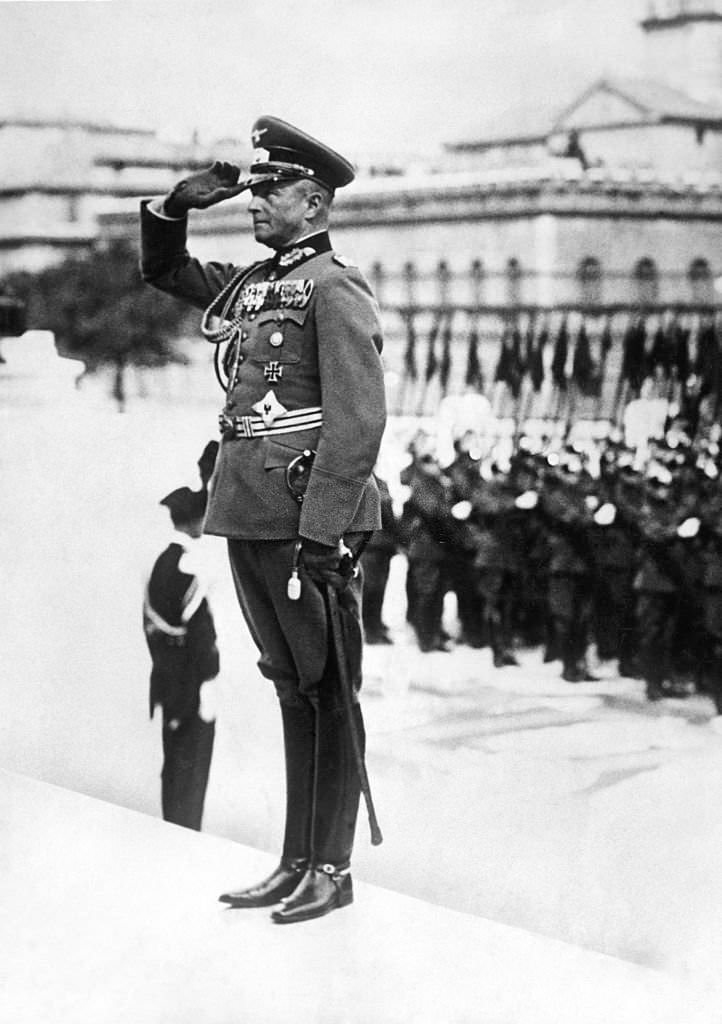
Czechoslovakian civilians leaving the Sudetenland under threat of invasion by German troops, September 1938German soldiers and army vehicles on the streets of Prague, Adolf’s Hitler’s Germany invaded Czechoslovakia in March 1939German Troops in Prague On 1939German Occupation of Czechoslovakia in Prague on March 16Th 1939The German army motorized in Prague.The German occupation of Bohemia and Moravia.The German occupation of Czechoslovakia in 1939.The German occupation of Bohemia and Moravia on March 15, 1939. German troops invading the territory of the Czecoslovak Republic.Events leading up to the German occupation of Bohemia and Moravia on March 15, 1939.The German occupation of Bohemia and Moravia. The German army marching into Prague Castle on March 15, 1939The German occupation of Bohemia and Moravia.The German occupation of Bohemia and Moravia on March 15, 1939.The day of the consummation of the Munich betrayal. The remaining territory of Czechoslovakia was invaded by the Germn army and the so-called Protectorate of Bohemia and Moravia was declared.The German Army enters Prague with a procession of motorcycles in March 1939, several months prior to the commencement of the European War.March 1939 German army enters Prague after the annexation of Czechoslovakia.German troops enter Prague in Czechoslovakia, at the beginning of the German occupation, 1939. On the right is a Czech police officer.German troops enter Prague in Czechoslovakia, at the beginning of the German occupation, 1939.German Troops Parade in Streets of Czechoslovakian Town, 1939Assembled crowds greet the entry of German troops into the Warnadorf district, one of the areas invaded by Czechoslovakia.German soldiers on motorbikes during the invasion of Prague, Czechoslovakia.Steel helmeted German troops marching into Prague during the invasion of Czechoslovakia. By-standers are giving them a German salute.Ethnic Germans salute a message of liberation from German commander Wilhelm Ritter von Leeb after the German annexation of the Sudetenland, 2nd October 1938.German soldiers making their way through a street in the Sudetenland part of Czechoslavkia during the invasion and occupation of the country prior to World War TwoGerman troops enter Policka (Politschka) in the Sudetenland (now in the Czech Republic), as Germany annexes the region, former Czechoslovakia, October 1938.Peasants give German soldiers the Hitler salute as they cross the Czechoslovakian borderThese Sudeten German civilians who fled into Germany during the Czech-German crisis might be called the Vanguard of the German army of occupation.German soldiers on their arrival in Waldhaeusl in the so-called Sudetenland, 1938Members of the German Labor Corps stand along a street curb holding shovels as a young girl welcomes them to Sudetenland with flowers.German Soldier Saluting at Ceremony.German occupation of the Sudetenland.The invasion and occupation of Czechoslovakia, 1939.The invasion and occupation of Czechoslovakia, March 1939,The German army marching into Prague Castle on March 15, 1939.The Occupation of Czechoslovakia, Czech mounted police watching a German truck pass through the streets of PragueGermany Invades CzechoslovakiaThe German occupation of Bohemia and Moravia. The German army marching into Prague Castle on March 15, 1939.
A German Wehrmacht motorised column passes through the border crossing at Waldhaeusl in the occupied Sudetenland of Czechoslovakia on 3rd October 1938 at Waldhaeusl in Czechoslovakia.
People welcoming the occupying German troops in the Sudetenland region of Czechoslovakia, October 3, 1938.
German soldiers of a motorised division on the streets of Prague, Adolf’s Hitler’s Germany invaded Czechoslovakia in March 1939 after a list of demands and ultimatums from the Nazis were not met