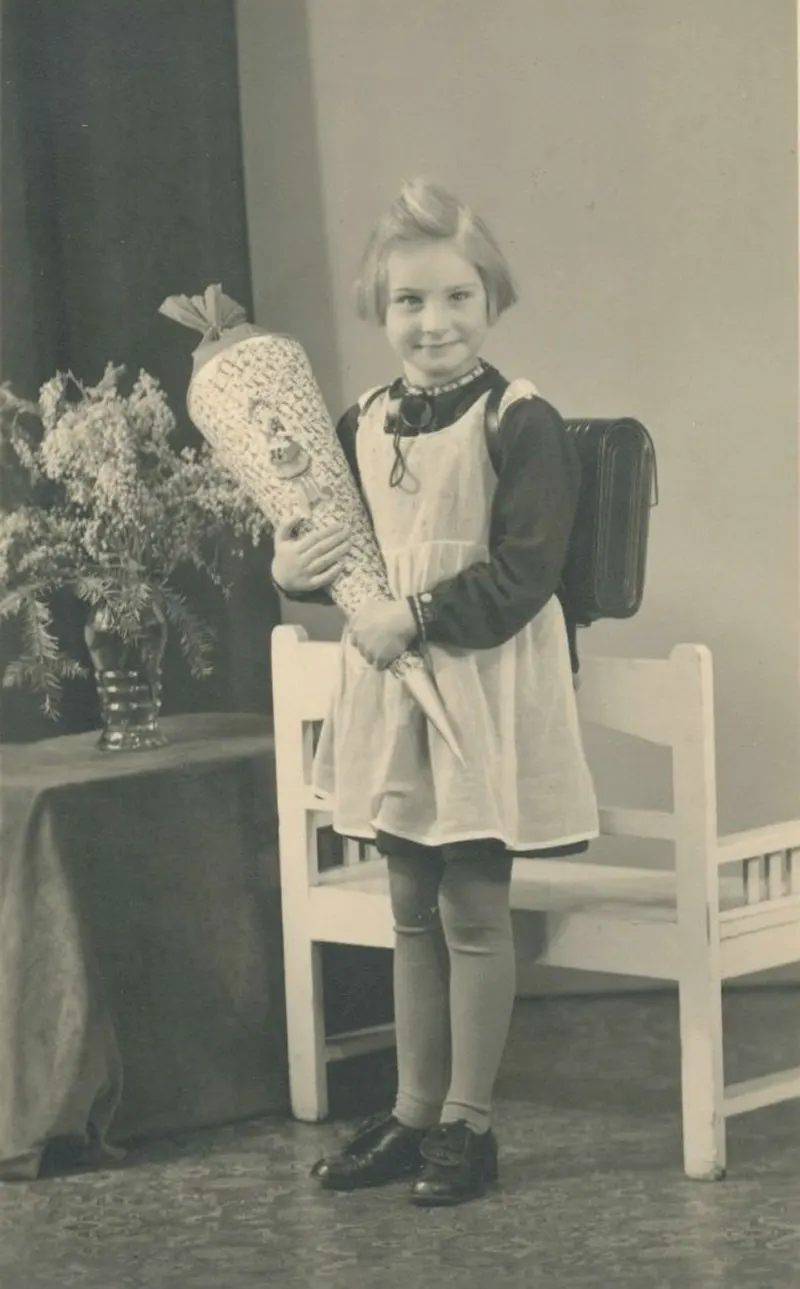
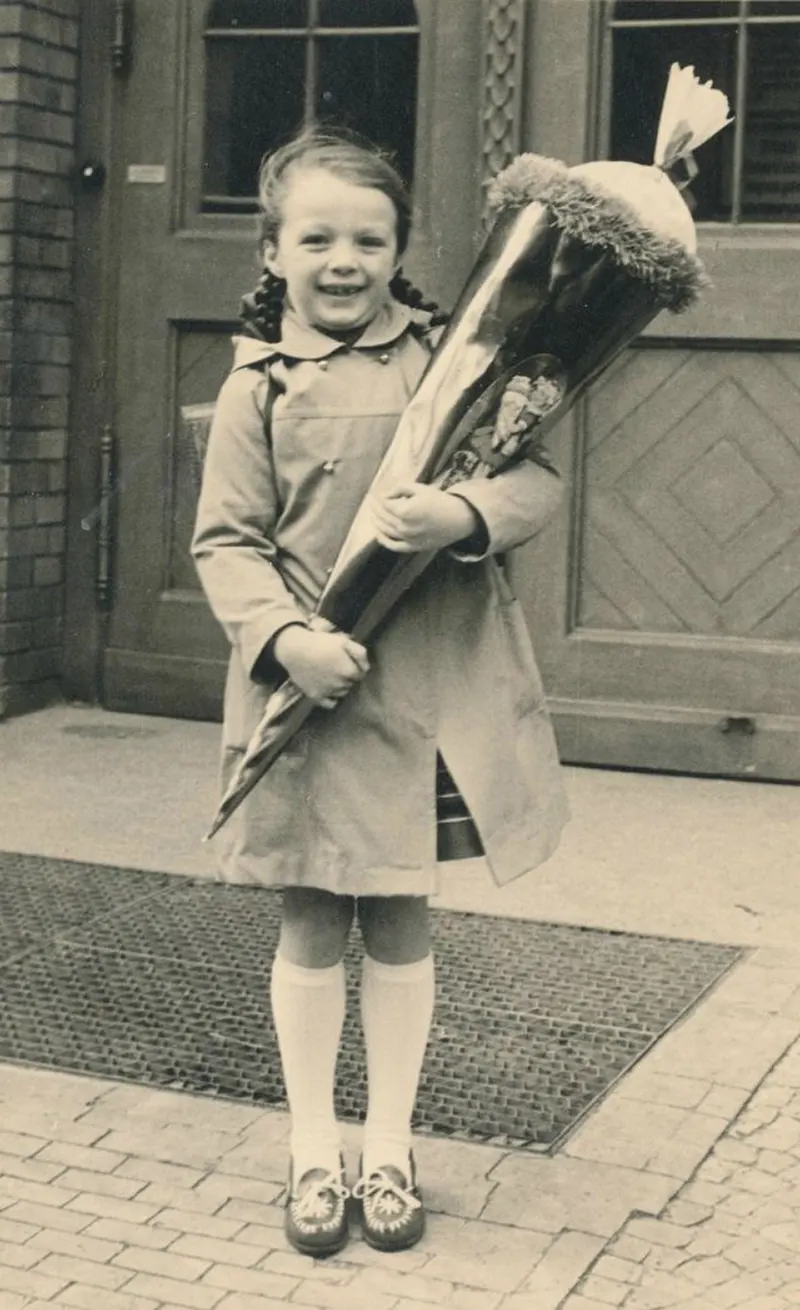
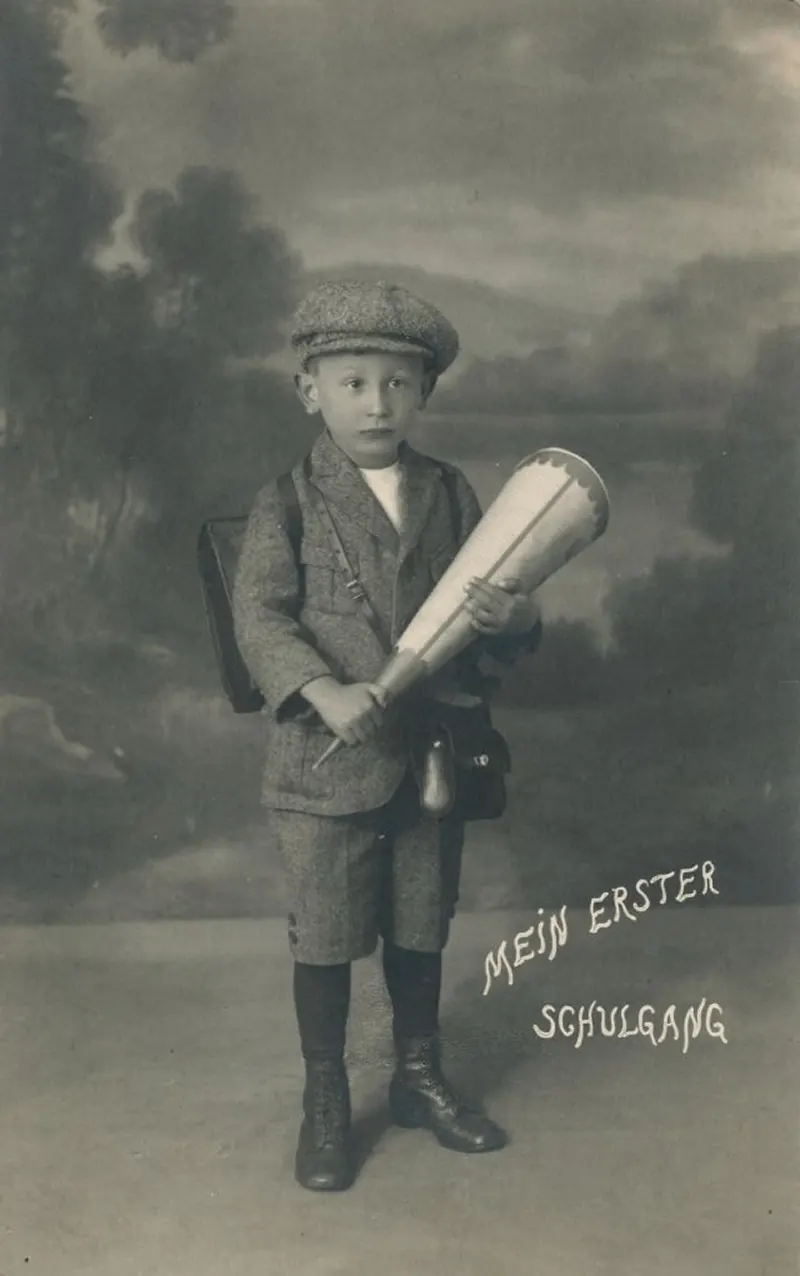
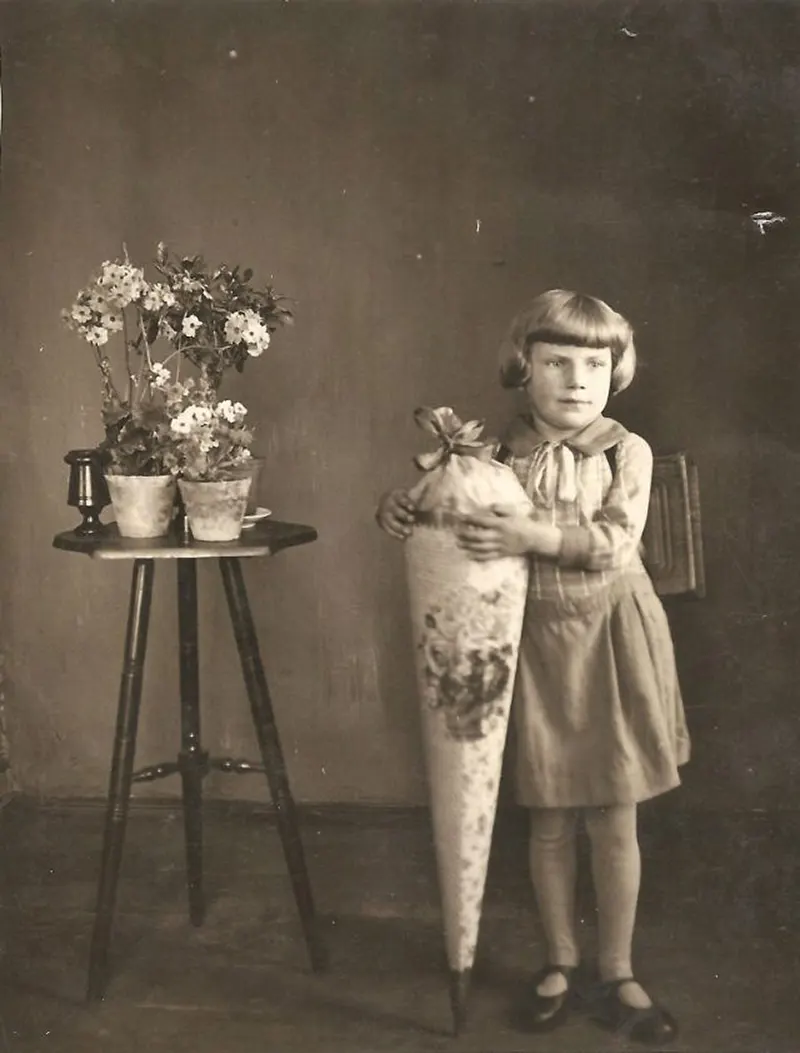
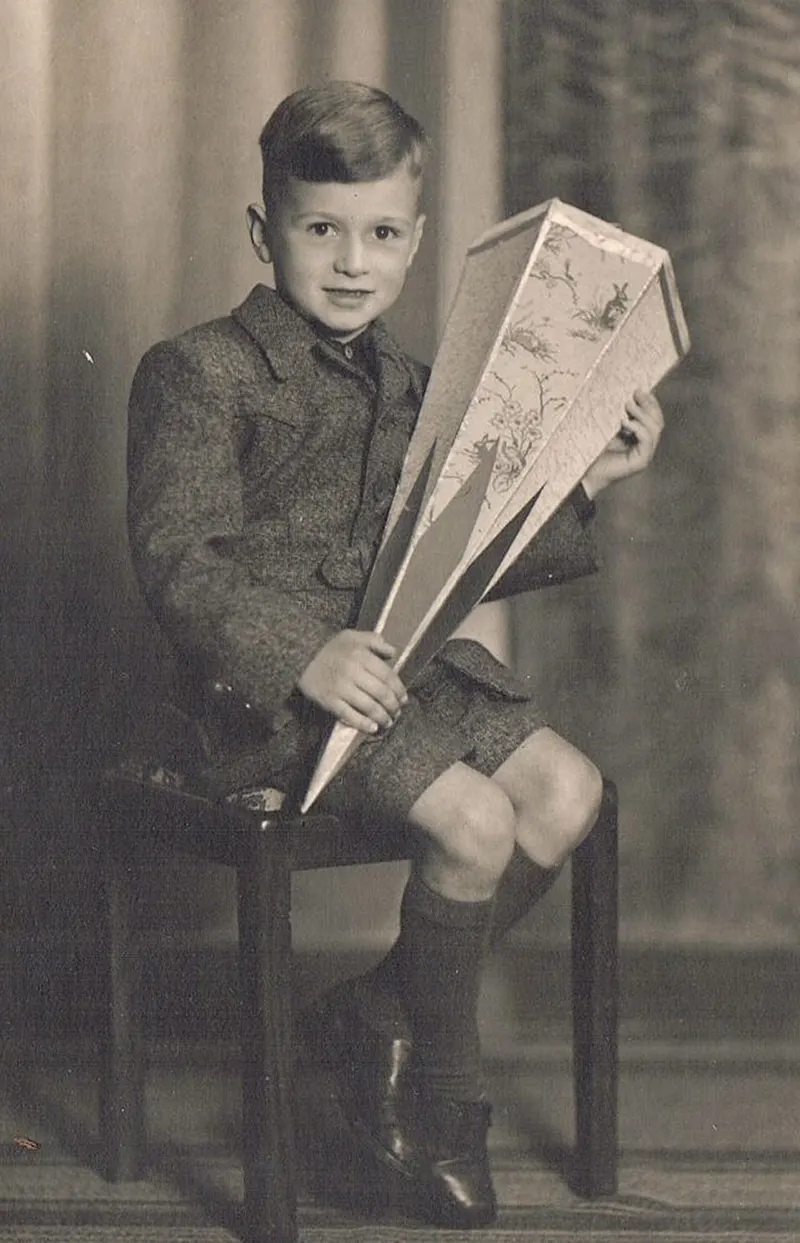
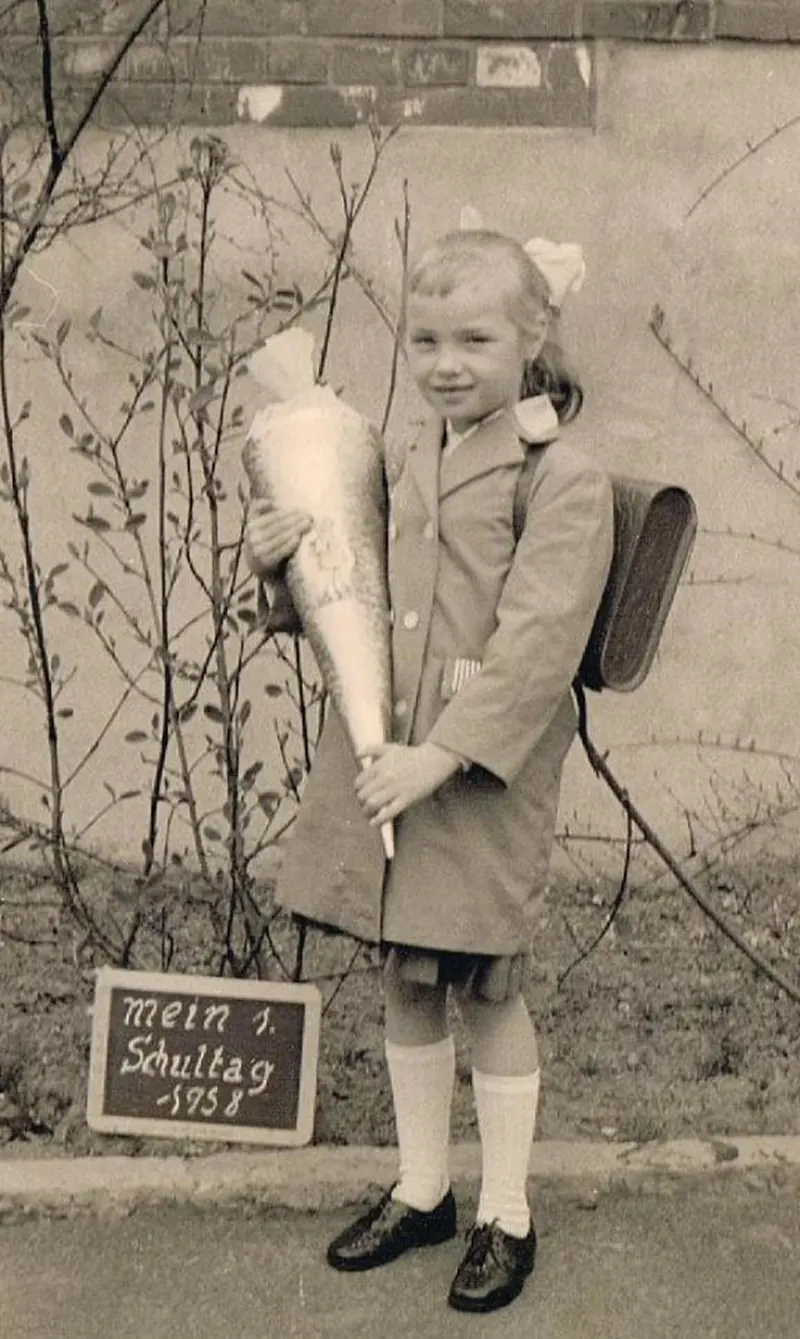
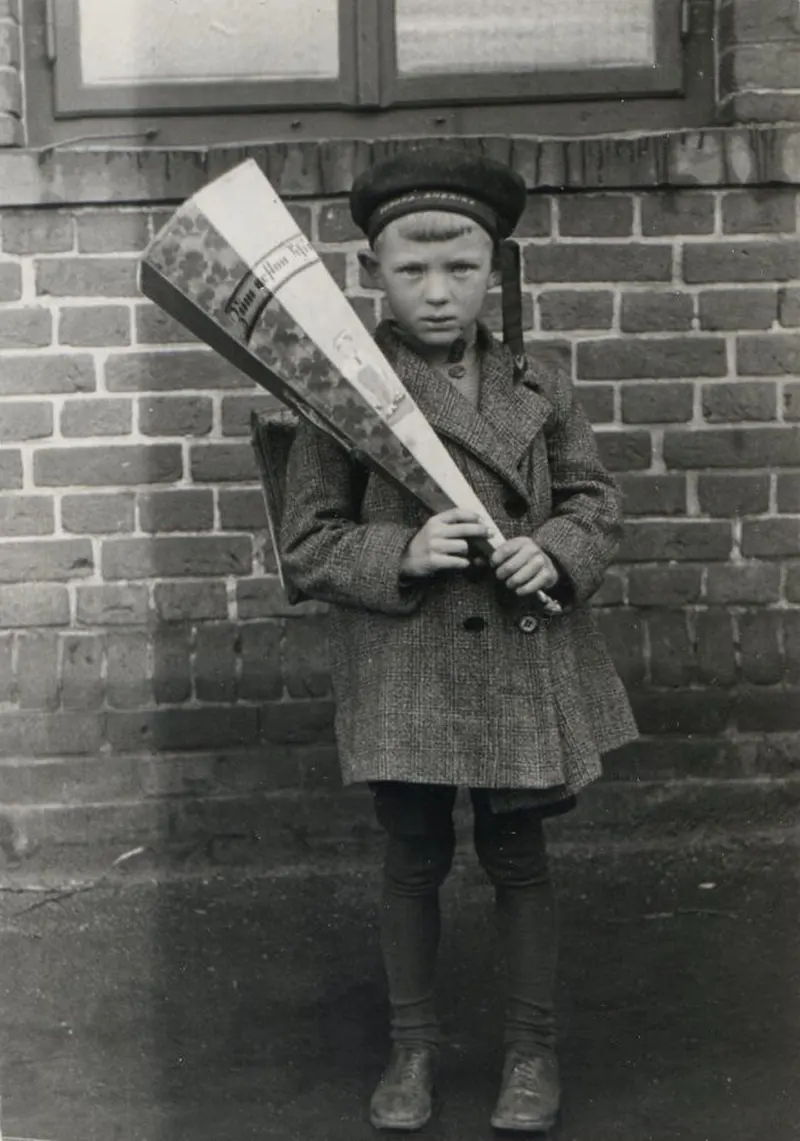
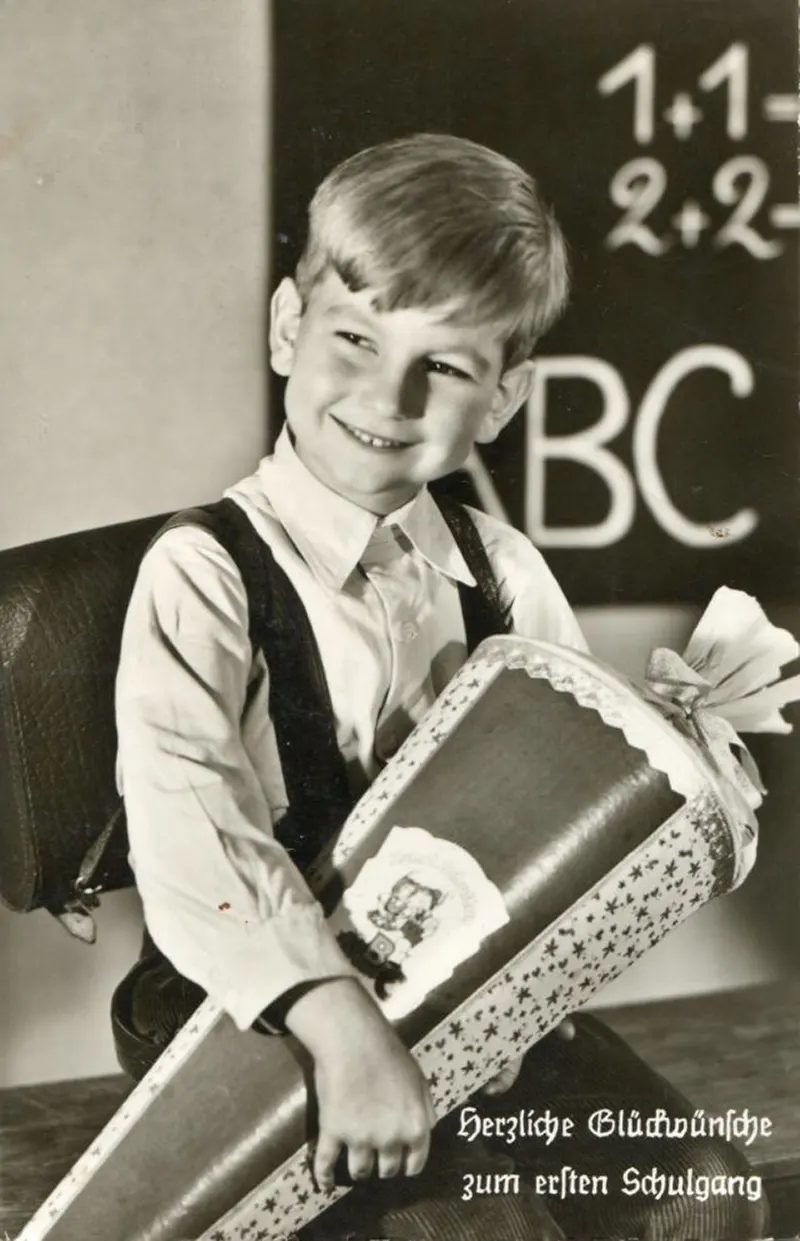
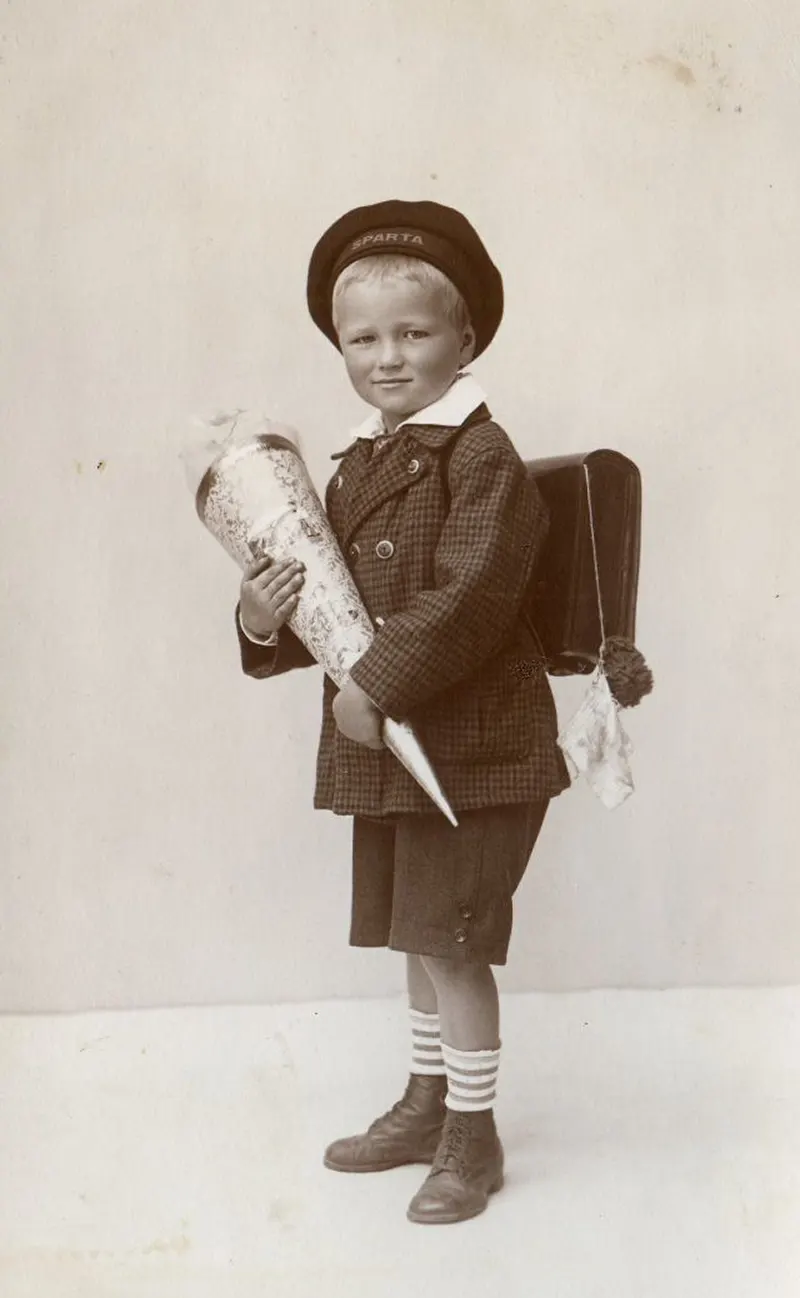
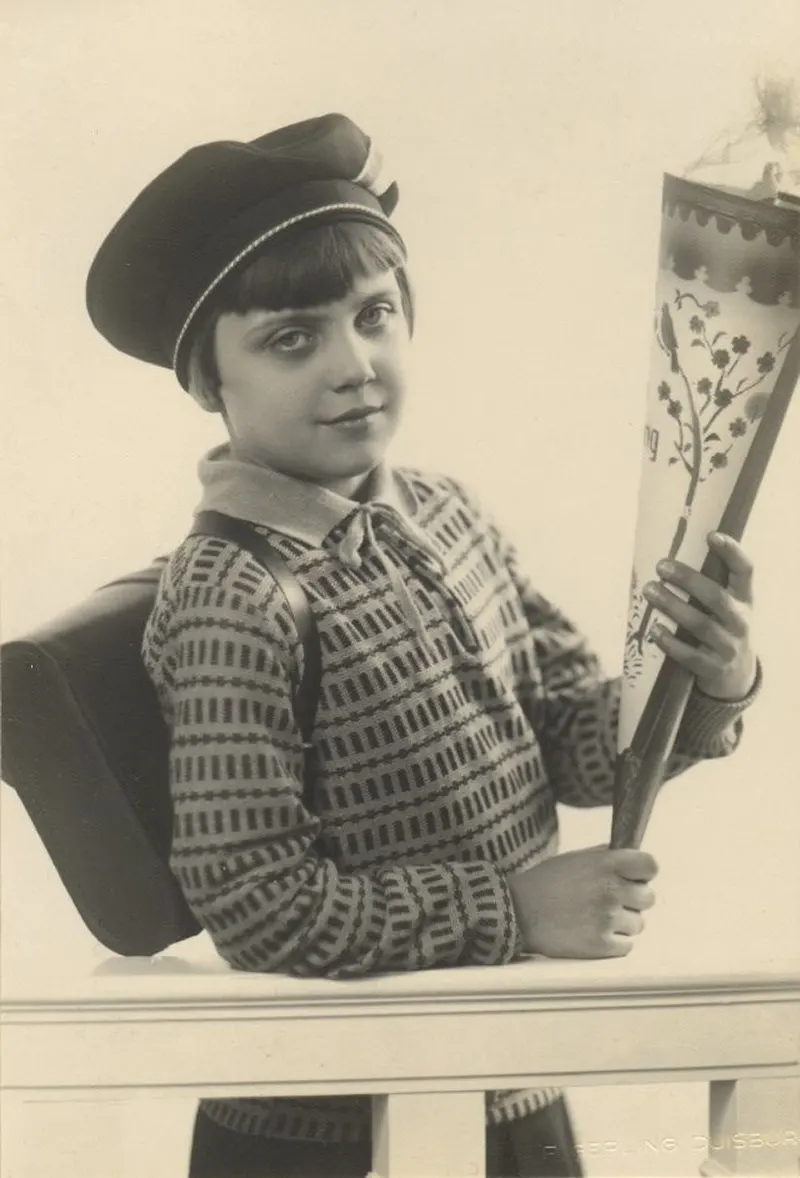
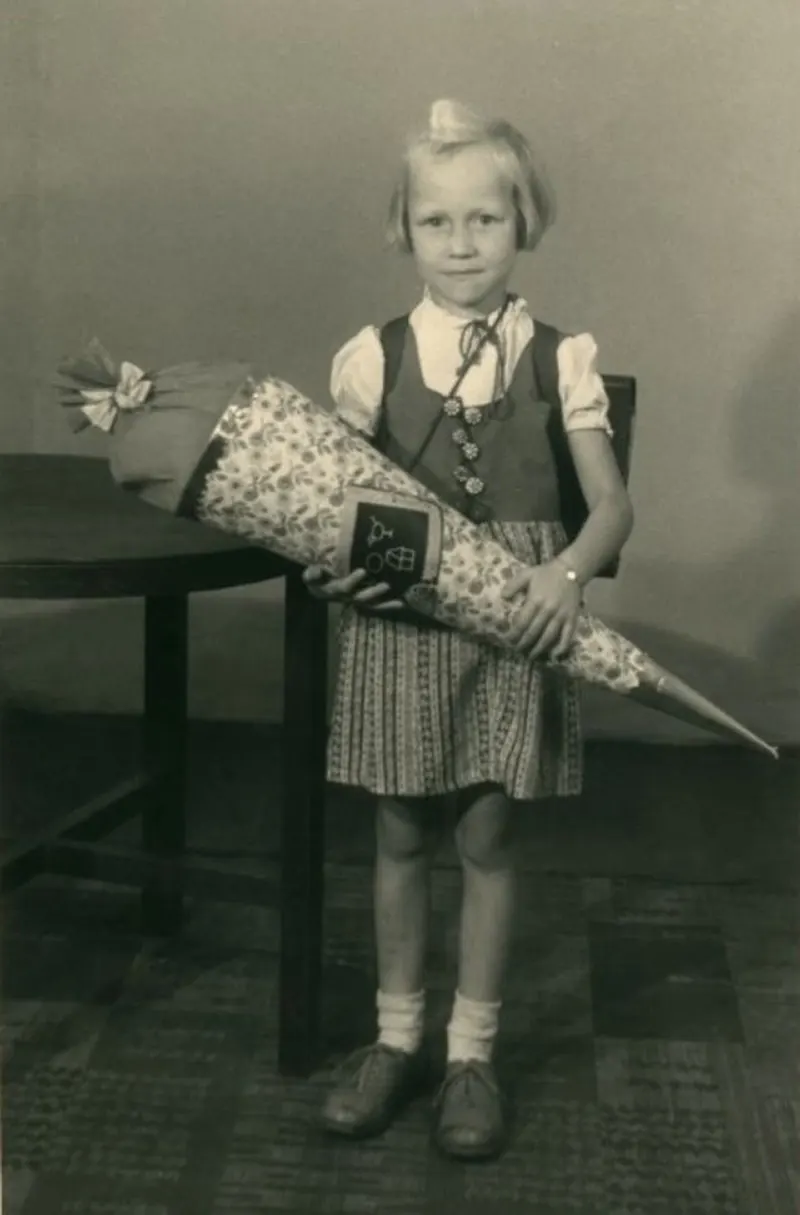
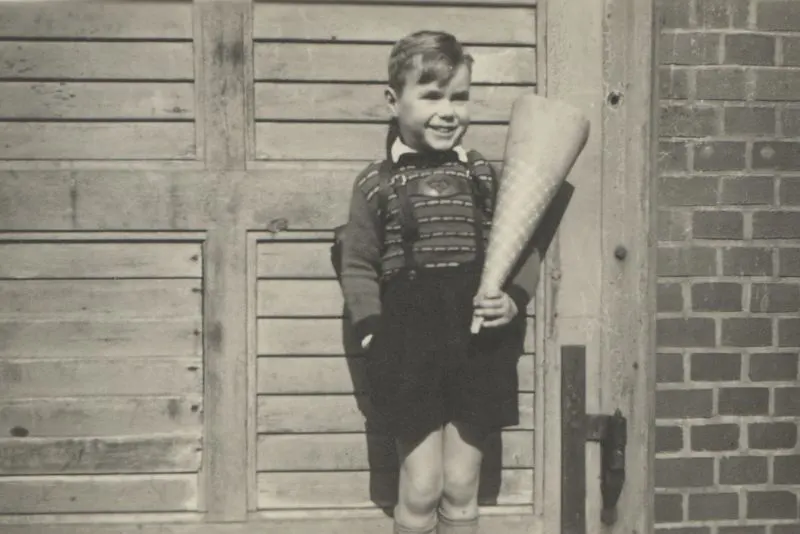
The first day of school looks nothing like it did a hundred years ago. The clothes, the classrooms, the routines — all of it has shifted dramatically across the decades. These photographs capture those moments as they actually were, from the stiff formality of the 1920s to the social upheaval of the 1960s and 70s.
In the early 1900s through the 1920s, the first day of school was a serious occasion. Children dressed in their best clothes and walked to the schoolhouse, often alone. Teachers stood at the door to greet them, and the classroom inside was plain and orderly. Lessons centered almost entirely on reading, writing, and arithmetic. There was little room for creativity, and discipline came first.
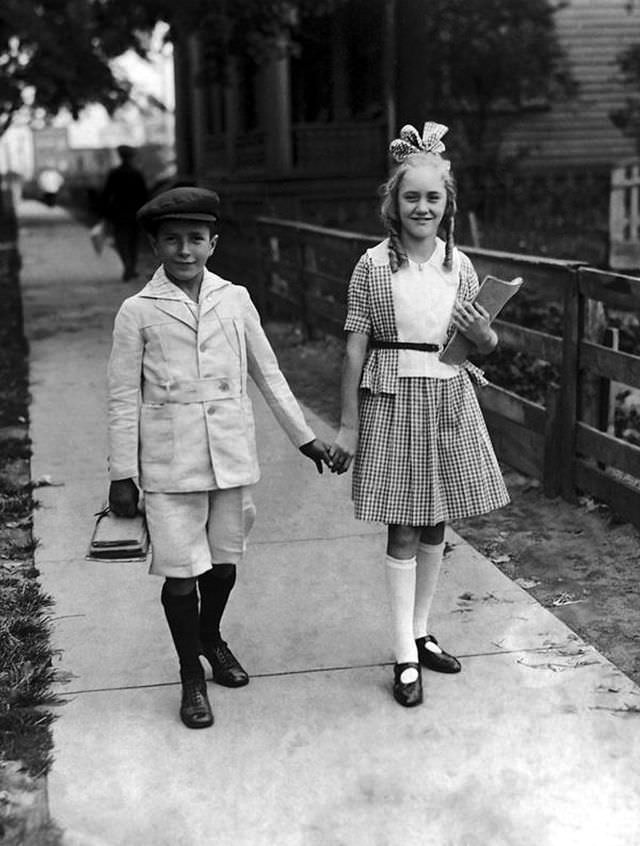
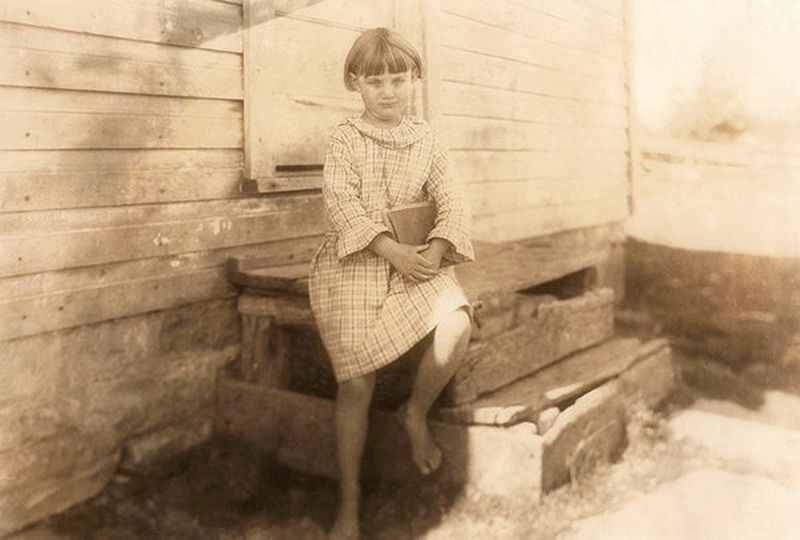
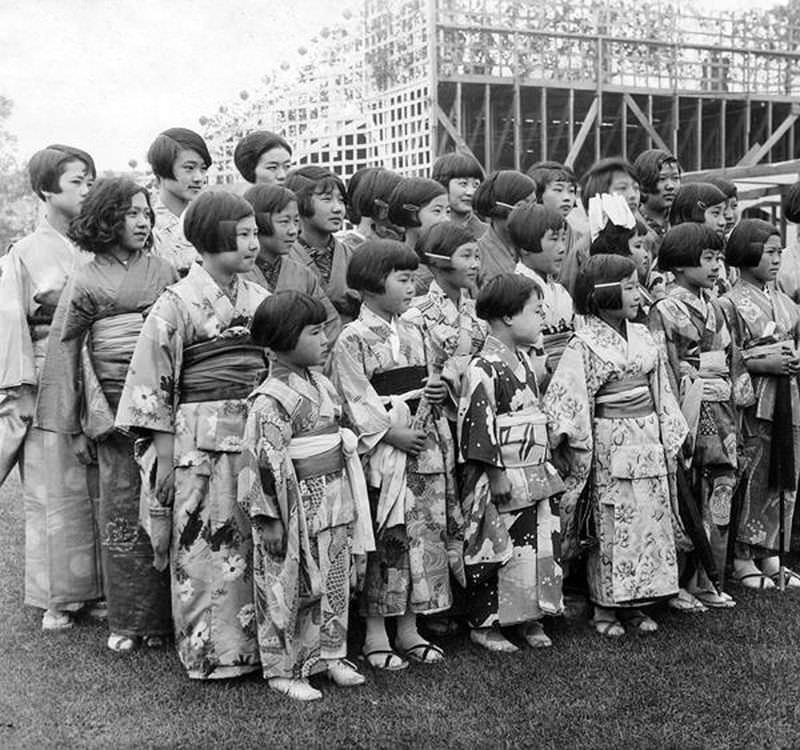
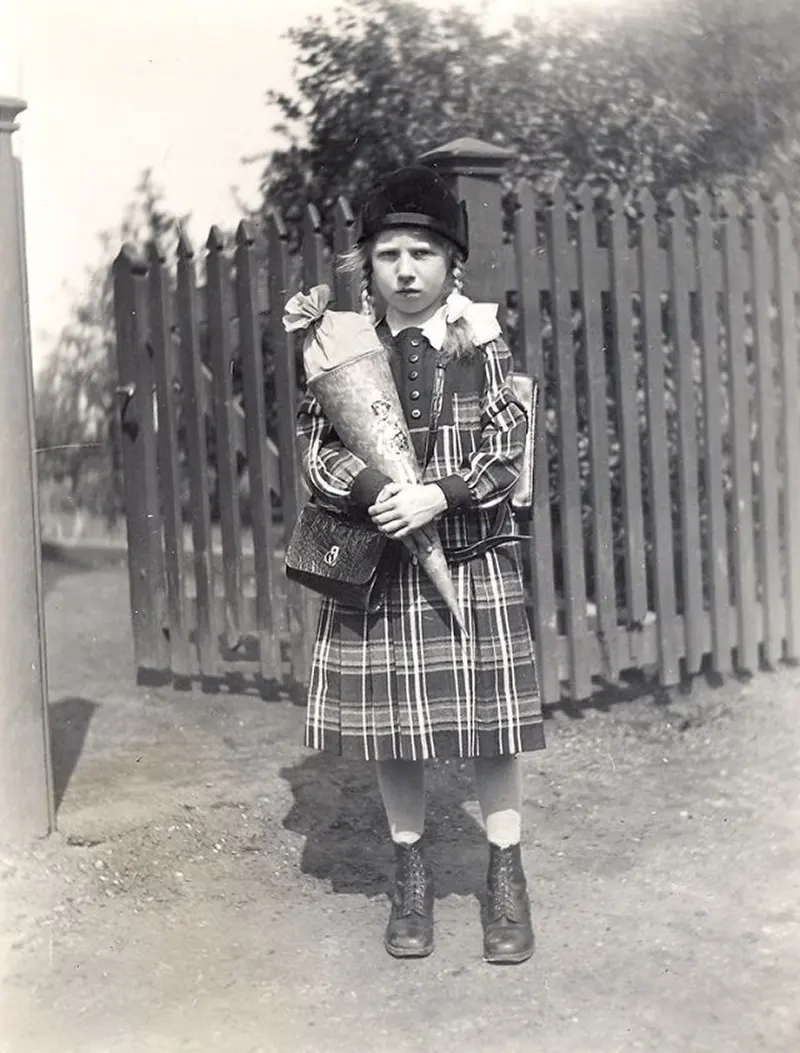
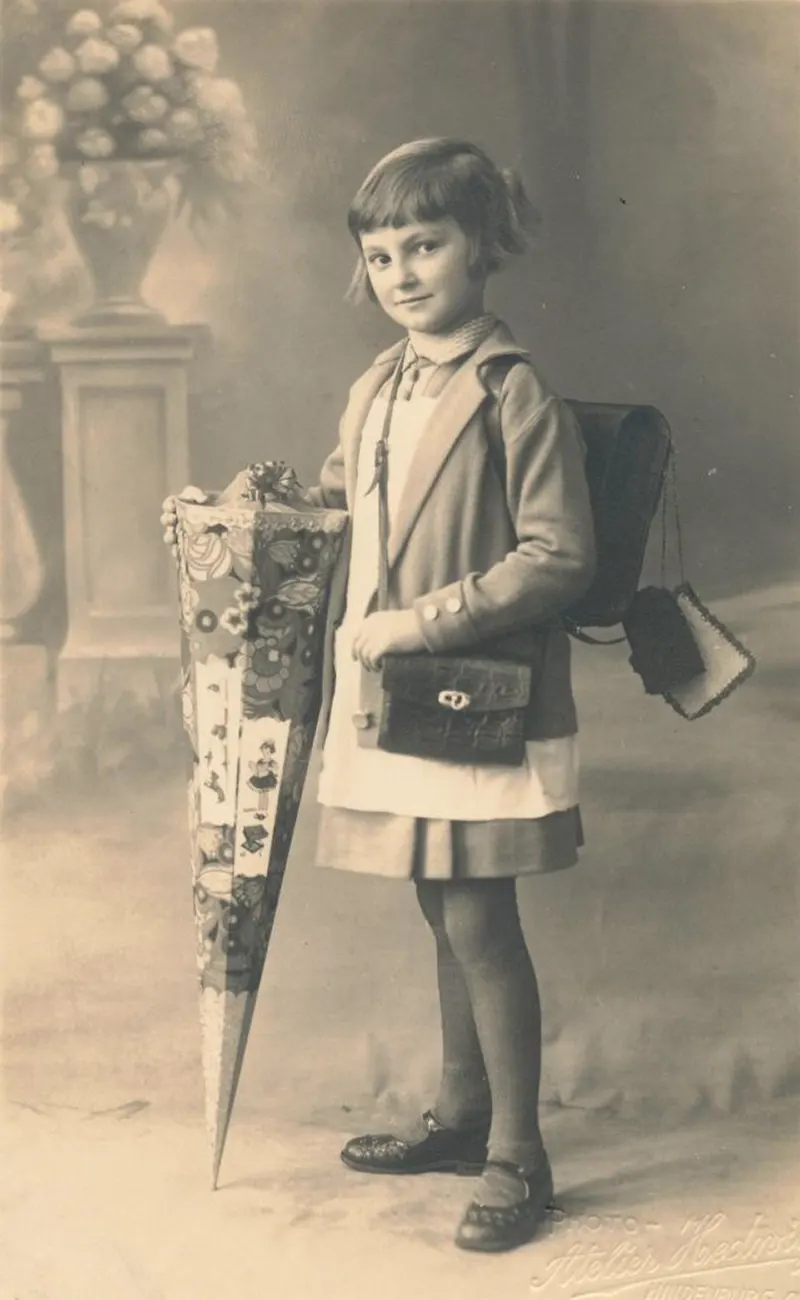
A young boy and girl on the way to school for the start of a new term in the 1920sA girl’s first day of school in Pocahontas County, West Virginia, circa 1921Japanese children in traditional garb start school in California in 1927
Even then, the first day carried weight. For many families, sending a child to school was a proud and meaningful act. A new term meant new possibilities, even if the school itself was a single room with few supplies.
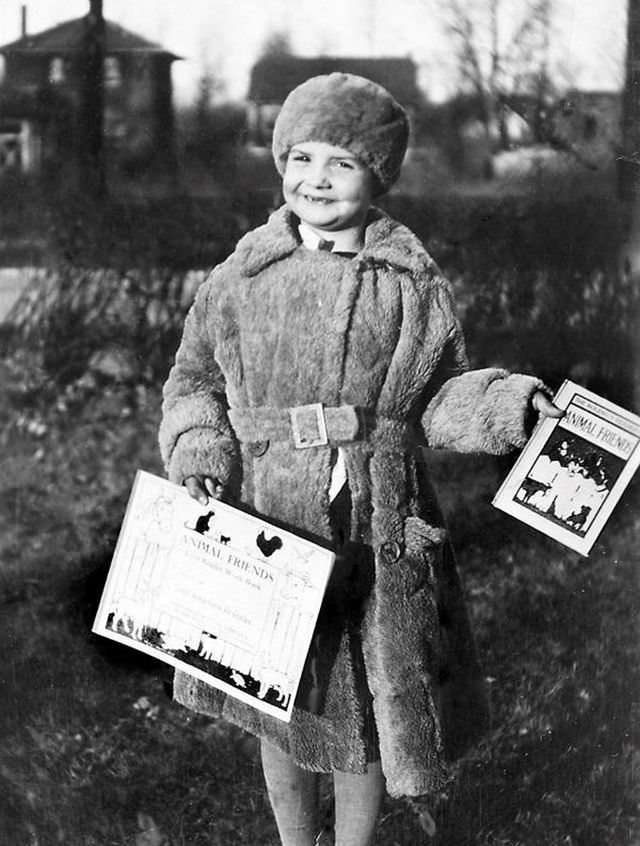
A 5-year-old girl shows off her books after her first day of kindergarten, circa 1929
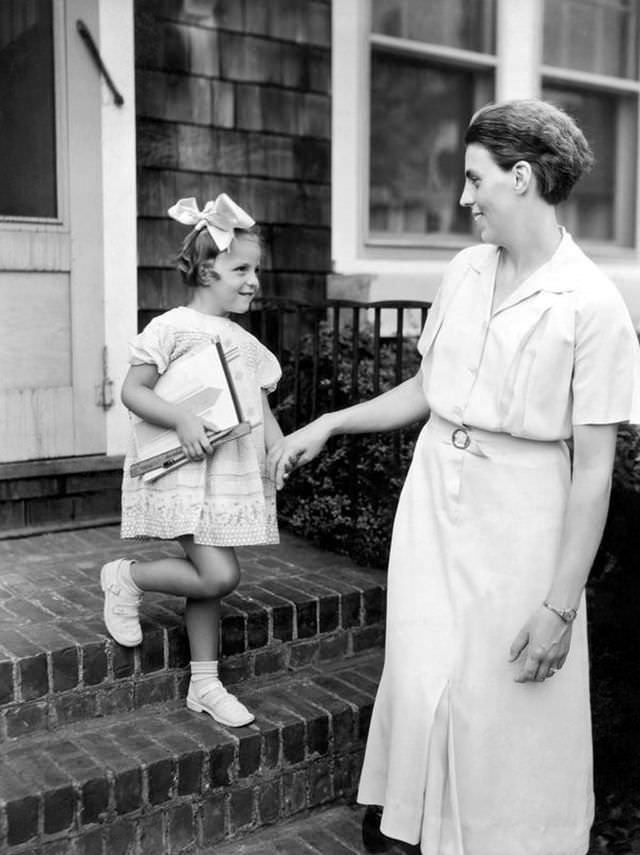
A mother takes her daughter by the hand as they head to school in the late 1920s or early 1930s
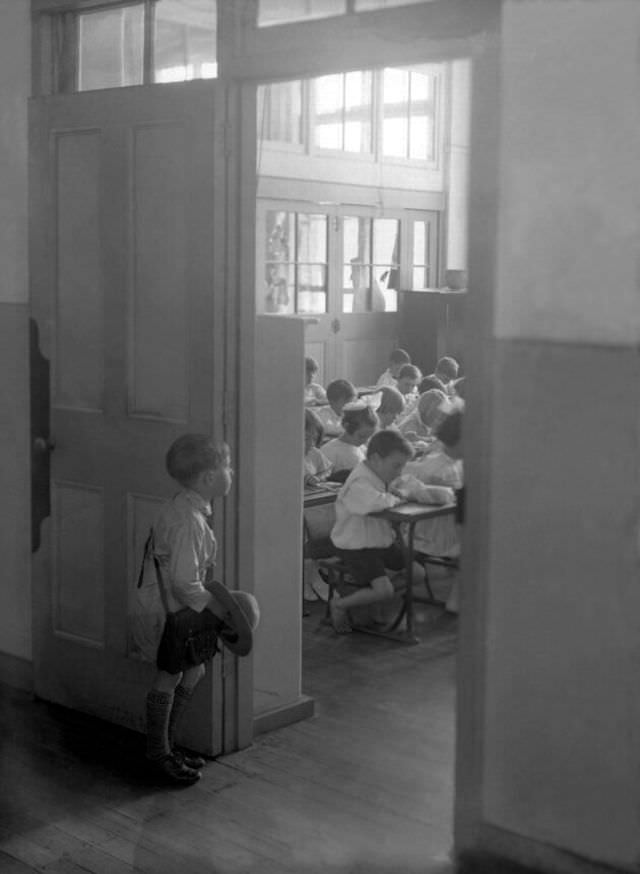
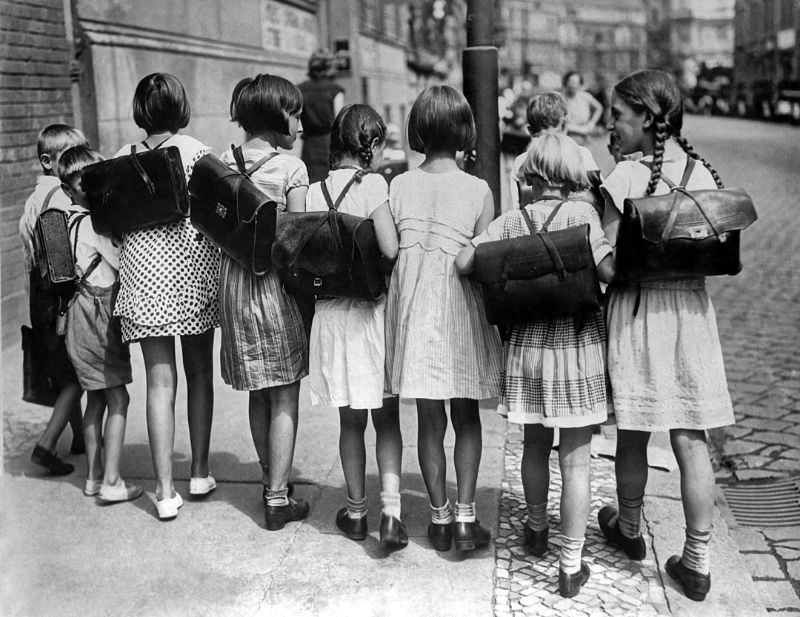
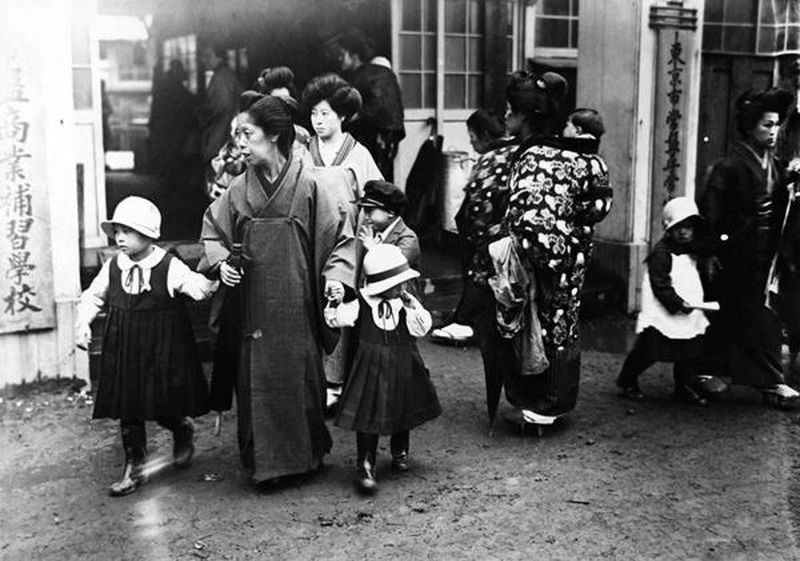
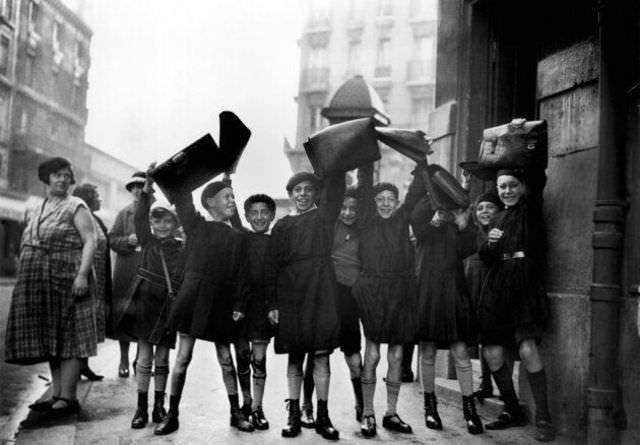
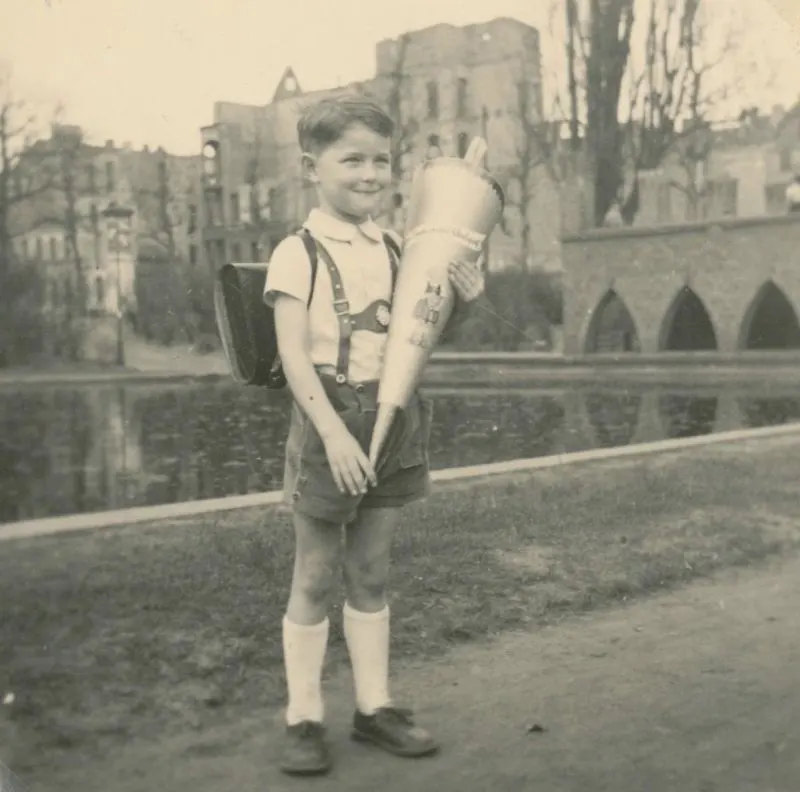
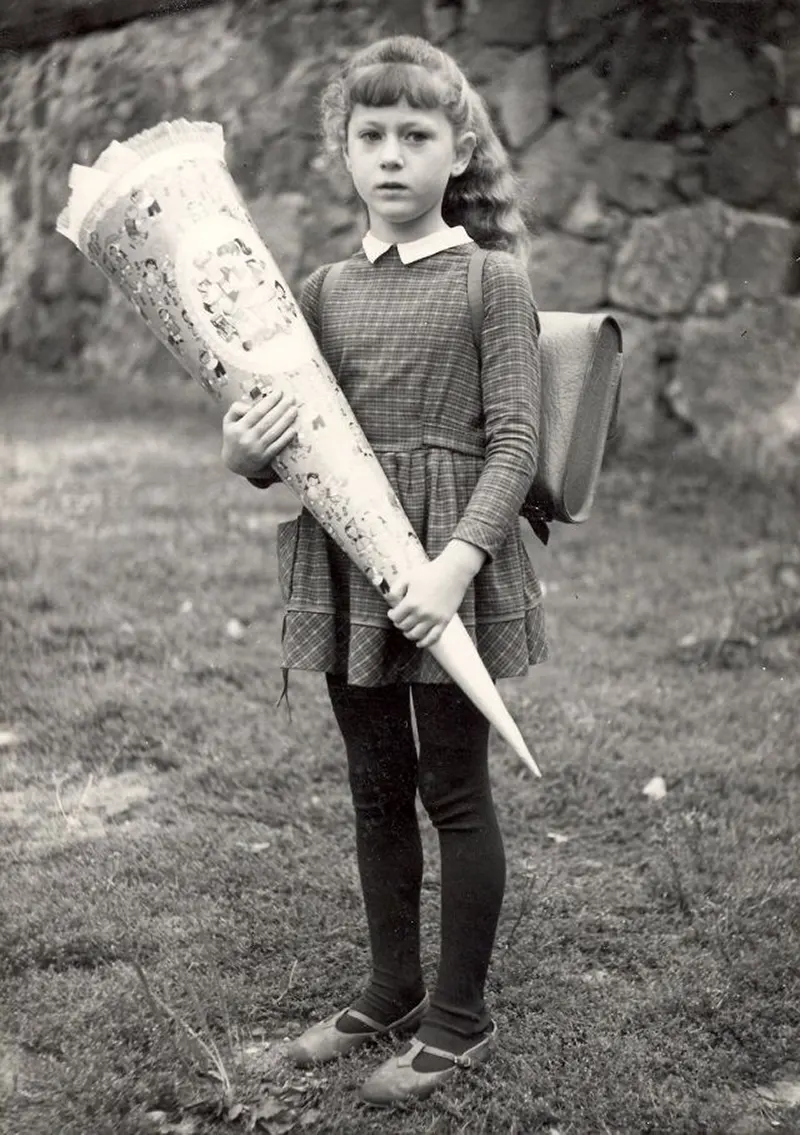
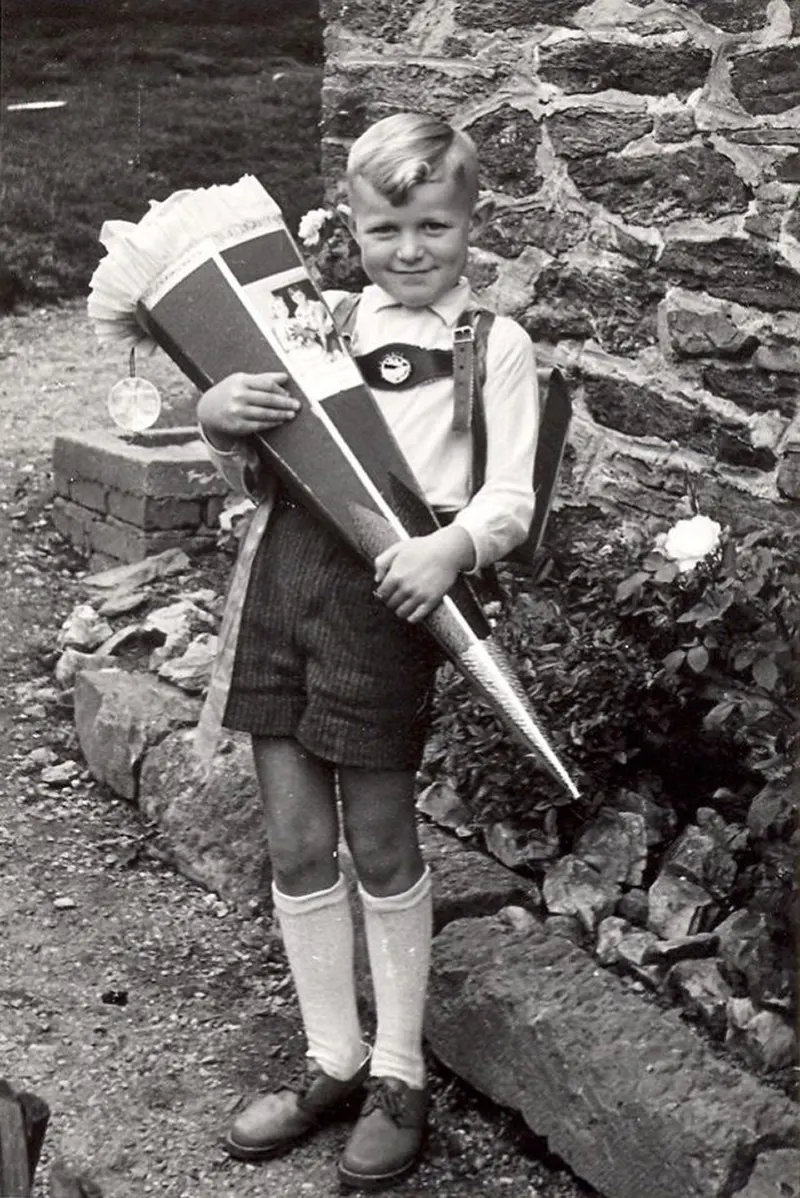
A young Australian boy stares into a classroom already full of students, circa 1930Children on their way home from school, with book bags strapped on their backs, after the first day of classes in Germany, circa 1930Parents and their children are seen outside a school in Tokyo in the early 20th centuryStudents in France greet a photographer at the start of a new term by shaking their schoolbags in 1932
The 1940s brought war, and schools were not untouched by it. In occupied Paris, students still lined up in courtyards on the first day of classes, maintaining routines even as the world around them was in crisis. When the war ended, a new chapter began.
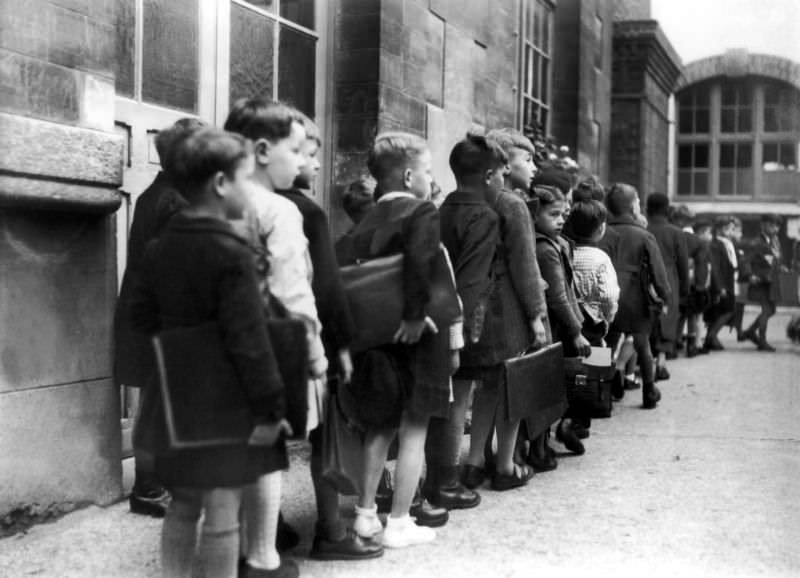
During World War II, Parisian students line up a courtyard on the first day of classesA little boy in Paris says goodbye to his mother outside a school in September 1945
The postwar boom of the late 1940s and 1950s transformed the American school experience. Enrollment surged as the baby boom generation reached school age, and new buildings went up across the country to keep pace. Parents began driving children to school rather than letting them walk alone. The curriculum expanded too — art and physical education moved from the margins to the mainstream. School supplies remained simple: pencils, paper, and a few textbooks carried in a leather satchel.
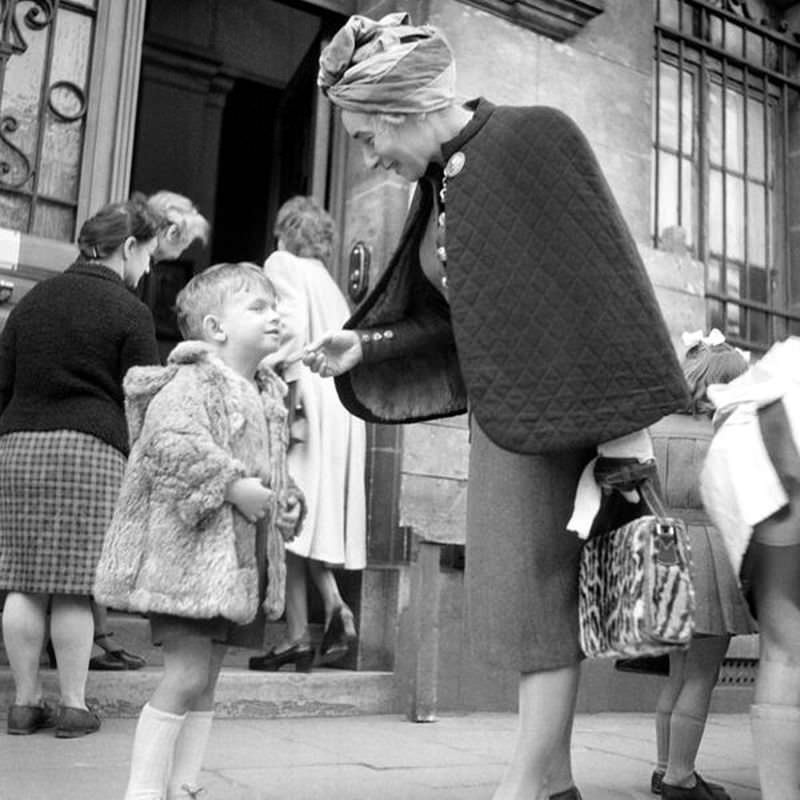
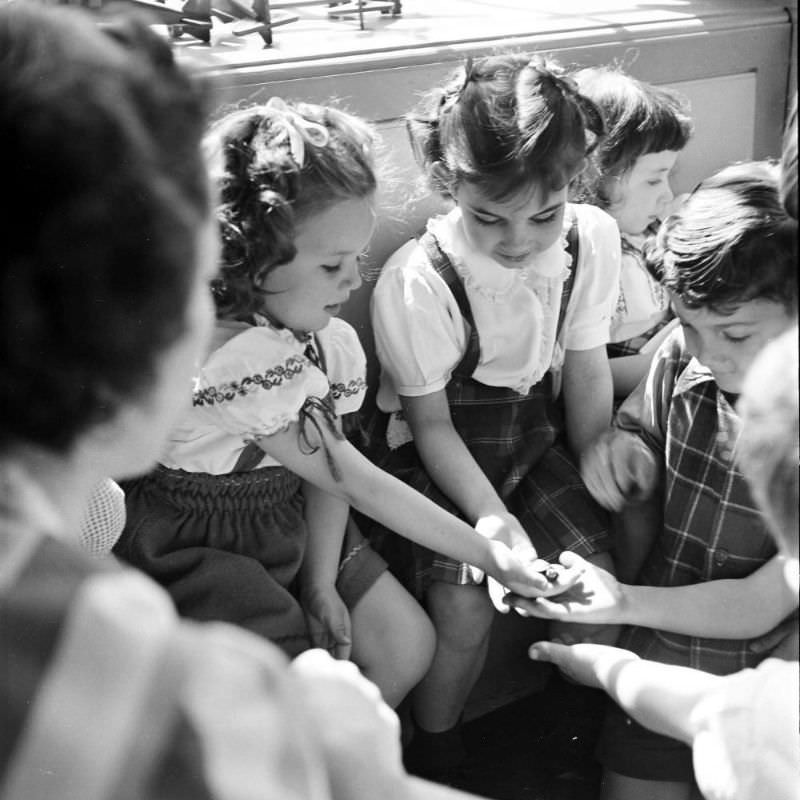
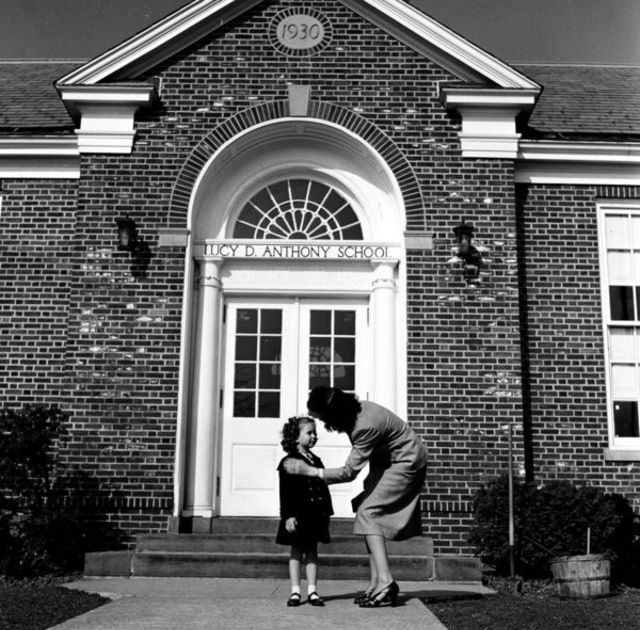
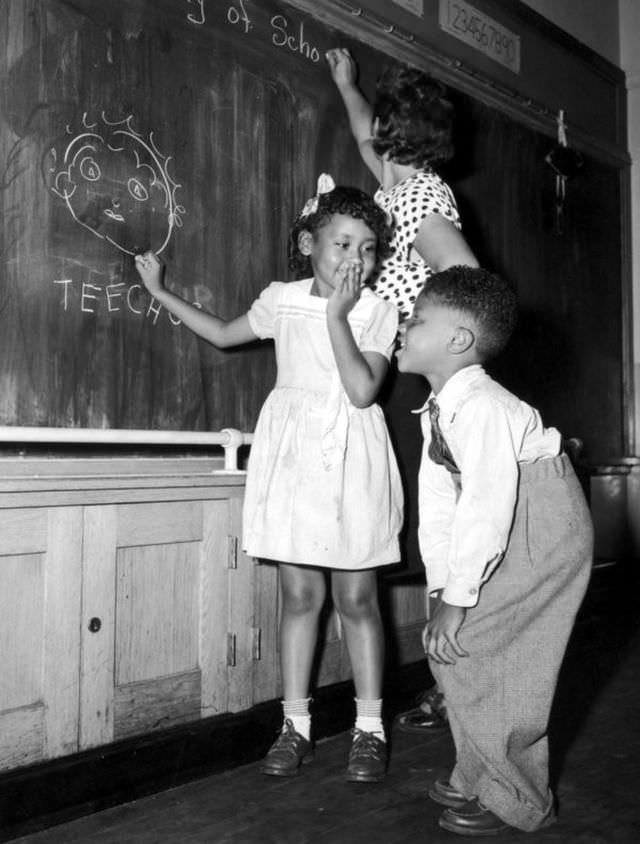
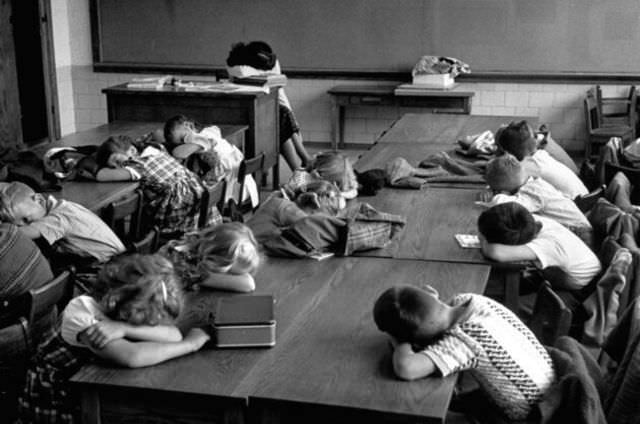
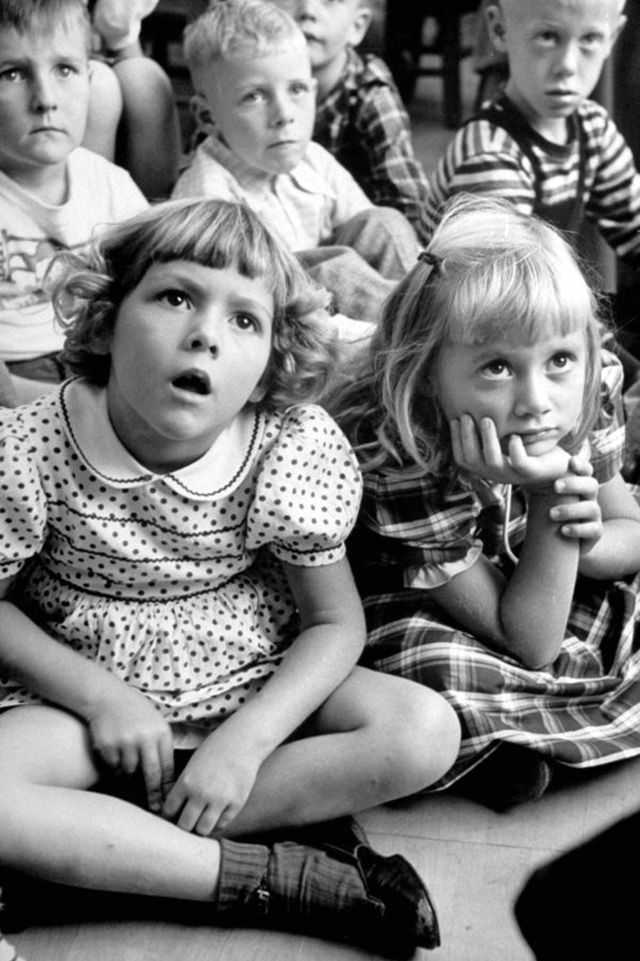
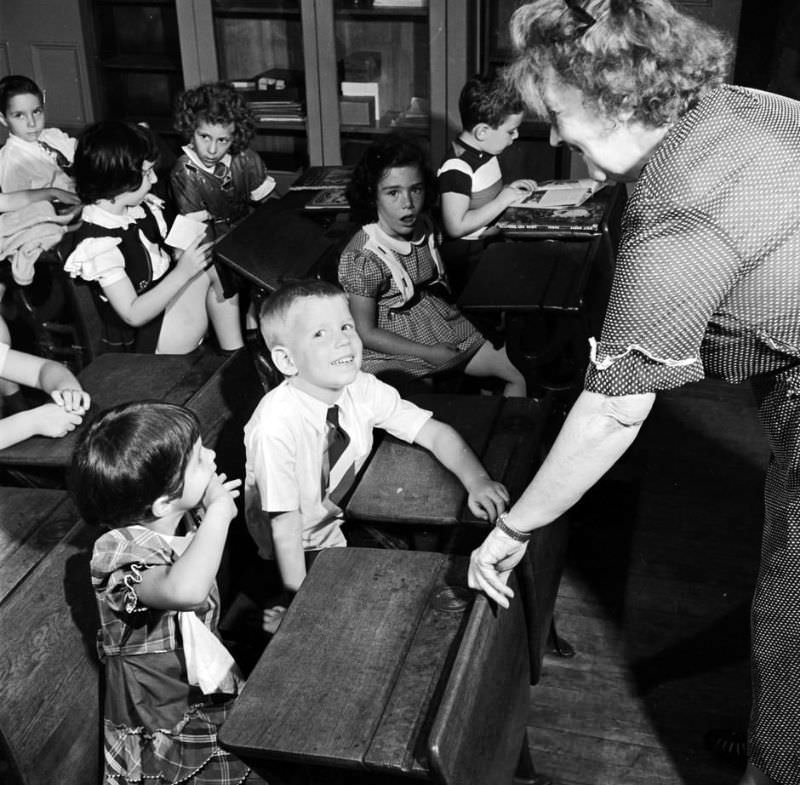
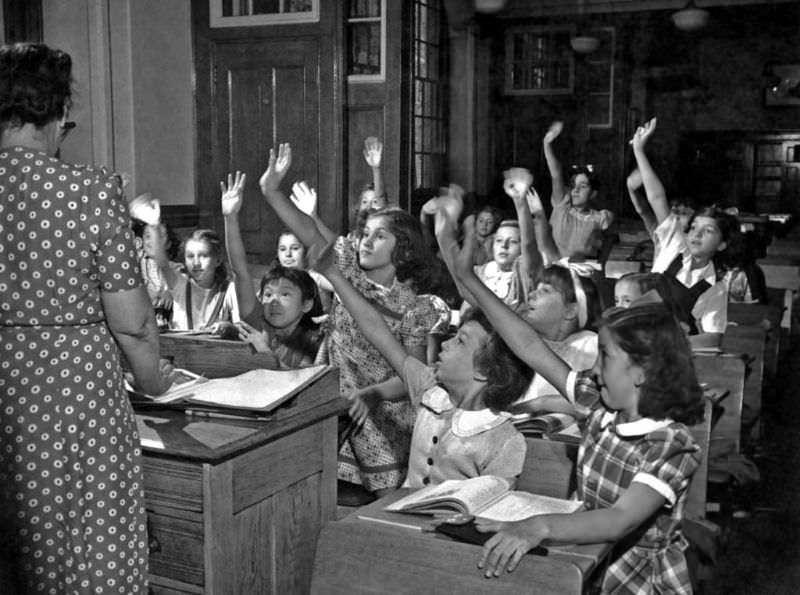
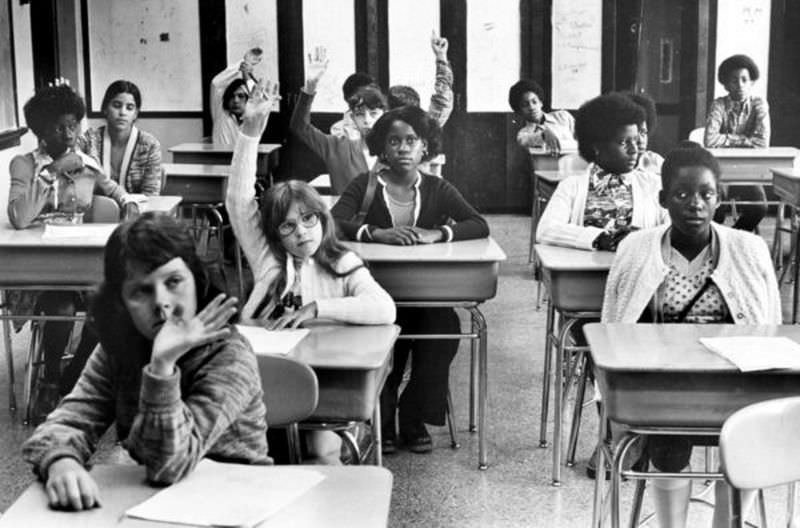
As their instruction begins in 1948, students at the Lucy D. Anthony school examine a small turtleIn 1948, a young girl shares a moment with her mother outside the Lucy D. Anthony school in Madison, New JerseyJoyce Payne and Vincent Baker have fun depicting their teacher at a school in New York’s Harlem community on Sep. 13, 1948Nap-time on the first day in 1949Wide-eyed children listening to fairy-tales on their first school day in 1949Children getting to know their new teacher, circa 1950Students eagerly vie to be called on at a New York school, circa 1950
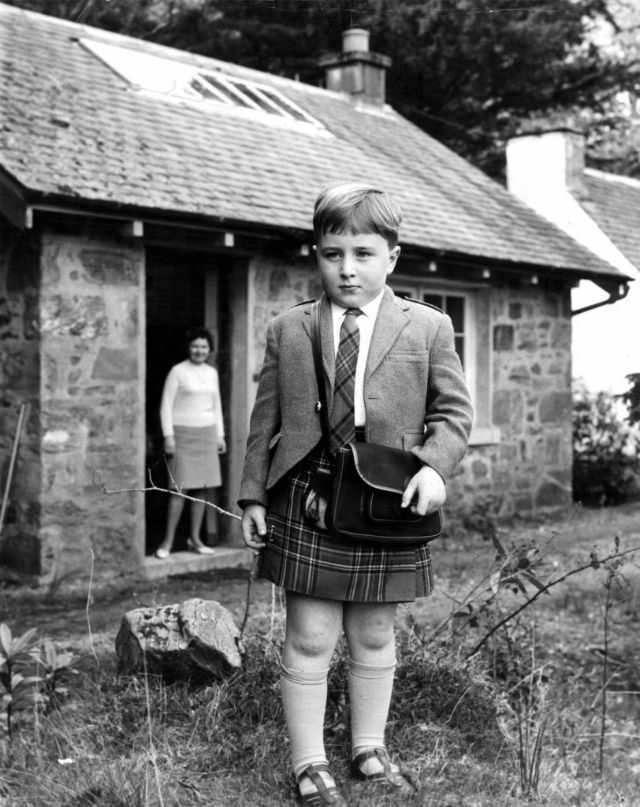
Teacher Agnes Bolton stands in the schoolhouse door on the first day of classes for her only pupil, Jimmy MacLellan, in Scotland, circa 1950
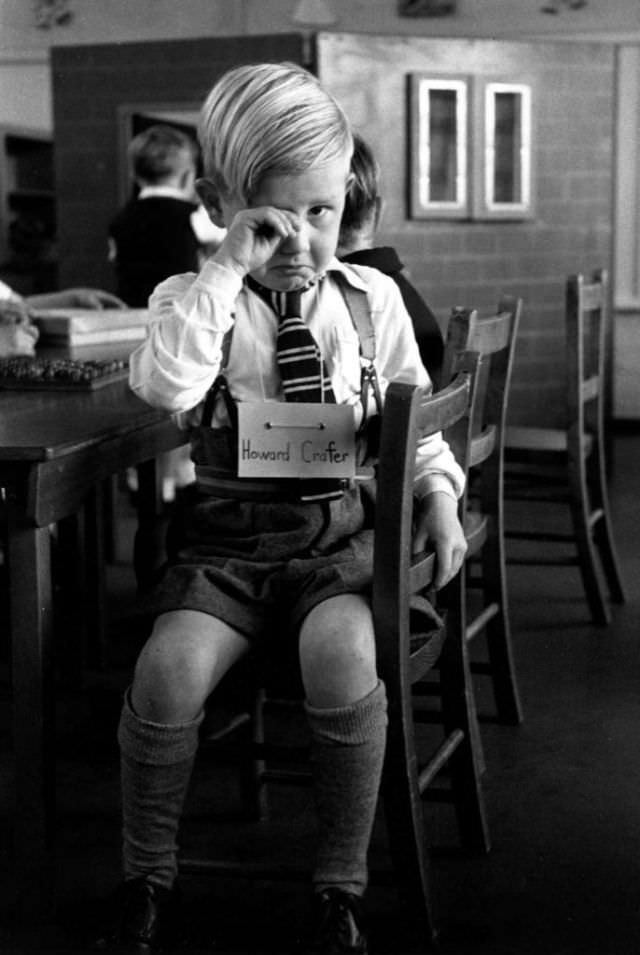
Five-year-old Howard Crafter has a tough time adjusting at the St. Nicholas County school, circa 1952
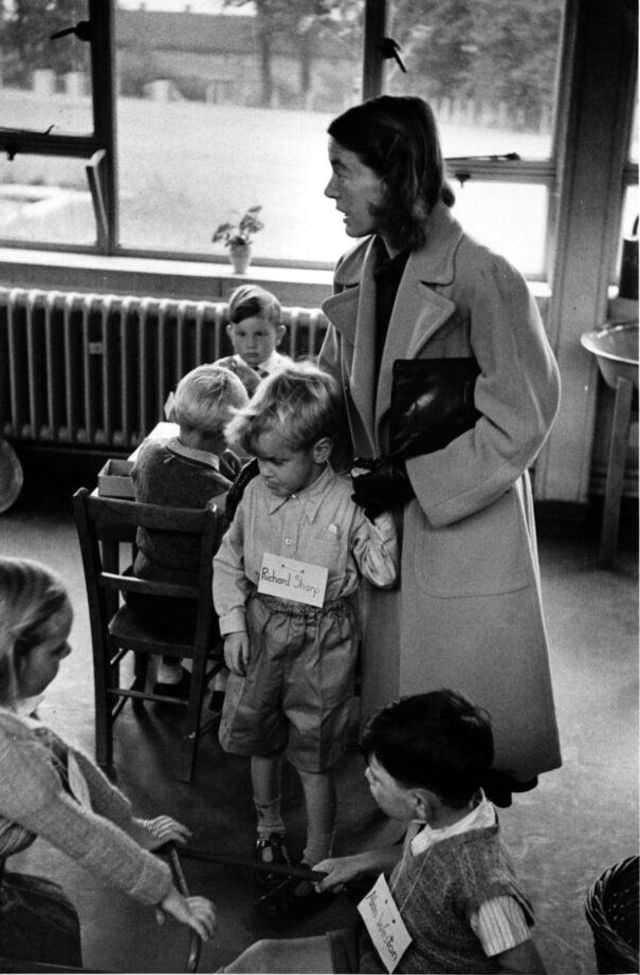
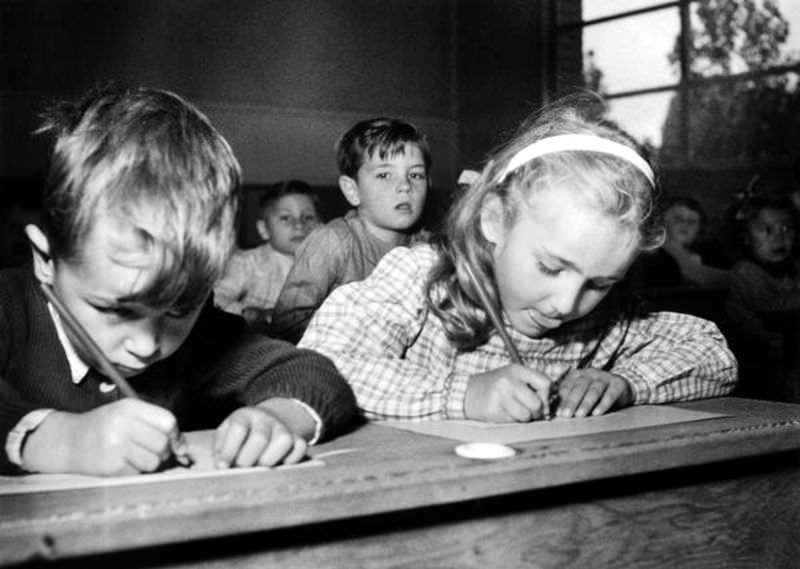
Richard Sharp on his first day at the St. Nicholas County Primary School in Loughton, England, circa 1952Children hard at work on Sept. 15, 1959
By the 1960s, the first day of school carried a heavier social meaning. Dress codes loosened and students expressed themselves more freely. Classrooms shifted away from rote memorization toward approaches that focused on the whole child. But the biggest change was happening outside the classroom door. Desegregation policies were being enforced, and for many Black students, the first day of school meant entering a building that had previously been closed to them.
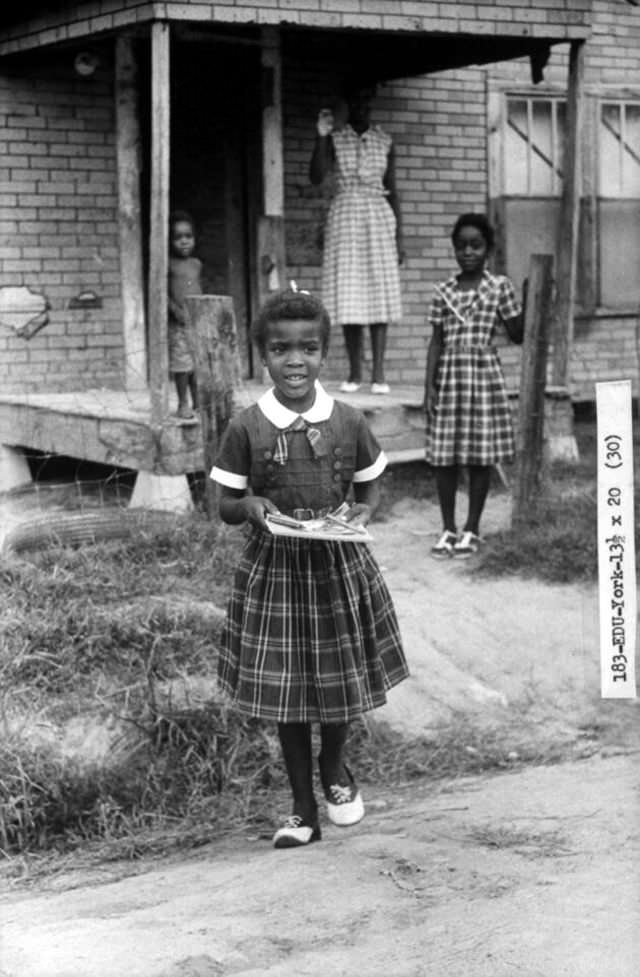
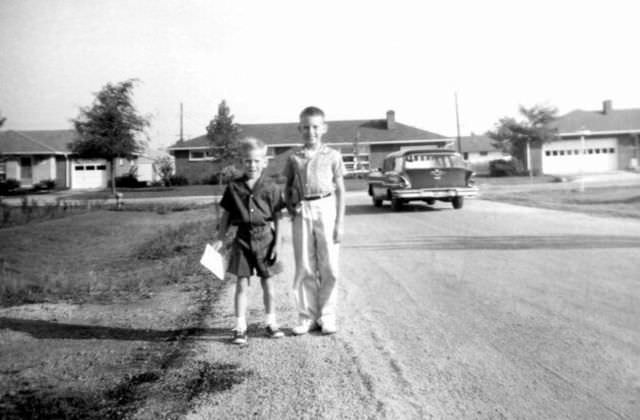
Delores York heads off for her first day at a previously all-white school in September 1960 in ArkansasTwo brothers about to start the new school year, circa 1964
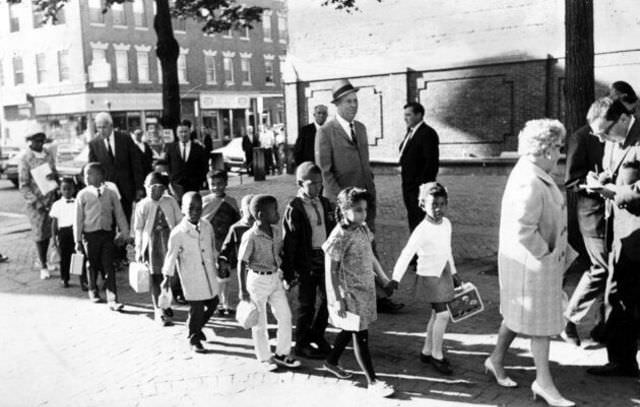
Programs like Operation Exodus in Boston organized voluntary busing to move students from overcrowded, predominantly Black schools to schools in white neighborhoods that had open seats. These weren’t abstract policy decisions — they were lived experiences, felt most acutely on the first morning of the school year.
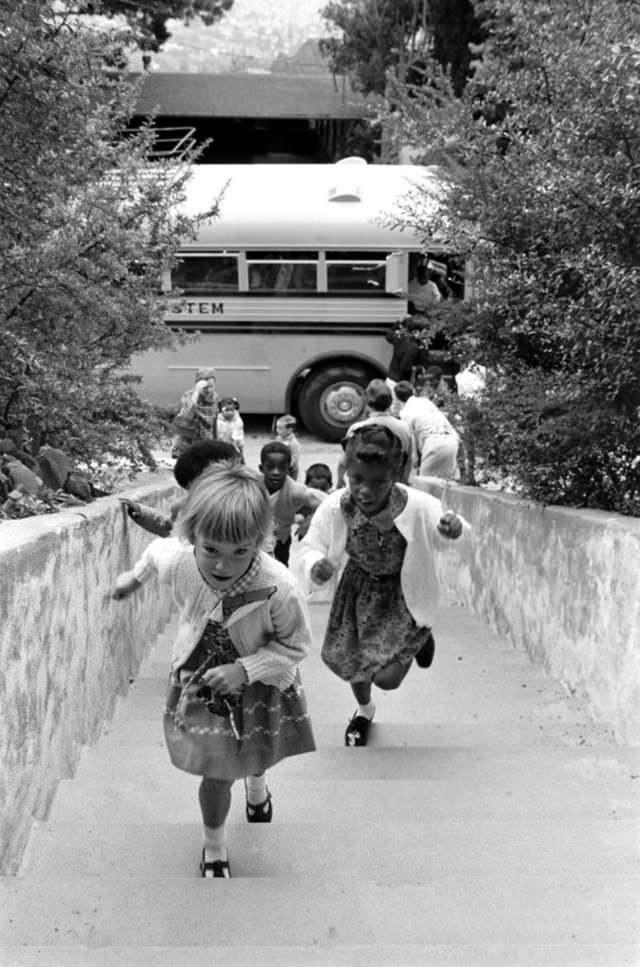
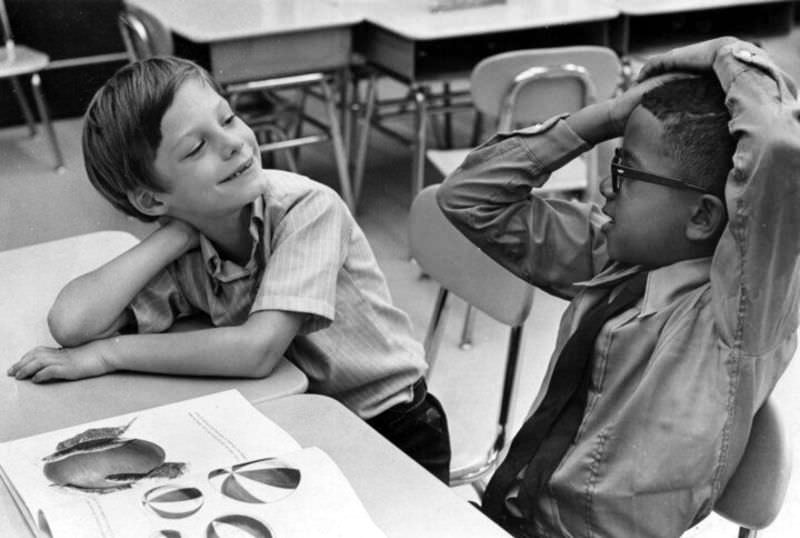
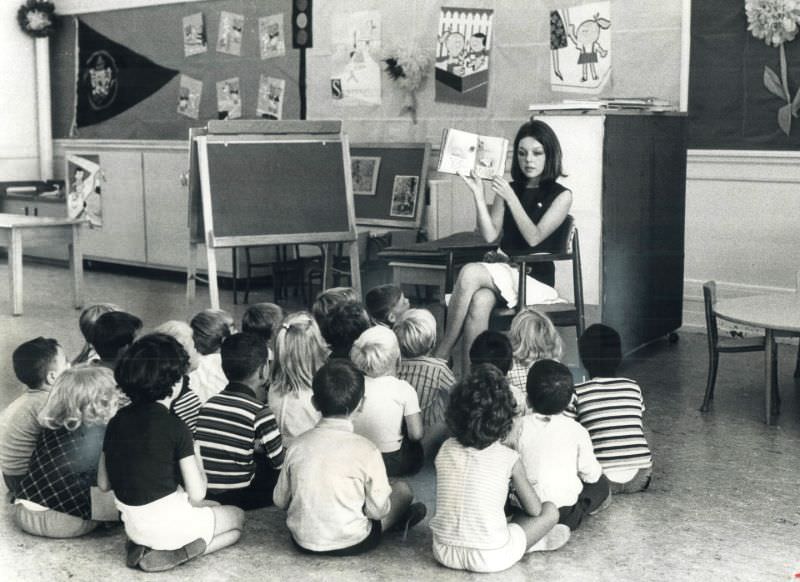
Mary Lynch, an assistant principal at a school in Boston’s Roxbury community, leads first graders to a school in the city’s North End on Sept. 6, 1967. Operation Exodus, a voluntary busing program organized by Roxbury parents, transported students from overcrowded schools in predominantly black neighborhoods to schools in predominantly white neighborhoods that had vacant seatsChildren walk up a flight of stairs to attend a newly desegregated school in Berkeley, California, 1968Jim Hard (left) of Framingham, Massachusetts, gets acquainted with Joseph Reis of the Roxbury neighborhood at the Trotter School in Boston on Sept. 3, 1969Canadian kindergarten teacher Trisha Langley teaching her first lessons on Sept. 7, 1971Students at the Mary E. Curley School in Boston on Sept. 8, 1975
Sarah Johnson is a freelance writer and photographer with a passion for exploring the world. Her writing is both informative and engaging, offering unique perspectives on travel, food, and lifestyle.