On the night of November 9, 1989, one of the most heavily fortified borders in the world suddenly opened. East Germans flooded through checkpoints, climbed atop concrete slabs, and embraced strangers on the other side. For 28 years, the Berlin Wall had kept them in. In one night, that changed forever.
The wall had been built in August 1961 by the Soviet-controlled East German government. Its purpose was blunt: stop the mass exodus of East Germans fleeing to the West. In the years before construction, millions had already left, drawn by the promise of better jobs, more freedom, and a life outside Soviet control. The government’s answer was concrete, wire, and armed guards.
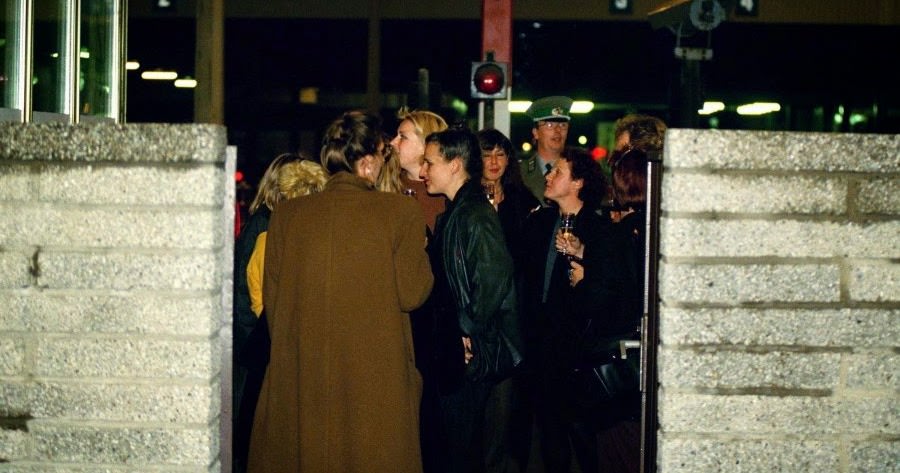
The finished barrier was far more than a simple wall. Standing 12 feet tall, it was reinforced with electric fences, floodlights, and watchtowers manned by guards with shoot-to-kill orders. A wide strip of cleared land called the “death strip” ran alongside it, making escape nearly impossible. Over the next three decades, more than 5,000 people attempted to cross it. More than 100 were killed in the attempt.
The wall divided the city street by street, sometimes building by building. Families were separated overnight. People woke up on August 13, 1961 to find that brothers, sisters, and parents were suddenly unreachable on the other side. Letters were censored. Phone calls were monitored. The wall was not just a physical structure — it was a system of control designed to reach into every part of daily life in East Germany.
By the late 1980s, the political ground across Eastern Europe was shifting fast. Soviet leader Mikhail Gorbachev had introduced reforms that loosened Moscow’s grip on its satellite states. Poland held partially free elections in 1989. Hungary opened its border with Austria, giving East Germans a new escape route westward. Protests in East Germany’s cities grew larger with each passing week. In Leipzig, Monday demonstrations drew hundreds of thousands of people demanding reform and the right to travel freely.
The announcement that changed everything came on the evening of November 9, 1989. East German spokesman Günter Schabowski read aloud a new travel regulation at a live press conference, stating that East Germans could cross the border immediately and without condition. He had not been fully briefed. When a reporter asked when the rule took effect, he shuffled his papers and said, “Immediately, without delay.” Within hours, massive crowds had gathered at every checkpoint in Berlin, demanding to be let through. Overwhelmed guards, lacking clear orders, eventually stepped aside.
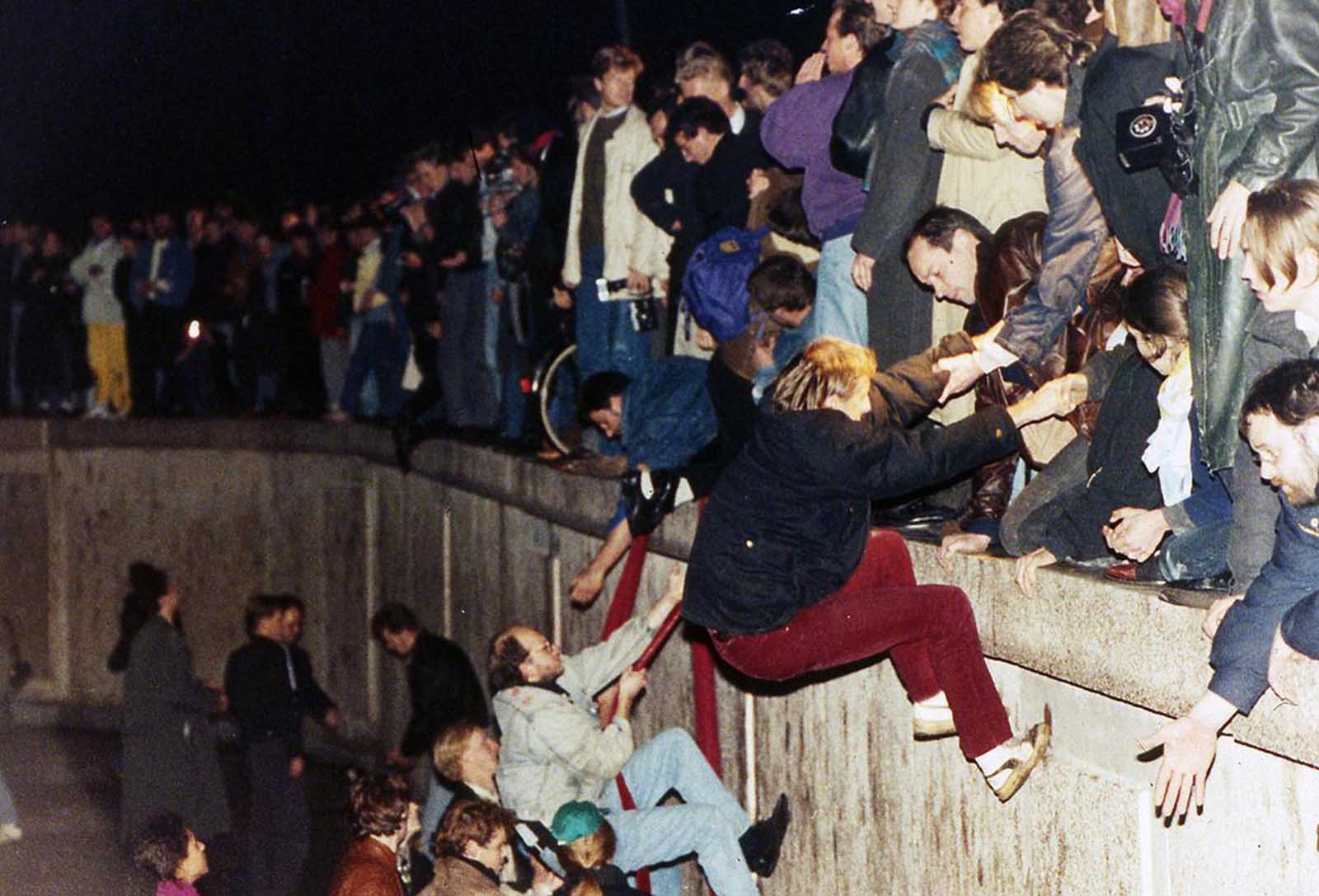
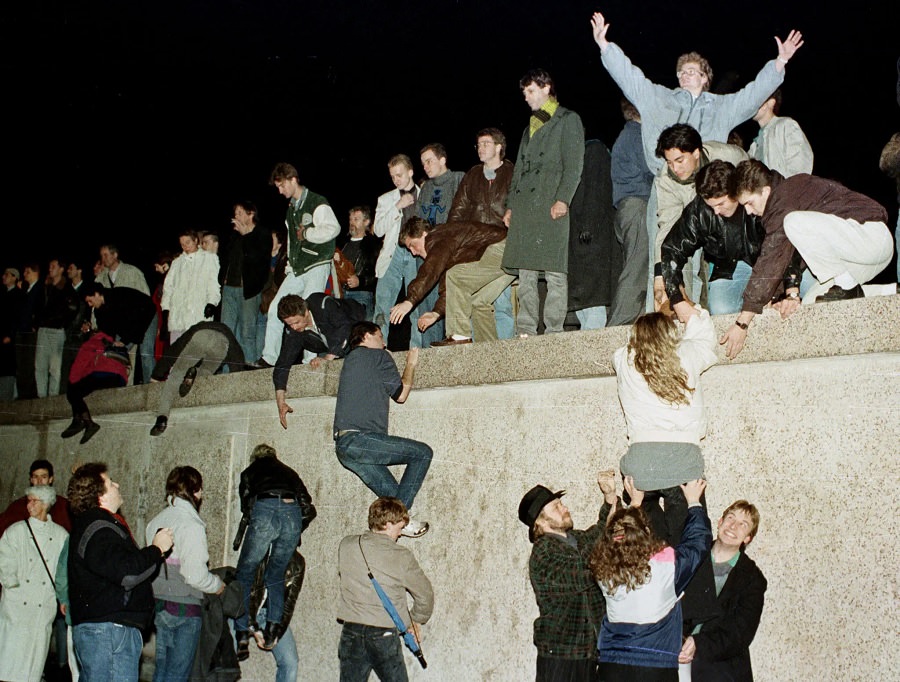
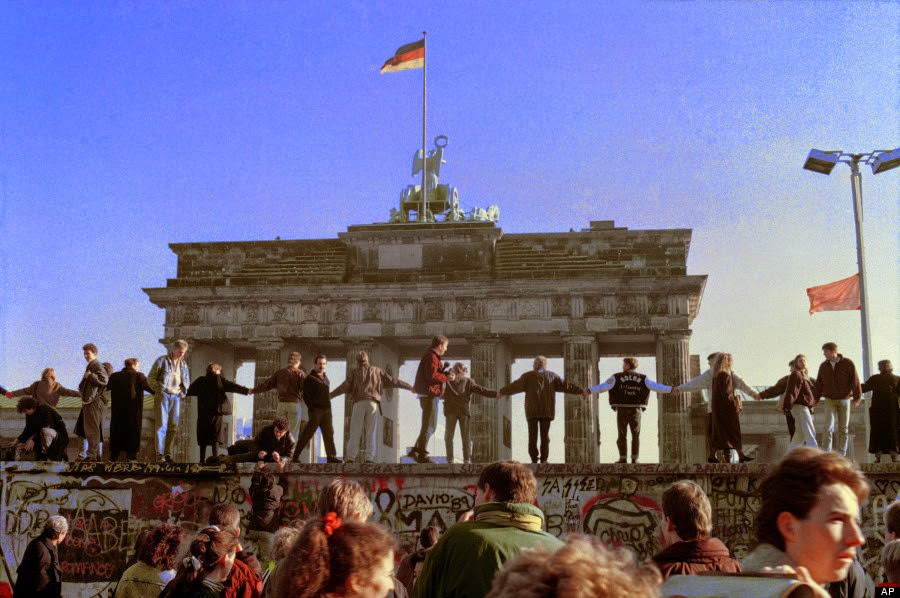
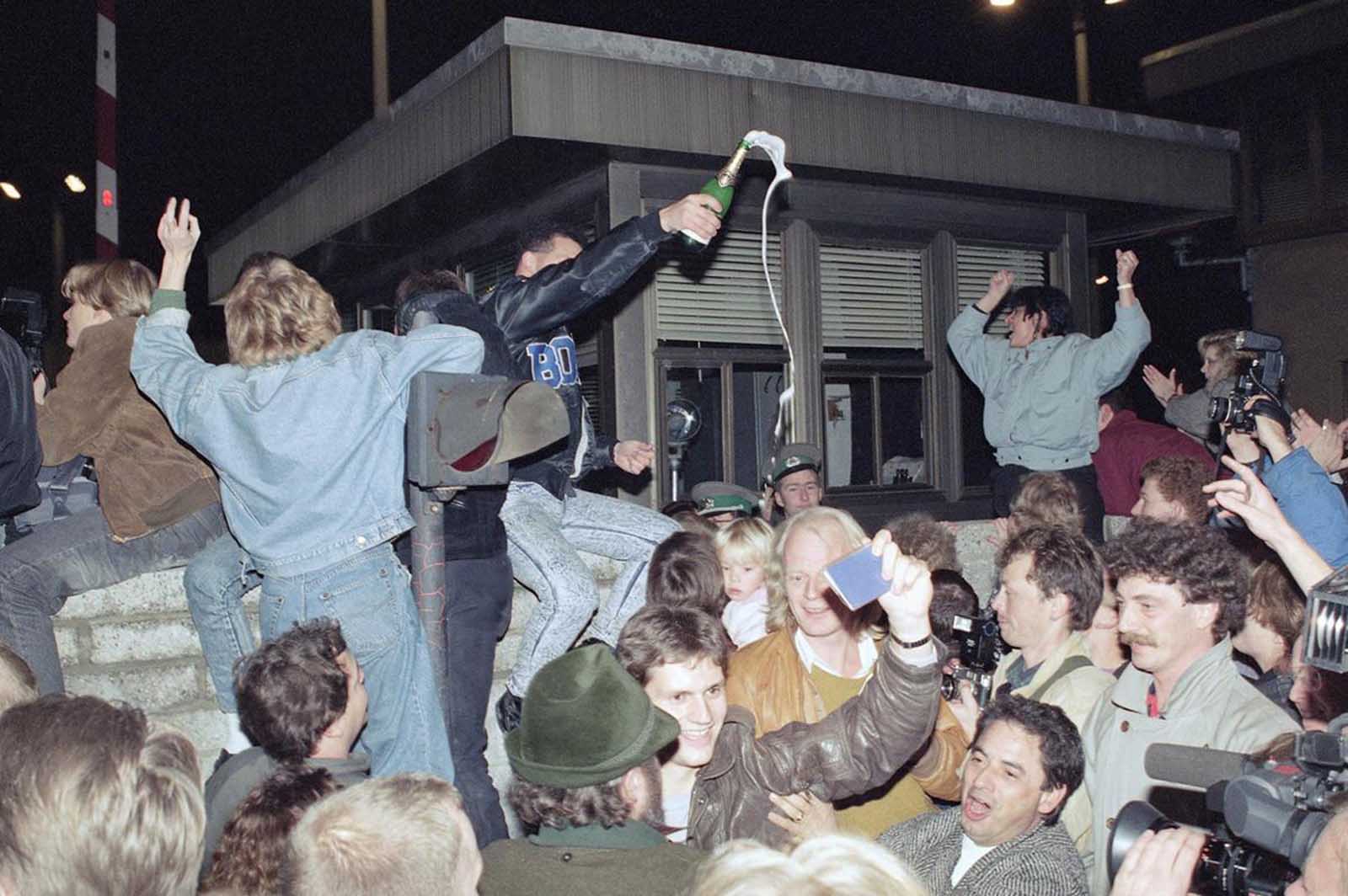
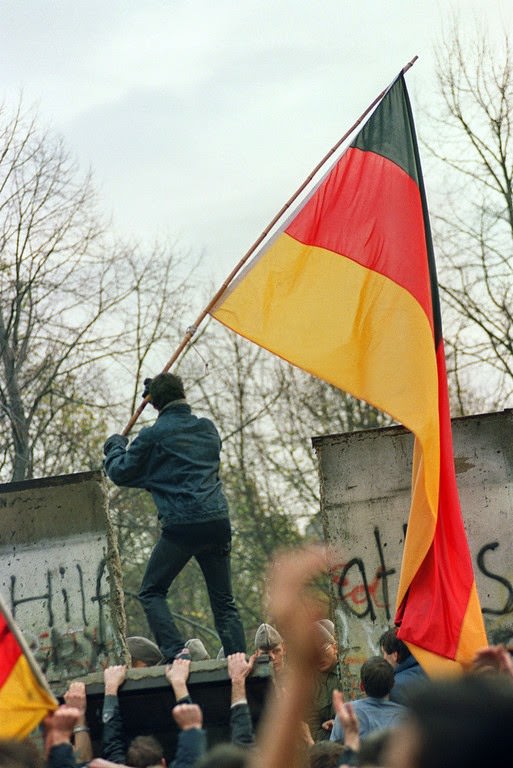
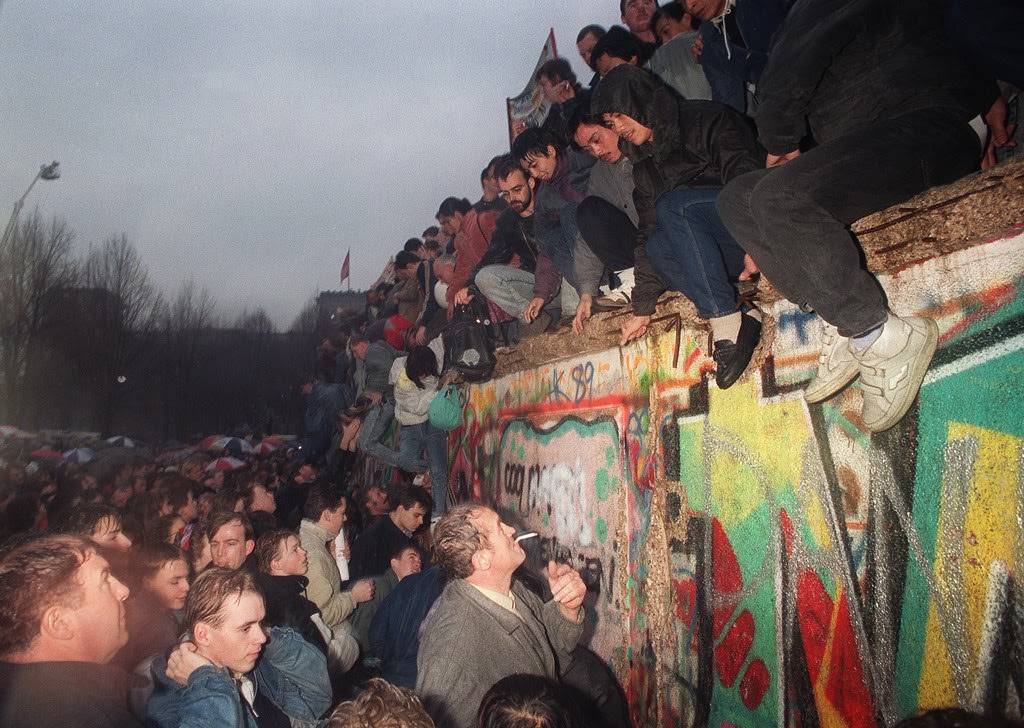
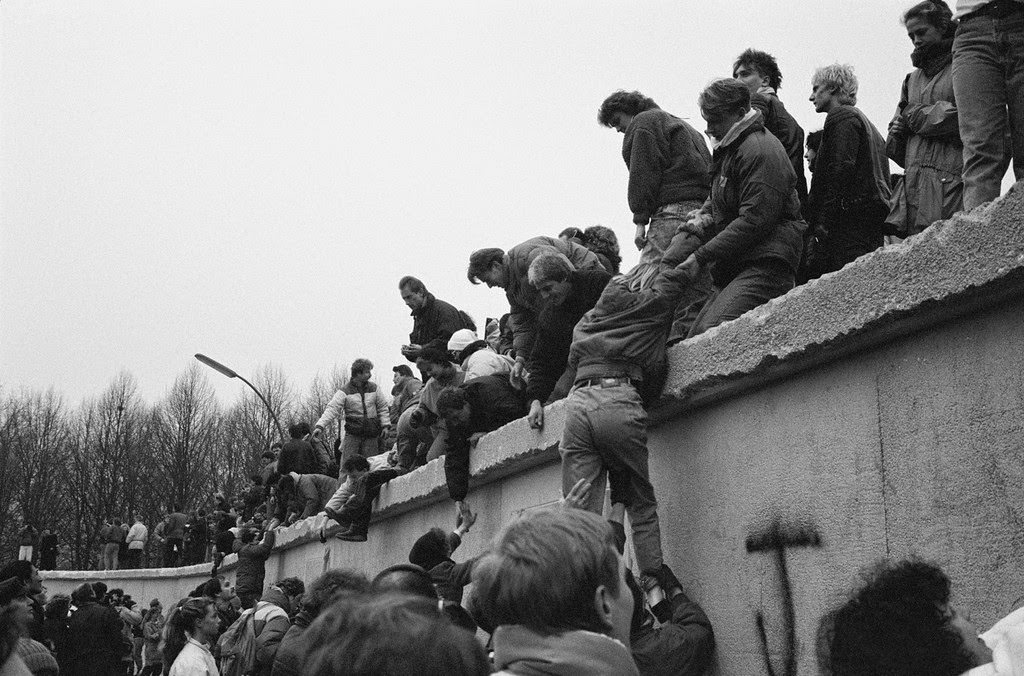
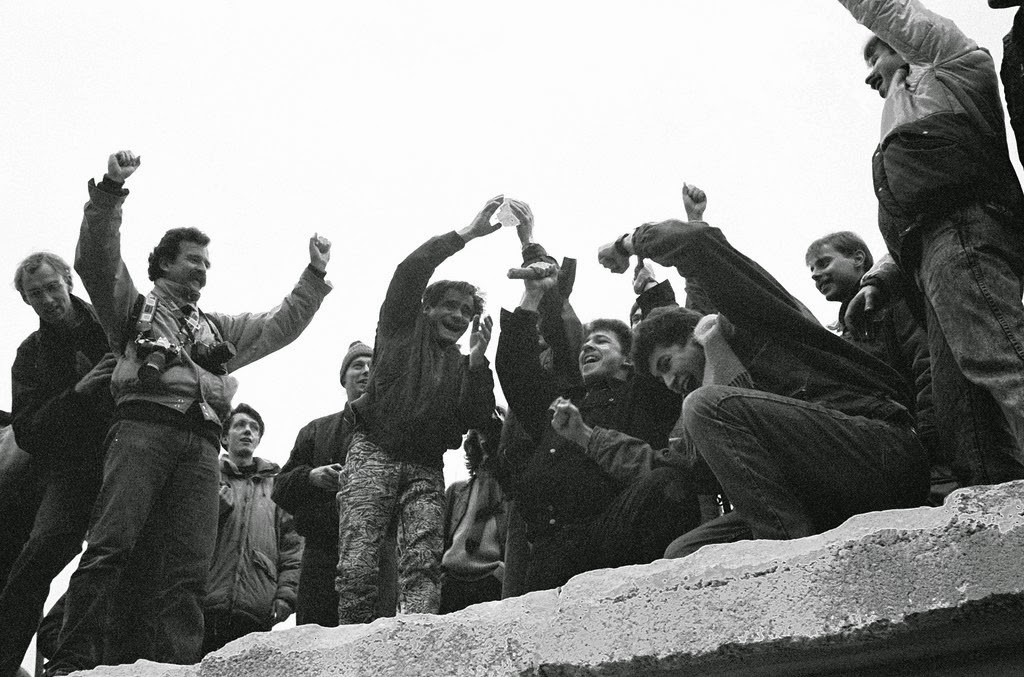
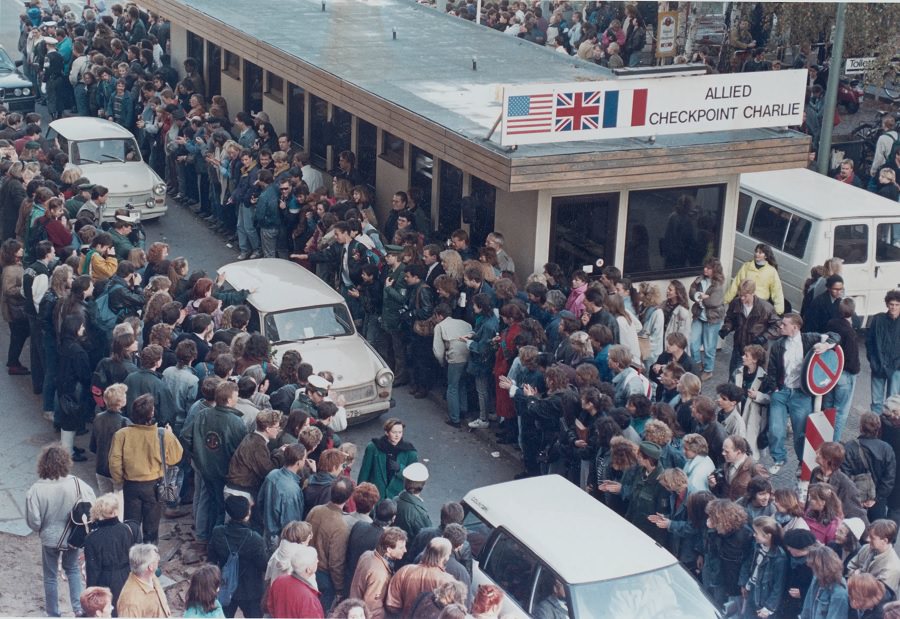
What followed was unlike anything Berlin had seen. East Germans poured through the checkpoints on foot and by car, greeted by cheering crowds on the West side. Some cried. Some embraced strangers. Others climbed directly onto the wall itself. West Berliners reached down to pull them up. The scenes at the Brandenburg Gate and Checkpoint Charlie drew crowds tens of thousands strong through the night and into the following days.
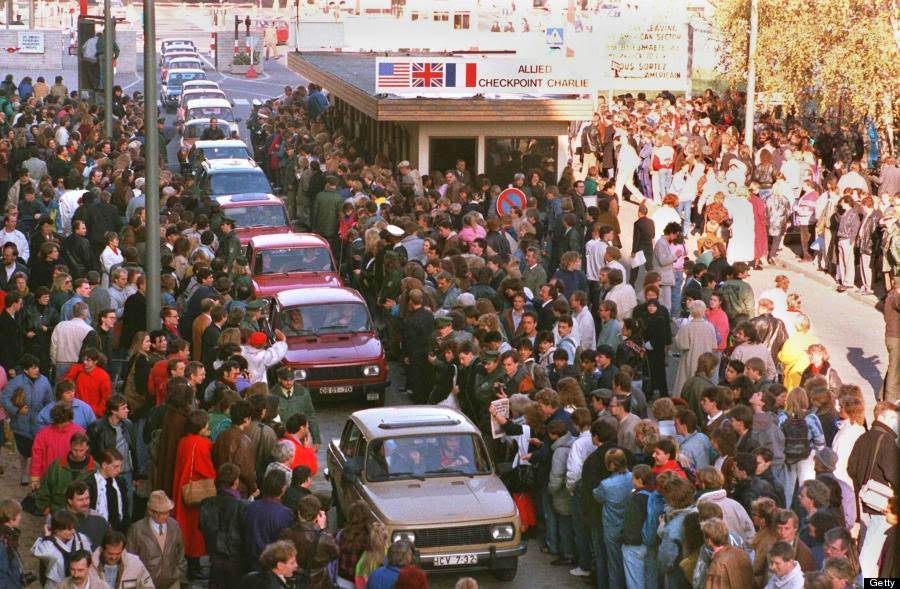
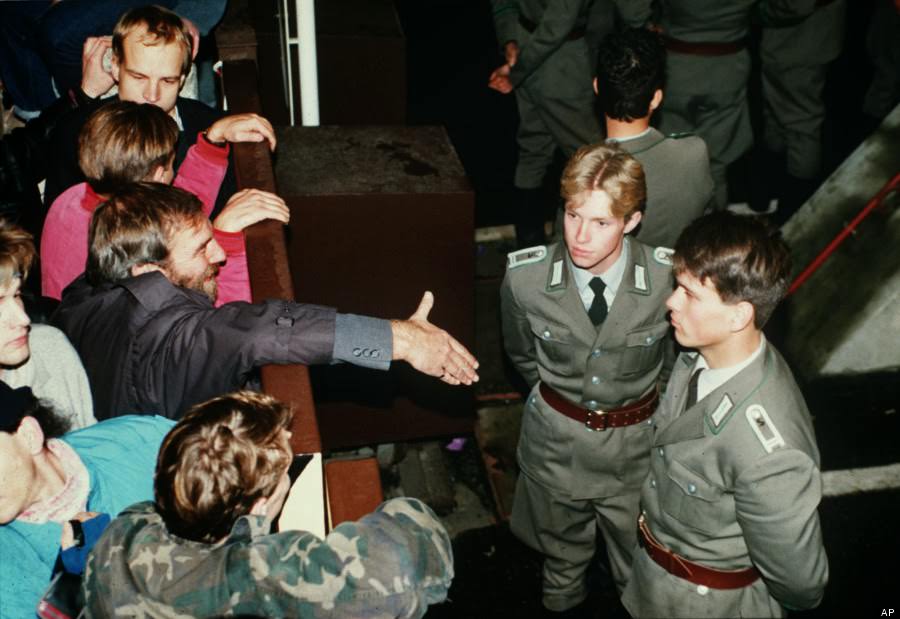
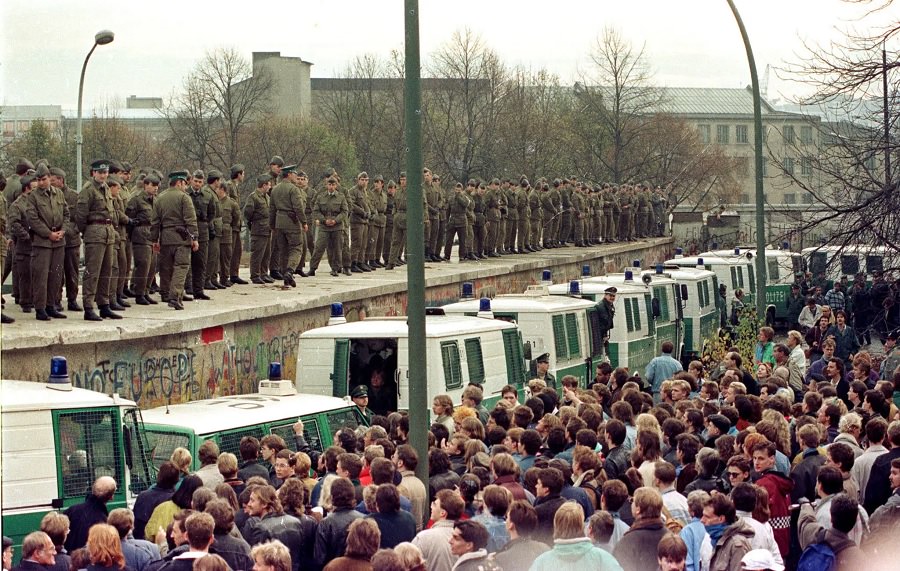
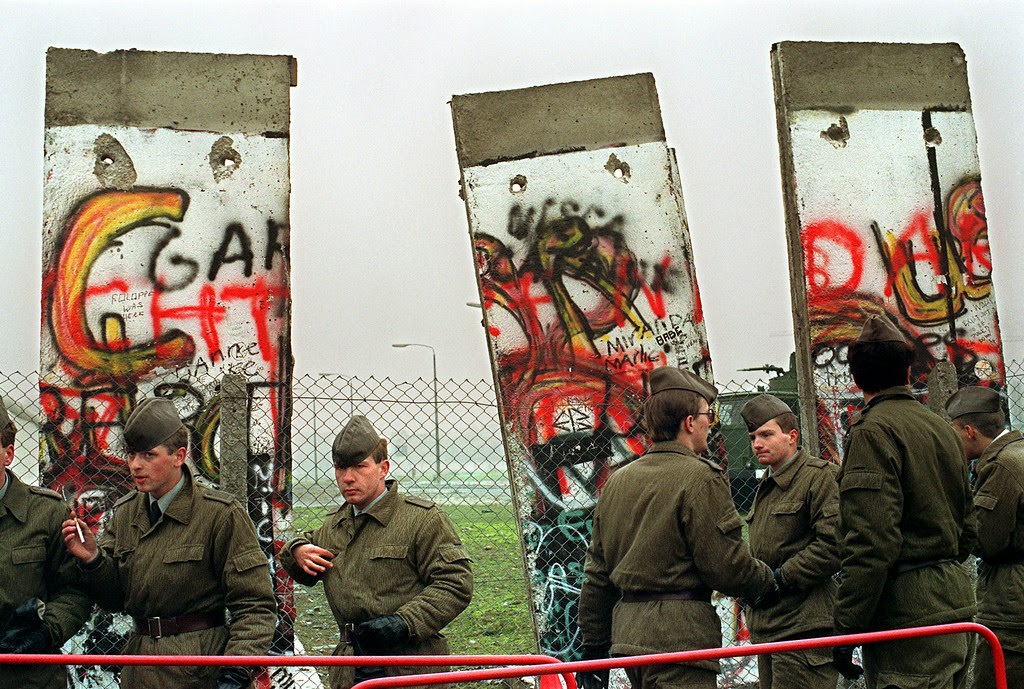
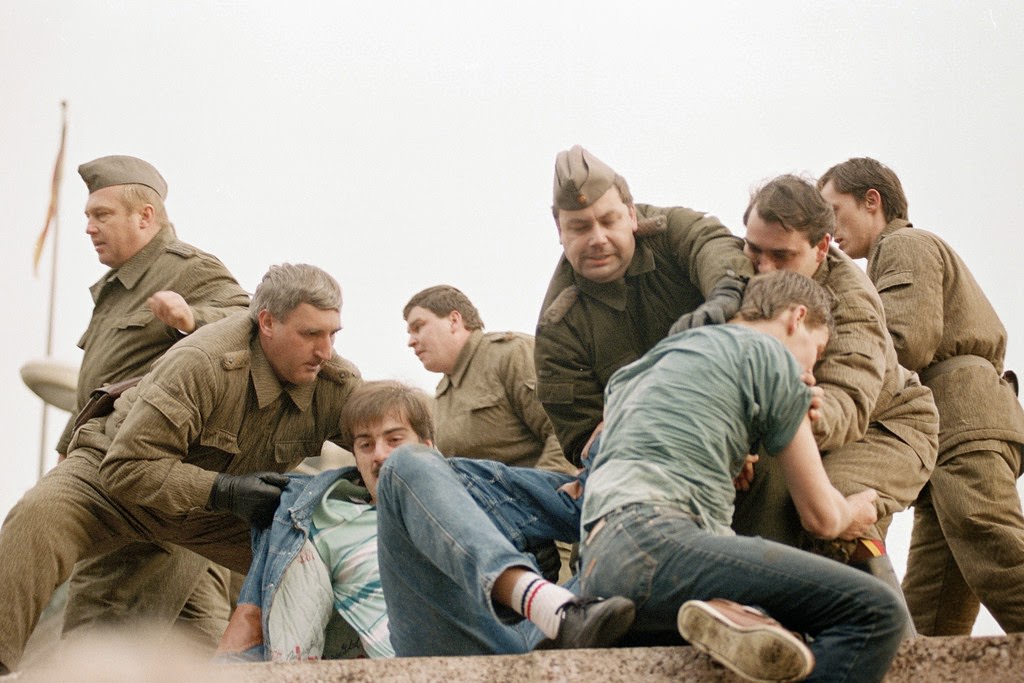
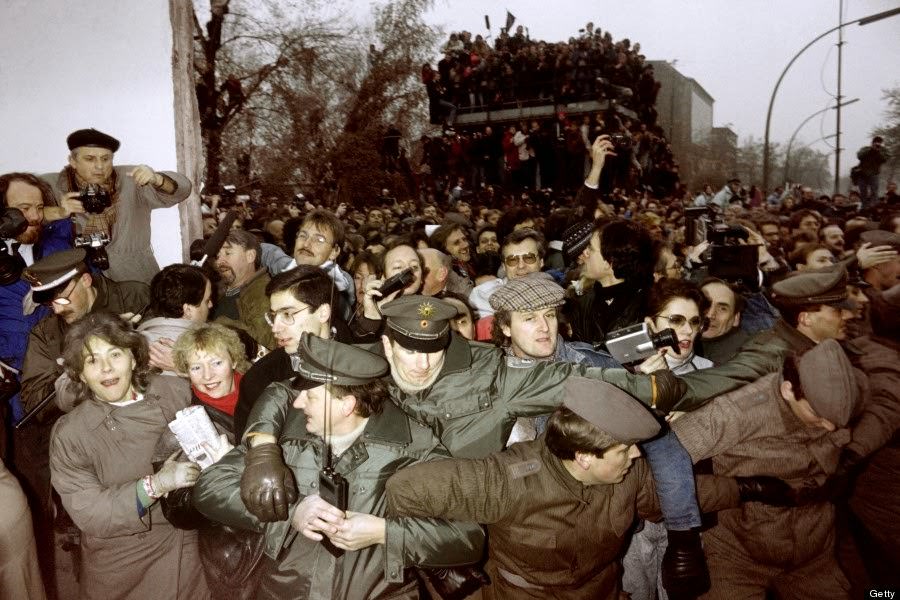
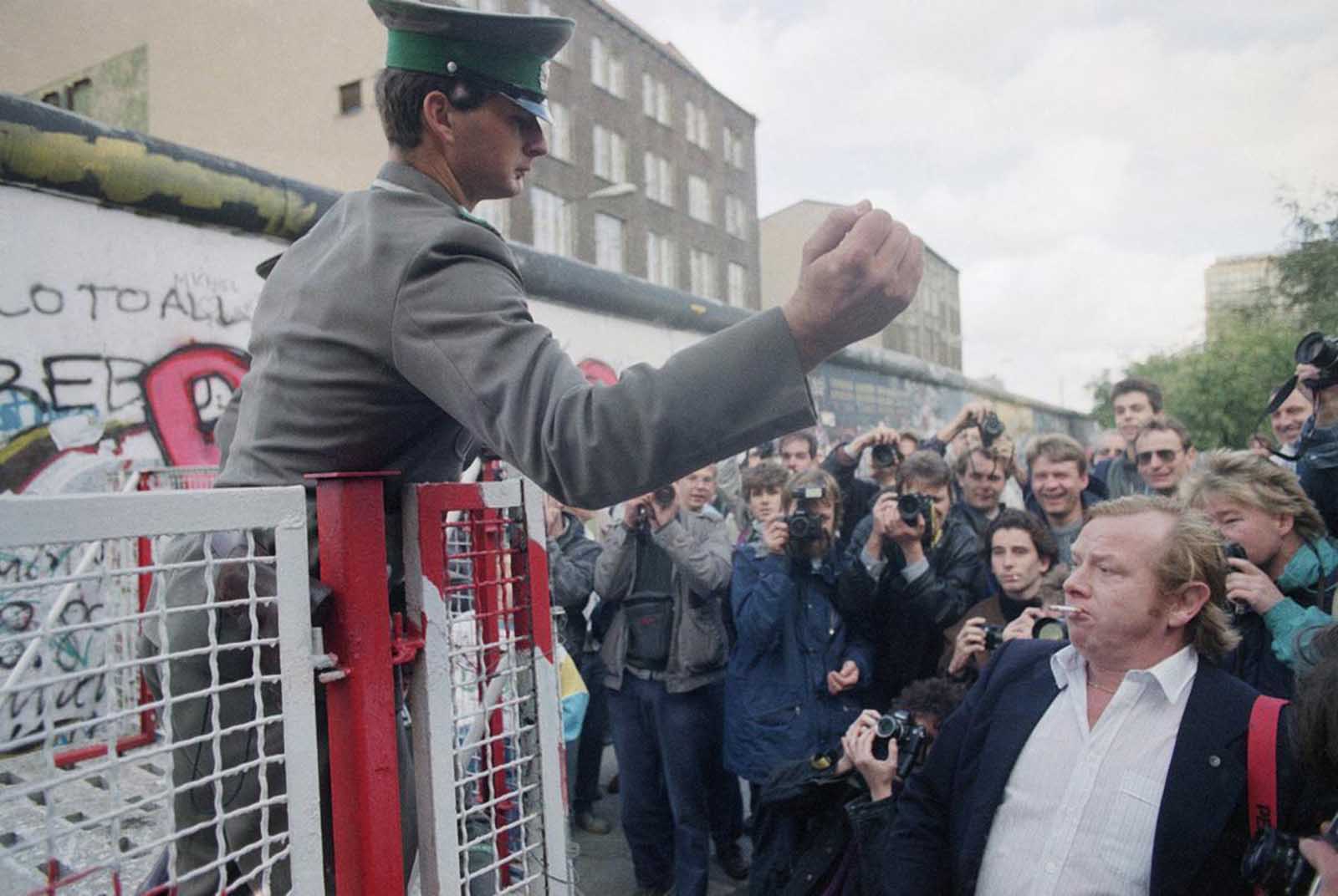
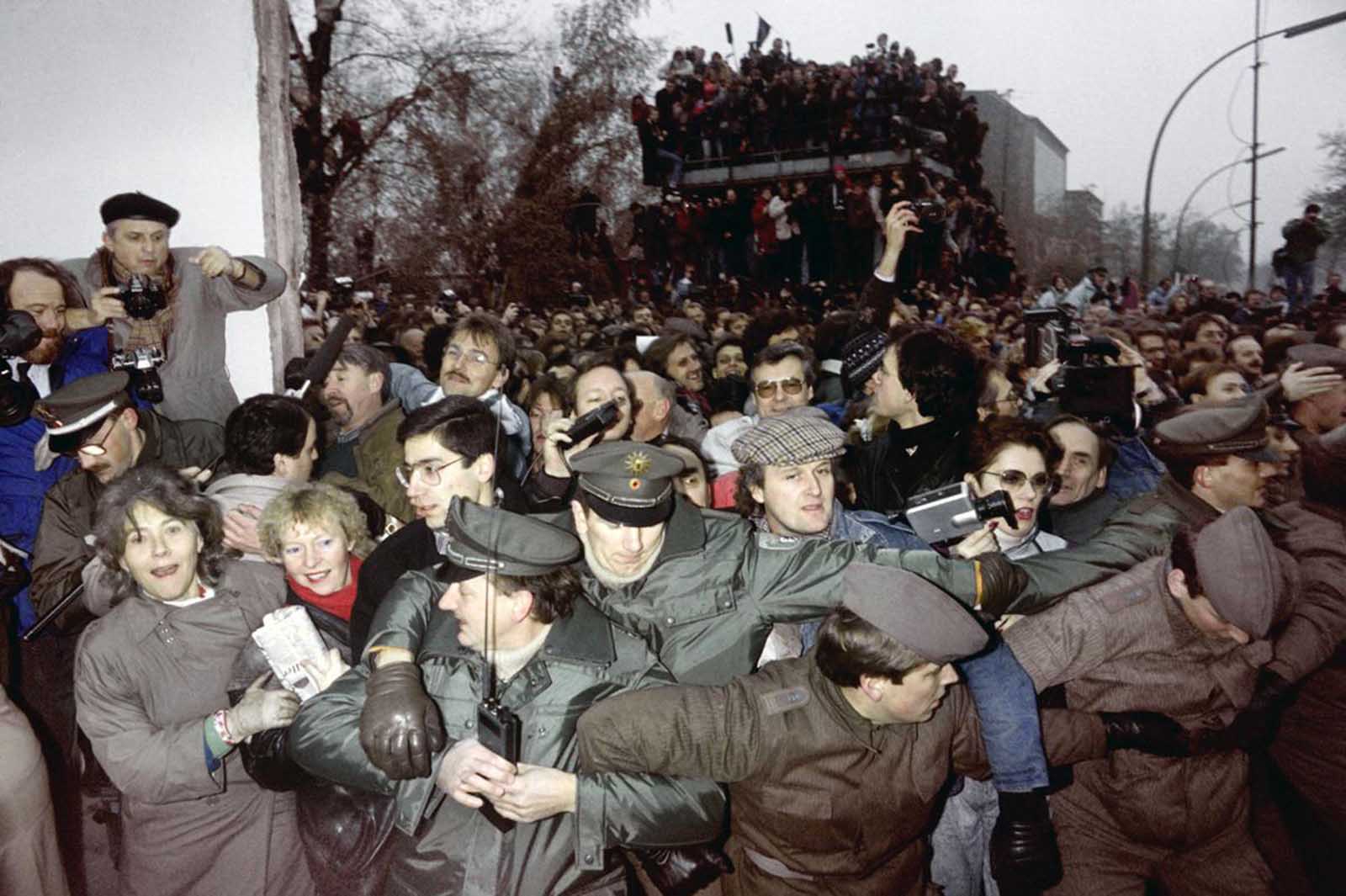
Not every moment was seamless. East German border guards, still on duty and uncertain of their orders, stood their ground in places. At some points along the wall, guards refused to engage with the celebrating crowds at all. At others, tensions flared as West Berliners pushed against the barriers, demanding the wall itself be torn down.
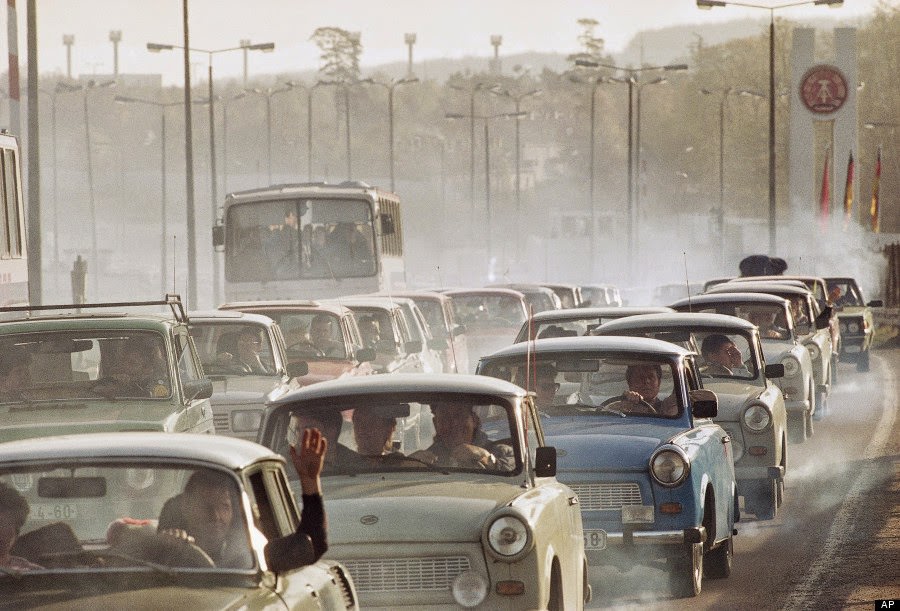
On the roads leading out of East Germany, the traffic stretched for tens of kilometers. Hundreds of East Germans in their small, two-stroke Trabant cars lined up at border crossings like Helmstedt, waiting hours — sometimes up to 11 hours — just to enter the West. The smell of Trabant exhaust filled the air at crosspoints as the scale of the movement became clear.
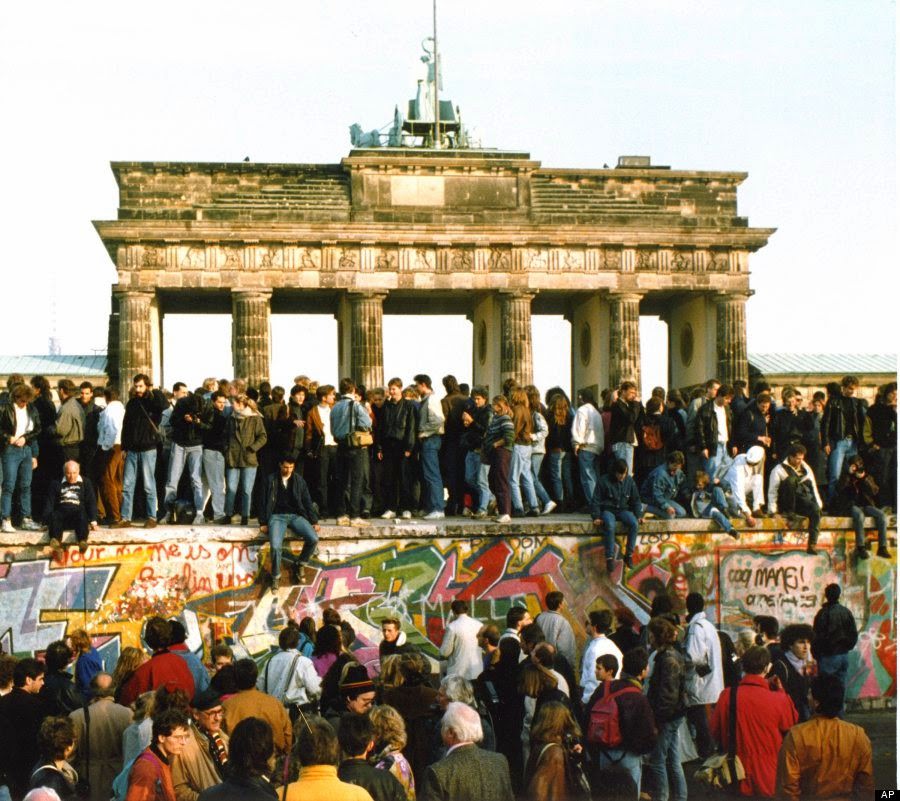
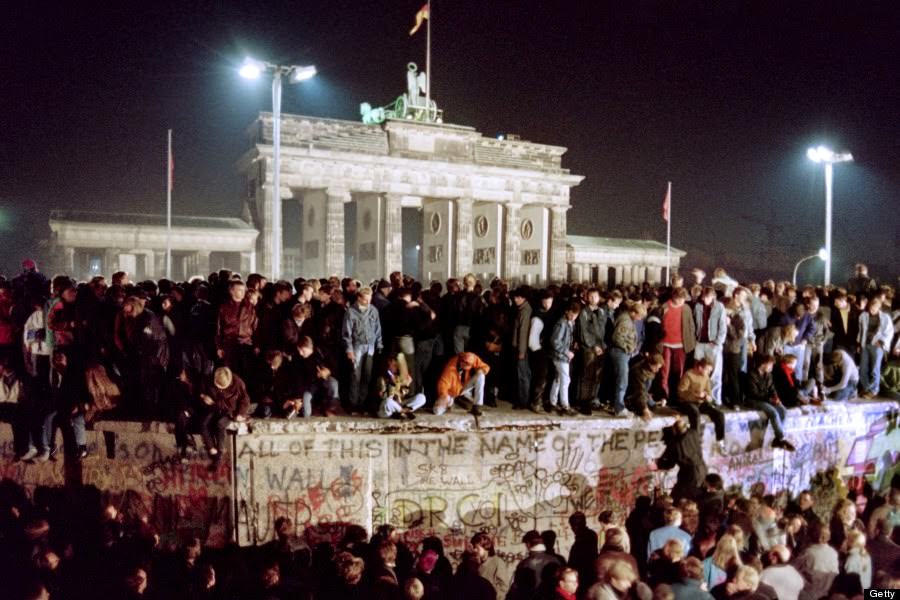
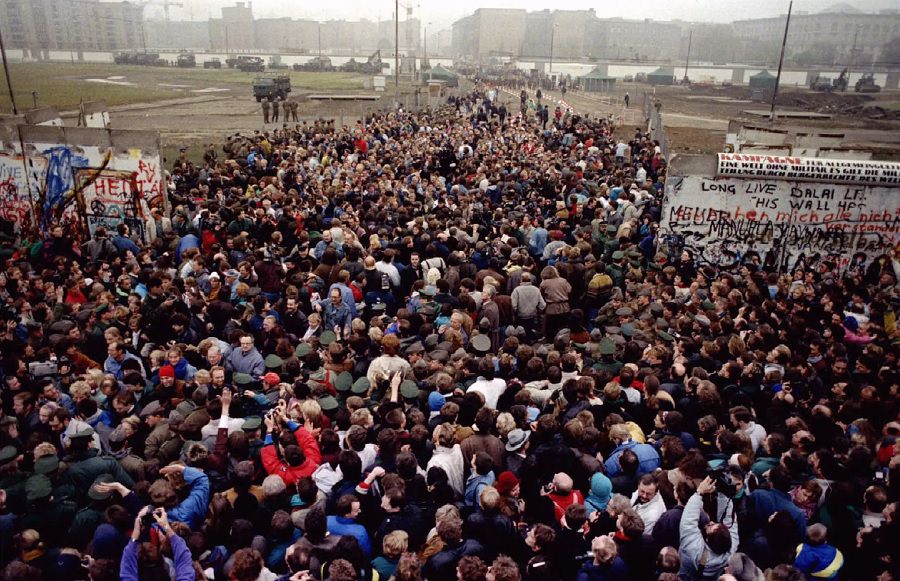
By November 11, tens of thousands of people had gathered near the Brandenburg Gate alone. Young East Berliners crowded the top of the wall in enormous numbers, the Gate rising behind them as a symbol of everything that had once been off-limits. Border guards, now hopelessly outnumbered, stood watch on a barrier that had already lost its meaning.
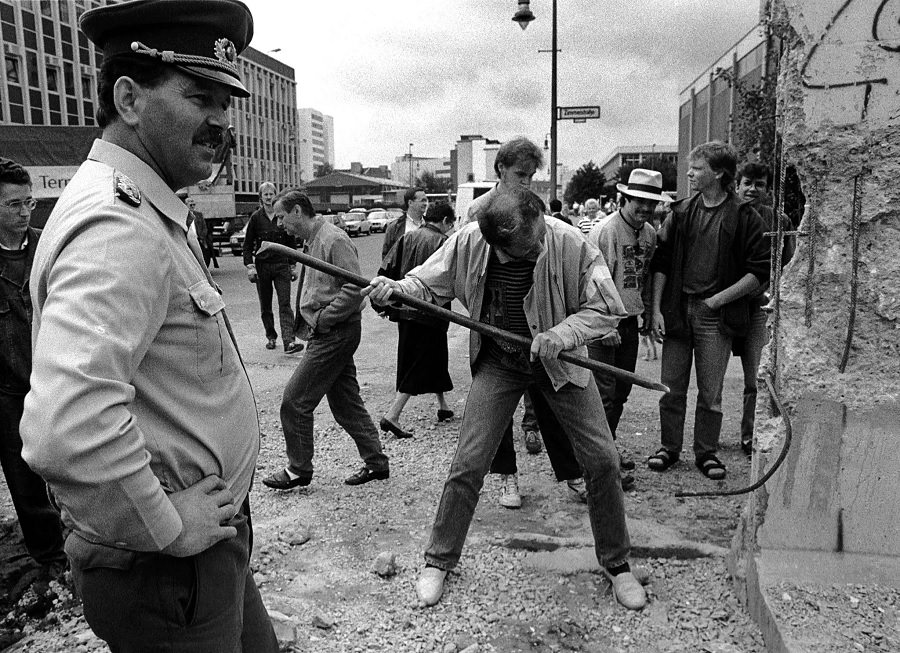
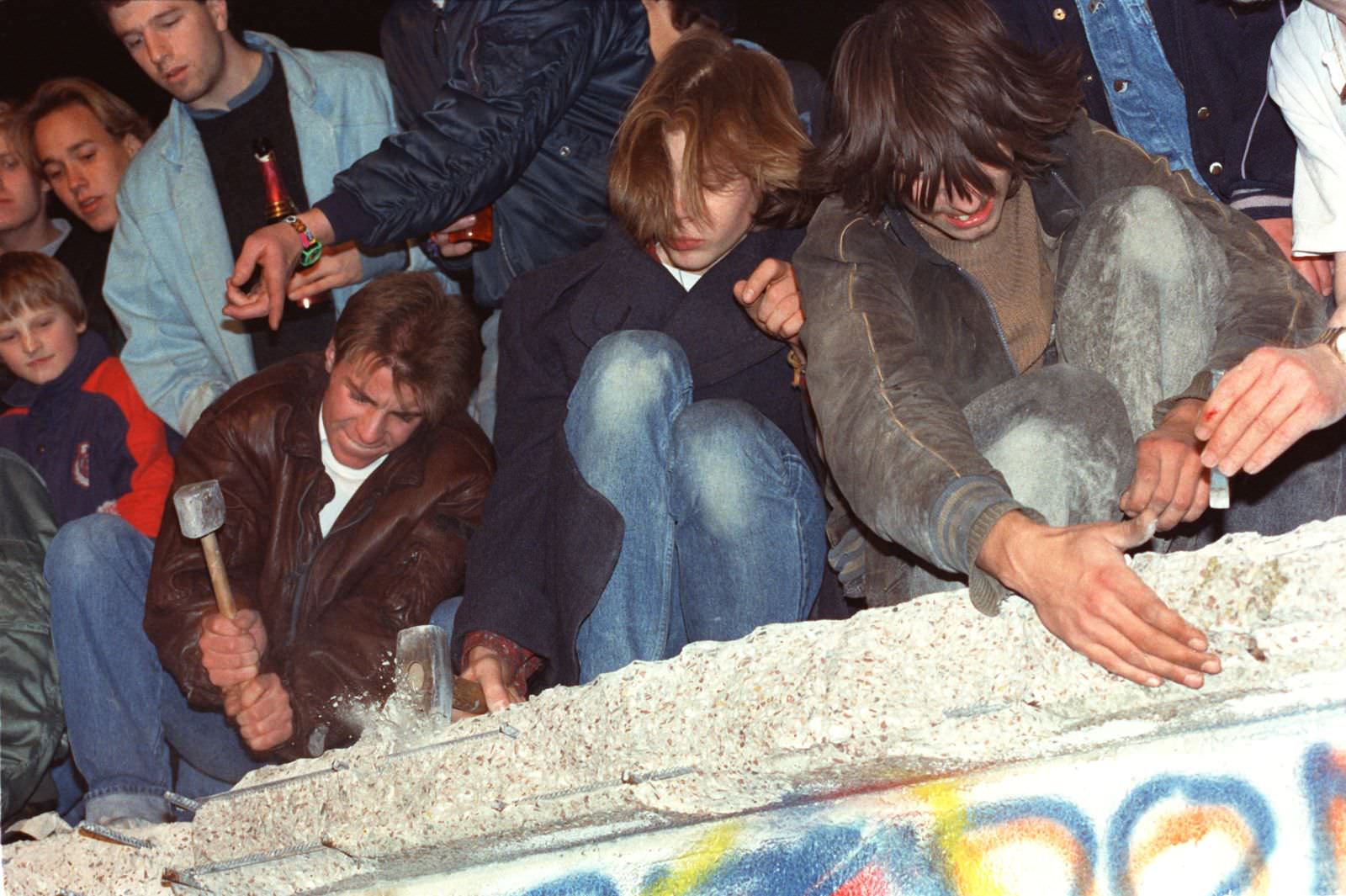
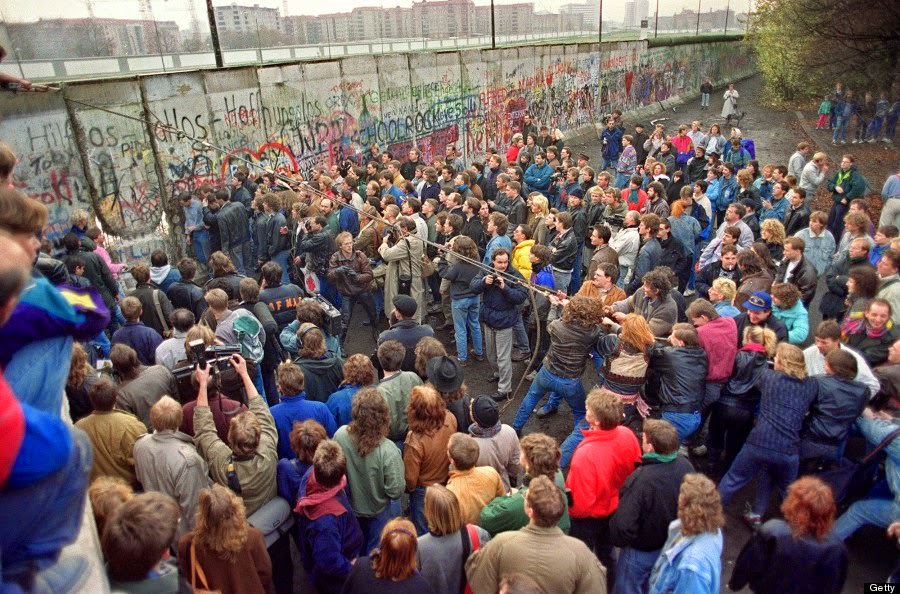
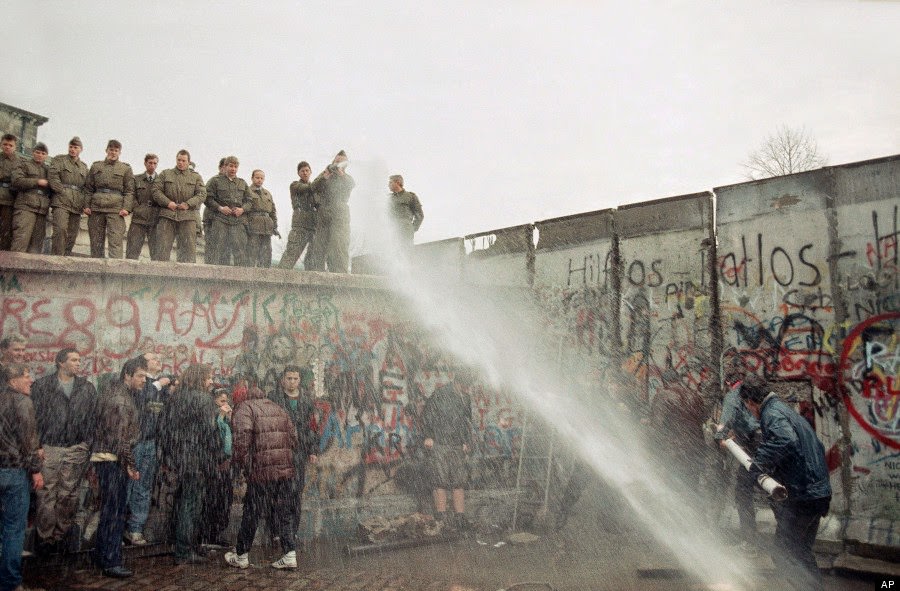
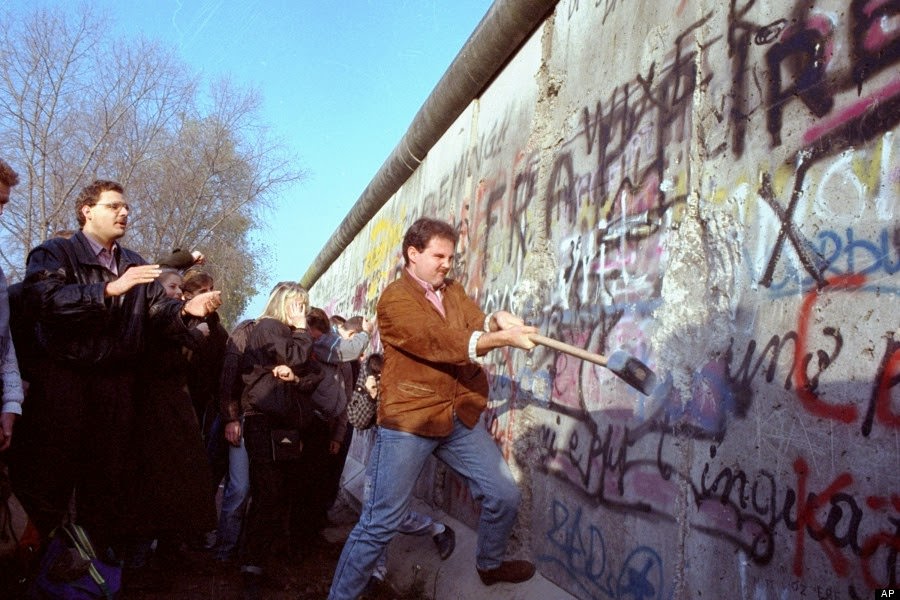
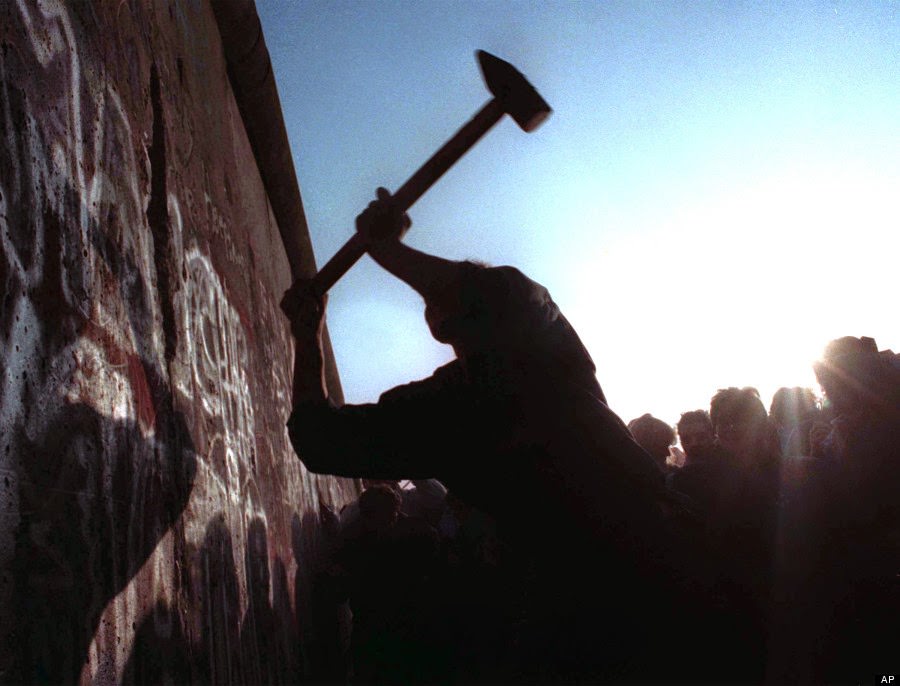
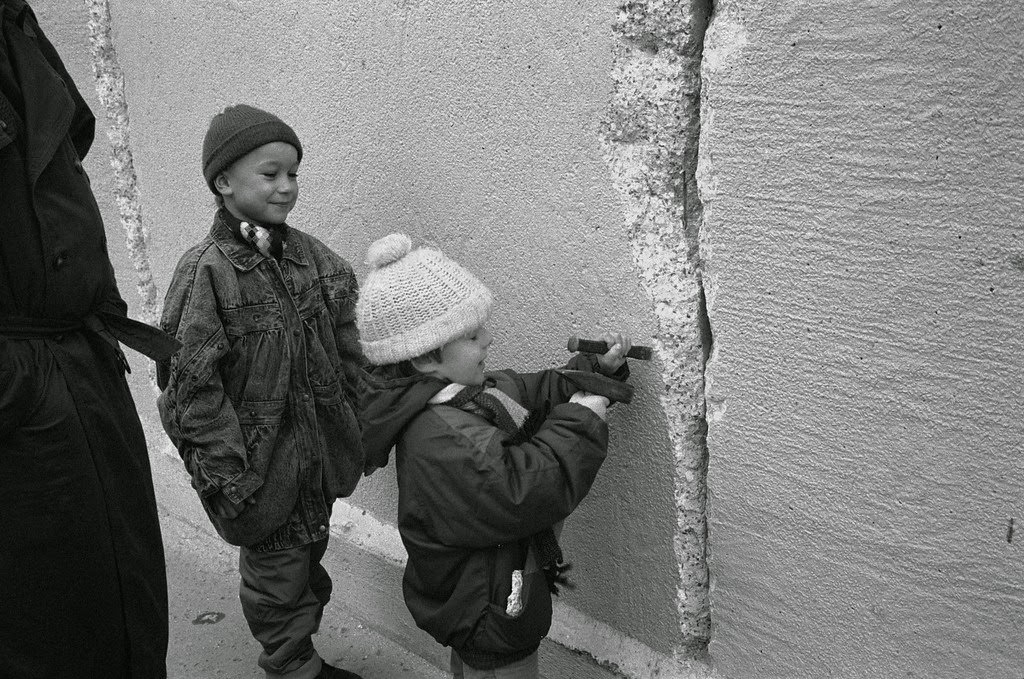
Sections of the wall began coming down almost immediately. Crowds attacked the concrete with hammers, picks, and whatever tools they could find. Those who chipped away at the wall became known as “Mauerspechte” — wall woodpeckers. West Berliners used water hoses to push back those who tried to tear down sections near the Brandenburg Gate, and guards attempted to maintain order. But piece by piece, the wall was coming apart at the hands of ordinary people.
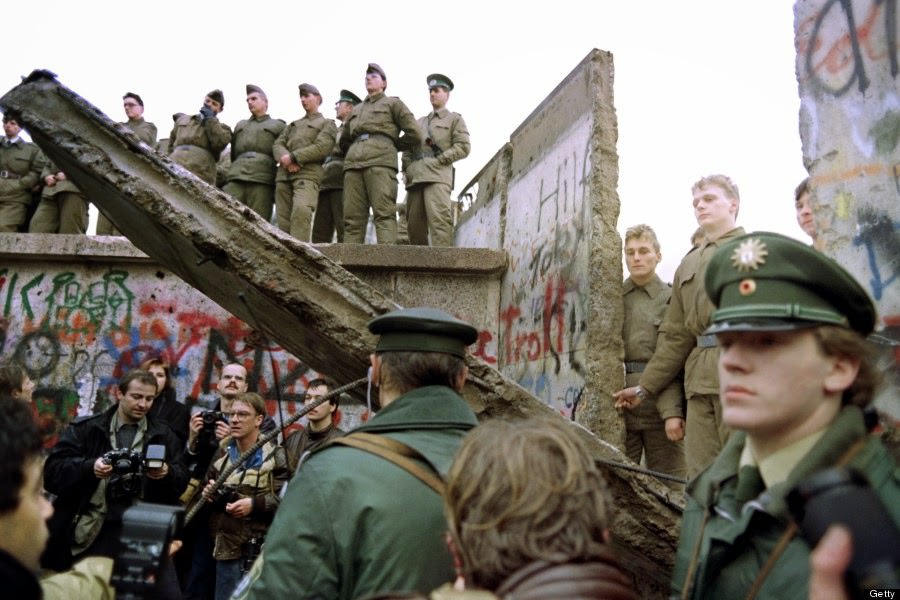
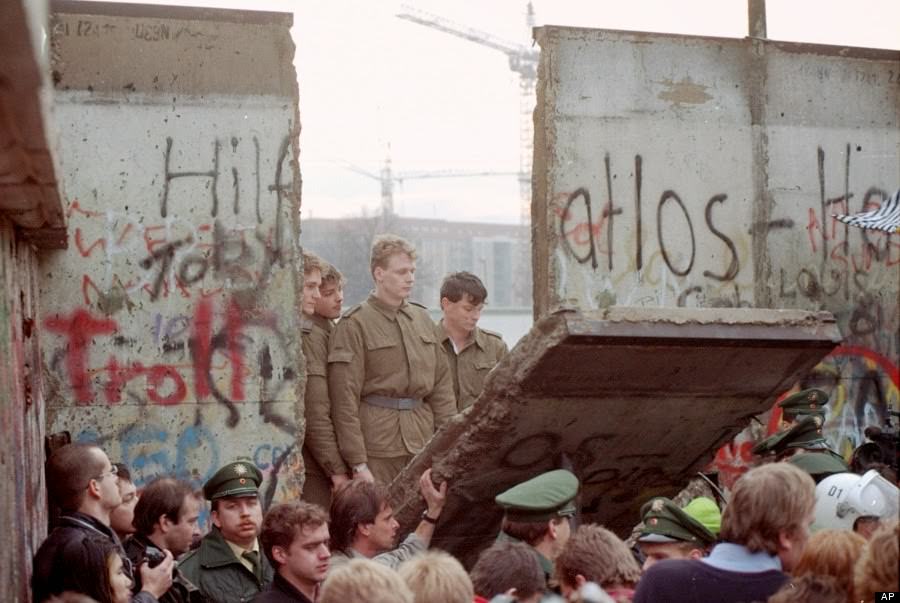
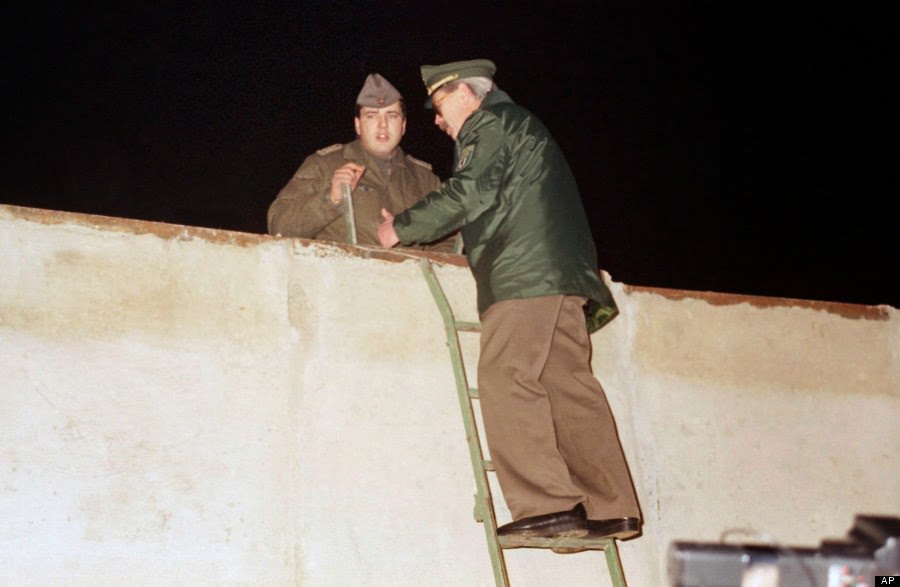
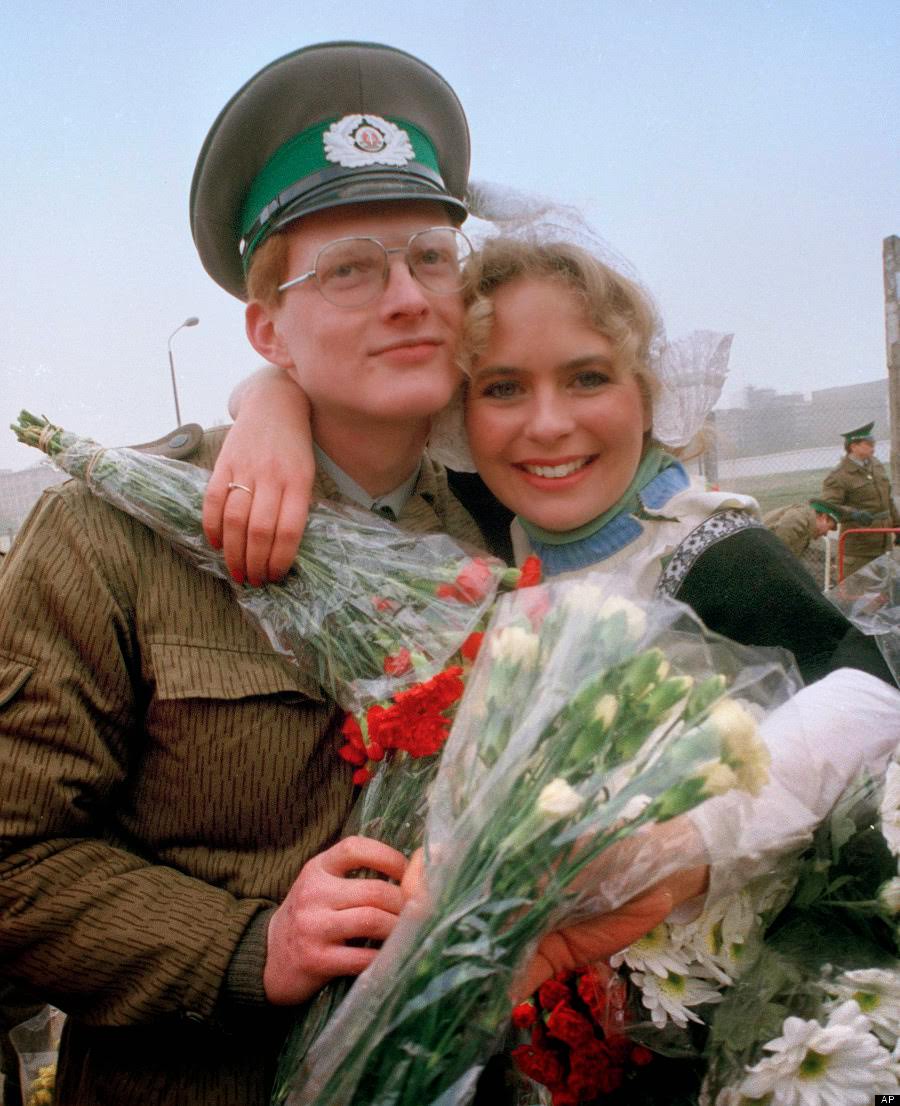
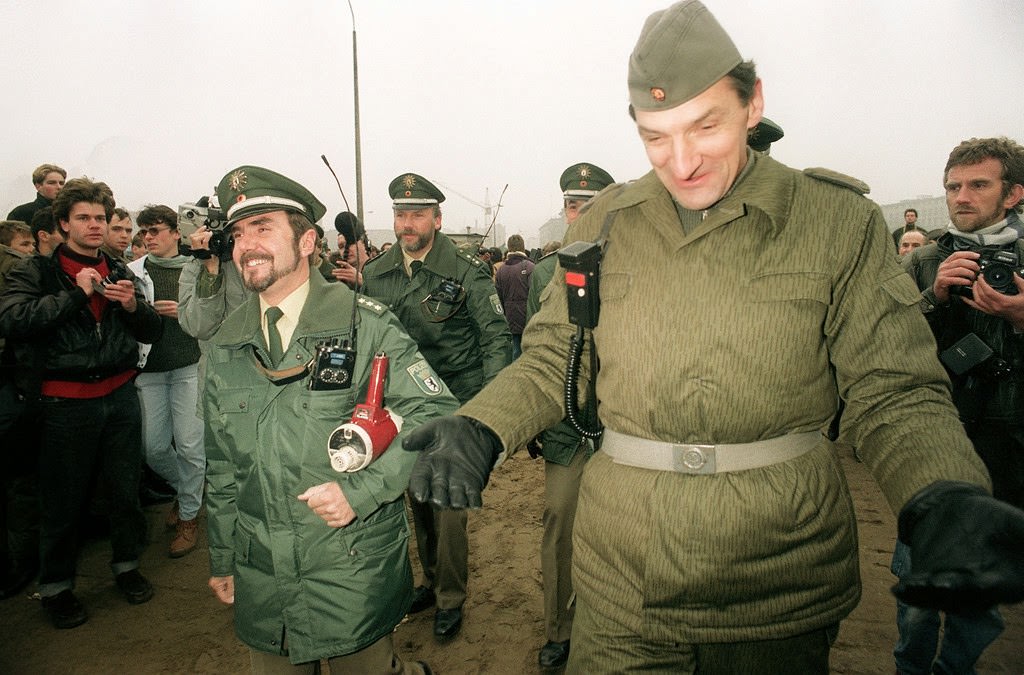
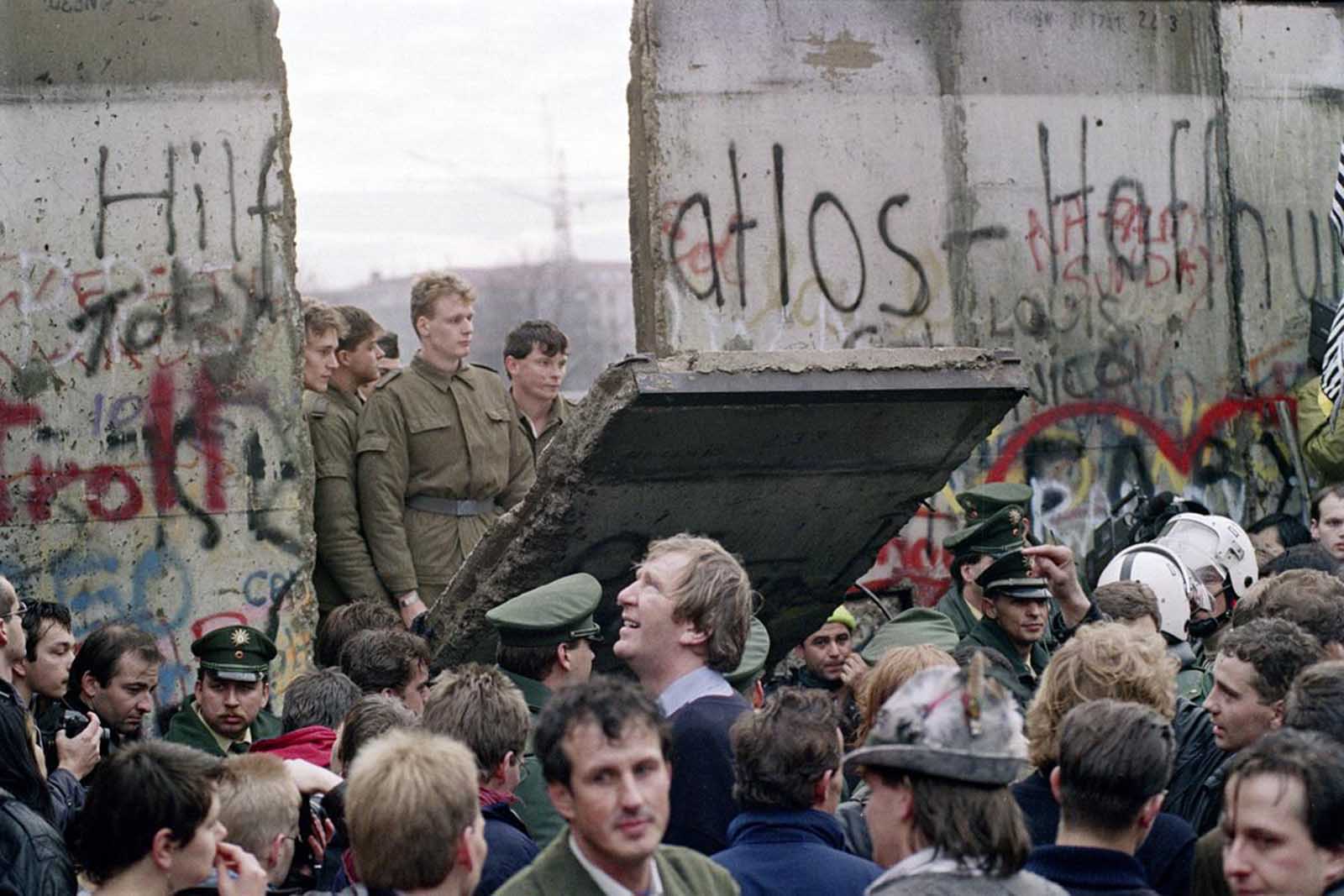
Near Potsdamer Platz, guards and police on both sides worked together to manage the surging crowds as new crossing points were cut into the wall. It was a strange sight — East and West German officers standing side by side, trying to bring order to a moment that was entirely beyond the control of any government. Some guards, perhaps reflecting on what the moment meant, exchanged jokes with West German police. Others accepted embraces from the very citizens they had been ordered to contain.
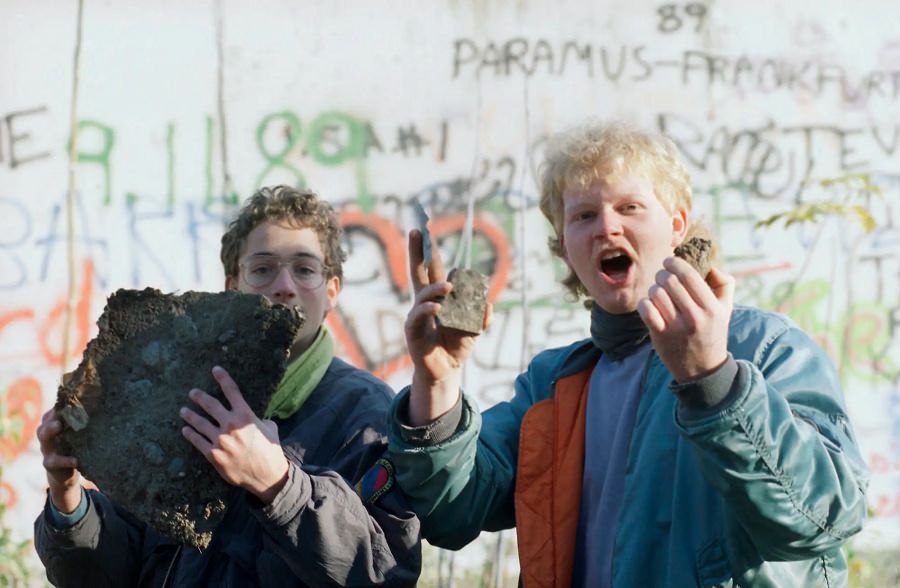
In the days that followed, the demolition of the wall by ordinary citizens continued. Men and women swung sledgehammers at sections near Potsdamer Platz. Children chipped away with smaller tools. Chunks of concrete were taken home as souvenirs. Pieces of the wall that had once represented imprisonment were now being carried away as trophies. By November 14, heavy machinery was already loading larger sections onto trucks.
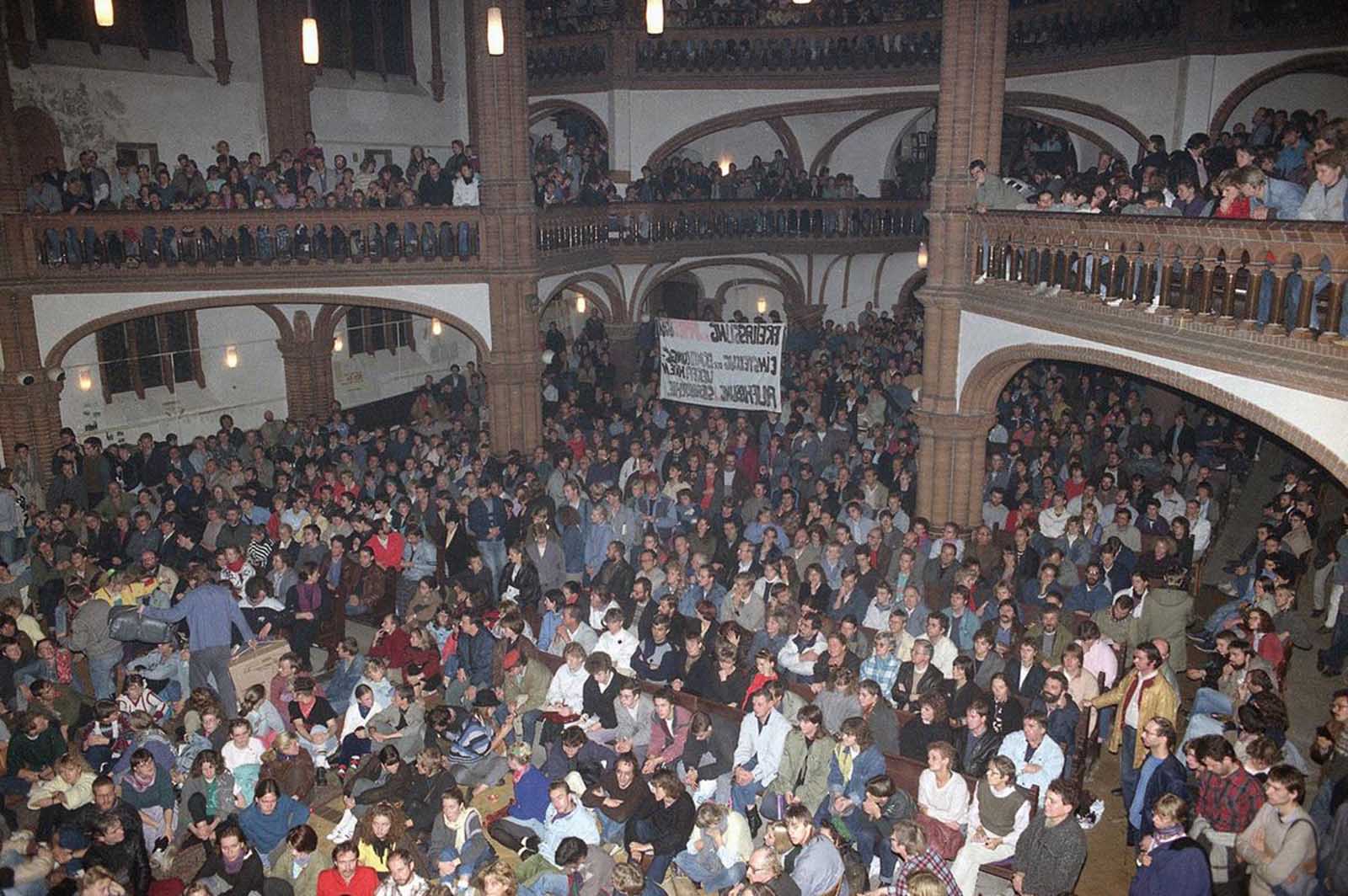
The protests that had built toward this moment were months in the making. As early as October 7, 1989, East German border guards had faced off against demonstrators at Checkpoint Charlie. Around 1,000 East Germans had gathered there for a prayer service in support of imprisoned pro-democracy protesters. The church at Checkpoint Charlie became a focal point for resistance in the wall’s final weeks, and the tension between guards and protesters was visible on the streets.
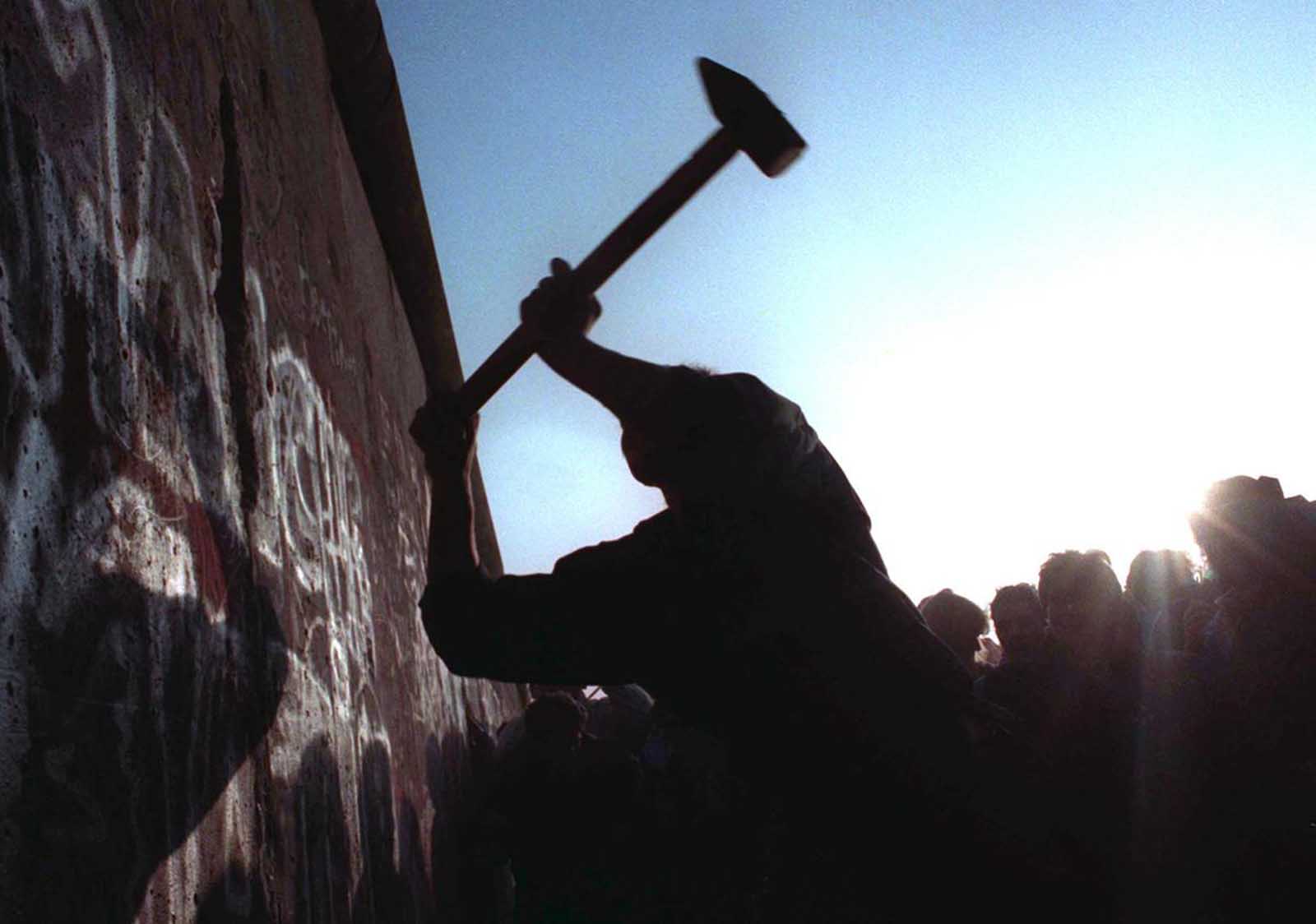
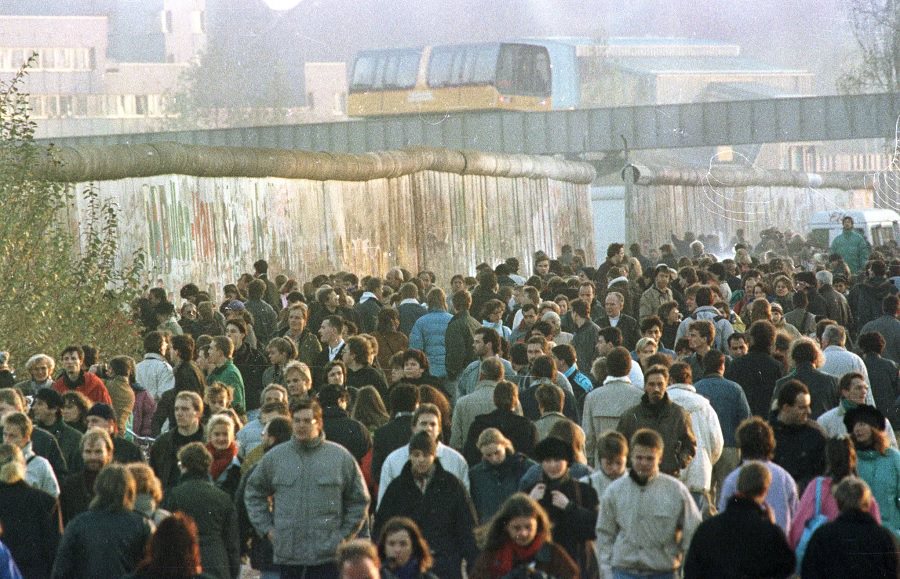
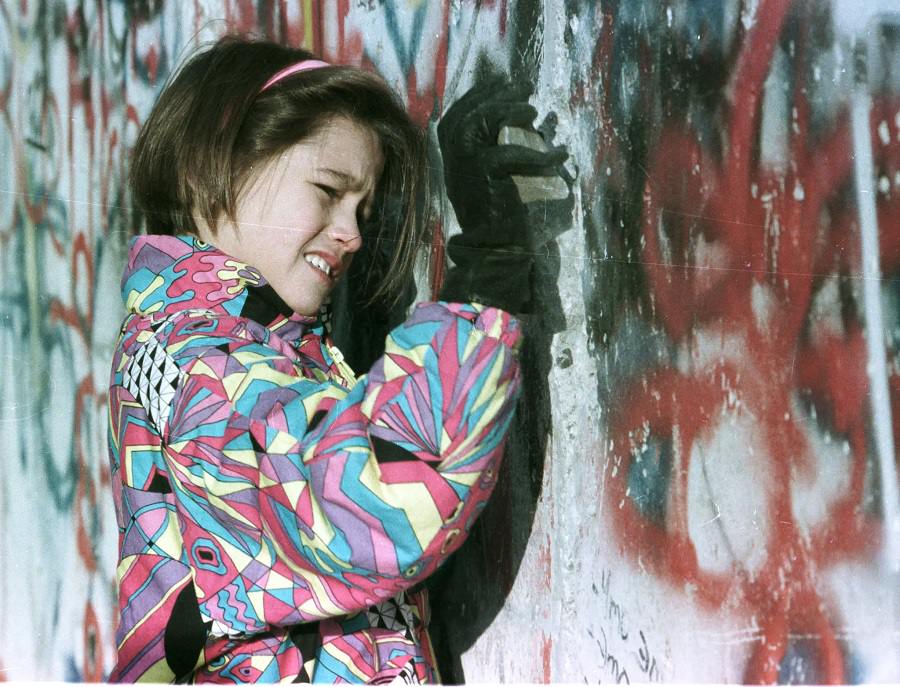
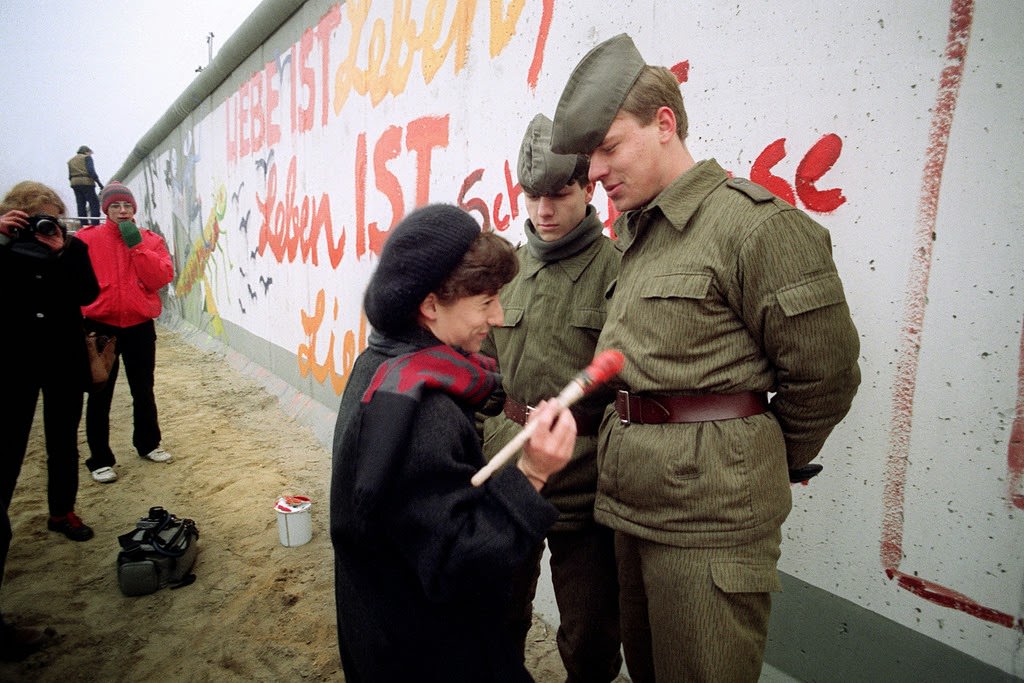
Through mid-November, the atmosphere at the wall remained charged with energy. Thousands walked the length of the barrier between Potsdamer Platz and the Brandenburg Gate on November 18, turning a stretch of fortified concrete into a promenade. The next day, a young West German girl was photographed striking the wall with a hammer — a moment that captured the broad, cross-generational nature of the celebrations. Artists also arrived at the wall. On November 21, an East German artist was seen painting directly onto the wall’s surface while Vopos tried to stop her.
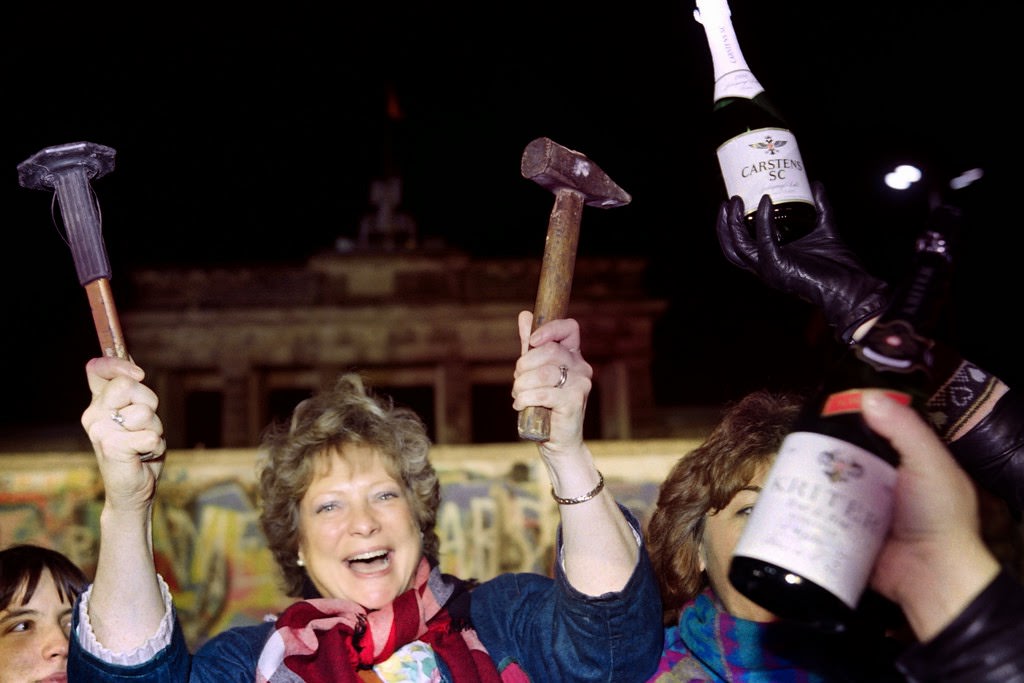
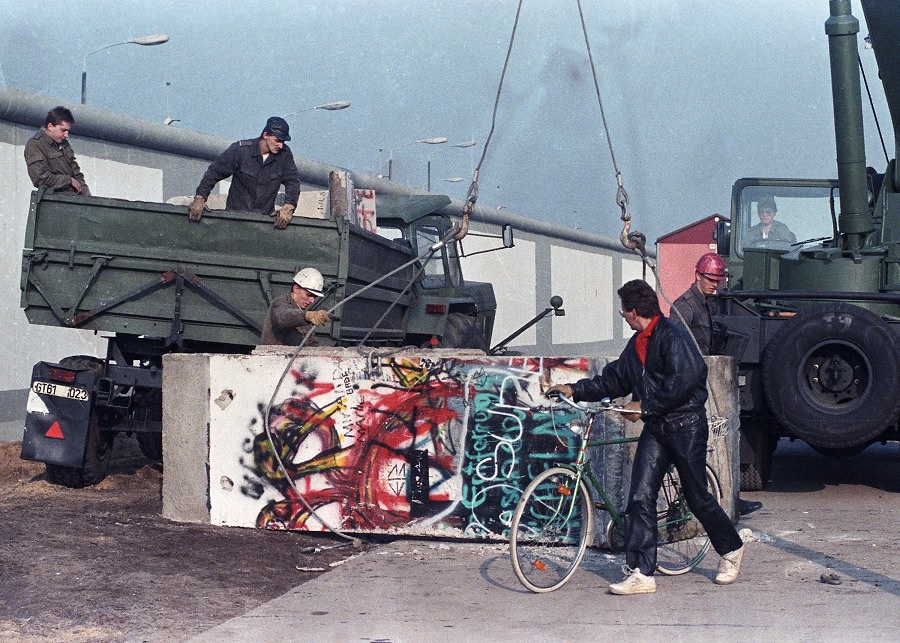
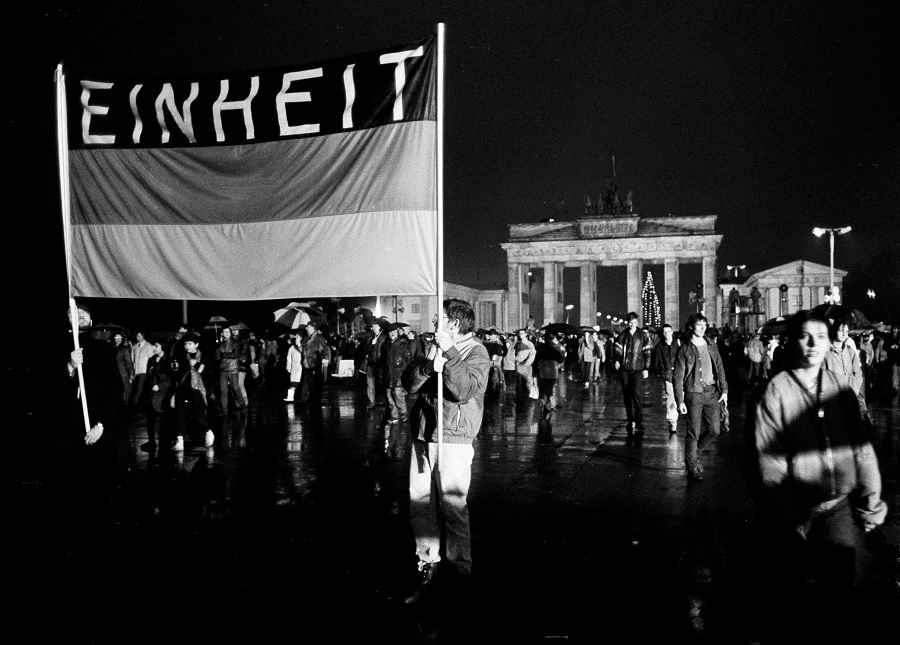
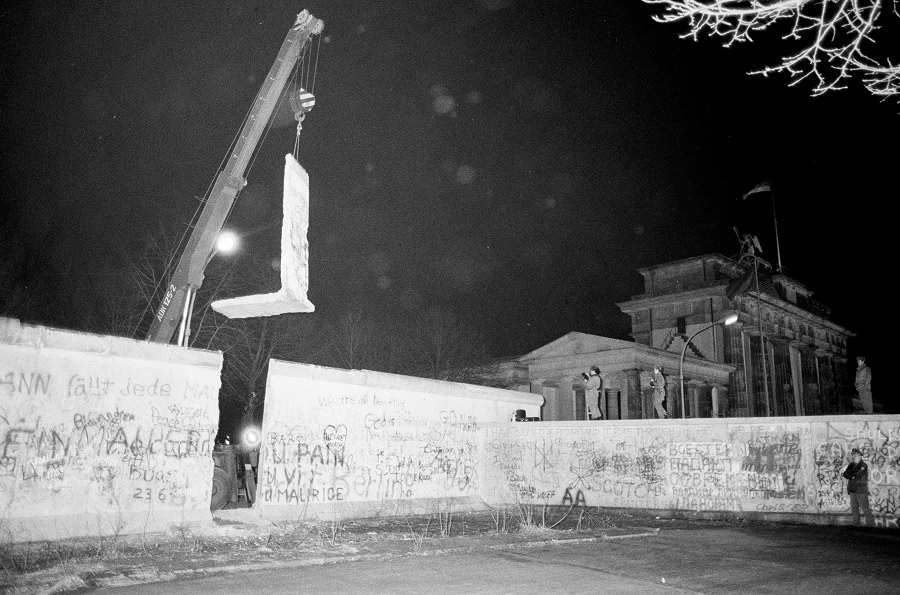
December brought a different kind of milestone. On December 22, 1989, the Brandenburg Gate itself was officially opened to passage for the first time since 1961. East and West Germans greeted each other directly through the Gate, a crossing that had been closed to ordinary civilians for nearly three decades. Flags reading “Unity” were waved over the crowd, and additional sections of the wall near the Gate were dismantled by East German crews as people watched.
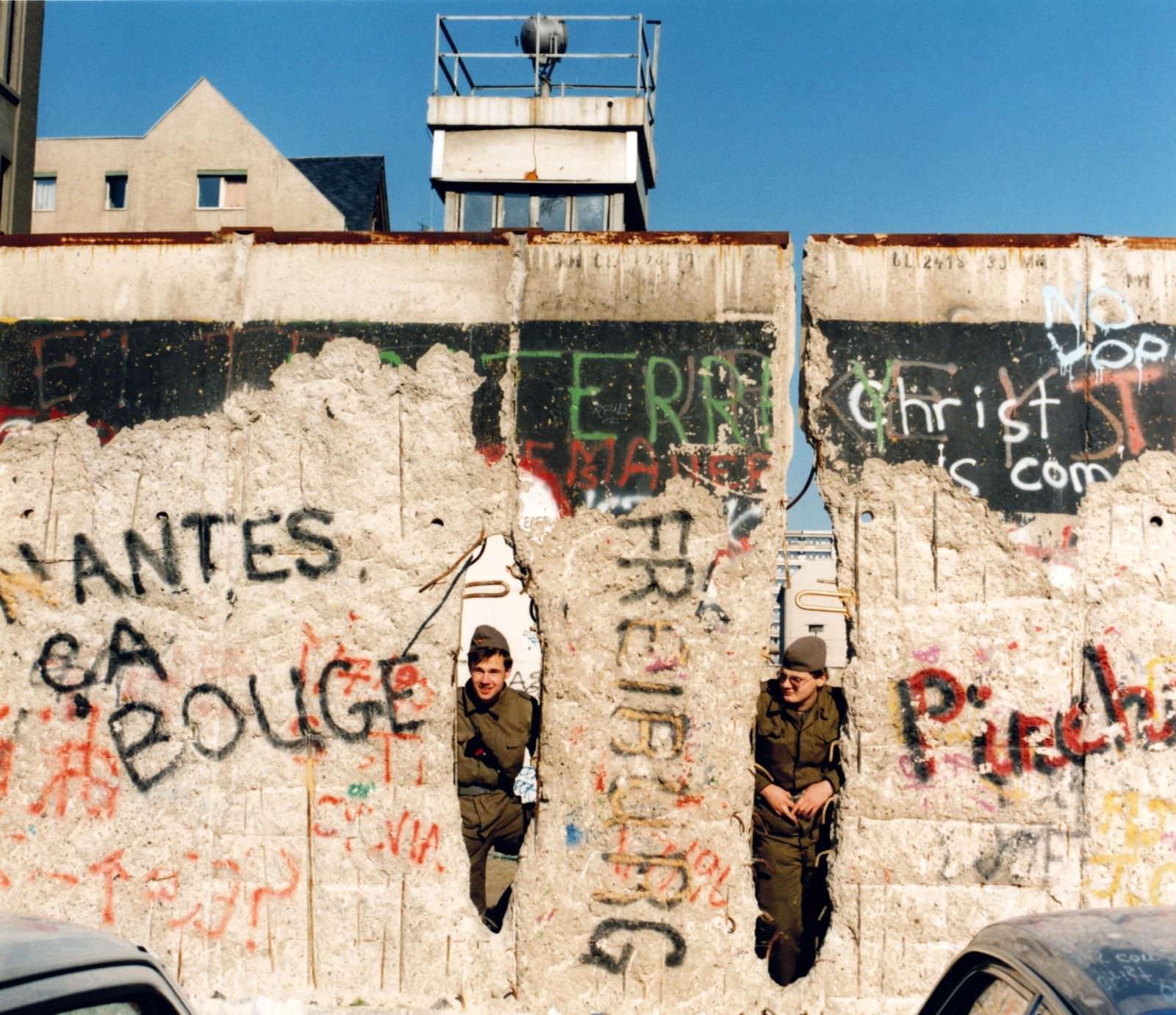
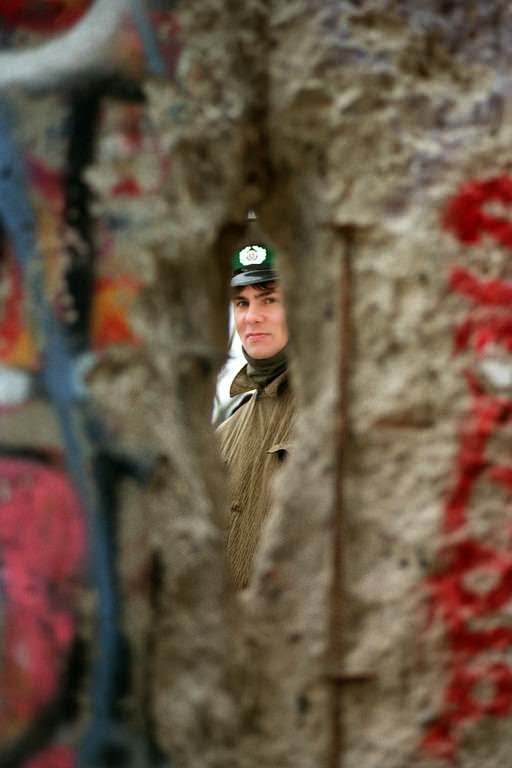
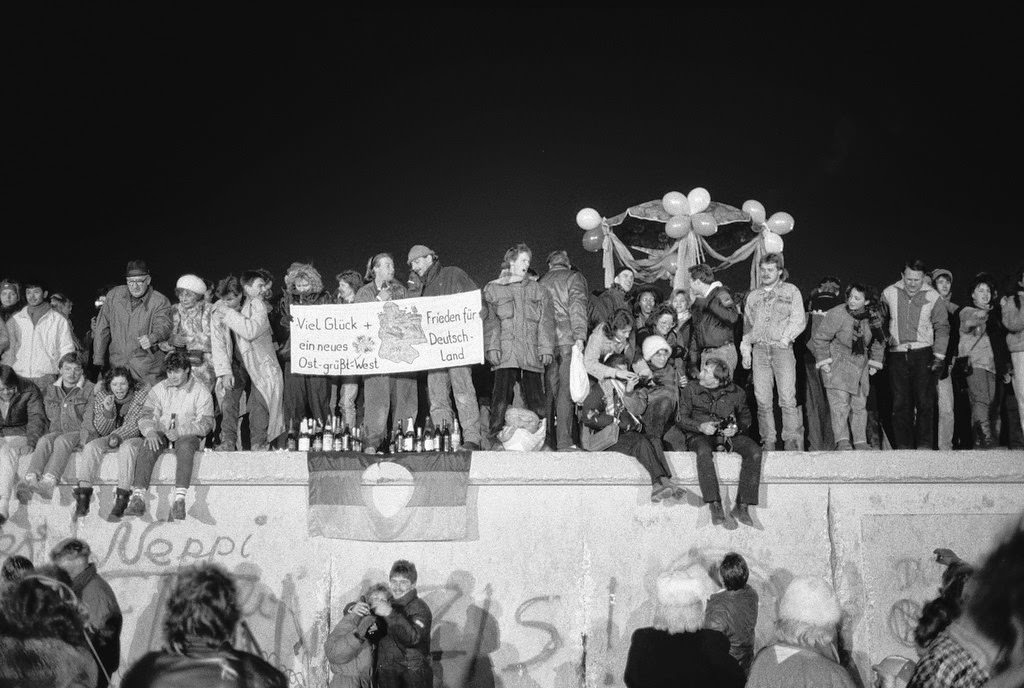
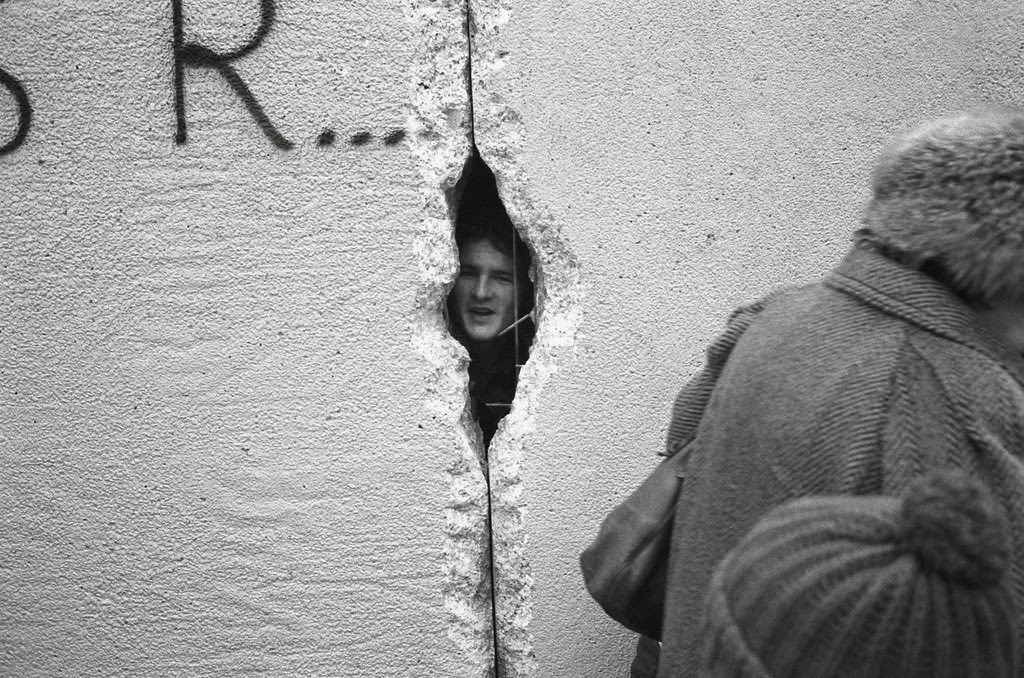
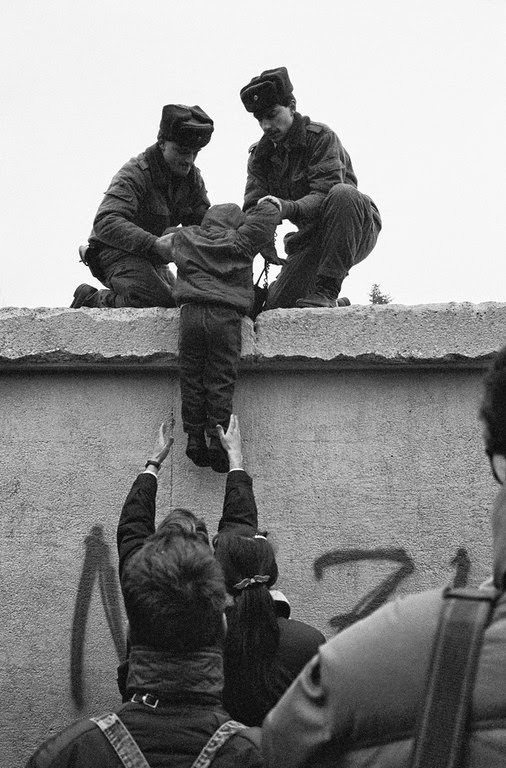
On December 31, 1989 — the last night of the year — Berliners gathered on and around the wall one final time to see in the New Year. A banner stretched across the crowd near the Brandenburg Gate read, “Good luck and peace for a new Germany — East Greets West.” Children chipped at the remaining concrete. Young people peered through holes in the wall into what had been enemy territory just weeks before. Border guards lifted a child onto the wall’s top. The city that had been split down its middle was celebrating as one.
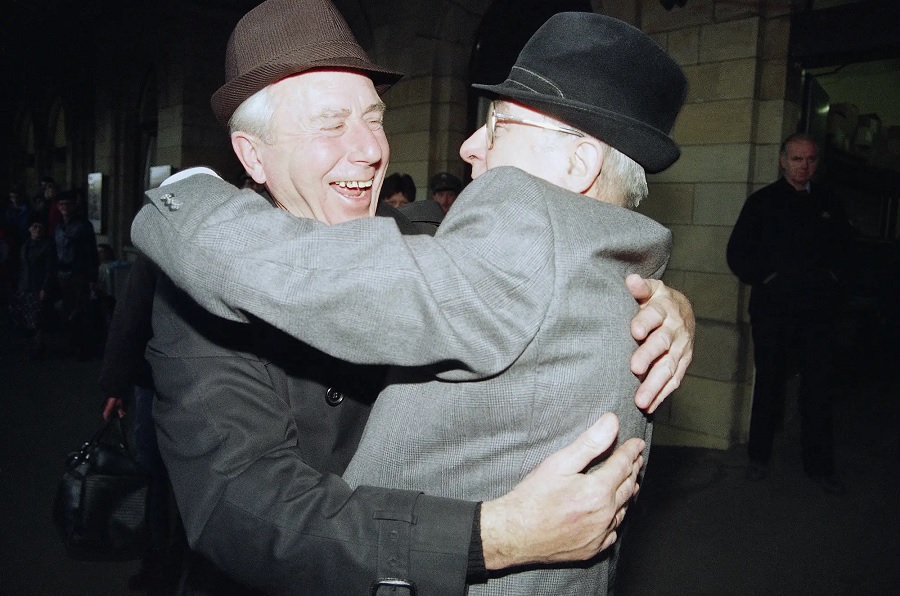
Reunions between people separated by the wall took place at train stations and border crossings across the country. At Helmstedt railway station, men from East and West Germany embraced after arriving on special trains. These were brothers, friends, and former neighbors who had spent years separated by ideology and concrete. The emotional weight of those meetings was immediate and raw.
The official demolition of the Berlin Wall began on June 13, 1990, with heavy equipment finishing the job that ordinary citizens had started with hammers and bare hands. By early 1990, border guards were already peering through gaps and holes at a barrier that was becoming unrecognizable. Checkpoint Charlie, the most famous crossing point of the Cold War, was itself dismantled on June 22, 1990. The last sections of the wall came down in November 1991, three decades after construction had begun.