
England in the 1950s was a country in transition. The scars of World War II were still visible — bombed-out homes, vacant lots, and makeshift prefab housing dotted cities and towns across the country. In London especially, entire neighborhoods bore the marks of wartime destruction, with gardens converted to allotments and temporary structures filling gaps where buildings once stood. The British government was spending 6.6 percent of GDP on defense, and military bases from the war years were scattered across the countryside — some abandoned, others brought back to life as the Cold War intensified.
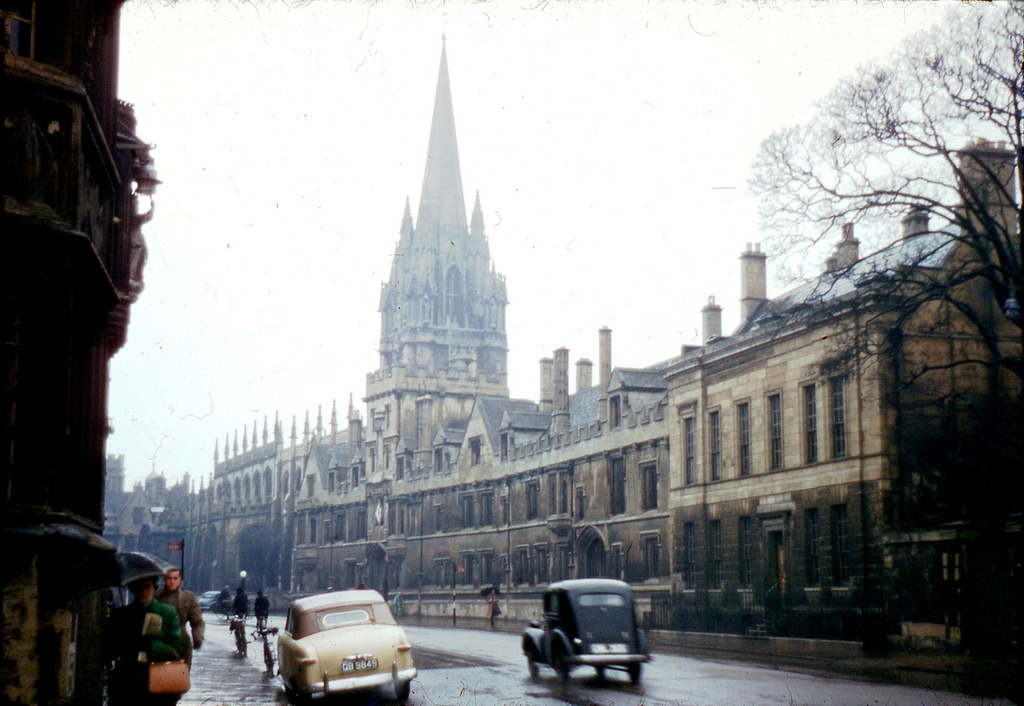
Yet beneath the rubble of the recent past, a new England was taking shape. The economy was growing steadily, unemployment was falling, and in 1954 food rationing — which had been in place since wartime — finally came to an end. For millions of people, this was a turning point. Families who had spent years counting rations could now shop without restriction. New low-cost housing estates were going up around the country, and people were beginning to fill those new homes with things they had never owned before.
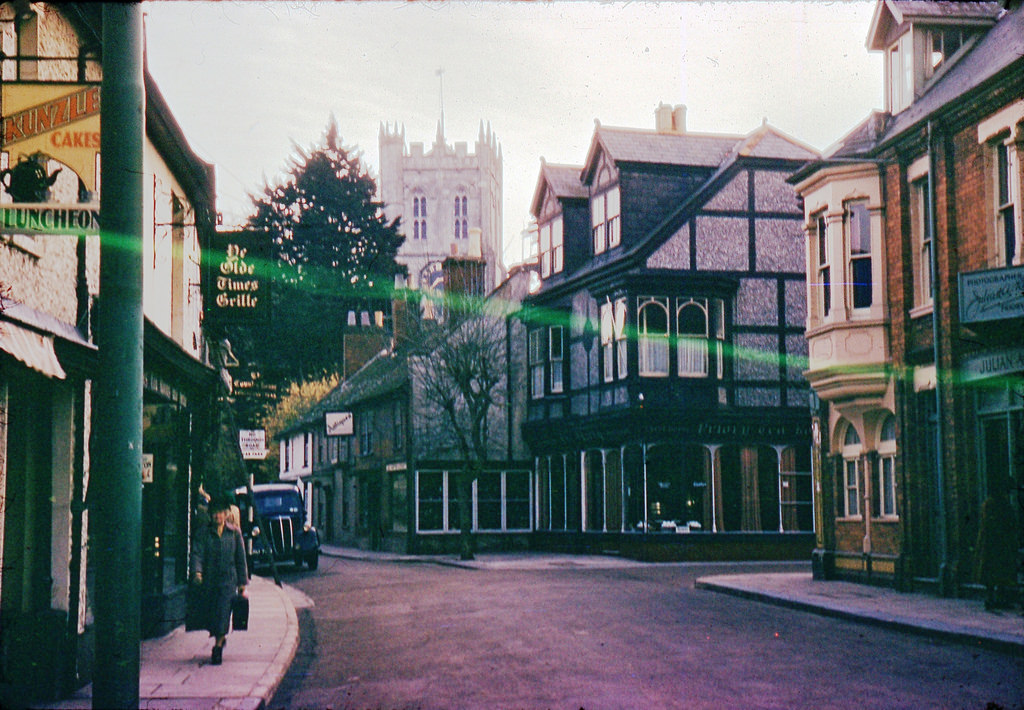
Cars and televisions became the defining symbols of the decade’s rising standard of living. By 1959, more than 32 percent of households owned a car — a figure that would have seemed extraordinary just a decade earlier. Nearly one in four homes had a television set. To manage the growing number of vehicles on city streets, London installed its first parking meters in 1958, a practical sign of just how much daily life had changed.
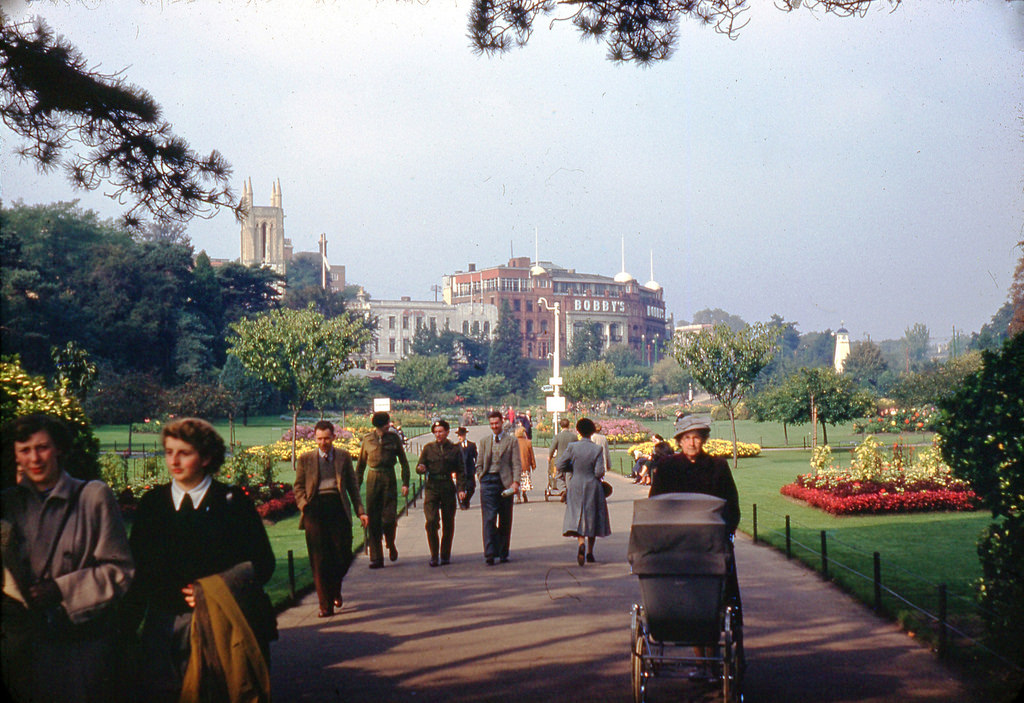
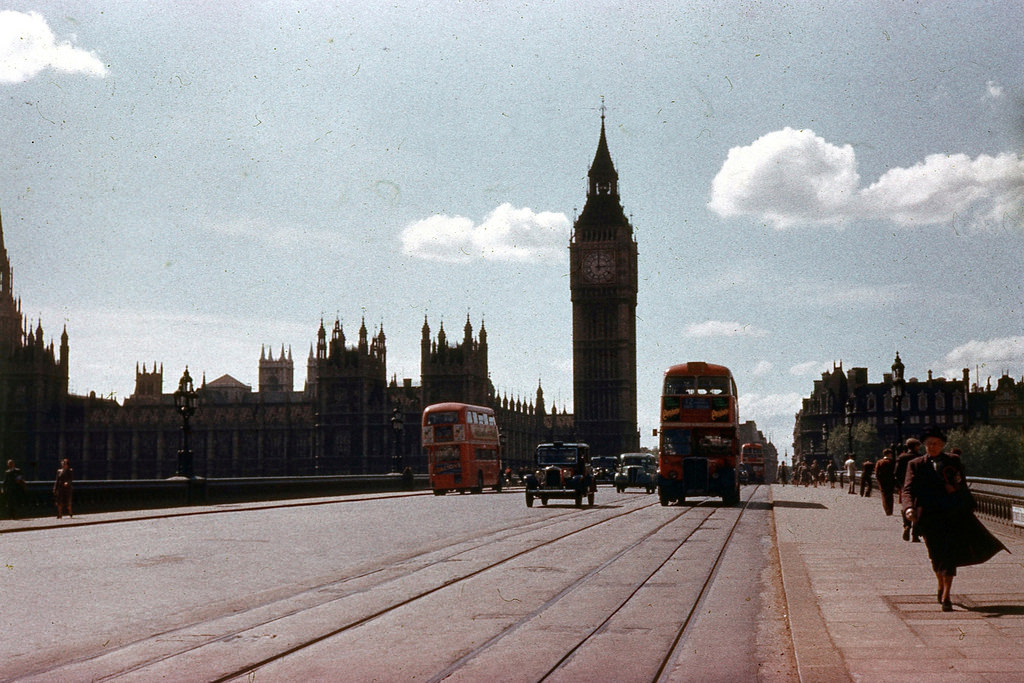
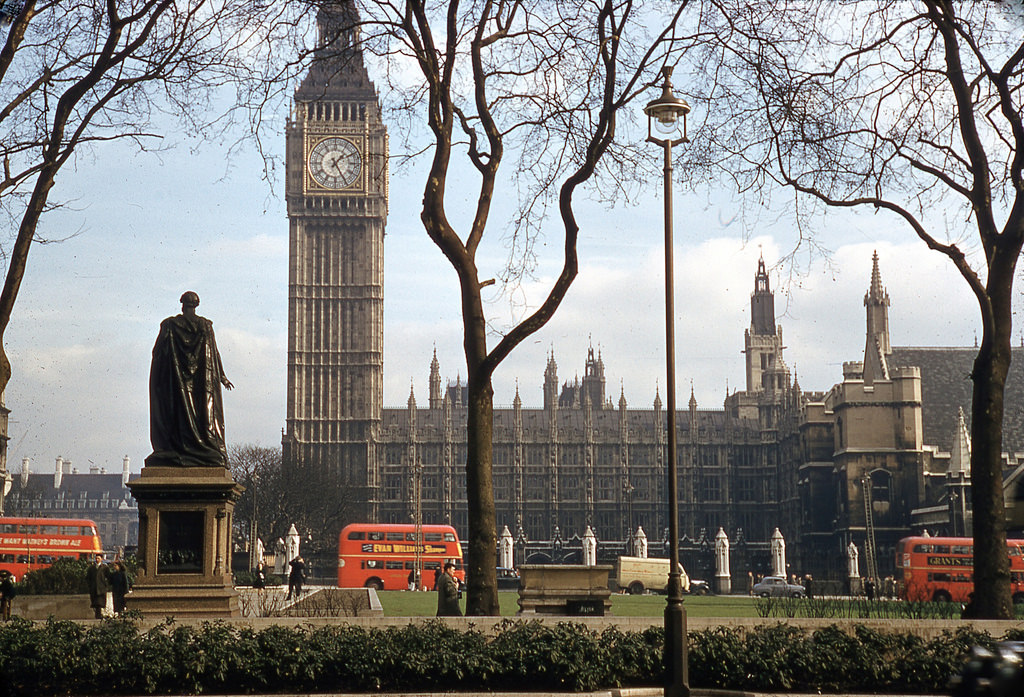
Public transport was thriving during this era. The old tram networks were being phased out and replaced with electric trolleybuses and petrol-powered buses that offered cheaper, more reliable services. On any given road, one out of every three vehicles was either a bus or a lorry. Most people still relied on public transport to get around, and the bus routes that spread across cities and rural areas kept the country connected.
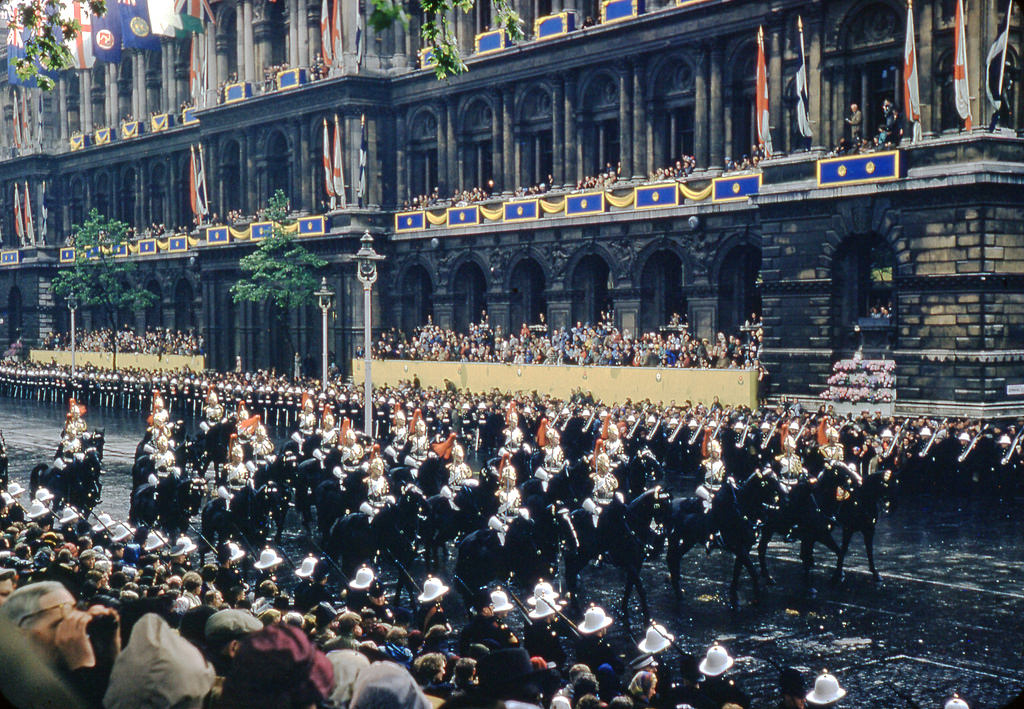
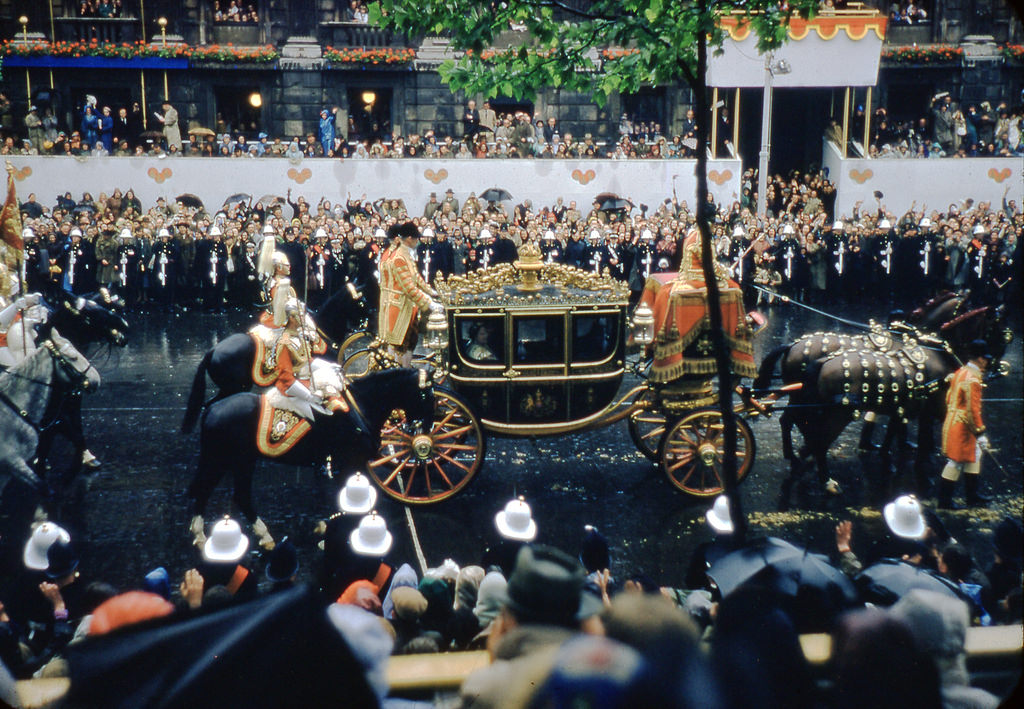
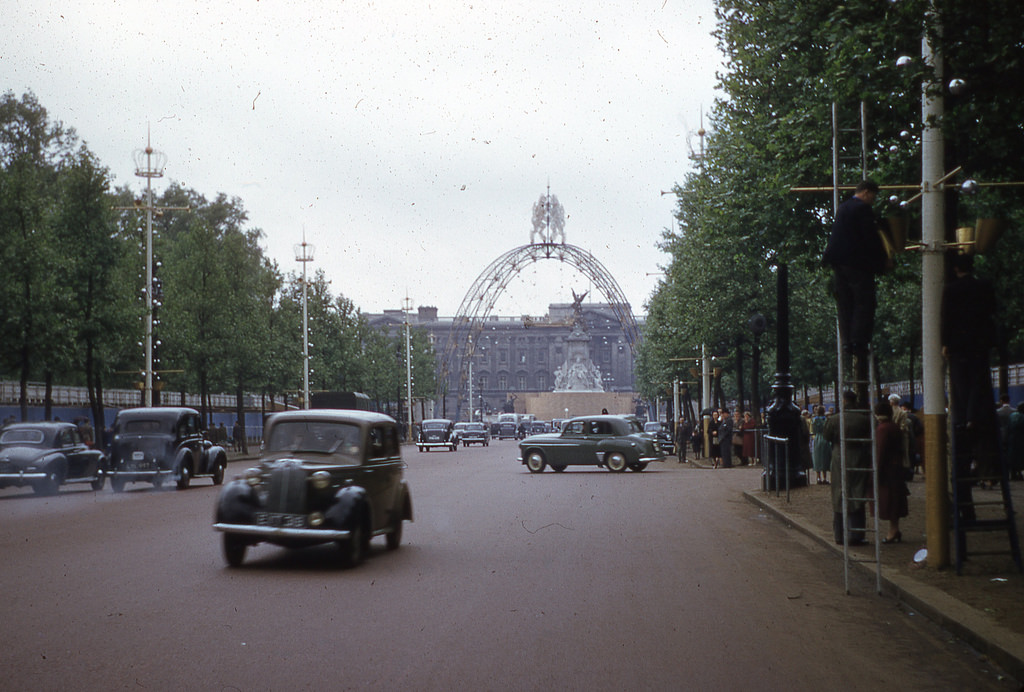
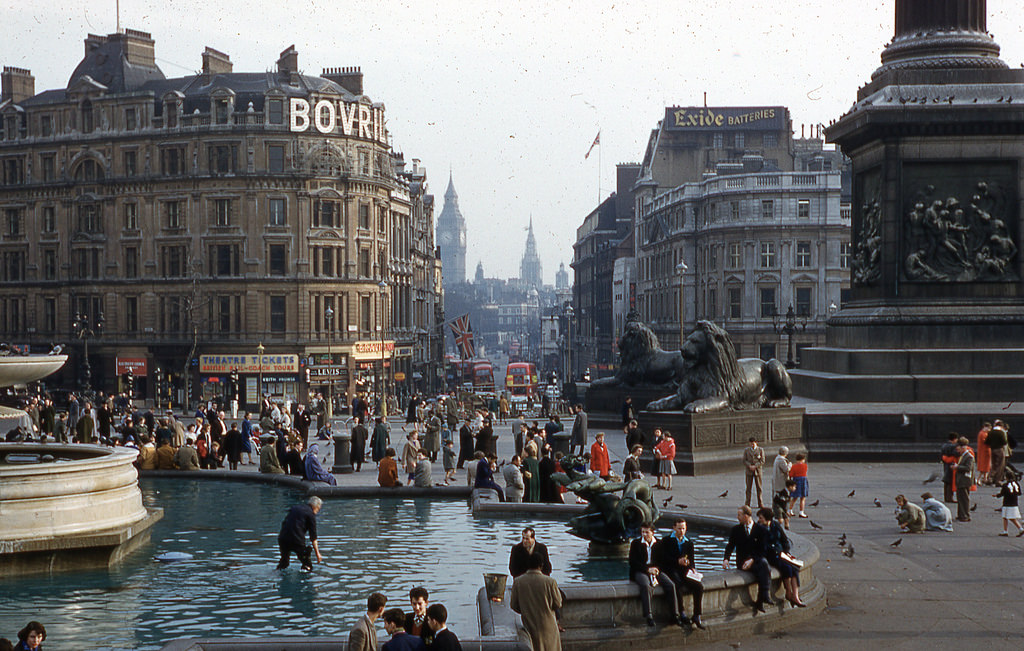
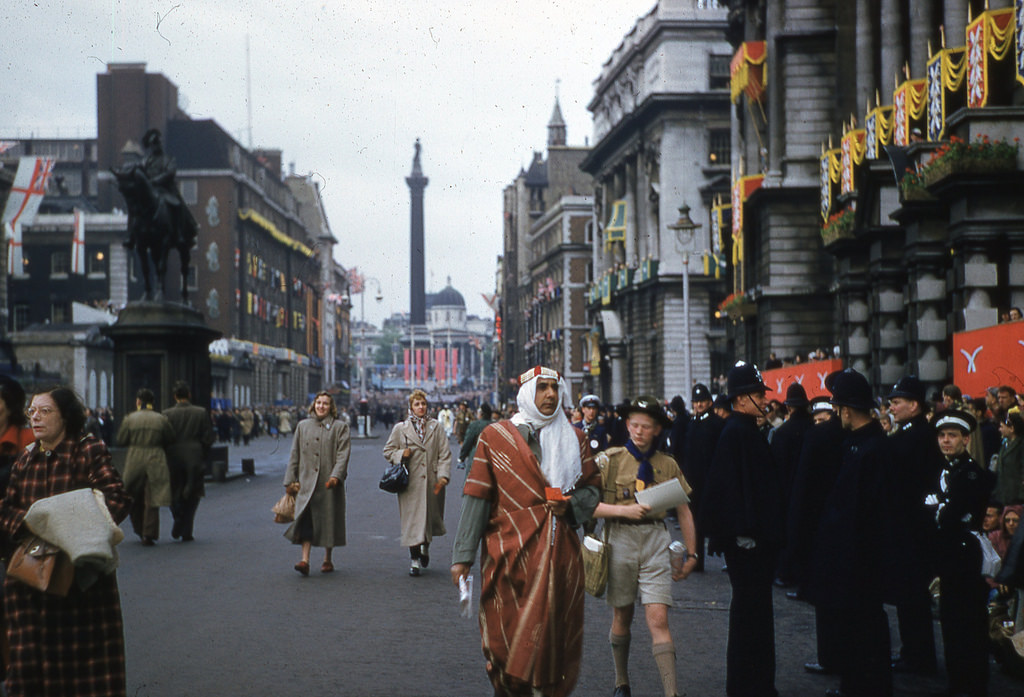
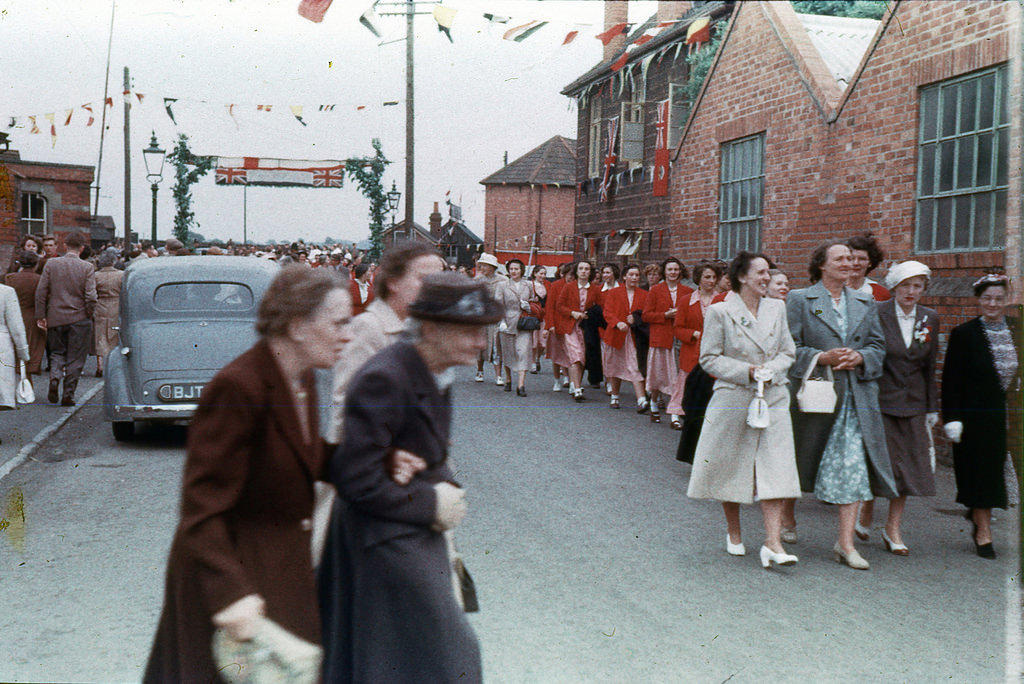
The single most celebrated event of the decade was the coronation of Queen Elizabeth II on June 2, 1953. London filled with crowds, guards lined the streets, and the procession moved through the city in a display of national ceremony that had not been seen in decades. Trafalgar Square, The Mall, and Charing Cross became focal points for the celebrations. For many people across England, it was the first major public event they watched on a television set.
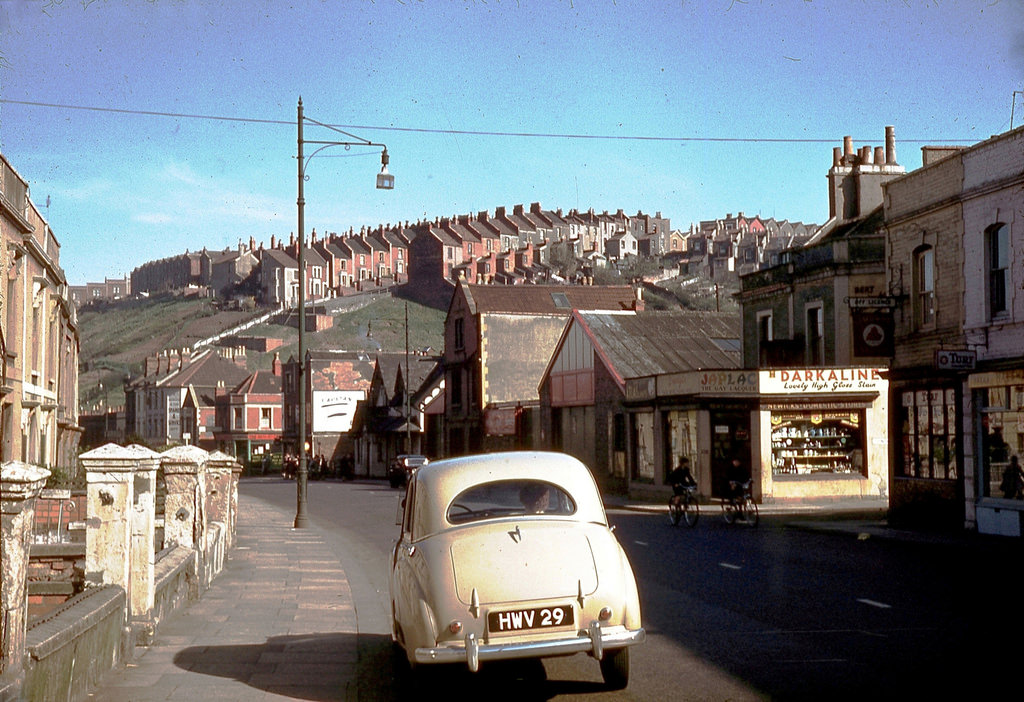
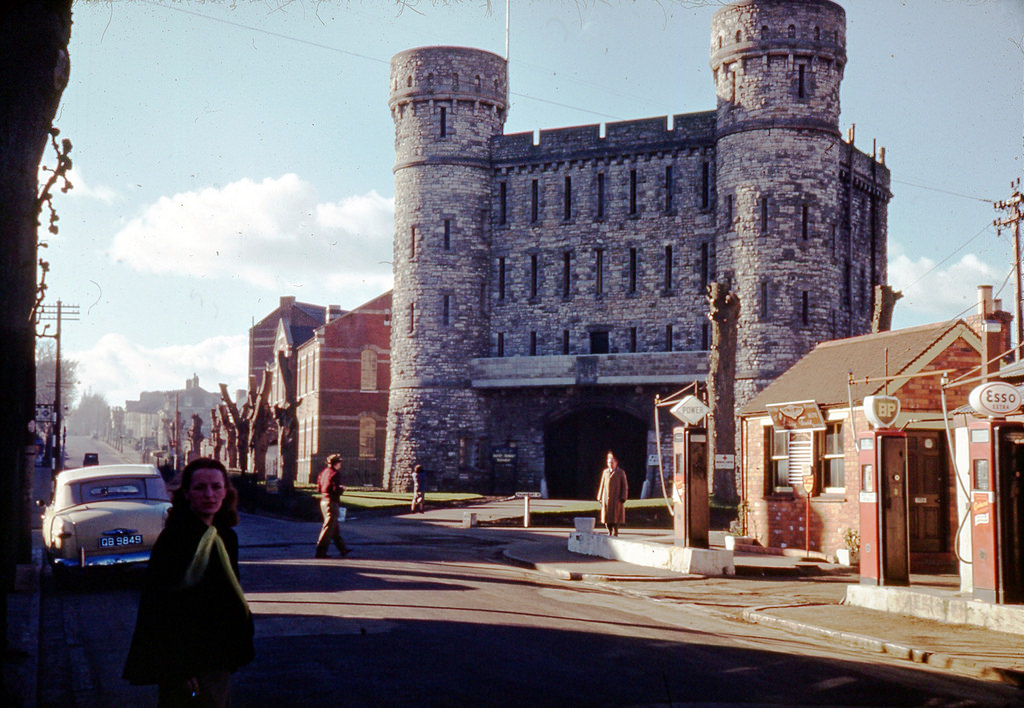
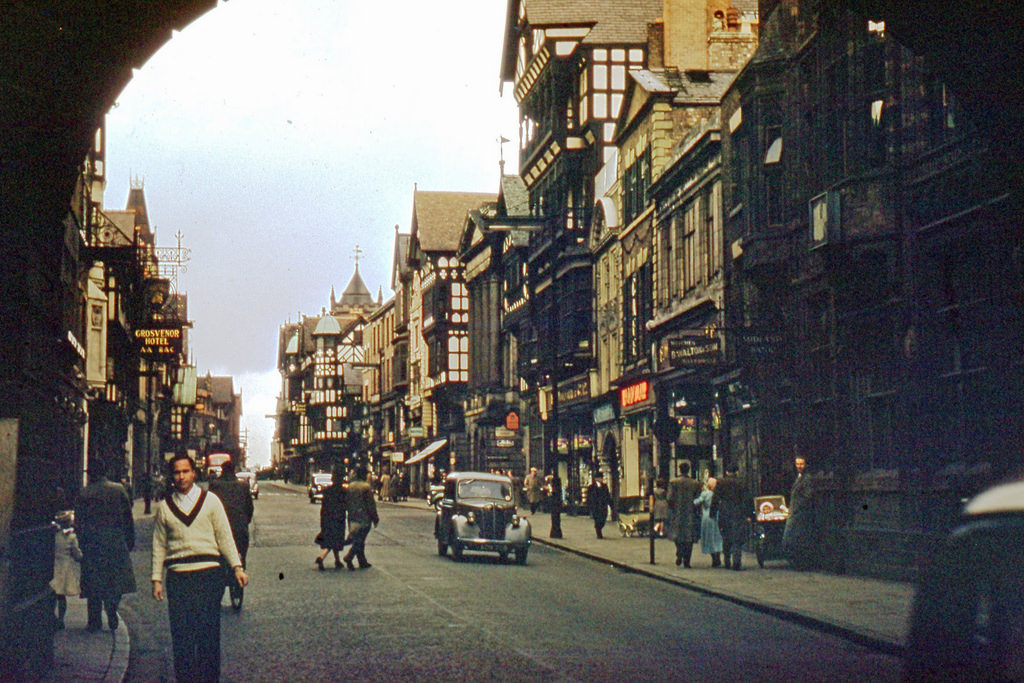
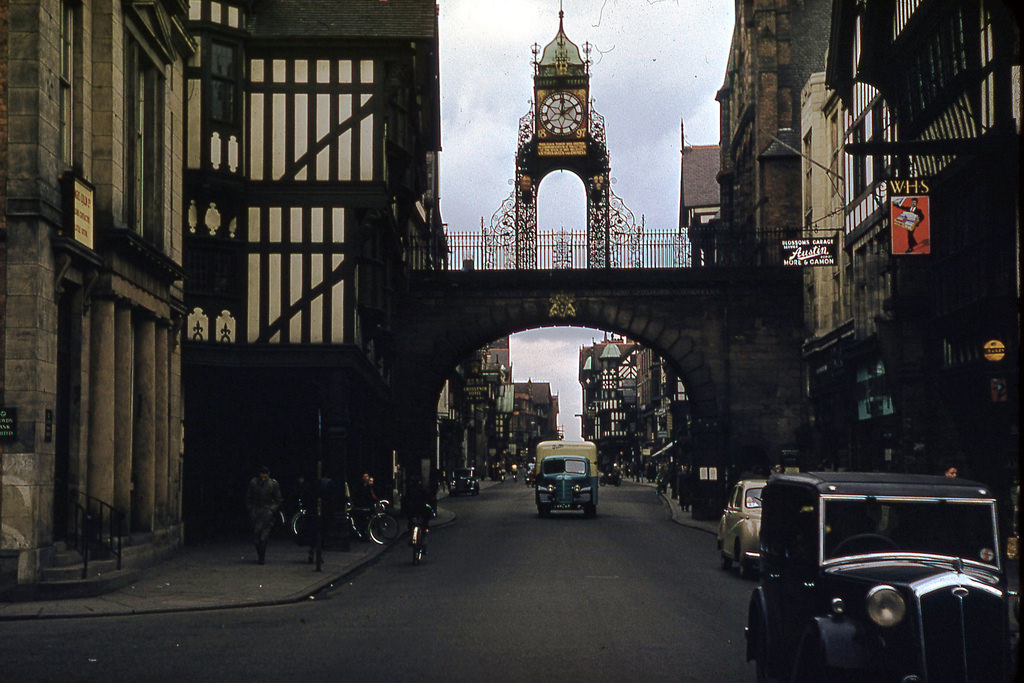
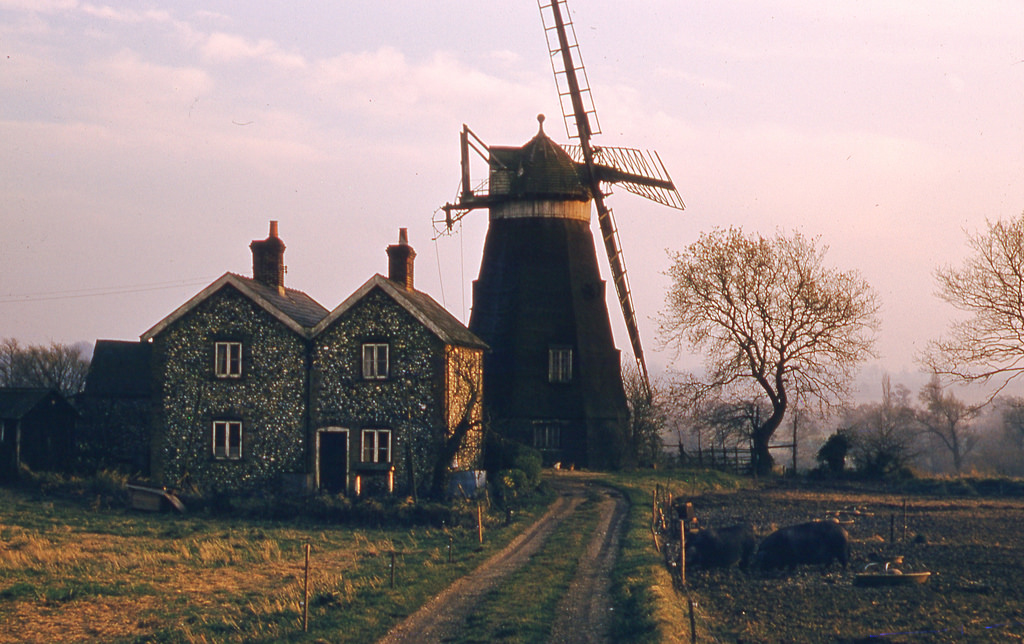
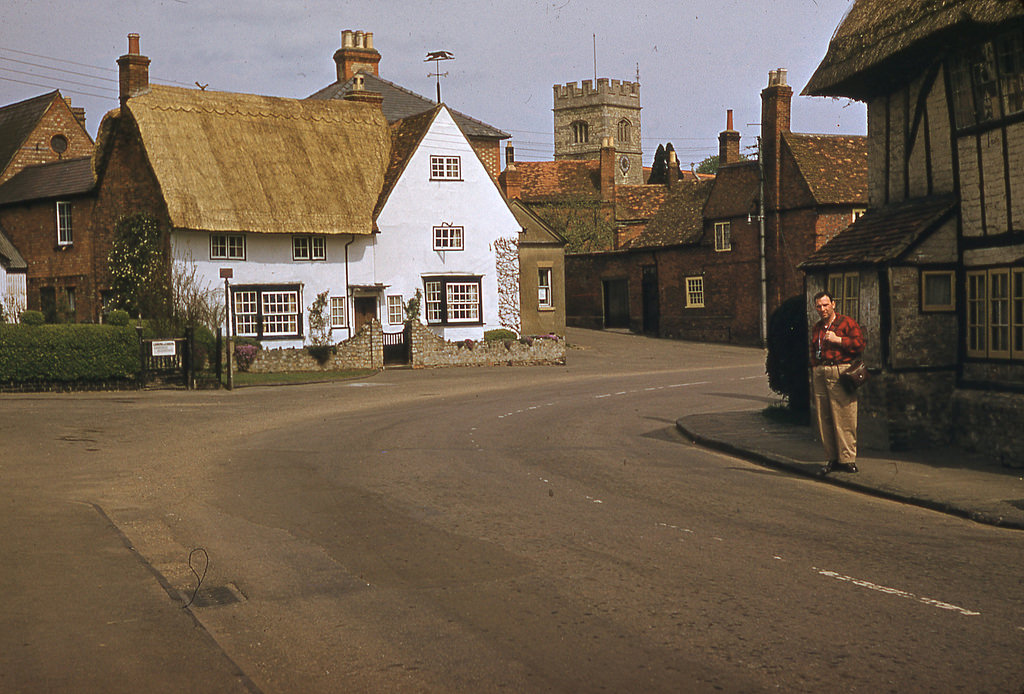
Away from London, life in England’s towns and villages had its own distinct character. Bristol’s terraced streets climbed steep hills, while smaller market towns like Winslow and Bury St. Edmunds held weekly markets that served the surrounding farming communities. Cathedral cities like Chester retained their medieval street layouts, with the famous Eastgate Clock still marking the entrance to the old city walls.
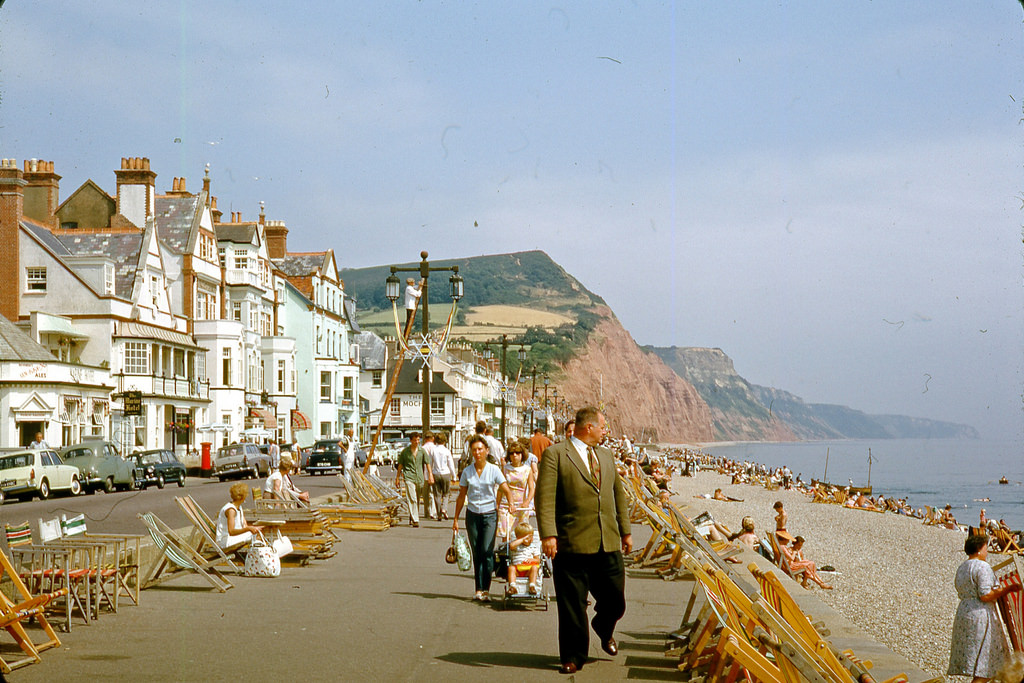
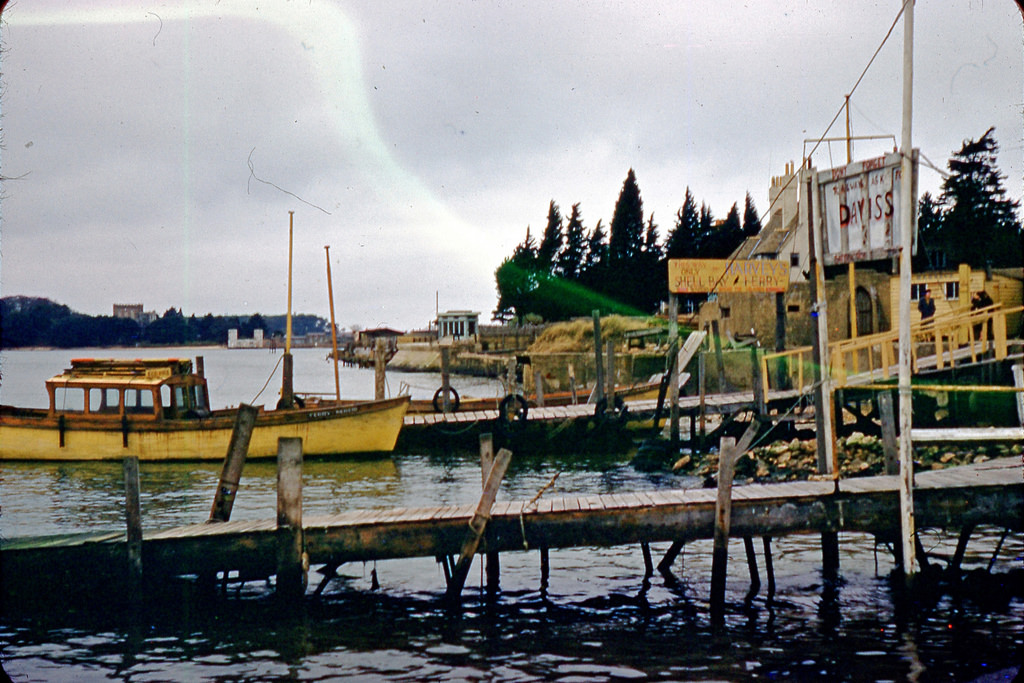
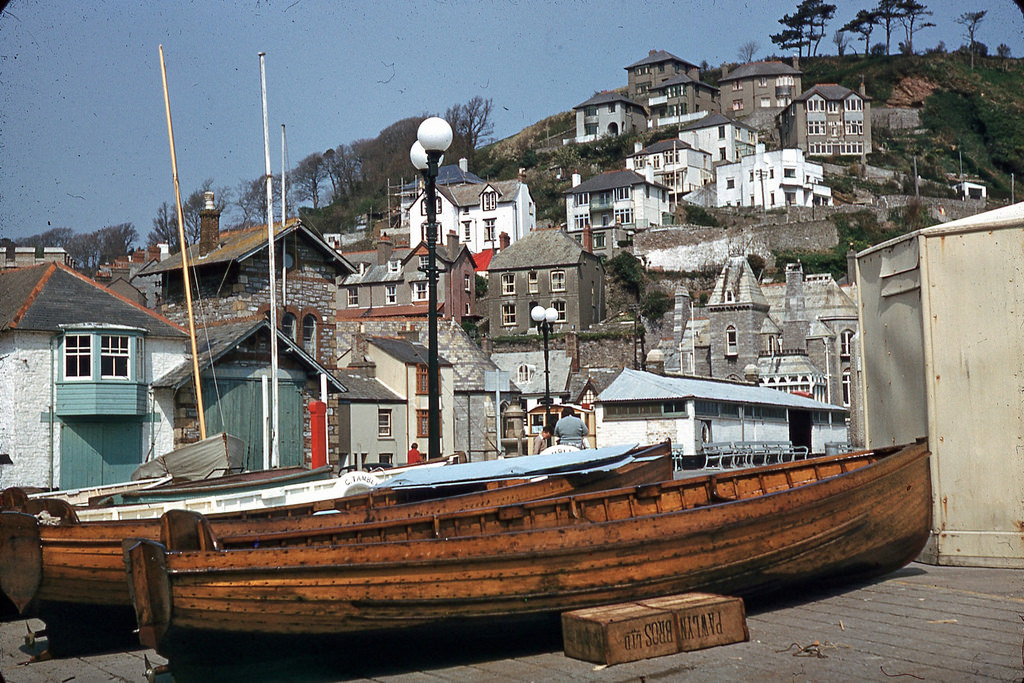
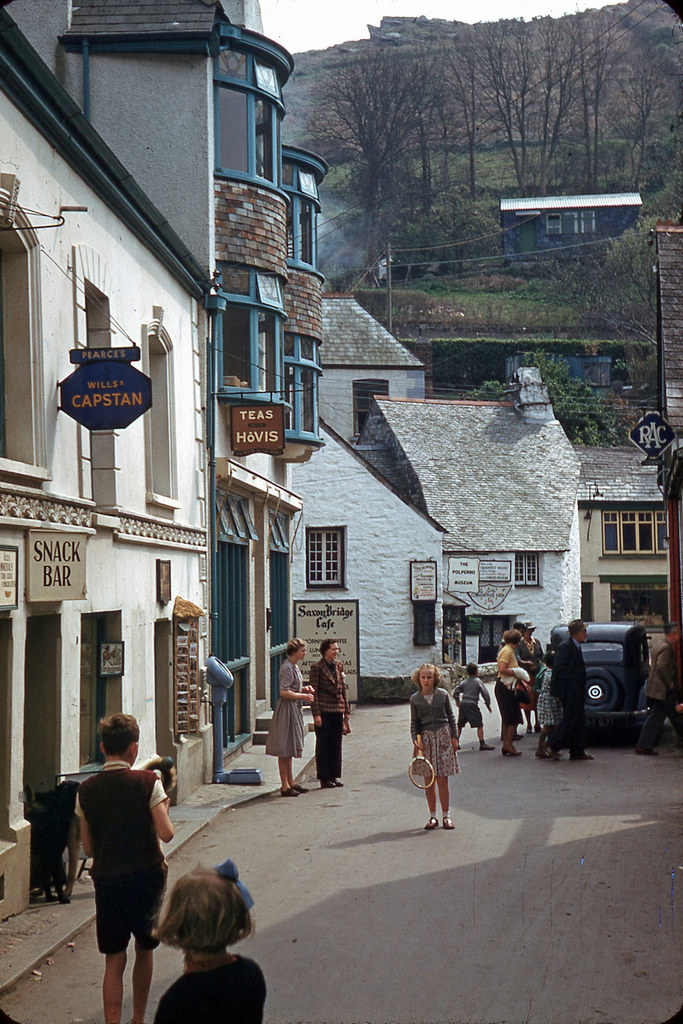
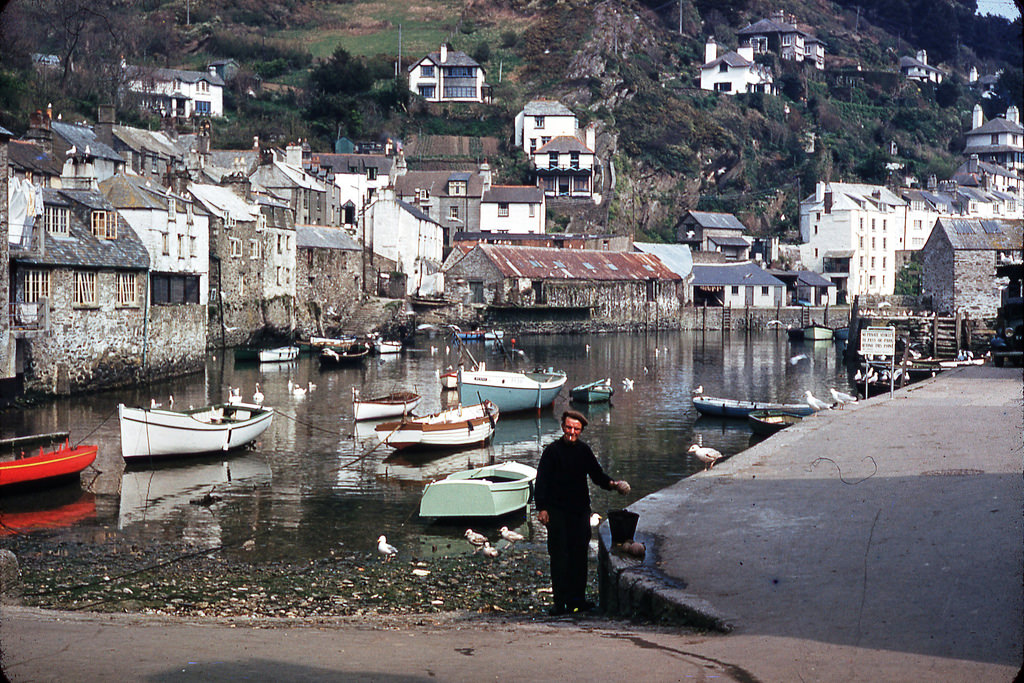
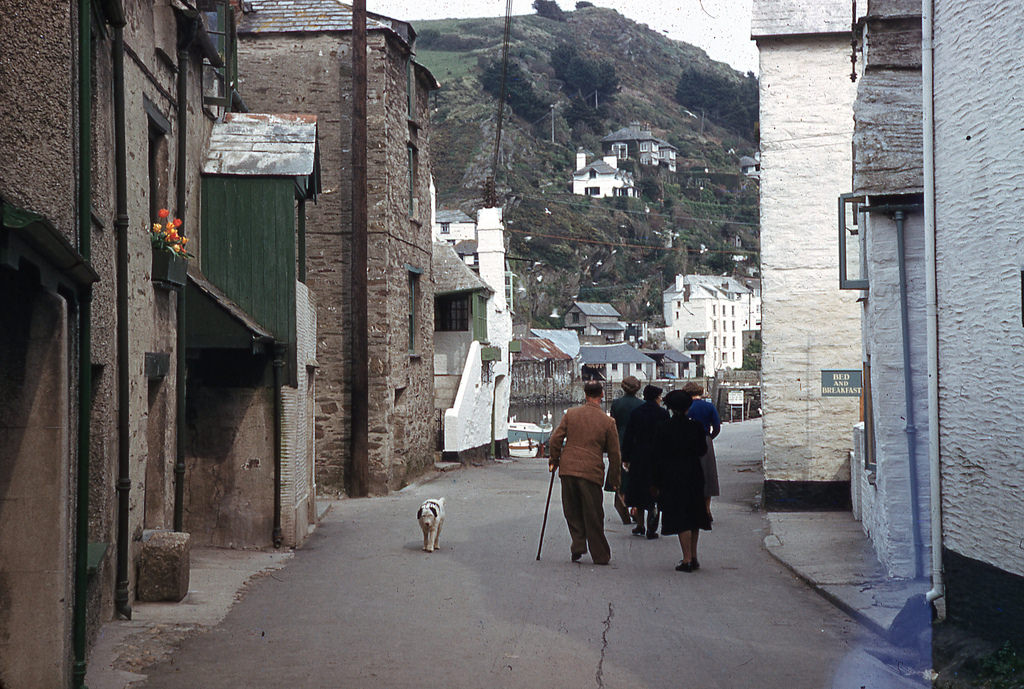
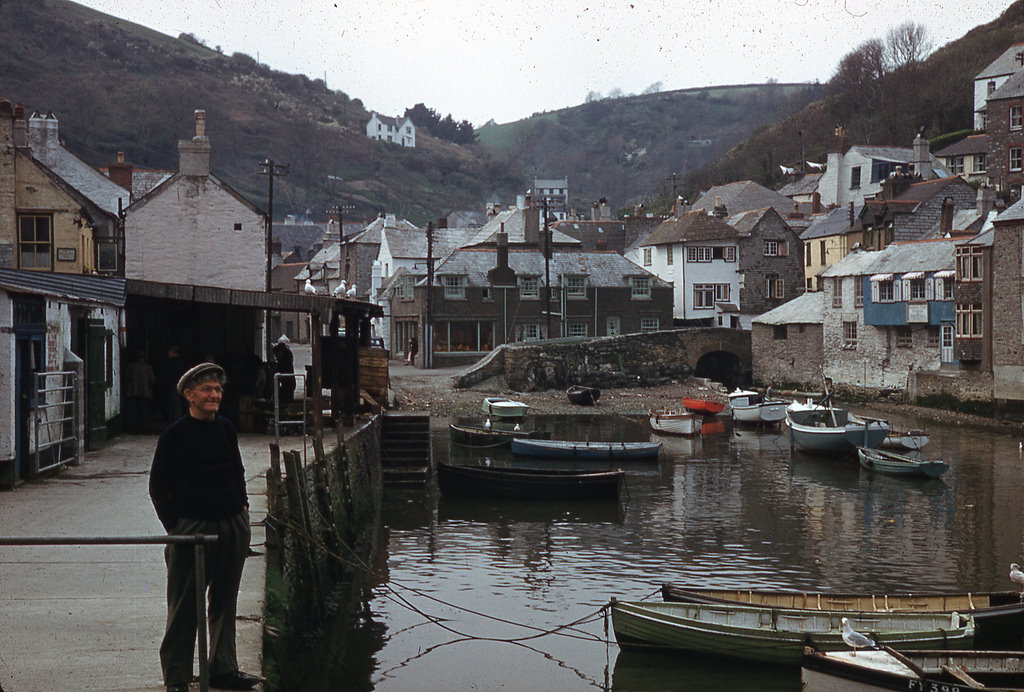
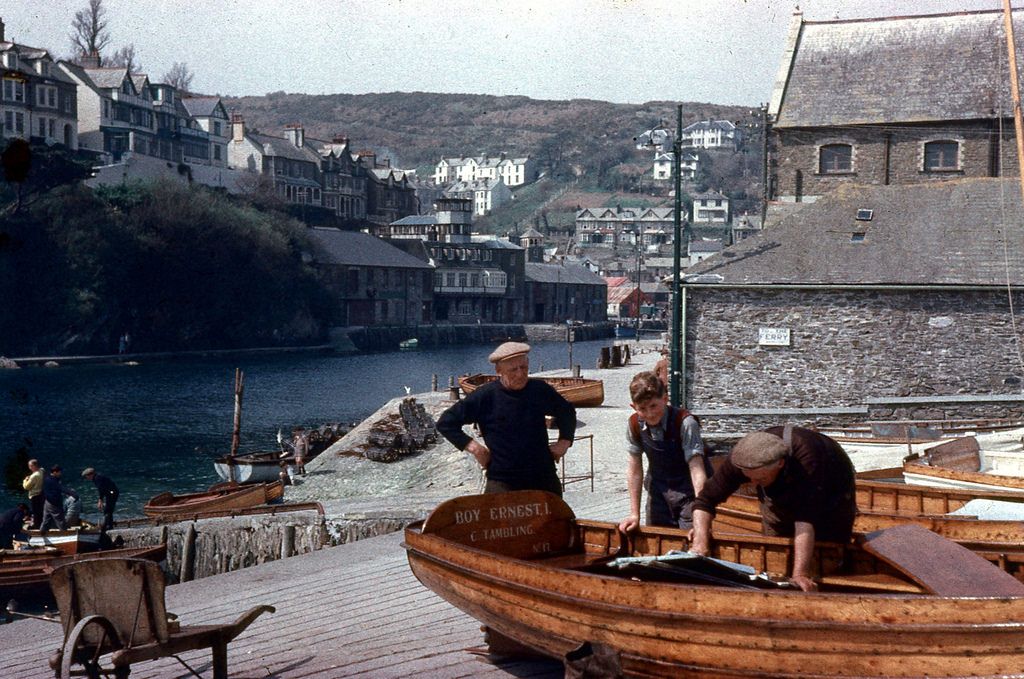
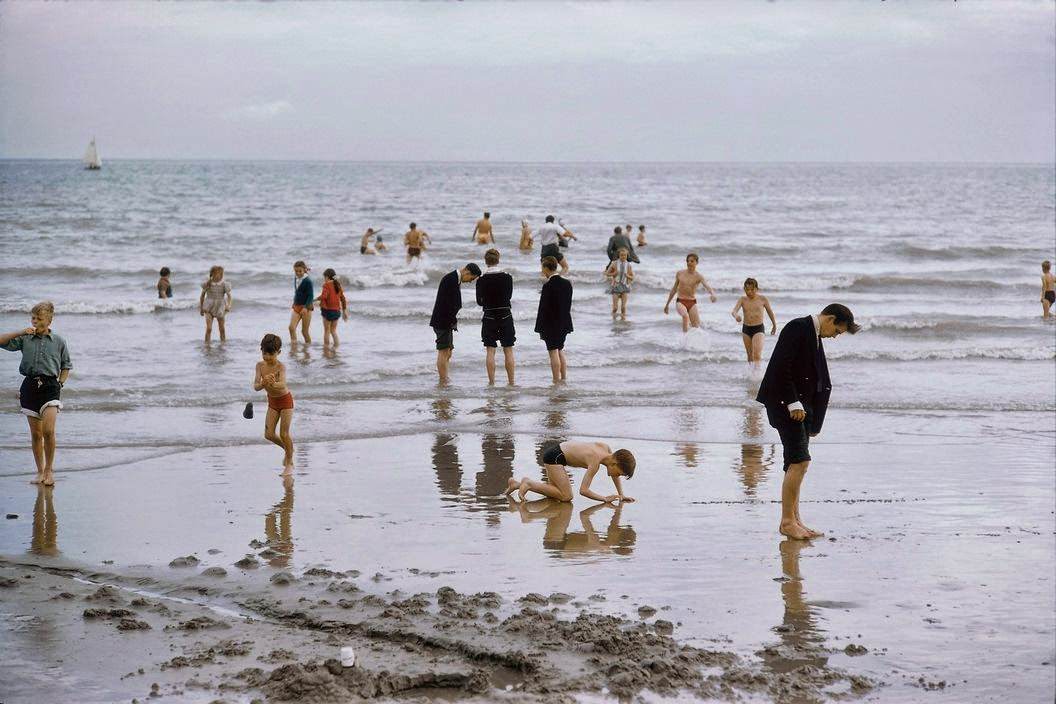
The English seaside was still the holiday destination of choice for most working families. Resorts like Bournemouth and Weston-super-Mare drew summer crowds to their beaches and promenades. Families arrived by train or bus, often staying in boarding houses near the shore. Coastal fishing villages in Cornwall — Polperro and Mevagissey among them — retained much of their pre-industrial character, with wooden boats moored in narrow harbors and whitewashed cottages lining the winding streets above the waterline.
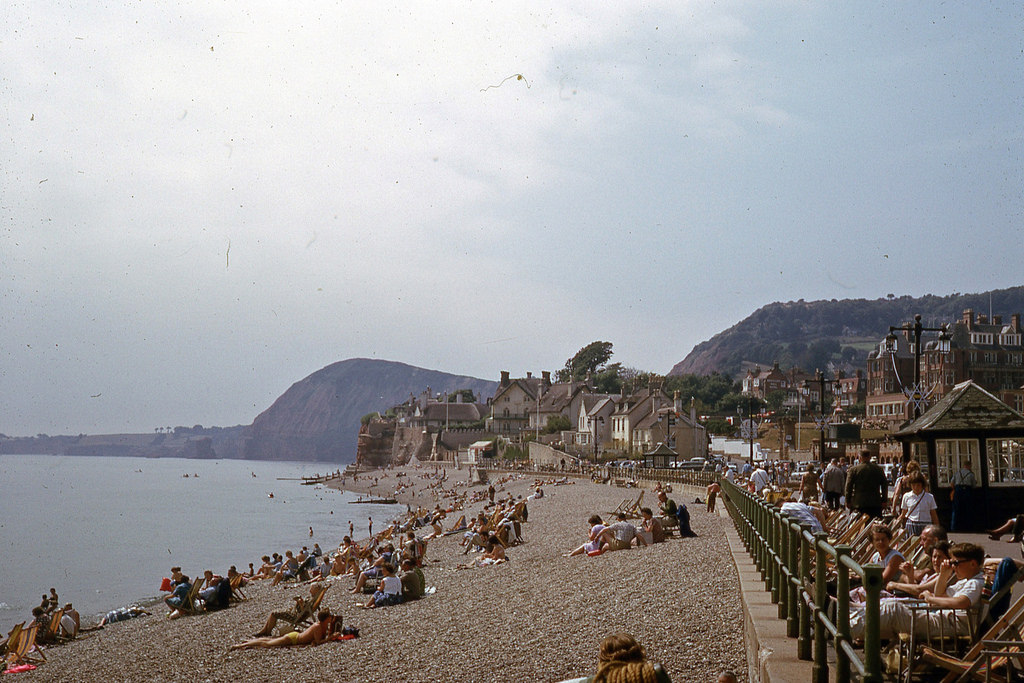
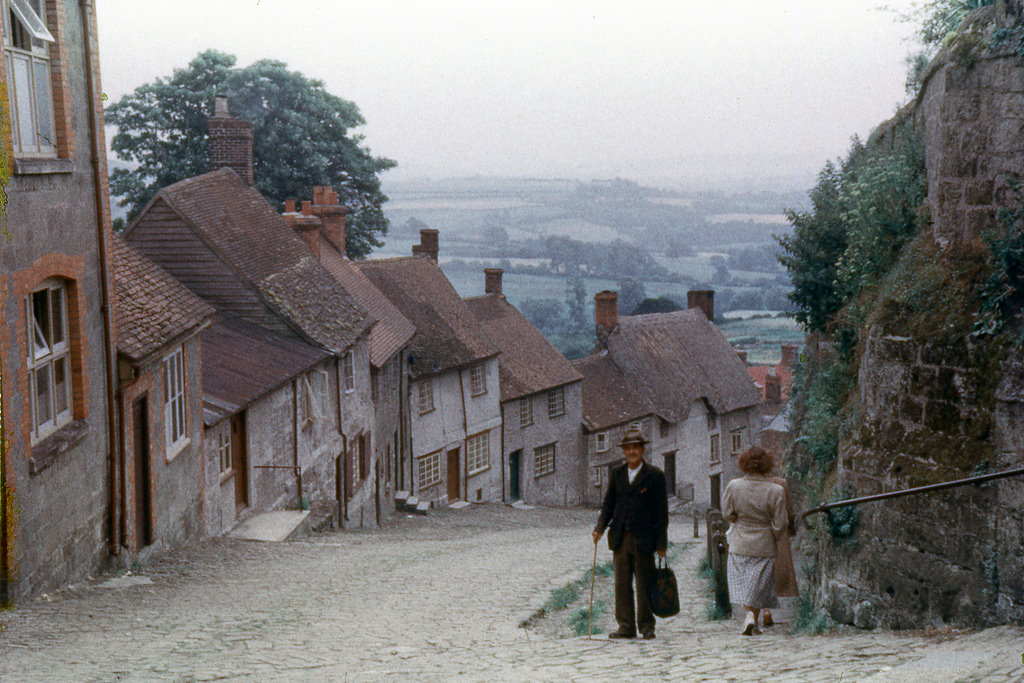
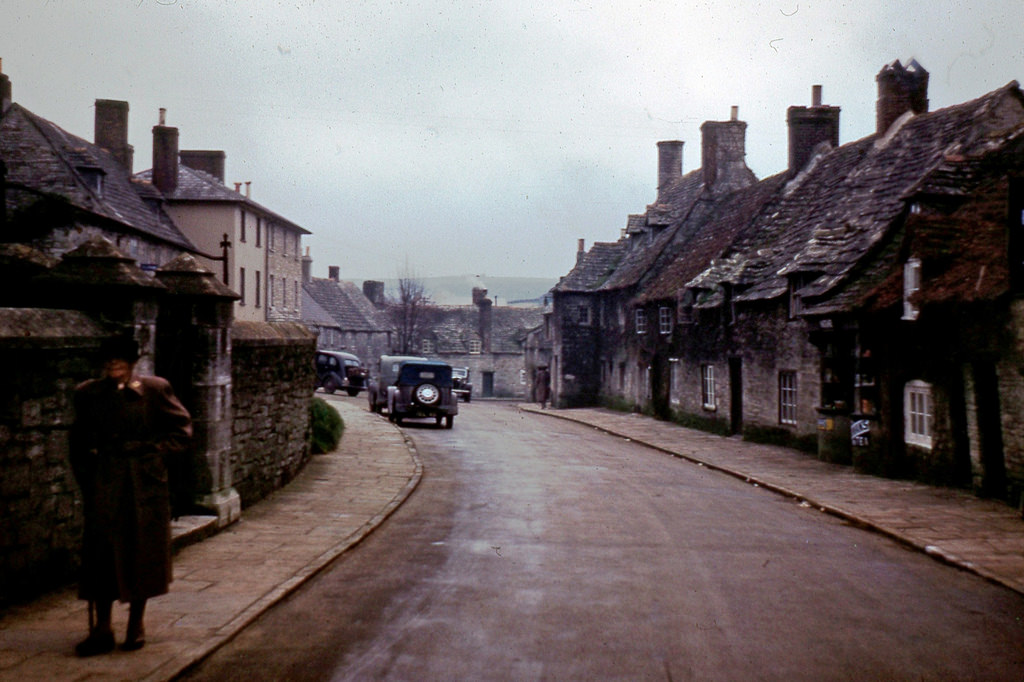
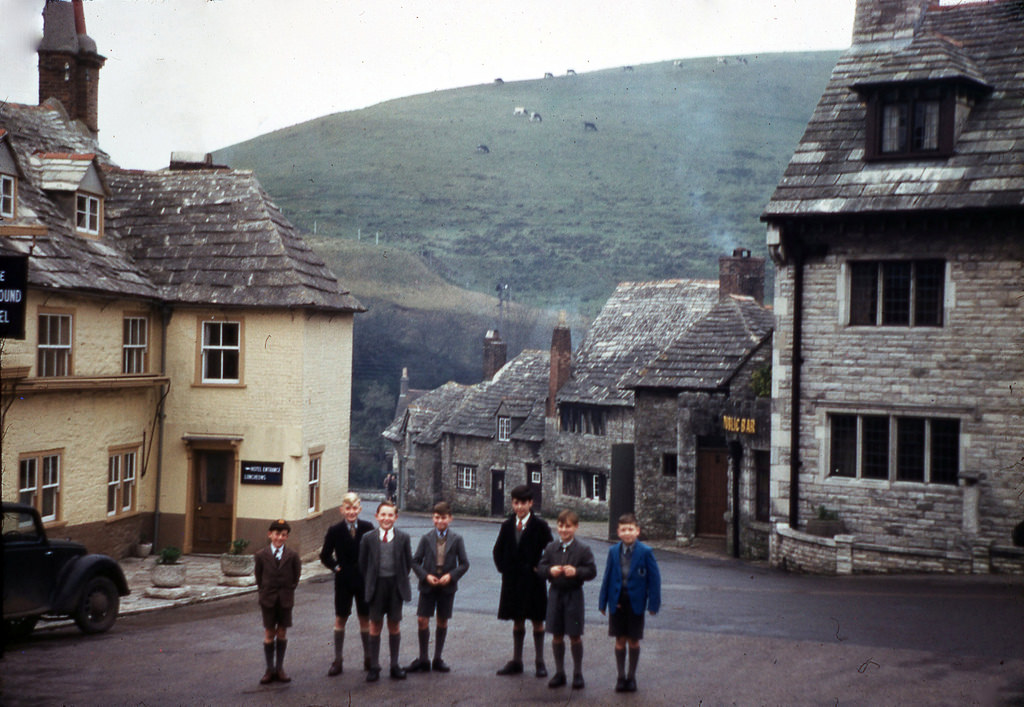
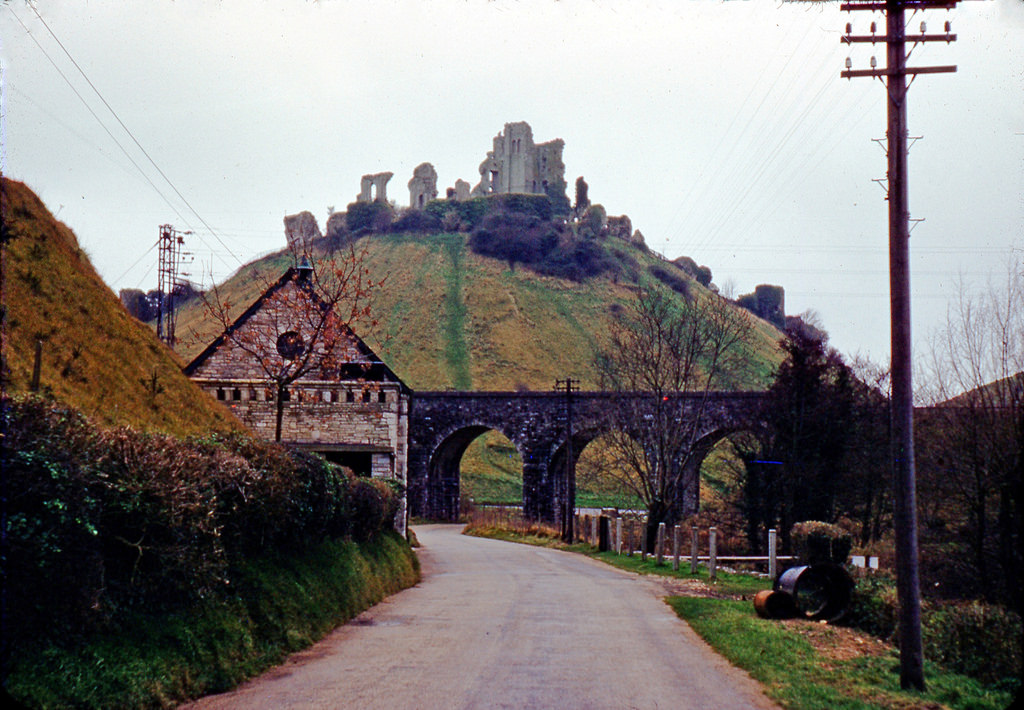
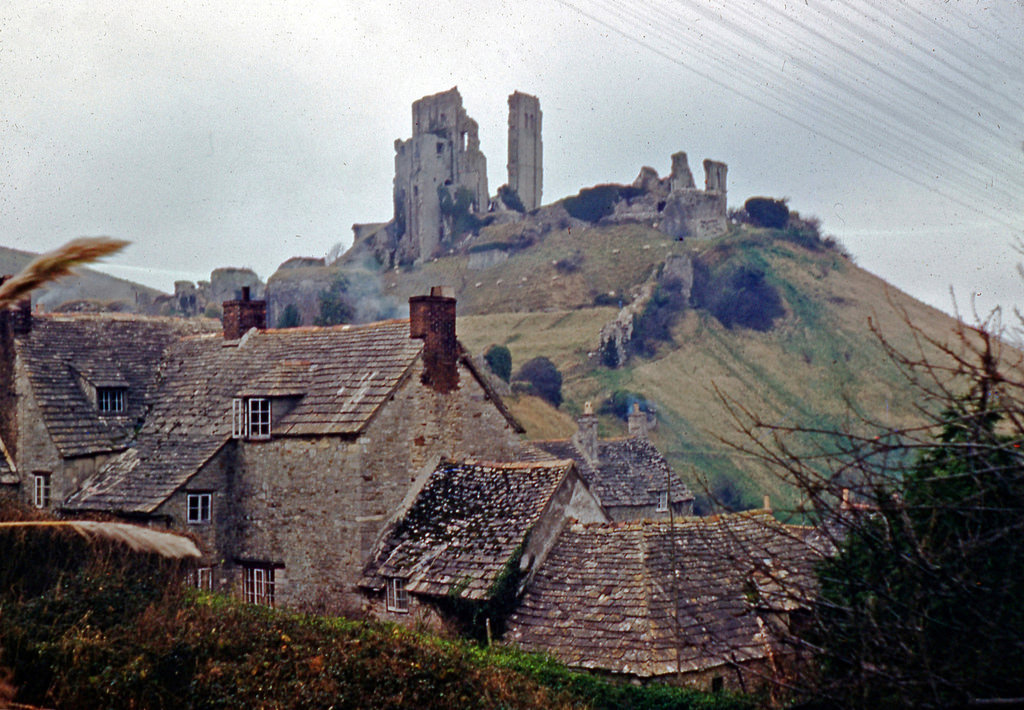
In Dorset, the village of Corfe sat beneath the dramatic ruins of Corfe Castle, which had dominated the hilltop since the Norman period. Its narrow streets and stone cottages looked much as they had for centuries. The same timelessness applied to Shaftesbury’s Gold Hill, a steep cobbled street that offered a view of the Blackmore Vale below — an image that felt far removed from the rebuilding going on in England’s cities.
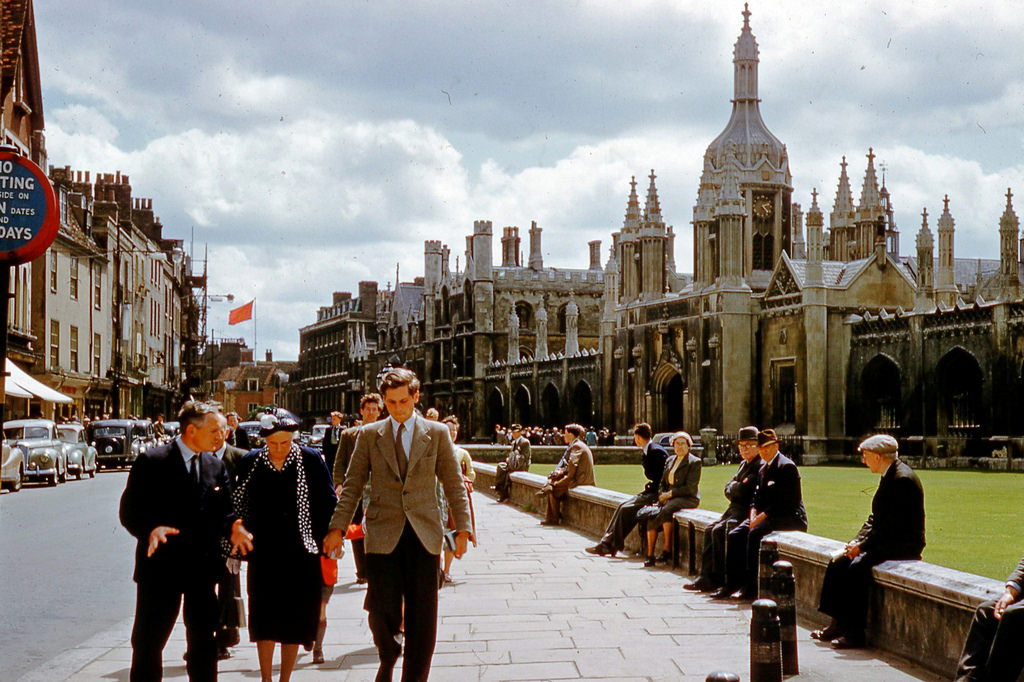
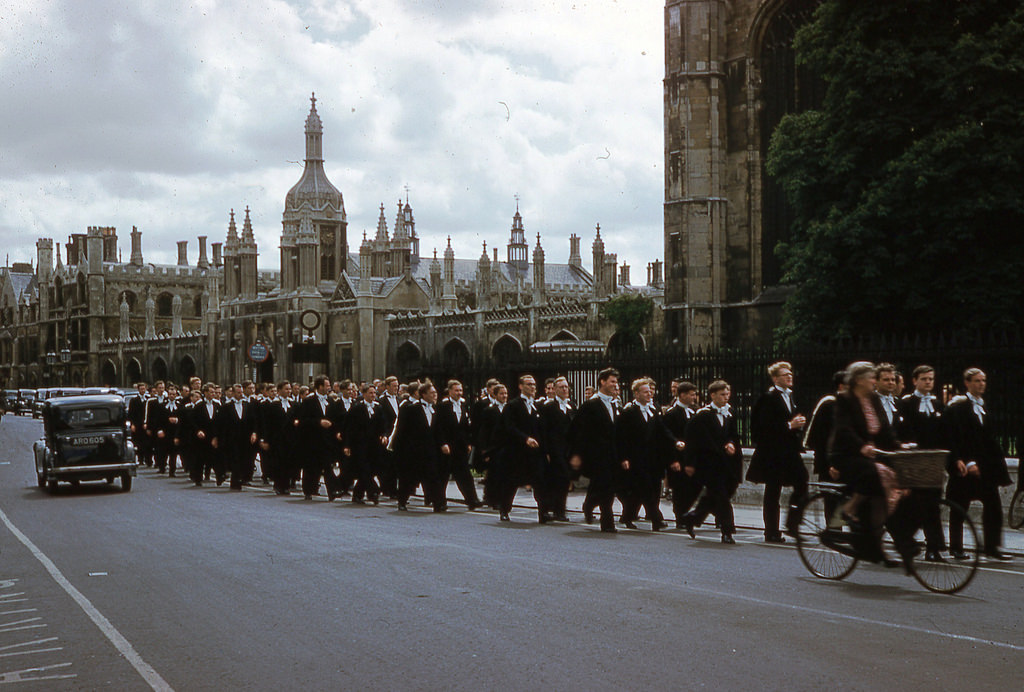
Cambridge in the early 1950s remained one of England’s most photographed cities. Punters moved along the River Cam past the backs of the old colleges, and academic processions still wound through the streets in full ceremonial dress. The city had changed little in outward appearance since before the war, and its stone bridges, riverbanks, and college courtyards gave it an air of continuity amid the wider national upheaval.
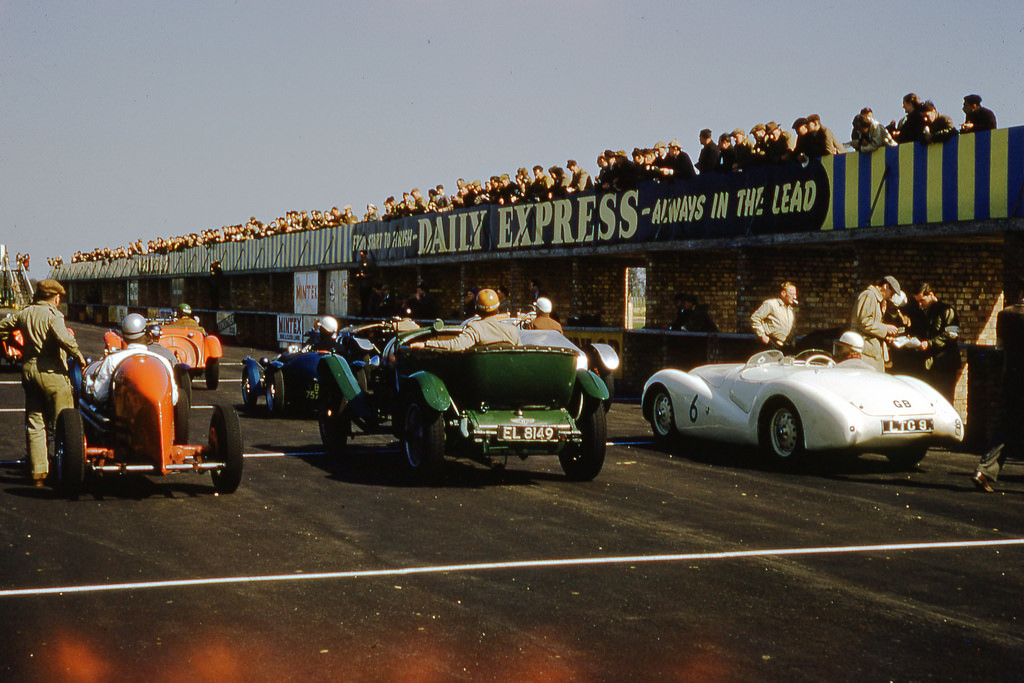
Motor racing was growing in popularity, and Silverstone — converted from a wartime airfield into a racing circuit — hosted some of the most exciting events of the early decade. The starting grid at Silverstone in 1953 captured something of the period’s enthusiasm for speed and modernity, a sharp contrast to the horse-drawn coaches and cobbled streets visible elsewhere across the country.
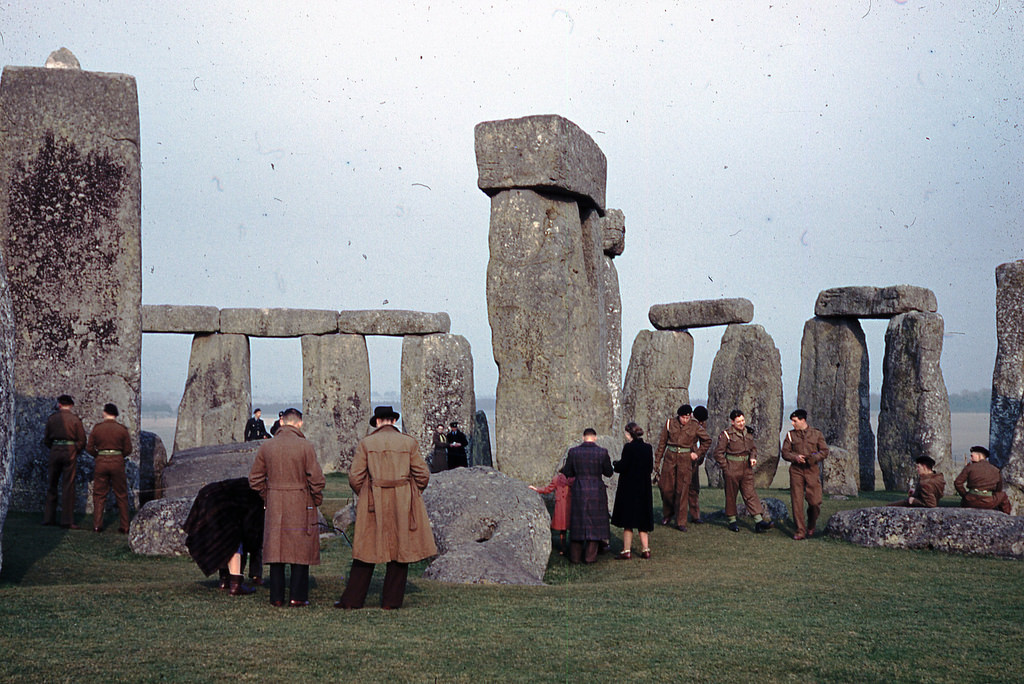
Military personnel were a common sight at England’s historic monuments during this period. Troops visited Stonehenge in 1953, the ancient stone circle that had stood on Salisbury Plain for thousands of years. The presence of soldiers at a prehistoric monument captured the strange overlap of the ancient and the modern that defined so much of 1950s England — a country simultaneously looking back at its long history and forward to a very different future.
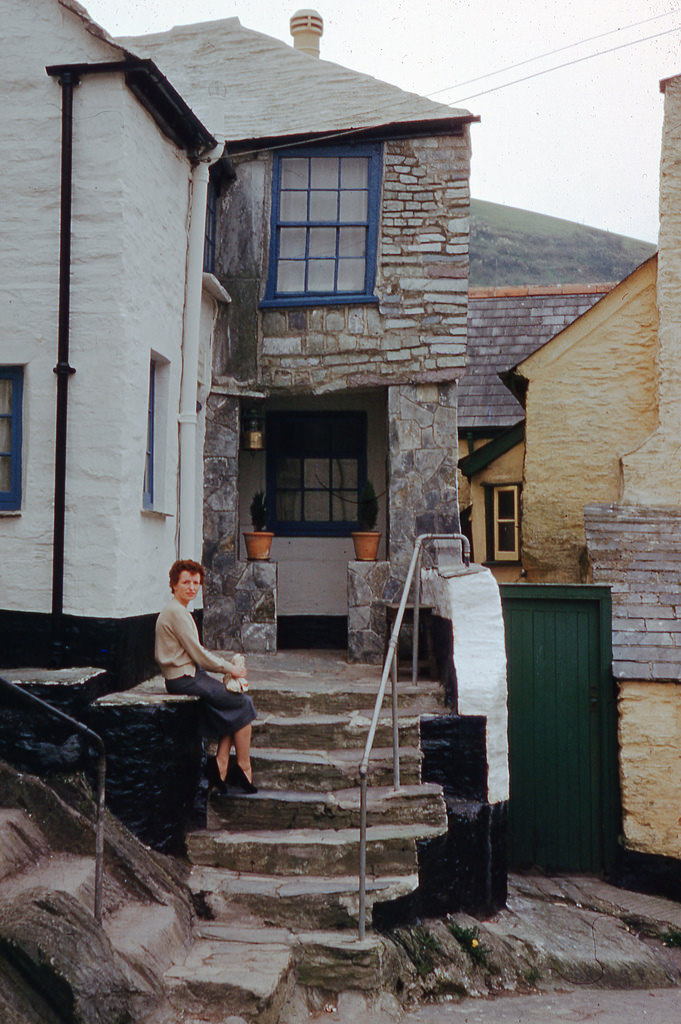
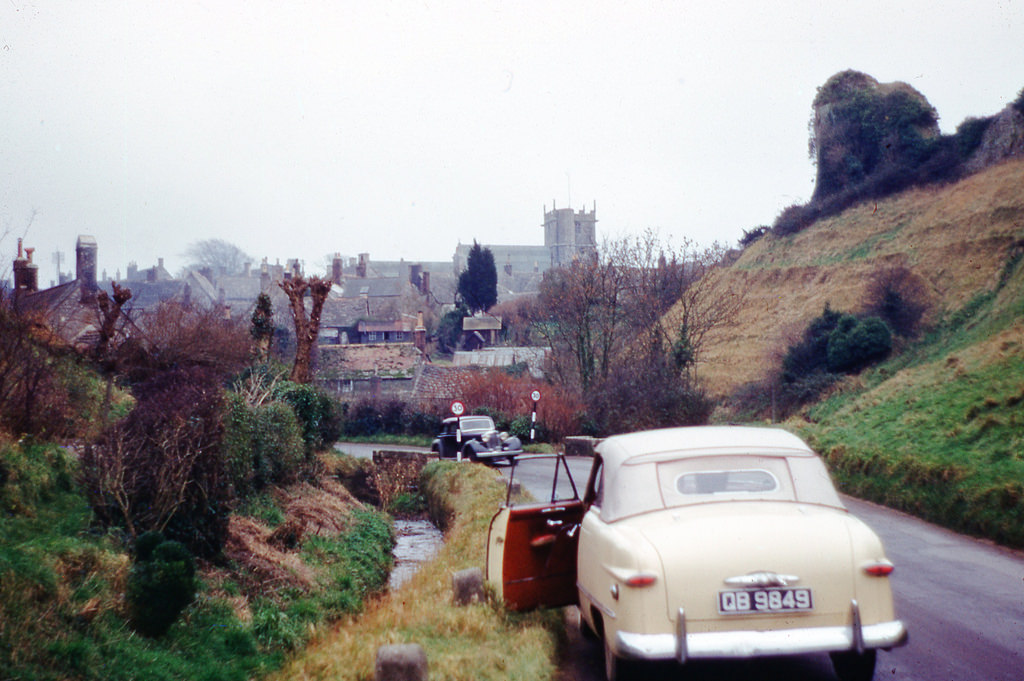
Children in rural towns like Corfe played in streets with almost no traffic, a world away from the busy lorry routes and bus corridors of the larger cities. The pace of life in these smaller communities remained slow and local. Markets, churches, and village pubs were still the centers of social activity, and most families knew their neighbors well.
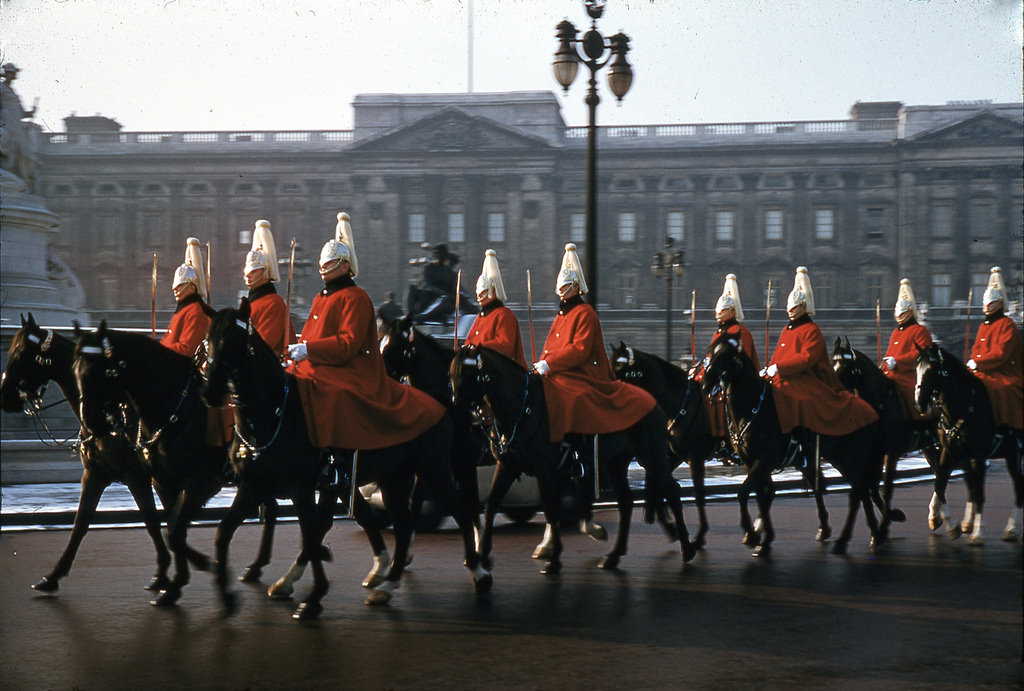
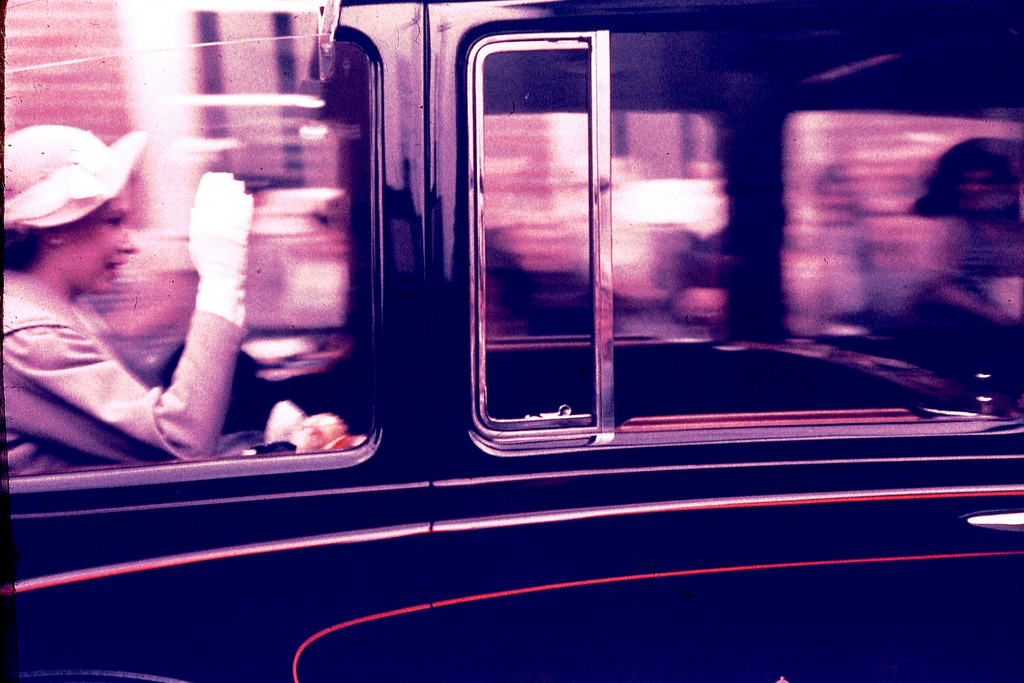
Back in London, the coronation year of 1953 produced some of the most striking images of the entire decade. The Mall was lined with decorations and crowds stretching as far as the eye could see. Trafalgar Square’s fountains ran while people gathered around them. Queen Elizabeth II drove through the streets to cheering crowds, her route watched by thousands who had traveled from across the country to witness the event in person.
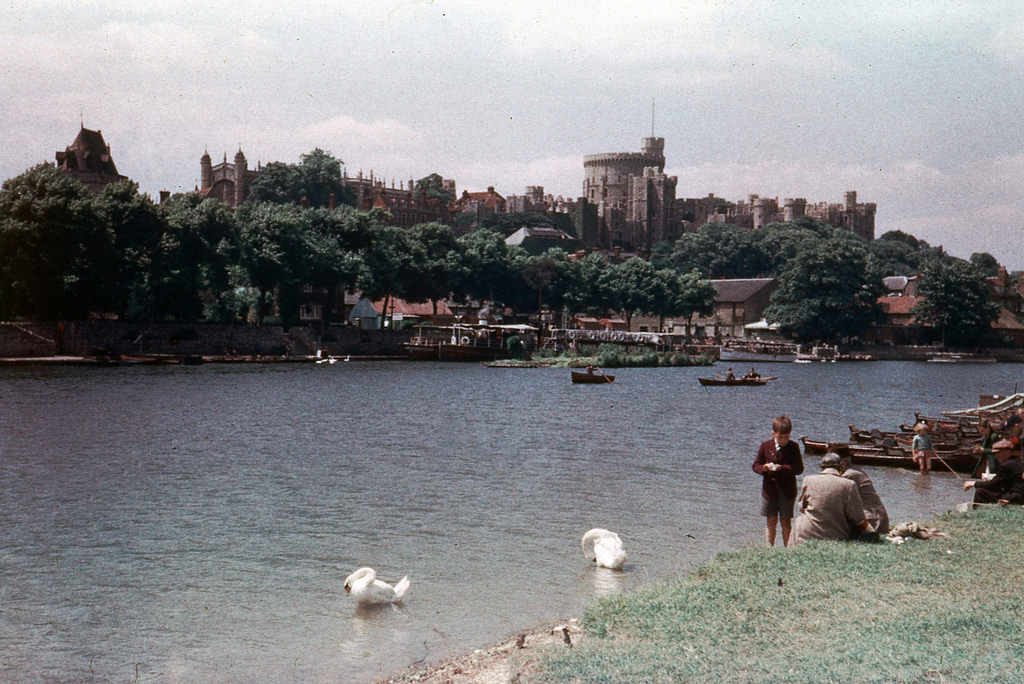
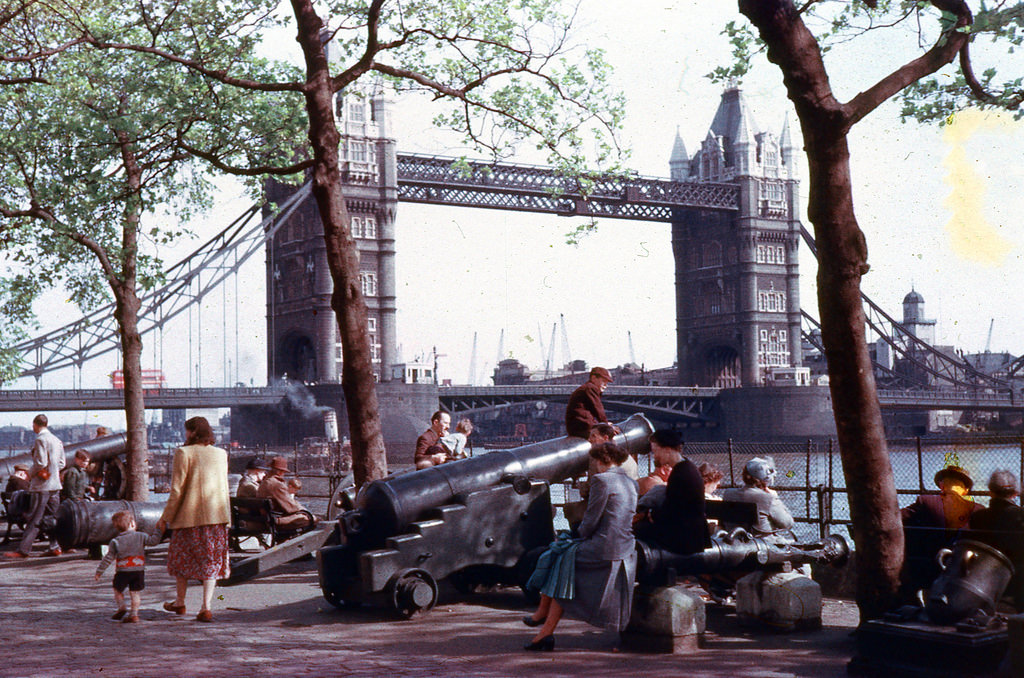
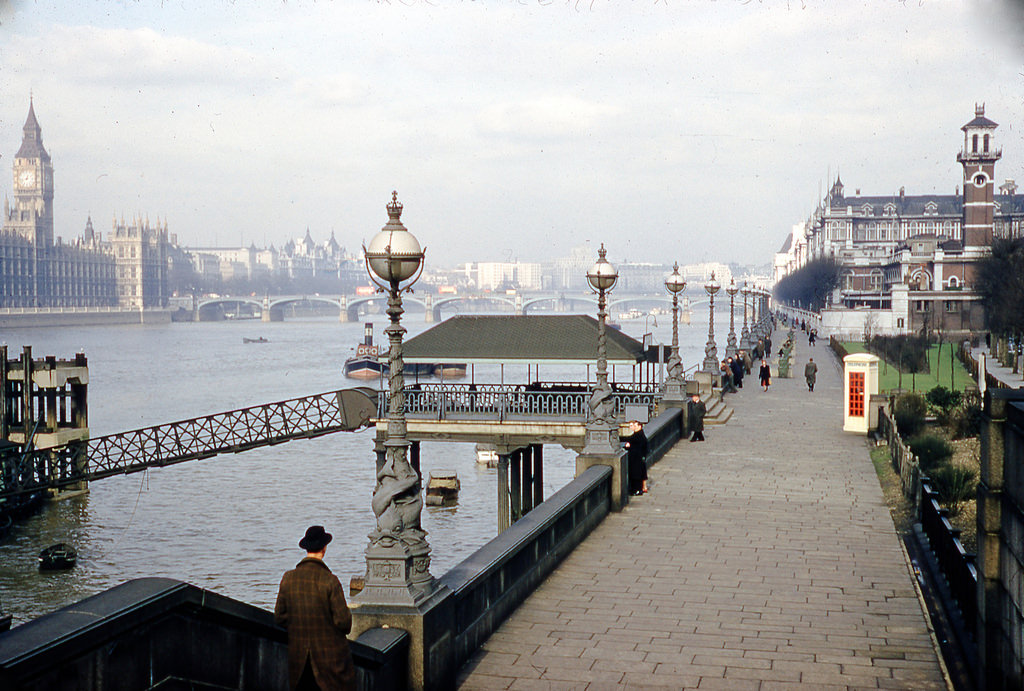
London’s great landmarks — Big Ben, Tower Bridge, Windsor Castle — were photographed extensively during this period, both by professional photographers and by the growing number of tourists visiting the capital. Views from the Thames showed a city still bearing visible damage in some areas but pressing forward with reconstruction. The river itself remained one of the busiest commercial waterways in Europe, with piers and docks handling goods from around the world.
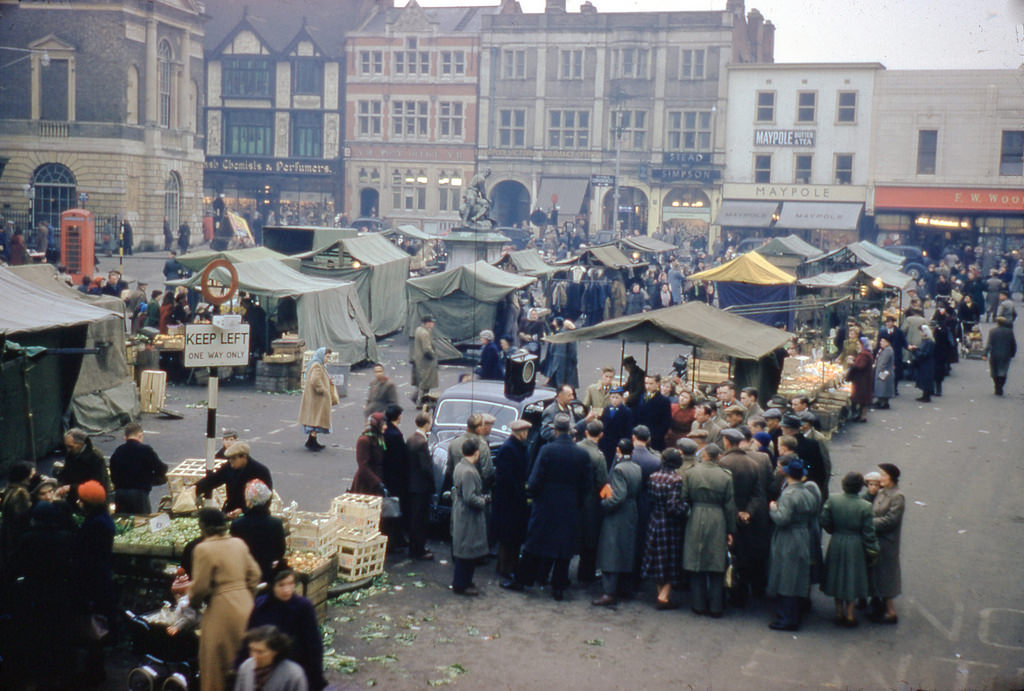
Market days in Bury St. Edmunds drew traders and shoppers from across Suffolk. The market square filled with stalls selling produce, clothing, and household goods, and the scene would have been familiar to anyone who visited the town a century earlier. These markets were practical, not picturesque — they were where people actually bought what they needed, particularly in rural areas where shops were sparse.
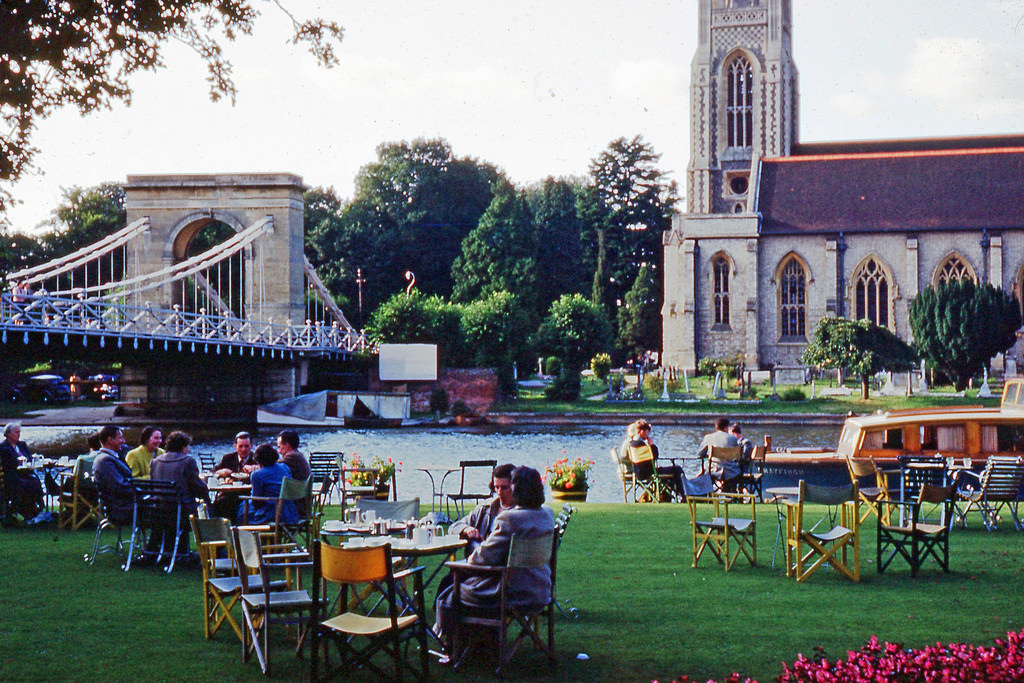
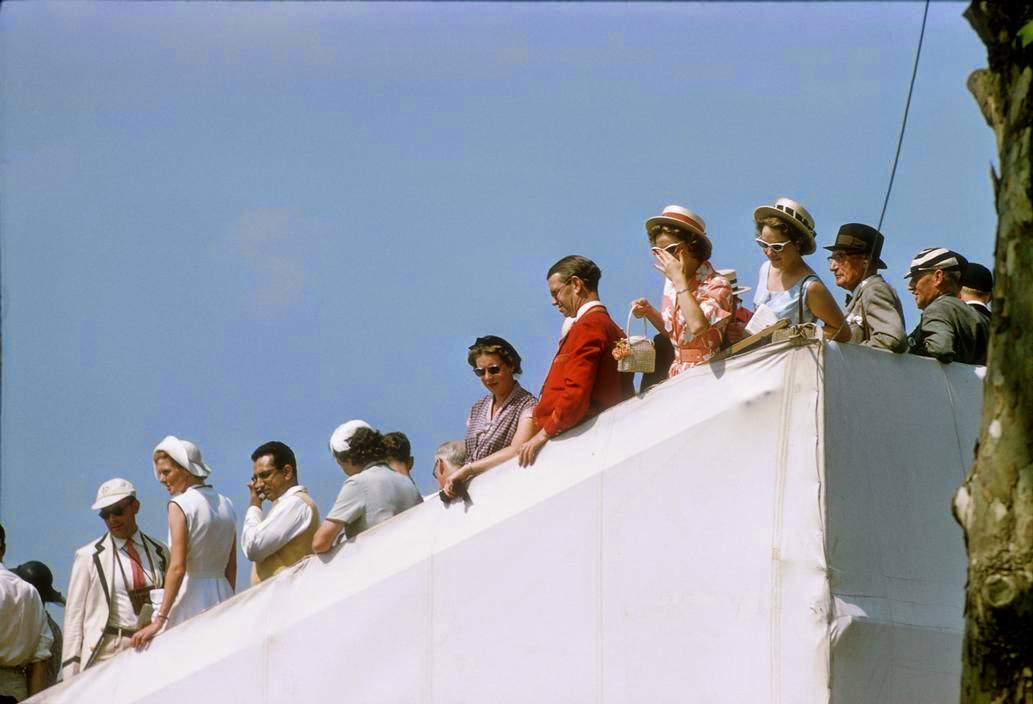
By the mid-1950s, leisure culture was expanding. The Henley Royal Regatta on the Thames drew well-dressed spectators each summer, a tradition that had continued since 1839. Brighton’s beach attracted city-dwellers from London looking for a day or weekend away, the shingle shore packed with families in warm weather. These photographs from 1956 and 1957 show an England settling into peacetime prosperity, with people spending more freely and traveling more often than they had in the previous decade.
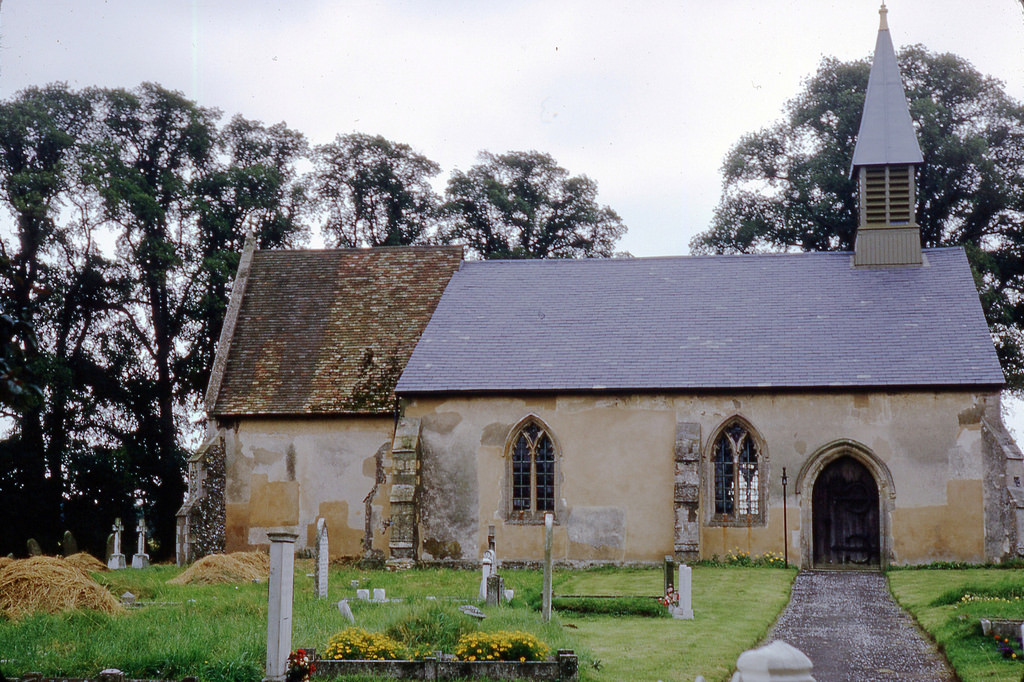
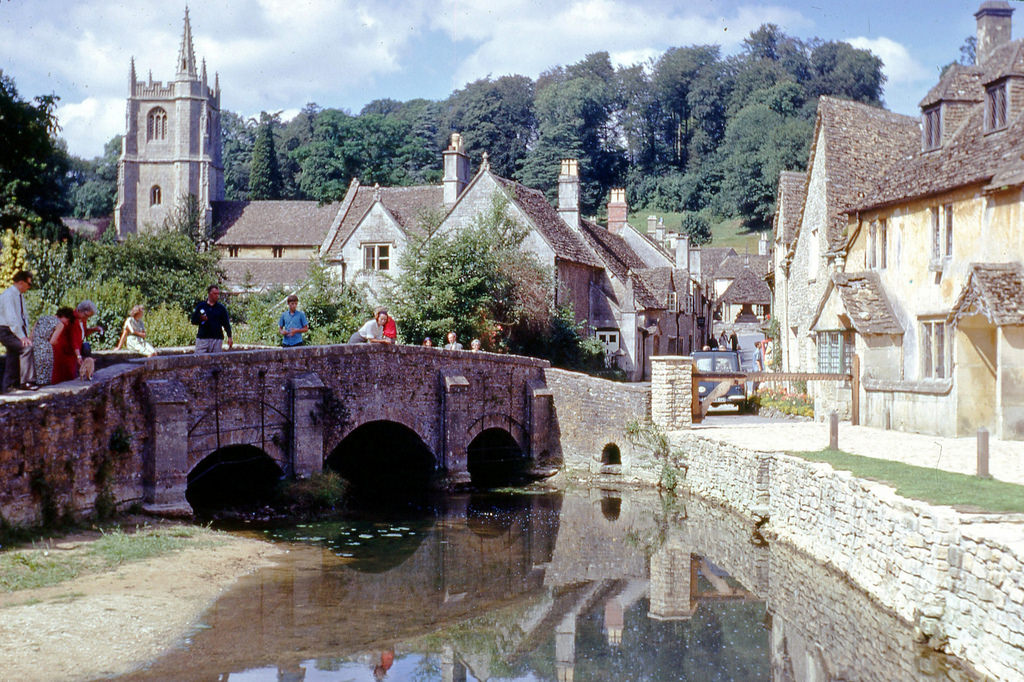
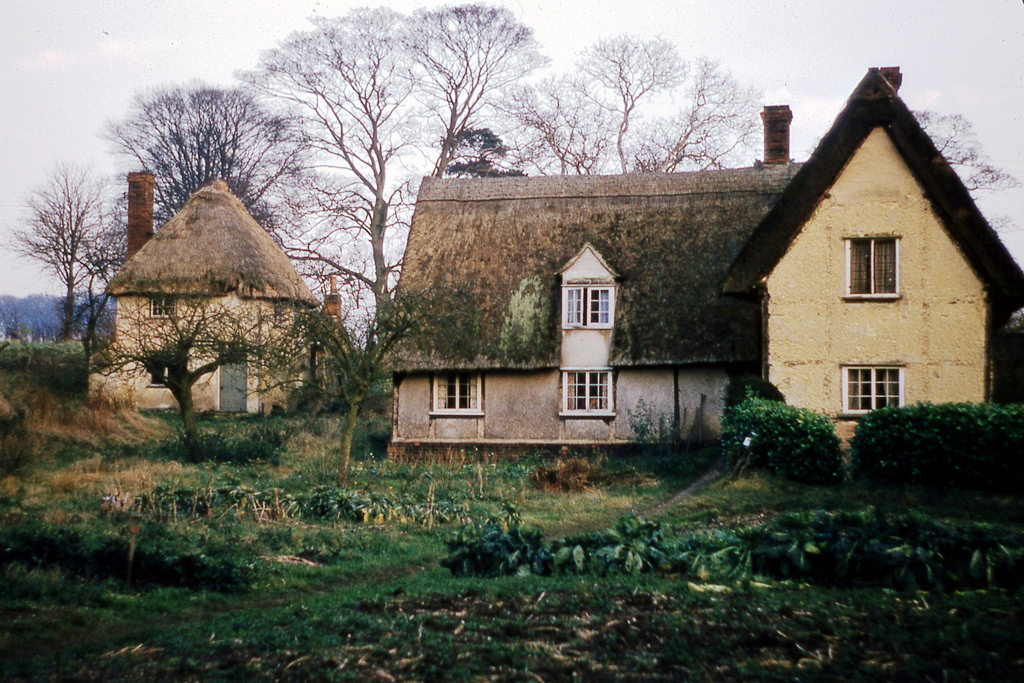
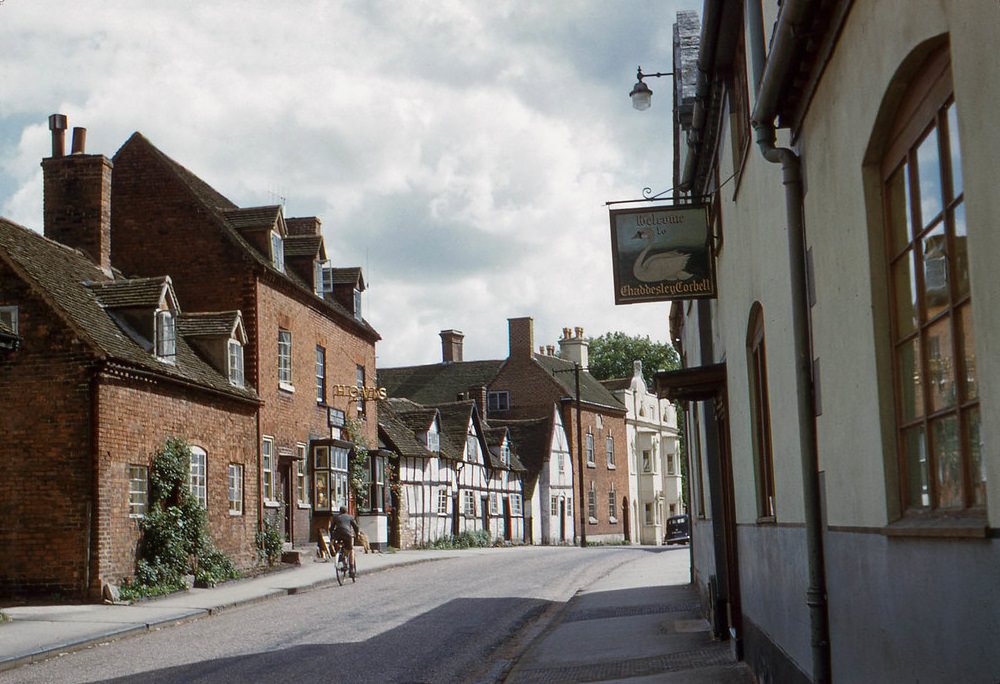
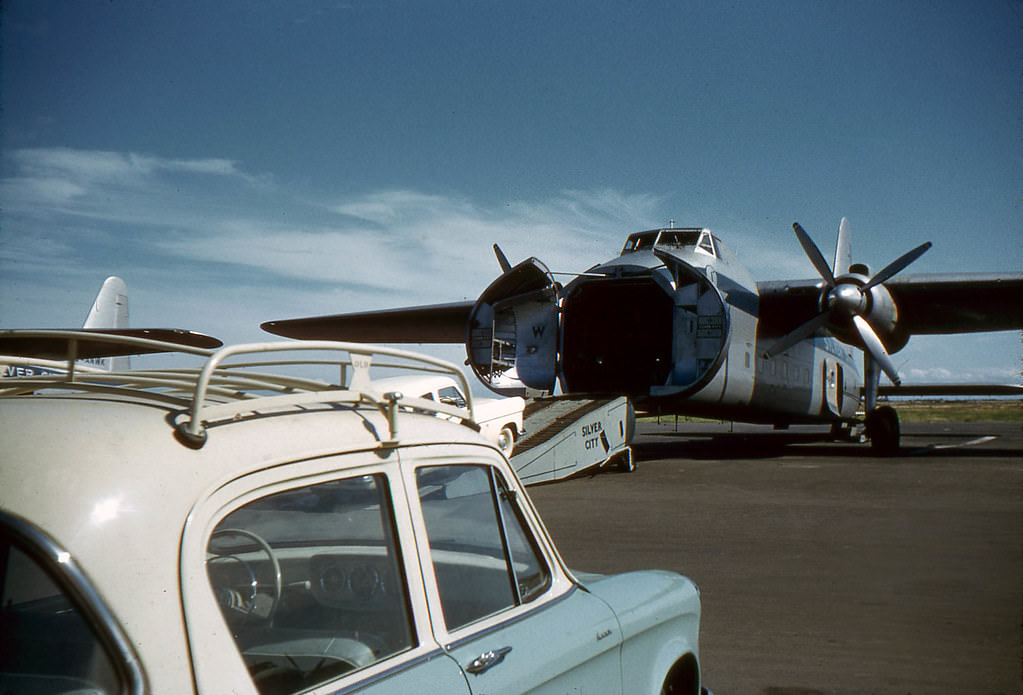
In the Worcestershire village of Chaddesley Corbett, half-timbered houses lined the main street much as they had since the Tudor period. Small airfields like Lydd Ferryfield, which operated cross-channel flights, represented a newer kind of England — one starting to connect with the continent in ways that had once been reserved for the wealthy. Across the country, old and new sat side by side, sometimes awkwardly, always vividly.
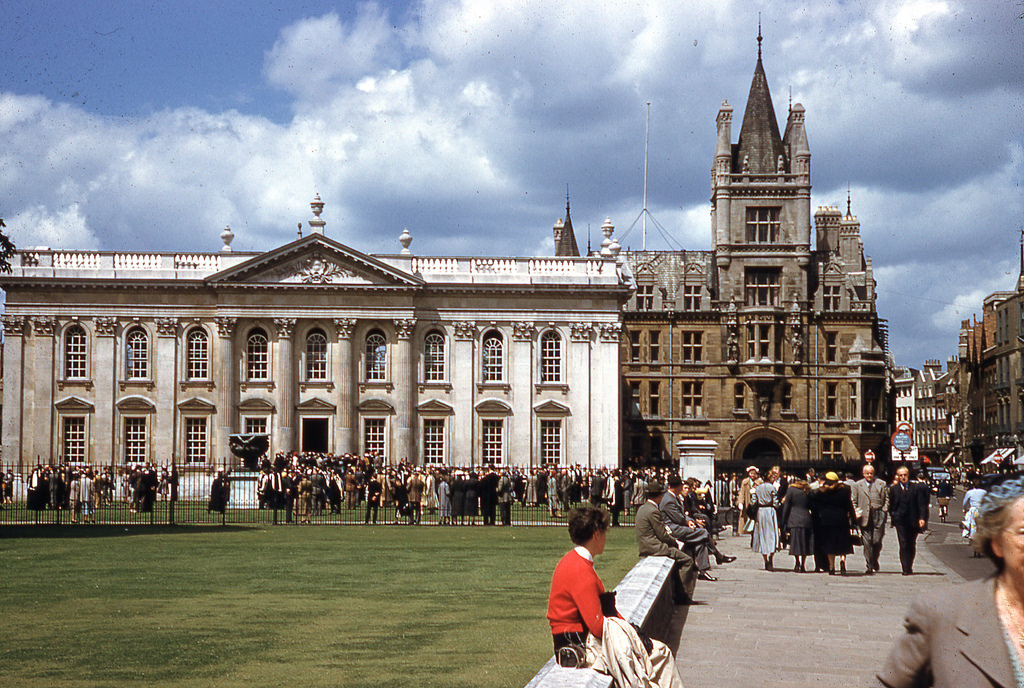
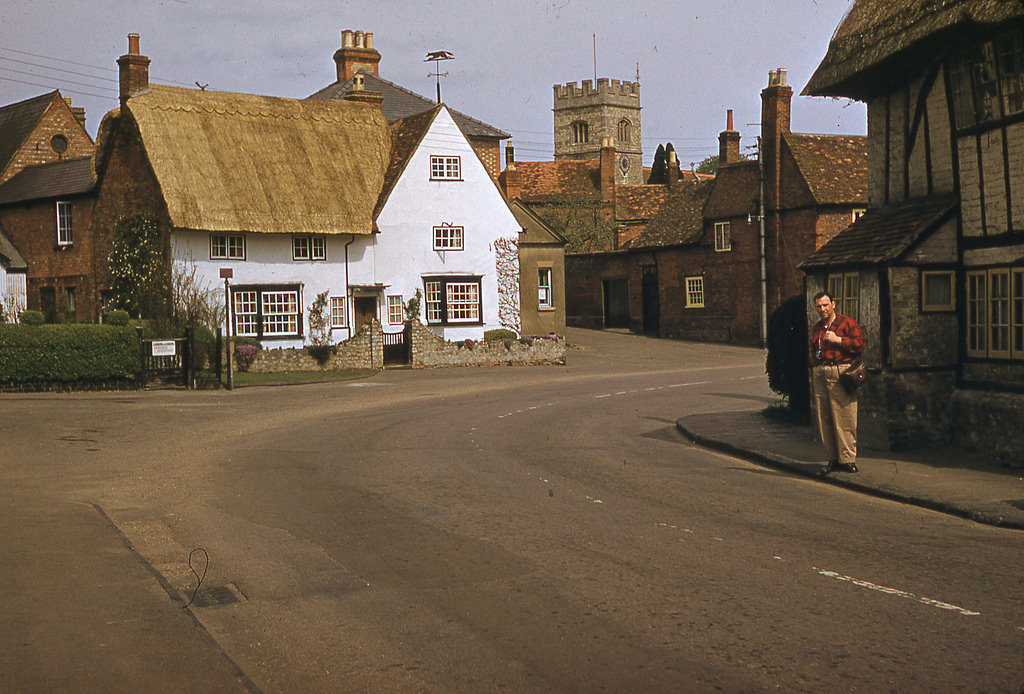
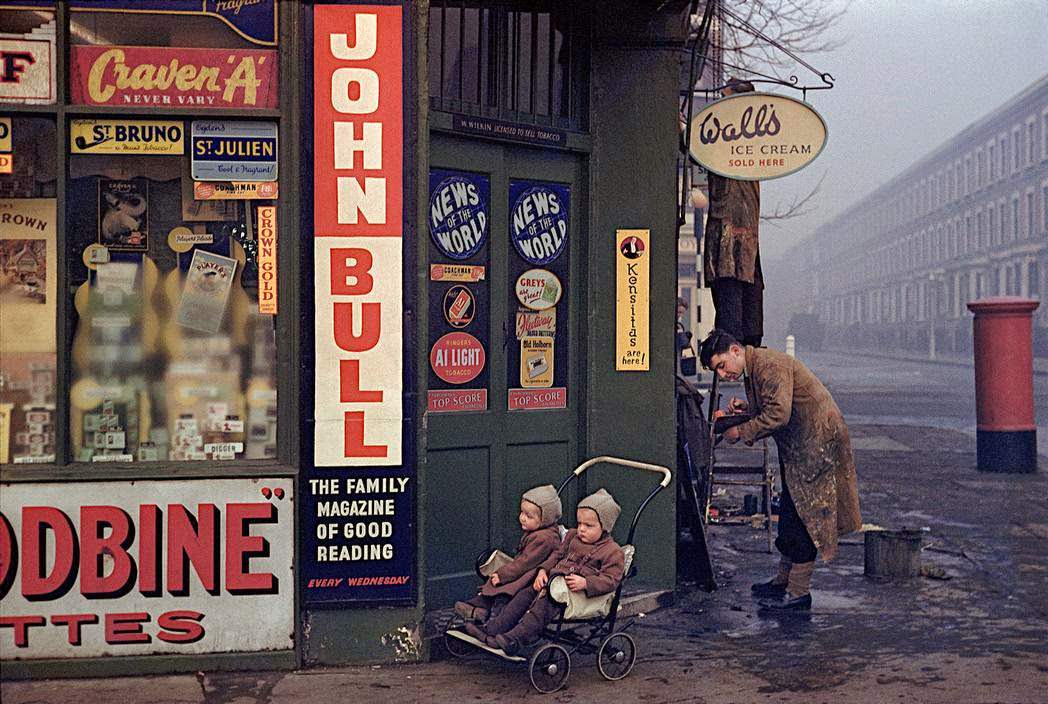
Street corners in working-class London neighborhoods like World’s End in Chelsea showed a city that was still dense, gritty, and unapologetically ordinary. Brick terraces ran down narrow streets, shops occupied ground floors, and people went about their daily routines on foot. These were the neighborhoods where most Londoners actually lived — far from the ceremonial pageantry of Trafalgar Square and Buckingham Palace, but just as much a part of the city’s 1950s story.





With all those white faces and everything looking so quaint and old fashioned, this is just as likely a mistaken photo of Scotland in 2020.
Some of those are the wrong titles.
The most striking thing is the lack of litter
Nobody had anything to throw away.
Thus, it’s the same as it is now, but without any of the changes that have occurred in the last 60 years
Yes….so what
So, do you mean it should look different?