
When Germany was divided after World War II, two very different countries took shape on the same soil. In 1949, the German Democratic Republic — the GDR, or East Germany — was formally established in the Soviet-controlled zone. To the west, the Federal Republic of Germany emerged under the influence of the United States, Britain, and France. That division held firm for forty years, until the Berlin Wall fell in 1989.
The GDR operated as a communist state where the government controlled housing, food distribution, and basic services, all of which were heavily subsidized. In practice, that system struggled. Economic mismanagement pushed the country into debt, and over time inflation and unemployment climbed far higher in the East than in the West. Yet daily life — school runs, weekend trips, local festivals, and neighborhood routines — continued in full color. The photographs collected here, taken largely in 1974, document that reality with striking clarity.
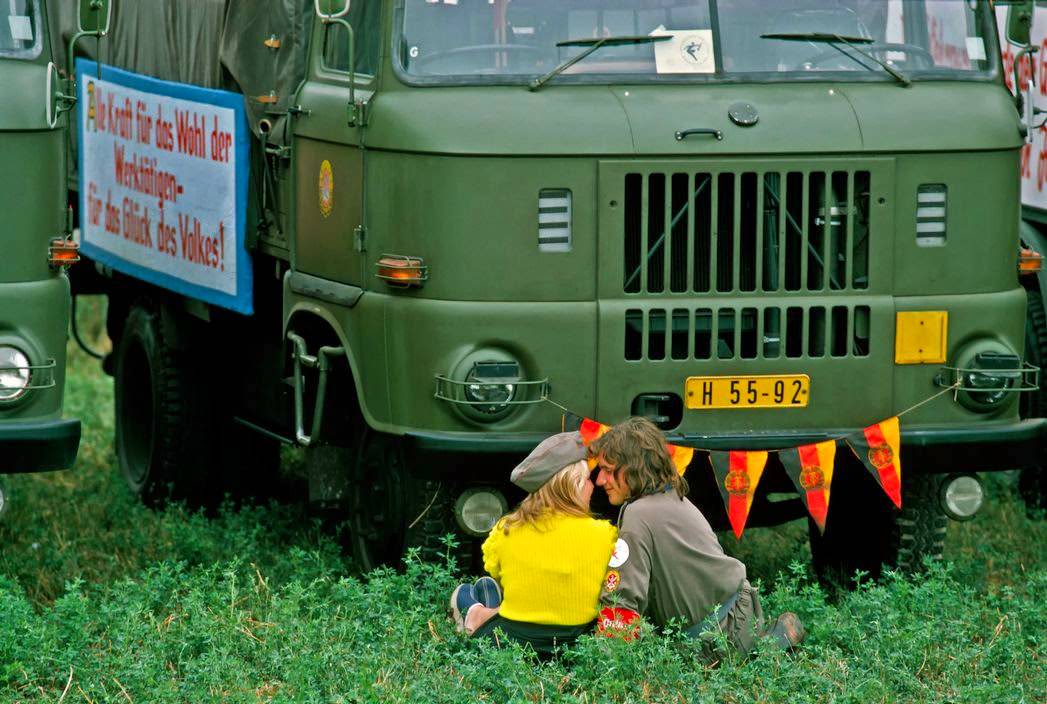
Military events were common public fixtures in East Germany, and air shows drew large crowds. Off-duty moments like this one — caught between official duties — offer a glimpse of ordinary human behavior inside a strictly regimented system. The uniforms are crisp, but the moment is relaxed.
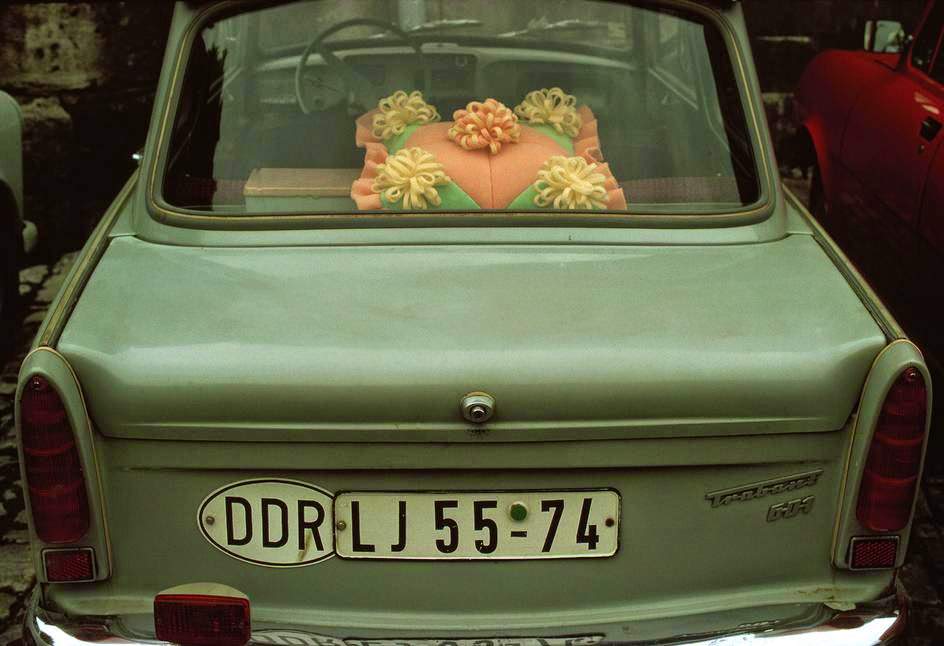
The Trabant — affectionately called the “Trabbi” — was the signature vehicle of East German life. Produced by the state and notoriously difficult to obtain, waiting lists for a new Trabant stretched for years. Owners personalized them however they could, as this rear-window decoration shows. The car became one of the most recognizable symbols of the GDR era.
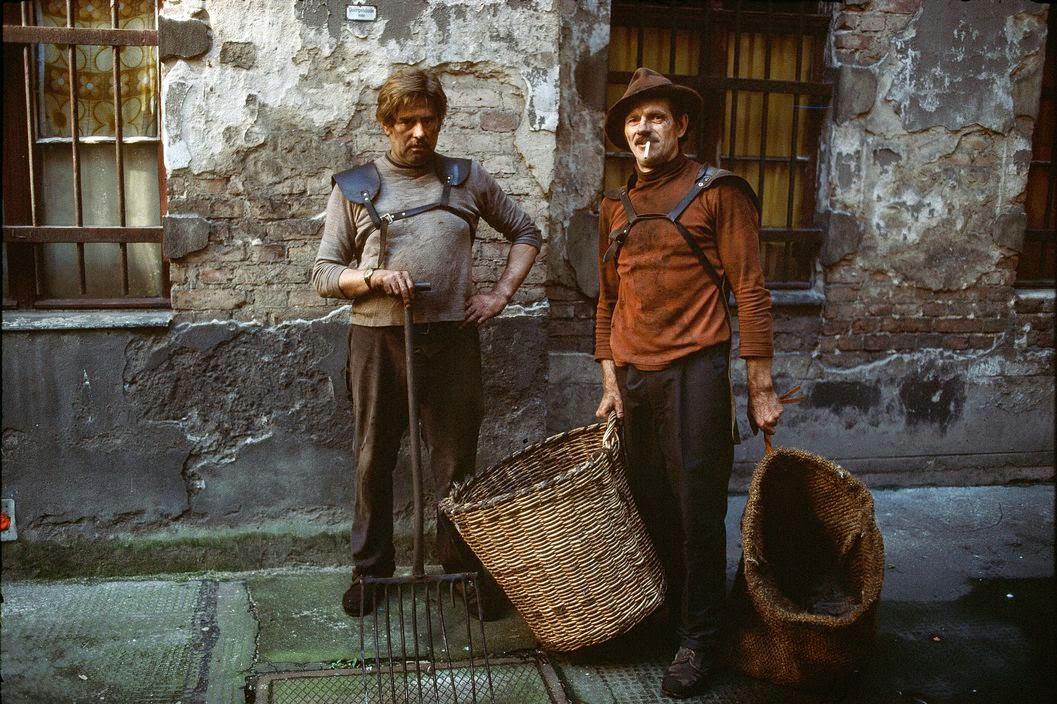
Brown coal — also called lignite — was the primary heating fuel for East German apartment blocks throughout the 1970s. Manual delivery like this was a standard part of urban life in areas such as Prenzlauer Berg, one of East Berlin’s densely populated residential districts. The coal dust and physical labor required were everyday realities for workers and residents alike.
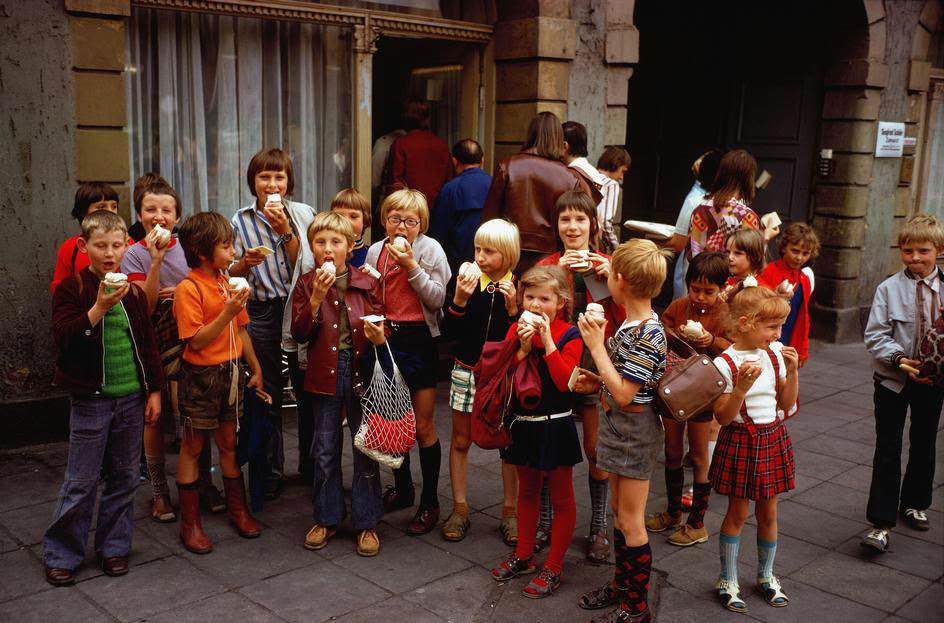
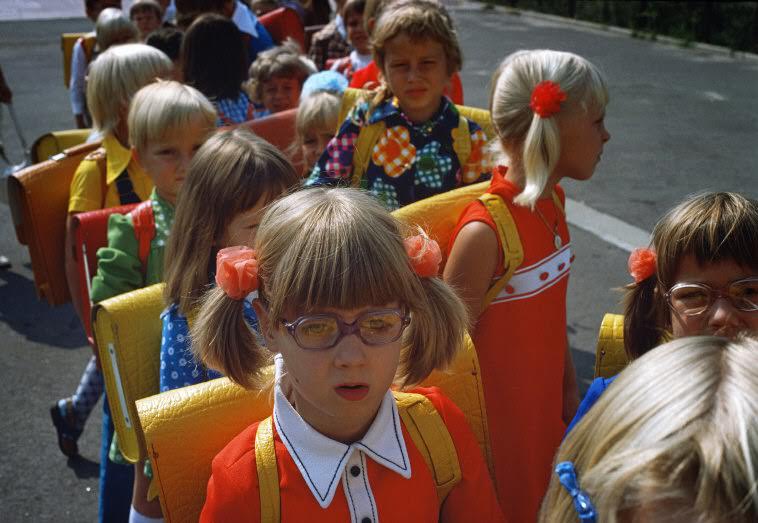
Children’s outings and school trips were organized through the state educational system, which kept young people engaged in structured group activities. Simple pleasures — like ice cream in a town square — appear throughout these photographs as a counterpoint to the political machinery that shaped nearly every aspect of GDR public life.
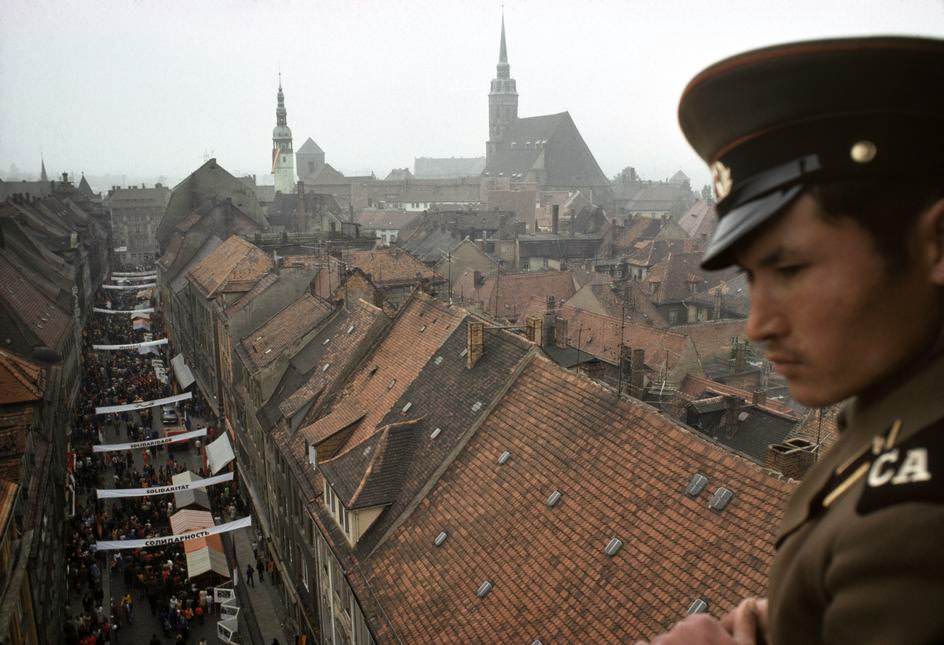
Soviet military personnel were a visible presence across East Germany throughout the entire GDR period. Here, a soldier surveys the medieval skyline of Bautzen — a town in the Lusatia region, also home to the Sorbian minority. The image quietly underlines the relationship between the GDR and its Soviet patron, which controlled the country’s political direction from Moscow.
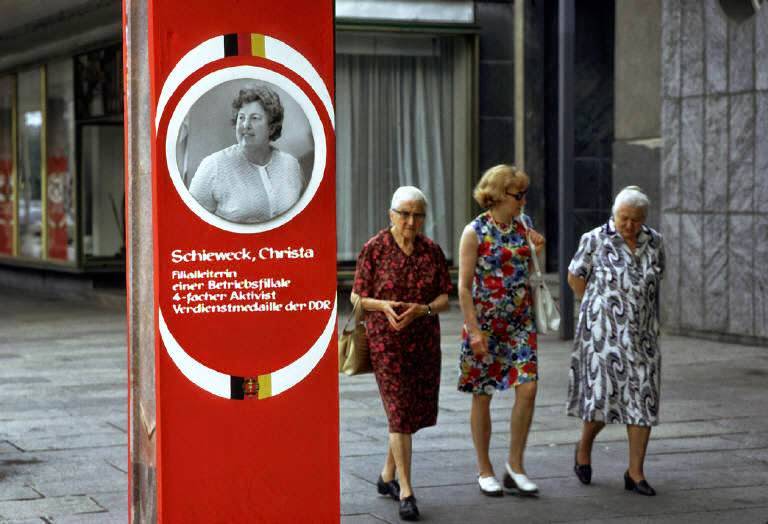
The renaming of cities was one way the GDR stamped its ideology onto the physical landscape. The city of Chemnitz was renamed Karl-Marx-Stadt in 1953, a title it held until German reunification in 1990. Streets, squares, and landmarks across the country were similarly renamed to honor communist figures and Soviet allies. The three women walking here are surrounded by that renamed world, going about their day without fanfare.
East Germany preserved a remarkable collection of medieval towns and historic architecture, particularly in regions like the Harz mountains. Wernigerode, with its well-maintained half-timbered buildings and cobblestone streets, attracted domestic tourism throughout the GDR era. The state promoted these historic sites as evidence of German cultural heritage under socialist stewardship.
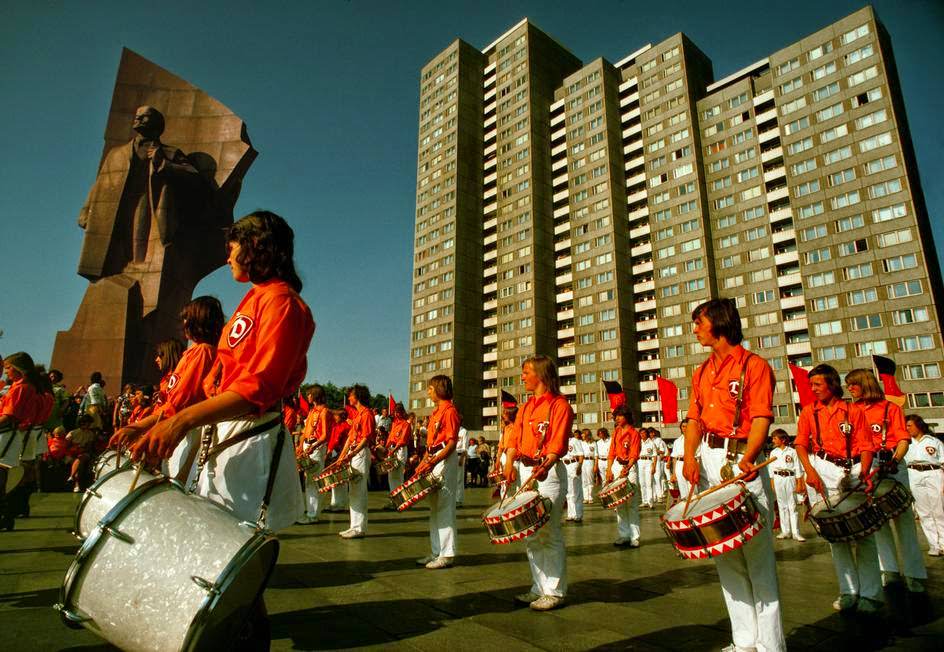
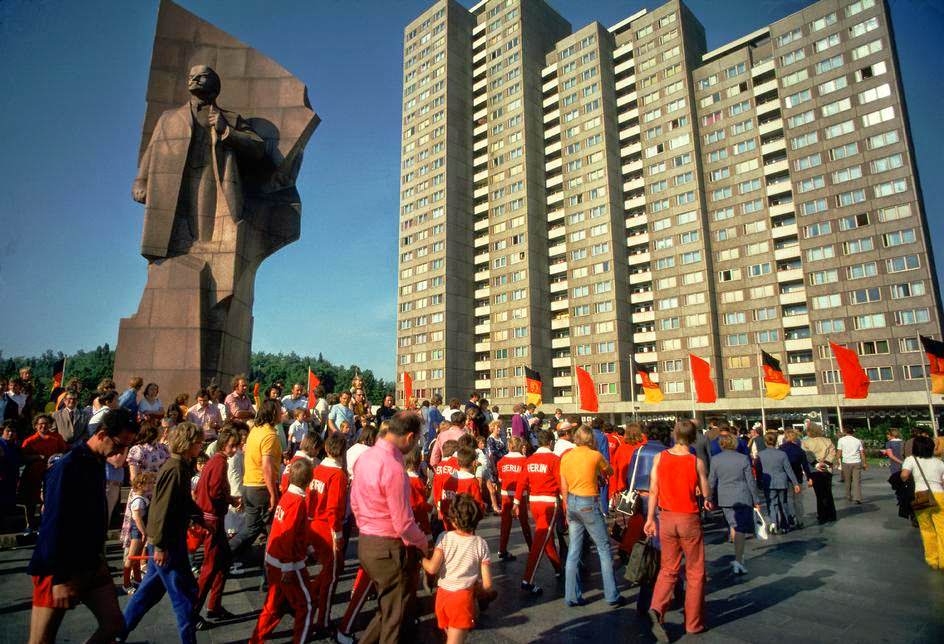
The Free German Youth — known by its German initials FDJ — was the GDR’s official communist youth organization. Membership was not technically mandatory, but social and professional consequences for non-members were significant. Bands and performance groups within the FDJ regularly appeared at public ceremonies and political gatherings, as shown here at a Lenin statue framed by the new concrete housing blocks that defined East Berlin’s postwar skyline.
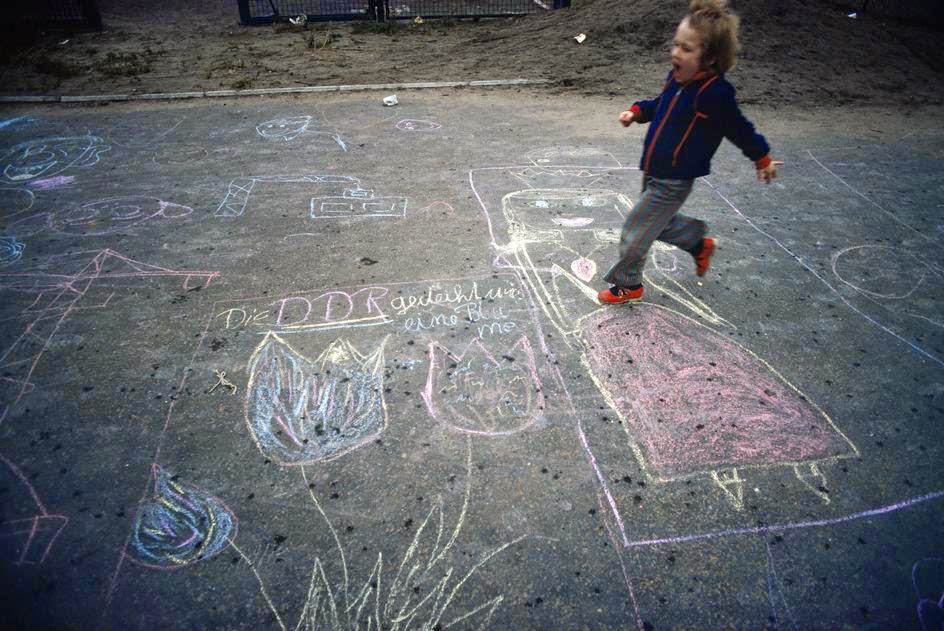
Schoolyards across East Berlin showed the same mix of childhood routine and state-organized environment found everywhere in the GDR. The painted asphalt games in this photo are familiar to any era, but the surrounding context — state-run schools, ideologically guided curricula, and mandatory youth organization membership from a young age — shaped what childhood meant in the GDR in specific and deliberate ways.
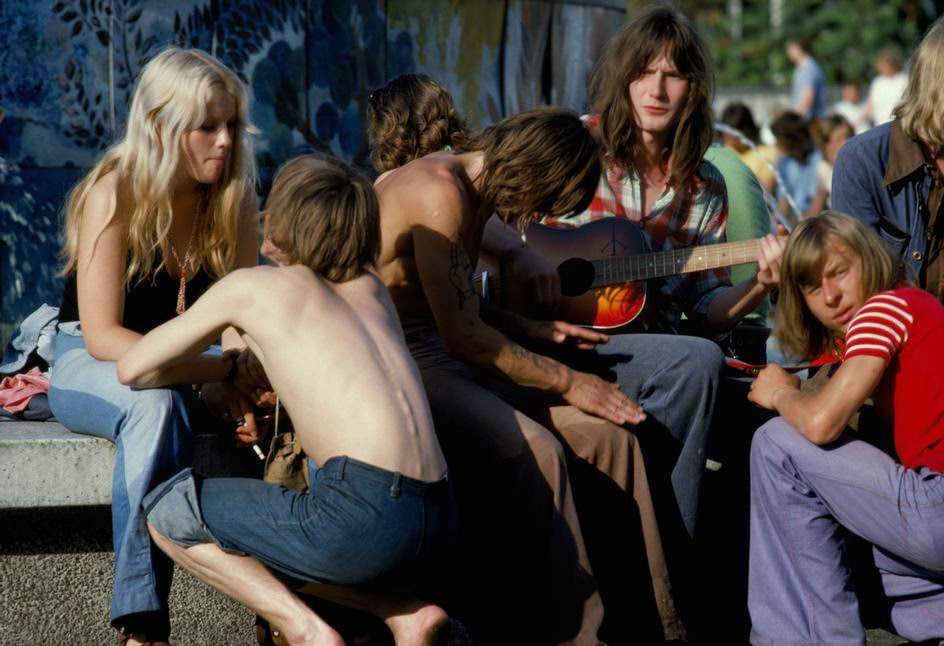
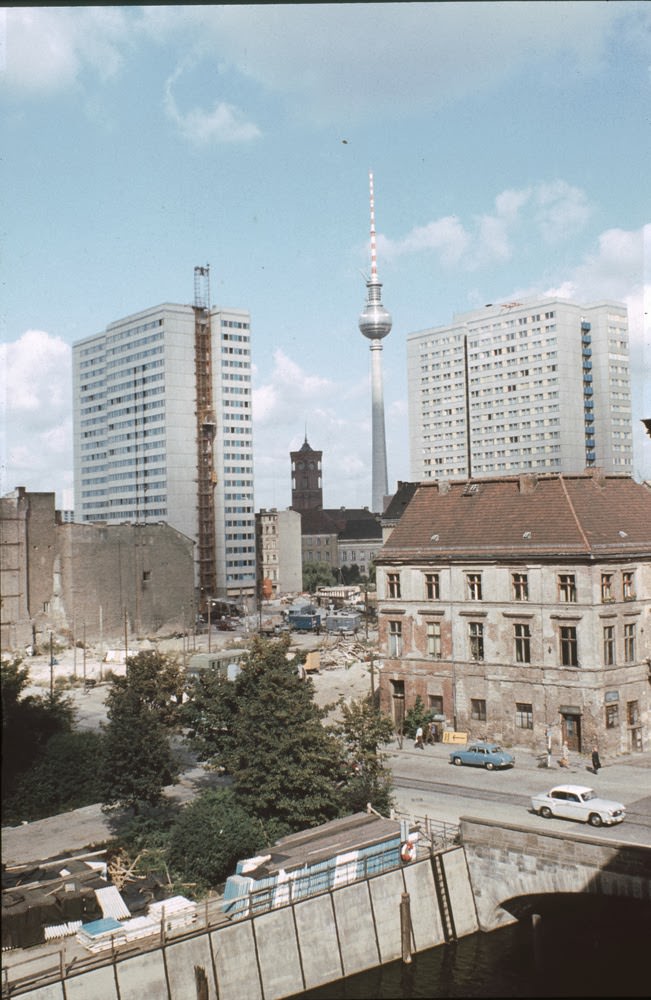
Alexanderplatz was the central public square of East Berlin and one of the most recognizable spaces in the GDR. The television tower that loomed over it was completed in 1969 and became a deliberate symbol of socialist achievement. For teenagers, the square’s fountain was simply a place to gather. That contrast — state symbolism and everyday youth culture occupying the same space — runs through many of these images.
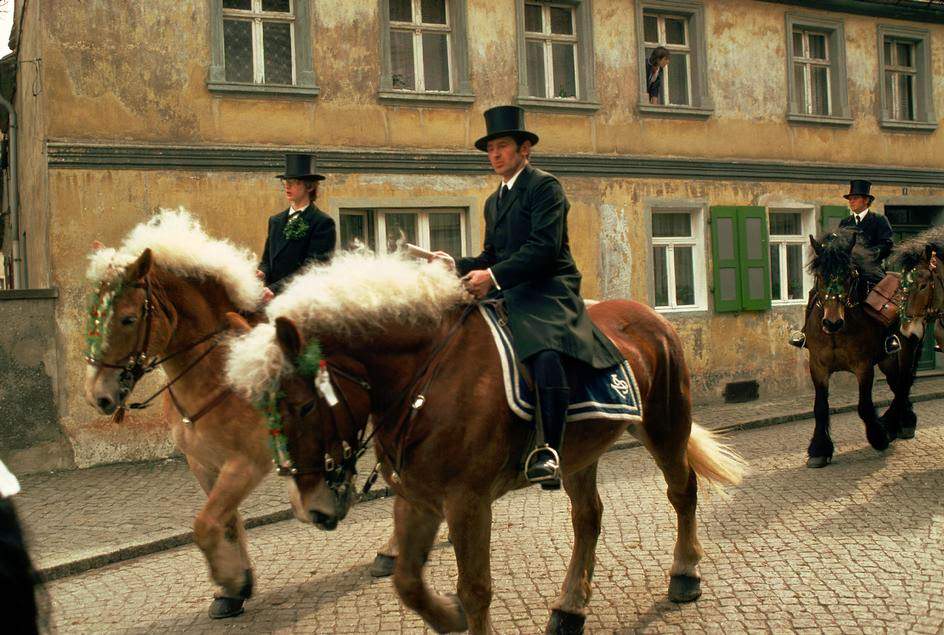
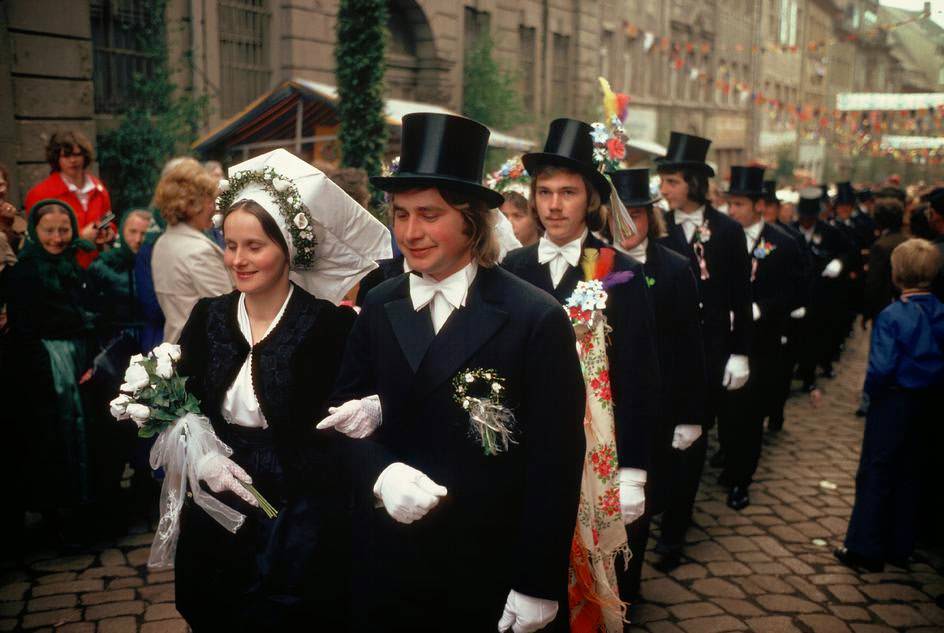
The Sorbs are a Slavic minority group native to the Lusatia region of eastern Germany, and Bautzen served as one of their cultural centers. Despite the GDR’s atheist state ideology, certain traditional Sorbian customs — including the Easter Riders procession, in which men on horseback carry news of Christ’s resurrection between villages — were allowed to continue. The state recognized Sorbian cultural identity as distinct and gave it limited official support.
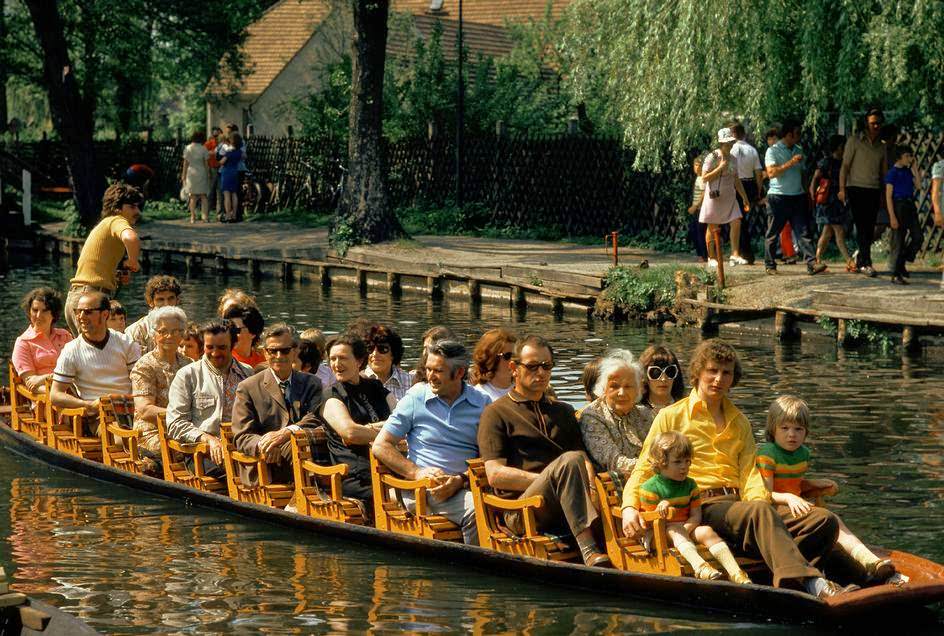
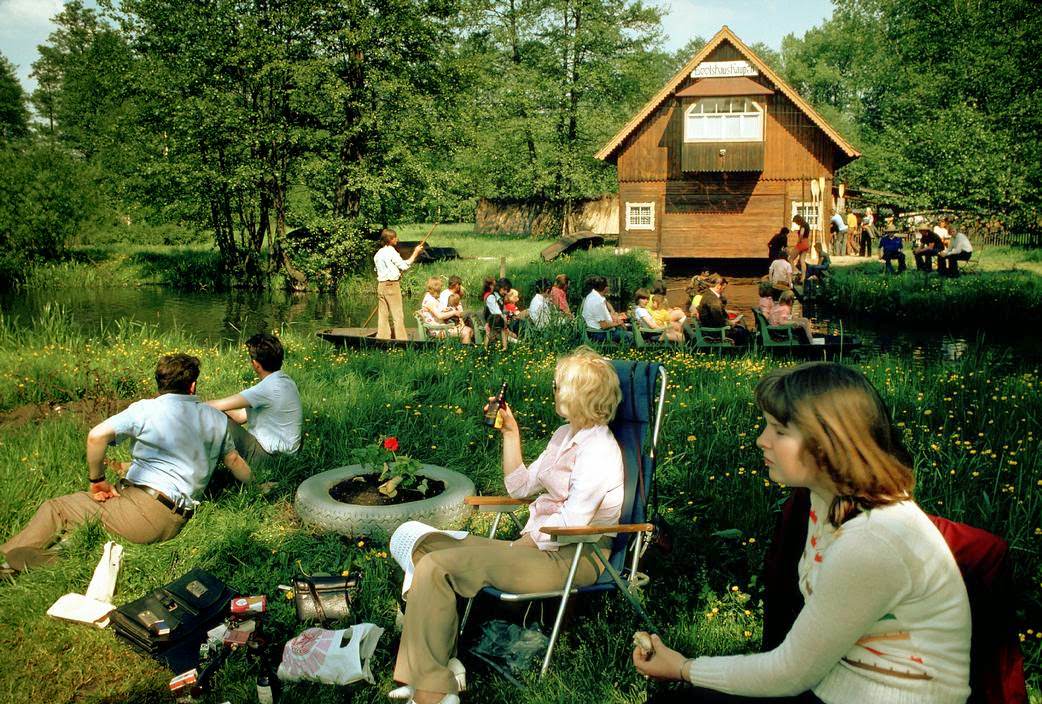
The Spreewald — a network of forested canals and waterways south of Berlin — was one of the most popular vacation destinations for East Germans. Weekend boat trips there were a regular escape from urban life, particularly for families in East Berlin. Access to leisure and holiday travel within the GDR was structured and often organized through workplace or union programs, but the Spreewald’s natural beauty drew visitors regardless.
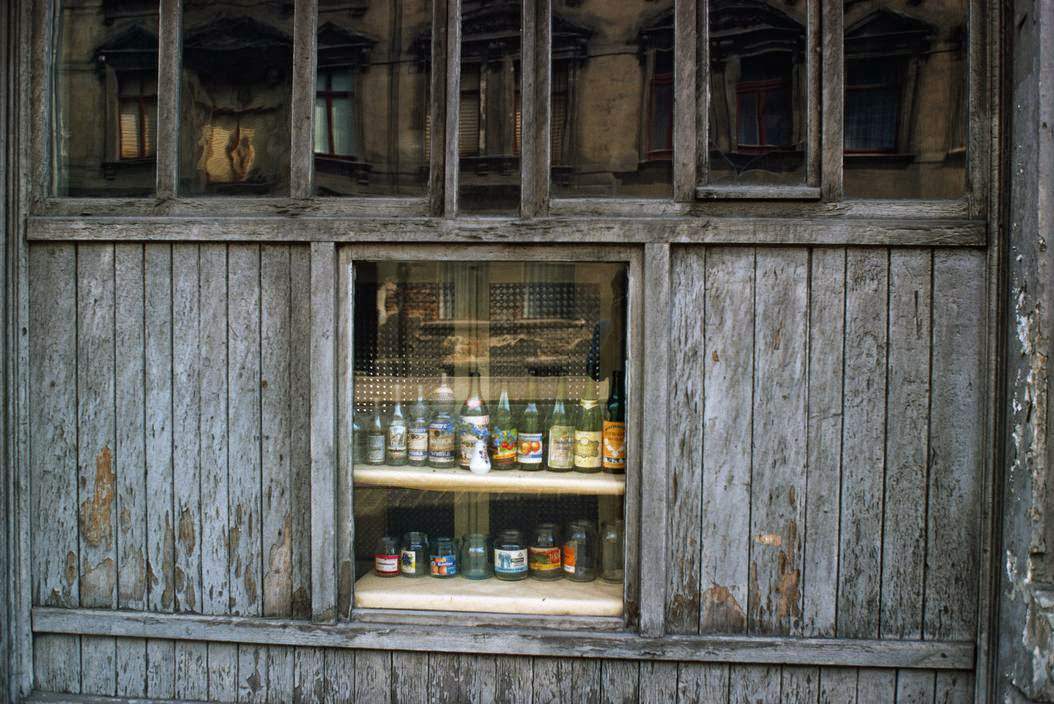
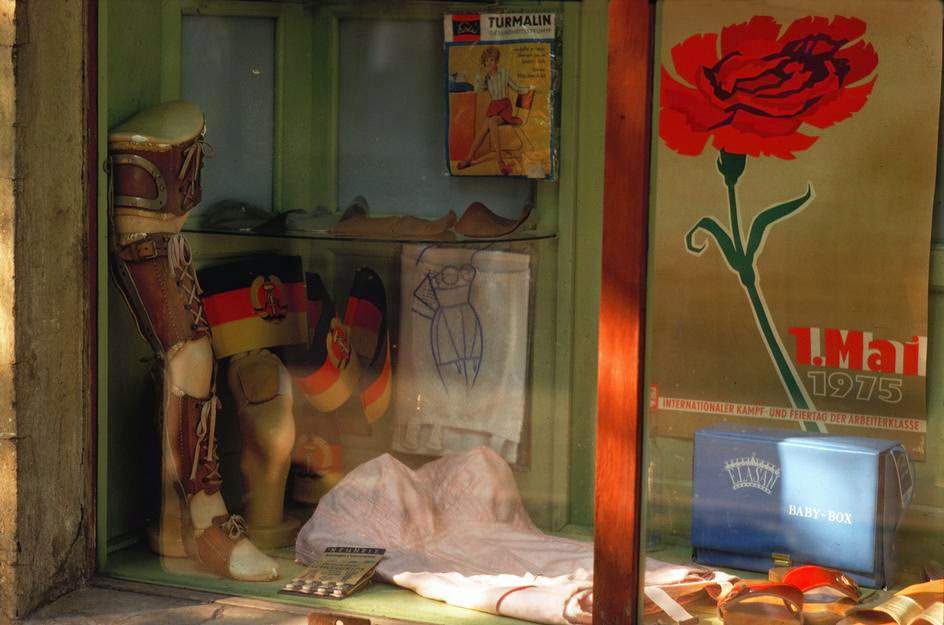
Prenzlauer Berg was a working-class district in East Berlin, densely packed with prewar apartment buildings and ground-floor shops. State-run stores had limited variety compared to Western counterparts, and shortages were common. Store windows often reflected what was available — or what the state wanted to project — rather than the full range of consumer choice East Germans read about from the West.
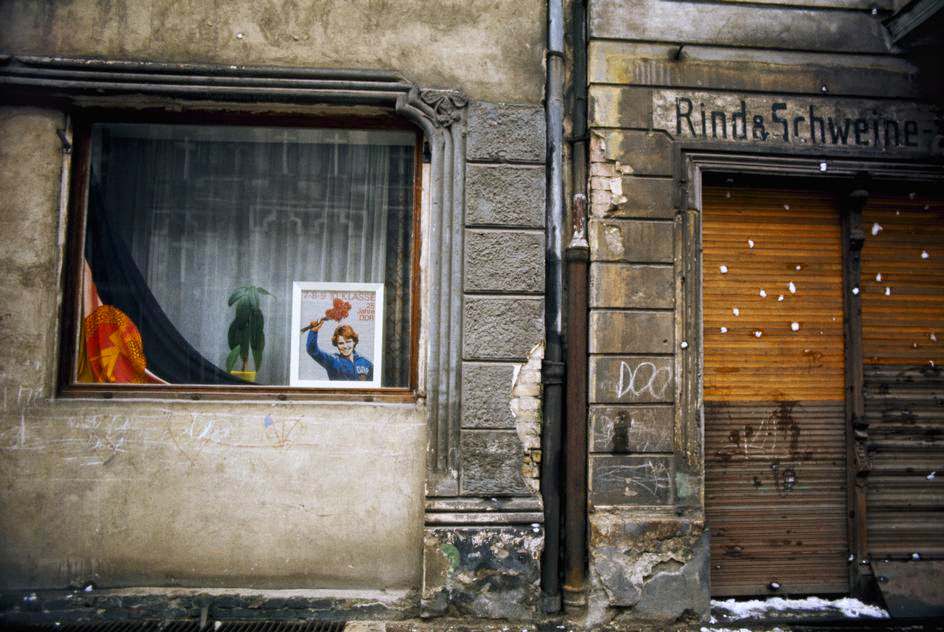
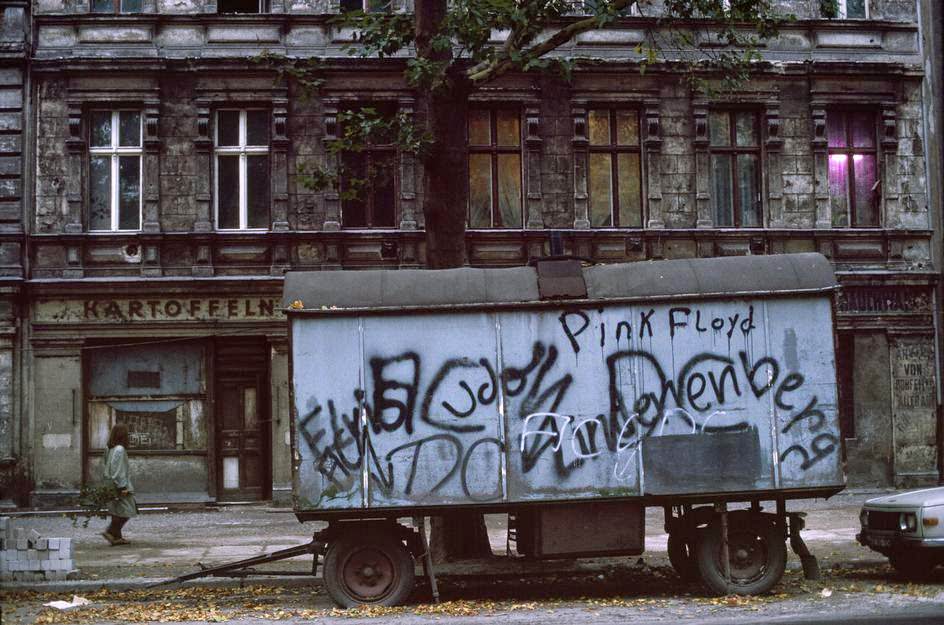
The streets of Prenzlauer Berg captured in these photographs still bore the physical wear of the postwar decades — chipped plaster facades, uneven cobblestones, and aging infrastructure that the GDR’s housing budgets struggled to maintain. The district would later become famous after reunification for its rapid gentrification, but in 1974 it remained a dense, working-class neighborhood largely unchanged since before World War II.
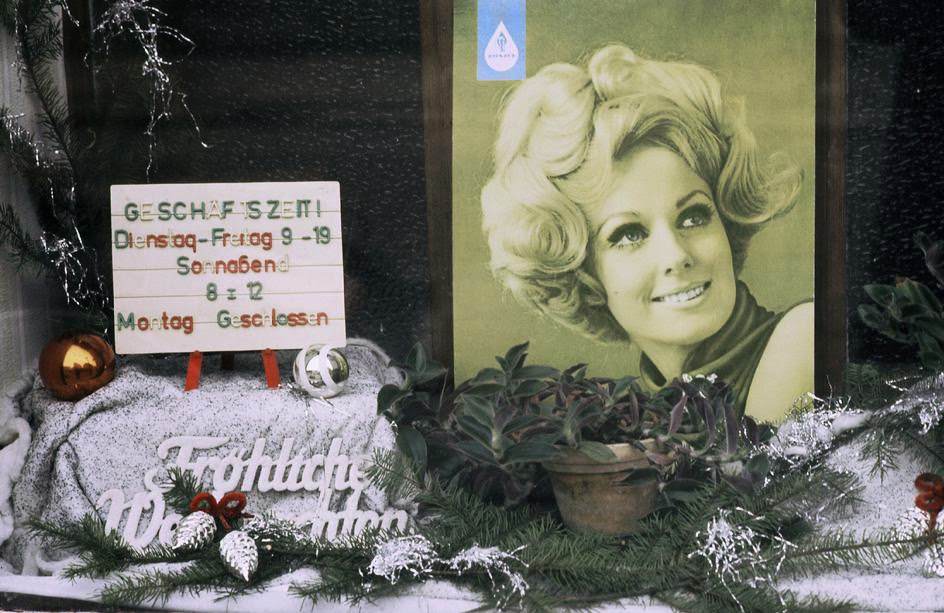
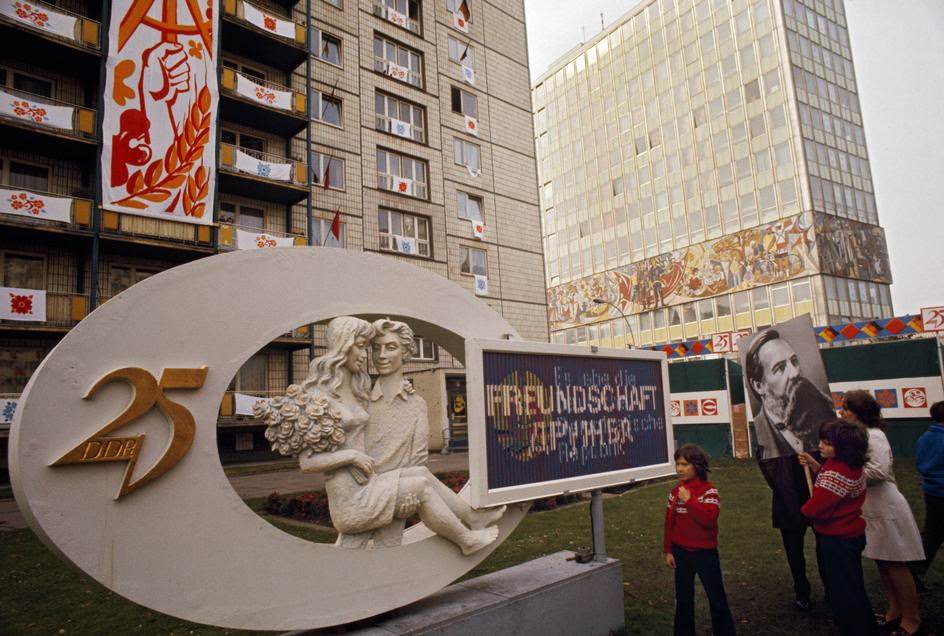
October 7, 1974 marked the GDR’s 25th anniversary, and the occasion was celebrated with large-scale public events along Karl-Marx-Allee — the grand ceremonial boulevard lined with Stalinist-style architecture that served as the GDR’s most prominent showpiece street. Parades, rallies, and performances filled the avenue for days. The anniversary celebrations were among the largest organized displays of state power in the GDR’s history.
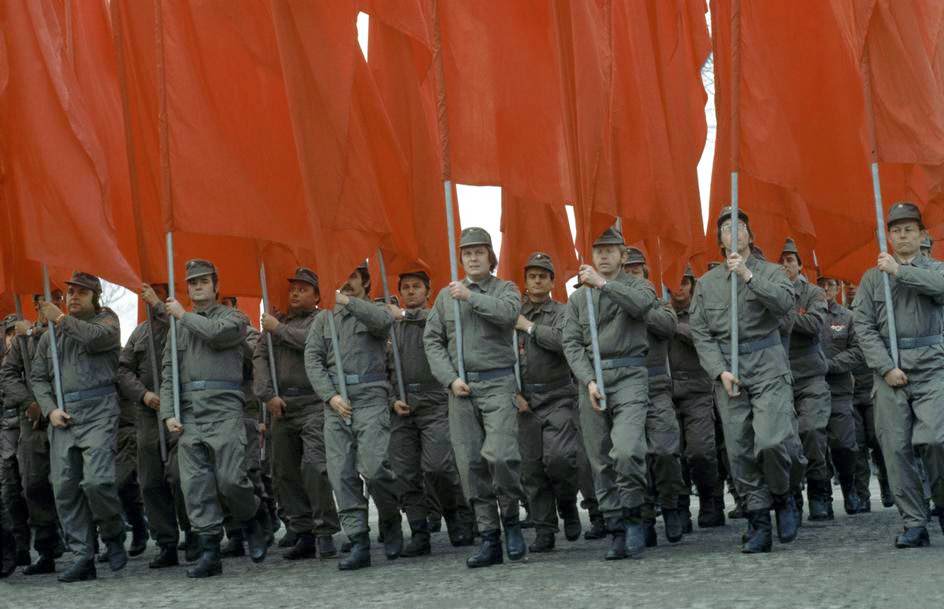
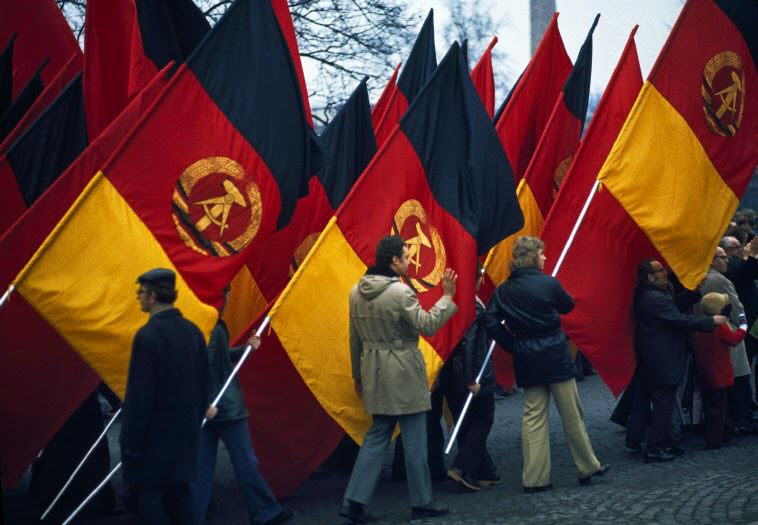
The Betriebskampfgruppen — factory combat units — were a paramilitary workers’ militia organized by the SED, the ruling communist party. Members were drawn from workplaces across the GDR and were expected to participate in public parades and political ceremonies. Their red flags and uniforms were a standard feature of GDR anniversary events and May Day demonstrations.
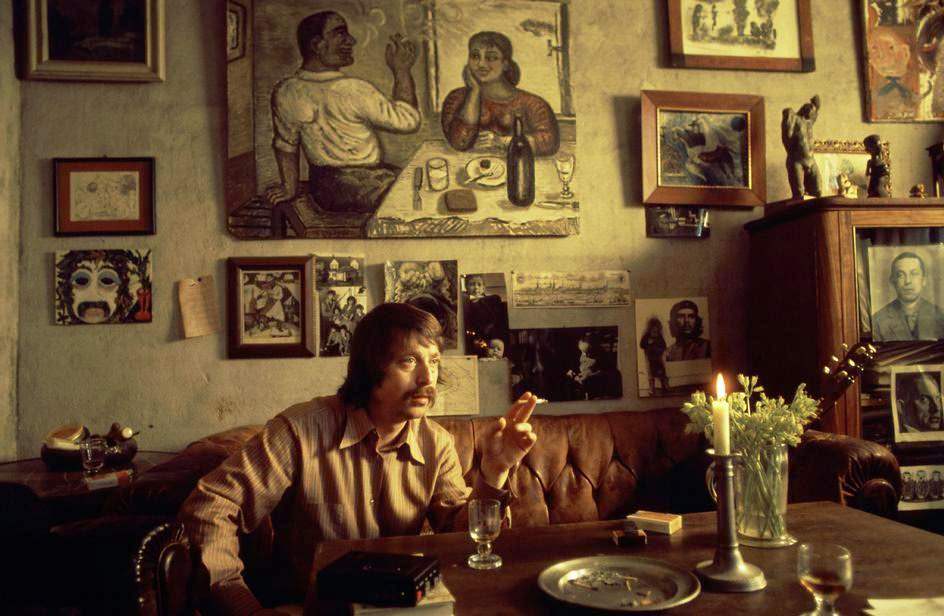
Wolf Biermann was one of the most provocative cultural figures in the GDR. A singer-songwriter and outspoken critic of the SED regime, he was banned from performing publicly in East Germany in 1965. He continued to record and distribute his work illegally. In 1976 — just two years after this photograph was taken — the GDR stripped him of his citizenship while he was on a concert tour in West Germany, preventing him from returning.
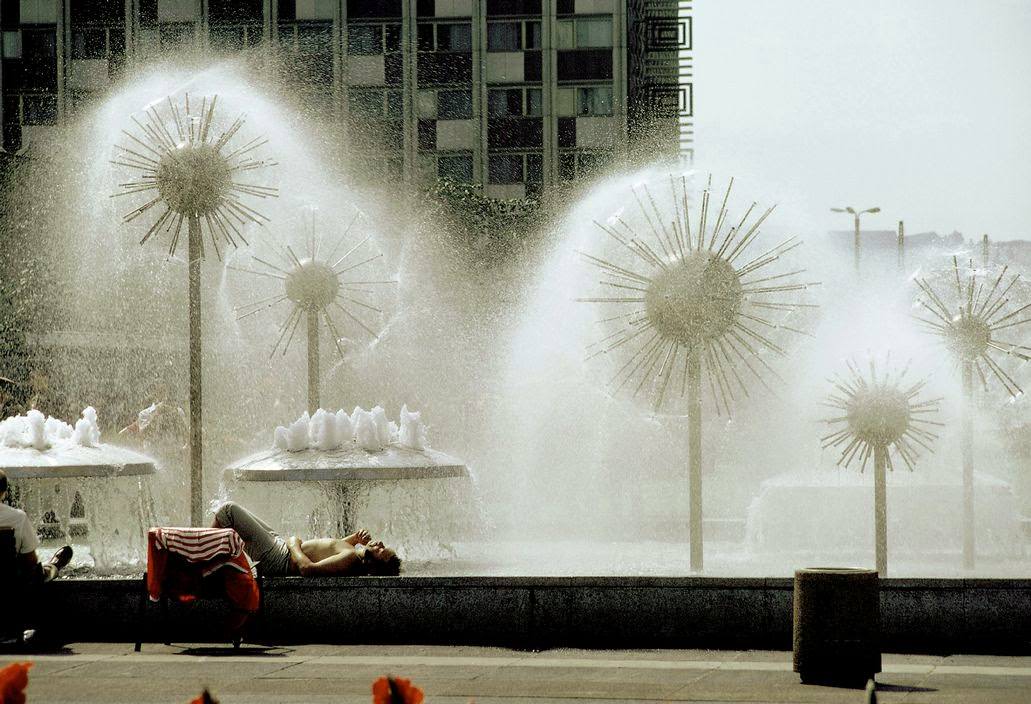
Dresden was heavily bombed in February 1945, and large parts of the city were rebuilt during the GDR era in the modernist architectural style favored by the communist government. Prager Strasse, rebuilt as a pedestrian zone with fountains, hotels, and department stores, was presented as a model of socialist urban planning. Its clean lines and open spaces stood in sharp contrast to the preserved medieval streetscapes found elsewhere in East Germany.
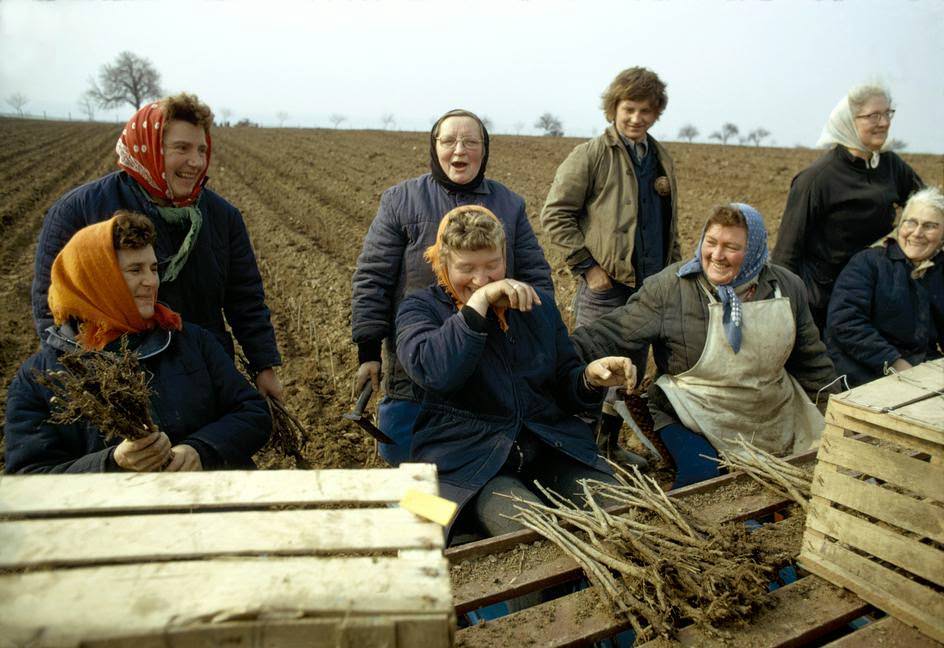
Agricultural work in East Germany was collectivized under the GDR. Private farms were absorbed into agricultural production cooperatives known as LPGs, and workers — including large numbers of women — labored in state-organized field crews. Manual harvesting of root vegetables like potatoes remained common in Thuringia and other agricultural regions throughout the 1970s.
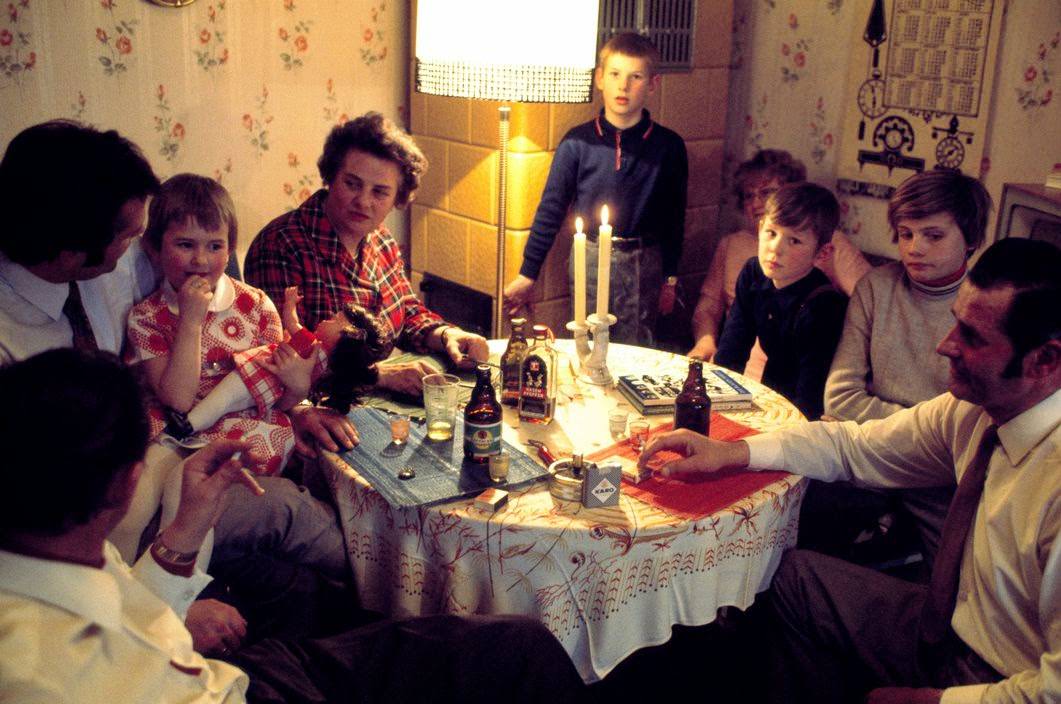
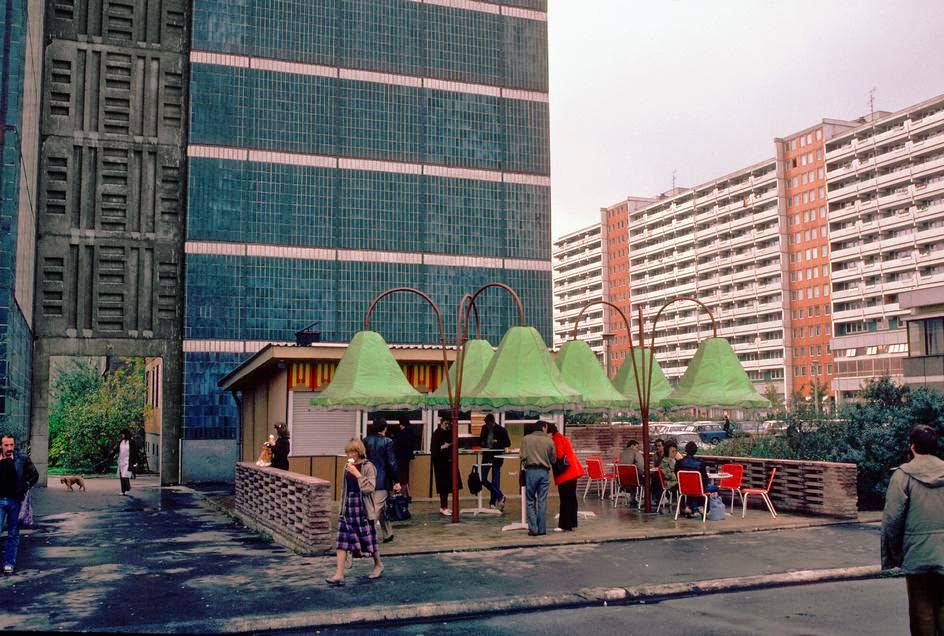
New apartment construction was a central pillar of the GDR’s social contract with its citizens. Prefabricated concrete apartment blocks — called Plattenbau — went up across East German cities throughout the 1970s as the government worked to address the postwar housing shortage. A new apartment was a genuine achievement for a GDR family, and this image of a family in their Berlin-Weissensee home reflects that. The furnishings are modest but carefully arranged.
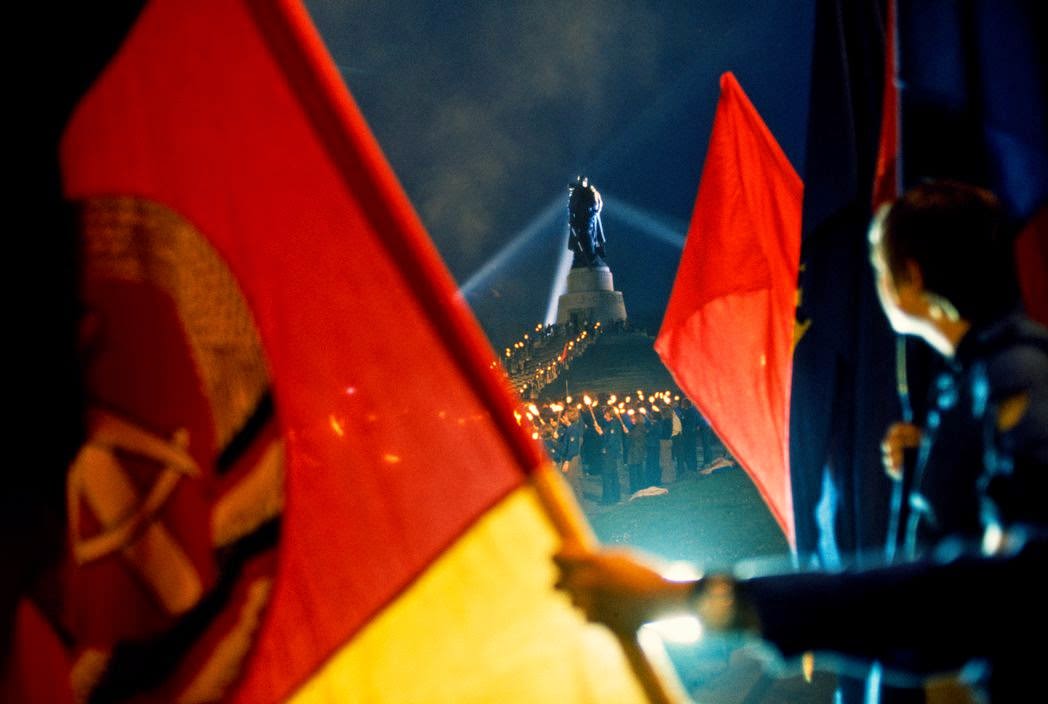
The Soviet War Memorial in Treptow is one of the largest war memorials in the world. Completed in 1949, it honors the Soviet soldiers who died fighting in Germany during World War II. The GDR treated the memorial as a sacred site, and visits by school groups, military units, and political delegations were routine. The monument’s central statue — a Soviet soldier holding a rescued German child — was one of the most recognizable images in East German public life.
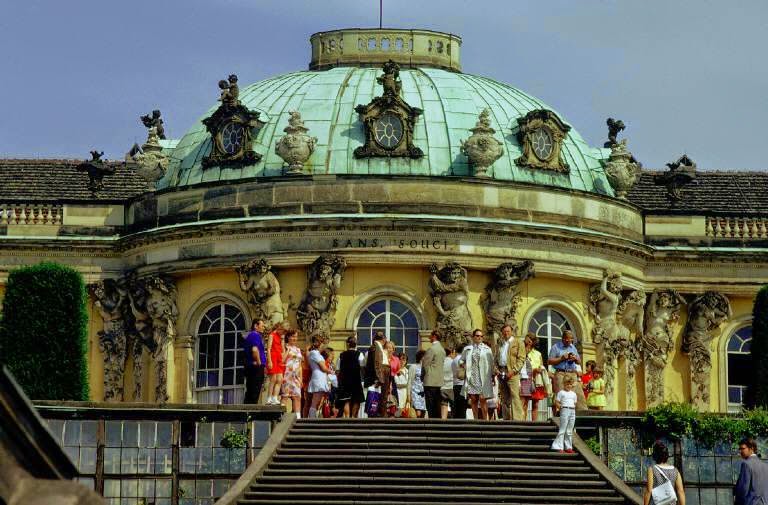
Sanssouci, the 18th-century summer palace of Frederick the Great, sat just outside East Berlin in Potsdam and was one of the GDR’s most visited historical sites. Despite being the former residence of Prussian royalty — a history awkward for a communist state to celebrate — the site was maintained and promoted as a cultural monument. Domestic and international tourists visited regularly throughout the GDR period.
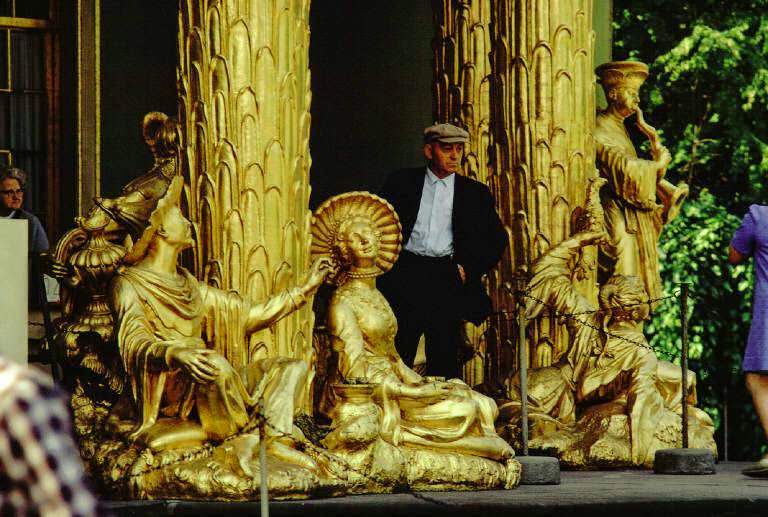
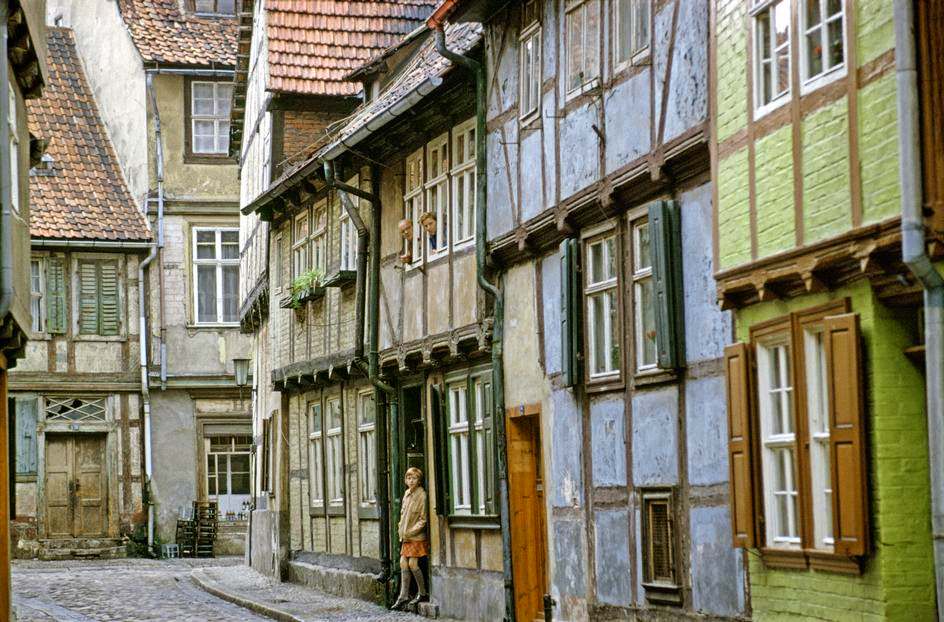
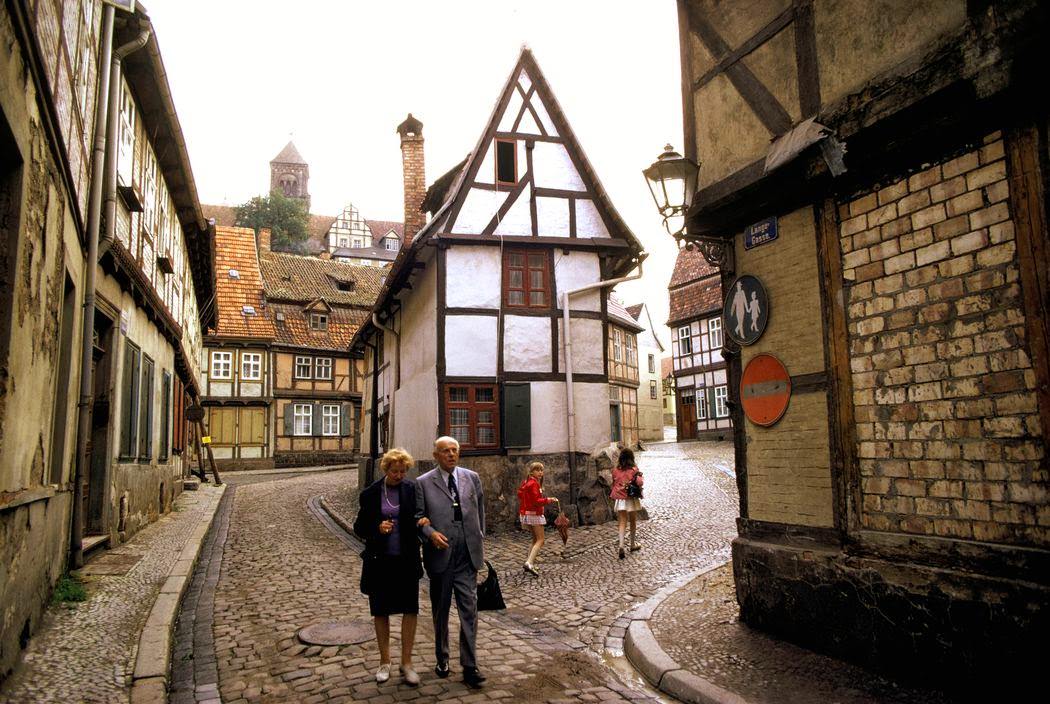
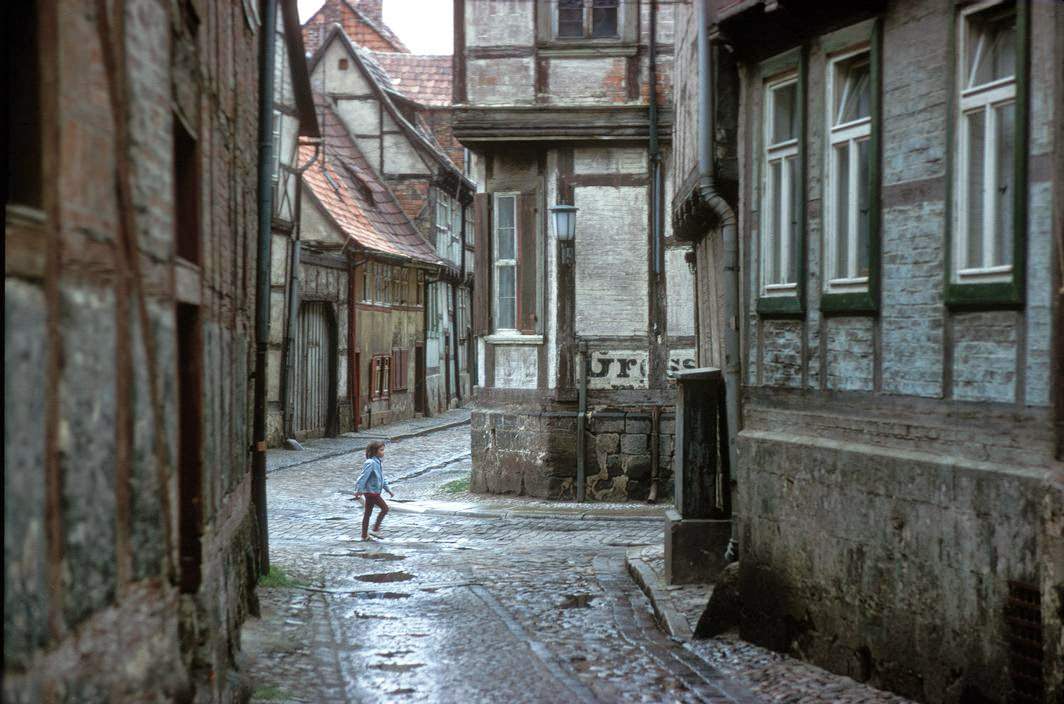
Quedlinburg in the Harz mountains held one of East Germany’s best-preserved collections of medieval half-timbered architecture. The town dated back to the 10th century and contained more than 1,300 half-timbered buildings. Maintaining them under the GDR’s centralized and often underfunded preservation system was a persistent challenge, and many structures showed signs of deterioration by the 1970s.
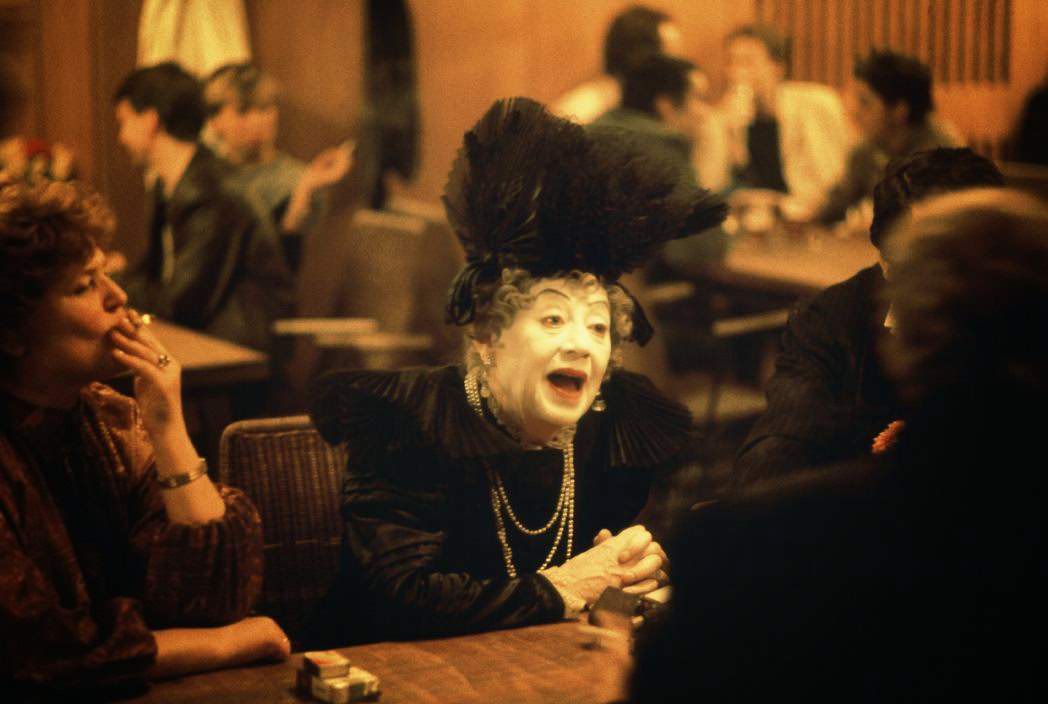
The Berliner Ensemble was one of the GDR’s most prestigious theaters, founded by playwright Bertolt Brecht after his return to East Germany in 1949. The company performed at the Theater am Schiffbauerdamm in central East Berlin and was internationally recognized for its productions. State support for theater, opera, and the arts in the GDR was substantial — cultural institutions like the Berliner Ensemble received reliable government funding and were seen as tools of both artistic prestige and ideological messaging.
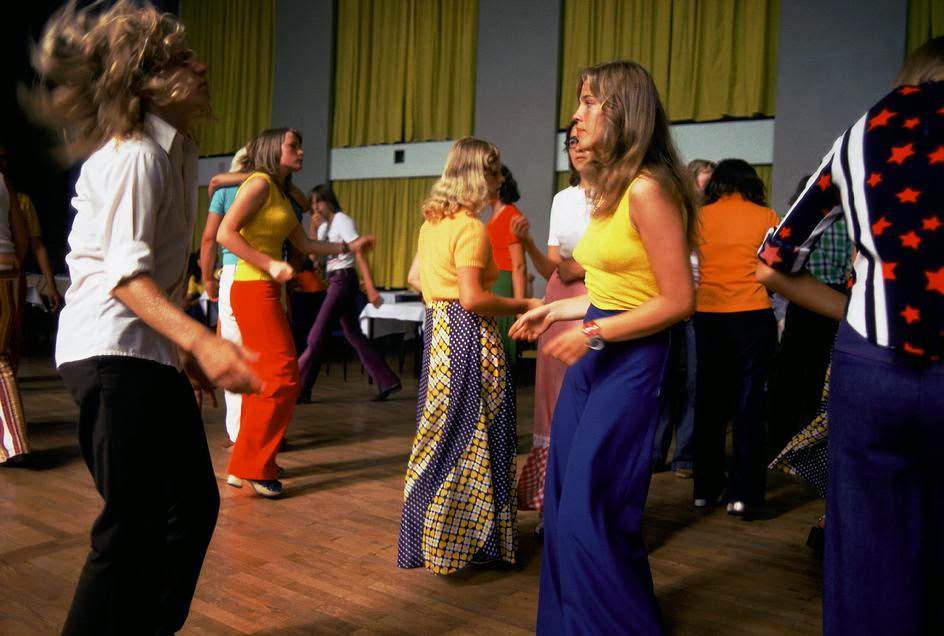
Youth culture in East Germany had its own distinct character. Western music was officially discouraged, and the state promoted GDR-produced pop and rock through approved channels. Nevertheless, Western music leaked in through radio signals and smuggled recordings, shaping how young East Germans dressed and danced. Discos and dance halls operated throughout the country, including in smaller cities and rural areas like Mecklenburg.
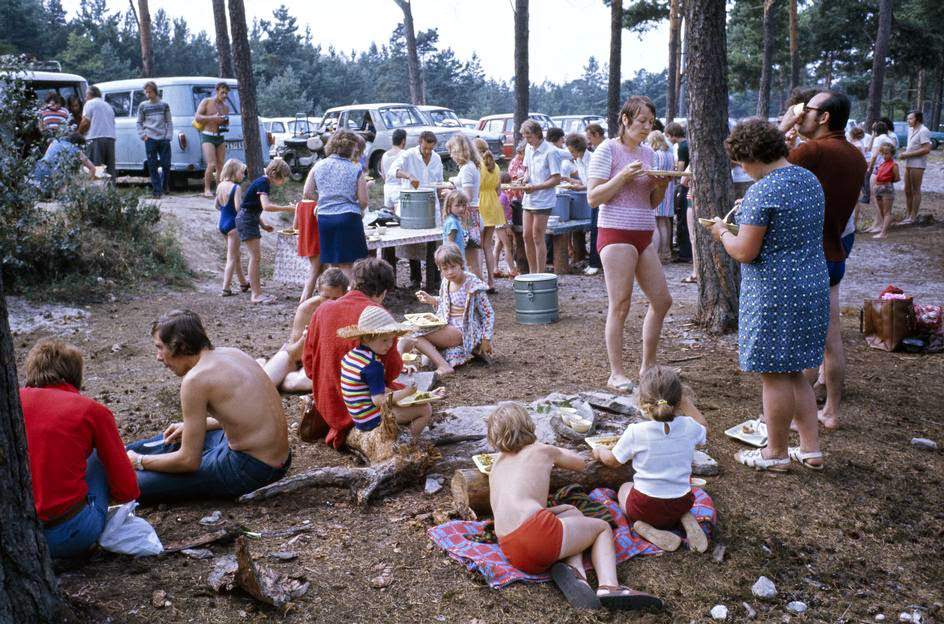
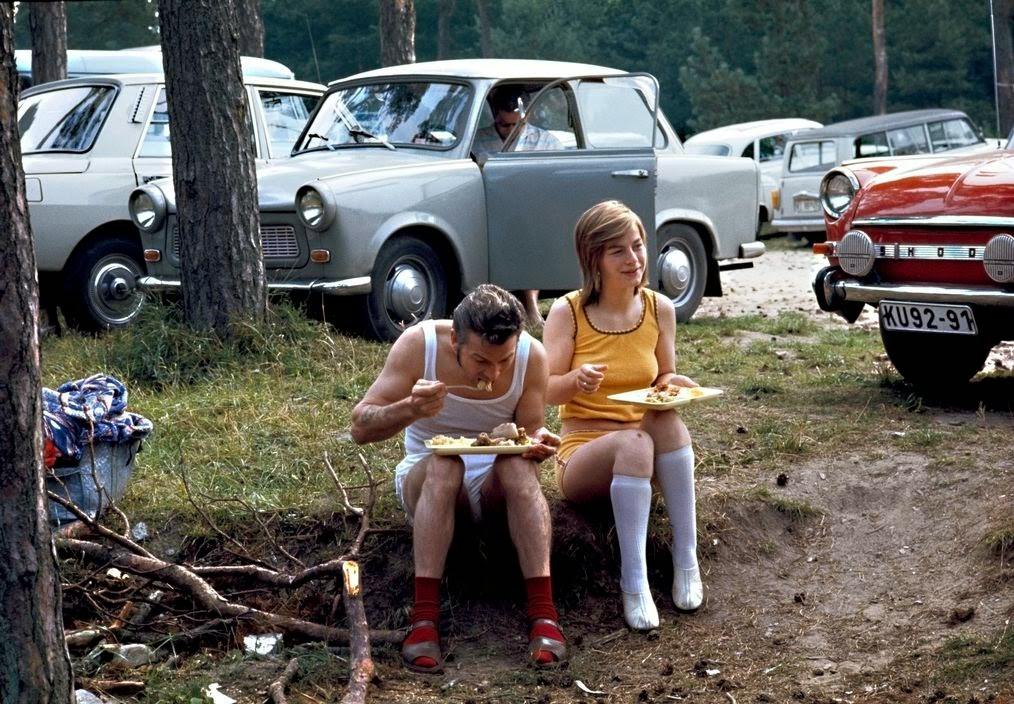
The island of Rügen on the Baltic Sea was among the most popular summer destinations in East Germany. Holiday travel outside the Eastern Bloc was tightly restricted, so domestic resorts along the Baltic coast served the bulk of East Germany’s vacation demand. Trade union and state enterprise holiday programs allocated vacation spots to workers, making a Baltic Sea trip an anticipated and organized event rather than a spontaneous one.
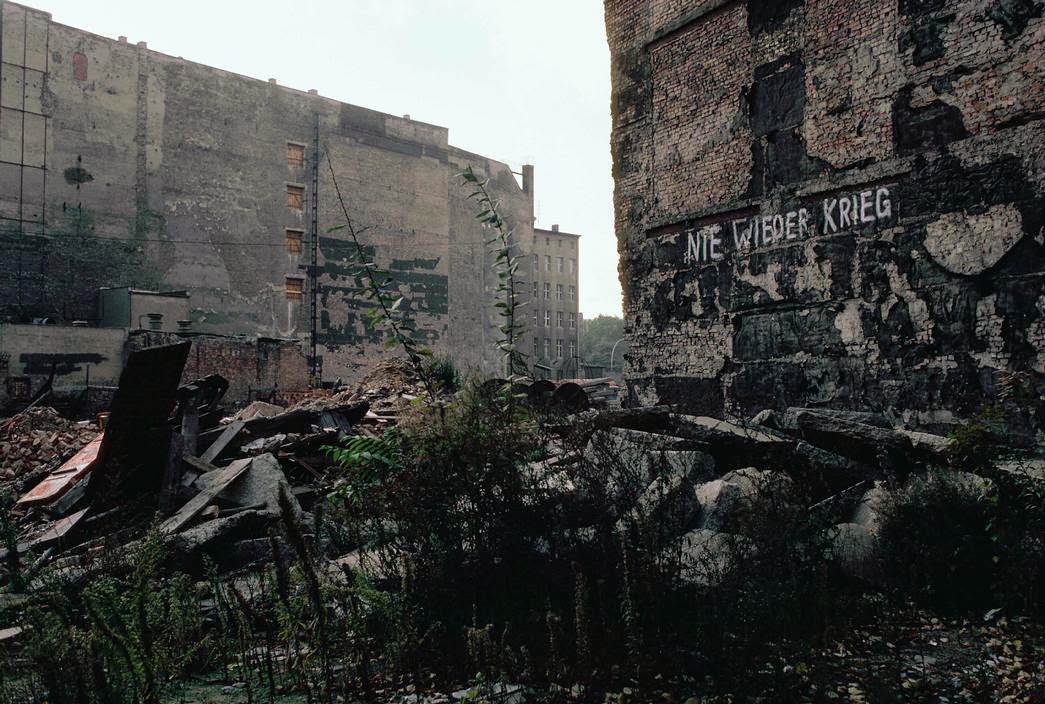
Twenty-nine years after the end of World War II, bomb-damaged ruins were still standing in parts of East Berlin. The GDR used such sites deliberately, incorporating them into anti-war messaging and antifascist state ideology. The inscription “Never again War” on this ruin was a direct appeal to the memory of the conflict — and an implicit argument for the GDR’s own legitimacy as a state built, in its telling, on the rejection of fascism.
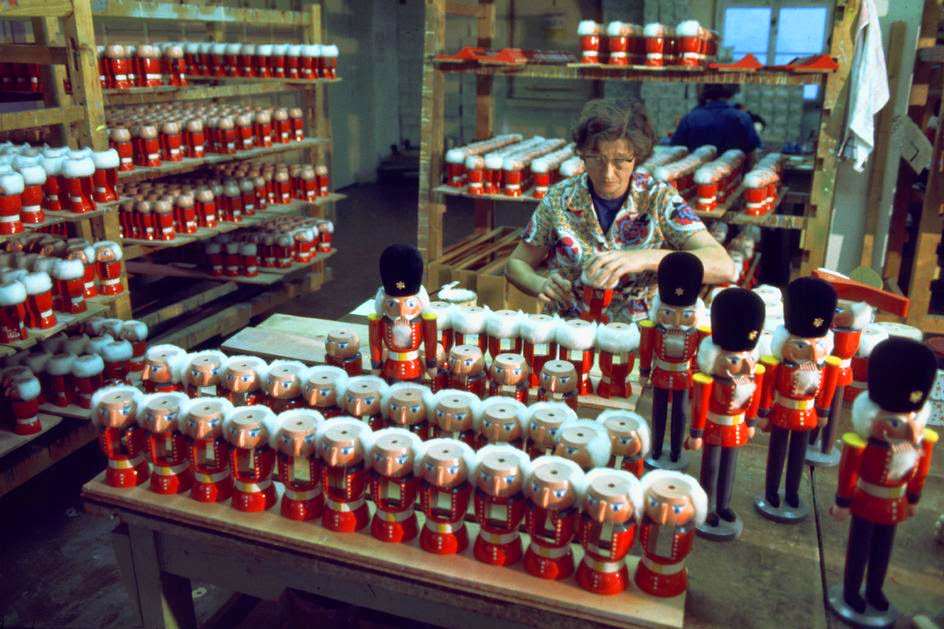
The Erzgebirge — the Ore Mountains along the border with Czechoslovakia — had a long tradition of wooden toy and folk craft production stretching back centuries. Nutcrackers, Christmas pyramids, and carved figurines from the region were famous across Germany and exported internationally. Under the GDR, many of these cottage workshops were absorbed into state-run cooperatives, but the craft tradition itself continued largely intact.
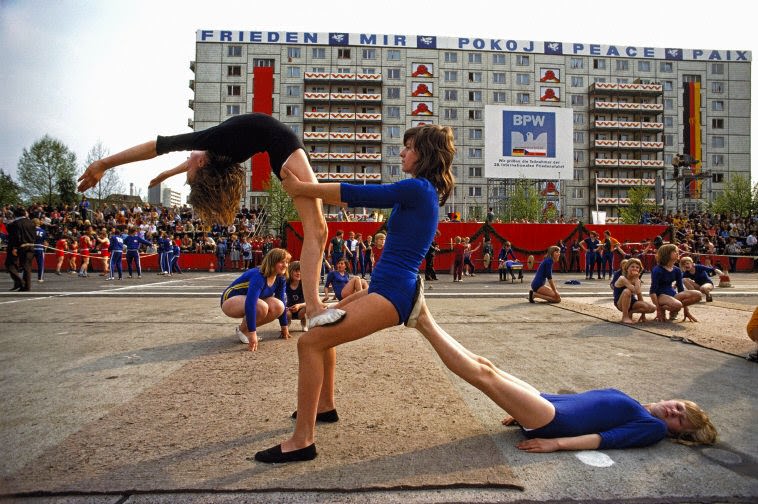
The 25th anniversary celebrations included large gymnastic displays by FDJ members along Karl-Marx-Allee, performed in front of the new concrete housing projects that lined the boulevard. Mass gymnastics — coordinated group performances with political symbolism — were a common feature of communist state celebrations across Eastern Europe. They required months of organized practice and projected an image of collective discipline and youth vitality.
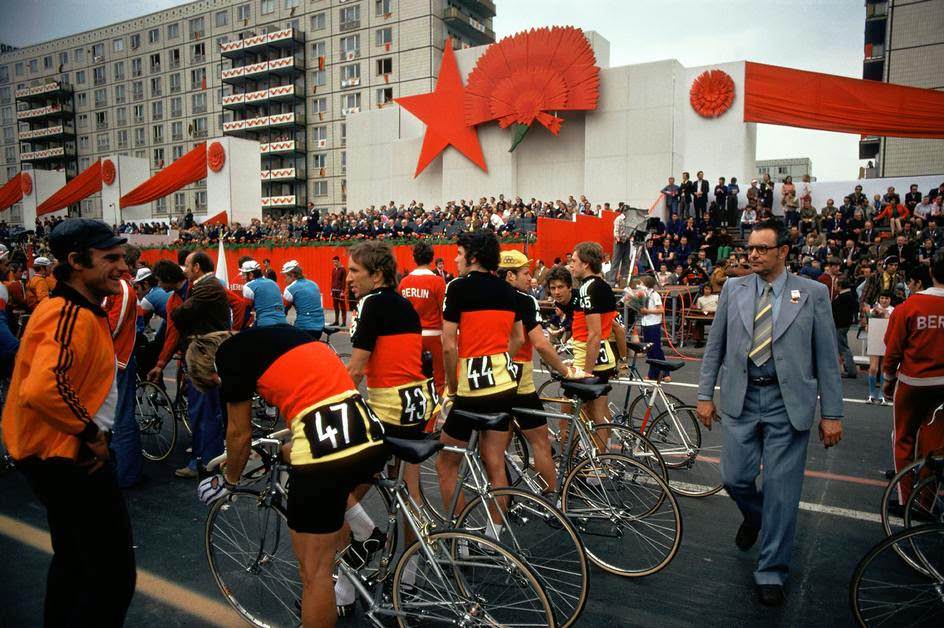
The Friedensfahrt — or Peace Race — was one of the most prominent sporting events in the Eastern Bloc. Founded in 1948, the multi-stage bicycle race passed through Poland, Czechoslovakia, and East Germany and was watched by large crowds along the route. Karl-Marx-Allee served as the ceremonial start and finish point for the East Berlin stage, with thousands of spectators lining the boulevard.
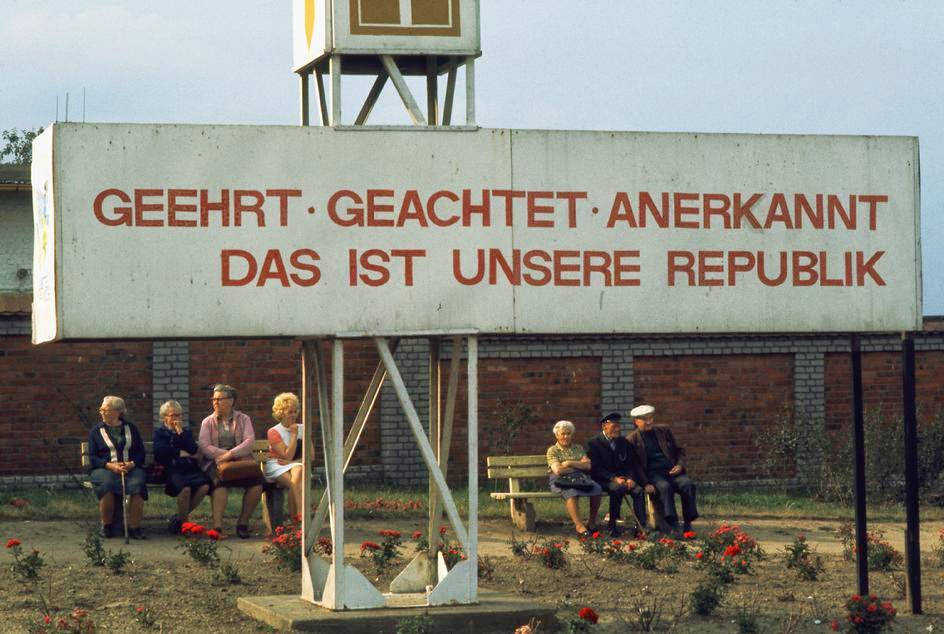
Political slogans were embedded into the physical environment of the GDR — on factory walls, roadsides, railway stations, and public buildings. This billboard near Weimar, a city historically associated with Goethe and German classical culture, carried a direct message of state pride. Such slogans were produced and maintained by party organizations and served as constant background reinforcement of official ideology.
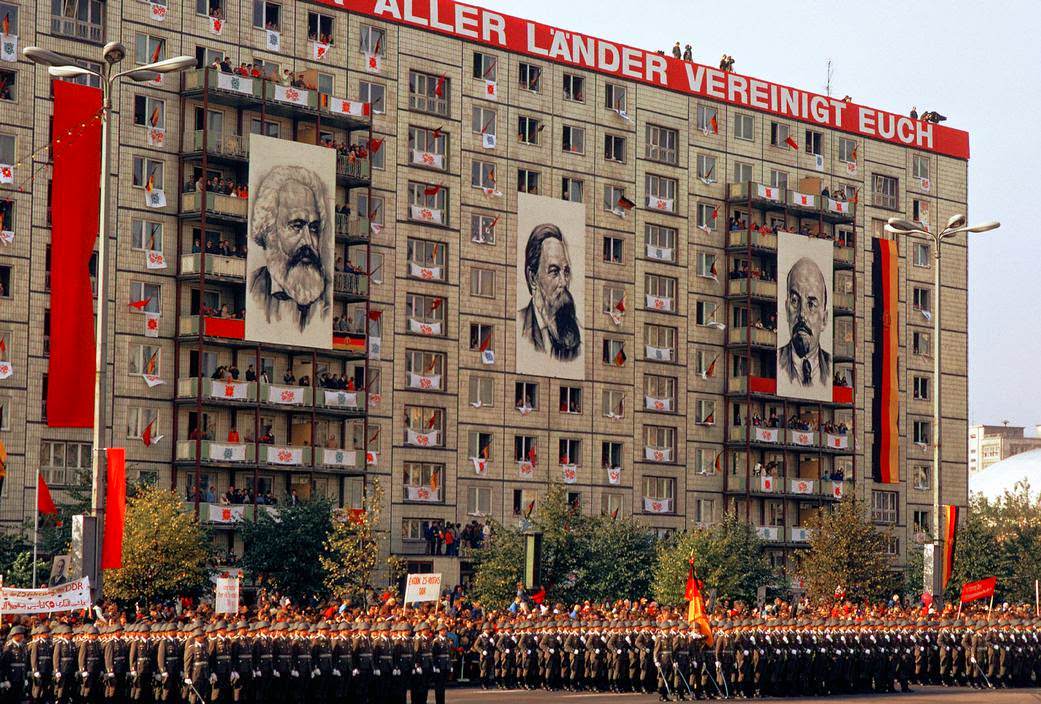
May 1st — International Workers’ Day — was one of the GDR’s most important political holidays. The National People’s Army, known as the Volksarmee, marched in full formation along Karl-Marx-Allee each year in a display of military strength. The parades were carefully staged, broadcast on state television, and attended by the GDR’s top political leadership from reviewing stands along the route.
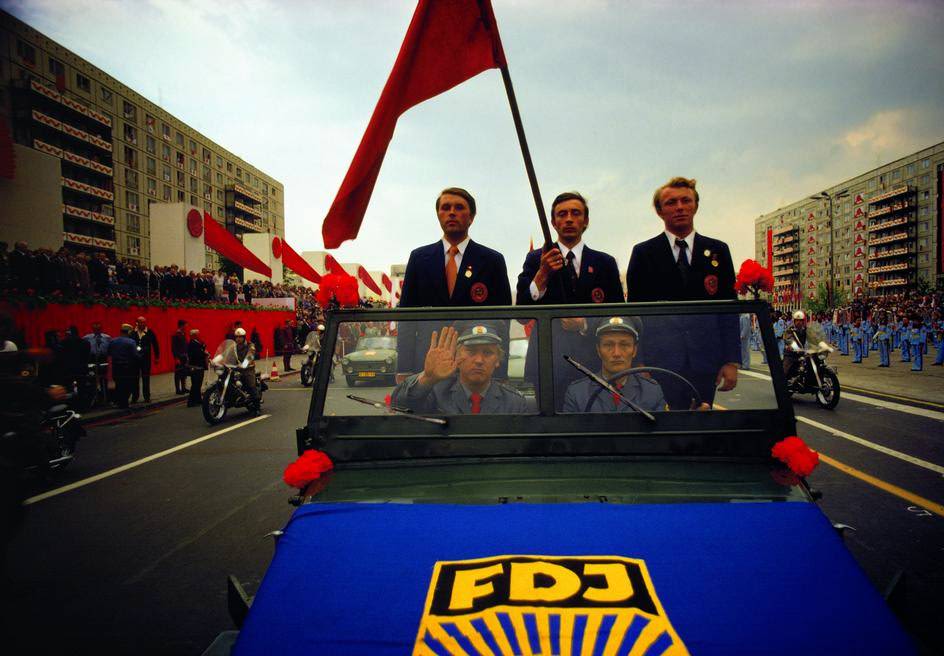
As part of the 25th anniversary celebrations, Soviet allies brought the historic 1945 victory flag to Berlin and displayed it during a parade along Karl-Marx-Allee. A car carrying the flag of the FDJ — the Free German Youth organization — accompanied it through the boulevard. These gestures reinforced the GDR’s foundational narrative: that the state was born from Soviet victory over fascism and carried that legacy forward.
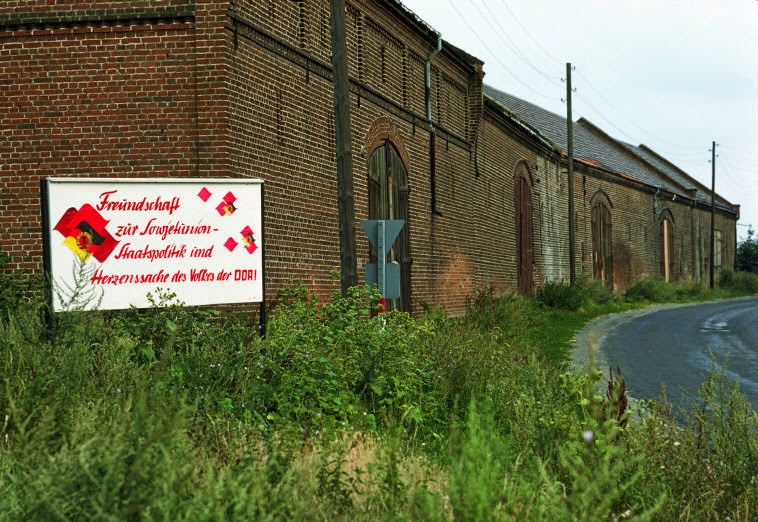
Factory walls across East Germany displayed painted slogans promoting the Soviet alliance and socialist achievements. Near the industrial city of Halle — one of the GDR’s chemical production centers — such murals were common fixtures on the exterior walls of state-run enterprises. Workers passed them daily as part of the built environment of GDR industrial life.
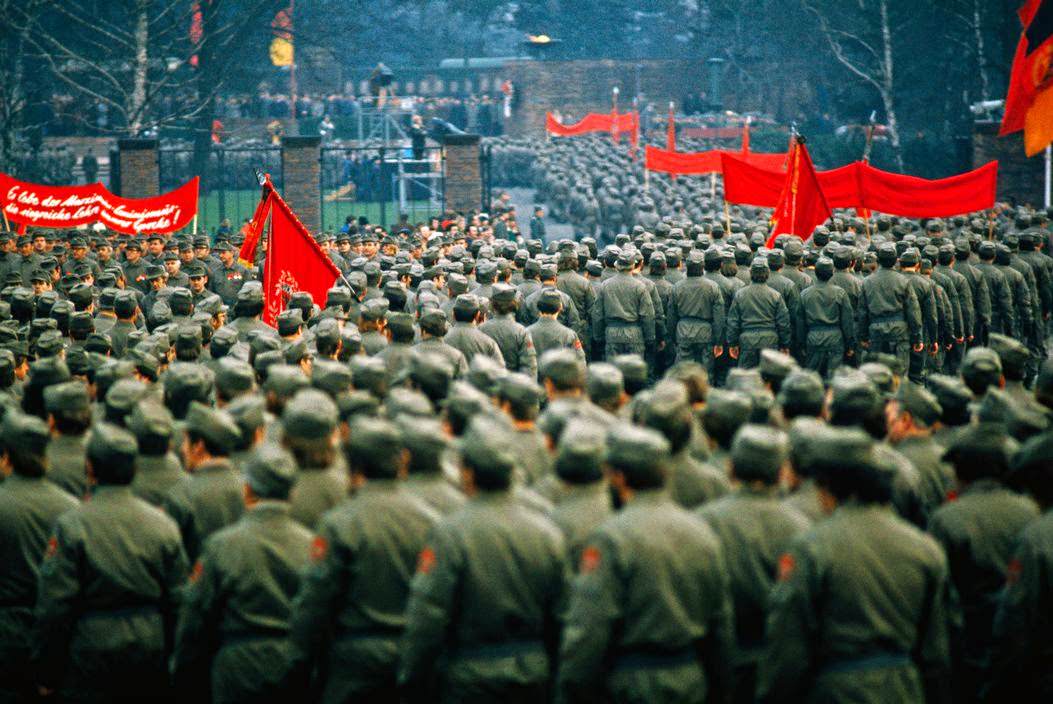
The Betriebskampftruppen — also called the factory combat troops — formed a paramilitary reserve drawn from workers in state enterprises. They trained alongside the regular army and were deployed for large public events and national emergencies. Their appearance at the Treptow district, home to the massive Soviet war memorial, connected two of the GDR’s most visible symbols of the Soviet alliance and socialist defense.
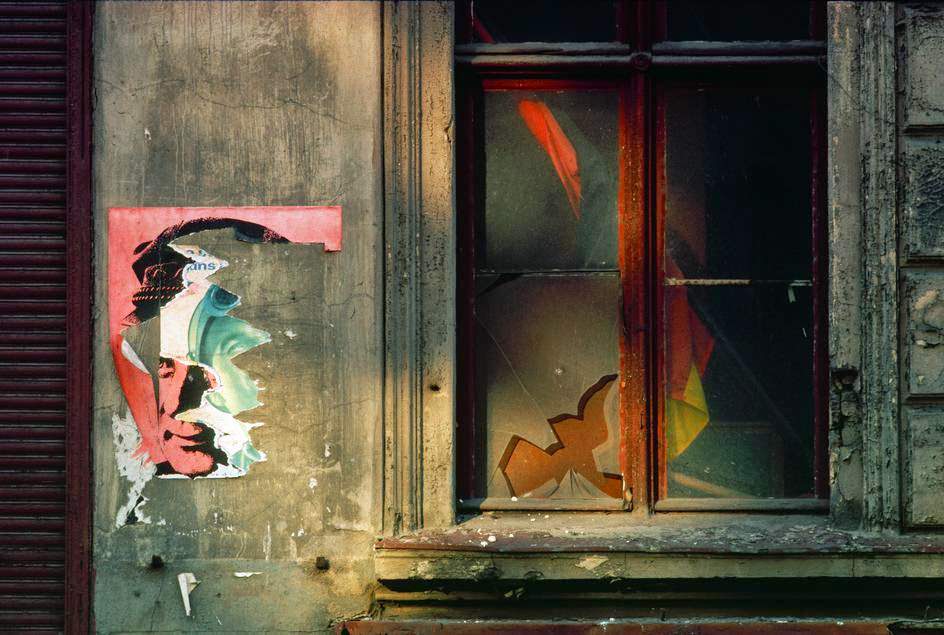
Ernst Thälmann was the leader of the Communist Party of Germany before World War II and was executed at Buchenwald concentration camp in 1944. The GDR elevated him to martyrdom status, naming streets, schools, and a major youth organization — the Ernst Thälmann Pioneer Organization — in his honor. Torn and weather-worn posters of his image, like those visible here in Prenzlauer Berg, were part of the texture of everyday East Berlin.
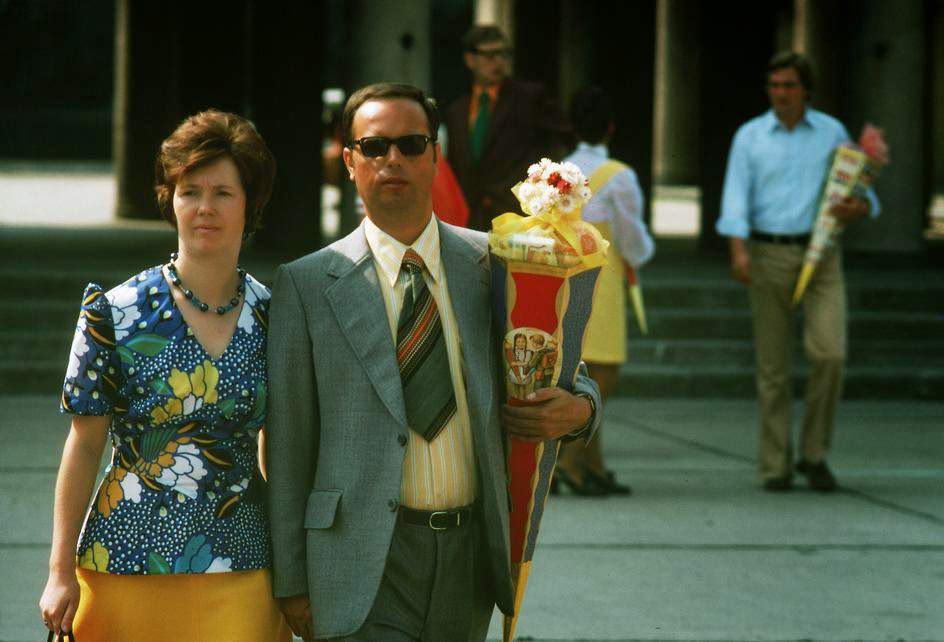
The Schultüte — a large cone-shaped bag filled with sweets, school supplies, and small gifts — is a German tradition given to children on their very first day of school. The custom existed on both sides of the Wall and remained one of the few traditions that transcended the political divide. Parents in East Berlin’s Friedrichshain district carried them with the same pride as families anywhere in Germany.
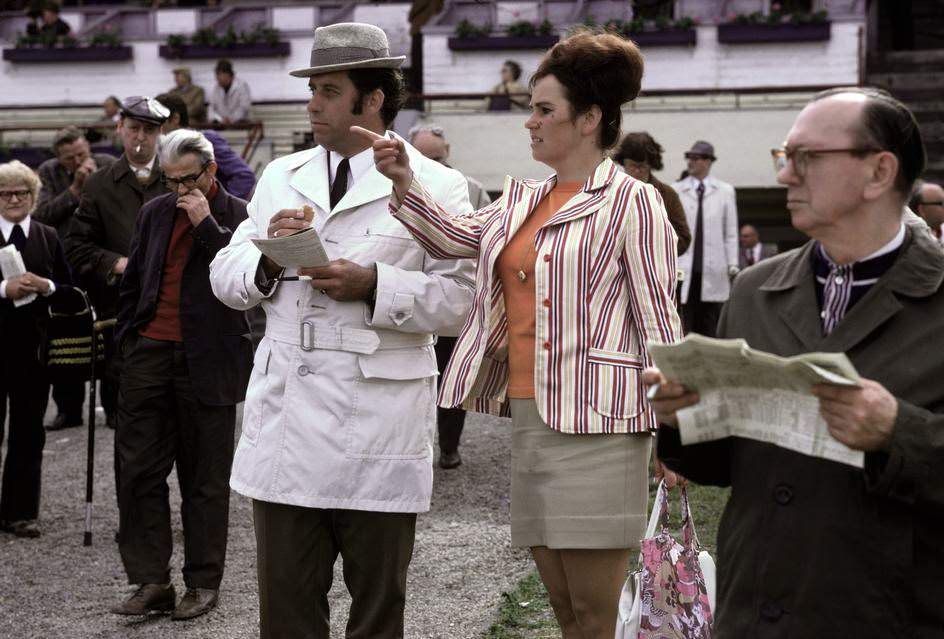
The Hoppegarten racetrack, located just east of Berlin, was one of the oldest and most prestigious horse racing venues in Germany. It continued operating under the GDR and attracted large crowds of spectators who placed bets through the state-sanctioned betting system. Horse racing at Hoppegarten offered East Berliners a form of gambling and entertainment that sat somewhat incongruously alongside communist ideology — but the track remained open throughout the GDR era.
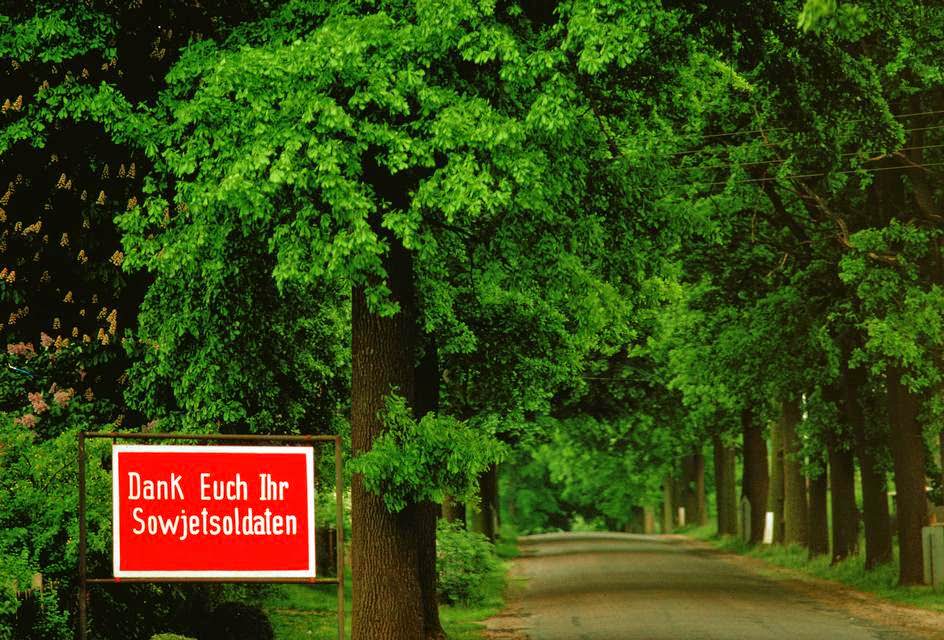
SED — the Socialist Unity Party — was the ruling political party of East Germany, and its propaganda infrastructure reached into every corner of the country. Roadside posters like this one, placed along tree-lined routes near the Baltic coast, reinforced the GDR’s core message: that Soviet soldiers had liberated Germany from fascism and deserved permanent gratitude. The messaging was consistent, repetitive, and designed to be inescapable.
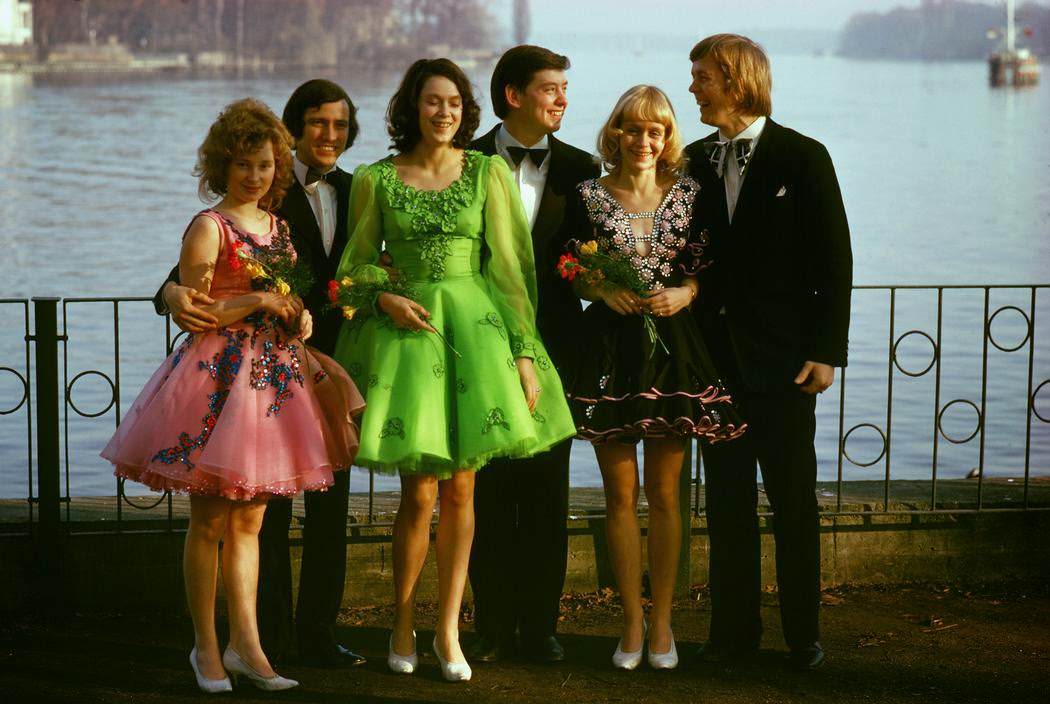
Competitive ballroom dancing was organized through state-affiliated clubs and cultural associations across the GDR. Tournament events brought together dancers from different districts in formal competitions, with participants in full costume. State support for organized cultural activities — from dancing to choral groups to amateur theater — was extensive, and these events provided structure and community for participants across all age groups.
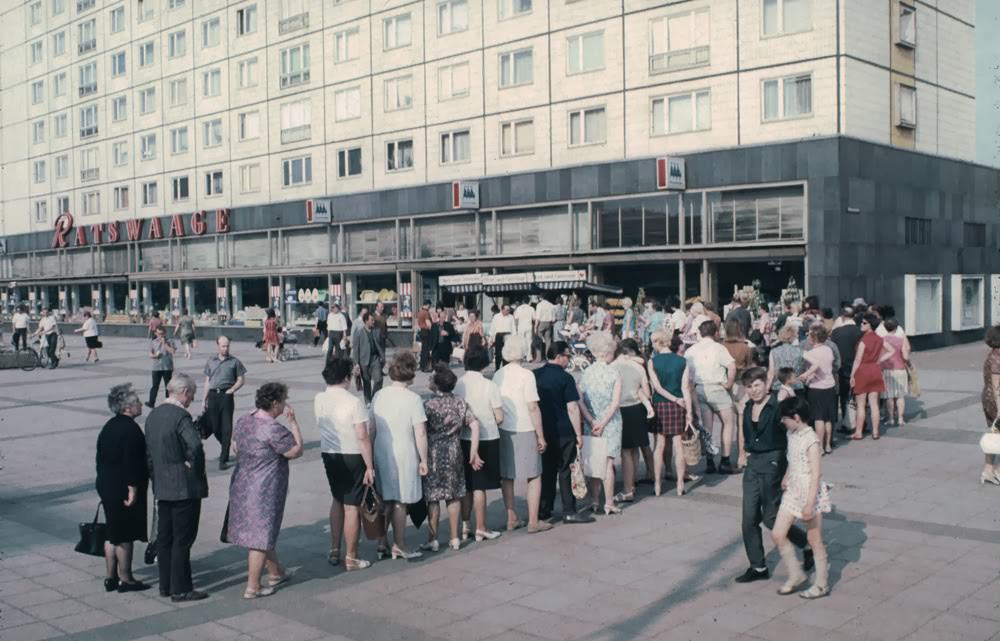
Queuing for basic goods was a familiar part of daily life in East Germany. Tropical fruits like bananas were rarely available in GDR stores — they came through limited trade with allied countries, and when a shipment arrived, lines formed quickly. The queue in Magdeburg captured here was not an exceptional event; it was a routine one. Shortages of basic consumer goods remained a persistent feature of the GDR’s planned economy throughout its existence.
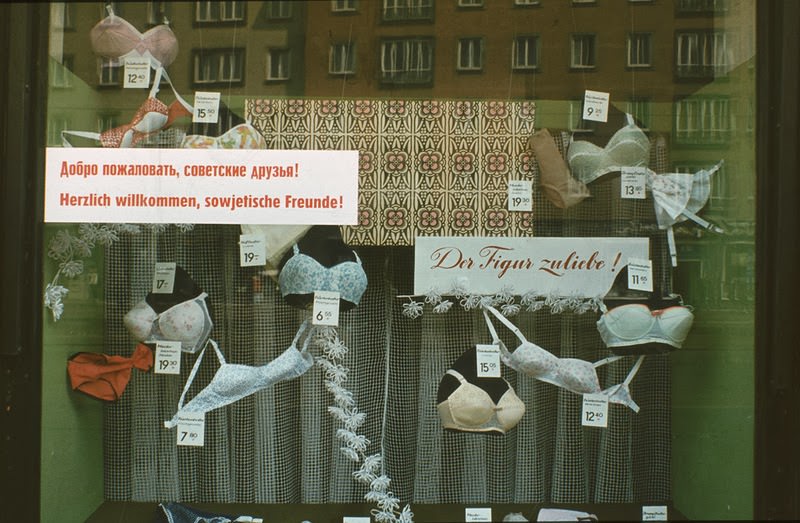
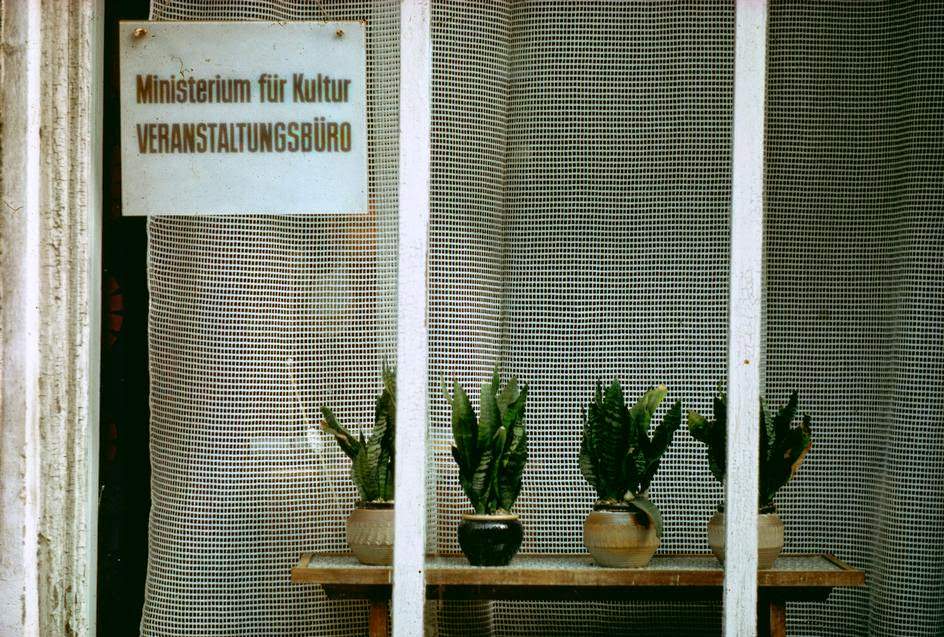
1971 was the year of the SED’s 8th Party Congress — a politically significant event in which Soviet leader Leonid Brezhnev effectively forced the resignation of longtime GDR leader Walter Ulbricht. Erich Honecker took power and held it until the GDR’s final days in 1989. Shop windows like this one in East Berlin displayed the congress’s messaging publicly, reflecting how deeply political events were woven into ordinary commercial spaces.
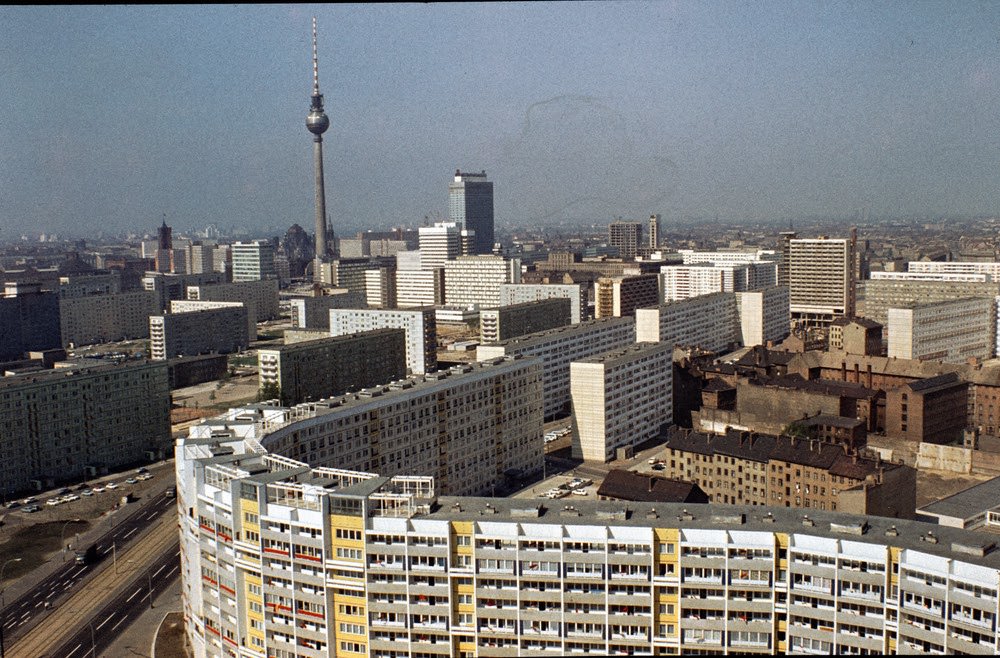
From the air, East Berlin’s urban layout tells the story of two rebuilding efforts layered on top of each other. Prewar streets and the remnants of the old city sit alongside the wide boulevards and massive concrete housing blocks built by the GDR. Alexanderplatz and its television tower — completed in 1969 and reaching 368 meters — anchor the skyline as the most deliberate architectural statement of East German socialist modernity.
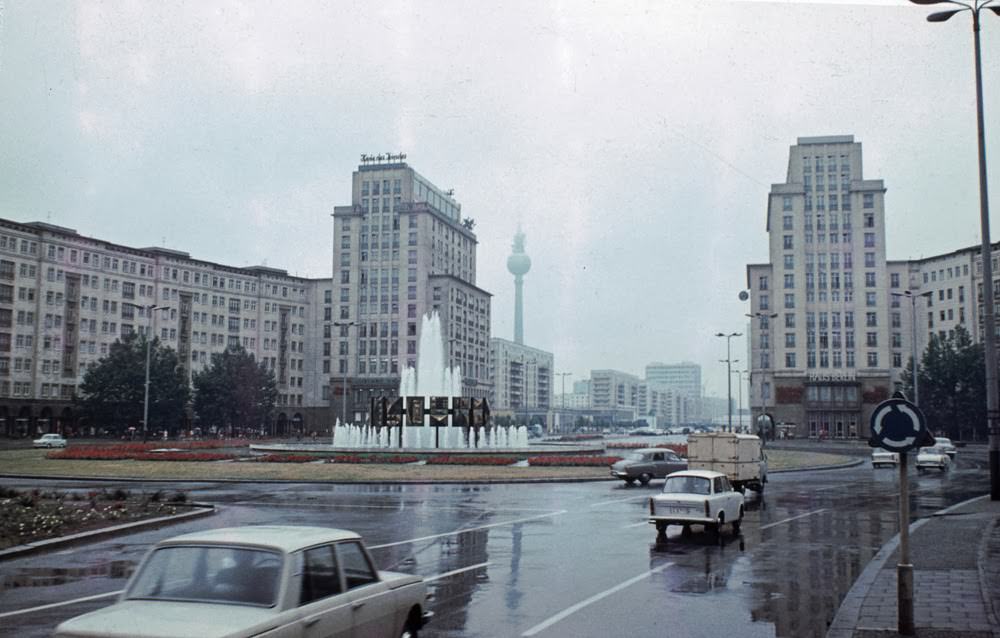
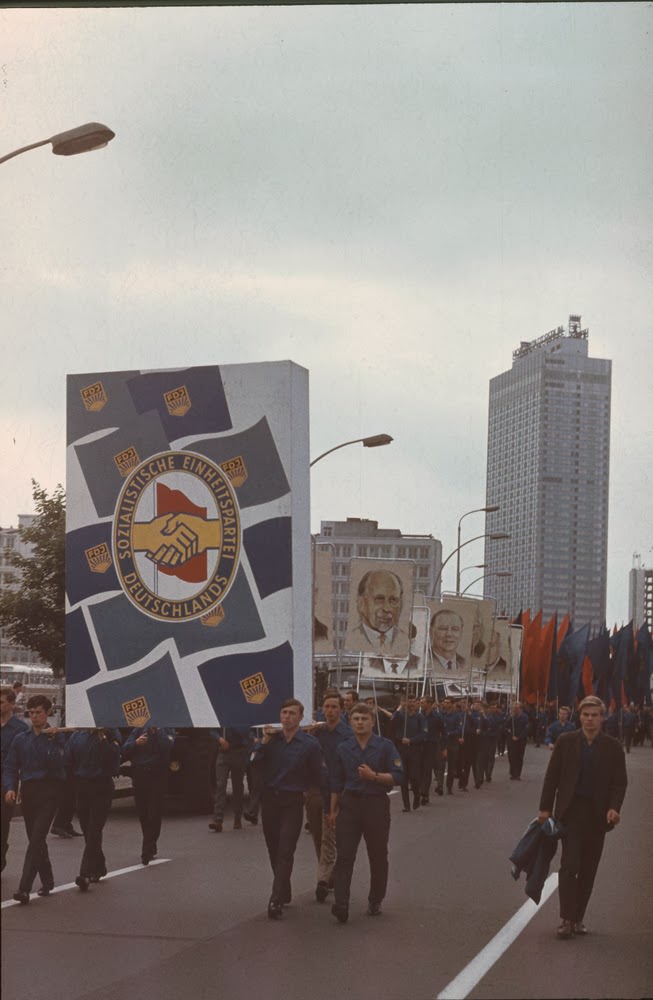
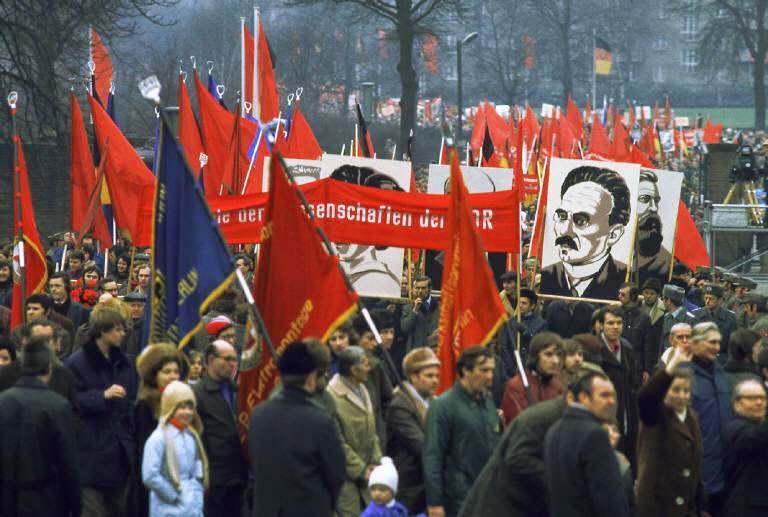
SED anniversary processions brought thousands of party members and affiliated organizations into the streets of East Berlin for coordinated marches. Banners, flags, and portraits of party leaders were carried through the boulevard. These events were as much about demonstrating organizational capacity and loyalty as they were about celebration — and attendance was expected rather than voluntary for many participants.
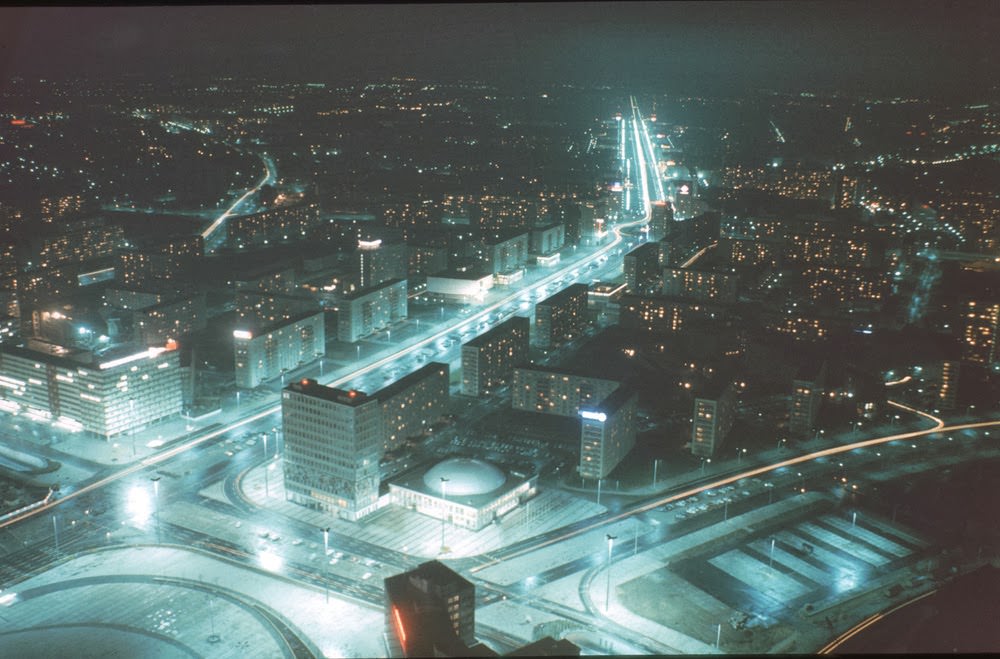
At night, Karl-Marx-Allee and Alexanderplatz took on a different character. The television tower’s illuminated sphere reflected light over the square, and the wide boulevard stretched westward in relative quiet. These nighttime aerial views show the physical bones of East Berlin — the grand scale of a city rebuilt to project socialist confidence, alive with the routines and rhythms of the three and a half million people who called it home.




