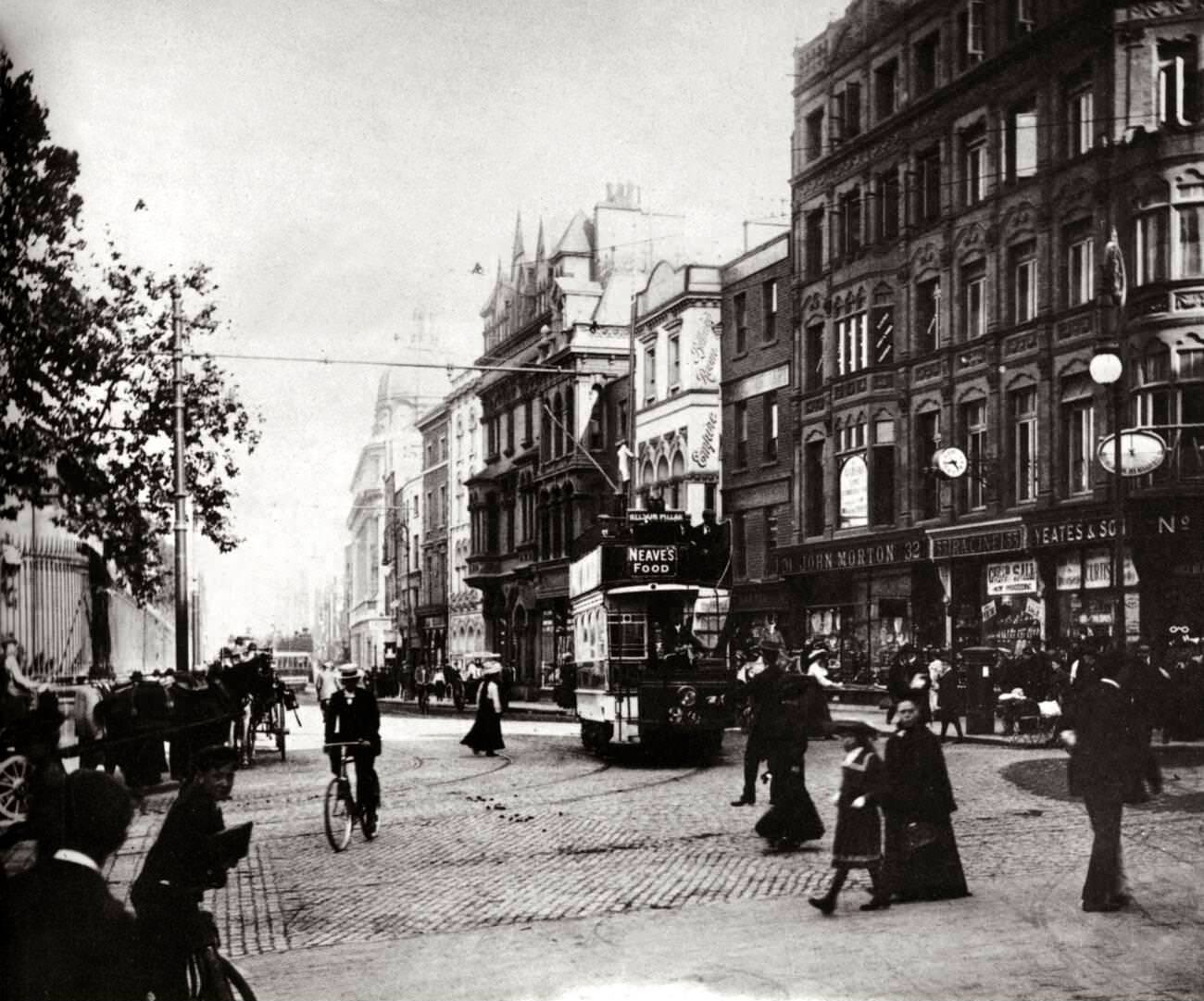
By 1900, Dublin’s population had surpassed 300,000 people. The city was a place of sharp contrasts — grand Georgian squares sat just miles from crumbling tenements, and new construction constantly reshaped streets that had stood for centuries. These photographs capture that world in remarkable detail, from the Liffey quays to the city’s most storied buildings.
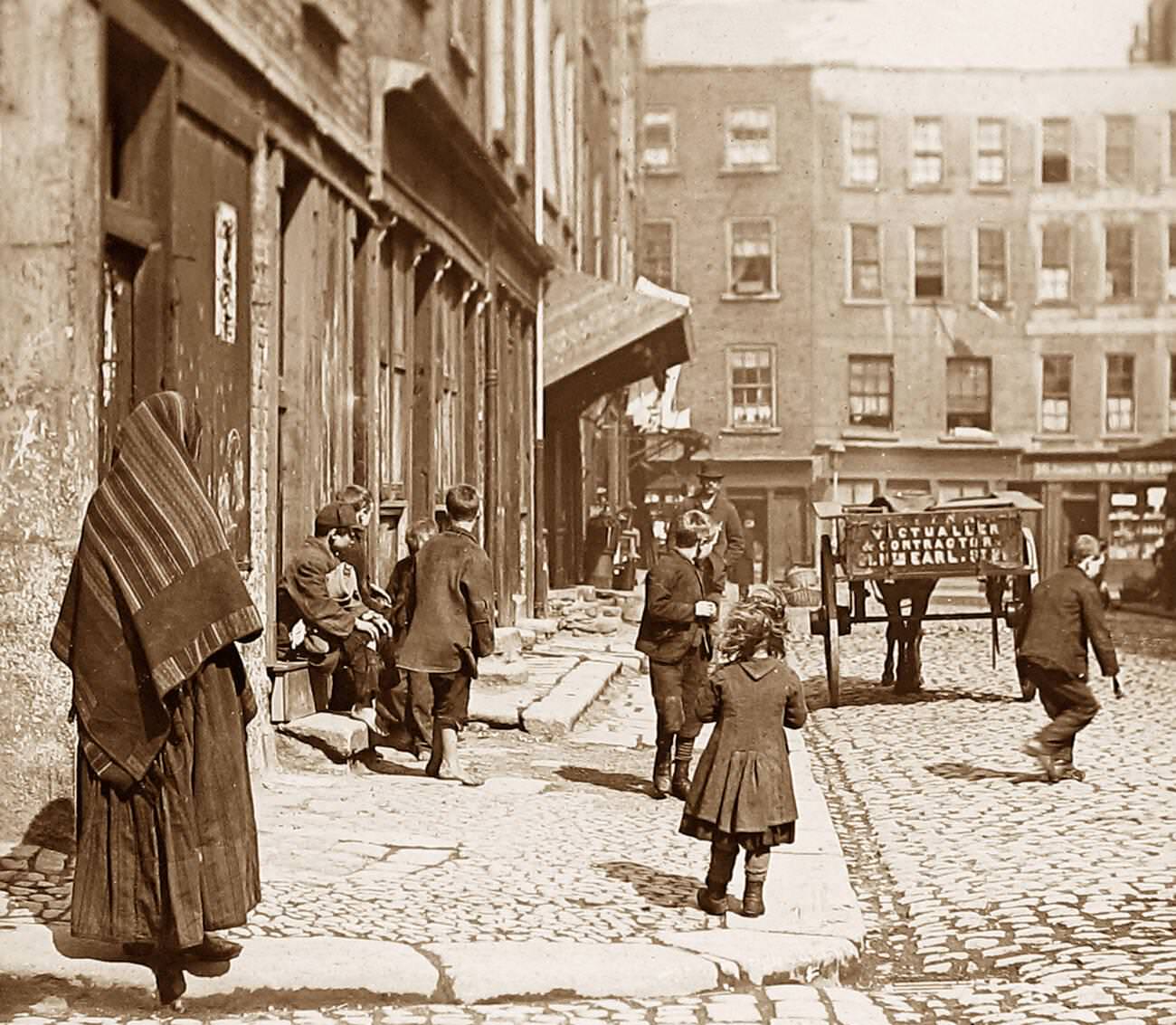
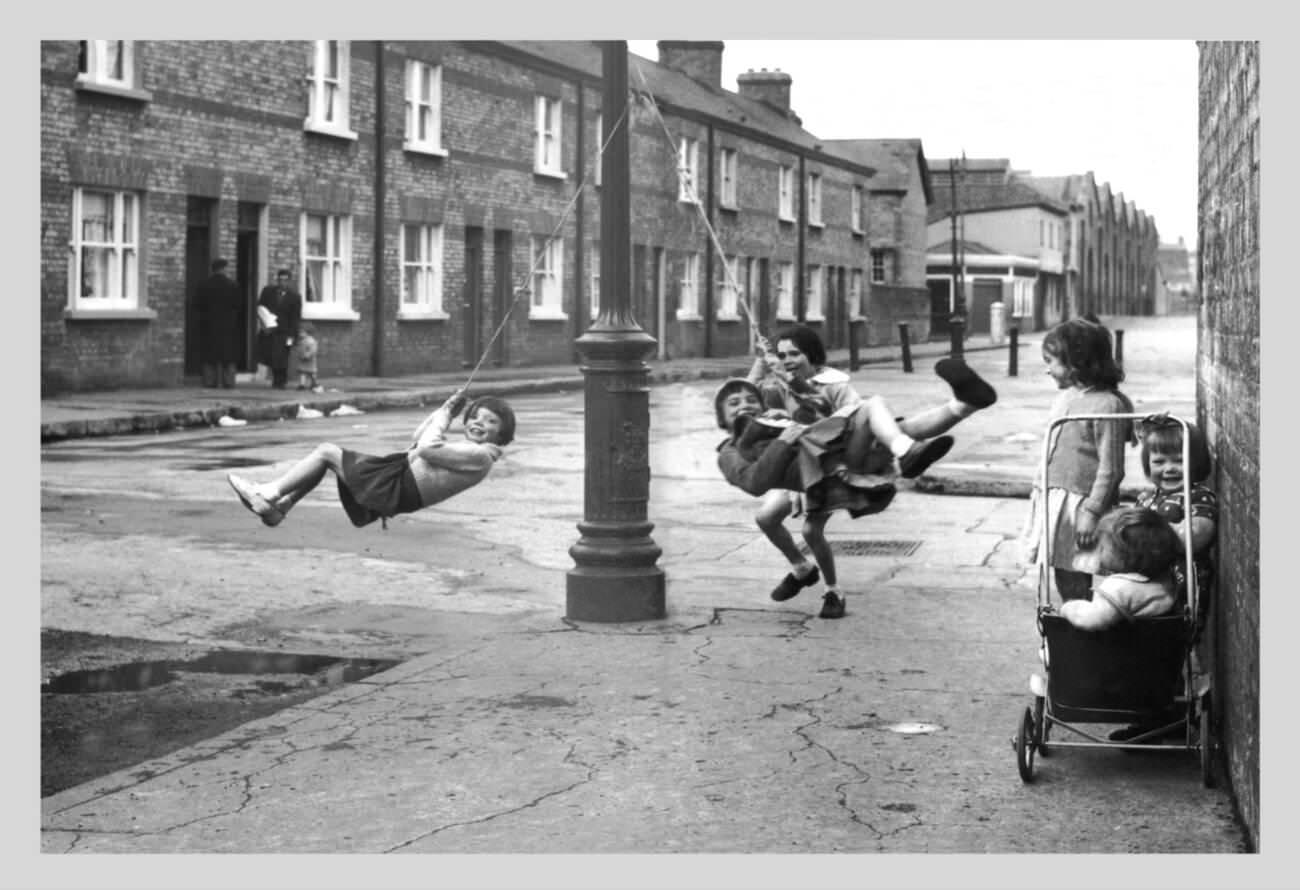
The social divide in Dublin during this period was stark. Wealthy families settled in the elegant townhouses of Merrion Square and Fitzwilliam Square, while the working poor crowded into tenements in districts like the Liberties. Streets across the city told two very different stories depending on which direction you walked. Children from all classes filled the streets, though their prospects differed dramatically based on where they were born.

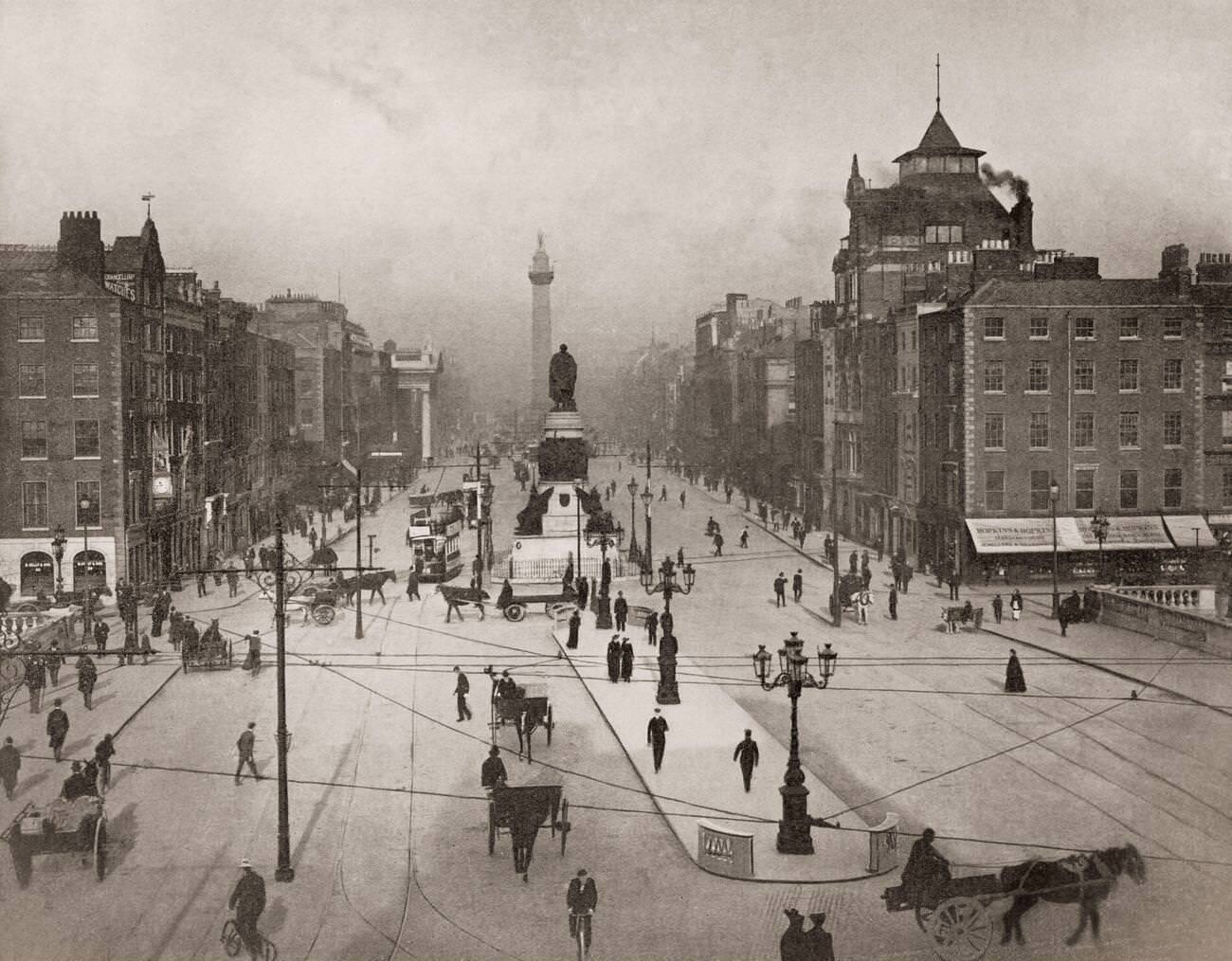
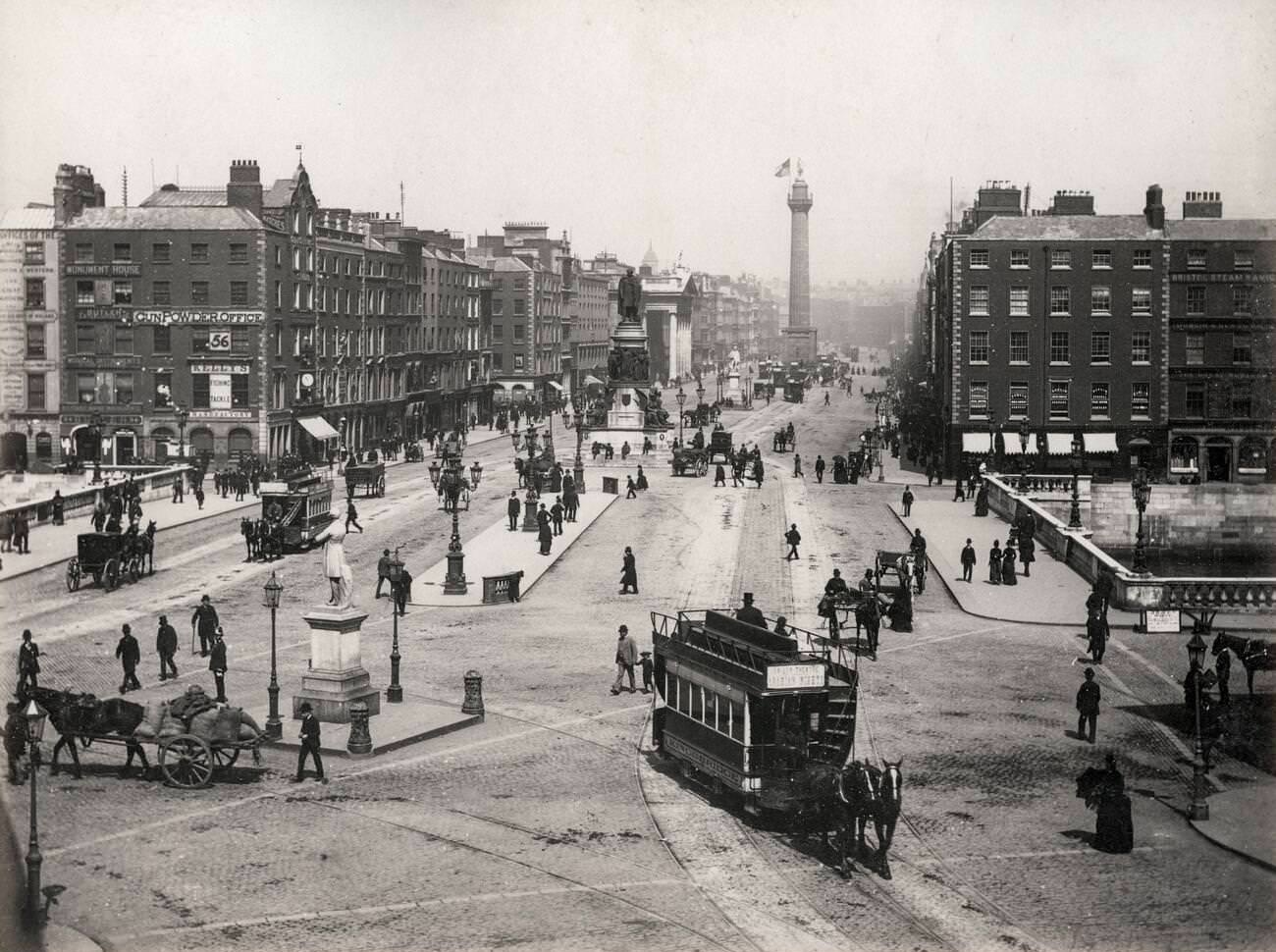
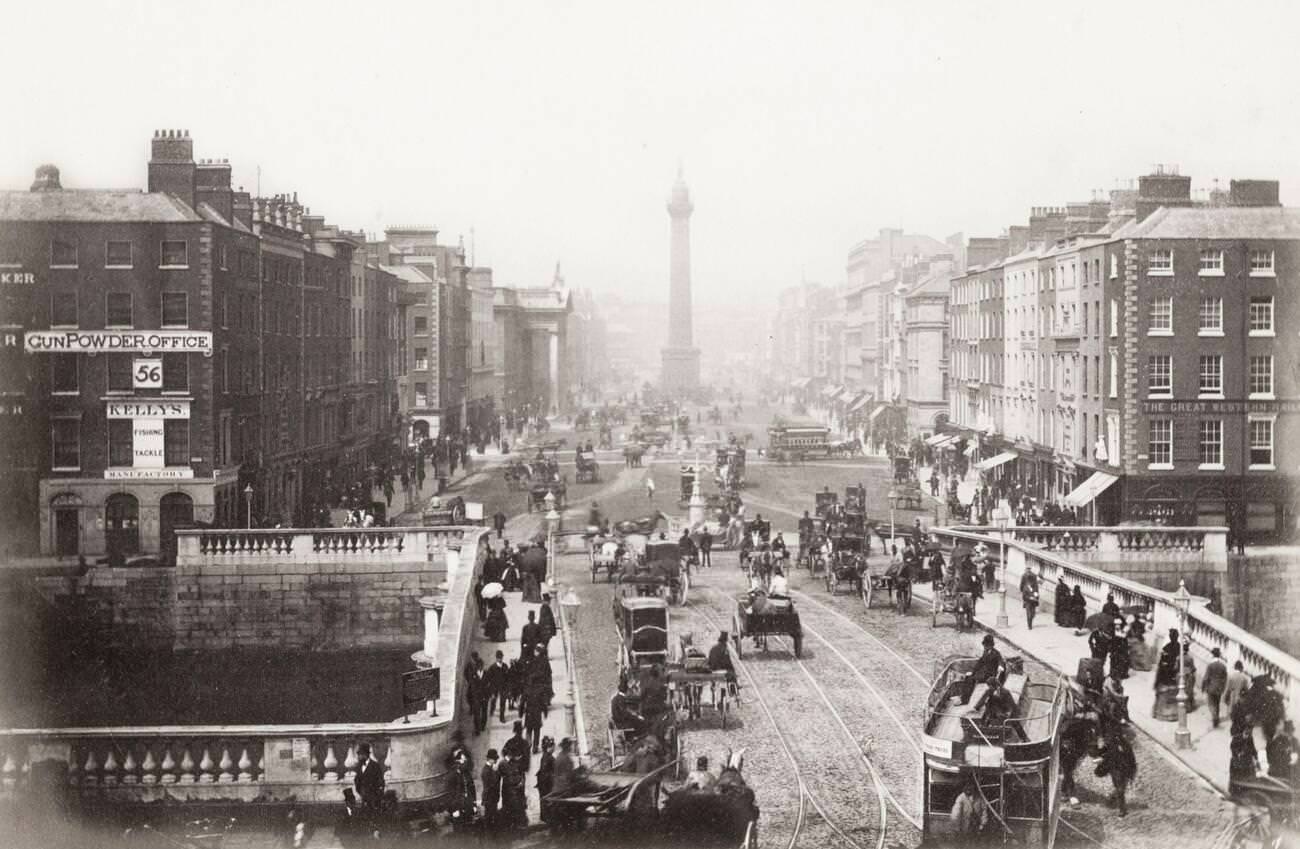
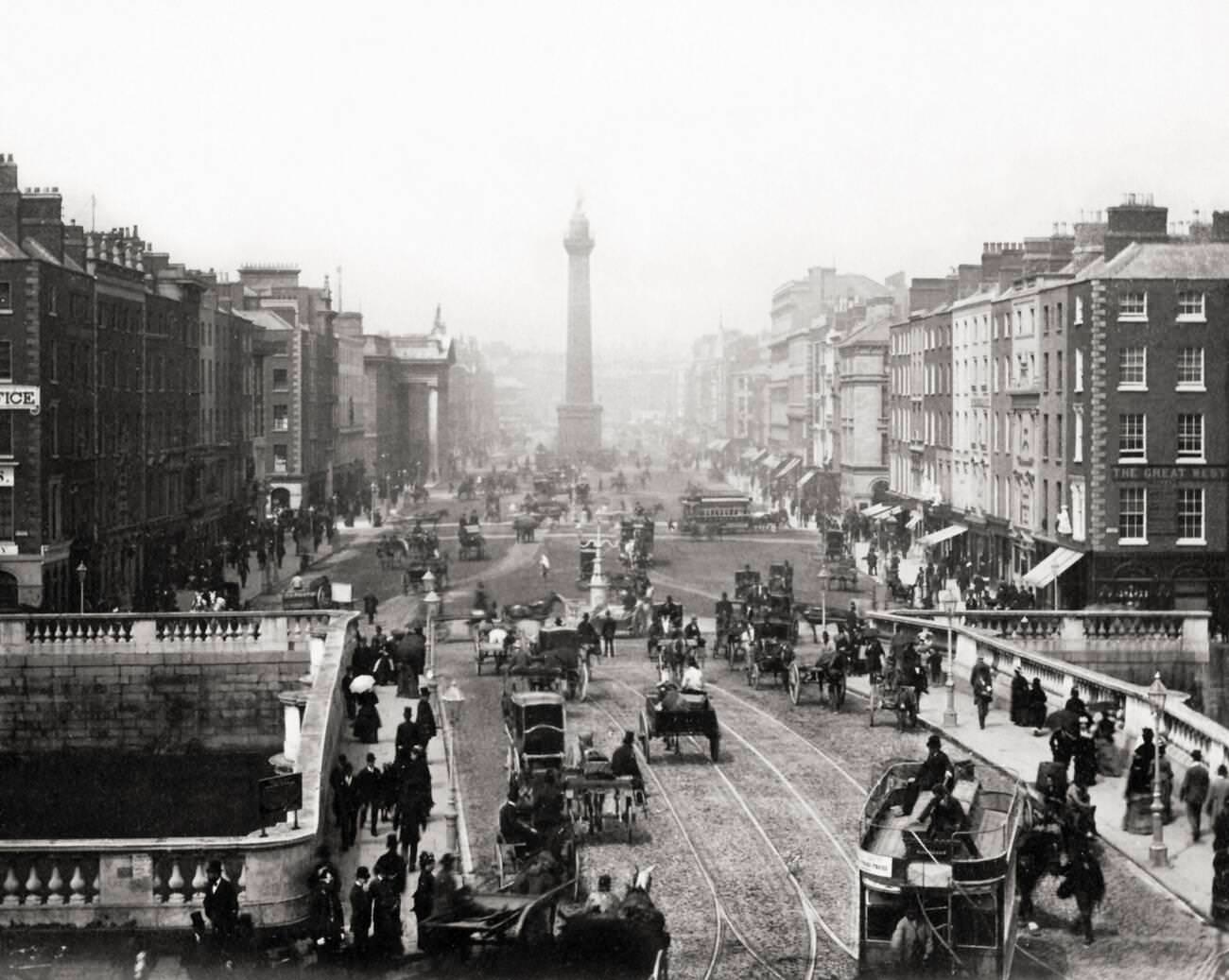
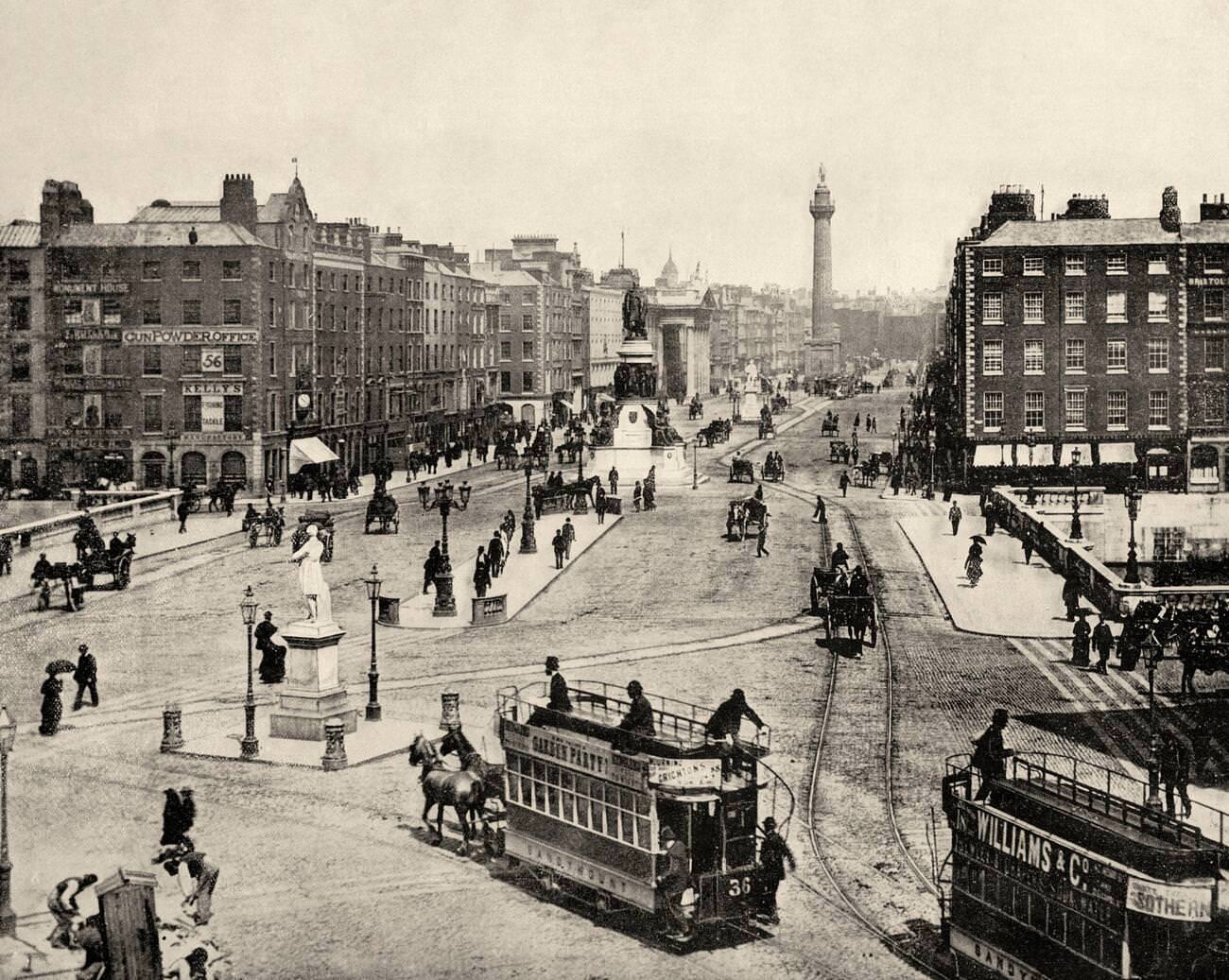
The main artery of the city was Sackville Street — known today as O’Connell Street. It was wide, busy, and lined with some of Dublin’s most recognizable buildings. Nelson’s Column rose above the rooftops as a divisive symbol of British rule, while trams, horses, and pedestrians competed for space below.
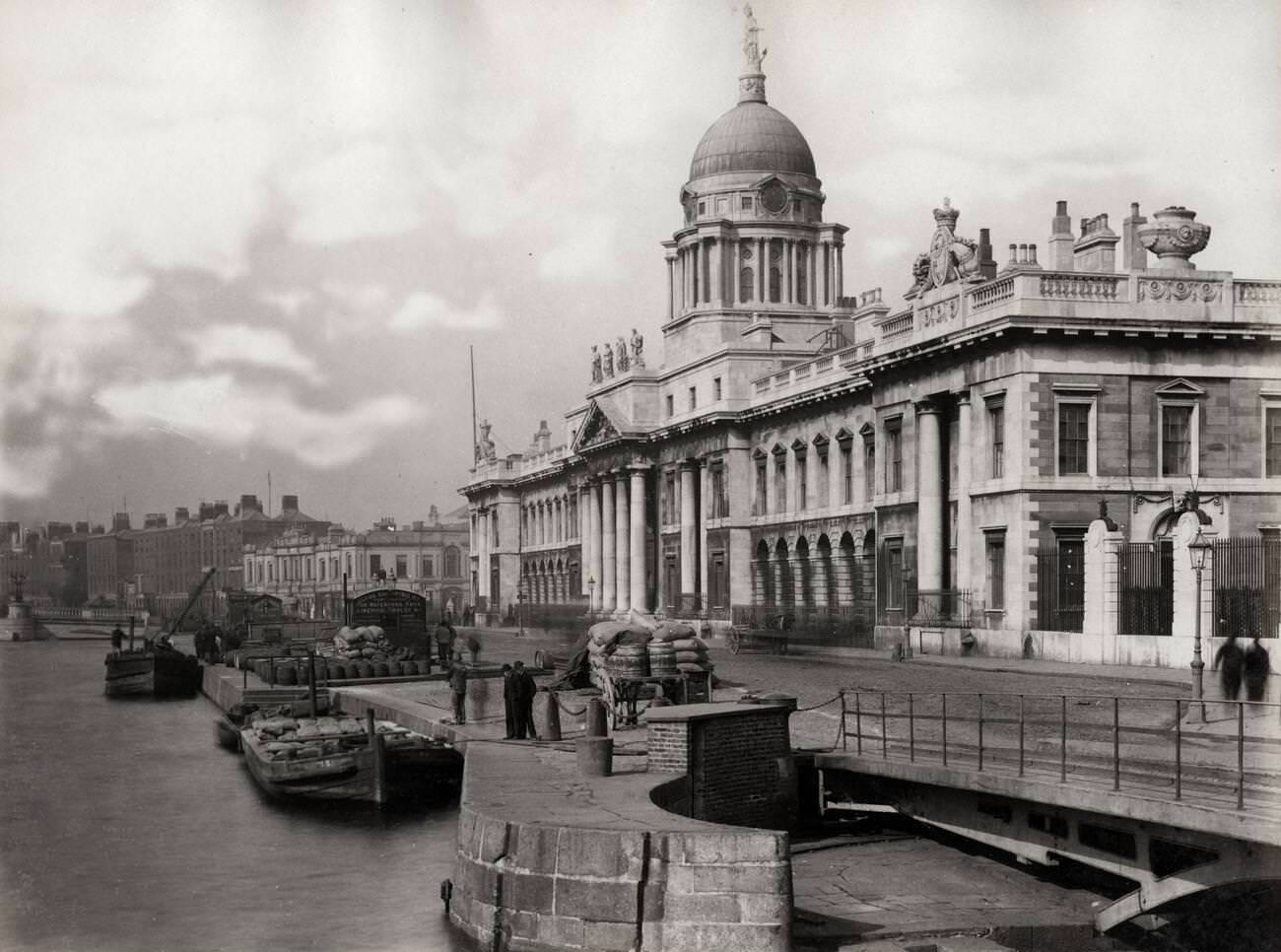
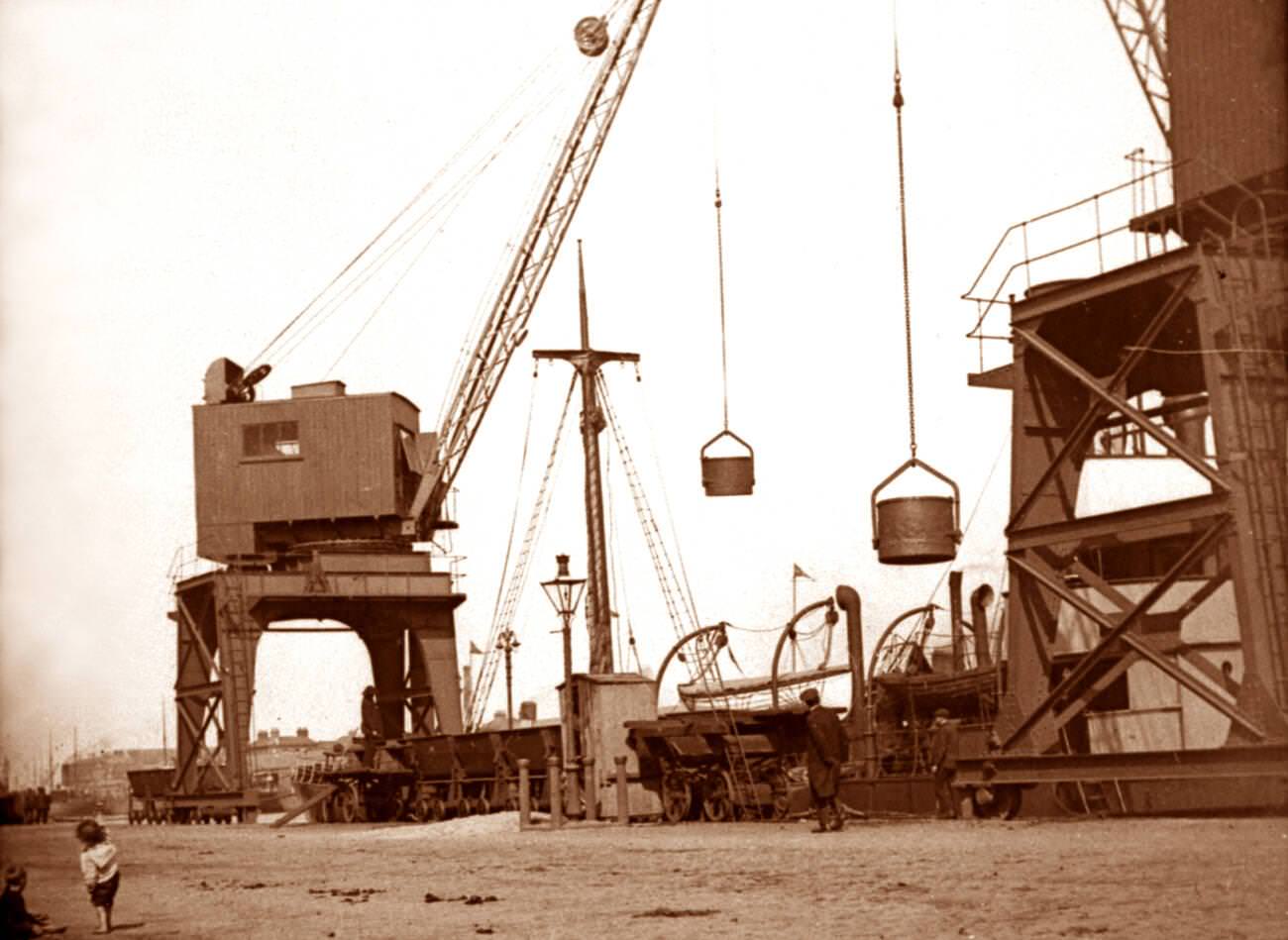
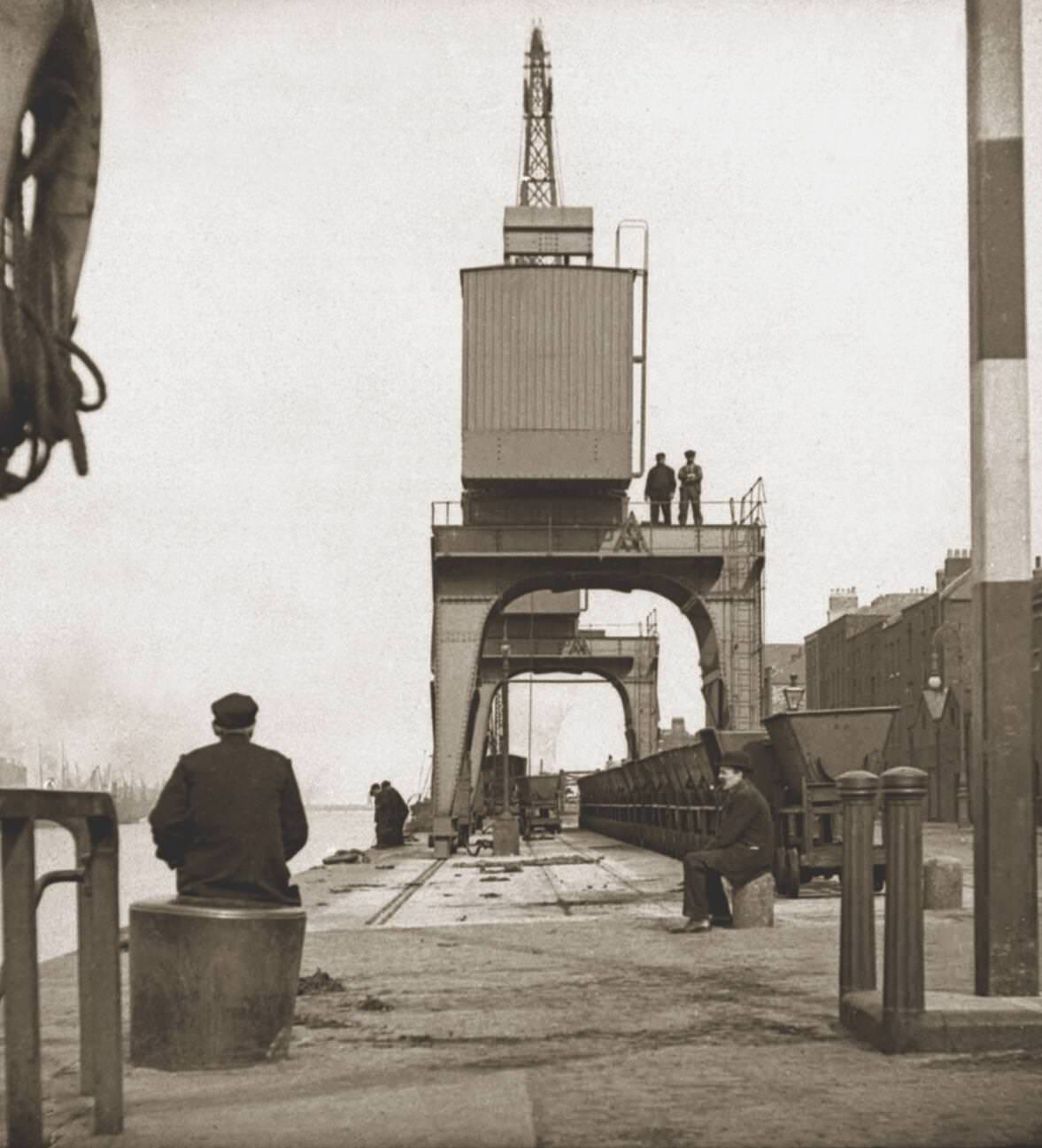
The River Liffey was the economic spine of the city. Dublin was a major port, and the quays along its banks buzzed with freight barges, merchants, and dockworkers. Shipbuilding and trade kept thousands employed, and the river’s infrastructure — its bridges, customs facilities, and quay walls — reflected how central commerce was to Dublin’s identity.
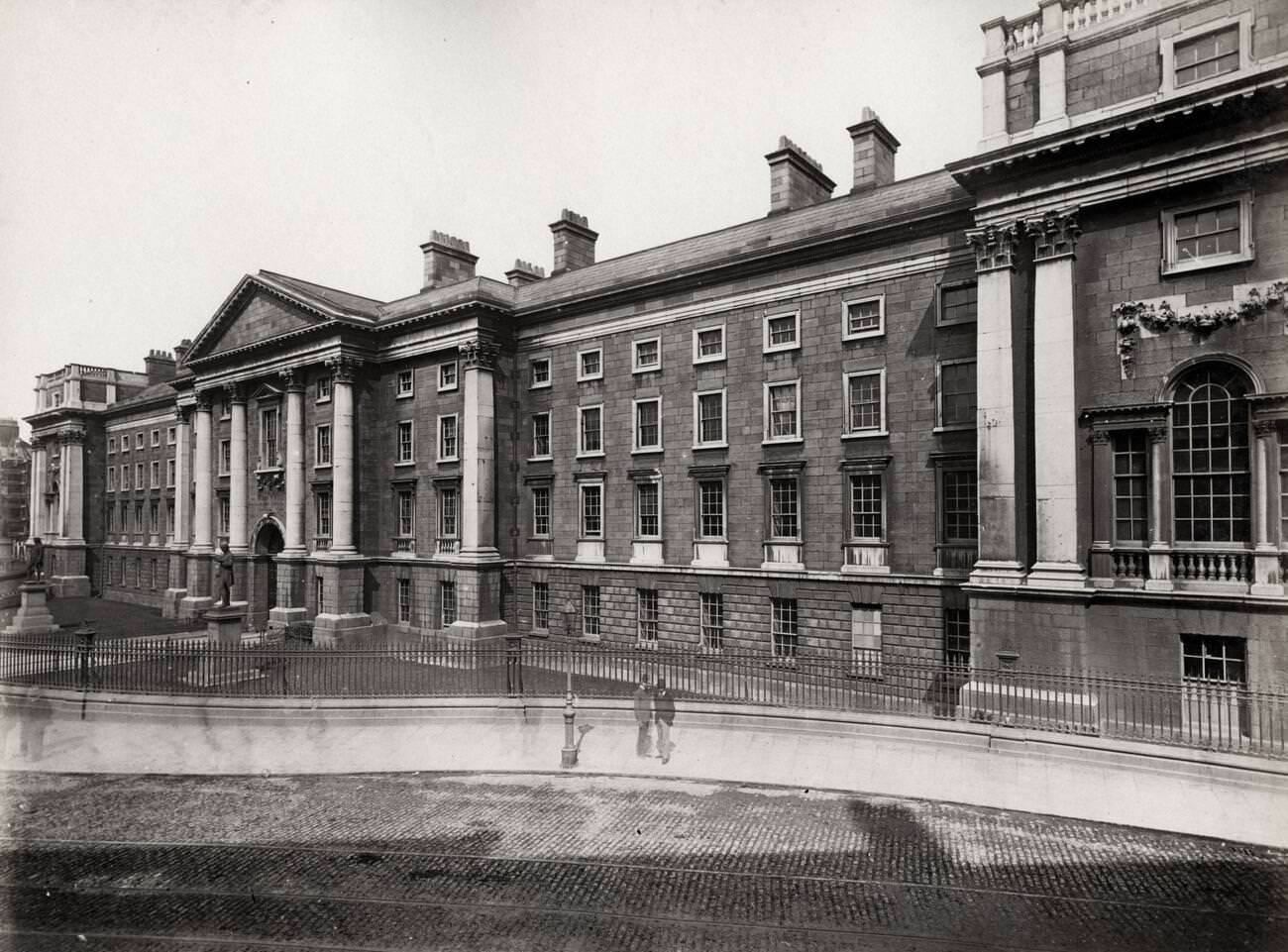
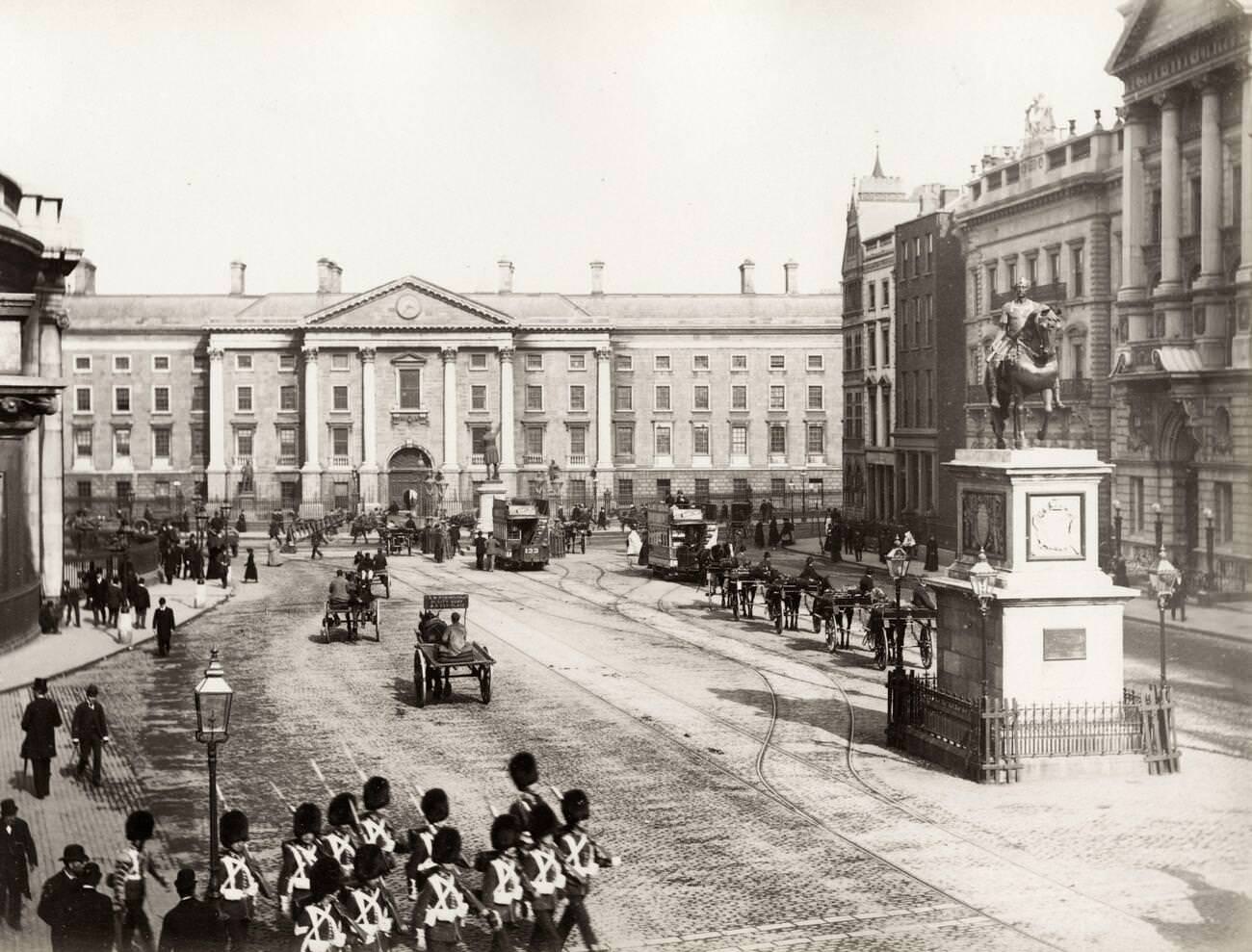
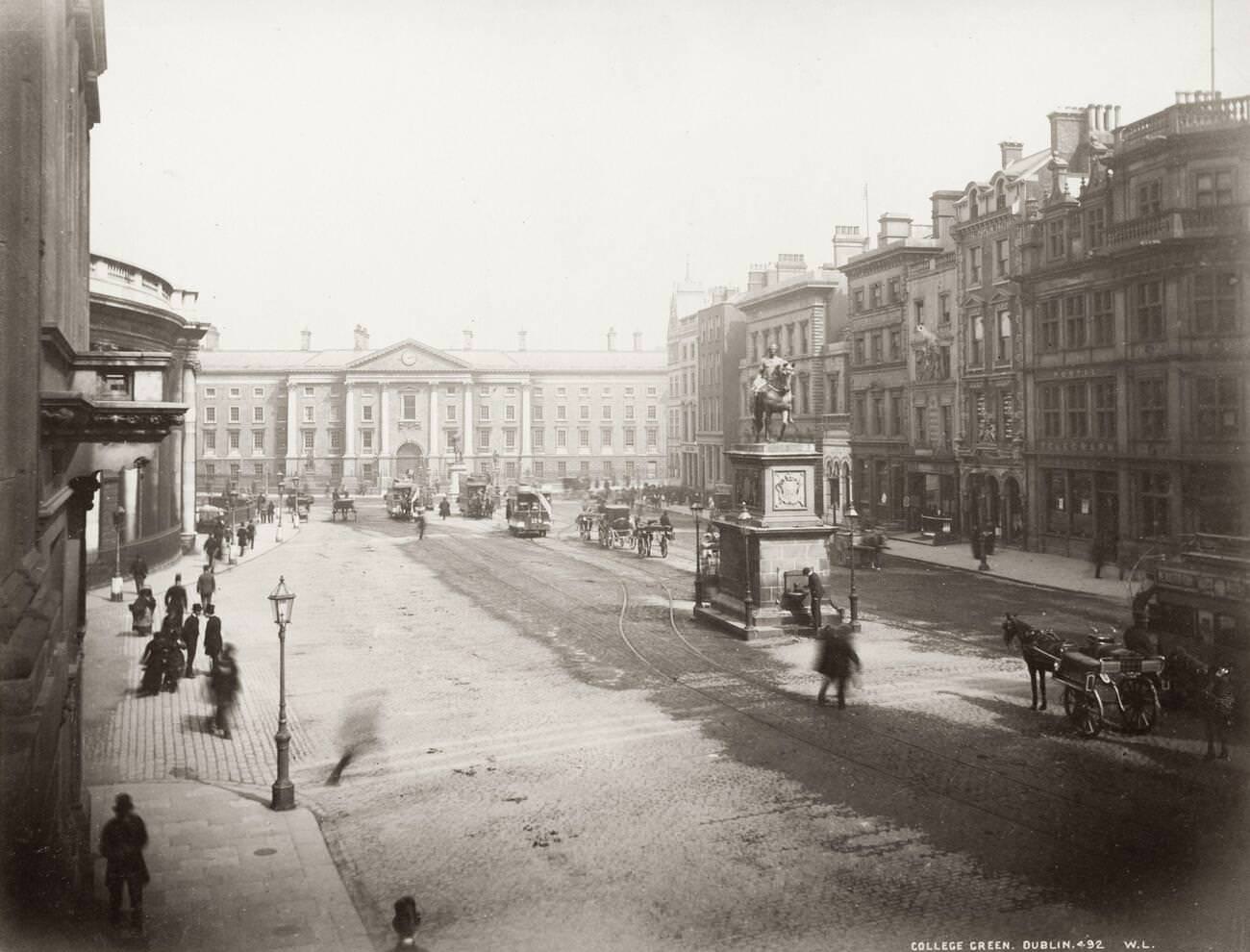
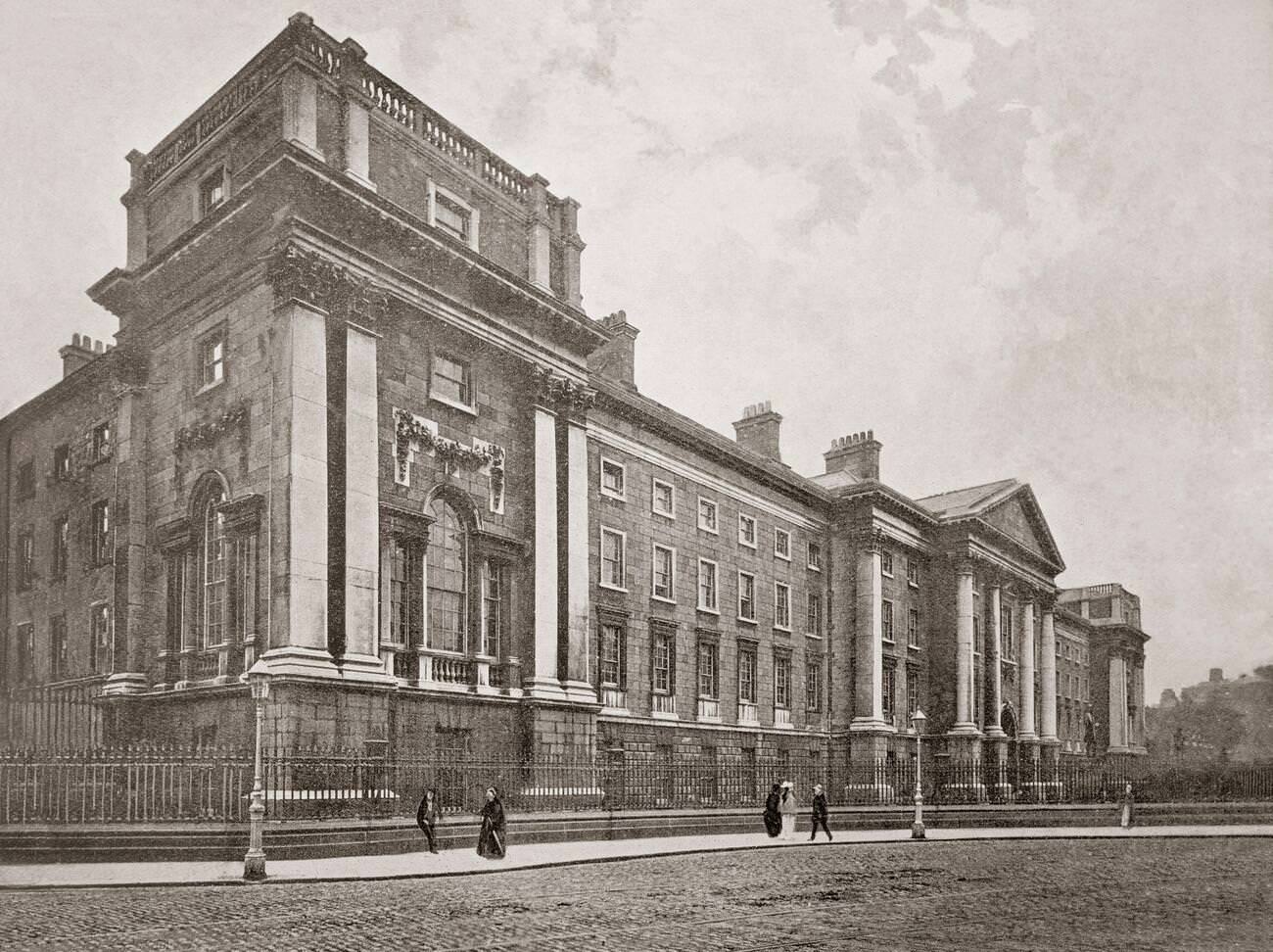
Trinity College dominated the intellectual and social landscape of the city’s elite. Founded in 1592, it remained an institution primarily for the privileged classes in the 19th century. Its famous Front Gate, known as the Regent House, was built in the 1750s and opened onto College Green, one of Dublin’s most visited public spaces.
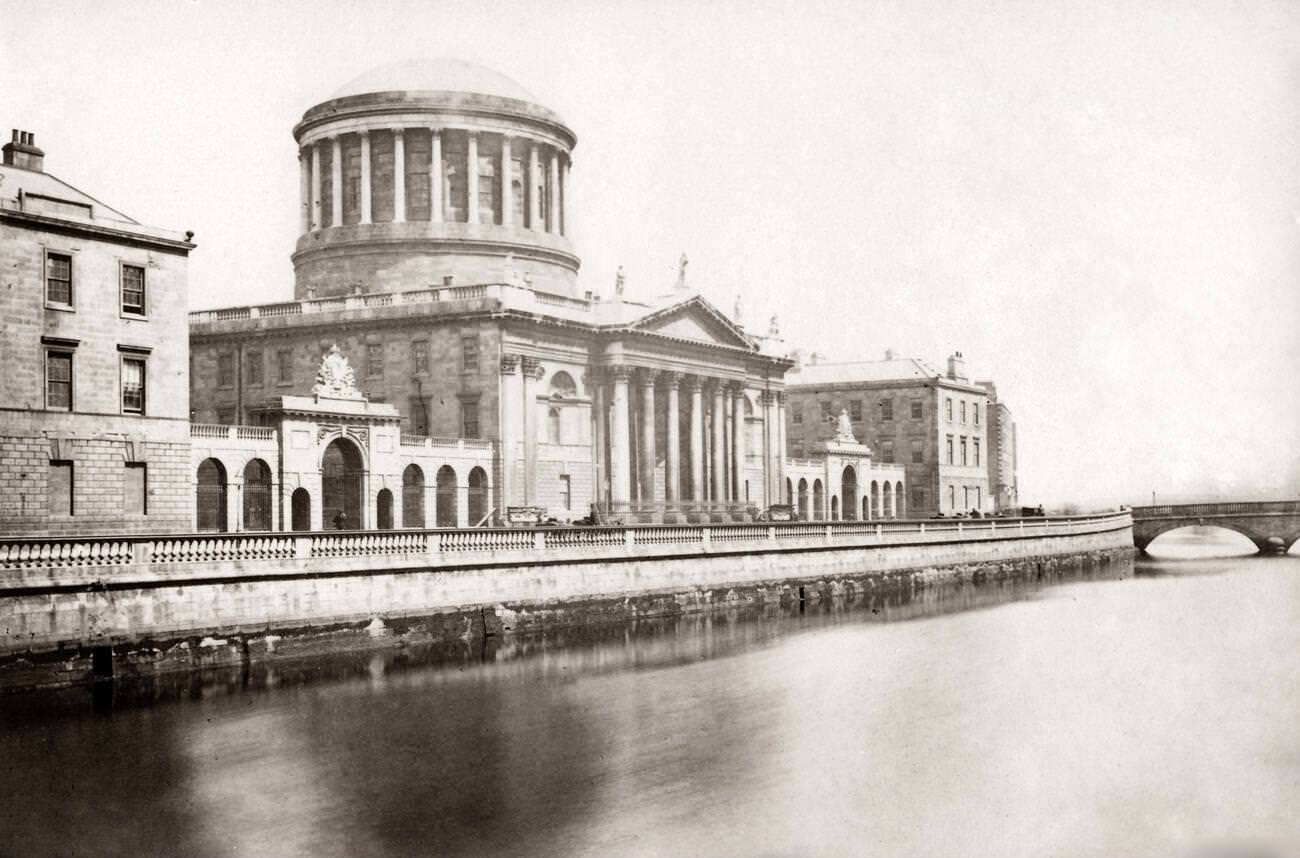
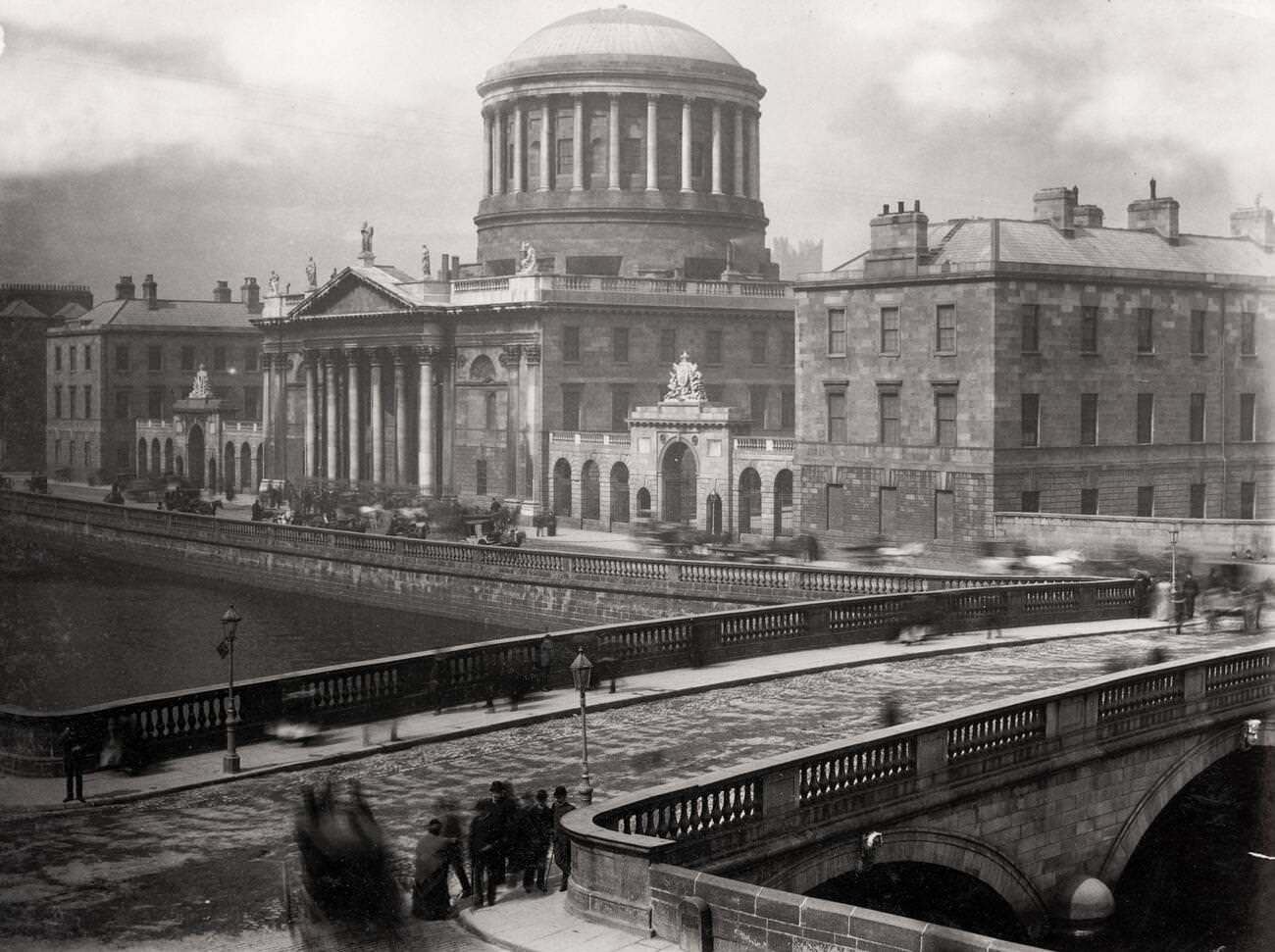
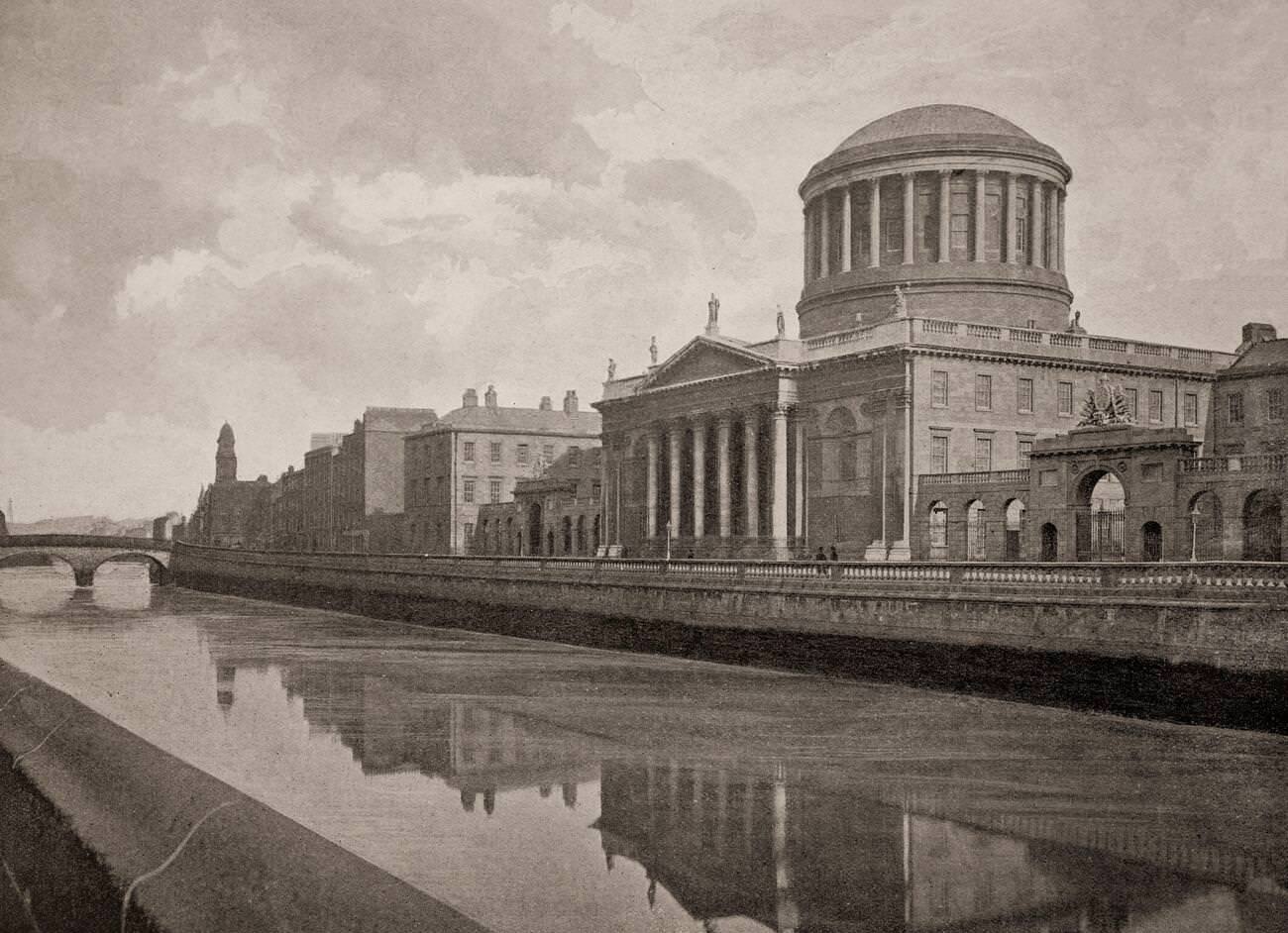
The Four Courts, designed largely by architect James Gandon and built between 1786 and 1796, stood as one of the most imposing buildings along the Liffey. Its great copper dome reflected in the river below and served as the principal seat of Ireland’s highest courts. The finishing touches to its arcades and wings were not completed until 1802.
British military presence was a constant and visible feature of Dublin life throughout the late 19th century. Soldiers could be seen marching through the city’s streets and stationed near key institutions. This presence was tied directly to the political tensions of the era, particularly the growing Home Rule movement led by Charles Stewart Parnell, which sought greater autonomy for Ireland within the United Kingdom.
Sackville Street in the 1890s was a hive of activity. Horse-drawn trams ran regular routes, and the street was packed with traders, pedestrians, and carriages at most hours of the day. The introduction of electric lighting in 1892 transformed how the city looked after dark, and the expansion of the tram network made it easier for residents to move across a rapidly growing urban area.
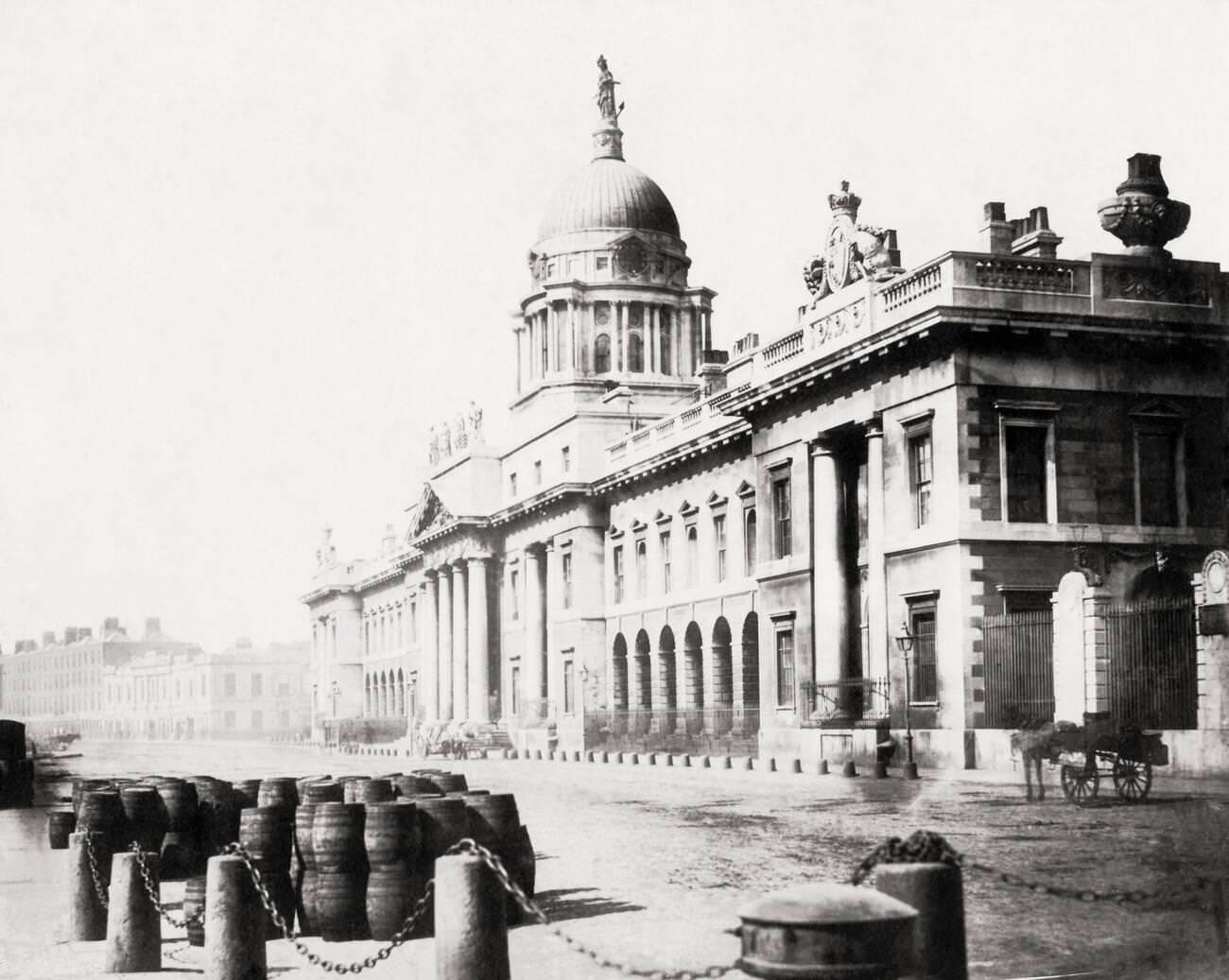
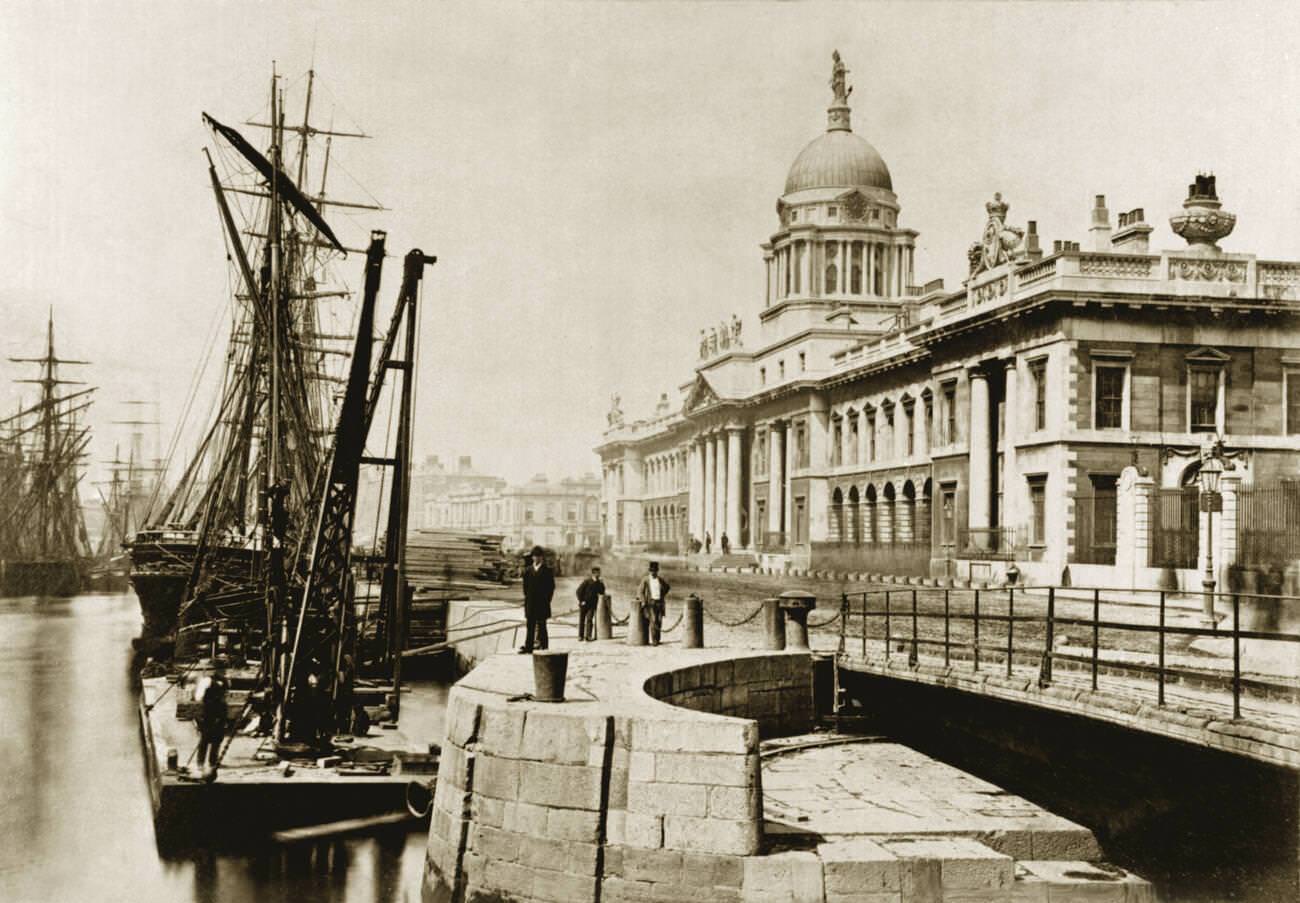
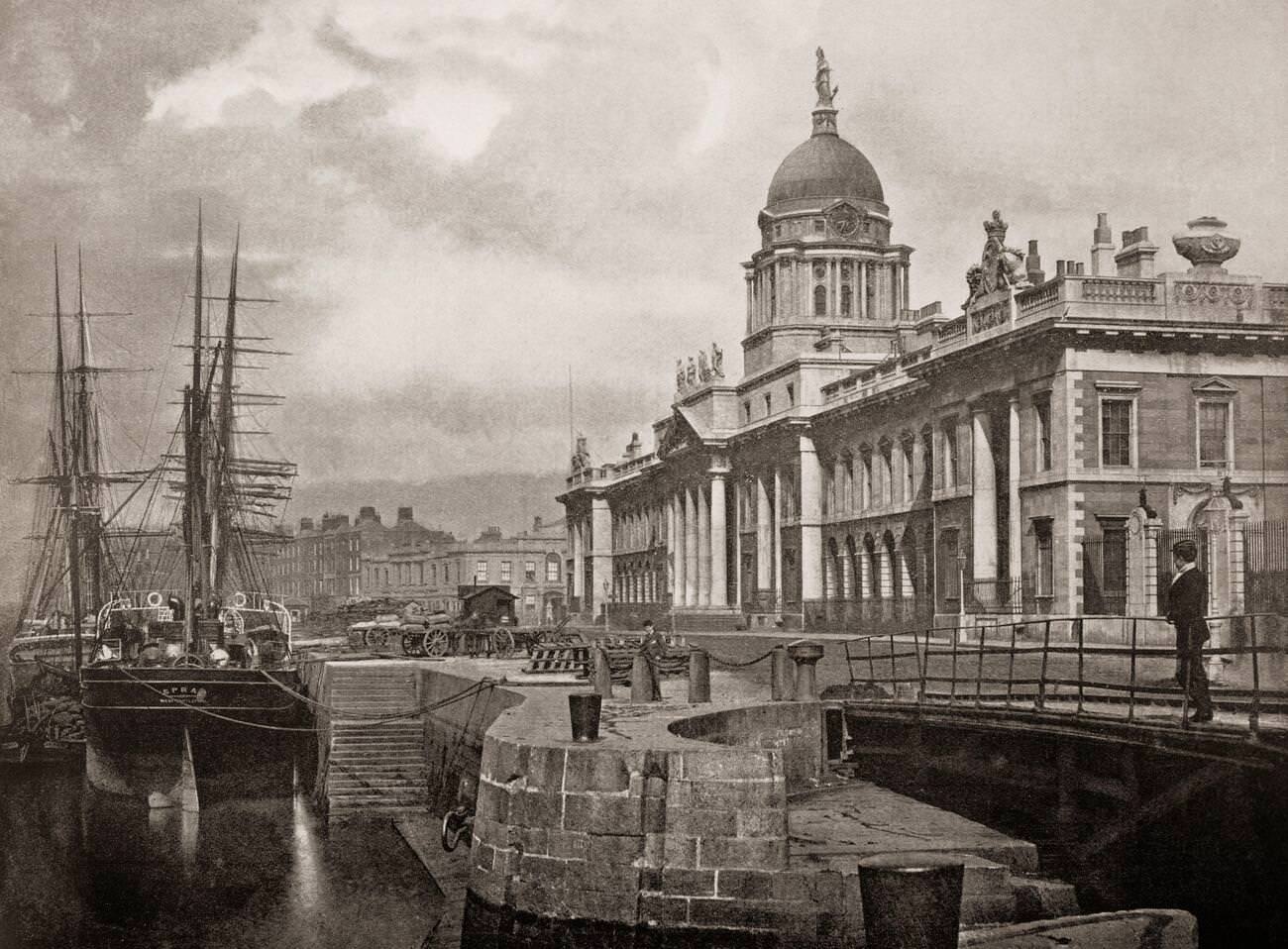
The Custom House, completed and opened for business on 7 November 1791, remained one of the most architecturally celebrated buildings in Dublin. It was built at a cost of £200,000 — an enormous sum for the time. Architect James Gandon oversaw its construction, employing local Irish craftsmen including stone-cutter Henry Darley and mason John Semple. By the late 19th century it stood as a landmark of both trade and civic pride.
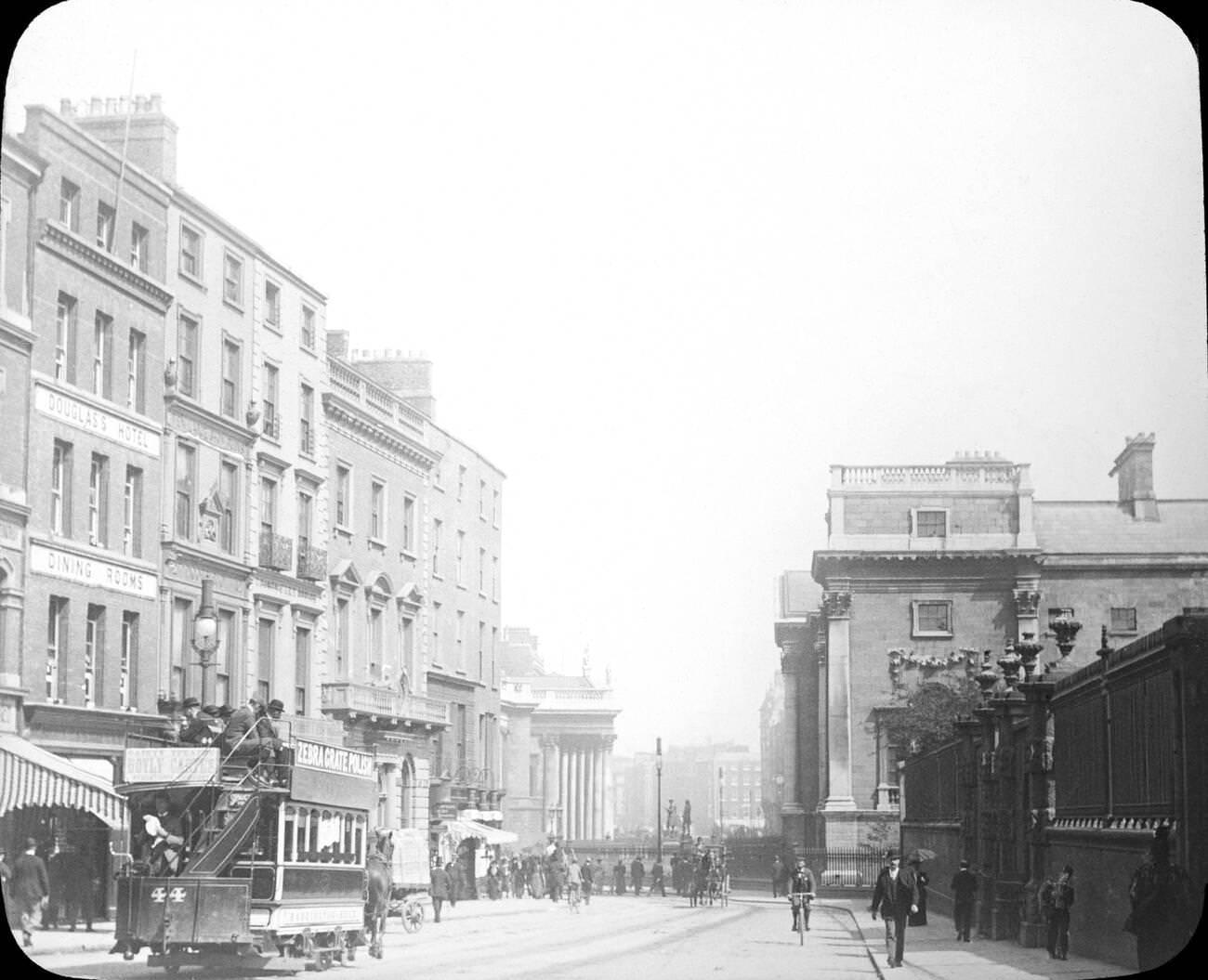
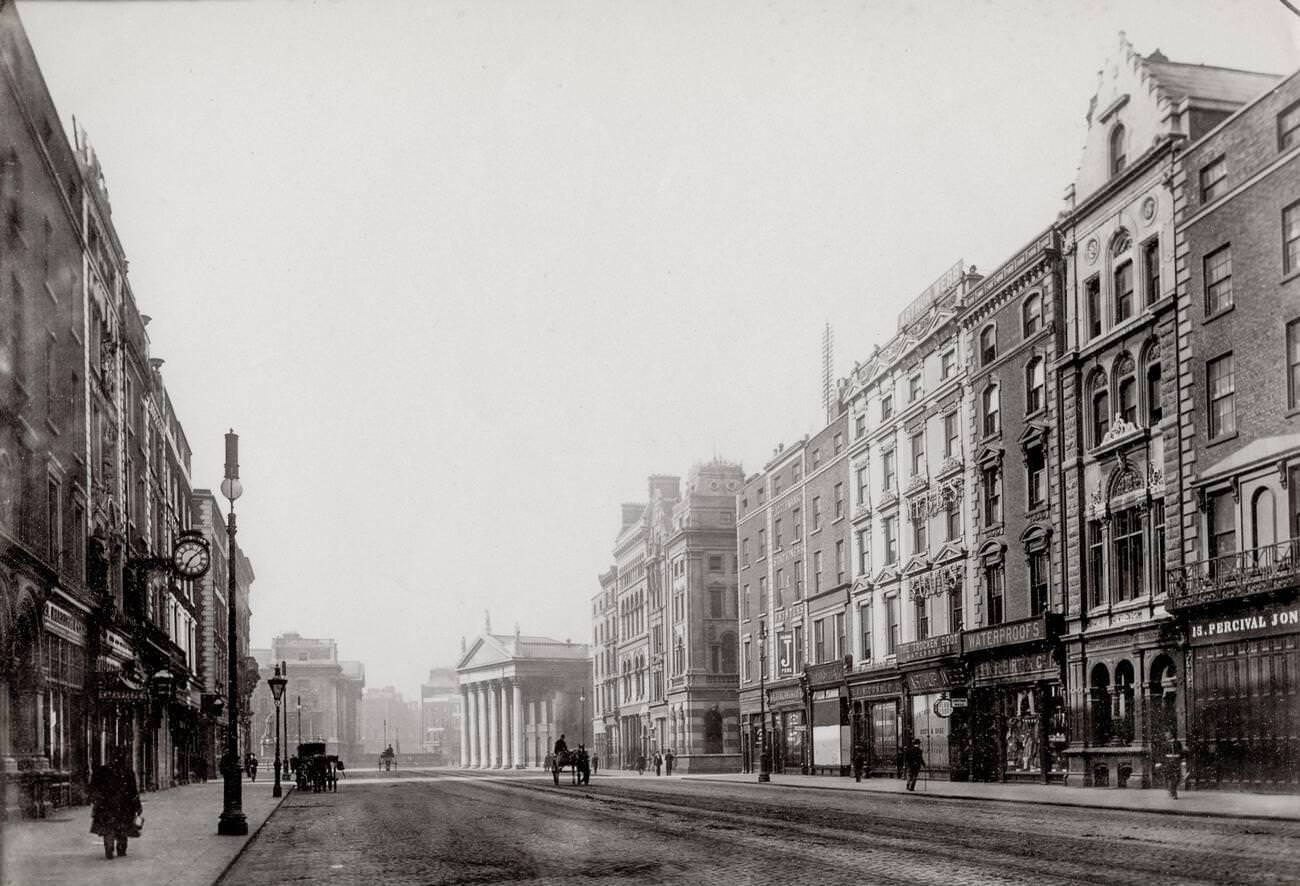
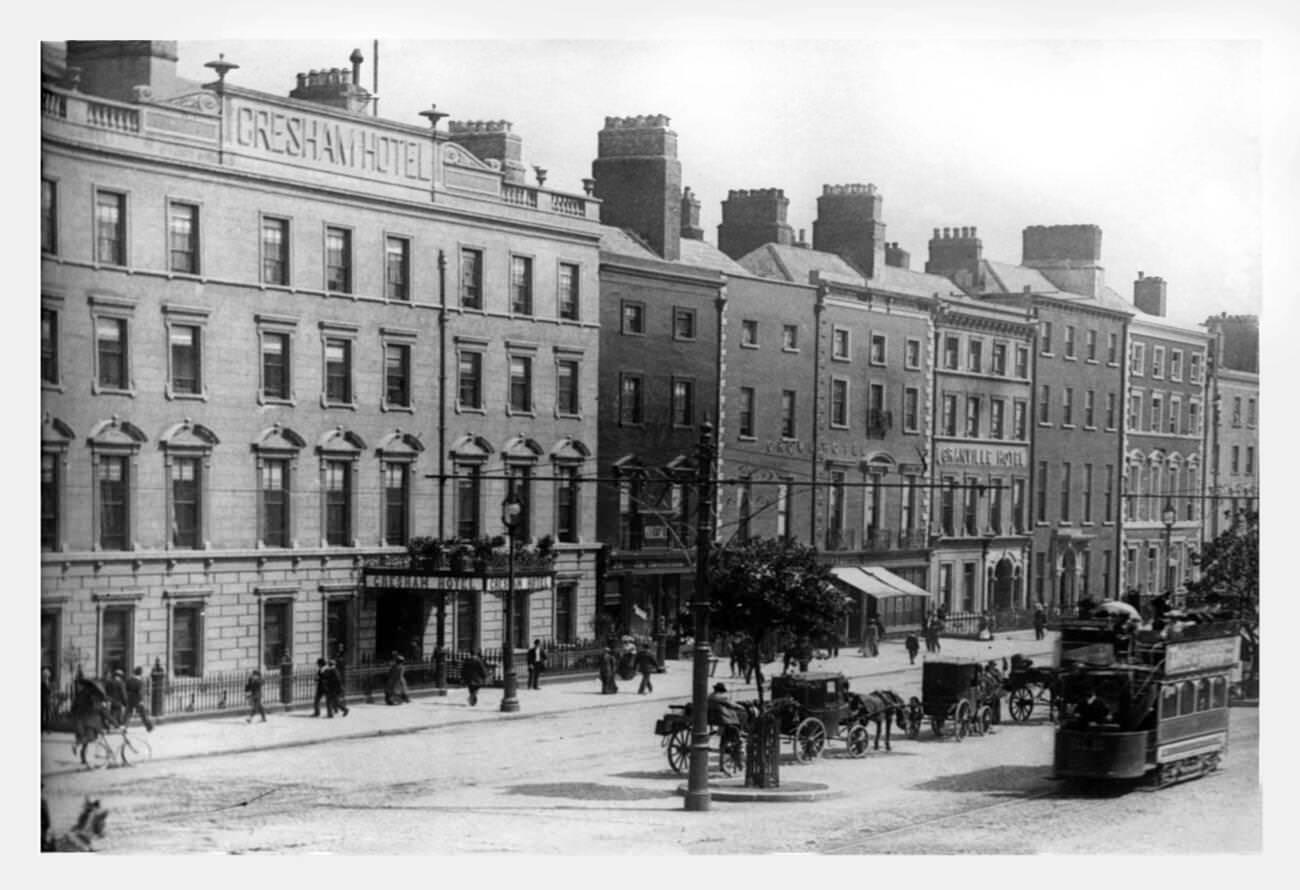
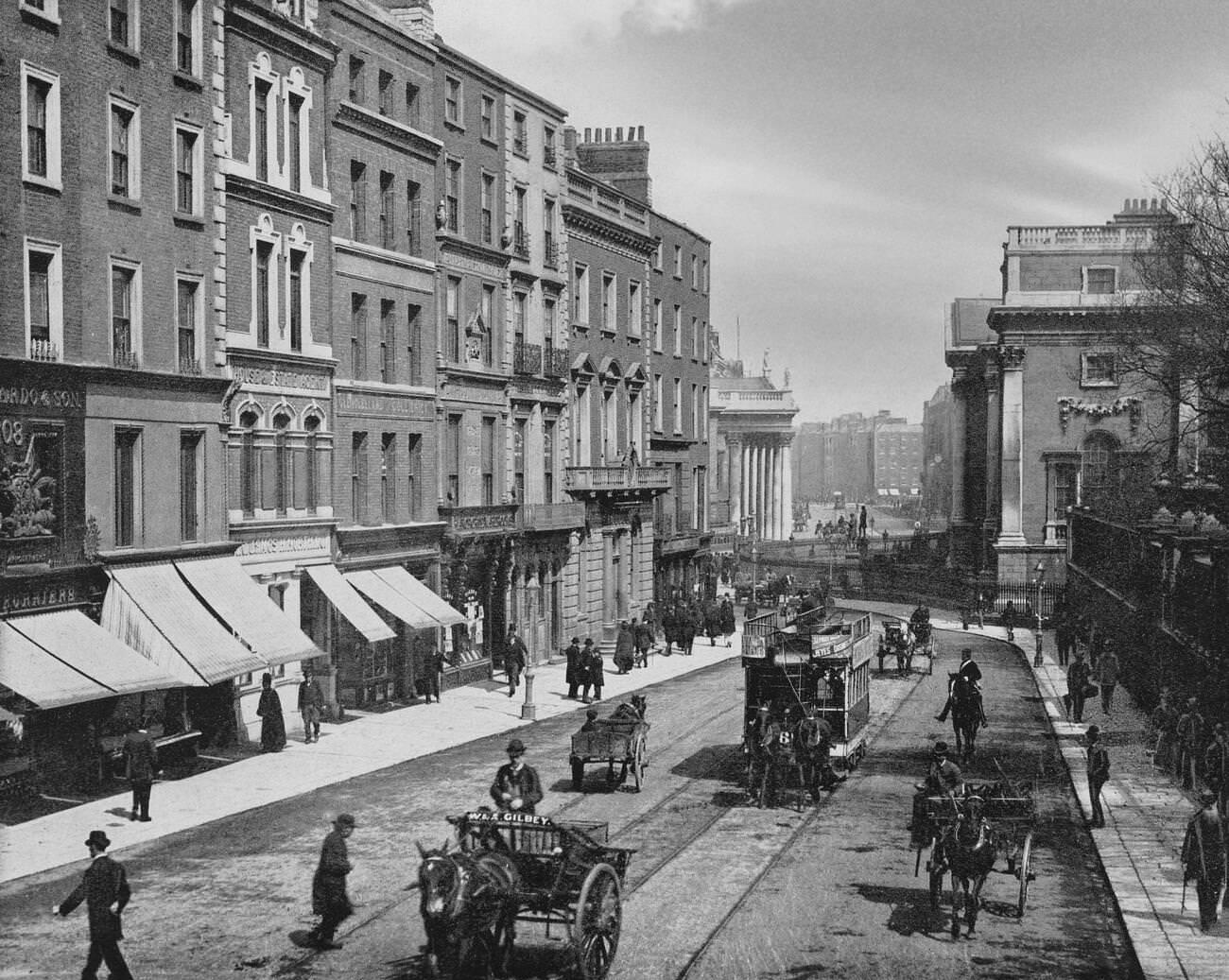
Grafton Street offered a glimpse into Dublin’s commercial side. Hotels, dining rooms, and shops lined the route, and horse-drawn trams carried passengers from College Green southward. A number 44 tram visible in period photographs carried advertisements for Zebra Grate Polish, a small but telling detail about everyday commercial life in Victorian Dublin.
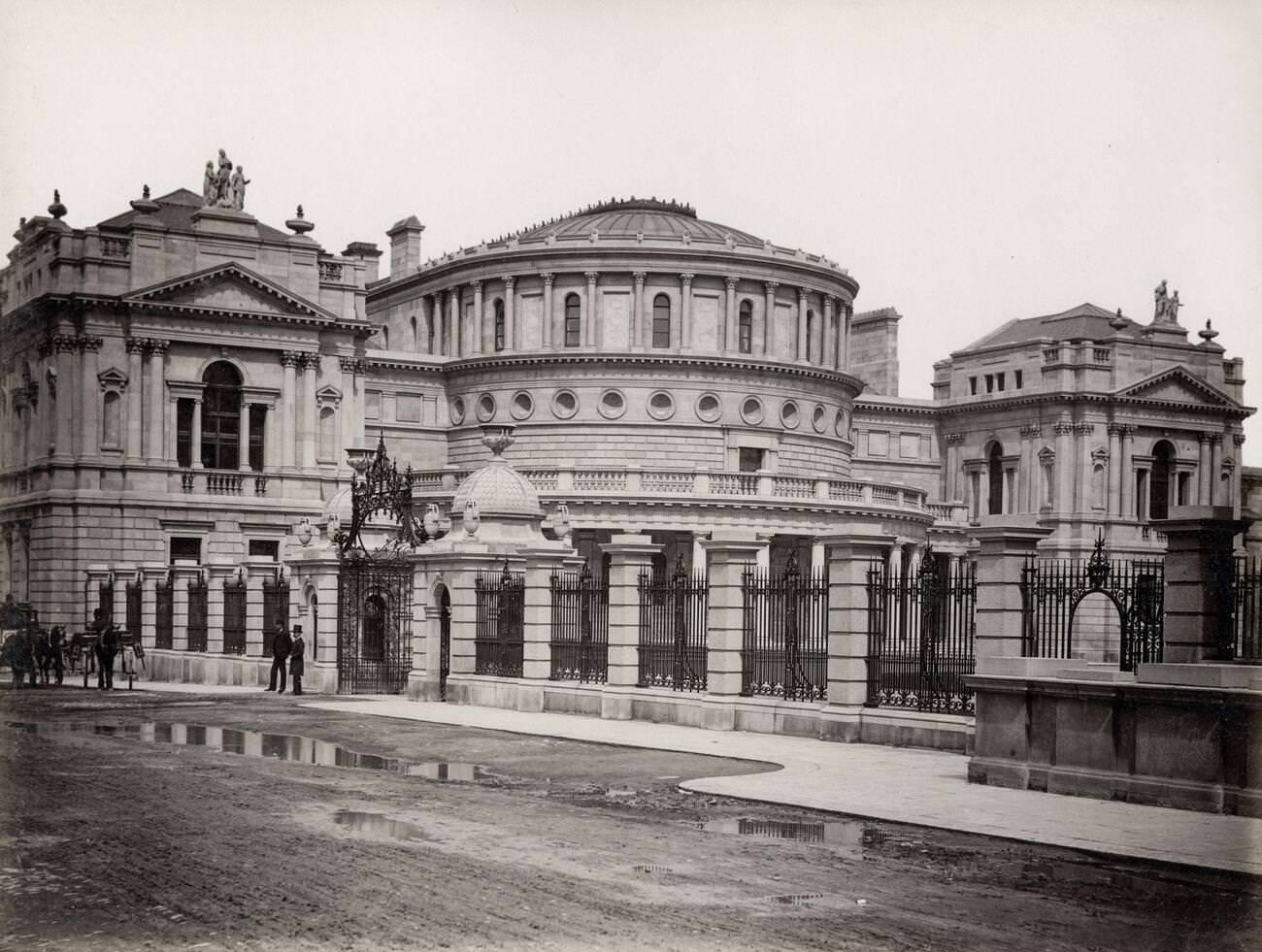
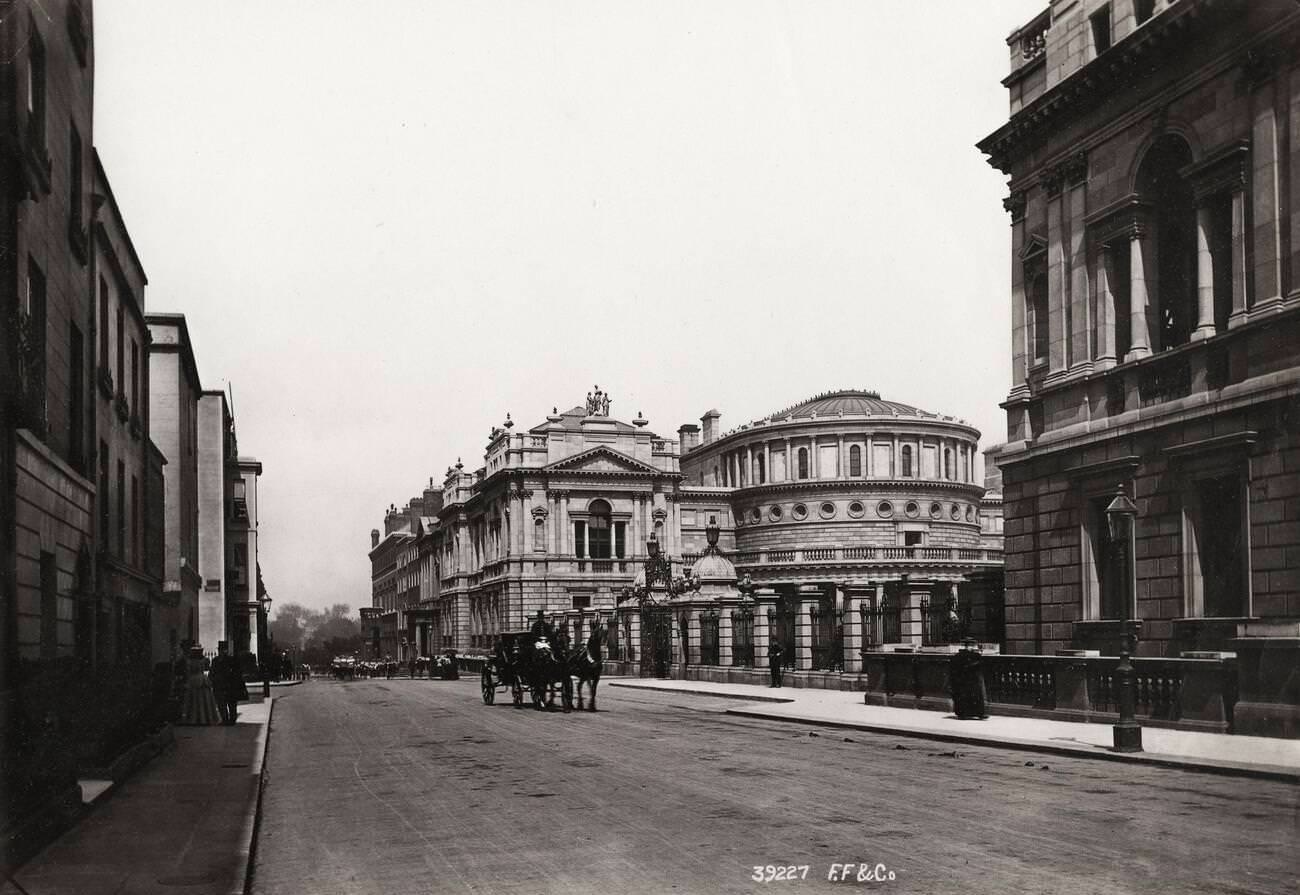
Kildare Street ran through the heart of institutional Dublin. The National Museum of Ireland opened on this street in 1890, and the area around it housed government offices and clubs. It was a corridor of power and culture, reflecting the dual nature of a city under British administration but with a strong and distinct Irish identity.
Children were a common sight on Dublin’s streets regardless of neighborhood. For working-class children, the streets served as both playground and workplace. Many sold newspapers or ran errands to help support their families. Education was improving, but access to quality schooling still depended heavily on a family’s means.
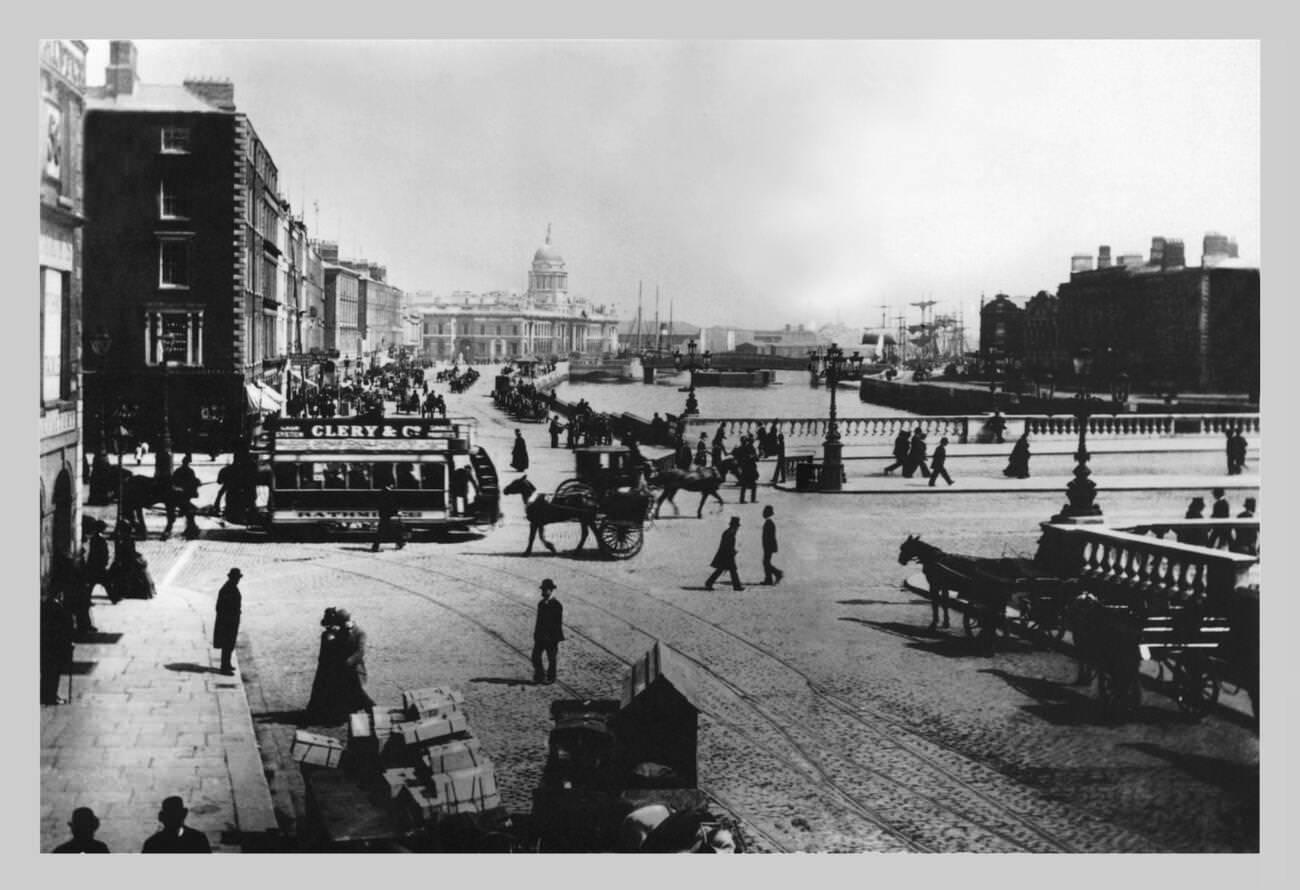
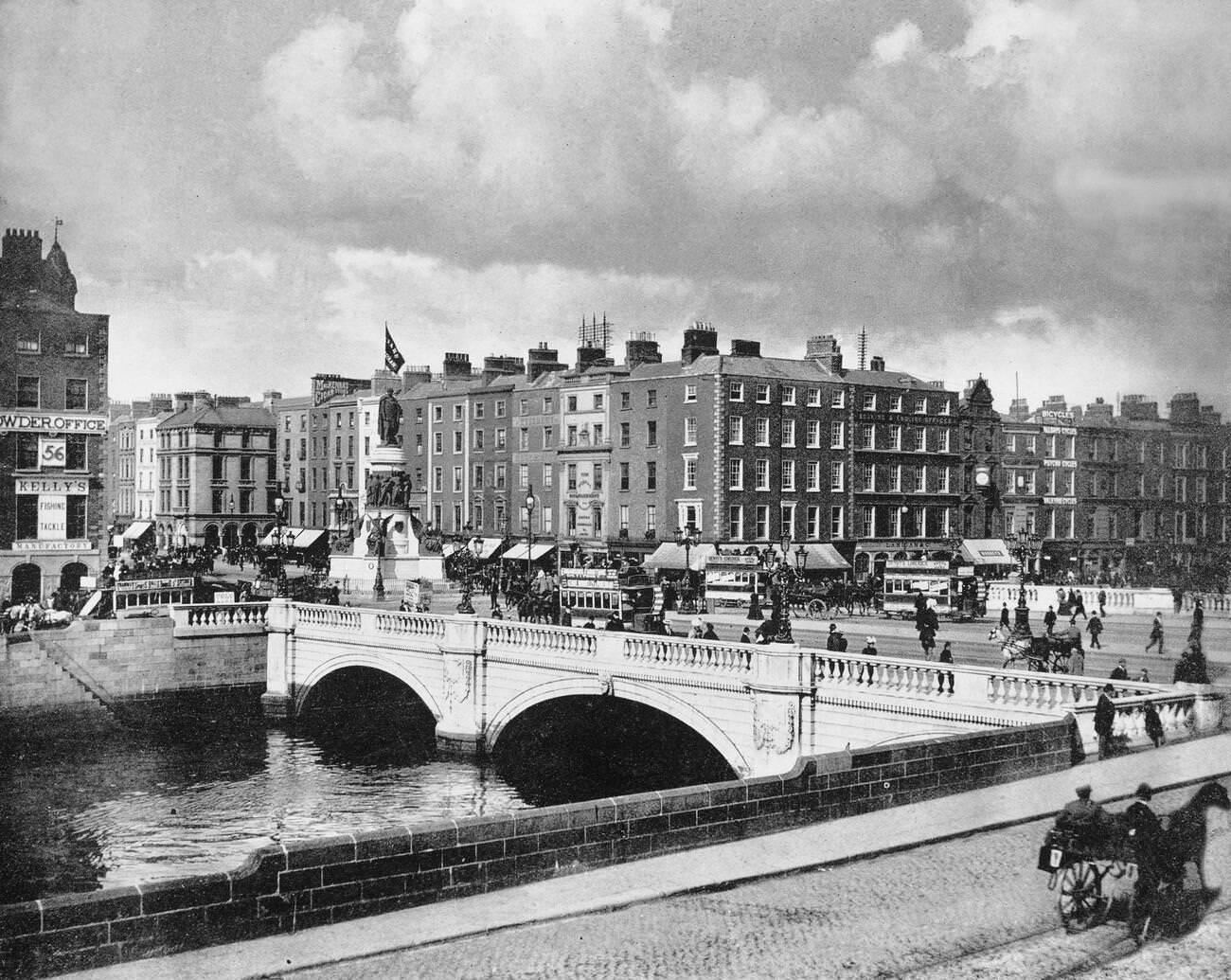
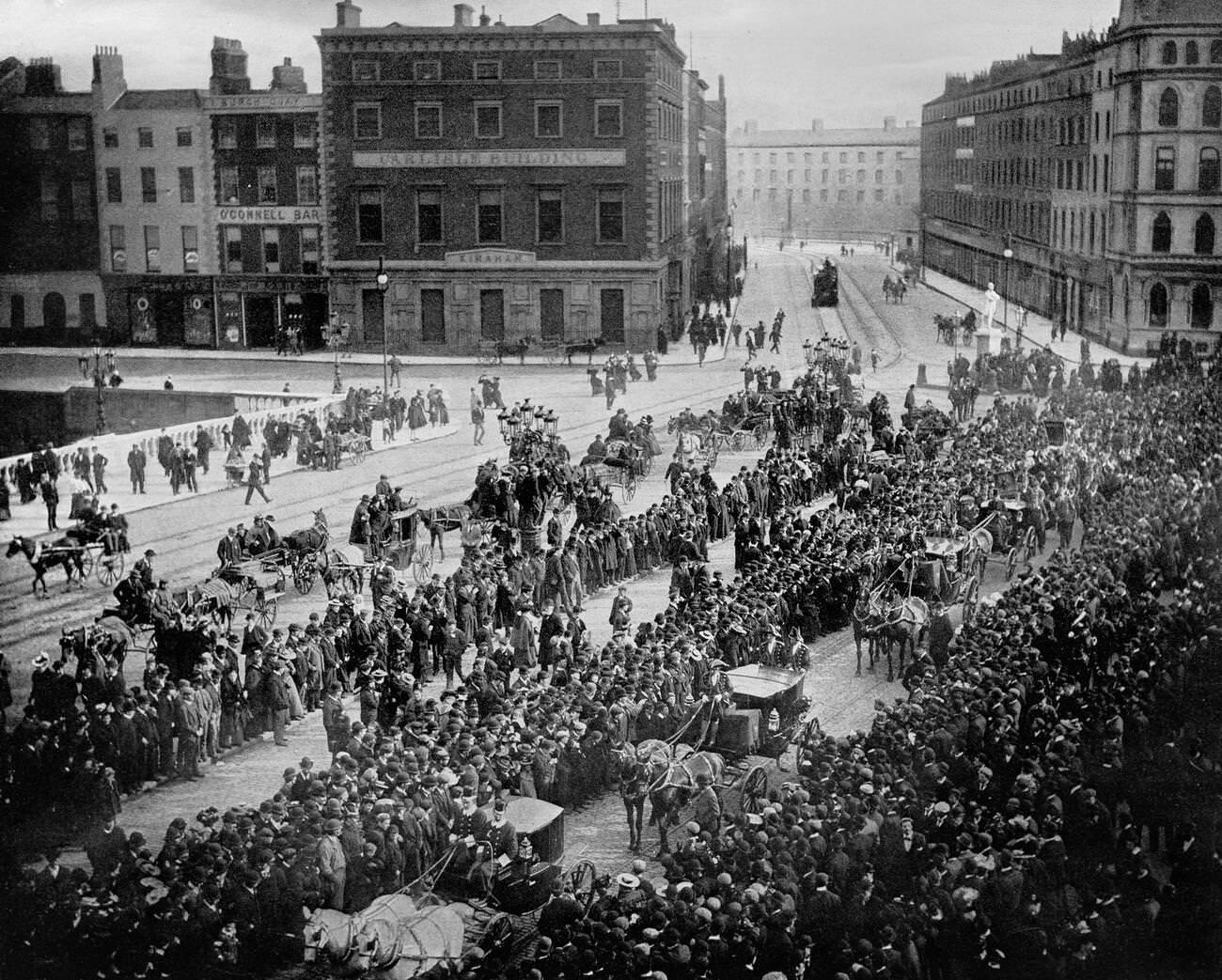
O’Connell Bridge was one of the city’s busiest crossings. Originally called Carlisle Bridge and designed by James Gandon, it was built between 1791 and 1794. The bridge was reconstructed and widened between 1877 and 1880, transforming it into the broad, flat crossing that defined the heart of the city in the late 19th century.
Trinity College’s Front Gate — the Regent House — was built in the 1750s and served as the main entrance from College Green into the college grounds. A large wooden door with a smaller pedestrian door carved into it funneled visitors into the building. It remained one of the most recognizable architectural features in central Dublin throughout the 19th century.
The Four Courts, reflected in the Liffey on calm days, was Ireland’s most prominent courts building. It sat on Inns Quay and served as the principal seat of the Supreme Court, the Court of Appeal, the High Court, and the Dublin Circuit Court. Based on Thomas Cooley’s original design, James Gandon took over after Cooley’s death in 1784 and completed the structure by 1796.
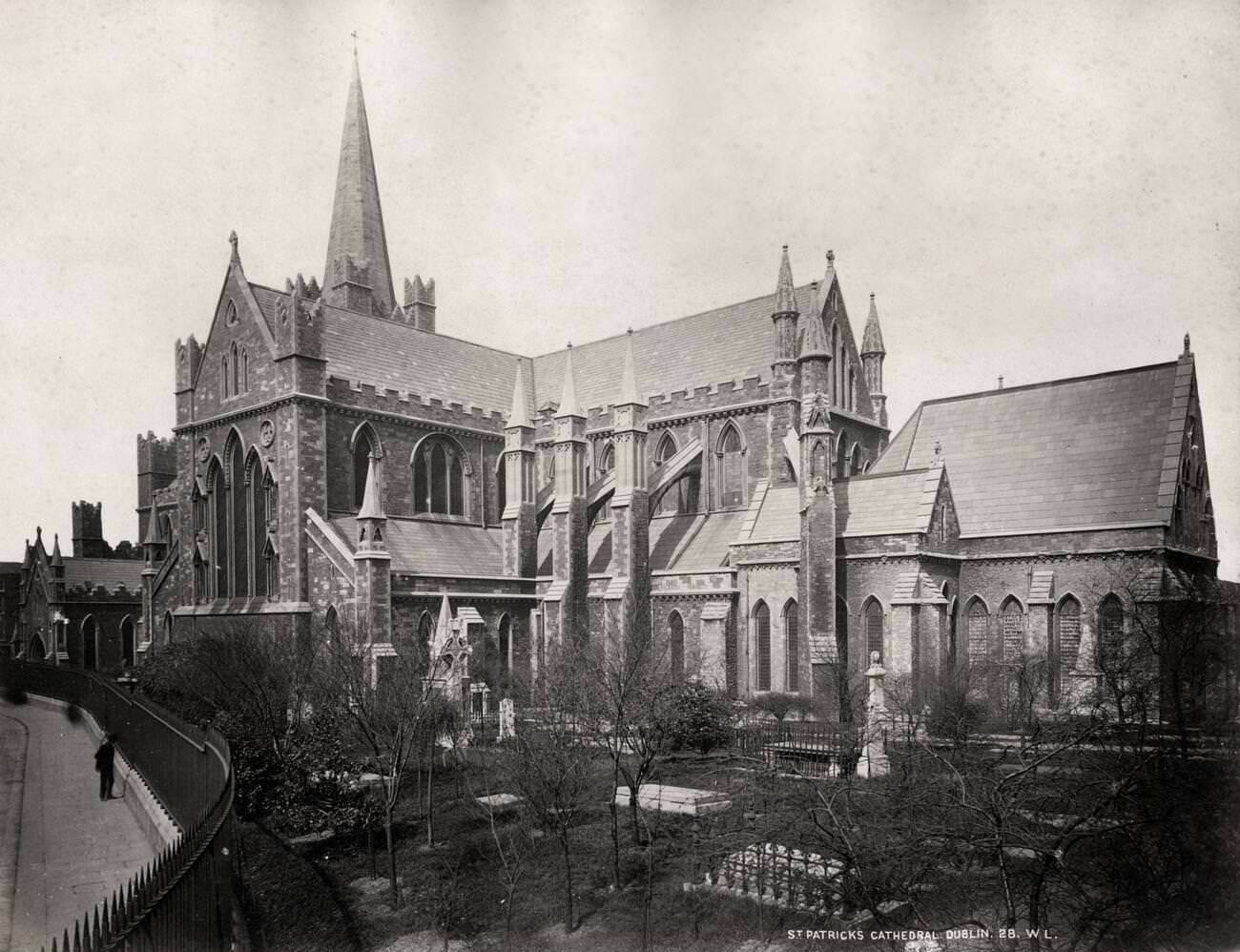
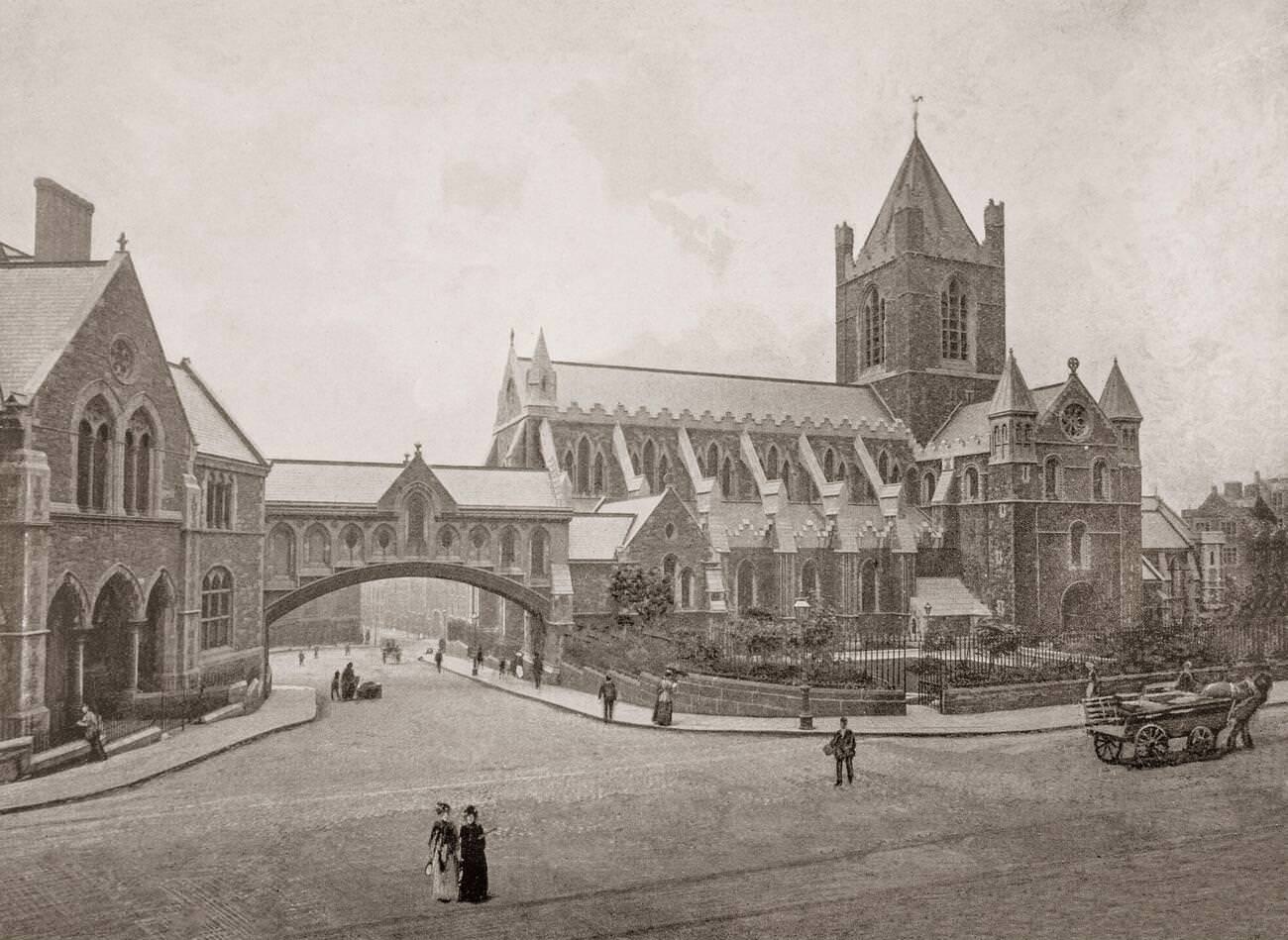
Christ Church Cathedral, formally the Cathedral of the Holy Trinity, had deep roots in Dublin’s medieval history. Founded in the early 11th century under the Viking king Sitric and rebuilt in stone in the late 12th century by Strongbow, the cathedral underwent a major renovation from 1871 to 1878 by architect George Edmund Street. Flying buttresses were added during this restoration, along with the adjacent Synod Hall, connected to the cathedral by a covered footbridge.
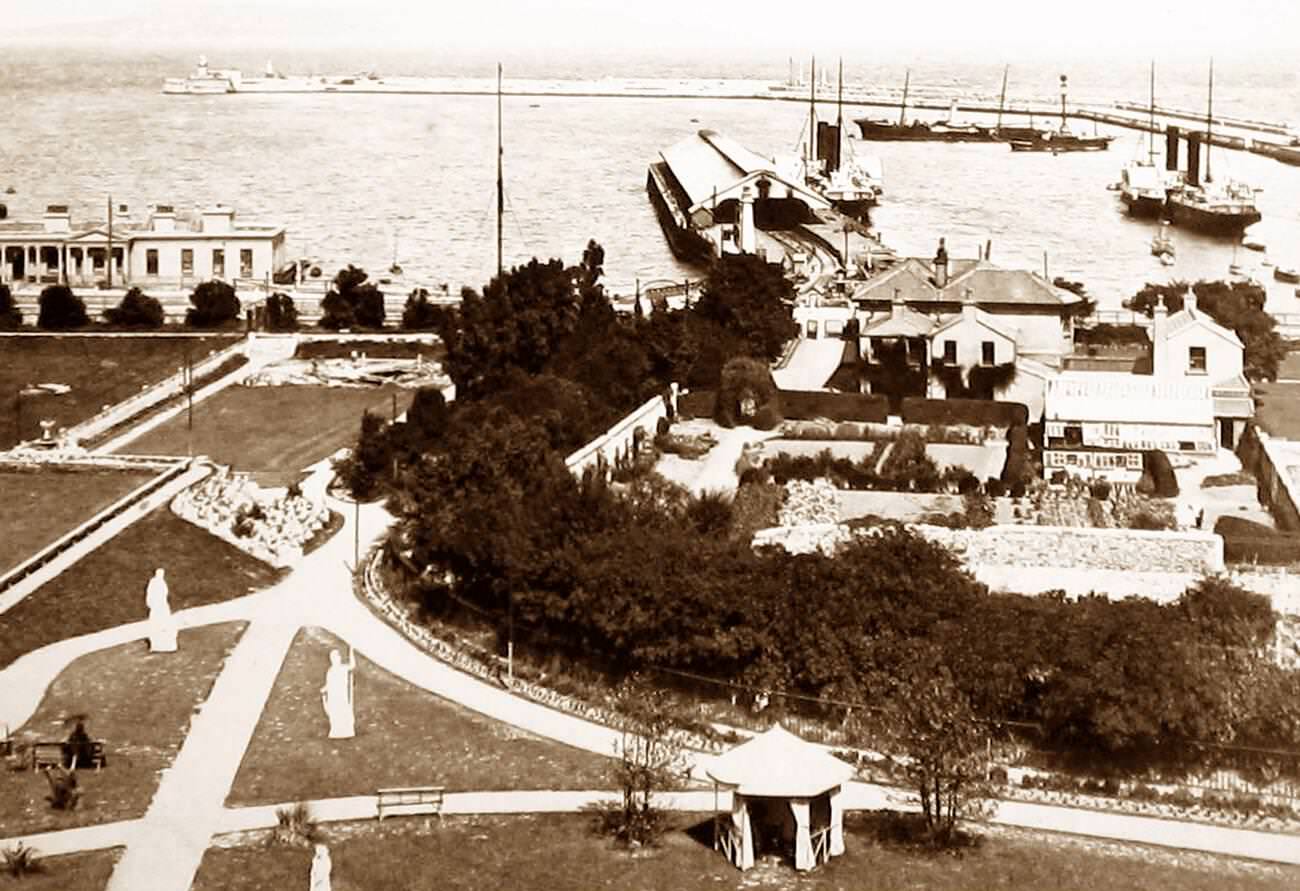
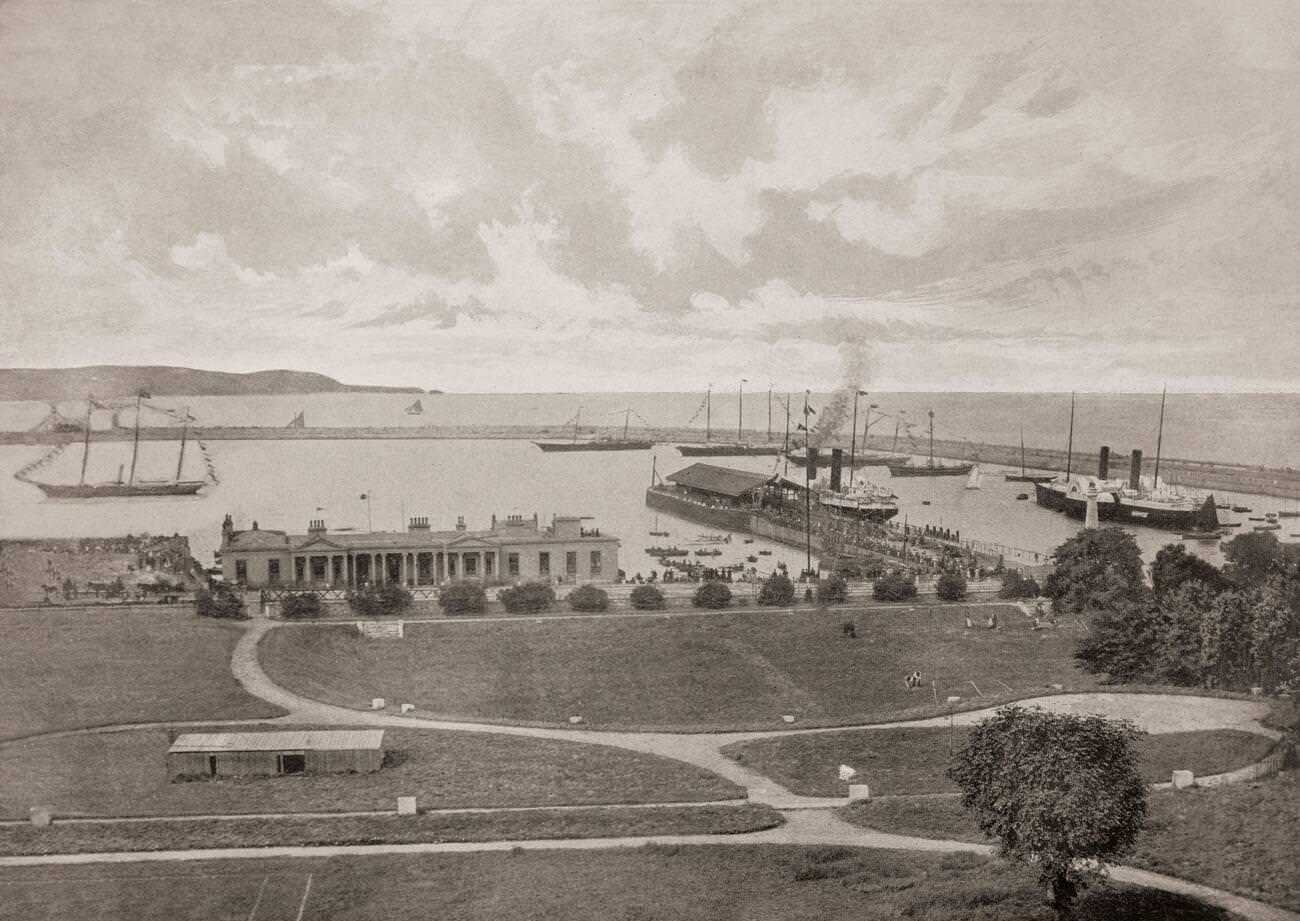
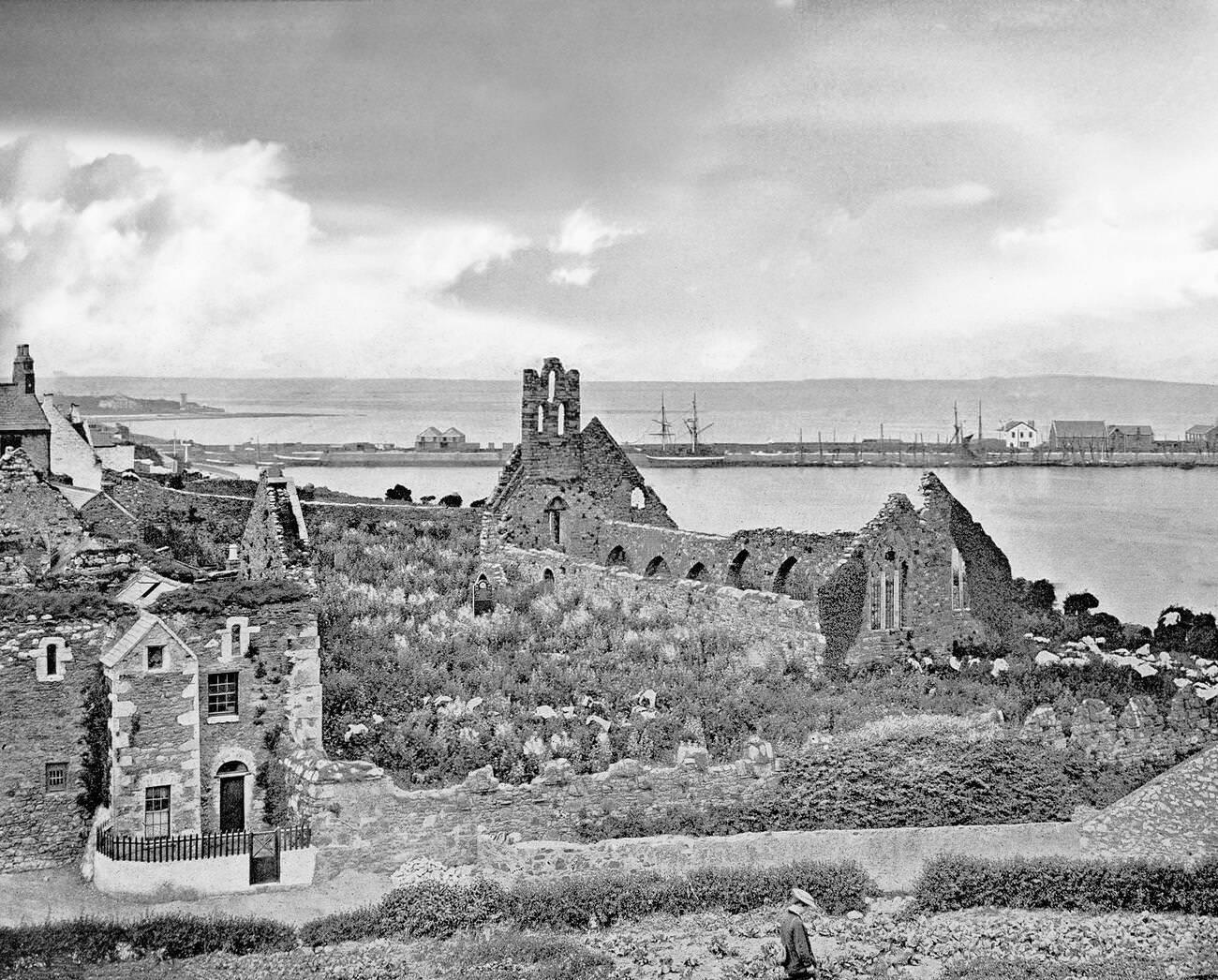
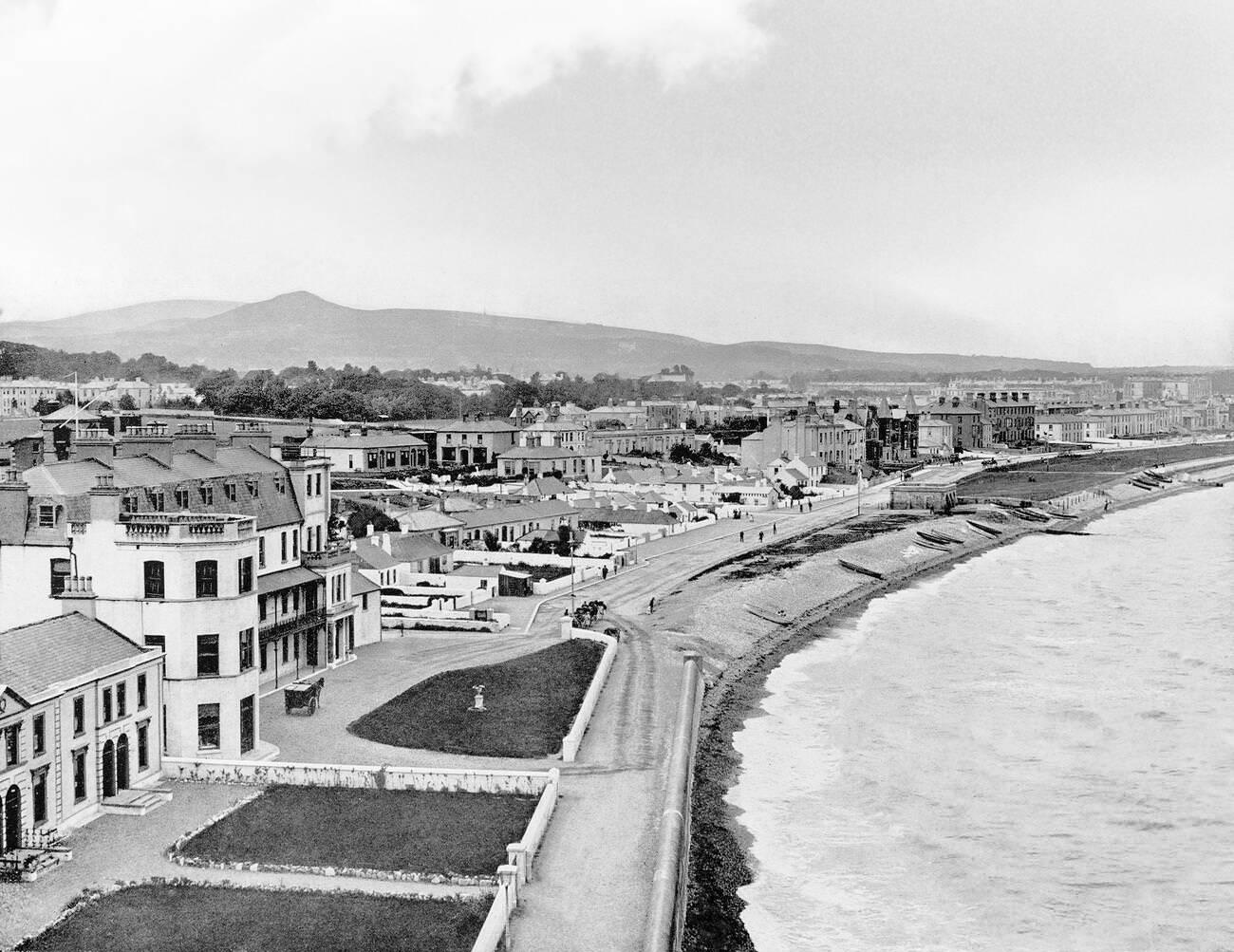
Just outside Dublin, Dún Laoghaire — known as Kingstown during the 19th century — was an important harbour town. Its West Pier was authorized by legislation following the wrecking of two troopships in 1807. When King George IV visited the new port under construction in 1821, the town’s name was changed from Dunleary to Kingstown. It only reverted to its original name in August 1920.
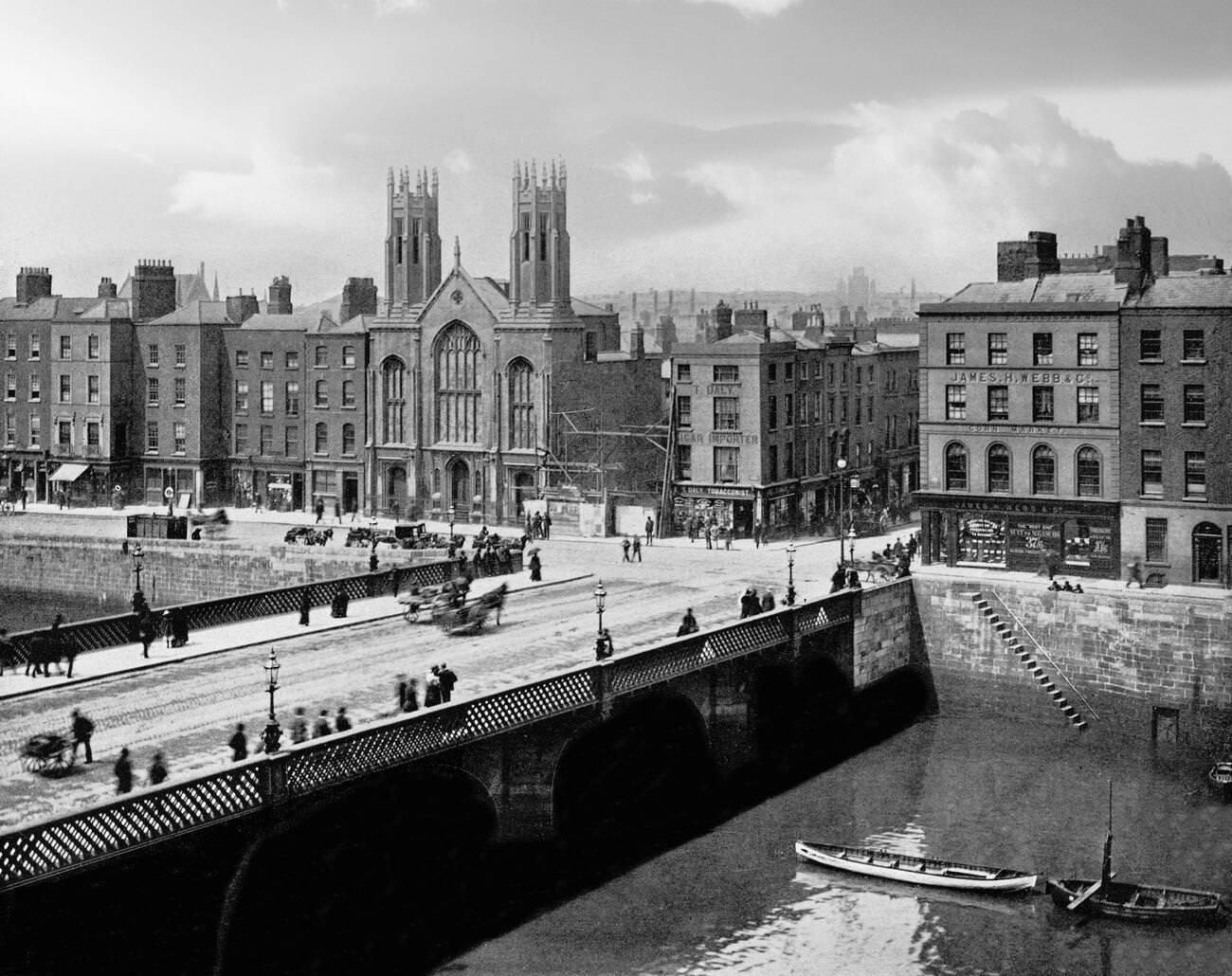
The Grattan Bridge connected Capel Street on the north side of the Liffey to Parliament Street on the south. The original Essex Bridge, built in 1676, was widened and flattened with cast iron supports before reopening in 1874 as Grattan Bridge, named after Irish MP Henry Grattan (1746–1820). By the 1880s and 1890s, it was one of the city’s most-used river crossings.
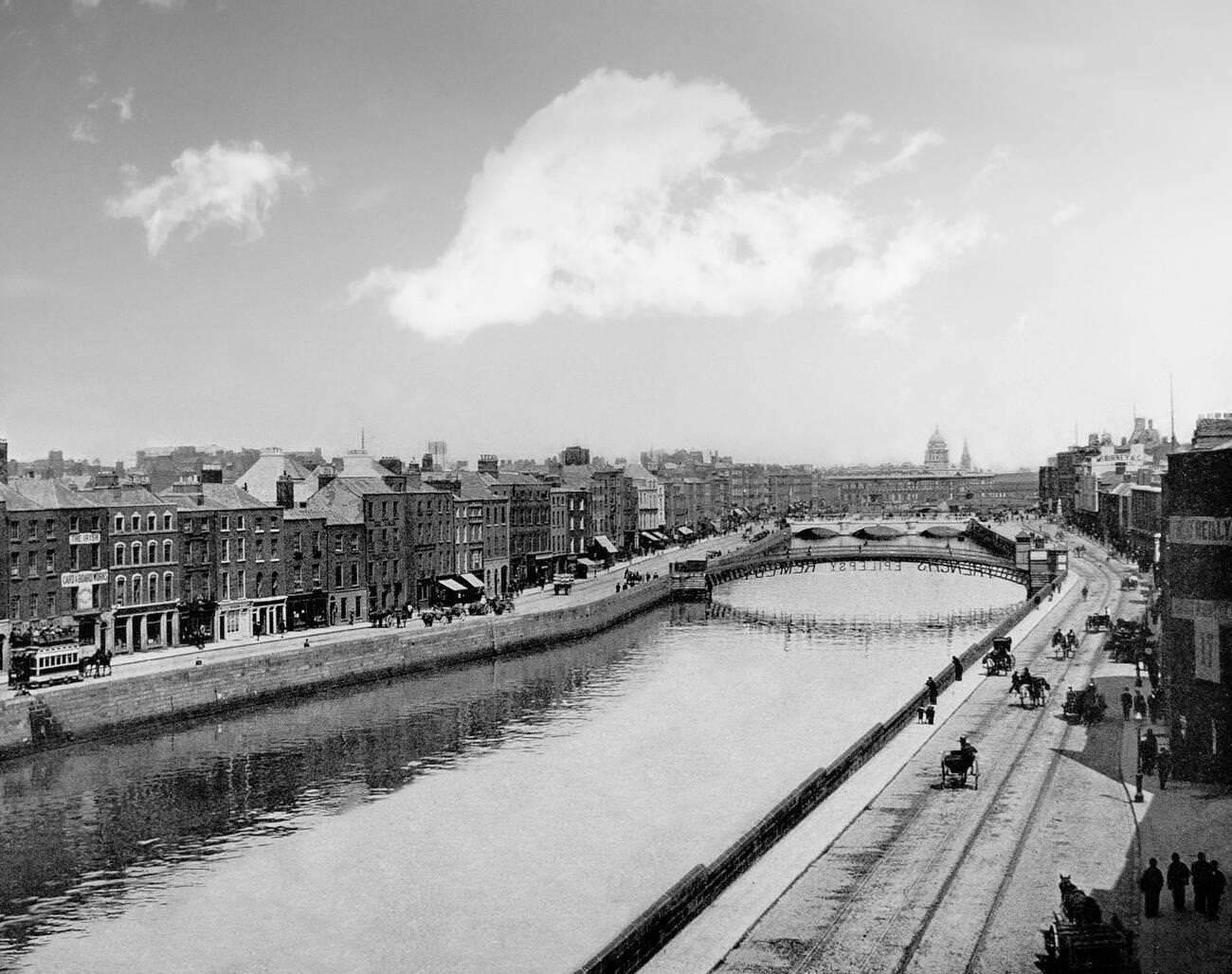
Looking along the quays toward the Custom House, the Ha’penny Bridge was a familiar pedestrian crossing over the Liffey. Period photographs show the bridge carrying advertising banners — including one for “French’s Epilepsy Remedy” — giving a candid glimpse into the commercial realities of Victorian street life in Dublin.
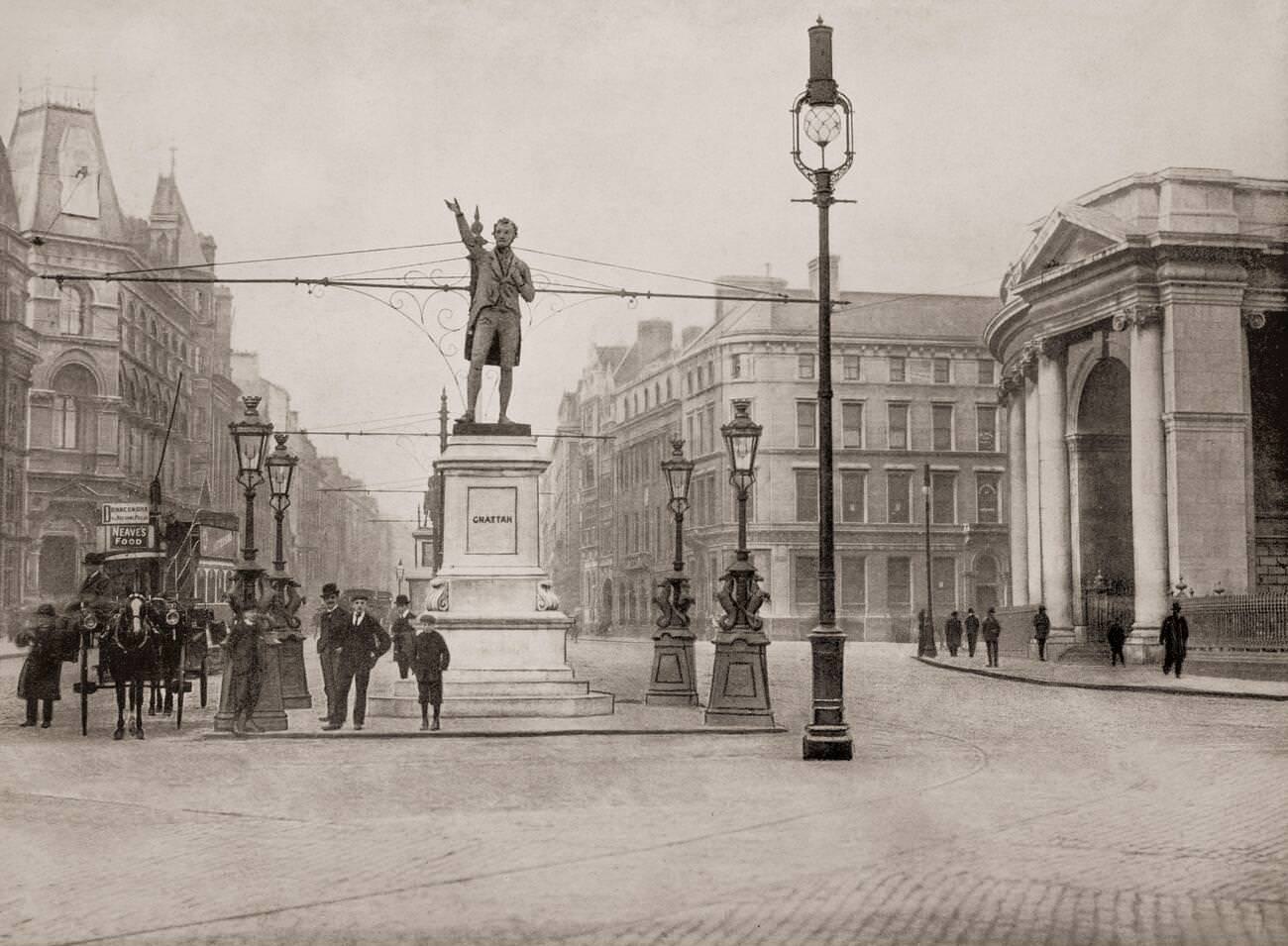
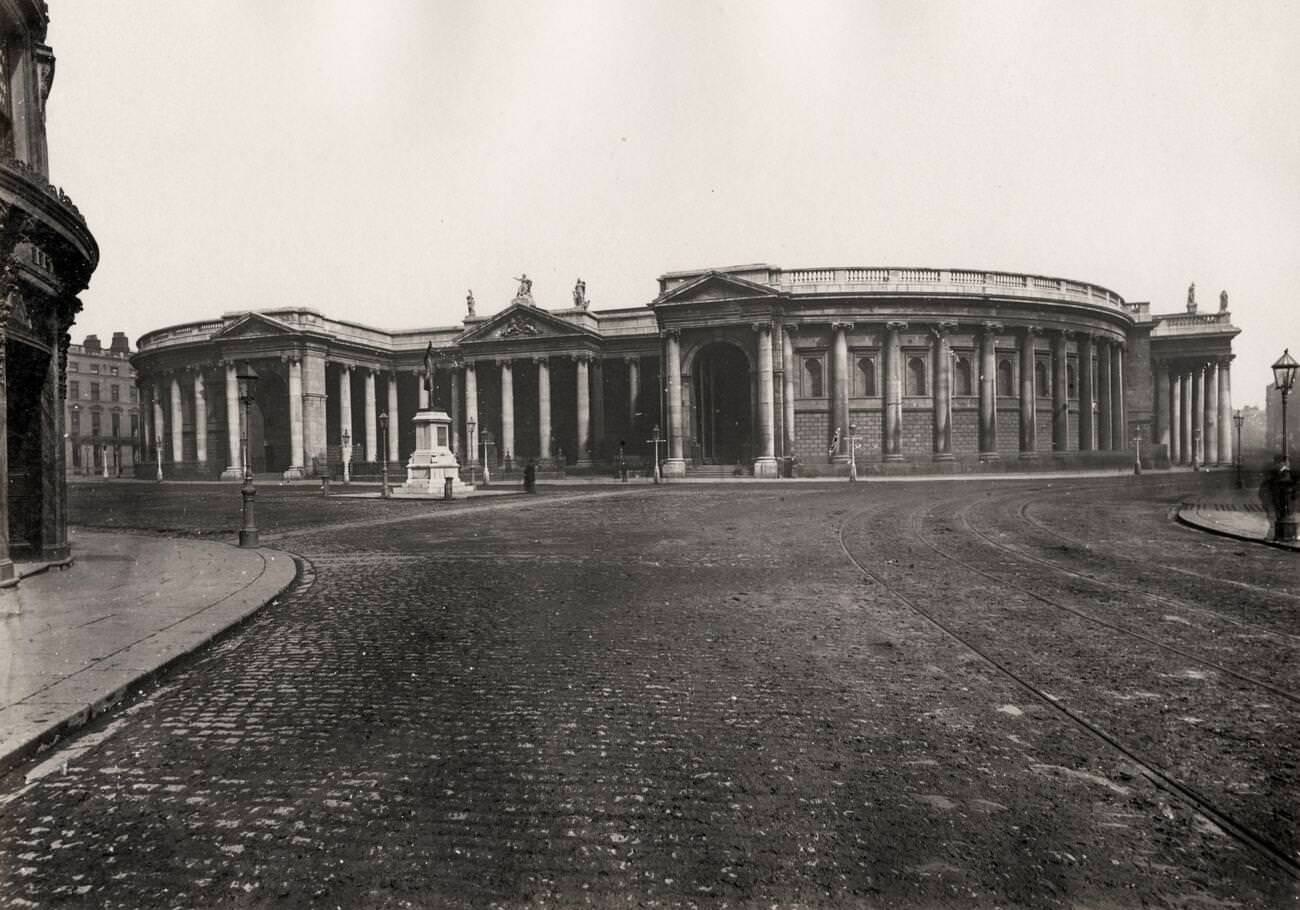
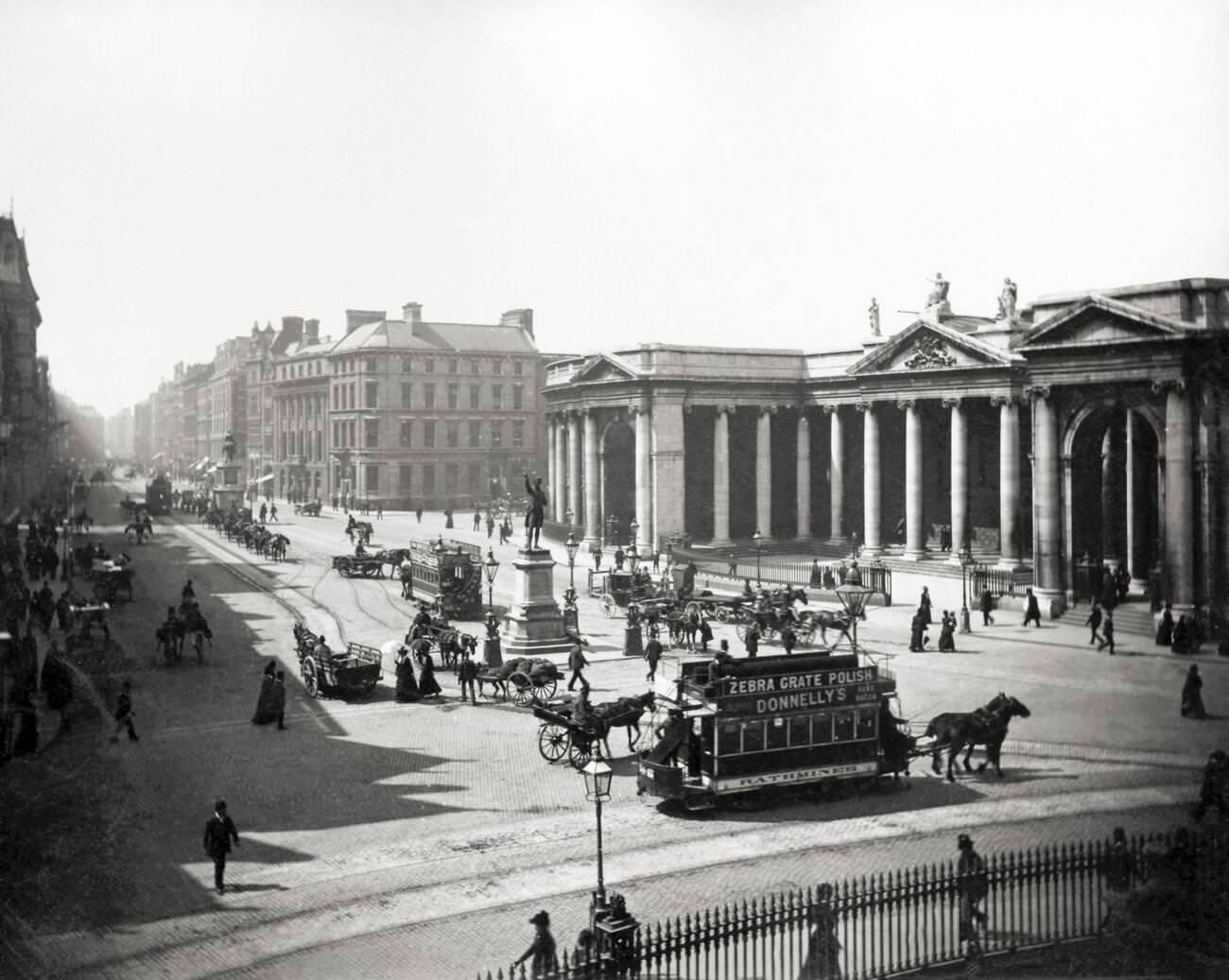
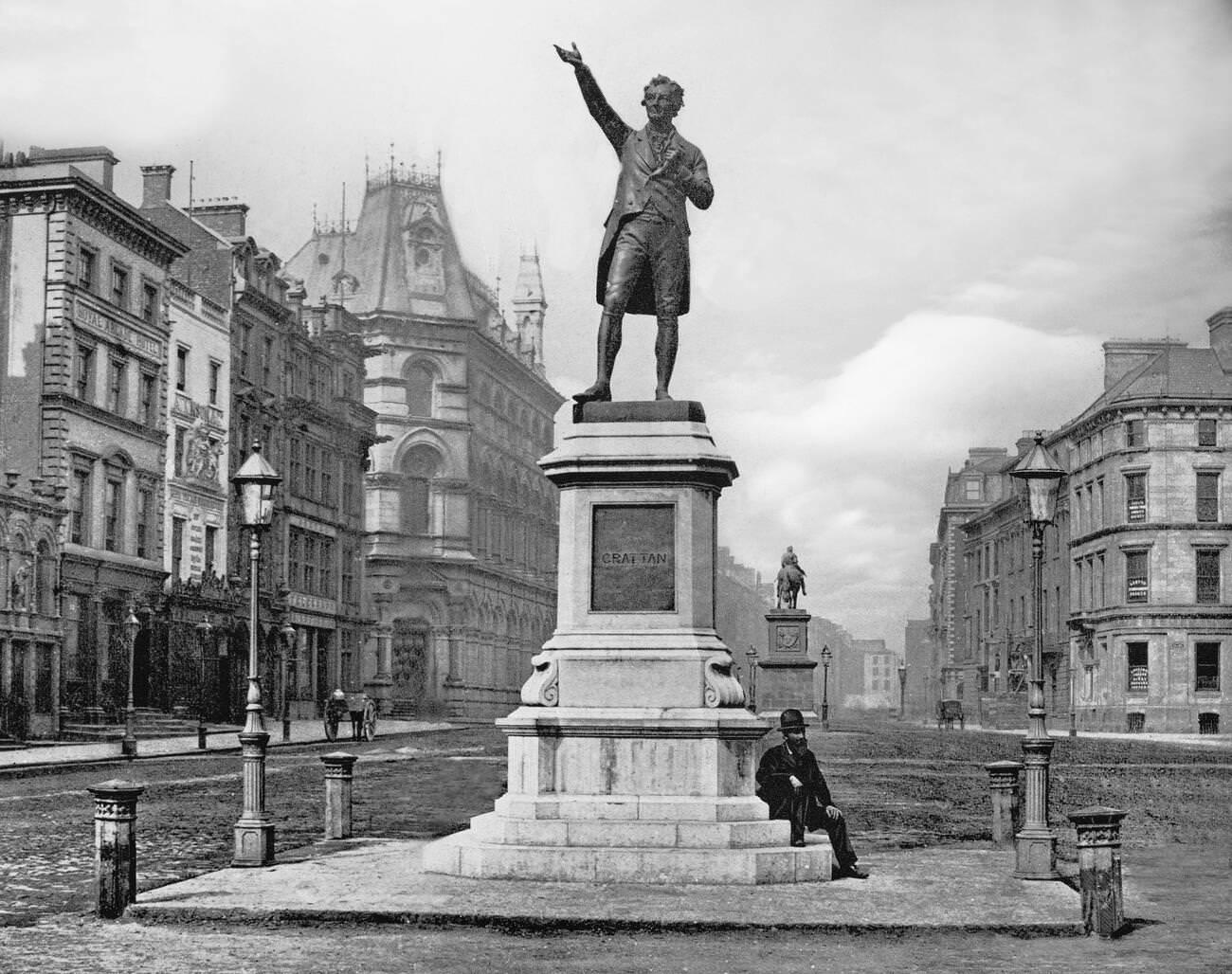
College Green was one of Dublin’s most politically charged public spaces. The Grattan Statue honoring Henry Grattan stood there as a symbol of Irish legislative independence. Grattan had served as an MP in both the Irish Parliament from 1775 to 1801 and at Westminster from 1805 to 1820, famously demanding that Ireland be governed as an independent nation while remaining linked to Great Britain through a shared crown.
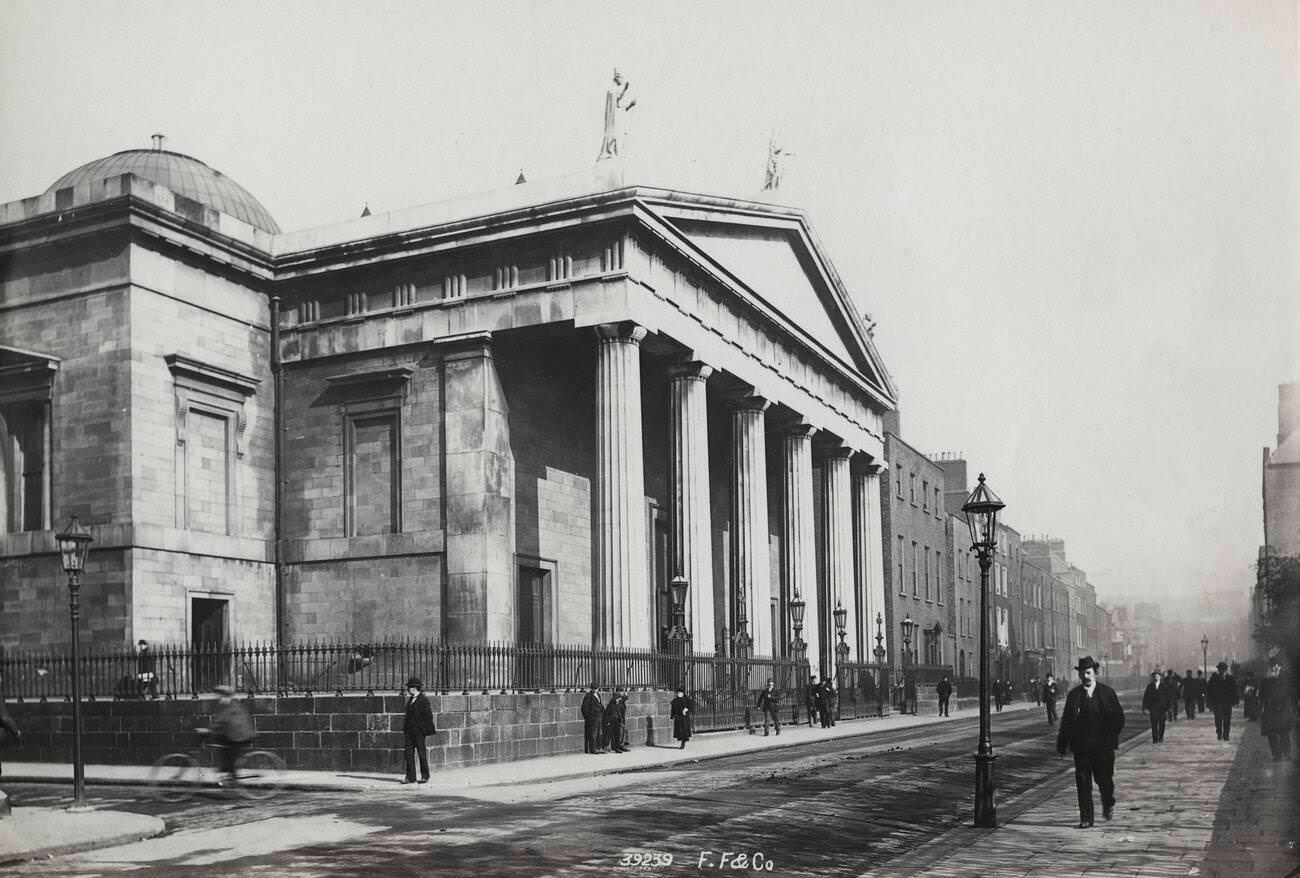
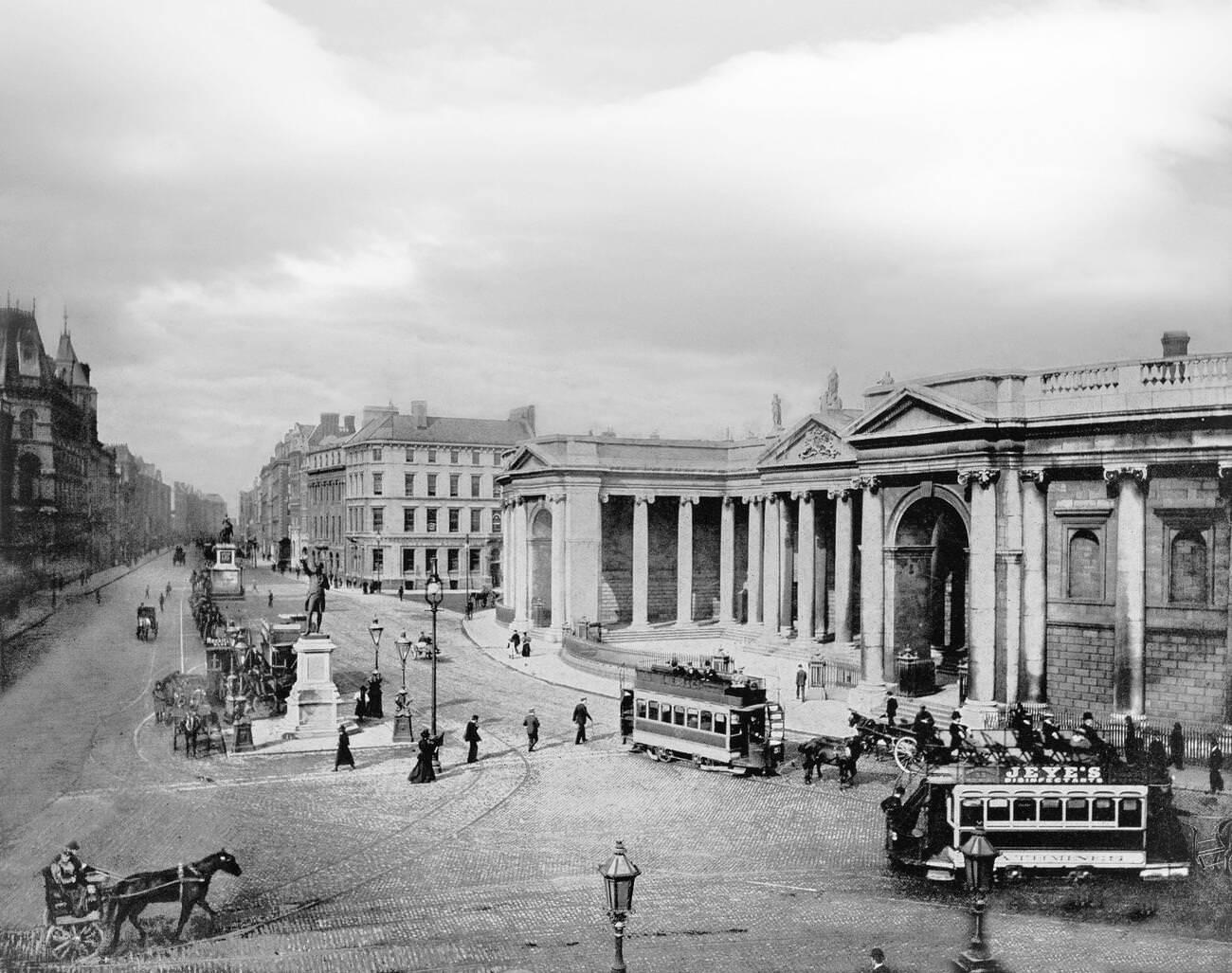
The Bank of Ireland building on the north side of College Green had a layered history. Before 1800, it was Ireland’s Parliament House — first adapted for parliamentary use around 1670, then replaced by a new purpose-built structure in 1729 designed by Edward Lovett Pearce. James Gandon enlarged it in 1787, and Edward Parke made further additions between 1804 and 1808. By the late 19th century it had long since been converted into a bank.
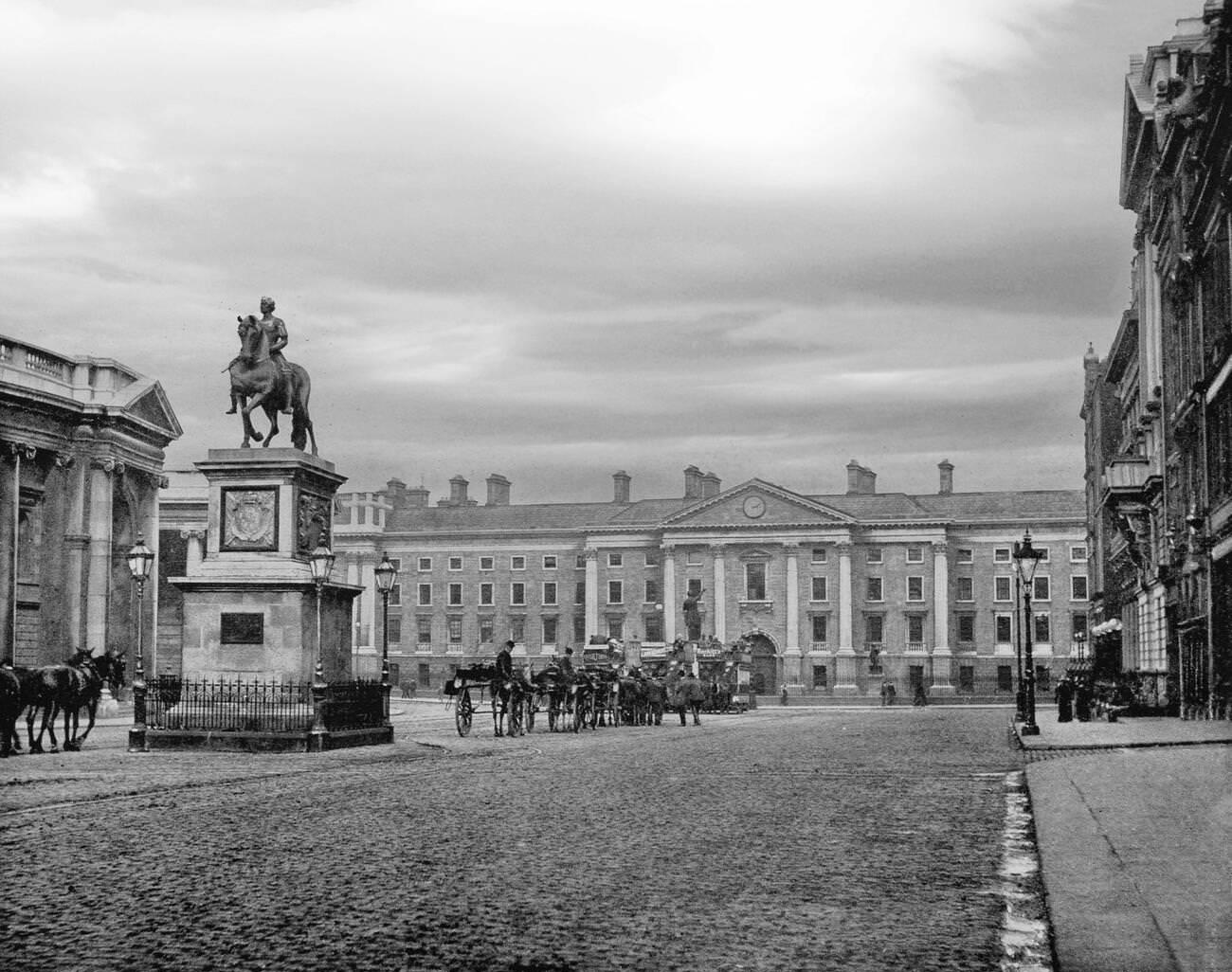
Also in College Green stood the equestrian statue of King William III, created in 1701 by sculptor Grinling Gibbons. Throughout the 19th and early 20th centuries the statue was repeatedly defaced, painted with pitch, and physically attacked, requiring frequent repairs. It was eventually removed after being badly damaged in an explosion on 11 November 1928.
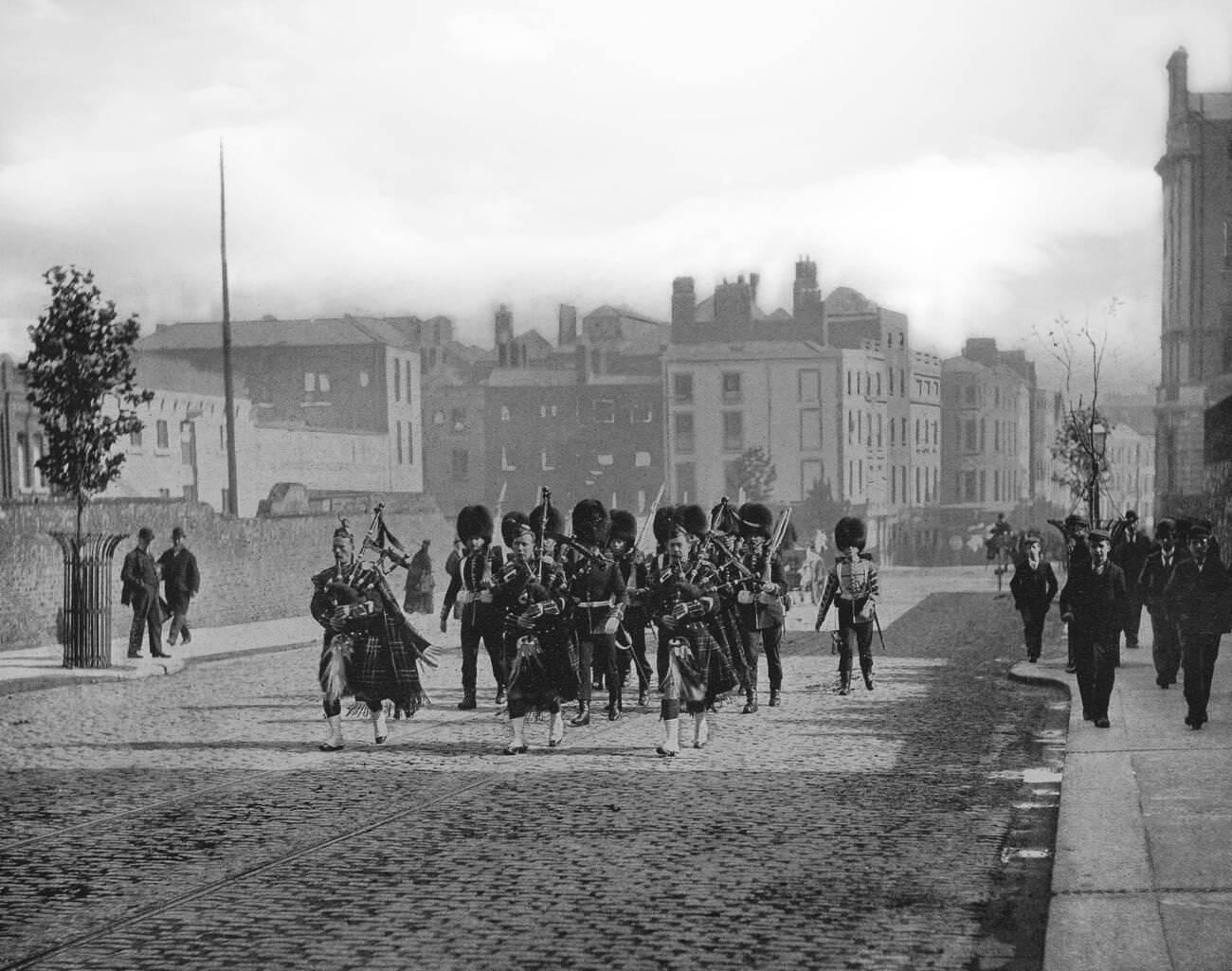
The British Army maintained a highly visible presence in Dublin throughout the late 19th century. Units like the Scots Guards were regularly seen marching through the city. This military presence was a daily reminder of British rule during a time of considerable political tension, particularly as the Home Rule debate intensified across Ireland and at Westminster.
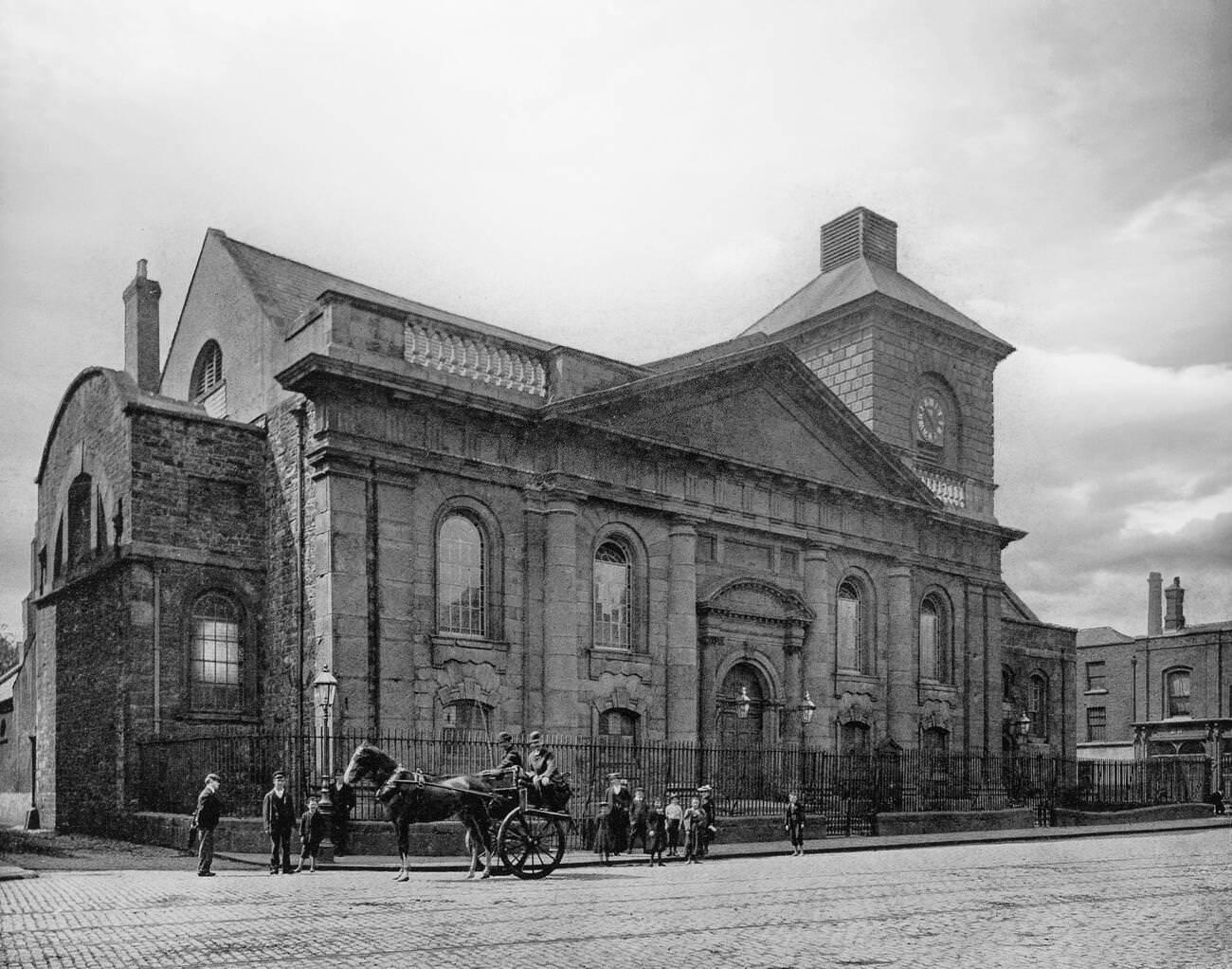
St. Catherine’s Church on Thomas Street carried one of the darkest chapters in Irish history within its walls. Originally built in 1185 and later rebuilt in the Palladian style by John Smyth in the 18th century, it was at this church that Irish republican Robert Emmet was executed in 1803. Emmet had sought to organize an uprising against British rule following the suppression of the United Irish rebellion in 1798.
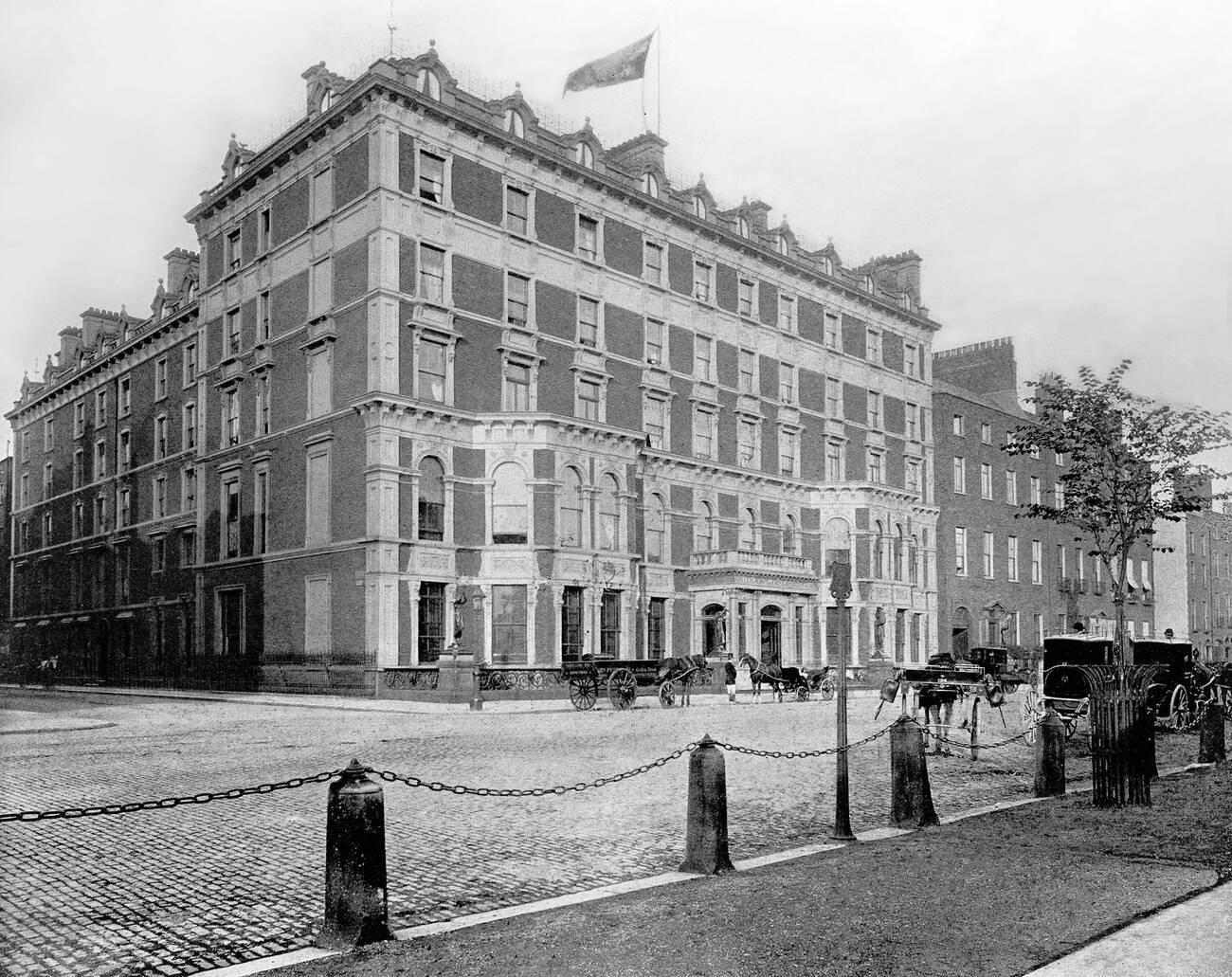
For Dublin’s upper and middle classes, the Shelbourne Hotel on St. Stephen’s Green was the place to dine and socialize. Founded in 1824 by Martin Burke of Tipperary, who acquired three adjoining townhouses overlooking what was then Europe’s largest garden square, the hotel was named after William Petty, 2nd Earl of Shelburne. St. Stephen’s Green itself was reopened to the public in 1880, giving all Dubliners access to green space in the city center.
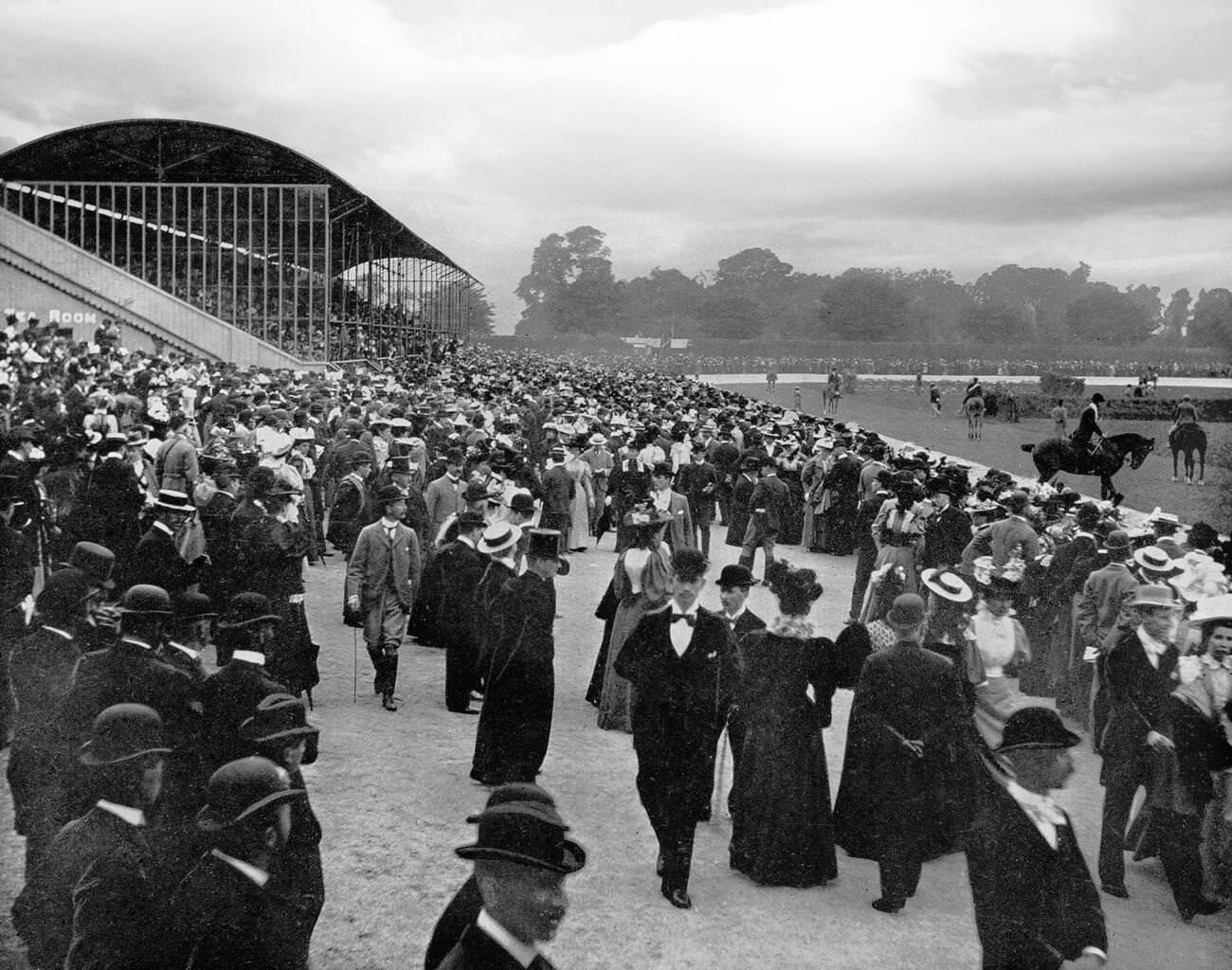
Beyond restaurants and pubs, Dublin’s social calendar included major public events. The Royal Dublin Society’s Horse Show at Ballsbridge drew large, enthusiastic crowds each year and was one of the most anticipated events in the city’s calendar, attended by people from across the social spectrum.
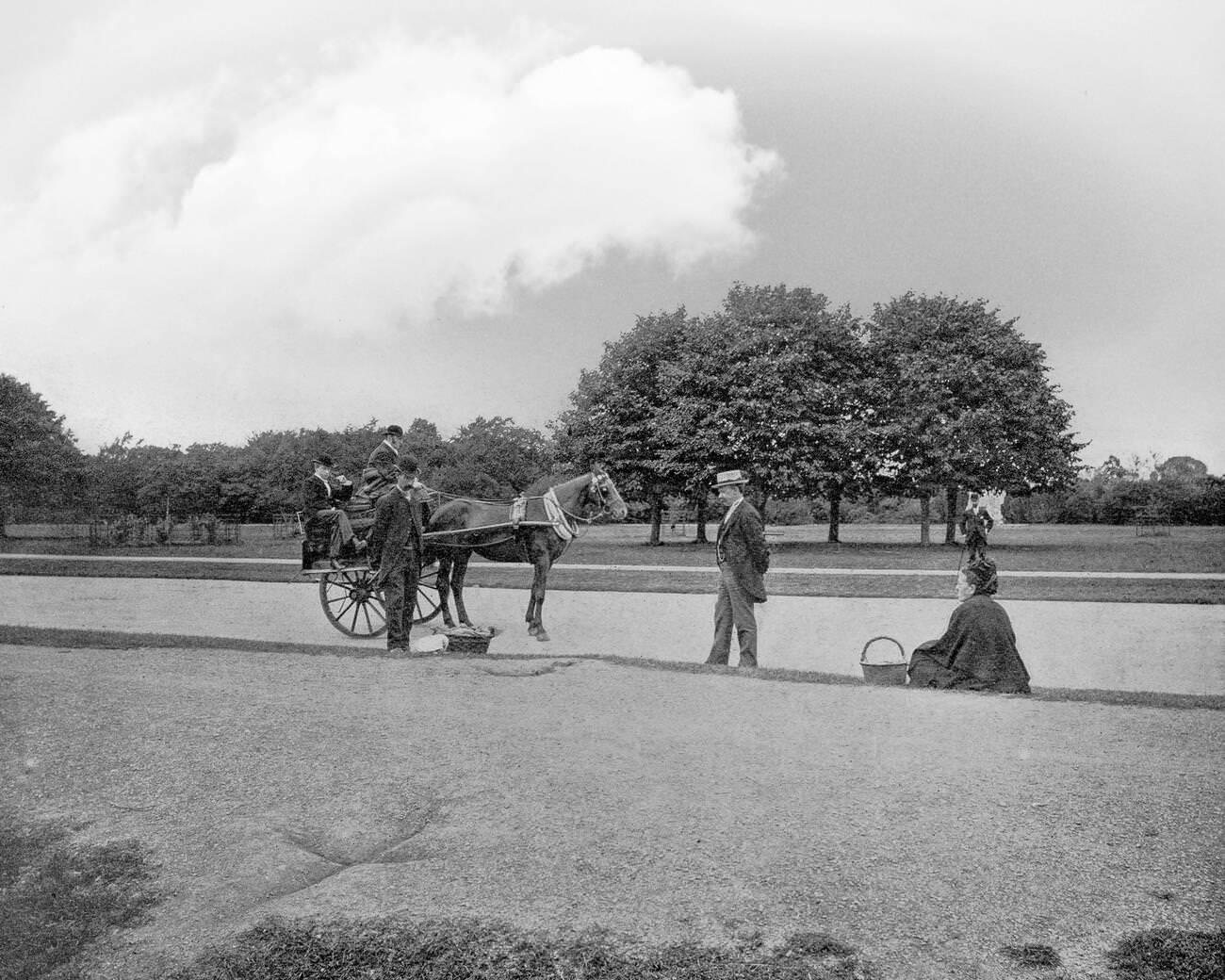
On 6 May 1882, Phoenix Park was the scene of one of the most shocking political events of the era. Lord Frederick Cavendish, the newly appointed Chief Secretary for Ireland, and Thomas Henry Burke, the most senior Irish civil servant, were stabbed to death in the park. The killings were carried out by members of the Irish National Invincibles, a radical breakaway group from the Irish Republican Brotherhood. The murders sent shockwaves through Irish politics and dealt a significant blow to the Home Rule movement.
Charles Stewart Parnell, the leader of the Home Rule movement, died in 1891. His funeral procession drew enormous crowds through Dublin. The Parnell Memorial Procession crossing O’Connell Bridge became one of the defining public moments of the decade, reflecting how deeply the movement for Irish self-governance had taken hold in the city’s population.
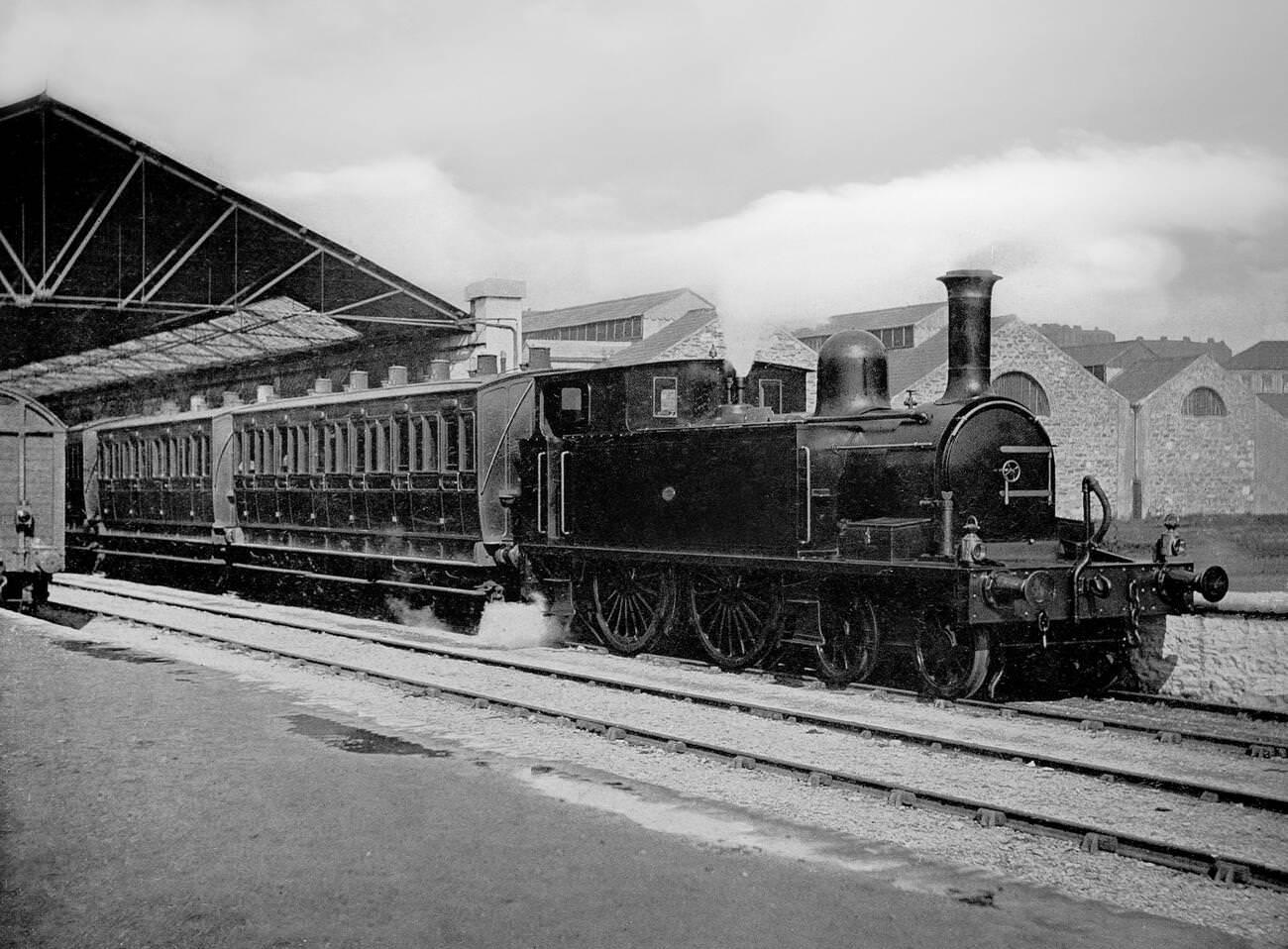
Dublin’s railway network was expanding rapidly in the late 19th century. Heuston Station served as a major terminal for steam locomotives carrying passengers west and south. The combination of rail and tram networks meant that by the 1890s, Dubliners had more options for travel than any previous generation, fundamentally changing how the city functioned and grew.
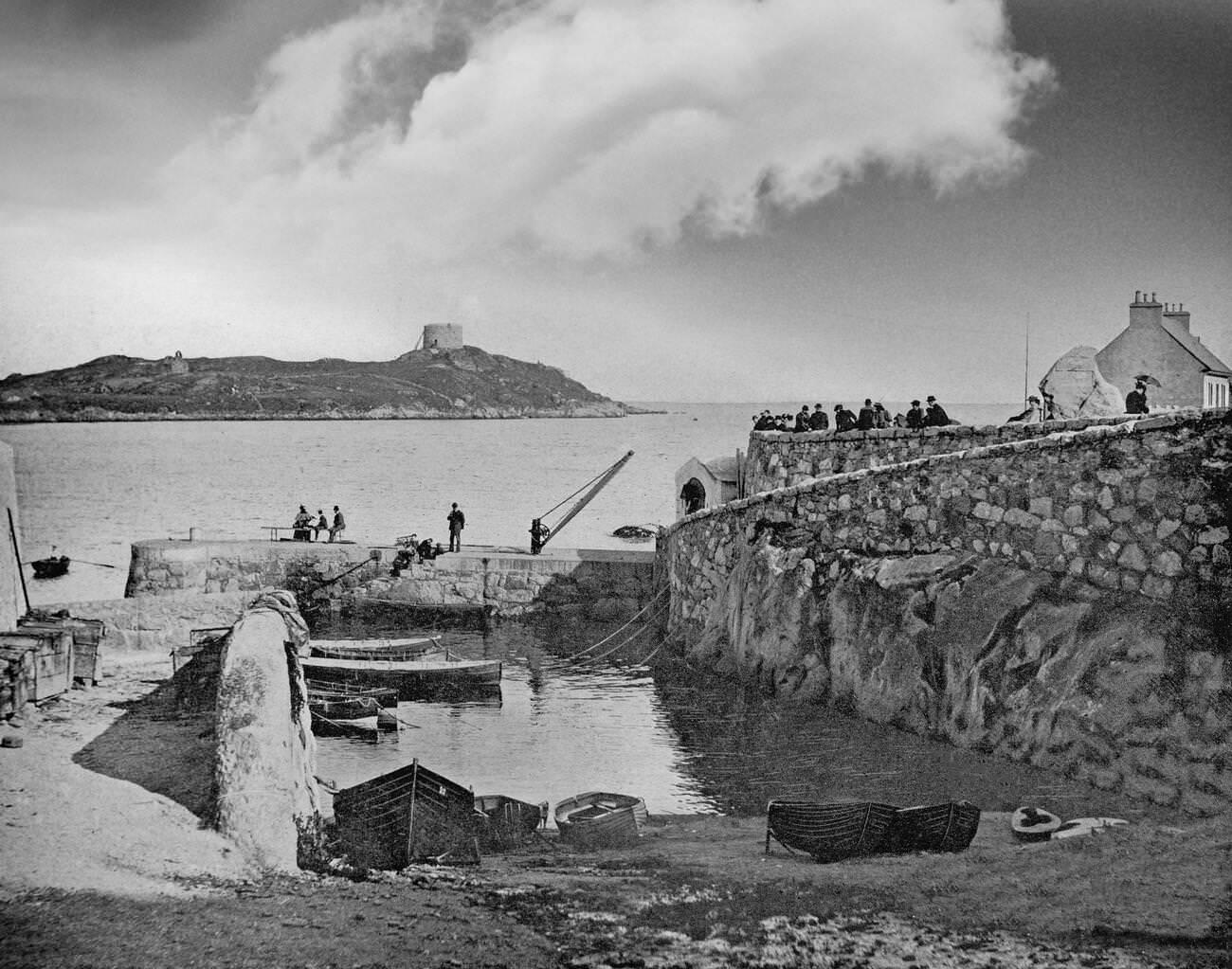
Howth Head formed the northern boundary of Dublin Bay and was home to a fishing village and small trading port with roots stretching back to at least the 14th century. In the early 19th century, Howth was chosen as the location for the mail packet harbour, and construction began in 1807. By the late 19th century, the area around the peninsula offered Dubliners a scenic escape from the crowded city.
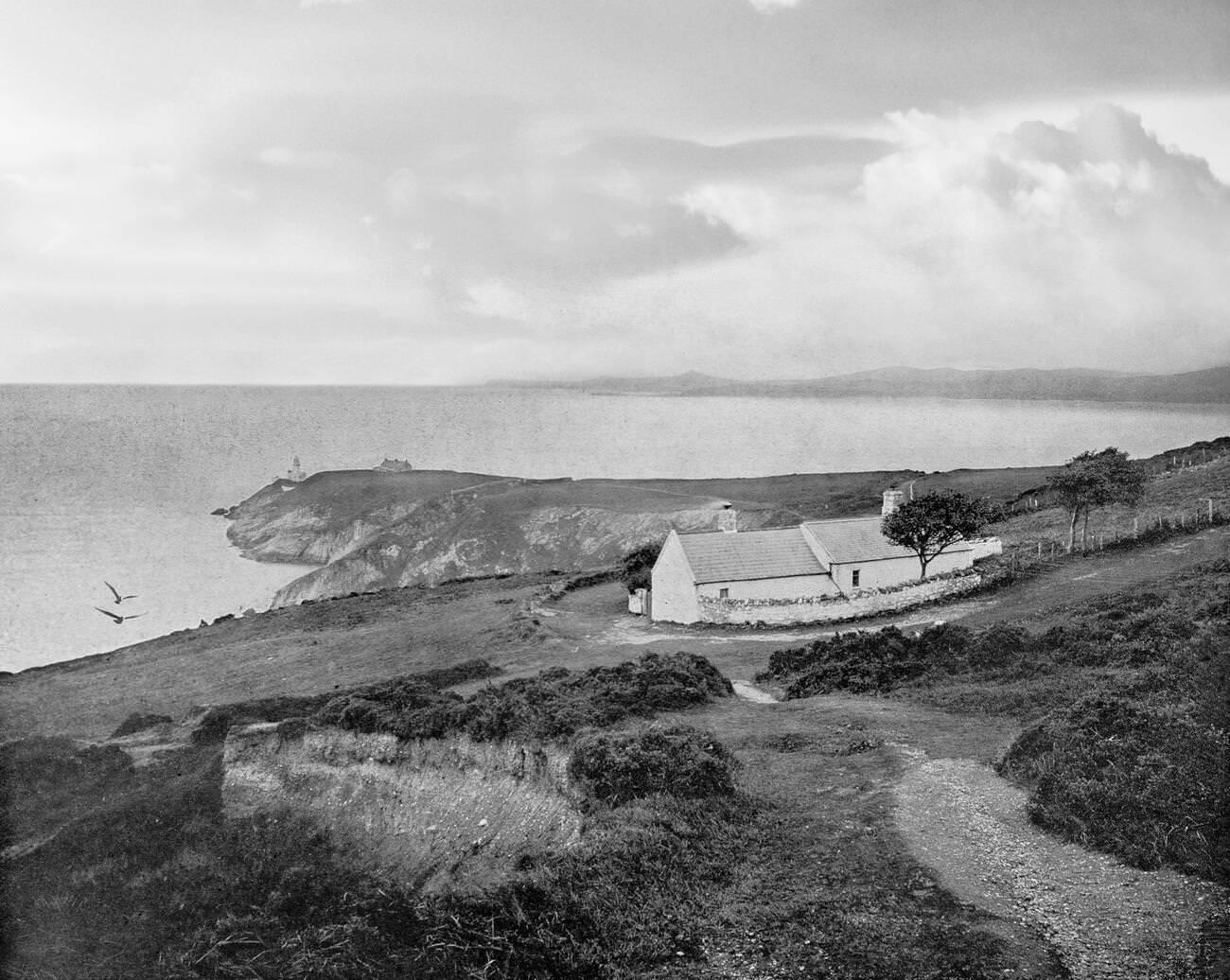
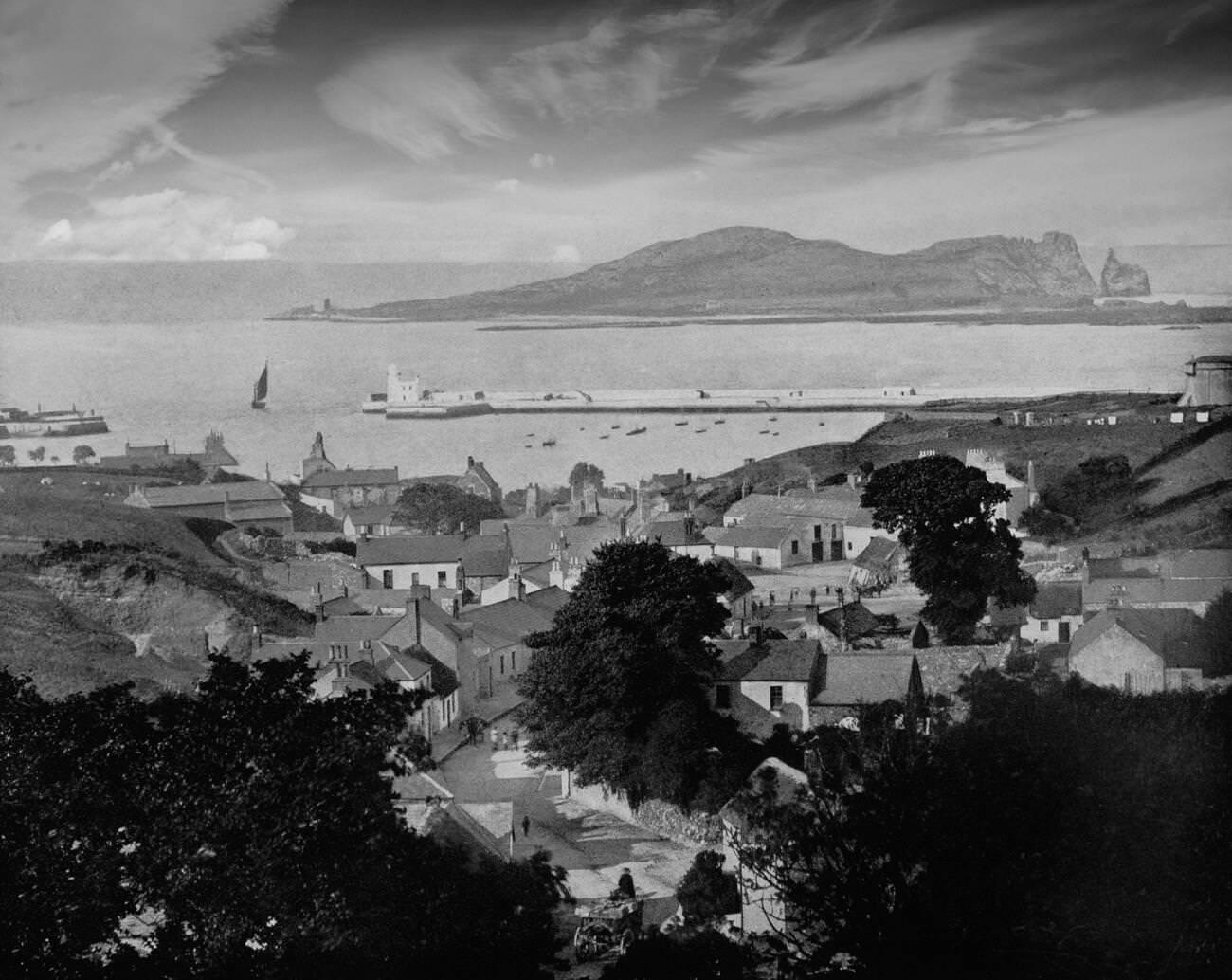
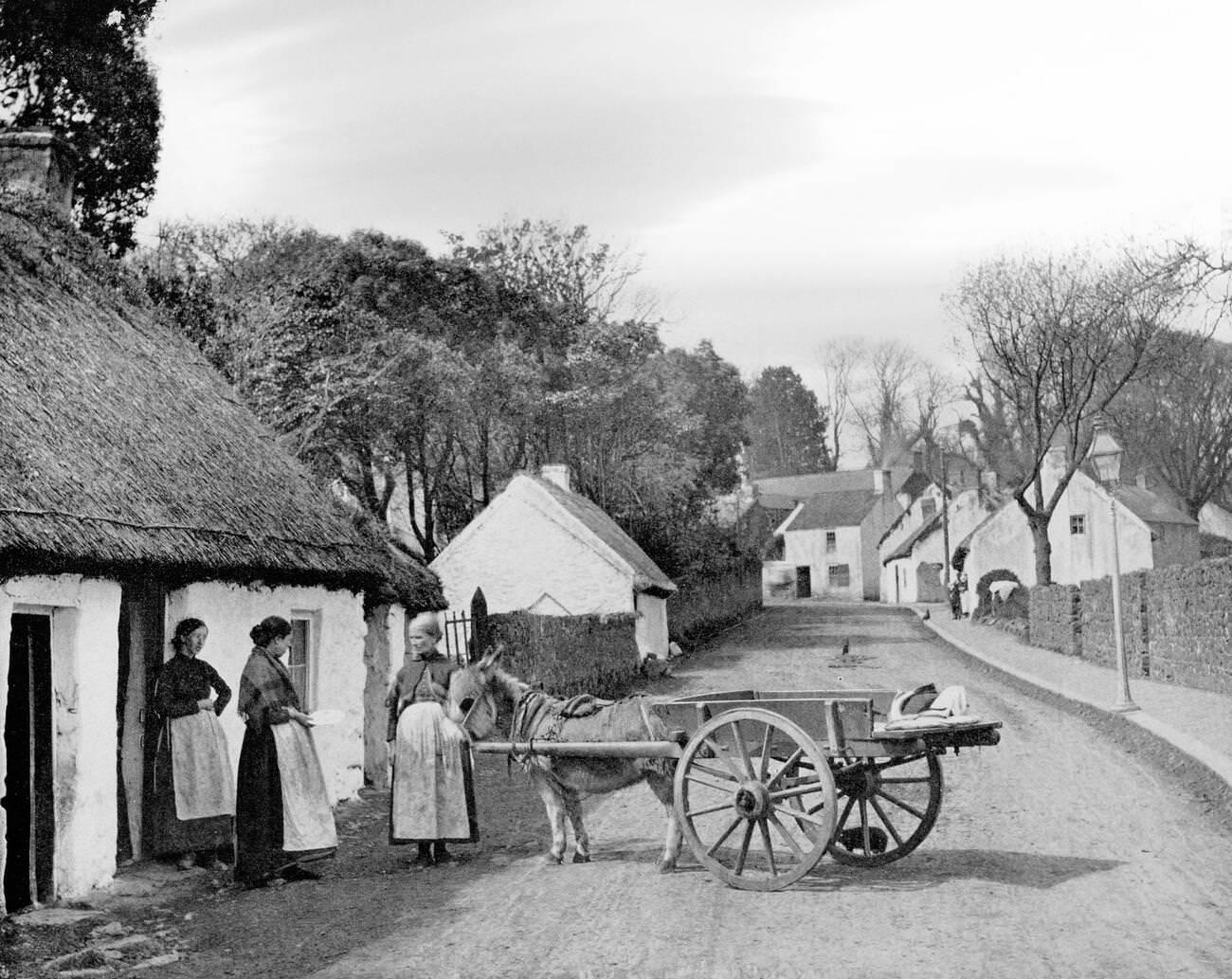
Outside the city proper, coastal and rural life continued at its own pace. Fishwomen with donkey-drawn carts sold their catch to locals along village streets near the Dublin and Wicklow coastline. This kind of small-scale trade was the economic backbone of communities that existed far from the commercial bustle of the Liffey quays.
Nassau Street, running along the southern edge of Trinity College, was one of Dublin’s well-traveled thoroughfares. It later gained literary fame as one of the streets described in James Joyce’s Ulysses, a novel deeply rooted in the geography and character of Dublin at the turn of the century. The street’s shops and foot traffic made it a lively part of everyday city life.