When World War II ended, the original Auto Union company found itself with nothing. Its manufacturing plants in Zwickau, Chemnitz, and Zschopau — all located in Saxony — fell inside the Soviet occupation zone, along with its former DKW factory in Berlin-Spandau. The company could no longer access any of those facilities. Starting over meant rebuilding from scratch in West Germany.
A new Auto Union GmbH was formally established in 1949. To get production moving again, the first DKWs were built under contract at a rehabilitated plant operated by Rheinmetall-Borsig in Düsseldorf. Out of that effort came the DKW F89, better known as the DKW Meisterklasse — a compact, front-wheel-drive saloon that entered production in 1950 and ran through 1954. It holds the distinction of being the first passenger car manufactured in West Germany after the war.
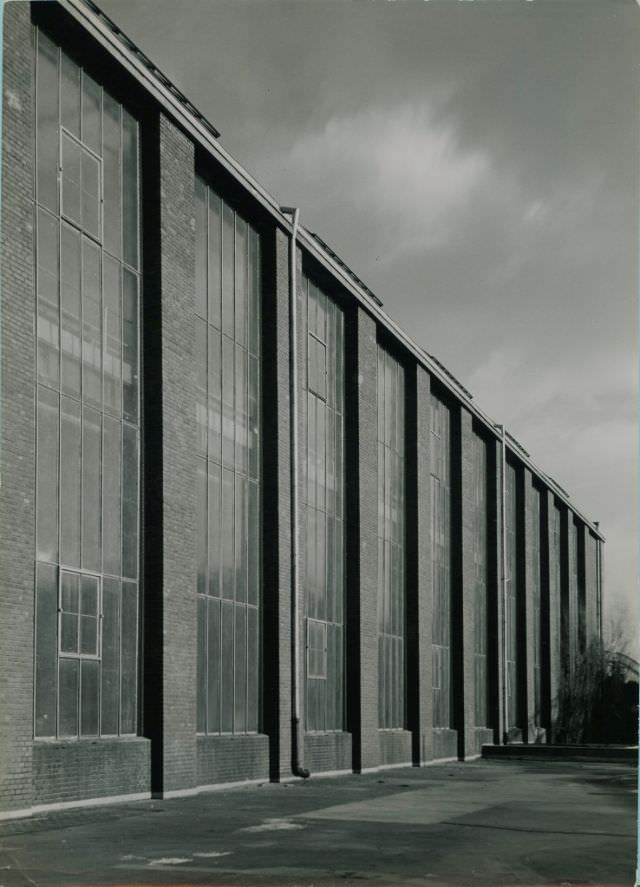
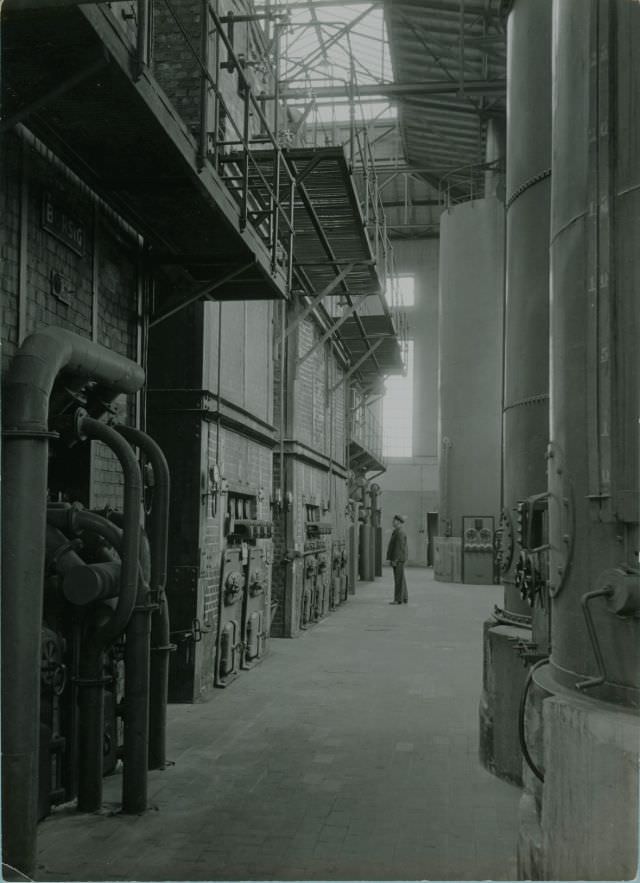
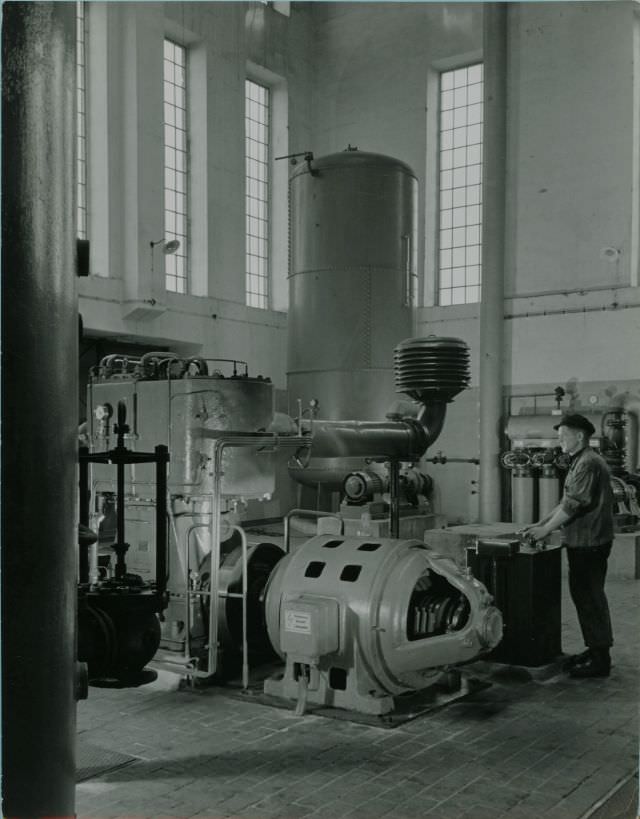
In 1951, photographer Carl Guderian documented the factory in detail. His photos capture every layer of the operation — from the drawing boards where engineers planned the cars to the final lot where finished vehicles waited to ship. Together, they offer a rare look inside a factory that was, in many ways, still proving itself to the world.
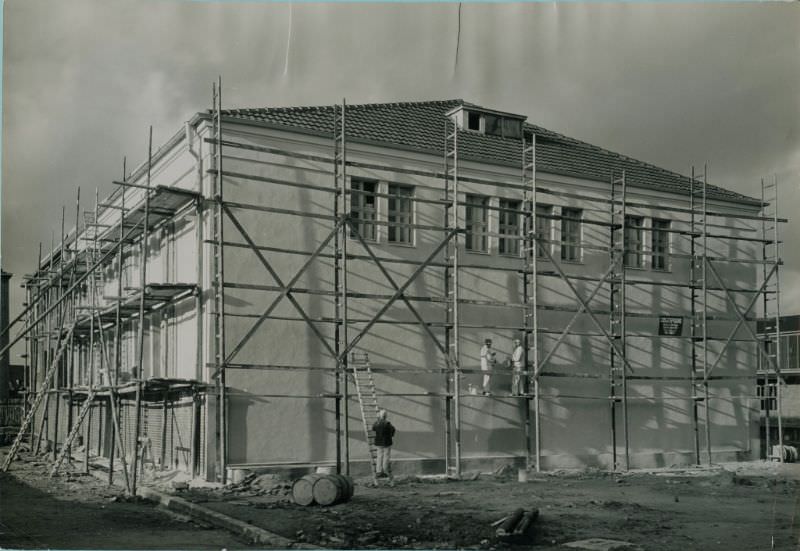
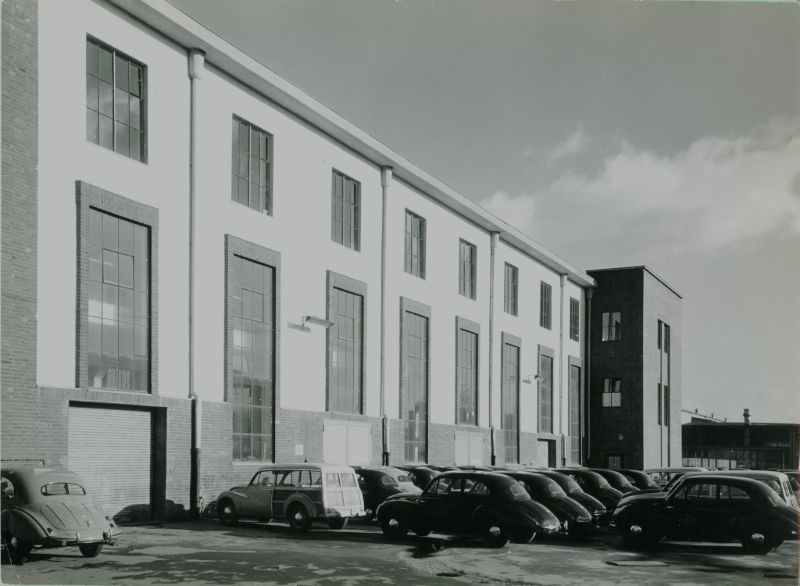
The factory’s physical footprint was substantial. New office buildings went up alongside the production halls, signaling that Auto Union was building for the long term, not just scraping by.
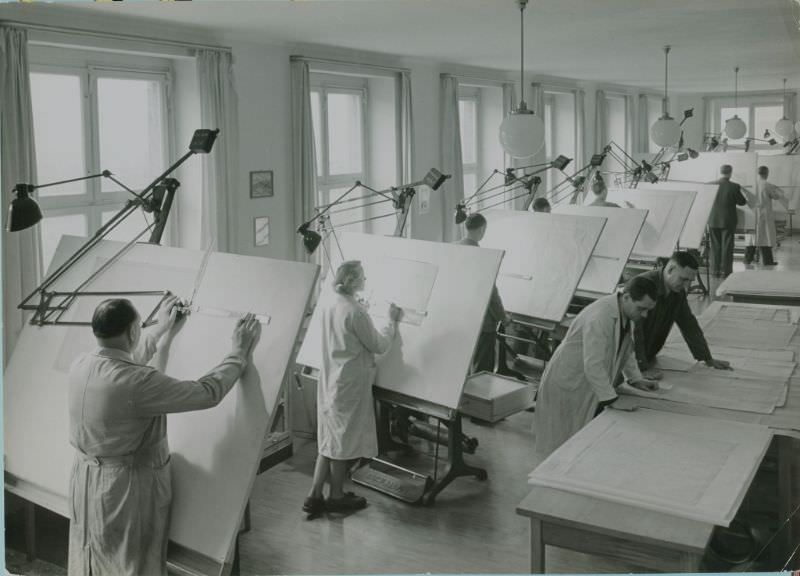
Inside, the engineering drafting office was where the Meisterklasse took shape on paper before it ever reached the floor. Draftsmen worked over large technical drawings, translating specifications into the precise measurements the factory needed to build each car consistently.
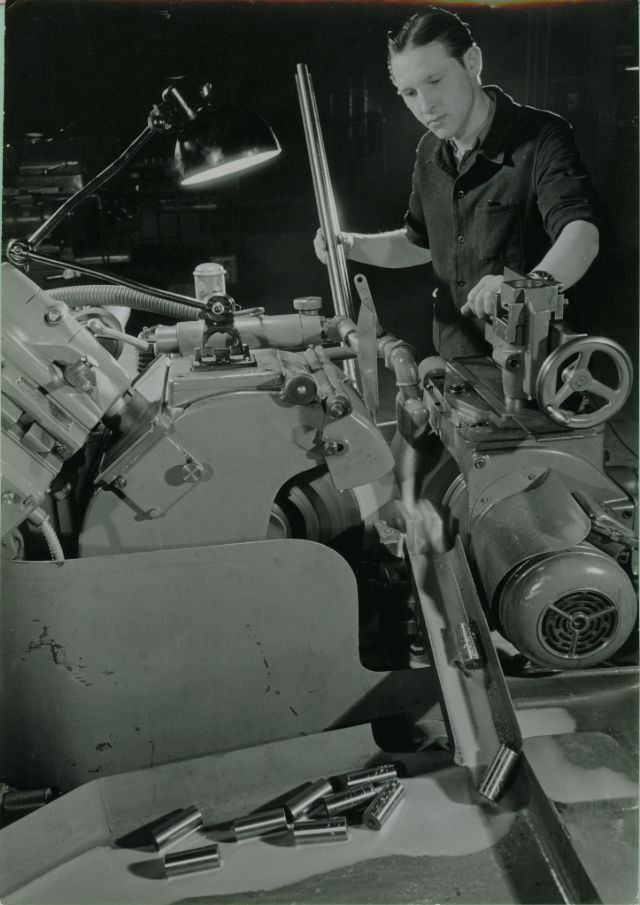
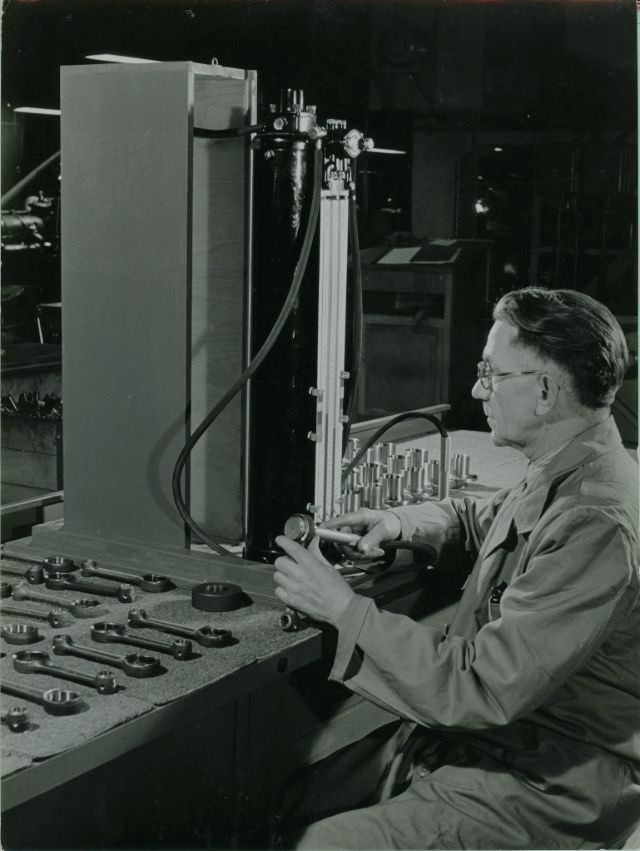
Precision was a factory-wide requirement. Machinists turned out bearing bushings on lathes, a painstaking job where a small error could compromise an entire drivetrain. Quality control workers checked box wrenches before they ever touched a car, making sure every tool on the line met spec.
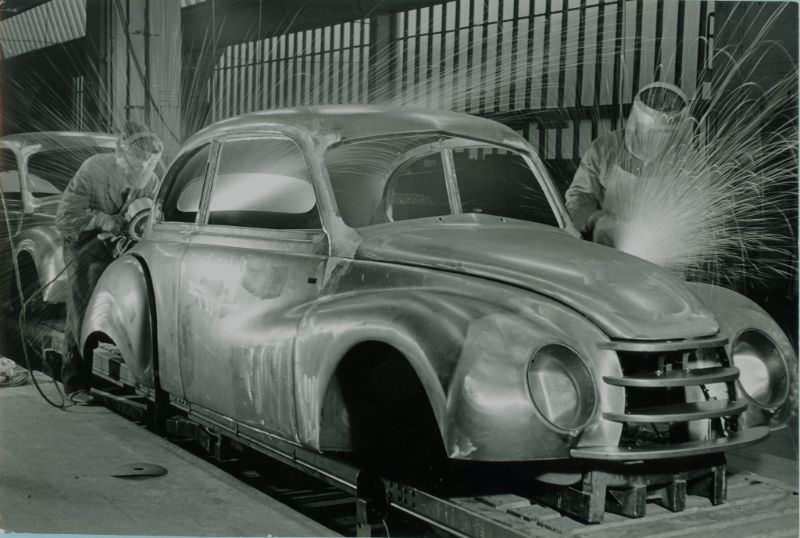
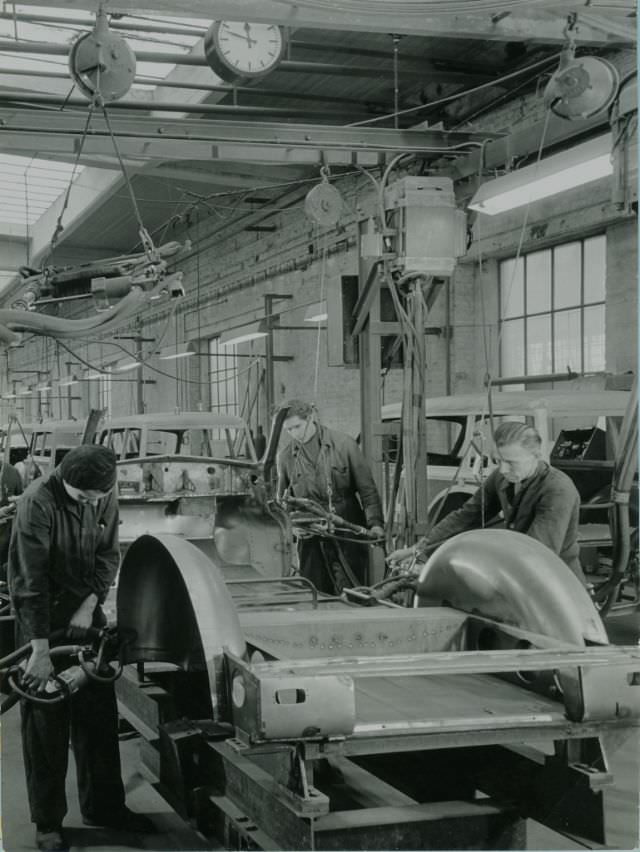
Car bodies were welded together in the early stages of production. Workers joined sheet metal panels by hand, building up each body before it moved down the line.
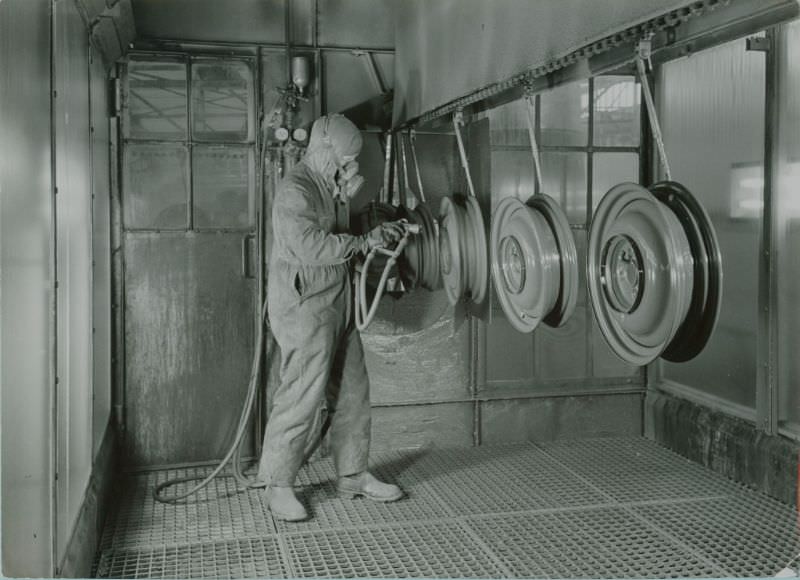
Once welded, the bodies moved to painting. Rows of car bodies coated in grey primer lined up in sequence, ready for the next stage. Wheel hubs were spray-painted separately, a detail-oriented task that required a steady hand and careful masking.
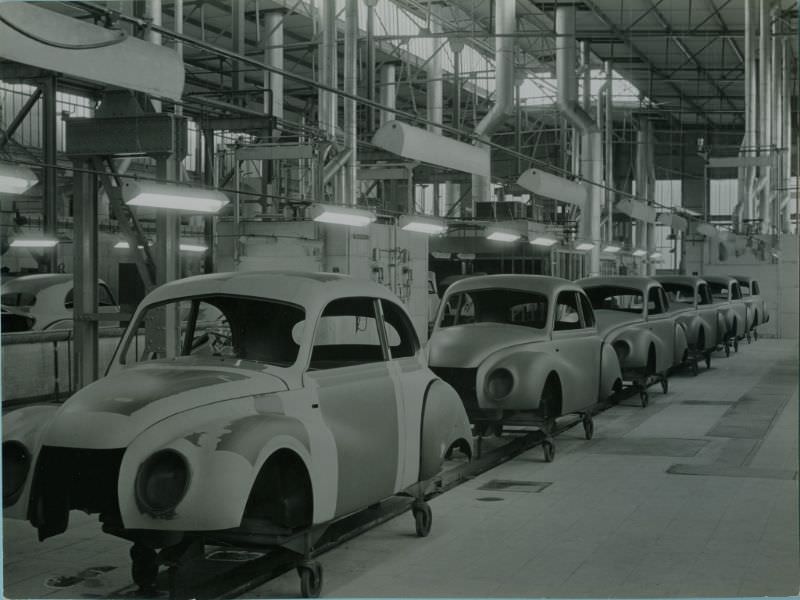
On the assembly line, workers rounded off wheel wells — shaping and finishing the metal arches that would frame each tire. It was hands-on, physical work done in close quarters on a moving line.
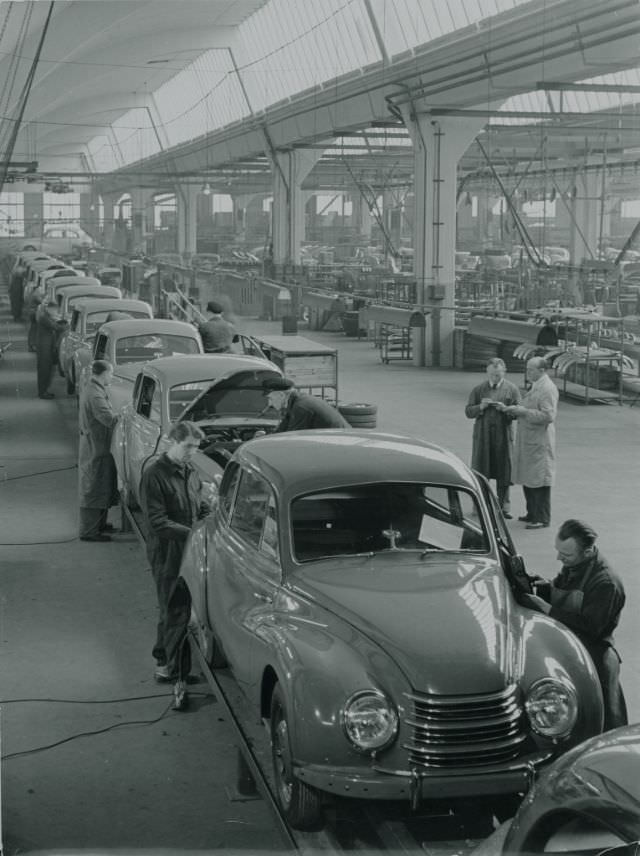
Further along, the finishing assembly line brought all the components together. Workers bolted in mechanical parts, fitted interiors, and ran final checks as each car neared completion. A separate station handled motor speed adjustments, where workers dialed in engine performance before the cars left the line.
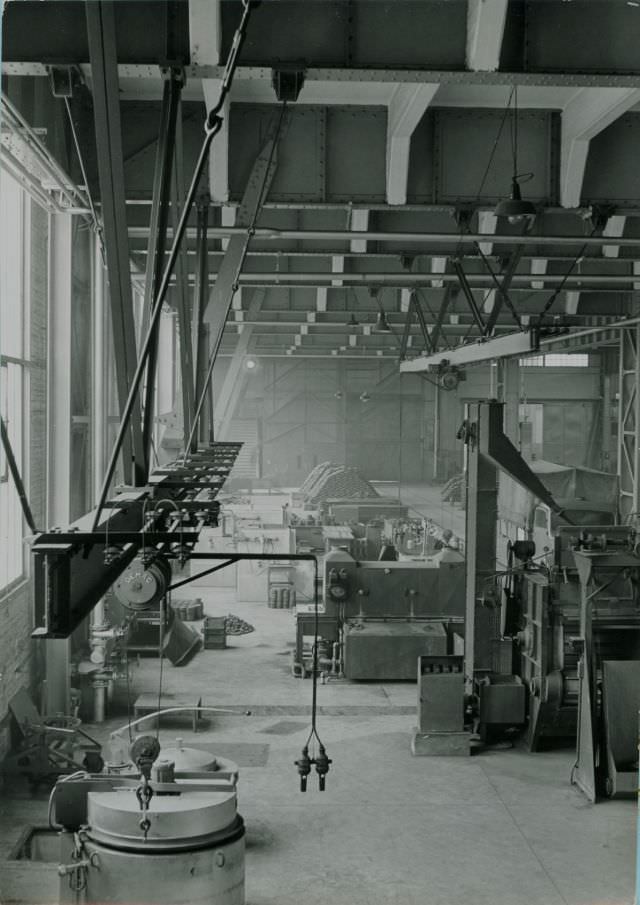
The factory also handled overhead logistics with a crane system captured from above in Guderian’s photos. Moving heavy components across the factory floor required this kind of infrastructure, and the overhead view shows how the facility was organized to keep production flowing.
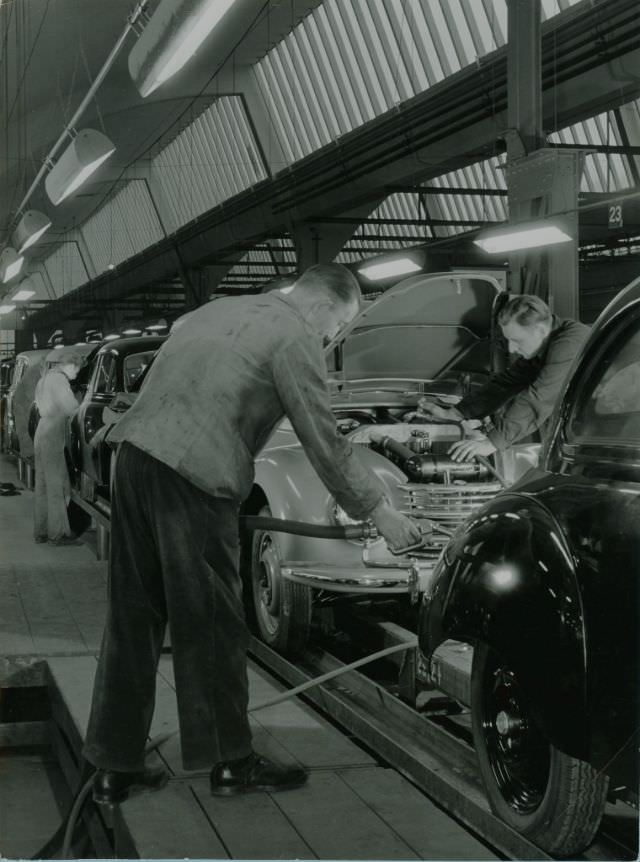
Once cars rolled off the line fully assembled, they were fueled and sent for final detailing. Workers went over the finished vehicles carefully, attending to surfaces and trim before the cars were cleared for delivery.
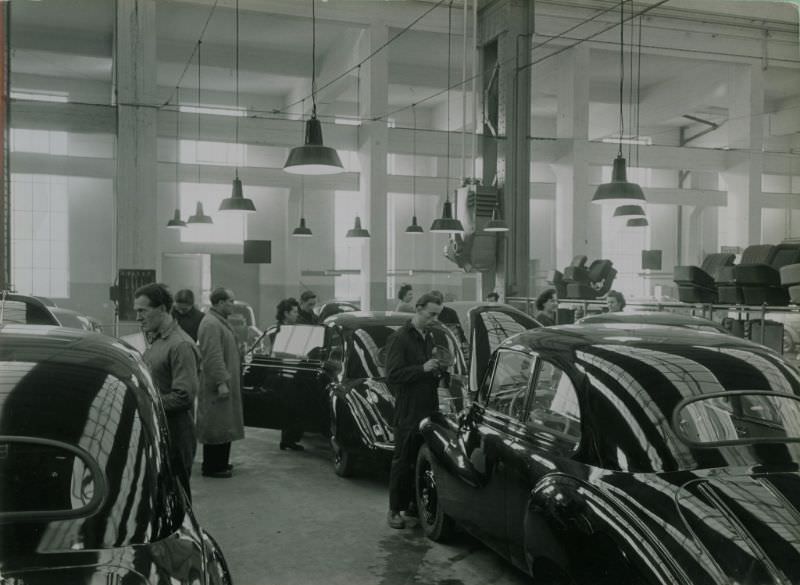
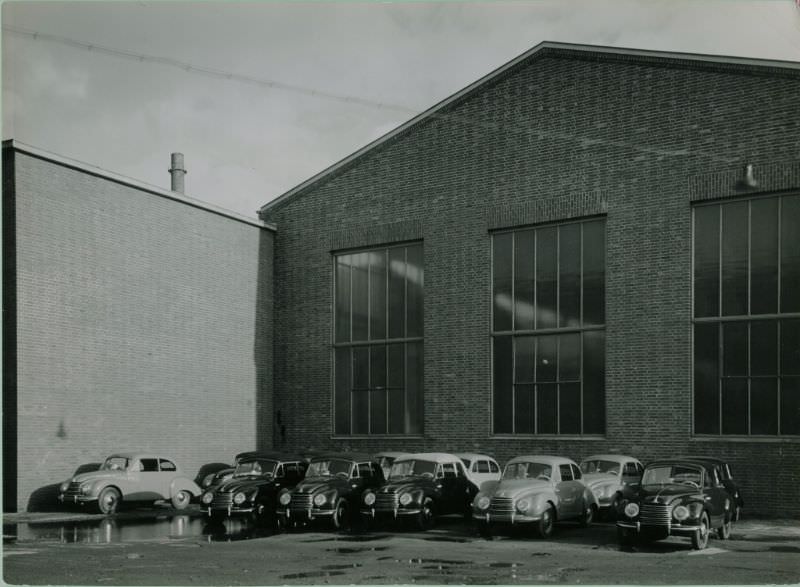
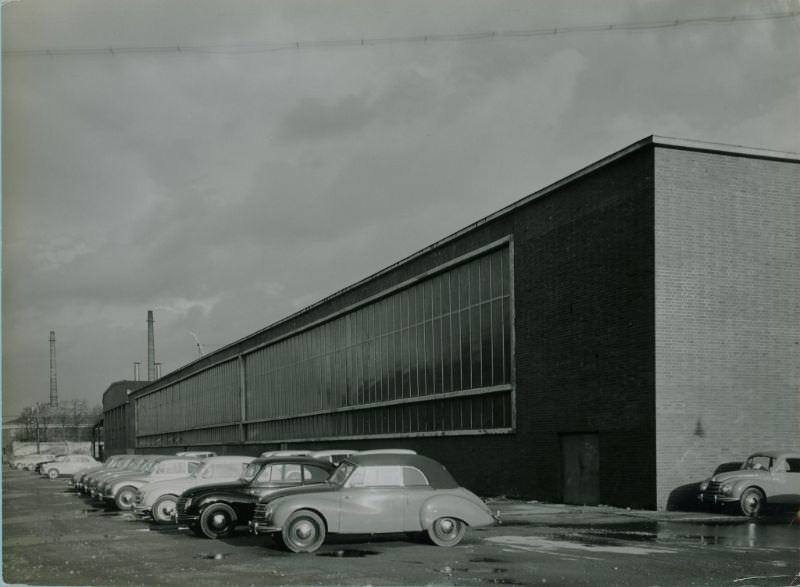
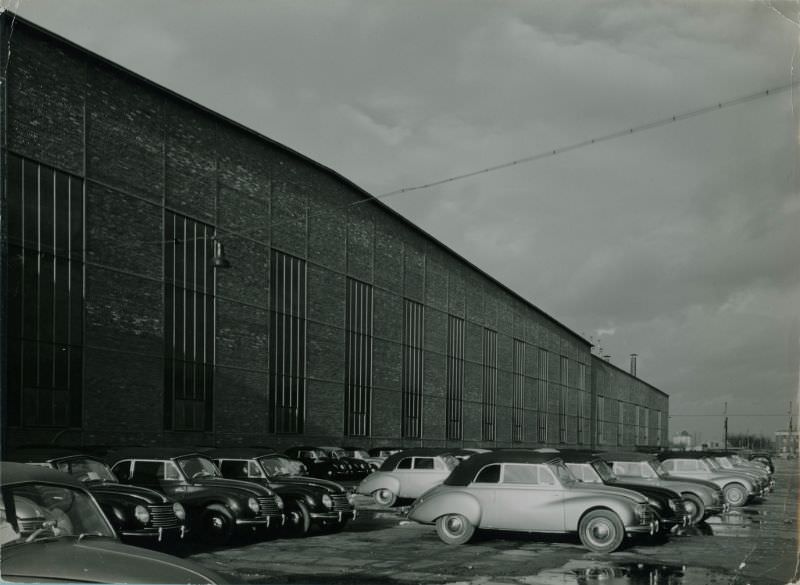
Outside the factory walls, completed Meisterklasse sedans and cabriolets lined up along the side of the building. Guderian photographed them from multiple angles, showing both the volume of production and the variety of body styles the factory was turning out — including estate conversions alongside the standard saloons.
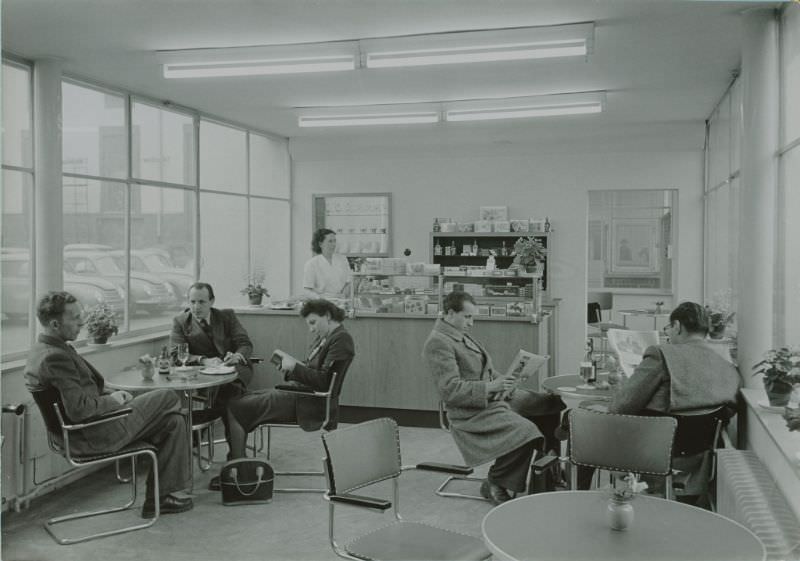
Back inside, the factory canteen served the workforce that kept all of this running. Workers gathered there during breaks — a brief pause in a facility that was operating at full pace to meet demand for West Germany’s first postwar passenger car.