By 1950, Cuba was one of the most visited countries in the Western Hemisphere. Americans crossed the Florida Straits in droves to reach Havana, drawn by its casinos, live music, and warm beaches. But beyond the tourist hotspots, a far more layered society existed — one of farmers, tradespeople, fishermen, and city workers going about their daily lives against a backdrop of growing political tension. These photographs capture that world in sharp detail.
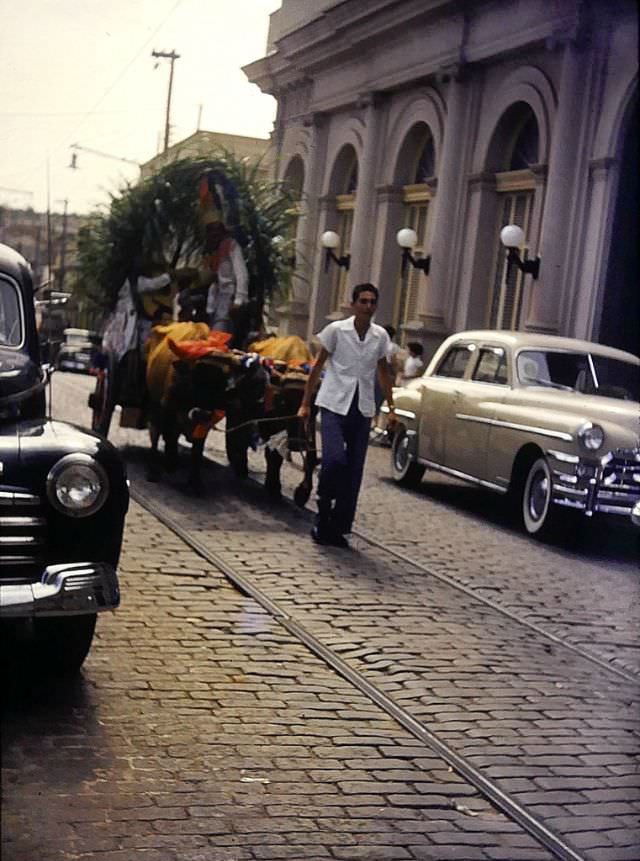
Havana’s streets in 1950 were a mix of old colonial architecture and modern American influence. Large, brightly colored American cars rolled past ornate buildings with wrought-iron balconies. The city had a bold, cosmopolitan energy that set it apart from other Caribbean capitals.
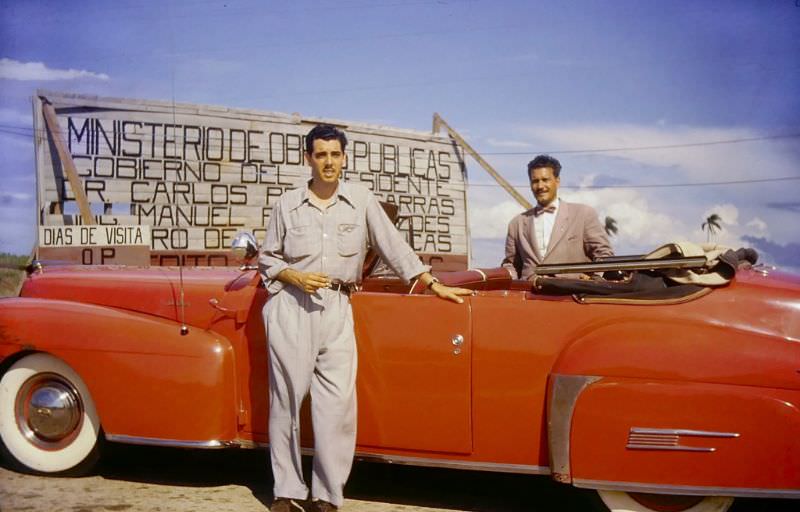
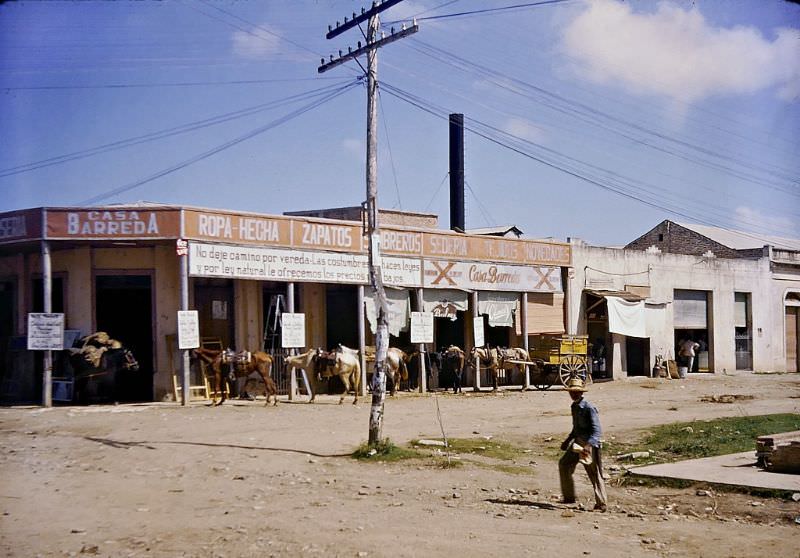
American automobiles were a common sight in Havana by mid-century, but away from the city center, older forms of transport still dominated. Horses pulled carts along unpaved roads, and storefronts were serviced by animal-drawn wagons. The contrast between urban and rural Cuba was stark and immediate.
Much of Cuba’s economy in 1950 was agricultural. The island’s fertile soil supported sugarcane, tobacco, and a range of crops that employed a large share of the rural population. Farm life was labor-intensive, relying on a combination of livestock and human effort.
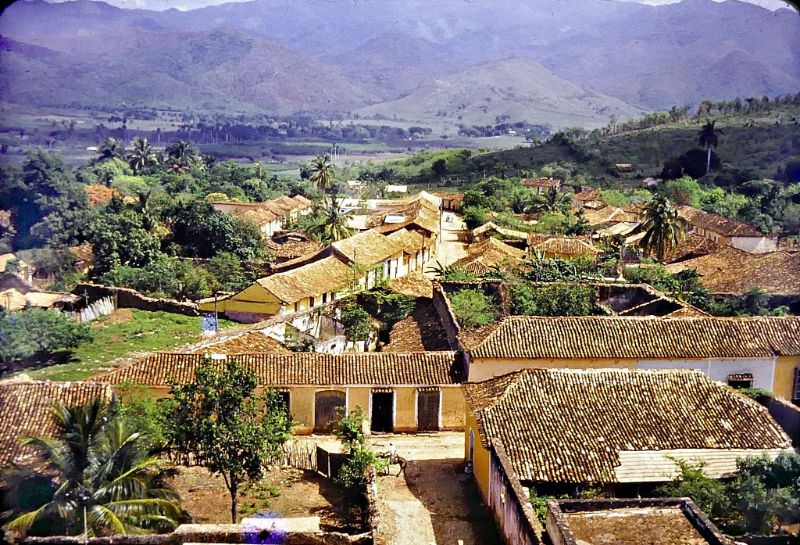
Rural villages across Cuba retained a traditional character that hadn’t changed much in decades. Tile-roofed homes clustered along narrow streets, and community life revolved around local markets, churches, and open plazas.
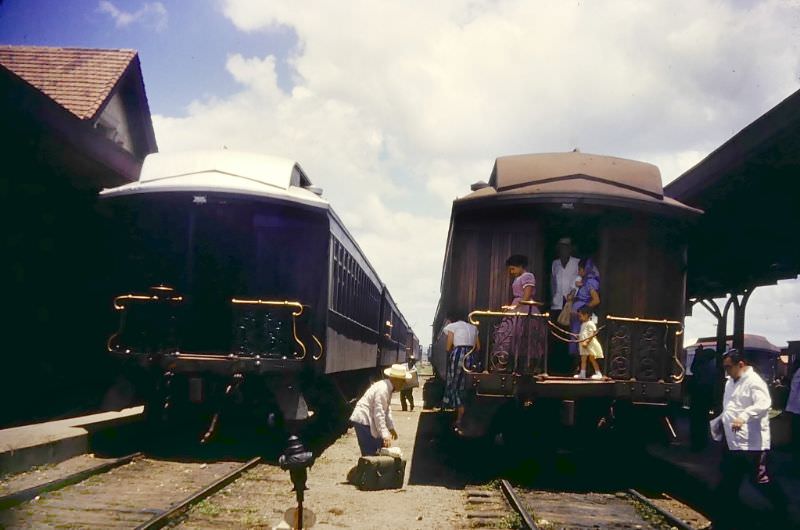
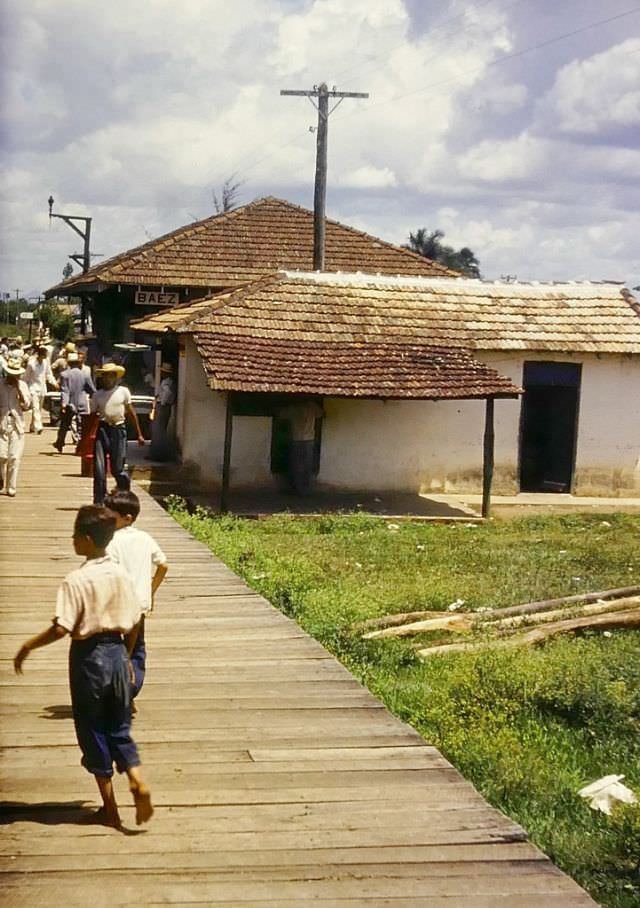
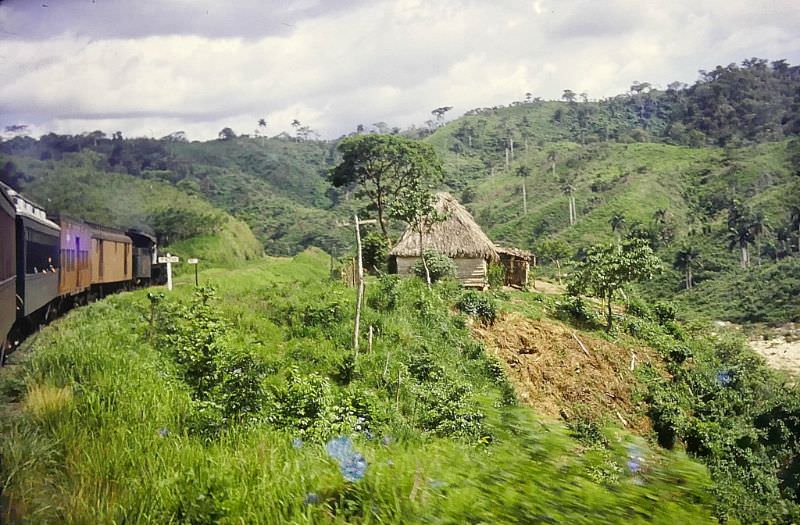
Cuba’s rail network was one of the oldest in Latin America — predating even Spain’s own railway system. By 1950, trains connected towns and rural areas across the island, carrying both passengers and freight. Stations like Baez served as vital hubs for communities that had little other access to the wider economy.
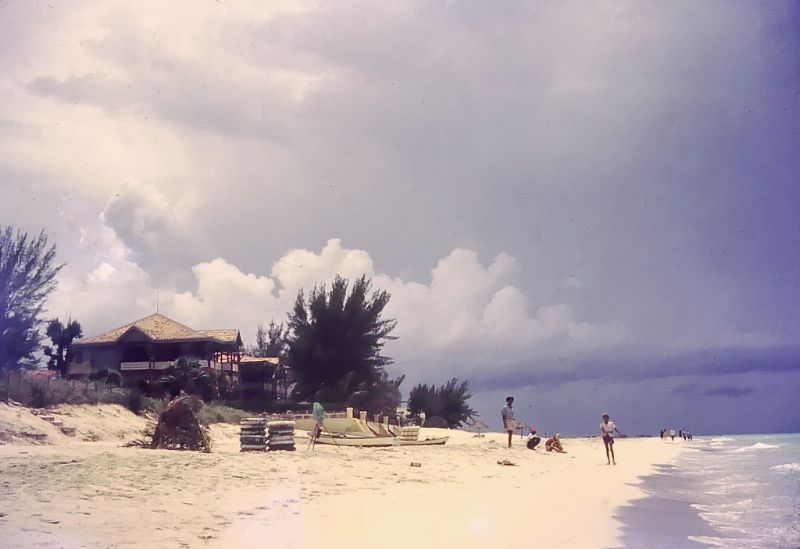
Cuba’s coastline was — and remains — one of its defining features. Clear water, white sand, and a warm climate made the beaches a natural draw for both tourists and locals. For many Cubans living near the shore, the sea was also a primary source of income.
Fishing boats were a fixture along Cuba’s harbors and inlets. Small wooden vessels worked the coastal waters daily, bringing in catches that fed local families and supplied markets across the island.
Havana’s architecture reflected centuries of Spanish colonial rule layered over with later Caribbean and neoclassical styles. Elaborate ironwork decorated the facades of buildings throughout the city, a craft tradition that had been maintained by local artisans for generations.
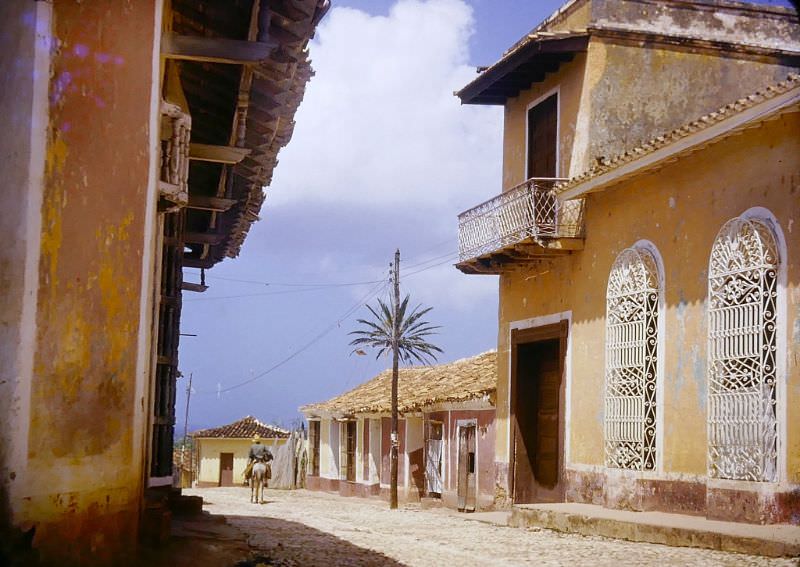
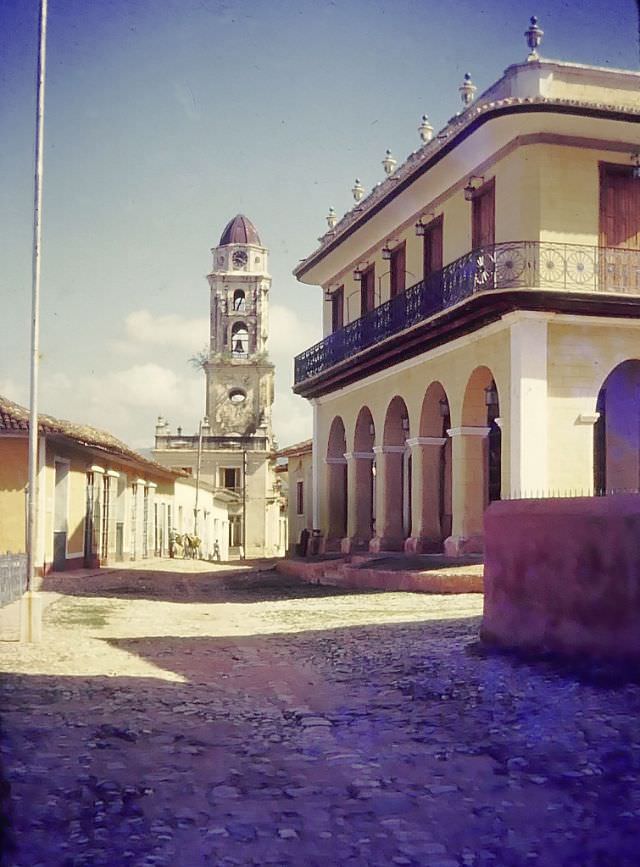
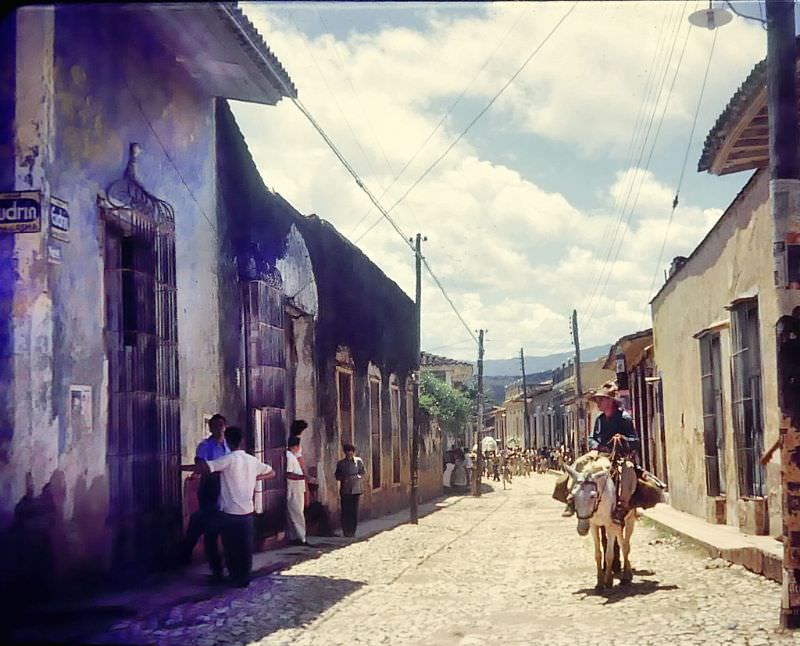
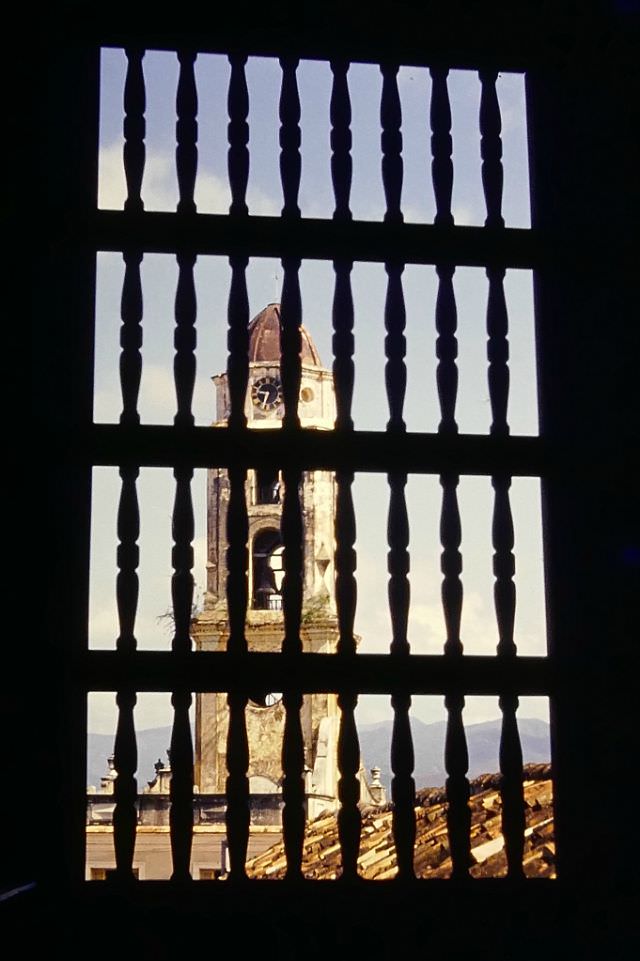
Cobblestone streets wound through older parts of Cuban towns, lined with buildings that dated back to the colonial era. Clock towers and bell towers marked town squares, serving both a civic and religious function in communities where the church was a central institution.
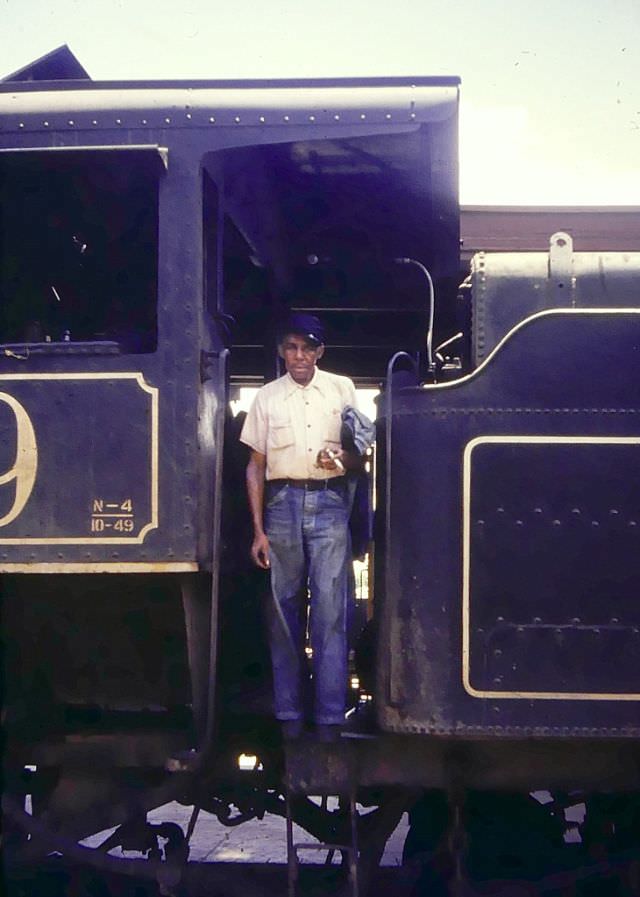
The railway workforce was a proud and skilled one. Locomotive engineers were well-regarded tradespeople, responsible for keeping Cuba’s rail lifelines running across the island’s varied terrain — from coastal lowlands to interior mountains.
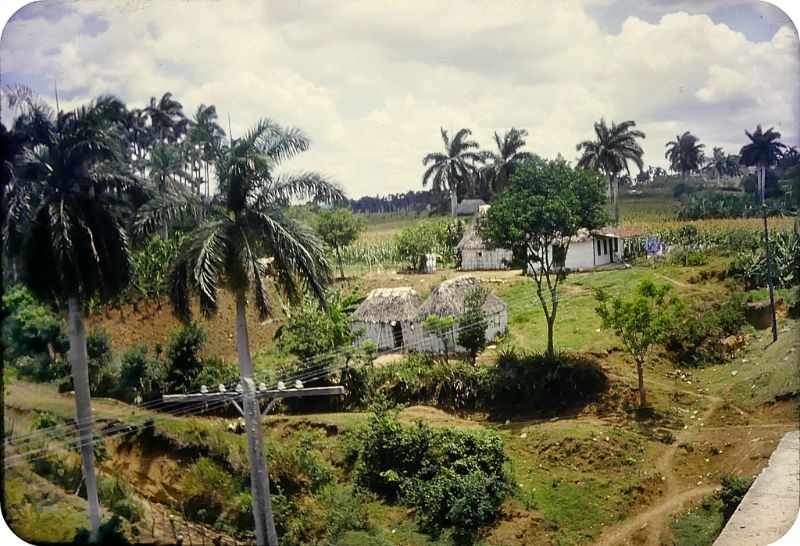
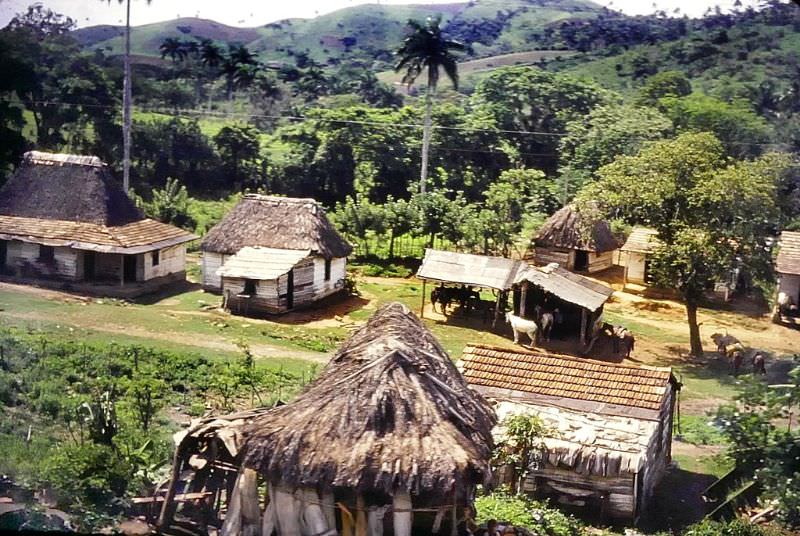
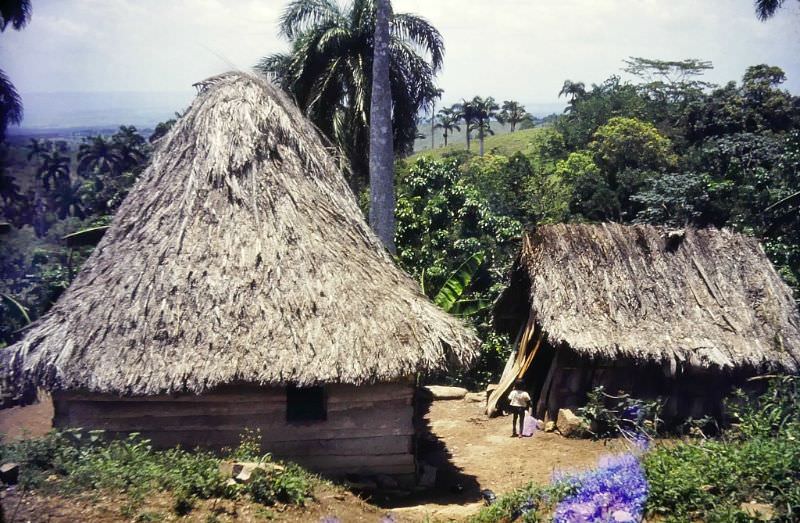
Across the Cuban countryside, different roofing materials told the story of a family’s economic standing. Tiled roofs indicated relative stability, while thatched palm roofs were common among poorer rural households. Farm animals roamed freely around many homesteads, central to both work and survival.
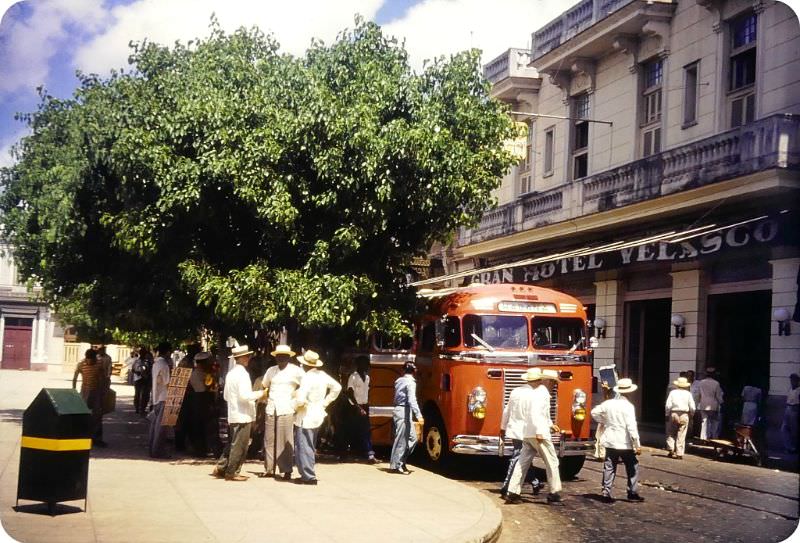
Public transportation in Havana was busy and well-used. City buses carried workers, students, and shoppers through the capital’s streets, weaving past pedestrians and the ever-present stream of American cars that had come to define the city’s visual identity.
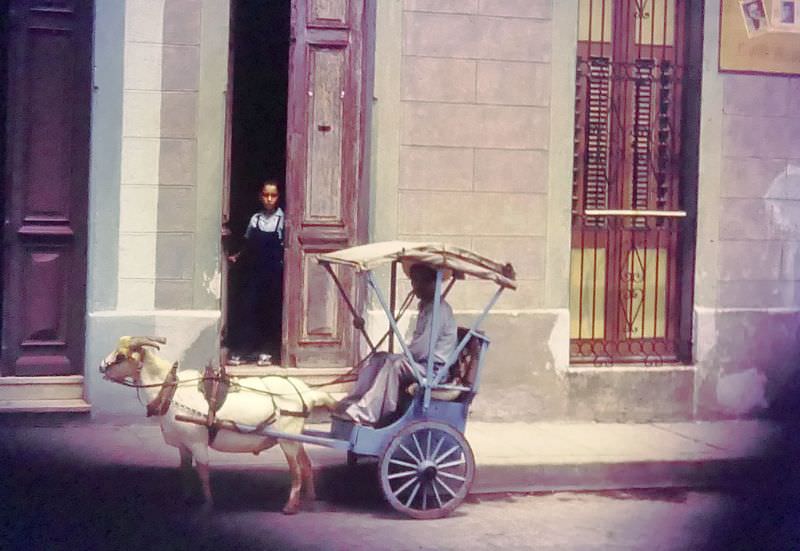
Not all transport in Havana was motorized. Small goat-drawn buggies were still a feature of certain neighborhoods, used for short-haul deliveries and personal travel. It was a reminder that even in a city as cosmopolitan as Havana, traditional ways of life persisted alongside modernization.
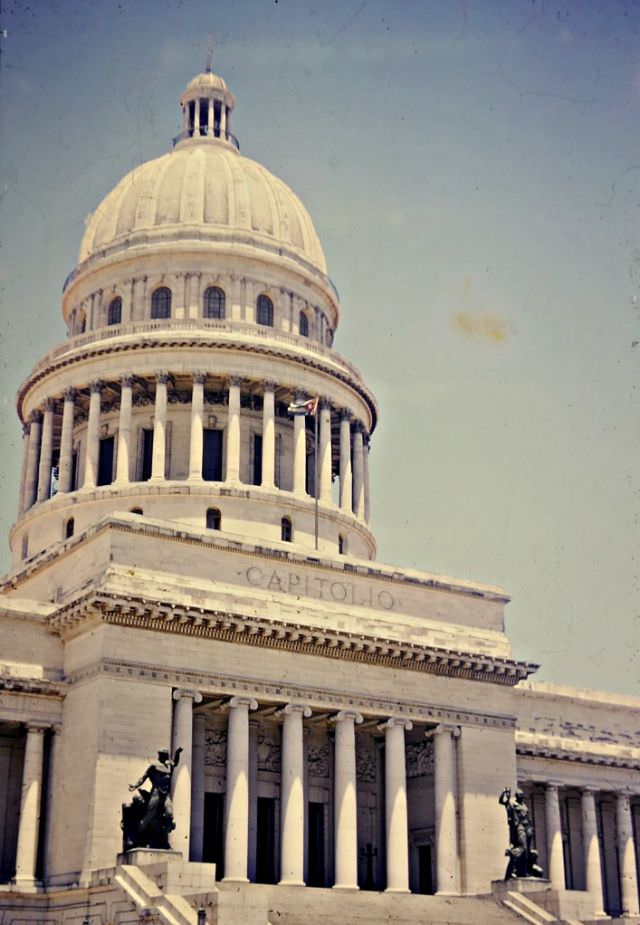
Havana’s National Capitol Building — El Capitolio — was completed in 1929 and stood as one of the most recognizable landmarks in the Caribbean. Modeled in part on the U.S. Capitol in Washington, D.C., it housed the Cuban Congress under President Fulgencio Batista’s government, which had taken power through a coup in 1952, just two years after these photos were taken.
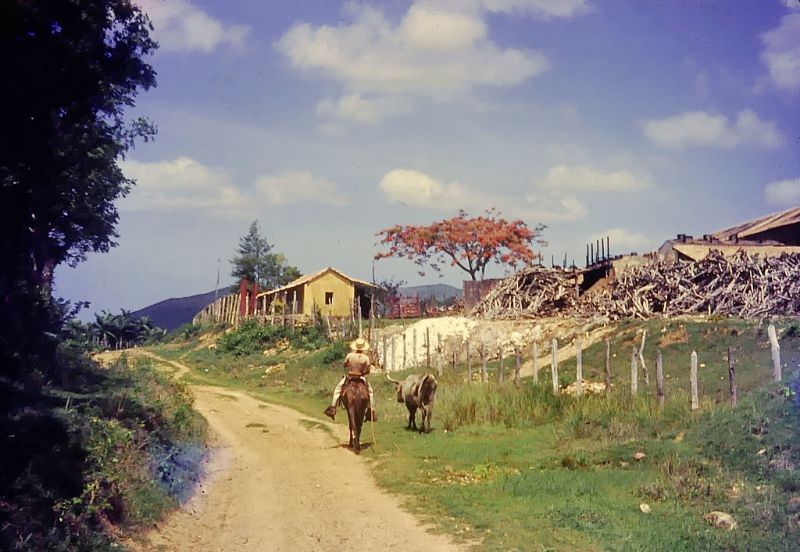
On country roads outside the cities, horses and oxen worked side by side hauling heavy loads. Firewood was a critical resource for rural households, and transporting it was a regular part of daily labor. Life in the Cuban interior operated on rhythms that had changed little over the previous century.
Matanzas, located about 60 miles east of Havana, was one of Cuba’s most important port cities. Known as the “Athens of Cuba” for its literary and cultural output, the city also had a significant industrial base and was home to a diverse working-class population.
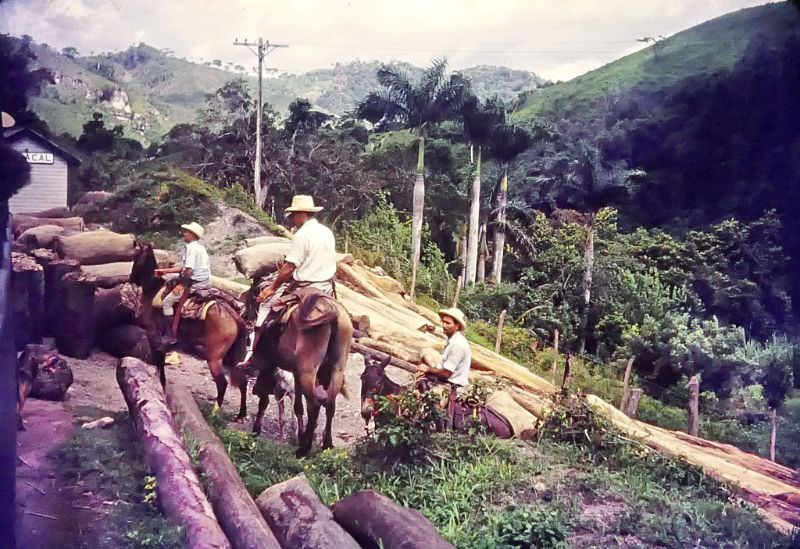
Logging was carried out on horseback in Cuba’s forested interior regions. Men on horseback directed and moved heavy timber through terrain that wheeled vehicles couldn’t easily access. It was dangerous, skilled work that sustained both local construction and fuel supplies.
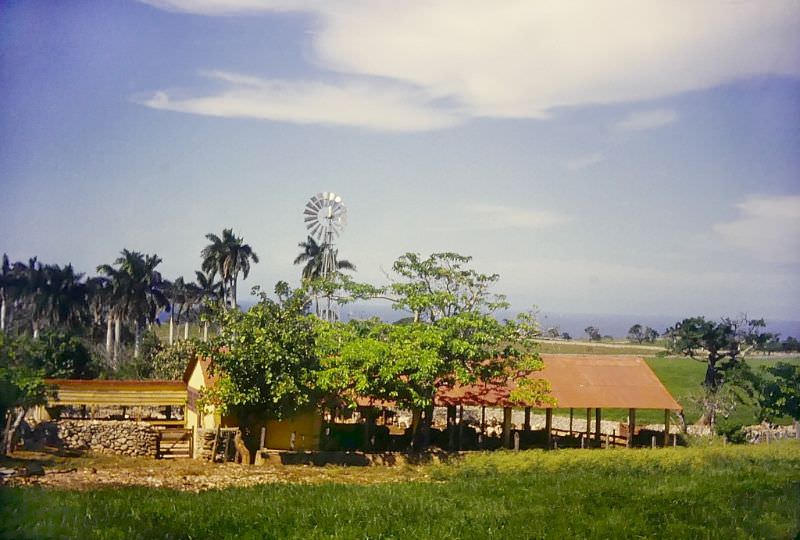
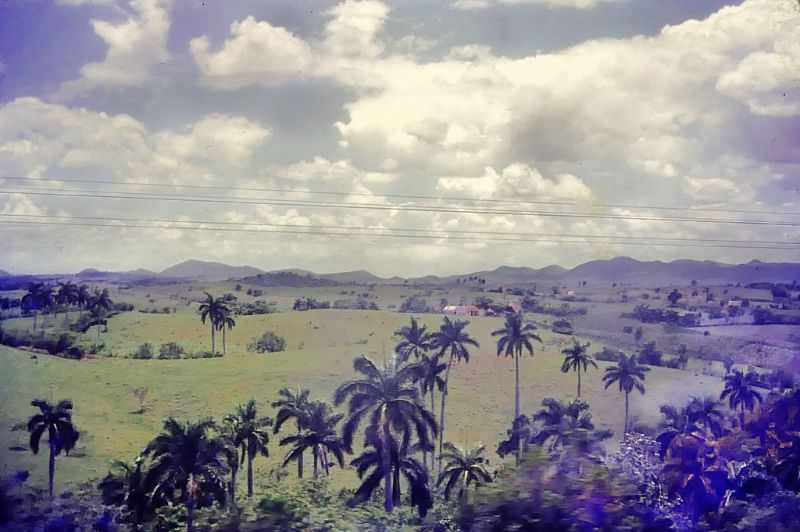
Cuba’s interior landscape was dramatic — a mix of low mountain ranges, rolling valleys, and coastal plains all framed by clusters of royal palm trees. The Sierra Maestra mountains in the southeast, barely visible on the horizon in some photographs, would later become the base of Fidel Castro’s guerrilla campaign.
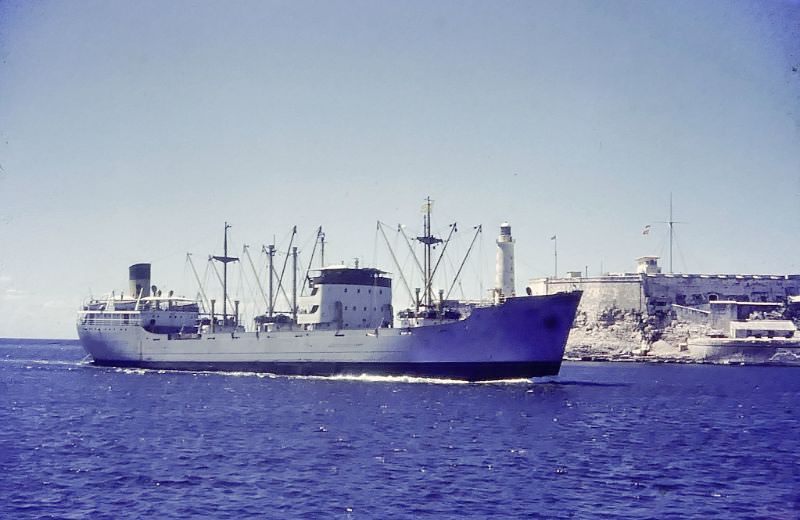
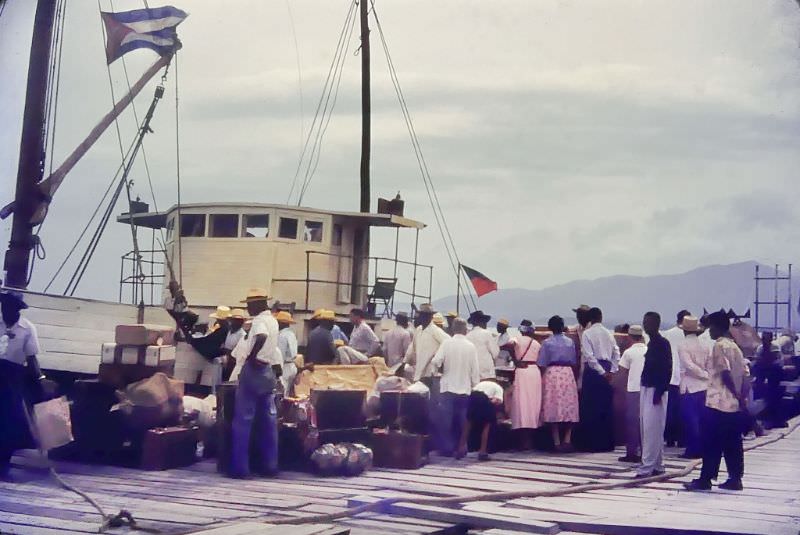
Cuba’s ports were active and commercially vital. Travelers and traders moved through docks loaded with baggage and cargo, connecting the island to the wider Caribbean and to North and South America. Passenger boat travel was still the primary means of long-distance movement for many Cubans.
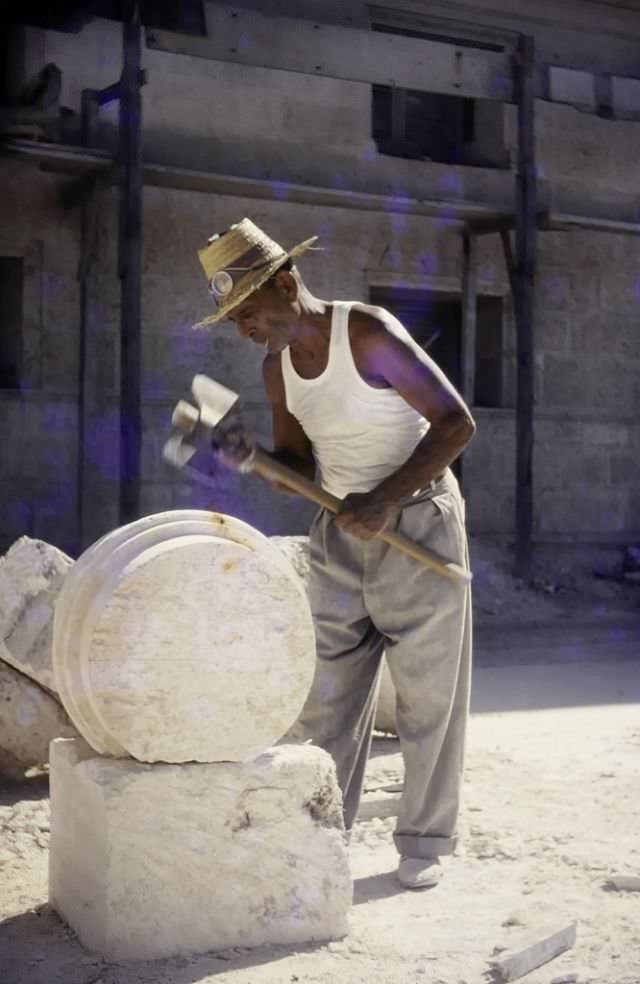
Skilled trades were the backbone of Cuban towns and cities. Stone workers crafted and repaired the walls, roads, and structures that defined the urban landscape. These craftsmen worked by hand with tools that had barely changed in generations, shaping the physical character of Cuba’s built environment.
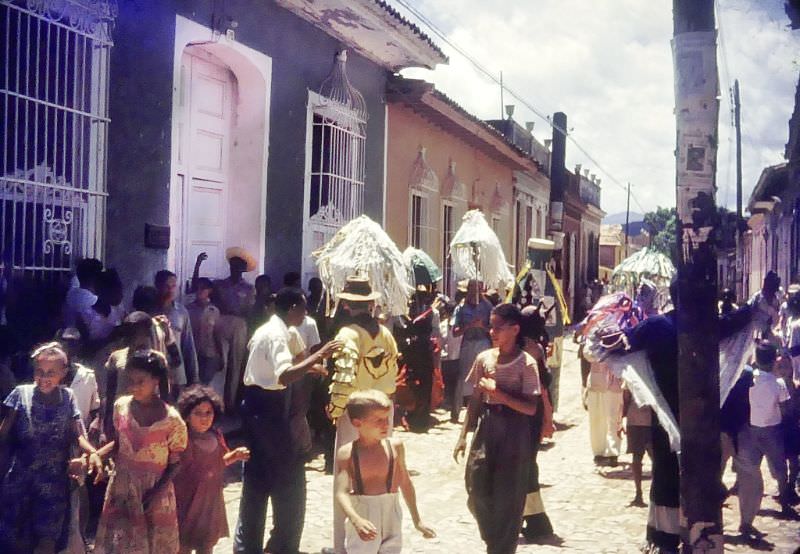
Street carnivals brought Cuban communities together with music, color, and performance. These public celebrations were deeply rooted in Afro-Cuban cultural traditions and drew participants from all walks of life. They were some of the most visible expressions of Cuba’s vibrant street culture in 1950.
Away from the towns and cities, many rural Cubans lived in thatched-roof houses built from palm timber and dried palm leaves. These homes were simple but functional, well-suited to Cuba’s tropical climate. They stood in sharp contrast to the tile-roofed houses of wealthier rural families and the concrete buildings of the cities.
Even the framing of a photograph tells a story. Looking through a wood-framed window in rural Cuba reveals a world beyond — fields, neighbors, the details of daily life. For ordinary Cubans in 1950, this was a country defined by hard work, deep community ties, and a political system that many were beginning to question openly.
Cuba’s railways crossed some of the island’s most scenic territory. Trains wound through open countryside, past sugarcane fields and forested hillsides, linking regions that would otherwise have been isolated from each other and from national markets.
Rail yards across Cuba hummed with activity. Multiple locomotives and lines of freight cars handled the movement of sugar, tobacco, and other goods that drove the Cuban economy. The railway system was a symbol of both the country’s modernization and its deep dependence on agricultural exports — an economic structure that fueled much of the social inequality driving unrest across the island.