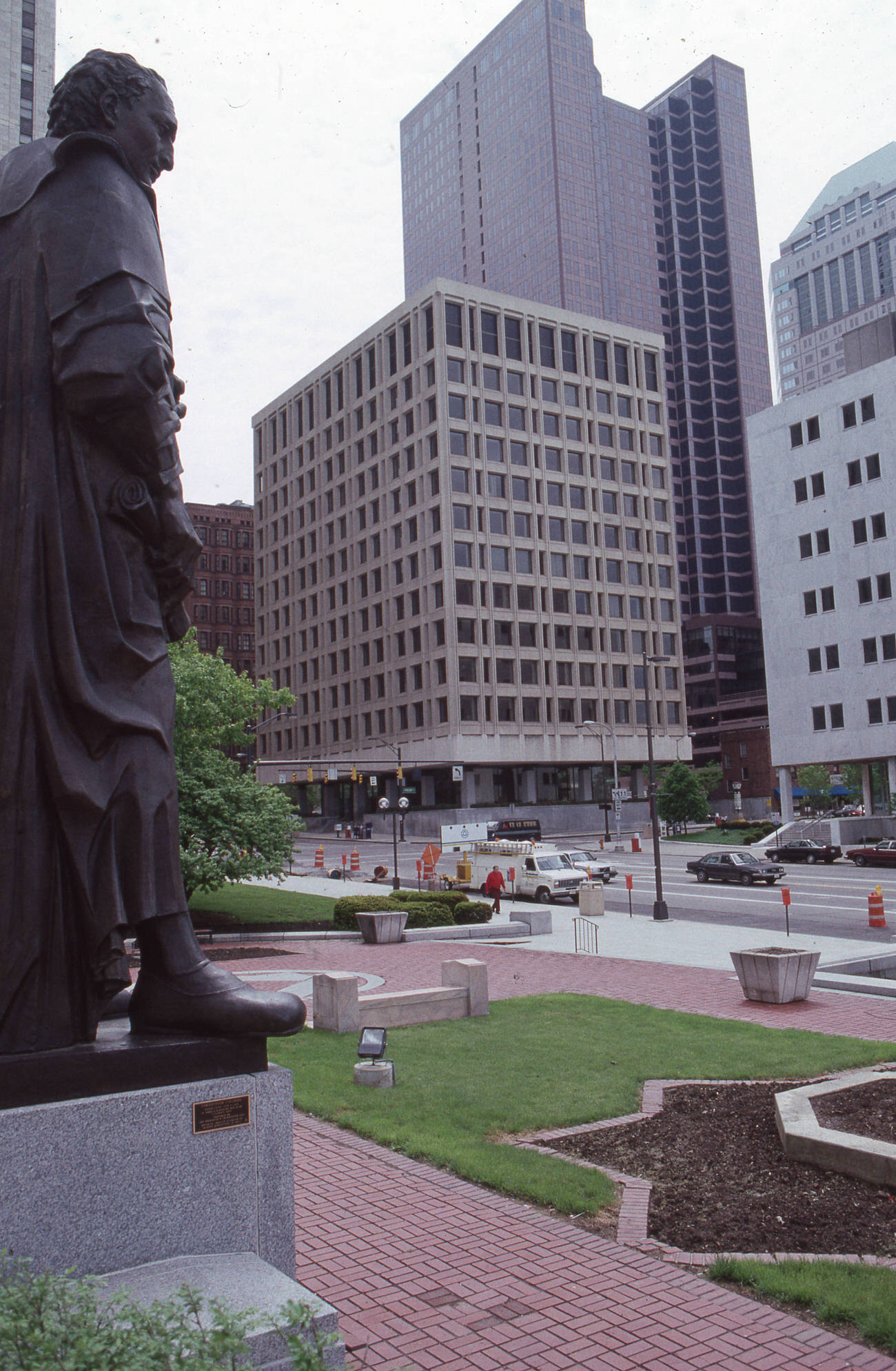
Columbus, Ohio in the 1990s was a city on the move. While many Midwestern cities were still struggling with the fallout from industrial decline, Columbus had already begun charting a different course. Its economy diversified early, leaning into technology, education, and healthcare rather than relying on manufacturing. That shift paid off. When the early 1990s recession hit, Columbus absorbed the blow far better than most comparable cities. The Ohio State University anchored a steady stream of talent and research dollars, while major corporations continued to plant roots in the region.
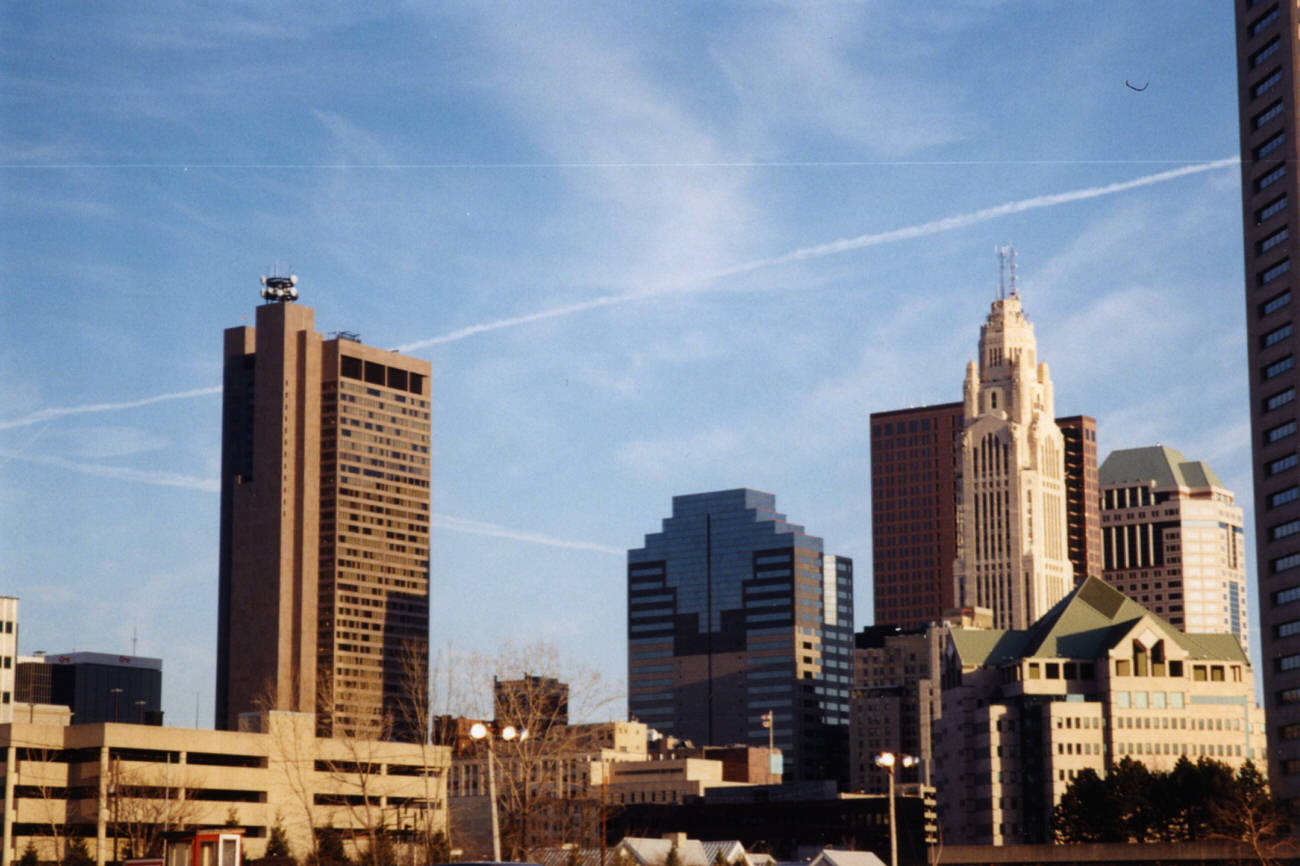
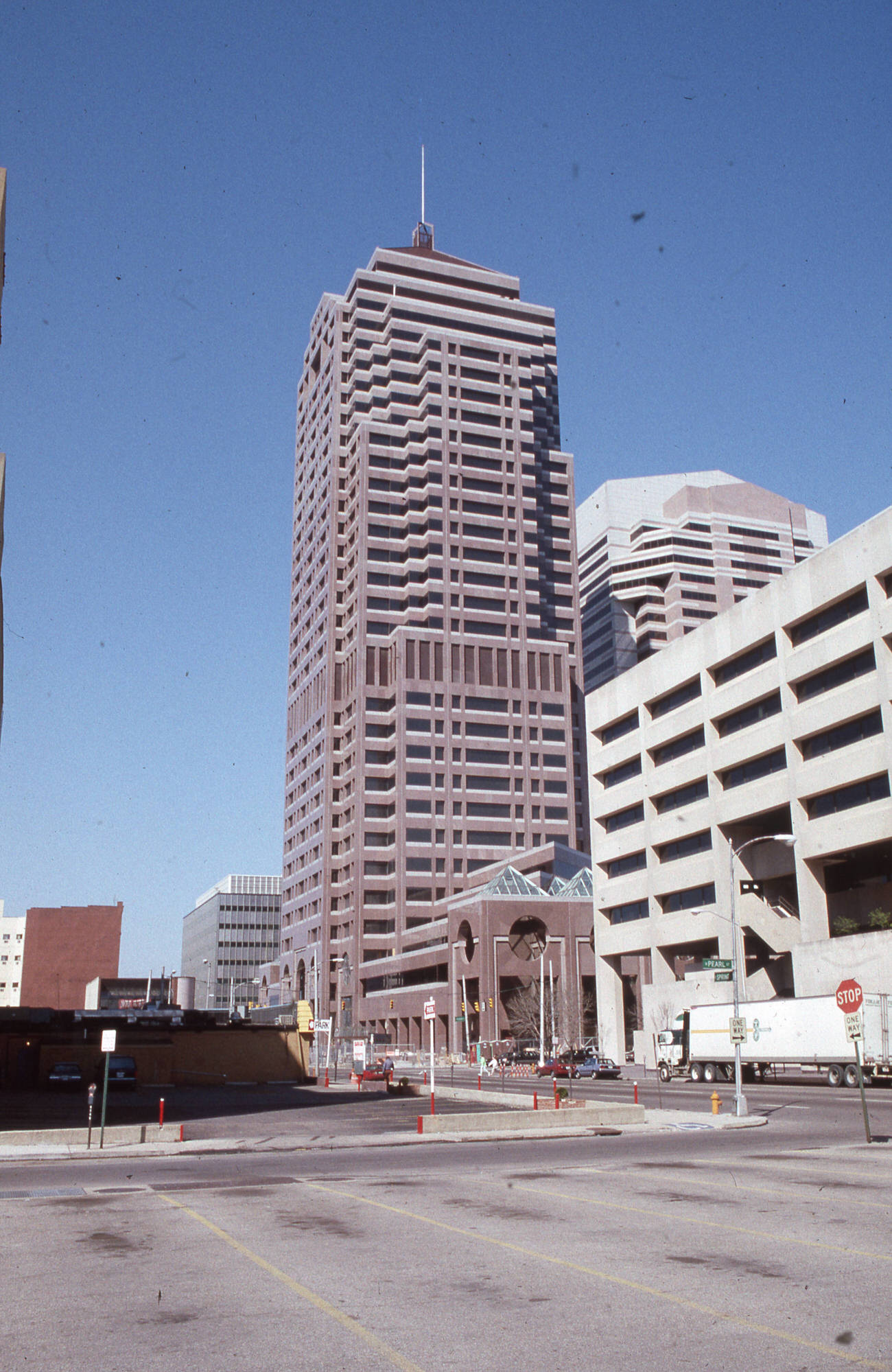
The downtown skyline told the story of that growth in real time. New construction pushed upward while older buildings found new tenants and new purposes. The Rhodes State Office Tower stood tall as a symbol of state government’s permanent presence at the city’s core, while private investment continued stacking up around it.
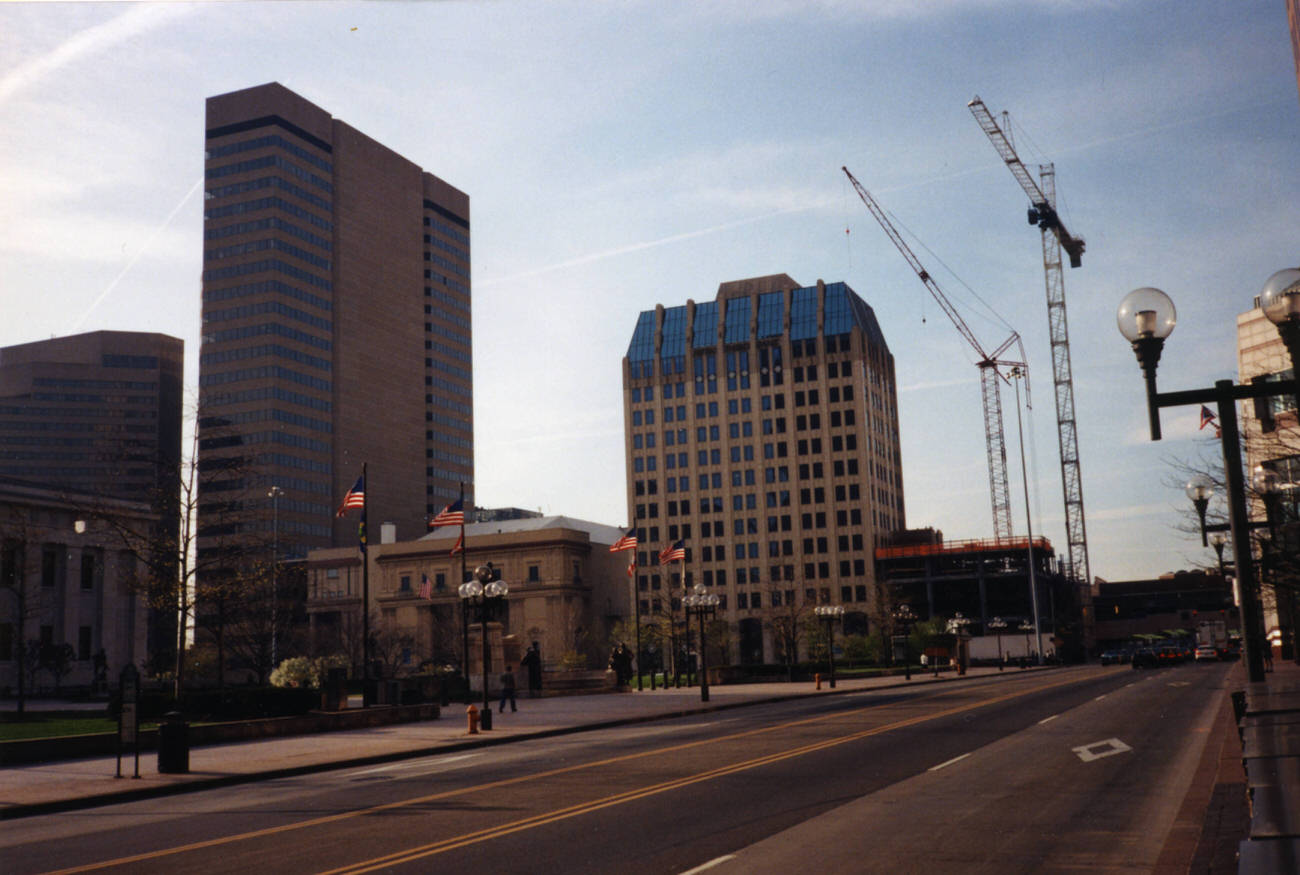
Capitol Square itself was an active construction zone in the late 1990s. The Fifth Third Center going up in 1997 represented the kind of private-sector confidence that was reshaping the city block by block. Nearby, historic structures weren’t being torn down — they were being repurposed. The Old Post Office Building, restored in 1986, became home to the law firm Bricker and Eckler, blending the city’s past with its professional future.
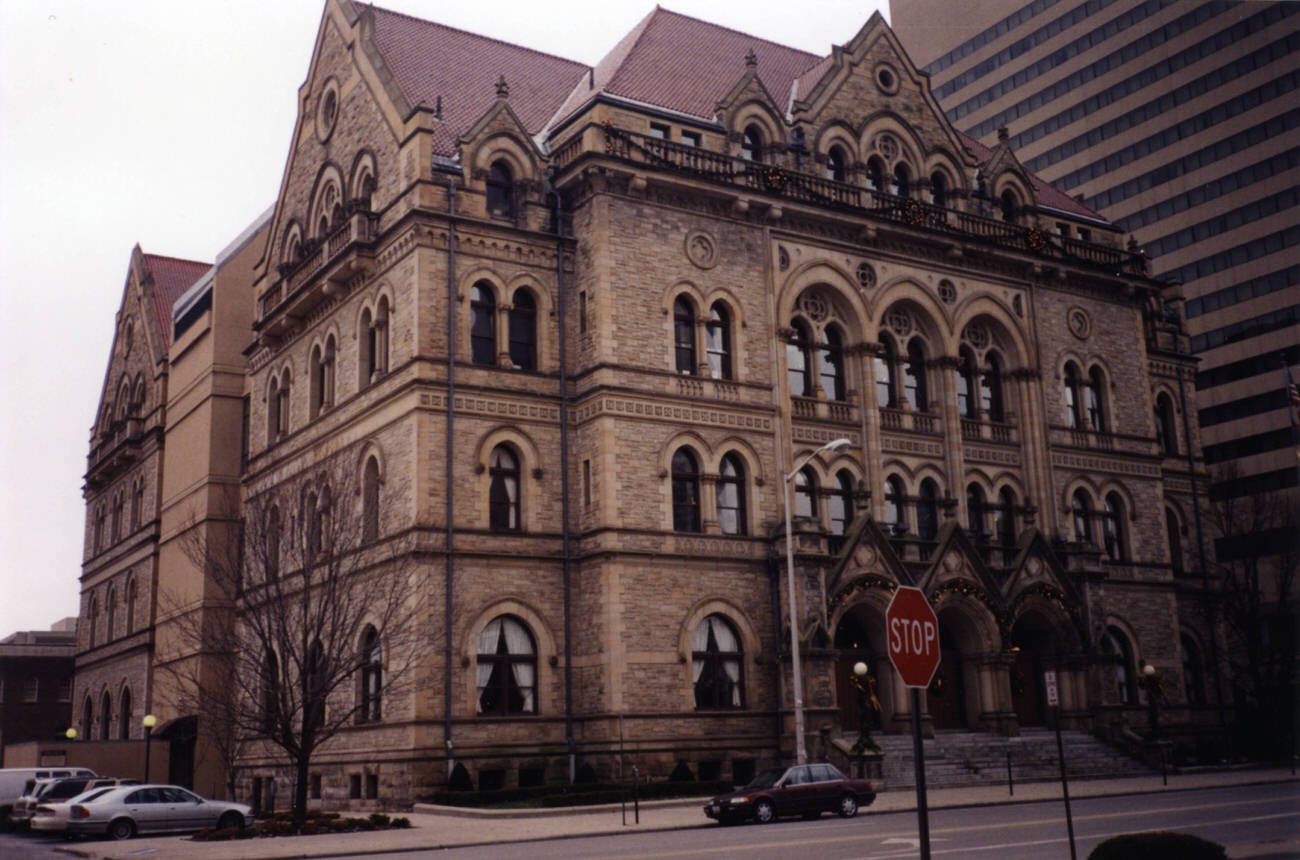
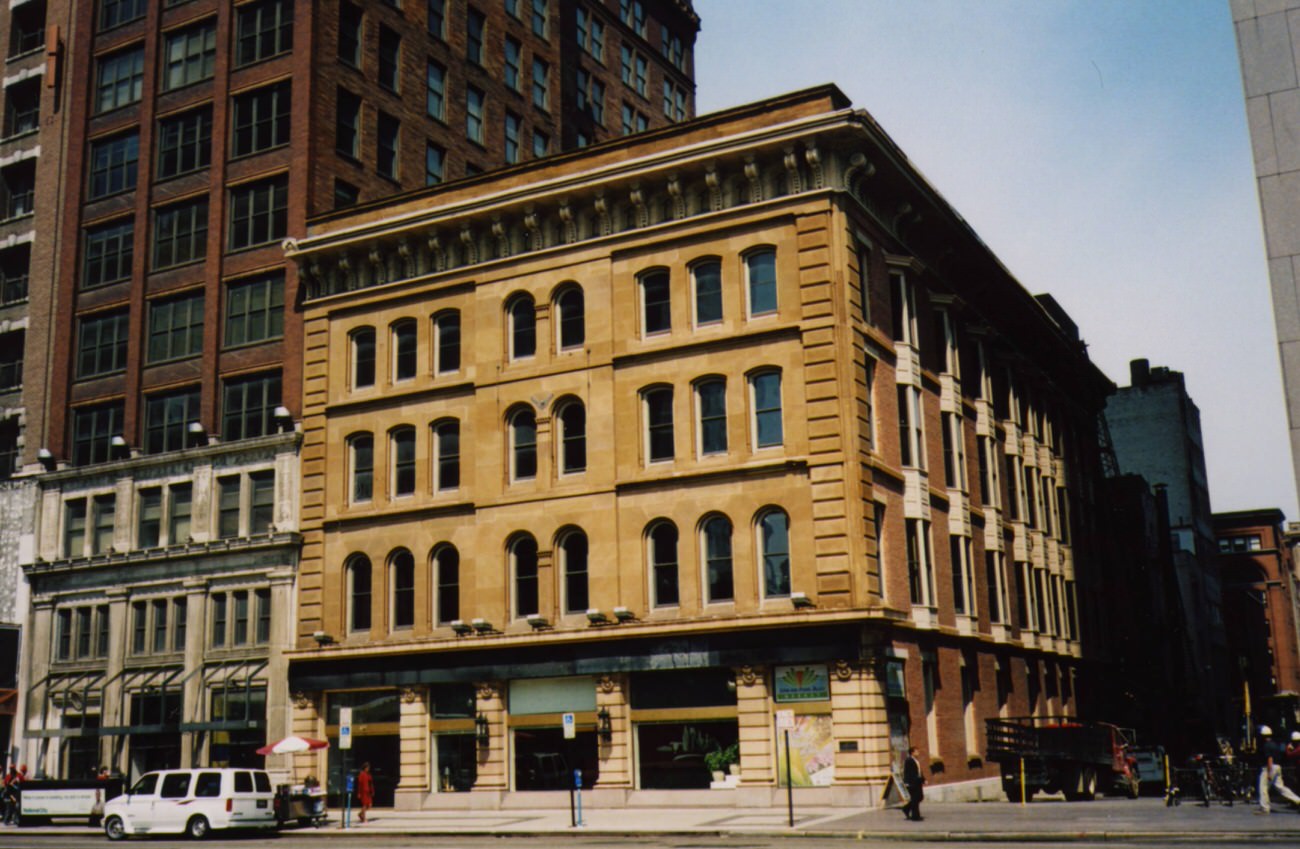
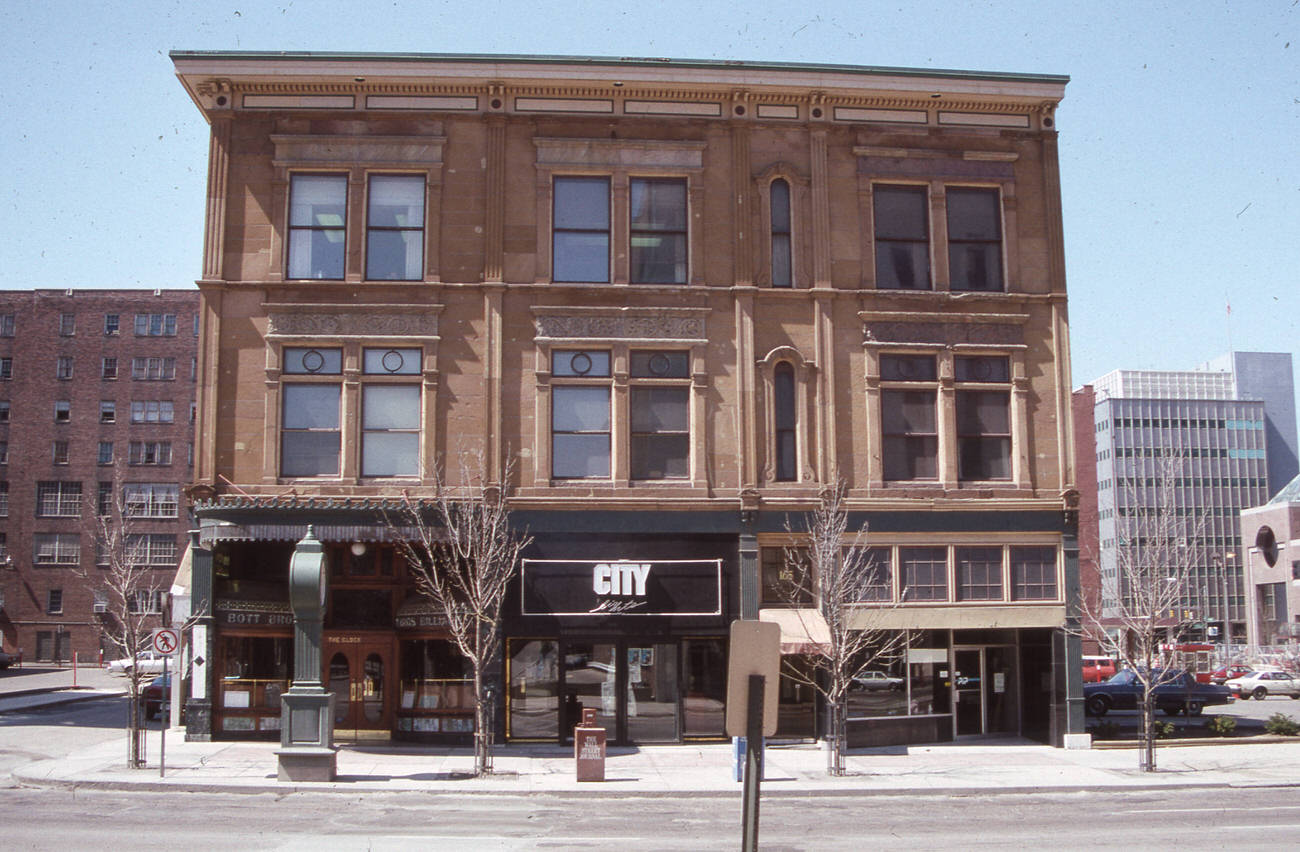
Preservation was a recurring theme across Columbus in this decade. The Hayden Clinton Bank Building, constructed in 1869 and the oldest structure facing the Ohio Statehouse, still stood at the end of the century. The Columbia Building — known variously as The Bott Building, The Clock Restaurant, and The Larrimer Building — was another layered piece of the city’s architectural memory. These buildings weren’t relics; they were still part of daily life.
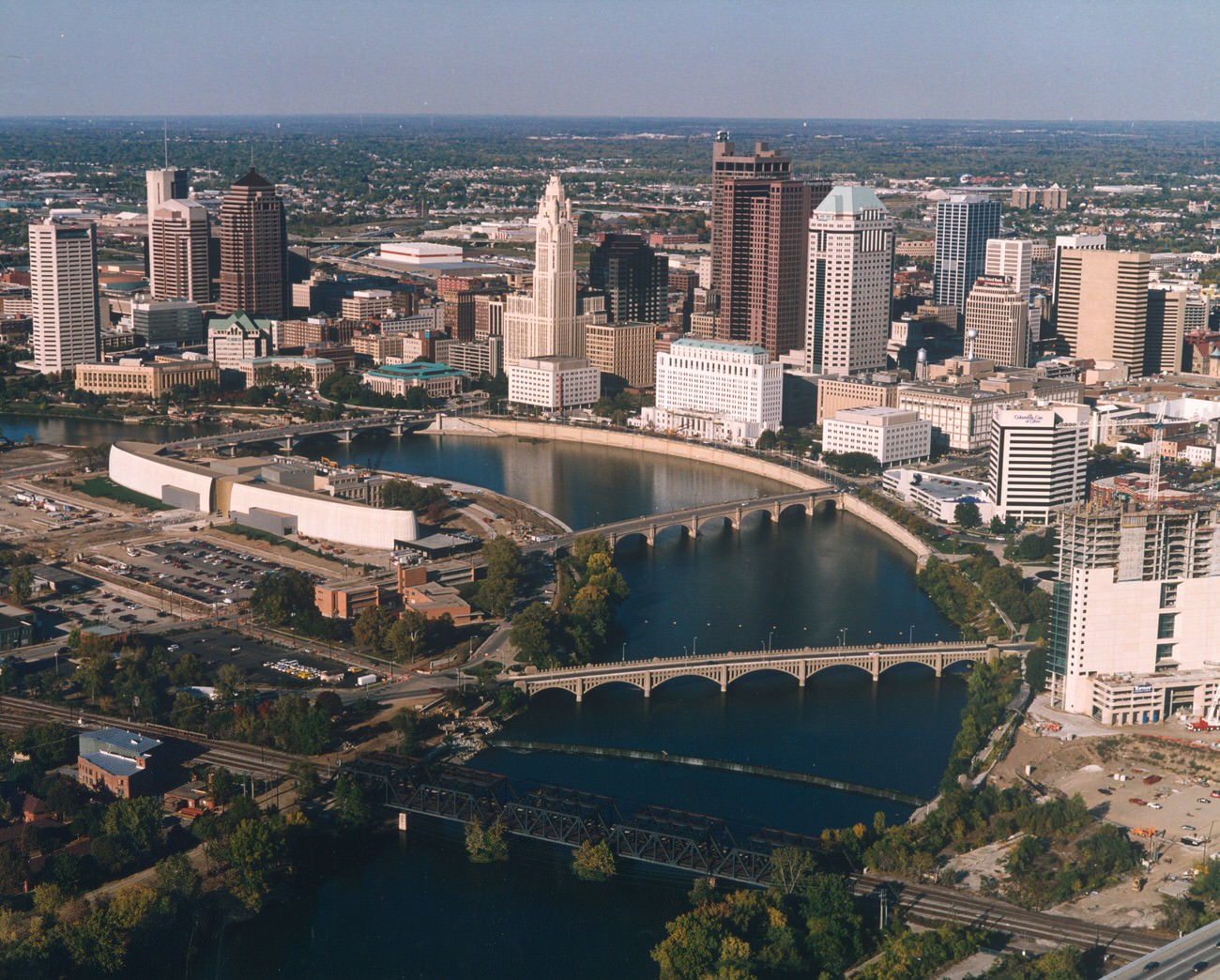
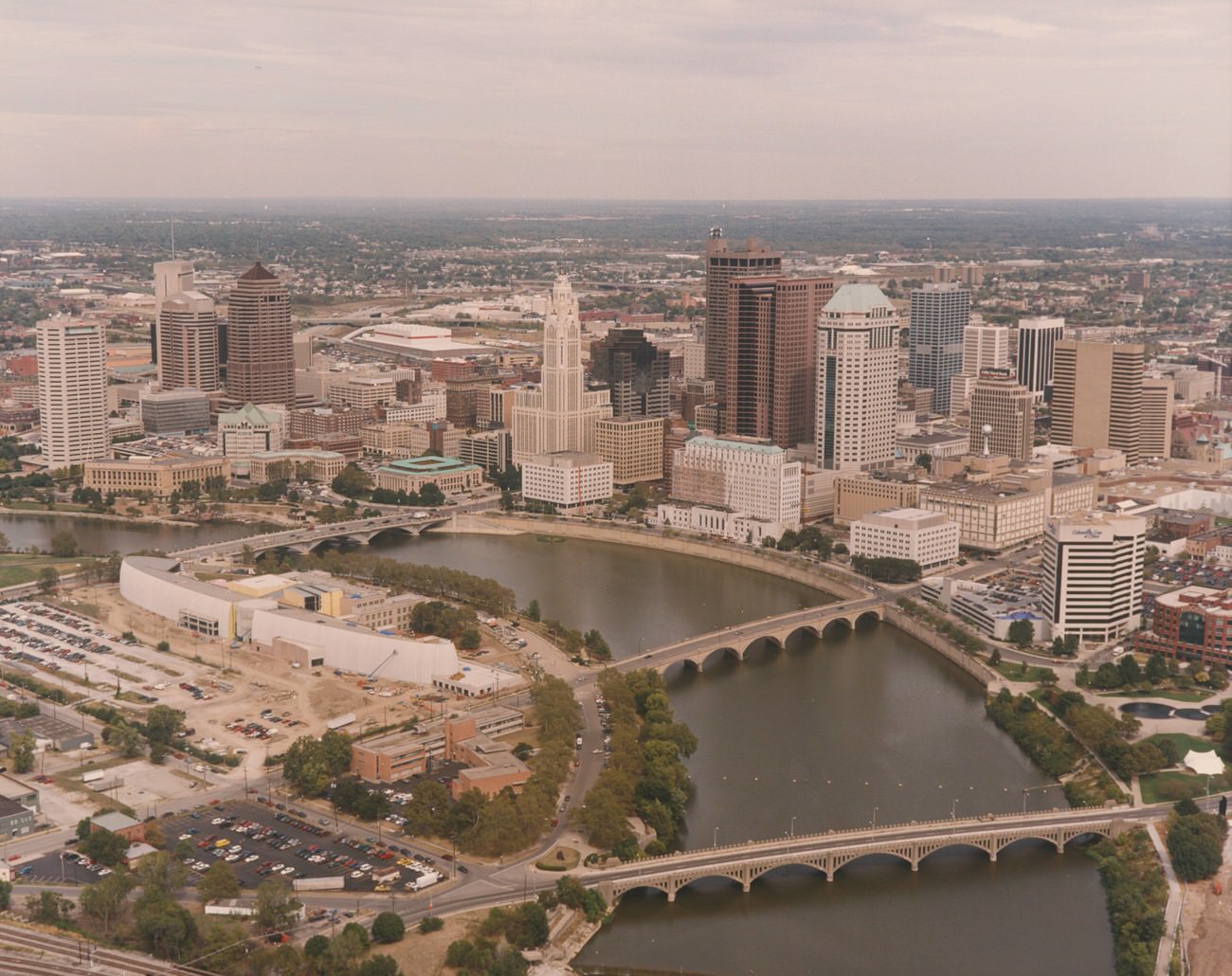
Aerial views of the city captured how dramatically the riverfront was changing. By 1998 and 1999, the Center of Science and Industry — COSI — was actively under construction along the Scioto River. The project represented a major public investment in education and tourism, and the cranes and scaffolding visible from above signaled that Columbus was serious about transforming its waterfront into something residents and visitors would actually use.
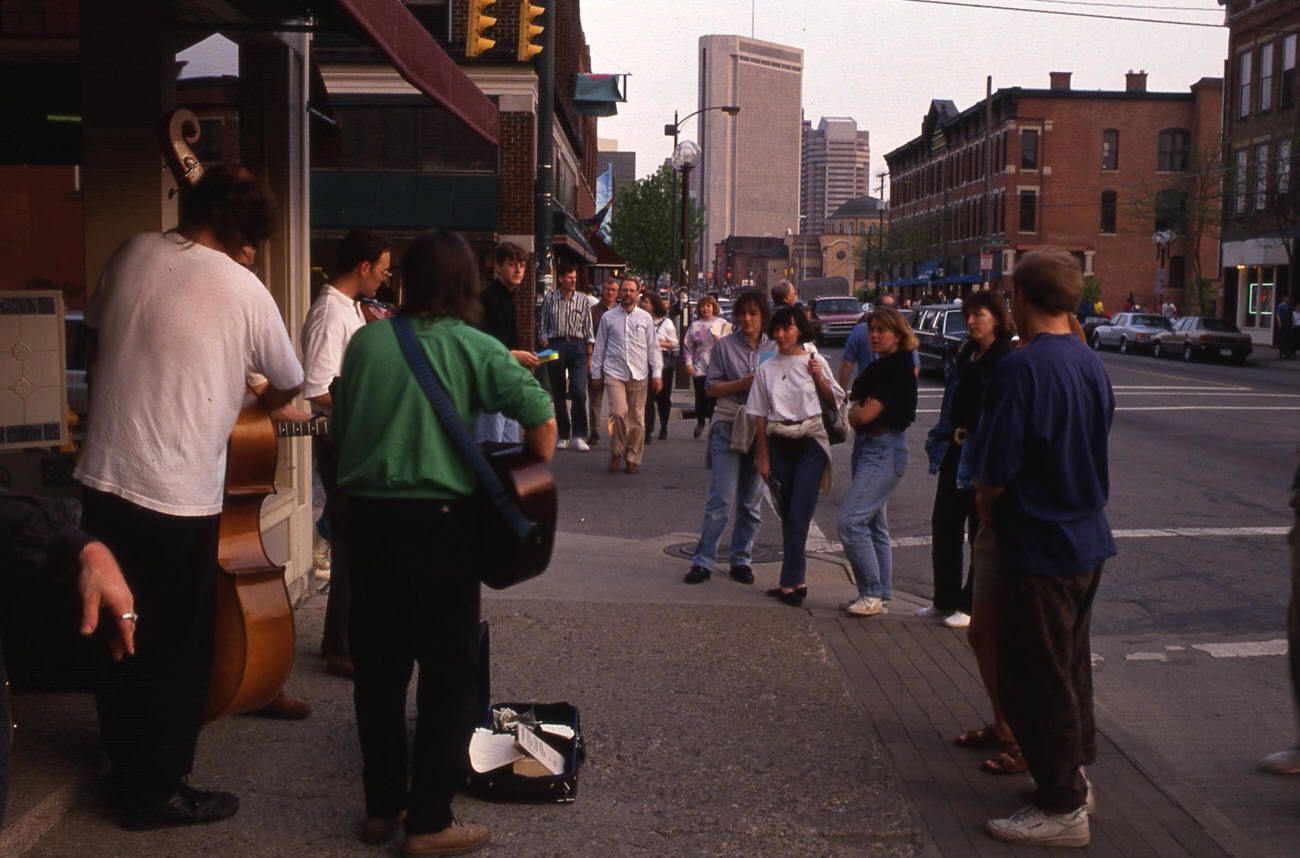
North High Street was the spine of the city’s cultural life. The Short North neighborhood, running along that corridor, was already well into its transformation by the early 1990s. Gallery Hop Saturdays drew crowds of pedestrians who filled the sidewalks to browse art, catch live street performers, and move between shops and bars. Street musicians set up at corners like North High and Russell Street, adding energy to what had become one of the most vibrant urban stretches in the Midwest.
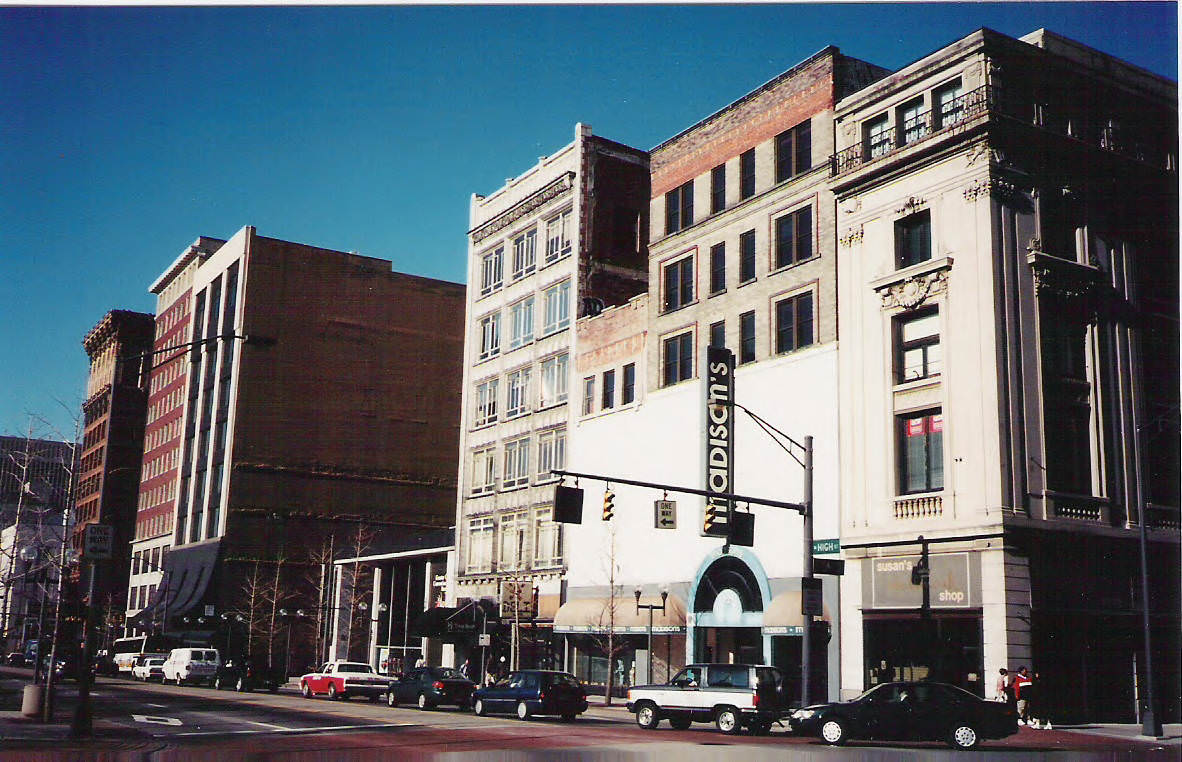
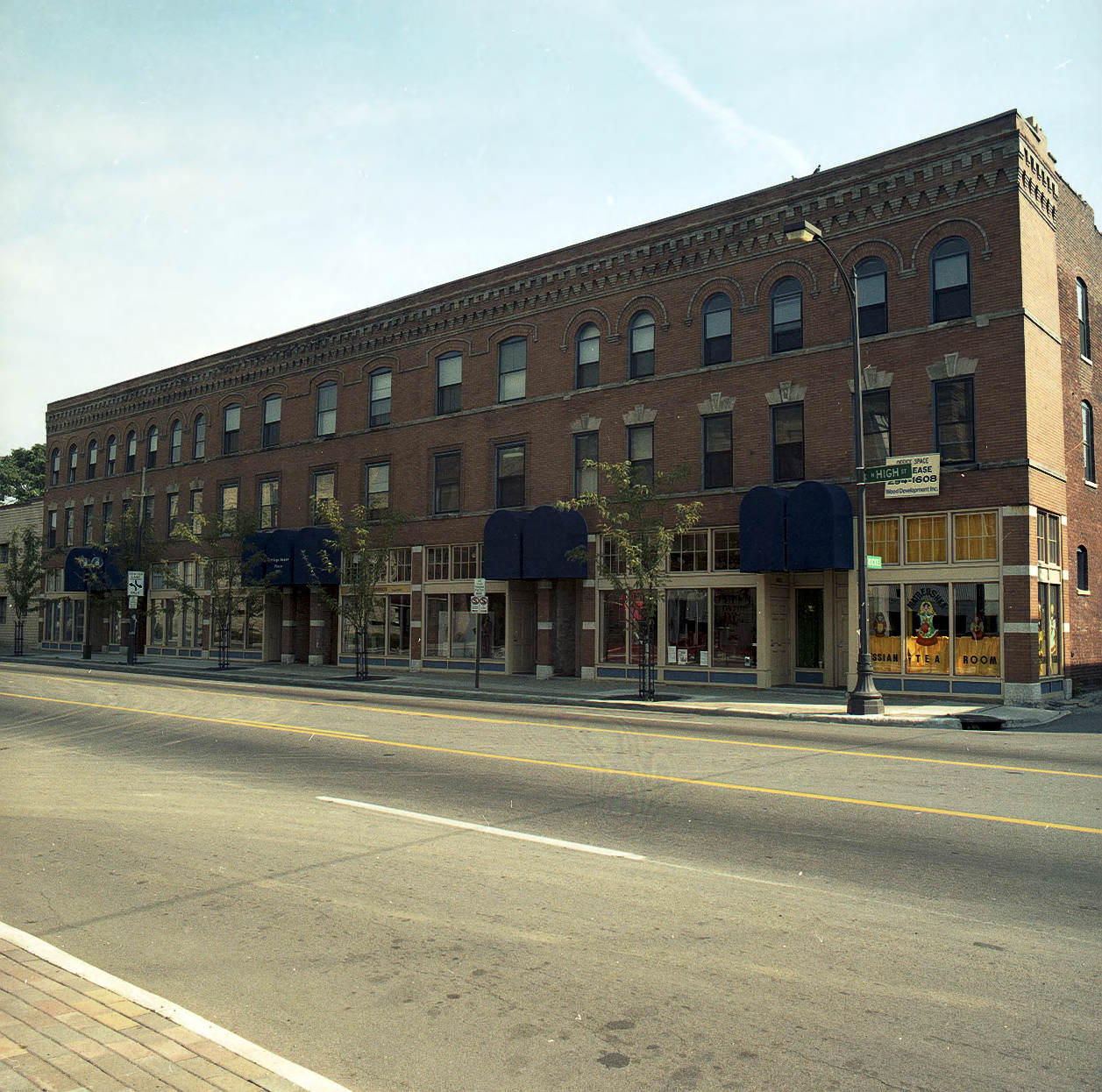
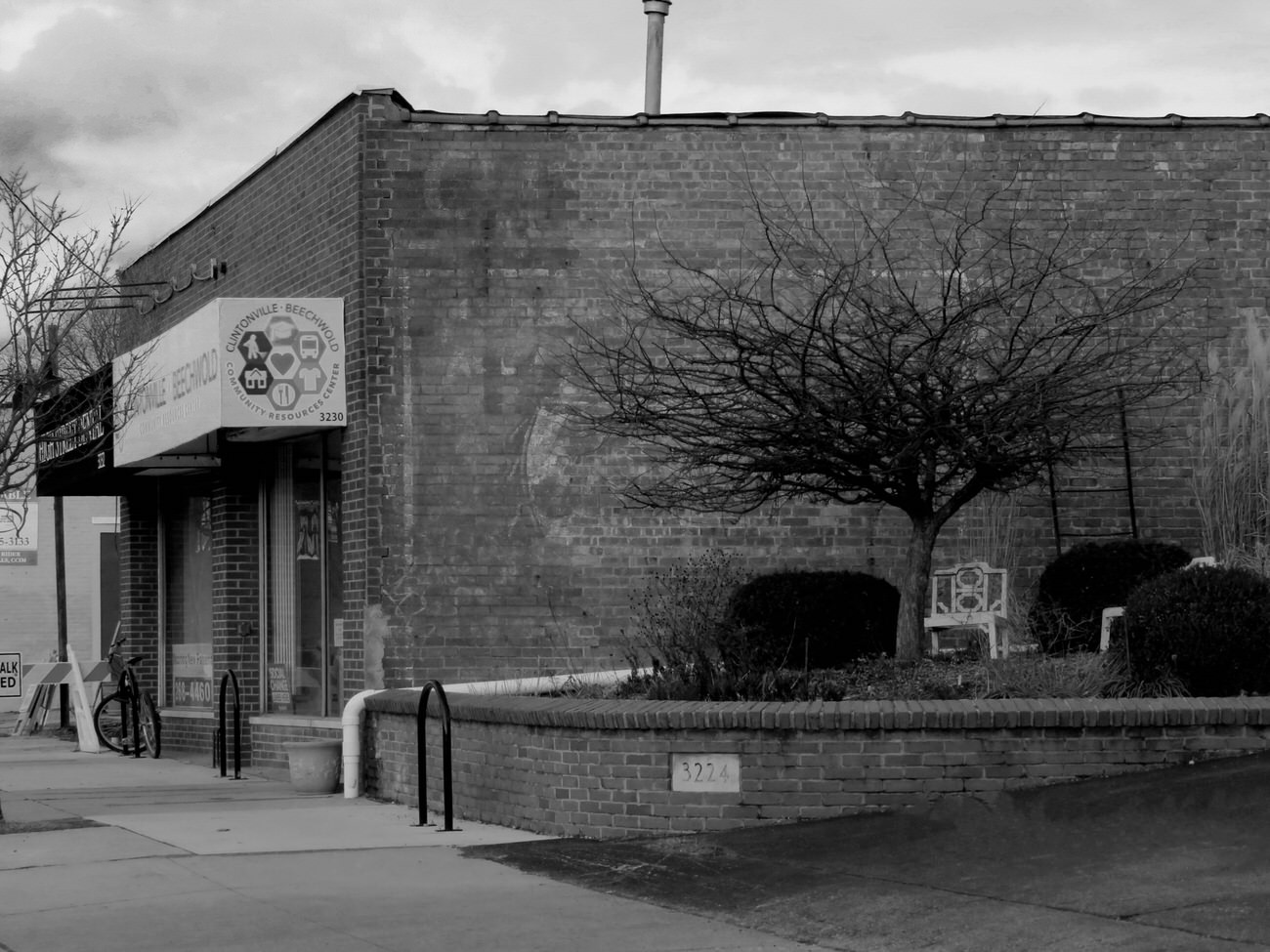
The storefronts along High Street captured the era in vivid detail. Quirky businesses, old signs, and neighborhood institutions defined stretches of the street that hadn’t yet been homogenized by chain retail. The Russian Tea Room and Putt’n On the Dog sat side by side north of Brickel Street. A Pepsi-Cola sign in Clintonville still displayed the 1950s logo on a building that had housed pizza parlors for three decades. These details made Columbus feel lived-in and specific.
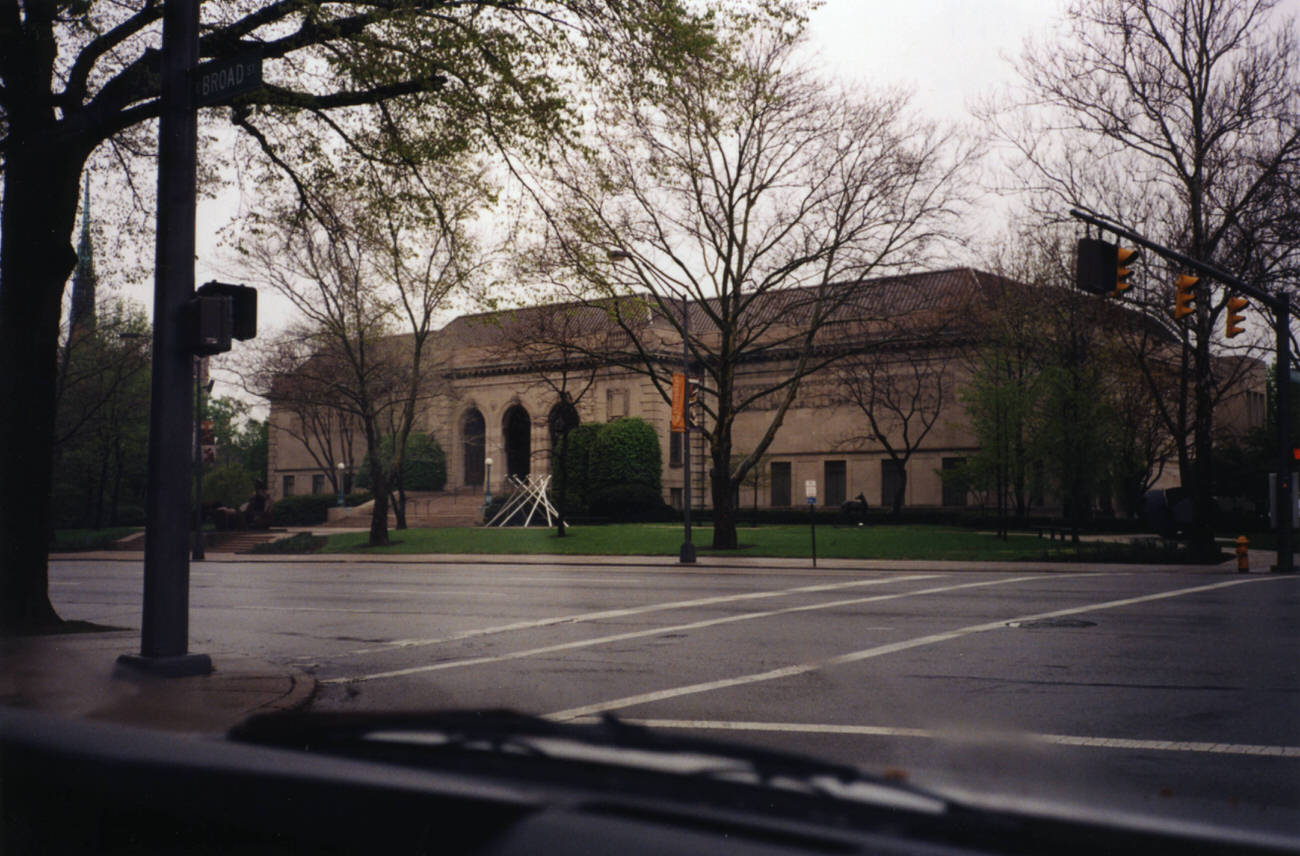
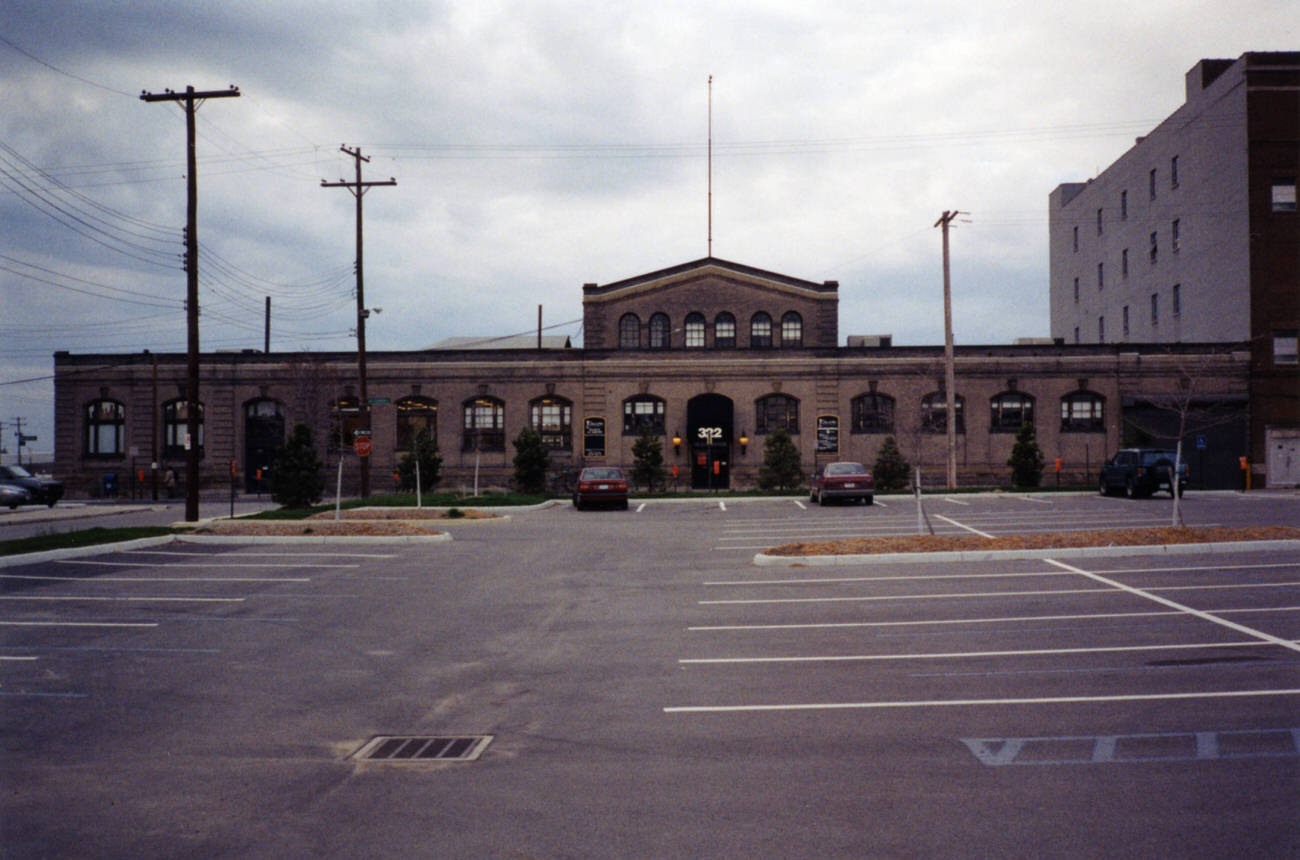
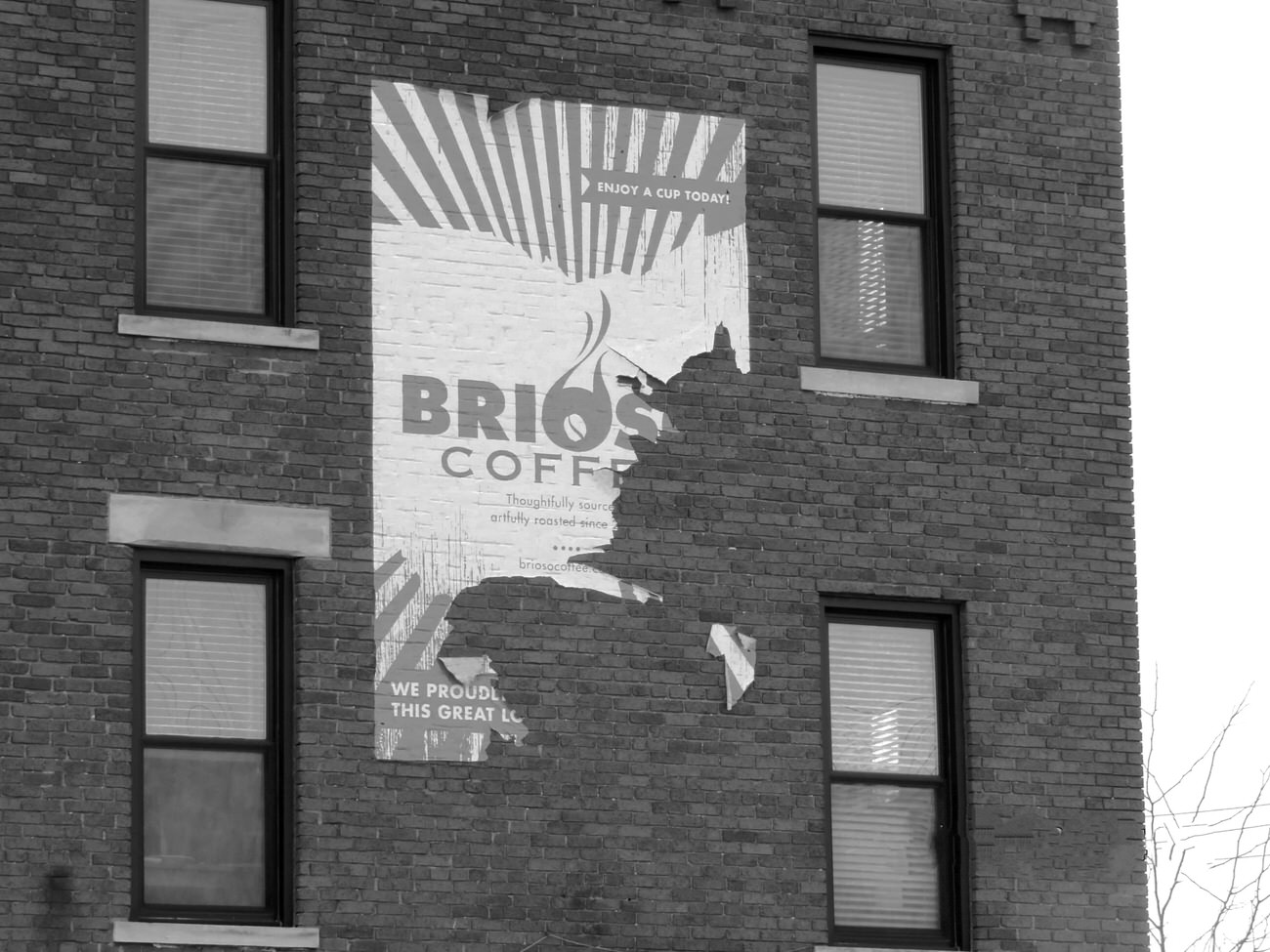
The arts had institutional backing as well. The Columbus Museum of Art, photographed in May 1997 with its 1974 addition in plain view, served as a cornerstone of the city’s cultural infrastructure. BalletMet operated out of its Dance Centre on the former F. O. Schoedinger Company building, a repurposed space that the organization would officially purchase in December 2005. Columbus also had a strong coffee culture taking shape, with spots like Brioso Roastery and Coffee Bar on East Long Street becoming neighborhood fixtures.
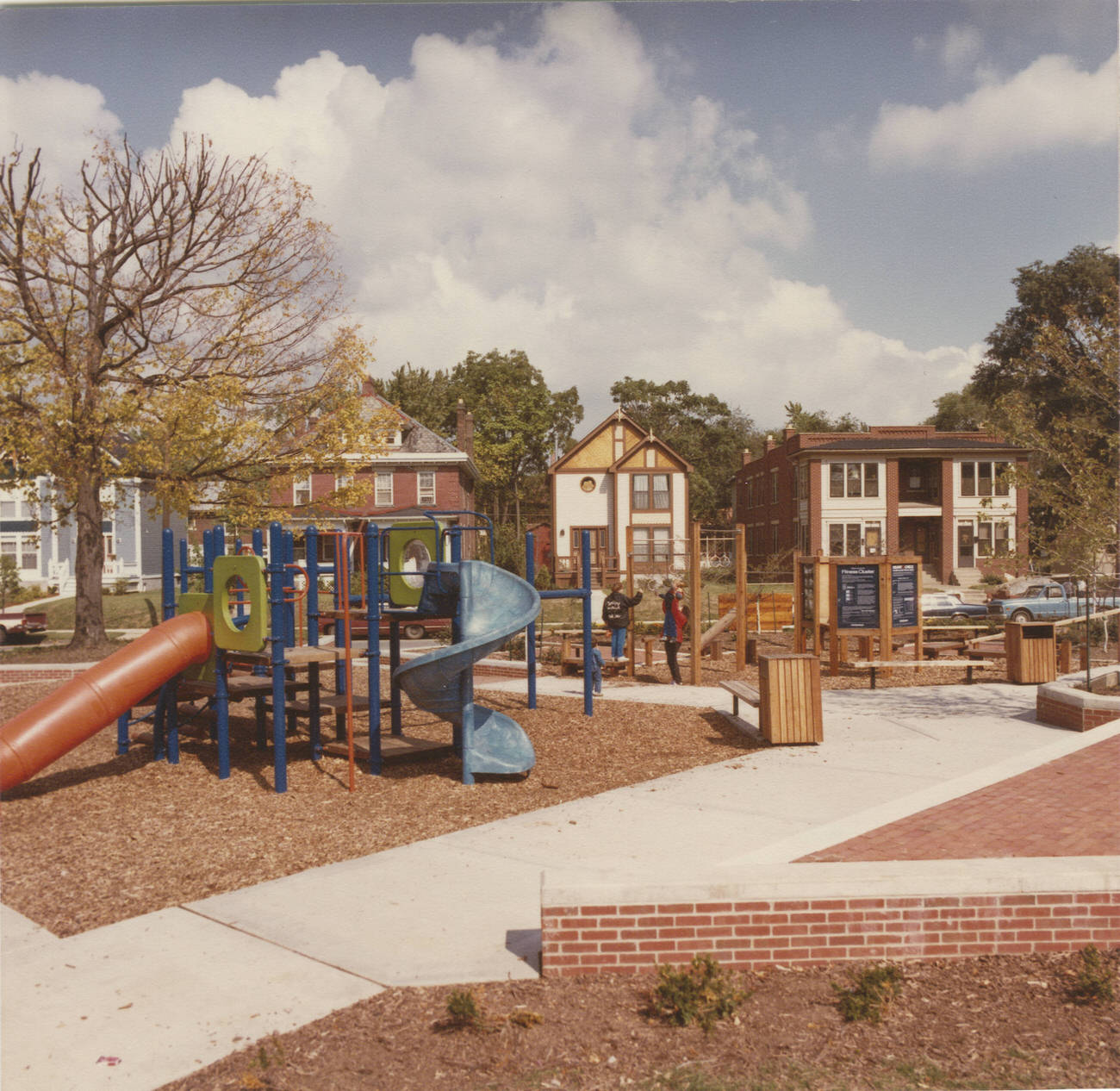
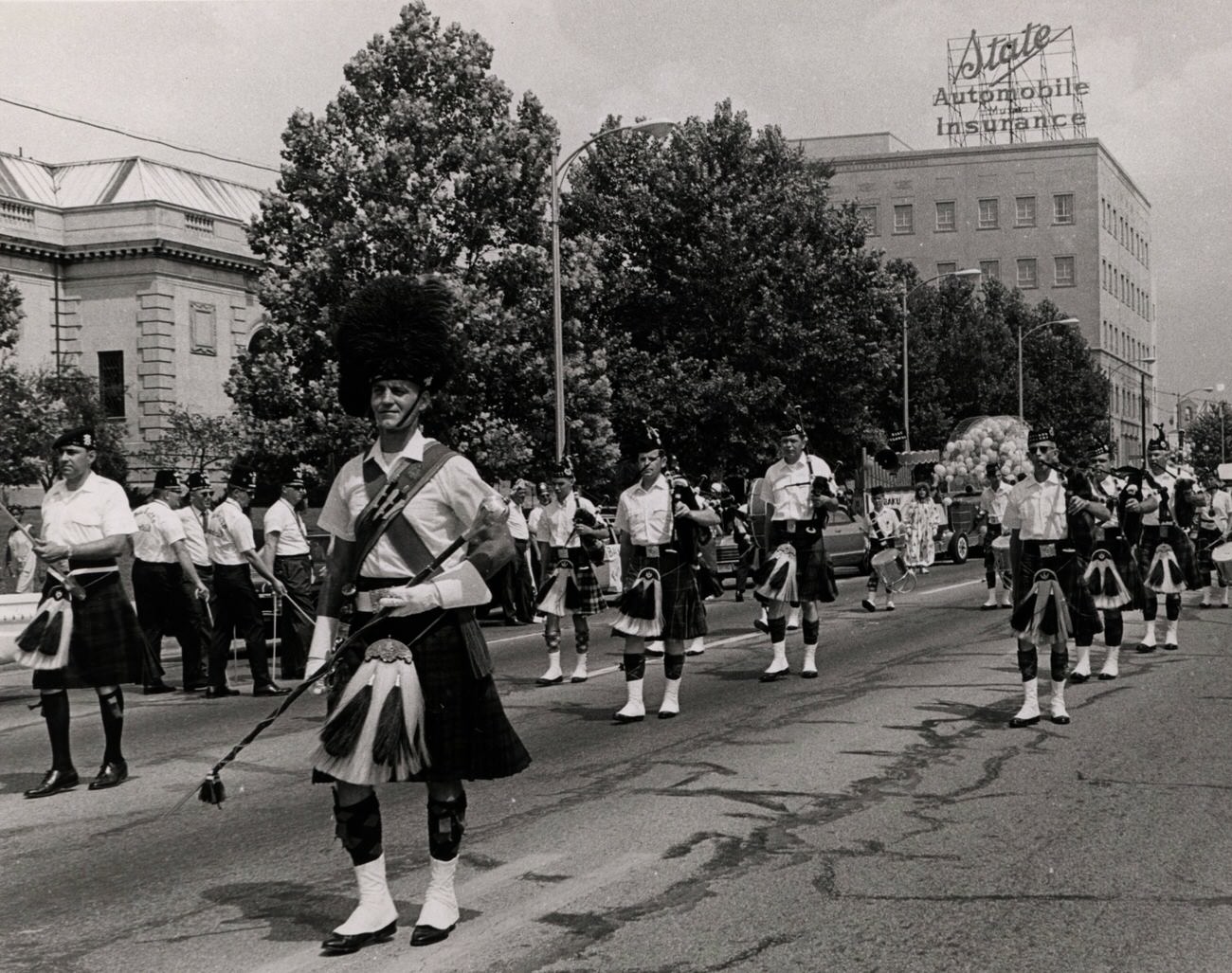
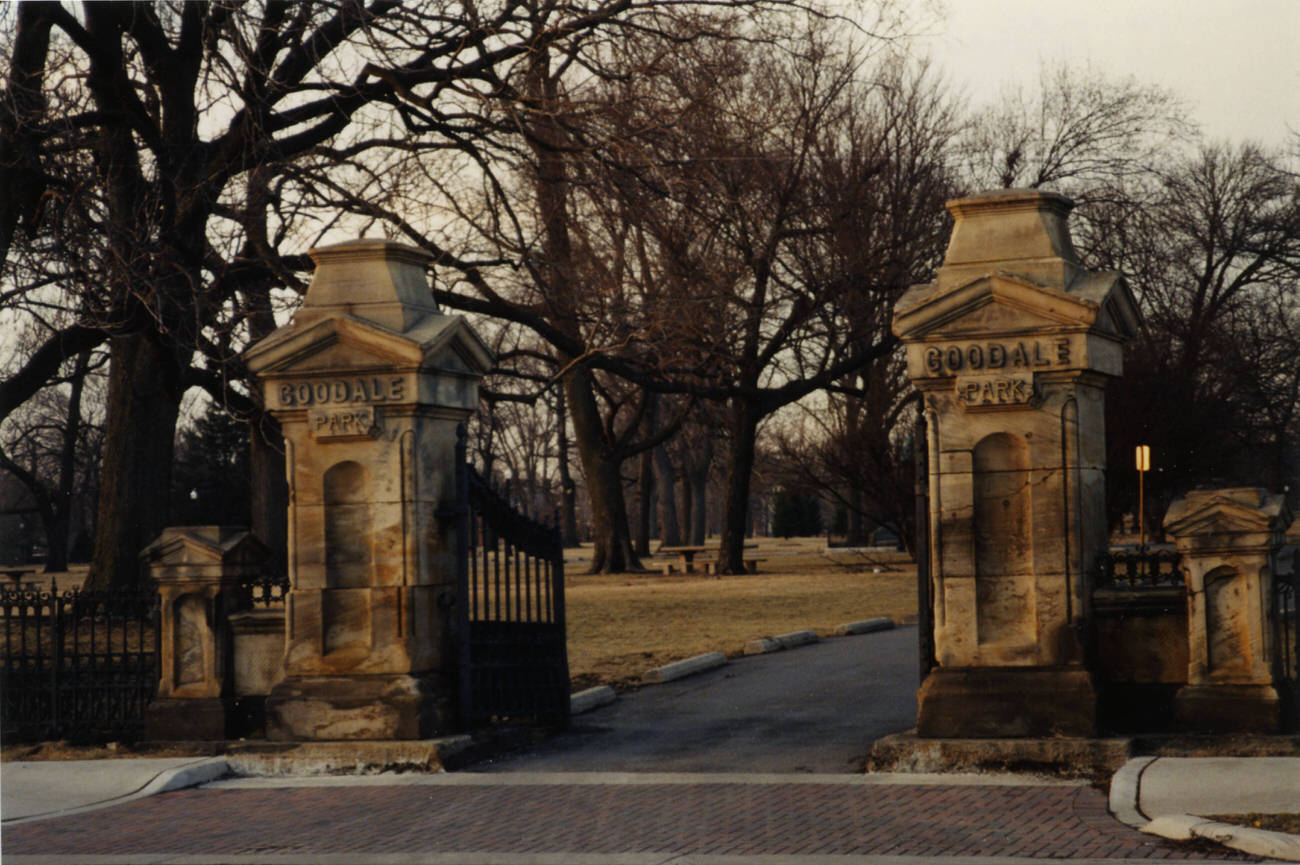
Public life extended into the streets through parades and community gatherings. The Capital City Pipes and Drums, led by Drum Major David Breese, marched through Columbus in the 1990s as part of a broader tradition of civic celebration. Parks like Goodale Park, with its original 1870 south gate still standing, and Harrison West Park at West Fourth and Oregon Avenues, offered green space in the middle of a growing urban landscape.
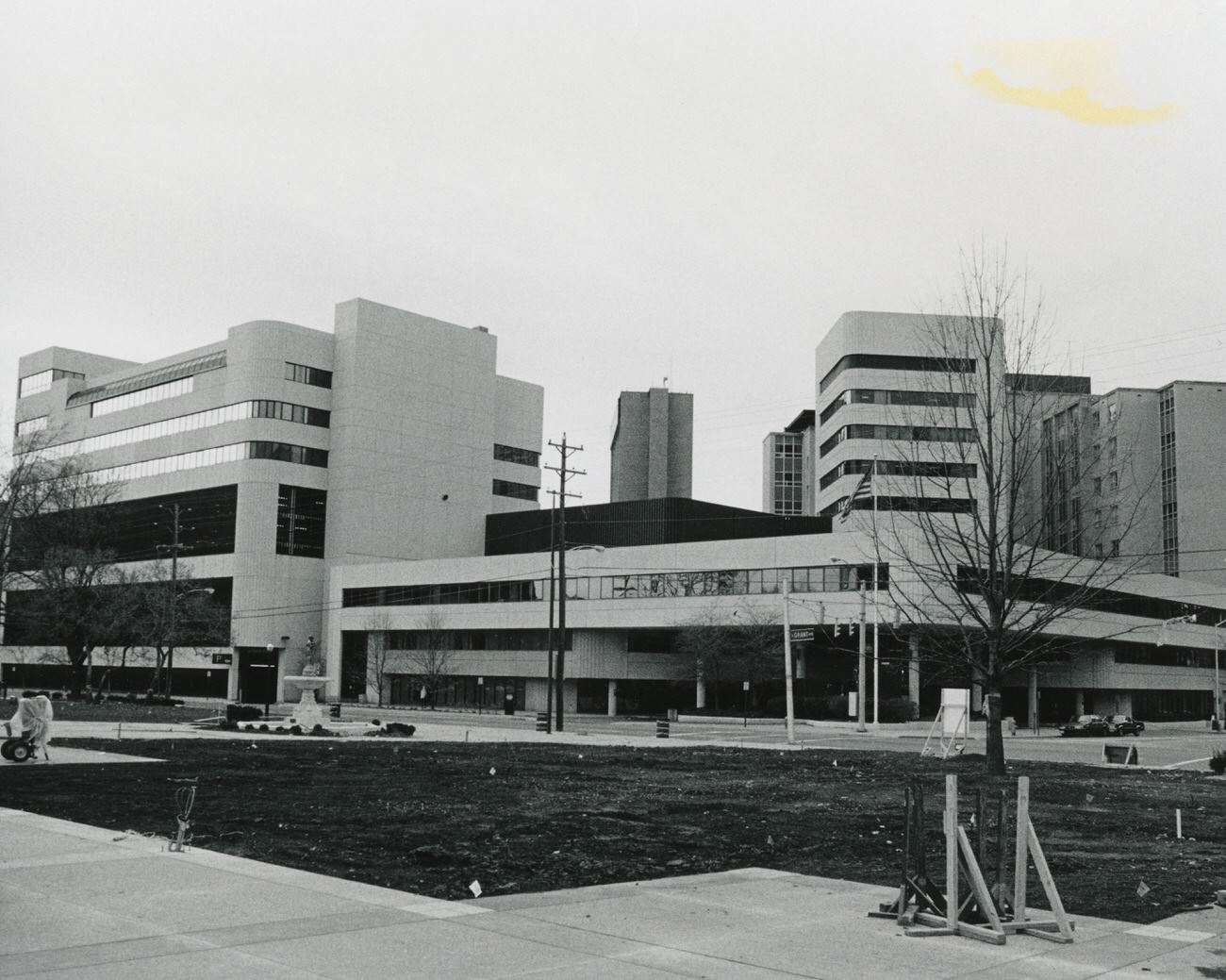
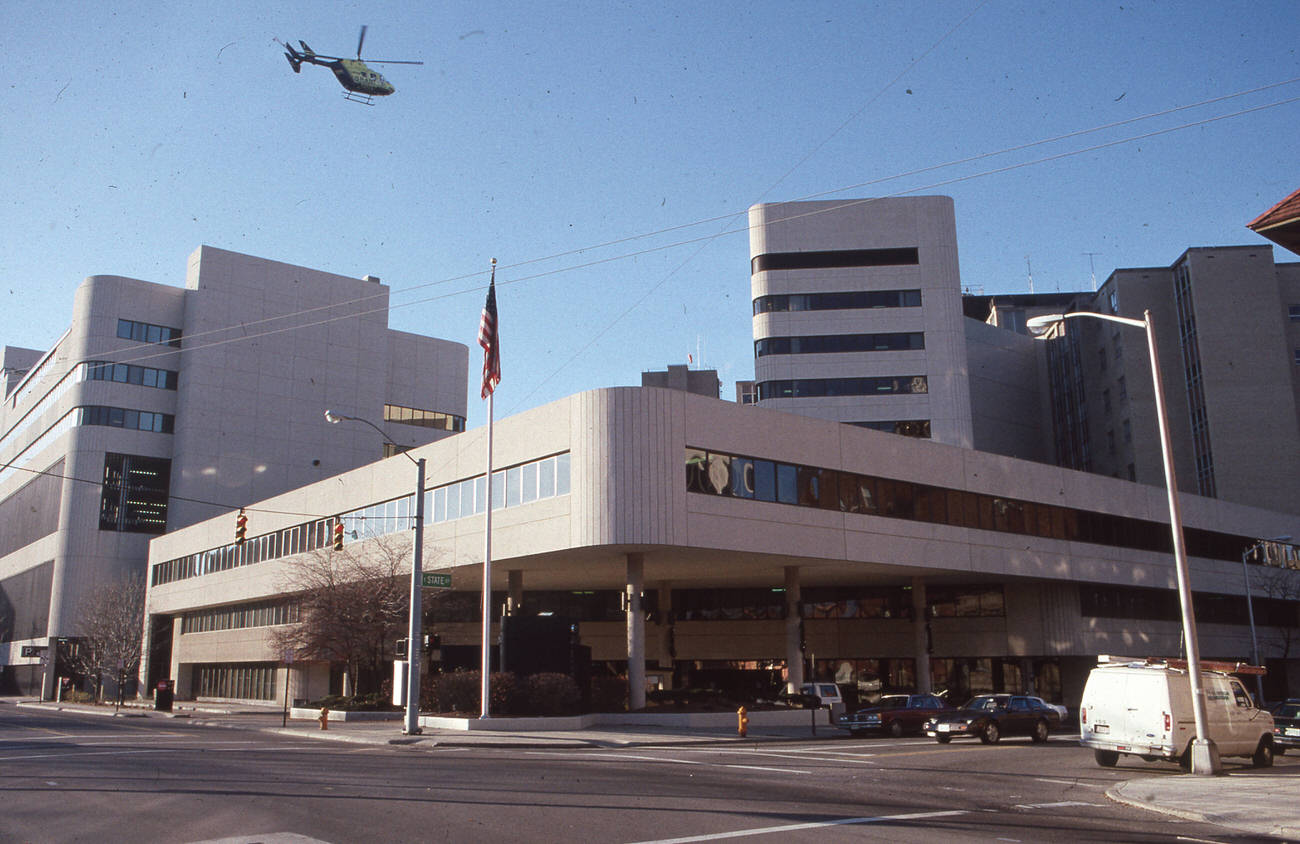
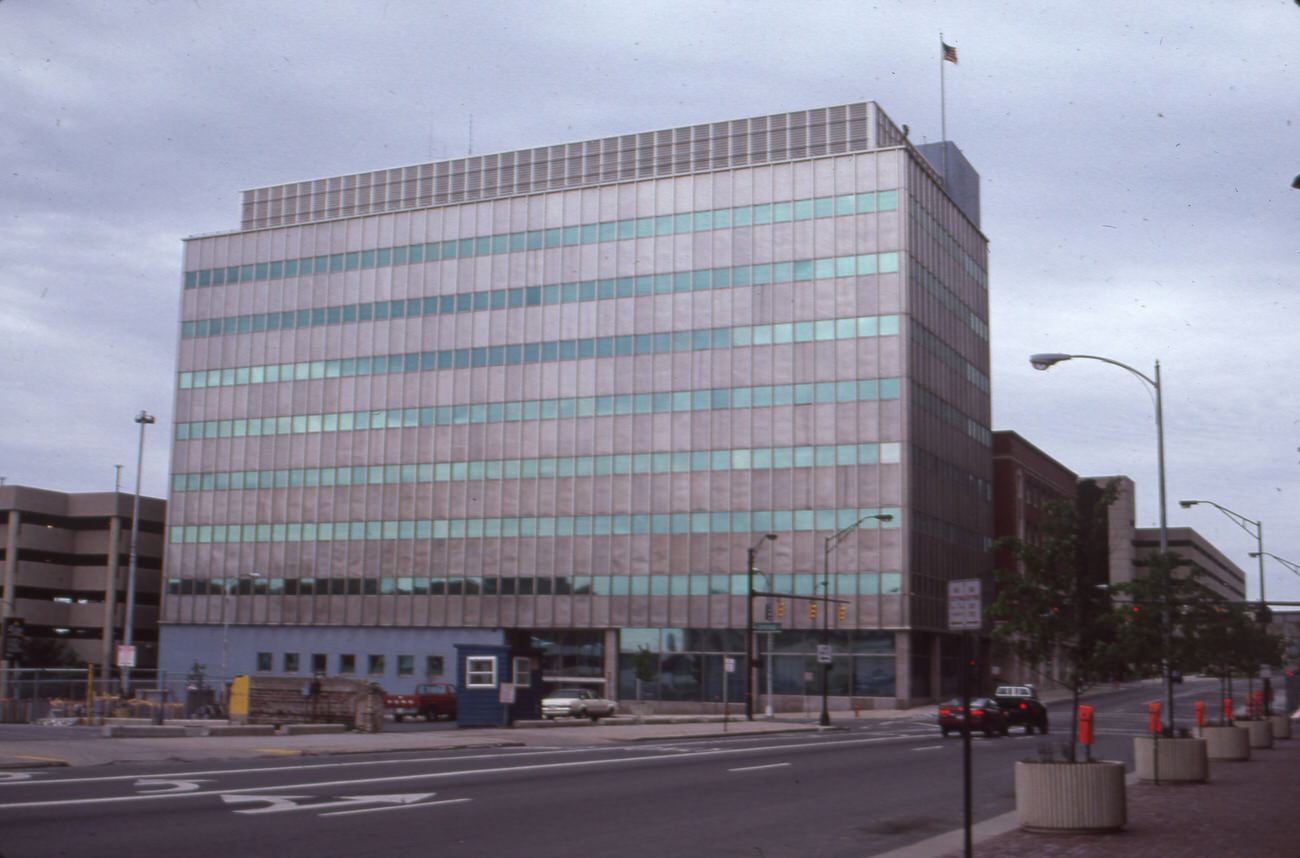
Healthcare was a growing sector, and Grant Hospital’s presence in the city reflected that. A Life Flight helicopter hovering above its parking garage in 1990 captured the medical infrastructure Columbus had built. Meanwhile, the Ohio Bureau of Workers Compensation building and the Columbus Southern Power Company — an early adopter of central air conditioning — showed the range of institutions anchoring the city’s professional landscape.
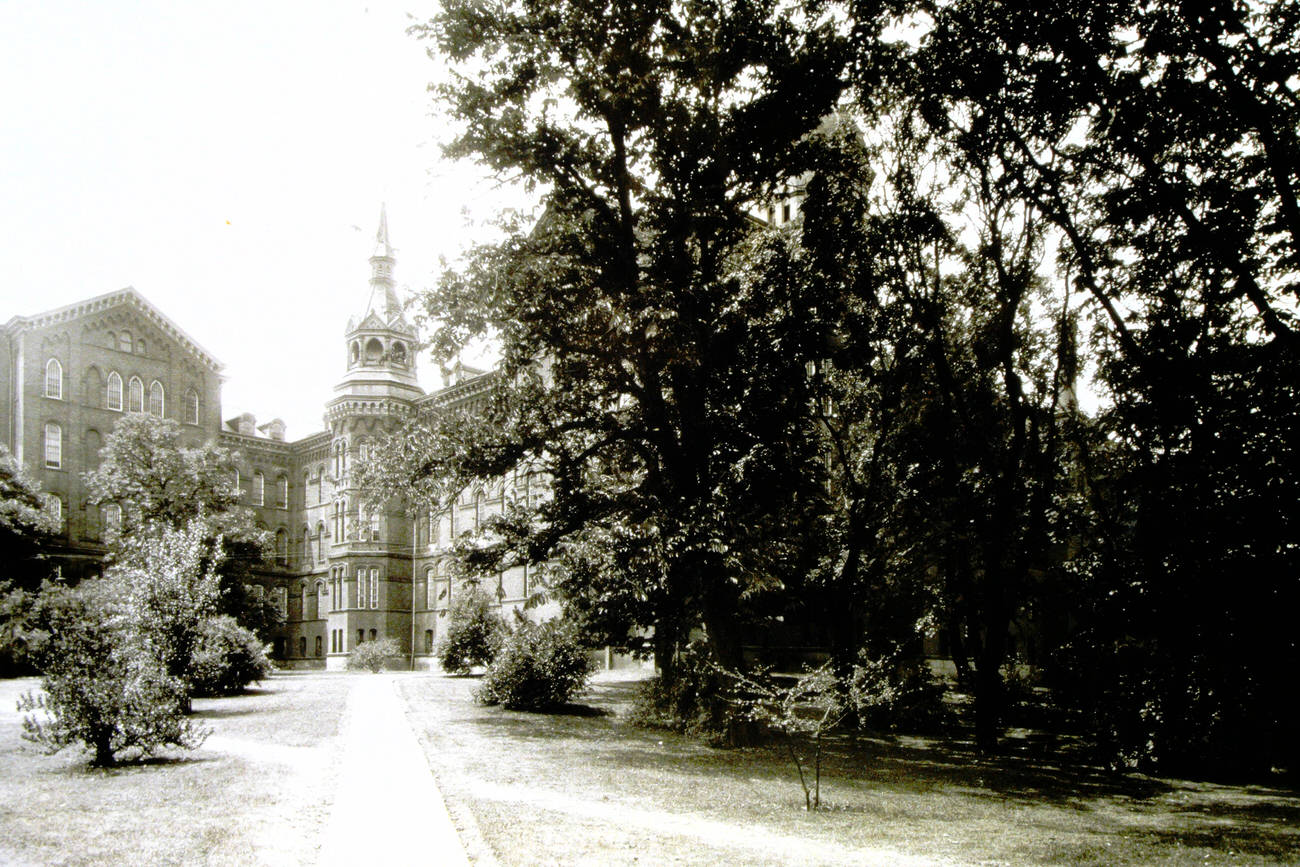
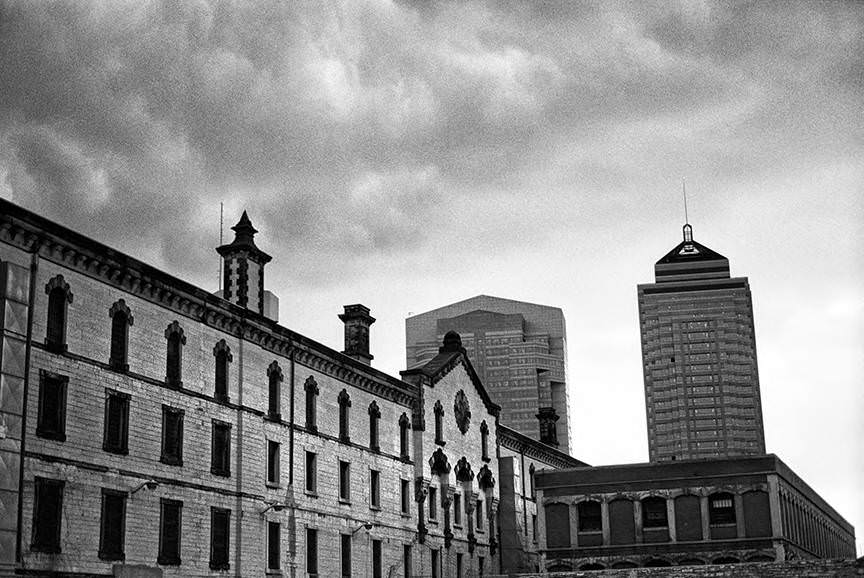
Not every chapter of Columbus history from this era was about progress and celebration. The Columbus State Hospital, which had been operational since 1870, closed its doors in 1997. The Old Ohio Penitentiary, photographed in July 1994, was another institution that marked the end of an era. These closures were the other side of urban transformation — the shedding of structures that had defined the city for over a century.
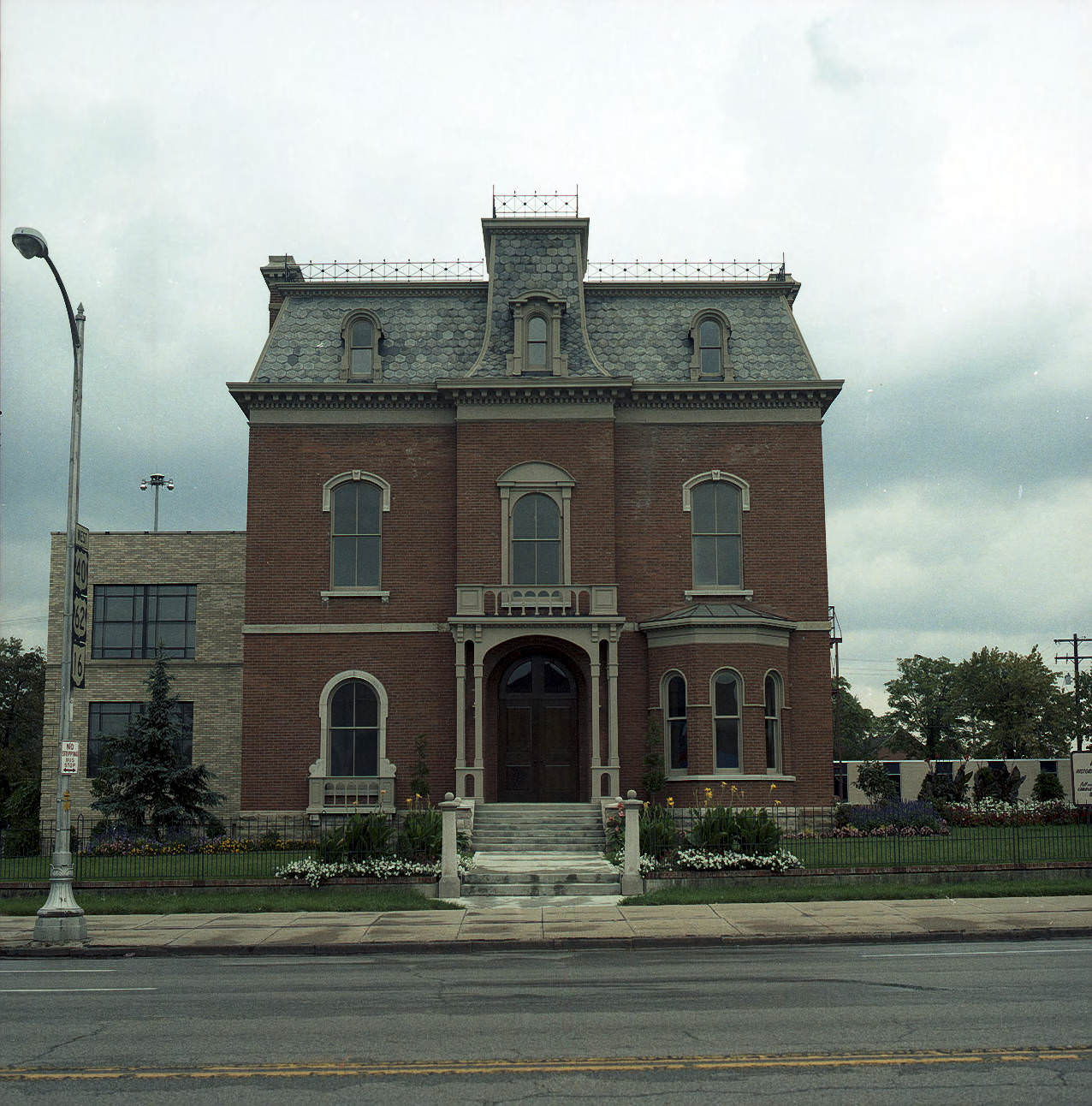
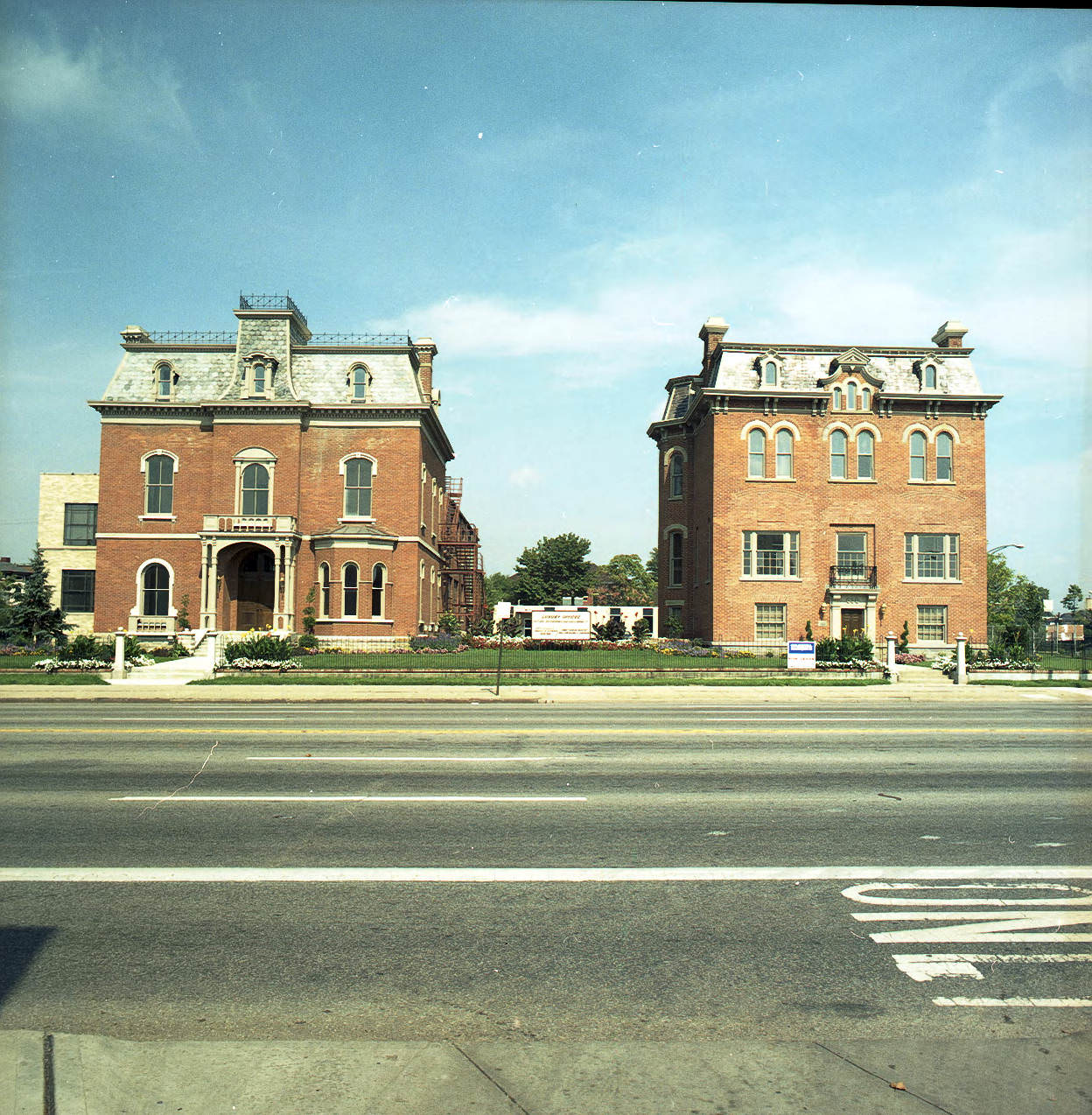
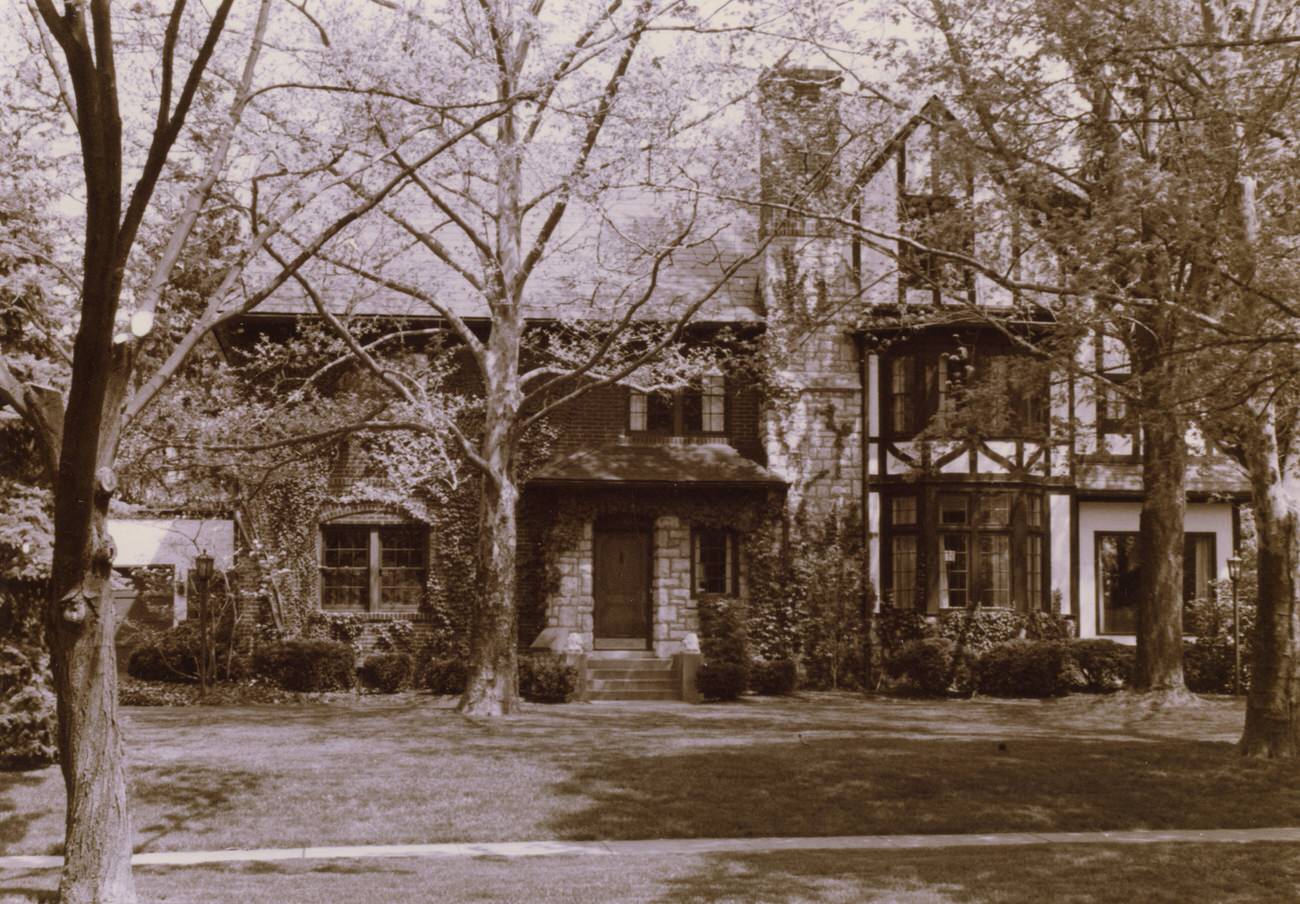
Residential neighborhoods reflected the city’s layered history just as clearly as its commercial corridors. The Benjamin N. Huntington House, built around 1875 on East Broad Street, stood as a reminder of the philanthropists and civic leaders who had shaped early Columbus. Upper Arlington, a western suburb, was home to prominent figures like Ohio Supreme Court Justice James E. Robinson, whose 1998 residence captured the quiet prosperity of that part of the metro area.
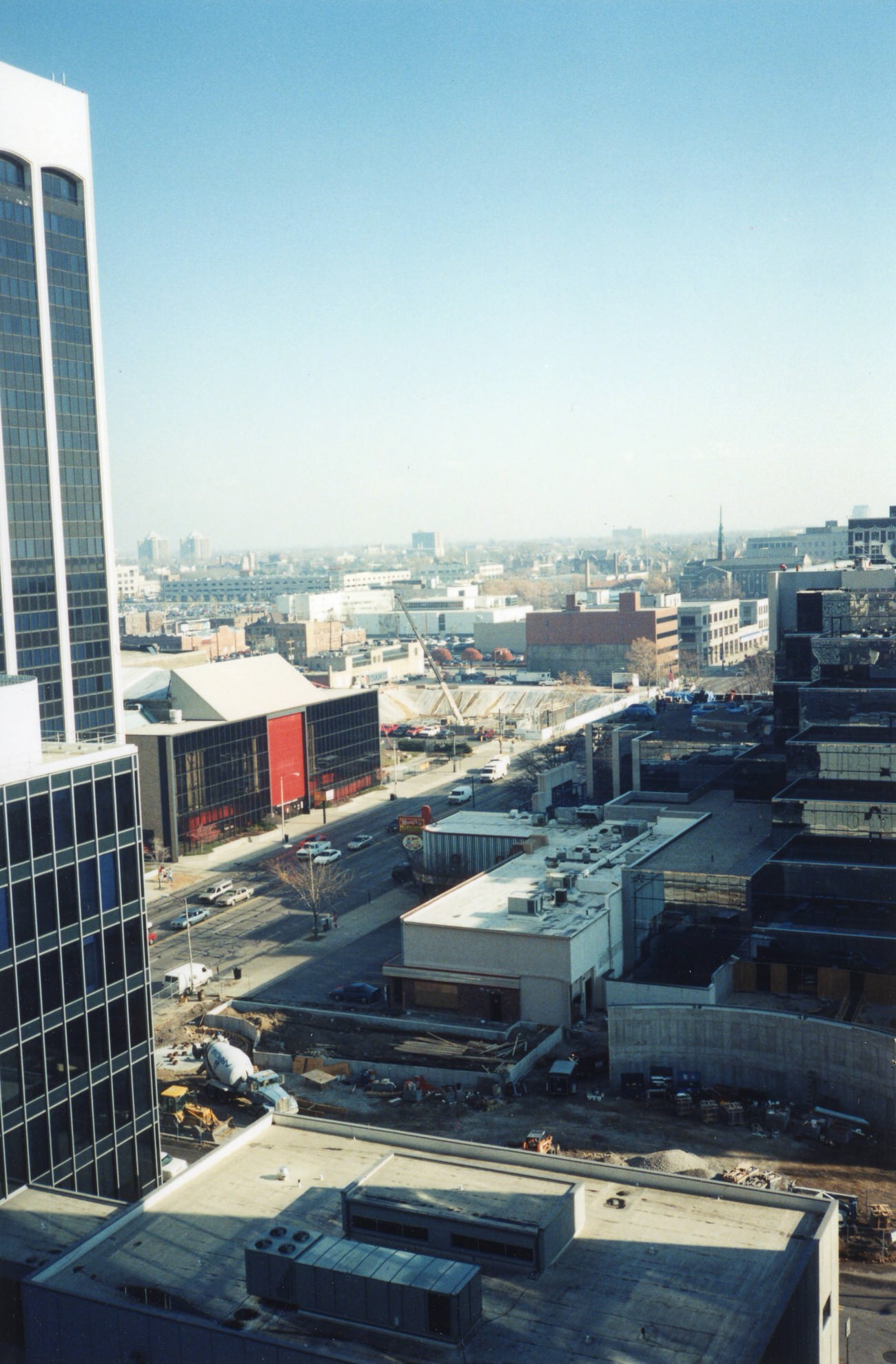
East Broad Street offered some of the most striking aerial perspectives of the era. The Franklin County Memorial Hall, captured from above on November 23, 1999, anchored a stretch that blended civic architecture with the movement of daily life. High Street, photographed looking north from Fulton Street in May 1999, revealed the full density of a city that had grown steadily and deliberately throughout the decade.
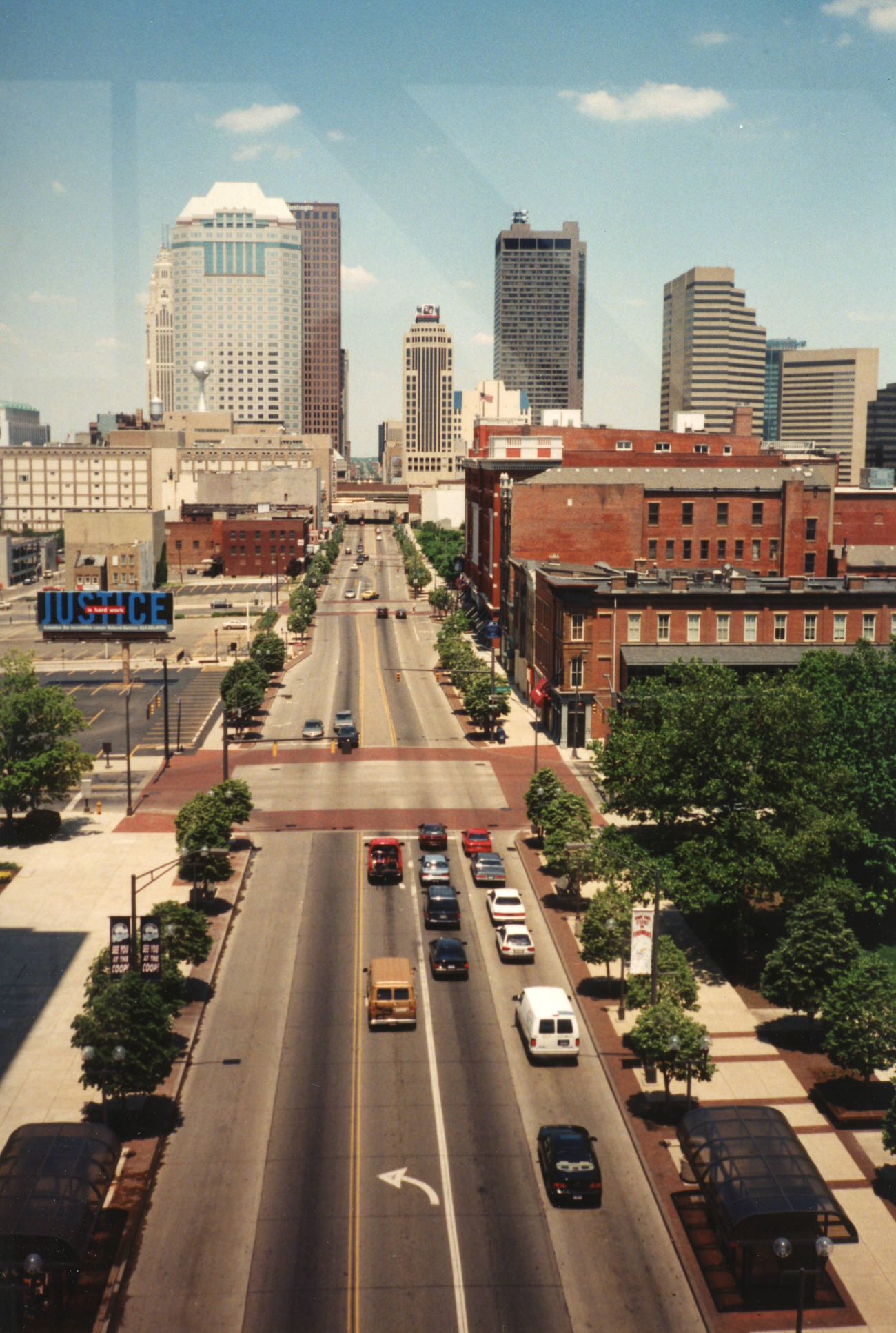
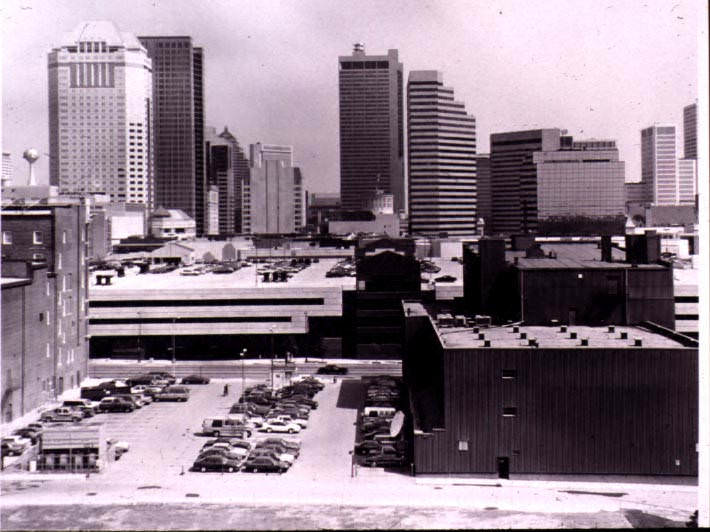
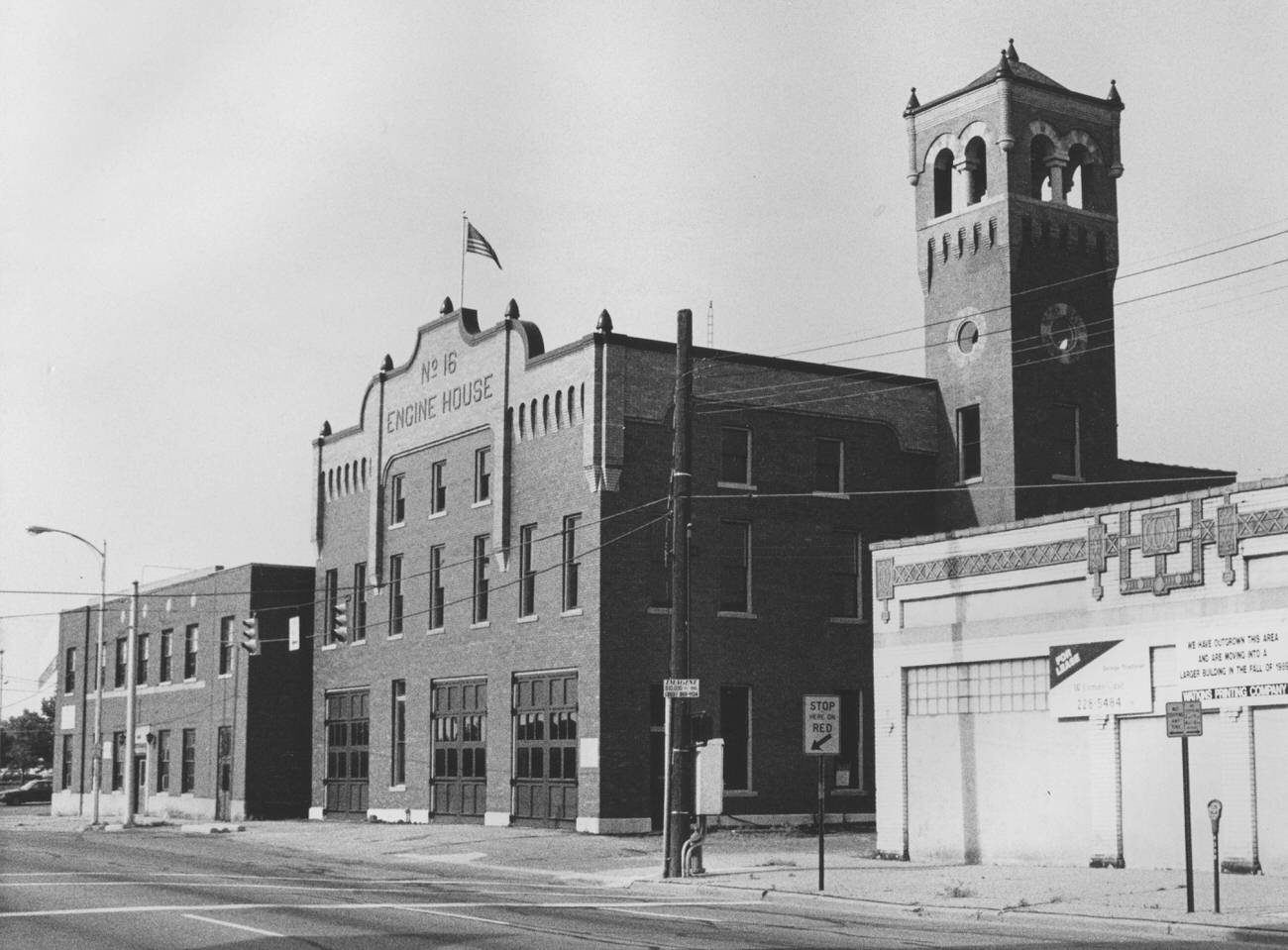
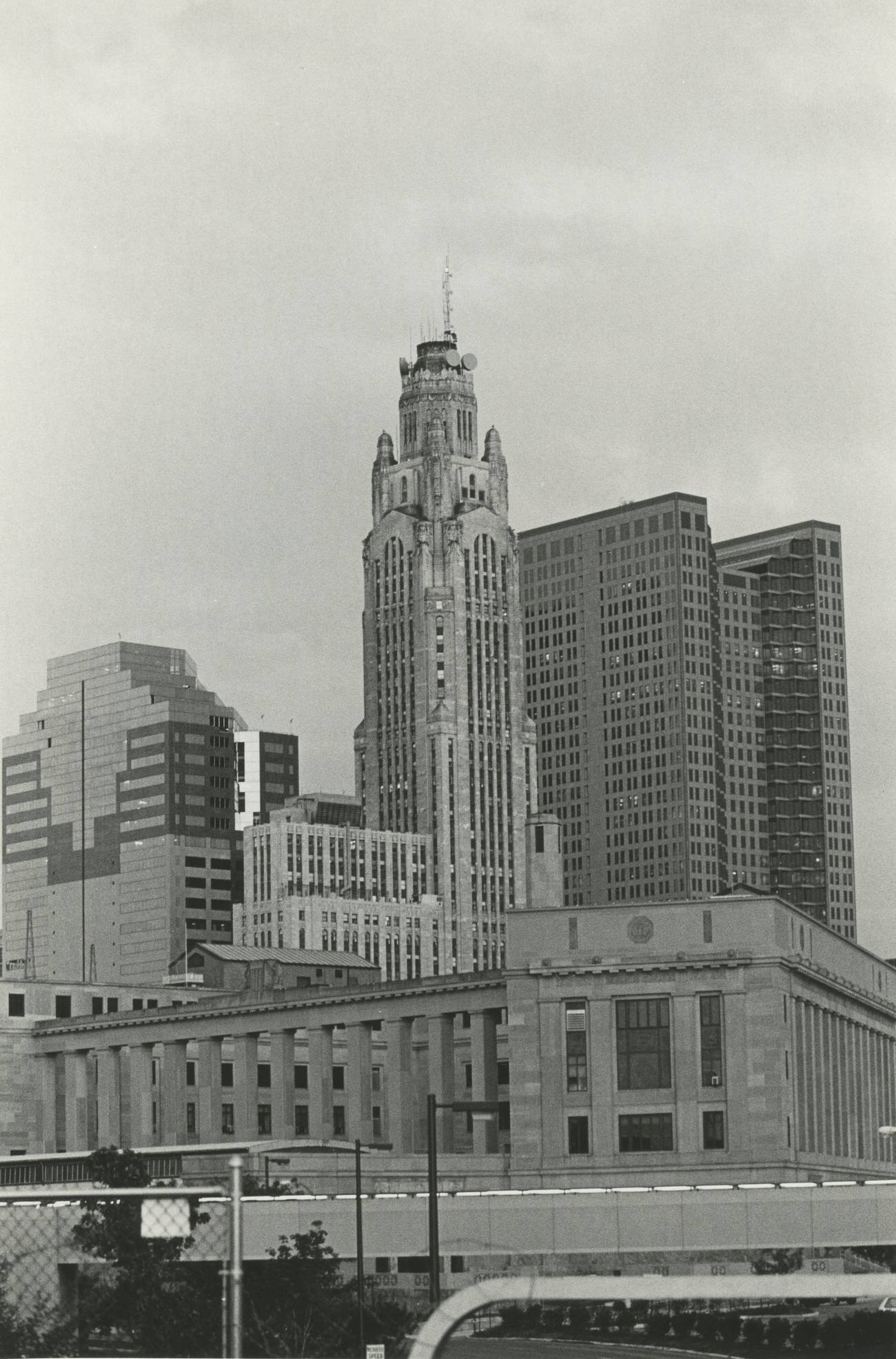
Street-level views filled in the details that aerials couldn’t capture. Downtown Columbus from East Main and South Pearl Alley in 1992 showed a city still defining its identity. Engine House No. 16, which operated from 1908 to 1981 and became the Central Ohio Fire Museum, was a fixed point in the city’s memory. The Federal Building on its north side, originally the United States Post Office and Courthouse, still projected authority from its corner of the city.
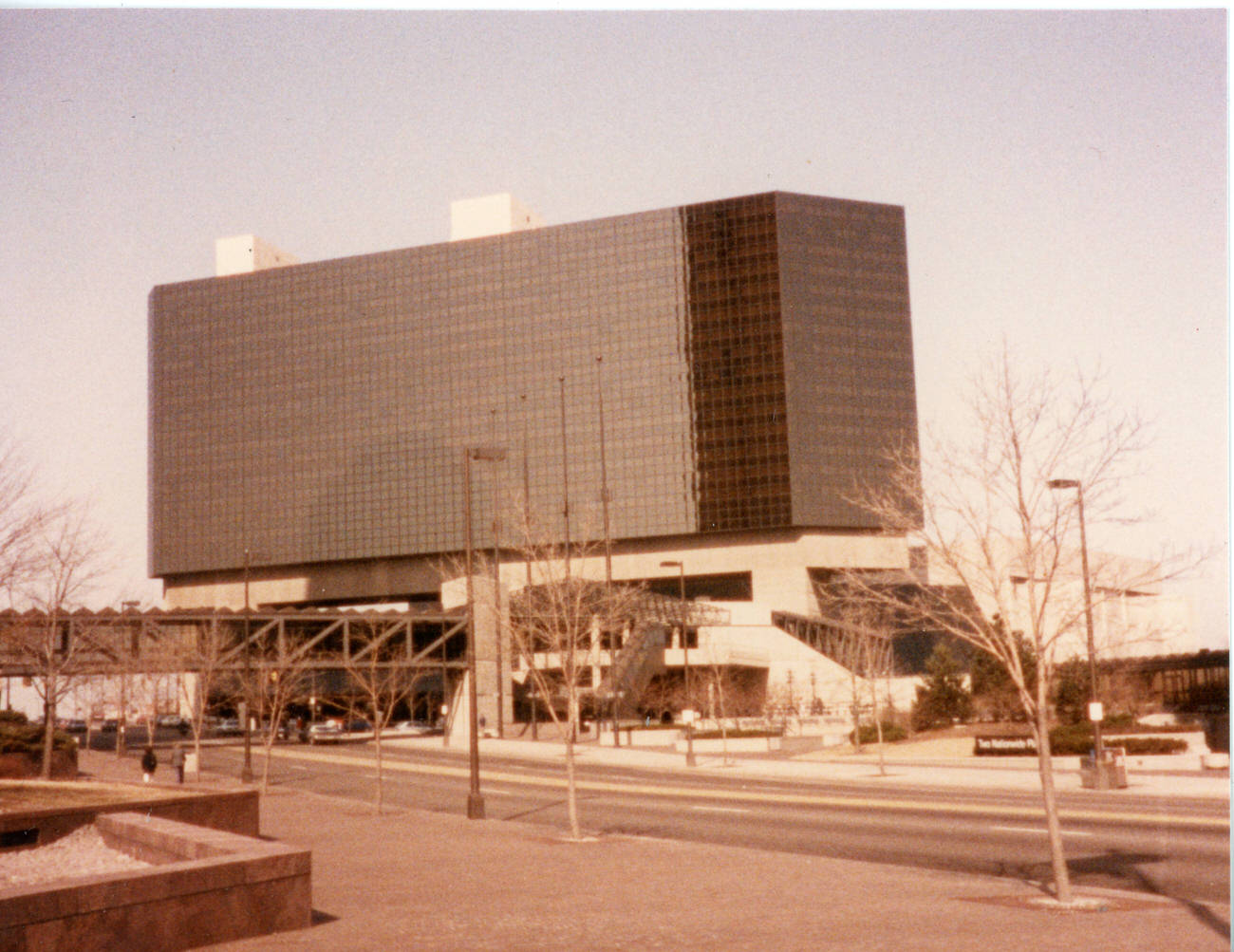
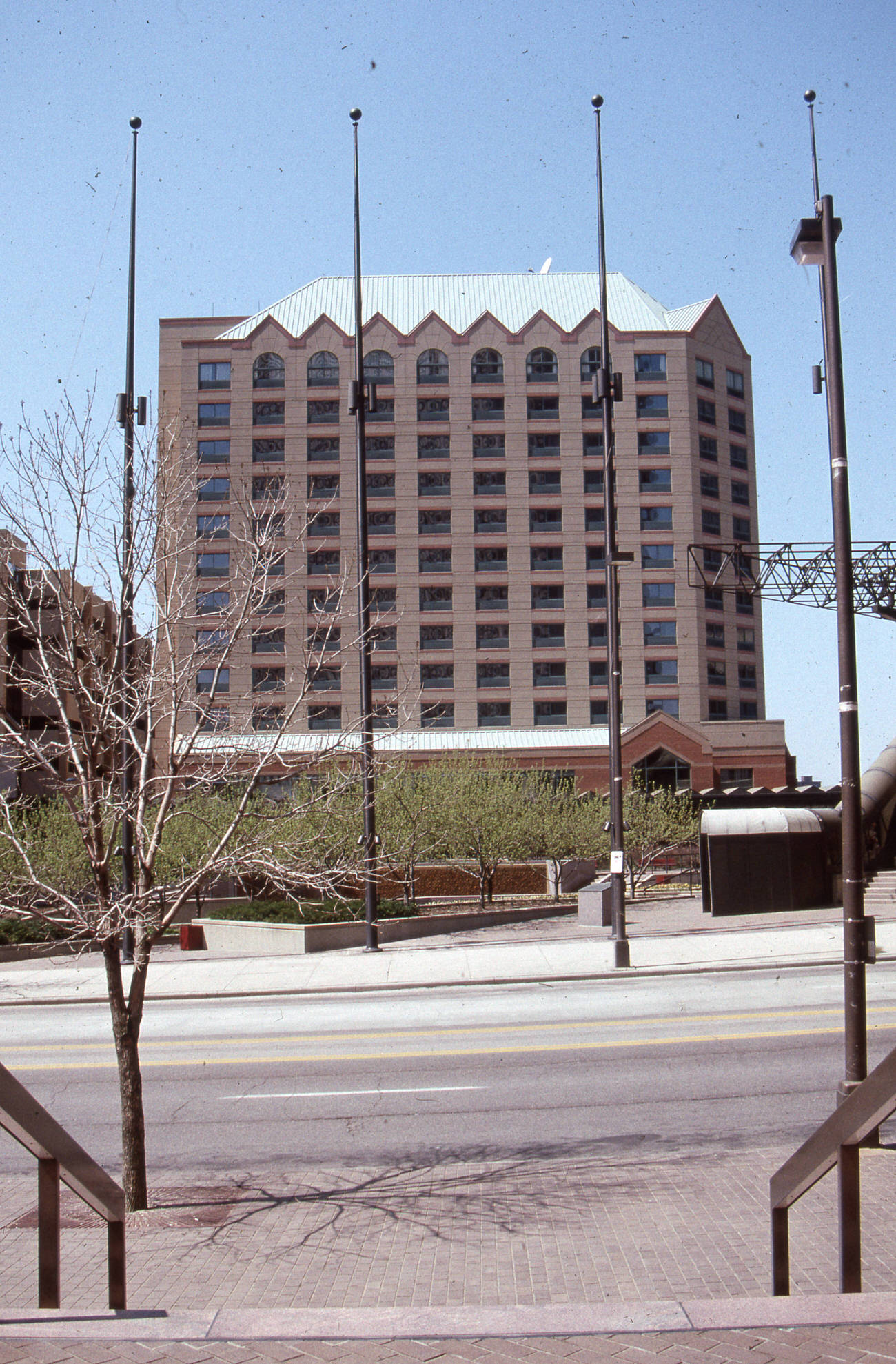
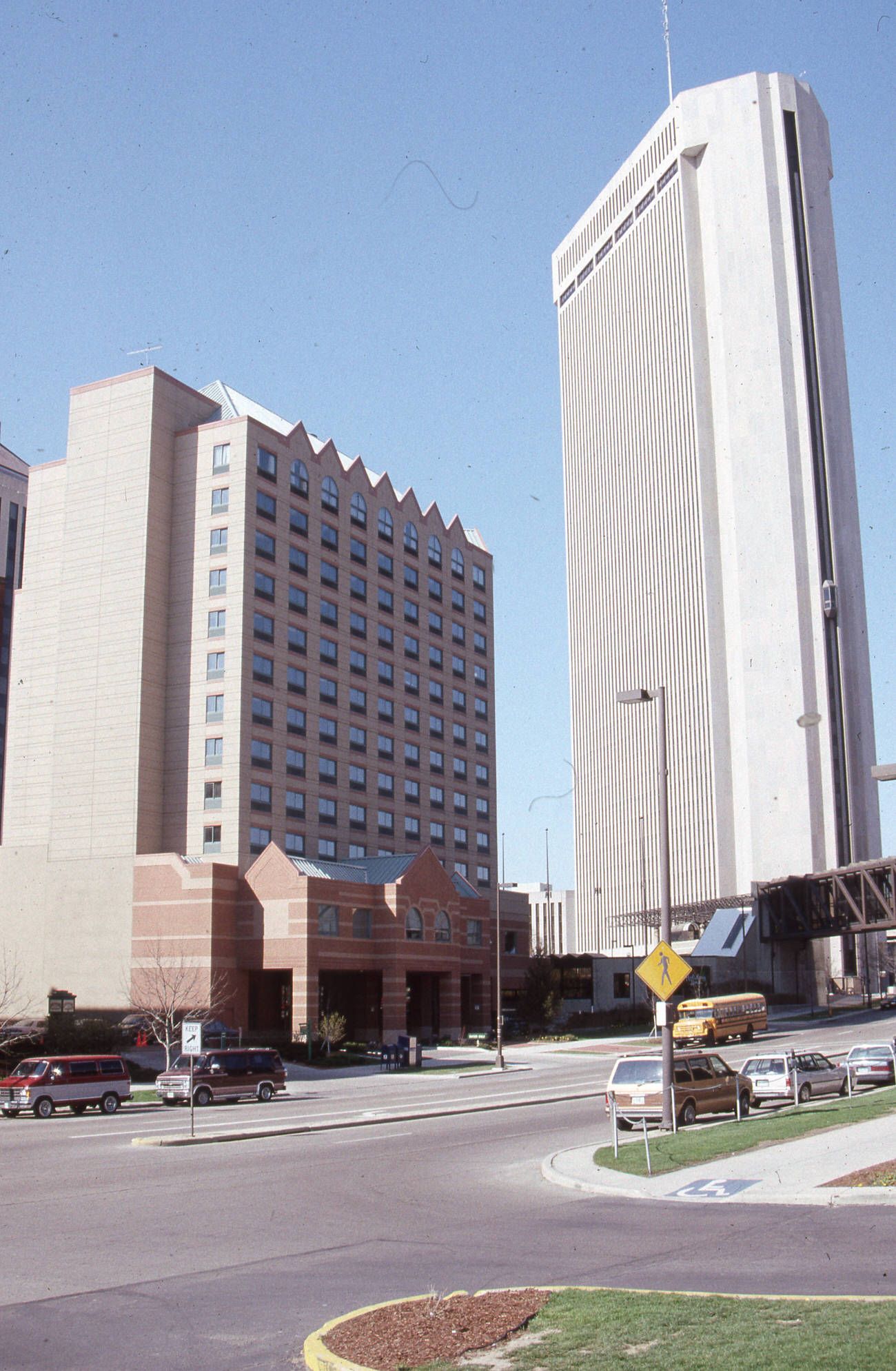
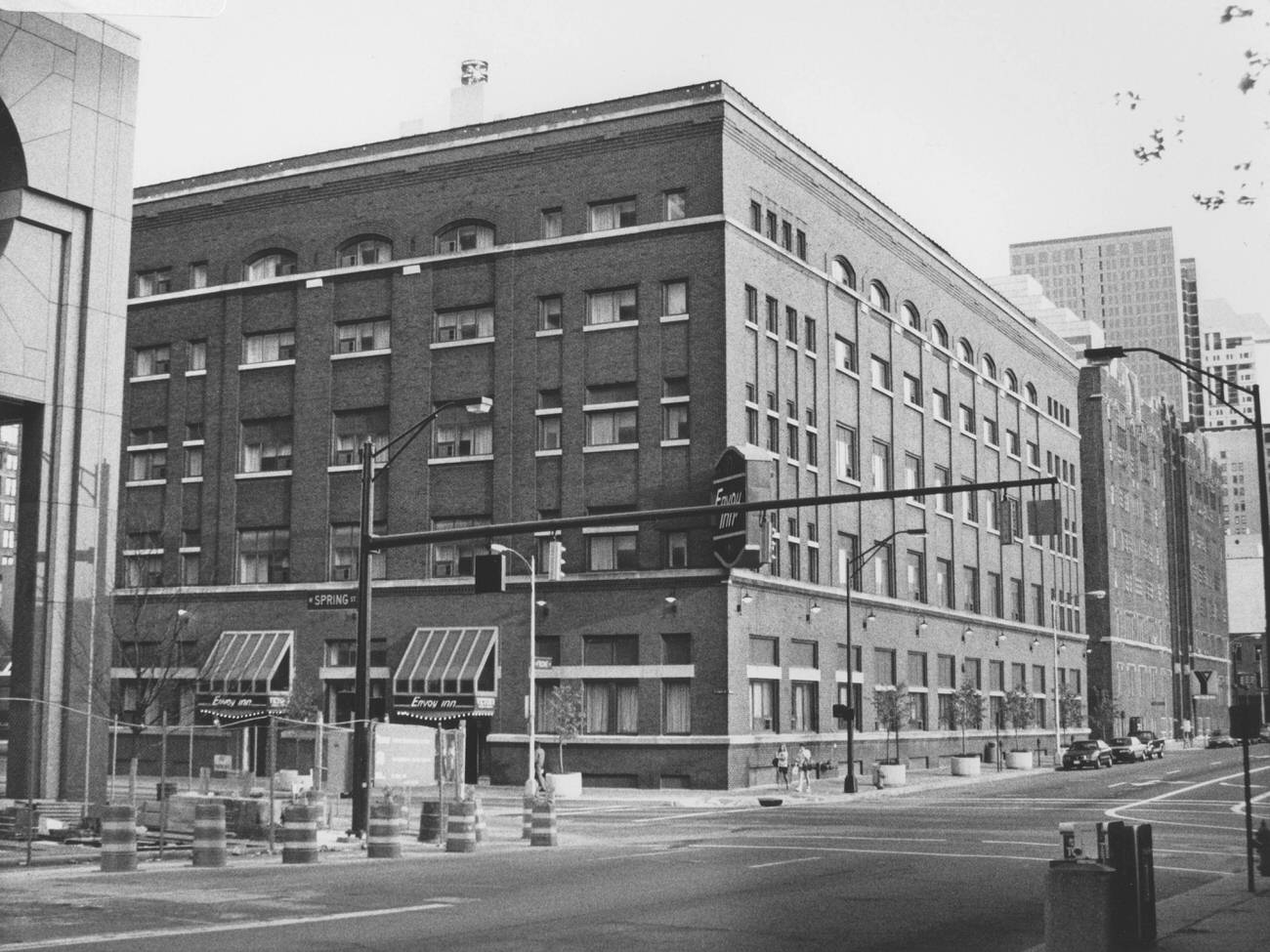
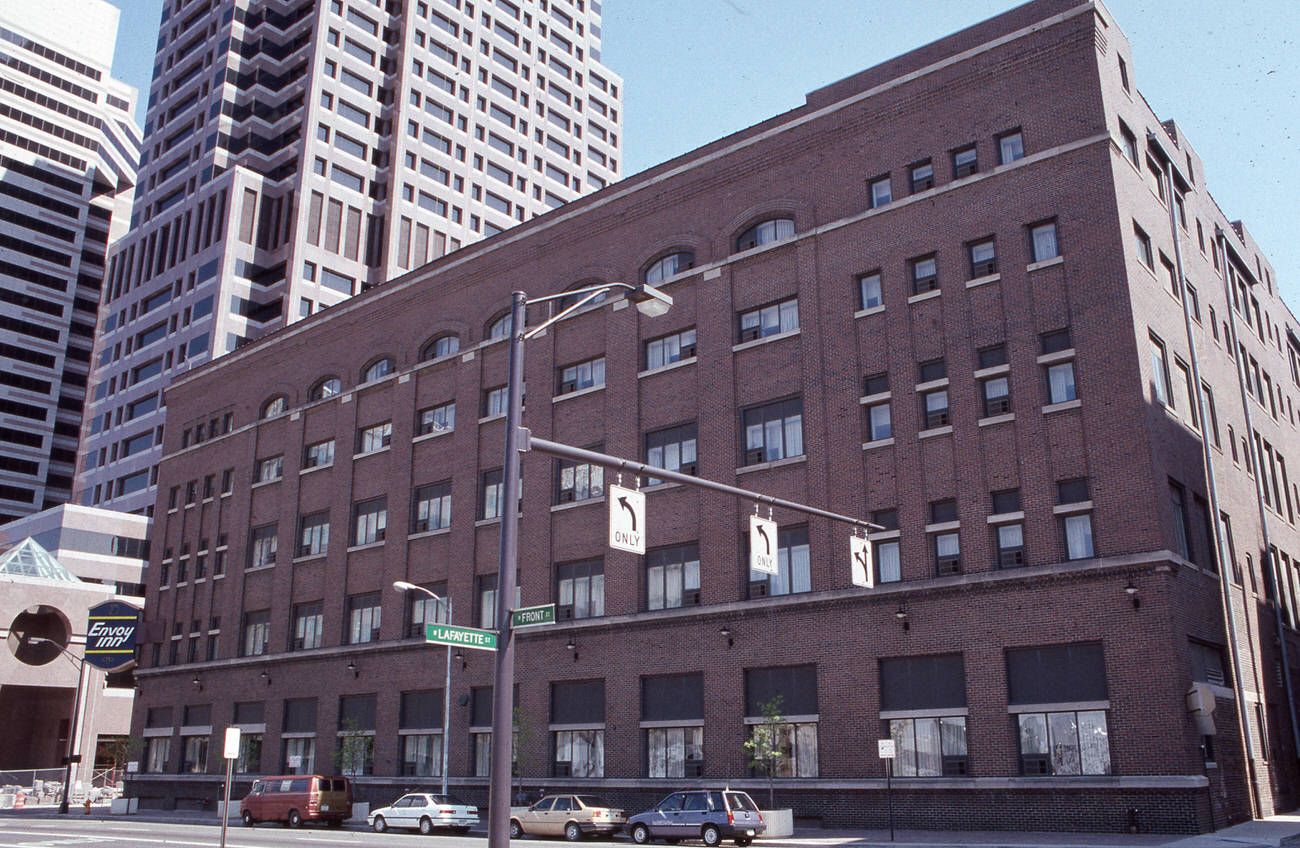
Hotels like the Hyatt Regency Columbus, which opened in October 1980 and became the city’s largest hotel, and the Holiday Inn at Ohio Center, which opened in March 1988 on the former site of Nicholas Gianetti’s saloon, anchored the convention and hospitality trade. The Envoy Inn on West Spring Street offered a quieter alternative in a city that was learning to accommodate more visitors every year.
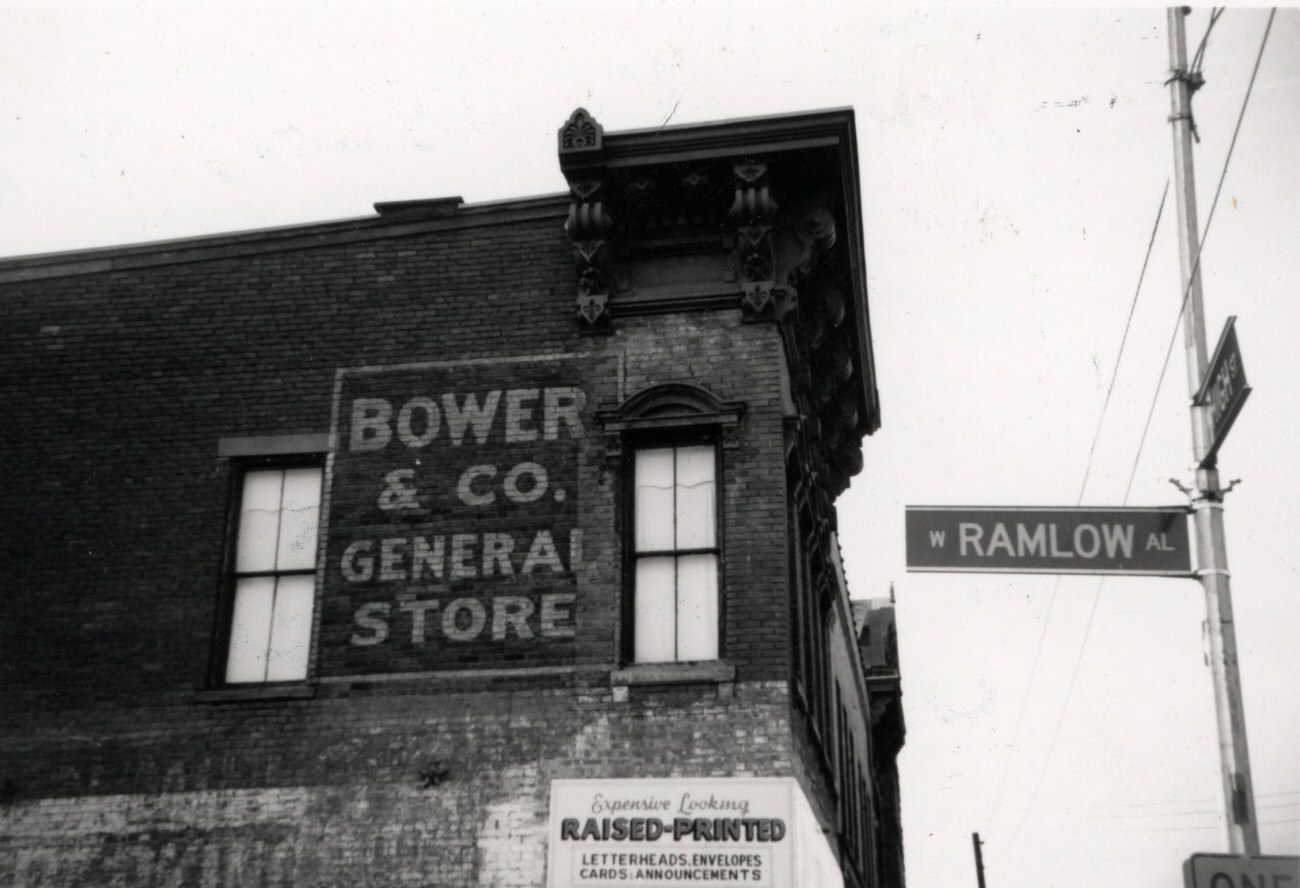
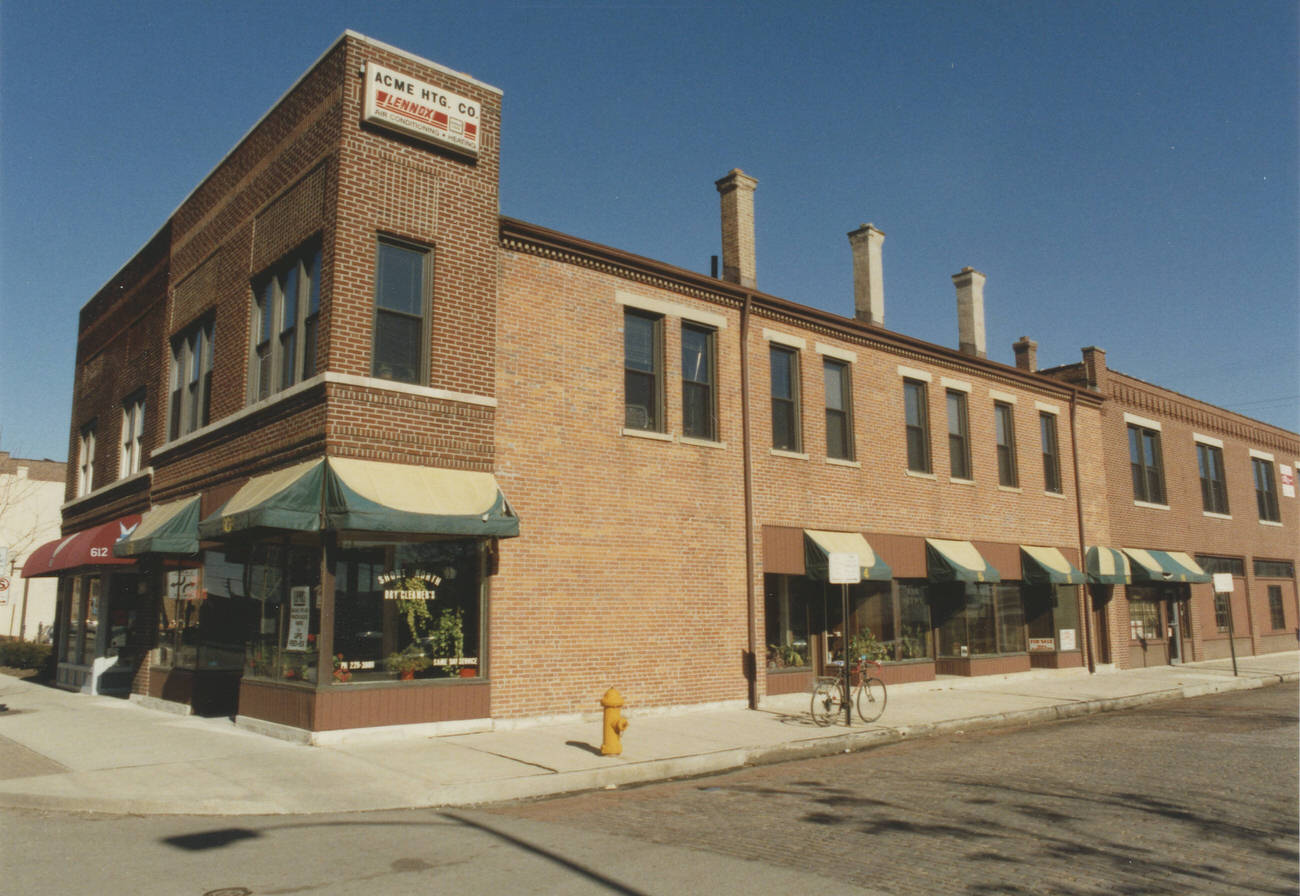
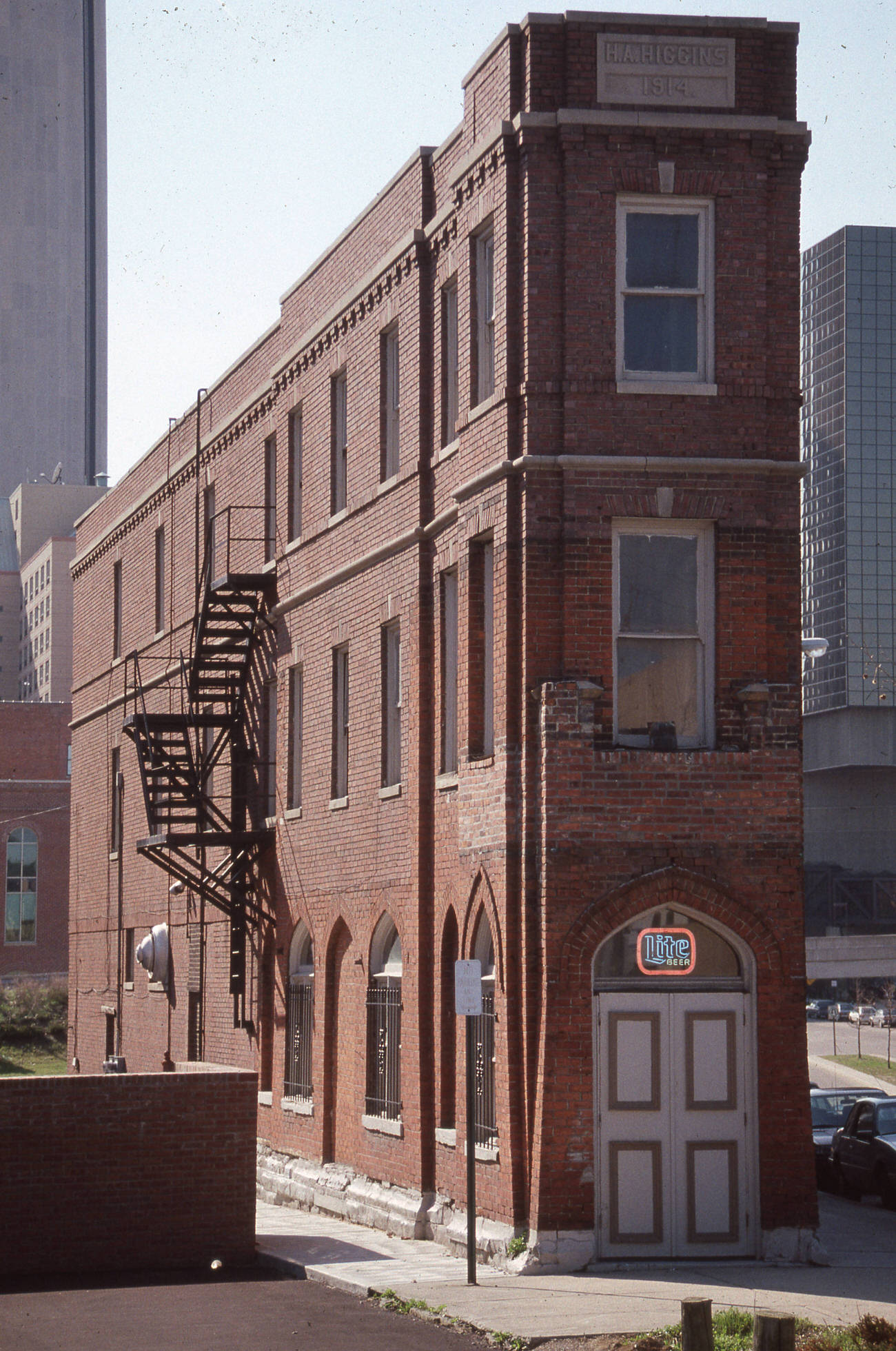
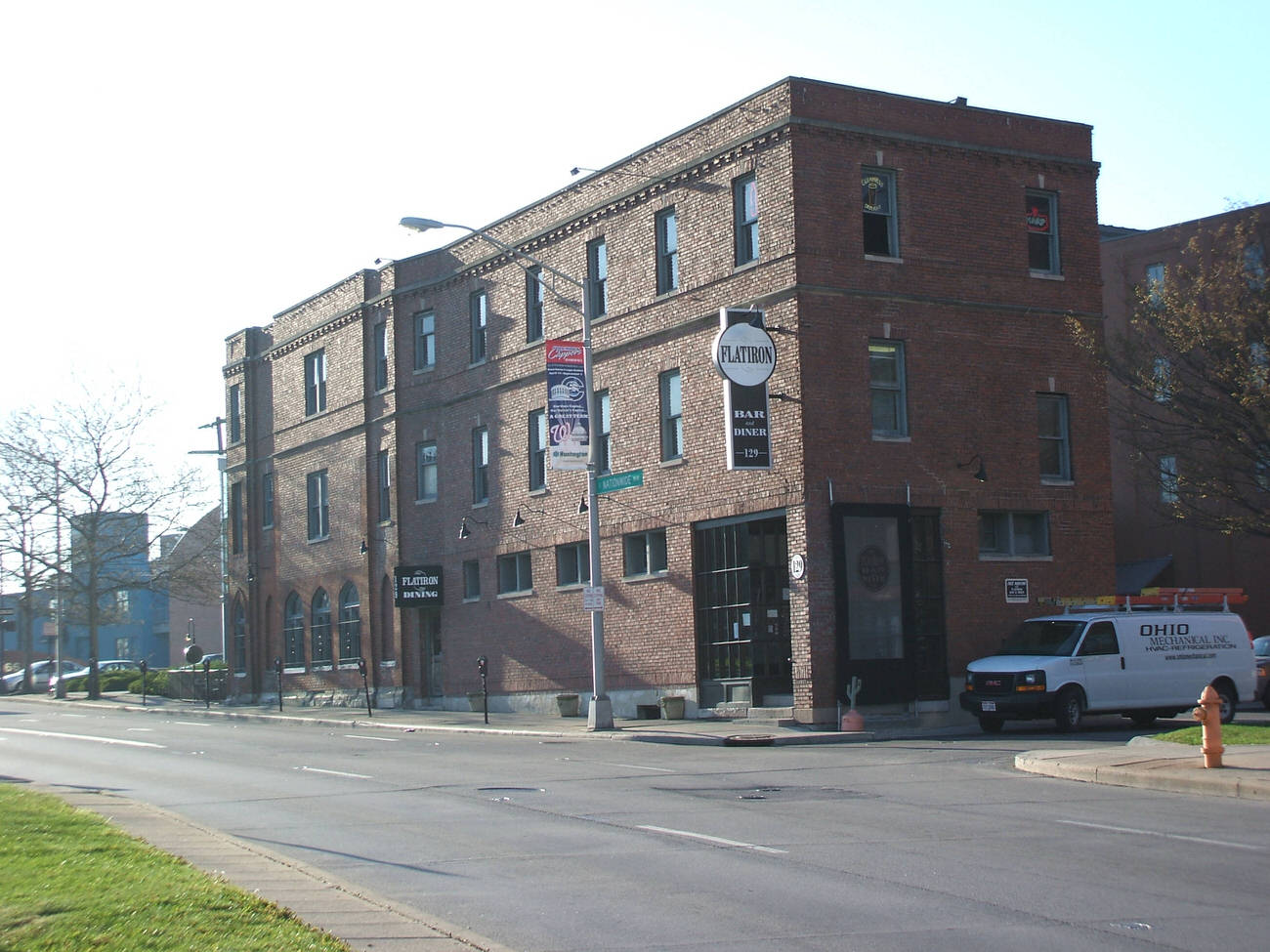
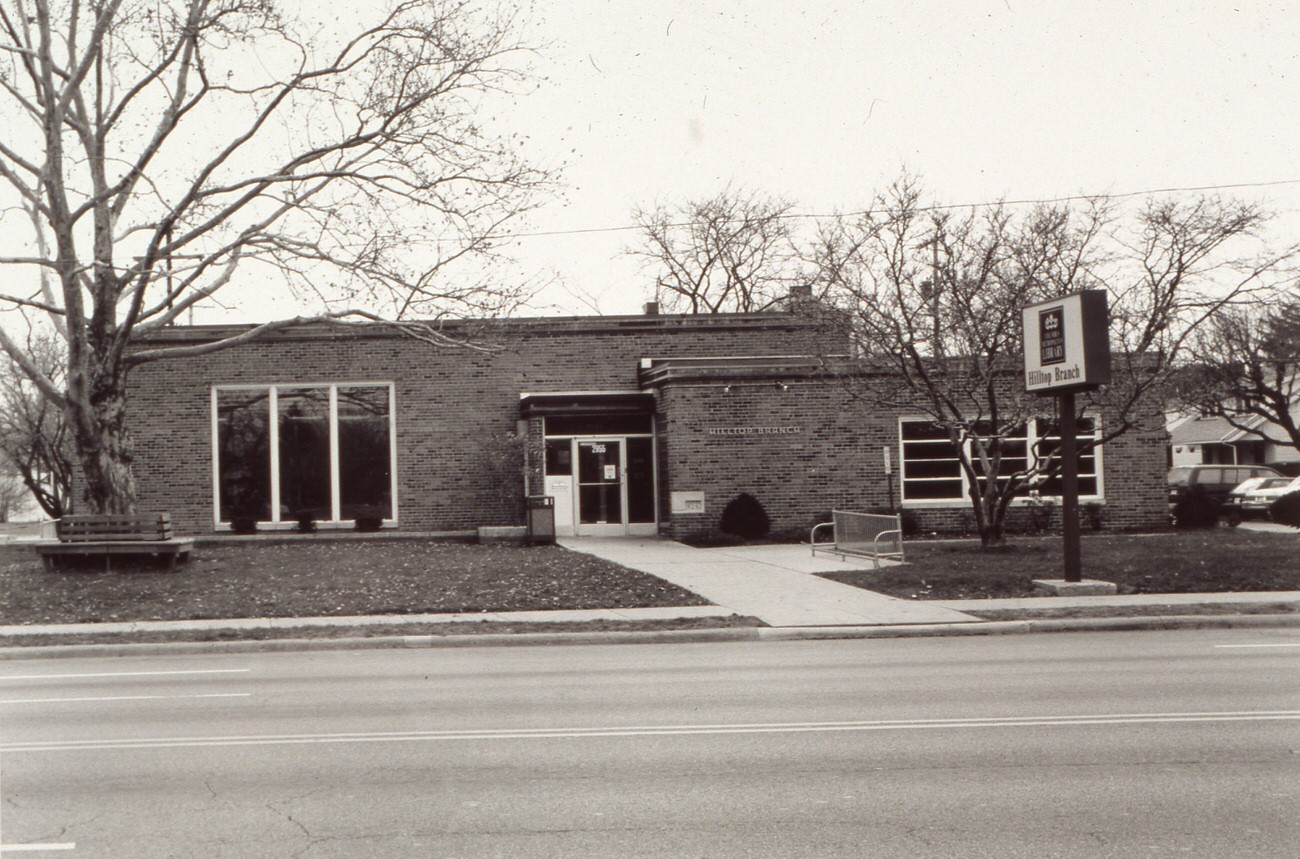
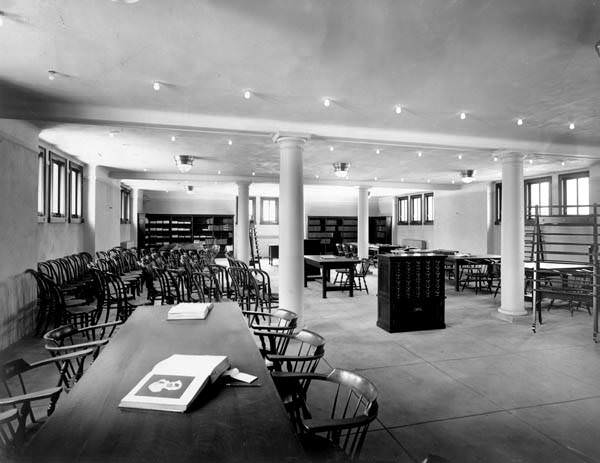
Smaller commercial signs and storefronts documented a Columbus that was both changing and holding on to its roots. A Bower & Co. general store advertisement on North High Street between West Dodridge and Ramlow Alley, the Callander Cleaning Company building, and the Higgins Building — known as Flatirons, built in 1914 and later home to the Flatiron Bar and Diner — each told a piece of the city’s commercial story. The Columbus Metropolitan Library’s Hilltop Branch, serving the area since 1928 and renovated in 1981, and its Medical Dental Collection, both remained active resources for residents throughout the decade.