Hey There! Before You Go. 😧
Get the best vintage content straight into your inbox!

Don't worry, we don't spam

What Columbus, Ohio looked like at the Turn of the 20th Century

By 1900, Columbus, Ohio was no longer a quiet state capital. It was a city actively reshaping itself. New buildings were going up, streetcar lines were stretching into fresh neighborhoods, and a growing population was demanding more of everything — schools, utilities, hotels, and public spaces. The decade that followed would leave a permanent mark on the city’s layout, identity, and skyline.
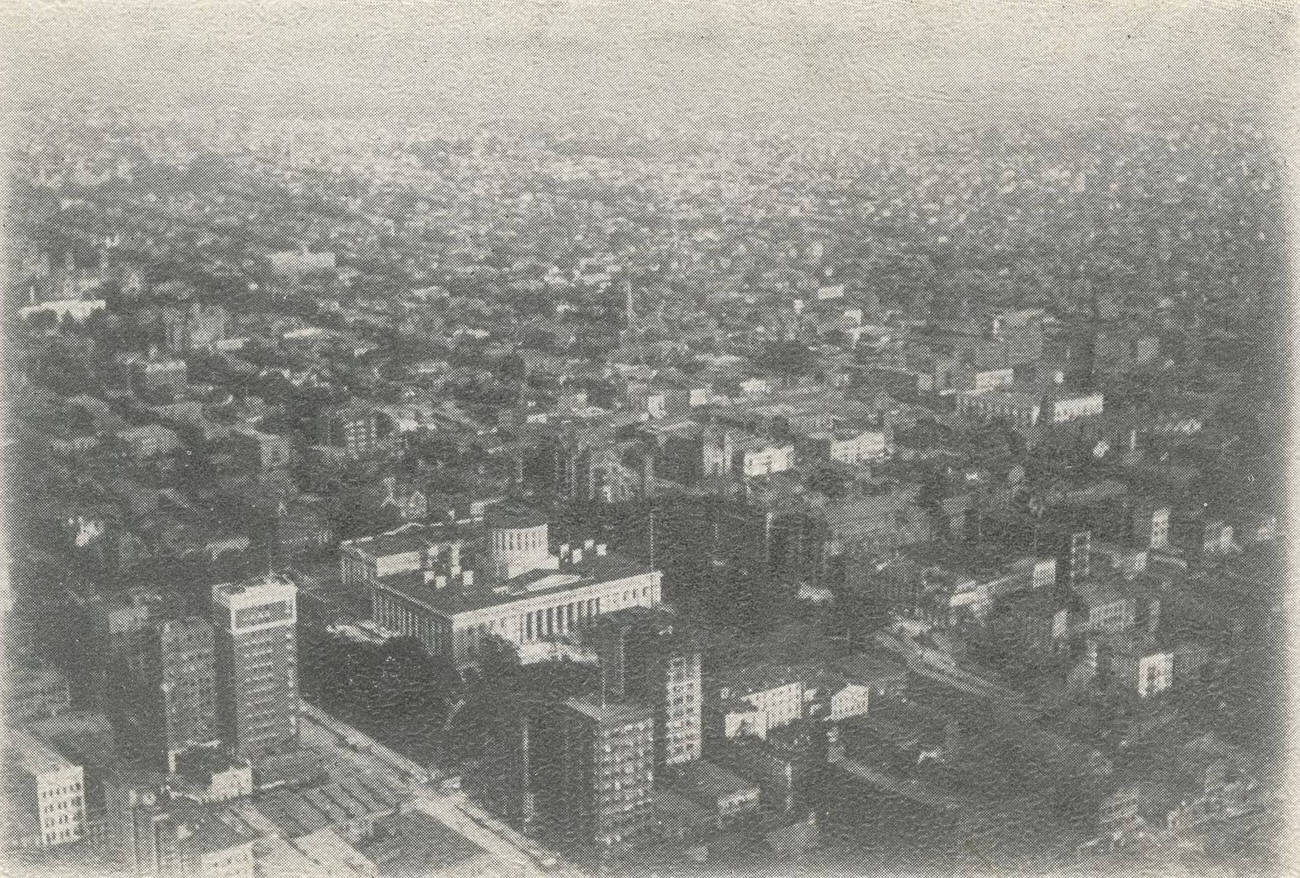
Aerial view of downtown Columbus from a balloon at an elevation of 2000 feet, 1909.

From 2,000 feet above the city in 1909, Columbus looked dense and purposeful. Streets ran in ordered grids, and the rooftops of commercial buildings clustered tightly around the central core. High Street served as the city’s main artery, running north to south and anchoring nearly every major development of the era.
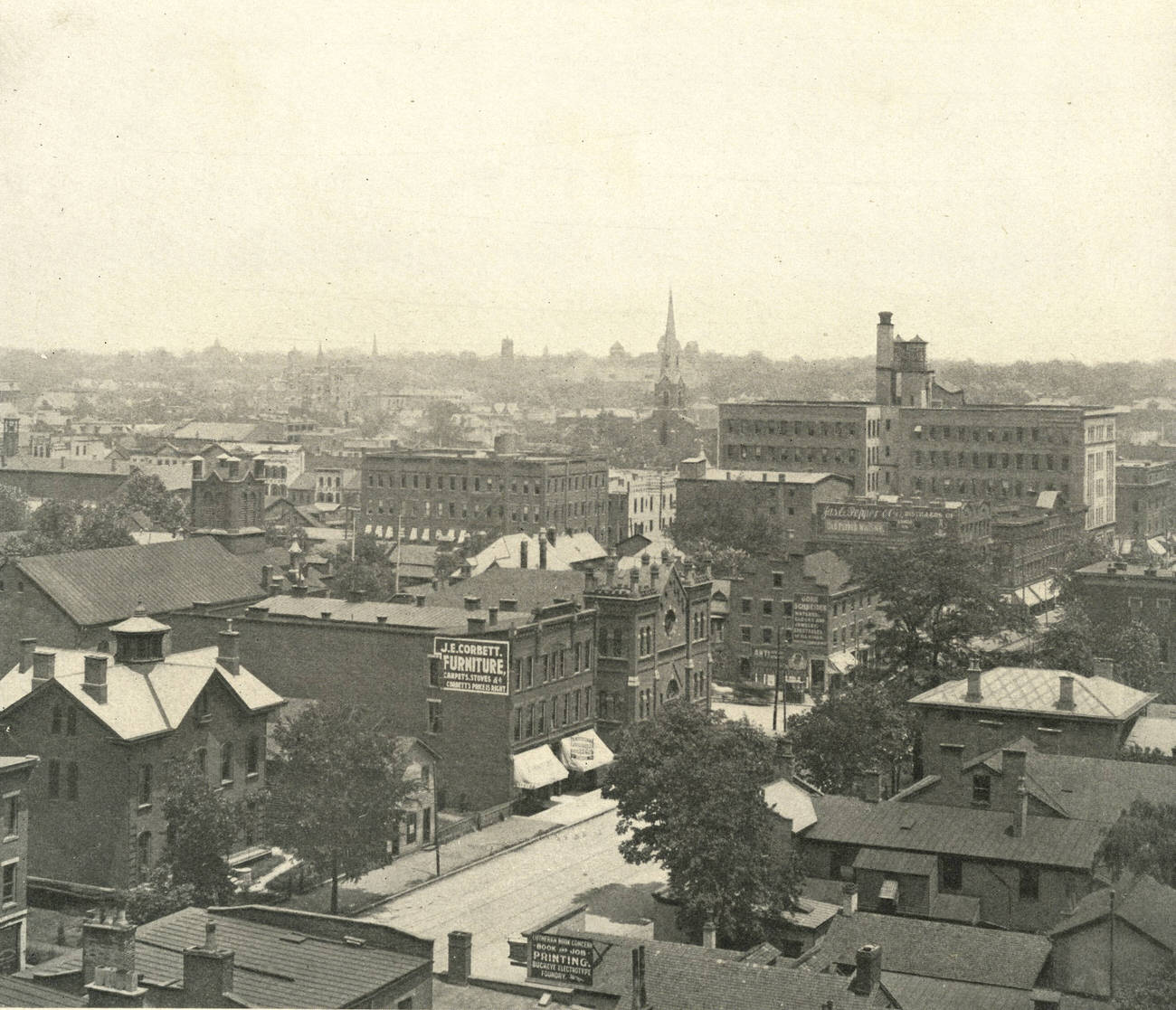
Aerial view from the Great Southern Hotel, looking northeast onto downtown Columbus, 1901.

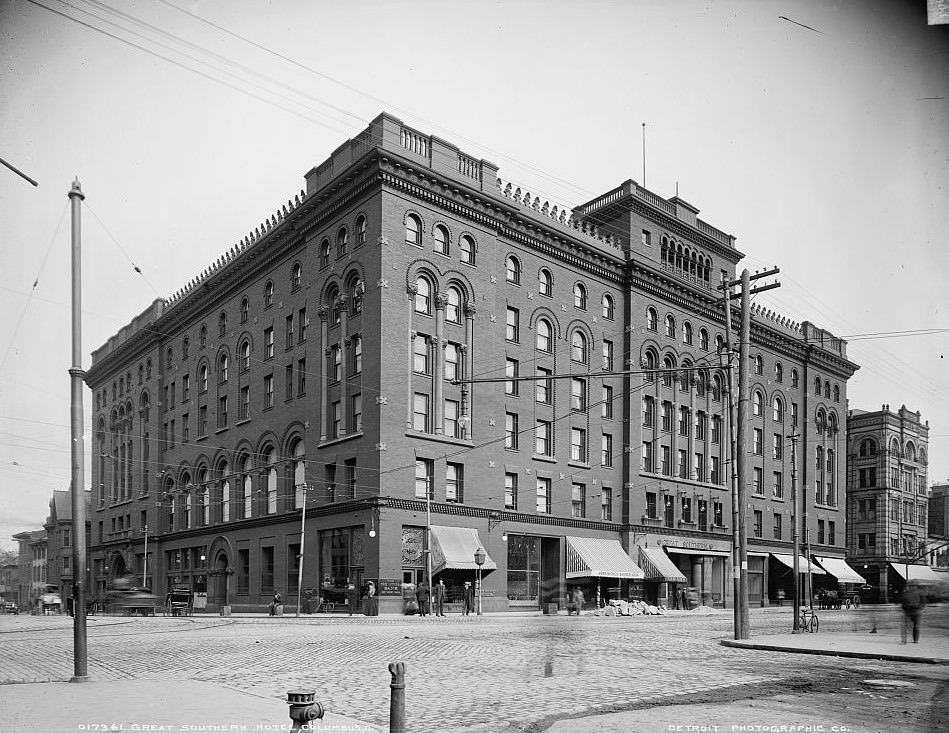
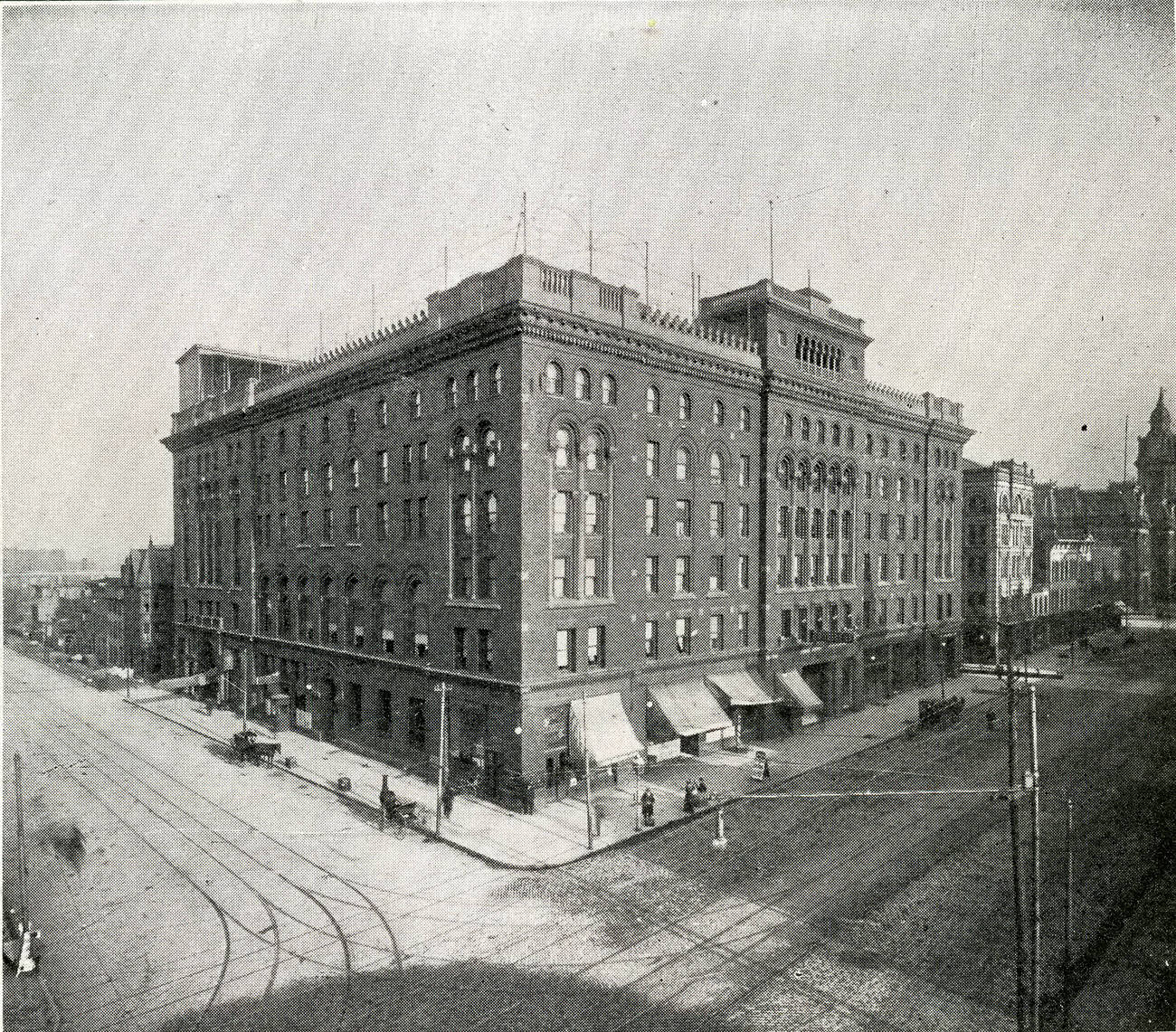
The Great Southern Hotel, which opened in 1897 with 250 rooms, gave some of the best views in the city. It also functioned as a social hub, particularly during state convention season when political managers filled its lobbies and dining rooms. The hotel stood on South High Street, right in the middle of the commercial corridor.
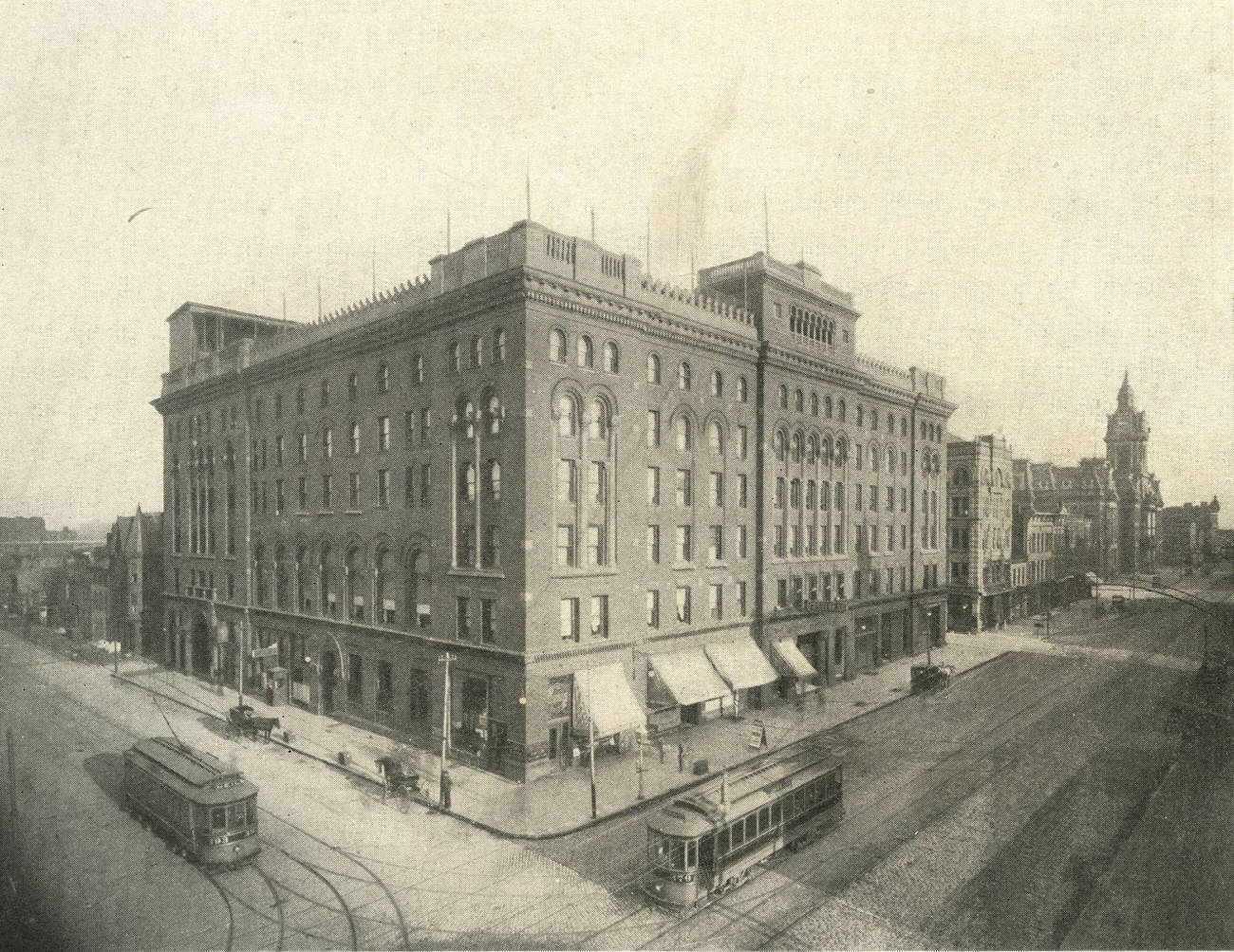
Great Southern Hotel, opened in 1897 with originally 250 rooms, 1901.
Great Southern Hotel, a hub for political managers during state convention season, 1909.

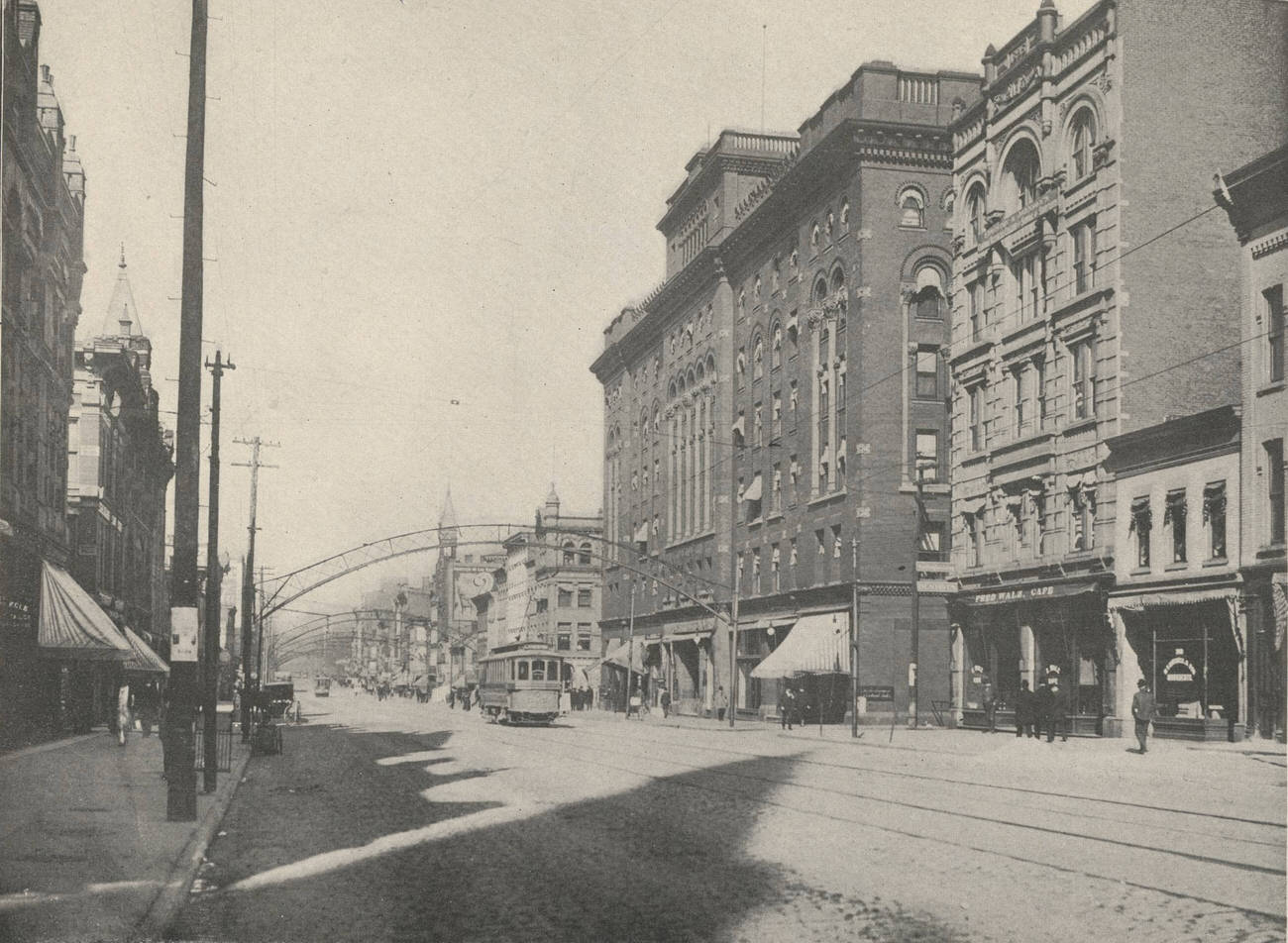
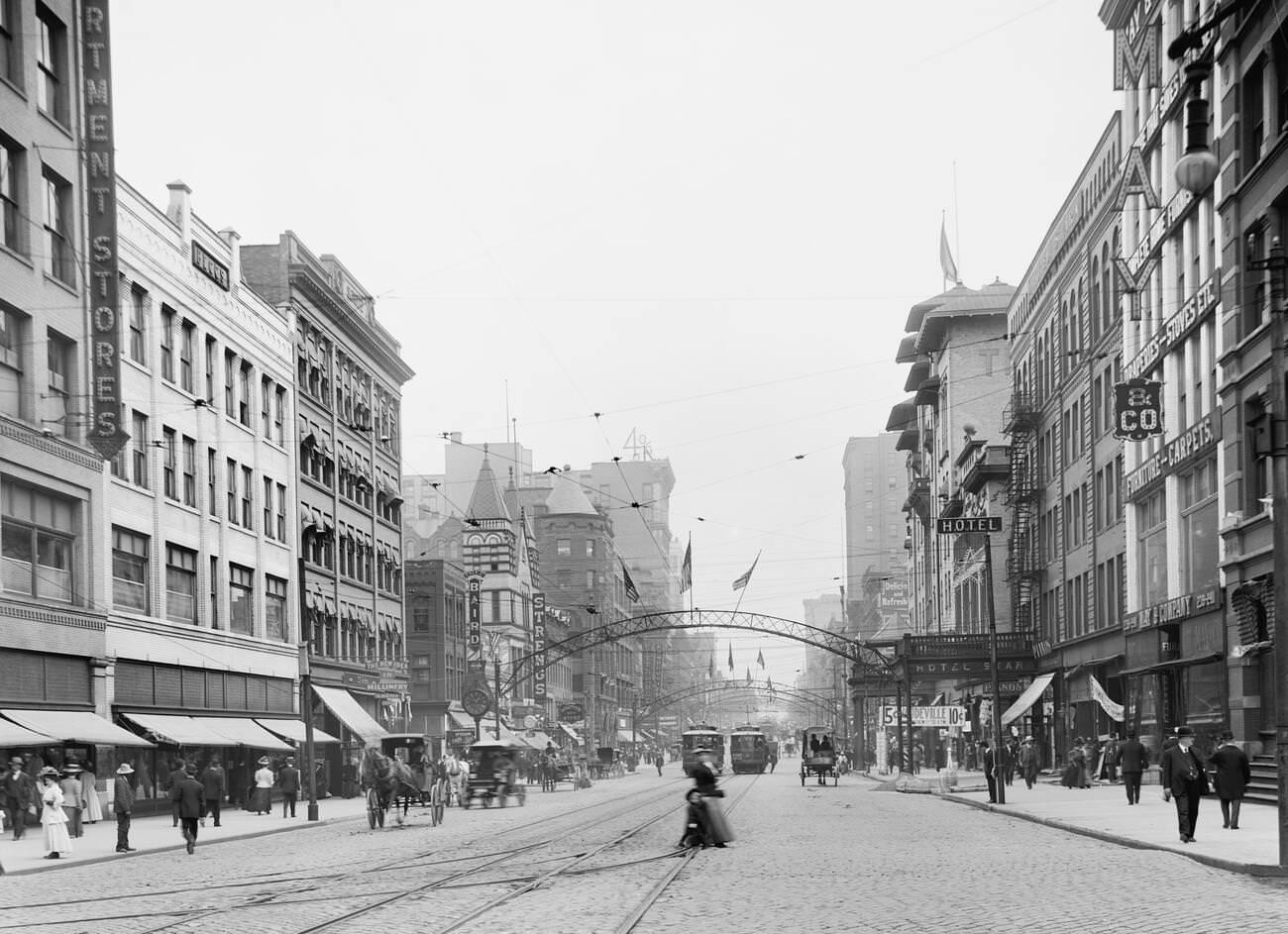
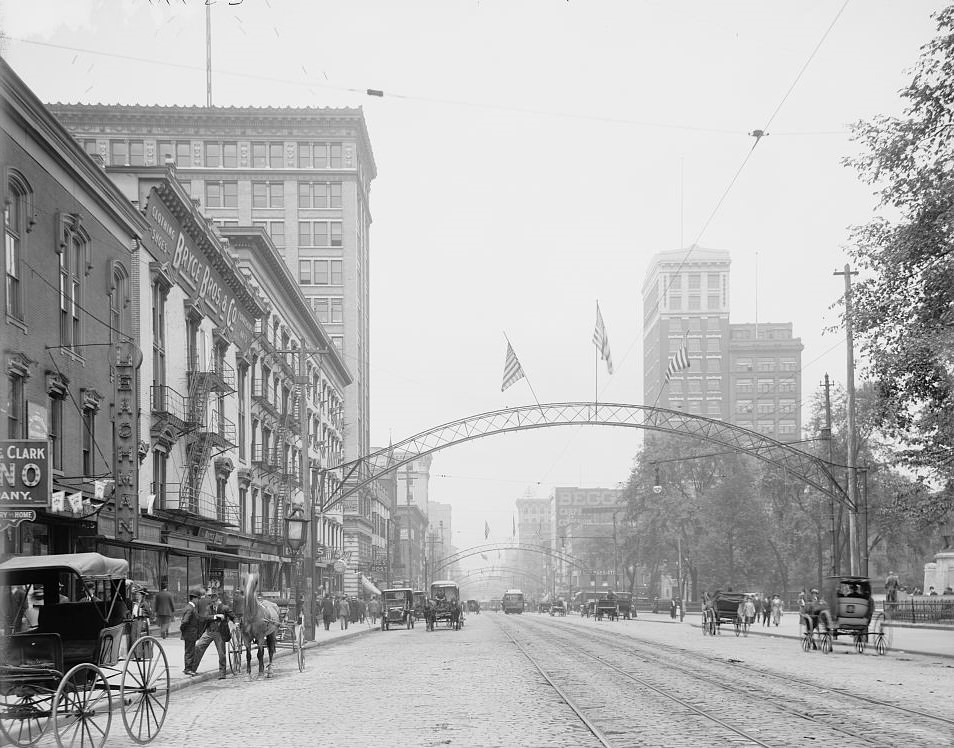
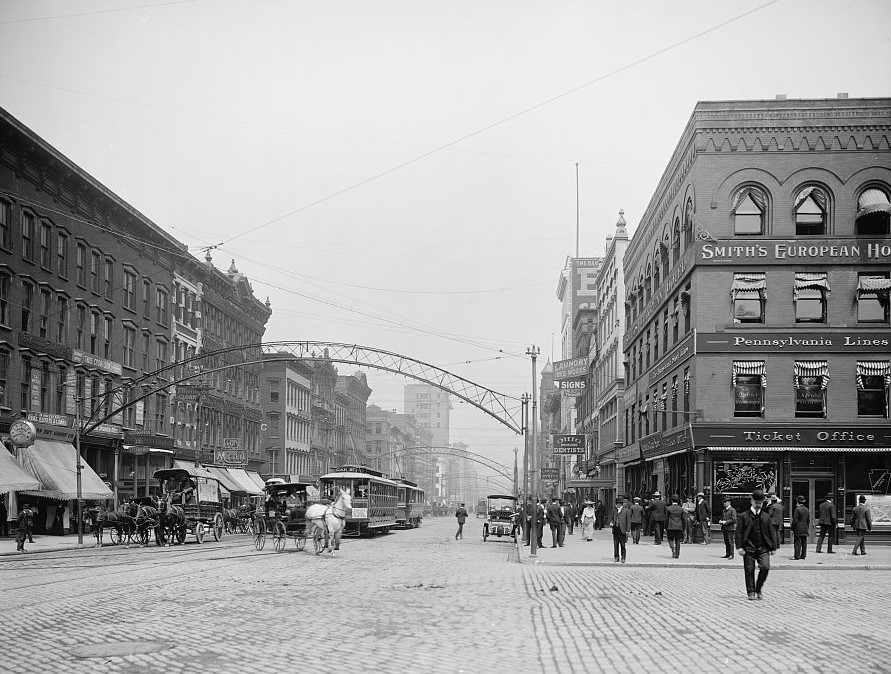
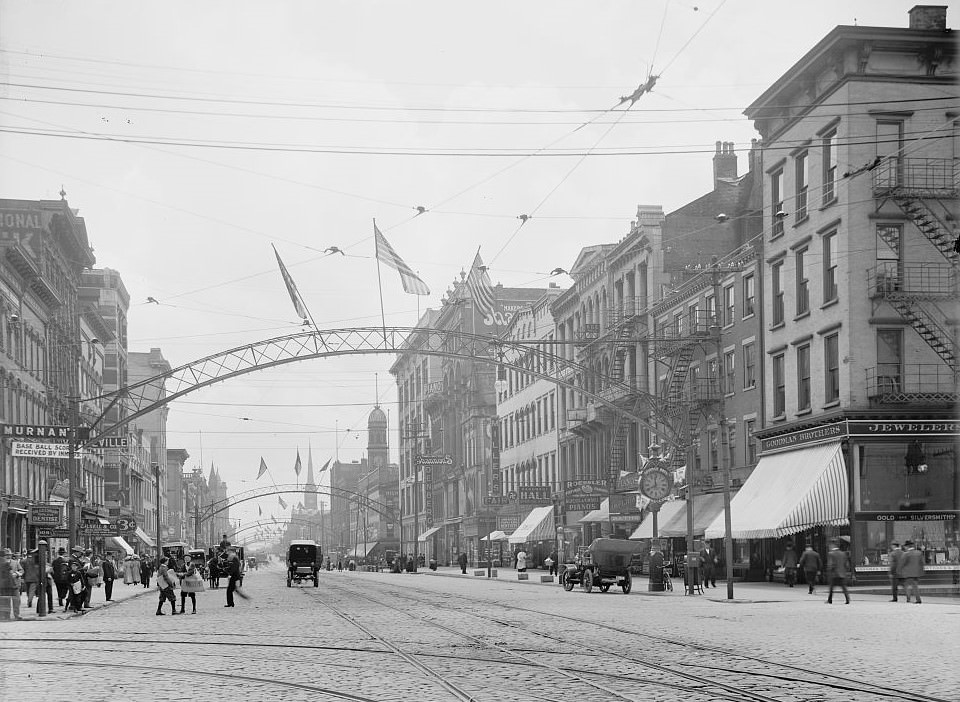
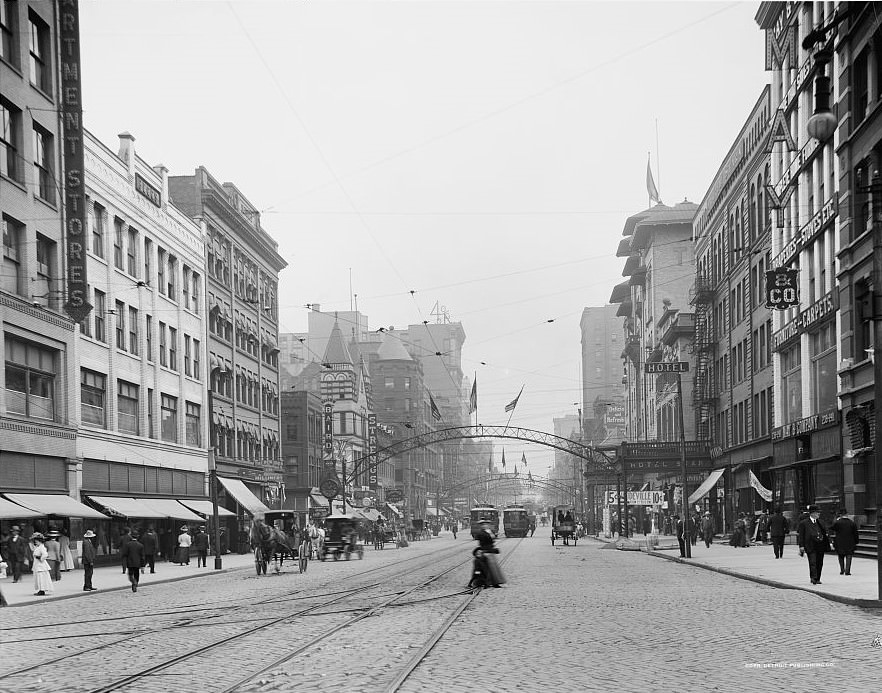
High Street was the pulse of daily life in Columbus. Horse-drawn buggies and electric streetcars shared the road, and the famous decorative arches that stretched across the street earned Columbus the nickname “Arch City.” Storefronts, banks, hotels, and churches lined both sides of the street for blocks in every direction.
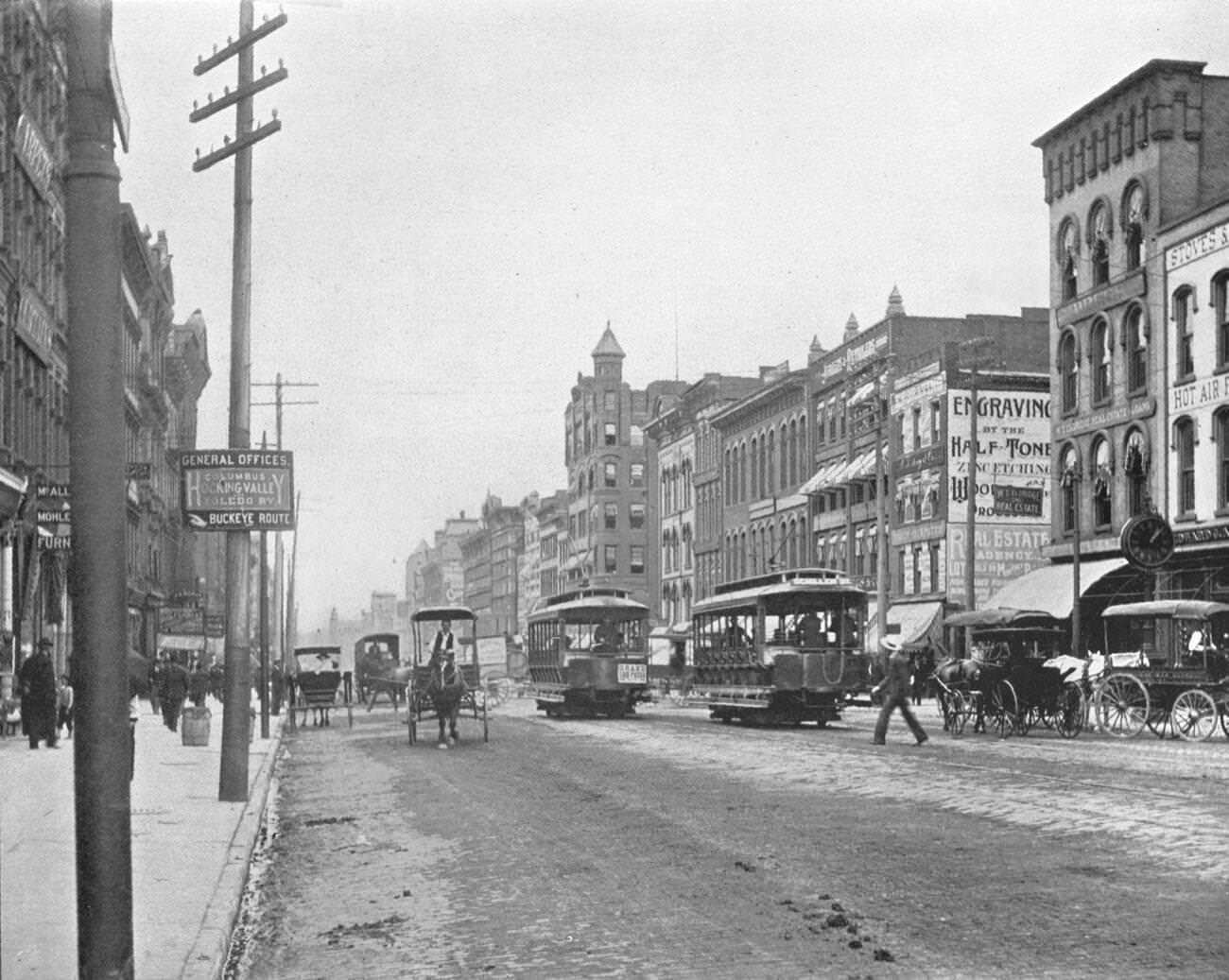
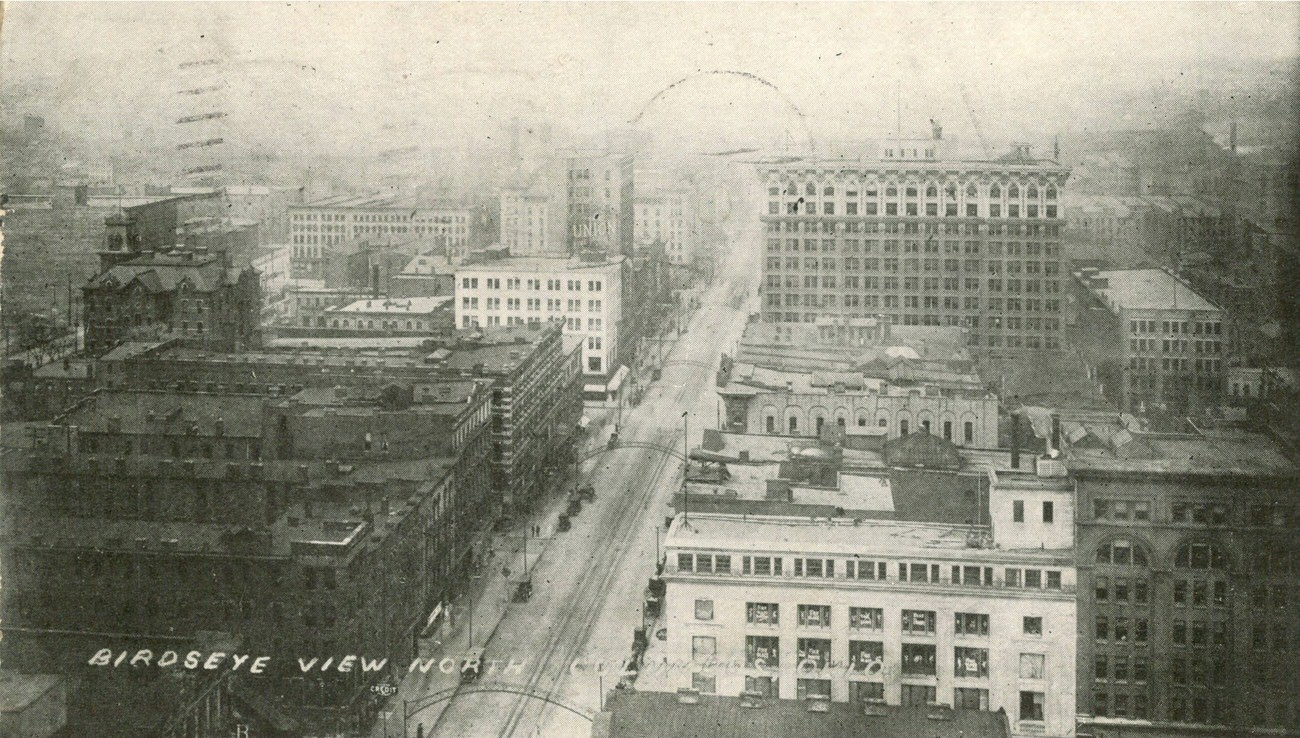
High Street, Columbus, Ohio, 1900
Birdseye view north along north High St., featuring the famous arches, 1900s

At night, High Street was even more striking. Electric arc lights illuminated the arches overhead, making the street glow in a way that few American cities could match at the time. This spectacle drew residents downtown and reinforced Columbus’s image as a city on the move.
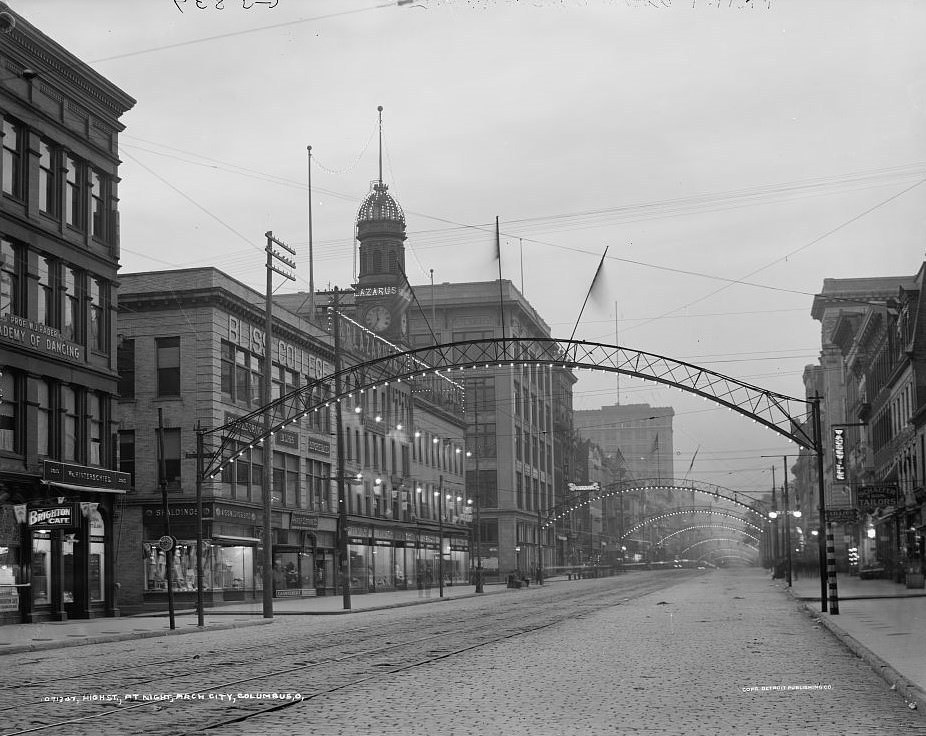
High Street at night, Arch City, Columbus, Ohio, 1900s

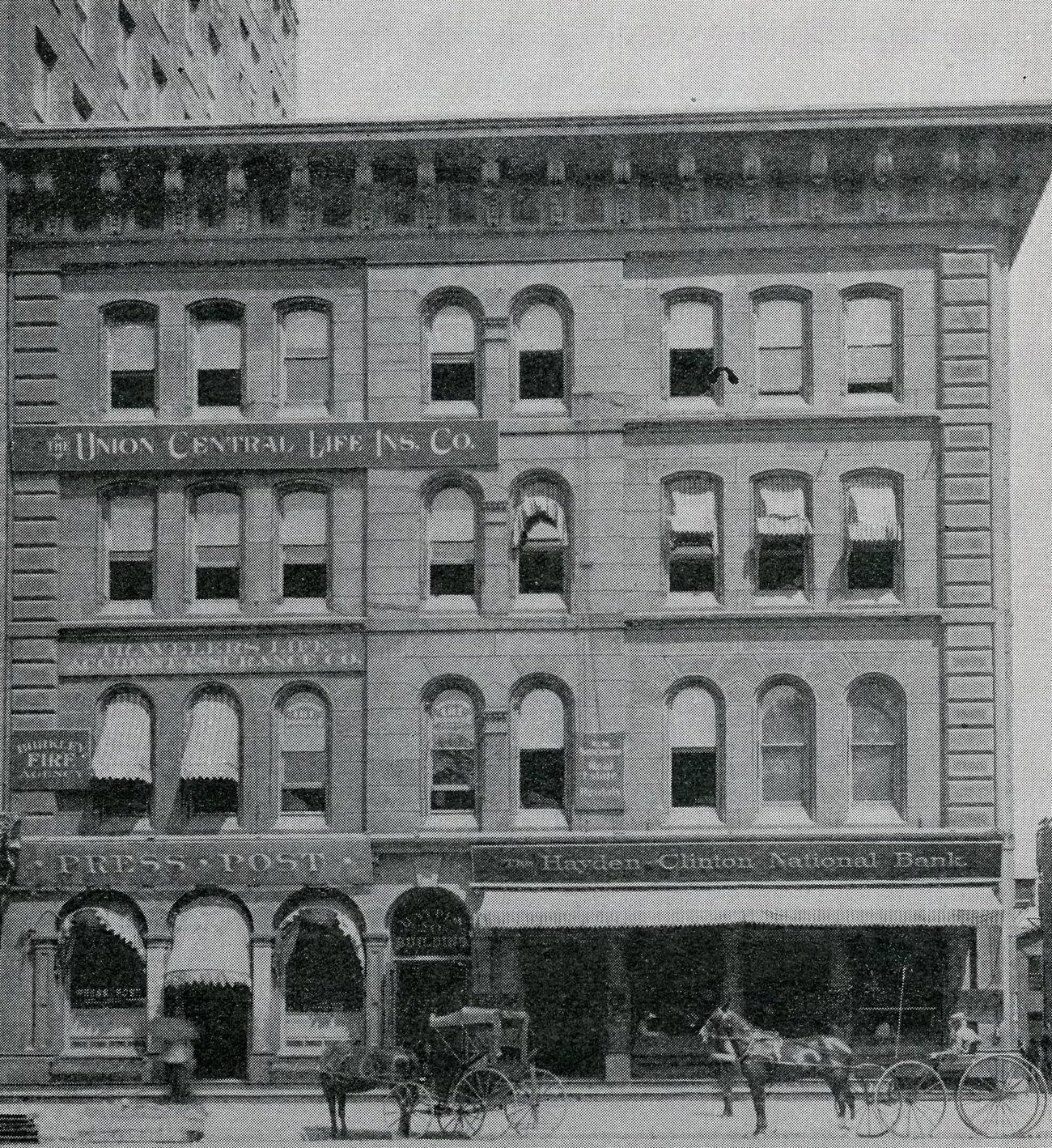
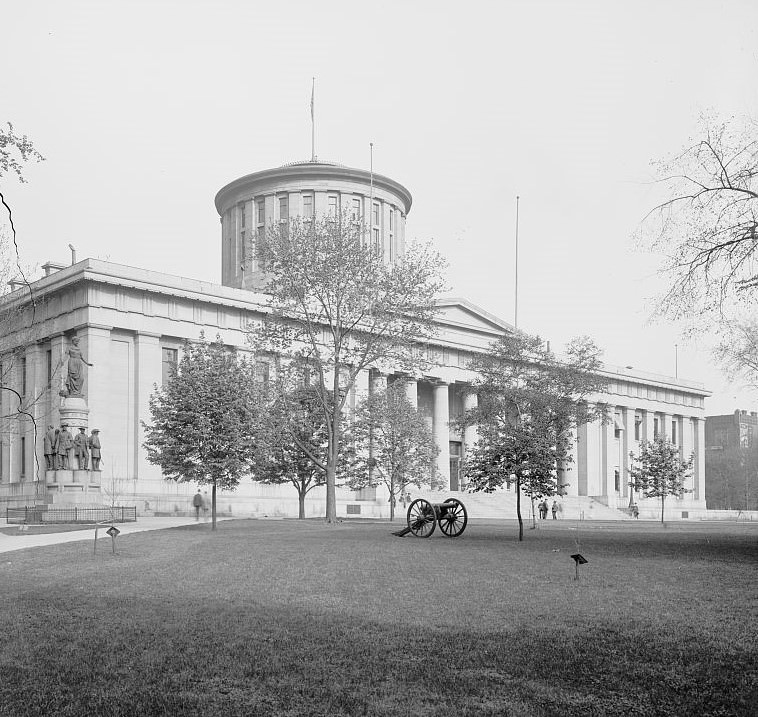
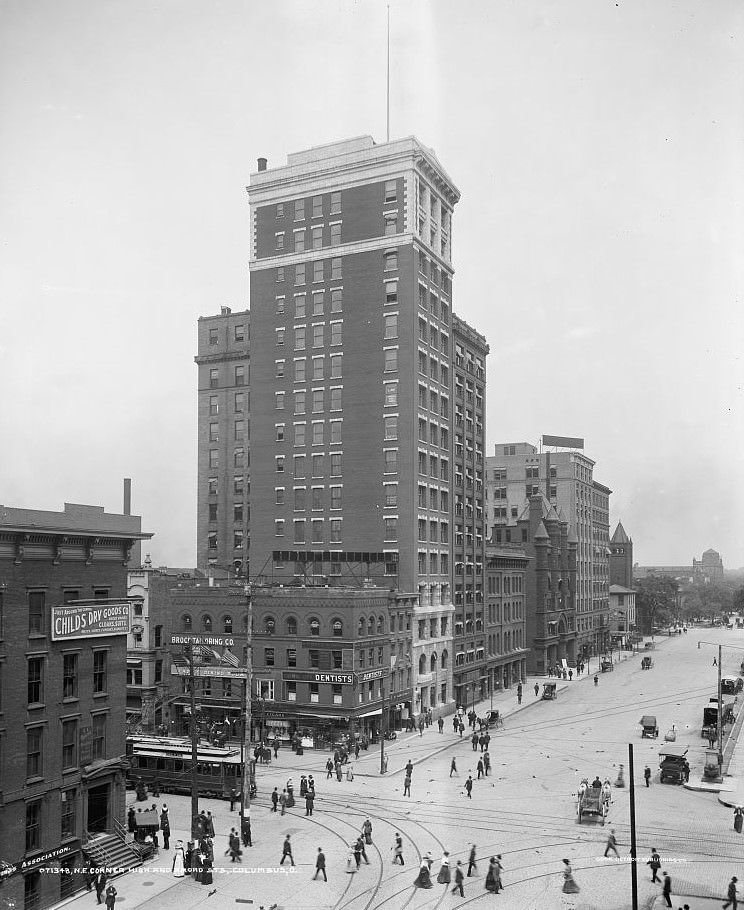
The intersection of High and Broad Streets was arguably the most important corner in the city. Government buildings, financial institutions, and commercial establishments all converged near this point. The Ohio State Capitol sat just steps away, and the Hayden-Clinton National Bank — established in 1900 and housed in the oldest building on Capitol Square — stood as a symbol of financial permanence.
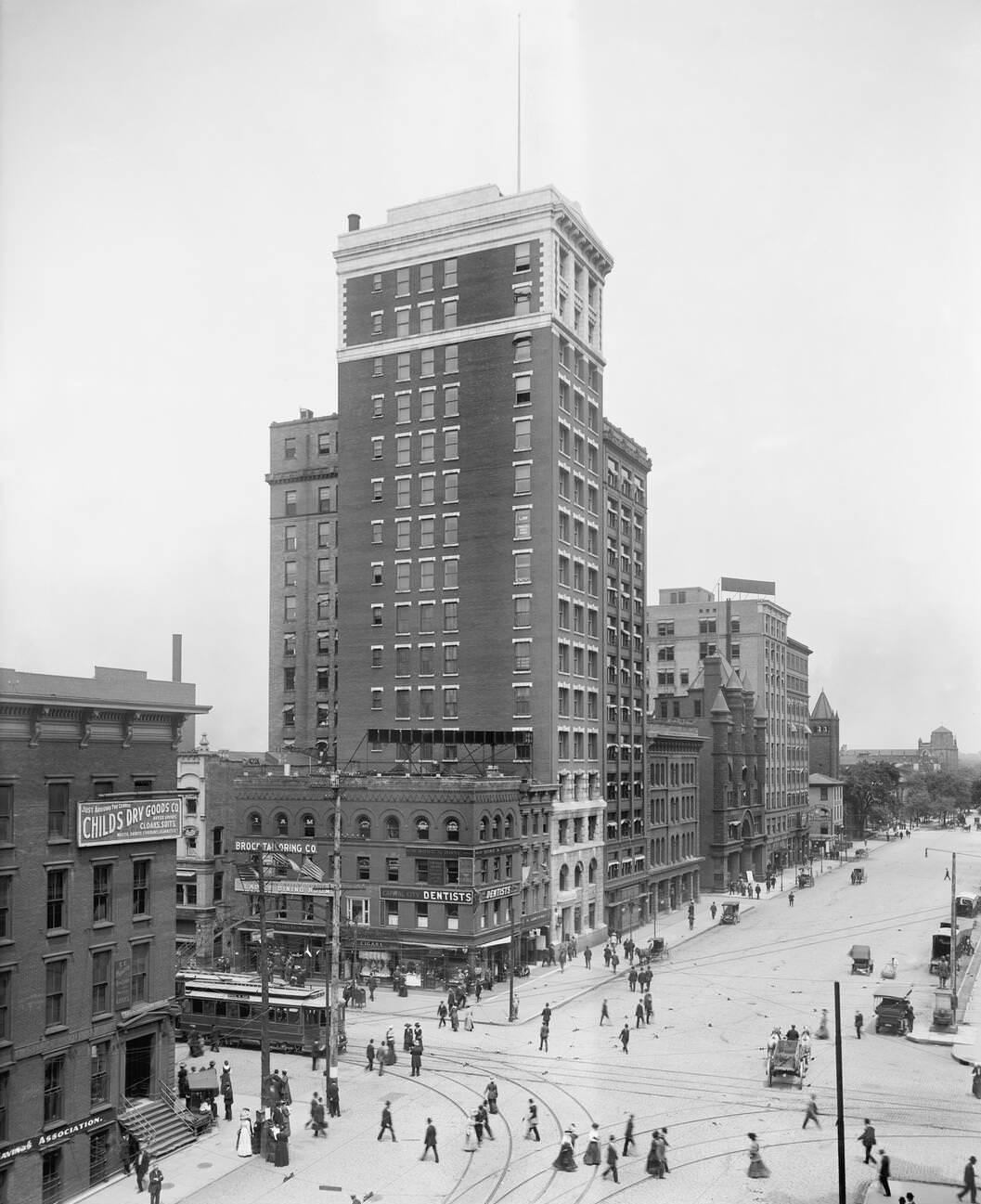
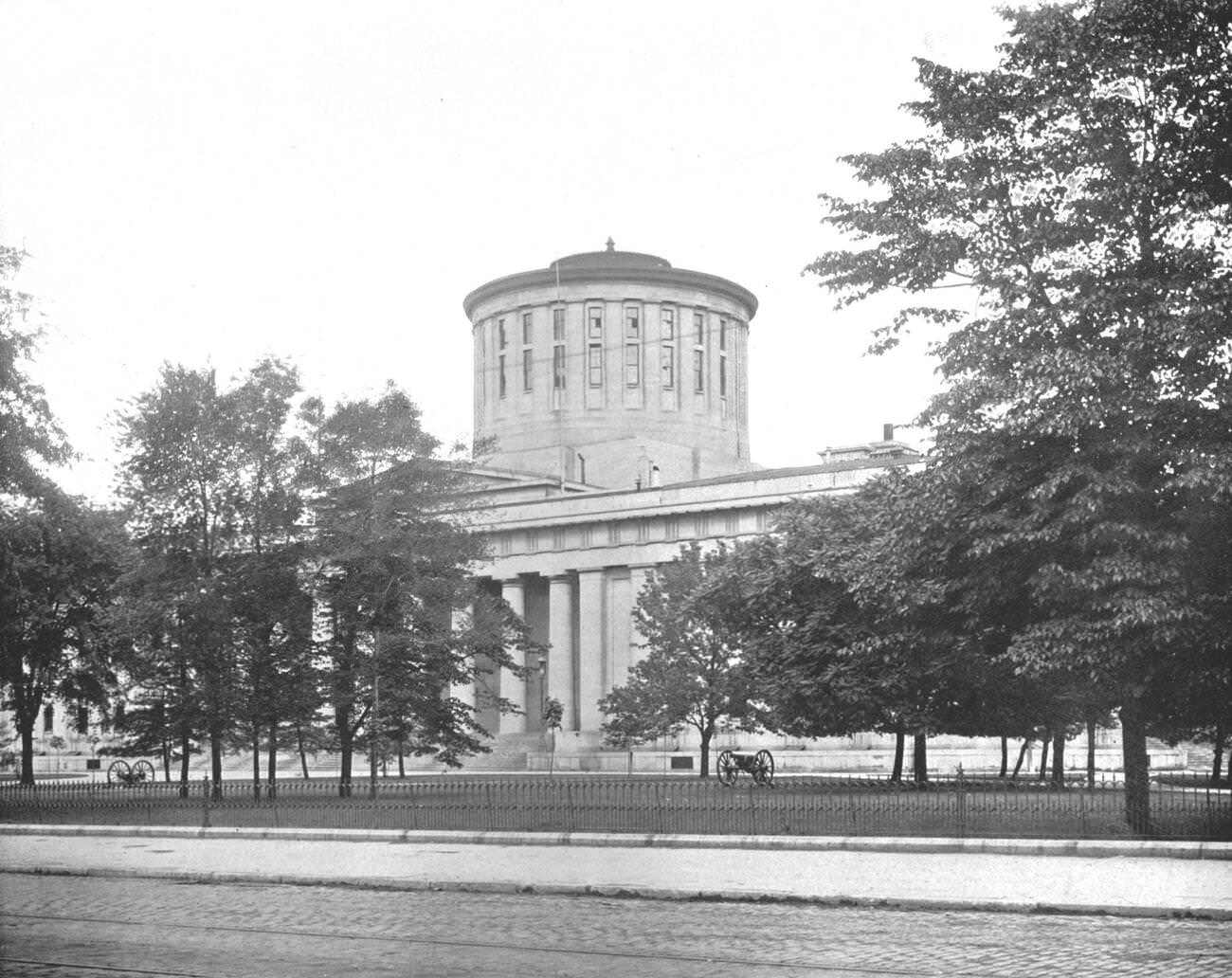
High and Broad Streets, Columbus, Ohio, 1905
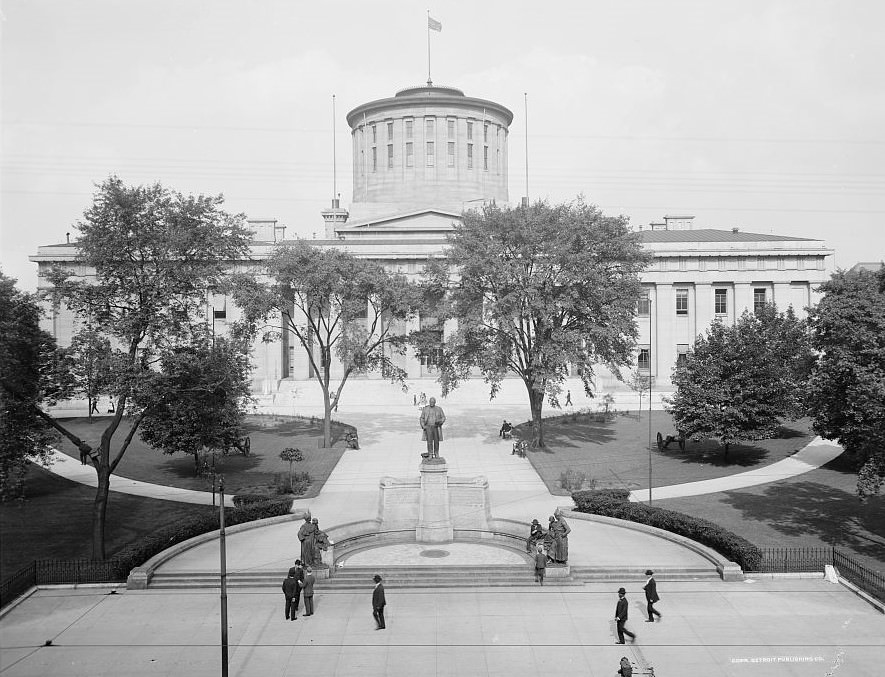
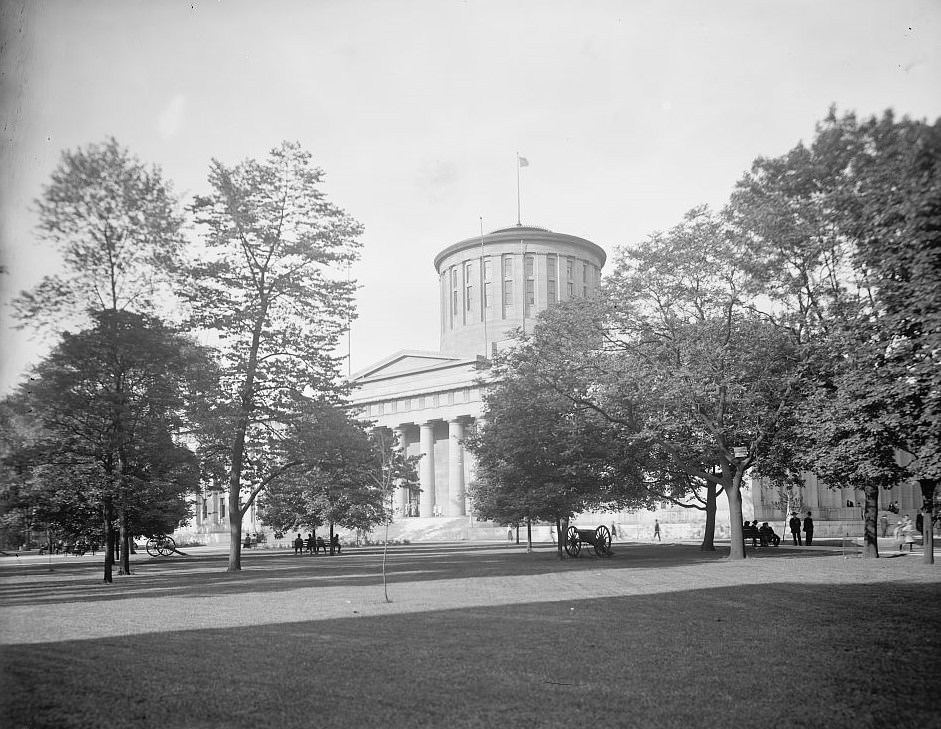
State Capitol, Columbus, Ohio, 1900

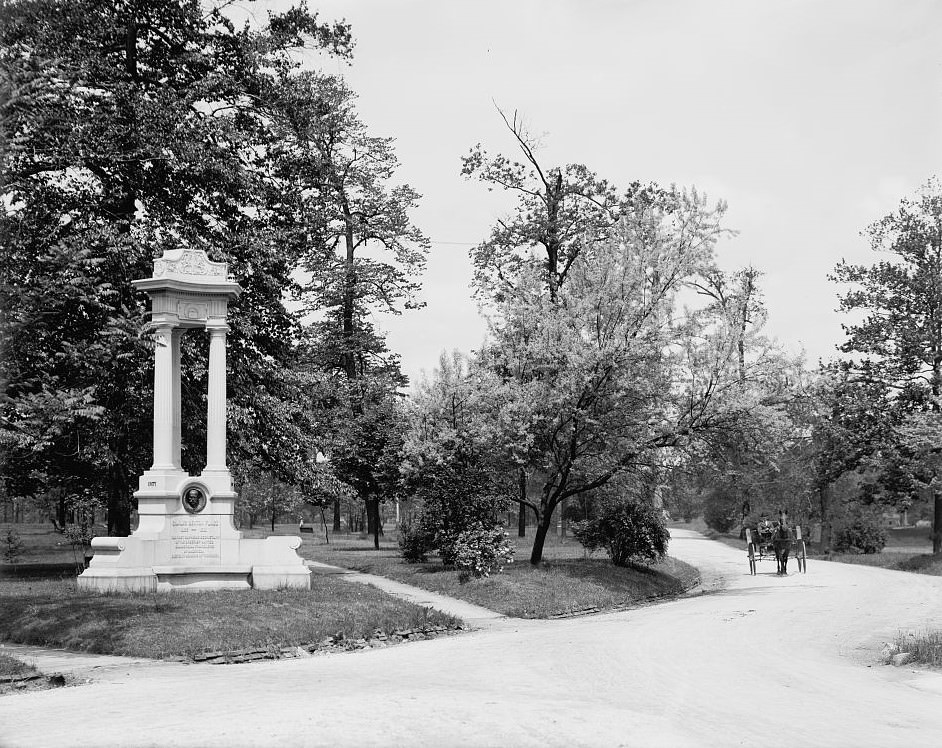
The state government gave Columbus an economic stability that other Ohio cities lacked. The capitol grounds were well-maintained public spaces, complete with monuments. One of the most notable was “These Are My Jewels,” a memorial to famous Ohioans that stood on the capitol grounds and drew regular attention from residents and visitors alike.
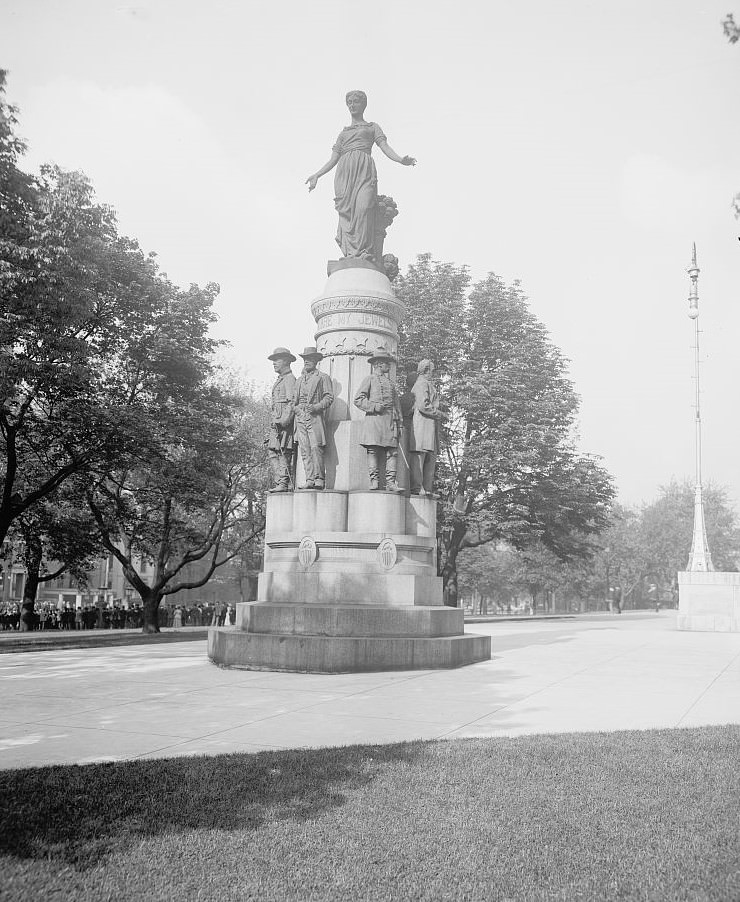
Memorial in Capitol grounds, Columbus, Ohio, titled "These are my jewels", 1900
Memorial in Capitol grounds, Columbus, Ohio, titled “These are my jewels”, 1900
Capitol grounds in Columbus, Ohio, 1900s

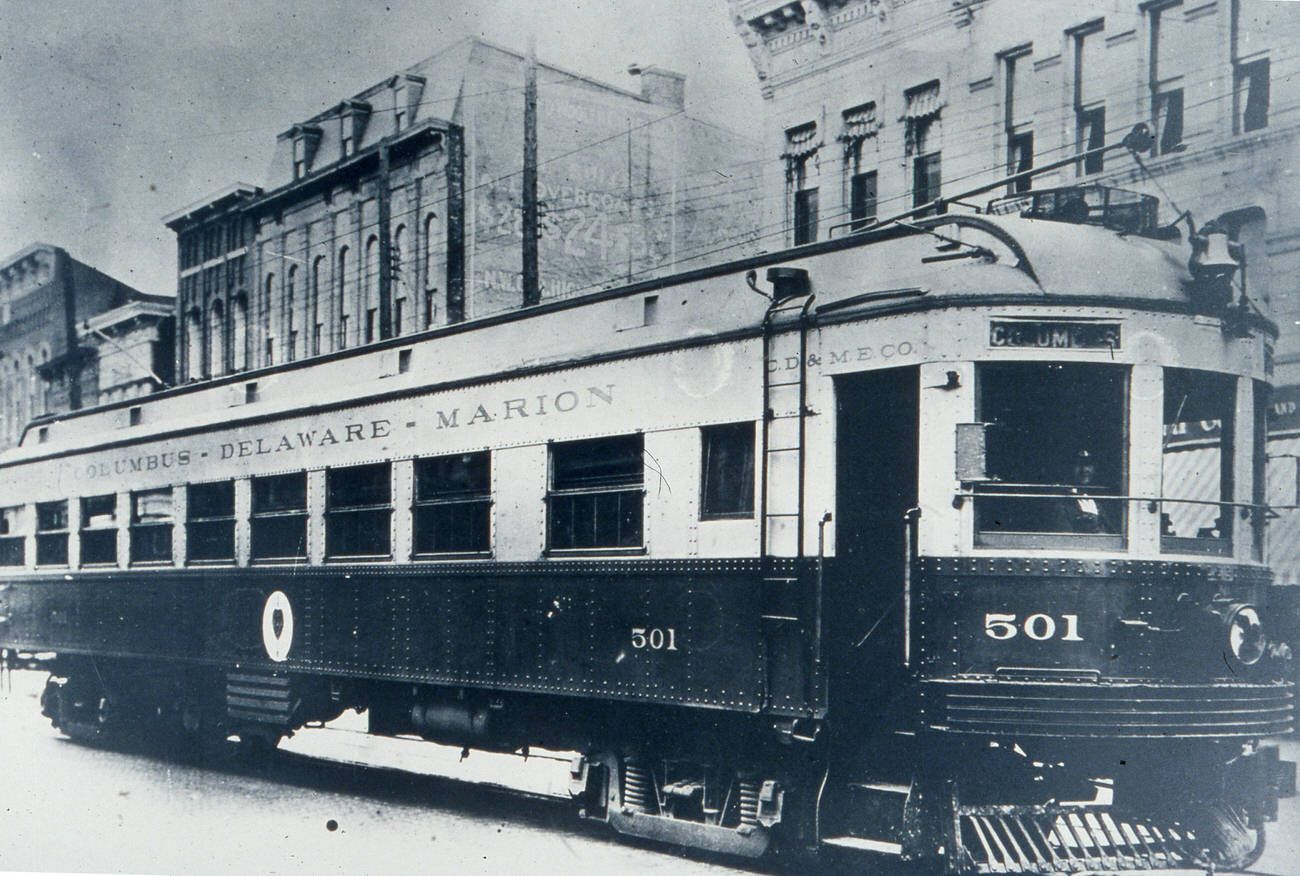
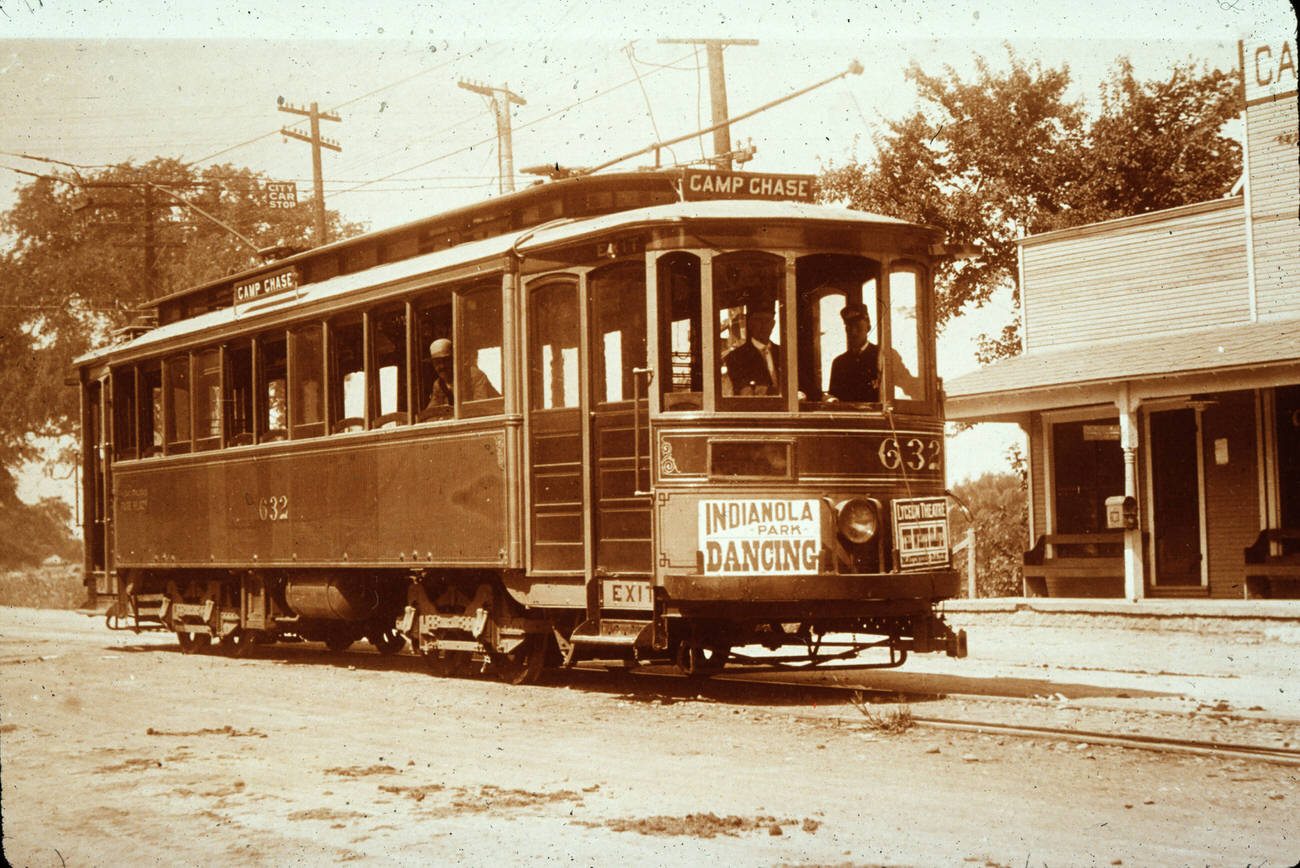
Transportation was transforming how residents lived and where they could live. The streetcar network expanded steadily, making it possible to build residential neighborhoods well beyond the old city center. Lines reached places like Camp Chase on West Broad Street, and interurban cars connected Columbus to neighboring towns. The Columbus, Delaware and Marion Interurban Car No. 501 began service on January 24, 1903, linking the city to communities to the north.
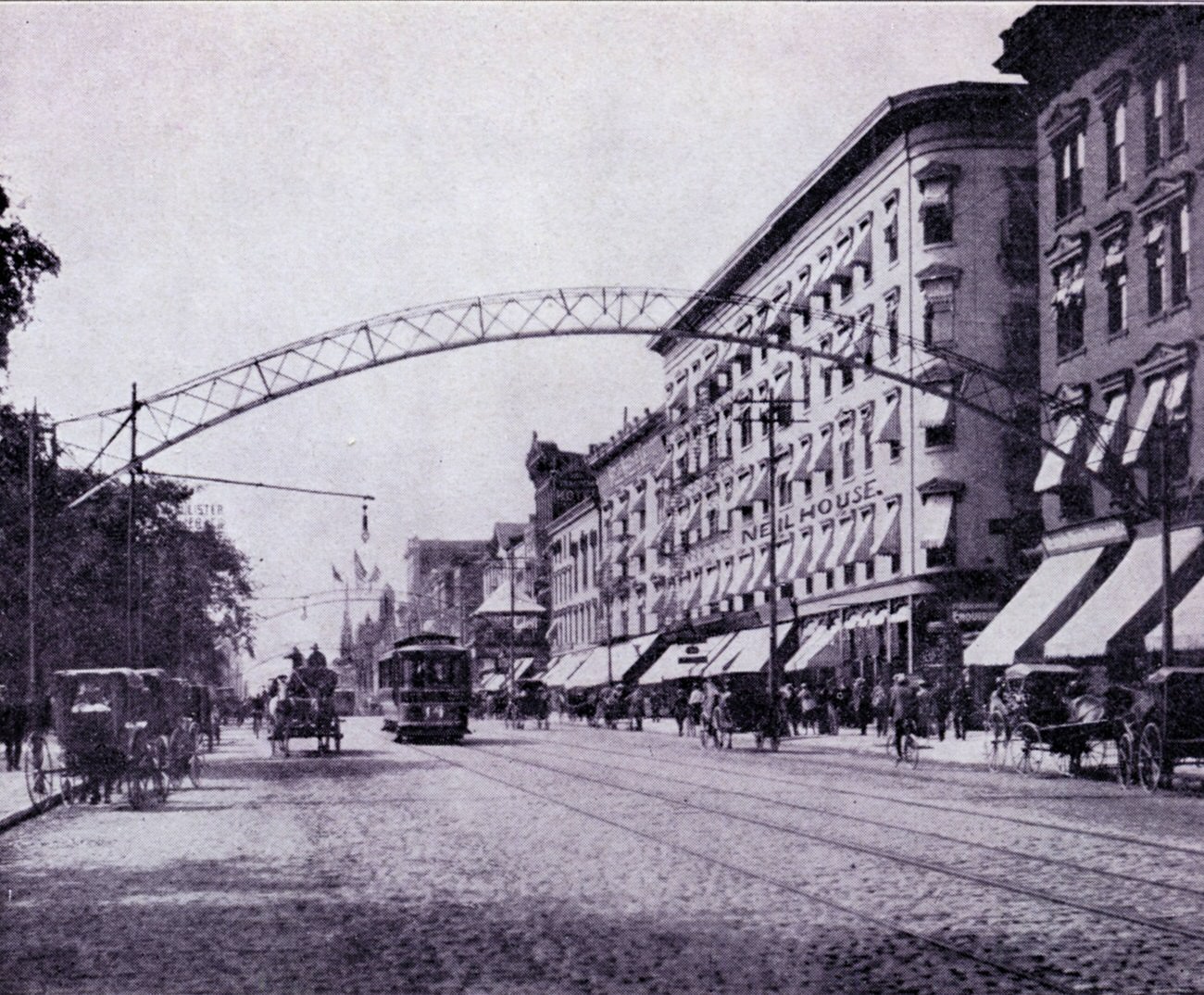
South High Street between Broad and State Streets, with horse-drawn buggies and a streetcar, 1900.
Camp Chase Streetcar No. 632 at Camp Chase Post Office, 2800 W. Broad St., 1905.
Columbus Delaware and Marion Interurban Car #501, began service on January 24, 1903.

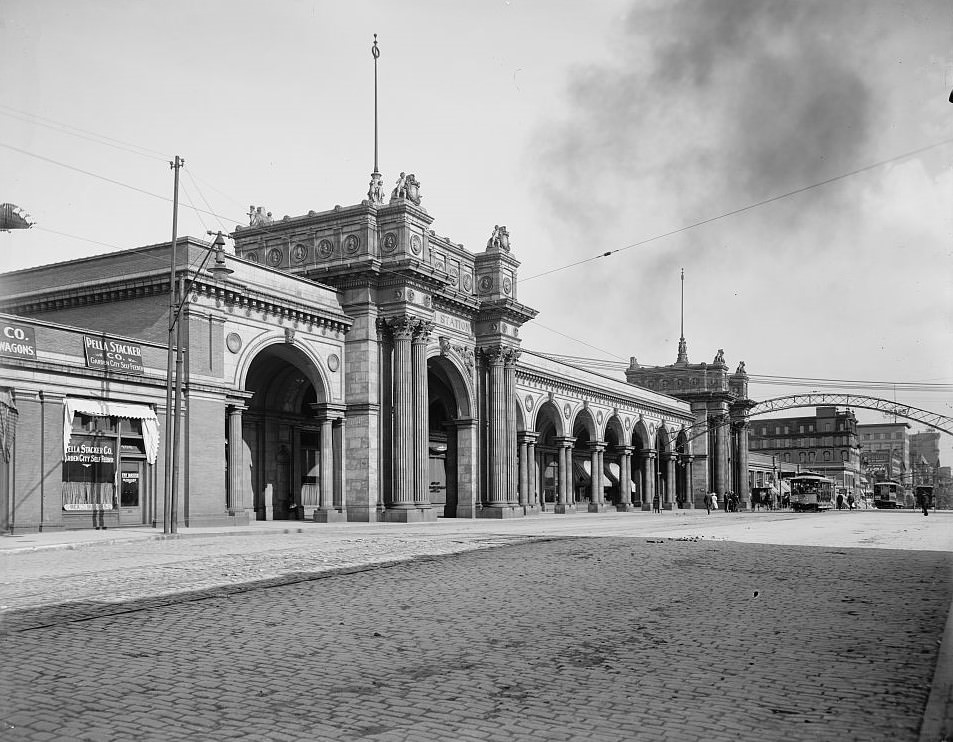
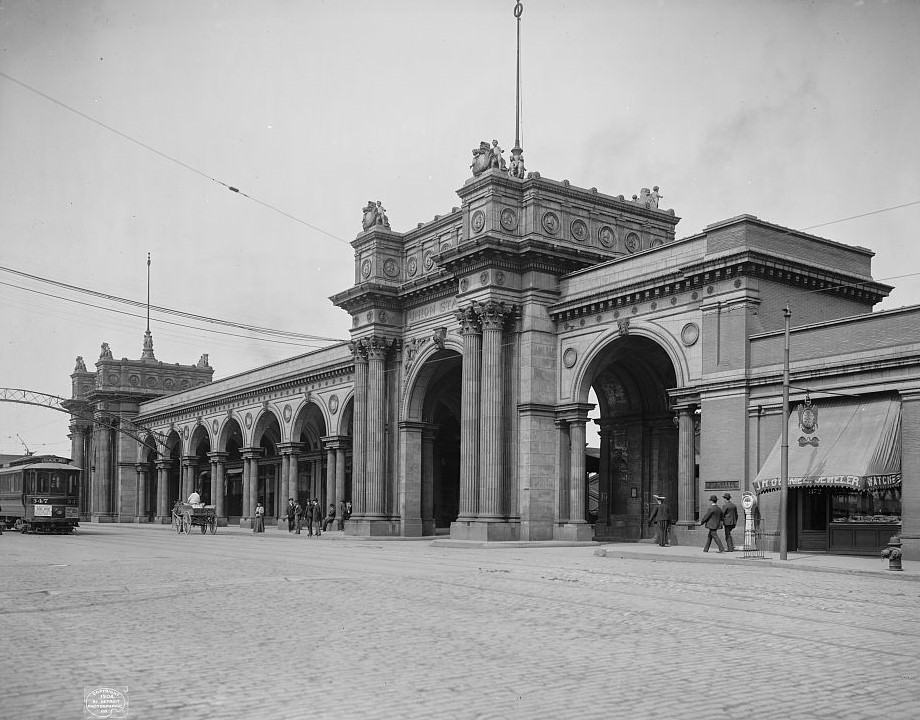
For long-distance travel, Union Station was the gateway in and out of Columbus. The third Union Station, designed by the renowned architect Daniel Hudson Burnham and opened in 1897, was an impressive structure on North High Street. Its grand facade reflected the ambitions of a city that wanted to present itself well to every arriving traveler.
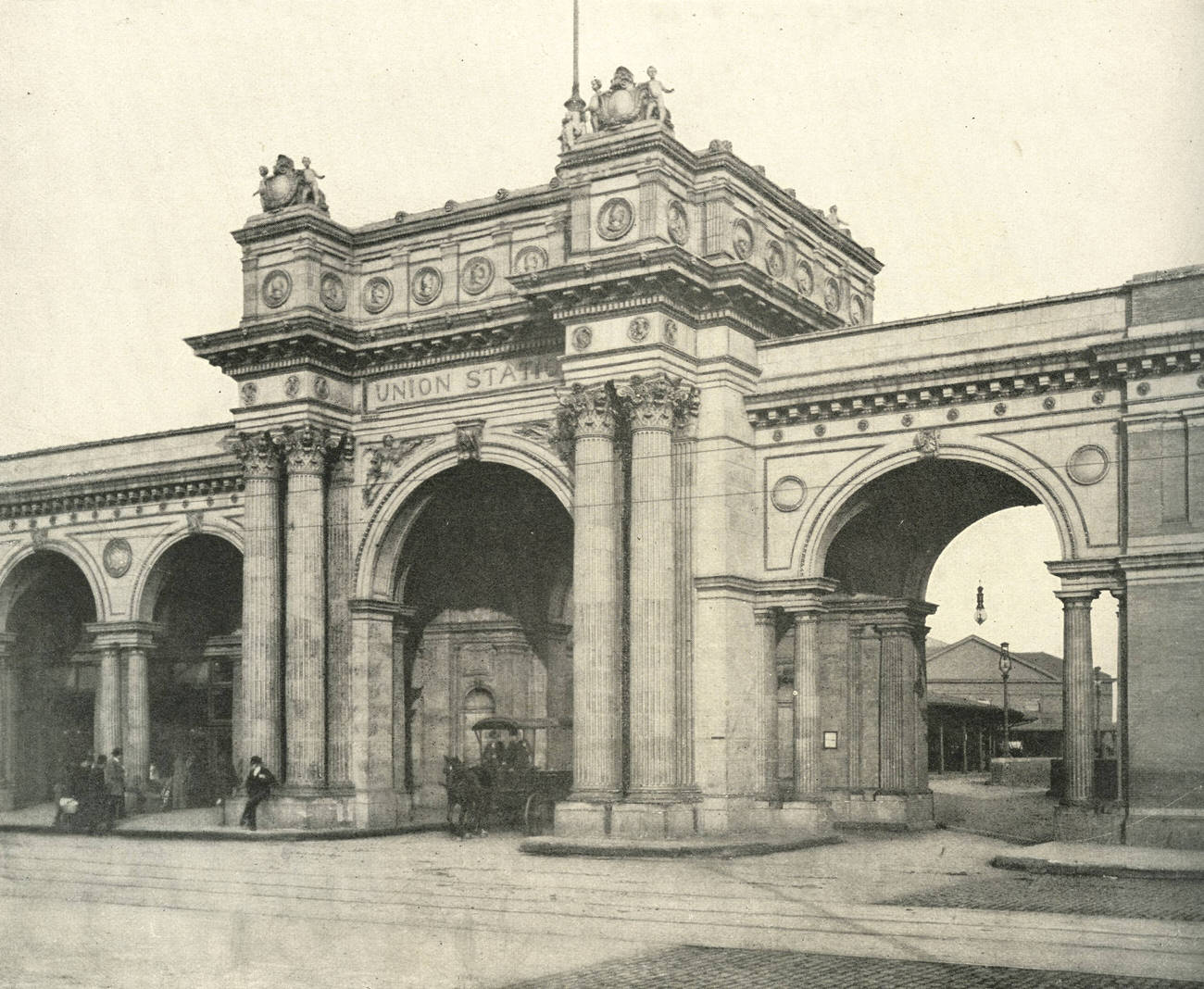
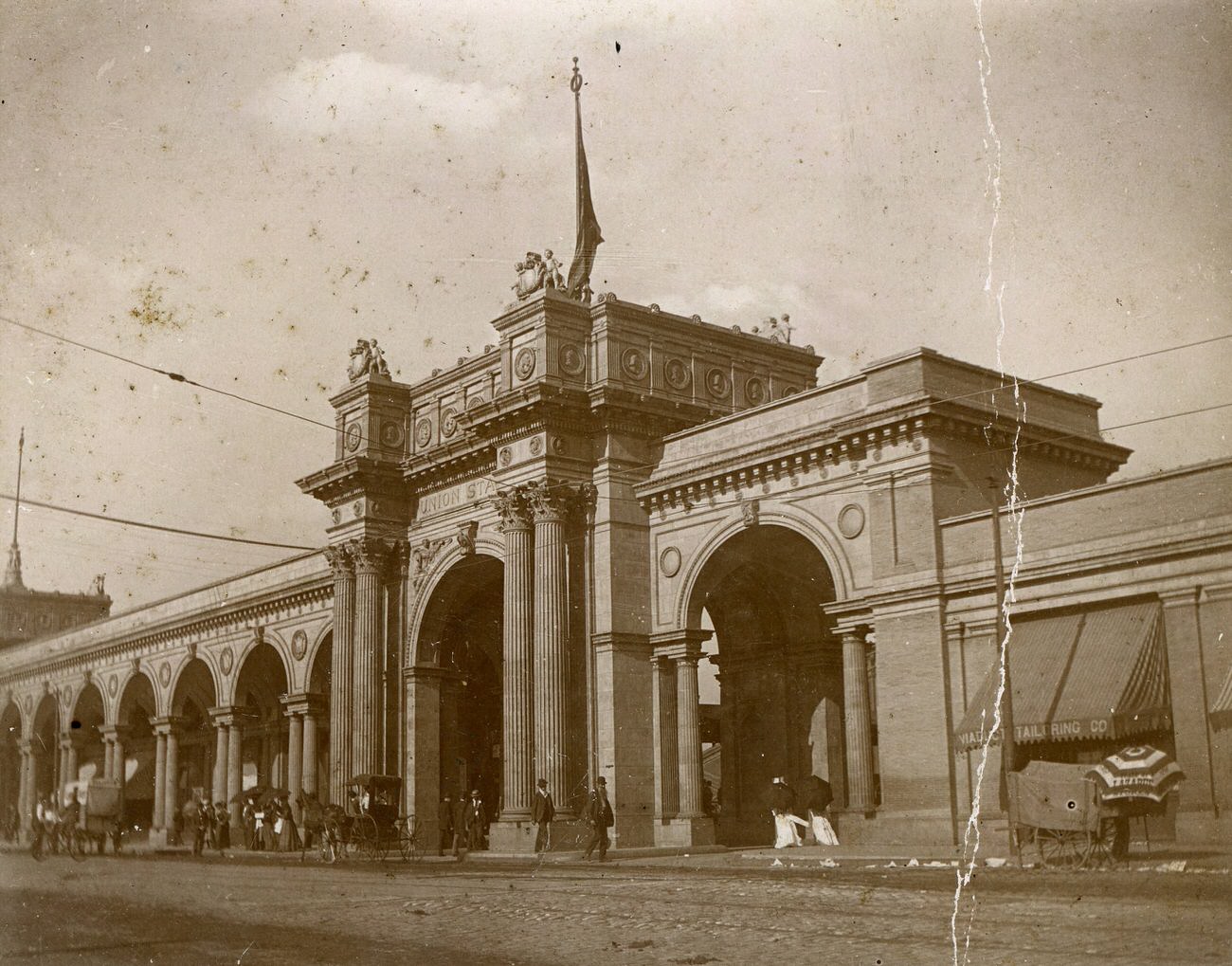
Third Columbus Union Station, designed by Daniel Hudson Burnham, opened in 1897, circa 1901.
North High Street facade of the third Columbus Union Station, designed by Daniel Hudson Burnham, circa 1900.

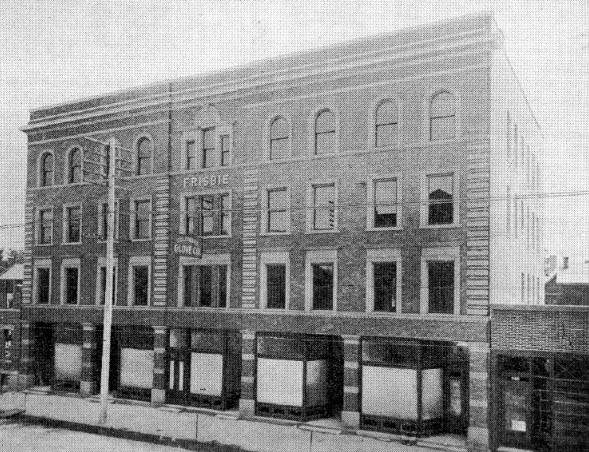
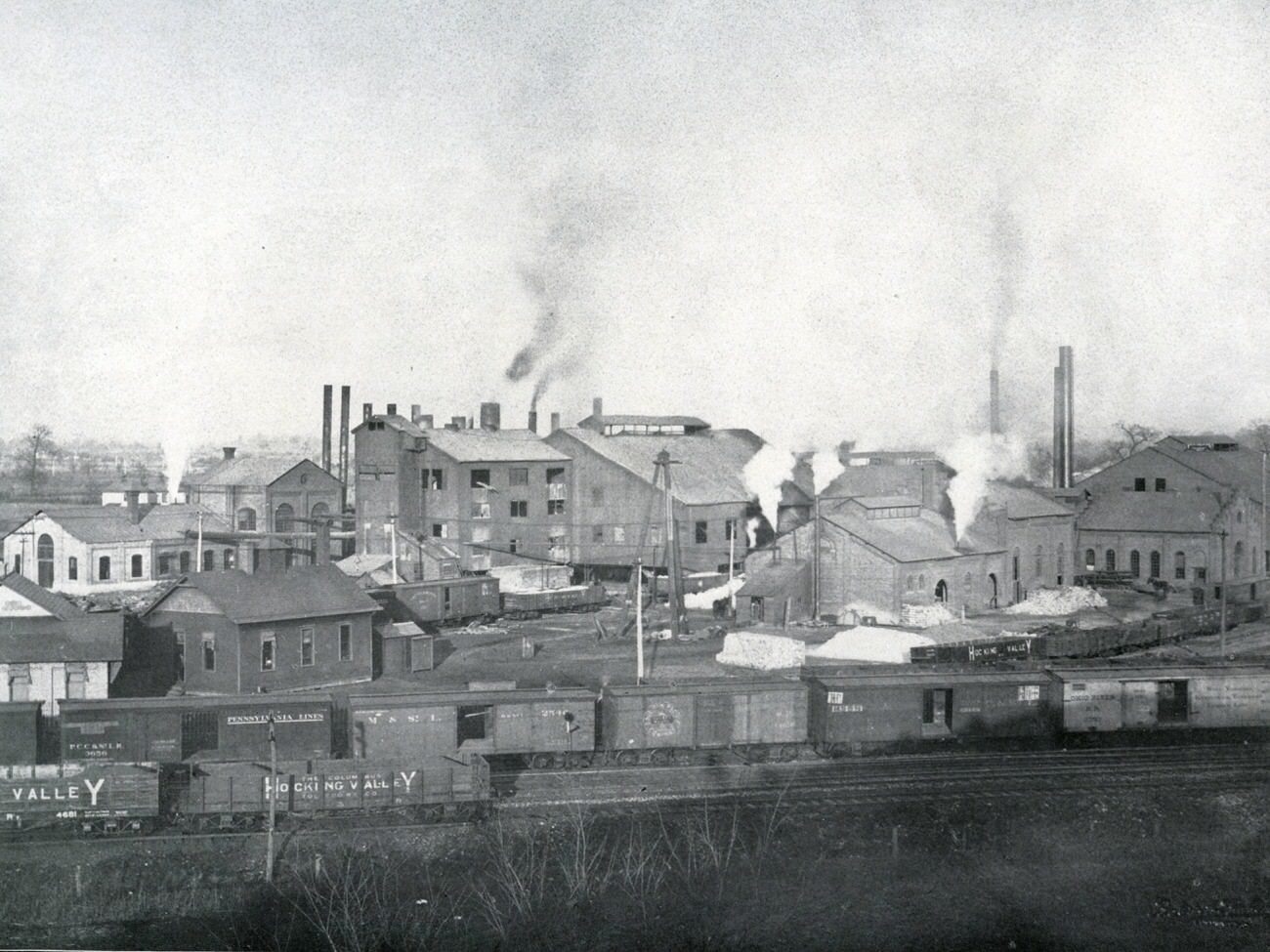
Industry was a major driver of Columbus’s growth. The Columbus Buggy Company, founded in 1875 by George M. and Oscar G. Peters, had grown into the largest lightweight buggy manufacturer in the world. The National Steel Company operated a large plant in the city. The Columbus Glove Company, located on East Long Street with William J. Frisbie as president, was one of four glove manufacturers operating in Columbus by 1905.
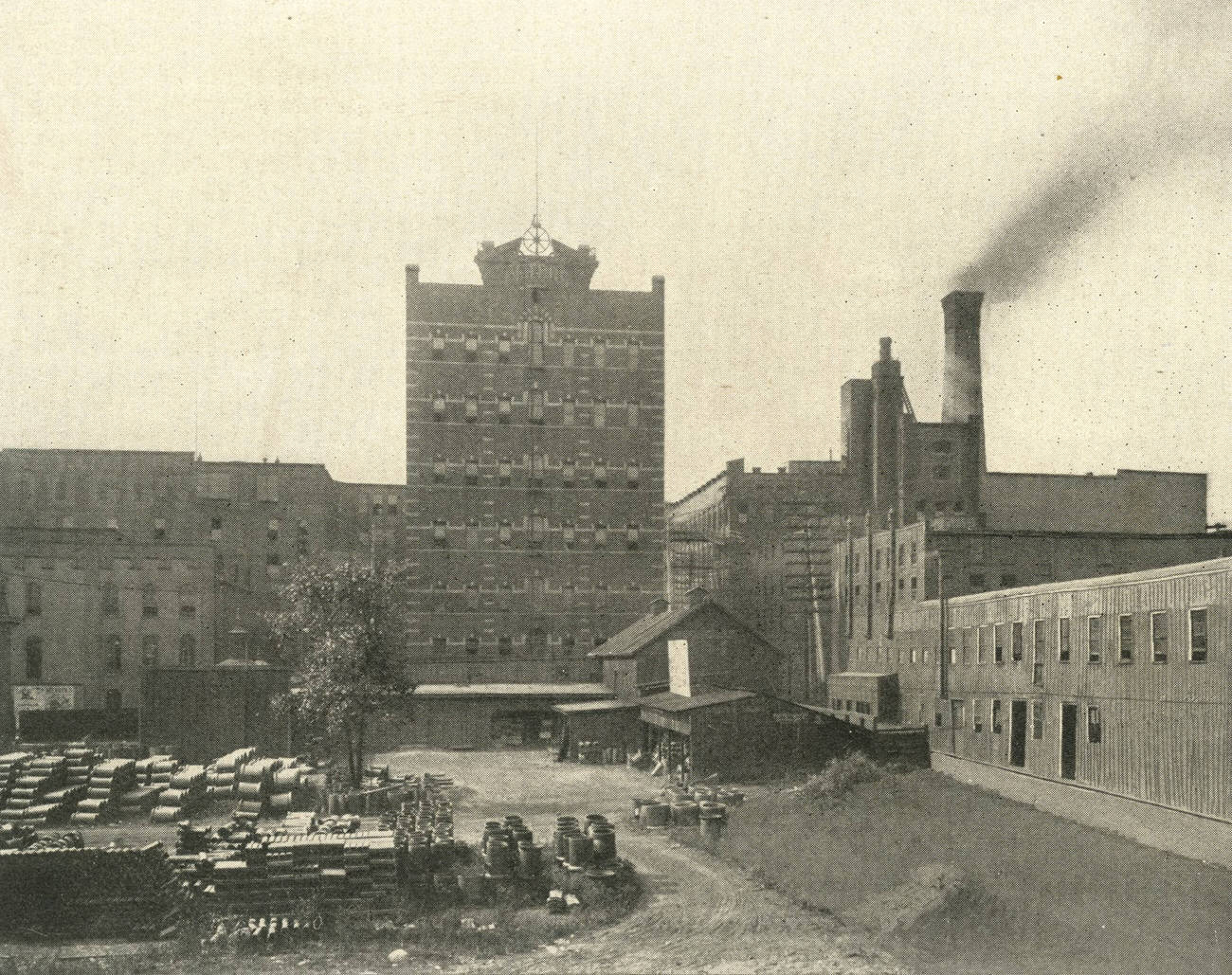
Columbus Buggy Company, started by George M. Peters and Oscar G. Peters in 1875, largest lightweight buggy manufacturer in the world, later entered automotive industry but folded in 1913, photograph from 1901.
National Steel Company's large Columbus plant, 1900.
National Steel Company’s large Columbus plant, 1900.
Columbus Glove Company, one of four glove manufacturers in Columbus, located at 747 - 755 East Long street, William J. Frisbie as president in 1905, photograph from 1904.
Columbus Glove Company, one of four glove manufacturers in Columbus, located at 747 – 755 East Long street, William J. Frisbie as president in 1905, photograph from 1904.

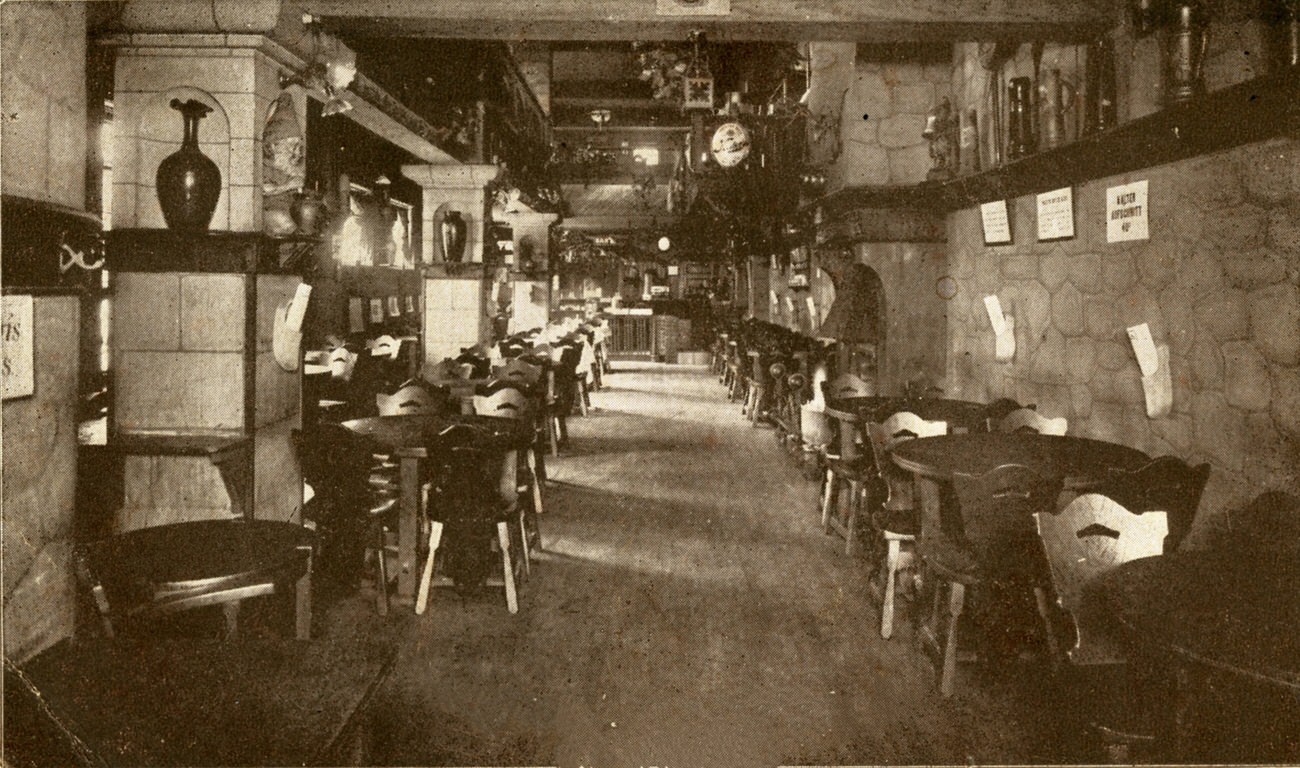
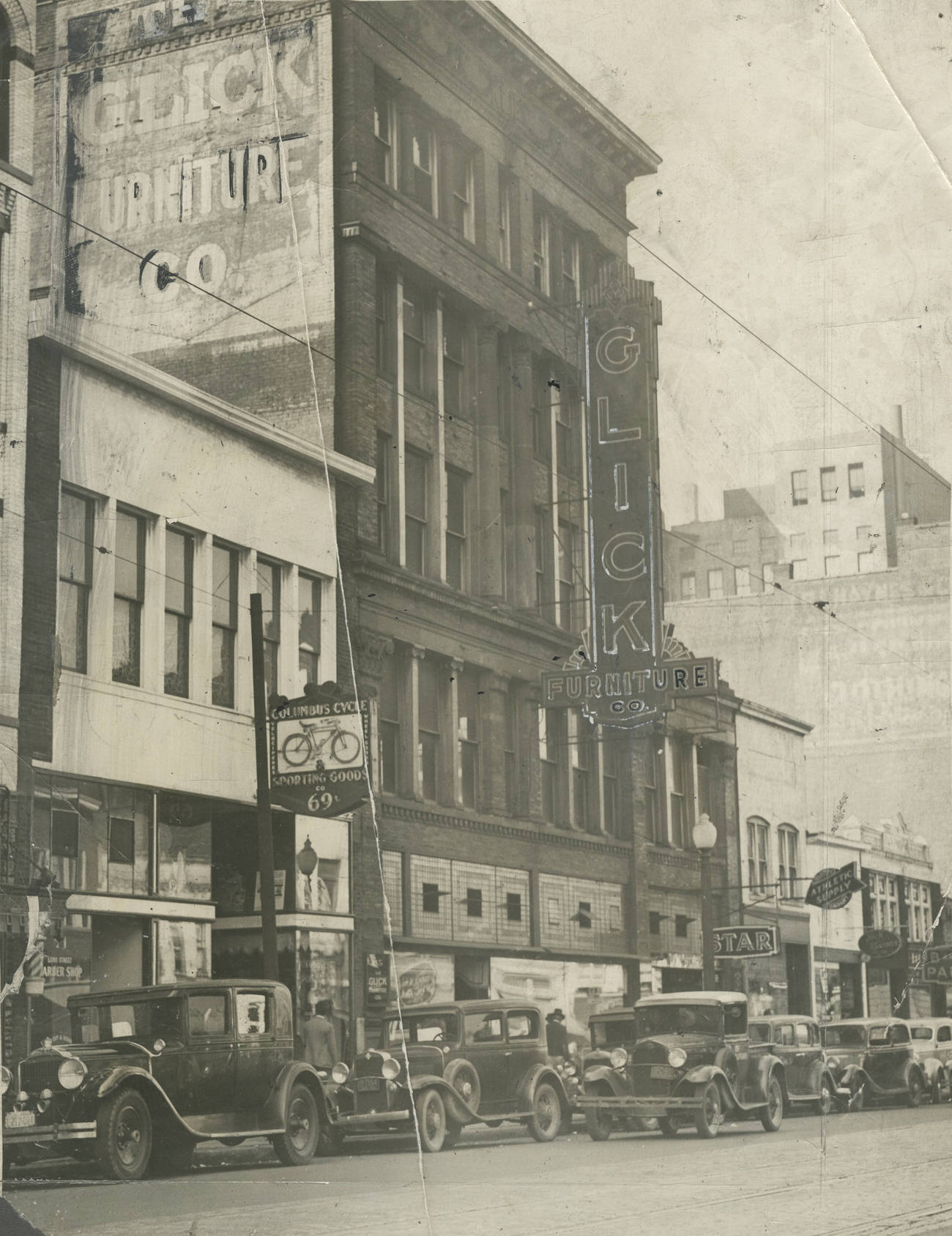
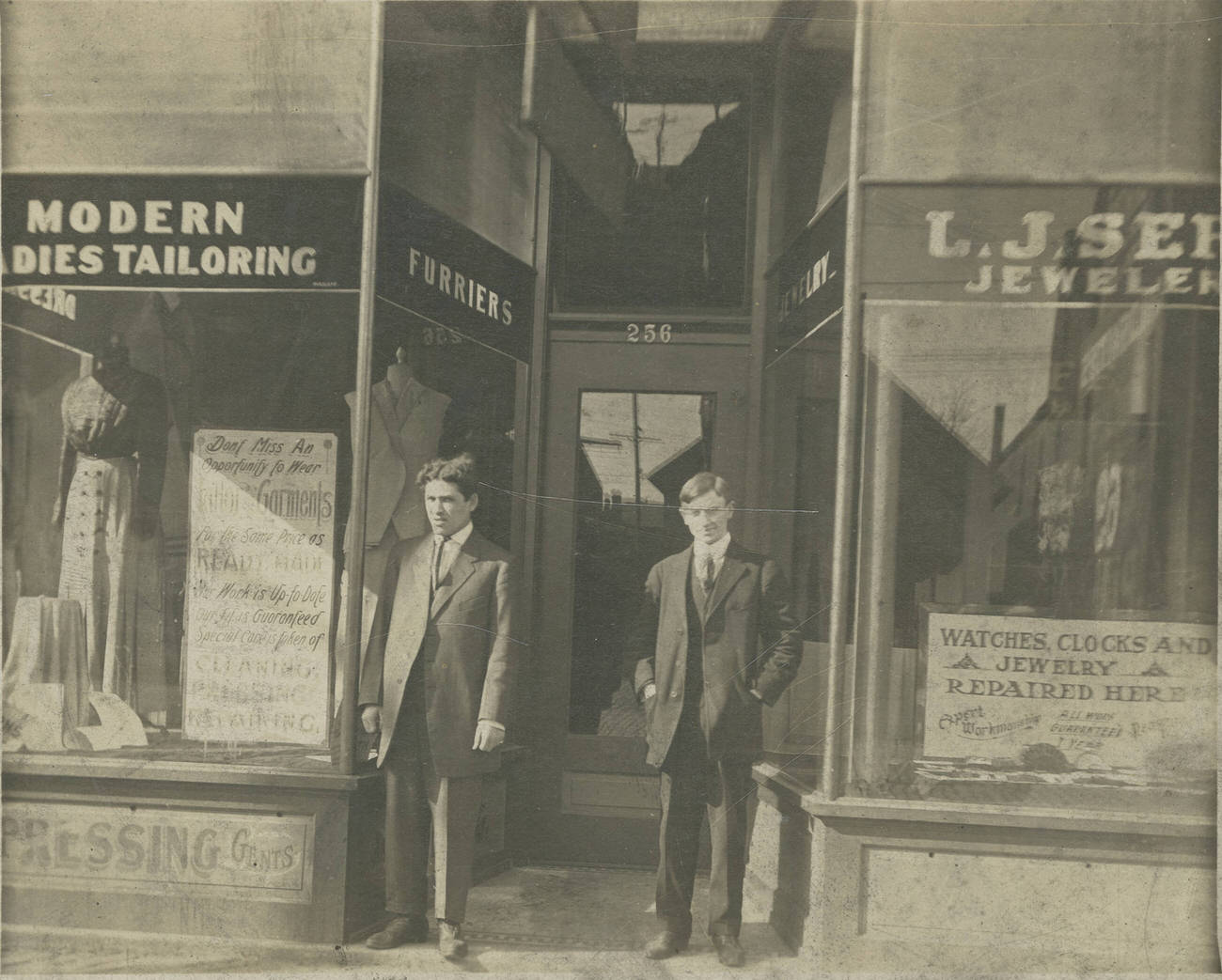
Beyond heavy manufacturing, Columbus had a diverse commercial economy. The Central Market at Rich and 4th Streets was a busy hub for everyday commerce. Retail storefronts like Borofsky Tailoring and L.J. Seff Jewelers on East Main Street, and the Glick Furniture Company on East Long Street, served a growing consumer population. Restaurants like Der Munich in the Rankin Building added to the variety of the city’s commercial life.
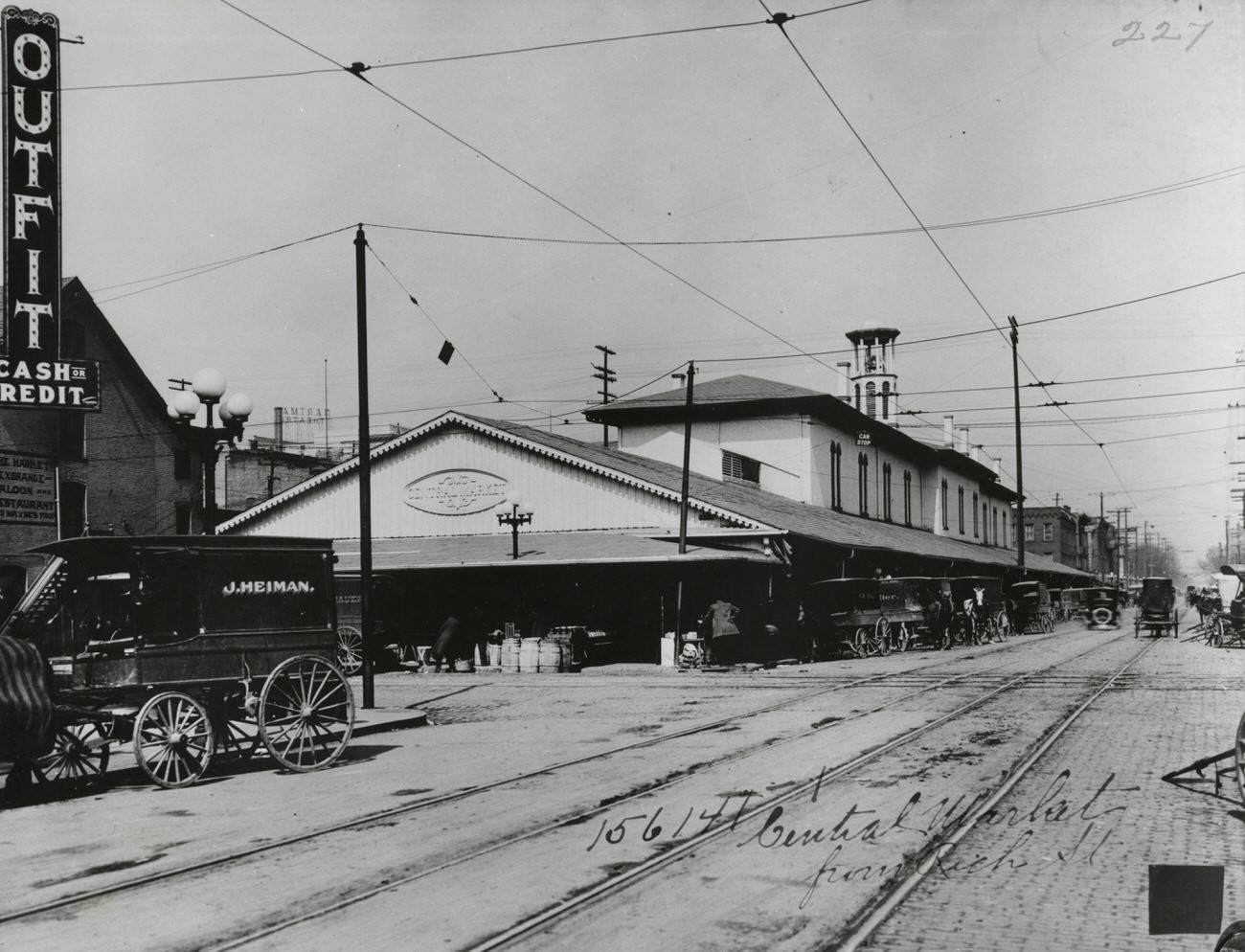
Central Market looking north-northwest at Rich and 4th Streets, 1901
Storefronts of Borofsky Tailoring and L.J. Seff Jewelers at 256 East Main Street, 1909.
Der Munich Restaurant in the Rankin Building, Columbus, 1909.

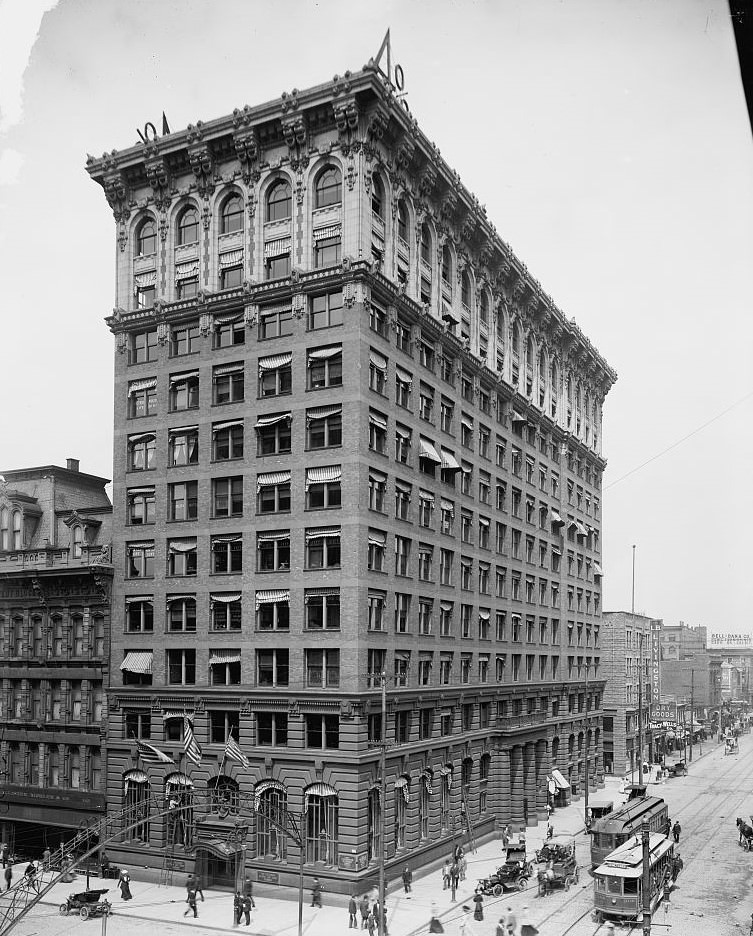
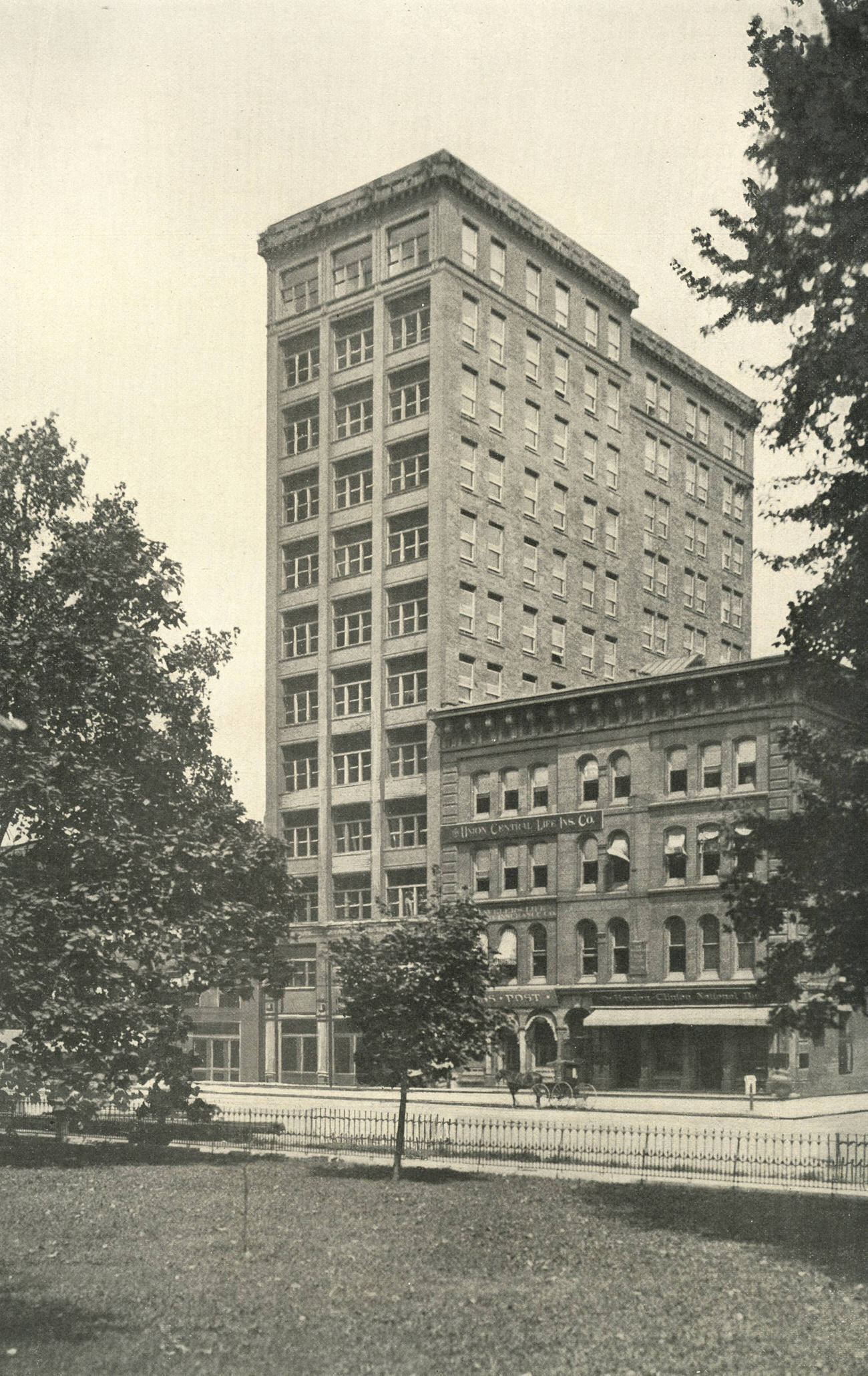
The city’s financial sector was also maturing. The Columbus Savings and Trust Company, also known as the Ferris Building, was a prominent presence in the downtown banking landscape. New commercial buildings like the Hayden Building on Broad Street, which opened in 1901, added modern office space that businesses and professional firms quickly filled.
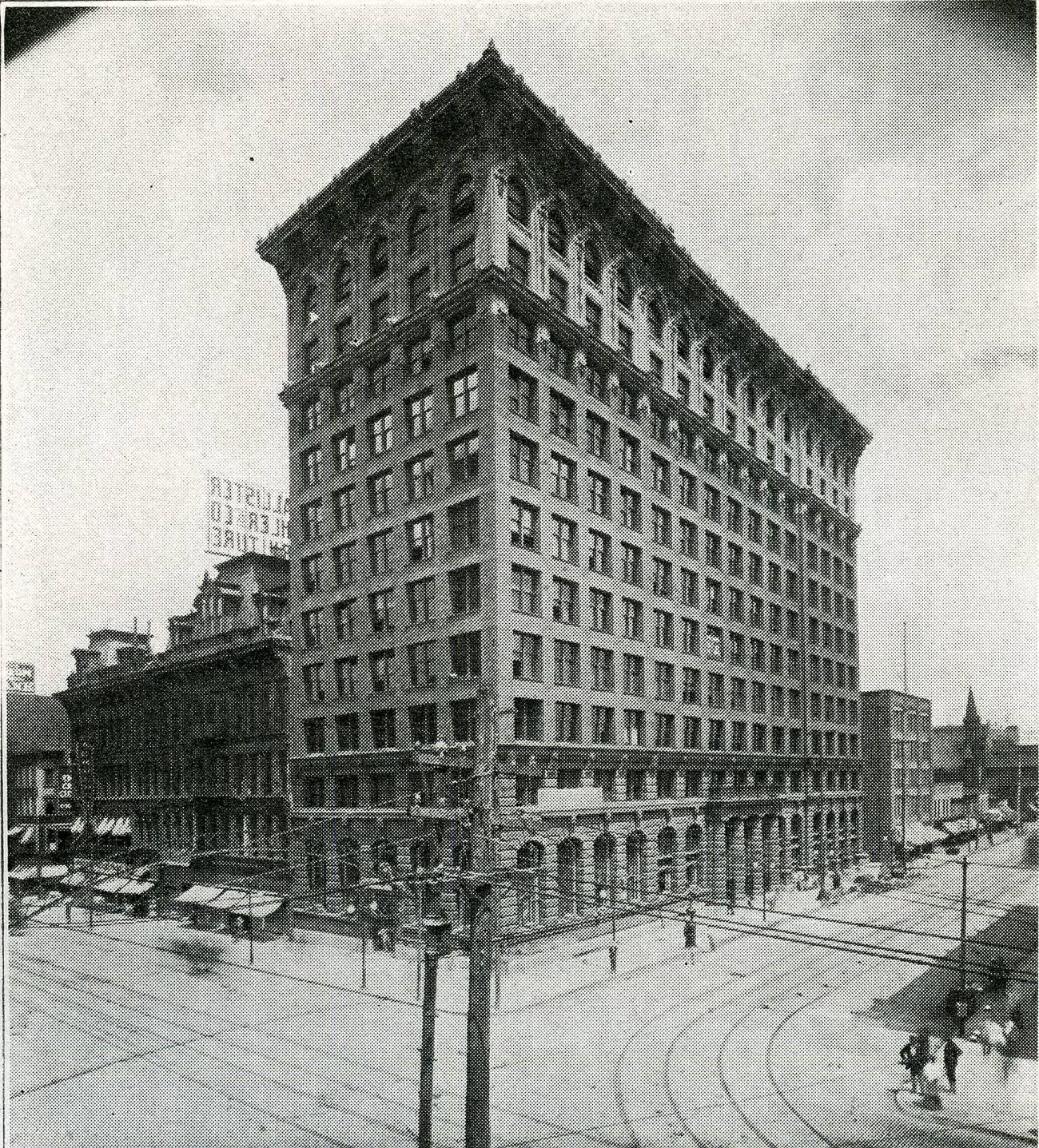
Northeast view of Columbus Savings and Trust Company, also known as Ferris Building, 1909
Hayden Building on Broad Street, opened in 1901

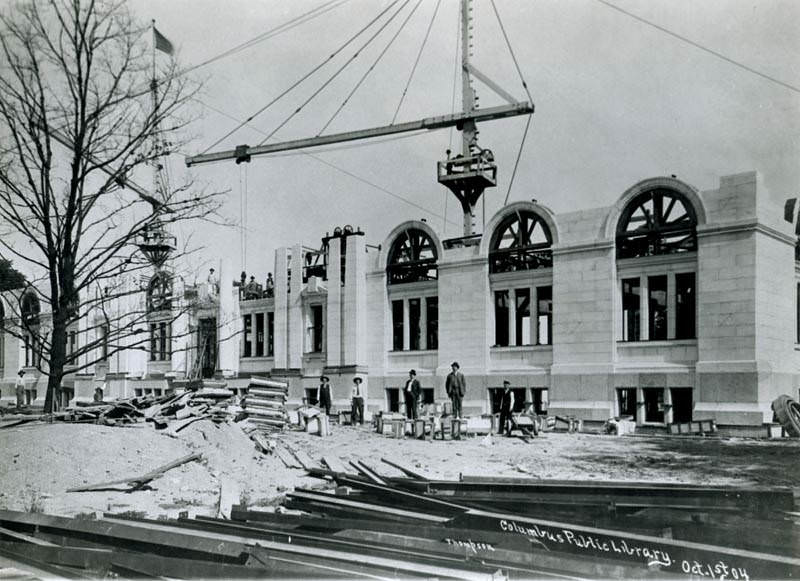
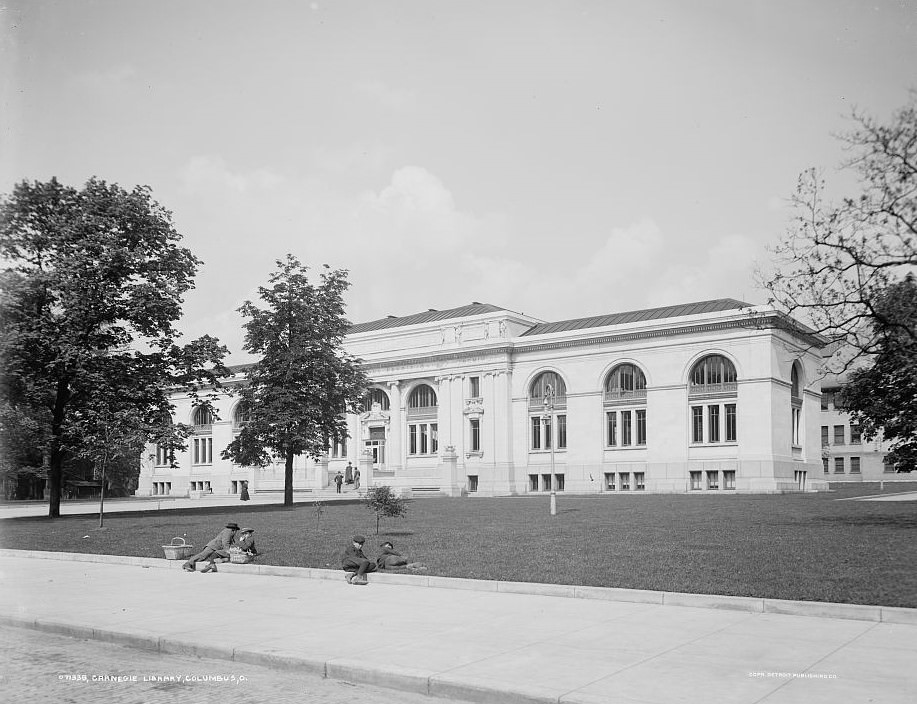
One of the most significant public projects of the decade was the construction of the Carnegie Library, funded in part through Andrew Carnegie’s national library-building program. Construction began in 1904, and photographs from that year capture the foundation work, rising walls, and the detail of window arch construction. The library opened to the public in 1907.
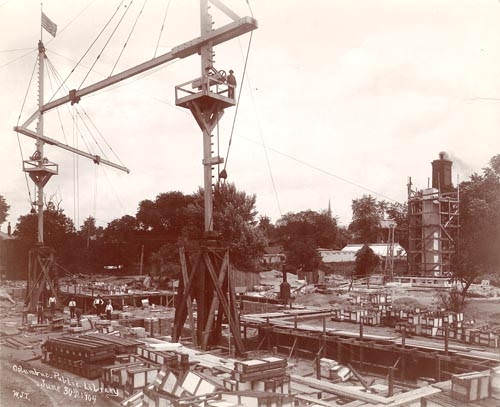
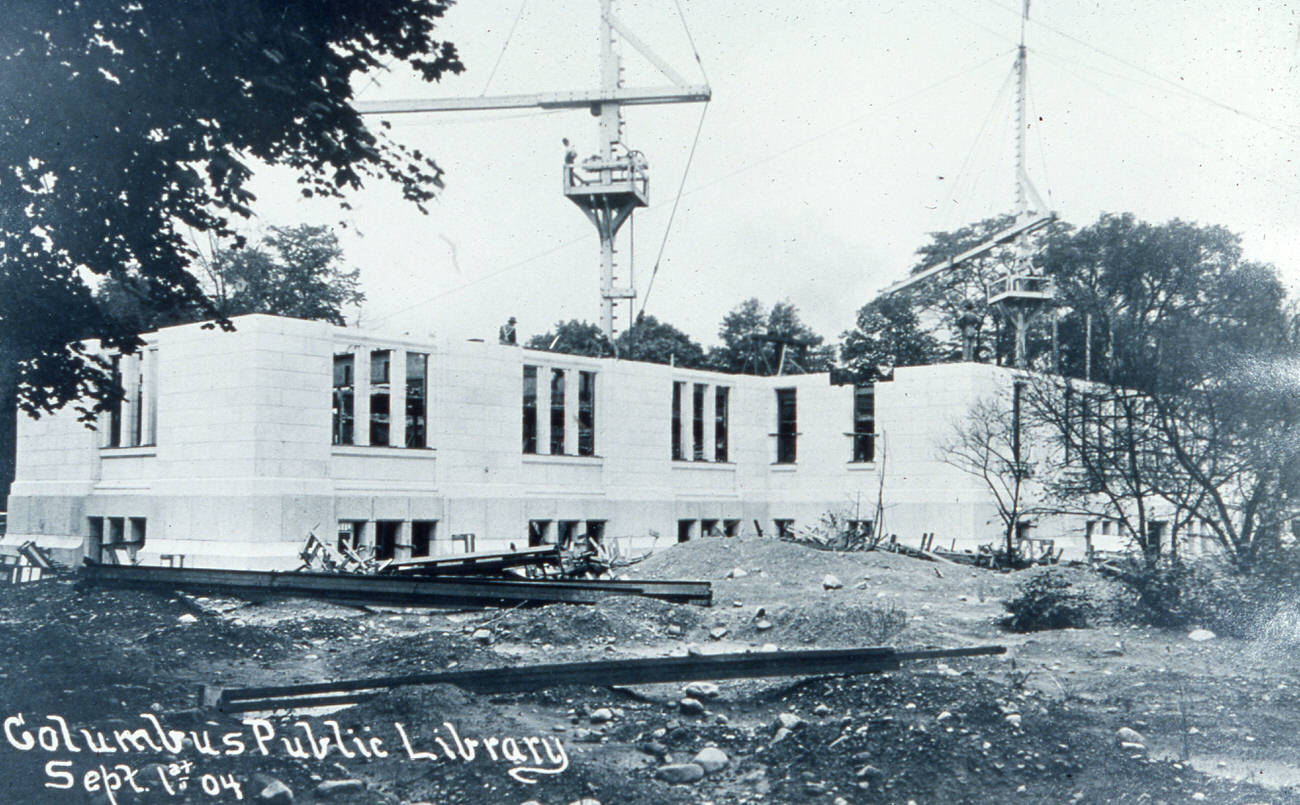
Columbus Metropolitan Library Construction, foundation and cranes for Carnegie Library construction, 1904.
Construction of the Columbus Metropolitan Library's walls, 1904.
Construction of the Columbus Metropolitan Library’s walls, 1904.
Construction of window arches in Columbus Metropolitan Library's Main Library, 1904.
Construction of window arches in Columbus Metropolitan Library’s Main Library, 1904.
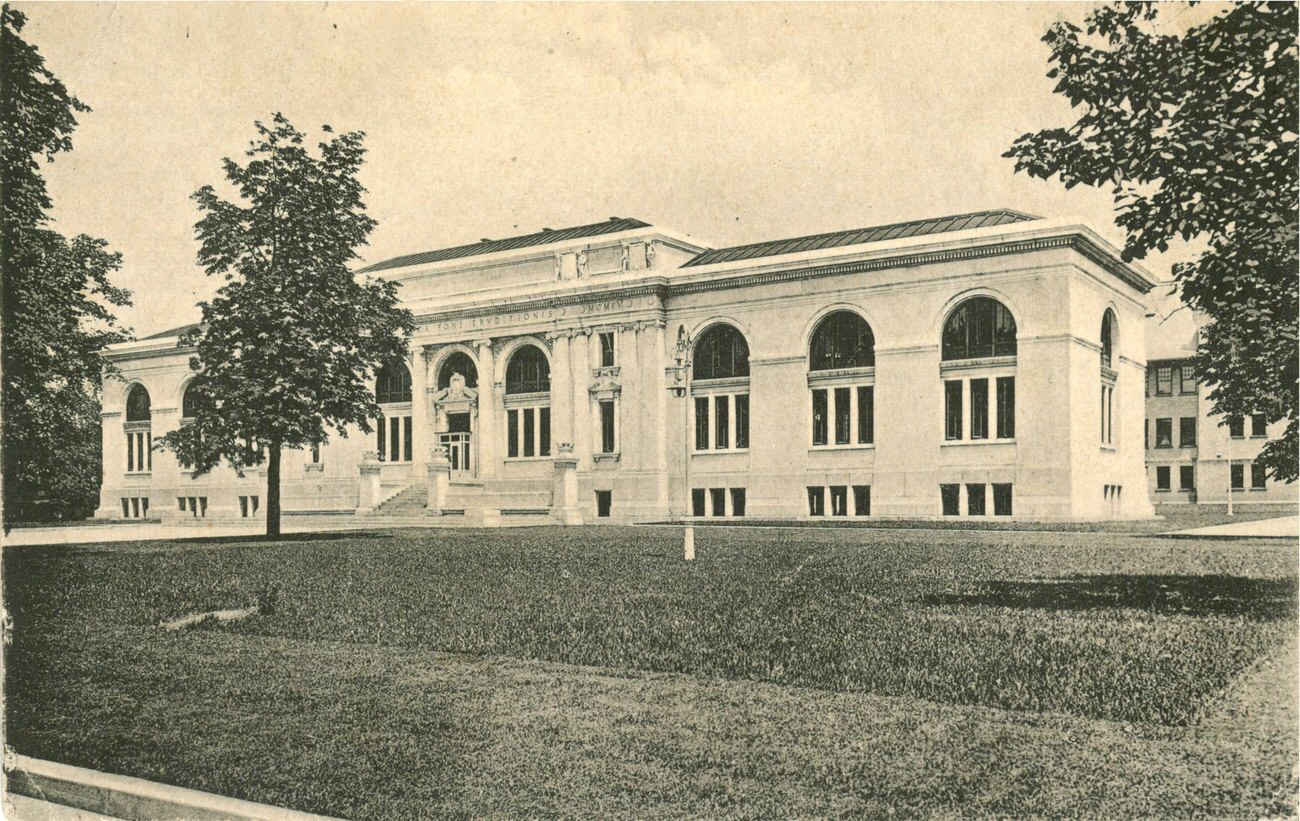
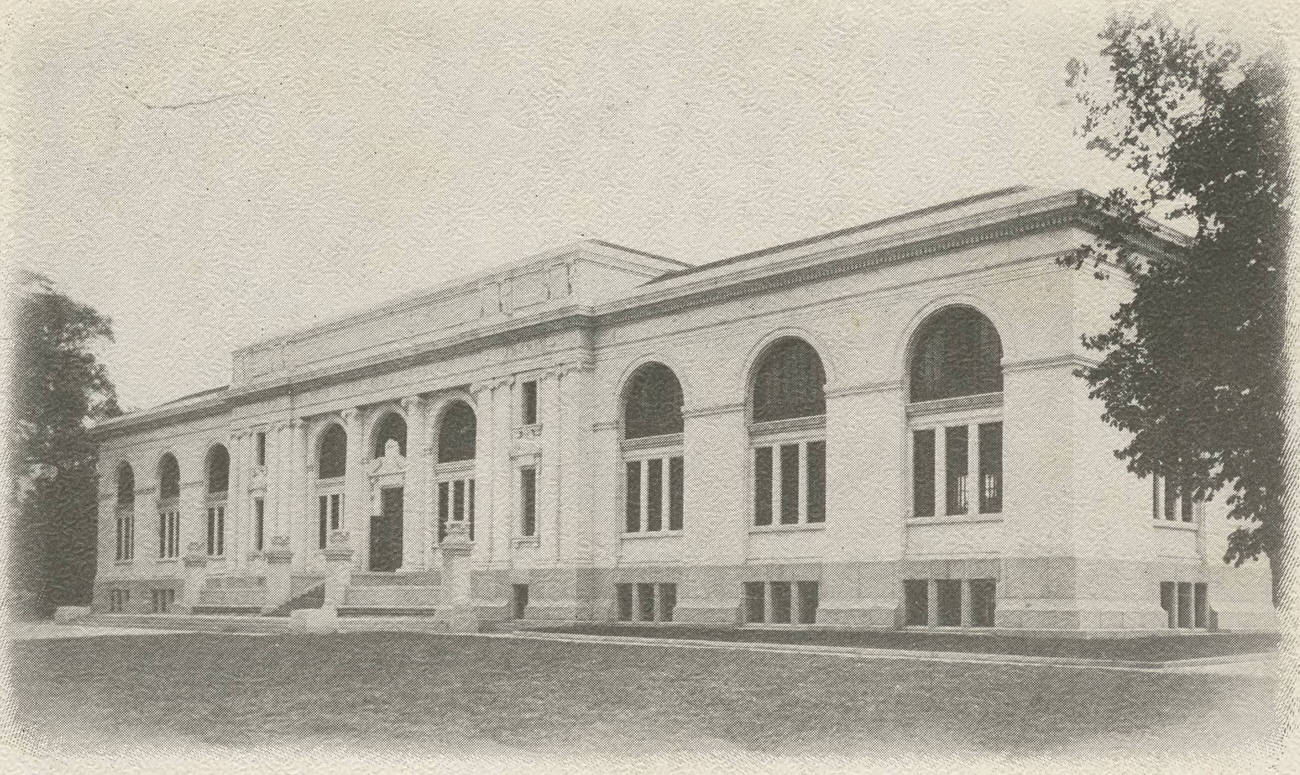
Newly completed Columbus Public Library, dedicated in 1907.

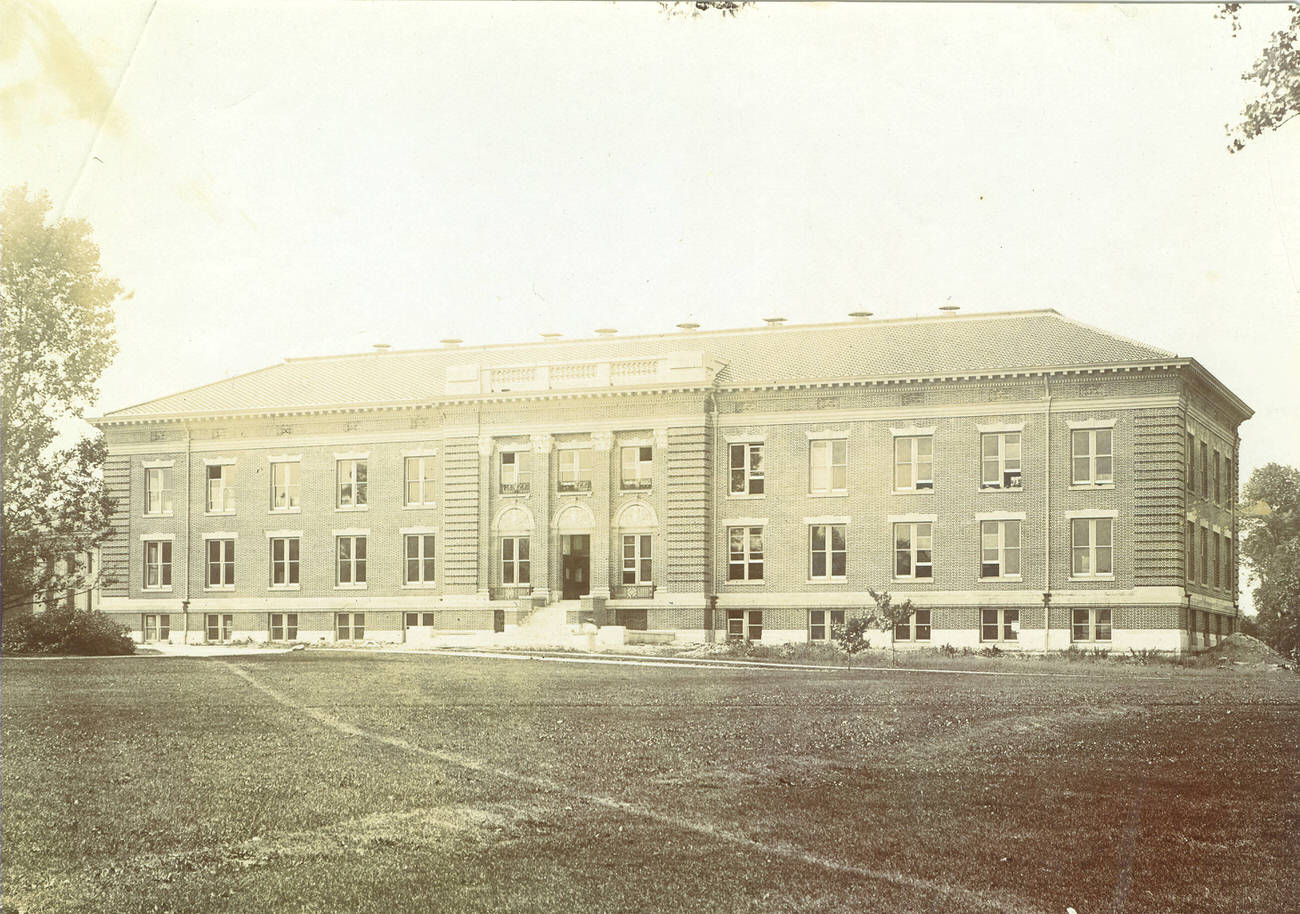
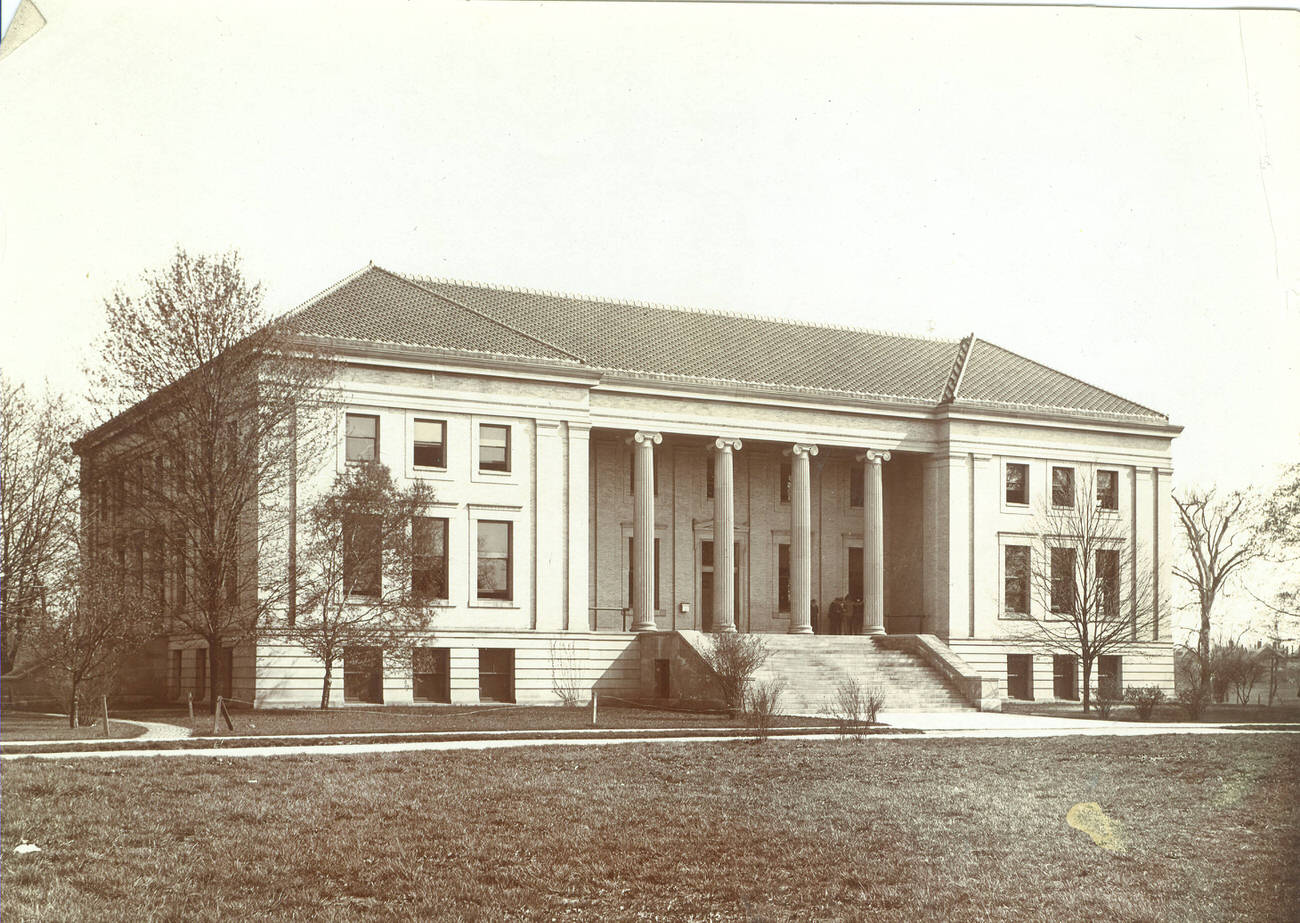
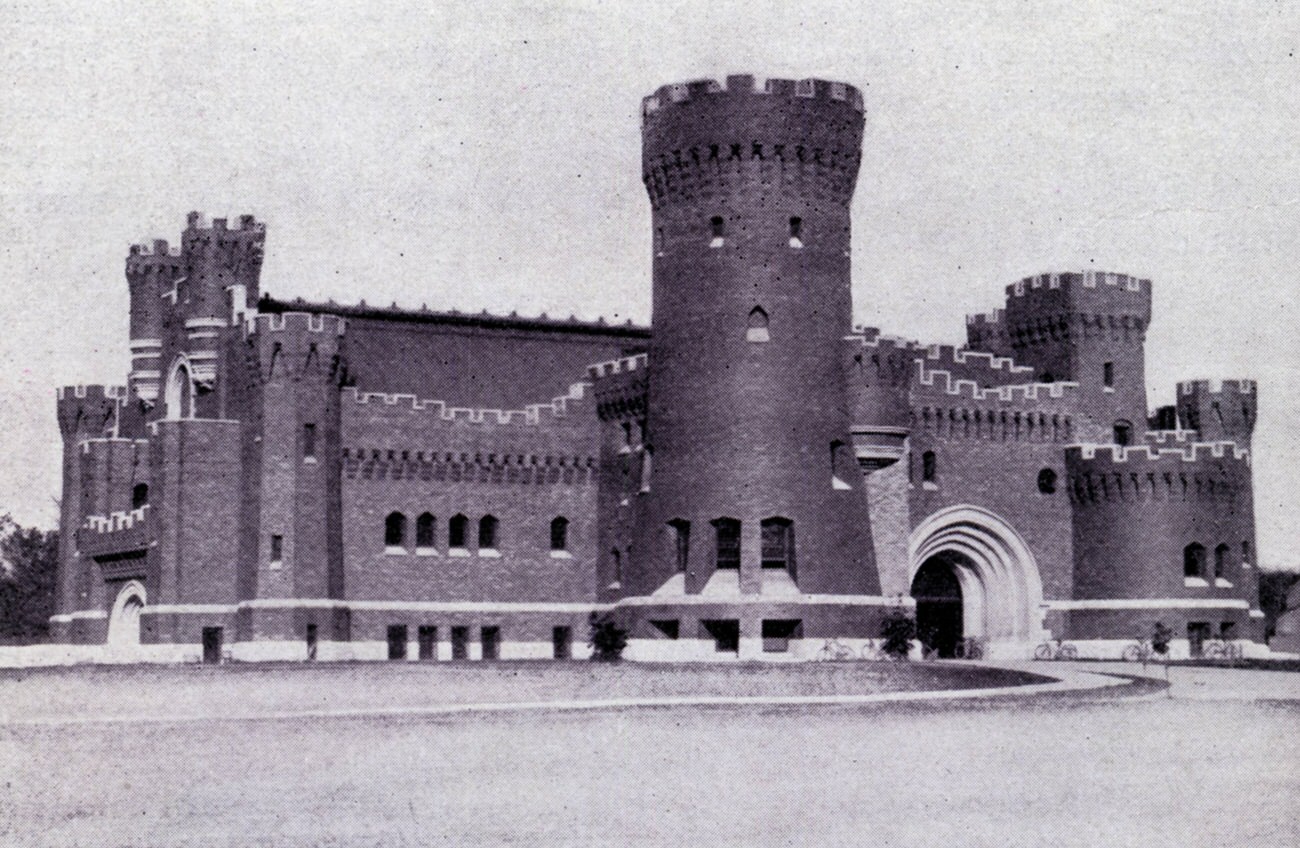
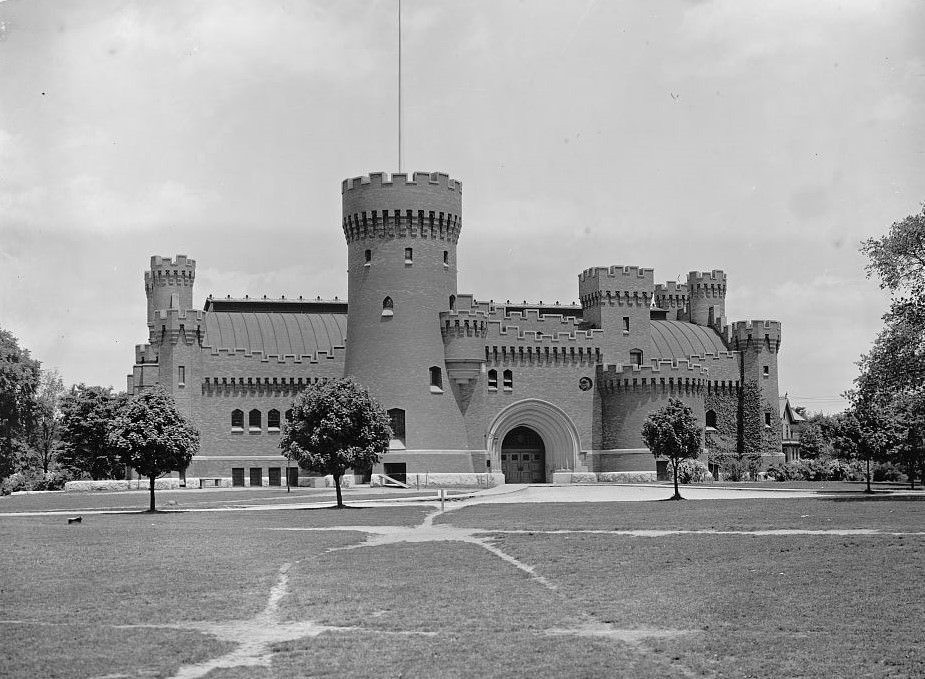
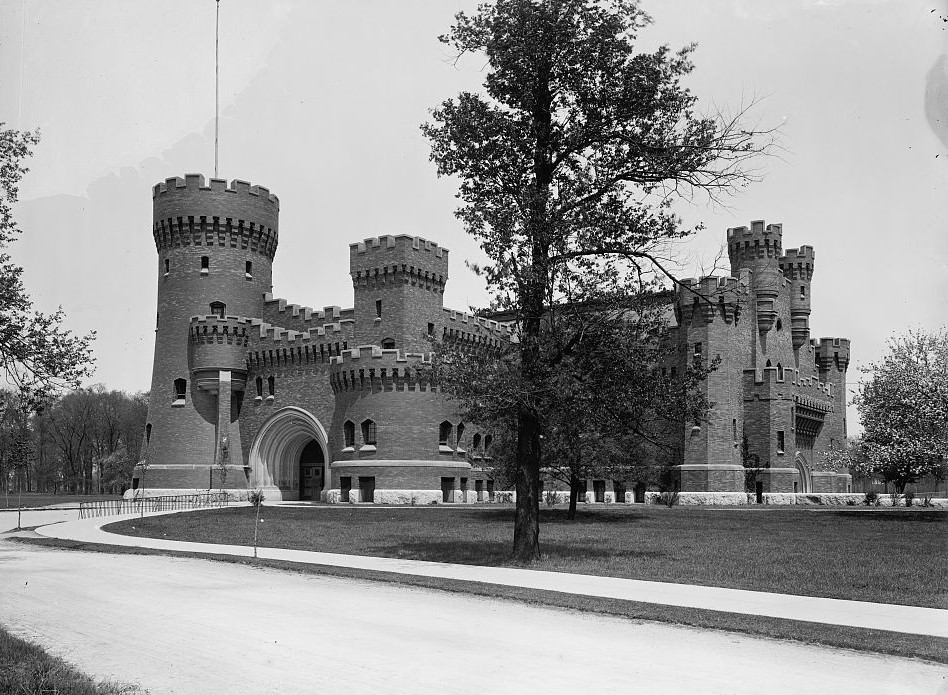
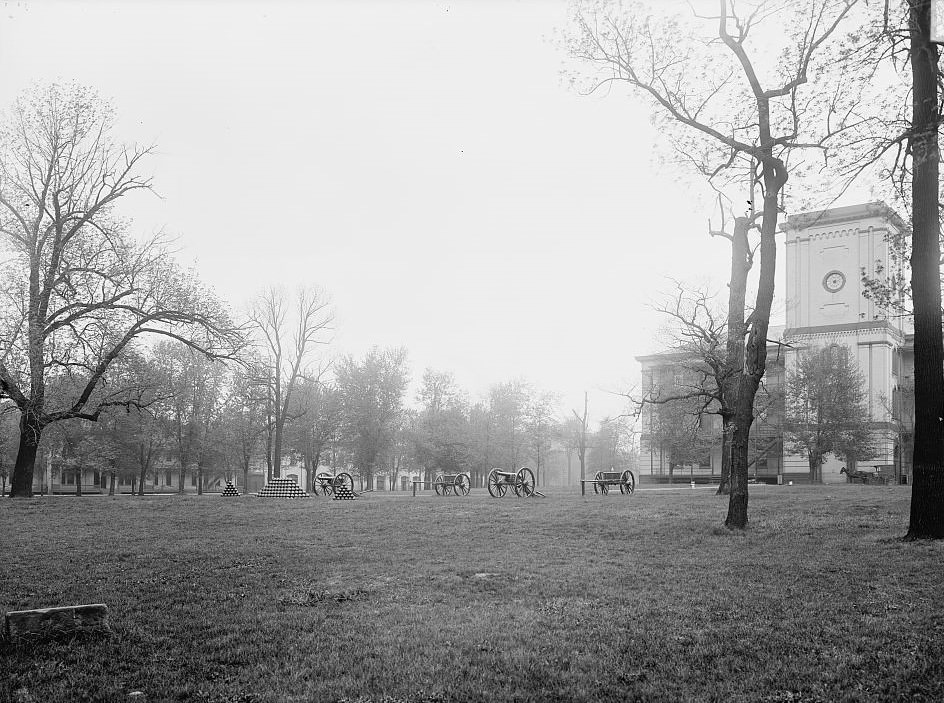
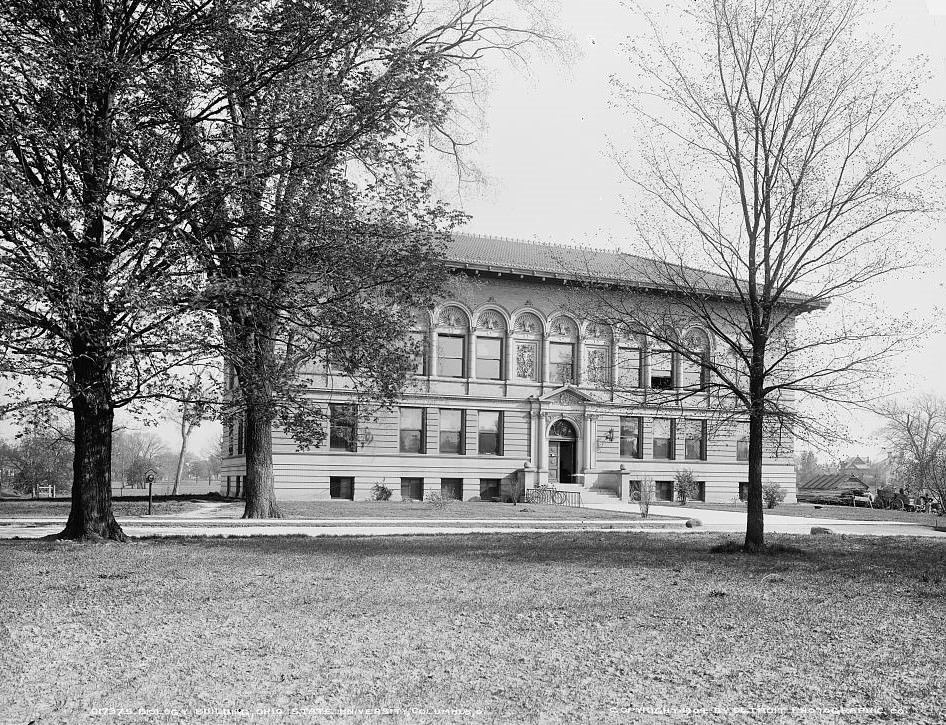
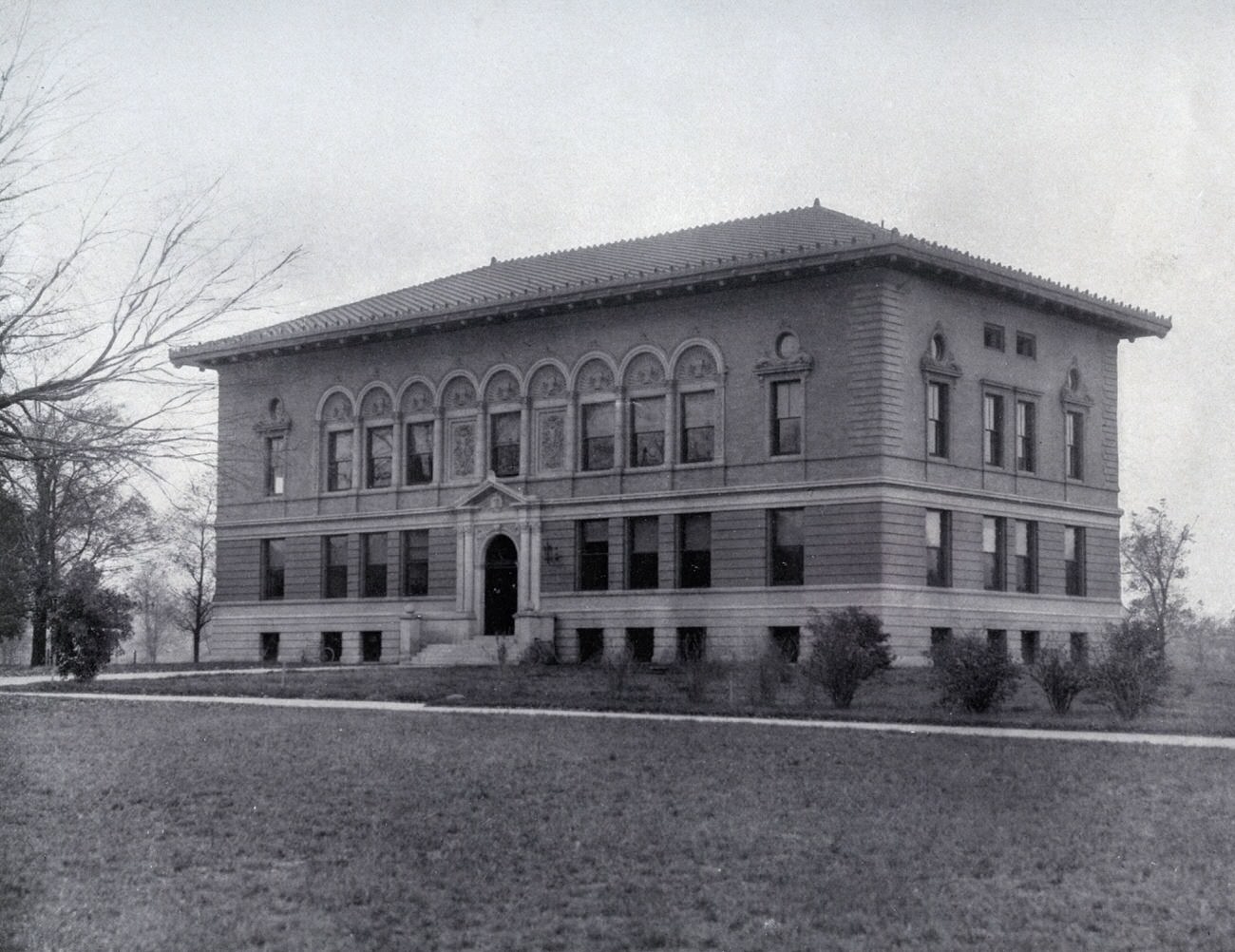
Ohio State University was expanding rapidly during this period. New buildings rose across campus to support growing departments and student enrollment. The Armory and Gymnasium, built in 1898 in a French Feudal architectural style, anchored the physical campus. Biological Hall, designed by Yost and Packard and also built in 1898, served science students until its demolition in 1924. Derby Hall, the chemistry building, was completed in 1906, and Page Hall — originally the College of Business — opened in 1903.
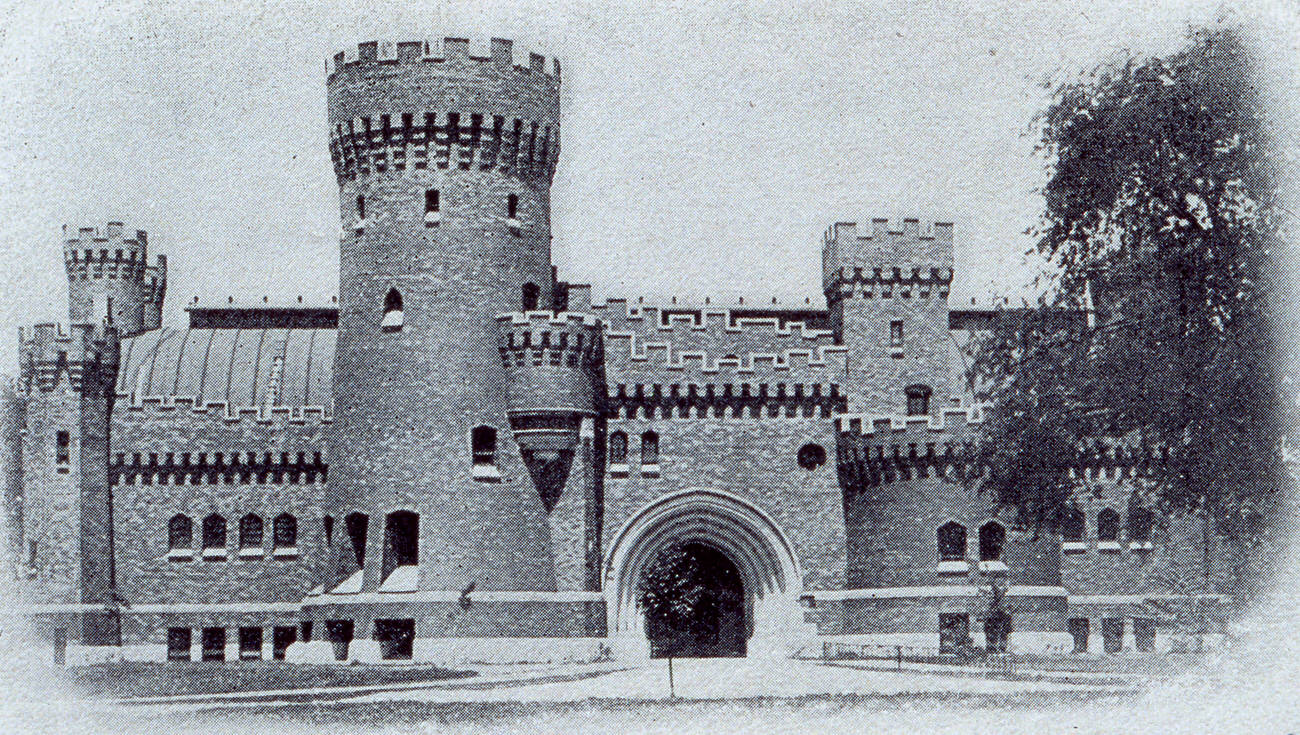
Ohio State University's Armory and Gymnasium, built 1898, French Feudal architectural style, 1906.
Ohio State University’s Armory and Gymnasium, built 1898, French Feudal architectural style, 1906.
Biological Hall at The Ohio State University, designed by Yost & Packard, built in 1898, demolished in 1924, circa 1900.
Derby Hall (Chemistry building) at Ohio State University, completed in 1906
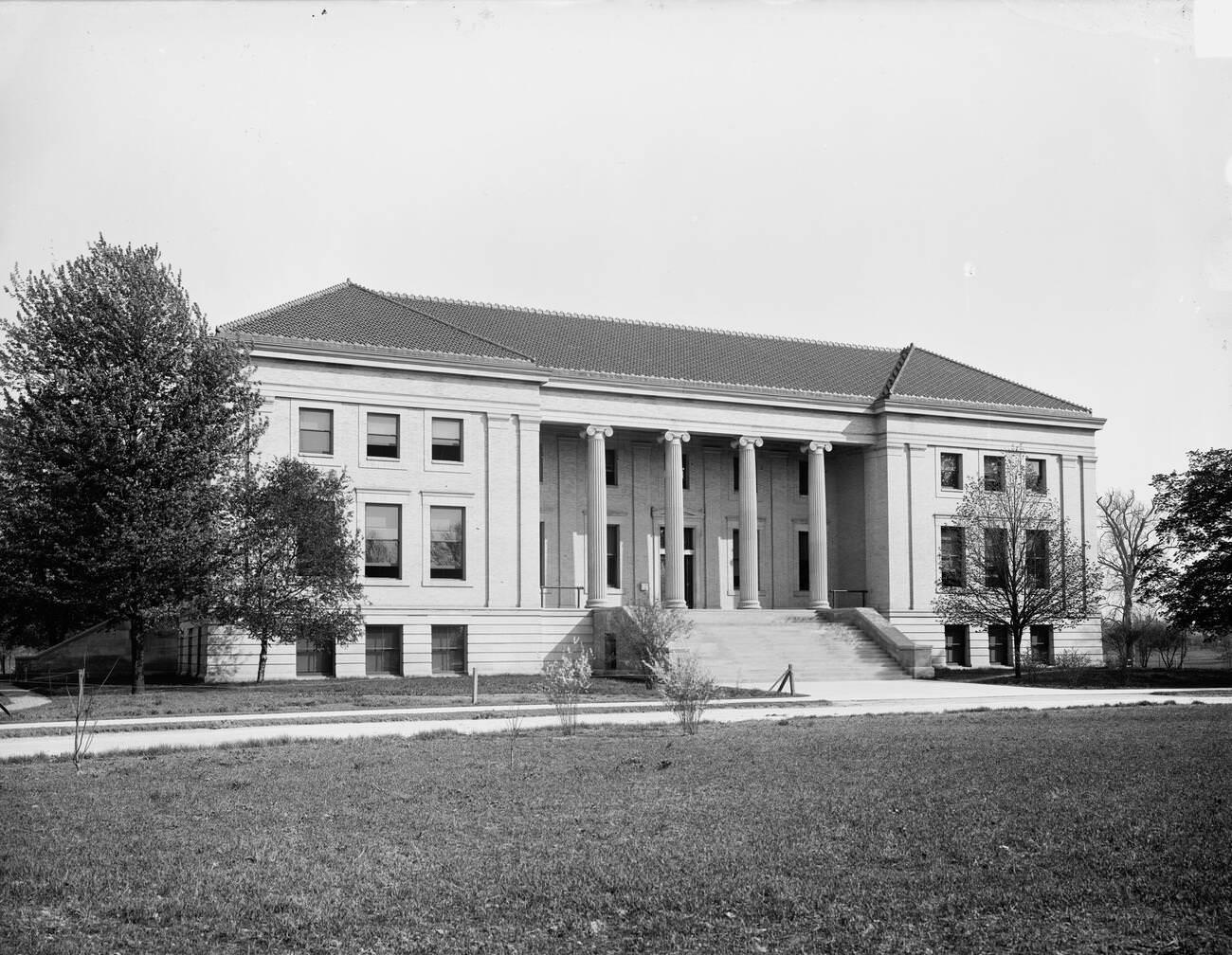
Page Hall, old College of Business at Ohio State University, now houses John Glenn School of Public Affairs, built in 1903, renovated in 2004, 1903.

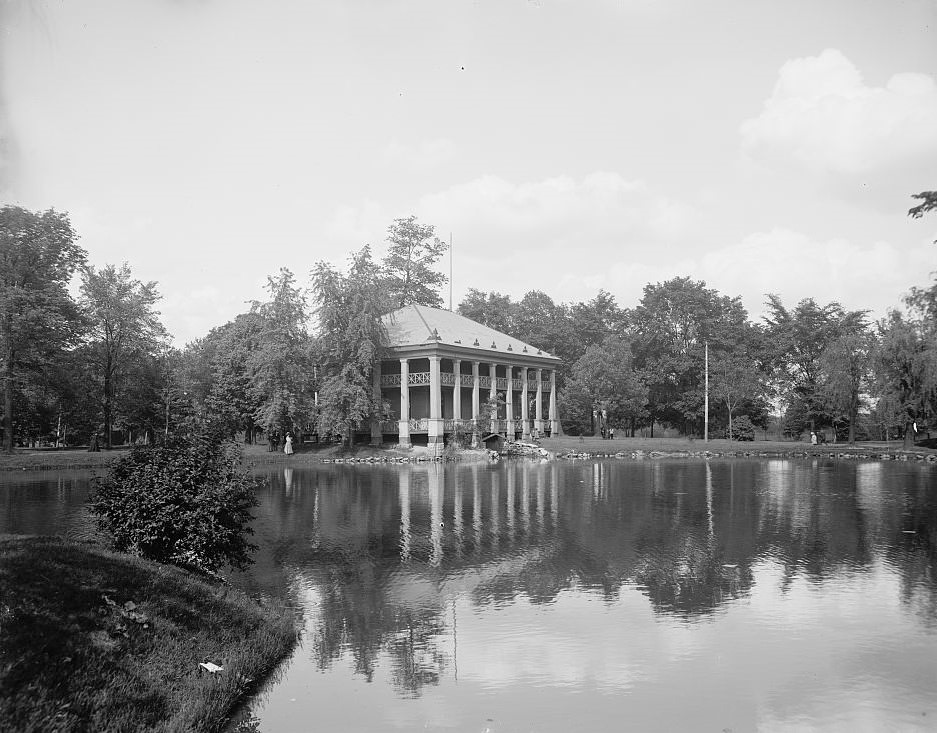
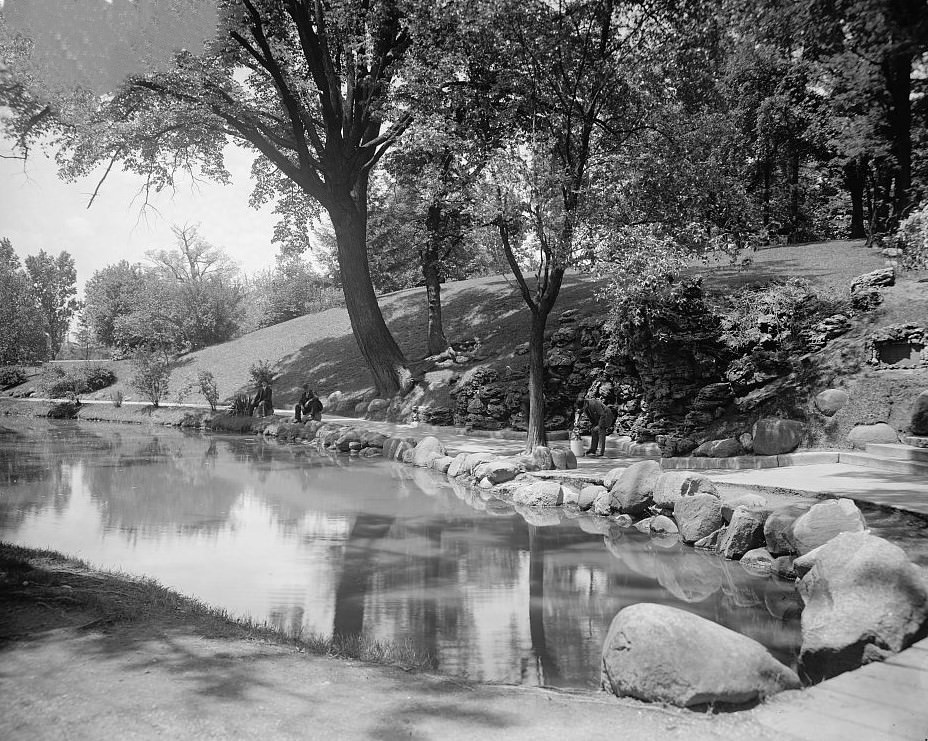
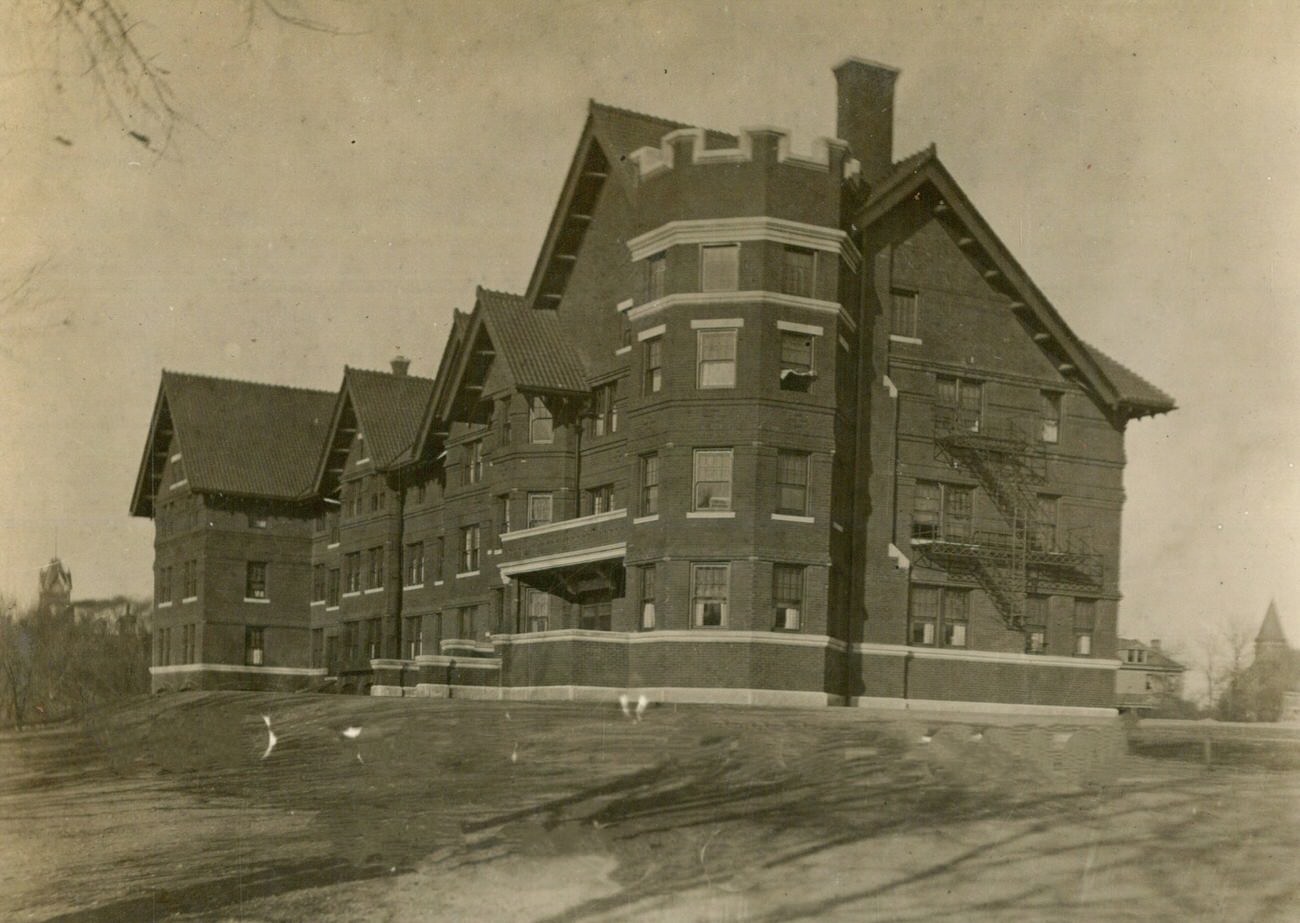
The Ohio State campus also featured peaceful natural spaces. A spring and small lake on campus grounds offered students a quiet contrast to the activity of classrooms and laboratories. Oxley Hall, the university’s women’s dormitory, opened in September 1908, reflecting the growing presence of women in higher education.
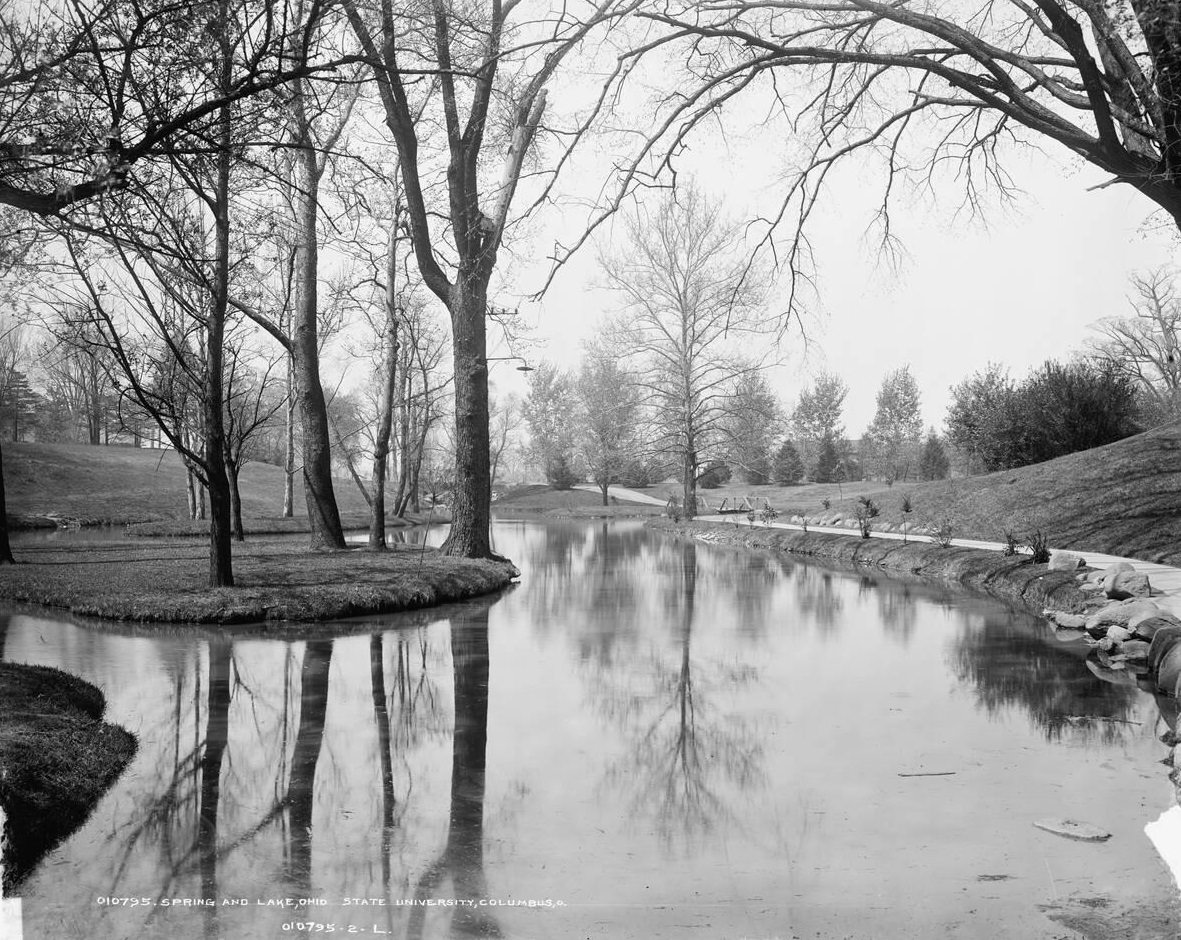
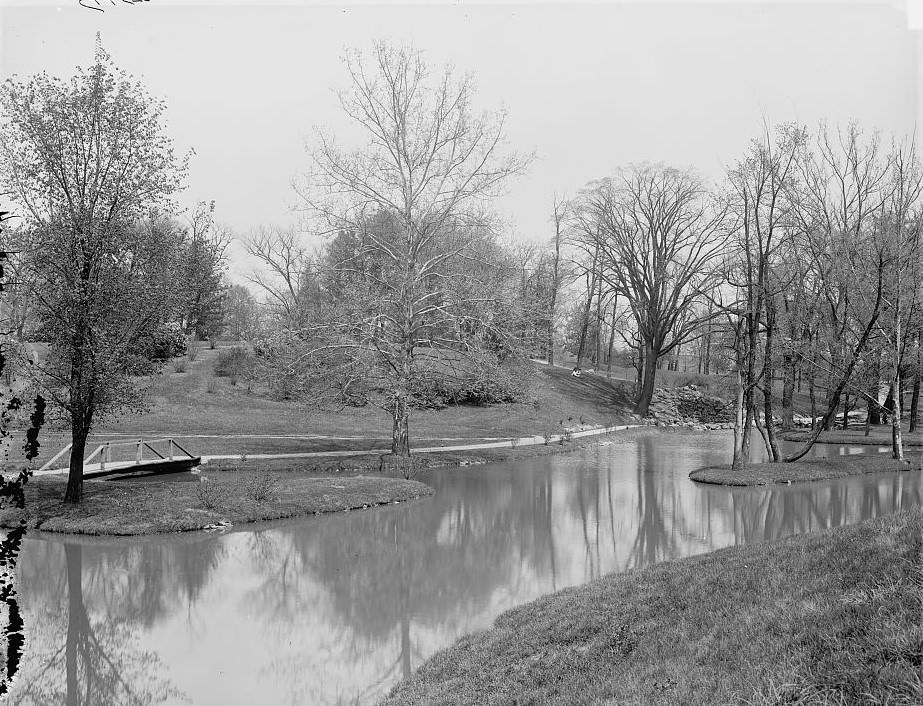
Spring and lake, Ohio State University, Columbus, 1904
Oxley Hall, Women's Dormitory at Ohio State University, opened September 1908
Oxley Hall, Women’s Dormitory at Ohio State University, opened September 1908

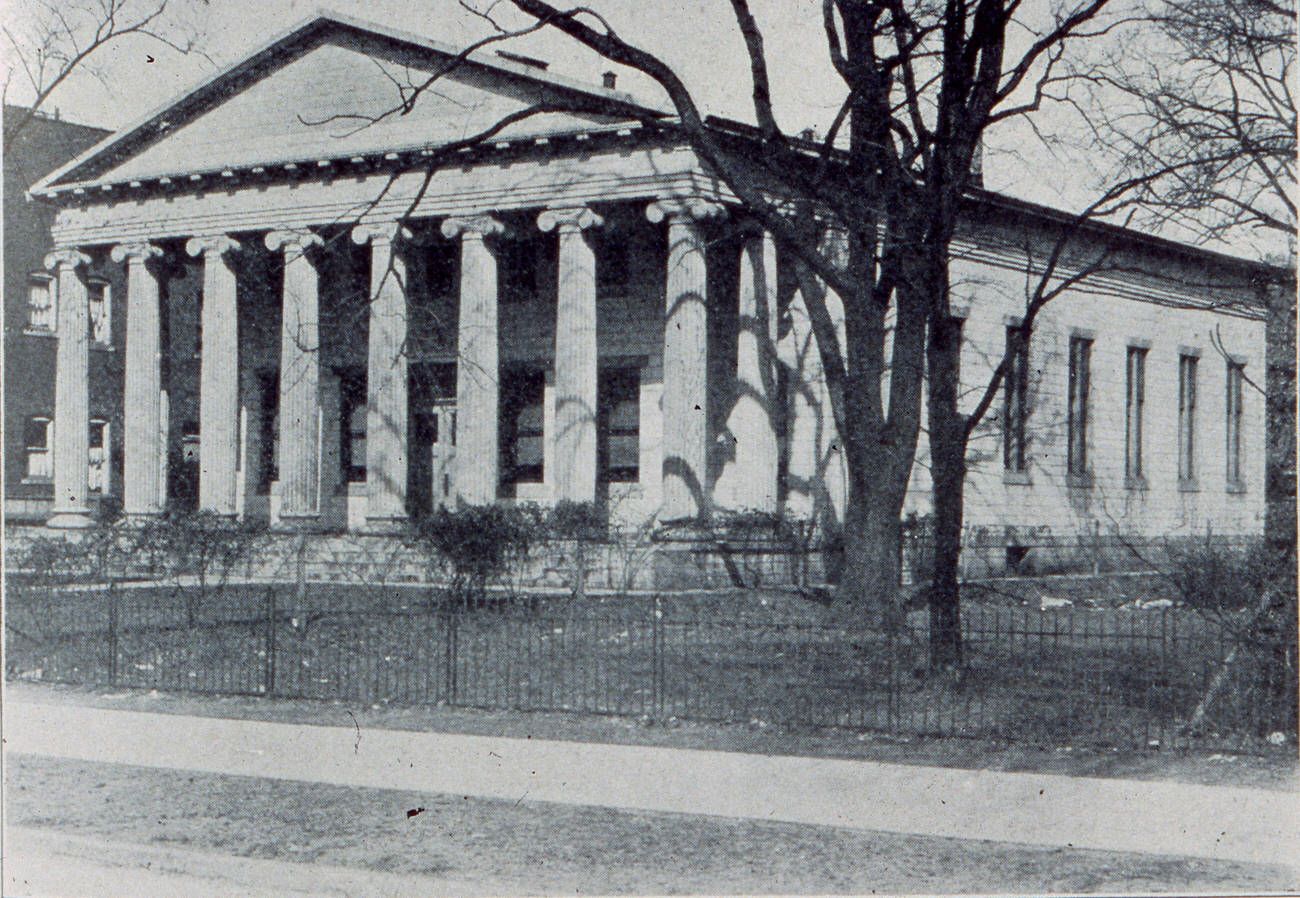
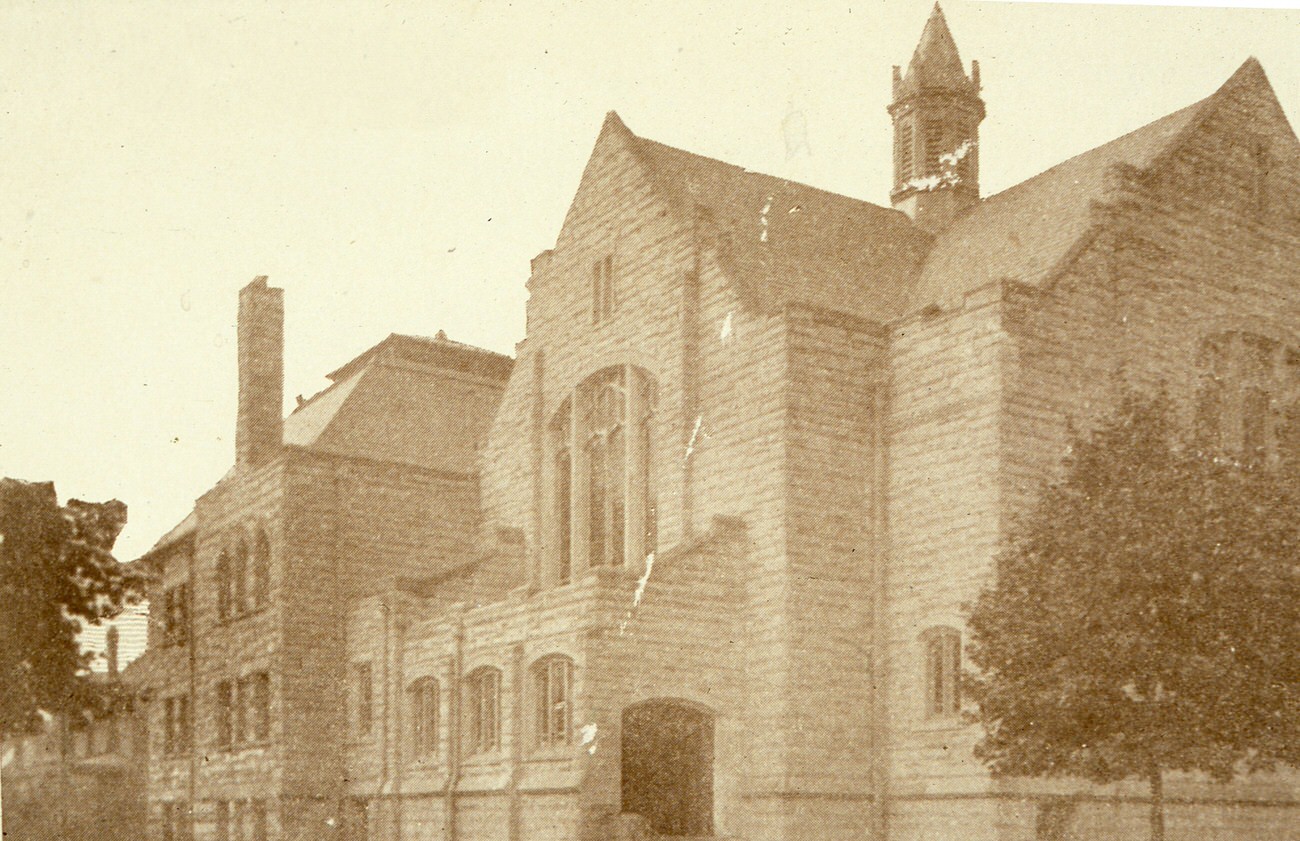
Public education below the university level was also growing. The Front Street School, later converted into a Trades School, represented the city’s effort to meet both academic and vocational needs. The Ohio State School for the Blind and the Institution for Feeble-Minded Youth were also part of Columbus’s network of specialized state-run institutions, several of which occupied large campuses on the outskirts of the city.
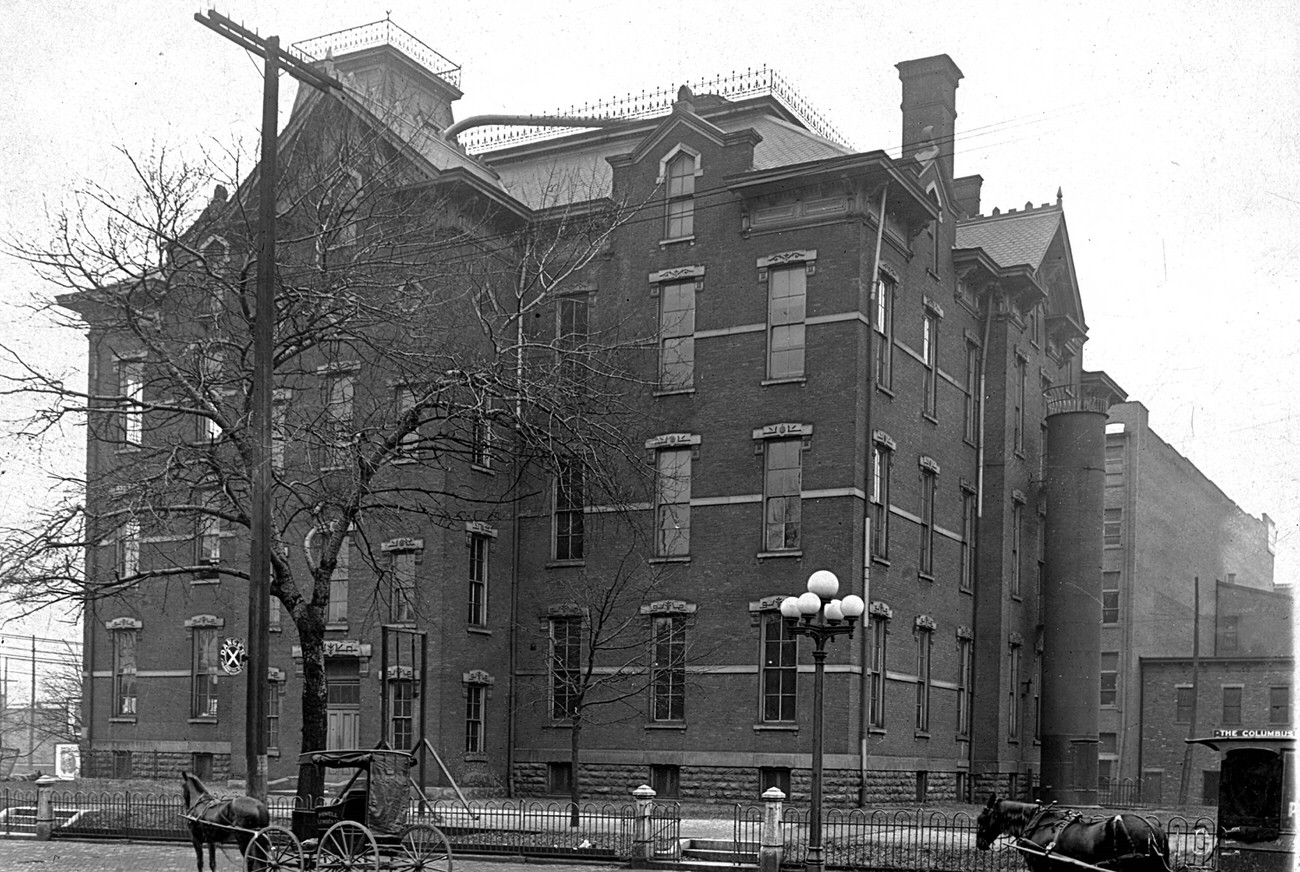
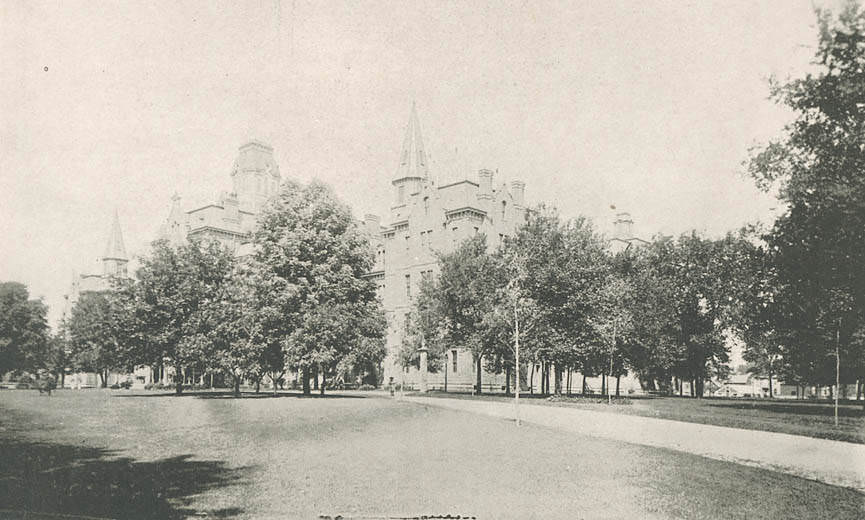
Front Street School, later Trades School, 1909
Views of the Institution for the Education of the Blind, also known as the Ohio State School for the Blind, 1908

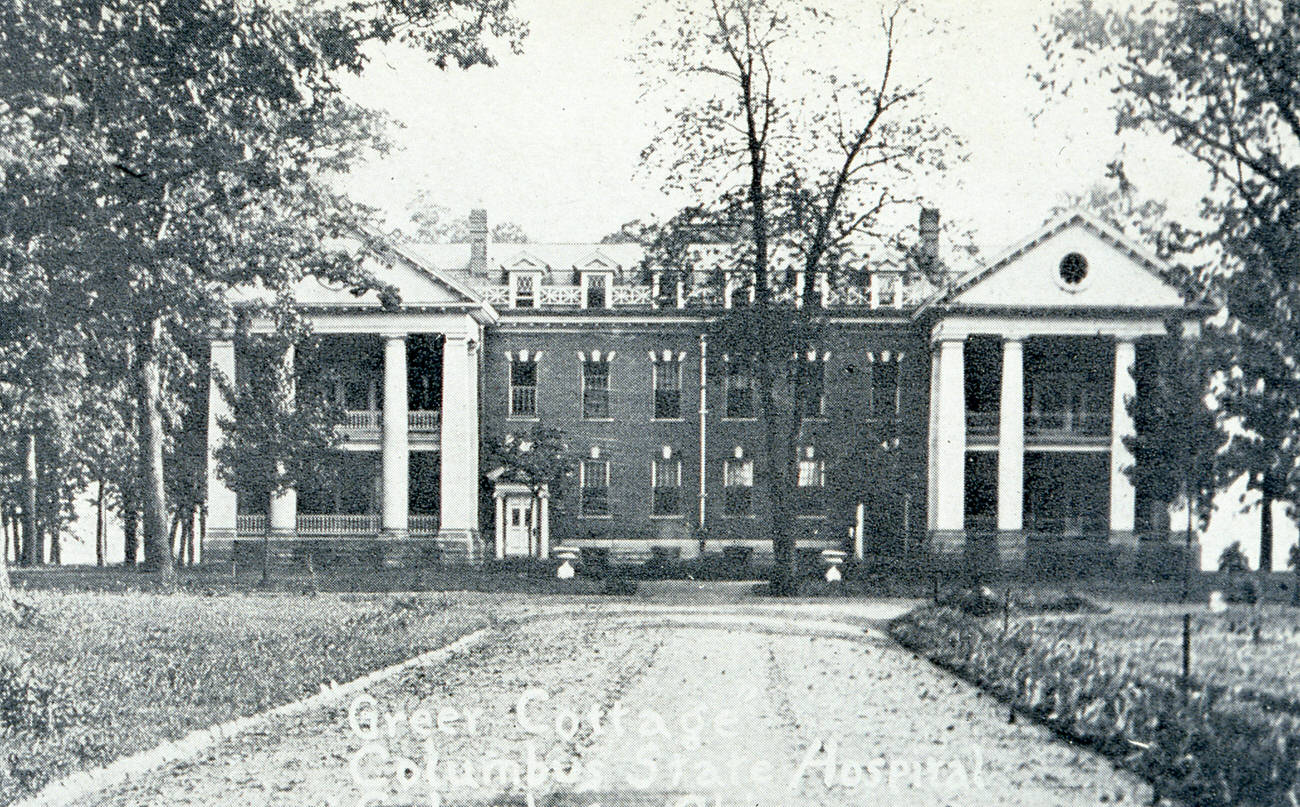
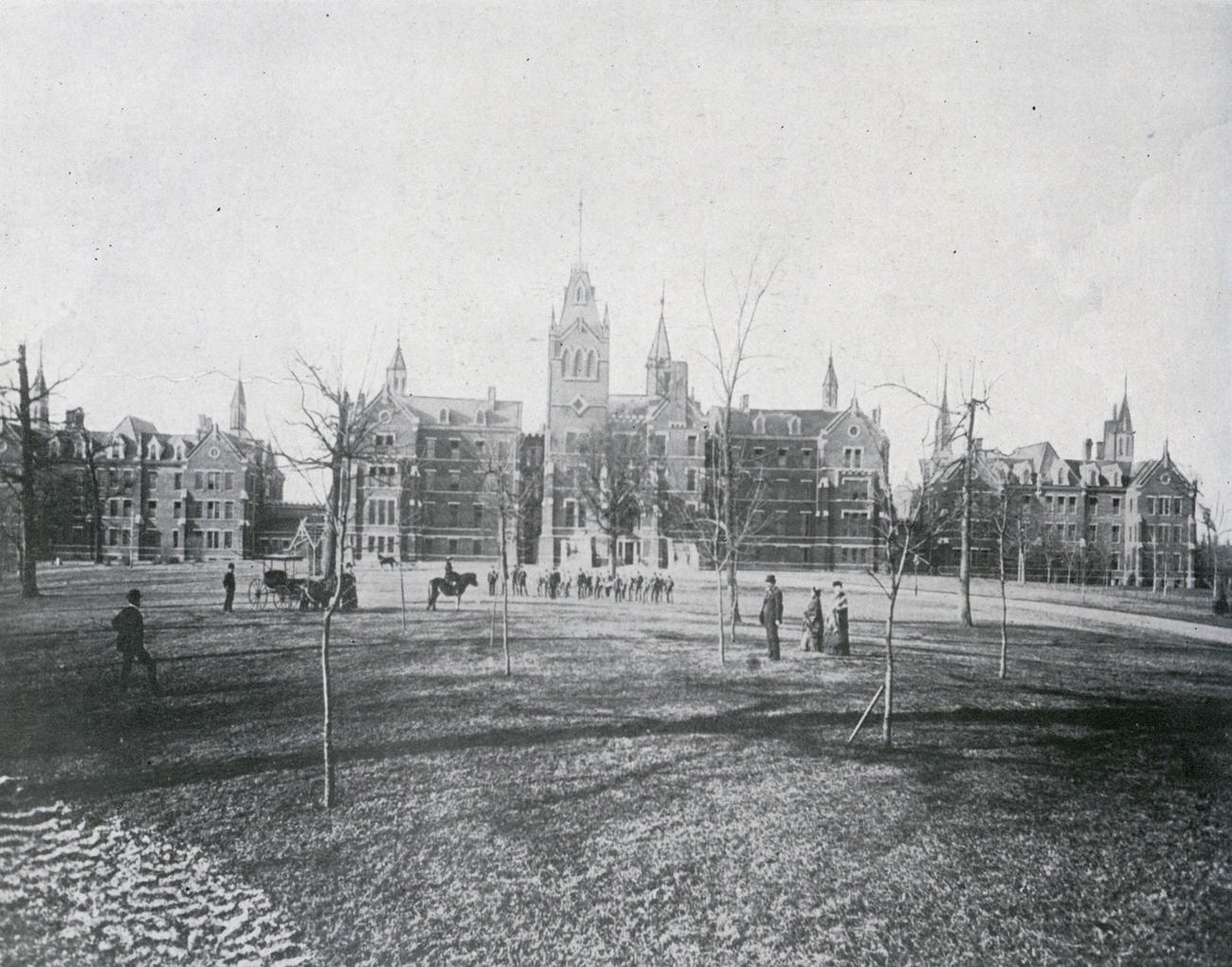
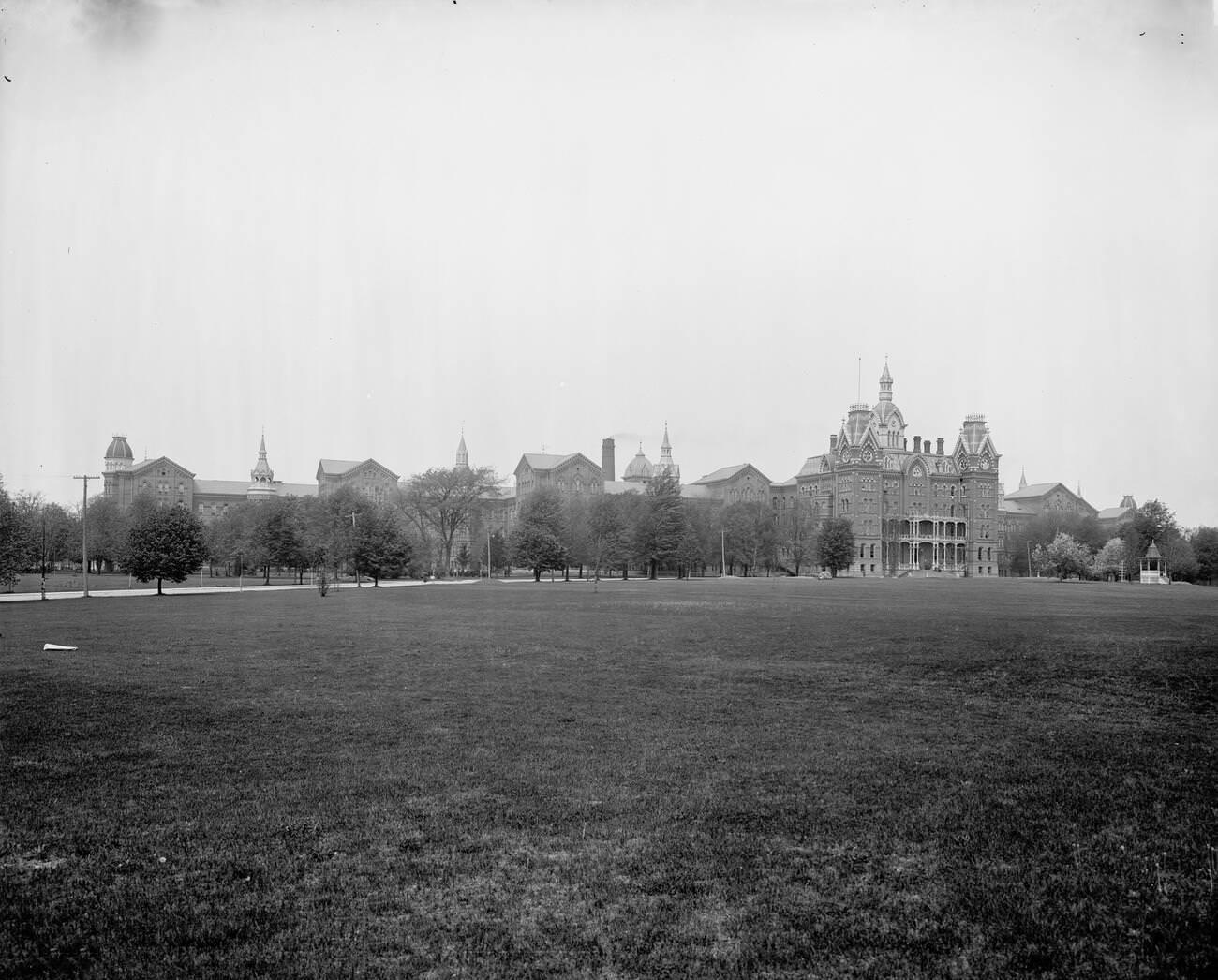
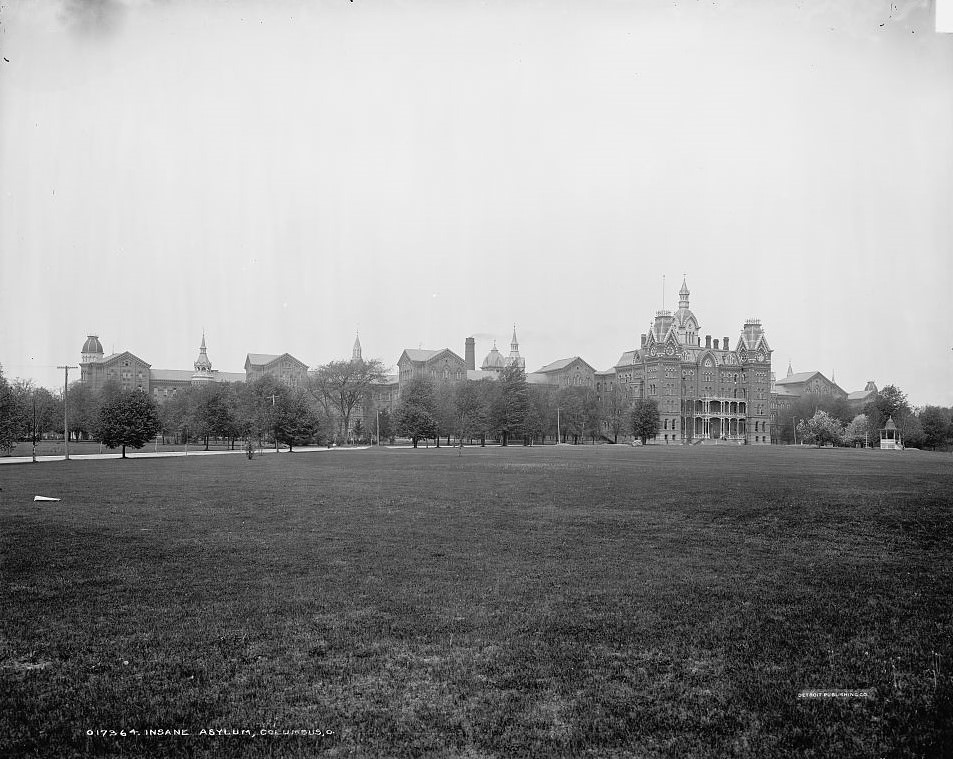
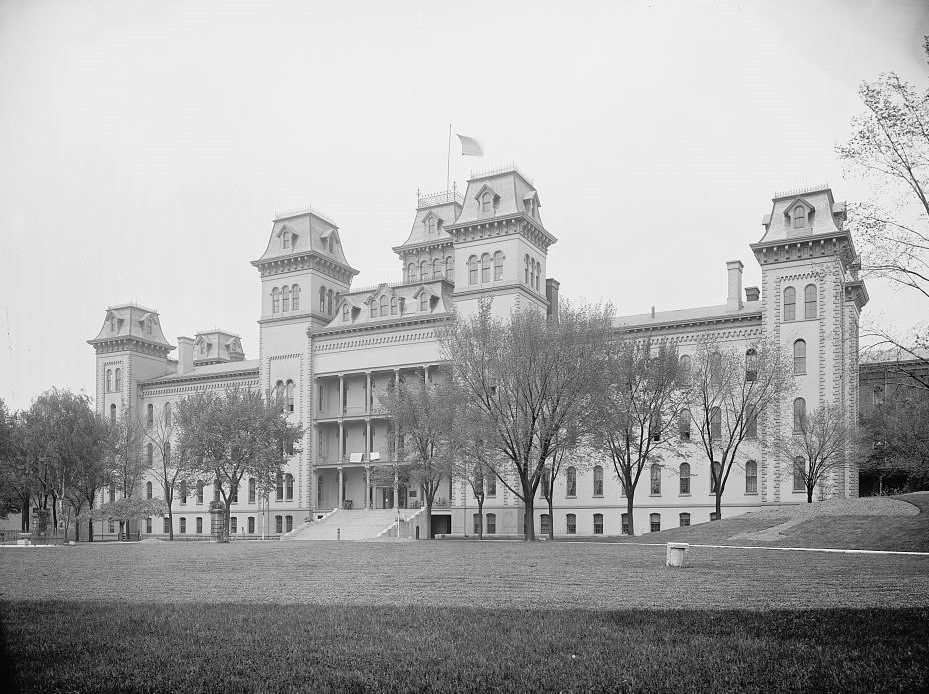
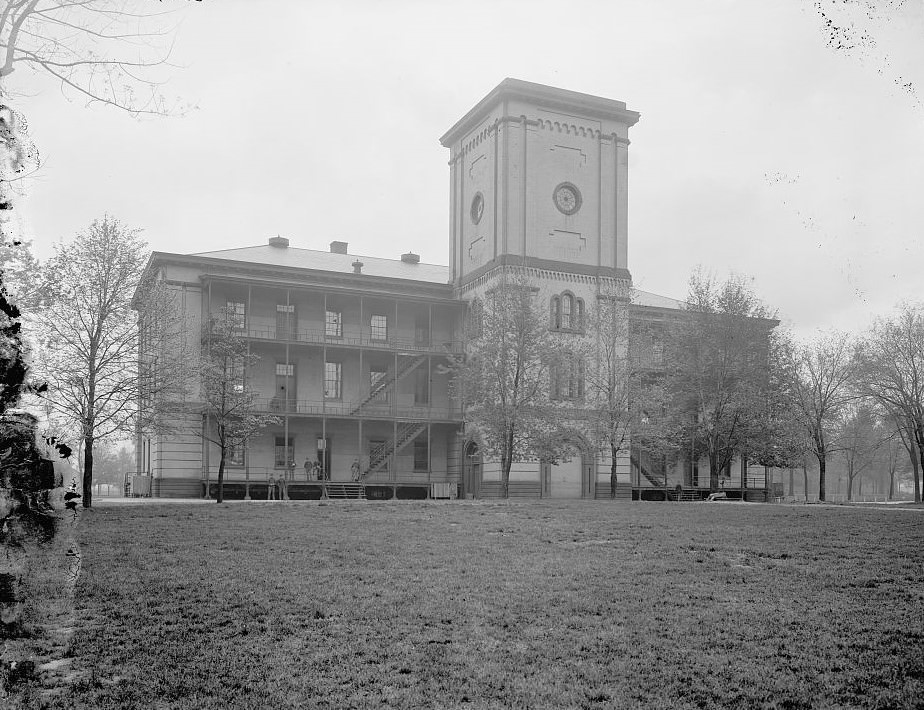
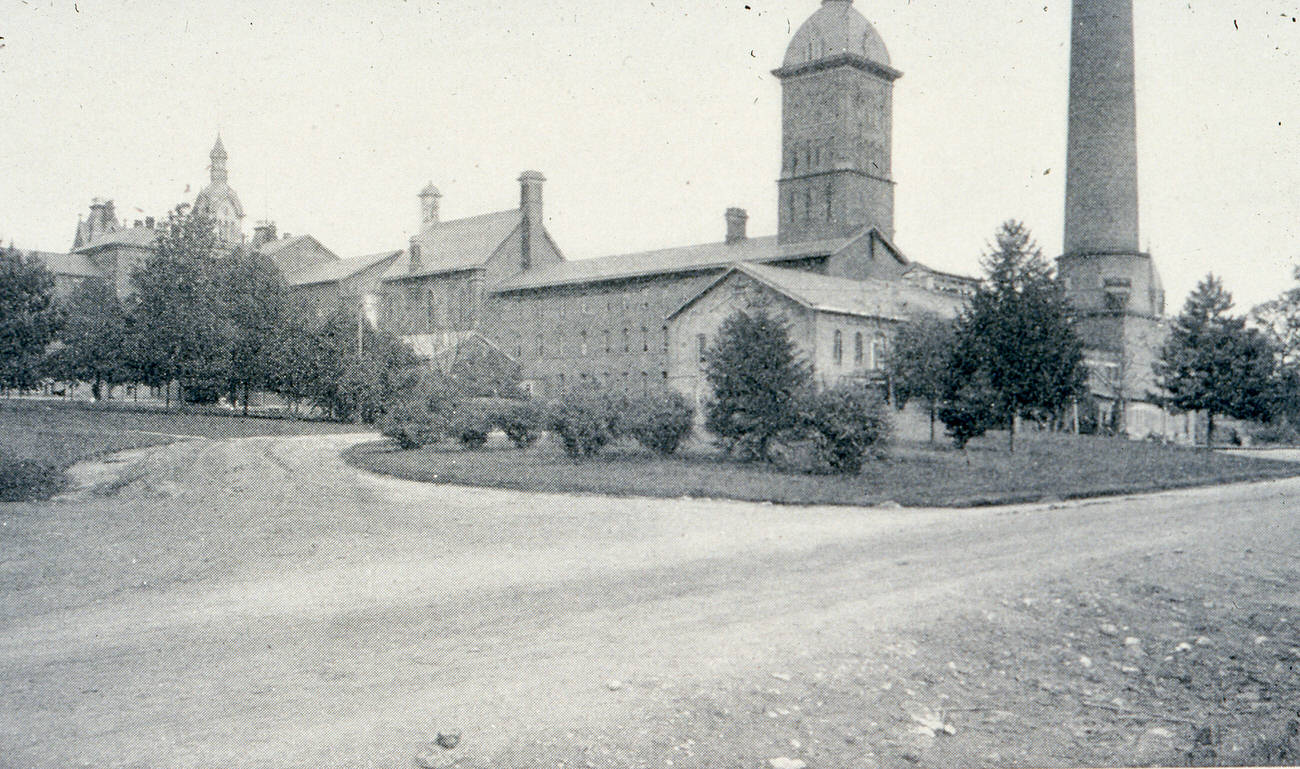
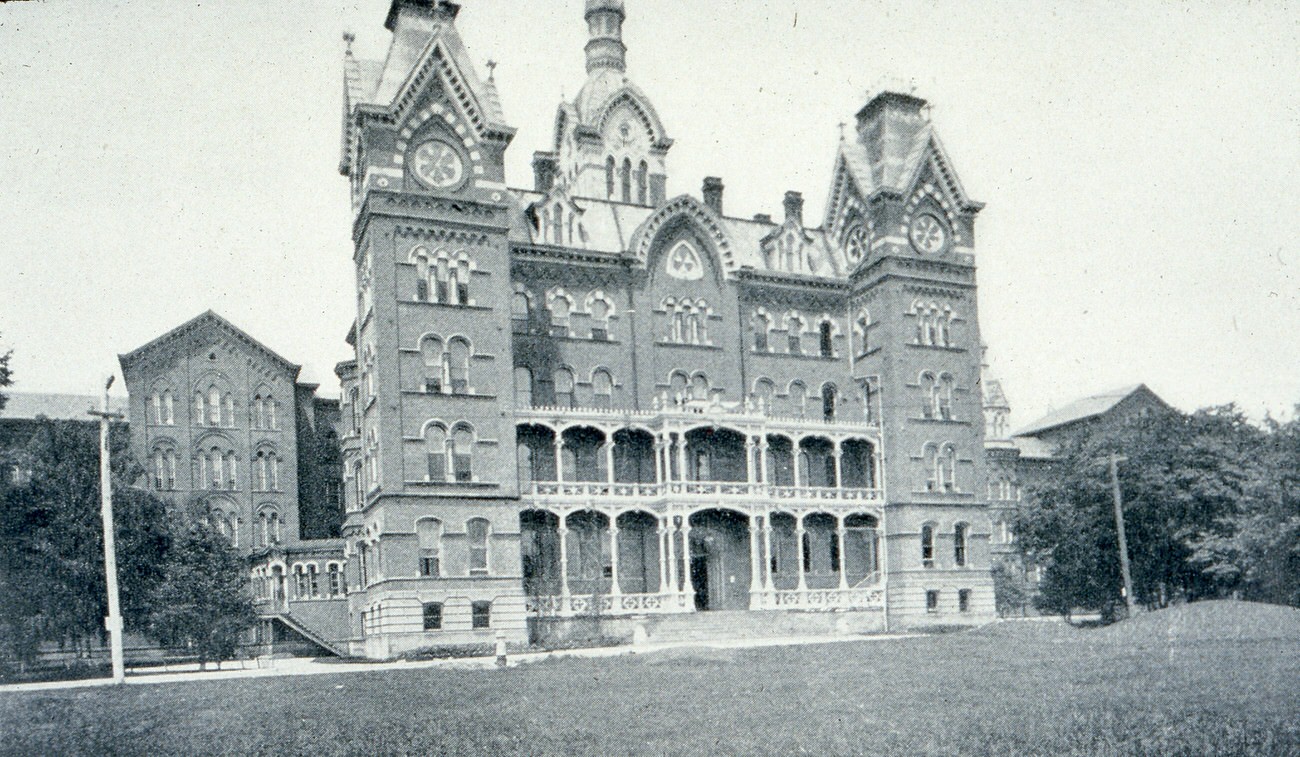
Mental health institutions were also a visible part of Columbus’s institutional landscape. The Columbus State Hospital occupied a sprawling campus and treated a large patient population. The facility, photographed multiple times in the early 1900s, included an imposing administration building, multiple wings, and extensive grounds.
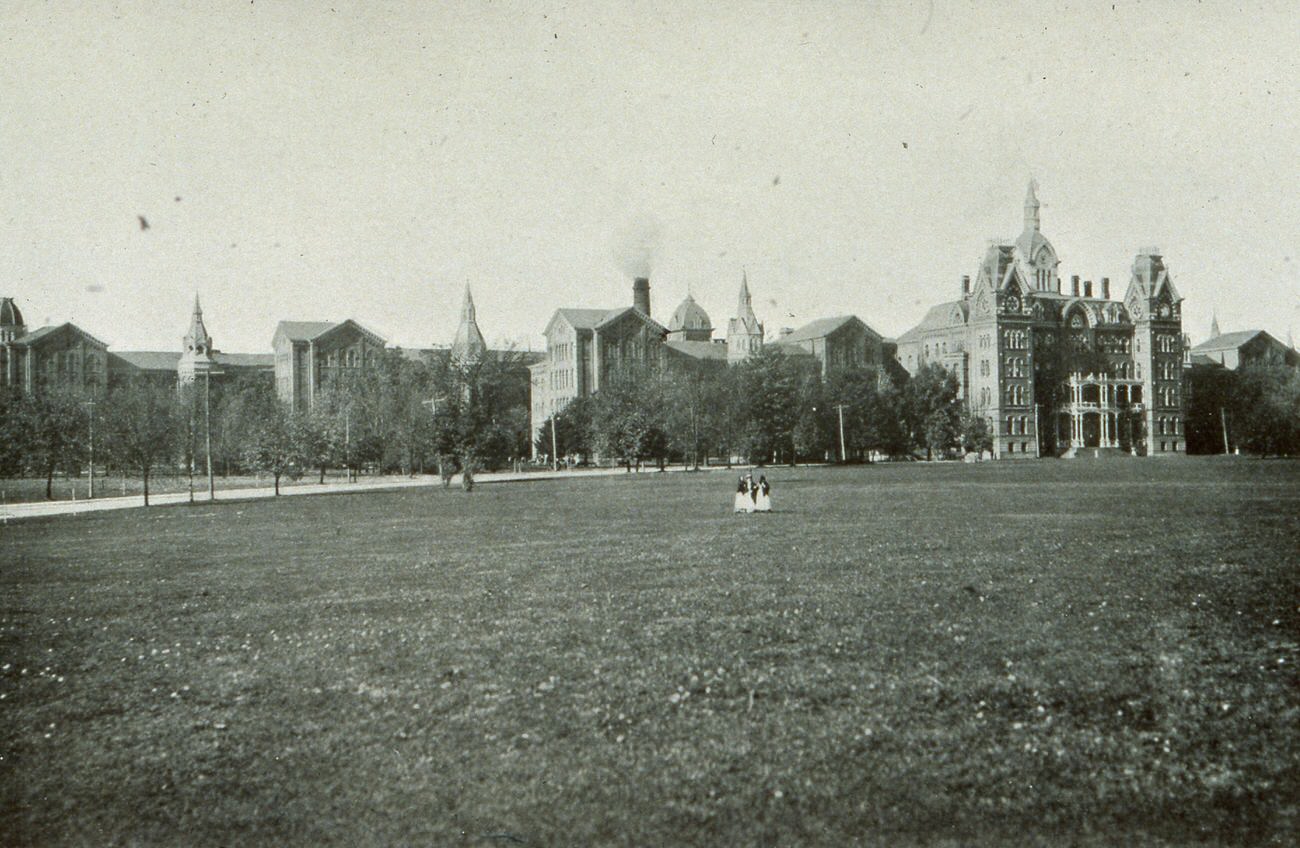
Panoramic view of the Columbus State Hospital with two figures, 1903.
Ground level view of the Columbus State Hospital Administration Building, 1900.

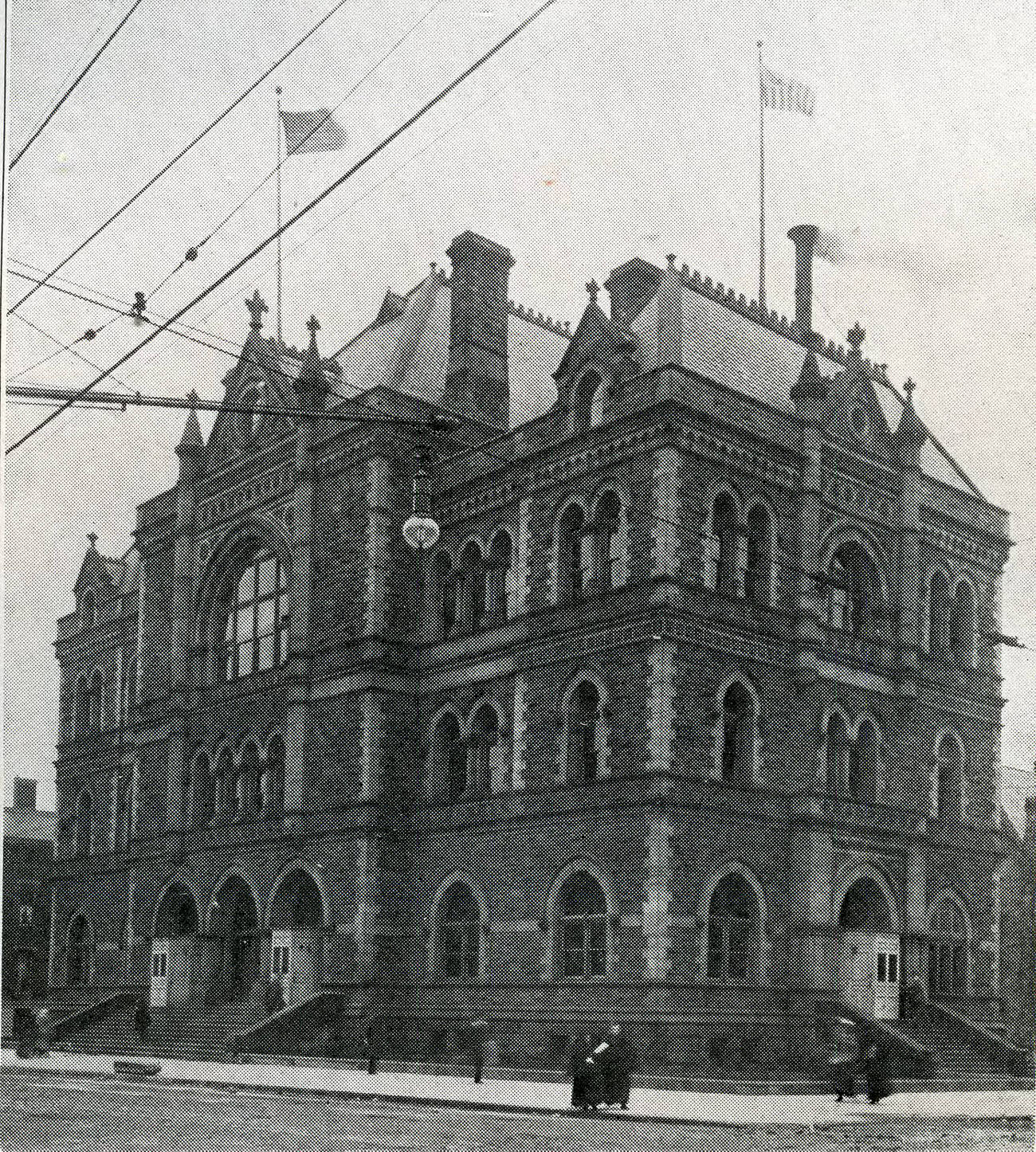
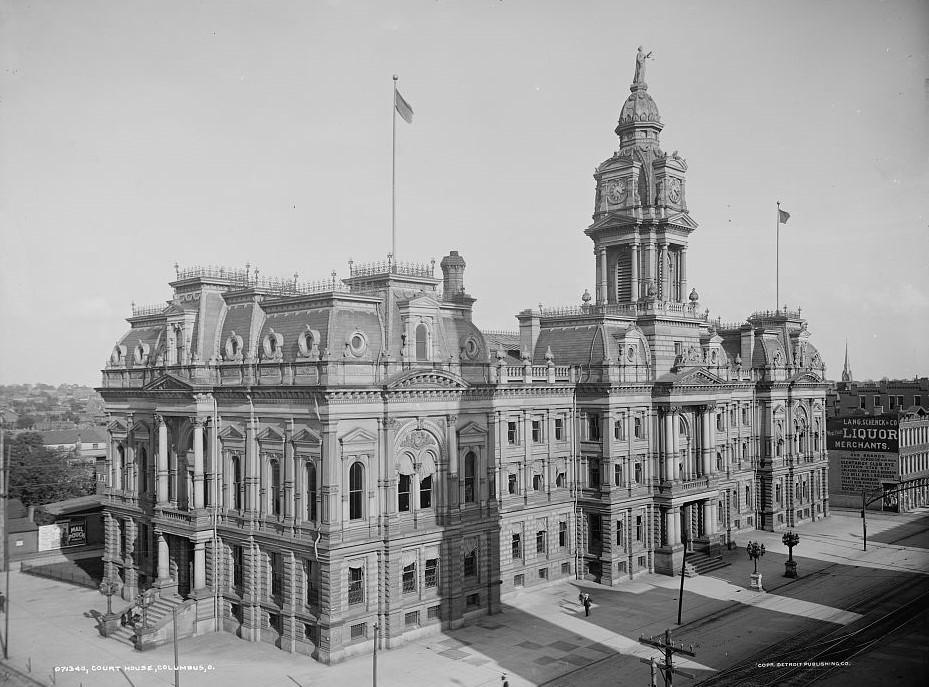
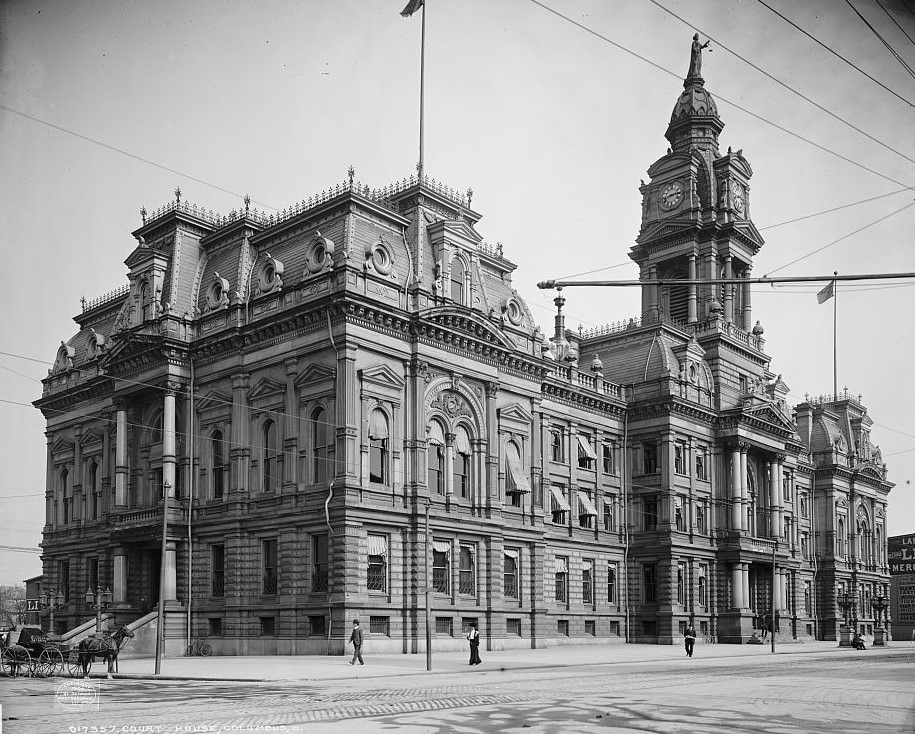
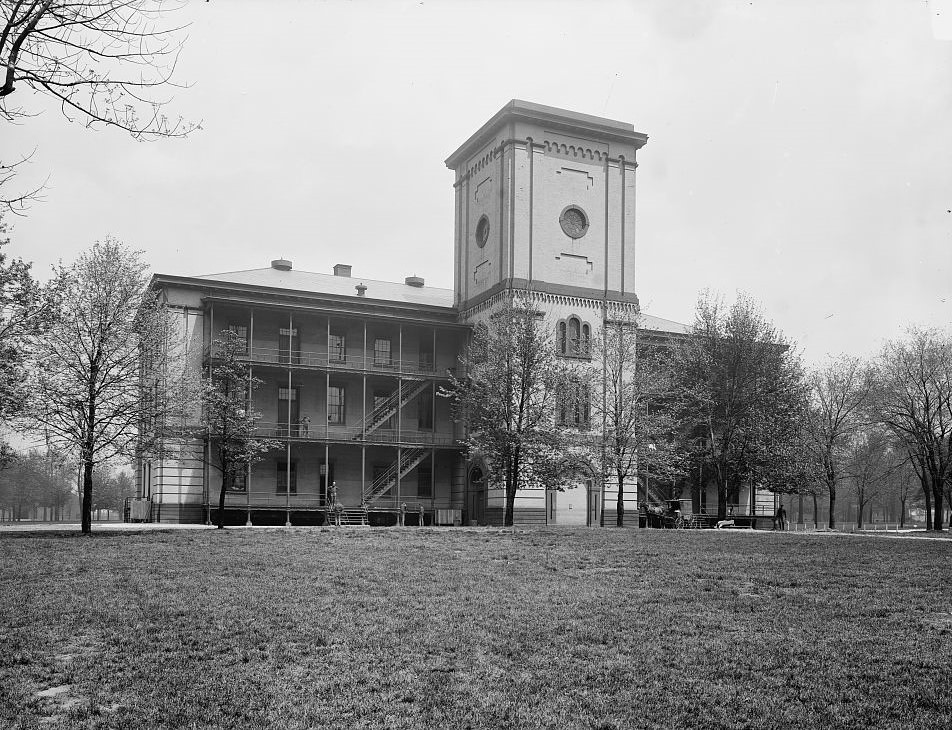
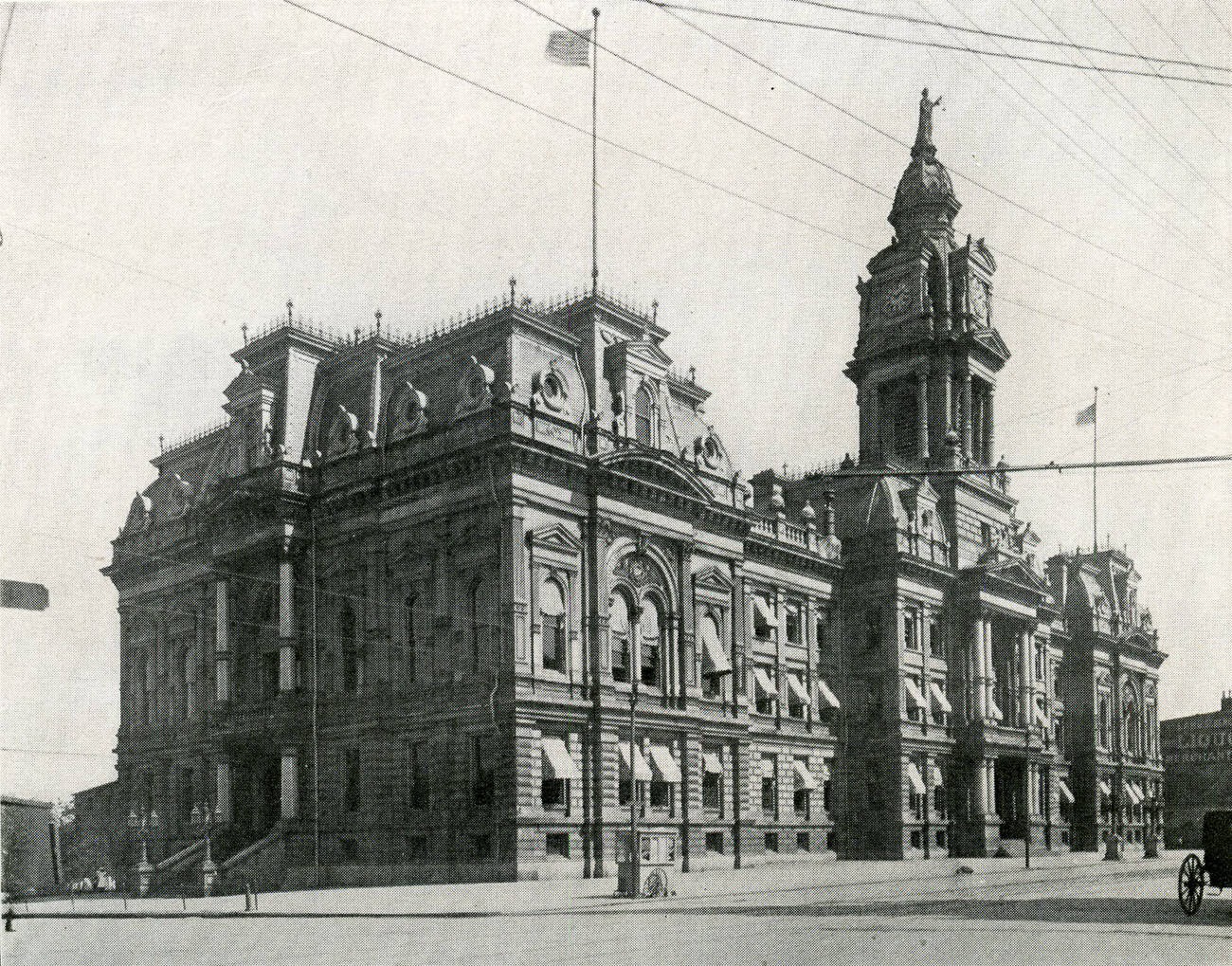
Columbus had a strong institutional presence in law enforcement and the military as well. Columbus Barracks, originally built as an arsenal during the Civil War with construction beginning in November 1863, became a recruiting center in 1875. The Franklin County Courthouse at High and Mound Streets, dedicated in 1887, handled the region’s legal affairs from its prominent downtown location. The Federal building housing the Customs office, Post Office, and U.S. Court was another anchor of civic authority in the city.
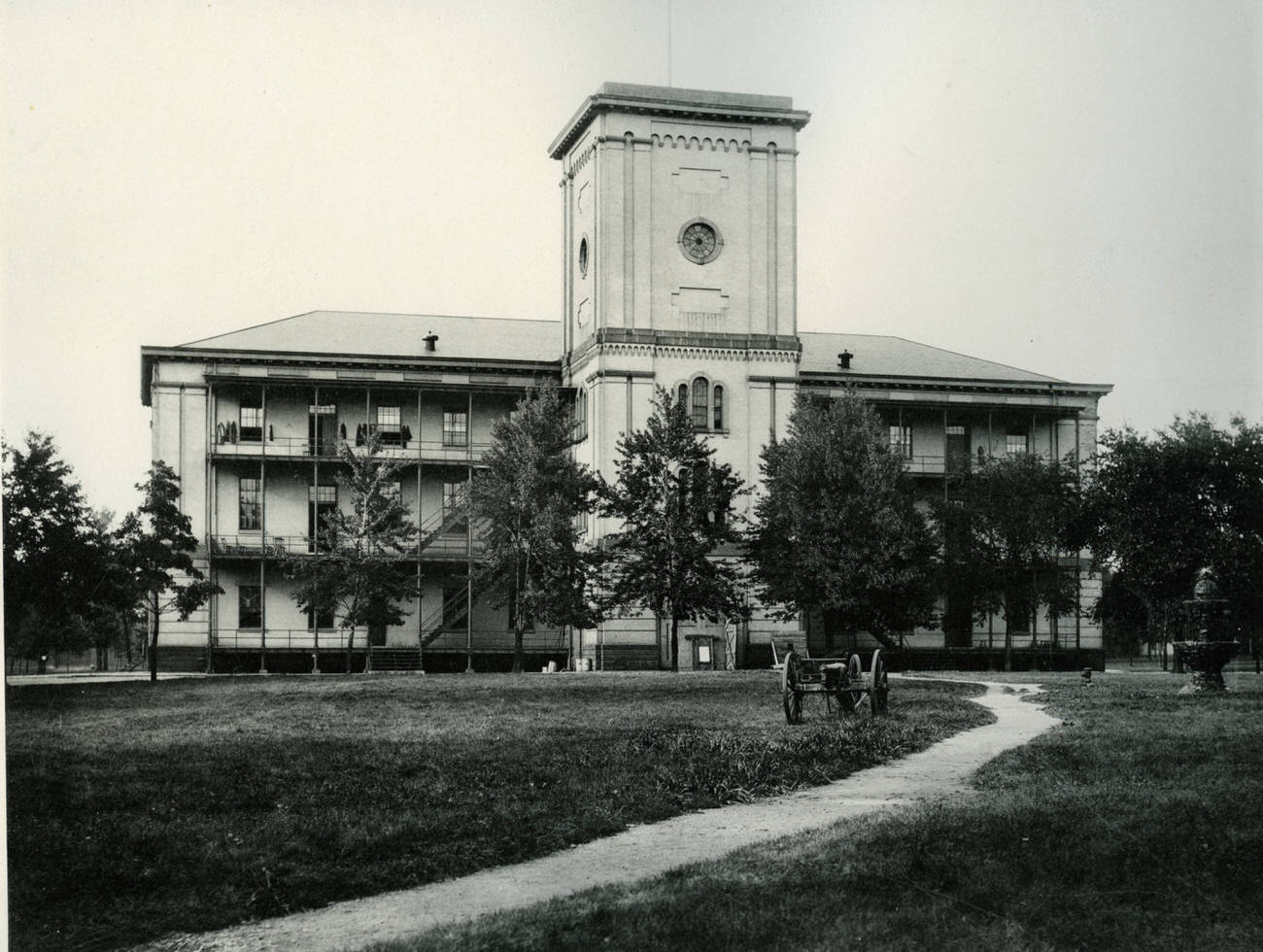
Columbus Barracks, also known as Fort Hayes, originally Arsenal storing small arms during Civil War, construction began November 1863, completed in 1864, later became recruiting center and renamed Columbus Barracks in 1875, renamed Fort Hayes in 1922, declared excess property in 1965, now part of Columbus Public Schools, Circa 1900.
Franklin County Courthouse at High and Mound Streets, dedicated in 1887, razed in 1974, Circa 1909.
Building housing Customs, Post Office, United States Court and Pension Building, Columbus, 1909.

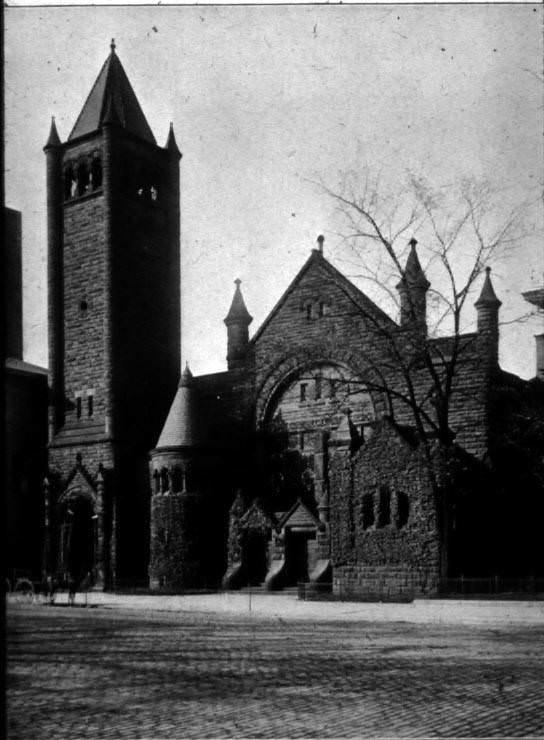
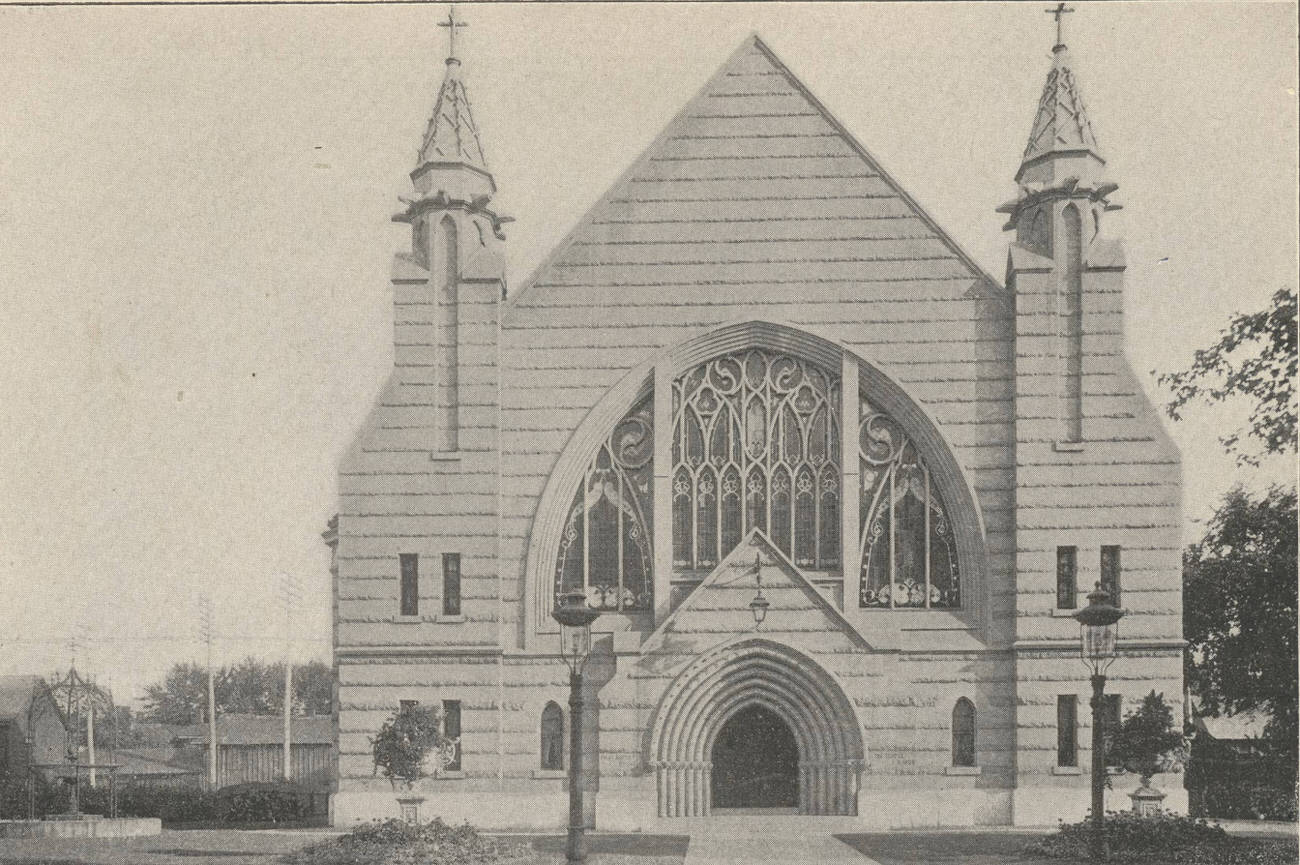
Churches were prominent features of the Columbus streetscape. The Central Presbyterian Church, constructed between 1857 and 1860, remained a landmark on its block. Broad Street Baptist Church laid its cornerstone on June 1, 1898. The First Methodist Church was dedicated in 1900 and later became the First African Methodist Episcopal Zion Church. First Church of Christ Scientist, established in 1896, completed its building in 1903.
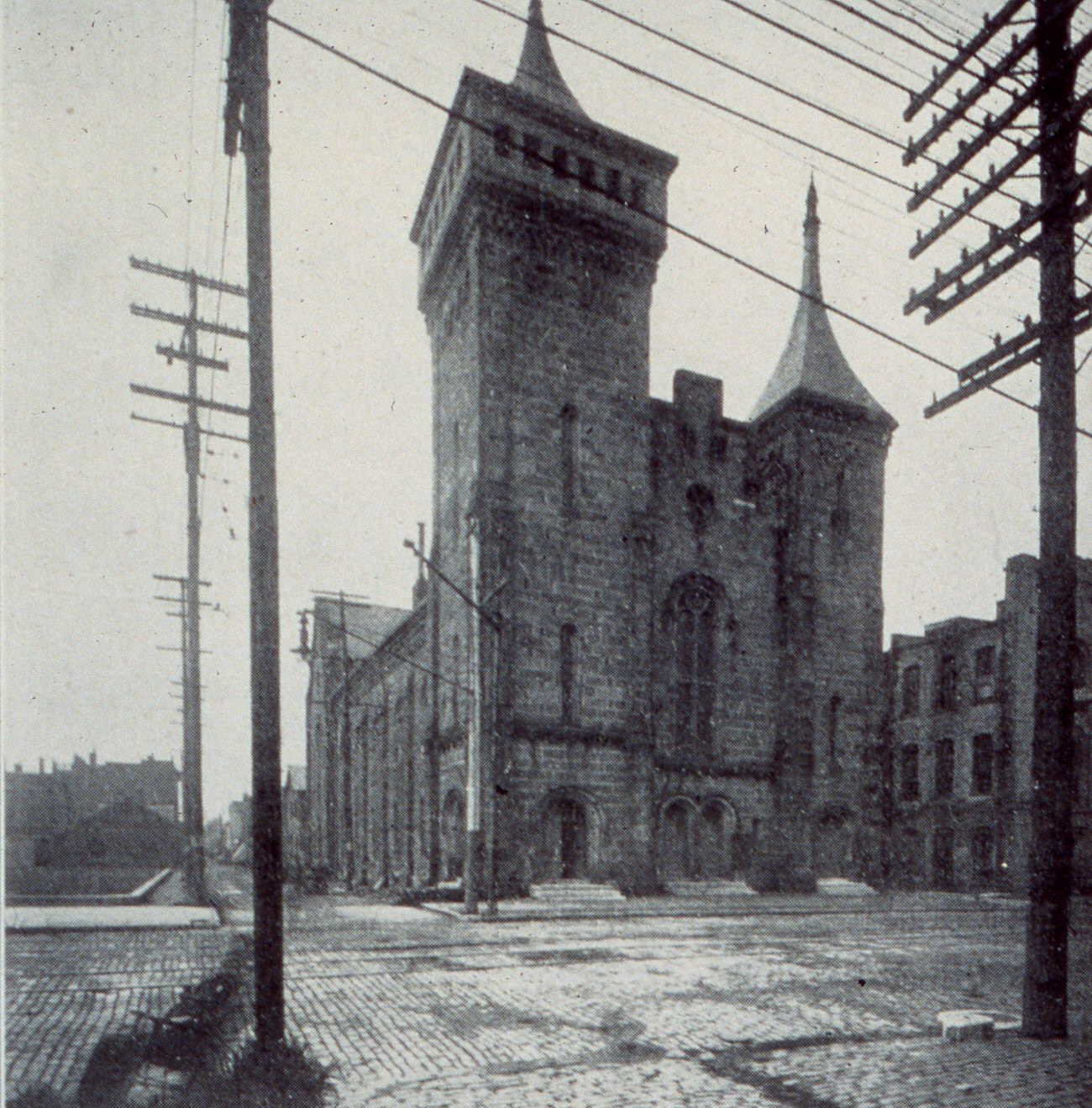
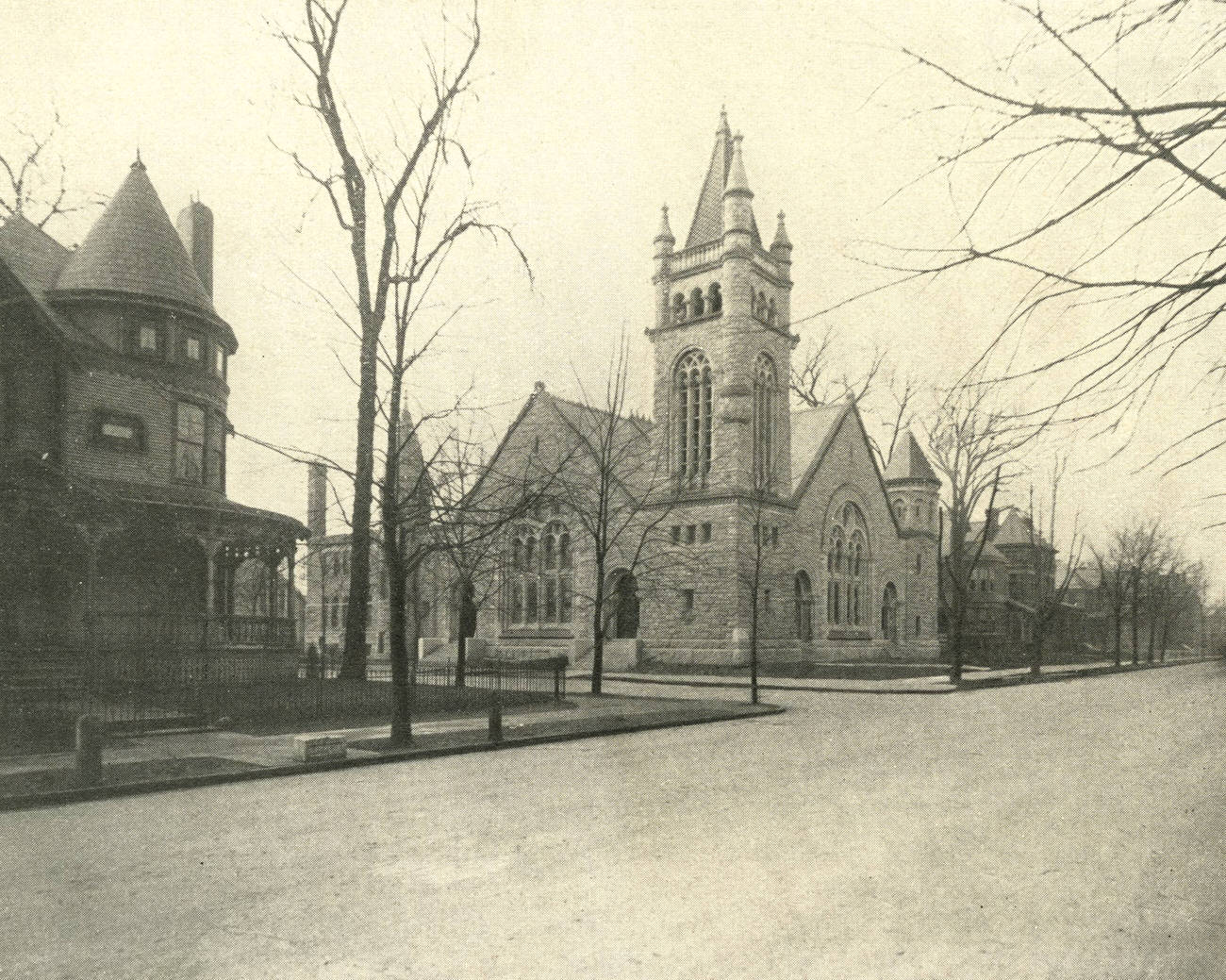
Central Presbyterian Church, constructed 1857-1860, also known as Second Presbyterian Church, 1909.
First Methodist Church, dedicated in 1900, later First African Methodist Episcopal Zion Church, Circa 1901.
First Church of Christ Scientist building, established in 1896 and completed in 1903, Circa 1909.

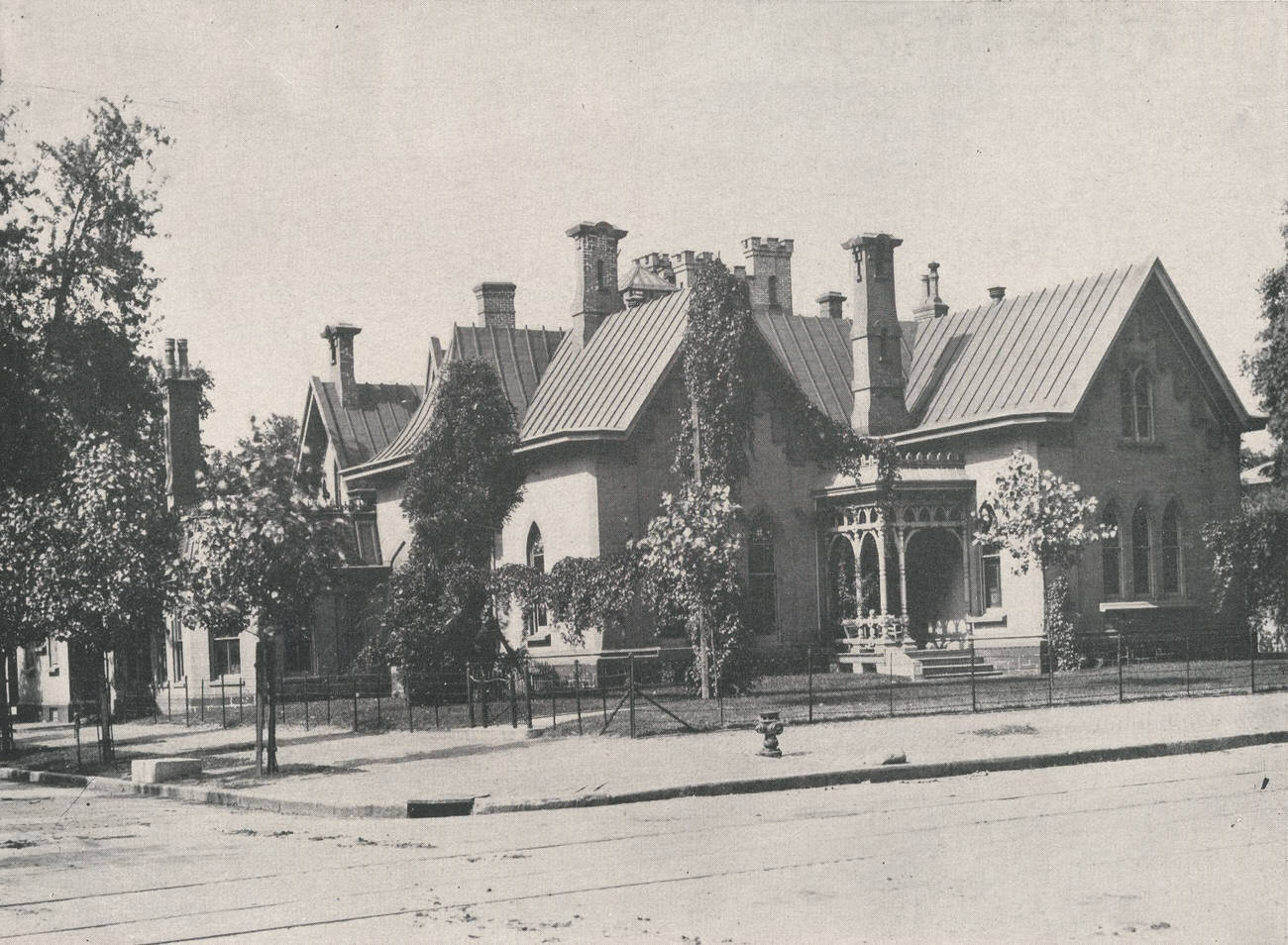
Wealthy residents built impressive homes in Columbus during this era. Adrian L. Wallick’s home, Shalimar, was constructed in 1909. Alfred Kelley’s mansion, later designated as the Governor’s Mansion, stood as one of the city’s grandest addresses. Dr. Samuel Brubaker Hartman’s house, completed in 1883, later served as a regional headquarters for the U.S. War Production Board. The Allen G. Thurman residence, built around 1885 in the Queen Anne style, was another example of the architectural ambitions of Columbus’s upper class.
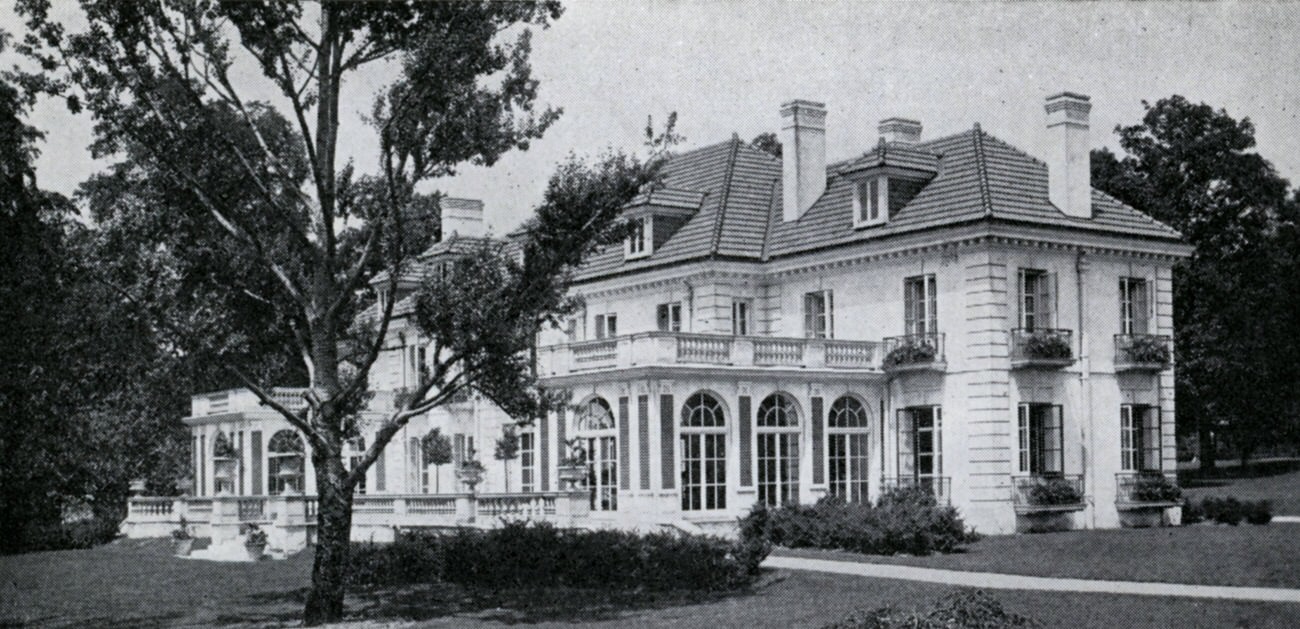
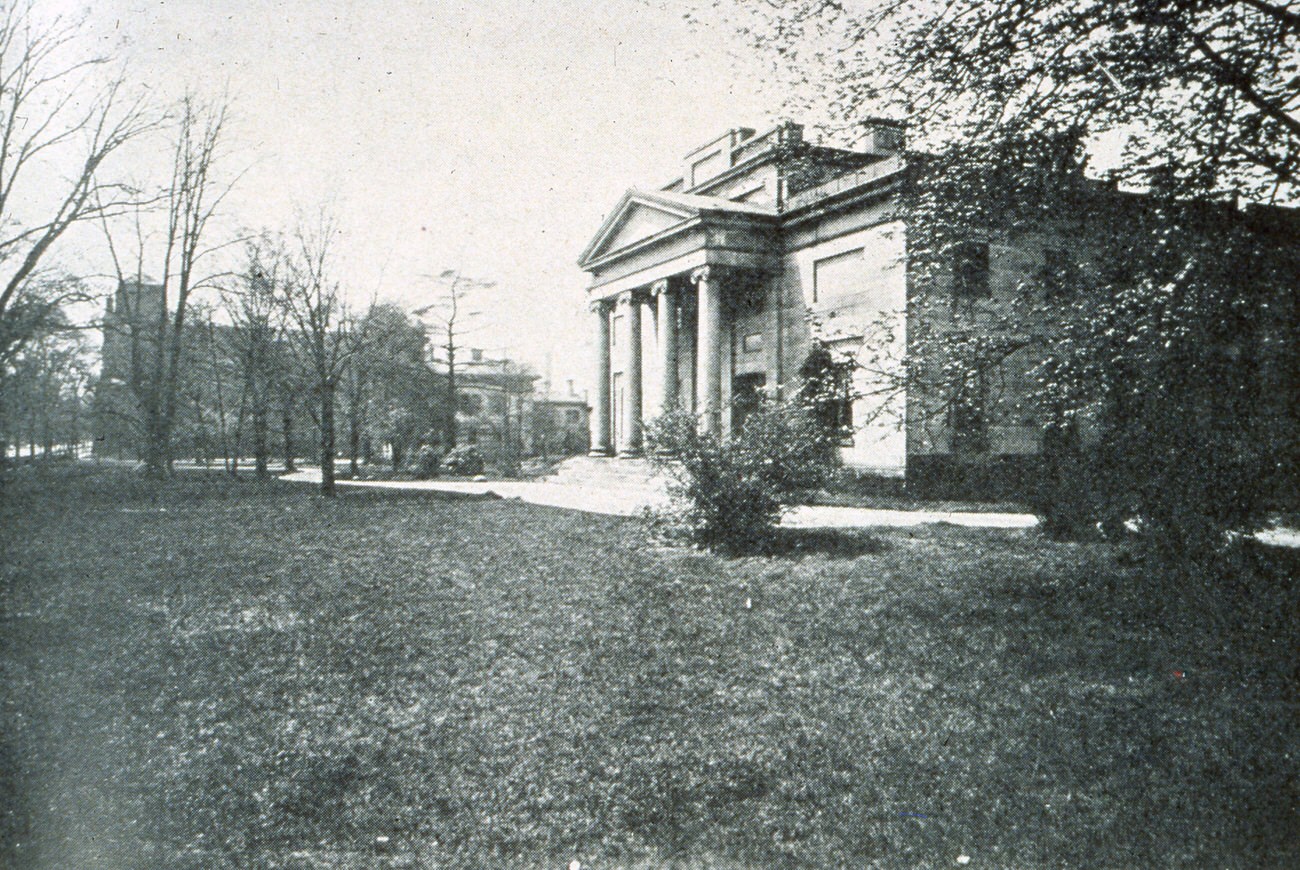
Adrian L. Wallick's home, Shalimar, constructed in 1909.
Adrian L. Wallick’s home, Shalimar, constructed in 1909.
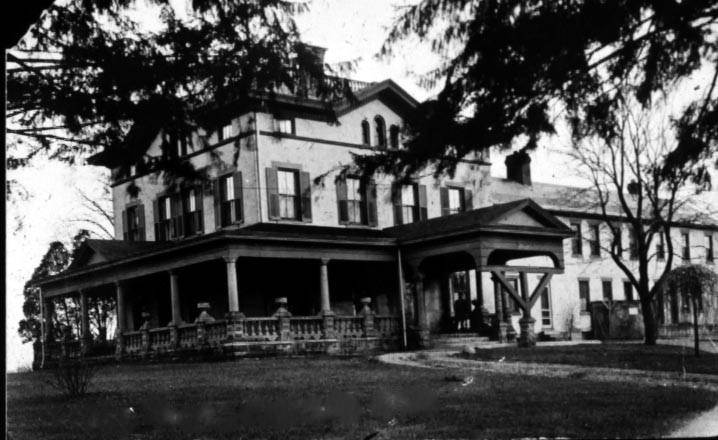
Alfred Kelley's mansion, later the Governor's Mansion, 1909.
Alfred Kelley’s mansion, later the Governor’s Mansion, 1909.
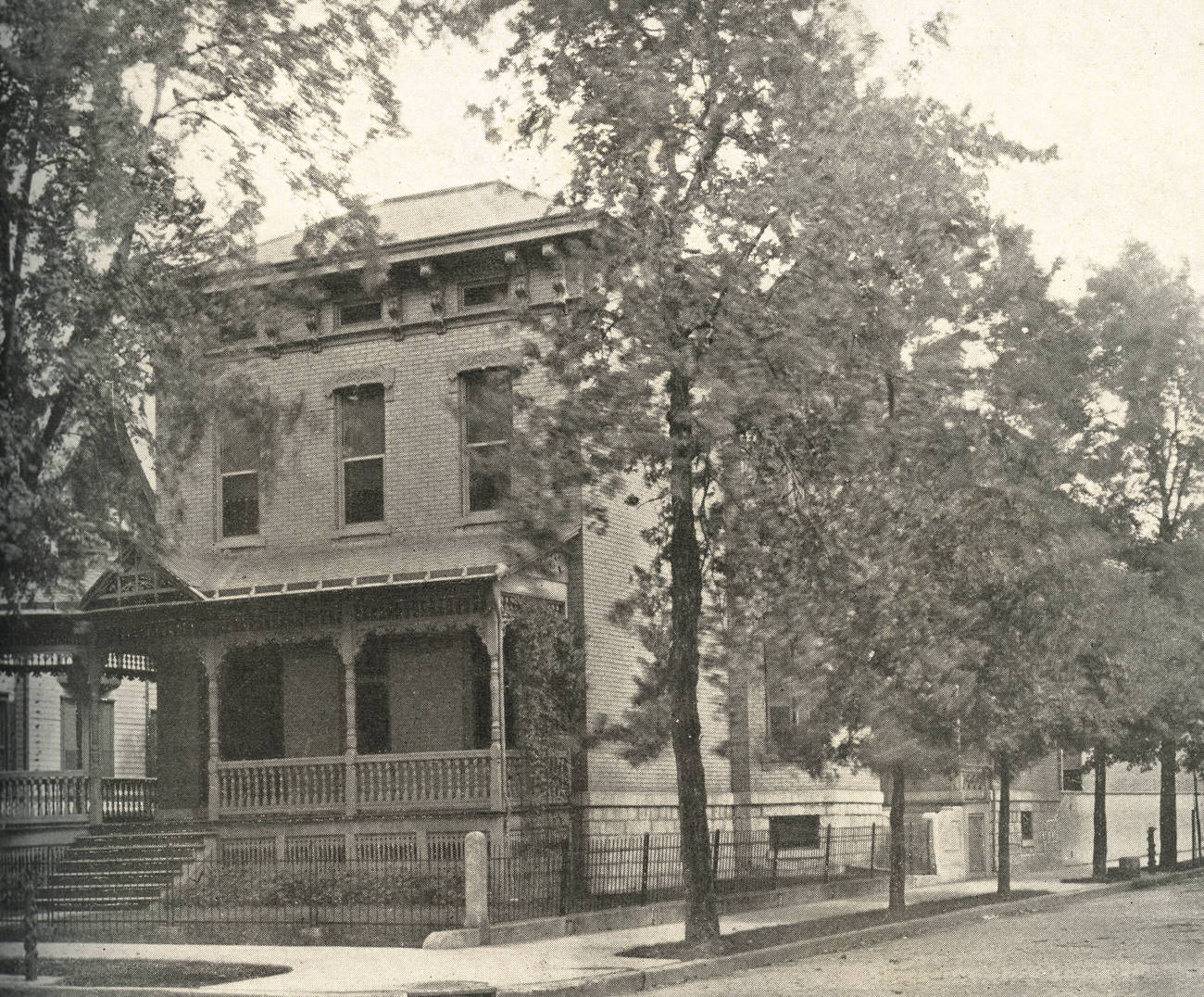
Dr. Samuel Brubaker Hartman House, completed in 1883, later a regional headquarters for the U.S. War Production Board, Circa 1901
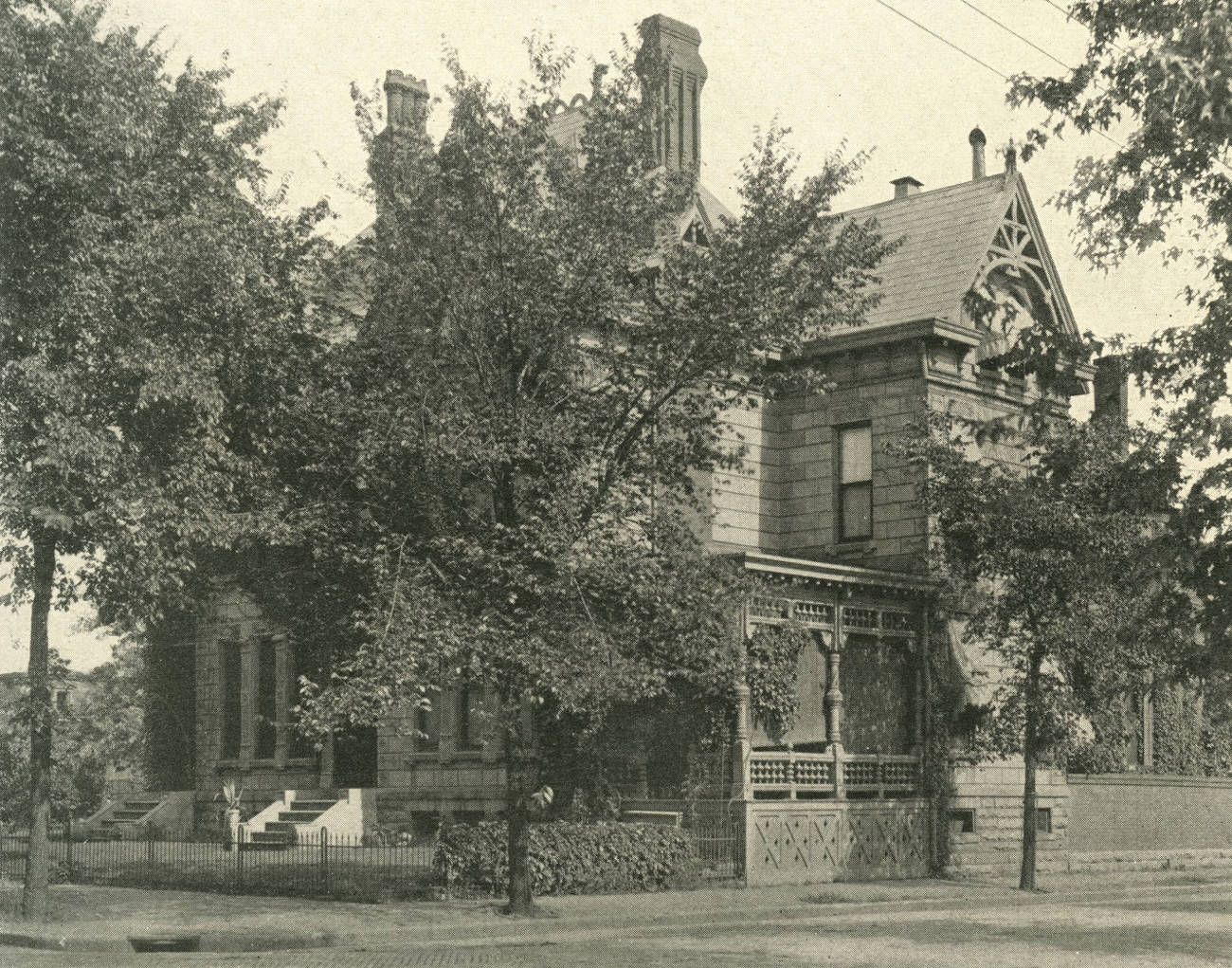
Allen G. Thurman's residence, built around 1885, Queen Anne Style, circa 1901.
Allen G. Thurman’s residence, built around 1885, Queen Anne Style, circa 1901.

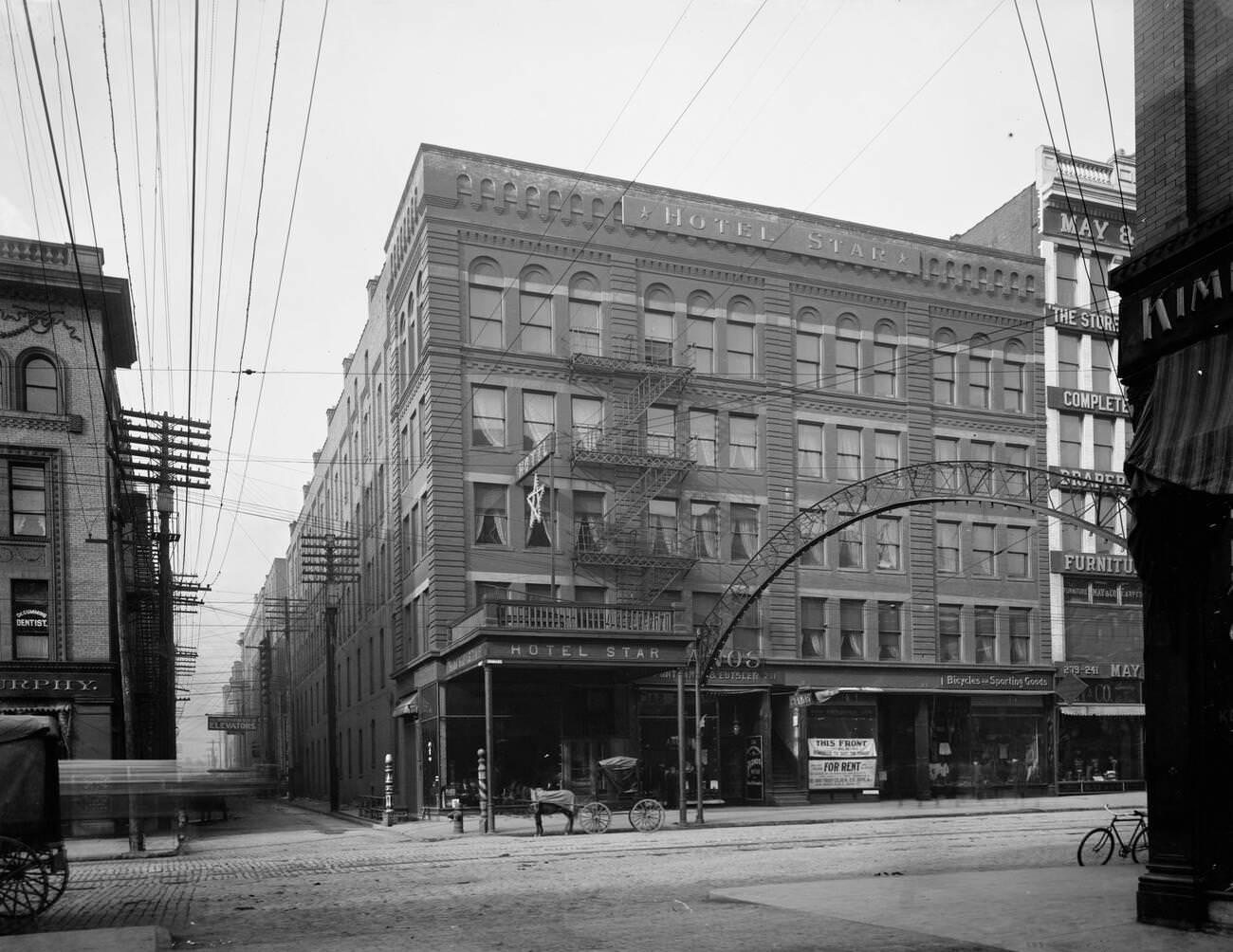
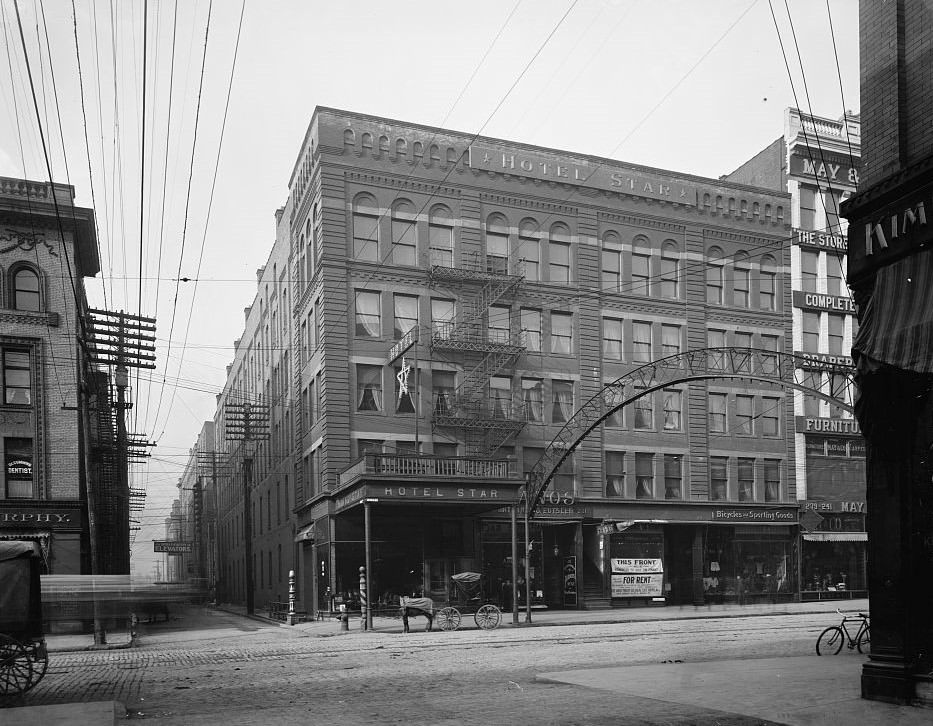
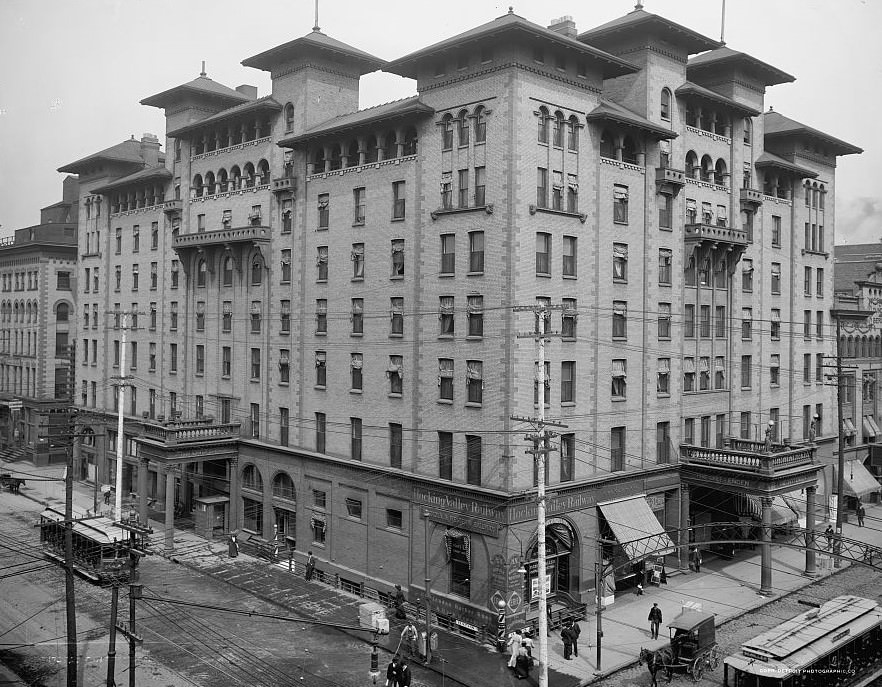
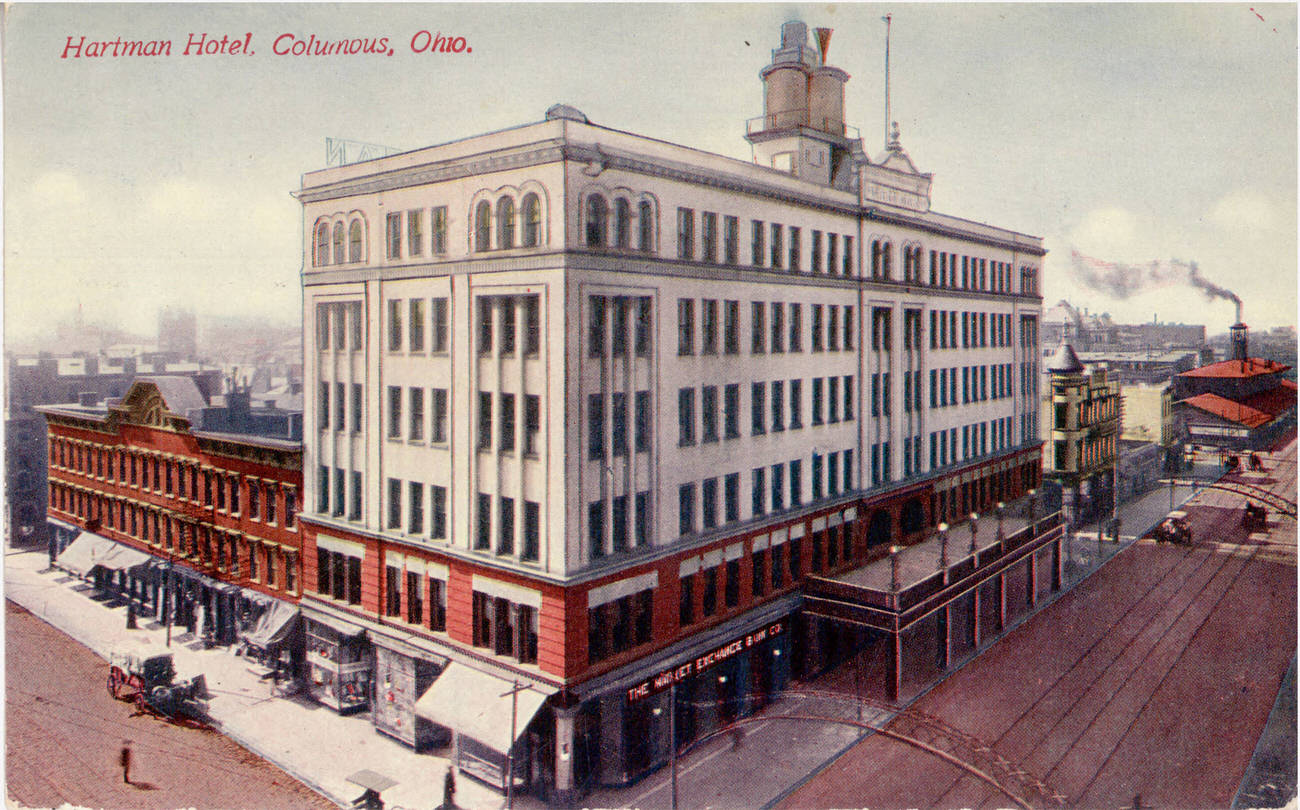
Hotels beyond the Great Southern also served Columbus visitors and businesspeople. The Chittenden Hotel at North High and West Spring Streets opened in 1895. The Hartman Hotel, owned by Samuel Hartman, opened on November 16, 1901, and became known as a preferred venue for private dinners before it was renamed the Ohio Building in 1921. Hotel Elmont and Hotel Star rounded out the city’s lodging options for travelers passing through.
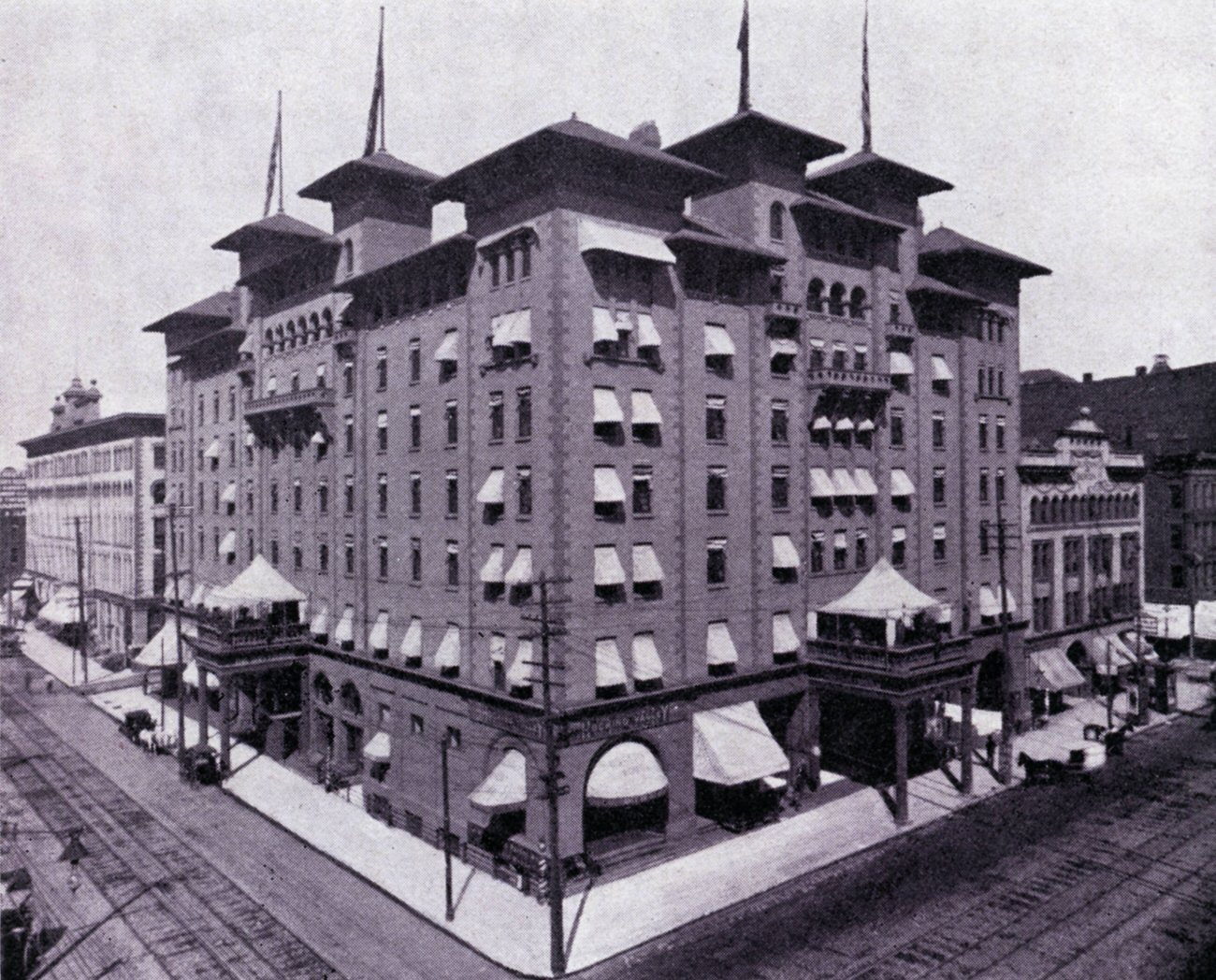
Chittenden Hotel at North High and West Spring streets, opened in 1895, closed March 15, 1972, razed February 1973, 1900.
Hartman Hotel, owned by Samuel Hartman, opened November 16, 1901
Hotel Elmont, 1908.
Hotel Elmont, 1908.

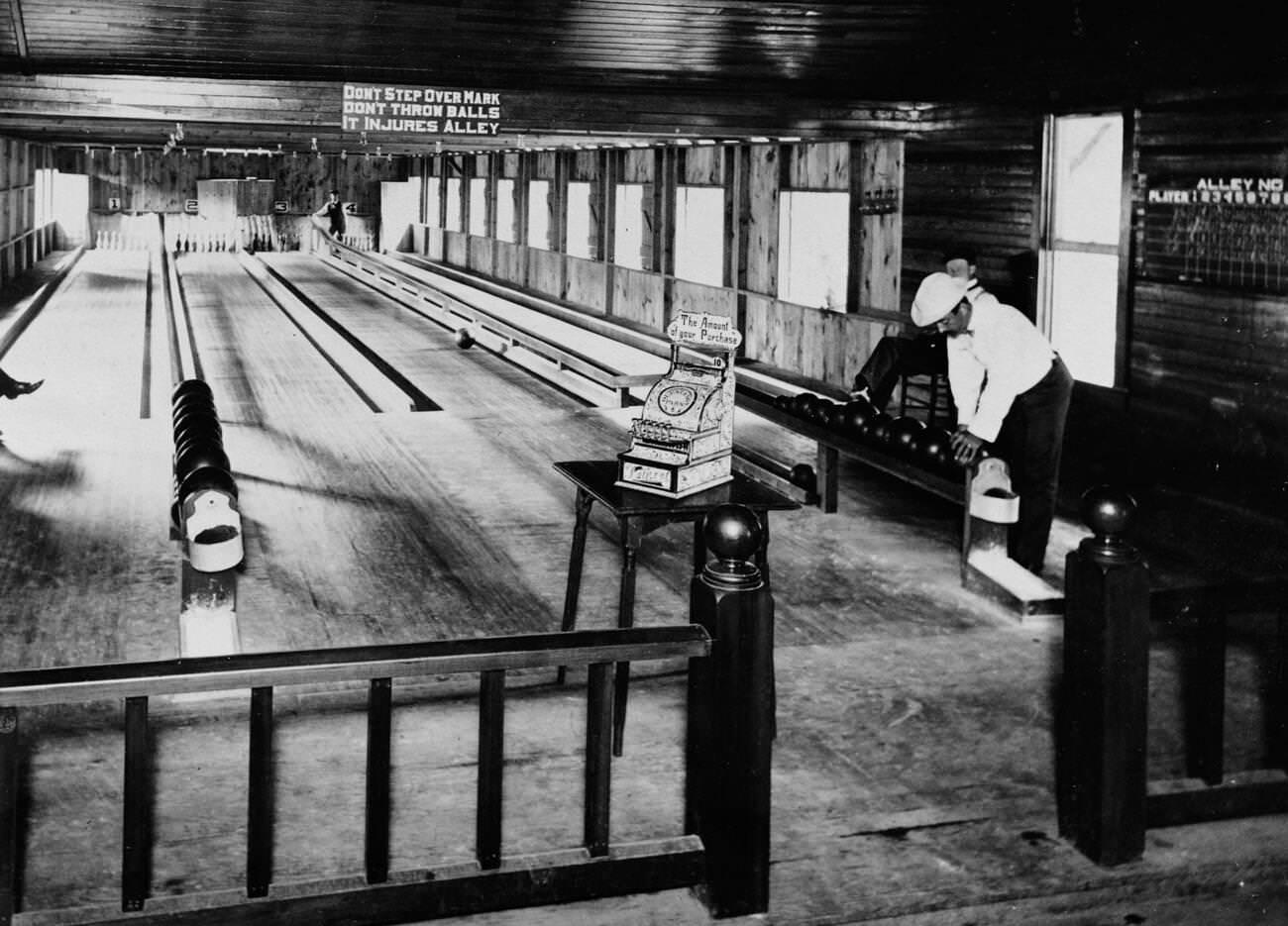
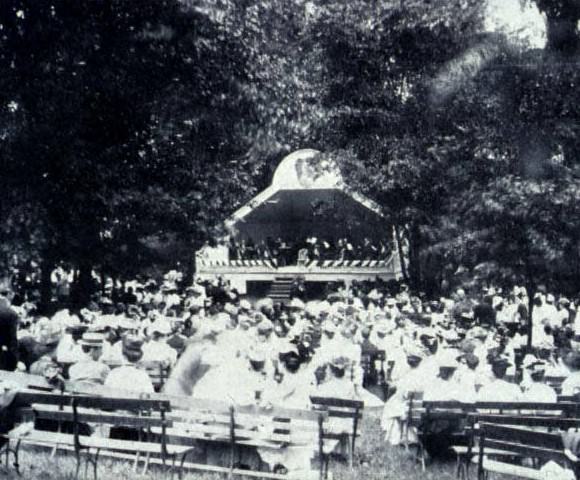
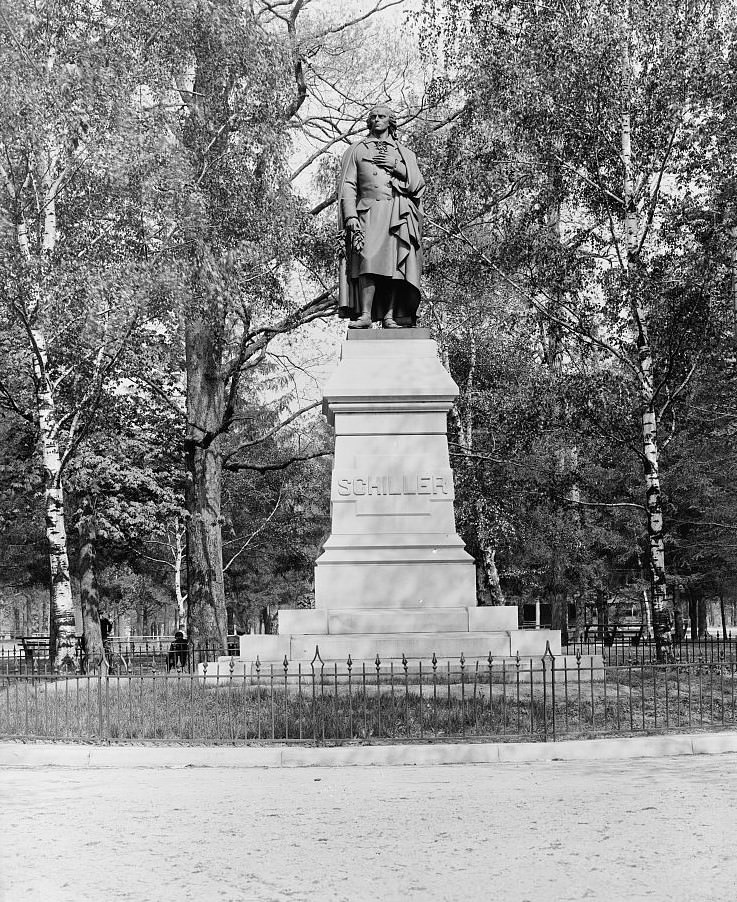
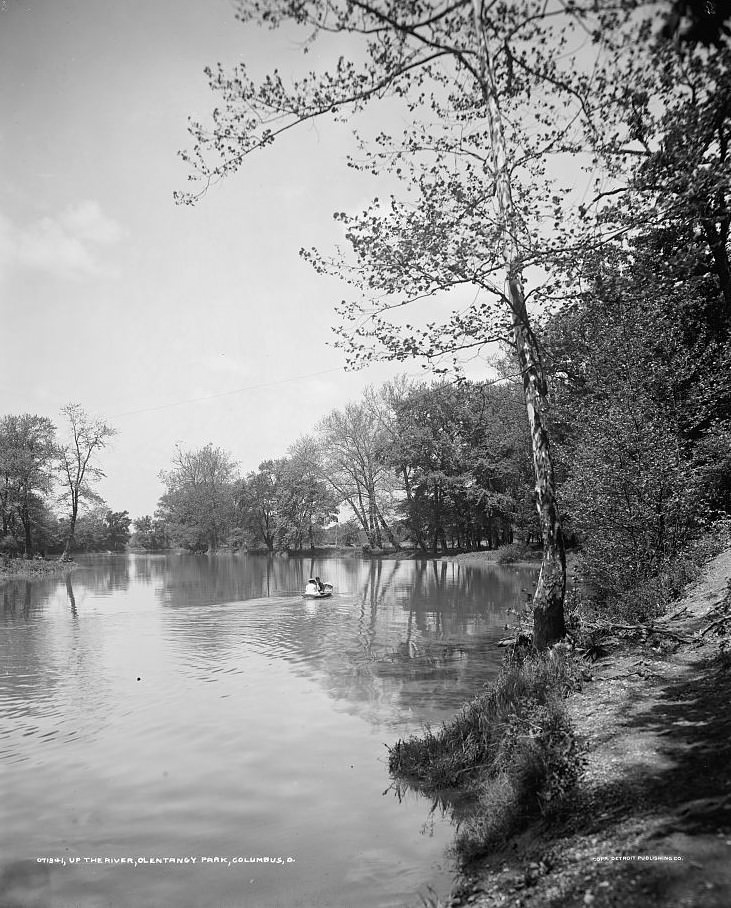
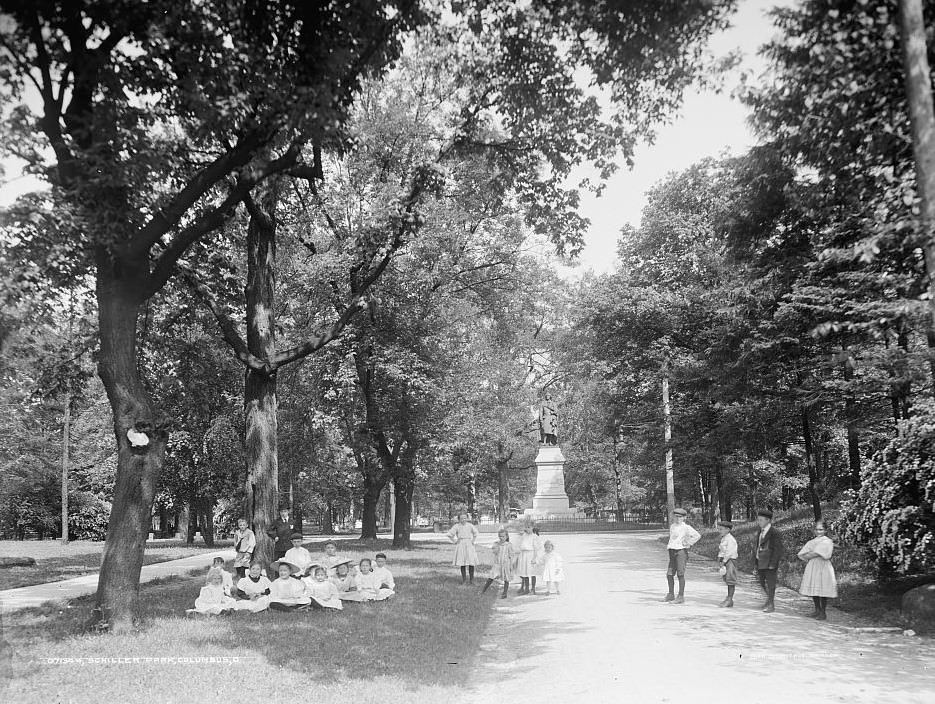
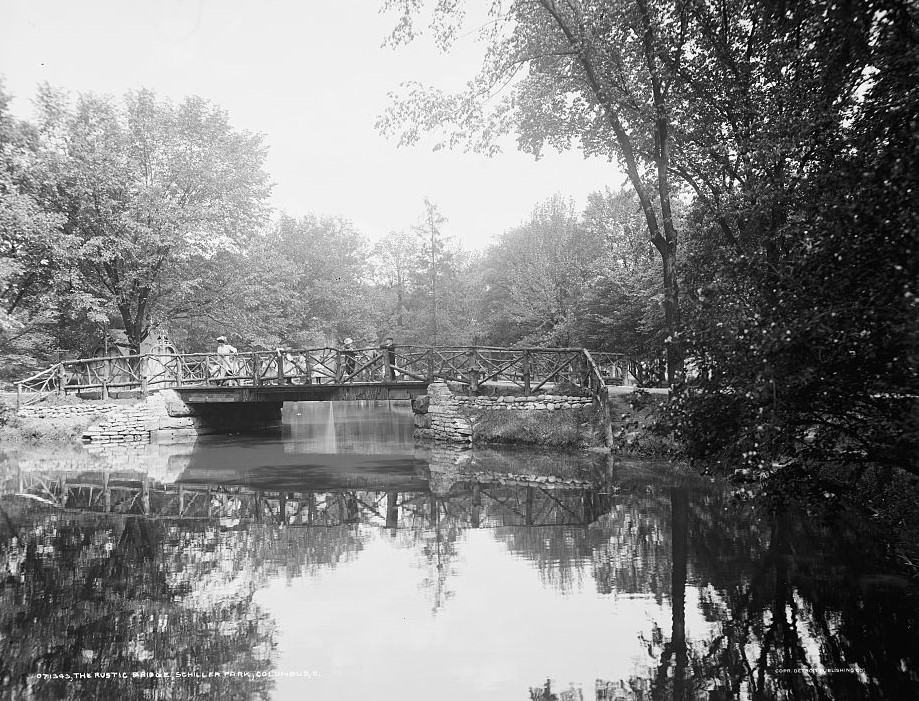
Parks gave residents places to gather outside of work and church. Goodale Park, donated by Dr. Lincoln Goodale in 1851, remained a popular green space in the early 1900s. Schiller Park featured a statue of the German poet Friedrich Schiller and a rustic bridge that made it a picturesque destination. Franklin Park had its own lake and scenic views. Olentangy Park, a commercial amusement park along the river, offered bowling alleys, a theater, picnic grounds, and a bandstand at Indianola Park nearby.
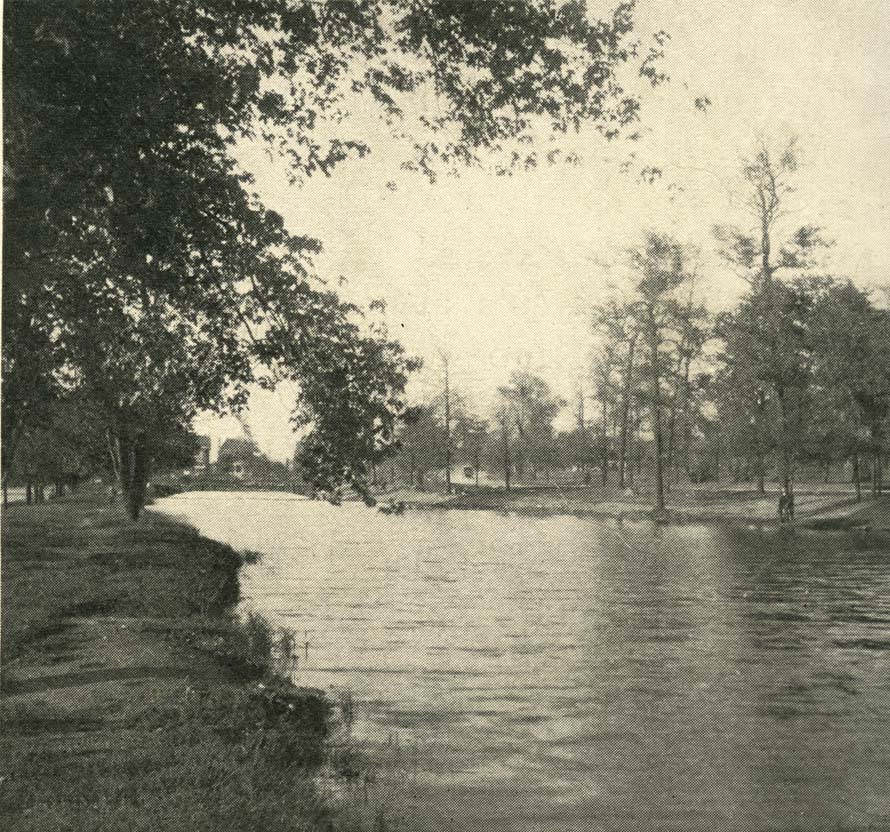
Goodale Park, donated by Dr. Lincoln Goodale in 1851, Circa 1901
Rustic bridge in Schiller Park, Columbus, Ohio, 1900s
Olentangy Park bowling alleys, Columbus, 1907
Indianola Park Bandstand, 1908.

The water infrastructure supporting Columbus was engineering on a significant scale. The Scioto River dams and reservoir system provided the city with a reliable water supply and helped manage flooding. Storage dams photographed in the early 1900s showed the concrete ambitions behind the city’s growth. Without this infrastructure, the rapid population increase Columbus was experiencing would have strained basic services beyond their limits.
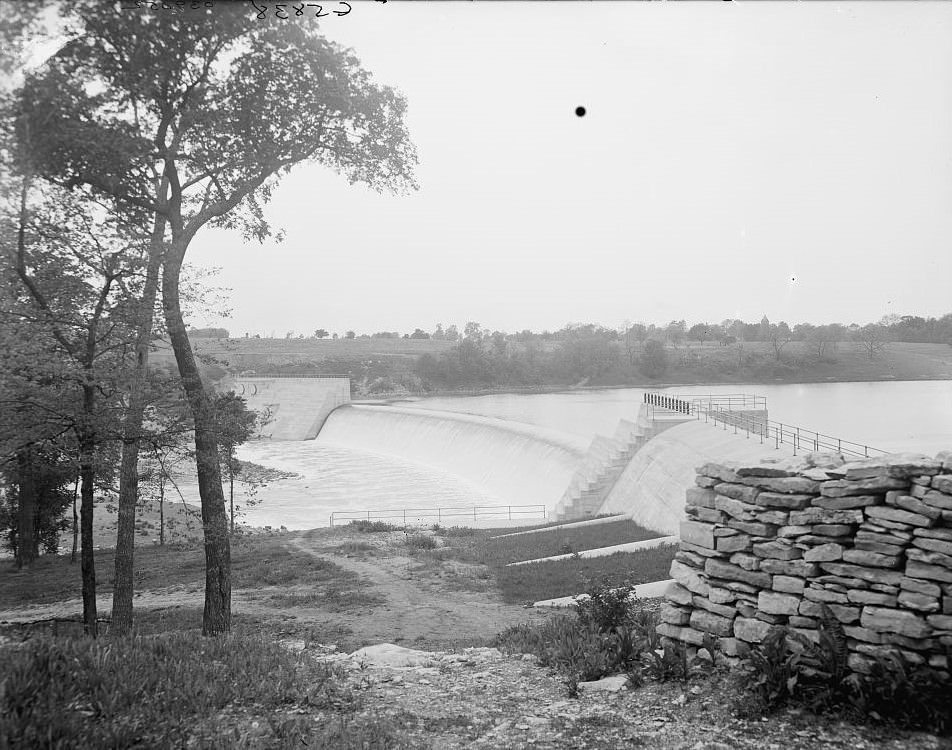
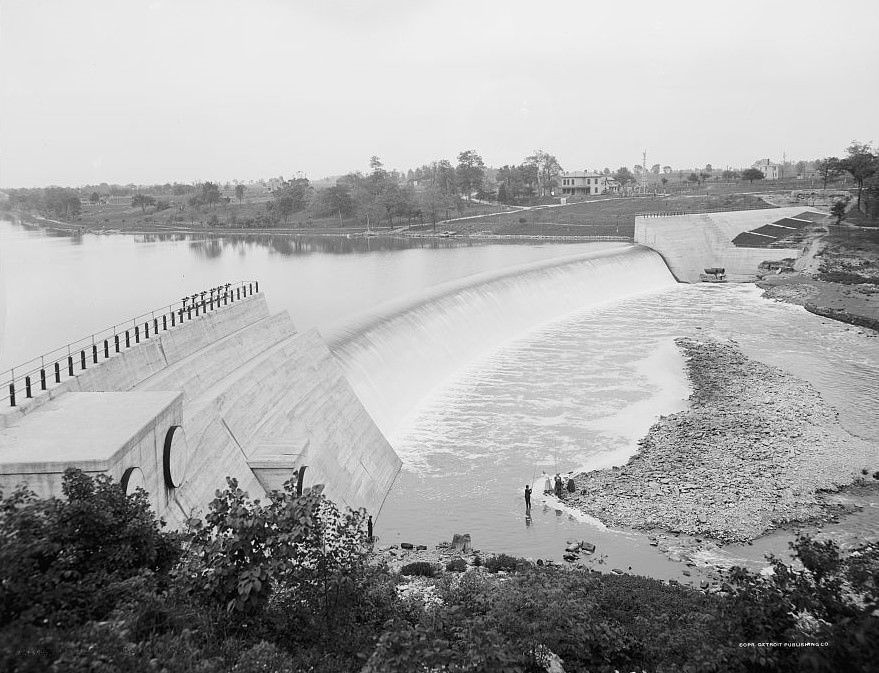
Storage dam in Columbus, Ohio, 1900s

The Columbus Museum of Art at 480 East Broad Street was already in place by the early 1900s, offering residents access to fine arts. East Broad Street itself was one of the city’s most distinguished corridors, lined with churches, institutions, and upscale residences. The street’s character reflected what Columbus aspired to be — a city with cultural depth, civic pride, and forward momentum.
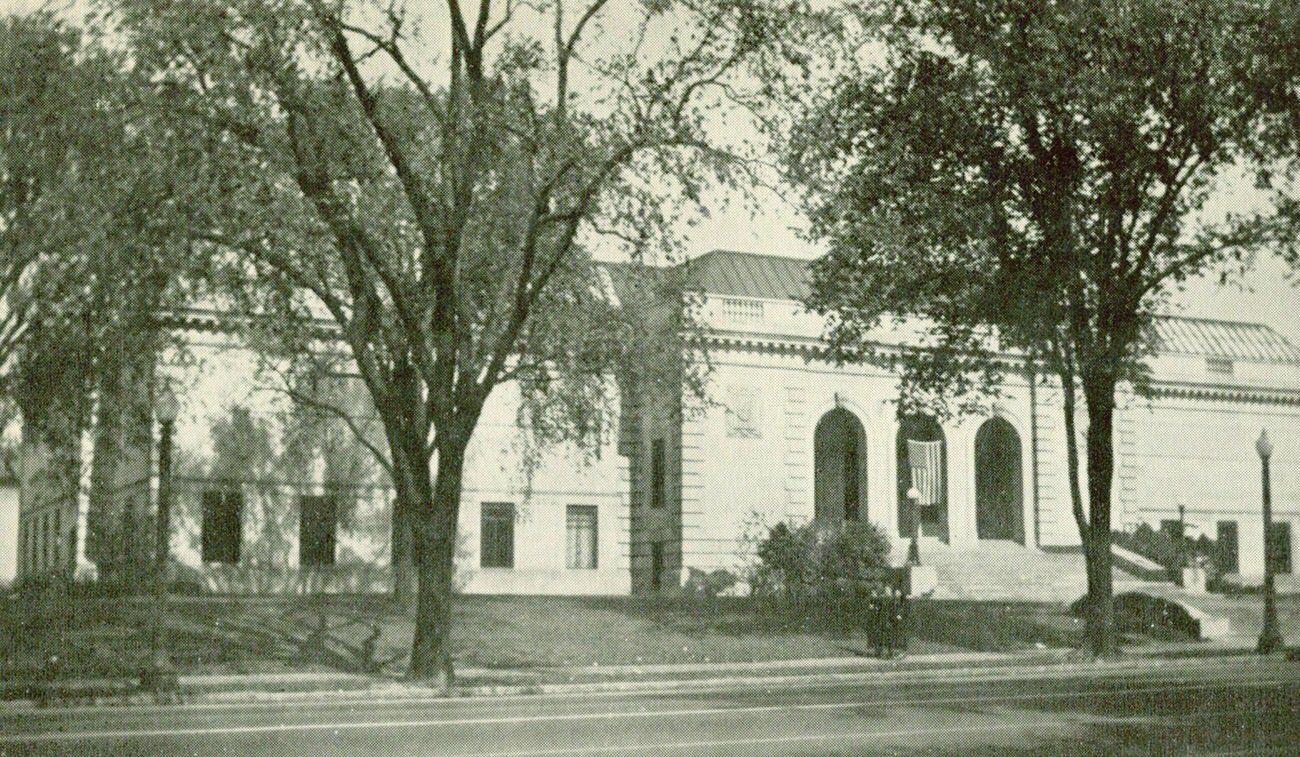
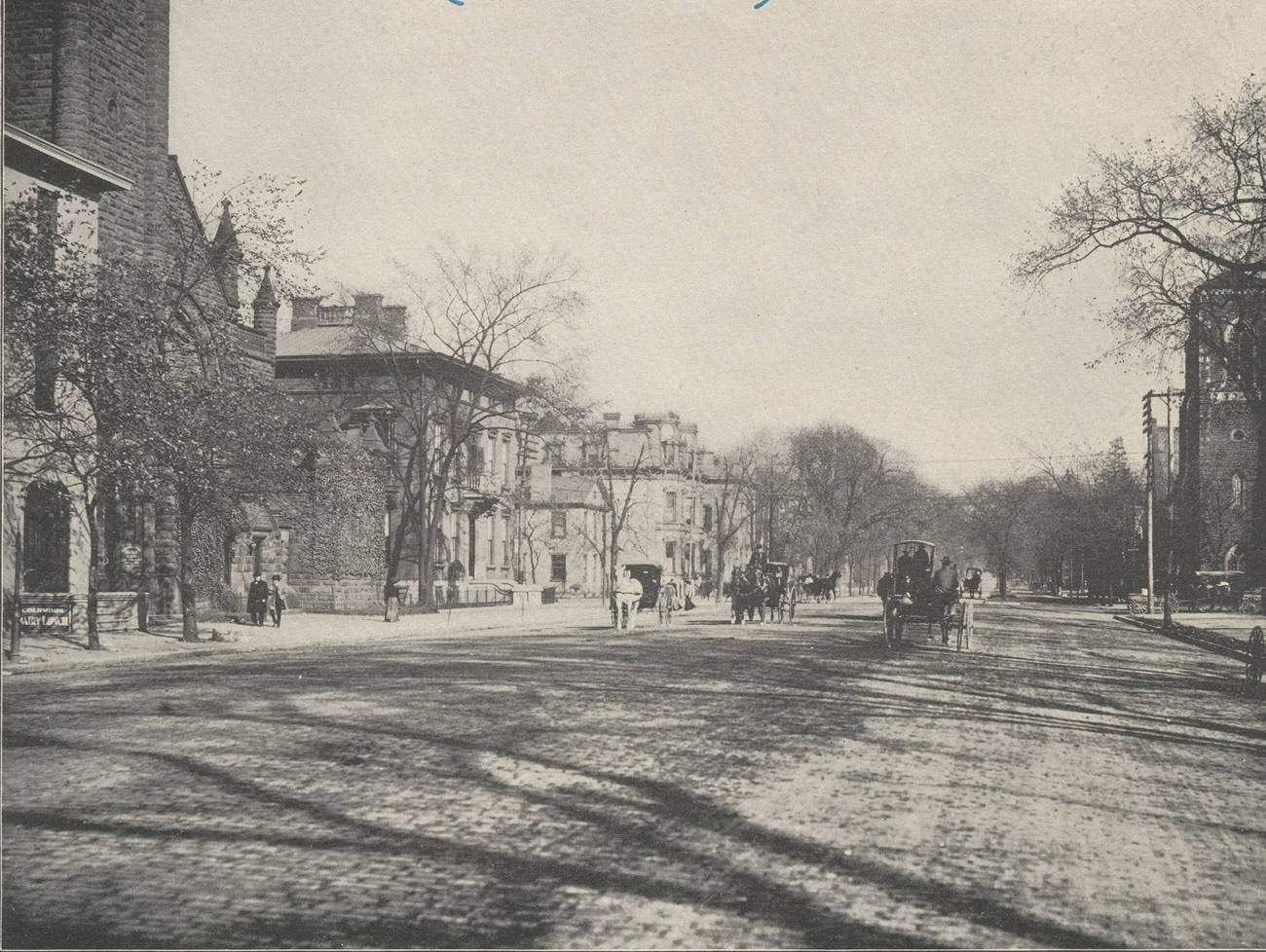
Front view of the Columbus Museum of Art at 480 East Broad Street, 1900s
East Broad Street with landmarks including First Congregational Church, 1902.
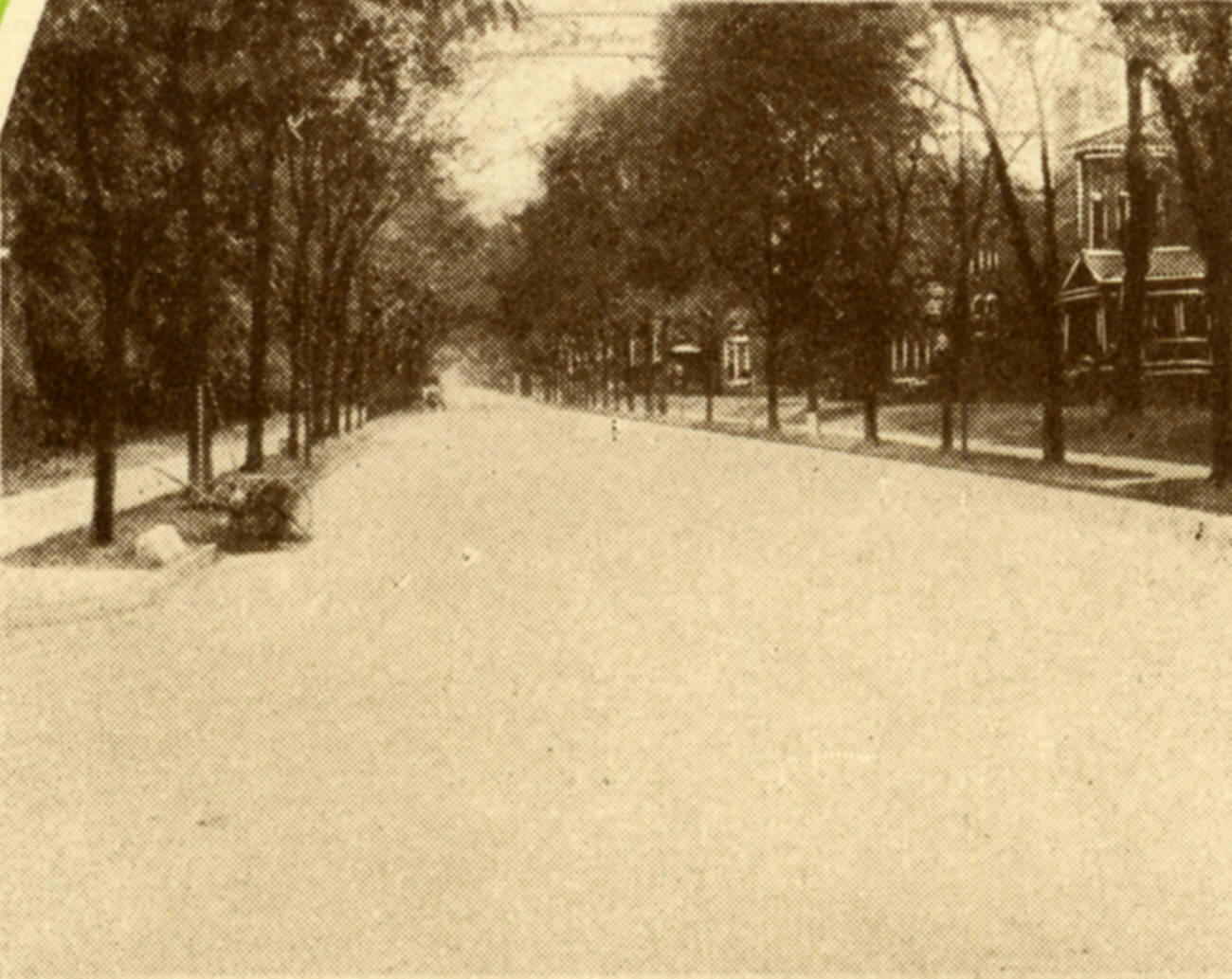
East Broad Street in Columbus, Ohio, 1900s

The Ohio State Fair was another anchor of Columbus life. The Agricultural Building on the Ohio State Fairgrounds, photographed in 1908, was a large and well-built structure that hosted annual exhibits drawing visitors from across the state. The fair reinforced Columbus’s role as the center of Ohio’s agricultural and commercial identity.
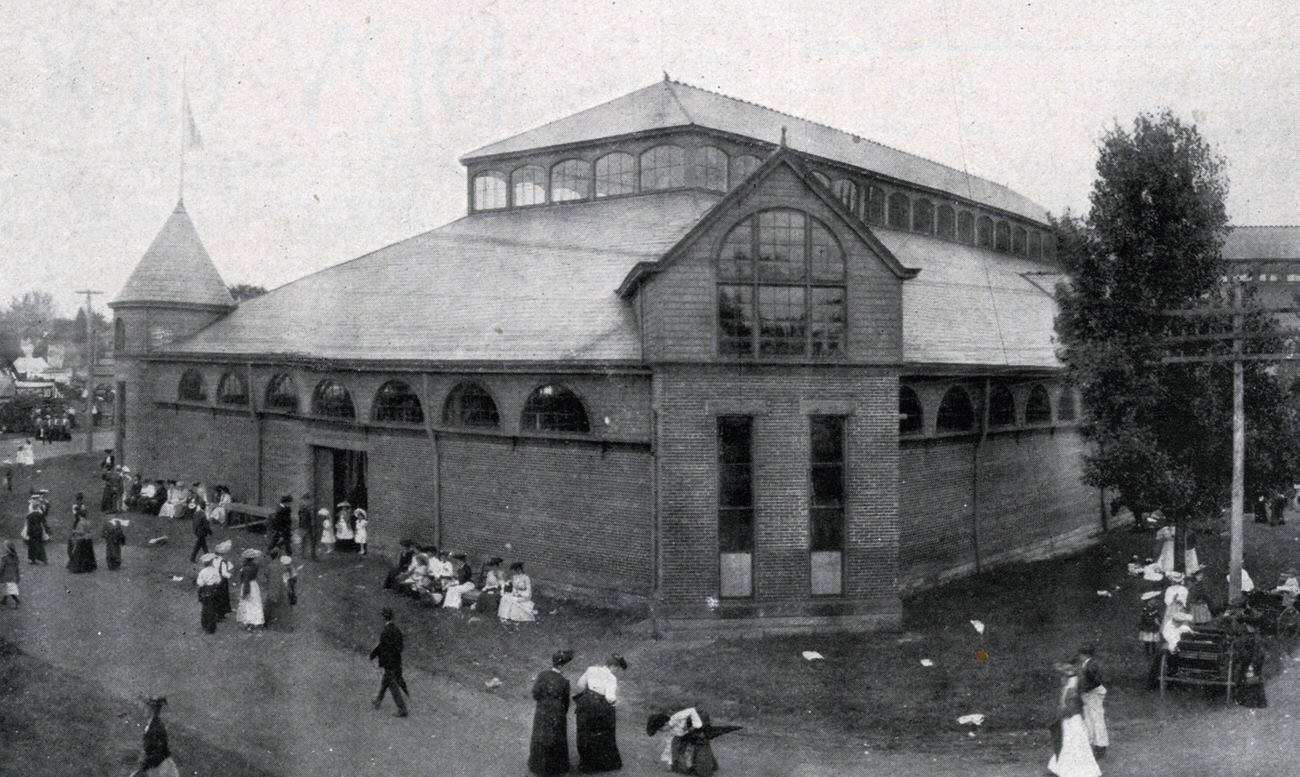
Agricultural Building on the Ohio State Fairgrounds, 1908.

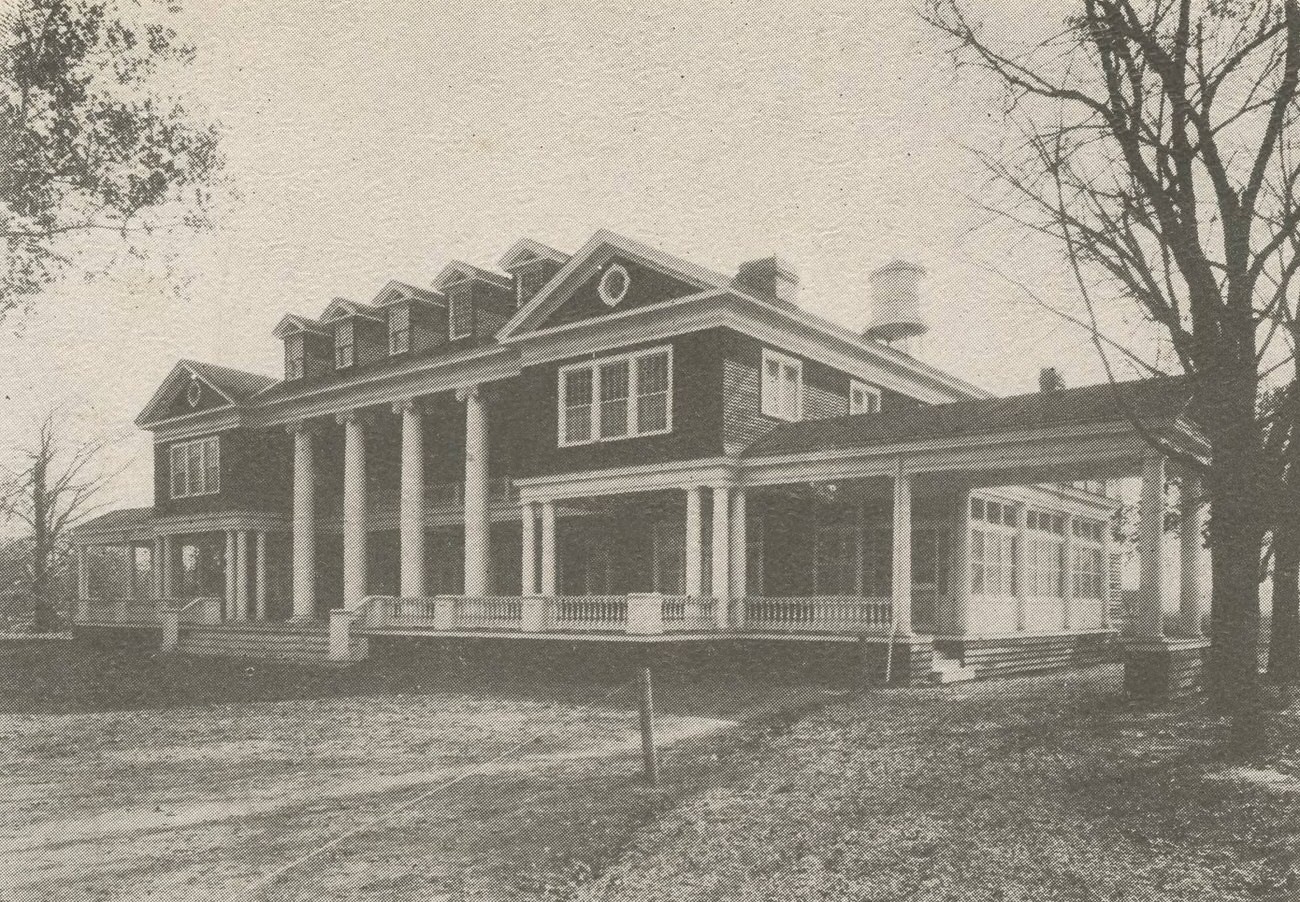
Country clubs, social organizations, and civic associations added another layer to Columbus life for those with means. The Arlington Country Club, also known as the Arlington Golf and Riding Club, later became the Aladdin Country Club. The Columbus Country Club was another gathering place for the city’s professional class. These institutions played a real role in shaping business relationships and social networks in the city.
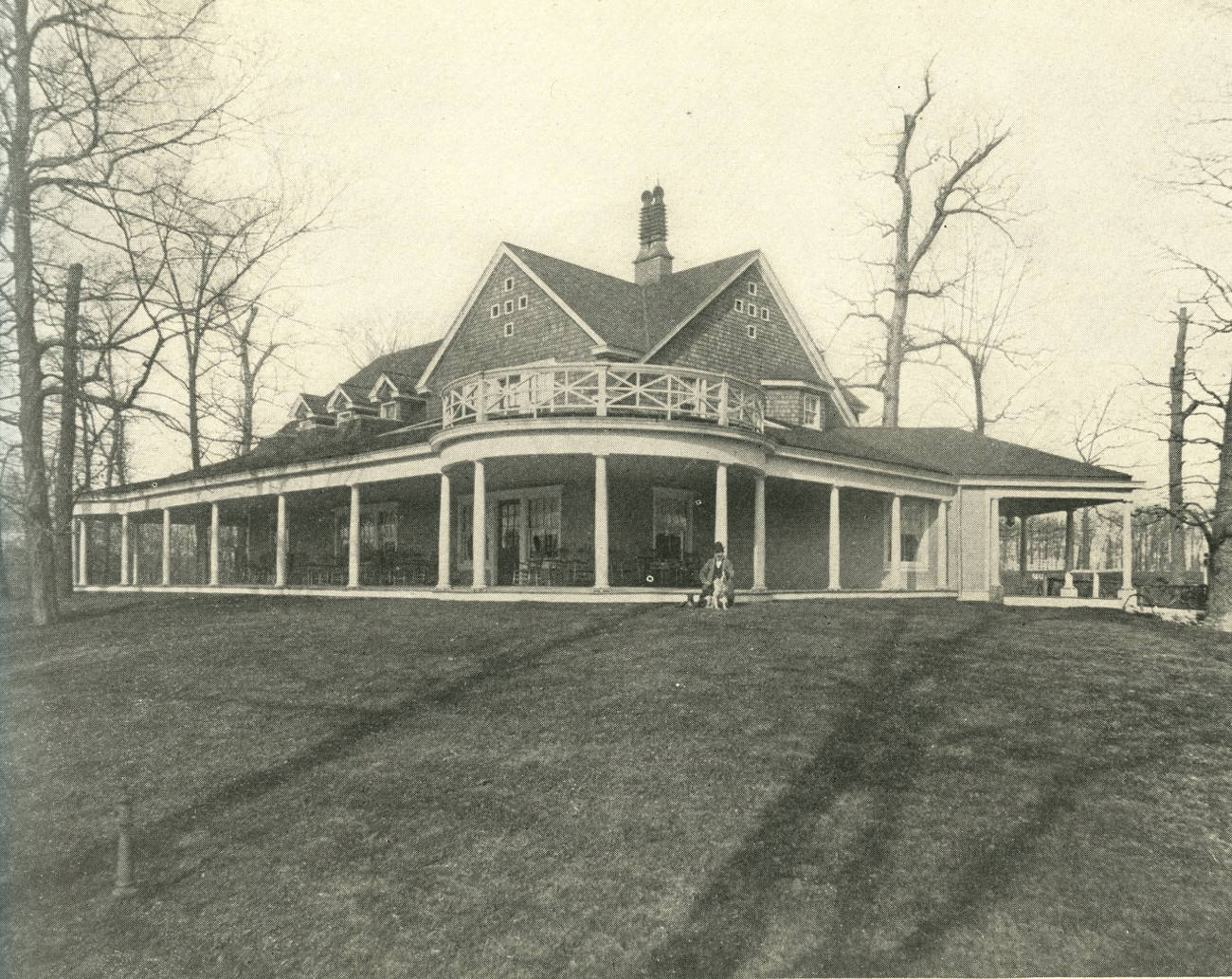
Arlington Country Club, also known as Arlington Golf and Riding Club, later Aladdin Country Club, 1901
Columbus Country Club, photograph from 1906.

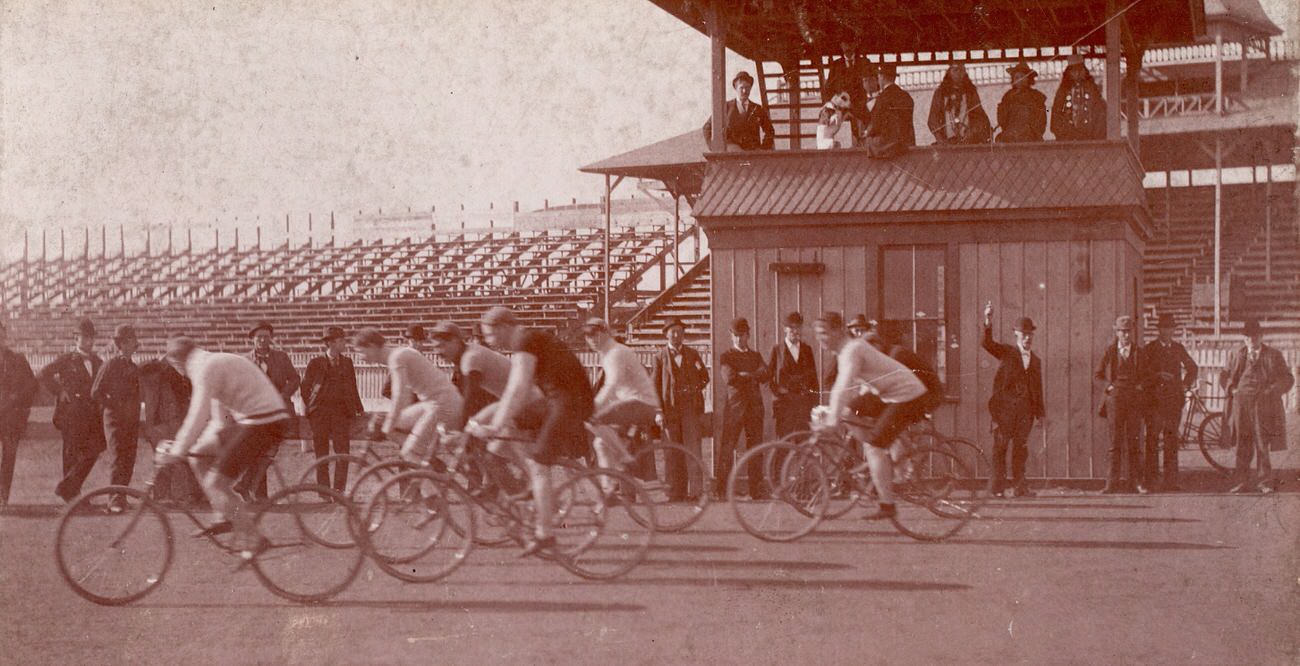
Entertainment of all kinds was available to Columbus residents. The Heber Brothers’ Greater Show brought circus performers and a live band to the city in 1907. Bicycle racing was also part of the recreational culture, with riders competing at events in the region. The streets, parks, and commercial venues of Columbus offered daily life that was increasingly varied, fast-paced, and modern.
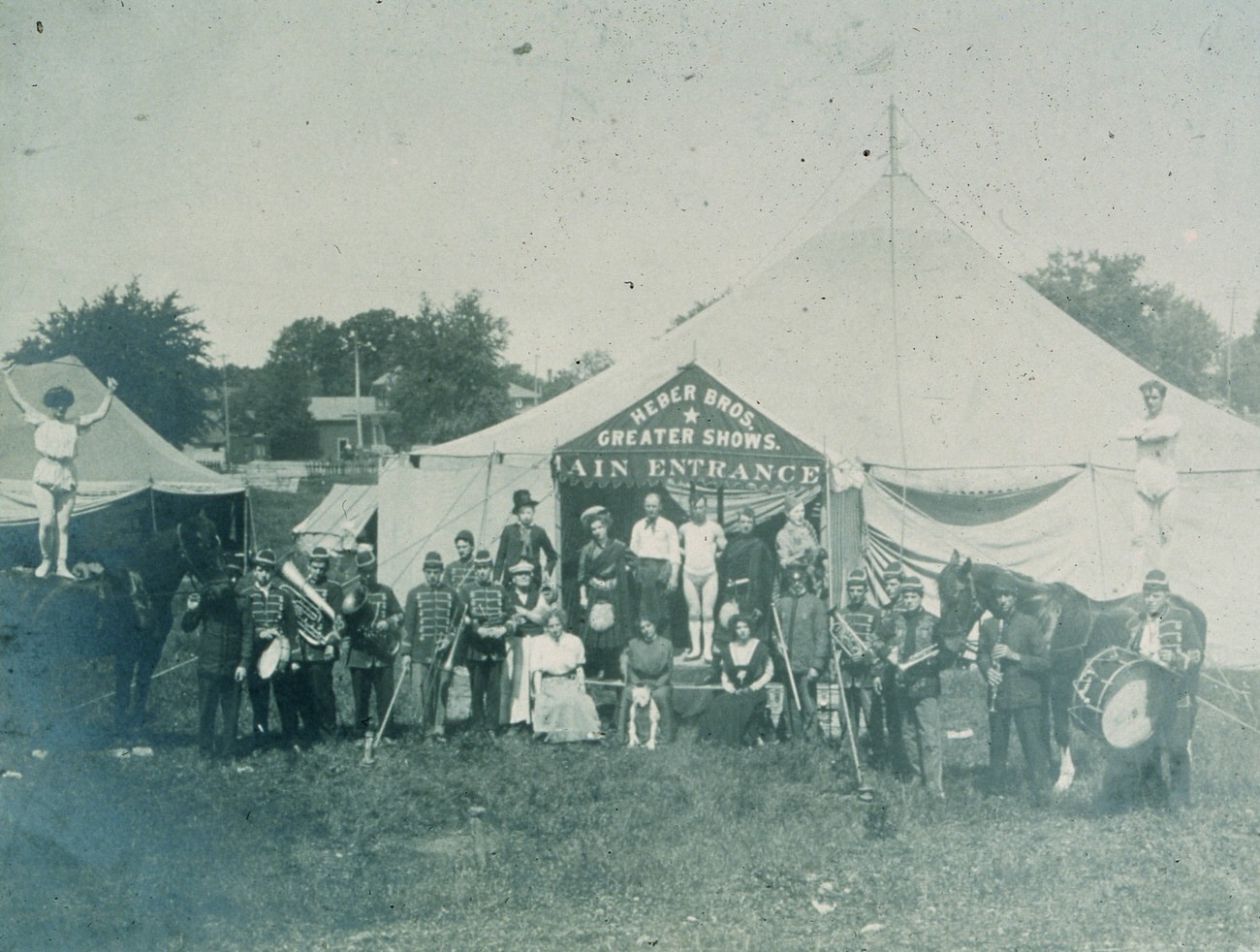
Heber Brother's Greater Show Circus tent with band and performers, including the Heber family members, 1907.
Heber Brother’s Greater Show Circus tent with band and performers, including the Heber family members, 1907.
Downtown Columbus area with children, 1908.

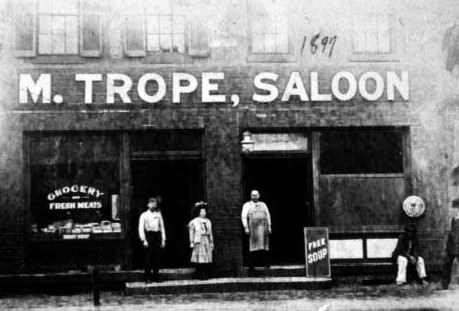
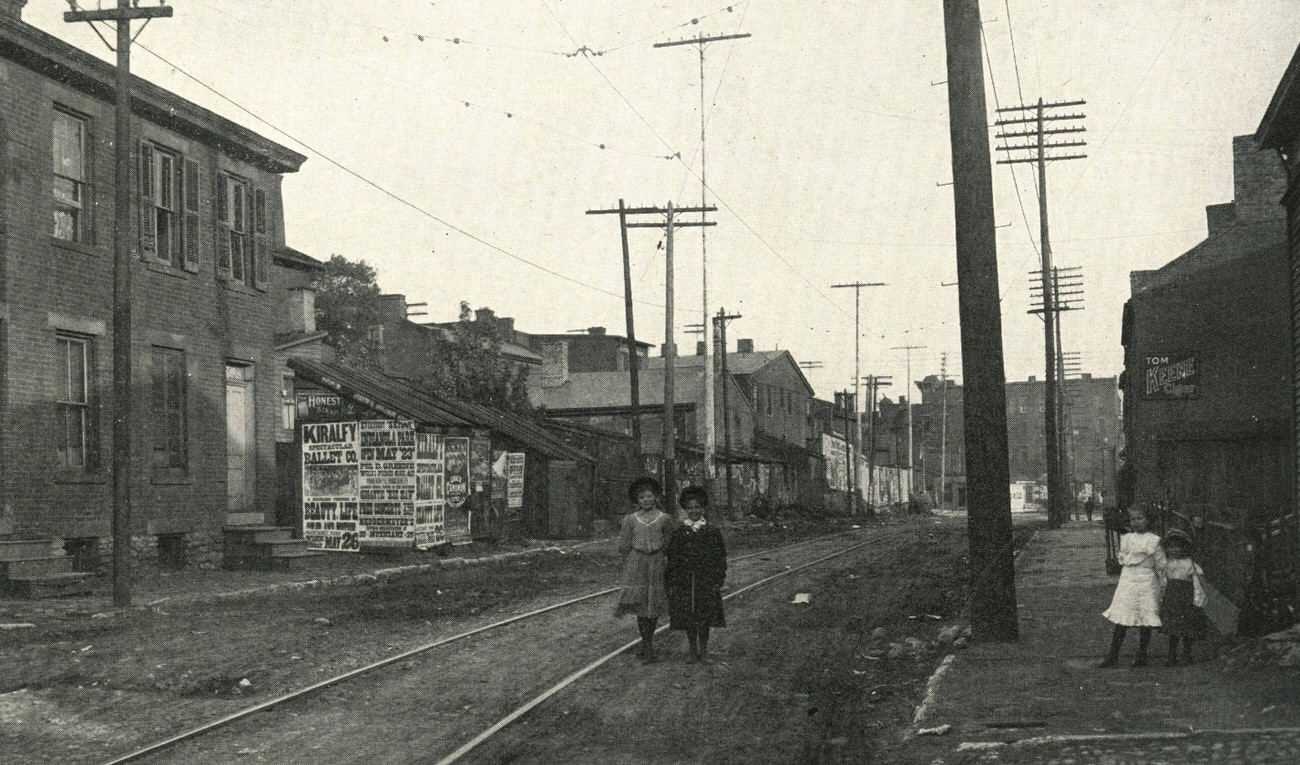
Not all corners of Columbus looked polished. Streets like the corner of Gay and South showed the working-class texture of everyday neighborhoods. Small businesses — coal and feed dealers like Raymond McCallum and S.W. Smith, grocers like Mendel Trope, and saloons like John Baltz and Charles Amend’s — were the commercial backbone of these areas. These blocks told a different story from East Broad Street’s grand facades, but they were equally essential to the city’s character.
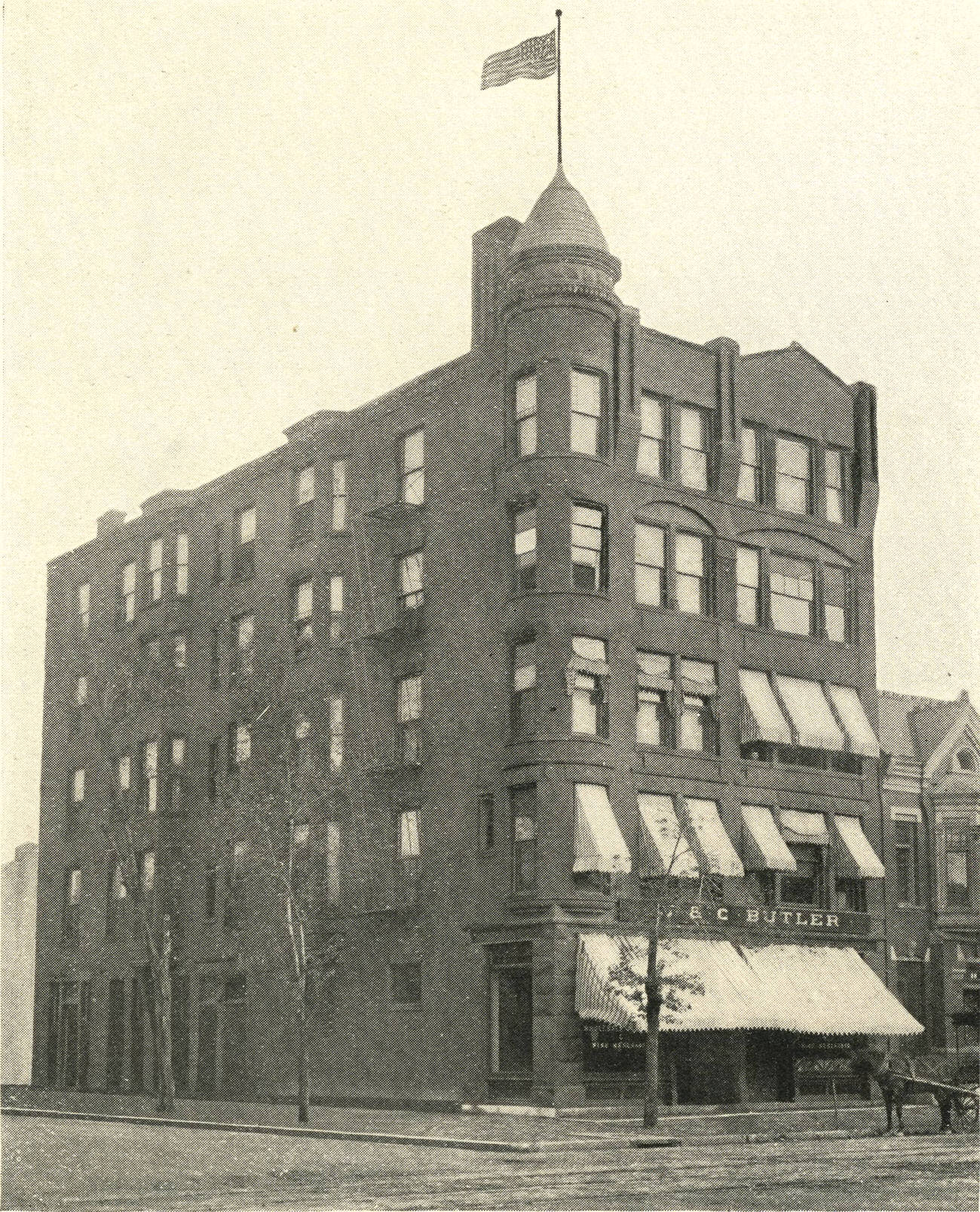
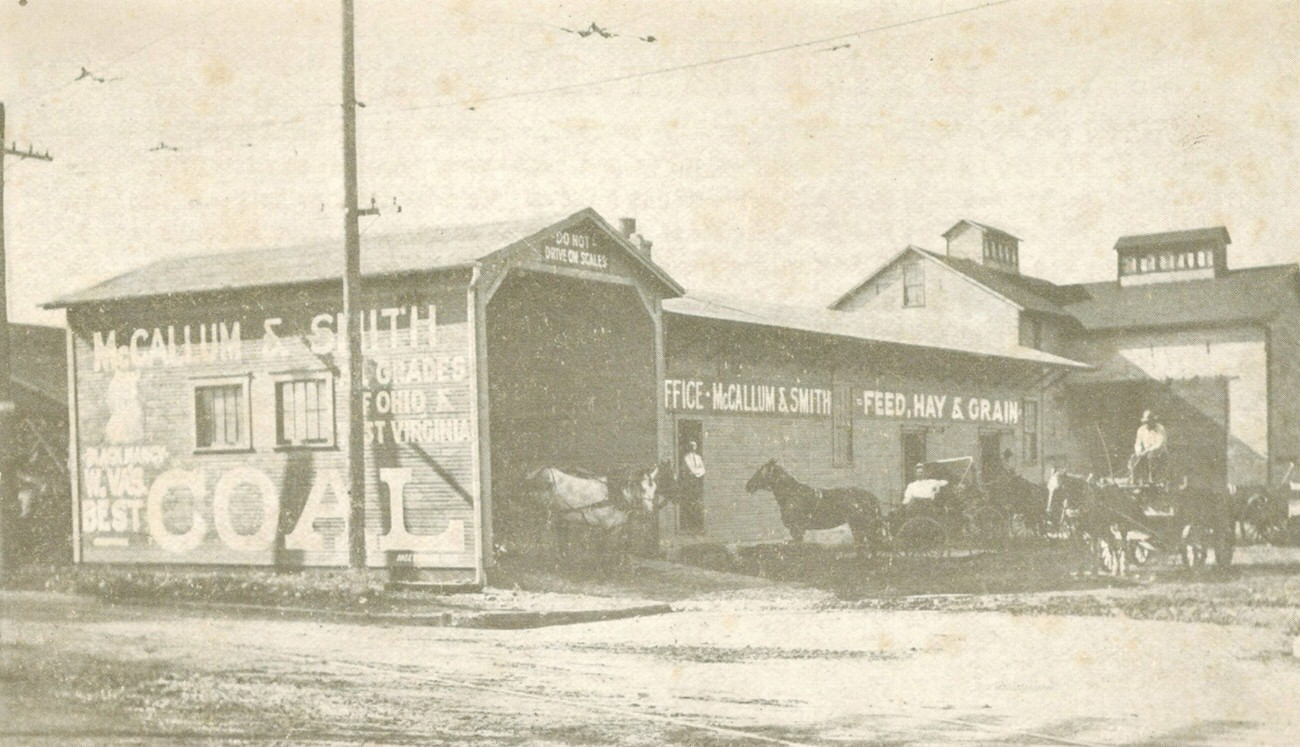
Corner of Gay and South Streets, Columbus, 1901.
Raymond McCallum and S.W. Smith Coal, Feed, Hay & Grain company, active from 1907-1913.
Exterior view of Mendel Trope's grocery store and John Baltz and Charles Amend's saloon, 1909.
Exterior view of Mendel Trope’s grocery store and John Baltz and Charles Amend’s saloon, 1909.

Funeral services, cold storage companies, and flour mills were also part of the city’s commercial fabric. Edward F. Fisher and Company, a funeral director and ambulance service established in 1870, operated well into the twentieth century. The Columbus Ice and Cold Storage Company at the corner of Spruce Street and Dennison Avenue served the city’s food and preservation needs. Hardesty Brothers Flour Mill supplied the region’s baking demands. These businesses kept the city running behind the scenes.
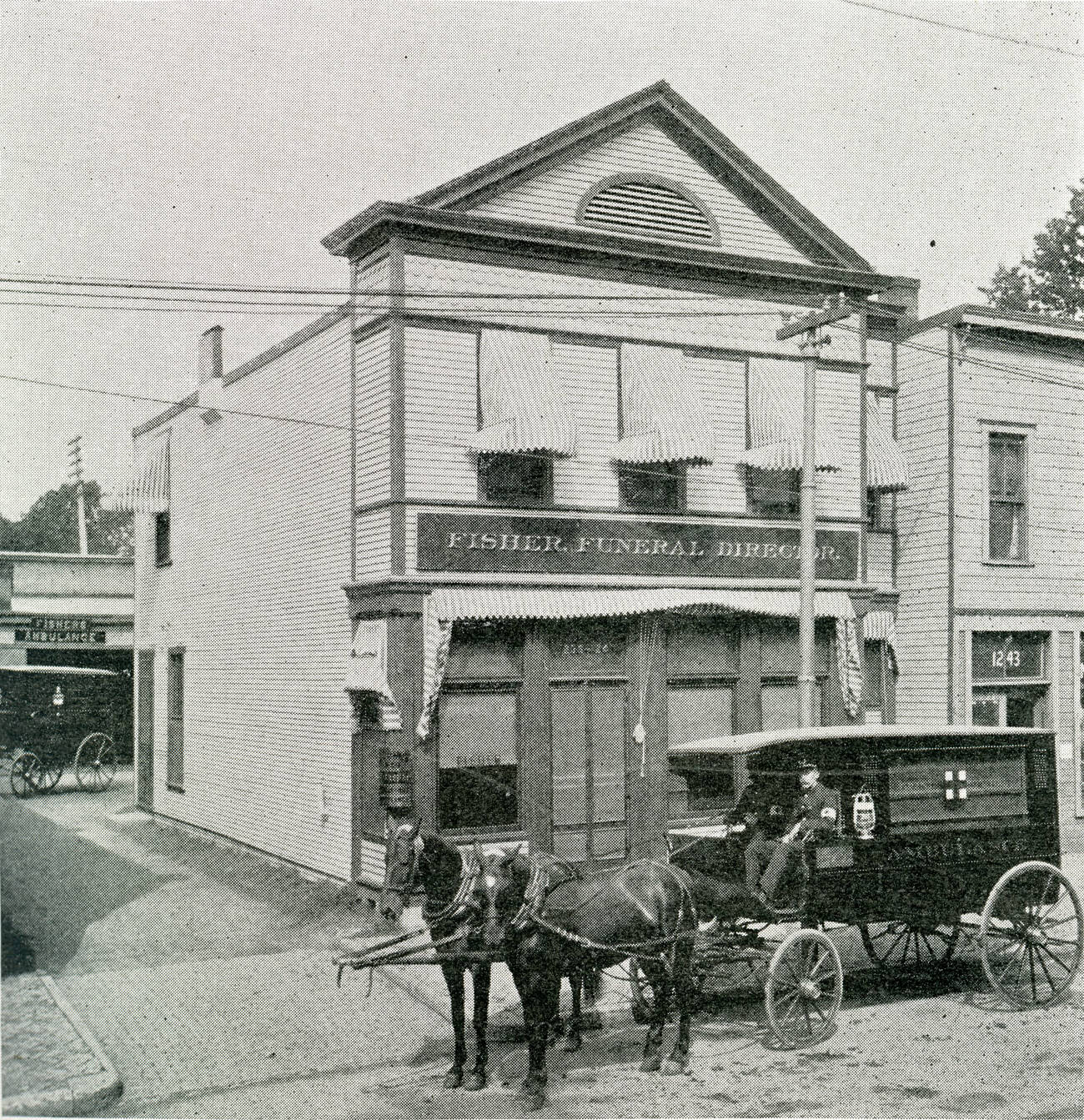
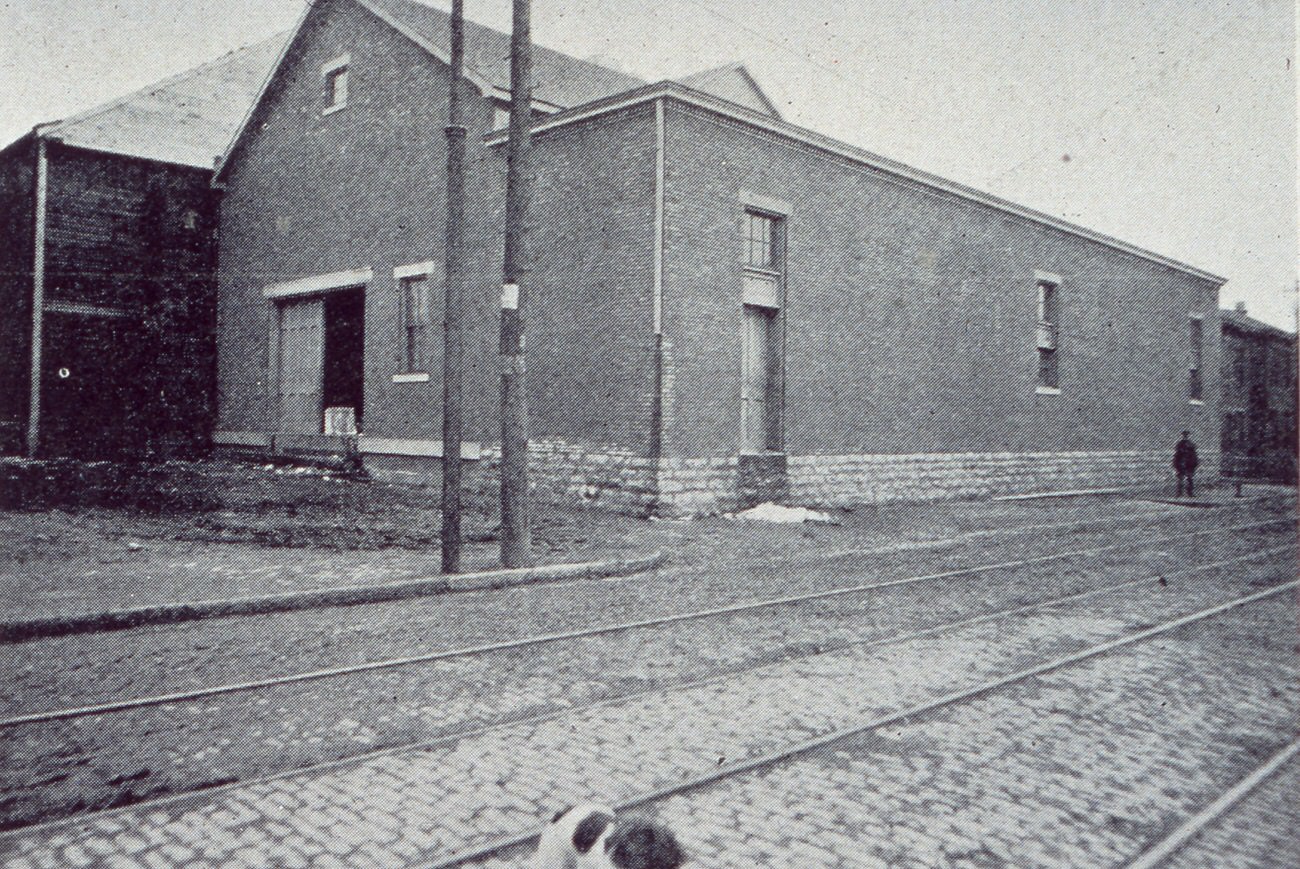
Edward F. Fisher & Company, funeral directors and ambulance service, established 1870, out of business 1961. Circa 1901.
Columbus Ice and Cold Storage Co. building, corner of Spruce St. and Dennison Ave., 1901
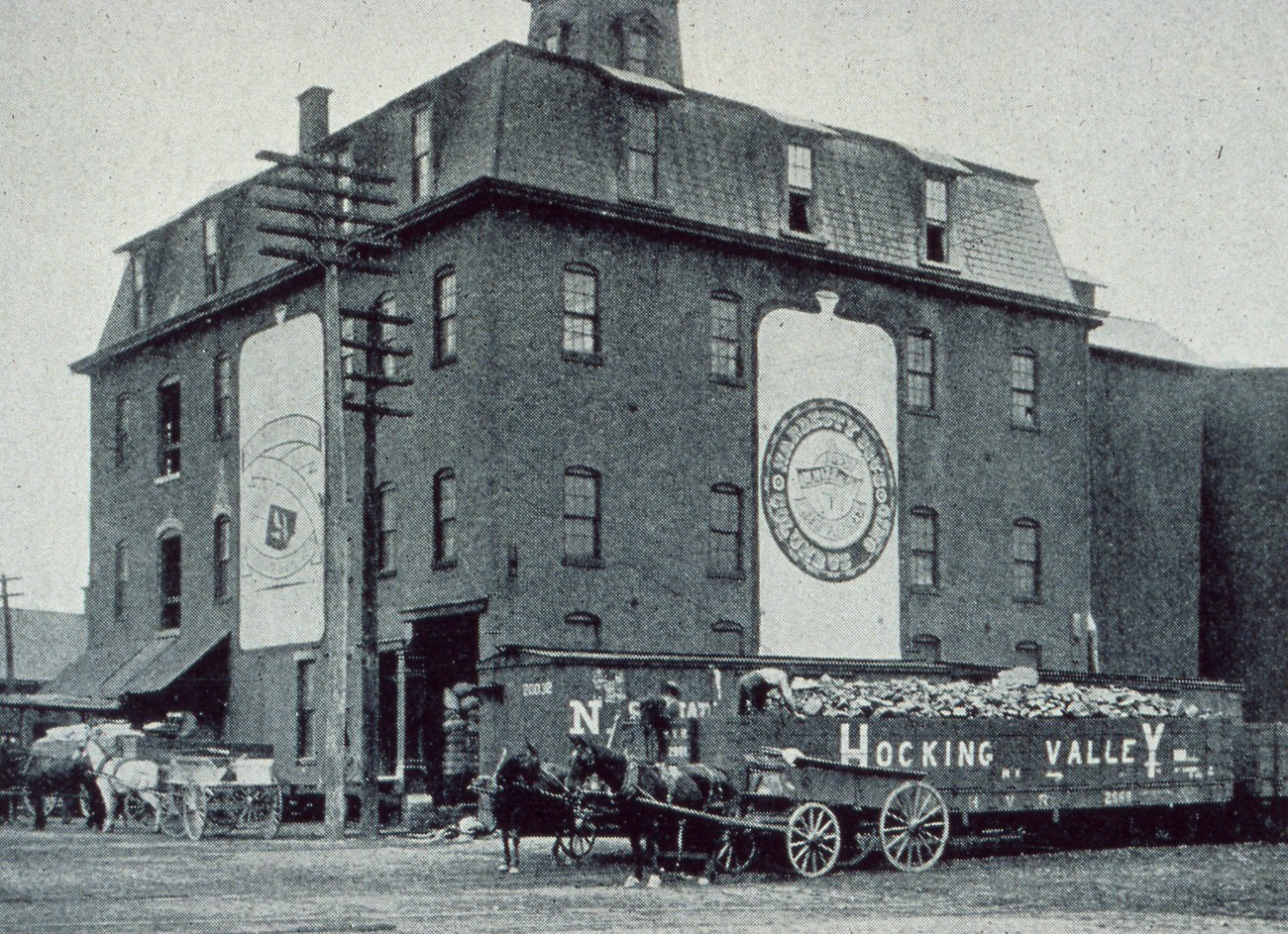
Hardesty Brothers Flour Mill, Circa 1901.

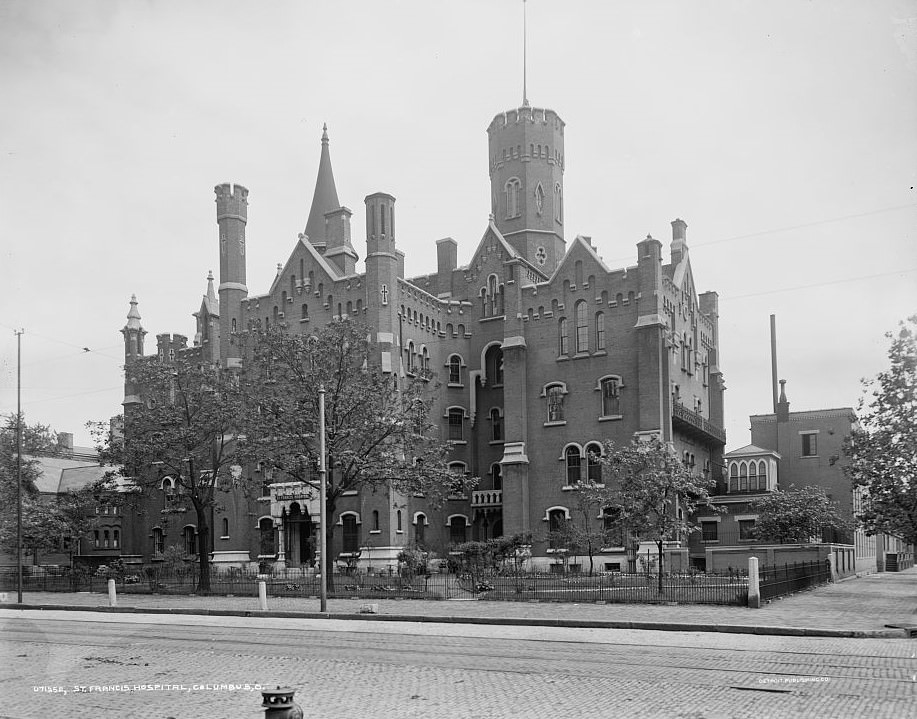
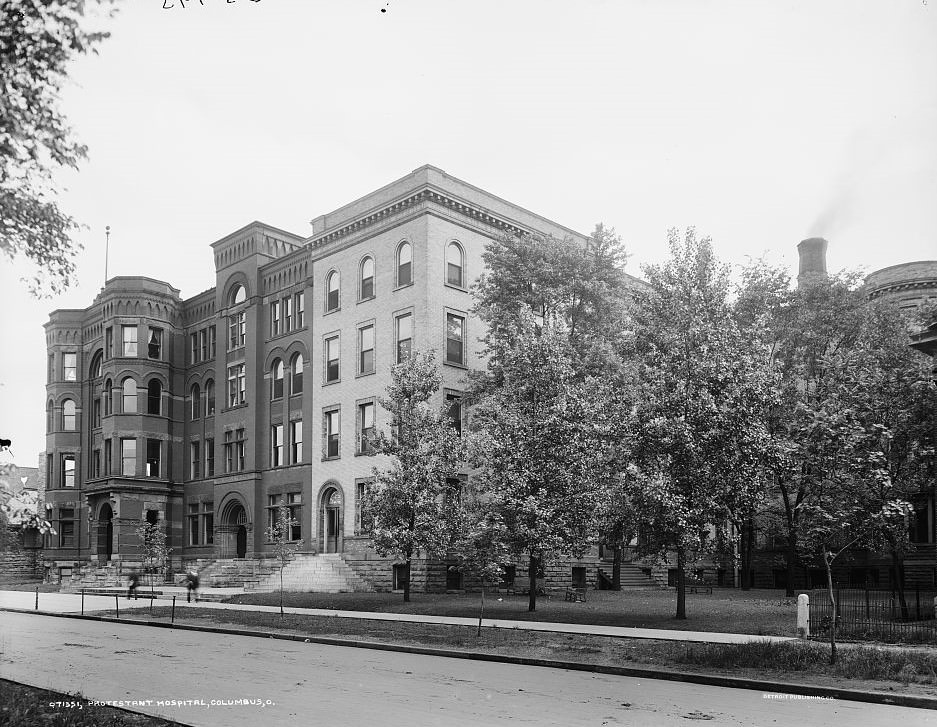
The Ohio Penitentiary was another unmistakable part of Columbus’s institutional footprint. Situated within the city limits, its massive stone walls were a familiar landmark. Hospitals — including Protestant Hospital, St. Francis Hospital, and St. Joseph’s Cathedral parish facilities — served a population that was growing faster than existing healthcare infrastructure could easily manage.
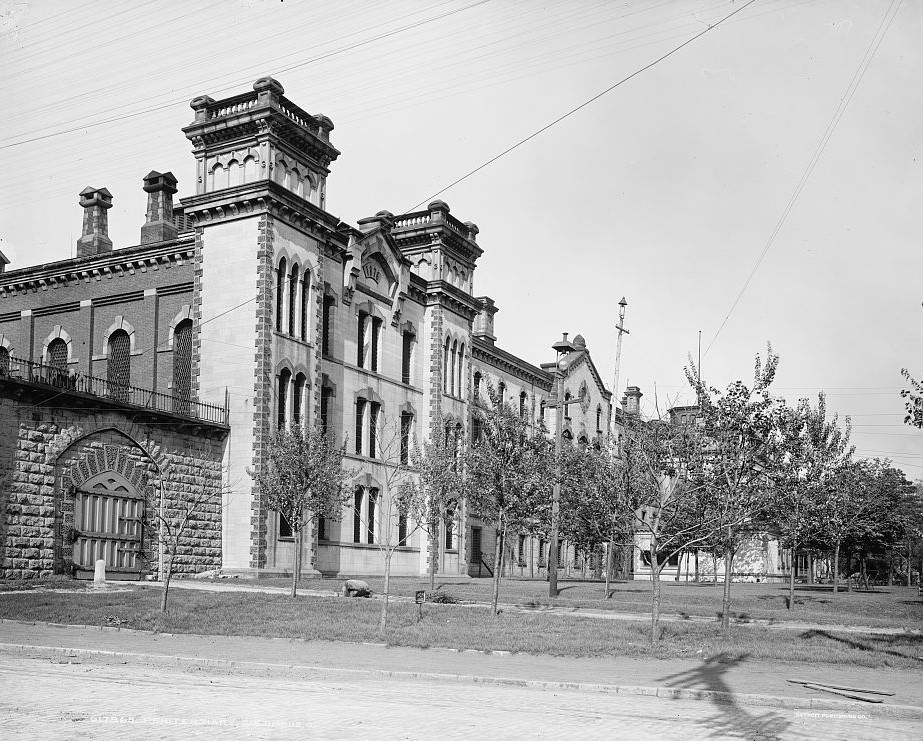
Penitentiary in Columbus, Ohio, 1906.
Protestant Hospital in Columbus, Ohio, 1900s
St. Francis Hospital in Columbus, Ohio, 1900s

Looking at Columbus through these photographs — whether from a balloon at 2,000 feet or at street level on a snowy March morning in 1906 — the city reads as a place caught between its nineteenth-century roots and the modern world it was becoming. Every new building, every streetcar line, every park improvement was a statement that Columbus intended to grow, and to do so with intention.
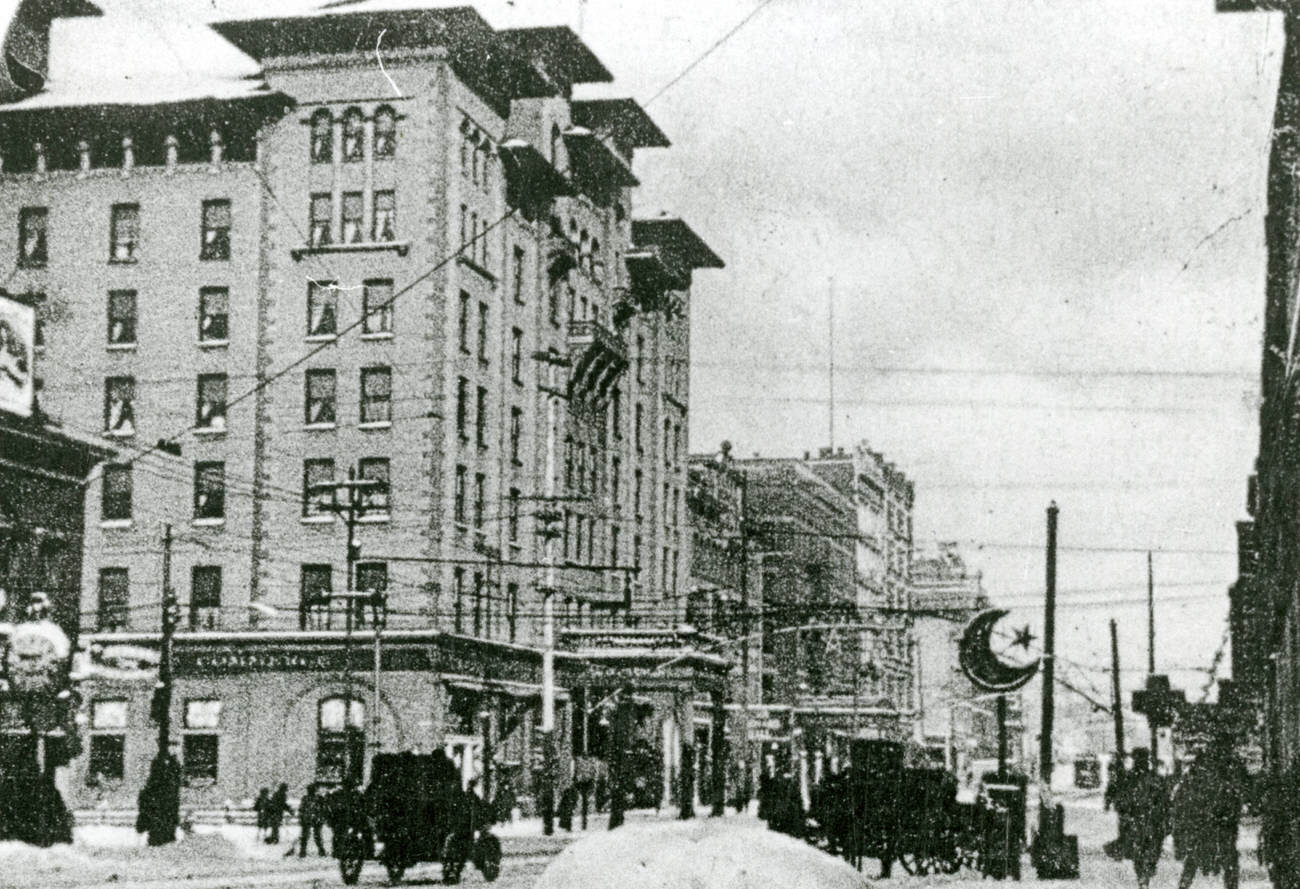
North High Street at Spring Street during the snowstorm of March 4, 1906
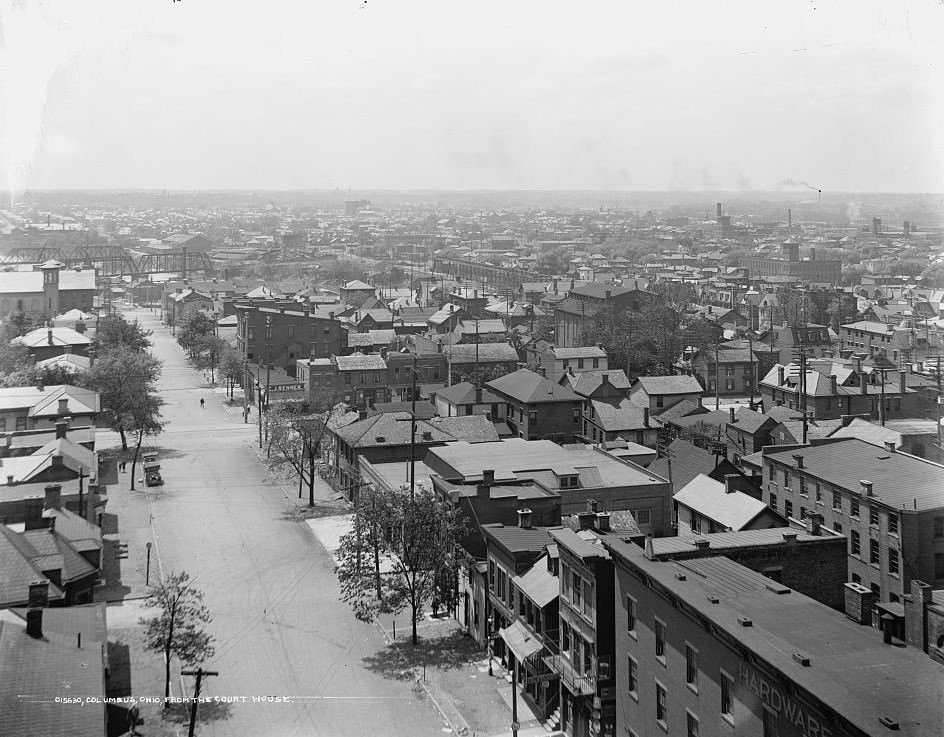
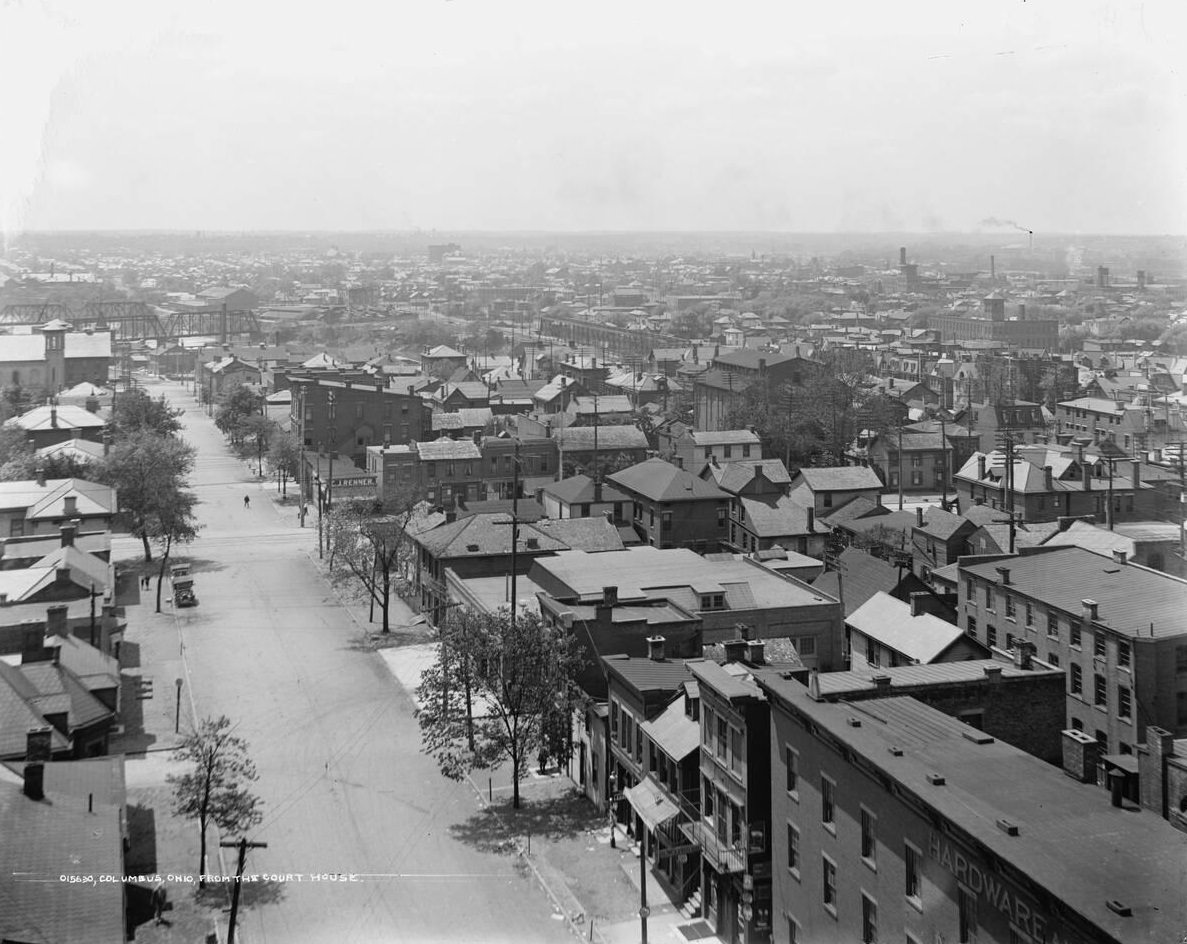
Columbus, Ohio, from the court house, 1903
View of Columbus, Ohio from the courthouse, 1900s.
What Columbus, Ohio looked like at the Turn of the 20th Century
First Congregational Church at 74 E. Broad St., established 1852, Circa 1903.
First Presbyterian Church, moved to Bryden Road and Ohio Avenue in 1900
Glick Furniture Company and neighboring businesses on East Long Street, Columbus, 1907
Greer Cottage, named after H. H. Greer, President of the Board of Trustees, 1900s
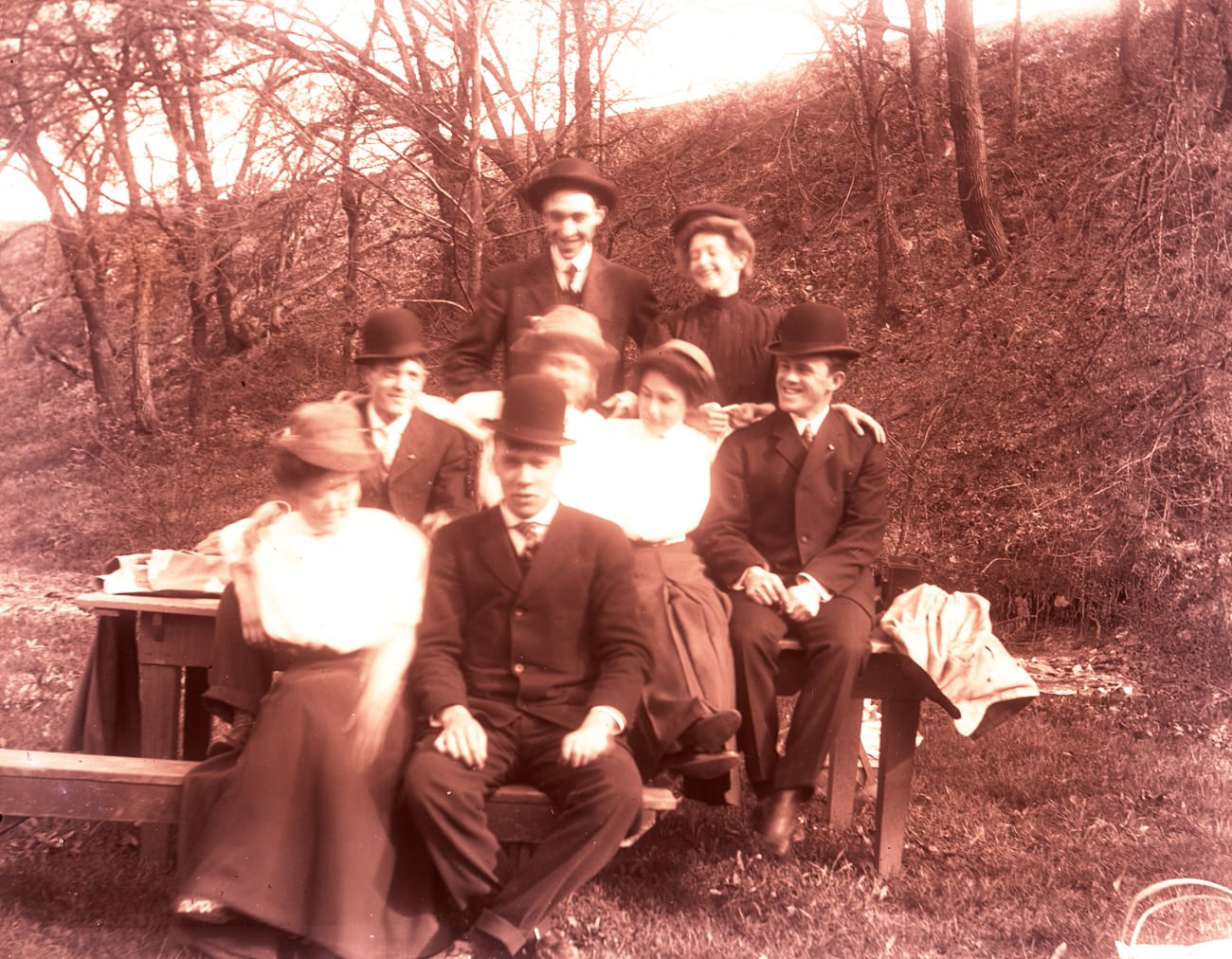
Glass negative of a group at Olentangy Park picnic grounds, May 11, 1907.
The Gymnasium and Armory at Ohio State University, opened in 1898 and burned in 1958, Circa, 1900.
Hartman Hotel, a favorite for private dinners, opened in 1901 and became the Ohio Building in 1921, Circa 1909.
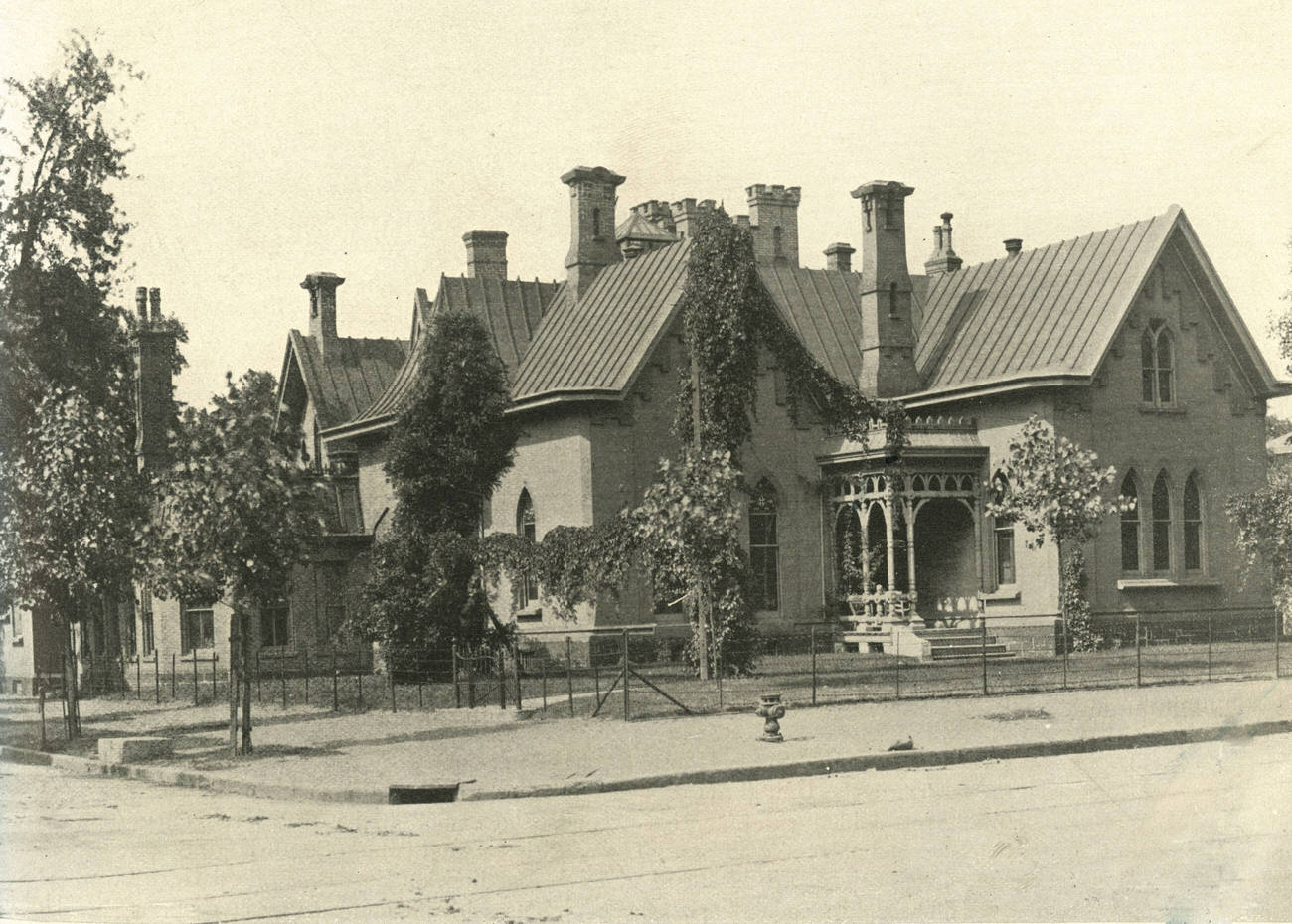
Hayden Homestead, formerly the Governor's mansion and later Knights of Columbus property, 1901.
Hayden Homestead, formerly the Governor’s mansion and later Knights of Columbus property, 1901.
Hayden-Clinton National Bank, established in 1900, oldest building on Capitol Square, 1901.
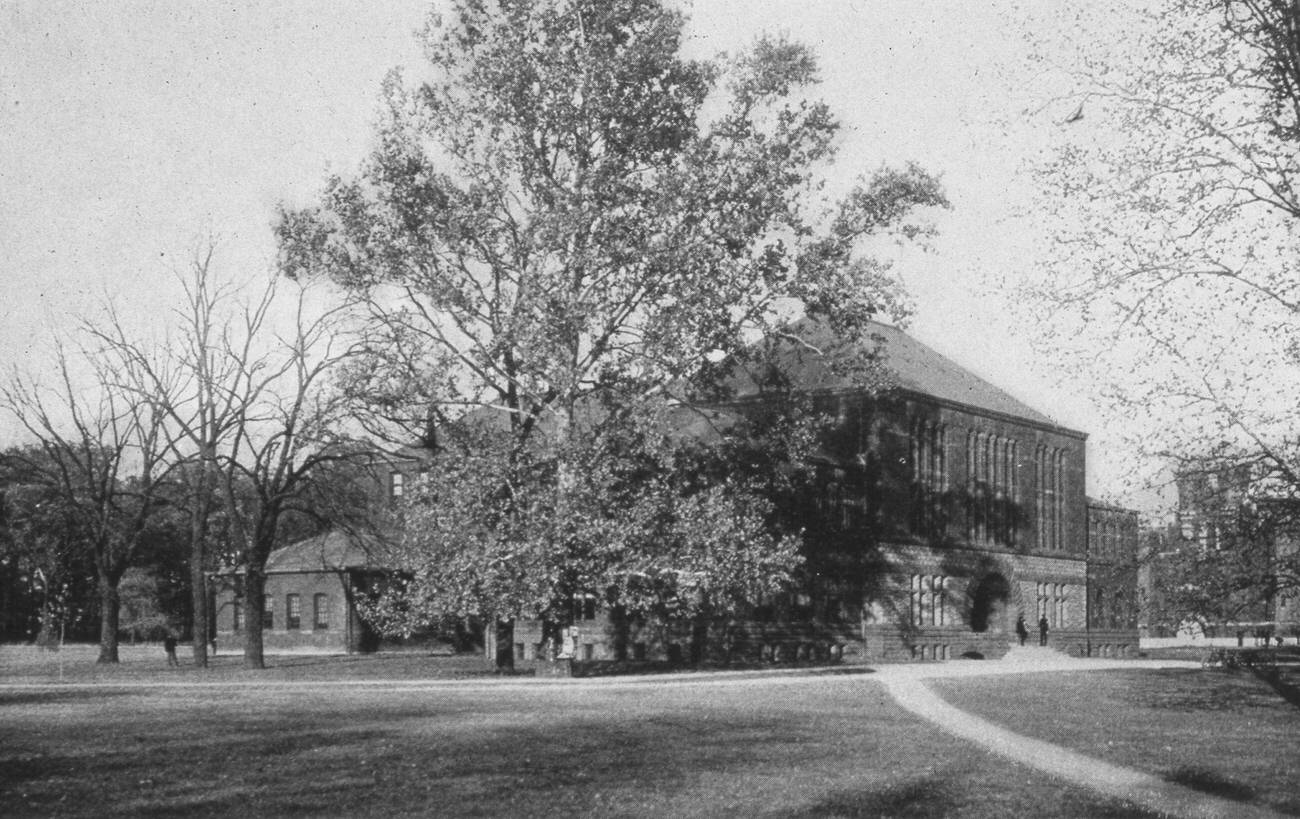
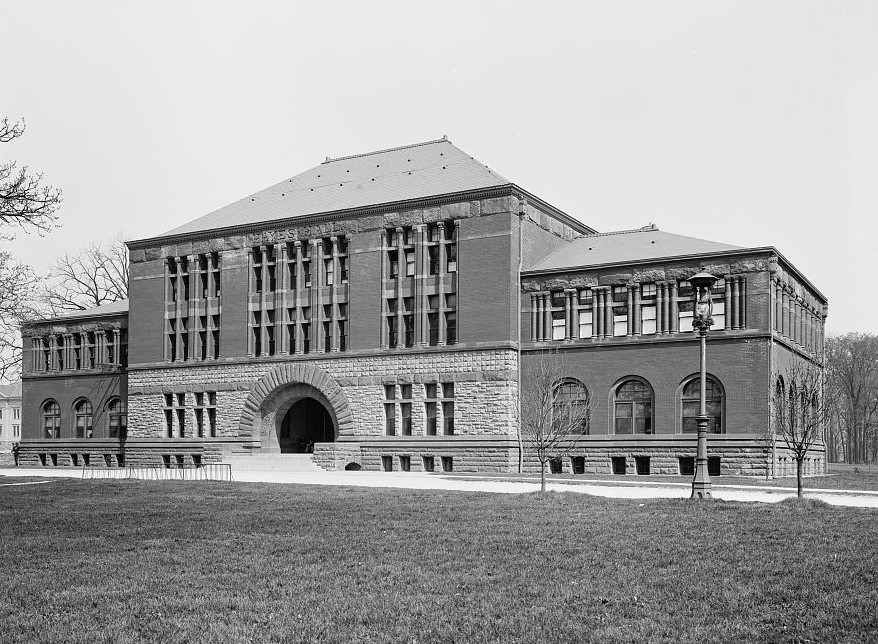
Hayes Hall at The Ohio State University, built in 1893, named after Rutherford B. Hayes, 1903.
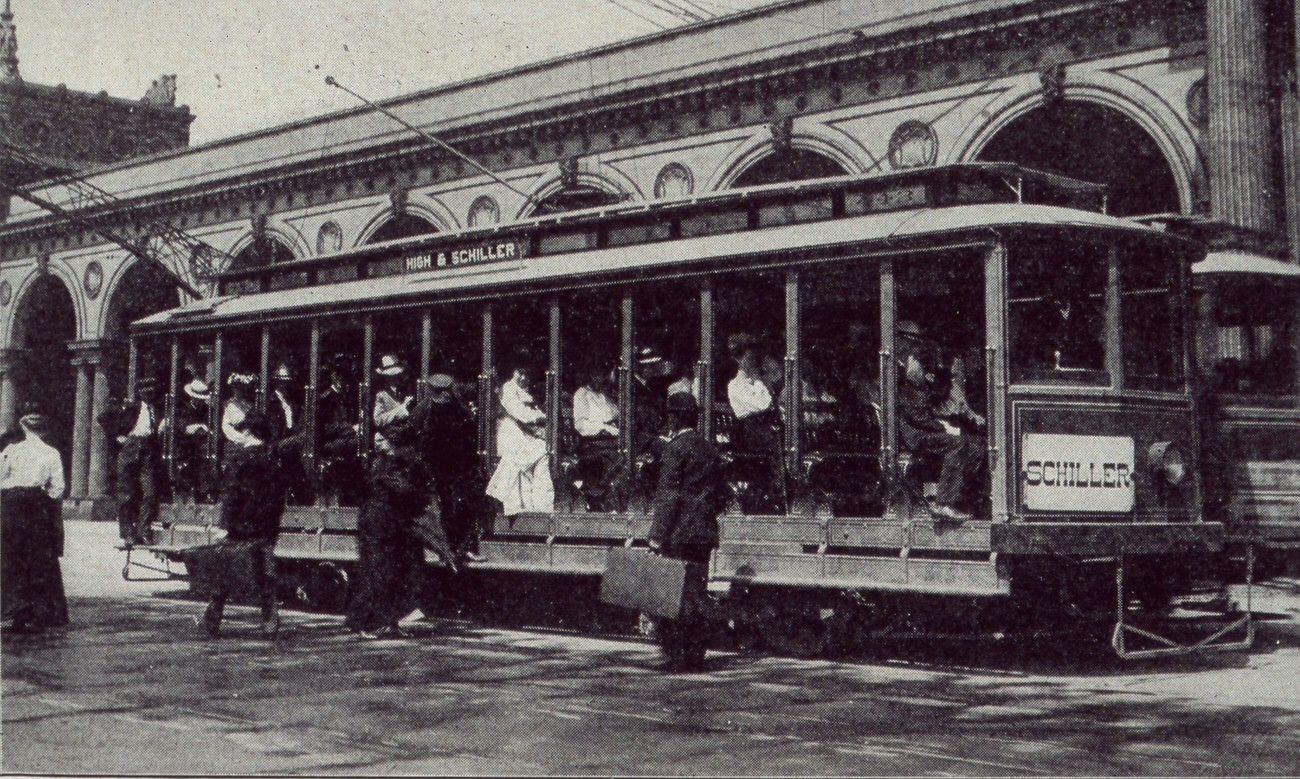
Open Type Summer Streetcar on High and Schiller Streets, 1906.
South High Street looking north with the Great Southern Hotel, 1903.
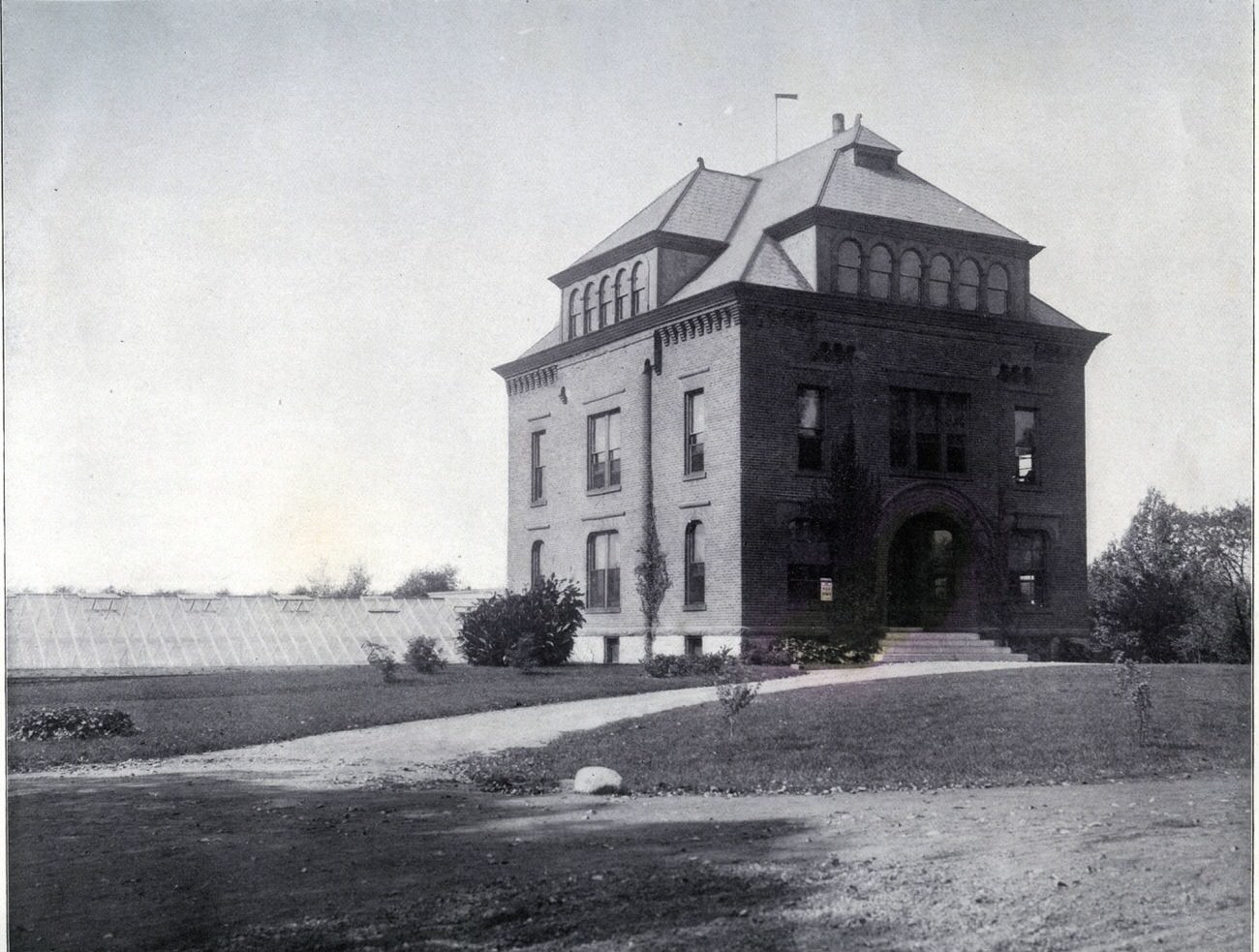
Horticultural Hall with university farm, 1900
Main building of the Institution for Feeble-Minded Youth, completed in 1868, rebuilt in 1881, and demolished on August 17, 1987, Circa 1901.
Insane Asylum, Columbus, 1906
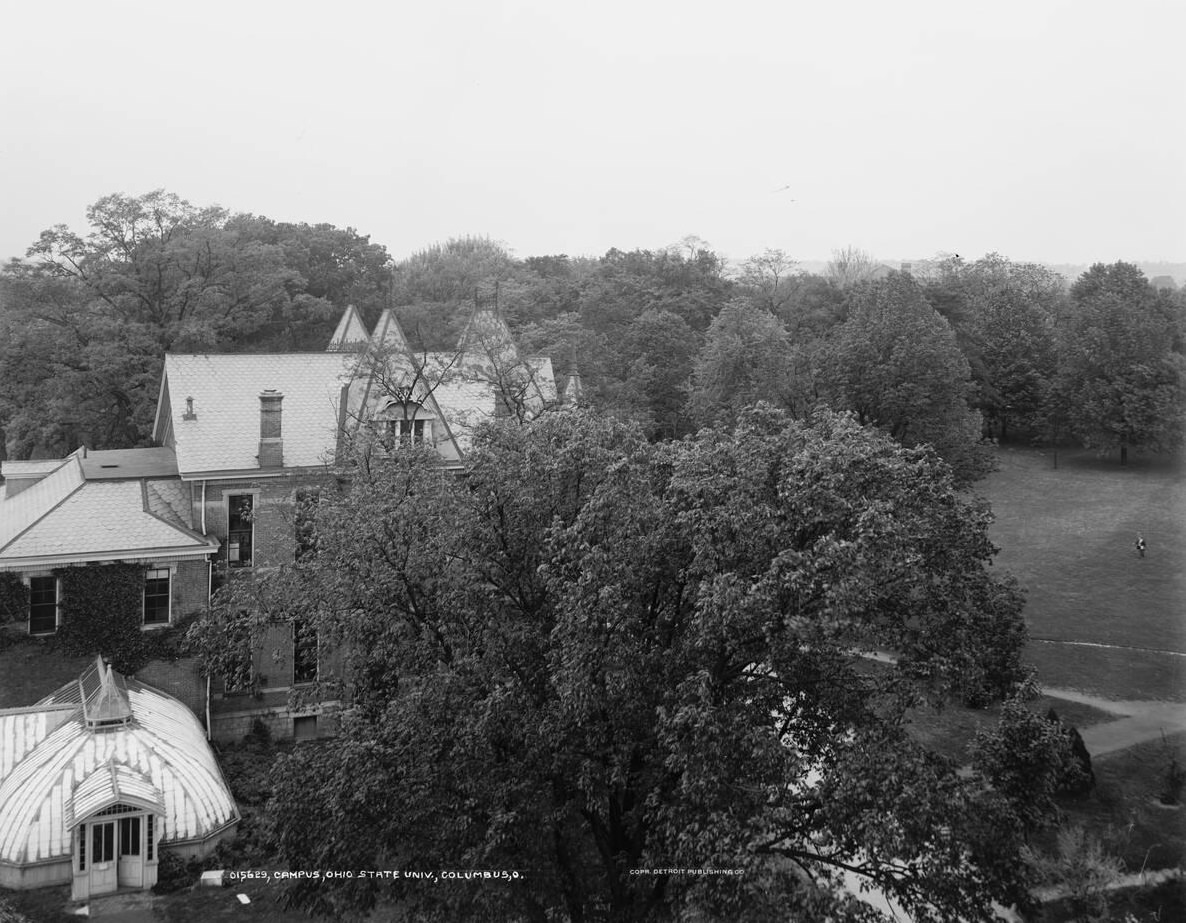
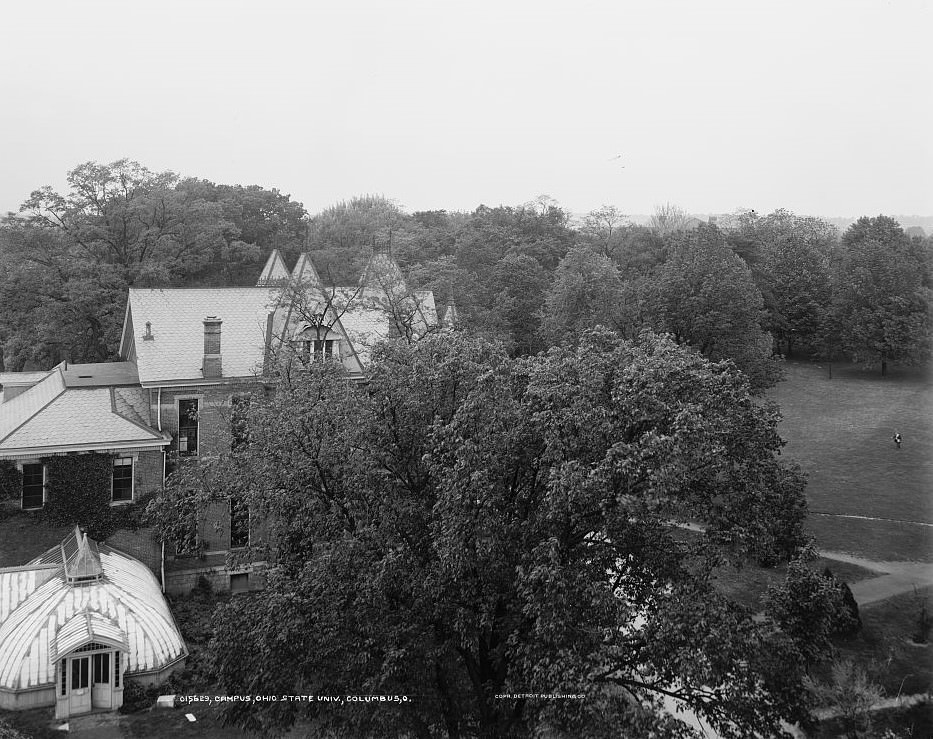
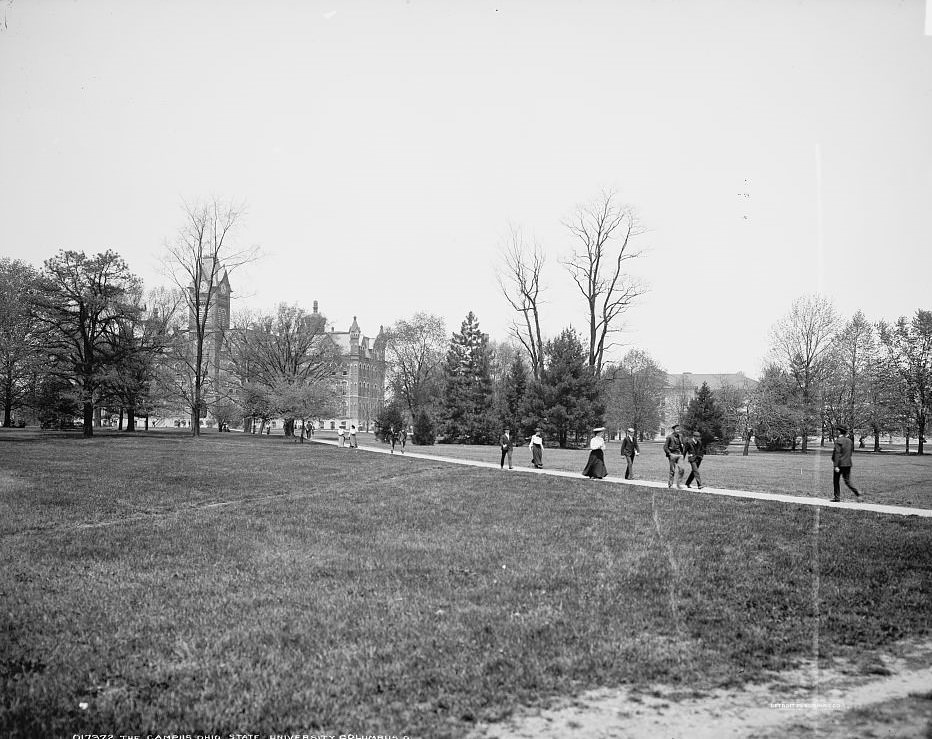
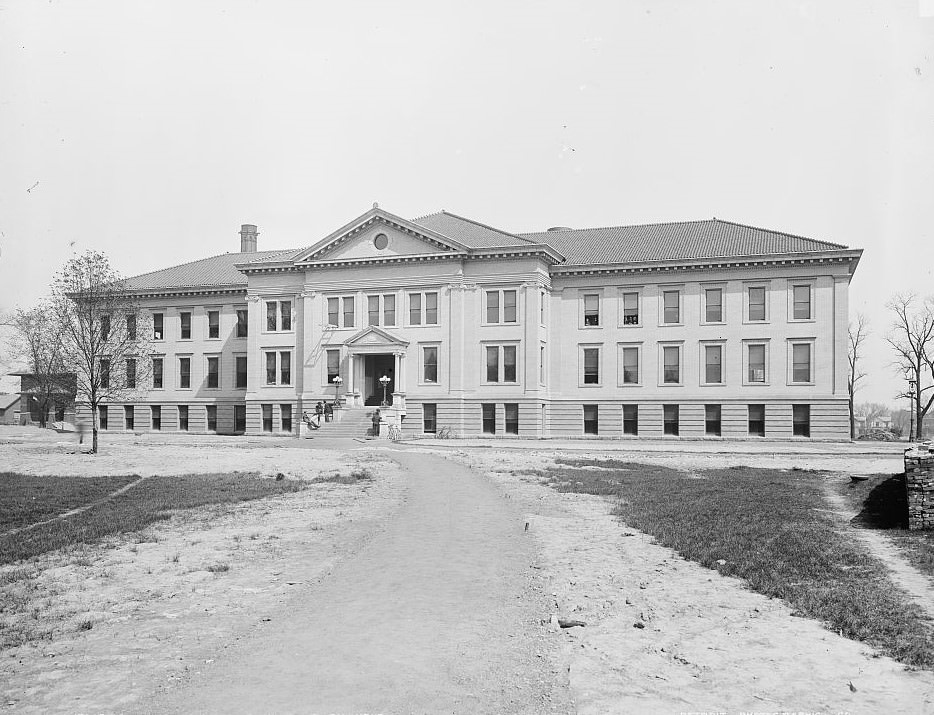
Campus, Ohio State Univ., Columbus, 1906
Hotel Star, Columbus, Ohio, 1900s
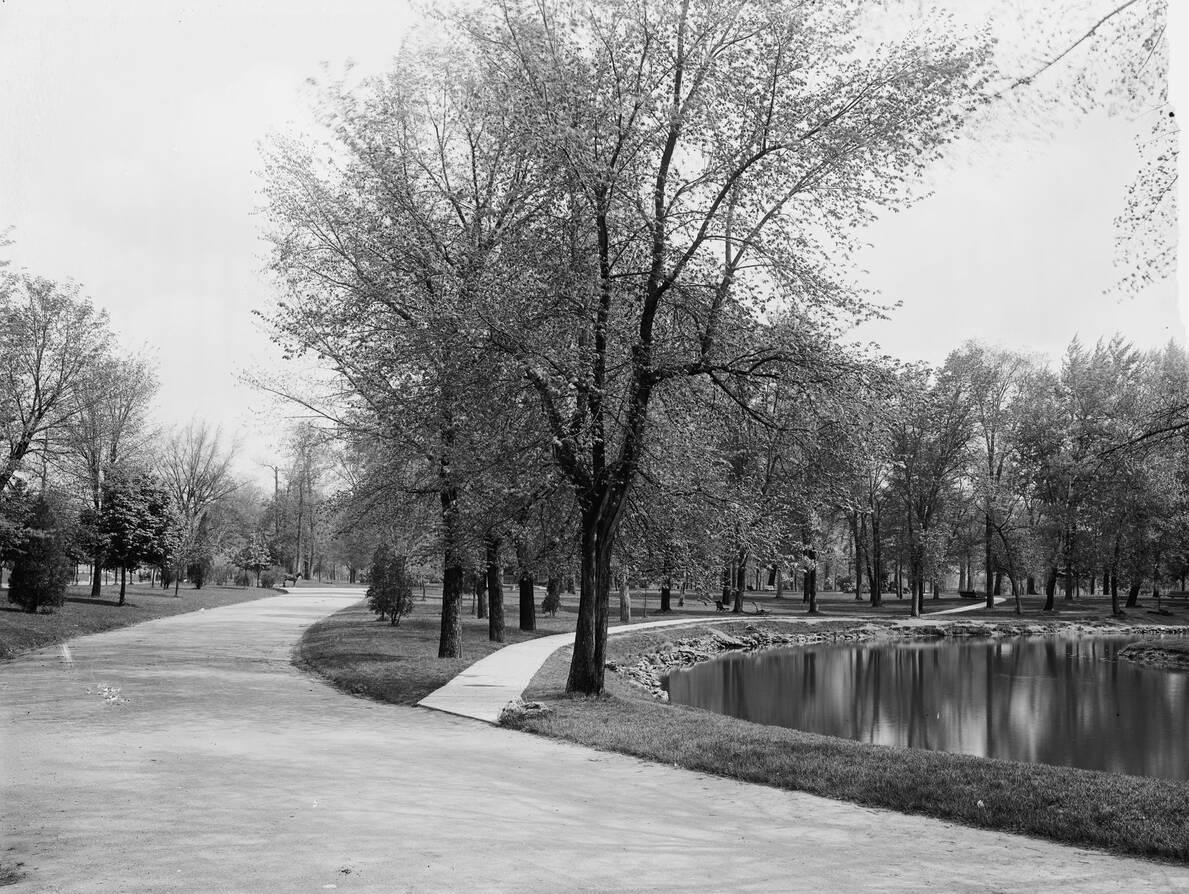
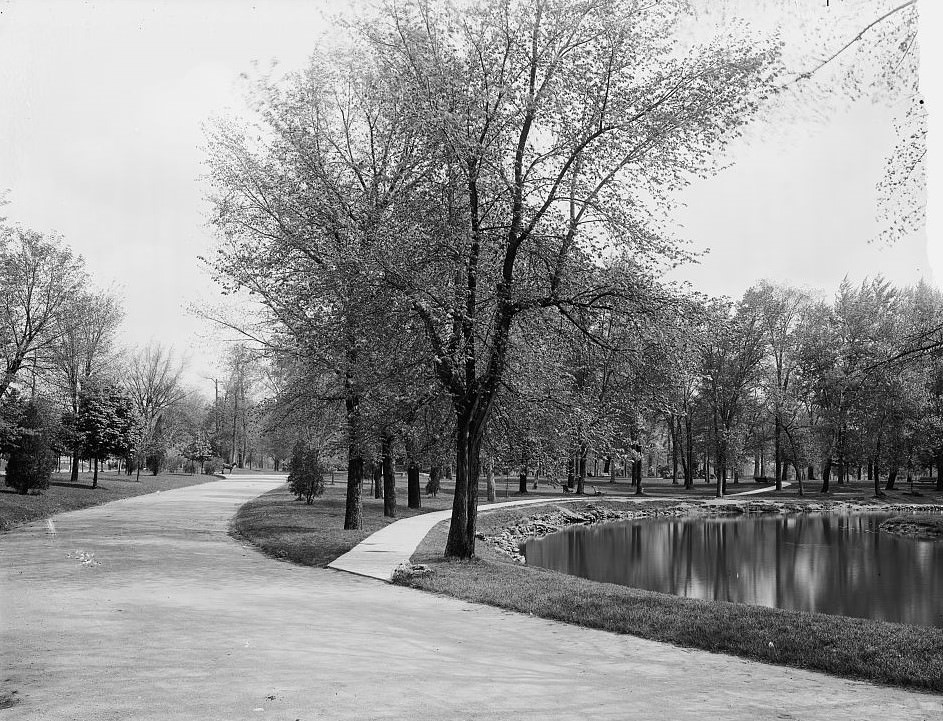
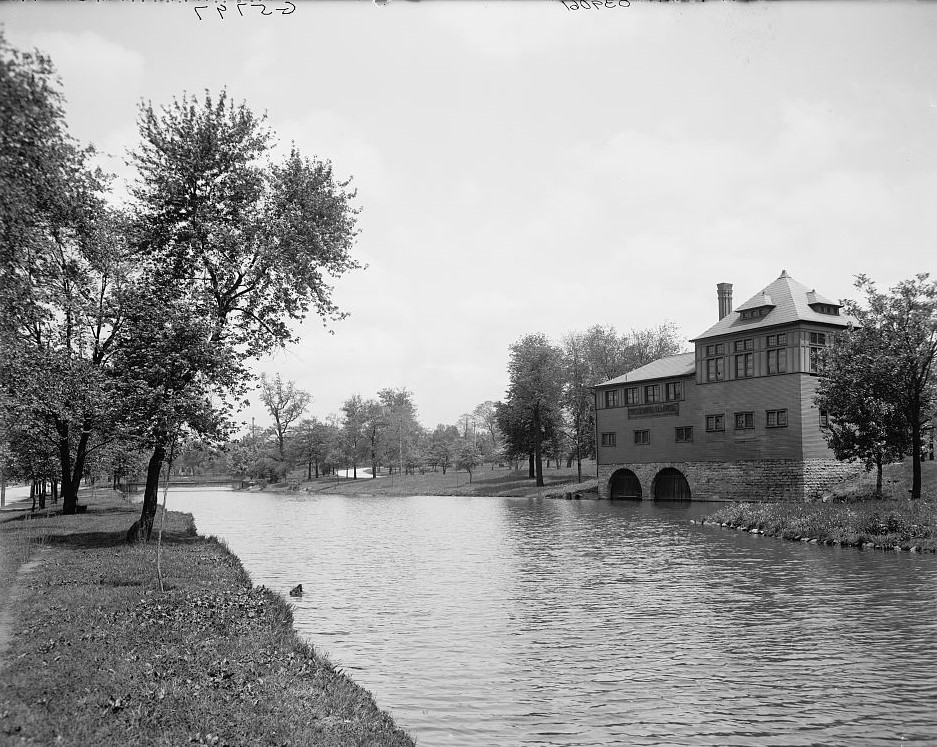
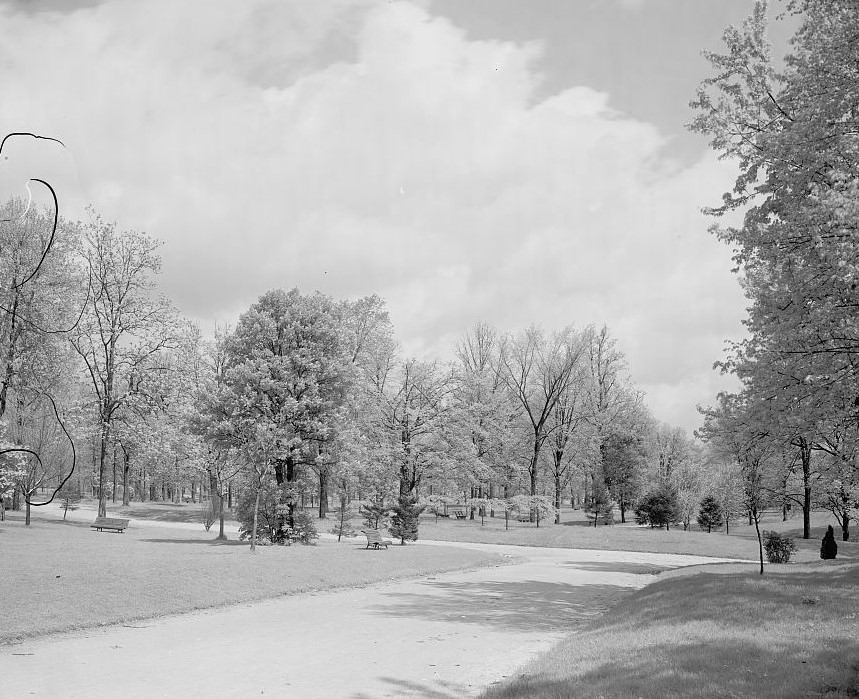
Lake in the park, Columbus, Ohio, 1906.
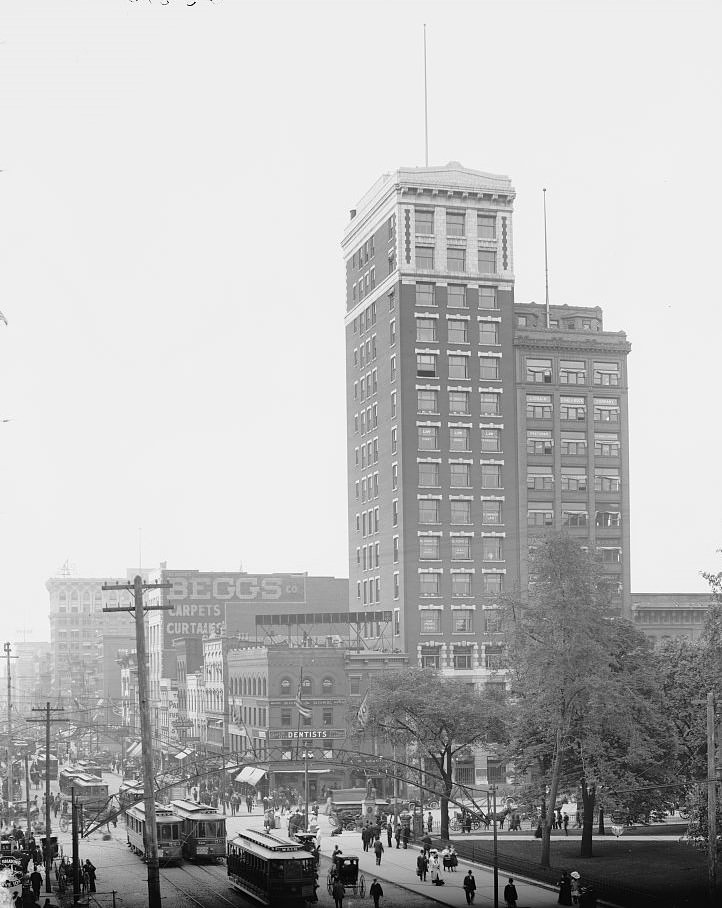
High Street South From Chestnut Street, Columbus, 1905
Page Hall, Ohio State University, Columbus, 1904
Insane Asylum in Columbus, Ohio, 1900s
View of High Street north from State Street in Columbus, Ohio, 1900s
Ohio State University campus in Columbus, Ohio, 1900s
High Street in Columbus, Ohio, 1906
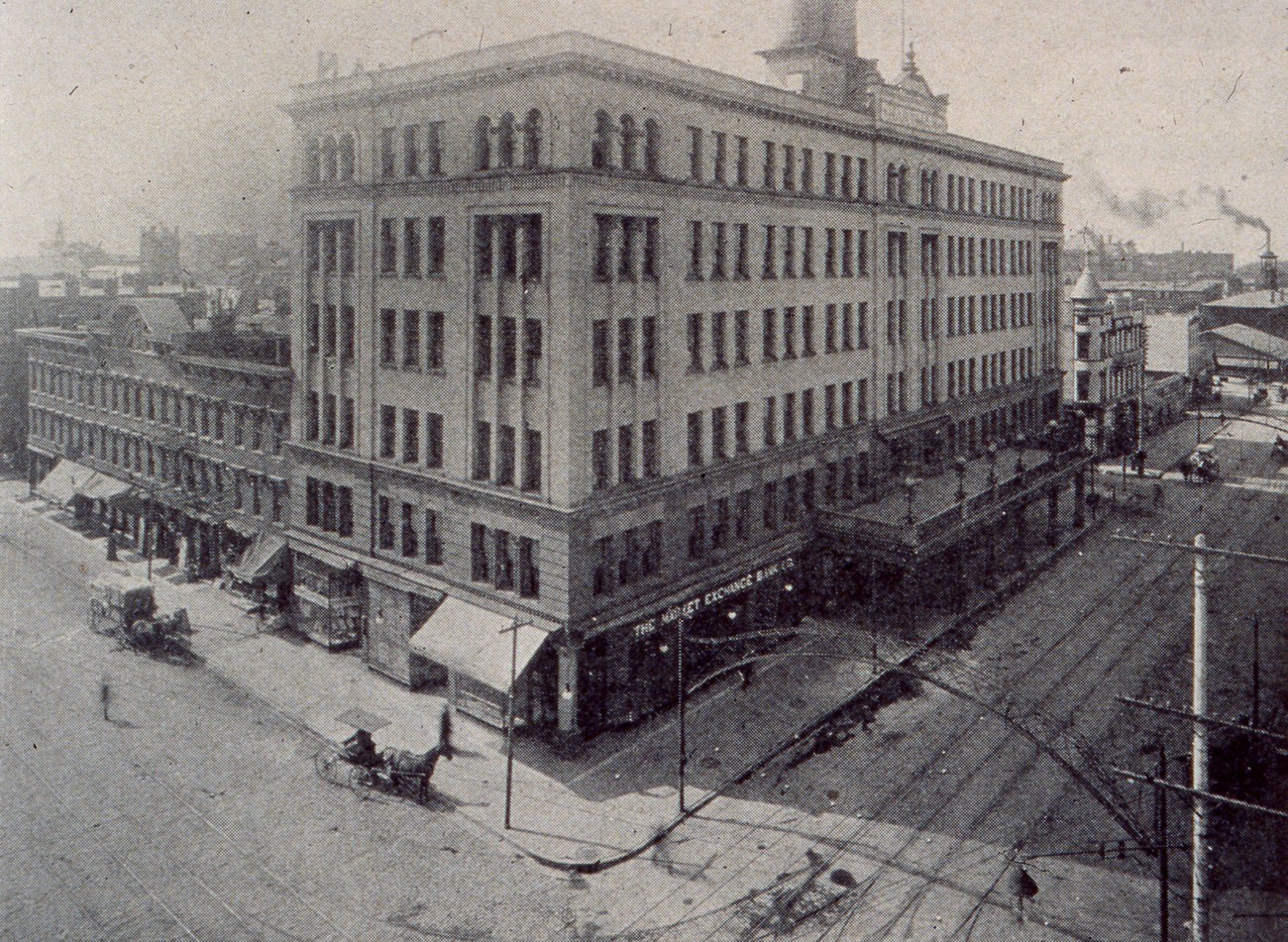
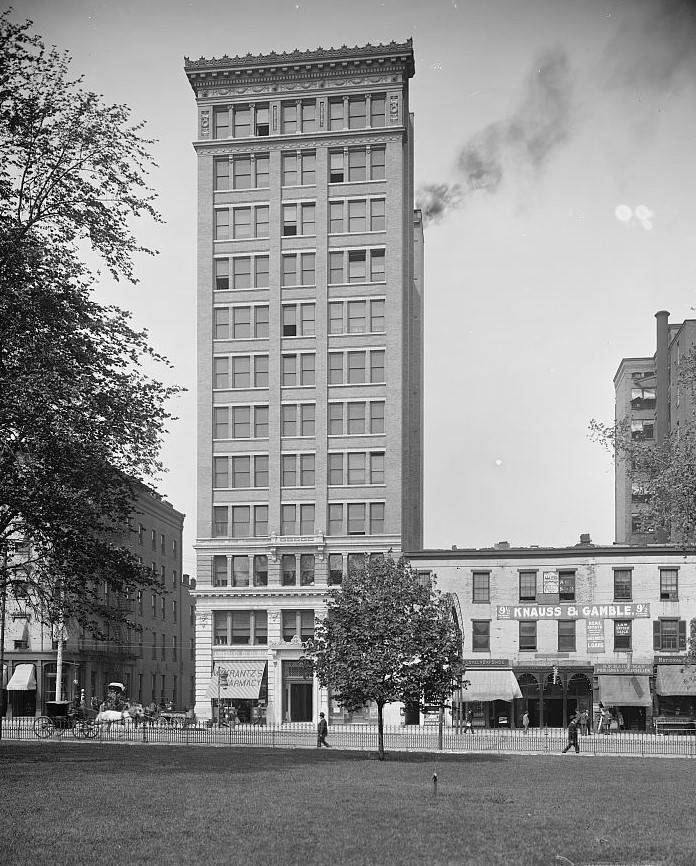
Harrison Building in Columbus, Ohio, 1906.
Great Southern Hotel in Columbus, Ohio, 1906.
Deaf and Dumb School in Columbus, Ohio, 1906.
Schiller statue in City Park, Columbus, Ohio, 1906.
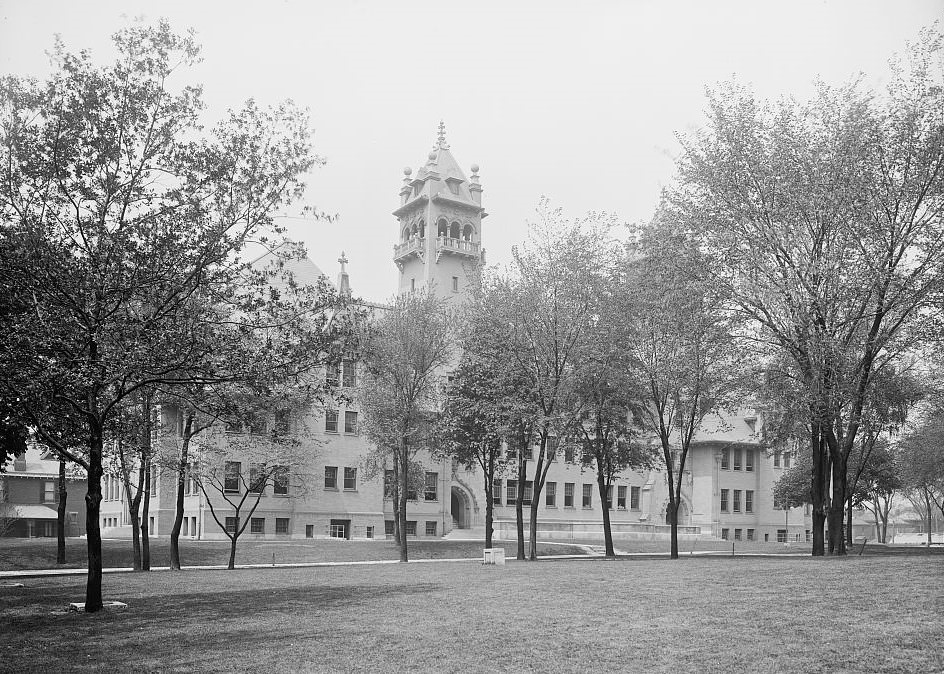
The campus of Ohio State University, Columbus, Ohio, 1906.
Hayes Hall at Ohio State University, Columbus, Ohio, 1906.
Brown Hall at Ohio State University, Columbus, Ohio, 1906.
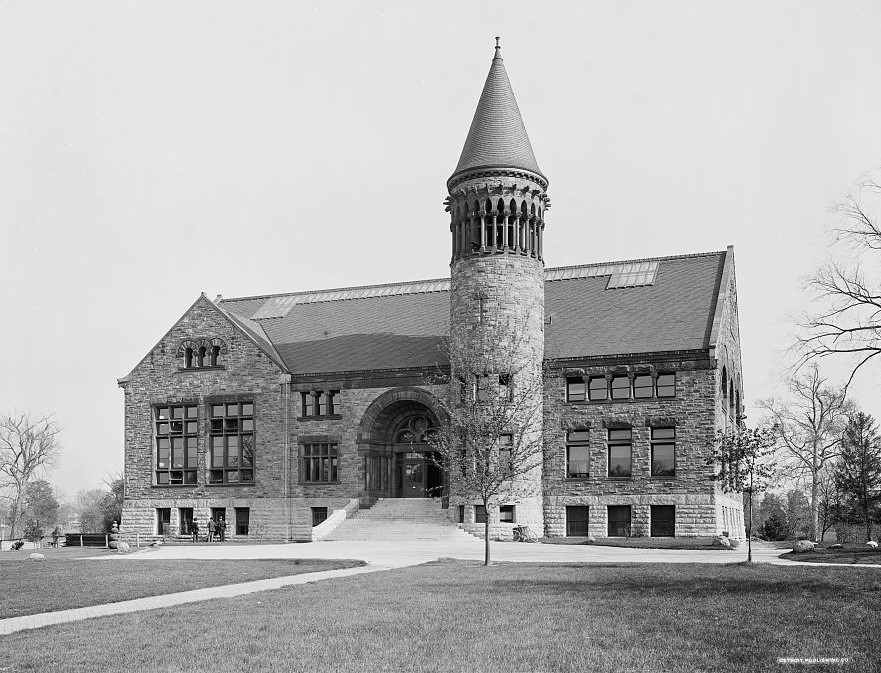
Orton Hall Library at Ohio State University, Columbus, Ohio, 1906.
Lake in a park in Columbus, Ohio, 1906.
State House in Columbus, Ohio, 1900s
Ohio State University's lake in Columbus, Ohio, 1900s
Ohio State University’s lake in Columbus, Ohio, 1900s
Columbus Savings & Trust Company building in Columbus, Ohio, 1900s
Union Station in Columbus, Ohio, 1900s
The Lake in Franklin Park, Columbus, Ohio, 1900s
Goodale Park in Columbus, Ohio, 1900s
The Lake in Goodale Park, Columbus, Ohio, 1900s
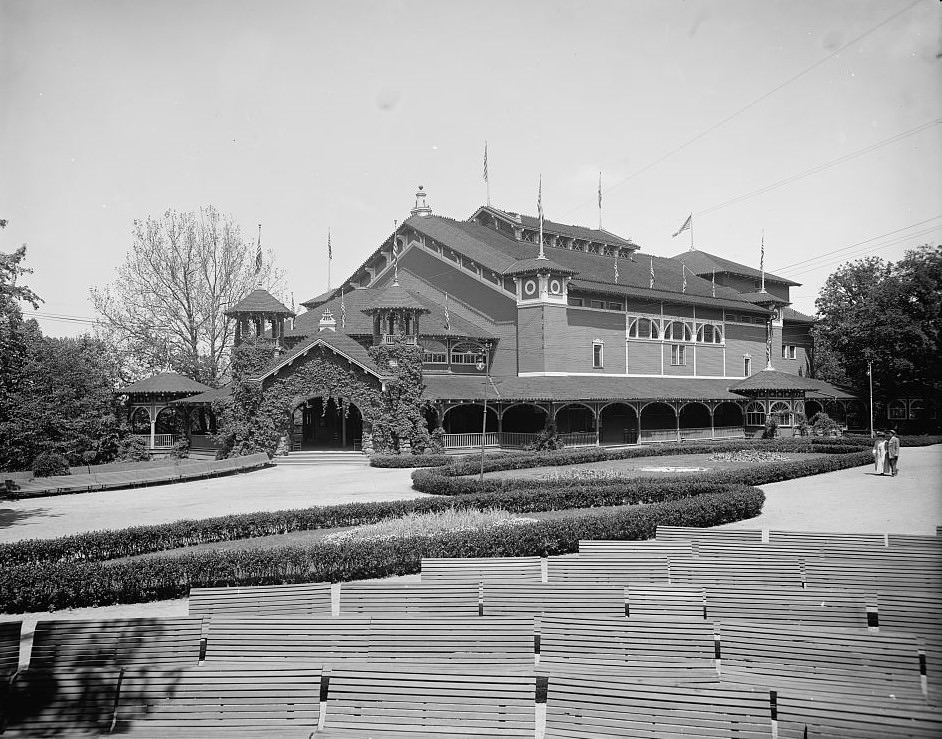
Theatre in Olentangy Park, Columbus, Ohio, 1900s
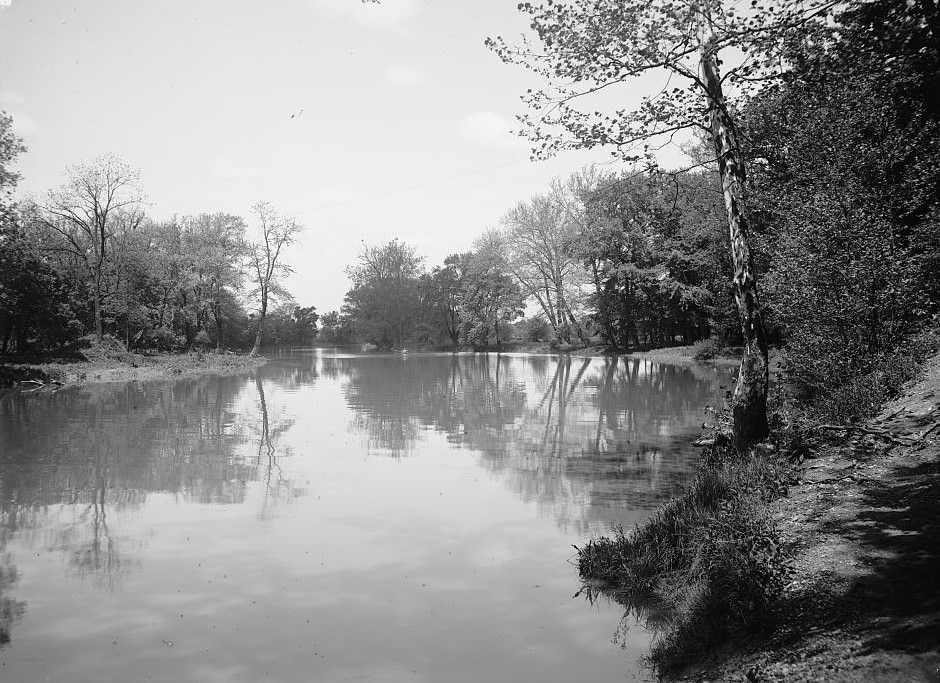
Olentangy River in Columbus, Ohio, 1900s
East Broad Street in Columbus, Ohio, 1900s
Northeast corner of Broad and High streets, Columbus, Ohio, 1900s
High Street south from State Street, Columbus, Ohio, 1900s
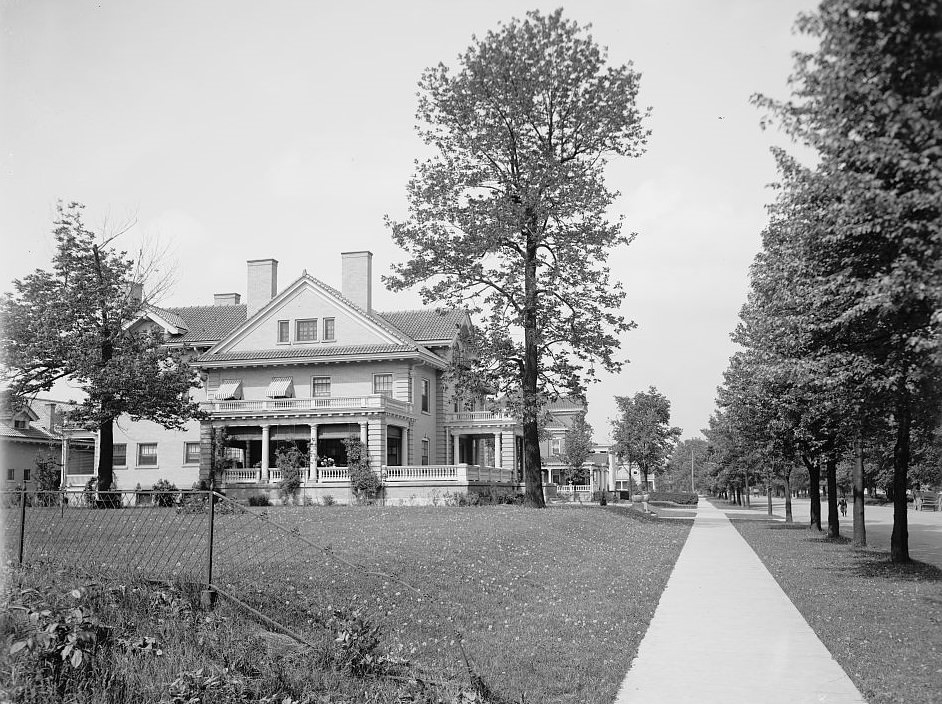
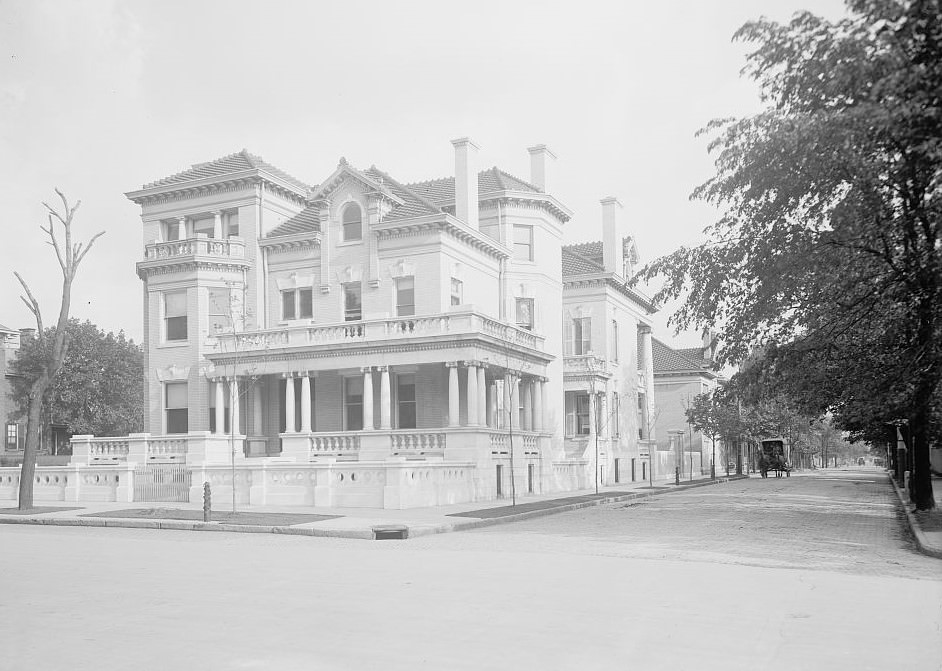
The Hartman residence on East Town Street, Columbus, Ohio, 1900s
Ohio State University's spring in Columbus, Ohio, 1900s
Ohio State University’s spring in Columbus, Ohio, 1900s
The armory at Ohio State University, Columbus, Ohio, 1900s
Hotel Star in Columbus, Ohio, 1900s
Ohio State Capitol, Columbus, Ohio, 1900s
Courthouse in Columbus, Ohio, 1900s
Up the river at Olentangy Park, Columbus, Ohio, 1900s
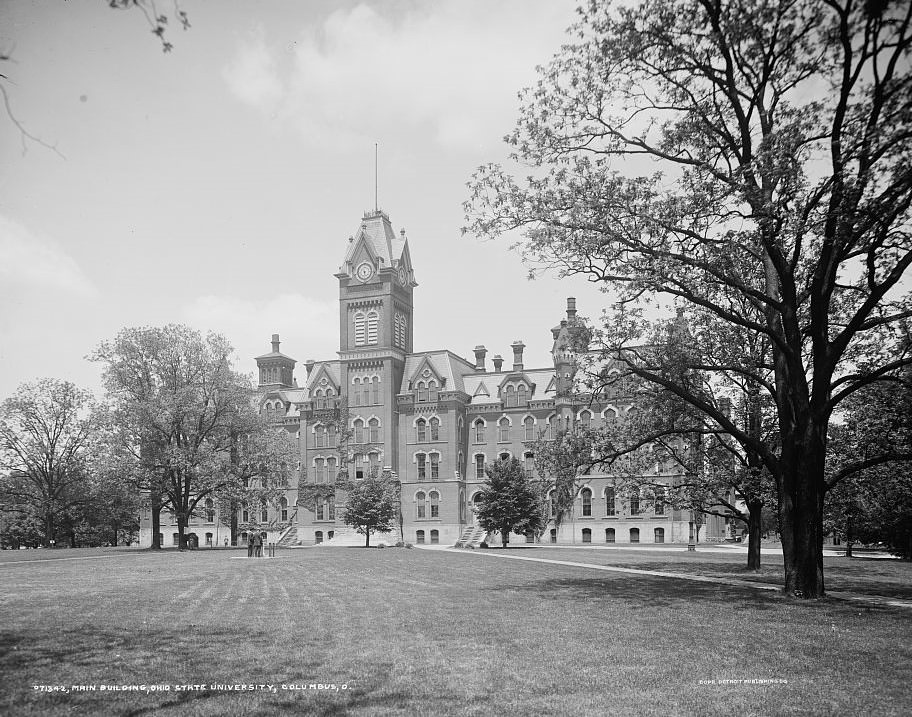
Main building of Ohio State University, Columbus, Ohio, 1900s
Schiller Park in Columbus, Ohio, 1900s
Northeast corner of High and Broad Streets, Columbus, Ohio, 1900s
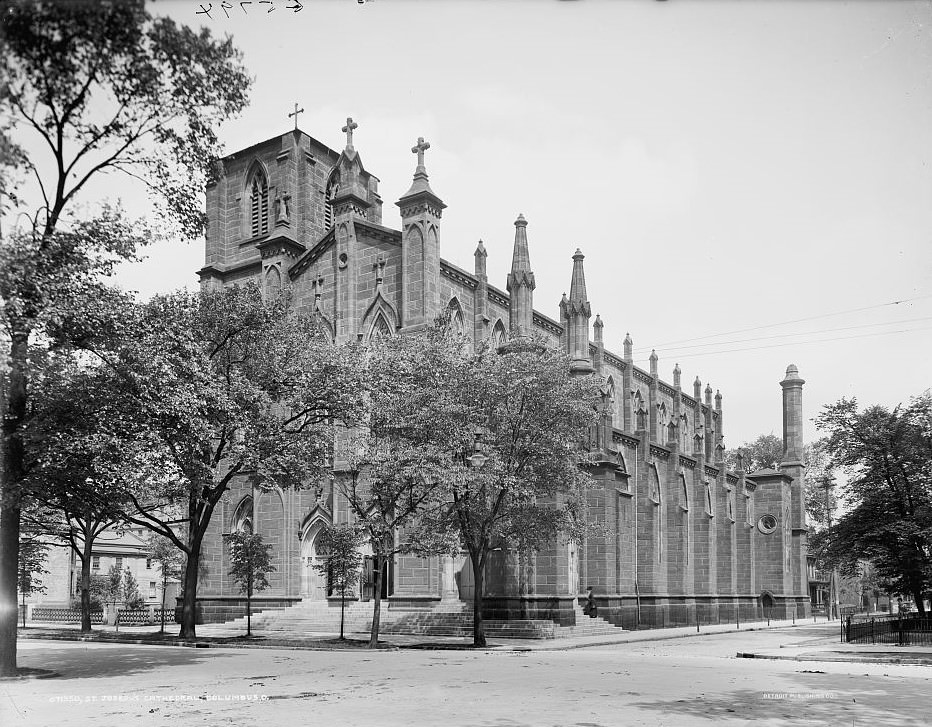
St. Joseph's Cathedral in Columbus, Ohio, 1900s
St. Joseph’s Cathedral in Columbus, Ohio, 1900s
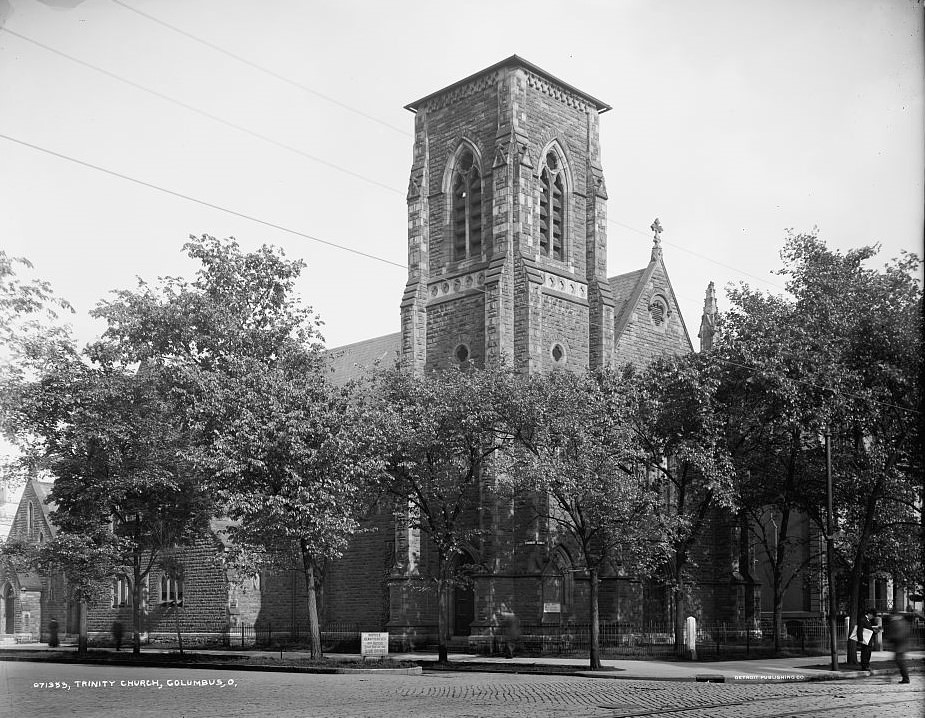
Trinity Church in Columbus, Ohio, 1900s
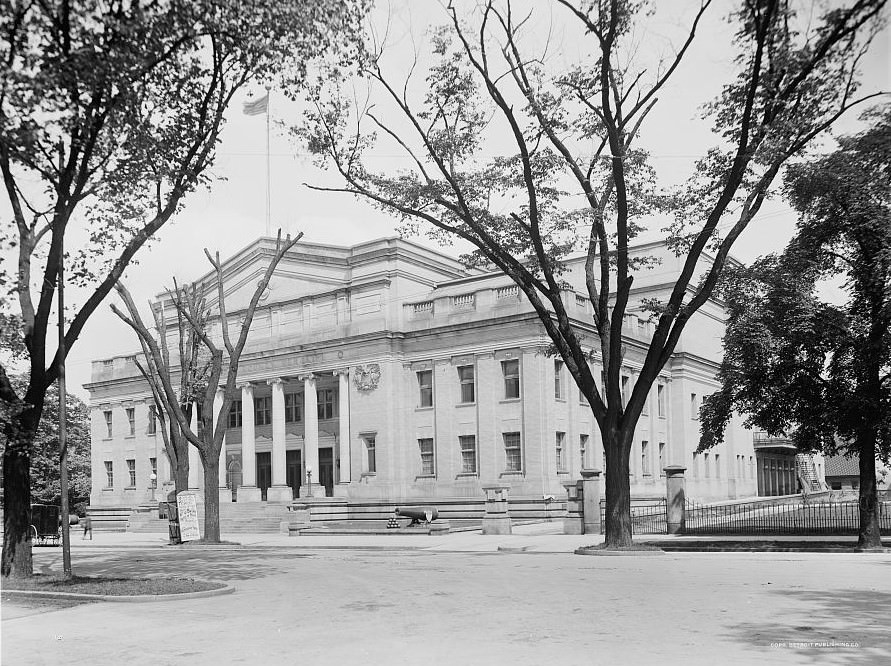
Franklin County Memorial Building in Columbus, Ohio, 1900s
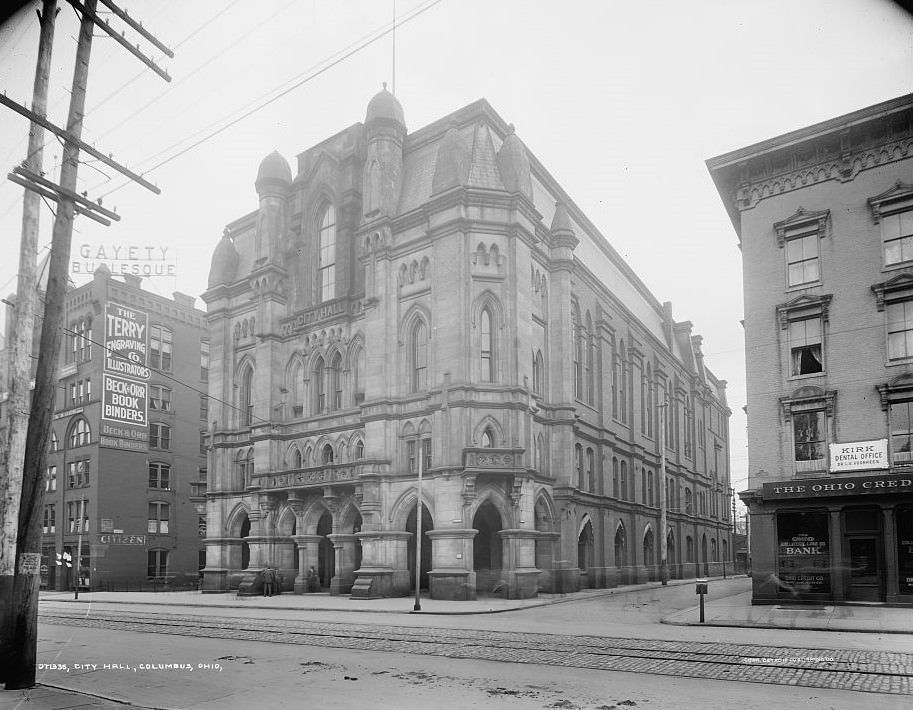
City Hall in Columbus, Ohio, 1900s
High Street south from Chestnut Street, Columbus, Ohio, 1900s
Carnegie Library in Columbus, Ohio, 1900s
Courthouse in Columbus, Ohio, 1904.
Union Station in Columbus, Ohio, 1904.
Chittenden Hotel in Columbus, Ohio, 1904.
Deaf and Dumb Institute in Columbus, Ohio, 1904.
Armory in Columbus, Ohio, 1904.
Parade ground at U.S. Barracks, Columbus, Ohio, 1904.
U.S. Barracks in Columbus, Ohio, 1904.
Biology Building at Ohio State University, Columbus, Ohio, 1904.
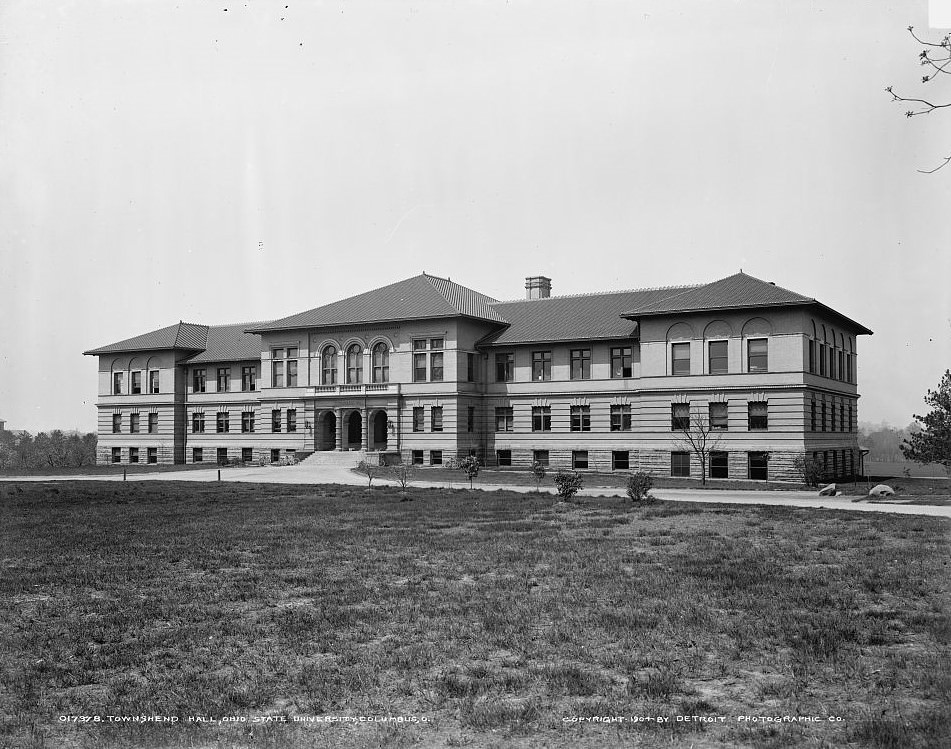
Townshend Hall at Ohio State University, Columbus, Ohio, 1904.
U.S. Barracks in Columbus, Ohio, 1904.
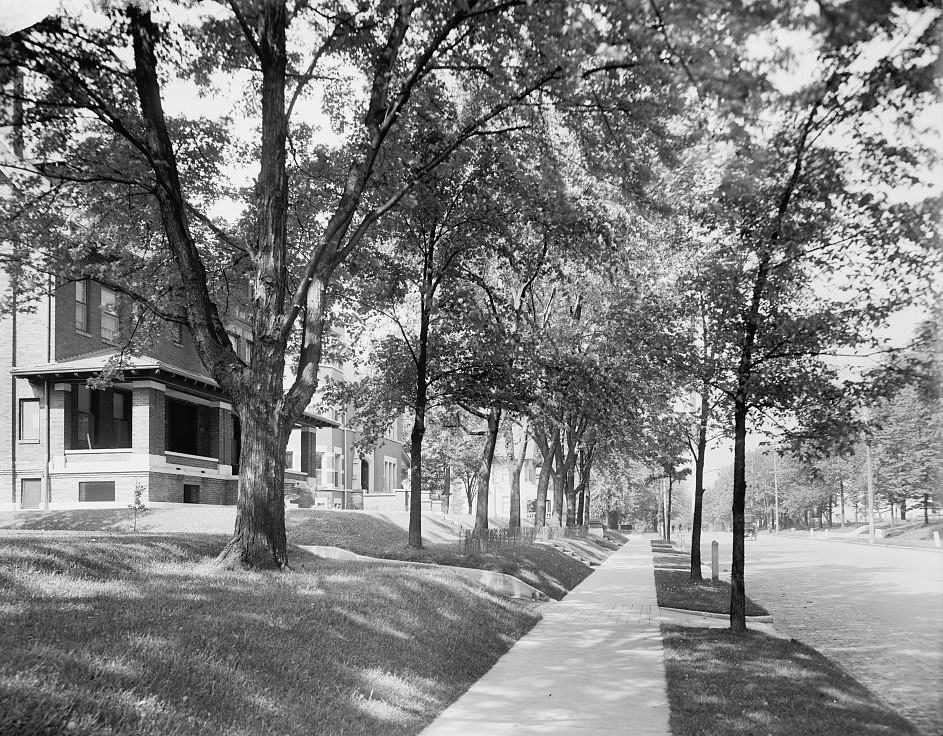
View in Franklin Park, Columbus, Ohio, 1904.
Charles H. Hayden house, Secretary and Treasurer of P. Hayden Saddlery Hardware Company, built by Dr. Francis Carter in 1842, later Knights of Columbus, no longer stands, 1909
Broad Street Baptist Church building, cornerstone laid June 1, 1898, rebuilt and rededicated October 17, 1926, 175th anniversary in 1999, Circa 1900s
Early view of the Columbus Public Library, also known as Carnegie Library, 1906.
Rear view of Columbus State Hospital's south wing, 1900.
Rear view of Columbus State Hospital’s south wing, 1900.
Conn Baker, second rider from the left in white, in a bicycle race in Independence, Iowa, circa 1900.
Enjoyed this post? Get new ones in your inbox.

1 thought on “What Columbus, Ohio looked like at the Turn of the 20th Century”

  1. I love Columbus, but I despise that cheap tacky plastic looking façade on High Street over 670 that is supposed to be a tribute to the Union Station. Don’t get me wrong, the cap is miles better than a bare interstate, but it still makes me sad thinking about that beautiful architecture we lost.
Leave a Comment

Your email address will not be published. Required fields are marked *

Share this Post 🥺

Please take a moment to share this content. Your support is greatly appreciated! 🙌🙏

Share this Post 🥺

Please take a moment to share this content. Your support is greatly appreciated! 🙌🙏
Scroll to Top
 
Hey Friend, Before You Go.. Please like & follow for more interesting content