
Columbus, Ohio was laid out in 1812 and incorporated in 1816, growing steadily from a planned state capital into a thriving city of over 51,000 people by the 1880 census. Its growth was driven by access to canals, the National Road, railroads, and telegraph lines, as well as its role as a key staging area during the Civil War. By the 1880s, Columbus was home to a wide range of industries, institutions, schools, churches, and neighborhoods — all captured in the stunning historical photographs and illustrations below.
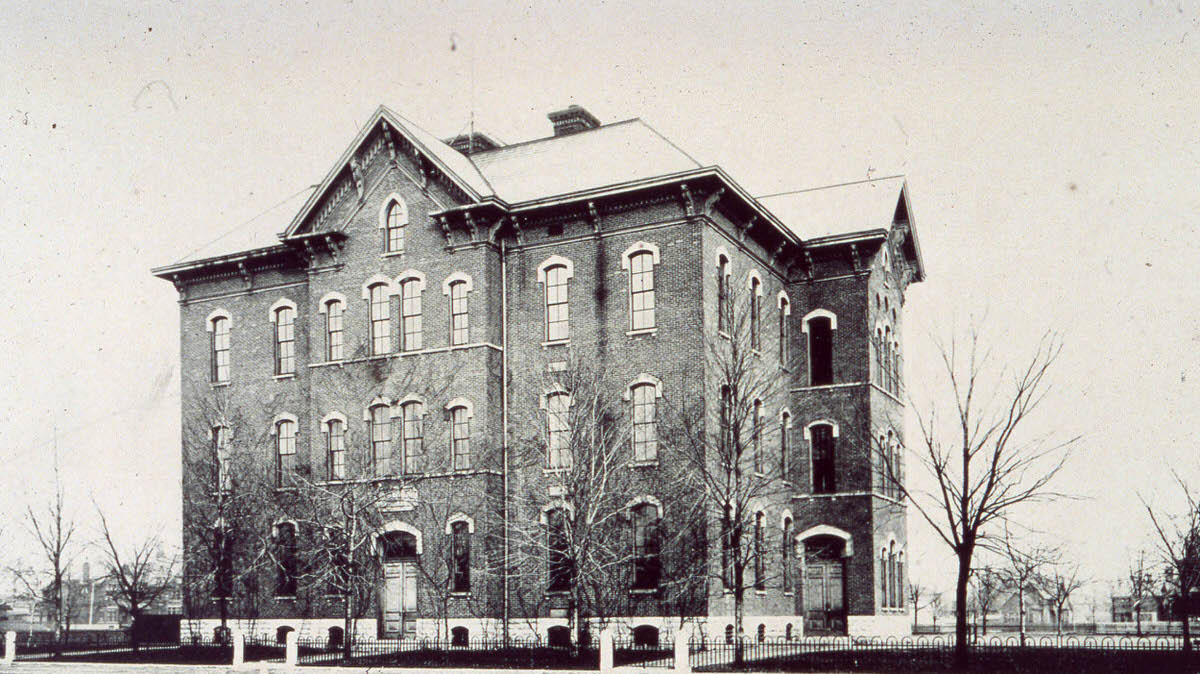
Douglass Elementary School was originally constructed in 1875–76 and served the old Seventh Ward, known as the silk stocking ward because many of Columbus’s prominent families lived in the area. An east annex, designed by local architect David Riebel, opened in April of 1902. In 1952, both buildings were extensively remodeled and joined together. The top two floors of the older building were also removed. The school was demolished in 1976 and replaced with Douglass School 2, which closed in June of 2010.
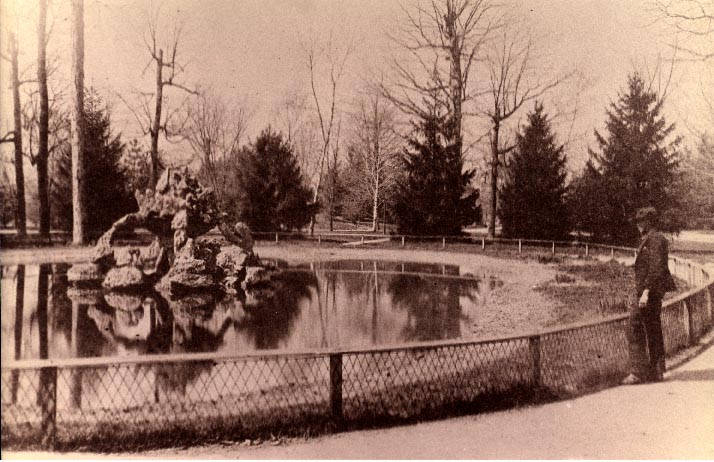
This is a picture of the Schiller Park Lake and Fountain. Land in the German Village area owned by Francis Stewart in the 1830s and used for local celebrations became known as Stewarts’ Grove. It was the site for the Ohio State Fair in 1864 and 1865. The City of Columbus purchased 23 acres of Stewarts’ Grove in 1867 and renamed it City Park. Improvements were added, including a lake with a fountain and footbridge, an amphitheater, and a shelter house. The statue of the famous German poet Johann Christoph Friedrich von Schiller was erected on July 4, 1891. On April 3, 1905, the park was renamed Schiller Park. On May 27, 1918, during World War I, the park’s name was changed to Washington Park because of local anti-German sentiments. The previous name was reinstated on April 7, 1930, and it remains Schiller Park to this day. The park is the second oldest park in the City of Columbus.
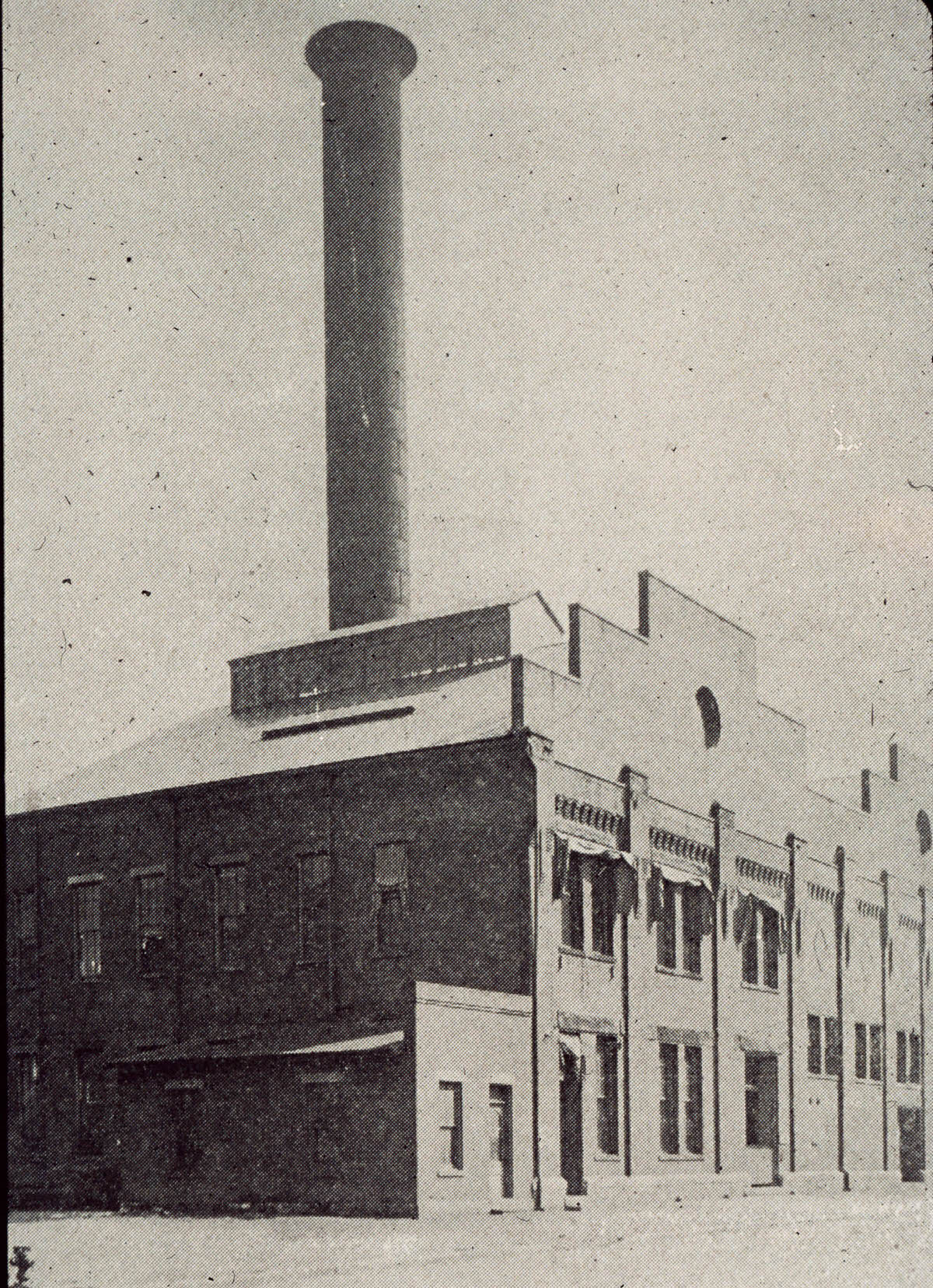
Columbus Edison Electric Light Company supplied Columbus’s first electric lighting on February 9, 1883.
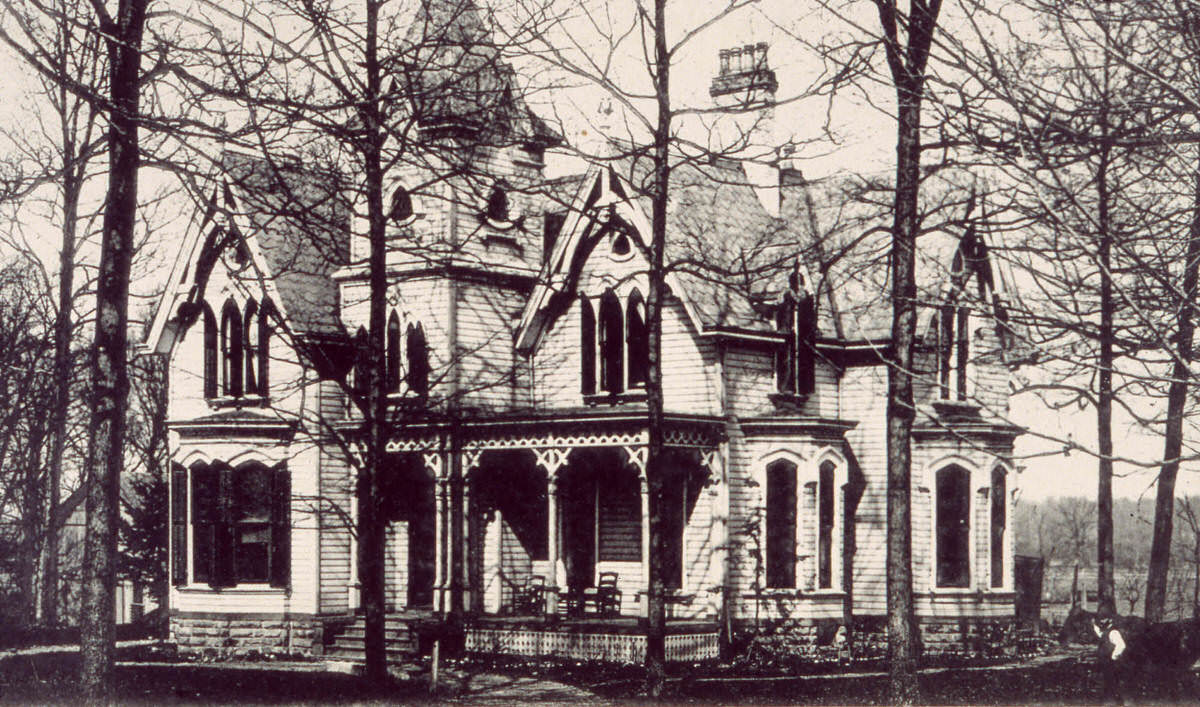
Photograph of Hare Orphan’s Home, founded in 1867 by a bequest from Jacob Hare and originally known as the Home for the Friendless.
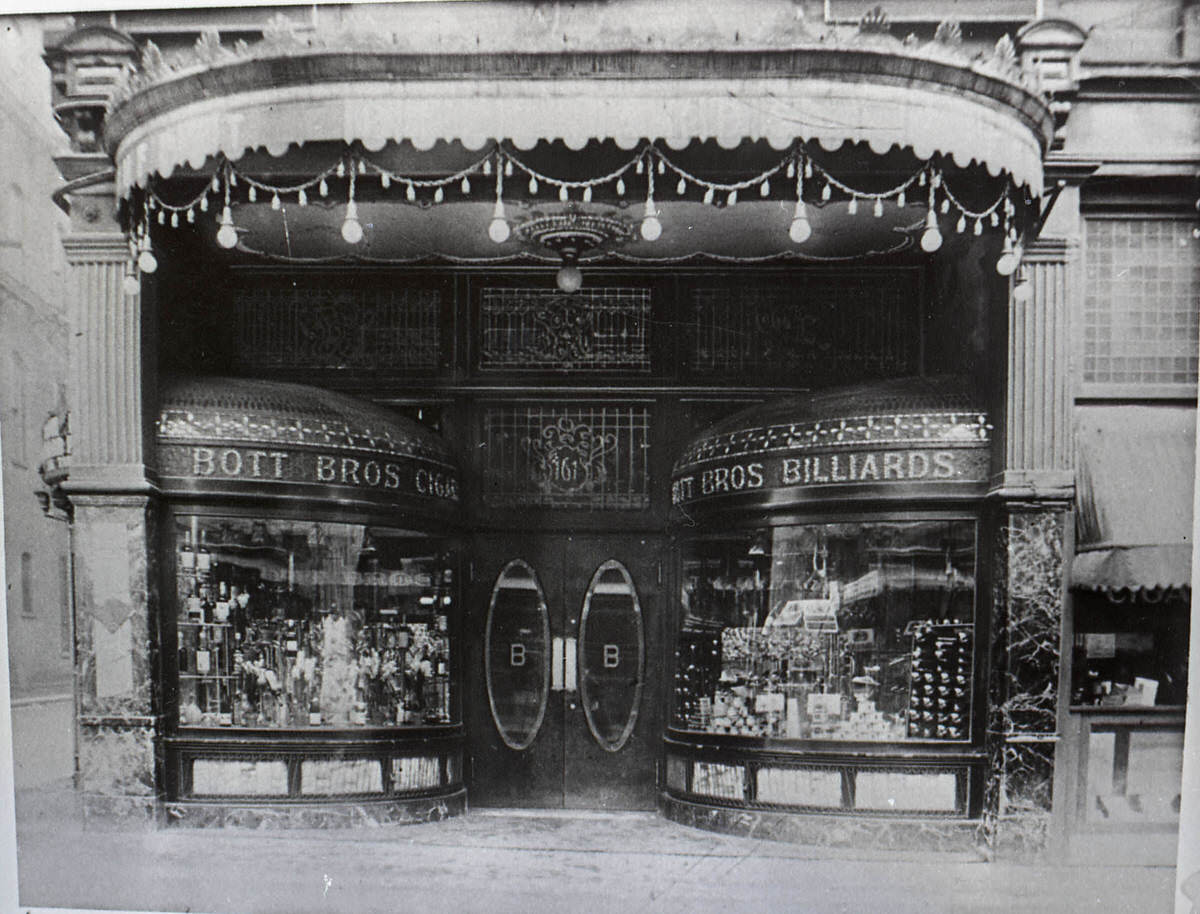
Black and white photograph of the entrance to Bott Brothers Billiards. Bott Brothers Billiards was a saloon and billiard parlor co-founded by brothers Joseph F. Bott and William Bott in 1890. Located in the present-day Larrimer Building at 161 North High Street, the business closed in 1919 and later became known as The Clock Restaurant, followed by The Elevator Brewery and Draught Haus.
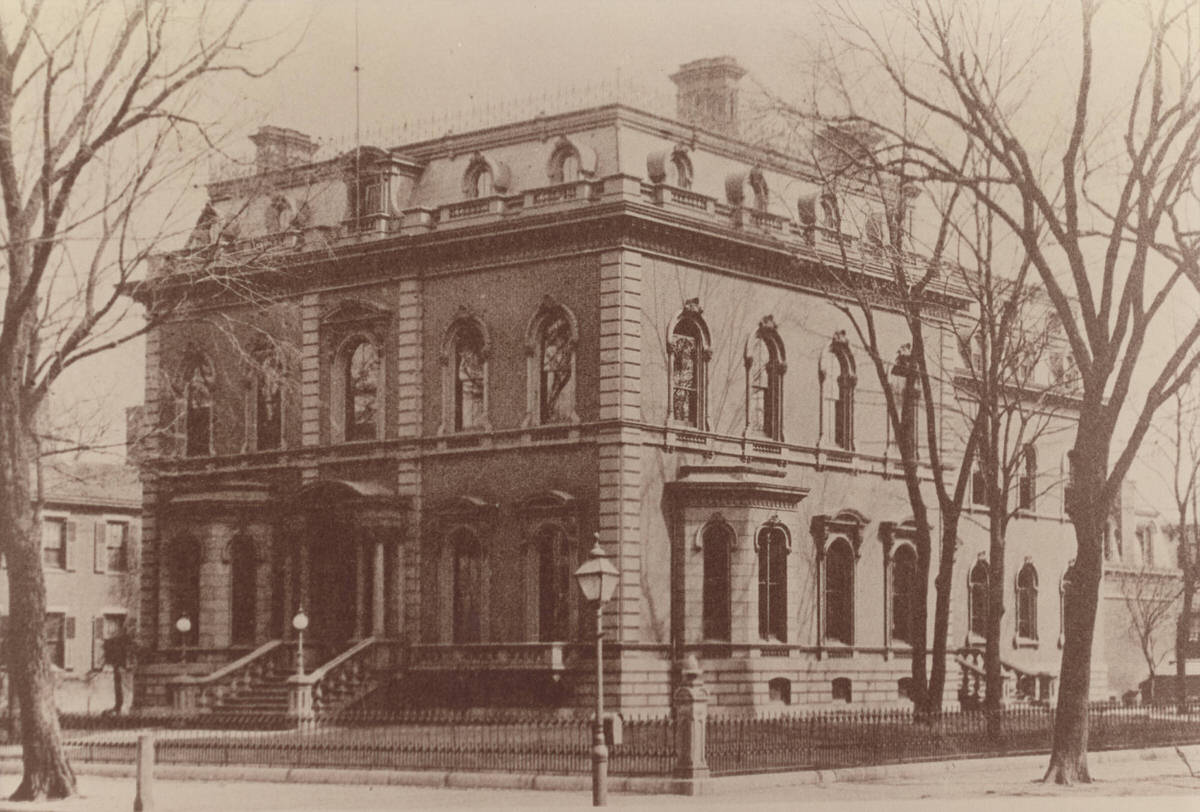
The Columbus Club on East Broad Street.
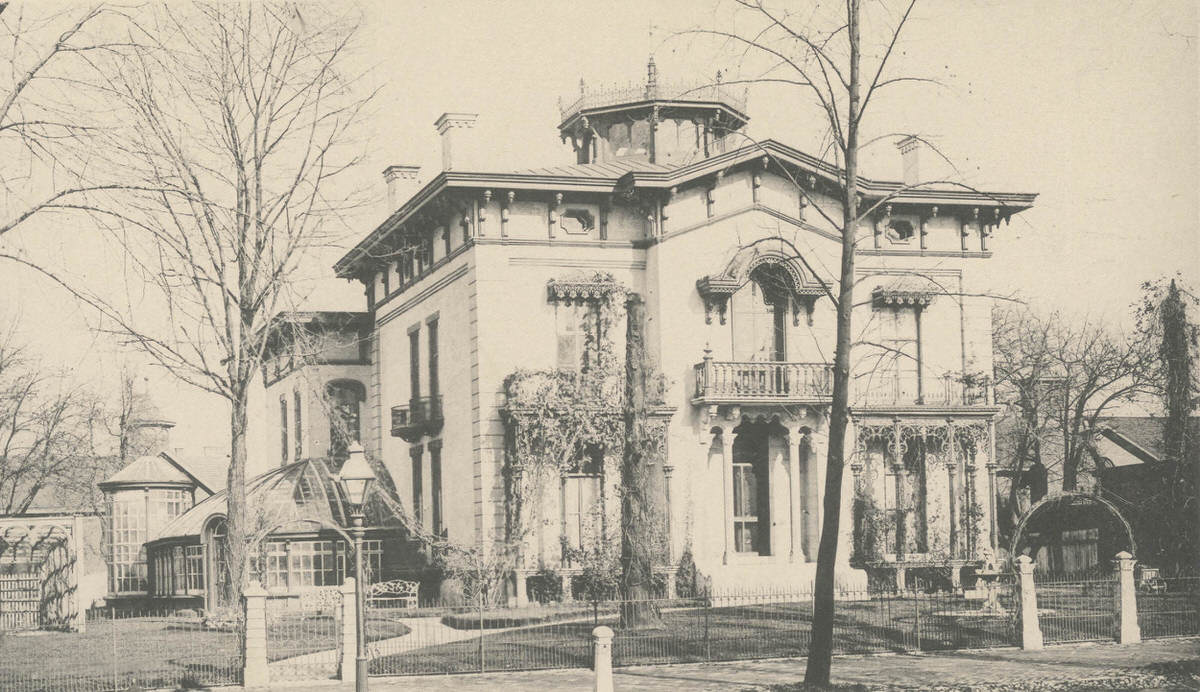
Photograph of the house of Francis C. Sessions, which was built in 1840 and demolished around 1928. He was a banker and dry goods executive from 1840 to 1892.
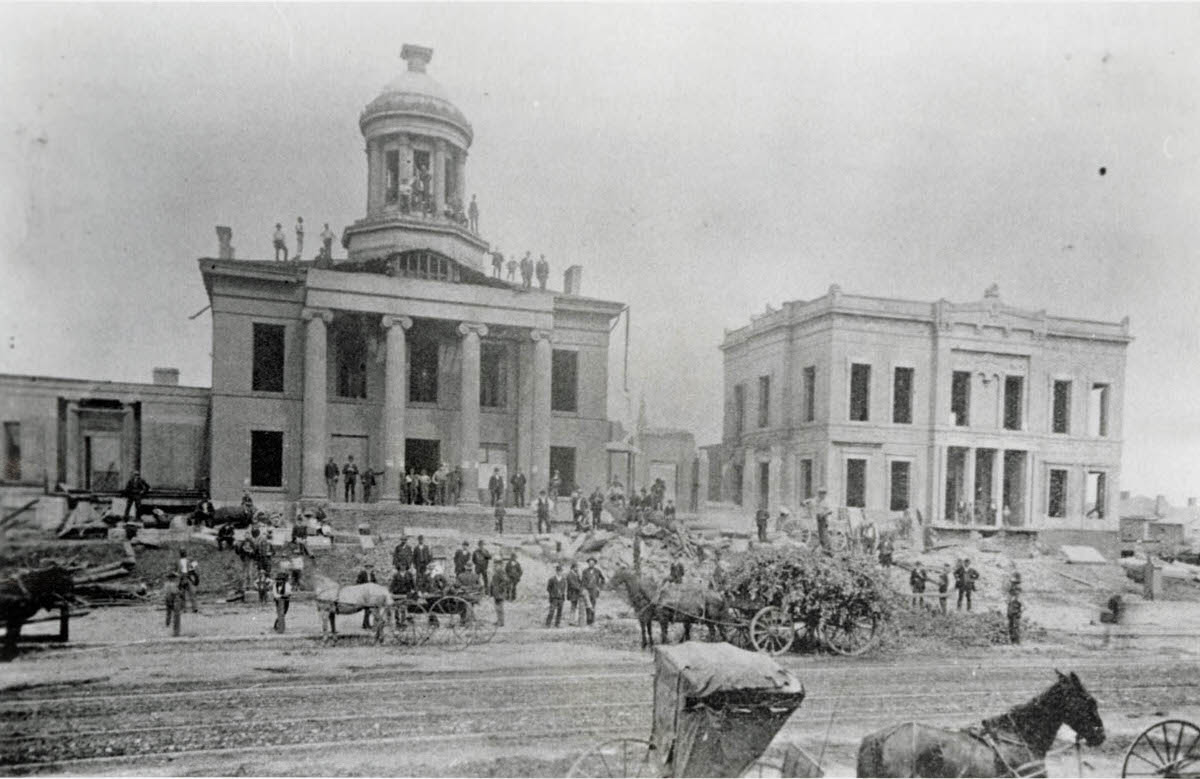
This courthouse was built in 1840 on the southeast corner of Mound and High Streets. On March 30, 1879, a fire destroyed many public records in the building. The caption for this photograph reads, “Court House in Process of Being Torn Away”; additional information within the book reads, “The large picture depicts a scene on a September morning in 1884, showing the workmen in the act of tearing down the old court house.”
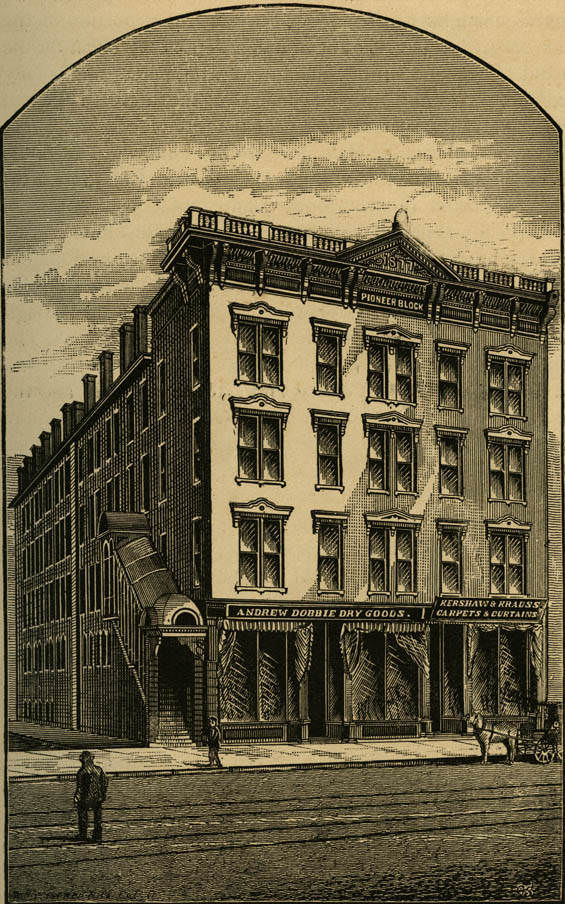
Illustration of the Pioneer Block, which included Andrew Dobbie Dry Goods, and Kershaw & Krauss Carpets and Curtains.
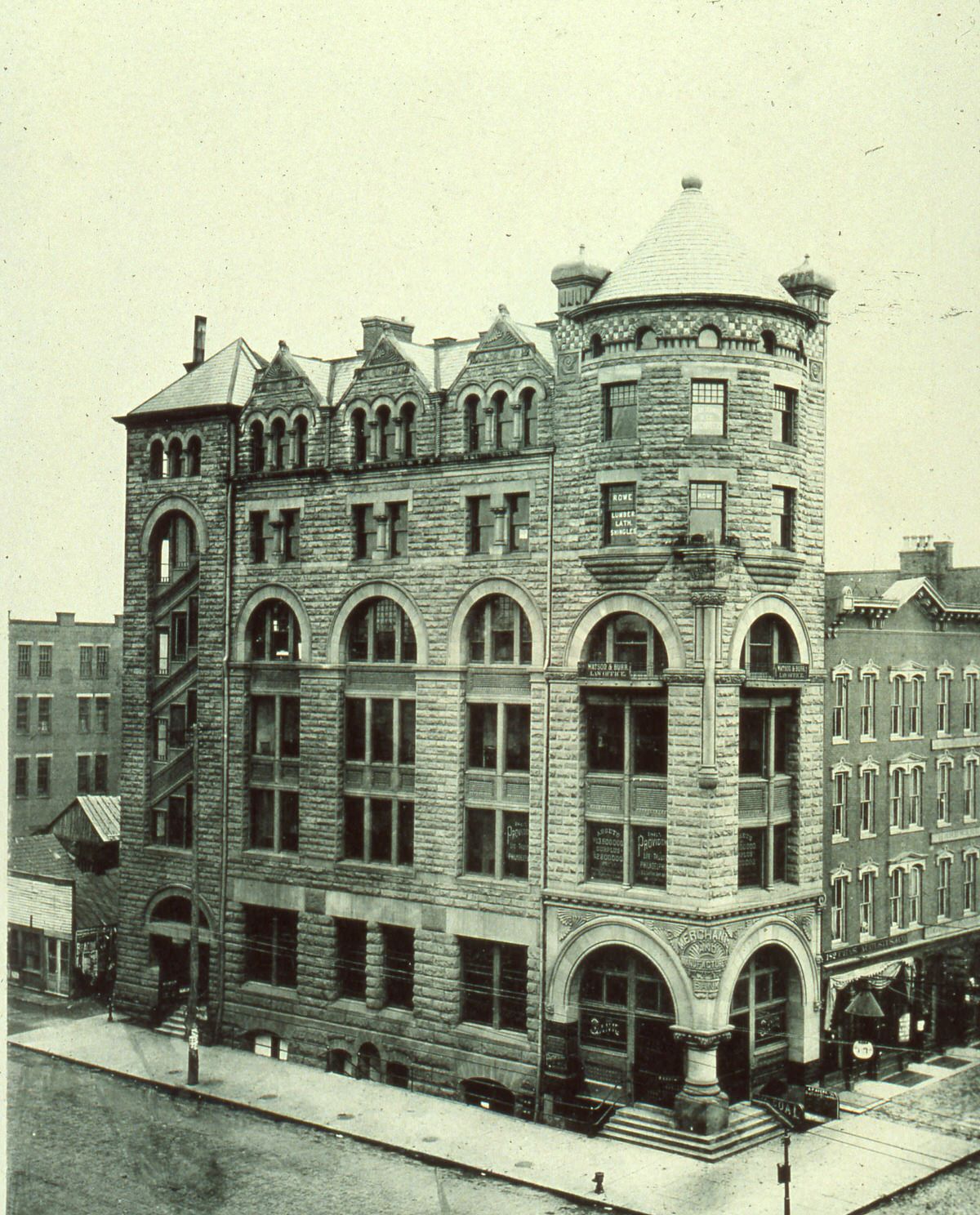
A photograph of the King Building at the corner of High and Spring Streets.
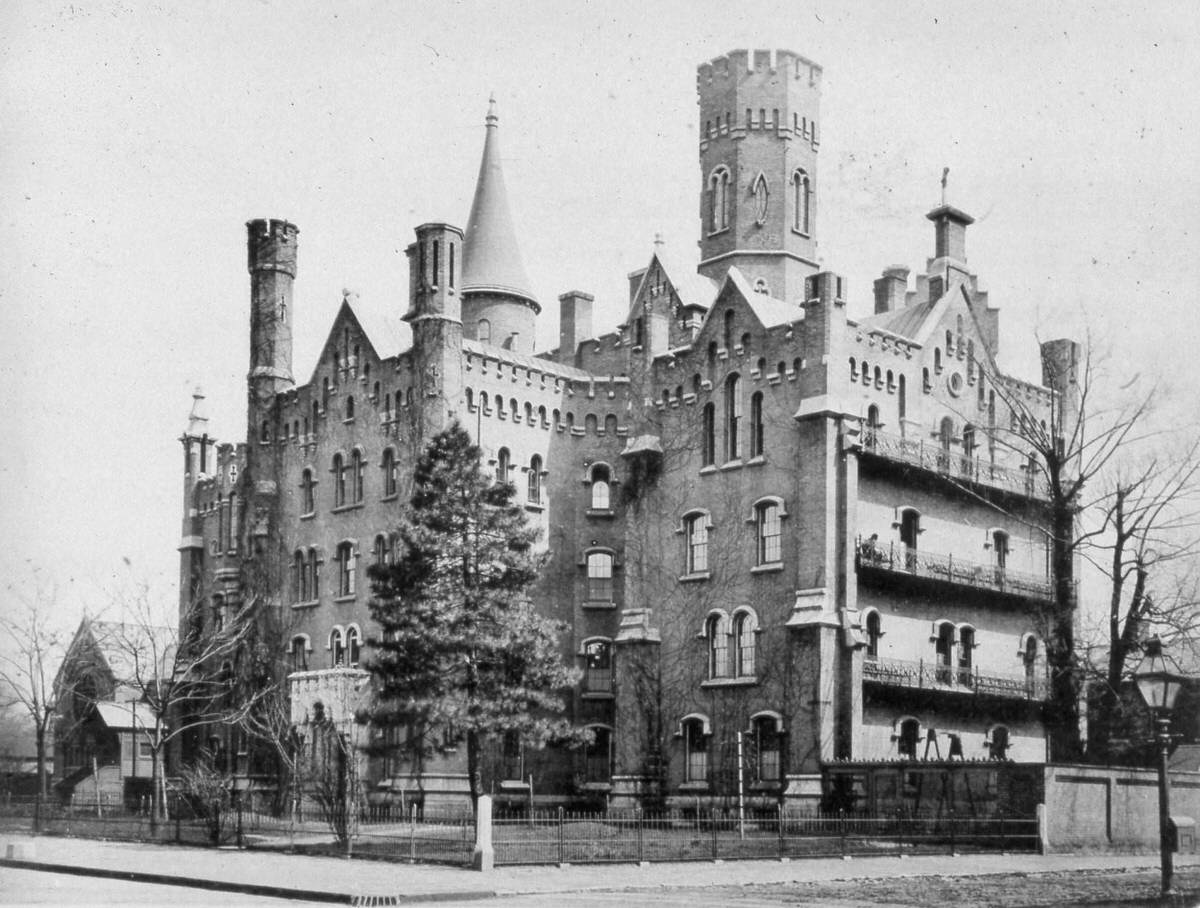
Black and white photograph of Starling Medical College and St. Francis Hospital. Starling Medical College was incorporated on January 28, 1848.
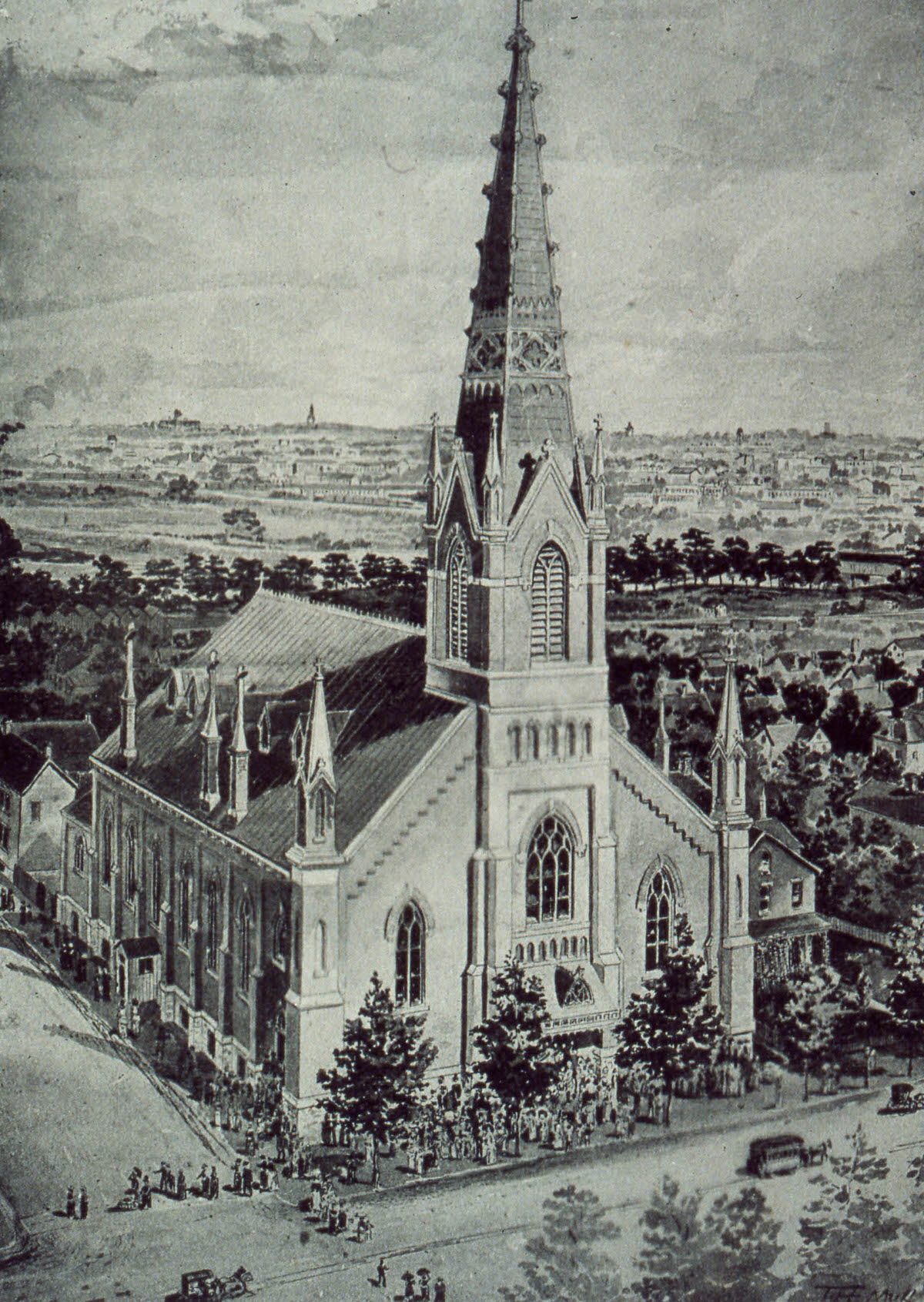
This is a black and white image of the Holy Family Roman Catholic Church. It was originally the United Brethren Church and later became Memorial Baptist Church. Another site for the Holy Family Roman Catholic Church had a cornerstone laying on September 17, 1882, and its dedication on June 2, 1889.
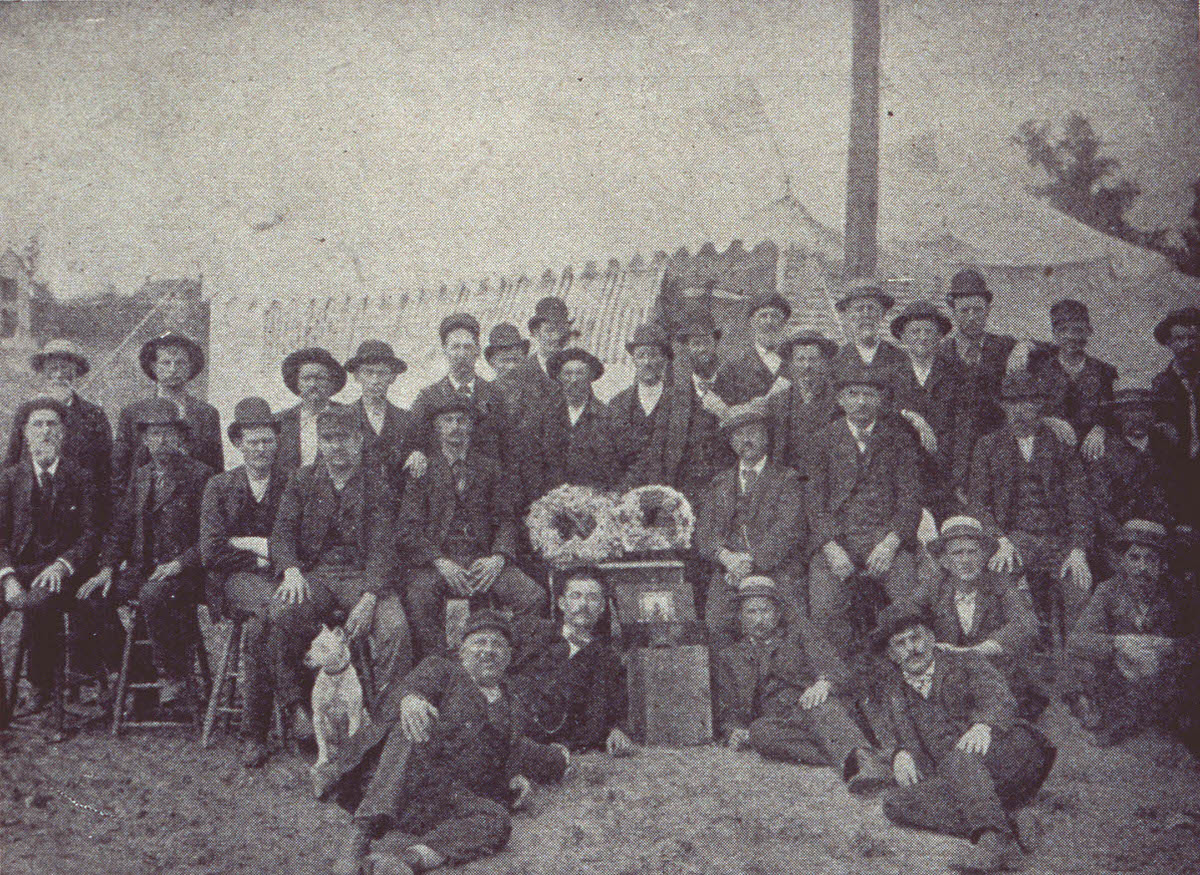
Streetcar strikers in front of their “Main and Oak Street” headquarters. The strike started on June 3, 1890, when workers organized a union to secure shorter hours and an increase in wages. By June 9, an agreement was reached for a reduction of their workday from sixteen to twelve hours. They also achieved an increase in their wages.
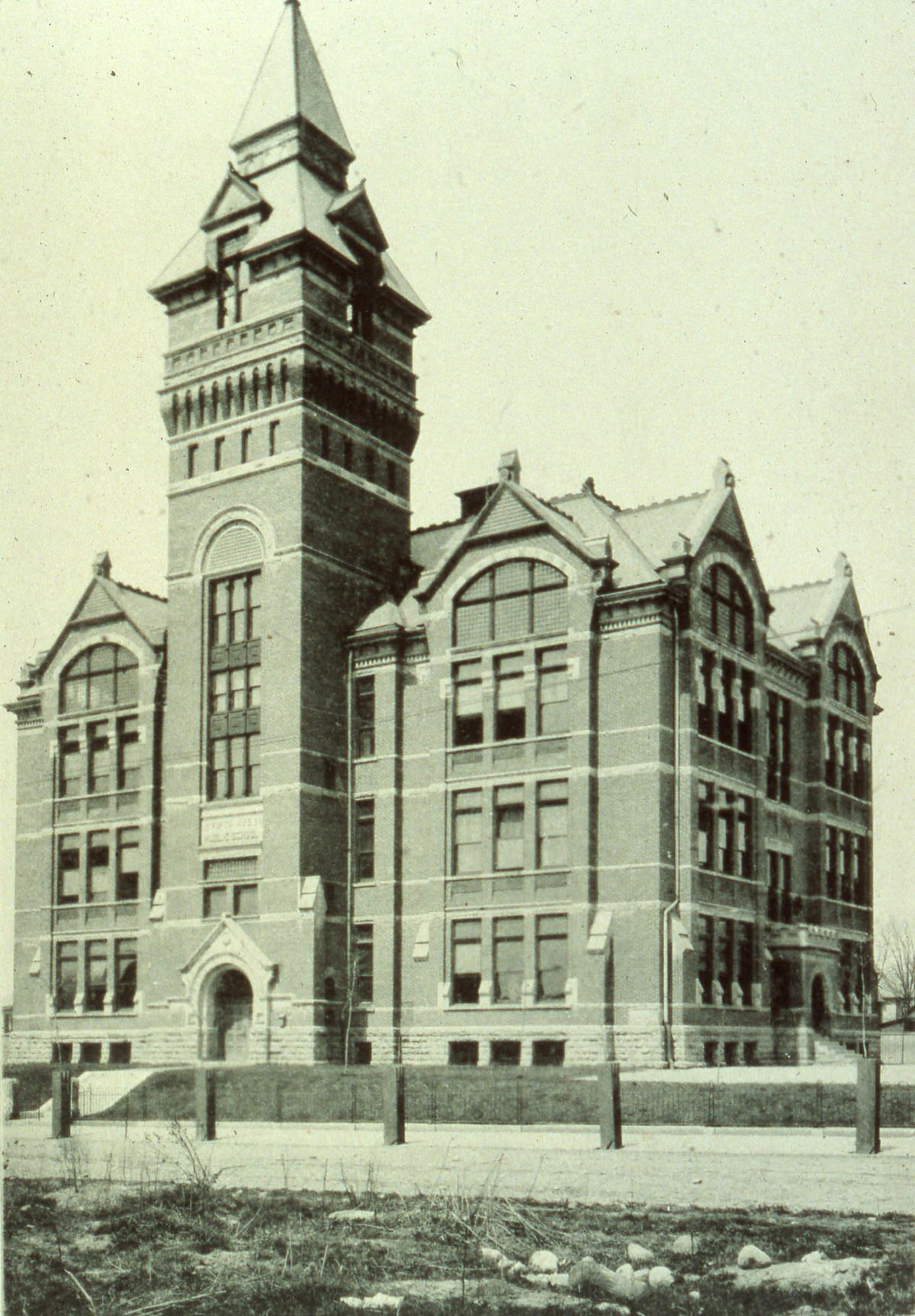
Fifth Avenue Elementary School was constructed in 1886 and remodeled in 1954. The school closed in 1976 and has been demolished.
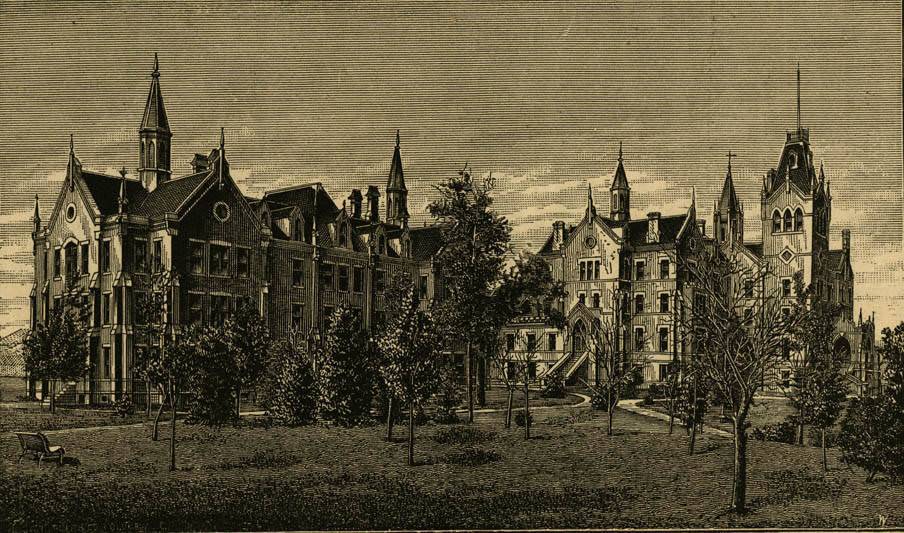
View of the front facade of the Ohio Institution for Feeble Minded Youth as seen from across the front lawn. The Ohio Asylum for the Education of Imbecile Youth opened on August 3, 1857, at 727 East Main Street. It was the second institution of its kind in the United States. The Asylum was moved to 1601 West Broad Street in 1868. The new Ohio Asylum for the Education of Idiotic and Imbecile Youth was completed in July 1868 but was damaged by a large fire on November 18, 1881. The original structure was rebuilt and served until August 17, 1987, when it was demolished. The various names the institution was known under are: the Ohio Asylum for the Education of Idiotic and Imbecile Youth (1857–1878); the Ohio Institution for the Education of Idiotic and Imbecile Youth (1878–1881); the Ohio Institution for Feeble-Minded Youth (1881–1945); the Columbus State School (1945–1970); and the Columbus State Institute (1970–circa 1980).
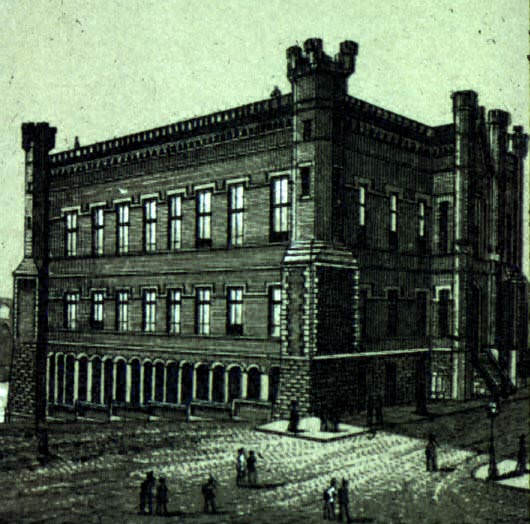
The Columbus City Prison opened December 29, 1879, and closed August 15, 1920.
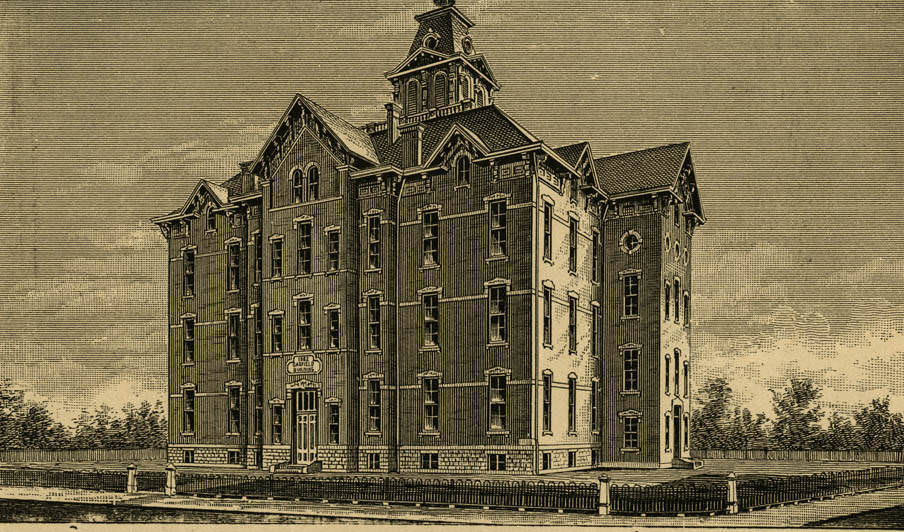
This picture is a drawing of the original Garfield Elementary School building. It was built in 1882 but would later be torn down and a new school building built in its place in 1953.
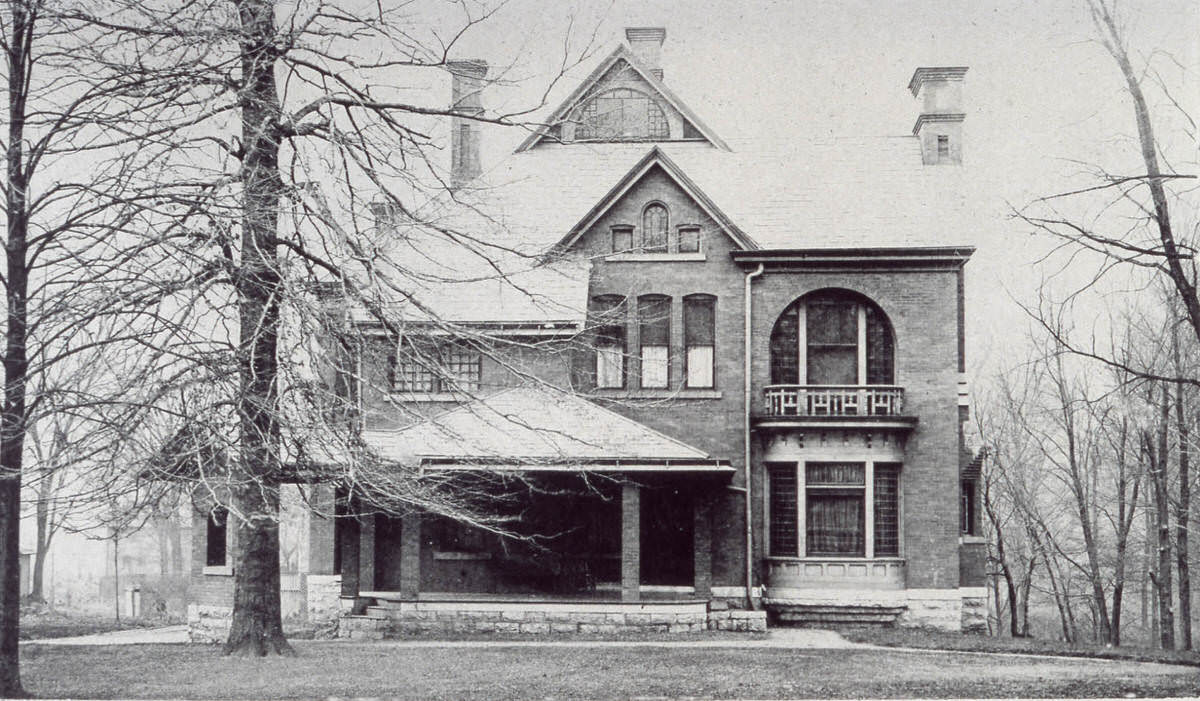
Photograph of the home of Eli Tappan, president of Kenyon College, Ohio State School Commissioner, and attorney. The alternate address for this home was 461 16th Ave.
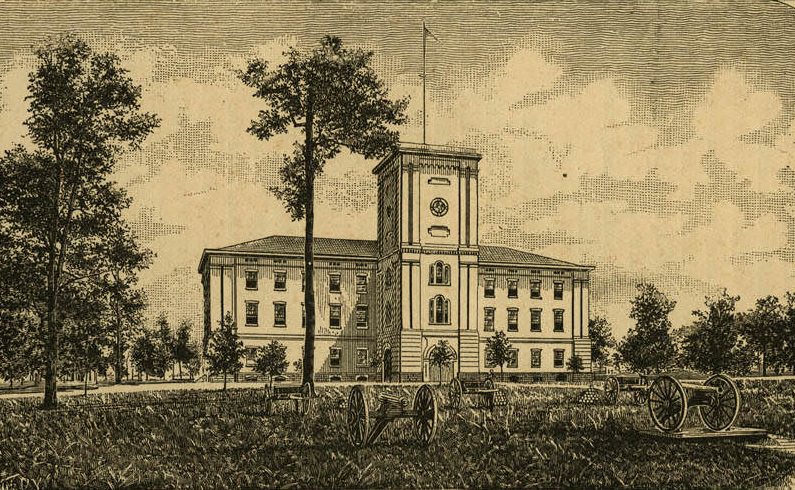
A drawing of the U.S. Barracks Ordnance Building, also known as the Shot Tower. Used as the main storehouse building for military arms, it was never used to make shot.
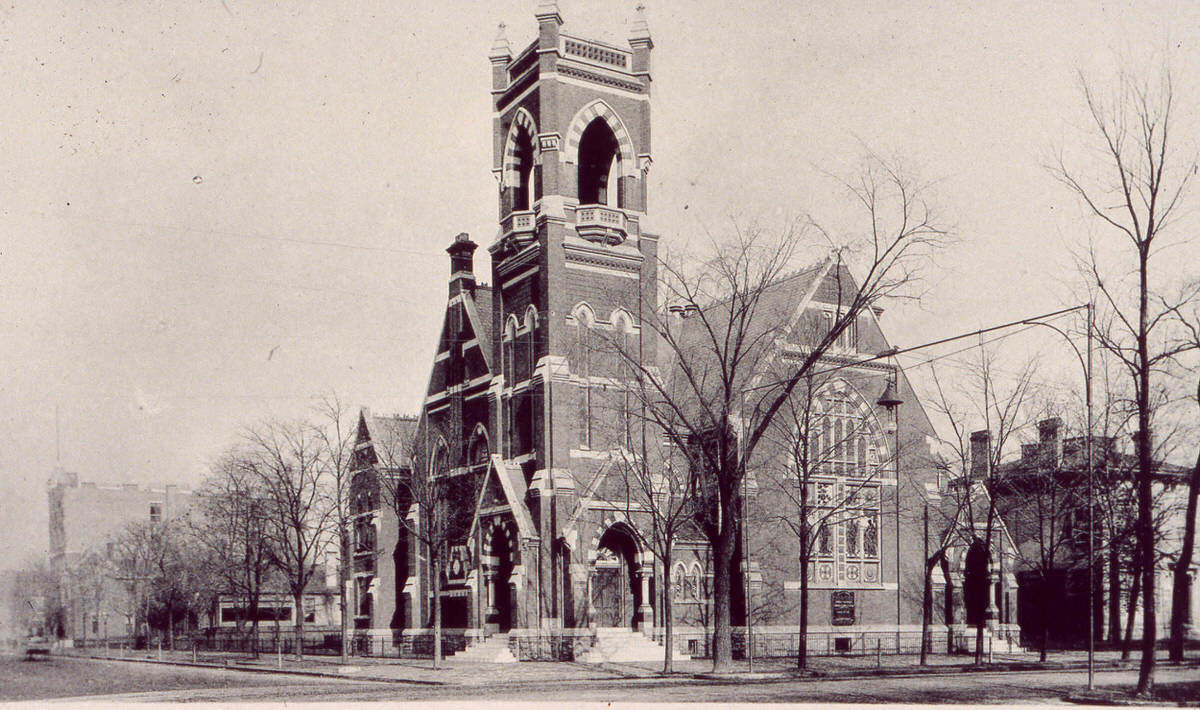
This is a black and white photograph featuring the exterior of the Central Wesley Chapel Methodist Episcopal Church. The church was dedicated July 26, 1885, and demolished January 14, 1936. This site later became home to the Borden Building.
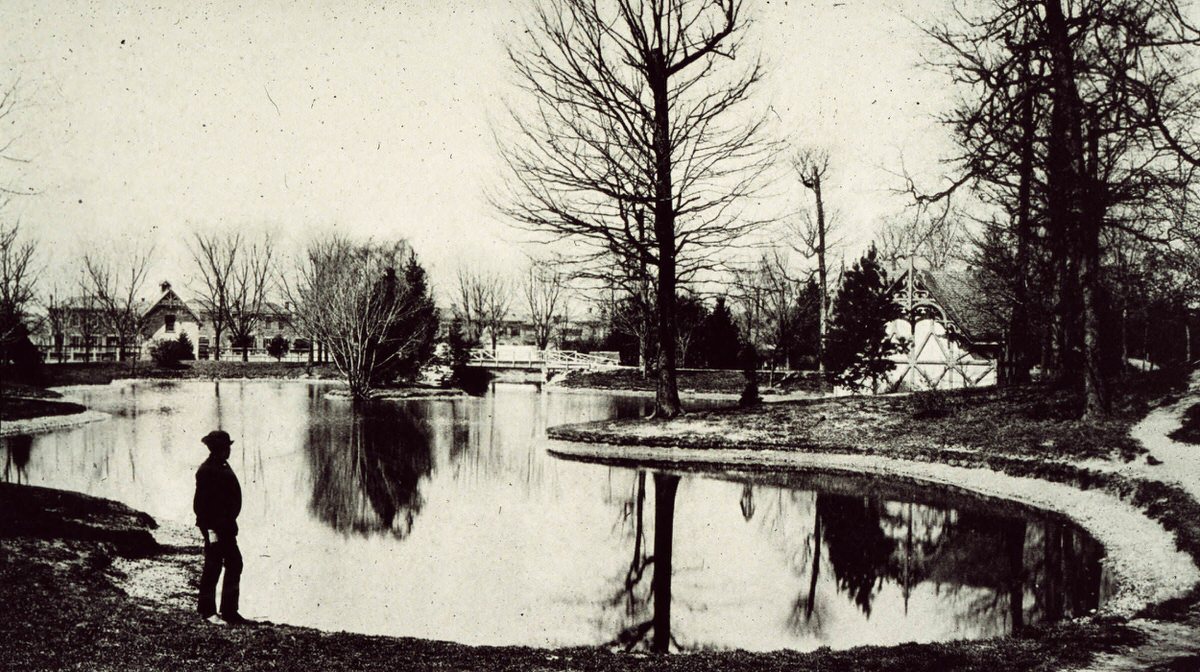
A view of the lake and boathouse at Schiller Park. Land in the German Village area owned by Francis Stewart in the 1830s and used for local celebrations became known as Stewarts’ Grove. It was the site for the Ohio State Fair in 1864 and 1865. The City of Columbus purchased 23 acres of Stewarts’ Grove in 1867 and renamed it City Park. Improvements were added, including a lake with a fountain and footbridge, an amphitheater, and a shelter house. The statue of the famous German poet Johann Christoph Friedrich von Schiller was erected on July 4, 1891. On April 3, 1905, the park was renamed Schiller Park. On May 27, 1918, during World War I, the park’s name was changed to Washington Park because of local anti-German sentiments. The previous name was reinstated on April 7, 1930, and it remains Schiller Park to this day. The park is the second oldest park in the City of Columbus.
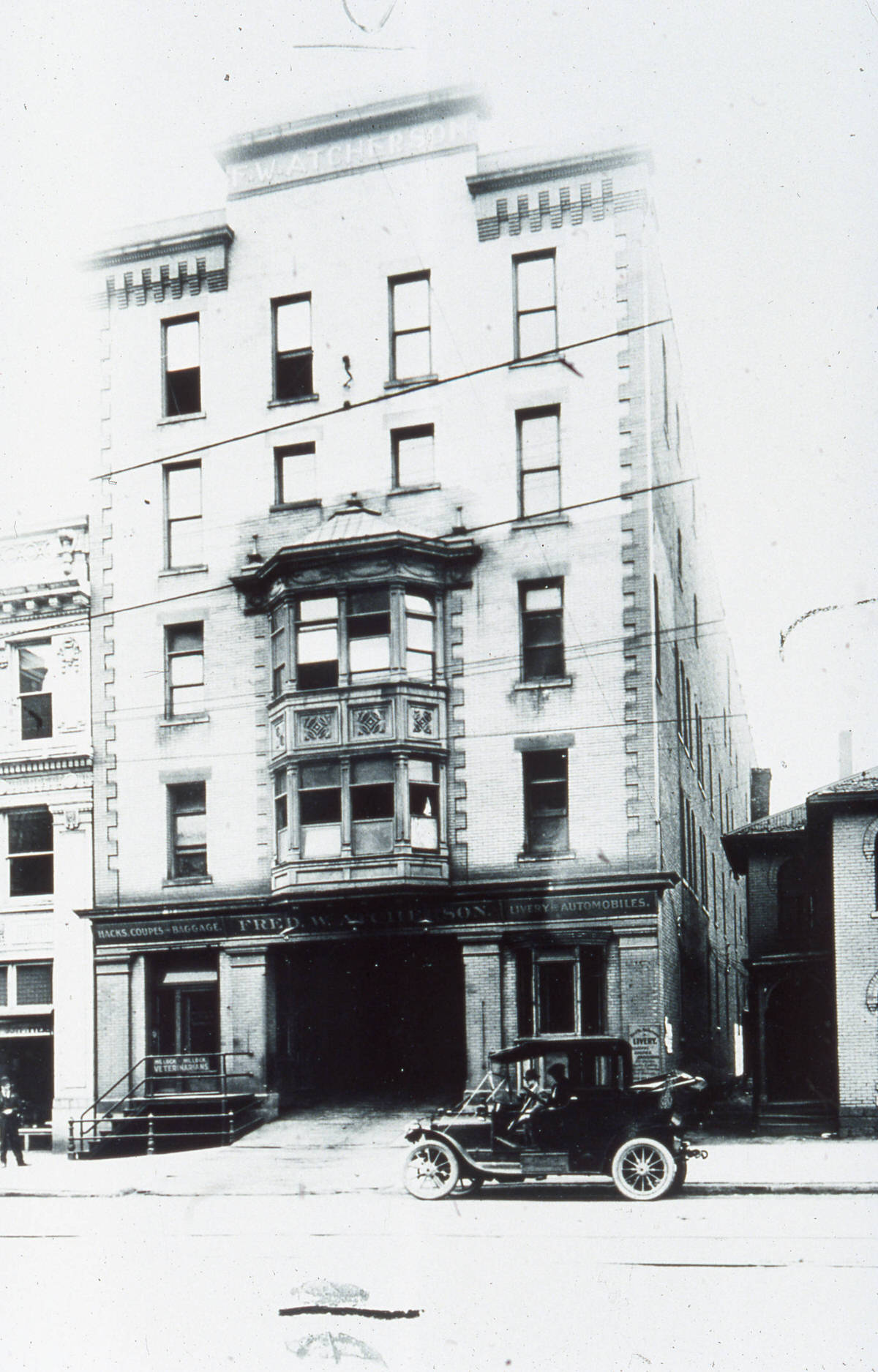
The Frederick W. Atcherson Company was a livery, feed, and sale stable located at 54 and 56 East Gay Street. The business operated from 1893 to 1916.
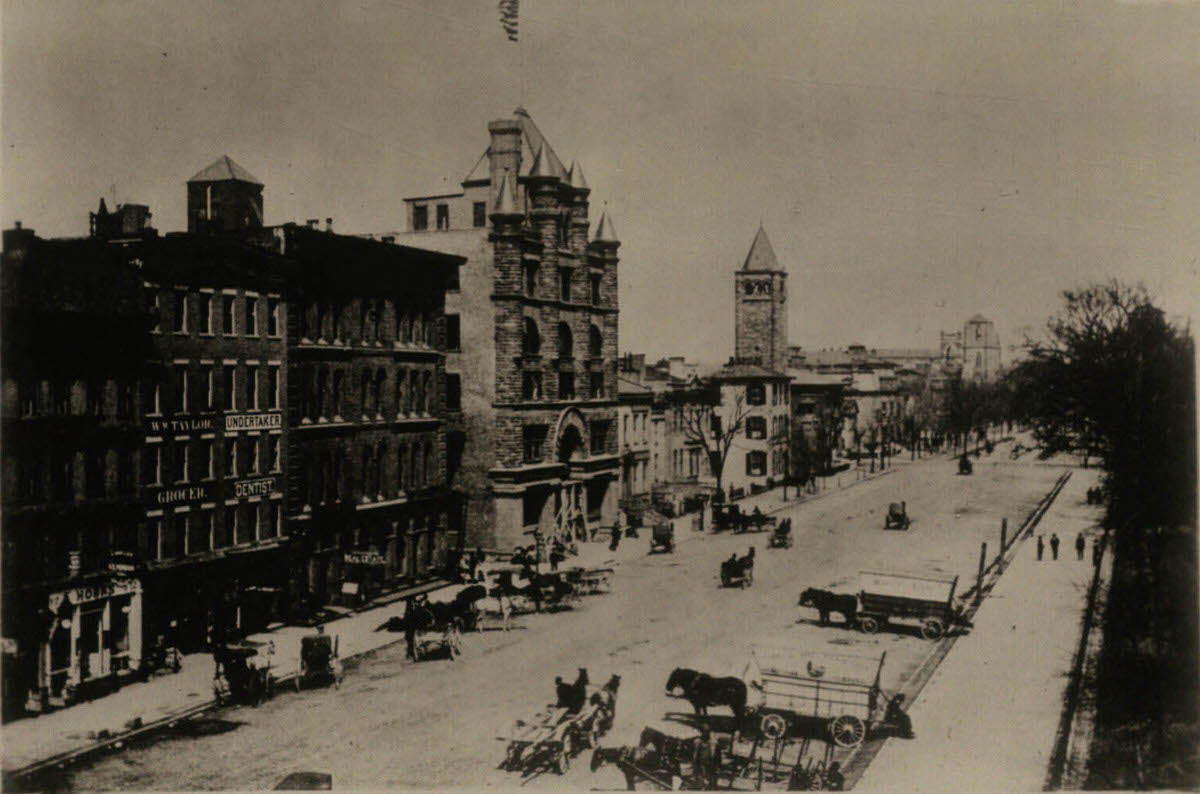
East Broad Street features, from the left: Edward G. Horn Liquors, 12 E. Broad; William Taylor Grocery, 14 E. Broad; the Hayden Clinton Bank — now the oldest building near Statehouse Square — at 20 E. Broad; and Board of Trade Building, 30 East Broad St. The tower in the distance is First Congregational Church. The Board of Trade site is now where the Rhodes State Office Tower stands.
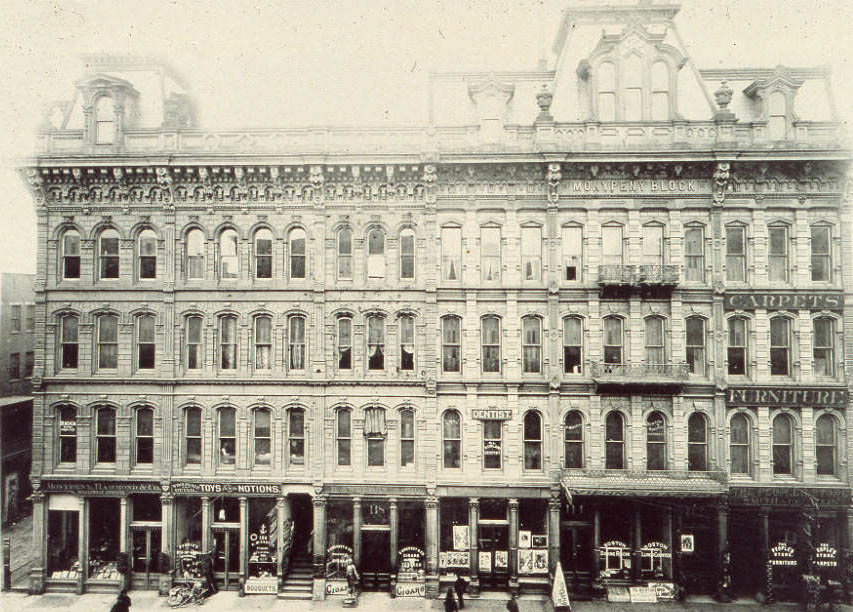
Monypeny Block was built in 1878 and demolished in February of 1970. It had the first passenger elevator in Columbus. The Monypeny-Hammond Co. specialized in wholesale groceries.
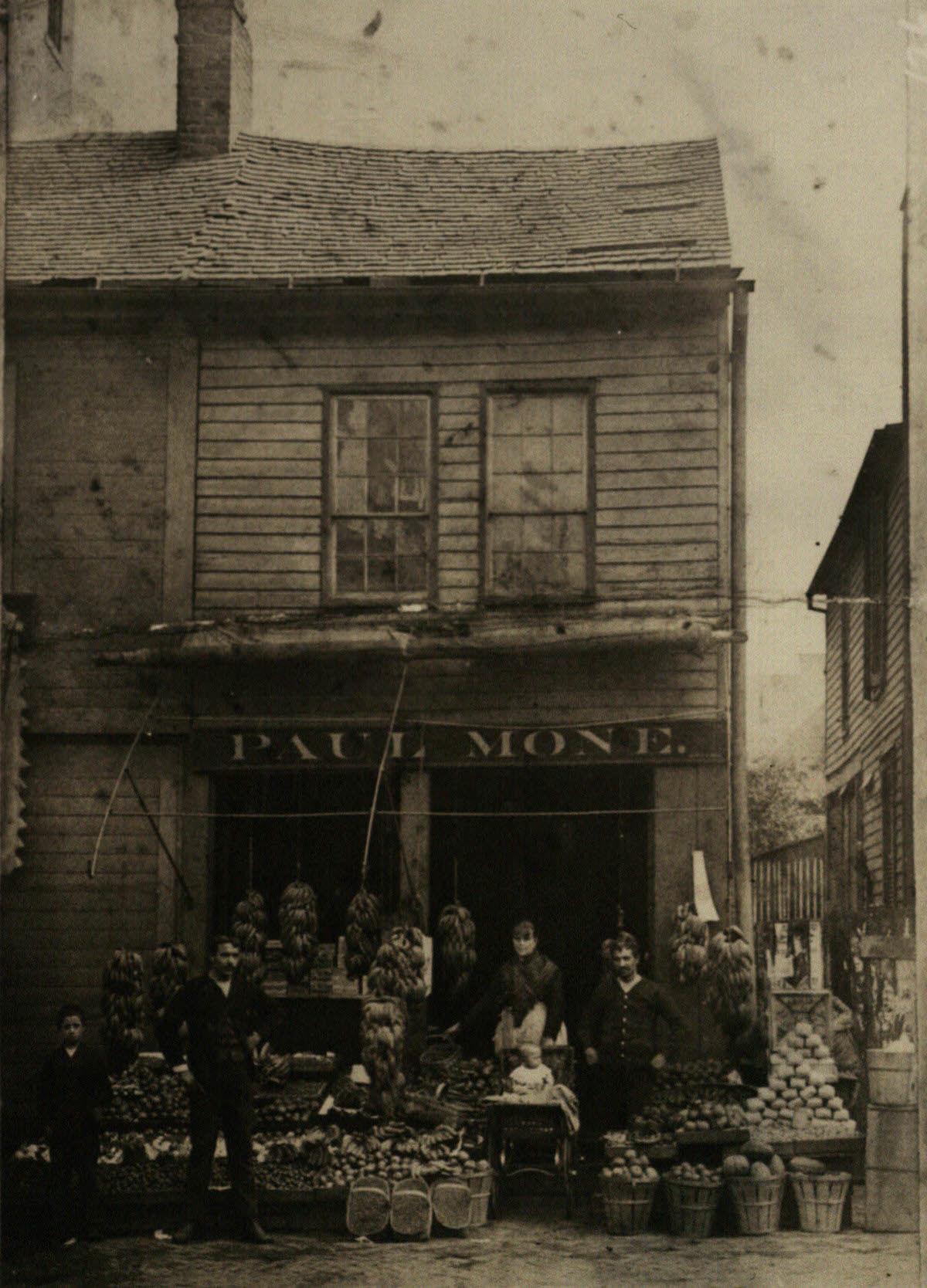
According to city directories, the first listing for Paul Mone’s store appears in 1884 and the last listing appears in 1889. The store was located at the corner of Long and North High Streets. The photograph was submitted by Mr. Paul Mone of 871 Seymour Avenue with the date of 1851.
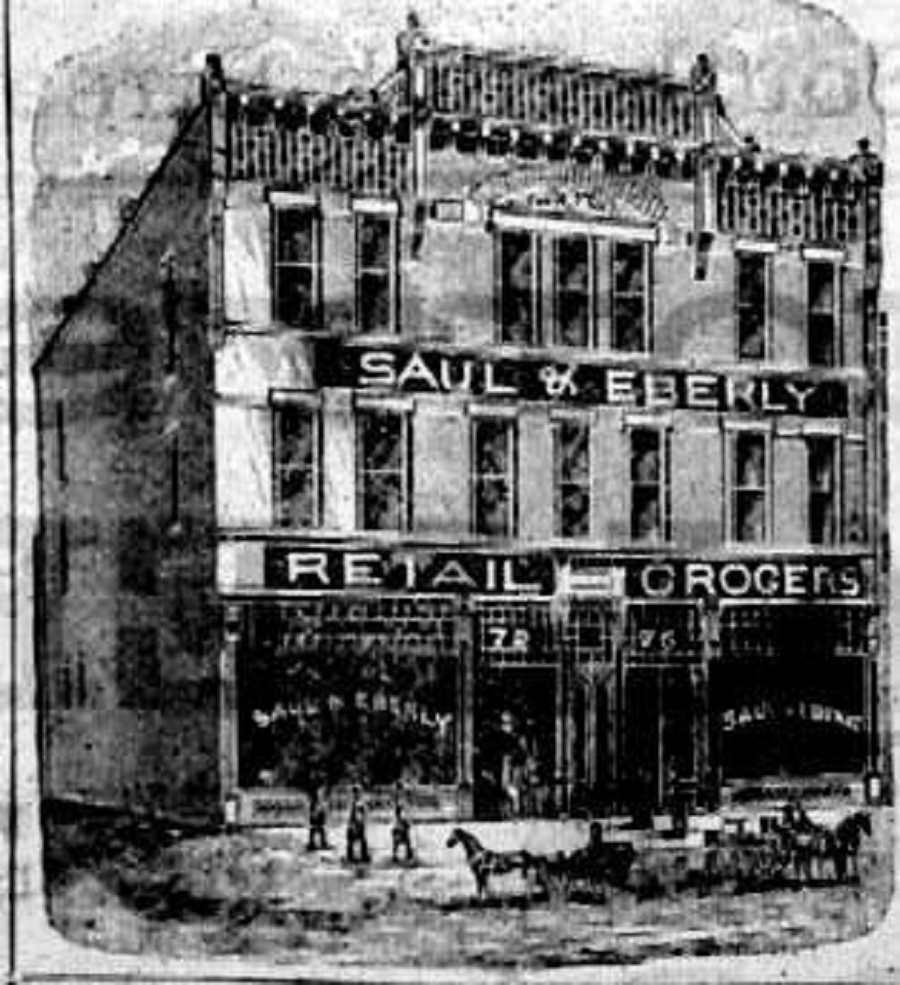
This is a black and white drawing depicting the exterior of the Saul & Eberly Grocery Store.
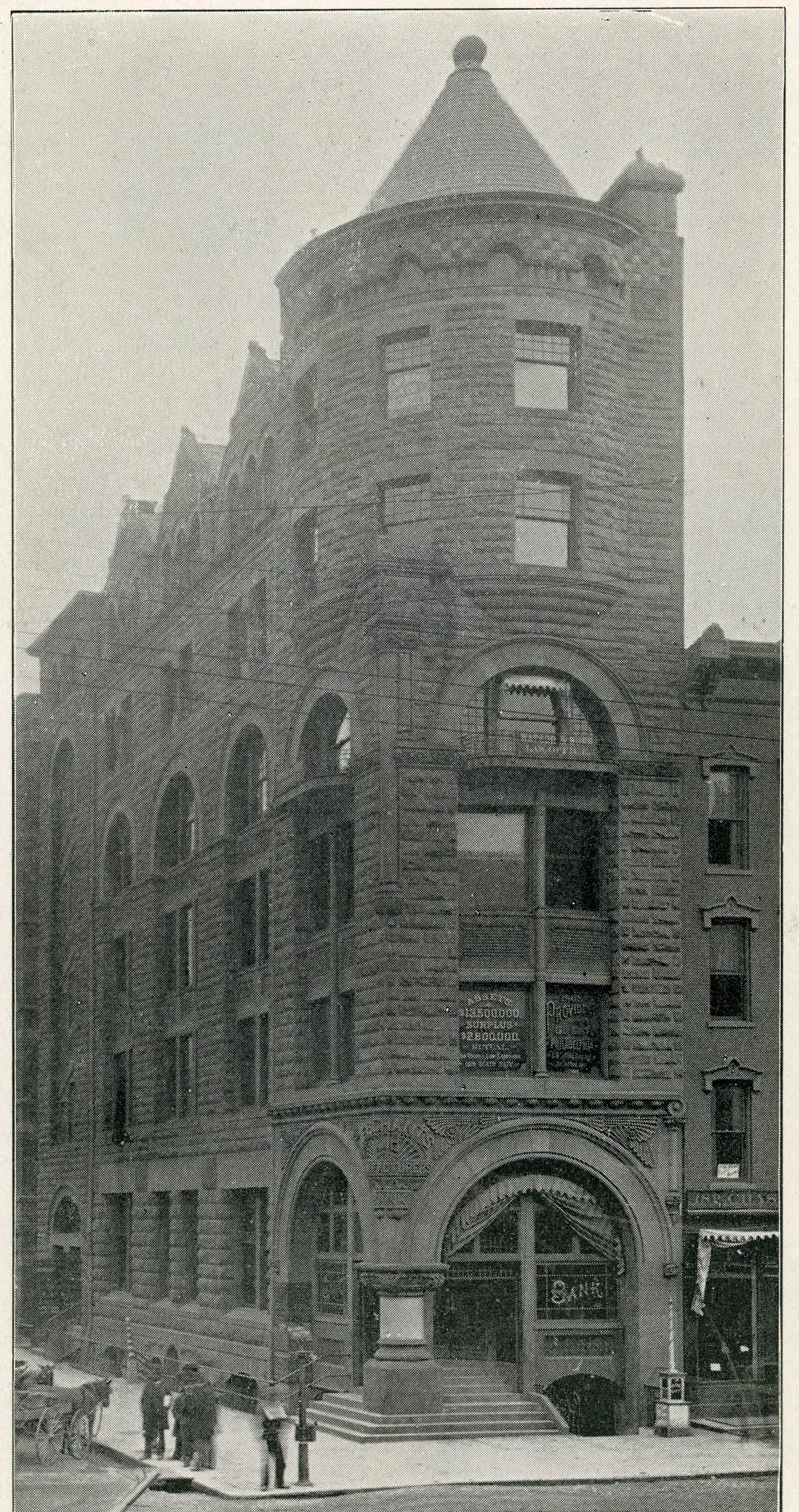
Photograph of the Merchants and Manufacturers National Bank, also known as Hanover Block and King Building. It was opened in 1886 and closed in 1945. Elah Terrell was the architect.
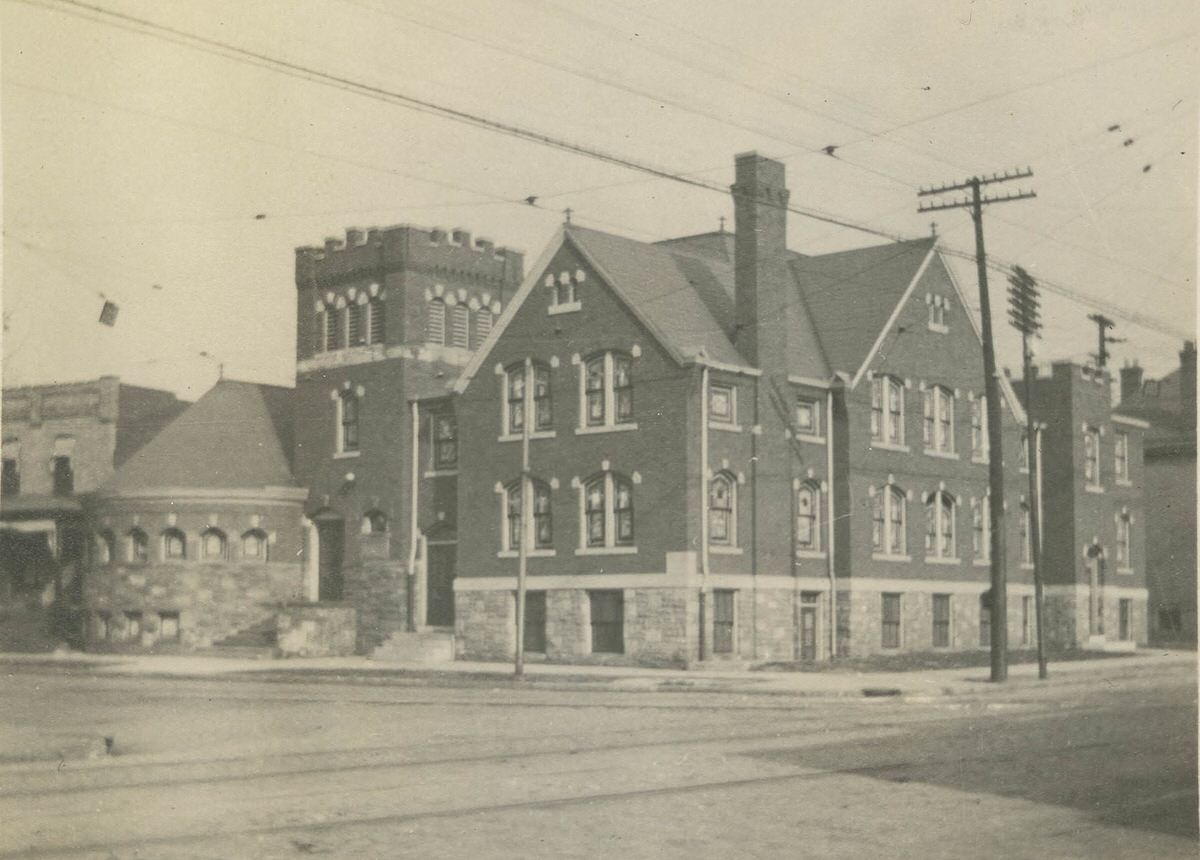
Photographs of the Neil Avenue Methodist Episcopal Church, located on the northeast corner of Neil Avenue and Goodale Street. The original building was constructed in 1890 with an addition made in 1914.
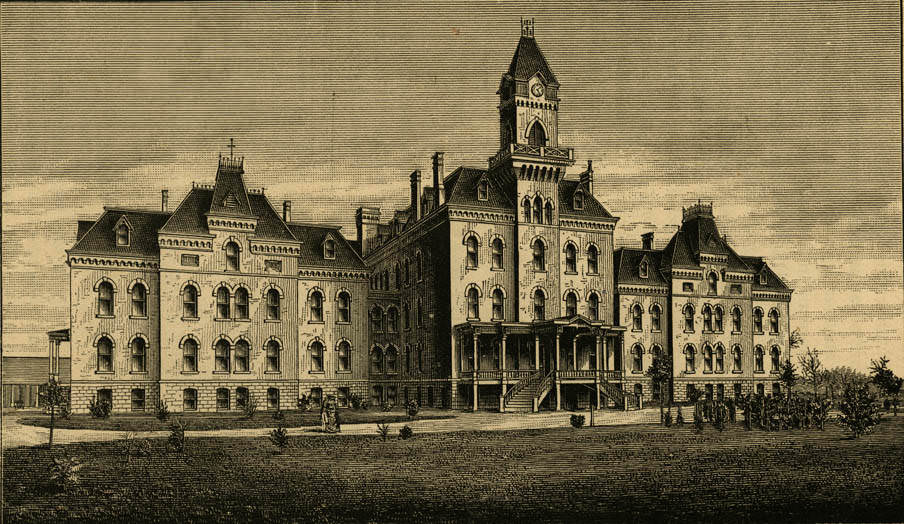
Franklin County Children’s Home opened March 1, 1880, and closed October 13, 1951. The building was demolished in May 1955.
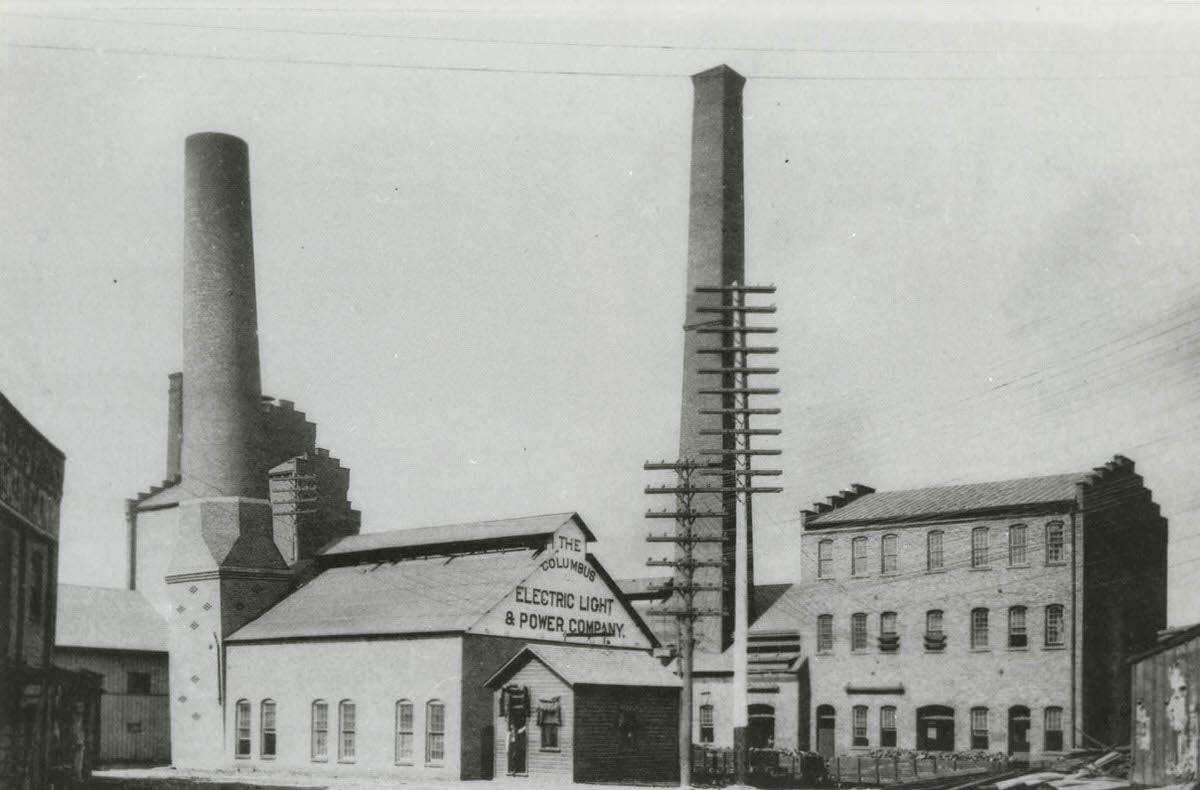
Columbus Electric Light and Power Company began supplying electricity to Columbus in 1887.
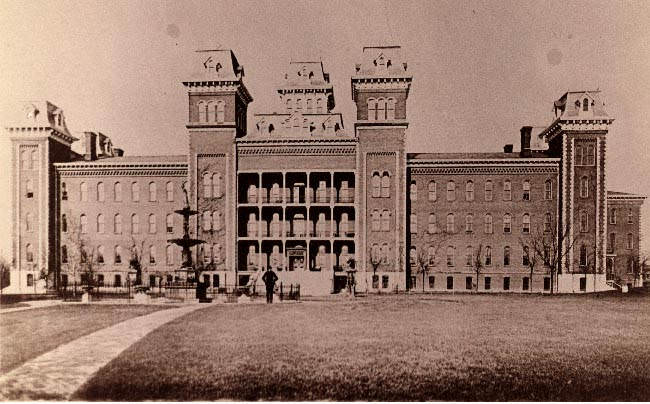
Deaf and Dumb Asylum on East Town Street.
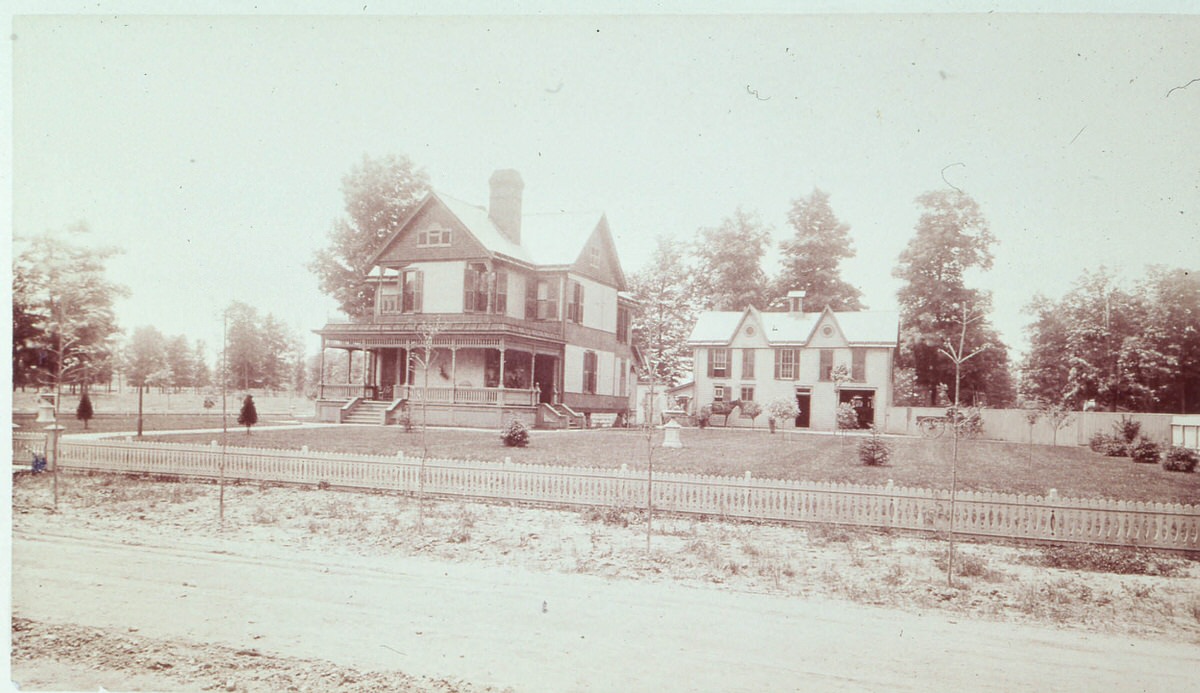
Photograph of the Obed Taylor home on Woodland Avenue. The home no longer stands. The carriage house still stands and carries the address 193 Woodland.
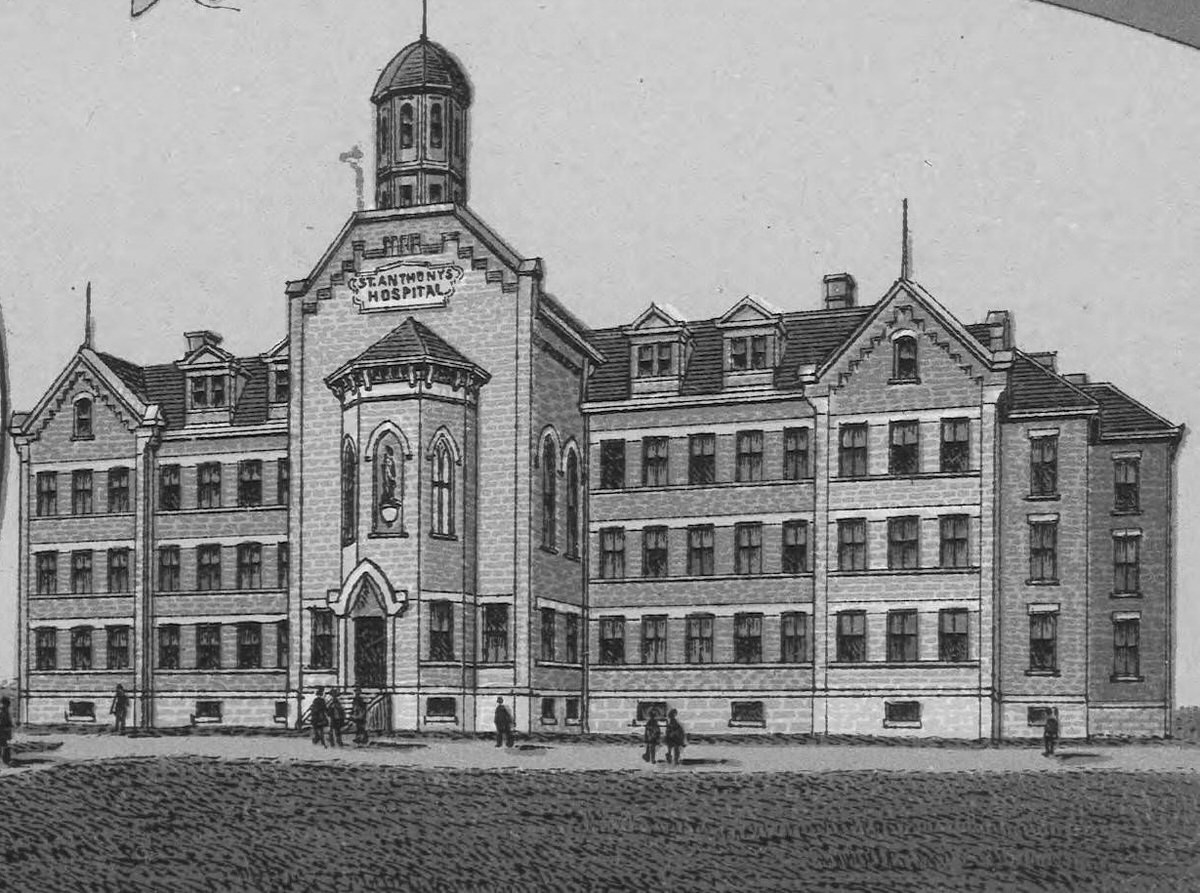
St. Anthony’s Hospital held its groundbreaking in June 1889 and accepted its first patient on December 7, 1891. More recently, it has operated as the Park Medical Center and The Ohio State University Hospitals East.
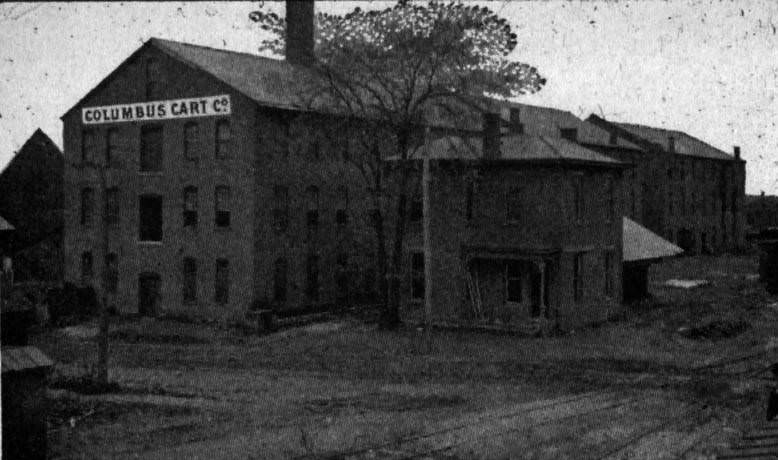
Columbus Cart Company, manufacturers of buggies, road wagons, carriages, and carts.
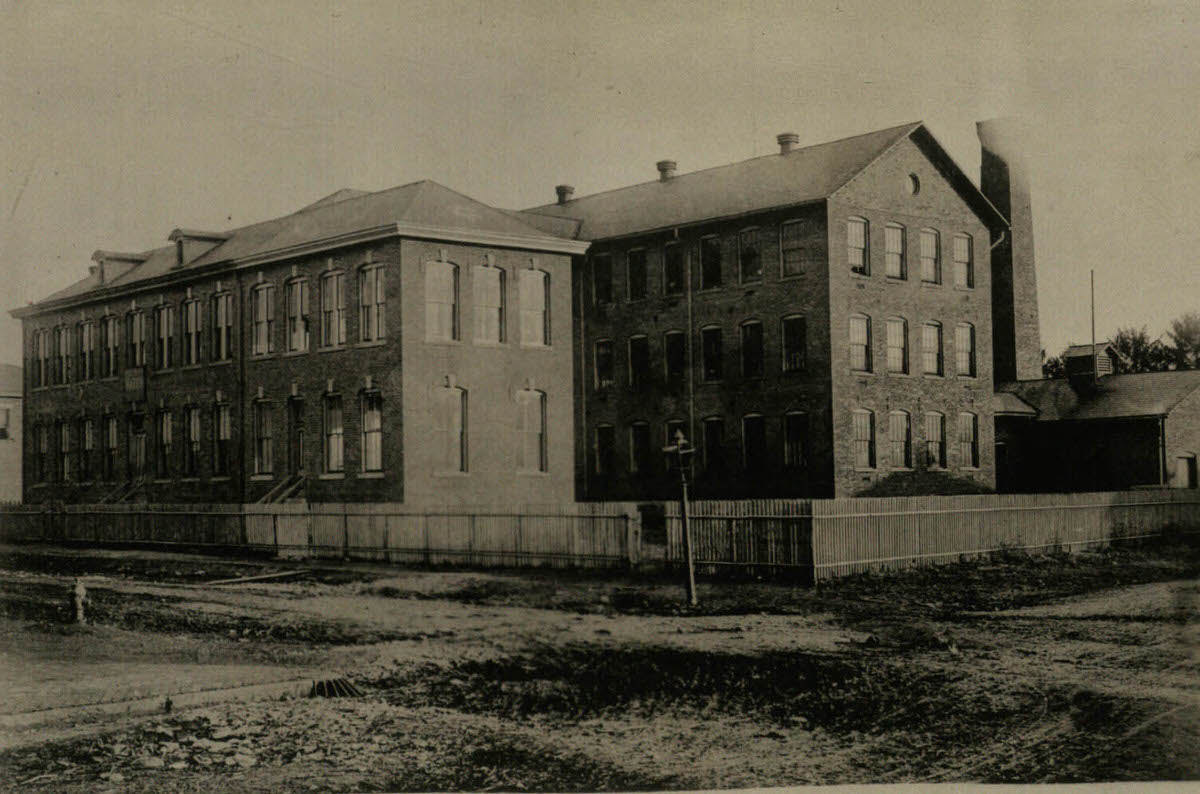
This is a black and white photograph showing the Columbus Watch Company. The company produced watches in Columbus from 1883 until 1903.
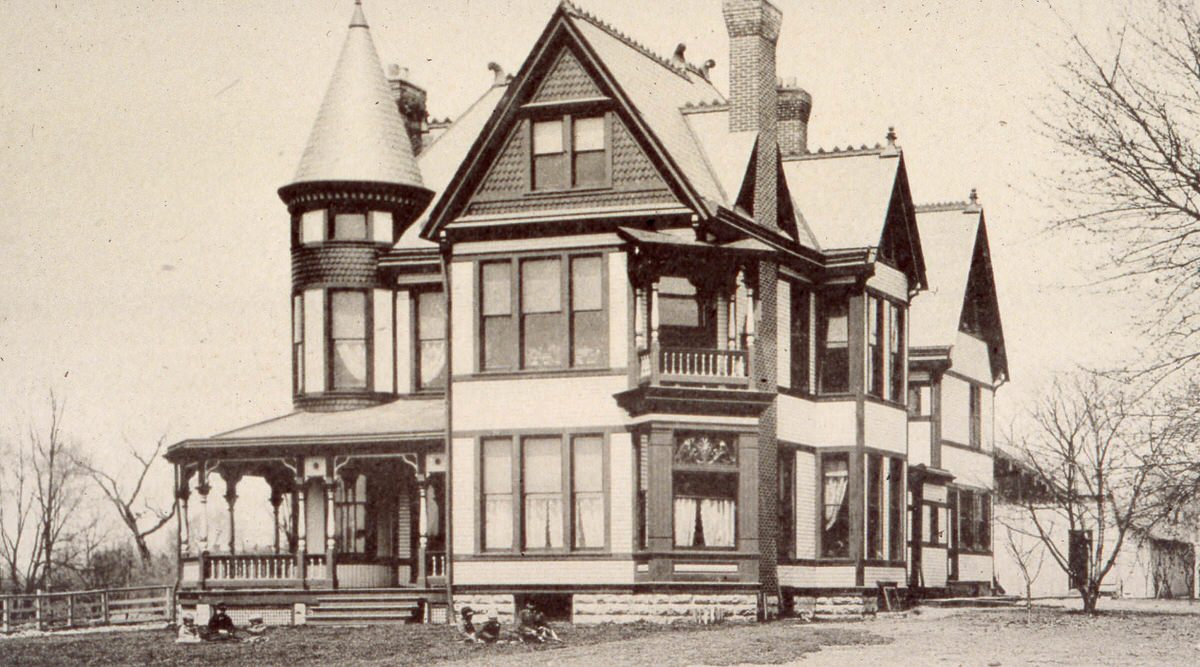
Photograph of real estate agent Charles E. Markeson’s home, built near Alum Creek.
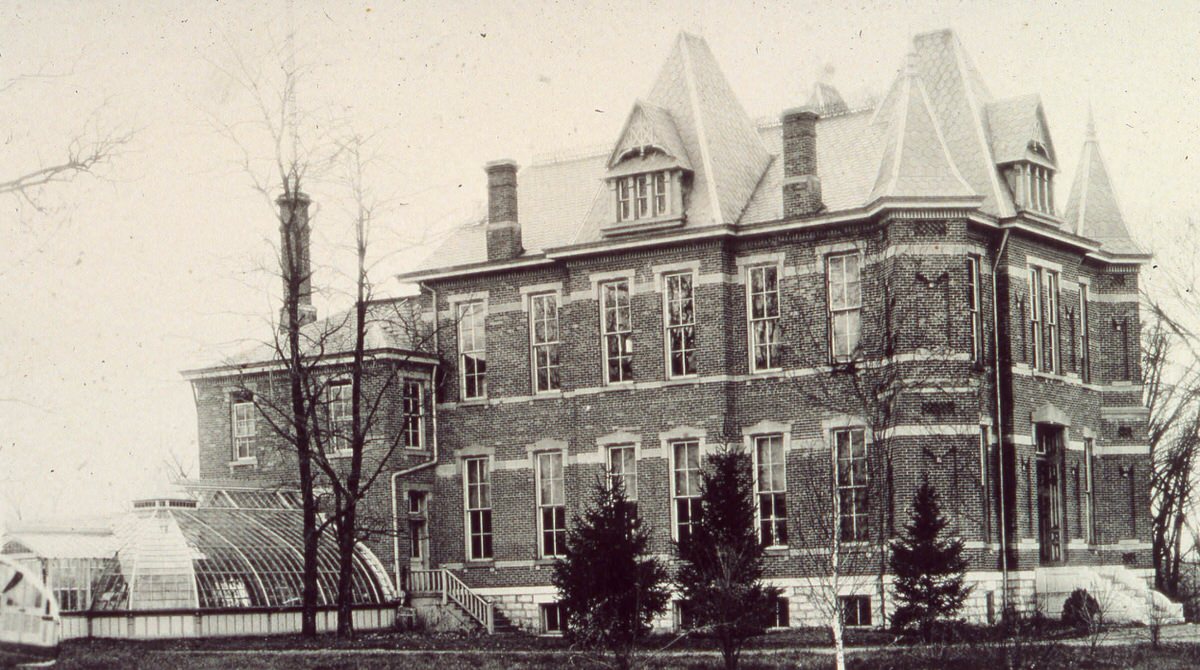
Black and white photograph of the Botanical Laboratory, then located at 181 South Oval Drive on The Ohio State University campus. The building was designed by J.T. Harris and Company, and construction was completed in 1884. It was demolished in 1941. Its site is currently the yard north of the Faculty Club.
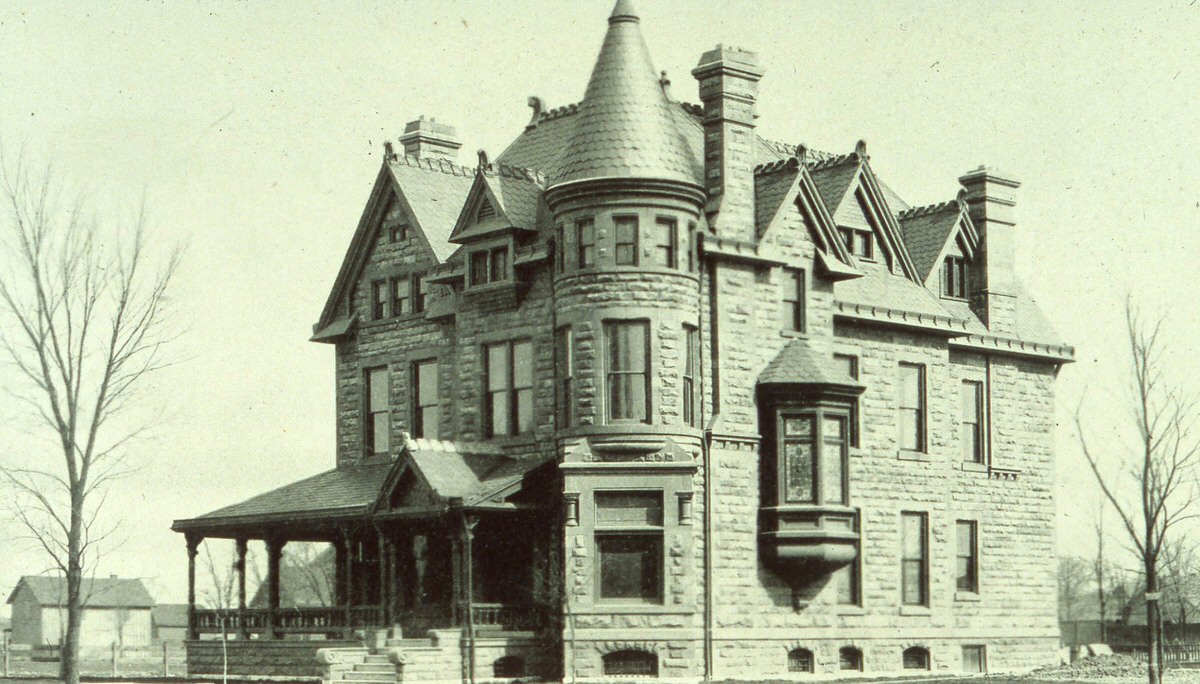
Photograph of the home of lumber yard owner Frank E. Powell on Broad Street, near Douglass. The building was demolished on December 17, 1965. His original home, 527 E. Broad St., was where the first Boy Scout troop in Columbus was organized on September 23, 1910.
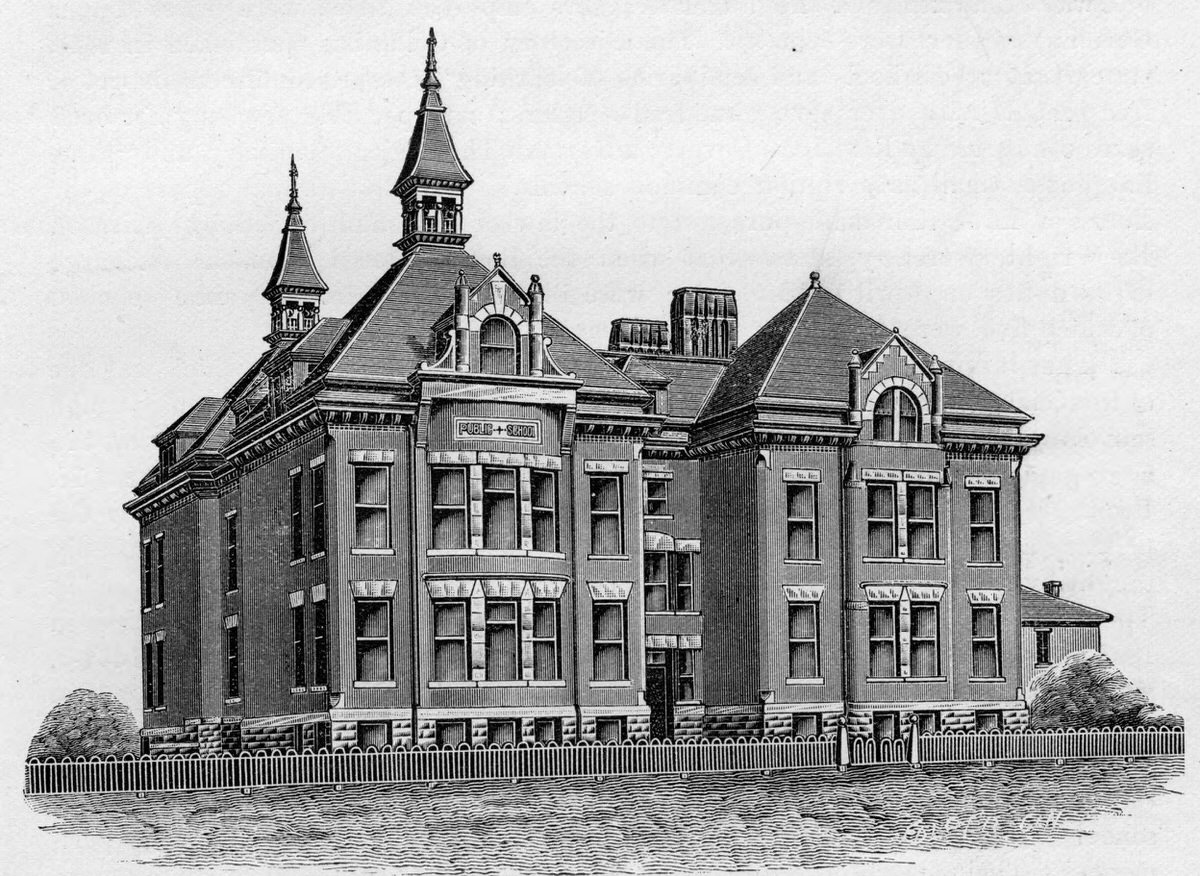
Siebert Street Elementary School opened in 1888. The building no longer stands.
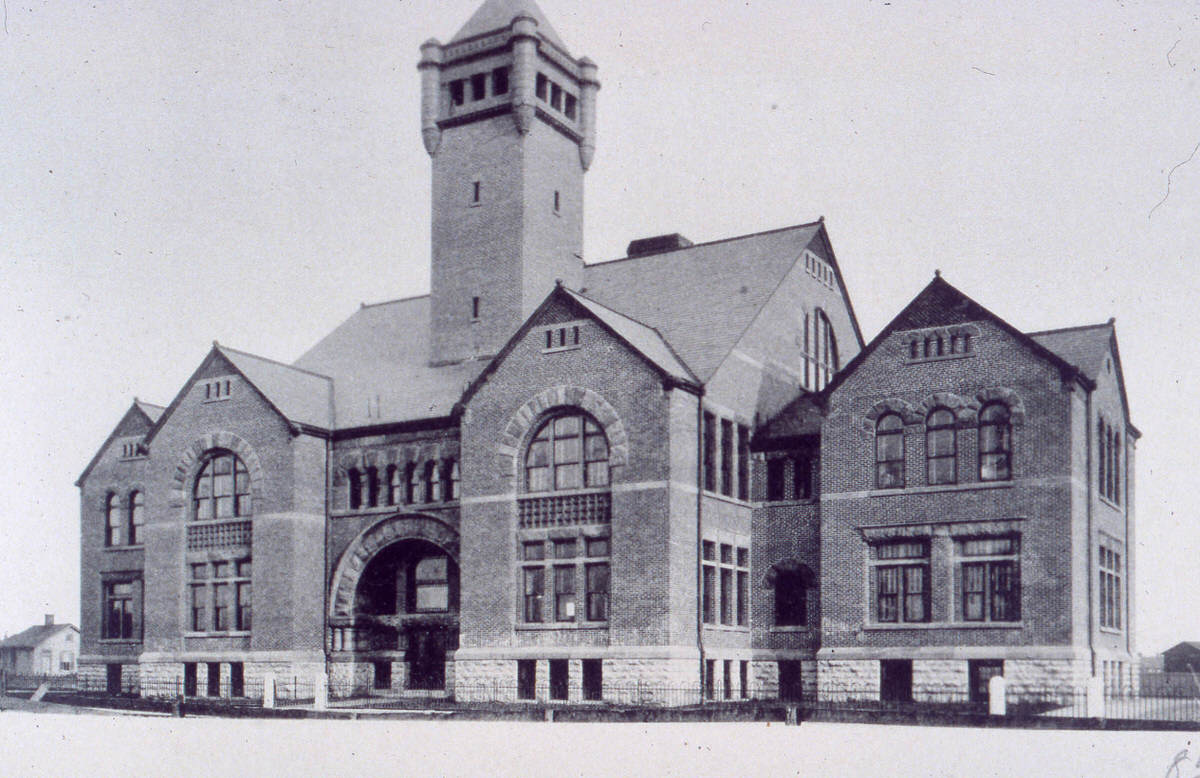
Twenty Third Street Elementary was built in 1888 and was renamed Mt. Vernon Avenue Elementary around 1912. Columbus State Community College now sits where the school once stood.
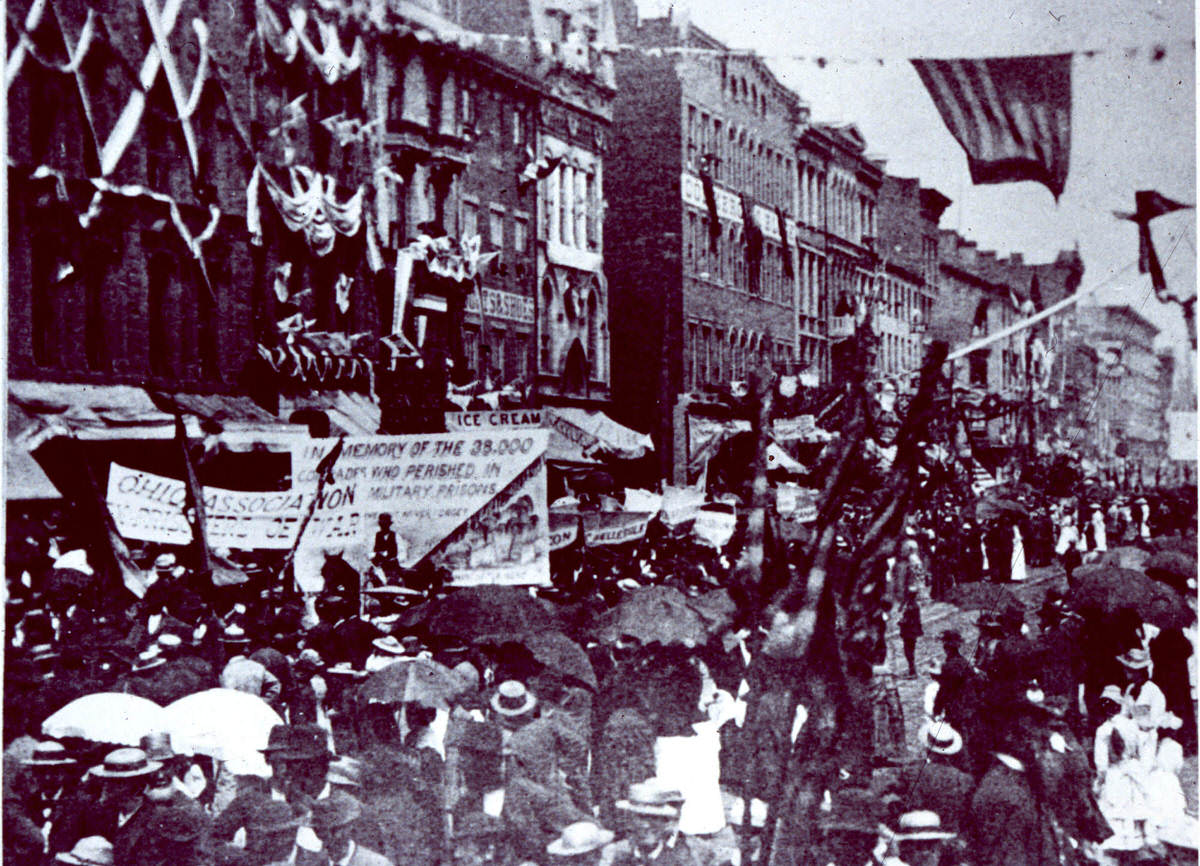
A parade by the Grand Army of the Republic at the opening of the Ohio Centennial Exposition in September 1888.
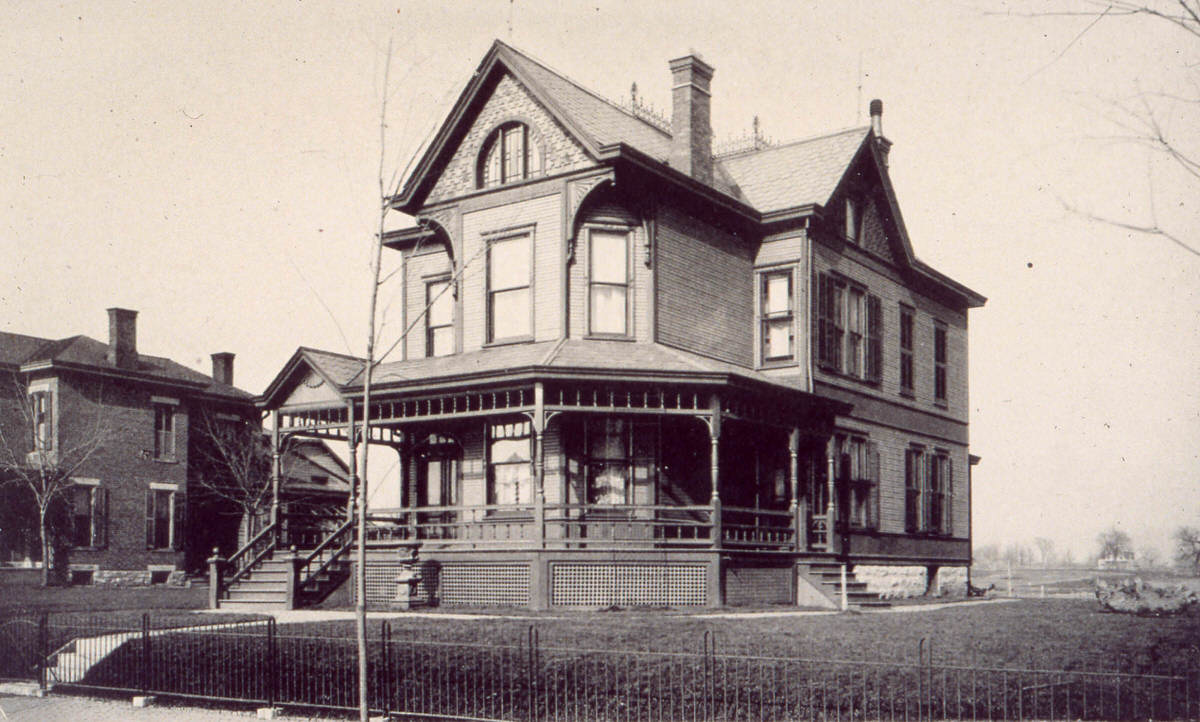
The residence of Allen Granberry Thurman (November 13, 1813 – December 12, 1895), who was a Democratic Representative, Ohio Supreme Court justice, and Senator from Ohio, as well as the nominee of the Democratic Party for Vice President of the United States in 1888. The house was built around 1885 with Queen Anne Style elements. After Thurman’s death, his son, Allen W. Thurman, an attorney, lived in the house.
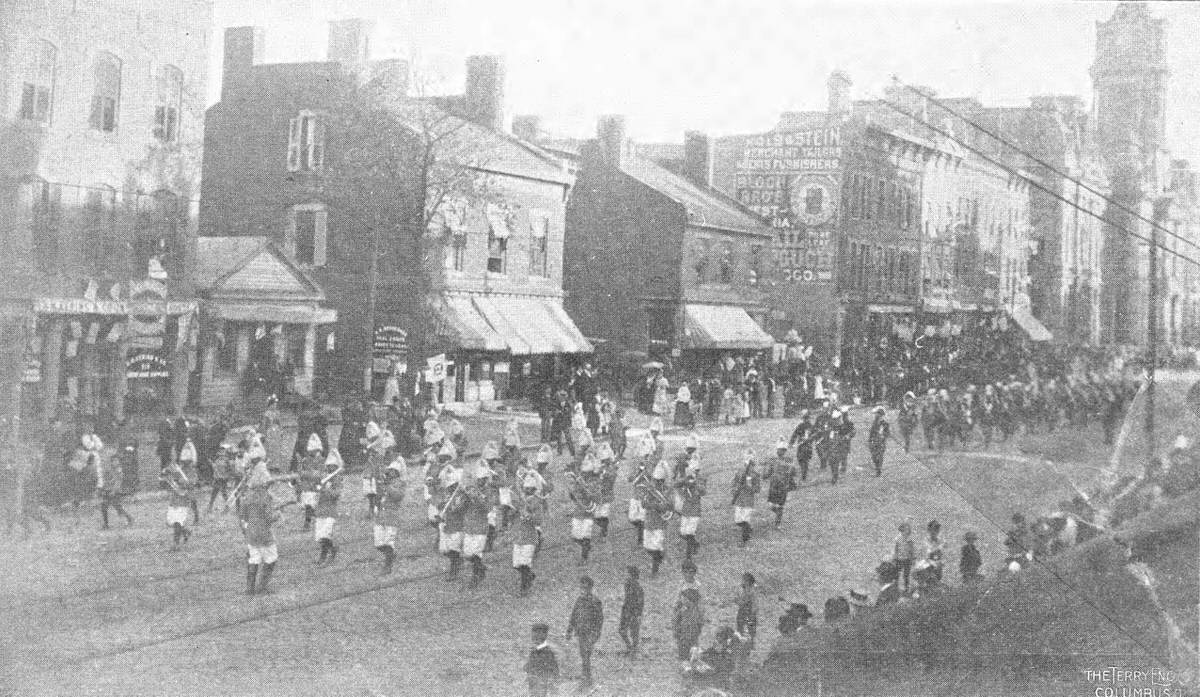
This parade of the Colored Knights Templars of Ohio was on the occasion of their ninth annual conclave in 1888. The view shows them escorting Grand Eminent Commander Alex Morris from his stopping place to the hall in which the sessions were held. The affair was a very important one in African American circles and was largely attended, with many handsomely uniformed and well-drilled organizations present.
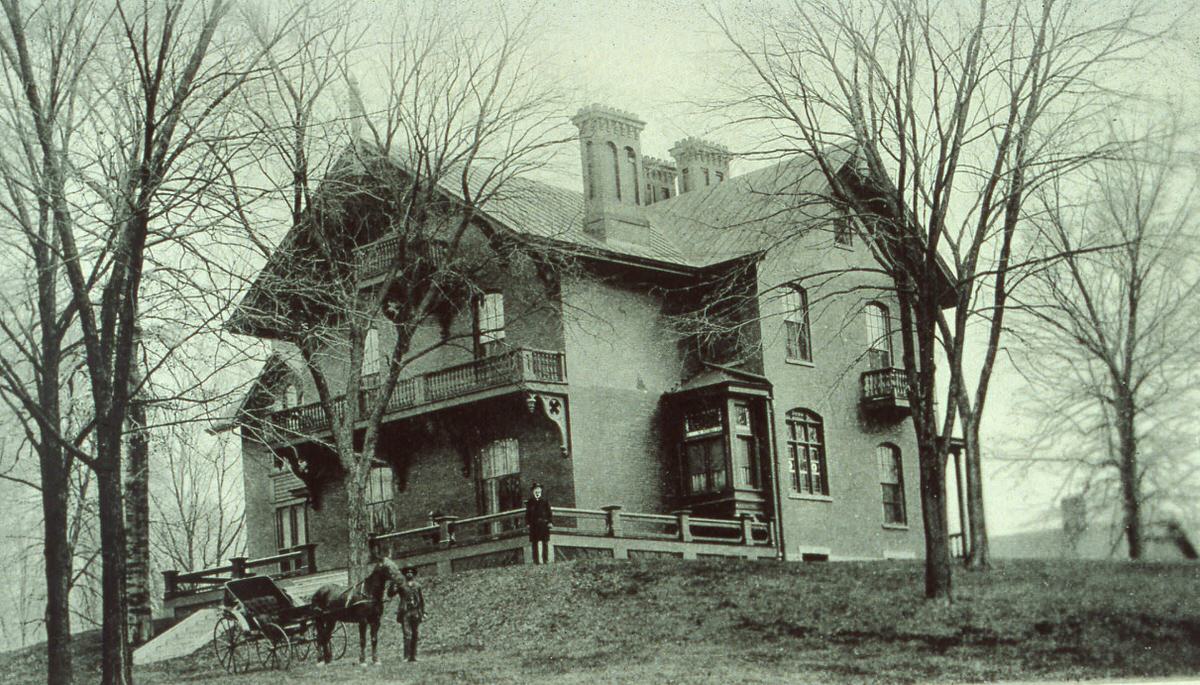
Henry M. Neil’s house “Indianola” gave its name to an avenue and two schools.
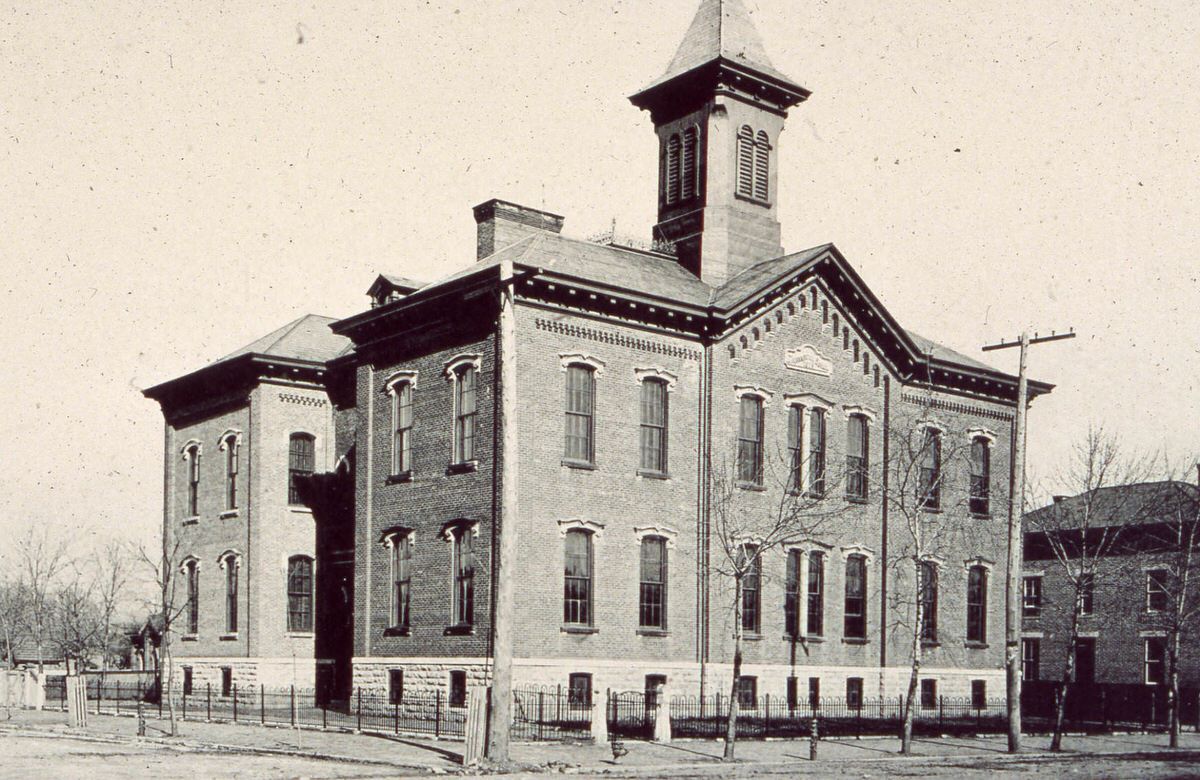
The cornerstone for the first Franklinton Elementary School was laid in August of 1877 on the site of the first Franklin County courthouse in Franklinton. The original cornerstone of the courthouse was found while preparing the site for the school foundations. The first building had four rooms and cost $10,500. A four-room addition was added in 1879 for $11,140. Another four-room addition was constructed before 1900. The school was demolished on March 13, 1956 to prepare for freeway construction.
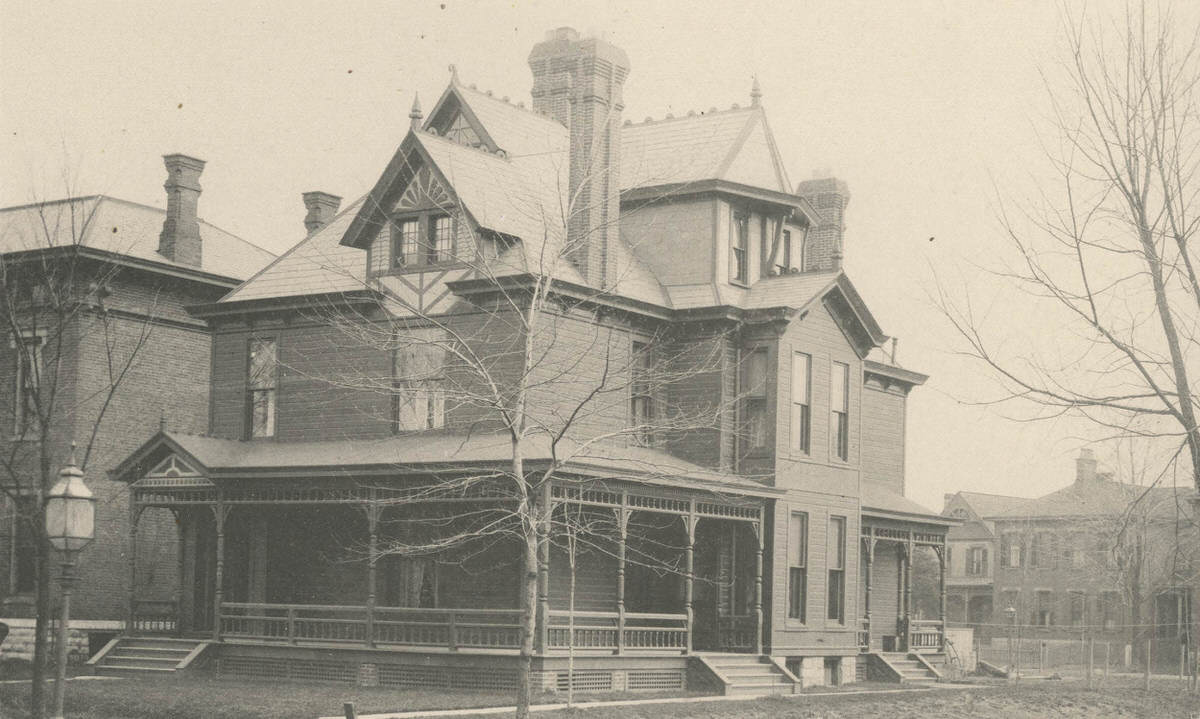
Photograph of the residence of Emerson McMillin, president of the Columbus Gas Light and Coke Company. The home, built in 1887, no longer stands.
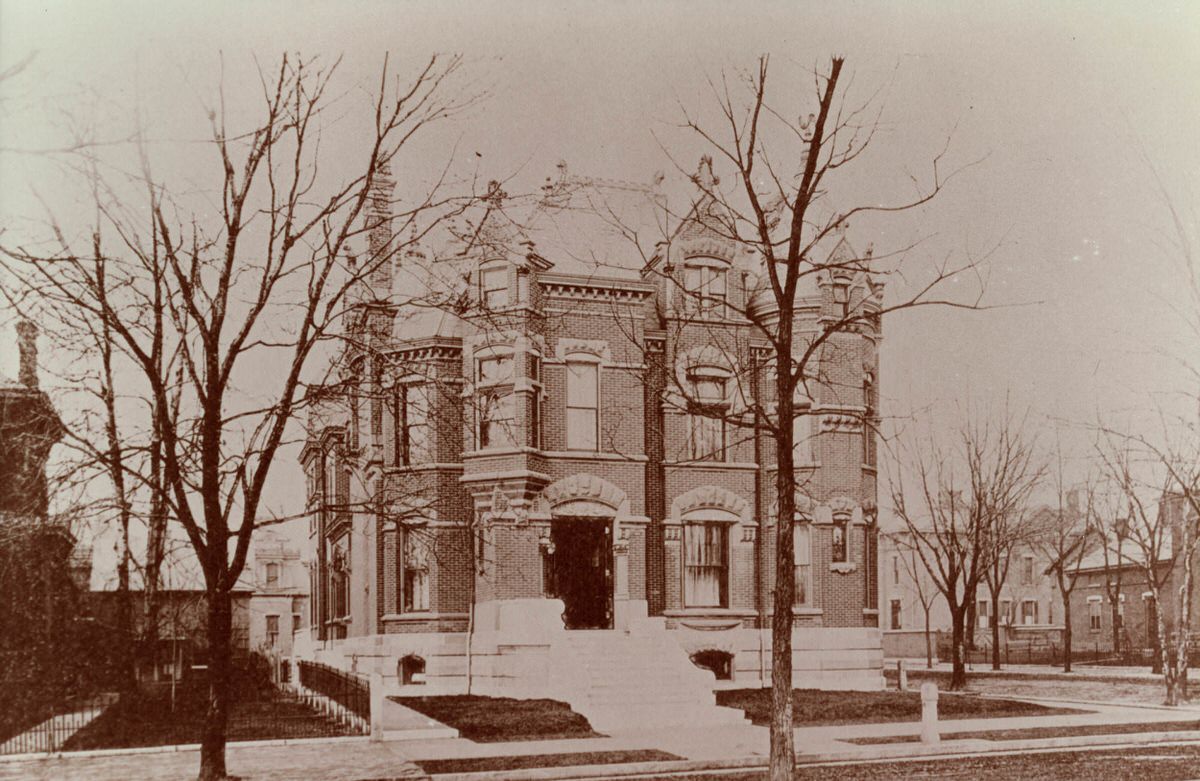
Photograph of the home of Oscar G. Peters, a co-owner of the Columbus Buggy Company. The company opened in 1875 and was soon the largest lightweight buggy manufacturer in the world.
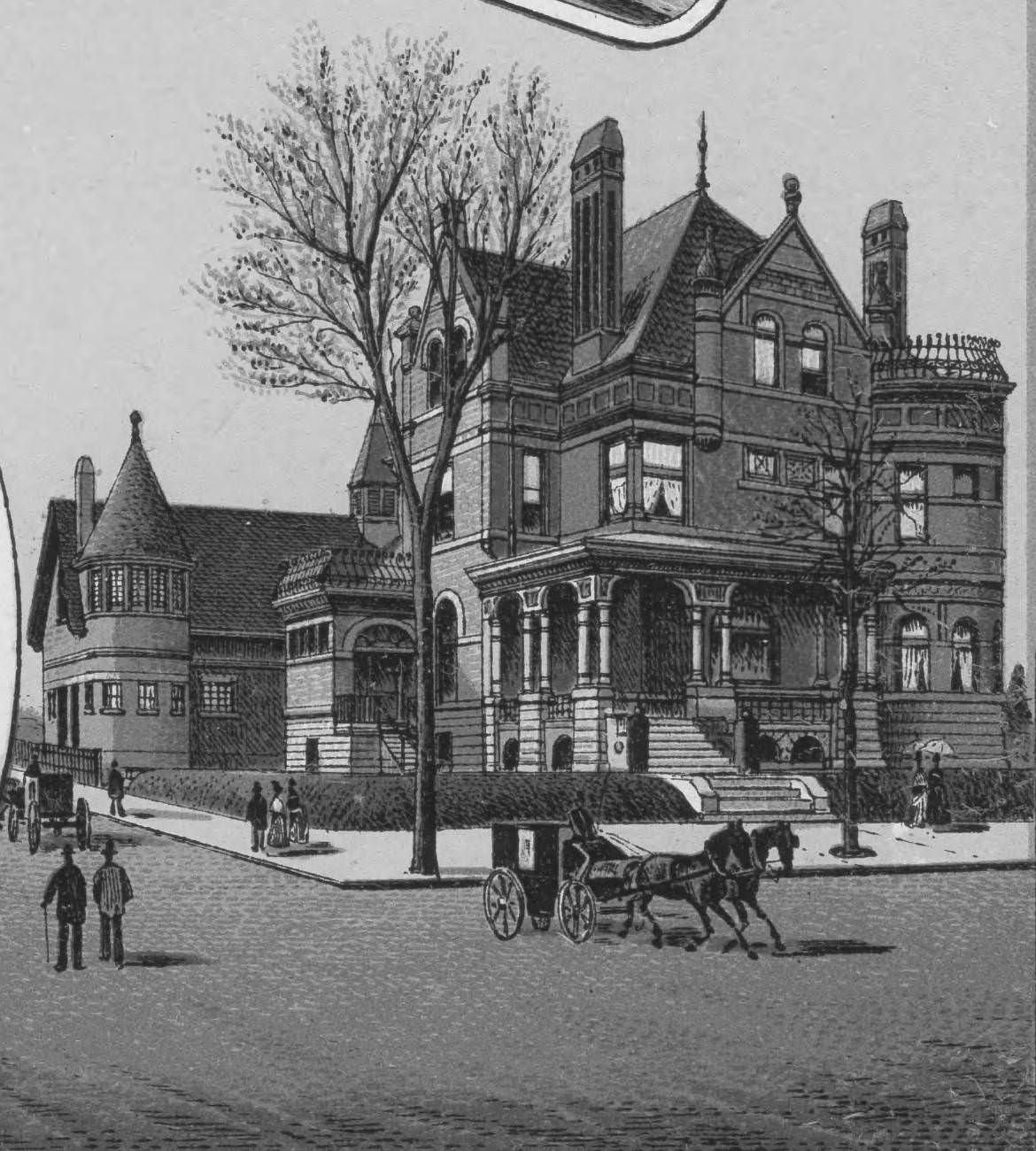
W. H. Jones was the owner of the Jones Dry Goods Store. He built this home in 1889 and lived there until 1923. The home still stands today and is currently home to Local Matters, a non-profit community organization. The home is also on the National Register of Historic Places.
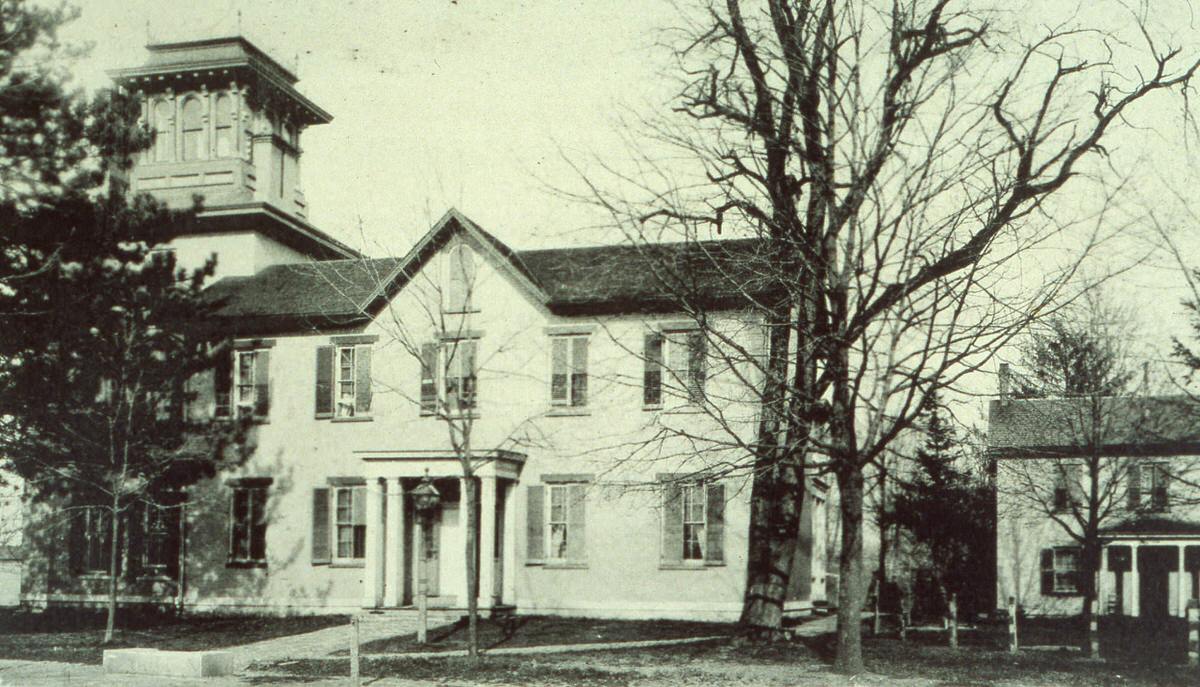
William Shepard House and Sanitarium opened March 30, 1855, and burned October 7, 1981, and was the namesake for the community of Shepard, Ohio. It served as Big Sisters Home from 1919 to 1952 and Columbus Children’s Psychiatric Hospital from 1953 to 1973. The Shepard Branch of the Columbus Metropolitan Library opened on this site June 14, 1985.
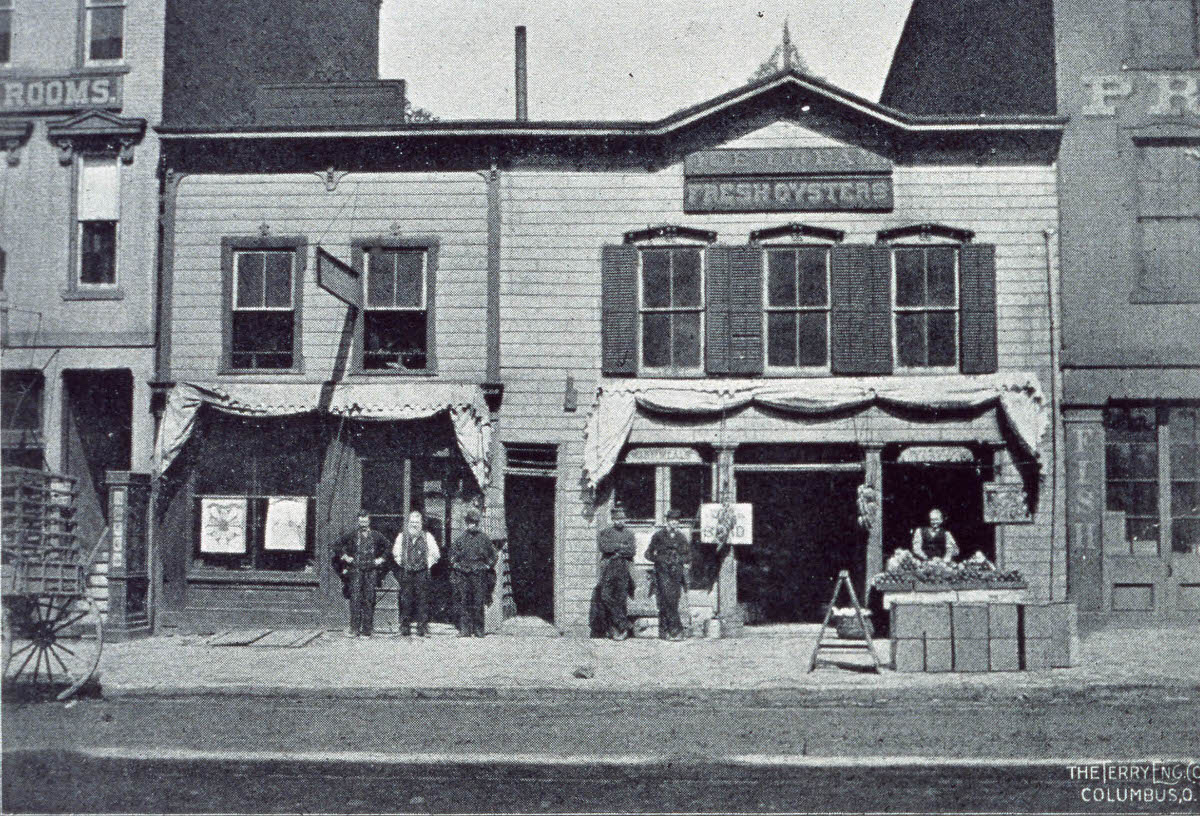
Dickinson Restaurant featuring ice cream and fresh oysters, with William H. Dickinson standing in the doorway. Buildings in this block were razed to make way for the 1895 Dispatch Building, which subsequently burned in 1907.
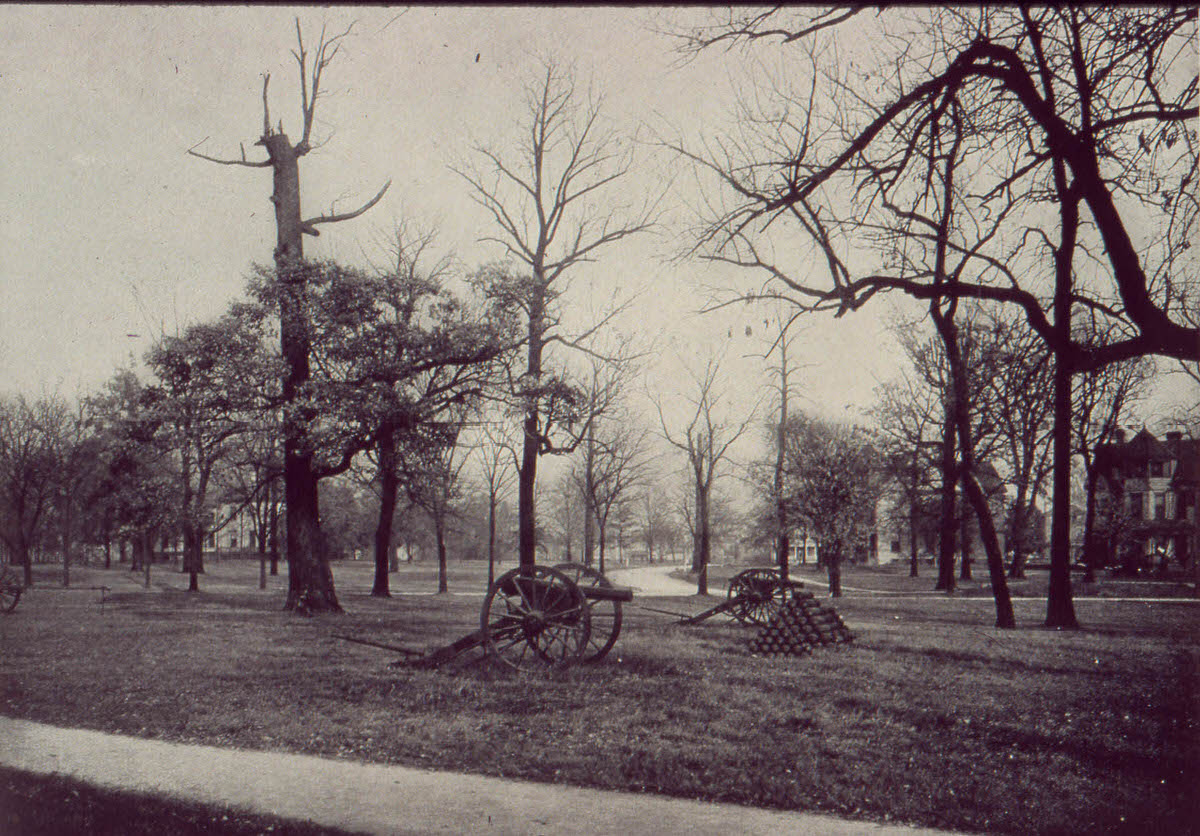
A view of the parade ground at the United States Barracks, more commonly known as the Columbus Barracks.
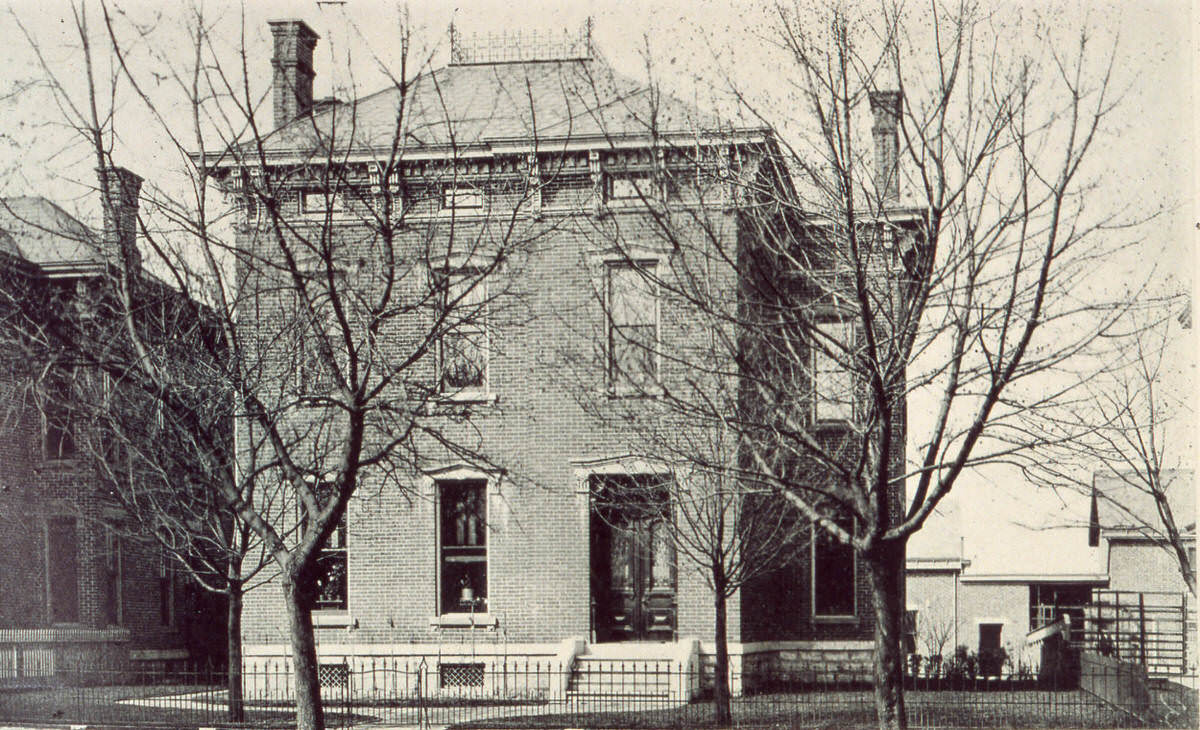
Residence of Columbus Mayor Philip H. Bruck.
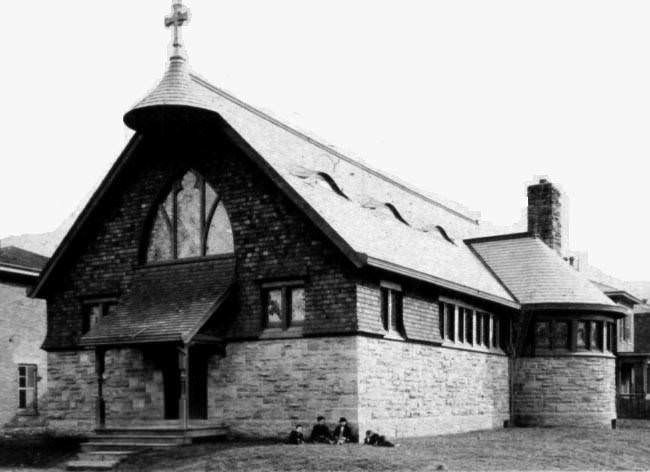
Photograph of the Church of the Good Shepherd. The church held its first services at this location on April 10, 1887.
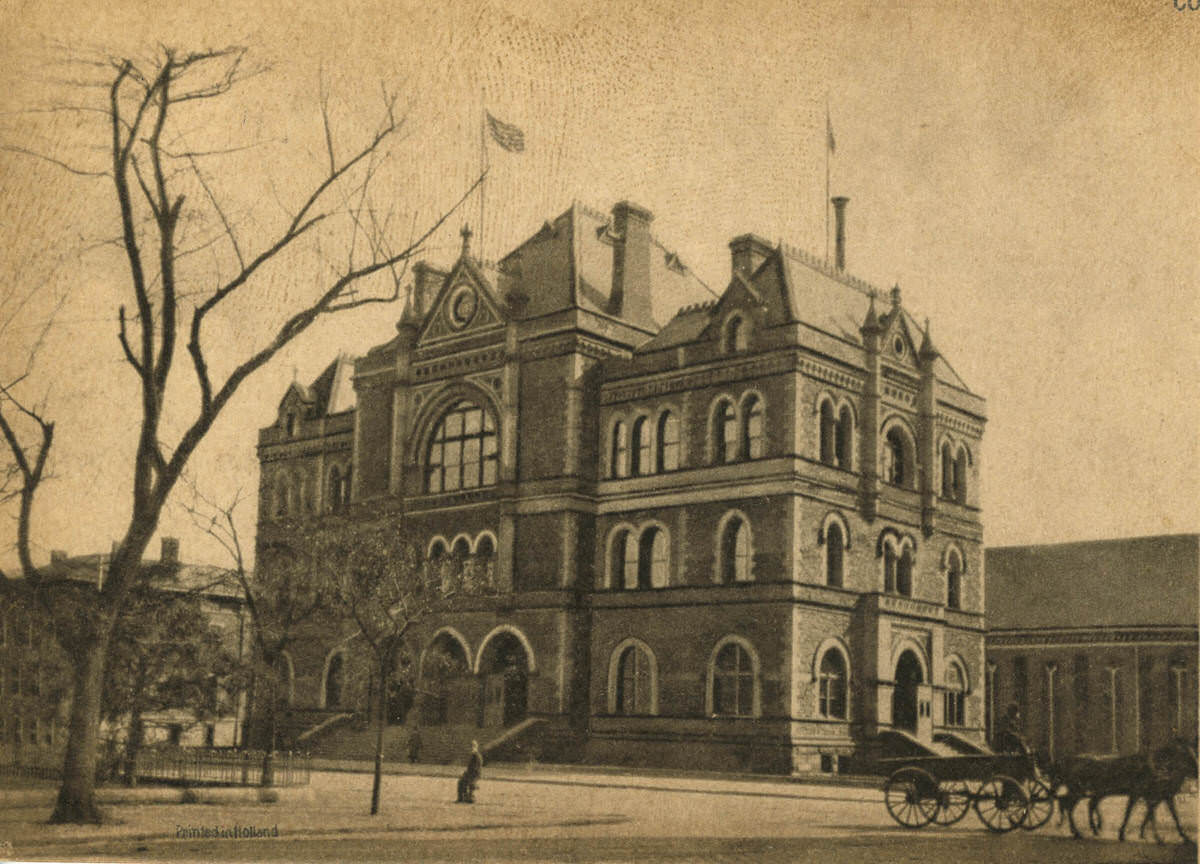
The U.S. Post Office and Custom House is a handsome building that cost $300,000 to construct. Within it, Columbus annually handles 70,000,000 pieces of mail for outside distribution and 40,000,000 for local delivery. Columbus was made a Port of Entry in 1889.
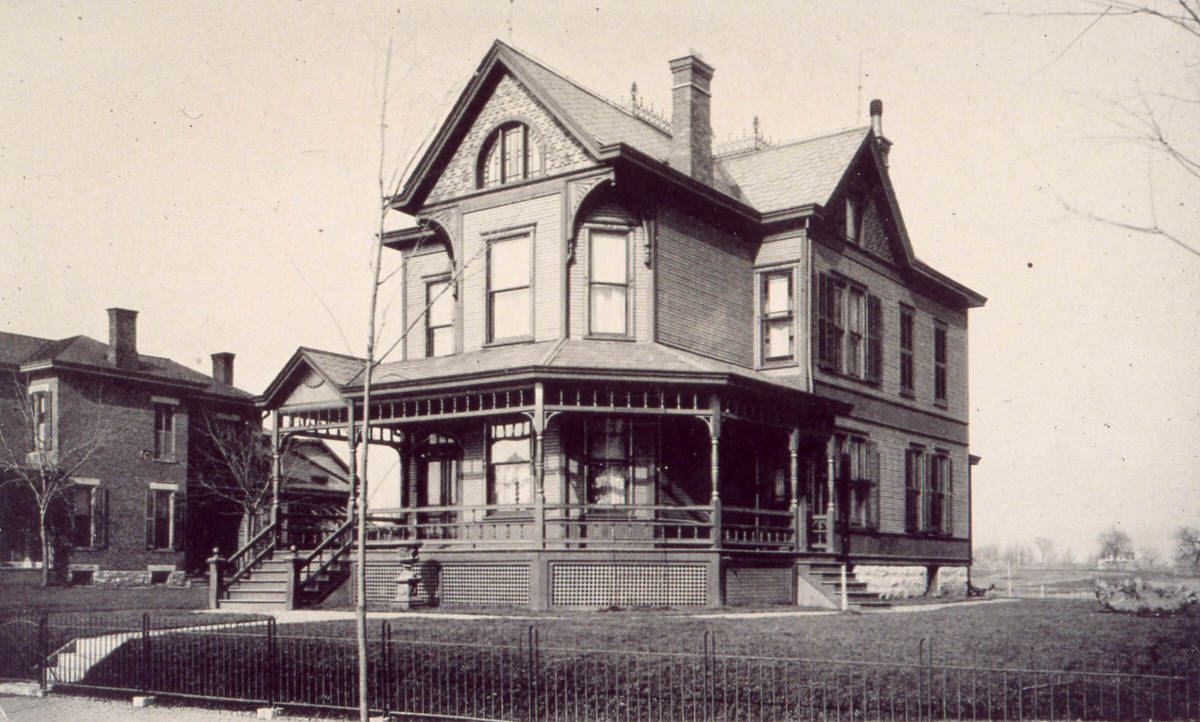
William H. Andrews was co-owner of Dages, Andrews & Company, manufacturers of boots and shoes.
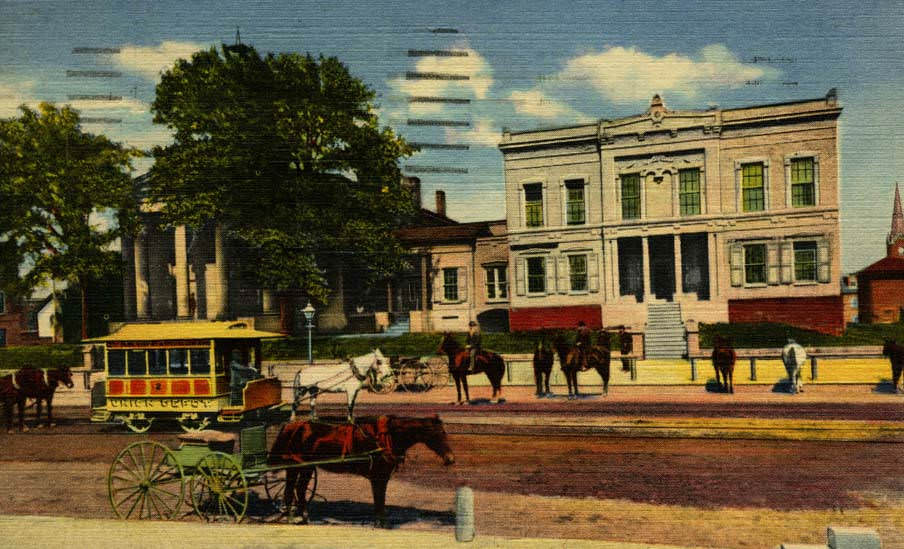
Located at the southeast corner of High and Mound Streets, the courthouse is shown behind the trees on the left, with the annex shown on the right.
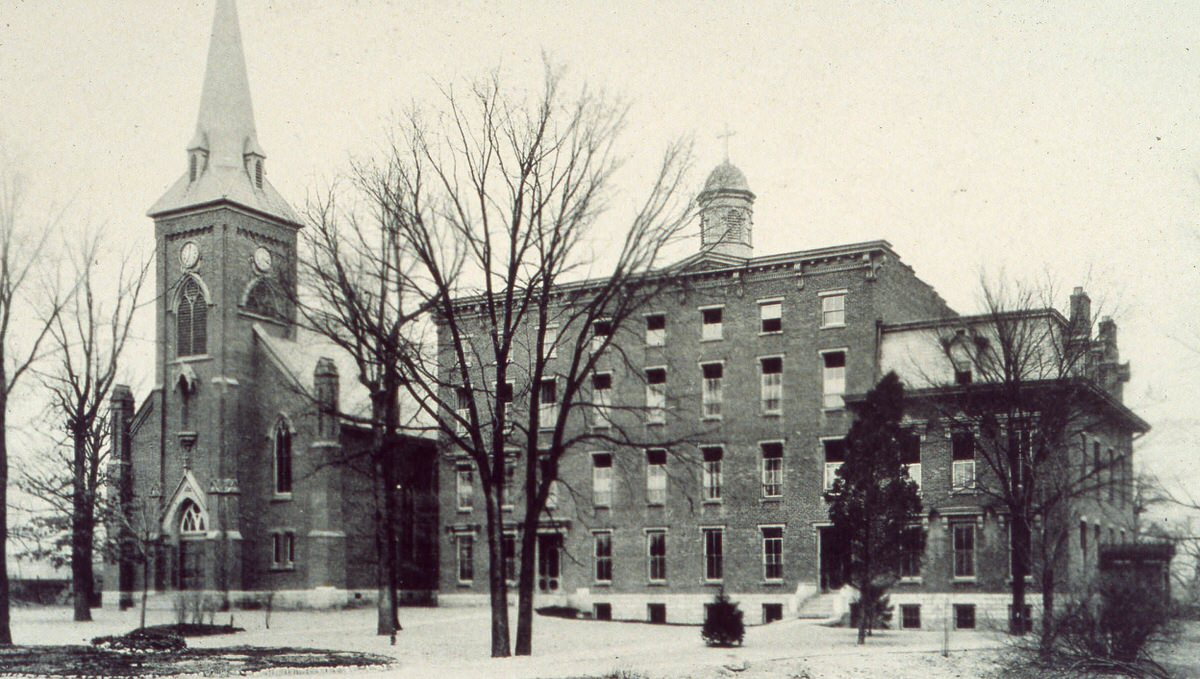
St. Vincent de Paul Orphan Asylum opened on February 2, 1875, with eight orphaned girls. It was run by the Franciscan Sisters of Penance and Christian Charity. The building was located on a seven-acre farm that Bishop Rosecrans purchased from Louis Zettler. Additions were constructed in 1878 and 1893. In 1973, it became St. Vincent Children’s Center. The original building was demolished May 15–16, 2007.
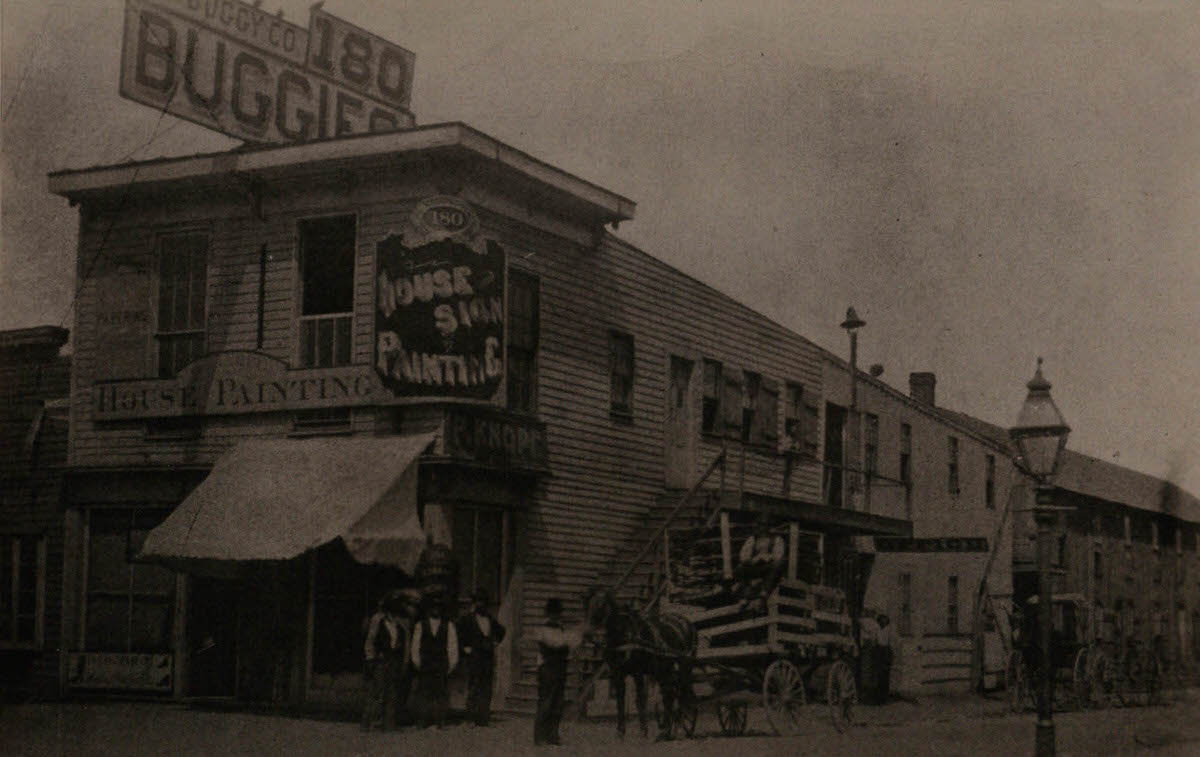
Iron Buggy Company was the first name of the Columbus Buggy Company. Also showing the P. Knopf House & Sign Painting Company.
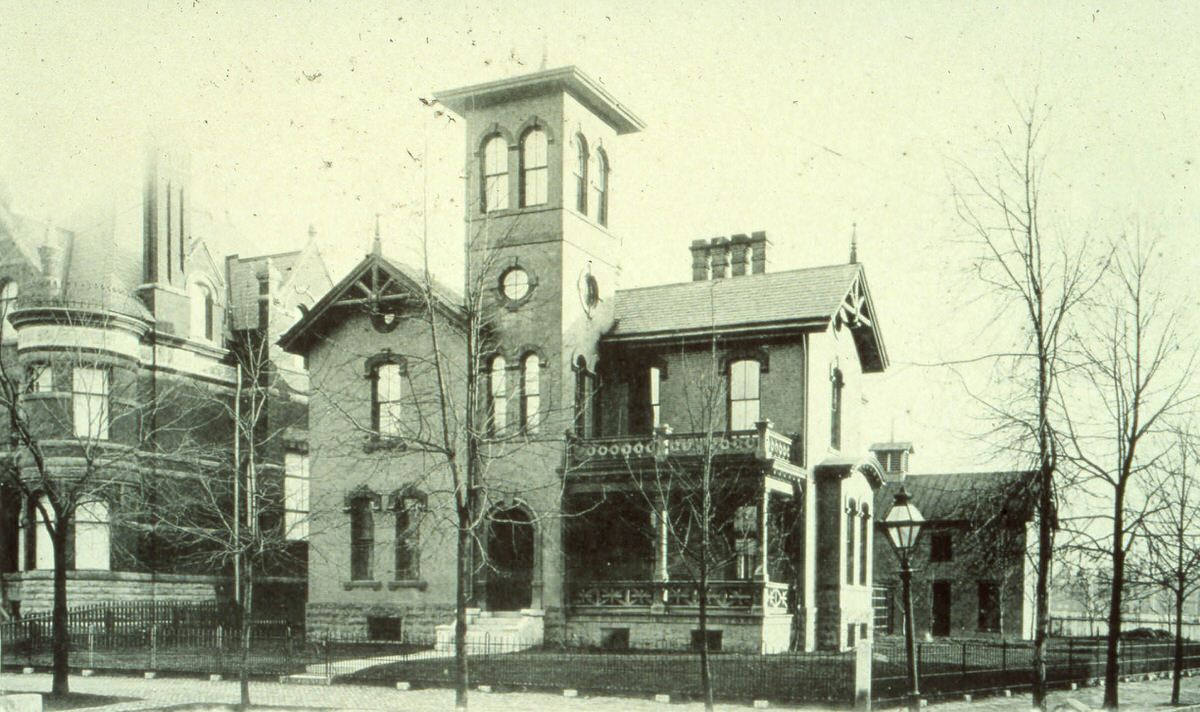
William Y. Miles, co-founder of Miles, Bancroft & Sheldon wholesale dry goods, resided in this Broad Street home.
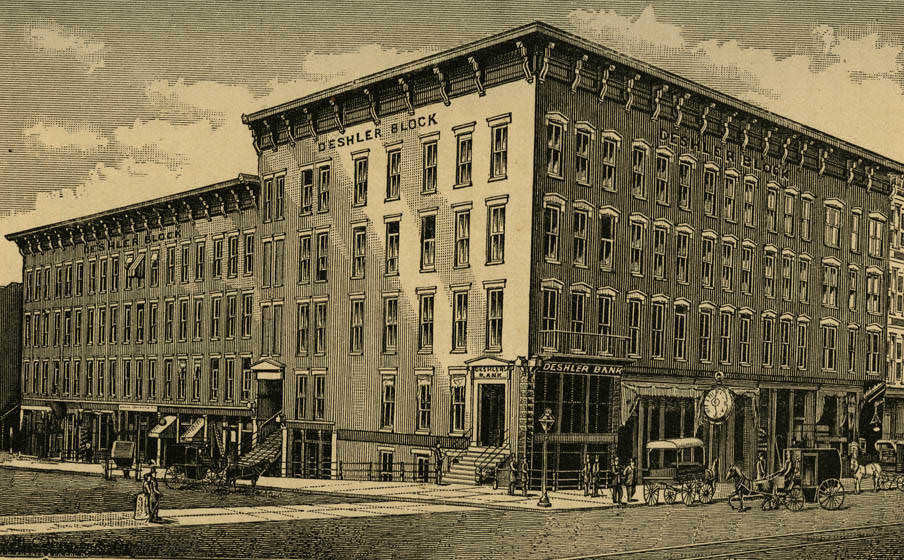
Illustration of the Deshler Block at the northwest corner of Broad and High Streets, which included the Deshler Bank.
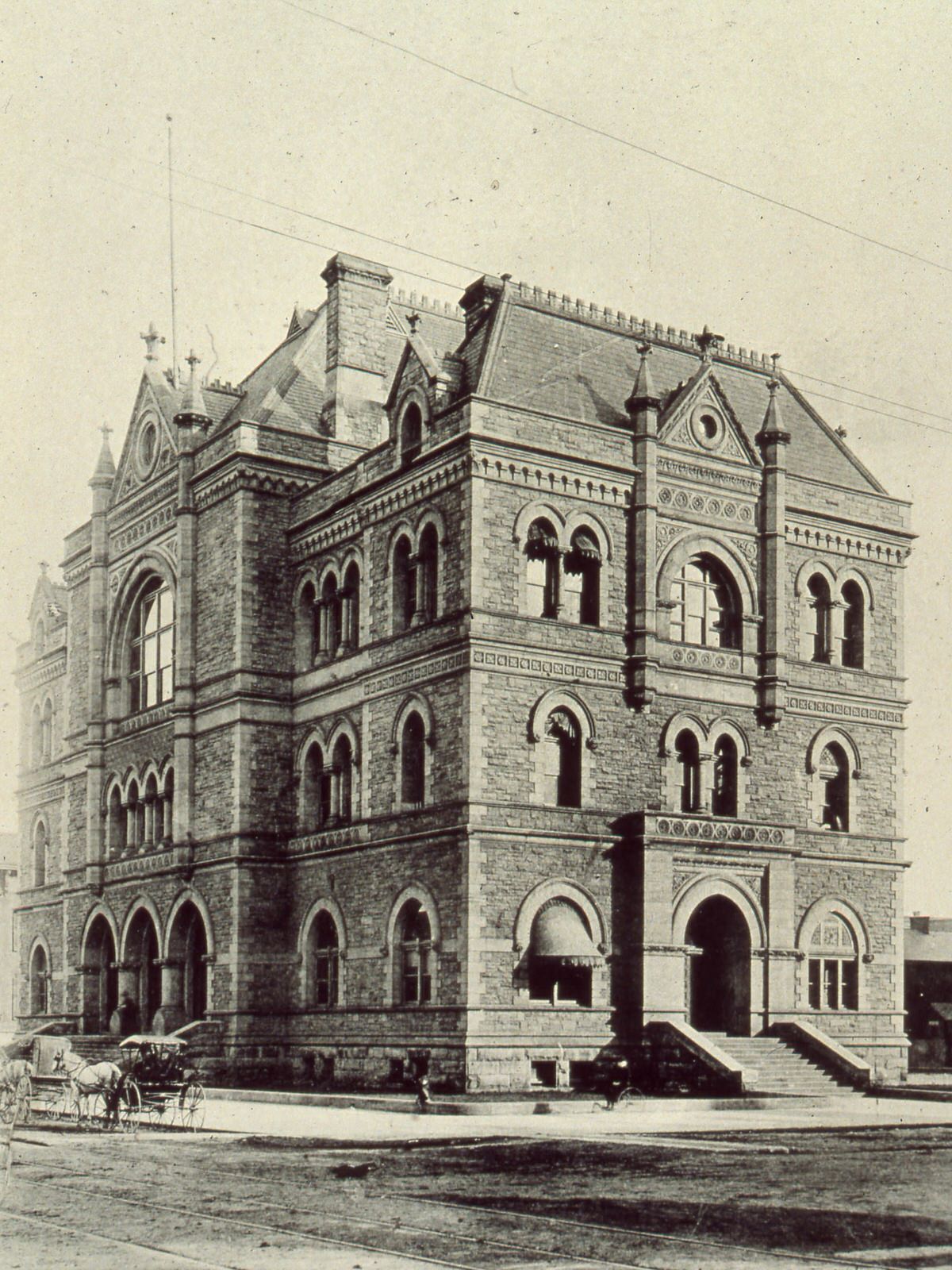
A view of the United States Post Office and Government Building that was constructed in 1884–1887. It was remodeled and enlarged to the south in 1907–1912. An alternate address for this building in later years was 100 South Third Street.
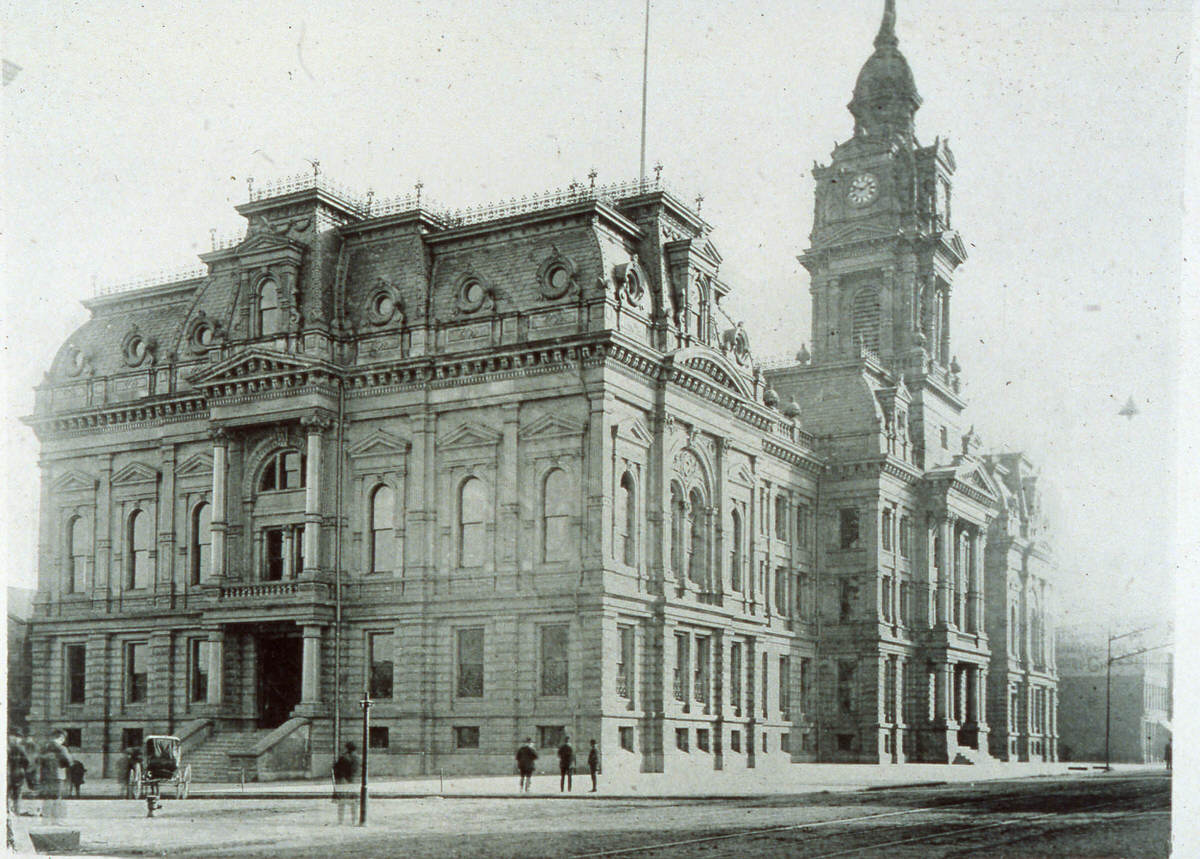
Franklin County’s fourth courthouse was dedicated July 13, 1887, and demolished in October 1974.
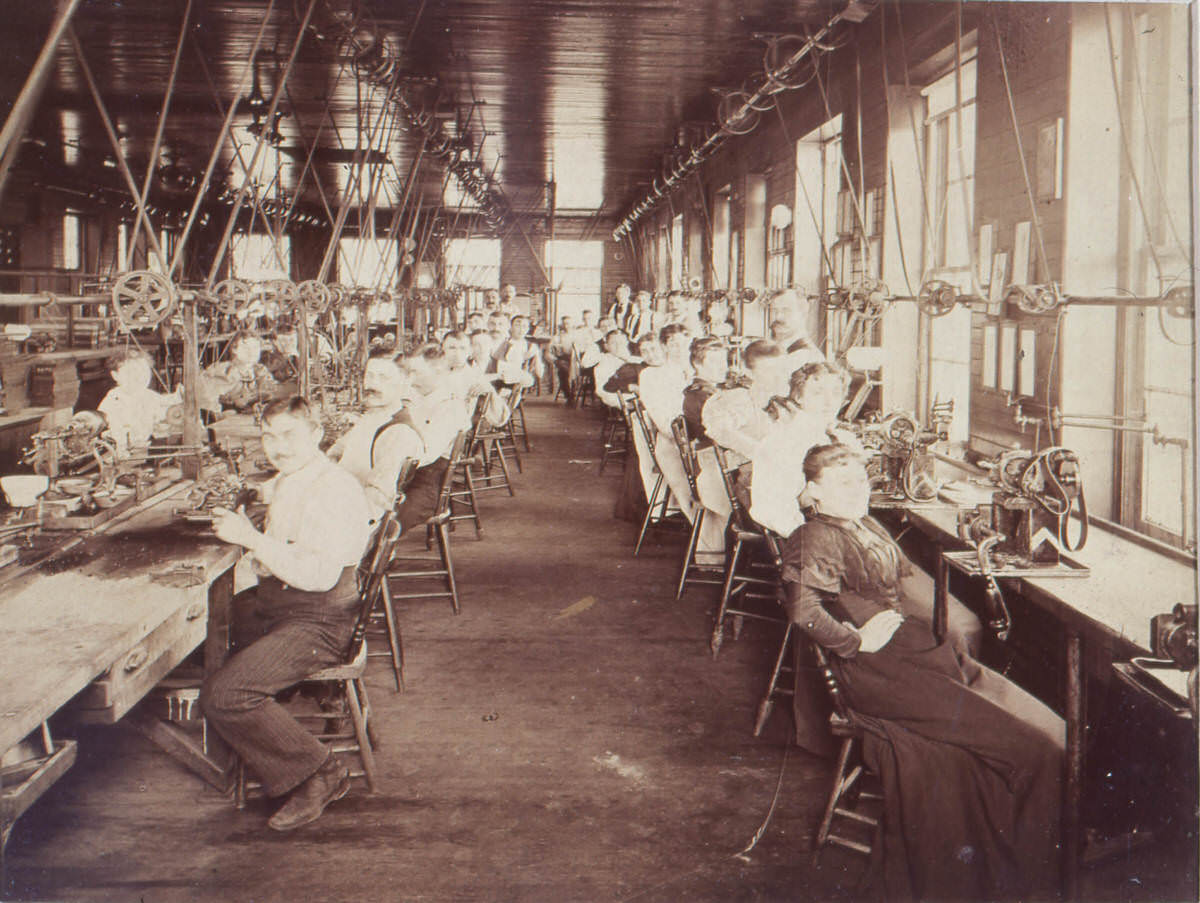
This is a black and white photograph showing the Columbus Watch Company. The company produced watches in Columbus from 1883 until 1903. It relocated in 1903 to Indiana, where it became the South Bend Watch Company.
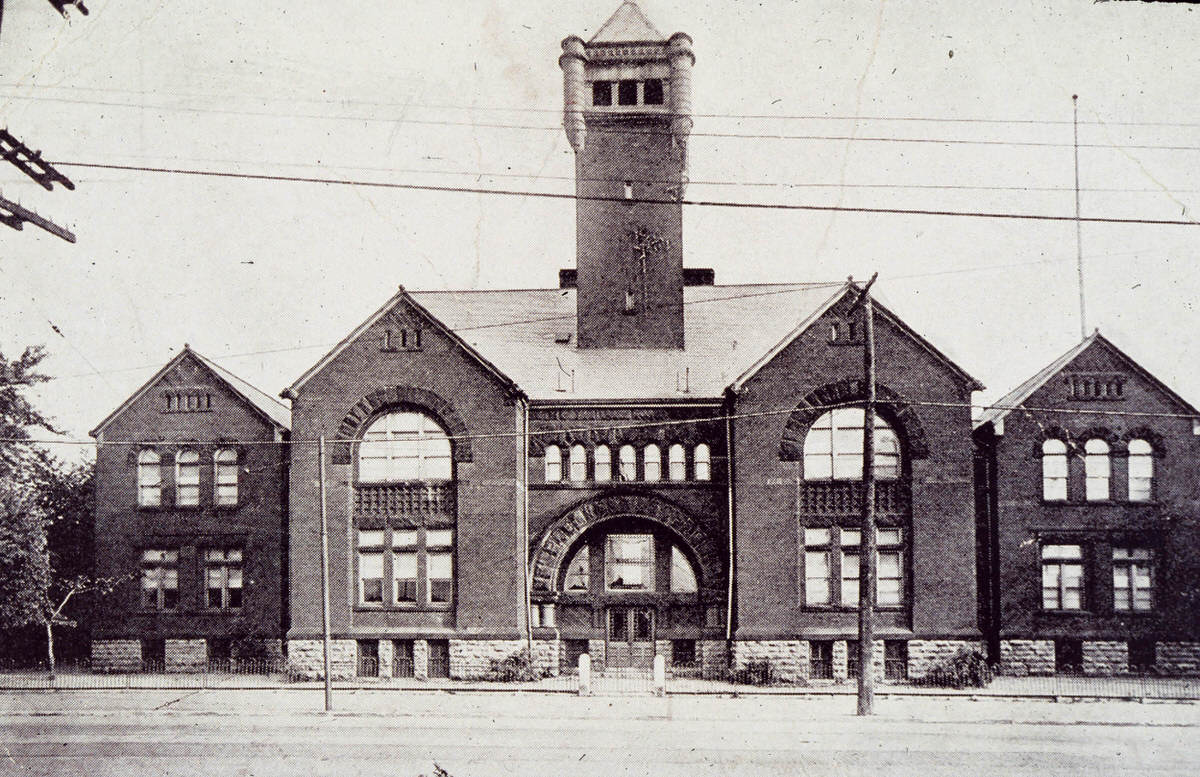
Photograph of Mt. Vernon Avenue Elementary, which opened in 1888 and was known as the Twenty-Third Street Elementary until 1911. The building no longer stands.
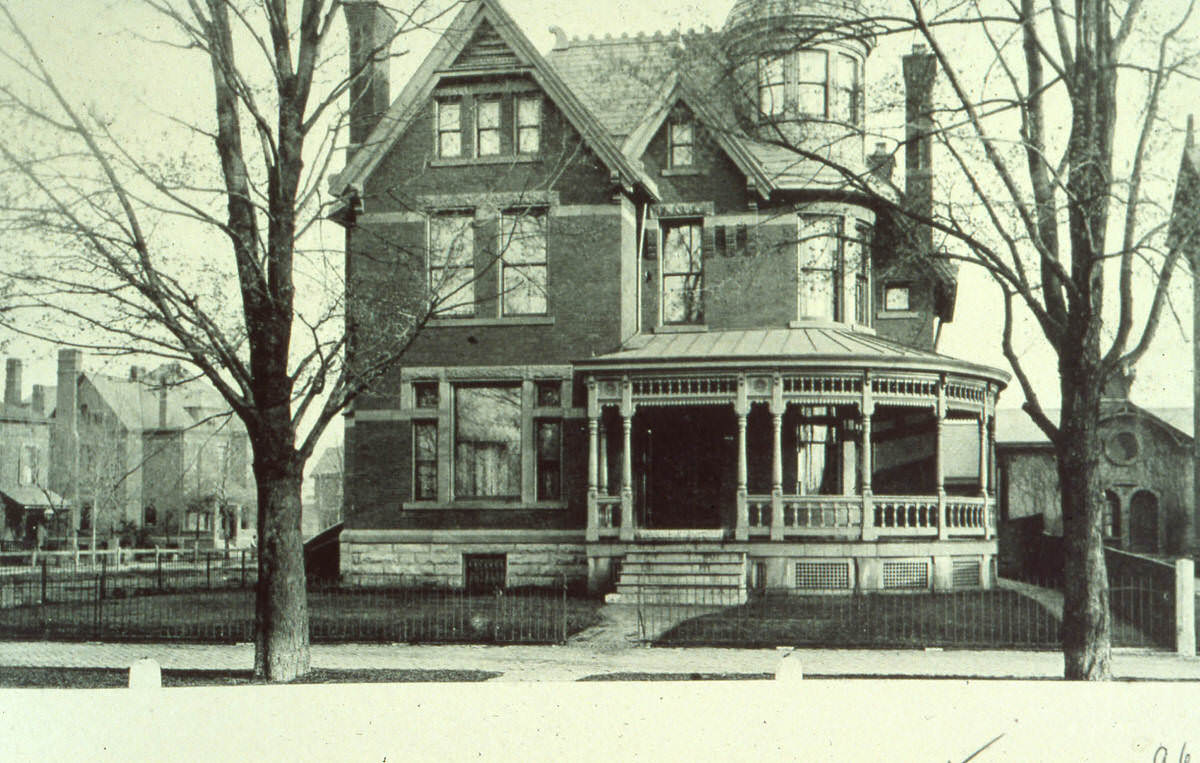
Photograph of the Frank J. Shedd house. He was a partner in E.E. Shedd Grocers.
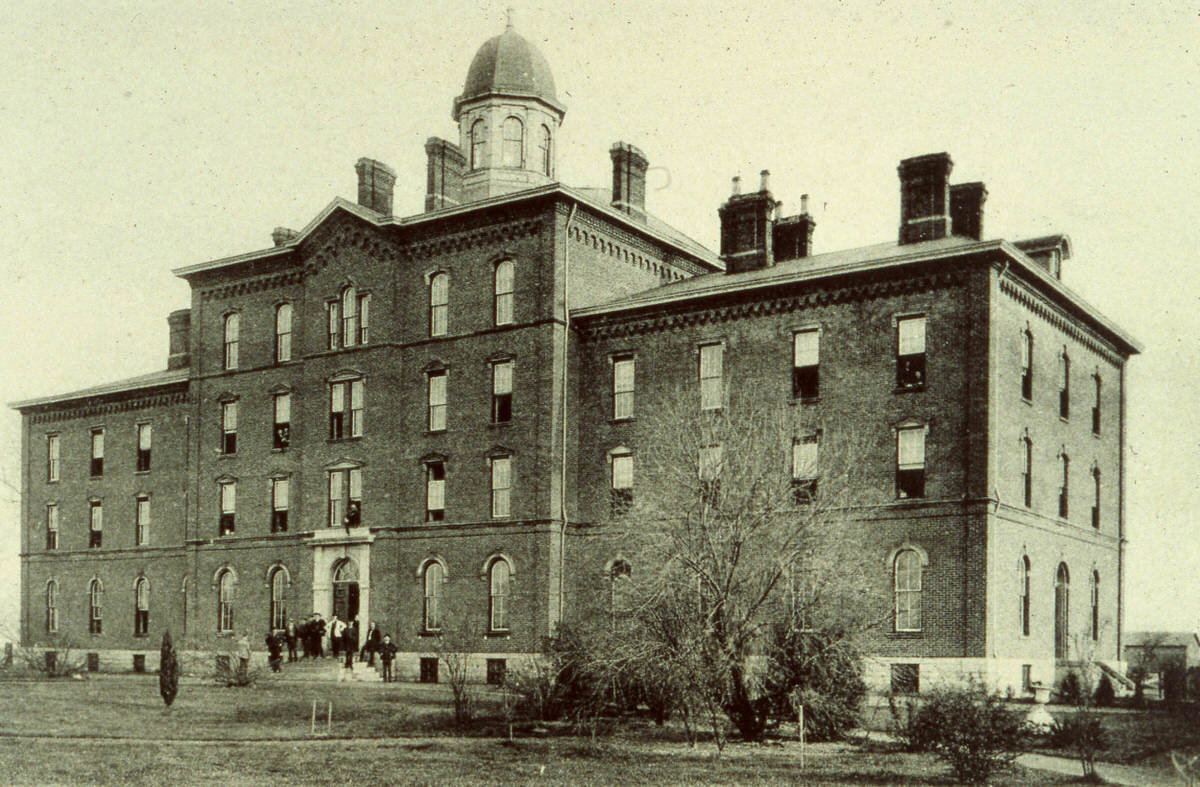
Photograph of Lehmann Hall on the Capital University campus. The building opened on May 3, 1876. Demolition began on November 7, 1988.
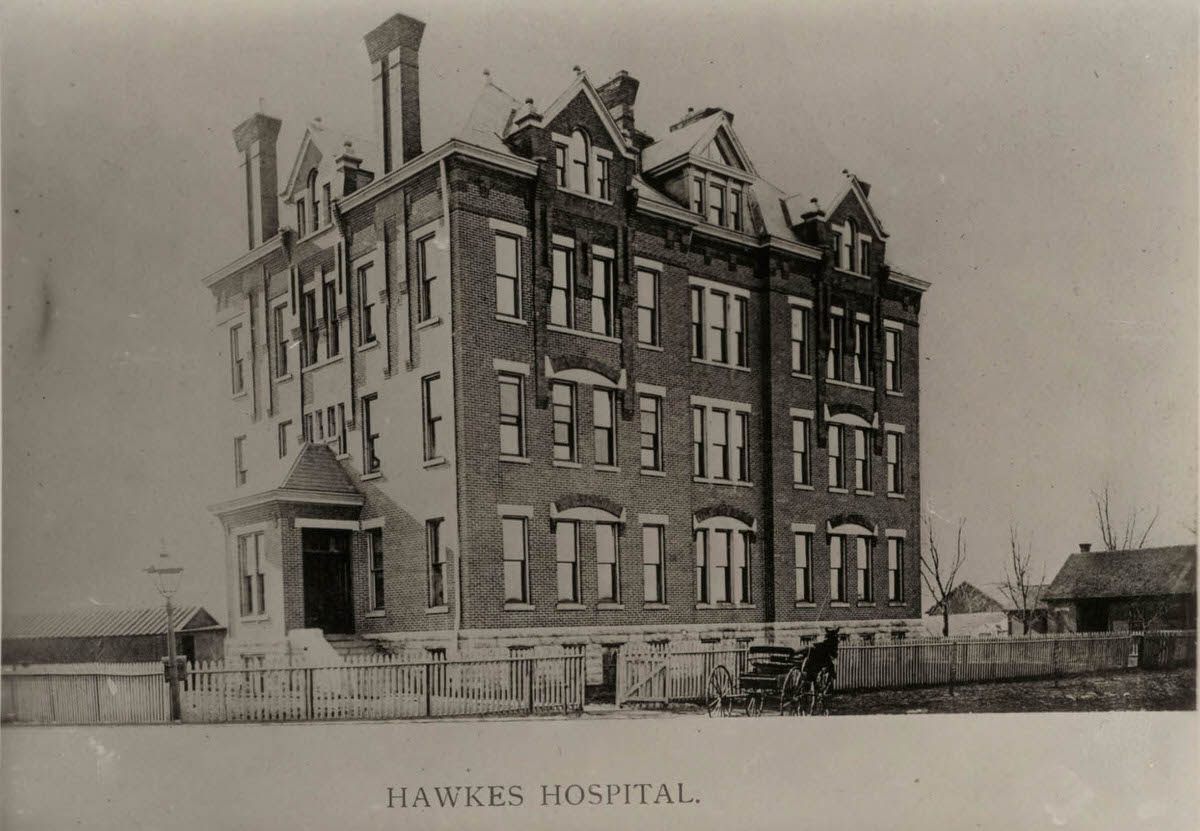
Dr. W. B. Hawkes donated the initial funds to build a hospital in Franklinton in 1885. He died soon after, and Dr. John Hamilton continued the project, seeing to completion the four-story brick building, which was dedicated on July 16, 1886, as Mount Carmel Hospital. Dr. Hamilton was instrumental in bringing the Sisters of the Holy Cross to staff the new hospital. This original building was commonly known as Hawkes Hospital.
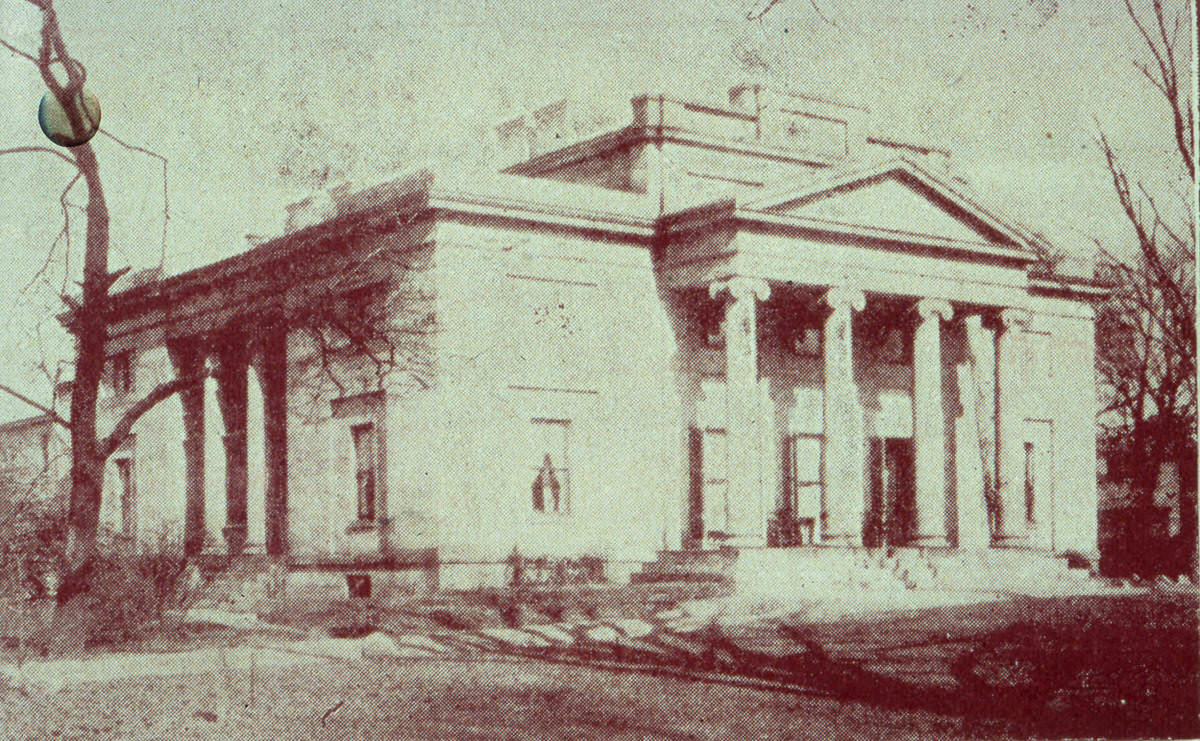
Originally Alfred Kelley’s home, Governor James E. Campbell lived here during his term of 1890–1892.
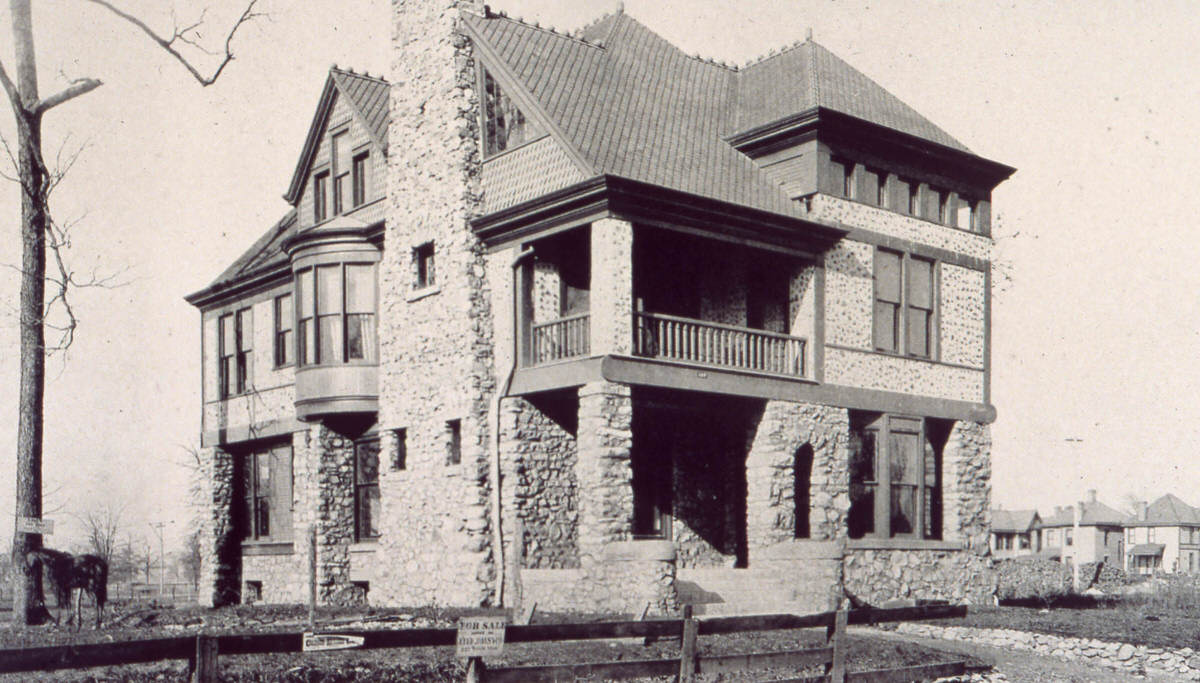
Photograph of the home of Elah Terrell, a well-known Columbus architect. The home was completed on July 21, 1888, and demolished in 1947.
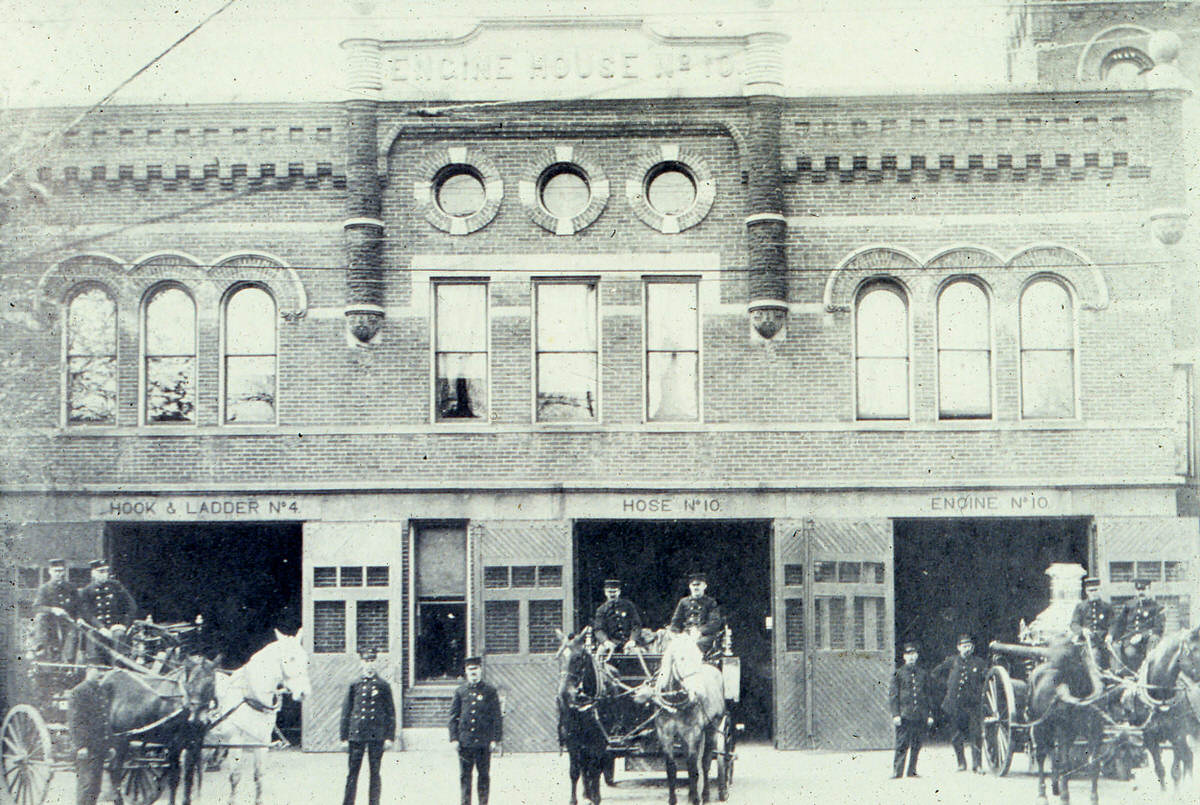
Construction began in 1896 and was completed in 1897. The building was converted to motorized vehicles in 1913.
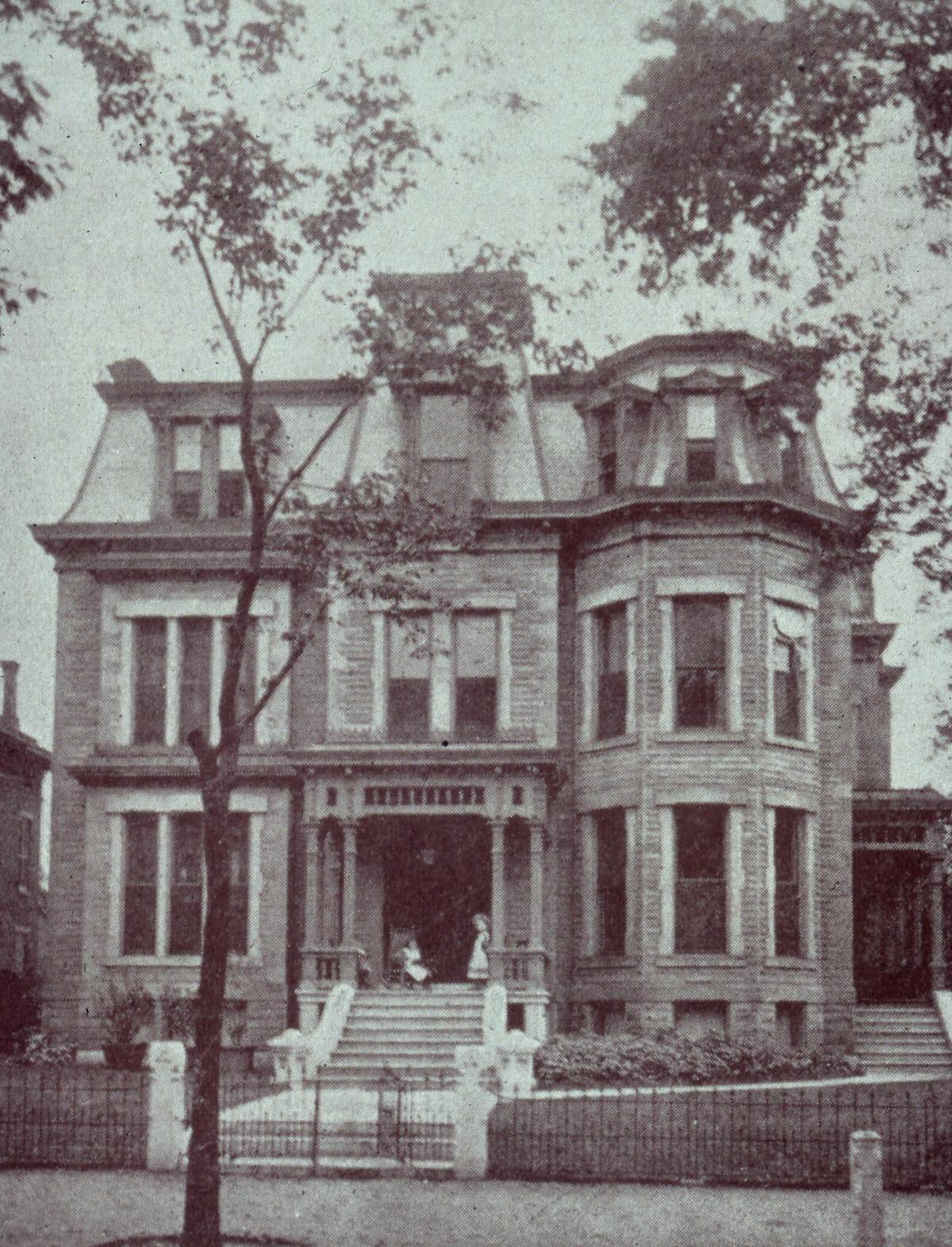
John Joyce, founder of the Green Joyce Co., built this 21-room, 10,000-square-foot house for $90,000. The house was built in 1880.
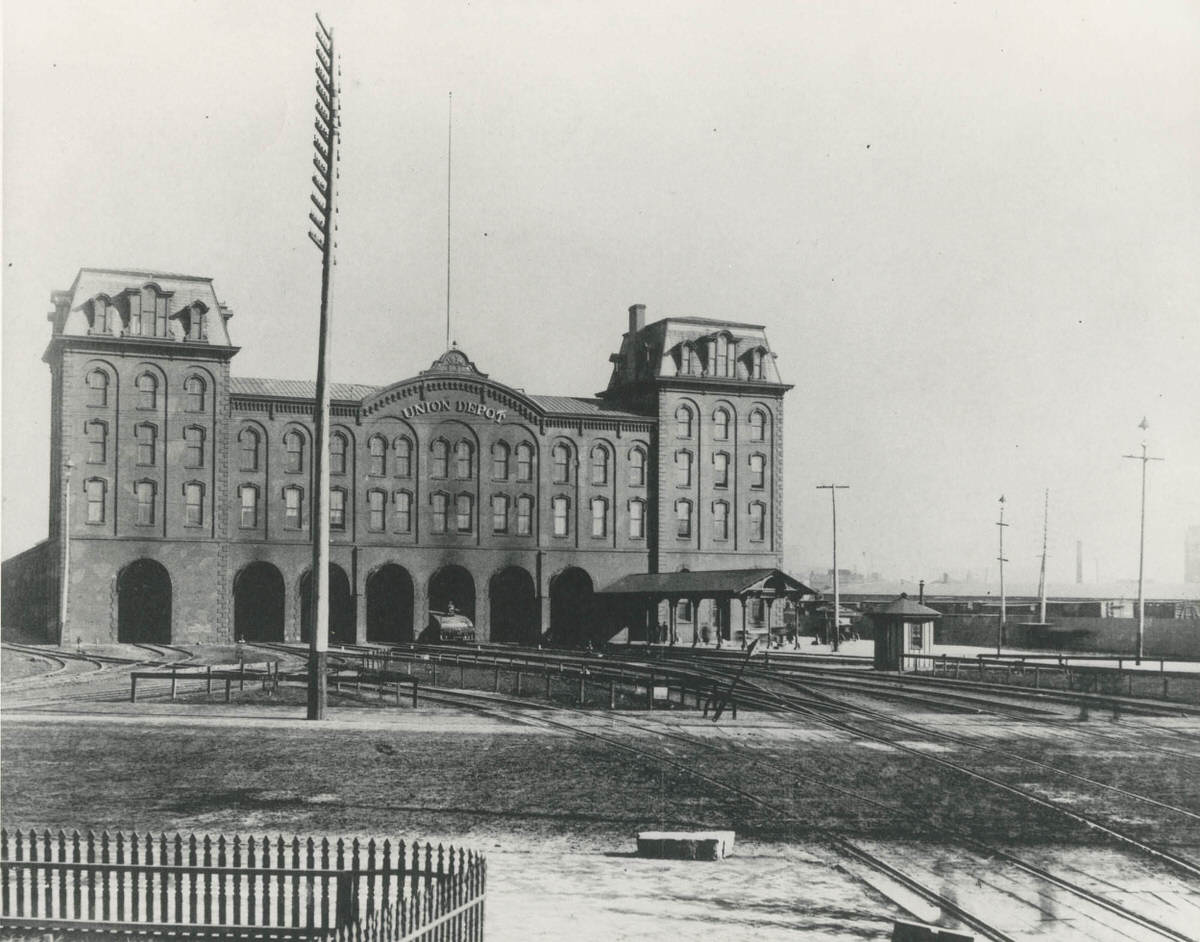
Columbus’s second Union Station accommodated seven sets of tracks and operated from 1875 to 1896. It was 292 feet wide and 600 feet long.
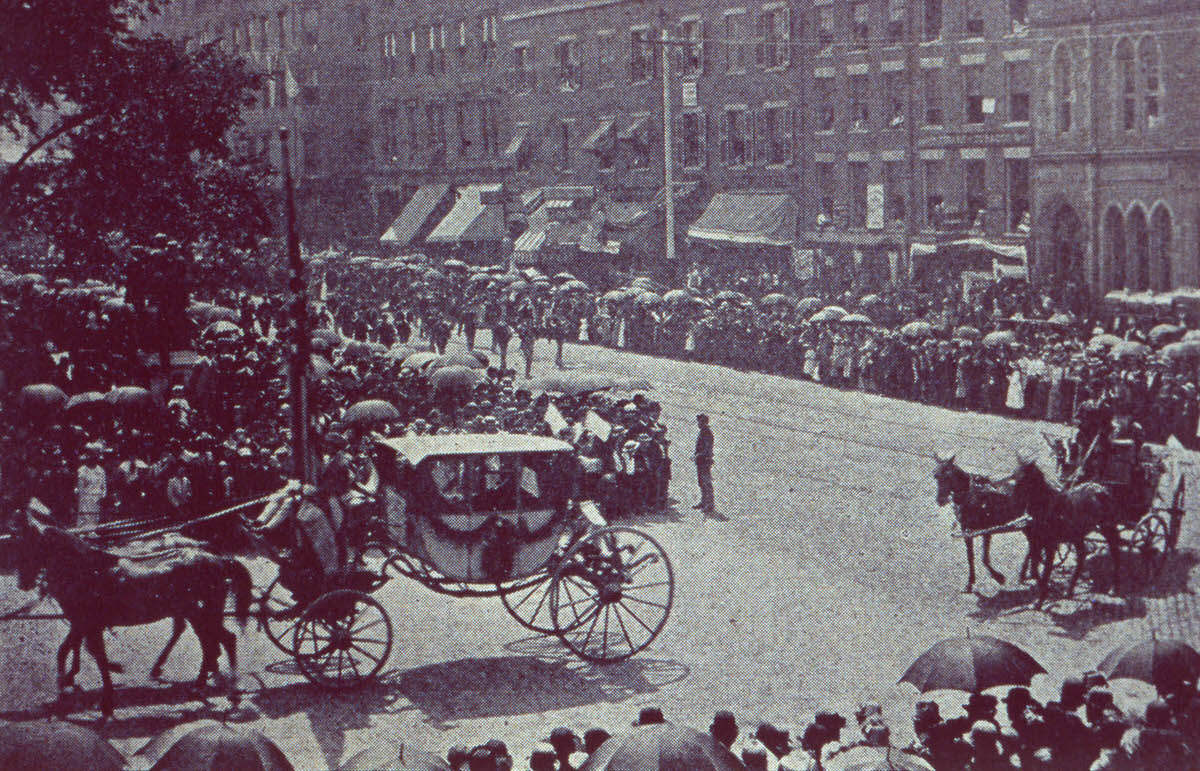
The caption reads, “Opening Parade Ohio Centennial.” The text explains that “the opening exercises of the Centennial took place on September 4” and featured the participation of the entire state militia and a coach formerly owned by George Washington, which is seen here just as it is turning the corner of High and Broad Streets.
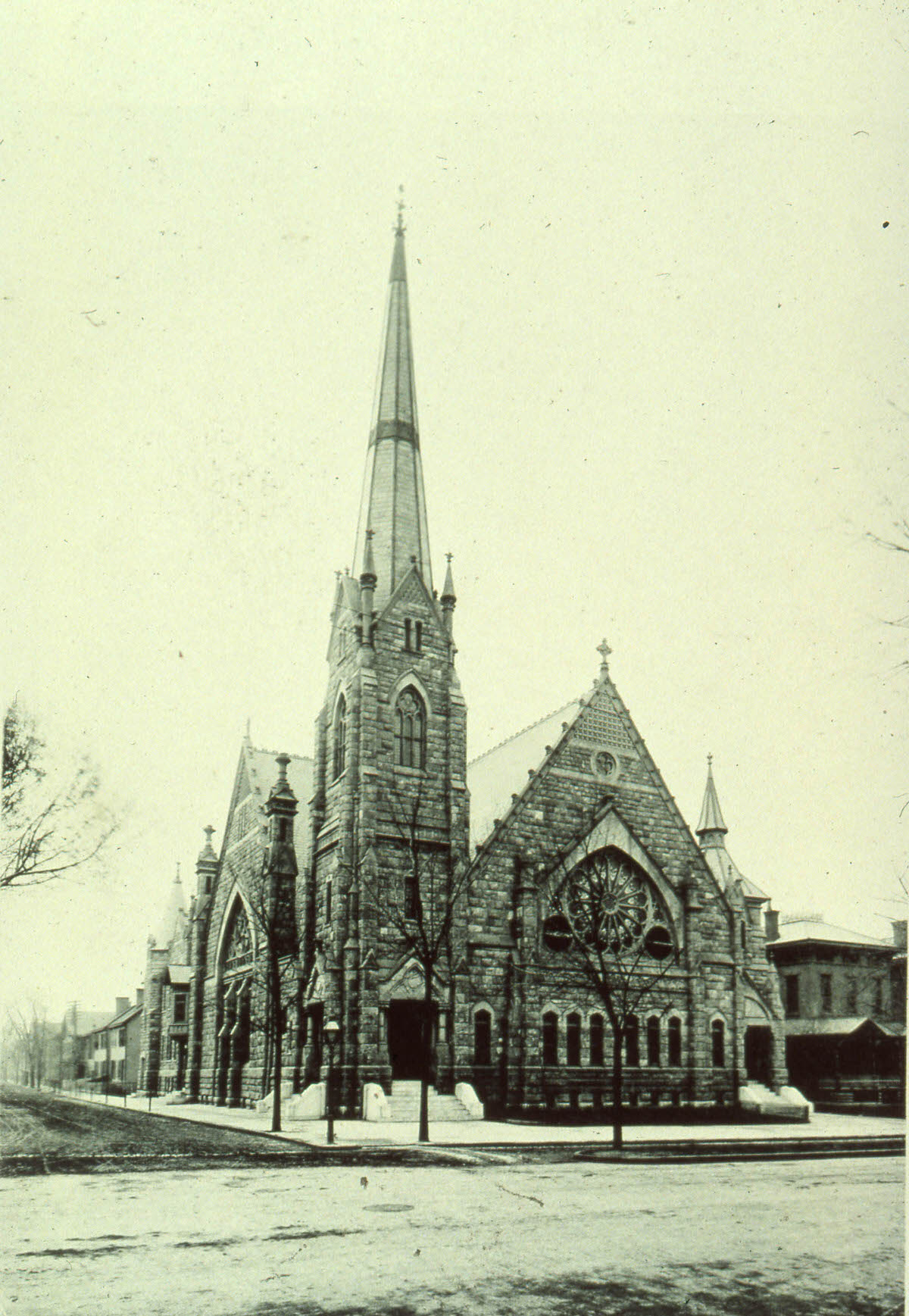
Black and white photograph of the Broad Street Methodist Episcopal Church. Construction of the Broad Street Methodist Episcopal Church building began in April 1884. It was dedicated on July 5, 1885.
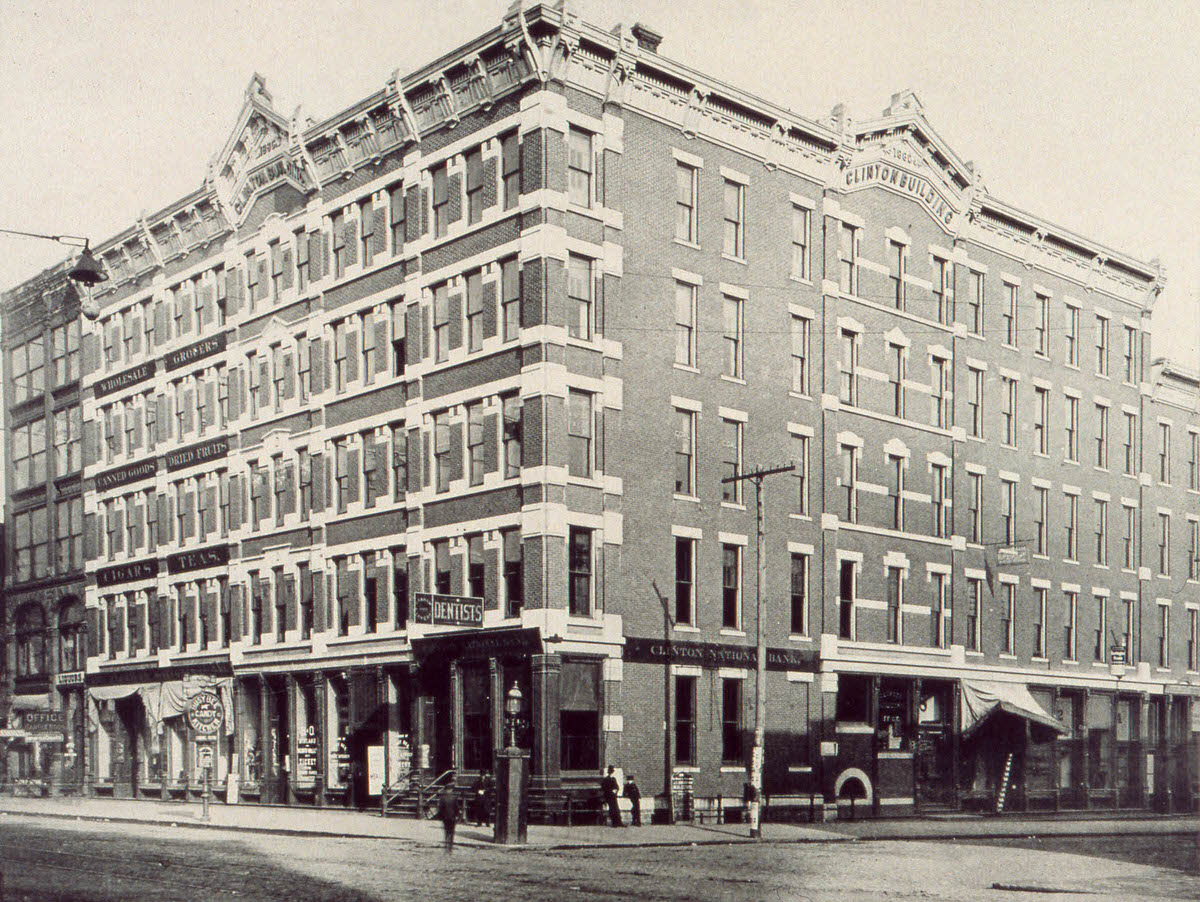
The Clinton Building at the corner of Chestnut and High.
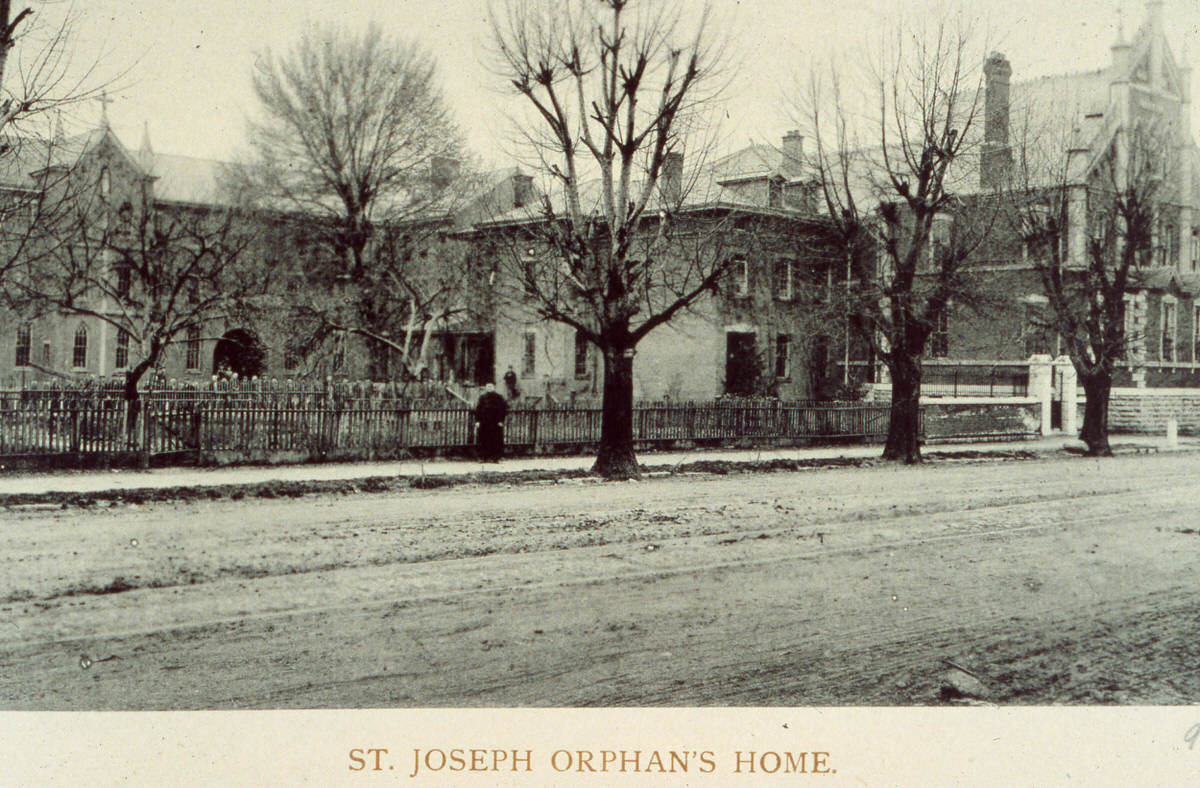
Winter view of St. Joseph’s Orphan’s Home on Main Street in Old Towne East. The image shows a priest standing along the sidewalk in front of the orphanage. Children fill the courtyard between buildings. St. Joseph’s was established by Father Joseph Jessing in 1877 and later moved north when it merged with Jessing’s Pontifical College eleven miles north of Columbus in 1931.
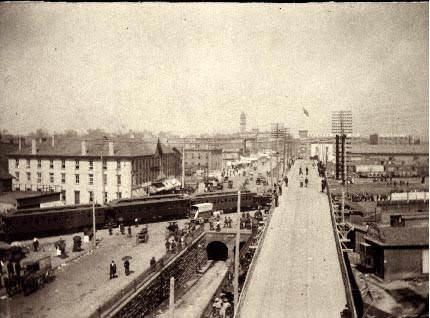
Union Station Tunnel and temporary wooden viaduct built for the GAR National Encampment in 1888. The large building on the left is the Exchange Hotel or Powell House, 365–373 North High Street. The Powell House closed in December 1893 to make room for the new High Street Viaduct.
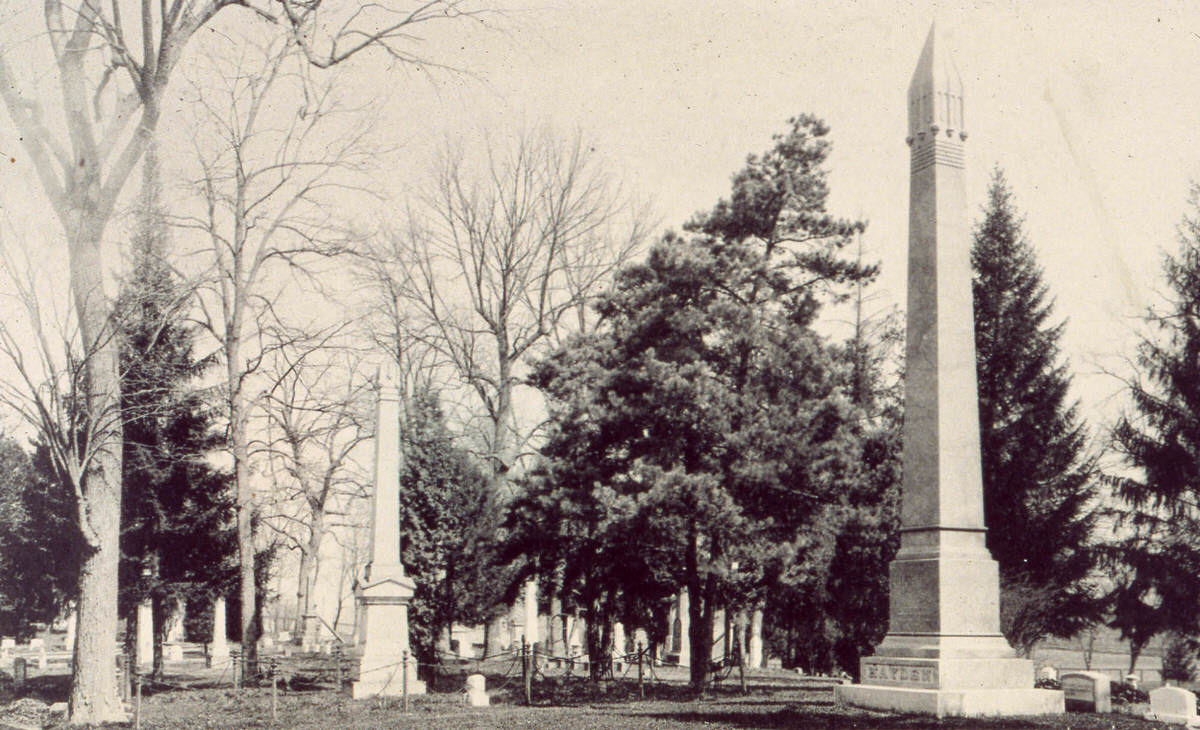
This is a black and white image of Greenlawn Cemetery. The obelisk of Peter Hayden, a wealthy industrialist, is in the foreground.
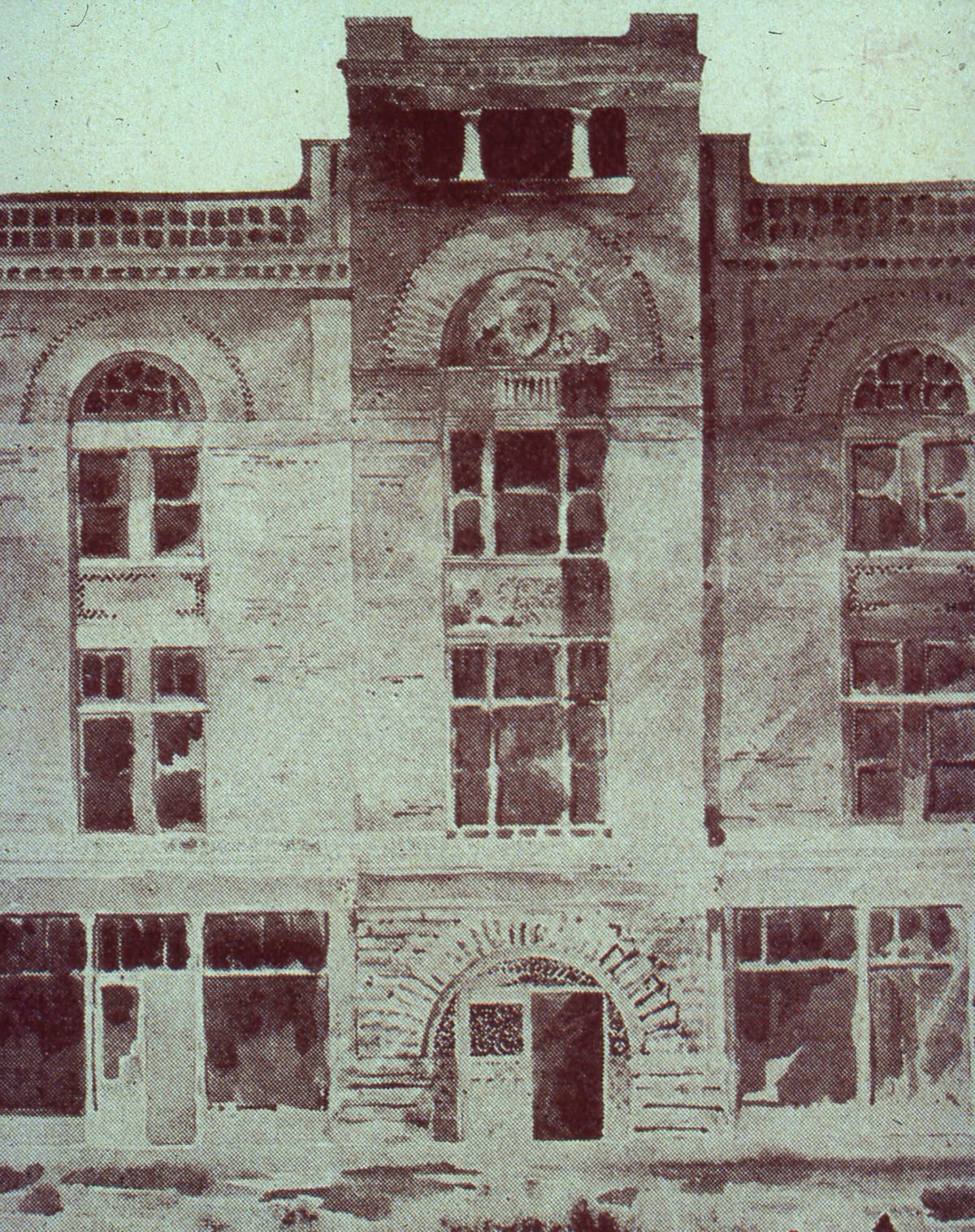
Building designed by Frank Packard.
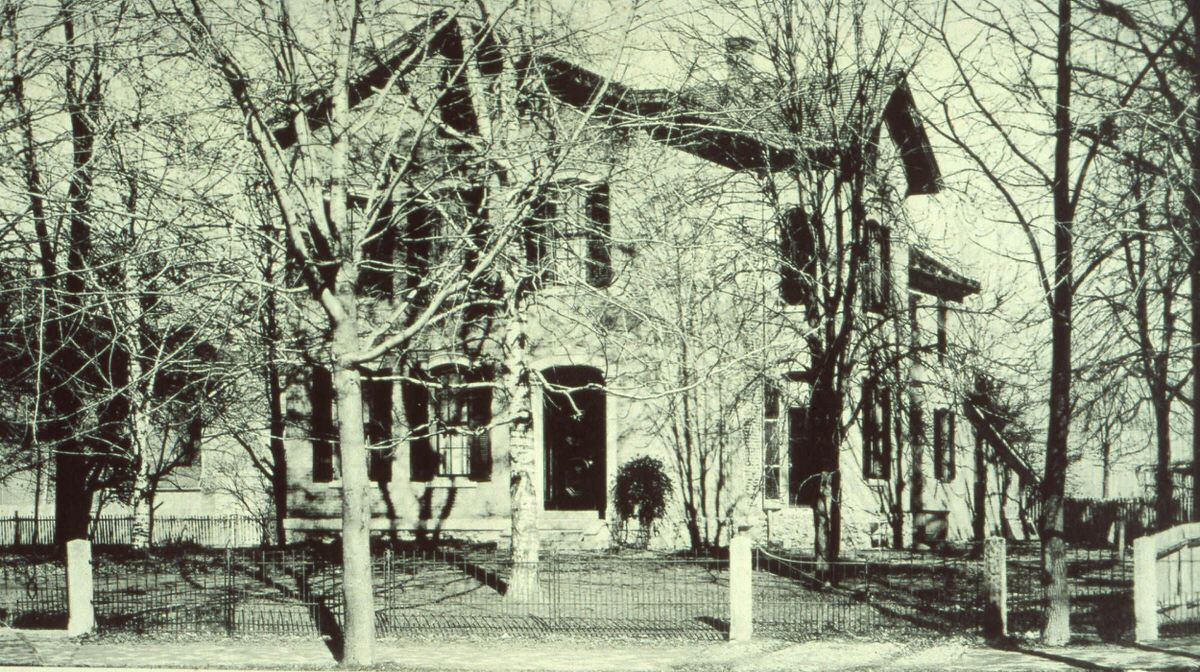
The home of James H. Anderson, who served as the United States Consul to Hamburg, Germany.
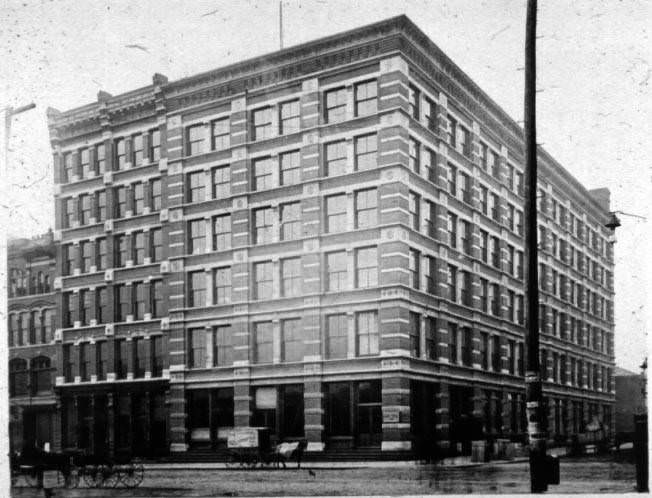
Green Joyce Company, wholesale dry goods.
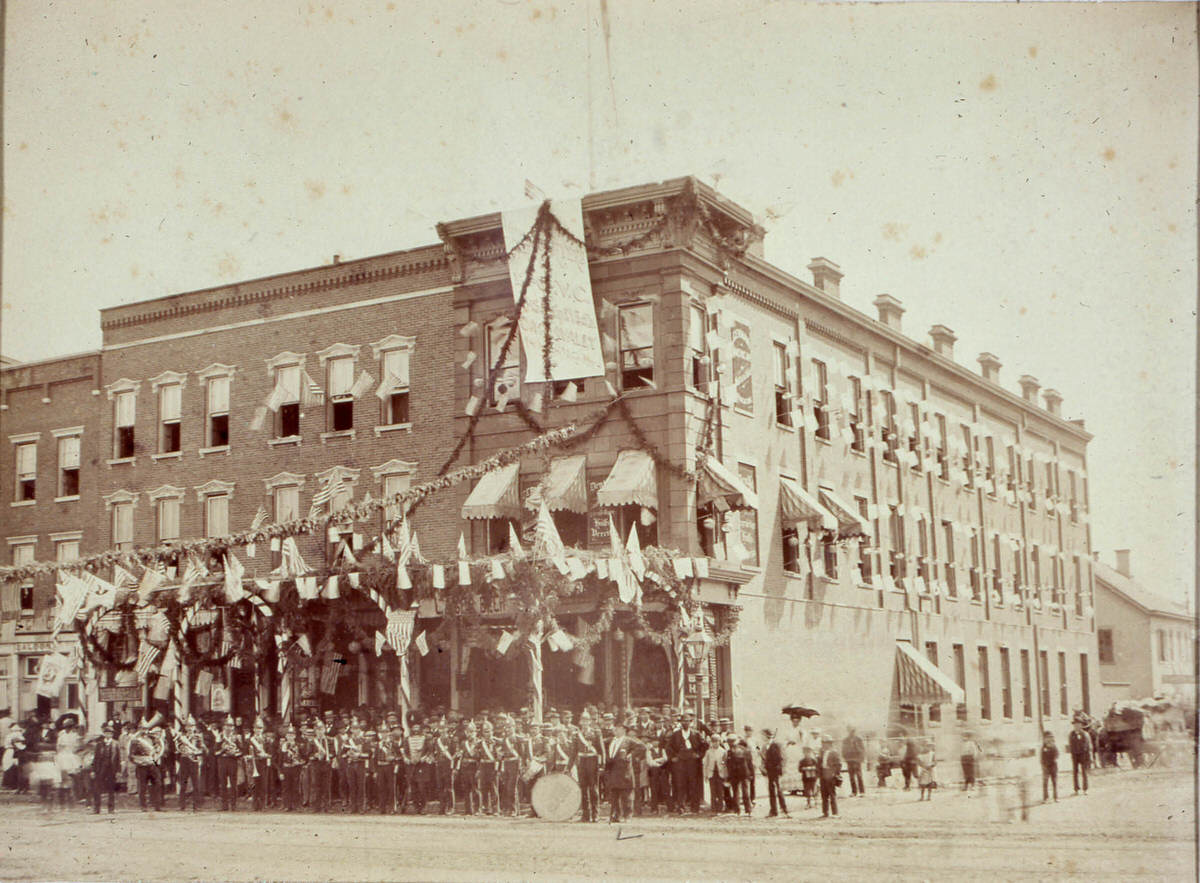
A photograph of the exterior of the Frech Brothers Saloon building with the Grand Army of Republic Band during the National Encampment.
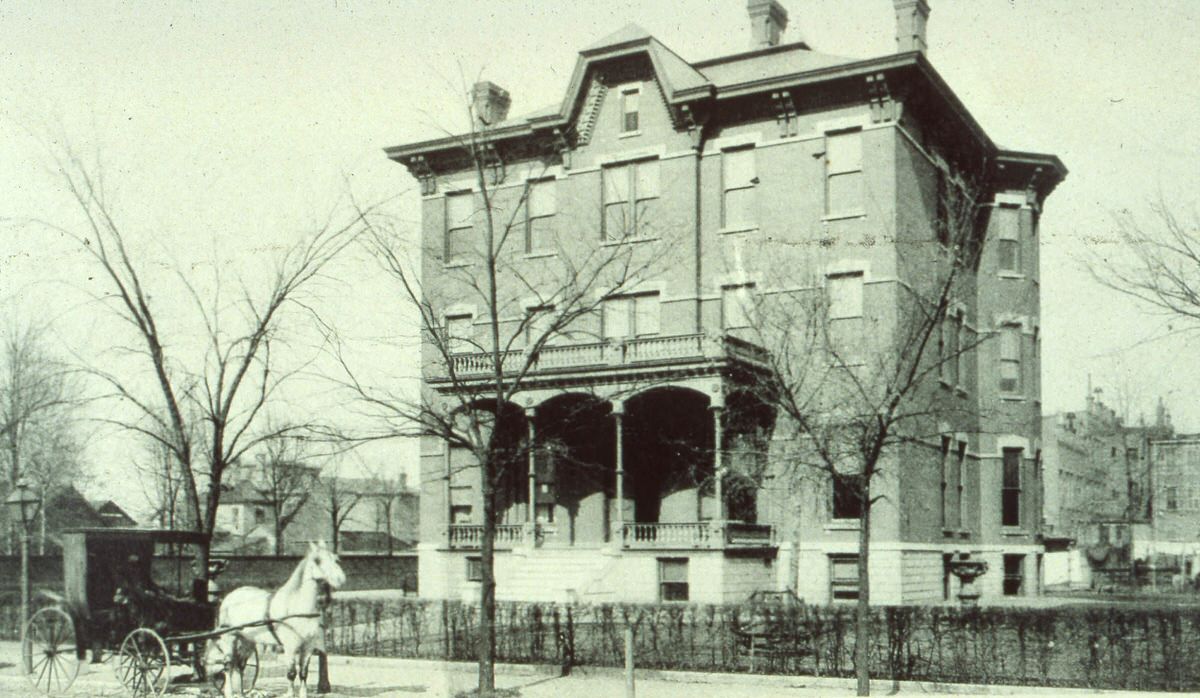
Built in 1873 by William A. Neil. Later occupied by William Dennison. Later home of George Merion Peters, who was affiliated with the Columbus Buggy Co. and Peters Dash Company. Demolished in 1924 to make room for the United Commercial Travelers’ new building.
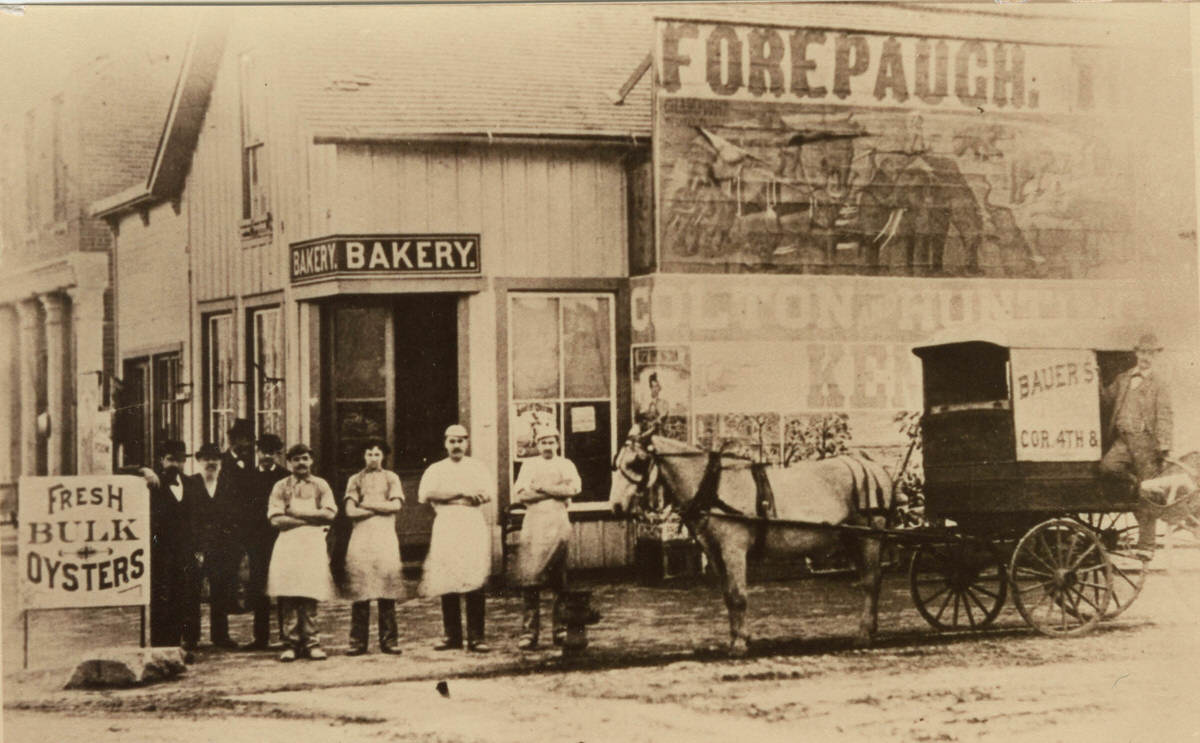
George Bauer Bakery, manufacturers of Bauer’s Family Zwiebach, located at 145 E. Rich St. The business operated from 1865 to 1937. A horse-drawn vehicle is seen to the right with the side of the vehicle displaying the bakery’s name and address.
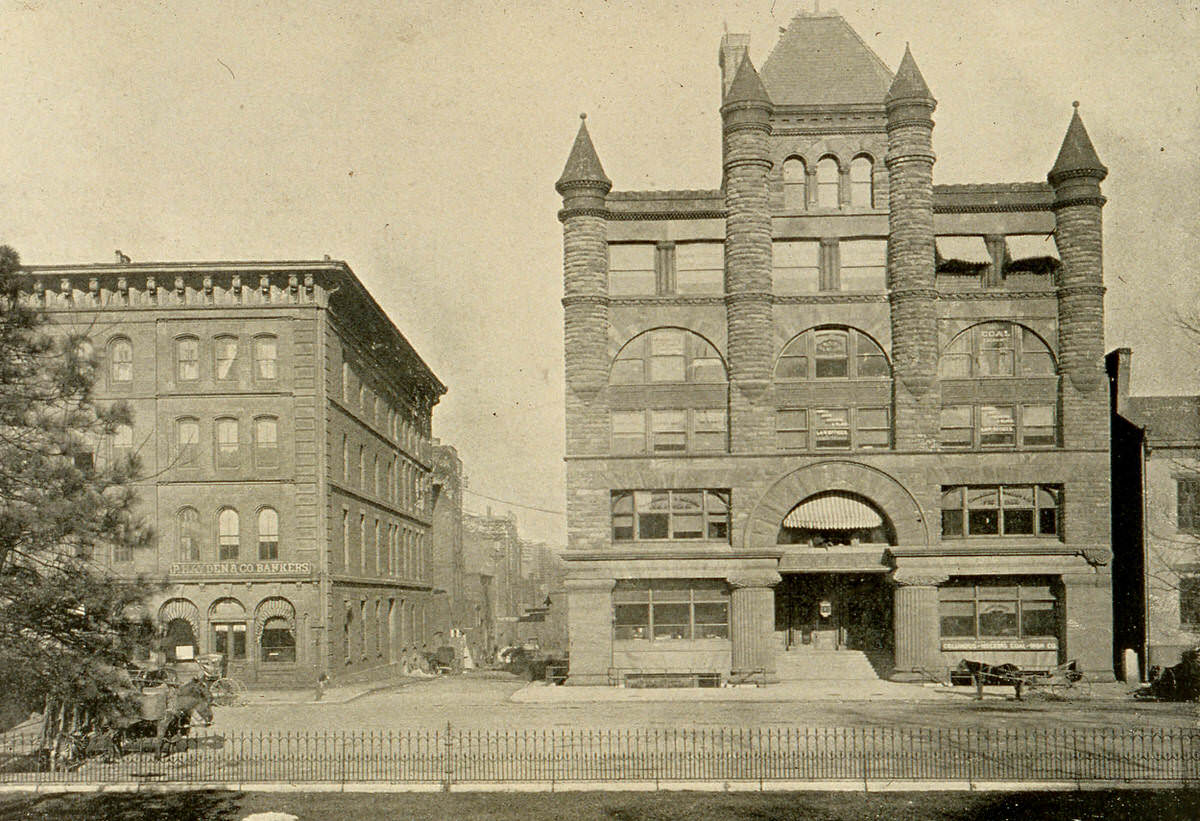
Columbus Board of Trade. Photo by Baker at time of completion. Much of the prosperity of Columbus was due to its active Board of Trade, which included about eight hundred business men representing every branch of the city’s activity. A feature of its work was the conducting of buyers’ excursions, which brought hundreds of merchants from near and distant points to Columbus to do their trading. The Board had a permanent fund for the entertainment of the many conventions that met there. The headquarters of the Board were located here, but the building mainly served as an office building. It also contained a fine auditorium. The building opened on July 23, 1889, and closed in August 1964. The building was demolished in 1969.
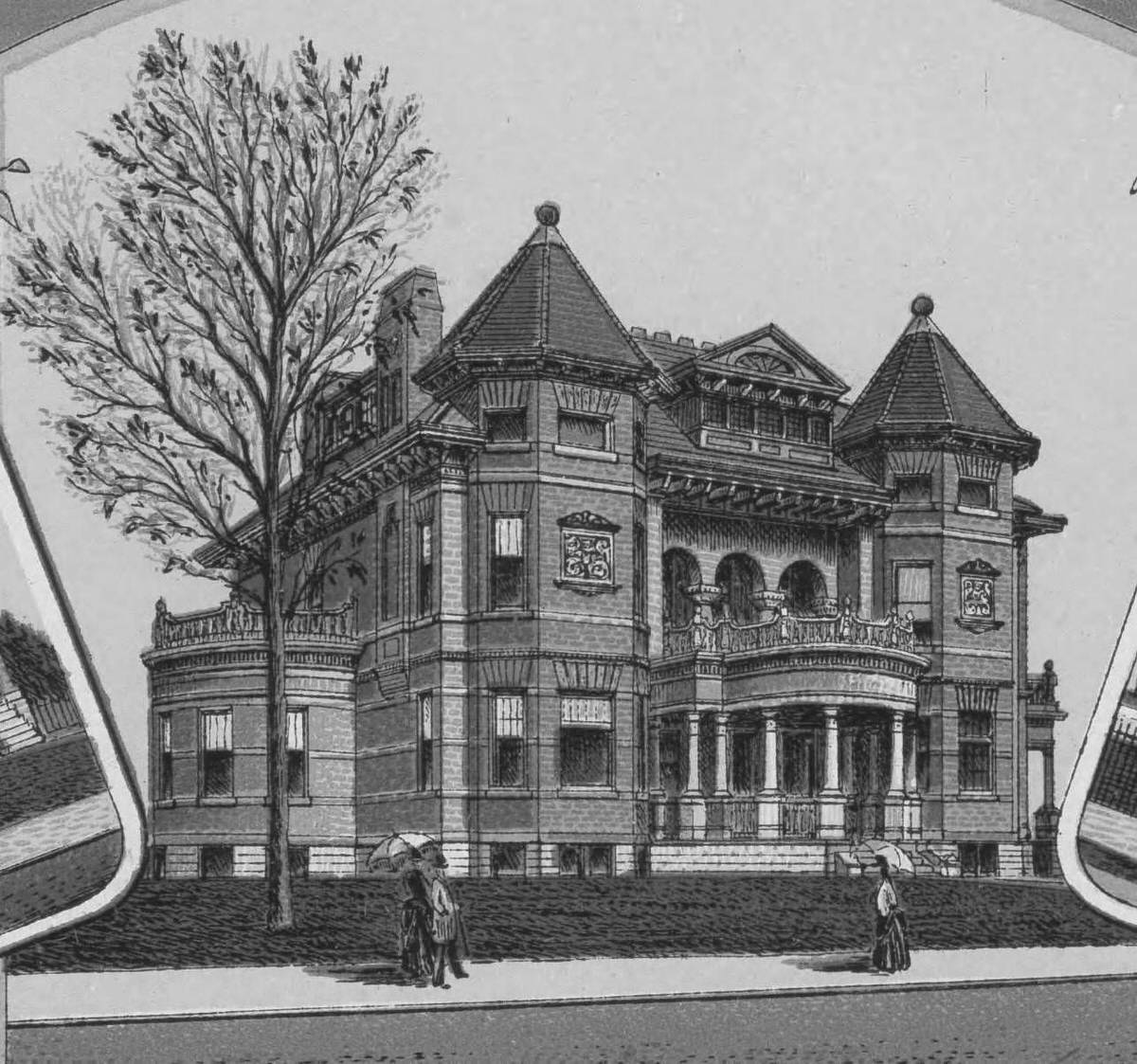
The home of Edward Denmead, 153 Woodland Avenue. He was a director for the Columbus Evening Post, Democratic, which began December 4, 1888. The house was demolished in 1970 to build a parking lot for the St. Philip Episcopal Church.
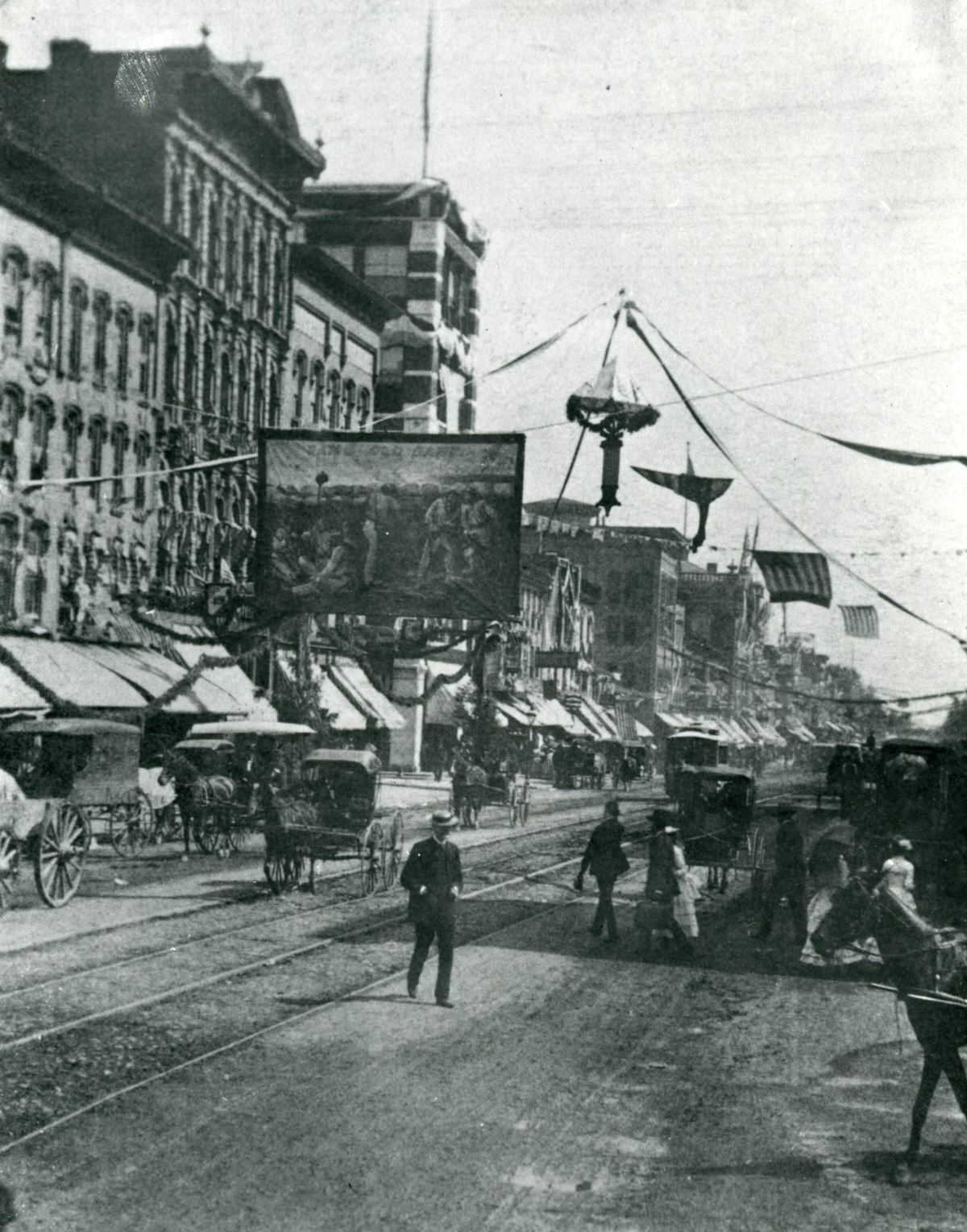
The streets of Columbus were decorated for the Grand Parade, held Tuesday, September 11, 1888, as part of the 22nd National Encampment of the Grand Army of the Republic.
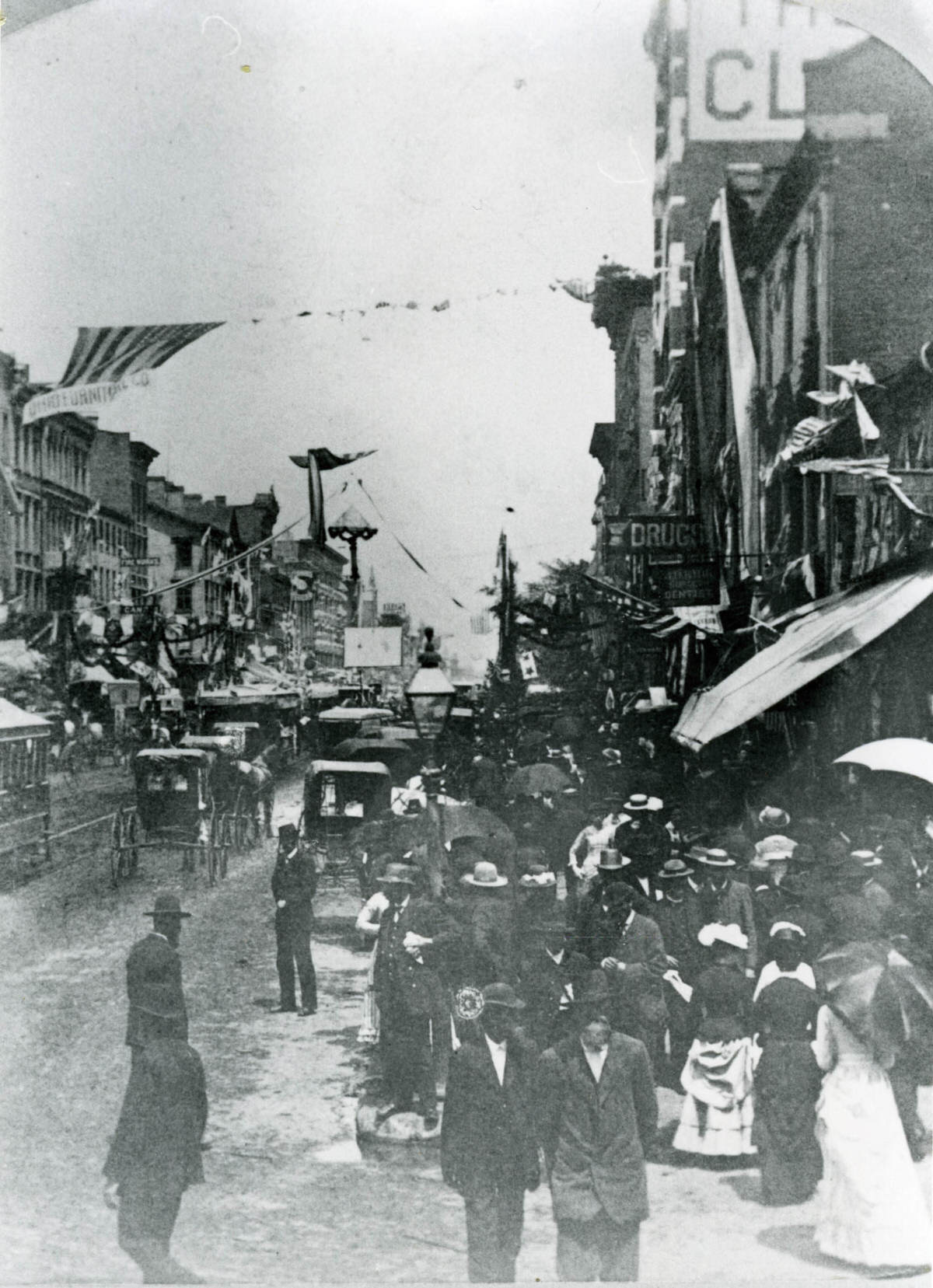
Crowds gather for the Grand Parade, held Tuesday, September 11, 1888, as part of the 22nd National Encampment of the Grand Army of the Republic.
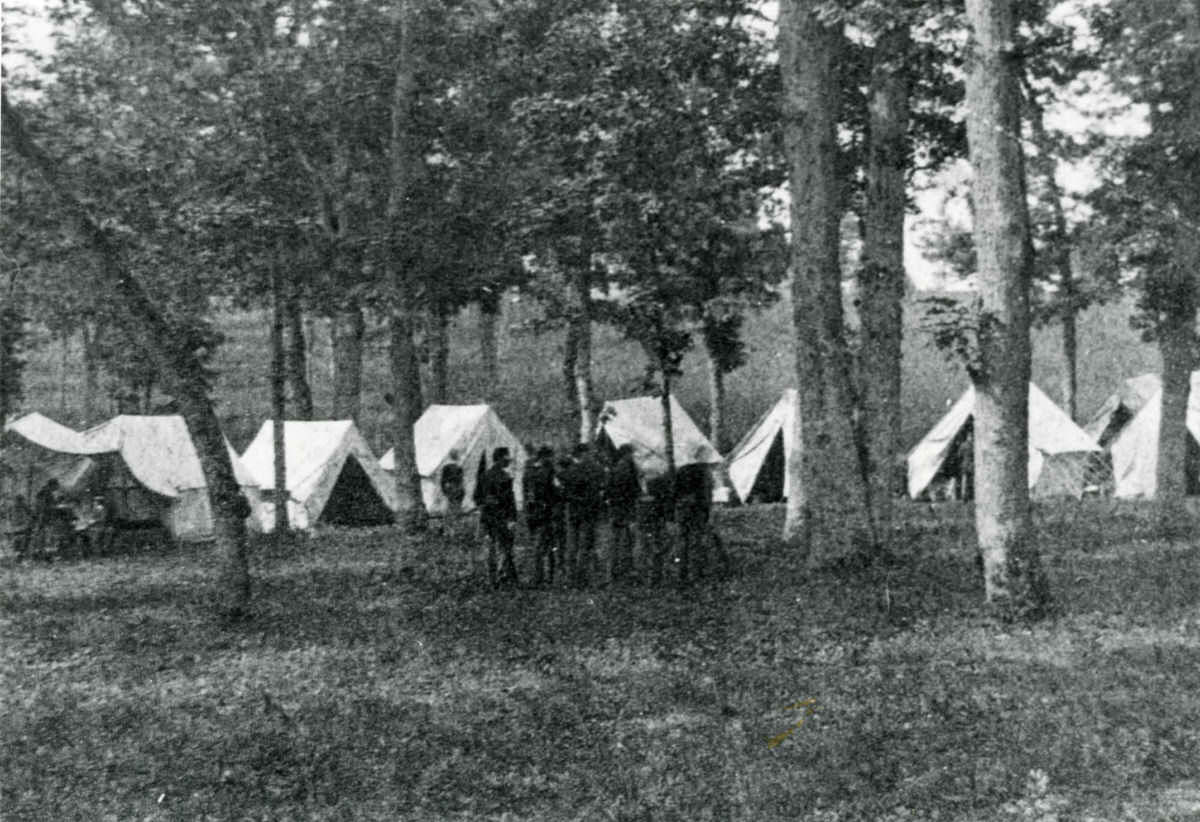
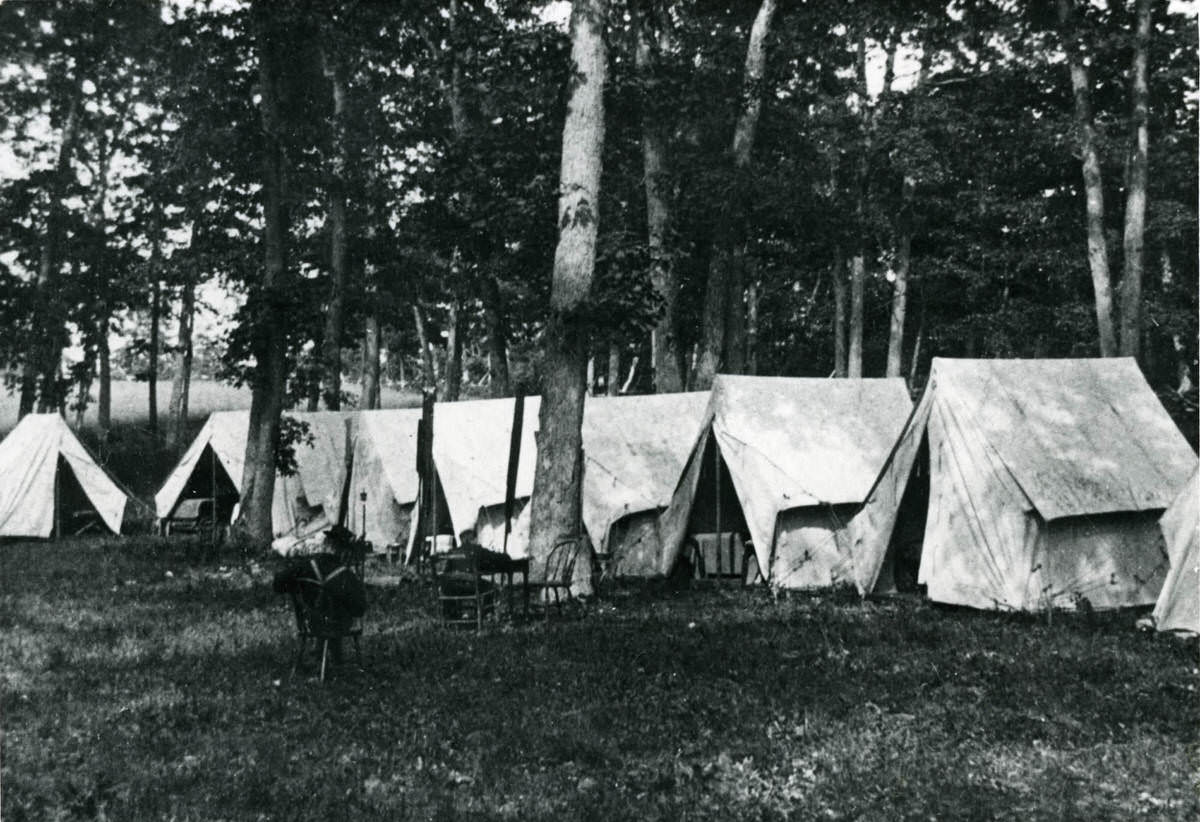
Tents located in one of the three camps of the 22nd National Encampment of the Grand Army of the Republic, held in Columbus September 10–14, 1888.
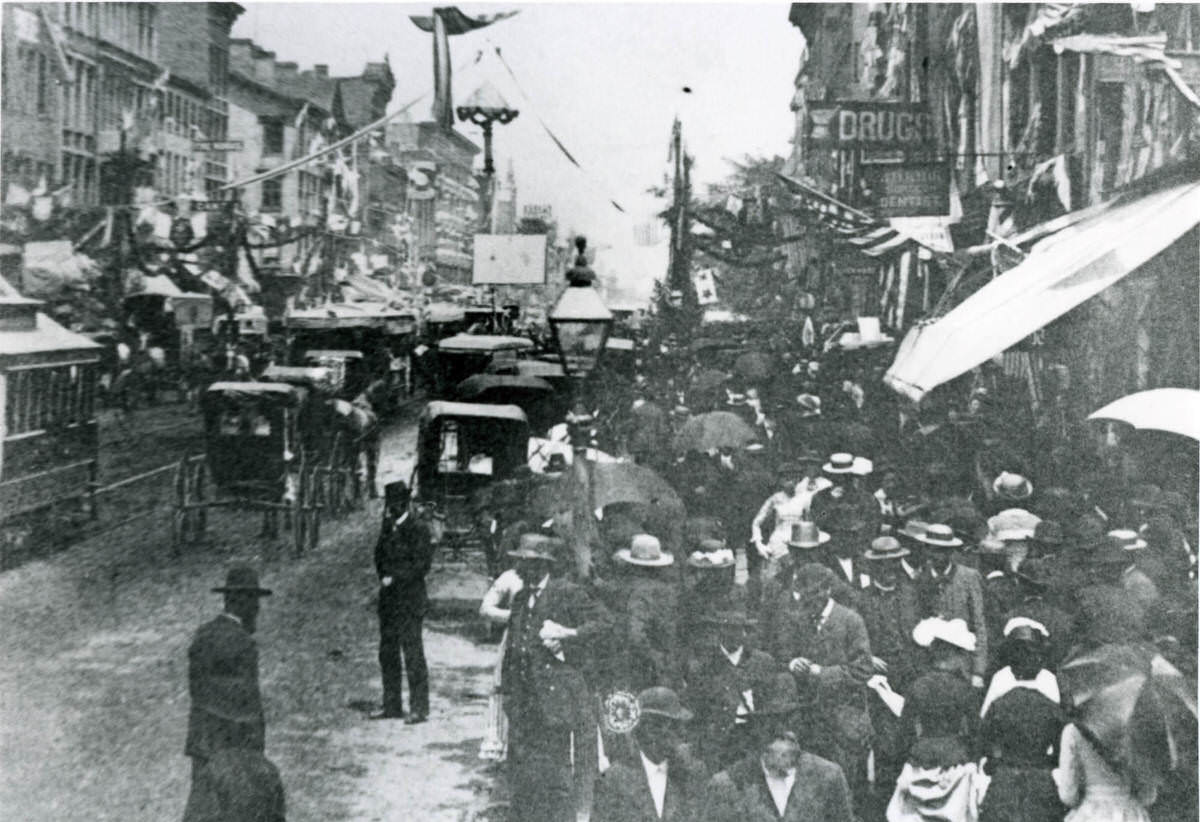
Crowds gather for the Grand Parade, held Tuesday, September 11, 1888, as part of the 22nd National Encampment of the Grand Army of the Republic.
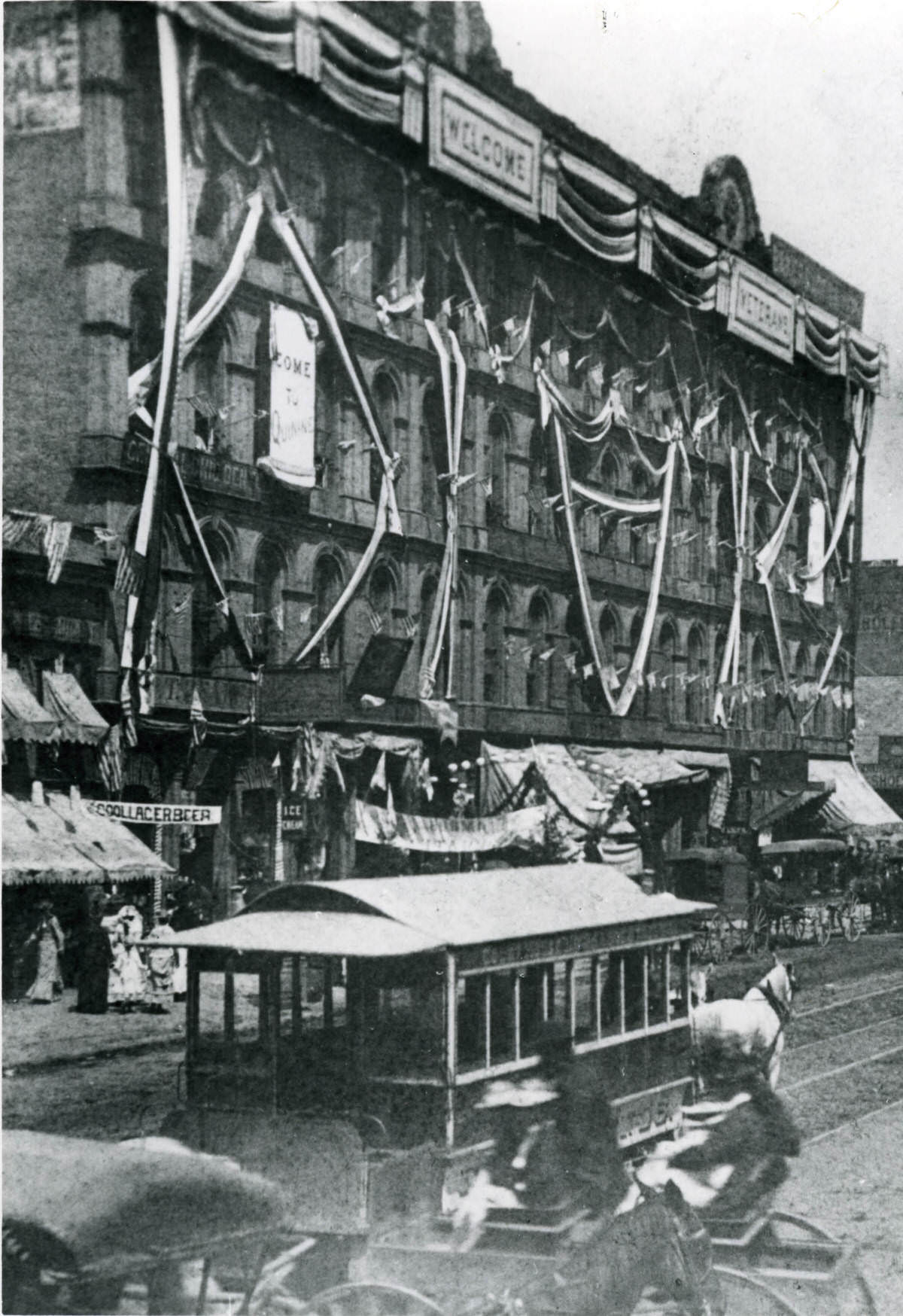
A Columbus building decorated for the 22nd National Encampment of the Grand Army of the Republic, held in Columbus, September 10–14, 1888.
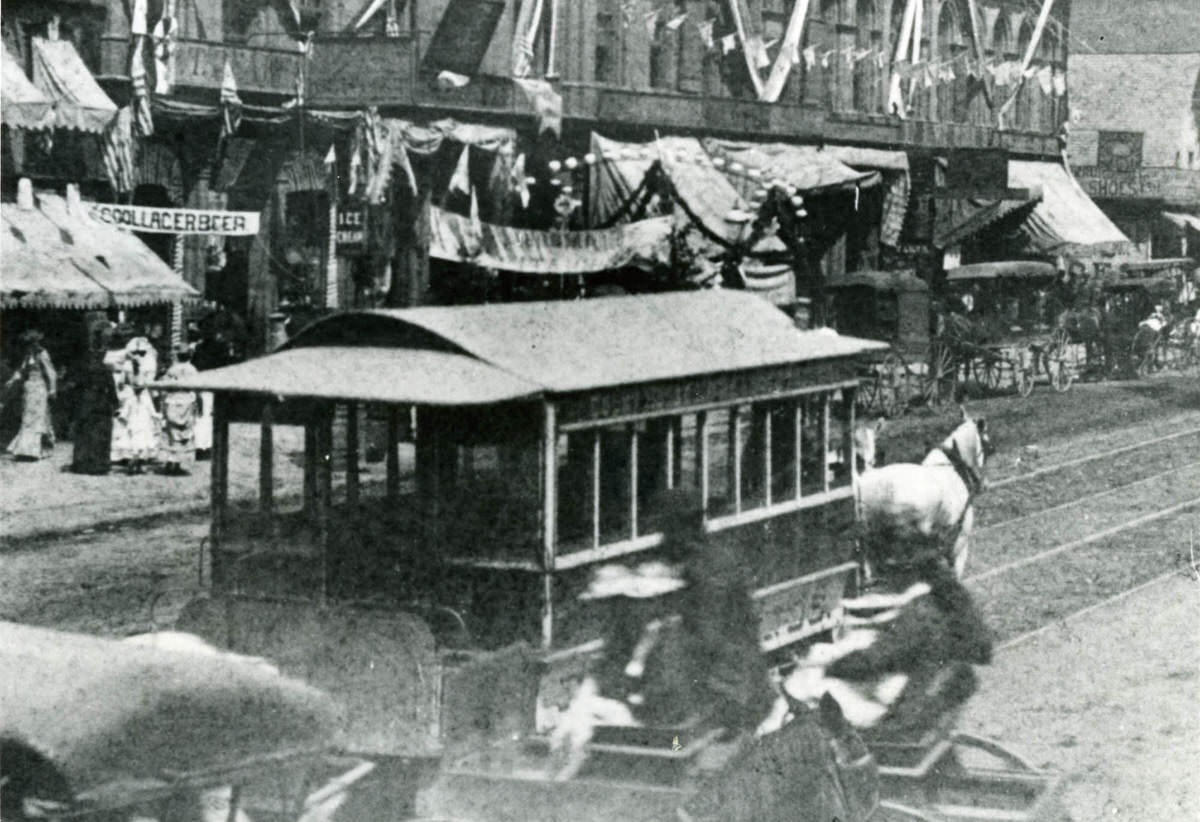
A horse-drawn trolley travels down a Columbus street decorated for the Grand Parade, held Tuesday, September 11, 1888, as part of the 22nd National Encampment of the Grand Army of the Republic.
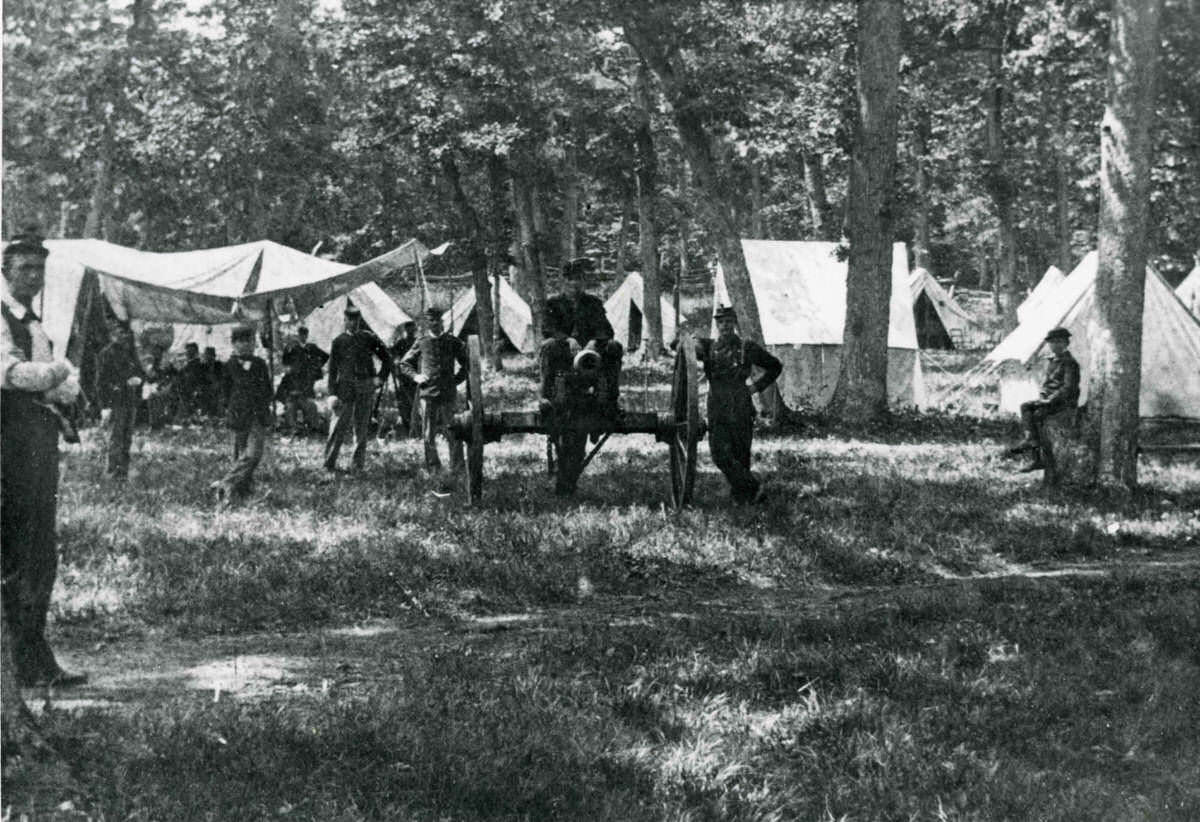
Men, tents, and a cannon in one of the three camps of the 22nd National Encampment of the Grand Army of the Republic, held in Columbus September 10–14, 1888.
Tents located in one of the three camps of the 22nd National Encampment of the Grand Army of the Republic, held in Columbus September 10–14, 1888.
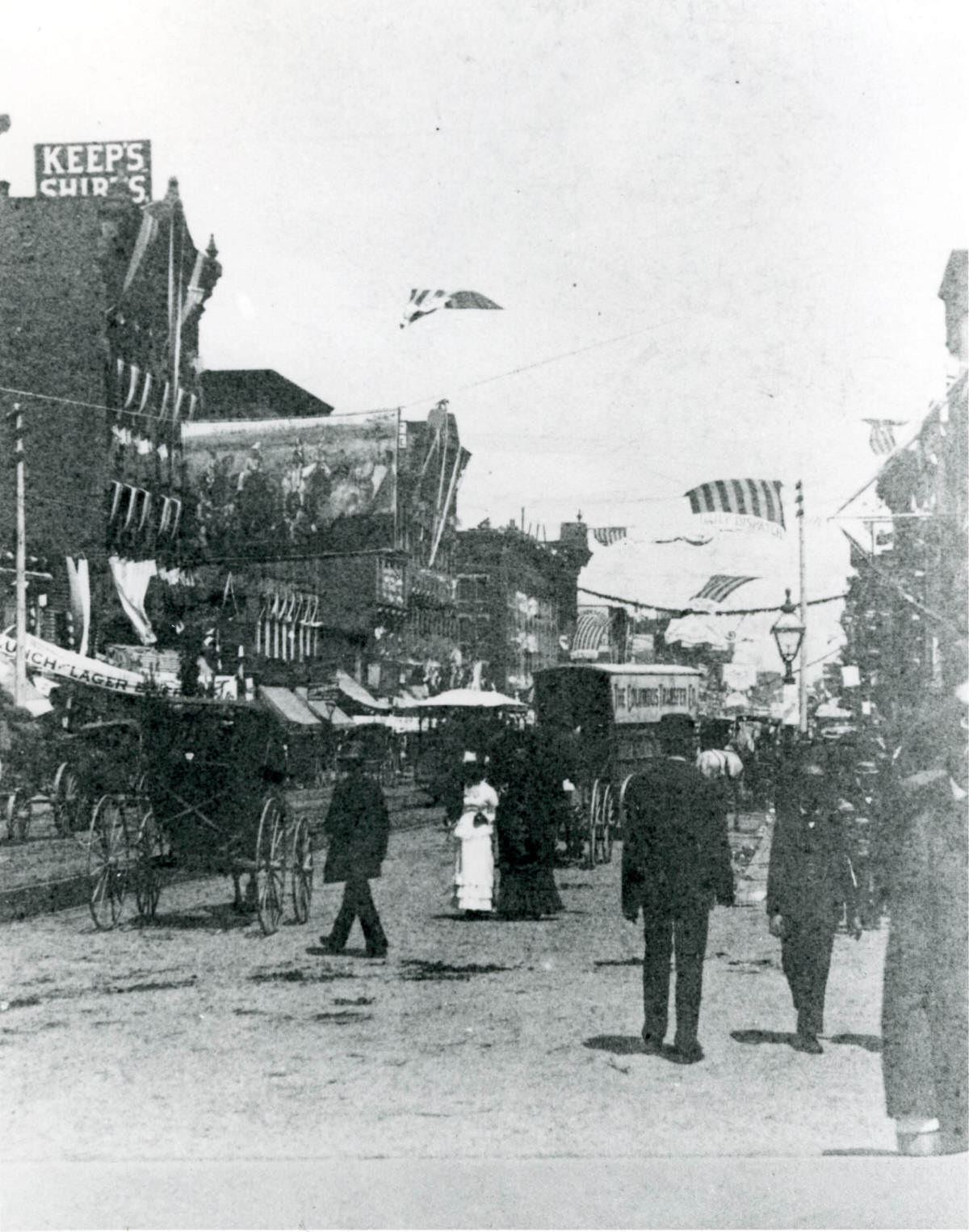
A view of a Columbus street decorated for the Grand Parade, held Tuesday, September 11, 1888, as part of the 22nd National Encampment of the Grand Army of the Republic.
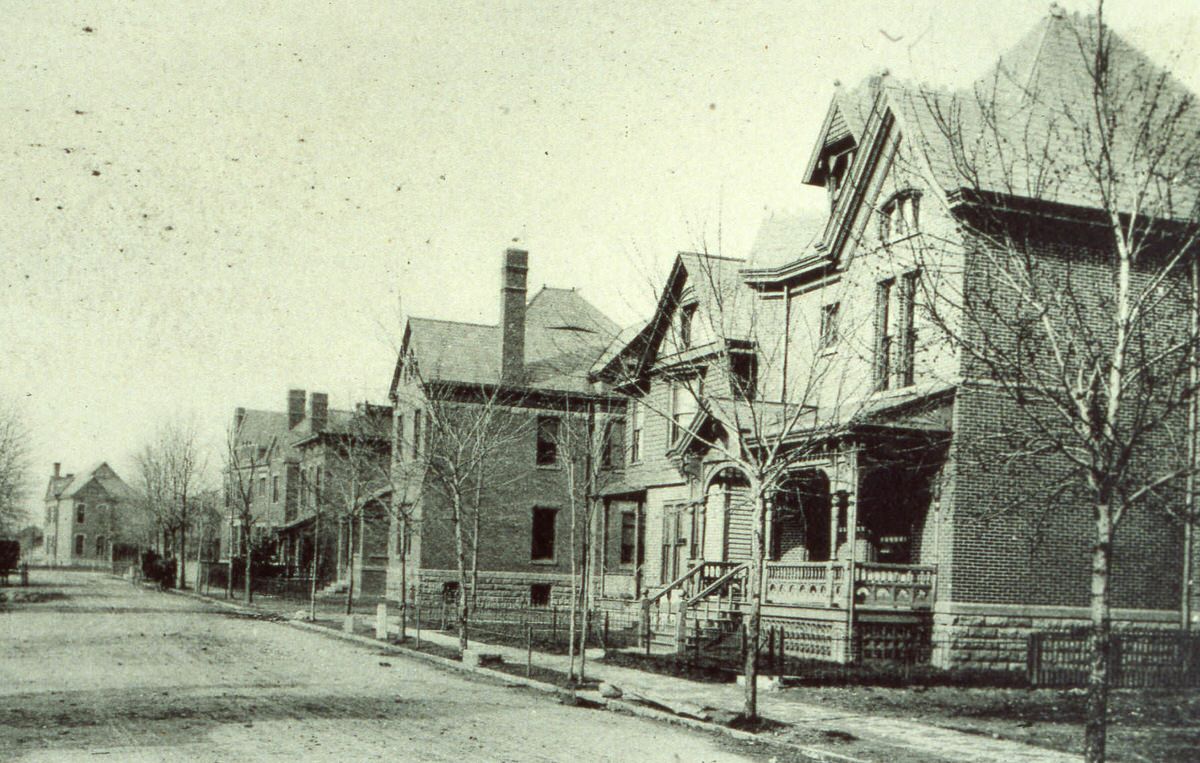
The house on the right, 55 Hoffman Avenue, belonged to Dr. Wells Teachnor and his wife Janet Cleveland Teachnor, great niece of President Grover Cleveland.
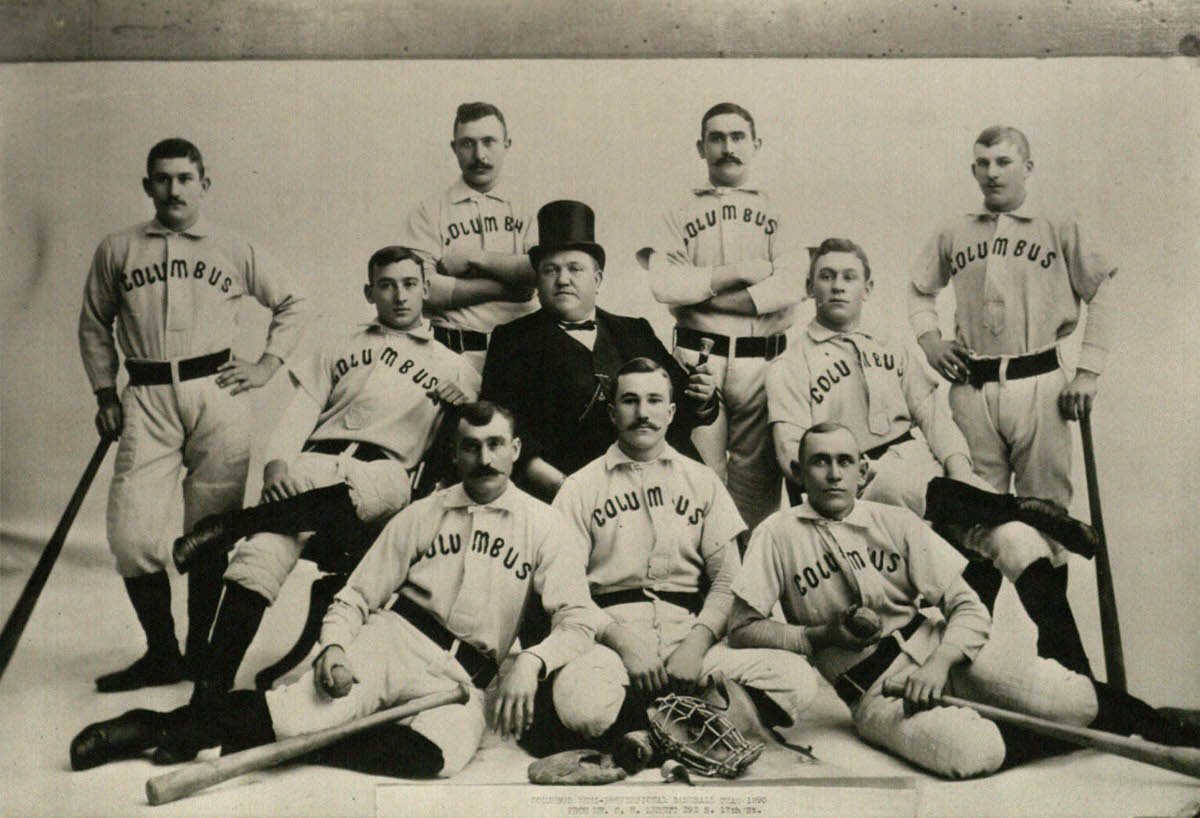
In 1884, the Columbus Buckeyes finished second in the American Association, 6.5 games behind the New York Mets.
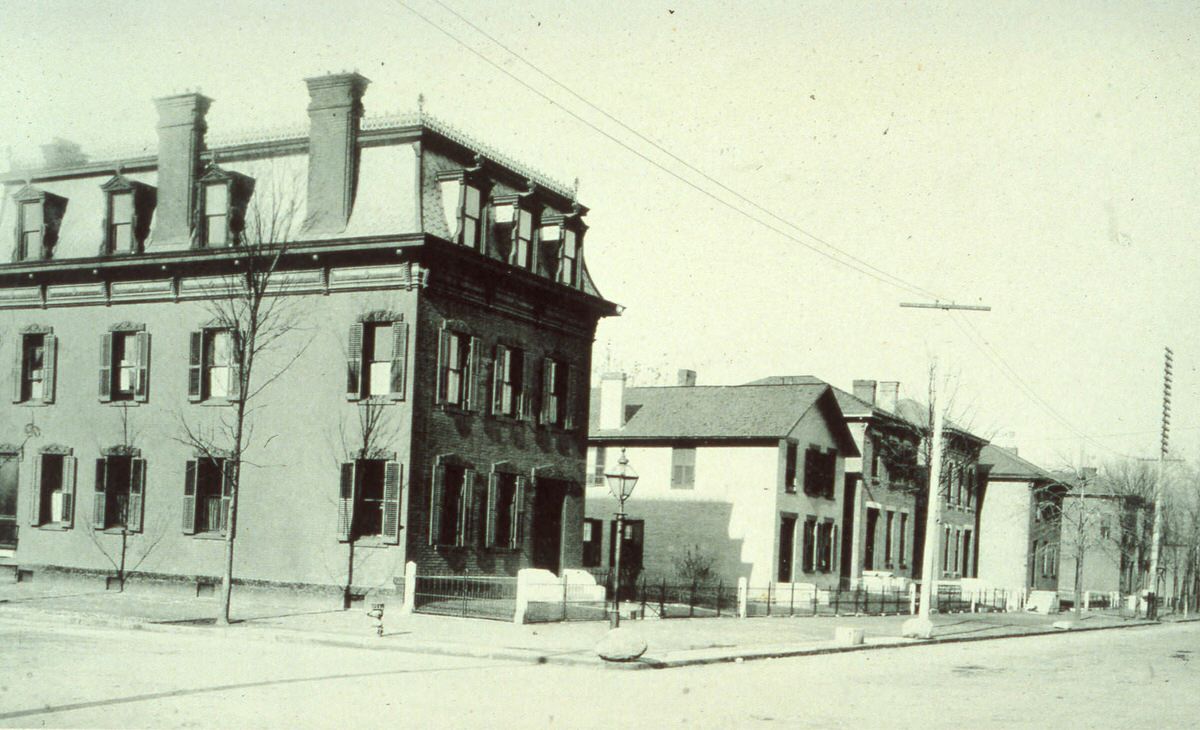
4th Street’s residential district in the late 1880s.
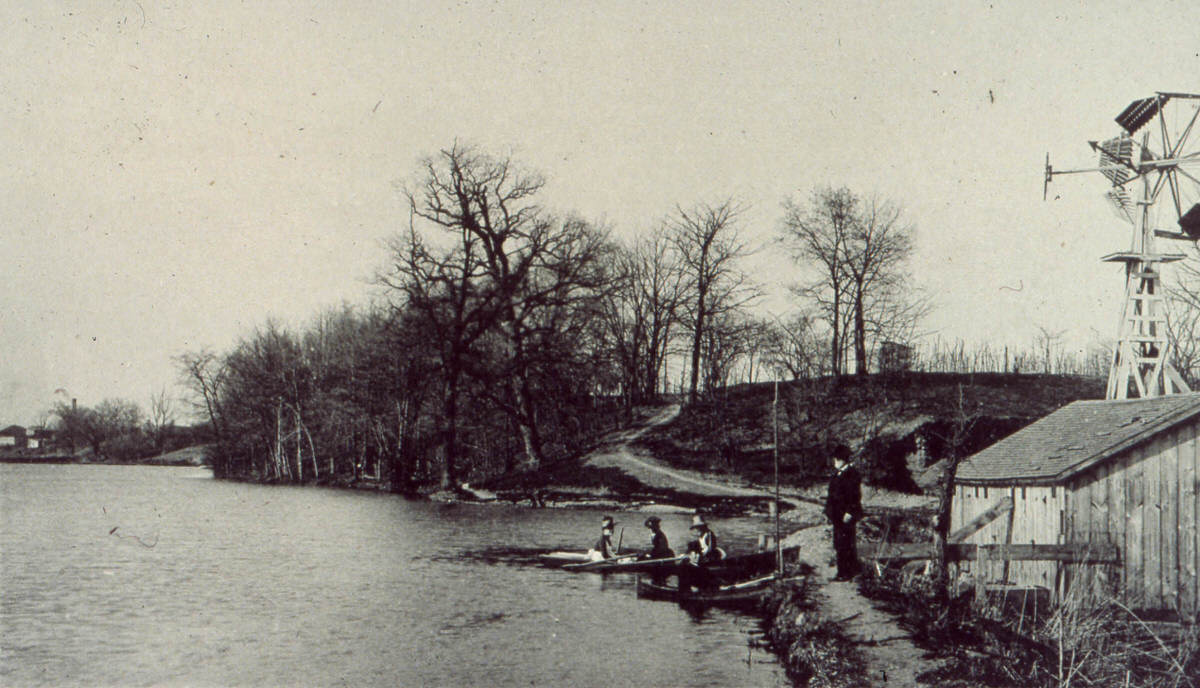
Boaters on the lake at Lake Park. This picnic area was purchased by Jonathan Linton in 1873 from the ninety-acre Henderson Farm. It was located at the intersection of Haul Road and SR 104 (Frank-Refugee Expressway). It was most likely an old flooded quarry. Listed in the Columbus City Directory 1888–92. Caption reads: “Lake Park from the south.”
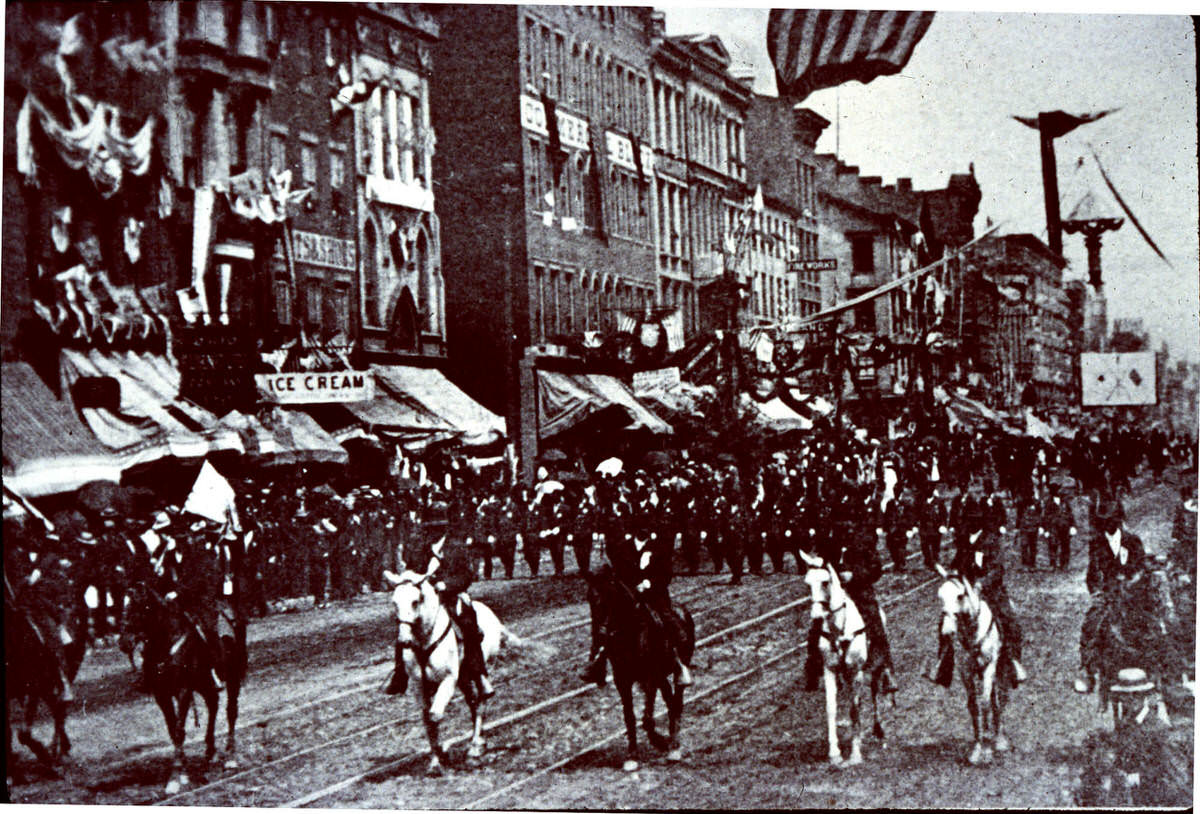
Mounted dignitaries lead the Grand Army of the Republic Parade. The GAR encampment was held September 10–14, 1888.
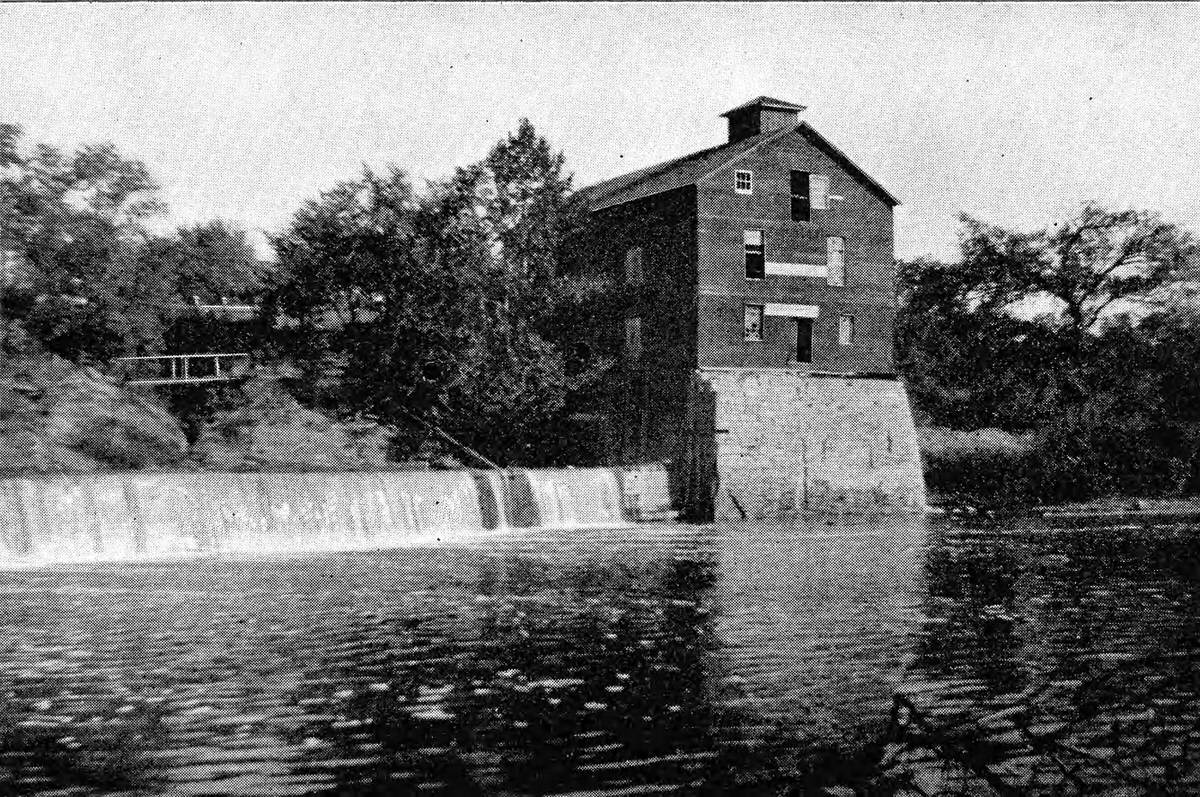
The Piatt Mill stood on the banks of the Olentangy River in north Columbus for nearly a century. The original dam and mill were constructed by David Beers in 1810. The site of the mill is just north of the present-day Dodridge Street bridge. Beers owned the land the mill was located on. Darius Wilcox built a sawmill adjacent to the flour mill. The mills later came to be owned by the John James Piatt family. The buildings burned down on June 13, 1902. The area just to the east and north is where Olentangy Amusement Park was located.
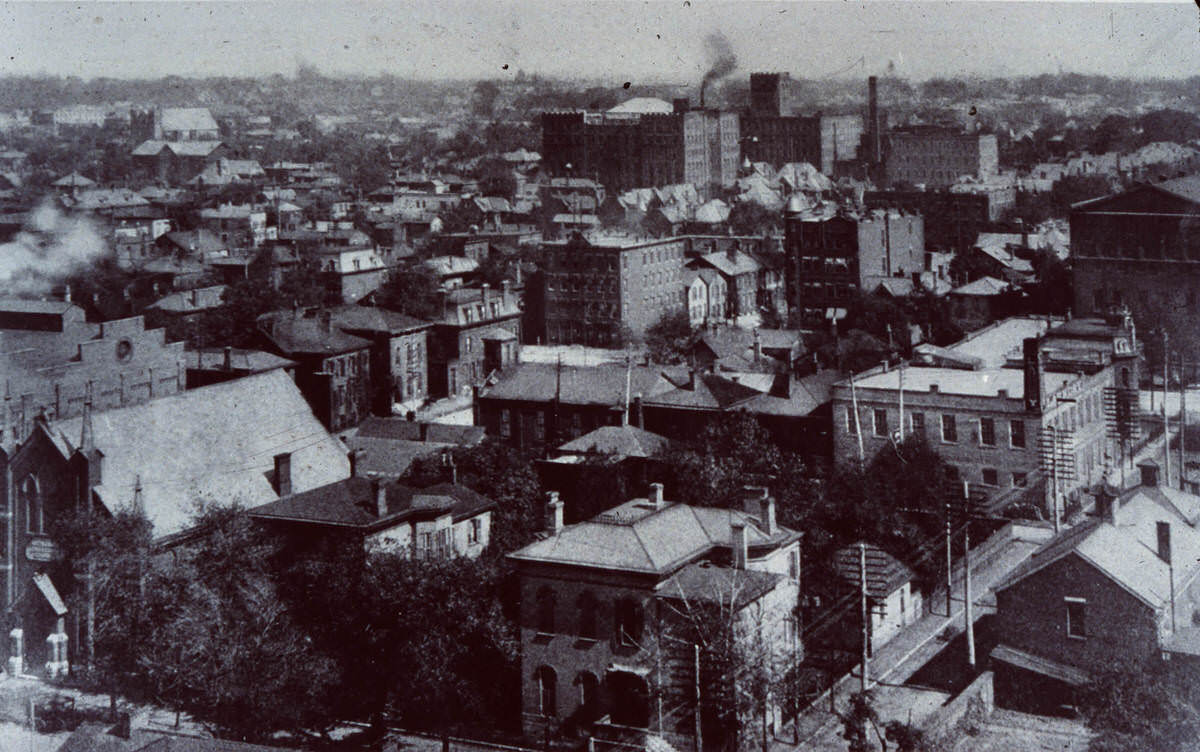
North Third Street at Lynn, featuring in the front left the Central Christian Church, opened August 21, 1881.
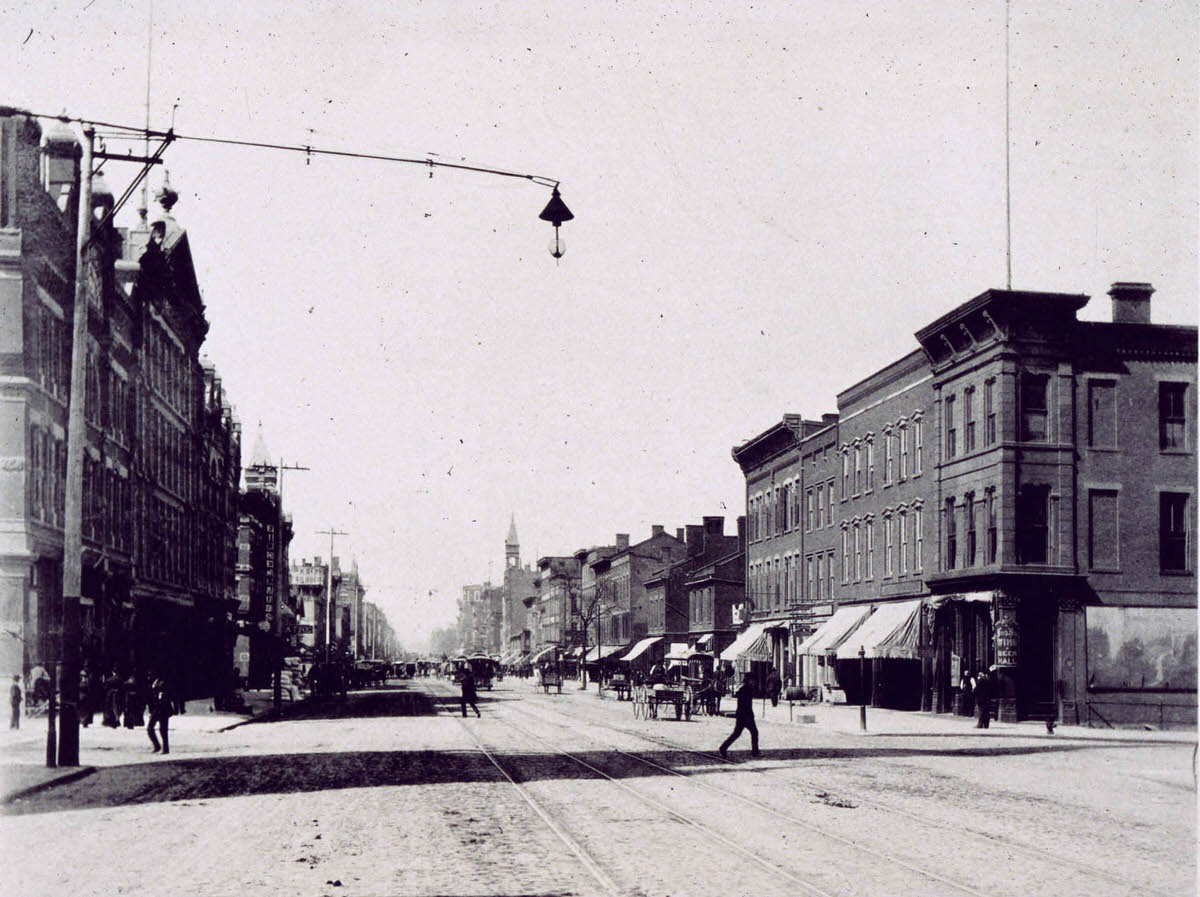
Business concerns in the area included: Einchenlaub’s Theater, #317–19; the Wirthwein Block, #335–39; and Frech Brothers Saloon, #350 S. High St.
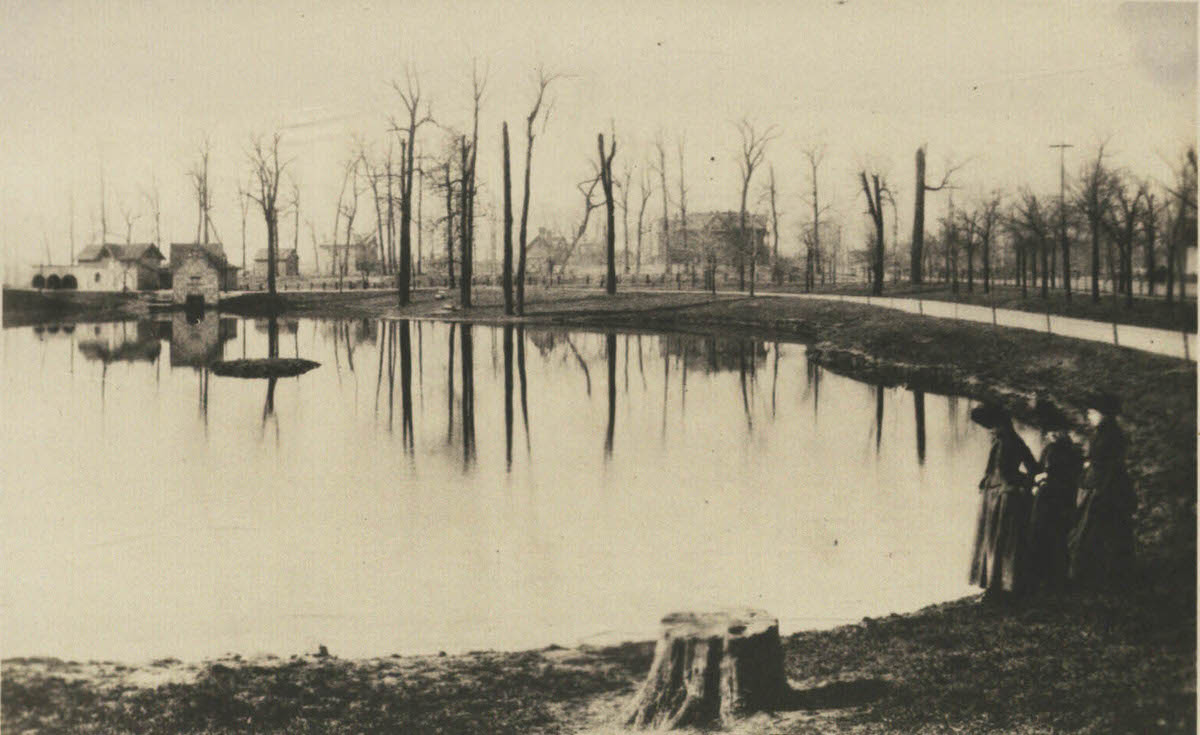
Lincoln Goodale presented land to the City of Columbus for a public park by a deed dated November 15, 1851. The East Lake was added around 1872–1875 near Park Street on the east side of the park.
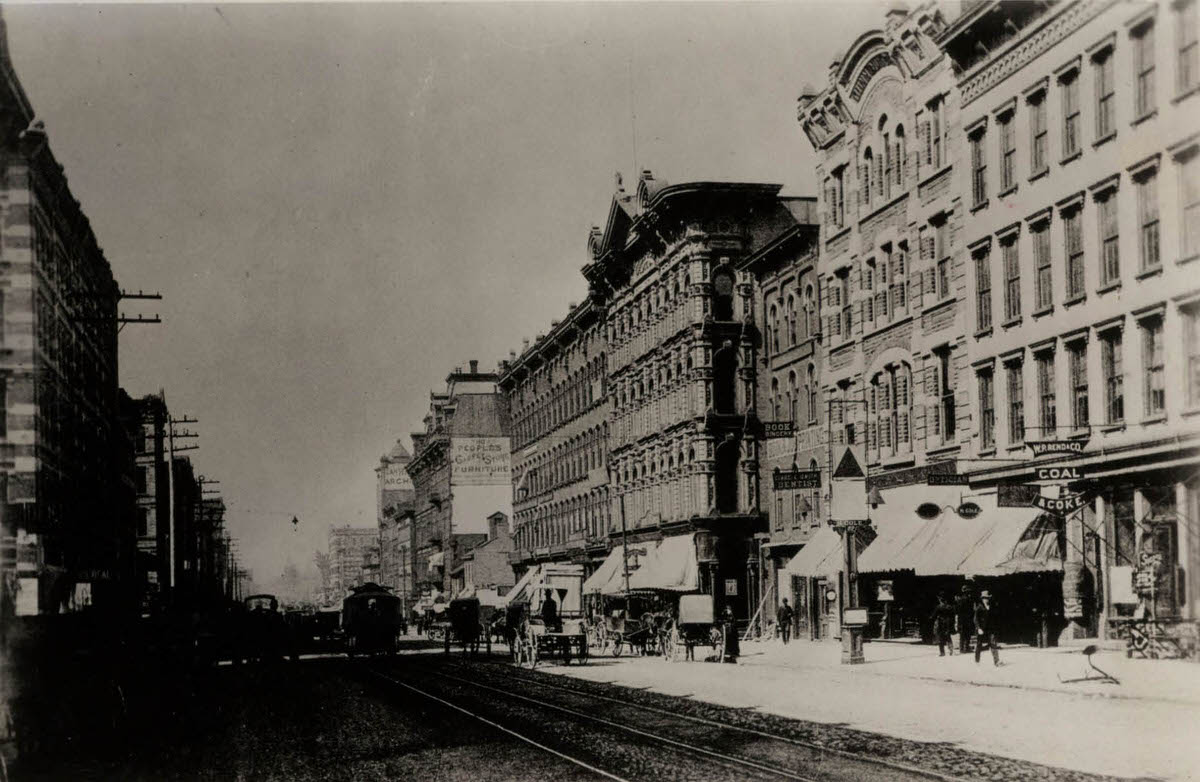
Dentists, opticians, and physicians were located on N. High near Gay Street. Also here was People’s Carpets and Furniture Store, 142 N. High Street; Warner & Gares Dentist office, 85 N. High; and Harrison Cole Opticians, 82 N. High St.
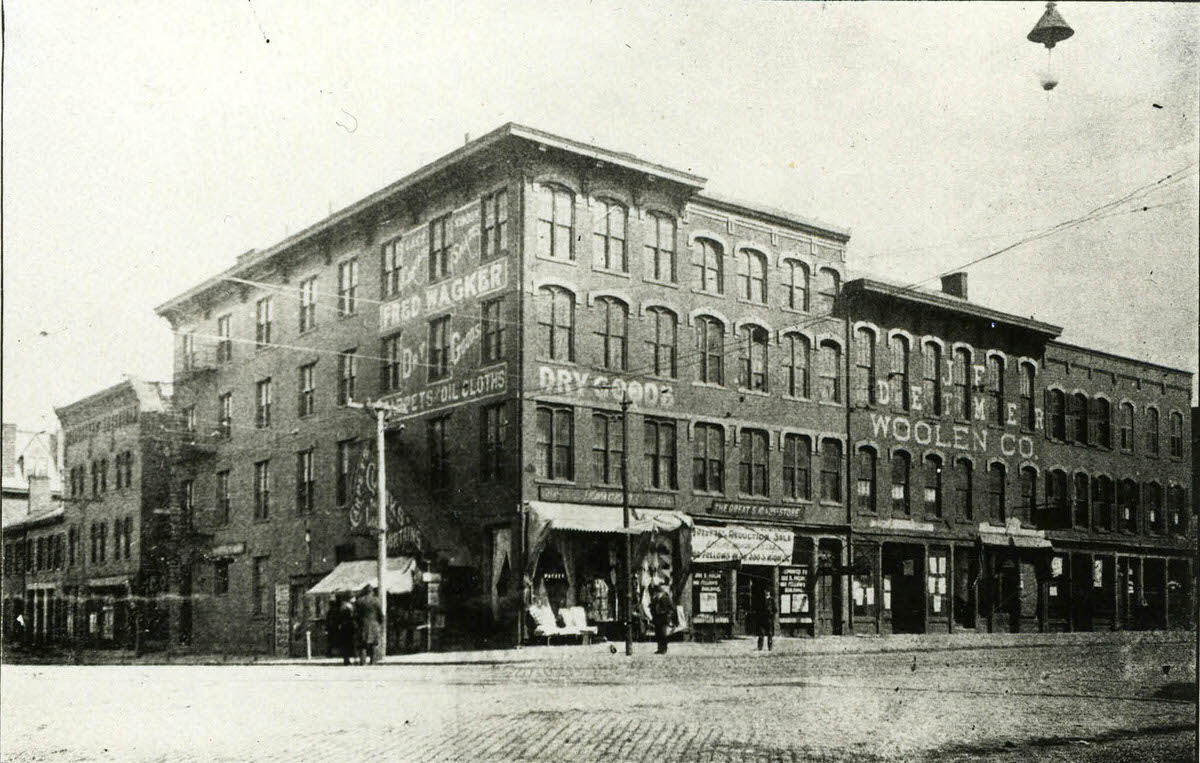
Before the Great Southern Hotel, High and Main Streets were home to: Frederick Wacker Dry Goods, #298; Great 5 and 10 Cent Store, #300–02; and Julian F. Dettmer Woolen Co., #304 S. High Street.
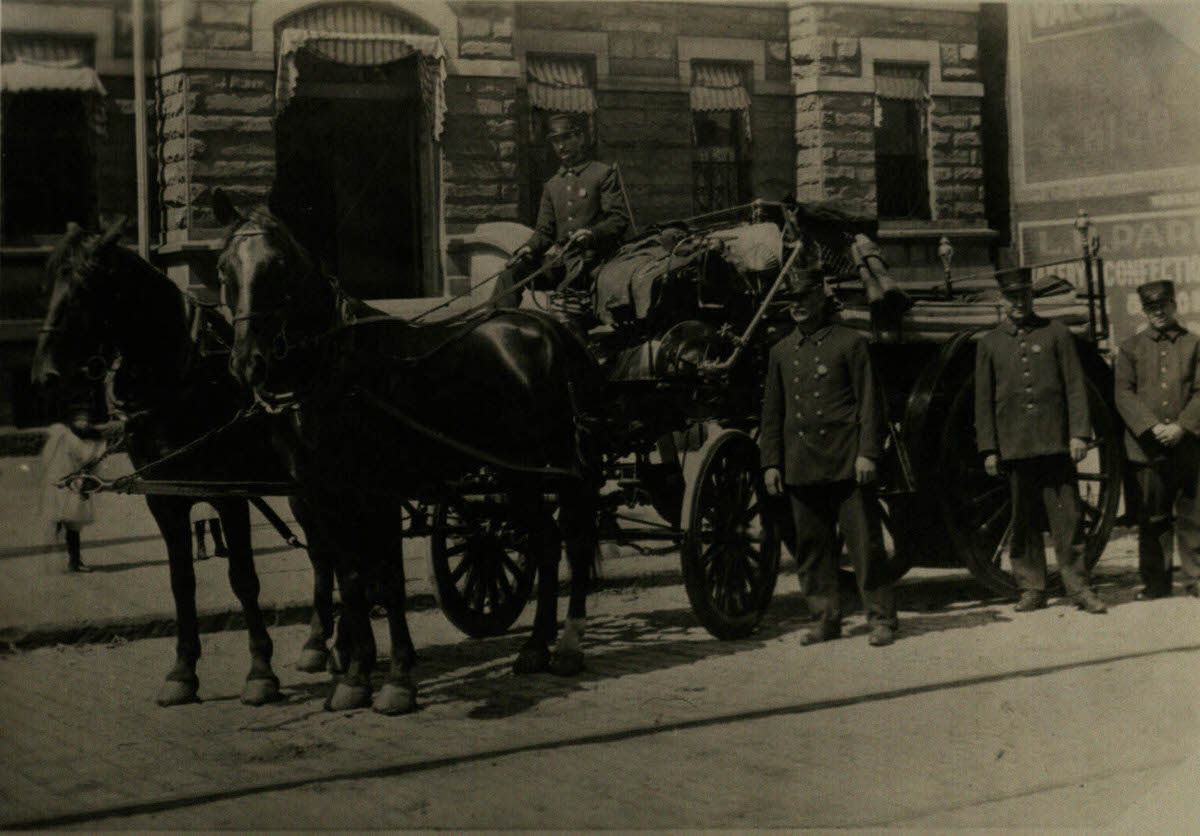
The Pride of Columbus horse-drawn fire wagon of No. 2 Hose Company, featuring Captain Al Nice.
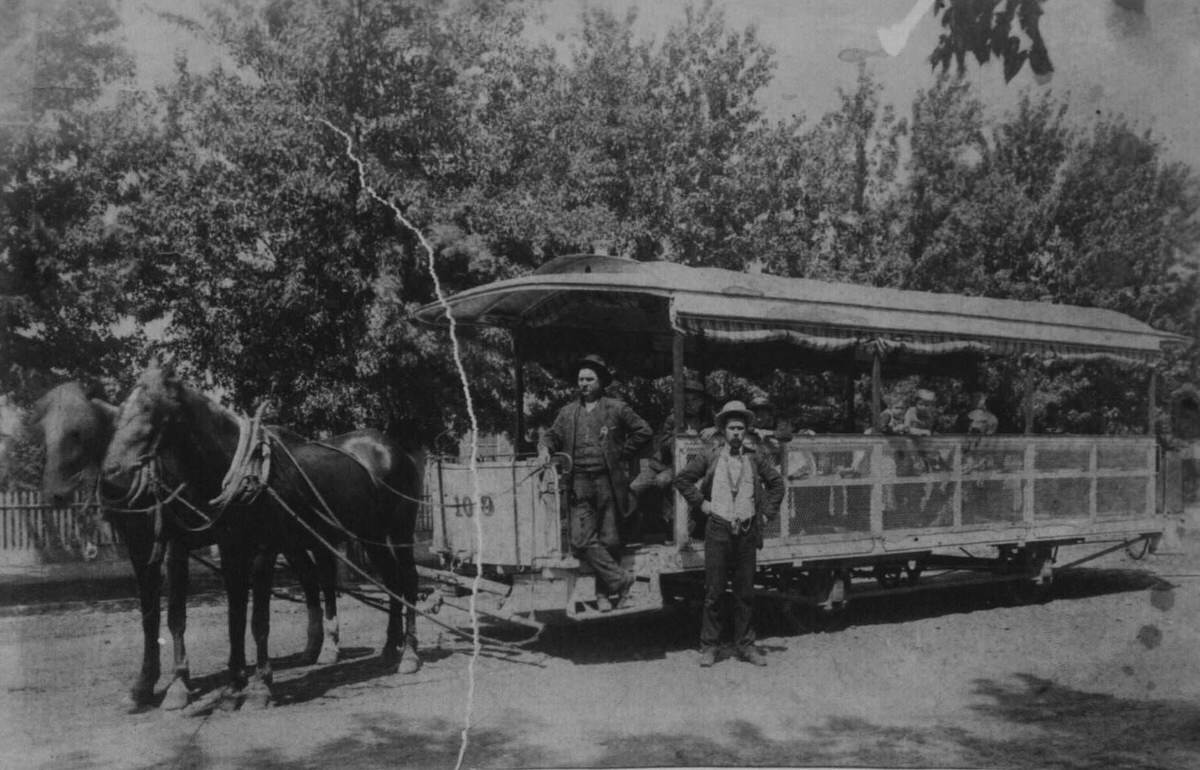
High Street horse-drawn trolley car #109 with crew. Submitted by Miss Louise Cherry of 419 Luckhupt Avenue.
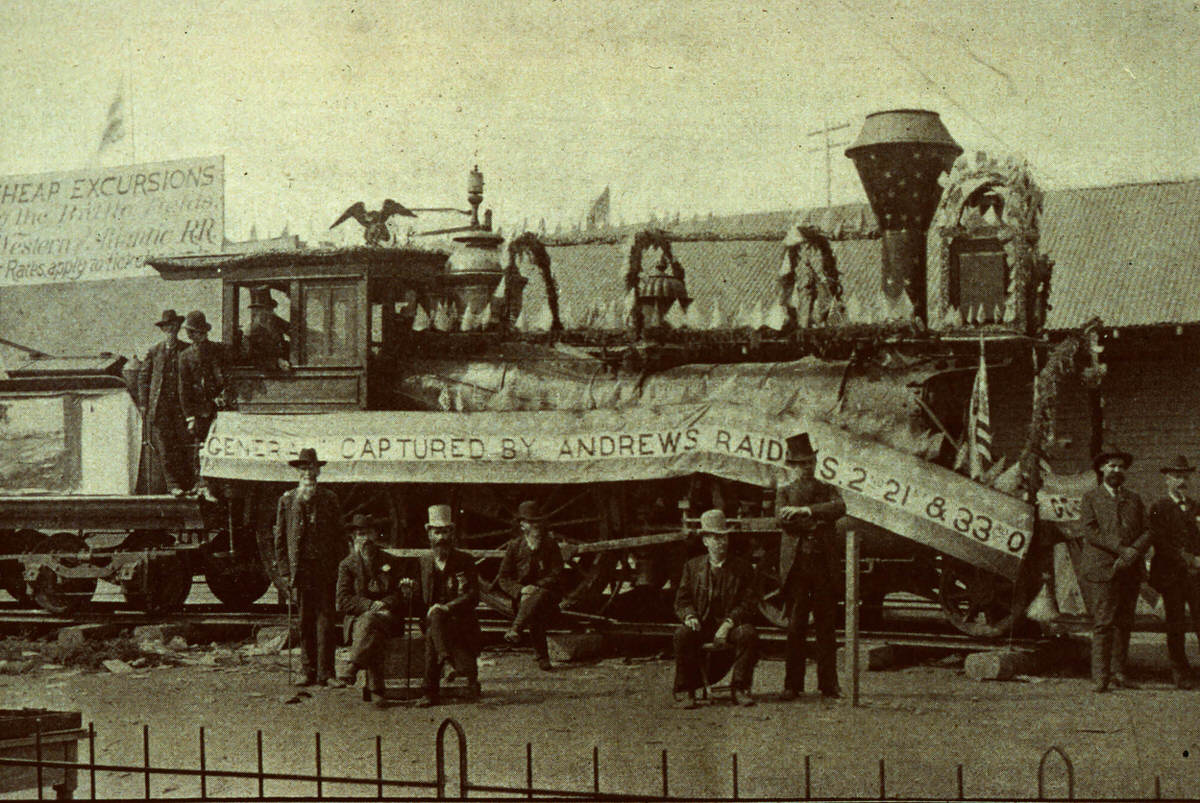
The General locomotive of Andrews Raiders fame is shown here at the Grand Army of the Republic 22nd National Encampment, September 1888. Featured are the survivors of the raid, including the first men to win the Congressional Medal of Honor, one being the very first, Jacob Parrott.
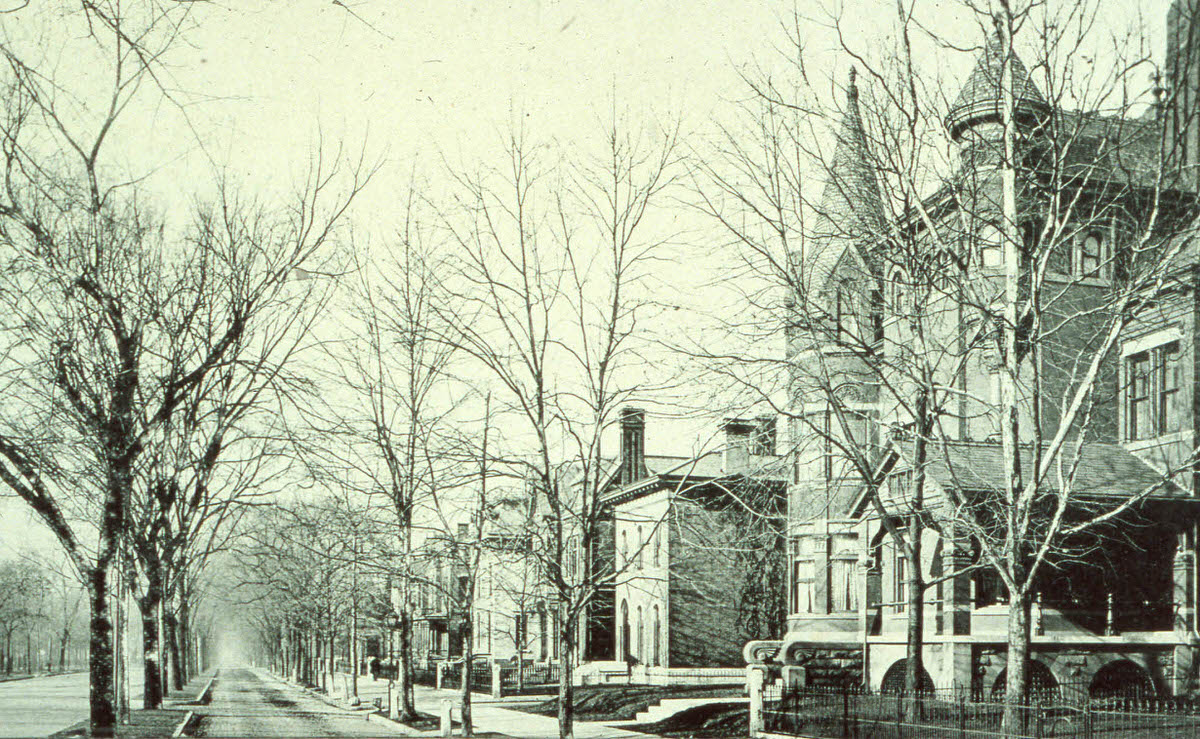
East Broad Street residential scene.
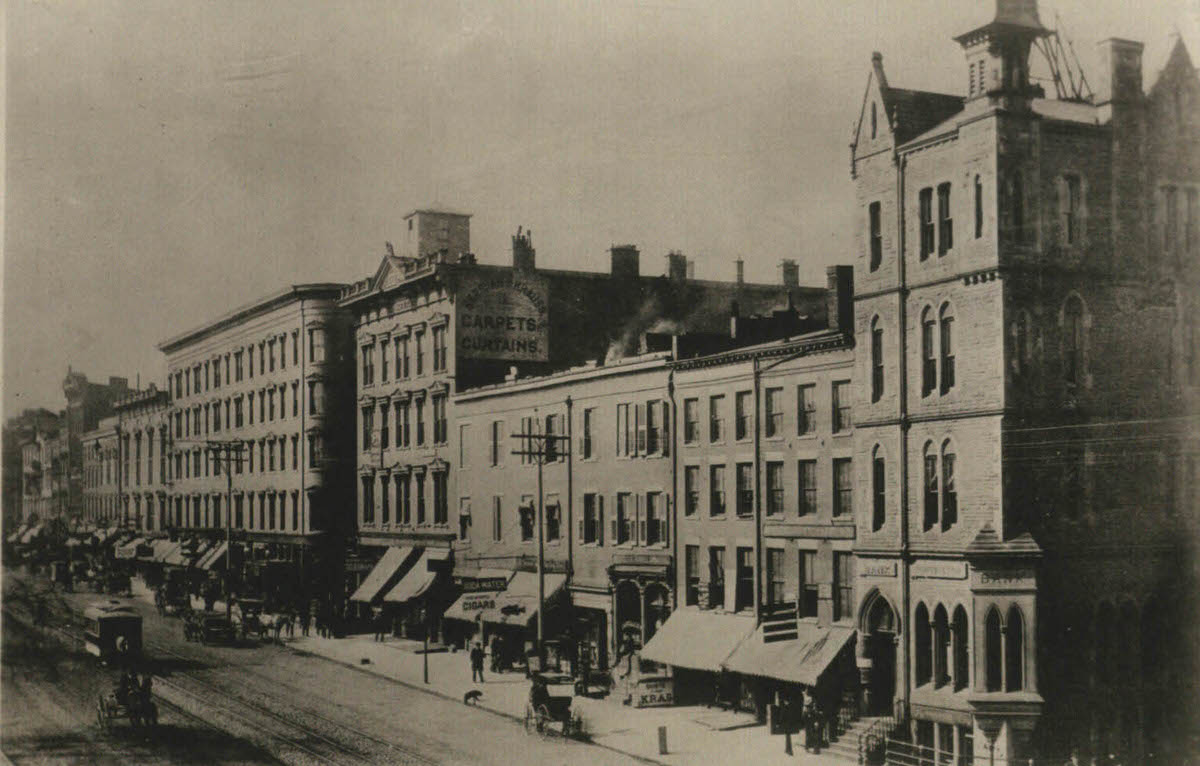
Businesses in this 1889 photo of High St. south of Broad are: the Huntington National Bank, Charles Krag Men’s Clothes, Krauss-Dobie Carpet, and Charles Huston Cigars. Submitted by R. C. Thurber of 330 East Gay Street.
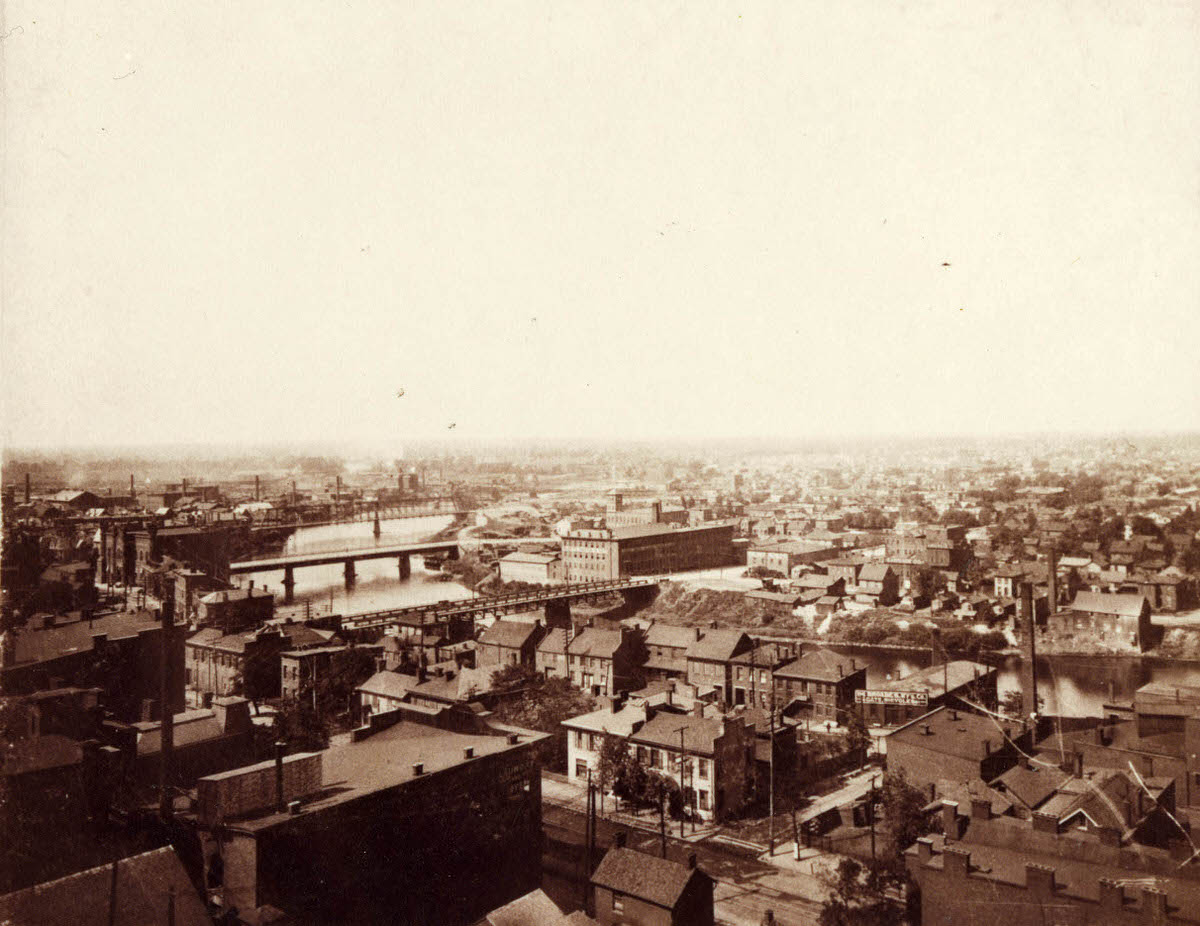
Aerial view of downtown Columbus looking southwest across the Scioto River. The view is south of Broad Street. South Front Street is in the foreground. The State Street and Town Street bridges can be seen. Also in the photograph is the Rhoades Manufacturing Company, makers of boats and bicycles, at 33 South Scioto Street, and the City Prison at 150 South Scioto Street. This undated photo was probably taken in the late 1880s or early 1890s when the Rhoades Company was located on the southwest corner of Scioto and Capital Streets.
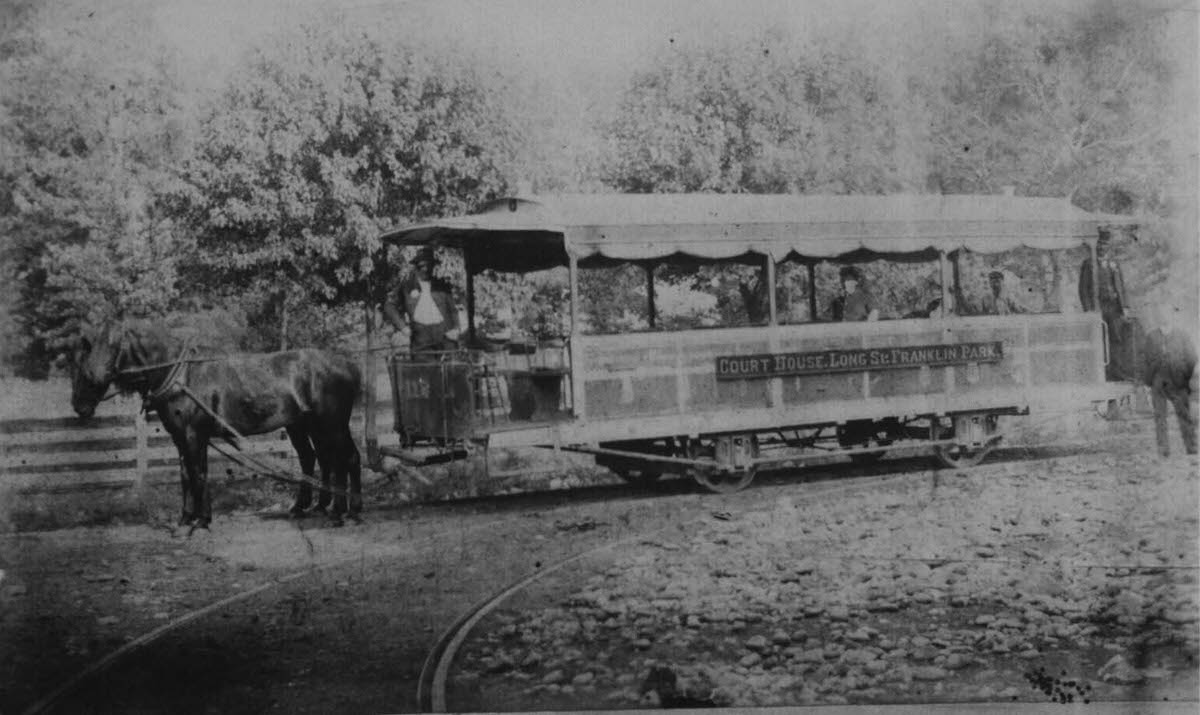
Horsecar for the Court House, Long Street, and Franklin Park Line stops at the old car barn. Submitted by Miss Ethel Perry of 1448 Oak Street.
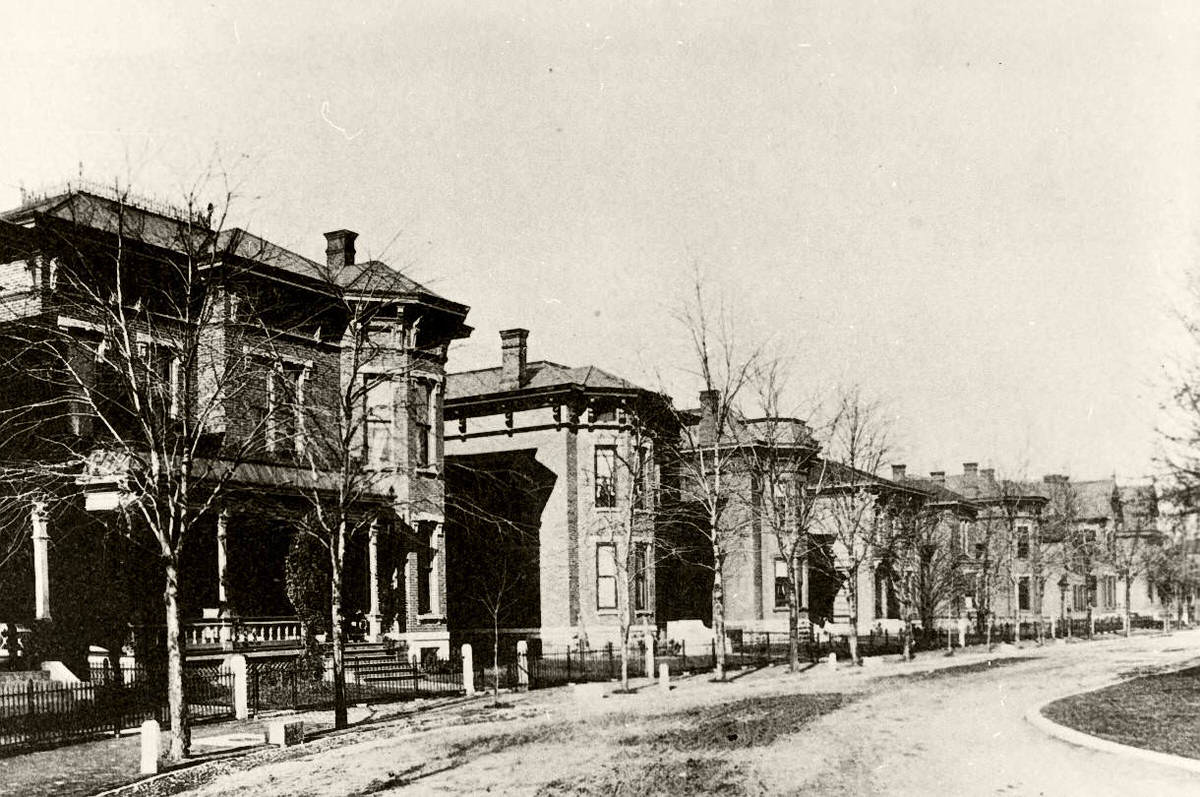
The west side of Jefferson Avenue was home to: Rev. Hiram W. Kellogg, #39; Worthington E. Babcock, #43; John C. Whitridge, #51; Harry E. Stafford, #57; Fred A. Wheeler, #59; Fred Blankner, #67; and Columbus’s own James Thurber, #77 Jefferson Avenue.
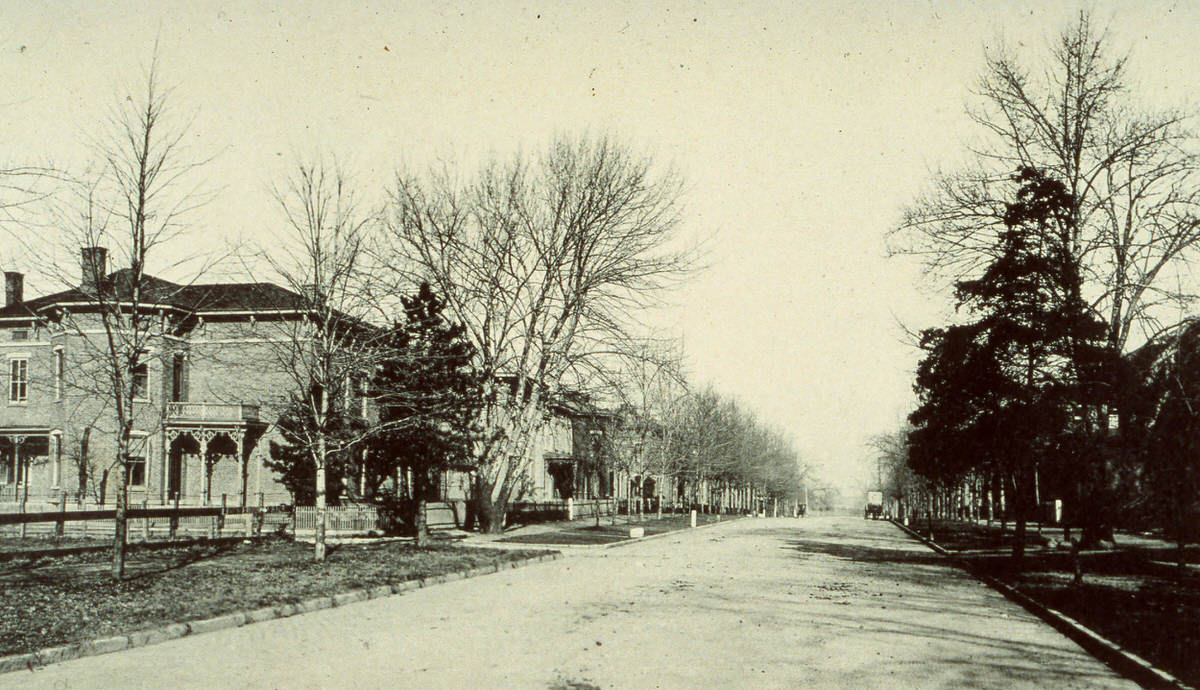
Houses on Lexington Avenue near E. Broad are: David C. Meehan’s home, #29, and the Faxon F. D. Albery home, #37 Lexington Ave.
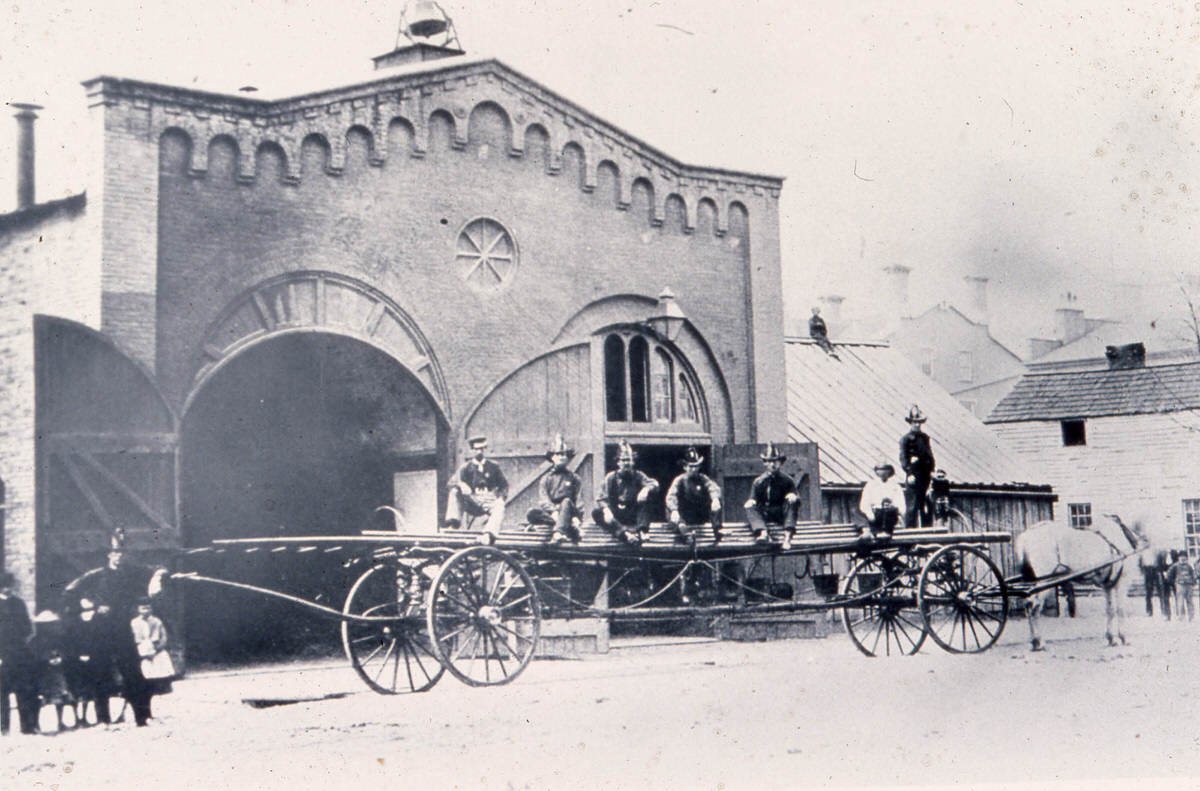
Hook and Ladder Co. 1, nicknamed “Gift”, in front of Engine House #3, located at S/W Third and Chapel Streets. This location was in use from 1855 to 1962. It was remodeled in 1872 and again in 1894.
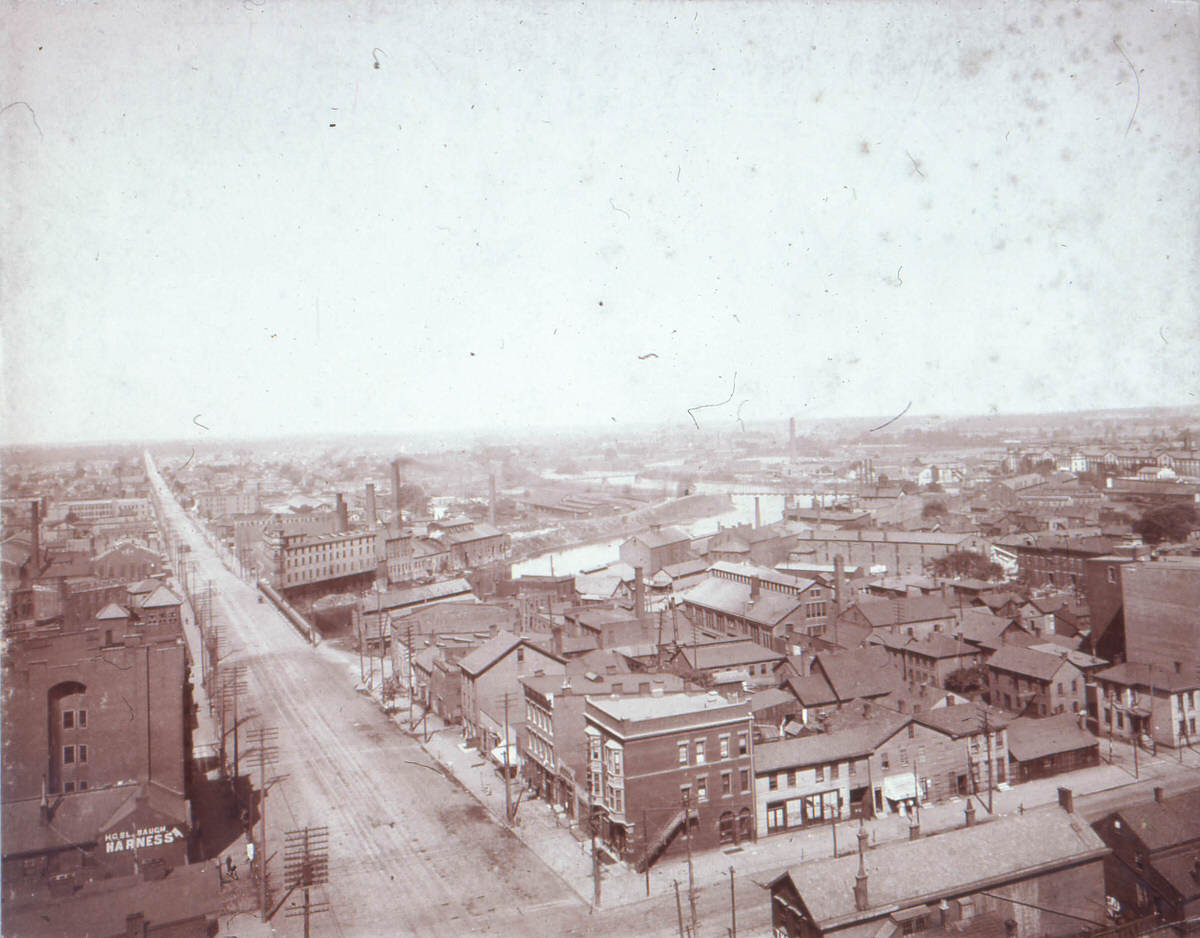
Aerial view of West Broad Street at Front Street.
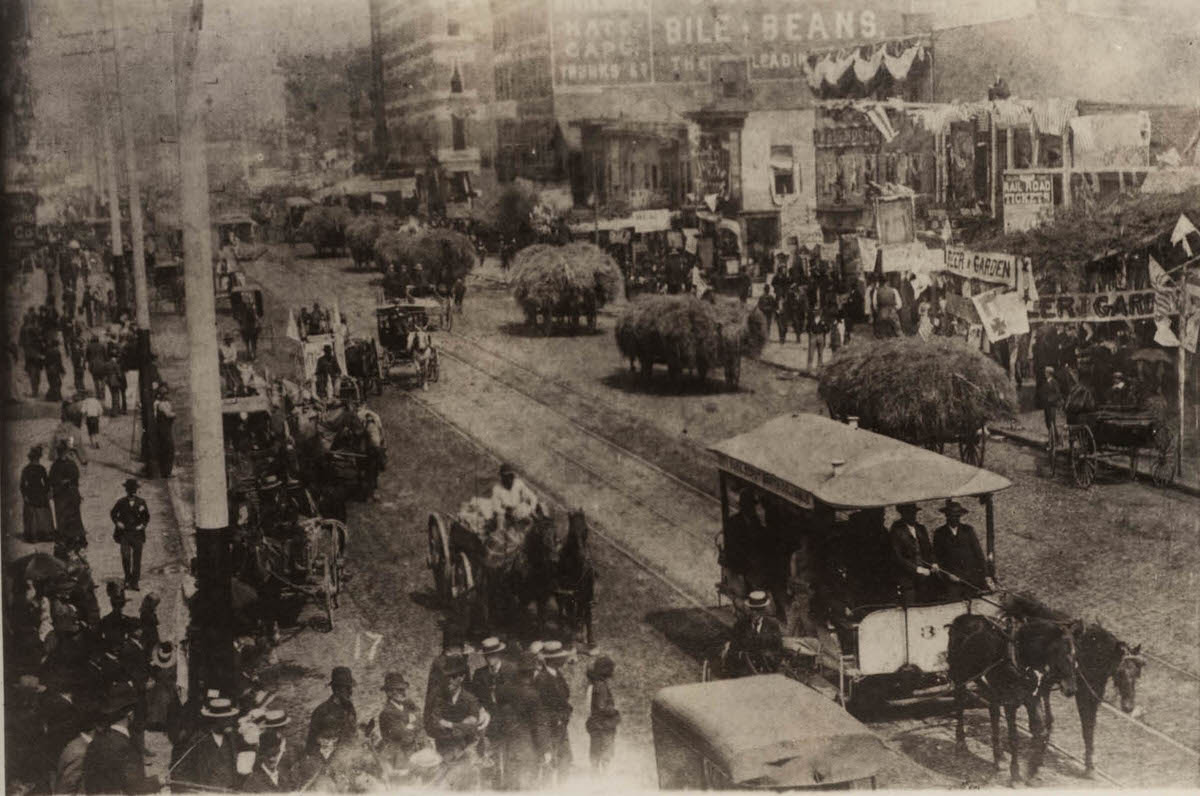
Sixty loads of straw were donated by local farmers for the Grand Army of the Republic Encampment held September 6, 1888.
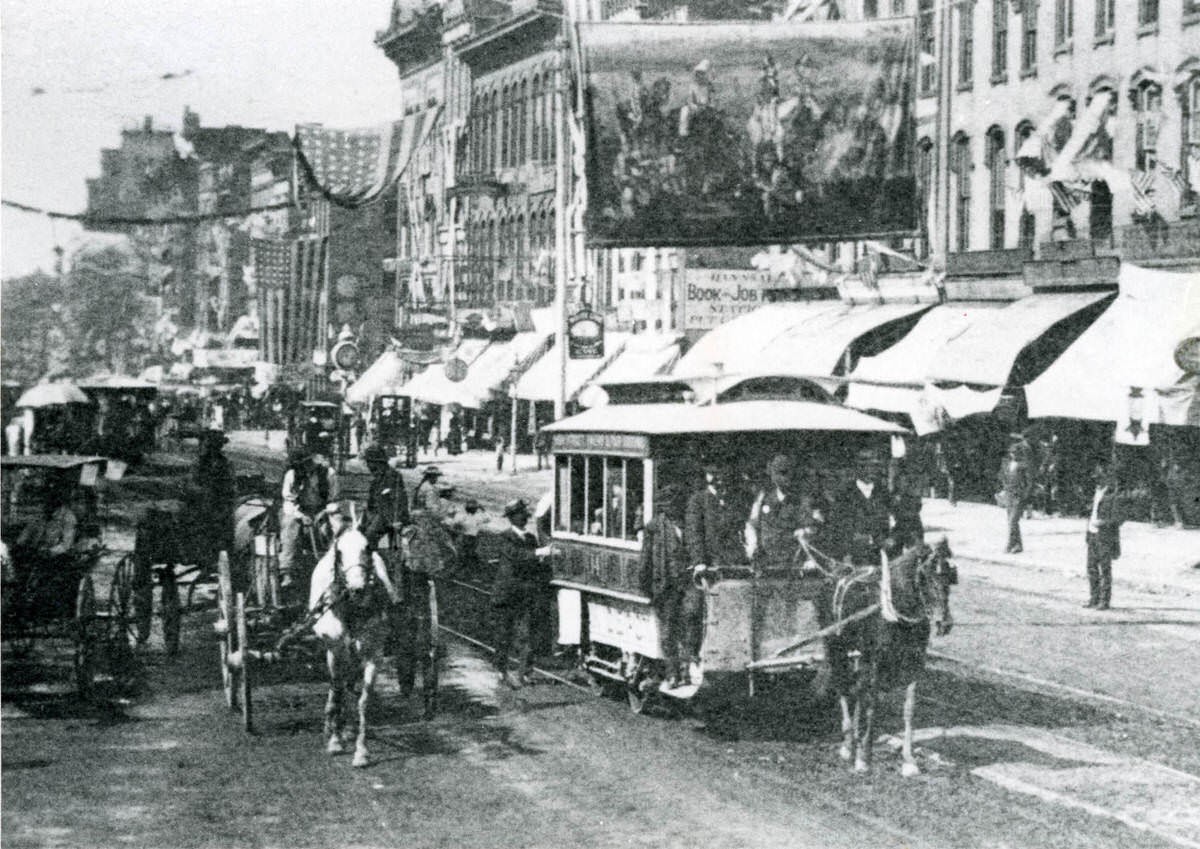
The streets of Columbus were decorated for the Grand Parade, held Tuesday, September 11, 1888, as part of the 22nd National Encampment of the Grand Army of the Republic.





I am so confused by the references to Fresh Oysters. In Columbus. In the 1800s.
It’s too bad there are no addresses on these, whether they’re demolished or not.
High & Spring had a beautiful building. It is now a single-story Fedex store with surface parking.
Imbiciles, Deaf and Dumb, Feeble Minded, Friendless…
Picture #110 – so many forget to mention the 2nd Neil House in the picture which was later razed for Neil House #3 which was later razed .. yep, . it’s against the law to keep old buildings in Columbus :/ Fabulous pictures of days gone by. And I agree with the oyster comment – lol