At the height of the Great Depression, the U.S. government created the Resettlement Administration to help drought-stricken and impoverished farmers. In 1937, it was restructured and renamed the Farm Security Administration. The FSA launched one of the most ambitious documentary photography projects in American history, sending a small team of photographers across the country to record how ordinary people lived. Roy Stryker directed the project, and the roster of photographers he assembled was remarkable — Dorothea Lange, Walker Evans, Gordon Parks, Lewis Hine, and Russell Lee all took part.
John Felix Vachon came to photography almost by accident. In 1936, the 21-year-old Minnesotan was studying at the Catholic University of America when he landed a job with the FSA as an assistant messenger. He had no background in photography whatsoever. But working around the FSA’s photographers every day changed that. Their images pulled him in, and he started experimenting with a Leica camera on the streets of Washington, D.C. Stryker, Evans, and others noticed his eye and encouraged him — providing training and equipment. By 1938, Vachon was shooting solo assignments.
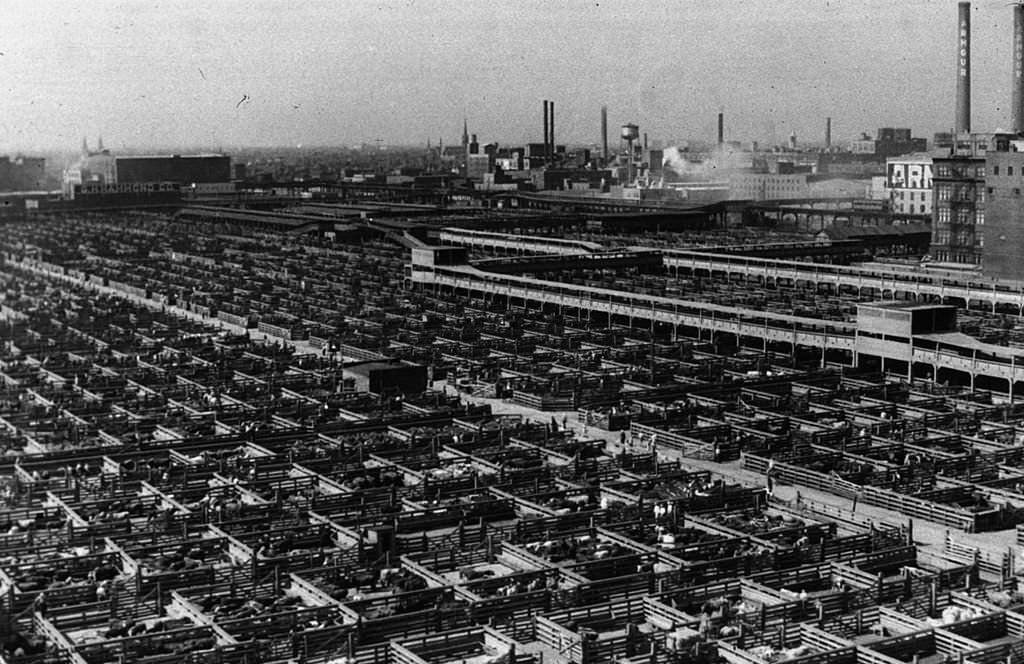
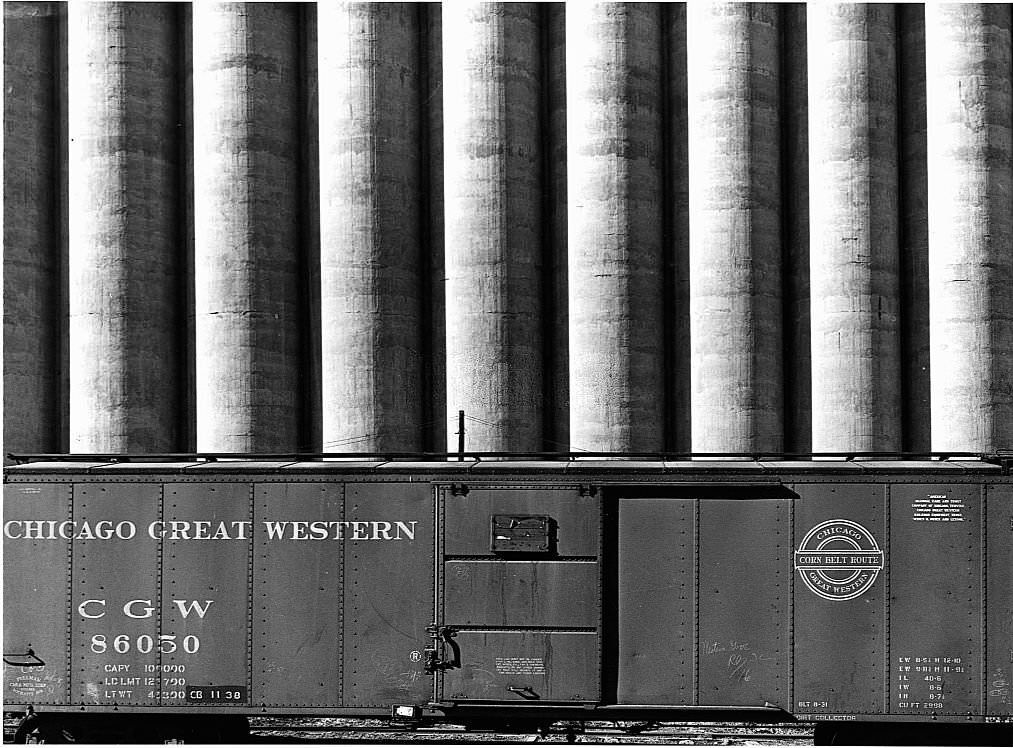
In July 1941, Vachon turned his lens on Chicago. The city he documented was a place of hard work and industrial muscle. The Union Stockyards were one of the busiest meat-processing hubs in the world, and Chicago’s rail lines and grain elevators kept the nation’s economy moving.
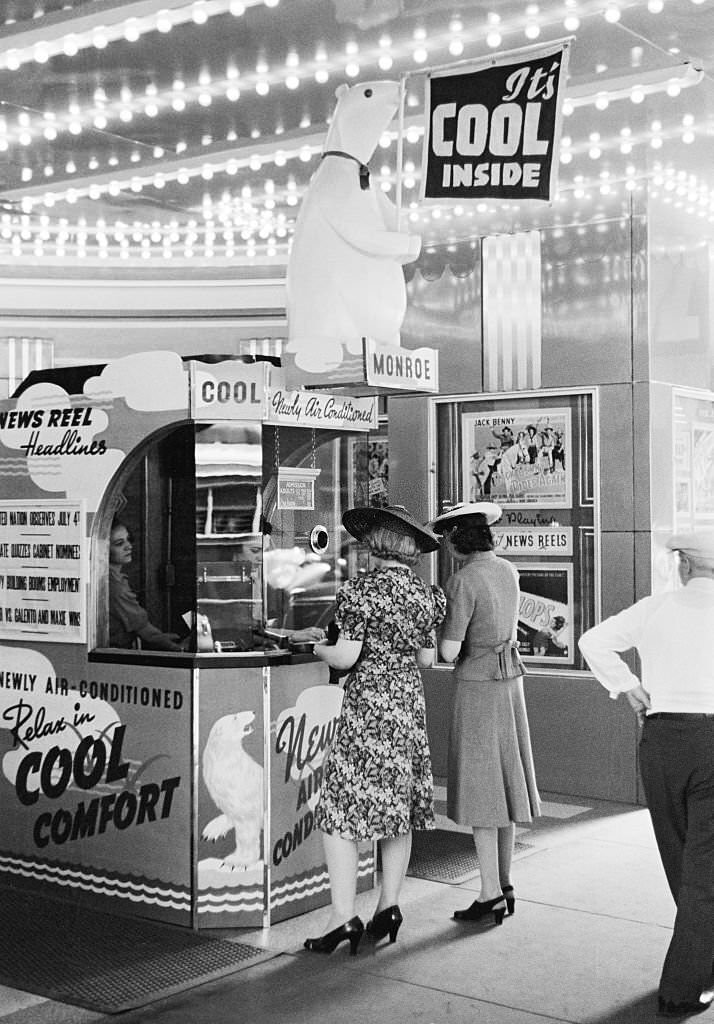
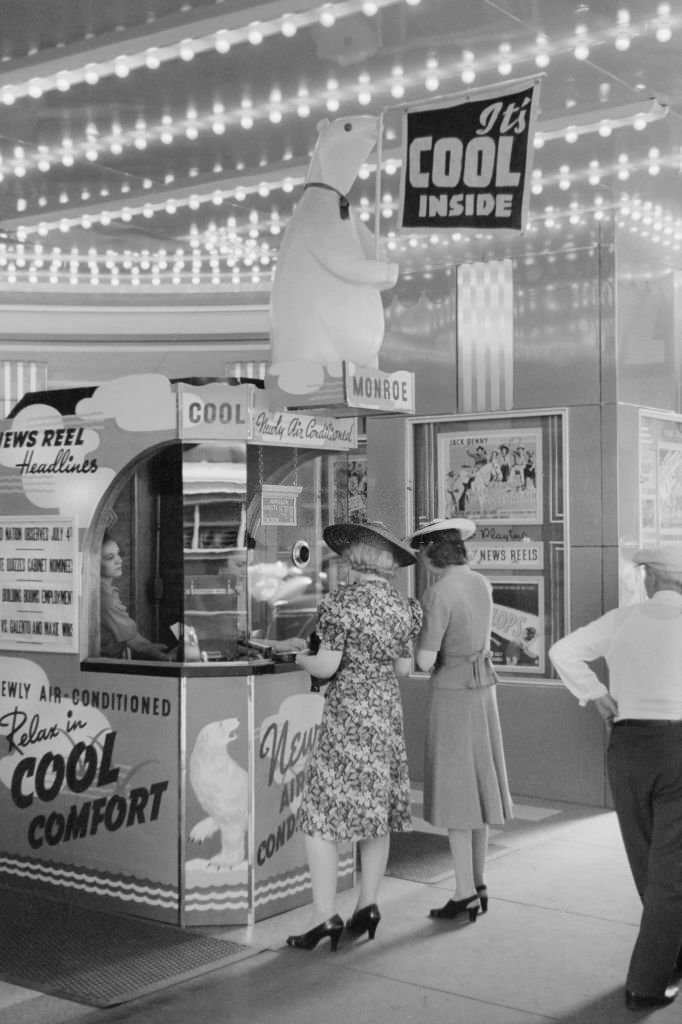
Chicago summers were brutal, and in 1941, air conditioning was still a novelty worth advertising on a marquee. Movie theaters that had it drew crowds eager for relief from the heat. Vachon caught these small, telling details — the kind that reveal what daily life actually felt like.
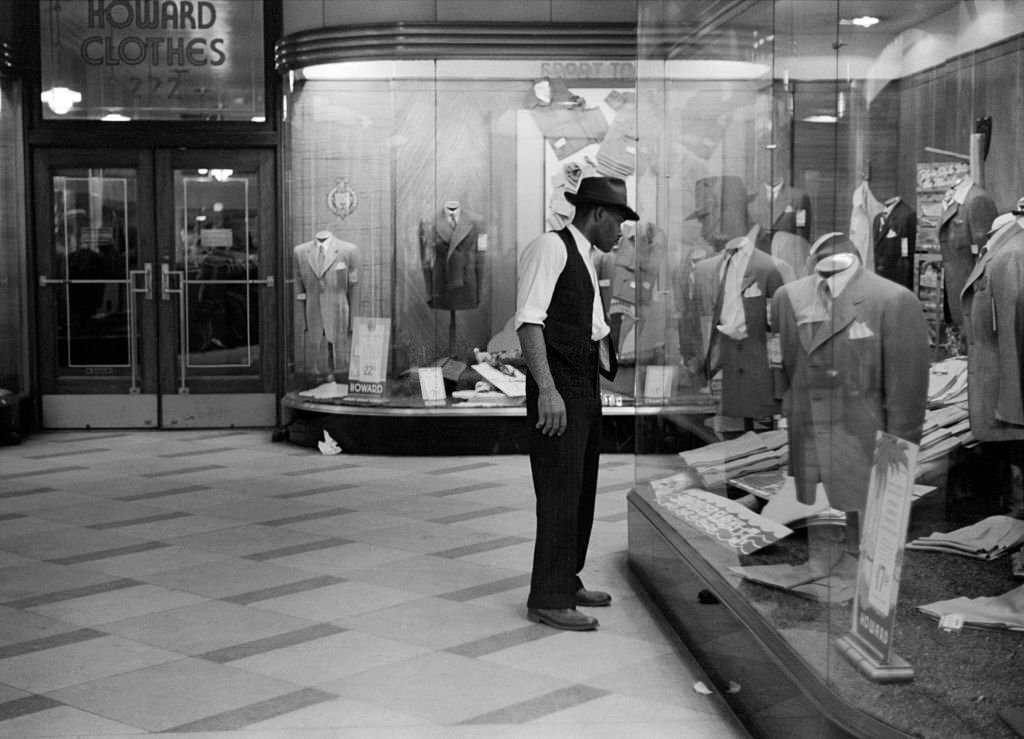
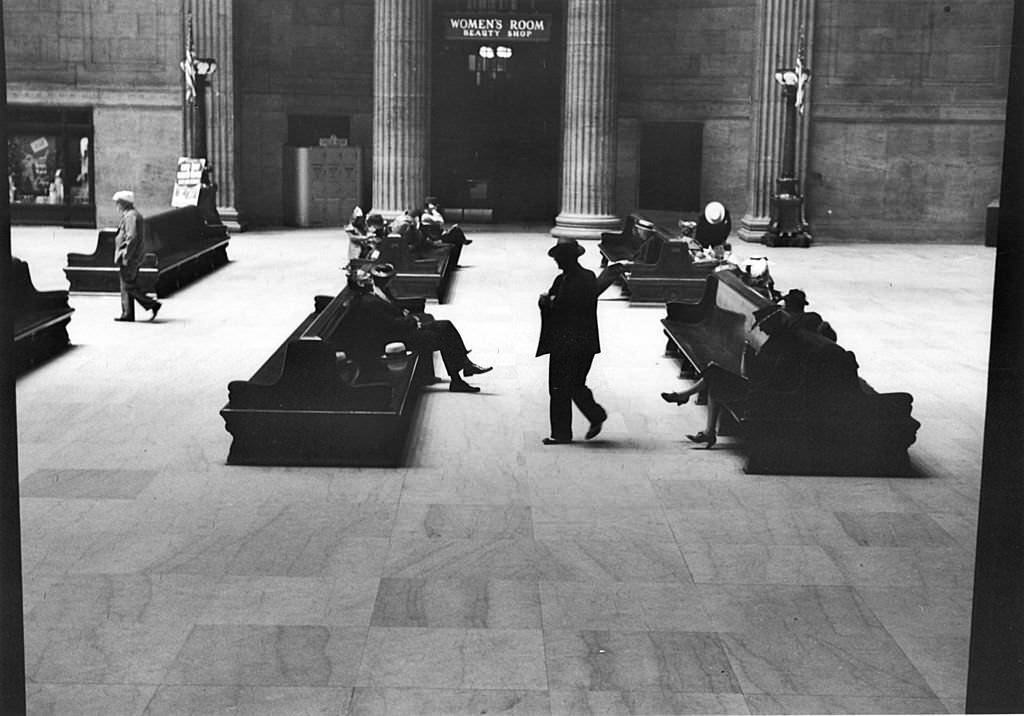
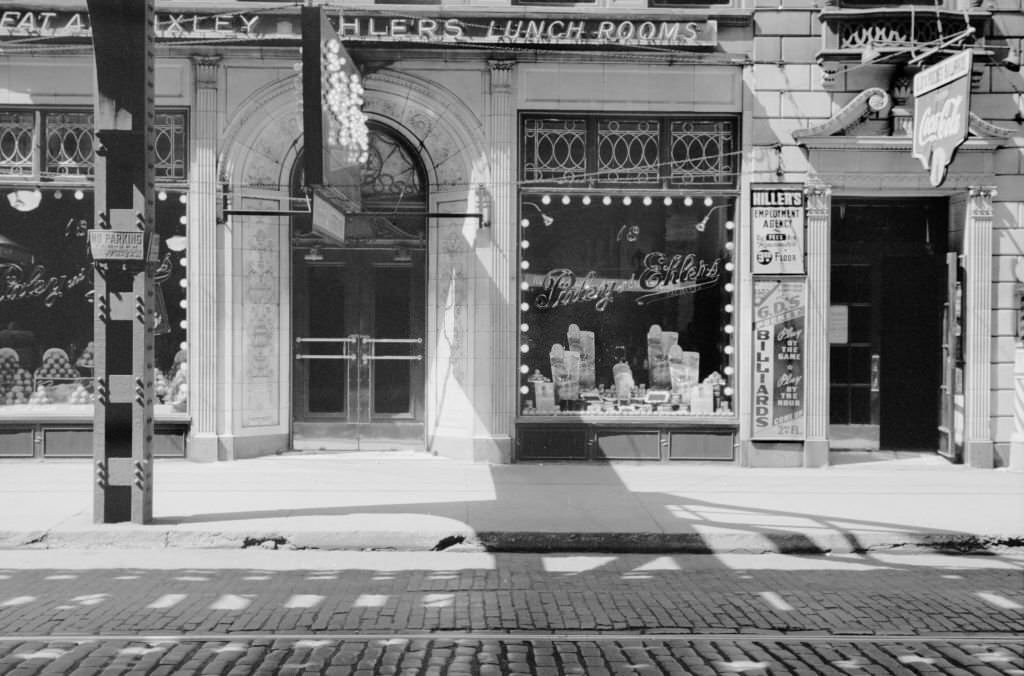
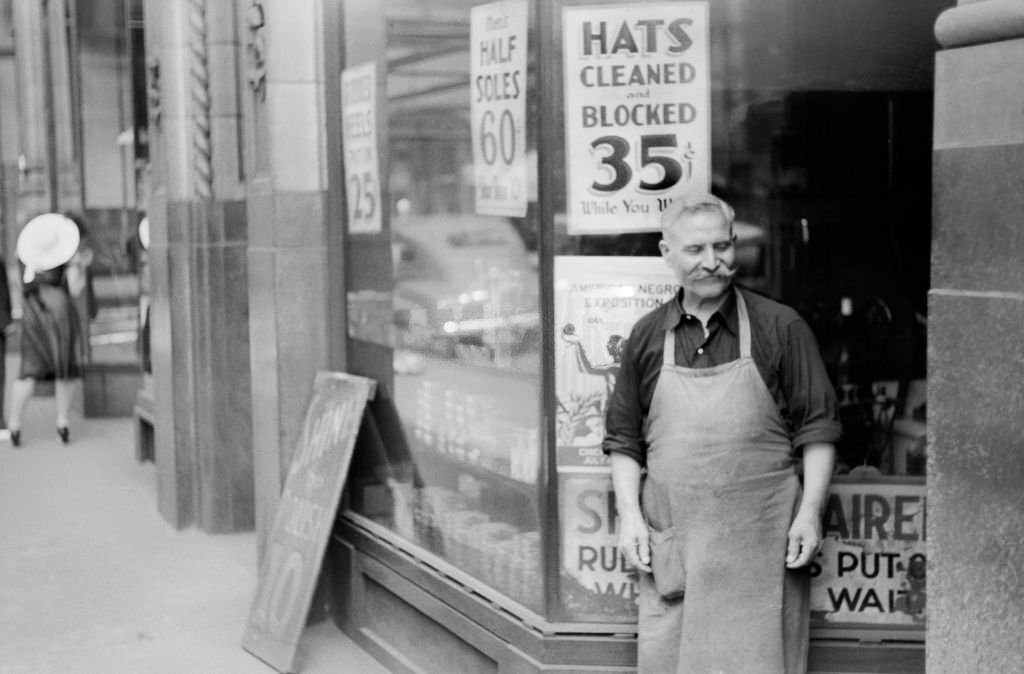
Not every shot was busy or crowded. Vachon’s Chicago also had its quiet moments — an almost empty train terminal, a lone man waiting for a streetcar, a shoemaker bent over his work. These images balanced the city’s noise with its stillness.
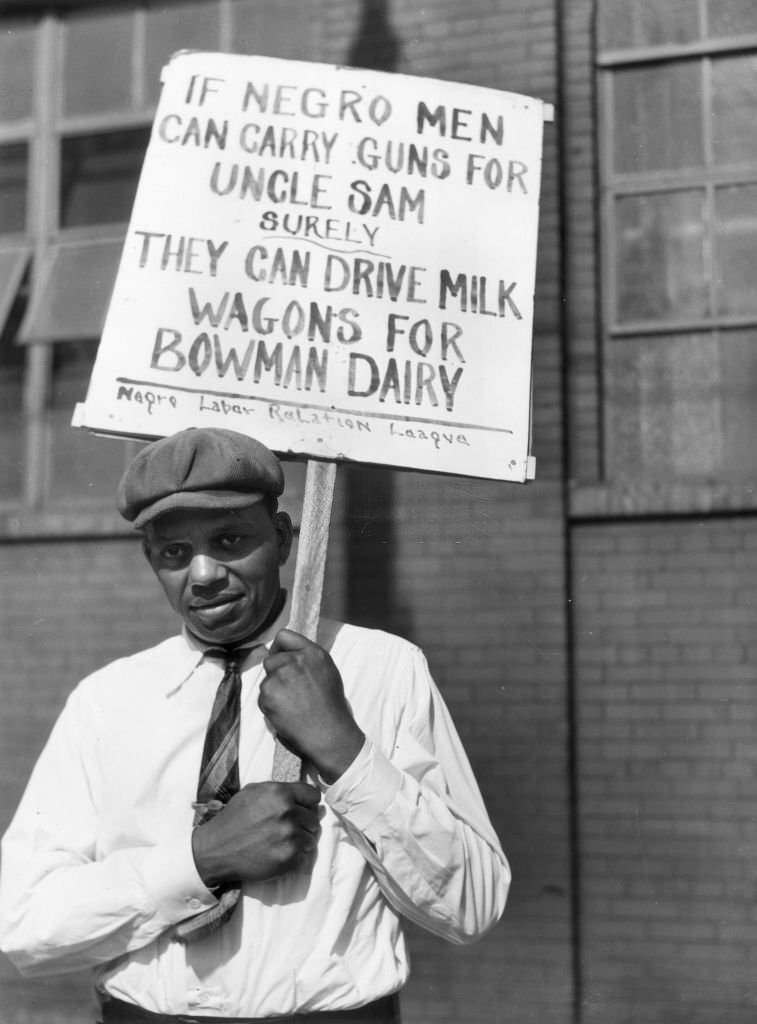
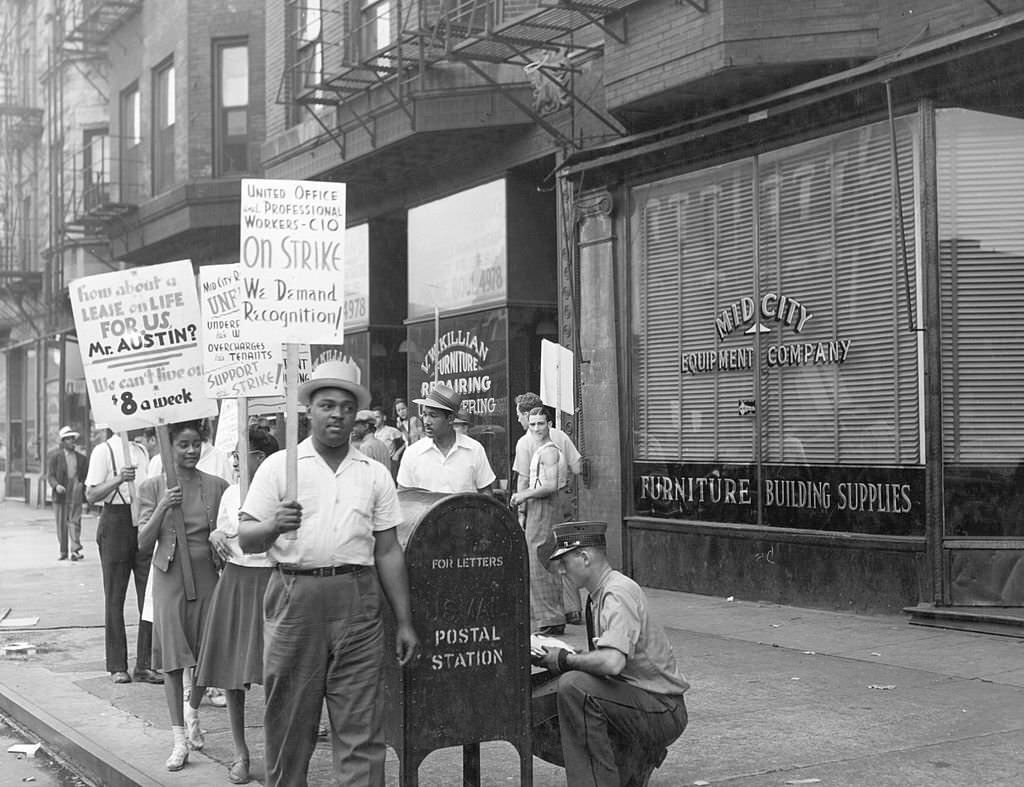
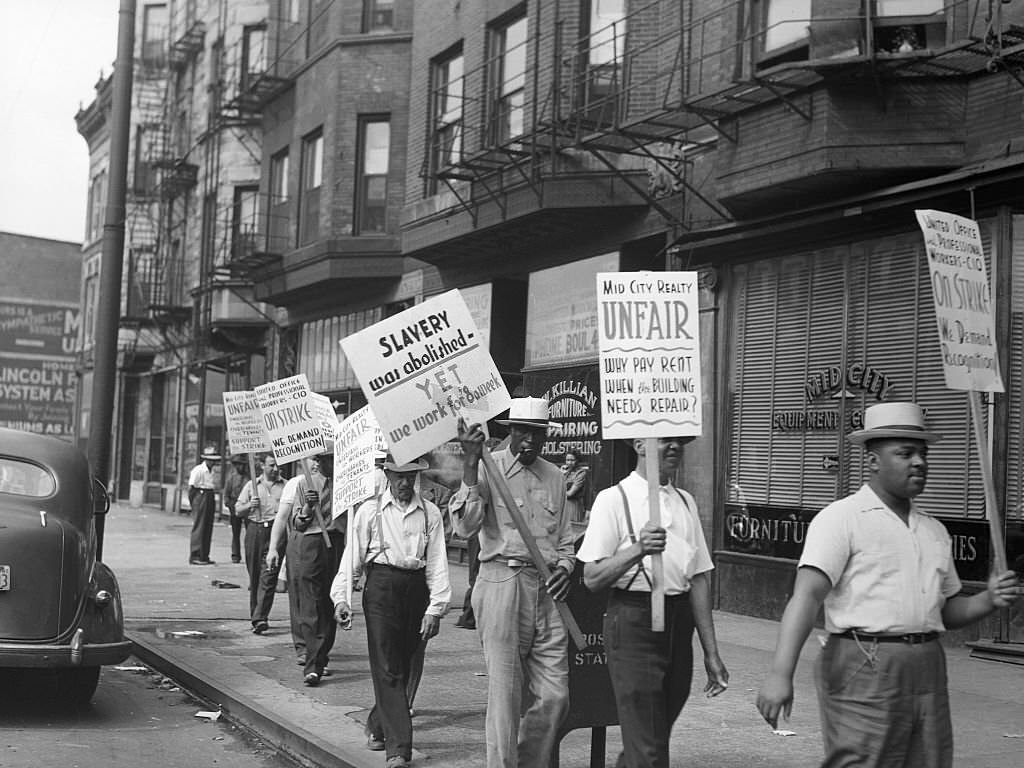
Chicago in 1941 was also a city of protest. With the United States edging toward involvement in World War II, Black Americans were increasingly vocal about the contradiction of being asked to serve a country that denied them equal employment. One protester’s sign outside Bowman Dairy put it plainly: if Black men could carry guns for their country, they could certainly drive milk wagons. Picket lines were also active outside businesses like the Mid-City Realty Company in South Chicago.
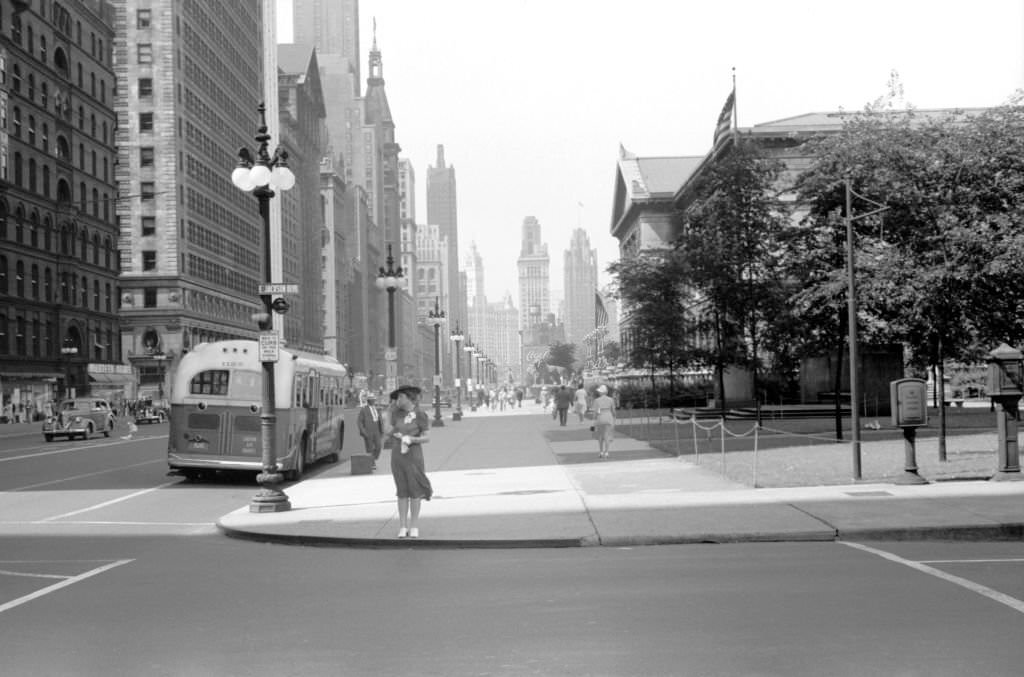
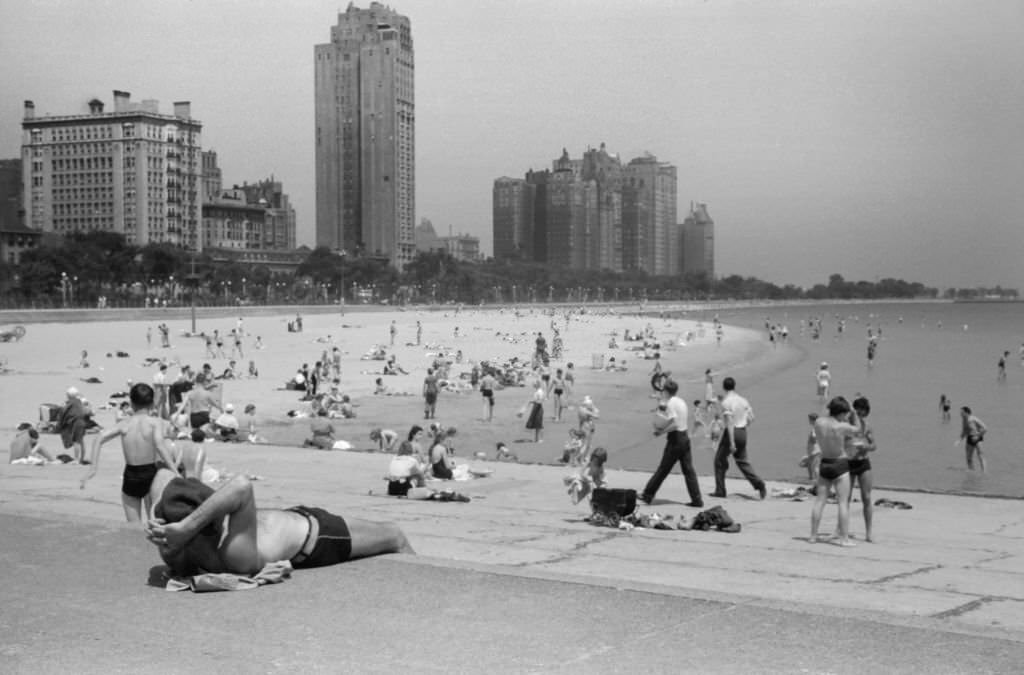
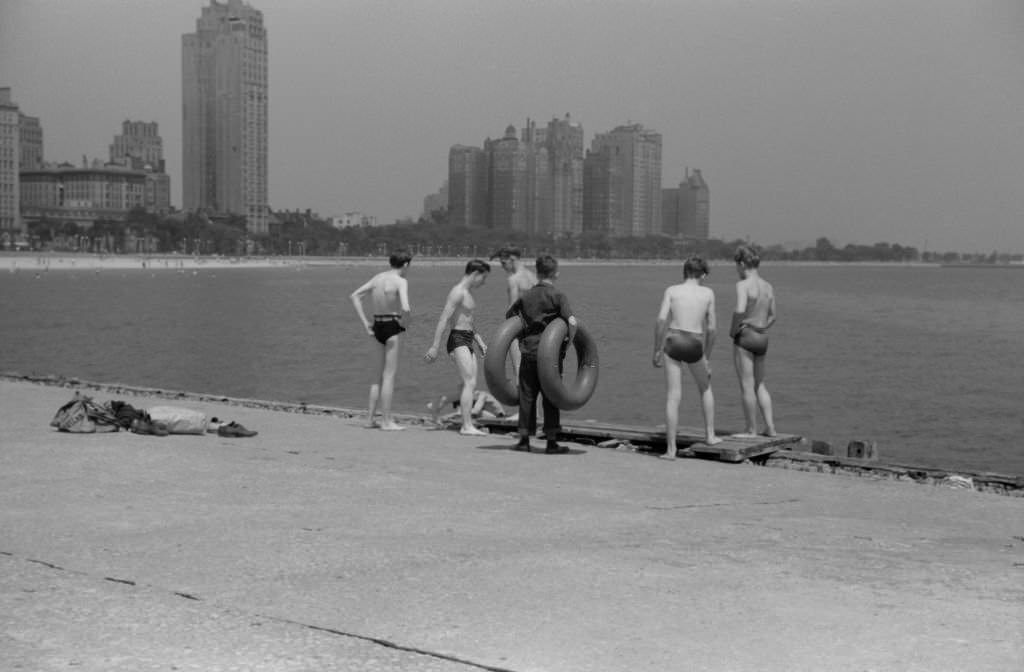
Michigan Avenue in 1941 was already one of the most recognizable streets in America. Vachon photographed it alongside the beaches of Lake Michigan, where Chicagoans escaped the July heat. The lakefront was a great equalizer — families, children, and couples all sharing the same stretch of shoreline.
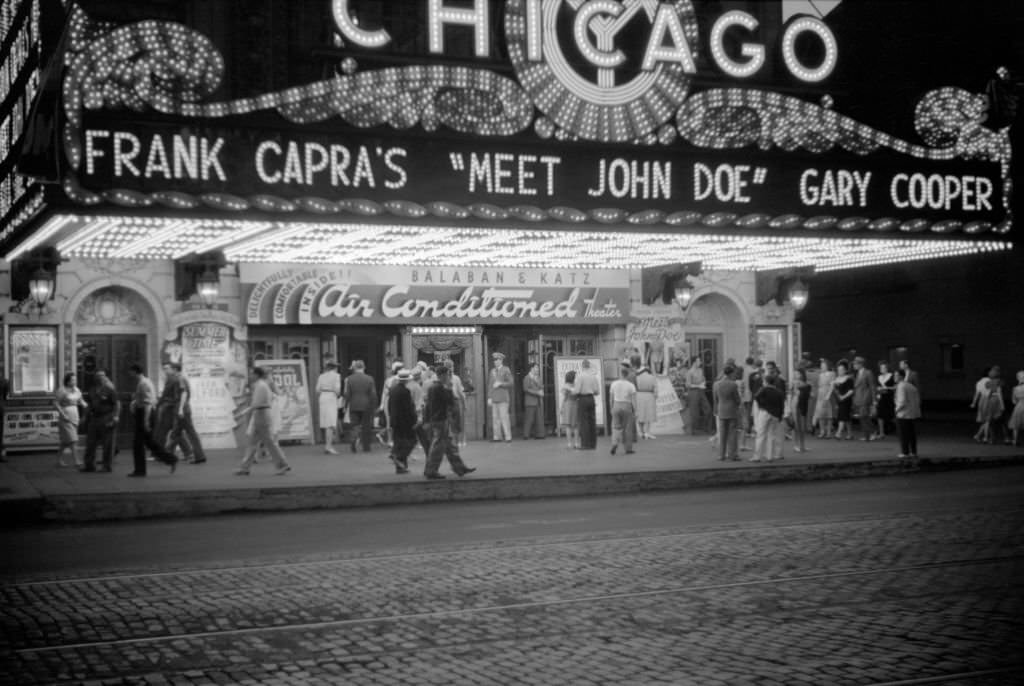
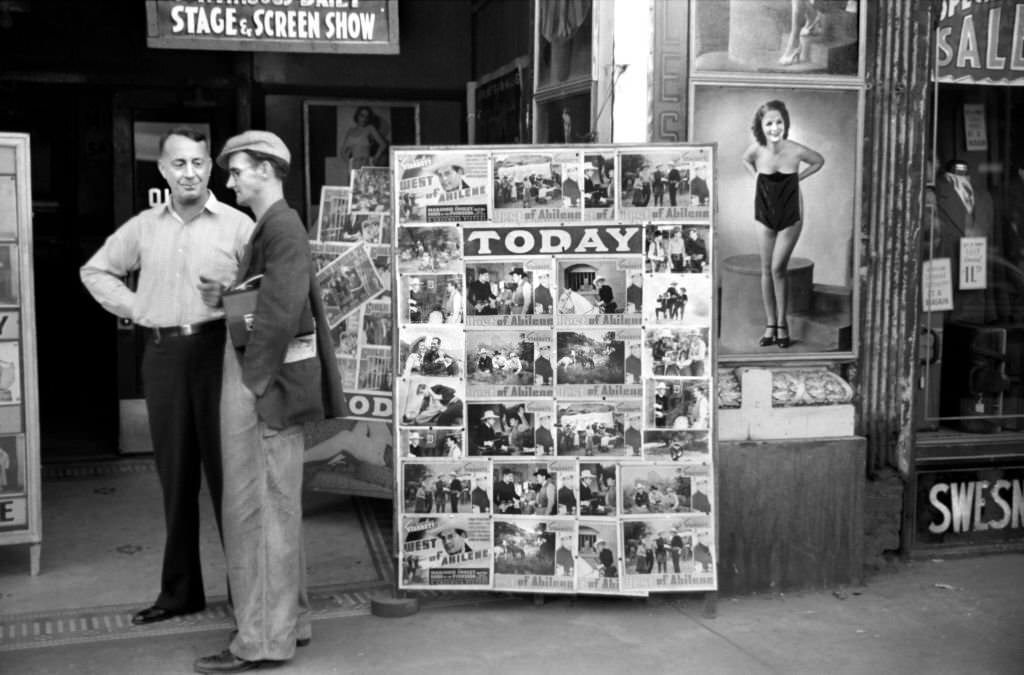
After dark, Chicago’s streets filled with a different energy. Theater marquees lit up South State Street, where burlesque venues sat alongside diners and entertainment halls. Vachon photographed the nighttime crowds with the same steady, unobtrusive eye he brought to everything else.
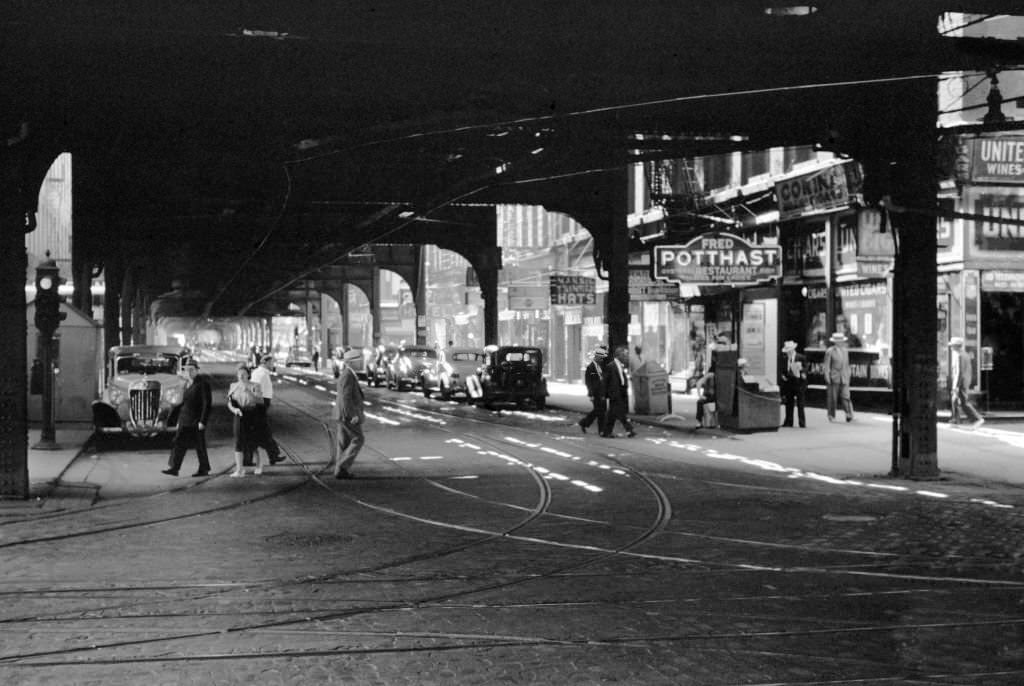
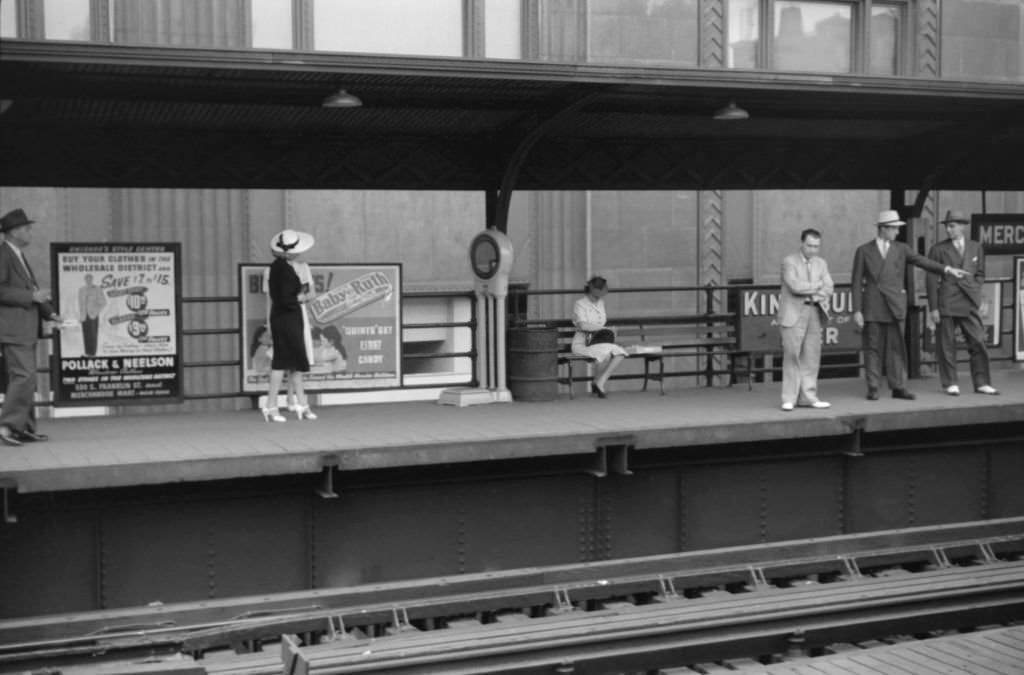
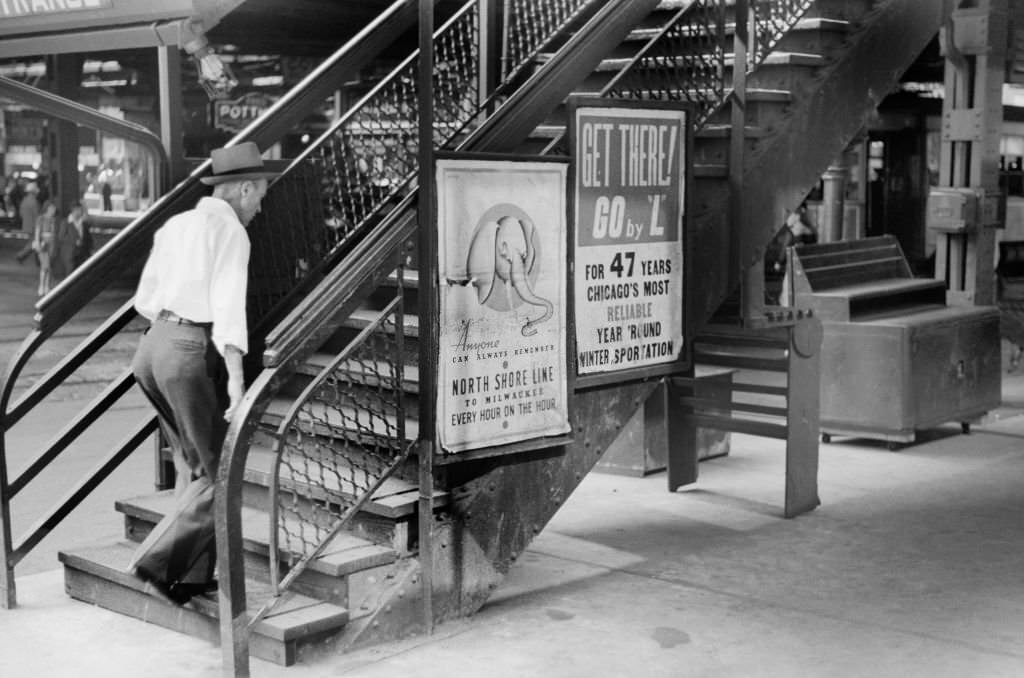
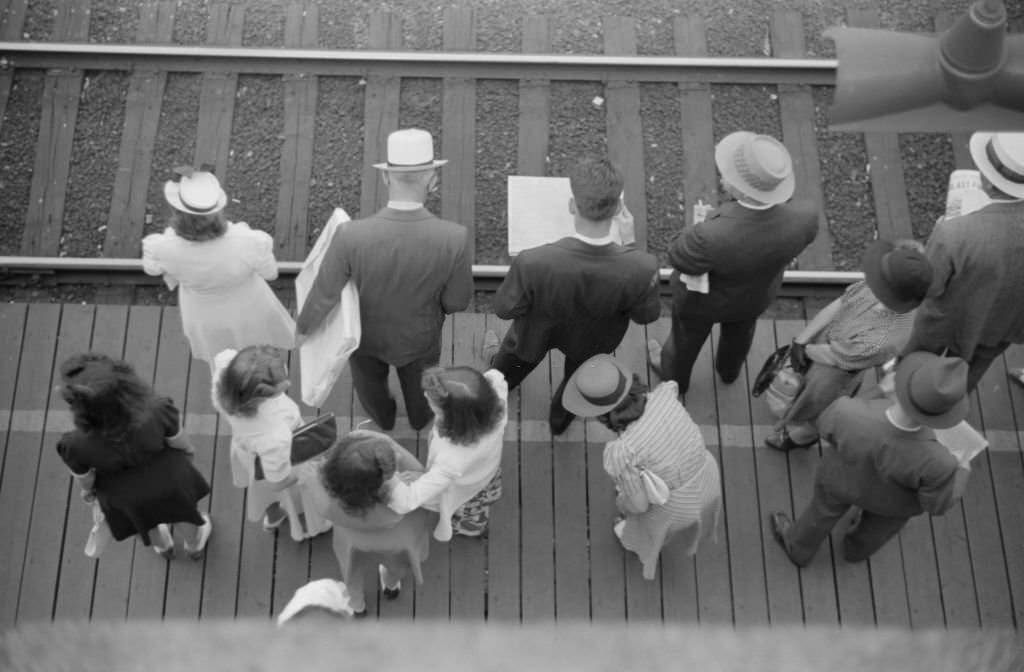
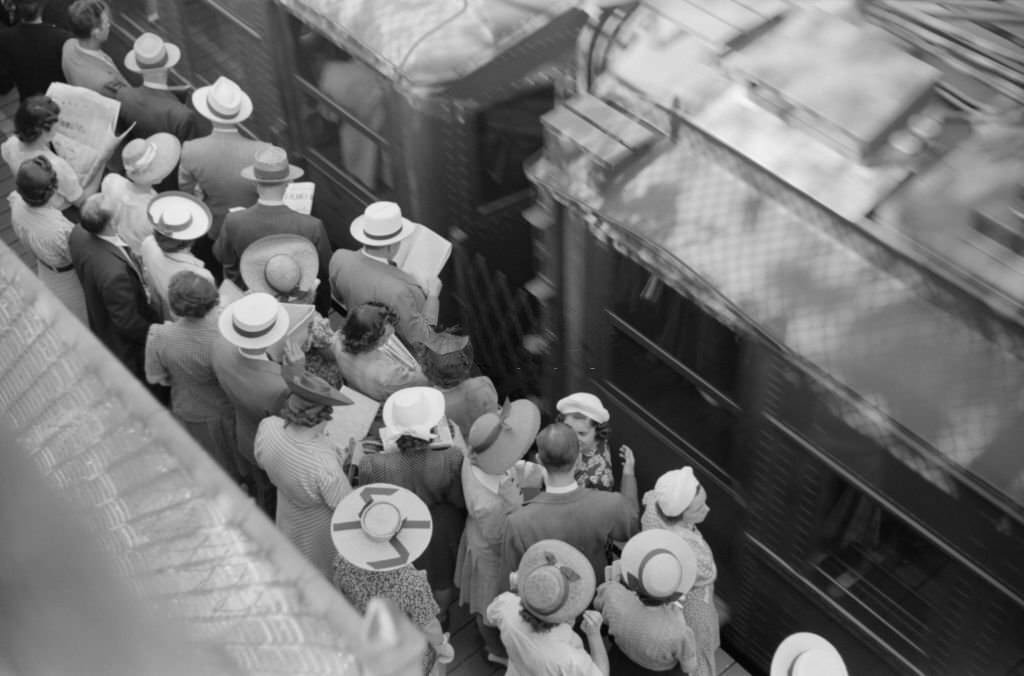
The elevated railway — the “L” — was the backbone of Chicago’s transit system. Vachon photographed it from every angle: from below, where its steel structure cast shadows across busy streets, and from above, looking down on commuters packed onto platforms at the Merchandise Mart Station.
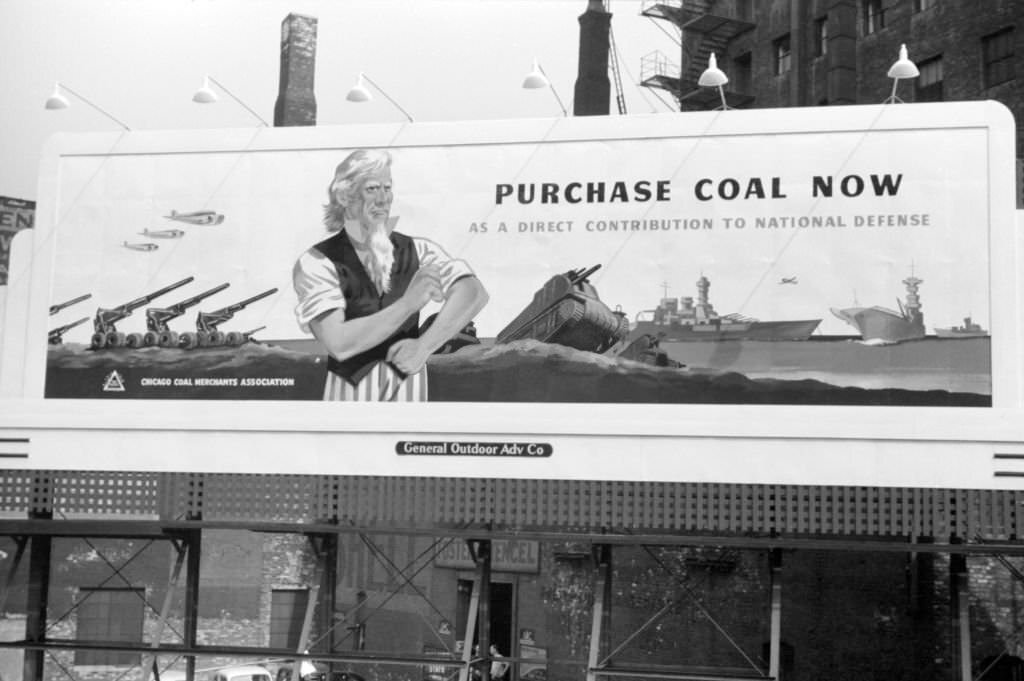
Even in the middle of July, a billboard urging Chicagoans to buy coal now was a common sight. Heating fuel was purchased months in advance, and advertisers knew it. Small details like this billboard tell the story of how people planned and prepared in 1941.
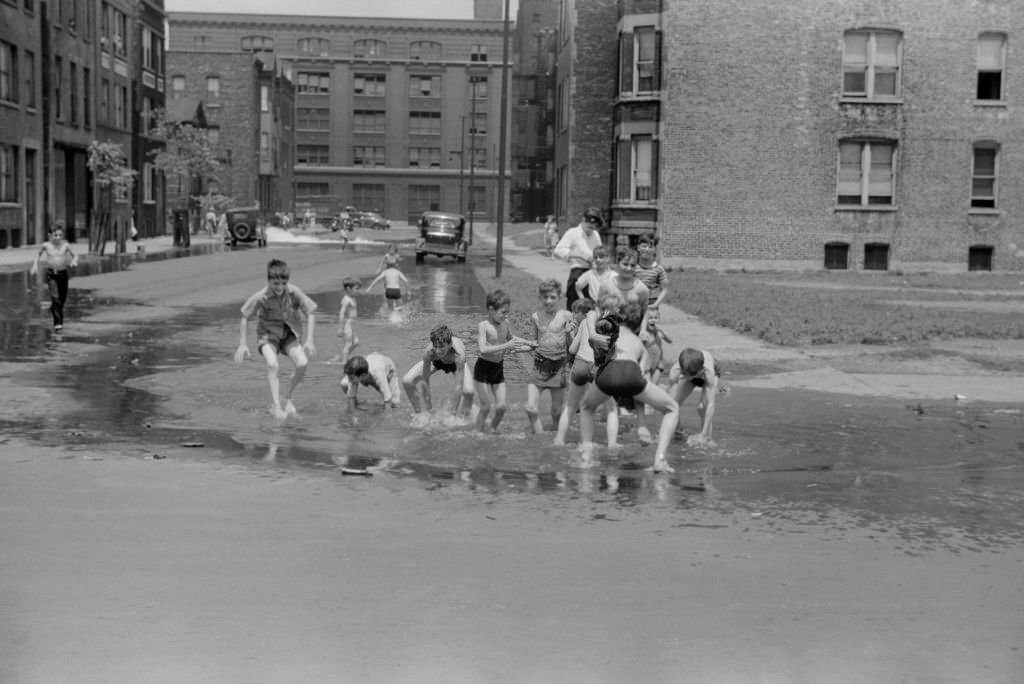
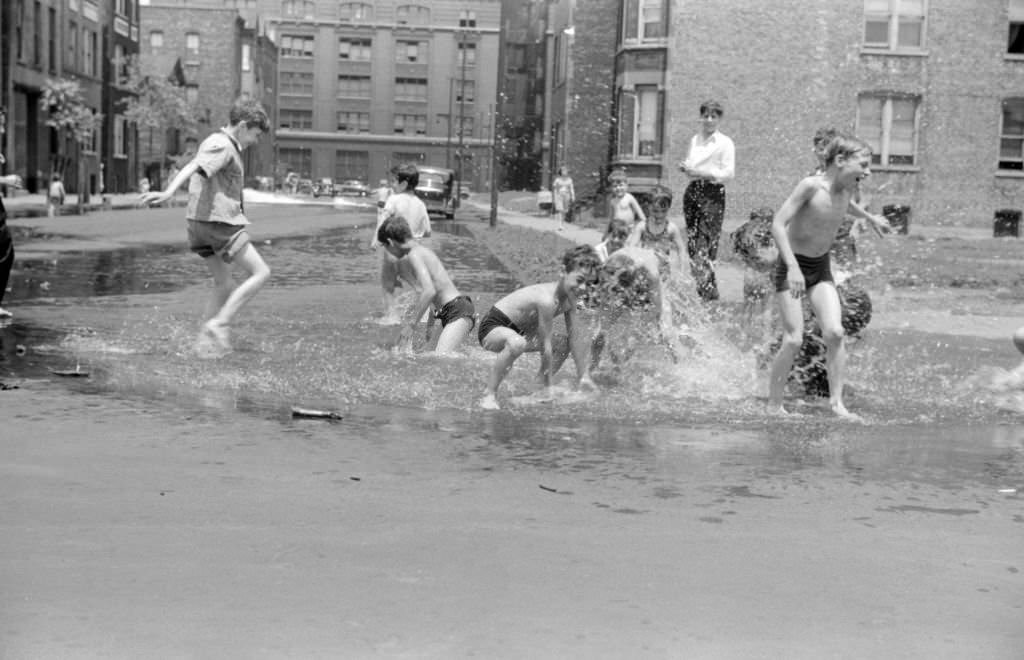
For kids in Chicago’s working-class neighborhoods, a fire hydrant opened on a hot afternoon was a summer highlight. Vachon photographed children splashing in the spray — a scene that needed no staging or direction. It was simply there, and he saw it.
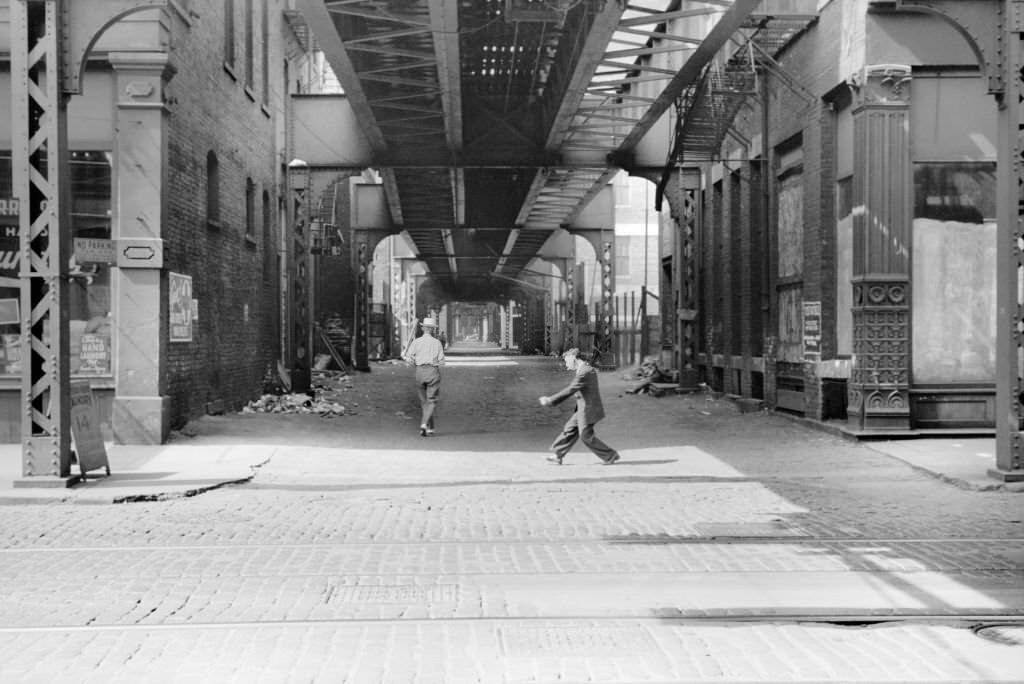
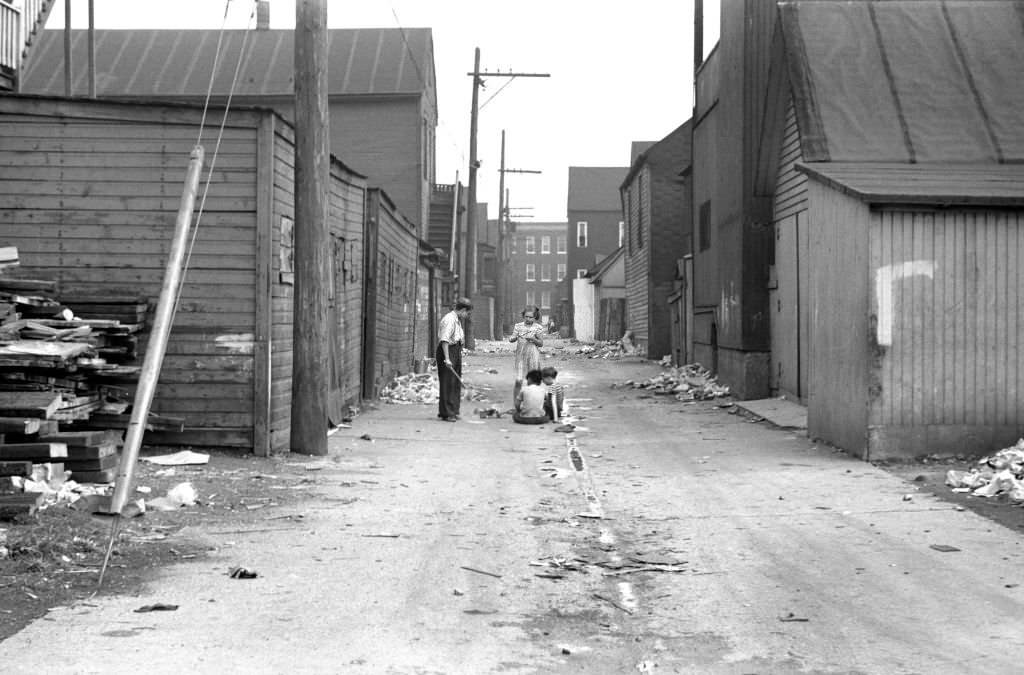
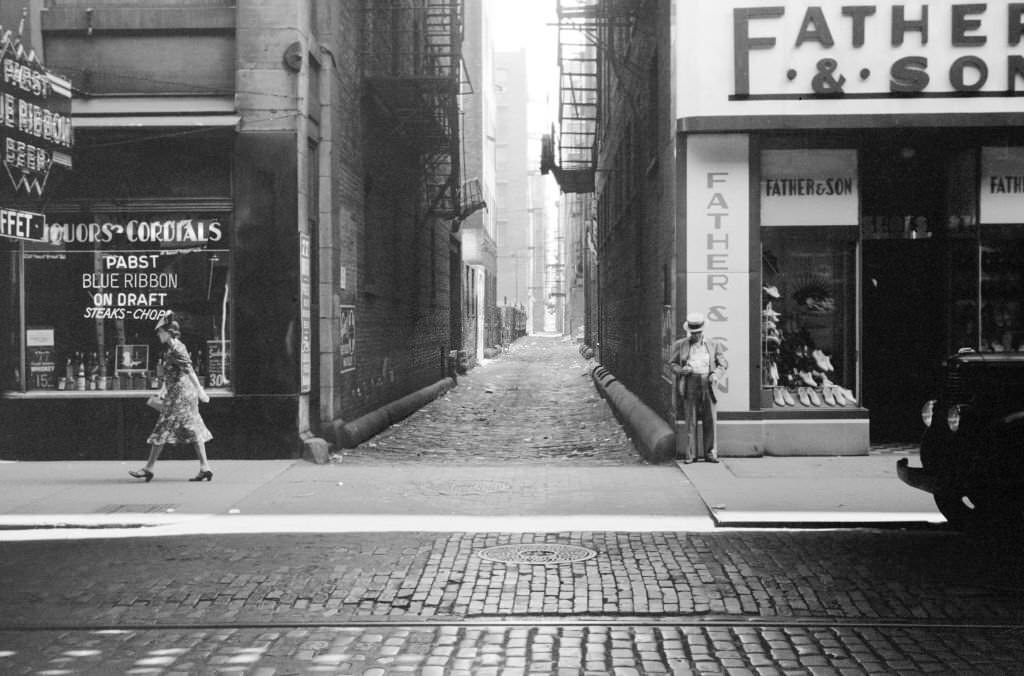
Chicago’s back alleys ran beneath the L tracks in a tangle of iron and shadow. Vachon photographed these spaces without romanticizing them — they were functional, gritty, and completely real. Four children standing in a South Chicago alley carried the same weight as any formal portrait.
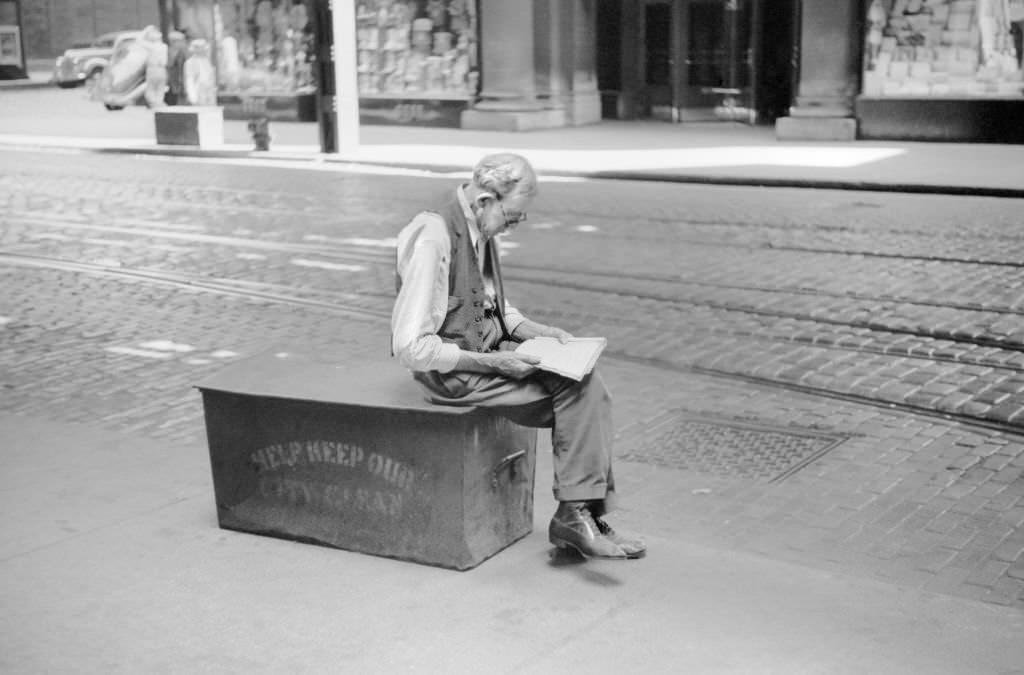
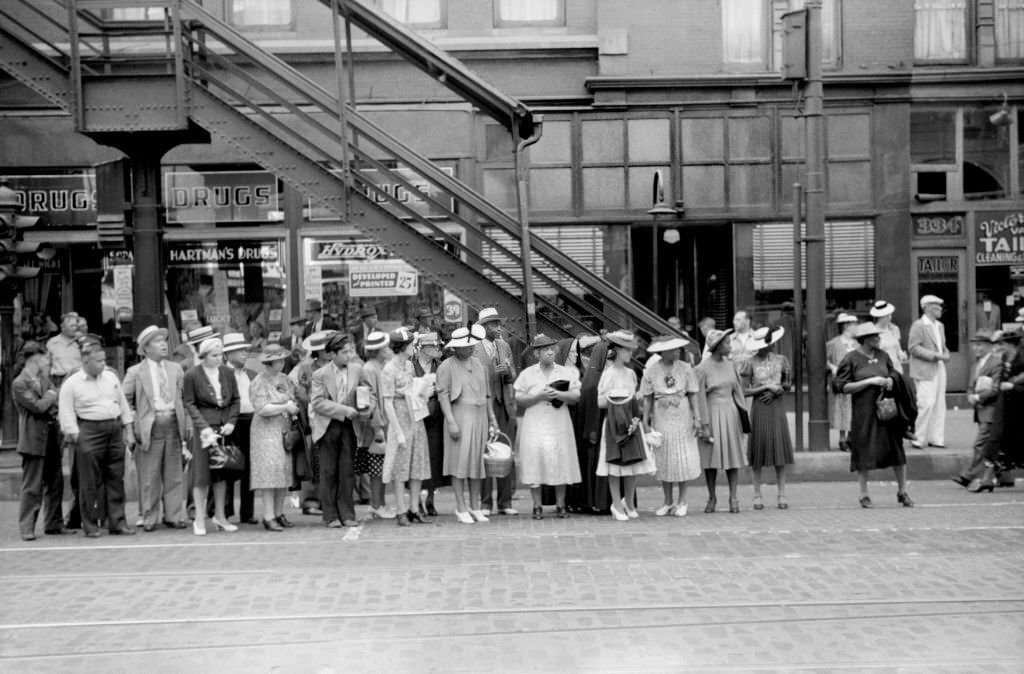
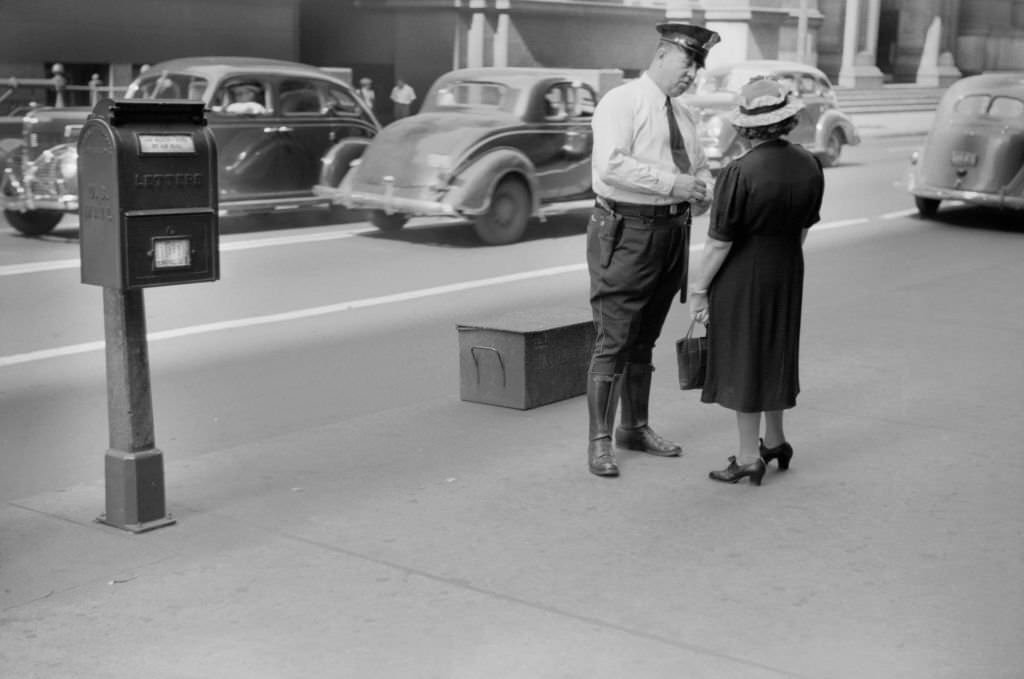
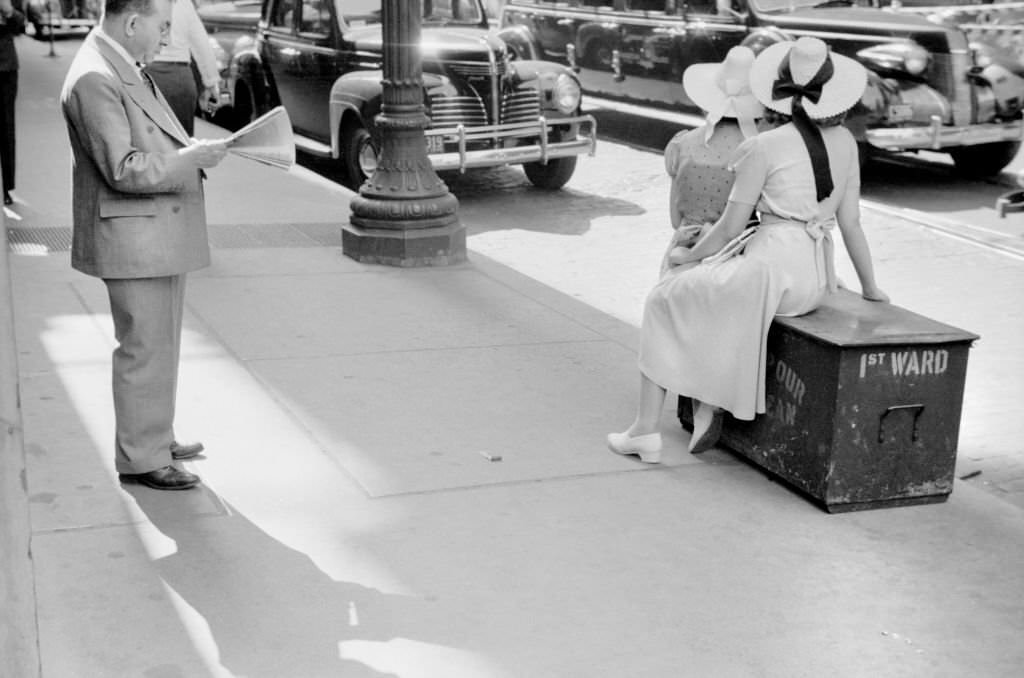
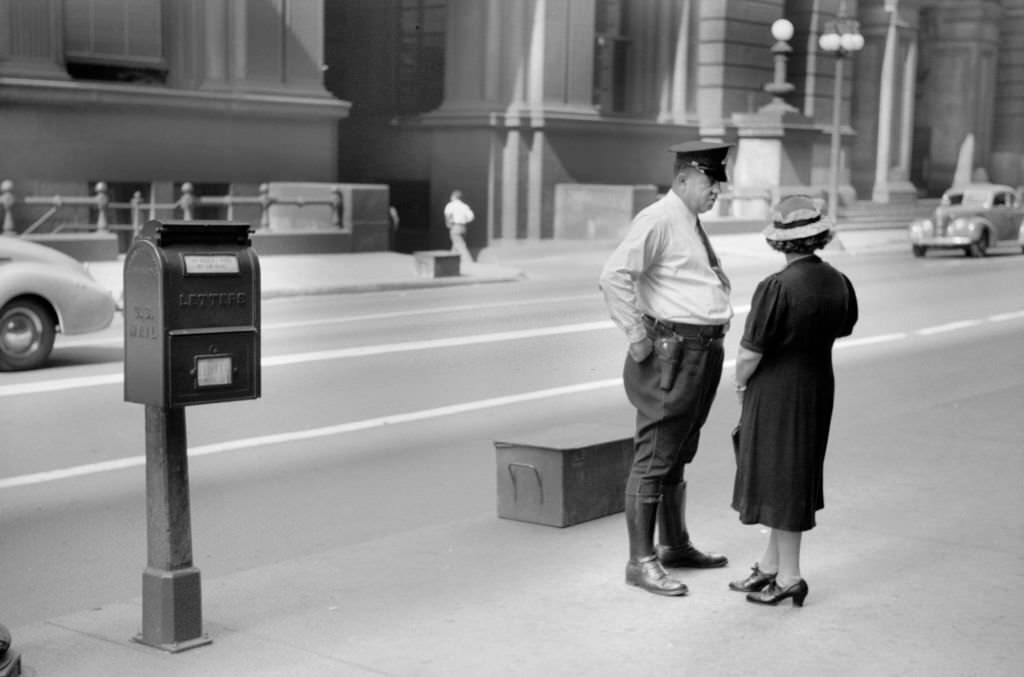
Streetcars connected Chicago’s neighborhoods long before expressways carved up the city. Vachon returned to streetcar stops more than once, capturing the quiet patience of people going about their routines — a woman speaking with a police officer, a man standing alone, crowds gathered at corners.
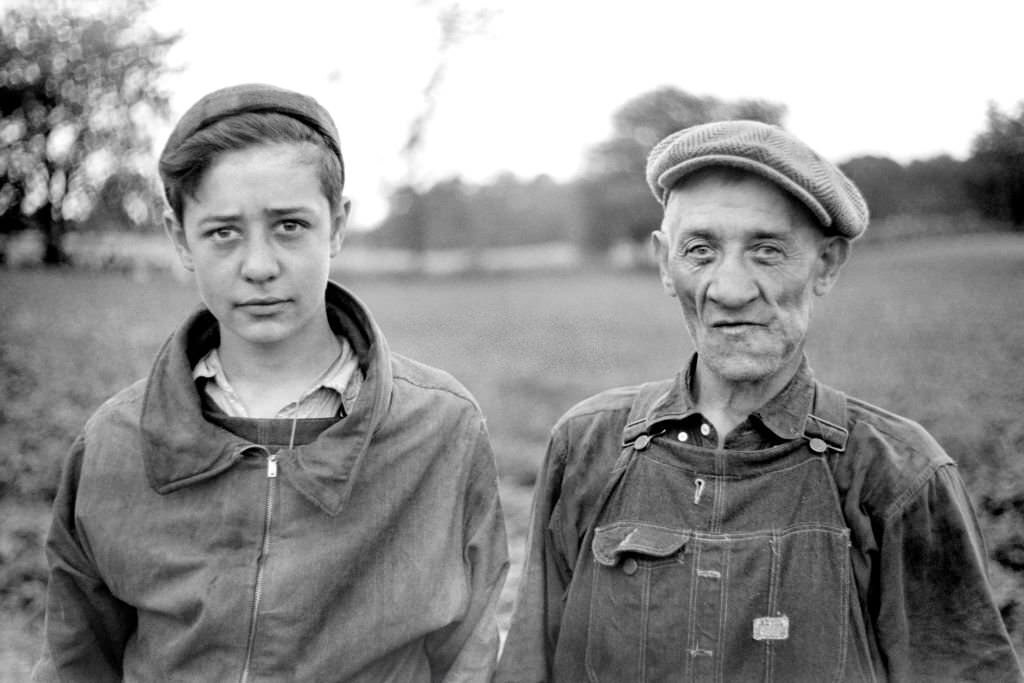
Not all of Vachon’s Chicago subjects stayed in the city. A father and son from Chicago picked strawberries in July 1941 — a reminder that urban families often had deep ties to rural labor, either out of necessity or seasonal tradition.
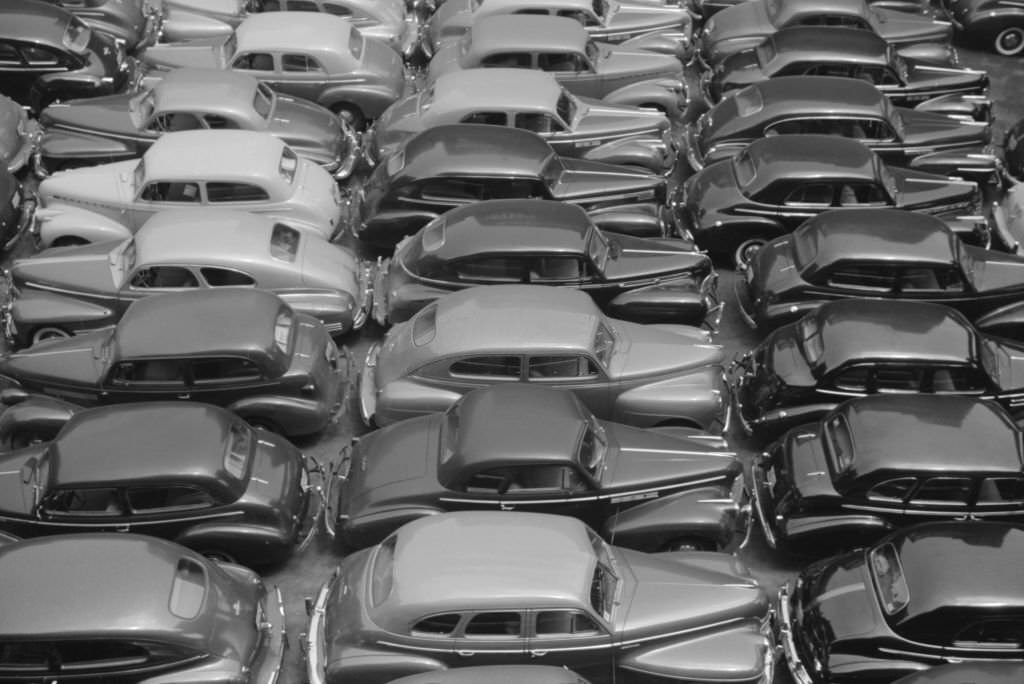
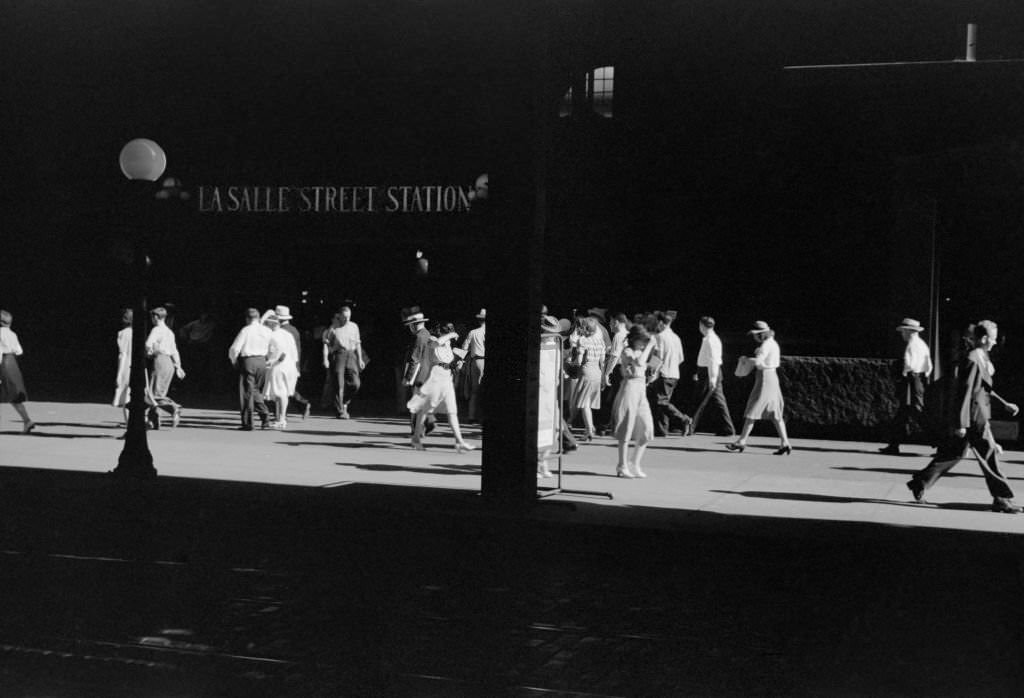
By 1941, the automobile was reshaping American cities. Parking lots were spreading through downtown Chicago, and the five o’clock rush at LaSalle Street Station showed just how many workers poured in and out of the city each day. Vachon photographed these commuter crowds from high angles, turning the mass of people into something almost geometric.
Labor action was visible across the city that summer. Workers formed picket lines outside realty companies, and Coca-Cola plant employees went on strike. These were not isolated incidents — 1941 saw a surge in labor organizing across American industries as workers pushed for better wages and conditions.
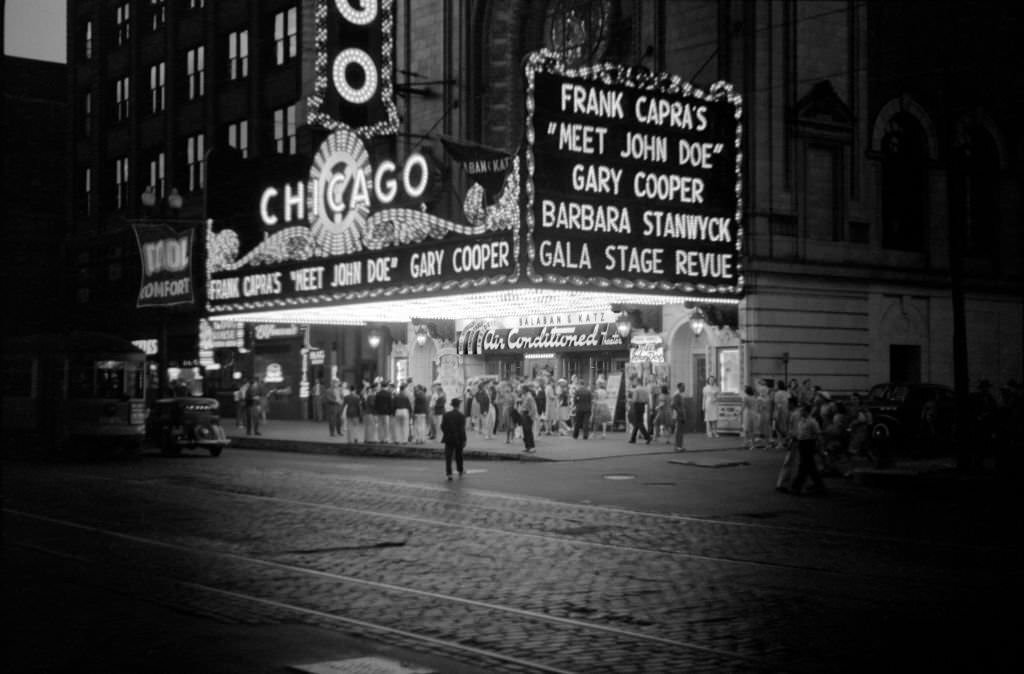
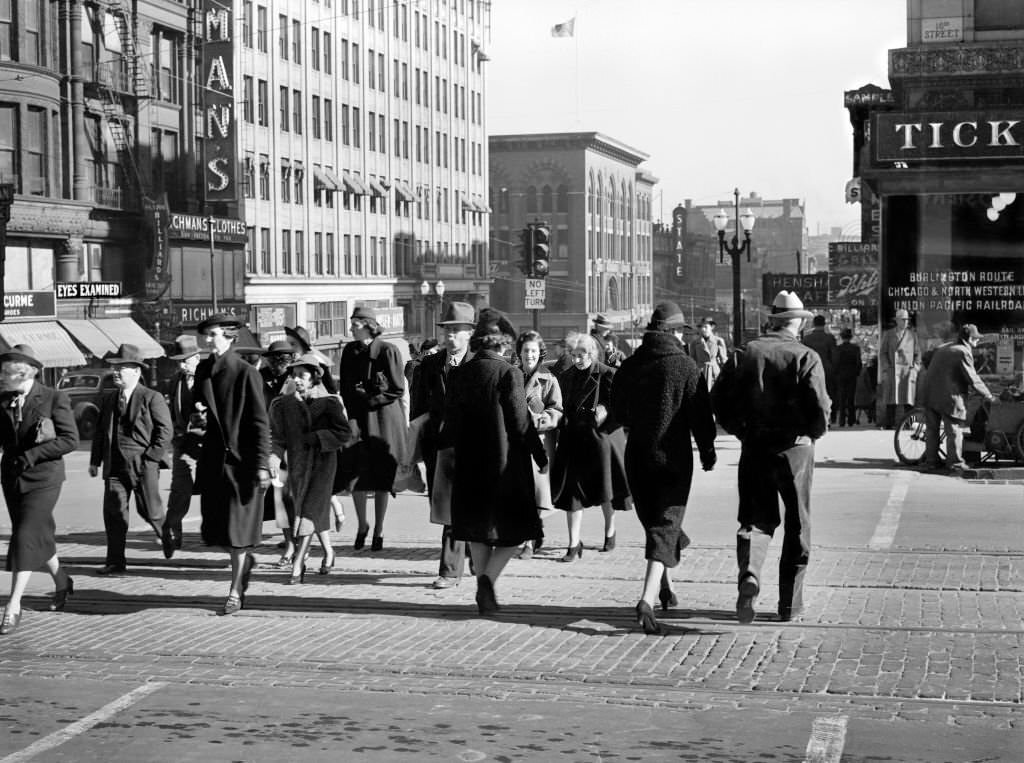
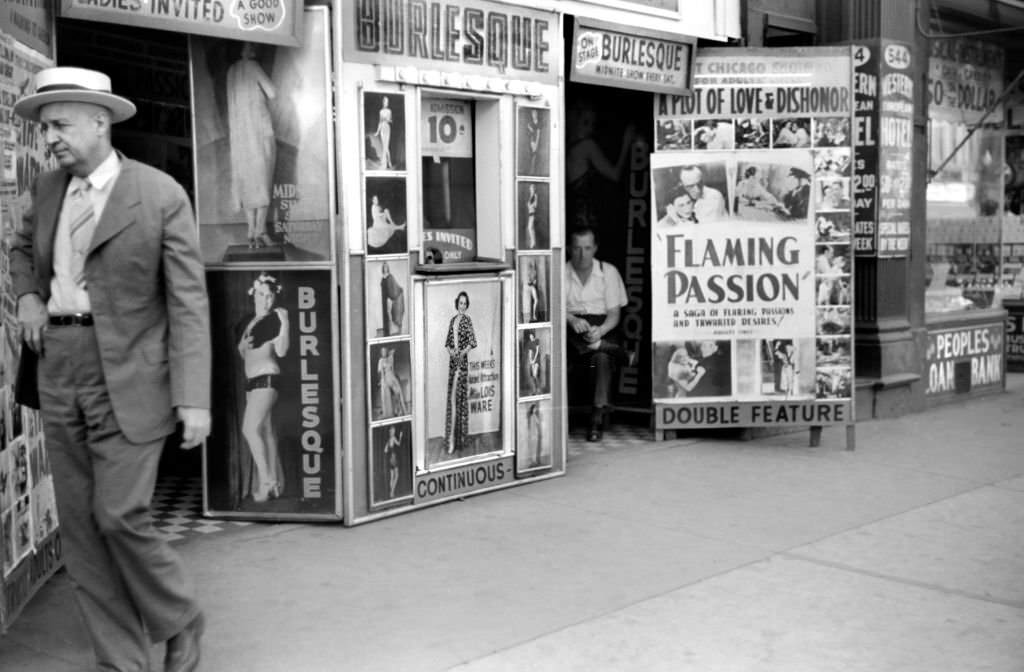
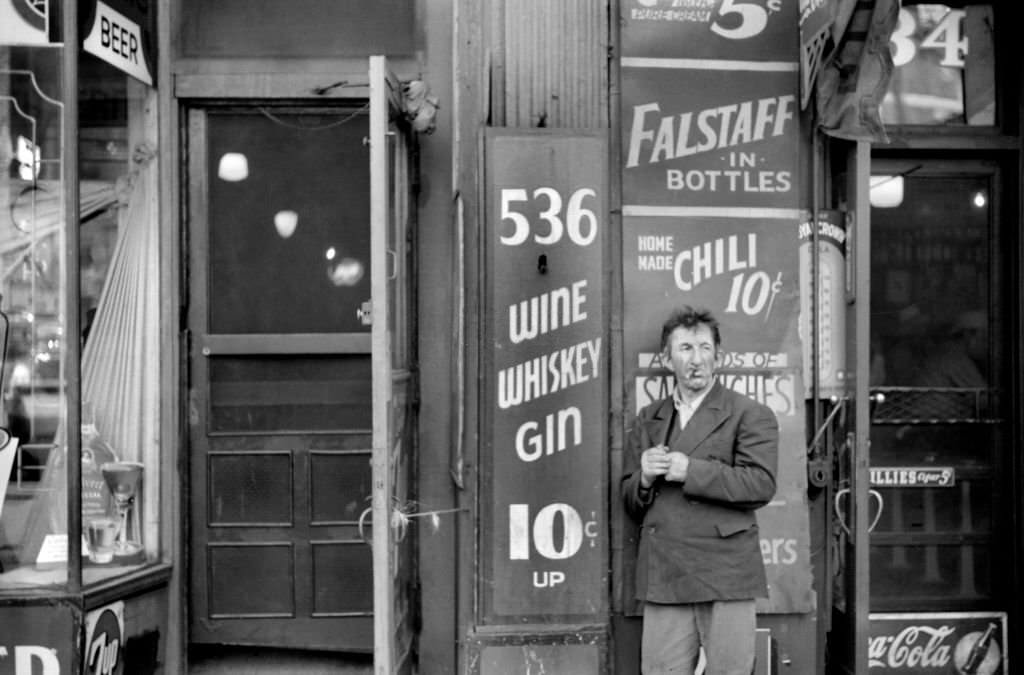
South State Street offered Vachon some of his most vivid material. A man smoking a cigar outside a diner, the neon glow of entertainment venues, crowds moving through the night — all of it landed in his frame with the same quiet precision.
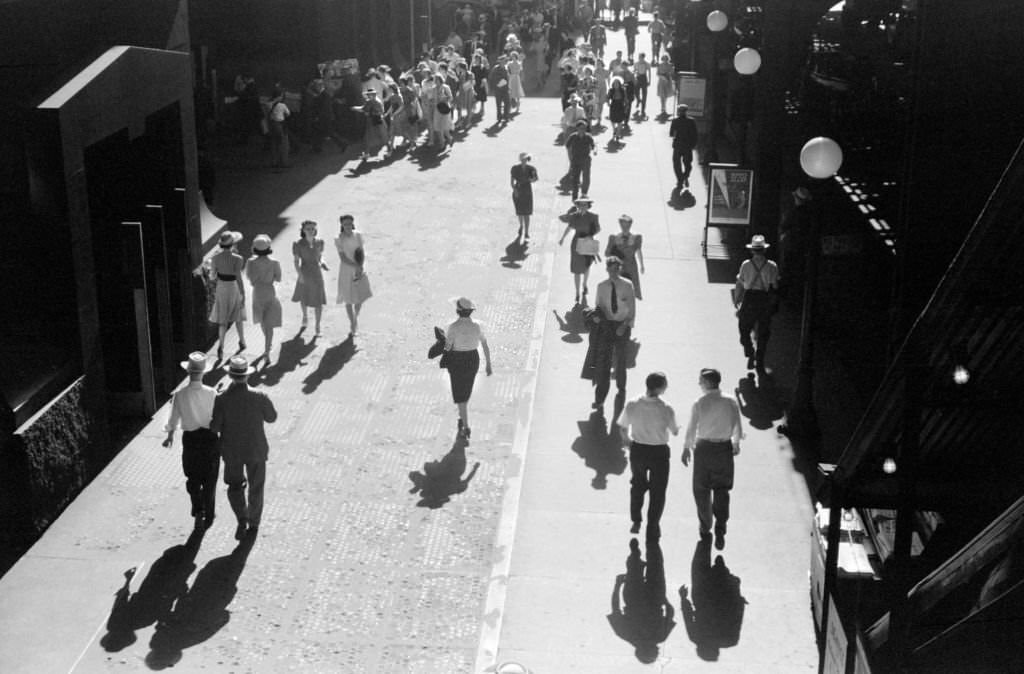
The five o’clock crowd downtown was a study in momentum — workers streaming out of offices and onto sidewalks, filling every available space before dispersing into the city’s transit web. Vachon captured it at street level and from above, giving the viewer two very different senses of the same daily exodus.
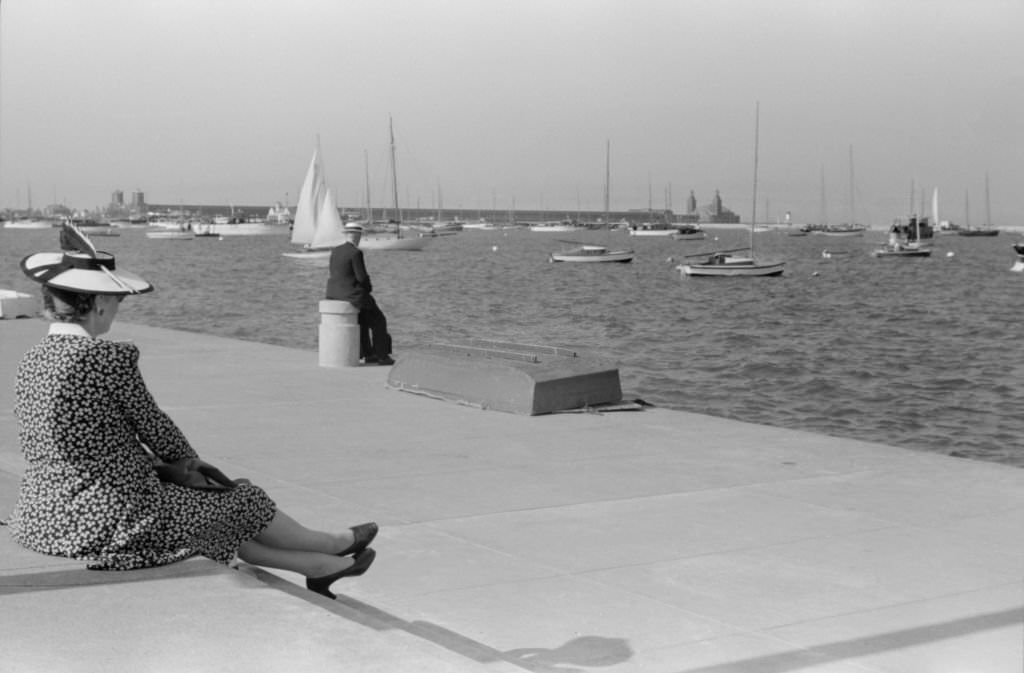
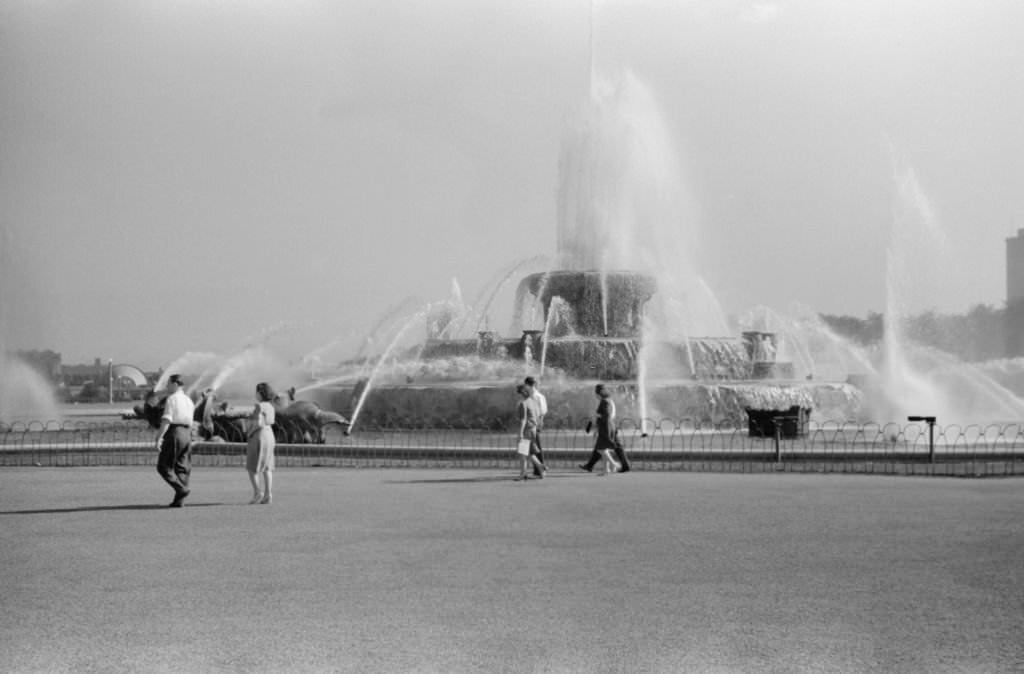
Grant Park offered a different kind of Chicago. Buckingham Fountain anchored the park’s formal grandeur, and the lakefront boat basin gave couples a quiet place to sit away from the city’s noise. Vachon photographed both with the same unhurried attention.
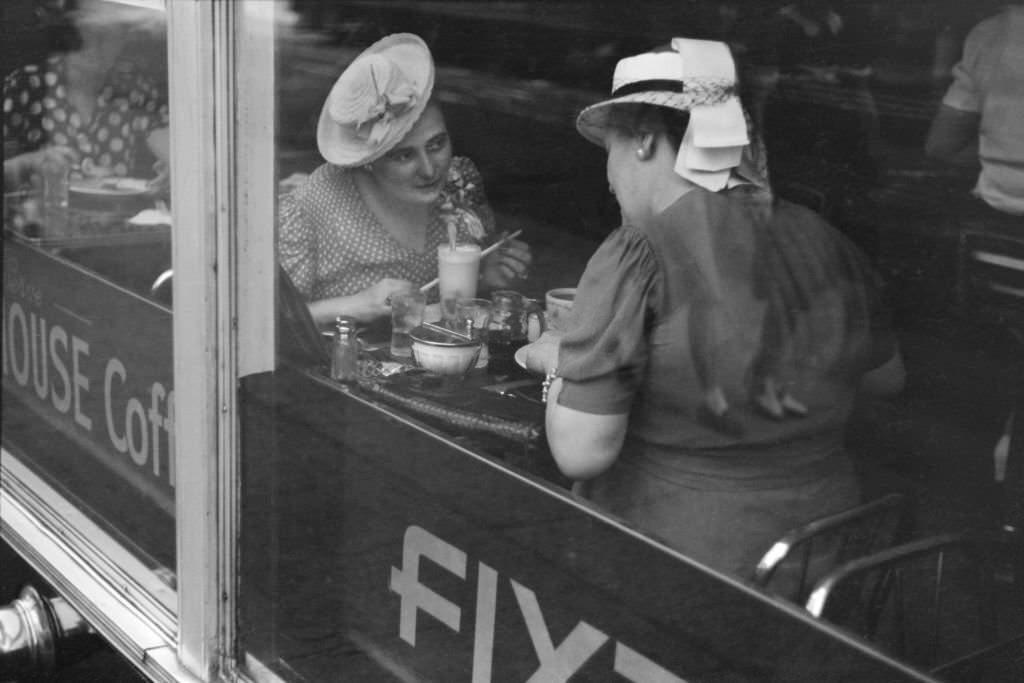
Cafeterias and coffee shops filled with workers at all hours. Chicago ran on shifts, and the city’s diners and lunch counters reflected that rhythm. Vachon stepped inside these spaces and documented them matter-of-factly, the way a person might sketch what they see on a lunch break.