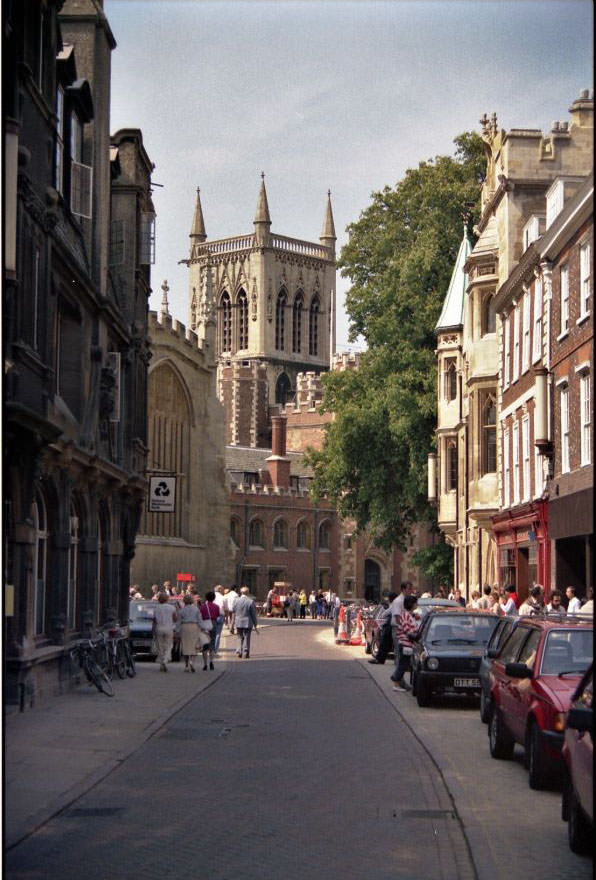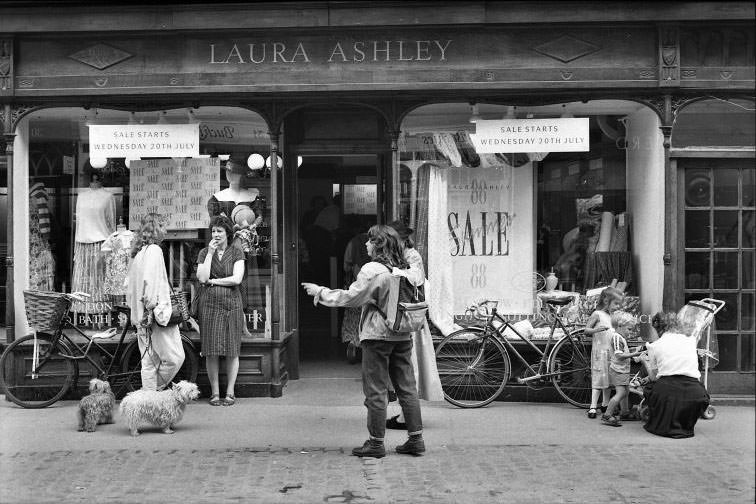
Cambridge in the late 1980s looked both timeless and distinctly of its era. The grand stone colleges and cobbled lanes hadn’t changed much in centuries, but the shop fronts, fashions, and street life told a very specific story about that decade. Photographer Fraser Pettigrew captured all of it — the quiet residential corners, the bustling market, and the retail strips that locals relied on every day.
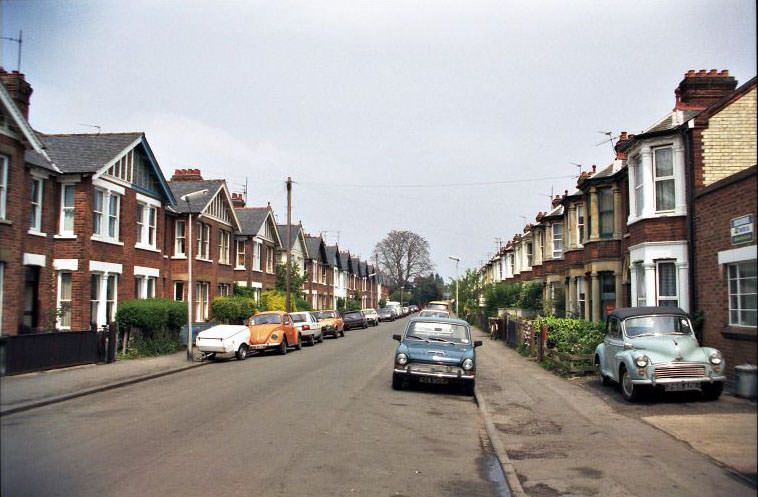
Not every shot was taken in the heart of the city. Pettigrew also turned his lens on the calmer residential streets that sit just beyond the tourist trail. Eltisley Avenue, in the Newnham area west of the city center, shows a quieter side of Cambridge — tree-lined and unhurried, far from the crowds that gathered around the colleges.
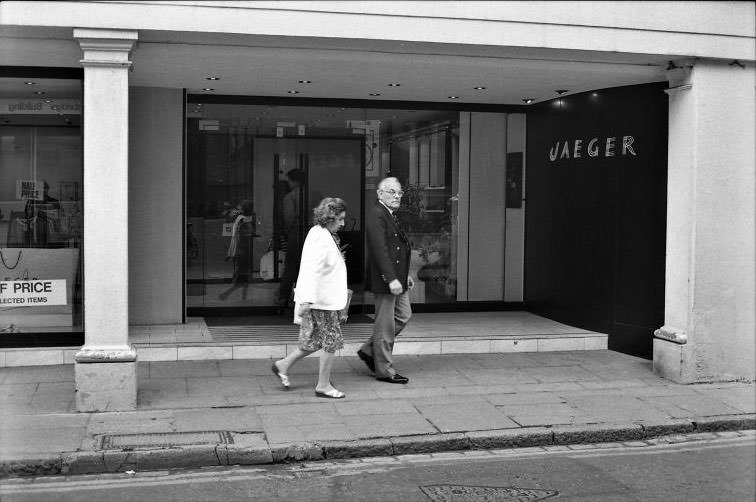
Bridge Street connects the city center to the River Cam and the historic St John’s College. In the 1980s it carried a steady stream of cyclists, students, and shoppers. The buildings along it date back several centuries, yet the street-level activity in Pettigrew’s frame is unmistakably late 20th century.
Few streets in England are as visually striking as King’s Parade. Running alongside King’s College Chapel — one of the finest examples of Gothic architecture in the world — it attracted visitors and locals in equal measure. Pettigrew photographed it from multiple angles, capturing the Chapel’s ornate stonework alongside the everyday life playing out at its feet.
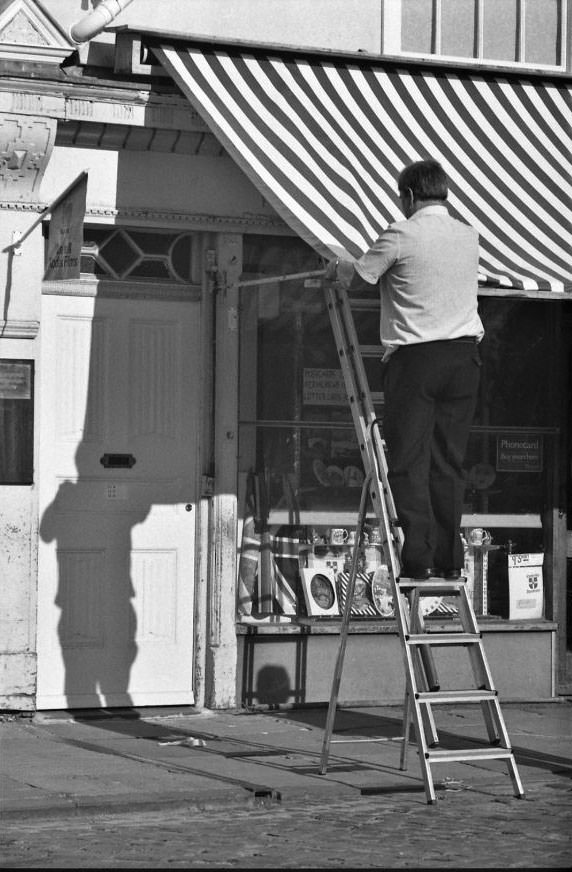
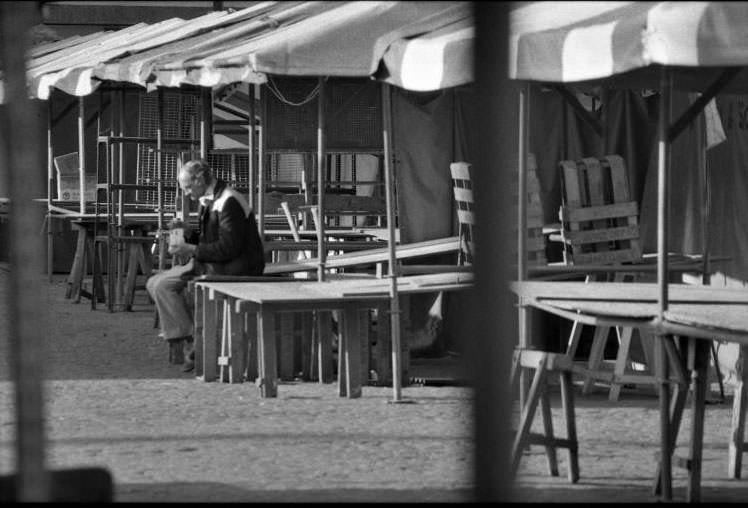
Market Square sits right at the center of Cambridge and has served as a trading hub since the Middle Ages. In the 1980s, the open-air market still ran six days a week, selling everything from fruit and vegetables to clothing and books. The stalls, awnings, and shoppers packed into the square give Pettigrew’s photos a real sense of energy and daily life.
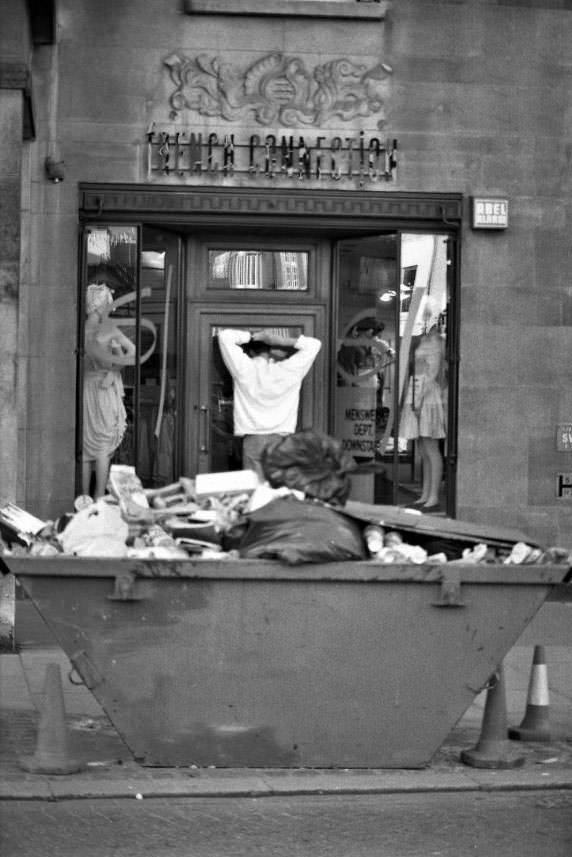
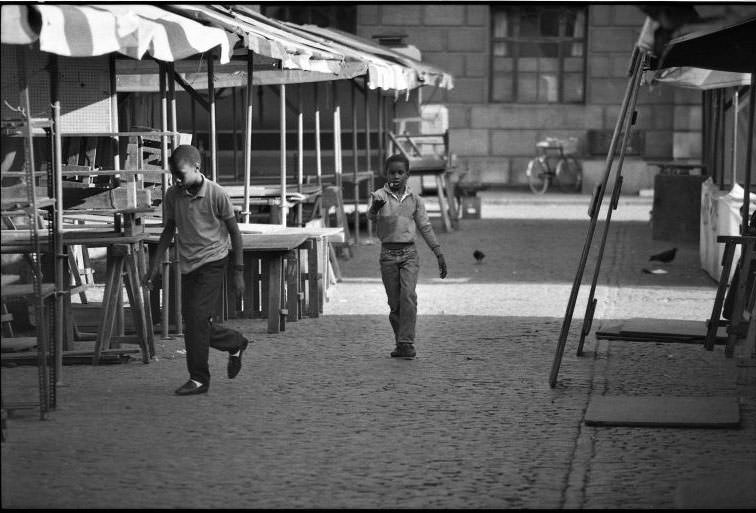
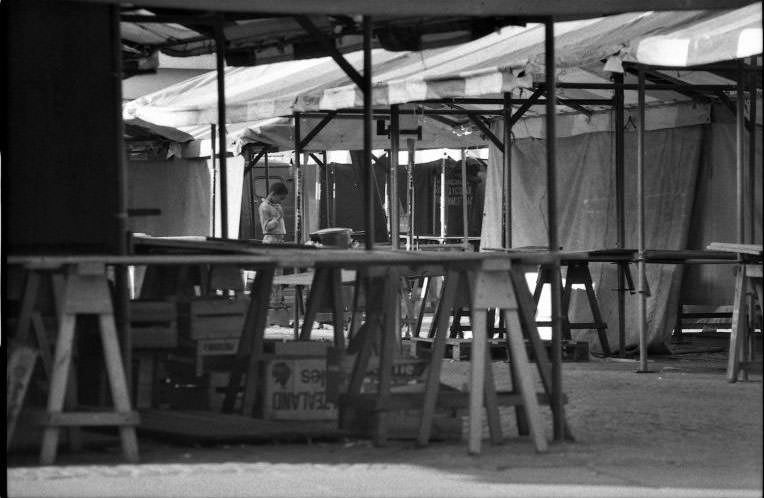
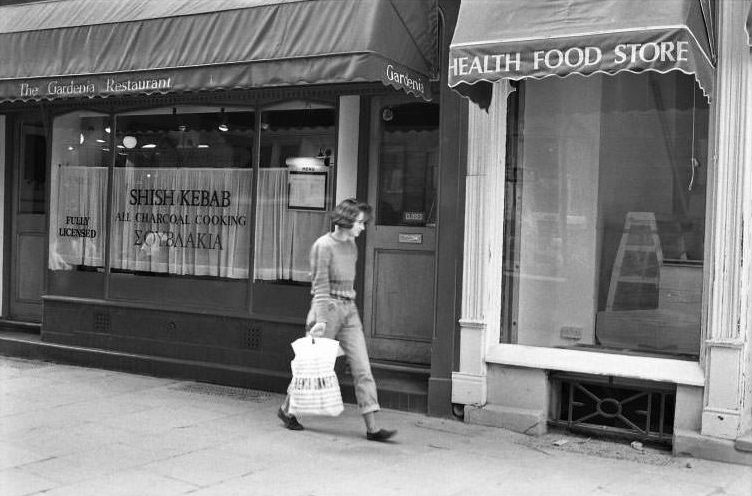
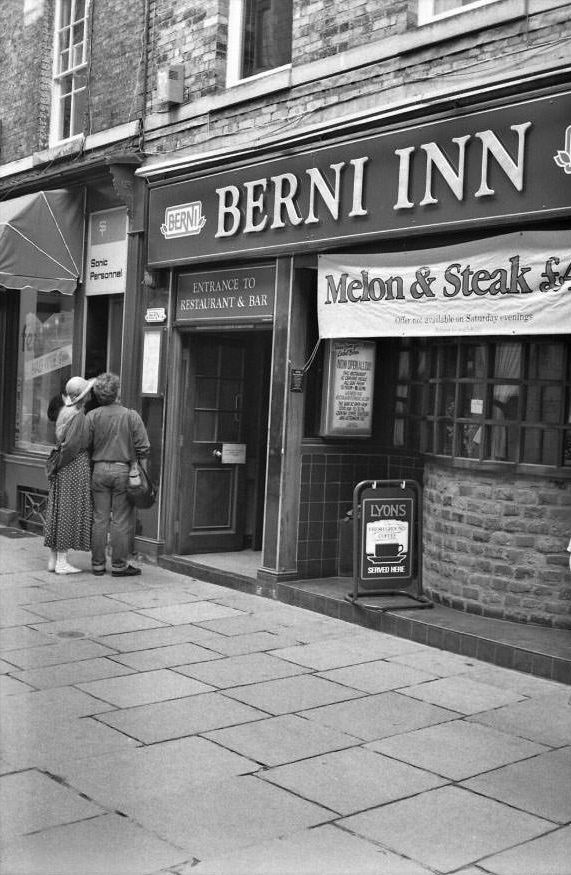
Just off Market Square lies Rose Crescent, a short curved pedestrian street lined with independent shops. In the 1980s it was a popular spot for browsing, with a mix of boutiques and specialty retailers tucked between the older stone frontages. Pettigrew photographed it across several frames, picking up the detail of window displays and signage that no longer exist today.
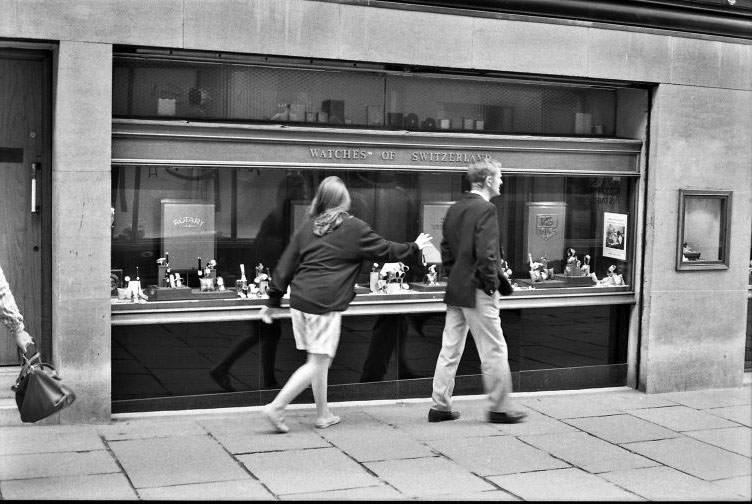
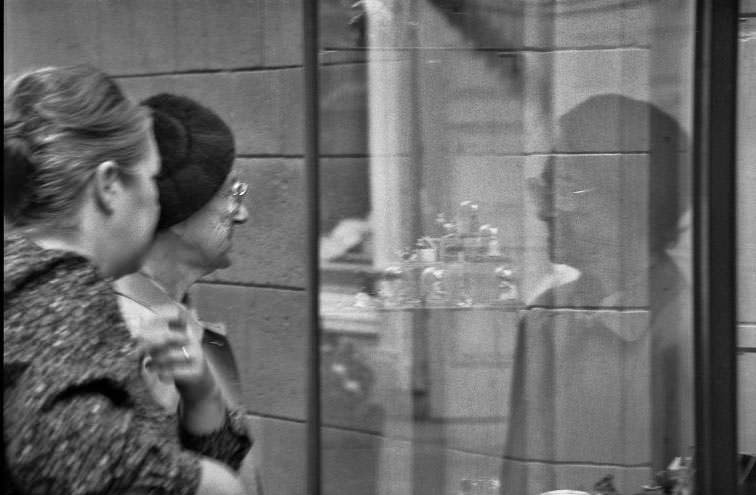
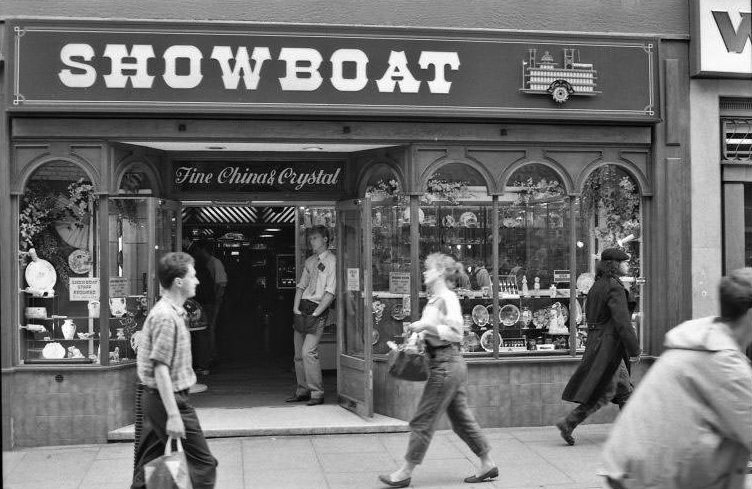
The Showboat was one of the more distinctive retail presences in 1980s Cambridge — its bold branding standing out against the more traditional shop fronts nearby. It represents the kind of independently run business that defined high street shopping in that decade before national chains took over most city centers.
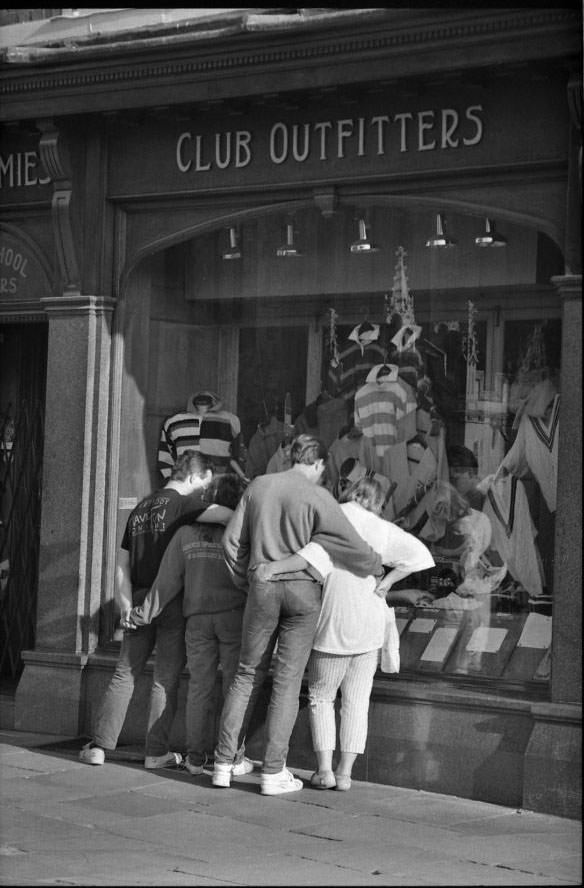
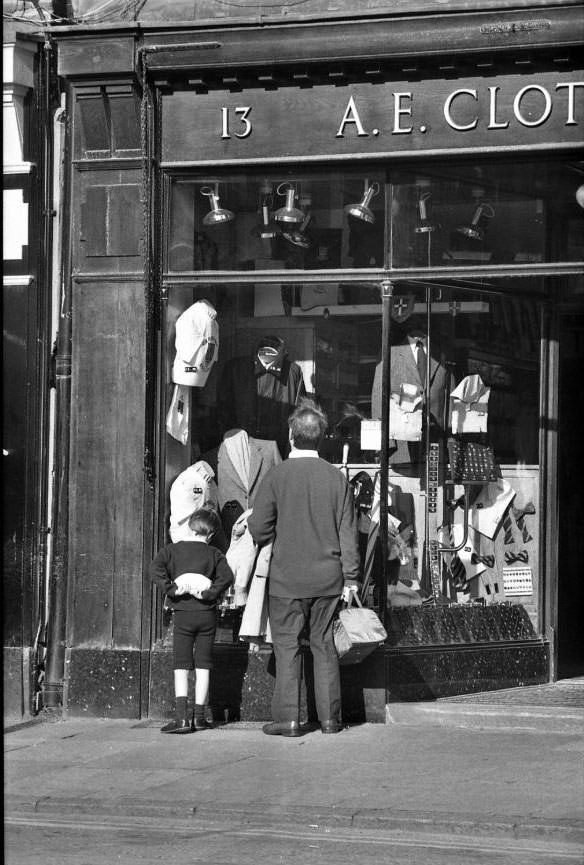
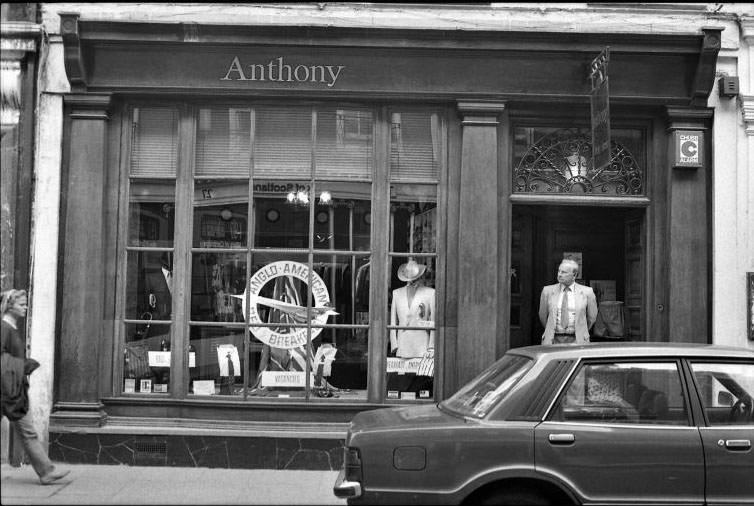
Trinity Street runs parallel to King’s Parade and is flanked by Trinity College on one side and a row of well-established shops on the other. Among them was a gentleman’s outfitters that reflected the more formal shopping habits of the time. The signage, window dressing, and tailored merchandise on display speak to a retail culture that has largely disappeared from British high streets.
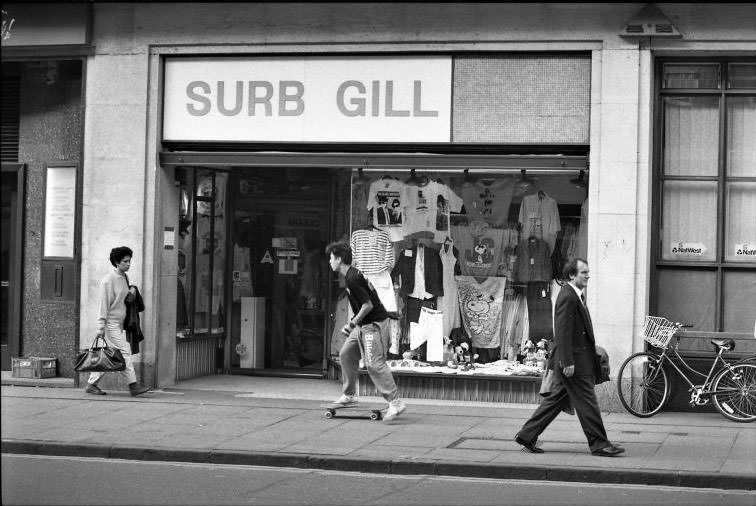
St Andrew’s Street, one of the main thoroughfares leading south from the city center, also features in Pettigrew’s collection. Surb Gill, photographed here, was one of the street’s recognizable businesses during that period. The shot captures the particular look of 1980s British retail — the fonts, the fascias, and the window arrangements that were standard across the country at the time.
Pettigrew’s photographs of Trinity Street round out the collection with a broader view of one of Cambridge’s most commercially active roads. The street connected the university world with everyday town life, and in the late 1980s that mix was clearly visible — students, academics, and regular shoppers all sharing the same pavement in front of the same centuries-old buildings.