Hey There! Before You Go. 😧
Get the best vintage content straight into your inbox!

Don't worry, we don't spam

The Blizzard of 1978: Photos Show the Historic Storm That Slammed the Northeastern United States

In early February 1978, one of the most destructive snowstorms in American history buried the northeastern United States. The Blizzard of 1978 hammered New England, New Jersey, Pennsylvania, and the New York metropolitan area with staggering amounts of snow in a very short time. Boston alone received 27.1 inches. Streets and highways vanished under the accumulation. Thousands of people were caught completely off guard, and by the time the storm passed, approximately 100 people were dead, thousands more were injured, and the damage toll exceeded $520 million — roughly $2.04 billion in today’s dollars.

One of the biggest reasons so many people were caught in the open was a failure of public trust in weather forecasts. Meteorology in the 1970s was functional but imperfect, and the storm’s arrival was predicted but not taken seriously. When the heavy snow didn’t materialize in the pre-dawn hours as reported, many people assumed it was another overhyped forecast that wouldn’t pan out. They went to work, drove on the highways, and carried on with their routines. Then the snow came — fast and heavy — and there was no way to get home.
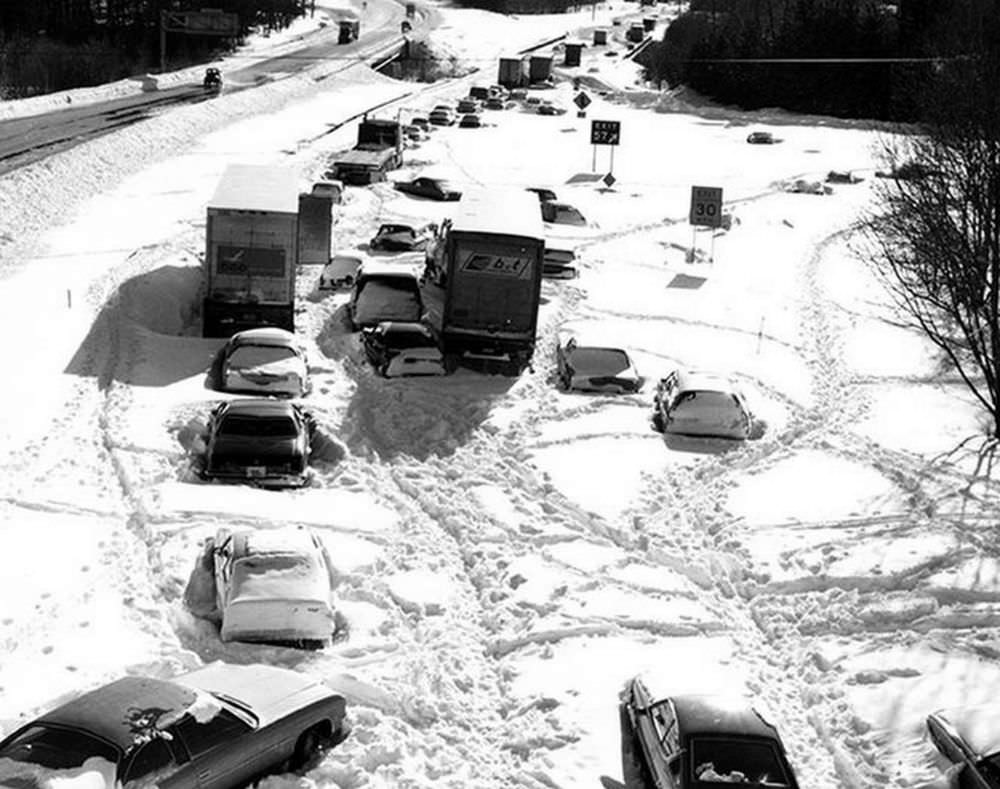
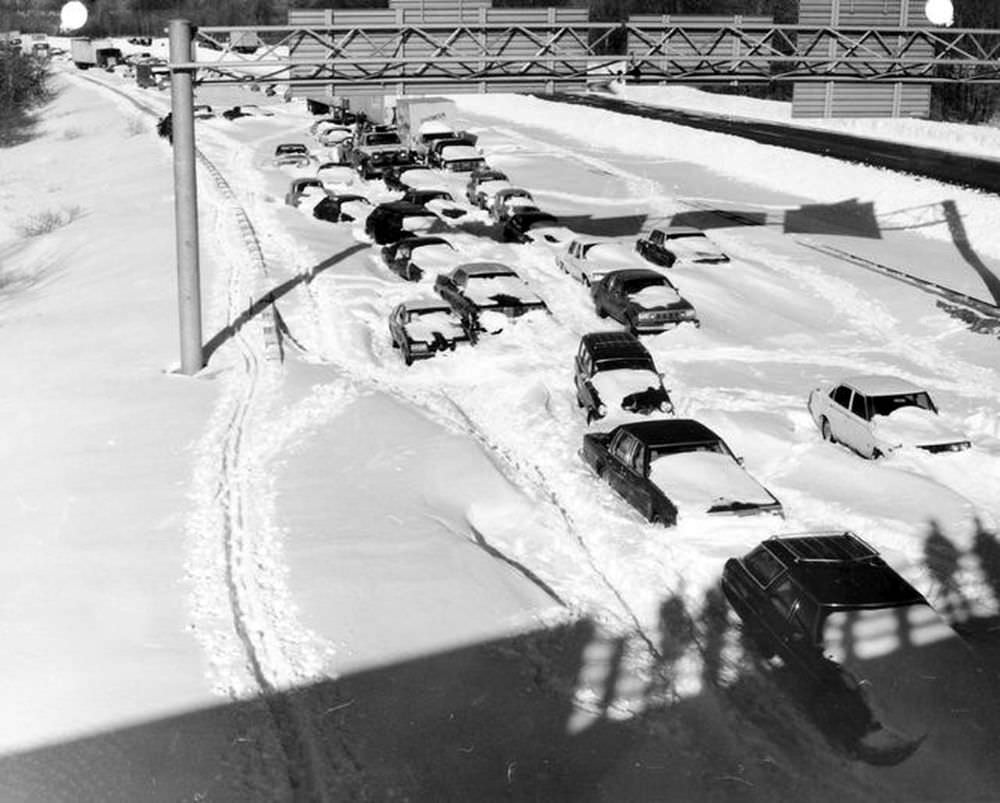
Abandon cars along Route 128 near Needham, Massachusetts, during the Blizzard of 1978.

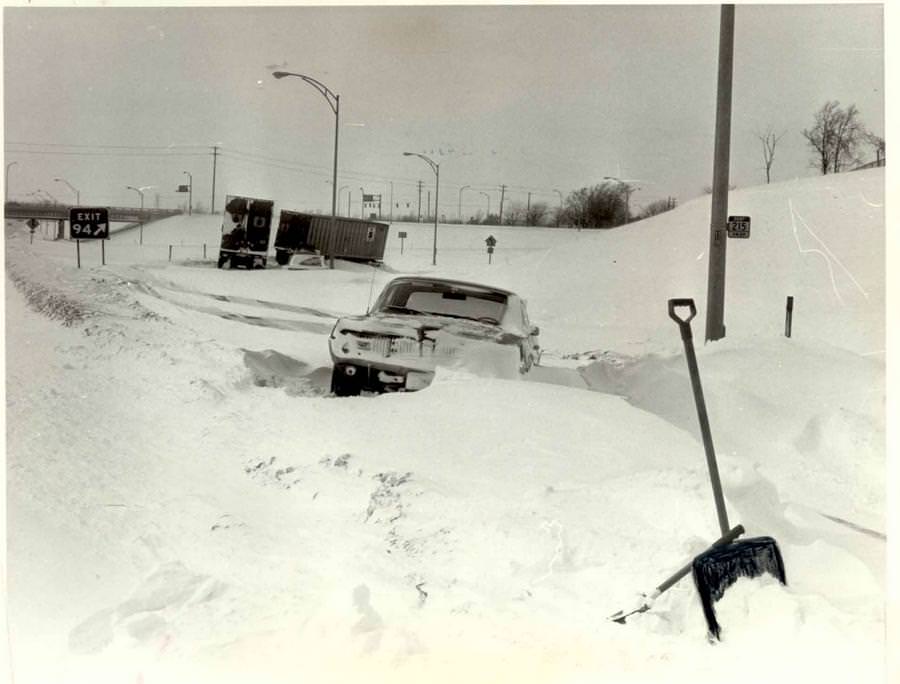
Route 128 near Boston became one of the most iconic images of the storm. Cars were abandoned by the hundreds as drivers realized they could no longer move their vehicles through the deepening snow. Some people left their cars and tried to walk to safety. Others stayed put and waited, sometimes for days.
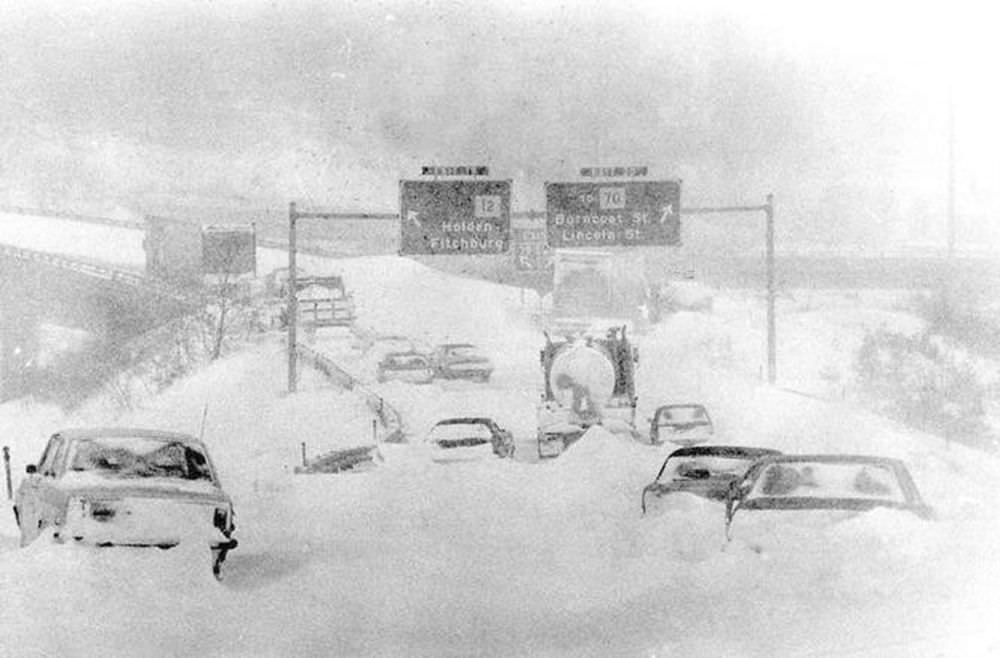
Vehicles are seen stranded and abandoned in the deep snow on the exit for Burncoat Street off Interstate 290 in Worcester, Mass., Feb. 7, 1978.
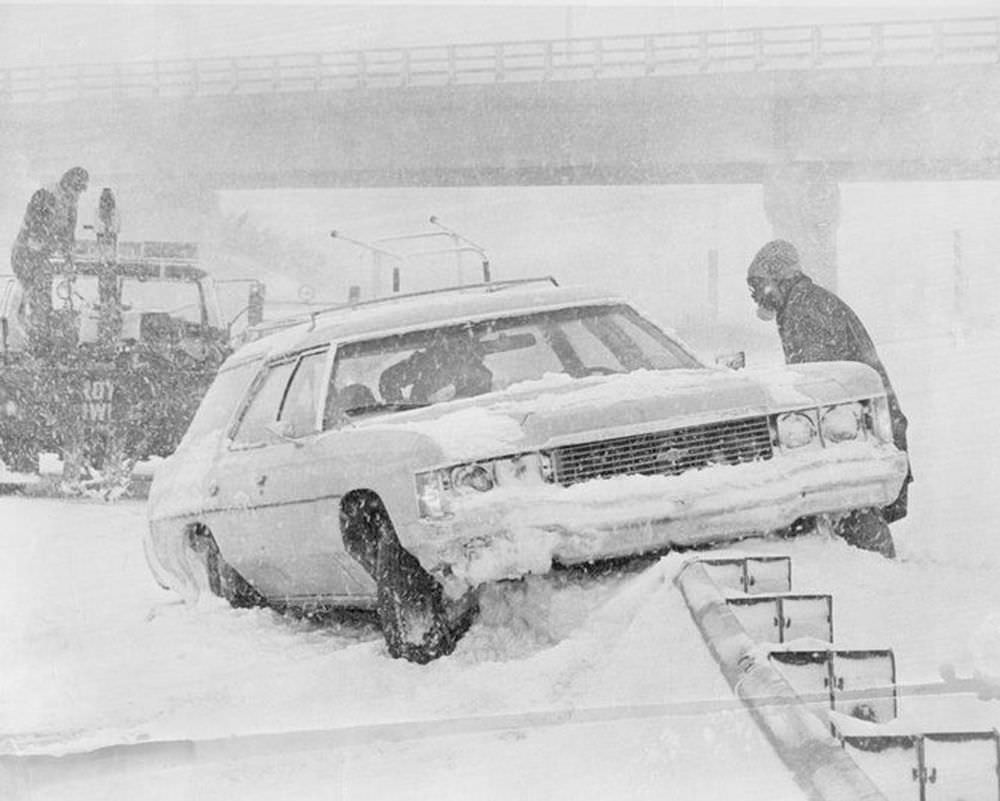
A car rest on top of the Indian Orchard exit of I-291 east in Springfield on Feb. 7, 1978.

The scenes on Massachusetts highways were surreal. Vehicles sat at odd angles, buried up to their door handles, some having been pushed into awkward positions by the wind and the weight of snow. On Interstate 291 in Springfield, at least one car ended up resting on top of an exit ramp, lifted there by the force of drifting snow.
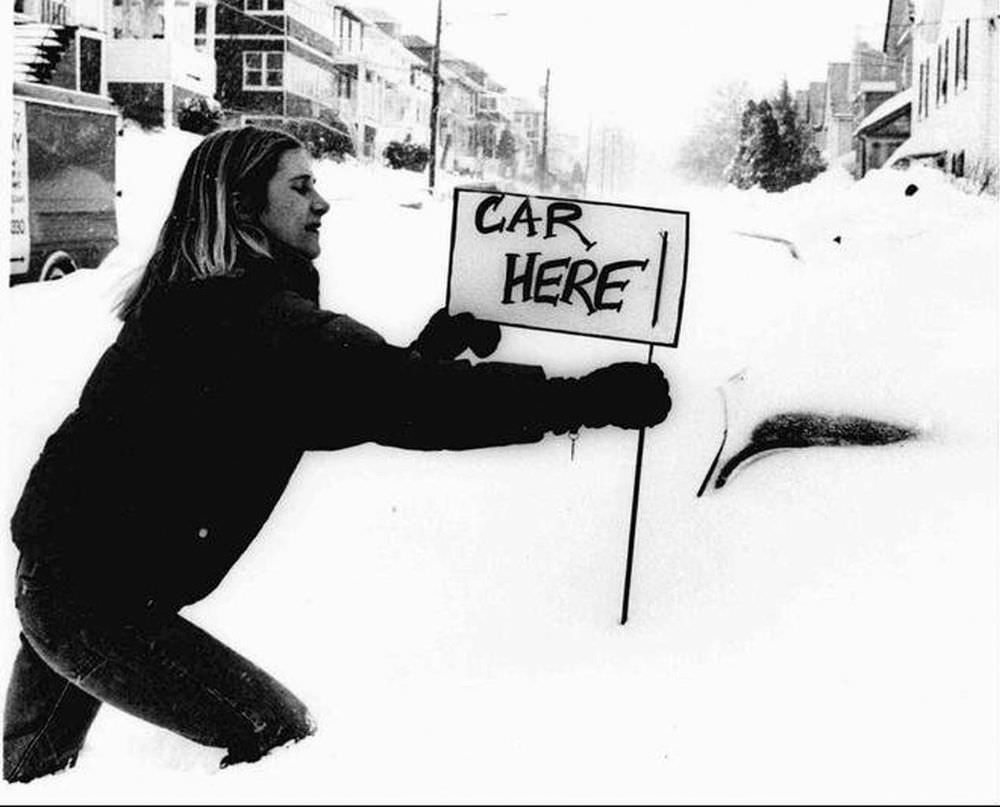
Bonnie Alexandre, of Boston's Brighton district, attaches a sign to the antenna of her car in Boston
Bonnie Alexandre, of Boston’s Brighton district, attaches a sign to the antenna of her car in Boston

With cars buried beyond recognition, residents resorted to marking their vehicles so they could be found later. Bonnie Alexandre of Boston’s Brighton district tied a sign to her car’s antenna — a simple but necessary act that captured how completely the storm had transformed the urban landscape. A car buried in snow looks identical to a snowdrift, and without some kind of marker, vehicles were simply lost.
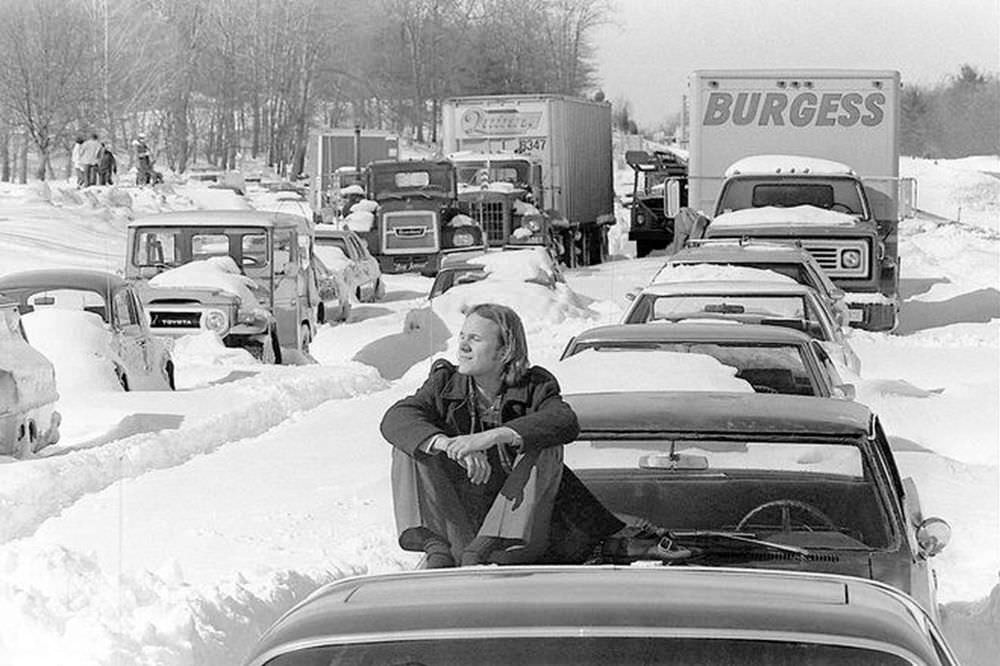
Roy Sodersjerna of Higham, Mass. suns himself on the hood of his car which is stuck in snow on Massachusetts Route 128 in Dedham on Feb. 9, 1978.
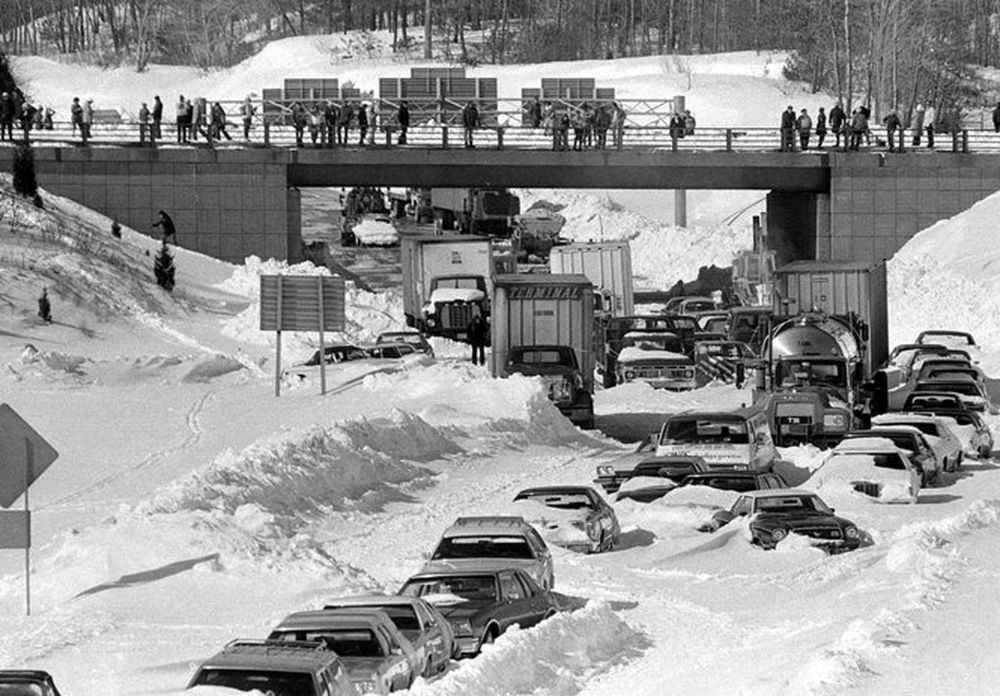
Cars and trucks are stuck and can only wait as Army and civilian plows and tow trucks approach from bridge Thursday Feb. 9, 1978 on Route 128, Dedham, Mass.

By February 9th, two days after the storm’s peak, Route 128 was still a parking lot. Roy Sodersjerna of Hingham stretched out on the hood of his snowbound car in Dedham, soaking up the sun while Army and civilian plows slowly worked their way toward stranded drivers. The military presence on civilian roads was a sign of just how far beyond normal capacity the storm had pushed state and local governments.
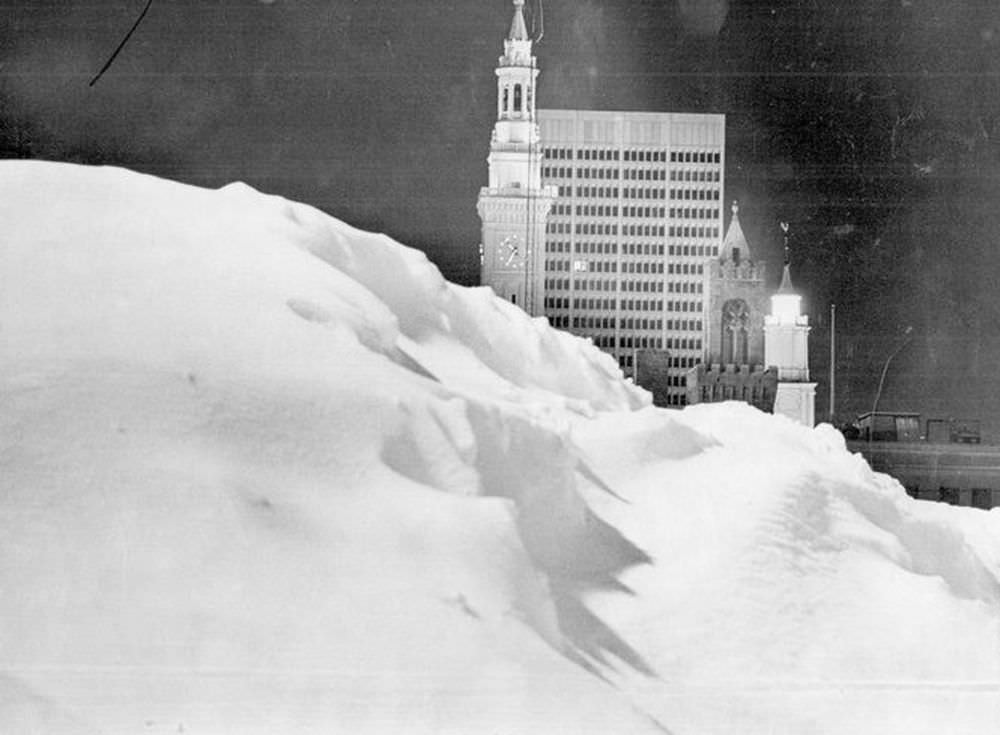
A pile of snow in a parking lot frames a view of downtown Springfield during the Blizzard of 1978.
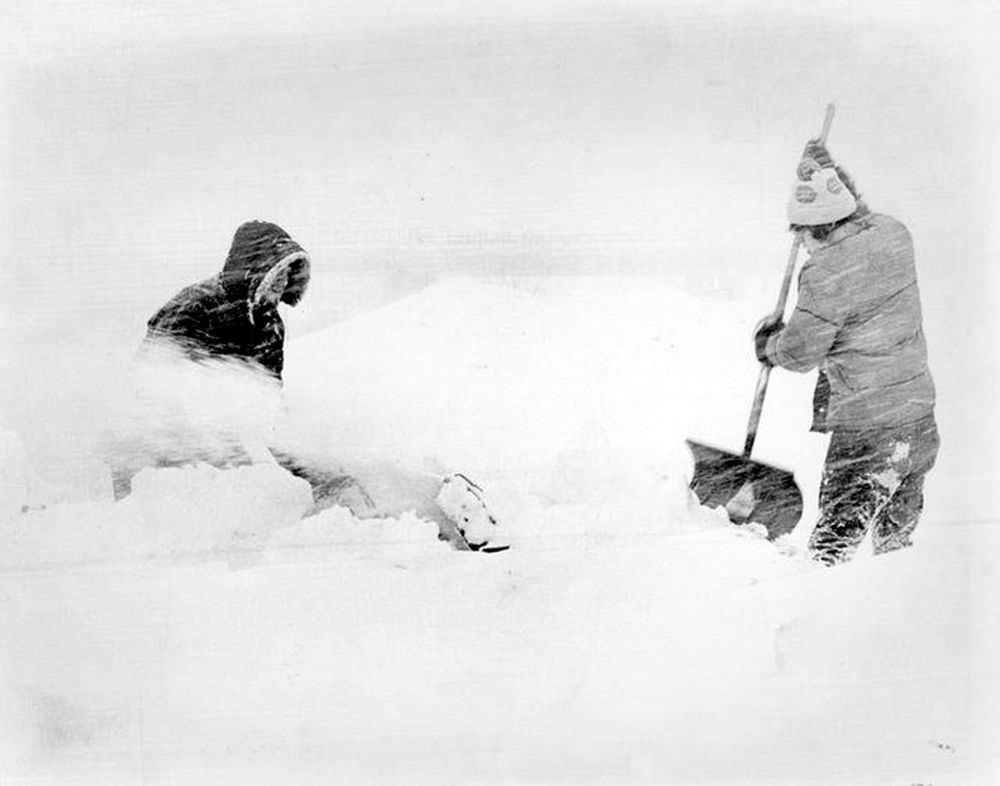
Residents clear snow on Congress Street in Springfield during the Blizzard of 1978.

Springfield, Massachusetts, was among the hardest-hit cities. Downtown streets disappeared under mountains of snow, and residents worked for days to dig out. On Congress Street, neighbors worked side by side clearing the path in front of their homes and businesses. Elsewhere in the city, firefighters faced a different and more urgent challenge.
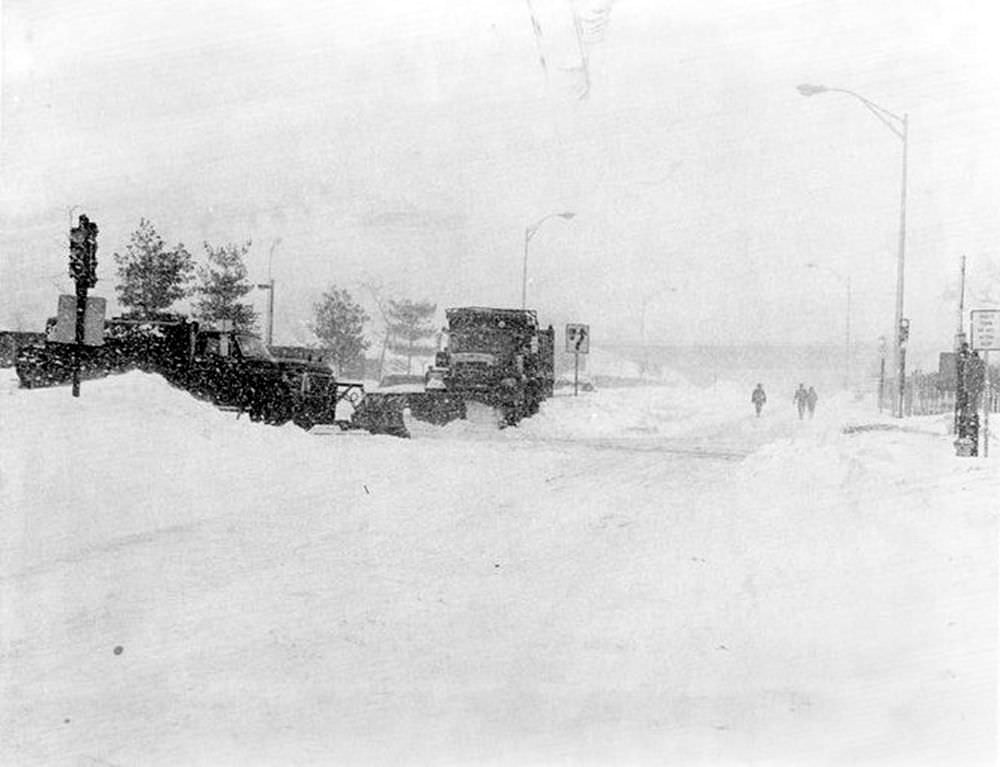
Snow plows clear the intersection of Dwight and Carew Streets in Springfield on Feb. 7, 1978 during the Blizzard of 1978.
Vehicles stranded in the snow in the southbound lanes of  Route 128 in Needham, after the Blizzard of 1978.
Vehicles stranded in the snow in the southbound lanes of Route 128 in Needham, after the Blizzard of 1978.
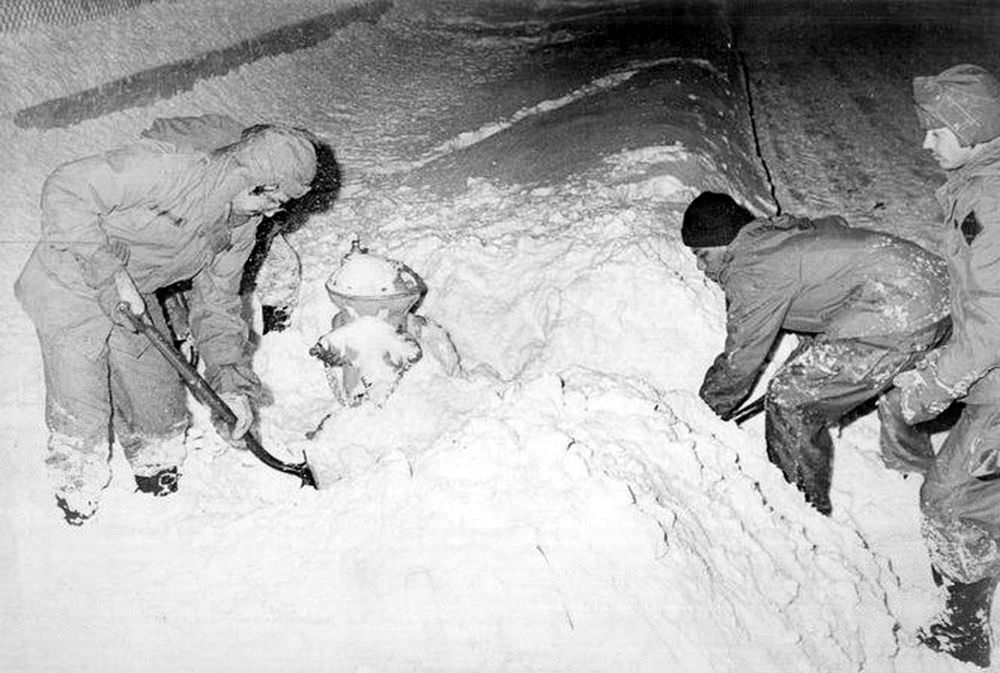
Springfield firefighters dig out a hydrant on Feb. 7, 1978.

Buried fire hydrants were a life-safety crisis. If a fire broke out anywhere in the city, firefighters needed access to hydrants immediately. In Springfield, crews spent hours on February 7th digging out hydrants block by block, knowing that a fire during the storm could be catastrophic if they couldn’t get water flowing fast enough.
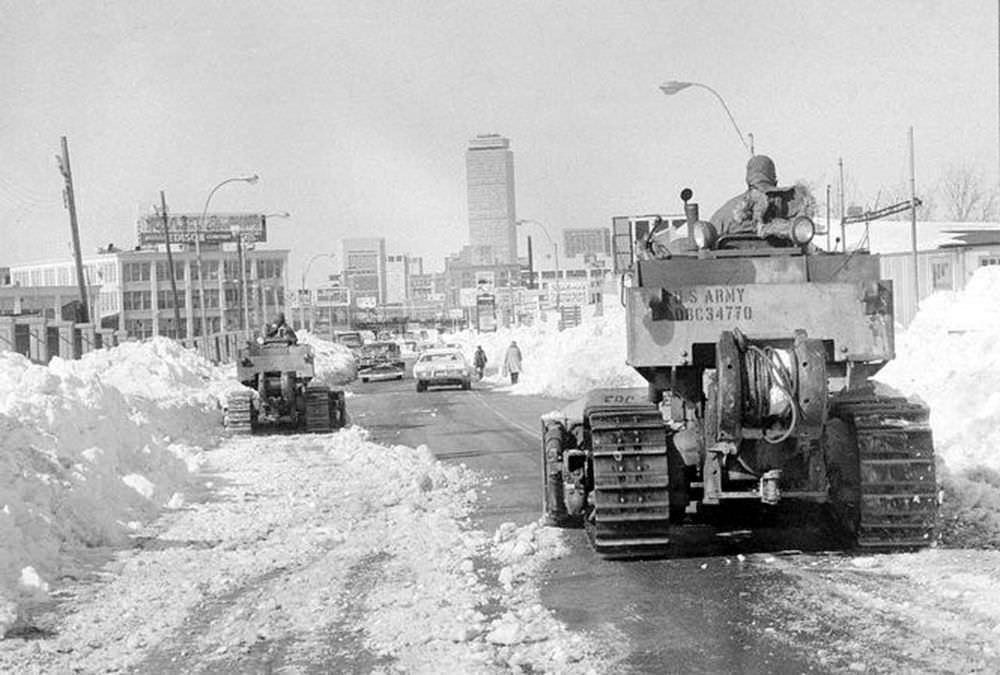
Two members of the U.S. Army 27th Engineers from Fort Bragg, N.C. move their bulldozers slowly toward downtown Boston as the city began to remove the record snowfall from the streets, Feb. 11, 1978.

The federal government deployed military engineering units to assist with snow removal. On February 11th, soldiers from the U.S. Army 27th Engineers out of Fort Bragg, North Carolina, moved bulldozers through the streets of Boston. Their presence underscored the scale of the disaster — Boston’s own equipment and workforce couldn’t handle the volume of snow without help.
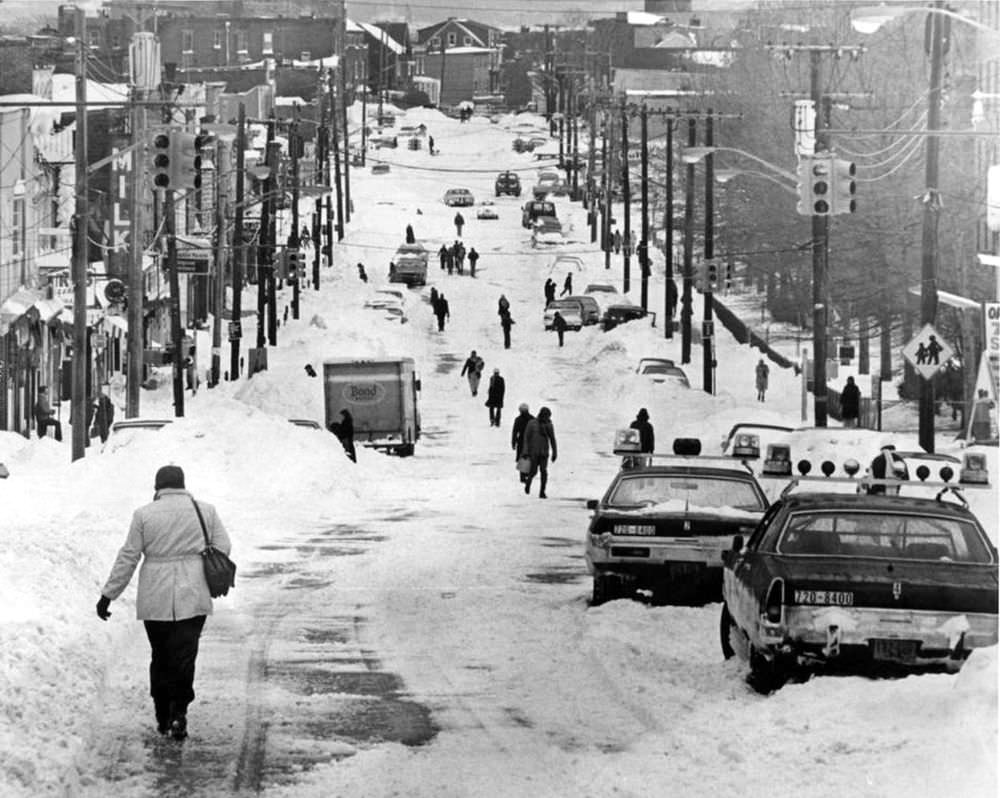
Although plowed, Broad St. in Stapleton is mainly a pedestrian thoroughfare.
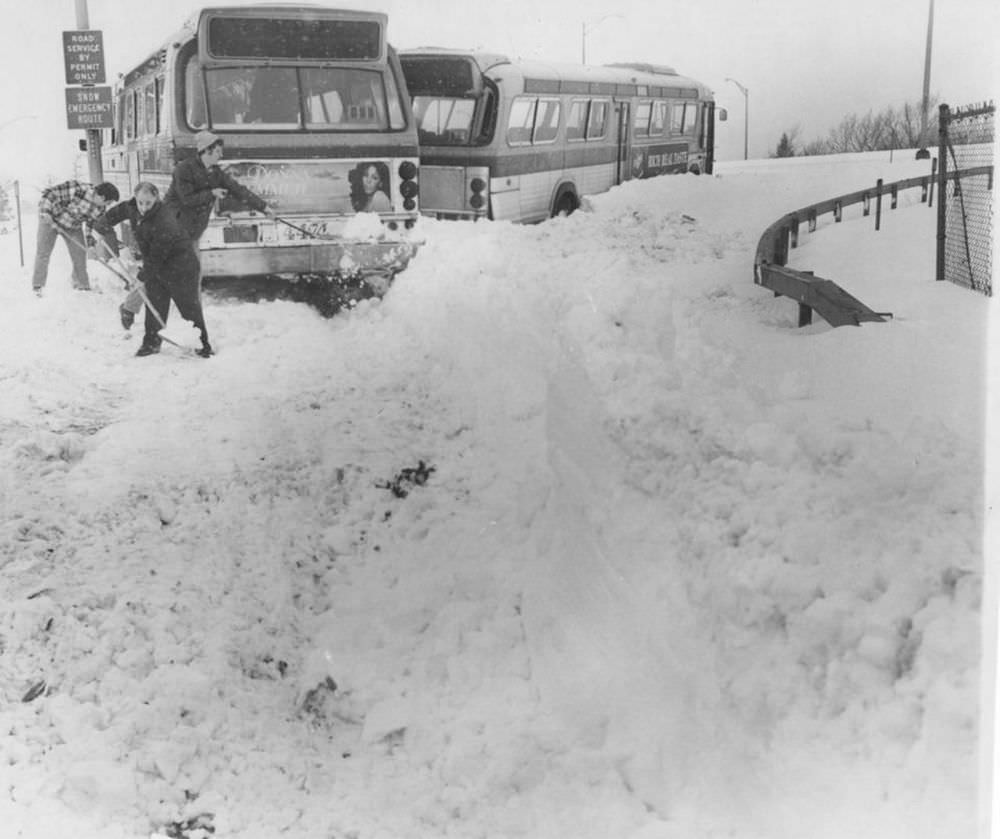
Weary shovelers struggle to free two buses that blocked an entrance to the Staten Island Expressway for two hours, a common sight all along the highway.

Staten Island, New York, faced its own version of the storm’s chaos. Even plowed streets like Broad Street in Stapleton were essentially pedestrian walkways — walls of piled snow on both sides made vehicle traffic nearly impossible. On the Staten Island Expressway, stranded buses blocked highway entrances for hours at a time as exhausted workers tried to dig them free.
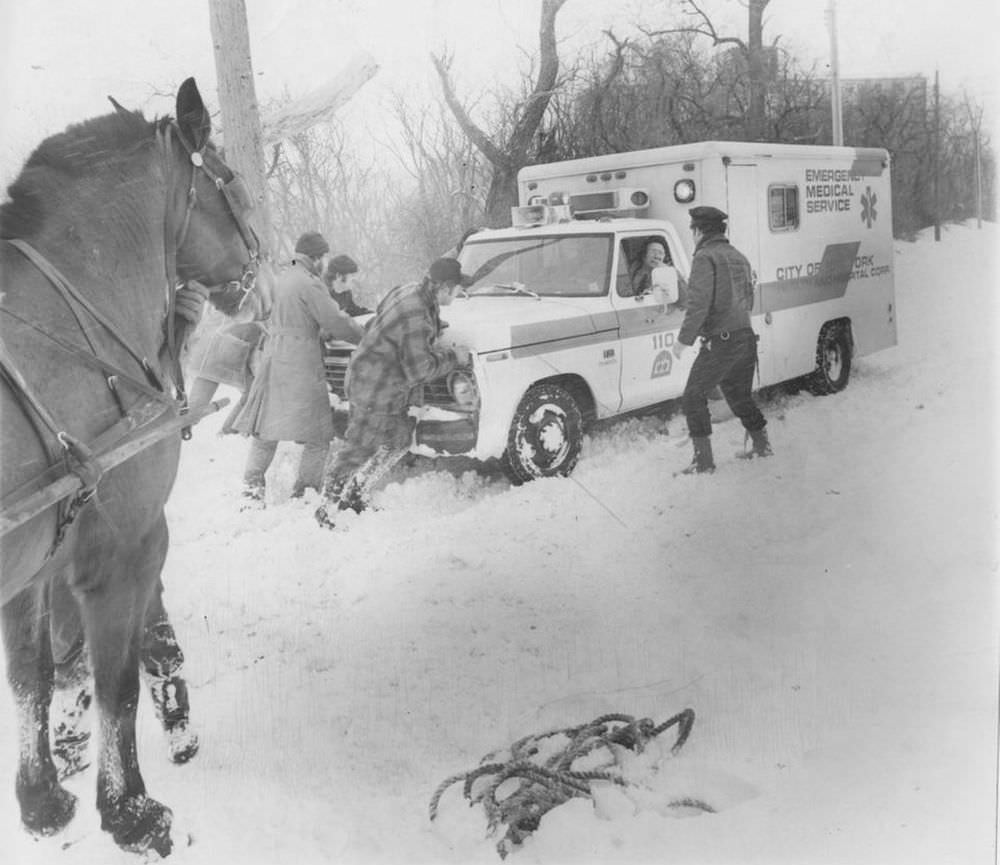
Men struggle to free an ambulance carrying a heart patient that is stuck on Bard Ave., West Brighton.

Among the most alarming scenes was an ambulance stuck on Bard Avenue in West Brighton — a vehicle carrying a heart patient. Men worked frantically around the vehicle trying to free it from the snow. Moments like this played out across the region, where the storm’s grip on the roads put lives directly at risk.
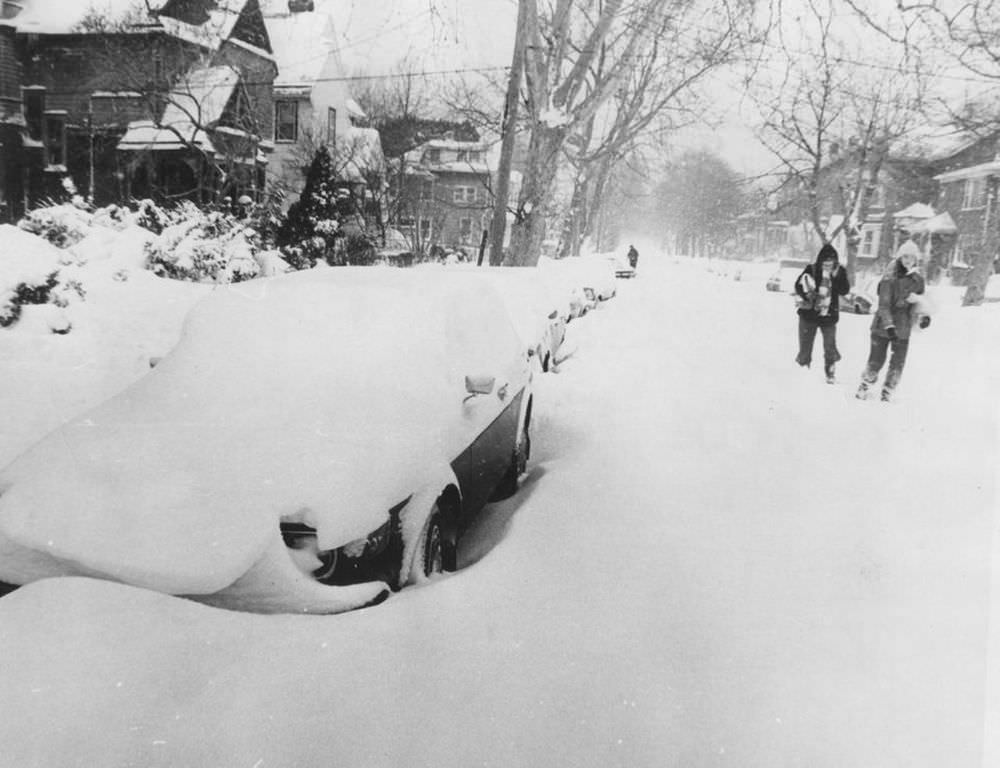
Cars are barely visible on Townsend Ave., Clifton.
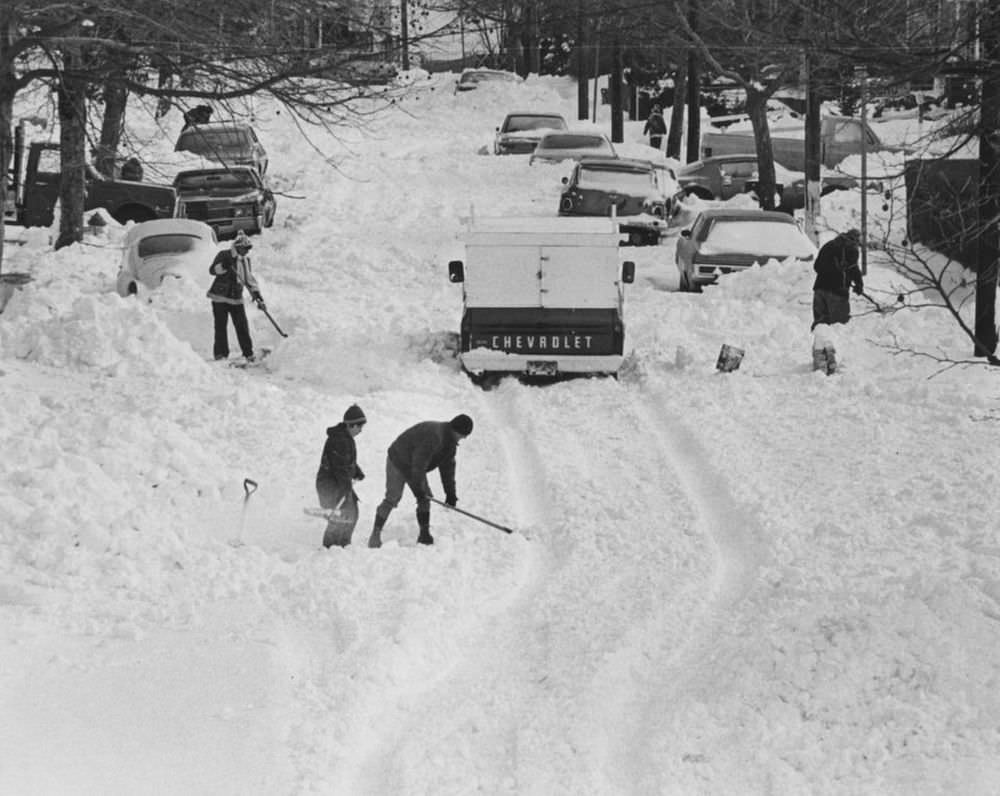
Residents of Home Place., Graniteville, begin the arduous task of cleaning up from the record snow.
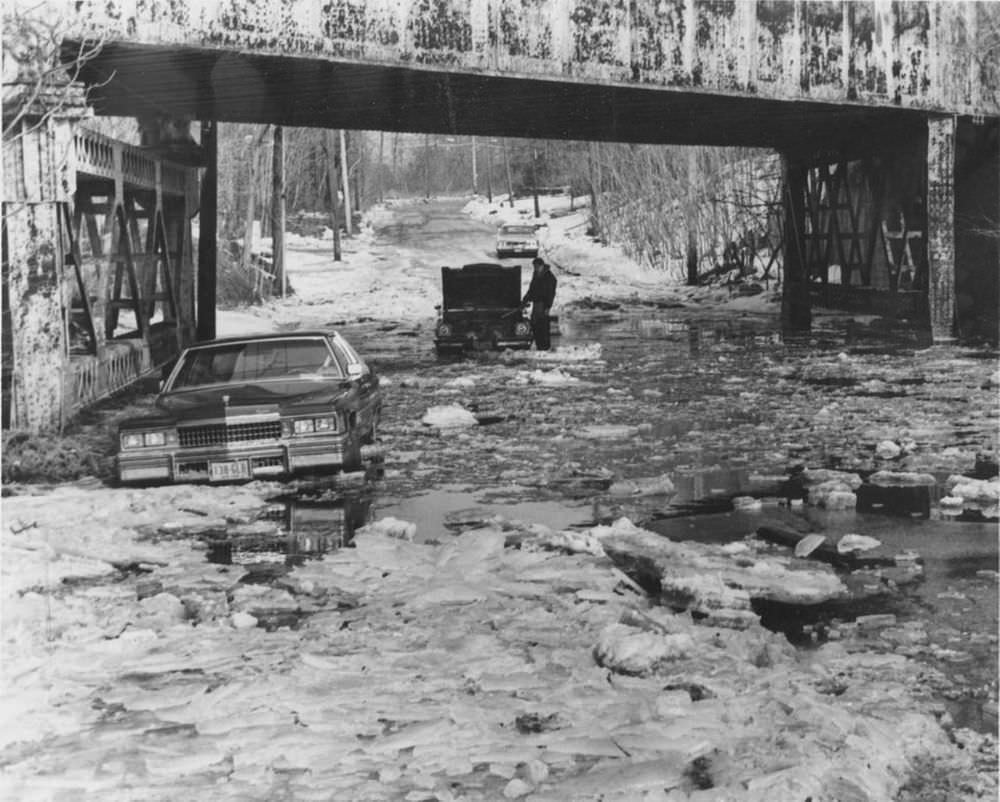
Frigid temperatures turned many flooded streets into sheets – or chunks – of ice. These cars stuck under the Staten Island Rapid Transit overpass on Amboy Road, Bay Terrace.

In some parts of Staten Island, the storm’s damage was compounded by flooding followed by a hard freeze. Streets that had taken on water turned into sheets of ice, trapping cars under overpasses and along low-lying roads. The combination of snow, ice, and debris made cleanup operations stretch on for days after the storm ended.
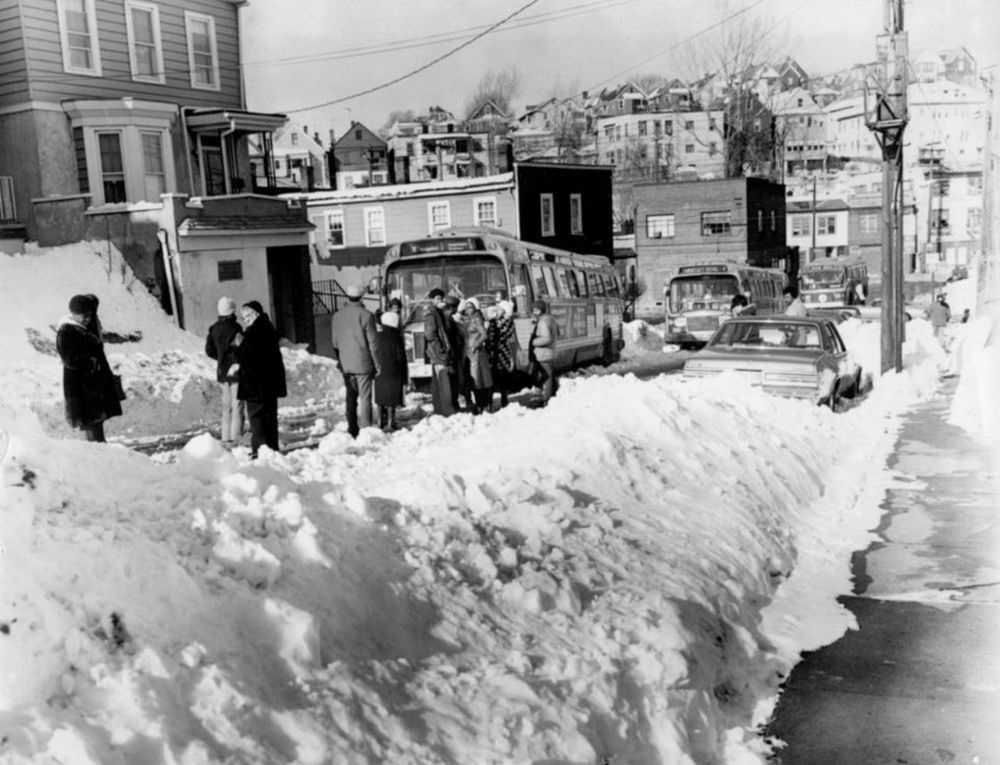
February 9, 1978, some of these people had a long wait for the bus on Victory Boulevard. in Tompkinsville, only to have  it get stuck in the snow around the corner after they boarded.
February 9, 1978, some of these people had a long wait for the bus on Victory Boulevard. in Tompkinsville, only to have it get stuck in the snow around the corner after they boarded.
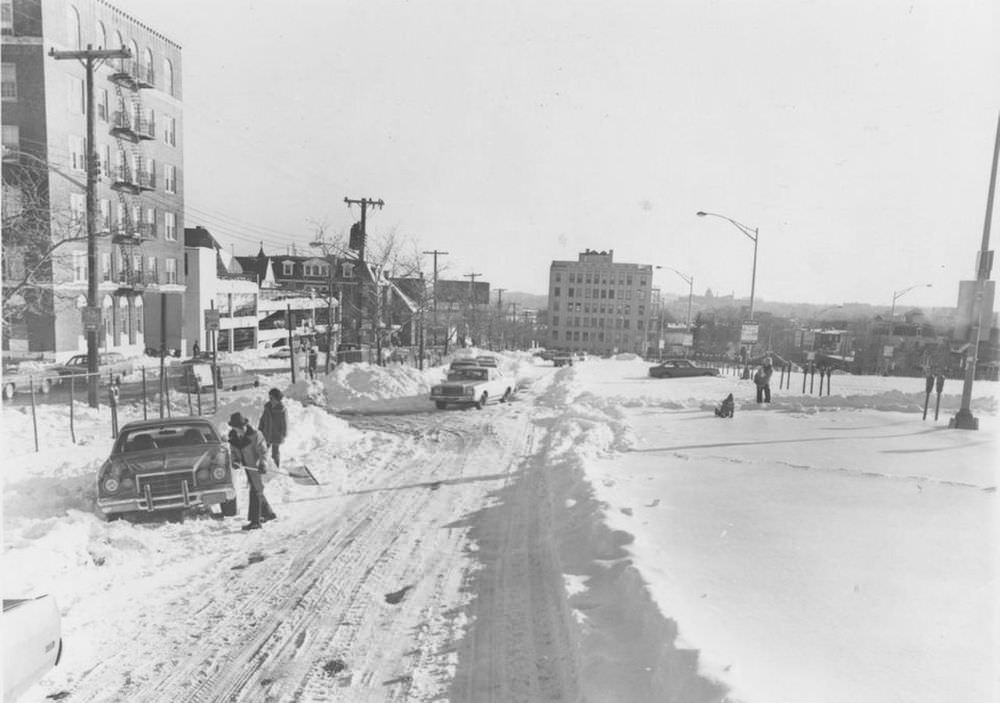
There's a lot of space to park in the municipal parking lot in St. George, but you had to fight the snow to find the spots.
There’s a lot of space to park in the municipal parking lot in St. George, but you had to fight the snow to find the spots.
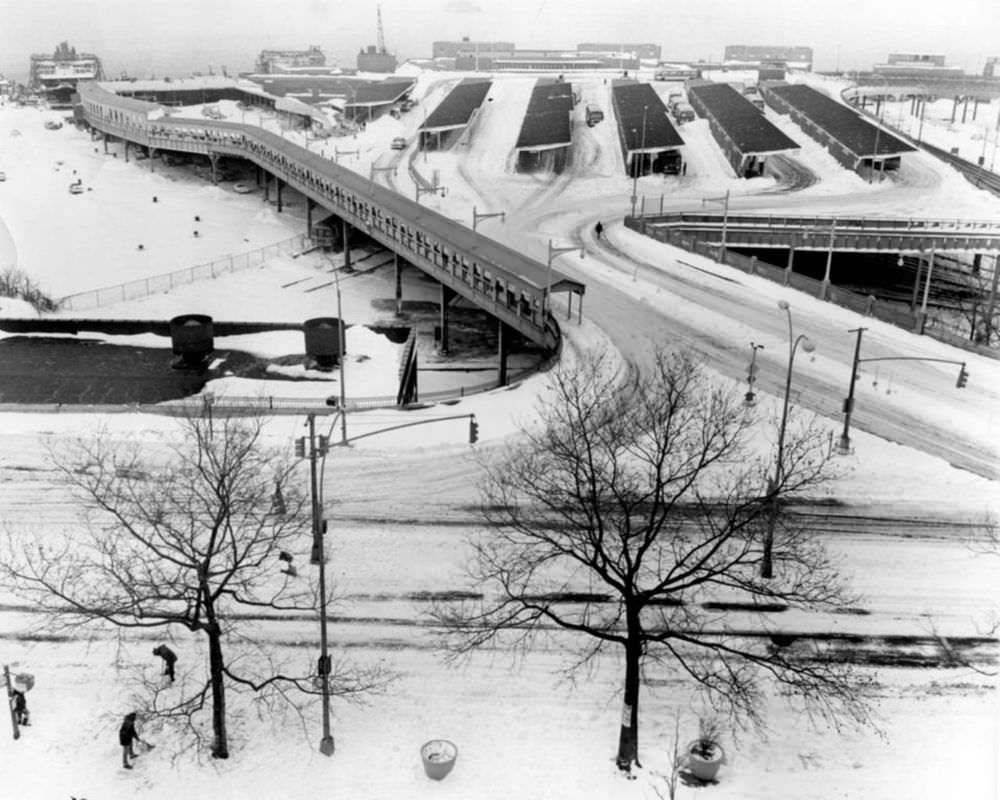
At noon on February 8, 1978, business at the St. George Ferry Terminal was hardly "as usual" thanks to Ol' Man Winter.
At noon on February 8, 1978, business at the St. George Ferry Terminal was hardly “as usual” thanks to Ol’ Man Winter.

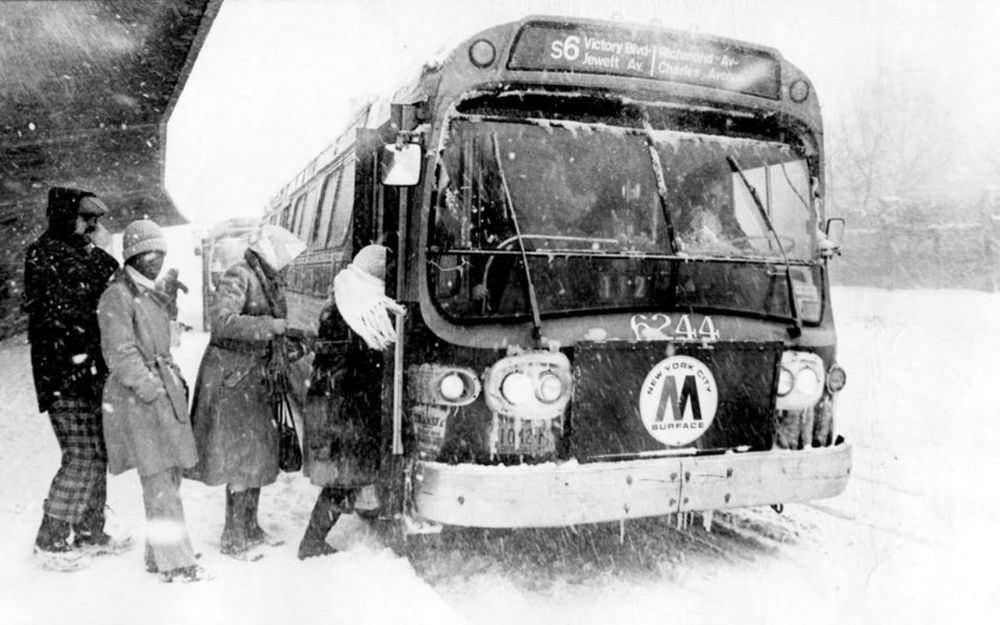
Public transportation across the region ground to a near halt. On Victory Boulevard in Tompkinsville, residents waited at bus stops on February 9th only to board a bus that got stuck in the snow around the next corner. The St. George Ferry Terminal, normally a busy hub, was nearly deserted at noon on February 8th, with ferry operations severely disrupted.
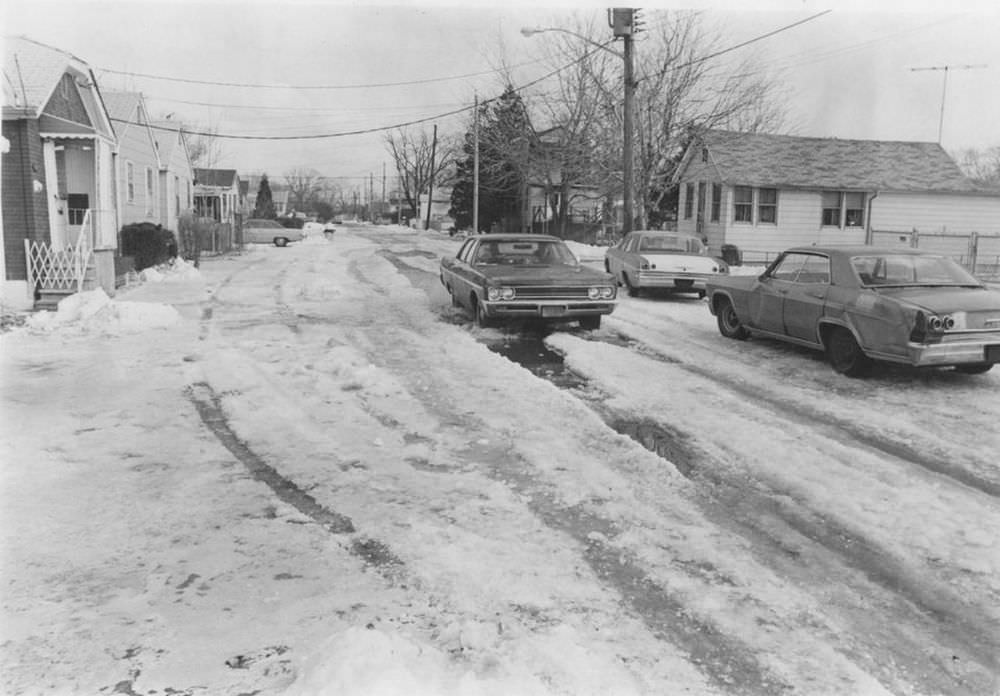
Autos have made ruts in the ice on this section of Olympia Boulevard.
Passengers board the S-6 bus on Bay St., near the ferry, during a blizzard on February 6-7, 1978.
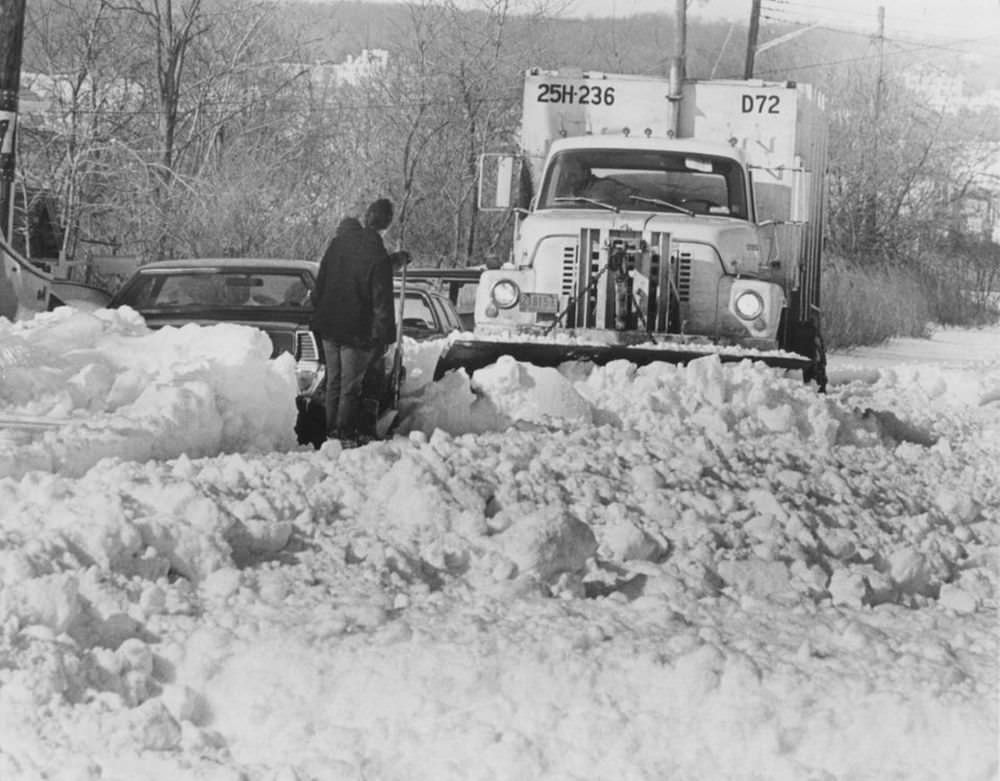
A Sanitation snow plow is welcome relief to residents on Naughton Ave., Ocean Breeze.
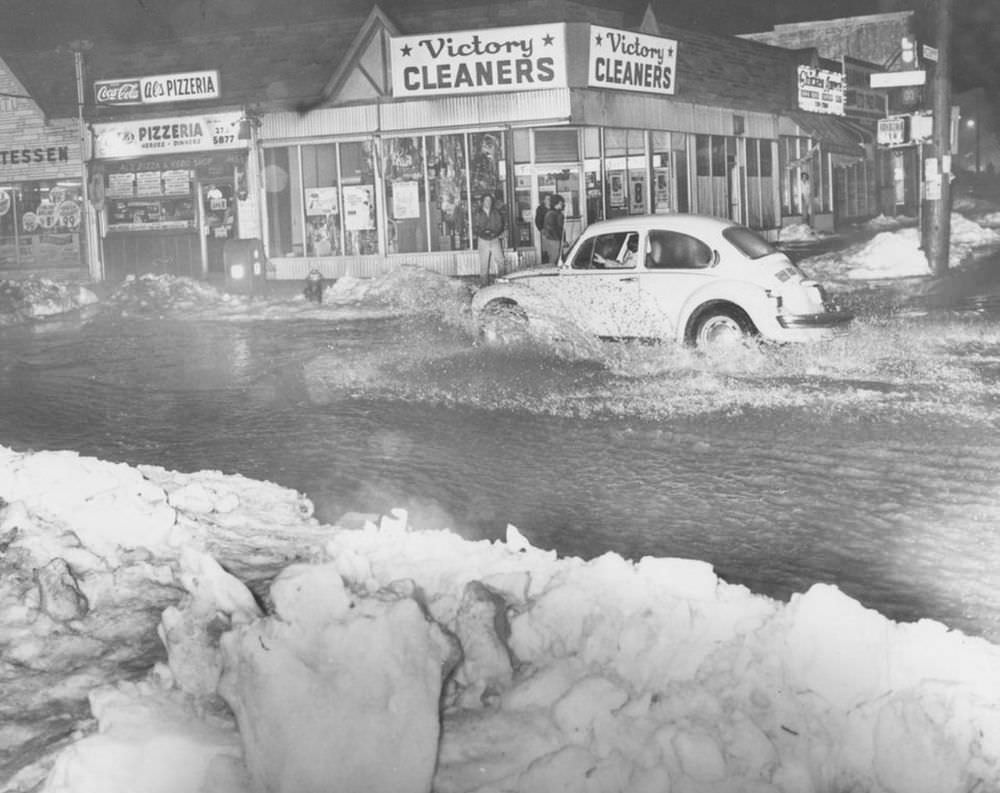
A Volkswagen "bug" splashes through the water at Victory Blvd. and Jewett Ave.
A Volkswagen “bug” splashes through the water at Victory Blvd. and Jewett Ave.
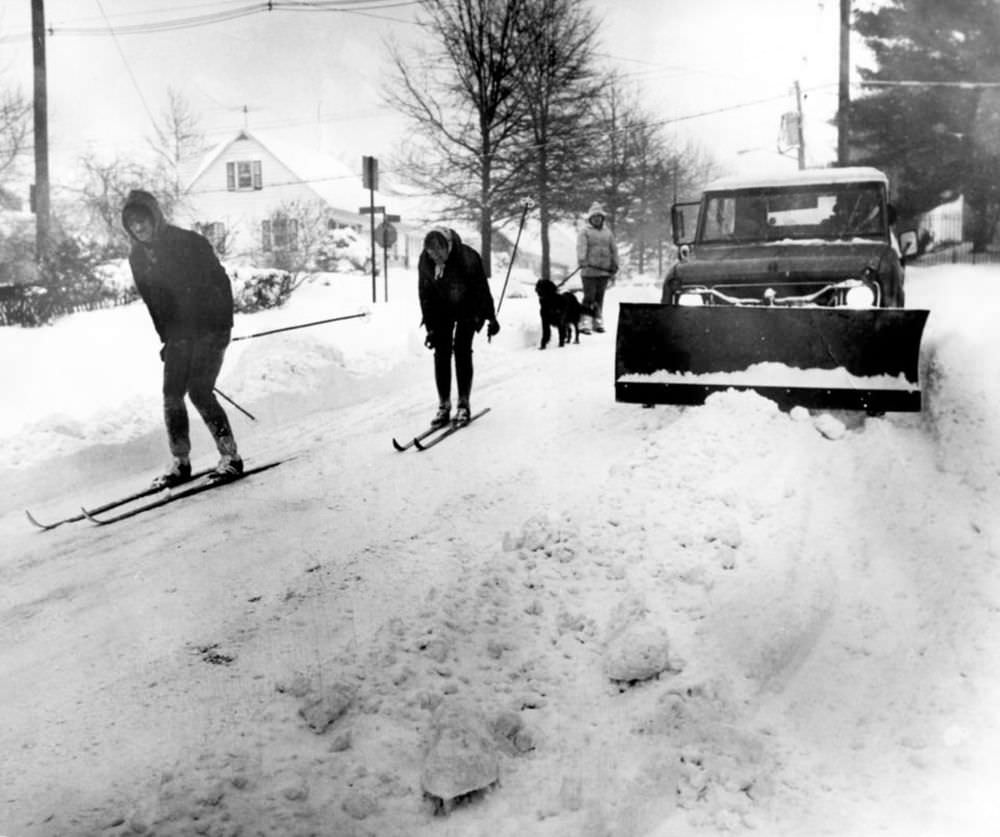
On February 6, 1978, skis were a good way to get around, as this couple demonstrates on Kingsley Street in West Brighton.

People found creative ways to get around. On Kingsley Street in West Brighton, a couple strapped on skis and moved through the neighborhood on February 6th — one of the more practical modes of transport given the conditions. Elsewhere, a Volkswagen Beetle pushed through floodwater at Victory Boulevard and Jewett Avenue, an image that summed up the sheer variety of obstacles the storm created.
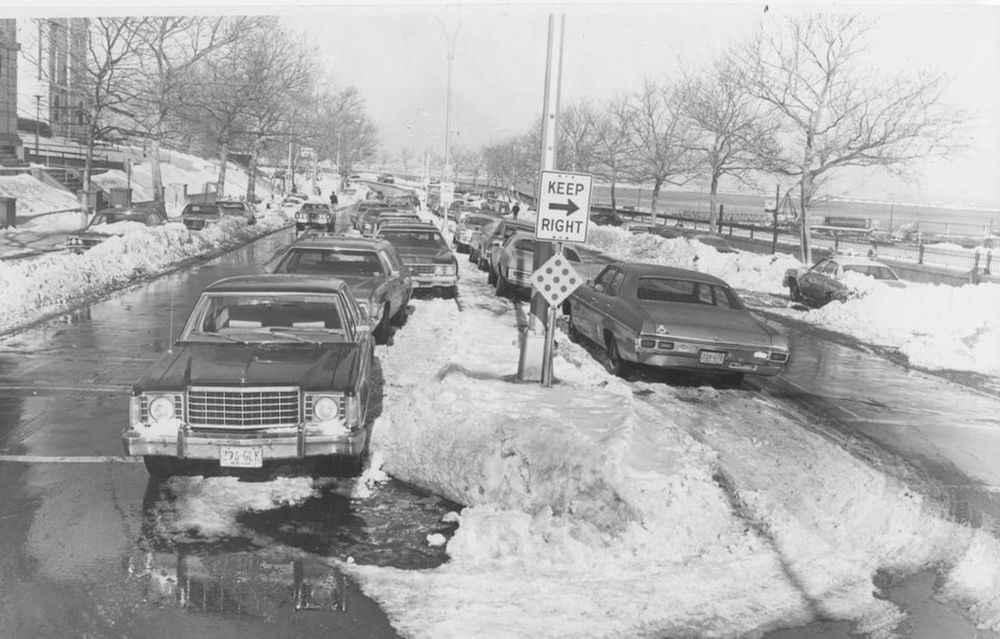
Parking was difficult on Richmond Terrace in front of the 120th Precinct in St. George
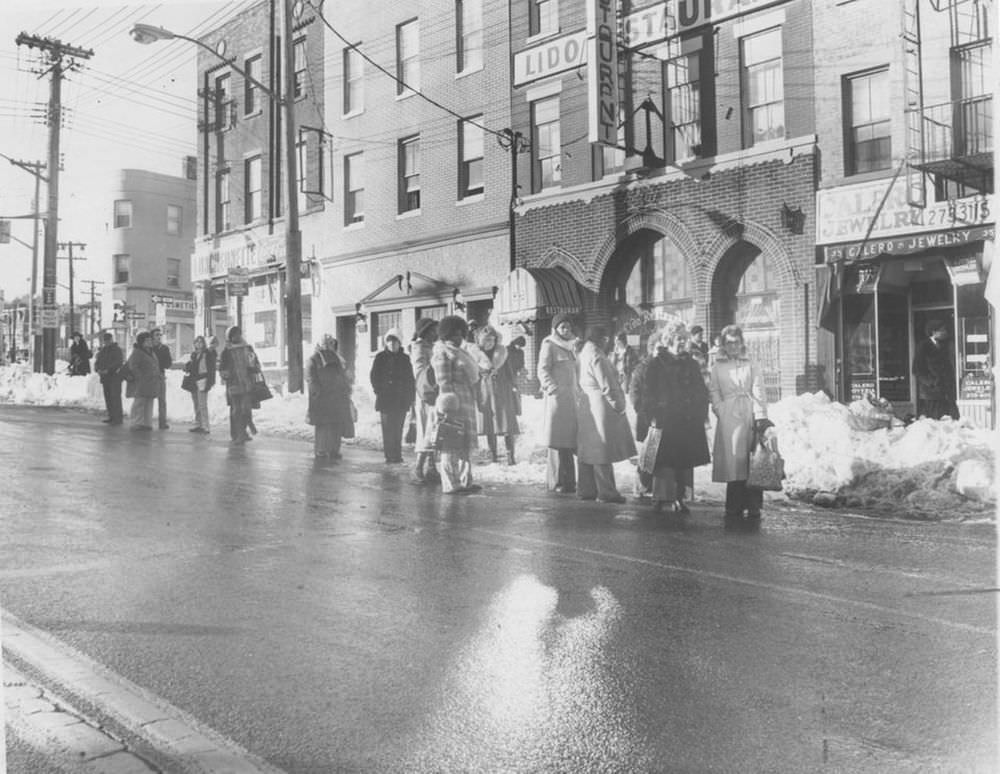
Mounds of snow along Victory Boulevard in Tompkinsville

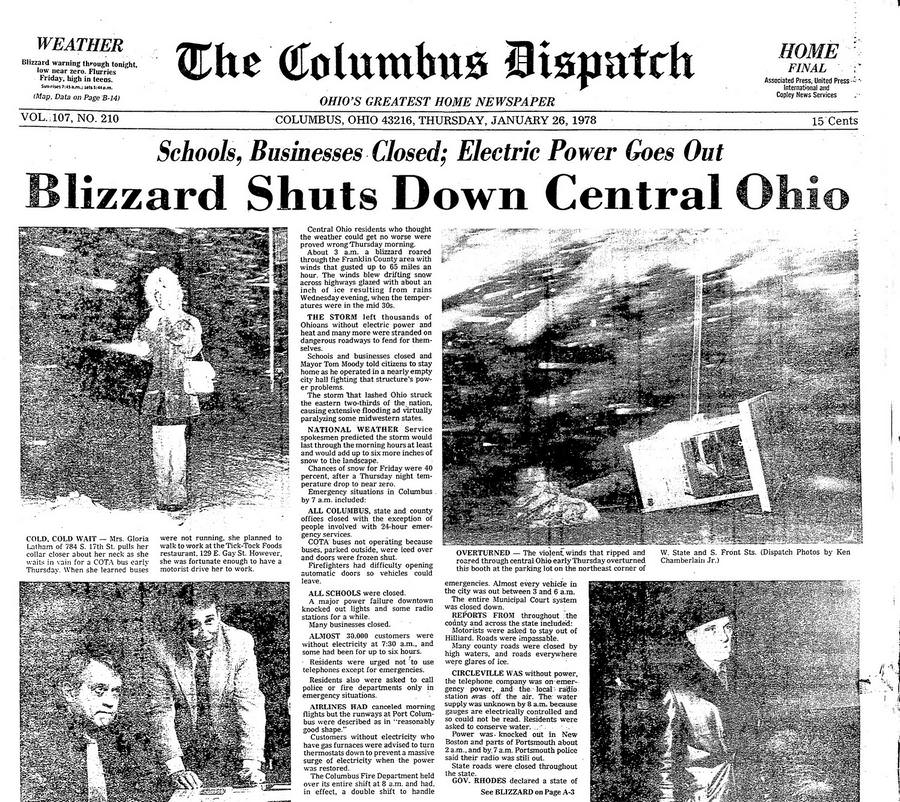
While New England and New York bore the brunt of the February storm, Ohio had already been devastated weeks earlier. Around 3 a.m. on January 26, 1978, a separate but equally catastrophic blizzard struck Ohio — the worst in the state’s recorded history. Record winds of 67 mph tore through the state, piling snow into drifts over 10 feet high. The storm added 4 more inches on top of the 17 inches already on the ground from previous snowfalls. Columbus recorded a barometer reading of 28.47 inches, and Cleveland hit 28.28 inches — the lowest pressure reading ever recorded on the U.S. mainland outside of a hurricane, according to the National Weather Service.
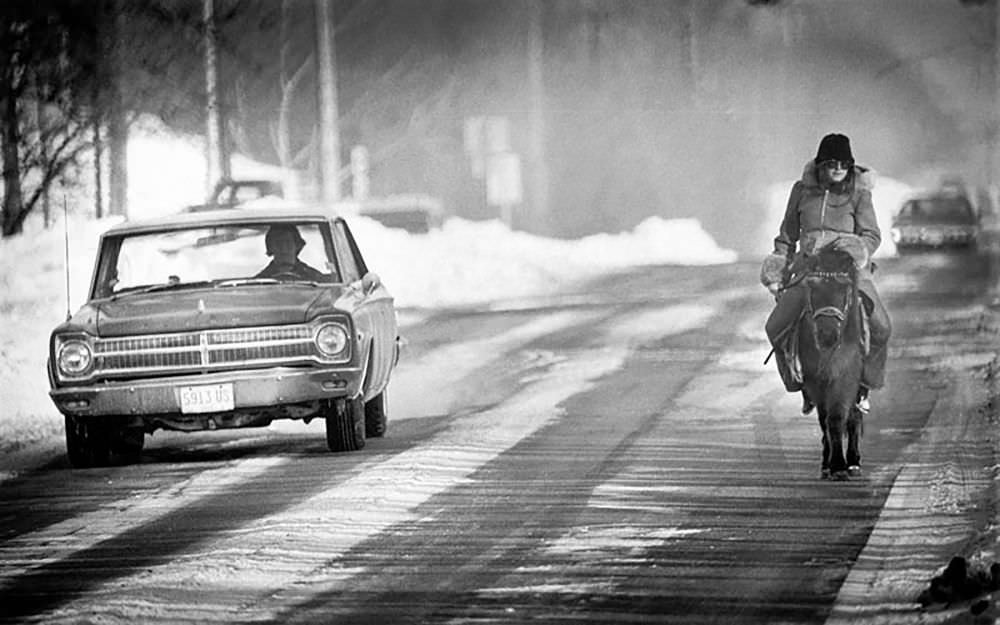
This resident of Miami County, Ohio finds an innovative way to travel.
Blizzard conditions arrived in Dayton early in the morning on Jan 26, 1978.
Around 3 a.m. on Thursday, January 26, 1978, Ohio was hit by the worst blizzard in its recorded history.

Ohio’s response was overwhelmed from the start. Over 100,000 residents lost power. A thousand Ohioans spent at least one night in emergency shelters. Businesses, schools, factories, and government offices all shut down. Air, rail, and highway travel became impossible. The Highway Patrol rescued 6,000 stranded motorists, and 1,500 vehicles were abandoned on state highways alone. Night wind chills plunged to 70 and 80 degrees below zero, and several motorists who left their snowbound vehicles on foot were found dead.
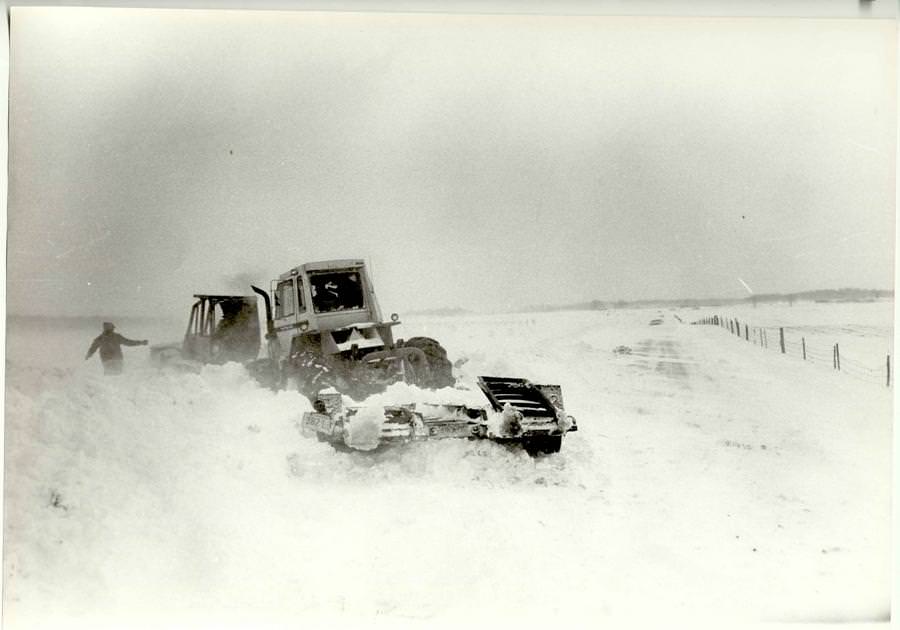
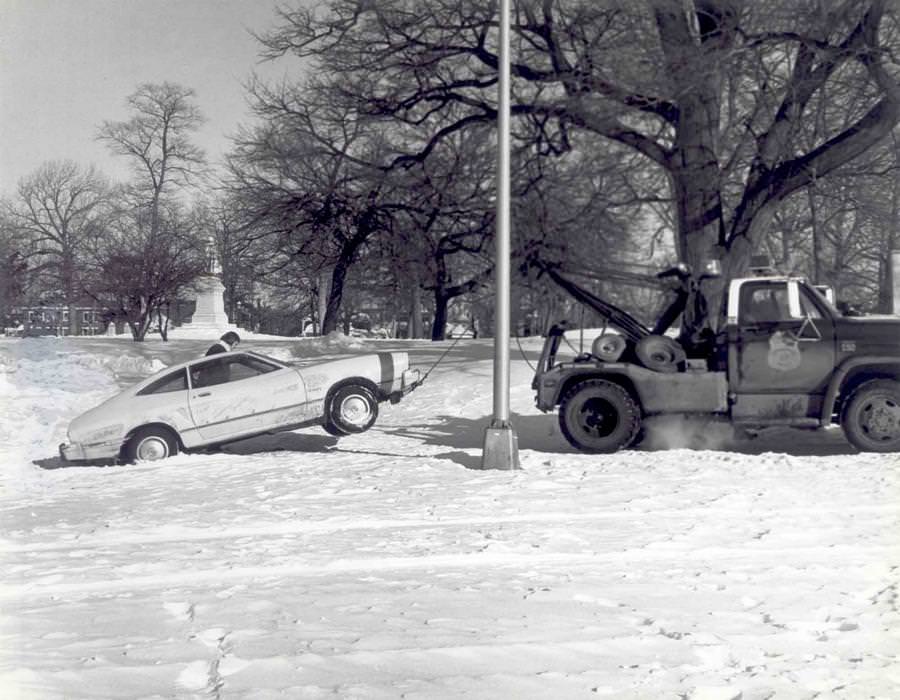
This scene early Friday (Jan. 27, 1978) along Hanover Road, about 5 miles north of Delaware, when a rescue team had to be rescued, was typical of many such efforts in the battle against the elements.
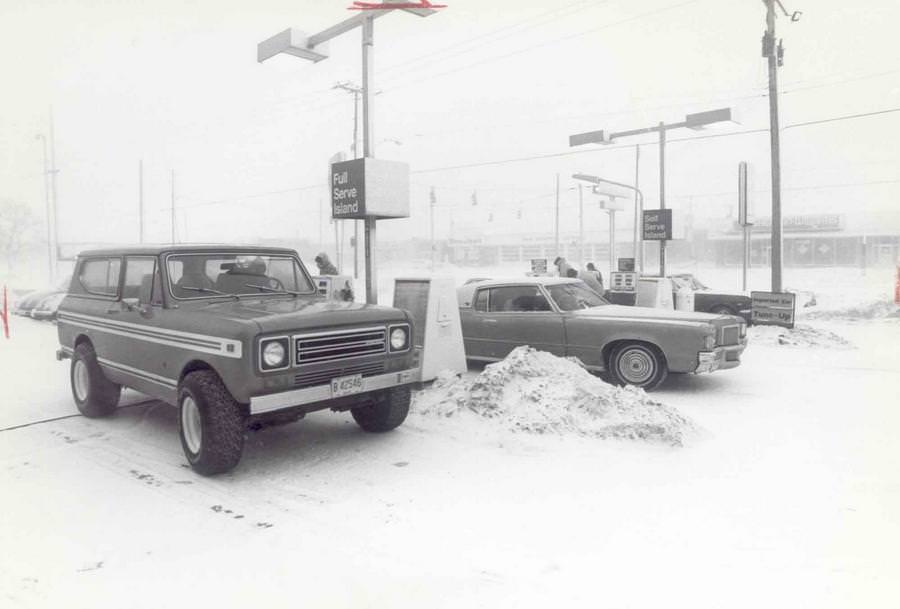
Drivers kept this Reynoldsburg service station busy Thursday because they did not want to run short of fuel with a blizzard howling about.
On Friday morning, January 27, state and city officials still had major problems.

Rescue operations were frequently reversed. Along Hanover Road near Delaware, Ohio, a rescue team sent out on January 27th had to be rescued themselves — a scene that became typical of the storm’s severity. At a service station in Reynoldsburg, drivers lined up to fill their tanks, unwilling to risk running low on fuel with the storm raging around them.
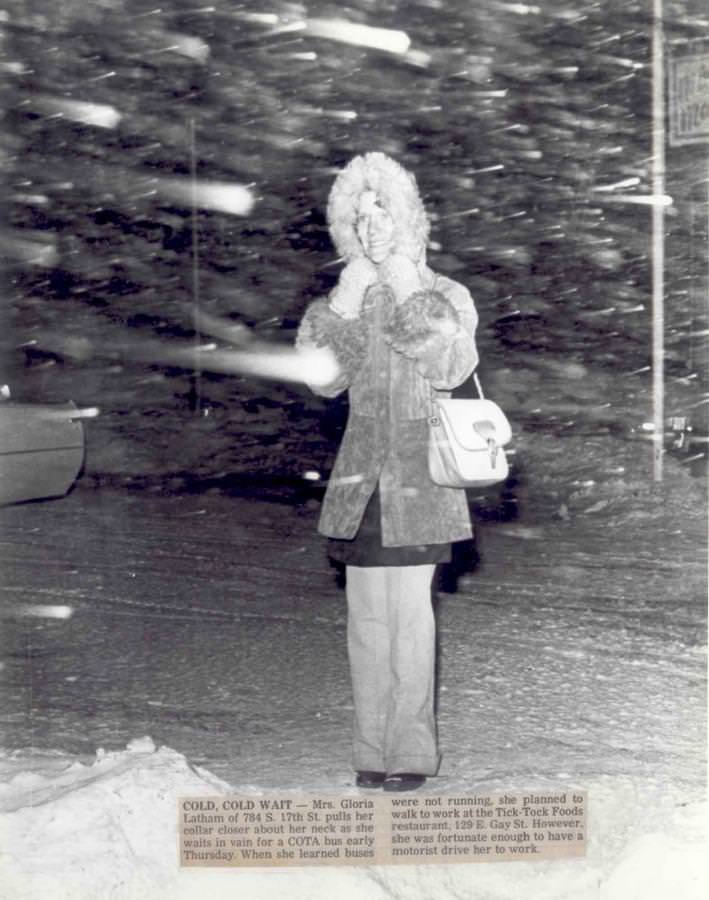
A woman pulls her collar closer about her neck as she waits in vain for a COTA bus early Thursday.
1,500 automobiles were stranded on Ohio highways and 6,000 motorists had to be rescued by Highway Patrol troopers.
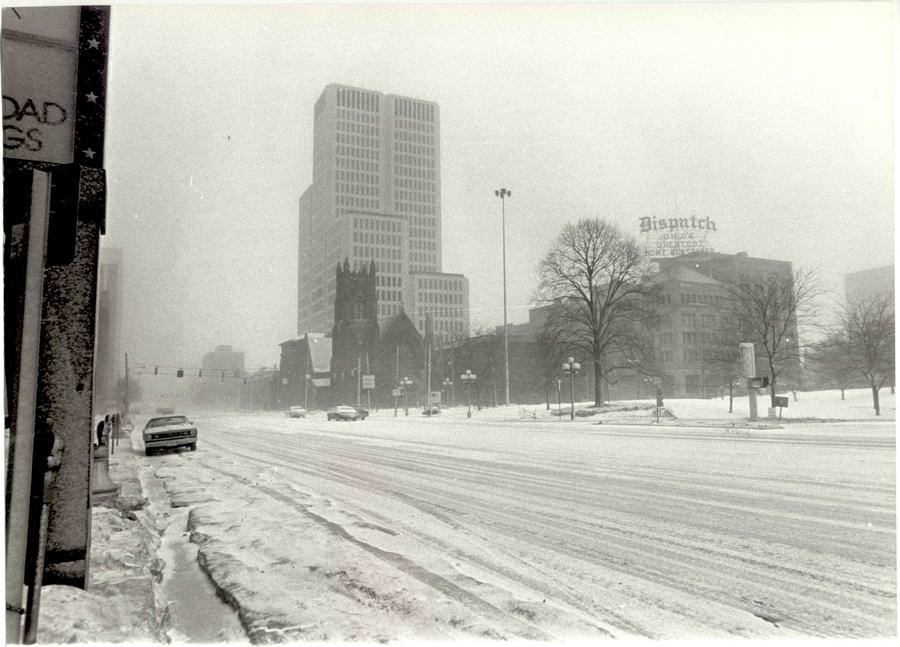
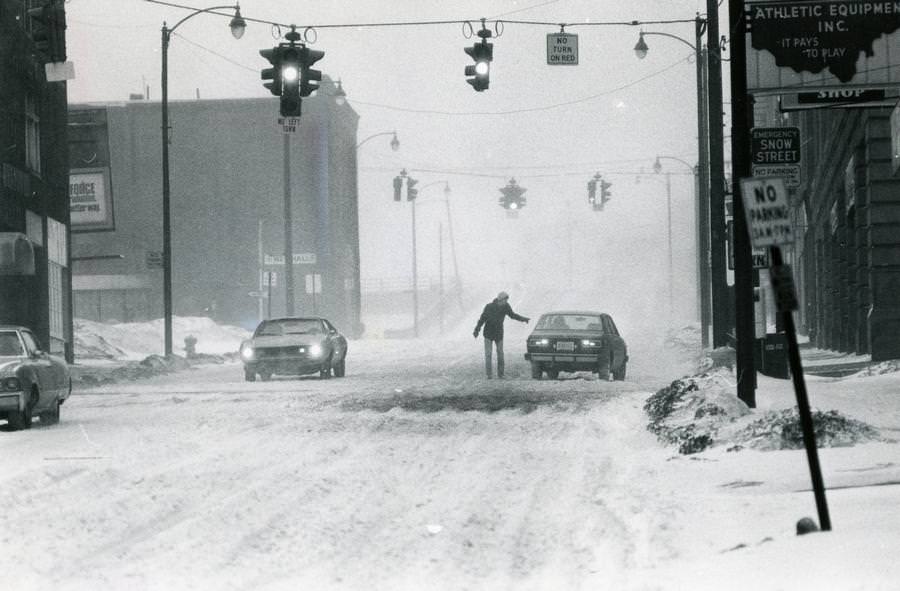
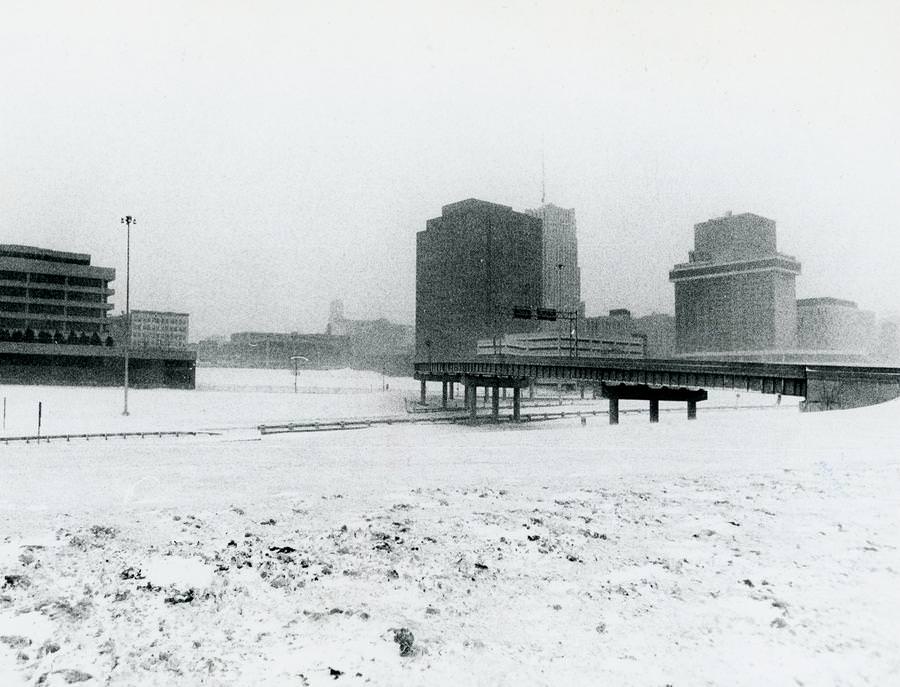
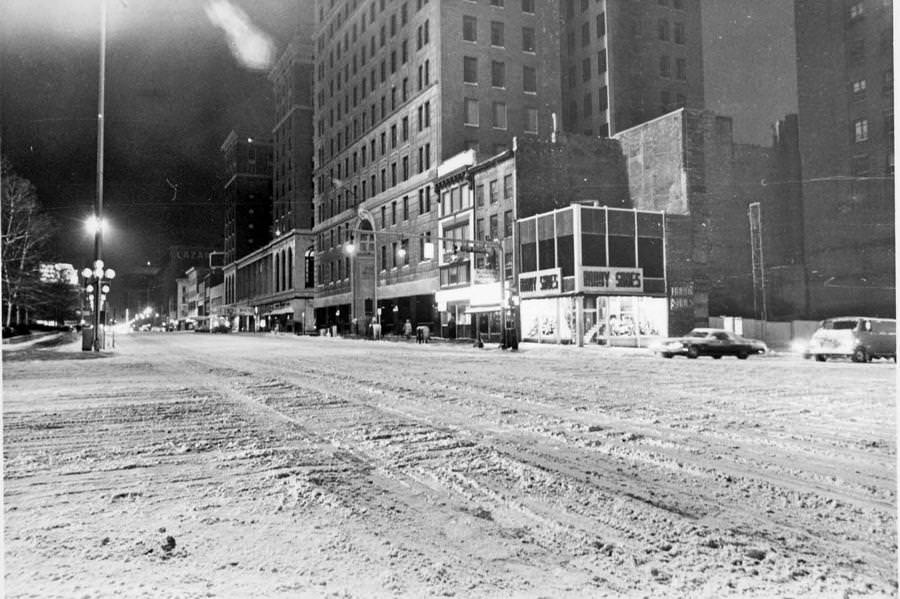
A view of Downtown Columbus during the 1978 blizzard near the intersection of Broad St. and 3rd St.

Downtown Columbus was effectively shut down. The intersection of Broad Street and 3rd Street, normally a busy urban crossroads, sat nearly empty under a gray sky and thick snow. President Jimmy Carter declared a federal state of emergency for Ohio. Snowfall totals across the state ranged from 5 inches in Columbus to over 20 inches in northern Ohio, but the wind-driven drifts made the actual depth of snow irrelevant — no amount of plowing could keep up.
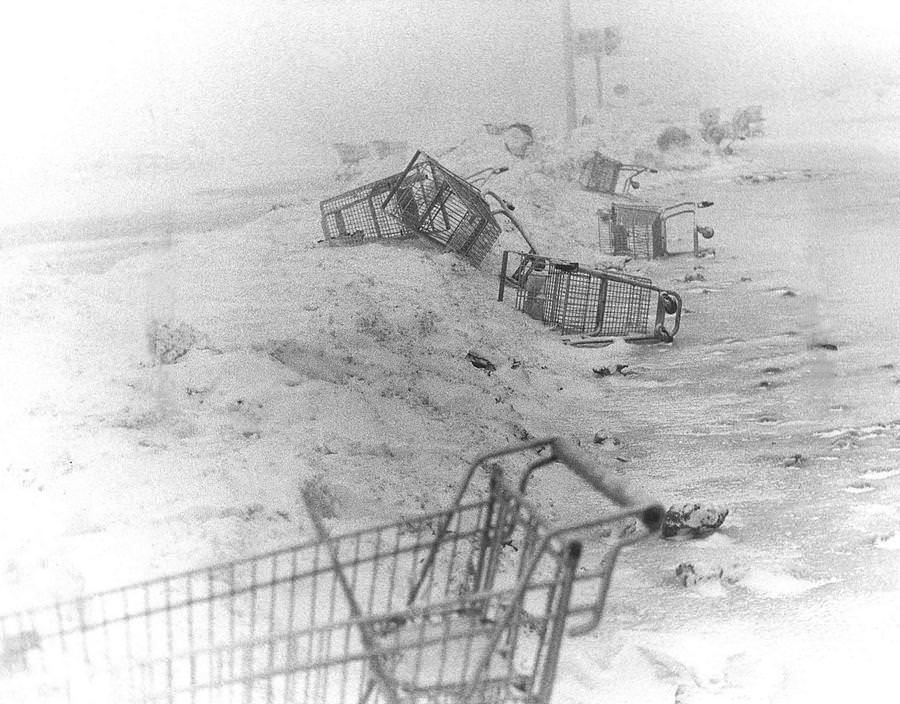
Snowfall ranged from 5 inches in Columbus to more than 20 inches in northern Ohio. President Jimmy Carter declared. a federal state of emergency for Ohio.
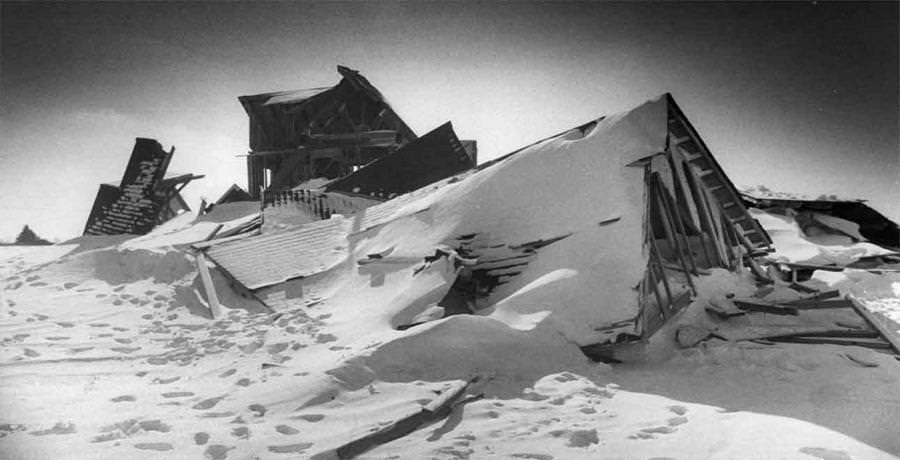
The storm devastated this house under construction on Royalton Dr. south of Galloway, Ohio.
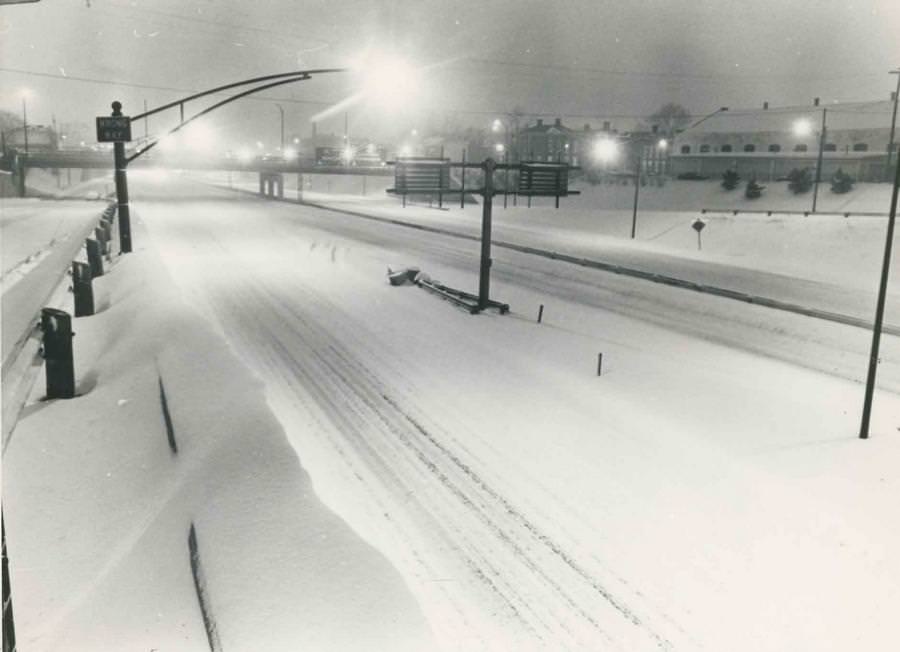
West Freeway Exit Ramp to Wilson Road.; Taken Jan. 27, 1978.
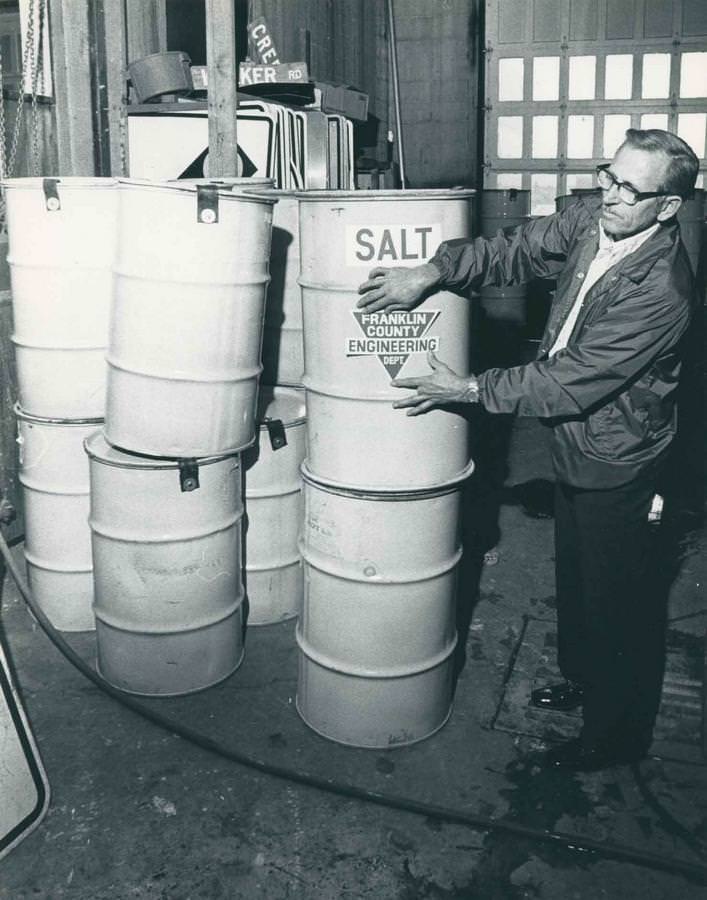
No amount of road salt was adequate.
Columbus had a record-low barometer reading of 28.47 inches.

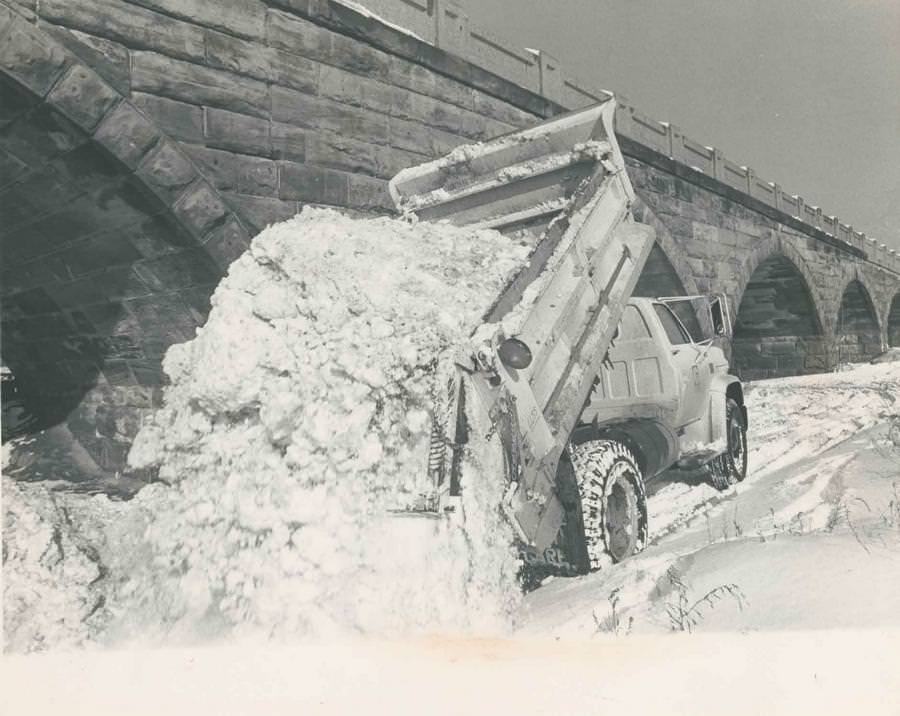
The pressure readings recorded in Ohio during the January storm were unlike anything documented in the continental United States outside of a hurricane. That extreme low pressure drove the punishing winds that turned a heavy snowfall into a full-scale blizzard. Road salt was useless at such temperatures, and the sheer volume of snow on the ground made conventional plowing methods inadequate. Front-loaders and heavy equipment had to be brought in to physically move the snow.
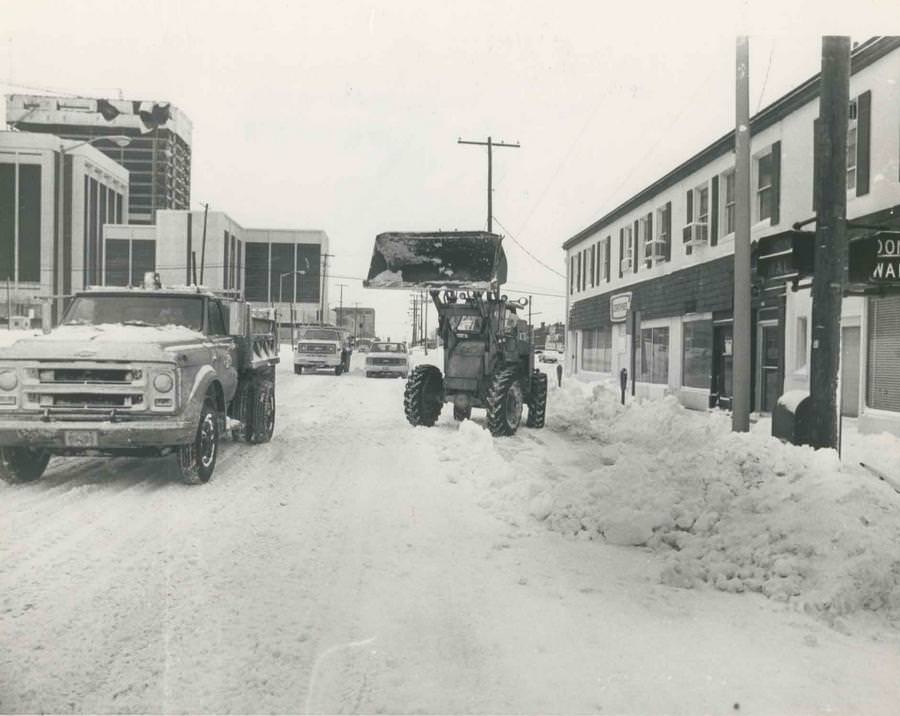
This front-loader is working on Front St. just north of Main St., Jan. 29, 1978.

One of the most striking individual stories from the Ohio blizzard involved truck driver James Truly. He stopped his semi-tractor trailer along Ohio Route 13 north of Mansfield when the storm made driving impossible. The snow continued to fall and drift for days, and the storm completely buried his rig. No one knew Truly or his truck were in the drift for several days. He was finally found on January 31st when Ohio Air National Guard personnel running a large snowblower along the highway hit the drift — and discovered a man inside.
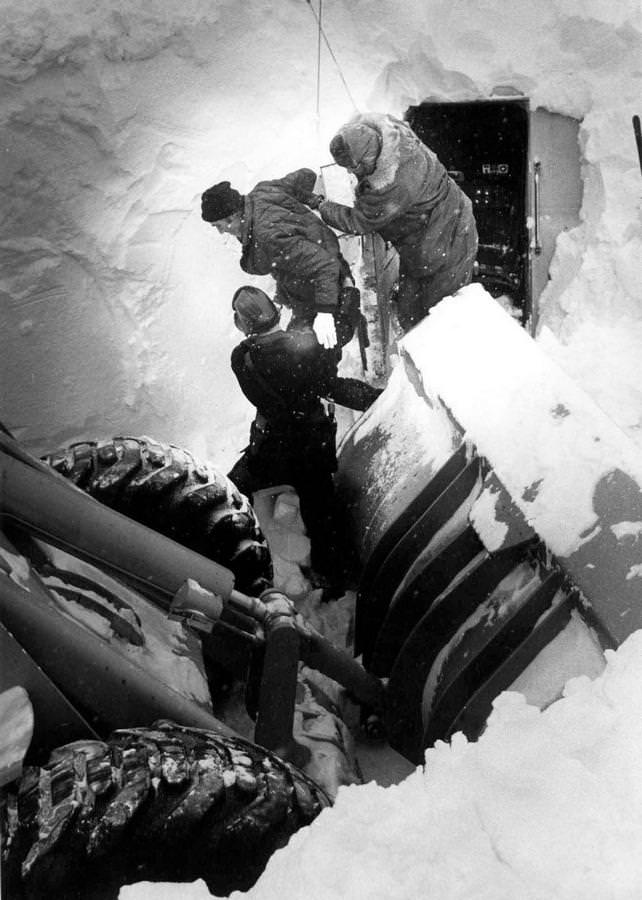
Truck driver James Truly is helped from the cab of his rig after spending most of five days buried in the truck beneath a huge snowdrift in Mansfield, Ohio, Jan. 31, 1978.
Broad and High looking South. Hardy Shoes is at the southwest corner of Broad & High streets.
The Blizzard of 1978: Photos Show the Historic Storm That Slammed the Northeastern United States

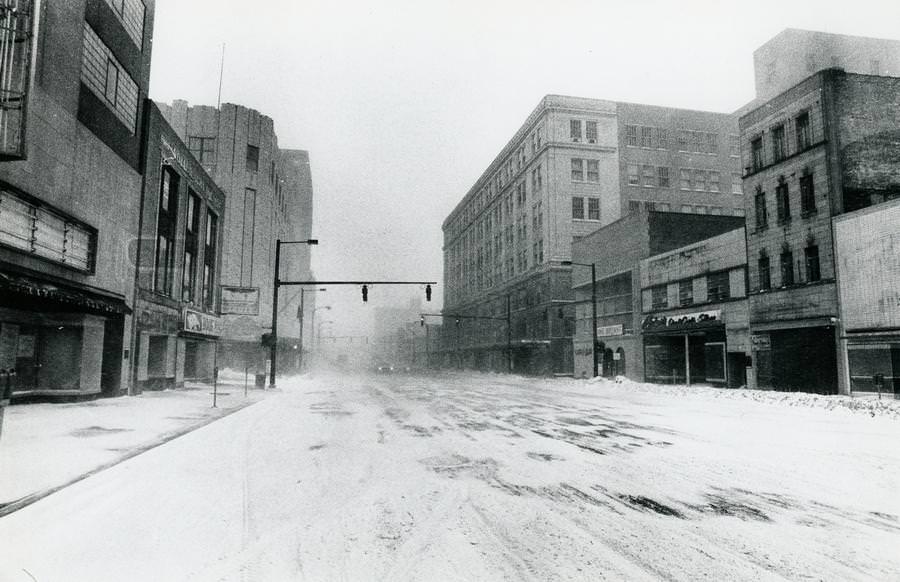
Akron was among the Ohio cities hit hardest by the January storm. Downtown Akron at rush hour on January 26th looked ghostly — streets that would normally be packed with commuters sat almost completely empty. The blizzard brought sustained winds of 35 to 40 mph to the city, with a peak gust of 76 mph recorded at Akron Municipal Airport. That gust flipped a Cessna 150 upside down on the south end of the airfield near the Akron Airdock.
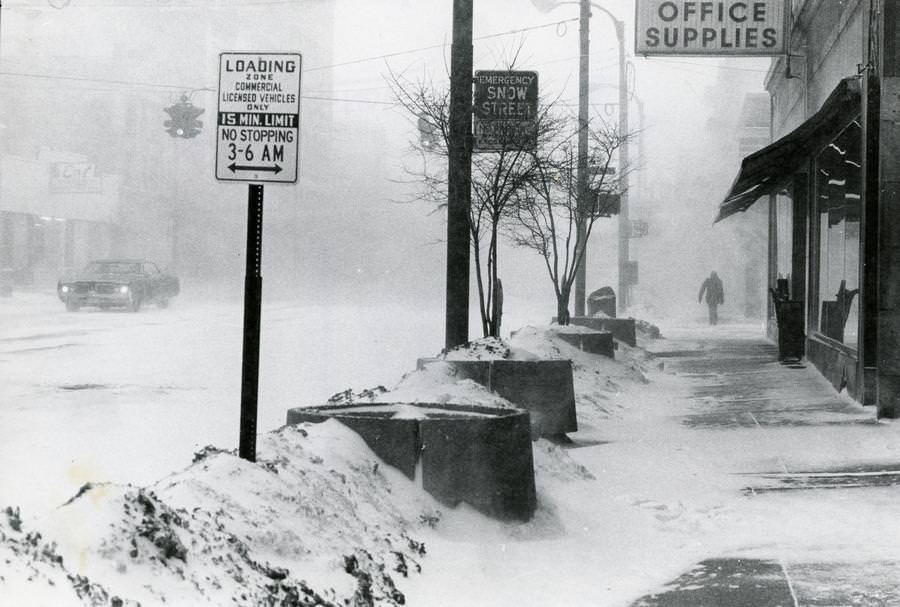
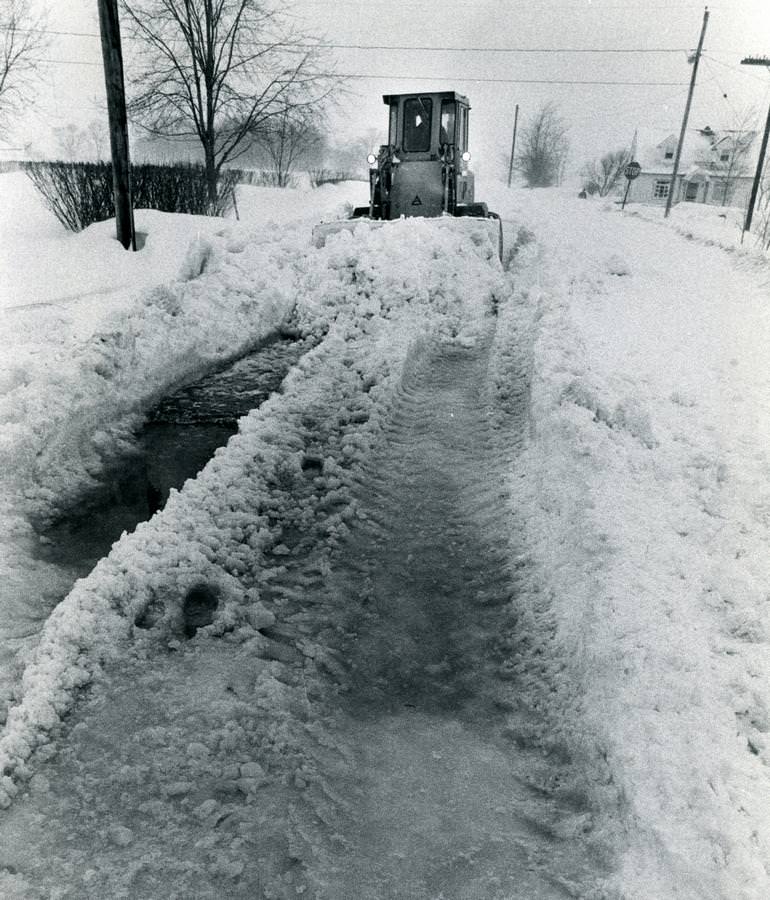
Looking north on Main Street on Jan. 26, 1978, in downtown Akron.
A front-end loader digs through snow Jan. 27, 1978, on Eastern Road in Rittman.
Looking east on Mill Street from the intersection of High and Main streetsJan. 26, 1978, in downtown Akron.
Downtown Akron under siege by the blizzard on Jan. 26, 1978.
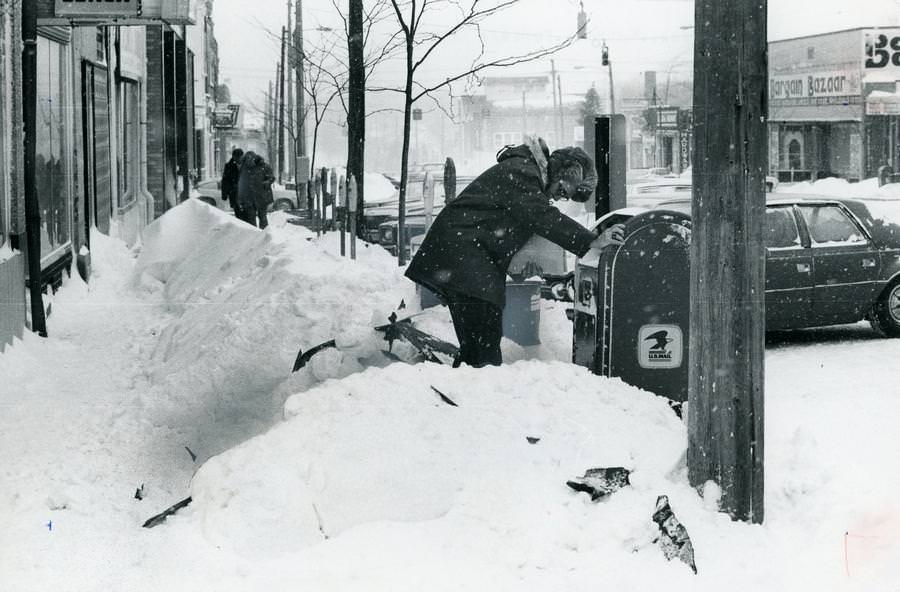
Esther Wright, a clerk for the Ravenna Police Department, trudged through snow drifts to mail a letter on Jan. 27, 1978.

In Ravenna, Esther Wright — a clerk for the local police department — waded through snowdrifts just to mail a letter on January 27th. It was the kind of small, determined act that defined how Ohioans responded to the storm: not stopping entirely, but doing what needed to be done one difficult step at a time.
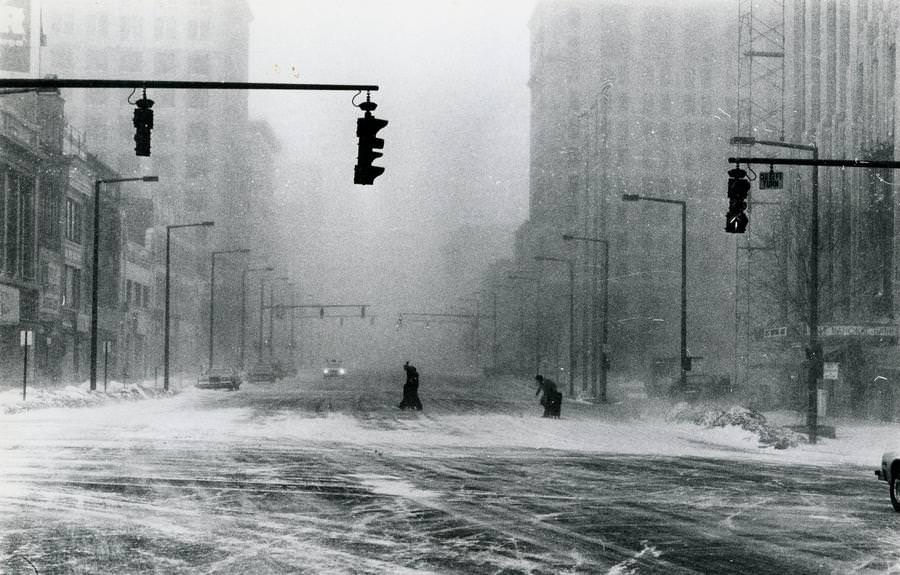
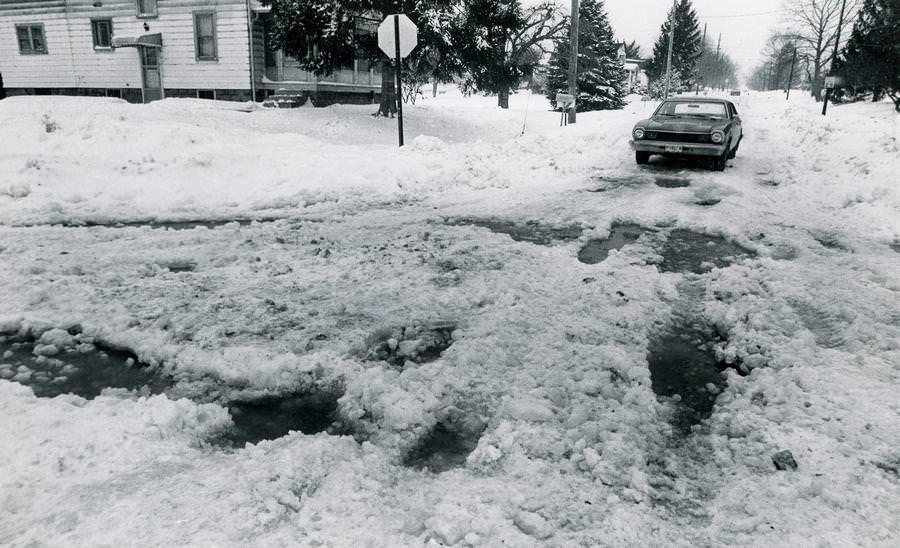
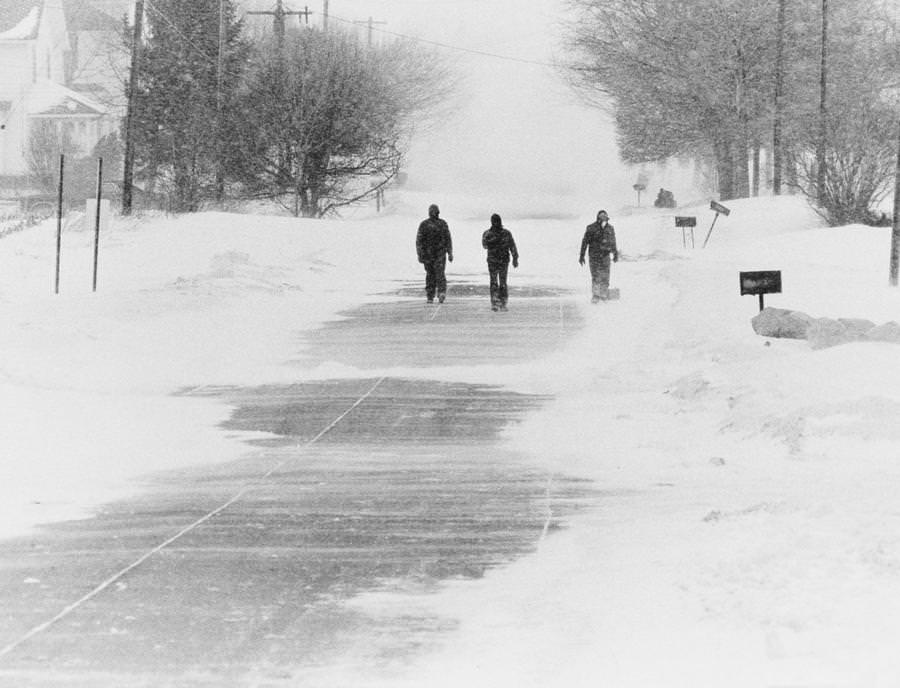
Pedestrians struggle to cross an Akron road during the blizzard on Jan. 26, 1978.
Ice covered the roads on Jan. 27, 1978, at Alaho Street and Cooledge Avenue in Akron.
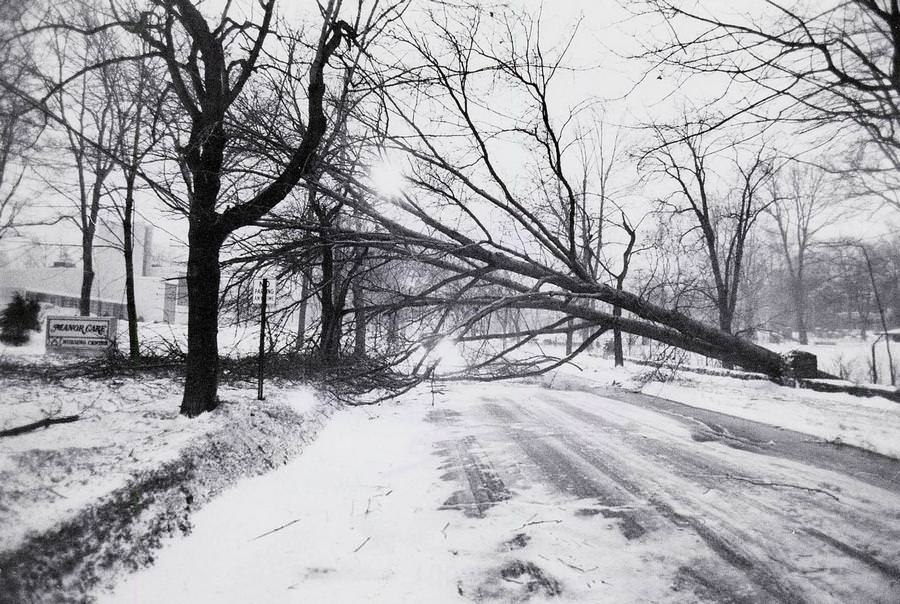
A fallen tree blocks West Market Street at Manor Care Nursing Home. The 1978 storm knocked out power, heat and phone service to thousands across Northeast Ohio.

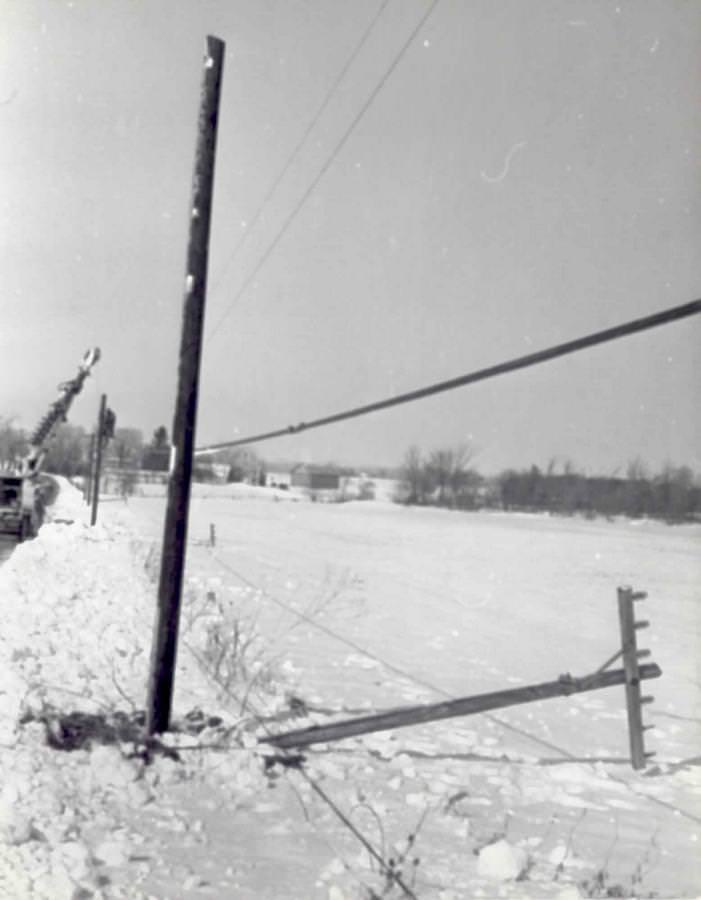
Fallen trees added to the chaos in Northeast Ohio, blocking roads and tearing down power lines. At the Manor Care Nursing Home on West Market Street, a tree came down and blocked the road entirely. Power, heat, and phone service went out across the region, leaving tens of thousands without any of those utilities for days. Nursing homes, hospitals, and other care facilities faced severe strain keeping their patients safe and warm.
Looking down Main Street on Jan. 26, 1978, during the blizzard in downtown Akron.
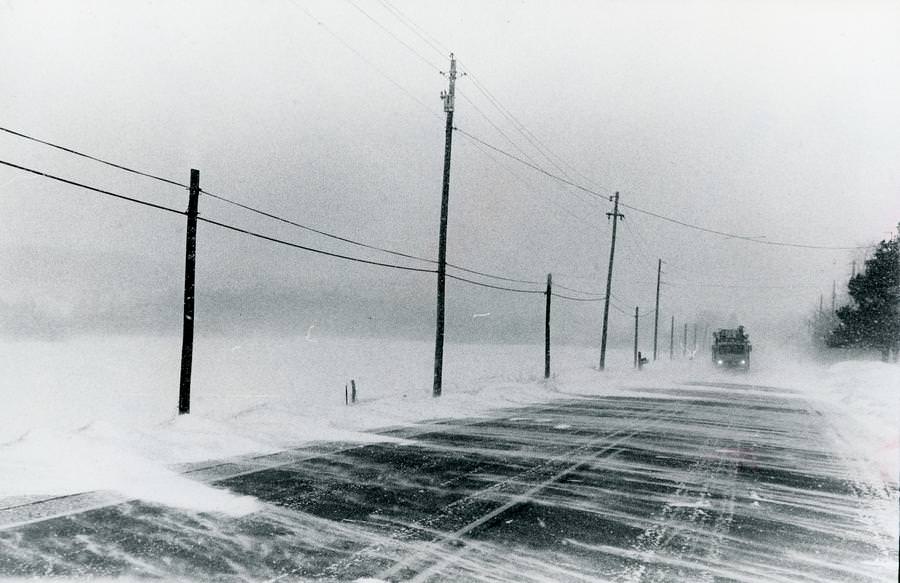
Ohio Edison trucks could barely be seen on state Route 82 east of Mantua Corners in this Jan. 27, 1978.
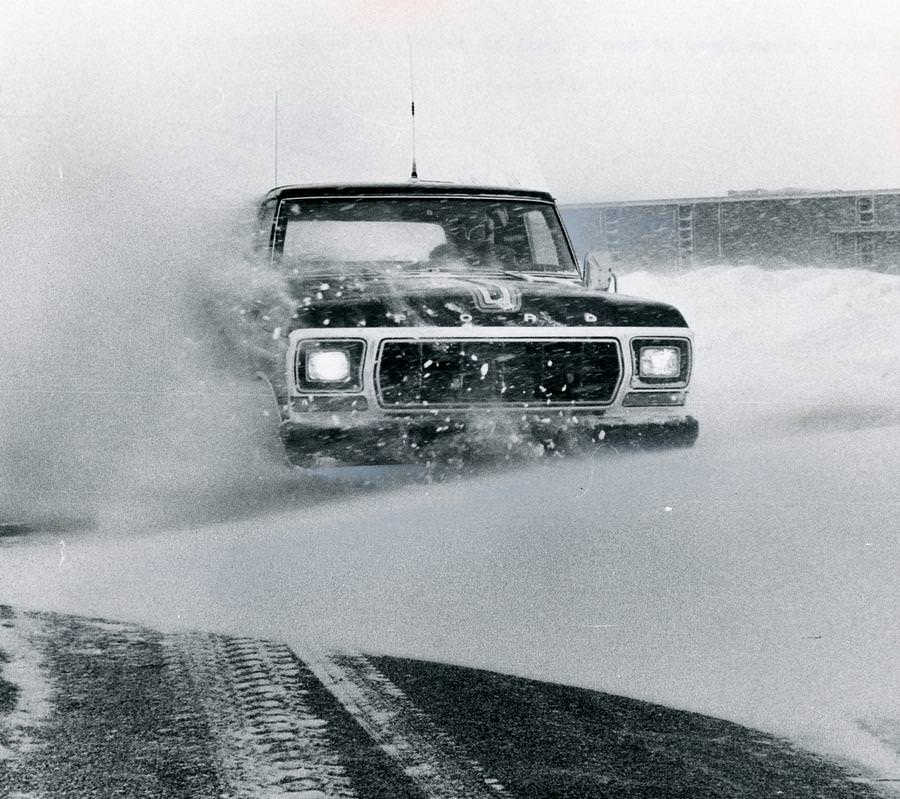
Pete Geiger tests out the four-wheel drive on a Ford Bronco on snow drifts in Wayne County in the Jan. 27, 1978.
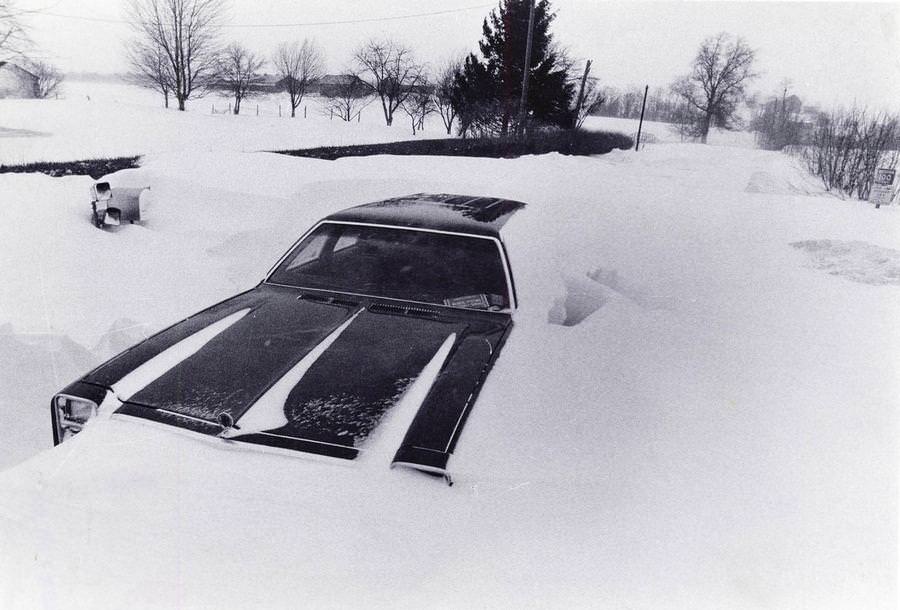
An abandoned car lies buried in a giant snowdrift on Jan. 27, 1978, off Eastern Road near Rittman in Wayne County.
A street in Rittman is covered in snow, as were many streets in the Summit County region during the blizzard of 1978.

In Wayne County, off Eastern Road near Rittman, cars sat buried in drifts so deep they were barely recognizable as vehicles. Ohio Edison utility trucks were nearly invisible on Route 82 east of Mantua Corners, the white landscape swallowing everything. For days after the storm, crews worked around the clock to restore power lines buried under ice and snow.
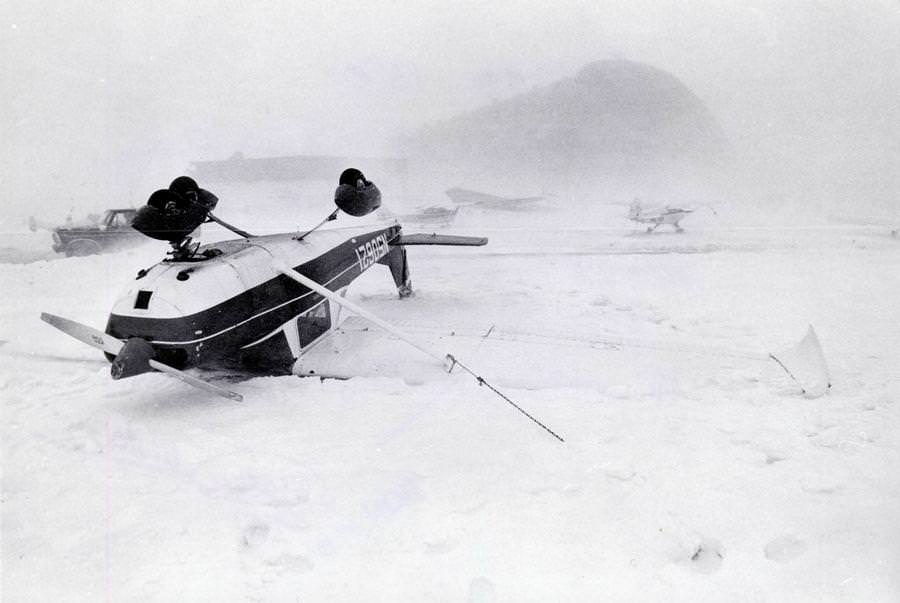
Tossed around like a toy, a Cessna 150 rests upside down on the south end of Akron Municipal Airport near the Akron Airdock.
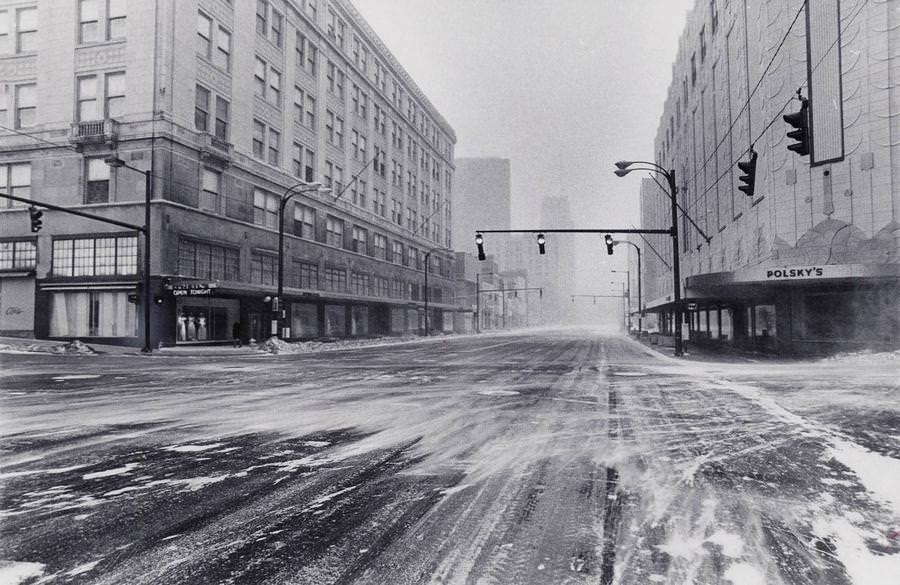
Welcome to downtown Akron's "rush hour" during the Blizzard of 1978. This ghostly photo, which looks north on Main Street at O'Neil's and Polsky's department stores, was taken at 4:45 p.m. Jan. 26.
Welcome to downtown Akron’s “rush hour” during the Blizzard of 1978. This ghostly photo, which looks north on Main Street at O’Neil’s and Polsky’s department stores, was taken at 4:45 p.m. Jan. 26.

The photograph taken at 4:45 p.m. on January 26th, looking north on Main Street toward O’Neil’s and Polsky’s department stores, captured what Akron’s rush hour looked like that day: nothing. No cars, no pedestrians, no movement. A city of hundreds of thousands, silent. Across Ohio and across New England, that same silence settled over communities that were, just hours before, in the middle of an ordinary Tuesday or Wednesday.


Enjoyed this post? Get new ones in your inbox.

Leave a Comment

Your email address will not be published. Required fields are marked *

65 Comments

Load more comments

Share this Post 🥺

Please take a moment to share this content. Your support is greatly appreciated! 🙌🙏

Share this Post 🥺

Please take a moment to share this content. Your support is greatly appreciated! 🙌🙏
Scroll to Top
 
Hey Friend, Before You Go.. Please like & follow for more interesting content