
The Black Country, located northwest of Birmingham in England’s West Midlands, built its identity on coal mining, iron and steel production, and engineering during the Industrial Revolution. By the 1970s and 1980s, that industrial base was collapsing — factories and mines were closing, unemployment was rising, and the population was shrinking as people left in search of work. Photographer David Rostance captured this moment of transition, documenting the towns, railways, power stations, and people of the region as they moved from an industrial into a post-industrial era.
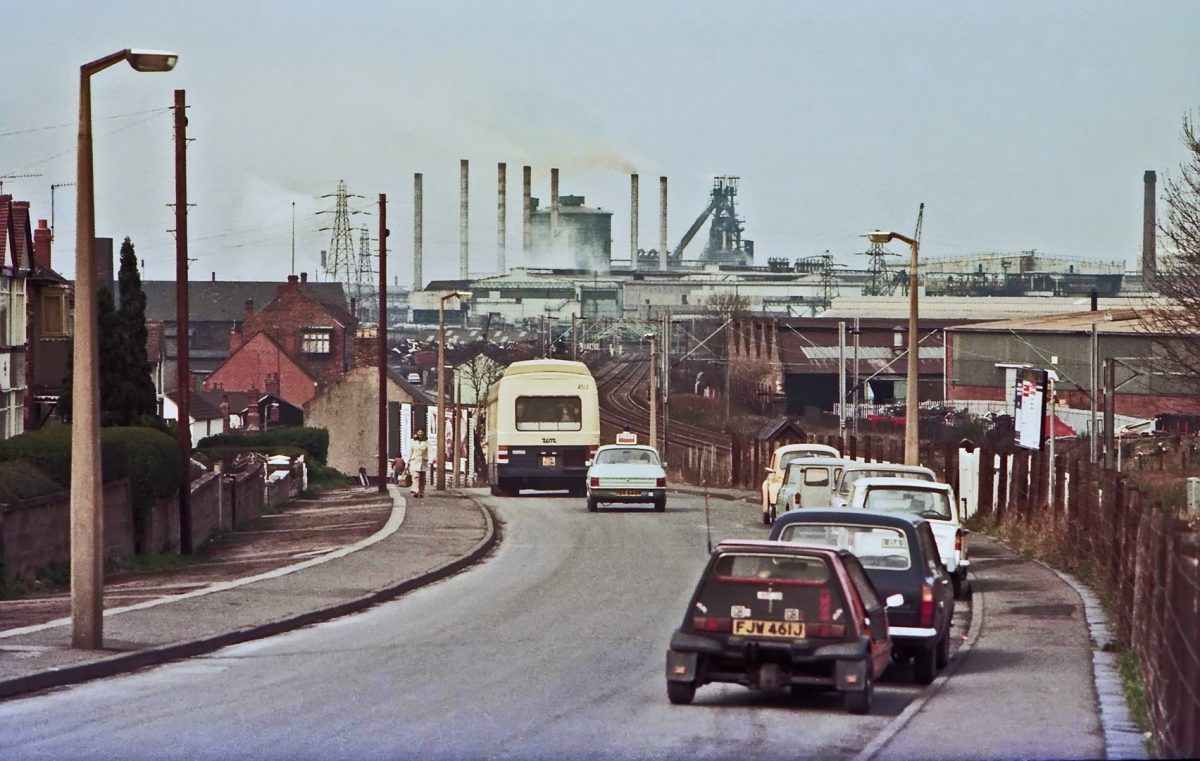
WMPTE Leyland National No. 4513 heads for Bilston while a West Midlands Police panda car follows close behind. Bilston steelworks dominates the skyline with the 1954-built blast furnace ‘Elizabeth’ taking pride of place. On 12th April 1979, four years after this photograph was taken, the last steel billet was cast at Bilston, ending more than 200 years of iron and steel production on the site. Eighteen months later, on 5th October 1980, Elizabeth was demolished.
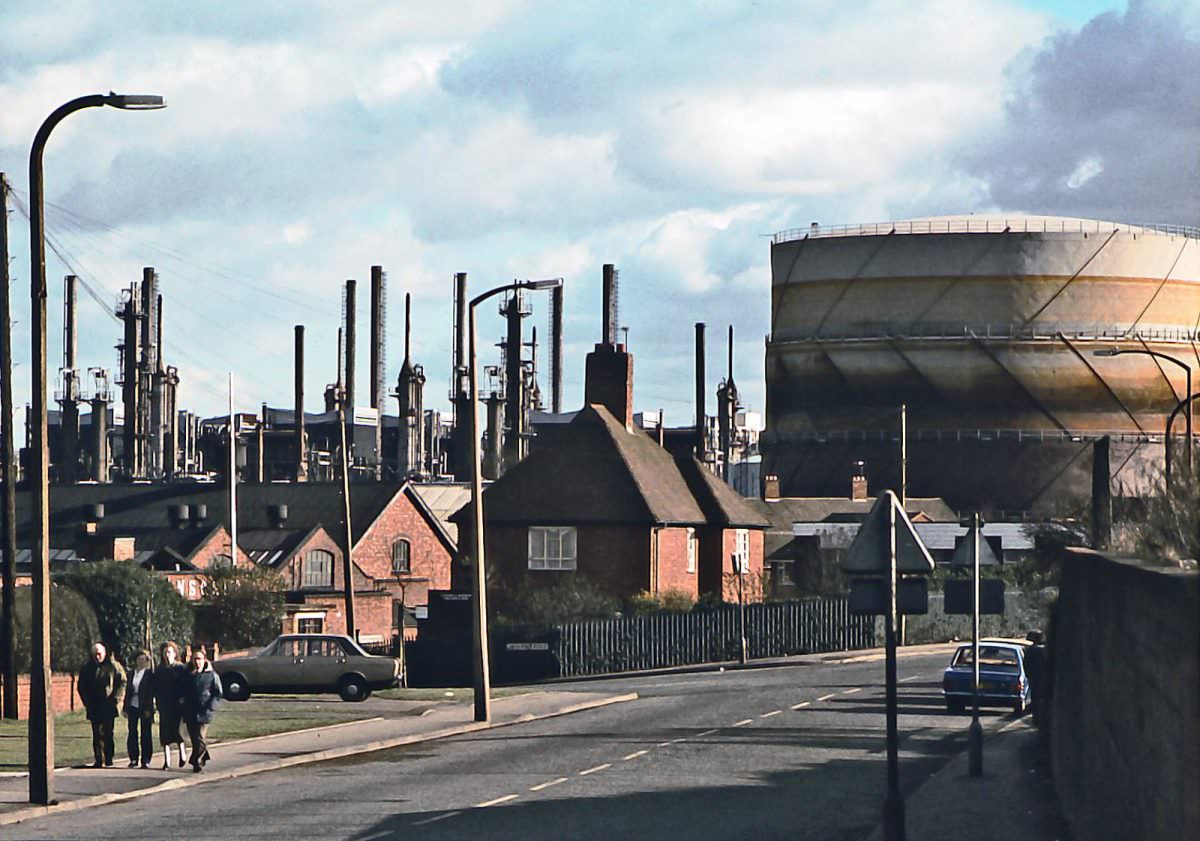
The new gasworks, or Oil Gasification Plant (OGP), resembled an oil refinery more than it did a gasworks and was built on the site of two older gasworks; one produced town gas, the other gas for industry. Tipton OGP went into production in 1965 but wasn’t officially opened until 1967. It only had a production lifespan of 10 years and closed in 1975 due to the discovery of North Sea gas. During its decade of production, Tipton OGP was served by block tanker trains from locations such as Fawley, Herbrandston, Stanlow, Teesport, and West Thurrock. Some of these were electric-hauled and brought in feedstocks such as butane and naphtha. Some trains to and from Tipton OGP were routed via the Princes End line, such as those from Fawley, which sometimes brought Class 33s into the region. Gas oil and methanol were also used in the production process and may have been brought in by rail as well. It is believed that some traffic may have been brought in by rail from Bromford Bridge, which was connected by pipeline to Fawley Refinery in the 1970s. There were some electric-hauled trains from Tipton OGP to Ordsall Lane in Manchester in the late 1970s, which travelled outwards via Wolverhampton High Level. The empties returned via Bescot and the Perry Barr – Soho line. It is assumed that these may have been conveying surplus feedstocks from the closed Tipton OGP for re-use by the Greater Manchester Gas Board. The site of Tipton OGP is now a housing estate. [Thanks to David J. Hayes for information.]
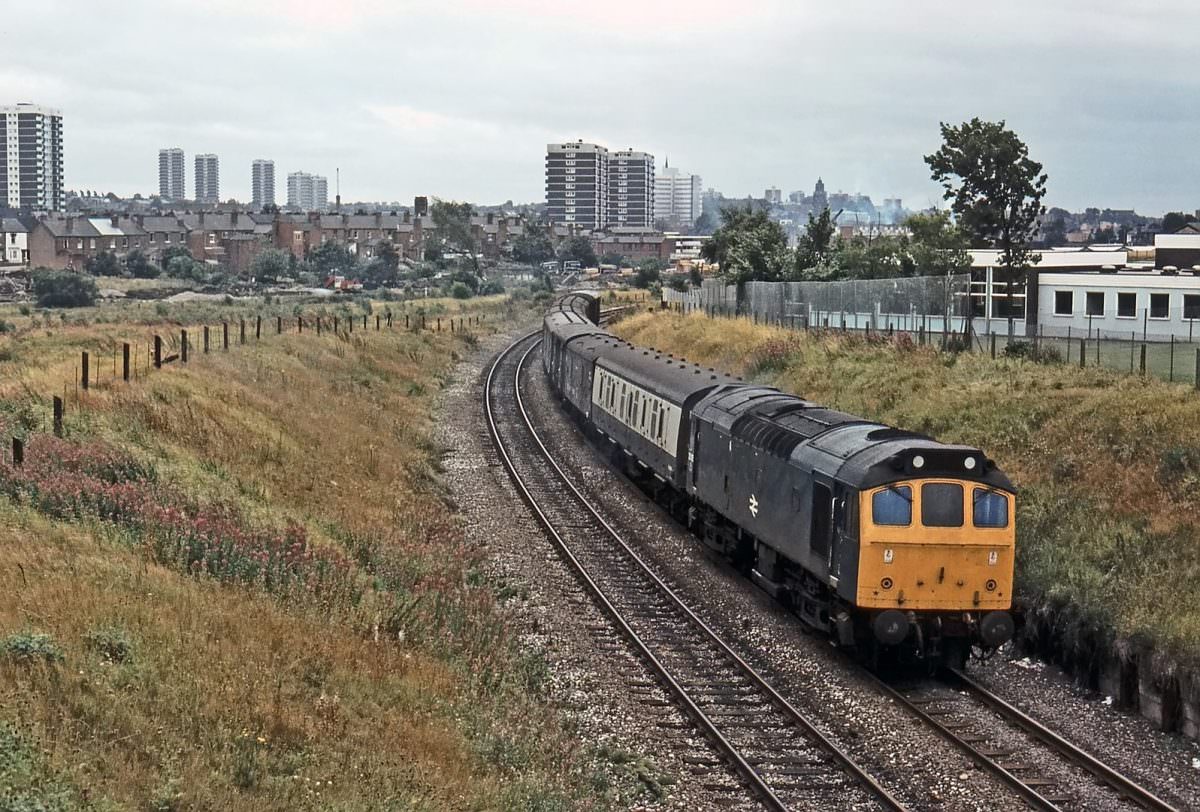
The train is taking the then goods-only Ryecroft Junction – Rugeley Trent Valley line owing to the blockage of the normal route via Wolverhampton following a serious derailment at Bushbury Junction the previous day.
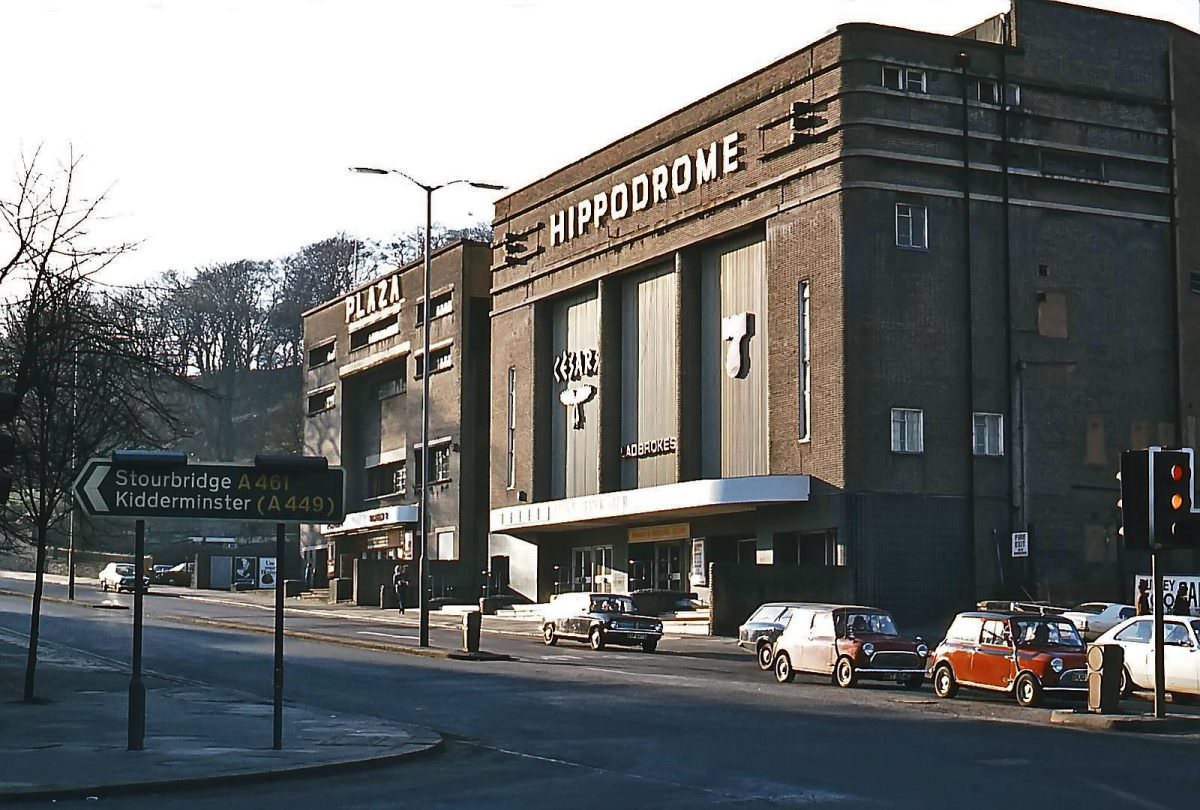
At the time of this photograph, the Plaza was still functioning as a cinema, but it was closed on 27th October 1990. It became a laser games centre for a while and was demolished in 1997. The Hippodrome had ceased to function as a theatre in 1964 and was in use as a bingo hall until 2009, when it was purchased by Dudley Council for demolition as part of the regeneration of the Castle Hill area. In 2012, local campaigners established the Friends of Dudley Hippodrome to save and secure a future for the building, restoring it to theatre use.
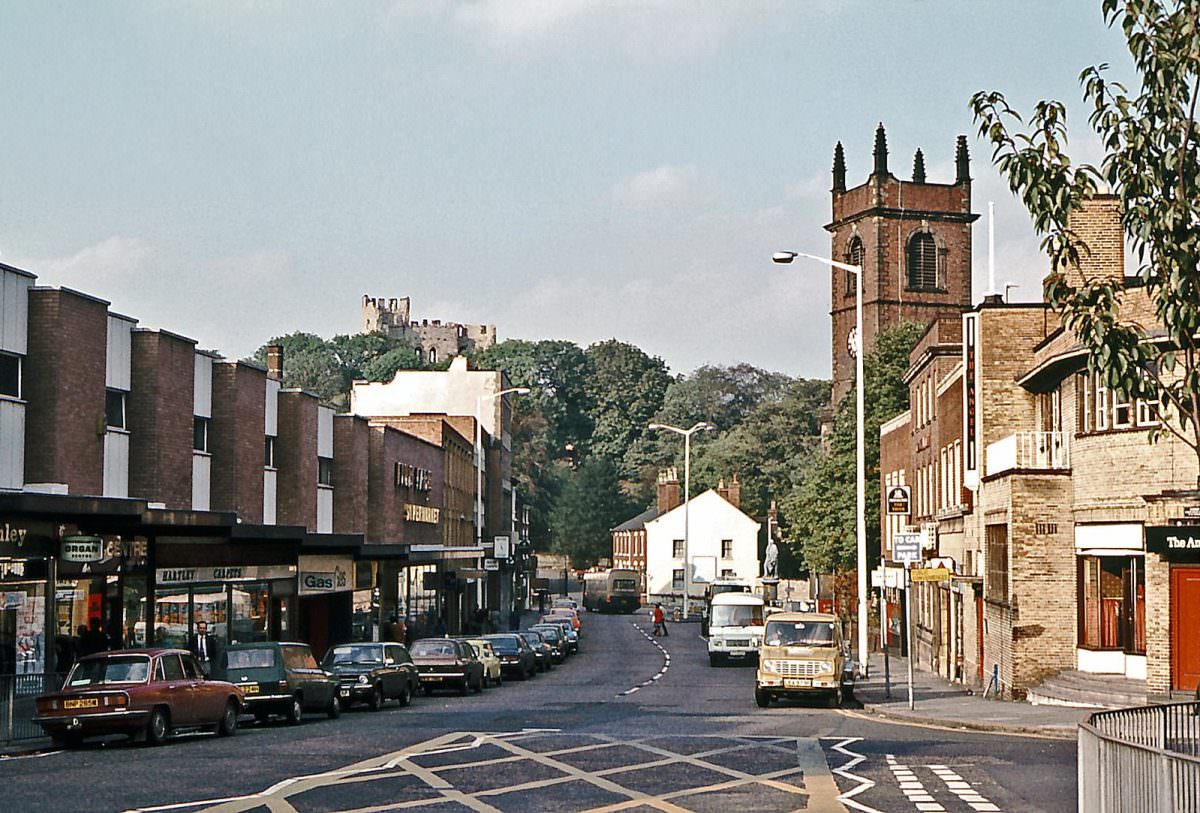
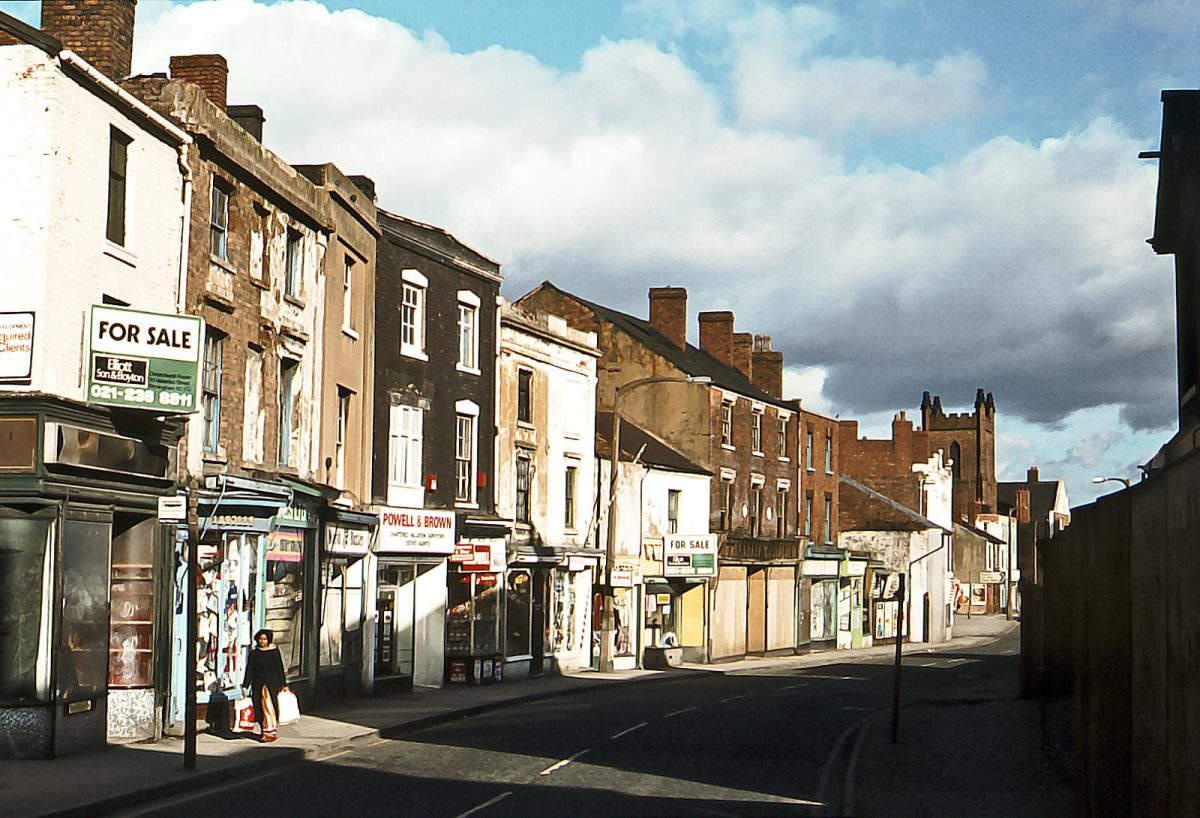
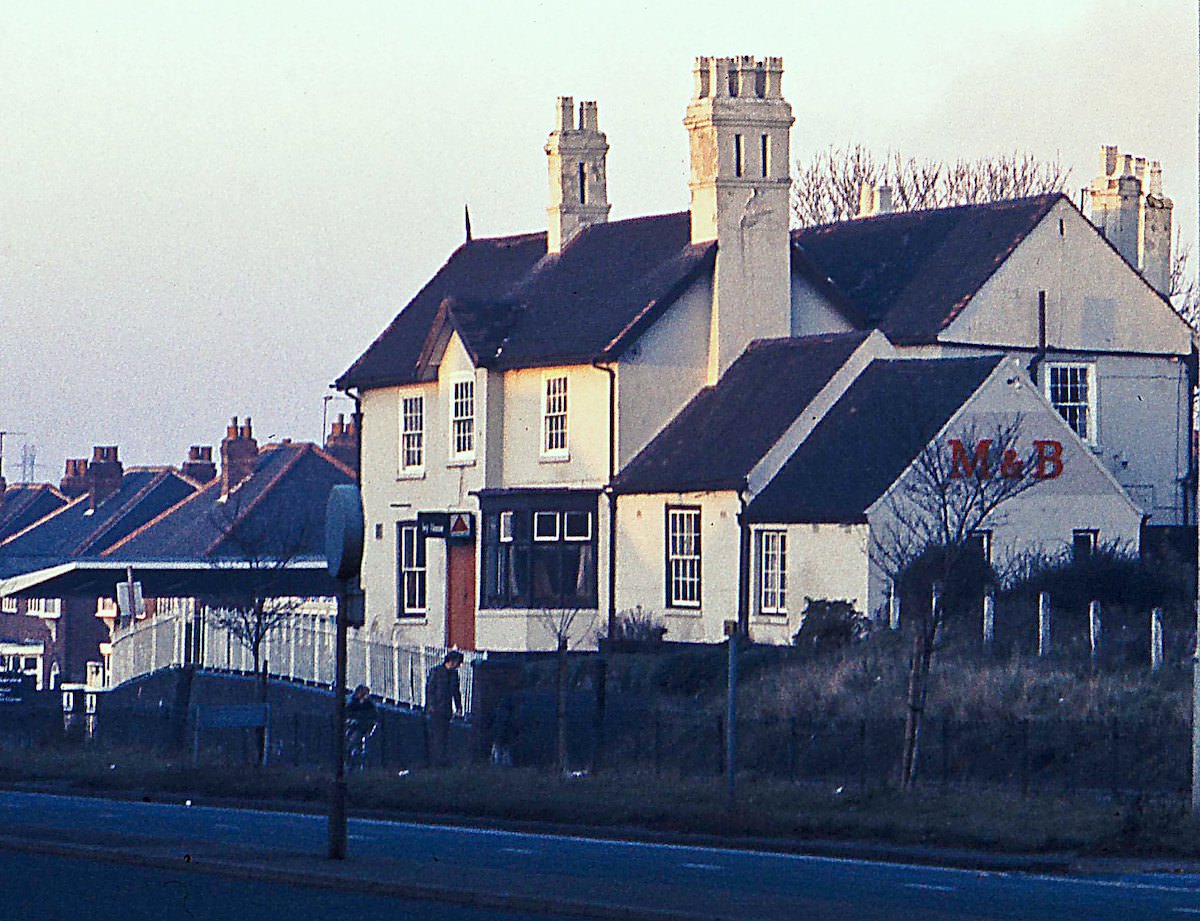
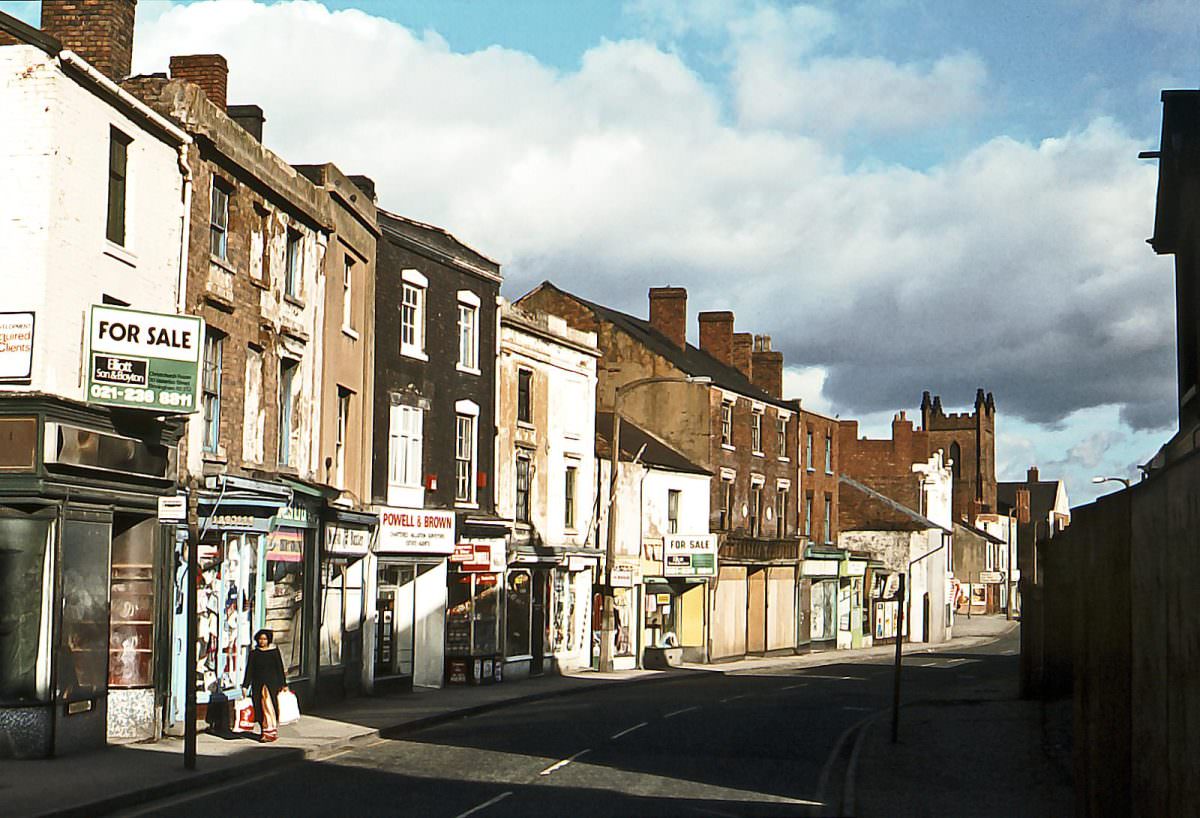
A Saturday afternoon in Dudley town centre. There are plenty of parked cars but surprisingly few pedestrians. A WMPTE Leyland National turns left into The Broadway. On the right is the Church of St. Edmund and in the background, the castle ruins. The M&B pub on the immediate right, The Angel, is long since closed and is now a charity shop. A few doors further down the street is a Hanson’s pub, The Swan, which is also now closed and converted to retail use.
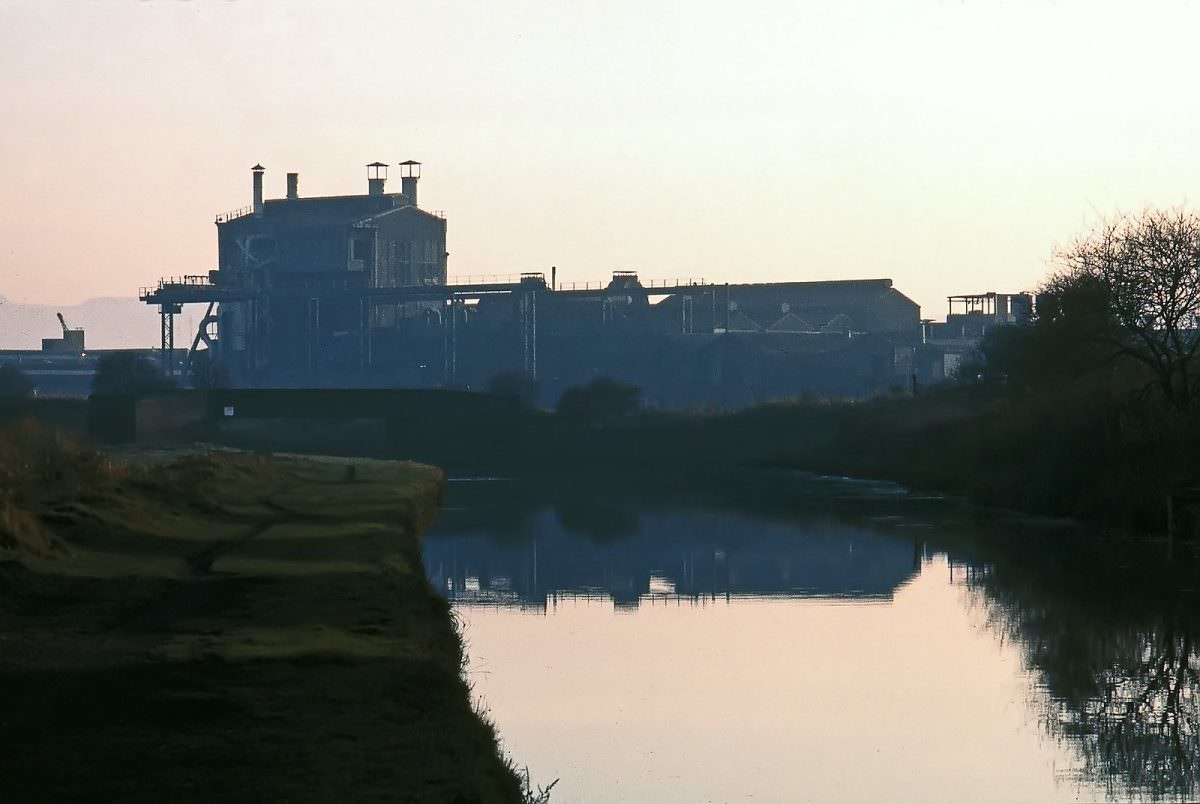
Bean’s was a car parts foundry business which collapsed in the wake of the demise of the Rover motor company. Since demolished, the foundry is seen here in happier times, although, being a weekend, there is no sign of activity. The Birmingham Canal Navigation Main Line occupies the foreground. 29th November 1975.
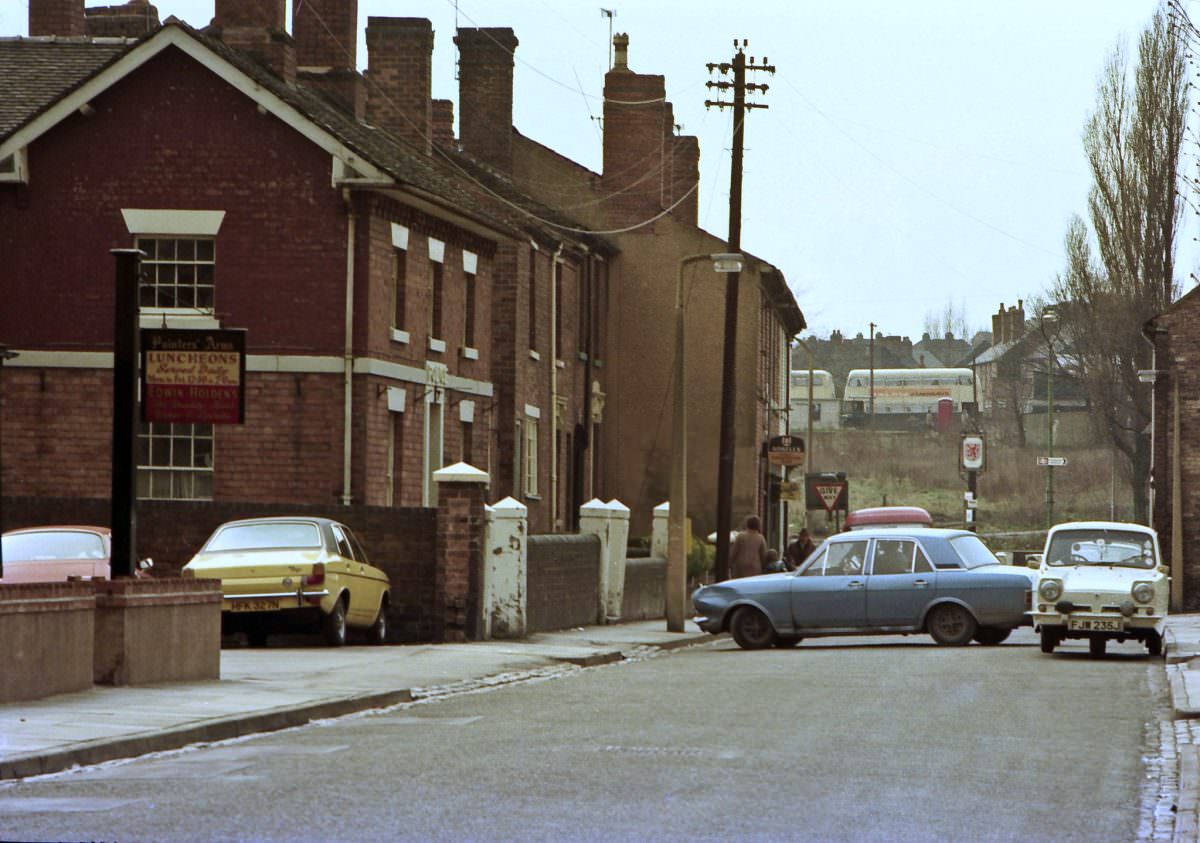
A battered Ford Cortina Mk. II makes a three-point turn outside the Painter’s Arms, Avenue Road, Coseley on 5th April 1975. An ex-Midland Red D9 can be seen on the Birmingham New Road.
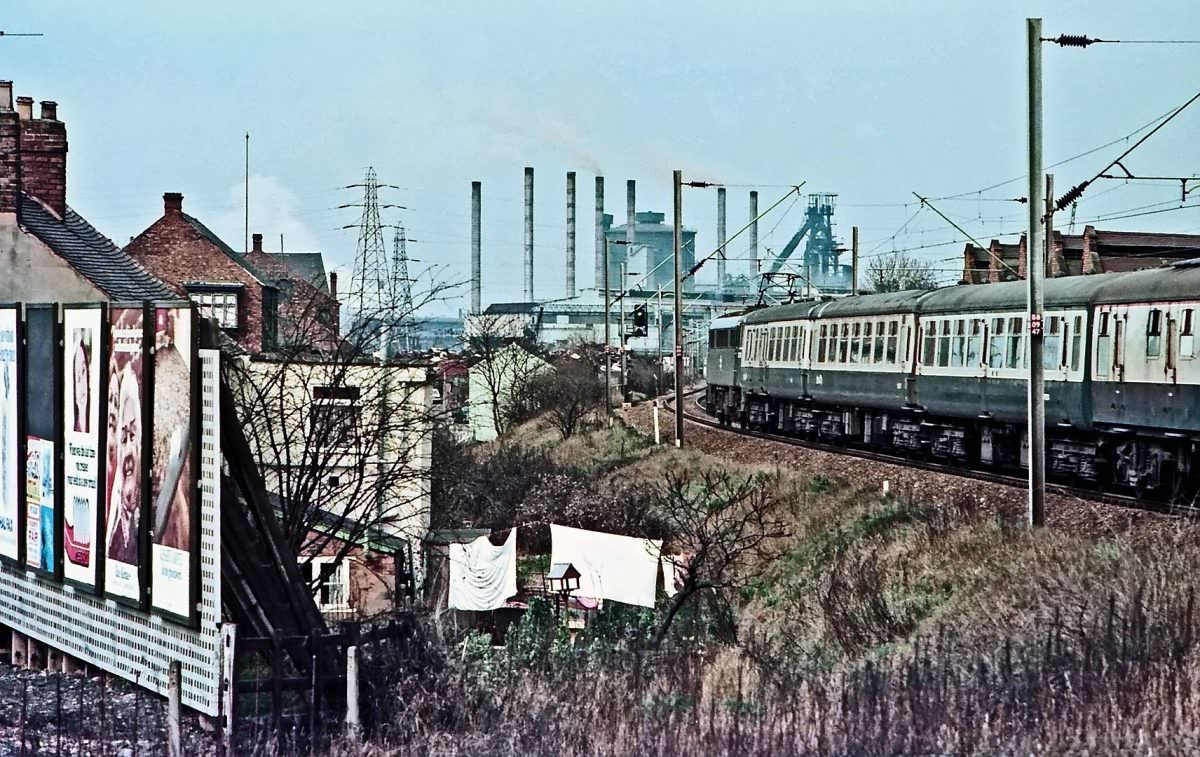
A Class 86 electric heads the 07:40 Penzance – Liverpool Lime Street past Coseley on 5th April 1975. Bilston steelworks dominates the skyline with the 1954-built blast furnace ‘Elisabeth’ taking pride of place. Four years after this photograph was taken, on 12th April 1979, the last steel billet was cast at Bilston, ending more than 200 years of iron and steel production on the site. Eighteen months later, on 5th October 1980, Elisabeth was demolished.
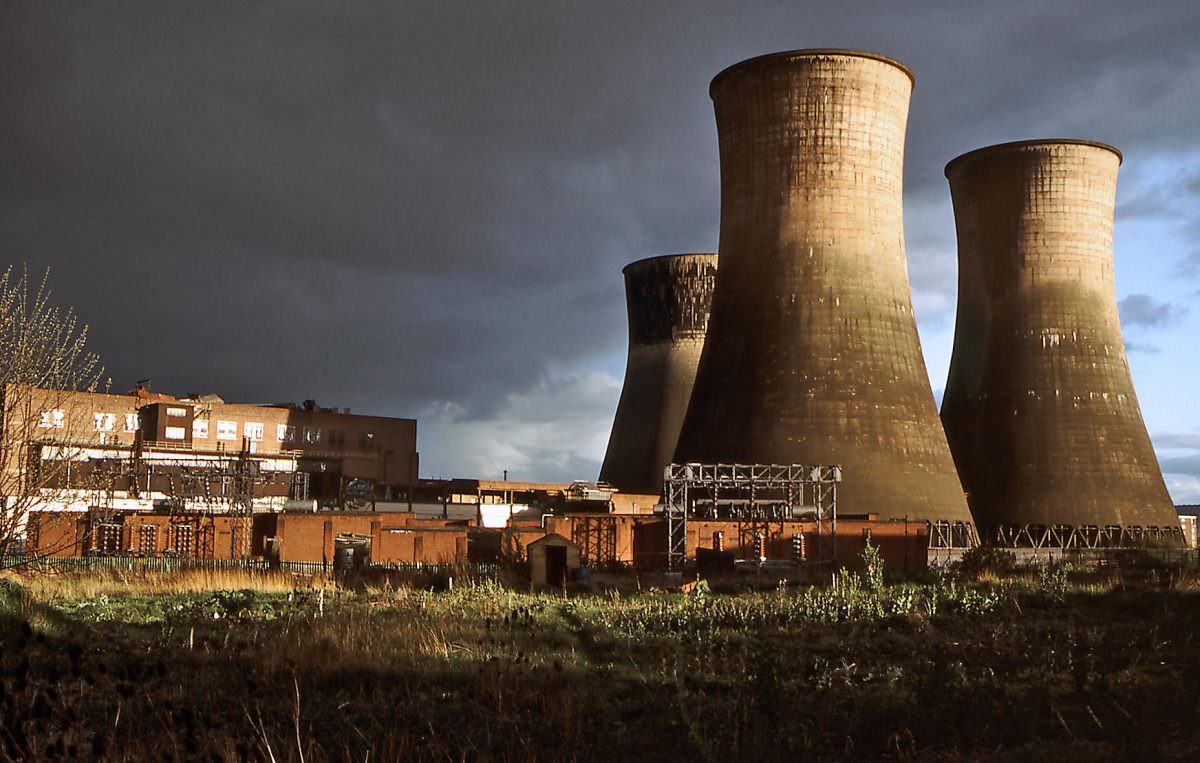
Ocker Hill Power Station was situated in Tipton, Staffordshire, at a point where the Walsall Canal intersected the L&NWR Wednesbury to Princes End railway line. It was opened in 1902 by the Midland Electric Corporation for Power Distribution Ltd. (MEC) and supplied electricity at 7,000 volts, two-phase, 50 Hz to much of the Black Country. At the time of its building, it was stated that it was planned to be the largest power station in England. In 1927, ownership passed to the new West Midlands Joint Electricity Authority (WMJEA), and with the building of the National Grid in the early 1930s it became a “selected station.” In 1948 it became part of the newly created British Electricity Authority (later to become, by reorganisation, the Central Electricity Authority (CEA) and then the Central Electricity Generating Board (CEGB)). It closed in 1977 as a result of the mid-1970s recession, which also claimed many other serviceable stations. Originally equipped with reciprocating steam engines, during its long life a total of eighteen generating sets were installed and in turn replaced with larger units or scrapped. The final equipment was of fairly typical 1940s design with eight Babcock stoker-fired boilers using the range system, feeding two British Thomson-Houston 34MW sets and two Richardsons-Westgarth 30MW sets, running at 650 psi and 875°F superheat. Two of the cooling towers were unique, nationally and probably globally, in having the control room, 33,000-volt switchgear, relay room, garages, and main stores beneath them. The station was coal-fired throughout its life, although small quantities of more unusual low-cost fuels were burned, including coke, sawdust, and at one period chicken droppings. Fuel was delivered originally by canal and later by rail, with small quantities by road. Although in later years the station was small in comparison with modern stations, it was extremely successful and had a high availability, load factor, and thermal efficiency when compared with most stations similar in design and age. For thirteen years, from 1959 to 1971, the load factor never dropped below 50%, well above that of the system as a whole. In 1968–1970, Ocker Hill had the highest load factor of any CEGB stoker-fired station and the third highest thermal efficiency. During periods of plant shortage, it repeatedly carried overloads of up to 20%. The two narrower cooling towers date from 1946; the larger-diameter cooling tower was added in 1956. The site is now a housing estate, built in the mid-1990s, and the Black Country Spine Road runs through what was the coal plant.
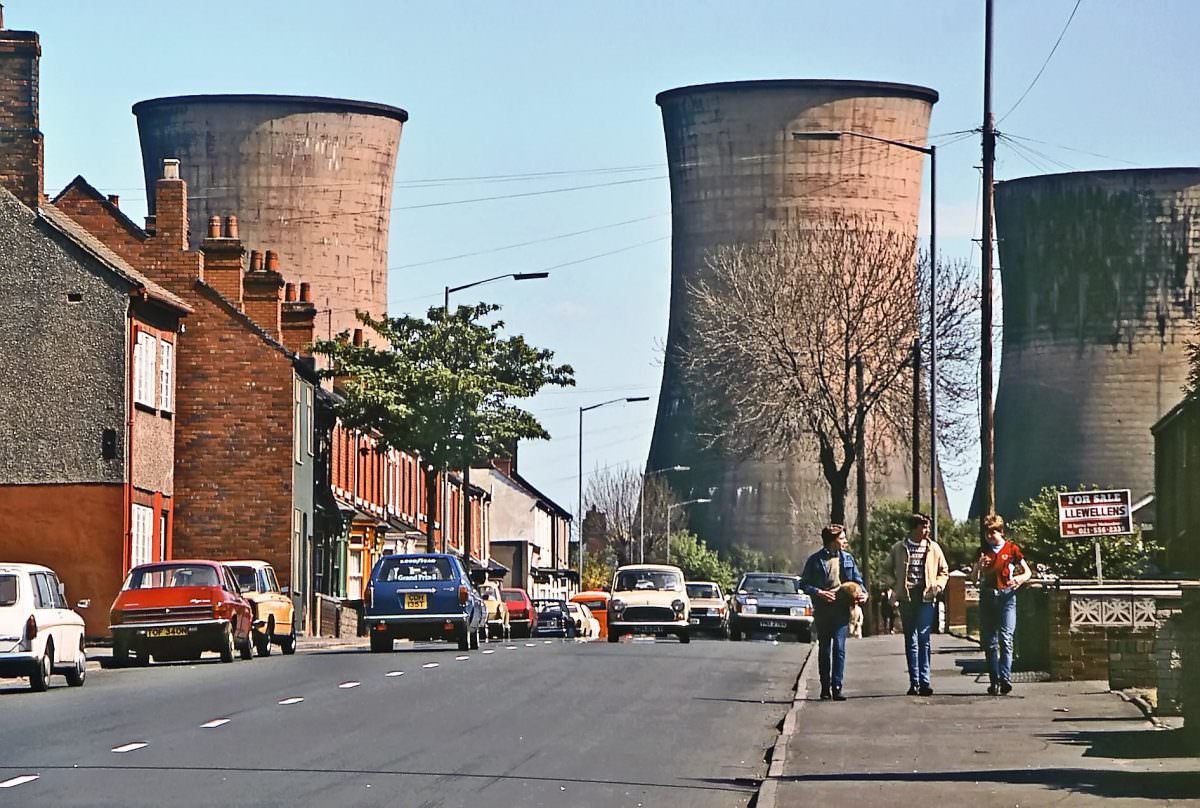
Ocker Hill Power Station viewed from Gospel Oak Road. It was opened in 1902 by the Midland Electric Corporation for Power Distribution Ltd. (MEC) and supplied electricity at 7,000 volts, two-phase, 50 Hz to much of the Black Country. At the time of its building, it was stated that it was planned to be the largest power station in England. In 1927, ownership passed to the new West Midlands Joint Electricity Authority (WMJEA), and with the building of the National Grid in the early 1930s it became a “selected station.” In 1948 it became part of the newly created British Electricity Authority (later to become, by reorganisation, the Central Electricity Authority (CEA) and then the Central Electricity Generating Board (CEGB)). It closed in 1977 and was demolished in 1985. The two narrower cooling towers date from 1946; the larger-diameter cooling tower was added in 1956.
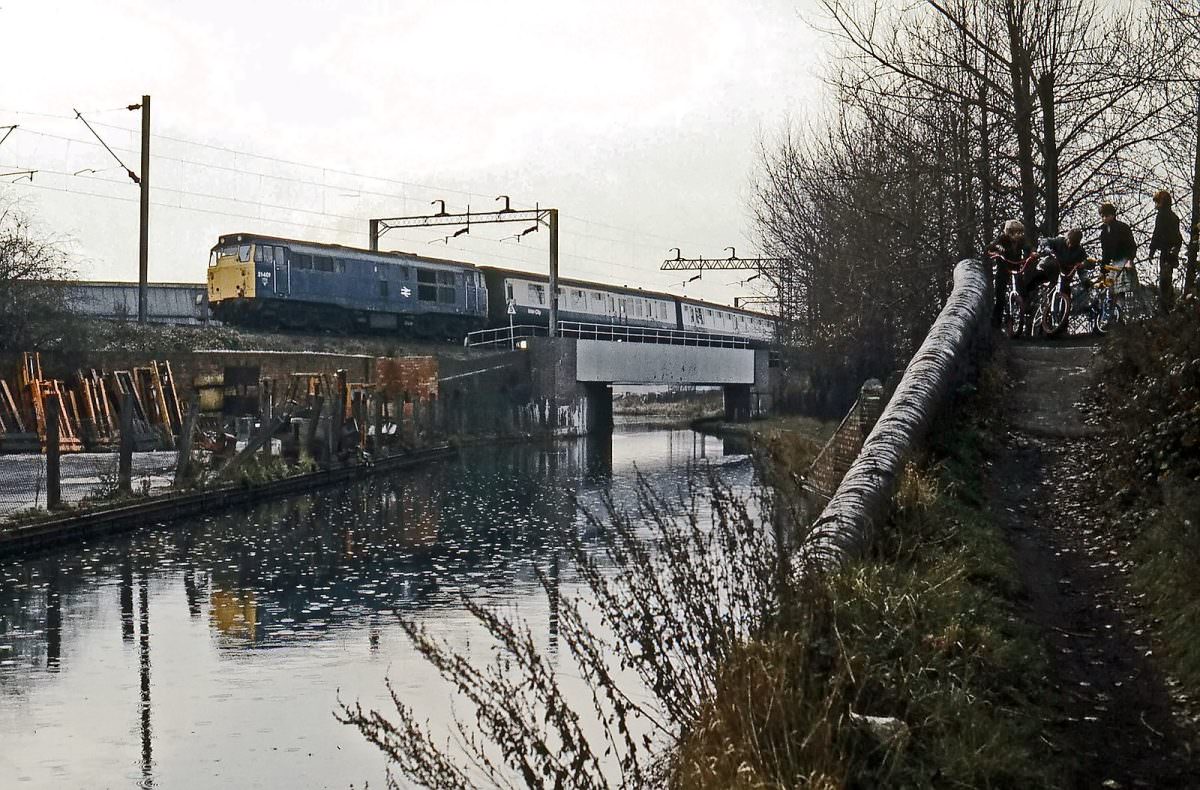
The train would later form the 12:37 Birmingham New Street – Norwich. The group on the right provides evidence that before the days of computer games and chronic risk aversion, boys were allowed to play and ride their bikes on canal towpaths, even in the rain.
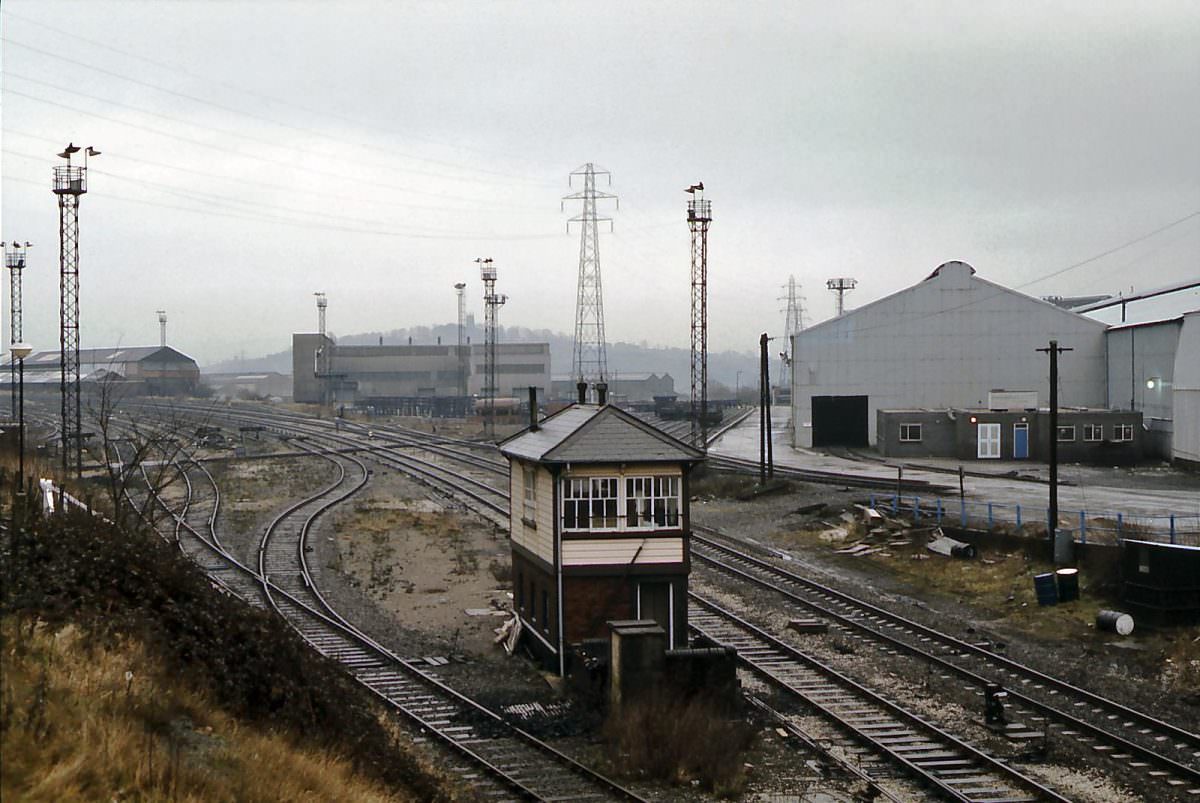
The chocolate and cream paintwork of Round Oak signal box provides relief from the predominantly grey background on the former Oxford, Worcester & Wolverhampton line between Stourbridge Junction and Dudley, 24th December 1982.
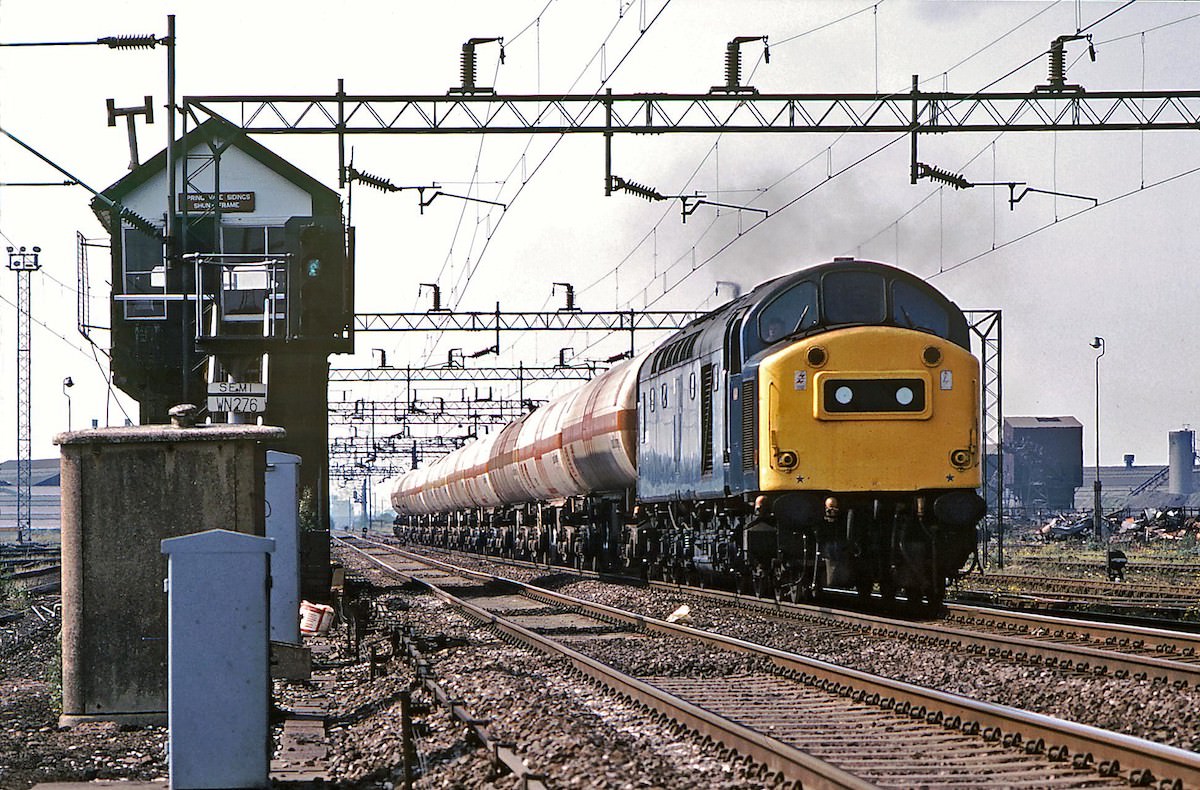
The introduction of Multiple Aspect Signalling on the Stour Valley line in August 1965 resulted in the closure of many intermediate signal boxes and the downgrading of others. One of those downgraded to the status of ‘Shunt Frame’ was this one at Spring Vale Sidings, which continued in use until 1983, after which it was demolished. The adjacent Bilston Steel Works had closed in 1979, which resulted in the eventual demise of the sidings.
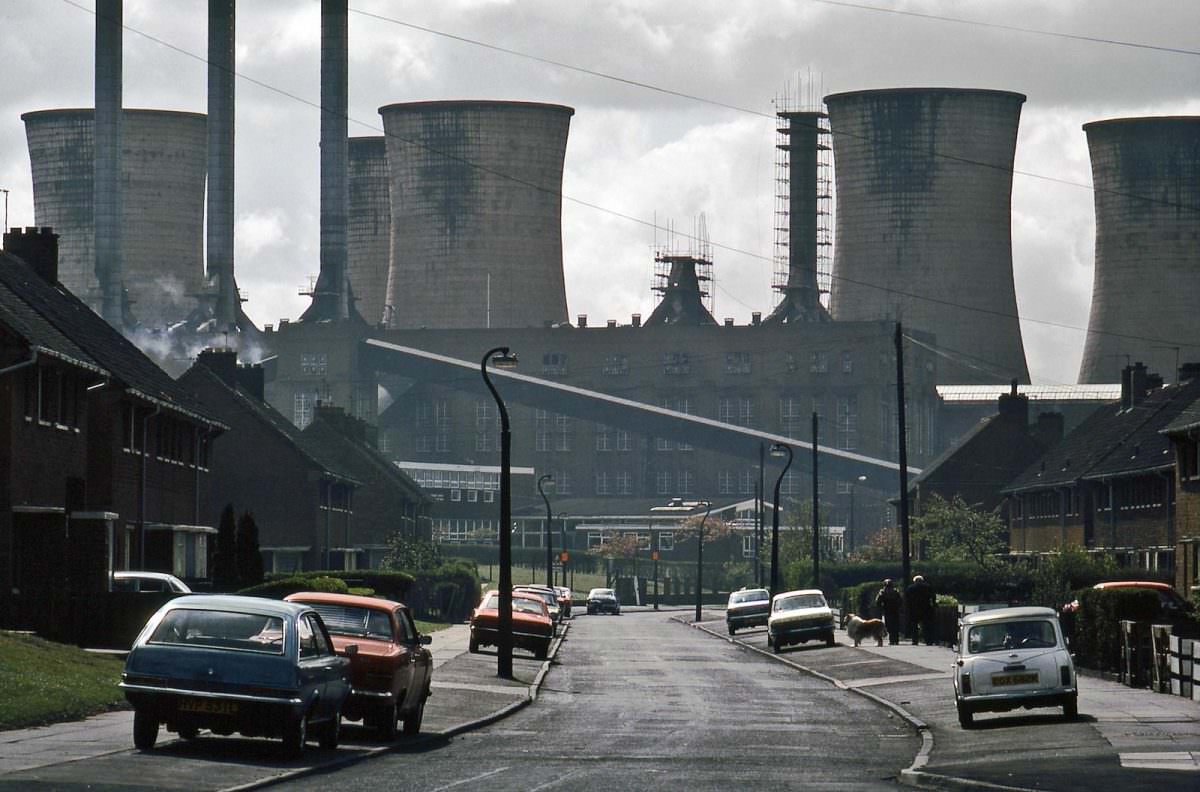
The station closed in October 1982 after 33 years in use and stood dormant for nearly five years, finally being demolished in March 1987.
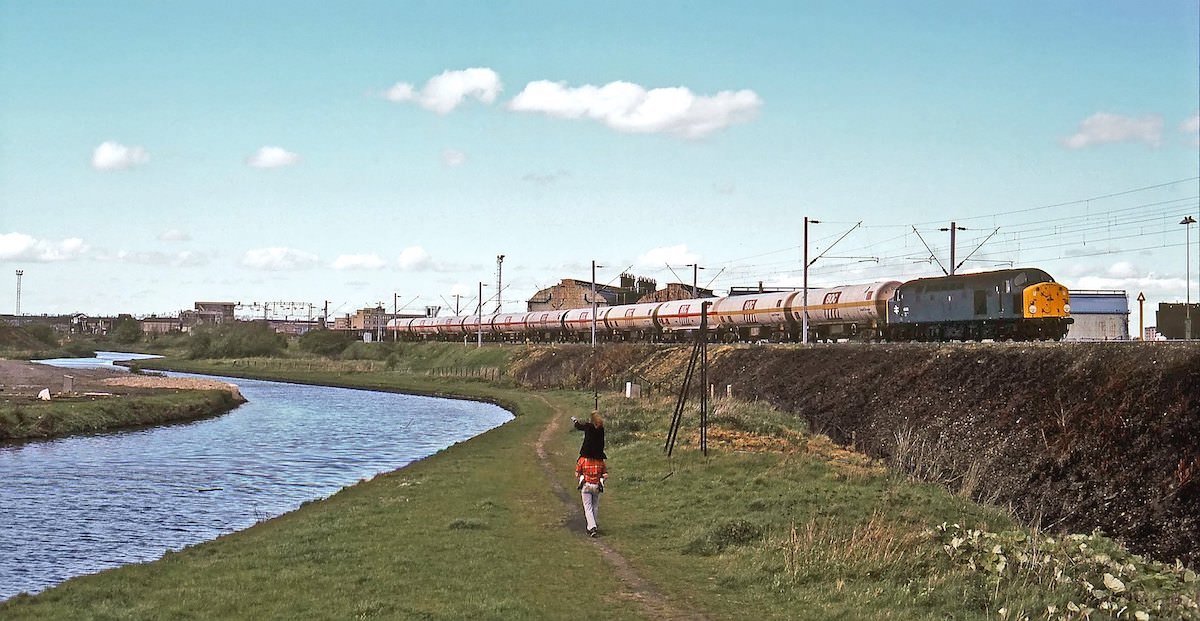
The sun is momentarily obscured by a small cloud as 40076 approaches Coseley with 6F57, the 15:48 MWFO Wolverhampton – Ditton empty BOC tanks on 3rd May 1982.
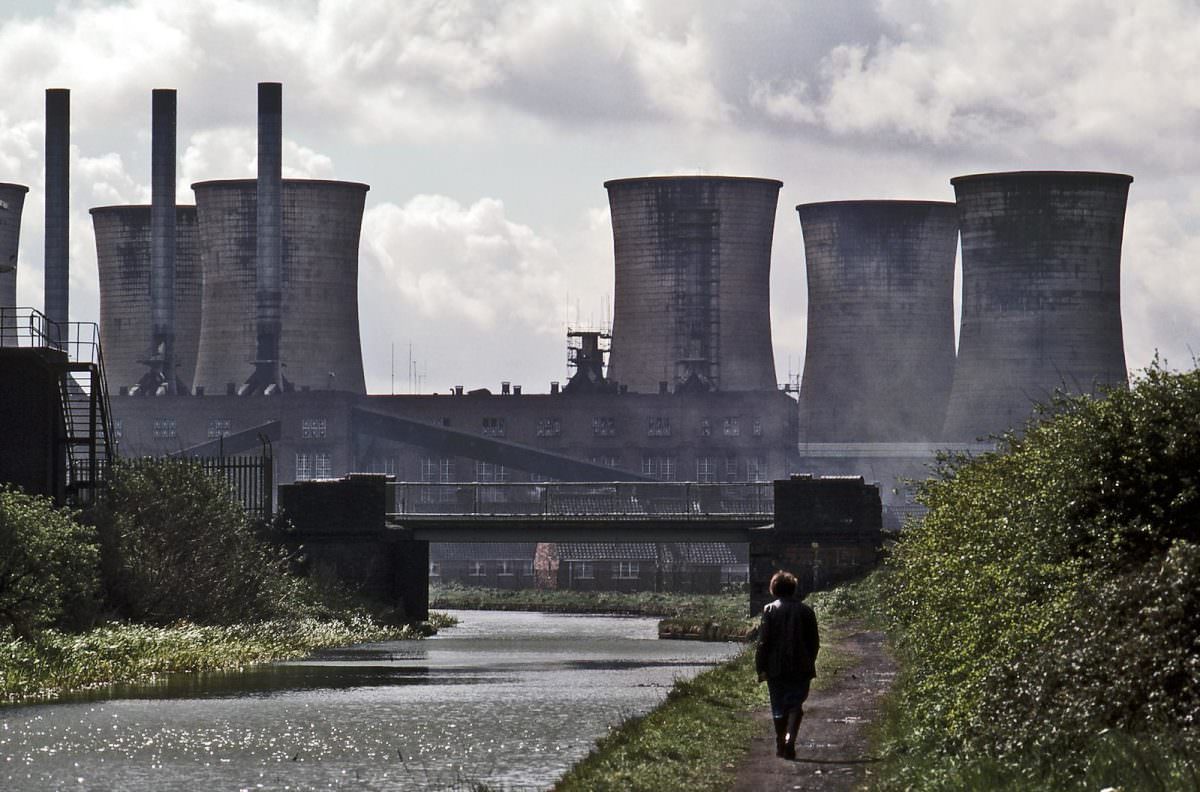
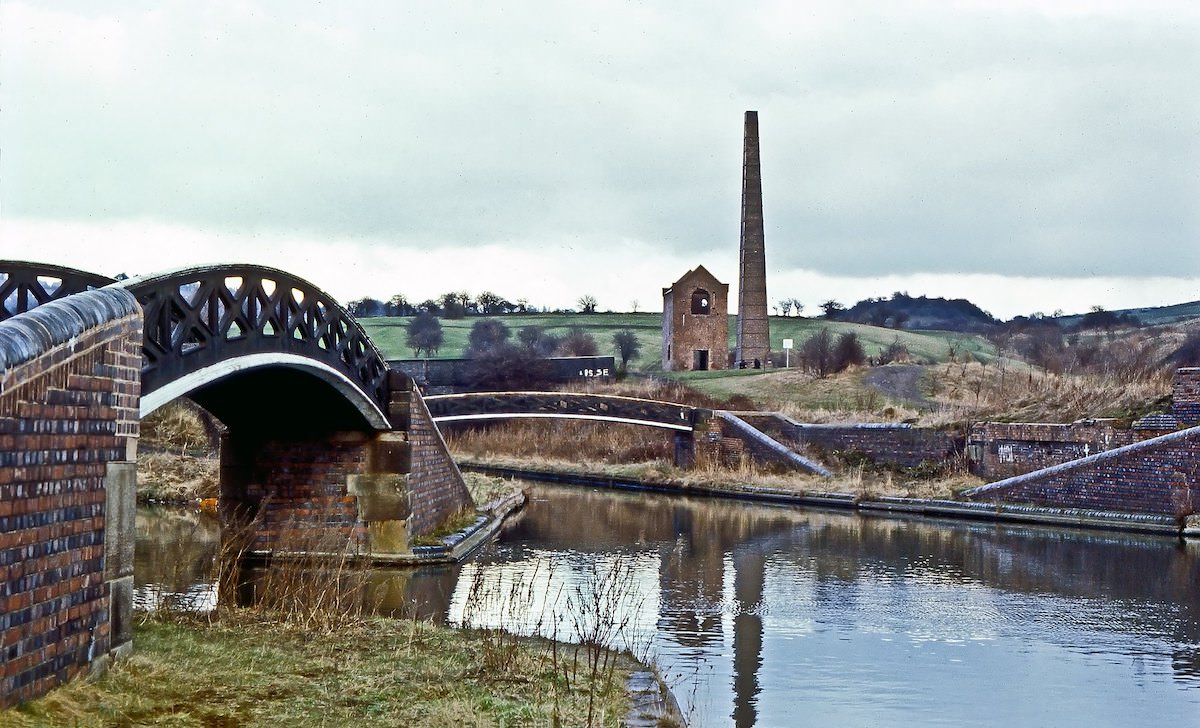
The building and smokestack is Cobb’s Engine House, otherwise known as Windmill End Pumping Station. It is a Grade II listed building built around 1831. It housed a stationary steam pump used to pump water first from Windmill End Colliery and later from other mines in the area. Using a shaft 525 feet deep, 1,600,000 litres of water were pumped from the mines into the canal daily. It ceased work in 1928 and the Newcomen-type engine was moved to the Henry Ford Museum in Dearborn, Michigan in 1930. It stands near Windmill End Junction in the Warren’s Hall local nature reserve, where the Dudley No. 2 Canal and the Boshboil Arm meet the southern end of the Netherton Tunnel Branch Canal. [Wikipedia]
![[Factually Corrected] Tipton Gasworks, February 1980 The junction of Alexandra Road and Locarno Road, 10th February 1980.](https://www.bygonely.com/wp-content/uploads/2023/01/Black_Country_1970s_and_1980s_26.jpeg)
The new gasworks, or Oil Gasification Plant (OGP), resembled an oil refinery more than it did a gasworks and was built on the site of two older gasworks; one produced town gas, the other gas for industry. Tipton OGP went into production in 1965 but wasn’t officially opened until 1967. It only had a production lifespan of 10 years and closed in 1975 due to the discovery of North Sea gas. During its decade of production, Tipton OGP was served by block tanker trains from locations such as Fawley, Herbrandston, Stanlow, Teesport, and West Thurrock. Some of these were electric-hauled and brought in feedstocks such as butane and naphtha. Some trains to and from Tipton OGP were routed via the Princes End line, such as those from Fawley, which sometimes brought Class 33s into the region. Gas oil and methanol were also used in the production process and may have been brought in by rail as well. It is believed that some traffic may have been brought in by rail from Bromford Bridge, which was connected by pipeline to Fawley Refinery in the 1970s. There were some electric-hauled trains from Tipton OGP to Ordsall Lane in Manchester in the late 1970s, which travelled outwards via Wolverhampton High Level. The empties returned via Bescot and the Perry Barr – Soho line. It is assumed that these may have been conveying surplus feedstocks from the closed Tipton OGP for re-use by the Greater Manchester Gas Board. The site of Tipton OGP is now a housing estate. [Thanks to David J. Hayes for information.]




