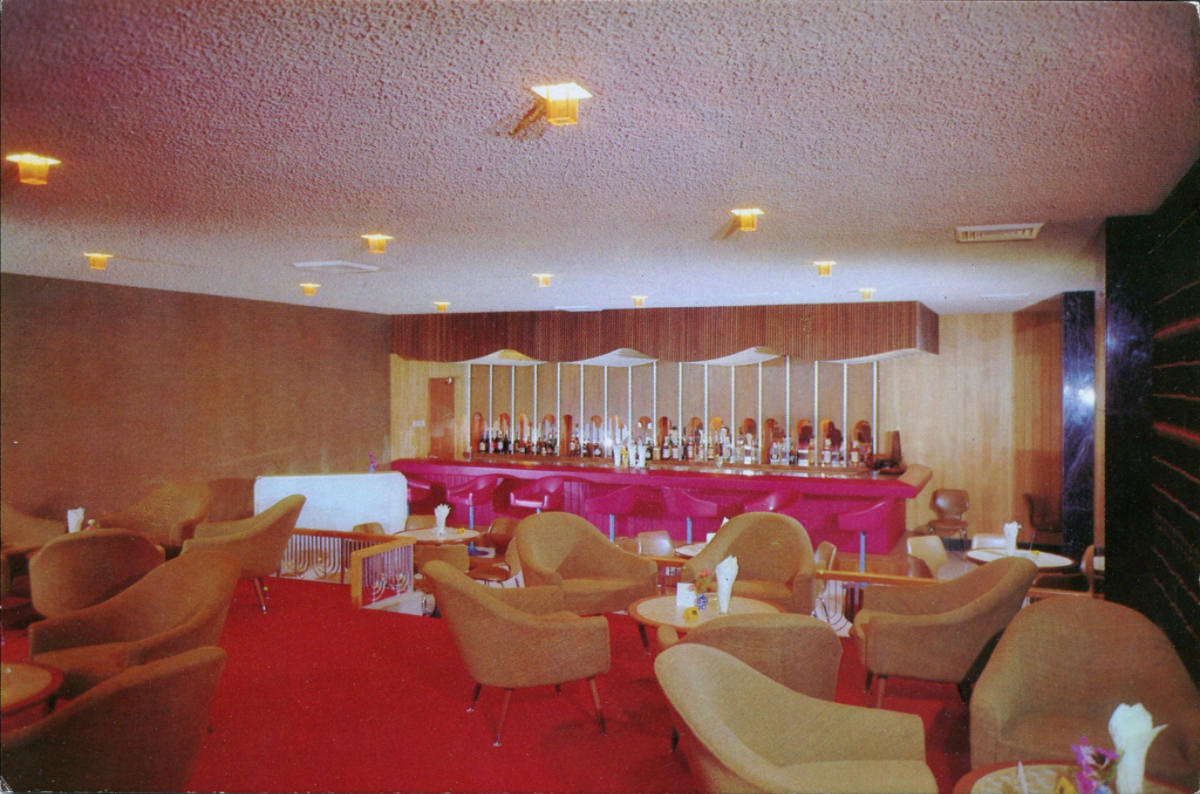
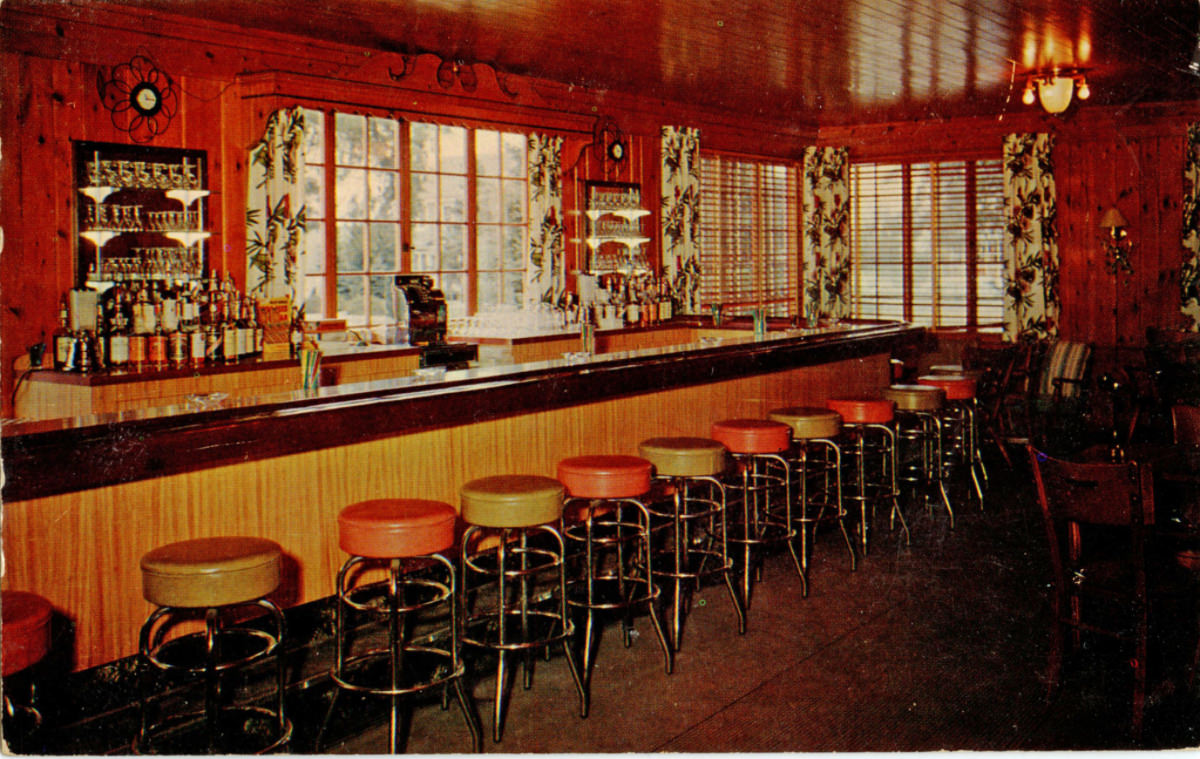
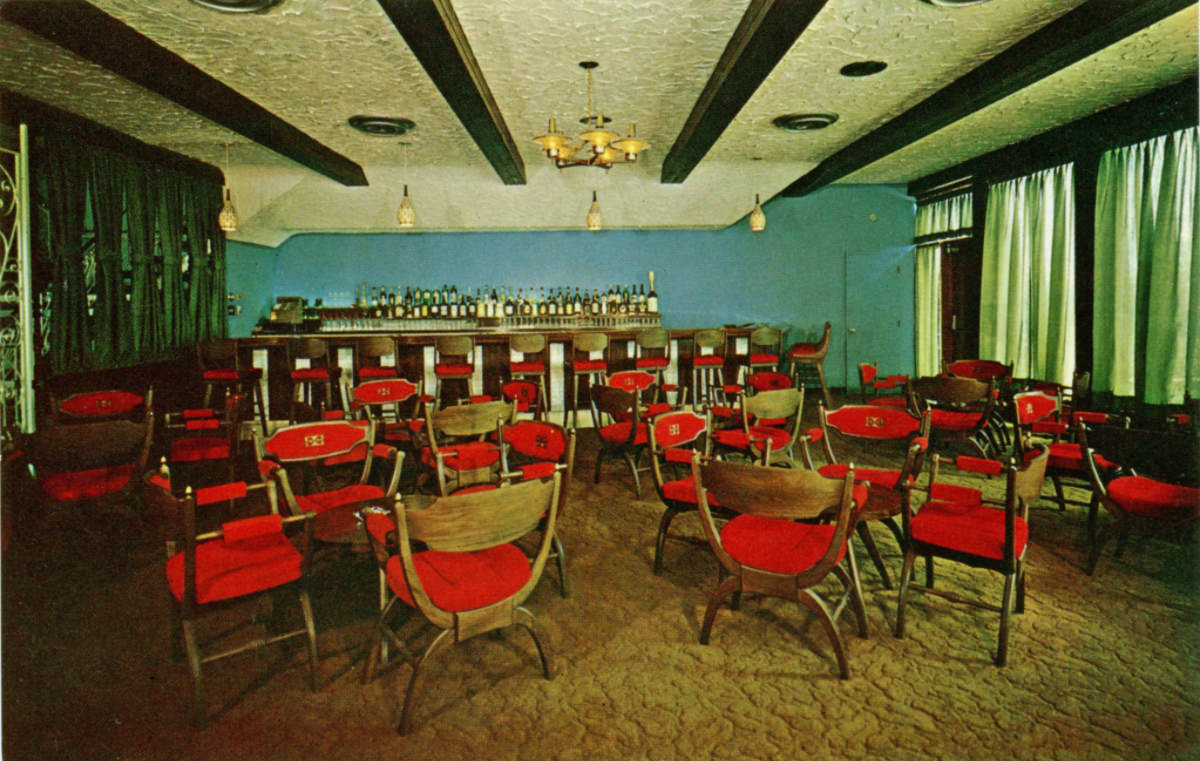
Before indoor smoking bans, before minimalist bar menus, and before the word “craft” was attached to everything poured into a glass, America had the cocktail lounge. These spaces were a fixture of mid-century life — found inside city restaurants, suburban dining rooms, and motor hotels stretched along newly paved highways. They were designed to impress, and the businesses behind them made sure people knew it.
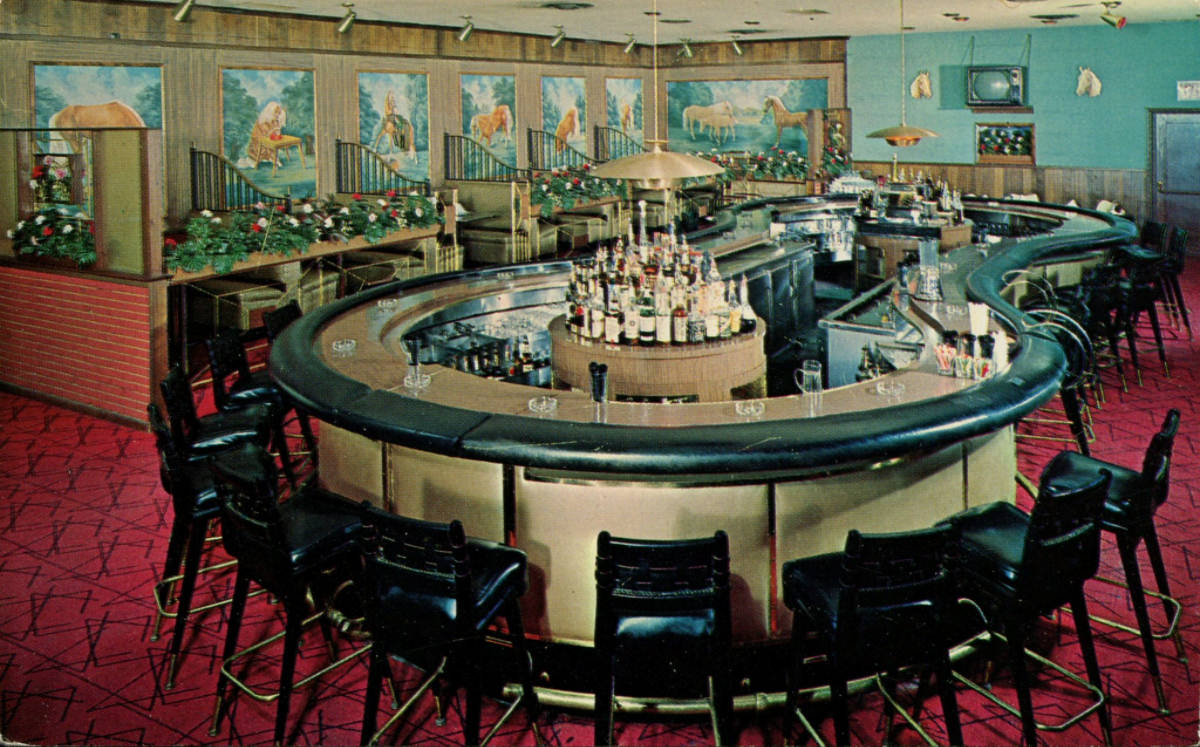
One of the best tools a restaurant had for advertising was the custom postcard. Printed in vivid color and handed out at the front desk or slipped into a guest’s check, these cards showed off the lounge’s interior with obvious pride. The photography was deliberate — wide angles, bright lighting, and carefully arranged bar stools made every room look its absolute best.
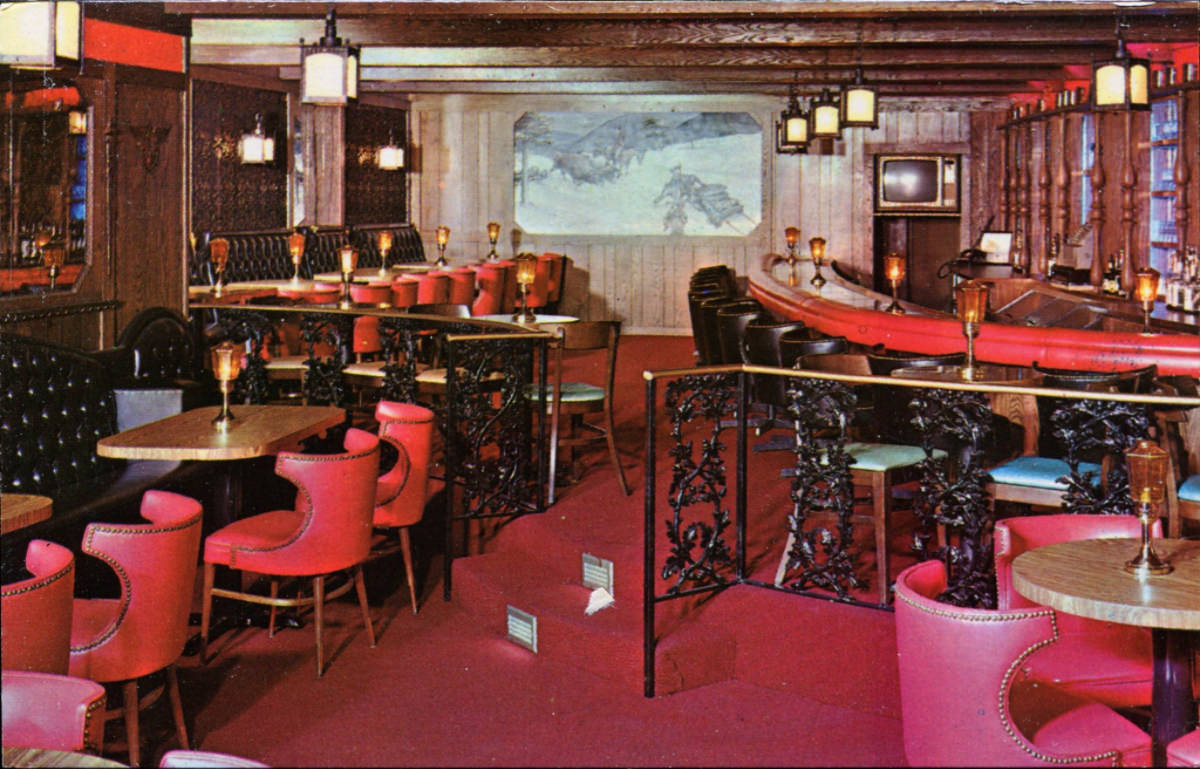
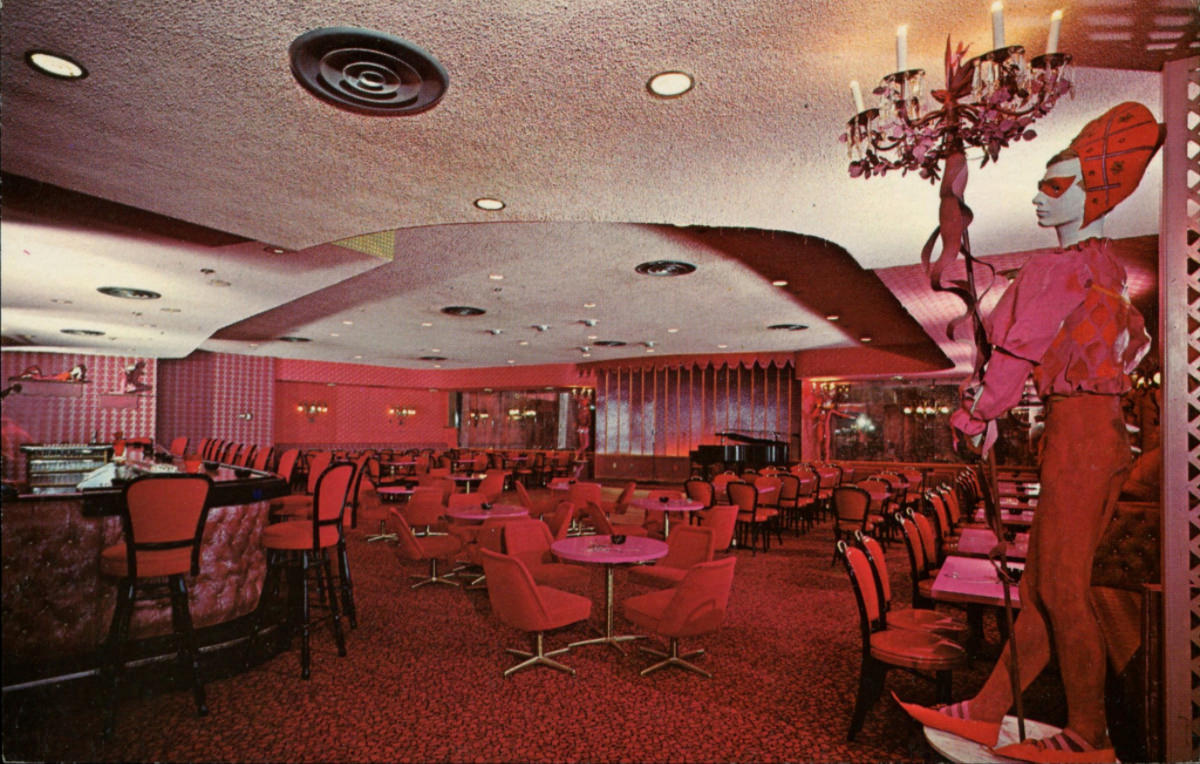
The 1950s were a boom time for this kind of marketing. Americans were driving more than ever, and roadside businesses competed hard for attention. A well-designed postcard could end up in a drawer at home or pinned to a bulletin board — free advertising that traveled far beyond the parking lot.
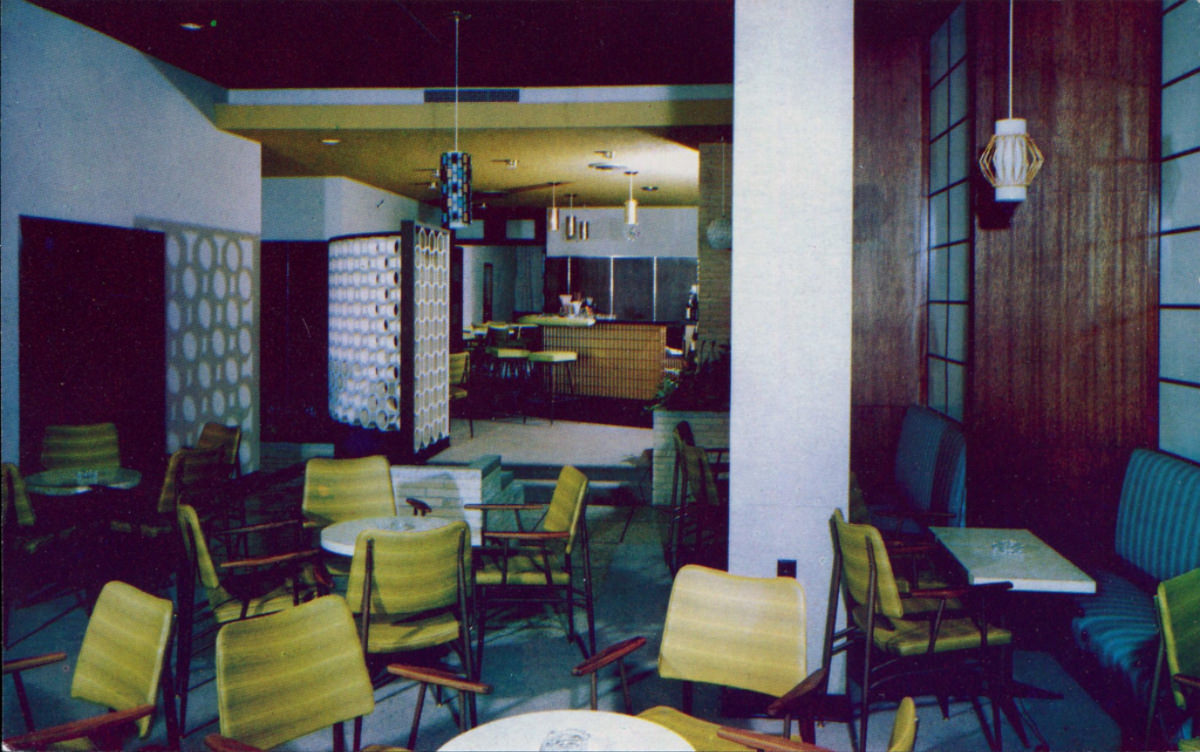
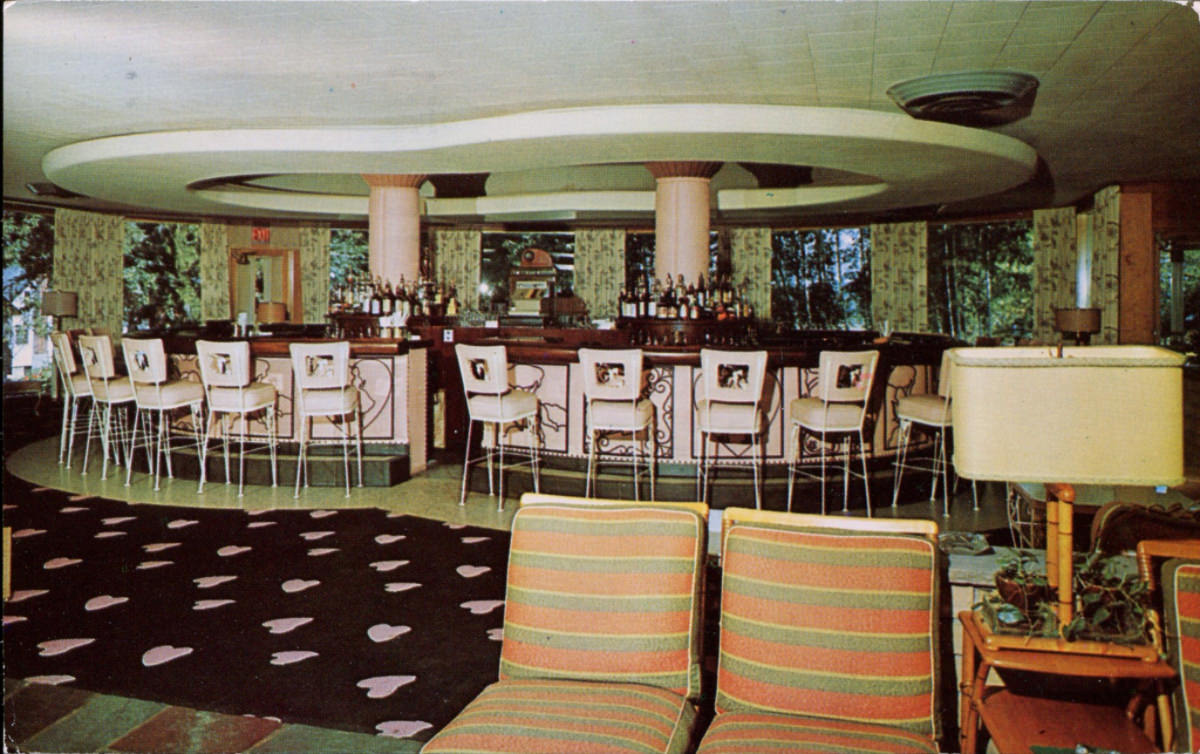
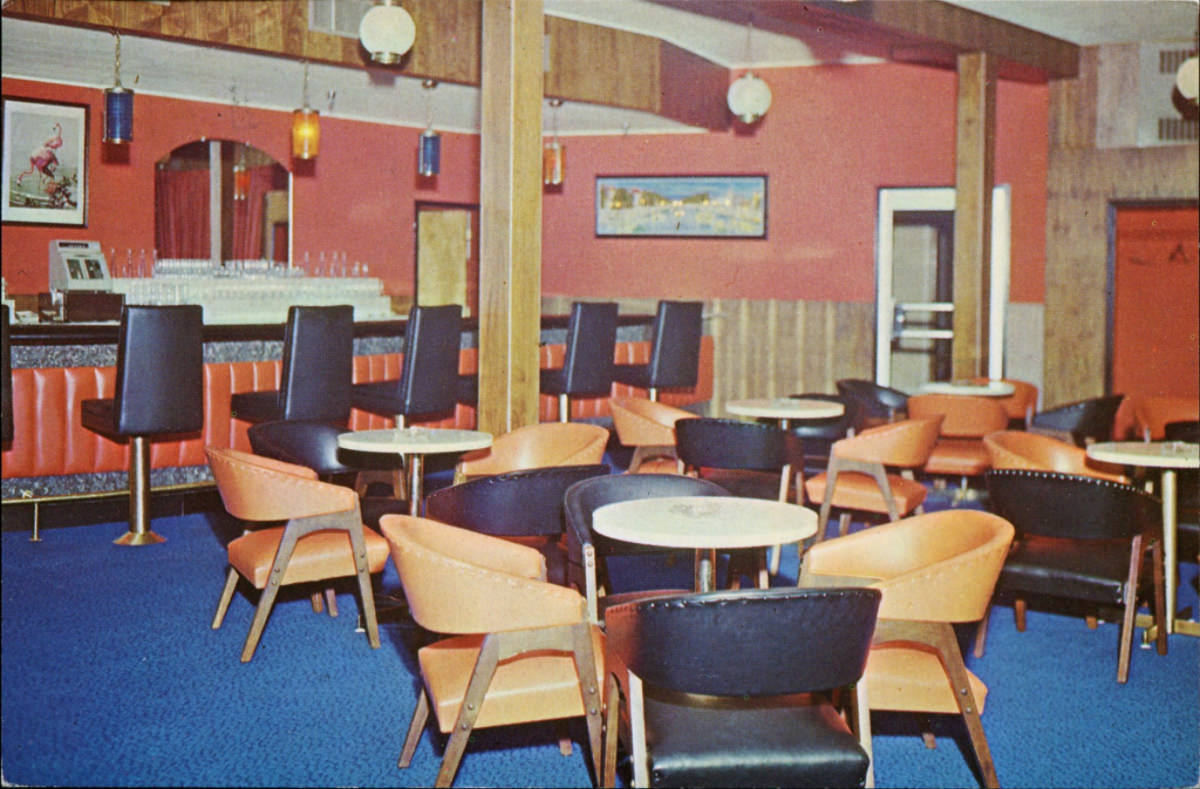
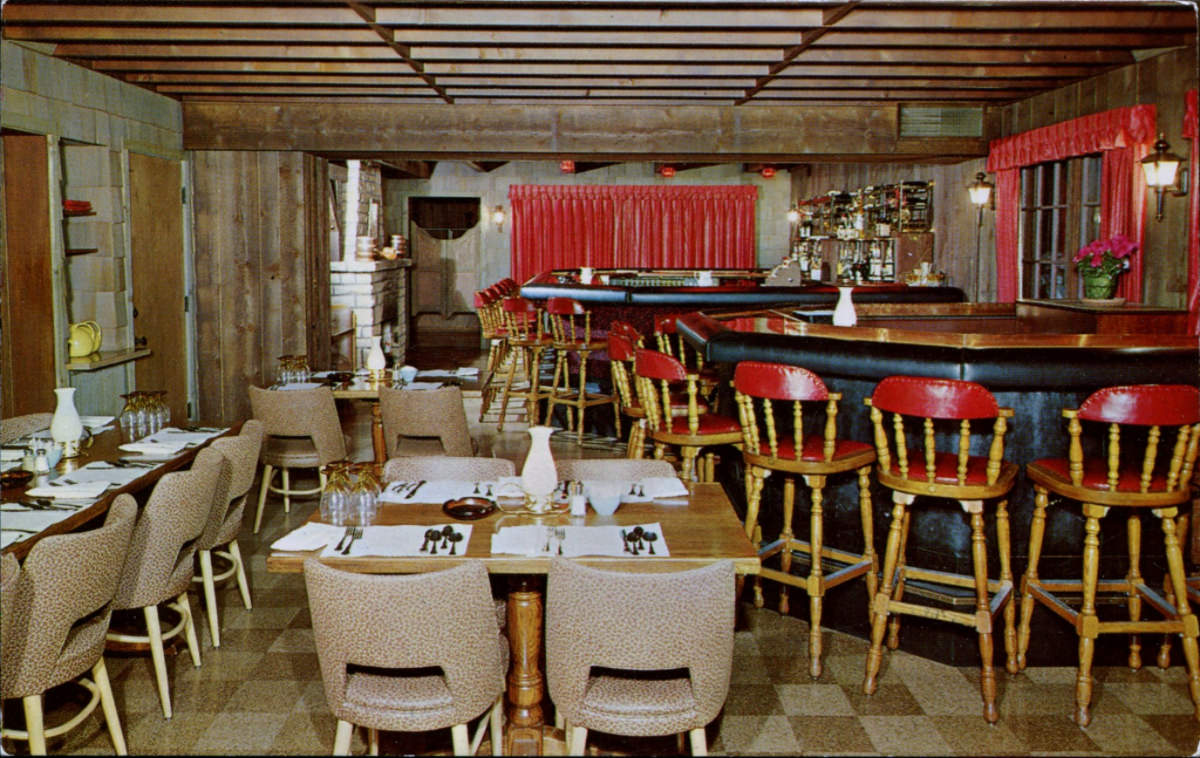
The interiors themselves reflected the tastes of the era. Curved bars wrapped around central service areas. Vinyl barstools in red, teal, or gold lined the counter. Low lighting came from globe pendants or backlit shelving stacked with bottles. Booths with high backs lined the walls, offering privacy without sacrificing style.
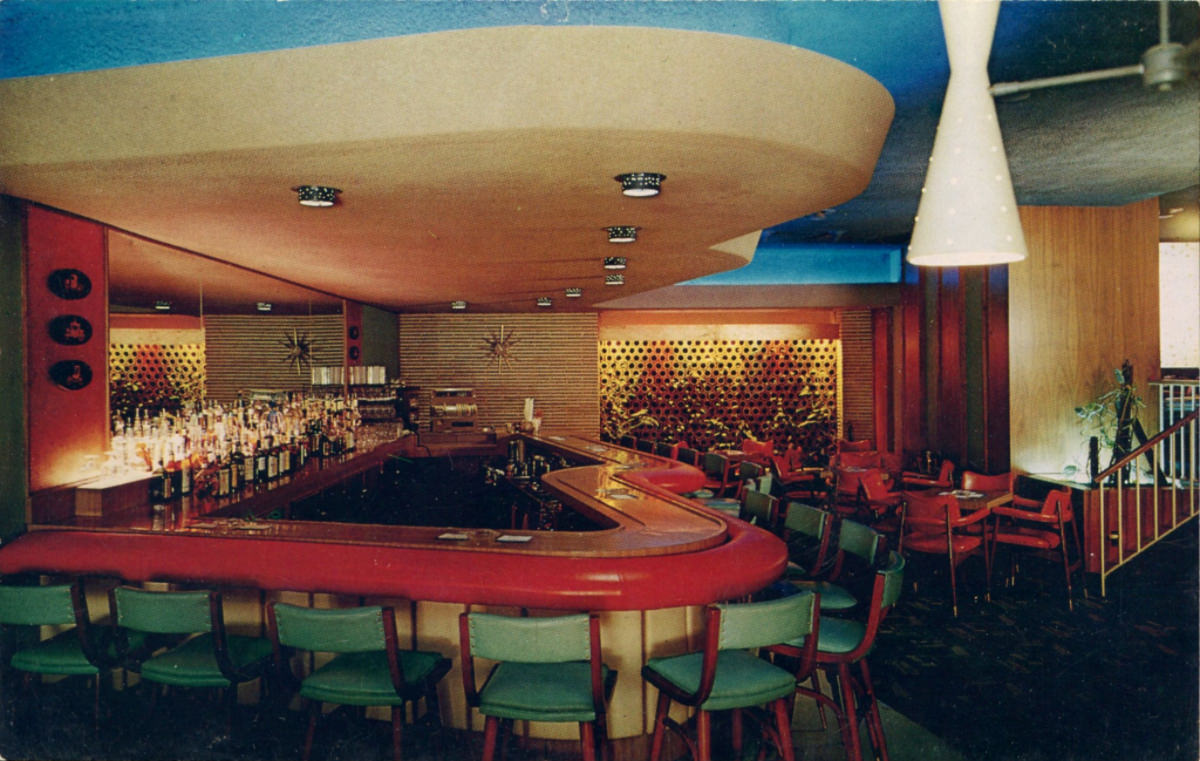
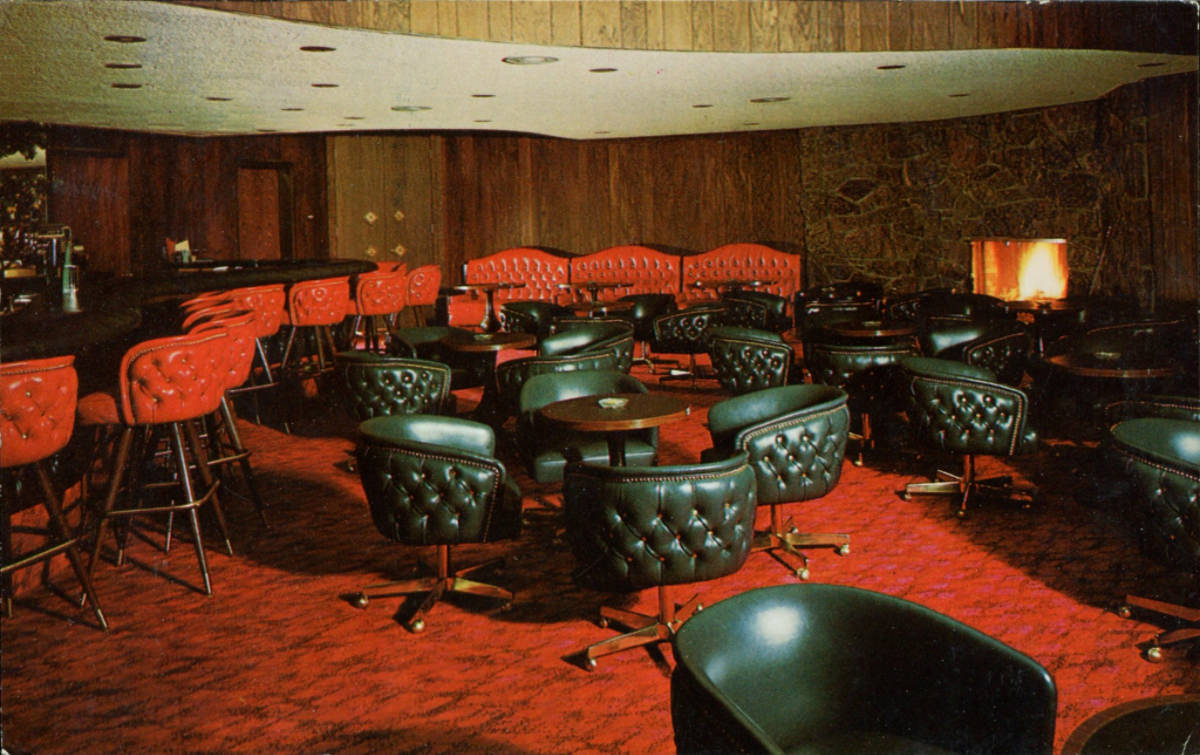
Murals were common. Some lounges hired local artists to paint sweeping landscapes or abstract scenes directly onto the walls. Others used textured wallpaper, exposed brick, or wood paneling to give the space warmth. No two rooms looked exactly alike, but all of them communicated the same message: this is a place worth stopping for.
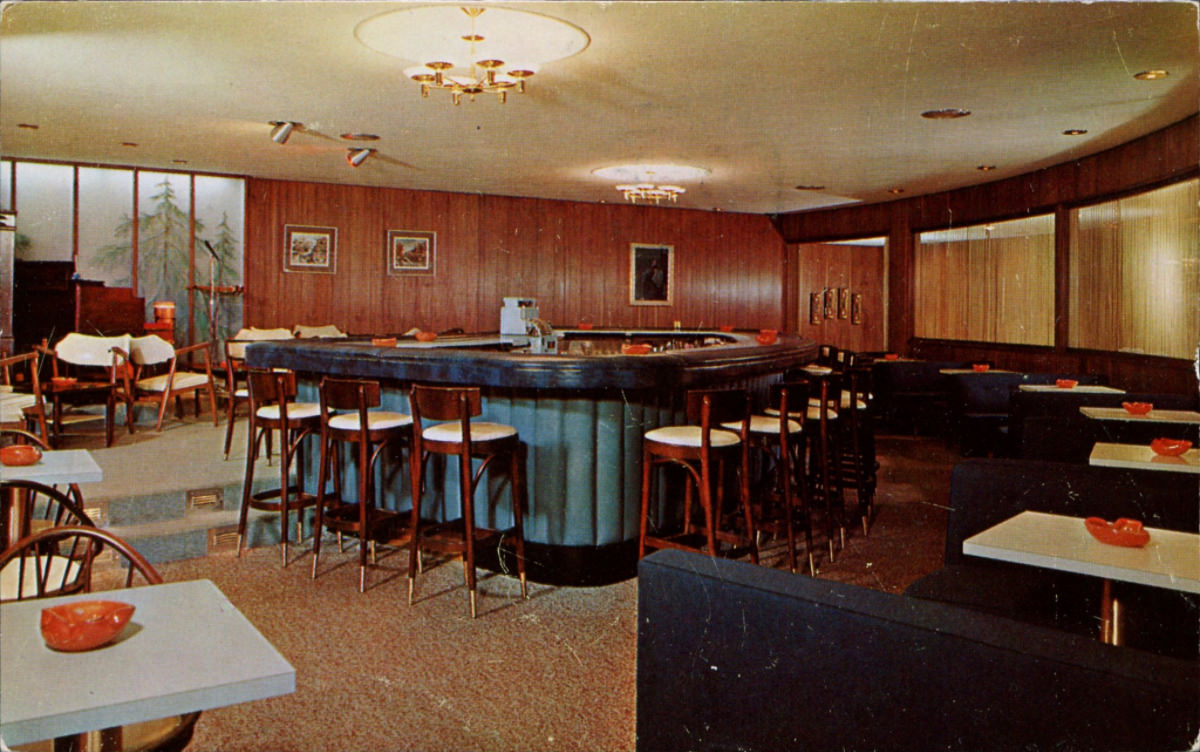
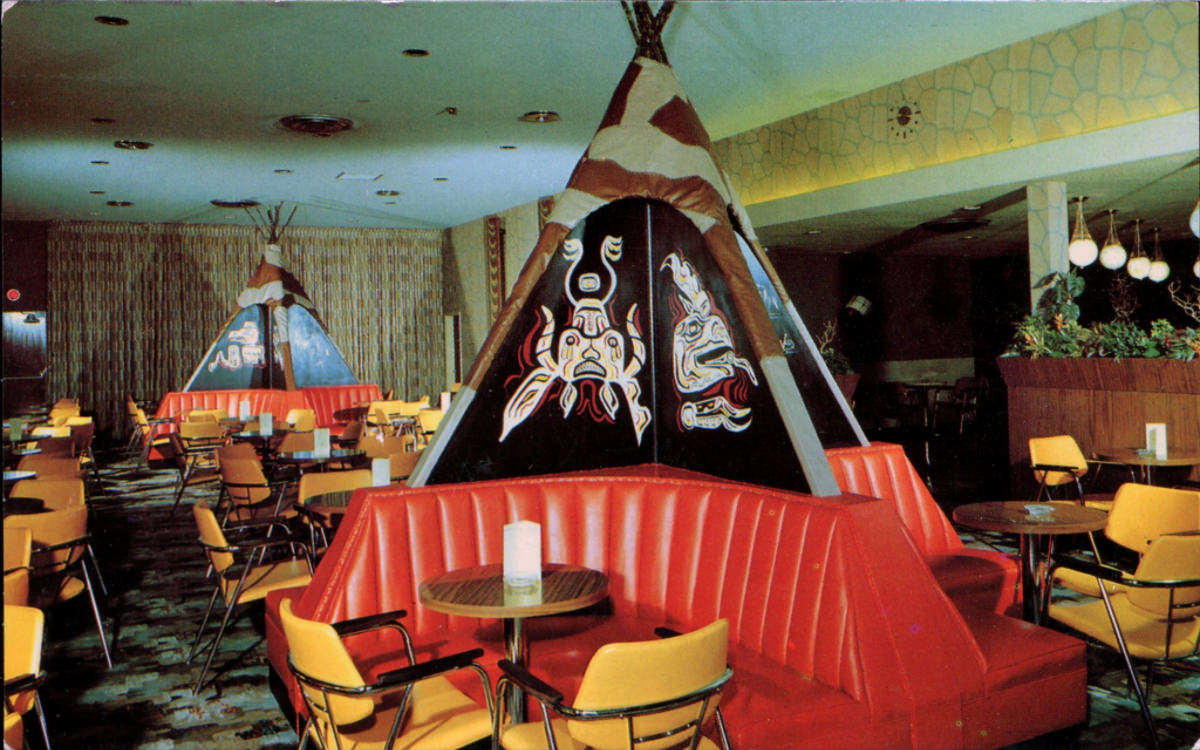
Smoking was universal. Ashtrays sat at every seat — on the bar top, on each table, in the booths. The haze of cigarette smoke was simply part of the atmosphere, and no one thought twice about it. Air filtration was not a concern that influenced design decisions in these spaces.
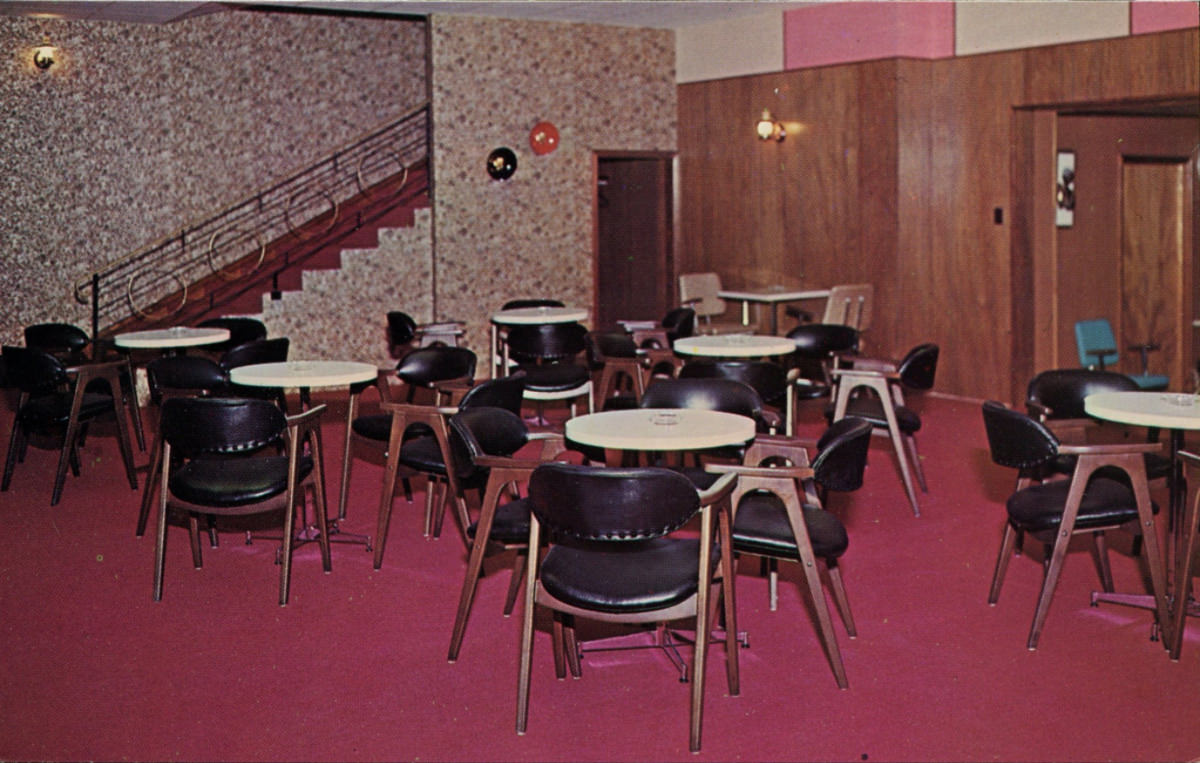
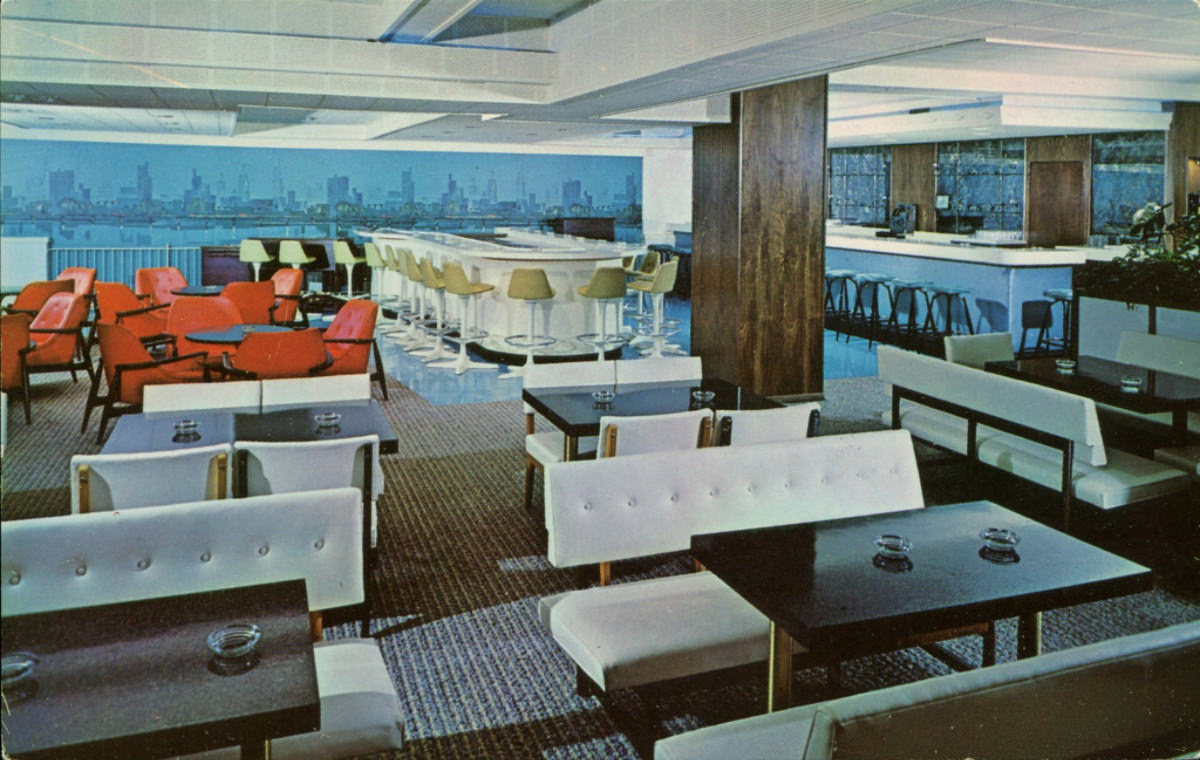
Many of these lounges were attached to full-service restaurants or hotels, giving them a built-in crowd every night. The cocktail hour — typically late afternoon into early evening — was a genuine social ritual. People dressed up, ordered Manhattans or Old Fashioneds, and took their time before moving into the dining room.
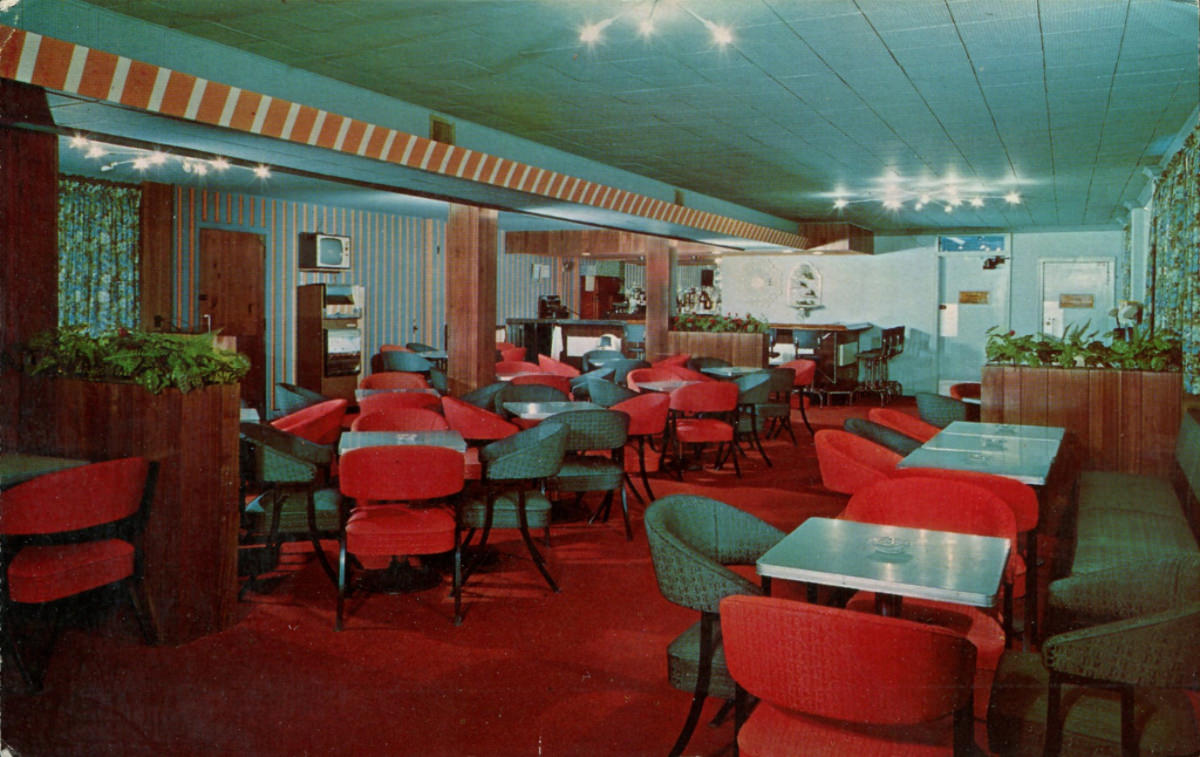
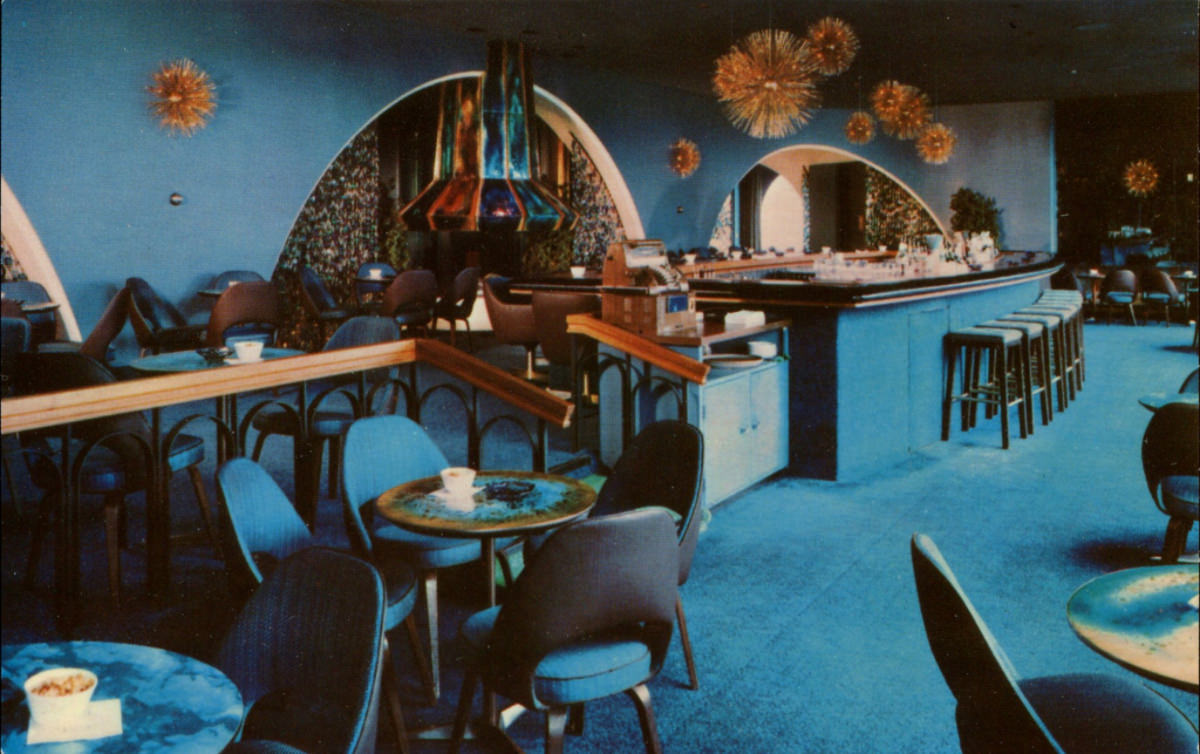
The postcards capture all of this in careful detail. You can see the glassware lined up behind the bar, the pattern on the carpet, the shape of the light fixtures. These images were not candid — they were staged shots meant to show the room at its most polished.
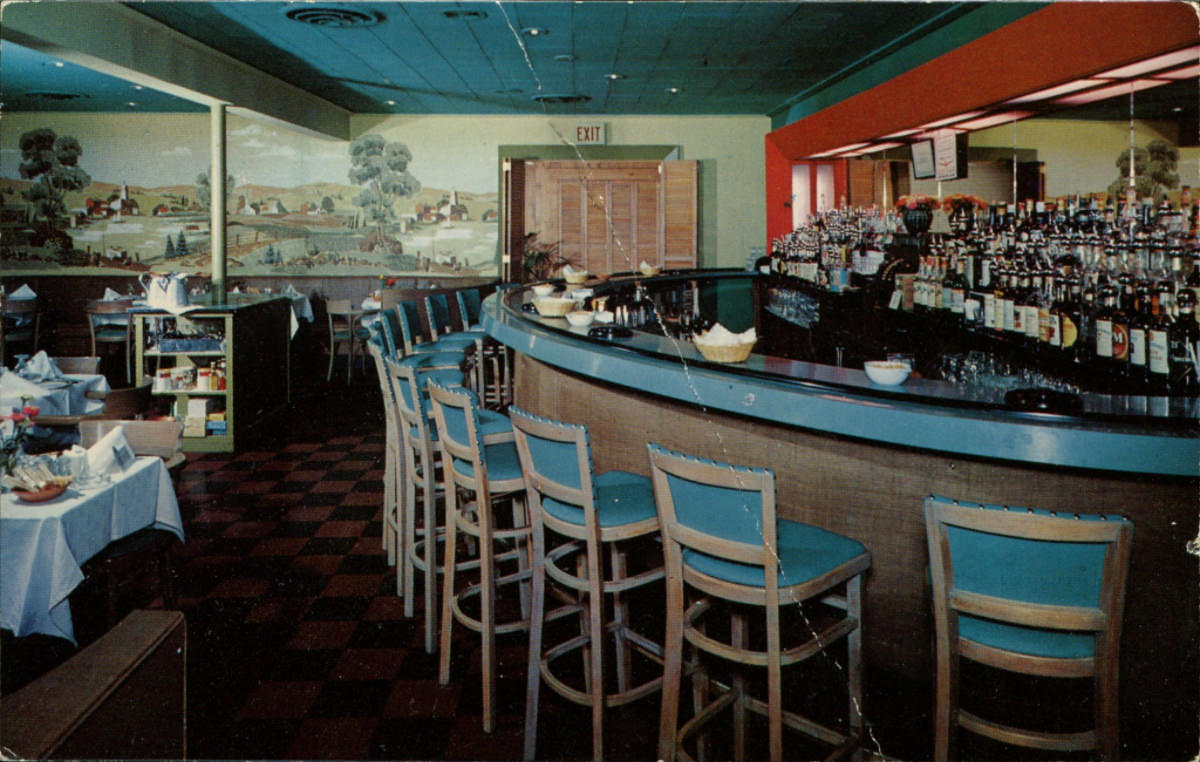
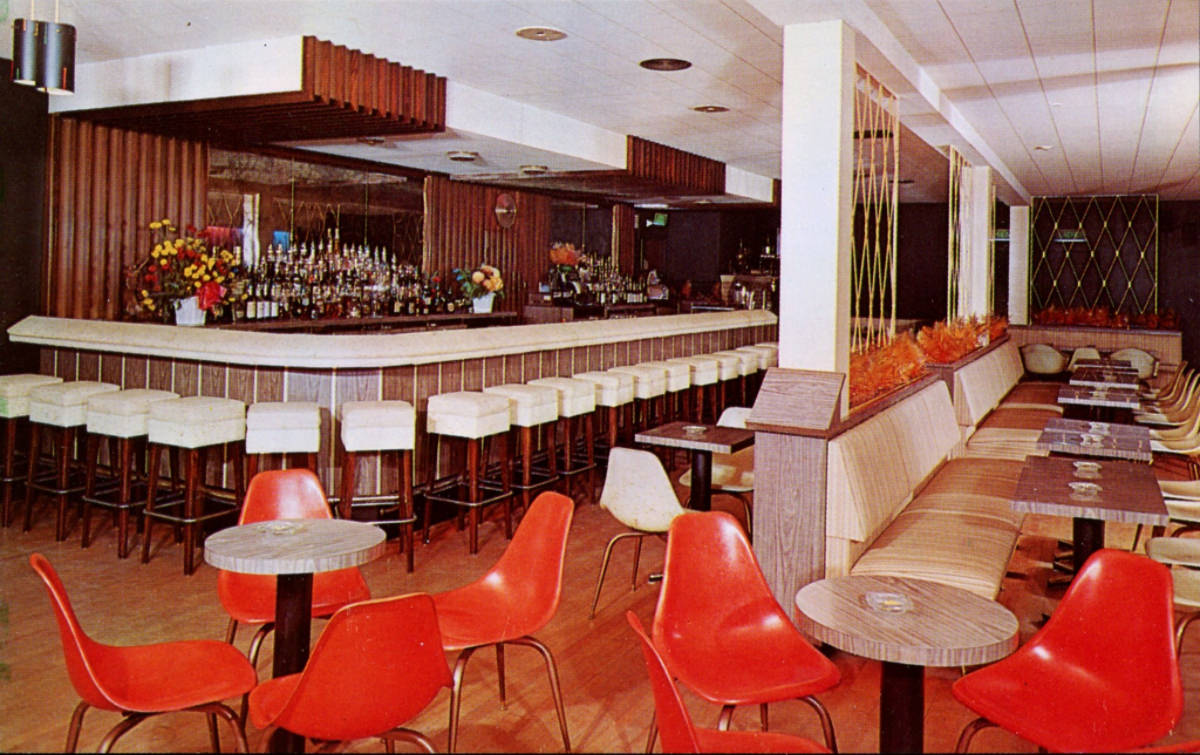
Highway lounges had a slightly different character than city ones. They catered to travelers passing through, so they leaned into comfort and novelty. Themed decor was popular — tropical motifs, Western imagery, nautical touches. A traveler might stop at a dozen different lounges on a long road trip, and each one aimed to be memorable.
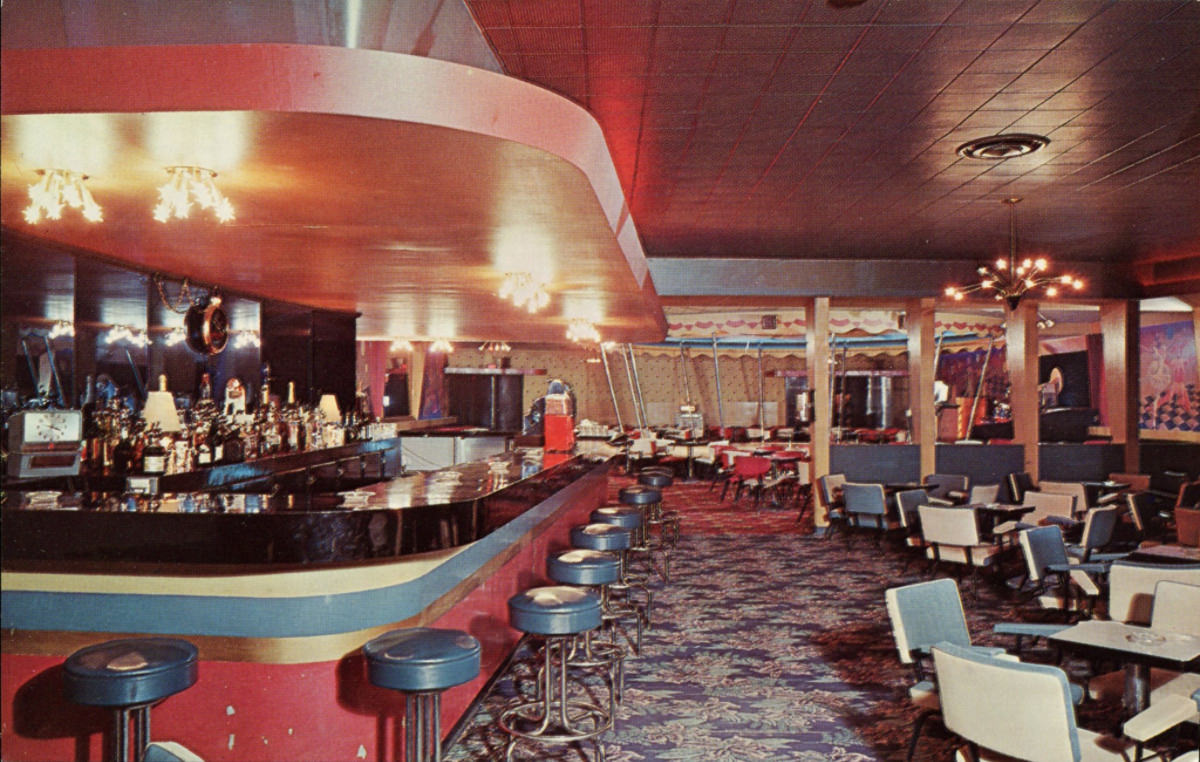
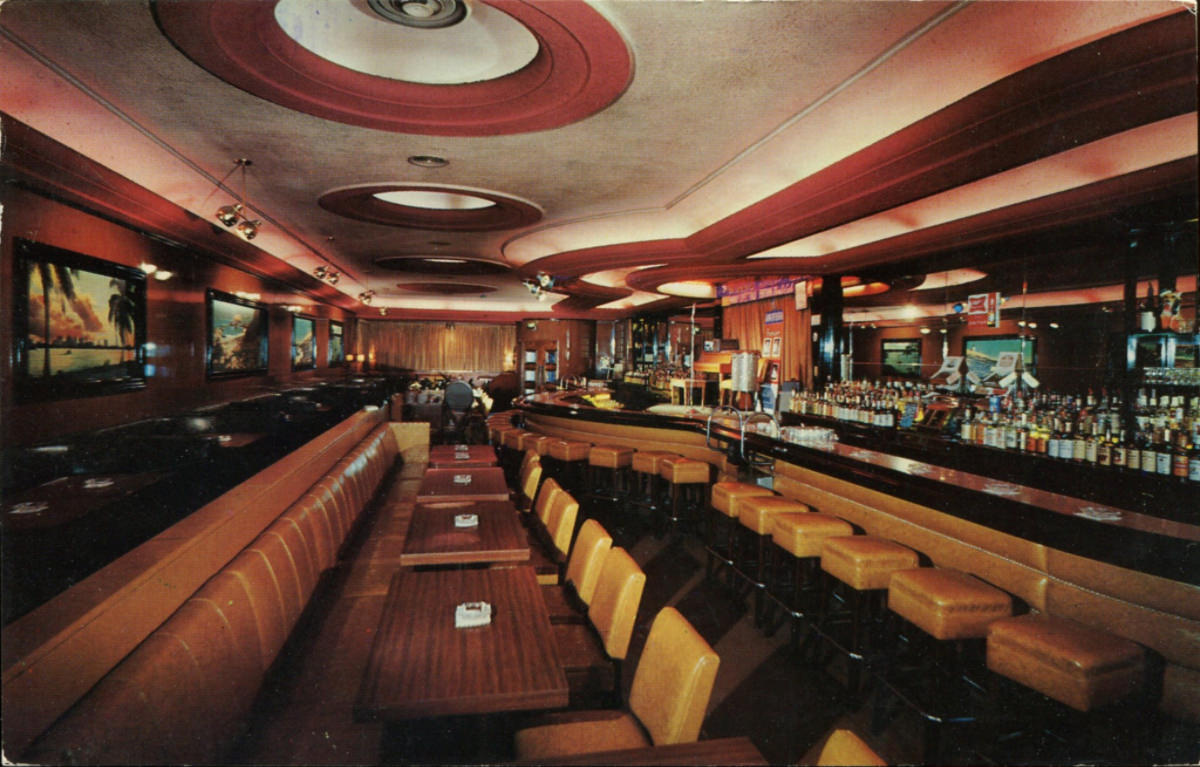
Color printing technology improved rapidly during the postwar years, and postcard printers took full advantage of it. The saturated hues in these cards — deep reds, warm ambers, electric blues — were intentional. Printers boosted colors to make the rooms look even more inviting than they were in person.
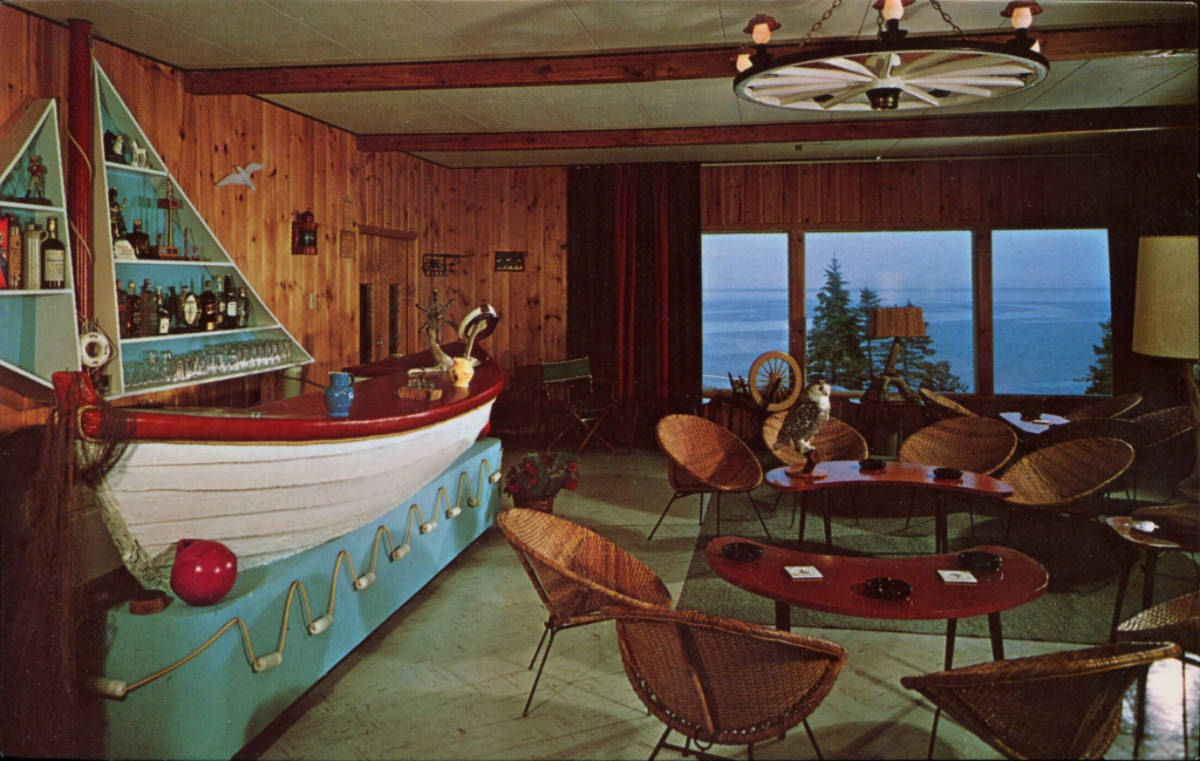
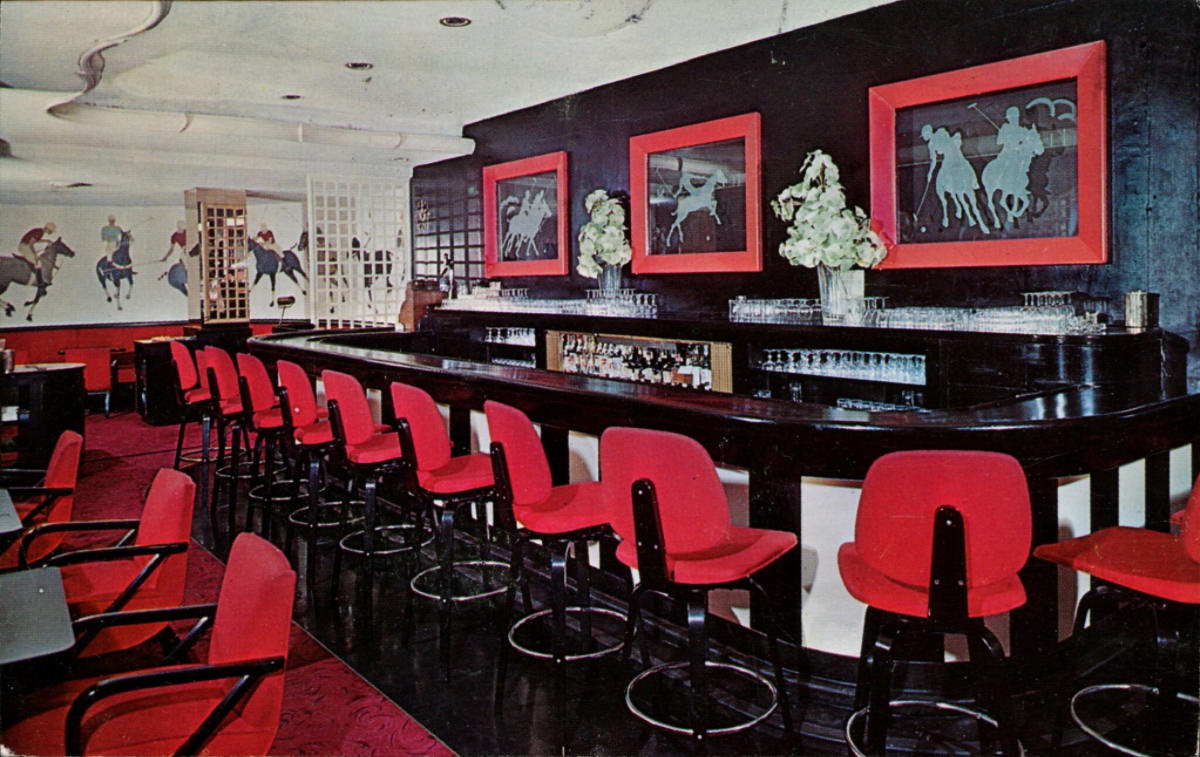
The back of each postcard typically carried the restaurant’s name, address, and sometimes a short description of the food and drinks on offer. Some included a small map showing the location along a specific highway route. This was practical information for travelers navigating before the interstate system was fully built out.
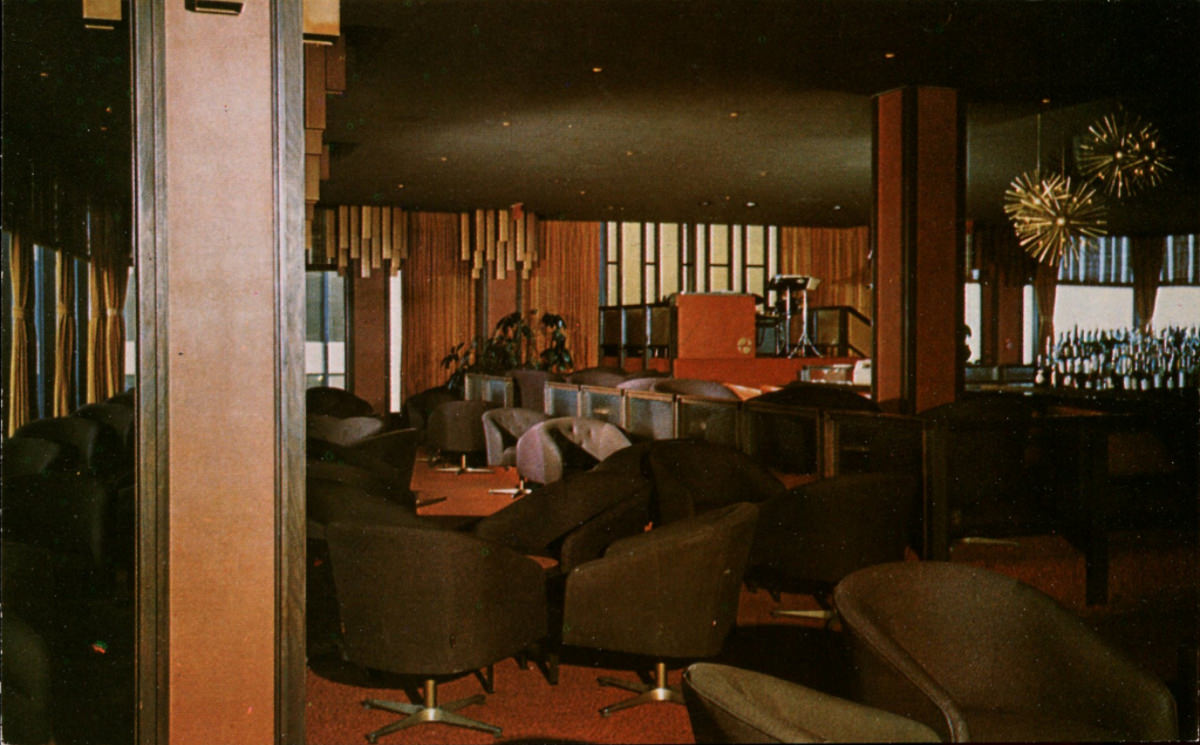
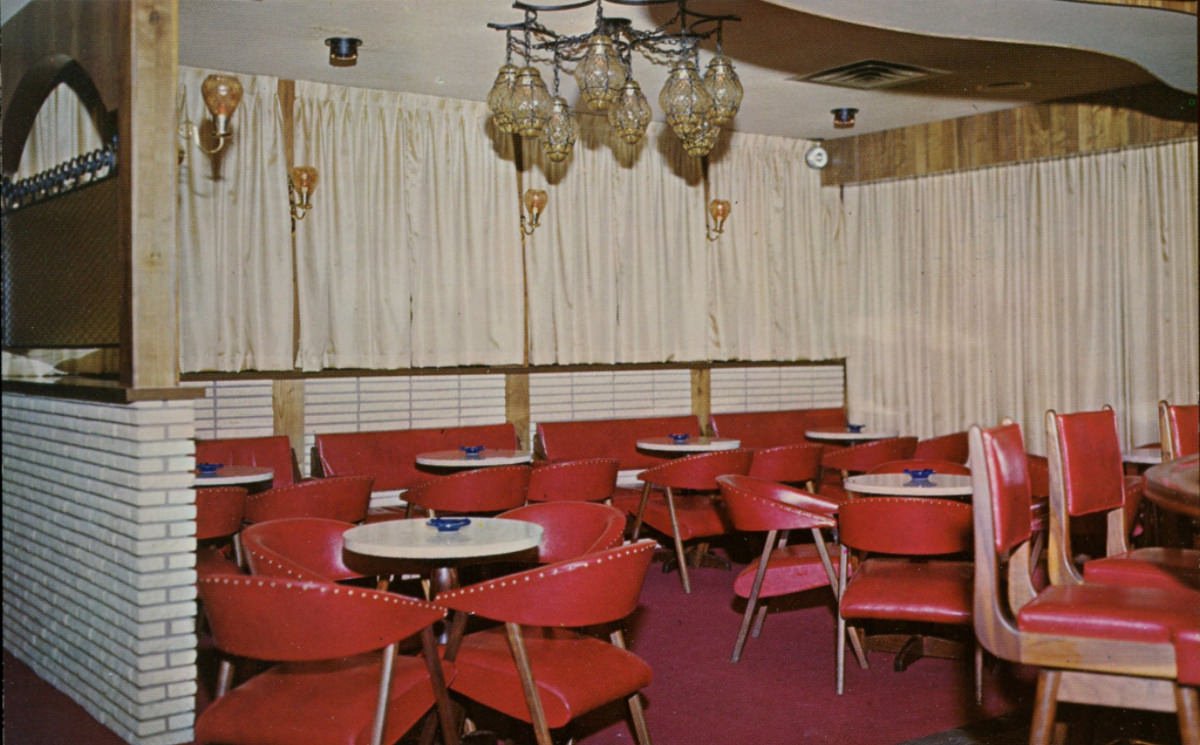
Today, finding one of these postcards in good condition is genuinely rare. Most were thrown away, lost in moves, or simply deteriorated over decades. The ones that survived often did so in collections — gathered by people who recognized them as small but vivid documents of American social life in the postwar period.
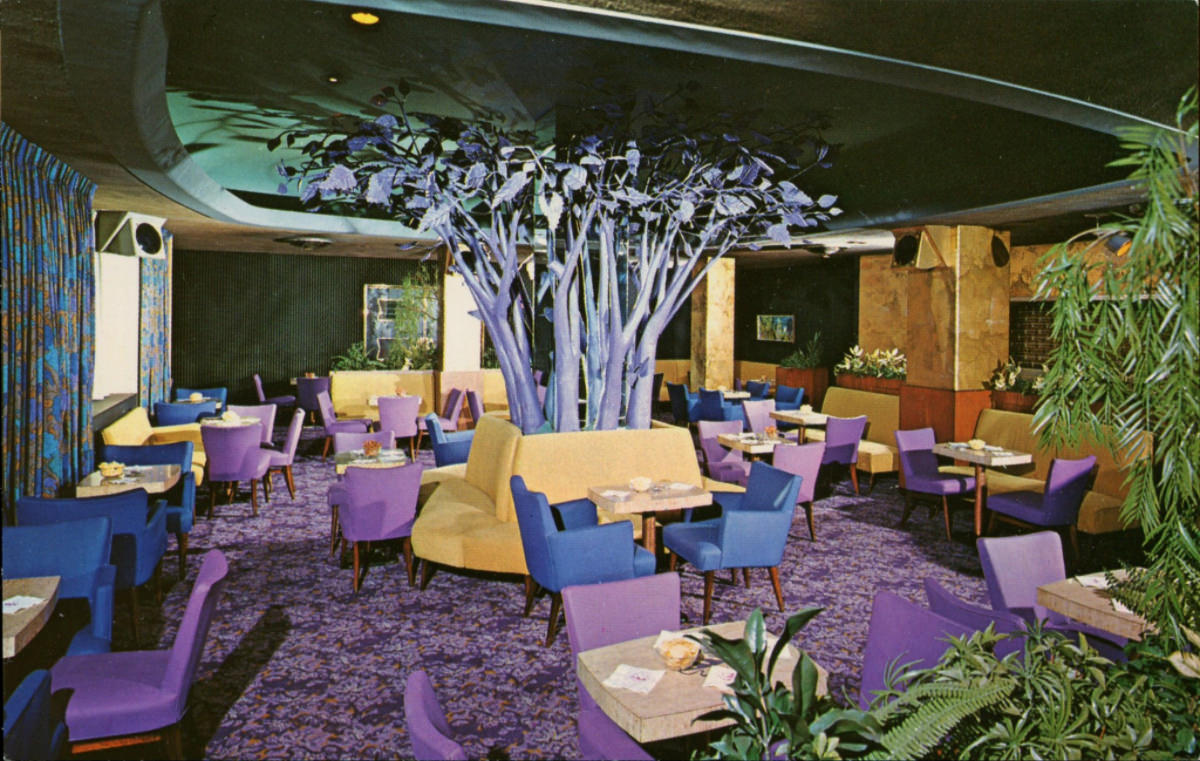
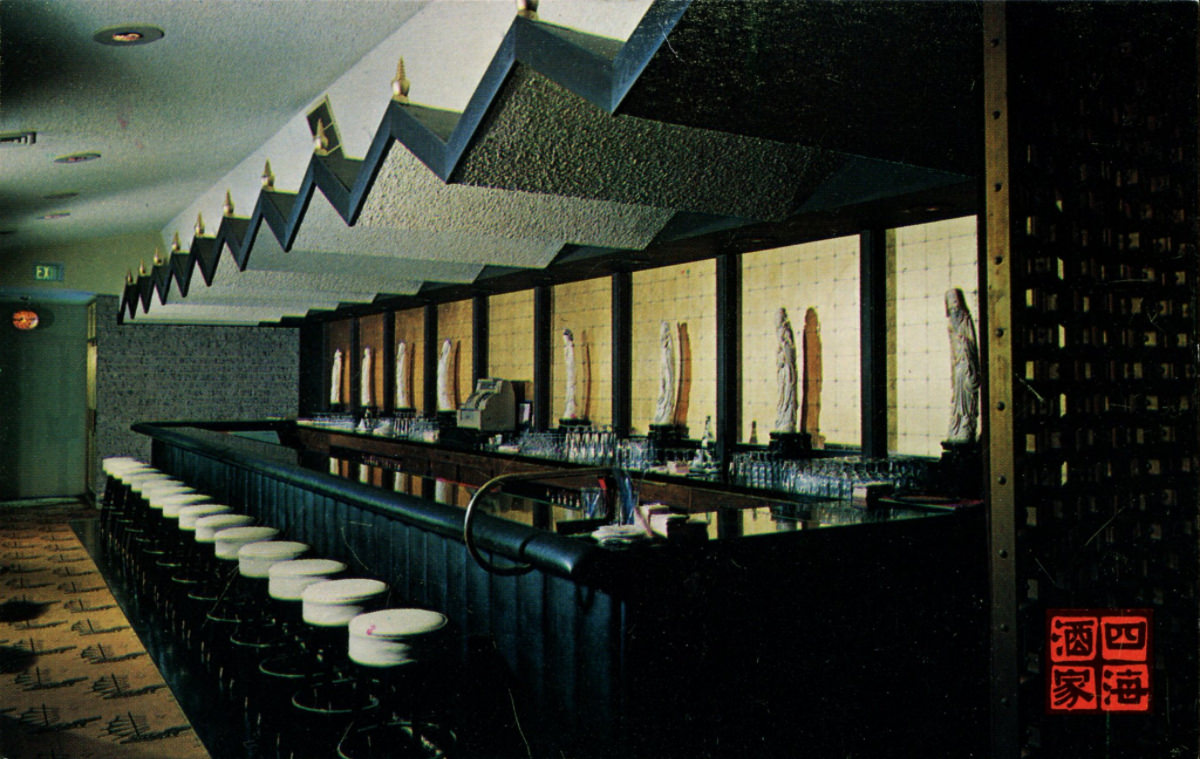
The restaurants themselves are mostly gone. Some of the buildings were torn down. Others were converted into different businesses, their interiors completely stripped and rebuilt. A few still operate under new names with none of the original decor intact. The lounge as a dedicated room within a restaurant largely disappeared as dining habits changed through the 1970s and 1980s.
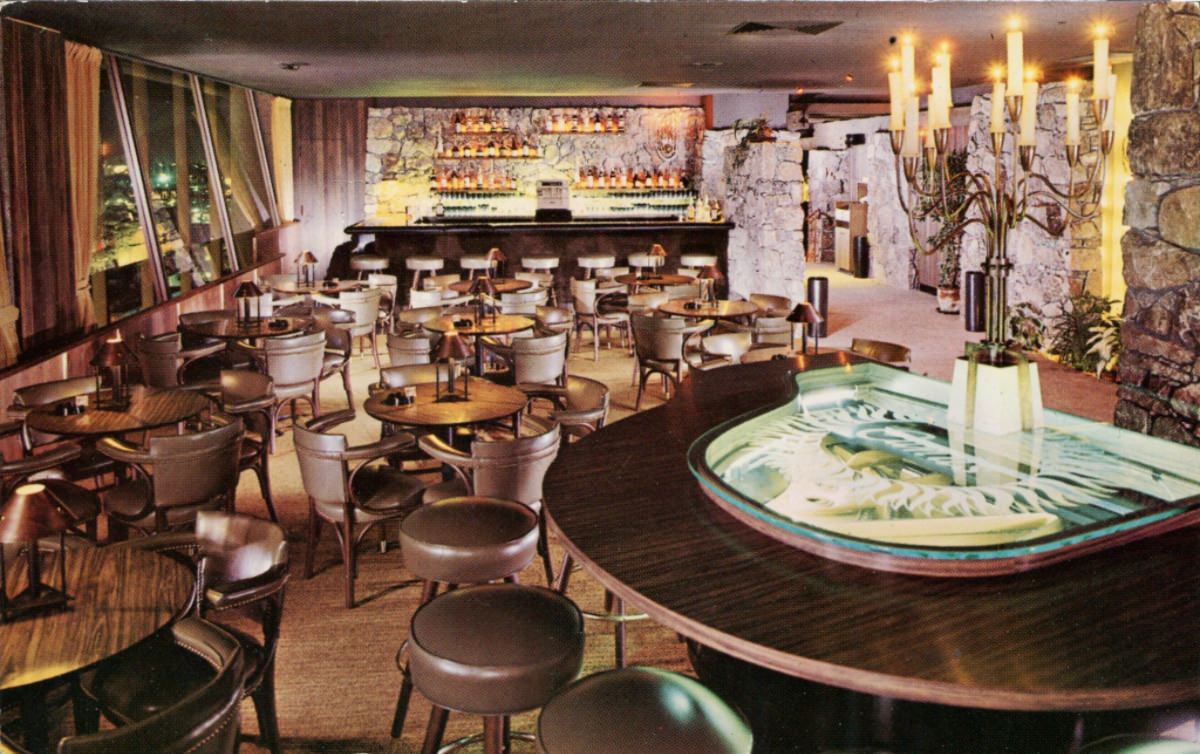
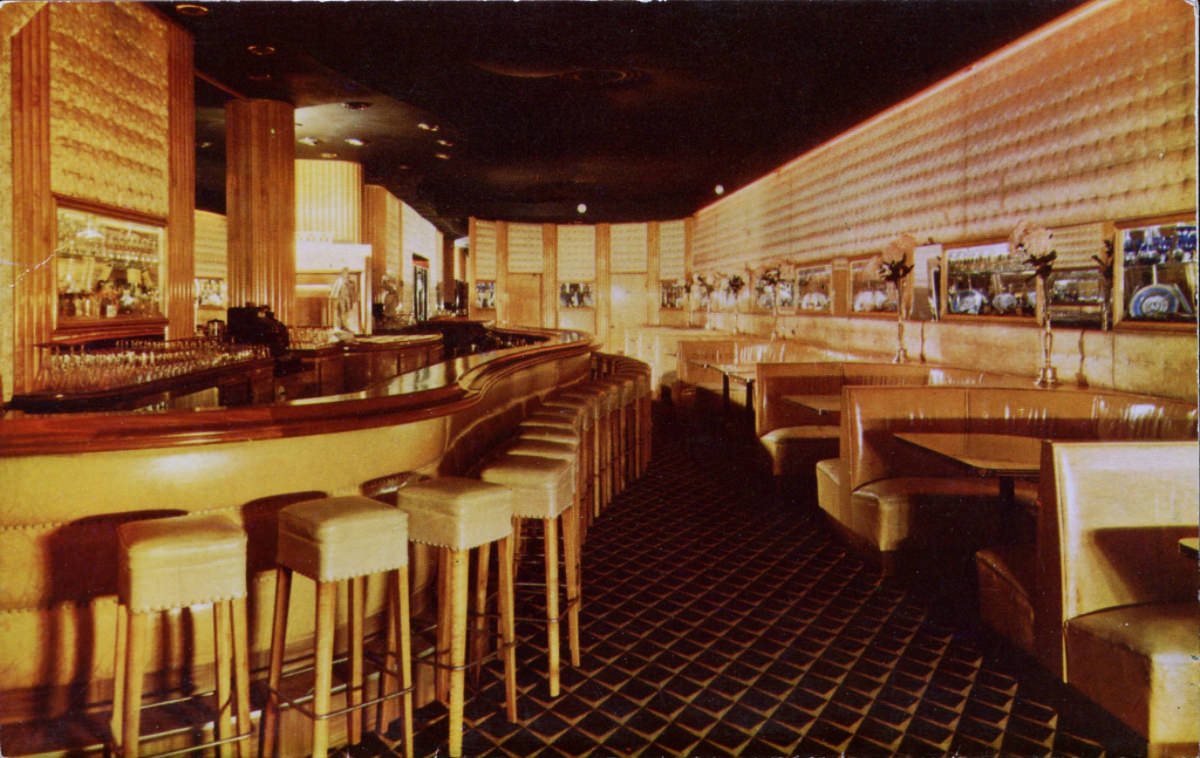
Branded matchbooks were another common giveaway of the era, handed out alongside the postcards. While the occasional matchbook still surfaces at older restaurants today, the custom interior postcard has essentially vanished as a marketing tool. What replaced it — social media photos, digital ads, Google listings — lacks the physical permanence of a printed card.
Some modern bar owners have leaned into the aesthetic of these mid-century lounges, borrowing the curved bars, the low lighting, and the plush seating. They frame vintage postcards on the walls as decor. The look is treated as retro now, but in 1955, it was simply what a well-run cocktail lounge was supposed to look like.