Hey There! Before You Go. 😧
Get the best vintage content straight into your inbox!

Don't worry, we don't spam

WWII Air Cadets in training at Naval Air Station Corpus Christi, 1942

By the time the United States entered World War II, Naval Air Station Corpus Christi was already a machine built for war. Located on 20,000 acres along the Texas coast, the base had been completed in June 1941 — just months before the attack on Pearl Harbor thrust the country into the fight. What followed was one of the most intensive military training operations the world had ever seen.

The numbers behind the base’s construction are staggering. The facility included 997 hangars, shops, barracks, warehouses, and other buildings. Twenty-five miles of railroad track were laid in just thirty-five days, including a 980-foot rail-highway bridge and a 400-foot trestle bridge across Oso Bay. Eight miles of 100-pair telephone cables went in within ten days. An eighteen-inch cast iron water pipe connected Flour Bluff to Corpus Christi. The base didn’t grow slowly — it was forced into existence at wartime speed.
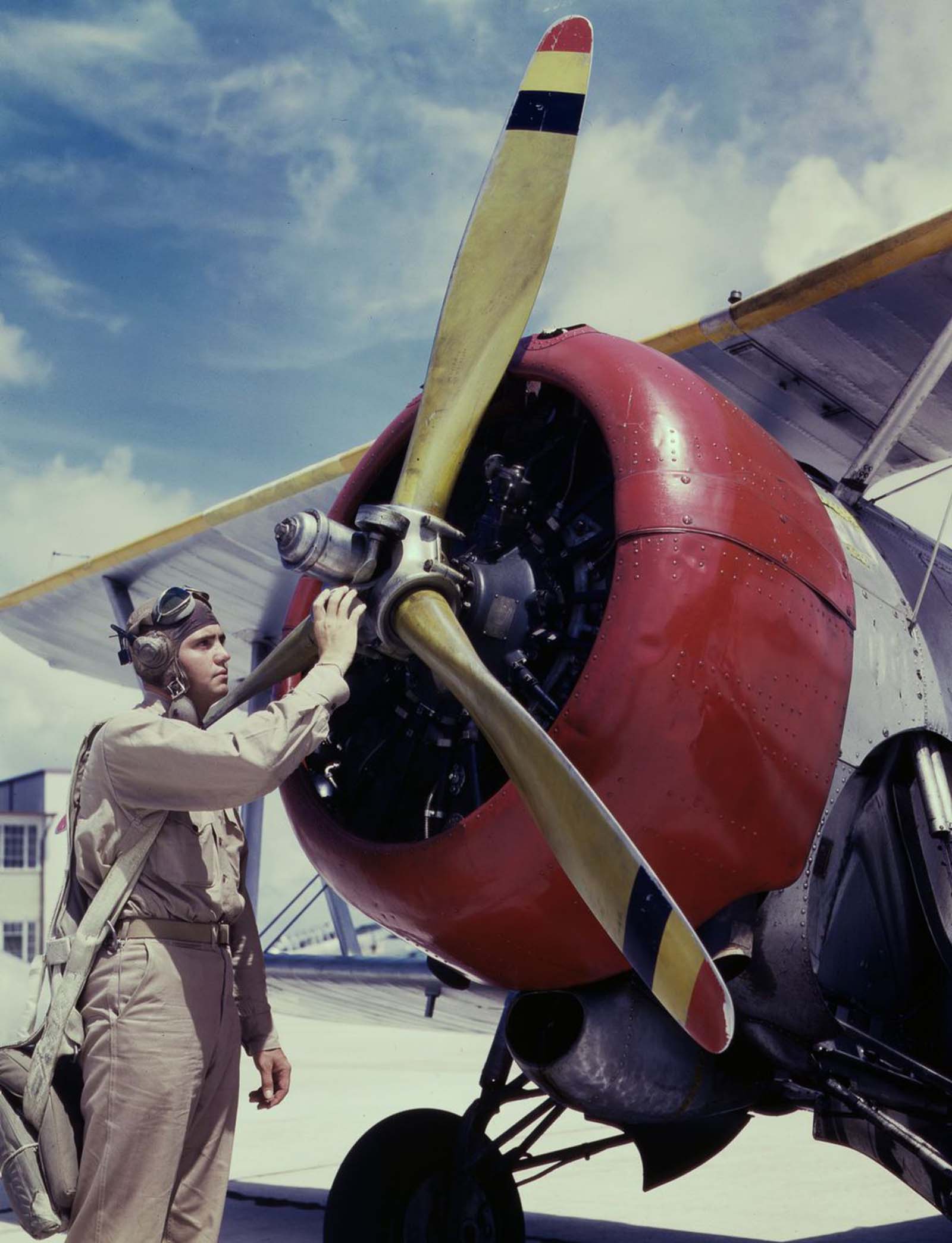
Aviation Cadet Thanas inspects an airplane engine.

Once operational, the station ran at a relentless pace. Eight hundred instructors cycled through classes of 300 new cadets every single month. Three months before Pearl Harbor, the base had already become a critical pipeline for planes and trained aviators. By the end of the war, more than 35,000 aviators had earned their wings there, including a young George H.W. Bush, who graduated just days before his 19th birthday. In 1944, NAS Corpus Christi was officially the largest naval aviation training facility in the world.
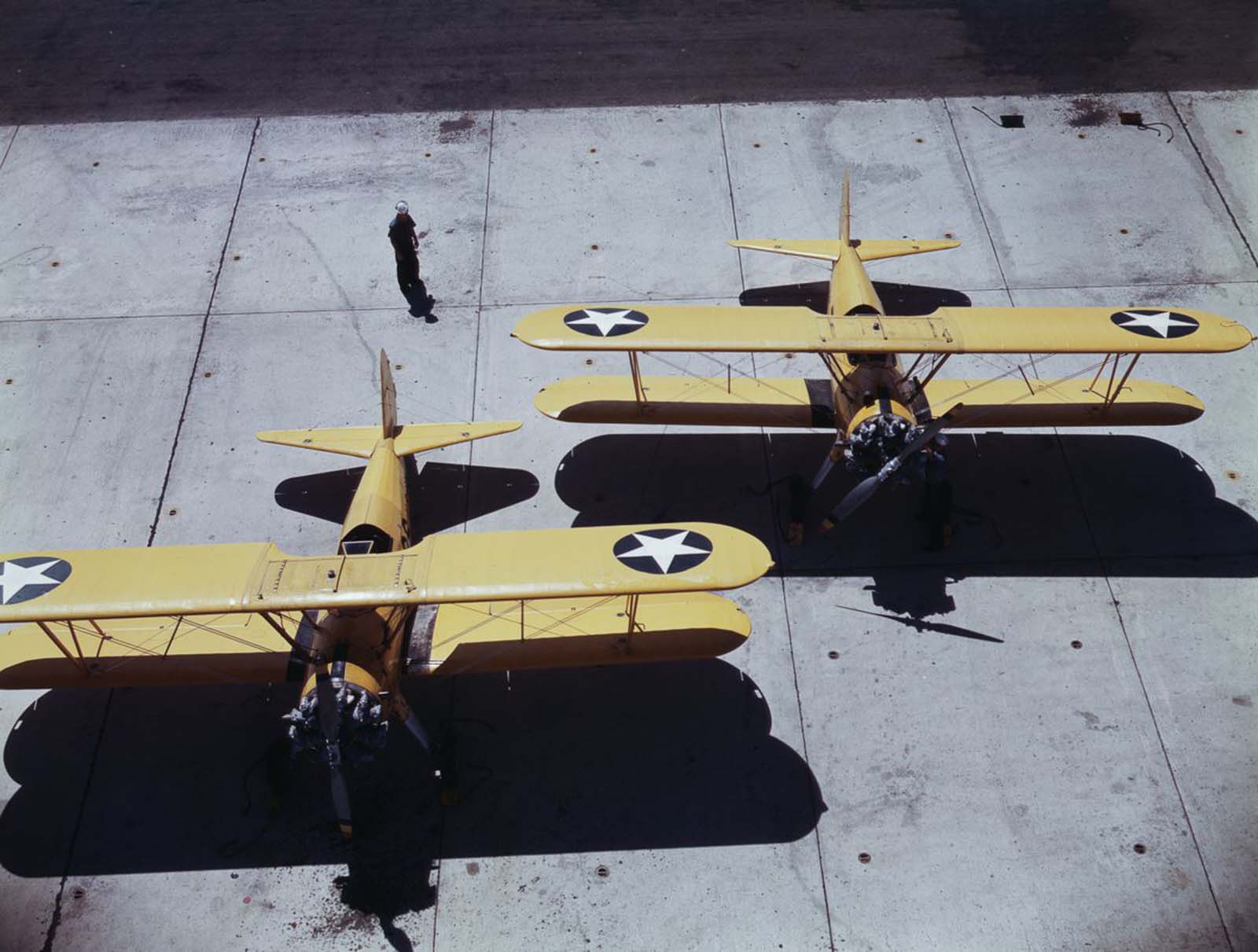
Navy N2S primary land planes.

The training program in 1942 took ten months to complete — a compressed timeline driven by the urgent need for combat-ready pilots. Cadets moved through ground instruction, aircraft mechanics, and flight hours under the watch of hundreds of experienced instructors. Every week counted.
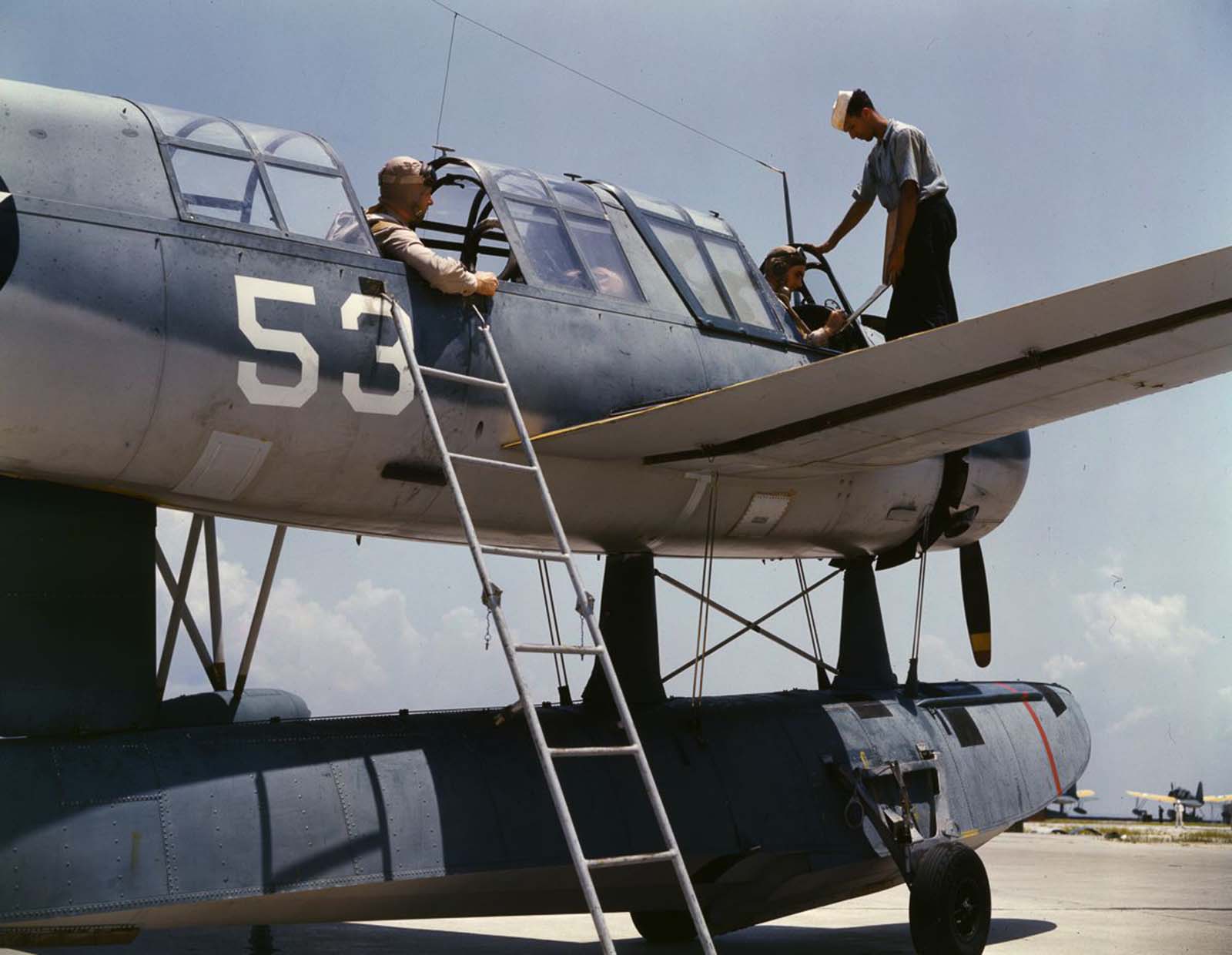
Aviation cadets in training.

Cadets didn’t just learn to fly. They trained with weapons, studied aircraft construction from the inside out, and practiced the full range of skills a naval aviator needed in combat. Ordnance work was a key part of that preparation.
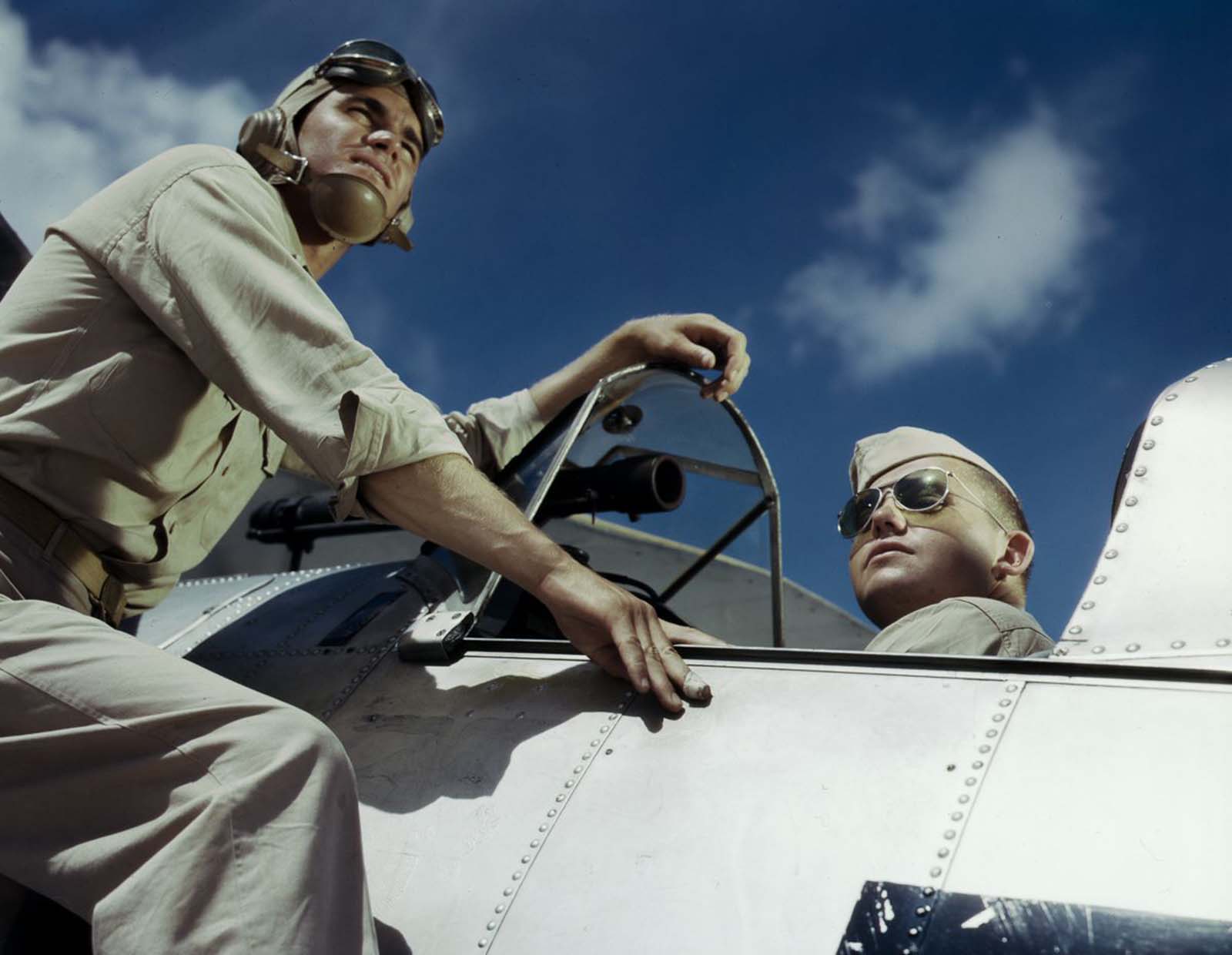
Ensign Noressey and Cadet Thenics.
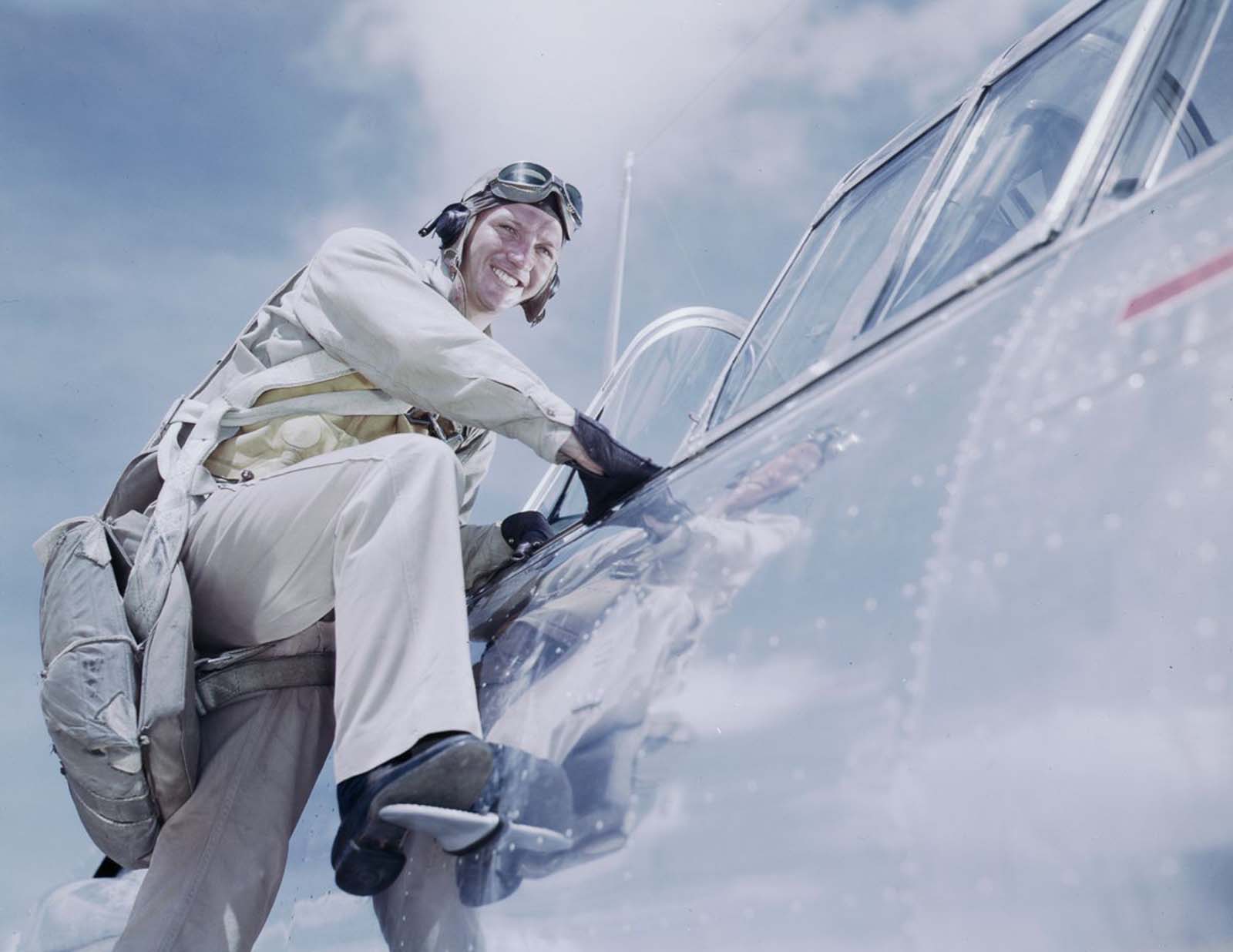
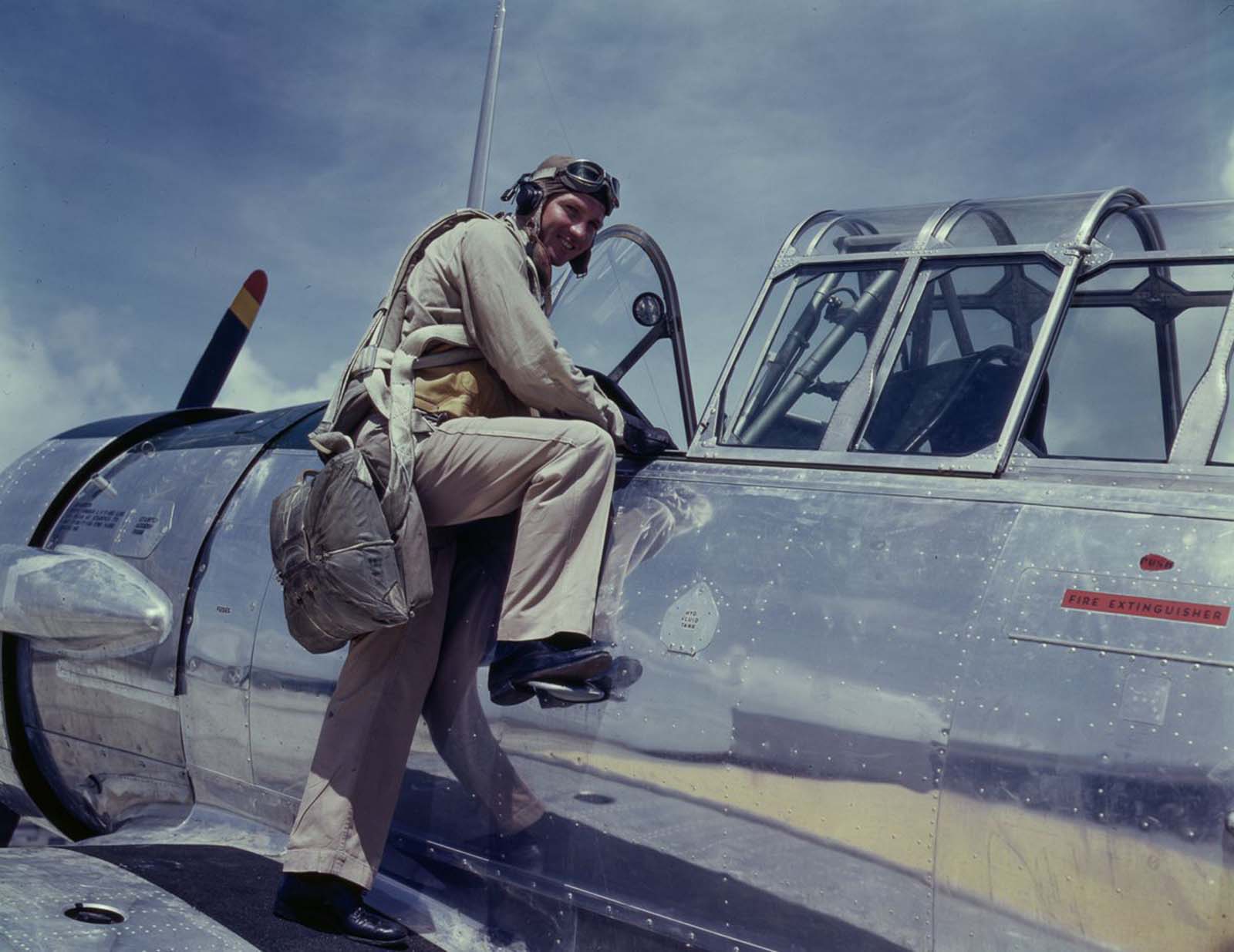
Cadet L. Deitz boards a plane.

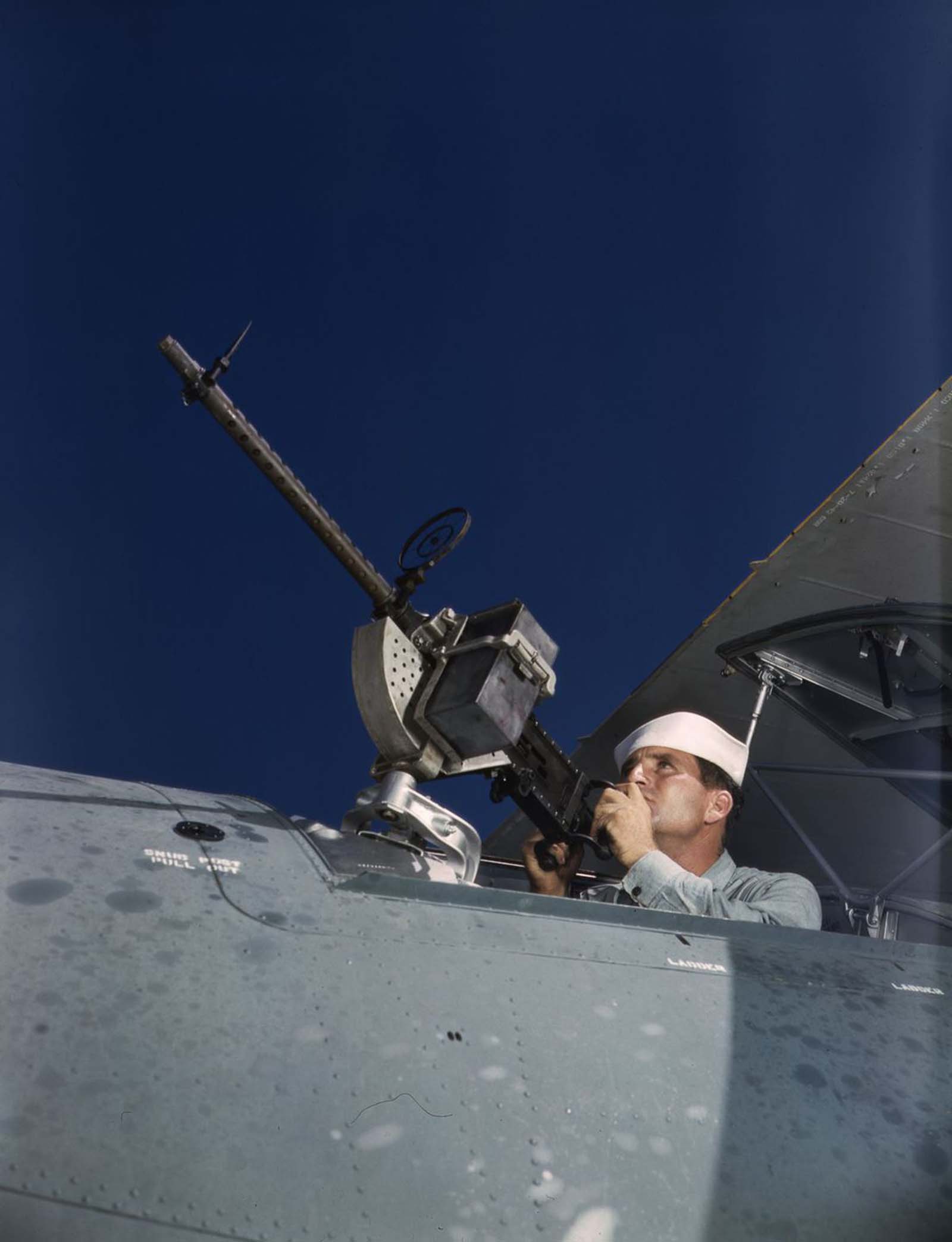
Weapons training was hands-on and immediate. Aviation Ordnance Mate Jesse Rhodes Waller worked directly on the aircraft he was arming, installing and testing .30-caliber machine guns in Navy planes including the PBY. Sailors like J.D. Estes, a seven-year Navy veteran, loaded munitions and mounted heavy guns onto aircraft on the flight line.
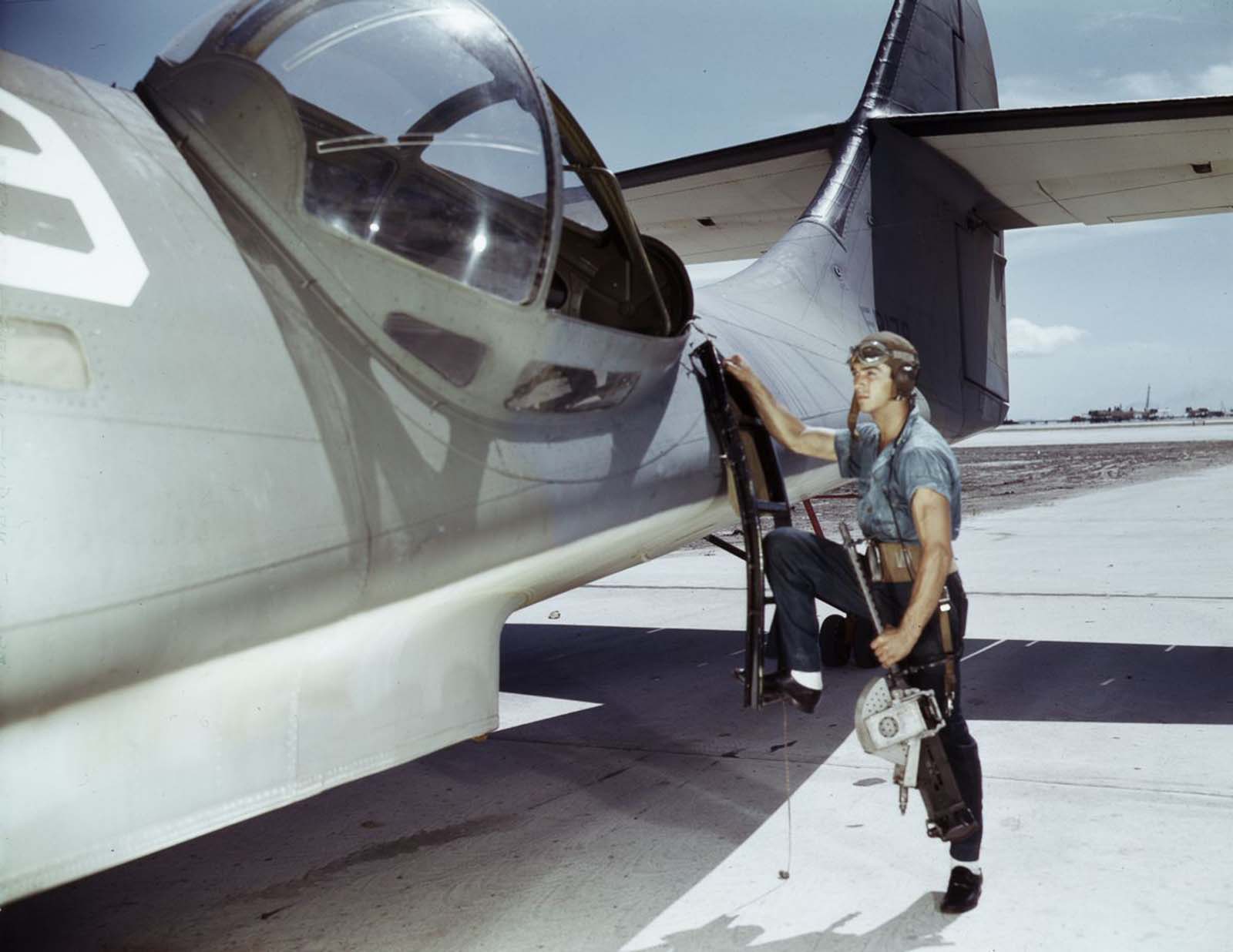
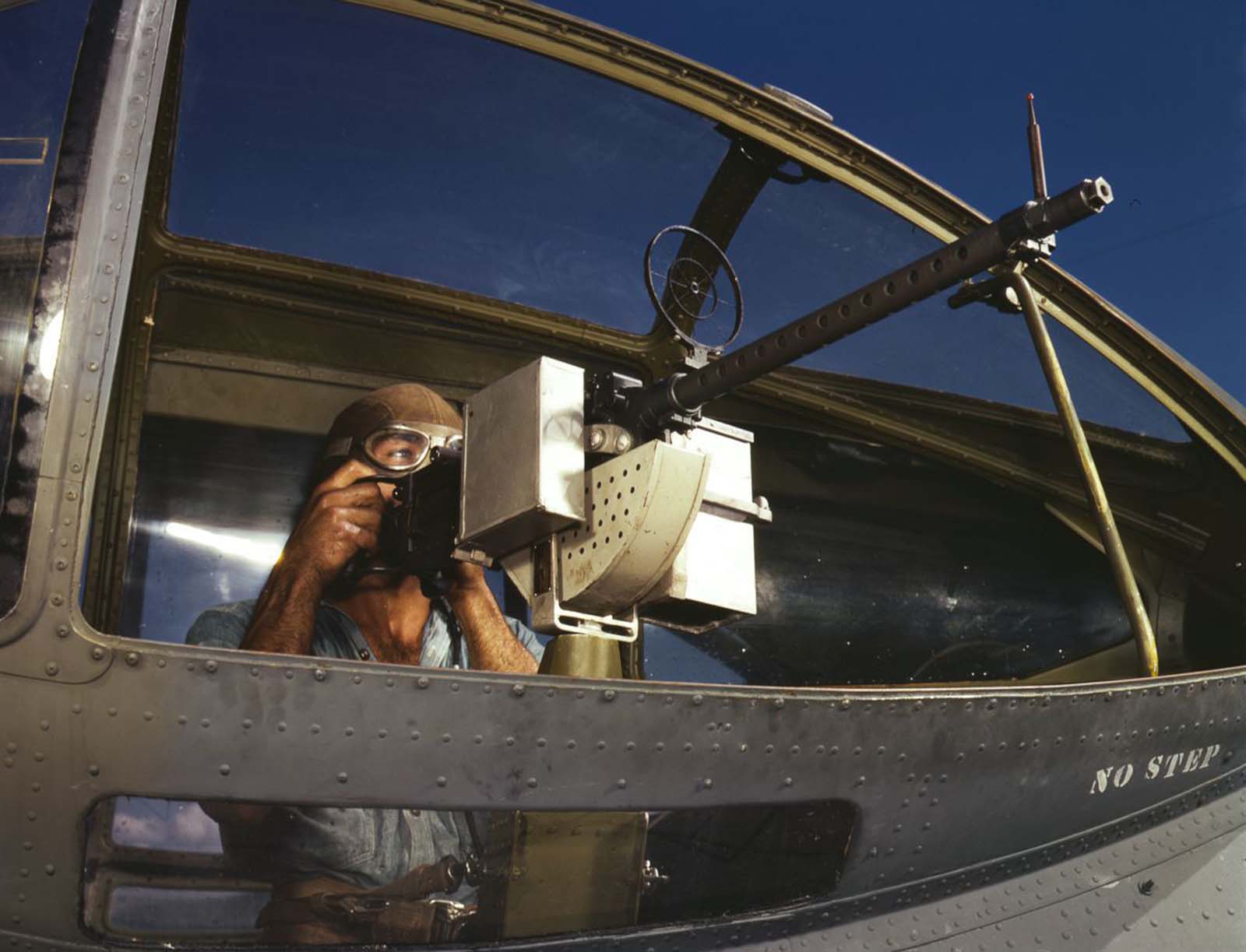
Aviation Ordnance Mate Jesse Rhodes Waller prepares to install a .30-caliber machine gun in a Navy PBY plane.
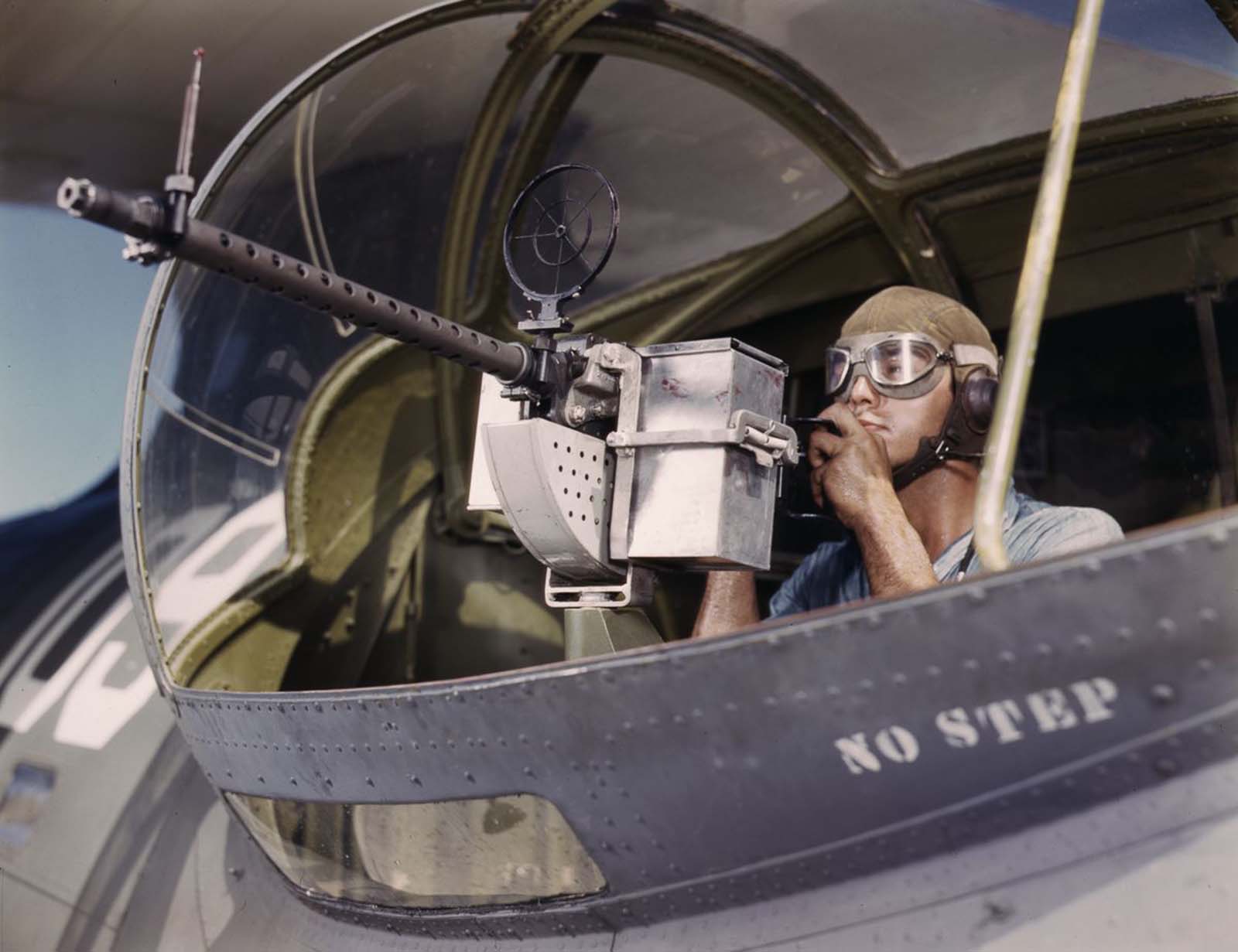
Jesse Rhodes Waller, A.O.M., third class, tries out a 30-caliber machine gun he has just installed in a Navy plane.
Jesse Rhodes Waller, A.O.M., third class, tries out a .30-caliber machine gun he has just installed on a Navy plane.
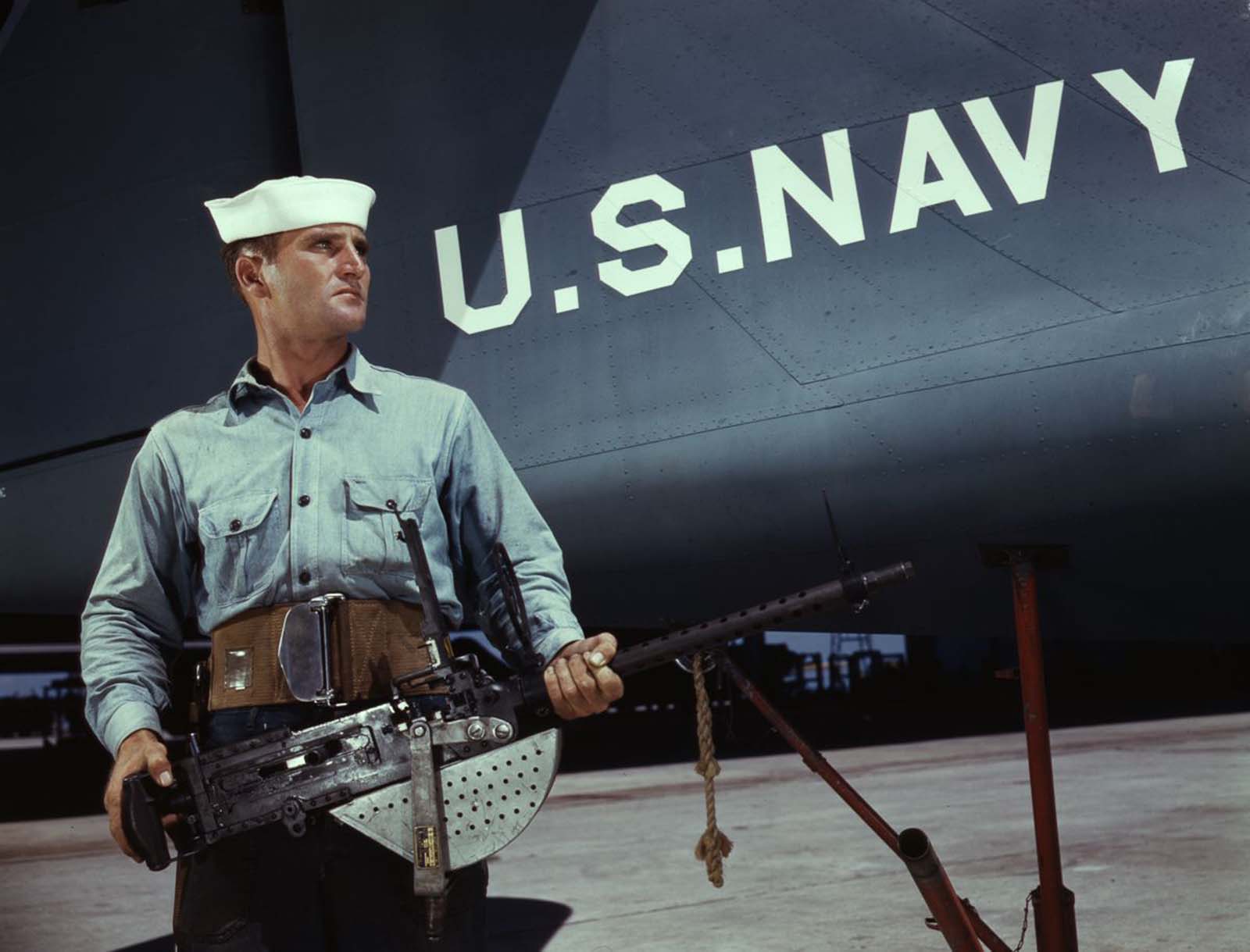
J.D. Estes, a seven-year veteran of the Navy, hefts a machine gun to be installed in a plane.
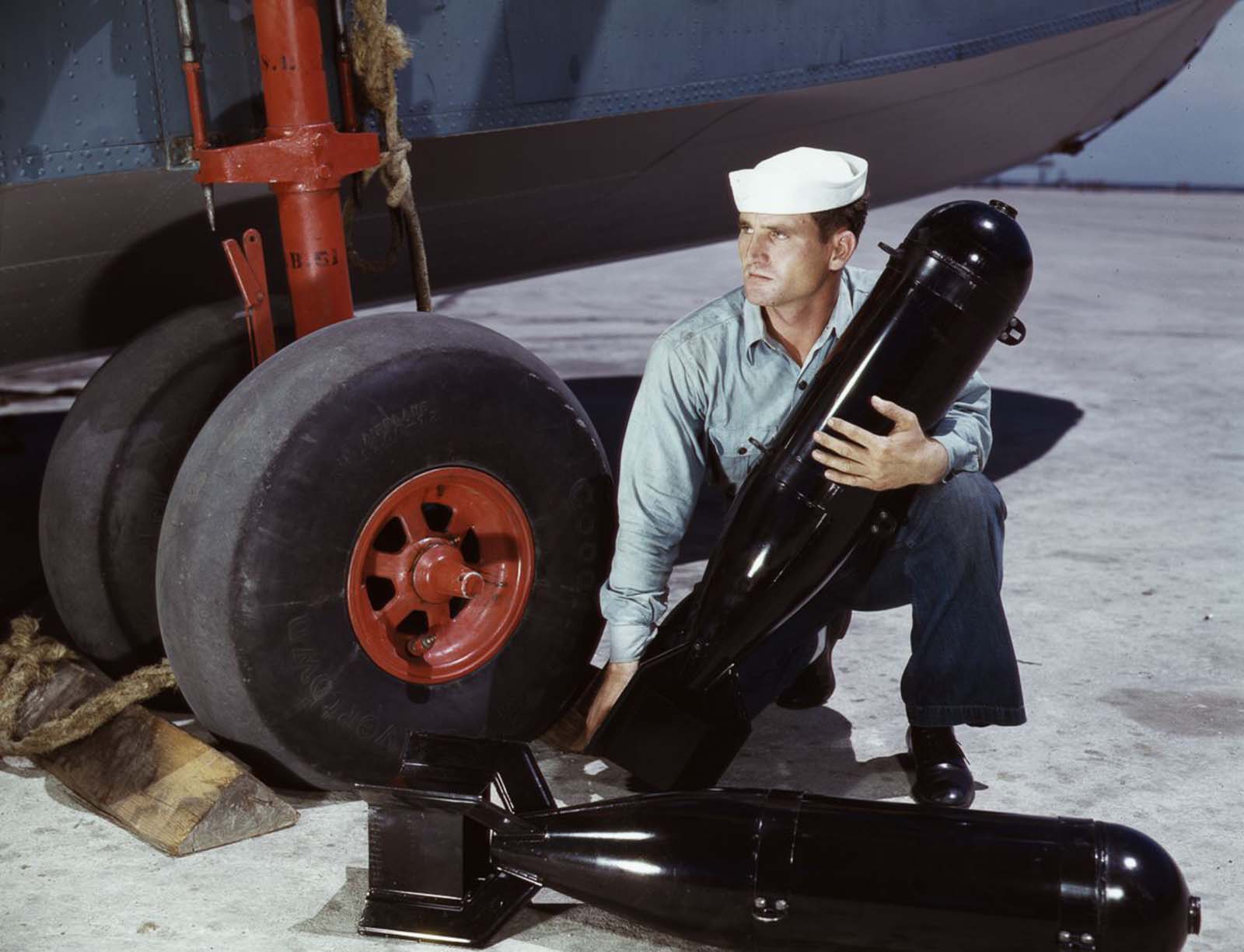
J.D. Estes loads munitions into a plane.
J.D. Estes tests the sights on a newly installed machine gun.

The base also required sailors to be ready for chemical warfare. Protective gear and gas masks were tested and fitted on-site, preparing personnel for the range of threats they might face in a global conflict.
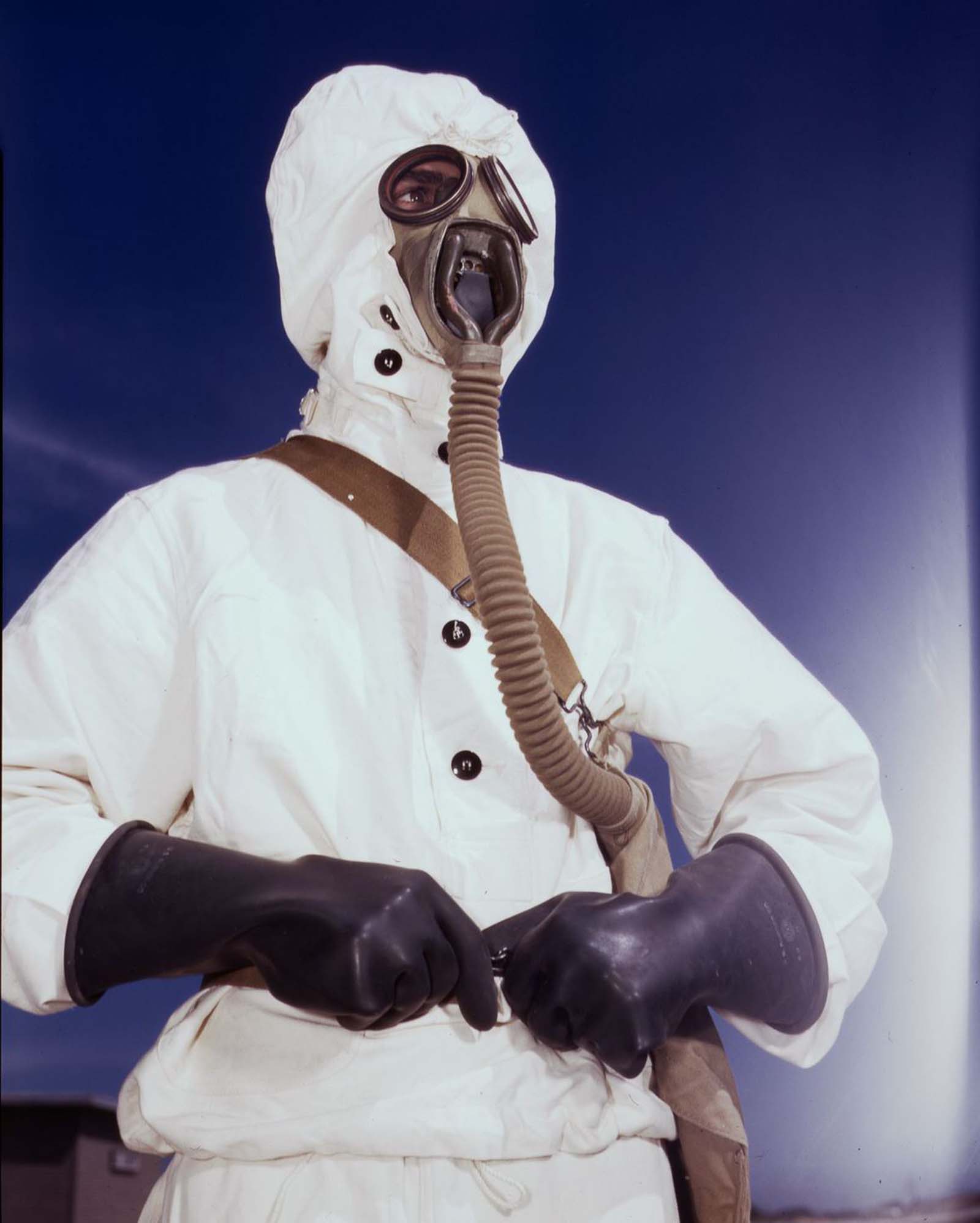
A sailor tries on a new type of protective clothing and gas mask for use in chemical warfare.

Beyond the cadets and Navy regulars, the National Youth Administration played a major role at Corpus Christi in 1942. NYA trainees — many of them young civilians with no prior technical experience — worked alongside Navy personnel in the Assembly and Repair Department. After roughly eight weeks of training, they became eligible for civil service positions at the base. The program was a direct pipeline from civilian life into the war machine.
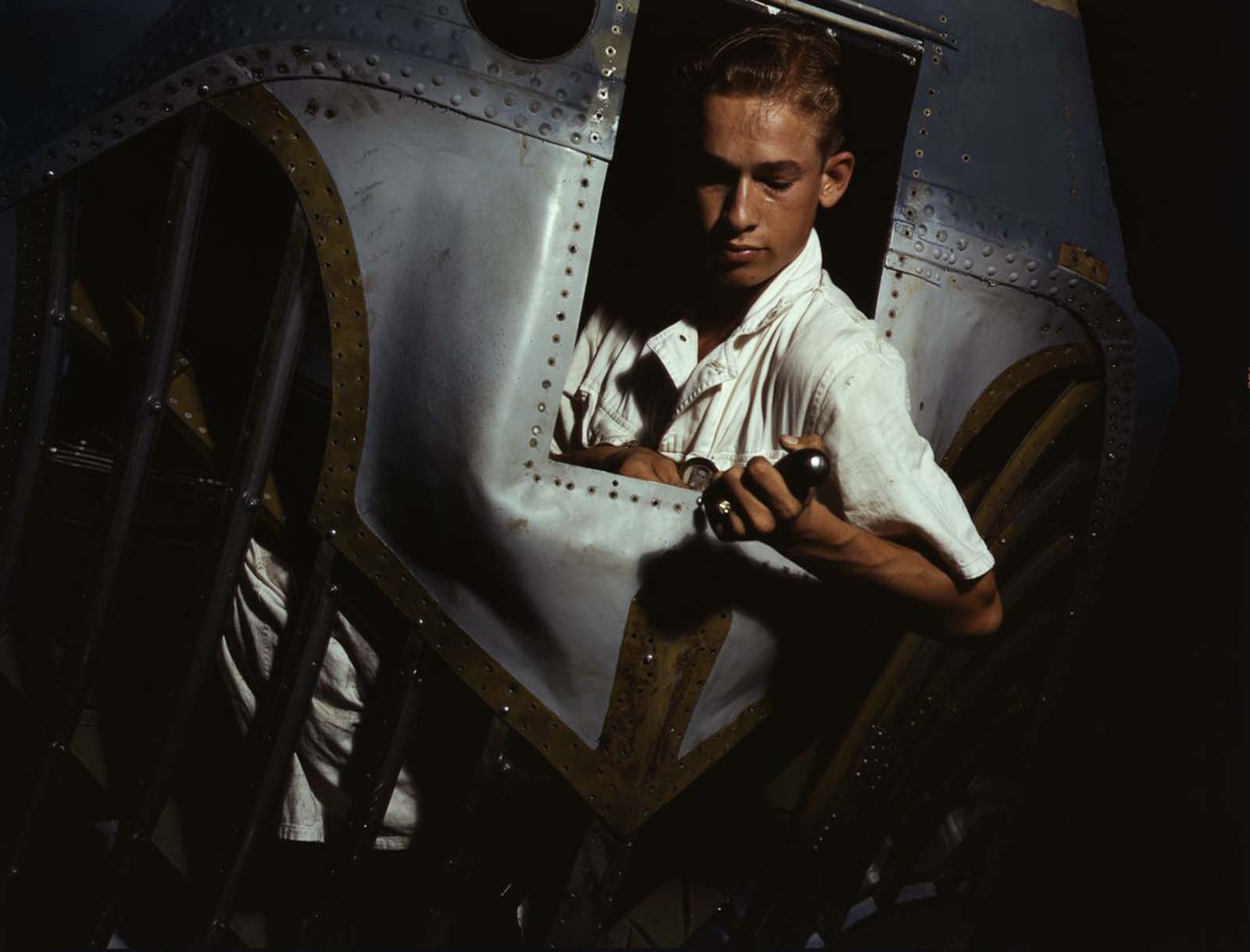
Working inside the nose of a PBY, Elmer J. Pace learns the construction of Navy planes.

As an NYA trainee at the Naval Air Base, he gets practical experience. After about eight weeks, he will go into civil service as a sheet metal worker.
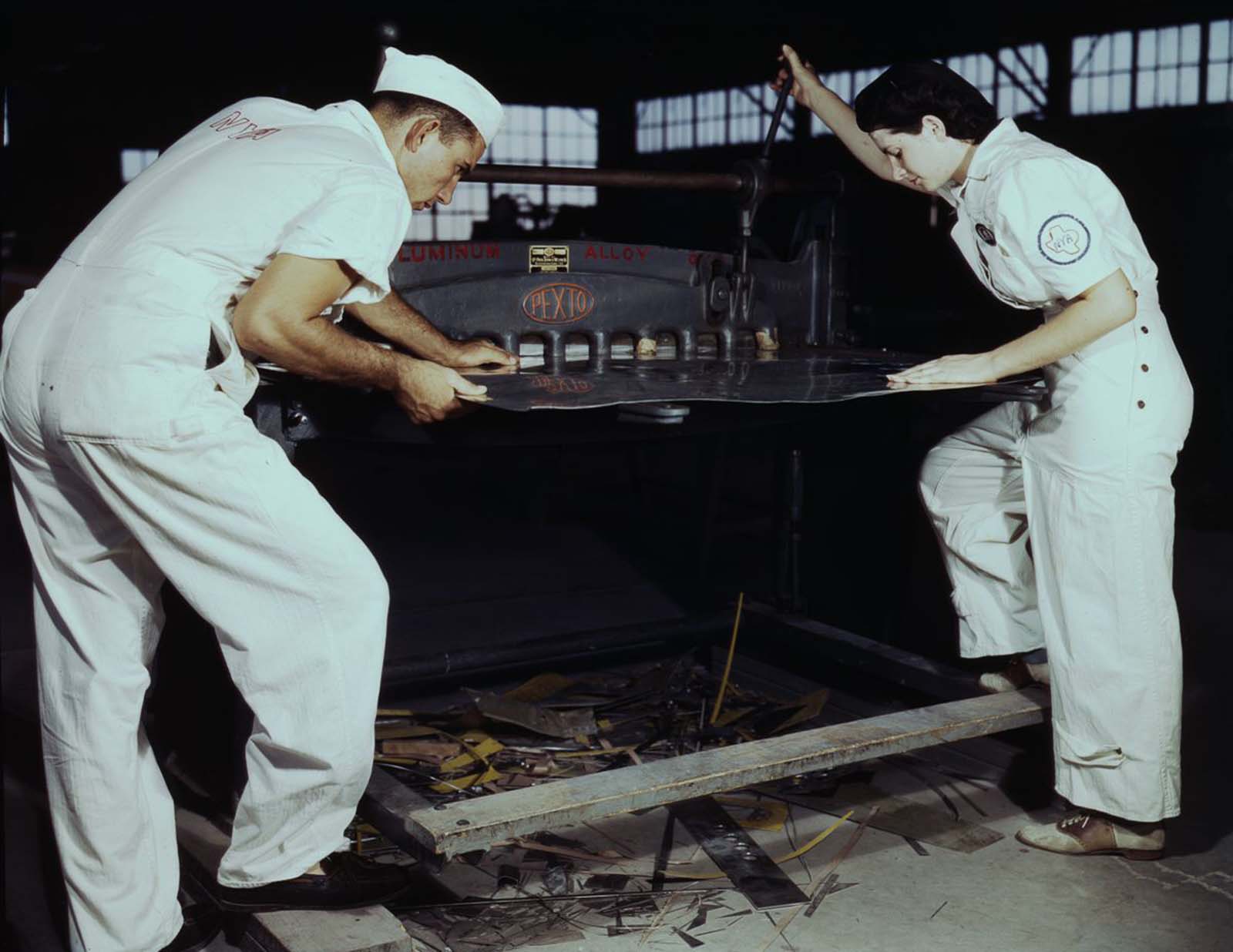
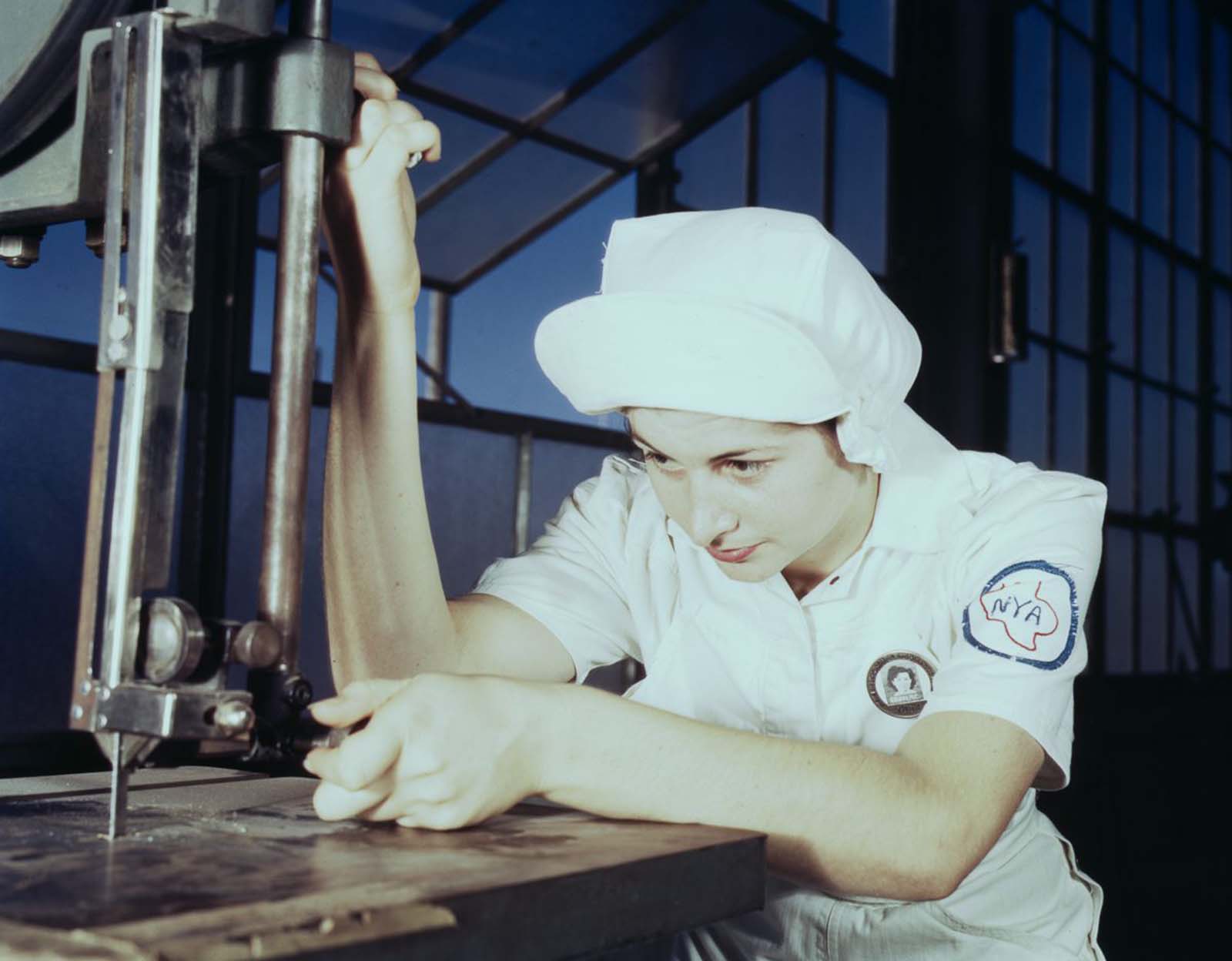
Learning to work a cutting machine, two NYA employees receive training to fit them for important work.

After eight weeks they will be eligible for civil service jobs at the Naval Air Base.

Women made up a significant part of the workforce at NAS Corpus Christi, taking on technical roles that were essential to keeping aircraft operational. They riveted, machined, painted, and repaired. Their work was not auxiliary — it was central to the base’s output.
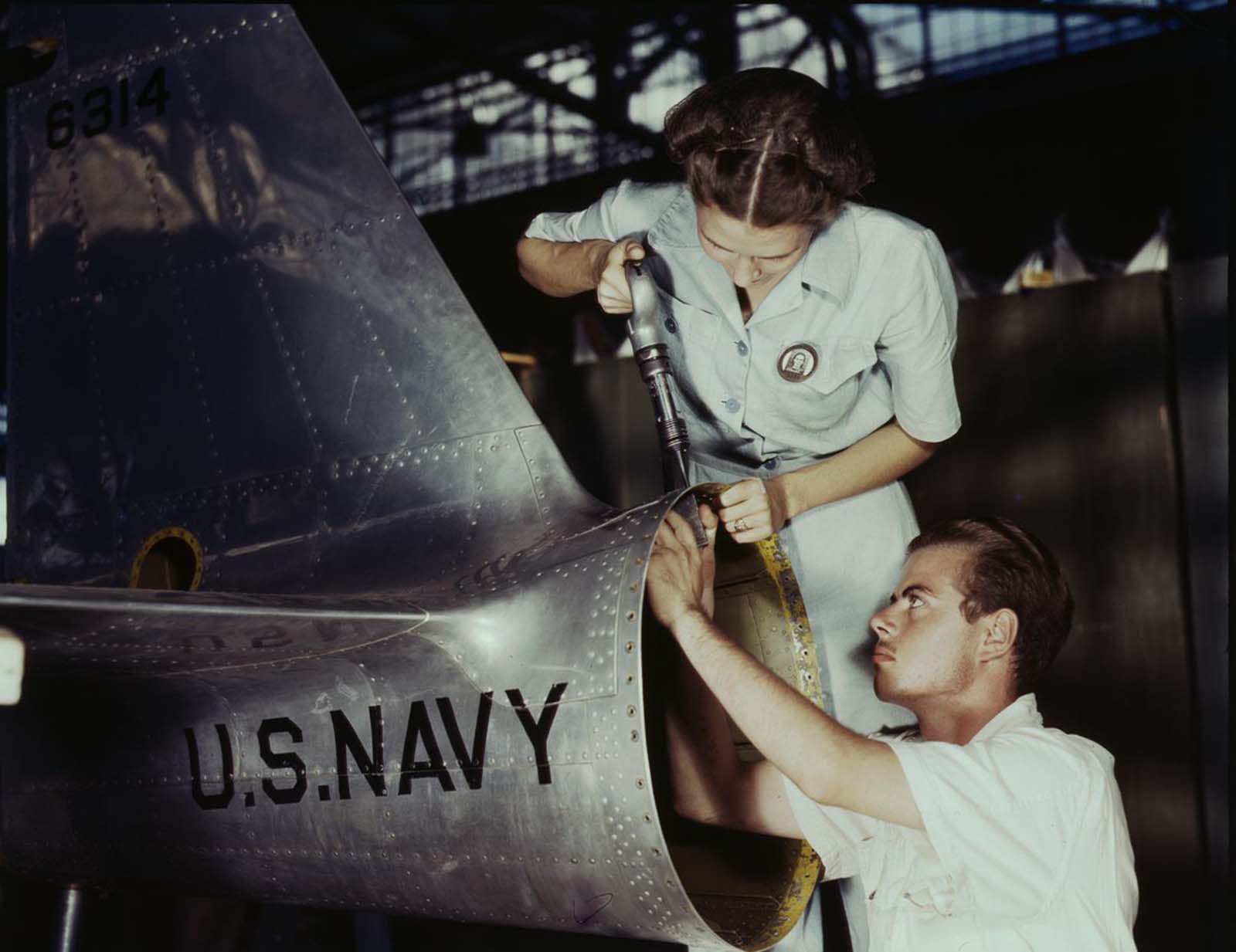
Virginia Davis, a riveter in the assembly and repair department of the Naval Air Base, supervises Charles Potter, an NYA trainee from Michigan.
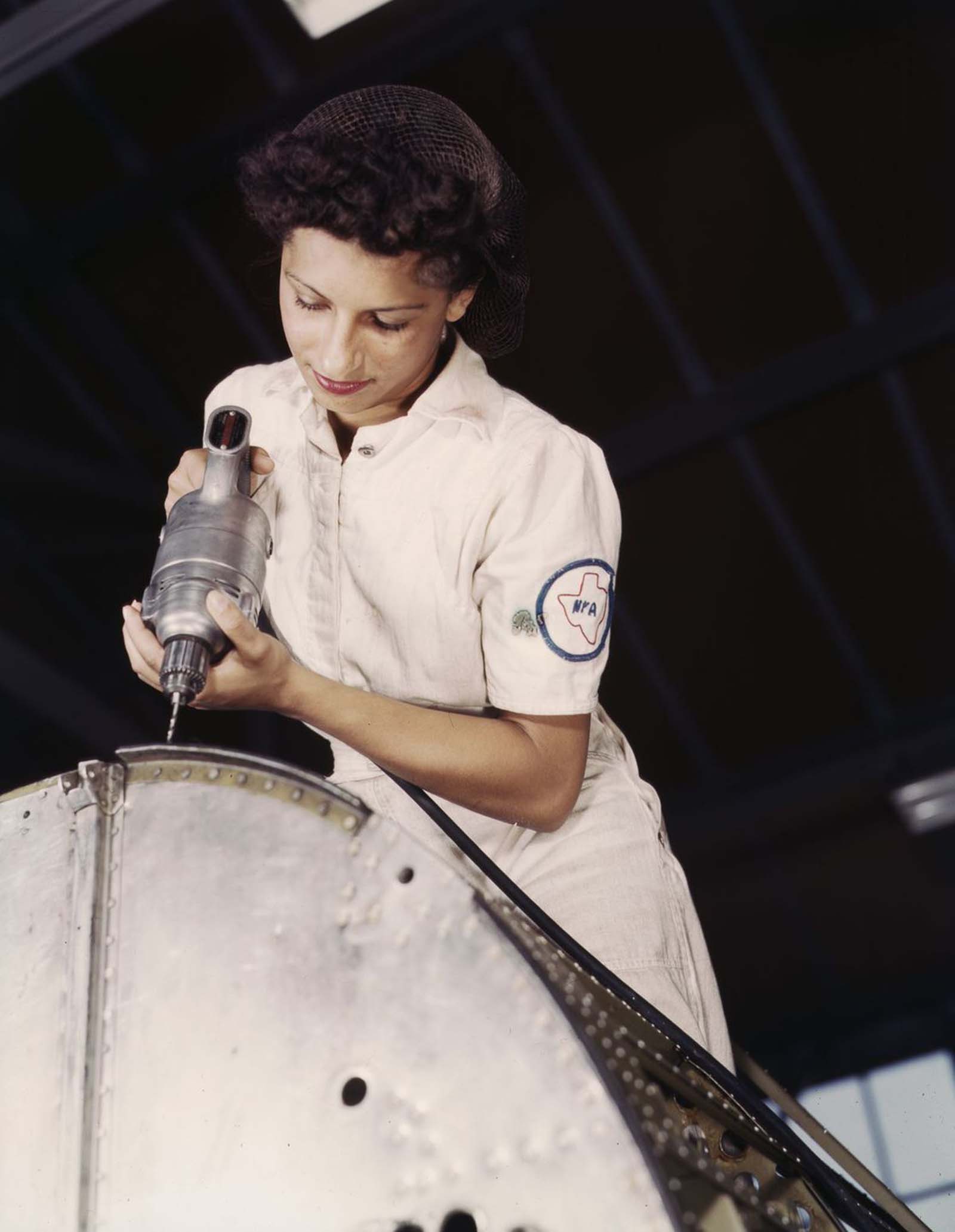
Oyida Peaks rivets as part of her NYA training to become a mechanic in the Assembly and Repair Department.
Mildred Webb, an NYA trainee at the base, learns to operate a cutting machine in the Assembly and Repair Department.
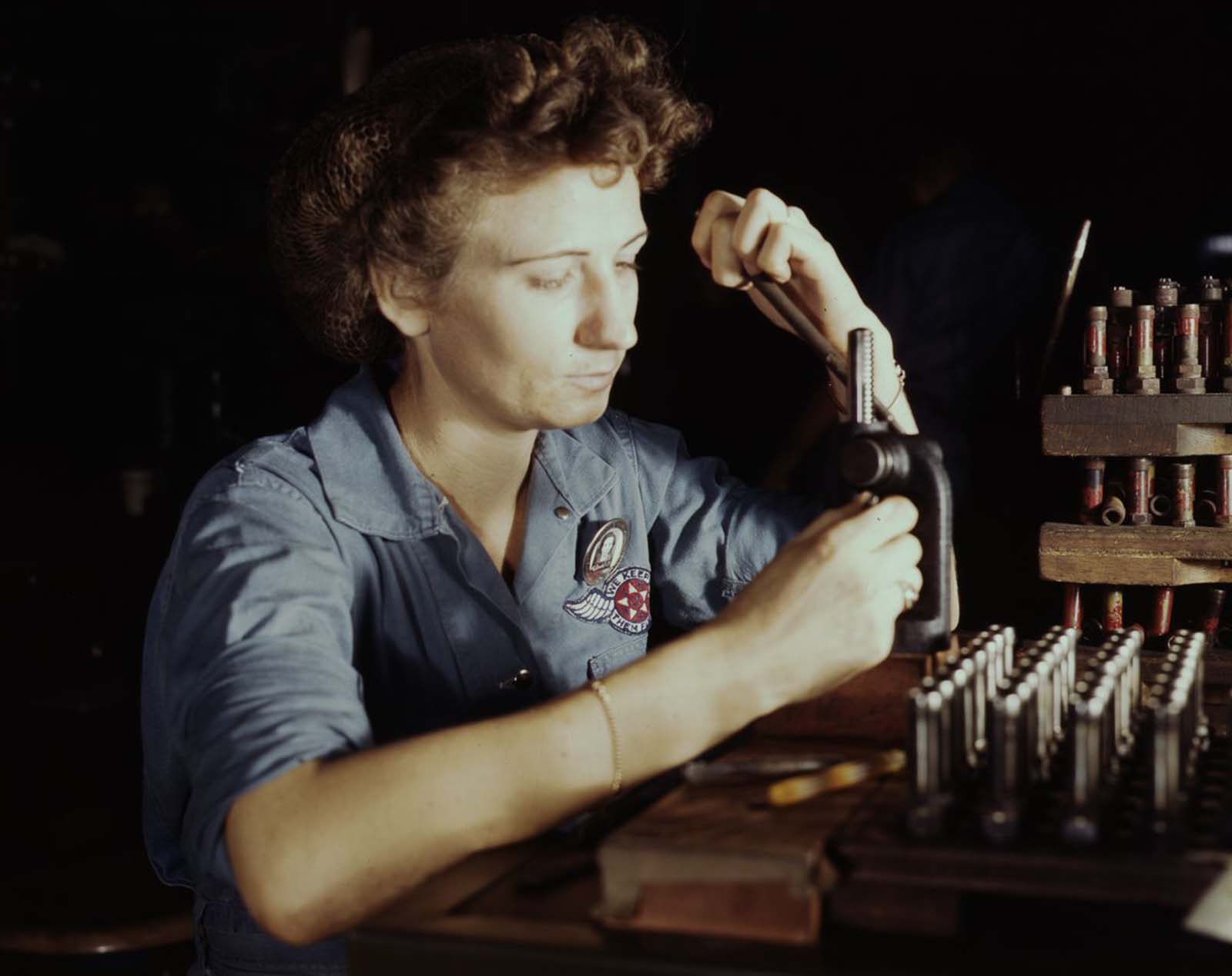
Doris Duke works on reconditioning spark plugs in the Assembly and Repair Department.
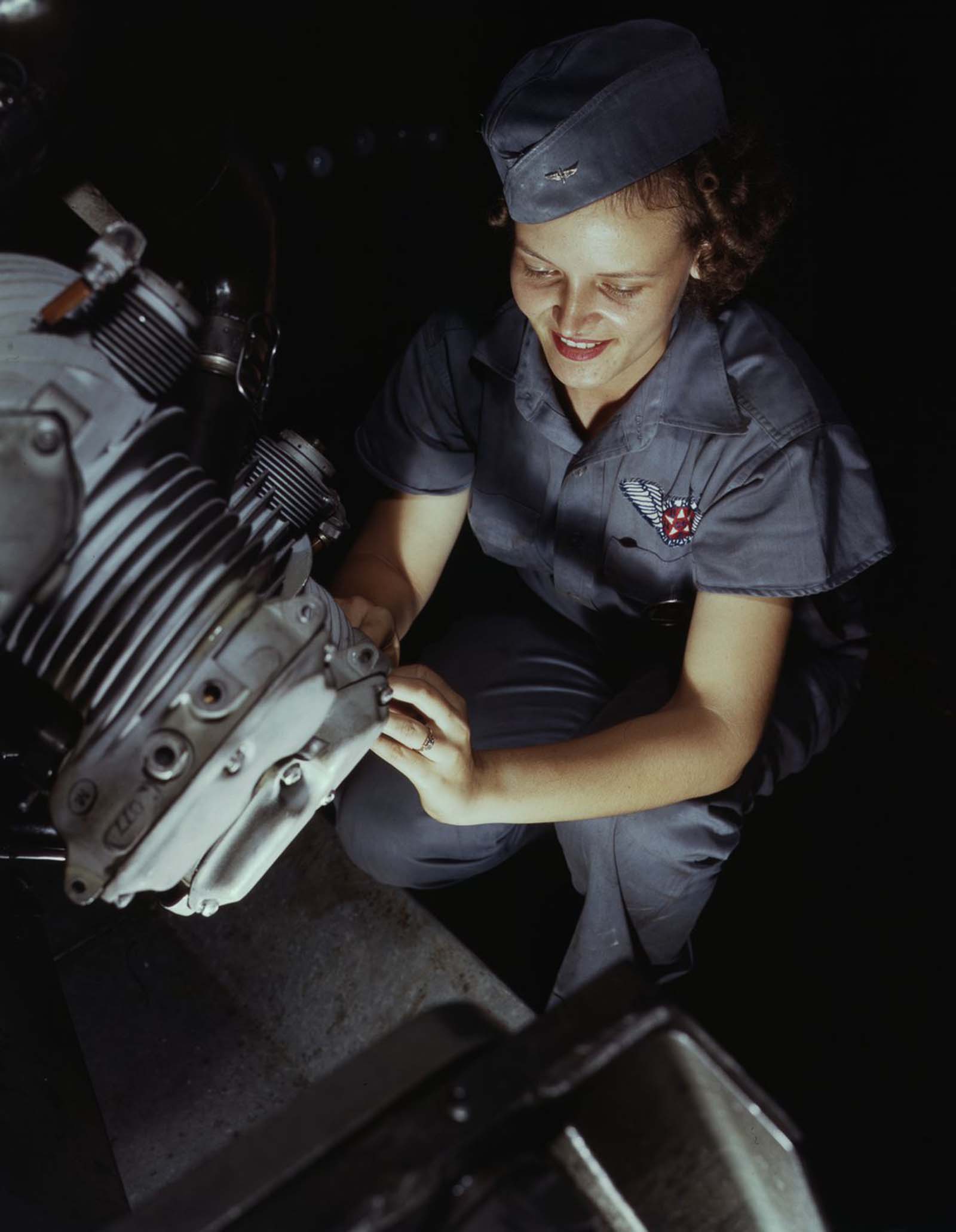
Assembly and Repairs Dept. mechanic Mary Josephine Farley works on a Wright Whirlwind motor.
Cowler Lorena Craig works on the tail of a plane.
Irma Lee McElroy, a former office worker, paints an insignia on an airplane wing.

Supervision and morale management were also roles filled by women at the base. Virginia Young, widowed by the Pearl Harbor attack, served as a supervisor in the Assembly and Repairs Department. Her job extended beyond technical oversight — she helped find housing for women workers who had relocated from out of state. Eloise J. Ellis, a senior supervisor in the same department, handled similar responsibilities, assisting out-of-state employees with living arrangements and personal problems to keep the workforce stable and functioning.
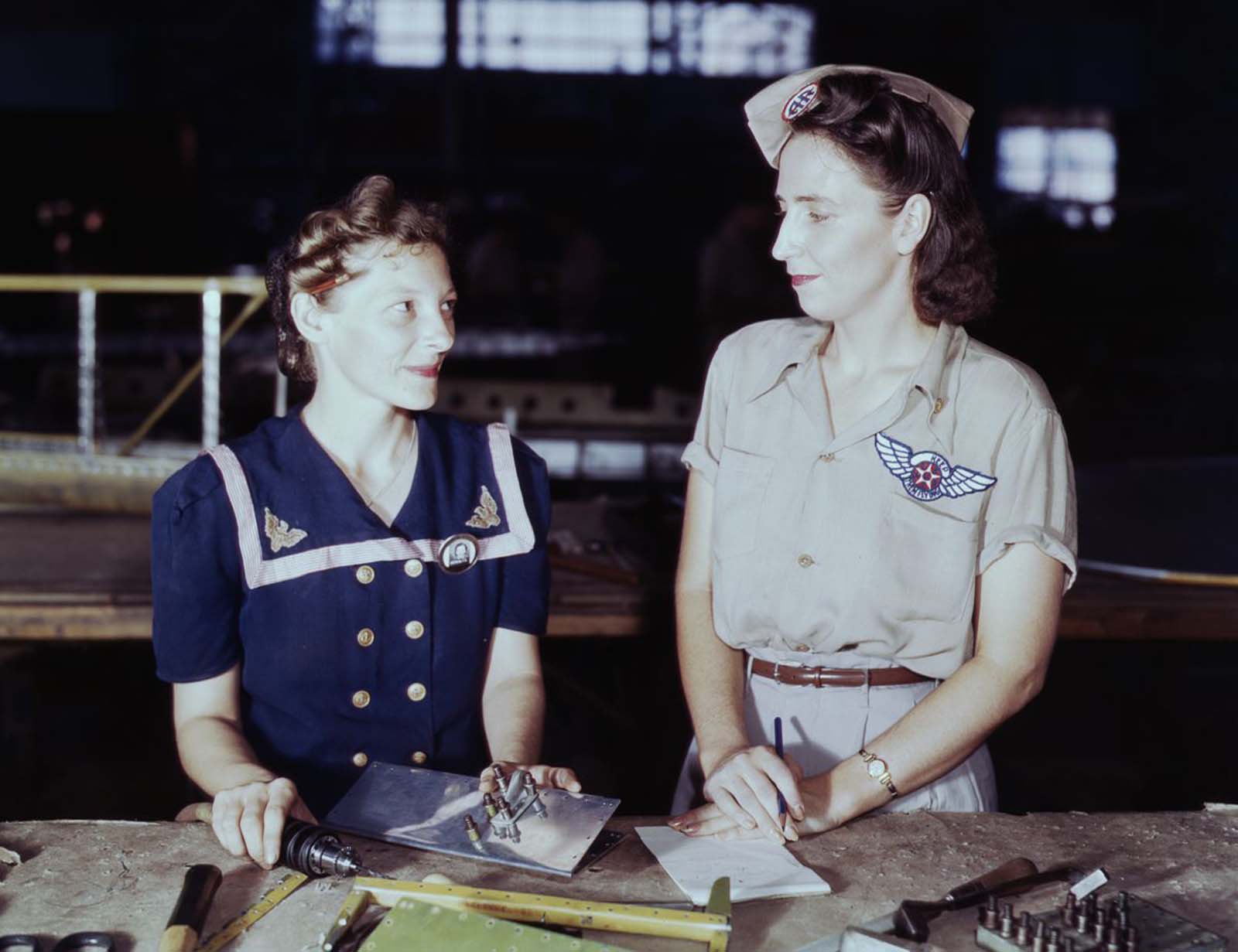
Virginia Young, right, a Pearl Harbor widow, is a supervisor in the Assembly and Repairs Department of the Naval Air Base.

Her job is to find convenient and comfortable living quarters for women workers from out of the state, like Ethel Mann, who operates an electric drill.
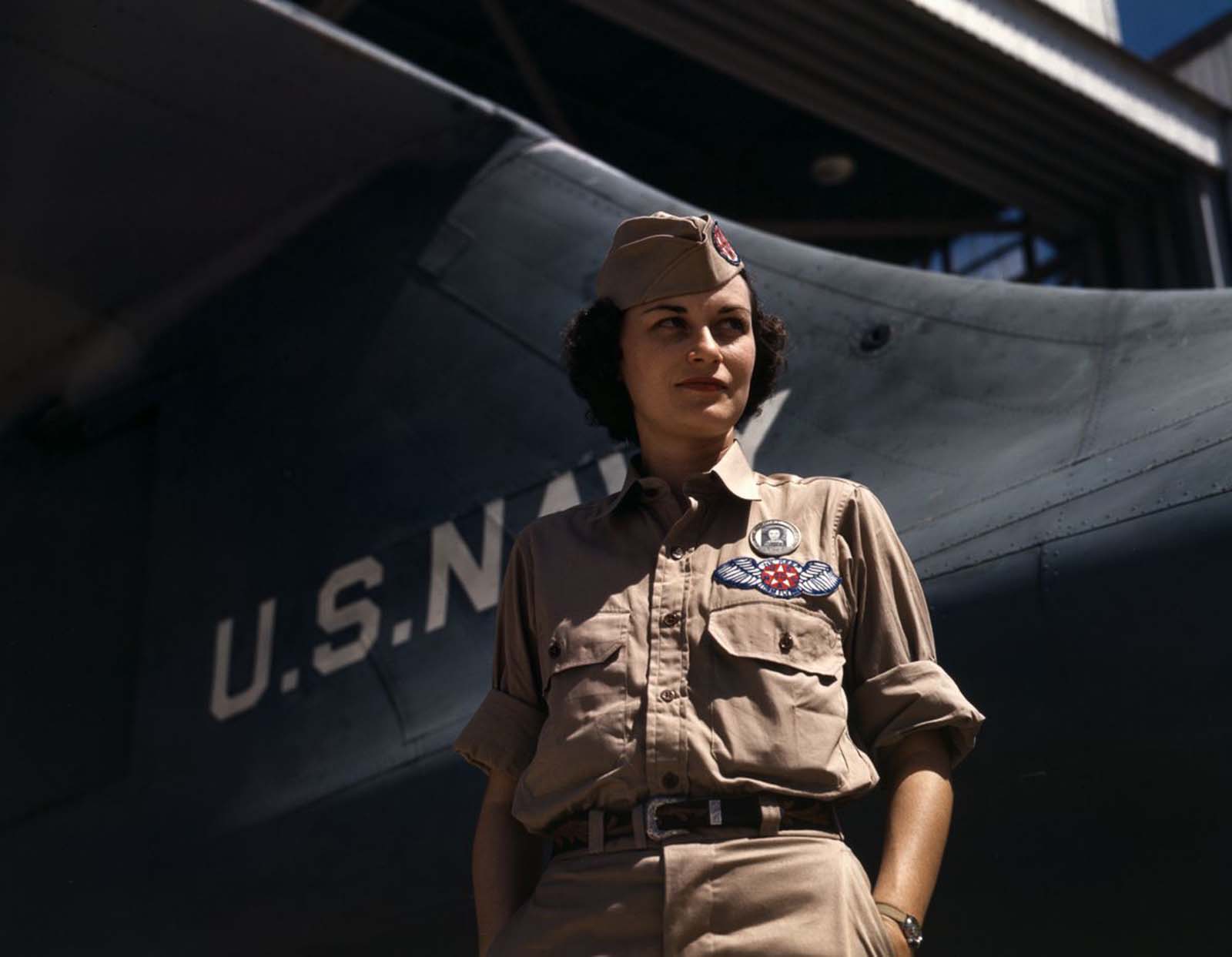
Eloise J. Ellis is a senior supervisor in the Assembly and Repairs Department.

She buoys morale in her department by arranging suitable living conditions for out-of-state employees and by helping them with their personal problems.
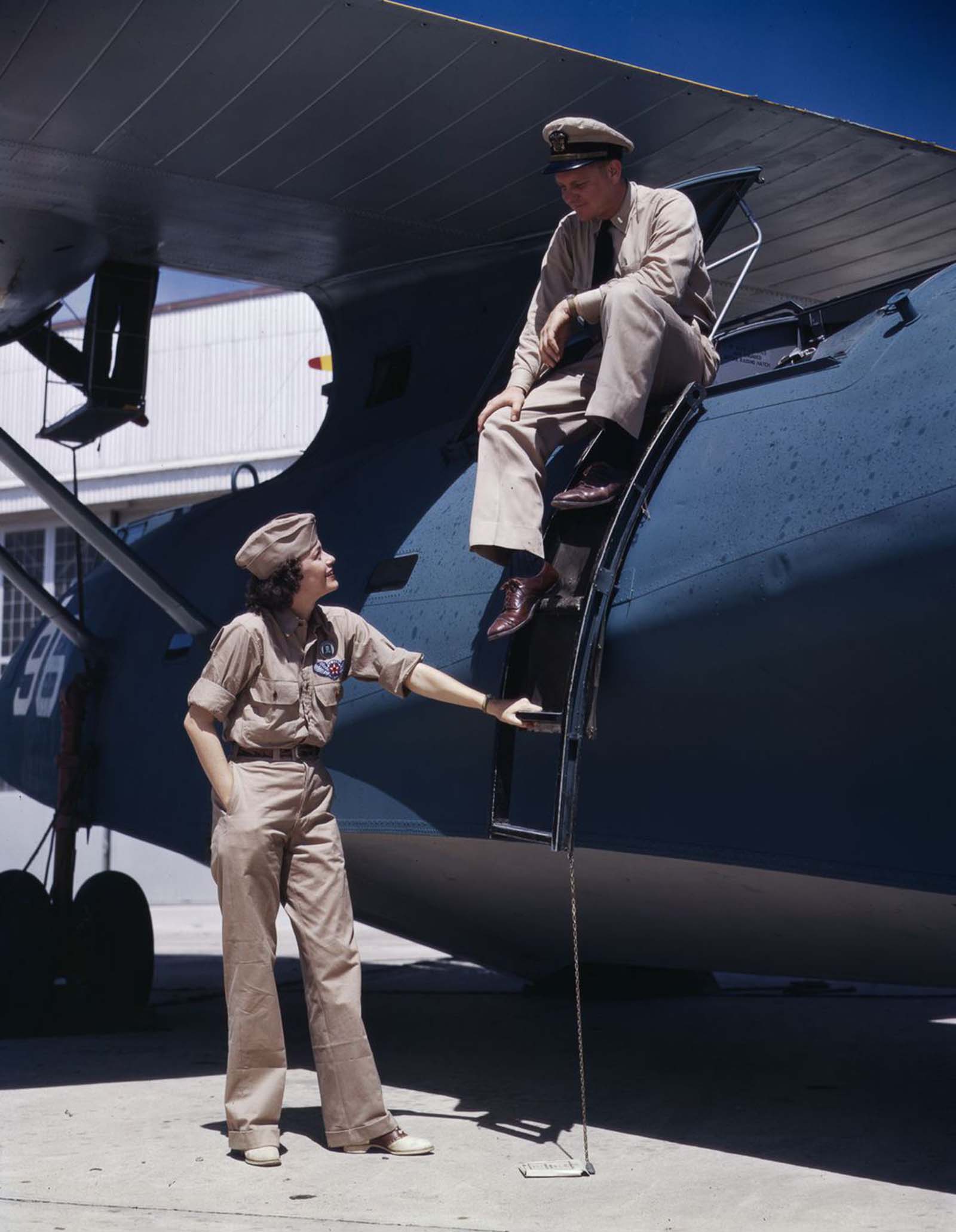
Eloise J. Ellis, senior supervisor in the Assembly and Repairs Dept., speaks with a colleague.

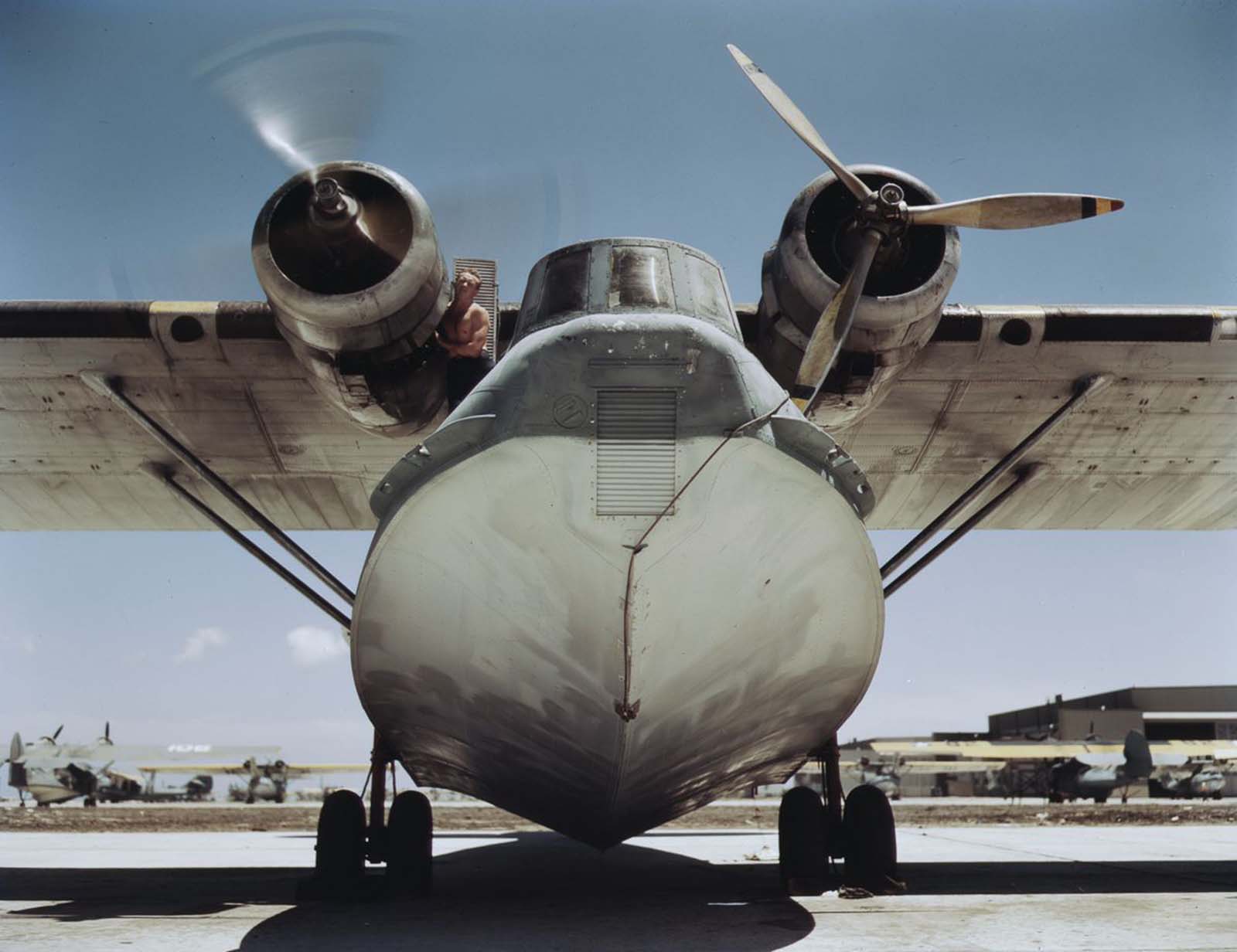
The aircraft that cadets trained on ranged from primary trainers to more advanced patrol planes. The N2S biplane was used for basic flight training, while the SNC served as an advanced trainer. The PBY Catalina — a large flying boat used for patrol and rescue missions — was present in both the training and repair programs at the base.
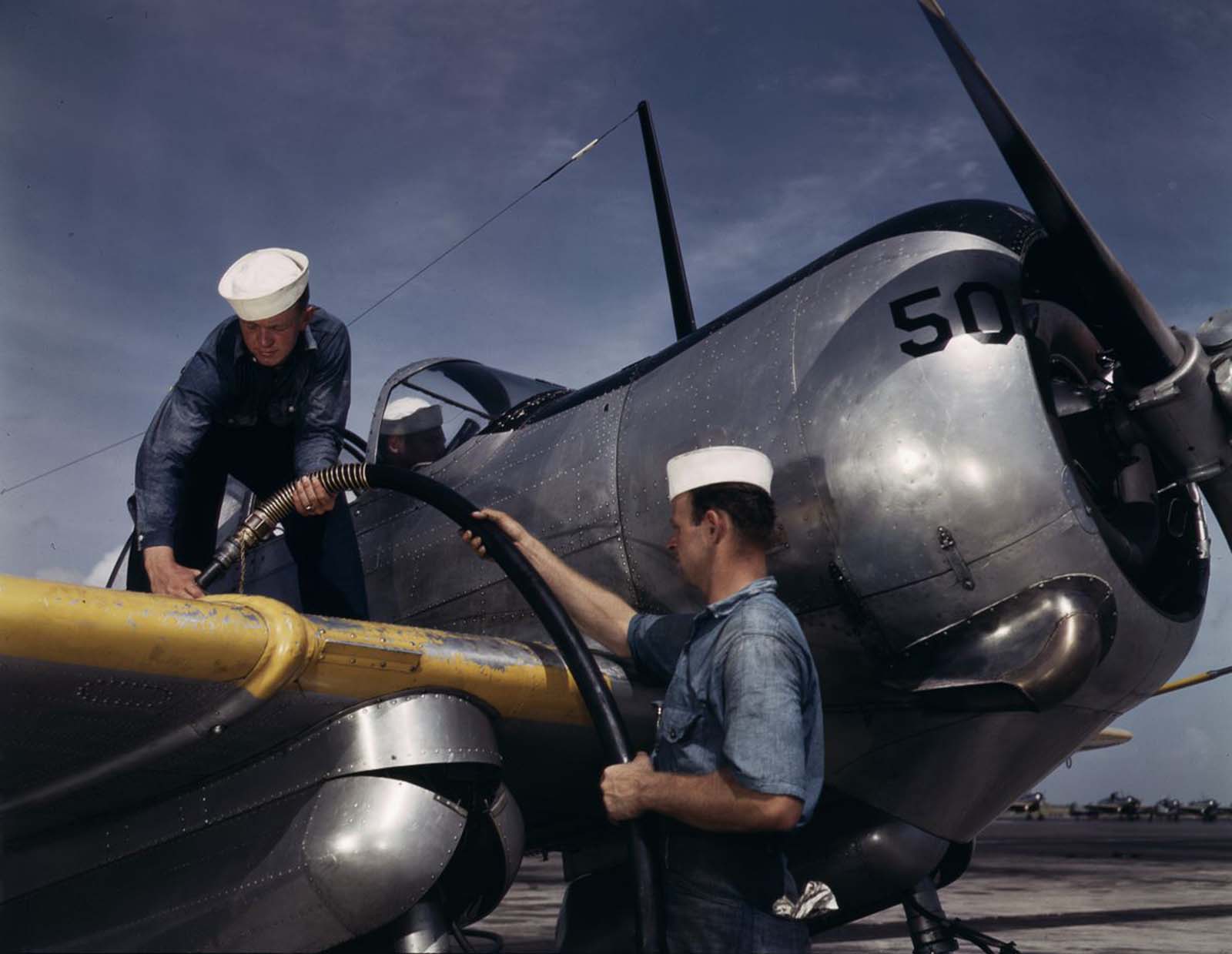
Sailor mechanics refuel an SNC advanced training plane.
A PBY flying boat undergoes engine testing.
Enjoyed this post? Get new ones in your inbox.

Leave a Comment

Your email address will not be published. Required fields are marked *

Share this Post 🥺

Please take a moment to share this content. Your support is greatly appreciated! 🙌🙏

Share this Post 🥺

Please take a moment to share this content. Your support is greatly appreciated! 🙌🙏
Scroll to Top
 
Hey Friend, Before You Go.. Please like & follow for more interesting content