

Brussels in the 1890s was a city still riding the wave of a transformation that had begun just decades earlier. In 1830, the Belgian Revolution erupted when citizens rose up against King William of the Netherlands to break free from Dutch rule. The spark came on the night of August 25, 1830, after a performance of Auber’s opera La Muette de Portici at the Royal Theatre of La Monnaie. The crowd poured out into the streets, and what followed became a full-scale revolt. Within months, Belgium declared independence, and in 1831, King Leopold I was crowned the country’s first king. Brussels became the capital and the seat of the new government.
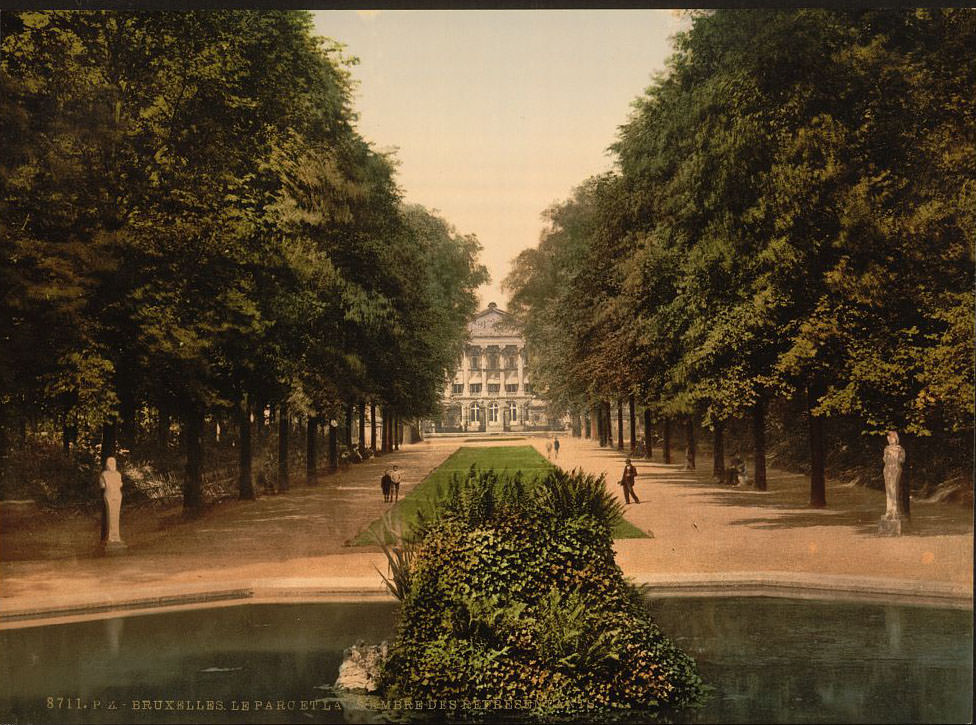
The decades that followed brought rapid growth. Brussels became Belgium’s industrial and financial engine. The Free University of Brussels was founded, drawing students and scholars from across Europe. The first passenger railway built outside of England connected the municipality of Molenbeek to the city of Mechelen, making Brussels a pioneer in European rail travel. As industry boomed and people flooded in from the countryside, the city’s population exploded — from around 80,000 at independence to more than 625,000 by the end of the century.
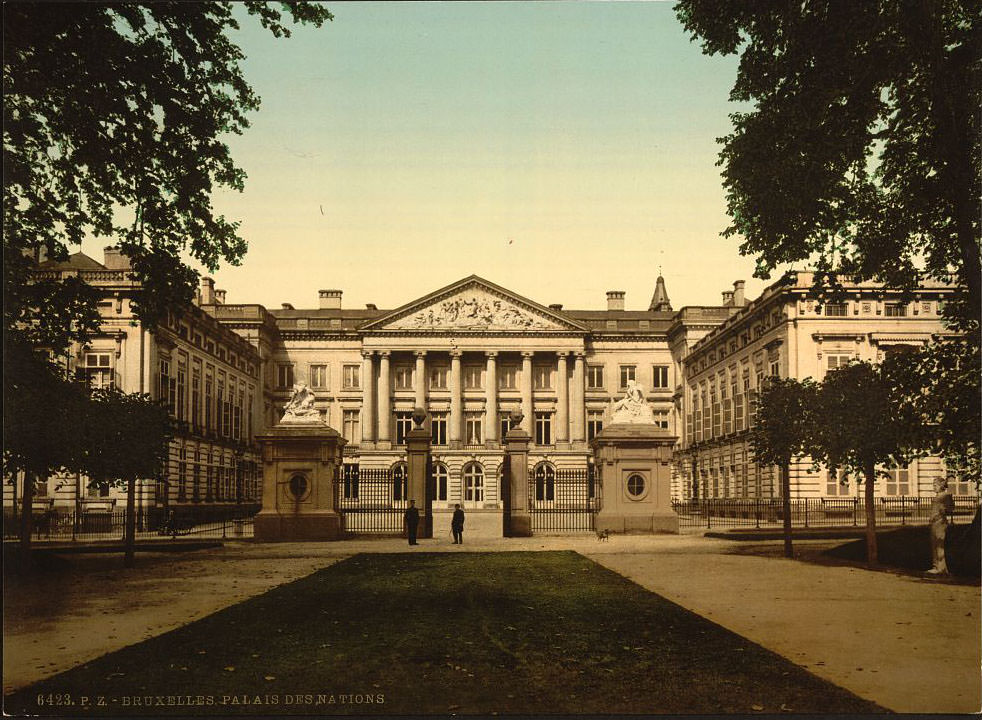
At the heart of Belgium’s government stood the Palace of the Nation, home to the country’s parliament. The Chamber of Representatives met here to debate the laws that shaped a rapidly modernizing nation. These institutions gave Brussels its identity as not just a capital city, but a functioning democratic center in a Europe where such things were far from guaranteed.
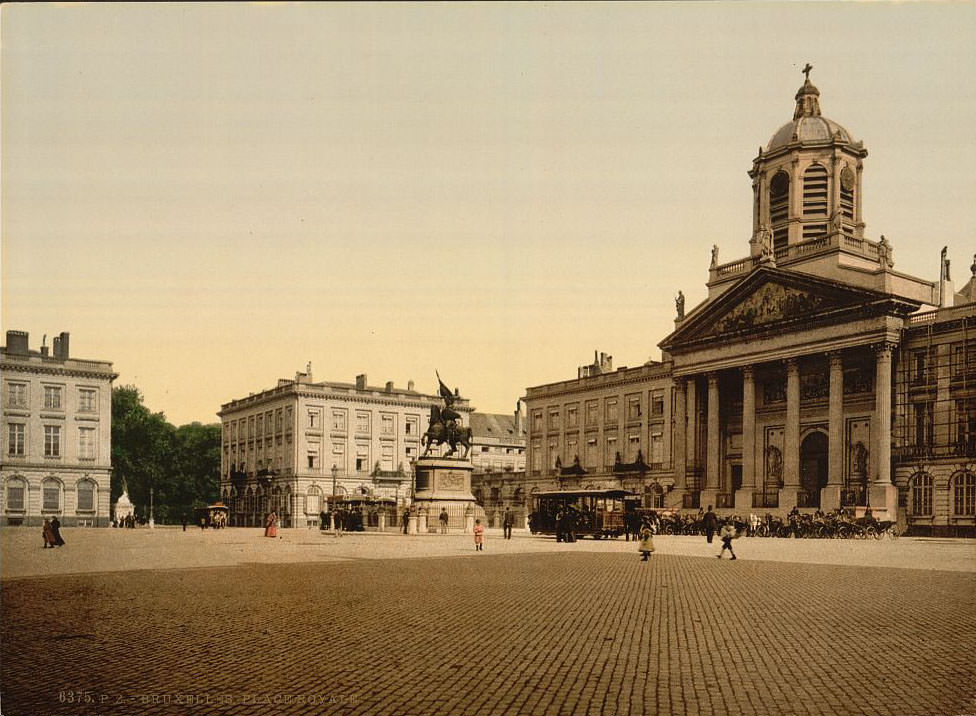
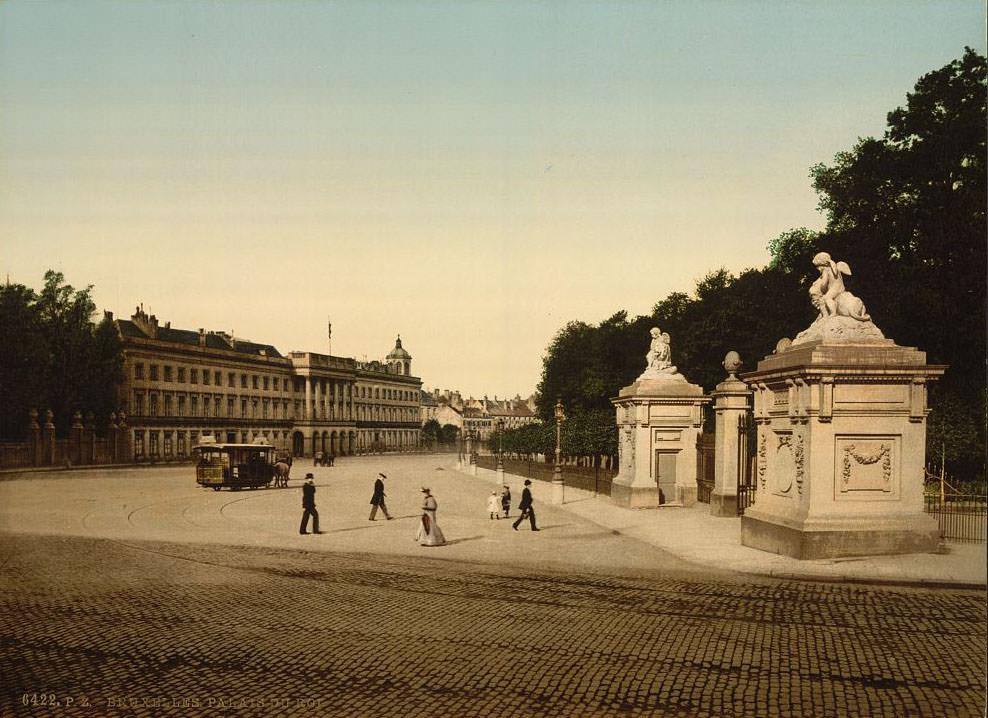
The Royal Palace dominated the upper town, serving as the official residence and working palace of the Belgian monarchy. Nearby, the Place Royale formed one of Brussels’ most elegant public squares, laid out in a neoclassical style with wide cobblestone expanses and symmetrical facades. This part of the city reflected the ambitions of a young nation eager to project power and culture on a European stage.
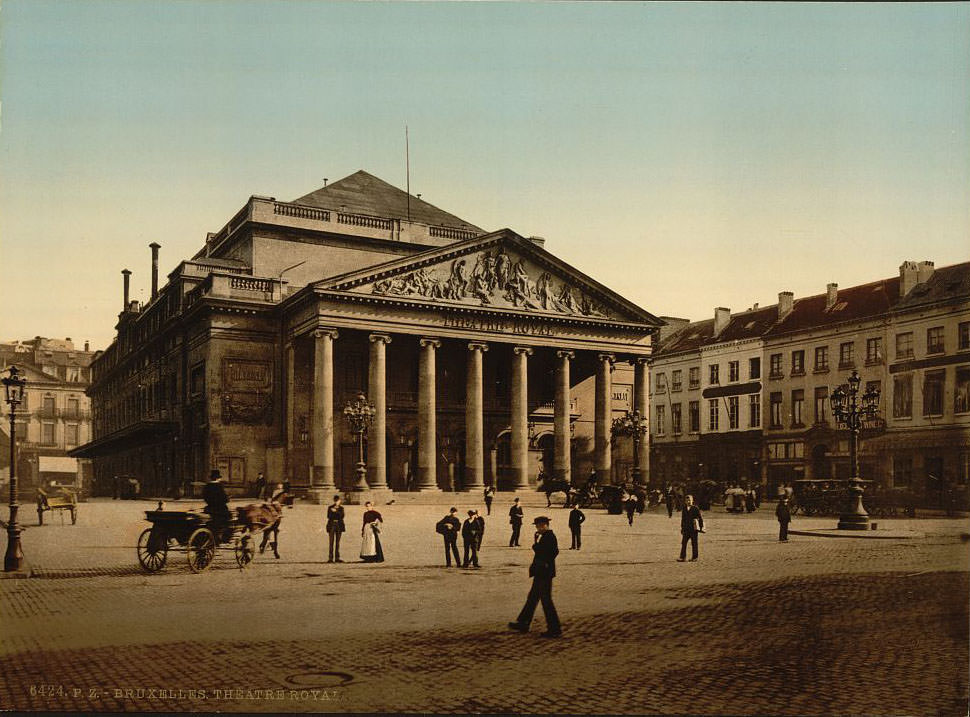
The Royal Theatre of La Monnaie was more than a cultural venue — it was the birthplace of Belgian independence. In the 1890s, it remained one of the most important opera houses in Europe, drawing audiences for performances that rivaled anything staged in Paris or Vienna. Its role in the revolution gave it a special place in the national memory, and Brusselers treated it with a reverence that went well beyond its artistic reputation.
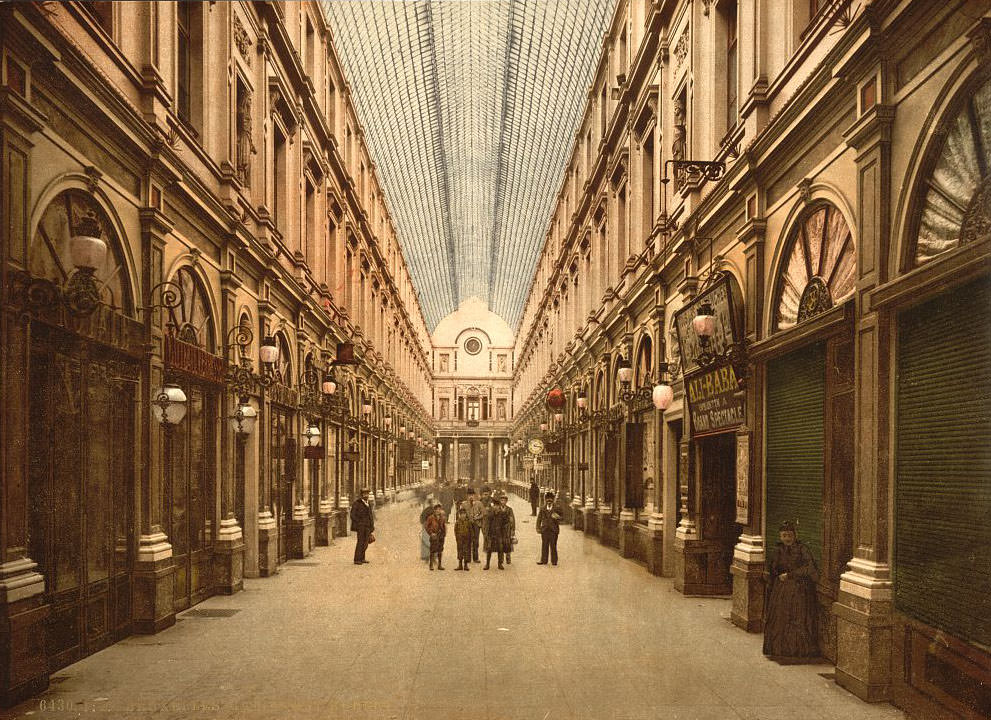
The Royal Gallery of Saint Hubert was one of the first covered shopping arcades in Europe, opened in 1847. By the 1890s, it had become a fixture of daily life in Brussels — a glass-roofed corridor lined with boutiques, cafés, and bookshops where residents of every class mingled. Its vaulted iron-and-glass ceiling let in natural light and offered shelter from Brussels’ famously wet weather.
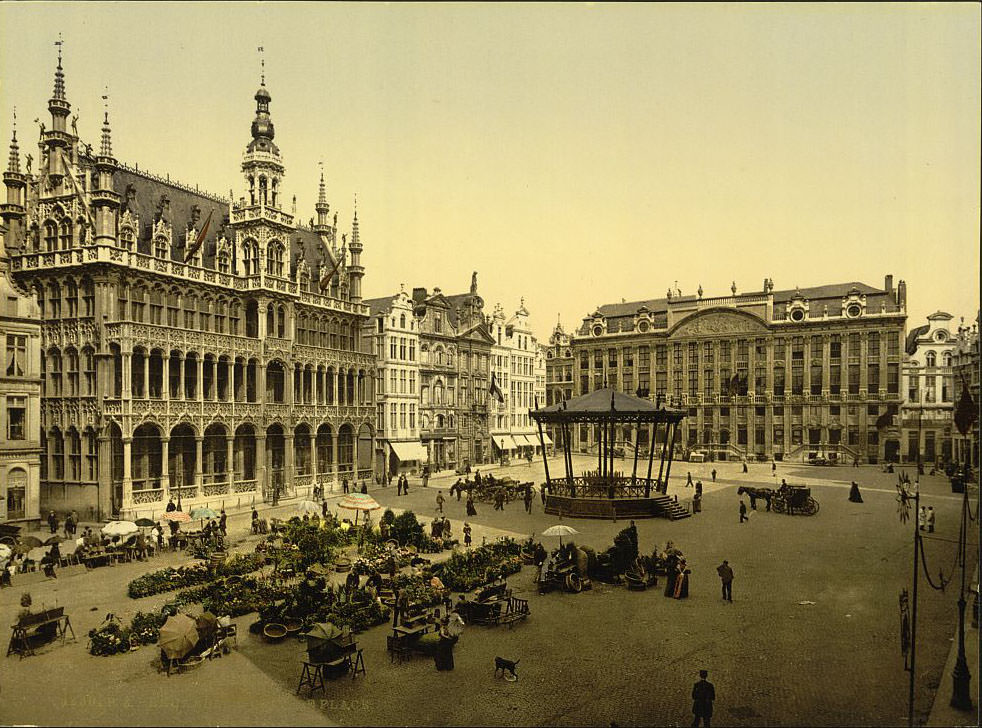
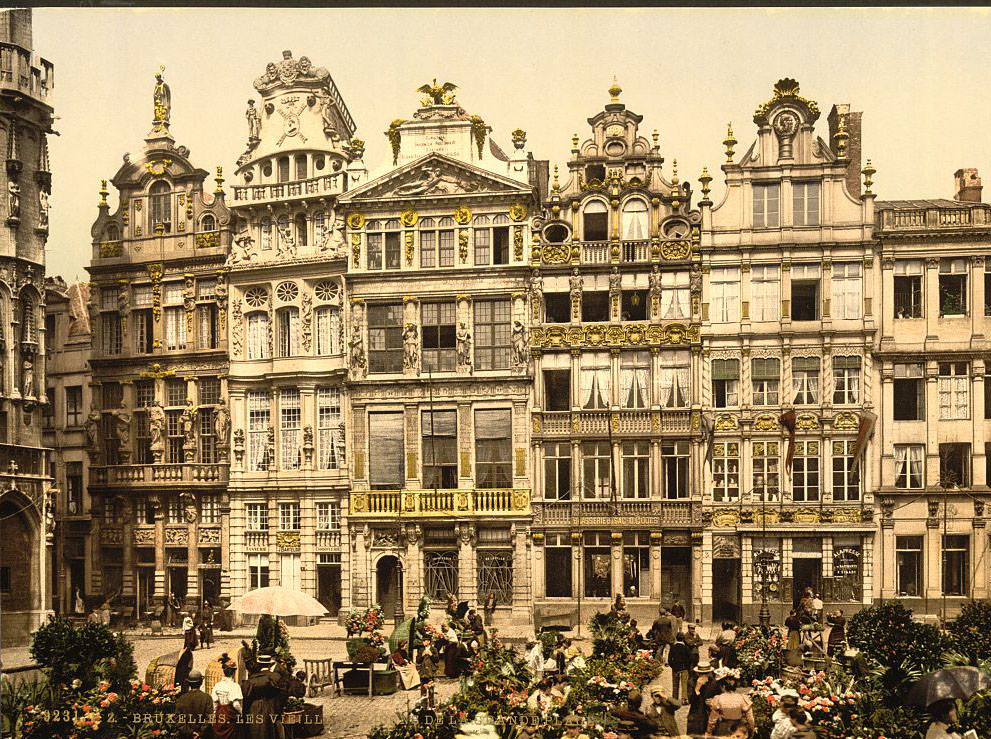
The Grand Place was — and remains — the beating heart of Brussels. Surrounded by ornate guild houses, the Gothic City Hall, and the King’s House, this medieval square had survived centuries of war and reconstruction. In the 1890s, it was a working public space: merchants set up stalls, flower sellers arranged their wares, and the elaborate Baroque facades of the guild houses loomed over everything. The sheer density of architectural detail in this one square made it unlike any other public space in Europe.
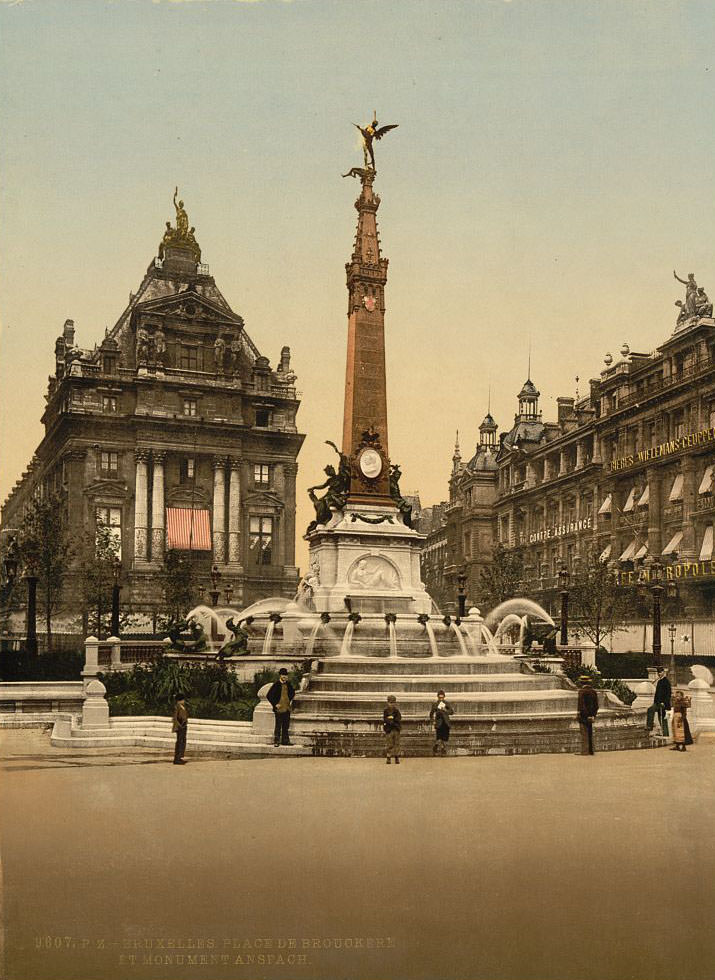
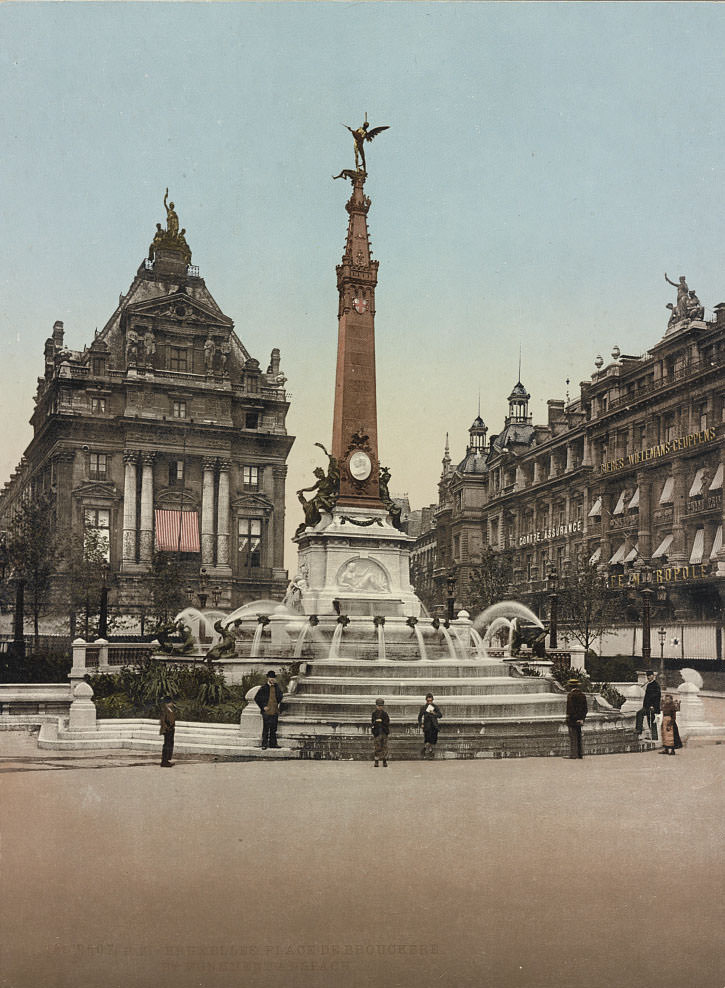
Place de Brouckère was one of Brussels’ busiest commercial squares by the 1890s, anchored by the Fontaine Anspach — a large decorative fountain named after Jules Anspach, the mayor who had overseen the dramatic transformation of Brussels in the 1860s and 1870s. Anspach had pushed through a massive urban renewal project that covered the Senne River and carved wide new boulevards through the old city, reshaping Brussels in the image of Haussmann’s Paris.
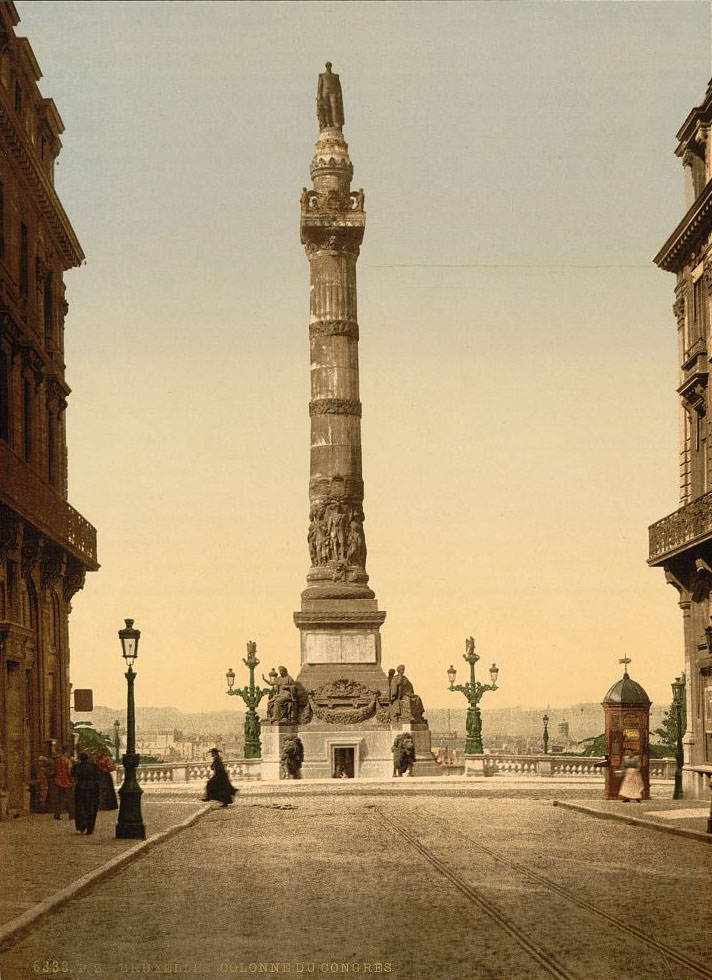
The Congress Column was erected in 1859 to commemorate the Belgian National Congress that had drafted the country’s constitution in 1831. Standing more than 25 meters tall and topped with a statue of King Leopold I, it overlooked a broad esplanade in the upper town. At its base, an eternal flame burned in honor of soldiers who had died in the two World Wars — though in the 1890s, that flame had not yet been lit, as those conflicts still lay in the future.
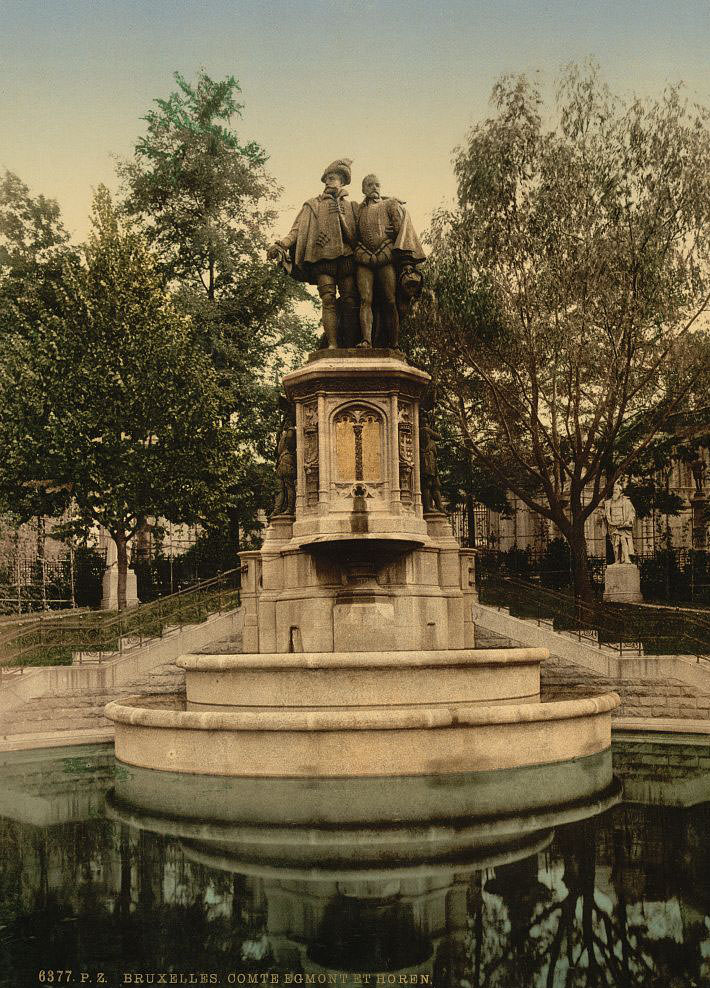
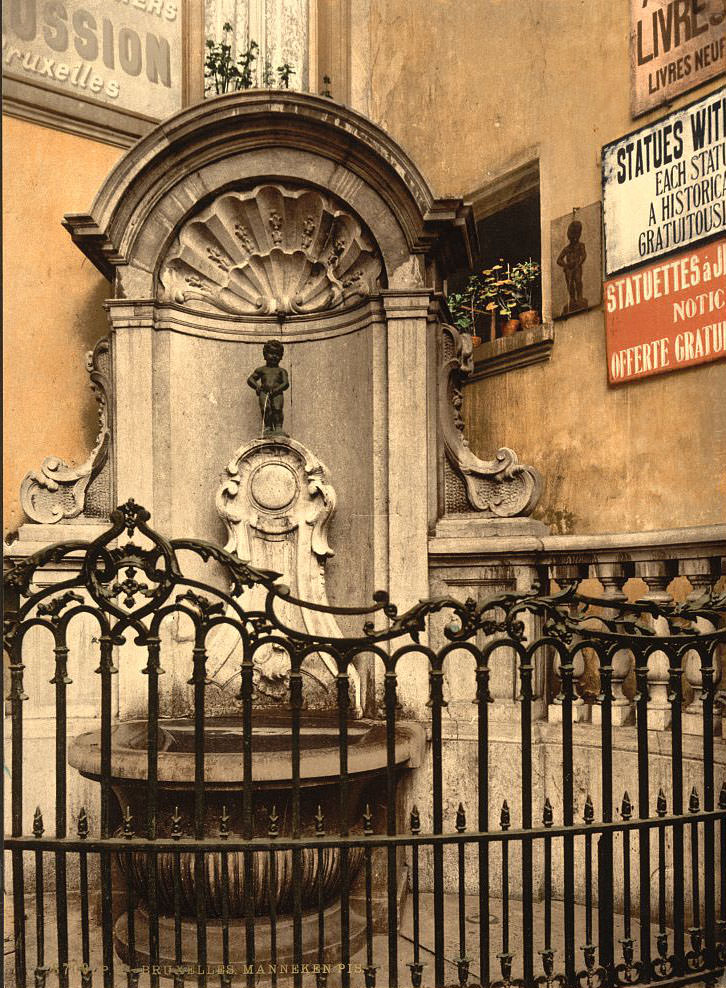
Few statues in the world are as famous — or as small — as the Manneken Pis. This bronze figure of a urinating boy, standing just 61 centimeters tall, had been a symbol of Brussels since 1619. By the 1890s, the tradition of dressing the statue in miniature costumes was already well established, and the city maintained an entire wardrobe for it. Nearby, the statue of Counts Egmont and Hoorn in the Petit Sablon garden honored two Flemish noblemen executed in the Grand Place in 1568 on the orders of the Duke of Alba during Spanish rule.
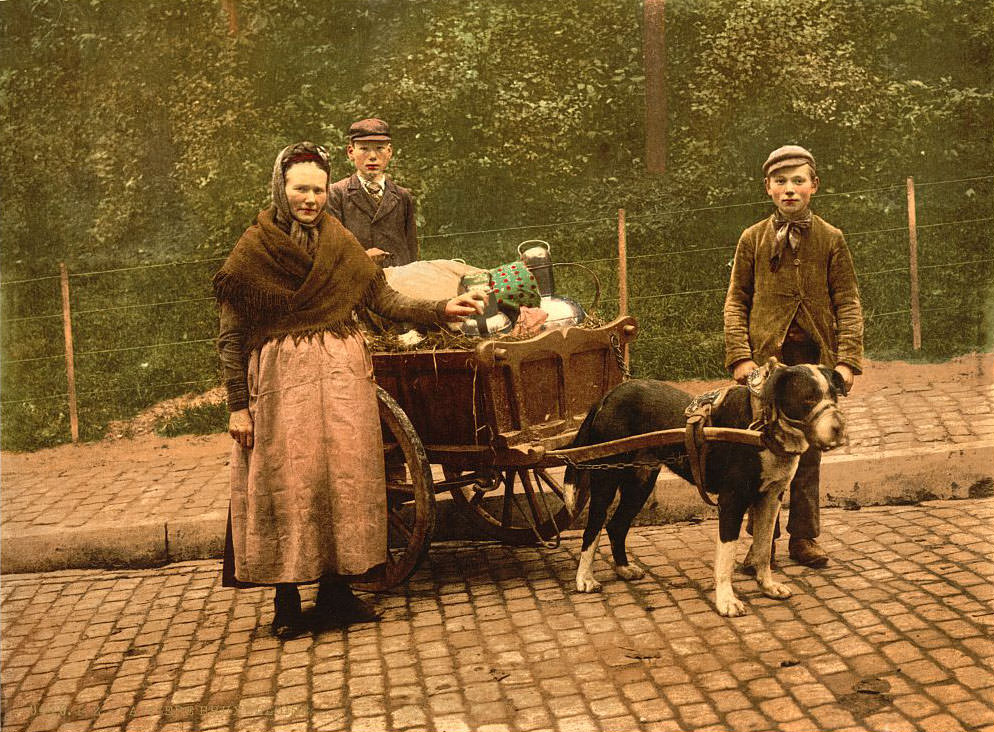
Beyond the grand architecture, these photographs capture something rarer: ordinary working life. Milk sellers were a common sight on Brussels’ streets in the 1890s. They delivered fresh milk door to door each morning, often using small carts or carrying cans by hand. Refrigeration was not yet widely available, so daily delivery was essential. These women — the trade was largely female in Belgium — were a fixture of neighborhood life, known personally by their regular customers.
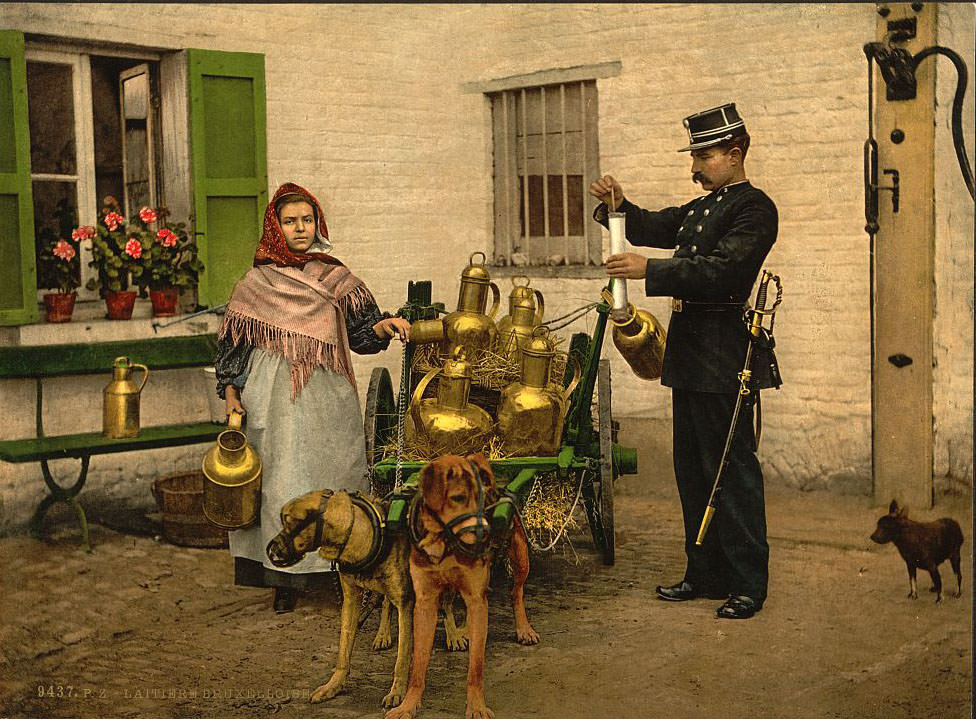
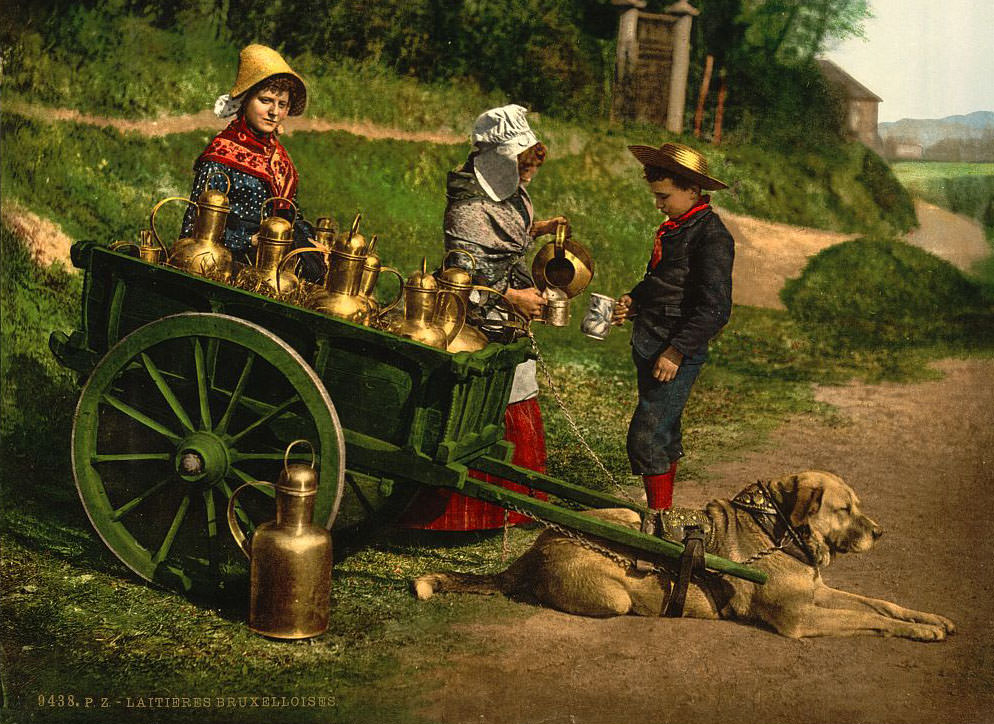
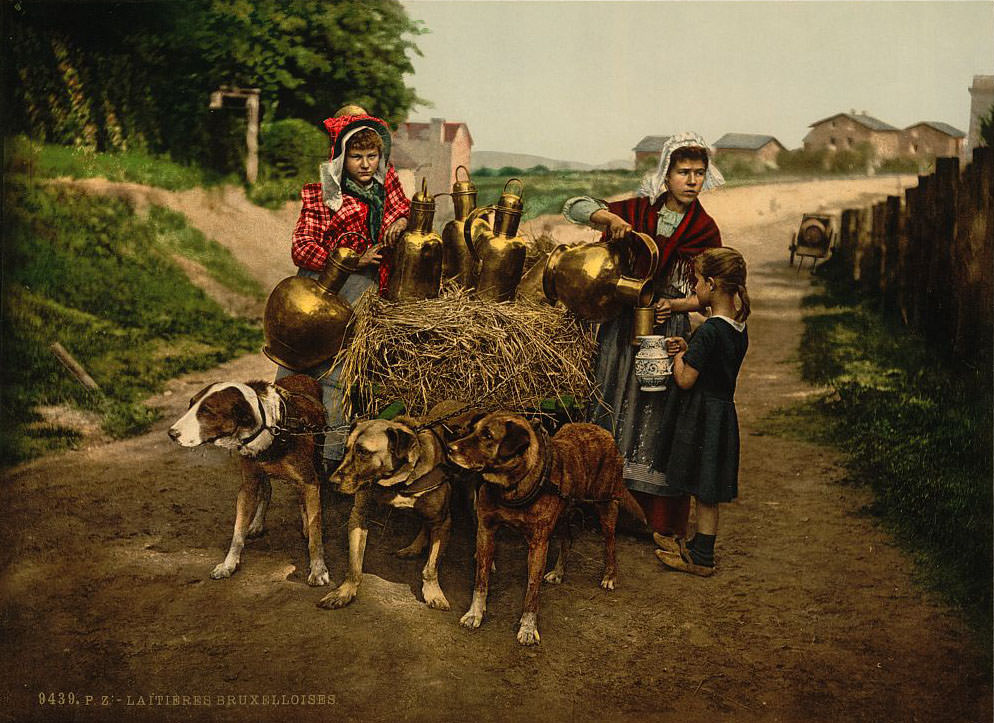
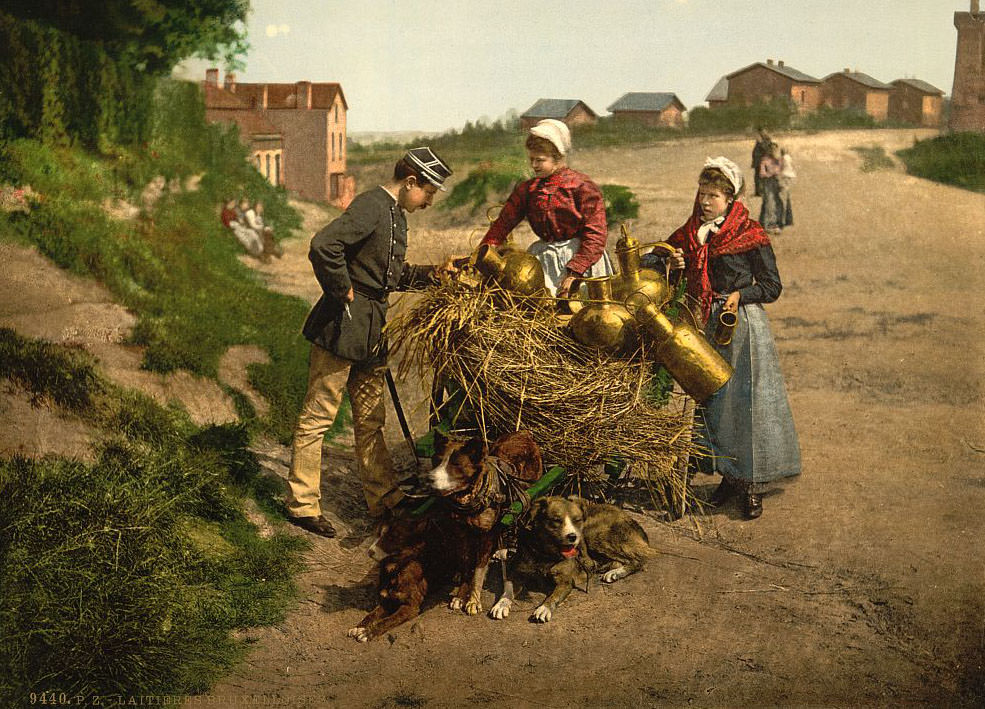
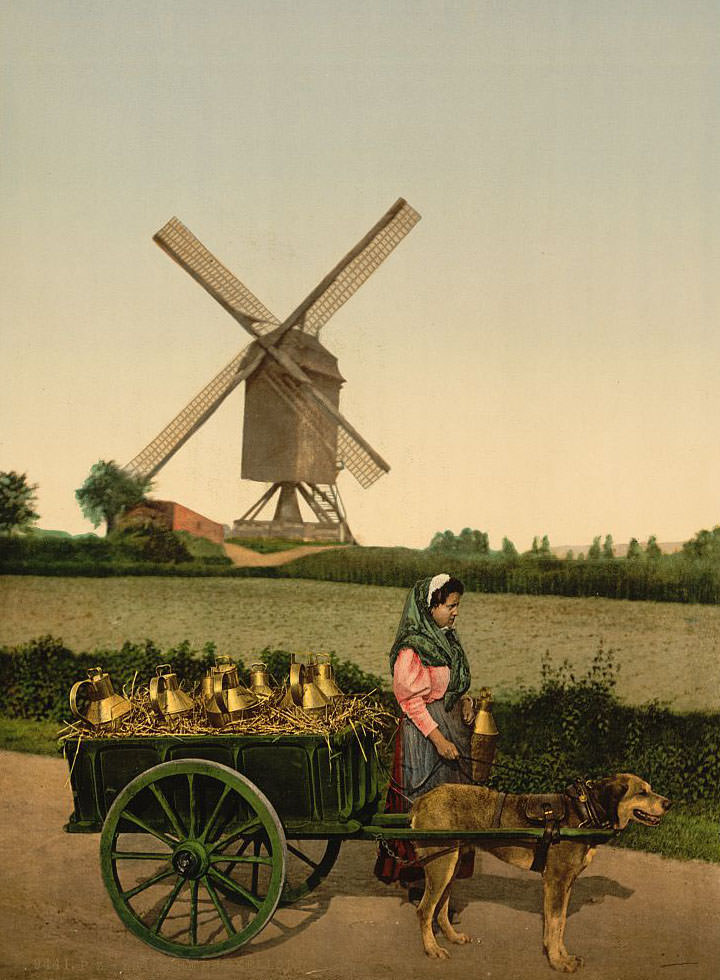
The laitières — French for dairy women — of Brussels were so much a part of daily life that they became a popular photographic subject. Their distinctive dress, heavy cans, and morning routines made them one of the most recognizable figures in the city. Several of these photographs show them posed in front of city landmarks, suggesting the photographers were deliberately documenting working-class life alongside the grand monuments.
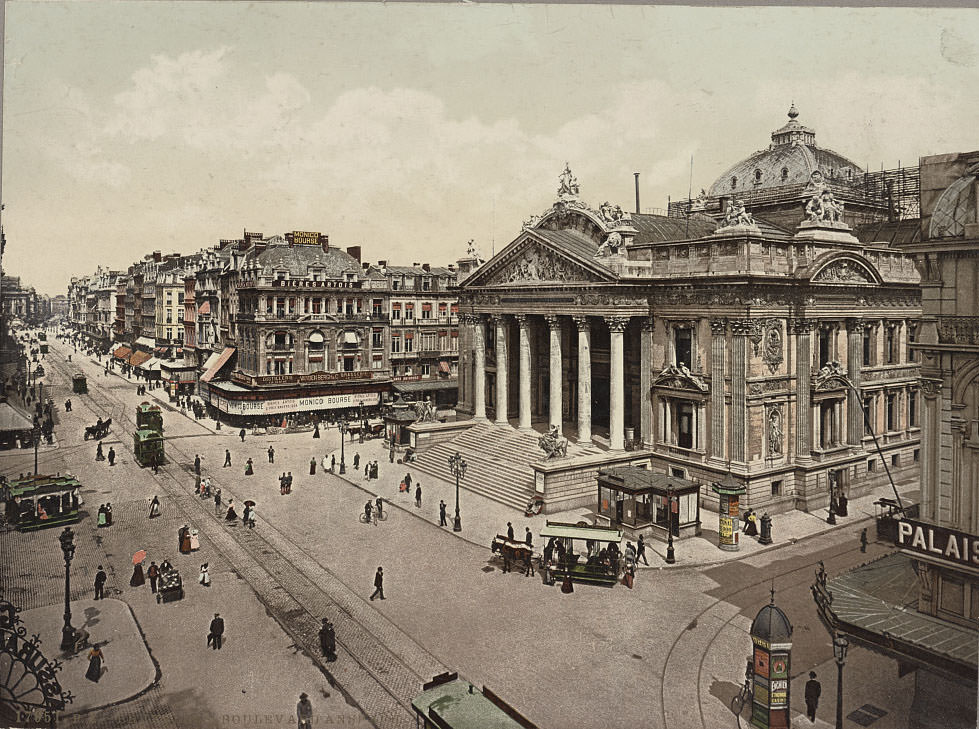
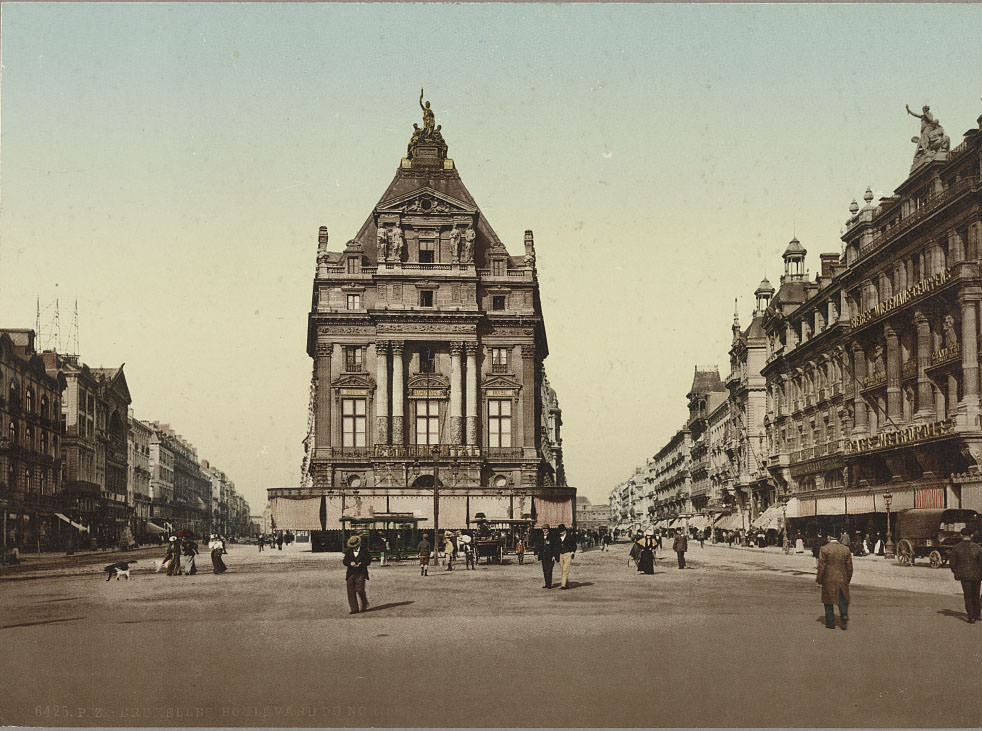
Boulevard Anspach was one of the great results of the mid-19th century urban renewal. Stretching through the lower town, it was lined with grand buildings, busy tram lines, and bustling commercial activity. By the 1890s, it was one of the most important arteries in the city — connecting the upper and lower towns and serving as a showcase for Brussels’ modern ambitions.
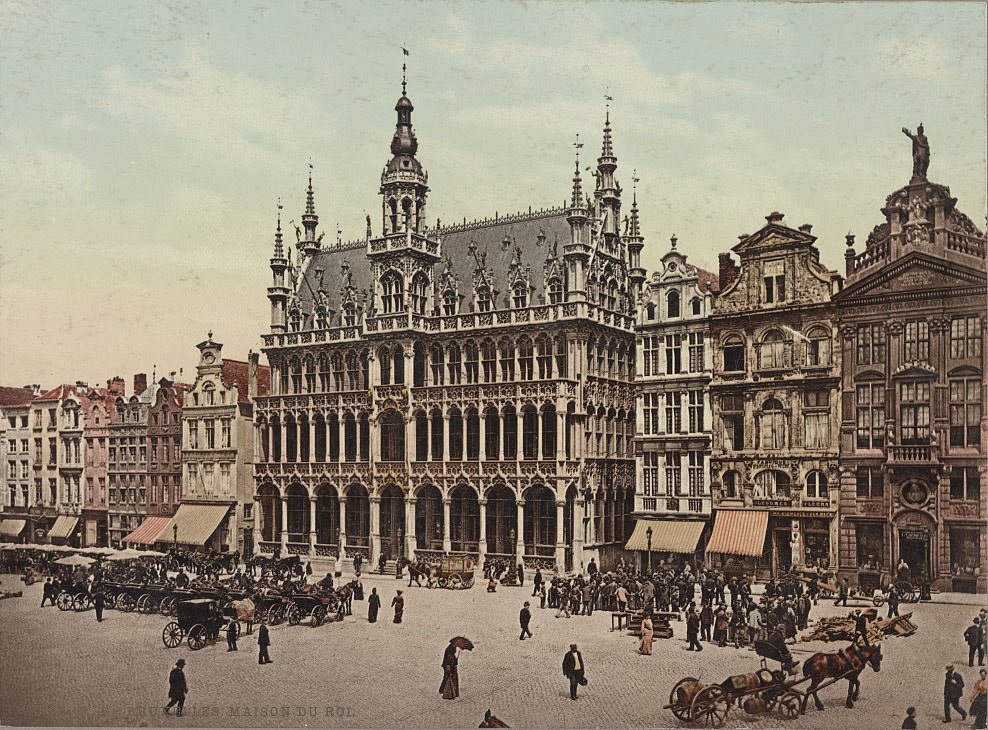
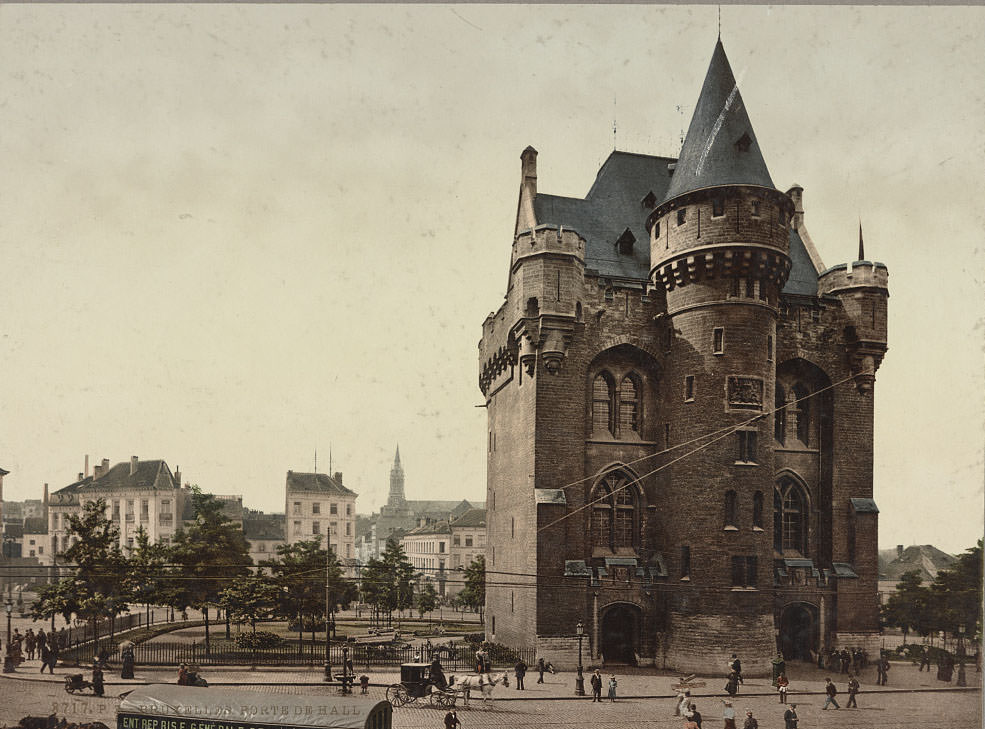
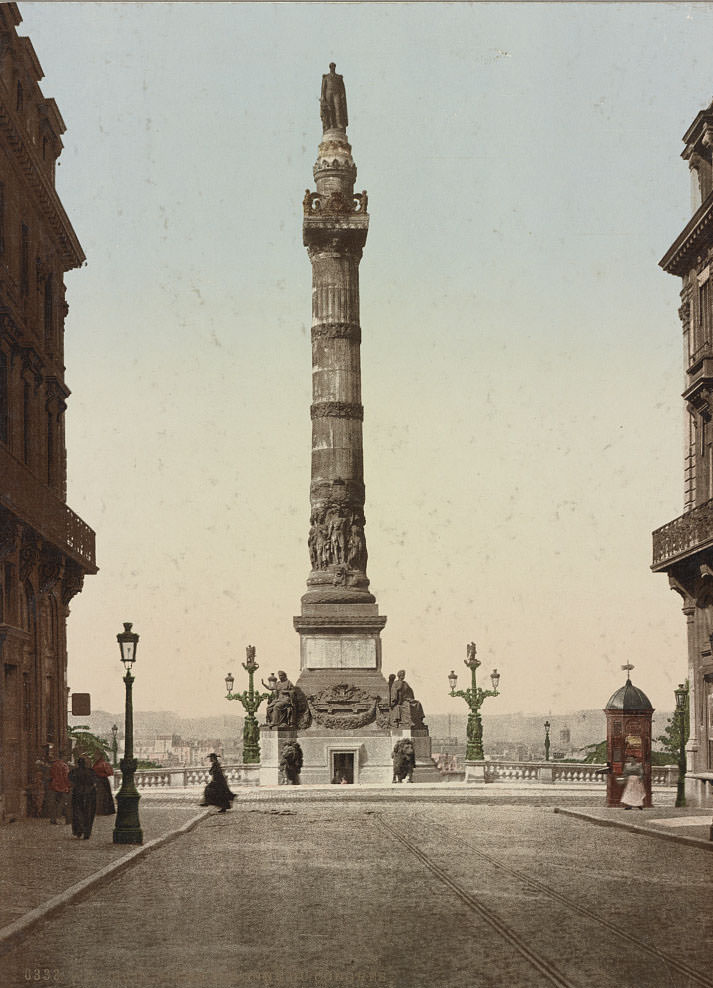
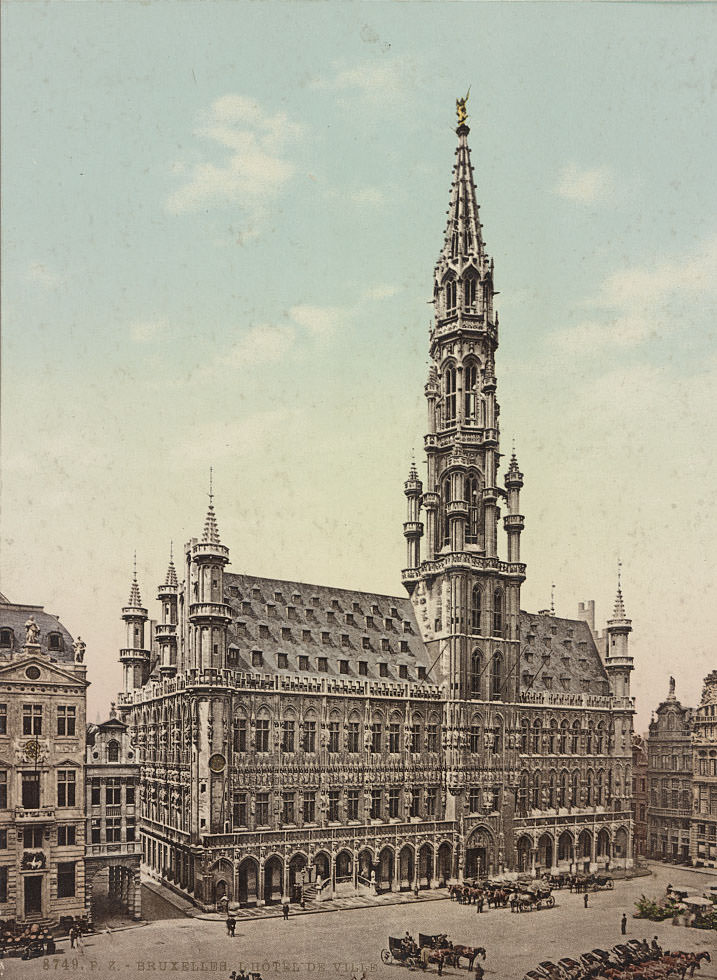
The City Hall on the Grand Place is one of Brussels’ oldest and most striking buildings, dating back to the 15th century. Its Gothic spire rises 96 meters and is topped by a gilded statue of the Archangel Michael, the city’s patron saint. The King’s House — despite its name, never actually used by a king — stood opposite, serving in the 1890s as a museum housing artifacts from the city’s long history. Together, they framed the Grand Place with centuries of civic and architectural ambition.
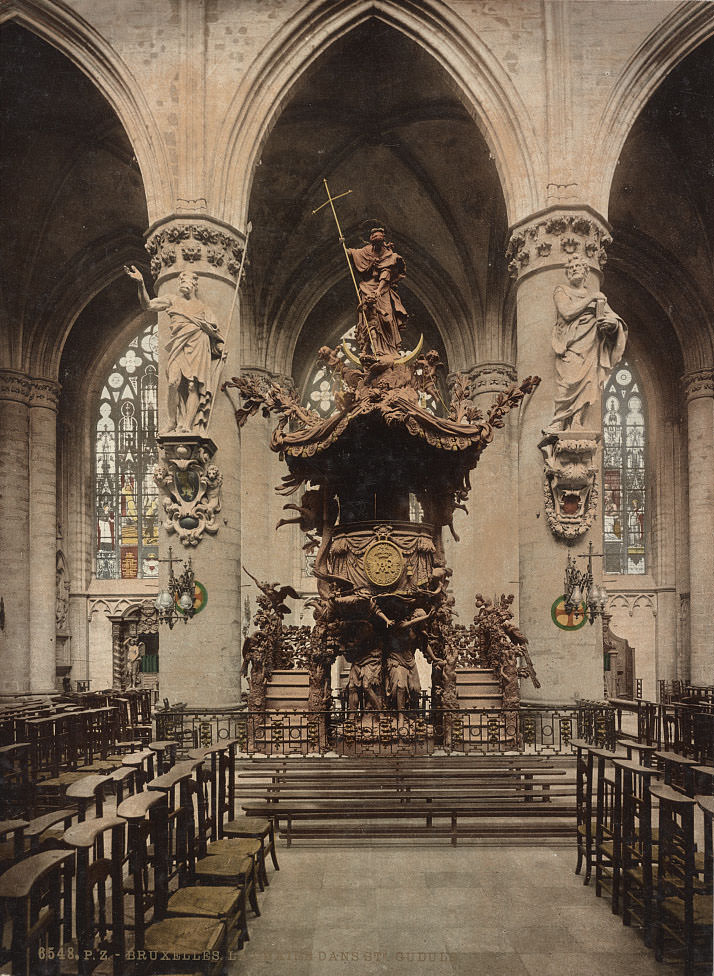
The Cathedral of St. Michael and St. Gudula was the most important church in Belgium. Construction had begun in the 13th century and continued for nearly 300 years. By the 1890s, it served as the site of royal weddings, state funerals, and the most solemn ceremonies of Belgian national life. Its twin Gothic towers stood as one of the most recognizable landmarks on Brussels’ skyline.
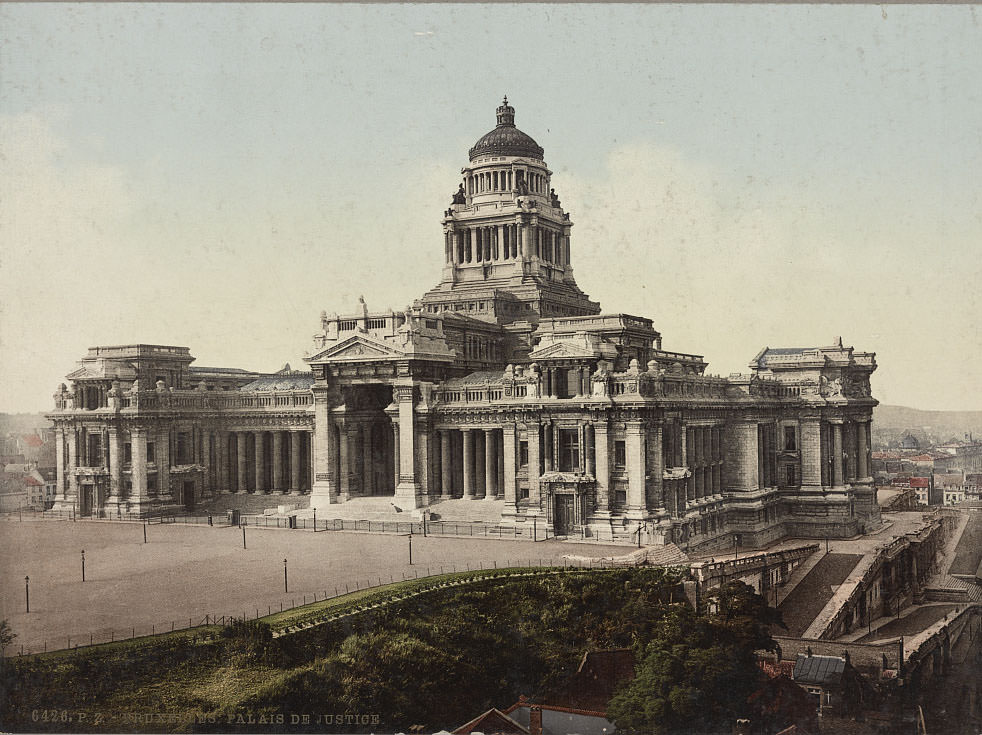
The Palace of Justice, completed in 1883, was at the time of its opening the largest building constructed in the 19th century. Designed by architect Joseph Poelaert, it covered more than 26,000 square meters and towered over the Marolles neighborhood below. Its construction had required the demolition of an entire working-class district, a displacement so resented by locals that they coined a slang term — ‘architekt’ — as an insult. In the 1890s, it was still a raw and imposing new presence on the Brussels skyline.
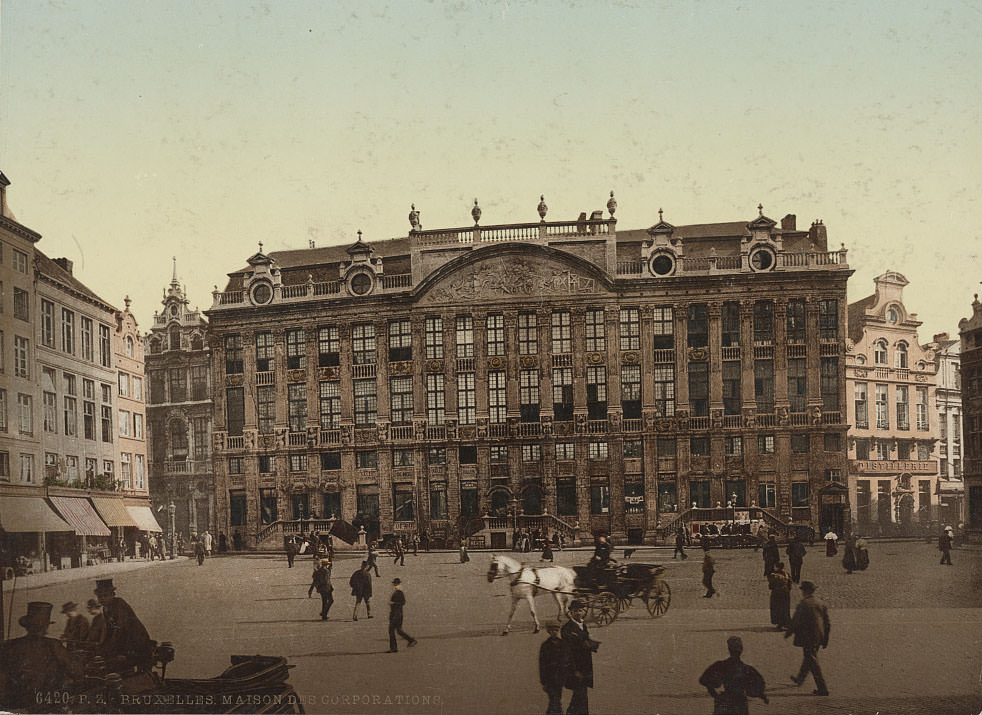
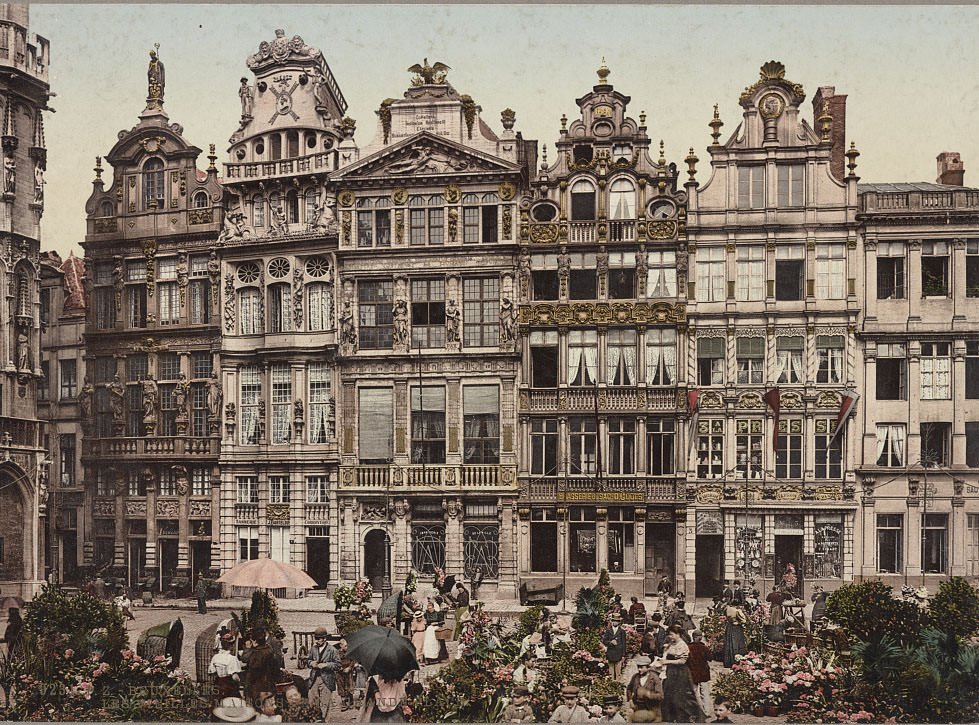
The guild houses of the Grand Place represented some of the finest Baroque architecture in Northern Europe. Each house belonged to a specific trade guild — the brewers, the bakers, the archers — and each facade was decorated with gilded sculptures and intricate stonework that broadcast the wealth and pride of the guild that owned it. Many had been rebuilt after the French bombardment of Brussels in 1695, which destroyed most of the medieval city center. The versions standing in the 1890s were largely those post-bombardment reconstructions.
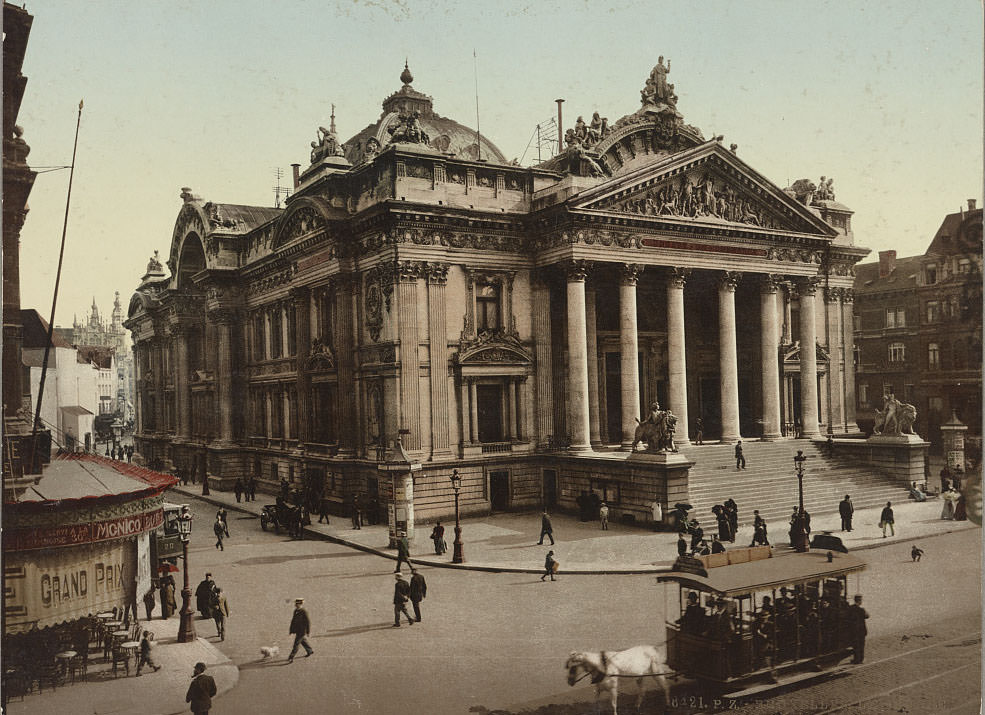
The Brussels Stock Exchange — the Bourse — was completed in 1873 and quickly became one of the most important financial institutions in continental Europe. Its neoclassical facade featured elaborate sculptural reliefs representing commerce, industry, and agriculture. In the 1890s, it stood at the center of Belgium’s booming economy, processing transactions tied to the country’s colonial ventures in the Congo, its thriving textile industry, and its extensive railway network. The building itself was as much a statement of financial confidence as it was a place of business.
