Hey There! Before You Go. 😧
Get the best vintage content straight into your inbox!

Don't worry, we don't spam

Stunning Historical Photos of Vancouver, Washington in the 1910s

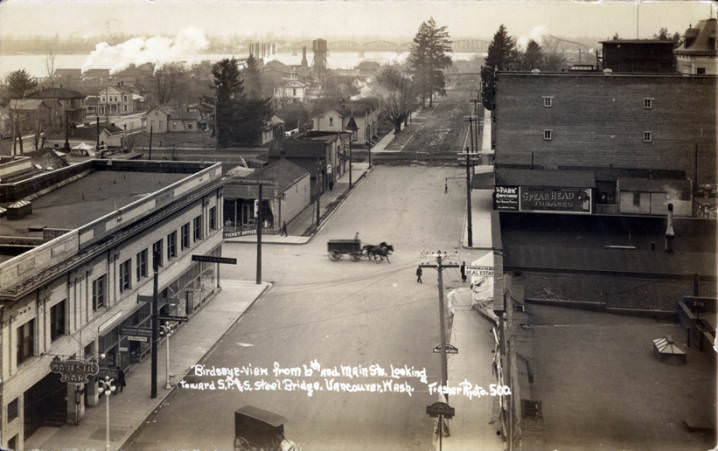
Vancouver, Washington entered the 1910s on the heels of a regional transportation crisis. The Lewis and Clark Centennial Exhibition in Portland in 1905 had drawn massive crowds, exposing just how badly the area needed a proper bridge over the Columbia River. Ferry crossings were packed to capacity, and travelers faced long, frustrating waits. On March 2, 1912, Vancouver business leaders took action — parading through downtown Portland to publicly push for a wagon bridge. Their campaign would eventually pay off, with the Interstate Bridge changing how people and goods moved between the two states.
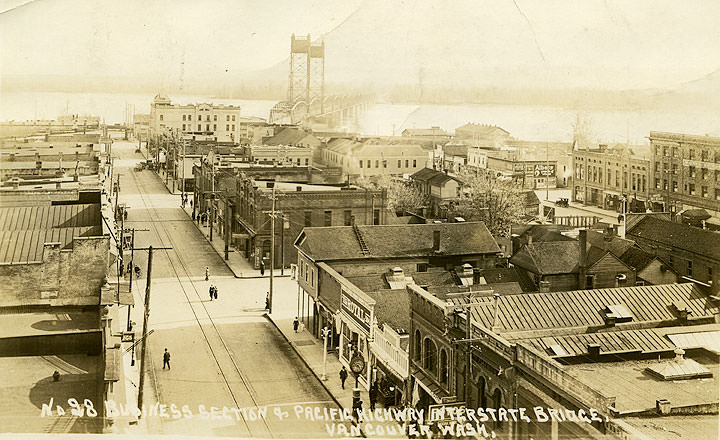
Business Section & Pacific Highway Interstate Bridge, Vancouver, 1917

While the bridge debate played out, daily life in Vancouver continued to grow and change. The Vancouver Barracks was one of the city’s most active institutions. Soldiers trained, drilled, and lived on the grounds year-round, making the barracks a central part of the community’s identity.
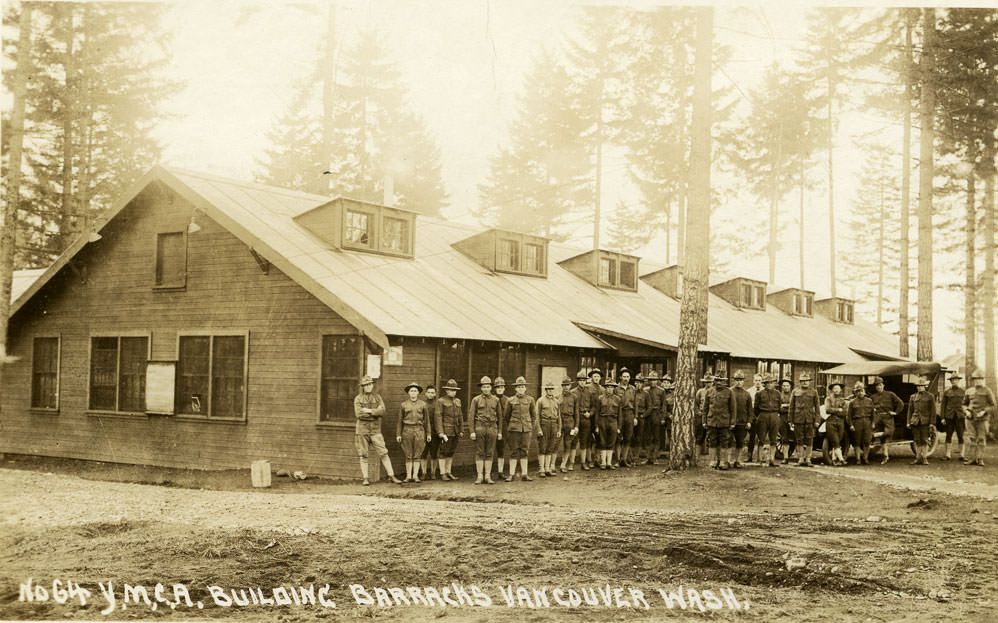
Y.M.C.A. Building Barracks, Vancouver, 1918
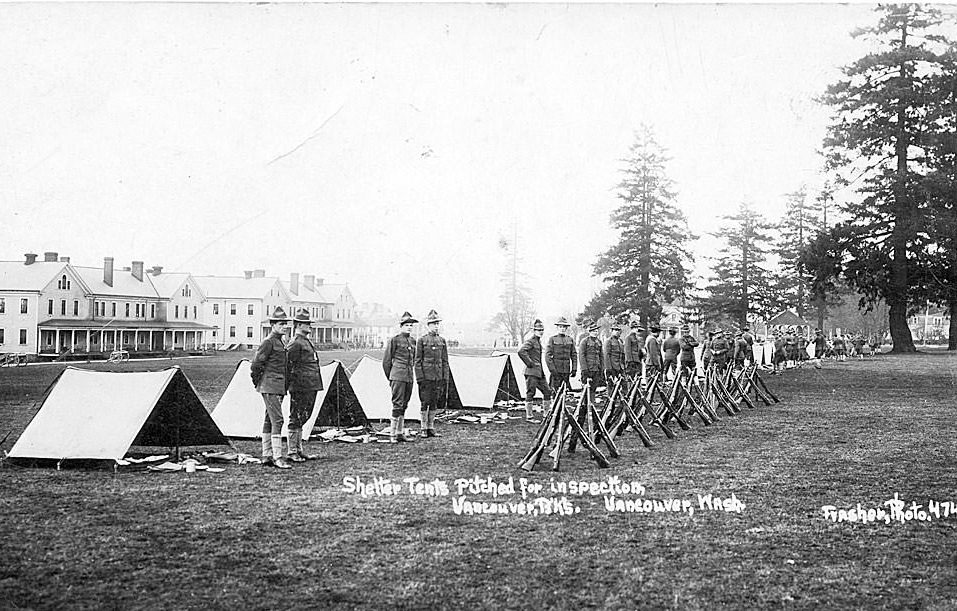
Shelter tents pitched for inspection, Vancouver B'ks, Vancouver, 1910
Shelter tents pitched for inspection, Vancouver B’ks, Vancouver, 1910

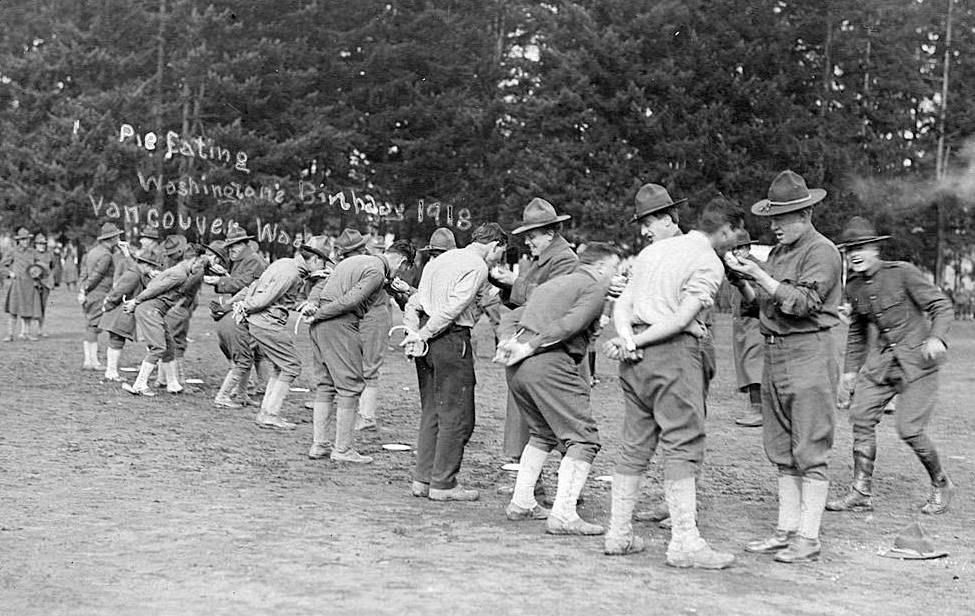
Military life at the barracks wasn’t all drills and inspections. Soldiers took part in recreational activities and community events. Washington’s Birthday in 1918, for example, was marked with a lighthearted pie eating contest on the grounds — a small but telling glimpse into how the men spent their off-hours during an otherwise serious period of war.
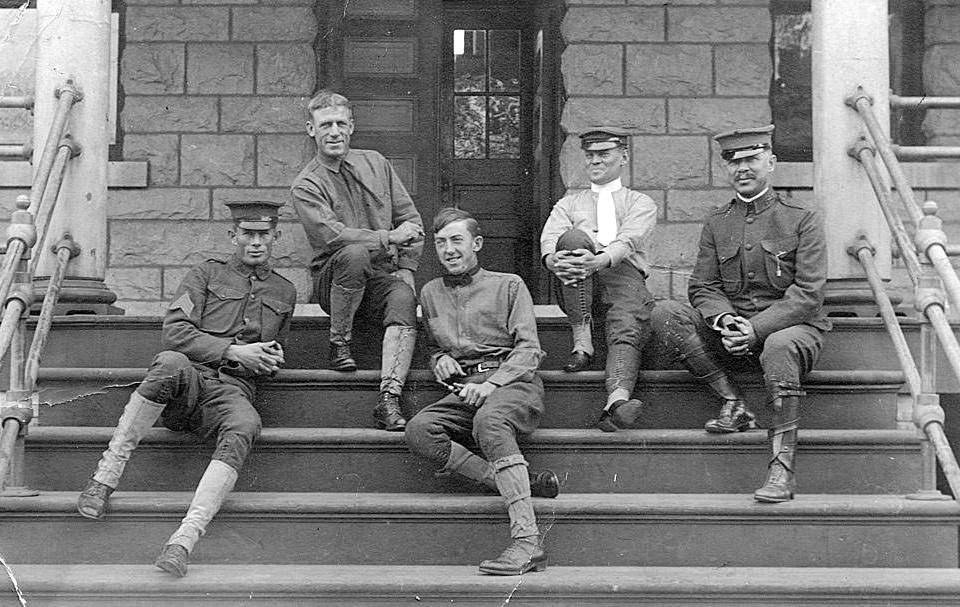
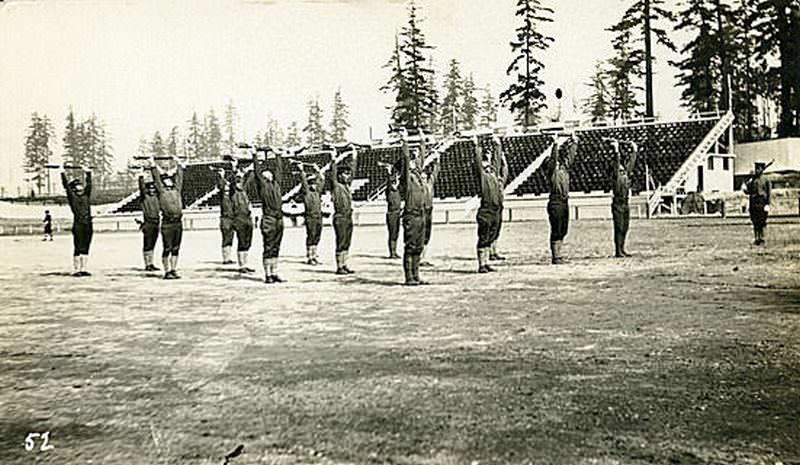
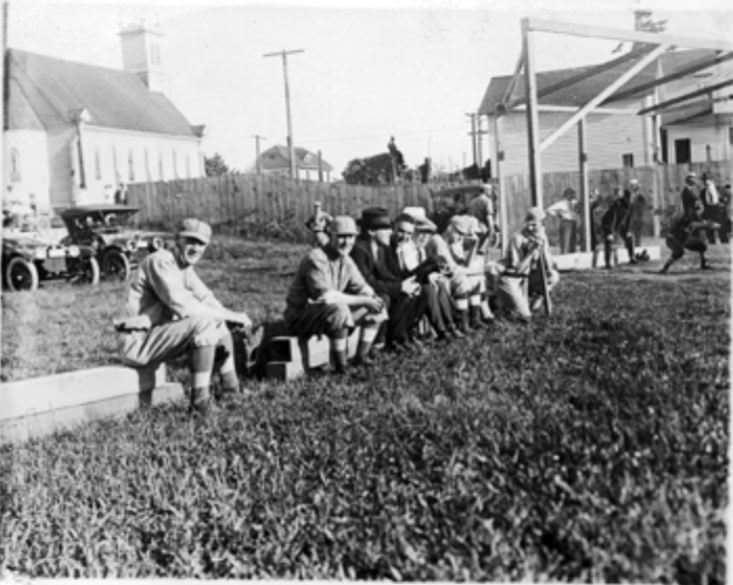
Soldiers relaxing, Vancouver Barracks, 1915
Rifle drill, Vancouver Barracks, 1915
Pie eating contest, Washington's birthday in Vancouver, 1918
Pie eating contest, Washington’s birthday in Vancouver, 1918

World War I reshaped Vancouver’s economy in a dramatic way. The Standifer Construction Company built two shipyards along the Columbia River to supply wooden and steel ships to the war effort. The first ship produced at these yards, the Kineo, was launched on May 30, 1918, just west of the Interstate Bridge. Steel ships were constructed about a mile further west, downstream from the railroad bridge. Both shipyards kept running until 1921, when the city purchased the property for use as a municipal dock.
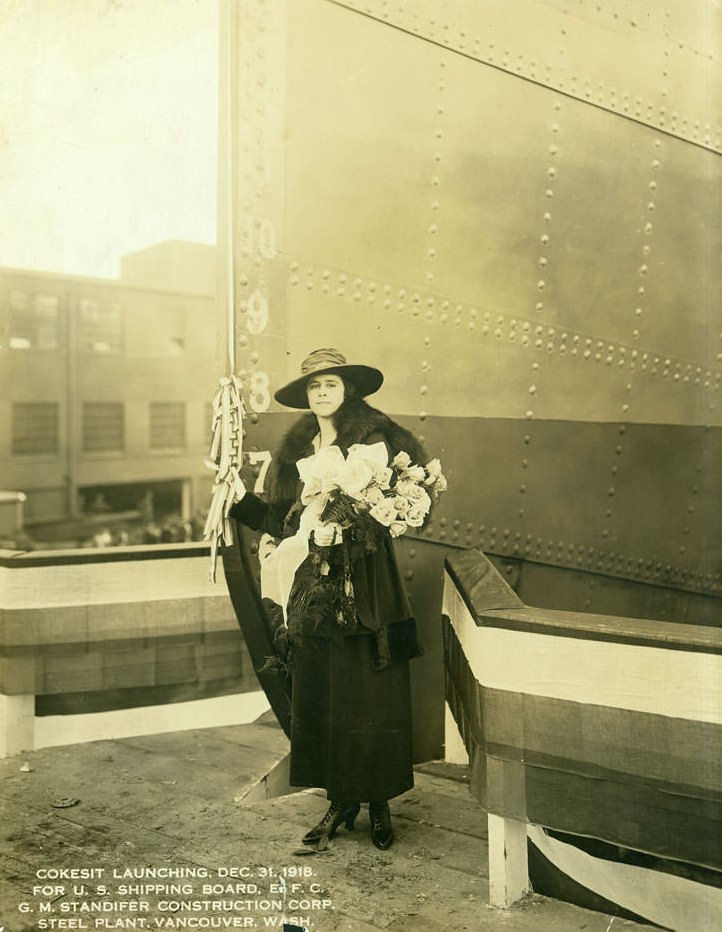
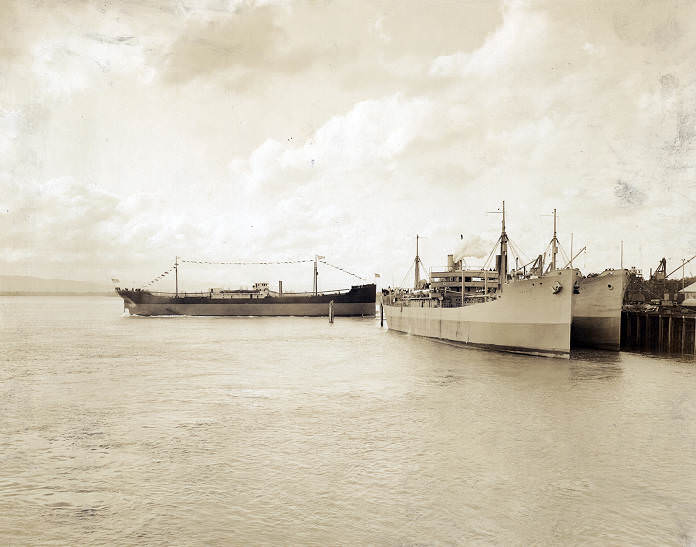
Standifer Construction Corp., Steel Plant, Vancouver, 1918
The Cokesit afloat on the Columbia River at the Standifer shipyards in Vancouver, Washington, 1919

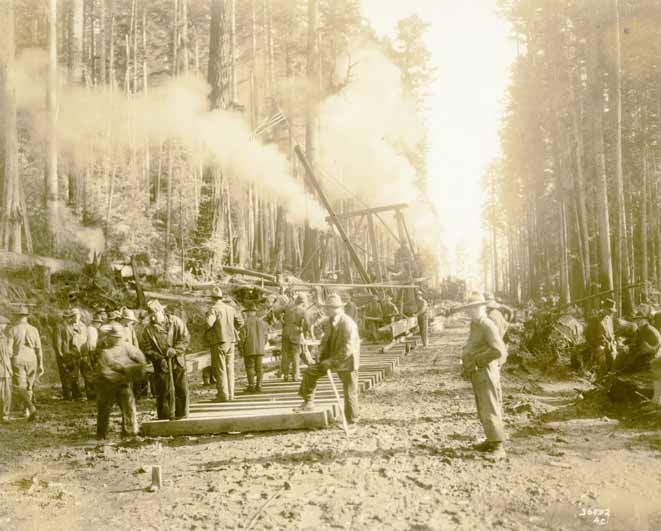
Supporting the shipyards and the broader war effort required raw materials on a massive scale. The U.S. Army Spruce Production Division built logging railroads through Clallam County to haul spruce logs to Fort Vancouver and other sites. Spruce was essential for building military aircraft frames, and the Pacific Northwest’s forests were a primary source.
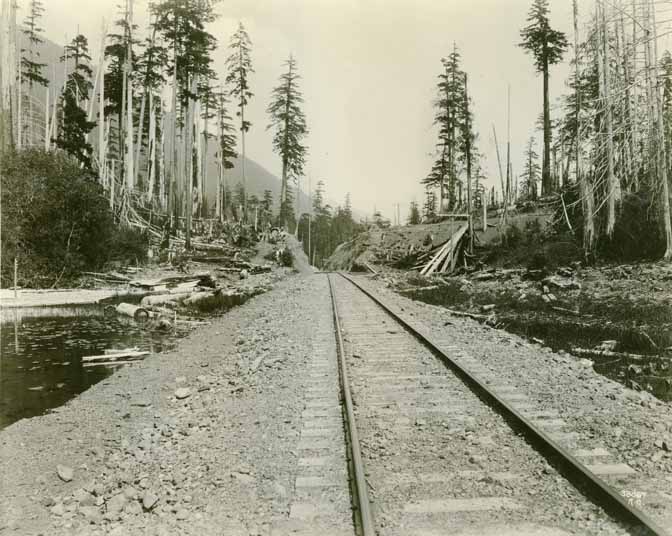
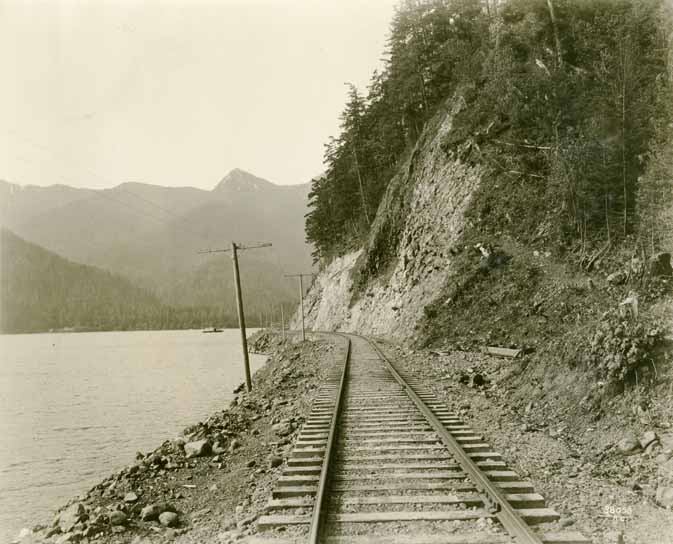
Logging railroad track and clearcut in Clallam County, 1918.
Logging railroad track by Lake Crescent in Clallam County, 1918
Logging railroad track, workers laying railroad ties, 1918

Logging had already been an established industry in the Vancouver region well before the war. At Tichenor’s Camp near Vancouver, crews worked with donkey engines to pull logs through the forest. The work was hard and dangerous, and the men who did it left little written record — but photographs captured what words often didn’t.
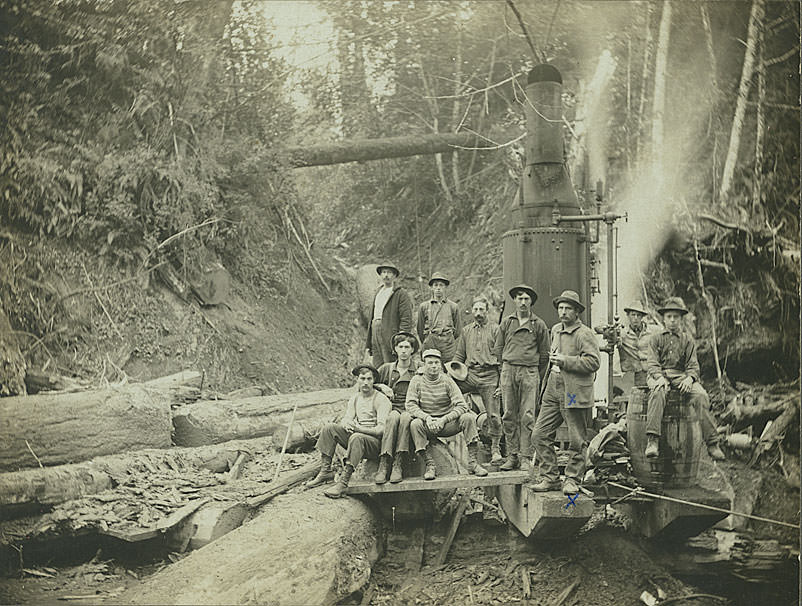
Tichenor's Camp, near Vancouver, 1910
Tichenor’s Camp, near Vancouver, 1910

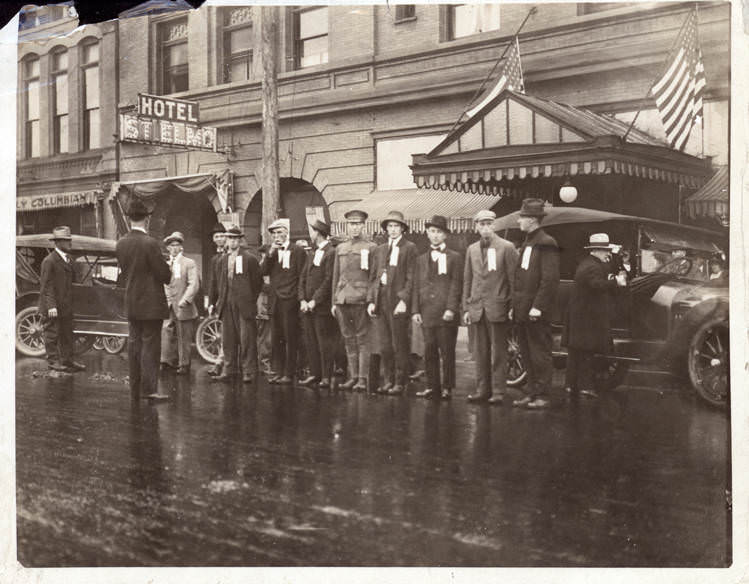
The Spokane, Portland & Seattle Railway was another major piece of the region’s infrastructure. The roundhouse crew in Vancouver kept locomotives running across the Pacific Northwest, and the men who worked there took pride in their machines. When the first draftees from Vancouver were called up for military service in 1917, they answered the roll call in front of the Hotel St. Elmo at 5th and Washington — a moment that marked the city’s formal entry into the war on a personal level.
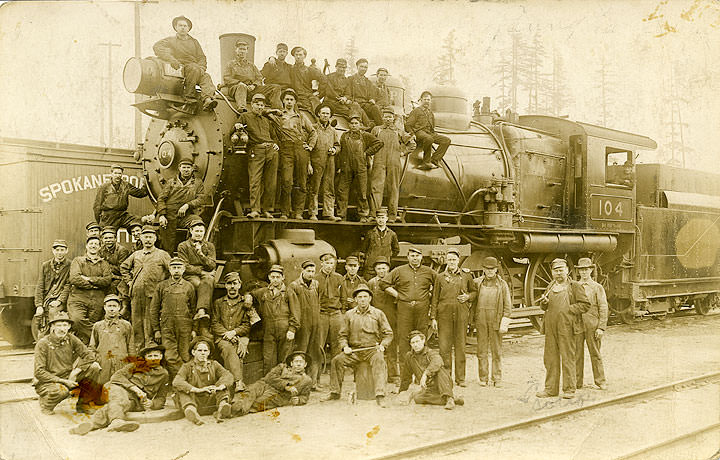
Spokane, Portland & Seattle Ry. roundhouse crew with locomotive 104, Vancouver, 1912
First Round of Selective Service Draftees from Vancouver, 1917

As soldiers shipped out, those remaining at Fort Vancouver were fed at outdoor mess stations, where men in white aprons served food to long lines of troops. A pilot named Lincoln Beachey made history at the barracks during this era, flying an airship to the Vancouver Barracks to deliver mail to General Constant Williams — the first airmail delivery of its kind.
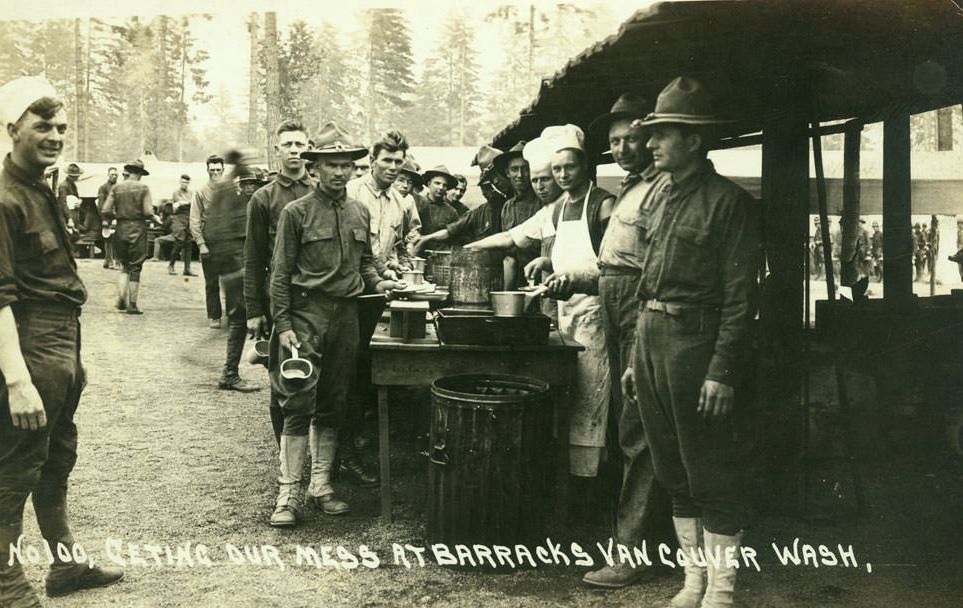
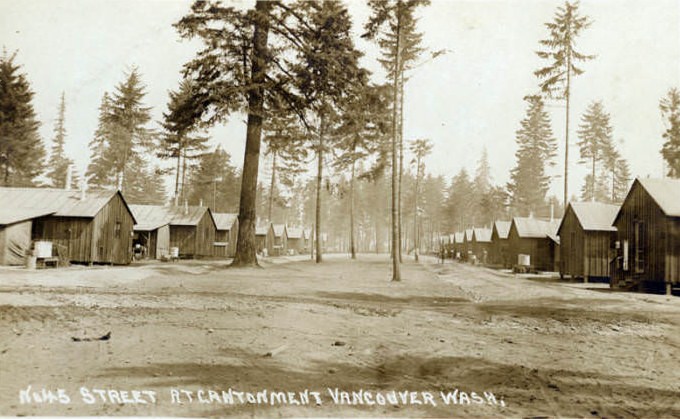
Soldiers stand in line or hover in the background to receive their meal, 1918
Cantonment in Vancouver, 1918

When the Armistice ending World War I was announced, the celebration that erupted in most American cities was largely absent in Vancouver and Clark County. The Spanish flu epidemic had gripped the community hard. From October 5 to November 15, 1918, local newspapers were almost entirely filled with pandemic news. The city shut down completely — public gatherings were forbidden, and even churches closed their doors. There was simply no room for celebration when so many were sick and dying.
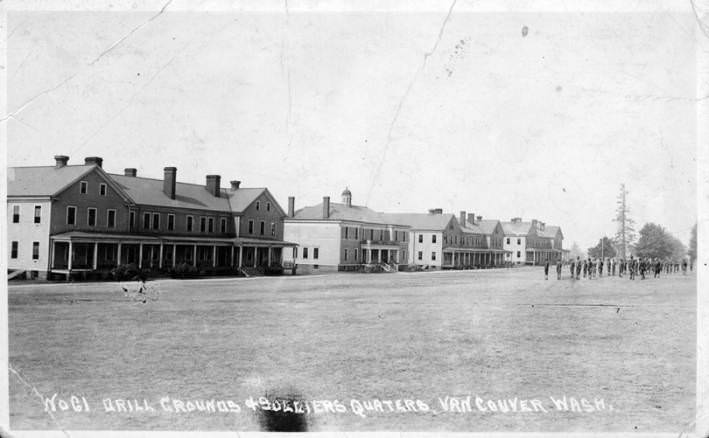
Parade Grounds and Soldiers Quarters at Vancouver Barracks, 1918

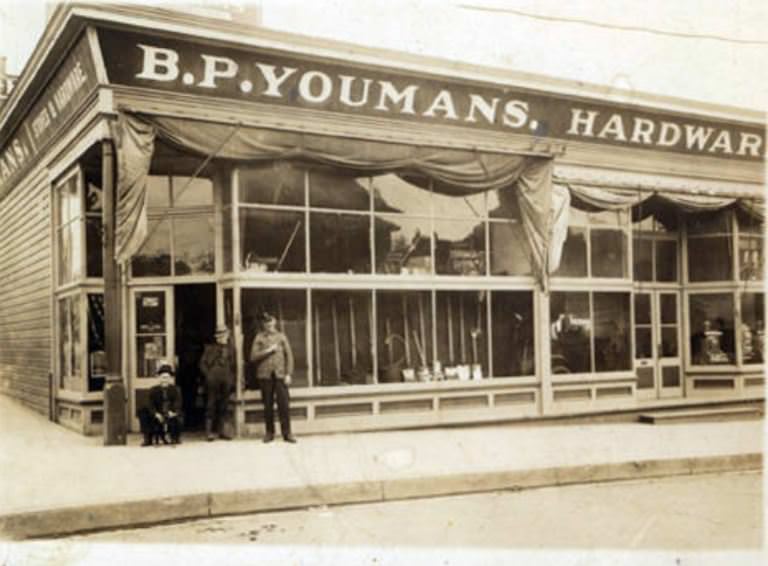
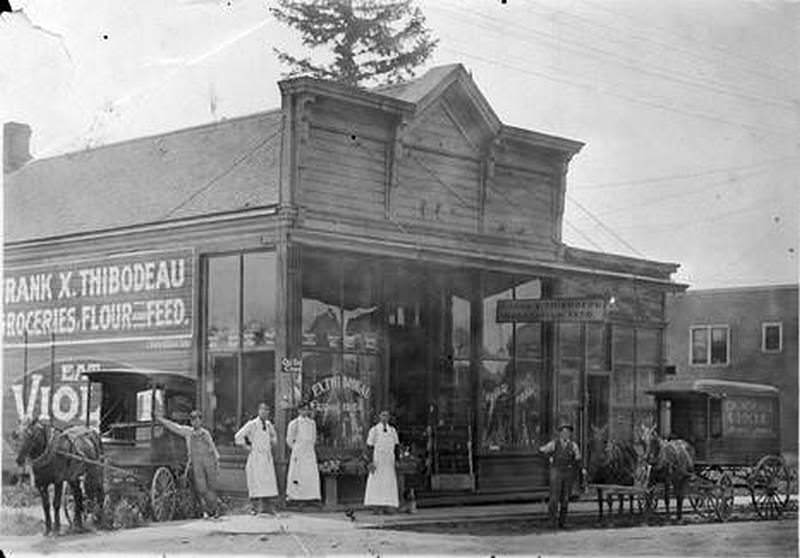
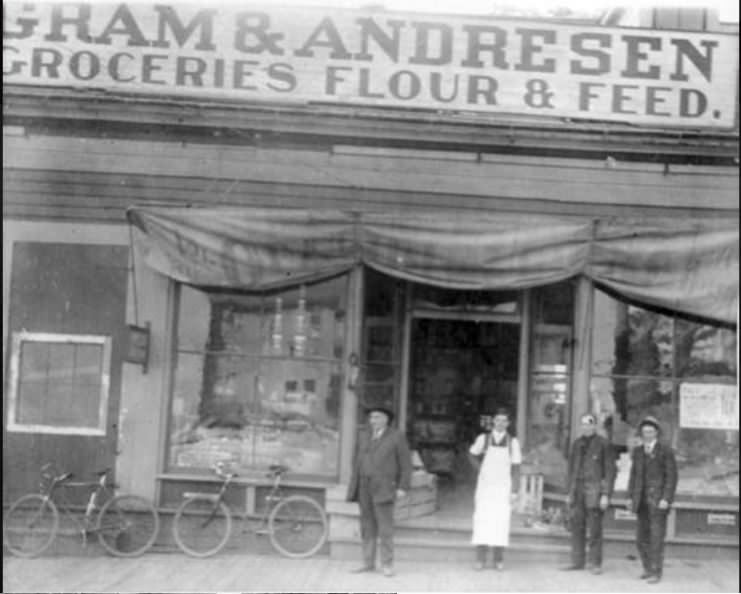
Before the war years brought such heavy weight to the city, Vancouver’s streets were alive with commerce and community. Downtown businesses like Andresen Grocery at 804 Washington Street, B.P. Youmans Hardware at 8th and Washington, and Frank X. Thibodeau Groceries served the growing population. The McKay Restaurant on its diagonal counter with a row of stools was a typical gathering place. These businesses reflect a city that was building itself steadily through the decade.
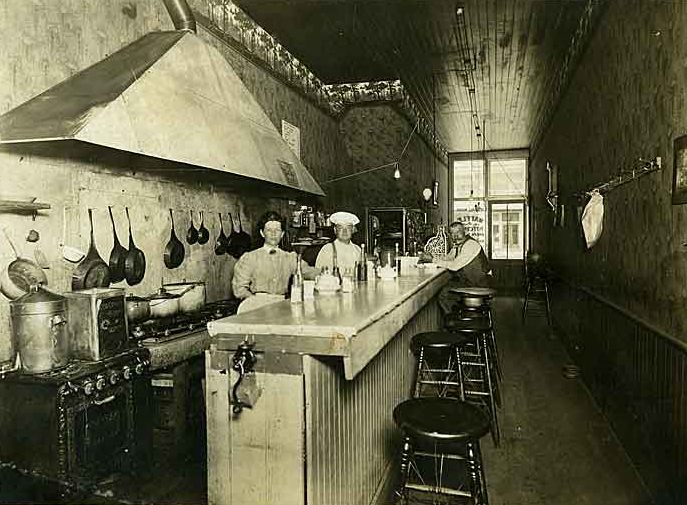
McKay Restaurant, Vancouver, 1910
Andresen Grocery, 1910.
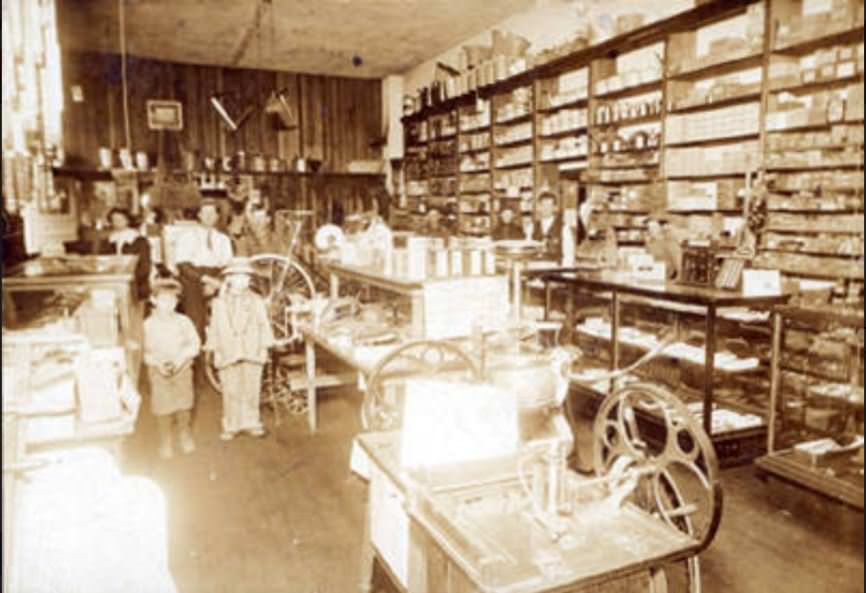
The interior of B.P. Youmans Hardware located on 8th and Washington Street in Vancouver, 1911
B.P. Youmans Hardware located on 8th and Washington Street in Vancouver, 1911
Frank X. Thibodeau Groceries, 1910s

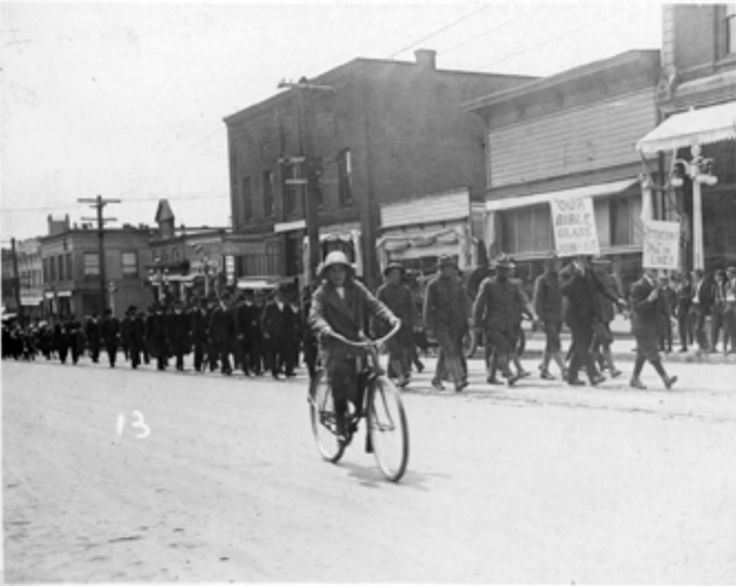
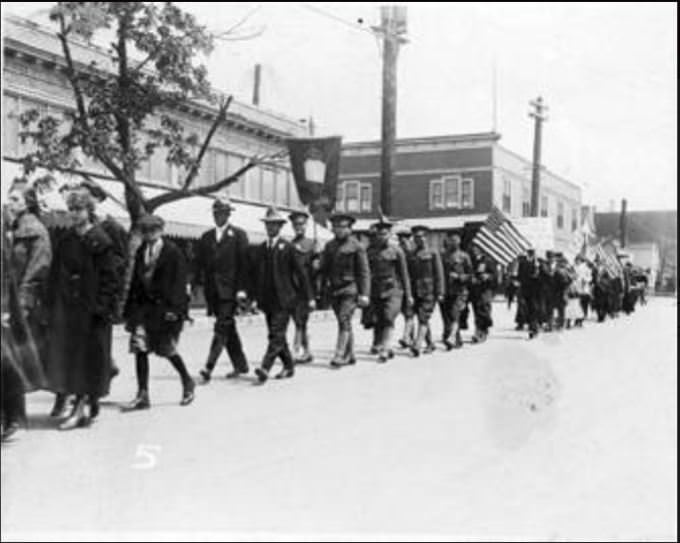
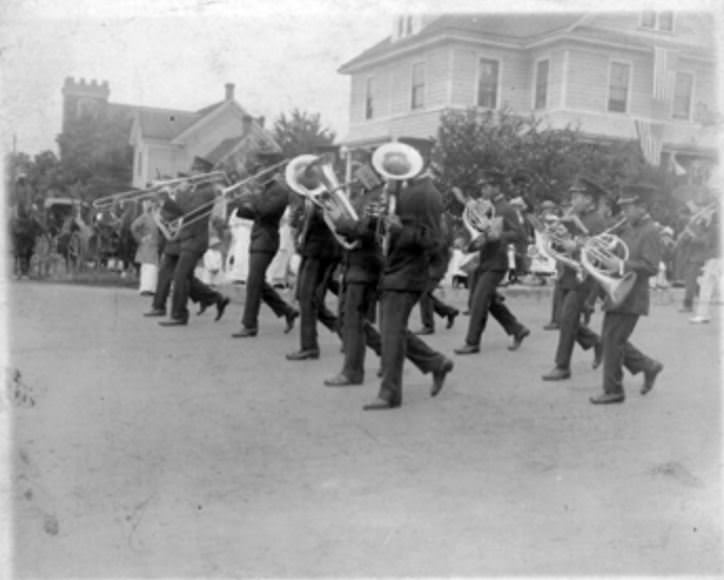
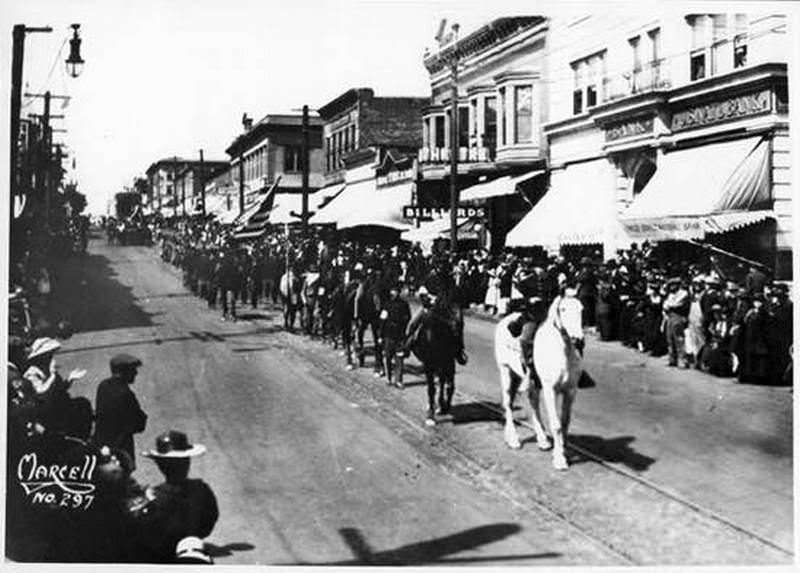
Downtown Vancouver’s streets saw parades, snowstorms, and everyday foot traffic throughout the decade. A snowy day at 6th and Main in 1914 showed horse teams and pedestrians pushing through covered streets, while the Schofield Building stood on the left. Businesses like the Majestic Bar, Vancouver Stationery, and Atkinson and Gilbert Real Estate lined those same blocks. By 1917, the streets filled with parade marchers — the Berean Bible Class, the Methodist Bible Class, and the New Era Chinese Band all made their way down Main Street at different points in the decade.
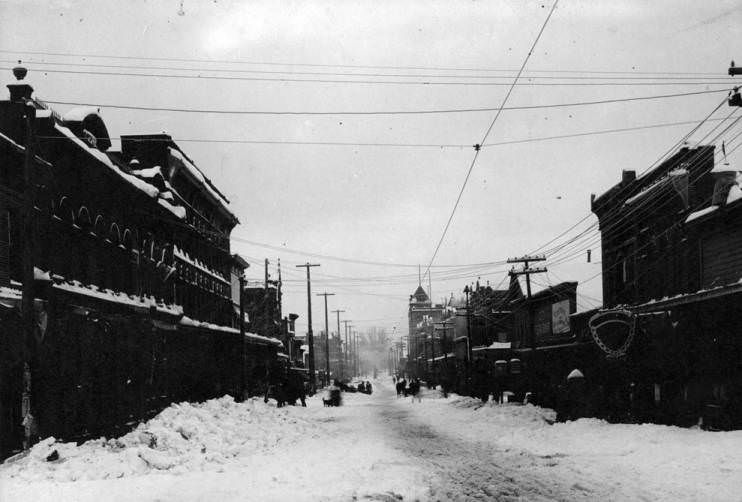
6th and Main Street Vancouver, 1914
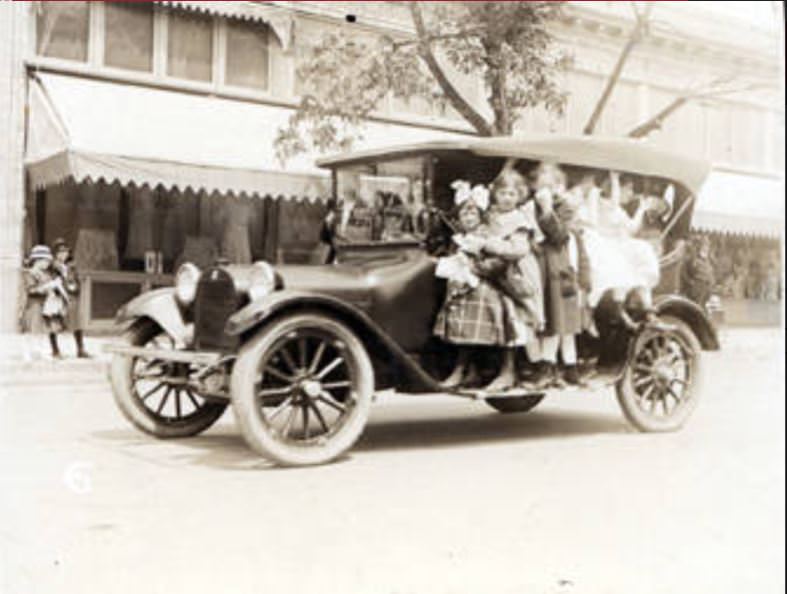
A car drives in a parade as it passes 8th and Main Street in Vancouver, 1917
The Methodist Bible Class marches between 7th and 8th Street on Main Street during a parade in Vancouver, 1917
The Berean Bible Class marches during a parade held in Vancouver, 1917
The New Era Chinese Band marches in a 4th of July parade in Vancouver, 1914

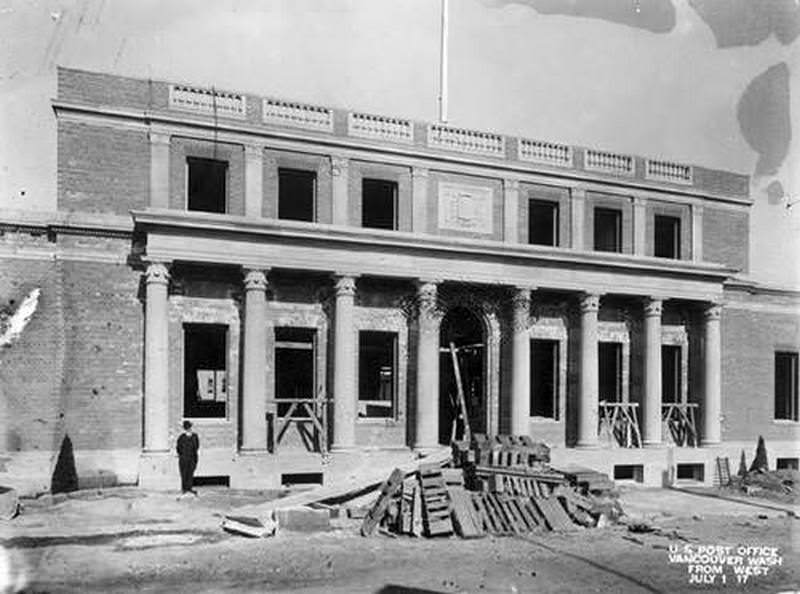
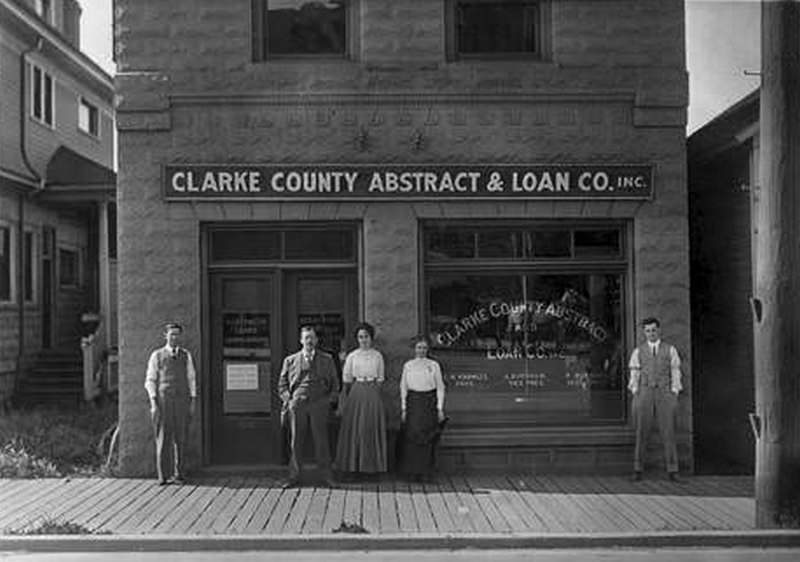
The city’s physical landscape was also changing rapidly. New buildings went up throughout the decade — the Arnada School was built at the corner of 26th and G Street, and the Clarke County Abstract & Loan Co. Building took shape nearby. The post office on Daniels Street was documented in its finished state as of July 1, 1917. Schools, churches, and civic buildings all reflect a city that was investing heavily in its own future.
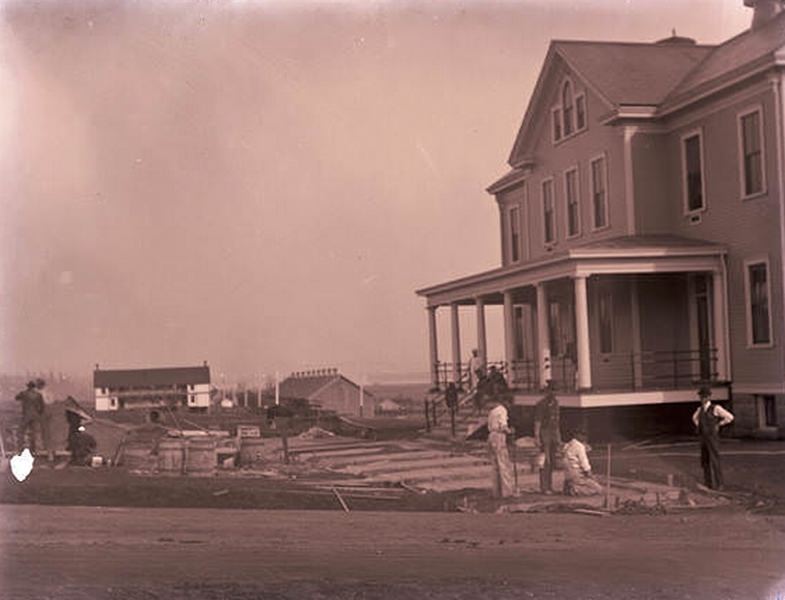
Arnada School Construction, 1910
Clarke County Abstract & Loan Co. Building, 1911
The Daniels Street Post Office in Vancouver representing its condition following construction on July 1, 1917.
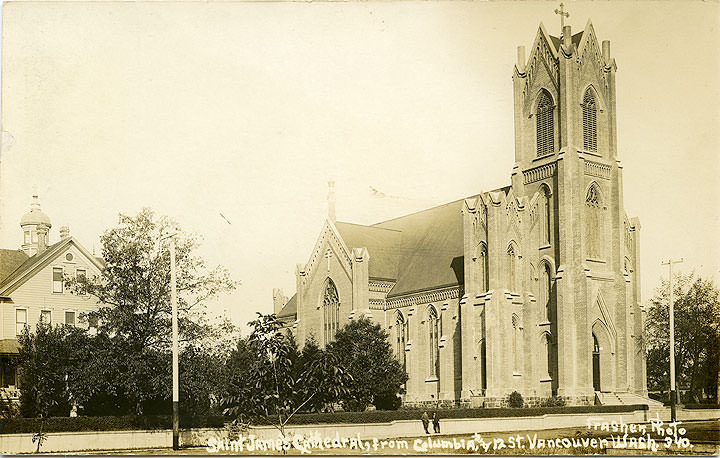
Saint James Cathedral, from Columbia and 12 St. Vancouver, 1912
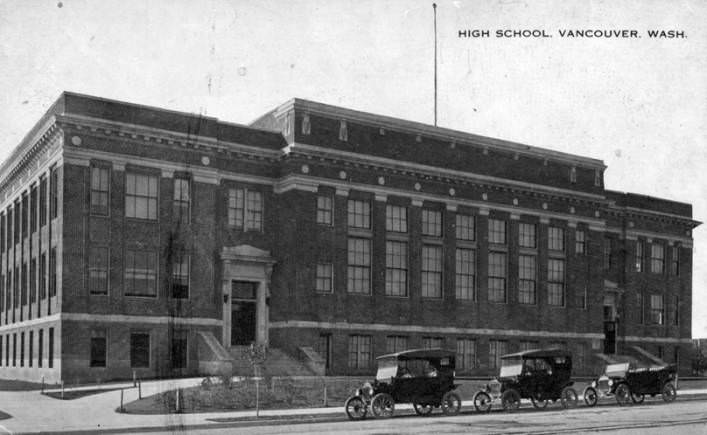
Fort Vancouver High School, 1913
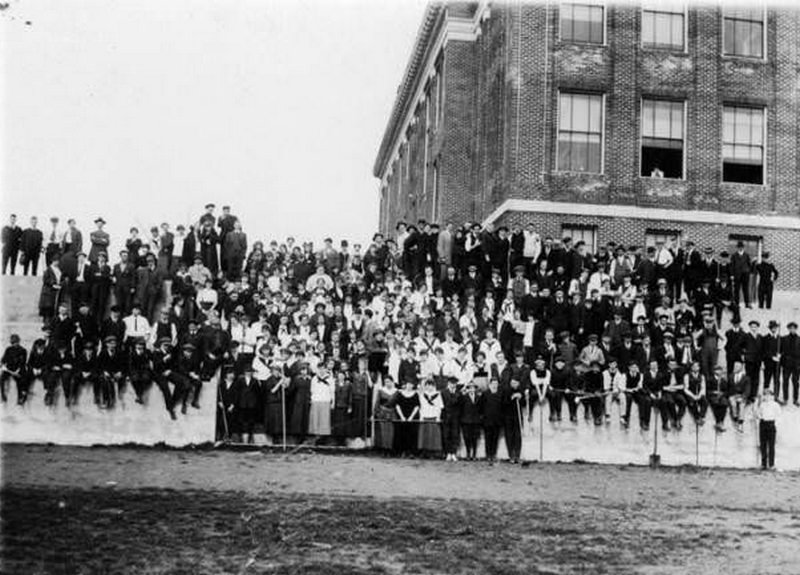
Class of 1917 Vancouver High School, 1916

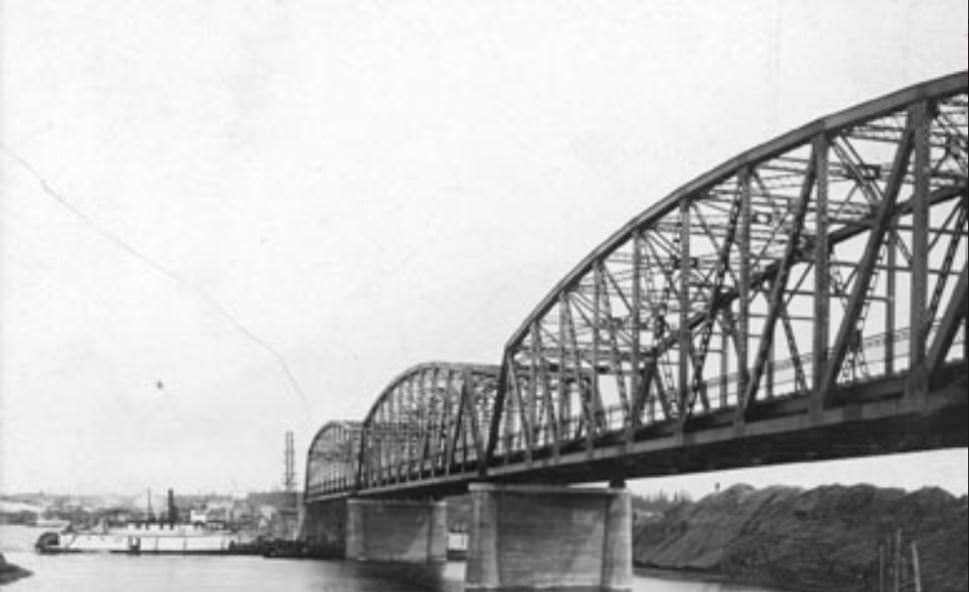
The ferry crossing at the foot of Washington Street remained in use even as the Interstate Bridge was being built. In 1915, a photograph taken from the top of the ferry looking east captured the abutment construction underway — a reminder that the transition from ferry to bridge was a gradual, years-long process. When automobiles finally lined up waiting for the bridge to open in 1917, it marked the end of an era for the ferries that had connected Vancouver and Portland for decades.
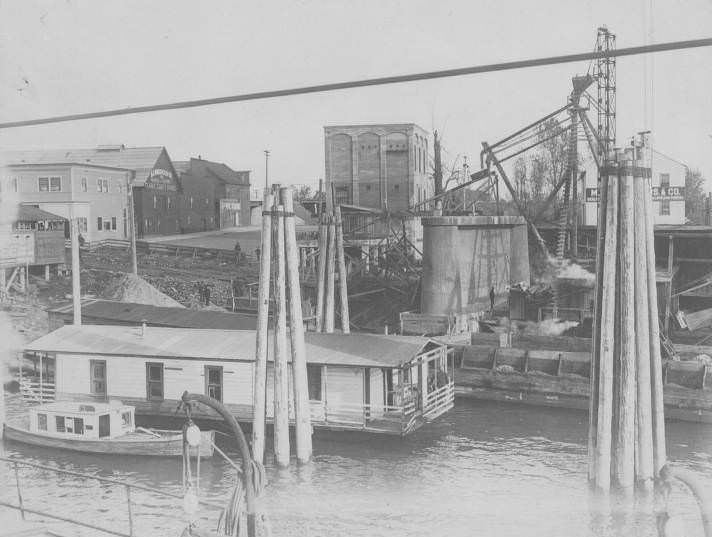
The abutment at the foot of Washington St. First street looking East from top of the ferry on November 5, 1915.
Ferry Alongside the Interstate Bridge, 1915
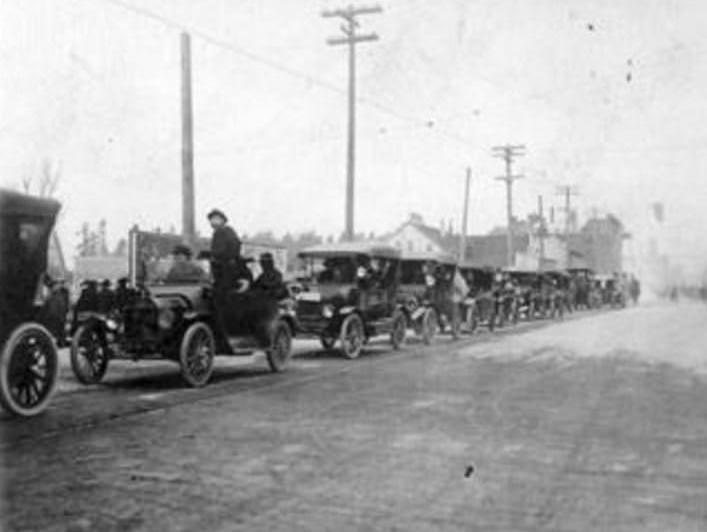
Automobiles Waiting for Interstate Bridge Opening, 1917

Beyond the major events and institutions, these photographs capture the quieter corners of Vancouver life in the 1910s. A greenhouse at 706 West 13th Street, a feed store, a neighborhood café on Franklin Street, a family portrait at a home in Camas — each image adds a layer to what the decade actually felt like for the people living through it.
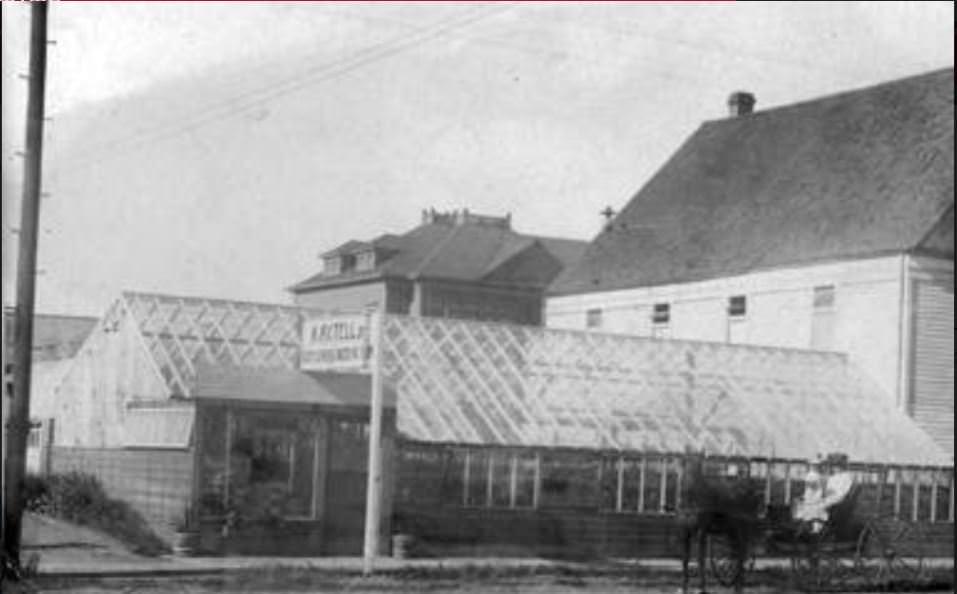
A. Axtell Jr. greenhouse located at 706 West 13th Street in Vancouver, 1911
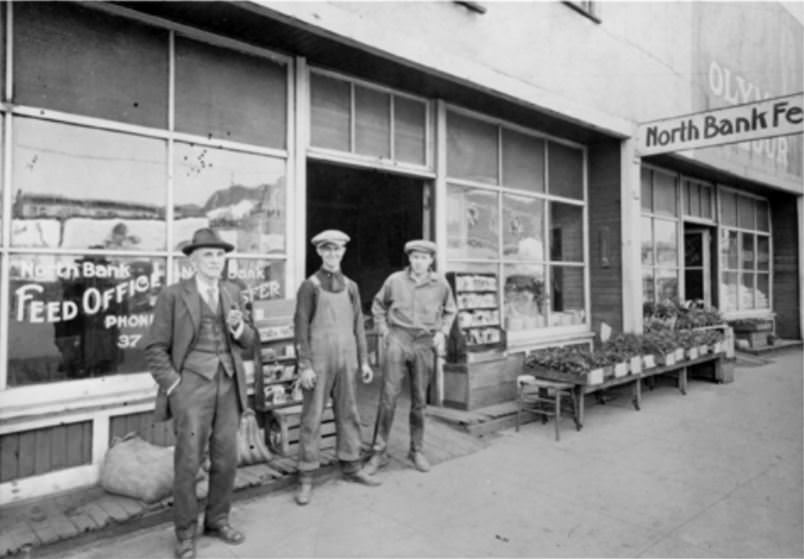
North Bank Feed Store, 1917
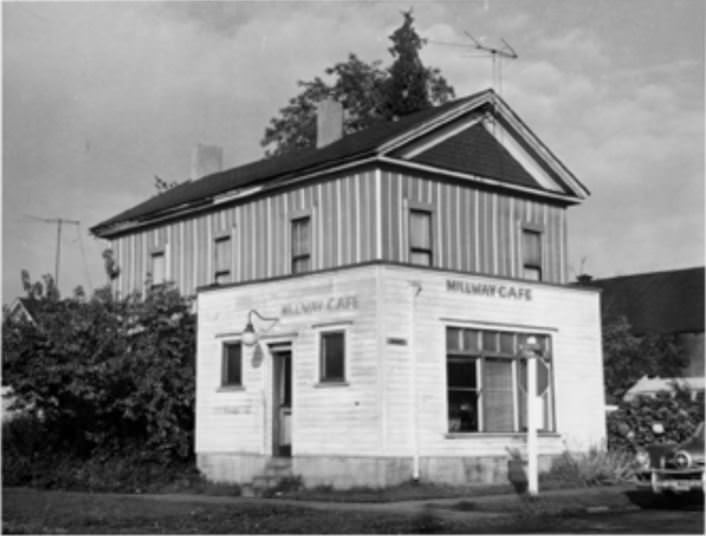
The Millway Café located at 500 Franklin Street in Vancouver, 1917
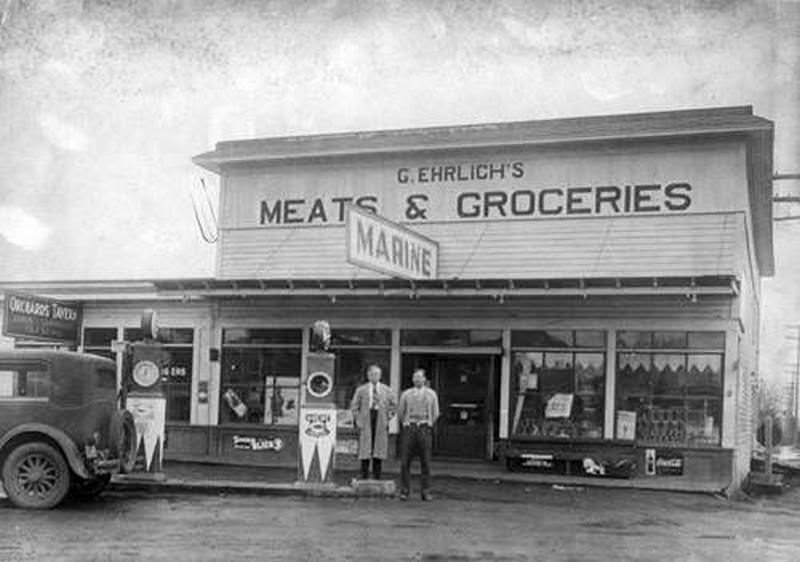
Ehrlich's Meats & Groceries, Vancouver, 1910s
Ehrlich’s Meats & Groceries, Vancouver, 1910s
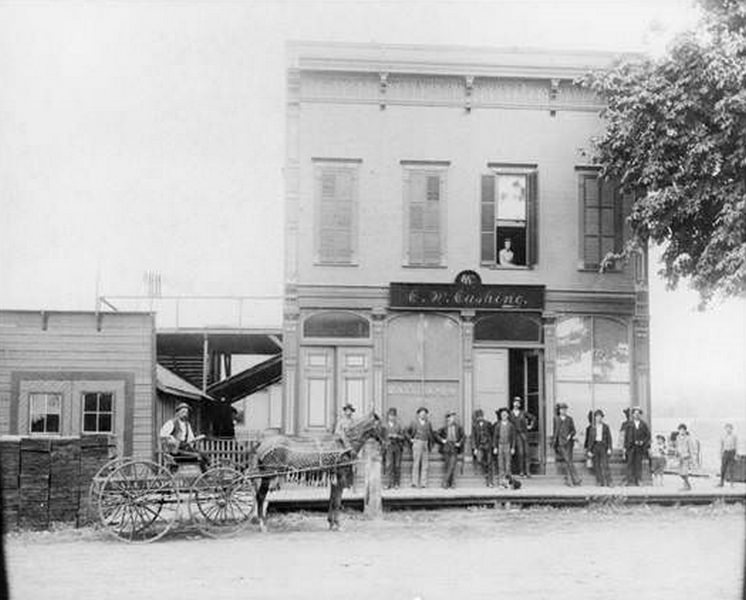
The Methodist Church over the Gushing Wallpaper Store located at 8th and Washington Street in Vancouver, 1910
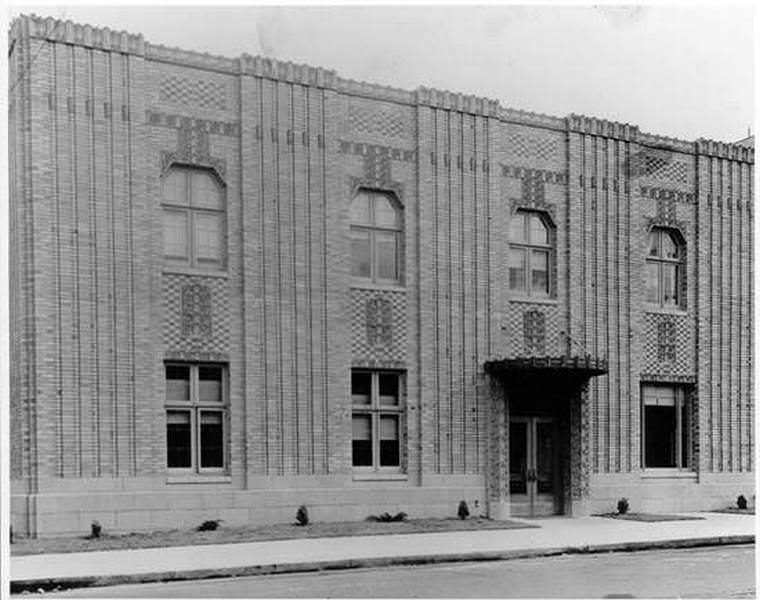
The Vancouver office of the Pacific Telephone Company. Located on 11th and Washington Street, 1911
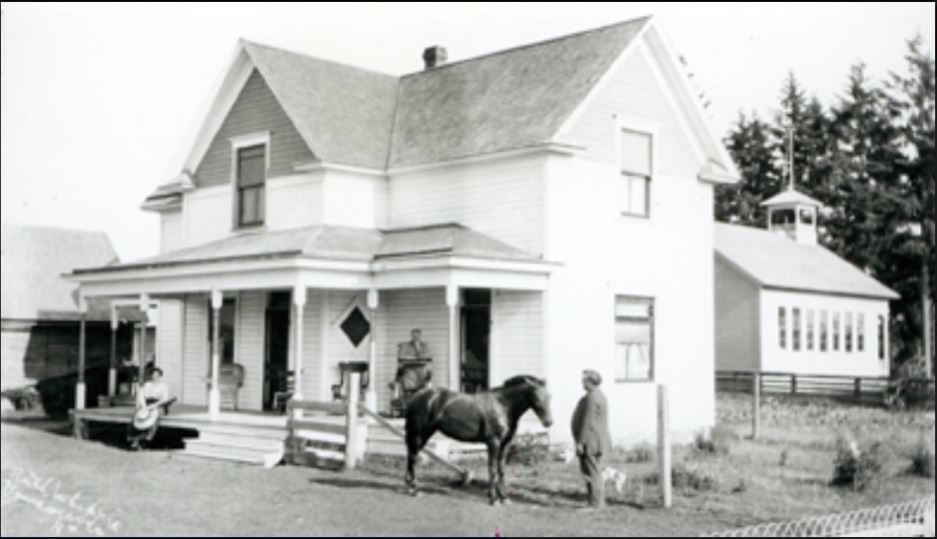
Methodist parsonage and church located on East Mill Plain in Vancouver, 1917
Fourth of July Celebration, 1915
Soldiers move down Main Street in Vancouver, 1914
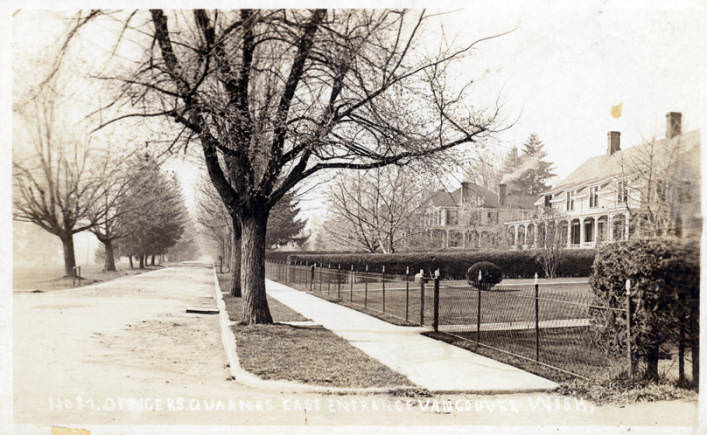
A view down Officer's Row at the Vancouver Barracks from the east entrance, 1914
A view down Officer’s Row at the Vancouver Barracks from the east entrance, 1914
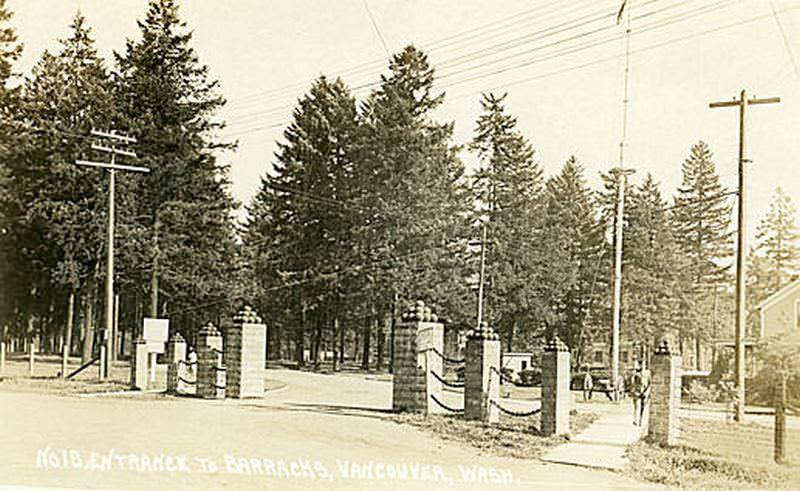
Entrance to Barracks, Vancouver, 1915
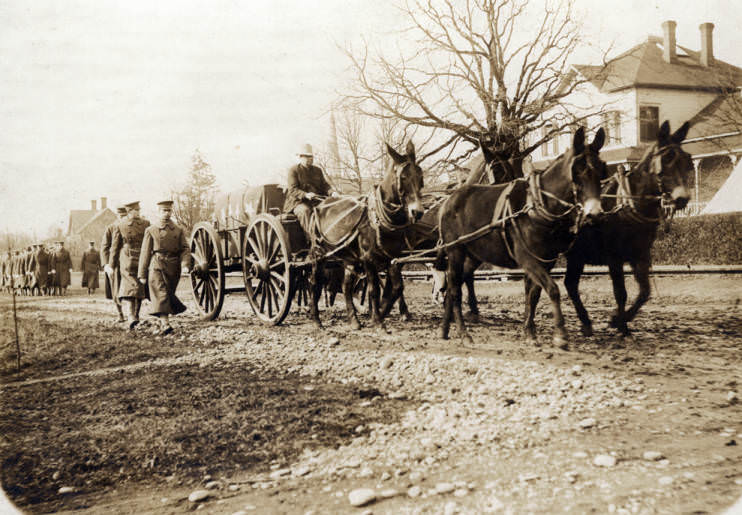
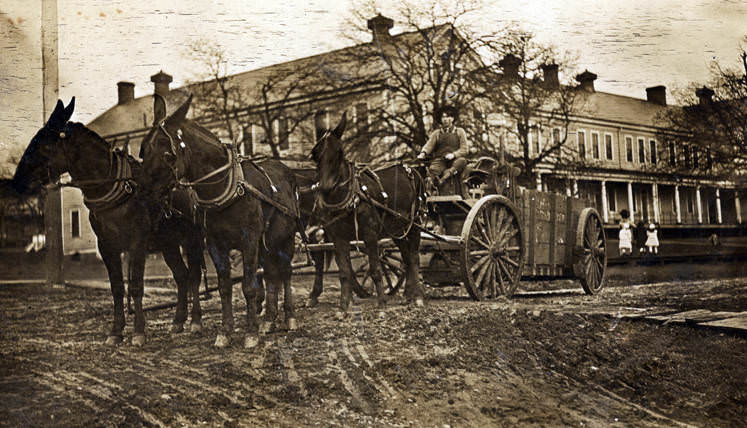
Floyd Gray, a civilian teamster, is driving the wagon at the Vancouver Barracks, 1910s
A man with a team of horses and a wagon sit in front of a building at the Vancouver Barracks, 1910
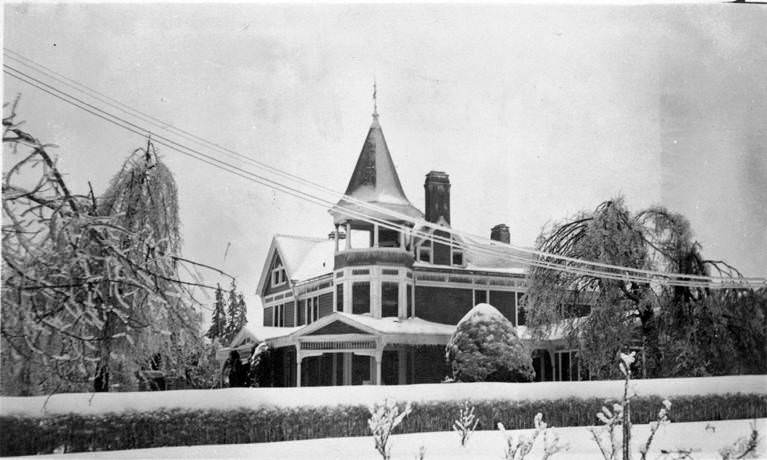
Marshall House in Winter, 1912
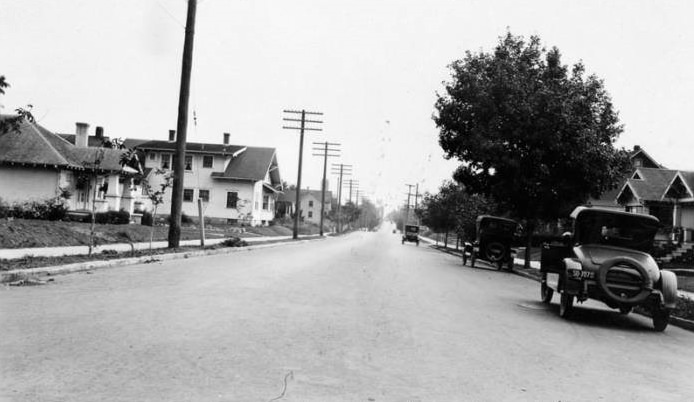
Columbia Street and 21st Street, Vancouver, 1910
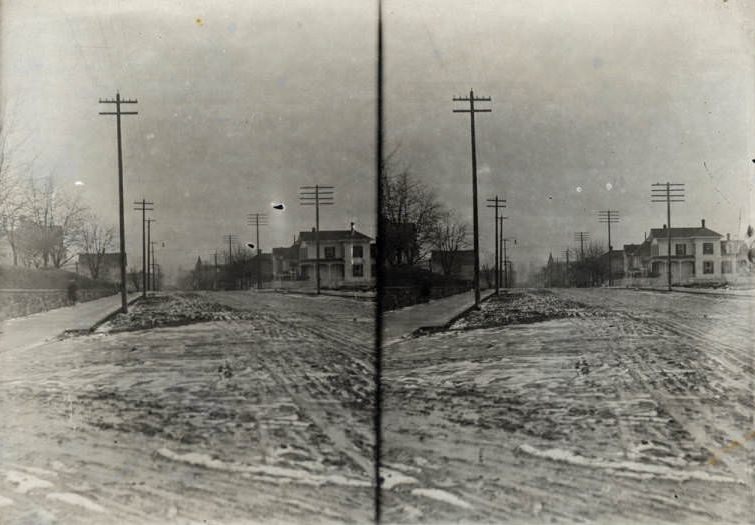
11th and Main Street, Vancouver, 1914
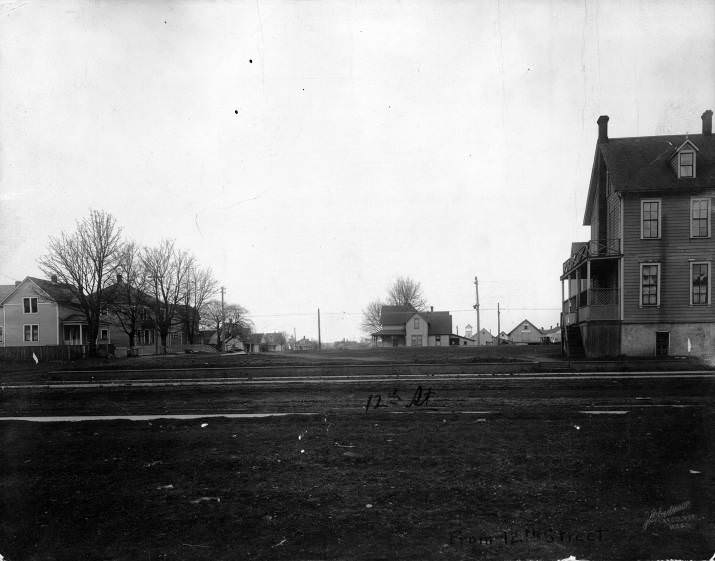
12th Street Lot Cleared for Building, 1915
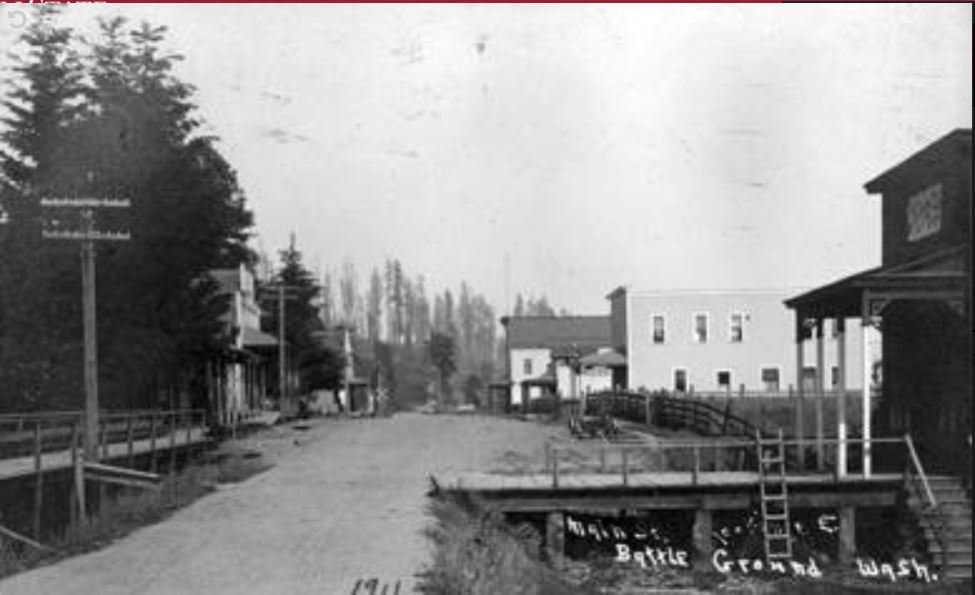
A view of Main Street Battle Ground, 1911
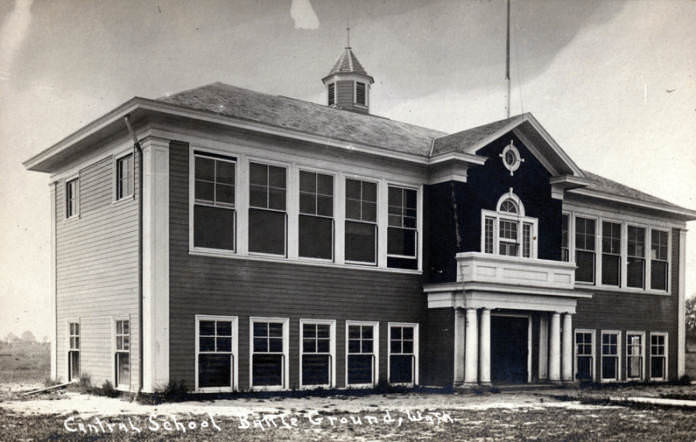
Central School, 1910
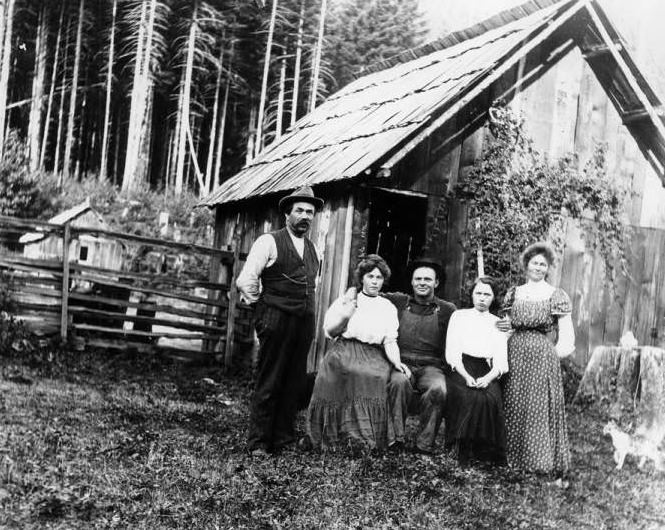
Fredrickson Family with Ole Peterson, 1918
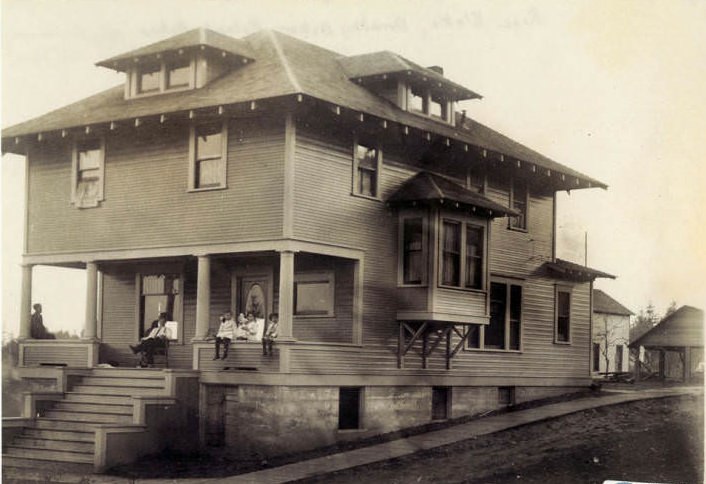
A. M. Blake Home, 1910
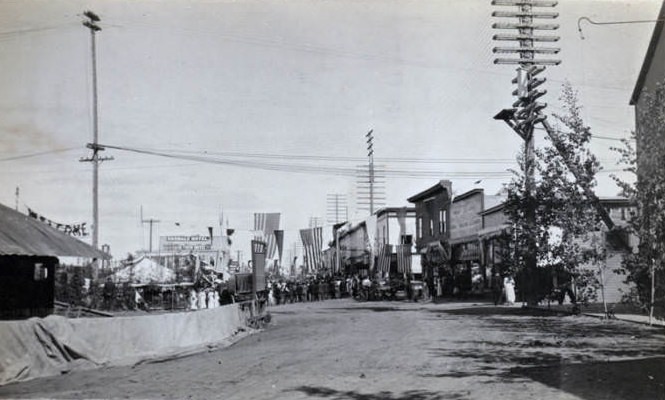
Crowds celebrate Independence Day in Fairbanks, July 4th, 1914.
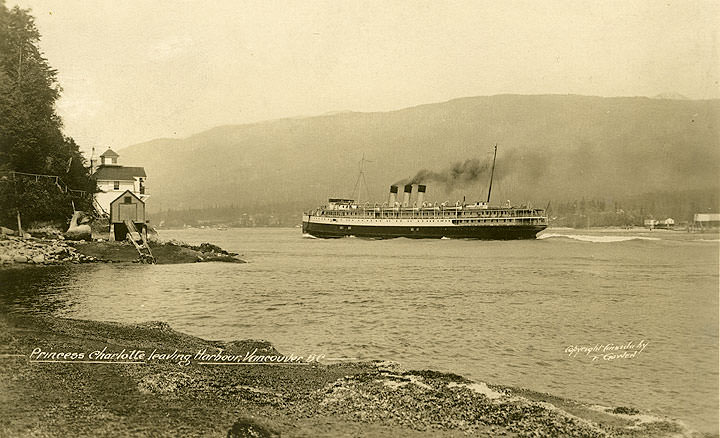
Princess Charlotte leaving Harbour, Vancouver, 1915
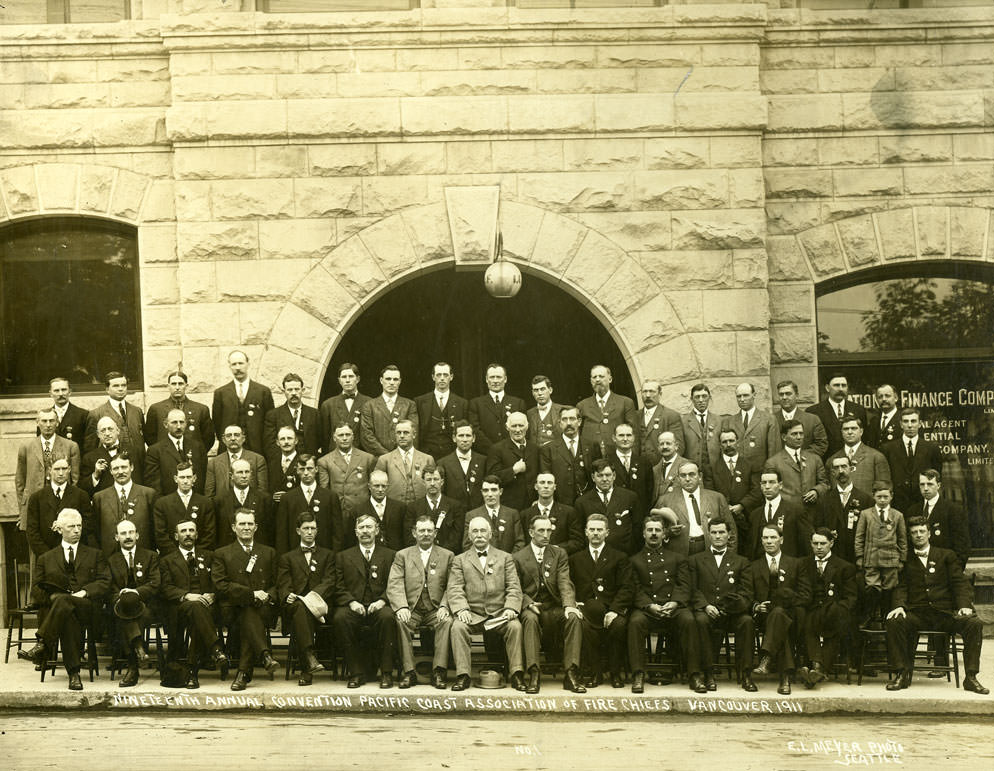
Nineteenth Annual Convention, Pacific Coast Association of Fire Chiefs, Vancouver, 1911
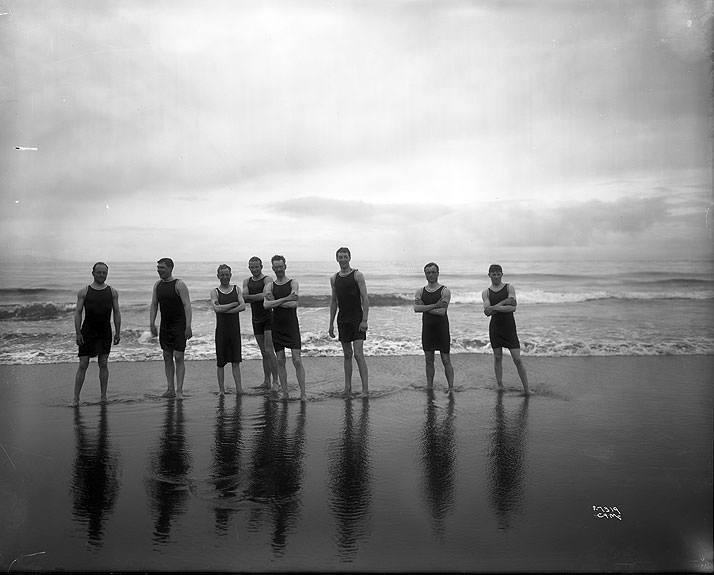
Male Swimmers near, Vancouver Island, 1913
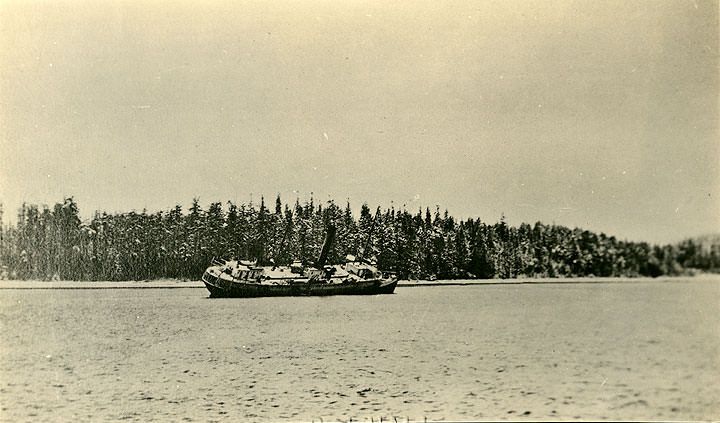
S.S. Cottage City Wrecked, Vancouver Island, 1911
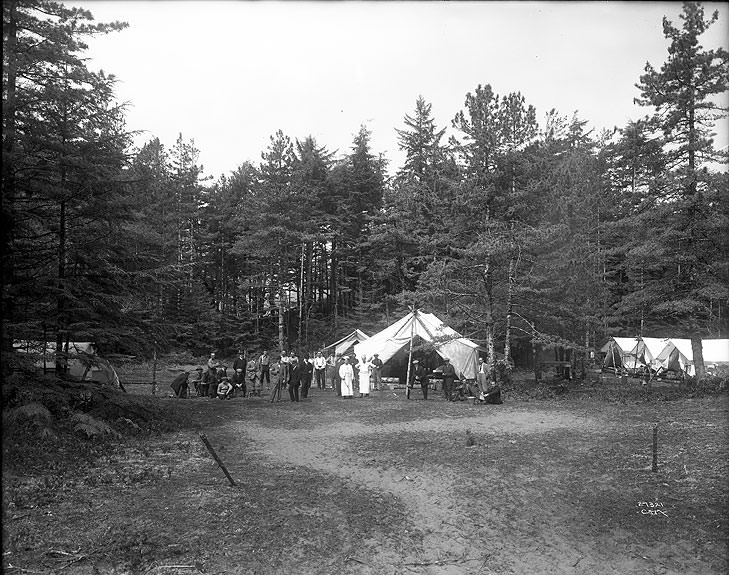
Group of Men by Tents, Clo-oose, Vancouver, 1913
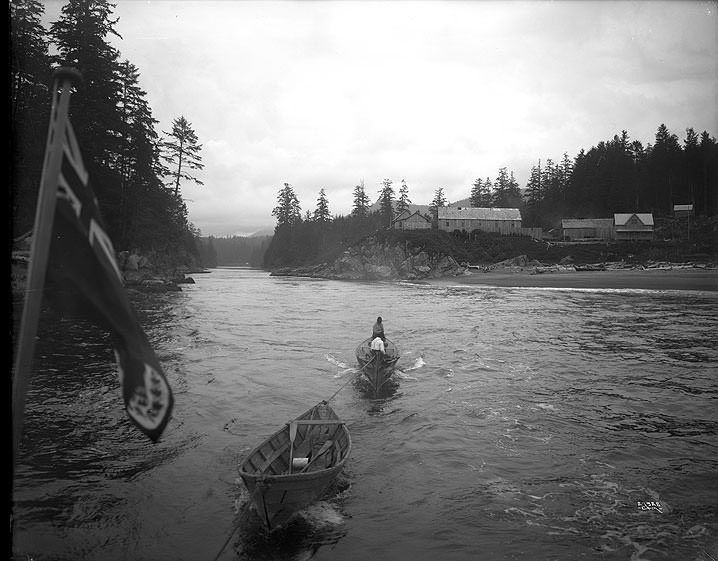
Nitinat Village at Clo-oose, Vancouver, 1913
Enjoyed this post? Get new ones in your inbox.

Leave a Comment

Your email address will not be published. Required fields are marked *

Share this Post 🥺

Please take a moment to share this content. Your support is greatly appreciated! 🙌🙏

Share this Post 🥺

Please take a moment to share this content. Your support is greatly appreciated! 🙌🙏
Scroll to Top
 
Hey Friend, Before You Go.. Please like & follow for more interesting content